EP3157204B1 - Method and device for questioning and answering - Google Patents
Method and device for questioning and answering Download PDFInfo
- Publication number
- EP3157204B1 EP3157204B1 EP14894735.1A EP14894735A EP3157204B1 EP 3157204 B1 EP3157204 B1 EP 3157204B1 EP 14894735 A EP14894735 A EP 14894735A EP 3157204 B1 EP3157204 B1 EP 3157204B1
- Authority
- EP
- European Patent Office
- Prior art keywords
- message
- answerer
- user
- users
- client
- Prior art date
- Legal status (The legal status is an assumption and is not a legal conclusion. Google has not performed a legal analysis and makes no representation as to the accuracy of the status listed.)
- Active
Links
Images


Classifications
-
- H—ELECTRICITY
- H04—ELECTRIC COMMUNICATION TECHNIQUE
- H04L—TRANSMISSION OF DIGITAL INFORMATION, e.g. TELEGRAPHIC COMMUNICATION
- H04L51/00—User-to-user messaging in packet-switching networks, transmitted according to store-and-forward or real-time protocols, e.g. e-mail
- H04L51/04—Real-time or near real-time messaging, e.g. instant messaging [IM]
-
- H—ELECTRICITY
- H04—ELECTRIC COMMUNICATION TECHNIQUE
- H04L—TRANSMISSION OF DIGITAL INFORMATION, e.g. TELEGRAPHIC COMMUNICATION
- H04L51/00—User-to-user messaging in packet-switching networks, transmitted according to store-and-forward or real-time protocols, e.g. e-mail
- H04L51/04—Real-time or near real-time messaging, e.g. instant messaging [IM]
- H04L51/046—Interoperability with other network applications or services
-
- H—ELECTRICITY
- H04—ELECTRIC COMMUNICATION TECHNIQUE
- H04L—TRANSMISSION OF DIGITAL INFORMATION, e.g. TELEGRAPHIC COMMUNICATION
- H04L51/00—User-to-user messaging in packet-switching networks, transmitted according to store-and-forward or real-time protocols, e.g. e-mail
- H04L51/07—User-to-user messaging in packet-switching networks, transmitted according to store-and-forward or real-time protocols, e.g. e-mail characterised by the inclusion of specific contents
- H04L51/10—Multimedia information
-
- H—ELECTRICITY
- H04—ELECTRIC COMMUNICATION TECHNIQUE
- H04L—TRANSMISSION OF DIGITAL INFORMATION, e.g. TELEGRAPHIC COMMUNICATION
- H04L51/00—User-to-user messaging in packet-switching networks, transmitted according to store-and-forward or real-time protocols, e.g. e-mail
- H04L51/21—Monitoring or handling of messages
- H04L51/212—Monitoring or handling of messages using filtering or selective blocking
-
- H—ELECTRICITY
- H04—ELECTRIC COMMUNICATION TECHNIQUE
- H04L—TRANSMISSION OF DIGITAL INFORMATION, e.g. TELEGRAPHIC COMMUNICATION
- H04L51/00—User-to-user messaging in packet-switching networks, transmitted according to store-and-forward or real-time protocols, e.g. e-mail
- H04L51/21—Monitoring or handling of messages
- H04L51/216—Handling conversation history, e.g. grouping of messages in sessions or threads
Definitions
- Embodiments of the present invention relate to the field of the Internet, and more particularly, to a method and device for questioning and answering.
- US2009/125598 discloses a method, a client and a server for implementing question and answer services.
- US2012/246576 discloses presenting question and answer data in a social networking system.
- the embodiments of the present invention aim to provide a method and device for questioning and answering.
- the invention is defined in the independent claims. Additional features of the invention are provided in the dependent claims. The embodiments and/or examples disclosed in the following description which are not covered by the appended claims are considered as not being part of the present invention.
- a method for questioning and answering applied at a questioner client may comprise, for example: receiving a message input by a user; sending the message to a question-and-answer server such that the question-and-answer server sends the message to one or more answerer clients; and in response to users of the answerer clients performing a real time reply operation for the message, entering into a real time session with the users of the answerer clients so as to obtain a reply message from the users of the answerer clients through the real time session.
- a device for questioning and answering configured at a questioner client, which may comprise, for example: a message inputting unit that may be configured to receive a message input by a user; a message sending unit that may be configured to send the message to a question-and-answer server such that the question-and-answer server sends the message to one or more answerer clients; and a session unit that may be configured to, in response to users of the answerer clients performing a real time reply operation for the message, enter into a real time session with the users of the answerer clients so as to obtain a reply message from the users of the answerer clients through the real time session.
- a method for questioning and answering applied at a question-and-answer server may comprise, for example: receiving a message sent by a user through a questioner client; and sending the message to one or more answerer clients, such that the questioner client, in response to users of the answerer clients performing a real time reply operation for the message, enters into a real time session with the users of the answerer clients so as to obtain a reply message from the users of the answerer clients through the real time session.
- a device for questioning and answering configured at a question-and-answer server, which may comprise, for example: a message transferring unit that may be configured to receive a message sent by a user through a questioner client; and a message forwarding unit that may be configured to send the message to one or more answerer clients, such that the questioner client, in response to users of the answerer clients performing a real time reply operation for the message, enters into a real time session with the users of the answerer clients so as to obtain a reply message from the users of the answerer clients through the real time session.
- a method for questioning and answering applied at an answerer client may comprise, for example: receiving a message sent by a question-and-answer server, wherein the message is sent by a user of a questioner client through the questioner client to the question-and-answer server; and in response to a user of the answerer client performing a real time reply operation for the message, entering into a real time session with the user of the questioner client so as to send a reply message to the user of the questioner client through the real time session.
- a device for questioning and answering configured at an answerer client, which may comprise, for example: a message receiving unit that may be configured to receive a message sent by a question-and-answer server, wherein the message is sent by a user of a questioner client through the questioner client to the question-and-answer server; and a message answering unit that may be configured to enter into, in response to a user of the answerer client performing a real time reply operation for the message, a real time session with the user of the questioner client so as to send a reply message to the user of the questioner client through the real time session.
- a questioner and an answerer may send and receive messages through clients dedicated for questioning and answering, and both parties may accordingly enter into a one-to-one or one-to-many real time session when the answerer replies in real time so that the questioner may be able to obtain an answer given by the answerer in real time, therefore better immediacy and better user experience may be achieved.
- the inventors have found that the non-real time nature of existing approaches for questioning and answering based on posting/follow-up posting on a forum may lead to a delay in getting an answer to a question. In order to solve this problem, the inventors have found that specialized clients dedicated for questioning and answering may be provided.
- a questioner client may send a message to a question-and-answer sever in response to a user inputting the message on the questioner client, the question-and-answer sever may send the message to one or more answerer clients upon receiving the message, and the user of the questioner client and users of the answerer clients may accordingly enter into a one-to-one or one-to-many real time session when the users of the answerer clients perform a real time reply operation for the message.
- Better immediacy may be achieved since a questioner and an answerer may send and receive messages through clients dedicated for questioning and answering, and both parties may accordingly enter into a one-to-one or one-to-many real time session when the answerer replies in real time.
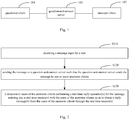
- a questioner client 101 and an answerer client 102 may be clients running on a terminal such as a desktop computer, a tablet computer, a smart mobile phone and the like, for example, an instant messaging client such as "Yixin (or NetEase EasyChat')".
- a question-and-answer server 103 receives a message from the questioner client 101, and sends the message to one or more answerer clients 102, such that a user of the questioner client and users of the answerer clients enter into a session when the users of the answerer clients perform a real time reply operation for the message.
- a flow diagram of a method for questioning and answering applied at a questioner client provided by an example of the present invention.
- a feasible embodiment of the example of the present invention may comprise:
- the questioner client may, in response to receiving a phone call made in real time by the users of the answerer clients for the message, enter into a voice session with the users of the answerer clients by picking up the call so as to obtain a reply message from the users of the answerer clients through the voice session.
- the questioner client may, in response to the users of the answerer clients joining into an instant messaging session group established by the question-and-answer server for the user of the questioner client for the message, enter into an instant messaging session with the users of the answerer clients through the instant messaging session group so as to obtain a reply message from the users of the answerer clients through the instant messaging session.
- the reply message may be sent to all members of the instant messaging session group.
- a questioner and an answerer may send and receive messages through clients dedicated for questioning and answering, and both parties may accordingly enter into a one-to-one or one-to-many real time session when the answerer replies in real time.
- the question may be received by the answerer client, and both parties may enter into an instant session when the user of the answerer client performs a real time reply operation for answering the question, thereby providing a platform for answering questions with instant interaction to the users.
- a device for questioning and answering configured at a questioner client in accordance with an exemplary embodiment of the present invention will then be described in details below with reference to Fig. 3 .
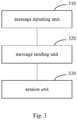
- a feasible embodiment of the example of the present invention may comprise: a message inputting unit 310 that may be configured to receive a message input by a user; a message sending unit 320 that may be configured to send the message to a question-and-answer server such that the question-and-answer server sends the message to one or more answerer clients; and a session unit 330 that may be configured to, in response to users of the answerer clients performing a real time reply operation for the message, enter into a real time session with the users of the answerer clients so as to obtain a reply message from the users of the answerer clients through the real time session.
- the session unit 330 may be configured to, in response to receiving a phone call made in real time by the users of the answerer clients for the message, enter into a voice session with the users of the answerer clients by picking up the call so as to obtain a reply message from the users of the answerer clients through the voice session.
- the session unit 330 may be configured to, in response to the users of the answerer clients joining into an instant messaging session group established by the question-and-answer server for the user of the questioner client for the message, enter into an instant messaging session with the users of the answerer clients through the instant messaging session group so as to obtain a reply message from the users of the answerer clients through the instant messaging session.
- the device provided by the example of the present invention being configured at a questioner client, better immediacy may be achieved since a questioner and an answerer may send and receive messages through clients dedicated for questioning and answering, and both parties may enter into a one-to-one or one-to-many real time session when the answerer replies in real time.
- a method for questioning and answering applied at a question-and-answer server in accordance with an exemplary embodiment of the present invention will be described below with reference to Fig. 4 , in connection with the application scenario of Fig. 1 .
- a flow diagram of a method for questioning and answering applied at a question-and-answer server provided by an example of the present invention.
- a feasible embodiment of the example of the present invention may comprise:
- a questioner and an answerer may send and receive messages through clients dedicated for questioning and answering, and both parties may enter into a one-to-one or one-to-many real time session when the answerer replies in real time.
- a message sent by the questioner client may be a question message for questioning.
- the question may be received by the answerer client, and both parties may enter into an instant session when the user of the answerer client performs a real time reply operation for answering the question, thereby providing a platform for answering questions with instant interaction to the users.
- a voice session may be entered into by picking up the call.
- a session may be entered into through an instant messaging session group established by the question-and-answer server for the user of the questioner client.
- the question-and-answer server may establish an instant messaging session group for the user of the questioner client, so that the users of the answerer clients and the user of the questioner client may enter into a session through the instant messaging session group, so as to receive a reply message sent in real time by the users of the answerer clients for the message, and send the reply message to members of the instant messaging session group.
- the user of the questioner client as a member of the instant messaging session group, may receive the reply message.
- the timing for establishing the instant messaging session group for the user of the questioner client is not limited.
- the instant messaging session group may be established when a message is received, or when a reply message for the message is received for the first time.
- the members of the instant messaging session group comprise at least the user of the questioner client and the users of the answerer clients feeding back the reply message. If other users capable of answering the message are allowed to participate, these other users capable of answering the message may also be added into the instant messaging session group when the instant messaging session group is established.
- the question-and-answer server may send the message to all of the answerer clients.
- all of the answerer clients may refer to answerer clients being used by all users other than the questioning user, among all users registered on the question-and-answer server. All users of the answerer clients may be added into the messaging session group in conjunction with the above embodiments of entering into a session through the instant messaging session group.
- the question-and-answer server may send the message to answerer clients whose geographic locations are within a preset range (e.g., 1 km) from the geographic location of the questioner client.
- the question-and-answer server may acquire in real time the geographic location from the questioner client that is obtained by the questioner client via a GPS system (Global Positioning System), acquire geographic locations from all answerer clients that are obtained by the answerer clients via a GPS system, and compare the geographic location of the questioner client and the geographic locations of the answerer clients, thereby determining answerer clients that are within a preset range from the geographic location of the questioner client.
- the users of the answerer clients that are within a preset range from the geographic location of the questioner client may be added into the instant messaging session group in conjunction with the above embodiments of entering into a session through the instant messaging session group.
- the question-and-answer server may send the message to answerer clients having user tags that are matched with the message.
- the message may be sent to answerer clients having user tags that are matched with keywords in the message.
- a user tag may be stored in advance in user information by the question-and-answer server, wherein the user tag may be selected by a user himself/herself, or may be obtained by the server through analysis on the basis of user behaviors.
- the user tag information may be 'mathematician', 'artist', 'driver' and the like.
- Users of answerer clients having user tags that are matched with keywords in the message may be added into the messaging session group in conjunction with the above embodiments of entering into a session through the instant messaging session group.
- different question-and-answer groups may be categorized according to the user tag to quickly find a suitable answerer for a questioner, thereby integrating question-and-answer transactions for different types of messages into one platform.
- a user may also modify a user tag set on the question-and-answer server through a client.
- the above described embodiments for determining answerer clients may be combined.
- the message may be sent to answerer clients within a preset range from the geographic location of the questioner client, among answerer clients having user tags that are matched with keywords in the message.
- answerer clients may also be possible, but will not be detailed here for brevity.
- some restrictive measures may be taken to a message or users of answerer clients capable of answering that message, in order to make the questioning and answering more efficient and secure.
- the following embodiments may be implemented:
- the method of the present invention may further comprise step S411: filtering out a spam massage from the received messages with a spam filtering technique.
- a spam filtering technique used is not limited, for example, a spam message may be found by matching messages with spam keywords, and thereby filtering out the spam message. With this embodiment, the content of a message may be made more secure.
- the method of the present invention may further comprise the followings steps.
- S412 matching the received message with history messages.
- the way of obtaining history messages is not limited.
- a history message may be obtained by searching through a search engine, or may be present in a preset history knowledge database.
- Step S413 if a history message matched with the received message is found, feeding back an answer to the matched history message to the user of the questioner client, and stopping the step S420 of sending the message to one or more answerer clients.
- the matching conditions for determining whether a message is matched with a history message are not limited, for example, a match may be determined when a matching degree between all words in the message and the history message exceeds a certain threshold (e.g., 90%), or, a mismatch may be determined when a matching degree of keywords in the message and the history message exceeds a certain threshold, and so on.
- Step S414 performing step S420 if no history message is found to be matched with the received message.
- the step of matching the received message with history messages may be performed in parallel with the step of sending the message to the answerer clients. Alternatively, the step of matching the received message with history messages may be performed first, and the step of sending the message to the answerer clients may then be performed in the case that no matching history message is found.
- the message may be stopped from being sent to the answerer clients so long as it is determined that a matching history message is found.
- the sending the message to the answerer clients may be stopped immediately after a matching history message is found, or the user of the questioner client may be further requested to confirm whether an answer to the history message is satisfactory after returning the answer to the user, and stop sending the message to the answerer clients upon receiving a confirmation of satisfactory from the user by the question-and-answer server.
- the questioner client may obtain an answer to the message as quickly as possible, thereby increasing the efficiency of questioning and answering.
- the method of the present invention may further comprise the following steps.
- Step S430 receiving activeness scores returned by the user of the questioner client for the users of the answerer clients.
- Step S431 calculating activeness levels for the users of the answerer clients based on the activeness scores returned for the users of the answerer clients in conjunction with a preset algorithm.
- the preset algorithm may be set as needed.
- the preset algorithm may be an algorithm that takes the average of activeness scores received within preset time duration, or an algorithm that multiplies activeness scores received within preset time duration with level values of questioner clients that give the activeness scores respectively and subsequently taking the average thereof.
- Step S432 if the activeness levels for the users of the answerer clients are within a malicious activeness level range (e.g., the malicious activeness level range may be '0'), forbidding the users of the answerer clients to enter into a session with the user of the questioner client when the users of the answerer clients perform reply operations. For example, if it is determined that a user of an answerer client is within the malicious activeness level range after receiving the activeness score for the user of the answerer client, the user of the answerer client may be forbidden to enter into a session with the user of the questioner client within a preset time duration.
- a malicious activeness level range e.g., the malicious activeness level range may be '0'
- the right of the user of the answerer client to enter into a session with the user of the questioner client may be restored according to requirements of implementation scenarios.
- malicious disturbance to the question-and-answer system by users may be avoided.
- the method of the present invention may further comprise, after the question-and-answer server receives the message sent by the user through the questioner client, step S415: screening for users of the answerer clients capable of answering the message according to a screening rule set by the user of the questioner client.
- the screening rule that can be set by the user is not limited, and may specifically be set according to requirements of implementation scenarios.
- the screening rule may be a screening rule of screening out an answerer having a particular user tag or screening out an answerer whose activeness level exceeds a particular threshold, and the like.
- Step S416 permitting the screened-out users of the answerer clients capable of answering the message to enter into a session with the user of the questioner client.
- Step S417 forbidding the users of the answerer clients incapable of answering the message to enter into a session with the user of the questioner client.
- the message may only be sent to the screened-out users of the answerer clients capable of answering the message.
- the questioner client may select users of the answerer clients who meet to his/her own requirements by setting a screening rule, thereby achieving higher efficiency in questioning and answering.
- the method of the present invention may further comprise the following steps.
- Step S433 receiving cost parameters returned by the users of the answerer clients for the message.
- Step S434 sending the cost parameters to the questioner client such that the user of the questioner client selects a user of an answerer client capable of answering the message according to the cost parameters.
- the form of the cost parameter in practical applications is not limited.
- the cost parameter may be user credits required by an answerer client for answering the question proposed in the message.
- the question-and-answer server may further add the deducted user credits to the user of the answerer client.
- the user of the questioner client may select a user of an answerer client who requires user credits for answering the question proposed in the message that is less than or equal to the user credits that the user of the questioner client owns.
- the user of the questioner client is provided with more choices, and the users of the answerer clients may be rewarded accordingly, thereby facilitating the motivation of question-and-answer interaction.
- real name information of at least a part of the users of the answerer clients and the user of the questioner client may be pre-registered in a database accessible to the question-and-answer server.
- the real name information may be, for example, a telephone number, identity information, a real name, real occupation information, and the like.
- Yixin requires a user to register with a telephone number at a client, after which a verification code for registration in the form of a message is sent from the server side to the client, and then the user of the client makes a successful registration by returning the correct verification code to the server side.
- Yixin may require a user to register with a real name and identity card information.
- the method may further comprise examining the real name information of at least a part of the users of the answerer clients by the question-and-answer server, and determining the users who pass the examination as qualified users for answering the messages sent by the questioner.
- the examination may be performed by verifying the authenticity of a telephone number from a corresponding mobile communications service provider, providing a name and identify information to a Public Security System for verification, and the like.
- steps S411-S417 and S430-S434 in Fig. 4 are drawn in dotted lines to indicate that these steps are not necessary steps of the invention.
- a device for questioning and answering configured at a question-and-answer server in accordance with the exemplary embodiments of the present invention will then be described in details below with reference to Fig. 5 .
- a feasible embodiment of the example of the present invention may comprise: a message transferring unit 510 that may be configured to receive a message sent by a user through a questioner client; and a message forwarding unit 520 that may be configured to send the message to one or more answerer clients, such that the questioner client, in response to users of the answerer clients performing a real time reply operation for the message, enters into a real time session with the users of the answerer clients so as to obtain a reply message from the users of the answerer clients through the real time session.
- the device provided by the example of the present invention may further comprise: a group establishing unit 511 that may be configured to establish an instant messaging session group for the user of the questioner client, such that the users of the answerer clients and the user of the questioner client enter into a session through the instant messaging session group; and a reply receiving unit 512 that may be configured to receive a reply message sent in real time by the users of the answerer clients for the message, and send the reply message to members of the instant messaging session group.
- a group establishing unit 511 may be configured to establish an instant messaging session group for the user of the questioner client, such that the users of the answerer clients and the user of the questioner client enter into a session through the instant messaging session group
- a reply receiving unit 512 may be configured to receive a reply message sent in real time by the users of the answerer clients for the message, and send the reply message to members of the instant messaging session group.
- the specific embodiment for the question-and-answer server to send the message to the one or more answerer clients is not limited.
- the message forwarding unit 520 may be configured to send the message to all of the answerer clients; or, it may be configured to send the message to answerer clients whose geographic locations are within a preset range from the geographic location of the questioner client; or, it may be configured to send the message to answerer clients having user tags that are matched with keywords in the message. It should be noted that, these embodiments for determining answerer clients may be combined.
- the message forwarding unit 520 may be configured to send the message to answerer clients within a preset range from the geographic location of the questioner client, among answerer clients having user tags that are matched with the message.
- the message forwarding unit 520 may be configured to send the message to answerer clients within a preset range from the geographic location of the questioner client, among answerer clients having user tags that are matched with the message.
- other combinations may also be possible, but will not be detailed here for brevity.
- some restrictive measures may be taken to a message or users of answerer clients capable of answering that message, in order to make the questioning and answering more efficient and secure.
- the following embodiments may be implemented:
- the device may further comprise: a history matching unit 513 that may be configured to match the received message with history messages; and a history feedback unit 514 that may be configured to feedback, if a history message matched with the received message is found, the answer to the matched history message to the user of the questioner client, and stop executing the message forwarding unit.
- execution of the message forwarding unit can be triggered, if no history message is found to be matched with the received message.
- the device may further comprise: a score receiving unit 530 that may be configured to receive activeness scores returned by the user of the questioner client for the users of the answerer clients; a level calculating unit 531 that may be configured to calculate activeness levels for the users of the answerer clients based on the activeness scores returned for the users of the answerer clients in conjunction with a preset algorithm; and a level processing unit 532 that may be configured to forbid the users of the answerer clients to enter into a session with the user of the questioner client when the users of the answerer clients perform reply operations if the activeness levels for the answerer clients are within a malicious activeness level range.
- the device may further comprise: a spam filtering unit 515 that may be configured to filter out a spam message from the received message with a spam filtering technique.
- a spam filtering unit 515 may be configured to filter out a spam message from the received message with a spam filtering technique.
- the device may further comprise: a screening unit 516 that may be configured to screen for users of the answerer clients capable of answering the message according to a screening rule set by the user of the questioner client; and a screen result processing unit 517 that may be configured to permit the screened-out users of the answerer clients capable of answering the message to enter into a session with the user of the questioner client, and forbid the users of the answerer clients incapable of answering the message to enter into a session with the user of the questioner client.
- a screening unit 516 that may be configured to screen for users of the answerer clients capable of answering the message according to a screening rule set by the user of the questioner client
- a screen result processing unit 517 may be configured to permit the screened-out users of the answerer clients capable of answering the message to enter into a session with the user of the questioner client, and forbid the users of the answerer clients incapable of answering the message to enter into a session with the user of the questioner client.
- the device may further comprise: a cost parameter receiving unit 533 that may be configured to receive cost parameters returned by the users of the answerer clients for the message; and a cost parameter forwarding unit 534 that may be configured to send the cost parameters to the questioner client, such that the user of the questioner client selects an answerer client capable of answering the message according to the cost parameters.
- the group establishing unit 511, the reply receiving unit 512, the history matching unit 513, the history feedback unit 514, the spam filtering unit 515, the screening unit 516, the screen result processing unit 517, the score receiving unit 530, the level calculating unit 531, the level processing unit 532, the cost parameter receiving unit 533, and the cost parameter forwarding unit 534 are drawn in dotted lines in the Fig. 5 to indicate that these units are not necessary units of the present invention.
- a flow diagram of a method for questioning and answering applied at an answerer client provided by an example of the present invention.
- a feasible embodiment of the example of the present invention may comprise:
- the user of the answerer client may make a phone call in real time to the user of the questioner client for the message, such that the user of the questioner client and the user of the answerer client enter into a voice session by picking up the call.
- the user of the answerer client may send a reply message in real time to the question-and-answer server for the message, such that the user of the questioner client and the user of the answerer client enter into a session through an instant messaging session group established by the question-and-answer server for the user of the questioner client.
- a device for questioning and answering configured at an answerer client in accordance with an exemplary embodiment of the present invention will be described in details below with reference to Fig. 7 , in connection with the application scenario of Fig. 1 .
- a feasible embodiment of the example of the present invention may comprise: a message receiving unit 710 that may be configured to receive a message sent by a question-and-answer server, wherein the message is specifically sent by a user of a questioner client through the questioner client to the question-and-answer server; and a message answering unit 720 that may be configured to enter into, in response to a user of the answerer client performing a real time reply operation for the message, a real time session with the user of the questioner client so as to send a reply message to the user of the questioner client through the real time session.
Landscapes
- Engineering & Computer Science (AREA)
- Computer Networks & Wireless Communication (AREA)
- Signal Processing (AREA)
- Multimedia (AREA)
- Electrically Operated Instructional Devices (AREA)
- Telephonic Communication Services (AREA)
- Information Transfer Between Computers (AREA)
Description
- Embodiments of the present invention relate to the field of the Internet, and more particularly, to a method and device for questioning and answering.
- This section is intended to provide the background or context for the embodiments of the present invention as recited in the claims. The fact that following descriptions being included in this section itself cannot be used as an admission of prior art.
- In the field of the Internet, it is a very common way for questioning and answering among users through asking questions and giving answers based on a forum provided by a web portal. Typically, a questioner posts a question on a forum, answerers give their answers by posting follow-up comments after reading the question, and the questioner then finds out a satisfactory answer from the follow-up comments.
-
US2009/125598 discloses a method, a client and a server for implementing question and answer services. -
US2001/032244 discloses an Internet-based help system. -
US2012/246576 discloses presenting question and answer data in a social networking system. - However, a questioner may not see an answer given by an answerer in a timely manner since posting, reading posts and follow-up posting on a forum are merely unilateral and spontaneous behaviors of questioners and answerers, thus the delay from the non-real time questioning and answering approach in the prior art may disappoint the questioner.
- To this end, there is a need for an improved method for questioning and answering to address the delay problem in the prior art.
- In this context, the embodiments of the present invention aim to provide a method and device for questioning and answering. The invention is defined in the independent claims. Additional features of the invention are provided in the dependent claims. The embodiments and/or examples disclosed in the following description which are not covered by the appended claims are considered as not being part of the present invention.
- In a first aspect of the embodiments of the invention, there is provided a method for questioning and answering applied at a questioner client, which may comprise, for example: receiving a message input by a user; sending the message to a question-and-answer server such that the question-and-answer server sends the message to one or more answerer clients; and in response to users of the answerer clients performing a real time reply operation for the message, entering into a real time session with the users of the answerer clients so as to obtain a reply message from the users of the answerer clients through the real time session.
- In a second aspect of the embodiments of the invention, there is provided a device for questioning and answering configured at a questioner client, which may comprise, for example: a message inputting unit that may be configured to receive a message input by a user; a message sending unit that may be configured to send the message to a question-and-answer server such that the question-and-answer server sends the message to one or more answerer clients; and a session unit that may be configured to, in response to users of the answerer clients performing a real time reply operation for the message, enter into a real time session with the users of the answerer clients so as to obtain a reply message from the users of the answerer clients through the real time session.
- In a third aspect of the embodiments of the invention, there is provided a method for questioning and answering applied at a question-and-answer server, which may comprise, for example: receiving a message sent by a user through a questioner client; and sending the message to one or more answerer clients, such that the questioner client, in response to users of the answerer clients performing a real time reply operation for the message, enters into a real time session with the users of the answerer clients so as to obtain a reply message from the users of the answerer clients through the real time session.
- In a fourth aspect of the embodiments of the invention, there is provided a device for questioning and answering configured at a question-and-answer server, which may comprise, for example: a message transferring unit that may be configured to receive a message sent by a user through a questioner client; and a message forwarding unit that may be configured to send the message to one or more answerer clients, such that the questioner client, in response to users of the answerer clients performing a real time reply operation for the message, enters into a real time session with the users of the answerer clients so as to obtain a reply message from the users of the answerer clients through the real time session.
- In a fifth aspect of the embodiments of the invention, there is provided a method for questioning and answering applied at an answerer client, which may comprise, for example: receiving a message sent by a question-and-answer server, wherein the message is sent by a user of a questioner client through the questioner client to the question-and-answer server; and in response to a user of the answerer client performing a real time reply operation for the message, entering into a real time session with the user of the questioner client so as to send a reply message to the user of the questioner client through the real time session.
- In a sixth aspect of the embodiments of the invention, there is provided a device for questioning and answering configured at an answerer client, which may comprise, for example: a message receiving unit that may be configured to receive a message sent by a question-and-answer server, wherein the message is sent by a user of a questioner client through the questioner client to the question-and-answer server; and a message answering unit that may be configured to enter into, in response to a user of the answerer client performing a real time reply operation for the message, a real time session with the user of the questioner client so as to send a reply message to the user of the questioner client through the real time session.
- With the method and device for questioning and answering according to the embodiments of the invention, a questioner and an answerer may send and receive messages through clients dedicated for questioning and answering, and both parties may accordingly enter into a one-to-one or one-to-many real time session when the answerer replies in real time so that the questioner may be able to obtain an answer given by the answerer in real time, therefore better immediacy and better user experience may be achieved.
- The above and other objectives, features and advantages of exemplary embodiments of the invention will become more readily understandable by reading the following detailed description with reference to the accompanying drawings. A number of embodiments of the invention are shown in an exemplary and unrestrictive manner in the drawings, of which:
-
Fig. 1 schematically illustrates an application scenario in accordance with an embodiment of the invention; -
Fig. 2 schematically illustrates a flow diagram of a method for questioning and answering applied at a questioner client in accordance with an embodiment of the invention; -
Fig. 3 schematically illustrates a structure diagram of a device for questioning and answering configured at a questioner client in accordance with an embodiment of the invention; -
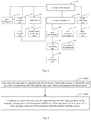
Fig. 4 schematically illustrates a flow diagram of a method for questioning and answering applied at a question-and-answer server in accordance with an embodiment of the invention; -
Fig. 5 schematically illustrates a structure diagram of a device for questioning and answering configured at a question-and-answer server in accordance with an embodiment of the invention; -
Fig. 6 schematically illustrates a flow diagram of a method for questioning and answering applied at an answerer client in accordance with an embodiment of the invention; and -
Fig. 7 schematically illustrates a structure diagram of a device for questioning and answering configured at an answerer client in accordance with an embodiment of the invention. - In the drawings, identical or corresponding numerals denote identical or corresponding parts.
- The principles and spirit of the present invention will be described below with reference to a number of exemplary embodiments. It should be understood that those embodiments are given merely for those skilled in the art to better understand and thus implement the invention, and do not limit the scope of the invention in any way. On the contrary, those embodiments are provided to make the disclosure more thorough and complete, so that the scope of the disclosure may be completely conveyed to those skilled in the art.
- It is known to those skilled in the art that the embodiments of the invention may be implemented as a system, device, apparatus, method or computer program product. Thus, the present disclosure may be specifically implemented in the form of complete hardware, complete software (including firmware, resident software, microcode, etc.), or combinations of hardware and software.
- A method and device for questioning and answering are proposed in accordance with the embodiments of the invention.
- It is to be understood that, in this context, any number of elements in the drawings is intended to be illustrative rather than limiting, and any naming is used merely for distinguishing purpose without any meaning of limitation.
- The principles and spirit of the present invention will be described in details below, with reference to a number of representative embodiments of the invention.
- The inventors have found that the non-real time nature of existing approaches for questioning and answering based on posting/follow-up posting on a forum may lead to a delay in getting an answer to a question. In order to solve this problem, the inventors have found that specialized clients dedicated for questioning and answering may be provided. In particular, a questioner client may send a message to a question-and-answer sever in response to a user inputting the message on the questioner client, the question-and-answer sever may send the message to one or more answerer clients upon receiving the message, and the user of the questioner client and users of the answerer clients may accordingly enter into a one-to-one or one-to-many real time session when the users of the answerer clients perform a real time reply operation for the message. Better immediacy may be achieved since a questioner and an answerer may send and receive messages through clients dedicated for questioning and answering, and both parties may accordingly enter into a one-to-one or one-to-many real time session when the answerer replies in real time.
- Having presented the basic principles of the present invention, various non-limiting embodiments of the invention will be described below with particularity.
- First, referring to
Fig.1 , aquestioner client 101 and ananswerer client 102 may be clients running on a terminal such as a desktop computer, a tablet computer, a smart mobile phone and the like, for example, an instant messaging client such as "Yixin (or NetEase EasyChat')". A question-and-answer server 103 receives a message from thequestioner client 101, and sends the message to one ormore answerer clients 102, such that a user of the questioner client and users of the answerer clients enter into a session when the users of the answerer clients perform a real time reply operation for the message. - A method for questioning and answering applied at a questioner client in accordance with an exemplary embodiment of the present invention will be described below with reference to
Fig. 2 , in connection with the application scenario ofFig. 1 . It should be noted that the above application scenario is shown merely to facilitate the understanding of the spirit and principles of the invention, and there is no limitation to the embodiments of the invention in this respect. On the contrary, the embodiments of the invention may be applicable to any suitable scenario. - For instance, referring to
Fig. 2 , there is shown a flow diagram of a method for questioning and answering applied at a questioner client provided by an example of the present invention. As shown, a feasible embodiment of the example of the present invention may comprise: - S210: receiving a message input by a user.
For example, the received message may be a voice message, a text message, or a multimedia message such as a picture, a video and the like. As another example, the message may be a question message for questioning, e.g. who can answer a question about the filing process for an US patent. - S220: sending the message to a question-and-answer server such that the question-and-answer server sends the message to one or more answerer clients;
- S230: in response to users of the answerer clients performing a real time reply operation for the message, entering into a real time session with the users of the answerer clients so as to obtain a reply message from the users of the answerer clients through the real time session.
- As an example, in some feasible embodiments, the questioner client may, in response to receiving a phone call made in real time by the users of the answerer clients for the message, enter into a voice session with the users of the answerer clients by picking up the call so as to obtain a reply message from the users of the answerer clients through the voice session.
- As another example, in some other feasible embodiments, the questioner client may, in response to the users of the answerer clients joining into an instant messaging session group established by the question-and-answer server for the user of the questioner client for the message, enter into an instant messaging session with the users of the answerer clients through the instant messaging session group so as to obtain a reply message from the users of the answerer clients through the instant messaging session. It should be understood that, the reply message may be sent to all members of the instant messaging session group.
- With the method provided by the example of the present invention, better immediacy may be achieved since a questioner and an answerer may send and receive messages through clients dedicated for questioning and answering, and both parties may accordingly enter into a one-to-one or one-to-many real time session when the answerer replies in real time. For example, in the case of a message sent by the questioner client being a question message, the question may be received by the answerer client, and both parties may enter into an instant session when the user of the answerer client performs a real time reply operation for answering the question, thereby providing a platform for answering questions with instant interaction to the users.
- Having introduced the method for questioning and answering applied at a questioner client in accordance with the exemplary embodiments of the present invention, a device for questioning and answering configured at a questioner client in accordance with an exemplary embodiment of the present invention will then be described in details below with reference to
Fig. 3 . - For instance, referring to
Fig. 3 , there is shown a structure diagram of a device for questioning and answering configured at a questioner client provided by an example of the present invention. As shown, a feasible embodiment of the example of the present invention may comprise: amessage inputting unit 310 that may be configured to receive a message input by a user; amessage sending unit 320 that may be configured to send the message to a question-and-answer server such that the question-and-answer server sends the message to one or more answerer clients; and asession unit 330 that may be configured to, in response to users of the answerer clients performing a real time reply operation for the message, enter into a real time session with the users of the answerer clients so as to obtain a reply message from the users of the answerer clients through the real time session. - As an example, in some feasible embodiments, the
session unit 330 may be configured to, in response to receiving a phone call made in real time by the users of the answerer clients for the message, enter into a voice session with the users of the answerer clients by picking up the call so as to obtain a reply message from the users of the answerer clients through the voice session. - As another example, in some other feasible embodiments, the
session unit 330 may be configured to, in response to the users of the answerer clients joining into an instant messaging session group established by the question-and-answer server for the user of the questioner client for the message, enter into an instant messaging session with the users of the answerer clients through the instant messaging session group so as to obtain a reply message from the users of the answerer clients through the instant messaging session. - With the device provided by the example of the present invention being configured at a questioner client, better immediacy may be achieved since a questioner and an answerer may send and receive messages through clients dedicated for questioning and answering, and both parties may enter into a one-to-one or one-to-many real time session when the answerer replies in real time.
- A method for questioning and answering applied at a question-and-answer server in accordance with an exemplary embodiment of the present invention will be described below with reference to
Fig. 4 , in connection with the application scenario ofFig. 1 . - For instance, referring to
Fig. 4 , there is shown a flow diagram of a method for questioning and answering applied at a question-and-answer server provided by an example of the present invention. As shown, a feasible embodiment of the example of the present invention may comprise: - S410: receiving a message sent by a user through a questioner client.
- S420: sending the message to one or more answerer clients, such that the questioner client, in response to users of the answerer clients performing a real time reply operation for the message, enters into a real time session with the users of the answerer clients so as to obtain a reply message from the users of the answerer clients through the real time session.
- It can be seen that, with the method provided by the example of the present invention being applied at the question-and-answer server, better immediacy may be achieved since a questioner and an answerer may send and receive messages through clients dedicated for questioning and answering, and both parties may enter into a one-to-one or one-to-many real time session when the answerer replies in real time. For example, in a feasible embodiment, a message sent by the questioner client may be a question message for questioning. In this embodiment, the question may be received by the answerer client, and both parties may enter into an instant session when the user of the answerer client performs a real time reply operation for answering the question, thereby providing a platform for answering questions with instant interaction to the users.
- It should be noted that, specific embodiments for the user of the questioner client and the users of the answerer clients to enter into a session when the users of answerer clients perform the real time reply operation for the message are not limited. For example, in some embodiments, when the users of the answerer clients make a phone call in real time to the user of the questioner client for the message, a voice session may be entered into by picking up the call. In some other embodiments, a session may be entered into through an instant messaging session group established by the question-and-answer server for the user of the questioner client. More specifically, the question-and-answer server may establish an instant messaging session group for the user of the questioner client, so that the users of the answerer clients and the user of the questioner client may enter into a session through the instant messaging session group, so as to receive a reply message sent in real time by the users of the answerer clients for the message, and send the reply message to members of the instant messaging session group. The user of the questioner client, as a member of the instant messaging session group, may receive the reply message.
- The timing for establishing the instant messaging session group for the user of the questioner client is not limited. For example, the instant messaging session group may be established when a message is received, or when a reply message for the message is received for the first time. The members of the instant messaging session group comprise at least the user of the questioner client and the users of the answerer clients feeding back the reply message. If other users capable of answering the message are allowed to participate, these other users capable of answering the message may also be added into the instant messaging session group when the instant messaging session group is established.
- Specific embodiments for the question-and-answer server to send the message to the one or more answerer clients in the example of the present invention are not limited. For example:
- In some feasible embodiments, the question-and-answer server may send the message to all of the answerer clients. It should be noted that, the phrase "all of the answerer clients" may refer to answerer clients being used by all users other than the questioning user, among all users registered on the question-and-answer server. All users of the answerer clients may be added into the messaging session group in conjunction with the above embodiments of entering into a session through the instant messaging session group.
- In some feasible embodiments, the question-and-answer server may send the message to answerer clients whose geographic locations are within a preset range (e.g., 1 km) from the geographic location of the questioner client. As an example, the question-and-answer server may acquire in real time the geographic location from the questioner client that is obtained by the questioner client via a GPS system (Global Positioning System), acquire geographic locations from all answerer clients that are obtained by the answerer clients via a GPS system, and compare the geographic location of the questioner client and the geographic locations of the answerer clients, thereby determining answerer clients that are within a preset range from the geographic location of the questioner client. The users of the answerer clients that are within a preset range from the geographic location of the questioner client may be added into the instant messaging session group in conjunction with the above embodiments of entering into a session through the instant messaging session group.
- In some feasible embodiments, the question-and-answer server may send the message to answerer clients having user tags that are matched with the message. For example, the message may be sent to answerer clients having user tags that are matched with keywords in the message. In this embodiment, a user tag may be stored in advance in user information by the question-and-answer server, wherein the user tag may be selected by a user himself/herself, or may be obtained by the server through analysis on the basis of user behaviors. For example, the user tag information may be 'mathematician', 'artist', 'driver' and the like. Users of answerer clients having user tags that are matched with keywords in the message may be added into the messaging session group in conjunction with the above embodiments of entering into a session through the instant messaging session group. In this embodiment, different question-and-answer groups may be categorized according to the user tag to quickly find a suitable answerer for a questioner, thereby integrating question-and-answer transactions for different types of messages into one platform. In addition, a user may also modify a user tag set on the question-and-answer server through a client.
- It should be noted that, the above described embodiments for determining answerer clients may be combined. For example, the message may be sent to answerer clients within a preset range from the geographic location of the questioner client, among answerer clients having user tags that are matched with keywords in the message. Of course, other combinations may also be possible, but will not be detailed here for brevity.
- Furthermore, in accordance with some feasible embodiments of the present invention, some restrictive measures may be taken to a message or users of answerer clients capable of answering that message, in order to make the questioning and answering more efficient and secure. For example, the following embodiments may be implemented:
- In accordance with some feasible embodiments, as shown in
Fig. 4 , the method of the present invention may further comprise step S411: filtering out a spam massage from the received messages with a spam filtering technique. The specific type of the spam filtering technique used is not limited, for example, a spam message may be found by matching messages with spam keywords, and thereby filtering out the spam message. With this embodiment, the content of a message may be made more secure. - In accordance with some feasible embodiments of the present invention, as shown in
Fig. 4 , the method of the present invention may further comprise the followings steps. S412: matching the received message with history messages. It should be noted that, the way of obtaining history messages is not limited. For example, a history message may be obtained by searching through a search engine, or may be present in a preset history knowledge database. Step S413: if a history message matched with the received message is found, feeding back an answer to the matched history message to the user of the questioner client, and stopping the step S420 of sending the message to one or more answerer clients. The matching conditions for determining whether a message is matched with a history message are not limited, for example, a match may be determined when a matching degree between all words in the message and the history message exceeds a certain threshold (e.g., 90%), or, a mismatch may be determined when a matching degree of keywords in the message and the history message exceeds a certain threshold, and so on. Step S414: performing step S420 if no history message is found to be matched with the received message. The step of matching the received message with history messages may be performed in parallel with the step of sending the message to the answerer clients. Alternatively, the step of matching the received message with history messages may be performed first, and the step of sending the message to the answerer clients may then be performed in the case that no matching history message is found. Regardless of being performed in parallel or in succession, the message may be stopped from being sent to the answerer clients so long as it is determined that a matching history message is found. The sending the message to the answerer clients may be stopped immediately after a matching history message is found, or the user of the questioner client may be further requested to confirm whether an answer to the history message is satisfactory after returning the answer to the user, and stop sending the message to the answerer clients upon receiving a confirmation of satisfactory from the user by the question-and-answer server. With this embodiment, the questioner client may obtain an answer to the message as quickly as possible, thereby increasing the efficiency of questioning and answering. - According to some feasible embodiments of the present invention, as shown in
Fig. 4 , the method of the present invention may further comprise the following steps. Step S430: receiving activeness scores returned by the user of the questioner client for the users of the answerer clients. Step S431: calculating activeness levels for the users of the answerer clients based on the activeness scores returned for the users of the answerer clients in conjunction with a preset algorithm. In particular, the preset algorithm may be set as needed. For example, the preset algorithm may be an algorithm that takes the average of activeness scores received within preset time duration, or an algorithm that multiplies activeness scores received within preset time duration with level values of questioner clients that give the activeness scores respectively and subsequently taking the average thereof. Step S432: if the activeness levels for the users of the answerer clients are within a malicious activeness level range (e.g., the malicious activeness level range may be '0'), forbidding the users of the answerer clients to enter into a session with the user of the questioner client when the users of the answerer clients perform reply operations. For example, if it is determined that a user of an answerer client is within the malicious activeness level range after receiving the activeness score for the user of the answerer client, the user of the answerer client may be forbidden to enter into a session with the user of the questioner client within a preset time duration. After a time duration during which the user of the answerer client is forbidden to enter into a session has exceeded the preset time duration, the right of the user of the answerer client to enter into a session with the user of the questioner client may be restored according to requirements of implementation scenarios. In accordance with this embodiment, malicious disturbance to the question-and-answer system by users may be avoided. - In accordance with some feasible embodiments of the present invention, as shown in
Fig. 4 , the method of the present invention may further comprise, after the question-and-answer server receives the message sent by the user through the questioner client, step S415: screening for users of the answerer clients capable of answering the message according to a screening rule set by the user of the questioner client. It should be noted that, the screening rule that can be set by the user is not limited, and may specifically be set according to requirements of implementation scenarios. For example, the screening rule may be a screening rule of screening out an answerer having a particular user tag or screening out an answerer whose activeness level exceeds a particular threshold, and the like. In addition, after the users of the answerer clients capable of answering the message are screened out, those users may also be ranked, wherein ranking can be carried out according to a ranking rule set by the user of the questioner client, or according to a ranking rule preset by the question-and-answer server; for example, the more questions a user has answered, the higher the user is ranked. Step S416: permitting the screened-out users of the answerer clients capable of answering the message to enter into a session with the user of the questioner client. Step S417: forbidding the users of the answerer clients incapable of answering the message to enter into a session with the user of the questioner client. For example, in this embodiment, the message may only be sent to the screened-out users of the answerer clients capable of answering the message. As another example, it is possible to determine whether a user of an answerer client is one of the users screened out in advance who are capable of answering the message while the user of the answerer client is performing a real time reply operation for the message, and if yes, the user of the answerer client may be added to the instant messaging session group for answering the message, otherwise a message that the user of the answerer client is forbidden to be added into the instant messaging session group for answering the message may be returned to the user of the answerer client. In accordance with this embodiment, the questioner client may select users of the answerer clients who meet to his/her own requirements by setting a screening rule, thereby achieving higher efficiency in questioning and answering. - In accordance with some feasible embodiments of the present invention, as shown in
Fig. 4 , the method of the present invention may further comprise the following steps. Step S433: receiving cost parameters returned by the users of the answerer clients for the message. Step S434: sending the cost parameters to the questioner client such that the user of the questioner client selects a user of an answerer client capable of answering the message according to the cost parameters. It should be noted that, the form of the cost parameter in practical applications is not limited. For example, the cost parameter may be user credits required by an answerer client for answering the question proposed in the message. If the user of the questioner client selects a user of a certain answerer client, then the user credits required by the answerer client are deducted from the user of the questioner client after the user of the answerer client has provided a reply message through a session, and the question-and-answer server may further add the deducted user credits to the user of the answerer client. For example, the user of the questioner client may select a user of an answerer client who requires user credits for answering the question proposed in the message that is less than or equal to the user credits that the user of the questioner client owns. In accordance with this embodiment, the user of the questioner client is provided with more choices, and the users of the answerer clients may be rewarded accordingly, thereby facilitating the motivation of question-and-answer interaction. - In accordance with some feasible embodiments of the present invention, real name information of at least a part of the users of the answerer clients and the user of the questioner client may be pre-registered in a database accessible to the question-and-answer server. The real name information may be, for example, a telephone number, identity information, a real name, real occupation information, and the like. As an example, Yixin requires a user to register with a telephone number at a client, after which a verification code for registration in the form of a message is sent from the server side to the client, and then the user of the client makes a successful registration by returning the correct verification code to the server side. As another example, Yixin may require a user to register with a real name and identity card information. Moreover, the method may further comprise examining the real name information of at least a part of the users of the answerer clients by the question-and-answer server, and determining the users who pass the examination as qualified users for answering the messages sent by the questioner. For example, the examination may be performed by verifying the authenticity of a telephone number from a corresponding mobile communications service provider, providing a name and identify information to a Public Security System for verification, and the like.
- Alternatively, it should be understood to those skilled in the art that various designs may be made as to which user in the question-and-answer system should be pre-registered with real name information and which policy should be utilized in examining such information. For example, users who answer a particular type of questions are required to conduct real name pre-registration and examination, or only the answerers are required to conduct real name pre-registration and examination, and so on. The present invention will not be limited in this respect.
- It is noted that steps S411-S417 and S430-S434 in
Fig. 4 are drawn in dotted lines to indicate that these steps are not necessary steps of the invention. - Having introduced the method for questioning and answering applied at a question-and-answer server in accordance with an exemplary embodiment of the present invention, a device for questioning and answering configured at a question-and-answer server in accordance with the exemplary embodiments of the present invention will then be described in details below with reference to
Fig. 5 . - For instance, referring to
Fig. 5 , there is shown a structure diagram of a device for questioning and answering configured at a question-and-answer server in accordance with an example of the present invention. As shown, a feasible embodiment of the example of the present invention may comprise: amessage transferring unit 510 that may be configured to receive a message sent by a user through a questioner client; and amessage forwarding unit 520 that may be configured to send the message to one or more answerer clients, such that the questioner client, in response to users of the answerer clients performing a real time reply operation for the message, enters into a real time session with the users of the answerer clients so as to obtain a reply message from the users of the answerer clients through the real time session. - It can be seen that, by configuring the device provided by the example of the present invention at the question-and-answer server, better immediacy may be achieved since a questioner and an answerer may send and receive messages through clients dedicated for questioning and answering, and both parties may enter into a one-to-one or one-to-many real time session when the answerer replies in real time.
- As another example, in some embodiments, as shown in
Fig. 5 , the device provided by the example of the present invention may further comprise: agroup establishing unit 511 that may be configured to establish an instant messaging session group for the user of the questioner client, such that the users of the answerer clients and the user of the questioner client enter into a session through the instant messaging session group; and areply receiving unit 512 that may be configured to receive a reply message sent in real time by the users of the answerer clients for the message, and send the reply message to members of the instant messaging session group. - In the example of the present invention, the specific embodiment for the question-and-answer server to send the message to the one or more answerer clients is not limited. For example, in some feasible embodiments, the
message forwarding unit 520 may be configured to send the message to all of the answerer clients; or, it may be configured to send the message to answerer clients whose geographic locations are within a preset range from the geographic location of the questioner client; or, it may be configured to send the message to answerer clients having user tags that are matched with keywords in the message. It should be noted that, these embodiments for determining answerer clients may be combined. For example, themessage forwarding unit 520 may be configured to send the message to answerer clients within a preset range from the geographic location of the questioner client, among answerer clients having user tags that are matched with the message. Of course, other combinations may also be possible, but will not be detailed here for brevity. - Furthermore, in accordance with some feasible embodiments of the present invention, some restrictive measures may be taken to a message or users of answerer clients capable of answering that message, in order to make the questioning and answering more efficient and secure. For example, the following embodiments may be implemented:
- In accordance with some feasible embodiments of the present invention, as shown in
Fig. 5 , the device may further comprise: ahistory matching unit 513 that may be configured to match the received message with history messages; and ahistory feedback unit 514 that may be configured to feedback, if a history message matched with the received message is found, the answer to the matched history message to the user of the questioner client, and stop executing the message forwarding unit. In addition, execution of the message forwarding unit can be triggered, if no history message is found to be matched with the received message. - In accordance with some feasible embodiments of the present invention, as shown in
Fig. 5 , the device may further comprise: ascore receiving unit 530 that may be configured to receive activeness scores returned by the user of the questioner client for the users of the answerer clients; alevel calculating unit 531 that may be configured to calculate activeness levels for the users of the answerer clients based on the activeness scores returned for the users of the answerer clients in conjunction with a preset algorithm; and alevel processing unit 532 that may be configured to forbid the users of the answerer clients to enter into a session with the user of the questioner client when the users of the answerer clients perform reply operations if the activeness levels for the answerer clients are within a malicious activeness level range. - In accordance with some feasible embodiments of the present invention, as shown in
Fig. 5 , the device may further comprise: aspam filtering unit 515 that may be configured to filter out a spam message from the received message with a spam filtering technique. - In accordance with some feasible embodiments of the present invention, as shown in
Fig. 5 , the device may further comprise: ascreening unit 516 that may be configured to screen for users of the answerer clients capable of answering the message according to a screening rule set by the user of the questioner client; and a screenresult processing unit 517 that may be configured to permit the screened-out users of the answerer clients capable of answering the message to enter into a session with the user of the questioner client, and forbid the users of the answerer clients incapable of answering the message to enter into a session with the user of the questioner client. - In accordance with some feasible embodiments of the present invention, as shown in
Fig. 5 , the device may further comprise: a costparameter receiving unit 533 that may be configured to receive cost parameters returned by the users of the answerer clients for the message; and a costparameter forwarding unit 534 that may be configured to send the cost parameters to the questioner client, such that the user of the questioner client selects an answerer client capable of answering the message according to the cost parameters. - It is noted that, the
group establishing unit 511, thereply receiving unit 512, thehistory matching unit 513, thehistory feedback unit 514, thespam filtering unit 515, thescreening unit 516, the screenresult processing unit 517, thescore receiving unit 530, thelevel calculating unit 531, thelevel processing unit 532, the costparameter receiving unit 533, and the costparameter forwarding unit 534 are drawn in dotted lines in theFig. 5 to indicate that these units are not necessary units of the present invention. - A method for questioning and answering applied at an answerer client in accordance with an exemplary embodiment of the present invention will be described below with reference to
Fig. 6 , in connection with the application scenario ofFig. 1 . - For instance, referring to
Fig. 6 , there is shown a flow diagram of a method for questioning and answering applied at an answerer client provided by an example of the present invention. As shown, a feasible embodiment of the example of the present invention may comprise: - Step S610: receiving a message sent by a question-and-answer server, wherein the message is sent by a user of a questioner client through the questioner client to the question-and-answer server;
- Step S620: in response to a user of the answerer client performing a real time reply operation for the message, entering into a real time session with the user of the questioner client so as to send a reply message to the user of the questioner client through the real time session.
- As an example, in some feasible embodiments, the user of the answerer client may make a phone call in real time to the user of the questioner client for the message, such that the user of the questioner client and the user of the answerer client enter into a voice session by picking up the call.
- As another example, in some other feasible embodiments, the user of the answerer client may send a reply message in real time to the question-and-answer server for the message, such that the user of the questioner client and the user of the answerer client enter into a session through an instant messaging session group established by the question-and-answer server for the user of the questioner client.
- With the method provided by the example of the present invention, better immediacy may be achieved since a questioner and an answerer may send and receive messages through clients dedicated for questioning and answering, and both parties may accordingly enter into a one-to-one or one-to-many real time session when the answerer replies in real time.
- A device for questioning and answering configured at an answerer client in accordance with an exemplary embodiment of the present invention will be described in details below with reference to
Fig. 7 , in connection with the application scenario ofFig. 1 . - For instance, referring to
Fig. 7 , there is shown a structure diagram of a device for questioning and answering configured at an answerer client in accordance with an example of the present invention. As shown, a feasible embodiment of the example of the present invention may comprise: amessage receiving unit 710 that may be configured to receive a message sent by a question-and-answer server, wherein the message is specifically sent by a user of a questioner client through the questioner client to the question-and-answer server; and amessage answering unit 720 that may be configured to enter into, in response to a user of the answerer client performing a real time reply operation for the message, a real time session with the user of the questioner client so as to send a reply message to the user of the questioner client through the real time session. - It can be seen that, with the method provided by the example of the present invention being applied at the answerer client, better immediacy may be achieved since a questioner and an answerer may send and receive messages through clients dedicated for questioning and answering, and both parties may enter into a one-to-one or one-to-many real time session when the answerer replies in real time.
- It should be noted that, although a number of units or sub-units of the device for questioning and answering have been set forth in the above detailed description, such division is non-mandatory. In fact, the features and functionalities of two or more of the units described above may be embodied in a single unit, in accordance with the embodiments of the invention. Conversely, the features and functionalities of a single unit describe above may be further divided to be embodied by a plurality of units.
- Moreover, although the operations of the method of the present invention have been described in a specific order/sequence in the drawings, this does not require or imply that those operations are necessarily performed in such specific order/sequence, or that all of the illustrated operations have to be performed to achieve desired results. Additionally or alternatively, certain steps may be omitted, a plurality of steps may be combined and performed in a single step, and/or a single step may be broken up into and performed in a plurality of steps.
Claims (10)
- A method for questioning and answering applied at a questioner client (101), comprising:receiving a message input by a user;characterized in that the method further comprises:sending (S210) the message to a question-and-answer server (103) such that the question-and-answer server sends the message to one or more answerer clients (102) whose user tags are matched with key words in the message; andin response to the users of the one or more answerer clients whose user tags are matched with the key words in the message joining (S230) into an instant messaging session group established by the question-and-answer server for the user of the questioner client for the message, entering into an instant messaging session with the users of the one or more answerer clients whose user tags are matched with the key words in the message through the instant messaging session group so as to obtain a reply message from the users of the one or more answerer clients whose user tags are matched with the key words in the message through the instant messaging session, and wherein the instant messaging session group comprises the one or more answerer clients whose user tags are matched with the key words in the message.
- A device for questioning and answering configured at a questioner client (101), comprising:a message inputting unit (310) configured to receive a message input by a user;characterized in that the device further comprises:a message sending unit (320) configured to send the message to a question-and-answer server such that the question-and-answer server sends the message to one or more answerer clients whose user tags are matched with key words in the message; anda session unit (330) configured to, in response to the users of the one or more answerer clients whose user tags are matched with key words in the message joining into an instant messaging session group established by the question-and-answer server for the user of the questioner client for the message, entering into an instant messaging session with the users of the one or more answerer clients whose user tags are matched with key words in the message through the instant messaging session group so as to obtain a reply message from the users of the one or more answerer clients whose user tags are matched with key words in the message through the instant messaging session, and wherein the instant messaging session group comprises the one or more answerer clients whose user tags are matched with the key words in the message.
- A method for questioning and answering applied at a question-and-answer server (103), comprising:receiving (S410) a message sent by a user through a questioner client (101);characterized in that the method further comprises:sending (S420) the message to one or more answerer clients (102) whose user tags are matched with key words in the message, such that the questioner client, in response to users of the one or more answerer clients whose user tags are matched with key words in the message joining into an instant messaging session group established by the question-and-answer server for the user of the questioner client for the message, enters into an instant messaging session group with the users of the one or more answerer clients whose user tags are matched with the key words in the message so as to obtain a reply message from the users of the one or more answerer clients whose user tags are matched with key words in the message through the instant messaging session; andreceiving a reply message sent in real time by the users of the one or more answerer clients whose user tags are matched with the key words in the message, and sending the reply message to members of the instant messaging session group.
- The method of claim 3, further comprising:matching (S412) the received message with history messages; andif a history message matched with the received message is found, feeding back an answer to the matched history message to the user of the questioner client, and stopping the step of sending the message to the one or more answerer clients.
- The method of claim 3, further comprising after the user of the questioner client obtaining the reply message from the users of the one or more answerer clients:receiving (430) activeness scores returned by the user of the questioner client for the users of the one or more answerer clients;calculating (431) activeness levels for the users of the one or more answerer clients based on the activeness scores returned for the users of the one or more answerer clients in conjunction with a preset algorithm; andif the activeness levels for the users of the one or more answerer clients are within a malicious activeness level range, forbidding (432) the users of the one or more answerer clients to enter into a session with the user of the questioner client when the users of the one or more answerer clients perform a reply operation.
- The method of claim 3, further comprising after receiving the message sent by the user through the questioner client: screening (415) for users of the one or more answerer clients capable of answering the message according to a screening rule set by the user of the questioner client;
permitting (S416) the screened-out users of the one or more answerer clients capable of answering the message to enter into a session with the user of the questioner client; and
forbidding (S417) the users of the one or more answerer clients incapable of answering the message to enter into a session with the user of the questioner client. - The method of claim 3, further comprising:receiving (433) cost parameters returned by the users of the one or more answerer clients for the message; andsending (434) the cost parameters to the questioner client such that the user of the questioner client selects an answerer client capable of answering the message according to the cost parameters.
- A device for questioning and answering configured at a question-and-answer server (103), comprising:a message transferring unit (510) configured to receive a message sent by a user through a questioner client;characterized in that the device further comprises:a message forwarding unit (520) configured to send the message to one or more answerer clients whose user tags are matched with the key words in the message, such that the questioner client, in response to users of the one or more answerer clients whose user tags are matched with the key words in the message joining into an instant messaging session group established by the question-and-answer server for the user of the questioner client for the message, enters into an instant messaging session with the users of the one or more answerer clients whose user tags are matched with the key words in the message so as to obtain a reply message from the users of the one or more answerer clients whose user tags are matched with the key words in the message through the instant messaging session;a group establishing unit (511) configured to establish the instant messaging session group for the user of the questioner client, such that the users of the one or more answerer clients whose user tags are matched with the key words in the message and the user of the questioner client enter into a session through the instant messaging session group; anda reply receiving unit (512) configured to receive a reply message sent in real time by the users of the one or more answerer clients whose user tags are matched with the key words in the message, and send the reply message to members of the instant messaging session group.
- A method for questioning and answering applied at an answerer client (102), characterized in that the method comprises:receiving (S610) a message sent by a question-and-answer server (103), wherein the message is specifically sent by a user of a questioner client (101) through the questioner client to the question-and-answer server, wherein the answerer client has a user tag that is matched with keywords in the message; andentering (S620) into an instant messaging session with the user of the questioner client through an instant messaging session group so as to sending a reply message from the answerer client through the instant messaging session
- A device for questioning and answering configured at an answerer client (102), characterized in that the device comprises:a message receiving unit (710) configured to receive a message sent by a question-and-answer server, wherein the message is specifically sent by a user of a questioner client through the questioner client to the question-and-answer server, wherein the answerer client has a user tag that is matched with keywords in the message; anda message answering unit (720) configured to enter into an instant messaging session with the user of the questioner client through an instant messaging session group so as to sending a reply message from the answerer client through the instant messaging session.
Applications Claiming Priority (2)
| Application Number | Priority Date | Filing Date | Title |
|---|---|---|---|
| CN201410256268.1A CN104065564B (en) | 2014-06-10 | 2014-06-10 | A kind of method and device for question and answer |
| PCT/CN2014/082521 WO2015188425A1 (en) | 2014-06-10 | 2014-07-18 | Method and device for questioning and answering |
Publications (3)
| Publication Number | Publication Date |
|---|---|
| EP3157204A1 EP3157204A1 (en) | 2017-04-19 |
| EP3157204A4 EP3157204A4 (en) | 2018-03-14 |
| EP3157204B1 true EP3157204B1 (en) | 2020-08-26 |
Family
ID=51553103
Family Applications (1)
| Application Number | Title | Priority Date | Filing Date |
|---|---|---|---|
| EP14894735.1A Active EP3157204B1 (en) | 2014-06-10 | 2014-07-18 | Method and device for questioning and answering |
Country Status (4)
| Country | Link |
|---|---|
| US (1) | US10944699B2 (en) |
| EP (1) | EP3157204B1 (en) |
| CN (1) | CN104065564B (en) |
| WO (1) | WO2015188425A1 (en) |
Families Citing this family (12)
| Publication number | Priority date | Publication date | Assignee | Title |
|---|---|---|---|---|
| CN107222384A (en) * | 2016-03-22 | 2017-09-29 | 深圳新创客电子科技有限公司 | Electronic equipment and its intelligent answer method, electronic equipment, server and system |
| CN106331345B (en) * | 2016-08-24 | 2021-03-16 | 腾讯科技(深圳)有限公司 | An interactive message display method, device and system |
| CN106372873A (en) * | 2016-08-30 | 2017-02-01 | 幂辰(北京)科技有限公司 | Question and answer method and device |
| CN106899587A (en) * | 2017-02-22 | 2017-06-27 | 镇江康恒信息科技有限公司 | A kind of system of online voice response |
| CN107170452A (en) * | 2017-04-27 | 2017-09-15 | 广东小天才科技有限公司 | Electronic conference joining method and device |
| CN108184209B (en) * | 2017-12-29 | 2021-07-27 | 北京元心科技有限公司 | Message response method and device |
| CN109446764A (en) * | 2018-09-18 | 2019-03-08 | 广州神马移动信息科技有限公司 | Auth method, device and the terminal device of answer user in a kind of knowledge question |
| CN109271499A (en) * | 2018-09-18 | 2019-01-25 | 广州神马移动信息科技有限公司 | Recommended method, device and the terminal device of answer user in a kind of knowledge question |
| CN110310049A (en) * | 2019-07-10 | 2019-10-08 | 浪潮卓数大数据产业发展有限公司 | Customer service method, server, client and the system of instant messaging |
| CN111680141B (en) * | 2020-05-28 | 2023-09-08 | 泰康保险集团股份有限公司 | One-to-many intelligent question-answering response method, device, equipment and readable storage medium |
| CN111538826B (en) * | 2020-07-13 | 2021-01-29 | 智者四海(北京)技术有限公司 | Routing invitation method and device based on problems |
| CN119025727B (en) * | 2024-10-28 | 2025-02-07 | 四川中电启明星信息技术有限公司 | Interactive response system based on artificial intelligence |
Family Cites Families (38)
| Publication number | Priority date | Publication date | Assignee | Title |
|---|---|---|---|---|
| US20010032244A1 (en) * | 1999-11-15 | 2001-10-18 | Neustel Michael S. | Internet based help system |
| US7899867B1 (en) * | 2002-07-31 | 2011-03-01 | FaceTime Communications, Inc, | SpIM blocking and user approval techniques for real-time messaging networks |
| EP1681818A1 (en) * | 2005-01-18 | 2006-07-19 | Nortel Networks Limited | Instant messaging client and server |
| CN100459593C (en) * | 2005-03-21 | 2009-02-04 | 华为技术有限公司 | Method and system for realizing question-and-answer business by using instant message system |
| US7603413B1 (en) * | 2005-04-07 | 2009-10-13 | Aol Llc | Using automated agents to facilitate chat communications |
| US9805395B2 (en) * | 2012-01-19 | 2017-10-31 | Dizpersion Corporation | Online marketing system and method |
| US20070100952A1 (en) * | 2005-10-27 | 2007-05-03 | Yen-Fu Chen | Systems, methods, and media for playback of instant messaging session histrory |
| CN100492362C (en) | 2006-02-08 | 2009-05-27 | 腾讯科技(深圳)有限公司 | Knowledge searching method and system based on instant communication |
| CN101079822B (en) * | 2006-06-30 | 2010-06-09 | 腾讯科技(深圳)有限公司 | A help system and method based on instant messaging tools |
| US20080133671A1 (en) * | 2006-11-30 | 2008-06-05 | Yahoo! Inc. | Instant answering |
| US9424581B2 (en) * | 2007-04-10 | 2016-08-23 | Yellowpages.Com Llc | Systems and methods to facilitate real time communications and commerce via answers to questions |
| US9686087B2 (en) * | 2007-11-02 | 2017-06-20 | International Business Machines Corporation | Synchronization of questions and answers in a collaborative messaging environment |
| CN101431479B (en) * | 2007-11-08 | 2011-12-07 | 华为技术有限公司 | Method, client and server for implementing question and answer service |
| US20090125598A1 (en) * | 2007-11-08 | 2009-05-14 | Huawei Technologies Co., Ltd. | Method, client and server for implementing question and answer services |
| CN101217515A (en) * | 2008-01-03 | 2008-07-09 | 腾讯科技(深圳)有限公司 | System and method for pushing questions based on question classification |
| WO2009130698A2 (en) * | 2008-04-23 | 2009-10-29 | Neta Weinryb | System and method for managing discussions using messaging services |
| US8473553B2 (en) * | 2009-02-19 | 2013-06-25 | International Business Machines Corporation | Management of multiple synchronous responses to single question in community-based instant messaging |
| US20100306249A1 (en) * | 2009-05-27 | 2010-12-02 | James Hill | Social network systems and methods |
| EP2536079A3 (en) * | 2009-10-07 | 2013-10-09 | BlackBerry Limited | Device and method for providing time zone as instant messaging presence |
| US8515888B2 (en) * | 2009-10-30 | 2013-08-20 | Google Inc. | Affiliate linking where answerer requests permission to insert an interactive link in an answer |
| US9576045B2 (en) * | 2010-12-23 | 2017-02-21 | Facebook, Inc. | Tagging questions from users on a social networking system |
| CN102118431A (en) * | 2010-12-30 | 2011-07-06 | 百度在线网络技术(北京)有限公司 | Knowledge information interaction service method, platform and site |
| US8522152B2 (en) * | 2011-03-24 | 2013-08-27 | Facebook, Inc. | Presenting question and answer data in a social networking system |
| US20140074629A1 (en) * | 2011-03-29 | 2014-03-13 | Yogesh Chunilal Rathod | Method and system for customized, contextual, dynamic & unified communication, zero click advertisement, dynamic e-commerce and prospective customers search engine |
| US8712943B1 (en) * | 2011-05-13 | 2014-04-29 | Google Inc. | Question and answer system wherein experts are associated with models and have response rates that are associated with time intervals |
| WO2013059199A1 (en) * | 2011-10-17 | 2013-04-25 | Disintermediation Services, Inc. | Two-way real time communication allowing asymmetric participation across multiple electronic platforms |
| US10192457B2 (en) * | 2012-02-29 | 2019-01-29 | International Business Machines Corporation | Enhancing knowledge bases using rich social media |
| CN103369009B (en) * | 2012-03-31 | 2015-11-18 | 腾讯科技(深圳)有限公司 | A kind of online answering method, equipment and system |
| CN102663129A (en) * | 2012-04-25 | 2012-09-12 | 中国科学院计算技术研究所 | Medical field deep question and answer method and medical retrieval system |
| US8504418B1 (en) * | 2012-07-19 | 2013-08-06 | Benjamin P. Dimock | Incenting answer quality |
| US9380017B2 (en) * | 2012-11-08 | 2016-06-28 | Speaktoit, Inc. | Human assisted chat information system |
| US9294422B2 (en) * | 2013-03-18 | 2016-03-22 | Deepak Ravindran | System and method for providing internet content through SMS services |
| US9590929B2 (en) * | 2013-04-11 | 2017-03-07 | International Business Machines Corporation | Directed message notification in chat sessions |
| CN103208092B (en) * | 2013-05-03 | 2019-06-14 | 创而新(北京)教育科技有限公司 | The system of consultation information is provided based on internet |
| US9401881B2 (en) * | 2013-09-26 | 2016-07-26 | International Business Machines Corporation | Automatic question generation and answering based on monitored messaging sessions |
| US20150100581A1 (en) * | 2013-10-08 | 2015-04-09 | Chacha Search, Inc | Method and system for providing assistance to a responder |
| US20150356630A1 (en) * | 2014-06-09 | 2015-12-10 | Atif Hussain | Method and system for managing spam |
| US10366168B2 (en) * | 2017-01-12 | 2019-07-30 | Microsoft Technology Licensing, Llc | Systems and methods for a multiple topic chat bot |
-
2014
- 2014-06-10 CN CN201410256268.1A patent/CN104065564B/en active Active
- 2014-07-18 EP EP14894735.1A patent/EP3157204B1/en active Active
- 2014-07-18 US US15/317,495 patent/US10944699B2/en active Active
- 2014-07-18 WO PCT/CN2014/082521 patent/WO2015188425A1/en not_active Ceased
Non-Patent Citations (1)
| Title |
|---|
| None * |
Also Published As
| Publication number | Publication date |
|---|---|
| WO2015188425A1 (en) | 2015-12-17 |
| EP3157204A4 (en) | 2018-03-14 |
| CN104065564B (en) | 2017-11-21 |
| US10944699B2 (en) | 2021-03-09 |
| EP3157204A1 (en) | 2017-04-19 |
| CN104065564A (en) | 2014-09-24 |
| US20170201474A1 (en) | 2017-07-13 |
Similar Documents
| Publication | Publication Date | Title |
|---|---|---|
| US10944699B2 (en) | Method and device for questioning and answering | |
| AU2020203752B2 (en) | Authentication of service requests initiated from a social networking site | |
| US9112931B1 (en) | Systems and methods for enabling dialog amongst different participant groups | |
| EP3734914B1 (en) | Authentication of service requests | |
| RU2589327C2 (en) | Method and device for sending message to user or users of group through microblog | |
| US9929982B2 (en) | Designating automated agents as friends in a social network service | |
| US20170366949A1 (en) | Method of Sending Messages to Devices Not Configured to Receive Them | |
| CN103684826B (en) | Method and device for solving fault | |
| HK1222250A1 (en) | Method and apparatus for applicaiton promotion | |
| CA2751490A1 (en) | Using social information for authenticating a user session | |
| CN107147951A (en) | Information interacting method and device | |
| US20130263230A1 (en) | Method and system for statistical access control with data aggregation | |
| US20140172962A1 (en) | Method and system for prompting friend feed in SNS network, client and server | |
| US20140149887A1 (en) | Methods and systems for providing customized resolution in response to users' objection to posted content | |
| US20180046707A1 (en) | Providing searching strategy in connection with answering question in message | |
| US20150235163A1 (en) | Tracking system | |
| HK1196909B (en) | Method and device for question and answer | |
| HK1196909A (en) | Method and device for question and answer | |
| CN110912883A (en) | Instant messaging method, device, equipment and system | |
| CN119474558A (en) | Data push method, device, computer equipment and storage medium | |
| HK40040623B (en) | Authentication of service requests | |
| HK40040623A (en) | Authentication of service requests | |
| KR20120137639A (en) | Apparatus and method for registering bulletin contents using e-mail | |
| CN103685153A (en) | Password information acquisition method and system, and related equipment |
Legal Events
| Date | Code | Title | Description |
|---|---|---|---|
| STAA | Information on the status of an ep patent application or granted ep patent |
Free format text: STATUS: THE INTERNATIONAL PUBLICATION HAS BEEN MADE |
|
| PUAI | Public reference made under article 153(3) epc to a published international application that has entered the european phase |
Free format text: ORIGINAL CODE: 0009012 |
|
| STAA | Information on the status of an ep patent application or granted ep patent |
Free format text: STATUS: REQUEST FOR EXAMINATION WAS MADE |
|
| 17P | Request for examination filed |
Effective date: 20170109 |
|
| AK | Designated contracting states |
Kind code of ref document: A1 Designated state(s): AL AT BE BG CH CY CZ DE DK EE ES FI FR GB GR HR HU IE IS IT LI LT LU LV MC MK MT NL NO PL PT RO RS SE SI SK SM TR |
|
| AX | Request for extension of the european patent |
Extension state: BA ME |
|
| DAX | Request for extension of the european patent (deleted) | ||
| A4 | Supplementary search report drawn up and despatched |
Effective date: 20180213 |
|
| RIC1 | Information provided on ipc code assigned before grant |
Ipc: H04L 12/58 20060101AFI20180207BHEP |
|
| GRAP | Despatch of communication of intention to grant a patent |
Free format text: ORIGINAL CODE: EPIDOSNIGR1 |
|
| STAA | Information on the status of an ep patent application or granted ep patent |
Free format text: STATUS: GRANT OF PATENT IS INTENDED |
|
| INTG | Intention to grant announced |
Effective date: 20200406 |
|
| GRAS | Grant fee paid |
Free format text: ORIGINAL CODE: EPIDOSNIGR3 |
|
| GRAA | (expected) grant |
Free format text: ORIGINAL CODE: 0009210 |
|
| STAA | Information on the status of an ep patent application or granted ep patent |
Free format text: STATUS: THE PATENT HAS BEEN GRANTED |
|
| AK | Designated contracting states |
Kind code of ref document: B1 Designated state(s): AL AT BE BG CH CY CZ DE DK EE ES FI FR GB GR HR HU IE IS IT LI LT LU LV MC MK MT NL NO PL PT RO RS SE SI SK SM TR |
|
| REG | Reference to a national code |
Ref country code: GB Ref legal event code: FG4D |
|
| REG | Reference to a national code |
Ref country code: CH Ref legal event code: EP |
|
| REG | Reference to a national code |
Ref country code: AT Ref legal event code: REF Ref document number: 1307462 Country of ref document: AT Kind code of ref document: T Effective date: 20200915 |
|
| REG | Reference to a national code |
Ref country code: IE Ref legal event code: FG4D |
|
| REG | Reference to a national code |
Ref country code: DE Ref legal event code: R096 Ref document number: 602014069550 Country of ref document: DE |
|
| REG | Reference to a national code |
Ref country code: LT Ref legal event code: MG4D |
|
| PG25 | Lapsed in a contracting state [announced via postgrant information from national office to epo] |
Ref country code: NO Free format text: LAPSE BECAUSE OF FAILURE TO SUBMIT A TRANSLATION OF THE DESCRIPTION OR TO PAY THE FEE WITHIN THE PRESCRIBED TIME-LIMIT Effective date: 20201126 Ref country code: PT Free format text: LAPSE BECAUSE OF FAILURE TO SUBMIT A TRANSLATION OF THE DESCRIPTION OR TO PAY THE FEE WITHIN THE PRESCRIBED TIME-LIMIT Effective date: 20201228 Ref country code: GR Free format text: LAPSE BECAUSE OF FAILURE TO SUBMIT A TRANSLATION OF THE DESCRIPTION OR TO PAY THE FEE WITHIN THE PRESCRIBED TIME-LIMIT Effective date: 20201127 Ref country code: BG Free format text: LAPSE BECAUSE OF FAILURE TO SUBMIT A TRANSLATION OF THE DESCRIPTION OR TO PAY THE FEE WITHIN THE PRESCRIBED TIME-LIMIT Effective date: 20201126 Ref country code: FI Free format text: LAPSE BECAUSE OF FAILURE TO SUBMIT A TRANSLATION OF THE DESCRIPTION OR TO PAY THE FEE WITHIN THE PRESCRIBED TIME-LIMIT Effective date: 20200826 Ref country code: LT Free format text: LAPSE BECAUSE OF FAILURE TO SUBMIT A TRANSLATION OF THE DESCRIPTION OR TO PAY THE FEE WITHIN THE PRESCRIBED TIME-LIMIT Effective date: 20200826 Ref country code: HR Free format text: LAPSE BECAUSE OF FAILURE TO SUBMIT A TRANSLATION OF THE DESCRIPTION OR TO PAY THE FEE WITHIN THE PRESCRIBED TIME-LIMIT Effective date: 20200826 Ref country code: SE Free format text: LAPSE BECAUSE OF FAILURE TO SUBMIT A TRANSLATION OF THE DESCRIPTION OR TO PAY THE FEE WITHIN THE PRESCRIBED TIME-LIMIT Effective date: 20200826 |
|
| REG | Reference to a national code |
Ref country code: NL Ref legal event code: MP Effective date: 20200826 |
|
| REG | Reference to a national code |
Ref country code: AT Ref legal event code: MK05 Ref document number: 1307462 Country of ref document: AT Kind code of ref document: T Effective date: 20200826 |
|
| PG25 | Lapsed in a contracting state [announced via postgrant information from national office to epo] |
Ref country code: LV Free format text: LAPSE BECAUSE OF FAILURE TO SUBMIT A TRANSLATION OF THE DESCRIPTION OR TO PAY THE FEE WITHIN THE PRESCRIBED TIME-LIMIT Effective date: 20200826 Ref country code: RS Free format text: LAPSE BECAUSE OF FAILURE TO SUBMIT A TRANSLATION OF THE DESCRIPTION OR TO PAY THE FEE WITHIN THE PRESCRIBED TIME-LIMIT Effective date: 20200826 Ref country code: PL Free format text: LAPSE BECAUSE OF FAILURE TO SUBMIT A TRANSLATION OF THE DESCRIPTION OR TO PAY THE FEE WITHIN THE PRESCRIBED TIME-LIMIT Effective date: 20200826 Ref country code: NL Free format text: LAPSE BECAUSE OF FAILURE TO SUBMIT A TRANSLATION OF THE DESCRIPTION OR TO PAY THE FEE WITHIN THE PRESCRIBED TIME-LIMIT Effective date: 20200826 Ref country code: IS Free format text: LAPSE BECAUSE OF FAILURE TO SUBMIT A TRANSLATION OF THE DESCRIPTION OR TO PAY THE FEE WITHIN THE PRESCRIBED TIME-LIMIT Effective date: 20201226 |
|
| PG25 | Lapsed in a contracting state [announced via postgrant information from national office to epo] |
Ref country code: DK Free format text: LAPSE BECAUSE OF FAILURE TO SUBMIT A TRANSLATION OF THE DESCRIPTION OR TO PAY THE FEE WITHIN THE PRESCRIBED TIME-LIMIT Effective date: 20200826 Ref country code: CZ Free format text: LAPSE BECAUSE OF FAILURE TO SUBMIT A TRANSLATION OF THE DESCRIPTION OR TO PAY THE FEE WITHIN THE PRESCRIBED TIME-LIMIT Effective date: 20200826 Ref country code: RO Free format text: LAPSE BECAUSE OF FAILURE TO SUBMIT A TRANSLATION OF THE DESCRIPTION OR TO PAY THE FEE WITHIN THE PRESCRIBED TIME-LIMIT Effective date: 20200826 Ref country code: SM Free format text: LAPSE BECAUSE OF FAILURE TO SUBMIT A TRANSLATION OF THE DESCRIPTION OR TO PAY THE FEE WITHIN THE PRESCRIBED TIME-LIMIT Effective date: 20200826 Ref country code: EE Free format text: LAPSE BECAUSE OF FAILURE TO SUBMIT A TRANSLATION OF THE DESCRIPTION OR TO PAY THE FEE WITHIN THE PRESCRIBED TIME-LIMIT Effective date: 20200826 |
|
| REG | Reference to a national code |
Ref country code: DE Ref legal event code: R097 Ref document number: 602014069550 Country of ref document: DE |
|
| PG25 | Lapsed in a contracting state [announced via postgrant information from national office to epo] |
Ref country code: ES Free format text: LAPSE BECAUSE OF FAILURE TO SUBMIT A TRANSLATION OF THE DESCRIPTION OR TO PAY THE FEE WITHIN THE PRESCRIBED TIME-LIMIT Effective date: 20200826 Ref country code: AT Free format text: LAPSE BECAUSE OF FAILURE TO SUBMIT A TRANSLATION OF THE DESCRIPTION OR TO PAY THE FEE WITHIN THE PRESCRIBED TIME-LIMIT Effective date: 20200826 Ref country code: AL Free format text: LAPSE BECAUSE OF FAILURE TO SUBMIT A TRANSLATION OF THE DESCRIPTION OR TO PAY THE FEE WITHIN THE PRESCRIBED TIME-LIMIT Effective date: 20200826 |
|
| PG25 | Lapsed in a contracting state [announced via postgrant information from national office to epo] |
Ref country code: SK Free format text: LAPSE BECAUSE OF FAILURE TO SUBMIT A TRANSLATION OF THE DESCRIPTION OR TO PAY THE FEE WITHIN THE PRESCRIBED TIME-LIMIT Effective date: 20200826 |
|
| PLBE | No opposition filed within time limit |
Free format text: ORIGINAL CODE: 0009261 |
|
| STAA | Information on the status of an ep patent application or granted ep patent |
Free format text: STATUS: NO OPPOSITION FILED WITHIN TIME LIMIT |
|
| PG25 | Lapsed in a contracting state [announced via postgrant information from national office to epo] |
Ref country code: IT Free format text: LAPSE BECAUSE OF FAILURE TO SUBMIT A TRANSLATION OF THE DESCRIPTION OR TO PAY THE FEE WITHIN THE PRESCRIBED TIME-LIMIT Effective date: 20200826 |
|
| 26N | No opposition filed |
Effective date: 20210527 |
|
| PG25 | Lapsed in a contracting state [announced via postgrant information from national office to epo] |
Ref country code: SI Free format text: LAPSE BECAUSE OF FAILURE TO SUBMIT A TRANSLATION OF THE DESCRIPTION OR TO PAY THE FEE WITHIN THE PRESCRIBED TIME-LIMIT Effective date: 20200826 |
|
| REG | Reference to a national code |
Ref country code: DE Ref legal event code: R079 Ref document number: 602014069550 Country of ref document: DE Free format text: PREVIOUS MAIN CLASS: H04L0012580000 Ipc: H04L0051000000 |
|
| REG | Reference to a national code |
Ref country code: CH Ref legal event code: PL |
|
| PG25 | Lapsed in a contracting state [announced via postgrant information from national office to epo] |
Ref country code: MC Free format text: LAPSE BECAUSE OF FAILURE TO SUBMIT A TRANSLATION OF THE DESCRIPTION OR TO PAY THE FEE WITHIN THE PRESCRIBED TIME-LIMIT Effective date: 20200826 |
|
| REG | Reference to a national code |
Ref country code: BE Ref legal event code: MM Effective date: 20210731 |
|
| PG25 | Lapsed in a contracting state [announced via postgrant information from national office to epo] |
Ref country code: LI Free format text: LAPSE BECAUSE OF NON-PAYMENT OF DUE FEES Effective date: 20210731 Ref country code: CH Free format text: LAPSE BECAUSE OF NON-PAYMENT OF DUE FEES Effective date: 20210731 |
|
| PG25 | Lapsed in a contracting state [announced via postgrant information from national office to epo] |
Ref country code: LU Free format text: LAPSE BECAUSE OF NON-PAYMENT OF DUE FEES Effective date: 20210718 |
|
| PG25 | Lapsed in a contracting state [announced via postgrant information from national office to epo] |
Ref country code: IE Free format text: LAPSE BECAUSE OF NON-PAYMENT OF DUE FEES Effective date: 20210718 Ref country code: BE Free format text: LAPSE BECAUSE OF NON-PAYMENT OF DUE FEES Effective date: 20210731 |
|
| PG25 | Lapsed in a contracting state [announced via postgrant information from national office to epo] |
Ref country code: HU Free format text: LAPSE BECAUSE OF FAILURE TO SUBMIT A TRANSLATION OF THE DESCRIPTION OR TO PAY THE FEE WITHIN THE PRESCRIBED TIME-LIMIT; INVALID AB INITIO Effective date: 20140718 |
|
| PG25 | Lapsed in a contracting state [announced via postgrant information from national office to epo] |
Ref country code: CY Free format text: LAPSE BECAUSE OF FAILURE TO SUBMIT A TRANSLATION OF THE DESCRIPTION OR TO PAY THE FEE WITHIN THE PRESCRIBED TIME-LIMIT Effective date: 20200826 |
|
| PG25 | Lapsed in a contracting state [announced via postgrant information from national office to epo] |
Ref country code: MK Free format text: LAPSE BECAUSE OF FAILURE TO SUBMIT A TRANSLATION OF THE DESCRIPTION OR TO PAY THE FEE WITHIN THE PRESCRIBED TIME-LIMIT Effective date: 20200826 |
|
| PG25 | Lapsed in a contracting state [announced via postgrant information from national office to epo] |
Ref country code: TR Free format text: LAPSE BECAUSE OF FAILURE TO SUBMIT A TRANSLATION OF THE DESCRIPTION OR TO PAY THE FEE WITHIN THE PRESCRIBED TIME-LIMIT Effective date: 20200826 |
|
| PG25 | Lapsed in a contracting state [announced via postgrant information from national office to epo] |
Ref country code: MT Free format text: LAPSE BECAUSE OF FAILURE TO SUBMIT A TRANSLATION OF THE DESCRIPTION OR TO PAY THE FEE WITHIN THE PRESCRIBED TIME-LIMIT Effective date: 20200826 |
|
| PGFP | Annual fee paid to national office [announced via postgrant information from national office to epo] |
Ref country code: DE Payment date: 20250722 Year of fee payment: 12 |
|
| PGFP | Annual fee paid to national office [announced via postgrant information from national office to epo] |
Ref country code: GB Payment date: 20250722 Year of fee payment: 12 |
|
| PGFP | Annual fee paid to national office [announced via postgrant information from national office to epo] |
Ref country code: FR Payment date: 20250725 Year of fee payment: 12 |