EP3157089A1 - Lithium ion secondary cell - Google Patents
Lithium ion secondary cell Download PDFInfo
- Publication number
- EP3157089A1 EP3157089A1 EP15807471.6A EP15807471A EP3157089A1 EP 3157089 A1 EP3157089 A1 EP 3157089A1 EP 15807471 A EP15807471 A EP 15807471A EP 3157089 A1 EP3157089 A1 EP 3157089A1
- Authority
- EP
- European Patent Office
- Prior art keywords
- positive electrode
- negative electrode
- composite
- battery
- lithium ion
- Prior art date
- Legal status (The legal status is an assumption and is not a legal conclusion. Google has not performed a legal analysis and makes no representation as to the accuracy of the status listed.)
- Withdrawn
Links
- 229910001416 lithium ion Inorganic materials 0.000 title claims abstract description 69
- HBBGRARXTFLTSG-UHFFFAOYSA-N Lithium ion Chemical compound [Li+] HBBGRARXTFLTSG-UHFFFAOYSA-N 0.000 title claims abstract description 67
- 239000002131 composite material Substances 0.000 claims abstract description 78
- 239000007773 negative electrode material Substances 0.000 claims abstract description 32
- 239000007774 positive electrode material Substances 0.000 claims abstract description 32
- 229910021469 graphitizable carbon Inorganic materials 0.000 claims abstract description 26
- 239000008151 electrolyte solution Substances 0.000 claims abstract description 25
- SOXUFMZTHZXOGC-UHFFFAOYSA-N [Li].[Mn].[Co].[Ni] Chemical compound [Li].[Mn].[Co].[Ni] SOXUFMZTHZXOGC-UHFFFAOYSA-N 0.000 claims abstract description 9
- 239000000463 material Substances 0.000 description 68
- -1 polyethylene Polymers 0.000 description 31
- 229910052751 metal Inorganic materials 0.000 description 27
- 239000002184 metal Substances 0.000 description 27
- 239000002245 particle Substances 0.000 description 26
- 239000000203 mixture Substances 0.000 description 25
- OKTJSMMVPCPJKN-UHFFFAOYSA-N Carbon Chemical compound [C] OKTJSMMVPCPJKN-UHFFFAOYSA-N 0.000 description 24
- 239000011572 manganese Substances 0.000 description 20
- 239000002904 solvent Substances 0.000 description 19
- 229910052744 lithium Inorganic materials 0.000 description 18
- 229920000642 polymer Polymers 0.000 description 17
- WHXSMMKQMYFTQS-UHFFFAOYSA-N Lithium Chemical compound [Li] WHXSMMKQMYFTQS-UHFFFAOYSA-N 0.000 description 15
- 239000000654 additive Substances 0.000 description 14
- 230000000052 comparative effect Effects 0.000 description 14
- 150000005676 cyclic carbonates Chemical class 0.000 description 14
- BVKZGUZCCUSVTD-UHFFFAOYSA-L Carbonate Chemical compound [O-]C([O-])=O BVKZGUZCCUSVTD-UHFFFAOYSA-L 0.000 description 13
- 229910052799 carbon Inorganic materials 0.000 description 12
- 239000000919 ceramic Substances 0.000 description 12
- PXHVJJICTQNCMI-UHFFFAOYSA-N nickel Substances [Ni] PXHVJJICTQNCMI-UHFFFAOYSA-N 0.000 description 12
- 238000007599 discharging Methods 0.000 description 11
- 229910003002 lithium salt Inorganic materials 0.000 description 11
- 159000000002 lithium salts Chemical class 0.000 description 11
- 238000000034 method Methods 0.000 description 11
- 239000002562 thickening agent Substances 0.000 description 11
- RYGMFSIKBFXOCR-UHFFFAOYSA-N Copper Chemical compound [Cu] RYGMFSIKBFXOCR-UHFFFAOYSA-N 0.000 description 10
- YCKRFDGAMUMZLT-UHFFFAOYSA-N Fluorine atom Chemical compound [F] YCKRFDGAMUMZLT-UHFFFAOYSA-N 0.000 description 10
- 239000002033 PVDF binder Substances 0.000 description 10
- 230000000996 additive effect Effects 0.000 description 10
- 229910052782 aluminium Inorganic materials 0.000 description 10
- 239000011737 fluorine Substances 0.000 description 10
- 229910052731 fluorine Inorganic materials 0.000 description 10
- 229910002804 graphite Inorganic materials 0.000 description 10
- 239000010439 graphite Substances 0.000 description 10
- 229920002981 polyvinylidene fluoride Polymers 0.000 description 10
- 229920005989 resin Polymers 0.000 description 10
- 239000011347 resin Substances 0.000 description 10
- 150000005678 chain carbonates Chemical class 0.000 description 9
- 239000004020 conductor Substances 0.000 description 9
- 239000002002 slurry Substances 0.000 description 9
- 239000010409 thin film Substances 0.000 description 9
- SECXISVLQFMRJM-UHFFFAOYSA-N N-Methylpyrrolidone Chemical compound CN1CCCC1=O SECXISVLQFMRJM-UHFFFAOYSA-N 0.000 description 8
- WYURNTSHIVDZCO-UHFFFAOYSA-N Tetrahydrofuran Chemical compound C1CCOC1 WYURNTSHIVDZCO-UHFFFAOYSA-N 0.000 description 8
- 239000010949 copper Substances 0.000 description 8
- 229910021470 non-graphitizable carbon Inorganic materials 0.000 description 8
- 229910021384 soft carbon Inorganic materials 0.000 description 8
- RTZKZFJDLAIYFH-UHFFFAOYSA-N Diethyl ether Chemical compound CCOCC RTZKZFJDLAIYFH-UHFFFAOYSA-N 0.000 description 7
- 239000011248 coating agent Substances 0.000 description 7
- 238000000576 coating method Methods 0.000 description 7
- 229910052802 copper Inorganic materials 0.000 description 7
- 239000011777 magnesium Substances 0.000 description 7
- 150000004706 metal oxides Chemical class 0.000 description 7
- 229910052759 nickel Inorganic materials 0.000 description 7
- 229920003048 styrene butadiene rubber Polymers 0.000 description 7
- 239000003575 carbonaceous material Substances 0.000 description 6
- 238000003776 cleavage reaction Methods 0.000 description 6
- 239000000470 constituent Substances 0.000 description 6
- 229910021385 hard carbon Inorganic materials 0.000 description 6
- 230000006872 improvement Effects 0.000 description 6
- 229910052749 magnesium Inorganic materials 0.000 description 6
- 229910044991 metal oxide Inorganic materials 0.000 description 6
- 150000003839 salts Chemical class 0.000 description 6
- 230000007017 scission Effects 0.000 description 6
- 239000000126 substance Substances 0.000 description 6
- 239000010936 titanium Substances 0.000 description 6
- 229920002943 EPDM rubber Polymers 0.000 description 5
- 239000004698 Polyethylene Substances 0.000 description 5
- 239000002390 adhesive tape Substances 0.000 description 5
- 239000011889 copper foil Substances 0.000 description 5
- 230000006866 deterioration Effects 0.000 description 5
- 239000003792 electrolyte Substances 0.000 description 5
- 239000010408 film Substances 0.000 description 5
- 239000010410 layer Substances 0.000 description 5
- 238000004519 manufacturing process Methods 0.000 description 5
- 239000007769 metal material Substances 0.000 description 5
- 229920000573 polyethylene Polymers 0.000 description 5
- IJGRMHOSHXDMSA-UHFFFAOYSA-N Atomic nitrogen Chemical compound N#N IJGRMHOSHXDMSA-UHFFFAOYSA-N 0.000 description 4
- UFHFLCQGNIYNRP-UHFFFAOYSA-N Hydrogen Chemical compound [H][H] UFHFLCQGNIYNRP-UHFFFAOYSA-N 0.000 description 4
- 229920000459 Nitrile rubber Polymers 0.000 description 4
- 239000002174 Styrene-butadiene Substances 0.000 description 4
- 239000011149 active material Substances 0.000 description 4
- XAGFODPZIPBFFR-UHFFFAOYSA-N aluminium Chemical compound [Al] XAGFODPZIPBFFR-UHFFFAOYSA-N 0.000 description 4
- PNEYBMLMFCGWSK-UHFFFAOYSA-N aluminium oxide Inorganic materials [O-2].[O-2].[O-2].[Al+3].[Al+3] PNEYBMLMFCGWSK-UHFFFAOYSA-N 0.000 description 4
- 150000001875 compounds Chemical class 0.000 description 4
- 239000011888 foil Substances 0.000 description 4
- 239000001257 hydrogen Substances 0.000 description 4
- 229910052739 hydrogen Inorganic materials 0.000 description 4
- 229910052748 manganese Inorganic materials 0.000 description 4
- 238000004321 preservation Methods 0.000 description 4
- 239000011163 secondary particle Substances 0.000 description 4
- YLQBMQCUIZJEEH-UHFFFAOYSA-N tetrahydrofuran Natural products C=1C=COC=1 YLQBMQCUIZJEEH-UHFFFAOYSA-N 0.000 description 4
- 229910052719 titanium Inorganic materials 0.000 description 4
- XLYOFNOQVPJJNP-UHFFFAOYSA-N water Chemical compound O XLYOFNOQVPJJNP-UHFFFAOYSA-N 0.000 description 4
- 229910052725 zinc Inorganic materials 0.000 description 4
- 239000011701 zinc Substances 0.000 description 4
- VAYTZRYEBVHVLE-UHFFFAOYSA-N 1,3-dioxol-2-one Chemical compound O=C1OC=CO1 VAYTZRYEBVHVLE-UHFFFAOYSA-N 0.000 description 3
- ZWEHNKRNPOVVGH-UHFFFAOYSA-N 2-Butanone Chemical compound CCC(C)=O ZWEHNKRNPOVVGH-UHFFFAOYSA-N 0.000 description 3
- CSCPPACGZOOCGX-UHFFFAOYSA-N Acetone Chemical compound CC(C)=O CSCPPACGZOOCGX-UHFFFAOYSA-N 0.000 description 3
- UHOVQNZJYSORNB-UHFFFAOYSA-N Benzene Chemical compound C1=CC=CC=C1 UHOVQNZJYSORNB-UHFFFAOYSA-N 0.000 description 3
- XEKOWRVHYACXOJ-UHFFFAOYSA-N Ethyl acetate Chemical compound CCOC(C)=O XEKOWRVHYACXOJ-UHFFFAOYSA-N 0.000 description 3
- KMTRUDSVKNLOMY-UHFFFAOYSA-N Ethylene carbonate Chemical compound O=C1OCCO1 KMTRUDSVKNLOMY-UHFFFAOYSA-N 0.000 description 3
- 229910001290 LiPF6 Inorganic materials 0.000 description 3
- ZMXDDKWLCZADIW-UHFFFAOYSA-N N,N-Dimethylformamide Chemical compound CN(C)C=O ZMXDDKWLCZADIW-UHFFFAOYSA-N 0.000 description 3
- 239000004642 Polyimide Substances 0.000 description 3
- 239000004743 Polypropylene Substances 0.000 description 3
- XBDQKXXYIPTUBI-UHFFFAOYSA-M Propionate Chemical compound CCC([O-])=O XBDQKXXYIPTUBI-UHFFFAOYSA-M 0.000 description 3
- VYPSYNLAJGMNEJ-UHFFFAOYSA-N Silicium dioxide Chemical compound O=[Si]=O VYPSYNLAJGMNEJ-UHFFFAOYSA-N 0.000 description 3
- RTAQQCXQSZGOHL-UHFFFAOYSA-N Titanium Chemical compound [Ti] RTAQQCXQSZGOHL-UHFFFAOYSA-N 0.000 description 3
- YXFVVABEGXRONW-UHFFFAOYSA-N Toluene Chemical compound CC1=CC=CC=C1 YXFVVABEGXRONW-UHFFFAOYSA-N 0.000 description 3
- KXKVLQRXCPHEJC-UHFFFAOYSA-N acetic acid trimethyl ester Natural products COC(C)=O KXKVLQRXCPHEJC-UHFFFAOYSA-N 0.000 description 3
- 229910045601 alloy Inorganic materials 0.000 description 3
- 239000000956 alloy Substances 0.000 description 3
- 239000003125 aqueous solvent Substances 0.000 description 3
- 229910021383 artificial graphite Inorganic materials 0.000 description 3
- 239000002585 base Substances 0.000 description 3
- 239000013078 crystal Substances 0.000 description 3
- IEJIGPNLZYLLBP-UHFFFAOYSA-N dimethyl carbonate Chemical compound COC(=O)OC IEJIGPNLZYLLBP-UHFFFAOYSA-N 0.000 description 3
- 238000009826 distribution Methods 0.000 description 3
- 150000002148 esters Chemical class 0.000 description 3
- JBTWLSYIZRCDFO-UHFFFAOYSA-N ethyl methyl carbonate Chemical compound CCOC(=O)OC JBTWLSYIZRCDFO-UHFFFAOYSA-N 0.000 description 3
- 239000000835 fiber Substances 0.000 description 3
- 238000011049 filling Methods 0.000 description 3
- 238000002347 injection Methods 0.000 description 3
- 239000007924 injection Substances 0.000 description 3
- VLKZOEOYAKHREP-UHFFFAOYSA-N n-Hexane Chemical compound CCCCCC VLKZOEOYAKHREP-UHFFFAOYSA-N 0.000 description 3
- 229920001721 polyimide Polymers 0.000 description 3
- 229920001155 polypropylene Polymers 0.000 description 3
- 229920001343 polytetrafluoroethylene Polymers 0.000 description 3
- 239000004810 polytetrafluoroethylene Substances 0.000 description 3
- 238000010248 power generation Methods 0.000 description 3
- 239000011164 primary particle Substances 0.000 description 3
- 229910001220 stainless steel Inorganic materials 0.000 description 3
- 239000010935 stainless steel Substances 0.000 description 3
- QPUYECUOLPXSFR-UHFFFAOYSA-N 1-methylnaphthalene Chemical compound C1=CC=C2C(C)=CC=CC2=C1 QPUYECUOLPXSFR-UHFFFAOYSA-N 0.000 description 2
- CURLTUGMZLYLDI-UHFFFAOYSA-N Carbon dioxide Chemical compound O=C=O CURLTUGMZLYLDI-UHFFFAOYSA-N 0.000 description 2
- 229920002134 Carboxymethyl cellulose Polymers 0.000 description 2
- 229920000089 Cyclic olefin copolymer Polymers 0.000 description 2
- OIFBSDVPJOWBCH-UHFFFAOYSA-N Diethyl carbonate Chemical compound CCOC(=O)OCC OIFBSDVPJOWBCH-UHFFFAOYSA-N 0.000 description 2
- IAZDPXIOMUYVGZ-UHFFFAOYSA-N Dimethylsulphoxide Chemical compound CS(C)=O IAZDPXIOMUYVGZ-UHFFFAOYSA-N 0.000 description 2
- 229920000181 Ethylene propylene rubber Polymers 0.000 description 2
- 229920006369 KF polymer Polymers 0.000 description 2
- BAPJBEWLBFYGME-UHFFFAOYSA-N Methyl acrylate Chemical compound COC(=O)C=C BAPJBEWLBFYGME-UHFFFAOYSA-N 0.000 description 2
- FXHOOIRPVKKKFG-UHFFFAOYSA-N N,N-Dimethylacetamide Chemical compound CN(C)C(C)=O FXHOOIRPVKKKFG-UHFFFAOYSA-N 0.000 description 2
- 239000000020 Nitrocellulose Substances 0.000 description 2
- 239000005062 Polybutadiene Substances 0.000 description 2
- JUJWROOIHBZHMG-UHFFFAOYSA-N Pyridine Chemical compound C1=CC=NC=C1 JUJWROOIHBZHMG-UHFFFAOYSA-N 0.000 description 2
- SMWDFEZZVXVKRB-UHFFFAOYSA-N Quinoline Chemical compound N1=CC=CC2=CC=CC=C21 SMWDFEZZVXVKRB-UHFFFAOYSA-N 0.000 description 2
- NINIDFKCEFEMDL-UHFFFAOYSA-N Sulfur Chemical compound [S] NINIDFKCEFEMDL-UHFFFAOYSA-N 0.000 description 2
- 239000006230 acetylene black Substances 0.000 description 2
- 229910001413 alkali metal ion Inorganic materials 0.000 description 2
- 229910003481 amorphous carbon Inorganic materials 0.000 description 2
- 229910052787 antimony Inorganic materials 0.000 description 2
- 239000004760 aramid Substances 0.000 description 2
- 229920003235 aromatic polyamide Polymers 0.000 description 2
- QVGXLLKOCUKJST-UHFFFAOYSA-N atomic oxygen Chemical compound [O] QVGXLLKOCUKJST-UHFFFAOYSA-N 0.000 description 2
- TZCXTZWJZNENPQ-UHFFFAOYSA-L barium sulfate Chemical compound [Ba+2].[O-]S([O-])(=O)=O TZCXTZWJZNENPQ-UHFFFAOYSA-L 0.000 description 2
- 229910052796 boron Inorganic materials 0.000 description 2
- 239000011575 calcium Substances 0.000 description 2
- OSGAYBCDTDRGGQ-UHFFFAOYSA-L calcium sulfate Chemical compound [Ca+2].[O-]S([O-])(=O)=O OSGAYBCDTDRGGQ-UHFFFAOYSA-L 0.000 description 2
- 239000001913 cellulose Substances 0.000 description 2
- 229920002678 cellulose Polymers 0.000 description 2
- 150000001786 chalcogen compounds Chemical class 0.000 description 2
- 229910052804 chromium Inorganic materials 0.000 description 2
- 239000000571 coke Substances 0.000 description 2
- 150000004292 cyclic ethers Chemical class 0.000 description 2
- JHIVVAPYMSGYDF-UHFFFAOYSA-N cyclohexanone Chemical compound O=C1CCCCC1 JHIVVAPYMSGYDF-UHFFFAOYSA-N 0.000 description 2
- 230000007423 decrease Effects 0.000 description 2
- 238000004146 energy storage Methods 0.000 description 2
- 229920001973 fluoroelastomer Polymers 0.000 description 2
- 229910052733 gallium Inorganic materials 0.000 description 2
- 238000010438 heat treatment Methods 0.000 description 2
- 239000011261 inert gas Substances 0.000 description 2
- 239000011229 interlayer Substances 0.000 description 2
- 150000002500 ions Chemical class 0.000 description 2
- 229910052742 iron Inorganic materials 0.000 description 2
- 230000002427 irreversible effect Effects 0.000 description 2
- 229920003049 isoprene rubber Polymers 0.000 description 2
- 229910052745 lead Inorganic materials 0.000 description 2
- XGZVUEUWXADBQD-UHFFFAOYSA-L lithium carbonate Chemical compound [Li+].[Li+].[O-]C([O-])=O XGZVUEUWXADBQD-UHFFFAOYSA-L 0.000 description 2
- 229910052808 lithium carbonate Inorganic materials 0.000 description 2
- 229910002102 lithium manganese oxide Inorganic materials 0.000 description 2
- VLXXBCXTUVRROQ-UHFFFAOYSA-N lithium;oxido-oxo-(oxomanganiooxy)manganese Chemical compound [Li+].[O-][Mn](=O)O[Mn]=O VLXXBCXTUVRROQ-UHFFFAOYSA-N 0.000 description 2
- NUJOXMJBOLGQSY-UHFFFAOYSA-N manganese dioxide Chemical compound O=[Mn]=O NUJOXMJBOLGQSY-UHFFFAOYSA-N 0.000 description 2
- 239000002905 metal composite material Substances 0.000 description 2
- 239000012046 mixed solvent Substances 0.000 description 2
- 238000002156 mixing Methods 0.000 description 2
- 229910021382 natural graphite Inorganic materials 0.000 description 2
- 239000011331 needle coke Substances 0.000 description 2
- 239000010955 niobium Substances 0.000 description 2
- 229920001220 nitrocellulos Polymers 0.000 description 2
- 229910052757 nitrogen Inorganic materials 0.000 description 2
- 239000004745 nonwoven fabric Substances 0.000 description 2
- 239000010450 olivine Substances 0.000 description 2
- 229910052609 olivine Inorganic materials 0.000 description 2
- 239000003960 organic solvent Substances 0.000 description 2
- 229910052760 oxygen Inorganic materials 0.000 description 2
- 239000001301 oxygen Substances 0.000 description 2
- 230000035699 permeability Effects 0.000 description 2
- 229920001200 poly(ethylene-vinyl acetate) Polymers 0.000 description 2
- 229920003229 poly(methyl methacrylate) Polymers 0.000 description 2
- 229920002589 poly(vinylethylene) polymer Polymers 0.000 description 2
- 229920001281 polyalkylene Polymers 0.000 description 2
- 229920002857 polybutadiene Polymers 0.000 description 2
- 239000005020 polyethylene terephthalate Substances 0.000 description 2
- 229920000139 polyethylene terephthalate Polymers 0.000 description 2
- 239000004926 polymethyl methacrylate Substances 0.000 description 2
- 229920000379 polypropylene carbonate Polymers 0.000 description 2
- 229920000346 polystyrene-polyisoprene block-polystyrene Polymers 0.000 description 2
- 229920002689 polyvinyl acetate Polymers 0.000 description 2
- 239000011118 polyvinyl acetate Substances 0.000 description 2
- QQONPFPTGQHPMA-UHFFFAOYSA-N propylene Natural products CC=C QQONPFPTGQHPMA-UHFFFAOYSA-N 0.000 description 2
- RUOJZAUFBMNUDX-UHFFFAOYSA-N propylene carbonate Chemical compound CC1COC(=O)O1 RUOJZAUFBMNUDX-UHFFFAOYSA-N 0.000 description 2
- 125000004805 propylene group Chemical group [H]C([H])([H])C([H])([*:1])C([H])([H])[*:2] 0.000 description 2
- 230000009467 reduction Effects 0.000 description 2
- 229910052706 scandium Inorganic materials 0.000 description 2
- 229910052710 silicon Inorganic materials 0.000 description 2
- 229910052708 sodium Inorganic materials 0.000 description 2
- 239000000243 solution Substances 0.000 description 2
- 229910052596 spinel Inorganic materials 0.000 description 2
- 239000011029 spinel Substances 0.000 description 2
- 229920000468 styrene butadiene styrene block copolymer Polymers 0.000 description 2
- 239000011593 sulfur Substances 0.000 description 2
- 229910052717 sulfur Inorganic materials 0.000 description 2
- 229920002725 thermoplastic elastomer Polymers 0.000 description 2
- 229910052718 tin Inorganic materials 0.000 description 2
- 229910000314 transition metal oxide Inorganic materials 0.000 description 2
- 150000003624 transition metals Chemical class 0.000 description 2
- 229910052720 vanadium Inorganic materials 0.000 description 2
- 238000004736 wide-angle X-ray diffraction Methods 0.000 description 2
- 229910052727 yttrium Inorganic materials 0.000 description 2
- 239000004711 α-olefin Substances 0.000 description 2
- ZZXUZKXVROWEIF-UHFFFAOYSA-N 1,2-butylene carbonate Chemical compound CCC1COC(=O)O1 ZZXUZKXVROWEIF-UHFFFAOYSA-N 0.000 description 1
- JWUJQDFVADABEY-UHFFFAOYSA-N 2-methyltetrahydrofuran Chemical compound CC1CCCO1 JWUJQDFVADABEY-UHFFFAOYSA-N 0.000 description 1
- VUZHZBFVQSUQDP-UHFFFAOYSA-N 4,4,5,5-tetrafluoro-1,3-dioxolan-2-one Chemical compound FC1(F)OC(=O)OC1(F)F VUZHZBFVQSUQDP-UHFFFAOYSA-N 0.000 description 1
- CRJXZTRTJWAKMU-UHFFFAOYSA-N 4,4,5-trifluoro-1,3-dioxolan-2-one Chemical compound FC1OC(=O)OC1(F)F CRJXZTRTJWAKMU-UHFFFAOYSA-N 0.000 description 1
- DSMUTQTWFHVVGQ-UHFFFAOYSA-N 4,5-difluoro-1,3-dioxolan-2-one Chemical compound FC1OC(=O)OC1F DSMUTQTWFHVVGQ-UHFFFAOYSA-N 0.000 description 1
- GKZFQPGIDVGTLZ-UHFFFAOYSA-N 4-(trifluoromethyl)-1,3-dioxolan-2-one Chemical compound FC(F)(F)C1COC(=O)O1 GKZFQPGIDVGTLZ-UHFFFAOYSA-N 0.000 description 1
- SBLRHMKNNHXPHG-UHFFFAOYSA-N 4-fluoro-1,3-dioxolan-2-one Chemical compound FC1COC(=O)O1 SBLRHMKNNHXPHG-UHFFFAOYSA-N 0.000 description 1
- 229920003026 Acene Polymers 0.000 description 1
- 229910000838 Al alloy Inorganic materials 0.000 description 1
- 238000004438 BET method Methods 0.000 description 1
- BTBUEUYNUDRHOZ-UHFFFAOYSA-N Borate Chemical compound [O-]B([O-])[O-] BTBUEUYNUDRHOZ-UHFFFAOYSA-N 0.000 description 1
- 229910000906 Bronze Inorganic materials 0.000 description 1
- OYPRJOBELJOOCE-UHFFFAOYSA-N Calcium Chemical compound [Ca] OYPRJOBELJOOCE-UHFFFAOYSA-N 0.000 description 1
- 229910000881 Cu alloy Inorganic materials 0.000 description 1
- 229910017526 Cu-Cr-Zr Inorganic materials 0.000 description 1
- 229910017810 Cu—Cr—Zr Inorganic materials 0.000 description 1
- XTHFKEDIFFGKHM-UHFFFAOYSA-N Dimethoxyethane Chemical compound COCCOC XTHFKEDIFFGKHM-UHFFFAOYSA-N 0.000 description 1
- LFQSCWFLJHTTHZ-UHFFFAOYSA-N Ethanol Chemical compound CCO LFQSCWFLJHTTHZ-UHFFFAOYSA-N 0.000 description 1
- 239000001856 Ethyl cellulose Substances 0.000 description 1
- ZZSNKZQZMQGXPY-UHFFFAOYSA-N Ethyl cellulose Chemical compound CCOCC1OC(OC)C(OCC)C(OCC)C1OC1C(O)C(O)C(OC)C(CO)O1 ZZSNKZQZMQGXPY-UHFFFAOYSA-N 0.000 description 1
- 229910016855 F9SO2 Inorganic materials 0.000 description 1
- GYHNNYVSQQEPJS-UHFFFAOYSA-N Gallium Chemical compound [Ga] GYHNNYVSQQEPJS-UHFFFAOYSA-N 0.000 description 1
- 229910000733 Li alloy Inorganic materials 0.000 description 1
- 229910007190 Li(1+δ)MnxNiyCo(1-x-y-z)MzO2 Inorganic materials 0.000 description 1
- 229910007233 Li(1+δ)MnxNiyCo(1−x−y−z)MzO2 Inorganic materials 0.000 description 1
- 229910013378 LiBrO4 Inorganic materials 0.000 description 1
- 229910000552 LiCF3SO3 Inorganic materials 0.000 description 1
- 229910052493 LiFePO4 Inorganic materials 0.000 description 1
- 229910001091 LixCoO2 Inorganic materials 0.000 description 1
- 229910016780 LixCoyM1-yOz Inorganic materials 0.000 description 1
- 229910016784 LixCoyM1−yOz Inorganic materials 0.000 description 1
- 229910016819 LixCoyNi1-yO2 Inorganic materials 0.000 description 1
- 229910016818 LixCoyNi1−yO2 Inorganic materials 0.000 description 1
- 229910003007 LixMnO2 Inorganic materials 0.000 description 1
- 229910014223 LixNi1-yMyO2 Inorganic materials 0.000 description 1
- 229910014042 LixNi1−yMyO2 Inorganic materials 0.000 description 1
- 229910014149 LixNiO2 Inorganic materials 0.000 description 1
- FYYHWMGAXLPEAU-UHFFFAOYSA-N Magnesium Chemical compound [Mg] FYYHWMGAXLPEAU-UHFFFAOYSA-N 0.000 description 1
- PWHULOQIROXLJO-UHFFFAOYSA-N Manganese Chemical compound [Mn] PWHULOQIROXLJO-UHFFFAOYSA-N 0.000 description 1
- CERQOIWHTDAKMF-UHFFFAOYSA-M Methacrylate Chemical compound CC(=C)C([O-])=O CERQOIWHTDAKMF-UHFFFAOYSA-M 0.000 description 1
- RJUFJBKOKNCXHH-UHFFFAOYSA-N Methyl propionate Chemical compound CCC(=O)OC RJUFJBKOKNCXHH-UHFFFAOYSA-N 0.000 description 1
- ZOKXTWBITQBERF-UHFFFAOYSA-N Molybdenum Chemical compound [Mo] ZOKXTWBITQBERF-UHFFFAOYSA-N 0.000 description 1
- 239000004677 Nylon Substances 0.000 description 1
- CTQNGGLPUBDAKN-UHFFFAOYSA-N O-Xylene Chemical compound CC1=CC=CC=C1C CTQNGGLPUBDAKN-UHFFFAOYSA-N 0.000 description 1
- OAICVXFJPJFONN-UHFFFAOYSA-N Phosphorus Chemical compound [P] OAICVXFJPJFONN-UHFFFAOYSA-N 0.000 description 1
- 229920002367 Polyisobutene Polymers 0.000 description 1
- 229920000265 Polyparaphenylene Polymers 0.000 description 1
- 239000004372 Polyvinyl alcohol Substances 0.000 description 1
- 229910052581 Si3N4 Inorganic materials 0.000 description 1
- 229920002472 Starch Polymers 0.000 description 1
- 229910000831 Steel Inorganic materials 0.000 description 1
- DHXVGJBLRPWPCS-UHFFFAOYSA-N Tetrahydropyran Chemical compound C1CCOCC1 DHXVGJBLRPWPCS-UHFFFAOYSA-N 0.000 description 1
- 229910001069 Ti alloy Inorganic materials 0.000 description 1
- ATJFFYVFTNAWJD-UHFFFAOYSA-N Tin Chemical compound [Sn] ATJFFYVFTNAWJD-UHFFFAOYSA-N 0.000 description 1
- HCHKCACWOHOZIP-UHFFFAOYSA-N Zinc Chemical compound [Zn] HCHKCACWOHOZIP-UHFFFAOYSA-N 0.000 description 1
- QCWXUUIWCKQGHC-UHFFFAOYSA-N Zirconium Chemical compound [Zr] QCWXUUIWCKQGHC-UHFFFAOYSA-N 0.000 description 1
- JFBZPFYRPYOZCQ-UHFFFAOYSA-N [Li].[Al] Chemical compound [Li].[Al] JFBZPFYRPYOZCQ-UHFFFAOYSA-N 0.000 description 1
- KLARSDUHONHPRF-UHFFFAOYSA-N [Li].[Mn] Chemical compound [Li].[Mn] KLARSDUHONHPRF-UHFFFAOYSA-N 0.000 description 1
- 230000002159 abnormal effect Effects 0.000 description 1
- 239000002253 acid Substances 0.000 description 1
- 239000000853 adhesive Substances 0.000 description 1
- 230000001070 adhesive effect Effects 0.000 description 1
- 125000000217 alkyl group Chemical group 0.000 description 1
- 125000002947 alkylene group Chemical group 0.000 description 1
- 239000012300 argon atmosphere Substances 0.000 description 1
- 230000008901 benefit Effects 0.000 description 1
- 230000015572 biosynthetic process Effects 0.000 description 1
- 239000010974 bronze Substances 0.000 description 1
- DTZIJDGHIXIEEP-UHFFFAOYSA-N buta-1,3-diene;ethene;styrene Chemical group C=C.C=C.C=CC=C.C=CC1=CC=CC=C1 DTZIJDGHIXIEEP-UHFFFAOYSA-N 0.000 description 1
- RSYNHXZMASRGMC-UHFFFAOYSA-N butan-2-yl hydrogen carbonate Chemical compound CCC(C)OC(O)=O RSYNHXZMASRGMC-UHFFFAOYSA-N 0.000 description 1
- 229910052791 calcium Inorganic materials 0.000 description 1
- 239000006229 carbon black Substances 0.000 description 1
- 229910002092 carbon dioxide Inorganic materials 0.000 description 1
- 239000001569 carbon dioxide Substances 0.000 description 1
- 239000001768 carboxy methyl cellulose Substances 0.000 description 1
- 235000010948 carboxy methyl cellulose Nutrition 0.000 description 1
- 239000008112 carboxymethyl-cellulose Substances 0.000 description 1
- 239000005018 casein Substances 0.000 description 1
- BECPQYXYKAMYBN-UHFFFAOYSA-N casein, tech. Chemical compound NCCCCC(C(O)=O)N=C(O)C(CC(O)=O)N=C(O)C(CCC(O)=N)N=C(O)C(CC(C)C)N=C(O)C(CCC(O)=O)N=C(O)C(CC(O)=O)N=C(O)C(CCC(O)=O)N=C(O)C(C(C)O)N=C(O)C(CCC(O)=N)N=C(O)C(CCC(O)=N)N=C(O)C(CCC(O)=N)N=C(O)C(CCC(O)=O)N=C(O)C(CCC(O)=O)N=C(O)C(COP(O)(O)=O)N=C(O)C(CCC(O)=N)N=C(O)C(N)CC1=CC=CC=C1 BECPQYXYKAMYBN-UHFFFAOYSA-N 0.000 description 1
- 235000021240 caseins Nutrition 0.000 description 1
- 229920003174 cellulose-based polymer Polymers 0.000 description 1
- 150000003841 chloride salts Chemical class 0.000 description 1
- 229910017052 cobalt Inorganic materials 0.000 description 1
- 239000010941 cobalt Substances 0.000 description 1
- GUTLYIVDDKVIGB-UHFFFAOYSA-N cobalt atom Chemical compound [Co] GUTLYIVDDKVIGB-UHFFFAOYSA-N 0.000 description 1
- 230000006835 compression Effects 0.000 description 1
- 238000007906 compression Methods 0.000 description 1
- 238000007596 consolidation process Methods 0.000 description 1
- 229920001577 copolymer Polymers 0.000 description 1
- KUNSUQLRTQLHQQ-UHFFFAOYSA-N copper tin Chemical compound [Cu].[Sn] KUNSUQLRTQLHQQ-UHFFFAOYSA-N 0.000 description 1
- IUYOGGFTLHZHEG-UHFFFAOYSA-N copper titanium Chemical compound [Ti].[Cu] IUYOGGFTLHZHEG-UHFFFAOYSA-N 0.000 description 1
- PMHQVHHXPFUNSP-UHFFFAOYSA-M copper(1+);methylsulfanylmethane;bromide Chemical compound Br[Cu].CSC PMHQVHHXPFUNSP-UHFFFAOYSA-M 0.000 description 1
- 238000005520 cutting process Methods 0.000 description 1
- UREBDLICKHMUKA-CXSFZGCWSA-N dexamethasone Chemical compound C1CC2=CC(=O)C=C[C@]2(C)[C@]2(F)[C@@H]1[C@@H]1C[C@@H](C)[C@@](C(=O)CO)(O)[C@@]1(C)C[C@@H]2O UREBDLICKHMUKA-CXSFZGCWSA-N 0.000 description 1
- 238000009792 diffusion process Methods 0.000 description 1
- NKDDWNXOKDWJAK-UHFFFAOYSA-N dimethoxymethane Chemical compound COCOC NKDDWNXOKDWJAK-UHFFFAOYSA-N 0.000 description 1
- VUPKGFBOKBGHFZ-UHFFFAOYSA-N dipropyl carbonate Chemical compound CCCOC(=O)OCCC VUPKGFBOKBGHFZ-UHFFFAOYSA-N 0.000 description 1
- 239000002270 dispersing agent Substances 0.000 description 1
- 238000001035 drying Methods 0.000 description 1
- 230000000694 effects Effects 0.000 description 1
- 229920001971 elastomer Polymers 0.000 description 1
- 238000003411 electrode reaction Methods 0.000 description 1
- 238000010828 elution Methods 0.000 description 1
- 229940093499 ethyl acetate Drugs 0.000 description 1
- 229920001249 ethyl cellulose Polymers 0.000 description 1
- 235000019325 ethyl cellulose Nutrition 0.000 description 1
- 229920001038 ethylene copolymer Polymers 0.000 description 1
- 238000011156 evaluation Methods 0.000 description 1
- 239000004744 fabric Substances 0.000 description 1
- 150000004673 fluoride salts Chemical class 0.000 description 1
- 125000003709 fluoroalkyl group Chemical group 0.000 description 1
- 229910052732 germanium Inorganic materials 0.000 description 1
- GNPVGFCGXDBREM-UHFFFAOYSA-N germanium atom Chemical compound [Ge] GNPVGFCGXDBREM-UHFFFAOYSA-N 0.000 description 1
- 239000003365 glass fiber Substances 0.000 description 1
- 125000006341 heptafluoro n-propyl group Chemical group FC(F)(F)C(F)(F)C(F)(F)* 0.000 description 1
- 150000002391 heterocyclic compounds Chemical class 0.000 description 1
- GNOIPBMMFNIUFM-UHFFFAOYSA-N hexamethylphosphoric triamide Chemical compound CN(C)P(=O)(N(C)C)N(C)C GNOIPBMMFNIUFM-UHFFFAOYSA-N 0.000 description 1
- 229920003063 hydroxymethyl cellulose Polymers 0.000 description 1
- 229940031574 hydroxymethyl cellulose Drugs 0.000 description 1
- 229910001504 inorganic chloride Inorganic materials 0.000 description 1
- 229910001506 inorganic fluoride Inorganic materials 0.000 description 1
- 238000007561 laser diffraction method Methods 0.000 description 1
- 229920000126 latex Polymers 0.000 description 1
- 239000004816 latex Substances 0.000 description 1
- 239000001989 lithium alloy Substances 0.000 description 1
- 229910000625 lithium cobalt oxide Inorganic materials 0.000 description 1
- 229910001547 lithium hexafluoroantimonate(V) Inorganic materials 0.000 description 1
- 229910001540 lithium hexafluoroarsenate(V) Inorganic materials 0.000 description 1
- MHCFAGZWMAWTNR-UHFFFAOYSA-M lithium perchlorate Chemical compound [Li+].[O-]Cl(=O)(=O)=O MHCFAGZWMAWTNR-UHFFFAOYSA-M 0.000 description 1
- 229910001486 lithium perchlorate Inorganic materials 0.000 description 1
- 229910001537 lithium tetrachloroaluminate Inorganic materials 0.000 description 1
- 229910001496 lithium tetrafluoroborate Inorganic materials 0.000 description 1
- QSZMZKBZAYQGRS-UHFFFAOYSA-N lithium;bis(trifluoromethylsulfonyl)azanide Chemical compound [Li+].FC(F)(F)S(=O)(=O)[N-]S(=O)(=O)C(F)(F)F QSZMZKBZAYQGRS-UHFFFAOYSA-N 0.000 description 1
- BFZPBUKRYWOWDV-UHFFFAOYSA-N lithium;oxido(oxo)cobalt Chemical compound [Li+].[O-][Co]=O BFZPBUKRYWOWDV-UHFFFAOYSA-N 0.000 description 1
- 238000012423 maintenance Methods 0.000 description 1
- 230000014759 maintenance of location Effects 0.000 description 1
- 238000005259 measurement Methods 0.000 description 1
- 229920000609 methyl cellulose Polymers 0.000 description 1
- 229940017219 methyl propionate Drugs 0.000 description 1
- 239000001923 methylcellulose Substances 0.000 description 1
- 239000011259 mixed solution Substances 0.000 description 1
- 229910052750 molybdenum Inorganic materials 0.000 description 1
- 239000011733 molybdenum Substances 0.000 description 1
- CWQXQMHSOZUFJS-UHFFFAOYSA-N molybdenum disulfide Chemical compound S=[Mo]=S CWQXQMHSOZUFJS-UHFFFAOYSA-N 0.000 description 1
- 229910052982 molybdenum disulfide Inorganic materials 0.000 description 1
- SWVGZFQJXVPIKM-UHFFFAOYSA-N n,n-bis(methylamino)propan-1-amine Chemical compound CCCN(NC)NC SWVGZFQJXVPIKM-UHFFFAOYSA-N 0.000 description 1
- YKYONYBAUNKHLG-UHFFFAOYSA-N n-Propyl acetate Natural products CCCOC(C)=O YKYONYBAUNKHLG-UHFFFAOYSA-N 0.000 description 1
- 238000009782 nail-penetration test Methods 0.000 description 1
- 229910052758 niobium Inorganic materials 0.000 description 1
- GUCVJGMIXFAOAE-UHFFFAOYSA-N niobium atom Chemical compound [Nb] GUCVJGMIXFAOAE-UHFFFAOYSA-N 0.000 description 1
- 150000004767 nitrides Chemical class 0.000 description 1
- 125000006344 nonafluoro n-butyl group Chemical group FC(F)(F)C(F)(F)C(F)(F)C(F)(F)* 0.000 description 1
- 229920001778 nylon Polymers 0.000 description 1
- 229920000368 omega-hydroxypoly(furan-2,5-diylmethylene) polymer Polymers 0.000 description 1
- 238000007254 oxidation reaction Methods 0.000 description 1
- 239000001254 oxidized starch Substances 0.000 description 1
- 235000013808 oxidized starch Nutrition 0.000 description 1
- YYSONLHJONEUMT-UHFFFAOYSA-N pentan-3-yl hydrogen carbonate Chemical compound CCC(CC)OC(O)=O YYSONLHJONEUMT-UHFFFAOYSA-N 0.000 description 1
- 230000002093 peripheral effect Effects 0.000 description 1
- 239000003208 petroleum Substances 0.000 description 1
- 239000011301 petroleum pitch Substances 0.000 description 1
- 230000026731 phosphorylation Effects 0.000 description 1
- 238000006366 phosphorylation reaction Methods 0.000 description 1
- 239000006253 pitch coke Substances 0.000 description 1
- 238000007747 plating Methods 0.000 description 1
- 229920001083 polybutene Polymers 0.000 description 1
- 229920000098 polyolefin Polymers 0.000 description 1
- 229920001296 polysiloxane Polymers 0.000 description 1
- 229920002451 polyvinyl alcohol Polymers 0.000 description 1
- 235000019422 polyvinyl alcohol Nutrition 0.000 description 1
- 239000011148 porous material Substances 0.000 description 1
- 239000000843 powder Substances 0.000 description 1
- 238000003825 pressing Methods 0.000 description 1
- 230000002265 prevention Effects 0.000 description 1
- 229940090181 propyl acetate Drugs 0.000 description 1
- 239000008213 purified water Substances 0.000 description 1
- UMJSCPRVCHMLSP-UHFFFAOYSA-N pyridine Natural products COC1=CC=CN=C1 UMJSCPRVCHMLSP-UHFFFAOYSA-N 0.000 description 1
- 239000002994 raw material Substances 0.000 description 1
- 230000008929 regeneration Effects 0.000 description 1
- 238000011069 regeneration method Methods 0.000 description 1
- 238000005096 rolling process Methods 0.000 description 1
- 239000005060 rubber Substances 0.000 description 1
- 238000000790 scattering method Methods 0.000 description 1
- 239000010703 silicon Substances 0.000 description 1
- 239000000377 silicon dioxide Substances 0.000 description 1
- 235000012239 silicon dioxide Nutrition 0.000 description 1
- HQVNEWCFYHHQES-UHFFFAOYSA-N silicon nitride Chemical compound N12[Si]34N5[Si]62N3[Si]51N64 HQVNEWCFYHHQES-UHFFFAOYSA-N 0.000 description 1
- 229910052814 silicon oxide Inorganic materials 0.000 description 1
- 235000002639 sodium chloride Nutrition 0.000 description 1
- 239000008107 starch Substances 0.000 description 1
- 235000019698 starch Nutrition 0.000 description 1
- 239000010959 steel Substances 0.000 description 1
- 229910052712 strontium Inorganic materials 0.000 description 1
- CIOAGBVUUVVLOB-UHFFFAOYSA-N strontium atom Chemical compound [Sr] CIOAGBVUUVVLOB-UHFFFAOYSA-N 0.000 description 1
- 229920001935 styrene-ethylene-butadiene-styrene Polymers 0.000 description 1
- BDHFUVZGWQCTTF-UHFFFAOYSA-M sulfonate Chemical compound [O-]S(=O)=O BDHFUVZGWQCTTF-UHFFFAOYSA-M 0.000 description 1
- 125000005463 sulfonylimide group Chemical group 0.000 description 1
- 150000003467 sulfuric acid derivatives Chemical class 0.000 description 1
- 239000004094 surface-active agent Substances 0.000 description 1
- 230000008961 swelling Effects 0.000 description 1
- 150000005687 symmetric chain carbonates Chemical class 0.000 description 1
- 229910052715 tantalum Inorganic materials 0.000 description 1
- GUVRBAGPIYLISA-UHFFFAOYSA-N tantalum atom Chemical compound [Ta] GUVRBAGPIYLISA-UHFFFAOYSA-N 0.000 description 1
- XOLBLPGZBRYERU-UHFFFAOYSA-N tin dioxide Chemical compound O=[Sn]=O XOLBLPGZBRYERU-UHFFFAOYSA-N 0.000 description 1
- 229910001887 tin oxide Inorganic materials 0.000 description 1
- CFJRPNFOLVDFMJ-UHFFFAOYSA-N titanium disulfide Chemical compound S=[Ti]=S CFJRPNFOLVDFMJ-UHFFFAOYSA-N 0.000 description 1
- 229910052723 transition metal Inorganic materials 0.000 description 1
- WFKWXMTUELFFGS-UHFFFAOYSA-N tungsten Chemical compound [W] WFKWXMTUELFFGS-UHFFFAOYSA-N 0.000 description 1
- 229910052721 tungsten Inorganic materials 0.000 description 1
- 239000010937 tungsten Substances 0.000 description 1
- NQPDZGIKBAWPEJ-UHFFFAOYSA-N valeric acid Chemical compound CCCCC(O)=O NQPDZGIKBAWPEJ-UHFFFAOYSA-N 0.000 description 1
- 238000003466 welding Methods 0.000 description 1
- 238000004804 winding Methods 0.000 description 1
- 239000002759 woven fabric Substances 0.000 description 1
- 239000008096 xylene Substances 0.000 description 1
- 229910052726 zirconium Inorganic materials 0.000 description 1
Images
Classifications
-
- H—ELECTRICITY
- H01—ELECTRIC ELEMENTS
- H01M—PROCESSES OR MEANS, e.g. BATTERIES, FOR THE DIRECT CONVERSION OF CHEMICAL ENERGY INTO ELECTRICAL ENERGY
- H01M4/00—Electrodes
- H01M4/02—Electrodes composed of, or comprising, active material
- H01M4/13—Electrodes for accumulators with non-aqueous electrolyte, e.g. for lithium-accumulators; Processes of manufacture thereof
- H01M4/131—Electrodes based on mixed oxides or hydroxides, or on mixtures of oxides or hydroxides, e.g. LiCoOx
-
- H—ELECTRICITY
- H01—ELECTRIC ELEMENTS
- H01M—PROCESSES OR MEANS, e.g. BATTERIES, FOR THE DIRECT CONVERSION OF CHEMICAL ENERGY INTO ELECTRICAL ENERGY
- H01M10/00—Secondary cells; Manufacture thereof
- H01M10/05—Accumulators with non-aqueous electrolyte
- H01M10/052—Li-accumulators
- H01M10/0525—Rocking-chair batteries, i.e. batteries with lithium insertion or intercalation in both electrodes; Lithium-ion batteries
-
- H—ELECTRICITY
- H01—ELECTRIC ELEMENTS
- H01M—PROCESSES OR MEANS, e.g. BATTERIES, FOR THE DIRECT CONVERSION OF CHEMICAL ENERGY INTO ELECTRICAL ENERGY
- H01M10/00—Secondary cells; Manufacture thereof
- H01M10/05—Accumulators with non-aqueous electrolyte
- H01M10/056—Accumulators with non-aqueous electrolyte characterised by the materials used as electrolytes, e.g. mixed inorganic/organic electrolytes
- H01M10/0564—Accumulators with non-aqueous electrolyte characterised by the materials used as electrolytes, e.g. mixed inorganic/organic electrolytes the electrolyte being constituted of organic materials only
- H01M10/0566—Liquid materials
-
- H—ELECTRICITY
- H01—ELECTRIC ELEMENTS
- H01M—PROCESSES OR MEANS, e.g. BATTERIES, FOR THE DIRECT CONVERSION OF CHEMICAL ENERGY INTO ELECTRICAL ENERGY
- H01M4/00—Electrodes
- H01M4/02—Electrodes composed of, or comprising, active material
- H01M4/13—Electrodes for accumulators with non-aqueous electrolyte, e.g. for lithium-accumulators; Processes of manufacture thereof
- H01M4/133—Electrodes based on carbonaceous material, e.g. graphite-intercalation compounds or CFx
-
- H—ELECTRICITY
- H01—ELECTRIC ELEMENTS
- H01M—PROCESSES OR MEANS, e.g. BATTERIES, FOR THE DIRECT CONVERSION OF CHEMICAL ENERGY INTO ELECTRICAL ENERGY
- H01M4/00—Electrodes
- H01M4/02—Electrodes composed of, or comprising, active material
- H01M4/36—Selection of substances as active materials, active masses, active liquids
- H01M4/48—Selection of substances as active materials, active masses, active liquids of inorganic oxides or hydroxides
- H01M4/50—Selection of substances as active materials, active masses, active liquids of inorganic oxides or hydroxides of manganese
- H01M4/505—Selection of substances as active materials, active masses, active liquids of inorganic oxides or hydroxides of manganese of mixed oxides or hydroxides containing manganese for inserting or intercalating light metals, e.g. LiMn2O4 or LiMn2OxFy
-
- H—ELECTRICITY
- H01—ELECTRIC ELEMENTS
- H01M—PROCESSES OR MEANS, e.g. BATTERIES, FOR THE DIRECT CONVERSION OF CHEMICAL ENERGY INTO ELECTRICAL ENERGY
- H01M4/00—Electrodes
- H01M4/02—Electrodes composed of, or comprising, active material
- H01M4/36—Selection of substances as active materials, active masses, active liquids
- H01M4/48—Selection of substances as active materials, active masses, active liquids of inorganic oxides or hydroxides
- H01M4/52—Selection of substances as active materials, active masses, active liquids of inorganic oxides or hydroxides of nickel, cobalt or iron
- H01M4/525—Selection of substances as active materials, active masses, active liquids of inorganic oxides or hydroxides of nickel, cobalt or iron of mixed oxides or hydroxides containing iron, cobalt or nickel for inserting or intercalating light metals, e.g. LiNiO2, LiCoO2 or LiCoOxFy
-
- H—ELECTRICITY
- H01—ELECTRIC ELEMENTS
- H01M—PROCESSES OR MEANS, e.g. BATTERIES, FOR THE DIRECT CONVERSION OF CHEMICAL ENERGY INTO ELECTRICAL ENERGY
- H01M4/00—Electrodes
- H01M4/02—Electrodes composed of, or comprising, active material
- H01M4/36—Selection of substances as active materials, active masses, active liquids
- H01M4/58—Selection of substances as active materials, active masses, active liquids of inorganic compounds other than oxides or hydroxides, e.g. sulfides, selenides, tellurides, halogenides or LiCoFy; of polyanionic structures, e.g. phosphates, silicates or borates
- H01M4/583—Carbonaceous material, e.g. graphite-intercalation compounds or CFx
-
- H—ELECTRICITY
- H01—ELECTRIC ELEMENTS
- H01M—PROCESSES OR MEANS, e.g. BATTERIES, FOR THE DIRECT CONVERSION OF CHEMICAL ENERGY INTO ELECTRICAL ENERGY
- H01M4/00—Electrodes
- H01M4/02—Electrodes composed of, or comprising, active material
- H01M4/36—Selection of substances as active materials, active masses, active liquids
- H01M4/58—Selection of substances as active materials, active masses, active liquids of inorganic compounds other than oxides or hydroxides, e.g. sulfides, selenides, tellurides, halogenides or LiCoFy; of polyanionic structures, e.g. phosphates, silicates or borates
- H01M4/583—Carbonaceous material, e.g. graphite-intercalation compounds or CFx
- H01M4/587—Carbonaceous material, e.g. graphite-intercalation compounds or CFx for inserting or intercalating light metals
-
- H—ELECTRICITY
- H01—ELECTRIC ELEMENTS
- H01M—PROCESSES OR MEANS, e.g. BATTERIES, FOR THE DIRECT CONVERSION OF CHEMICAL ENERGY INTO ELECTRICAL ENERGY
- H01M4/00—Electrodes
- H01M4/02—Electrodes composed of, or comprising, active material
- H01M4/36—Selection of substances as active materials, active masses, active liquids
- H01M4/60—Selection of substances as active materials, active masses, active liquids of organic compounds
-
- H—ELECTRICITY
- H01—ELECTRIC ELEMENTS
- H01M—PROCESSES OR MEANS, e.g. BATTERIES, FOR THE DIRECT CONVERSION OF CHEMICAL ENERGY INTO ELECTRICAL ENERGY
- H01M2220/00—Batteries for particular applications
- H01M2220/30—Batteries in portable systems, e.g. mobile phone, laptop
-
- Y—GENERAL TAGGING OF NEW TECHNOLOGICAL DEVELOPMENTS; GENERAL TAGGING OF CROSS-SECTIONAL TECHNOLOGIES SPANNING OVER SEVERAL SECTIONS OF THE IPC; TECHNICAL SUBJECTS COVERED BY FORMER USPC CROSS-REFERENCE ART COLLECTIONS [XRACs] AND DIGESTS
- Y02—TECHNOLOGIES OR APPLICATIONS FOR MITIGATION OR ADAPTATION AGAINST CLIMATE CHANGE
- Y02E—REDUCTION OF GREENHOUSE GAS [GHG] EMISSIONS, RELATED TO ENERGY GENERATION, TRANSMISSION OR DISTRIBUTION
- Y02E60/00—Enabling technologies; Technologies with a potential or indirect contribution to GHG emissions mitigation
- Y02E60/10—Energy storage using batteries
-
- Y—GENERAL TAGGING OF NEW TECHNOLOGICAL DEVELOPMENTS; GENERAL TAGGING OF CROSS-SECTIONAL TECHNOLOGIES SPANNING OVER SEVERAL SECTIONS OF THE IPC; TECHNICAL SUBJECTS COVERED BY FORMER USPC CROSS-REFERENCE ART COLLECTIONS [XRACs] AND DIGESTS
- Y02—TECHNOLOGIES OR APPLICATIONS FOR MITIGATION OR ADAPTATION AGAINST CLIMATE CHANGE
- Y02T—CLIMATE CHANGE MITIGATION TECHNOLOGIES RELATED TO TRANSPORTATION
- Y02T10/00—Road transport of goods or passengers
- Y02T10/60—Other road transportation technologies with climate change mitigation effect
- Y02T10/70—Energy storage systems for electromobility, e.g. batteries
Definitions
- the present invention relates to a lithium ion secondary battery.
- the lithium ion secondary battery is a secondary battery with a high energy density, and is used for a power source of portable devices such as a notebook computer and a mobile phone by taking advantage of its characteristics.
- a wound-type structure of a positive electrode, a negative electrode, and a separator is adopted in a cylindrical lithium ion secondary battery.
- a positive electrode material and a negative electrode material are each applied to two sheets of belt-like metal foils, a separator is interposed therebetween, and a laminated body thus obtained is wound spirally, thereby forming a wound group.
- This wound group is housed in a cylindrical battery can used as a battery container, and is sealed after electrolytic solution is injected therein, so that a cylindrical lithium ion secondary battery is formed.
- a 18650 lithium ion secondary battery has been widespread as a lithium ion battery for consumer use.
- An outer size of the 18650 lithium ion secondary battery is as small as about 18 mm in diameter and about 65 mm in height.
- Lithium cobalt oxide characterized by a large capacity and long life is mainly used for a positive electrode active material of the 18650 lithium ion secondary battery, and the battery capacity is approximately 1.0 Ah to 2.0 Ah (3.7 Wh to 7.4 Wh) in general.
- the lithium ion secondary battery is developed not only for the consumer use in portable devices and the like, but also for the use of large-scale energy storage system for natural power sources such as photovoltaic power generation and wind power generation.
- the large-scale energy storage systems require an amount of electric power per system in an order of magnitude of several megawatts/hour (MWh).
- Patent Document 1 listed below discloses a cylindrical lithium ion secondary battery which includes, in a cylindrical battery container, an electrode wound group in which a positive electrode, a negative electrode, and a separator are wound.
- This battery has a discharge capacity of 30 Ah or larger, a positive electrode active material composite containing lithium manganese composite oxide is used for a positive electrode, and a negative electrode active material composite containing amorphous carbon is used for a negative electrode.
- Patent Document 1 WO 2013/128677
- a lithium ion secondary battery has been drawing attention as a high input/output power source used for an electric car, a hybrid electric car and the like.
- excellent input characteristics for an improvement in the utilization efficiency of energy by regeneration are also required.
- excellent safety is also required.
- the present invention has been made in view of the problems described above, and an obj ect of the present invention is to provide a lithium ion secondary battery having excellent input characteristics and safety.
- a lithium ion secondary battery having an electrode wound group in which a positive electrode, a negative electrode, and a separator are wound and an electrolytic solution provided in a battery container, a discharge capacity of the battery being 30 Ah or more and less than 99 Ah, in which the positive electrode has a current collector and a positive electrode composite applied to both surfaces of the current collector, the positive electrode composite contains layered lithium nickel manganese cobalt composite oxide (NMC) as a positive electrode active material, an application quantity of the positive electrode composite to one surface is 110 to 170 g/m 2 , and a density of the positive electrode composite is 2.5 to 2.8 g/cm 3 , the negative electrode has a current collector and a negative electrode composite applied to both surfaces of the current collector, and the negative electrode composite contains easily graphitizable carbon as a negative electrode active material.
- NMC lithium nickel manganese cobalt composite oxide
- ⁇ 2> The lithium ion secondary battery according to ⁇ 1>, in which an amount of the layered lithium nickel manganese cobalt composite oxide (NMC) contained in the positive electrode composite is 65 mass% or more with respect to a total amount of the positive electrode composite.
- NMC nickel manganese cobalt composite oxide
- the present invention can provide a lithium ion secondary battery having excellent input characteristics and safety.
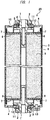
- FIG. 1 is a sectional view of a lithium ion secondary battery of an embodiment to which the present invention can be applied.
- the lithium ion secondary battery has a positive electrode, a negative electrode, a separator, and an electrolytic solution in a battery container.
- the separator is disposed between the positive electrode and the negative electrode.
- a battery charger is connected between the positive electrode and the negative electrode.
- lithium ions inserted in a positive electrode active material are desorbed, and released into the electrolytic solution.
- the lithium ions released into the electrolytic solution move in the electrolytic solution, pass through a separator made of fine porous films, and reach the negative electrode.
- the lithium ions which have reached the negative electrode are inserted into a negative electrode active material which constitutes the negative electrode.
- the battery can be charged and discharged.
- a configuration example of the actual lithium ion battery will be described later (for example, see FIG. 1 ).
- a positive electrode described below is provided as a positive electrode applicable to the high-input and high-output lithium ion battery having a large capacity.
- the positive electrode (positive electrode plate) of the present embodiment is made up of a current collector and a positive electrode composite (positive electrode mixture) formed on the current collector.
- the positive electrode composite is a layer which is provided on the current collector and contains at least the positive electrode active material.
- layered lithium nickel manganese cobalt composite oxide (hereinafter, referred to also as NMC) is contained.
- NMC layered lithium nickel manganese cobalt composite oxide
- the NMC has high capacity and is excellent in safety.
- a mixed active material of the NMC and spinel lithium manganese oxide (hereinafter, referred to also as sp-Mn) may be used.
- the contained amount of NMC is preferably 65 mass% or more with respect to a total amount of the positive electrode composite, more preferably 70 mass% or more, and still more preferably 80 mass% or more.
- composition formula (Chem. 1) (1+ ⁇ ) denotes a composition ratio of Li (lithium), x denotes a composition ratio of Mn (manganese), y denotes a composition ratio of Ni (nickel), and (1-x-y-z) denotes a composition ratio of Co (cobalt). Also, z denotes a composition ratio of an element M.
- the composition ratio of O (oxygen) is 2.
- the element M is at least one element selected from a group including Ti (titanium), Zr (zirconium), Nb (niobium), Mo (molybdenum), W (tungsten), Al (aluminum), Si (silicon), Ga (gallium), Ge (germanium), and Sn (tin).
- composition formula (Chem. 2) (1+ ⁇ ) denotes a composition ratio of Li, (2- ⁇ ) denotes a composition ratio of Mn, and ⁇ denotes a composition ratio of an element M'.
- the composition ratio of O (oxygen) is 4.
- the element M' is preferably at least one element selected from a group including Mg (magnesium), Ca (calcium), Sr (strontium), Al, Ga, Zn (zinc), and Cu (copper).
- the element M' in the above-mentioned composition formula (Chem. 2) it is preferred to use Mg or Al.
- Mg or Al the battery life can be extended.
- the safety of the battery can be enhanced.
- preservation characteristics and charging/discharging cycle characteristics can be enhanced.
- the positive electrode active material materials other than the above-mentioned NMC and sp-Mn may be used.
- any material commonly used in this field may be used, and examples thereof include lithium-containing composite metal oxide other than NMC and sp-Mn, olivine type lithium salt, chalcogen compound, and manganese dioxide.
- the lithium-containing composite metal oxide is metal oxide containing lithium and a transition metal or metal oxide in which part of the transition metal in the foregoing metal oxide is replaced with a different element.
- the different element include Na, Mg, Sc, Y, Mn, Fe, Co, Ni, Cu, Zn, Al, Cr, Pb, Sb, V, and B, among which Mn, Al, Co, Ni, and Mg are preferred.
- One of the different elements may be used alone or two or more of the different elements may be used in combination.
- the value x representing the molar ratio of lithium increases or decreases by charging and discharging.
- examples of the olivine type lithium salt include LiFePO 4 .
- examples of the chalcogen compound include titanium disulfide and molybdenum disulfide.
- One of the positive electrode active materials may be used alone or two or more of the positive electrode active materials may be used in combination.
- the positive electrode composite contains a positive electrode active material, a binding material and the like, and is formed on the current collector.
- the forming method thereof is not particularly limited, and for example, it is formed in the following manner. That is, the positive electrode active material, the binding material, and other materials such as a conducting material and a thickening agent which are used as necessary are mixed in a dry method and formed into a sheet-like shape, and this is pressure-bonded to the current collector (dry method).
- the positive electrode active material, the binding material, and other materials such as a conducting material and a thickening agent which are used as necessary are dissolved or dispersed in a dispersing solvent to be a slurry, and this is applied to the current collector and then dried (wet method).
- the layered lithium nickel manganese cobalt composite oxide (NMC) is used as the positive electrode active material. This is used in a powder (grain) state and is mixed.
- the particles of the positive electrode active materials of the NMC and sp-Mn those in a massive form, a polyhedron shape, a spherical shape, an oval sphere shape, a tabular shape, a needle shape, a pillar shape and the like may be used.
- the ranges thereof can be adjusted as follows. That is, the lower limit of the range is 1 ⁇ m or more, preferably 3 ⁇ m or more, and more preferably 5 ⁇ m or more, and the upper limit is 30 ⁇ m or less, preferably 25 ⁇ m or less, and more preferably 15 ⁇ m or less.
- the median diameter d50 can be calculated from a particle size distribution obtained by a laser diffraction and scattering method.
- the ranges of an average particle diameter of the primary particle are as follows. That is, the lower limit of the range is 0.01 ⁇ m or more, preferably 0.05 ⁇ m or more, more preferably 0.08 ⁇ m or more, and still more preferably 0. 1 ⁇ m or more, and the upper limit is 3 ⁇ m or less, preferably 2 ⁇ m or less, more preferably 1 ⁇ m or less, and still more preferably 0.6 ⁇ m or less.
- the formation of the secondary particle in a spherical shape becomes difficult, and battery performances such as output characteristics may be deteriorated due to the deterioration of the tap density (filling characteristics) and the deterioration of a specific surface area.
- the reversibility of charging and discharging may be deteriorated due to the decrease in crystallinity.
- the ranges of a BET specific surface area of particles of the positive electrode active materials of the NMC and the sp-Mn are as follows. That is, the lower limit of the range is 0.2 m 2 /g or more, preferably 0.3 m 2 /g or more, and more preferably 0.4 m 2 /g or more, and the upper limit is 4.0 m 2 /g or less, preferably 2.5 m 2 /g or less, and more preferably 1.5 m 2 /g or less. In the range less than the above-mentioned lower limit, the battery performance may be deteriorated.
- the BET specific surface area is a specific surface area (area per unit gram) obtained by a BET method.
- Conducting materials for the positive electrode include, for example, metal materials such as copper and nickel, graphites such as natural graphite and artificial graphite, carbon black such as acetylene black, and carbonaceous materials like amorphous carbon such as needle coke. Note that one material among these may be used independently, or two or more materials may be used in combination.
- the ranges of the contained amount (additive amount, percentage, quantity) of the conducting material relative to a mass of the positive electrode composite are as follows. That is, the lower limit of the range is 0.01 mass% or more, preferably 0.1 mass% or more, and more preferably 1 mass% or more, and the upper limit is 50 mass% or less, preferably 30 mass% or less, and more preferably 15 mass% or less. In the range less than the above-mentioned lower limit, conductivity may become insufficient. In addition, in the case of exceeding the above-mentioned upper limit, the battery capacity may be lowered.
- the binding material of the positive electrode active material is not particularly limited, and a material whose solubility and dispersibility for a dispersing solvent are suitable is selected in the case where the positive electrode composite is formed by an application method.
- resin-based polymers such as polyethylene, polypropylene, polyethylene terephthalate, polymethyl methacrylate, polyimide, aromatic polyamide, cellulose, and nitrocellulose
- rubber-like polymers such as SBR (styrene-butadiene rubber), NBR (acrylonitrile-butadiene rubber), fluoro-rubber, isoprene rubber, butadiene rubber, and ethylene-propylene rubber
- thermoplastic elastomer polymers such as styrene butadiene styrene block co-polymer or its hydrogen additive, EPDM (ethylene propylene diene terpolymer), styrene ethylene butadiene ethylene co-polymer, and styrene isoprene
- PVdF polyvinylidene fluoride
- PVdF polytetrafluoroethylene vinylidene fluoride co-polymer
- the ranges of the contained amount (additive amount, percentage, quantity) of the binding material relative to a mass of the positive electrode composite are as follows. That is, the lower limit of the range is 0.1 mass% or more, preferably 1 mass% or more, and more preferably 3 mass% or more, and the upper limit is 80 mass% or less, preferably 60 mass% or less, more preferably 40 mass% or less, and still more preferably 10 mass% or less.
- the contained amount of the binding material is too low, the positive electrode active material cannot be fully bound and a mechanical strength of the positive electrode becomes insufficient, with the result that battery performances such as cycle characteristics may be deteriorated. Conversely, when too high, the battery capacity and conductivity may be lowered.
- the layer formed on the current collector by using the above-mentioned wet method or dry method is preferably consolidated with a hand press, a roller press and the like in order to enhance a filling density of the positive electrode active material.
- the density of the positive electrode composite consolidated as described above is 2.5 to 2.8 g/cm 3 , and is preferably 2.55 g/cm 3 or more and 2.75 g/cm 3 or less, and more preferably 2.6 g/cm 3 or more and 2.7 g/cm 3 or less from a viewpoint of further improvement of the input/output characteristics and safety.
- the application quantity of the positive electrode composite to one surface of the positive electrode current collector is 110 to 170 g/m 2 , and is preferably 120 g/m 2 or more and 160 g/m 2 or less, and more preferably 130 g/m 2 or more and 150 g/m 2 or less from a viewpoint of further improvement of the energy density and input/output characteristics.
- the application film thickness of the positive electrode composite to one surface of the positive electrode current collector is preferably 39 to 68 ⁇ m, more preferably 43 to 64 ⁇ m, and still more preferably 46 to 60 ⁇ m.
- the positive electrode composite density and the application quantity of the positive electrode composite to one surface are set within the ranges mentioned above.
- the material of the current collector for the positive electrode is not particularly limited, and examples thereof include: metal materials such as aluminum, stainless steel, plated nickel, titanium, and tantalum; and carbonaceous materials such as carbon cloth and carbon paper. Among them, the metal material, especially aluminum is preferred.
- the shape of the current collector is not particularly limited, and any materials processed into various shapes can be used. Examples thereof include: regarding metal materials, metal foil, metal column, metal coil, metal plate, metal thin film, expanded metal, punched metal, and foamed metal; and regarding carbonaceous materials, carbon plate, carbon thin film, and carbon cylindrical column. Among them, the metal thin film is preferably used. Note that the thin film may be formed into a mesh-like shape as appropriate. The thickness of the thin film is arbitrary, and the ranges thereof are as follows.
- the lower limit of the range is 1 ⁇ m or more, preferably 3 ⁇ m or more, and more preferably 5 ⁇ m or more
- the upper limit is 1 mm or less, preferably 100 ⁇ m or less, and more preferably 50 ⁇ m or less.
- the range less than the above-mentioned lower limit sufficient strength required for the current collector cannot be obtained in some cases.
- plasticity may be lowered and processability may be deteriorated.
- a negative electrode described below is provided as a negative electrode applicable to the high-output lithium ion secondary battery having a large capacity.
- the negative electrode (negative electrode plate) of the present embodiment is made up of a current collector and a negative electrode composite (negative electrode mixture) formed on both surfaces of the current collector.
- the negative electrode composite contains a negative electrode active material which can electrochemically occlude and release lithium ions.
- Examples of the negative electrode active material used in the present invention include easily graphitizable carbon (hereinafter, referred to also as soft carbon).
- the examples may include carbon materials other than the easily graphitizable carbon.
- the carbon material is roughly classified into a graphite-based material having an aligned crystal structure and a non-graphite-based material having a disordered crystal structure.
- Examples of the former include natural graphite and artificial graphite, and examples of the latter include easily graphitizable carbon, which has a disordered crystal structure, but easily becomes graphite by heating at 2000 to 3000°C, and non-graphitizable carbon which is hard to become graphite (hereinafter, referred to also as hard carbon).
- the non-graphite-based carbon material can be manufactured by, for example, performing the heat treatment to petroleum pitch, polyacene, polyparaphenylene, polyfurfuryl alcohol, and polysiloxane, and the hard carbon or the soft carbon can be provided by changing a baking temperature.
- the baking temperature of about 500°C to about 800°C is suitable for the manufacture of the hard carbon
- the baking temperature of about 800°C to about 1000°C is suitable for the manufacture of the soft carbon.
- an interlayer spacing d002 value in a C axis direction obtained by a wide-angle X-ray diffraction method is defined to be 0.36 nm or more and 0.40 nm or less.
- an interlayer spacing d002 value in a C axis direction obtained by a wide-angle X-ray diffraction method is preferably 0.34 nm or more and less than 0.36 nm, more preferably 0.341 nm or more and 0.355 nm or less, and still more preferably 0.342 nm or more and 0.35 nm or less.
- the content ratio of the easily graphitizable carbon (soft carbon) is preferably 20 mass% or more, more preferably 50 mass% or more, and still more preferably 70 mass% or more with respect to the total amount of the negative electrode active material.
- the easily graphitizable carbon (soft carbon) and the non-graphitizable carbon (hard carbon) may be used in combination.
- the mixed ratio (mass ratio) of the easily graphitizable carbon (soft carbon) and the non-graphitizable carbon (hard carbon) is preferably 100/0 to 10/90, more preferably 100/0 to 20/80, still more preferably 100/0 to 50/50, and particularly preferably 100/0 to 70/30.
- the average particle diameter (d50) of the easily graphitizable carbon (soft carbon) is preferably 2 to 50 ⁇ m.
- the average particle diameter is 2 ⁇ m or more, the specific surface area can be fallen within an appropriate range, and an initial charge/discharge efficiency of a lithium ion secondary battery is excellent. At the same time, the contact between particles is good and the input/output characteristics tend to be excellent.
- the average particle diameter is 50 ⁇ m or less, irregularities are less likely to be formed on an electrode surface, and short circuit of a battery can be suppressed.
- the diffusion distance of Li from a particle surface to inside thereof is relatively short, the input/output characteristics of the lithium ion secondary battery tend to be enhanced.
- the average particle diameter is preferably 5 to 30 ⁇ m, and more preferably 10 to 20 ⁇ m.
- the particle size distribution can be measured by dispersing a sample into purified water containing surfactant by use of a laser diffraction particle size distribution measurement device (for example, SALD-3000J manufactured by Shimadzu Corporation), and the average particle diameter is calculated as median diameter (d50).
- metal oxides such as tin oxide and silicon oxide, metal composite oxides, lithium single substance, lithium alloy such as lithium aluminum alloy, and materials such as Sn and Si which can form alloy with lithium, and the like may be used in combination.
- metal oxides such as tin oxide and silicon oxide, metal composite oxides, lithium single substance, lithium alloy such as lithium aluminum alloy, and materials such as Sn and Si which can form alloy with lithium, and the like may be used in combination.
- One material among these may be used independently, or two or more materials may be used in combination.
- the metal composite oxide is not particularly limited as long as it can occlude and release lithium, and the oxide containing Ti (titanium) or Li (lithium) or both Ti and Li is preferred from a viewpoint of high current density charging/discharging characteristics.
- State of charge (SOC) of the negative electrode of the present embodiment at a potential to be 0.1 V with respect to a lithium potential is preferably 65% or more and 90% or less, and more preferably 68% or more and 85% or less from a viewpoint of input characteristics and practicality.
- SOC at a potential to be 0.1 V with respect to a lithium potential can be measured as follows.
- a CR2032 coin cell is fabricated by assembling a negative electrode obtained by applying a negative electrode composite to one surface of a current collector and punched to a size of 15 mm in diameter, metal lithium punched to a size of 16 mm in diameter, a separator (for example, porous sheet made of polyethylene) punched to a size of 19 mm in diameter, and an electrolytic solution (for example, carbonate-based) under argon atmosphere.
- the coin cell is charged to 0 V (V vs Li/Li + ) at a constant current having a current density of 0.1 C at 25°C, and charged to a current density of 0.01 C at a constant voltage of 0 V.
- the coin cell is discharged to 1.5 V (V vs Li/Li + ) at a constant current having a current density of 0.1 C, and three cycles of the charge and discharge are performed.
- the charge capacity at the third cycle is defined as SOC 100%, and the charge capacity at the time of reaching 0.1 V at the third cycle is measured, and SOC is calculated from the following formula 1.
- SOC CC charge capacity before 0.1 V at third cycle / CCCV charge capacity before 0 V at third cycle
- a direction where lithium ions are inserted into a negative electrode active material is defined as charge
- a direction where the lithium ions inserted in the negative electrode active material are desorbed is defined as discharge.
- C means "current value (A) /discharge capacity of battery (Ah)".
- the materials of the current collector for the negative electrode are not particularly limited, and examples thereof include metal materials such as copper, nickel, stainless steel, and nickel-plating steel. Among them, from a viewpoint of processability and cost, copper is preferred.
- the shape of the current collector is not particularly limited, and materials processed into various shapes can be used. Examples thereof include metal foil, metal column, metal coil, metal plate, metal thin film, expanded metal, punched metal, and foamed metal. Among them, the metal thin film is preferred and the copper foil is more preferred.
- the copper foil there are a rolled copper foil formed by a rolling method and an electrolytic copper foil formed by an electrolytic method, and both are suitably used as the current collector.
- the thickness of the current collector is not particularly limited, in the case where the thickness is less than 25 ⁇ m, the strength thereof can be enhanced by using strong copper alloy (phosphor bronze, copper-titanium alloy, Corson alloy, Cu-Cr-Zr alloy, and the like) instead of pure copper.
- strong copper alloy phosphor bronze, copper-titanium alloy, Corson alloy, Cu-Cr-Zr alloy, and the like
- the application quantity of the negative electrode composite to one surface of the current collector is preferably 50 g/m 2 or more and 120 g/m 2 or less, and more preferably 60 g/m 2 or more and 100 g/m 2 or less from a viewpoint of an energy density and input/output characteristics.
- the configuration of the negative electrode composite formed by using the negative electrode active material is not particularly limited, and the ranges of the negative electrode composite density are as follows. That is, the lower limit of the negative electrode composite density is preferably 0.7 g/cm 3 or more, more preferably 0.8 g/cm 3 or more, and still more preferably 0.9 g/cm 3 or more, and the upper limit is 2 g/cm 3 or less, preferably 1.9 g/cm 3 or less, more preferably 1.8 g/cm 3 or less, and still more preferably 1.7 g/cm 3 or less.
- the binding material of the negative electrode active material is not particularly limited as long as it is a material stable for the nonaqueous electrolytic solution and dispersing solvent used at the time of forming an electrode.
- resin-based polymers such as polyethylene, polypropylene, polyethylene terephthalate, polymethyl methacrylate, aromatic polyamide, cellulose, and nitrocellulose
- rubber-like polymers such as SBR (styrene-butadiene rubber), isoprene rubber, butadiene rubber, fluoro-rubber, NBR (acrylonitrile-butadiene rubber), and ethylene-propylene rubber
- thermoplastic elastomer polymers such as EPDM (ethylene propylene diene terpolymer), styrene ethylene butadiene styrene co-polymer, and styrene isoprene styrene block
- the type of the dispersing solvent for forming the slurry is not limited as long as the solvent can dissolve or disperse the negative electrode active material, the binding material, and the conducting material and the thickening agent which are used as necessary, and both aqueous solvent and organic solvent may be used.
- aqueous solvent examples include water, mixed solvent of alcohol and water, and others
- organic solvent examples include N-methyl pyrrolidone (NMP), dimethylformamide, dimethylacetamide, methyl ethyl ketone, cyclohexanone, methyl acetate, methyl acrylate, diethyltriamine, N,N-dimethylamino propylamine, tetrahydrofuran (THF), toluene, acetone, diethyl ether, dimethylacetamide, hexamethylphosphoramide, dimethyl sulfoxide, benzene, xylene, quinoline, pyridine, methylnaphthalene, hexane, and others.
- NMP N-methyl pyrrolidone
- dimethylformamide dimethylacetamide
- methyl ethyl ketone examples of the organic solvent
- cyclohexanone examples include methyl acetate, methyl acrylate, dieth
- a thickening agent When using the aqueous solvent in particular, it is preferred to use a thickening agent. A dispersing agent and the like are added together with this thickening agent, and a slurry is produced by using a latex such as SBR. Note that one dispersing solvent among these may be used independently, or two or more dispersing solvents may be used in combination.
- the ranges of the contained amount (additive amount, percentage, quantity) of the binding material relative to a mass of the negative electrode composite are as follows. That is, the lower limit of the range is preferably 0.1 mass% or more, more preferably 0.5 mass% or more, and still more preferably 0.6 mass% or more.
- the upper limit is 20 mass% or less, preferably 15 mass% or less, more preferably 10 mass% or less, and still more preferably 8 mass% or less.
- a percentage of the binding material which does not contribute to the battery capacity may be increased, and the battery capacity may be lowered.
- a strength of the negative electrode composite may be lowered.
- the ranges of the contained amount of the binding material relative to a mass of the negative electrode composite in the case where the rubber-like polymer represented by SBR is used as a major component of the binding material are as follows. That is, the lower limit of the range is 0.1 mass% or more, preferably 0.5 mass% or more, and more preferably 0.6 mass% or more, and the upper limit is 5 mass% or less, preferably 3 mass% or less, and more preferably 2 mass% or less.
- the ranges of the contained amount of the binding material relative to a mass of the negative electrode composite in the case where the fluorine-based polymer represented by the polyvinylidene fluoride is used as a major component of the binding material are as follows. That is, the lower limit of the range is 1 mass% or more, preferably 2 mass% or more, and more preferably 3 mass% or more, and the upper limit is 15 mass% or less, preferably 10 mass% or less, and more preferably 8 mass% or less.
- the thickening agent is used for adjusting the viscosity of the slurry.
- the thickening agent is not particularly limited, and examples thereof include carboxymethylcellulose, methylcellulose, hydroxymethylcellulose, ethylcellulose, polyvinyl alcohol, oxidized starch, phosphorylation starch, casein, salt thereof, and the like. One material among these may be used independently, or two or more materials may be used in combination.
- the ranges of the contained amount of the thickening agent relative to a mass of the negative electrode composite in the case of using the thickening agent are as follows. That is, the lower limit of the range is 0.1 mass% or more, preferably 0.5 mass% or more, and more preferably 0.6 mass% or more, and the upper limit is 5 mass% or less, preferably 3 mass% or less, and more preferably 2 mass% or less.
- the electrolytic solution of the present embodiment is composed of lithium salt (electrolyte) and nonaqueous solvent which dissolves the lithium salt. As necessary, additives may be added.
- the lithium salt is not particularly limited as long as it can be used as an electrolyte of nonaqueous electrolytic solution for lithium ion batteries, and examples thereof include inorganic lithium salt, fluorine-containing organic lithium salt, and oxalatoborate salt shown below.
- inorganic lithium salt examples include inorganic fluoride salts such as LiPF 6 , LiBF 4 , LiAsF 6 , and LiSbF 6 , perhalogen acid salts such as LiClO 4 , LiBrO 4 , and LiIO 4 , and inorganic chloride salt such as LiAlCl 4 .
- inorganic fluoride salts such as LiPF 6 , LiBF 4 , LiAsF 6 , and LiSbF 6
- perhalogen acid salts such as LiClO 4 , LiBrO 4 , and LiIO 4
- inorganic chloride salt such as LiAlCl 4 .
- fluorine-containing organic lithium salt examples include: perfluoroalkane sulfonate such as LiCF 3 SO 3 ; perfluoroalkane sulfonylimide salts such as LiN(CF 3 SO 2 ) 2 , LiN(CF 3 CF 2 SO 2 ) 2 , and LiN(CF 3 SO 2 )(C 4 F 9 SO 2 ); perf luoroalkane sulfonylmethide salt such as LiC(CF 3 SO 2 ) 3 ; fluoroalkyl fluorophosphates salts such as Li[PF 5 (CF 2 CF 2 CF 3 )], Li[PF 4 (CF 2 CF 2 CF 3 ) 2 ] , Li[PF 3 (CF 2 CF 2 CF 3 ) 3 ], Li[PF 5 (CF 2 CF 2 CF 2 CF 3 )], Li[PF 4 (CF 2 CF 2 CF 3 ) 2 ], and Li[PF 3 (CF 2 CF
- oxalatoborate salt examples include lithium bis(oxalato)borate, lithium difluoro oxalatoborate, and others.
- lithium salt among these may be used independently, or two or more lithium salts may be used in combination.
- lithium hexafluorophosphate LiPF 6
- solubility for solvent, charging/discharging characteristics for use as a secondary battery, output characteristics, cycle characteristics, and others are comprehensively considered.
- the concentration of electrolyte in the nonaqueous electrolytic solution is not particularly limited, and the ranges of the concentration of electrolyte are as follows. That is, the lower limit of the concentration is 0.5 mol/L or more, preferably 0.6 mol/L or more, and more preferably 0.7 mol/L or more. Also, the upper limit of the concentration is 2 mol/L or less, preferably 1.8 mol/L or less, and more preferably 1.7 mol/L or less. When the concentration is too low, an electric conductivity of the electrolytic solution may become insufficient. Also, when the concentration is too high, the electric conductivity may be lowered because the viscosity is increased. The performance of the lithium ion battery may be lowered due to the deterioration of the electric conductivity like this.
- the nonaqueous solvent is not particularly limited as long as it is nonaqueous solvent which can be used as the solvent of electrolyte for lithium ion secondary batteries, and examples thereof include cyclic carbonate, chain carbonate, chain ester, cyclic ether, and chain ether described below.
- cyclic carbonate whose carbon number of an alkylene group constituting the cyclic carbonate is 2 to 6 is preferred, and cyclic carbonate whose carbon number thereof is 2 to 4 is more preferred.
- Specific examples thereof include ethylene carbonate, propylene carbonate, butylene carbonate, and others. Among them, ethylene carbonate and propylene carbonate are preferred.
- chain carbonate dialkyl carbonate is preferred, and chain carbonate whose carbon numbers of two alkyl groups are respectively 1 to 5 is preferred, and chain carbonate whose carbon numbers thereof are 1 to 4 is more preferred.
- chain carbonate examples thereof include symmetric chain carbonates such as dimethyl carbonate, diethyl carbonate, and di-n-propyl carbonate; asymmetric chain carbonates such as ethyl methyl carbonate, methyl-n-propyl carbonate, and ethyl-n-propyl carbonate; and others. Among them, dimethyl carbonate, diethyl carbonate, and ethyl methyl carbonate are preferred.
- chain ester examples include methyl acetate, ethyl acetate, propyl acetate, methyl propionate, and others. Among them, it is preferred to use the methyl acetate from a viewpoint of the improvement in low-temperature characteristics.
- cyclic ether examples include tetrahydrofuran, 2-methyl tetrahydrofuran, tetrahydropyran, and others. Among them, it is preferred to use tetrahydrofuran from a viewpoint of the improvement in input/output characteristics.
- chain ether examples include dimethoxyethane, dimethoxymethane, and others.
- One material of these may be independently used and two or more materials may be used in combination, but it is preferred to use a mixed solvent in which two or more kinds of compounds are used together, and it is preferred to use high dielectric constant solvent of cyclic carbonates and low viscosity solvent such as chain carbonates and chain esters together.
- One of preferred combinations is the combination using cyclic carbonates and chain carbonates as main constituents. Among them, the combination in which the sum total of the cyclic carbonates and the chain carbonates to the nonaqueous solvent is 80 vol.% or more, preferably 85 vol. % or more, and more preferably 90 vol.% or more, and the volume of the cyclic carbonates to the sum total of the cyclic carbonates and the chain carbonates is within the following ranges is preferred.
- the lower limit of a volume of the cyclic carbonates is 5 vol.% or more, preferably 10 vol.% or more, and more preferably 15 vol.% or more, and the upper limit is 50 vol.% or less, preferably 35 vol.% or less, and more preferably 30 vol.% or less.
- the additive is not particularly limited as long as it is the additive for the nonaqueous electrolytic solution of the lithium ion battery, and examples thereof include heterocyclic compound containing nitrogen, sulfur, or nitrogen and sulfur, cyclic carboxylic acid ester, fluorine-containing cyclic carbonate, and other compounds having unsaturated bonding within a molecule. Fluorine-containing cyclic carbonate and other compounds having unsaturated bonding within a molecule are preferred from a viewpoint of the extension of the battery life.
- fluorine-containing cyclic carbonate examples include fluoroethylene carbonate, difluoroethylene carbonate, trifluoroethylene carbonate, tetrafluoroethylene carbonate, trifluoropropylene carbonate, and others.
- Examples of the other compounds having unsaturated bonding within a molecule include vinylene carbonate and others.
- additives such as an overcharging prevention material, a negative electrode coating material, a positive electrode protection material, a high input/output material may be used in accordance with desired functions.
- the separator is not particularly limited as long as it has ionic permeability while electronically insulating the positive electrode and the negative electrode, and is provided with resistance against oxidization on the positive electrode side and reduction on the negative electrode side.
- materials (substances) for the separator which satisfy the characteristics mentioned above for example, resin, inorganic substance, and glass fiber are used.
- olef in-based polymer fluorine-based polymer, cellulose-based polymer, polyimide, nylon, and others are used, and it is preferred to select from materials which are stable for the nonaqueous electrolytic solution and excellent in solution retention, and porous sheet, nonwoven fabric or the like using polyolefin such as polyethylene or polypropylene as a raw material is preferably used.
- oxides such as alumina and silicon dioxide, nitrides such as aluminum nitride and silicon nitride, sulfates such as barium sulfate and calcium sulfate, and others are used.
- the separator obtained by adhering the above-mentioned inorganic substance in fiber shape or particle shape to a base material in a thin film shape such as nonwoven fabric, woven fabric, and fine porous film.
- a base material in a thin film shape a material whose pore diameter is 0.01 to 1 ⁇ m and thickness is 5 to 50 ⁇ m is suitably used.
- the material which is made of the above-mentioned inorganic substance in the fiber shape or particle shape and formed into a composite porous layer by using a binding material such as resin can be used as the separator.
- the separator obtained by forming this composite porous layer on the surface of the positive electrode or the negative electrode for example, a composite porous layer obtained by binding alumina particles whose 90% particle size is less than 1 ⁇ m with using fluororesin as a binding material may be formed on the surface of the positive electrode.
- a cleavage valve may be provided as one of other constituent parts of the lithium ion secondary battery. By opening the cleavage valve, a pressure rise inside the battery can be suppressed, and safety can be enhanced.
- a component part which discharges an inert gas (for example, carbon dioxide) in association with temperature increase may be provided.
- an inert gas for example, carbon dioxide
- the material used for the above-mentioned component part include lithium carbonate, polyalkylene carbonate resin, and others.
- polyalkylene carbonate resin examples include polyethylene carbonate, polypropylene carbonate, poly(1,2-dimethyl ethylene carbonate), polybutene carbonate, polyisobutene carbonate, polypentene carbonate, polyhexene carbonate, polycyclopentene carbonate, polycyclohexene carbonate, polycyclohepten carbonate, polycyclooctane carbonate, polylimonene carbonate, and others.
- materials used for the above-mentioned component part lithium carbonate, polyethylene carbonate, and polypropylene carbonate are preferred.
- the discharge capacity of the lithium ion secondary battery of the present invention made up of the constituent elements described above is 30 Ah or more and less than 99 Ah, and is preferably 40 Ah or more and less than 99 Ah, and more preferably 55 Ah or more and less than 95 Ah from a viewpoint of achieving high input/output characteristics and high energy density, while guaranteeing the safety.
- the discharge capacity mentioned here is the discharge capacity at the time of discharging the voltage from 4.2 V to 2.7 V at a current of 0.5 C.
- the capacity ratio of the negative electrode and the positive electrode is preferably 1 or more and less than 1.3, more preferably 1.05 to 1.25, and still more preferably 1.1 to 1. 2 from a viewpoint of safety and an energy density.
- a positive electrode potential may be higher than 4.2 V at the time of charging, and thus the safety may be deteriorated (the positive electrode potential at this time means a potential with respect to Li potential).
- the negative electrode capacity represents [the discharge capacity of the negative electrode]
- the positive electrode capacity represents [the initial charge capacity of the positive electrode - the larger one of irreversible capacities of the negative electrode and the positive electrode].
- [the discharge capacity of the negative electrode] is defined as the capacity calculated by a charge-discharge device when lithium ions inserted in the negative electrode active material are desorbed.
- [the initial charge capacity of the positive electrode] is defined as the capacity calculated by a charge-discharge device when lithium ions are desorbed from the positive electrode active material.
- the capacity ratio of the negative electrode and the positive electrode can be calculated also from, for example, "the discharge capacity of the negative electrode/the discharge capacity of the lithium ion secondary battery".
- the discharge capacity of the lithium ion secondary battery can be measured under the conditions of performing constant-current constant-voltage (CCCV) charge at 4.2 V and 0.1 to 0.5 C for a termination time of 2 to 5 hours, and then performing constant-current (CC) discharge to 2.7 V at 0.1 to 0.5 C.
- CCCV constant-current constant-voltage
- the discharge capacity of the negative electrode can be calculated by cutting the negative electrode of the lithium ion secondary battery whose discharge capacity is measured to a predetermined area, fabricating a monopolar cell using lithium metal as a counter electrode via a separator impregnated with an electrolytic solution, measuring a discharge capacity per predetermined area under the conditions of performing constant-current constant-voltage (CCCV) charge at 0 V and 0.1 C with a termination current of 0.01 C and then performing constant-current (CC) discharge to 1.5 V at 0.1 C, and converting the measured capacity into the total area used as the negative electrode of the lithium ion battery.
- CCCV constant-current constant-voltage
- CC constant-current
- C current value (A)/discharge capacity of battery (Ah)".
- the positive electrode plate was fabricated in the following manner. Layered lithium nickel manganese cobalt composite oxide (BET specific surface area: 0.4 m 2 /g, average particle diameter (d50) : 6. 5 ⁇ m) and spinel lithium manganese oxide (sp-Mn) as positive electrode active materials were mixed with a predetermined mass ratio of the active materials (NMC/sp-Mn) as shown in Table 1. A scale-like graphite (average particle diameter: 20 ⁇ m) and acetylene black (trade name: HS-100, average particle diameter: 48 nm (catalog value from DENKI KAGAKU KOGYO K.
- This slurry was applied substantially evenly and uniformly to both surfaces of an aluminum foil having a thickness of 20 ⁇ m serving as the current collector for the positive electrode. Thereafter, a drying process was performed and consolidation was carried out by pressing to obtain a predetermined density.
- the density of the positive electrode composite was set to 2.7 g/cm 3
- the application quantity of the positive electrode composite to one surface of the positive electrode current collector was set to 120 g/m 2 .
- the negative electrode plate in which a -/+ ratio (capacity ratio of a negative electrode and a positive electrode (negative electrode capacity/positive electrode capacity)) was 1.2, styrene butadiene rubber (SBR) was used as a binding material, and 1.
- CMC carboxymethyl cellulose
- the positive electrode plate and the negative electrode plate described above were wound with a separator made of polyethylene having a thickness of 30 ⁇ m interposed therebetween so that the electrode plates were not in direct contact with each other.
- the lead pieces of the positive electrode plate and the lead pieces of the negative electrode plate were made to be located on both end surfaces on the mutually opposite sides of the wound group.
- the lengths of the positive electrode plate, the negative electrode plate, and the separator were adjusted so that the wound group had the diameter of 65 ⁇ 0.1 mm.
- the lead pieces 9 led out from the positive electrode plate were transformed, and all of them were gathered and made to be in contact with each other in the vicinity of a bottom part of a flange 7 on the side of the positive electrode.
- the flange 7 on the side of the positive electrode was integrally formed so as to project from the circumference of an electrode pole (positive electrode external terminal 1) located approximately on the extension line of an axis of the wound group 6, and had a bottom part and a side part.
- the lead piece 9 was connected and fixed to the bottom part of the flange 7 by ultrasonic welding.
- the flange 7 on the side of the negative electrode was integrally formed so as to project from the circumference of an electrode pole (negative electrode external terminal 1') located approximately on the extension line of the axis of the wound group 6, and had a bottom part and a side part.
- the side part of the flange 7 on the side of the positive electrode external terminal 1 and the side part of the flange 7 on the side of the negative electrode external terminal 1' were covered by using adhesive tape, thereby forming an insulating coating 8.
- the insulating coating 8 was formed also on the outer circumference of the wound group 6.
- the insulating coating 8 was formed by winding this adhesive tape over and over again from the side part of the flange 7 on the side of the positive electrode external terminal 1 to the outer circumferential surface of the wound group 6 and from the outer circumferential surface of the wound group 6 to the side part of the flange 7 on the side of the negative electrode external terminal 1'.
- the insulating coating (adhesive tape) 8 an adhesive tape whose base material was polyimide and whose one surface was coated with a methacrylate-based adhesive material was used.
- the thickness of the insulating coating 8 (the number of turns of the adhesive tape) was adjusted so that the maximum diameter part of the wound group 6 was slightly smaller than an inner diameter of a battery container 5 made of stainless steel, and the wound group 6 was inserted into the battery container 5.
- the battery container 5 the container whose outer diameter was 67 mm and whose inner diameter was 66 mm was used.
- a ceramic washer 3' was fitted to each of an electrode pole whose tip constituted the positive electrode external terminal 1 and an electrode pole whose tip constituted the negative electrode external terminal 1'.
- the ceramic washer 3' was made of alumina, and a thickness of a part abutting on the back surface of a battery lid 4 was 2 mm, the inner diameter was 16 mm, and the outer diameter was 25 mm.
- the positive electrode external terminal 1 was inserted through the ceramic washer 3
- the negative electrode external terminal 1' was inserted through the different ceramic washer 3.
- the ceramic washer 3 was made of alumina and had a plate-like shape with a thickness of 2 mm, an inner diameter of 16 mm, and an outer diameter of 28 mm.
- a peripheral end face of the battery lid 4 was fitted to an opening of the battery container 5, and the whole area of the contact portion therebetween was laser-welded.
- each of the positive electrode external terminal 1 and the negative electrode external terminal 1' penetrated through a hole (opening) located at the center of the battery lid 4, and projected to the outside of the battery lid 4.
- a cleavage valve 10 cleaving in accordance with internal pressure rise of the battery was provided in the battery lid 4.
- the cleaving pressure of the cleavage valve 10 was set to 13 to 18 kgf/cm 2 (1.27 to 1.77 MPa).
- a metal washer 11 was fitted to each of the positive electrode external terminal 1 and the negative electrode external terminal 1'. In this manner, the metal washer 11 was disposed on the ceramic washer 3.
- the metal washer 11 was made of a material smoother than a bottom surface of a nut 2.
- an electrolytic solution was injected into the battery container 5 by a specified quantity from an injection port 13 provided in the battery lid 4, and then the injection port 13 was sealed, thereby completing a cylindrical lithium ion secondary battery 20.
- a solution obtained by dissolving lithium hexafluorophosphate (LiPF 6 ) by 1.2 mol/L into a mixed solution in which ethylene carbonate, dimethyl carbonate, and ethyl methyl carbonate were mixed with a volume ratio of 2:3:2 and adding 0.8 mass% of vinylene carbonate (VC) as an additive was used.
- a current value during charge and discharge was set to 0.5 CA.
- Charge was constant-current constant-voltage (CCCV) charge with an upper limit voltage of 4.2 V, and 3 hours were set as a termination condition.
- Discharge was CC discharge of 0.5 C, and 2.7 V was set as a termination condition. Also, a pause of 30 minutes was taken between the charge and the discharge. Three cycles thereof were carried out, and the charge capacity at the third cycle was defined as "a charge capacity at a current value of 0.5 C" and the discharge capacity at the third cycle was defined as "a discharge capacity at a current value of 0.5 C".
- Input characteristics of 80% or more were evaluated as “A”; input characteristics of 75% or more and less than 80% were evaluated as “B”; and input characteristics of less than 75% were evaluated as “C”.
- the charging and discharging cycle at a current value of 0.5 C was repeated twice under an environment of 25°C in a voltage range of 4.2 to 2.7 V. Then, after charging the battery up to 4.2 V, a nail having a diameter of 5 mm was pierced into the central part of the battery (cell) at a speed of 1.6 mm/s, and the positive electrode and the negative electrode were short-circuited in the battery container. The variation of an external appearance of the battery at this time was checked. Specifically, an existence of a breakage of the battery container was checked. The breakage of the battery container included a crack, a swelling, and an ignition.
- the application quantity of the positive electrode composite to one surface is 110 to 170 g/m 2
- the density of the positive electrode composite is set to 2.5 to 2.8 g/cm 3
- the easily graphitizable carbon is contained as the negative electrode active material
- Comparative Example 1 where the density of the positive electrode composite is so low as to be outside the range, the input characteristics are inferior.
- Comparative Example 2 where the density of the positive electrode composite is so high as to be outside the range, the safety is inferior.
- Comparative Example 3 where the non-graphitizable carbon is used as the negative electrode active material without using the easily graphitizable carbon
- Comparative Example 4 where the graphite is used as the negative electrode active material without using the easily graphitizable carbon
- the discharge capacity is high, but the input characteristics are significantly inferior.
- the safety is also inferior.
Landscapes
- Chemical & Material Sciences (AREA)
- Chemical Kinetics & Catalysis (AREA)
- Electrochemistry (AREA)
- General Chemical & Material Sciences (AREA)
- Inorganic Chemistry (AREA)
- Engineering & Computer Science (AREA)
- Materials Engineering (AREA)
- Manufacturing & Machinery (AREA)
- Physics & Mathematics (AREA)
- Condensed Matter Physics & Semiconductors (AREA)
- General Physics & Mathematics (AREA)
- Secondary Cells (AREA)
- Battery Electrode And Active Subsutance (AREA)
Abstract
Description
- The present invention relates to a lithium ion secondary battery.
- The lithium ion secondary battery is a secondary battery with a high energy density, and is used for a power source of portable devices such as a notebook computer and a mobile phone by taking advantage of its characteristics. There are various types in the shape of the lithium ion secondary battery, and a wound-type structure of a positive electrode, a negative electrode, and a separator is adopted in a cylindrical lithium ion secondary battery. For example, a positive electrode material and a negative electrode material are each applied to two sheets of belt-like metal foils, a separator is interposed therebetween, and a laminated body thus obtained is wound spirally, thereby forming a wound group. This wound group is housed in a cylindrical battery can used as a battery container, and is sealed after electrolytic solution is injected therein, so that a cylindrical lithium ion secondary battery is formed.
- Regarding the cylindrical lithium ion secondary battery, a 18650 lithium ion secondary battery has been widespread as a lithium ion battery for consumer use. An outer size of the 18650 lithium ion secondary battery is as small as about 18 mm in diameter and about 65 mm in height. Lithium cobalt oxide characterized by a large capacity and long life is mainly used for a positive electrode active material of the 18650 lithium ion secondary battery, and the battery capacity is approximately 1.0 Ah to 2.0 Ah (3.7 Wh to 7.4 Wh) in general.
- In recent years, it is expected that the lithium ion secondary battery is developed not only for the consumer use in portable devices and the like, but also for the use of large-scale energy storage system for natural power sources such as photovoltaic power generation and wind power generation. The large-scale energy storage systems require an amount of electric power per system in an order of magnitude of several megawatts/hour (MWh).
- For example,
Patent Document 1 listed below discloses a cylindrical lithium ion secondary battery which includes, in a cylindrical battery container, an electrode wound group in which a positive electrode, a negative electrode, and a separator are wound. This battery has a discharge capacity of 30 Ah or larger, a positive electrode active material composite containing lithium manganese composite oxide is used for a positive electrode, and a negative electrode active material composite containing amorphous carbon is used for a negative electrode. - Patent Document 1:
WO 2013/128677 - A lithium ion secondary battery has been drawing attention as a high input/output power source used for an electric car, a hybrid electric car and the like. In the application to the field of automobile like this, excellent input characteristics for an improvement in the utilization efficiency of energy by regeneration are also required. In addition, excellent safety is also required.
- However, the result of studies by the inventors of the present invention has clarified that the input characteristics of the lithium ion secondary battery described in
Patent Document 1 are not sufficient. - The present invention has been made in view of the problems described above, and an obj ect of the present invention is to provide a lithium ion secondary battery having excellent input characteristics and safety.
- Specific means for solving the problems are as follows. <1> A lithium ion secondary battery having an electrode wound group in which a positive electrode, a negative electrode, and a separator are wound and an electrolytic solution provided in a battery container, a discharge capacity of the battery being 30 Ah or more and less than 99 Ah, in which the positive electrode has a current collector and a positive electrode composite applied to both surfaces of the current collector, the positive electrode composite contains layered lithium nickel manganese cobalt composite oxide (NMC) as a positive electrode active material, an application quantity of the positive electrode composite to one surface is 110 to 170 g/m2, and a density of the positive electrode composite is 2.5 to 2.8 g/cm3, the negative electrode has a current collector and a negative electrode composite applied to both surfaces of the current collector, and the negative electrode composite contains easily graphitizable carbon as a negative electrode active material. <2> The lithium ion secondary battery according to <1>, in which an amount of the layered lithium nickel manganese cobalt composite oxide (NMC) contained in the positive electrode composite is 65 mass% or more with respect to a total amount of the positive electrode composite.
- The present invention can provide a lithium ion secondary battery having excellent input characteristics and safety.
-
FIG. 1 is a sectional view of a lithium ion secondary battery of an embodiment to which the present invention can be applied. - In the case where a range is indicated as A to B in the following embodiment, it is assumed to be A or more and B or less unless otherwise specified.
- First, summary of a lithium ion secondary battery will be briefly described. The lithium ion secondary battery has a positive electrode, a negative electrode, a separator, and an electrolytic solution in a battery container. The separator is disposed between the positive electrode and the negative electrode.
- When the lithium ion secondary battery is charged, a battery charger is connected between the positive electrode and the negative electrode. At the time of the charging, lithium ions inserted in a positive electrode active material are desorbed, and released into the electrolytic solution. The lithium ions released into the electrolytic solution move in the electrolytic solution, pass through a separator made of fine porous films, and reach the negative electrode. The lithium ions which have reached the negative electrode are inserted into a negative electrode active material which constitutes the negative electrode.
- When the battery is discharged, an external load is connected between the positive electrode and the negative electrode. At the time of the discharging, lithium ions which have been inserted in the negative electrode active material are desorbed and released into the electrolytic solution. At this time, electrons are released from the negative electrode. Then, the lithium ions released into the electrolytic solution move in the electrolytic solution, pass through the separator made of fine porous films, and reach the positive electrode. The lithium ions which have reached the positive electrode are inserted into the positive electrode active material which constitutes the positive electrode. At this time, by the lithium ions being inserted into the positive electrode active material, electrons flow into the positive electrode. In this way, discharging is performed by the electrons moving to the positive electrode from the negative electrode.
- As described above, by inserting and desorbing lithium ions between the positive electrode active material and the negative electrode active material, the battery can be charged and discharged. Note that a configuration example of the actual lithium ion battery will be described later (for example, see
FIG. 1 ). - Next, the positive electrode, the negative electrode, the electrolytic solution, the separator, and other constituent parts which are constituent elements of the lithium ion secondary battery of the present embodiment will be sequentially described below.
- In the present embodiment, a positive electrode described below is provided as a positive electrode applicable to the high-input and high-output lithium ion battery having a large capacity. The positive electrode (positive electrode plate) of the present embodiment is made up of a current collector and a positive electrode composite (positive electrode mixture) formed on the current collector. The positive electrode composite is a layer which is provided on the current collector and contains at least the positive electrode active material.
- As the positive electrode active material, layered lithium nickel manganese cobalt composite oxide (hereinafter, referred to also as NMC) is contained. The NMC has high capacity and is excellent in safety.
- From a viewpoint of further improvement of safety, a mixed active material of the NMC and spinel lithium manganese oxide (hereinafter, referred to also as sp-Mn) may be used.
- From a viewpoint of higher capacity of the battery, the contained amount of NMC is preferably 65 mass% or more with respect to a total amount of the positive electrode composite, more preferably 70 mass% or more, and still more preferably 80 mass% or more.
- As the NMC mentioned above, it is preferred to use the material represented by the following composition formula (Chem. 1).
Li(1+δ)MnxNiyCO(1-x-y-z)MzO2 ... (Chem. 1)
- In the above-mentioned composition formula (Chem. 1), (1+δ) denotes a composition ratio of Li (lithium), x denotes a composition ratio of Mn (manganese), y denotes a composition ratio of Ni (nickel), and (1-x-y-z) denotes a composition ratio of Co (cobalt). Also, z denotes a composition ratio of an element M. The composition ratio of O (oxygen) is 2.
- The element M is at least one element selected from a group including Ti (titanium), Zr (zirconium), Nb (niobium), Mo (molybdenum), W (tungsten), Al (aluminum), Si (silicon), Ga (gallium), Ge (germanium), and Sn (tin).
- Here, -0.15<δ<0.15, 0.1<x≤0.5, 0.6<x+y+z≤1.0, and 0≤z≤0.1 are satisfied.
- Also, as the sp-Mn mentioned above, it is preferred to use the material represented by the following composition formula (Chem. 2).
Li(1+η)Mn(2-λ)M'λO4 ... (Chem. 2)
- In the above-mentioned composition formula (Chem. 2), (1+η) denotes a composition ratio of Li, (2-λ) denotes a composition ratio of Mn, and λ denotes a composition ratio of an element M'. The composition ratio of O (oxygen) is 4.
- The element M' is preferably at least one element selected from a group including Mg (magnesium), Ca (calcium), Sr (strontium), Al, Ga, Zn (zinc), and Cu (copper).
- Here, 0≤η≤0.2 and 0≤λ≤0.1 are satisfied.
- As the element M' in the above-mentioned composition formula (Chem. 2), it is preferred to use Mg or Al. By using Mg or Al, the battery life can be extended. In addition, the safety of the battery can be enhanced. Furthermore, since it is possible to reduce the elution of Mn by adding the element M', preservation characteristics and charging/discharging cycle characteristics can be enhanced.
- As the positive electrode active material, materials other than the above-mentioned NMC and sp-Mn may be used.
- As the positive electrode active material other than the above-mentioned NMC and sp-Mn, any material commonly used in this field may be used, and examples thereof include lithium-containing composite metal oxide other than NMC and sp-Mn, olivine type lithium salt, chalcogen compound, and manganese dioxide.
- The lithium-containing composite metal oxide is metal oxide containing lithium and a transition metal or metal oxide in which part of the transition metal in the foregoing metal oxide is replaced with a different element. Examples of the different element include Na, Mg, Sc, Y, Mn, Fe, Co, Ni, Cu, Zn, Al, Cr, Pb, Sb, V, and B, among which Mn, Al, Co, Ni, and Mg are preferred. One of the different elements may be used alone or two or more of the different elements may be used in combination.
- Examples of the lithium-containing composite metal oxide other than the above-mentioned NMC and sp-Mn include LixCoO2, LixNiO2, LixMnO2, LixCoyNi1-yO2, LixCoyM1-yOz, LixNi1-yMyO2 (M is at least one element selected from the group including Na, Mg, Sc, Y, Mn, Fe, Co, Ni, Cu, Zn, Al, Cr, Pb, Sb, V, and B and x=0 to 1.2, y=0 to 0.9, and z=2. 0 to 2.3). Herein, the value x representing the molar ratio of lithium increases or decreases by charging and discharging.
- In addition, examples of the olivine type lithium salt include LiFePO4. Examples of the chalcogen compound include titanium disulfide and molybdenum disulfide. One of the positive electrode active materials may be used alone or two or more of the positive electrode active materials may be used in combination.
- Hereinafter, the positive electrode composite and the current collector will be described in detail. The positive electrode composite contains a positive electrode active material, a binding material and the like, and is formed on the current collector. The forming method thereof is not particularly limited, and for example, it is formed in the following manner. That is, the positive electrode active material, the binding material, and other materials such as a conducting material and a thickening agent which are used as necessary are mixed in a dry method and formed into a sheet-like shape, and this is pressure-bonded to the current collector (dry method). Alternatively, the positive electrode active material, the binding material, and other materials such as a conducting material and a thickening agent which are used as necessary are dissolved or dispersed in a dispersing solvent to be a slurry, and this is applied to the current collector and then dried (wet method).
- As the positive electrode active material, as mentioned above, the layered lithium nickel manganese cobalt composite oxide (NMC) is used. This is used in a powder (grain) state and is mixed.
- As the particles of the positive electrode active materials of the NMC and sp-Mn, those in a massive form, a polyhedron shape, a spherical shape, an oval sphere shape, a tabular shape, a needle shape, a pillar shape and the like may be used.
- Regarding a median diameter d50 of particles of the positive electrode active materials of the NMC and the sp-Mn (the median diameter d50 of the secondary particle in the case where primary particles are condensed to form the secondary particle), the ranges thereof can be adjusted as follows. That is, the lower limit of the range is 1 µm or more, preferably 3 µm or more, and more preferably 5 µm or more, and the upper limit is 30 µm or less, preferably 25 µm or less, and more preferably 15 µm or less.
- In a range less than the above-mentioned lower limit, there is fear that a tap density (filling characteristics) is lowered and a desired tap density may be no longer acquired, and in a range exceeding the above-mentioned upper limit, the deterioration of the battery performance may be caused because spread of lithium ions in particles takes time. Furthermore, in the case of exceeding the above-mentioned upper limit, mixing characteristics with other materials such as a binding material and a conducting material may be lowered at the time of forming the electrode. Therefore, when this mixture is slurried and then applied, the mixture cannot be uniformly applied and unevenness like stripes may be formed. Note that the median diameter d50 can be calculated from a particle size distribution obtained by a laser diffraction and scattering method.
- In the case where the primary particles are condensed to form the secondary particle, the ranges of an average particle diameter of the primary particle are as follows. That is, the lower limit of the range is 0.01 µm or more, preferably 0.05 µm or more, more preferably 0.08 µm or more, and still more preferably 0. 1 µm or more, and the upper limit is 3 µm or less, preferably 2 µm or less, more preferably 1 µm or less, and still more preferably 0.6 µm or less. In the case of exceeding the above-mentioned upper limit, the formation of the secondary particle in a spherical shape becomes difficult, and battery performances such as output characteristics may be deteriorated due to the deterioration of the tap density (filling characteristics) and the deterioration of a specific surface area. In addition, in the range less than the above-mentioned lower limit, the reversibility of charging and discharging may be deteriorated due to the decrease in crystallinity.
- The ranges of a BET specific surface area of particles of the positive electrode active materials of the NMC and the sp-Mn are as follows. That is, the lower limit of the range is 0.2 m2/g or more, preferably 0.3 m2/g or more, and more preferably 0.4 m2/g or more, and the upper limit is 4.0 m2/g or less, preferably 2.5 m2/g or less, and more preferably 1.5 m2/g or less. In the range less than the above-mentioned lower limit, the battery performance may be deteriorated. In the case of exceeding the above-mentioned upper limit, it becomes difficult to increase the tap density, and mixing characteristics with other materials such as a binding material and a conducting material may be lowered. Therefore, application characteristics in the case where this mixture is slurried and then applied may be deteriorated. The BET specific surface area is a specific surface area (area per unit gram) obtained by a BET method.
- Conducting materials for the positive electrode include, for example, metal materials such as copper and nickel, graphites such as natural graphite and artificial graphite, carbon black such as acetylene black, and carbonaceous materials like amorphous carbon such as needle coke. Note that one material among these may be used independently, or two or more materials may be used in combination.
- The ranges of the contained amount (additive amount, percentage, quantity) of the conducting material relative to a mass of the positive electrode composite are as follows. That is, the lower limit of the range is 0.01 mass% or more, preferably 0.1 mass% or more, and more preferably 1 mass% or more, and the upper limit is 50 mass% or less, preferably 30 mass% or less, and more preferably 15 mass% or less. In the range less than the above-mentioned lower limit, conductivity may become insufficient. In addition, in the case of exceeding the above-mentioned upper limit, the battery capacity may be lowered.
- The binding material of the positive electrode active material is not particularly limited, and a material whose solubility and dispersibility for a dispersing solvent are suitable is selected in the case where the positive electrode composite is formed by an application method. Specific examples thereof include: resin-based polymers such as polyethylene, polypropylene, polyethylene terephthalate, polymethyl methacrylate, polyimide, aromatic polyamide, cellulose, and nitrocellulose; rubber-like polymers such as SBR (styrene-butadiene rubber), NBR (acrylonitrile-butadiene rubber), fluoro-rubber, isoprene rubber, butadiene rubber, and ethylene-propylene rubber; thermoplastic elastomer polymers such as styrene butadiene styrene block co-polymer or its hydrogen additive, EPDM (ethylene propylene diene terpolymer), styrene ethylene butadiene ethylene co-polymer, and styrene isoprene styrene block co-polymer or its hydrogen additive; soft resin polymers such as syndiotactic-1,2-polybutadiene, polyvinyl acetate, ethylene-vinyl acetate co-polymer, and propylene α-olefin co-polymer; fluorine-based polymers such as a polyvinylidene fluoride (PVdF), polytetrafluoroethylene, fluorinated polyvinylidene fluoride, polytetrafluoroethylene ethylene co-polymer, and polytetrafluoroethylene vinylidene fluoride co-polymer; and polymer compositions having the ion conductivity of an alkali metal ion (in particular, lithium ion). Note that one material among these may be used independently, or two or more materials may be used in combination. From a viewpoint of stability of the positive electrode, it is preferred to use fluorine-based polymers such as polyvinylidene fluoride (PVdF) and polytetrafluoroethylene vinylidene fluoride co-polymer.
- The ranges of the contained amount (additive amount, percentage, quantity) of the binding material relative to a mass of the positive electrode composite are as follows. That is, the lower limit of the range is 0.1 mass% or more, preferably 1 mass% or more, and more preferably 3 mass% or more, and the upper limit is 80 mass% or less, preferably 60 mass% or less, more preferably 40 mass% or less, and still more preferably 10 mass% or less. When the contained amount of the binding material is too low, the positive electrode active material cannot be fully bound and a mechanical strength of the positive electrode becomes insufficient, with the result that battery performances such as cycle characteristics may be deteriorated. Conversely, when too high, the battery capacity and conductivity may be lowered.
- The layer formed on the current collector by using the above-mentioned wet method or dry method is preferably consolidated with a hand press, a roller press and the like in order to enhance a filling density of the positive electrode active material.
- The density of the positive electrode composite consolidated as described above is 2.5 to 2.8 g/cm3, and is preferably 2.55 g/cm3 or more and 2.75 g/cm3 or less, and more preferably 2.6 g/cm3 or more and 2.7 g/cm3 or less from a viewpoint of further improvement of the input/output characteristics and safety.
- The application quantity of the positive electrode composite to one surface of the positive electrode current collector is 110 to 170 g/m2, and is preferably 120 g/m2 or more and 160 g/m2 or less, and more preferably 130 g/m2 or more and 150 g/m2 or less from a viewpoint of further improvement of the energy density and input/output characteristics.
- In light of the application quantity of the positive electrode composite to one surface of the positive electrode current collector and the positive electrode composite density as described above, the application film thickness of the positive electrode composite to one surface of the positive electrode current collector ([thickness of positive electrode - thickness of positive electrode current collector]/2) is preferably 39 to 68 µm, more preferably 43 to 64 µm, and still more preferably 46 to 60 µm.
- As described above, regarding the positive electrode composite, the positive electrode composite density and the application quantity of the positive electrode composite to one surface are set within the ranges mentioned above. By this means, in the lithium ion secondary battery having a large capacity, that is, a discharge capacity of 30 Ah or more and less than 99 Ah, a high-input and high-output battery having a high energy density can be realized, while guaranteeing the safety.
- The material of the current collector for the positive electrode is not particularly limited, and examples thereof include: metal materials such as aluminum, stainless steel, plated nickel, titanium, and tantalum; and carbonaceous materials such as carbon cloth and carbon paper. Among them, the metal material, especially aluminum is preferred.
- The shape of the current collector is not particularly limited, and any materials processed into various shapes can be used. Examples thereof include: regarding metal materials, metal foil, metal column, metal coil, metal plate, metal thin film, expanded metal, punched metal, and foamed metal; and regarding carbonaceous materials, carbon plate, carbon thin film, and carbon cylindrical column. Among them, the metal thin film is preferably used. Note that the thin film may be formed into a mesh-like shape as appropriate. The thickness of the thin film is arbitrary, and the ranges thereof are as follows. That is, the lower limit of the range is 1 µm or more, preferably 3 µm or more, and more preferably 5 µm or more, and the upper limit is 1 mm or less, preferably 100 µm or less, and more preferably 50 µm or less. In the range less than the above-mentioned lower limit, sufficient strength required for the current collector cannot be obtained in some cases. In addition, in the case of exceeding the above-mentioned upper limit, plasticity may be lowered and processability may be deteriorated.
- In the present embodiment, a negative electrode described below is provided as a negative electrode applicable to the high-output lithium ion secondary battery having a large capacity. The negative electrode (negative electrode plate) of the present embodiment is made up of a current collector and a negative electrode composite (negative electrode mixture) formed on both surfaces of the current collector. The negative electrode composite contains a negative electrode active material which can electrochemically occlude and release lithium ions.
- Examples of the negative electrode active material used in the present invention include easily graphitizable carbon (hereinafter, referred to also as soft carbon). The examples may include carbon materials other than the easily graphitizable carbon. The carbon material is roughly classified into a graphite-based material having an aligned crystal structure and a non-graphite-based material having a disordered crystal structure. Examples of the former include natural graphite and artificial graphite, and examples of the latter include easily graphitizable carbon, which has a disordered crystal structure, but easily becomes graphite by heating at 2000 to 3000°C, and non-graphitizable carbon which is hard to become graphite (hereinafter, referred to also as hard carbon). Specifically, graphite, cokes (petroleum-based coke, pitch coke, needle coke and the like), resin film baked carbon, fiber baked carbon, vapor deposited carbon and the like are used. The non-graphite-based carbon material can be manufactured by, for example, performing the heat treatment to petroleum pitch, polyacene, polyparaphenylene, polyfurfuryl alcohol, and polysiloxane, and the hard carbon or the soft carbon can be provided by changing a baking temperature. For example, the baking temperature of about 500°C to about 800°C is suitable for the manufacture of the hard carbon, and the baking temperature of about 800°C to about 1000°C is suitable for the manufacture of the soft carbon. In the non-graphitizable carbon, an interlayer spacing d002 value in a C axis direction obtained by a wide-angle X-ray diffraction method is defined to be 0.36 nm or more and 0.40 nm or less.
- In the easily graphitizable carbon, an interlayer spacing d002 value in a C axis direction obtained by a wide-angle X-ray diffraction method is preferably 0.34 nm or more and less than 0.36 nm, more preferably 0.341 nm or more and 0.355 nm or less, and still more preferably 0.342 nm or more and 0.35 nm or less.
- The content ratio of the easily graphitizable carbon (soft carbon) is preferably 20 mass% or more, more preferably 50 mass% or more, and still more preferably 70 mass% or more with respect to the total amount of the negative electrode active material. In addition, the easily graphitizable carbon (soft carbon) and the non-graphitizable carbon (hard carbon) may be used in combination. The mixed ratio (mass ratio) of the easily graphitizable carbon (soft carbon) and the non-graphitizable carbon (hard carbon) (the easily graphitizable carbon (soft carbon)/the non-graphitizable carbon (hard carbon)) is preferably 100/0 to 10/90, more preferably 100/0 to 20/80, still more preferably 100/0 to 50/50, and particularly preferably 100/0 to 70/30.
- Further, the average particle diameter (d50) of the easily graphitizable carbon (soft carbon) is preferably 2 to 50 µm. When the average particle diameter is 2 µm or more, the specific surface area can be fallen within an appropriate range, and an initial charge/discharge efficiency of a lithium ion secondary battery is excellent. At the same time, the contact between particles is good and the input/output characteristics tend to be excellent. Meanwhile, when the average particle diameter is 50 µm or less, irregularities are less likely to be formed on an electrode surface, and short circuit of a battery can be suppressed. In addition, since the diffusion distance of Li from a particle surface to inside thereof is relatively short, the input/output characteristics of the lithium ion secondary battery tend to be enhanced. In view of this, the average particle diameter is preferably 5 to 30 µm, and more preferably 10 to 20 µm. For example, the particle size distribution can be measured by dispersing a sample into purified water containing surfactant by use of a laser diffraction particle size distribution measurement device (for example, SALD-3000J manufactured by Shimadzu Corporation), and the average particle diameter is calculated as median diameter (d50).
- In addition, as the negative electrode active material, metal oxides such as tin oxide and silicon oxide, metal composite oxides, lithium single substance, lithium alloy such as lithium aluminum alloy, and materials such as Sn and Si which can form alloy with lithium, and the like may be used in combination. One material among these may be used independently, or two or more materials may be used in combination.
- The metal composite oxide is not particularly limited as long as it can occlude and release lithium, and the oxide containing Ti (titanium) or Li (lithium) or both Ti and Li is preferred from a viewpoint of high current density charging/discharging characteristics.
- State of charge (SOC) of the negative electrode of the present embodiment at a potential to be 0.1 V with respect to a lithium potential is preferably 65% or more and 90% or less, and more preferably 68% or more and 85% or less from a viewpoint of input characteristics and practicality. For example, the SOC at a potential to be 0.1 V with respect to a lithium potential can be measured as follows. First, a CR2032 coin cell is fabricated by assembling a negative electrode obtained by applying a negative electrode composite to one surface of a current collector and punched to a size of 15 mm in diameter, metal lithium punched to a size of 16 mm in diameter, a separator (for example, porous sheet made of polyethylene) punched to a size of 19 mm in diameter, and an electrolytic solution (for example, carbonate-based) under argon atmosphere. The coin cell is charged to 0 V (V vs Li/Li+) at a constant current having a current density of 0.1 C at 25°C, and charged to a current density of 0.01 C at a constant voltage of 0 V. Next, the coin cell is discharged to 1.5 V (V vs Li/Li+) at a constant current having a current density of 0.1 C, and three cycles of the charge and discharge are performed. Then, the charge capacity at the third cycle is defined as SOC 100%, and the charge capacity at the time of reaching 0.1 V at the third cycle is measured, and SOC is calculated from the following
formula 1.
- Herein, in the coin cell, a direction where lithium ions are inserted into a negative electrode active material is defined as charge, and a direction where the lithium ions inserted in the negative electrode active material are desorbed is defined as discharge. Note that C means "current value (A) /discharge capacity of battery (Ah)".
- The materials of the current collector for the negative electrode are not particularly limited, and examples thereof include metal materials such as copper, nickel, stainless steel, and nickel-plating steel. Among them, from a viewpoint of processability and cost, copper is preferred.
- The shape of the current collector is not particularly limited, and materials processed into various shapes can be used. Examples thereof include metal foil, metal column, metal coil, metal plate, metal thin film, expanded metal, punched metal, and foamed metal. Among them, the metal thin film is preferred and the copper foil is more preferred. As the copper foil, there are a rolled copper foil formed by a rolling method and an electrolytic copper foil formed by an electrolytic method, and both are suitably used as the current collector.
- Although the thickness of the current collector is not particularly limited, in the case where the thickness is less than 25 µm, the strength thereof can be enhanced by using strong copper alloy (phosphor bronze, copper-titanium alloy, Corson alloy, Cu-Cr-Zr alloy, and the like) instead of pure copper.
- The application quantity of the negative electrode composite to one surface of the current collector is preferably 50 g/m2 or more and 120 g/m2 or less, and more preferably 60 g/m2 or more and 100 g/m2 or less from a viewpoint of an energy density and input/output characteristics.
- The configuration of the negative electrode composite formed by using the negative electrode active material is not particularly limited, and the ranges of the negative electrode composite density are as follows. That is, the lower limit of the negative electrode composite density is preferably 0.7 g/cm3 or more, more preferably 0.8 g/cm3 or more, and still more preferably 0.9 g/cm3 or more, and the upper limit is 2 g/cm3 or less, preferably 1.9 g/cm3 or less, more preferably 1.8 g/cm3 or less, and still more preferably 1.7 g/cm3 or less.
- In the case of exceeding the above-mentioned upper limit, particles of the negative electrode active material tend to be destroyed, which may cause the increase in an initial irreversible capacity and the deterioration of high current density charging/discharging characteristics due to reduction of permeability of nonaqueous electrolytic solution into the vicinity of an interface between the current collector and the negative electrode active material. Also, in the range less than the above-mentioned lower limit, a battery resistance may be increased because the conductivity between the negative electrode active materials is lowered, and the capacity per volume may be lowered.
- The binding material of the negative electrode active material is not particularly limited as long as it is a material stable for the nonaqueous electrolytic solution and dispersing solvent used at the time of forming an electrode. Examples thereof include: resin-based polymers such as polyethylene, polypropylene, polyethylene terephthalate, polymethyl methacrylate, aromatic polyamide, cellulose, and nitrocellulose; rubber-like polymers such as SBR (styrene-butadiene rubber), isoprene rubber, butadiene rubber, fluoro-rubber, NBR (acrylonitrile-butadiene rubber), and ethylene-propylene rubber; styrene butadiene styrene block co-polymer or its hydrogen additive; thermoplastic elastomer polymers such as EPDM (ethylene propylene diene terpolymer), styrene ethylene butadiene styrene co-polymer, and styrene isoprene styrene block co-polymer or its hydrogen additive; soft resin polymers such syndiotactic-1,2-polybutadiene, polyvinyl acetate, ethylene-vinyl acetate co-polymer, and propylene α-olefin co-polymer; fluorine-based polymers such as polyvinylidene fluoride, polytetrafluoroethylene, fluorinated polyvinylidene fluoride, and polytetrafluoroethylene ethylenic co-polymer; and polymer compositions having an ion conductivity of alkali metal ion (in particular, lithium ion). One material among these may be used independently, or two or more materials may be used in combination.
- The type of the dispersing solvent for forming the slurry is not limited as long as the solvent can dissolve or disperse the negative electrode active material, the binding material, and the conducting material and the thickening agent which are used as necessary, and both aqueous solvent and organic solvent may be used. Examples of the aqueous solvent include water, mixed solvent of alcohol and water, and others, and examples of the organic solvent include N-methyl pyrrolidone (NMP), dimethylformamide, dimethylacetamide, methyl ethyl ketone, cyclohexanone, methyl acetate, methyl acrylate, diethyltriamine, N,N-dimethylamino propylamine, tetrahydrofuran (THF), toluene, acetone, diethyl ether, dimethylacetamide, hexamethylphosphoramide, dimethyl sulfoxide, benzene, xylene, quinoline, pyridine, methylnaphthalene, hexane, and others. When using the aqueous solvent in particular, it is preferred to use a thickening agent. A dispersing agent and the like are added together with this thickening agent, and a slurry is produced by using a latex such as SBR. Note that one dispersing solvent among these may be used independently, or two or more dispersing solvents may be used in combination.
- The ranges of the contained amount (additive amount, percentage, quantity) of the binding material relative to a mass of the negative electrode composite are as follows. That is, the lower limit of the range is preferably 0.1 mass% or more, more preferably 0.5 mass% or more, and still more preferably 0.6 mass% or more. The upper limit is 20 mass% or less, preferably 15 mass% or less, more preferably 10 mass% or less, and still more preferably 8 mass% or less.
- In the case of exceeding the above-mentioned upper limit, a percentage of the binding material which does not contribute to the battery capacity may be increased, and the battery capacity may be lowered. In addition, in the range less than the above-mentioned lower limit, a strength of the negative electrode composite may be lowered.
- In particular, the ranges of the contained amount of the binding material relative to a mass of the negative electrode composite in the case where the rubber-like polymer represented by SBR is used as a major component of the binding material are as follows. That is, the lower limit of the range is 0.1 mass% or more, preferably 0.5 mass% or more, and more preferably 0.6 mass% or more, and the upper limit is 5 mass% or less, preferably 3 mass% or less, and more preferably 2 mass% or less.
- Also, the ranges of the contained amount of the binding material relative to a mass of the negative electrode composite in the case where the fluorine-based polymer represented by the polyvinylidene fluoride is used as a major component of the binding material are as follows. That is, the lower limit of the range is 1 mass% or more, preferably 2 mass% or more, and more preferably 3 mass% or more, and the upper limit is 15 mass% or less, preferably 10 mass% or less, and more preferably 8 mass% or less.
- The thickening agent is used for adjusting the viscosity of the slurry. The thickening agent is not particularly limited, and examples thereof include carboxymethylcellulose, methylcellulose, hydroxymethylcellulose, ethylcellulose, polyvinyl alcohol, oxidized starch, phosphorylation starch, casein, salt thereof, and the like. One material among these may be used independently, or two or more materials may be used in combination.
- The ranges of the contained amount of the thickening agent relative to a mass of the negative electrode composite in the case of using the thickening agent are as follows. That is, the lower limit of the range is 0.1 mass% or more, preferably 0.5 mass% or more, and more preferably 0.6 mass% or more, and the upper limit is 5 mass% or less, preferably 3 mass% or less, and more preferably 2 mass% or less.
- In the range less than the above-mentioned lower limit, application properties of the slurry may be lowered. Also, in the case of exceeding the above-mentioned upper limit, a percentage of the negative electrode active material to the negative electrode composite is reduced, and the battery capacity may be lowered and the resistance between negative electrode active materials may be increased.
- The electrolytic solution of the present embodiment is composed of lithium salt (electrolyte) and nonaqueous solvent which dissolves the lithium salt. As necessary, additives may be added.
- The lithium salt is not particularly limited as long as it can be used as an electrolyte of nonaqueous electrolytic solution for lithium ion batteries, and examples thereof include inorganic lithium salt, fluorine-containing organic lithium salt, and oxalatoborate salt shown below.
- Examples of the inorganic lithium salt include inorganic fluoride salts such as LiPF6, LiBF4, LiAsF6, and LiSbF6, perhalogen acid salts such as LiClO4, LiBrO4, and LiIO4, and inorganic chloride salt such as LiAlCl4.
- Examples of the fluorine-containing organic lithium salt include: perfluoroalkane sulfonate such as LiCF3SO3; perfluoroalkane sulfonylimide salts such as LiN(CF3SO2)2, LiN(CF3CF2SO2)2, and LiN(CF3SO2)(C4F9SO2); perf luoroalkane sulfonylmethide salt such as LiC(CF3SO2)3; fluoroalkyl fluorophosphates salts such as Li[PF5(CF2CF2CF3)], Li[PF4(CF2CF2CF3)2], Li[PF3(CF2CF2CF3)3], Li[PF5(CF2CF2CF2CF3)], Li[PF4(CF2CF2CF2CF3)2], and Li[PF3(CF2CF2CF2CF3)3]; and others.
- Examples of the oxalatoborate salt include lithium bis(oxalato)borate, lithium difluoro oxalatoborate, and others.
- One lithium salt among these may be used independently, or two or more lithium salts may be used in combination. Among them, lithium hexafluorophosphate (LiPF6) is preferred when solubility for solvent, charging/discharging characteristics for use as a secondary battery, output characteristics, cycle characteristics, and others are comprehensively considered.
- The concentration of electrolyte in the nonaqueous electrolytic solution is not particularly limited, and the ranges of the concentration of electrolyte are as follows. That is, the lower limit of the concentration is 0.5 mol/L or more, preferably 0.6 mol/L or more, and more preferably 0.7 mol/L or more. Also, the upper limit of the concentration is 2 mol/L or less, preferably 1.8 mol/L or less, and more preferably 1.7 mol/L or less. When the concentration is too low, an electric conductivity of the electrolytic solution may become insufficient. Also, when the concentration is too high, the electric conductivity may be lowered because the viscosity is increased. The performance of the lithium ion battery may be lowered due to the deterioration of the electric conductivity like this.
- The nonaqueous solvent is not particularly limited as long as it is nonaqueous solvent which can be used as the solvent of electrolyte for lithium ion secondary batteries, and examples thereof include cyclic carbonate, chain carbonate, chain ester, cyclic ether, and chain ether described below.
- As the cyclic carbonate, cyclic carbonate whose carbon number of an alkylene group constituting the cyclic carbonate is 2 to 6 is preferred, and cyclic carbonate whose carbon number thereof is 2 to 4 is more preferred. Specific examples thereof include ethylene carbonate, propylene carbonate, butylene carbonate, and others. Among them, ethylene carbonate and propylene carbonate are preferred.
- As the chain carbonate, dialkyl carbonate is preferred, and chain carbonate whose carbon numbers of two alkyl groups are respectively 1 to 5 is preferred, and chain carbonate whose carbon numbers thereof are 1 to 4 is more preferred. Examples thereof include symmetric chain carbonates such as dimethyl carbonate, diethyl carbonate, and di-n-propyl carbonate; asymmetric chain carbonates such as ethyl methyl carbonate, methyl-n-propyl carbonate, and ethyl-n-propyl carbonate; and others. Among them, dimethyl carbonate, diethyl carbonate, and ethyl methyl carbonate are preferred.
- Examples of chain ester include methyl acetate, ethyl acetate, propyl acetate, methyl propionate, and others. Among them, it is preferred to use the methyl acetate from a viewpoint of the improvement in low-temperature characteristics.
- Examples of cyclic ether include tetrahydrofuran, 2-methyl tetrahydrofuran, tetrahydropyran, and others. Among them, it is preferred to use tetrahydrofuran from a viewpoint of the improvement in input/output characteristics.
- Examples of chain ether include dimethoxyethane, dimethoxymethane, and others.
- One material of these may be independently used and two or more materials may be used in combination, but it is preferred to use a mixed solvent in which two or more kinds of compounds are used together, and it is preferred to use high dielectric constant solvent of cyclic carbonates and low viscosity solvent such as chain carbonates and chain esters together. One of preferred combinations is the combination using cyclic carbonates and chain carbonates as main constituents. Among them, the combination in which the sum total of the cyclic carbonates and the chain carbonates to the nonaqueous solvent is 80 vol.% or more, preferably 85 vol. % or more, and more preferably 90 vol.% or more, and the volume of the cyclic carbonates to the sum total of the cyclic carbonates and the chain carbonates is within the following ranges is preferred. The lower limit of a volume of the cyclic carbonates is 5 vol.% or more, preferably 10 vol.% or more, and more preferably 15 vol.% or more, and the upper limit is 50 vol.% or less, preferably 35 vol.% or less, and more preferably 30 vol.% or less. By using the combination of nonaqueous solvents like this, cycle characteristics and high temperature preservation characteristics of the battery (in particular, remaining capacity after high temperature preservation and a high-load-discharging capacity) are enhanced.
- The additive is not particularly limited as long as it is the additive for the nonaqueous electrolytic solution of the lithium ion battery, and examples thereof include heterocyclic compound containing nitrogen, sulfur, or nitrogen and sulfur, cyclic carboxylic acid ester, fluorine-containing cyclic carbonate, and other compounds having unsaturated bonding within a molecule. Fluorine-containing cyclic carbonate and other compounds having unsaturated bonding within a molecule are preferred from a viewpoint of the extension of the battery life.
- Examples of the fluorine-containing cyclic carbonate include fluoroethylene carbonate, difluoroethylene carbonate, trifluoroethylene carbonate, tetrafluoroethylene carbonate, trifluoropropylene carbonate, and others.
- Examples of the other compounds having unsaturated bonding within a molecule include vinylene carbonate and others.
- Other than the above-mentioned additives, additives such as an overcharging prevention material, a negative electrode coating material, a positive electrode protection material, a high input/output material may be used in accordance with desired functions.
- By means of the above-mentioned other additives, for example, it is possible to suppress an abrupt electrode reaction in an abnormal state due to overcharging, enhance the capacity maintenance characteristics and cycle characteristics after high temperature preservation, and enhance the input/output characteristics.
- The separator is not particularly limited as long as it has ionic permeability while electronically insulating the positive electrode and the negative electrode, and is provided with resistance against oxidization on the positive electrode side and reduction on the negative electrode side. As materials (substances) for the separator which satisfy the characteristics mentioned above, for example, resin, inorganic substance, and glass fiber are used.
- As the resin, olef in-based polymer, fluorine-based polymer, cellulose-based polymer, polyimide, nylon, and others are used, and it is preferred to select from materials which are stable for the nonaqueous electrolytic solution and excellent in solution retention, and porous sheet, nonwoven fabric or the like using polyolefin such as polyethylene or polypropylene as a raw material is preferably used.
- As the inorganic substance, oxides such as alumina and silicon dioxide, nitrides such as aluminum nitride and silicon nitride, sulfates such as barium sulfate and calcium sulfate, and others are used. For example, it is possible to use the separator obtained by adhering the above-mentioned inorganic substance in fiber shape or particle shape to a base material in a thin film shape such as nonwoven fabric, woven fabric, and fine porous film. As the base material in a thin film shape, a material whose pore diameter is 0.01 to 1 µm and thickness is 5 to 50 µm is suitably used. Also, for example, the material which is made of the above-mentioned inorganic substance in the fiber shape or particle shape and formed into a composite porous layer by using a binding material such as resin can be used as the separator. Furthermore, it is also possible to use the separator obtained by forming this composite porous layer on the surface of the positive electrode or the negative electrode. For example, a composite porous layer obtained by binding alumina particles whose 90% particle size is less than 1 µm with using fluororesin as a binding material may be formed on the surface of the positive electrode.
- A cleavage valve may be provided as one of other constituent parts of the lithium ion secondary battery. By opening the cleavage valve, a pressure rise inside the battery can be suppressed, and safety can be enhanced.
- Also, a component part which discharges an inert gas (for example, carbon dioxide) in association with temperature increase may be provided. By providing the component part like this, it becomes possible to promptly open the cleavage valve by the generation of the inert gas when a temperature inside the battery is increased, and the safety can be enhanced. Examples of the material used for the above-mentioned component part include lithium carbonate, polyalkylene carbonate resin, and others. Examples of polyalkylene carbonate resin include polyethylene carbonate, polypropylene carbonate, poly(1,2-dimethyl ethylene carbonate), polybutene carbonate, polyisobutene carbonate, polypentene carbonate, polyhexene carbonate, polycyclopentene carbonate, polycyclohexene carbonate, polycyclohepten carbonate, polycyclooctane carbonate, polylimonene carbonate, and others. As the materials used for the above-mentioned component part, lithium carbonate, polyethylene carbonate, and polypropylene carbonate are preferred.
- The discharge capacity of the lithium ion secondary battery of the present invention made up of the constituent elements described above is 30 Ah or more and less than 99 Ah, and is preferably 40 Ah or more and less than 99 Ah, and more preferably 55 Ah or more and less than 95 Ah from a viewpoint of achieving high input/output characteristics and high energy density, while guaranteeing the safety. The discharge capacity mentioned here is the discharge capacity at the time of discharging the voltage from 4.2 V to 2.7 V at a current of 0.5 C.
- In the present invention, the capacity ratio of the negative electrode and the positive electrode (negative electrode capacity/positive electrode capacity) is preferably 1 or more and less than 1.3, more preferably 1.05 to 1.25, and still more preferably 1.1 to 1. 2 from a viewpoint of safety and an energy density. When the capacity ratio is 1.3 or more, a positive electrode potential may be higher than 4.2 V at the time of charging, and thus the safety may be deteriorated (the positive electrode potential at this time means a potential with respect to Li potential).
- Note that the negative electrode capacity represents [the discharge capacity of the negative electrode], and the positive electrode capacity represents [the initial charge capacity of the positive electrode - the larger one of irreversible capacities of the negative electrode and the positive electrode]. Here, [the discharge capacity of the negative electrode] is defined as the capacity calculated by a charge-discharge device when lithium ions inserted in the negative electrode active material are desorbed. Also, [the initial charge capacity of the positive electrode] is defined as the capacity calculated by a charge-discharge device when lithium ions are desorbed from the positive electrode active material.
- The capacity ratio of the negative electrode and the positive electrode can be calculated also from, for example, "the discharge capacity of the negative electrode/the discharge capacity of the lithium ion secondary battery". For example, the discharge capacity of the lithium ion secondary battery can be measured under the conditions of performing constant-current constant-voltage (CCCV) charge at 4.2 V and 0.1 to 0.5 C for a termination time of 2 to 5 hours, and then performing constant-current (CC) discharge to 2.7 V at 0.1 to 0.5 C. The discharge capacity of the negative electrode can be calculated by cutting the negative electrode of the lithium ion secondary battery whose discharge capacity is measured to a predetermined area, fabricating a monopolar cell using lithium metal as a counter electrode via a separator impregnated with an electrolytic solution, measuring a discharge capacity per predetermined area under the conditions of performing constant-current constant-voltage (CCCV) charge at 0 V and 0.1 C with a termination current of 0.01 C and then performing constant-current (CC) discharge to 1.5 V at 0.1 C, and converting the measured capacity into the total area used as the negative electrode of the lithium ion battery. In the monopolar cell, a direction where lithium ions are inserted into a negative electrode active material is defined as charge, and a direction where the lithium ions inserted in the negative electrode active material are desorbed is defined as discharge.
- Note that C means "current value (A)/discharge capacity of battery (Ah)".
- Hereinafter, the embodiment will be described in more detail based on examples. Note that the present invention is not limited to the following examples.
- The positive electrode plate was fabricated in the following manner. Layered lithium nickel manganese cobalt composite oxide (BET specific surface area: 0.4 m2/g, average particle diameter (d50) : 6. 5 µm) and spinel lithium manganese oxide (sp-Mn) as positive electrode active materials were mixed with a predetermined mass ratio of the active materials (NMC/sp-Mn) as shown in Table 1. A scale-like graphite (average particle diameter: 20 µm) and acetylene black (trade name: HS-100, average particle diameter: 48 nm (catalog value from DENKI KAGAKU KOGYO K. K.) manufactured by DENKI KAGAKU KOGYO K.K.) as conducting materials and polyvinylidene fluoride (trade name: KUREHA KF polymer #1120, manufactured by KUREHA CORP.) as a binding material were sequentially added into this mixture of positive electrode active materials and then mixed, thereby obtaining a mixture of positive electrode materials. The mass ratio of the active material, the conducting material, and the binding material was set to 90:5:5. Furthermore, N-methyl-2-pyrrolidone (NMP) as a dispersing solvent was added to the above-mentioned mixture and then kneaded, thereby forming a slurry. This slurry was applied substantially evenly and uniformly to both surfaces of an aluminum foil having a thickness of 20 µm serving as the current collector for the positive electrode. Thereafter, a drying process was performed and consolidation was carried out by pressing to obtain a predetermined density. The density of the positive electrode composite was set to 2.7 g/cm3, and the application quantity of the positive electrode composite to one surface of the positive electrode current collector was set to 120 g/m2.
- The negative electrode plate was fabricated in the following manner. Easily graphitizable carbon (d002=0.35 nm, average particle diameter (d50)=10 µm, SOC at potential to be 0.1 V with respect to lithium potential=70%) was used as the negative electrode active material. Polyvinylidene fluoride (trade name: KUREHA KF polymer #1120, KUREHA CORP.) was added as a binding material to this negative electrode active material. The mass ratio of the negative electrode active material and the binding material was set to 92:8. Then, N-methyl-2-pyrrolidone (NMP) as a dispersing solvent was added thereto and then kneaded, thereby forming a slurry. This slurry was applied substantially evenly and uniformly by a specified quantity to both surfaces of rolled copper foil having a thickness of 10 µm serving as the current collector for the negative electrode. The negative electrode composite density was set to 1.15 g/cm3.
- For Comparative Examples, non-graphitizable carbon (d002=0.37 to 0.38 nm, average particle diameter (d50)=9 µm, Comparative Example 3) and artificial graphite (average particle diameter (D50) =20 µm, Comparative Example 4) were used in place of easily graphitizable carbon. Then, the negative electrode plate in which a -/+ ratio (capacity ratio of a negative electrode and a positive electrode (negative electrode capacity/positive electrode capacity)) was 1.2, styrene butadiene rubber (SBR) was used as a binding material, and 1. 5 mass% of carboxymethyl cellulose (CMC) was used as a thickening agent using water as a solvent was fabricated in the same manner as described above, while setting the ratios of the active material, the binding material, and the thickening agent to 98:1:1 (Comparative Example 3) and 97:2:1 (Comparative Example 4).
- The positive electrode plate and the negative electrode plate described above were wound with a separator made of polyethylene having a thickness of 30 µm interposed therebetween so that the electrode plates were not in direct contact with each other. At this time, the lead pieces of the positive electrode plate and the lead pieces of the negative electrode plate were made to be located on both end surfaces on the mutually opposite sides of the wound group. In addition, the lengths of the positive electrode plate, the negative electrode plate, and the separator were adjusted so that the wound group had the diameter of 65±0.1 mm.
- Subsequently, as shown in
FIG. 1 , thelead pieces 9 led out from the positive electrode plate were transformed, and all of them were gathered and made to be in contact with each other in the vicinity of a bottom part of aflange 7 on the side of the positive electrode. Theflange 7 on the side of the positive electrode was integrally formed so as to project from the circumference of an electrode pole (positive electrode external terminal 1) located approximately on the extension line of an axis of thewound group 6, and had a bottom part and a side part. After that, thelead piece 9 was connected and fixed to the bottom part of theflange 7 by ultrasonic welding. Thelead pieces 9 led out from the negative electrode plate and a bottom part of theflange 7 on the side of the negative electrode were connected and fixed in the same manner. Theflange 7 on the side of the negative electrode was integrally formed so as to project from the circumference of an electrode pole (negative electrode external terminal 1') located approximately on the extension line of the axis of thewound group 6, and had a bottom part and a side part. - Thereafter, the side part of the
flange 7 on the side of the positive electrodeexternal terminal 1 and the side part of theflange 7 on the side of the negative electrode external terminal 1' were covered by using adhesive tape, thereby forming an insulating coating 8. In the same way, the insulating coating 8 was formed also on the outer circumference of thewound group 6. For example, the insulating coating 8 was formed by winding this adhesive tape over and over again from the side part of theflange 7 on the side of the positive electrodeexternal terminal 1 to the outer circumferential surface of thewound group 6 and from the outer circumferential surface of thewound group 6 to the side part of theflange 7 on the side of the negative electrode external terminal 1'. As the insulating coating (adhesive tape) 8, an adhesive tape whose base material was polyimide and whose one surface was coated with a methacrylate-based adhesive material was used. The thickness of the insulating coating 8 (the number of turns of the adhesive tape) was adjusted so that the maximum diameter part of thewound group 6 was slightly smaller than an inner diameter of abattery container 5 made of stainless steel, and thewound group 6 was inserted into thebattery container 5. As for thebattery container 5, the container whose outer diameter was 67 mm and whose inner diameter was 66 mm was used. - Subsequently, as shown in
FIG. 1 , a ceramic washer 3' was fitted to each of an electrode pole whose tip constituted the positive electrodeexternal terminal 1 and an electrode pole whose tip constituted the negative electrode external terminal 1'. The ceramic washer 3' was made of alumina, and a thickness of a part abutting on the back surface of a battery lid 4 was 2 mm, the inner diameter was 16 mm, and the outer diameter was 25 mm. Subsequently, in a state where theceramic washer 3 was placed on the battery lid 4, the positive electrodeexternal terminal 1 was inserted through theceramic washer 3, and in a state where a differentceramic washer 3 was placed on a different battery lid 4, the negative electrode external terminal 1' was inserted through the differentceramic washer 3. Theceramic washer 3 was made of alumina and had a plate-like shape with a thickness of 2 mm, an inner diameter of 16 mm, and an outer diameter of 28 mm. - Thereafter, a peripheral end face of the battery lid 4 was fitted to an opening of the
battery container 5, and the whole area of the contact portion therebetween was laser-welded. At this time, each of the positive electrodeexternal terminal 1 and the negative electrode external terminal 1' penetrated through a hole (opening) located at the center of the battery lid 4, and projected to the outside of the battery lid 4. In the battery lid 4, acleavage valve 10 cleaving in accordance with internal pressure rise of the battery was provided. The cleaving pressure of thecleavage valve 10 was set to 13 to 18 kgf/cm2 (1.27 to 1.77 MPa). - Subsequently, as shown in
FIG. 1 , ametal washer 11 was fitted to each of the positive electrodeexternal terminal 1 and the negative electrode external terminal 1'. In this manner, themetal washer 11 was disposed on theceramic washer 3. Themetal washer 11 was made of a material smoother than a bottom surface of a nut 2. - Subsequently, the metal nut 2 was screwed on each of the positive electrode
external terminal 1 and the negative electrode external terminal 1', and the battery lid 4 was fastened tightly and fixed between theflange 7 and the nut 2 via theceramic washer 3, themetal washer 11, and the ceramic washer 3'. At this time, a fastening torque value was set to 70 kgf·cm (6.86 N·m). Note that themetal washer 11 did not rotate until fastening work was completed. In this state, power generation elements inside thebattery container 5 were isolated from the outside air by the compression of an O-ring 12 made of rubber (EPDM) interposed between the back surface of the battery lid 4 and theflange 7. - Thereafter, an electrolytic solution was injected into the
battery container 5 by a specified quantity from aninjection port 13 provided in the battery lid 4, and then theinjection port 13 was sealed, thereby completing a cylindrical lithium ionsecondary battery 20. - As the electrolytic solution, a solution obtained by dissolving lithium hexafluorophosphate (LiPF6) by 1.2 mol/L into a mixed solution in which ethylene carbonate, dimethyl carbonate, and ethyl methyl carbonate were mixed with a volume ratio of 2:3:2 and adding 0.8 mass% of vinylene carbonate (VC) as an additive was used.
- Under an environment of 25°C, a current value during charge and discharge was set to 0.5 CA. Charge was constant-current constant-voltage (CCCV) charge with an upper limit voltage of 4.2 V, and 3 hours were set as a termination condition. Discharge was CC discharge of 0.5 C, and 2.7 V was set as a termination condition. Also, a pause of 30 minutes was taken between the charge and the discharge. Three cycles thereof were carried out, and the charge capacity at the third cycle was defined as "a charge capacity at a current value of 0.5 C" and the discharge capacity at the third cycle was defined as "a discharge capacity at a current value of 0.5 C".
- After measuring the discharge capacity at the third cycle described above, the charge with 3 hours as the termination condition was performed at the constant-current constant-voltage (CCCV) with an upper limit voltage of 4.2 V at a current value of 3 C, the charge capacity at this time was defined as "a charge capacity at a current value of 3 C", and input characteristics were calculated according to the following formula. Then, constant current discharge with 2.7 V as the termination condition was performed at a current value of 0.5 C.

- Input characteristics of 80% or more were evaluated as "A"; input characteristics of 75% or more and less than 80% were evaluated as "B"; and input characteristics of less than 75% were evaluated as "C".
- Safety was confirmed by the nail penetration test. First, the charging and discharging cycle at a current value of 0.5 C was repeated twice under an environment of 25°C in a voltage range of 4.2 to 2.7 V. Then, after charging the battery up to 4.2 V, a nail having a diameter of 5 mm was pierced into the central part of the battery (cell) at a speed of 1.6 mm/s, and the positive electrode and the negative electrode were short-circuited in the battery container. The variation of an external appearance of the battery at this time was checked. Specifically, an existence of a breakage of the battery container was checked. The breakage of the battery container included a crack, a swelling, and an ignition.
- The result of the case where there was no breakage of the battery container (except a nailed part) was evaluated as "A", and the result of the case where the breakage of the battery container occurred was evaluated as "B".
- The results of the Examples and Comparative Examples above were shown in the following Table 1.
[Table 1] Item Positive electrode active material Application quantity of positive electrode composite to one surface (g/m2) Density of positive electrode composite (g/cm3) Negative electrode active material Discharge capacity (Ah) Input characteristics Safety Example 1 NMC 120 2.7 Easily graphitizable carbon 55.2 A A Example 2 140 2.5 Easily graphitizable carbon 56.2 B A Example 3 2.6 Easily graphitizable carbon 56.9 A A Example 4 2.7 Easily graphitizable carbon 57.5 A A Example 5 2.8 Easily graphitizable carbon 58.1 A A Example 6 160 2.7 Easily graphitizable carbon 59.3 B A Example 7 NMC/sp-Mn =65/25 160 2.7 Easily graphitizable carbon 52.1 B A Comparative Example 1 NMC 140 2.4 Easily graphitizable carbon 55.4 C A Comparative Example 2 2.9 Easily graphitizable carbon 58.7 A B Comparative Example 3 2.7 Non-graphitizable carbon 61.0 C A Comparative Example 4 2.7 Graphite 78.4 C B - As shown in Examples 1 to 7 of the present invention, in the case where the layered lithium nickel manganese cobalt composite oxide is contained as the positive electrode active material, the application quantity of the positive electrode composite to one surface is 110 to 170 g/m2, the density of the positive electrode composite is set to 2.5 to 2.8 g/cm3, and the easily graphitizable carbon is contained as the negative electrode active material, the lithium ion secondary battery having a high discharge capacity, excellent input characteristics and safety can be obtained.
- On the other hand, in the case of Comparative Example 1 where the density of the positive electrode composite is so low as to be outside the range, the input characteristics are inferior. In the case of Comparative Example 2 where the density of the positive electrode composite is so high as to be outside the range, the safety is inferior. In the cases of Comparative Example 3 where the non-graphitizable carbon is used as the negative electrode active material without using the easily graphitizable carbon and Comparative Example 4 where the graphite is used as the negative electrode active material without using the easily graphitizable carbon, the discharge capacity is high, but the input characteristics are significantly inferior. Furthermore, in the case of the graphite, the safety is also inferior.
-
- 1:
- Positive electrode external terminal
- 1':
- Negative electrode external terminal
- 2:
- Nut
- 3:
- Ceramic washer
- 3':
- Ceramic washer
- 4:
- Battery lid
- 5:
- Battery container
- 6:
- Wound group
- 7:
- Flange
- 8:
- Insulating coating
- 9:
- Lead piece
- 10:
- Cleavage valve
- 11:
- Metal washer
- 12:
- O-ring
- 13:
- Injection port
- 20:
- Cylindrical lithium ion secondary battery
Claims (2)
- A lithium ion secondary battery comprising an electrode group made up of a positive electrode, a negative electrode, and a separator and an electrolytic solution provided in a battery container,
wherein the positive electrode has a current collector and a positive electrode composite applied to both surfaces of the current collector,
the positive electrode composite contains layered lithium nickel manganese cobalt composite oxide as a positive electrode active material,
an application quantity of the positive electrode composite to one surface is 110 to 170 g/m2, and a density of the positive electrode composite is 2.5 to 2.8 g/cm3,
the negative electrode has a current collector and a negative electrode composite applied to both surfaces of the current collector, and
the negative electrode composite contains easily graphitizable carbon as a negative electrode active material. - The lithium ion secondary battery according to claim 1,
wherein an amount of the layered lithium nickel manganese cobalt composite oxide contained in the positive electrode composite is 65 mass% or more with respect to a total amount of the positive electrode composite.
Applications Claiming Priority (2)
| Application Number | Priority Date | Filing Date | Title |
|---|---|---|---|
| JP2014119172 | 2014-06-10 | ||
| PCT/JP2015/066598 WO2015190481A1 (en) | 2014-06-10 | 2015-06-09 | Lithium ion secondary cell |
Publications (2)
| Publication Number | Publication Date |
|---|---|
| EP3157089A1 true EP3157089A1 (en) | 2017-04-19 |
| EP3157089A4 EP3157089A4 (en) | 2017-10-25 |
Family
ID=54833571
Family Applications (1)
| Application Number | Title | Priority Date | Filing Date |
|---|---|---|---|
| EP15807471.6A Withdrawn EP3157089A4 (en) | 2014-06-10 | 2015-06-09 | Lithium ion secondary cell |
Country Status (5)
| Country | Link |
|---|---|
| US (1) | US20170110715A1 (en) |
| EP (1) | EP3157089A4 (en) |
| JP (1) | JP6213675B2 (en) |
| CN (1) | CN106463768B (en) |
| WO (1) | WO2015190481A1 (en) |
Families Citing this family (9)
| Publication number | Priority date | Publication date | Assignee | Title |
|---|---|---|---|---|
| CN109935884B (en) * | 2017-12-19 | 2024-05-07 | 成都大超科技有限公司 | Lithium battery cell and lithium battery |
| KR102429237B1 (en) * | 2018-07-12 | 2022-08-05 | 주식회사 엘지에너지솔루션 | Negative electrode active material for lithium secondary battery, negative electrode and lithium secondary battery comprising the same |
| CN112889163B (en) * | 2018-10-30 | 2024-09-20 | 日本碍子株式会社 | Button type lithium secondary battery |
| KR102411934B1 (en) * | 2019-05-31 | 2022-06-22 | 삼성에스디아이 주식회사 | Electrolyte for lithium secondary battery and lithium secondary battery including the same |
| KR102909245B1 (en) * | 2019-12-13 | 2026-01-06 | 삼성에스디아이 주식회사 | Rechargeable battery |
| WO2022266799A1 (en) * | 2021-06-21 | 2022-12-29 | 宁德新能源科技有限公司 | Electrochemical device and electronic device |
| WO2023070287A1 (en) * | 2021-10-25 | 2023-05-04 | 宁德新能源科技有限公司 | Positive electrode plate, electrochemical device, and electronic device |
| JP2024526225A (en) | 2021-11-23 | 2024-07-17 | 珠海冠宇電池股分有限公司 | battery |
| CN119153755A (en) * | 2021-11-23 | 2024-12-17 | 珠海冠宇电池股份有限公司 | Battery cell |
Family Cites Families (16)
| Publication number | Priority date | Publication date | Assignee | Title |
|---|---|---|---|---|
| JP2004234879A (en) * | 2003-01-28 | 2004-08-19 | Nissan Motor Co Ltd | Electrode for secondary battery including intrinsic polymer electrolyte, method for manufacturing the same, and secondary battery |
| JP4483618B2 (en) * | 2005-02-17 | 2010-06-16 | ソニー株式会社 | Secondary battery |
| JP4942319B2 (en) * | 2005-09-07 | 2012-05-30 | 三洋電機株式会社 | Lithium secondary battery |
| JP5013508B2 (en) * | 2006-07-05 | 2012-08-29 | 日立マクセルエナジー株式会社 | Non-aqueous electrolyte secondary battery |
| US20090123832A1 (en) * | 2007-11-14 | 2009-05-14 | Sony Corporation | Non-aqueous electrolyte battery |
| JP5127421B2 (en) * | 2007-11-30 | 2013-01-23 | 三洋電機株式会社 | Nonaqueous electrolyte secondary battery |
| JP5216973B2 (en) * | 2008-06-26 | 2013-06-19 | 日立マクセル株式会社 | Non-aqueous secondary battery and non-aqueous secondary battery system |
| JP4670908B2 (en) * | 2008-07-11 | 2011-04-13 | 日立化成工業株式会社 | Negative electrode material for lithium secondary battery and lithium secondary battery |
| CN102823029A (en) * | 2010-02-03 | 2012-12-12 | 日本瑞翁株式会社 | Slurry composition for negative electrode of lithium ion secondary battery, negative electrode of lithium ion secondary battery, and lithium secondary battery |
| JP5627250B2 (en) * | 2010-02-25 | 2014-11-19 | 日立オートモティブシステムズ株式会社 | Lithium ion battery |
| JP2012227068A (en) * | 2011-04-22 | 2012-11-15 | Hitachi Ltd | Lithium-ion secondary battery and battery pack system |
| WO2013128677A1 (en) * | 2012-02-29 | 2013-09-06 | 新神戸電機株式会社 | Lithium-ion battery |
| KR101584251B1 (en) * | 2012-11-22 | 2016-01-11 | 주식회사 엘지화학 | Electrolyte Solution for Lithium Secondary Battery and Lithium Secondary Battery Comprising The Same |
| WO2014133107A1 (en) * | 2013-02-27 | 2014-09-04 | 三菱化学株式会社 | Nonaqueous electrolyte solution and nonaqueous electrolyte battery using same |
| US20140272592A1 (en) * | 2013-03-14 | 2014-09-18 | Energ2 Technologies, Inc. | Composite carbon materials comprising lithium alloying electrochemical modifiers |
| JP6287185B2 (en) * | 2013-12-26 | 2018-03-07 | 三洋電機株式会社 | Non-aqueous electrolyte secondary battery and method for producing non-aqueous electrolyte secondary battery |
-
2015
- 2015-06-09 US US15/317,849 patent/US20170110715A1/en not_active Abandoned
- 2015-06-09 EP EP15807471.6A patent/EP3157089A4/en not_active Withdrawn
- 2015-06-09 JP JP2016527821A patent/JP6213675B2/en not_active Expired - Fee Related
- 2015-06-09 CN CN201580031143.1A patent/CN106463768B/en not_active Expired - Fee Related
- 2015-06-09 WO PCT/JP2015/066598 patent/WO2015190481A1/en not_active Ceased
Also Published As
| Publication number | Publication date |
|---|---|
| JP6213675B2 (en) | 2017-10-18 |
| EP3157089A4 (en) | 2017-10-25 |
| JPWO2015190481A1 (en) | 2017-04-20 |
| CN106463768B (en) | 2021-01-05 |
| CN106463768A (en) | 2017-02-22 |
| US20170110715A1 (en) | 2017-04-20 |
| WO2015190481A1 (en) | 2015-12-17 |
Similar Documents
| Publication | Publication Date | Title |
|---|---|---|
| EP3104440B1 (en) | Negative electrode active material for negative electrode material of non-aqueous electrolyte secondary battery, negative electrode for non-aqueous electrolyte secondary battery, and non-aqueous electrolyte secondary battery | |
| US10090521B2 (en) | Lithium ion battery with negative electrode in which state of charge at a potential to be 0.1 V with respect lithium potential is 60% or more, and positive electrode having a density positive electrode composite of 2.4 to 2.7 g/cm3 | |
| US20170110715A1 (en) | Lithium ion secondary battery | |
| US20170162865A1 (en) | Cathode for lithium batteries | |
| JP2016076317A (en) | Lithium ion secondary battery | |
| EP3273518B1 (en) | Lithium ion cell, negative electrode for lithium ion cell, battery module, automobile, and power storage device | |
| JPWO2016163282A1 (en) | Lithium ion secondary battery | |
| JP2016139548A (en) | Lithium ion battery | |
| JP2016091927A (en) | Lithium ion secondary battery | |
| WO2016021614A1 (en) | Lithium ion cell and method for determinining bad lithium ion cell | |
| EP2822078B1 (en) | Lithium-ion battery | |
| JPWO2017068985A1 (en) | Lithium ion battery | |
| JP2017199488A (en) | Lithium ion battery | |
| CN102414873B (en) | Nonaqueous electrolyte secondary battery | |
| WO2017022731A1 (en) | Lithium ion secondary battery | |
| JP6631535B2 (en) | Lithium ion battery | |
| JP6344470B2 (en) | Lithium ion secondary battery | |
| JP2017027813A (en) | Lithium ion secondary battery | |
| JP2016139549A (en) | Lithium ion battery | |
| JPWO2017094719A1 (en) | Lithium ion secondary battery | |
| US20250174643A1 (en) | Non-aqueous electrolyte secondary battery and method for manufacturing negative electrode binder for non-aqueous electrolyte secondary battery | |
| JP2017152311A (en) | Lithium ion secondary battery | |
| JP2016035879A (en) | Lithium ion battery and manufacturing method thereof | |
| JP2016152112A (en) | Lithium ion secondary battery | |
| JP2018206472A (en) | Lithium ion battery |
Legal Events
| Date | Code | Title | Description |
|---|---|---|---|
| STAA | Information on the status of an ep patent application or granted ep patent |
Free format text: STATUS: THE INTERNATIONAL PUBLICATION HAS BEEN MADE |
|
| PUAI | Public reference made under article 153(3) epc to a published international application that has entered the european phase |
Free format text: ORIGINAL CODE: 0009012 |
|
| STAA | Information on the status of an ep patent application or granted ep patent |
Free format text: STATUS: REQUEST FOR EXAMINATION WAS MADE |
|
| 17P | Request for examination filed |
Effective date: 20161205 |
|
| AK | Designated contracting states |
Kind code of ref document: A1 Designated state(s): AL AT BE BG CH CY CZ DE DK EE ES FI FR GB GR HR HU IE IS IT LI LT LU LV MC MK MT NL NO PL PT RO RS SE SI SK SM TR |
|
| AX | Request for extension of the european patent |
Extension state: BA ME |
|
| RIN1 | Information on inventor provided before grant (corrected) |
Inventor name: OCHIDA, MANABU Inventor name: KAJIMOTO, TAKANORI |
|
| DAV | Request for validation of the european patent (deleted) | ||
| DAX | Request for extension of the european patent (deleted) | ||
| A4 | Supplementary search report drawn up and despatched |
Effective date: 20170921 |
|
| RIC1 | Information provided on ipc code assigned before grant |
Ipc: H01M 4/525 20100101ALI20170915BHEP Ipc: H01M 4/131 20100101ALI20170915BHEP Ipc: H01M 10/0525 20100101AFI20170915BHEP Ipc: H01M 4/505 20100101ALI20170915BHEP Ipc: H01M 4/583 20100101ALI20170915BHEP Ipc: H01M 10/0566 20100101ALI20170915BHEP Ipc: H01M 4/587 20100101ALI20170915BHEP |
|
| STAA | Information on the status of an ep patent application or granted ep patent |
Free format text: STATUS: EXAMINATION IS IN PROGRESS |
|
| 17Q | First examination report despatched |
Effective date: 20210625 |
|
| STAA | Information on the status of an ep patent application or granted ep patent |
Free format text: STATUS: THE APPLICATION HAS BEEN WITHDRAWN |
|
| 18W | Application withdrawn |
Effective date: 20210803 |