EP3146452B1 - Method and system for guiding patient self-care behaviors - Google Patents
Method and system for guiding patient self-care behaviors Download PDFInfo
- Publication number
- EP3146452B1 EP3146452B1 EP15731106.9A EP15731106A EP3146452B1 EP 3146452 B1 EP3146452 B1 EP 3146452B1 EP 15731106 A EP15731106 A EP 15731106A EP 3146452 B1 EP3146452 B1 EP 3146452B1
- Authority
- EP
- European Patent Office
- Prior art keywords
- self
- patient
- care
- determinants
- behavior
- Prior art date
- Legal status (The legal status is an assumption and is not a legal conclusion. Google has not performed a legal analysis and makes no representation as to the accuracy of the status listed.)
- Active
Links
- 230000006399 behavior Effects 0.000 title claims description 119
- 238000000034 method Methods 0.000 title description 31
- 230000037081 physical activity Effects 0.000 claims description 26
- 230000000694 effects Effects 0.000 claims description 16
- 229940079593 drug Drugs 0.000 claims description 12
- 239000003814 drug Substances 0.000 claims description 12
- 238000007726 management method Methods 0.000 claims description 9
- 238000013499 data model Methods 0.000 claims description 7
- 239000011159 matrix material Substances 0.000 claims description 6
- 230000005586 smoking cessation Effects 0.000 claims description 5
- 235000016709 nutrition Nutrition 0.000 claims description 4
- 230000035764 nutrition Effects 0.000 claims description 4
- 208000024891 symptom Diseases 0.000 claims description 4
- 230000004913 activation Effects 0.000 claims description 2
- 230000004888 barrier function Effects 0.000 description 9
- 239000013256 coordination polymer Substances 0.000 description 7
- 208000017667 Chronic Disease Diseases 0.000 description 6
- 230000036541 health Effects 0.000 description 6
- 238000002483 medication Methods 0.000 description 5
- 230000004048 modification Effects 0.000 description 4
- 238000012986 modification Methods 0.000 description 4
- 230000000391 smoking effect Effects 0.000 description 4
- 238000004364 calculation method Methods 0.000 description 3
- 235000019504 cigarettes Nutrition 0.000 description 3
- 238000004891 communication Methods 0.000 description 3
- 201000010099 disease Diseases 0.000 description 3
- 208000037265 diseases, disorders, signs and symptoms Diseases 0.000 description 3
- 230000006870 function Effects 0.000 description 3
- 230000002452 interceptive effect Effects 0.000 description 3
- 208000019901 Anxiety disease Diseases 0.000 description 2
- 206010019280 Heart failures Diseases 0.000 description 2
- 230000036506 anxiety Effects 0.000 description 2
- 230000008859 change Effects 0.000 description 2
- 230000010485 coping Effects 0.000 description 2
- 238000012545 processing Methods 0.000 description 2
- 206010058467 Lung neoplasm malignant Diseases 0.000 description 1
- 230000009471 action Effects 0.000 description 1
- 238000004458 analytical method Methods 0.000 description 1
- 230000003542 behavioural effect Effects 0.000 description 1
- 235000013361 beverage Nutrition 0.000 description 1
- 230000002612 cardiopulmonary effect Effects 0.000 description 1
- 230000001684 chronic effect Effects 0.000 description 1
- 238000009223 counseling Methods 0.000 description 1
- 206010012601 diabetes mellitus Diseases 0.000 description 1
- 235000001916 dieting Nutrition 0.000 description 1
- 230000037228 dieting effect Effects 0.000 description 1
- 230000003292 diminished effect Effects 0.000 description 1
- 230000008030 elimination Effects 0.000 description 1
- 238000003379 elimination reaction Methods 0.000 description 1
- 238000011156 evaluation Methods 0.000 description 1
- 230000005713 exacerbation Effects 0.000 description 1
- 235000013305 food Nutrition 0.000 description 1
- 201000005202 lung cancer Diseases 0.000 description 1
- 208000020816 lung neoplasm Diseases 0.000 description 1
- 230000008569 process Effects 0.000 description 1
- 230000009467 reduction Effects 0.000 description 1
- 230000000717 retained effect Effects 0.000 description 1
- 239000000779 smoke Substances 0.000 description 1
- 238000001228 spectrum Methods 0.000 description 1
Images







Classifications
-
- G—PHYSICS
- G16—INFORMATION AND COMMUNICATION TECHNOLOGY [ICT] SPECIALLY ADAPTED FOR SPECIFIC APPLICATION FIELDS
- G16H—HEALTHCARE INFORMATICS, i.e. INFORMATION AND COMMUNICATION TECHNOLOGY [ICT] SPECIALLY ADAPTED FOR THE HANDLING OR PROCESSING OF MEDICAL OR HEALTHCARE DATA
- G16H10/00—ICT specially adapted for the handling or processing of patient-related medical or healthcare data
- G16H10/20—ICT specially adapted for the handling or processing of patient-related medical or healthcare data for electronic clinical trials or questionnaires
-
- G—PHYSICS
- G16—INFORMATION AND COMMUNICATION TECHNOLOGY [ICT] SPECIALLY ADAPTED FOR SPECIFIC APPLICATION FIELDS
- G16H—HEALTHCARE INFORMATICS, i.e. INFORMATION AND COMMUNICATION TECHNOLOGY [ICT] SPECIALLY ADAPTED FOR THE HANDLING OR PROCESSING OF MEDICAL OR HEALTHCARE DATA
- G16H20/00—ICT specially adapted for therapies or health-improving plans, e.g. for handling prescriptions, for steering therapy or for monitoring patient compliance
- G16H20/70—ICT specially adapted for therapies or health-improving plans, e.g. for handling prescriptions, for steering therapy or for monitoring patient compliance relating to mental therapies, e.g. psychological therapy or autogenous training
-
- G—PHYSICS
- G16—INFORMATION AND COMMUNICATION TECHNOLOGY [ICT] SPECIALLY ADAPTED FOR SPECIFIC APPLICATION FIELDS
- G16H—HEALTHCARE INFORMATICS, i.e. INFORMATION AND COMMUNICATION TECHNOLOGY [ICT] SPECIALLY ADAPTED FOR THE HANDLING OR PROCESSING OF MEDICAL OR HEALTHCARE DATA
- G16H50/00—ICT specially adapted for medical diagnosis, medical simulation or medical data mining; ICT specially adapted for detecting, monitoring or modelling epidemics or pandemics
- G16H50/20—ICT specially adapted for medical diagnosis, medical simulation or medical data mining; ICT specially adapted for detecting, monitoring or modelling epidemics or pandemics for computer-aided diagnosis, e.g. based on medical expert systems
-
- G—PHYSICS
- G16—INFORMATION AND COMMUNICATION TECHNOLOGY [ICT] SPECIALLY ADAPTED FOR SPECIFIC APPLICATION FIELDS
- G16H—HEALTHCARE INFORMATICS, i.e. INFORMATION AND COMMUNICATION TECHNOLOGY [ICT] SPECIALLY ADAPTED FOR THE HANDLING OR PROCESSING OF MEDICAL OR HEALTHCARE DATA
- G16H50/00—ICT specially adapted for medical diagnosis, medical simulation or medical data mining; ICT specially adapted for detecting, monitoring or modelling epidemics or pandemics
- G16H50/50—ICT specially adapted for medical diagnosis, medical simulation or medical data mining; ICT specially adapted for detecting, monitoring or modelling epidemics or pandemics for simulation or modelling of medical disorders
Definitions
- Patients suffering from chronic medical conditions may be required to perform self-care behaviors in order to manage their conditions and improve their clinical outcomes.
- individual patients may have varying determinants that influence their ability to comply with self-care behaviors, and it may be desirable to address and improve these determinants as part of a care plan in a patient-specific manner.
- patients may not always understand the specific manner in which self-care behaviors affect their clinical outcomes, which may cause them not to comply with their self-care behaviors.
- One example of prior art patent document dealing with this problems is WO 2013/098719 A2 .
- exemplary embodiments may be further understood with reference to the following description and the related appended drawings, wherein like elements are provided with the same reference numerals.
- exemplary embodiments relate to methods and systems for prioritizing patient self-care behaviors and providing patients with support in choosing such behaviors.
- the invention is defined by the appended claims.
- Each patient will have various determinants that affect the patient's ability to adhere to self-care behaviors. Determinants may include factors such as disease burden, perceived control, self-efficacy, social support, ability to cope with problems, anxiety, depression, willingness to self-manage, comfort in a group, computer skills, etc. The patient's strength or weakness in each of the above determinants may help or hinder the patient's efforts to adhere to self-care behaviors such as those discussed above. Because this is the case, a patient's care plan (“CP") may include efforts to address the patient's determinants and thereby improve the likelihood that the patient will adhere to self-care behaviors. For example, a patient coping with anxiety or depression may be instructed to undergo counseling; a patient with poor computer skills may not be offered an Internet-based behavior change program.
- CP patient's care plan
- Any given chronic condition may have corresponding weights for various self-care behaviors; for example, for a patient suffering from lung cancer, smoking cessation may be a pivotal factor, whereas the same self-care behavior may be less significant for a patient having a non-cardiopulmonary ailment.
- any given patient will have some determinants that are areas of strength for the patient, and others that are areas of weakness. Additionally, there may typically be a limited amount of time available in which to address a given patient's determinants. Therefore, it may be desirable to have a patient-specific prioritized list of determinants in order to guide clinicians in designing a CP for the patient.
- the exemplary embodiments described herein may generate such a patient-specific prioritized list of determinants.
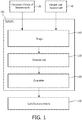
- Figure 1 illustrates, schematically, an exemplary system 100 for generating a patient-specific ordered list of determinants.
- the system 100 includes data processing elements that may be implemented through a combination of hardware (e.g., processor, memory, user interface, etc.) and software in a manner that will be understood by those of skill in the art. The operation of the system 100 will be described herein with reference to the exemplary method 200.
- the system 100 may include a Triage element 110.
- the Triage 110 may perform a first portion of the tasks performed by the system 100.
- the Triage 100 may receive, as input, a clinician's choice of determinants 20 to be used in assessing the patient.
- the clinician may choose a subset of all possible determinants discussed above (e.g., disease burden, perceived control, self-efficacy, social support, coping with problems, willingness to self-manage) for use in assessing the patient. The choice may be based on clinical guidelines, results of clinical trials, the clinician's experience, etc.
- D mod The subset of determinants retained for subsequent analysis will be referred to hereinafter as D mod , meaning modifiable determinants.
- the Triage 110 may also receive, as an input, data from a patient self-assessment 40.
- the self-assessment 40 may be performed using a known assessment tool, such as Self-Management Assessment (“SeMaS”) or Patient Activation Measure (“PAM”) questionnaires.
- SeMaS Self-Management Assessment
- PAM Patient Activation Measure
- each determinant may be assigned a score which classifies a determinant as a facilitator or barrier of self-care behavior.
- Figure 3 illustrates a table 300 that shows, in a first column 310, the list of determinants selected by the clinician as the applicable subset of determinants D mod , and, in a second column 320, possible assessment scores for each selected determinant based on the patient self-assessment 40. Based on these scores, each deteterminant may be classified as either a facilitator or a barrier; for example, high self-efficacy may be classified as a facilitator, whereas low self-efficacy may be classified as a
- the Triage 110 assigns a weight to each determinant in the set D mod .
- Weights may be assigned according to the rule that a determinant with an assessment score indicating that the determinant is a facilitator of self-care behavior is assigned a low weight, while a determinant with an assessment score indicating that the determinant is a barrier to self-care behavior is assigned a high weight. This may indicate that it is more important for a CP to focus on barriers to self-care than on facilitators.
- the specific quantitative weights used in this step may vary among differing embodiments.
- Column 330 of table 300 illustrates generalized versions of weights that may be used herein.
- Column 340 of table 300 illustrates a first exemplary weighting that may be applied by the Triage 110. In the first exemplary weighting, scores are given weights from 1 to 3, with facilitators scored a 1 and barriers scored a 3.
- Column 350 of table 300 illustrates a second exemplary weighting that may be applied by the Triage 110. In the second exemplary weighting, facilitators are scored a 0 and barriers are scored a 2. It will be apparent to those of skill in the art that, by weighting facilitators a 0, they may be excluded from further consideration in the modification of self-care behavior.
- the Triage 110 creates an ordered list 120 of determinants of self-care behaviors based on the weights assigned in step 230. This may involve ranking, by weight, the determinants D mod that remain under consideration after any potential elimination from consideration of some of the determinants due to being assigned zero weight in step 230.
- This ordered list 120 of self-care determinants may be the output generated by the Triage 110.
- the ordered list 120 is passed, by the Triage, to Quantifier element 130 of the system 100.
- step 260 the Quantifier 130 calculates a weight W D of each determinant from step 240 across all determinants selected for inclusion in the CP for the patient by virtue of being selected in step 210 and not assigned zero weight in step 230.
- step 270 the Quantifier 130 calculates the determines a contributions matrix 140, in which the contribution c(i,j) of each determinant i from step 240 to the care plan for a particular self-care behavior j based on the weights W D calculated in step 260 and known weights W B (j) for each behavior.
- the set of contributions c(i,j) of the contributions matrix 140 output by the Quantifier 130 in step 270 may be the output of method 200 performed by system 100.
- the matrix 140 of contributions c(i,j) is patient-specific based on the patient's self-assessment 40, and may then be used by a clinician in devising a CP to enable important determinants to be addressed, and, in turn, to enable the patient to adhere to important self-care behaviors.
- the division of the functions of the Triage 110 and Quantifier 130 described herein may essentially be a logical construct. Thus, they may be integrated into a single element (e.g., a software application, combination of software and hardware, etc.) without departing from the broader scope of the functions described.
- Figures 4A-4G illustrate the results of various phases of the application of method 200 to one exemplary patient.
- the behavior weight W B for medication taking is 40%
- W B for symptom management is 30%
- W B for physical activity is 10%
- W B for nutrition is 10%
- W B for smoking cessation is 10%, as indicated in Figure 4F .
- Figure 4A illustrates a set of determinants D mod 410 that may be received from a clinician for the patient in step 210. As noted above, this set of determinants may be selected by the clinician based on the patient's condition and various other factors.
- Figure 4B illustrates the results of the patient's self-care assessment 420.
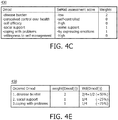
- Figure 4C illustrates a weighted set of determinants D mod 430 that may be determined by the Triage 110 in step 230 based on the inputs shown in Figures 4A and 4B .
- the determinants 430 are weighted as shown in column 350 of Figure 3 , described above.
- Figure 4D illustrates an ordered list of determinants Dmod 120 that may be determined by the Triage 110 in step 240, and may be the output of the Triage 110 to the Quantifier 130.
- Figure 4E illustrates a set of weights W D 450 of each determinant from step 240 (e.g., shown in Figure 4D ), as divided in step 260 by the Quantifier 130 across all determinants selected for inclusion in the CP for the patient.
- Figure 4F illustrates a table 460 showing the calculation of the contributions of the patient's determinants to the self-care behaviors appropriate for the patient's condition.
- Figure 4G illustrates a contributions matrix 140 that may be determined by the Quantifier 130 in step 270 of the method 200, based on the inputs described above with reference to Figures 4A-4F . The contributions matrix 140 may be used by a clinician to determine a CP for the patient having these inputs.
- self-care behaviors are an important factor in controlling the progression of chronic diseases and supporting overall wellness.
- the exemplary embodiments described above with reference to Figures 1 , 2 , 3 and 4A-4G present techniques by which clinicians may evaluate a patient's determinants (e.g., factors that may influence the patient's ability to adhere to self-care behaviors), and use the evaluation of determinants to shape a care plan that may enable the patient's determinants to be addressed in a manner that may improve the likelihood that the patient will adhere to self-care behaviors.
- determinants e.g., factors that may influence the patient's ability to adhere to self-care behaviors
- Other applications for the patient's ordered list of determinants exist.
- the exemplary embodiments discussed hereinafter present exemplary embodiments providing another application therefor.
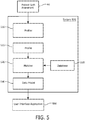
- Figure 5 illustrates schematically an exemplary system 500 that may enable patients to more clearly understand the effect that self-care behaviors have on their health. More specifically, the exemplary system 500 may apply patient-specific parameters to general information about a condition to provide a patient with an interactive tool that may enable the patient to understand how the patient's selected manner of performing self-care behaviors affect the patient's health.
- the system 500 may consist of logical elements performing different tasks, in the same manner as the system 100 described above, but those of skill in the art will understand that the functions of these elements may be grouped together in other embodiments. The operation of the system 500 will be described herein with reference to the exemplary method 600.
- the system 500 may include a Profiler element 510.
- the Profiler 510 retrieves available data about a specific patient.
- the data retrieved by the Profiler 510 may include results of assessment questionnaires about the patient's condition, data about the patient's self-management factors, data about the patient's communication style, data about the patient's previous clinical experiences, and data about the patient's personal preferences. It will be apparent to those of skill in the art that the specific data retrieved by the Profiler may vary among differing embodiments, and that the specific sources consulted may also vary.
- a source of the data retrieved in step 610 may be the self-assessment 40 referred to above with reference to Figure 1 .
- the Profiler 510 creates a profile 515 for the patient.
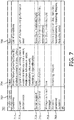
- Figure 7 illustrates an exemplary profile 700 that may be created in step 610.
- the profile 700 of Figure 7 includes a profile element column 702 that describes the contents of each row, a value column 704 that contains the patient's value for the given row, and a type column 706 that describes the type of information contained in each row.
- the profile 700 includes conditions 710, describing the conditions being experienced by the patient.
- the exemplary patient of the profile 700 suffers from heart failure and diabetes.
- the profile 700 also includes current performance 720, describing current self-care behaviors of the patient.
- the exemplary patient of the profile 700 exercises once a week, skips medications once a week, and smokes five cigarettes per day.
- the profile 700 also includes social support 730, describing the level of social support available to the patient.
- the profile 700 also includes locus of control 740, describing the extent to which individuals believe they themselves can control events that affect their health (e.g., internal locus of control) or that others have the main control of events that affect the individual (e.g., external locus of control).
- the exemplary patient of the profile 700 has an external-others locus of control.
- the profile 700 also includes willingness to self-manage 750, describing the patient's willingness to self-manage his/her condition.
- the exemplary patient of the profile 700 has low willingness to self-manage.
- the profile 700 also includes patient's prioritized outcome 760, describing the patient's outcome priority.
- the prioritized outcome 760 of the exemplary patient of the profile 700 is extending lifespan.
- the profile 700 is only exemplary.
- the specific rows shown in the profile 700 may vary among differing embodiments, and the specific values shown in the profile 700 are only one possible patient example.
- the profile 700 may be stored as a computer file in any format appropriate for subsequent use as will be described hereinafter.
- the profile 700 may also be exported in a computer-friendly format such as XML, or in a human-readable format for display, printing, etc.
- the system 500 also includes a Matcher component 520 in communication with the Profiler 510 and a Database 530.
- the Database 530 stores self-care behaviors (e.g., physical activity, smoking cessation, etc.) indexed by various factors such as associated conditions, evidence of effectiveness, guidelines and recommended care plans, and population-generalized weights of the individual parameters of a behavior.
- the Database 530 may include, for each self-care behavior, a generalized (e.g., not patient-specific) ImpactScore for each medical condition, based only on known scientific evidence and expert opinion.
- ImpactScore bm An ImpactScore quantifies the effect that a self-care behavior has on a given medical condition; the effect that self-care behavior b has on medical condition m will be referred to herein as ImpactScore bm .
- All ImpactScores contained in the Database 530 may be represented on a common scale; in one exemplary embodiment, this scale may be from -100 to 100, but it will be apparent to those of skill in the art that the specific scale used may vary. For example, the physical activity self-care behavior may be associated with multiple medical conditions.
- a high weight e.g., an ImpactScore of 85 on a scale from -100 to 100
- a lower weight e.g., an ImpactScore of 30 on the same scale
- a negative weight may be designed (e.g., an ImpactScore of -20 on the same scale).
- the Database 530 may also include a set of parameters describing how each self-care behavior is performed.
- the self-care behavior or physical activity may have a parameter called "type" that may take on semantic values such as walking on a treadmill at home, attending a fitness class, walking at the mall, or following a fitness DVD at home.
- Another parameter may be "intensity,” which may take on semantic values such as low, moderate, or high.
- Another parameter may be "frequency,” which may take on values such as once per week, twice per month, three times a day, etc. It will be apparent to those of skill in the art that the specific parameters may vary for each self-care behavior contained in the Database 530, depending on the nature of the self-care behavior.
- the Database 530 may also include a weight for each parameter (e.g., ranging from 0 to 1.0) describing the parameter's relative contribution to the effectiveness of the behavior, based on scientific evidence or expert opinion.
- the Database 530 may also include a recommended configuration of the parameters for each behavior and medical condition.
- Figure 8 illustrates a portion of an exemplary database 800. Though Figure 8 illustrates the contents of the entries in the database 800 for two self-care behaviors and one medical condition, it will be apparent to those of skill in the art that a real-world implementation of a database 800 may include a larger variety of both self-care behaviors and medical conditions.
- entries for self-care behaviors 810 in this example, taking medications
- 820 in this example, physical activity
- condition 840 in this example, Heart Failure
- data included in the database includes ImpactScore 811, parameter 812 (in this example, frequency), recommended value 813 corresponding to parameter 812 (in this example, 80% of prescribed episodes, weight 814 corresponding to parameter 812, parameter 815 (in this example, type), recommended value 816 corresponding to parameter 815 (in this example, all), and weight 817 corresponding to parameter 815.
- data included in the database includes ImpactScore 821, parameter 822 (in this example, intensity), recommended value 823 corresponding to parameter 822 (in this example, moderate), weight 824 corresponding to parameter 822, parameter 825 (in this example, frequency), recommended value 826 corresponding to parameter 825 (in this example, five times per week), weight 827 corresponding to parameter 825, parameter 828 (in this example, type), recommended value 829 corresponding to parameter 828 (in this example, walking), and weight 830 corresponding to parameter 828.
- ImpactScore 821 for self-care behavior 820 (in this example, physical activity)
- parameter 822 in this example, intensity
- recommended value 823 corresponding to parameter 822
- parameter 825 in this example, frequency
- recommended value 826 corresponding to parameter 825
- weight 827 corresponding to parameter 825
- parameter 828 in this example, type
- recommended value 829 corresponding to parameter 828 (in this example, walking)
- weight 830 corresponding to parameter 828.
- the Matcher 520 receives the patient profile from the Profiler 510 and data relevant to the patient's condition from the Database 530. This may be prompted by action by a clinician or by the patient or in any other appropriate manner.
- the Matcher 520 generates an ordered list of self-care behaviors for the patient's medical condition. The ordered list may be ordered by the ImpactScore of the behaviors corresponding to the patient's condition. At this point in the method 600, the ImpactScores are still generalized based on the assumption that the patient carries out self-care behaviors in the optimal manner prescribed by clinical guidelines, and are not specific to the patient; in subsequent steps, the Matcher 520 will calculate updated ImpactScores that are specific to the patient.
- the Matcher 520 scales the ImpactScores of the behaviors contained in the ordered list based on the patient's current level of performance and the corresponding parameters.
- an upper bound for each parameter is defined as the recommended level, as determined by clinical guidelines, and assigned a numeric value of 100. (It will be apparent to those of skill in the art that the scaling value of 100 used here is only exemplary and that the following may be performed in the same manner with a different scaling value.)
- a lower bound for each parameter is defined as non-performance and assigned a numeric value of zero. The patient's current level of performance is then mapped to this 0-100 scale. This process is performed for each parameter.
- the recommended level of physical activity is five times per week, this is defined as the upper bound and assigned a numeric value of 100.
- Zero times per week is identified as the lower bound and assigned a numeric value of zero. If the data received from the Profiler 510 indicates that the patient performs physical activity once per week, this may be determined to have a numeric value of 20.
- the Matcher 520 customizes the values of some or all of the parameters based on the patient profile received from the Profiler 510.
- certain types of behavior may be more or less effective.
- physical activity can have many types, including walking on a treadmill at home, participating in a group exercise class, etc.
- a patient may choose one type of physical activity, and its associated value may be used in calculation of the ImpactScore for the physical activity. If each type of physical activity is effective as any other, then each may have the same numerical value.
- one type of physical activity may be less effective than another due to the patient's self-care barriers; for example, a patient with a low level of social support or a low willingness to self-manage may be less effective at exercising at home than at exercising in a group exercise class where their exercise can be managed by an instructor and social support can be received from the instructor and classmates.
- the values of various types of physical activity may be adjusted based on the patient's self-care profile.
- Figure 9 illustrates a table 900 showing the adjustment of the value of patient self-care behaviors based on the patient's self-management abilities.
- Self-care behavior 910 (in this example, walking on a treadmill at home) receives an adjustment 912 of -25% due to rationale 914 of the patient's low willingness to self-manage, resulting in an adjusted value 916 of 75.
- self-care behavior 920 (in this example, following a fitness DVD at home) receives an adjustment 922 of -50% due to rationale 924 of the patient's low willingness to self-manage, resulting in adjusted value 926 of 50.
- ImpactScore ′ bm ScalingFactor bm * ImpactScore bm
- ImpactScore bm refers to the effect that self-care behavior b, when optimally configured, has on medical condition m
- ImpactScore' bm refers to the updated effect that self-care behavior b, as configured by the patient, has on medical condition m
- ScalingFactor bm refers to the multiplier that scales the ImpactScore up or down based on the current configuration of the behavior b
- parameter i is the value of the ith parameter, on a range from zero to 100
- weighti is a weight, ranging from 0 to 1, associated with the ith parameter, where the sum of all weights weighti is equal to 1.
- the modification of a parameter value (equivalent to performing the corresponding self-care behavior more or less frequently, intensely, completely, etc.) will change the updated value ImpactScore' by an amount proportional to the weight of the parameter. Separating the parameters while maintaining their relationship to the overall updated value ImpactScore' is useful for helping the patient explore the relationship between the manner in which they carry out a self-care behavior and the effect the behavior will have on their clinical outcomes.
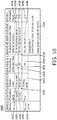
- Figure 10 illustrates a table 1000 showing how an updated ImpactScore' for a given self-care behavior is determined using patient-customized parameters.
- self-care behavior 1010 in this example, physical activity
- the patient responds to parameters 1020, 1030 and 1040 with parameter values 1022, 1032 and 1042 (in this example, once a week, moderate intensity, and walking alone, respectively).
- the parameters 1020, 1030 and 1040 have corresponding unadjusted values 1024, 1034 and 1044 (in this example, 20, 100 and 100, respectively).
- Values 1024 and 1034 have unchanged adjusted values 1026 and 1036 (in this example, 20 and 100, respectively), but value 1044 has a changed adjusted value 1046 (in this example, 75), for the reasons discussed above with reference to Figure 9 .
- the parameters 1020, 1030 and 1040 also have corresponding parameter weights 1028, 1038 and 1048 (in this example, 0.60, 0.30 and 0.10, respectively).
- An updated ImpactScore' value 1050 is then calculated as described above and as illustrated in table 1000. It will be apparent to those of skill in the art that the specific values shown in table 1000 are only exemplary and that these may vary among different implementations, for different patients, for different medical conditions, etc.
- the Matcher 520 generates a patient-specific data model 540 for use by User Interface Application 550.
- the data model 540 may include any data necessary for the User Interface Application 550 to receive, from a user (e.g., the patient) one or more changes to parameters of the patient's self-care behaviors, and calculate an updated version of the updated, patient-specific ImpactScore' bm based on those changes using the formulas described above.
- the data model 540 may contain only data relevant to the patient's self-care profile, medical condition, and relevant self-care behaviors and their corresponding parameters, in order to be provided to the user for interactive use through User Interface Application 550 in a comparatively small data footprint (e.g., as compared to the Database 530 containing data for a wide variety of medical conditions and the Matcher 520 capable of processing a larger quantity of data) that may be appropriate for use on an end user device such as a tablet, mobile phone, personal computer, notebook computer, desktop computer, etc.
- the User Interface Application 550 may use the data model 540 to calculate an updated ImpactScore for the patient without communication with other elements of the system 500, such as the Matcher 520 or Database 530.
- the User Interface Application 550 presents, to a user (e.g., the patient) a display showing the user's self-care activities and the corresponding parameters for the self-care activities in an interactive manner allowing the user to vary the parameters (e.g., using known interface elements such as dropdown menus, sliders, checkboxes, etc.).
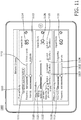
- Figure 11 illustrates an exemplary User Interface Application 550.
- the User Interface Application 550 provides a display 1100 on a tablet device 1105, but other types of devices may execute the User Interface Application 550 and receive user input in a manner appropriate for the nature of the other devices. For example, for tablet device 1105 or a mobile phone, input may be received via a touchscreen; for a personal computer, input may be received with a mouse and/or keyboard; etc.
- the display 1100 includes three self-care behaviors 1110, 1120 and 1130.
- self-care behavior 1110 is physical activity
- self-care behavior 1120 is taking medication
- self-care behavior 1130 is reducing smoking
- the specific self-care behaviors displayed by User Interface Application 550 may vary depending on the patient's medical condition.
- the display 1100 includes interface elements for corresponding parameters.
- the display 1100 For self-care behavior 1110, which is physical activity, the display 1100 includes a dropdown menu 1111 for the user to select a type of physical activity (e.g., walking outside, walking at the mall, group exercise class, etc.). The display 1100 also includes a slider 1112 for the user to select a frequency for performing the selected physical activity. The display 1100 also includes a slider 1113 for the user to select an intensity for the selected physical activity. The display 1100 also includes an ImpactScore 1114 describing the level of effectiveness of the physical activity based on the user inputs 1111, 1112 and 1113, which may be determined as described above. It will be apparent to those of skill in the art that the ImpactScore 1114 and the other ImpactScores discussed hereinafter may be patient-specific adjusted ImpactScores determined as discussed above.
- a type of physical activity e.g., walking outside, walking at the mall, group exercise class, etc.
- the display 1100 also includes a slider 1112 for the user to select a frequency for performing the selected
- the display 1100 For self-care behavior 1120, which is taking medications, the display 1100 includes a slider 1121 for the user to select a number of episodes of missed medication per week. The display 1100 also includes checkboxes 1122, 1123, 1124 and 1125 for the user to select medications he/she is willing to take. The display 1100 also includes an ImpactScore 1126 describing the level of effectiveness of the user's medication based on the user inputs 1121, 1122, 1123, 1124 and 1125, which may be determined as described above.
- the display 1100 For self-care behavior 1130, which is reducing smoking, the display 1100 includes a slider 1131 for the user to select a number of cigarettes smoked. The display 1100 also includes a slider 1132 for the user to select a frequency time period during which the user will smoke the number of cigarettes indicated by the slider 1131. The display 1100 also includes an ImpactScore 1133 describing the level of effectiveness of the user's smoking reduction based on the user inputs 1131 and 1132, which may be determined as described above. In one exemplary embodiment, the ImpactScores 1114, 1126 and 1133 may be color-coded to more clearly indicate the level of effectiveness of the corresponding self-care behaviors 1110, 1120 and 1130. For example, an ImpactScore of 0 to 35 may be colored red, an ImpactScore of 36 to 70 may be colored yellow, and an ImpactScore of 71 to 100 may be colored green.
- step 655 the User Interface Application 550 waits for changed input parameters from the user.
- changed input parameters may mean adjusting a dropdown menu, a slider, a checkbox, etc.
- step 660 the User Interface Application 550 calculates updated ImpactScore values (e.g., ImpactScores 1114, 1126 and 1133 of Figure 11 ) based on the newly-received parameters and the data model 540.
- step 650 the display 1100 is updated and the new results are displayed to the user. If no new parameters are received in step 655, then the method 600 proceeds to step 665, where the results currently displayed may be considered to be final results for the user's selected parameters. Following step 665, the method 600 terminates.
- the exemplary embodiments of Figures 5-11 may provide users with the ability to visualize and dynamically modify parameters of their self-care behaviors, in order to understand the way those behaviors affect their clinical outcomes. This may be useful for patients across a wide spectrum of needs. In chronic disease management, where the trajectory of diseases is well established and the effects of self-care behaviors have been well-studied, this may be particularly useful. However, the same technique and interface may be equally applicable for choosing any health-related behavior. Some examples of this may include selection of exercise routines for general fitness purposes, selection of nutrition plans for dieting, selection of different medications, etc.
- exemplary embodiments may be implemented in any number of manners, including as a software module, as a combination of hardware and software, etc.
- the exemplary methods 200 and 600 may be embodied in a program stored in a non-transitory storage medium and containing lines of code that, when compiled, may be executed by a processor.
Landscapes
- Health & Medical Sciences (AREA)
- Engineering & Computer Science (AREA)
- Medical Informatics (AREA)
- Public Health (AREA)
- Epidemiology (AREA)
- Primary Health Care (AREA)
- General Health & Medical Sciences (AREA)
- Biomedical Technology (AREA)
- Databases & Information Systems (AREA)
- Pathology (AREA)
- Data Mining & Analysis (AREA)
- Child & Adolescent Psychology (AREA)
- Developmental Disabilities (AREA)
- Hospice & Palliative Care (AREA)
- Psychiatry (AREA)
- Psychology (AREA)
- Social Psychology (AREA)
- Medical Treatment And Welfare Office Work (AREA)
Applications Claiming Priority (2)
| Application Number | Priority Date | Filing Date | Title |
|---|---|---|---|
| US201462000031P | 2014-05-19 | 2014-05-19 | |
| PCT/IB2015/053476 WO2015177680A1 (en) | 2014-05-19 | 2015-05-12 | Method and system for guiding patient self-care behaviors |
Publications (2)
| Publication Number | Publication Date |
|---|---|
| EP3146452A1 EP3146452A1 (en) | 2017-03-29 |
| EP3146452B1 true EP3146452B1 (en) | 2020-04-01 |
Family
ID=53484095
Family Applications (1)
| Application Number | Title | Priority Date | Filing Date |
|---|---|---|---|
| EP15731106.9A Active EP3146452B1 (en) | 2014-05-19 | 2015-05-12 | Method and system for guiding patient self-care behaviors |
Country Status (5)
| Country | Link |
|---|---|
| US (1) | US20170185749A1 (OSRAM) |
| EP (1) | EP3146452B1 (OSRAM) |
| JP (1) | JP2017516235A (OSRAM) |
| CN (1) | CN106462664A (OSRAM) |
| WO (1) | WO2015177680A1 (OSRAM) |
Families Citing this family (4)
| Publication number | Priority date | Publication date | Assignee | Title |
|---|---|---|---|---|
| CN110060776A (zh) * | 2017-12-15 | 2019-07-26 | 皇家飞利浦有限公司 | 评估表现数据 |
| US11205140B2 (en) | 2019-06-03 | 2021-12-21 | Kpn Innovations Llc | Methods and systems for self-fulfillment of an alimentary instruction set based on vibrant constitutional guidance |
| JP7227613B2 (ja) * | 2019-07-08 | 2023-02-22 | 国立大学法人東海国立大学機構 | 生活習慣改善のための介入システム |
| CN114816195B (zh) * | 2021-01-28 | 2024-12-03 | 华为技术有限公司 | 一种护肤打卡方法和电子设备 |
Family Cites Families (10)
| Publication number | Priority date | Publication date | Assignee | Title |
|---|---|---|---|---|
| US7593952B2 (en) * | 1999-04-09 | 2009-09-22 | Soll Andrew H | Enhanced medical treatment system |
| WO2001009759A2 (en) * | 1999-08-03 | 2001-02-08 | Healthsoft | Computerized self-assessment system and electronic journal |
| US20030027116A1 (en) * | 2001-07-09 | 2003-02-06 | O'donnell Michael | Behavior change tool |
| US7853456B2 (en) * | 2004-03-05 | 2010-12-14 | Health Outcomes Sciences, Llc | Systems and methods for risk stratification of patient populations |
| US8566121B2 (en) * | 2005-08-29 | 2013-10-22 | Narayanan Ramasubramanian | Personalized medical adherence management system |
| JP5054984B2 (ja) * | 2007-01-17 | 2012-10-24 | 株式会社日立メディコ | 個別健康指導支援システム |
| US9779462B2 (en) * | 2009-12-17 | 2017-10-03 | Koninklijke Philips N.V. | Computer-implemented method of manufacturing a computer-readable storage medium for a remote patient management system |
| US20120030156A1 (en) * | 2010-07-28 | 2012-02-02 | Koninklijke Philips Electronics, N.V. | Computer-implemented method, clinical decision support system, and computer-readable non-transitory storage medium for creating a care plan |
| EP2798550A2 (en) * | 2011-12-27 | 2014-11-05 | Koninklijke Philips N.V. | Method and system for ordering self-care behaviors |
| US20180261330A1 (en) * | 2017-03-10 | 2018-09-13 | Roundglass Llc | Analytic and learning framework for quantifying value in value based care |
-
2015
- 2015-05-12 EP EP15731106.9A patent/EP3146452B1/en active Active
- 2015-05-12 CN CN201580025616.7A patent/CN106462664A/zh active Pending
- 2015-05-12 US US15/309,462 patent/US20170185749A1/en not_active Abandoned
- 2015-05-12 JP JP2016568035A patent/JP2017516235A/ja active Pending
- 2015-05-12 WO PCT/IB2015/053476 patent/WO2015177680A1/en not_active Ceased
Non-Patent Citations (1)
| Title |
|---|
| None * |
Also Published As
| Publication number | Publication date |
|---|---|
| JP2017516235A (ja) | 2017-06-15 |
| CN106462664A (zh) | 2017-02-22 |
| US20170185749A1 (en) | 2017-06-29 |
| EP3146452A1 (en) | 2017-03-29 |
| WO2015177680A1 (en) | 2015-11-26 |
Similar Documents
| Publication | Publication Date | Title |
|---|---|---|
| Reading Turchioe et al. | Visual analogies, not graphs, increase patients' comprehension of changes in their health status | |
| Kraemer | Is it time to ban the P value? | |
| US11610685B2 (en) | Methods and systems for cognitive behavioral therapy | |
| EP3874512A1 (en) | Systems, methods, and apparatuses for managing data for artificial intelligence software and mobile applications in digital health therapeutics | |
| Weideman et al. | New multiple sclerosis disease severity scale predicts future accumulation of disability | |
| US20140358570A1 (en) | Healthcare support system and method | |
| Jeon et al. | Development of a smartphone application for clinical-guideline-based obesity management | |
| WO2013108122A1 (en) | "indima apparatus" system, method and computer program product for individualized and collaborative health care | |
| CN106415560A (zh) | 辅助患者和临床医师使用共享并且以患者为中心的决策支持工具的系统和方法 | |
| EP2782055A1 (en) | Personalised medicine system displaying a timeline of clinical patient information | |
| Kheirinejad et al. | Exploring mHealth applications for self-management of chronic low back pain: A survey of features and benefits | |
| EP3146452B1 (en) | Method and system for guiding patient self-care behaviors | |
| WO2010009278A2 (en) | Interactive system for preparing personalized wellness plans | |
| US20160283670A1 (en) | Personalised medicine system for rating patient characteristics | |
| US20180068084A1 (en) | Systems and methods for care program selection utilizing machine learning techniques | |
| EP2544111A1 (en) | System for managing cardiovascular health status | |
| Lu et al. | A clinical decision support system design framework for nursing practice | |
| US20230238145A1 (en) | Health score and predictive analysis | |
| Sankaran et al. | Bridging patients’ needs and caregivers’ perspectives to tailor information provisioning during cardiac rehabilitation | |
| Franklin et al. | An information-centric framework for designing patient-centered medical decision aids and risk communication | |
| US20240371478A1 (en) | Method for providing dynamically customized messages in a healthcare facility | |
| EP4712092A1 (en) | Method for assisting blood glucose control of subject by using computer system, and computer system | |
| JP6138824B2 (ja) | セルフケア行動の患者固有の順序付けられたリストを生成するための方法、システム及びコンピュータプログラム | |
| EP2782064A1 (en) | Personalised medicine system | |
| Li et al. | Re-Designing A Mobile App with Patients with Discordant Chronic Comorbidities: Usability Study |
Legal Events
| Date | Code | Title | Description |
|---|---|---|---|
| STAA | Information on the status of an ep patent application or granted ep patent |
Free format text: STATUS: THE INTERNATIONAL PUBLICATION HAS BEEN MADE |
|
| PUAI | Public reference made under article 153(3) epc to a published international application that has entered the european phase |
Free format text: ORIGINAL CODE: 0009012 |
|
| STAA | Information on the status of an ep patent application or granted ep patent |
Free format text: STATUS: REQUEST FOR EXAMINATION WAS MADE |
|
| 17P | Request for examination filed |
Effective date: 20161219 |
|
| AK | Designated contracting states |
Kind code of ref document: A1 Designated state(s): AL AT BE BG CH CY CZ DE DK EE ES FI FR GB GR HR HU IE IS IT LI LT LU LV MC MK MT NL NO PL PT RO RS SE SI SK SM TR |
|
| AX | Request for extension of the european patent |
Extension state: BA ME |
|
| DAV | Request for validation of the european patent (deleted) | ||
| DAX | Request for extension of the european patent (deleted) | ||
| REG | Reference to a national code |
Ref country code: DE Ref legal event code: R079 Ref document number: 602015049815 Country of ref document: DE Free format text: PREVIOUS MAIN CLASS: G06F0019000000 Ipc: G09F0019200000 |
|
| RIC1 | Information provided on ipc code assigned before grant |
Ipc: G09F 19/20 20060101AFI20190823BHEP Ipc: G16H 50/50 20180101ALI20190823BHEP Ipc: G16H 50/20 20180101ALI20190823BHEP |
|
| GRAP | Despatch of communication of intention to grant a patent |
Free format text: ORIGINAL CODE: EPIDOSNIGR1 |
|
| STAA | Information on the status of an ep patent application or granted ep patent |
Free format text: STATUS: GRANT OF PATENT IS INTENDED |
|
| INTG | Intention to grant announced |
Effective date: 20191022 |
|
| GRAS | Grant fee paid |
Free format text: ORIGINAL CODE: EPIDOSNIGR3 |
|
| GRAA | (expected) grant |
Free format text: ORIGINAL CODE: 0009210 |
|
| STAA | Information on the status of an ep patent application or granted ep patent |
Free format text: STATUS: THE PATENT HAS BEEN GRANTED |
|
| RAP1 | Party data changed (applicant data changed or rights of an application transferred) |
Owner name: KONINKLIJKE PHILIPS N.V. |
|
| AK | Designated contracting states |
Kind code of ref document: B1 Designated state(s): AL AT BE BG CH CY CZ DE DK EE ES FI FR GB GR HR HU IE IS IT LI LT LU LV MC MK MT NL NO PL PT RO RS SE SI SK SM TR |
|
| REG | Reference to a national code |
Ref country code: GB Ref legal event code: FG4D |
|
| REG | Reference to a national code |
Ref country code: CH Ref legal event code: EP Ref country code: AT Ref legal event code: REF Ref document number: 1252394 Country of ref document: AT Kind code of ref document: T Effective date: 20200415 |
|
| REG | Reference to a national code |
Ref country code: DE Ref legal event code: R096 Ref document number: 602015049815 Country of ref document: DE |
|
| REG | Reference to a national code |
Ref country code: IE Ref legal event code: FG4D |
|
| PG25 | Lapsed in a contracting state [announced via postgrant information from national office to epo] |
Ref country code: BG Free format text: LAPSE BECAUSE OF FAILURE TO SUBMIT A TRANSLATION OF THE DESCRIPTION OR TO PAY THE FEE WITHIN THE PRESCRIBED TIME-LIMIT Effective date: 20200701 |
|
| REG | Reference to a national code |
Ref country code: NL Ref legal event code: MP Effective date: 20200401 |
|
| REG | Reference to a national code |
Ref country code: LT Ref legal event code: MG4D |
|
| PG25 | Lapsed in a contracting state [announced via postgrant information from national office to epo] |
Ref country code: PT Free format text: LAPSE BECAUSE OF FAILURE TO SUBMIT A TRANSLATION OF THE DESCRIPTION OR TO PAY THE FEE WITHIN THE PRESCRIBED TIME-LIMIT Effective date: 20200817 Ref country code: NL Free format text: LAPSE BECAUSE OF FAILURE TO SUBMIT A TRANSLATION OF THE DESCRIPTION OR TO PAY THE FEE WITHIN THE PRESCRIBED TIME-LIMIT Effective date: 20200401 Ref country code: SE Free format text: LAPSE BECAUSE OF FAILURE TO SUBMIT A TRANSLATION OF THE DESCRIPTION OR TO PAY THE FEE WITHIN THE PRESCRIBED TIME-LIMIT Effective date: 20200401 Ref country code: NO Free format text: LAPSE BECAUSE OF FAILURE TO SUBMIT A TRANSLATION OF THE DESCRIPTION OR TO PAY THE FEE WITHIN THE PRESCRIBED TIME-LIMIT Effective date: 20200701 Ref country code: GR Free format text: LAPSE BECAUSE OF FAILURE TO SUBMIT A TRANSLATION OF THE DESCRIPTION OR TO PAY THE FEE WITHIN THE PRESCRIBED TIME-LIMIT Effective date: 20200702 Ref country code: LT Free format text: LAPSE BECAUSE OF FAILURE TO SUBMIT A TRANSLATION OF THE DESCRIPTION OR TO PAY THE FEE WITHIN THE PRESCRIBED TIME-LIMIT Effective date: 20200401 Ref country code: CZ Free format text: LAPSE BECAUSE OF FAILURE TO SUBMIT A TRANSLATION OF THE DESCRIPTION OR TO PAY THE FEE WITHIN THE PRESCRIBED TIME-LIMIT Effective date: 20200401 Ref country code: IS Free format text: LAPSE BECAUSE OF FAILURE TO SUBMIT A TRANSLATION OF THE DESCRIPTION OR TO PAY THE FEE WITHIN THE PRESCRIBED TIME-LIMIT Effective date: 20200801 Ref country code: FI Free format text: LAPSE BECAUSE OF FAILURE TO SUBMIT A TRANSLATION OF THE DESCRIPTION OR TO PAY THE FEE WITHIN THE PRESCRIBED TIME-LIMIT Effective date: 20200401 |
|
| REG | Reference to a national code |
Ref country code: AT Ref legal event code: MK05 Ref document number: 1252394 Country of ref document: AT Kind code of ref document: T Effective date: 20200401 |
|
| PG25 | Lapsed in a contracting state [announced via postgrant information from national office to epo] |
Ref country code: HR Free format text: LAPSE BECAUSE OF FAILURE TO SUBMIT A TRANSLATION OF THE DESCRIPTION OR TO PAY THE FEE WITHIN THE PRESCRIBED TIME-LIMIT Effective date: 20200401 Ref country code: LV Free format text: LAPSE BECAUSE OF FAILURE TO SUBMIT A TRANSLATION OF THE DESCRIPTION OR TO PAY THE FEE WITHIN THE PRESCRIBED TIME-LIMIT Effective date: 20200401 Ref country code: RS Free format text: LAPSE BECAUSE OF FAILURE TO SUBMIT A TRANSLATION OF THE DESCRIPTION OR TO PAY THE FEE WITHIN THE PRESCRIBED TIME-LIMIT Effective date: 20200401 |
|
| PG25 | Lapsed in a contracting state [announced via postgrant information from national office to epo] |
Ref country code: AL Free format text: LAPSE BECAUSE OF FAILURE TO SUBMIT A TRANSLATION OF THE DESCRIPTION OR TO PAY THE FEE WITHIN THE PRESCRIBED TIME-LIMIT Effective date: 20200401 |
|
| REG | Reference to a national code |
Ref country code: DE Ref legal event code: R097 Ref document number: 602015049815 Country of ref document: DE |
|
| PG25 | Lapsed in a contracting state [announced via postgrant information from national office to epo] |
Ref country code: RO Free format text: LAPSE BECAUSE OF FAILURE TO SUBMIT A TRANSLATION OF THE DESCRIPTION OR TO PAY THE FEE WITHIN THE PRESCRIBED TIME-LIMIT Effective date: 20200401 Ref country code: ES Free format text: LAPSE BECAUSE OF FAILURE TO SUBMIT A TRANSLATION OF THE DESCRIPTION OR TO PAY THE FEE WITHIN THE PRESCRIBED TIME-LIMIT Effective date: 20200401 Ref country code: MC Free format text: LAPSE BECAUSE OF FAILURE TO SUBMIT A TRANSLATION OF THE DESCRIPTION OR TO PAY THE FEE WITHIN THE PRESCRIBED TIME-LIMIT Effective date: 20200401 Ref country code: CH Free format text: LAPSE BECAUSE OF NON-PAYMENT OF DUE FEES Effective date: 20200531 Ref country code: EE Free format text: LAPSE BECAUSE OF FAILURE TO SUBMIT A TRANSLATION OF THE DESCRIPTION OR TO PAY THE FEE WITHIN THE PRESCRIBED TIME-LIMIT Effective date: 20200401 Ref country code: AT Free format text: LAPSE BECAUSE OF FAILURE TO SUBMIT A TRANSLATION OF THE DESCRIPTION OR TO PAY THE FEE WITHIN THE PRESCRIBED TIME-LIMIT Effective date: 20200401 Ref country code: LI Free format text: LAPSE BECAUSE OF NON-PAYMENT OF DUE FEES Effective date: 20200531 Ref country code: SM Free format text: LAPSE BECAUSE OF FAILURE TO SUBMIT A TRANSLATION OF THE DESCRIPTION OR TO PAY THE FEE WITHIN THE PRESCRIBED TIME-LIMIT Effective date: 20200401 Ref country code: IT Free format text: LAPSE BECAUSE OF FAILURE TO SUBMIT A TRANSLATION OF THE DESCRIPTION OR TO PAY THE FEE WITHIN THE PRESCRIBED TIME-LIMIT Effective date: 20200401 Ref country code: DK Free format text: LAPSE BECAUSE OF FAILURE TO SUBMIT A TRANSLATION OF THE DESCRIPTION OR TO PAY THE FEE WITHIN THE PRESCRIBED TIME-LIMIT Effective date: 20200401 |
|
| PLBE | No opposition filed within time limit |
Free format text: ORIGINAL CODE: 0009261 |
|
| STAA | Information on the status of an ep patent application or granted ep patent |
Free format text: STATUS: NO OPPOSITION FILED WITHIN TIME LIMIT |
|
| PG25 | Lapsed in a contracting state [announced via postgrant information from national office to epo] |
Ref country code: SK Free format text: LAPSE BECAUSE OF FAILURE TO SUBMIT A TRANSLATION OF THE DESCRIPTION OR TO PAY THE FEE WITHIN THE PRESCRIBED TIME-LIMIT Effective date: 20200401 Ref country code: PL Free format text: LAPSE BECAUSE OF FAILURE TO SUBMIT A TRANSLATION OF THE DESCRIPTION OR TO PAY THE FEE WITHIN THE PRESCRIBED TIME-LIMIT Effective date: 20200401 |
|
| 26N | No opposition filed |
Effective date: 20210112 |
|
| REG | Reference to a national code |
Ref country code: BE Ref legal event code: MM Effective date: 20200531 |
|
| GBPC | Gb: european patent ceased through non-payment of renewal fee |
Effective date: 20200701 |
|
| PG25 | Lapsed in a contracting state [announced via postgrant information from national office to epo] |
Ref country code: LU Free format text: LAPSE BECAUSE OF NON-PAYMENT OF DUE FEES Effective date: 20200512 |
|
| PG25 | Lapsed in a contracting state [announced via postgrant information from national office to epo] |
Ref country code: IE Free format text: LAPSE BECAUSE OF NON-PAYMENT OF DUE FEES Effective date: 20200512 Ref country code: GB Free format text: LAPSE BECAUSE OF NON-PAYMENT OF DUE FEES Effective date: 20200701 |
|
| PG25 | Lapsed in a contracting state [announced via postgrant information from national office to epo] |
Ref country code: BE Free format text: LAPSE BECAUSE OF NON-PAYMENT OF DUE FEES Effective date: 20200531 Ref country code: SI Free format text: LAPSE BECAUSE OF FAILURE TO SUBMIT A TRANSLATION OF THE DESCRIPTION OR TO PAY THE FEE WITHIN THE PRESCRIBED TIME-LIMIT Effective date: 20200401 |
|
| PGFP | Annual fee paid to national office [announced via postgrant information from national office to epo] |
Ref country code: DE Payment date: 20210527 Year of fee payment: 7 Ref country code: FR Payment date: 20210526 Year of fee payment: 7 |
|
| PG25 | Lapsed in a contracting state [announced via postgrant information from national office to epo] |
Ref country code: TR Free format text: LAPSE BECAUSE OF FAILURE TO SUBMIT A TRANSLATION OF THE DESCRIPTION OR TO PAY THE FEE WITHIN THE PRESCRIBED TIME-LIMIT Effective date: 20200401 Ref country code: MT Free format text: LAPSE BECAUSE OF FAILURE TO SUBMIT A TRANSLATION OF THE DESCRIPTION OR TO PAY THE FEE WITHIN THE PRESCRIBED TIME-LIMIT Effective date: 20200401 Ref country code: CY Free format text: LAPSE BECAUSE OF FAILURE TO SUBMIT A TRANSLATION OF THE DESCRIPTION OR TO PAY THE FEE WITHIN THE PRESCRIBED TIME-LIMIT Effective date: 20200401 |
|
| PG25 | Lapsed in a contracting state [announced via postgrant information from national office to epo] |
Ref country code: MK Free format text: LAPSE BECAUSE OF FAILURE TO SUBMIT A TRANSLATION OF THE DESCRIPTION OR TO PAY THE FEE WITHIN THE PRESCRIBED TIME-LIMIT Effective date: 20200401 |
|
| REG | Reference to a national code |
Ref country code: DE Ref legal event code: R119 Ref document number: 602015049815 Country of ref document: DE |
|
| PG25 | Lapsed in a contracting state [announced via postgrant information from national office to epo] |
Ref country code: FR Free format text: LAPSE BECAUSE OF NON-PAYMENT OF DUE FEES Effective date: 20220531 |
|
| PG25 | Lapsed in a contracting state [announced via postgrant information from national office to epo] |
Ref country code: DE Free format text: LAPSE BECAUSE OF NON-PAYMENT OF DUE FEES Effective date: 20221201 |