EP3146437B1 - Unifying class device interface with one host interface by using embedded controller - Google Patents
Unifying class device interface with one host interface by using embedded controller Download PDFInfo
- Publication number
- EP3146437B1 EP3146437B1 EP15728265.8A EP15728265A EP3146437B1 EP 3146437 B1 EP3146437 B1 EP 3146437B1 EP 15728265 A EP15728265 A EP 15728265A EP 3146437 B1 EP3146437 B1 EP 3146437B1
- Authority
- EP
- European Patent Office
- Prior art keywords
- interface
- bus
- peripheral devices
- host
- single host
- Prior art date
- Legal status (The legal status is an assumption and is not a legal conclusion. Google has not performed a legal analysis and makes no representation as to the accuracy of the status listed.)
- Active
Links
Images


Classifications
-
- G—PHYSICS
- G06—COMPUTING OR CALCULATING; COUNTING
- G06F—ELECTRIC DIGITAL DATA PROCESSING
- G06F13/00—Interconnection of, or transfer of information or other signals between, memories, input/output devices or central processing units
- G06F13/10—Program control for peripheral devices
- G06F13/102—Program control for peripheral devices where the program performs an interfacing function, e.g. device driver
-
- G—PHYSICS
- G06—COMPUTING OR CALCULATING; COUNTING
- G06F—ELECTRIC DIGITAL DATA PROCESSING
- G06F13/00—Interconnection of, or transfer of information or other signals between, memories, input/output devices or central processing units
- G06F13/38—Information transfer, e.g. on bus
- G06F13/42—Bus transfer protocol, e.g. handshake; Synchronisation
- G06F13/4282—Bus transfer protocol, e.g. handshake; Synchronisation on a serial bus, e.g. I2C bus, SPI bus
Definitions
- the present disclosure relates to peripheral device communications with a host device via a single host interface.
- HIDs human interface devices
- the set of software interfaces that are utilized by a host device in supporting communications with peripheral devices are typically organized as stacked layers of interfaces.
- Each layer in the stack is comprised of software programs that implement a particular aspect of the functionality required for the operation of the peripheral device by the host device.
- the bottom layers of the stack are software programs that interface the processor of the host device with hardware buses that are used to transmit signals to and from the peripheral devices.
- the top layers of the stack are software programs that provide an interface by which human users or other software programs can operate the peripheral devices.
- part of that installation processes includes verifying whether the stack of the host device includes all software necessary to communicate with the new peripheral device. In many cases, this installation process requires at least some updates to the software stack to include device-specific software that is required to fully utilize the new peripheral device. Installing device-specific software does not always address all compatibility issues.
- the host device In order for the host device to interface with the new peripheral device, the host device must support the low-level bus communication protocol that is required by the peripheral device. Support for a bus communication protocol by a host device usually requires a hardware-level bus implementation that is ideally implemented when the host device is designed and manufactured.
- peripheral HIDs which included devices such as keyboards and mice, interfaced with the host device using serial ports. Many of these early, serial port HIDs communicated with the processor of the host device via a Low Pin Count (LPC) bus. Support for the LPC bus is typically implemented on the host device by dedicated pins on the host device processor. Other bus protocols can be similarly implemented at the hardware-level of the host device. Host devices manufacturers choose which bus-protocols to support at the hardware level, which dictates whether the host device will be compatible with certain peripheral devices.
- LPC Low Pin Count
- USB Universal Serial Bus
- the HID-USB protocol standardizes HID communications using the USB protocol.
- the HID-I2C protocol similarly standardizes HID communications using the I2C protocol.
- the host device can support peripheral devices that utilize the HID-USB or HID-I2C protocols through updates to the host device's software stack.
- eSPI is a new interface replacing LPC as a single host interface to the embedded controller (EC).
- EC embedded controller
- support for the eSPI bus is ideally implemented by dedicating processor pins of the host device to implement this eSPI bus, in addition to including the software necessary to implement the eSPI bus protocol.
- Host device manufacturers must remain forward-looking in deciding whether to include hardware support for new bus protocols that are used by new classes of peripheral devices.
- Legacy peripheral devices place similar pressures on host device manufacturers.
- the need to continue to provide support for popular peripheral devices often compels host device manufacturers to continue supporting legacy hardware interfaces.
- host device manufacturers face pressure to include support for emerging bus protocols used by new peripheral devices while still maintaining support for legacy bus protocols.
- host device manufactures must remain adaptable in seamlessly supporting updates to existing bus protocols. Updates to the software interfaces available for use by a host device are relatively easy to accomplish when compared to updates to hardware-level interfaces. For instance, updating a class device driver to support new peripheral device functionality is relatively easy for a host device to support versus adding support for a new bus protocol, such as eSPI. Accordingly, there is a need for a host device that can utilize existing bus protocol hardware to support new bus protocols that would otherwise require additional hardware support by the host device.
- US Patent Application Publication US 2004/0098521 disclose a peripheral management system.
- International Application WO 98/36363 discloses a PC chipset interconnection bus.
- US Patent Application Publication US 2007/0294460 discloses a computer system and multi-layer USB I/O system thereof.
- US Patent Application Publication US 2012/0246377 discloses an HID over simple peripheral buses..
- a system for communicating between a host and a plurality of peripheral devices includes a plurality of class drivers and miniport drivers.
- Each of the class drivers implements functionality associated with one or more of the plurality of peripheral devices.
- Each miniport driver provides an interface by which one or more of the class drivers communicate with one or more of the plurality peripheral devices using class protocols, wherein the miniport drivers communicate through a single host interface supported by the host.
- An embedded controller interfaces with the plurality of peripheral devices using the respective native bus protocols of the peripheral devices and wherein the embedded controller interfaces with the plurality of miniport drivers using the single host interface
- Another embodiment comprises a bus controller driver on the host, wherein the bus controller driver implements a first portion of the single host interface and wherein the bus controller driver interfaces with the miniport drivers using a selective subset of the respective native bus protocols of the one or more of the plurality of peripheral devices; and a bus controller on the host, wherein the bus controller implements a second portion of the single host interface and wherein the bus controller interfaces with the embedded controller using the single host interface.
- the first portion of the single host interface implemented by the bus controller driver implements the bus management processes needed to communicate using the single host interface.
- the second portion of the single host interface implemented by the bus controller implements the bus transactions needed to communicate using the single host interface.
- the embedded controller comprises firmware that implements the single host interface and uses the single host interface to communicate with the bus controller.
- the information used by the host to interoperate with the plurality of peripheral devices is communicated between the host and the embedded controller using the single host interface and wherein the information used by the host to interoperate with the plurality of peripheral devices is communicated between the embedded controller and the plurality of peripheral devices using the respective native bus protocols of the plurality of peripheral devices.
- the single host interface is an interface selected from the group consisting of: eSPI (Enhanced Serial Peripheral Interface), LPC, a serial interface, I2C interface, USB interface, SPI interface, and CAN interface.
- determining hardware compatibility is only a matter of ascertaining whether the host device supports the type of hardware bus required by the new peripheral device.
- hardware compatibility is determined when the host device and the peripheral device are designed and manufactured.
- a host device may be modified by re-configuring general purpose hardware in order to support new peripheral devices. If a peripheral device is determined to be compatible with the hardware interface provided by a host device, software compatibility can then be ascertained.
- compatibility requires that the host device execute the software that is necessary to operate the peripheral device.
- most host device systems typically organize this software into stacked layers of interfaces. Each layer provides a specialized set of services used to implement the supported communication pathways between the host device and compatible peripheral devices. Supporting new peripheral devices requires ensuring that the correct software interfaces are available at each layer of the stack. In some cases, existing libraries already in use by the host device are adequate for supporting a new peripheral device. In other cases, updates software programs in one or more levels of the stack are required.
- the highest layer in the stack is comprised of application software programs. These device-specific programs provide an interface, which may include a user-interface, by which the features and functionality provide by peripheral device are operated.
- Operating in the layer below the application software are device driver programs that implement the low-level instructions that implement the features provided by the application software.
- class device driver programs that provide standardized libraries of driver programs that can be used to operate a variety of peripheral programs of a specific type.
- a HID class USB driver will include common functionality for interoperating with HIDs using the USB protocol.
- a similar HID class I2C driver can implement the same common HID functionality using the I2C protocol.
- Certain device-specific capabilities of a peripheral device may not be supported by class drivers. These scenarios may require that miniclass driver programs also be installed in order to implement device-specific functionality.
- the miniclass driver is configured to interoperate with the class driver, with the miniclass driver providing device-specific functionality and the class driver providing general functionality.
- bus protocol drivers implement the communication protocols by which the host device communicates with the peripheral device.
- These lower level layers include bus protocol drivers and bus controller programs.
- Each bus protocol driver implements the instructions for communicating with a peripheral device via a specific bus protocol, such as USB and I2C.
- a bus controller implements the instructions for actually transmitting data along one of the supported hardware buses.
- these two layers implement the bus protocols used to transmit information between a host device and peripheral devices.
- the host device must provide a hardware implementation in support of a bus protocol. In some cases, these protocols are implemented using dedicated pins in order to interface the bus used by the protocol with the host device processor. Since these bus protocols implementations are often hardware dependent, new bus protocols cannot be readily supported by a host device.
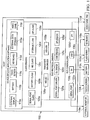
- Figure 1 illustrates a typical system of stacked interfaces utilized in a conventional host device 100 in order to support communications with a set of peripheral devices 110a-f.
- supporting a marketable variety of peripheral devices places a significant burden on the host device 100.
- the host device 100 must be designed and manufactured such that it supports a diverse set of hardware and software interfaces in order to provide robust compatibility with a marketable variety of peripheral devices. As described, this compatibility must be forward-looking such that the capabilities of the host device 100 can be updated in response to the adoption of new technologies in the peripheral marketplace. The compatibility must also be backward looking in order for the host device 100 to continue providing support for popular legacy devices.
- application software 115a-f provides an interface to the features and functionality provided by the peripheral devices 110a-f.
- this application software 115a-f may provide an interface by which the host device 100 allows a human user to interact with the peripheral devices 110a-f.
- the application software 115a-f may provide only a software interface. The remaining of the stacked layers illustrated in Figure 1 is utilized by host device 100 in order to link the application software 115a-f to the peripheral devices 110a-f.
- the stacked layers illustrated in the conventional system of Figure 1 allow the host device 100 to support communications with peripheral devices via a range of communication protocols.
- the touchscreen software supporting a touchscreen HID 115e executes on the CPU of the host device and communicates via I2C with a peripheral touchscreen HID 110b.
- Software for implementing features of a keyboard 115d receives inputs from a peripheral USB keyboard 110e.
- the host device 100 also executes external display software 115a that communicates with an external monitor 110a via a serial port interface.
- Host device 100 also executes a battery monitor software program 115b that interfaces via I2C with an external battery 110c.
- Host device 100 also executes software supporting external data storage 115e that interfaces with a USB flash drive 110d.
- Host device 100 also executes video game software 115f that interfaces via a Serial Peripheral Interface (SPI) with a peripheral video gamepad 110f.
- SPI Serial Peripheral Interface
- the host device 100 in order for the host device 100 to provide support for each of the peripheral devices 110a-f, the host device 100 also utilizes layers of components such as class drivers 120a-f, transport minidrivers 135a-b, bus protocol drivers 125a-d and bus controllers 130a-d. Each of these layers implements aspects of the lower-level communication protocols used by peripheral devices 110a-f.
- the external display software 115a running on the host device 100 invokes a component such as a serial port class driver 120a that provides the external display software 115a with a high-level, serial port software interface.
- This serial port class driver 120a implements serial port communications functions that are commonly utilized by monitors.
- the serial port class driver 120a invokes a component such as a serial port driver 125a to manage the serial port connection and the transmission of data via the serial port.
- the serial port driver 125a relies on a component such as a serial port bus controller 130a to manage the actual transactions on the serial port bus, by which data is transmitted to and from the external monitor 110a.
- the conventional system of Figure 1 also includes support for other peripheral interfaces.
- the host device 100 relies on a component such as an I2C driver 125b in order to manage I2C connections between the host device and peripheral devices such as the HID touchscreen 100b and external battery 110c. Supporting these I2C peripherals further requires the host device 100 to include a component such as an I2C bus controller for managing data transactions on the I2C bus.
- the touch screen software 115c running on the host device 100 invokes a component such as a HID class driver 120a that provides the touch screen software 115c with a high-level, HID class interface.
- This HID class driver 120c implements HID protocol communication functions that are commonly utilized by HID protocol based peripheral devices.
- the HID class driver 120c invokes a component such as a HID-I2C transport minidriver 135a, which implements the communication functions utilized by HID class devices using the I2C protocol.
- the HID-I2C transport minidriver 135a invokes the I2C driver 125b to manage I2C connections and transmission of data via I2C bus.
- Class drivers may implement common functionality using multiple communication protocols.
- the host device 100 utilizes various class interfaces that are capable of operating the I2C driver 125b.
- the battery class driver 120b and the HID class driver 120c provide the ability to utilize the I2C protocol via the I2C driver 125b.
- the battery class driver 120b implements functions commonly employed by peripheral battery devices.
- the HID class driver 120c implements functions commonly used by HIDs and supports both the I2C and USB communication protocols using the HID-I2C and HID-USB transport minidrivers 135a-b. In some host devices, two separate HID class drivers may be used, each one supporting a different communication protocol.
- the conventional host device 100 includes a component such as a USB driver 125c for managing connections to USB-enabled peripheral devices, such as USB flash drive 110d and USB keyboard 110e.
- the USB driver 125c relies on HID-USB transport minidriver 135b, which implements the communication functions utilized by HID class devices using the USB protocol. Supporting these USB peripherals further requires the host device 100 to include a component such as a USB bus controller 130c for managing transactions on the USB bus.
- the host device 100 utilizes various class drivers to operate the USB driver 125c, with each class driver implementing common USB functionality used by different types of peripheral devices.
- Storage class driver 120d implements common functionality used by peripheral storage devices and the HID class driver 120c implements common functionality used by various types of HIDs.
- the conventional host device 100 also includes a SPI driver 125d for managing connections to SPI-enabled devices, such as the video gamepad 110f.
- the host executes gamepad software 115f that invokes a component such as an SPI class driver 120a that provides a high-level SPI software interface.
- the SPI class driver 120a implements common SPI functionality used by peripheral game pad devices.
- the SPI class driver relies on a component such as the SPI driver 125d for managing connections to SPI-enabled devices.
- the SPI driver 125d relies on a component such a SPI bus controller 130d for managing the actual transactions on the SPI bus.
- an ideal host device is able to support both popular current and legacy protocols and also remain adaptable to include future protocols.
- the complexity of the stacked layers of interfaces used to support the peripheral devices As these stacked layers increase in complexity, effectively managing updates to components of the stack becomes increasingly difficult due to the many interdependencies that develop within the stacked layers.
- embodiments of the invention provide the ability for a host device to interface with a range of peripheral devices that utilize different communication protocols through a single interface.
- each of the peripheral devices described with respect to Figure 1 connect to the host device 200 through a single host interface 260.
- the host device 200 relies on an embedded controller (EC) 215 to interface with each of the peripheral devices 210a-f.
- the embedded controller 215 is configured to interface with each of the peripheral devices 210a-f through each peripheral device's native interface and to interface with the host device 200 through the single host interface 260.
- bus-level transactions with each of the peripheral devices 210a-f are managed by the embedded controller 215 on behalf of the host device 200.
- the single host interface 260 is implemented using the LPC hardware interface.
- Other embodiment may utilize other hardware interfaces as the single host interface 260.
- other embodiments may implement the single host interface using eSPI (Enhanced Serial Peripheral Interface Bus), I2C or a PCI hardware interface. Some embodiments may provide the ability to configure the hardware interface that is used as the single host interface.
- eSPI Enhanced Serial Peripheral Interface Bus
- I2C Peripheral Interface Bus
- PCI hardware interface Some embodiments may provide the ability to configure the hardware interface that is used as the single host interface.
- peripheral devices 210a-f Regardless of the hardware interface that is used as the single host interface 260, this selection is transparent to the peripheral devices 210a-f.
- Each of the peripheral devices 210a-f communicates with the host device 200 using the same native bus interface as in a conventional system. For instance, external monitor 210a still communicates with host device using the same serial port interface used in a conventional system. However, instead of interfacing directly with a hardware interface provided by the processor of the host device, the peripheral devices 210a-f interface with a hardware interface provided by the embedded controller 215.
- the application software programs 205a-f associated with each of the peripheral devices 210a-f are also unaffected by use of a single host interface 260 by the embedded controller 215.
- Each application software program 205a-f communicates with its corresponding peripheral device 210a-f using the same class drivers 220a-c and any miniclass drivers used in the conventional system of Figure 1 .
- the functionality provided by the peripheral devices 210a-f is unaffected by the embedded controller 215 serving as an intermediary that bridges the low-level bus transactions with the peripheral devices 210a-f.
- the communication protocols are implemented using software components such as bus protocol drivers 125a-d and bus controllers 130a-b.
- Each of the bus protocol drivers 125a-d implements a software interface corresponding to one of the hardware bus protocols that is supported by host device 100.
- the host device 100 executes an I2C driver 125b, which provides a software interface by which the host device 100 communicates with I2C devices such as external battery 110c and touchscreen 110b.
- I2C driver 125b which provides a software interface by which the host device 100 communicates with I2C devices such as external battery 110c and touchscreen 110b.
- These bus protocol drivers 125a-d implement the I2C instructions that are invoked by the host device 100 in order to communicate with I2C peripheral devices.
- the hardware bus controllers 130a-b of the conventional system of Figure 1 are software programs utilized by the host device 100 in order to implement the individual bus-level transactions needed to communicate with peripheral devices according to their supported native bus protocol. These bus controller programs provide the instructions for actually transmitting data on the individual buses that are supported by the host device. The bus controller programs implement the bus transactions used by all devices that utilize that particular protocol. For instance, I2C bus controller 130b implements the low-level software used to transmit data on the physical I2C bus and mediates access to the I2C bus on behalf of all peripheral devices that are communicating with the host device 100 via I2C. In the conventional system of Figure 1 , both the HID touchscreen 110b and the battery device 110c communicate with the host device 100 via the I2C bus controller 130b.
- Determining whether a new peripheral device can be operated by host device 100 in a conventional system requires ensuring that all of the software programs necessary to operate the new peripheral device are installed and accessible to the host device 100. For instance, when installing the USB keyboard 110e for use by the personal computer, all of the software necessary for operating the keyboard by the host device 100 must be installed on the personal computer.
- the device-specific application software 115d that provides features of the keyboard must be installed.
- a suitable class driver 120c for operating keyboard devices must be identified in the class driver libraries of the personal computer or otherwise must be installed.
- Software programs implementing the USB protocol must also be installed or identified.
- a device-specific USB driver 125c must be installed that implements the USB communications necessary to operate the keyboard.
- a transport minidriver 135b to interface the class driver 120c and the device-specific USB driver must also be installed or identified.
- a general purpose USB bus controller 130c must be identified, or otherwise installed.
- the same application software 205a-f and class drivers 220a-e are used as in the conventional system of Figure 1 . Consequently, the modifications required to convert a conventional system to an embodiment are transparent to the application software 205a-f and class drivers 220a-e.
- the peripheral devices 210a-f are also unchanged. From the perspective of the peripheral devices 210a-f and the application software 205a-f and class drivers 220a-e executing on the host device 200, no changes are apparent since the native interface being used to communicate between these components is unchanged from a conventional host device. For instance, the USB HID keyboard 210e and the corresponding application software 205d and class driver 220c still invoke the USB protocol to communicate between them.
- minidrivers 135a-b device-specific bus protocol drivers 125a-d and bus controllers 130a-d present in the conventional system of Figure 1
- embodiments instead utilize miniport drivers 240a-d and a single controller driver 245 and a single bus controller 250 for implementing a single host interface by which all peripheral devices will communicate with the host device 200.
- components such as miniport drivers 240a-d are used in conjunction with class derivers 220a-e.
- the miniport drivers 240a-d implement the communications used by the class drivers 220a-e.
- Miniport drivers 240a-d implement the communications functions used by a class of devices and are configured to interoperate with the bus-level communications functions provided by the controller driver 245.
- the HID miniport driver 240 implements communications used by HID class devices and is configured to forward these communications to the embedded controller 215 using the bus communication protocol implemented by the controller driver 245 and the controller 250. Communications received by the controller 250 are then translated from the protocol of the single host interface 260 to the native protocol used by the peripheral devices 210a-f.
- the analogous translations are made by these components for communications originating at the peripheral devices 210a-f and flowing to the application software 205a-f.
- the miniport drivers 240a-d serve as bridge on the host device 200 between the class specific protocol like the HID-protocol and the native bus protocol utilized by the peripheral devices through the single bus protocol that is implemented by the host device 200.
- the controller driver 245 and the controller 250 implement the bus communications for host device 200.
- the controller driver and 245 and the controller 250 implement a single bus protocol.
- this single bus protocol is LPC, but can be any other communication protocol that can be supported by the host device 200 and the embedded controller 215.
- the ability of the host device 200 to rely on the single host interface 260 to communicate with all peripherals means that the host device 200 need only implement hardware support for the single bus protocol utilized by the single host interface 260.
- this single host interface may be configurable. Such embodiments still benefit from only having to support a limited number of bus protocols, rather than the universe of bus protocols required by the set of peripheral devices that will be supported by the host device.
- Embodiments also benefit from maintaining full control of the bus communication between the peripherals and the host device processor.
- Certain bus protocols require proper bus mastering by components that utilize the bus. Even though the bus protocol required by a peripheral may be supported by the host device, differences in low level aspects of the bus communications, such as bus mastering, can result in error conditions and/or inefficient operation of this communication link.
- the bus controllers 130a-d and the bus protocol drivers 125a-d in a conventional system potentially interface directly with a variety of peripherals, updates to these components must ensure that backwards compatibility is maintained.
- updates to the software of these bus protocol layers that are made in order to accommodate a new peripheral device can be difficult to implement effectively. Consequently, a host device benefits by having to support bus communications with only the embedded controller, which is better suited to accommodating any such incongruities in the low level bus protocol implementations that may be used by different peripheral devices.
- the host device In order for the use of a single host interface 260 by the host device 200 to be transparent to the peripheral devices 210a-f, the host device relies on embedded controller 215 to bridge bus transactions with the peripheral devices 210a-f.
- the embedded controller is comprised of three main components. One of these components is the firmware used to implement the bus transactions using the bus protocol chosen for the single host interface 260.
- the firmware of the embedded controller 215 communicates with the processor of the host device 200 using an LPC bus supported in the host device 200 hardware. The firmware transmits communications between the peripheral devices 210a-f and the host device 200, but bridges the communications using the bus protocol utilized by the single host interface 260.
- the embedded controller 215 of the embodiment of Figure 2 is further comprised of a super I/O component.
- This super I/O component translates between the native bus protocol communications used by the device native interface firmware and the bus protocol utilized by the single host interface 260.
- the super I/O component need not process the actual information transmitted between the host and of the peripheral device and instead need only translate the protocol used to transmit these communications.
- the super I/O component of the embedded controller 215 communicates with the host device 200 using a memory/mailbox interface that is supported by the processor of the host device 200.
- the embedded controller 215 of the embodiment of Figure 2 is further comprised of device native interface firmware.
- the device native interface firmware implements the communications with the peripheral devices 210a-f according to their native bus protocol. This firmware implements the bus transactions for each of the bus protocols that are supported on behalf of the host device 200. New bus protocols can be supported by updating this firmware, without affecting the host device 200 and thus does not require updates to the hardware interfaces of the host device 200.
- the device native interface firmware of the embedded controller 215 may implement a set of generic and device-specific class drivers configured to support bus transactions in the native bus protocols used by the peripheral device 210a-f.
- Figure 3 illustrates the software and firmware stack for an embodiment that supports communications with HID devices that utilize the I2C using LPC as a single host interface.
- the host device 300 executes an HID class driver 315 that implements HID functionality for use by the host.
- the HID class driver 315 will implement functionality by which a user can interact with supported HID peripheral devices 340 and 345.
- the HID class driver 315 will only implement functionality used by the host 300 to interoperate with supported HID peripheral devices 340 and 345.
- the HID class driver 315 interfaces with an HID-EMI miniport driver 320 in order to communicate with the peripheral HID devices 340 and 345.
- the HID-EMI miniport driver 320 communicates with the HID class driver using class specific HID protocol utilized by the HID devices 340 and 345.
- the HID-EMI miniport driver 320 translates these HID protocol communications to the LPC/EMI bus protocol 310 that is used as the single host interface that is supported by the host device 300.
- the HID-EMI miniport driver 320 interfaces with the LPC/EMI bus driver 325, which implements the LPC/EMI bus protocol 310 used as the single host interface used by the host device 300.
- the LPC/EMI protocol is implemented in firmware 330.
- the firmware component 330 transmits the translated peripheral device communications between the host and the embedded controller by interfacing with the LPC/EMI bus driver 325 of the host device 300.
- an I2C firmware driver 335 interfaces with the peripheral devices 340 and 345 in the native I2C bus protocol.
Landscapes
- Engineering & Computer Science (AREA)
- Theoretical Computer Science (AREA)
- Physics & Mathematics (AREA)
- General Engineering & Computer Science (AREA)
- General Physics & Mathematics (AREA)
- Information Transfer Systems (AREA)
- Bus Control (AREA)
- Stored Programmes (AREA)
Applications Claiming Priority (3)
| Application Number | Priority Date | Filing Date | Title |
|---|---|---|---|
| US201462000089P | 2014-05-19 | 2014-05-19 | |
| US14/709,739 US9569375B2 (en) | 2014-05-19 | 2015-05-12 | Unifying class device interface with one host interface by using embedded controller |
| PCT/US2015/031379 WO2015179296A1 (en) | 2014-05-19 | 2015-05-18 | Unifying class device interface with one host interface by using embedded controller |
Publications (2)
| Publication Number | Publication Date |
|---|---|
| EP3146437A1 EP3146437A1 (en) | 2017-03-29 |
| EP3146437B1 true EP3146437B1 (en) | 2018-12-26 |
Family
ID=54538640
Family Applications (1)
| Application Number | Title | Priority Date | Filing Date |
|---|---|---|---|
| EP15728265.8A Active EP3146437B1 (en) | 2014-05-19 | 2015-05-18 | Unifying class device interface with one host interface by using embedded controller |
Country Status (7)
| Country | Link |
|---|---|
| US (1) | US9569375B2 (https=) |
| EP (1) | EP3146437B1 (https=) |
| JP (1) | JP6642944B2 (https=) |
| KR (1) | KR20170003541A (https=) |
| CN (1) | CN106462514B (https=) |
| TW (1) | TWI646427B (https=) |
| WO (1) | WO2015179296A1 (https=) |
Families Citing this family (10)
| Publication number | Priority date | Publication date | Assignee | Title |
|---|---|---|---|---|
| US10025727B2 (en) * | 2016-02-05 | 2018-07-17 | Honeywell International Inc. | Relay mechanism to facilitate processor communication with inaccessible input/output (I/O) device |
| TWI626535B (zh) * | 2017-02-15 | 2018-06-11 | 新唐科技股份有限公司 | 電源管理系統和控制器 |
| CN107992439B (zh) * | 2017-10-13 | 2020-12-18 | 武汉高德智感科技有限公司 | 一种可扩展的数据交互方法及系统 |
| US10599444B2 (en) * | 2018-01-09 | 2020-03-24 | Microsoft Technology Licensing, Llc | Extensible input stack for processing input device data |
| EP3664097A1 (en) * | 2018-12-04 | 2020-06-10 | Siemens Healthcare GmbH | Attaching peripheral components of a medical imaging system |
| CN111274184B (zh) * | 2018-12-05 | 2021-07-02 | 西安诺瓦星云科技股份有限公司 | 串行接口设备驱动器、嵌入式处理器和视频控制器 |
| US10649945B1 (en) * | 2018-12-10 | 2020-05-12 | Analog Devices International Unlimited Company | Non-native digital interface support over a two-wire communication bus |
| US10909048B1 (en) * | 2019-07-30 | 2021-02-02 | Microsoft Technology Licensing, Llc | Declarative transactional communications with a peripheral device via a low-power bus |
| KR102696026B1 (ko) * | 2023-10-06 | 2024-08-19 | 위더맥스(주) | 통합형 spi 장치 및 그 인터페이스 방법 |
| US20250199817A1 (en) * | 2023-12-19 | 2025-06-19 | Acer Incorporated | Notebook computer and operation method |
Family Cites Families (25)
| Publication number | Priority date | Publication date | Assignee | Title |
|---|---|---|---|---|
| US5974492A (en) | 1997-02-18 | 1999-10-26 | Advanced Micro Devices, Inc. | Method for input/output port replication using an interconnection bus |
| US6138180A (en) * | 1997-09-12 | 2000-10-24 | Symbol Technologies, Inc. | Adaptive computer peripheral for selecting a communications protocol by cycling through a plurality of given protocols |
| US5938738A (en) * | 1997-11-03 | 1999-08-17 | Mustek Systems Inc. | Peripheral control system |
| US6684260B1 (en) * | 1999-05-04 | 2004-01-27 | Hewlett-Packard Development Company, L.P. | Maintaining consistency of device driver settings |
| US6813251B1 (en) * | 1999-07-27 | 2004-11-02 | Intel Corporation | Split Transaction protocol for a bus system |
| US7159223B1 (en) * | 2000-05-12 | 2007-01-02 | Zw Company, Llc | Methods and systems for applications to interact with hardware |
| US20020099902A1 (en) * | 2000-05-12 | 2002-07-25 | Guillaume Comeau | Methods and systems for applications to interact with hardware |
| JP3653051B2 (ja) * | 2002-02-20 | 2005-05-25 | Necアクセステクニカ株式会社 | プロトコル変換によるデータ転送方法とシステムならびにプログラム |
| TW588282B (en) | 2002-10-22 | 2004-05-21 | Via Tech Inc | System capable of managing peripheral input/output control device |
| US7617502B2 (en) * | 2002-11-06 | 2009-11-10 | Scientific-Atlanta, Llc | Managing peripheral device drivers |
| US7249201B1 (en) * | 2003-07-02 | 2007-07-24 | Adaptec, Inc. | Single driver for multifunctional SCSI chips |
| CN1581122A (zh) * | 2003-08-05 | 2005-02-16 | 启碁科技股份有限公司 | 具有随身碟可存储驱动程序的外围装置 |
| US7376147B2 (en) * | 2003-12-18 | 2008-05-20 | Intel Corporation | Adaptor supporting different protocols |
| CN100395745C (zh) * | 2004-05-10 | 2008-06-18 | 联发科技股份有限公司 | 计算机系统以及外围装置的控制系统 |
| US7631199B2 (en) * | 2005-06-30 | 2009-12-08 | Intel Corporation | Various methods and apparatuses for power states in a controller |
| WO2007039897A2 (en) * | 2005-10-03 | 2007-04-12 | Sandisk Il Ltd. | Modular computing systen |
| US8464238B1 (en) * | 2006-01-31 | 2013-06-11 | Qlogic, Corporation | Method and system for managing storage area networks |
| US20070198996A1 (en) * | 2006-02-09 | 2007-08-23 | Ziep Software Inc. | System and method for driving peripheral devices |
| TW200801953A (en) | 2006-06-16 | 2008-01-01 | Via Tech Inc | Multi-layer USB I/O system and computer system |
| WO2008003599A1 (en) * | 2006-07-05 | 2008-01-10 | Gemplus | A multi-function peripheral device, corresponding method and electronic system having a peripheral and a host communicating via a single interface |
| US9514065B2 (en) * | 2010-11-29 | 2016-12-06 | Mce-Sys Ltd. | Host device coupled to a USB peripheral and method of operating the same |
| US8521942B2 (en) | 2011-03-21 | 2013-08-27 | Microsoft Corporation | HID over simple peripheral buses |
| JP2013073498A (ja) * | 2011-09-28 | 2013-04-22 | Toshiba Corp | 情報処理装置および制御方法 |
| JP5491548B2 (ja) * | 2012-01-31 | 2014-05-14 | 株式会社ユニテックス | 情報処理装置、情報処理システム、情報処理方法、プログラム及び記録媒体 |
| US20140089553A1 (en) * | 2012-09-24 | 2014-03-27 | Broadcom Corporation | Interface between a host and a peripheral device |
-
2015
- 2015-05-12 US US14/709,739 patent/US9569375B2/en active Active
- 2015-05-18 CN CN201580026057.1A patent/CN106462514B/zh active Active
- 2015-05-18 JP JP2016564191A patent/JP6642944B2/ja active Active
- 2015-05-18 EP EP15728265.8A patent/EP3146437B1/en active Active
- 2015-05-18 KR KR1020167030074A patent/KR20170003541A/ko not_active Withdrawn
- 2015-05-18 WO PCT/US2015/031379 patent/WO2015179296A1/en not_active Ceased
- 2015-05-19 TW TW104115943A patent/TWI646427B/zh active
Non-Patent Citations (1)
| Title |
|---|
| None * |
Also Published As
| Publication number | Publication date |
|---|---|
| CN106462514A (zh) | 2017-02-22 |
| CN106462514B (zh) | 2020-01-21 |
| EP3146437A1 (en) | 2017-03-29 |
| KR20170003541A (ko) | 2017-01-09 |
| JP2017516212A (ja) | 2017-06-15 |
| WO2015179296A1 (en) | 2015-11-26 |
| JP6642944B2 (ja) | 2020-02-12 |
| TW201610684A (zh) | 2016-03-16 |
| US20150331830A1 (en) | 2015-11-19 |
| TWI646427B (zh) | 2019-01-01 |
| US9569375B2 (en) | 2017-02-14 |
Similar Documents
| Publication | Publication Date | Title |
|---|---|---|
| EP3146437B1 (en) | Unifying class device interface with one host interface by using embedded controller | |
| US7433991B2 (en) | Selector, selection method, and program product | |
| EP3289469B1 (en) | Universal serial bus smart hub | |
| US9183168B2 (en) | Dual mode USB and serial console port | |
| US20080276012A1 (en) | Driver Loading via a PnP Device | |
| US8898349B1 (en) | IPMI over USB data transfer between host computer and baseboard management controller (BMC) | |
| US9256569B2 (en) | Monitoring and managing storage drives and performing backplane controller firmware using a USB interface | |
| US9201833B2 (en) | Backplane controller capable of transferring and receiving data through USB interface | |
| US20140142725A1 (en) | Systems and methods for load balancing of modular information handling resources in a chassis | |
| JP4117193B2 (ja) | コンピューティング・デバイスにおいてポートを有効化する方法 | |
| KR20020043232A (ko) | 컴퓨터 시스템 및 usb 호환가능 디바이스 및 통신 방법 | |
| US9779047B2 (en) | Universal intelligent platform management interface (IPMI) host to baseboard management controller (BMC) communication for non-x86 and legacy free systems | |
| US20070050525A1 (en) | [virtual com port for remote i/o controller] | |
| US20140149658A1 (en) | Systems and methods for multipath input/output configuration | |
| US7461244B2 (en) | Method and apparatus to support booting despite deficient resources | |
| US20110125927A1 (en) | Personal computer system and operation method thereof for multiple outputs | |
| CN102122238B (zh) | 计算机管理系统与方法 | |
| US8996771B1 (en) | System and method for communication via universal serial bus | |
| US20050182615A1 (en) | Method and system for creating an automatically adjusting USB mass storage device | |
| US20120036294A1 (en) | Computer integrated display integrated display and control method of the same | |
| US11093431B2 (en) | Automated device discovery system | |
| US10942793B2 (en) | Information processing system | |
| WO2005116845A1 (ja) | Usb機器 | |
| Murphy et al. | PSoC® 3 and PSoC 5LP–Introduction to Implementing USB Data Transfers | |
| US8095978B1 (en) | Method and system for managing ports in a host bus adapter |
Legal Events
| Date | Code | Title | Description |
|---|---|---|---|
| STAA | Information on the status of an ep patent application or granted ep patent |
Free format text: STATUS: THE INTERNATIONAL PUBLICATION HAS BEEN MADE |
|
| PUAI | Public reference made under article 153(3) epc to a published international application that has entered the european phase |
Free format text: ORIGINAL CODE: 0009012 |
|
| STAA | Information on the status of an ep patent application or granted ep patent |
Free format text: STATUS: REQUEST FOR EXAMINATION WAS MADE |
|
| 17P | Request for examination filed |
Effective date: 20161216 |
|
| AK | Designated contracting states |
Kind code of ref document: A1 Designated state(s): AL AT BE BG CH CY CZ DE DK EE ES FI FR GB GR HR HU IE IS IT LI LT LU LV MC MK MT NL NO PL PT RO RS SE SI SK SM TR |
|
| AX | Request for extension of the european patent |
Extension state: BA ME |
|
| DAV | Request for validation of the european patent (deleted) | ||
| DAX | Request for extension of the european patent (deleted) | ||
| GRAP | Despatch of communication of intention to grant a patent |
Free format text: ORIGINAL CODE: EPIDOSNIGR1 |
|
| STAA | Information on the status of an ep patent application or granted ep patent |
Free format text: STATUS: GRANT OF PATENT IS INTENDED |
|
| INTG | Intention to grant announced |
Effective date: 20180810 |
|
| GRAS | Grant fee paid |
Free format text: ORIGINAL CODE: EPIDOSNIGR3 |
|
| GRAA | (expected) grant |
Free format text: ORIGINAL CODE: 0009210 |
|
| STAA | Information on the status of an ep patent application or granted ep patent |
Free format text: STATUS: THE PATENT HAS BEEN GRANTED |
|
| AK | Designated contracting states |
Kind code of ref document: B1 Designated state(s): AL AT BE BG CH CY CZ DE DK EE ES FI FR GB GR HR HU IE IS IT LI LT LU LV MC MK MT NL NO PL PT RO RS SE SI SK SM TR |
|
| REG | Reference to a national code |
Ref country code: GB Ref legal event code: FG4D |
|
| REG | Reference to a national code |
Ref country code: CH Ref legal event code: EP |
|
| REG | Reference to a national code |
Ref country code: AT Ref legal event code: REF Ref document number: 1082372 Country of ref document: AT Kind code of ref document: T Effective date: 20190115 |
|
| REG | Reference to a national code |
Ref country code: IE Ref legal event code: FG4D |
|
| REG | Reference to a national code |
Ref country code: DE Ref legal event code: R096 Ref document number: 602015022290 Country of ref document: DE |
|
| PG25 | Lapsed in a contracting state [announced via postgrant information from national office to epo] |
Ref country code: NO Free format text: LAPSE BECAUSE OF FAILURE TO SUBMIT A TRANSLATION OF THE DESCRIPTION OR TO PAY THE FEE WITHIN THE PRESCRIBED TIME-LIMIT Effective date: 20190326 Ref country code: HR Free format text: LAPSE BECAUSE OF FAILURE TO SUBMIT A TRANSLATION OF THE DESCRIPTION OR TO PAY THE FEE WITHIN THE PRESCRIBED TIME-LIMIT Effective date: 20181226 Ref country code: BG Free format text: LAPSE BECAUSE OF FAILURE TO SUBMIT A TRANSLATION OF THE DESCRIPTION OR TO PAY THE FEE WITHIN THE PRESCRIBED TIME-LIMIT Effective date: 20190326 Ref country code: LT Free format text: LAPSE BECAUSE OF FAILURE TO SUBMIT A TRANSLATION OF THE DESCRIPTION OR TO PAY THE FEE WITHIN THE PRESCRIBED TIME-LIMIT Effective date: 20181226 Ref country code: FI Free format text: LAPSE BECAUSE OF FAILURE TO SUBMIT A TRANSLATION OF THE DESCRIPTION OR TO PAY THE FEE WITHIN THE PRESCRIBED TIME-LIMIT Effective date: 20181226 Ref country code: LV Free format text: LAPSE BECAUSE OF FAILURE TO SUBMIT A TRANSLATION OF THE DESCRIPTION OR TO PAY THE FEE WITHIN THE PRESCRIBED TIME-LIMIT Effective date: 20181226 |
|
| REG | Reference to a national code |
Ref country code: NL Ref legal event code: MP Effective date: 20181226 |
|
| REG | Reference to a national code |
Ref country code: LT Ref legal event code: MG4D |
|
| PG25 | Lapsed in a contracting state [announced via postgrant information from national office to epo] |
Ref country code: AL Free format text: LAPSE BECAUSE OF FAILURE TO SUBMIT A TRANSLATION OF THE DESCRIPTION OR TO PAY THE FEE WITHIN THE PRESCRIBED TIME-LIMIT Effective date: 20181226 Ref country code: SE Free format text: LAPSE BECAUSE OF FAILURE TO SUBMIT A TRANSLATION OF THE DESCRIPTION OR TO PAY THE FEE WITHIN THE PRESCRIBED TIME-LIMIT Effective date: 20181226 Ref country code: RS Free format text: LAPSE BECAUSE OF FAILURE TO SUBMIT A TRANSLATION OF THE DESCRIPTION OR TO PAY THE FEE WITHIN THE PRESCRIBED TIME-LIMIT Effective date: 20181226 Ref country code: GR Free format text: LAPSE BECAUSE OF FAILURE TO SUBMIT A TRANSLATION OF THE DESCRIPTION OR TO PAY THE FEE WITHIN THE PRESCRIBED TIME-LIMIT Effective date: 20190327 |
|
| REG | Reference to a national code |
Ref country code: AT Ref legal event code: MK05 Ref document number: 1082372 Country of ref document: AT Kind code of ref document: T Effective date: 20181226 |
|
| PG25 | Lapsed in a contracting state [announced via postgrant information from national office to epo] |
Ref country code: NL Free format text: LAPSE BECAUSE OF FAILURE TO SUBMIT A TRANSLATION OF THE DESCRIPTION OR TO PAY THE FEE WITHIN THE PRESCRIBED TIME-LIMIT Effective date: 20181226 |
|
| PG25 | Lapsed in a contracting state [announced via postgrant information from national office to epo] |
Ref country code: PT Free format text: LAPSE BECAUSE OF FAILURE TO SUBMIT A TRANSLATION OF THE DESCRIPTION OR TO PAY THE FEE WITHIN THE PRESCRIBED TIME-LIMIT Effective date: 20190426 Ref country code: CZ Free format text: LAPSE BECAUSE OF FAILURE TO SUBMIT A TRANSLATION OF THE DESCRIPTION OR TO PAY THE FEE WITHIN THE PRESCRIBED TIME-LIMIT Effective date: 20181226 Ref country code: ES Free format text: LAPSE BECAUSE OF FAILURE TO SUBMIT A TRANSLATION OF THE DESCRIPTION OR TO PAY THE FEE WITHIN THE PRESCRIBED TIME-LIMIT Effective date: 20181226 Ref country code: PL Free format text: LAPSE BECAUSE OF FAILURE TO SUBMIT A TRANSLATION OF THE DESCRIPTION OR TO PAY THE FEE WITHIN THE PRESCRIBED TIME-LIMIT Effective date: 20181226 Ref country code: IT Free format text: LAPSE BECAUSE OF FAILURE TO SUBMIT A TRANSLATION OF THE DESCRIPTION OR TO PAY THE FEE WITHIN THE PRESCRIBED TIME-LIMIT Effective date: 20181226 |
|
| PG25 | Lapsed in a contracting state [announced via postgrant information from national office to epo] |
Ref country code: SM Free format text: LAPSE BECAUSE OF FAILURE TO SUBMIT A TRANSLATION OF THE DESCRIPTION OR TO PAY THE FEE WITHIN THE PRESCRIBED TIME-LIMIT Effective date: 20181226 Ref country code: EE Free format text: LAPSE BECAUSE OF FAILURE TO SUBMIT A TRANSLATION OF THE DESCRIPTION OR TO PAY THE FEE WITHIN THE PRESCRIBED TIME-LIMIT Effective date: 20181226 Ref country code: RO Free format text: LAPSE BECAUSE OF FAILURE TO SUBMIT A TRANSLATION OF THE DESCRIPTION OR TO PAY THE FEE WITHIN THE PRESCRIBED TIME-LIMIT Effective date: 20181226 Ref country code: IS Free format text: LAPSE BECAUSE OF FAILURE TO SUBMIT A TRANSLATION OF THE DESCRIPTION OR TO PAY THE FEE WITHIN THE PRESCRIBED TIME-LIMIT Effective date: 20190426 Ref country code: SK Free format text: LAPSE BECAUSE OF FAILURE TO SUBMIT A TRANSLATION OF THE DESCRIPTION OR TO PAY THE FEE WITHIN THE PRESCRIBED TIME-LIMIT Effective date: 20181226 |
|
| REG | Reference to a national code |
Ref country code: DE Ref legal event code: R097 Ref document number: 602015022290 Country of ref document: DE |
|
| PG25 | Lapsed in a contracting state [announced via postgrant information from national office to epo] |
Ref country code: AT Free format text: LAPSE BECAUSE OF FAILURE TO SUBMIT A TRANSLATION OF THE DESCRIPTION OR TO PAY THE FEE WITHIN THE PRESCRIBED TIME-LIMIT Effective date: 20181226 Ref country code: DK Free format text: LAPSE BECAUSE OF FAILURE TO SUBMIT A TRANSLATION OF THE DESCRIPTION OR TO PAY THE FEE WITHIN THE PRESCRIBED TIME-LIMIT Effective date: 20181226 |
|
| PLBE | No opposition filed within time limit |
Free format text: ORIGINAL CODE: 0009261 |
|
| STAA | Information on the status of an ep patent application or granted ep patent |
Free format text: STATUS: NO OPPOSITION FILED WITHIN TIME LIMIT |
|
| 26N | No opposition filed |
Effective date: 20190927 |
|
| REG | Reference to a national code |
Ref country code: CH Ref legal event code: PL |
|
| GBPC | Gb: european patent ceased through non-payment of renewal fee |
Effective date: 20190518 |
|
| PG25 | Lapsed in a contracting state [announced via postgrant information from national office to epo] |
Ref country code: LI Free format text: LAPSE BECAUSE OF NON-PAYMENT OF DUE FEES Effective date: 20190531 Ref country code: CH Free format text: LAPSE BECAUSE OF NON-PAYMENT OF DUE FEES Effective date: 20190531 Ref country code: MC Free format text: LAPSE BECAUSE OF FAILURE TO SUBMIT A TRANSLATION OF THE DESCRIPTION OR TO PAY THE FEE WITHIN THE PRESCRIBED TIME-LIMIT Effective date: 20181226 |
|
| REG | Reference to a national code |
Ref country code: BE Ref legal event code: MM Effective date: 20190531 |
|
| PG25 | Lapsed in a contracting state [announced via postgrant information from national office to epo] |
Ref country code: LU Free format text: LAPSE BECAUSE OF NON-PAYMENT OF DUE FEES Effective date: 20190518 Ref country code: SI Free format text: LAPSE BECAUSE OF FAILURE TO SUBMIT A TRANSLATION OF THE DESCRIPTION OR TO PAY THE FEE WITHIN THE PRESCRIBED TIME-LIMIT Effective date: 20181226 |
|
| PG25 | Lapsed in a contracting state [announced via postgrant information from national office to epo] |
Ref country code: TR Free format text: LAPSE BECAUSE OF FAILURE TO SUBMIT A TRANSLATION OF THE DESCRIPTION OR TO PAY THE FEE WITHIN THE PRESCRIBED TIME-LIMIT Effective date: 20181226 |
|
| PG25 | Lapsed in a contracting state [announced via postgrant information from national office to epo] |
Ref country code: GB Free format text: LAPSE BECAUSE OF NON-PAYMENT OF DUE FEES Effective date: 20190518 Ref country code: IE Free format text: LAPSE BECAUSE OF NON-PAYMENT OF DUE FEES Effective date: 20190518 |
|
| PG25 | Lapsed in a contracting state [announced via postgrant information from national office to epo] |
Ref country code: BE Free format text: LAPSE BECAUSE OF NON-PAYMENT OF DUE FEES Effective date: 20190531 |
|
| PG25 | Lapsed in a contracting state [announced via postgrant information from national office to epo] |
Ref country code: FR Free format text: LAPSE BECAUSE OF NON-PAYMENT OF DUE FEES Effective date: 20190531 |
|
| PG25 | Lapsed in a contracting state [announced via postgrant information from national office to epo] |
Ref country code: CY Free format text: LAPSE BECAUSE OF FAILURE TO SUBMIT A TRANSLATION OF THE DESCRIPTION OR TO PAY THE FEE WITHIN THE PRESCRIBED TIME-LIMIT Effective date: 20181226 |
|
| PG25 | Lapsed in a contracting state [announced via postgrant information from national office to epo] |
Ref country code: HU Free format text: LAPSE BECAUSE OF FAILURE TO SUBMIT A TRANSLATION OF THE DESCRIPTION OR TO PAY THE FEE WITHIN THE PRESCRIBED TIME-LIMIT; INVALID AB INITIO Effective date: 20150518 Ref country code: MT Free format text: LAPSE BECAUSE OF FAILURE TO SUBMIT A TRANSLATION OF THE DESCRIPTION OR TO PAY THE FEE WITHIN THE PRESCRIBED TIME-LIMIT Effective date: 20181226 |
|
| PG25 | Lapsed in a contracting state [announced via postgrant information from national office to epo] |
Ref country code: MK Free format text: LAPSE BECAUSE OF FAILURE TO SUBMIT A TRANSLATION OF THE DESCRIPTION OR TO PAY THE FEE WITHIN THE PRESCRIBED TIME-LIMIT Effective date: 20181226 |
|
| P01 | Opt-out of the competence of the unified patent court (upc) registered |
Effective date: 20230528 |
|
| PGFP | Annual fee paid to national office [announced via postgrant information from national office to epo] |
Ref country code: DE Payment date: 20250423 Year of fee payment: 11 |