EP3144848A1 - Lexicon-free, matching-based word-image recognition - Google Patents
Lexicon-free, matching-based word-image recognition Download PDFInfo
- Publication number
- EP3144848A1 EP3144848A1 EP16176896.5A EP16176896A EP3144848A1 EP 3144848 A1 EP3144848 A1 EP 3144848A1 EP 16176896 A EP16176896 A EP 16176896A EP 3144848 A1 EP3144848 A1 EP 3144848A1
- Authority
- EP
- European Patent Office
- Prior art keywords
- character
- image
- utility
- alphabet
- embedded
- Prior art date
- Legal status (The legal status is an assumption and is not a legal conclusion. Google has not performed a legal analysis and makes no representation as to the accuracy of the status listed.)
- Ceased
Links
Images

Classifications
-
- G—PHYSICS
- G06—COMPUTING OR CALCULATING; COUNTING
- G06V—IMAGE OR VIDEO RECOGNITION OR UNDERSTANDING
- G06V30/00—Character recognition; Recognising digital ink; Document-oriented image-based pattern recognition
- G06V30/10—Character recognition
- G06V30/19—Recognition using electronic means
- G06V30/196—Recognition using electronic means using sequential comparisons of the image signals with a plurality of references
- G06V30/1983—Syntactic or structural pattern recognition, e.g. symbolic string recognition
- G06V30/1985—Syntactic analysis, e.g. using a grammatical approach
-
- G—PHYSICS
- G06—COMPUTING OR CALCULATING; COUNTING
- G06F—ELECTRIC DIGITAL DATA PROCESSING
- G06F18/00—Pattern recognition
- G06F18/20—Analysing
- G06F18/29—Graphical models, e.g. Bayesian networks
-
- G—PHYSICS
- G06—COMPUTING OR CALCULATING; COUNTING
- G06V—IMAGE OR VIDEO RECOGNITION OR UNDERSTANDING
- G06V30/00—Character recognition; Recognising digital ink; Document-oriented image-based pattern recognition
- G06V30/10—Character recognition
- G06V30/19—Recognition using electronic means
- G06V30/191—Design or setup of recognition systems or techniques; Extraction of features in feature space; Clustering techniques; Blind source separation
- G06V30/19187—Graphical models, e.g. Bayesian networks or Markov models
-
- G—PHYSICS
- G06—COMPUTING OR CALCULATING; COUNTING
- G06V—IMAGE OR VIDEO RECOGNITION OR UNDERSTANDING
- G06V30/00—Character recognition; Recognising digital ink; Document-oriented image-based pattern recognition
- G06V30/10—Character recognition
- G06V30/22—Character recognition characterised by the type of writing
- G06V30/224—Character recognition characterised by the type of writing of printed characters having additional code marks or containing code marks
-
- G—PHYSICS
- G06—COMPUTING OR CALCULATING; COUNTING
- G06V—IMAGE OR VIDEO RECOGNITION OR UNDERSTANDING
- G06V30/00—Character recognition; Recognising digital ink; Document-oriented image-based pattern recognition
- G06V30/10—Character recognition
- G06V30/22—Character recognition characterised by the type of writing
- G06V30/226—Character recognition characterised by the type of writing of cursive writing
-
- G—PHYSICS
- G06—COMPUTING OR CALCULATING; COUNTING
- G06V—IMAGE OR VIDEO RECOGNITION OR UNDERSTANDING
- G06V30/00—Character recognition; Recognising digital ink; Document-oriented image-based pattern recognition
- G06V30/10—Character recognition
- G06V30/26—Techniques for post-processing, e.g. correcting the recognition result
- G06V30/262—Techniques for post-processing, e.g. correcting the recognition result using context analysis, e.g. lexical, syntactic or semantic context
- G06V30/268—Lexical context
-
- G—PHYSICS
- G06—COMPUTING OR CALCULATING; COUNTING
- G06V—IMAGE OR VIDEO RECOGNITION OR UNDERSTANDING
- G06V30/00—Character recognition; Recognising digital ink; Document-oriented image-based pattern recognition
- G06V30/10—Character recognition
Definitions
- Systems and methods herein generally relate to automated recognition systems and more particularly to optical character recognition (OCR) and similar systems.
- OCR optical character recognition
- a system can rank all possible transcriptions (i.e., the lexicon) and use the most similar one to the image word as the predicted transcription. This is very useful if a system has advanced knowledge regarding the set of possible valid transcriptions, and this set is small. For example, a system may be interested in finding keywords related to shops in street images, or in recognizing license plates and knowing that the right transcription is in a small validated set.
- Exemplary methods herein recognize alphanumeric characters in an image. Such methods compute (or precompute) individual representations of every character of an alphabet at every character position within a certain word transcription length.
- these methods embed the individual representations of each alphabet character in a common vectorial subspace (using a matrix) to produce "embedded alphabet characters” that can be stored in a tensor. These methods also embed a received image of an alphanumeric word into the common vectorial subspace (using the matrix) to produce an "embedded alphanumeric character image.”
- the embedded alphanumeric character image represents or implicitly encodes "image characters" at "character positions.”
- Such methods compute the utility value of every one of the embedded alphabet characters at every one of the character positions with respect to the embedded alphanumeric character image.
- the process of computing the utility value can include processing the received electronic image with a tensor to produce a utility tensor that represents the utility of transcribing each of the image characters to each of the embedded alphabet characters.
- these methods compute the best transcription alphabet character for each of the character positions based on the utility value of each embedded alphabet character at each character position (within the word transcription length).
- these methods find the best path over a directed acyclic graph (DAG).
- the DAG has nodes, where each of the nodes represents one of the embedded alphabet characters at one of the character positions, and each of the character positions includes a different node for each different embedded alphabet character. Every edge between the nodes contains the utility value and a cost value of choosing each of the nodes.
- the methods herein find the best path over the DAG based on the utility value and the cost value of choosing each of the nodes. This can be performed using an exhaustive search approach, where all paths are explored, or using an approximate search approach where only the most promising paths are explored.
- the methods find the best path over the DAG by accumulating the utility values and the cost values of each the edges of different path in the DAG.
- the process of accumulating the utility value and the cost value involves calculating the score of each path of the DAG by, for each said path: summing the utility values of all edges between nodes of a given path to produce summed utility values for that path; summing the costs of all the edges of that path to produce summed cost values for the path; calculating a normal cost value of the summed cost values; and dividing the summed utility values by the normal cost value.
- Such methods assign the best transcription alphabet character for each of the character positions to produce a recognized alphanumeric word within the received image and to determine the character length of the recognized alphanumeric word.
- Systems herein similarly include (among other components) an image sensor device, and an image processor device operatively connected to the image sensor device.
- the image processor device automatically performs initial processing by computing individual representations of all alphabet characters of an alphabet at every character position within a word transcription length, embedding the individual representations of the alphabet characters in a common vectorial subspace using a matrix to produce embedded alphabet characters, and saving the embedded alphabet characters.
- the image processor device After the initial processing, the image processor device repeatedly automatically performs subsequent processing without repeating the initial processing.
- This subsequent processing includes receiving an electronic image of an alphanumeric word from the image sensor device and embedding the electronic image into the common vectorial subspace using the matrix to produce an embedded alphanumeric character image.
- the embedded alphanumeric character image represents or encodes image characters at character positions.
- This subsequent processing includes computing a utility value of every one of the embedded alphabet characters at each of the character positions with respect to the embedded alphanumeric character image using the image processor device, and computing the highest-utility transcription alphabet character for every one of the character positions based on the utility value of each of the embedded alphabet character at each of the character positions, within the word transcription length.
- the image processor device assigns the highest-utility transcription alphabet character for each of the character positions to produce a recognized alphanumeric word within the electronic image, and determines a character length of the recognized alphanumeric word.
- the image processor device outputs the recognized alphanumeric word.
- a feature herein that allows the optimization of equation is that the function ⁇ can be decomposed to show the (non-linear) influence that each character of the word has in the final representation produced by ⁇ .
- the systems and methods herein show that the similarity of equation can be rewritten as the ratio of two quantities.
- the numerator encodes the individual utility of transcribing the i -th character of x as c i , for all characters in the word and depends on the word to recognize.
- the denominator encodes the cost incurred in transcribing the i -th character of the word as c i , for all characters in the word and does not depend on the word to recognize, so it can be easily precomputed offline for all possible values.
- the numerator can be rapidly precomputed online once the word to recognize has been provided, making the evaluation of the similarity very efficient.
- This approach allows one to rapidly compute similarities between images and text without explicitly computing ⁇ ( y ) by memorizing intermediate results.
- the search space is still dramatically large and finding the most likely transcription is still unfeasible.
- the systems and methods herein provide an approximate version of the search algorithm, similar to branch and bound techniques. In this example case, only the most promising parts of the search space are explored, leading to gigantic speed-ups and this can be achieved by leveraging the utility of all the individual characters. Although this approach does not guarantee the exact solution, show that the loss of accuracy because of this approximation is negligible. Therefore, the systems and methods herein provide the ability to recognize words without a lexicon using a global-image representation approach.
- model introspection By producing the most likely transcription of a word image at training time, one can note where the model is failing without being limited by the test lexicon. This highlights the fact that the underlying model is not as good as though for recognition purposes, and these lexicon-free transcriptions can potentially be used to improve the model: hard negative mining, synthesizing new training words, etc.
- This disclosure starts by analyzing the ⁇ function employed.
- the objective of this function is to embed text strings into a vectorial space, such as that lexicographic similarity is preserved (i.e., words that are closer using a word distance such as the Levenshtein distance should be close in the vectorial space).
- SPOC Spatial Pyramid of Characters
- Other methods may first provide a Pyramid Histogram of Characters (PHOC), that computes the same embedding.
- the histogram is computed at multiple levels. For example, at level 2, one would produce and concatenate two separate histograms. One that encodes a histogram of the characters of the first half of the word and one that encodes a histogram of the characters of the second half of the word. Level 3 would produce 3 histograms, etc. In cases where only part of a character appears in a region (e.g., dividing a word of 3 characters in 2 regions), the character is soft-assigned to both histograms.
- the systems and methods herein can precompute its embedding ⁇ ( x ) and multiply it with tensor T, leading to an utility tensor U x of size
- ⁇ L ⁇ L that represents the utility of transcribing the i -th character of the word as any of the symbols in ⁇ assuming than the word is of length l : l : U x i j l ⁇ x T T i j l for all i between 1 and
- the equation can be further rewritten as.
- the algorithm described in the previous paragraphs allows the user to find the most likely transcription of a word of length l in an exact and efficient manner.
- applying this algorithm for values of l larger than 5 or 6 is difficult.
- the systems and methods described herein provide an approximate search that dramatically speeds-up the optimization process.
- a feature herein is that, when exploring the DAG of Figure 1 , the systems and methods herein may rapidly find that some nodes will not be used by the best path, and so they can be removed from the graph. Intuitively, this implies reducing the number of characters explored at each level. By applying a pruning strategy the systems and methods herein can drastically reduce the search space while preserving the accuracy.
- the previous formulation focuses on the lexicon-free recognition case.
- the approach can be extended to address cases where some information about the lexicon is known in advance.
- the systems and methods herein can focus on two scenarios. In the first one, the lexicon is fully known in advance and for known, moderately large lexicons, precomputing the ⁇ embeddings of all the lexicon words and performing the ranking may be still possible, but impractical.
- the systems and methods herein can modify the proposed approach to deal with known lexicons.
- a feature herein is that, given a lexicon, the systems and methods herein can first encode the text words into a prefix tree or trie, and then, at recognition time, use this information to explore at each level only the characters that lead to a word in the lexicon.
- the second scenario is that the pattern of the word is known.
- one has advanced knowledge of the type of words to recognize. For example, in the case of license plates, one may search for transcriptions that satisfy the following pattern: 3 numbers - 3 letters - 2 numbers. Again, this can be very easily addressed by expanding only the corresponding nodes. For this example, the systems and methods herein would only expand numbers for the first three levels, only letters for the following three, and again only numbers for the last two. This significantly reduces the search space, and therefore the time required to find the correct transcription.
- the optimization problem of equation (9), given the length l can be seen in Figure 1 as finding the best path over a directed acyclic graph (DAG) from the start to the end node. Every black edge in the graph has a utility value and a cost vector associated with it, which represents the utility and cost of choosing a given character at a given level, and which depends on the word image and the text embedding.
- the gray edges are for synchronization purposes and have a zero utility and cost.
- the score of a complete path is measured as the sum of utilities divided by the norm of the sum of costs of the edges that the path uses. To naively obtain the best path, the systems and methods herein exhaustively searches all the possible combinations. For efficiency purposes, it is possible to accumulate at each node the current sum of utilities and costs. The best path is then found recursively by exploring the nodes in a depth-first manner; see the algorithm (1).
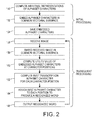
- Figure 2 is a flowchart illustrating exemplary methods herein that recognize alphanumeric characters in an image.
- these methods perform initial processing (e.g., preprocessing) in items 150-154.
- initial processing e.g., preprocessing
- these methods compute (or precompute) individual representations of every character of an alphabet (e.g., A-Z and 0-9, and potentially even punctuation and a null character, etc.) at every character position within a certain word transcription length.
- the null character represents a blank space or a character that is not within the alphabet.
- these methods embed the individual representations of each alphabet character in a common vectorial subspace (using a matrix) to produce "embedded alphabet characters.” These methods then save the embedded alphabet characters in, for example, a tensor in item 154.
- these methods After performing the initial processing (which does not thereafter need to be repeated), these methods repeatedly perform subsequent processing (in item 156-164) on subsequently received images using the embedded alphabet characters stored in item 154.
- these methods receive (into the image processor mentioned above or another image processor) an electronic image obtained from an image sensor device (e.g., camera, scanner, optical sensor, etc.) that is in some way operatively (meaning directly or indirectly) connected to the image processor.
- an image sensor device e.g., camera, scanner, optical sensor, etc.
- a camera or scanner may obtain an electronic (e.g., digital) image of an alphanumeric word, and that image can be forwarded to an image processor (e.g., over a network or internally within a device).
- these methods embed the received electronic image of the alphanumeric word into the same common vectorial subspace (using the same matrix) to produce an "embedded alphanumeric character image.”
- This can be performed using the image processor that performed the initial processing, or any other image processor that has access to the stored embedded alphabet characters.
- the embedded alphanumeric character image represents or encodes "image characters" at "character positions.”
- Such methods then use an image processor to compute the utility value of every one of the precomputed embedded alphabet characters at every one of the character positions with respect to the embedded alphanumeric character image (in item 160).
- the utility of the embedded representations of each alphanumeric character in the alphabet (A-Z and 0-9, and potentially even punctuation and a null character, etc.) is computed for every possible character position in the image.
- the process of computing the utility value in item 160 can include processing the received image with a tensor to produce a utility tensor that represents the utility of transcribing each of the image characters to each of the embedded alphabet characters.
- these methods compute the "highest-utility" transcription alphabet character (or punctuation or a null character) for each of the character positions based on the utility value of each embedded alphabet character at each character position (within the word transcription length).
- these methods find the highest-utility path over a directed acyclic graph (DAG).
- DAG has nodes, where each of the nodes represents one of the embedded alphabet characters at one of the character positions, and each of the character positions includes a different node for each different embedded alphabet character. Every edge between the nodes contains the utility value and a cost value of choosing each of the nodes.
- the methods herein find the highest-utility path over the DAG based on the utility value and the cost value of choosing each of the nodes. This can be performed using an exhaustive search approach, where all paths are explored, or using an approximate search approach where only the most promising paths are explored.
- the methods find the highest-utility path over the DAG by accumulating the utility values and the cost values of each the edges of different path in the DAG.
- the process of accumulating the utility value and the cost value in item 162 involves calculating the score of each path of the DAG by, for each said path: summing the utility values of all edges between nodes of a given path to produce summed utility values for that path; summing the costs of all the edges of that path to produce summed cost values for the path; calculating a normal cost value of the summed cost values; and dividing the summed utility values by the normal cost value.
- such methods assign the highest-utility transcription alphabet character for each of the character positions to produce a recognized alphanumeric word within the received image and to determine the character length of the recognized alphanumeric word.
- the alphabet character (or punctuation or a null character) having the highest utility score is determined to be the correctly recognized character for a given character position.
- the null character having the highest utility score indicates a break in the chain of continuous characters, which determines the boundaries between different words of continuous characters, and corresponding determines the word length of each of the recognized alphanumeric words of continuous characters in item 164.
- the recognized alphanumeric word is output from the processor in item 166, and processing returns to receive the next image for character recognition in item 156.
- the hardware described herein plays a significant part in permitting the foregoing method to be performed, rather than function solely as a mechanism for permitting a solution to be achieved more quickly, (i.e., through the utilization of a computer for performing calculations).
- processes described herein cannot be performed by human alone (or one operating with a pen and a pad of paper) and instead such processes can only be performed by a machine (especially when the digital image data being processed, and the speed at which such data needs to be evaluated is considered).
- processes such as receiving electronic image data, processing digital image data, etc. requires the utilization of different specialized machines, and humans would not be able to access such data because it is in the form of electronic information.
- machine-only processes are not mere "post-solution activity” because the processing of the electronic data involves each step in the process.
- data processing/transmission is integral with the process performed by the methods herein, and is not mere post-solution activity, because the digital image must travel through conductive wires or over wireless networks to be processed by the image processor.
- these various machines are integral with the methods herein because the methods cannot be performed without the machines (and cannot be performed by humans alone).
- the methods herein solve many highly complex technological problems. For example, as mentioned above, optical character recognition processes are tied to a lexicon. Methods herein solve this technological problem by avoiding the need to provide a lexicon, and instead each character position is evaluated against an entire alphabet, without a pre-known word length, which avoids the need for a lexicon. This simplifies the processing and thereby reduces the amount of electronic storage that an image processor must maintain and frees up processing resources to make the image processor accomplish more tasks in the same amount of time (improving the processing speed of the image processor). By granting such benefits, the methods herein reduce the amount and complexity of hardware needed, thereby solving a substantial technological problem that providers experience today.
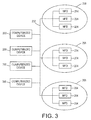
- exemplary systems and methods herein include various computerized devices 200, 204 located at various different physical locations 206.
- the computerized devices 200, 204 can include servers, optical devices, personal computers, etc., and are in communication (operatively connected to one another) by way of a local or wide area (wired or wireless) network 202.
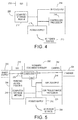
- FIG. 4 illustrates a computerized device 200, which can be used with systems and methods herein and can comprise, for example, a server, a personal computer, a portable computing device, etc.
- the computerized device 200 includes a controller/tangible processor 216 and a communications port (input/output) 214 operatively connected to the tangible processor 216 and to the computerized network 202 external to the computerized device 200.
- the computerized device 200 can include at least one accessory functional component, such as a graphical user interface (GUI) assembly 212.
- GUI graphical user interface
- the input/output device 214 is used for communications to and from the computerized device 200 and comprises a wired device or wireless device (of any form, whether currently known or developed in the future).
- the tangible processor 216 controls the various actions of the computerized device.
- a non-transitory, tangible, computer storage medium device 210 (which can be optical, magnetic, capacitor based, etc., and is different from a transitory signal) is readable by the tangible processor 216 and stores instructions that the tangible processor 216 executes to allow the computerized device to perform its various functions, such as those described herein.
- a body housing has one or more functional components that operate on power supplied from an alternating current (AC) source 220 by the power supply 218.
- the power supply 218 can comprise a common power conversion unit, power storage element (e.g., a battery, etc), etc.
- Figure 5 illustrates a computerized device that is a printing device 204, which can be used with systems and methods herein and can comprise, for example, a printer, copier, multi-function machine, multi-function device (MFD), etc.
- the printing device 204 includes many of the components mentioned above and at least one marking device (printing engine(s)) 240 operatively connected to a specialized image processor 224 (that is different than a general purpose computer because it is specialized for processing image data), a media path 236 positioned to supply continuous media or sheets of media from a sheet supply 230 to the marking device(s) 240, etc.
- a marking device printing engine(s)
- a specialized image processor 224 that is different than a general purpose computer because it is specialized for processing image data
- a media path 236 positioned to supply continuous media or sheets of media from a sheet supply 230 to the marking device(s) 240, etc.
- the sheets of media can optionally pass to a finisher 234 which can fold, staple, sort, etc., the various printed sheets.
- the printing device 204 can include at least one accessory functional component (such as a scanner/document handler 232 (automatic document feeder (ADF)), etc.) that also operate on the power supplied from the external power source 220 (through the power supply 218).
- ADF automatic document feeder
- the one or more printing engines 240 are intended to illustrate any marking device that applies a marking material (toner, inks, etc.) to continuous media or sheets of media, whether currently known or developed in the future and can include, for example, devices that use a photoreceptor belt or an intermediate transfer belt, or devices that print directly to print media (e.g., inkjet printers, ribbon-based contact printers, etc.).
- a marking material toner, inks, etc.
- Item 242 illustrates another image capture device (e.g., a camera) that can be any device capable of obtaining pixel values of an item.
- the set of image input devices discussed herein is intended to encompass a wide variety of devices such as, for example, digital document devices, computer systems, memory and storage devices, networked platforms such as servers and client devices which can obtain pixel values from a source device, and image capture devices.
- the set of image capture devices herein includes scanners, cameras, photography equipment, facsimile machines, photo reproduction equipment, digital printing presses, xerographic devices, and the like.
- a scanner is one image capture device that optically scans images, print media, and the like, and converts the scanned image into a digitized format.
- Common scanning devices include variations of the flatbed scanner, generally known in the arts, wherein specialized image receptors move beneath a platen and scan the media placed on the platen.
- Modem digital scanners typically incorporate a charge-coupled device (CCD) or a contact image sensor (CIS) as the image sensing receptor(s).
- CCD charge-coupled device
- CIS contact image sensor
- the scanning device produces a signal of the scanned image data.
- Such a digital signal contains information about pixels such as color value, intensity, and their location within the scanned image.
- systems herein similarly include (among other components) an image sensor device 232/242, and an image processor device 216/224 operatively connected to the image sensor device 232/242.
- the image processor device 216/224 automatically performs initial processing by computing individual representations of all alphabet characters of an alphabet at every character position within a word transcription length, embedding the individual representations of the alphabet characters in a common vectorial subspace using a matrix to produce embedded alphabet characters, and saving the embedded alphabet characters.
- the image processor device 216/224 repeatedly automatically performs subsequent processing without repeating the initial processing.
- This subsequent processing includes receiving an electronic image of an alphanumeric word from the image sensor device 232/242 and embedding the electronic image into the common vectorial subspace using the matrix to produce an embedded alphanumeric character image.
- the embedded alphanumeric character image represents or encodes image characters at character positions.
- This subsequent processing includes computing a utility value of every one of the embedded alphabet characters at each of the character positions with respect to the embedded alphanumeric character image using the image processor device 216/224, and computing the highest-utility transcription alphabet character for every one of the character positions based on the utility value of each the embedded alphabet character at each of the character positions, within the word transcription length.
- the image processor device 216/224 assigns the highest-utility transcription alphabet character for each of the character positions to produce a recognized alphanumeric word within the electronic image, and determines a character length of the recognized alphanumeric word.
- the image processor device 216/224 outputs the recognized alphanumeric word.
- Computerized devices that include chip-based central processing units (CPU's), input/output devices (including graphic user interfaces (GUI), memories, comparators, tangible processors, etc.) are well-known and readily available devices produced by manufacturers such as Dell Computers, Round Rock TX, USA and Apple Computer Co., Cupertino CA, USA.
- Such computerized devices commonly include input/output devices, power supplies, tangible processors, electronic storage memories, wiring, etc., the details of which are omitted herefrom to allow the reader to focus on the salient aspects of the systems and methods described herein.
- printers, copiers, scanners and other similar peripheral equipment are available from Xerox Corporation, Norwalk, CT, USA and the details of such devices are not discussed herein for purposes of brevity and reader focus.
- printer or printing device encompasses any apparatus, such as a digital copier, bookmaking machine, facsimile machine, multi-function machine, etc., which performs a print outputting function for any purpose.
- the details of printers, printing engines, etc. are well-known and are not described in detail herein to keep this disclosure focused on the salient features presented.
- the systems and methods herein can encompass systems and methods that print in color, monochrome, or handle color or monochrome image data. All foregoing systems and methods are specifically applicable to electrostatographic and/or xerographic machines and/or processes.
- the term 'embed' is understood to mean, an instance of some mathematical structure contained within another instance, such as a group that is a subgroup.
- automated or automatically mean that once a process is started (by a machine or a user); one or more machines perform the process without further input from any user.
Landscapes
- Engineering & Computer Science (AREA)
- Computer Vision & Pattern Recognition (AREA)
- Theoretical Computer Science (AREA)
- Physics & Mathematics (AREA)
- General Physics & Mathematics (AREA)
- Multimedia (AREA)
- Data Mining & Analysis (AREA)
- Life Sciences & Earth Sciences (AREA)
- Software Systems (AREA)
- Artificial Intelligence (AREA)
- Bioinformatics & Cheminformatics (AREA)
- Bioinformatics & Computational Biology (AREA)
- Evolutionary Biology (AREA)
- Evolutionary Computation (AREA)
- General Engineering & Computer Science (AREA)
- Computational Linguistics (AREA)
- Character Discrimination (AREA)
Applications Claiming Priority (1)
| Application Number | Priority Date | Filing Date | Title |
|---|---|---|---|
| US14/794,479 US9928436B2 (en) | 2015-07-08 | 2015-07-08 | Lexicon-free, matching-based word-image recognition |
Publications (1)
| Publication Number | Publication Date |
|---|---|
| EP3144848A1 true EP3144848A1 (en) | 2017-03-22 |
Family
ID=56321774
Family Applications (1)
| Application Number | Title | Priority Date | Filing Date |
|---|---|---|---|
| EP16176896.5A Ceased EP3144848A1 (en) | 2015-07-08 | 2016-06-29 | Lexicon-free, matching-based word-image recognition |
Country Status (3)
| Country | Link |
|---|---|
| US (1) | US9928436B2 (enExample) |
| EP (1) | EP3144848A1 (enExample) |
| JP (1) | JP6615054B2 (enExample) |
Families Citing this family (2)
| Publication number | Priority date | Publication date | Assignee | Title |
|---|---|---|---|---|
| JP6798055B1 (ja) * | 2020-03-24 | 2020-12-09 | 株式会社東芝 | 情報処理装置、情報処理方法、プログラムおよび順序情報 |
| US11252113B1 (en) * | 2021-06-15 | 2022-02-15 | Drift.com, Inc. | Proactive and reactive directing of conversational bot-human interactions |
Family Cites Families (12)
| Publication number | Priority date | Publication date | Assignee | Title |
|---|---|---|---|---|
| ATE75552T1 (de) | 1987-10-16 | 1992-05-15 | Computer Ges Konstanz | Verfahren zur automatischen zeichenerkennung. |
| US5774588A (en) | 1995-06-07 | 1998-06-30 | United Parcel Service Of America, Inc. | Method and system for comparing strings with entries of a lexicon |
| US5933525A (en) | 1996-04-10 | 1999-08-03 | Bbn Corporation | Language-independent and segmentation-free optical character recognition system and method |
| US6823084B2 (en) | 2000-09-22 | 2004-11-23 | Sri International | Method and apparatus for portably recognizing text in an image sequence of scene imagery |
| CN100363944C (zh) | 2001-01-18 | 2008-01-23 | 联邦快递公司 | 对包裹上的信息进行访问的方法及系统 |
| US7917286B2 (en) | 2005-12-16 | 2011-03-29 | Google Inc. | Database assisted OCR for street scenes and other images |
| US8503797B2 (en) | 2007-09-05 | 2013-08-06 | The Neat Company, Inc. | Automatic document classification using lexical and physical features |
| JP5252596B2 (ja) * | 2010-11-02 | 2013-07-31 | 国立大学法人東京農工大学 | 文字認識装置、文字認識方法及びプログラム |
| US8472727B2 (en) | 2011-01-07 | 2013-06-25 | Yuval Gronau | Document comparison and analysis for improved OCR |
| US9008429B2 (en) * | 2013-02-01 | 2015-04-14 | Xerox Corporation | Label-embedding for text recognition |
| US9384423B2 (en) * | 2013-05-28 | 2016-07-05 | Xerox Corporation | System and method for OCR output verification |
| JP6301647B2 (ja) * | 2013-12-24 | 2018-03-28 | 株式会社東芝 | 探索装置、探索方法およびプログラム |
-
2015
- 2015-07-08 US US14/794,479 patent/US9928436B2/en active Active
-
2016
- 2016-06-22 JP JP2016123798A patent/JP6615054B2/ja not_active Expired - Fee Related
- 2016-06-29 EP EP16176896.5A patent/EP3144848A1/en not_active Ceased
Non-Patent Citations (1)
| Title |
|---|
| No Search * |
Also Published As
| Publication number | Publication date |
|---|---|
| US9928436B2 (en) | 2018-03-27 |
| US20170011273A1 (en) | 2017-01-12 |
| JP2017021792A (ja) | 2017-01-26 |
| JP6615054B2 (ja) | 2019-12-04 |
Similar Documents
| Publication | Publication Date | Title |
|---|---|---|
| US20180373955A1 (en) | Leveraging captions to learn a global visual representation for semantic retrieval | |
| US8699789B2 (en) | Document classification using multiple views | |
| US9454696B2 (en) | Dynamically generating table of contents for printable or scanned content | |
| US12056171B2 (en) | System and method for automated information extraction from scanned documents | |
| US8838591B2 (en) | Embedding hot spots in electronic documents | |
| US7917554B2 (en) | Visibly-perceptible hot spots in documents | |
| US10073859B2 (en) | System and methods for creation and use of a mixed media environment | |
| US9171202B2 (en) | Data organization and access for mixed media document system | |
| US20070047780A1 (en) | Shared Document Annotation | |
| US9582483B2 (en) | Automatically tagging variable data documents | |
| KR20060046128A (ko) | 카메라 입력된 문서들을 위한 저해상 ocr | |
| KR100979457B1 (ko) | 혼합 미디어 환경에서의 이미지 정합 방법 및 시스템 | |
| US12412409B2 (en) | Information processing apparatus, information processing method, and storage medium | |
| US8172144B2 (en) | Media storing code detecting program, code detecting method, and image forming apparatus | |
| JP2018042067A (ja) | 画像処理システム、画像処理方法、情報処理装置 | |
| US20220269898A1 (en) | Information processing device, information processing system, information processing method, and non-transitory computer readable medium | |
| US10503993B2 (en) | Image processing apparatus | |
| US20060285748A1 (en) | Document processing device | |
| US9928436B2 (en) | Lexicon-free, matching-based word-image recognition | |
| US9665786B2 (en) | Confirming automatically recognized handwritten answers | |
| US7751087B2 (en) | Automatic colorization of monochromatic printed documents | |
| JP7317612B2 (ja) | 情報処理装置、情報処理方法及びプログラム | |
| KR100960640B1 (ko) | 전자 문서에 핫스폿을 임베딩하는 방법, 시스템 및 컴퓨터 판독 가능한 기록 매체 | |
| EP3166021A1 (en) | Method and apparatus for image search using sparsifying analysis and synthesis operators | |
| US20230098086A1 (en) | Storing form field data |
Legal Events
| Date | Code | Title | Description |
|---|---|---|---|
| PUAI | Public reference made under article 153(3) epc to a published international application that has entered the european phase |
Free format text: ORIGINAL CODE: 0009012 |
|
| STAA | Information on the status of an ep patent application or granted ep patent |
Free format text: STATUS: THE APPLICATION HAS BEEN PUBLISHED |
|
| AK | Designated contracting states |
Kind code of ref document: A1 Designated state(s): AL AT BE BG CH CY CZ DE DK EE ES FI FR GB GR HR HU IE IS IT LI LT LU LV MC MK MT NL NO PL PT RO RS SE SI SK SM TR |
|
| AX | Request for extension of the european patent |
Extension state: BA ME |
|
| STAA | Information on the status of an ep patent application or granted ep patent |
Free format text: STATUS: REQUEST FOR EXAMINATION WAS MADE |
|
| 17P | Request for examination filed |
Effective date: 20170801 |
|
| RBV | Designated contracting states (corrected) |
Designated state(s): AL AT BE BG CH CY CZ DE DK EE ES FI FR GB GR HR HU IE IS IT LI LT LU LV MC MK MT NL NO PL PT RO RS SE SI SK SM TR |
|
| STAA | Information on the status of an ep patent application or granted ep patent |
Free format text: STATUS: EXAMINATION IS IN PROGRESS |
|
| 17Q | First examination report despatched |
Effective date: 20180123 |
|
| RAP1 | Party data changed (applicant data changed or rights of an application transferred) |
Owner name: CONDUENT BUSINESS SERVICES, LLC |
|
| STAA | Information on the status of an ep patent application or granted ep patent |
Free format text: STATUS: THE APPLICATION HAS BEEN REFUSED |
|
| 18R | Application refused |
Effective date: 20221126 |