EP3136673B1 - Procédé et dispositif de conception de trame agrégée - Google Patents
Procédé et dispositif de conception de trame agrégée Download PDFInfo
- Publication number
- EP3136673B1 EP3136673B1 EP14891724.8A EP14891724A EP3136673B1 EP 3136673 B1 EP3136673 B1 EP 3136673B1 EP 14891724 A EP14891724 A EP 14891724A EP 3136673 B1 EP3136673 B1 EP 3136673B1
- Authority
- EP
- European Patent Office
- Prior art keywords
- sequence
- receive
- receive end
- hash function
- identification
- Prior art date
- Legal status (The legal status is an assumption and is not a legal conclusion. Google has not performed a legal analysis and makes no representation as to the accuracy of the status listed.)
- Active
Links
Images



Classifications
-
- H—ELECTRICITY
- H04—ELECTRIC COMMUNICATION TECHNIQUE
- H04L—TRANSMISSION OF DIGITAL INFORMATION, e.g. TELEGRAPHIC COMMUNICATION
- H04L27/00—Modulated-carrier systems
- H04L27/26—Systems using multi-frequency codes
- H04L27/2601—Multicarrier modulation systems
- H04L27/2626—Arrangements specific to the transmitter only
-
- H—ELECTRICITY
- H04—ELECTRIC COMMUNICATION TECHNIQUE
- H04L—TRANSMISSION OF DIGITAL INFORMATION, e.g. TELEGRAPHIC COMMUNICATION
- H04L27/00—Modulated-carrier systems
- H04L27/26—Systems using multi-frequency codes
- H04L27/2601—Multicarrier modulation systems
- H04L27/2647—Arrangements specific to the receiver only
-
- H—ELECTRICITY
- H04—ELECTRIC COMMUNICATION TECHNIQUE
- H04L—TRANSMISSION OF DIGITAL INFORMATION, e.g. TELEGRAPHIC COMMUNICATION
- H04L5/00—Arrangements affording multiple use of the transmission path
- H04L5/003—Arrangements for allocating sub-channels of the transmission path
- H04L5/0048—Allocation of pilot signals, i.e. of signals known to the receiver
-
- H—ELECTRICITY
- H04—ELECTRIC COMMUNICATION TECHNIQUE
- H04L—TRANSMISSION OF DIGITAL INFORMATION, e.g. TELEGRAPHIC COMMUNICATION
- H04L5/00—Arrangements affording multiple use of the transmission path
- H04L5/003—Arrangements for allocating sub-channels of the transmission path
- H04L5/0053—Allocation of signalling, i.e. of overhead other than pilot signals
-
- H—ELECTRICITY
- H04—ELECTRIC COMMUNICATION TECHNIQUE
- H04L—TRANSMISSION OF DIGITAL INFORMATION, e.g. TELEGRAPHIC COMMUNICATION
- H04L65/00—Network arrangements, protocols or services for supporting real-time applications in data packet communication
-
- H—ELECTRICITY
- H04—ELECTRIC COMMUNICATION TECHNIQUE
- H04L—TRANSMISSION OF DIGITAL INFORMATION, e.g. TELEGRAPHIC COMMUNICATION
- H04L2101/00—Indexing scheme associated with group H04L61/00
- H04L2101/60—Types of network addresses
- H04L2101/618—Details of network addresses
- H04L2101/622—Layer-2 addresses, e.g. medium access control [MAC] addresses
-
- H—ELECTRICITY
- H04—ELECTRIC COMMUNICATION TECHNIQUE
- H04L—TRANSMISSION OF DIGITAL INFORMATION, e.g. TELEGRAPHIC COMMUNICATION
- H04L69/00—Network arrangements, protocols or services independent of the application payload and not provided for in the other groups of this subclass
- H04L69/22—Parsing or analysis of headers
Definitions
- the present invention relates to the communications field, and in particular, to an aggregation frame design method and apparatus.
- MAC efficiency is used to indicate efficiency of transmitting a valid load by a network system, and higher MAC efficiency indicates less system overheads.
- a frame aggregation technology can be used to improve MAC efficiency.
- the frame aggregation technology means that in a scenario of one receive end, a transmit end splices multiple frames corresponding to the one receive end into one aggregation frame for transmission; and in a scenario of multiple receive ends, not only data frames to be sent to different receive ends need to be aggregated into one long frame at the transmit end for transmission, but also a packet header corresponding to each receive end needs to be added to the front of a data frame that is in the long frame and that is corresponding to the receive end, so that each receive end can determine, according to the packet header in the long frame, whether data following the packet header is data required by the receive end, so as to correctly receive data.
- WO 2005/107207 A1 discloses an event notification network, wherein data is randomly forwarded to a group of further relays unless the data has been previously received by the same relay or the data is time-expired; and wherein data received from different sources in the same time-frame is aggregated using a Bloom filter process.
- US 2008/0279219 A1 discloses a method and system for transmitting data over a network, wherein a node receives several packet data units and forms an aggregate packet which is then transmitted to another node or nodes.
- Bloom filters Further information on Bloom filters can be found in: Chang, Francis et. al., "Approximate caches for packet classification", INFOCOM 2004, Twenty-third AnnuaIJoint Conference of the IEEE Computer and Communications Societies, Vol. 4, IEEE, 2004 .
- Embodiments of the present invention provide an aggregation frame design method and apparatus.
- data segments to be sent to multiple receive ends are aggregated into a long frame for transmission, and one OFDM symbol is used to distinguish each receive end, thereby reducing overheads during network data transmission.
- a transmit end including:
- a value range of X is greater than or equal to 1 and less than or equal to 92
- the first sequence is a sequence whose X th bit is 1 and remaining 91 bits are Os.
- the transmit end further includes a presetting unit, where the presetting unit is configured to: before the selection unit selects, for each receive end from the preset N different hash function groups, one group that has the same sequence number as that of the receive end, sort the N receive ends to obtain a sequence number corresponding to each receive end; and design, for the N receive ends, the N different hash function groups, where each of the hash function groups includes M different hash functions, and the sequence number of each receive end is the same as a sequence number of a hash function group corresponding to the receive end.
- a receive end including:
- a value range of X is greater than or equal to 1 and less than or equal to 92
- the first sequence is a sequence whose Xth bit is 1 and remaining 91 bits are Os.
- an aggregation frame design method is disclosed and applied to a transmit end in a network data transmission system, and includes:
- a value range of X is greater than or equal to 1 and less than or equal to 92, and the first sequence is a sequence whose Xth bit is 1 and remaining 91 bits are Os.
- the method before the selecting, by the transmit end for each receive end from preset N different hash function groups, one group that has a same sequence number as that of the receive end, the method further includes: sorting, by the transmit end, the N receive ends to obtain a sequence number corresponding to each receive end; and designing, by the transmit end for the N receive ends, the N different hash function groups, where each of the hash function groups includes M different hash functions, and the sequence number of each receive end is the same as a sequence number of a hash function group corresponding to the receive end.
- an aggregation frame design method is disclosed and applied to a receive end in a network data transmission system, and includes:
- a value range of X is greater than or equal to 1 and less than or equal to 92, and the first sequence is a sequence whose Xth bit is 1 and remaining 91 bits are Os.
- all receive ends are sorted; one group is selected from preset function groups according to a sequence number of each receive end; and a sequence uniquely corresponding to each receive end is obtained by using the selected function group. Then, a bitwise OR operation is performed on the sequences corresponding to all the receive ends to obtain a Bloom sequence; and after being encoded and modulated, the Bloom sequence is mapped onto an OFDM symbol and added to an aggregation frame, so as to distinguish among each receive end.
- the transmit end includes: a selection unit 101, a mapping unit 102, a calculation unit 103, an encoding unit 104, an aggregation unit 105, and a sending unit 106.
- the selection unit 101 is configured to: select, for each receive end from preset N different hash function groups, one group that has a same sequence number as that of the receive end, where each of the N different hash function groups includes M different hash functions.
- the mapping unit 102 is configured to: map a MAC address of the receive end into a number X by successively using each hash function included in the hash function group selected by the selection unit 101, and denote the number X by using a first sequence, to obtain M first sequences corresponding to the receive end, where X is an integer greater than or equal to 1, and the first sequence is a sequence whose Xth bit is 1 and remaining bits are Os.
- X is an integer greater than or equal to 1
- the first sequence is a sequence whose Xth bit is 1 and remaining bits are Os.
- a value range of X may be defined as being greater than or equal to 1 and less than or equal to 92, that is, the first sequence is a sequence whose Xth bit is 1 and remaining 91 bits are Os.
- the calculation unit 103 is configured to: perform a bitwise OR operation on the M first sequences obtained by the mapping unit 102, to obtain an identification sequence corresponding to the receive end.
- the calculation unit 103 is further configured to: obtain, according to M first sequences that are corresponding to each of N receive ends and obtained by the mapping unit 102, N identification sequences corresponding to the N receive ends.
- the calculation unit 103 is further configured to: perform a bitwise OR operation on the N identification sequences to obtain a Bloom sequence.
- the encoding unit 104 is configured to encode and modulate the Bloom sequence to map the Bloom sequence onto an orthogonal frequency division multiplexing OFDM symbol by using a subcarrier.
- the aggregation unit 105 is configured to form an aggregation frame by using a pilot signal, the OFDM symbol, the N identification sequences, and data corresponding to the N receive ends.
- the sending unit 106 is configured to send the aggregation frame obtained by the aggregation unit 105 to the N receive ends.
- the aggregation unit 105 is specifically configured to: aggregate data segments corresponding to all the receive ends, and add, to the front of a data segment corresponding to each receive end, an identification sequence of the receive end corresponding to the data segment to form a load data segment; and place the Bloom sequence before the load data segment and after the pilot signal to form the aggregation frame.
- the transmit end further includes a presetting unit.
- the presetting unit is configured to: before the selection unit 101 selects, for each receive end from the preset N different hash function groups, one group that has the same sequence number as that of the receive end, sort the N receive ends to obtain a sequence number corresponding to each receive end; and design, for the N receive ends, the N different hash function groups, where each of the hash function groups includes M different hash functions, and the sequence number of each receive end is the same as a sequence number of a hash function group corresponding to the receive end.
- the receive end includes: a selection unit 201, a mapping unit 202, and a calculation unit 203.
- the selection unit 201 is configured to: select, from N different hash function groups, one group that has a same sequence number as that of the receive end, where the N different hash function groups are preset by a transmit end for N receive ends, and each of the N different hash function groups includes M different hash functions.
- the mapping unit 202 is configured to: map a MAC address of the receive end into a number X by successively using each hash function included in the hash function group selected by the selection unit 201, and denote the number X by using a first sequence, to obtain M first sequences corresponding to the receive end, where X is an integer greater than or equal to 1, and the first sequence is a sequence whose Xth bit is 1 and remaining bits are Os.
- a value range of X may be defined as being greater than or equal to 1 and less than or equal to 92, that is, the first sequence is a sequence whose Xth bit is 1 and remaining 91 bits are Os.
- the calculation unit 203 is configured to: perform a bitwise OR operation on the M first sequences obtained by the mapping unit 202, to obtain an identification sequence corresponding to the receive end.
- the receive end further includes a receiving unit, a decoding unit, and an identification unit.
- the receiving unit is configured to receive an aggregation frame sent by the transmit end.
- the decoding unit is configured to obtain an orthogonal frequency division multiplexing OFDM symbol that is in the aggregation frame and follows a pilot signal, and decode and demodulate the OFDM symbol to obtain a Bloom sequence, where the aggregation frame carries the pilot signal, the OFDM symbol, and N data segments and N identification sequences that are corresponding to the N receive ends.
- the identification unit is configured to compare the Bloom sequence with the identification sequence corresponding to the receive end; and when bits that are in the Bloom sequence and corresponding to bits corresponding to all 1s in the identification sequence corresponding to the receive end are all Is, determine that the aggregation frame carries data of the receive end, or when not all bits that are in the Bloom sequence and corresponding to bits corresponding to all 1s in the identification sequence corresponding to the receive end are Is, determine that the aggregation frame does not carry data required by the receive end.
- all receive ends are sorted; one group is selected from preset function groups according to a sequence number of each receive end; and a sequence uniquely corresponding to each receive end is obtained by using the selected function group. Then, a bitwise OR operation is performed on the sequences corresponding to all the receive ends to obtain a Bloom sequence; and after being encoded and modulated, the Bloom sequence is mapped onto an OFDM symbol and added to an aggregation frame, so as to distinguish each receive end.
- This embodiment of the present invention provides a transmit end.
- the selection unit, the mapping unit, the calculation unit, the encoding unit, and the aggregation unit that are shown in FIG. 1 may be built into a processor of the transmit end in a hardware form or a software form.
- the sending unit is a transmitter or a transmit interface.
- the processor may be a central processing unit (CPU), or may be a single-chip microcomputer.
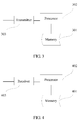
- the transmit end includes a memory 301, a processor 302 connected to the memory 301, and a transmitter 303, where the memory 301 stores a group of program code, and the processor 302 is configured to invoke the program code stored in the memory 301 to perform the following operations:
- the processor 302 is configured to: select, for each receive end from preset N different hash function groups, one group that has a same sequence number as that of the receive end, where each of the N different hash function groups includes M different hash functions.
- the processor 302 is configured to: map a MAC address of the receive end into a number X by successively using each hash function included in the selected hash function group, and denote the number X by using a first sequence, to obtain M first sequences corresponding to the receive end, where X is an integer greater than or equal to 1, and the first sequence is a sequence whose Xth bit is 1 and remaining bits are Os.
- a value range of X may be defined as being greater than or equal to 1 and less than or equal to 92, that is, the first sequence is a sequence whose Xth bit is 1 and remaining 91 bits are 0s.
- the processor 302 is configured to: perform a bitwise OR operation on the obtained M first sequences to obtain an identification sequence corresponding to the receive end.
- the processor 302 is further configured to: obtain, according to obtained M first sequences corresponding to each of N receive ends, N identification sequences corresponding to the N receive ends.
- the processor 302 is further configured to perform a bitwise OR operation on the N identification sequences to obtain a Bloom sequence, and encode and modulate the Bloom sequence to map the Bloom sequence onto an orthogonal frequency division multiplexing OFDM symbol by using a subcarrier.
- the processor 302 is configured to form an aggregation frame by using a pilot signal, the OFDM symbol, the N identification sequences, and data corresponding to the N receive ends.
- the processor 302 is further configured to send the aggregation frame to the N receive ends by using the transmitter 303.
- the processor 302 is specifically configured to: aggregate data segments corresponding to all the receive ends, and add, to the front of a data segment corresponding to each receive end, an identification sequence of the receive end corresponding to the data segment to form a load data segment; and place the OFDM symbol before the load data segment and after the pilot signal to form the aggregation frame.
- the processor 302 is configured to: before selecting, for each receive end from the preset N different hash function groups, one group that has the same sequence number as that of the receive end, sort the N receive ends to obtain a sequence number corresponding to each receive end; and design, for the N receive ends, the N different hash function groups, where each of the hash function groups includes M different hash functions, and the sequence number of each receive end is the same as a sequence number of a hash function group corresponding to the receive end.
- This embodiment of the present invention further provides a receive end.
- the selection unit, the mapping unit, and the calculation unit that are shown in FIG. 2 may be built into a processor of the receive end in a hardware form or a software form, and the receiving unit may be a receiver or a receive interface.
- the processor may be a central processing unit (CPU), or may be a single-chip microcomputer.
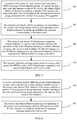
- the receive end includes a memory 401, a processor 402 connected to the memory 401, and a receiver 403, where the memory 401 stores a group of program code, and the processor 402 is configured to invoke the program code stored in the memory 401 to perform the following operations:
- the processor 402 is configured to: select, from N different hash function groups, one group that has a same sequence number as that of the receive end, where the N different hash function groups are preset by a transmit end for N receive ends, and each of the N different hash function groups includes M different hash functions.
- the processor 402 is configured to: map a MAC address of the receive end into a number X by successively using each hash function included in the selected hash function group, and denote the number X by using a first sequence, to obtain M first sequences corresponding to the receive end, where X is an integer greater than or equal to 1, and the first sequence is a sequence whose Xth bit is 1 and remaining bits are Os.
- X is an integer greater than or equal to 1
- the first sequence is a sequence whose Xth bit is 1 and remaining bits are Os.
- a value range of X may be defined as being greater than or equal to 1 and less than or equal to 92, that is, the first sequence is a sequence whose Xth bit is 1 and remaining 91 bits are Os.
- the processor 402 is configured to: perform a bitwise OR operation on the obtained M first sequences to obtain an identification sequence corresponding to the receive end.
- the processor 402 is further configured to: receive, by using the receiver 403, an aggregation frame sent by the transmit end, obtain an orthogonal frequency division multiplexing OFDM symbol that is in the aggregation frame and follows a pilot signal, and decode and demodulate the OFDM symbol to obtain a Bloom sequence, where the aggregation frame carries the pilot signal, the OFDM symbol, and N data segments and N identification sequences that are corresponding to the N receive ends; and compare the Bloom sequence with the identification sequence corresponding to the receive end; and when bits that are in the Bloom sequence and corresponding to bits corresponding to all 1s in the identification sequence corresponding to the receive end are all Is, determine that the aggregation frame carries data of the receive end, or when not all bits that are in the Bloom sequence and corresponding to bits corresponding to all 1s in the identification sequence corresponding to the receive end are Is, determine that the aggregation frame does not carry data required by the receive end.
- all receive ends are sorted; one group is selected from preset function groups according to a sequence number of each receive end; and a sequence uniquely corresponding to each receive end is obtained by using the selected function group. Then, a bitwise OR operation is performed on the sequences corresponding to all the receive ends to obtain a Bloom sequence; and after being encoded and modulated, the Bloom sequence is mapped onto an OFDM symbol and added to an aggregation frame, so as to distinguish each receive end.
- This embodiment of the present invention further provides a data transmission system, and the data transmission system includes a transmit end, at least one receive end, and a network used for communication between the transmit end and the at least one receive end.
- the transmit end is the transmit end shown in FIG. 3 of the foregoing embodiment; and the receive end is the receive end shown in FIG. 4 of the foregoing embodiment.
- the transmit end selects, from N different hash function groups, one group that has a same sequence number as that of each receive end; and maps a MAC address of each receive end into a number X by using each hash function included in the selected hash function group, and denotes the number X by using a first sequence whose Xth bit is 1 and remaining bits are Os.
- a value range of X may be defined as being greater than or equal to 1 and less than or equal to 92, that is, the first sequence is a sequence whose Xth bit is 1 and remaining 91 bits are Os.
- the transmit end obtains M first sequences of each receive end, and performs a bitwise OR operation on the M first sequences to obtain an identification sequence of each receive end; and obtains N identification sequences of N receive ends, and performs a bitwise OR operation on the N identification sequences to obtain a Bloom sequence.
- the transmit end After encoding and modulating the Bloom sequence, maps the Bloom sequence onto an OFDM symbol by using a subcarrier; and finally, forms an aggregation frame by using a pilot signal, the OFDM symbol, the N identification sequences, and data of the N receive ends.
- the receive end receives the aggregation frame sent by the transmit end, obtains the OFDM symbol, and decodes and demodulates the OFDM symbol to obtain the Bloom sequence.
- the receive end selects a hash function group that has a same sequence number as that of the receive end to obtain an identification sequence of the receive end, and determines, according to the identification sequence of the receive end and the obtained Bloom sequence, whether the aggregation frame includes data required by the receive end.
- all receive ends are sorted; one group is selected from preset hash functions according to a sequence number of each receive end; and an identification sequence uniquely corresponding to each receive end is obtained by using the selected hash function group. Then, a bitwise OR operation is performed on the identification sequences corresponding to all the receive ends to obtain a Bloom sequence; and after being encoded and modulated, the Bloom sequence is mapped onto an OFDM symbol and added to an aggregation frame, so as to distinguish each receive end.
- This embodiment of the present invention provides an aggregation frame design method, applied to a transmit end in a network data transmission system. As shown in FIG. 5 , the method includes the following steps: 501.
- the transmit end selects, for each receive end from preset N different hash function groups, one group that has a same sequence number as that of the receive end, maps a MAC address of the receive end into a number X by successively using each hash function included in the selected hash function group, and denotes the number X by using a first sequence.
- Each of the N different hash function groups includes M different hash functions; X is an integer greater than or equal to 1; and the first sequence is a sequence whose Xth bit is 1 and remaining bits are Os.
- the transmit end further sorts N receive ends to obtain a sequence number corresponding to each receive end; moreover, the transmit end designs, for the N receive ends, the N different hash function groups, where each of the hash function groups includes M different hash functions, and the sequence number of each receive end is the same as a sequence number of a hash function group corresponding to the receive end. In this way, a correspondence among a MAC address of each receive end, a sequence number of the receive end, and a hash function group corresponding to the receive end can be obtained.
- the transmit end selects one group of hash functions according to the sequence number of each receive end, and then converts a MAC address of each receive end into a first sequence by using M different hash functions included in this group of hash functions. For example, if a value range of X is defined as being greater than or equal to 1 and less than or equal to 92, for a receive end whose sequence number is 1, a hash function group whose sequence number is 1 is selected and used as a hash function group of the receive end. If a hash function in the hash function group whose sequence number is 1 first maps a MAC address of the receive end into 32, a first sequence obtained in this way is a sequence whose 32nd bit is 1 and remaining 91 bits are 0s.
- a location, in the linear table (tree), of a record element corresponding to a key word is random, that is, there is no definite relationship between a key word and a record element. Therefore, searching a linear table (tree) for a record element corresponding to a key word is inefficient.
- An ideal situation is that a needed record element can be directly found according to the key word; therefore, it is necessary to establish a definite correspondence f between a storage location, in a linear table (tree), of each record element and a key word corresponding to the record element, so that each key word is uniquely corresponding to one storage location in the linear table (tree).
- the correspondence f is referred to as a hash function.
- the transmit end obtains M first sequences corresponding to the receive end, and performs a bitwise OR operation on the M first sequences to obtain an identification sequence corresponding to the receive end.
- a hash function group whose sequence number is 1 is selected and used as a hash function group of the receive end. If the first hash function in the hash function group whose sequence number is 1 first maps a MAC address of the receive end into 32, a first sequence obtained in this way is a sequence whose 32nd bit is 1 and remaining bits are 0s. If the second hash function in the hash function group whose sequence number is 1 maps the MAC address of the receive end into 20, a first sequence obtained in this way is a sequence whose 20th bit is 1 and remaining bits are 0s. By analogy, M sequences corresponding to the receive end can be obtained.
- an identification sequence corresponding to the receive end can be obtained by performing a bitwise OR operation on the M sequences.
- bitwise OR operation means that in binary operation, an operation result is 1 if one of two operands is 1. For example, if a bitwise OR operation is performed on a sequence 500500 and a sequence 005000, an operation result 501500 can be obtained.
- the transmit end obtains N identification sequences corresponding to N receive ends, performs a bitwise OR operation on the N identification sequences to obtain a Bloom sequence, and encodes and modulates the Bloom sequence to map the Bloom sequence onto an orthogonal frequency division multiplexing OFDM symbol by using a subcarrier.
- the transmit end can obtain the N identification sequences by successively performing steps 501 to 502 on the N receive ends corresponding to the transmit end, where each identification sequence is corresponding to one receive end. Afterward, the transmit end performs a bitwise OR operation on the N identification sequences, and finally can obtain a sequence, where the sequence is used as a Bloom sequence. Because all of the N identification sequences are 92-bit binary sequences, the Bloom sequence obtained herein is a 92-bit binary sequence. In addition, it is further necessary to encode and modulate the Bloom sequence and map a result obtained after the encoding and modulation onto an orthogonal frequency division multiplexing OFDM symbol by using a subcarrier, so as to finally distinguish each receive end by using the OFDM symbol.
- the transmit end forms an aggregation frame by using a pilot signal, the OFDM symbol, the N identification sequences, and data corresponding to the N receive ends, and sends the aggregation frame to the N receive ends.
- That the transmit end forms an aggregation frame by using a pilot signal, the OFDM symbol, the N identification sequences, and data corresponding to the N receive ends may be specifically: the transmit end aggregates data segments corresponding to all the receive ends, and adds, to the front of a data segment corresponding to each receive end, an identification sequence of the receive end corresponding to the data segment to form a load data segment; and places the OFDM symbol before the load data segment and after the pilot signal to form the aggregation frame.
- the transmit end may sort, according to sequence numbers of all the receive ends, data segments corresponding to all the receive ends, where a sequence number of each data segment is the same as a sequence number of the receive end corresponding to the data segment; and afterward, place the OFDM symbol before a data segment whose sequence number is 1 and after the pilot signal to form the aggregation frame.
- a sequence number of each data segment is the same as a sequence number of the receive end corresponding to the data segment
- place the OFDM symbol before a data segment whose sequence number is 1 and after the pilot signal to form the aggregation frame In this way, data is aggregated into a long frame at the transmit end for transmission, and the Bloom sequence is used to distinguish each receive end, thereby reducing overheads caused during network data transmission.
- This embodiment of the present invention further provides an aggregation frame design method, applied to a receive end in a network data transmission system.
- the method includes the following steps: 601.
- the receive end selects, from N different hash function groups, one group that has a same sequence number as that of the receive end, maps a MAC address of the receive end into a number X by successively using each hash function included in the selected hash function group, and denotes the number X by using a first sequence.
- the N different hash function groups are preset by a transmit end for N receive ends; each of the N different hash function groups includes M different hash functions; X is an integer greater than or equal to 1; and the first sequence is a sequence whose Xth bit is 1 and remaining bits are 0s.
- the receive end learns a sequence number of the receive end in advance, where the sequence number is corresponding to the MAC address of the receive end, and the sequence number is obtained after the transmit end sorts the existing N receive ends.
- the transmit end has previously established a correspondence among a MAC address of each receive end, a sequence number of the receive end, and a hash function group corresponding to the receive end; therefore, the receive end can select one group of hash functions according to the sequence number of the receive end, and then converts the MAC address of the receive end into first sequences by using M hash functions included in this group of hash functions. For example, for a receive end whose sequence number is 5, a hash function group whose sequence number is 5 is selected and used as a hash function group of the receive end. If a hash function in the hash function group whose sequence number is 5 maps a MAC address of the receive end into 19, a first sequence obtained in this way is a sequence whose 19th bit is 1 and remaining bits are 0s.
- each receive end After the transmit end aggregates, according to the aggregation frame design method provided in this embodiment of the present invention, data of all the receive ends into a long frame and sends the long frame to each receive end, each receive end first needs to learn its sequence number, when performing decoding to identify whether the frame includes data required by the receive end, where the sequence number is obtained when the transmit end sorts all the receive ends. Only after learning its sequence number, the receive end can perform corresponding processing according to the sequence number, so as to identify whether the aggregation frame sent by the transmit end includes data required by the receive end.
- the receive end obtains M first sequences corresponding to the receive end, and performs a bitwise OR operation on the M first sequences to obtain an identification sequence corresponding to the receive end.
- the receive end also needs to select, from N different groups of hash functions, one group of hash functions that has a same sequence number as that of the receive end, so as to identify, by using this group of hash functions, whether the aggregation frame sent by the transmit end carries the data required by the receive end.
- the receive end performs mapping processing on the MAC address of the receive end by successively using the M corresponding hash functions, so as to obtain the M first sequences, and then performs a bitwise OR operation on the M first sequences to obtain the identification sequence corresponding to the receive end. For example, if a value range of X is defined as being greater than or equal to 1 and less than or equal to 92, a receive end whose sequence number is 5 selects a hash function group whose sequence number is 5.
- a first sequence obtained in this way is a sequence whose 19th bit is 1 and remaining 91 bits are 0s; and if the second hash function in the hash function group whose sequence number is 5 maps the MAC address of the receive end into 78, a first sequence obtained in this way is a sequence whose 78th bit is 1 and remaining 91 bits are Os.
- M 92-bit sequences corresponding to the receive end can be obtained.
- the bitwise OR operation means that in binary operation, an operation result is 1 if one of two operands is 1. For example, if a bitwise OR operation is performed on a sequence 100100 and a sequence 001000, an operation result 101100 can be obtained.
- the receive end after receiving the aggregation frame sent by the transmit end and obtaining an orthogonal frequency division multiplexing OFDM symbol that is in the aggregation frame and follows a pilot signal, the receive end further needs to decode and demodulate the OFDM symbol to obtain a Bloom sequence.
- the receive end compares the Bloom sequence with the identification sequence corresponding to the receive end; and when bits that are in the Bloom sequence and corresponding to bits corresponding to all 1s in the identification sequence corresponding to the receive end are all Is, the aggregation frame carries the data required by the receive end; otherwise, the aggregation frame does not carry the data required by the receive end.
- a receive end determines that the aggregation frame sent by the transmit end carries data required by the receive end, the receive end can identify, in the aggregation frame, an identification sequence corresponding to the receive end, and obtain the data required by the receive end and that follows the identification sequence; and discards the aggregation frame afterward.
- all receive ends are sorted, one group is selected from preset hash functions according to a sequence number of each receive end, and an identification sequence uniquely corresponding to each receive end is obtained by using the selected hash function group. Then, a bitwise OR operation is performed on the identification sequences corresponding to all the receive ends to obtain a Bloom sequence; and after being encoded and modulated, the Bloom sequence is mapped onto an OFDM symbol and added to an aggregation frame, so as to distinguish each receive end.
- This embodiment of the present invention provides an aggregation frame design method, applied to a network data transmission system. As shown in FIG. 7 , the method includes the following steps: 701. A transmit end sorts N receive ends to obtain a sequence number corresponding to each receive end.
- the transmit end learns a quantity of receive ends that need to receive the data, and sorts multiple receive ends according to a specific rule, so as to obtain a sequence number corresponding to each receive end.
- each sequence number is also uniquely corresponding to one MAC address.
- the transmit end designs for the N receive ends, N different groups of hash functions, where each group of hash functions includes M different hash functions, and the sequence number of each receive end is the same as a sequence number of a hash function group corresponding to the receive end.
- a location, in the linear table (tree), of a record element corresponding to a key word is random, that is, there is no definite relationship between a key word and a record element. Therefore, searching a linear table (tree) for a record element corresponding to a key word is inefficient.
- An ideal situation is that a needed record element can be directly found according to the key word; therefore, it is necessary to establish a definite correspondence f between a storage location, in a linear table (tree), of each record element and a key word corresponding to the record element, so that each key word is uniquely corresponding to one storage location in the linear table (tree).
- the correspondence f is referred to as a hash function.
- the transmit end selects, for each receive end from the preset N different hash function groups, one group that has a same sequence number as that of the receive end, maps a MAC address of the receive end into a number X by successively using each hash function included in the selected hash function group, denotes the number X by using a first sequence, to obtain M first sequences corresponding to the receive end, and performs a bitwise OR operation on the M first sequences to obtain an identification sequence corresponding to the receive end.
- the sequence number of the receive end is H, and each of the N different groups of hash functions includes M different hash functions; and X is an integer greater than or equal to 1, and the first sequence is a sequence whose Xth bit is 1 and remaining bits are Os.
- the N receive ends are sorted to obtain a sequence number corresponding to each receive end.
- a MAC address of each receive end is uniquely corresponding to one sequence number.
- the N different groups of hash functions are designed for the N receive ends, where each group of the hash functions includes M different hash functions, and the sequence number of each receive end is corresponding to one group of hash functions.
- the transmit end can obtain one corresponding group of functions according to the sequence number of each receive end, and then obtains M first sequences of each receive end successively according to M hash functions included in this group of functions.
- the transmit end maps a MAC address of a receive end into a number X that is greater than or equal to 1 and less than or equal to 92, and then denotes the number X by using a 92-bit sequence, that is, the Xth bit of the sequence is 1 and remaining 91 bits are 0s.
- M 92-bit first sequences of the receive end can be obtained.
- an identification sequence of the receive end can be obtained by performing a bitwise OR operation on the M first sequences.
- bitwise OR operation means that in binary operation, an operation result is 1 if one of two operands is 1. For example, if a bitwise OR operation is performed on a sequence 100100 and a sequence 001000, an operation result 101100 can be obtained.
- the transmit end obtains N identification sequences corresponding to the N receive ends, performs a bitwise OR operation on the N identification sequences to obtain a Bloom sequence, and encodes and modulates the Bloom sequence to map the Bloom sequence onto an OFDM symbol by using a subcarrier.
- the transmit end can obtain the N identification sequences by successively performing step 703 on the N receive ends.
- the transmit end forms an aggregation frame by using a pilot signal, the OFDM symbol, the N identification sequences and data corresponding to the N receive ends, and sends the aggregation frame to the N receive ends.
- That the transmit end forms an aggregation frame by using a pilot signal, the OFDM symbol, and data corresponding to the N receive ends may be specifically: the transmit end aggregates data segments corresponding to all the receive ends, and adds, to the front of a data segment corresponding to each receive end, an identification sequence of the receive end corresponding to the data segment to form a load data segment; and then places the OFDM symbol before the load data segment and after the pilot signal to form the aggregation frame.
- An aggregation frame formed in this embodiment of the present invention is shown in FIG. 8 , and according to a MAC address and a sequence number that are corresponding to each receive end, an identification sequence of each receive end and a Bloom sequence used to identify each receive end are obtained.
- the Bloom sequence After being encoded and modulated, the Bloom sequence is mapped onto an OFDM symbol by using a subcarrier.
- An aggregation frame is formed by using a pilot signal, the OFDM symbol, and data and the identification sequence of each receive end.
- Data corresponding to all the receive ends may be randomly sorted; provided that an identification sequence of a receive end corresponding to each data segment is added to the front of the data segment, it can be ensured that the receive end correctly obtains data after receiving the aggregation frame.
- an identification sequence corresponding to each receive end is added to an indication signal field that is followed by a data segment corresponding to the receive end.
- an identification sequence 2 corresponding to a receive end 2 is placed in an indication signal field 2 that is followed by a data segment of the receive end 2. Overheads are reduced, compared with the prior art in which a data packet header is added to an aggregation frame.
- An implementation method is further provided: The transmit end first sorts, according to sequence numbers of all the receive ends, data segments corresponding to all the receive ends, where a sequence number of each data segment is the same as a sequence number of the receive end corresponding to the data segment; and afterward, places the Bloom sequence before a data segment whose sequence number is 1 and after the pilot signal to form the aggregation frame.
- the receive end can obtain the data from the aggregation frame only according to the sequence number of the receive end. For example, if a sequence number of the receive end is a, an ath data segment in the aggregation frame is the data required by the receive end. In this way, data is aggregated into a long frame at the transmit end for transmission, and the Bloom sequence is used to distinguish each receive end, thereby reducing overheads caused during network data transmission.
- the receive end selects, from the N different hash function groups, one group that has a same sequence number as that of the receive end, maps a MAC address of the receive end into a number X by successively using each hash function included in the selected hash function group, denotes the number X by using a first sequence, to obtain M first sequences corresponding to the receive end, and performs a bitwise OR operation on the M first sequences to obtain an identification sequence corresponding to the receive end.
- a hash function group whose sequence number is L is selected from the N different hash function groups and used as the hash function group of the receive end.
- the N different groups of hash functions are preset by the transmit end for the N receive ends, and each of the N different groups of hash functions includes M different hash functions.
- the sequence number of the receive end is obtained after the transmit end sorts the existing N receive ends, and each receive end learns its sequence number after the transmit end sorts the N receive ends.
- X is an integer greater than or equal to 1
- the first sequence is a sequence whose Xth bit is 1 and remaining bits are 0s.
- a value range of X may be greater than or equal to 1 and less than or equal to 92, that is, the first sequence is a sequence whose Xth bit is 1 and remaining 91 bits are 0s.
- the receive end also converts, according to processing steps of the transmit end, the MAC address of the receive end into the corresponding identification sequence by using hash functions.
- the receive end compares the Bloom sequence with the identification sequence corresponding to the receive end, where if bits that are in the Bloom sequence and corresponding to bits corresponding to all 1s in the identification sequence corresponding to the receive end are Is, the aggregation frame carries data required by the receive end; otherwise, the aggregation frame does not carry data required by the receive end.
- Each receive end first receives the aggregation frame from the transmit end, obtains the orthogonal frequency division multiplexing OFDM symbol that is in the aggregation frame and follows the pilot signal, and decodes and demodulates the OFDM symbol to obtain the Bloom sequence. Afterward, each receive end determines, according to an identification sequence of the receive end and the obtained Bloom sequence, whether the aggregation frame carries data required by the receive end. Actually, further, if bits that are in the Bloom sequence and corresponding to bits corresponding to all 1s in the identification sequence corresponding to the receive end are Is, it is likely that the aggregation frame carries the data required by the receive end.
- whether some loads belong to the receive end can be determined at a MAC layer by using a MAC address; therefore, even if a load not belonging to the receive end is incorrectly determined as a load belonging to the receive end, the MAC layer can successfully filter out the load that does not belong to the receive end and is incorrectly received. If not all bits that are in the Bloom sequence and corresponding to bits corresponding to all 1s in the identification sequence corresponding to the receive end are Is, the aggregation frame definitely carries no data required by the receive end.
- a receive end determines that the aggregation frame sent by the transmit end carries data required by the receive end, the receive end can identify, in the aggregation frame, an identification sequence corresponding to the receive end, and obtain the data required by the receive end and that follows the identification sequence; and discards the aggregation frame afterward.
- all receive ends are sorted; one group is selected from preset function groups according to a sequence number of each receive end; and a sequence uniquely corresponding to each receive end is obtained by using the selected function group. Then, a bitwise OR operation is performed on the sequences corresponding to all the receive ends to obtain a Bloom sequence; and after being encoded and modulated, the Bloom sequence is mapped onto an OFDM symbol and added to an aggregation frame, so as to distinguish each receive end.
- the program may be stored in a computer readable storage medium. When the program runs, the steps of the method embodiments are performed.
- the foregoing storage medium includes any medium that can store program code, such as a ROM, a RAM, a magnetic disk, or an optical disc.
Landscapes
- Engineering & Computer Science (AREA)
- Signal Processing (AREA)
- Computer Networks & Wireless Communication (AREA)
- Multimedia (AREA)
- Mobile Radio Communication Systems (AREA)
- Optical Communication System (AREA)
- Data Exchanges In Wide-Area Networks (AREA)
Claims (10)
- Extrémité de transmission comprenant :une unité de sélection (101) conçue pour : sélectionner, pour chacune de N extrémités de réception parmi N groupes de fonctions de hachage différents prédéfinis, un groupe qui a un même numéro de séquence que celui de l'extrémité de réception, dans laquelle chacun des N groupes de fonctions de hachage différents comprend M fonctions de hachage différentes ;une unité de mappage (102) conçue pour : mapper une adresse MAC de l'extrémité de réception en un nombre X en utilisant successivement chaque fonction de hachage comprise dans le groupe de fonctions de hachage sélectionné par l'unité de sélection (101), et dénoter le nombre X en utilisant une première séquence pour obtenir M premières séquences correspondant à l'extrémité de réception, dans laquelle X est un entier supérieur ou égal à 1, et la première séquence est une séquence dont le Xème bit est 1 et les bits restants sont 0 ;une unité de calcul (103) conçue pour : effectuer une opération OU binaire sur les M premières séquences obtenues par l'unité de mappage (102) pour obtenir une séquence d'identification correspondant à l'extrémité de réception ; dans laquellel'unité de calcul (103) est en outre conçue pour : obtenir, en fonction des M premières séquences qui correspondent à chacune des N extrémités de réception et sont obtenues par l'unité de mappage (102), N séquences d'identification correspondant aux N extrémités de réception ; etl'unité de calcul (103) est en outre conçue pour : effectuer une opération OU binaire sur les N séquences d'identification pour obtenir une séquence de Bloom ;une unité de codage (104) conçue pour coder et moduler la séquence de Bloom pour mapper la séquence de Bloom sur un symbole de multiplexage par division de fréquence orthogonale, OFDM, en utilisant une sous-porteuse ;une unité d'agrégation (105) conçue pour former une trame d'agrégation en utilisant un signal pilote, le symbole OFDM, les N séquences d'identification et des données correspondant aux N extrémités de réception ; etune unité d'envoi (106) conçue pour envoyer la trame d'agrégation obtenue par l'unité d'agrégation (105) au N extrémités de réception ;dans laquelle l'unité d'agrégation (105) est spécifiquement conçue pour : agréger des segments de données correspondant à toutes les extrémités de réception, et ajouter, à l'avant d'un segment de données correspondant à chaque extrémité de réception, une séquence d'identification de l'extrémité de réception correspondant au segment de données pour former un segment de données de charge ; et placer le symbole OFDM avant le segment de données de charge et après le signal pilote pour former la trame d'agrégation ; etdans laquelle N et M sont des entiers supérieurs ou égaux à 2.
- Extrémité de transmission selon la revendication 1, dans laquelle une plage de valeurs de X est supérieure ou égale à 1 et inférieure ou égale à 92, et la première séquence est une séquence dont le Xème bit est 1 et les 91 bits restants sont 0.
- Extrémité de transmission selon l'une quelconque des revendications 1 et 2, comprenant en outre une unité de prédéfinition, dans laquelle :
l'unité de prédéfinition est conçue pour : avant que l'unité de sélection (101) sélectionne, pour chaque extrémité de réception parmi les N groupes de fonctions de hachage différents prédéfinis, un groupe qui a le même numéro de séquence que celui de l'extrémité de réception, trier les N extrémités de réception pour obtenir un numéro de séquence correspondant à chaque extrémité de réception ; et concevoir, pour les N extrémités de réception, les N groupes de fonctions de hachage différents, dans laquelle chacun des groupes de fonctions de hachage comprend M différentes fonctions de hachage, et le numéro de séquence de chaque extrémité de réception est le même qu'un numéro de séquence d'un groupe de fonctions de hachage correspondant à l'extrémité de réception. - Extrémité de réception comprenant :une unité de sélection (201) conçue pour : sélectionner, parmi N groupes de fonctions de hachage différents, un groupe qui a un même numéro de séquence que celui de l'extrémité de réception, dans laquelle les N groupes de fonctions de hachage différents sont prédéfinis par une extrémité de transmission pour N extrémités de réception, et chacun des N groupes de fonctions de hachage différents comprend M fonctions de hachage différentes ;une unité de mappage (202) conçue pour : mapper une adresse MAC de l'extrémité de réception en un nombre X en utilisant successivement chaque fonction de hachage comprise dans le groupe de fonctions de hachage sélectionné par l'unité de sélection (201), et dénoter le nombre X en utilisant une première séquence pour obtenir M premières séquences correspondant à l'extrémité de réception, dans laquelle X est un entier supérieur ou égal à 1, et la première séquence est une séquence dont le Xème bit est 1 et les bits restants sont 0 ; etune unité de calcul (203) conçue pour : effectuer une opération OU binaire sur les M premières séquences obtenues par l'unité de mappage (202) pour obtenir une séquence d'identification correspondant à l'extrémité de réception ;l'extrémité de réception comprenant en outre une unité de réception, une unité de décodage et une unité d'identification ; dans laquellel'unité de réception est conçue pour recevoir une trame d'agrégation envoyée par l'extrémité de transmission ;l'unité de décodage est conçue pour obtenir un symbole de multiplexage par division de fréquence orthogonale, OFDM, qui est dans la trame d'agrégation et suit un signal pilote, et décoder et démoduler le symbole OFDM pour obtenir une séquence de Bloom, dans laquelle la trame d'agrégation transporte le signal pilote, le symbole OFDM et N segments de données et N séquences d'identification qui correspondent aux N extrémités de réception ;l'unité d'identification est conçue pour comparer la séquence de Bloom à la séquence d'identification correspondant à l'extrémité de réception ; et lorsque des bits qui sont dans la séquence de Bloom et correspondent aux bits correspondant à tous les 1 dans la séquence d'identification correspondant à l'extrémité de réception sont tous 1, déterminer que la trame d'agrégation transporte des données de l'extrémité de réception, ou lorsque des bits, mais pas tous, qui sont dans la séquence de Bloom et correspondent aux bits correspondant à tous les 1 dans la séquence d'identification correspondant à l'extrémité de réception sont 1, déterminer que la trame d'agrégation ne transporte pas de données requises par l'extrémité de réception ; et dans laquelle N et M sont des entiers supérieurs ou égaux à 2.
- Extrémité de réception selon la revendication 4, dans laquelle une plage de valeurs de X est supérieure ou égale à 1 et inférieure ou égale à 92, et la première séquence est une séquence dont le Xème bit est 1 et les 91 bits restants sont 0.
- Procédé de conception de trame d'agrégation appliqué à une extrémité de transmission dans un système de transmission de données par réseau et consistant à :sélectionner (501), par l'extrémité de transmission pour chacune de N extrémités de réception parmi N groupes de fonctions de hachage différents prédéfinis, un groupe qui a un même numéro de séquence que celui de l'extrémité de réception, mapper une adresse MAC de l'extrémité de réception en un nombre X en utilisant successivement chaque fonction de hachage comprise dans le groupe de fonctions de hachage sélectionné, et dénoter le nombre X en utilisant une première séquence, dans lequel chacun des N groupes de fonctions de hachage différents comprend M fonctions de hachage différentes, X est un entier supérieur ou égal à 1, et la première séquence est une séquence dont le Xème bit est 1 et les bits restants sont 0 ;obtenir (502), par l'extrémité de transmission, M premières séquences correspondant à l'extrémité de réception, et effectuer une opération OU binaire sur les M premières séquences pour obtenir une séquence d'identification correspondant à l'extrémité de réception ;obtenir (503), par l'extrémité de transmission, N séquences d'identification correspondant aux N extrémités de réception, effectuer une opération OU binaire sur les N séquences d'identification pour obtenir une séquence de Bloom, et coder et moduler la séquence de Bloom pour mapper la séquence de Bloom sur un symbole de multiplexage par division de fréquence orthogonale, OFDM, en utilisant une sous-porteuse ; etformer (504), par l'extrémité de transmission, une trame d'agrégation en utilisant un signal pilote, le symbole OFDM, les N séquences d'identification et des données correspondant aux N extrémités de réception, et envoyer la trame d'agrégation aux N extrémités de réception ;dans lequel, la formation par l'extrémité de transmission, d'une trame d'agrégation en utilisant un signal pilote, la séquence de Bloom, les N séquences d'identification et des données correspondant aux N extrémités de réception consiste spécifiquement à :agréger, par l'extrémité de transmission, des segments de données correspondant à toutes les extrémités de réception, et ajouter, à l'avant d'un segment de données correspondant à chaque extrémité de réception, une séquence d'identification de l'extrémité de réception correspondant au segment de données pour former un segment de données de charge ;placer, par l'extrémité de transmission, le symbole OFDM avant le segment de données de charge et après le signal pilote pour former la trame d'agrégation ; etdans lequel N et M sont des entiers supérieurs ou égaux à 2.
- Procédé selon la revendication 6, dans lequel une plage de valeurs de X est supérieure ou égale à 1 et inférieure ou égale à 92, et la première séquence est une séquence dont le Xème bit est 1 et les 91 bits restants sont 0.
- Procédé selon l'une quelconque des revendications 6 et 7, avant de sélectionner par l'extrémité de transmission pour chaque extrémité de réception parmi N groupes de fonctions de hachage différents prédéfinis, un groupe qui a un même numéro de séquence que celui de l'extrémité de réception, le procédé consistant en outre à :trier (701), par l'extrémité de transmission, les N extrémités de réception pour obtenir un numéro de séquence correspondant à chaque extrémité de réception ; etconcevoir (702), par l'extrémité de transmission pour les N extrémités de réception, les N groupes de fonctions de hachage différents, dans lequel chacun des groupes de fonctions de hachage comprend M fonctions de hachage différentes, et le numéro de séquence de chaque extrémité de réception est le même qu'un numéro de séquence d'un groupe de fonctions de hachage correspondant à l'extrémité de réception.
- Procédé de conception de trame d'agrégation appliqué à une extrémité de réception dans un système de transmission de données par réseau et consistant à :sélectionner (706), par l'extrémité de réception parmi N groupes de fonctions de hachage différents prédéfinis, un groupe qui a un même numéro de séquence que celui de l'extrémité de réception, mapper une adresse MAC de l'extrémité de réception en un nombre X en utilisant successivement chaque fonction de hachage comprise dans le groupe de fonctions de hachage sélectionné, et dénoter le nombre X en utilisant une première séquence, dans lequel les N groupes de fonctions de hachage différents sont prédéfinis par une extrémité de transmission pour N extrémités de réception, chacun des N groupes de fonctions de hachage différents comprend M fonctions de hachage différentes, X est un entier supérieur ou égal à 1, et la première séquence est une séquence dont le Xème bit est 1 et les bits restants sont 0 ; etobtenir (706), par l'extrémité de réception, M premières séquences correspondant à l'extrémité de réception, et effectuer une opération OU binaire sur les M premières séquences pour obtenir une séquence d'identification correspondant à l'extrémité de réception ;le procédé consistant en outre à :recevoir, par l'extrémité de réception, une trame d'agrégation envoyée par l'extrémité de transmission, obtenir un symbole de multiplexage par division de fréquence orthogonale, OFDM, qui est dans la trame d'agrégation et suit un signal pilote, et décoder et démoduler le symbole OFDM pour obtenir une séquence de Bloom, dans lequel la trame d'agrégation transporte le signal pilote, le symbole OFDM et N segments de données et N séquences d'identification qui correspondent aux N extrémités de réception ;comparer (707), par l'extrémité de réception, la séquence de Bloom à la séquence d'identification correspondant à l'extrémité de réception, dans lequel si des bits qui sont dans la séquence de Bloom et correspondent aux bits correspondant à tous les 1 dans la séquence d'identification correspondant à l'extrémité de réception sont 1, la trame d'agrégation transporte des données requises par l'extrémité de réception ; ou si des bits, mais pas tous, qui sont dans la séquence de Bloom et correspondent aux bits correspondant à tous les 1 dans la séquence d'identification correspondant à l'extrémité de réception sont 1, la trame d'agrégation ne transporte pas de données requises par l'extrémité de réception ; etdans lequel N et M sont des entiers supérieurs ou égaux à 2.
- Procédé selon la revendication 9, dans lequel une plage de valeurs de X est supérieure ou égale à 1 et inférieure ou égale à 92, et la première séquence est une séquence dont le Xème bit est 1 et les 91 bits restants sont 0.
Applications Claiming Priority (1)
| Application Number | Priority Date | Filing Date | Title |
|---|---|---|---|
| PCT/CN2014/077665 WO2015172380A1 (fr) | 2014-05-16 | 2014-05-16 | Procédé et dispositif de conception de trame agrégée |
Publications (3)
| Publication Number | Publication Date |
|---|---|
| EP3136673A1 EP3136673A1 (fr) | 2017-03-01 |
| EP3136673A4 EP3136673A4 (fr) | 2017-05-03 |
| EP3136673B1 true EP3136673B1 (fr) | 2019-08-28 |
Family
ID=54479198
Family Applications (1)
| Application Number | Title | Priority Date | Filing Date |
|---|---|---|---|
| EP14891724.8A Active EP3136673B1 (fr) | 2014-05-16 | 2014-05-16 | Procédé et dispositif de conception de trame agrégée |
Country Status (4)
| Country | Link |
|---|---|
| US (1) | US9893862B2 (fr) |
| EP (1) | EP3136673B1 (fr) |
| CN (1) | CN106233688B (fr) |
| WO (1) | WO2015172380A1 (fr) |
Families Citing this family (3)
| Publication number | Priority date | Publication date | Assignee | Title |
|---|---|---|---|---|
| CN107615839B (zh) * | 2015-05-15 | 2020-03-31 | 华为技术有限公司 | 处理子信令段的方法、处理装置、接入点和站点 |
| US12232153B2 (en) | 2019-09-10 | 2025-02-18 | Beijing Xiaomi Mobile Software Co., Ltd. | Data transmission method and apparatus and storage medium |
| CN112491725B (zh) * | 2020-11-30 | 2022-05-20 | 锐捷网络股份有限公司 | 一种mac地址的处理方法及装置 |
Family Cites Families (13)
| Publication number | Priority date | Publication date | Assignee | Title |
|---|---|---|---|---|
| US6553029B1 (en) * | 1999-07-09 | 2003-04-22 | Pmc-Sierra, Inc. | Link aggregation in ethernet frame switches |
| US7463642B2 (en) | 2004-04-07 | 2008-12-09 | Cisco Technology, Inc. | Multiple receiver aggregation |
| US8432934B2 (en) | 2004-04-07 | 2013-04-30 | Cisco Technology, Inc. | Multi-rate multi-receiver multi-response aggregation |
| JP4086304B2 (ja) * | 2004-04-23 | 2008-05-14 | 株式会社東芝 | 通信装置、通信システム、および通信制御プログラム |
| GB0409582D0 (en) * | 2004-04-29 | 2004-06-02 | British Telecomm | Event notification network |
| KR20070020033A (ko) | 2004-05-13 | 2007-02-16 | 코닌클리케 필립스 일렉트로닉스 엔.브이. | Ieee 802.11n에 관한 상이한 데이터 속도를 구비한다중 수신기 집합(mra) |
| US20070097930A1 (en) | 2005-10-27 | 2007-05-03 | Samsung Electronics Co., Ltd. | Method of implementing the Multi-MCS-Multi-Receiver Aggregation'' scheme in IEEE 802.11n standard |
| WO2007098105A2 (fr) * | 2006-02-21 | 2007-08-30 | Topcoder, Inc. | Compétition internet |
| WO2008141169A1 (fr) * | 2007-05-09 | 2008-11-20 | Entropic Communications, Inc. | Regroupement de paquets réseau pour une transmission à un nœud de destination |
| US8660144B2 (en) | 2008-03-11 | 2014-02-25 | Intel Corporation | Multi-receiver frame aggregation |
| CN101714896B (zh) * | 2009-09-29 | 2016-11-02 | 北京新岸线移动多媒体技术有限公司 | 通信方法 |
| CN102547847B (zh) * | 2010-12-29 | 2015-06-03 | 迈普通信技术股份有限公司 | 一种无线聚合帧的接收处理方法及接收装置 |
| CN102957628A (zh) * | 2012-12-12 | 2013-03-06 | 福建星网锐捷网络有限公司 | 报文聚合方法、装置和接入设备 |
-
2014
- 2014-05-16 CN CN201480078354.6A patent/CN106233688B/zh active Active
- 2014-05-16 WO PCT/CN2014/077665 patent/WO2015172380A1/fr not_active Ceased
- 2014-05-16 EP EP14891724.8A patent/EP3136673B1/fr active Active
-
2016
- 2016-11-15 US US15/351,781 patent/US9893862B2/en active Active
Non-Patent Citations (1)
| Title |
|---|
| None * |
Also Published As
| Publication number | Publication date |
|---|---|
| CN106233688B (zh) | 2019-07-19 |
| EP3136673A4 (fr) | 2017-05-03 |
| EP3136673A1 (fr) | 2017-03-01 |
| WO2015172380A1 (fr) | 2015-11-19 |
| CN106233688A (zh) | 2016-12-14 |
| US9893862B2 (en) | 2018-02-13 |
| US20170063507A1 (en) | 2017-03-02 |
Similar Documents
| Publication | Publication Date | Title |
|---|---|---|
| US10420092B2 (en) | Resource allocation information indication method, base station, and user equipment | |
| CN103312483B (zh) | 控制信息发送和接收方法、基站和用户设备 | |
| US10476721B2 (en) | Information transmission method, device, and system using DCI configuration | |
| CN107872290B (zh) | 一种标识ue的方法、网络侧设备、ue及系统 | |
| JP2019528614A (ja) | エラーコード検出方法、装置、システム及びコンピュータ可読記憶媒体 | |
| US11871247B2 (en) | Downlink control channel transmission and reception methods, terminal, and network side device | |
| US11284388B2 (en) | Resource indication method and apparatus | |
| US8532331B2 (en) | Method for monitoring a picture or multimedia video pictures in a communication system | |
| CN114365443A (zh) | 用于确定信道状态信息参考信号资源映射的方法及装置 | |
| RU2635222C1 (ru) | Способ, устройство и аппаратура для определения параметра нисходящей линии | |
| US9893862B2 (en) | Aggregation frame design method and apparatus | |
| CN108633026A (zh) | 一种波束恢复方法及装置 | |
| CN103326839B (zh) | 增强的物理下行控制信道的发送、接收方法和装置 | |
| US10959214B2 (en) | Information processing method, communication device, and computer storage medium for ensuring correct generation of a check bit | |
| CN107046457B (zh) | 业务信息的发送方法、接收方法及终端 | |
| CN107078992B (zh) | 一种信息传输方法、设备及系统 | |
| CN106576269B (zh) | 一种数据传输方法、设备及系统 | |
| CN109150437B (zh) | 一种pbch符号映射方法及装置 | |
| WO2010078846A1 (fr) | Procédé d'attribution de ressource et terminal mobile | |
| CN110741555A (zh) | 极化译码的方法与装置 | |
| CN119603786B (zh) | 干扰处理方法、系统、基站以及终端 | |
| US20180287754A1 (en) | Method and Apparatus for Transmitting Channel State Information-Reference Signal CSI-RS | |
| CN112332950B (zh) | 数据传输速率的自适应方法、系统、设备及存储介质 | |
| KR20160017113A (ko) | 제어 시그널링 전송 방법 및 장치 | |
| CN115428377A (zh) | 信道资源的传输方法、装置、网络设备、终端和系统 |
Legal Events
| Date | Code | Title | Description |
|---|---|---|---|
| STAA | Information on the status of an ep patent application or granted ep patent |
Free format text: STATUS: THE INTERNATIONAL PUBLICATION HAS BEEN MADE |
|
| PUAI | Public reference made under article 153(3) epc to a published international application that has entered the european phase |
Free format text: ORIGINAL CODE: 0009012 |
|
| STAA | Information on the status of an ep patent application or granted ep patent |
Free format text: STATUS: REQUEST FOR EXAMINATION WAS MADE |
|
| 17P | Request for examination filed |
Effective date: 20161121 |
|
| AK | Designated contracting states |
Kind code of ref document: A1 Designated state(s): AL AT BE BG CH CY CZ DE DK EE ES FI FR GB GR HR HU IE IS IT LI LT LU LV MC MK MT NL NO PL PT RO RS SE SI SK SM TR |
|
| AX | Request for extension of the european patent |
Extension state: BA ME |
|
| REG | Reference to a national code |
Ref country code: DE Ref legal event code: R079 Ref document number: 602014052760 Country of ref document: DE Free format text: PREVIOUS MAIN CLASS: H04L0029020000 Ipc: H04L0005000000 |
|
| A4 | Supplementary search report drawn up and despatched |
Effective date: 20170403 |
|
| RIC1 | Information provided on ipc code assigned before grant |
Ipc: H04L 29/06 20060101ALI20170328BHEP Ipc: H04L 29/12 20060101ALI20170328BHEP Ipc: H04L 5/00 20060101AFI20170328BHEP Ipc: H04L 27/26 20060101ALI20170328BHEP Ipc: H04L 29/02 20060101ALI20170328BHEP |
|
| DAX | Request for extension of the european patent (deleted) | ||
| GRAP | Despatch of communication of intention to grant a patent |
Free format text: ORIGINAL CODE: EPIDOSNIGR1 |
|
| STAA | Information on the status of an ep patent application or granted ep patent |
Free format text: STATUS: GRANT OF PATENT IS INTENDED |
|
| INTG | Intention to grant announced |
Effective date: 20190312 |
|
| GRAS | Grant fee paid |
Free format text: ORIGINAL CODE: EPIDOSNIGR3 |
|
| GRAA | (expected) grant |
Free format text: ORIGINAL CODE: 0009210 |
|
| STAA | Information on the status of an ep patent application or granted ep patent |
Free format text: STATUS: THE PATENT HAS BEEN GRANTED |
|
| AK | Designated contracting states |
Kind code of ref document: B1 Designated state(s): AL AT BE BG CH CY CZ DE DK EE ES FI FR GB GR HR HU IE IS IT LI LT LU LV MC MK MT NL NO PL PT RO RS SE SI SK SM TR |
|
| REG | Reference to a national code |
Ref country code: GB Ref legal event code: FG4D |
|
| REG | Reference to a national code |
Ref country code: CH Ref legal event code: EP |
|
| REG | Reference to a national code |
Ref country code: AT Ref legal event code: REF Ref document number: 1173751 Country of ref document: AT Kind code of ref document: T Effective date: 20190915 |
|
| REG | Reference to a national code |
Ref country code: IE Ref legal event code: FG4D |
|
| REG | Reference to a national code |
Ref country code: DE Ref legal event code: R096 Ref document number: 602014052760 Country of ref document: DE |
|
| REG | Reference to a national code |
Ref country code: NL Ref legal event code: MP Effective date: 20190828 |
|
| REG | Reference to a national code |
Ref country code: LT Ref legal event code: MG4D |
|
| PG25 | Lapsed in a contracting state [announced via postgrant information from national office to epo] |
Ref country code: SE Free format text: LAPSE BECAUSE OF FAILURE TO SUBMIT A TRANSLATION OF THE DESCRIPTION OR TO PAY THE FEE WITHIN THE PRESCRIBED TIME-LIMIT Effective date: 20190828 Ref country code: HR Free format text: LAPSE BECAUSE OF FAILURE TO SUBMIT A TRANSLATION OF THE DESCRIPTION OR TO PAY THE FEE WITHIN THE PRESCRIBED TIME-LIMIT Effective date: 20190828 Ref country code: NO Free format text: LAPSE BECAUSE OF FAILURE TO SUBMIT A TRANSLATION OF THE DESCRIPTION OR TO PAY THE FEE WITHIN THE PRESCRIBED TIME-LIMIT Effective date: 20191128 Ref country code: PT Free format text: LAPSE BECAUSE OF FAILURE TO SUBMIT A TRANSLATION OF THE DESCRIPTION OR TO PAY THE FEE WITHIN THE PRESCRIBED TIME-LIMIT Effective date: 20191230 Ref country code: LT Free format text: LAPSE BECAUSE OF FAILURE TO SUBMIT A TRANSLATION OF THE DESCRIPTION OR TO PAY THE FEE WITHIN THE PRESCRIBED TIME-LIMIT Effective date: 20190828 Ref country code: NL Free format text: LAPSE BECAUSE OF FAILURE TO SUBMIT A TRANSLATION OF THE DESCRIPTION OR TO PAY THE FEE WITHIN THE PRESCRIBED TIME-LIMIT Effective date: 20190828 Ref country code: BG Free format text: LAPSE BECAUSE OF FAILURE TO SUBMIT A TRANSLATION OF THE DESCRIPTION OR TO PAY THE FEE WITHIN THE PRESCRIBED TIME-LIMIT Effective date: 20191128 Ref country code: FI Free format text: LAPSE BECAUSE OF FAILURE TO SUBMIT A TRANSLATION OF THE DESCRIPTION OR TO PAY THE FEE WITHIN THE PRESCRIBED TIME-LIMIT Effective date: 20190828 |
|
| PG25 | Lapsed in a contracting state [announced via postgrant information from national office to epo] |
Ref country code: LV Free format text: LAPSE BECAUSE OF FAILURE TO SUBMIT A TRANSLATION OF THE DESCRIPTION OR TO PAY THE FEE WITHIN THE PRESCRIBED TIME-LIMIT Effective date: 20190828 Ref country code: GR Free format text: LAPSE BECAUSE OF FAILURE TO SUBMIT A TRANSLATION OF THE DESCRIPTION OR TO PAY THE FEE WITHIN THE PRESCRIBED TIME-LIMIT Effective date: 20191129 Ref country code: ES Free format text: LAPSE BECAUSE OF FAILURE TO SUBMIT A TRANSLATION OF THE DESCRIPTION OR TO PAY THE FEE WITHIN THE PRESCRIBED TIME-LIMIT Effective date: 20190828 Ref country code: RS Free format text: LAPSE BECAUSE OF FAILURE TO SUBMIT A TRANSLATION OF THE DESCRIPTION OR TO PAY THE FEE WITHIN THE PRESCRIBED TIME-LIMIT Effective date: 20190828 Ref country code: IS Free format text: LAPSE BECAUSE OF FAILURE TO SUBMIT A TRANSLATION OF THE DESCRIPTION OR TO PAY THE FEE WITHIN THE PRESCRIBED TIME-LIMIT Effective date: 20191228 Ref country code: AL Free format text: LAPSE BECAUSE OF FAILURE TO SUBMIT A TRANSLATION OF THE DESCRIPTION OR TO PAY THE FEE WITHIN THE PRESCRIBED TIME-LIMIT Effective date: 20190828 |
|
| REG | Reference to a national code |
Ref country code: AT Ref legal event code: MK05 Ref document number: 1173751 Country of ref document: AT Kind code of ref document: T Effective date: 20190828 |
|
| PG25 | Lapsed in a contracting state [announced via postgrant information from national office to epo] |
Ref country code: TR Free format text: LAPSE BECAUSE OF FAILURE TO SUBMIT A TRANSLATION OF THE DESCRIPTION OR TO PAY THE FEE WITHIN THE PRESCRIBED TIME-LIMIT Effective date: 20190828 |
|
| PG25 | Lapsed in a contracting state [announced via postgrant information from national office to epo] |
Ref country code: AT Free format text: LAPSE BECAUSE OF FAILURE TO SUBMIT A TRANSLATION OF THE DESCRIPTION OR TO PAY THE FEE WITHIN THE PRESCRIBED TIME-LIMIT Effective date: 20190828 Ref country code: EE Free format text: LAPSE BECAUSE OF FAILURE TO SUBMIT A TRANSLATION OF THE DESCRIPTION OR TO PAY THE FEE WITHIN THE PRESCRIBED TIME-LIMIT Effective date: 20190828 Ref country code: IT Free format text: LAPSE BECAUSE OF FAILURE TO SUBMIT A TRANSLATION OF THE DESCRIPTION OR TO PAY THE FEE WITHIN THE PRESCRIBED TIME-LIMIT Effective date: 20190828 Ref country code: DK Free format text: LAPSE BECAUSE OF FAILURE TO SUBMIT A TRANSLATION OF THE DESCRIPTION OR TO PAY THE FEE WITHIN THE PRESCRIBED TIME-LIMIT Effective date: 20190828 Ref country code: RO Free format text: LAPSE BECAUSE OF FAILURE TO SUBMIT A TRANSLATION OF THE DESCRIPTION OR TO PAY THE FEE WITHIN THE PRESCRIBED TIME-LIMIT Effective date: 20190828 Ref country code: PL Free format text: LAPSE BECAUSE OF FAILURE TO SUBMIT A TRANSLATION OF THE DESCRIPTION OR TO PAY THE FEE WITHIN THE PRESCRIBED TIME-LIMIT Effective date: 20190828 |
|
| PG25 | Lapsed in a contracting state [announced via postgrant information from national office to epo] |
Ref country code: IS Free format text: LAPSE BECAUSE OF FAILURE TO SUBMIT A TRANSLATION OF THE DESCRIPTION OR TO PAY THE FEE WITHIN THE PRESCRIBED TIME-LIMIT Effective date: 20200224 Ref country code: SK Free format text: LAPSE BECAUSE OF FAILURE TO SUBMIT A TRANSLATION OF THE DESCRIPTION OR TO PAY THE FEE WITHIN THE PRESCRIBED TIME-LIMIT Effective date: 20190828 Ref country code: CZ Free format text: LAPSE BECAUSE OF FAILURE TO SUBMIT A TRANSLATION OF THE DESCRIPTION OR TO PAY THE FEE WITHIN THE PRESCRIBED TIME-LIMIT Effective date: 20190828 Ref country code: SM Free format text: LAPSE BECAUSE OF FAILURE TO SUBMIT A TRANSLATION OF THE DESCRIPTION OR TO PAY THE FEE WITHIN THE PRESCRIBED TIME-LIMIT Effective date: 20190828 |
|
| REG | Reference to a national code |
Ref country code: DE Ref legal event code: R097 Ref document number: 602014052760 Country of ref document: DE |
|
| PLBE | No opposition filed within time limit |
Free format text: ORIGINAL CODE: 0009261 |
|
| STAA | Information on the status of an ep patent application or granted ep patent |
Free format text: STATUS: NO OPPOSITION FILED WITHIN TIME LIMIT |
|
| PG2D | Information on lapse in contracting state deleted |
Ref country code: IS |
|
| 26N | No opposition filed |
Effective date: 20200603 |
|
| PG25 | Lapsed in a contracting state [announced via postgrant information from national office to epo] |
Ref country code: SI Free format text: LAPSE BECAUSE OF FAILURE TO SUBMIT A TRANSLATION OF THE DESCRIPTION OR TO PAY THE FEE WITHIN THE PRESCRIBED TIME-LIMIT Effective date: 20190828 |
|
| PG25 | Lapsed in a contracting state [announced via postgrant information from national office to epo] |
Ref country code: LI Free format text: LAPSE BECAUSE OF NON-PAYMENT OF DUE FEES Effective date: 20200531 Ref country code: CH Free format text: LAPSE BECAUSE OF NON-PAYMENT OF DUE FEES Effective date: 20200531 Ref country code: MC Free format text: LAPSE BECAUSE OF FAILURE TO SUBMIT A TRANSLATION OF THE DESCRIPTION OR TO PAY THE FEE WITHIN THE PRESCRIBED TIME-LIMIT Effective date: 20190828 |
|
| REG | Reference to a national code |
Ref country code: BE Ref legal event code: MM Effective date: 20200531 |
|
| GBPC | Gb: european patent ceased through non-payment of renewal fee |
Effective date: 20200516 |
|
| PG25 | Lapsed in a contracting state [announced via postgrant information from national office to epo] |
Ref country code: LU Free format text: LAPSE BECAUSE OF NON-PAYMENT OF DUE FEES Effective date: 20200516 |
|
| PG25 | Lapsed in a contracting state [announced via postgrant information from national office to epo] |
Ref country code: FR Free format text: LAPSE BECAUSE OF NON-PAYMENT OF DUE FEES Effective date: 20200531 Ref country code: GB Free format text: LAPSE BECAUSE OF NON-PAYMENT OF DUE FEES Effective date: 20200516 Ref country code: IE Free format text: LAPSE BECAUSE OF NON-PAYMENT OF DUE FEES Effective date: 20200516 |
|
| PG25 | Lapsed in a contracting state [announced via postgrant information from national office to epo] |
Ref country code: BE Free format text: LAPSE BECAUSE OF NON-PAYMENT OF DUE FEES Effective date: 20200531 |
|
| PG25 | Lapsed in a contracting state [announced via postgrant information from national office to epo] |
Ref country code: MT Free format text: LAPSE BECAUSE OF FAILURE TO SUBMIT A TRANSLATION OF THE DESCRIPTION OR TO PAY THE FEE WITHIN THE PRESCRIBED TIME-LIMIT Effective date: 20190828 Ref country code: CY Free format text: LAPSE BECAUSE OF FAILURE TO SUBMIT A TRANSLATION OF THE DESCRIPTION OR TO PAY THE FEE WITHIN THE PRESCRIBED TIME-LIMIT Effective date: 20190828 |
|
| PG25 | Lapsed in a contracting state [announced via postgrant information from national office to epo] |
Ref country code: MK Free format text: LAPSE BECAUSE OF FAILURE TO SUBMIT A TRANSLATION OF THE DESCRIPTION OR TO PAY THE FEE WITHIN THE PRESCRIBED TIME-LIMIT Effective date: 20190828 |
|
| PGFP | Annual fee paid to national office [announced via postgrant information from national office to epo] |
Ref country code: DE Payment date: 20250402 Year of fee payment: 12 |