EP3134366B1 - Procede de fabrication d'un substrat en verre muni de motifs imprimes et d'une sous-couche de protection pour vision a sens unique - Google Patents
Procede de fabrication d'un substrat en verre muni de motifs imprimes et d'une sous-couche de protection pour vision a sens unique Download PDFInfo
- Publication number
- EP3134366B1 EP3134366B1 EP15725771.8A EP15725771A EP3134366B1 EP 3134366 B1 EP3134366 B1 EP 3134366B1 EP 15725771 A EP15725771 A EP 15725771A EP 3134366 B1 EP3134366 B1 EP 3134366B1
- Authority
- EP
- European Patent Office
- Prior art keywords
- layer
- enamel
- glass frit
- deposited
- glass
- Prior art date
- Legal status (The legal status is an assumption and is not a legal conclusion. Google has not performed a legal analysis and makes no representation as to the accuracy of the status listed.)
- Not-in-force
Links
- 239000011521 glass Substances 0.000 title claims description 98
- 238000000034 method Methods 0.000 title claims description 39
- 239000000758 substrate Substances 0.000 title claims description 28
- 238000004519 manufacturing process Methods 0.000 title claims description 4
- 230000001681 protective effect Effects 0.000 title 1
- 239000010410 layer Substances 0.000 claims description 74
- 239000000049 pigment Substances 0.000 claims description 73
- 210000003298 dental enamel Anatomy 0.000 claims description 47
- 239000011241 protective layer Substances 0.000 claims description 30
- 239000000203 mixture Substances 0.000 claims description 22
- VYPSYNLAJGMNEJ-UHFFFAOYSA-N Silicium dioxide Chemical compound O=[Si]=O VYPSYNLAJGMNEJ-UHFFFAOYSA-N 0.000 claims description 21
- XLOMVQKBTHCTTD-UHFFFAOYSA-N Zinc monoxide Chemical compound [Zn]=O XLOMVQKBTHCTTD-UHFFFAOYSA-N 0.000 claims description 16
- 238000000151 deposition Methods 0.000 claims description 14
- 239000002245 particle Substances 0.000 claims description 14
- 238000007650 screen-printing Methods 0.000 claims description 13
- 229910052500 inorganic mineral Inorganic materials 0.000 claims description 12
- 239000011707 mineral Substances 0.000 claims description 12
- 239000011787 zinc oxide Substances 0.000 claims description 8
- GWEVSGVZZGPLCZ-UHFFFAOYSA-N Titan oxide Chemical compound O=[Ti]=O GWEVSGVZZGPLCZ-UHFFFAOYSA-N 0.000 claims description 7
- 239000000377 silicon dioxide Substances 0.000 claims description 7
- 229910052814 silicon oxide Inorganic materials 0.000 claims description 7
- 239000011651 chromium Substances 0.000 claims description 6
- VYZAMTAEIAYCRO-UHFFFAOYSA-N Chromium Chemical compound [Cr] VYZAMTAEIAYCRO-UHFFFAOYSA-N 0.000 claims description 5
- XEEYBQQBJWHFJM-UHFFFAOYSA-N Iron Chemical compound [Fe] XEEYBQQBJWHFJM-UHFFFAOYSA-N 0.000 claims description 5
- 229910052804 chromium Inorganic materials 0.000 claims description 5
- 238000001035 drying Methods 0.000 claims description 5
- HTUMBQDCCIXGCV-UHFFFAOYSA-N lead oxide Chemical compound [O-2].[Pb+2] HTUMBQDCCIXGCV-UHFFFAOYSA-N 0.000 claims description 4
- OGIDPMRJRNCKJF-UHFFFAOYSA-N titanium oxide Inorganic materials [Ti]=O OGIDPMRJRNCKJF-UHFFFAOYSA-N 0.000 claims description 4
- 229910000416 bismuth oxide Inorganic materials 0.000 claims description 3
- TYIXMATWDRGMPF-UHFFFAOYSA-N dibismuth;oxygen(2-) Chemical compound [O-2].[O-2].[O-2].[Bi+3].[Bi+3] TYIXMATWDRGMPF-UHFFFAOYSA-N 0.000 claims description 3
- 238000009826 distribution Methods 0.000 claims description 3
- RYGMFSIKBFXOCR-UHFFFAOYSA-N Copper Chemical compound [Cu] RYGMFSIKBFXOCR-UHFFFAOYSA-N 0.000 claims description 2
- 239000010941 cobalt Substances 0.000 claims description 2
- 229910017052 cobalt Inorganic materials 0.000 claims description 2
- GUTLYIVDDKVIGB-UHFFFAOYSA-N cobalt atom Chemical compound [Co] GUTLYIVDDKVIGB-UHFFFAOYSA-N 0.000 claims description 2
- 229910052802 copper Inorganic materials 0.000 claims description 2
- 239000010949 copper Substances 0.000 claims description 2
- 229910052742 iron Inorganic materials 0.000 claims description 2
- 229910000464 lead oxide Inorganic materials 0.000 claims description 2
- WPBNNNQJVZRUHP-UHFFFAOYSA-L manganese(2+);methyl n-[[2-(methoxycarbonylcarbamothioylamino)phenyl]carbamothioyl]carbamate;n-[2-(sulfidocarbothioylamino)ethyl]carbamodithioate Chemical compound [Mn+2].[S-]C(=S)NCCNC([S-])=S.COC(=O)NC(=S)NC1=CC=CC=C1NC(=S)NC(=O)OC WPBNNNQJVZRUHP-UHFFFAOYSA-L 0.000 claims description 2
- 150000004763 sulfides Chemical class 0.000 claims description 2
- WMWLMWRWZQELOS-UHFFFAOYSA-N bismuth(iii) oxide Chemical compound O=[Bi]O[Bi]=O WMWLMWRWZQELOS-UHFFFAOYSA-N 0.000 claims 6
- QDOXWKRWXJOMAK-UHFFFAOYSA-N dichromium trioxide Chemical compound O=[Cr]O[Cr]=O QDOXWKRWXJOMAK-UHFFFAOYSA-N 0.000 claims 2
- UBEWDCMIDFGDOO-UHFFFAOYSA-N cobalt(II,III) oxide Inorganic materials [O-2].[O-2].[O-2].[O-2].[Co+2].[Co+3].[Co+3] UBEWDCMIDFGDOO-UHFFFAOYSA-N 0.000 claims 1
- 229910052681 coesite Inorganic materials 0.000 claims 1
- 229910052906 cristobalite Inorganic materials 0.000 claims 1
- JEIPFZHSYJVQDO-UHFFFAOYSA-N iron(III) oxide Inorganic materials O=[Fe]O[Fe]=O JEIPFZHSYJVQDO-UHFFFAOYSA-N 0.000 claims 1
- 238000001755 magnetron sputter deposition Methods 0.000 claims 1
- 229910052682 stishovite Inorganic materials 0.000 claims 1
- 229910052905 tridymite Inorganic materials 0.000 claims 1
- 238000010304 firing Methods 0.000 description 14
- 241001639412 Verres Species 0.000 description 10
- 238000010411 cooking Methods 0.000 description 6
- 230000005012 migration Effects 0.000 description 6
- 238000013508 migration Methods 0.000 description 6
- 229910004298 SiO 2 Inorganic materials 0.000 description 5
- 230000008021 deposition Effects 0.000 description 5
- 238000004140 cleaning Methods 0.000 description 4
- 238000010438 heat treatment Methods 0.000 description 4
- 239000001023 inorganic pigment Substances 0.000 description 4
- 229910015902 Bi 2 O 3 Inorganic materials 0.000 description 3
- 239000012815 thermoplastic material Substances 0.000 description 3
- XLYOFNOQVPJJNP-UHFFFAOYSA-N water Substances O XLYOFNOQVPJJNP-UHFFFAOYSA-N 0.000 description 3
- XUIMIQQOPSSXEZ-UHFFFAOYSA-N Silicon Chemical compound [Si] XUIMIQQOPSSXEZ-UHFFFAOYSA-N 0.000 description 2
- 230000001680 brushing effect Effects 0.000 description 2
- 239000005329 float glass Substances 0.000 description 2
- 229920002037 poly(vinyl butyral) polymer Polymers 0.000 description 2
- 229920000728 polyester Polymers 0.000 description 2
- 230000005855 radiation Effects 0.000 description 2
- 238000005245 sintering Methods 0.000 description 2
- FERIUCNNQQJTOY-UHFFFAOYSA-M Butyrate Chemical compound CCCC([O-])=O FERIUCNNQQJTOY-UHFFFAOYSA-M 0.000 description 1
- FERIUCNNQQJTOY-UHFFFAOYSA-N Butyric acid Natural products CCCC(O)=O FERIUCNNQQJTOY-UHFFFAOYSA-N 0.000 description 1
- 229910020599 Co 3 O 4 Inorganic materials 0.000 description 1
- 239000004822 Hot adhesive Substances 0.000 description 1
- 238000006124 Pilkington process Methods 0.000 description 1
- 229910000831 Steel Inorganic materials 0.000 description 1
- 241001080024 Telles Species 0.000 description 1
- 229910010413 TiO 2 Inorganic materials 0.000 description 1
- 239000002253 acid Substances 0.000 description 1
- 230000001070 adhesive effect Effects 0.000 description 1
- 230000032683 aging Effects 0.000 description 1
- 150000001298 alcohols Chemical class 0.000 description 1
- 230000004888 barrier function Effects 0.000 description 1
- 229910002115 bismuth titanate Inorganic materials 0.000 description 1
- 238000005229 chemical vapour deposition Methods 0.000 description 1
- 238000004040 coloring Methods 0.000 description 1
- 150000001875 compounds Chemical class 0.000 description 1
- 230000007423 decrease Effects 0.000 description 1
- 230000000694 effects Effects 0.000 description 1
- 239000005038 ethylene vinyl acetate Substances 0.000 description 1
- 239000004744 fabric Substances 0.000 description 1
- 239000005340 laminated glass Substances 0.000 description 1
- 238000002386 leaching Methods 0.000 description 1
- 239000000463 material Substances 0.000 description 1
- 229910052751 metal Inorganic materials 0.000 description 1
- 239000002184 metal Substances 0.000 description 1
- 238000002156 mixing Methods 0.000 description 1
- 230000007935 neutral effect Effects 0.000 description 1
- 230000003287 optical effect Effects 0.000 description 1
- 239000003960 organic solvent Substances 0.000 description 1
- 239000010665 pine oil Substances 0.000 description 1
- 229920000515 polycarbonate Polymers 0.000 description 1
- 239000004417 polycarbonate Substances 0.000 description 1
- 229920002635 polyurethane Polymers 0.000 description 1
- 239000004814 polyurethane Substances 0.000 description 1
- 239000011148 porous material Substances 0.000 description 1
- 231100000683 possible toxicity Toxicity 0.000 description 1
- 239000000843 powder Substances 0.000 description 1
- 238000004321 preservation Methods 0.000 description 1
- 238000007639 printing Methods 0.000 description 1
- 238000010791 quenching Methods 0.000 description 1
- 230000000171 quenching effect Effects 0.000 description 1
- 238000004064 recycling Methods 0.000 description 1
- 229920005989 resin Polymers 0.000 description 1
- 239000011347 resin Substances 0.000 description 1
- 238000007790 scraping Methods 0.000 description 1
- 239000005361 soda-lime glass Substances 0.000 description 1
- 239000010959 steel Substances 0.000 description 1
- 230000035882 stress Effects 0.000 description 1
- 239000000126 substance Substances 0.000 description 1
- 238000005406 washing Methods 0.000 description 1
Images
Classifications
-
- C—CHEMISTRY; METALLURGY
- C03—GLASS; MINERAL OR SLAG WOOL
- C03C—CHEMICAL COMPOSITION OF GLASSES, GLAZES OR VITREOUS ENAMELS; SURFACE TREATMENT OF GLASS; SURFACE TREATMENT OF FIBRES OR FILAMENTS MADE FROM GLASS, MINERALS OR SLAGS; JOINING GLASS TO GLASS OR OTHER MATERIALS
- C03C8/00—Enamels; Glazes; Fusion seal compositions being frit compositions having non-frit additions
- C03C8/14—Glass frit mixtures having non-frit additions, e.g. opacifiers, colorants, mill-additions
-
- C—CHEMISTRY; METALLURGY
- C23—COATING METALLIC MATERIAL; COATING MATERIAL WITH METALLIC MATERIAL; CHEMICAL SURFACE TREATMENT; DIFFUSION TREATMENT OF METALLIC MATERIAL; COATING BY VACUUM EVAPORATION, BY SPUTTERING, BY ION IMPLANTATION OR BY CHEMICAL VAPOUR DEPOSITION, IN GENERAL; INHIBITING CORROSION OF METALLIC MATERIAL OR INCRUSTATION IN GENERAL
- C23C—COATING METALLIC MATERIAL; COATING MATERIAL WITH METALLIC MATERIAL; SURFACE TREATMENT OF METALLIC MATERIAL BY DIFFUSION INTO THE SURFACE, BY CHEMICAL CONVERSION OR SUBSTITUTION; COATING BY VACUUM EVAPORATION, BY SPUTTERING, BY ION IMPLANTATION OR BY CHEMICAL VAPOUR DEPOSITION, IN GENERAL
- C23C14/00—Coating by vacuum evaporation, by sputtering or by ion implantation of the coating forming material
- C23C14/06—Coating by vacuum evaporation, by sputtering or by ion implantation of the coating forming material characterised by the coating material
- C23C14/10—Glass or silica
-
- C—CHEMISTRY; METALLURGY
- C03—GLASS; MINERAL OR SLAG WOOL
- C03C—CHEMICAL COMPOSITION OF GLASSES, GLAZES OR VITREOUS ENAMELS; SURFACE TREATMENT OF GLASS; SURFACE TREATMENT OF FIBRES OR FILAMENTS MADE FROM GLASS, MINERALS OR SLAGS; JOINING GLASS TO GLASS OR OTHER MATERIALS
- C03C17/00—Surface treatment of glass, not in the form of fibres or filaments, by coating
- C03C17/001—General methods for coating; Devices therefor
- C03C17/002—General methods for coating; Devices therefor for flat glass, e.g. float glass
-
- C—CHEMISTRY; METALLURGY
- C03—GLASS; MINERAL OR SLAG WOOL
- C03C—CHEMICAL COMPOSITION OF GLASSES, GLAZES OR VITREOUS ENAMELS; SURFACE TREATMENT OF GLASS; SURFACE TREATMENT OF FIBRES OR FILAMENTS MADE FROM GLASS, MINERALS OR SLAGS; JOINING GLASS TO GLASS OR OTHER MATERIALS
- C03C17/00—Surface treatment of glass, not in the form of fibres or filaments, by coating
- C03C17/02—Surface treatment of glass, not in the form of fibres or filaments, by coating with glass
- C03C17/04—Surface treatment of glass, not in the form of fibres or filaments, by coating with glass by fritting glass powder
-
- C—CHEMISTRY; METALLURGY
- C03—GLASS; MINERAL OR SLAG WOOL
- C03C—CHEMICAL COMPOSITION OF GLASSES, GLAZES OR VITREOUS ENAMELS; SURFACE TREATMENT OF GLASS; SURFACE TREATMENT OF FIBRES OR FILAMENTS MADE FROM GLASS, MINERALS OR SLAGS; JOINING GLASS TO GLASS OR OTHER MATERIALS
- C03C17/00—Surface treatment of glass, not in the form of fibres or filaments, by coating
- C03C17/34—Surface treatment of glass, not in the form of fibres or filaments, by coating with at least two coatings having different compositions
- C03C17/3411—Surface treatment of glass, not in the form of fibres or filaments, by coating with at least two coatings having different compositions with at least two coatings of inorganic materials
-
- C—CHEMISTRY; METALLURGY
- C03—GLASS; MINERAL OR SLAG WOOL
- C03C—CHEMICAL COMPOSITION OF GLASSES, GLAZES OR VITREOUS ENAMELS; SURFACE TREATMENT OF GLASS; SURFACE TREATMENT OF FIBRES OR FILAMENTS MADE FROM GLASS, MINERALS OR SLAGS; JOINING GLASS TO GLASS OR OTHER MATERIALS
- C03C17/00—Surface treatment of glass, not in the form of fibres or filaments, by coating
- C03C17/34—Surface treatment of glass, not in the form of fibres or filaments, by coating with at least two coatings having different compositions
- C03C17/3411—Surface treatment of glass, not in the form of fibres or filaments, by coating with at least two coatings having different compositions with at least two coatings of inorganic materials
- C03C17/3417—Surface treatment of glass, not in the form of fibres or filaments, by coating with at least two coatings having different compositions with at least two coatings of inorganic materials all coatings being oxide coatings
-
- C—CHEMISTRY; METALLURGY
- C23—COATING METALLIC MATERIAL; COATING MATERIAL WITH METALLIC MATERIAL; CHEMICAL SURFACE TREATMENT; DIFFUSION TREATMENT OF METALLIC MATERIAL; COATING BY VACUUM EVAPORATION, BY SPUTTERING, BY ION IMPLANTATION OR BY CHEMICAL VAPOUR DEPOSITION, IN GENERAL; INHIBITING CORROSION OF METALLIC MATERIAL OR INCRUSTATION IN GENERAL
- C23C—COATING METALLIC MATERIAL; COATING MATERIAL WITH METALLIC MATERIAL; SURFACE TREATMENT OF METALLIC MATERIAL BY DIFFUSION INTO THE SURFACE, BY CHEMICAL CONVERSION OR SUBSTITUTION; COATING BY VACUUM EVAPORATION, BY SPUTTERING, BY ION IMPLANTATION OR BY CHEMICAL VAPOUR DEPOSITION, IN GENERAL
- C23C14/00—Coating by vacuum evaporation, by sputtering or by ion implantation of the coating forming material
- C23C14/22—Coating by vacuum evaporation, by sputtering or by ion implantation of the coating forming material characterised by the process of coating
- C23C14/34—Sputtering
- C23C14/35—Sputtering by application of a magnetic field, e.g. magnetron sputtering
-
- C—CHEMISTRY; METALLURGY
- C03—GLASS; MINERAL OR SLAG WOOL
- C03C—CHEMICAL COMPOSITION OF GLASSES, GLAZES OR VITREOUS ENAMELS; SURFACE TREATMENT OF GLASS; SURFACE TREATMENT OF FIBRES OR FILAMENTS MADE FROM GLASS, MINERALS OR SLAGS; JOINING GLASS TO GLASS OR OTHER MATERIALS
- C03C2205/00—Compositions applicable for the manufacture of vitreous enamels or glazes
- C03C2205/02—Compositions applicable for the manufacture of vitreous enamels or glazes for opaque enamels or glazes
-
- C—CHEMISTRY; METALLURGY
- C03—GLASS; MINERAL OR SLAG WOOL
- C03C—CHEMICAL COMPOSITION OF GLASSES, GLAZES OR VITREOUS ENAMELS; SURFACE TREATMENT OF GLASS; SURFACE TREATMENT OF FIBRES OR FILAMENTS MADE FROM GLASS, MINERALS OR SLAGS; JOINING GLASS TO GLASS OR OTHER MATERIALS
- C03C2217/00—Coatings on glass
- C03C2217/20—Materials for coating a single layer on glass
- C03C2217/21—Oxides
- C03C2217/213—SiO2
-
- C—CHEMISTRY; METALLURGY
- C03—GLASS; MINERAL OR SLAG WOOL
- C03C—CHEMICAL COMPOSITION OF GLASSES, GLAZES OR VITREOUS ENAMELS; SURFACE TREATMENT OF GLASS; SURFACE TREATMENT OF FIBRES OR FILAMENTS MADE FROM GLASS, MINERALS OR SLAGS; JOINING GLASS TO GLASS OR OTHER MATERIALS
- C03C2217/00—Coatings on glass
- C03C2217/20—Materials for coating a single layer on glass
- C03C2217/21—Oxides
- C03C2217/216—ZnO
-
- C—CHEMISTRY; METALLURGY
- C03—GLASS; MINERAL OR SLAG WOOL
- C03C—CHEMICAL COMPOSITION OF GLASSES, GLAZES OR VITREOUS ENAMELS; SURFACE TREATMENT OF GLASS; SURFACE TREATMENT OF FIBRES OR FILAMENTS MADE FROM GLASS, MINERALS OR SLAGS; JOINING GLASS TO GLASS OR OTHER MATERIALS
- C03C2217/00—Coatings on glass
- C03C2217/20—Materials for coating a single layer on glass
- C03C2217/21—Oxides
- C03C2217/228—Other specific oxides
-
- C—CHEMISTRY; METALLURGY
- C03—GLASS; MINERAL OR SLAG WOOL
- C03C—CHEMICAL COMPOSITION OF GLASSES, GLAZES OR VITREOUS ENAMELS; SURFACE TREATMENT OF GLASS; SURFACE TREATMENT OF FIBRES OR FILAMENTS MADE FROM GLASS, MINERALS OR SLAGS; JOINING GLASS TO GLASS OR OTHER MATERIALS
- C03C2217/00—Coatings on glass
- C03C2217/40—Coatings comprising at least one inhomogeneous layer
- C03C2217/43—Coatings comprising at least one inhomogeneous layer consisting of a dispersed phase in a continuous phase
- C03C2217/46—Coatings comprising at least one inhomogeneous layer consisting of a dispersed phase in a continuous phase characterized by the dispersed phase
- C03C2217/47—Coatings comprising at least one inhomogeneous layer consisting of a dispersed phase in a continuous phase characterized by the dispersed phase consisting of a specific material
- C03C2217/475—Inorganic materials
- C03C2217/477—Titanium oxide
-
- C—CHEMISTRY; METALLURGY
- C03—GLASS; MINERAL OR SLAG WOOL
- C03C—CHEMICAL COMPOSITION OF GLASSES, GLAZES OR VITREOUS ENAMELS; SURFACE TREATMENT OF GLASS; SURFACE TREATMENT OF FIBRES OR FILAMENTS MADE FROM GLASS, MINERALS OR SLAGS; JOINING GLASS TO GLASS OR OTHER MATERIALS
- C03C2217/00—Coatings on glass
- C03C2217/40—Coatings comprising at least one inhomogeneous layer
- C03C2217/43—Coatings comprising at least one inhomogeneous layer consisting of a dispersed phase in a continuous phase
- C03C2217/46—Coatings comprising at least one inhomogeneous layer consisting of a dispersed phase in a continuous phase characterized by the dispersed phase
- C03C2217/48—Coatings comprising at least one inhomogeneous layer consisting of a dispersed phase in a continuous phase characterized by the dispersed phase having a specific function
- C03C2217/485—Pigments
-
- C—CHEMISTRY; METALLURGY
- C03—GLASS; MINERAL OR SLAG WOOL
- C03C—CHEMICAL COMPOSITION OF GLASSES, GLAZES OR VITREOUS ENAMELS; SURFACE TREATMENT OF GLASS; SURFACE TREATMENT OF FIBRES OR FILAMENTS MADE FROM GLASS, MINERALS OR SLAGS; JOINING GLASS TO GLASS OR OTHER MATERIALS
- C03C2217/00—Coatings on glass
- C03C2217/70—Properties of coatings
- C03C2217/72—Decorative coatings
-
- C—CHEMISTRY; METALLURGY
- C03—GLASS; MINERAL OR SLAG WOOL
- C03C—CHEMICAL COMPOSITION OF GLASSES, GLAZES OR VITREOUS ENAMELS; SURFACE TREATMENT OF GLASS; SURFACE TREATMENT OF FIBRES OR FILAMENTS MADE FROM GLASS, MINERALS OR SLAGS; JOINING GLASS TO GLASS OR OTHER MATERIALS
- C03C2218/00—Methods for coating glass
- C03C2218/10—Deposition methods
- C03C2218/11—Deposition methods from solutions or suspensions
- C03C2218/119—Deposition methods from solutions or suspensions by printing
-
- C—CHEMISTRY; METALLURGY
- C03—GLASS; MINERAL OR SLAG WOOL
- C03C—CHEMICAL COMPOSITION OF GLASSES, GLAZES OR VITREOUS ENAMELS; SURFACE TREATMENT OF GLASS; SURFACE TREATMENT OF FIBRES OR FILAMENTS MADE FROM GLASS, MINERALS OR SLAGS; JOINING GLASS TO GLASS OR OTHER MATERIALS
- C03C2218/00—Methods for coating glass
- C03C2218/10—Deposition methods
- C03C2218/15—Deposition methods from the vapour phase
- C03C2218/154—Deposition methods from the vapour phase by sputtering
- C03C2218/156—Deposition methods from the vapour phase by sputtering by magnetron sputtering
Definitions
- the present invention relates to the field of printed glass substrates having enamel-based patterns.
- Printed glass substrates are used in a variety of applications for decorative and / or functional purposes, for example as glazing for buildings or automobiles.
- the patent application WO 2012/172269 discloses a method of manufacturing a one-way vision glass panel.
- This type of glazing allows an observer inside a building or vehicle to have a normal view of the outside environment, while an outside observer will have no vision on the inside.
- Such glazings are obtained by applying a first layer of pigments, often of a black color, free of glass frit, directly on the glass substrate in the form of the desired patterns, then depositing a second layer of enamel comprising a glass frit and pigments of a light color different from black, for example white, on all the patterns. The whole is brought to a temperature sufficient to cook the enamel.
- the glass frit present in the second enamel layer softens and clings to the substrate glass retaining the black pigments.
- the black pigments deposited outside the patterns, not fixed by the enamel are removed by appropriate treatment, for example by vacuum suction or by application of an air jet or water.
- the demand WO 2012/172269 proposes on the one hand to use pigments and glass frits whose particles have a similar dimension, and on the other hand to deposit a thicker thickness of the second enamel layer, the thickness of the layer of pigments before baking or heating being between 4 and 15 microns and the thickness of the enamel layer before baking or heating being between 20 and 100 microns.
- the stage of fixing of the pigments on the glass is carried out by firing which is generally carried out between 600 and 700 ° C.
- firing is generally carried out between 600 and 700 ° C.
- the layer free of glass frit is deposited on the protective layer over a thickness of between 4 and 15 ⁇ m, over all or part of the surface of the panel, and then serigraphically depositing the enamel layer to a thickness of between 10 and 100 ⁇ m in the form of the desired pattern (s).
- the enamel layer is deposited on the protective layer to a thickness of between 10 and 100 ⁇ m in the form of the desired pattern or patterns, and then the layer is deposited. free of glass frit to a thickness of between 4 and 30 ⁇ m, over all or part of the surface of the panel.
- the thicknesses given for each of the layers deposited during step b) are measured on wet layers, that is to say before the firing step c).
- Each successive deposition of the layers made in step b) is advantageously followed by a heat treatment step before depositing the second layer.
- the temperature of this treatment generally ranges from 70 to 150 ° C, and is preferably at least 110 ° C.
- the treatment can be carried out according to a method known to those skilled in the art, for example by means of infrared radiation lamps.
- the fact of depositing a protective layer on the glass substrate, before depositing the mineral pigment and the enamel layer, advantageously makes it possible to improve or even eliminate the gray tint that could be observed after cooking in the glass processes.
- the protective layer acts as a barrier layer during the firing step and prevents migration of the pigment to the substrate and therefore undesired coloring thereof.
- the protective layer deposited in step a) of the process according to the invention is a layer of silicon oxide or titanium oxide. Even more preferably, the protective layer is a silicon oxide layer. It can for example be deposited by magnetron. This type of layer has the advantage of being transparent and neutral and therefore not modifying the coloration of the substrate, nor the optical properties of the substrate coated with the protective layer. Magnetron deposition makes it possible to obtain a sufficiently dense layer which fulfills its role as a protective layer.
- the protective layer has the advantage of being resistant in time and aging.
- the thickness of the protective layer is between 10 and 150 nm. Even more preferably, it is between 20 and 100 nm.
- step a) of the process according to the invention may consist in depositing two successive layers based on oxides of different types and thicknesses.
- the deposition of the glass frit-free pigment layer produced in step b) can be done by any means known to those skilled in the art, in particular by screen printing, flat or rotary.
- the mineral pigment is preferably chosen from pigments which make it possible to impart a black color after the firing step.
- pigments based on chromium, iron, manganese, copper and / or cobalt, in particular in the form of oxides or sulphides.
- chromium-based pigments provide an intense black color, they are not preferred because of problems related to their potential toxicity and their recycling.
- the inorganic pigment used in the glass frit-free layer is free of chromium.
- the black mineral pigment has a clarity L * as defined in the CIE Lab chromatic representation model (1931) which is less than or equal to 15, preferably less than or equal to 10, measured on the final glass panel.
- the pigment is generally mixed with an organic medium that adjusts the viscosity so that the passage of the mixture through the mesh of the screen screen can be done properly.
- the viscosity of the mixture generally varies from 80 to 120 Poises, preferably of the order of 100 Poises.
- the organic medium also has the function of ensuring a temporary fixation of the pigments until the application of the following layer of enamel composition.
- the organic medium must be removed from the beginning of the enamel baking step to avoid the appearance of pores and cracks in the final enamel. It is generally an organic solvent, preferably based on a mixture of "heavy” or terpenic alcohols (“pine oil”), optionally combined with one or more resins that reinforce the temporary fixing of the pigment on the surface of the panel.
- organic solvent preferably based on a mixture of "heavy” or terpenic alcohols (“pine oil”), optionally combined with one or more resins that reinforce the temporary fixing of the pigment on the surface of the panel.
- the thickness of the glass frit-free pigment layer deposited on the glass panel varies from 6 to 10 ⁇ m.
- the deposit of the enamel composition is performed by screen printing.
- Screen printing is a well-known printing technique that uses a silk screen made of a fabric on which the pattern (s) to be printed are (are) reproduced (s) and a rake to apply a force sufficient shear to pass the enamel composition through the mesh of the screen through the openings corresponding to the pattern (s) to be printed and deposit it on a support.
- the screen screen must have a mesh opening compatible with the size of the particles contained in the enamel composition.
- the son constituting said screen may be son steel or a polymeric material, for example polyester.
- the number of threads per centimeter generally varies from 120 to 180 and preferably is of the order of 150. Preferably, the diameter of the threads varies from 25 to 35 ⁇ m.
- the enamel screen printing composition is obtained by mixing the glass frit and the mineral pigment with an organic medium as defined above.
- glass frit is meant a vitrifiable composition in the form of powder and based on oxides.
- the glass frit is in the form of particles having a size comparable to that of the pigment particles used in step b). Thanks to the small size of its particles combined with a low softening temperature, the glass frit can easily migrate to the panel surface by including the pigments which are thus firmly and durably bonded to the glass.
- the glass frit used in the process according to the invention is free of lead oxide PbO for reasons related to the preservation of the environment.
- the glass frit is a borosilicate based on bismuth oxide Bi 2 O 3 and / or zinc oxide ZnO.
- the glass frit based on Bi 2 O 3 contains 35 to 75% by weight of SiO 2 and 20 to 40% by weight of Bi 2 O 3 and advantageously 25 to 30%.
- Such a glass frit has a softening temperature of from 550 to 580 ° C, preferably 568 ° C.
- the ZnO glass frit contains 35 to 75% by weight of SiO 2 and 4 to 10% by weight of ZnO.
- Such a glass frit has a softening temperature of less than 600 ° C, which varies from 560 to 590 ° C, preferably 577 ° C.
- the inorganic pigment included in the enamel layer has a color different from the pigment used in the glass frit-free layer and preferentially confers a color different from black.
- the pigment is chosen so that it is white in color after the c) step.
- This pigment is in particular TiO 2 titanium oxide.
- the white mineral pigment has a clarity L * as defined in the CIE Lab chromatic representation model (1931) which varies from 65 to 85, measured on the final glass panel.
- the pigment may be of a different color than white, and is for example based on Cr 2 O 3 (green color), Co 3 O 4 (blue color) or Fe 2 O 3 (orange color).
- the proportion of pigments in the glass frit composition ranges from 5 to 25% by weight, preferably 10 to 20%.
- the viscosity of the mixture comprising the glass frit, the inorganic pigment and the organic medium generally varies from 100 to 300 Poises, preferably 180 to 200 Poises.
- the thickness of the enamel layer deposited on the pigment layer varies from 10 to 100 ⁇ m, preferably 20 to 80 ⁇ m.
- an additional layer of pigments of different color pigments present in the first layer and the enamel layer is generally applied so that it partially overlaps the surface of the enamel layer, which makes it possible to obtain more or less complex polychromatic patterns.
- it may be applied heat treatment to reduce the amount of organic medium.
- the treatment temperature is generally from 70 to 150 ° C, and preferably is at least 110 ° C.
- the treatment can be carried out according to a method known to those skilled in the art, for example by means of infrared radiation lamps.
- step c) of the process according to the present invention the glass panel is treated at a so-called "firing temperature" which allows the glass frit to melt to form a layer of glass which fixes the pigment particles to the glass. panel surface.
- the firing temperature is the minimum temperature at which "sufficient" sintering of the enamel composition is observed, this sufficient sintering being reflected in particular by a strong bonding to the glass of the panel.
- the person skilled in the art can measure this cooking temperature, for example by passing on the surface of the enamel (after it has been brought to the treatment temperature and then cooled) a pen comprising a metal point connected to a spring that delivers a force of 20 Newtons and noting the lowest treatment temperature for which the enamel can not be removed from the glass.
- the firing temperature must be sufficiently high to cook the glass frit and possibly soak the glass, but not too large so that the glass sheet does not have undesirable apparent deformations.
- the firing temperature ranges from 620 to 700 ° C, preferably from 640 to 660 ° C.
- the pigments which lie outside the silkscreened patterns and which have not been fixed by the enamel are eliminated.
- Their removal can be carried out by any known means, for example mechanical, especially by scraping, dry or wet brushing, or water jet.
- the printed glass panel obtained by the process according to the invention can be used alone; in this case it is preferable that the panel has been previously thermally treated under temperature conditions such that the final glass is at least cured, and preferably soaked, so that said panel can be used safely.
- the glass panel obtained by the process according to the invention may consist of any type of glass, for example a silico-soda-lime glass, in particular obtained by the Float process.
- it is a glass sheet whose thickness may vary to a large extent depending on the intended application.
- this thickness varies from 2 to 20 mm, preferably 4 to 12.
- the glass panel is associated with one or more sheets of glass, in particular as defined above, by means of one or more sheets of a thermoplastic material having hot adhesive properties to form a laminated glass panel.
- thermoplastic material By way of example of a sheet of thermoplastic material, mention may be made of polyvinyl butyral butyrate (PVB), ethylene-vinyl acetate (EVA), polyurethane and polycarbonate sheets.
- PVB polyvinyl butyral butyrate
- EVA ethylene-vinyl acetate
- polyurethane polyurethane
- polycarbonate sheets The number of sheets of glass in the laminated panel is a function of its size and the mechanical stress to which it is subjected. In general, the laminated panel comprises at most 6 glass sheets including the printed glass panel, and preferably 2 to 4 sheets of glass.
- thermoplastic material The combination of the printed panel and the glass sheets with the sheets of thermoplastic material is carried out according to known methods, in particular using an autoclave.
- a black pigment free of chromium is deposited by the so-called screen printing process, using a screen 150.27 (150 being the number of threads / cm and 27 being the thickness in ⁇ m of the polyester thread constituting the screen) on a glass substrate of PLANILUX® type.
- the deposited thickness is 6 ⁇ m: it is measured using a laser perthometer just after the screen printing step and before drying at 140 ° C.
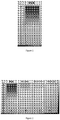
- This black pigment-coated substrate is then fired in a gradient oven at temperatures between 600 and 700 ° C followed by cleaning of the fired glass.
- the photo of the substrate obtained after cooking and cleaning is given to the figure 1 .
- Sample A corresponds to the one represented on the figure 1 as explained above.
- Sample B corresponds to a Planilux® glass substrate on which was deposited by magnetron a silica layer with a thickness of 20 nm before depositing a black mineral pigment and baking the substrate thus prepared in an oven at a gradient between 600 and 700 ° C.
- Sample C is identical to Sample B except that the silica layer is thicker (about 25 nm).
- Sample D is identical to samples B and C, except that the silica protective layer has a thickness of 70 nm.
- the pigment deposition step black is carried out under the same experimental conditions as those described above for sample A.
- the effect of the protective layer is noticeable: even for a small thickness of silica layer, the gray tint decreases sharply and appears only weaker for high firing temperatures. By increasing the thickness of the protective layer, the gray tint disappears completely even at a high firing temperature of the order of 700 ° C.
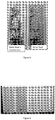
- the figure 3 represents a printed pattern according to the process of the present invention, with or without a silica protective layer.
- a black pigment layer was deposited by screen printing on two different substrates 2a and 2b; the substrate 2a corresponding to a clear glass panel and the substrate 2b corresponding to a clear glass panel on which a 25 nm silica layer has been deposited by magnetron.
- the screen printing screen used is 150.27 screen (150 threads / cm and 27 ⁇ m threads).
- the average thickness of the (wet) layer of black pigments deposited on the glass is equal to 6 ⁇ m.
- the glasses were then introduced into a drying device equipped with infrared lamps operating at a temperature of the order of 145 to 155 ° C in order to eliminate the organic medium.
- the pattern representing the character visible on the figure 3 was then deposited by screen printing also on the two glasses containing the black pigment.
- the enamel used is white and composed of frit with bismuth oxide and titanium oxide pigment. After drying the enamel at a temperature between 145 and 155 ° C, the glasses were fired at a standard quenching temperature of about 655 ° C.
- Non-fixed pigments are removed by brushing and washing with water.
- the tinting of the glass was prevented with the aid of the SiO 2 protective layer previously deposited on one of the substrates.
- a black mineral pigment was printed on different glasses coated with a layer containing SiO 2 , the method used being the same as in Example 1.
- the layers used were deposited by various processes (magnetron (A), Chemical Vapor Deposition (B) "CVD” as well as a combination of these two techniques (C).
- the figure 4 represents the 3 types of layered glasses on which the black pigment has been deposited. The glasses were then washed and fired at a temperature of 650 ° C.
Landscapes
- Chemical & Material Sciences (AREA)
- Engineering & Computer Science (AREA)
- Chemical Kinetics & Catalysis (AREA)
- Materials Engineering (AREA)
- Organic Chemistry (AREA)
- Life Sciences & Earth Sciences (AREA)
- General Chemical & Material Sciences (AREA)
- Geochemistry & Mineralogy (AREA)
- Mechanical Engineering (AREA)
- Metallurgy (AREA)
- Surface Treatment Of Glass (AREA)
- Glass Compositions (AREA)
Applications Claiming Priority (2)
| Application Number | Priority Date | Filing Date | Title |
|---|---|---|---|
| FR1453709A FR3020360B1 (fr) | 2014-04-24 | 2014-04-24 | Procede de fabrication d'un substrat en verre muni de motifs imprimes et d'une sous-couche de protection pour vision a sens unique |
| PCT/FR2015/051079 WO2015162375A1 (fr) | 2014-04-24 | 2015-04-21 | Procede de fabrication d'un substrat en verre muni de motifs imprimes et d'une sous-couche de protection pour vision a sens unique |
Publications (2)
| Publication Number | Publication Date |
|---|---|
| EP3134366A1 EP3134366A1 (fr) | 2017-03-01 |
| EP3134366B1 true EP3134366B1 (fr) | 2019-01-16 |
Family
ID=51293086
Family Applications (1)
| Application Number | Title | Priority Date | Filing Date |
|---|---|---|---|
| EP15725771.8A Not-in-force EP3134366B1 (fr) | 2014-04-24 | 2015-04-21 | Procede de fabrication d'un substrat en verre muni de motifs imprimes et d'une sous-couche de protection pour vision a sens unique |
Country Status (8)
| Country | Link |
|---|---|
| US (1) | US20170044656A1 (enExample) |
| EP (1) | EP3134366B1 (enExample) |
| JP (1) | JP2017515776A (enExample) |
| KR (1) | KR20160145597A (enExample) |
| CN (1) | CN106458713A (enExample) |
| AU (1) | AU2015250663B2 (enExample) |
| FR (1) | FR3020360B1 (enExample) |
| WO (1) | WO2015162375A1 (enExample) |
Families Citing this family (7)
| Publication number | Priority date | Publication date | Assignee | Title |
|---|---|---|---|---|
| CN113548806B (zh) * | 2015-10-23 | 2022-11-11 | 皮尔金顿集团有限公司 | 制造窗玻璃的方法,和由此生产的窗玻璃 |
| FR3052769B1 (fr) * | 2016-06-15 | 2018-07-13 | Saint-Gobain Glass France | Feuille de verre avec email reflechissant le rayonnement infrarouge |
| CN107382089B (zh) | 2017-05-26 | 2018-07-27 | 广东先朗照明有限公司 | 一种玻璃表面图案印制的工艺 |
| EP3406577A1 (en) * | 2017-05-26 | 2018-11-28 | Guangdong Shone Lighting Co., Ltd | Glass surface pattern printing process |
| KR102862192B1 (ko) * | 2019-11-29 | 2025-09-18 | 쌩-고벵 글래스 프랑스 | 화학적 내구성이 있고 로이(Low-E) 코팅과 사용하기에 적합한 흑색 에나멜 조성물 |
| FR3126974B1 (fr) * | 2021-09-10 | 2024-06-28 | Saint Gobain | Lunette arrière ou custode de véhicule automobile comprenant une feuille de verre |
| CN114605087A (zh) * | 2022-03-21 | 2022-06-10 | 杭州杰奇玻璃材料有限公司 | 采用釉印技术制造柔视节能玻璃的加工方法 |
Family Cites Families (2)
| Publication number | Priority date | Publication date | Assignee | Title |
|---|---|---|---|---|
| JPH10104419A (ja) * | 1996-10-01 | 1998-04-24 | Dainippon Printing Co Ltd | カラーフィルタおよびその製造方法 |
| FR2976576B1 (fr) * | 2011-06-17 | 2014-08-08 | Saint Gobain | Procede de fabrication d'un substrat en verre comportant des motifs imprimes en email. |
-
2014
- 2014-04-24 FR FR1453709A patent/FR3020360B1/fr not_active Expired - Fee Related
-
2015
- 2015-04-21 JP JP2016563844A patent/JP2017515776A/ja active Pending
- 2015-04-21 WO PCT/FR2015/051079 patent/WO2015162375A1/fr not_active Ceased
- 2015-04-21 KR KR1020167029068A patent/KR20160145597A/ko not_active Withdrawn
- 2015-04-21 CN CN201580020960.7A patent/CN106458713A/zh active Pending
- 2015-04-21 US US15/305,547 patent/US20170044656A1/en not_active Abandoned
- 2015-04-21 EP EP15725771.8A patent/EP3134366B1/fr not_active Not-in-force
- 2015-04-21 AU AU2015250663A patent/AU2015250663B2/en not_active Ceased
Non-Patent Citations (1)
| Title |
|---|
| None * |
Also Published As
| Publication number | Publication date |
|---|---|
| FR3020360B1 (fr) | 2016-05-06 |
| JP2017515776A (ja) | 2017-06-15 |
| AU2015250663A2 (en) | 2016-12-15 |
| CN106458713A (zh) | 2017-02-22 |
| WO2015162375A1 (fr) | 2015-10-29 |
| KR20160145597A (ko) | 2016-12-20 |
| EP3134366A1 (fr) | 2017-03-01 |
| AU2015250663B2 (en) | 2018-07-05 |
| FR3020360A1 (fr) | 2015-10-30 |
| AU2015250663A1 (en) | 2016-12-01 |
| US20170044656A1 (en) | 2017-02-16 |
Similar Documents
| Publication | Publication Date | Title |
|---|---|---|
| EP2720985B1 (fr) | Procédé de fabrication d'un substrat en verre comportant des motifs imprimes en email | |
| EP3134366A1 (fr) | Procede de fabrication d'un substrat en verre muni de motifs imprimes et d'une sous-couche de protection pour vision a sens unique | |
| EP1289897B1 (fr) | Composition d'email noir a base d'eau pour substrat en verre | |
| EP1885659B1 (fr) | Plaque vitroceramique et son procede de fabrication | |
| BE1020182A3 (fr) | Substrat verrier a coloration interferentielle pour panneau de parement. | |
| EP3472113B1 (fr) | Article verrier de type vitroceramique et procede d'obtention | |
| EP2086899B1 (fr) | Procede de fabrication d'une plaque vitroceramique | |
| FR2962192A1 (fr) | Dispositif de cuisson comprenant une plaque en verre ou vitroceramique, du type possedant au moins un moyen de masquage d'elements internes recouverts par la plaque | |
| FR2894328A1 (fr) | Plaque vitroceramique transparente ou translucide et son procede de fabrication | |
| EP3755666A1 (fr) | Article vitroceramique | |
| WO2019158882A1 (fr) | Article vitroceramique | |
| FR2796063A1 (fr) | Nouvelle composition d'email noir, recyclable, comprenant du zinc, procede de fabrication et produits emailles obtenus | |
| CN113924278A (zh) | 用于离子交换和汽车玻璃的填充孔装饰层 | |
| EP2864268B1 (fr) | Panneau réfléchissant | |
| WO2024033936A1 (en) | A glass substrate having a heat treatable enamel coating and a method of manufacturing the same | |
| WO2024079021A1 (fr) | Feuille de verre comprenant une zone émaillée |
Legal Events
| Date | Code | Title | Description |
|---|---|---|---|
| STAA | Information on the status of an ep patent application or granted ep patent |
Free format text: STATUS: THE INTERNATIONAL PUBLICATION HAS BEEN MADE |
|
| PUAI | Public reference made under article 153(3) epc to a published international application that has entered the european phase |
Free format text: ORIGINAL CODE: 0009012 |
|
| STAA | Information on the status of an ep patent application or granted ep patent |
Free format text: STATUS: REQUEST FOR EXAMINATION WAS MADE |
|
| 17P | Request for examination filed |
Effective date: 20161124 |
|
| AK | Designated contracting states |
Kind code of ref document: A1 Designated state(s): AL AT BE BG CH CY CZ DE DK EE ES FI FR GB GR HR HU IE IS IT LI LT LU LV MC MK MT NL NO PL PT RO RS SE SI SK SM TR |
|
| AX | Request for extension of the european patent |
Extension state: BA ME |
|
| DAV | Request for validation of the european patent (deleted) | ||
| DAX | Request for extension of the european patent (deleted) | ||
| GRAP | Despatch of communication of intention to grant a patent |
Free format text: ORIGINAL CODE: EPIDOSNIGR1 |
|
| STAA | Information on the status of an ep patent application or granted ep patent |
Free format text: STATUS: GRANT OF PATENT IS INTENDED |
|
| INTG | Intention to grant announced |
Effective date: 20180831 |
|
| GRAS | Grant fee paid |
Free format text: ORIGINAL CODE: EPIDOSNIGR3 |
|
| GRAA | (expected) grant |
Free format text: ORIGINAL CODE: 0009210 |
|
| STAA | Information on the status of an ep patent application or granted ep patent |
Free format text: STATUS: THE PATENT HAS BEEN GRANTED |
|
| AK | Designated contracting states |
Kind code of ref document: B1 Designated state(s): AL AT BE BG CH CY CZ DE DK EE ES FI FR GB GR HR HU IE IS IT LI LT LU LV MC MK MT NL NO PL PT RO RS SE SI SK SM TR |
|
| REG | Reference to a national code |
Ref country code: GB Ref legal event code: FG4D Free format text: NOT ENGLISH |
|
| REG | Reference to a national code |
Ref country code: CH Ref legal event code: EP |
|
| REG | Reference to a national code |
Ref country code: IE Ref legal event code: FG4D Free format text: LANGUAGE OF EP DOCUMENT: FRENCH |
|
| REG | Reference to a national code |
Ref country code: DE Ref legal event code: R096 Ref document number: 602015023615 Country of ref document: DE |
|
| REG | Reference to a national code |
Ref country code: AT Ref legal event code: REF Ref document number: 1089581 Country of ref document: AT Kind code of ref document: T Effective date: 20190215 |
|
| REG | Reference to a national code |
Ref country code: NL Ref legal event code: MP Effective date: 20190116 |
|
| REG | Reference to a national code |
Ref country code: LT Ref legal event code: MG4D |
|
| PG25 | Lapsed in a contracting state [announced via postgrant information from national office to epo] |
Ref country code: NL Free format text: LAPSE BECAUSE OF FAILURE TO SUBMIT A TRANSLATION OF THE DESCRIPTION OR TO PAY THE FEE WITHIN THE PRESCRIBED TIME-LIMIT Effective date: 20190116 |
|
| REG | Reference to a national code |
Ref country code: AT Ref legal event code: MK05 Ref document number: 1089581 Country of ref document: AT Kind code of ref document: T Effective date: 20190116 |
|
| PG25 | Lapsed in a contracting state [announced via postgrant information from national office to epo] |
Ref country code: FI Free format text: LAPSE BECAUSE OF FAILURE TO SUBMIT A TRANSLATION OF THE DESCRIPTION OR TO PAY THE FEE WITHIN THE PRESCRIBED TIME-LIMIT Effective date: 20190116 Ref country code: PT Free format text: LAPSE BECAUSE OF FAILURE TO SUBMIT A TRANSLATION OF THE DESCRIPTION OR TO PAY THE FEE WITHIN THE PRESCRIBED TIME-LIMIT Effective date: 20190516 Ref country code: NO Free format text: LAPSE BECAUSE OF FAILURE TO SUBMIT A TRANSLATION OF THE DESCRIPTION OR TO PAY THE FEE WITHIN THE PRESCRIBED TIME-LIMIT Effective date: 20190416 Ref country code: SE Free format text: LAPSE BECAUSE OF FAILURE TO SUBMIT A TRANSLATION OF THE DESCRIPTION OR TO PAY THE FEE WITHIN THE PRESCRIBED TIME-LIMIT Effective date: 20190116 Ref country code: PL Free format text: LAPSE BECAUSE OF FAILURE TO SUBMIT A TRANSLATION OF THE DESCRIPTION OR TO PAY THE FEE WITHIN THE PRESCRIBED TIME-LIMIT Effective date: 20190116 Ref country code: LT Free format text: LAPSE BECAUSE OF FAILURE TO SUBMIT A TRANSLATION OF THE DESCRIPTION OR TO PAY THE FEE WITHIN THE PRESCRIBED TIME-LIMIT Effective date: 20190116 Ref country code: ES Free format text: LAPSE BECAUSE OF FAILURE TO SUBMIT A TRANSLATION OF THE DESCRIPTION OR TO PAY THE FEE WITHIN THE PRESCRIBED TIME-LIMIT Effective date: 20190116 |
|
| PG25 | Lapsed in a contracting state [announced via postgrant information from national office to epo] |
Ref country code: RS Free format text: LAPSE BECAUSE OF FAILURE TO SUBMIT A TRANSLATION OF THE DESCRIPTION OR TO PAY THE FEE WITHIN THE PRESCRIBED TIME-LIMIT Effective date: 20190116 Ref country code: HR Free format text: LAPSE BECAUSE OF FAILURE TO SUBMIT A TRANSLATION OF THE DESCRIPTION OR TO PAY THE FEE WITHIN THE PRESCRIBED TIME-LIMIT Effective date: 20190116 Ref country code: BG Free format text: LAPSE BECAUSE OF FAILURE TO SUBMIT A TRANSLATION OF THE DESCRIPTION OR TO PAY THE FEE WITHIN THE PRESCRIBED TIME-LIMIT Effective date: 20190416 Ref country code: GR Free format text: LAPSE BECAUSE OF FAILURE TO SUBMIT A TRANSLATION OF THE DESCRIPTION OR TO PAY THE FEE WITHIN THE PRESCRIBED TIME-LIMIT Effective date: 20190417 Ref country code: IS Free format text: LAPSE BECAUSE OF FAILURE TO SUBMIT A TRANSLATION OF THE DESCRIPTION OR TO PAY THE FEE WITHIN THE PRESCRIBED TIME-LIMIT Effective date: 20190516 Ref country code: LV Free format text: LAPSE BECAUSE OF FAILURE TO SUBMIT A TRANSLATION OF THE DESCRIPTION OR TO PAY THE FEE WITHIN THE PRESCRIBED TIME-LIMIT Effective date: 20190116 |
|
| REG | Reference to a national code |
Ref country code: DE Ref legal event code: R097 Ref document number: 602015023615 Country of ref document: DE |
|
| PG25 | Lapsed in a contracting state [announced via postgrant information from national office to epo] |
Ref country code: EE Free format text: LAPSE BECAUSE OF FAILURE TO SUBMIT A TRANSLATION OF THE DESCRIPTION OR TO PAY THE FEE WITHIN THE PRESCRIBED TIME-LIMIT Effective date: 20190116 Ref country code: SK Free format text: LAPSE BECAUSE OF FAILURE TO SUBMIT A TRANSLATION OF THE DESCRIPTION OR TO PAY THE FEE WITHIN THE PRESCRIBED TIME-LIMIT Effective date: 20190116 Ref country code: IT Free format text: LAPSE BECAUSE OF FAILURE TO SUBMIT A TRANSLATION OF THE DESCRIPTION OR TO PAY THE FEE WITHIN THE PRESCRIBED TIME-LIMIT Effective date: 20190116 Ref country code: AT Free format text: LAPSE BECAUSE OF FAILURE TO SUBMIT A TRANSLATION OF THE DESCRIPTION OR TO PAY THE FEE WITHIN THE PRESCRIBED TIME-LIMIT Effective date: 20190116 Ref country code: DK Free format text: LAPSE BECAUSE OF FAILURE TO SUBMIT A TRANSLATION OF THE DESCRIPTION OR TO PAY THE FEE WITHIN THE PRESCRIBED TIME-LIMIT Effective date: 20190116 Ref country code: AL Free format text: LAPSE BECAUSE OF FAILURE TO SUBMIT A TRANSLATION OF THE DESCRIPTION OR TO PAY THE FEE WITHIN THE PRESCRIBED TIME-LIMIT Effective date: 20190116 Ref country code: RO Free format text: LAPSE BECAUSE OF FAILURE TO SUBMIT A TRANSLATION OF THE DESCRIPTION OR TO PAY THE FEE WITHIN THE PRESCRIBED TIME-LIMIT Effective date: 20190116 Ref country code: CZ Free format text: LAPSE BECAUSE OF FAILURE TO SUBMIT A TRANSLATION OF THE DESCRIPTION OR TO PAY THE FEE WITHIN THE PRESCRIBED TIME-LIMIT Effective date: 20190116 |
|
| REG | Reference to a national code |
Ref country code: DE Ref legal event code: R119 Ref document number: 602015023615 Country of ref document: DE |
|
| PLBE | No opposition filed within time limit |
Free format text: ORIGINAL CODE: 0009261 |
|
| STAA | Information on the status of an ep patent application or granted ep patent |
Free format text: STATUS: NO OPPOSITION FILED WITHIN TIME LIMIT |
|
| PG25 | Lapsed in a contracting state [announced via postgrant information from national office to epo] |
Ref country code: SM Free format text: LAPSE BECAUSE OF FAILURE TO SUBMIT A TRANSLATION OF THE DESCRIPTION OR TO PAY THE FEE WITHIN THE PRESCRIBED TIME-LIMIT Effective date: 20190116 |
|
| REG | Reference to a national code |
Ref country code: CH Ref legal event code: PL |
|
| REG | Reference to a national code |
Ref country code: BE Ref legal event code: MM Effective date: 20190430 |
|
| 26N | No opposition filed |
Effective date: 20191017 |
|
| GBPC | Gb: european patent ceased through non-payment of renewal fee |
Effective date: 20190421 |
|
| PG25 | Lapsed in a contracting state [announced via postgrant information from national office to epo] |
Ref country code: MC Free format text: LAPSE BECAUSE OF FAILURE TO SUBMIT A TRANSLATION OF THE DESCRIPTION OR TO PAY THE FEE WITHIN THE PRESCRIBED TIME-LIMIT Effective date: 20190116 Ref country code: LU Free format text: LAPSE BECAUSE OF NON-PAYMENT OF DUE FEES Effective date: 20190421 |
|
| PG25 | Lapsed in a contracting state [announced via postgrant information from national office to epo] |
Ref country code: DE Free format text: LAPSE BECAUSE OF NON-PAYMENT OF DUE FEES Effective date: 20191101 Ref country code: CH Free format text: LAPSE BECAUSE OF NON-PAYMENT OF DUE FEES Effective date: 20190430 Ref country code: LI Free format text: LAPSE BECAUSE OF NON-PAYMENT OF DUE FEES Effective date: 20190430 Ref country code: GB Free format text: LAPSE BECAUSE OF NON-PAYMENT OF DUE FEES Effective date: 20190421 |
|
| PG25 | Lapsed in a contracting state [announced via postgrant information from national office to epo] |
Ref country code: BE Free format text: LAPSE BECAUSE OF NON-PAYMENT OF DUE FEES Effective date: 20190430 Ref country code: SI Free format text: LAPSE BECAUSE OF FAILURE TO SUBMIT A TRANSLATION OF THE DESCRIPTION OR TO PAY THE FEE WITHIN THE PRESCRIBED TIME-LIMIT Effective date: 20190116 Ref country code: FR Free format text: LAPSE BECAUSE OF NON-PAYMENT OF DUE FEES Effective date: 20190430 |
|
| PG25 | Lapsed in a contracting state [announced via postgrant information from national office to epo] |
Ref country code: TR Free format text: LAPSE BECAUSE OF FAILURE TO SUBMIT A TRANSLATION OF THE DESCRIPTION OR TO PAY THE FEE WITHIN THE PRESCRIBED TIME-LIMIT Effective date: 20190116 |
|
| PG25 | Lapsed in a contracting state [announced via postgrant information from national office to epo] |
Ref country code: IE Free format text: LAPSE BECAUSE OF NON-PAYMENT OF DUE FEES Effective date: 20190421 |
|
| PG25 | Lapsed in a contracting state [announced via postgrant information from national office to epo] |
Ref country code: CY Free format text: LAPSE BECAUSE OF FAILURE TO SUBMIT A TRANSLATION OF THE DESCRIPTION OR TO PAY THE FEE WITHIN THE PRESCRIBED TIME-LIMIT Effective date: 20190116 |
|
| PG25 | Lapsed in a contracting state [announced via postgrant information from national office to epo] |
Ref country code: HU Free format text: LAPSE BECAUSE OF FAILURE TO SUBMIT A TRANSLATION OF THE DESCRIPTION OR TO PAY THE FEE WITHIN THE PRESCRIBED TIME-LIMIT; INVALID AB INITIO Effective date: 20150421 Ref country code: MT Free format text: LAPSE BECAUSE OF FAILURE TO SUBMIT A TRANSLATION OF THE DESCRIPTION OR TO PAY THE FEE WITHIN THE PRESCRIBED TIME-LIMIT Effective date: 20190116 |
|
| PG25 | Lapsed in a contracting state [announced via postgrant information from national office to epo] |
Ref country code: MK Free format text: LAPSE BECAUSE OF FAILURE TO SUBMIT A TRANSLATION OF THE DESCRIPTION OR TO PAY THE FEE WITHIN THE PRESCRIBED TIME-LIMIT Effective date: 20190116 |