EP3133523B1 - Systemsicherheitsüberwachung - Google Patents
Systemsicherheitsüberwachung Download PDFInfo
- Publication number
- EP3133523B1 EP3133523B1 EP16184974.0A EP16184974A EP3133523B1 EP 3133523 B1 EP3133523 B1 EP 3133523B1 EP 16184974 A EP16184974 A EP 16184974A EP 3133523 B1 EP3133523 B1 EP 3133523B1
- Authority
- EP
- European Patent Office
- Prior art keywords
- user
- checkout
- user account
- valid
- systems
- Prior art date
- Legal status (The legal status is an assumption and is not a legal conclusion. Google has not performed a legal analysis and makes no representation as to the accuracy of the status listed.)
- Active
Links
Images





Classifications
-
- G—PHYSICS
- G06—COMPUTING OR CALCULATING; COUNTING
- G06F—ELECTRIC DIGITAL DATA PROCESSING
- G06F21/00—Security arrangements for protecting computers, components thereof, programs or data against unauthorised activity
- G06F21/50—Monitoring users, programs or devices to maintain the integrity of platforms, e.g. of processors, firmware or operating systems
- G06F21/55—Detecting local intrusion or implementing counter-measures
- G06F21/552—Detecting local intrusion or implementing counter-measures involving long-term monitoring or reporting
-
- G—PHYSICS
- G06—COMPUTING OR CALCULATING; COUNTING
- G06Q—INFORMATION AND COMMUNICATION TECHNOLOGY [ICT] SPECIALLY ADAPTED FOR ADMINISTRATIVE, COMMERCIAL, FINANCIAL, MANAGERIAL OR SUPERVISORY PURPOSES; SYSTEMS OR METHODS SPECIALLY ADAPTED FOR ADMINISTRATIVE, COMMERCIAL, FINANCIAL, MANAGERIAL OR SUPERVISORY PURPOSES, NOT OTHERWISE PROVIDED FOR
- G06Q20/00—Payment architectures, schemes or protocols
- G06Q20/08—Payment architectures
- G06Q20/18—Payment architectures involving self-service terminals [SST], vending machines, kiosks or multimedia terminals
-
- G—PHYSICS
- G06—COMPUTING OR CALCULATING; COUNTING
- G06Q—INFORMATION AND COMMUNICATION TECHNOLOGY [ICT] SPECIALLY ADAPTED FOR ADMINISTRATIVE, COMMERCIAL, FINANCIAL, MANAGERIAL OR SUPERVISORY PURPOSES; SYSTEMS OR METHODS SPECIALLY ADAPTED FOR ADMINISTRATIVE, COMMERCIAL, FINANCIAL, MANAGERIAL OR SUPERVISORY PURPOSES, NOT OTHERWISE PROVIDED FOR
- G06Q20/00—Payment architectures, schemes or protocols
- G06Q20/08—Payment architectures
- G06Q20/20—Point-of-sale [POS] network systems
-
- G—PHYSICS
- G06—COMPUTING OR CALCULATING; COUNTING
- G06Q—INFORMATION AND COMMUNICATION TECHNOLOGY [ICT] SPECIALLY ADAPTED FOR ADMINISTRATIVE, COMMERCIAL, FINANCIAL, MANAGERIAL OR SUPERVISORY PURPOSES; SYSTEMS OR METHODS SPECIALLY ADAPTED FOR ADMINISTRATIVE, COMMERCIAL, FINANCIAL, MANAGERIAL OR SUPERVISORY PURPOSES, NOT OTHERWISE PROVIDED FOR
- G06Q20/00—Payment architectures, schemes or protocols
- G06Q20/38—Payment protocols; Details thereof
- G06Q20/40—Authorisation, e.g. identification of payer or payee, verification of customer or shop credentials; Review and approval of payers, e.g. check credit lines or negative lists
- G06Q20/401—Transaction verification
- G06Q20/4016—Transaction verification involving fraud or risk level assessment in transaction processing
-
- H—ELECTRICITY
- H04—ELECTRIC COMMUNICATION TECHNIQUE
- H04L—TRANSMISSION OF DIGITAL INFORMATION, e.g. TELEGRAPHIC COMMUNICATION
- H04L9/00—Cryptographic mechanisms or cryptographic arrangements for secret or secure communications; Network security protocols
- H04L9/32—Cryptographic mechanisms or cryptographic arrangements for secret or secure communications; Network security protocols including means for verifying the identity or authority of a user of the system or for message authentication, e.g. authorization, entity authentication, data integrity or data verification, non-repudiation, key authentication or verification of credentials
- H04L9/3236—Cryptographic mechanisms or cryptographic arrangements for secret or secure communications; Network security protocols including means for verifying the identity or authority of a user of the system or for message authentication, e.g. authorization, entity authentication, data integrity or data verification, non-repudiation, key authentication or verification of credentials using cryptographic hash functions
Definitions
- the self-checkout systems can include a computing system configured to identify products (e.g., a bar code scanner), and process payment instruments (e.g., cash or credit card of a consumer).
- Self-checkout systems can be accessed by a system administrator to install software on the computing system (e.g., a privileged administrator user account), and the self-checkout system can be in communication with one or more server systems (e.g., controlled by a business which includes the self-checkout system, or an intermediary company associated with the business) over a network (e.g., the Internet).
- a network e.g., the Internet
- Checkout systems utilized by businesses are clear targets for malicious activity.
- Checkout systems process sensitive information (e.g., payment information), and thus have access to sensitive information of each consumer that utilizes a checkout system.
- sensitive information e.g., payment information
- the business might use tens, or even hundreds, of thousands of checkout systems. Determining whether a single checkout system is executing malicious code, or whether user accounts have been compromised by a malicious actor, creates a massive technical hurdle.
- businesses would purchase checkout systems from manufacturers, and rely on the checkout systems being securely locked down.
- businesses introduce checkout systems for use by consumers, they have little way of knowing whether the checkout systems are being subsequently tampered with, or whether user accounts with access to them are being compromised.
- a system described below can identify checkout systems as being compromised. Furthermore, the system can determine whether user accounts that can access checkout systems have been compromised, by monitoring specific actions performed by user accounts. Through examining executable code and user account behavior, the system improves network security, and guards against checkout systems performing malicious actions. Particular embodiments of the subject matter described in this specification can be implemented so as to realize one or more of the following advantages.
- a system can quickly identify whether any checkout systems utilized in a business have been compromised by an attacker, and enable quickly stopping the attacker from obtaining further sensitive information (e.g., credit card numbers) of consumers.
- the system can compare processes executing in memory of the checkout systems to known valid processes, and determine whether unknown processes, or processes known to be malicious, are executing on the checkout systems. Additionally, the system can determine that checkout systems have been accessed by user accounts in suspicious or risky manners, and quickly flag (e.g., identify for review) the checkout systems and user accounts. In this way, the system can provide quick insights (e.g., to a user) into hundreds, thousands, millions, of checkout systems in use by a business. Furthermore, the system can obtain transaction data and quickly identify sensitive information (e.g., credit card numbers) that might have been improperly obtained by a malicious actor (e.g., by determining compromised checkout machines and obtaining transaction data from the compromised checkout machines). In this way, a system can quickly identify compromised sensitive information, and alert the affected consumers.
- sensitive information e.g., credit card numbers
- the present disclosure describes various embodiments of interactive and dynamic user interfaces that are the result of significant development. This non-trivial development has resulted in the user interfaces described herein which may provide significant cognitive and ergonomic efficiencies and advantages over previous systems.
- the interactive and dynamic user interfaces include improved human-computer interactions that may provide reduced mental workloads, improved decision-making, reduced work stress, and/or the like, for a user.
- user interaction with the interactive user interface via the inputs described herein may provide an optimized display of, and interaction with, graph data, image data, and/or other data, and may enable a user to more quickly and accurately access, navigate, assess, and digest the data than previous systems.
- the interactive and dynamic user interfaces described herein are enabled by innovations in efficient interactions between the user interfaces and underlying systems and components.
- disclosed herein are improved methods of receiving user inputs (including methods of interacting with, and selecting, images, graphs, and other types of data), translation and delivery of those inputs to various system components, automatic and dynamic execution of complex processes in response to the input delivery, automatic interaction among various components and processes of the system, and automatic and dynamic updating of the user interfaces (to, for example, display the relevant data from various different applications and/or data sources).
- the interactions and presentation of data via the interactive user interfaces described herein may accordingly provide cognitive and ergonomic efficiencies and advantages over previous systems.
- Various embodiments of the present disclosure provide improvements to various technologies and technological fields.
- existing data aggregation and analysis technology is limited in various ways (e.g., limited in the types of applications or data sources the data may be drawn from, loss of data interactivity, etc.), and various embodiments of the disclosure provide significant improvements over such technology.
- various embodiments of the present disclosure are inextricably tied to computer technology.
- various embodiments rely on detection of user inputs via graphical user interfaces, aggregation of data from different applications and data sources, and automatic processing, formatting, and display of the aggregated data via interactive graphical user interfaces.
- Such features and others are intimately tied to, and enabled by, computer technology, and would not exist except for computer technology.
- the interactions with displayed data described below in reference to various embodiments cannot reasonably be performed by humans alone, without the computer technology upon which they are implemented.
- the implementation of the various embodiments of the present disclosure via computer technology enables many of the advantages described herein, including more efficient interaction with, and presentation of, various types of electronic data.
- one innovative aspect of the subject matter described in this specification can be embodied in methods that include the actions of obtaining checkout system data from a plurality of checkout systems associated with a business, wherein the checkout system data identifies processes executing in memory of each checkout system, and user account access information indicating user account access attempts; determining whether the checkout system data identifies processes, executing in memory of one or more checkout systems, that are not known to be valid; determining, using the user account access information, anomalous user behavior of user accounts; generate user interface data describing the processes not known to be valid and anomalous user behavior; and provide at least a portion of the generated user interface data for presentation on a user device.
- computer systems comprise one or more hardware computer processors in communication with one or more non-transitory computer readable storage devices, wherein the one or more hardware computer processors are configured to execute the plurality of computer executable instructions in order to cause the computer system to operations comprising one or more aspects of the above-described embodiments (including one or more aspects of the appended claims).
- non-transitory computer-readable storage mediums storing software instructions are disclosed, wherein, in response to execution by a computing system having one or more hardware processors, the software instructions configure the computing system to perform operations comprising one or more aspects of the above-described embodiments (including one or more aspects of the appended claims).
- various embodiments of the system may be configured and/or designed to generate user interface data useable for rendering the various interactive user interfaces described.
- the user interface data may be used by the system, and/or another computer system, device, and/or software program (for example, a browser program), to render the interactive user interfaces.
- the interactive user interfaces may be displayed on, for example, electronic displays (including, for example, touch-enabled displays).
- another innovative aspect of the subject matter described in this specification can be embodied in methods that include the actions of receiving, from a system, a document for presentation describing a plurality of processes executing on checkout systems that are not known to be valid, and one or more user accounts determined, by the system, to be associated with anomalous user behavior; providing the document for presentation, wherein presentation includes presenting summary data describing the plurality of processes and summary data describing the anomalous user behavior indicating alerts, generated by the system, associated with respective types of anomalous user behavior; receiving, from a user, a selection of a portion of data included in the presentation; and providing, for presentation, information associated with the selected portion of data.
- checkout systems When purchasing products, or other goods, at a business, consumers can pay for the products using payment instruments such as credit cards.
- checkout systems obtain sensitive payment information (e.g., credit card numbers), and provide the sensitive information to an outside system (e.g., a credit card company).
- a malicious actor can initiate a process to execute in memory of a checkout system that can obtain the sensitive payment information, and later relay the information to a system controlled by the malicious actor. In this way, payment information can be 'skimmed', that is, obtained from checkout systems causing a data breach and loss of trust by consumers of the business.
- a checkout system is any system that receives payment information from a consumer (e.g. credit card information, cash, electronic payment through BLUETOOTH, Near Field Communications (NFC), Wi-Fi, and so on).
- a checkout system can include a self-checkout system, a checkout system configured to be operated in part by an employee of a business, a Point of Sale (POS) system, a system associated with Merchant Exchange, and so on.
- POS Point of Sale
- a process executing in memory includes any executable code (e.g., binaries) executing, or resident, in a memory (e.g., non-volatile, volatile memory) included in or accessible by a checkout system.
- the compromise determination system can compare information describing processes executing in memory of checkout systems to known valid processes (e.g., processes associated with a business or a company that manufactures the checkout systems) to determine whether one or more checkout systems are executing unknown, or malicious, processes.
- Information describing a process can include a name of the process, a file path of the process, and/or a hash of the process (e.g., using cryptographic hash functions, such as MD 5 , SHA-2 or SHA- 3 ).
- the compromise determination system can provide information identifying the checkout systems for presentation to a user (e.g., for review by the user).
- the compromise determination system can also determine anomalous user behavior associated with checkout systems, and provide information identifying the affected checkout systems and user accounts for presentation to a user.
- anomalous user behavior is any behavior associated with a user account that is indicative of a risk of compromise of the user account.
- the compromise determination system can identify user accounts with privileged rights (e.g., administrator rights) that have never accessed checkout systems, and suddenly are accessing one or more checkout systems.
- the compromise determination system can identify user accounts with privileged rights that normally access checkout systems in a particular geographic region, and are now accessing checkout systems in a different geographic region. Determining anomalous user behavior will be further described below, with reference to FIG 4 .
- the compromise determination system can quickly provide insights into the safety of checkout systems associated with a business (e.g., determine whether any checkout systems have been compromised).
- the compromise determination system can generate, or provide information to a presentation system that generates, user interfaces for display to a user (e.g., a Chief Security Officer, or persons at a business responsible for network and/or consumer security such as a system administrator) for review.
- a user e.g., a Chief Security Officer, or persons at a business responsible for network and/or consumer security such as a system administrator
- the user can view flagged (e.g., highlighted or otherwise identified) checkout systems and/or user accounts that should be reviewed by the user (e.g., to determine whether they have been compromised).
- the user can view data identifying, for instance, unknown, or known to be malicious, processes executing on the selected checkout system.
- user interface data can include any data (e.g., executable code, interpretable code, images, video, and so on), that can be utilized to generate user interfaces.
- user interface data can include code defining a web page (e.g., HTML, XML, and so on), which a user device can receive and process (e.g., render) to display the web page.
- FIG. 1 illustrates a block diagram of checkout systems 4 in communication with a compromise determination system 100.
- the checkout systems 4 are included in different stores (e.g., Business stores A-C 2A-2C) of a particular business (e.g., a retailer, a drug store, a supermarket, and so on) across a geographic area (e.g., the United States).
- stores e.g., Business stores A-C 2A-2C
- a particular business e.g., a retailer, a drug store, a supermarket, and so on
- a geographic area e.g., the United States
- the compromise determination system 100 can obtain checkout system data 6 from each checkout system 4 utilized by the business, which can include information describing processes executing in memory of each checkout system, user account access information (e.g., information obtained from security logs, active directory logs, information included in Access Control Lists, Group Memberships, and so on, describing user access attempts, actual user access, user access rights and so on), and transaction data (e.g., encrypted transaction data identifying payment instruments utilized by consumers).
- the compromise determination system 100 can be in communication with a system that aggregates information from checkout systems, and provides the aggregated information to the compromise determination system 100 (e.g., at particular intervals of time).
- user account access information can be obtained from outside systems including domain controllers, virtual private network (VPN) logs, and so on.
- VPN virtual private network
- the compromise determination system 100 can determine whether any of the checkout systems 4 are executing processes not known to be valid, and thus potentially malicious. To effect this determination, the compromise determination system 100 can access information describing valid processes (e.g., processes included in the checkout system to execute by a manufacturer, processes initiated by a business, or processes otherwise identified as valid), and compare the valid processes to the processes received from the checkout systems 4. As will be described below, with reference to FIG. 3 , the compromise determination system 100 can compare names of the processes, file paths of the processes (e.g., locations in each checkout systems' file system that store executable code associated with the processes), and/or hashes of the processes (e.g., cryptographic hashes of executable code associated with the processes).
- valid processes e.g., processes included in the checkout system to execute by a manufacturer, processes initiated by a business, or processes otherwise identified as valid
- the compromise determination system 100 can compare names of the processes, file paths of the processes (e.g., locations in each checkout systems' file system that store executable code associated with the
- the compromise determination system 100 can determine anomalous user behavior associated with any of the checkout systems 4. As will be described below, with reference to FIG. 4 , the compromise determination system 100 can identify (e.g., for presentation to a user) user accounts associated with behavior indicative of a risk of compromise.
- the compromise determination system 100 can also receive transaction data from each checkout system 4, describing specific transactions made by consumers along with respective payment instrument (e.g., credit cards).
- a reviewing user e.g., a system administrator
- personal information e.g., identifications of consumers, payment instruments, and so on
- all personal information can be encrypted for later review by only authorized users, and/or personal data can be anonymized.
- the compromise determination system 100 determines checkout systems and user accounts to be reviewed by a user (e.g., a system administrator)
- the compromise determination system 100 can provide identifications 8 of the determined checkout systems and user accounts to a presentation system 120 (e.g., in communication with a user device 130).
- the presentation system 120 can generate user interface data that identifies checkout system and user accounts to be reviewed by a user.
- the user interfaces can include information relevant to determining whether the identified checkout system and user accounts have been compromised.
- the user interfaces can include a list of running unknown processes on a checkout system, along with identifications of other checkout systems that are also running each process, a time of when the process started, a user account that initiated execution of the process, a reference to a user interface with information describing the user account, all user accounts that have accessed or attempted to access the checkout system, and so on.
- User interfaces are described more fully below, with references to FIGs. 5-12 . In this way, a reviewing user (e.g., a system administrator) can have immediate access to all information relevant to determining whether a user account or checkout system has been compromised.
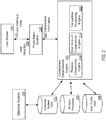
- FIG. 2 illustrates a block diagram of an example compromise determination system 100.
- the compromise determination system 100 can be a system of one or more computers, or one or more virtual machines executing on a system of one or more computers.
- the compromise determination system 100 receives checkout system data associated with checkout systems (e.g., checkout system 104), including information describing processes executing on each checkout system and user account access information of each checkout system, and determines checkout systems or user accounts that are to be reviewed by a user (e.g., a system administrator on user device 130).
- a user device can include a computer (e.g., a system of one or more processors), a laptop, a tablet, a mobile device, a wearable computer, and so on.
- the compromise determination system 100 includes a process compromise engine 112 that maintains, or is in communication with, a checkout system database 102 storing checkout system data obtained from checkout systems 104 deployed by one or more businesses.
- the compromise determination system 100 can communicate with each checkout system and provide a request for checkout system data.
- each checkout system can include an agent (e.g., a software agent executing on the checkout system) that can provide information to the compromise determination system 100, or an outside system that aggregates information and provides the aggregated information to the compromise determination system 100 for storage in the checkout system database 102.
- Checkout system data can include names of executing processes, locations in checkout systems that store the processes, hashes of the processes (e.g., a cryptographic hash), user accounts that initiated the processes, times of initiation of the processes, and so on.
- the process compromise engine 112 can access the checkout system database 102, and compare the information describing processes executing on checkout systems to information stored in a whitelist processes database 106, which the compromise determination system maintains or is in communication with.
- the whitelist processes database 106 stores information describing processes known to be valid (e.g., not malicious or otherwise approved).
- the whitelist processes database 106 can include information describing processes that were included to execute on checkout systems from a manufacturer of the checkout systems, from a business associated with the installed checkout systems, from authorized (e.g., privileged) users associated with the business, and so on.
- the process compromise engine 112 can compare the processes executing on checkout systems (e.g., using the checkout system database 102) to the processes known to be valid (e.g., using the whitelist processes database 106). Comparing can include comparing a name of a process executing on a checkout system to all the names included in the whitelist processes. Similarly, comparing can include comparing file locations, and comparing hashes of executable code associated with the processes.
- the process compromise engine 112 can store information that flags (e.g., identifies) that particular checkout system and particular process for later review (e.g., by a system administrator). Additionally, in some implementations the process compromise engine 112 can scan through the checkout system database 102 to identify processes executing on other checkout systems that match with the particular process (e.g., match names or other identifiers, match file locations, match hashes), and upon identification of other processes, the process compromise engine 112 can similarly flag (e.g., identify) the checkout systems for later review.
- flags e.g., identifies
- the process compromise engine 112 can scan through the checkout system database 102 to identify processes executing on other checkout systems that match with the particular process (e.g., match names or other identifiers, match file locations, match hashes), and upon identification of other processes, the process compromise engine 112 can similarly flag (e.g., identify) the checkout systems for later review.
- the compromise determination system 100 includes a user account compromise engine 114 that obtains information from the checkout system database 102 identifying user account access information (e.g., the checkout system database 102 stores security logs, active directory logs obtained from the checkout systems).
- the user account compromise engine 114 further obtains information from a user profile database 108, which the compromise determination system 100 maintains, or in some implementations is in communication with.
- the user profile database 108 stores user account information associated with the checkout systems (e.g., user accounts that can access one or more checkout systems, or that can access systems configured to generate or create user accounts that can access one or more checkout systems).
- the information can include, for each user account, an identification of a name of a person associated with the user account, user accounts that the user account has transitioned to (e.g., a user can log-in with the user account, transfer to a second user account and so on), and so on.
- the user account compromise engine 114 can determine whether user accounts are exhibiting anomalous user behavior. As described above, anomalous user behavior is any behavior associated with a user account that is indicative of a risk of compromise of the user account. In some implementations, the user account compromise engine 114 can generate alerts to associate with user accounts, and affected checkout systems, that are exhibiting anomalous user behavior, with each alert associated with a specific type of anomalous user behavior. For instance, an alert can identify that a user account is accessing a checkout system (e.g., with privileged administrator rights) that the user account has never accessed before. An alert can identify that a user account known to access checkout systems in a particular geographic region (e.g., country, state, city) has accessed one or more checkout systems outside of that geographic region.
- a checkout system e.g., with privileged administrator rights
- an alert can identify that a user account which normally logs into checkout systems over a network (e.g., the Internet) from a particular geographic region (e.g., country) has logged into a checkout system from a different region (e.g., a different country).
- An alert can identify that a user account with privileged rights (e.g., administrator rights) has suddenly begun logging into a greater than average, or other measure of central tendency, amount of checkouts systems. Determining anomalous user behavior is described below, with reference to FIG. 4 .
- the compromise determination system 100 includes a transaction processing engine 116 in communication with the checkout system database 102 which further stores transaction data from the checkout systems (e.g., checkout system 104).
- Transaction data includes, at least, information describing payment instruments (e.g., credit cards) utilized in transactions that occurred through use of each checkout system, and can include credit card numbers, expiration dates, card verification values (CW), and so on.
- the transaction data can be encrypted with appropriate security measures (e.g., encrypted with the Advanced Encryption Standard, and so on).
- the transaction processing engine 116 can utilize the transaction data to store information describing payment instruments and checkout systems in which the payment instruments were utilized. In this way, a user (e.g., a system administrator) can determine which payment instruments are potentially compromised if a checkout system is determined to be compromised (e.g., a malicious process executing on it).
- a user e.g., a system administrator
- a checkout system is determined to be compromised (e.g., a malicious process executing on it).
- the compromise determination system 100 includes, or is in communication with, a presentation system 120 that provides user interface data 132 for presentation on user devices (e.g., in response to receiving a request from user device 130).
- the presentation system generates user interfaces to facilitate a user (e.g., a system administrator) determining whether a checkout system or user account has been compromised.
- the presentation system 120 can, for example, generate a user interface that presents identifications of checkout systems executing unknown processes (e.g., as illustrated in FIGs. 5-6 ).
- the presentation system 120 can, for example, generate a user interface that presents identifications of user accounts identified as exhibiting anomalous user behavior (e.g., as illustrated in FIGs. 8-9 ).
- a user of the user device 130 can select information 134 identified in the received user interfaces (e.g., a specific process, a specific checkout system, a specific user account) and receive user interfaces identifying specific information about the selection 134.
- information 134 identified in the received user interfaces e.g., a specific process, a specific checkout system, a specific user account
- receive user interfaces identifying specific information about the selection 134 e.g., a specific process, a specific checkout system, a specific user account
- the user can receive a holistic view of the operation of the checkout systems, and quickly pivot on information that looks interesting, or suspicious (e.g., potentially malicious).
- User interfaces are described more fully below, with reference to FIGs. 5-12 .
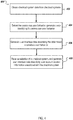
- FIG. 3 is a flowchart of an example process 300 for determining checkout systems associated with a risk of compromise.
- the process 300 will be described as being performed by a system of one or more computers (e.g., the compromise determination system 100).
- the system obtains checkout system data from checkout systems (block 302).
- the system can receive checkout system data (e.g., information identifying processes executing on each checkout system, information identifying binaries or other executable code resident on each checkout system, and so on) directly from each checkout system, or in some implementations, the system receives the checkout system data from an intermediary system that aggregates the checkout system data.
- the checkout system data is stored for processing by the system, and associated with information identifying each checkout system (e.g., particular business the checkout system is associated with, a particular store the checkout system is included in, a location in the store, and so on).
- the system determines whether the checkout system data identifies processes not known to be valid (block 304).
- the system obtains information identifying a whitelist, which includes information describing processes identified to the system as valid.
- a process known to be valid is a process included for execution on a checkout system by a manufacturer of the checkout system, by a business that utilizes the checkout system, by a privileged user associated with the business, and so on.
- the system compares processes identified in the obtained checkout system data to the processed identified in the whitelist.
- the system can compare names of the processes (e.g., a name as seen by an operating system executing on a checkout system), file locations of the processes (e.g., locations of executable code associated with the processes in a file system included in a checkout system), hashes of the processes (e.g., cryptographic hashes of executable code associated with the processes).
- the system If the system identifies processes in the obtained checkout system data that do not compare (e.g., match) to processes identified in the whitelist, the system stores information identifying that the process is not valid, and stores information identifying checkout systems that execute any of the processes. Additionally, the system can obtain information identifying user accounts that initiated the execution of the identified processes, and store information associating the user accounts with the identified processes.
- the system generates user interface data describing the determined processes not known to be valid (block 306).
- the system or a presentation system in communication with the system, generates user interface data identifying processes not known to be valid.
- the user interface data can include summary data identifying a total number of processes executing on the checkout systems that are not known to be valid, a total number of checkout systems executing processes that are not known to be valid, and a total number of checkout systems executing each process not known to be valid.
- the generated user interface can be included in a document (e.g., a web page) configured to be received by a user device and displayed (e.g., in a web browser).
- a user of the user device can select information included in the user interface, such as a particular process not known to be valid, a particular checkout system, and so on.
- the system Upon selection of information, the system generates user interface data directed to information associated with the selection, as will be described below with reference to FIGs. 5-12 .
- the user interface, or a representation of the user interface (e.g., modified, or otherwise formatted), can be presented in an e-mail, on a mobile device, on a wearable device, and so on.
- the system receives a user selection of a particular process not known to be valid (block 308).
- a user of the user interface e.g., a user viewing the user interface on a web browser over a network such as the Internet
- can provide a selection of a particular process e.g., the user can use a mouse, keyboard, input on a touch screen device, audio input, to select the process.
- the system Upon selection of the particular process, the system generates user interface data identifying the particular process (block 310).
- the user interface can include an identification of a name of the process (e.g., a file name), an identification of a risk level of the process, a number of checkout systems that are executing the process, a total time the process has been executing (e.g., a time that the process was first identified by the system), a number of geographic regions that include checkout systems executing the process, and so on.
- the system can provide a hash of the process (e.g., a cryptographic hash of executable code associated with the process) to an outside system storing identifications of processes known to be malicious, and receive an identification of a risk level associated with the process. Additionally, the system can receive the risk level from a user (e.g., a system administrator can input the risk level).
- a hash of the process e.g., a cryptographic hash of executable code associated with the process
- the user interface can further identify all checkout systems executing the process, and the user can further select a checkout system and receive a user interface identifying a location of the checkout system, user accounts that have accessed the checkout system, and so on.
- FIG. 4 is a flowchart of an example process 400 for determining user accounts exhibiting anomalous user behavior.
- the process 400 will be described as being performed by a system of one or more computers, e.g., the compromise determination system 100.
- the system obtains checkout system data from checkout systems (block 402).
- the system obtains checkout system data (e.g., from the checkout systems or from an intermediary system).
- the checkout system data can include user account access information obtained from logs generated by the checkout systems (e.g. security logs, active directory logs, and so on).
- the system can obtain user account access information from active directory information stored on servers (e.g., domain controllers) in communication with checkout systems that respond to authorization requests from user accounts.
- the user account access information identifies user account access attempts, and actual user account access, of checkout systems.
- the system determines anomalous user behavior from the checkout system data, and generates alerts identifying the anomalous user behavior (block 404).
- anomalous user behavior is any behavior associated with a user account that is indicative of a risk of compromise of the user account.
- the system can test for one or more user behaviors associated with a risk of compromise, and generate alerts associated with the one or more user behaviors for later review by a user (e.g., a system administrator).
- the system can determine whether a particular user account has accessed one or more checkout systems for the first time, or a threshold amount of times (e.g., 2, 3,5), and generate an alert identifying the particular user account and affected checkout systems.
- a threshold amount of times e.g. 2, 3,5
- the system can determine whether a user account has accessed a checkout system from a location not known to be associated with the user account. For instance, if a user (e.g., a service technician) historically logs into a checkout system from a particular region (e.g., California), and at some point logs into the checkout system from a different region (e.g., a different country or state), the system can generate an alert identifying the user account, checkout system, and location data.
- a user e.g., a service technician
- the system can determine other types of anomalous user behavior, including determining user compromise scores each indicating user behavior that indicates, at least in part, that a user account has been compromised.
- the system can determine a host score for a particular user account, which is a measure associated with checkout systems the particular user account accessed.
- the host score can be based off a number of checkout systems an average user account accesses, and a number of systems the particular user account normally accesses.
- the host score can be greater if the particular user account has recently accessed checkout systems not historically associated with the particular user account.
- the speed score for a particular user account measures how likely it is that a particular user account has accessed checkout systems in disparate locations in a period of time. For instance, if the particular user account accessed a first checkout system in a first location (e.g., Austin, Texas), and a short period of time later (e.g., 15 minutes), accessed a second checkout system in a second location (e.g., San Francisco, California), the speed score can indicate that one user could not travel fast enough between those two locations (e.g., the speed score can be associated with a user-definable maximum velocity, speed, necessary to have traveled between two locations in a period of time, which can be based on historical information, and so on).
- a first checkout system in a first location e.g., Austin, Texas
- a short period of time later e.g. 15 minutes
- the speed score can indicate that one user could not travel fast enough between those two locations (e.g., the speed score can be associated with a user-definable
- the location score for a particular user account measures risk associated with the locations from which the particular user account accessed a checkout system. For instance, a particular geographic region can be known (e.g., to a system administrator) to be associated with malicious activity. The location score can thus be greater if the checkout system is being accessed from the particular geographic region.
- the system can determine other types of anomalous user behavior, for instance described in Serial No. 14/982,699 , titled “ANOMALOUS NETWORK MONITORING, USER BEHAVIOR DETECTION AND DATABASE SYSTEM,” .
- the system generates user interface data describing the determined anomalous user behavior (block 406).
- the system or a presentation system in communication with the system, generates user interface data that can summarize the determined anomalous user behavior.
- the summary data can include a number of user accounts associated with anomalous user behavior, summary data of specific types of alerts identifying anomalous user behavior, and so on.
- the system can include identifications of each user account associated with anomalous user behavior, along with checkout systems accessed by each user account, specific types of anomalous user behavior exhibited by each user account, historical information associated with each user account (e.g., previously exhibited anomalous user behavior), and so on.
- a user of the user interface can select a user account, and the system can generate a user interface identifying user profile data associated with the selected user account (e.g., identifying an employee role associated with the user account, access rights of the user account, geographic region of the employee, and so on.)
- the system can receive a selection of a checkout system and the system can generate a user interface describing user account access information associated with the checkout system (block 408).
- the generated user interface can identify a location of the checkout system, a number of user accounts that attempted to access the checkout system (e.g., within a particular time period), a number of access attempts that resulted in a failed log-in, types of anomalous user behavior associated with user accounts that attempted to access, or accessed, the checkout system.
- An example of such a user interface is described below, with reference to FIG. 10 .
- the system can also include process information, (e.g., processes not know to be valid described above with reference to FIG. 3 ), associated with the selected checkout system in the user interface (e.g., illustrated in FIG. 10 ).
- User interfaces described in FIGs. 5-12 are examples of interactive user interfaces generated by the system, or a presentation system in communication with the system, and presented on a user device.
- the user interfaces can be presented on the user device as a document (e.g., a web page) in an application (e.g., a web browser).
- Each of the user interfaces described below includes user selectable options that upon selection can cause the system to obtain associated information (e.g., from databases 102, 104, 108), determine updated information, and modify, or generate, user interface data.
- the user interfaces can provide a reviewing user (e.g., a system administrator, a security officer, a service technician) insights into complex networks with large numbers of checkout systems and user accounts, by obtaining disparate information spread across checkout systems, and providing easy to understand summary data for a reviewing user.
- Each example user interface described below includes a selectable option for the reviewing user to specify a particular time range that interests him/her.
- the system can access one or more databases (e.g., databases 102, 104, 108) and determine information associated with the time range to provide to the reviewing user.
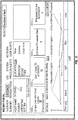
- FIG. 5 illustrates an example user interface 500 describing processes executing on checkout systems that are not known to be valid.
- the user interface 500 can be displayed on a user device, and in some implementations can be a document (e.g., a web page) configured to be received over a network (e.g., a local area network, the Internet) and displayed on the user device (e.g., in a web browser).
- a document e.g., a web page
- a network e.g., a local area network, the Internet
- a user of the user interface e.g., a system administrator monitoring checkout systems deployed across a business
- the user has selected "Summary” data 504, identifying that he/she wants to view an overview of the checkout systems, including processes not known to be valid.
- the "Summary" data 504 user interface can further include information regarding anomalous user behavior, which is described below with reference to FIG. 8 .
- the user interface 500 includes user selectable options including a time window 506 (e.g., a date range), which the user can set to view process information associated with the time window 506. As illustrated in FIG. 5 , the time window 506 is set to "May 2015", and the graphs 508, as illustrated, include information from the selected time window 506.
- a time window 506 e.g., a date range
- the user interface 500 includes summary data, including a number of processes not know to be valid 510, which in the example of FIG. 5 is "273", and a number of checkout systems 512 executing processes not known to be valid, which in the example is "35,076".
- the number "273" is based off hash comparisons (e.g., as described above with reference to FIG. 3 ), however in some implementations the number can include process name comparisons, process location comparisons, or a combination.
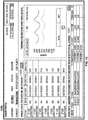
- FIG. 6 illustrates an example user interface 600 identifying processes not know to be valid.
- the user interface 600 can be provided for presentation on a user device, upon user selection of "Process Alerts", in contrast to "Summary” data as described above in FIG. 5 .
- the "Process Alerts" selection provides detailed information regarding processes executing on checkout systems that are not known to be valid.
- a user e.g., a system administrator
- the user can select a selectable filter 602 to filter by region, and view processes executing on checkout systems located in the region.
- the user interface 600 includes identifications of processes not known to be valid 604, a number of checkout systems ("hosts") 606 that execute each process, a time the process was last determined to be executing 608, and a hash of the process (e.g., a cryptographic hash of executable code associated with the process) 610. Additionally, the user interface 600 is configured to receive labels 612, notes, a time reviewed, and other descriptive text from a user (e.g., a system administrator). In this way, the user can keep track of processes that he/she has reviewed, or has yet to review.
- a user e.g., a system administrator
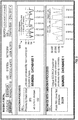
- FIG. 7 illustrates an example user interface 700 displayed upon selection of a particular process not known to be valid.
- the selected process with filename 702 "example.exe” and hash 704 (e.g., MD5 hash) "1D9B64DC0A5221247208F8XXXX12345", was selected by a user from the user interface 600, described above in FIG. 6 .
- filename 702 "example.exe”
- hash 704 e.g., MD5 hash
- user interface 700 is generated with information identifying the process (e.g., file name, hash), and an associated risk level 706 of the process.
- the risk level 706 can be determined by the system (e.g., the compromise determination system 100) by providing a hash of the process to an outside system, and receiving an identification of the risk level 706.
- the risk level 706 can be determined by the system after determining the effects of the process (e.g., through monitoring of the processes actions in an operating system executing on a checkout system). For instance, if the process is determined to be monitoring payment instruments used by consumers (e.g., skimming credit card numbers), the process can be identified as having a "Critical" risk level.
- a user e.g., a system administrator
- the risk level can be obtained through searching a hash value associated with the process (e.g., searching the common vulnerability scoring system, and other outside systems and databases).
- the user interface 700 includes a portion in which a user (e.g., a system administrator) can include descriptive text 708 identifying the reviewing user, checkout systems he/she has investigated and/or fixed to remove the process, a time the user took an actions, and any notes the user desires to include (e.g., so other users can view the notes if the process is determined to be executing at a later point in time).
- a user e.g., a system administrator
- descriptive text 708 identifying the reviewing user
- a time the user took an actions e.g., so other users can view the notes if the process is determined to be executing at a later point in time.
- the user interface 700 further includes summary data regarding the process, including a total number of times the process has been determined to be executing 710, a total number 712 of checkout systems executing the process (e.g., within a particular user selectable time period), a total number 714 of file locations executable code associated with the process have been found in, a number of regions 716 (e.g., user selectable areas or other identifiers of regions) that checkout systems executing the process are location in, and a total time 718 (e.g., number of days as illustrated) the process has been determined to be executing.
- summary data regarding the process including a total number of times the process has been determined to be executing 710, a total number 712 of checkout systems executing the process (e.g., within a particular user selectable time period), a total number 714 of file locations executable code associated with the process have been found in, a number of regions 716 (e.g., user selectable areas or other identifiers of regions) that checkout systems executing
- Each portion of summary data (e.g., 710-718) can be selectable by a user, and upon selection, details 720 regarding the selection can be presented.
- the user interface 700 can present historical information regarding the process (e.g., checkout systems affected, regions in which the process was determined to be executing).
- the user interface 700 can present an identification of the checkout systems presently affected, and the user can select the checkout system to view information associated with the checkout system (e.g., processes executing on the checkout system, a location of the checkout system, user accounts with access rights to the checkout system, and so on).
- information associated with the checkout system e.g., processes executing on the checkout system, a location of the checkout system, user accounts with access rights to the checkout system, and so on.
- portion 714 the specific location of executable code associated with the process can be presented. If more than location is detected (e.g., on a single checkout system, or across different checkout systems), the locations can be presented along with identifications of respective checkout systems.
- identifications of regions which include checkout systems executing the process are presented. For instance, a map of a region (e.g., a country, a state, a province, a city) can be presented along with information indicating density of locations of the affected checkout systems (e.g., a heat map).
- a map of a region e.g., a country, a state, a province, a city
- information indicating density of locations of the affected checkout systems e.g., a heat map.
- portion 718 information identifying a spread of the process executing on disparate checkout systems can be presented. That is, the user interface 700 can display (e.g., chart or graph) a rise of the process executing on disparate checkout systems, including associated information such as location or region of each checkout system, and user accounts that initiated the execution of the process.
- display e.g., chart or graph
- FIG. 8 illustrates an example user interface 800 describing anomalous user behavior on checkout systems.
- a user of the user interface 800 e.g., a system administrator monitoring the checkout systems deployed across a business
- the user interface 800 includes user selectable options including a time window (e.g., a date range), which the user can set to view summary data associated with the time window. As illustrated in FIG. 8 , the time window is set to "May 2015", and the graphs, as illustrated, include information from the selected time window.
- a time window e.g., a date range
- the summary data includes an identification of a number of alerts 802 generated by the system (e.g., the compromise determination system 100), with each alert identifying particular anomalous use behavior.
- the user interface 800 identifies that "514" anomalous user alerts have been generated 802, and includes descriptive text regarding anomalous user behavior, "Anomalous user behavior spanning excessive login velocity, accounts never before used in the secure domain, and behavioral trending.”
- portion 802 can be selected by the user, and upon selection, the user interface 800 can be updated to present identifications of each of the generated alerts (e.g., described below with reference to FIG. 9 ).
- the summary data includes an identification of a total number of user accounts with unsuccessful log-in attempts and successful log-in attempts 804.
- a user of the user interface 800 e.g., a system administrator
- alerts can be generated based on particular thresholds being met or satisfied, for instance a threshold associated with a number of unsuccessful log-in attempts (e.g., a total amount over a period of time), or alerts can be generated based on a change in a volume of attempts over a period of time (e.g., the volume can be scaled, and percent increases can be determined over time, over a period of time, over respective periods of time, and so on).
- a threshold associated with a number of unsuccessful log-in attempts e.g., a total amount over a period of time
- alerts can be generated based on a change in a volume of attempts over a period of time (e.g., the volume can be scaled, and percent increases can be determined over time, over a period of time, over respective periods of time, and so on).
- the system can actively monitor and determine information associated with generating alerts, such as various quantities including a number of unsuccessful log-in attempts quantities of processes not known to be valid, numbers of checkout systems executing processes not known to be valid, and so on, and can trigger notifications to be provided to, for instance, a user device or system for review. That is, the user device can execute an application in communication with the system (e.g., a specific application associated with checkout system monitoring), and the system can trigger the user device to present information describing the particular user account. Additional notifications can include e-mails, SMS, MMS, texts, phone call, and so on. In this way, the system can ensure that time-sensitive information associated with user accounts and/or checkout systems timely reaches an intended user (e.g., by activating an associated user device).
- alerts such as various quantities including a number of unsuccessful log-in attempts quantities of processes not known to be valid, numbers of checkout systems executing processes not known to be valid, and so on.
- portion 804 can be selectable by the user, and upon selection, the user interface 800 can be updated to present identifications of checkout systems and respective numbers of unsuccessful/successful log-ins. Additionally, the user interface 800 can present a rate of change (e.g., a first and/or second derivative) of the number of log-in attempts, to determine a time period an attack on a checkout system took place.
- a rate of change e.g., a first and/or second derivative
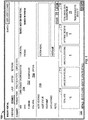
- FIG. 9 illustrates an example user interface 900 identifying user accounts and associated alerts identifying anomalous user behavior.
- the user interface 900 can be provided for presentation on a user device upon user selection of "User Alerts", in contrast to "Summary” data as described above in FIG. 8 .
- the "User Alerts" selection provides detailed information regarding user accounts and associated anomalous user behavior.
- a user of the user interface 900 can utilize the user interface 900 to quickly view all generated alerts associated with anomalous user behavior.
- the user interface 900 includes a list of user accounts 902, and associated information including checkout systems the user account accessed 904, a type of anomalous user behavior alert 906, areas the user can input information 908 regarding a status of review of the user account, a time the alert was triggered 910 (e.g., a day), and historical information associated with the alert 912.
- historical information 912 for an alert (e.g., "NewUserInSecure") identifying a user account that has never accessed a specific checkout system, the associated historical information 912 can identify a number of checkout systems the user account has accessed in the past, particular regions the user account is associated with, and so on.
- an alert e.g., "NewUserInSecure”
- the associated historical information 912 can identify a number of checkout systems the user account has accessed in the past, particular regions the user account is associated with, and so on.
- an alert e.g., "NewUserSuccessMax"
- the associated historical information 912 can identify a number of checkout systems the user account normally (e.g., a measure of central tendency) accesses in the period of time.
- Each portion of information (e.g., 902-912) is configured to be selectable by the user, and the user interface 900 can be updated to provide information regarding the selection.
- the user can select a specific user account 902, and the user interface 900 can be updated to provide information associated with the user account.
- the information can include a role of an employee associated with the user account, specific access rights associated with the user account, a region or location the employee is located in, regions the user account has accessed, checkout systems the user account has accessed or routinely (e.g., greater than a threshold number of times, or greater than a threshold frequency) accesses.
- the user can select a specific checkout system 904, and the user interface 900 can be updated to provide information associated with the checkout system, which is described below with reference to FIG. 10 .
- the user can select a specific type of alert 906, and the user interface 900 can be updated to provide information solely regarding the type of alert.
- the user interface 900 can be updated to present all user accounts and respective checkout systems associated with the type of alert, descriptive text associated with the alert, previous alerts of the same type that were generated and dealt with by a user (e.g., a system administrator), and so on.
- FIG. 10 illustrates a user interface 1000 after a user selection of a particular checkout system.
- the user interface 1000 can be provided after a user (e.g., a system administrator) selects the particular checkout system from the user interface described in FIG. 9 .
- the user can view an anomalous user behavior alert, and want to view specific information associated with the checkout system.
- the user interface 1000 includes an identification of the selected checkout system 1002, including a network domain and operating system associated with the selected checkout system 1002. Additionally, the user interface 1000 includes a location 1004 of the checkout system, which in the example of FIG. 10 is "Texas" and a type of store, e.g., "Large Store.”
- the user interface 1000 further includes summary data associated with the checkout system 1002, including a number 1006 of unique user accounts that failed to successfully log into the checkout system 1002, a number 1008 of user accounts that are unique to the checkout system 1002 (e.g., a number of user accounts that have successfully accessed the checkout system, a number of user accounts that have access rights to the checkout system, or a number of user accounts that solely have access rights to the checkout system).
- the user interface 1000 includes process information, such as a number 1010 of processes not known to be valid that are executing on the checkout system 1002, and a number of processes 1012 that are only executing on the checkout system 1012 (e.g., a process unique to a particular checkout system might indicate a malicious process).
- process information such as a number 1010 of processes not known to be valid that are executing on the checkout system 1002
- a number of processes 1012 that are only executing on the checkout system 1012 e.g., a process unique to a particular checkout system might indicate a malicious process.
- Each portion of summary data can be configured to be user selectable. For example, upon user selection of portion 1006, the user interface 1000 can be updated to view graph 1014, identifying historical information regarding numbers of unsuccessful and successful logins to the checkout system.
- the user interface 1000 can be updated to present historical data regarding user accounts unique to the checkout system, and /or identifications of user accounts presently unique to the checkout system.
- the user e.g., system administrator
- the user can quickly identify if the number of user accounts has risen suddenly (e.g., indicating a user escalated his/her access rights or created a new user account with access rights), or identify if the number of user accounts is growing for no specific business reason (e.g., increasing the likelihood that a user account can be compromised).
- the user can compare the historical information to time periods that unknown processes 1010 began execution, or identify when a user account suddenly had access to a checkout system, and see if the user account initiated a process not known to be valid. In this way, the user can quickly determine whether the user account has been compromised.
- the user interface 1000 can be updated to present identifications of the processes executing, or previously executing, on the checkout system 1002 that are not known to be valid. Each identification can be selected, and the user interface can be updated to describe the selected process, as described above with reference to FIG. 7 . Similarly, upon user selection of portion 1012, the user interface 1000 can be updated to present processes solely executing on the checkout system.
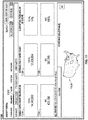
- FIG. 11 illustrates an example user interface 1100 describing transaction data.
- the user interface 1100 can be presented upon user selection of the "Transactions" identifier 1102.
- the user interface 1100 includes identifications of a number 1104 of unique payment instruments (e.g., credit cards as illustrated in the example) across all locations in a business, or in a particular region (e.g., a state such as Montana). Additionally, the user interface 1100 includes an average (e.g., a measure of central tendency) number 1106 of payment instruments for a time period (e.g., a day), and for a particular region (e.g., Montana).
- a time period e.g., a day
- a particular region e.g., Montana
- a user can select a different region (e.g., using a map) and view transaction data associated with the region. Additionally, a heatmap 1108 can be presented, describing numbers of payment instruments processed according to region.
- FIG. 12 illustrates an example user interface 1200 describing detailed information regarding transaction data in a particular region.
- the user interface 1200 includes identifications 1202 of locations (e.g., stores) associated with a business in a particular geographic region (e.g., Montana), and associated number of unique payment instruments. Additionally, the user interface 1200 includes identifications 1204 of processes not known to be valid that are executing on checkout systems included in locations identified in 1202.
- a system administrator can utilize the system (e.g., the compromise determination system 100) to determine that credit cards, utilized at a business, were compromised, and alert the affected consumers, or alert associated credit companies that can alert the affected consumers.
- the system e.g., the compromise determination system 100
- the system administrator can identify credit card numbers listed on web pages known to sell, or distribute, compromised credit cards. For instance, web pages that sell compromised credit cards can list a portion of information identified on each credit card, such as the first several numbers (e.g., 4, 6) numbers of a credit card, the last several numbers (e.g., 2, 4), expiration date, and so on.
- first several numbers e.g., 4, 6
- last several numbers e.g., 2, 4
- the system administrator can obtain the portions of credit card numbers, and compare the numbers to transaction data stored by the system (e.g., transaction data from particular locations of the business). Upon a threshold percentage match (e.g., 70%, 80%, 90%), the system administrator can determine that the credit cards were obtained by a malicious actor from the locations.
- a threshold percentage match e.g. 70%, 80%, 90%
- the system administrator can then determine when the credit cards were utilized at the locations, and the specific checkout systems utilized. The system administrator can determine whether any processes not known to be valid were executing on the checkout systems, and anomalous user behavior associated with the checkout systems. In this way, the system administrator can determine the method in which the checkout systems were modified by a malicious actor, and alert other consumers that could be affected (e.g., consumers that utilized the affected checkout systems).
- Each of the processes, methods, and algorithms described in the preceding sections may be embodied in, and fully or partially automated by, code modules executed by one or more computer systems or computer processors comprising computer hardware.
- the code modules (or "engines") may be stored on any type of non-transitory computer-readable medium or computer storage device, such as hard drives, solid state memory, optical disc, and/or the like.
- the systems and modules may also be transmitted as generated data signals (for example, as part of a carrier wave or other analog or digital propagated signal) on a variety of computer-readable transmission mediums, including wireless-based and wired/cable-based mediums, and may take a variety of forms (for example, as part of a single or multiplexed analog signal, or as multiple discrete digital packets or frames).
- the processes and algorithms may be implemented partially or wholly in application-specific circuitry.
- the results of the disclosed processes and process steps may be stored, persistently or otherwise, in any type of non-transitory computer storage such as, for example, volatile or
- engine and “module”, as used herein, refer to logic embodied in hardware or firmware, or to a collection of software instructions, possibly having entry and exit points, written in a programming language, such as, for example, Java, Lua, C or C++.
- a software module may be compiled and linked into an executable program, installed in a dynamic link library, or may be written in an interpreted programming language such as, for example, BASIC, Perl, or Python. It will be appreciated that software modules may be callable from other modules or from themselves, and/or may be invoked in response to detected events or interrupts.
- Software modules configured for execution on computing devices may be provided on a computer readable medium, such as a compact disc, digital video disc, flash drive, or any other tangible medium.
- Such software code may be stored, partially or fully, on a memory device of the executing computing device, such as the compromise determination system 100, for execution by the computing device.
- Software instructions may be embedded in firmware, such as an EPROM.
- hardware modules may be comprised of connected logic units, such as gates and flip-flops, and/or may be comprised of programmable units, such as programmable gate arrays or processors.
- the modules described herein are preferably implemented as software modules, but may be represented in hardware or firmware. Generally, the modules described herein refer to logical modules that may be combined with other modules or divided into sub-modules despite their physical organization or storage.
- Electronic Data Sources can include databases, volatile/non-volatile memory, and any memory system or subsystem that maintains information.
Landscapes
- Engineering & Computer Science (AREA)
- Business, Economics & Management (AREA)
- Accounting & Taxation (AREA)
- Theoretical Computer Science (AREA)
- Computer Security & Cryptography (AREA)
- General Physics & Mathematics (AREA)
- Physics & Mathematics (AREA)
- Finance (AREA)
- General Business, Economics & Management (AREA)
- Strategic Management (AREA)
- Software Systems (AREA)
- Computer Hardware Design (AREA)
- General Engineering & Computer Science (AREA)
- Computer Networks & Wireless Communication (AREA)
- Signal Processing (AREA)
- Cash Registers Or Receiving Machines (AREA)
Claims (13)
- Computergestütztes Verfahren, das von einem oder mehreren Computersystemen ausgeführt wird, wobei die Computersysteme dazu konfiguriert sind, als Reaktion auf von einer interaktiven Benutzerschnittstelle empfangene Anfragen auf eine oder mehrere elektronische Datenquellen zugreifen, wobei das Verfahren Folgendes umfasst:Erhalten (302) von Kassensystemdaten, die mehreren Kassensystemen zugeordnet sind, die einem Unternehmen zugeordnet sind, wobei die Kassensystemdaten Vorgänge, die im Speicher jedes Kassensystems ausgeführt werden, und Benutzerkontozugriffsinformationen, die Benutzerkontozugriffsversuche angeben, identifizieren;Ermitteln (304), dass die Kassensystemdaten einen ersten Vorgang identifizieren, der im Speicher eines oder mehrerer Kassensysteme ausgeführt wird, von dem nicht bekannt ist, dass er gültig ist;Ermitteln (404) von anomalem Benutzerverhalten eines ersten Benutzerkontos unter Verwendung der Benutzerkontozugriffsinformationen;Erzeugen (306, 406) von Benutzerschnittstellendaten, die den ersten Vorgang und das ermittelte anomale Benutzerverhalten des ersten Benutzerkontos beschreiben; undBereitstellen (310, 408) mindestens eines Teils der erzeugten Benutzerschnittstellendaten zur Darstellung auf einer Benutzervorrichtung,wobei das Ermitteln von anomalem Benutzerverhalten des ersten Benutzerkontos das Ermitteln einer Geschwindigkeitsbewertung für das erste Benutzerkonto basierend darauf, dass das erste Benutzerkonto in einem Zeitraum an unterschiedlichen Orten auf das erste und das zweite Kassensystem zugreift, umfasst, wobei die Geschwindigkeitsbewertung angibt, wie wahrscheinlich es ist, dass sich der Benutzer des ersten Benutzerkontos in dem Zeitraum zwischen dem ersten und dem zweiten unterschiedlichen Ort bewegt haben könnte.
- Verfahren nach Anspruch 1, wobei das Ermitteln, dass die Kassensystemdaten einen ersten Vorgang identifizieren, von dem nicht bekannt ist, dass er gültig ist, Folgendes umfasst:Erhalten von Informationen, die mehrere Vorgänge beschreiben, von denen bekannt ist, dass sie gültig sind, wobei ein Vorgang, von dem bekannt ist, dass er gültig ist, identifiziert, dass der Vorgang nicht böswillig ist;Vergleichen von Informationen, die den ersten Vorgang beschreiben, mit den erhaltenen Informationen, die mehrere Vorgänge beschreiben, von denen bekannt ist, dass sie gültig sind, das eines oder mehrere des Folgenden umfasst:Vergleichen eines Namens, der dem ersten Vorgang zugeordnet ist, mit entsprechenden Namen, die den mehreren Vorgängen zugeordnet sind, von denen bekannt ist, dass sie gültig sind, oderVergleichen eines Dateispeicherorts von ausführbarem Code, der dem ersten Vorgang zugeordnet ist, auf einem Kassensystem, das den ersten Vorgang im Speicher ausführt, mit entsprechenden Dateispeicherorten von ausführbarem Code, der den mehreren Vorgängen zugeordnet ist, von denen bekannt ist, dass sie gültig sind, auf Kassensystemen, oderVergleichen eines kryptografischen Hashes von ausführbarem Code, der dem ersten Vorgang zugeordnet ist, mit entsprechenden kryptografischen Hashes von ausführbarem Code, der den mehreren Vorgängen zugeordnet ist, von denen bekannt ist, dass sie gültig sind; undErmitteln, dass die erhaltenen Informationen den ersten Vorgang nicht beschreiben.
- Verfahren nach einem vorhergehenden Anspruch, wobei das Ermitteln von anomalem Benutzerverhalten eines ersten Benutzerkontos ferner mindestens eines von Folgendem umfasst:Ermitteln, dass das erste Benutzerkonto auf ein bestimmtes Kassensystem mit privilegierten Zugriffsrechten zugegriffen hat, oderErmitteln, dass das erste Benutzerkonto auf mehr als eine Schwellenanzahl von Kassensystemen mit privilegierten Zugriffsrechten zugegriffen hat, oderErmitteln unter Verwendung historischer Informationen, die geografische Regionen angeben, denen das erste Benutzerkonto zugeordnet ist, dass das erste Benutzerkonto auf ein bestimmtes Kassensystem zugegriffen hat, das nicht in den in den historischen Informationen angegebenen geografischen Regionen enthalten ist.
- Verfahren nach einem der vorhergehenden Ansprüche, das ferner Folgendes umfasst:
Erzeugen einer Warnung, die dem ermittelten anomalen Benutzerverhalten des ersten Benutzerkontos zugeordnet ist, und wobei optional, wenn dies von Anspruch 3 abhängig ist, die Warnung eine der Ermittlungen identifiziert, die das Ermitteln des Benutzerverhaltens des ersten Benutzerkontos umfassen. - Verfahren nach einem vorhergehenden Anspruch, wobei ein Teil der erzeugten Benutzerschnittstellendaten Informationen, die den ersten Vorgang beschreiben, und/oder Informationen, die das anomale Benutzerverhalten des ersten Benutzerkontos beschreiben, enthält.
- Verfahren nach einem vorhergehenden Anspruch, das ferner Folgendes umfasst:Empfangen einer Auswahl des ersten Vorgangs von der Benutzervorrichtung;Erhalten von Informationen, die Kassensysteme identifizieren, die den ersten Vorgang im Speicher ausführen; undBereitstellen von Benutzerschnittstellendaten, die einen vom Benutzer auswählbaren Teil umfassen, der eine Anzahl von Kassensystemen identifiziert, die den ersten Vorgang im Speicher ausführen, zur Darstellung auf der Benutzervorrichtung in der interaktiven Benutzerschnittstelle und bei einer Benutzerauswahl des auswählbaren Teils sind die Benutzerschnittstellendaten dazu konfiguriert, eine Identifizierung jedes Kassensystems darzustellen, das den ersten Vorgang im Speicher ausführt.
- Verfahren nach einem vorhergehenden Anspruch, wobei die Benutzerschnittstellendaten, die das ermittelte anomale Benutzerverhalten des ersten Kontos beschreiben, eine Identifizierung eines bestimmten Kassensystems enthalten, das dem anomalen Benutzerverhalten zugeordnet ist, und wobei das Verfahren ferner Folgendes umfasst:Empfangen einer Auswahl des bestimmten Kassensystems von der Benutzervorrichtung;Erhalten von Informationen, die einen zweiten Vorgang identifizieren, der auf dem bestimmten Kassensystem ausgeführt wird, von dem nicht bekannt ist, dass er gültig ist; undBereitstellen von Benutzerschnittstellendaten, die den zweiten Vorgang identifizieren, auf der Benutzervorrichtung.
- System, das Folgendes umfasst:
einen oder mehrere Computer und eine oder mehrere Speichervorrichtungen, auf denen Anweisungen gespeichert sind, die dazu betrieben werden können, wenn sie durch den einen oder die mehreren Computern ausgeführt werden, den einen oder die mehreren Computer dazu zu veranlassen, Vorgänge durchzuführen, die Folgendes umfassen:Erhalten von Kassensystemdaten von mehreren Kassensystemen, die einem Unternehmen zugeordnet sind, wobei die Kassensystemdaten Vorgänge, die im Speicher jedes Kassensystems ausgeführt werden, und Benutzerkontozugriffsinformationen, die Benutzerkontozugriffsversuche angeben, identifizieren;Ermitteln, dass die Kassensystemdaten einen ersten Vorgang identifizieren, der im Speicher eines oder mehrerer Kassensysteme ausgeführt wird, von dem nicht bekannt ist, dass er gültig ist;Ermitteln von anomalem Benutzerverhalten eines ersten Benutzerkontos unter Verwendung der Benutzerkontozugriffsinformationen;Erzeugen von Benutzerschnittstellendaten, die den ersten Vorgang und das ermittelte anomale Benutzerverhalten des ersten Benutzerkontos beschreiben; undBereitstellen mindestens eines Teils der erzeugten Benutzerschnittstellendaten zur Darstellung auf einer Benutzervorrichtung,wobei das Ermitteln von anomalem Benutzerverhalten des ersten Benutzerkontos das Ermitteln einer Geschwindigkeitsbewertung für das erste Benutzerkonto basierend darauf, dass das erste Benutzerkonto in einem Zeitraum an unterschiedlichen Orten auf das erste und das zweite Kassensystem zugreift, umfasst, wobei die Geschwindigkeitsbewertung angibt, wie wahrscheinlich es ist, dass sich der Benutzer des ersten Benutzerkontos in dem Zeitraum zwischen dem ersten und dem zweiten unterschiedlichen Ort bewegt haben könnte. - System nach Anspruch 8, wobei das Ermitteln, dass die Kassensystemdaten einen ersten Vorgang identifizieren, von dem nicht bekannt ist, dass er gültig ist, Folgendes umfasst:Erhalten von Informationen, die mehrere Vorgänge beschreiben, von denen bekannt ist, dass sie gültig sind, wobei ein Vorgang, von dem bekannt ist, dass er gültig ist, identifiziert, dass der Vorgang nicht böswillig ist;Vergleichen von Informationen, die den ersten Vorgang beschreiben, mit den erhaltenen Informationen, die mehrere Vorgänge beschreiben, von denen bekannt ist, dass sie gültig sind, das eines oder mehrere des Folgenden umfasst:Vergleichen eines Namens, der dem ersten Vorgang zugeordnet ist, mit entsprechenden Namen, die den mehreren Vorgängen zugeordnet sind, von denen bekannt ist, dass sie gültig sind, oderVergleichen eines Dateispeicherorts von ausführbarem Code, der dem ersten Vorgang zugeordnet ist, auf einem Kassensystem, das den ersten Vorgang im Speicher ausführt, mit entsprechenden Dateispeicherorten von ausführbarem Code, der den mehreren Vorgängen zugeordnet ist, von denen bekannt ist, dass sie gültig sind, auf Kassensystemen, oderVergleichen eines kryptografischen Hashes von ausführbarem Code, der dem ersten Vorgang zugeordnet ist, mit entsprechenden kryptografischen Hashes von ausführbarem Code, der den mehreren Vorgängen zugeordnet ist, von denen bekannt ist, dass sie gültig sind; undErmitteln, dass die erhaltenen Informationen den ersten Vorgang nicht beschreiben.
- System nach einem der Ansprüche 8-10, wobei das Ermitteln von anomalem Benutzerverhalten eines ersten Benutzerkontos ferner mindestens eines von Folgendem umfasst:Ermitteln, dass das erste Benutzerkonto auf ein bestimmtes Kassensystem mit privilegierten Zugriffsrechten zugegriffen hat, oderErmitteln, dass das erste Benutzerkonto auf mehr als eine Schwellenanzahl von Kassensystemen mit privilegierten Zugriffsrechten zugegriffen hat, oderErmitteln unter Verwendung historischer Informationen, die geografische Regionen angeben, denen das erste Benutzerkonto zugeordnet ist, dass das erste Benutzerkonto auf ein bestimmtes Kassensystem zugegriffen hat, das nicht in den in den historischen Informationen angegebenen geografischen Regionen enthalten ist.
- System nach einem der Ansprüche 8-10, das ferner Folgendes umfasst:
Erzeugen einer Warnung, die dem ermittelten anomalen Benutzerverhalten des ersten Benutzerkontos zugeordnet ist, und wobei optional, wenn dies von Anspruch 10 abhängig ist, die Warnung eine der Ermittlungen identifiziert, die das Ermitteln des Benutzerverhaltens des ersten Benutzerkontos umfassen. - System nach einem der Ansprüche 8-11, wobei ein Teil der erzeugten Benutzerschnittstellendaten Informationen, die den ersten Vorgang beschreiben, und/oder Informationen, die das anomale Benutzerverhalten des ersten Benutzerkontos beschreiben, enthält.
- System nach einem der Ansprüche 8-12, das ferner Folgendes umfasst:Empfangen einer Auswahl des ersten Vorgangs von der Benutzervorrichtung;Erhalten von Informationen, die Kassensysteme identifizieren, die den ersten Vorgang im Speicher ausführen; undBereitstellen von Benutzerschnittstellendaten, die einen vom Benutzer auswählbaren Teil umfassen, der eine Anzahl von Kassensystemen identifiziert, die den ersten Vorgang im Speicher ausführen, zur Darstellung auf der Benutzervorrichtung, und bei einer Benutzerauswahl des auswählbaren Teils sind die Benutzerschnittstellendaten dazu konfiguriert, eine Identifizierung jedes Kassensystems darzustellen, das den ersten Vorgang im Speicher ausführt.
Applications Claiming Priority (2)
| Application Number | Priority Date | Filing Date | Title |
|---|---|---|---|
| US201562207328P | 2015-08-19 | 2015-08-19 | |
| US15/235,551 US10102369B2 (en) | 2015-08-19 | 2016-08-12 | Checkout system executable code monitoring, and user account compromise determination system |
Publications (2)
| Publication Number | Publication Date |
|---|---|
| EP3133523A1 EP3133523A1 (de) | 2017-02-22 |
| EP3133523B1 true EP3133523B1 (de) | 2021-05-12 |
Family
ID=56787314
Family Applications (1)
| Application Number | Title | Priority Date | Filing Date |
|---|---|---|---|
| EP16184974.0A Active EP3133523B1 (de) | 2015-08-19 | 2016-08-19 | Systemsicherheitsüberwachung |
Country Status (2)
| Country | Link |
|---|---|
| US (2) | US10102369B2 (de) |
| EP (1) | EP3133523B1 (de) |
Families Citing this family (14)
| Publication number | Priority date | Publication date | Assignee | Title |
|---|---|---|---|---|
| US9785773B2 (en) | 2014-07-03 | 2017-10-10 | Palantir Technologies Inc. | Malware data item analysis |
| US10296918B1 (en) * | 2015-03-19 | 2019-05-21 | EMC IP Holding Company LLC | Providing risk assessments to compromised payment cards |
| US10102369B2 (en) | 2015-08-19 | 2018-10-16 | Palantir Technologies Inc. | Checkout system executable code monitoring, and user account compromise determination system |
| CA2997609A1 (en) * | 2017-03-07 | 2018-09-07 | Sennco Solutions, Inc. | Integrated, persistent security monitoring of electronic merchandise |
| CN107688743B (zh) * | 2017-08-14 | 2021-01-29 | 北京奇虎科技有限公司 | 一种恶意程序的检测分析方法及系统 |
| US11741196B2 (en) | 2018-11-15 | 2023-08-29 | The Research Foundation For The State University Of New York | Detecting and preventing exploits of software vulnerability using instruction tags |
| US12093375B2 (en) * | 2019-02-28 | 2024-09-17 | SpyCloud, Inc. | Generating and monitoring fictitious data entries to detect breaches |
| US11755742B2 (en) * | 2019-08-28 | 2023-09-12 | Johnson Controls Tyco IP Holdings LLP | Building management system with cyber health dashboard |
| US11381586B2 (en) * | 2019-11-20 | 2022-07-05 | Verizon Patent And Licensing Inc. | Systems and methods for detecting anomalous behavior |
| US11455587B2 (en) * | 2020-04-20 | 2022-09-27 | Equifax Inc. | Continuous and anonymous risk evaluation |
| US11694205B2 (en) * | 2021-01-29 | 2023-07-04 | Capital One Services, Llc | Systems and methods for data breach detection using virtual card numbers |
| US11831688B2 (en) * | 2021-06-18 | 2023-11-28 | Capital One Services, Llc | Systems and methods for network security |
| CN115438072B (zh) * | 2022-09-02 | 2026-01-23 | 中国工商银行股份有限公司 | 异常账户匹配方法、装置、计算机设备和存储介质 |
| US12488091B2 (en) * | 2022-09-20 | 2025-12-02 | Maplebear Inc. | Disabling functionality of an auto-checkout client application based on anomalous user behavior |
Family Cites Families (465)
| Publication number | Priority date | Publication date | Assignee | Title |
|---|---|---|---|---|
| JP5689361B2 (ja) | 2011-05-20 | 2015-03-25 | インターナショナル・ビジネス・マシーンズ・コーポレーションInternational Business Machines Corporation | グラフデータの一部を準同型写像の像であるデータ構造に変換する方法、プログラム、および、システム |
| US4852019A (en) | 1986-01-31 | 1989-07-25 | Computer Associates International, Inc. | Method and system for retrieval of stored graphs |
| CA2017974C (en) | 1989-08-07 | 1998-06-16 | Richard Alan Becker | Dynamic graphical analysis of network data |
| US5109399A (en) | 1989-08-18 | 1992-04-28 | Alamo City Technologies, Inc. | Emergency call locating system |
| FR2684214B1 (fr) | 1991-11-22 | 1997-04-04 | Sepro Robotique | Carte a indexation pour systeme d'information geographique et systeme en comportant application. |
| US5632009A (en) | 1993-09-17 | 1997-05-20 | Xerox Corporation | Method and system for producing a table image showing indirect data representations |
| US5670987A (en) | 1993-09-21 | 1997-09-23 | Kabushiki Kaisha Toshiba | Virtual manipulating apparatus and method |
| US5596703A (en) | 1993-10-22 | 1997-01-21 | Lucent Technologies Inc. | Graphical display of relationships |
| US6877137B1 (en) | 1998-04-09 | 2005-04-05 | Rose Blush Software Llc | System, method and computer program product for mediating notes and note sub-notes linked or otherwise associated with stored or networked web pages |
| US5777549A (en) | 1995-03-29 | 1998-07-07 | Cabletron Systems, Inc. | Method and apparatus for policy-based alarm notification in a distributed network management environment |
| US6366933B1 (en) | 1995-10-27 | 2002-04-02 | At&T Corp. | Method and apparatus for tracking and viewing changes on the web |
| US6226789B1 (en) | 1996-01-29 | 2001-05-01 | Compaq Computer Corporation | Method and apparatus for data flow analysis |
| US5845300A (en) | 1996-06-05 | 1998-12-01 | Microsoft Corporation | Method and apparatus for suggesting completions for a partially entered data item based on previously-entered, associated data items |
| US5781704C1 (en) | 1996-10-11 | 2002-07-16 | Environmental Criminology Res | Expert system method of performing crime site analysis |
| US5870559A (en) | 1996-10-15 | 1999-02-09 | Mercury Interactive | Software system and associated methods for facilitating the analysis and management of web sites |
| US5974572A (en) | 1996-10-15 | 1999-10-26 | Mercury Interactive Corporation | Software system and methods for generating a load test using a server access log |
| US6026233A (en) | 1997-05-27 | 2000-02-15 | Microsoft Corporation | Method and apparatus for presenting and selecting options to modify a programming language statement |
| US6091956A (en) | 1997-06-12 | 2000-07-18 | Hollenberg; Dennis D. | Situation information system |
| JP3636272B2 (ja) | 1998-02-09 | 2005-04-06 | 富士通株式会社 | アイコン表示方法、その装置、及び記録媒体 |
| US6247019B1 (en) | 1998-03-17 | 2001-06-12 | Prc Public Sector, Inc. | Object-based geographic information system (GIS) |
| US7168039B2 (en) | 1998-06-02 | 2007-01-23 | International Business Machines Corporation | Method and system for reducing the horizontal space required for displaying a column containing text data |
| US6742003B2 (en) | 2001-04-30 | 2004-05-25 | Microsoft Corporation | Apparatus and accompanying methods for visualizing clusters of data and hierarchical cluster classifications |
| US6108698A (en) | 1998-07-29 | 2000-08-22 | Xerox Corporation | Node-link data defining a graph and a tree within the graph |
| US6577304B1 (en) | 1998-08-14 | 2003-06-10 | I2 Technologies Us, Inc. | System and method for visually representing a supply chain |
| US6161098A (en) | 1998-09-14 | 2000-12-12 | Folio (Fn), Inc. | Method and apparatus for enabling small investors with a portfolio of securities to manage taxable events within the portfolio |
| US6232971B1 (en) | 1998-09-23 | 2001-05-15 | International Business Machines Corporation | Variable modality child windows |
| US6279018B1 (en) | 1998-12-21 | 2001-08-21 | Kudrollis Software Inventions Pvt. Ltd. | Abbreviating and compacting text to cope with display space constraint in computer software |
| US6631496B1 (en) | 1999-03-22 | 2003-10-07 | Nec Corporation | System for personalizing, organizing and managing web information |
| US6369835B1 (en) | 1999-05-18 | 2002-04-09 | Microsoft Corporation | Method and system for generating a movie file from a slide show presentation |
| US6714936B1 (en) | 1999-05-25 | 2004-03-30 | Nevin, Iii Rocky Harry W. | Method and apparatus for displaying data stored in linked nodes |
| US6307573B1 (en) | 1999-07-22 | 2001-10-23 | Barbara L. Barros | Graphic-information flow method and system for visually analyzing patterns and relationships |
| US7039863B1 (en) | 1999-07-23 | 2006-05-02 | Adobe Systems Incorporated | Computer generation of documents using layout elements and content elements |
| US7373592B2 (en) | 1999-07-30 | 2008-05-13 | Microsoft Corporation | Modeless child windows for application programs |
| US6560620B1 (en) | 1999-08-03 | 2003-05-06 | Aplix Research, Inc. | Hierarchical document comparison system and method |
| US6976210B1 (en) | 1999-08-31 | 2005-12-13 | Lucent Technologies Inc. | Method and apparatus for web-site-independent personalization from multiple sites having user-determined extraction functionality |
| US20020174201A1 (en) | 1999-09-30 | 2002-11-21 | Ramer Jon E. | Dynamic configuration of context-sensitive personal sites and membership channels |
| US7716077B1 (en) | 1999-11-22 | 2010-05-11 | Accenture Global Services Gmbh | Scheduling and planning maintenance and service in a network-based supply chain environment |
| FR2806183B1 (fr) | 1999-12-01 | 2006-09-01 | Cartesis S A | Dispositif et procede pour la consolidation instantanee, l'enrichissement et le "reporting" ou remontee d'information dans une base de donnees multidimensionnelle |
| US7194680B1 (en) | 1999-12-07 | 2007-03-20 | Adobe Systems Incorporated | Formatting content by example |
| US6456997B1 (en) | 2000-04-12 | 2002-09-24 | International Business Machines Corporation | System and method for dynamically generating an invisible hierarchy in a planning system |
| JP4325075B2 (ja) | 2000-04-21 | 2009-09-02 | ソニー株式会社 | データオブジェクト管理装置 |
| US6642945B1 (en) | 2000-05-04 | 2003-11-04 | Microsoft Corporation | Method and system for optimizing a visual display for handheld computer systems |
| US7269786B1 (en) | 2000-05-04 | 2007-09-11 | International Business Machines Corporation | Navigating an index to access a subject multi-dimensional database |
| US6915289B1 (en) | 2000-05-04 | 2005-07-05 | International Business Machines Corporation | Using an index to access a subject multi-dimensional database |
| US6594672B1 (en) | 2000-06-01 | 2003-07-15 | Hyperion Solutions Corporation | Generating multidimensional output using meta-models and meta-outlines |
| US6839745B1 (en) | 2000-07-19 | 2005-01-04 | Verizon Corporate Services Group Inc. | System and method for generating reports in a telecommunication system |
| US7278105B1 (en) | 2000-08-21 | 2007-10-02 | Vignette Corporation | Visualization and analysis of user clickpaths |
| US6807569B1 (en) | 2000-09-12 | 2004-10-19 | Science Applications International Corporation | Trusted and anonymous system and method for sharing threat data to industry assets |
| US20020065708A1 (en) | 2000-09-22 | 2002-05-30 | Hikmet Senay | Method and system for interactive visual analyses of organizational interactions |
| AUPR033800A0 (en) | 2000-09-25 | 2000-10-19 | Telstra R & D Management Pty Ltd | A document categorisation system |
| US7036146B1 (en) * | 2000-10-03 | 2006-04-25 | Sandia Corporation | System and method for secure group transactions |
| US6829621B2 (en) | 2000-10-06 | 2004-12-07 | International Business Machines Corporation | Automatic determination of OLAP cube dimensions |
| US8117281B2 (en) | 2006-11-02 | 2012-02-14 | Addnclick, Inc. | Using internet content as a means to establish live social networks by linking internet users to each other who are simultaneously engaged in the same and/or similar content |
| US8707185B2 (en) | 2000-10-10 | 2014-04-22 | Addnclick, Inc. | Dynamic information management system and method for content delivery and sharing in content-, metadata- and viewer-based, live social networking among users concurrently engaged in the same and/or similar content |
| JP2002123530A (ja) | 2000-10-12 | 2002-04-26 | Hitachi Ltd | 多次元データの可視化方法及び装置 |
| US6738770B2 (en) | 2000-11-04 | 2004-05-18 | Deep Sky Software, Inc. | System and method for filtering and sorting data |
| US9053222B2 (en) | 2002-05-17 | 2015-06-09 | Lawrence A. Lynn | Patient safety processor |
| US6516268B2 (en) | 2001-02-16 | 2003-02-04 | Wizeguides.Com Inc. | Bundled map guide |
| US6985950B1 (en) | 2001-03-06 | 2006-01-10 | Microsoft Corporation | System for creating a space-efficient document categorizer for training and testing of automatic categorization engines |
| US7043702B2 (en) | 2001-03-15 | 2006-05-09 | Xerox Corporation | Method for visualizing user path through a web site and a path's associated information scent |
| US9256356B2 (en) | 2001-03-29 | 2016-02-09 | International Business Machines Corporation | Method and system for providing feedback for docking a content pane in a host window |
| US6775675B1 (en) | 2001-04-04 | 2004-08-10 | Sagemetrics Corporation | Methods for abstracting data from various data structures and managing the presentation of the data |
| KR20040004619A (ko) | 2001-05-11 | 2004-01-13 | 컴퓨터 어소시에이츠 싱크, 인코포레이티드 | 구식 소프트웨어 애플리케이션을 최신의 객체 지향시스템으로 전환하는 방법과 시스템 |
| US6980984B1 (en) | 2001-05-16 | 2005-12-27 | Kanisa, Inc. | Content provider systems and methods using structured data |
| US6828920B2 (en) | 2001-06-04 | 2004-12-07 | Lockheed Martin Orincon Corporation | System and method for classifying vehicles |
| US8001465B2 (en) | 2001-06-26 | 2011-08-16 | Kudrollis Software Inventions Pvt. Ltd. | Compacting an information array display to cope with two dimensional display space constraint |
| US20030039948A1 (en) | 2001-08-09 | 2003-02-27 | Donahue Steven J. | Voice enabled tutorial system and method |
| GB2379045A (en) * | 2001-08-24 | 2003-02-26 | Hewlett Packard Co | Account controller |
| US8660869B2 (en) | 2001-10-11 | 2014-02-25 | Adobe Systems Incorporated | System, method, and computer program product for processing and visualization of information |
| US7611602B2 (en) | 2001-12-13 | 2009-11-03 | Urban Mapping, Llc | Method of producing maps and other objects configured for presentation of spatially-related layers of data |
| US20070203771A1 (en) | 2001-12-17 | 2007-08-30 | Caballero Richard J | System and method for processing complex orders |
| US7970240B1 (en) | 2001-12-17 | 2011-06-28 | Google Inc. | Method and apparatus for archiving and visualizing digital images |
| KR20040069324A (ko) | 2001-12-31 | 2004-08-05 | 시타델 시큐리티 소프트웨어, 인크. | 컴퓨터 취약성 자동 해결 시스템 |
| US7454466B2 (en) | 2002-01-16 | 2008-11-18 | Xerox Corporation | Method and system for flexible workflow management |
| US7139800B2 (en) | 2002-01-16 | 2006-11-21 | Xerox Corporation | User interface for a message-based system having embedded information management capabilities |
| US7546245B2 (en) | 2002-01-17 | 2009-06-09 | Amsapplied Medical Software, Inc. | Method and system for gainsharing of physician services |
| US7640173B2 (en) | 2002-01-17 | 2009-12-29 | Applied Medical Software, Inc. | Method and system for evaluating a physician's economic performance and gainsharing of physician services |
| US7096498B2 (en) | 2002-03-08 | 2006-08-22 | Cipher Trust, Inc. | Systems and methods for message threat management |
| US20030187932A1 (en) | 2002-03-28 | 2003-10-02 | Kennedy Bruce C. | Network project development system and method |
| US7162475B2 (en) | 2002-04-17 | 2007-01-09 | Ackerman David M | Method for user verification and authentication and multimedia processing for interactive database management and method for viewing the multimedia |
| US7171427B2 (en) | 2002-04-26 | 2007-01-30 | Oracle International Corporation | Methods of navigating a cube that is implemented as a relational object |
| US20040126840A1 (en) | 2002-12-23 | 2004-07-01 | Affymetrix, Inc. | Method, system and computer software for providing genomic ontological data |
| US20040012633A1 (en) | 2002-04-26 | 2004-01-22 | Affymetrix, Inc., A Corporation Organized Under The Laws Of Delaware | System, method, and computer program product for dynamic display, and analysis of biological sequence data |
| US6856313B2 (en) | 2002-05-20 | 2005-02-15 | Xerox Corporation | System and method for the simultaneous display and manipulation of hierarchical and non-hierarchical data |
| US7703021B1 (en) | 2002-05-24 | 2010-04-20 | Sparta Systems, Inc. | Defining user access in highly-configurable systems |
| JP2003345810A (ja) | 2002-05-28 | 2003-12-05 | Hitachi Ltd | 文書検索方法、文書検索システム及び文書検索結果示方システム |
| US20030229848A1 (en) | 2002-06-05 | 2003-12-11 | Udo Arend | Table filtering in a computer user interface |
| US7103854B2 (en) | 2002-06-27 | 2006-09-05 | Tele Atlas North America, Inc. | System and method for associating text and graphical views of map information |
| CA2398103A1 (en) | 2002-08-14 | 2004-02-14 | March Networks Corporation | Multi-dimensional table filtering system |
| US7127352B2 (en) | 2002-09-30 | 2006-10-24 | Lucent Technologies Inc. | System and method for providing accurate local maps for a central service |
| WO2004036461A2 (en) | 2002-10-14 | 2004-04-29 | Battelle Memorial Institute | Information reservoir |
| US20040143602A1 (en) | 2002-10-18 | 2004-07-22 | Antonio Ruiz | Apparatus, system and method for automated and adaptive digital image/video surveillance for events and configurations using a rich multimedia relational database |
| US20040085318A1 (en) | 2002-10-31 | 2004-05-06 | Philipp Hassler | Graphics generation and integration |
| US8589273B2 (en) | 2002-12-23 | 2013-11-19 | Ge Corporate Financial Services, Inc. | Methods and systems for managing risk management information |
| US20040153418A1 (en) | 2003-02-05 | 2004-08-05 | Hanweck Gerald Alfred | System and method for providing access to data from proprietary tools |
| US7627552B2 (en) | 2003-03-27 | 2009-12-01 | Microsoft Corporation | System and method for filtering and organizing items based on common elements |
| US7280038B2 (en) | 2003-04-09 | 2007-10-09 | John Robinson | Emergency response data transmission system |
| US7681235B2 (en) | 2003-05-19 | 2010-03-16 | Radware Ltd. | Dynamic network protection |
| US9607092B2 (en) | 2003-05-20 | 2017-03-28 | Excalibur Ip, Llc | Mapping method and system |
| US20050027705A1 (en) | 2003-05-20 | 2005-02-03 | Pasha Sadri | Mapping method and system |
| US8065725B2 (en) | 2003-05-30 | 2011-11-22 | Yuliang Zheng | Systems and methods for enhanced network security |
| US20090271504A1 (en) | 2003-06-09 | 2009-10-29 | Andrew Francis Ginter | Techniques for agent configuration |
| US7620648B2 (en) | 2003-06-20 | 2009-11-17 | International Business Machines Corporation | Universal annotation configuration and deployment |
| US7055110B2 (en) | 2003-07-28 | 2006-05-30 | Sig G Kupka | Common on-screen zone for menu activation and stroke input |
| US7334195B2 (en) | 2003-10-14 | 2008-02-19 | Microsoft Corporation | System and process for presenting search results in a histogram/cluster format |
| US7584172B2 (en) | 2003-10-16 | 2009-09-01 | Sap Ag | Control for selecting data query and visual configuration |
| US20050125715A1 (en) | 2003-12-04 | 2005-06-09 | Fabrizio Di Franco | Method of saving data in a graphical user interface |
| US7818658B2 (en) | 2003-12-09 | 2010-10-19 | Yi-Chih Chen | Multimedia presentation system |
| US7917376B2 (en) | 2003-12-29 | 2011-03-29 | Montefiore Medical Center | System and method for monitoring patient care |
| US7872669B2 (en) | 2004-01-22 | 2011-01-18 | Massachusetts Institute Of Technology | Photo-based mobile deixis system and related techniques |
| US7343552B2 (en) | 2004-02-12 | 2008-03-11 | Fuji Xerox Co., Ltd. | Systems and methods for freeform annotations |
| US20050180330A1 (en) | 2004-02-17 | 2005-08-18 | Touchgraph Llc | Method of animating transitions and stabilizing node motion during dynamic graph navigation |
| US20050182793A1 (en) | 2004-02-18 | 2005-08-18 | Keenan Viktor M. | Map structure and method for producing |
| US7596285B2 (en) | 2004-02-26 | 2009-09-29 | International Business Machines Corporation | Providing a portion of an electronic mail message at a reduced resolution |
| EP1741064A4 (de) | 2004-03-23 | 2010-10-06 | Google Inc | Digitales abbildungssystem |
| US7865301B2 (en) | 2004-03-23 | 2011-01-04 | Google Inc. | Secondary map in digital mapping system |
| US7599790B2 (en) | 2004-03-23 | 2009-10-06 | Google Inc. | Generating and serving tiles in a digital mapping system |
| US20060026120A1 (en) | 2004-03-24 | 2006-02-02 | Update Publications Lp | Method and system for collecting, processing, and distributing residential property data |
| US7269801B2 (en) | 2004-03-30 | 2007-09-11 | Autodesk, Inc. | System for managing the navigational usability of an interactive map |
| US8898788B1 (en) | 2004-04-01 | 2014-11-25 | Fireeye, Inc. | Systems and methods for malware attack prevention |
| SG136964A1 (en) | 2004-04-26 | 2007-11-29 | Right90 Inc | Forecasting data with real-time updates |
| US20050246327A1 (en) | 2004-04-30 | 2005-11-03 | Yeung Simon D | User interfaces and methods of using the same |
| US7225468B2 (en) | 2004-05-07 | 2007-05-29 | Digital Security Networks, Llc | Methods and apparatus for computer network security using intrusion detection and prevention |
| US20050251786A1 (en) | 2004-05-07 | 2005-11-10 | International Business Machines Corporation | System and method for dynamic software installation instructions |
| US7739303B2 (en) | 2004-07-22 | 2010-06-15 | International Business Machines Corporation | Method, system and program product for verifying access to a data object |
| US8289390B2 (en) | 2004-07-28 | 2012-10-16 | Sri International | Method and apparatus for total situational awareness and monitoring |
| US7290698B2 (en) | 2004-08-25 | 2007-11-06 | Sony Corporation | Progress bar with multiple portions |
| US7617232B2 (en) | 2004-09-02 | 2009-11-10 | Microsoft Corporation | Centralized terminology and glossary development |
| US7933862B2 (en) | 2004-09-27 | 2011-04-26 | Microsoft Corporation | One click conditional formatting method and system for software programs |
| US7712049B2 (en) | 2004-09-30 | 2010-05-04 | Microsoft Corporation | Two-dimensional radial user interface for computer software applications |
| US20060074881A1 (en) | 2004-10-02 | 2006-04-06 | Adventnet, Inc. | Structure independent searching in disparate databases |
| US7284198B2 (en) | 2004-10-07 | 2007-10-16 | International Business Machines Corporation | Method and system for document draft reminder based on inactivity |
| US7797197B2 (en) | 2004-11-12 | 2010-09-14 | Amazon Technologies, Inc. | Method and system for analyzing the performance of affiliate sites |
| US7620628B2 (en) | 2004-12-06 | 2009-11-17 | Yahoo! Inc. | Search processing with automatic categorization of queries |
| US20060129746A1 (en) | 2004-12-14 | 2006-06-15 | Ithink, Inc. | Method and graphic interface for storing, moving, sending or printing electronic data to two or more locations, in two or more formats with a single save function |
| US7451397B2 (en) | 2004-12-15 | 2008-11-11 | Microsoft Corporation | System and method for automatically completing spreadsheet formulas |
| US7849395B2 (en) | 2004-12-15 | 2010-12-07 | Microsoft Corporation | Filter and sort by color |
| US7660823B2 (en) | 2004-12-30 | 2010-02-09 | Sas Institute Inc. | Computer-implemented system and method for visualizing OLAP and multidimensional data in a calendar format |
| US9436945B2 (en) | 2005-02-01 | 2016-09-06 | Redfin Corporation | Interactive map-based search and advertising |
| US7614006B2 (en) | 2005-02-11 | 2009-11-03 | International Business Machines Corporation | Methods and apparatus for implementing inline controls for transposing rows and columns of computer-based tables |
| US8646080B2 (en) | 2005-09-16 | 2014-02-04 | Avg Technologies Cy Limited | Method and apparatus for removing harmful software |
| US20060242630A1 (en) | 2005-03-09 | 2006-10-26 | Maxis Co., Ltd. | Process for preparing design procedure document and apparatus for the same |
| US7676845B2 (en) | 2005-03-24 | 2010-03-09 | Microsoft Corporation | System and method of selectively scanning a file on a computing device for malware |
| US7525422B2 (en) | 2005-04-14 | 2009-04-28 | Verizon Business Global Llc | Method and system for providing alarm reporting in a managed network services environment |
| US7426654B2 (en) | 2005-04-14 | 2008-09-16 | Verizon Business Global Llc | Method and system for providing customer controlled notifications in a managed network services system |
| US20060242040A1 (en) | 2005-04-20 | 2006-10-26 | Aim Holdings Llc | Method and system for conducting sentiment analysis for securities research |
| US8639757B1 (en) | 2011-08-12 | 2014-01-28 | Sprint Communications Company L.P. | User localization using friend location information |
| US8082172B2 (en) | 2005-04-26 | 2011-12-20 | The Advisory Board Company | System and method for peer-profiling individual performance |
| US7958120B2 (en) | 2005-05-10 | 2011-06-07 | Netseer, Inc. | Method and apparatus for distributed community finding |
| US7672968B2 (en) | 2005-05-12 | 2010-03-02 | Apple Inc. | Displaying a tooltip associated with a concurrently displayed database object |
| US8024778B2 (en) | 2005-05-24 | 2011-09-20 | CRIF Corporation | System and method for defining attributes, decision rules, or both, for remote execution, claim set I |
| US8825370B2 (en) | 2005-05-27 | 2014-09-02 | Yahoo! Inc. | Interactive map-based travel guide |
| US8161122B2 (en) | 2005-06-03 | 2012-04-17 | Messagemind, Inc. | System and method of dynamically prioritized electronic mail graphical user interface, and measuring email productivity and collaboration trends |
| AU2006263703A1 (en) | 2005-06-28 | 2007-01-04 | Nokia Corporation | User interface for geographic search |
| US20070016363A1 (en) | 2005-07-15 | 2007-01-18 | Oracle International Corporation | Interactive map-based user interface for transportation planning |
| WO2007015548A1 (ja) | 2005-08-04 | 2007-02-08 | Matsushita Electric Industrial Co., Ltd. | 検索物品推定装置及び方法、並びに、検索物品推定装置用サーバ |
| CA2620870C (en) | 2005-08-23 | 2016-04-26 | R.A. Smith & Associates, Inc. | High accuracy survey-grade gis system |
| US7917841B2 (en) | 2005-08-29 | 2011-03-29 | Edgar Online, Inc. | System and method for rendering data |
| JP2007079641A (ja) | 2005-09-09 | 2007-03-29 | Canon Inc | 情報処理装置及び情報処理方法及びプログラム及び記憶媒体 |
| US8095866B2 (en) | 2005-09-09 | 2012-01-10 | Microsoft Corporation | Filtering user interface for a data summary table |
| US7716226B2 (en) | 2005-09-27 | 2010-05-11 | Patentratings, Llc | Method and system for probabilistically quantifying and visualizing relevance between two or more citationally or contextually related data objects |
| US20070078832A1 (en) | 2005-09-30 | 2007-04-05 | Yahoo! Inc. | Method and system for using smart tags and a recommendation engine using smart tags |
| US7574428B2 (en) | 2005-10-11 | 2009-08-11 | Telmap Ltd | Geometry-based search engine for navigation systems |
| US7933897B2 (en) | 2005-10-12 | 2011-04-26 | Google Inc. | Entity display priority in a distributed geographic information system |
| US7487139B2 (en) | 2005-10-12 | 2009-02-03 | International Business Machines Corporation | Method and system for filtering a table |
| US7627812B2 (en) | 2005-10-27 | 2009-12-01 | Microsoft Corporation | Variable formatting of cells |
| US20100198858A1 (en) | 2005-11-21 | 2010-08-05 | Anti-Gang Enforcement Networking Technology, Inc. | System and Methods for Linking Multiple Events Involving Firearms and Gang Related Activities |
| US8185819B2 (en) | 2005-12-12 | 2012-05-22 | Google Inc. | Module specification for a module to be incorporated into a container document |
| US7730109B2 (en) | 2005-12-12 | 2010-06-01 | Google, Inc. | Message catalogs for remote modules |
| US7730082B2 (en) | 2005-12-12 | 2010-06-01 | Google Inc. | Remote module incorporation into a container document |
| CN100481077C (zh) | 2006-01-12 | 2009-04-22 | 国际商业机器公司 | 用于增强搜索结果导航的可视化方法及装置 |
| US7634717B2 (en) | 2006-01-23 | 2009-12-15 | Microsoft Corporation | Multiple conditional formatting |
| US7770100B2 (en) | 2006-02-27 | 2010-08-03 | Microsoft Corporation | Dynamic thresholds for conditional formats |
| US20070208498A1 (en) | 2006-03-03 | 2007-09-06 | Inrix, Inc. | Displaying road traffic condition information and user controls |
| US7899611B2 (en) | 2006-03-03 | 2011-03-01 | Inrix, Inc. | Detecting anomalous road traffic conditions |
| US7579965B2 (en) | 2006-03-03 | 2009-08-25 | Andrew Bucholz | Vehicle data collection and processing system |
| US20080052142A1 (en) | 2006-03-13 | 2008-02-28 | Bailey Maurice G T | System and method for real-time display of emergencies, resources and personnel |
| US8397171B2 (en) | 2006-03-31 | 2013-03-12 | Reaearch In Motion Limited | User interface methods and apparatus for controlling the visual display of maps having selectable map elements in mobile communication devices |
| US20070240062A1 (en) | 2006-04-07 | 2007-10-11 | Christena Jennifer Y | Method and System for Restricting User Operations in a Graphical User Inerface Window |
| US8739278B2 (en) | 2006-04-28 | 2014-05-27 | Oracle International Corporation | Techniques for fraud monitoring and detection using application fingerprinting |
| US7891003B2 (en) | 2006-06-14 | 2011-02-15 | Microsoft Corporation | Enterprise threat modeling |
| US7468662B2 (en) | 2006-06-16 | 2008-12-23 | International Business Machines Corporation | Method for spatio-temporal event detection using composite definitions for camera systems |
| US7657626B1 (en) | 2006-09-19 | 2010-02-02 | Enquisite, Inc. | Click fraud detection |
| US20080016339A1 (en) * | 2006-06-29 | 2008-01-17 | Jayant Shukla | Application Sandbox to Detect, Remove, and Prevent Malware |
| US8290943B2 (en) | 2006-07-14 | 2012-10-16 | Raytheon Company | Geographical information display system and method |
| CA2660785A1 (en) | 2006-08-10 | 2008-02-21 | Loma Linda University Medical Center | Advanced emergency geographical information system |
| US20130150004A1 (en) | 2006-08-11 | 2013-06-13 | Michael Rosen | Method and apparatus for reducing mobile phone usage while driving |
| US20080040684A1 (en) | 2006-08-14 | 2008-02-14 | Richard Crump | Intelligent Pop-Up Window Method and Apparatus |
| US20080077597A1 (en) | 2006-08-24 | 2008-03-27 | Lance Butler | Systems and methods for photograph mapping |
| US20080051989A1 (en) | 2006-08-25 | 2008-02-28 | Microsoft Corporation | Filtering of data layered on mapping applications |
| JP4778865B2 (ja) | 2006-08-30 | 2011-09-21 | 株式会社ソニー・コンピュータエンタテインメント | 画像ビューワ、画像表示方法及びプログラム |
| US7895666B1 (en) | 2006-09-01 | 2011-02-22 | Hewlett-Packard Development Company, L.P. | Data structure representation using hash-based directed acyclic graphs and related method |
| US7725547B2 (en) | 2006-09-06 | 2010-05-25 | International Business Machines Corporation | Informing a user of gestures made by others out of the user's line of sight |
| US8271429B2 (en) | 2006-09-11 | 2012-09-18 | Wiredset Llc | System and method for collecting and processing data |
| US7698336B2 (en) | 2006-10-26 | 2010-04-13 | Microsoft Corporation | Associating geographic-related information with objects |
| US7792868B2 (en) | 2006-11-10 | 2010-09-07 | Microsoft Corporation | Data object linking and browsing tool |
| US7962495B2 (en) | 2006-11-20 | 2011-06-14 | Palantir Technologies, Inc. | Creating data in a data store using a dynamic ontology |
| US7680939B2 (en) | 2006-12-20 | 2010-03-16 | Yahoo! Inc. | Graphical user interface to manipulate syndication data feeds |
| US7809703B2 (en) | 2006-12-22 | 2010-10-05 | International Business Machines Corporation | Usage of development context in search operations |
| US9324074B2 (en) * | 2007-01-17 | 2016-04-26 | Eagency, Inc. | Mobile communication device monitoring systems and methods |
| US8249932B1 (en) | 2007-02-02 | 2012-08-21 | Resource Consortium Limited | Targeted advertising in a situational network |
| US8368695B2 (en) | 2007-02-08 | 2013-02-05 | Microsoft Corporation | Transforming offline maps into interactive online maps |
| US8196184B2 (en) | 2007-02-16 | 2012-06-05 | Microsoft Corporation | Efficient data structures for multi-dimensional security |
| US7920963B2 (en) | 2007-02-22 | 2011-04-05 | Iac Search & Media, Inc. | Map interface with a movable marker |
| US8352881B2 (en) | 2007-03-08 | 2013-01-08 | International Business Machines Corporation | Method, apparatus and program storage device for providing customizable, immediate and radiating menus for accessing applications and actions |
| US8959568B2 (en) | 2007-03-14 | 2015-02-17 | Microsoft Corporation | Enterprise security assessment sharing |
| JP5268274B2 (ja) | 2007-03-30 | 2013-08-21 | キヤノン株式会社 | 検索装置、方法、プログラム |
| US8229458B2 (en) | 2007-04-08 | 2012-07-24 | Enhanced Geographic Llc | Systems and methods to determine the name of a location visited by a user of a wireless device |
| US8959448B2 (en) | 2007-04-17 | 2015-02-17 | Emd Millipore Corporation | Graphical user interface for analysis and comparison of location-specific multiparameter data sets |
| US8312546B2 (en) | 2007-04-23 | 2012-11-13 | Mcafee, Inc. | Systems, apparatus, and methods for detecting malware |
| US20080267107A1 (en) | 2007-04-27 | 2008-10-30 | Outland Research, Llc | Attraction wait-time inquiry apparatus, system and method |
| DE102008010419A1 (de) | 2007-05-03 | 2008-11-13 | Navigon Ag | Vorrichtung und Verfahren zur Erstellung eines Textobjekts |
| US8090603B2 (en) | 2007-05-11 | 2012-01-03 | Fansnap, Inc. | System and method for selecting event tickets |
| WO2009038822A2 (en) | 2007-05-25 | 2009-03-26 | The Research Foundation Of State University Of New York | Spectral clustering for multi-type relational data |
| US8515207B2 (en) | 2007-05-25 | 2013-08-20 | Google Inc. | Annotations in panoramic images, and applications thereof |
| US7809785B2 (en) | 2007-05-28 | 2010-10-05 | Google Inc. | System using router in a web browser for inter-domain communication |
| US8739123B2 (en) | 2007-05-28 | 2014-05-27 | Google Inc. | Incorporating gadget functionality on webpages |
| US20120084866A1 (en) | 2007-06-12 | 2012-04-05 | Stolfo Salvatore J | Methods, systems, and media for measuring computer security |
| US20090027418A1 (en) | 2007-07-24 | 2009-01-29 | Maru Nimit H | Map-based interfaces for storing and locating information about geographical areas |
| US8234298B2 (en) | 2007-07-25 | 2012-07-31 | International Business Machines Corporation | System and method for determining driving factor in a data cube |
| US10762080B2 (en) | 2007-08-14 | 2020-09-01 | John Nicholas and Kristin Gross Trust | Temporal document sorter and method |
| US20090055251A1 (en) | 2007-08-20 | 2009-02-26 | Weblistic, Inc., A California Corporation | Directed online advertising system and method |
| US8695097B1 (en) * | 2007-08-28 | 2014-04-08 | Wells Fargo Bank, N.A. | System and method for detection and prevention of computer fraud |
| US20130066673A1 (en) | 2007-09-06 | 2013-03-14 | Digg, Inc. | Adapting thresholds |
| FR2921779B1 (fr) | 2007-09-28 | 2011-02-18 | Alcatel Lucent | Communication d'une information de risque dans un reseau multi-domaine |
| US20090088964A1 (en) | 2007-09-28 | 2009-04-02 | Dave Schaaf | Map scrolling method and apparatus for navigation system for selectively displaying icons |
| US20090125369A1 (en) | 2007-10-26 | 2009-05-14 | Crowe Horwath Llp | System and method for analyzing and dispositioning money laundering suspicious activity alerts |
| US8200618B2 (en) | 2007-11-02 | 2012-06-12 | International Business Machines Corporation | System and method for analyzing data in a report |
| US8019709B2 (en) | 2007-11-09 | 2011-09-13 | Vantrix Corporation | Method and system for rule-based content filtering |
| WO2009061501A1 (en) | 2007-11-09 | 2009-05-14 | Telecommunication Systems, Inc. | Points-of-interest panning on a displayed map with a persistent search on a wireless phone |
| US20090132953A1 (en) | 2007-11-16 | 2009-05-21 | Iac Search & Media, Inc. | User interface and method in local search system with vertical search results and an interactive map |
| US8145703B2 (en) | 2007-11-16 | 2012-03-27 | Iac Search & Media, Inc. | User interface and method in a local search system with related search results |
| KR20090050577A (ko) | 2007-11-16 | 2009-05-20 | 삼성전자주식회사 | 멀티미디어 컨텐츠를 표시 및 재생하는 사용자인터페이스및 그 장치와 제어방법 |
| US20090144262A1 (en) | 2007-12-04 | 2009-06-04 | Microsoft Corporation | Search query transformation using direct manipulation |
| US8001482B2 (en) | 2007-12-21 | 2011-08-16 | International Business Machines Corporation | Method of displaying tab titles |
| US8230333B2 (en) | 2007-12-26 | 2012-07-24 | Vistracks, Inc. | Analysis of time-based geospatial mashups using AD HOC visual queries |
| SG153705A1 (en) | 2007-12-27 | 2009-07-29 | Aberdeen Asset Man Asia Ltd | Apparatus and methods for analysing securities data |
| US7865308B2 (en) | 2007-12-28 | 2011-01-04 | Yahoo! Inc. | User-generated activity maps |
| US8010886B2 (en) | 2008-01-04 | 2011-08-30 | Microsoft Corporation | Intelligently representing files in a view |
| US7805457B1 (en) | 2008-02-14 | 2010-09-28 | Securus Technologies, Inc. | System and method for identifying members of a gang or security threat group |
| US7870238B2 (en) | 2008-02-15 | 2011-01-11 | !J Incorporated | Vendor-independent network configuration tool |
| WO2009115921A2 (en) | 2008-02-22 | 2009-09-24 | Ipath Technologies Private Limited | Techniques for enterprise resource mobilization |
| US20090222760A1 (en) | 2008-02-29 | 2009-09-03 | Halverson Steven G | Method, System and Computer Program Product for Automating the Selection and Ordering of Column Data in a Table for a User |
| WO2009111581A1 (en) | 2008-03-04 | 2009-09-11 | Nextbio | Categorization and filtering of scientific data |
| US20090234720A1 (en) | 2008-03-15 | 2009-09-17 | Gridbyte | Method and System for Tracking and Coaching Service Professionals |
| US9830366B2 (en) | 2008-03-22 | 2017-11-28 | Thomson Reuters Global Resources | Online analytic processing cube with time stamping |
| US20090292626A1 (en) | 2008-04-22 | 2009-11-26 | Oxford J Craig | System and method for interactive map, database, and social networking engine |
| US8291496B2 (en) | 2008-05-12 | 2012-10-16 | Enpulz, L.L.C. | Server based malware screening |
| US8199966B2 (en) | 2008-05-14 | 2012-06-12 | International Business Machines Corporation | System and method for providing contemporaneous product information with animated virtual representations |
| US8620641B2 (en) | 2008-05-16 | 2013-12-31 | Blackberry Limited | Intelligent elision |
| US8302193B1 (en) | 2008-05-30 | 2012-10-30 | Symantec Corporation | Methods and systems for scanning files for malware |
| US8832119B2 (en) | 2008-06-12 | 2014-09-09 | Fuji Xerox Co., Ltd. | Systems and methods for organizing files in a graph-based layout |
| US8412707B1 (en) | 2008-06-13 | 2013-04-02 | Ustringer LLC | Method and apparatus for distributing content |
| US8301904B1 (en) | 2008-06-24 | 2012-10-30 | Mcafee, Inc. | System, method, and computer program product for automatically identifying potentially unwanted data as unwanted |
| US8689335B2 (en) | 2008-06-25 | 2014-04-01 | Microsoft Corporation | Mapping between users and machines in an enterprise security assessment sharing system |
| WO2010000014A1 (en) | 2008-07-02 | 2010-01-07 | Pacific Knowledge Systems Pty. Ltd. | Method and system for generating text |
| AU2009201514A1 (en) | 2008-07-11 | 2010-01-28 | Icyte Pty Ltd | Annotation system and method |
| WO2010006334A1 (en) | 2008-07-11 | 2010-01-14 | Videosurf, Inc. | Apparatus and software system for and method of performing a visual-relevance-rank subsequent search |
| US8301464B1 (en) | 2008-07-18 | 2012-10-30 | Cave Consulting Group, Inc. | Method and system for producing statistical analysis of medical care information |
| US8561179B2 (en) | 2008-07-21 | 2013-10-15 | Palo Alto Research Center Incorporated | Method for identifying undesirable features among computing nodes |
| EP2329357A4 (de) | 2008-08-04 | 2013-09-25 | Quid Inc | Leistungsanalysemaschinen für einheiten |
| US8010545B2 (en) | 2008-08-28 | 2011-08-30 | Palo Alto Research Center Incorporated | System and method for providing a topic-directed search |
| US20110078055A1 (en) | 2008-09-05 | 2011-03-31 | Claude Faribault | Methods and systems for facilitating selecting and/or purchasing of items |
| US10747952B2 (en) | 2008-09-15 | 2020-08-18 | Palantir Technologies, Inc. | Automatic creation and server push of multiple distinct drafts |
| US8041714B2 (en) | 2008-09-15 | 2011-10-18 | Palantir Technologies, Inc. | Filter chains with associated views for exploring large data sets |
| US8667583B2 (en) | 2008-09-22 | 2014-03-04 | Microsoft Corporation | Collecting and analyzing malware data |
| US8214361B1 (en) | 2008-09-30 | 2012-07-03 | Google Inc. | Organizing search results in a topic hierarchy |
| US8554579B2 (en) | 2008-10-13 | 2013-10-08 | Fht, Inc. | Management, reporting and benchmarking of medication preparation |
| US20100114887A1 (en) | 2008-10-17 | 2010-05-06 | Google Inc. | Textual Disambiguation Using Social Connections |
| US8984628B2 (en) | 2008-10-21 | 2015-03-17 | Lookout, Inc. | System and method for adverse mobile application identification |
| US8108933B2 (en) | 2008-10-21 | 2012-01-31 | Lookout, Inc. | System and method for attack and malware prevention |
| US8347386B2 (en) | 2008-10-21 | 2013-01-01 | Lookout, Inc. | System and method for server-coupled malware prevention |
| US8411046B2 (en) | 2008-10-23 | 2013-04-02 | Microsoft Corporation | Column organization of content |
| US20100131457A1 (en) | 2008-11-26 | 2010-05-27 | Microsoft Corporation | Flattening multi-dimensional data sets into de-normalized form |
| US8762869B2 (en) | 2008-12-23 | 2014-06-24 | Intel Corporation | Reduced complexity user interface |
| US20100262688A1 (en) | 2009-01-21 | 2010-10-14 | Daniar Hussain | Systems, methods, and devices for detecting security vulnerabilities in ip networks |
| US20100191563A1 (en) | 2009-01-23 | 2010-07-29 | Doctors' Administrative Solutions, Llc | Physician Practice Optimization Tracking |
| US8601401B2 (en) | 2009-01-30 | 2013-12-03 | Navico Holding As | Method, apparatus and computer program product for synchronizing cursor events |
| US8972899B2 (en) | 2009-02-10 | 2015-03-03 | Ayasdi, Inc. | Systems and methods for visualization of data analysis |
| US8321935B1 (en) | 2009-02-26 | 2012-11-27 | Symantec Corporation | Identifying originators of malware |
| US9177264B2 (en) | 2009-03-06 | 2015-11-03 | Chiaramail, Corp. | Managing message categories in a network |
| US20100235915A1 (en) | 2009-03-12 | 2010-09-16 | Nasir Memon | Using host symptoms, host roles, and/or host reputation for detection of host infection |
| CN101729531B (zh) | 2009-03-16 | 2016-04-13 | 中兴通讯股份有限公司 | 网络安全策略分发方法、装置及系统 |
| US9112850B1 (en) * | 2009-03-25 | 2015-08-18 | The 41St Parameter, Inc. | Systems and methods of sharing information through a tag-based consortium |
| US8447722B1 (en) | 2009-03-25 | 2013-05-21 | Mcafee, Inc. | System and method for data mining and security policy management |
| IL197961A0 (en) | 2009-04-05 | 2009-12-24 | Guy Shaked | Methods for effective processing of time series |
| US8239668B1 (en) | 2009-04-15 | 2012-08-07 | Trend Micro Incorporated | Computer security threat data collection and aggregation with user privacy protection |
| US9767427B2 (en) | 2009-04-30 | 2017-09-19 | Hewlett Packard Enterprise Development Lp | Modeling multi-dimensional sequence data over streams |
| US8719249B2 (en) | 2009-05-12 | 2014-05-06 | Microsoft Corporation | Query classification |
| US8856691B2 (en) | 2009-05-29 | 2014-10-07 | Microsoft Corporation | Gesture tool |
| US20100321399A1 (en) | 2009-06-18 | 2010-12-23 | Patrik Ellren | Maps from Sparse Geospatial Data Tiles |
| US8251844B2 (en) | 2009-06-19 | 2012-08-28 | Boa Athletics, Llc | Goalkeeper stick with angled shaft |
| KR101076887B1 (ko) | 2009-06-26 | 2011-10-25 | 주식회사 하이닉스반도체 | 반도체 메모리소자의 랜딩플러그 형성방법 |
| CA2770183C (en) | 2009-08-14 | 2016-10-11 | Telogis, Inc. | Real time map rendering with data clustering and expansion and overlay |
| US8560548B2 (en) | 2009-08-19 | 2013-10-15 | International Business Machines Corporation | System, method, and apparatus for multidimensional exploration of content items in a content store |
| JP5431235B2 (ja) | 2009-08-28 | 2014-03-05 | 株式会社日立製作所 | 設備状態監視方法およびその装置 |
| US8334773B2 (en) | 2009-08-28 | 2012-12-18 | Deal Magic, Inc. | Asset monitoring and tracking system |
| US9280777B2 (en) | 2009-09-08 | 2016-03-08 | Target Brands, Inc. | Operations dashboard |
| US8756489B2 (en) | 2009-09-17 | 2014-06-17 | Adobe Systems Incorporated | Method and system for dynamic assembly of form fragments |
| US20110074811A1 (en) | 2009-09-25 | 2011-03-31 | Apple Inc. | Map Layout for Print Production |
| US20110078173A1 (en) | 2009-09-30 | 2011-03-31 | Avaya Inc. | Social Network User Interface |
| US8554699B2 (en) | 2009-10-20 | 2013-10-08 | Google Inc. | Method and system for detecting anomalies in time series data |
| US8312367B2 (en) | 2009-10-30 | 2012-11-13 | Synopsys, Inc. | Technique for dynamically sizing columns in a table |
| US8539583B2 (en) | 2009-11-03 | 2013-09-17 | Mcafee, Inc. | Rollback feature |
| CN102714524B (zh) | 2009-11-13 | 2016-08-03 | Zoll医疗公司 | 基于社区的响应系统及方法 |
| US11122009B2 (en) | 2009-12-01 | 2021-09-14 | Apple Inc. | Systems and methods for identifying geographic locations of social media content collected over social networks |
| US8504456B2 (en) * | 2009-12-01 | 2013-08-06 | Bank Of America Corporation | Behavioral baseline scoring and risk scoring |
| US8352495B2 (en) | 2009-12-15 | 2013-01-08 | Chalklabs, Llc | Distributed platform for network analysis |
| US20110153384A1 (en) | 2009-12-17 | 2011-06-23 | Matthew Donald Horne | Visual comps builder |
| US8676597B2 (en) | 2009-12-28 | 2014-03-18 | General Electric Company | Methods and systems for mapping healthcare services analytics for volume and trends |
| US8949987B2 (en) | 2010-01-06 | 2015-02-03 | Alcatel Lucent | Computer security process monitor |
| US8564596B2 (en) | 2010-01-12 | 2013-10-22 | Palantir Technologies, Inc. | Techniques for density mapping |
| US20110167710A1 (en) | 2010-01-14 | 2011-07-14 | Boys Donald R | Trap |
| US8869271B2 (en) * | 2010-02-02 | 2014-10-21 | Mcafee, Inc. | System and method for risk rating and detecting redirection activities |
| US8683322B1 (en) | 2010-02-10 | 2014-03-25 | Socialware, Inc. | Method, system and computer program product for structuring unstructured data originating from uncontrolled web application |
| US8341745B1 (en) | 2010-02-22 | 2012-12-25 | Symantec Corporation | Inferring file and website reputations by belief propagation leveraging machine reputation |
| US20110218934A1 (en) | 2010-03-03 | 2011-09-08 | Jeremy Elser | System and methods for comparing real properties for purchase and for generating heat maps to aid in identifying price anomalies of such real properties |
| US8863279B2 (en) | 2010-03-08 | 2014-10-14 | Raytheon Company | System and method for malware detection |
| US20110231296A1 (en) | 2010-03-16 | 2011-09-22 | UberMedia, Inc. | Systems and methods for interacting with messages, authors, and followers |
| US8577911B1 (en) | 2010-03-23 | 2013-11-05 | Google Inc. | Presenting search term refinements |
| US8572023B2 (en) | 2010-04-14 | 2013-10-29 | Bank Of America Corporation | Data services framework workflow processing |
| US8799812B2 (en) | 2010-04-29 | 2014-08-05 | Cheryl Parker | System and method for geographic based data visualization and extraction |
| US8489331B2 (en) | 2010-04-29 | 2013-07-16 | Microsoft Corporation | Destination maps user interface |
| US8723679B2 (en) | 2010-05-25 | 2014-05-13 | Public Engines, Inc. | Systems and methods for transmitting alert messages relating to events that occur within a pre-defined area |
| US8756224B2 (en) | 2010-06-16 | 2014-06-17 | Rallyverse, Inc. | Methods, systems, and media for content ranking using real-time data |
| US20110310005A1 (en) | 2010-06-17 | 2011-12-22 | Qualcomm Incorporated | Methods and apparatus for contactless gesture recognition |
| US8844039B2 (en) | 2010-06-30 | 2014-09-23 | F-Secure Corporation | Malware image recognition |
| US8489641B1 (en) | 2010-07-08 | 2013-07-16 | Google Inc. | Displaying layers of search results on a map |
| US20120019559A1 (en) | 2010-07-20 | 2012-01-26 | Siler Lucas C | Methods and Apparatus for Interactive Display of Images and Measurements |
| DE102010036906A1 (de) | 2010-08-06 | 2012-02-09 | Tavendo Gmbh | Konfigurierbares Pie-Menü |
| US20120036013A1 (en) | 2010-08-09 | 2012-02-09 | Brent Lee Neuhaus | System and method for determining a consumer's location code from payment transaction data |
| EP2609537A1 (de) | 2010-08-26 | 2013-07-03 | Verisign, Inc. | Verfahren und system zur automatischen erkennung und analyse von schadprogrammen |
| US8661335B2 (en) | 2010-09-20 | 2014-02-25 | Blackberry Limited | Methods and systems for identifying content elements |
| US9215548B2 (en) | 2010-09-22 | 2015-12-15 | Ncc Group Security Services, Inc. | Methods and systems for rating privacy risk of applications for smart phones and other mobile platforms |
| US8463036B1 (en) | 2010-09-30 | 2013-06-11 | A9.Com, Inc. | Shape-based search of a collection of content |
| EP2444134A1 (de) | 2010-10-19 | 2012-04-25 | Travian Games GmbH | Verfahren, Serversystem und Browser-Clients zur Bereitstellung einer Spielkarte eines Browser-basierten Online-Spiels für mehrere Spieler |
| KR101425107B1 (ko) | 2010-10-29 | 2014-08-01 | 한국전자통신연구원 | 네트워크 도메인간 보안정보 공유 장치 및 방법 |
| US20120109821A1 (en) * | 2010-10-29 | 2012-05-03 | Jesse Barbour | System, method and computer program product for real-time online transaction risk and fraud analytics and management |
| US8781169B2 (en) | 2010-11-03 | 2014-07-15 | Endeavoring, Llc | Vehicle tracking and locating system |
| US8316030B2 (en) | 2010-11-05 | 2012-11-20 | Nextgen Datacom, Inc. | Method and system for document classification or search using discrete words |
| JP5706137B2 (ja) | 2010-11-22 | 2015-04-22 | インターナショナル・ビジネス・マシーンズ・コーポレーションInternational Business Machines Corporation | 複数の投稿(データのグループ)を複数の軸に沿ってリアルタイムにコンピュータ画面に表示する方法およびコンピュータ・プログラム |
| SG190383A1 (en) | 2010-11-26 | 2013-06-28 | Agency Science Tech & Res | Method for creating a report from radiological images using electronic report templates |
| US8839133B2 (en) | 2010-12-02 | 2014-09-16 | Microsoft Corporation | Data visualizations including interactive time line representations |
| US9141405B2 (en) | 2010-12-15 | 2015-09-22 | International Business Machines Corporation | User interface construction |
| US9378294B2 (en) | 2010-12-17 | 2016-06-28 | Microsoft Technology Licensing, Llc | Presenting source regions of rendered source web pages in target regions of target web pages |
| US20120159399A1 (en) | 2010-12-17 | 2012-06-21 | International Business Machines Corporation | System for organizing and navigating data within a table |
| US9881257B2 (en) | 2010-12-29 | 2018-01-30 | Tickr, Inc. | Multi-dimensional visualization of temporal information |
| KR101217709B1 (ko) | 2010-12-31 | 2013-01-02 | 주식회사 안랩 | 악성코드 탐지 장치 및 방법 |
| US8621634B2 (en) | 2011-01-13 | 2013-12-31 | F-Secure Oyj | Malware detection based on a predetermined criterion |
| US8447263B2 (en) | 2011-01-28 | 2013-05-21 | Don Reich | Emergency call analysis system |
| US8437731B2 (en) | 2011-01-28 | 2013-05-07 | Don Reich | Emergency call analysis system |
| US9413721B2 (en) | 2011-02-15 | 2016-08-09 | Webroot Inc. | Methods and apparatus for dealing with malware |
| WO2012115925A2 (en) * | 2011-02-21 | 2012-08-30 | Fintel Technologies, Inc. | Methods to access, share and analyze information related to fraud, money laundering, sanctions evasion, terrorist financing and other specified unlawful activities |
| JP6002159B2 (ja) | 2011-02-24 | 2016-10-05 | レクシスネクシス ア ディヴィジョン オブ リード エルザヴィア インコーポレイテッド | 電子文書の検索方法及び電子文書検索のグラフィカル表示方法 |
| US20120246148A1 (en) | 2011-03-22 | 2012-09-27 | Intergraph Technologies Company | Contextual Display and Scrolling of Search Results in Graphical Environment |
| US9449010B2 (en) | 2011-04-02 | 2016-09-20 | Open Invention Network, Llc | System and method for managing sensitive data using intelligent mobile agents on a network |
| US8839434B2 (en) | 2011-04-15 | 2014-09-16 | Raytheon Company | Multi-nodal malware analysis |
| JP5745932B2 (ja) | 2011-05-20 | 2015-07-08 | インターナショナル・ビジネス・マシーンズ・コーポレーションInternational Business Machines Corporation | グラフデータに写像の像であるオブジェクトに対する操作を反映する方法、プログラム、および、システム |
| US9047441B2 (en) | 2011-05-24 | 2015-06-02 | Palo Alto Networks, Inc. | Malware analysis system |
| US8799190B2 (en) | 2011-06-17 | 2014-08-05 | Microsoft Corporation | Graph-based malware classification based on file relationships |
| US9104765B2 (en) | 2011-06-17 | 2015-08-11 | Robert Osann, Jr. | Automatic webpage characterization and search results annotation |
| US8640246B2 (en) | 2011-06-27 | 2014-01-28 | Raytheon Company | Distributed malware detection |
| US20130006725A1 (en) | 2011-06-30 | 2013-01-03 | Accenture Global Services Limited | Tolling integration technology |
| US8584242B2 (en) | 2011-07-12 | 2013-11-12 | At&T Intellectual Property I, L.P. | Remote-assisted malware detection |
| US9026944B2 (en) | 2011-07-14 | 2015-05-05 | Microsoft Technology Licensing, Llc | Managing content through actions on context based menus |
| US8726379B1 (en) | 2011-07-15 | 2014-05-13 | Norse Corporation | Systems and methods for dynamic protection from electronic attacks |
| US8666919B2 (en) | 2011-07-29 | 2014-03-04 | Accenture Global Services Limited | Data quality management for profiling, linking, cleansing and migrating data |
| US8627404B2 (en) | 2011-08-24 | 2014-01-07 | Raytheon Company | Detecting addition of a file to a computer system and initiating remote analysis of the file for malware |
| US8533204B2 (en) | 2011-09-02 | 2013-09-10 | Xerox Corporation | Text-based searching of image data |
| US10031646B2 (en) | 2011-09-07 | 2018-07-24 | Mcafee, Llc | Computer system security dashboard |
| US10140620B2 (en) | 2011-09-15 | 2018-11-27 | Stephan HEATH | Mobile device system and method providing combined delivery system using 3D geo-target location-based mobile commerce searching/purchases, discounts/coupons products, goods, and services, or service providers-geomapping-company/local and socially-conscious information/social networking (“PS-GM-C/LandSC/I-SN”) |
| EP2610776B1 (de) | 2011-09-16 | 2019-08-21 | Veracode, Inc. | Automatisierte verhaltens- und statische analyse unter verwendung eines instrumentierten sandkastens und maschinenlernklassifizierung für mobile sicherheit |
| US20130073568A1 (en) | 2011-09-21 | 2013-03-21 | Vladimir Federov | Ranking structured objects and actions on a social networking system |
| US8903355B2 (en) | 2011-09-26 | 2014-12-02 | Solacom Technologies Inc. | Answering or releasing emergency calls from a map display for an emergency services platform |
| US20130097482A1 (en) | 2011-10-13 | 2013-04-18 | Microsoft Corporation | Search result entry truncation using pixel-based approximation |
| US20130101159A1 (en) | 2011-10-21 | 2013-04-25 | Qualcomm Incorporated | Image and video based pedestrian traffic estimation |
| US9411797B2 (en) | 2011-10-31 | 2016-08-09 | Microsoft Technology Licensing, Llc | Slicer elements for filtering tabular data |
| US9053083B2 (en) | 2011-11-04 | 2015-06-09 | Microsoft Technology Licensing, Llc | Interaction between web gadgets and spreadsheets |
| US8498984B1 (en) | 2011-11-21 | 2013-07-30 | Google Inc. | Categorization of search results |
| KR101575282B1 (ko) | 2011-11-28 | 2015-12-09 | 한국전자통신연구원 | 보안관리 도메인들 간에 익명 식별자 기반의 보안정보를 공유하기 위한 에이전트 장치 및 방법 |
| US8776242B2 (en) | 2011-11-29 | 2014-07-08 | Raytheon Company | Providing a malware analysis using a secure malware detection process |
| US8510841B2 (en) | 2011-12-06 | 2013-08-13 | Raytheon Company | Detecting malware using patterns |
| KR20130063589A (ko) | 2011-12-07 | 2013-06-17 | 한국전자통신연구원 | 태그 그래프를 이용한 파일 검색 장치 및 방법 |
| US9026364B2 (en) | 2011-12-12 | 2015-05-05 | Toyota Jidosha Kabushiki Kaisha | Place affinity estimation |
| KR101908944B1 (ko) | 2011-12-13 | 2018-10-18 | 삼성전자주식회사 | 데이터 분석 시스템에서 맬웨어를 분석하기 위한 장치 및 방법 |
| US20130157234A1 (en) | 2011-12-14 | 2013-06-20 | Microsoft Corporation | Storyline visualization |
| US9367687B1 (en) | 2011-12-22 | 2016-06-14 | Emc Corporation | Method for malware detection using deep inspection and data discovery agents |
| US9189556B2 (en) | 2012-01-06 | 2015-11-17 | Google Inc. | System and method for displaying information local to a selected area |
| WO2013102892A1 (en) | 2012-01-06 | 2013-07-11 | Technologies Of Voice Interface Ltd | A system and method for generating personalized sensor-based activation of software |
| US9116994B2 (en) | 2012-01-09 | 2015-08-25 | Brightedge Technologies, Inc. | Search engine optimization for category specific search results |
| US8682932B2 (en) | 2012-02-16 | 2014-03-25 | Oracle International Corporation | Mechanisms for searching enterprise data graphs |
| WO2013126887A2 (en) | 2012-02-24 | 2013-08-29 | Jerry Wolfe | System and method for providing flavor advisement and enhancement |
| US20130232045A1 (en) | 2012-03-04 | 2013-09-05 | Oracle International Corporation | Automatic Detection Of Fraud And Error Using A Vector-Cluster Model |
| US8787939B2 (en) | 2012-03-27 | 2014-07-22 | Facebook, Inc. | Dynamic geographic beacons for geographic-positioning-capable devices |
| US20130263019A1 (en) | 2012-03-30 | 2013-10-03 | Maria G. Castellanos | Analyzing social media |
| US8738665B2 (en) | 2012-04-02 | 2014-05-27 | Apple Inc. | Smart progress indicator |
| US8983936B2 (en) | 2012-04-04 | 2015-03-17 | Microsoft Corporation | Incremental visualization for structured data in an enterprise-level data store |
| US8792677B2 (en) | 2012-04-19 | 2014-07-29 | Intelligence Based Integrated Security Systems, Inc. | Large venue security method |
| US9298856B2 (en) | 2012-04-23 | 2016-03-29 | Sap Se | Interactive data exploration and visualization tool |
| US9043710B2 (en) | 2012-04-26 | 2015-05-26 | Sap Se | Switch control in report generation |
| US8742934B1 (en) | 2012-04-29 | 2014-06-03 | Intel-Based Solutions, LLC | System and method for facilitating the execution of law enforcement duties and enhancing anti-terrorism and counter-terrorism capabilities |
| US10304036B2 (en) | 2012-05-07 | 2019-05-28 | Nasdaq, Inc. | Social media profiling for one or more authors using one or more social media platforms |
| US8898093B1 (en) | 2012-06-25 | 2014-11-25 | The Boeing Company | Systems and methods for analyzing data using deep belief networks (DBN) and identifying a pattern in a graph |
| US8966441B2 (en) | 2012-07-12 | 2015-02-24 | Oracle International Corporation | Dynamic scripts to extend static applications |
| US8830322B2 (en) | 2012-08-06 | 2014-09-09 | Cloudparc, Inc. | Controlling use of a single multi-vehicle parking space and a restricted location within the single multi-vehicle parking space using multiple cameras |
| US20160063106A1 (en) | 2012-08-08 | 2016-03-03 | Google Inc. | Related Entity Search |
| US8554875B1 (en) | 2012-08-13 | 2013-10-08 | Ribbon Labs, Inc. | Communicating future locations in a social network |
| US8825711B2 (en) | 2012-08-13 | 2014-09-02 | Magnet Systems, Inc. | Managing cross-correlated data |
| US10311062B2 (en) | 2012-08-21 | 2019-06-04 | Microsoft Technology Licensing, Llc | Filtering structured data using inexact, culture-dependent terms |
| US8925082B2 (en) | 2012-08-22 | 2014-12-30 | International Business Machines Corporation | Cooperative intrusion detection ecosystem for IP reputation-based security |
| US10755535B2 (en) | 2012-08-22 | 2020-08-25 | Paypal, Inc. | On demand self checkout |
| US20140068487A1 (en) | 2012-09-05 | 2014-03-06 | Roche Diagnostics Operations, Inc. | Computer Implemented Methods For Visualizing Correlations Between Blood Glucose Data And Events And Apparatuses Thereof |
| US8806625B1 (en) | 2012-10-02 | 2014-08-12 | Symantec Corporation | Systems and methods for performing security scans |
| US20140095509A1 (en) | 2012-10-02 | 2014-04-03 | Banjo, Inc. | Method of tagging content lacking geotags with a location |
| JP6423348B2 (ja) | 2012-10-08 | 2018-11-14 | フィッシャー−ローズマウント システムズ,インコーポレイテッド | 動的に再使用可能なクラス |
| US9104786B2 (en) | 2012-10-12 | 2015-08-11 | International Business Machines Corporation | Iterative refinement of cohorts using visual exploration and data analytics |
| US20140108068A1 (en) | 2012-10-17 | 2014-04-17 | Jonathan A. Williams | System and Method for Scheduling Tee Time |
| US8914886B2 (en) | 2012-10-29 | 2014-12-16 | Mcafee, Inc. | Dynamic quarantining for malware detection |
| US20140143009A1 (en) | 2012-11-16 | 2014-05-22 | International Business Machines Corporation | Risk reward estimation for company-country pairs |
| US20140156527A1 (en) | 2012-11-30 | 2014-06-05 | Bank Of America Corporation | Pre-payment authorization categorization |
| US20140157172A1 (en) | 2012-11-30 | 2014-06-05 | Drillmap | Geographic layout of petroleum drilling data and methods for processing data |
| US9497289B2 (en) | 2012-12-07 | 2016-11-15 | Genesys Telecommunications Laboratories, Inc. | System and method for social message classification based on influence |
| US9053210B2 (en) | 2012-12-14 | 2015-06-09 | Microsoft Technology Licensing, Llc | Graph query processing using plurality of engines |
| US9294576B2 (en) | 2013-01-02 | 2016-03-22 | Microsoft Technology Licensing, Llc | Social media impact assessment |
| US20140195515A1 (en) | 2013-01-10 | 2014-07-10 | I3 Analytics | Methods and systems for querying and displaying data using interactive three-dimensional representations |
| US9323863B2 (en) | 2013-02-01 | 2016-04-26 | Microsoft Technology Licensing, Llc | Highlighting of time series data on force directed graph |
| US9185124B2 (en) | 2013-02-27 | 2015-11-10 | Sayan Chakraborty | Cyber defense systems and methods |
| US9171300B2 (en) | 2013-03-12 | 2015-10-27 | Tw Vending, Inc. | Retail convenience market technology with enhanced vendor administration and user mobile app functionality |
| US9311479B1 (en) | 2013-03-14 | 2016-04-12 | Fireeye, Inc. | Correlation and consolidation of analytic data for holistic view of a malware attack |
| US9501202B2 (en) | 2013-03-15 | 2016-11-22 | Palantir Technologies, Inc. | Computer graphical user interface with genomic workflow |
| US9740369B2 (en) | 2013-03-15 | 2017-08-22 | Palantir Technologies Inc. | Systems and methods for providing a tagging interface for external content |
| US8868486B2 (en) | 2013-03-15 | 2014-10-21 | Palantir Technologies Inc. | Time-sensitive cube |
| US8818892B1 (en) | 2013-03-15 | 2014-08-26 | Palantir Technologies, Inc. | Prioritizing data clusters with customizable scoring strategies |
| US8937619B2 (en) | 2013-03-15 | 2015-01-20 | Palantir Technologies Inc. | Generating an object time series from data objects |
| US8917274B2 (en) | 2013-03-15 | 2014-12-23 | Palantir Technologies Inc. | Event matrix based on integrated data |
| CN103281301B (zh) | 2013-04-28 | 2017-02-08 | 上海海事大学 | 云安全恶意程序判断系统及方法 |
| GB2542517B (en) | 2013-05-07 | 2018-01-24 | Palantir Technologies Inc | Interactive Geospatial map |
| US8799799B1 (en) | 2013-05-07 | 2014-08-05 | Palantir Technologies Inc. | Interactive geospatial map |
| US10740396B2 (en) | 2013-05-24 | 2020-08-11 | Sap Se | Representing enterprise data in a knowledge graph |
| US9361353B1 (en) | 2013-06-27 | 2016-06-07 | Amazon Technologies, Inc. | Crowd sourced digital content processing |
| US20150019394A1 (en) | 2013-07-11 | 2015-01-15 | Mastercard International Incorporated | Merchant information correction through transaction history or detail |
| US8620790B2 (en) | 2013-07-11 | 2013-12-31 | Scvngr | Systems and methods for dynamic transaction-payment routing |
| US9223773B2 (en) | 2013-08-08 | 2015-12-29 | Palatir Technologies Inc. | Template system for custom document generation |
| US9335897B2 (en) | 2013-08-08 | 2016-05-10 | Palantir Technologies Inc. | Long click display of a context menu |
| GB2518745A (en) | 2013-08-08 | 2015-04-01 | Palantir Technologies Inc | Template system for custom document generation |
| US9477372B2 (en) | 2013-08-08 | 2016-10-25 | Palantir Technologies Inc. | Cable reader snippets and postboard |
| US9565152B2 (en) | 2013-08-08 | 2017-02-07 | Palantir Technologies Inc. | Cable reader labeling |
| US8713467B1 (en) | 2013-08-09 | 2014-04-29 | Palantir Technologies, Inc. | Context-sensitive views |
| US9336389B1 (en) | 2013-08-19 | 2016-05-10 | Amazon Technologies, Inc. | Rapid malware inspection of mobile applications |
| US9027140B1 (en) | 2013-08-22 | 2015-05-05 | Appthority, Inc. | Application malware filtering for advertising networks |
| US9244679B1 (en) | 2013-09-12 | 2016-01-26 | Symantec Corporation | Systems and methods for automatically identifying changes in deliverable files |
| US9785317B2 (en) | 2013-09-24 | 2017-10-10 | Palantir Technologies Inc. | Presentation and analysis of user interaction data |
| US8689108B1 (en) | 2013-09-24 | 2014-04-01 | Palantir Technologies, Inc. | Presentation and analysis of user interaction data |
| US9628507B2 (en) | 2013-09-30 | 2017-04-18 | Fireeye, Inc. | Advanced persistent threat (APT) detection center |
| US8938686B1 (en) | 2013-10-03 | 2015-01-20 | Palantir Technologies Inc. | Systems and methods for analyzing performance of an entity |
| US8812960B1 (en) | 2013-10-07 | 2014-08-19 | Palantir Technologies Inc. | Cohort-based presentation of user interaction data |
| WO2015051481A1 (en) | 2013-10-09 | 2015-04-16 | Google Inc. | Determining collection membership in a data graph |
| US8924872B1 (en) | 2013-10-18 | 2014-12-30 | Palantir Technologies Inc. | Overview user interface of emergency call data of a law enforcement agency |
| US8832594B1 (en) | 2013-11-04 | 2014-09-09 | Palantir Technologies Inc. | Space-optimized display of multi-column tables with selective text truncation based on a combined text width |
| US8868537B1 (en) | 2013-11-11 | 2014-10-21 | Palantir Technologies, Inc. | Simple web search |
| US9323924B1 (en) | 2014-05-09 | 2016-04-26 | Symantec Corporation | Systems and methods for establishing reputations of files |
| US9785773B2 (en) | 2014-07-03 | 2017-10-10 | Palantir Technologies Inc. | Malware data item analysis |
| US9659166B2 (en) * | 2015-01-30 | 2017-05-23 | International Business Machines Corporation | Risk-based credential management |
| US20160300216A1 (en) * | 2015-04-13 | 2016-10-13 | Paypal, Inc. | Wireless beacon devices for preventing fraud using loyalty information for a user |
| US10102369B2 (en) | 2015-08-19 | 2018-10-16 | Palantir Technologies Inc. | Checkout system executable code monitoring, and user account compromise determination system |
-
2016
- 2016-08-12 US US15/235,551 patent/US10102369B2/en active Active
- 2016-08-19 EP EP16184974.0A patent/EP3133523B1/de active Active
-
2018
- 2018-09-27 US US16/144,720 patent/US10922404B2/en active Active
Non-Patent Citations (1)
| Title |
|---|
| None * |
Also Published As
| Publication number | Publication date |
|---|---|
| US10922404B2 (en) | 2021-02-16 |
| EP3133523A1 (de) | 2017-02-22 |
| US10102369B2 (en) | 2018-10-16 |
| US20170053115A1 (en) | 2017-02-23 |
| US20190171814A1 (en) | 2019-06-06 |
Similar Documents
| Publication | Publication Date | Title |
|---|---|---|
| US10922404B2 (en) | Checkout system executable code monitoring, and user account compromise determination system | |
| JP7595723B2 (ja) | 脅威を検出するための動的ポリシーの導入およびアクセスの可視化 | |
| JP7539408B2 (ja) | アウトライアアクションに関するクラウドユーザの行動異常の検出 | |
| US11893635B1 (en) | Realtime access and control of secure regulated data | |
| US11470102B2 (en) | Anomalous network monitoring, user behavior detection and database system | |
| US9407655B2 (en) | Monitoring security risks to enterprise corresponding to access rights and access risk calculation | |
| US20170213052A1 (en) | Systems and methods for identifying information related to payment card breaches | |
| US20170024828A1 (en) | Systems and methods for identifying information related to payment card testing | |
| US12267350B2 (en) | Systems, devices, and methods for observing and/or performing data access compliance to a computer network | |
| US20050183143A1 (en) | Methods and systems for monitoring user, application or device activity | |
| US8918887B2 (en) | Vulnerability-diagnosis device | |
| US10636034B2 (en) | Authenticated purchase of restricted items | |
| US20250117453A1 (en) | Systems and methods for monitoring a digital rights management technology | |
| CA3286063A1 (en) | Transaction security system having user defined security parameters | |
| US20180060867A1 (en) | Secure Electronic Payment Transaction Processing with Integrated Data Tokenization | |
| Mador | Keep the dark web close and your cyber security tighter | |
| US20260023862A1 (en) | Application programming interface security management method and api management platform | |
| US10567418B2 (en) | Addressing login platform security risks | |
| Rehman | Digital Transformation of E-Commerce Services and Cybersecurity for Modernizing the Banking Sector of Pakistan: A Study of Customer Preferences and Perceived Risks | |
| US12619718B2 (en) | Detection and prevention of login attacks | |
| US20240357021A1 (en) | Securing sensitive data during web sessions | |
| US20250181708A1 (en) | Systems and methods for cybersecurity incident detection and mitigation |
Legal Events
| Date | Code | Title | Description |
|---|---|---|---|
| PUAI | Public reference made under article 153(3) epc to a published international application that has entered the european phase |
Free format text: ORIGINAL CODE: 0009012 |
|
| STAA | Information on the status of an ep patent application or granted ep patent |
Free format text: STATUS: THE APPLICATION HAS BEEN PUBLISHED |
|
| AK | Designated contracting states |
Kind code of ref document: A1 Designated state(s): AL AT BE BG CH CY CZ DE DK EE ES FI FR GB GR HR HU IE IS IT LI LT LU LV MC MK MT NL NO PL PT RO RS SE SI SK SM TR |
|
| AX | Request for extension of the european patent |
Extension state: BA ME |
|
| STAA | Information on the status of an ep patent application or granted ep patent |
Free format text: STATUS: REQUEST FOR EXAMINATION WAS MADE |
|
| 17P | Request for examination filed |
Effective date: 20170822 |
|
| RBV | Designated contracting states (corrected) |
Designated state(s): AL AT BE BG CH CY CZ DE DK EE ES FI FR GB GR HR HU IE IS IT LI LT LU LV MC MK MT NL NO PL PT RO RS SE SI SK SM TR |
|
| STAA | Information on the status of an ep patent application or granted ep patent |
Free format text: STATUS: EXAMINATION IS IN PROGRESS |
|
| 17Q | First examination report despatched |
Effective date: 20190507 |
|
| RAP1 | Party data changed (applicant data changed or rights of an application transferred) |
Owner name: PALANTIR TECHNOLOGIES INC. |
|
| REG | Reference to a national code |
Ref country code: DE Ref legal event code: R079 Ref document number: 602016057689 Country of ref document: DE Free format text: PREVIOUS MAIN CLASS: G06F0021550000 Ipc: G06Q0020400000 |
|
| RIC1 | Information provided on ipc code assigned before grant |
Ipc: G06F 21/55 20130101ALI20200220BHEP Ipc: G06Q 20/18 20120101ALI20200220BHEP Ipc: G06Q 20/40 20120101AFI20200220BHEP |
|
| GRAP | Despatch of communication of intention to grant a patent |
Free format text: ORIGINAL CODE: EPIDOSNIGR1 |
|
| STAA | Information on the status of an ep patent application or granted ep patent |
Free format text: STATUS: GRANT OF PATENT IS INTENDED |
|
| INTG | Intention to grant announced |
Effective date: 20201127 |
|
| GRAS | Grant fee paid |
Free format text: ORIGINAL CODE: EPIDOSNIGR3 |
|
| GRAA | (expected) grant |
Free format text: ORIGINAL CODE: 0009210 |
|
| STAA | Information on the status of an ep patent application or granted ep patent |
Free format text: STATUS: THE PATENT HAS BEEN GRANTED |
|
| AK | Designated contracting states |
Kind code of ref document: B1 Designated state(s): AL AT BE BG CH CY CZ DE DK EE ES FI FR GB GR HR HU IE IS IT LI LT LU LV MC MK MT NL NO PL PT RO RS SE SI SK SM TR |
|
| REG | Reference to a national code |
Ref country code: GB Ref legal event code: FG4D |
|
| REG | Reference to a national code |
Ref country code: CH Ref legal event code: EP |
|
| REG | Reference to a national code |
Ref country code: DE Ref legal event code: R096 Ref document number: 602016057689 Country of ref document: DE |
|
| REG | Reference to a national code |
Ref country code: IE Ref legal event code: FG4D |
|
| REG | Reference to a national code |
Ref country code: AT Ref legal event code: REF Ref document number: 1392671 Country of ref document: AT Kind code of ref document: T Effective date: 20210615 |
|
| REG | Reference to a national code |
Ref country code: LT Ref legal event code: MG9D |
|
| REG | Reference to a national code |
Ref country code: AT Ref legal event code: MK05 Ref document number: 1392671 Country of ref document: AT Kind code of ref document: T Effective date: 20210512 |
|
| REG | Reference to a national code |
Ref country code: NL Ref legal event code: MP Effective date: 20210512 |
|
| PG25 | Lapsed in a contracting state [announced via postgrant information from national office to epo] |
Ref country code: AT Free format text: LAPSE BECAUSE OF FAILURE TO SUBMIT A TRANSLATION OF THE DESCRIPTION OR TO PAY THE FEE WITHIN THE PRESCRIBED TIME-LIMIT Effective date: 20210512 Ref country code: BG Free format text: LAPSE BECAUSE OF FAILURE TO SUBMIT A TRANSLATION OF THE DESCRIPTION OR TO PAY THE FEE WITHIN THE PRESCRIBED TIME-LIMIT Effective date: 20210812 Ref country code: HR Free format text: LAPSE BECAUSE OF FAILURE TO SUBMIT A TRANSLATION OF THE DESCRIPTION OR TO PAY THE FEE WITHIN THE PRESCRIBED TIME-LIMIT Effective date: 20210512 Ref country code: FI Free format text: LAPSE BECAUSE OF FAILURE TO SUBMIT A TRANSLATION OF THE DESCRIPTION OR TO PAY THE FEE WITHIN THE PRESCRIBED TIME-LIMIT Effective date: 20210512 Ref country code: LT Free format text: LAPSE BECAUSE OF FAILURE TO SUBMIT A TRANSLATION OF THE DESCRIPTION OR TO PAY THE FEE WITHIN THE PRESCRIBED TIME-LIMIT Effective date: 20210512 |
|
| PG25 | Lapsed in a contracting state [announced via postgrant information from national office to epo] |
Ref country code: ES Free format text: LAPSE BECAUSE OF FAILURE TO SUBMIT A TRANSLATION OF THE DESCRIPTION OR TO PAY THE FEE WITHIN THE PRESCRIBED TIME-LIMIT Effective date: 20210512 Ref country code: PT Free format text: LAPSE BECAUSE OF FAILURE TO SUBMIT A TRANSLATION OF THE DESCRIPTION OR TO PAY THE FEE WITHIN THE PRESCRIBED TIME-LIMIT Effective date: 20210913 Ref country code: NO Free format text: LAPSE BECAUSE OF FAILURE TO SUBMIT A TRANSLATION OF THE DESCRIPTION OR TO PAY THE FEE WITHIN THE PRESCRIBED TIME-LIMIT Effective date: 20210812 Ref country code: PL Free format text: LAPSE BECAUSE OF FAILURE TO SUBMIT A TRANSLATION OF THE DESCRIPTION OR TO PAY THE FEE WITHIN THE PRESCRIBED TIME-LIMIT Effective date: 20210512 Ref country code: RS Free format text: LAPSE BECAUSE OF FAILURE TO SUBMIT A TRANSLATION OF THE DESCRIPTION OR TO PAY THE FEE WITHIN THE PRESCRIBED TIME-LIMIT Effective date: 20210512 Ref country code: SE Free format text: LAPSE BECAUSE OF FAILURE TO SUBMIT A TRANSLATION OF THE DESCRIPTION OR TO PAY THE FEE WITHIN THE PRESCRIBED TIME-LIMIT Effective date: 20210512 Ref country code: LV Free format text: LAPSE BECAUSE OF FAILURE TO SUBMIT A TRANSLATION OF THE DESCRIPTION OR TO PAY THE FEE WITHIN THE PRESCRIBED TIME-LIMIT Effective date: 20210512 Ref country code: IS Free format text: LAPSE BECAUSE OF FAILURE TO SUBMIT A TRANSLATION OF THE DESCRIPTION OR TO PAY THE FEE WITHIN THE PRESCRIBED TIME-LIMIT Effective date: 20210912 Ref country code: GR Free format text: LAPSE BECAUSE OF FAILURE TO SUBMIT A TRANSLATION OF THE DESCRIPTION OR TO PAY THE FEE WITHIN THE PRESCRIBED TIME-LIMIT Effective date: 20210813 |
|
| PG25 | Lapsed in a contracting state [announced via postgrant information from national office to epo] |
Ref country code: NL Free format text: LAPSE BECAUSE OF FAILURE TO SUBMIT A TRANSLATION OF THE DESCRIPTION OR TO PAY THE FEE WITHIN THE PRESCRIBED TIME-LIMIT Effective date: 20210512 |
|
| PG25 | Lapsed in a contracting state [announced via postgrant information from national office to epo] |
Ref country code: SK Free format text: LAPSE BECAUSE OF FAILURE TO SUBMIT A TRANSLATION OF THE DESCRIPTION OR TO PAY THE FEE WITHIN THE PRESCRIBED TIME-LIMIT Effective date: 20210512 Ref country code: SM Free format text: LAPSE BECAUSE OF FAILURE TO SUBMIT A TRANSLATION OF THE DESCRIPTION OR TO PAY THE FEE WITHIN THE PRESCRIBED TIME-LIMIT Effective date: 20210512 Ref country code: EE Free format text: LAPSE BECAUSE OF FAILURE TO SUBMIT A TRANSLATION OF THE DESCRIPTION OR TO PAY THE FEE WITHIN THE PRESCRIBED TIME-LIMIT Effective date: 20210512 Ref country code: DK Free format text: LAPSE BECAUSE OF FAILURE TO SUBMIT A TRANSLATION OF THE DESCRIPTION OR TO PAY THE FEE WITHIN THE PRESCRIBED TIME-LIMIT Effective date: 20210512 Ref country code: CZ Free format text: LAPSE BECAUSE OF FAILURE TO SUBMIT A TRANSLATION OF THE DESCRIPTION OR TO PAY THE FEE WITHIN THE PRESCRIBED TIME-LIMIT Effective date: 20210512 Ref country code: RO Free format text: LAPSE BECAUSE OF FAILURE TO SUBMIT A TRANSLATION OF THE DESCRIPTION OR TO PAY THE FEE WITHIN THE PRESCRIBED TIME-LIMIT Effective date: 20210512 |
|
| REG | Reference to a national code |
Ref country code: DE Ref legal event code: R097 Ref document number: 602016057689 Country of ref document: DE |
|
| PLBE | No opposition filed within time limit |
Free format text: ORIGINAL CODE: 0009261 |
|
| STAA | Information on the status of an ep patent application or granted ep patent |
Free format text: STATUS: NO OPPOSITION FILED WITHIN TIME LIMIT |
|
| PG25 | Lapsed in a contracting state [announced via postgrant information from national office to epo] |
Ref country code: MC Free format text: LAPSE BECAUSE OF FAILURE TO SUBMIT A TRANSLATION OF THE DESCRIPTION OR TO PAY THE FEE WITHIN THE PRESCRIBED TIME-LIMIT Effective date: 20210512 |
|
| 26N | No opposition filed |
Effective date: 20220215 |
|
| REG | Reference to a national code |
Ref country code: BE Ref legal event code: MM Effective date: 20210831 |
|
| PG25 | Lapsed in a contracting state [announced via postgrant information from national office to epo] |
Ref country code: IS Free format text: LAPSE BECAUSE OF FAILURE TO SUBMIT A TRANSLATION OF THE DESCRIPTION OR TO PAY THE FEE WITHIN THE PRESCRIBED TIME-LIMIT Effective date: 20210912 Ref country code: LU Free format text: LAPSE BECAUSE OF NON-PAYMENT OF DUE FEES Effective date: 20210819 Ref country code: AL Free format text: LAPSE BECAUSE OF FAILURE TO SUBMIT A TRANSLATION OF THE DESCRIPTION OR TO PAY THE FEE WITHIN THE PRESCRIBED TIME-LIMIT Effective date: 20210512 |
|
| PG25 | Lapsed in a contracting state [announced via postgrant information from national office to epo] |
Ref country code: IT Free format text: LAPSE BECAUSE OF FAILURE TO SUBMIT A TRANSLATION OF THE DESCRIPTION OR TO PAY THE FEE WITHIN THE PRESCRIBED TIME-LIMIT Effective date: 20210512 Ref country code: IE Free format text: LAPSE BECAUSE OF NON-PAYMENT OF DUE FEES Effective date: 20210819 Ref country code: BE Free format text: LAPSE BECAUSE OF NON-PAYMENT OF DUE FEES Effective date: 20210831 |
|
| PG25 | Lapsed in a contracting state [announced via postgrant information from national office to epo] |
Ref country code: HU Free format text: LAPSE BECAUSE OF FAILURE TO SUBMIT A TRANSLATION OF THE DESCRIPTION OR TO PAY THE FEE WITHIN THE PRESCRIBED TIME-LIMIT; INVALID AB INITIO Effective date: 20160819 |
|
| PG25 | Lapsed in a contracting state [announced via postgrant information from national office to epo] |
Ref country code: CY Free format text: LAPSE BECAUSE OF FAILURE TO SUBMIT A TRANSLATION OF THE DESCRIPTION OR TO PAY THE FEE WITHIN THE PRESCRIBED TIME-LIMIT Effective date: 20210512 |
|
| P01 | Opt-out of the competence of the unified patent court (upc) registered |
Effective date: 20230526 |
|
| PG25 | Lapsed in a contracting state [announced via postgrant information from national office to epo] |
Ref country code: MK Free format text: LAPSE BECAUSE OF FAILURE TO SUBMIT A TRANSLATION OF THE DESCRIPTION OR TO PAY THE FEE WITHIN THE PRESCRIBED TIME-LIMIT Effective date: 20210512 |
|
| PG25 | Lapsed in a contracting state [announced via postgrant information from national office to epo] |
Ref country code: TR Free format text: LAPSE BECAUSE OF FAILURE TO SUBMIT A TRANSLATION OF THE DESCRIPTION OR TO PAY THE FEE WITHIN THE PRESCRIBED TIME-LIMIT Effective date: 20210512 |
|
| REG | Reference to a national code |
Ref country code: DE Ref legal event code: R081 Ref document number: 602016057689 Country of ref document: DE Owner name: PALANTIR TECHNOLOGIES INC., DENVER, US Free format text: FORMER OWNER: PALANTIR TECHNOLOGIES INC., PALO ALTO, CA, US |
|
| PG25 | Lapsed in a contracting state [announced via postgrant information from national office to epo] |
Ref country code: MT Free format text: LAPSE BECAUSE OF FAILURE TO SUBMIT A TRANSLATION OF THE DESCRIPTION OR TO PAY THE FEE WITHIN THE PRESCRIBED TIME-LIMIT Effective date: 20210512 |
|
| PGFP | Annual fee paid to national office [announced via postgrant information from national office to epo] |
Ref country code: DE Payment date: 20250724 Year of fee payment: 10 |
|
| PGFP | Annual fee paid to national office [announced via postgrant information from national office to epo] |
Ref country code: GB Payment date: 20250725 Year of fee payment: 10 |
|
| PGFP | Annual fee paid to national office [announced via postgrant information from national office to epo] |
Ref country code: FR Payment date: 20250723 Year of fee payment: 10 |
|
| PGFP | Annual fee paid to national office [announced via postgrant information from national office to epo] |
Ref country code: CH Payment date: 20250901 Year of fee payment: 10 |
|
| REG | Reference to a national code |
Ref country code: CH Ref legal event code: R17 Free format text: ST27 STATUS EVENT CODE: U-0-0-R10-R17 (AS PROVIDED BY THE NATIONAL OFFICE) Effective date: 20251212 |