EP3121663A1 - Method for checking the tightness of a timepiece - Google Patents
Method for checking the tightness of a timepiece Download PDFInfo
- Publication number
- EP3121663A1 EP3121663A1 EP15177825.5A EP15177825A EP3121663A1 EP 3121663 A1 EP3121663 A1 EP 3121663A1 EP 15177825 A EP15177825 A EP 15177825A EP 3121663 A1 EP3121663 A1 EP 3121663A1
- Authority
- EP
- European Patent Office
- Prior art keywords
- timepiece
- checking
- pressure
- measuring
- subjected
- Prior art date
- Legal status (The legal status is an assumption and is not a legal conclusion. Google has not performed a legal analysis and makes no representation as to the accuracy of the status listed.)
- Granted
Links
Images
Classifications
-
- G—PHYSICS
- G04—HOROLOGY
- G04D—APPARATUS OR TOOLS SPECIALLY DESIGNED FOR MAKING OR MAINTAINING CLOCKS OR WATCHES
- G04D7/00—Measuring, counting, calibrating, testing or regulating apparatus
- G04D7/006—Testing apparatus for complete clockworks with regard to external influences or general good working
- G04D7/007—Testing apparatus for complete clockworks with regard to external influences or general good working with regard to the sealing of the case
-
- G—PHYSICS
- G01—MEASURING; TESTING
- G01M—TESTING STATIC OR DYNAMIC BALANCE OF MACHINES OR STRUCTURES; TESTING OF STRUCTURES OR APPARATUS, NOT OTHERWISE PROVIDED FOR
- G01M3/00—Investigating fluid-tightness of structures
- G01M3/02—Investigating fluid-tightness of structures by using fluid or vacuum
- G01M3/26—Investigating fluid-tightness of structures by using fluid or vacuum by measuring rate of loss or gain of fluid, e.g. by pressure-responsive devices, by flow detectors
-
- G—PHYSICS
- G01—MEASURING; TESTING
- G01M—TESTING STATIC OR DYNAMIC BALANCE OF MACHINES OR STRUCTURES; TESTING OF STRUCTURES OR APPARATUS, NOT OTHERWISE PROVIDED FOR
- G01M3/00—Investigating fluid-tightness of structures
- G01M3/02—Investigating fluid-tightness of structures by using fluid or vacuum
Definitions
- the invention relates to a method for checking the tightness of a timepiece, such as a watch and more particularly a wristwatch. It also relates to a method of manufacturing a timepiece which implements this method of checking its sealing, and the timepiece as such obtained by this manufacturing method. Finally, the invention also relates to a system for checking the tightness of a timepiece that implements this method of checking its tightness.
- the sealing of a timepiece is an important feature, and there are international standards ISO 22810 and ISO 6425 which define different sealing requirements, respectively for just waterproof watches and for diving watches.
- the object of the invention is to provide another solution for checking the tightness of a timepiece, which does not include the disadvantages of the state of the art.
- a first object of the invention is to provide a solution for checking the tightness of a simple and reliable timepiece.
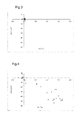
- the method for checking the tightness of a timepiece makes use of the relationship existing between the air pressure surrounding a watch movement and the movement of said clockwork movement, a phenomenon for example illustrated by the Figures 3 and 4 which will be described later.
- Gait is here defined as the difference, per unit of time, between two states of a time instrument, separated by a given time interval (duration). It is commonly expressed in seconds per day [s / d]; if it is positive, the instrument advances, and conversely, if it is negative, the instrument delays.
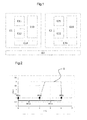
- the figure 1 schematically represents the steps of a method of checking the tightness of a timepiece according to one embodiment of the invention.
- the first step E1 consists in measuring the running of the timepiece subjected to a first external pressure, advantageously atmospheric pressure.
- the objective of this first step is to establish a first reference value.
- the second step E2 consists in measuring the step of the timepiece subjected to a second external pressure, preferably greater than the first external pressure.
- the timepiece is disposed in a pressurizing chamber.
- the purpose of this second step is to establish a second pressure value under pressure.
- a variant could consist in subjecting the timepiece to a pressure lower than the first pressure, in a situation of under pressure.
- Another variant may consist of the inversion of the two steps E1, E2, the order of which is irrelevant.
- the third step E3 consists of comparing the running under pressure with the reference step, to deduce or not a leak in the case of a difference exceeding a predefined threshold. Indeed, if the timepiece has a sealing defect, its pressurization will be reflected in its interior volume, including the watch movement, and induce a change in its operation, which will be detected by the second measurement under pressure. Conversely, in the case of a normally sealed timepiece, the variation in external pressure surrounding the timepiece has no effect on its operation and the two measurements of steps from steps E1 and E2 will be equivalent .
- the operating measurements of the first two steps E1, E2 are determined by an average measurement of the market. For this, these steps measure the progress of a timepiece over a relatively long period. A minimum duration of one hour advantageously makes it possible to obtain a reliable leakproofness measurement that eliminates the chronometric disturbances intrinsic to the timepiece tested.
- the timepiece is positioned according to a well-defined protocol. This same protocol is used in the two steps E1, E2.
- the two status reports P21, P22 of the timepiece making it possible to determine the average step Mm2 of the timepiece which has undergone a second external pressure are advantageously made outside the pressurizing enclosure, so before insertion respectively and after the withdrawal of the timepiece from the pressure vessel.
- This approach has the advantage of allowing the use of a very simple pressurization chamber, since it does not require gait tools.
- the measure of average step advantageously allows, with respect to the instantaneous measurement of walking, a detection of a big leak: even if the air escapes almost instantaneously from the watch during its removal from the pressurized chamber, the advance or the pressure delay taken under pressure can be apprehended during the PE22 take-off.
- the second status report made after the withdrawal of the timepiece from the pressurizing chamber advantageously intervenes quickly after this withdrawal, preferably within a period of less than or equal to 30 minutes, or even less or equal to 2 minutes.
- the durations t1, t2 are therefore advantageously between 2 and 8 hours.
- the status reports include taking pictures of the configuration of the switch of the timepiece, in particular the angular difference between the different needles, in particular a first angle between a first hour hand and a second minute hand, and a second angle between a third hand of seconds and the first or second hand, associated with the time given by a reference clock.
- This approach has the advantage of allowing the implementation of an automatic measurement.
- a simple image can be associated with the time given by a reference clock, and image processing, manual or computer, can convert the time photographed.
- the second external pressure applied to a timepiece during the second measurement step E2 is advantageously between 2 and 5 bar.
- this pressurization is preferably slow, advantageously at an average rate of rise of the pressure of between 1 and 4 bar / hour, and / or for a period of at least one hour, to avoid that some leaks do not close under the effect of a fast pressure increase.
- This approach simulates, for example, immersion in shallow water.
- the measurements of the first two steps E1, E2 are determined by an instantaneous measurement of the time with a chronoscope.
- this measurement can be made directly within the pressure vessel, or alternatively very quickly after removal. This approach has the advantage of great speed since it no longer requires the relatively long duration required for the average measurement of the market.
- the value ⁇ is indirectly representative of the tightness of the timepiece, and can therefore be considered as a measure of tightness.
- the threshold is set to a predefined value, depending on the desired sealing requirement. Advantageously, it can be set at a value of 10 s / d.
- the figure 2 thus summarizes the principle of the embodiment of the invention, illustrating by curve 1 the evolution of the external pressure p to which a timepiece is subjected as a function of time.
- the reference value Mm1 is measured, from two status readings PE11 and PE12, while the timepiece is positioned in an environment at constant external pressure equal to atmospheric pressure (1 bar).
- a very simple pressure vessel can be used, as mentioned above, whose only function is pressurization.
- This approach makes it possible to provide an interior housing of large volume to house several timepieces, for which the sealing control method is implemented simultaneously.
- a status report allowing the measurement of operation preferably makes it possible to establish a simultaneous statement of state of several timepieces.
- these status reports are almost simultaneous, making it possible to establish successive high-speed readings, for example by an automatic scanning that makes it possible to obtain images of the various timepieces.
- the invention also relates to a method of manufacturing a timepiece, which comprises, towards the end of such a method, the implementation of a method for checking the tightness of the timepiece as defined above. If the test is conclusive, the manufacturing process is finalized, otherwise, an additional step of sealing correction of the timepiece is implemented, before renewing the sealing control process.
- the Figures 3 and 4 represent the variation ⁇ Mm of several timepieces as a function of the increase in their weight ⁇ w when they are positioned for 24 hours under a pressure of 5 bars.
- the increase in weight necessarily occurs for a non-tight piece subjected to such packaging, unless the leak is very important and the air does not escape very quickly.
- a sealed piece keeps an unchanged weight.
- all timepieces are waterproof and their weight does not increase. It can be seen that they experience only a variation in the path induced by their intrinsic chronometric properties, ie a minor step variation well below the predefined threshold which makes it possible to establish a leakage gap.
- the pieces illustrated on the figure 4 include many leakage faults, to varying degrees: there is a correlation between the variation of walking and weight increase, which confirms the existence of a correlation between the variation of walking and the presence of a leak.
- the system may also include a transfer device for automatically transporting each timepiece to a housing at atmospheric pressure, to the pressurizing chamber, and / or to the state survey devices.
- the invention also relates to a series of timepieces obtained by the manufacturing method described above, as well as to a timepiece as such obtained by such a manufacturing method.
- the invention has been implemented on a timepiece, which can be a watch, such as a wristwatch. It can naturally be implemented on any element even intermediate, such as a watch case incorporating a watch movement.
Landscapes
- Physics & Mathematics (AREA)
- General Physics & Mathematics (AREA)
- Examining Or Testing Airtightness (AREA)
- Electric Clocks (AREA)
Abstract
Procédé de contrôle de l'étanchéité d'au moins une pièce d'horlogerie, caractérisé en ce qu'il comprend les étapes suivantes :
E1 - Mesurer la marche de la pièce d'horlogerie soumise à une première pression extérieure, particulièrement la pression atmosphérique, pour obtenir une première valeur de marche de référence ;
E2 - Mesurer la marche de la pièce d'horlogerie soumise à une seconde pression extérieure dans une enceinte de mise sous pression, pour obtenir une seconde valeur de marche sous pression ;
E3 - Comparer les valeurs de marche sous pression et de marche de référence pour en déduire ou non une faille de l'étanchéité en cas d'écart dépassant un seuil prédéfini.

E1 - Measuring the time of the timepiece subjected to a first external pressure, particularly the atmospheric pressure, to obtain a first reference value;
E2 - Measuring the time of the timepiece subjected to a second external pressure in a pressurizing chamber, to obtain a second value of operation under pressure;
E3 - Compare the values of running under pressure and reference running to deduce or not a leak of the seal in case of deviation exceeding a predefined threshold.
Description
L'invention concerne un procédé de contrôle de l'étanchéité d'une pièce d'horlogerie, comme une montre et plus particulièrement une montre-bracelet. Elle concerne aussi un procédé de fabrication d'une pièce d'horlogerie qui met en oeuvre ce procédé de contrôle de son étanchéité, et la pièce d'horlogerie en tant que telle obtenue par ce procédé de fabrication. Enfin, l'invention concerne aussi un système de contrôle de l'étanchéité d'une pièce d'horlogerie qui met en oeuvre ce procédé de contrôle de son étanchéité.The invention relates to a method for checking the tightness of a timepiece, such as a watch and more particularly a wristwatch. It also relates to a method of manufacturing a timepiece which implements this method of checking its sealing, and the timepiece as such obtained by this manufacturing method. Finally, the invention also relates to a system for checking the tightness of a timepiece that implements this method of checking its tightness.
L'étanchéité d'une pièce d'horlogerie est une caractéristique importante, et il existe pour cela des normes internationales ISO 22810 et ISO 6425 qui définissent différentes exigences d'étanchéité, respectivement pour les montres simplement étanches et pour les montres de plongée.The sealing of a timepiece is an important feature, and there are international standards ISO 22810 and ISO 6425 which define different sealing requirements, respectively for just waterproof watches and for diving watches.
L'état de la technique décrit différentes solutions pour mesurer l'étanchéité d'une pièce d'horlogerie, consistant à disposer la pièce d'horlogerie dans une enceinte fermée dans laquelle elle est mise sous-pression, et dans laquelle des caractéristiques mécaniques sont mesurées, comme cela est par exemple décrit dans le document
Les solutions de mesure d'étanchéité existantes sont toutefois insatisfaisantes. En effet, elles comprennent tout ou partie des inconvénients suivants :
- Elles nécessitent des équipements dédiés complexes, basés sur des composants sensibles disposés dans des cuves de mise sous pression ;
- Elles ne traitent les pièces qu'individuellement, selon une approche pièce par pièce ;
- Elles ne sont adaptées qu'à un type de pièce d'une géométrie donnée, et nécessitent des réglages complexes pour traiter une autre pièce d'une autre géométrie ;
- Elles ne sont pas adaptées à une production industrielle d'un nombre élevé de pièces et/ou de pièces de géométries différentes ;
- Elles ne sont fiables que pour une partie seulement des mesures d'étanchéité à effectuer, par exemple spécialisées soit pour la détection des petites fuites, soit pour la détection des grosses fuites.
- They require complex dedicated equipment, based on sensitive components placed in pressurizing vessels;
- They only treat parts individually, in a piecemeal approach;
- They are only adapted to one type of part of a given geometry, and require complex adjustments to treat another part of another geometry;
- They are not suitable for industrial production of a large number of parts and / or pieces of different geometries;
- They are reliable for only a part of the sealing measures to be performed, for example specialized for the detection of small leaks, or for the detection of large leaks.
Le but de l'invention est de fournir une autre solution de contrôle de l'étanchéité d'une pièce d'horlogerie, qui ne comprend pas les inconvénients de l'état de la technique.The object of the invention is to provide another solution for checking the tightness of a timepiece, which does not include the disadvantages of the state of the art.
Plus précisément, un premier objet de l'invention est de fournir une solution de contrôle de l'étanchéité d'une pièce d'horlogerie simple et fiable.More specifically, a first object of the invention is to provide a solution for checking the tightness of a simple and reliable timepiece.
A cet effet, le contrôle de l'étanchéité d'au moins une pièce d'horlogerie comprend les étapes suivantes :
- Mesurer la marche de la pièce d'horlogerie soumise à une première pression extérieure, particulièrement la pression atmosphérique, pour obtenir une première valeur de marche de référence ;
- Mesurer la marche de la pièce d'horlogerie soumise à une seconde pression extérieure, avantageusement supérieure à la première pression extérieure, dans une enceinte de mise sous pression, pour obtenir une seconde valeur de marche, appelée par la suite « valeur de marche sous pression » ;
- Comparer les valeurs de marche sous pression et de marche de référence pour en déduire ou non une faille de l'étanchéité en cas d'écart dépassant un seuil prédéfini.
- Measuring the time of the timepiece subjected to a first external pressure, particularly the atmospheric pressure, to obtain a first reference value;
- Measuring the timepiece of the timepiece subjected to a second external pressure, advantageously greater than the first external pressure, in a pressurizing chamber, to obtain a second value of operation, hereinafter referred to as "operating value under pressure "
- Compare the operating values under pressure and reference running to deduce or not a leak in the seal in case of deviation exceeding a predefined threshold.
L'invention est plus précisément définie par les revendications.The invention is more precisely defined by the claims.
Ces objets, caractéristiques et avantages de la présente invention seront exposés en détail dans la description suivante d'un mode de réalisation particulier fait à titre non-limitatif en relation avec les figures jointes parmi lesquelles :
- La
figure 1 représente schématiquement les étapes du procédé de contrôle de l'étanchéité d'une pièce d'horlogerie selon un mode de réalisation de l'invention. - La
figure 2 représente un schéma de principe du procédé selon le mode de réalisation de l'invention. - Les
figures 3 et 4 représentent schématiquement la corrélation entre l'étanchéité et la marche d'une pièce d'horlogerie.
- The
figure 1 schematically represents the steps of the method of checking the tightness of a timepiece according to one embodiment of the invention. - The
figure 2 represents a block diagram of the method according to the embodiment of the invention. - The
Figures 3 and 4 schematically represent the correlation between the tightness and the running of a timepiece.
Le procédé de contrôle de l'étanchéité d'une pièce d'horlogerie selon l'invention exploite la relation existant entre la pression de l'air entourant un mouvement d'horlogerie et la marche dudit mouvement d'horlogerie, phénomène par exemple illustré par les
La
La première étape E1 consiste à mesurer la marche de la pièce d'horlogerie soumise à une première pression extérieure, avantageusement la pression atmosphérique. L'objectif de cette première étape consiste à établir une première valeur de marche de référence.The first step E1 consists in measuring the running of the timepiece subjected to a first external pressure, advantageously atmospheric pressure. The objective of this first step is to establish a first reference value.
La seconde étape E2 consiste à mesurer la marche de la pièce d'horlogerie soumise à une seconde pression extérieure, de préférence supérieure à la première pression extérieure. Pour cela, la pièce d'horlogerie est disposée dans une enceinte de mise sous pression. L'objectif de cette seconde étape consiste à établir une seconde valeur de marche sous pression. En remarque, une variante pourrait consister à soumettre la pièce d'horlogerie à une pression inférieure à la première pression, dans une situation de sous-pression. Une autre variante peut consister en l'inversion des deux étapes E1, E2, dont l'ordre de réalisation est indifférent.The second step E2 consists in measuring the step of the timepiece subjected to a second external pressure, preferably greater than the first external pressure. For this, the timepiece is disposed in a pressurizing chamber. The purpose of this second step is to establish a second pressure value under pressure. As a remark, a variant could consist in subjecting the timepiece to a pressure lower than the first pressure, in a situation of under pressure. Another variant may consist of the inversion of the two steps E1, E2, the order of which is irrelevant.
La troisième étape E3 consiste à comparer la marche sous pression avec la marche de référence, pour en déduire ou non une faille de l'étanchéité en cas de différence dépassant un seuil prédéfini. En effet, si la pièce d'horlogerie présente un défaut d'étanchéité, sa mise sous pression va se répercuter dans son volume intérieur, comprenant le mouvement horloger, et induire une modification de son fonctionnement, qui sera détecté par la seconde mesure de marche sous pression. Inversement, dans le cas d'une pièce d'horlogerie normalement étanche, la variation de pression extérieure entourant la pièce d'horlogerie n'a pas d'effet sur son fonctionnement et les deux mesures de marche issues des étapes E1 et E2 seront équivalentes.The third step E3 consists of comparing the running under pressure with the reference step, to deduce or not a leak in the case of a difference exceeding a predefined threshold. Indeed, if the timepiece has a sealing defect, its pressurization will be reflected in its interior volume, including the watch movement, and induce a change in its operation, which will be detected by the second measurement under pressure. Conversely, in the case of a normally sealed timepiece, the variation in external pressure surrounding the timepiece has no effect on its operation and the two measurements of steps from steps E1 and E2 will be equivalent .
Selon le mode de réalisation de l'invention, les mesures de marche des deux premières étapes E1, E2 sont déterminées par une mesure de marche moyenne. Pour cela, ces étapes mesurent la marche d'une pièce d'horlogerie sur une durée relativement longue. Une durée minimale d'une heure permet avantageusement d'obtenir une mesure d'étanchéité fiable s'affranchissant des perturbations chronométriques intrinsèques à la pièce d'horlogerie testée.According to the embodiment of the invention, the operating measurements of the first two steps E1, E2 are determined by an average measurement of the market. For this, these steps measure the progress of a timepiece over a relatively long period. A minimum duration of one hour advantageously makes it possible to obtain a reliable leakproofness measurement that eliminates the chronometric disturbances intrinsic to the timepiece tested.
Un mode de réalisation de l'invention calcule la marche sur une durée t1, t2 passée à une pression donnée en se basant sur la différence de temps calculée à partir de deux valeurs d'affichage de la pièce d'horlogerie fournies par deux relevés d'état de la pièce d'horlogerie, mise en comparaison avec la durée réellement écoulée prise sur une horloge de référence. Ainsi, chaque étape E1, E2 de mesure d'une valeur de marche comprend les sous-étapes suivantes :
- Une première sous-étape E11, E21 de première prise d'état PE11, PE21. Par prise d'état, nous entendons l'acquisition de l'heure affichée par la pièce d'horlogerie, par exemple au moyen d'une photographie donnant la configuration de l'aiguillage d'une pièce d'horlogerie, en particulier l'écart angulaire entre les différentes aiguilles, indexée par rapport à une horloge de référence ;
- Une seconde sous-étape E12, E22 de seconde prise d'état PE12, PE22 ;
- Une troisième sous-étape E13, E23 réalisée en parallèle de ces deux sous-étapes, de mesure de la durée exacte t1, t2 (notamment en heure(s), minute(s) et seconde(s)) entre les deux prises d'état, respectivement PE11, P12 et PE21, P22, à partir d'une horloge de référence ;
- Une quatrième sous-étape E14, E24 de calcul de la marche Mmi (i=1 dans la première étape E1 et i=2 dans la seconde étape E2) de la pièce d'horlogerie, par le calcul suivant :
- o Mmi = (PEi2 - PEi1) / ti
Pour une durée ti inférieure ou égale à 24 heures, la marche ainsi calculée est convertie par une règle de trois de manière à pouvoir être conventionnellement exprimée en secondes par jour (s/j). Elle est appelée « marche diurne » dans le cas où ti est égale à 24 heures.
- o Mmi = (PEi2 - PEi1) / ti
- A first substep E11, E21 of first state take PE11, PE21. By taking of state, we mean the acquisition of the time displayed by the timepiece, for example by means of a photograph giving the configuration of the switch of a coin watchmaking, in particular the angular difference between the different hands, indexed with respect to a reference clock;
- A second substep E12, E22 of second state-taking PE12, PE22;
- A third substep E13, E23 performed in parallel with these two substeps, for measuring the exact duration t1, t2 (in particular hour (s), minute (s) and second (s)) between the two state, respectively PE11, P12 and PE21, P22, from a reference clock;
- A fourth substep E14, E24 for calculating the step Mmi (i = 1 in the first step E1 and i = 2 in the second step E2) of the timepiece, by the following calculation:
- o Mmi = (PEi2 - PEi1) / ti
For a duration ti less than or equal to 24 hours, the step thus calculated is converted by a rule of three so as to be conventionally expressed in seconds per day (s / d). It is called "daytime walk" in the case where ti is equal to 24 hours.
- o Mmi = (PEi2 - PEi1) / ti
En remarque, durant ces durées de mesure t1, t2, la pièce d'horlogerie est positionnée selon un protocole bien défini. Ce même protocole est utilisé dans les deux étapes E1, E2. De plus, ces deux étapes E1, E2 peuvent être rapidement enchainées, et il peut être avantageux de réaliser ce procédé avec PE21 = PE12, soit un total de trois prises d'état.Note, during these measurement times t1, t2, the timepiece is positioned according to a well-defined protocol. This same protocol is used in the two steps E1, E2. In addition, these two steps E1, E2 can be quickly chained, and it may be advantageous to carry out this method with PE21 = PE12, a total of three taken state.
Dans le cas particulier de la seconde étape E2, les deux relevés d'état P21, P22 de la pièce d'horlogerie permettant de déterminer la marche moyenne Mm2 de la pièce d'horlogerie ayant subi une seconde pression extérieure sont réalisés avantageusement hors de l'enceinte de mise sous pression, donc respectivement avant l'insertion et après le retrait de la pièce d'horlogerie de l'enceinte de mise sous pression. Cette approche présente l'avantage de permettre l'utilisation d'une enceinte de mise sous pression très simple, puisqu'elle ne requiert pas d'outillage de mesure de marche. La mesure de marche moyenne permet avantageusement, par rapport à la mesure de marche instantanée, une détection de grosse fuite : même si l'air s'échappe quasi-instantanément de la montre lors de son retrait de l'enceinte de mise sous pression, l'avance ou le retard de marche pris sous pression pourra être appréhendé lors de la prise d'état PE22.In the particular case of the second step E2, the two status reports P21, P22 of the timepiece making it possible to determine the average step Mm2 of the timepiece which has undergone a second external pressure are advantageously made outside the pressurizing enclosure, so before insertion respectively and after the withdrawal of the timepiece from the pressure vessel. This approach has the advantage of allowing the use of a very simple pressurization chamber, since it does not require gait tools. The measure of average step advantageously allows, with respect to the instantaneous measurement of walking, a detection of a big leak: even if the air escapes almost instantaneously from the watch during its removal from the pressurized chamber, the advance or the pressure delay taken under pressure can be apprehended during the PE22 take-off.
Dans cette approche, le second relevé d'état réalisé après le retrait de la pièce d'horlogerie de l'enceinte de mise sous pression intervient avantageusement rapidement après ce retrait, de préférence dans un délai inférieur ou égal à 30 minutes, voire même inférieur ou égal à 2 minutes.In this approach, the second status report made after the withdrawal of the timepiece from the pressurizing chamber advantageously intervenes quickly after this withdrawal, preferably within a period of less than or equal to 30 minutes, or even less or equal to 2 minutes.
De manière similaire au cas de fuite importante, en cas de faible fuite, une durée suffisamment longue de soumission à la pression élevée permettra de détecter la variation de marche par rapport à la marche à pression atmosphérique. Les durées t1, t2 sont donc avantageusement comprises entre 2 et 8 heures.Similar to the case of a large leak, in the case of a small leak, a sufficiently long duration of submission to the high pressure will make it possible to detect the variation of the gait with respect to the operation at atmospheric pressure. The durations t1, t2 are therefore advantageously between 2 and 8 hours.
Selon le mode de réalisation du procédé, les relevés d'état comprennent des prises d'image de la configuration de l'aiguillage de la pièce d'horlogerie, en particulier l'écart angulaire entre les différentes aiguilles, notamment un premier angle entre une première aiguille des heures et une deuxième aiguille des minutes, ainsi qu'un deuxième angle entre une troisième aiguille des secondes et la première ou la deuxième aiguille, associées à l'heure donnée par une horloge de référence. Cette approche présente l'avantage de permettre la mise en oeuvre d'une mesure automatique. En variante, une simple prise d'image peut être associée avec l'heure donnée par une horloge de référence, puis un traitement d'image, manuel ou informatique, peut convertir l'heure photographiée.According to the embodiment of the method, the status reports include taking pictures of the configuration of the switch of the timepiece, in particular the angular difference between the different needles, in particular a first angle between a first hour hand and a second minute hand, and a second angle between a third hand of seconds and the first or second hand, associated with the time given by a reference clock. This approach has the advantage of allowing the implementation of an automatic measurement. Alternatively, a simple image can be associated with the time given by a reference clock, and image processing, manual or computer, can convert the time photographed.
D'autre part, la seconde pression extérieure appliquée à une pièce d'horlogerie durant la seconde étape de mesure E2 est avantageusement comprise entre 2 et 5 bars. De plus, cette mise sous pression est de préférence lente, avantageusement à une vitesse moyenne de montée de la pression comprise entre 1 et 4 bar/heure, et/ou sur une période d'au moins une heure, pour permettre d'éviter que certaines fuites ne se referment sous l'effet d'une rapide augmentation de pression. Cette approche simule par exemple une immersion sous faible profondeur d'eau.On the other hand, the second external pressure applied to a timepiece during the second measurement step E2 is advantageously between 2 and 5 bar. In addition, this pressurization is preferably slow, advantageously at an average rate of rise of the pressure of between 1 and 4 bar / hour, and / or for a period of at least one hour, to avoid that some leaks do not close under the effect of a fast pressure increase. This approach simulates, for example, immersion in shallow water.
En variante de réalisation, les mesures de marche des deux premières étapes E1, E2 sont déterminées par une mesure de marche instantanée avec un chronoscope. Dans le cas de la seconde étape E2, cette mesure peut être faite directement au sein de l'enceinte de mise sous pression, voire en variante très rapidement après son retrait. Cette approche présente l'avantage d'une grande rapidité puisqu'elle ne nécessite plus la durée relativement longue nécessaire à la mesure de marche moyenne.In an alternative embodiment, the measurements of the first two steps E1, E2 are determined by an instantaneous measurement of the time with a chronoscope. In the case of the second step E2, this measurement can be made directly within the pressure vessel, or alternatively very quickly after removal. This approach has the advantage of great speed since it no longer requires the relatively long duration required for the average measurement of the market.
Ensuite, le procédé met en oeuvre la troisième étape de comparaison des valeurs de marche mesurées aux deux étapes E1, E2, prenant par exemple en compte la différence Δ = Mm2 - Mm1 entre les deux mesures de marche, puis la comparaison de la valeur absolue de cette différence Δ avec un seuil prédéfini. La valeur Δ est indirectement représentative de l'étanchéité de la pièce d'horlogerie, et peut donc être considérée comme une mesure de l'étanchéité. Le seuil est fixé à une valeur prédéfinie, selon l'exigence d'étanchéité souhaitée. Avantageusement, il peut être fixé à une valeur de 10 s/j.Then, the method implements the third step of comparing the measured values of the two steps E1, E2, for example taking into account the difference Δ = Mm2 - Mm1 between the two measurements of walk, then the comparison of the absolute value of this difference Δ with a predefined threshold. The value Δ is indirectly representative of the tightness of the timepiece, and can therefore be considered as a measure of tightness. The threshold is set to a predefined value, depending on the desired sealing requirement. Advantageously, it can be set at a value of 10 s / d.
La
Selon le procédé de réalisation décrit précédemment, une enceinte de mise sous pression très simple peut être utilisée, comme mentionné précédemment, dont la seule fonction est la mise sous pression. Cette approche permet de prévoir un logement intérieur de grand volume pour y loger plusieurs pièces d'horlogerie, pour lesquelles le procédé de contrôle de l'étanchéité est mis en oeuvre simultanément. Dans ce cas, un relevé d'état permettant la mesure de marche permet de préférence d'établir un relevé d'état simultané de plusieurs pièces d'horlogerie. En variante, ces relevés d'état sont quasi simultanés, permettant d'établir des relevés successifs à grande vitesse, par exemple par un balayage automatique permettant d'obtenir des prises d'image des différentes pièces d'horlogerie.According to the embodiment method described above, a very simple pressure vessel can be used, as mentioned above, whose only function is pressurization. This approach makes it possible to provide an interior housing of large volume to house several timepieces, for which the sealing control method is implemented simultaneously. In this case, a status report allowing the measurement of operation preferably makes it possible to establish a simultaneous statement of state of several timepieces. As a variant, these status reports are almost simultaneous, making it possible to establish successive high-speed readings, for example by an automatic scanning that makes it possible to obtain images of the various timepieces.
L'invention porte aussi sur un procédé de fabrication d'une pièce d'horlogerie, qui comprend, vers la fin d'un tel procédé, la mise en oeuvre d'un procédé de contrôle de l'étanchéité de la pièce d'horlogerie tel que défini précédemment. Si le test est concluant, le procédé de fabrication est finalisé, sinon, une étape supplémentaire de correction d'étanchéité de la pièce d'horlogerie est mise en oeuvre, avant de renouveler le procédé de contrôle de l'étanchéité.The invention also relates to a method of manufacturing a timepiece, which comprises, towards the end of such a method, the implementation of a method for checking the tightness of the timepiece as defined above. If the test is conclusive, the manufacturing process is finalized, otherwise, an additional step of sealing correction of the timepiece is implemented, before renewing the sealing control process.
Les
L'invention porte aussi sur un système de contrôle de l'étanchéité, qui permet la mise en oeuvre du procédé de contrôle d'étanchéité décrit précédemment, de préférence de manière totalement automatisée, voire quasi automatisée. Pour cela, le système selon le mode de réalisation comprend les éléments suivants :
- Une enceinte de mise sous pression, comprenant un logement pour recevoir une ou plusieurs pièces d'horlogerie ;
- Un dispositif de mesure de marche d'une pièce d'horlogerie, comprenant par exemple un dispositif de prise d'images, par exemple photographique, pour réaliser les relevés d'état mentionnés. Ce dispositif comprend de préférence un mécanisme de relevés d'état de la pièce d'horlogerie, incluant un appareil optique de prise d'images ;
- Une horloge de référence, couplée ou au moins corrélée au dispositif de prise d'images ;
- Un calculateur, relié au dispositif de prise d'images et à l'horloge de référence, par un dispositif de communication, pour recevoir les données de relevés d'état et les heures prises sur l'horloge de référence associées et réaliser les calculs de valeurs de marche, ainsi que les comparaisons pour en déduire un diagnostic d'étanchéité ;
- Une mémoire électronique associée au calculateur pour mémoriser les données de relevés d'état et d'horloge et les résultats du procédé de contrôle d'étanchéité.
- A pressurizing chamber, comprising a housing for receiving one or more timepieces;
- A device for measuring the timepiece of a timepiece, comprising, for example, an image taking device, for example a photographic device, for carrying out the mentioned state measurements. This device preferably comprises a mechanism for recording the status of the timepiece, including an optical image taking apparatus;
- A reference clock, coupled or at least correlated with the image taking device;
- A calculator, connected to the image taking device and the reference clock, by a communication device, for receiving the status report data and the times taken on the associated reference clock and performing the calculations of gait values, as well as comparisons to deduce a leak diagnosis;
- An electronic memory associated with the computer for storing the status and clock data and the results of the leak test method.
Le système peut aussi comprendre un dispositif de transfert permettant de transporter automatiquement chaque pièce d'horlogerie vers un logement à pression atmosphérique, vers l'enceinte de mise sous pression, et/ou vers les dispositifs de relevés d'état.The system may also include a transfer device for automatically transporting each timepiece to a housing at atmospheric pressure, to the pressurizing chamber, and / or to the state survey devices.
L'invention porte aussi sur une série de pièces d'horlogerie obtenue par le procédé de fabrication décrit précédemment, ainsi que sur une pièce d'horlogerie en tant que telle obtenue par un tel procédé de fabrication.The invention also relates to a series of timepieces obtained by the manufacturing method described above, as well as to a timepiece as such obtained by such a manufacturing method.
L'invention a été mise en oeuvre sur une pièce d'horlogerie, qui peut être une montre, comme une montre bracelet. Elle peut naturellement être mise en oeuvre sur tout élément même intermédiaire, comme une boîte de montre intégrant un mouvement horloger.The invention has been implemented on a timepiece, which can be a watch, such as a wristwatch. It can naturally be implemented on any element even intermediate, such as a watch case incorporating a watch movement.
Claims (15)
Priority Applications (4)
| Application Number | Priority Date | Filing Date | Title |
|---|---|---|---|
| EP15177825.5A EP3121663B1 (en) | 2015-07-22 | 2015-07-22 | Method for checking the tightness of a timepiece |
| US15/210,003 US9977404B2 (en) | 2015-07-22 | 2016-07-14 | Method for testing the water resistance of a timepiece |
| JP2016142891A JP6830326B2 (en) | 2015-07-22 | 2016-07-21 | How to test the water resistance of a watch |
| CN201610735518.9A CN106441728B (en) | 2015-07-22 | 2016-07-21 | Method for testing the waterproofness of a clock |
Applications Claiming Priority (1)
| Application Number | Priority Date | Filing Date | Title |
|---|---|---|---|
| EP15177825.5A EP3121663B1 (en) | 2015-07-22 | 2015-07-22 | Method for checking the tightness of a timepiece |
Publications (2)
| Publication Number | Publication Date |
|---|---|
| EP3121663A1 true EP3121663A1 (en) | 2017-01-25 |
| EP3121663B1 EP3121663B1 (en) | 2021-03-03 |
Family
ID=53682600
Family Applications (1)
| Application Number | Title | Priority Date | Filing Date |
|---|---|---|---|
| EP15177825.5A Active EP3121663B1 (en) | 2015-07-22 | 2015-07-22 | Method for checking the tightness of a timepiece |
Country Status (4)
| Country | Link |
|---|---|
| US (1) | US9977404B2 (en) |
| EP (1) | EP3121663B1 (en) |
| JP (1) | JP6830326B2 (en) |
| CN (1) | CN106441728B (en) |
Cited By (2)
| Publication number | Priority date | Publication date | Assignee | Title |
|---|---|---|---|---|
| EP3561612A1 (en) | 2018-04-23 | 2019-10-30 | Rolex Sa | Method for assembling a timepiece |
| EP4707958A1 (en) | 2024-09-04 | 2026-03-11 | Association Suisse pour la Recherche Horlogère | Method for characterizing physical interfaces of a nested device |
Families Citing this family (1)
| Publication number | Priority date | Publication date | Assignee | Title |
|---|---|---|---|---|
| CN110296793B (en) * | 2018-03-23 | 2021-05-11 | 神讯电脑(昆山)有限公司 | Dripping test device |
Citations (2)
| Publication number | Priority date | Publication date | Assignee | Title |
|---|---|---|---|---|
| FR2158061A1 (en) * | 1971-10-28 | 1973-06-08 | Becker Kg Hermann | |
| US3991622A (en) | 1973-11-05 | 1976-11-16 | Hisanao Aihara | Apparatus for measuring airtightness of sealed body |
Family Cites Families (15)
| Publication number | Priority date | Publication date | Assignee | Title |
|---|---|---|---|---|
| CH418678A (en) * | 1963-06-06 | 1966-08-15 | Balzers Patent Beteilig Ag | Procedure for the serial testing of closed, gas-filled containers for leaks |
| CH493881A (en) * | 1967-05-31 | 1970-03-31 | Morf Ernest | Method for checking the tightness of the case of a watch and apparatus for implementing this method |
| JPS5039535B1 (en) * | 1970-05-21 | 1975-12-17 | ||
| JPS527743B1 (en) * | 1970-07-01 | 1977-03-04 | ||
| JPS5338945B2 (en) * | 1973-11-05 | 1978-10-18 | ||
| JPS5328771U (en) * | 1976-08-19 | 1978-03-11 | ||
| DE3003414C2 (en) * | 1980-01-31 | 1984-04-19 | Elma, Hans Schmidbauer KG, 7700 Singen | Procedure for testing the water resistance of wristwatches |
| JPH06221954A (en) * | 1993-01-26 | 1994-08-12 | Seiko Instr Inc | Watertightness inspection device and watertightness inspection method for watch |
| CH684863B5 (en) * | 1993-04-14 | 1995-07-31 | Witschi Electronic Ag | Method and device for testing the water tightness of housings. |
| JP2000088694A (en) * | 1998-09-16 | 2000-03-31 | Ishida Co Ltd | Sealing container tightness inspection device |
| EP1388766A1 (en) * | 2002-08-09 | 2004-02-11 | Asulab S.A. | Device and method for testing watertightness of an enclosure such as a watch case |
| CN101210856B (en) * | 2006-12-29 | 2010-08-18 | 英华达股份有限公司 | Test system and test method for testing waterproof products |
| EP2458458B1 (en) * | 2010-11-26 | 2017-11-15 | The Swatch Group Research and Development Ltd. | Method for measuring the precision of a mechanical watch |
| CN103425042B (en) * | 2012-05-18 | 2016-03-16 | 天王电子(深圳)有限公司 | Watch waterproof tester |
| EP2770380B1 (en) * | 2013-02-21 | 2018-12-26 | The Swatch Group Research and Development Ltd. | Electronic device provided with an automatic leak detection means |
-
2015
- 2015-07-22 EP EP15177825.5A patent/EP3121663B1/en active Active
-
2016
- 2016-07-14 US US15/210,003 patent/US9977404B2/en active Active
- 2016-07-21 JP JP2016142891A patent/JP6830326B2/en active Active
- 2016-07-21 CN CN201610735518.9A patent/CN106441728B/en active Active
Patent Citations (2)
| Publication number | Priority date | Publication date | Assignee | Title |
|---|---|---|---|---|
| FR2158061A1 (en) * | 1971-10-28 | 1973-06-08 | Becker Kg Hermann | |
| US3991622A (en) | 1973-11-05 | 1976-11-16 | Hisanao Aihara | Apparatus for measuring airtightness of sealed body |
Cited By (3)
| Publication number | Priority date | Publication date | Assignee | Title |
|---|---|---|---|---|
| EP3561612A1 (en) | 2018-04-23 | 2019-10-30 | Rolex Sa | Method for assembling a timepiece |
| US11347187B2 (en) | 2018-04-23 | 2022-05-31 | Rolex Sa | Method of assembling a timepiece |
| EP4707958A1 (en) | 2024-09-04 | 2026-03-11 | Association Suisse pour la Recherche Horlogère | Method for characterizing physical interfaces of a nested device |
Also Published As
| Publication number | Publication date |
|---|---|
| EP3121663B1 (en) | 2021-03-03 |
| JP2017040647A (en) | 2017-02-23 |
| US9977404B2 (en) | 2018-05-22 |
| JP6830326B2 (en) | 2021-02-17 |
| US20170023916A1 (en) | 2017-01-26 |
| CN106441728A (en) | 2017-02-22 |
| CN106441728B (en) | 2020-05-12 |
Similar Documents
| Publication | Publication Date | Title |
|---|---|---|
| FR2981561A1 (en) | METHOD FOR DETECTING MOTION SENSOR ACTIVITY, CORRESPONDING DEVICE AND COMPUTER PROGRAM | |
| EP3121663B1 (en) | Method for checking the tightness of a timepiece | |
| EP0745866A1 (en) | Method and apparatus for movement detection of a target and its applications | |
| EP3227646B1 (en) | Method of manufacturing parts, based on the analysis of weighted statistical indicators | |
| EP1986066A3 (en) | Combined-information processing apparatus, method for processing combined-information, program, and recording medium | |
| EP3234802A1 (en) | Method for transmitting data from a sensor | |
| EP1617177B1 (en) | Method of detecting the beginning of a dive for a dive computer | |
| WO2022090648A1 (en) | Method and device for monitoring the operating state of circuit breakers | |
| WO2016184912A1 (en) | Method and system for predicting the realization of a predetermined state of an object | |
| EP3619519B1 (en) | Device and method for measuring and tracking the quantity or concentration of a compound in a fluid | |
| CH717688B1 (en) | System, device and method for controlling the operation of at least one functional assembly of a timepiece | |
| EP2638492A1 (en) | Sensor-based detection device, corresponding detection method and computer program | |
| EP4449085B1 (en) | Method and system for detecting leaks | |
| CH717687A1 (en) | System and method for checking timepieces and electronic measurement module. | |
| EP4459383A1 (en) | Detection of a defect in a tooth of a timepiece component | |
| WO2023209111A1 (en) | Method and system for detecting one or more anomalies in a structure | |
| FR3049700A1 (en) | PROCESS FOR MANUFACTURING PARTS USING MANUFACTURING DERIVATIVES | |
| EP2637011A1 (en) | Method and apparatus for measuring the geometric structure of an optical component | |
| CA3137232A1 (en) | Method and device for removing remanence in an infrared image of a changing scene | |
| FR3015033A1 (en) | METHOD AND DEVICE FOR ANALYZING THE SURFACE OF A SUBSTRATE | |
| EP4459386A1 (en) | Acoustic measurements on a horological escapement | |
| FR3031397A3 (en) | SYSTEM AND DEVICE FOR MEASURING RADIATION | |
| FR3073288B1 (en) | METHOD FOR CONTROLLING THE SEALING OF AN OBJECT TO BE TESTED BY DETECTION OF A TRACER GAS BY A REINFACE PROBE | |
| FR3165502A1 (en) | Method and system for monitoring a biological object | |
| CA3137449A1 (en) | Method and device for removing remanence in an infrared image of a static scene |
Legal Events
| Date | Code | Title | Description |
|---|---|---|---|
| PUAI | Public reference made under article 153(3) epc to a published international application that has entered the european phase |
Free format text: ORIGINAL CODE: 0009012 |
|
| STAA | Information on the status of an ep patent application or granted ep patent |
Free format text: STATUS: THE APPLICATION HAS BEEN PUBLISHED |
|
| AK | Designated contracting states |
Kind code of ref document: A1 Designated state(s): AL AT BE BG CH CY CZ DE DK EE ES FI FR GB GR HR HU IE IS IT LI LT LU LV MC MK MT NL NO PL PT RO RS SE SI SK SM TR |
|
| AX | Request for extension of the european patent |
Extension state: BA ME |
|
| STAA | Information on the status of an ep patent application or granted ep patent |
Free format text: STATUS: REQUEST FOR EXAMINATION WAS MADE |
|
| 17P | Request for examination filed |
Effective date: 20170710 |
|
| RBV | Designated contracting states (corrected) |
Designated state(s): AL AT BE BG CH CY CZ DE DK EE ES FI FR GB GR HR HU IE IS IT LI LT LU LV MC MK MT NL NO PL PT RO RS SE SI SK SM TR |
|
| STAA | Information on the status of an ep patent application or granted ep patent |
Free format text: STATUS: EXAMINATION IS IN PROGRESS |
|
| 17Q | First examination report despatched |
Effective date: 20180214 |
|
| GRAP | Despatch of communication of intention to grant a patent |
Free format text: ORIGINAL CODE: EPIDOSNIGR1 |
|
| STAA | Information on the status of an ep patent application or granted ep patent |
Free format text: STATUS: GRANT OF PATENT IS INTENDED |
|
| INTG | Intention to grant announced |
Effective date: 20200916 |
|
| GRAS | Grant fee paid |
Free format text: ORIGINAL CODE: EPIDOSNIGR3 |
|
| GRAA | (expected) grant |
Free format text: ORIGINAL CODE: 0009210 |
|
| STAA | Information on the status of an ep patent application or granted ep patent |
Free format text: STATUS: THE PATENT HAS BEEN GRANTED |
|
| AK | Designated contracting states |
Kind code of ref document: B1 Designated state(s): AL AT BE BG CH CY CZ DE DK EE ES FI FR GB GR HR HU IE IS IT LI LT LU LV MC MK MT NL NO PL PT RO RS SE SI SK SM TR |
|
| REG | Reference to a national code |
Ref country code: GB Ref legal event code: FG4D Free format text: NOT ENGLISH |
|
| REG | Reference to a national code |
Ref country code: AT Ref legal event code: REF Ref document number: 1367889 Country of ref document: AT Kind code of ref document: T Effective date: 20210315 Ref country code: CH Ref legal event code: EP |
|
| REG | Reference to a national code |
Ref country code: DE Ref legal event code: R096 Ref document number: 602015066256 Country of ref document: DE |
|
| REG | Reference to a national code |
Ref country code: IE Ref legal event code: FG4D Free format text: LANGUAGE OF EP DOCUMENT: FRENCH |
|
| REG | Reference to a national code |
Ref country code: LT Ref legal event code: MG9D |
|
| PG25 | Lapsed in a contracting state [announced via postgrant information from national office to epo] |
Ref country code: LT Free format text: LAPSE BECAUSE OF FAILURE TO SUBMIT A TRANSLATION OF THE DESCRIPTION OR TO PAY THE FEE WITHIN THE PRESCRIBED TIME-LIMIT Effective date: 20210303 Ref country code: HR Free format text: LAPSE BECAUSE OF FAILURE TO SUBMIT A TRANSLATION OF THE DESCRIPTION OR TO PAY THE FEE WITHIN THE PRESCRIBED TIME-LIMIT Effective date: 20210303 Ref country code: FI Free format text: LAPSE BECAUSE OF FAILURE TO SUBMIT A TRANSLATION OF THE DESCRIPTION OR TO PAY THE FEE WITHIN THE PRESCRIBED TIME-LIMIT Effective date: 20210303 Ref country code: GR Free format text: LAPSE BECAUSE OF FAILURE TO SUBMIT A TRANSLATION OF THE DESCRIPTION OR TO PAY THE FEE WITHIN THE PRESCRIBED TIME-LIMIT Effective date: 20210604 Ref country code: NO Free format text: LAPSE BECAUSE OF FAILURE TO SUBMIT A TRANSLATION OF THE DESCRIPTION OR TO PAY THE FEE WITHIN THE PRESCRIBED TIME-LIMIT Effective date: 20210603 Ref country code: BG Free format text: LAPSE BECAUSE OF FAILURE TO SUBMIT A TRANSLATION OF THE DESCRIPTION OR TO PAY THE FEE WITHIN THE PRESCRIBED TIME-LIMIT Effective date: 20210603 |
|
| REG | Reference to a national code |
Ref country code: NL Ref legal event code: MP Effective date: 20210303 |
|
| REG | Reference to a national code |
Ref country code: AT Ref legal event code: MK05 Ref document number: 1367889 Country of ref document: AT Kind code of ref document: T Effective date: 20210303 |
|
| PG25 | Lapsed in a contracting state [announced via postgrant information from national office to epo] |
Ref country code: RS Free format text: LAPSE BECAUSE OF FAILURE TO SUBMIT A TRANSLATION OF THE DESCRIPTION OR TO PAY THE FEE WITHIN THE PRESCRIBED TIME-LIMIT Effective date: 20210303 Ref country code: PL Free format text: LAPSE BECAUSE OF FAILURE TO SUBMIT A TRANSLATION OF THE DESCRIPTION OR TO PAY THE FEE WITHIN THE PRESCRIBED TIME-LIMIT Effective date: 20210303 Ref country code: LV Free format text: LAPSE BECAUSE OF FAILURE TO SUBMIT A TRANSLATION OF THE DESCRIPTION OR TO PAY THE FEE WITHIN THE PRESCRIBED TIME-LIMIT Effective date: 20210303 Ref country code: SE Free format text: LAPSE BECAUSE OF FAILURE TO SUBMIT A TRANSLATION OF THE DESCRIPTION OR TO PAY THE FEE WITHIN THE PRESCRIBED TIME-LIMIT Effective date: 20210303 |
|
| PG25 | Lapsed in a contracting state [announced via postgrant information from national office to epo] |
Ref country code: NL Free format text: LAPSE BECAUSE OF FAILURE TO SUBMIT A TRANSLATION OF THE DESCRIPTION OR TO PAY THE FEE WITHIN THE PRESCRIBED TIME-LIMIT Effective date: 20210303 |
|
| PG25 | Lapsed in a contracting state [announced via postgrant information from national office to epo] |
Ref country code: SM Free format text: LAPSE BECAUSE OF FAILURE TO SUBMIT A TRANSLATION OF THE DESCRIPTION OR TO PAY THE FEE WITHIN THE PRESCRIBED TIME-LIMIT Effective date: 20210303 Ref country code: EE Free format text: LAPSE BECAUSE OF FAILURE TO SUBMIT A TRANSLATION OF THE DESCRIPTION OR TO PAY THE FEE WITHIN THE PRESCRIBED TIME-LIMIT Effective date: 20210303 Ref country code: CZ Free format text: LAPSE BECAUSE OF FAILURE TO SUBMIT A TRANSLATION OF THE DESCRIPTION OR TO PAY THE FEE WITHIN THE PRESCRIBED TIME-LIMIT Effective date: 20210303 Ref country code: AT Free format text: LAPSE BECAUSE OF FAILURE TO SUBMIT A TRANSLATION OF THE DESCRIPTION OR TO PAY THE FEE WITHIN THE PRESCRIBED TIME-LIMIT Effective date: 20210303 |
|
| PG25 | Lapsed in a contracting state [announced via postgrant information from national office to epo] |
Ref country code: SK Free format text: LAPSE BECAUSE OF FAILURE TO SUBMIT A TRANSLATION OF THE DESCRIPTION OR TO PAY THE FEE WITHIN THE PRESCRIBED TIME-LIMIT Effective date: 20210303 Ref country code: RO Free format text: LAPSE BECAUSE OF FAILURE TO SUBMIT A TRANSLATION OF THE DESCRIPTION OR TO PAY THE FEE WITHIN THE PRESCRIBED TIME-LIMIT Effective date: 20210303 Ref country code: ES Free format text: LAPSE BECAUSE OF FAILURE TO SUBMIT A TRANSLATION OF THE DESCRIPTION OR TO PAY THE FEE WITHIN THE PRESCRIBED TIME-LIMIT Effective date: 20210303 Ref country code: PT Free format text: LAPSE BECAUSE OF FAILURE TO SUBMIT A TRANSLATION OF THE DESCRIPTION OR TO PAY THE FEE WITHIN THE PRESCRIBED TIME-LIMIT Effective date: 20210705 Ref country code: IS Free format text: LAPSE BECAUSE OF FAILURE TO SUBMIT A TRANSLATION OF THE DESCRIPTION OR TO PAY THE FEE WITHIN THE PRESCRIBED TIME-LIMIT Effective date: 20210703 |
|
| REG | Reference to a national code |
Ref country code: DE Ref legal event code: R097 Ref document number: 602015066256 Country of ref document: DE |
|
| PLBE | No opposition filed within time limit |
Free format text: ORIGINAL CODE: 0009261 |
|
| STAA | Information on the status of an ep patent application or granted ep patent |
Free format text: STATUS: NO OPPOSITION FILED WITHIN TIME LIMIT |
|
| PG25 | Lapsed in a contracting state [announced via postgrant information from national office to epo] |
Ref country code: AL Free format text: LAPSE BECAUSE OF FAILURE TO SUBMIT A TRANSLATION OF THE DESCRIPTION OR TO PAY THE FEE WITHIN THE PRESCRIBED TIME-LIMIT Effective date: 20210303 Ref country code: DK Free format text: LAPSE BECAUSE OF FAILURE TO SUBMIT A TRANSLATION OF THE DESCRIPTION OR TO PAY THE FEE WITHIN THE PRESCRIBED TIME-LIMIT Effective date: 20210303 |
|
| 26N | No opposition filed |
Effective date: 20211206 |
|
| PG25 | Lapsed in a contracting state [announced via postgrant information from national office to epo] |
Ref country code: SI Free format text: LAPSE BECAUSE OF FAILURE TO SUBMIT A TRANSLATION OF THE DESCRIPTION OR TO PAY THE FEE WITHIN THE PRESCRIBED TIME-LIMIT Effective date: 20210303 |
|
| PG25 | Lapsed in a contracting state [announced via postgrant information from national office to epo] |
Ref country code: MC Free format text: LAPSE BECAUSE OF FAILURE TO SUBMIT A TRANSLATION OF THE DESCRIPTION OR TO PAY THE FEE WITHIN THE PRESCRIBED TIME-LIMIT Effective date: 20210303 |
|
| REG | Reference to a national code |
Ref country code: BE Ref legal event code: MM Effective date: 20210731 |
|
| PG25 | Lapsed in a contracting state [announced via postgrant information from national office to epo] |
Ref country code: IT Free format text: LAPSE BECAUSE OF FAILURE TO SUBMIT A TRANSLATION OF THE DESCRIPTION OR TO PAY THE FEE WITHIN THE PRESCRIBED TIME-LIMIT Effective date: 20210303 |
|
| PG25 | Lapsed in a contracting state [announced via postgrant information from national office to epo] |
Ref country code: IS Free format text: LAPSE BECAUSE OF FAILURE TO SUBMIT A TRANSLATION OF THE DESCRIPTION OR TO PAY THE FEE WITHIN THE PRESCRIBED TIME-LIMIT Effective date: 20210703 Ref country code: LU Free format text: LAPSE BECAUSE OF NON-PAYMENT OF DUE FEES Effective date: 20210722 |
|
| PG25 | Lapsed in a contracting state [announced via postgrant information from national office to epo] |
Ref country code: IE Free format text: LAPSE BECAUSE OF NON-PAYMENT OF DUE FEES Effective date: 20210722 Ref country code: BE Free format text: LAPSE BECAUSE OF NON-PAYMENT OF DUE FEES Effective date: 20210731 |
|
| PG25 | Lapsed in a contracting state [announced via postgrant information from national office to epo] |
Ref country code: HU Free format text: LAPSE BECAUSE OF FAILURE TO SUBMIT A TRANSLATION OF THE DESCRIPTION OR TO PAY THE FEE WITHIN THE PRESCRIBED TIME-LIMIT; INVALID AB INITIO Effective date: 20150722 |
|
| PG25 | Lapsed in a contracting state [announced via postgrant information from national office to epo] |
Ref country code: CY Free format text: LAPSE BECAUSE OF FAILURE TO SUBMIT A TRANSLATION OF THE DESCRIPTION OR TO PAY THE FEE WITHIN THE PRESCRIBED TIME-LIMIT Effective date: 20210303 |
|
| P01 | Opt-out of the competence of the unified patent court (upc) registered |
Effective date: 20230529 |
|
| PG25 | Lapsed in a contracting state [announced via postgrant information from national office to epo] |
Ref country code: MK Free format text: LAPSE BECAUSE OF FAILURE TO SUBMIT A TRANSLATION OF THE DESCRIPTION OR TO PAY THE FEE WITHIN THE PRESCRIBED TIME-LIMIT Effective date: 20210303 |
|
| PG25 | Lapsed in a contracting state [announced via postgrant information from national office to epo] |
Ref country code: MT Free format text: LAPSE BECAUSE OF FAILURE TO SUBMIT A TRANSLATION OF THE DESCRIPTION OR TO PAY THE FEE WITHIN THE PRESCRIBED TIME-LIMIT Effective date: 20210303 |
|
| PGFP | Annual fee paid to national office [announced via postgrant information from national office to epo] |
Ref country code: DE Payment date: 20250711 Year of fee payment: 11 |
|
| PGFP | Annual fee paid to national office [announced via postgrant information from national office to epo] |
Ref country code: GB Payment date: 20250723 Year of fee payment: 11 |
|
| PGFP | Annual fee paid to national office [announced via postgrant information from national office to epo] |
Ref country code: FR Payment date: 20250730 Year of fee payment: 11 |
|
| PGFP | Annual fee paid to national office [announced via postgrant information from national office to epo] |
Ref country code: CH Payment date: 20250801 Year of fee payment: 11 |
|
| PG25 | Lapsed in a contracting state [announced via postgrant information from national office to epo] |
Ref country code: TR Free format text: LAPSE BECAUSE OF FAILURE TO SUBMIT A TRANSLATION OF THE DESCRIPTION OR TO PAY THE FEE WITHIN THE PRESCRIBED TIME-LIMIT Effective date: 20210303 |