EP3118781A1 - Method and system for intelligent cloud planning and decommissioning - Google Patents
Method and system for intelligent cloud planning and decommissioning Download PDFInfo
- Publication number
- EP3118781A1 EP3118781A1 EP16179933.3A EP16179933A EP3118781A1 EP 3118781 A1 EP3118781 A1 EP 3118781A1 EP 16179933 A EP16179933 A EP 16179933A EP 3118781 A1 EP3118781 A1 EP 3118781A1
- Authority
- EP
- European Patent Office
- Prior art keywords
- application
- applications
- cloud
- target application
- server
- Prior art date
- Legal status (The legal status is an assumption and is not a legal conclusion. Google has not performed a legal analysis and makes no representation as to the accuracy of the status listed.)
- Ceased
Links
Images



Classifications
-
- G—PHYSICS
- G06—COMPUTING OR CALCULATING; COUNTING
- G06F—ELECTRIC DIGITAL DATA PROCESSING
- G06F9/00—Arrangements for program control, e.g. control units
- G06F9/06—Arrangements for program control, e.g. control units using stored programs, i.e. using an internal store of processing equipment to receive or retain programs
- G06F9/46—Multiprogramming arrangements
- G06F9/48—Program initiating; Program switching, e.g. by interrupt
- G06F9/4806—Task transfer initiation or dispatching
- G06F9/4843—Task transfer initiation or dispatching by program, e.g. task dispatcher, supervisor, operating system
- G06F9/485—Task life-cycle, e.g. stopping, restarting, resuming execution
- G06F9/4856—Task life-cycle, e.g. stopping, restarting, resuming execution resumption being on a different machine, e.g. task migration, virtual machine migration
- G06F9/4862—Task life-cycle, e.g. stopping, restarting, resuming execution resumption being on a different machine, e.g. task migration, virtual machine migration the task being a mobile agent, i.e. specifically designed to migrate
- G06F9/4875—Task life-cycle, e.g. stopping, restarting, resuming execution resumption being on a different machine, e.g. task migration, virtual machine migration the task being a mobile agent, i.e. specifically designed to migrate with migration policy, e.g. auction, contract negotiation
-
- G—PHYSICS
- G06—COMPUTING OR CALCULATING; COUNTING
- G06F—ELECTRIC DIGITAL DATA PROCESSING
- G06F9/00—Arrangements for program control, e.g. control units
- G06F9/06—Arrangements for program control, e.g. control units using stored programs, i.e. using an internal store of processing equipment to receive or retain programs
- G06F9/44—Arrangements for executing specific programs
- G06F9/445—Program loading or initiating
- G06F9/44505—Configuring for program initiating, e.g. using registry, configuration files
-
- G—PHYSICS
- G06—COMPUTING OR CALCULATING; COUNTING
- G06F—ELECTRIC DIGITAL DATA PROCESSING
- G06F9/00—Arrangements for program control, e.g. control units
- G06F9/06—Arrangements for program control, e.g. control units using stored programs, i.e. using an internal store of processing equipment to receive or retain programs
- G06F9/44—Arrangements for executing specific programs
- G06F9/445—Program loading or initiating
- G06F9/44594—Unloading
-
- G—PHYSICS
- G06—COMPUTING OR CALCULATING; COUNTING
- G06Q—INFORMATION AND COMMUNICATION TECHNOLOGY [ICT] SPECIALLY ADAPTED FOR ADMINISTRATIVE, COMMERCIAL, FINANCIAL, MANAGERIAL OR SUPERVISORY PURPOSES; SYSTEMS OR METHODS SPECIALLY ADAPTED FOR ADMINISTRATIVE, COMMERCIAL, FINANCIAL, MANAGERIAL OR SUPERVISORY PURPOSES, NOT OTHERWISE PROVIDED FOR
- G06Q10/00—Administration; Management
-
- G—PHYSICS
- G06—COMPUTING OR CALCULATING; COUNTING
- G06Q—INFORMATION AND COMMUNICATION TECHNOLOGY [ICT] SPECIALLY ADAPTED FOR ADMINISTRATIVE, COMMERCIAL, FINANCIAL, MANAGERIAL OR SUPERVISORY PURPOSES; SYSTEMS OR METHODS SPECIALLY ADAPTED FOR ADMINISTRATIVE, COMMERCIAL, FINANCIAL, MANAGERIAL OR SUPERVISORY PURPOSES, NOT OTHERWISE PROVIDED FOR
- G06Q10/00—Administration; Management
- G06Q10/20—Administration of product repair or maintenance
Definitions
- This application generally relates to computer system maintenance.
- this application describes a method and system for decommissioning a computer system and for deploying applications and the associated data of the computer system to a cloud computing infrastructure as deemed appropriate based on detailed analysis.
- Decommissioning of a computer system is a process that involves shutting down applications and other assets operating on the computer system that no longer serve a beneficial purpose. For example, the computer system may be obsolete, too expensive to operate, etc. Because the system maintenance consumes a significant amount of resources, the decommissioning of the system may improve the overall system efficiency by reducing the use of software, hardware and other system resources.
- a method for decommissioning an application operating on a computer system or a computer system includes receiving, at a decommissioning system, information that specifies a server to analyze.
- the decommissioning system determines a target application operating on the server, then compares properties of the target application to properties associated with a plurality of applications to determine a relatedness of the target application to the different applications.
- Each of the plurality applications is associated with cloud deployment information.
- the decommissioning system determines that the target application is related to the at least one application of the plurality of applications.
- the decommissioning system then generates a recommendation report to recommend that the target application be deployed to a cloud computing system according to the cloud deployment information associated with the at least one application of the plurality of applications.
- a system for decommissioning an application operating on a computer system or a computer system includes non-transitory computer readable media with instruction code; and a processor. Based on the instruction code, the processor is configured to receive information that specifies a server to analyze. The processor determines a target application operating on the server, then compares properties of the target application to properties associated with a plurality of applications to determine a relatedness of the target application to the different applications. Each of the plurality applications is associated with cloud deployment information. When the relatedness between at least one of the plurality of applications and the target application exceeds a threshold, the processor determines that the target application is related to the at least one application of the plurality of applications. The processor then generates a recommendation report to recommend that the target application be deployed to a cloud computing system according to the cloud deployment information associated with the at least one application of the plurality of applications
- a non-transitory computer readable medium that has instruction code stored thereon for decommissioning an application operating on a computer system or a computer system.
- the instruction code is executable by a machine for causing the machine to perform acts including receiving information that specifies a server to analyze, determining a target application operating on the server.
- the instruction code is further executable to cause the machine to compare properties of the target application to properties associated with a plurality of applications to determine a relatedness of the target application to the plurality of applications.
- Each of the plurality applications is associated with cloud deployment information.
- the instruction code is further executable to cause the machine to determine that the at least on application is related to the at least one application of the plurality of applications; and generate a recommendation report to recommend that the target application be deployed to a cloud computing system according to the cloud deployment information associated with the at least one application of the plurality of applications.
- the embodiments described in this application put into play intelligent decision making through data and analytics to achieve simplification of IT estate by accelerating cloud adoption through selection of the right cloud model & solution using artificial intelligence and thereby decommissioning applications, processes and data centers and their associated Infrastructure.
- the tool is trained extensively using algorithms and data gathered from past experiences to detect opportunities for cloud adoption and decommissioning and then use DevOps techniques to automate potential cloud deployments.
- the embodiments detect applications that are candidates for decommissioning owing to low business value or duplication.
- the embodiments automate the selection of the deployment topology on the selected cloud solution again using artificial intelligence by providing a set of relevant videos from guidance and matching images captured from videos automatically to deployment templates.
- the embodiments also automate the deployment of the application on a choice of cloud solutions by generating DevOps scripts.
- the embodiments automate the creation of the business case for migrating applications based on the cloud solution selected and based on the number of applications or servers decommissioned.
- the embodiments also track the decommissioning process and provide metrics around the same.
- the embodiments also comprises of a built in virtual assistance so that users can get their questions answered over a voice based interaction that will be responded to by a virtual agent instead of a human being.
- embodiments of the application automatically compute the target state TCO of the application and generate a comparison against a current spend baseline.
- the embodiments automate the simulation of what simplification will result post the implementation of the recommendations in terms of decommissioned applications or servers and data centers as a result of cloud adoption.
- the embodiments thereby provide the savings business case as a result of the intelligent decision making process.
- the embodiments provide analytics on how a user may be tracking to the business case by tracking the status of the applications post deployment i.e. whether their data is migrated and whether they have been switched off.
- the term “decommissioning” generally means deactivating an application on a computing infrastructure in a data center and possibly moving the application to a cloud system as one of the possible enhancement models.
- the datacenter itself may be deactivated (i.e., computers sold, etc.).
- decommissioning may also refer to the deactivating of the entire data center.
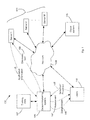
- Fig. 1 illustrates an exemplary environment 100 for decommissioning a production computer system. Illustrated are a decommissioning system 105, a group of servers 110, and a cloud computing system 115. The various systems and servers may be in communication with one another via a network 120, such as the Internet.
- a network 120 such as the Internet.
- the cloud computing system 115 corresponds to a collection of computing resources that may be shared by various entities. For example, computer processors, mass storage devices, network infrastructure, etc. may be shared by different companies.
- the cloud computing system 115 is generally setup in such that a given company only has access to its own data and applications.
- the cloud computing system 115 may be maintained by dedicated IT personal who may be available 24/7 to deal with any issues of the cloud computing system 115. Companies that operate the cloud computing systems 115 typically charge fees for hosting applications. These fees may be used in part to improve the functioning of the cloud computing system from time-to-time by upgrading processors, increasing mass storage, improving network access, etc.
- the servers 110 generally correspond to computers systems that may be located in-house and managed by a local IT group or an IT consultant.
- Applications operating on the servers 110 may include email applications, web server applications, various custom applications, etc.
- the decommissioning system 105 assesses whether an application operating on a given server 110 is suitable for migration to the cloud system 115, and assesses a cost benefit for doing so.
- the decommissioning system 105 is further capable of taking care of the steps necessary to deploy the application to the cloud system 115.
- the decommissioning system 105 deploys a discovery tool 130 to a server 110 applications.
- the discovery tool 130 includes modules for performing an analysis of the applications running on the server 110, an in turn transmits application information 135 back to the decommissioning system 105 regarding applications running on the server, their dependencies on other applications, and hardware utilized by the applications.
- the decommissioning system 105 then generates a report that includes assessment information 142 that indicates a given applications suitability for migration to the cloud system 115, cost benefit information for doing so, and details of the type of migration to perform.
- the assessment information 142 is generally determined as follows:
- the decommissioning system 105 uses the application information 135 provided by the discovery tool 130 to classify the application. For example, the decommissioning system 105 searches a training data store 107 for previously assessed applications having similar properties similar to those of the application. Previously determined assessments associated with those applications are then utilized to form the basis of the assessment information 142 in the report.
- the initial data provided in the training data store 107 is generated during a training phase.
- Subject matter experts (SMEs) having detailed knowledge of various applications determine whether an application is suitable for migration to the cloud system along with the type of template to utilize in migrating the application.
- Property information associated with those applications may have been previously obtained by the discovery tool.
- the results of the SME determinations and application properties are then related to one another in the training data store 107.
- a user 118 of the decommissioning system 105 can agree with the assessment information 142 provided by the decommissioning system or select different migration options. The choice made by the user 118 is utilized by decommissioning system 105 to update the information in the training data store 107. In this way, the decommissioning system 105 learns over time to make better assessments.
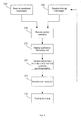
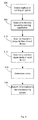
- Fig. 2 illustrates various operations that may be performed by the decommissioning system 105 in determining whether an application operating on a server 110 should be decommissioned.
- the operations are better understood with references to the screenshots illustrated in Figs. 3 , 4 , 6 , and 7 . It should be understood that the operations described below may be performed by one or more computer systems operating in cooperation with one another.
- the computer system may include non-transitory computer readable media such as RAM, ROM, and mass storage upon which instruction code for carrying out the operations may be stored.
- the decommissioning system 105 may receive responses to questionnaires 140 regarding various aspects of the various applications operating on different servers 110 throughout a company from subject matter experts (SMEs) associated with the various applications.
- the questionnaire 140 may have been delivered to the SMEs via web page or a different communication channel.
- the web page may be submitted back to the decommissioning system 105.
- Questions in the questionnaires 140 may have asked the SMEs to provide a business value for each application, such as a money amount indicative of revenue generated by the application.
- the SMEs may have been asked to rank the value on a 1 to 10 scale, 1 indicating the lowest value.
- the business value may be expressed in a different manner.
- Other business level related questions may include those listed in Table 2 below.
- the SMEs may have been asked to identify various dependencies of the applications. For example, the SMEs may have been asked whether there are other libraries, databases, etc. upon which a given application is dependent.
- Table 1 below lists a subset of exemplary questions to which answers may have been provided by SMEs. Table 1 • Time to market ⁇ What is application's primary business purpose? ⁇ What geographic areas does the application service? • Migration costs ⁇ What are the constraints / requirements with regard to budget and costs? Please explain.
- training information may be received at the decommissioning system 105.
- the initial data provided in the training data store 107 is generated during a training phase.
- Subject matter experts (SMEs) having detailed knowledge of various applications determine whether an application is suitable for migration to the cloud system along with the type of template to utilize in migrating the application.
- the results of those determinations are stored in the training data store 107 and related to the application classification information that is in turn associated with the applications for which the SME's made a determination.
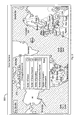
- the decommissioning system 105 may receive a selection of a server to analyze. For example, as illustrated in the exemplary screen shot 300 of Fig. 3 , the decommissioning system 105 may generate a world map that indicates the geographic locations of various data centers. The screen shot 300 may be conveyed to a user of the decommissioning system 105 via a web server, terminal of the decommissioning system 105, etc.
- the user 118 may select a first data center 305.
- the decommissioning system 105 may then display a dialog box 310 that lists information previously discovered about the first data center 305. Discovery of the information is described below.
- the previously discovered information may include, for example, the number of servers located at the data center, the number of servers that have been assessed by the decommissioning system 105, the total number of applications operating on the server, and the number of applications migrated to the cloud computing system 115. Other information related to the selected data center 305 may be listed.
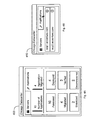
- Figs. 4A and 4B illustrate dialog boxes that may be displayed when the user selects a data center 305.
- the dialog box 400 displays the number of applications that have been stabilized, deployed, verified, and decommissioned.
- being deployed indicates that the application is set up on the cloud but it's data is yet to be migrated.
- Being migrated indicates that the application has been set up on the cloud (i.e., deployed) and that the data associated with the application has been migrated.
- the number of decommissioned applications correspond to the number of applications in the data center than have been shut down and/or deployed to the cloud computing system 115.
- the dialog box 410 of Fig. 4B lists the servers previously determined to be operating in the data center 305 along with the number of applications operating on each server.
- the decommissioning system 105 may communicate a discovery tool 130 ( Fig. 1 ) to the selected server and communicates an instruction to the server 110 to install the discovery tool 130 and to execute the discovery tool 130.
- the discovery tool 130 is configured to performing various types of analysis/operations, as illustrated in Fig. 5 for determining information related to applications running on a server 110.
- the discovery tool 130 is configured to identify the processes that are running on the server 110 and from those processes, determine hardware component dependencies of the processes, dependencies of the processes on other applications, and application interfaces of the processes.
- a first operation of the discovery tool 130 may determine the various processes and/or applications currently being executed on the server 110.
- most mainstream operating systems such as Unix, Linux and Window OS have built in commands to locate processes/application, their packages, and dependent libraries.
- the discovery tool is built using Java JDK 1.8 and launches the appropriate OS system command to identify the information above, then uses built in functions of the Java API to read the packages and their contents.
- a mix Java functions and functions for parsing XML files may be utilized to determine dependencies of the applications by reading configuration files stored within the packages.
- the first module may include the amount of processor usage associated with a given application and/or a number of users that utilize the application.
- the first module may be left to run on the server for a predetermined amount of time, such as a week, month, etc. to provide a better assessment as to the overall usage of the application.
- Table 2 below illustrates information that may be determined by the first module.
- Table 2 Server Application Number of Users %Processor usage acp1.accenture.com Mail app 1000 20% acp1.accenture.com Webserver app 10000 50% acp1.accenture.com Weather app 10 2% ... ... ...
- Table 2 there are three applications running on a server at URL acp1.accenture.com. During the period of analysis, such as a month, 1000 different users utilized the mail application, 10000 utilized the webserver application, and 10 users utilized the weather application. The mail application utilized 20% of the processing power during the analysis period. The webserver application utilized 50%, and the weather application utilized 2%.
- a second operation of the discovery tool 130 may locate and scan code repositories associated with each application to identify interfaces, reports, data access components, and conversion programs that are utilized by the application.
- a third operation of the discovery tool 130 may determine any libraries that may be utilized by the applications identified above by scanning configuration property files associated with each library to determine whether a given library is utilized by a given application. For example, a given application may require functions defined in a code library. The third module may, therefore, determine that the application has a dependency on the library.
- a fourth operation may determine any external dependencies of the applications.
- a mail application may be connected to a data file that stores the emails of all the users of the mail application.
- the data file may be stored on a particular hard drive.
- the application may be determined to have a dependency on both the data base and the hard drive.
- a fifth operation may locate a configuration management database (CMD) and may scan the CMD to determine the identities and emails of teams and individuals shown over time as having been given access to the applications.
- CMS configuration management database
- the rationale behind this is that the identified users 118 may have some level of interest in the application. It may, therefore, be necessary to contact these users prior decommissioning of the application or migrating the application to the cloud computing system 115.
- the discovery tool 130 may communicate application information 135 that summarizes the results of running the various modules above to the decommissioning system 105.
- the decommissioning system 105 may receive the information 135 from the discovery tool 130 and generate a recommendation. For example, the properties of the application under evaluation, as determined by the discovery tool 130, may be compared with the properties of applications stored in the training data store 107. Applications in the training data store 107 having properties similar to those of the target application may be selected. The recommendations regarding whether to migrate those applications to the cloud, template types for deployment to use, etc., that were specified by the SME are retrieved and form the basis of the recommendation as to cloud migration, template type, etc. for the target application.
- each application is scored on a set of attributes related to business value, technical fitment and risk/control/compliance information determined from the questionnaire 140.
- the application is given a rating of 1-5 for each attribute depending on the answers to the question.
- Algorithmic evaluations using classification algorithms e.g., Native Bayes
- the recommendation output regarding a business value for a particular application may be one of: strategic, invest, reduce, remove, wherein strategic corresponds to the highest value business value.
- a recommendation output regarding technical fitment for cloud may be one of: cloud native, cloud candidate, to-be-modernized, where cloud native indicates a high degree of suitability for deploying the application to the cloud system 115.
- a recommendation output regarding risk/compliance sensitivities may be one of: high, medium or low, wherein high indicates a high risk of compliance issues should the application be deployed to the cloud system 115.
- the algorithms above may also be run on each dependency associated with the application determined by the discovery tool 130. Total cost of ownership data is collected on these applications including run and hosting costs from the questionnaire 140.
- an alternating least squares (ALS) algorithm is utilized to determine the recommended cloud model for the client as one of: SaaS, PaaS, and IaaS, and its cloud nativity as one of: public, private, and on premise.
- the user may be able to can override the recommendations in which case machine learning algorithms of the decommissioning system will record the override and subsequent recommendations will take into consideration the overrides that were made to re-evaluate whether there is a need to fine tune the recommendation.
- Fig. 6 illustrates a screen shot 600 that displays recommendations regarding several applications that may be generated by the decommissioning system 105.
- the first three columns (605, 610, and 615) indicate the name of the server that was analyzed, applications discovered on the server, and the migration status of each discovered application, respectively.
- a status of "Assessed” may indicate that the assessments described above have been performed, but that no other action has been taken.
- a status of "Deployed” may indicate that the application has been decommissioned on the named server and moved to the cloud computing system 115. While not illustrated, the status indicator may also indicate "Ready to Deploy” or something similar to indicate that the cloud computing system 115 is ready to receive the application to be deployed.
- the status indicator may also indicate "Decommissioned” or something similar to indicate that the application has been decommissioned, but not redeployed elsewhere. Other information may be provided in the status column 615.
- a business value column 620 provides an indication of the potential cost savings that may be realized if the application was migrated using the recommended parameters.
- the business value may be based on user 118 feedback provided in the questionnaire 140 regarding a given target application.
- the SME for the target application may have indicated in the corresponding questioner that the total cost associated with operating the target application on the current server is $150000.
- operating the application in the cloud using the recommended provider, recommended template, etc. may be known to cost $80,000.
- a savings of $70,000 may be realized by migrating the application to the cloud.
- a cloud readiness column 625 indicates the suitability for deploying a given application to the cloud computing system 115.
- a website hosted on a server to be decommissioned may be easily ported to the cloud computing system 115.
- an application that requires intensive computing power (as indicated by its usage of the processor) (see Table 1) may be less suited to operating on the cloud computing system 115.
- applications that have a large number of dependencies on other systems that cannot for one reason or the other be deployed to the cloud may not be good candidates for cloud deployment.
- a cloud nativity set of columns 630 indicates the suitability for the application operating within one of the following: A public cloud network in which case the network utilized by the application when operating in the cloud will be public; a private cloud network in which case the network utilized by the application when operating in the cloud will be a private network inaccessible to the public, on premise, which means the original data center at which the application is currently installed.
- Deployment on a public network may be selected, for example, when the application to be deployed is intended to be utilized by the general public.
- Deployment on a private network may be selected when the application to be deployed is intended to be utilized by, for example, personal within a corporation. Maintaining an application on premises may be selected when the application is not a candidate for deployment to the cloud for the reasons discussed earlier.
- a cloud model set of columns 635 indicates whether the deployed application should be deployed as software as a service (SAAS), platform as a service (PAAS), and infrastructure as a service (IAAS).
- SAAS may be indicated for applications that require web based access as well as mobile access, such as an email application, CRM system, etc.
- PAAS may be indicated for applications that are utilized by developers to develop applications.
- IASS may be indicated for applications that require on demand access to servers, storage, network and operating systems.
- a recommended/selected cloud model column 640 indicates the recommendation from the decommissioning system 105 as to which of the above models is preferable or a selection made be a user of the decommissioning system 105. As noted above, this recommendation is based on a comparison of the target application to applications in the training data store 107 for which a model was specified by an SME.
- a recommended cloud solution column 604 indicates an automatic recommendation from the decommissioning system 105 as to a cloud solution to utilize or a selection made be a user of the decommissioning system 105. This recommendation is based on a comparison of the target application to applications in the training data store 107 for which a cloud solution was specified by an SME.
- the decommissioning system 105 may receive user selection.
- each of the applications listed in the exemplary report may include a configuration button 650 that a user of the decommissioning system 105 may select to display a dialog box for selecting the type of deployment, as illustrated in Fig. 7A .
- the dialog box 700 allows the user to select the type of cloud solution 705.
- the user may select AWS, which corresponds to Amazon Web Services cloud computing service.
- the user may select the cloud model 710, such as IAAS.
- the user may specify the number of instances 715 of the application to deploy to the cloud computing system 115. For example, the user may specify that three instances of the application are to be deployed.
- the user may specify a deployment template 720.
- the deployment template may correspond to templates made available by the selected cloud solution provider.
- the template choices include a VPC (virtual private computer) operating on a single network subnet, a VPC with both private and public network subnets, a VPC with both private and public network subnets and hardware VPN (virtual private network) access, and a VPC with only a private network subnet and hardware VPN access.
- the template choices are presented by way of a drop down list.
- graphical depictions 755 of the network topologies corresponding to the template choices described above may be provided.
- the graphical depictions 755 allow the user to visualize the network topology, which in some cases may be easier to understand for the user.
- the user may select a template topology by selecting one of the graphical depictions 755.
- a "Show Template” button 725 may be provided on the dialog box 700 for activating a short video that describes the various topologies associated with the deployment template options, as illustrated in Fig. 8 .
- the video may present each of the template choices provided by the cloud system provided.
- the video may correspond to a series of tutorial clips.
- Each clip may have been prepared by an SME.
- the SME may narrate on the clip describing the merits of a particular template/toplogy for implementing a cloud solution.
- the clip may describe the features of each template and provide some guidance as to the types of applications best suited for a particular template. This in turn helps the user of the decommissioning system 105 determine whether a particular template is more suitable than another.
- the dialog box displaying the video is configured to detect a user click of the video during video playback.
- the decommissioning system 105 will attempt to determine the actual template offered by the cloud service provider that is associated with the template being discussed in the video clip.
- machine learning algorithms similar to those discussed above, may be utilized to relate the clip to a particular cloud provided template. That is, during an initial phase, training information may have been provided to make the associations. Then, during use, feedback based on user interaction with the system may be utilized to improve the accuracy of the training data.
- various graphics comparison routines may be utilized to determine whether a template being illustrated in a video clip matches a topology choice of the cloud provided.
- various Java Advanced Imaging API image comparison functions may be utilized to compare the video clip image to topology images provided by the cloud service provider to determine a topology/template of the cloud service provider that matches the one being discussed in the video clip.
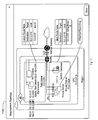
- selection of a preview button 735 may cause a dialog box depicting details of the selected template choice to be displayed, as illustrated in Fig. 9 .
- the template selected by the user corresponds to a template that provides a VPC with both public and private network subnets.
- the application to be deployed corresponds to a weather reporting application 905.
- the dialog box 900 illustrates to the user the computer within the VPC that will host the weather reporting application 905, which in this case is a server 910 located within the private subnet.
- the user selection may be added back to the training information at block 205.
- a user 118 of the decommissioning system 105 can agree with the assessment information 142 provided by the decommissioning system or select different migration options. In either case, the choice made by the user 118 is utilized by decommissioning system 105 to update the information in the training data store 107.
- the application properties associated with the target application and the selections maid by the user regarding the cloud deployment may be added to the training data store 107 and therefore form the basis of future recommendations. As noted above, in this way, the decommissioning system 105 learns over time to make better assessments.
- the application may be deployed to the cloud system 115 based on the user's selection.
- a deploy button 730 may be provided in dialog box 700 for causing the decommissioning system 105 to perform various deployment operations, as illustrated in Fig. 10 .
- the selected deployment template, cloud model, cloud solution, etc. may be received, for example, from the dialog box in Fig. 7A .
- the decommissioning system 105 may communicate with the cloud computing system 115 via, for example, a web services interface, instructions to have the cloud computing system 115 generate the desired template and cloud model on the cloud computing system 115.
- the decommissioning system 105 may also copy the application directly to the cloud computing system and prepare one or more databases, or other storage locations on the cloud computing system 115 for receiving data required by the application.
- DevOps scripts may be generated to automated the deployment of the application to the cloud computing system 115. A user may then transfer the data from the current store location to the store location on the cloud computing system 115.
- the decommissioning system 105 may update the cloud migration status column 615 in the exemplary report shown in Fig. 6 to indicate that the application is ready to be deployed or deployed.
- decommissioning system 105 may display a dialog box 1100 that displays various parameters associated with the deployment, as illustrated in Fig. 11 .
- the dialog box may display actual Internet address allocated to the application.
- the VPC base IP address and the public subnet address may be set to 10.0.0.0.
- the private subnet address may be set to 10.0.1.0.
- An elastic IP address (EIP) for allowing outside parties access to the public subnet may be set to 198.51.100.1 and 198.51.100.2 to facilitate third party access to a pair of servers allocated within the public subnet of the VPC.
- Other information displayed may include various route tables.
- a user of the decommissioning system 105 may take the necessary steps to transfer the application, if not already deployed, and its associated data to the cloud computing system 115. The user may then take the necessary steps to decommission the application from the server 110 from where the application was previously hosted. In some instances, if all applications are decommissioned from a given server 110, the server 110 itself may be decommissioned. That is, the equipment associate with the server 110 may be taken off line, sold, etc.
- Fig. 12 illustrates a computer system 1200 that may form part of or implement the systems described above.
- the computer system 1200 may include a set of instructions 1245 that the processor 1205 may execute to cause the computer system 1200 to perform any of the operations described above.
- the computer system 1200 may operate as a stand-alone device or may be connected, e.g., using a network, to other computer systems or peripheral devices.
- the computer system 1200 may operate in the capacity of a server or as a client-user computer in a server-client user network environment, or as a peer computer system in a peer-to-peer (or distributed) network environment.
- the computer system 1200 may also be implemented as or incorporated into various devices, such as a personal computer or a mobile device, capable of executing the instructions 1245 (sequential or otherwise) that specify actions to be taken by that machine.
- each of the systems described may include any collection of sub-systems that individually or jointly execute a set, or multiple sets, of instructions to perform one or more computer functions.
- the computer system 1200 may include one or more memory devices 1210 on a bus 1220 for communicating information.
- code operable to cause the computer system to perform any of the operations described above may be stored in the memory 1210.
- the memory 1210 may be a random-access memory, read-only memory, programmable memory, hard disk drive or any other type of memory or storage device.
- the computer system 1200 may include a display 1230, such as a liquid crystal display (LCD), a cathode ray tube (CRT), or any other display suitable for conveying information.
- the display 1230 may act as an interface for the user to see the functioning of the processor 1205, or specifically as an interface with the software stored in the memory 1210 or in the drive unit 1215.
- the computer system 1200 may include an input device 1225, such as a keyboard or mouse, configured to allow a user to interact with any of the components of system 1200.
- an input device 1225 such as a keyboard or mouse
- the computer system 1200 may also include a disk or optical drive unit 1215.
- the disk drive unit 1215 may include a computer-readable medium 1240 in which the instructions 1245 may be stored.
- the instructions 1245 may reside completely, or at least partially, within the memory 1210 and/or within the processor 1205 during execution by the computer system 1200.
- the memory 1210 and the processor 1205 also may include computer-readable media as discussed above.
- the computer system 1200 may include a communication interface 1235 to support communications via a network 1250.
- the network 1250 may include wired networks, wireless networks, or combinations thereof.
- the communication interface 1235 network may enable communications via any number of communication standards, such as 802.11, 802.12, 802.20, WiMAX, cellular telephone standards, or other communication standards.
- the method and system may be realized in hardware, software, or a combination of hardware and software.
- the method and system may be realized in a centralized fashion in at least one computer system or in a distributed fashion where different elements are spread across several interconnected computer systems. Any kind of computer system or other apparatus adapted for carrying out the methods described herein may be employed.
- the method and system may also be embedded in a computer program product, which includes all the features enabling the implementation of the operations described herein and which, when loaded in a computer system, is able to carry out these operations.
- Computer program in the present context means any expression, in any language, code or notation, of a set of instructions intended to cause a system having an information processing capability to perform a particular function, either directly or after either or both of the following: a) conversion to another language, code or notation; b) reproduction in a different material form.
- a virtual agent may be provided to a user of the tool make the correct selections.
- the virtual agent can correspond with the user over voice and answer questions directly. For this the virtual agent captures the voice and then searches the database for matching answers using artificial intelligent/learning algorithms similar to those describe above. On locating the best fit answer, the virtual agent provides a voice response. This is useful in cases where the users are globally dispersed and therefore can leverage the virtual agent instead of a physical SME. Also, since the virtual agent is in real time able to access and search a vast database comprising of information globally across a firm's data centers, the virtual agent's responses are likely to be more accurate and with quicker turnaround thereby driving up user experience.
- the decommissioning system may be configured to send notifications (i.e., emails, text messages, etc.) to stakeholders pertaining to various stages of the decommissioning and cloud migration process, such as "Being Assessed”, “Ready to Deploy”, “Deployed,” etc.
- the notifications could also provide other status updates, escalations, alerts, approval notices, reverse sign off mailers etc.
- the decommissioning system may be configured to request approvals/reverse sign offs etc. from various stakeholders related to a particular application.
- the decommission system may request approval before moving to a next operation of Fig. 2 .
- These approvals and signoffs could be coordinated with a calendar tracking operation of the decommission system. For example, if an approval for proceeding to a next operation is not received by a certain date, a notification to alert one or more stakeholders associated with a given application may be communicated to the stakeholders.
- the calendar and tracking aspect may also allow the various stakeholders to get a comprehensive view of the overall project status and take remedial measures as appropriate. For example, a graphical depiction of a calendar or timeline view associated with the assessment and migration of a given application may be provided to provide a visual representation of the status.
- the embodiments may be adapted to address not only decommissioning of technology systems but also of their associated business processes. For example, if the embodiments recommend moving an application to the cloud, the embodiments may be adapted to facilitate migration & modification of the associated business process to meet the new requirement using approached similar to those described above.
- the embodiments may assess the quantity of data currently residing in a given system for which applications are to be migrated, and recommend modes and methods of migration of data or archival of data using offline or near real time storage medium as appropriate.
Landscapes
- Engineering & Computer Science (AREA)
- Theoretical Computer Science (AREA)
- Business, Economics & Management (AREA)
- Software Systems (AREA)
- Physics & Mathematics (AREA)
- General Physics & Mathematics (AREA)
- Human Resources & Organizations (AREA)
- Quality & Reliability (AREA)
- Strategic Management (AREA)
- Tourism & Hospitality (AREA)
- Operations Research (AREA)
- General Business, Economics & Management (AREA)
- Marketing (AREA)
- Entrepreneurship & Innovation (AREA)
- Economics (AREA)
- General Engineering & Computer Science (AREA)
- Management, Administration, Business Operations System, And Electronic Commerce (AREA)
- Stored Programmes (AREA)
Applications Claiming Priority (1)
| Application Number | Priority Date | Filing Date | Title |
|---|---|---|---|
| IN3678CH2015 | 2015-07-17 |
Publications (1)
| Publication Number | Publication Date |
|---|---|
| EP3118781A1 true EP3118781A1 (en) | 2017-01-18 |
Family
ID=56464070
Family Applications (1)
| Application Number | Title | Priority Date | Filing Date |
|---|---|---|---|
| EP16179933.3A Ceased EP3118781A1 (en) | 2015-07-17 | 2016-07-18 | Method and system for intelligent cloud planning and decommissioning |
Country Status (6)
| Country | Link |
|---|---|
| US (1) | US10255081B2 (OSRAM) |
| EP (1) | EP3118781A1 (OSRAM) |
| JP (1) | JP6765885B2 (OSRAM) |
| CN (1) | CN106445652B (OSRAM) |
| AU (2) | AU2016206215A1 (OSRAM) |
| CA (1) | CA2936397A1 (OSRAM) |
Cited By (2)
| Publication number | Priority date | Publication date | Assignee | Title |
|---|---|---|---|---|
| EP3872627A1 (en) * | 2020-02-28 | 2021-09-01 | Hexaware Technologies Limited | System and method for application environment migration |
| US20230039875A1 (en) * | 2021-07-22 | 2023-02-09 | Vmware, Inc. | Adaptive idle detection in a software-defined data center in a hyper-converged infrastructure |
Families Citing this family (35)
| Publication number | Priority date | Publication date | Assignee | Title |
|---|---|---|---|---|
| JP6214679B2 (ja) * | 2013-01-31 | 2017-10-18 | ヒューレット パッカード エンタープライズ デベロップメント エル ピーHewlett Packard Enterprise Development LP | クラウドコンピューティング環境へのコンピューティングリソースの移動可能性の決定 |
| US10685305B2 (en) * | 2015-10-19 | 2020-06-16 | International Business Machines Corporation | Evaluating adoption of computing deployment solutions |
| US9680696B1 (en) | 2016-07-18 | 2017-06-13 | Capital One Financial Corporation | Cloud migration and maintenance controls |
| JP2018173881A (ja) * | 2017-03-31 | 2018-11-08 | 富士通株式会社 | 評価処理プログラム、装置、及び方法 |
| US10419393B2 (en) * | 2017-05-11 | 2019-09-17 | International Business Machines Corporation | Using network configuration analysis to improve server grouping in migration |
| CN109032752B (zh) * | 2017-06-12 | 2023-03-10 | 微软技术许可有限责任公司 | 基于云平台的操作撤销 |
| CN109246171A (zh) * | 2017-07-11 | 2019-01-18 | Tcl集团股份有限公司 | 应用程序推荐方法、推荐装置及终端设备 |
| US10303450B2 (en) * | 2017-09-14 | 2019-05-28 | Cisco Technology, Inc. | Systems and methods for a policy-driven orchestration of deployment of distributed applications |
| CN109508227B (zh) * | 2017-09-15 | 2021-06-22 | 阿里巴巴(中国)有限公司 | 应用分析方法、装置、计算设备以及存储介质 |
| US20190158367A1 (en) * | 2017-11-21 | 2019-05-23 | Hewlett Packard Enterprise Development Lp | Selection of cloud service providers to host applications |
| US10904068B2 (en) | 2018-01-12 | 2021-01-26 | Datera, Inc. | System and method to provide seamless data placement, data movement, and data management into cloud |
| US10462009B1 (en) * | 2018-02-20 | 2019-10-29 | Amazon Technologies, Inc. | Replicating customers' information technology (IT) infrastructures at service provider networks |
| US10915349B2 (en) | 2018-04-23 | 2021-02-09 | Hewlett Packard Enterprise Development Lp | Containerized application deployment |
| US10956631B2 (en) * | 2018-08-31 | 2021-03-23 | Accenture Global Solutions Limited | Distribution selection and simulation of intermittent data using machine learning (ML) |
| US11106261B2 (en) * | 2018-11-02 | 2021-08-31 | Nvidia Corporation | Optimal operating point estimator for hardware operating under a shared power/thermal constraint |
| US10785128B1 (en) * | 2018-11-21 | 2020-09-22 | Candid Partners, LLC | System, apparatus and method for deploying infrastructure to the cloud |
| US10990370B1 (en) | 2018-11-21 | 2021-04-27 | Candid Labs, Inc. | System, apparatus and method for deploying infrastructure to the cloud |
| CN109683911B (zh) * | 2018-12-26 | 2022-03-08 | 上海金融期货信息技术有限公司 | 一种实现自动化应用部署及影响分析的系统 |
| US11061718B2 (en) * | 2019-02-15 | 2021-07-13 | International Business Machines Corporation | Pattern-based artificial intelligence planner for computer environment migration |
| US11483384B2 (en) | 2019-03-19 | 2022-10-25 | Hewlett Packard Enterprise Development Lp | Application migrations |
| US10931739B2 (en) | 2019-03-28 | 2021-02-23 | Wipro Limited | Method and system for generating strategy and roadmap for end-to-end information technology infrastructure cloud implementation |
| US11182724B2 (en) * | 2019-08-30 | 2021-11-23 | Tata Consultancy Services Limited | Estimation of per-application migration pricing and application move group sequence for cloud migration |
| US20210174280A1 (en) * | 2019-12-09 | 2021-06-10 | Thiruchelvan K Ratnapuri | Systems and Methods for Efficient Cloud Migration |
| US12014195B2 (en) | 2019-12-12 | 2024-06-18 | Cognizant Technology Solutions India Pvt. Ltd. | System for providing an adaptable plugin framework for application transformation to cloud |
| US11899570B2 (en) | 2019-12-12 | 2024-02-13 | Cognizant Technology Solutions India Pvt. Ltd. | System and method for optimizing assessment and implementation of microservices code for cloud platforms |
| US11237941B2 (en) | 2019-12-12 | 2022-02-01 | Cognizant Technology Solutions India Pvt. Ltd. | System and method for application transformation to cloud based on semi-automated workflow |
| US20220129317A1 (en) * | 2020-10-28 | 2022-04-28 | EMC IP Holding Company LLC | Managing changes to shared code resources |
| US11663048B2 (en) * | 2020-12-22 | 2023-05-30 | Dell Products L.P. | On-premises to cloud workload migration through cyclic deployment and evaluation |
| US11677621B2 (en) * | 2021-10-28 | 2023-06-13 | Dell Products L.P. | System for generating data center asset configuration recommendations |
| US20240054231A1 (en) * | 2022-08-15 | 2024-02-15 | Microsoft Technology Licensing, Llc | Cloud-agnostic code analysis |
| EP4639330A1 (en) * | 2022-12-22 | 2025-10-29 | Lemongrass Holdings, Inc. | System and method for migrating database contents of an sap system |
| US11915730B1 (en) | 2023-06-13 | 2024-02-27 | International Business Machines Corporation | Magnetic media decommission management in a computer system |
| US12125499B1 (en) | 2023-06-13 | 2024-10-22 | International Business Machines Corporation | Magnetic media decommission management in a computer system |
| CN117216770A (zh) * | 2023-09-25 | 2023-12-12 | 江苏天好富兴数据技术有限公司 | 一种DevOps流水线超融合部署安全检测系统及方法 |
| US20250245245A1 (en) * | 2024-01-30 | 2025-07-31 | Teachers Insurance And Annuity Association Of America | Method and system for visualizing application vitals across an enterprise using artificial intelligence |
Citations (6)
| Publication number | Priority date | Publication date | Assignee | Title |
|---|---|---|---|---|
| US20100231383A1 (en) * | 2009-03-16 | 2010-09-16 | Uri Levine | Condition-based activation, shut-down and management of applications of mobile devices |
| US20140019212A1 (en) * | 2010-03-30 | 2014-01-16 | Exoprise Systems Inc. | Systems and methods for facilitating migration and adoption of an alternative computing infrastructure |
| US20140040880A1 (en) * | 2012-08-02 | 2014-02-06 | International Business Machines Corporation | Application deployment in heterogeneous environments |
| US20140122577A1 (en) * | 2012-10-26 | 2014-05-01 | Syntel, Inc. | System and method for evaluating readiness of applications for the cloud |
| EP2808790A2 (en) * | 2013-05-28 | 2014-12-03 | Accenture Global Services Limited | Migration assessment for cloud computing platforms |
| US20150020061A1 (en) * | 2013-07-11 | 2015-01-15 | Oracle International Corporation | Forming an upgrade recommendation in a cloud computing environment |
Family Cites Families (19)
| Publication number | Priority date | Publication date | Assignee | Title |
|---|---|---|---|---|
| JP4528116B2 (ja) * | 2002-06-25 | 2010-08-18 | インターナショナル・ビジネス・マシーンズ・コーポレーション | 分散環境中でアプリケーションの性能を監視するための方法およびシステム |
| AU2004313518A1 (en) * | 2003-12-15 | 2005-07-28 | Evolveware Information Technology (India) Pty. Ltd | An apparatus for migration and conversion of software code from any source platform to any target platform |
| US8122444B2 (en) * | 2007-08-02 | 2012-02-21 | Accenture Global Services Limited | Legacy application decommissioning framework |
| US8799210B2 (en) * | 2008-02-01 | 2014-08-05 | Infosys Limited | Framework for supporting transition of one or more applications of an organization |
| US7987262B2 (en) | 2008-11-19 | 2011-07-26 | Accenture Global Services Limited | Cloud computing assessment tool |
| US20110231229A1 (en) * | 2010-03-22 | 2011-09-22 | Computer Associates Think, Inc. | Hybrid Software Component and Service Catalog |
| US20110270968A1 (en) * | 2010-04-30 | 2011-11-03 | Salsburg Michael A | Decision support system for moving computing workloads to public clouds |
| US8688792B2 (en) * | 2010-05-06 | 2014-04-01 | Nec Laboratories America, Inc. | Methods and systems for discovering configuration data |
| US20120054626A1 (en) * | 2010-08-30 | 2012-03-01 | Jens Odenheimer | Service level agreements-based cloud provisioning |
| US9736252B2 (en) * | 2010-11-23 | 2017-08-15 | Red Hat, Inc. | Migrating subscribed services in a cloud deployment |
| US20130091285A1 (en) * | 2011-10-11 | 2013-04-11 | International Business Machines Corporation | Discovery-based identification and migration of easily cloudifiable applications |
| US8880638B2 (en) * | 2012-06-18 | 2014-11-04 | International Business Machines Corporation | Distributed image cache for servicing virtual resource requests in the cloud |
| US9552232B2 (en) * | 2013-03-12 | 2017-01-24 | Xerox Corporation | System and process to recommend cloud service cloud configuration based on service similarity |
| US20140280964A1 (en) * | 2013-03-15 | 2014-09-18 | Gravitant, Inc. | Systems, methods and computer readable mediums for implementing cloud service brokerage platform functionalities |
| US9813318B2 (en) * | 2013-03-15 | 2017-11-07 | International Business Machines Corporation | Assessment of best fit cloud deployment infrastructures |
| US20150134424A1 (en) * | 2013-11-14 | 2015-05-14 | Vmware, Inc. | Systems and methods for assessing hybridization of cloud computing services based on data mining of historical decisions |
| US9836332B2 (en) * | 2014-07-31 | 2017-12-05 | Corent Technology, Inc. | Software defined SaaS platform |
| CN104391743B (zh) * | 2014-11-26 | 2018-01-12 | 北京奇虎科技有限公司 | 优化移动终端的运行速度的方法和装置 |
| US9806969B2 (en) * | 2015-03-02 | 2017-10-31 | Bank Of America Corporation | Infrastructure trending tool |
-
2016
- 2016-07-17 US US15/212,285 patent/US10255081B2/en active Active
- 2016-07-18 AU AU2016206215A patent/AU2016206215A1/en not_active Abandoned
- 2016-07-18 EP EP16179933.3A patent/EP3118781A1/en not_active Ceased
- 2016-07-18 CN CN201610567108.8A patent/CN106445652B/zh active Active
- 2016-07-18 CA CA2936397A patent/CA2936397A1/en active Pending
- 2016-07-19 JP JP2016141100A patent/JP6765885B2/ja active Active
-
2017
- 2017-08-04 AU AU2017210624A patent/AU2017210624A1/en not_active Abandoned
Patent Citations (6)
| Publication number | Priority date | Publication date | Assignee | Title |
|---|---|---|---|---|
| US20100231383A1 (en) * | 2009-03-16 | 2010-09-16 | Uri Levine | Condition-based activation, shut-down and management of applications of mobile devices |
| US20140019212A1 (en) * | 2010-03-30 | 2014-01-16 | Exoprise Systems Inc. | Systems and methods for facilitating migration and adoption of an alternative computing infrastructure |
| US20140040880A1 (en) * | 2012-08-02 | 2014-02-06 | International Business Machines Corporation | Application deployment in heterogeneous environments |
| US20140122577A1 (en) * | 2012-10-26 | 2014-05-01 | Syntel, Inc. | System and method for evaluating readiness of applications for the cloud |
| EP2808790A2 (en) * | 2013-05-28 | 2014-12-03 | Accenture Global Services Limited | Migration assessment for cloud computing platforms |
| US20150020061A1 (en) * | 2013-07-11 | 2015-01-15 | Oracle International Corporation | Forming an upgrade recommendation in a cloud computing environment |
Cited By (9)
| Publication number | Priority date | Publication date | Assignee | Title |
|---|---|---|---|---|
| EP3872627A1 (en) * | 2020-02-28 | 2021-09-01 | Hexaware Technologies Limited | System and method for application environment migration |
| WO2021171110A1 (en) * | 2020-02-28 | 2021-09-02 | Hexaware Technologies Limited | System and method for application environment migration |
| US11385882B2 (en) | 2020-02-28 | 2022-07-12 | Hexaware Technologies Limited | System and method for application environment migration |
| GB2606901A (en) * | 2020-02-28 | 2022-11-23 | Hexaware Tech Limited | System and method for application environment migration |
| JP2023507229A (ja) * | 2020-02-28 | 2023-02-21 | ヘキサウェア テクノロジーズ リミテッド | アプリケーション環境マイグレーションのためのシステムおよび方法 |
| GB2606901B (en) * | 2020-02-28 | 2023-07-26 | Hexaware Tech Limited | System and method for application environment migration |
| AU2021225408B2 (en) * | 2020-02-28 | 2023-11-30 | Hexaware Technologies Limited | System and method for application environment migration |
| US20230039875A1 (en) * | 2021-07-22 | 2023-02-09 | Vmware, Inc. | Adaptive idle detection in a software-defined data center in a hyper-converged infrastructure |
| US12067430B2 (en) * | 2021-07-22 | 2024-08-20 | VMware LLC | Adaptive idle detection in a software-defined data center in a hyper-converged infrastructure |
Also Published As
| Publication number | Publication date |
|---|---|
| US10255081B2 (en) | 2019-04-09 |
| CN106445652A (zh) | 2017-02-22 |
| CN106445652B (zh) | 2021-08-10 |
| JP2017062767A (ja) | 2017-03-30 |
| AU2017210624A1 (en) | 2017-08-24 |
| CA2936397A1 (en) | 2017-01-17 |
| JP6765885B2 (ja) | 2020-10-07 |
| AU2016206215A1 (en) | 2017-02-02 |
| US20170017505A1 (en) | 2017-01-19 |
Similar Documents
| Publication | Publication Date | Title |
|---|---|---|
| US10255081B2 (en) | Method and system for intelligent cloud planning and decommissioning | |
| US10042636B1 (en) | End-to end project management platform with artificial intelligence integration | |
| US20220292999A1 (en) | Real time training | |
| US20200082307A1 (en) | Real-time matching of users to enterprise interfaces and artifacts | |
| US12474957B2 (en) | Distributed actor-based information system and method | |
| US10915823B2 (en) | System for automatic classification and routing | |
| Gross et al. | The experience sampling method and its tools: a review for developers, study administrators, and participants | |
| AU2016200559B2 (en) | Method and system for communicating product development information | |
| US11941685B2 (en) | Virtual environment arrangement and configuration | |
| WO2025137041A1 (en) | Microservices based no-code ai solution | |
| US20240020593A1 (en) | User interface presenting integrated enterprise services | |
| Brown et al. | VMware vSphere 6.7 Data Center Design Cookbook: Over 100 practical recipes to help you design a powerful virtual infrastructure based on vSphere 6.7 | |
| Gyorgy et al. | Classification of on-line students using an expert system over open source, distributed cloud computing system | |
| Sääksvuori | Development of A/B testing capability for digital service operations using a third-party tool | |
| Paul | Citrix xenApp® 7.5 desktop virtualization solutions | |
| Kowalski et al. | 10 Heuristics for Designing Administrative User Interfaces–A Collaboration Between Ethnography, Design, and Engineering | |
| Shad | Implementing a virtual desktop infrastructure at the District of North Vancouver | |
| Arikan | Software engineering practices on mobile applications | |
| Szuter et al. | LoadSplunker-Dashboard |
Legal Events
| Date | Code | Title | Description |
|---|---|---|---|
| PUAI | Public reference made under article 153(3) epc to a published international application that has entered the european phase |
Free format text: ORIGINAL CODE: 0009012 |
|
| STAA | Information on the status of an ep patent application or granted ep patent |
Free format text: STATUS: THE APPLICATION HAS BEEN PUBLISHED |
|
| AK | Designated contracting states |
Kind code of ref document: A1 Designated state(s): AL AT BE BG CH CY CZ DE DK EE ES FI FR GB GR HR HU IE IS IT LI LT LU LV MC MK MT NL NO PL PT RO RS SE SI SK SM TR |
|
| AX | Request for extension of the european patent |
Extension state: BA ME |
|
| RAP1 | Party data changed (applicant data changed or rights of an application transferred) |
Owner name: ACCENTURE GLOBAL SOLUTIONS LIMITED |
|
| STAA | Information on the status of an ep patent application or granted ep patent |
Free format text: STATUS: REQUEST FOR EXAMINATION WAS MADE |
|
| 17P | Request for examination filed |
Effective date: 20170622 |
|
| RBV | Designated contracting states (corrected) |
Designated state(s): AL AT BE BG CH CY CZ DE DK EE ES FI FR GB GR HR HU IE IS IT LI LT LU LV MC MK MT NL NO PL PT RO RS SE SI SK SM TR |
|
| STAA | Information on the status of an ep patent application or granted ep patent |
Free format text: STATUS: EXAMINATION IS IN PROGRESS |
|
| 17Q | First examination report despatched |
Effective date: 20190624 |
|
| STAA | Information on the status of an ep patent application or granted ep patent |
Free format text: STATUS: THE APPLICATION HAS BEEN REFUSED |
|
| 18R | Application refused |
Effective date: 20210306 |