EP3116533B1 - Dystrophin gene exon deletion using engineered nucleases - Google Patents
Dystrophin gene exon deletion using engineered nucleases Download PDFInfo
- Publication number
- EP3116533B1 EP3116533B1 EP15761320.9A EP15761320A EP3116533B1 EP 3116533 B1 EP3116533 B1 EP 3116533B1 EP 15761320 A EP15761320 A EP 15761320A EP 3116533 B1 EP3116533 B1 EP 3116533B1
- Authority
- EP
- European Patent Office
- Prior art keywords
- seq
- recognition sequence
- exon
- dna
- sequence
- Prior art date
- Legal status (The legal status is an assumption and is not a legal conclusion. Google has not performed a legal analysis and makes no representation as to the accuracy of the status listed.)
- Active
Links
Images






Classifications
-
- A—HUMAN NECESSITIES
- A61—MEDICAL OR VETERINARY SCIENCE; HYGIENE
- A61K—PREPARATIONS FOR MEDICAL, DENTAL OR TOILETRY PURPOSES
- A61K38/00—Medicinal preparations containing peptides
- A61K38/16—Peptides having more than 20 amino acids; Gastrins; Somatostatins; Melanotropins; Derivatives thereof
- A61K38/43—Enzymes; Proenzymes; Derivatives thereof
- A61K38/46—Hydrolases (3)
- A61K38/465—Hydrolases (3) acting on ester bonds (3.1), e.g. lipases, ribonucleases
-
- A—HUMAN NECESSITIES
- A61—MEDICAL OR VETERINARY SCIENCE; HYGIENE
- A61K—PREPARATIONS FOR MEDICAL, DENTAL OR TOILETRY PURPOSES
- A61K38/00—Medicinal preparations containing peptides
- A61K38/16—Peptides having more than 20 amino acids; Gastrins; Somatostatins; Melanotropins; Derivatives thereof
- A61K38/43—Enzymes; Proenzymes; Derivatives thereof
- A61K38/54—Mixtures of enzymes or proenzymes covered by more than a single one of groups A61K38/44 - A61K38/46 or A61K38/51 - A61K38/53
-
- A—HUMAN NECESSITIES
- A61—MEDICAL OR VETERINARY SCIENCE; HYGIENE
- A61K—PREPARATIONS FOR MEDICAL, DENTAL OR TOILETRY PURPOSES
- A61K48/00—Medicinal preparations containing genetic material which is inserted into cells of the living body to treat genetic diseases; Gene therapy
- A61K48/005—Medicinal preparations containing genetic material which is inserted into cells of the living body to treat genetic diseases; Gene therapy characterised by an aspect of the 'active' part of the composition delivered, i.e. the nucleic acid delivered
-
- A—HUMAN NECESSITIES
- A61—MEDICAL OR VETERINARY SCIENCE; HYGIENE
- A61P—SPECIFIC THERAPEUTIC ACTIVITY OF CHEMICAL COMPOUNDS OR MEDICINAL PREPARATIONS
- A61P21/00—Drugs for disorders of the muscular or neuromuscular system
-
- A—HUMAN NECESSITIES
- A61—MEDICAL OR VETERINARY SCIENCE; HYGIENE
- A61P—SPECIFIC THERAPEUTIC ACTIVITY OF CHEMICAL COMPOUNDS OR MEDICINAL PREPARATIONS
- A61P21/00—Drugs for disorders of the muscular or neuromuscular system
- A61P21/04—Drugs for disorders of the muscular or neuromuscular system for myasthenia gravis
-
- A—HUMAN NECESSITIES
- A61—MEDICAL OR VETERINARY SCIENCE; HYGIENE
- A61P—SPECIFIC THERAPEUTIC ACTIVITY OF CHEMICAL COMPOUNDS OR MEDICINAL PREPARATIONS
- A61P43/00—Drugs for specific purposes, not provided for in groups A61P1/00-A61P41/00
-
- C—CHEMISTRY; METALLURGY
- C07—ORGANIC CHEMISTRY
- C07K—PEPTIDES
- C07K14/00—Peptides having more than 20 amino acids; Gastrins; Somatostatins; Melanotropins; Derivatives thereof
- C07K14/435—Peptides having more than 20 amino acids; Gastrins; Somatostatins; Melanotropins; Derivatives thereof from animals; from humans
- C07K14/46—Peptides having more than 20 amino acids; Gastrins; Somatostatins; Melanotropins; Derivatives thereof from animals; from humans from vertebrates
- C07K14/47—Peptides having more than 20 amino acids; Gastrins; Somatostatins; Melanotropins; Derivatives thereof from animals; from humans from vertebrates from mammals
- C07K14/4701—Peptides having more than 20 amino acids; Gastrins; Somatostatins; Melanotropins; Derivatives thereof from animals; from humans from vertebrates from mammals not used
- C07K14/4707—Muscular dystrophy
- C07K14/4708—Duchenne dystrophy
-
- C—CHEMISTRY; METALLURGY
- C12—BIOCHEMISTRY; BEER; SPIRITS; WINE; VINEGAR; MICROBIOLOGY; ENZYMOLOGY; MUTATION OR GENETIC ENGINEERING
- C12N—MICROORGANISMS OR ENZYMES; COMPOSITIONS THEREOF; PROPAGATING, PRESERVING, OR MAINTAINING MICROORGANISMS; MUTATION OR GENETIC ENGINEERING; CULTURE MEDIA
- C12N7/00—Viruses; Bacteriophages; Compositions thereof; Preparation or purification thereof
-
- C—CHEMISTRY; METALLURGY
- C12—BIOCHEMISTRY; BEER; SPIRITS; WINE; VINEGAR; MICROBIOLOGY; ENZYMOLOGY; MUTATION OR GENETIC ENGINEERING
- C12N—MICROORGANISMS OR ENZYMES; COMPOSITIONS THEREOF; PROPAGATING, PRESERVING, OR MAINTAINING MICROORGANISMS; MUTATION OR GENETIC ENGINEERING; CULTURE MEDIA
- C12N9/00—Enzymes; Proenzymes; Compositions thereof; Processes for preparing, activating, inhibiting, separating or purifying enzymes
- C12N9/14—Hydrolases (3)
- C12N9/16—Hydrolases (3) acting on ester bonds (3.1)
- C12N9/22—Ribonucleases [RNase]; Deoxyribonucleases [DNase]
-
- C—CHEMISTRY; METALLURGY
- C12—BIOCHEMISTRY; BEER; SPIRITS; WINE; VINEGAR; MICROBIOLOGY; ENZYMOLOGY; MUTATION OR GENETIC ENGINEERING
- C12N—MICROORGANISMS OR ENZYMES; COMPOSITIONS THEREOF; PROPAGATING, PRESERVING, OR MAINTAINING MICROORGANISMS; MUTATION OR GENETIC ENGINEERING; CULTURE MEDIA
- C12N2750/00—MICROORGANISMS OR ENZYMES; COMPOSITIONS THEREOF; PROPAGATING, PRESERVING, OR MAINTAINING MICROORGANISMS; MUTATION OR GENETIC ENGINEERING; CULTURE MEDIA ssDNA viruses
- C12N2750/00011—Details
- C12N2750/14011—Parvoviridae
- C12N2750/14111—Dependovirus, e.g. adenoassociated viruses
- C12N2750/14141—Use of virus, viral particle or viral elements as a vector
- C12N2750/14143—Use of virus, viral particle or viral elements as a vector viral genome or elements thereof as genetic vector
Definitions
- the invention relates to the field of molecular biology and recombinant nucleic acid technology.
- the invention relates to a composition for use in treating a patient with Duchenne Muscular Dystrophy comprising the removal of one exon from the dystrophin gene using engineered nucleases.
- Duchenne Muscular Dystrophy is a rare, X-linked muscle degenerative disorder that affects about 1 in every 3500 boys worldwide.
- the disease is caused by mutations in the dystrophin ( DMD ) gene, which is the largest known gene. DMD spans 2.2 Mb of the X chromosome and encodes predominantly a 14-kb transcript derived from 79 exons.
- the full-length dystrophin protein, as expressed in skeletal muscle, smooth muscle, and cardiomyocytes, is 3685 amino acids and has a molecular weight of 427 kD.
- the severe Duchenne phenotype is generally associated with the loss of full length dystrophin protein from skeletal and cardiac muscle, which leads to debilitating muscle degeneration and, ultimately, heart failure.
- DMD gene makes it incompatible with the limited carrying capacity of common viral vectors, however. This necessitates the use of a "micro-dystrophin" gene in which most of the repetitive central portion of the gene is removed to leave only the minimal functional protein. It is not clear, however, that expression of "micro-dystrophin” is sufficient for clinical benefit. In addition, this approach suffers from the possibility of random gene integration into the patient genome, which could lead to insertional mutagenesis, and the potential for immune reactions against the delivery vector.
- a second approach to treating Duchenne Muscular Dystrophy involves the transplantation of healthy muscle precursor cells into patient muscle fibres ( Peault et al. (2007) Mol. Ther. 15:867-877 ; Skuk, et al. (2007) Neuromuscul. Disord. 17:38-46 ). This approach suffers from inefficient migration of the transplanted myoblasts and the potential for immune rejection by the patient.
- a third approach involves suppression of nonsense mutations using PTC124 ( Welch, et al. (2007) Nature 447:87-91 ). This would require lifelong dosing of the drug, however, and the approach is yet to show any significant clinical benefit.
- the N- and C-terminal portions of the dystrophin gene are essential for its role as a "scaffold" protein that maintains membrane integrity in muscle fibres whereas the central "rod domain", which comprises 24 spectrin-like repeats, is at least partially dispensible.
- the severe Duchenne phenotype is typically associated with mutations in the dystrophin gene that introduce frameshifts and/or premature termination codons, resulting in a truncated form of the dystrophin protein lacking the essential C-terminal domain. Mutations in the central rod domain, including large deletions of whole exons, typically result in the much milder Becker phenotype if they maintain the reading frame such that the C-terminal domain of the protein is intact.
- Duchenne Muscular Dystrophy is most frequently caused by the deletion of one or more whole exon(s), resulting in reading frame shift.
- Exon 45 is frequently deleted in Duchenne patients. Because Exon 45 is 176 bp long, which is not divisible by three, deleting the exon shifts Exons 46-79 into the wrong reading frame. The same can be said of Exon 44, which is 148 bp in length. However, if Exons 44 and 45 are deleted, the total size of the deletion is 324 bp, which is divisible by three. Thus, the deletion of both exons does not result in a reading frame shift.
- exons encode a portion of the non-essential rod domain of the dystrophin protein, deleting them from the protein is expected to result in a mild Becker-like phenotype.
- a patient with the Duchenne phenotype due to the deletion of one or more exon(s) can, potentially, be treated by eliminating one or more adjacent exons to restore the reading frame.
- Exon Skipping in which modified oligonucleotides are used to block splice acceptor sites in dystrophin pre-mRNA so that one or more specific exons are absent from the processed transcript.
- the present invention improves upon current Exon-Skipping approaches by correcting gene expression at the level of the genomic DNA rather than pre-mRNA.
- the invention is a composition comprising a pair of engineered, site-specific endonucleases, or genes encoding such nucleases, for use in a permanent treatment for Duchenne Muscular Dystrophy that involves the excision of specific exons from the DMD coding sequence.
- By targeting a pair of such endonucleases to sites in the intronic regions flanking an exon it is possible to permanently remove the intervening fragment containing the exon from the genome.
- the resulting cell, and its progeny will express mutant dystrophin in which a portion of the non-essential spectrin repeat domain is removed but the essential N- and C-terminal domains are intact.
- ZFNs zinc-finger nucleases
- FokI restriction enzyme a zinc finger DNA-binding domain fused to the nuclease domain of the FokI restriction enzyme.
- the zinc finger domain can be redesigned through rational or experimental means to produce a protein which binds to a pre-determined DNA sequence ⁇ 18 basepairs in length.
- ZFNs have been used extensively to target gene addition, removal, and substitution in a wide range of eukaryotic organisms (reviewed in S. Durai et al., Nucleic Acids Res 33, 5978 (2005 )).
- TAL-effector nucleases can be generated to cleave specific sites in genomic DNA.
- a TALEN comprises an engineered, site-specific DNA-binding domain fused to the FokI nuclease domain (reviewed in Mak, et al. (2013) Curr Opin Struct Biol. 23:93-9 ).
- the DNA binding domain comprises a tandem array of TAL-effector domains, each of which specifically recognizes a single DNA basepair.
- ZFNs and TALENs have for the practice of the current invention is that they are heterodimeric, so that the production of a single functional nuclease in a cell requires co-expression of two protein monomers. Because the current invention requires two nucleases, one to cut on either side of the exon of interest, this would necessitate co-expressing four ZFN or TALEN monomers in the same cell. This presents significant challenges in gene delivery because traditional gene delivery vectors have limited carrying capacity. It also introduces the possibility of "mis-dimerization" in which the monomers associate inappropriately to make unintended dimeric endonuclease species that might recognize and cut off-target locations in the genome. This can, potentially, be minimized by generating orthogonal obligate heterodimers in which the FokI nuclease domains of the four monomers are differentially engineered to dimerize preferentially with the intended partner monomer.
- Compact TALENs are an alternative endonuclease architecture that avoids the need for dimerization ( Beurdeley, et al. (2013) Nat Commun. 4:1762 ).
- a Compact TALEN comprises an engineered, site-specific TAL-effector DNA-binding domain fused to the nuclease domain from the I-TevI homing endonuclease. Unlike FokI, I-TevI does not need to dimerize to produce a double-strand DNA break so a Compact TALEN is functional as a monomer. Thus, it is possible to co-express two Compact TALENs in the same cell to practice the present invention.
- a CRISPR endonuclease comprises two components: (1) a caspase effector nuclease, typically microbial Cas9; and (2) a short "guide RNA" comprising a ⁇ 20 nucleotide targeting sequence that directs the nuclease to a location of interest in the genome.
- CRISPR/Cas9 nucleases are suitable for the present invention.
- the primary drawback of the CRISPR/Cas9 system is its reported high frequency of off-target DNA breaks, which could limit the utility of the system for treating human patients ( Fu, et al. (2013) Nat Biotechnol. 31:822-6 ).
- the DNA break-inducing agent is an engineered homing endonuclease (also called a "meganuclease").
- Homing endonucleases are a group of naturally-occurring nucleases which recognize 15-40 base-pair cleavage sites commonly found in the genomes of plants and fungi. They are frequently associated with parasitic DNA elements, such as group 1 self-splicing introns and inteins. They naturally promote homologous recombination or gene insertion at specific locations in the host genome by producing a double-stranded break in the chromosome, which recruits the cellular DNA-repair machinery ( Stoddard (2006), Q. Rev. Biophys.
- Homing endonucleases are commonly grouped into four families: the LAGLIDADG family, the GIY-YIG family, the His-Cys box family and the HNH family. These families are characterized by structural motifs, which affect catalytic activity and recognition sequence. For instance, members of the LAGLIDADG family are characterized by having either one or two copies of the conserved LAGLIDADG motif (see Chevalier et al. (2001), Nucleic Acids Res. 29(18): 3757-3774 ). The LAGLIDADG homing endonucleases with a single copy of the LAGLIDADG motif form homodimers, whereas members with two copies of the LAGLIDADG motif are found as monomers.
- I-CreI (SEQ ID NO: 1) is a member of the LAGLIDADG family of homing endonucleases which recognizes and cuts a 22 basepair recognition sequence in the chloroplast chromosome of the algae Chlamydomonas reinhardtii. Genetic selection techniques have been used to modify the wild-type I-CreI cleavage site preference ( Sussman et al. (2004), J. Mol. Biol. 342: 31-41 ; Chames et al. (2005), Nucleic Acids Res. 33: e178 ; Seligman et al. (2002), Nucleic Acids Res. 30: 3870-9 , Arnould et al. (2006), J. Mol. Biol.
- I-CreI and its engineered derivatives are normally dimeric but can be fused into a single polypeptide using a short peptide linker that joins the C-terminus of a first subunit to the N-terminus of a second subunit ( Li, et al. (2009) Nucleic Acids Res. 37:1650-62 ; Grizot, et al. (2009) Nucleic Acids Res. 37:5405-19 .)
- a functional "single-chain" meganuclease can be expressed from a single transcript.
- engineered meganucleases for treatment of Duchenne Muscular Dystrophy was previously disclosed in WO 2011/141820 (the '820 application).
- the authors discuss the possibility of using engineered meganucleases to correct defects in the DMD gene via three different mechanisms (see WO 2011/141820 Figure 1 ).
- the authors contemplate the use of an engineered meganuclease to insert a transgenic copy of DMD or micro- DMD into a "safe harbor" locus, such as AAVS1, where it will be expressed constitutively without affecting endogenous gene expression.
- the authors propose that a meganuclease might be made to cleave the genome at a site near a deleterious mutation in DMD and that this DNA break would stimulate homologous recombination between the mutant DMD gene in the genome and a healthy copy of the gene provided in trans such that the mutation in the genome would be corrected.
- the authors of the '820 application propose that an engineered meganuclease can be made to insert foreign DNA into an intron in the DMD gene and that such a meganuclease could be used insert the essential C-terminal domain of dystrophin into an early intron upstream of a mutation causing disease.
- Ousterout et al. demonstrated that a DNA break can be targeted to the DMD coding sequence using a TALEN and that the break is frequently repaired via the mutagenic non-homologous end-joining pathway, resulting in the introduction of small insertions and/or deletions ("indels") that can change the reading frame of the gene ( Ousterout et al. (2013) Mol Ther. 21:1718-26 ). They demonstrated the possibility of restoring DMD gene expression in a portion of mutant cells by delivering a DNA break to the exon immediately following the mutation and relying on mutagenic DNA repair to restore the reading frame in some percentage of cells.
- US 2012/301456 A1 discloses a method of treating Duchenne muscular dystrophy by inducing a double strand break within the human dystrophin gene and relying on non-homologous end joining to repair a mutation causing the disease.
- CA 2878645 A1 discloses a method of treating Duchenne muscular dystrophy by inducing a double strand break within the human dystrophin gene and using a repair template to repair a mutation causing the disease by means of homologous recombination.
- the present invention is a composition comprising a pair of engineered nucleases, or genes encoding a pair of engineered nucleases, for use in a method of treating Duchenne Muscular Dystrophy, wherein the two nucleases are capable of excising one exon of the DMD gene to restore the normal reading frame.
- the first nuclease cuts a first recognition sequence within an intron that is adjacent to and 5' upstream of the exon.
- the second nuclease cuts a second recognition sequence within an intron that is adjacent to and 3' downstream of the exon.
- the first recognition sequence and the second recognition sequence have complementary overhangs when cut by said first nuclease and said second nuclease.
- Cells so treated will express a shortened form of the dystrophin protein in which a portion of the central spectrin repeat domain is absent but the N- and C-terminal domains are intact. This will, in many cases, reduce the severity of the disease to the mild Becker phenotype.
- meganuclease refers to an endonuclease that is derived from I-CreI.
- meganuclease refers to an engineered variant of I-Crel that has been modified relative to natural I-CreI with respect to, for example, DNA-binding specificity, DNA cleavage activity, DNA-binding affinity, or dimerization properties. Methods for producing such modified variants of I-Crel are known in the art (e.g. WO 2007/047859 ).
- a meganuclease may bind to double-stranded DNA as a homodimer, as is the case for wild-type I-Crel, or it may bind to DNA as a heterodimer.
- a meganuclease may also be a "single-chain meganuclease" in which a pair of DNA-binding domains derived from I-CreI are joined into a single polypeptide using a peptide linker.
- single-chain meganuclease refers to a polypeptide comprising a pair of meganuclease subunits joined by a linker.
- a single-chain meganuclease has the organization: N-terminal subunit - Linker - C-terminal subunit.
- the two meganuclease subunits, each of which is derived from I-CreI, will generally be non-identical in amino acid sequence and will recognize non-identical DNA sequences.
- single-chain meganucleases typically cleave pseudo-palindromic or non-palindromic recognition sequences.
- a single chain meganuclease may be referred to as a "single-chain heterodimer” or “single-chain heterodimeric meganuclease” although it is not, in fact, dimeric.
- the term “meganuclease” can refer to a dimeric or single-chain meganuclease.
- Compact TALEN refers to an endonuclease comprising a DNA-binding domain with 16-22 TAL domain repeats fused in any orientation to any portion of the I-TevI homing endonuclease.
- CRISPR refers to a caspase-based endonuclease comprising a caspase, such as Cas9, and a guide RNA that directs DNA cleavage of the caspase by hybridizing to a recognition site in the genomic DNA.
- the term “recombinant” means having an altered amino acid sequence as a result of the application of genetic engineering techniques to nucleic acids which encode the protein, and cells or organisms which express the protein.
- nucleic acid means having an altered nucleic acid sequence as a result of the application of genetic engineering techniques.
- Genetic engineering techniques include, but are not limited to, PCR and DNA cloning technologies; transfection, transformation and other gene transfer technologies; homologous recombination; site-directed mutagenesis; and gene fusion.
- a protein having an amino acid sequence identical to a naturally-occurring protein, but produced by cloning and expression in a heterologous host is not considered recombinant.
- wild-type refers to any naturally-occurring form of a meganuclease.
- wild-type is not intended to mean the most common allelic variant of the enzyme in nature but, rather, any allelic variant found in nature. Wild-type homing endonucleases are distinguished from recombinant or non-naturally-occurring meganucleases.
- the term "recognition sequence” refers to a DNA sequence that is bound and cleaved by an endonuclease.
- a recognition sequence comprises a pair of inverted, 9 basepair "half sites" which are separated by four basepairs.
- the N-terminal domain of the protein contacts a first half-site and the C-terminal domain of the protein contacts a second half-site. Cleavage by a meganuclease produces four basepair 3' "overhangs".
- “Overhangs”, or “sticky ends” are short, single-stranded DNA segments that can be produced by endonuclease cleavage of a double-stranded DNA sequence.
- the overhang comprises bases 10-13 of the 22 basepair recognition sequence.
- the recognition sequence comprises a first CNNNGN sequence that is recognized by the I-TevI domain, followed by a non-specific spacer 4-16 basepairs in length, followed by a second sequence 16-22 bp in length that is recognized by the TAL-effector domain (this sequence typically has a 5' T base).
- Cleavage by a Compact TALEN produces two basepair 3' overhangs.
- the recognition sequence is the sequence, typically 16-24 basepairs, to which the guide RNA binds to direct Cas9 cleavage.
- Cleavage by a CRISPR produced blunt ends.
- target site or "target sequence” refers to a region of the chromosomal DNA of a cell comprising a recognition sequence for a meganuclease.
- homologous recombination refers to the natural, cellular process in which a double-stranded DNA-break is repaired using a homologous DNA sequence as the repair template (see, e.g. Cahill et al. (2006), Front. Biosci. 11:1958-1976 ).
- the homologous DNA sequence may be an endogenous chromosomal sequence or an exogenous nucleic acid that was delivered to the cell.
- non-homologous end-joining refers to the natural, cellular process in which a double-stranded DNA-break is repaired by the direct joining of two non-homologous DNA segments (see, e.g. Cahill et al. (2006), Front. Biosci. 11:1958-1976 ). DNA repair by non-homologous end-joining is error-prone and frequently results in the untemplated addition or deletion of DNA sequences at the site of repair.
- re-ligation refers to a process in which two DNA ends produced by a pair of double-strand DNA breaks are covalently attached to one another with the loss of the intervening DNA sequence but without the gain or loss of any additional DNA sequence.
- re-ligation can proceed via annealing of complementary overhangs followed by covalent attachment of 5' and 3' ends by a DNA ligase.
- Re-ligation is distinguished from NHEJ in that it it does not result in the untemplated addition or removal of DNA from the site of repair.
- the present invention is based, in part, on the hypothesis that certain deletions in the DMD gene that give rise to the Duchenne phenotype can be compensated for by deleting (an) additional exon(s) immediately up- or downstream of the mutation.
- the DMD-Leiden Database indicates that most of the mutations that cause Duchenne Muscular Dystrophy are deletions of one or more whole exons that cause a shift in reading frame. In many cases, the reading frame can be restored by eliminating the exon immediately before or after the mutation.
- 29 different Duchenne-causing mutations, representing ⁇ 65% of patients, can be compensated for by deleting a single exon adjacent to the mutation.
- a patient with disease due to the deletion of DMD Exon 45 which occurs in approximately 7% of patients, can be treated with a therapeutic that deletes Exon 46.
- a therapeutic capable of deleting Exon 51 or Exon 45 could be used to treat 15% and 13% of patients, respectively.
- the pair of nuclease cut sites need to be relatively close together. In general, the closer the two sites are to one another, the more efficient the process will be.
- the preferred embodiment of the invention uses a pair of nucleases that cut sequences that are less than 10,000 basepairs or, more preferably, 5,000 basepairs or, still more preferably, less than 2,500 basepairs, or, most preferably, less than 1,500 basepairs apart.
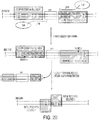
- FIGS. 2A and 2B show examples of how the invention can be practiced using a pair of CRISPR nucleases.
- the invention can be practiced by delivering three genes to the cell: one gene encoding the Cas9 protein and one gene encoding each of the two guide RNAs.
- CRISPRs cleave DNA to leave blunt ends which are not generally re-ligated cleanly such that the final product will generally have additiona insertion and/or deletion (“indel”) mutations in the sequence.
- indel additiona insertion and/or deletion
- a "CRISPR Nickase” may be used, as reported in Ran, et al. (2013) Cell. 154:1380-9 .
- the nuclease pair can be Compact TALENs.
- a compact TALEN comprises a TAL-effector DNA-binding domain (TALE) fused at its N- or C-terminus to the cleavage domain from I-TevI, comprising at least residues 1-96 and preferably residues 1-182 of I-TevI.
- TALE TAL-effector DNA-binding domain
- the I-TevI cleavage domain recognizes and cuts DNA sequences of the form 5'-CNbNNtG-3', where "b" represents the site of cleavage of the bottom strand and "t” represents the site of cleavage of the top strand and where"N" is any of the four bases.
- a Compact TALEN thus, cleaves to produce two basepair 3' overhangs.
- the Compact TALEN pair used for exon excision is selected to have complementary overhangs that can directly religate.
- Methods for making TALE domains that bind to pre-determined DNA sites are known in the art, for example Reyon et al. (2012) Nat Biotechnol. 30:460-5 .
- the nucleases used to practice the invention are a pair of Single-Chain Meganucleases.
- a Single-Chain Meganuclease comprises an N-terminal domain and a C-terminal domain joined by a linker peptide. Each of the two domains recognizes half of the Recognition Sequence and the site of DNA cleavage is at the middle of the Recognition Sequence near the interface of the two subunits.
- DNA strand breaks are offset by four basepairs such that DNA cleavage by a meganuclease generates a pair of four basepair, 3' single-strand overhangs.
- Single-chain meganucleases are selected which cut Recognition Sequences with complementary overhangs, as in Examples 1 and 2.
- Example recognition sequences for DMD Exons 44, 45, and 51 are listed in Tables 2-7.
- a first meganuclease can be selected which cuts a Recognition Sequence from Table 2, which lists Recognition Sequences upstream of Exon 44.
- a second meganuclease can then be selected which cuts a Recognition sequences from Table 3, which lists Recognition Sequences downstream of Exon 44.
- Co-expression of the two meganucleases in the same cell will thus excise Exon 44.
- Meganucleases are selected which cut DNA to leave complementary single strand overhangs.
- SEQ ID NO: 19 if cut by a meganuclease, leaves the overhang sequence: 5'-GTAC-3'.
- SEQ ID NO: 42 if cut by a meganuclease, leaves the overhang sequence: 5'-GTAC-3'.
- Treating Duchenne Muscular Dystrophy using the invention requires that a pair of nucleases be expressed in a muscle cell.
- the nucleases can be delivered as purified protein or as RNA or DNA encoding the nucleases.
- the nuclease proteins or mRNA or vector encoding the nucleases are supplied to muscle cells via intramuscular injection ( Malt leopard, et al. (2012) Proc Natl Acad Sci U S A. 109:20614-9 ) or hydrodynamic injection ( Taniyama et al. (2012) Curr Top Med Chem. 12:1630-7 ; Hegge, et al. (2010) Hum Gene Ther. 21:829-42 ).
- the proteins or nucleic acid(s) can be coupled to a cell penetrating peptide to facilitate uptake by muscle cells.
- cell pentrating peptides known in the art include poly-arginine ( Jearawiriyapaisarn, et al. (2008) Mol Ther. 16:1624-9 ), TAT peptide from the HIV virus ( Hudecz et al. (2005), Med. Res. Rev. 25: 679-736 ), MPG ( Simeoni, et al. (2003) Nucleic Acids Res. 31:2717-2724 ), Pep-1 ( Deshayes et al.
- cell penetration can be facilitated by liposome encapsulation (see, e.g., LipofectamineTM, Life Technologies Corp., Carlsbad, CA).
- the liposome formulation can be used to facilitate lipid bilayer fusion with a target cell, thereby allowing the contents of the liposome or proteins associated with its surface to be brought into the cell.
- the genes encoding a pair of nucleases are delivered using a viral vector.
- viral vectors are known in the art and include lentiviral vectors, adenoviral vectors, and adeno-associated virus (AAV) vectors (reviewed in Vannucci, et al. (2013 New Microbiol. 36:1-22 ).
- the viral vectors are injected directly into muscle tissue.
- the viral vectors are delivered systemically.
- Example 3 describes a preferred embodiment in which the muscle is injected with a recombinant AAV virus encoding a pair of single-chain meganucleases. It is known in the art that different AAV vectors tend to localize to different tissues.
- Muscle-tropic AAV serotypes include AAV1, AAV9, and AAV2.5 ( Bowles, et al. (2012) Mol Ther. 20:443-55 ). Thuse, these serotypes are preferred for the delivery of nucleases to muscle tissue.
- nuclease genes are delivered in DNA form (e.g. plasmid) and/or via a viral vector (e.g. AAV) they must be operably linked to a promoter.
- a viral promoter such as endogenous promoters from the viral vector (e.g. the LTR of a lentiviral vector) or the well-known cytomegalovirus- or SV40 virus-early promoters.
- the nuclease genes are operably linked to a promoter that drives gene expression preferentially in muscle cells. Examples of muscle-specific promoters include C5-12 ( Liu, et al. (2004) Hum Gene Ther.
- the nuclease genes are under the control of two separate promoters.
- the genes are under the control of a single promoter and are separated by an internal-ribosome entry site (IRES) or a 2A peptide sequence ( Szymczak and Vignali (2005) Expert Opin Biol Ther. 5:627-38 ).
- a single treatment will permanently delete exons from a percentage of patient cells.
- these cells will be myoblasts or other muscle precursor cells that are capable of replicating and giving rise to whole muscle fibers that express functional (or semi-functional) dystrophin. If the frequency of exon deletion is low, however, it may be necessary to perform multiple treatments on each patient such as multiple rounds of intramuscular injections.
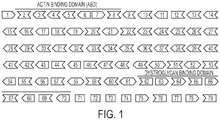
- An engineered meganuclease (SEQ ID NO: 135) was produced which recognizes and cleaves SEQ ID NO: 19. This meganuclease is called "DYS-1/2".
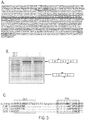
- a second engineered meganuclease (SEQ ID NO: 136) was produced which recognizes and cleaves SEQ ID NO: 42. This meganuclease is called "DYS-3/4" ( Figure 3A ).
- Each meganuclease comprises an N-terminal nuclease-localization signal derived from SV40, a first meganuclease subunit, a linker sequence, and a second meganuclease subunit.
- HEK-293 Human embryonic kidney (HEK-293) cells were co-transfected with mRNA encoding DYS-1/2 and DYS-3/4.
- mRNA was prepared by first producing a PCR template for an in vitro transcription reaction (SEQ ID NO: 139 and SEQ ID NO: 140.
- SEQ ID NO: 139 and SEQ ID NO: 140 Each PCR product included a T7 promoter and 609 bp of vector sequence downstream of the meganuclease gene.
- the PCR product was gel purified to ensure a single template.
- Capped (m7G) RNA was generated using the RiboMAX T7 kit (Promega) according to the manufacturer's instructions and.
- Ribo m7G cap analog (Promega) was included in the reaction and 0.5 ug of the purified meganuclease PCR product served as the DNA template. Capped RNA was purified using the SV Total RNA Isolation System (Promega) according to the manufacturer's instructions.
- 1.5x10 6 HEK-293 cells were nucleofected with 1.5x10 12 copies of DYS-1/2 mRNA and 1.5x10 12 copies of DYS-3/4 mRNA (2x10 6 copies/cell) using an Amaxa Nucleofector II device (Lonza) according to the manufacturer's instructions. 48 hours post-transfection, genomic DNA was isolated from the cells using a FlexiGene kit (Qiagen) according to the manufacturer's instructions. The genomic DNA was then subjected to PCR using primers flanking the DYS-1/2 and DYS-3/4 cut sites (SEQ ID NO: 141 and SEQ ID NO: 142).
- the smaller PCR product was isolated from the gel and cloned into a bacterial plasmid (pUC-19) for sequence analysis.
- Three plasmid clones were sequenced, all of which were found to have Exon 44 deleted ( Figure 3C ).
- two of the three plasmids carried PCR products from cells in which the deletion consisted precisely of the region intervening the expected DYS-1/2 and DYS-3/4-induced DNA breaks. It appears that the two meganucleases cleaved their intended recognition sites, leaving compatible 5'-GTAC-3' overhangs, the intervening fragment comprising Exon 44 was lost, and the two chromosome ends were then re-ligated.
- the third plasmid clone carried a PCR product from a cell in which the region intervening the two cleavage sites was excised along with 10 additional bases.
- Each meganuclease comprises an N-terminal nuclease-localization signal derived from SV40, a first meganuclease subunit, a linker sequence, and a second meganuclease subunit.
- HEK-293 Human embryonic kidney (HEK-293) cells were co-transfected with mRNA encoding DYS-5/6 and DYS-7/8.
- mRNA was prepared by first producing a PCR template for an in vitro transcription reaction (SEQ ID NO: 143(20) and SEQ ID NO: 144(21). Each PCR product included a T7 promoter and 609 bp of vector sequence downstream of the meganuclease gene. The PCR product was gel purified to ensure a single template. Capped (m7G) RNA was generated using the RiboMAX T7 kit (Promega) according to the manufacturer's instructions and.
- Ribo m7G cap analog (Promega) was included in the reaction and 0.5 ug of the purified meganuclease PCR product served as the DNA template. Capped RNA was purified using the SV Total RNA Isolation System (Promega) according to the manufacturer's instructions.
- 1.5x10 6 HEK-293 cells were nucleofected with 1.5x10 12 copies of DYS-5/6 mRNA and 1.5x10 12 copies of DYS-7/8 mRNA (2x10 6 copies/cell) using an Amaxa Nucleofector II device (Lonza) according to the manufacturer's instructions. 48 hours post-transfection, genomic DNA was isolated from the cells using a FlexiGene kit (Qiagen) according to the manufacturer's instructions. The genomic DNA was then subjected to PCR using primers flanking the DYS-5/6 and DYS-7/8 cut sites (SEQ ID NO: 145 and SEQ ID NO: 146).
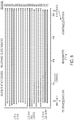
- the smaller PCR product was isolated from the gel and cloned into a bacterial plasmid (pUC-19) for sequence analysis. 16 plasmid clones were sequenced, all of which were found to have Exon 45 deleted ( Figure 4C ). Surprisingly, 14 of the 16 plasmids carried PCR products from cells in which the deletion consisted precisely of the region intervening the expected DYS-5/6 and DYS-7/8-induced DNA breaks. It appears that the two meganucleases cleaved their intended recognition sites, leaving compatible 5'-GTAC-3' overhangs, the intervening fragment comprising Exon 45 was lost, and the two chromosome ends were then re-ligated. The two remaining plasmid clones carried PCR product from cells in which the region intervening the two cleavage sites was excised along with 36 additional bases.
- the standard mouse model of DMD is the mdx mouse, which has a point mutation in Exon 23 that introduces a premature stop codon ( Sicinski et al. (1989) Science. 244:1578-80 ).
- DMD Exon 23 is 213 basepairs, equivalent to 71 amino acids.
- the former recognizes a DNA sequence upstream of mouse DMD Exon 23 (SEQ ID NO: 149) while the latter recognizes a DNA sequence downstream of mouse DMD Exon 23 (SEQ ID NO: 150).
- the nucleases were tested, initially, using a reporter assay called "iGFFP" in CHO cells as shown in Figure 5 . Both nucleases were found to efficiently cut their intended DNA sites using this assay.
- a mouse myoblast cell line (C2C12) was co-transfected with in vitro transcribed mRNA encoding the MDX-1/2 and MDX-13/14 nucleases.
- mRNA was produced using the RiboMAX T7 kit from Promega. 1e6 C2C12 cells were Nucleofected with a total of 2e6 copies/cell of mRNA encoding each MDX enzyme pairs (1e6 copies of each mRNA) using an Amaxa 2b device and the B-032 program. After 96 hours, cells were cloned by limiting dilution in 96-well plates. After approximately 2 weeks growth, cells were harvested and genomic DNA was isolated using a FlexiGene kit from Qiagen.
- a PCR product was then generated for each clone using a forward primer in DMD Intron 22 (SEQ ID NO: 151) and a reverse primer in Intron 23 (SEQ ID NO: 152).
- 60 of the PCR products were then cloned and sequenced.
- 20 of the sequences had deletions consistent with meganuclease-induced cleavage of the DMD gene followed by mutagenic DNA repair ( Figure 6 , SEQ ID NO: 153-172).
- 11 of the sequences were missing at least a portion of the MDX-1/2 and MDX-13/14 recognition sites, as well as Exon 23 (SEQ ID NO: 153-163). These sequences were likely derived from cells in which both nucleases cut their intended sites and the intervening sequence was deleted.
- AAV-MDX a "packaging" plasmid
- pAAV-MDX Fig. 7 , SEQ ID NO. 173
- ITR inverted terminal repeat
- This vector was used to produce recombinant AAV2 virus by co-transfection of HEK-293 cells with an Ad helper plasmid according to the method of Xiao, et al ( Xiao, et al. (1998) J.
- Virus was then isolated by cesium-chloride gradient centrifugation as described by Grieger and Samulski ( Grieger and Samulski (2012) Methods Enzymol. 507:229-254 ).
- they were added to cultured iGFFP CHO cells carrying reporter cassettes for either MDX-1/2 or MDX-13/14 (see Figure 5A ).
- the addition of recombinant virus particles to the CHO line carrying a reporter cassette for MDX-1/2 resulted in GFP gene expression in 7.1% of the cells.
- the addition of virus to the CHO line carrying a reporter for MDX-13/14 resulted in GFP gene expression in 10.2% of cells.
- the virus was able to transduce CHO cells and that transduced cells expressed both nucleases.
- AAV1 virus particles carrying the MDX-1/2 and MDX-13/14 genes were produced as described above.
- Three hindlimb TA muscles from a pair of mdx mice were injected with virus as described in Xiao, et al ( Xiao, et al. (1998) J. Virology 72:2224-2232 ).
- One muscle from one mouse was not injected as a negative control.
- Muscles from the two mice were harvested at 4 days or 7 days post-injection and genomic DNA was isolated from the muscle tissue.
- the genomic region surrounding DMD Exon 23 was amplified by PCR using a first primer pair (SEQ ID NO: 151 and SEQ ID NO: 152).
- This reaction was then used to template a second PCR reaction using a "nested" primer pair (SEQ ID NO: 174 and SEQ ID NO: 175) to eliminate non-specific PCR products.
- PCR products were then visualized on an agarose gel and it was found that genomic DNA from the three AAV1 injected muscles, but not the un-injected control muscle, yielded smaller PCR products that were consistent in size with the product expected following deletion of DMD Exon 23 by the MDX-1/2 and MDX-13/14 meganucleases. The smaller PCR products were then cloned and sequenced.
Landscapes
- Health & Medical Sciences (AREA)
- Life Sciences & Earth Sciences (AREA)
- Chemical & Material Sciences (AREA)
- Engineering & Computer Science (AREA)
- Bioinformatics & Cheminformatics (AREA)
- Medicinal Chemistry (AREA)
- General Health & Medical Sciences (AREA)
- Organic Chemistry (AREA)
- Genetics & Genomics (AREA)
- Veterinary Medicine (AREA)
- Pharmacology & Pharmacy (AREA)
- Animal Behavior & Ethology (AREA)
- Public Health (AREA)
- Zoology (AREA)
- Wood Science & Technology (AREA)
- Molecular Biology (AREA)
- Immunology (AREA)
- Gastroenterology & Hepatology (AREA)
- Proteomics, Peptides & Aminoacids (AREA)
- Epidemiology (AREA)
- Biochemistry (AREA)
- Biotechnology (AREA)
- Microbiology (AREA)
- General Engineering & Computer Science (AREA)
- Biomedical Technology (AREA)
- General Chemical & Material Sciences (AREA)
- Nuclear Medicine, Radiotherapy & Molecular Imaging (AREA)
- Chemical Kinetics & Catalysis (AREA)
- Neurology (AREA)
- Physical Education & Sports Medicine (AREA)
- Orthopedic Medicine & Surgery (AREA)
- Virology (AREA)
- Toxicology (AREA)
- Biophysics (AREA)
- Enzymes And Modification Thereof (AREA)
- Medicines That Contain Protein Lipid Enzymes And Other Medicines (AREA)
- Medicines Containing Material From Animals Or Micro-Organisms (AREA)
- Micro-Organisms Or Cultivation Processes Thereof (AREA)
- Pharmaceuticals Containing Other Organic And Inorganic Compounds (AREA)
Priority Applications (2)
| Application Number | Priority Date | Filing Date | Title |
|---|---|---|---|
| EP20189872.3A EP3858376B1 (en) | 2014-03-12 | 2015-03-12 | Dystrophin gene exon deletion using engineered nucleases |
| EP25191909.8A EP4659765A3 (en) | 2014-03-12 | 2015-03-12 | Dystrophin gene exon deletion using engineered nucleases |
Applications Claiming Priority (2)
| Application Number | Priority Date | Filing Date | Title |
|---|---|---|---|
| US201461951648P | 2014-03-12 | 2014-03-12 | |
| PCT/US2015/020205 WO2015138739A2 (en) | 2014-03-12 | 2015-03-12 | Dystrophin gene oxon deletion using engineered nucleases |
Related Child Applications (2)
| Application Number | Title | Priority Date | Filing Date |
|---|---|---|---|
| EP25191909.8A Division EP4659765A3 (en) | 2014-03-12 | 2015-03-12 | Dystrophin gene exon deletion using engineered nucleases |
| EP20189872.3A Division EP3858376B1 (en) | 2014-03-12 | 2015-03-12 | Dystrophin gene exon deletion using engineered nucleases |
Publications (3)
| Publication Number | Publication Date |
|---|---|
| EP3116533A2 EP3116533A2 (en) | 2017-01-18 |
| EP3116533A4 EP3116533A4 (en) | 2018-04-18 |
| EP3116533B1 true EP3116533B1 (en) | 2020-08-12 |
Family
ID=54072591
Family Applications (3)
| Application Number | Title | Priority Date | Filing Date |
|---|---|---|---|
| EP15761320.9A Active EP3116533B1 (en) | 2014-03-12 | 2015-03-12 | Dystrophin gene exon deletion using engineered nucleases |
| EP20189872.3A Active EP3858376B1 (en) | 2014-03-12 | 2015-03-12 | Dystrophin gene exon deletion using engineered nucleases |
| EP25191909.8A Pending EP4659765A3 (en) | 2014-03-12 | 2015-03-12 | Dystrophin gene exon deletion using engineered nucleases |
Family Applications After (2)
| Application Number | Title | Priority Date | Filing Date |
|---|---|---|---|
| EP20189872.3A Active EP3858376B1 (en) | 2014-03-12 | 2015-03-12 | Dystrophin gene exon deletion using engineered nucleases |
| EP25191909.8A Pending EP4659765A3 (en) | 2014-03-12 | 2015-03-12 | Dystrophin gene exon deletion using engineered nucleases |
Country Status (8)
| Country | Link |
|---|---|
| US (6) | US20170106055A1 (enExample) |
| EP (3) | EP3116533B1 (enExample) |
| JP (5) | JP2017512767A (enExample) |
| AU (3) | AU2015229299A1 (enExample) |
| CA (1) | CA2942268A1 (enExample) |
| DK (1) | DK3116533T3 (enExample) |
| ES (2) | ES3037550T3 (enExample) |
| WO (1) | WO2015138739A2 (enExample) |
Families Citing this family (55)
| Publication number | Priority date | Publication date | Assignee | Title |
|---|---|---|---|---|
| WO2013066438A2 (en) | 2011-07-22 | 2013-05-10 | President And Fellows Of Harvard College | Evaluation and improvement of nuclease cleavage specificity |
| DK3456831T3 (da) | 2013-04-16 | 2021-09-06 | Regeneron Pharma | Målrettet modifikation af rottegenom |
| US9163284B2 (en) | 2013-08-09 | 2015-10-20 | President And Fellows Of Harvard College | Methods for identifying a target site of a Cas9 nuclease |
| US9359599B2 (en) | 2013-08-22 | 2016-06-07 | President And Fellows Of Harvard College | Engineered transcription activator-like effector (TALE) domains and uses thereof |
| US9526784B2 (en) | 2013-09-06 | 2016-12-27 | President And Fellows Of Harvard College | Delivery system for functional nucleases |
| US9340799B2 (en) | 2013-09-06 | 2016-05-17 | President And Fellows Of Harvard College | MRNA-sensing switchable gRNAs |
| US9322037B2 (en) | 2013-09-06 | 2016-04-26 | President And Fellows Of Harvard College | Cas9-FokI fusion proteins and uses thereof |
| CN111218447B (zh) | 2013-11-07 | 2024-10-11 | 爱迪塔斯医药有限公司 | 使用统治型gRNA的CRISPR相关方法和组合物 |
| MX388127B (es) | 2013-12-11 | 2025-03-19 | Regeneron Pharma | Metodos y composiciones para la modificacion dirigida de un genoma. |
| US20150166984A1 (en) | 2013-12-12 | 2015-06-18 | President And Fellows Of Harvard College | Methods for correcting alpha-antitrypsin point mutations |
| AU2015298571B2 (en) | 2014-07-30 | 2020-09-03 | President And Fellows Of Harvard College | Cas9 proteins including ligand-dependent inteins |
| EP3221457B1 (en) | 2014-11-21 | 2019-03-20 | Regeneron Pharmaceuticals, Inc. | Methods and compositions for targeted genetic modification using paired guide rnas |
| WO2016089866A1 (en) * | 2014-12-01 | 2016-06-09 | President And Fellows Of Harvard College | Rna-guided systems for in vivo gene editing |
| CA2981508A1 (en) * | 2015-04-01 | 2016-10-06 | Editas Medicine, Inc. | Crispr/cas-related methods and compositions for treating duchenne muscular dystrophy and becker muscular dystrophy |
| CA2997909A1 (en) * | 2015-09-08 | 2017-03-16 | Precision Biosciences, Inc. | Treatment of retinitis pigmentosa using engineered meganucleases |
| ES2803728T3 (es) | 2015-10-05 | 2021-01-29 | Prec Biosciences Inc | Células genéticamente modificadas que comprenden un gen de región constante alfa del receptor de linfocitos T humano modificado |
| ES2768984T3 (es) | 2015-10-05 | 2020-06-24 | Prec Biosciences Inc | Meganucleasas diseñadas con secuencias de reconocimiento encontradas en el gen de la región constante alfa del receptor de células T humanas |
| WO2017070632A2 (en) | 2015-10-23 | 2017-04-27 | President And Fellows Of Harvard College | Nucleobase editors and uses thereof |
| SG10202102885UA (en) | 2016-05-20 | 2021-05-28 | Regeneron Pharma | Methods for breaking immunological tolerance using multiple guide rnas |
| WO2018027078A1 (en) | 2016-08-03 | 2018-02-08 | President And Fellows Of Harard College | Adenosine nucleobase editors and uses thereof |
| AU2017308889B2 (en) | 2016-08-09 | 2023-11-09 | President And Fellows Of Harvard College | Programmable Cas9-recombinase fusion proteins and uses thereof |
| WO2018039438A1 (en) | 2016-08-24 | 2018-03-01 | President And Fellows Of Harvard College | Incorporation of unnatural amino acids into proteins using base editing |
| KR20240007715A (ko) | 2016-10-14 | 2024-01-16 | 프레지던트 앤드 펠로우즈 오브 하바드 칼리지 | 핵염기 에디터의 aav 전달 |
| AU2017364106A1 (en) * | 2016-11-28 | 2019-06-20 | The Board Of Regents Of The University Of Texas System | Prevention of muscular dystrophy by CRISPR/Cpfl-mediated gene editing |
| WO2018119359A1 (en) | 2016-12-23 | 2018-06-28 | President And Fellows Of Harvard College | Editing of ccr5 receptor gene to protect against hiv infection |
| JOP20190166A1 (ar) * | 2017-01-05 | 2019-07-02 | Univ Texas | استراتيجية مثلى من أجل تعديلات تخطي إكسون باستخدام crispr/cas9 مع متواليات توجيه ثلاثي |
| KR20190123328A (ko) | 2017-03-09 | 2019-10-31 | 프레지던트 앤드 펠로우즈 오브 하바드 칼리지 | 암 백신 |
| WO2018165504A1 (en) | 2017-03-09 | 2018-09-13 | President And Fellows Of Harvard College | Suppression of pain by gene editing |
| CN110914310A (zh) | 2017-03-10 | 2020-03-24 | 哈佛大学的校长及成员们 | 胞嘧啶至鸟嘌呤碱基编辑器 |
| IL306092A (en) | 2017-03-23 | 2023-11-01 | Harvard College | Nucleic base editors that include nucleic acid programmable DNA binding proteins |
| CN110892069B (zh) * | 2017-03-30 | 2024-02-09 | 国立大学法人京都大学 | 基于基因组编辑的外显子跳跃诱导方法 |
| US11560566B2 (en) | 2017-05-12 | 2023-01-24 | President And Fellows Of Harvard College | Aptazyme-embedded guide RNAs for use with CRISPR-Cas9 in genome editing and transcriptional activation |
| EP4775669A2 (en) | 2017-06-30 | 2026-07-15 | Precision Biosciences, Inc. | Genetically-modified t cells comprising a modified intron in the t cell receptor alpha gene |
| EP3658573A1 (en) | 2017-07-28 | 2020-06-03 | President and Fellows of Harvard College | Methods and compositions for evolving base editors using phage-assisted continuous evolution (pace) |
| EP3676376B1 (en) | 2017-08-30 | 2025-01-15 | President and Fellows of Harvard College | High efficiency base editors comprising gam |
| CA3082251A1 (en) | 2017-10-16 | 2019-04-25 | The Broad Institute, Inc. | Uses of adenosine base editors |
| US12406749B2 (en) | 2017-12-15 | 2025-09-02 | The Broad Institute, Inc. | Systems and methods for predicting repair outcomes in genetic engineering |
| KR102617818B1 (ko) | 2018-04-12 | 2023-12-27 | 프리시젼 바이오사이언시스 인코포레이티드 | 인간 t 세포 수용체 알파 불변 영역 유전자에 대한 특이성을 갖는 최적화된 조작된 뉴클레아제 |
| WO2019226953A1 (en) | 2018-05-23 | 2019-11-28 | The Broad Institute, Inc. | Base editors and uses thereof |
| EP3820495A4 (en) | 2018-07-09 | 2022-07-20 | The Broad Institute Inc. | RNA-PROGRAMMABLE EPIGENETIC RNA MODIFIERS AND THEIR USES |
| WO2020092453A1 (en) | 2018-10-29 | 2020-05-07 | The Broad Institute, Inc. | Nucleobase editors comprising geocas9 and uses thereof |
| WO2020106633A1 (en) * | 2018-11-19 | 2020-05-28 | Altius Institute For Biomedical Sciences | Compositions and methods for detection of cleavage of genomic dna by a nuclease |
| US12351837B2 (en) | 2019-01-23 | 2025-07-08 | The Broad Institute, Inc. | Supernegatively charged proteins and uses thereof |
| WO2020191241A1 (en) | 2019-03-19 | 2020-09-24 | The Broad Institute, Inc. | Methods and compositions for editing nucleotide sequences |
| WO2020214842A1 (en) | 2019-04-17 | 2020-10-22 | The Broad Institute, Inc. | Adenine base editors with reduced off-target effects |
| CN114026228A (zh) | 2019-05-07 | 2022-02-08 | 精密生物科学公司 | 用于识别序列的工程化大范围核酸酶的优化 |
| US12435330B2 (en) | 2019-10-10 | 2025-10-07 | The Broad Institute, Inc. | Methods and compositions for prime editing RNA |
| WO2021207077A1 (en) * | 2020-04-06 | 2021-10-14 | Homology Medicines, Inc. | Adeno-associated virus compositions for ids gene transfer and methods of use thereof |
| US20230175014A1 (en) * | 2020-04-27 | 2023-06-08 | The Trustees Of The University Of Pennsylvania | Compositions and methods for reducing nuclease expression and off-target activity using a promoter with low transcriptional activity |
| CA3177481A1 (en) | 2020-05-08 | 2021-11-11 | David R. Liu | Methods and compositions for simultaneous editing of both strands of a target double-stranded nucleotide sequence |
| WO2021231259A1 (en) | 2020-05-11 | 2021-11-18 | Precision Biosciences, Inc. | Self-limiting viral vectors encoding nucleases |
| KR20250099412A (ko) | 2020-11-12 | 2025-07-01 | 프리시젼 바이오사이언시스 인코포레이티드 | 디스트로핀 유전자 내의 인식 서열에 대해 특이성을 갖는 조작된 메가뉴클레아제 |
| EP4444886A4 (en) * | 2021-12-08 | 2026-08-12 | Mammoth Biosciences Inc | Systems and their uses for the treatment of diseases associated with DMD |
| TW202600818A (zh) * | 2024-02-26 | 2026-01-01 | 日商日冷食品股份有限公司 | 包含經修飾dna的細胞之製作方法、包含該細胞的生物體之製作方法,及基因產物之生產方法 |
| JP7691595B1 (ja) | 2024-02-26 | 2025-06-12 | 株式会社ニチレイフーズ | 欠失した改変ゲノムdnaを含む細胞の作製方法、該細胞を含む生物体の作製方法 |
Family Cites Families (20)
| Publication number | Priority date | Publication date | Assignee | Title |
|---|---|---|---|---|
| US20060206949A1 (en) * | 2003-01-28 | 2006-09-14 | Sylvain Arnould | Custom-made meganuclease and use thereof |
| DK3246403T3 (da) | 2005-10-18 | 2020-10-26 | Prec Biosciences | Rationelt designede meganucleaser med ændret sekvens-specificitet og dna-bindende affinitet |
| ES2422291T3 (es) | 2007-10-31 | 2013-09-10 | Prec Biosciences Inc | Meganucleasas monocatenarias diseñadas racionalmente con secuencias de reconocimiento no palindrómicas |
| WO2009101399A1 (en) * | 2008-02-12 | 2009-08-20 | Isis Innovation Limited | Treatment of muscular dystrophy using peptide nucleic acid ( pna) |
| JP2011527906A (ja) | 2008-07-14 | 2011-11-10 | プレシジョン バイオサイエンシズ,インク. | I−CreI由来メガヌクレアーゼの認識配列およびその使用 |
| WO2011036640A2 (en) * | 2009-09-24 | 2011-03-31 | Cellectis | Meganuclease reagents of uses thereof for treating genetic diseases caused by frame shift/non sense mutations |
| SG169914A1 (en) * | 2009-09-29 | 2011-04-29 | Univ Singapore | A clinical method for genotyping large genes for mutations that potentially cause disease |
| EP2569424A1 (en) * | 2010-05-12 | 2013-03-20 | Cellectis | Meganuclease variants cleaving a dna target sequence from the dystrophin gene and uses thereof |
| SG189482A1 (en) * | 2010-10-27 | 2013-05-31 | Cellectis | Method for increasing the efficiency of double-strand break-induced mutagenesis |
| EP3683319A1 (en) * | 2011-06-01 | 2020-07-22 | Precision Biosciences, Inc. | Methods and products for producing engineered mammalian cell lines with amplified transgenes |
| WO2013054200A2 (en) * | 2011-10-10 | 2013-04-18 | The Hospital For Sick Children | Methods and compositions for screening and treating developmental disorders |
| US8885683B2 (en) * | 2011-12-21 | 2014-11-11 | Canon Kabushiki Kaisha | Process for forming microstructure of nitride semiconductor, surface emitting laser using two-dimensional photonic crystal and production process thereof |
| EP2841572B1 (en) * | 2012-04-27 | 2019-06-19 | Duke University | Genetic correction of mutated genes |
| EP2684892A1 (en) * | 2012-07-13 | 2014-01-15 | Association Française contre les Myopathies | Compositions and methods for duchenne muscular dystrophy gene therapy |
| CA2890110C (en) * | 2012-11-01 | 2023-05-02 | Factor Bioscience Inc. | Methods and products for expressing proteins in cells |
| US8697359B1 (en) * | 2012-12-12 | 2014-04-15 | The Broad Institute, Inc. | CRISPR-Cas systems and methods for altering expression of gene products |
| WO2014197748A2 (en) * | 2013-06-05 | 2014-12-11 | Duke University | Rna-guided gene editing and gene regulation |
| CA2878645C (en) | 2014-01-22 | 2017-02-21 | Alfa Wassermann, Inc. | Centrifugation systems with non-contact seal assemblies |
| EP4279084B1 (en) * | 2015-10-28 | 2025-06-11 | Vertex Pharmaceuticals Inc. | Materials and methods for treatment of duchenne muscular dystrophy |
| KR20250099412A (ko) * | 2020-11-12 | 2025-07-01 | 프리시젼 바이오사이언시스 인코포레이티드 | 디스트로핀 유전자 내의 인식 서열에 대해 특이성을 갖는 조작된 메가뉴클레아제 |
-
2015
- 2015-03-12 AU AU2015229299A patent/AU2015229299A1/en not_active Abandoned
- 2015-03-12 JP JP2016556801A patent/JP2017512767A/ja active Pending
- 2015-03-12 WO PCT/US2015/020205 patent/WO2015138739A2/en not_active Ceased
- 2015-03-12 EP EP15761320.9A patent/EP3116533B1/en active Active
- 2015-03-12 CA CA2942268A patent/CA2942268A1/en active Pending
- 2015-03-12 ES ES20189872T patent/ES3037550T3/es active Active
- 2015-03-12 EP EP20189872.3A patent/EP3858376B1/en active Active
- 2015-03-12 US US15/124,984 patent/US20170106055A1/en not_active Abandoned
- 2015-03-12 EP EP25191909.8A patent/EP4659765A3/en active Pending
- 2015-03-12 DK DK15761320.9T patent/DK3116533T3/da active
- 2015-03-12 ES ES15761320T patent/ES2821149T3/es active Active
-
2019
- 2019-02-25 US US16/284,733 patent/US20190269762A1/en not_active Abandoned
- 2019-07-03 US US16/503,396 patent/US20190365870A1/en not_active Abandoned
- 2019-08-23 JP JP2019152614A patent/JP6832995B2/ja active Active
-
2020
- 2020-09-25 US US17/033,331 patent/US20210145940A1/en not_active Abandoned
- 2020-10-26 AU AU2020260387A patent/AU2020260387A1/en not_active Abandoned
-
2021
- 2021-02-02 JP JP2021014851A patent/JP2021088563A/ja active Pending
-
2022
- 2022-09-28 JP JP2022154637A patent/JP2023002555A/ja active Pending
-
2023
- 2023-10-19 US US18/490,484 patent/US20240156919A1/en not_active Abandoned
-
2024
- 2024-04-02 AU AU2024202080A patent/AU2024202080A1/en active Pending
- 2024-09-27 JP JP2024168117A patent/JP2025013784A/ja active Pending
-
2025
- 2025-01-17 US US19/030,187 patent/US20250152679A1/en active Pending
Non-Patent Citations (1)
| Title |
|---|
| None * |
Also Published As
| Publication number | Publication date |
|---|---|
| EP3858376B1 (en) | 2025-07-30 |
| EP3858376A1 (en) | 2021-08-04 |
| AU2020260387A1 (en) | 2020-11-19 |
| US20190269762A1 (en) | 2019-09-05 |
| AU2015229299A1 (en) | 2016-09-22 |
| JP2025013784A (ja) | 2025-01-28 |
| WO2015138739A8 (en) | 2015-11-19 |
| ES2821149T3 (es) | 2021-04-23 |
| EP3858376C0 (en) | 2025-07-30 |
| EP3116533A4 (en) | 2018-04-18 |
| EP3116533A2 (en) | 2017-01-18 |
| JP6832995B2 (ja) | 2021-02-24 |
| US20210145940A1 (en) | 2021-05-20 |
| US20170106055A1 (en) | 2017-04-20 |
| US20190365870A1 (en) | 2019-12-05 |
| US20250152679A1 (en) | 2025-05-15 |
| JP2017512767A (ja) | 2017-05-25 |
| WO2015138739A3 (en) | 2015-10-22 |
| CA2942268A1 (en) | 2015-09-17 |
| ES3037550T3 (en) | 2025-10-03 |
| JP2021088563A (ja) | 2021-06-10 |
| EP4659765A2 (en) | 2025-12-10 |
| JP2023002555A (ja) | 2023-01-10 |
| AU2024202080A1 (en) | 2024-04-18 |
| JP2019214609A (ja) | 2019-12-19 |
| DK3116533T3 (da) | 2020-08-24 |
| WO2015138739A2 (en) | 2015-09-17 |
| EP4659765A3 (en) | 2026-02-18 |
| US20240156919A1 (en) | 2024-05-16 |
Similar Documents
| Publication | Publication Date | Title |
|---|---|---|
| EP3858376B1 (en) | Dystrophin gene exon deletion using engineered nucleases | |
| US20250114482A1 (en) | Therapeutic applications of cpf1-based genome editing | |
| EP3452498B1 (en) | Crispr/cas-related compositions for treating duchenne muscular dystrophy | |
| AU2020257898B2 (en) | AAV vector-mediated deletion of large mutational hotspot for treatment of duchenne muscular dystrophy | |
| US12214054B2 (en) | Therapeutic targets for the correction of the human dystrophin gene by gene editing and methods of use | |
| US20230257723A1 (en) | Crispr/cas9 therapies for correcting duchenne muscular dystrophy by targeted genomic integration | |
| WO2020214613A1 (en) | Crispr/cas-based genome editing composition for restoring dystrophin function | |
| CA3202411A1 (en) | Therapeutic lama2 payload for treatment of congenital muscular dystrophy | |
| HK40057044A (en) | Dystrophin gene exon deletion using engineered nucleases | |
| HK40057044B (en) | Dystrophin gene exon deletion using engineered nucleases | |
| HK40004669B (en) | Therapeutic applications of cpf1-based genome editing | |
| HK40004669A (en) | Therapeutic applications of cpf1-based genome editing |
Legal Events
| Date | Code | Title | Description |
|---|---|---|---|
| STAA | Information on the status of an ep patent application or granted ep patent |
Free format text: STATUS: THE INTERNATIONAL PUBLICATION HAS BEEN MADE |
|
| PUAI | Public reference made under article 153(3) epc to a published international application that has entered the european phase |
Free format text: ORIGINAL CODE: 0009012 |
|
| STAA | Information on the status of an ep patent application or granted ep patent |
Free format text: STATUS: REQUEST FOR EXAMINATION WAS MADE |
|
| 17P | Request for examination filed |
Effective date: 20160908 |
|
| AK | Designated contracting states |
Kind code of ref document: A2 Designated state(s): AL AT BE BG CH CY CZ DE DK EE ES FI FR GB GR HR HU IE IS IT LI LT LU LV MC MK MT NL NO PL PT RO RS SE SI SK SM TR |
|
| AX | Request for extension of the european patent |
Extension state: BA ME |
|
| DAV | Request for validation of the european patent (deleted) | ||
| DAX | Request for extension of the european patent (deleted) | ||
| RIC1 | Information provided on ipc code assigned before grant |
Ipc: A61K 38/54 20060101ALI20171106BHEP Ipc: C12N 15/00 20060101ALI20171106BHEP Ipc: A61K 38/46 20060101AFI20171106BHEP Ipc: A61P 21/00 20060101ALI20171106BHEP Ipc: C12N 7/00 20060101ALI20171106BHEP Ipc: C12N 9/22 20060101ALI20171106BHEP Ipc: A61K 48/00 20060101ALI20171106BHEP |
|
| A4 | Supplementary search report drawn up and despatched |
Effective date: 20180316 |
|
| RIC1 | Information provided on ipc code assigned before grant |
Ipc: C12N 9/22 20060101ALI20180312BHEP Ipc: A61P 21/00 20060101ALI20180312BHEP Ipc: A61K 38/54 20060101ALI20180312BHEP Ipc: A61K 48/00 20060101ALI20180312BHEP Ipc: C12N 15/00 20060101ALI20180312BHEP Ipc: A61K 38/46 20060101AFI20180312BHEP Ipc: C12N 7/00 20060101ALI20180312BHEP |
|
| STAA | Information on the status of an ep patent application or granted ep patent |
Free format text: STATUS: EXAMINATION IS IN PROGRESS |
|
| 17Q | First examination report despatched |
Effective date: 20190722 |
|
| GRAP | Despatch of communication of intention to grant a patent |
Free format text: ORIGINAL CODE: EPIDOSNIGR1 |
|
| STAA | Information on the status of an ep patent application or granted ep patent |
Free format text: STATUS: GRANT OF PATENT IS INTENDED |
|
| RIC1 | Information provided on ipc code assigned before grant |
Ipc: A61P 43/00 20060101ALI20200512BHEP Ipc: C12N 15/00 20060101ALI20200512BHEP Ipc: A61K 38/46 20060101AFI20200512BHEP Ipc: A61P 21/04 20060101ALI20200512BHEP Ipc: A61P 21/00 20060101ALI20200512BHEP Ipc: C12N 9/22 20060101ALI20200512BHEP Ipc: A61K 38/54 20060101ALI20200512BHEP Ipc: C12N 7/00 20060101ALI20200512BHEP Ipc: A61K 48/00 20060101ALI20200512BHEP |
|
| INTG | Intention to grant announced |
Effective date: 20200529 |
|
| GRAS | Grant fee paid |
Free format text: ORIGINAL CODE: EPIDOSNIGR3 |
|
| GRAA | (expected) grant |
Free format text: ORIGINAL CODE: 0009210 |
|
| STAA | Information on the status of an ep patent application or granted ep patent |
Free format text: STATUS: THE PATENT HAS BEEN GRANTED |
|
| RIN1 | Information on inventor provided before grant (corrected) |
Inventor name: NICHOLSON, MICHAEL, G. Inventor name: JANTZ, DEREK Inventor name: SMITH, JAMES, JEFFERSON |
|
| AK | Designated contracting states |
Kind code of ref document: B1 Designated state(s): AL AT BE BG CH CY CZ DE DK EE ES FI FR GB GR HR HU IE IS IT LI LT LU LV MC MK MT NL NO PL PT RO RS SE SI SK SM TR |
|
| REG | Reference to a national code |
Ref country code: CH Ref legal event code: EP |
|
| REG | Reference to a national code |
Ref country code: DK Ref legal event code: T3 Effective date: 20200821 |
|
| REG | Reference to a national code |
Ref country code: FI Ref legal event code: FGE |
|
| REG | Reference to a national code |
Ref country code: NL Ref legal event code: FP Ref country code: IE Ref legal event code: FG4D |
|
| REG | Reference to a national code |
Ref country code: DE Ref legal event code: R096 Ref document number: 602015057366 Country of ref document: DE |
|
| REG | Reference to a national code |
Ref country code: AT Ref legal event code: REF Ref document number: 1300861 Country of ref document: AT Kind code of ref document: T Effective date: 20200915 Ref country code: SE Ref legal event code: TRGR |
|
| REG | Reference to a national code |
Ref country code: CH Ref legal event code: NV Representative=s name: MATTHIAS W. SCHAEFER, CH |
|
| REG | Reference to a national code |
Ref country code: LT Ref legal event code: MG4D |
|
| PG25 | Lapsed in a contracting state [announced via postgrant information from national office to epo] |
Ref country code: LT Free format text: LAPSE BECAUSE OF FAILURE TO SUBMIT A TRANSLATION OF THE DESCRIPTION OR TO PAY THE FEE WITHIN THE PRESCRIBED TIME-LIMIT Effective date: 20200812 Ref country code: HR Free format text: LAPSE BECAUSE OF FAILURE TO SUBMIT A TRANSLATION OF THE DESCRIPTION OR TO PAY THE FEE WITHIN THE PRESCRIBED TIME-LIMIT Effective date: 20200812 Ref country code: NO Free format text: LAPSE BECAUSE OF FAILURE TO SUBMIT A TRANSLATION OF THE DESCRIPTION OR TO PAY THE FEE WITHIN THE PRESCRIBED TIME-LIMIT Effective date: 20201112 Ref country code: BG Free format text: LAPSE BECAUSE OF FAILURE TO SUBMIT A TRANSLATION OF THE DESCRIPTION OR TO PAY THE FEE WITHIN THE PRESCRIBED TIME-LIMIT Effective date: 20201112 Ref country code: GR Free format text: LAPSE BECAUSE OF FAILURE TO SUBMIT A TRANSLATION OF THE DESCRIPTION OR TO PAY THE FEE WITHIN THE PRESCRIBED TIME-LIMIT Effective date: 20201113 |
|
| PG25 | Lapsed in a contracting state [announced via postgrant information from national office to epo] |
Ref country code: RS Free format text: LAPSE BECAUSE OF FAILURE TO SUBMIT A TRANSLATION OF THE DESCRIPTION OR TO PAY THE FEE WITHIN THE PRESCRIBED TIME-LIMIT Effective date: 20200812 Ref country code: LV Free format text: LAPSE BECAUSE OF FAILURE TO SUBMIT A TRANSLATION OF THE DESCRIPTION OR TO PAY THE FEE WITHIN THE PRESCRIBED TIME-LIMIT Effective date: 20200812 Ref country code: PL Free format text: LAPSE BECAUSE OF FAILURE TO SUBMIT A TRANSLATION OF THE DESCRIPTION OR TO PAY THE FEE WITHIN THE PRESCRIBED TIME-LIMIT Effective date: 20200812 Ref country code: IS Free format text: LAPSE BECAUSE OF FAILURE TO SUBMIT A TRANSLATION OF THE DESCRIPTION OR TO PAY THE FEE WITHIN THE PRESCRIBED TIME-LIMIT Effective date: 20201212 |
|
| REG | Reference to a national code |
Ref country code: ES Ref legal event code: FG2A Ref document number: 2821149 Country of ref document: ES Kind code of ref document: T3 Effective date: 20210423 |
|
| PG25 | Lapsed in a contracting state [announced via postgrant information from national office to epo] |
Ref country code: CZ Free format text: LAPSE BECAUSE OF FAILURE TO SUBMIT A TRANSLATION OF THE DESCRIPTION OR TO PAY THE FEE WITHIN THE PRESCRIBED TIME-LIMIT Effective date: 20200812 Ref country code: RO Free format text: LAPSE BECAUSE OF FAILURE TO SUBMIT A TRANSLATION OF THE DESCRIPTION OR TO PAY THE FEE WITHIN THE PRESCRIBED TIME-LIMIT Effective date: 20200812 Ref country code: SM Free format text: LAPSE BECAUSE OF FAILURE TO SUBMIT A TRANSLATION OF THE DESCRIPTION OR TO PAY THE FEE WITHIN THE PRESCRIBED TIME-LIMIT Effective date: 20200812 Ref country code: EE Free format text: LAPSE BECAUSE OF FAILURE TO SUBMIT A TRANSLATION OF THE DESCRIPTION OR TO PAY THE FEE WITHIN THE PRESCRIBED TIME-LIMIT Effective date: 20200812 |
|
| REG | Reference to a national code |
Ref country code: DE Ref legal event code: R097 Ref document number: 602015057366 Country of ref document: DE |
|
| PG25 | Lapsed in a contracting state [announced via postgrant information from national office to epo] |
Ref country code: AL Free format text: LAPSE BECAUSE OF FAILURE TO SUBMIT A TRANSLATION OF THE DESCRIPTION OR TO PAY THE FEE WITHIN THE PRESCRIBED TIME-LIMIT Effective date: 20200812 |
|
| PLBE | No opposition filed within time limit |
Free format text: ORIGINAL CODE: 0009261 |
|
| STAA | Information on the status of an ep patent application or granted ep patent |
Free format text: STATUS: NO OPPOSITION FILED WITHIN TIME LIMIT |
|
| PG25 | Lapsed in a contracting state [announced via postgrant information from national office to epo] |
Ref country code: SK Free format text: LAPSE BECAUSE OF FAILURE TO SUBMIT A TRANSLATION OF THE DESCRIPTION OR TO PAY THE FEE WITHIN THE PRESCRIBED TIME-LIMIT Effective date: 20200812 |
|
| 26N | No opposition filed |
Effective date: 20210514 |
|
| PG25 | Lapsed in a contracting state [announced via postgrant information from national office to epo] |
Ref country code: SI Free format text: LAPSE BECAUSE OF FAILURE TO SUBMIT A TRANSLATION OF THE DESCRIPTION OR TO PAY THE FEE WITHIN THE PRESCRIBED TIME-LIMIT Effective date: 20200812 |
|
| PG25 | Lapsed in a contracting state [announced via postgrant information from national office to epo] |
Ref country code: MC Free format text: LAPSE BECAUSE OF FAILURE TO SUBMIT A TRANSLATION OF THE DESCRIPTION OR TO PAY THE FEE WITHIN THE PRESCRIBED TIME-LIMIT Effective date: 20200812 |
|
| PG25 | Lapsed in a contracting state [announced via postgrant information from national office to epo] |
Ref country code: LU Free format text: LAPSE BECAUSE OF NON-PAYMENT OF DUE FEES Effective date: 20210312 |
|
| REG | Reference to a national code |
Ref country code: AT Ref legal event code: UEP Ref document number: 1300861 Country of ref document: AT Kind code of ref document: T Effective date: 20200812 |
|
| PG25 | Lapsed in a contracting state [announced via postgrant information from national office to epo] |
Ref country code: PT Free format text: LAPSE BECAUSE OF FAILURE TO SUBMIT A TRANSLATION OF THE DESCRIPTION OR TO PAY THE FEE WITHIN THE PRESCRIBED TIME-LIMIT Effective date: 20201214 |
|
| PG25 | Lapsed in a contracting state [announced via postgrant information from national office to epo] |
Ref country code: HU Free format text: LAPSE BECAUSE OF FAILURE TO SUBMIT A TRANSLATION OF THE DESCRIPTION OR TO PAY THE FEE WITHIN THE PRESCRIBED TIME-LIMIT; INVALID AB INITIO Effective date: 20150312 |
|
| PG25 | Lapsed in a contracting state [announced via postgrant information from national office to epo] |
Ref country code: CY Free format text: LAPSE BECAUSE OF FAILURE TO SUBMIT A TRANSLATION OF THE DESCRIPTION OR TO PAY THE FEE WITHIN THE PRESCRIBED TIME-LIMIT Effective date: 20200812 |
|
| PG25 | Lapsed in a contracting state [announced via postgrant information from national office to epo] |
Ref country code: MK Free format text: LAPSE BECAUSE OF FAILURE TO SUBMIT A TRANSLATION OF THE DESCRIPTION OR TO PAY THE FEE WITHIN THE PRESCRIBED TIME-LIMIT Effective date: 20200812 |
|
| PG25 | Lapsed in a contracting state [announced via postgrant information from national office to epo] |
Ref country code: MT Free format text: LAPSE BECAUSE OF FAILURE TO SUBMIT A TRANSLATION OF THE DESCRIPTION OR TO PAY THE FEE WITHIN THE PRESCRIBED TIME-LIMIT Effective date: 20200812 |
|
| PG25 | Lapsed in a contracting state [announced via postgrant information from national office to epo] |
Ref country code: TR Free format text: LAPSE BECAUSE OF FAILURE TO SUBMIT A TRANSLATION OF THE DESCRIPTION OR TO PAY THE FEE WITHIN THE PRESCRIBED TIME-LIMIT Effective date: 20200812 |
|
| REG | Reference to a national code |
Ref country code: CH Ref legal event code: U11 Free format text: ST27 STATUS EVENT CODE: U-0-0-U10-U11 (AS PROVIDED BY THE NATIONAL OFFICE) Effective date: 20260401 |
|
| PGFP | Annual fee paid to national office [announced via postgrant information from national office to epo] |
Ref country code: SE Payment date: 20260327 Year of fee payment: 12 |
|
| PGFP | Annual fee paid to national office [announced via postgrant information from national office to epo] |
Ref country code: GB Payment date: 20260330 Year of fee payment: 12 |
|
| PGFP | Annual fee paid to national office [announced via postgrant information from national office to epo] |
Ref country code: DK Payment date: 20260327 Year of fee payment: 12 Ref country code: IE Payment date: 20260327 Year of fee payment: 12 |
|
| PGFP | Annual fee paid to national office [announced via postgrant information from national office to epo] |
Ref country code: AT Payment date: 20260331 Year of fee payment: 12 |
|
| PGFP | Annual fee paid to national office [announced via postgrant information from national office to epo] |
Ref country code: FI Payment date: 20260331 Year of fee payment: 12 Ref country code: BE Payment date: 20260324 Year of fee payment: 12 Ref country code: IT Payment date: 20260320 Year of fee payment: 12 |
|
| PGFP | Annual fee paid to national office [announced via postgrant information from national office to epo] |
Ref country code: NL Payment date: 20260325 Year of fee payment: 12 |
|
| PGFP | Annual fee paid to national office [announced via postgrant information from national office to epo] |
Ref country code: FR Payment date: 20260327 Year of fee payment: 12 |
|
| PGFP | Annual fee paid to national office [announced via postgrant information from national office to epo] |
Ref country code: ES Payment date: 20260408 Year of fee payment: 12 |
|
| PGFP | Annual fee paid to national office [announced via postgrant information from national office to epo] |
Ref country code: DE Payment date: 20260331 Year of fee payment: 12 |
|
| PGFP | Annual fee paid to national office [announced via postgrant information from national office to epo] |
Ref country code: CH Payment date: 20260401 Year of fee payment: 12 |