EP3115326A2 - Elevator system capable of monitoring children use and control method thereof - Google Patents
Elevator system capable of monitoring children use and control method thereof Download PDFInfo
- Publication number
- EP3115326A2 EP3115326A2 EP16174748.0A EP16174748A EP3115326A2 EP 3115326 A2 EP3115326 A2 EP 3115326A2 EP 16174748 A EP16174748 A EP 16174748A EP 3115326 A2 EP3115326 A2 EP 3115326A2
- Authority
- EP
- European Patent Office
- Prior art keywords
- information
- passenger
- rgb
- elevator system
- children
- Prior art date
- Legal status (The legal status is an assumption and is not a legal conclusion. Google has not performed a legal analysis and makes no representation as to the accuracy of the status listed.)
- Granted
Links
Images


Classifications
-
- B—PERFORMING OPERATIONS; TRANSPORTING
- B66—HOISTING; LIFTING; HAULING
- B66B—ELEVATORS; ESCALATORS OR MOVING WALKWAYS
- B66B5/00—Applications of checking, fault-correcting, or safety devices in elevators
- B66B5/0006—Monitoring devices or performance analysers
- B66B5/0012—Devices monitoring the users of the elevator system
-
- B—PERFORMING OPERATIONS; TRANSPORTING
- B66—HOISTING; LIFTING; HAULING
- B66B—ELEVATORS; ESCALATORS OR MOVING WALKWAYS
- B66B25/00—Control of escalators or moving walkways
-
- B—PERFORMING OPERATIONS; TRANSPORTING
- B66—HOISTING; LIFTING; HAULING
- B66B—ELEVATORS; ESCALATORS OR MOVING WALKWAYS
- B66B29/00—Safety devices of escalators or moving walkways
- B66B29/005—Applications of security monitors
-
- B—PERFORMING OPERATIONS; TRANSPORTING
- B66—HOISTING; LIFTING; HAULING
- B66B—ELEVATORS; ESCALATORS OR MOVING WALKWAYS
- B66B2201/00—Aspects of control systems of elevators
- B66B2201/10—Details with respect to the type of call input
- B66B2201/104—Call input for a preferential elevator car or indicating a special request
Definitions
- the present invention relates to the technical field of elevator control, and in particular, to an elevator system capable of monitoring children use and a control method thereof.
- elevators are widely applied in buildings, for example, in fields such as office buildings, shopping malls and schools. More and more passengers tend to take an elevator system because of its good ride experiences, especially for children or kids, the elevator system seems to bring fresh experiences for them, and they are willing to ride various types of elevators, including a vertical elevator (also referred to as a lift) and an escalator.
- a vertical elevator also referred to as a lift
- an escalator also referred to as a lift
- An objective of the present invention is to implement accurate monitoring on a situation of children using an elevator.
- Another objective of the present invention is to reduce the occurrence probability of safety accident when children take an elevator.
- the present invention provides the following technical solutions.
- an elevator system capable of monitoring children use which includes an elevator controlling apparatus, and further includes:
- an elevator system control method capable of monitoring children use including:
- an elevator system capable of monitoring children use which includes an elevator controlling apparatus, and further includes:
- an elevator system control method capable of monitoring children use including:
- a "passenger waiting area” and a “passenger arriving area” are defined with respect to a process of a passenger taking an elevator, and for a certain floor, it may be a “passenger waiting area” of one elevator taking process and may also be a “passenger arrival area” of another elevator taking process.
- children also referred to as “kids” refer to younger passengers who take the elevator without being accompanied by guardians and may have safety risks.
- the specific age range and/or height range corresponding to the definition of the "children” or “kids” may be set according to safety risk evaluation of the elevator.
- FIG. 1 shows a schematic modular structural diagram of an elevator system according to an embodiment of the present invention.
- the elevator system mainly includes an RGB-D (red green blue-depth) sensor, which includes an RGB-D sensor 111 and an RGB-D sensor 112 disposed at different positions.
- RGB-D red green blue-depth
- the elevator system is a vertical elevator (vertical lift) system, at least one RGB-D sensor 111 is disposed at a passenger waiting area 81, and at least one RGB-D sensor 112 is disposed in an elevator cabin 190 of the elevator system.
- the RGB-D sensors 111 and 112 are one type of 3D sensors, which can acquire red green blue (RGB) information and depth (D) information, the RGB information is planar image information, and therefore, a colorful planar image and a depth image may be obtained respectively based on the RGB information and the D information.
- the specific type of the RGB-D sensors 111 and 112 are not limited, and corresponding types of RGB-D sensors may be selected to identify children more clearly.
- FIG. 2 shows an exemplary schematic mounting diagram of mounting an RGB-D sensor at a passenger waiting area
- FIG. 3 shows an exemplary schematic mounting diagram of mounting an RGB-D sensor in an elevator cabin.
- the passenger waiting area 81 may have one or more passengers in a certain period of time.
- Passengers 92 are schematically shown as children passenger, who are objects monitored by the elevator system of the present invention, especially, using of the elevator system by them is monitored. Alternatively, those who are monitored may also include passengers (not shown) other than children, and they are passengers allowed to take the elevator alone, for example, a guardian of the child passenger 92.
- the RGB-D sensor 111 is mounted at the passenger waiting area 81, which can collect information related to passengers in a monitoring range thereof, so as to obtain information 711.
- the information 711 includes RGB information and D information, which may include RGB information and D information related to a foreground of the passenger waiting area 81, and may also include RGB information and D information related to the passenger of the passenger waiting area 81.
- the elevator cabin 190 of the elevator system may have one or more passengers 92 in a certain period of time, and the RGB-D sensor 112 is mounted in the elevator cabin 190, which can collect information related to passengers in the elevator cabin 190, so as to obtain information 712.
- the information 712 includes RGB information and D information, which may include RGB information and D information related to a foreground of the elevator cabin 190, and may also include RGB information and D information related to the passenger of the elevator cabin 190.
- the RGB-D sensor 111 of the passenger waiting area 81 and the RGB-D sensor 112 of the elevator cabin 190 may adopt RGB-D sensors of the same type, and may also adopt RGB-D sensors of different types.
- the specific mounting position of the RGB-D sensor in the passenger waiting area 81 or the elevator cabin 190 is not limited by the embodiment shown in the present invention, and the RGB-D sensor may be mounted specifically at a selected corresponding position to identify the passenger more clearly.
- the elevator system mainly includes an information analytic processing apparatus 120, the information 711 and the information 712 acquired from the RGB-D sensors are sent to the information analytic processing apparatus 120, and the information analytic processing apparatus 120 performs analytic processing on the information.
- the information analytic processing apparatus 120 may be disposed integrally, or may be disposed separately corresponding to each RGB-D sensor.
- the information analytic processing apparatus 120 may be a PC server corresponding to the RGB-D sensor, and various collected RGB information and D information are transmitted to the PC server to perform real-time analytic processing, so as to implement detection and determination on children, and decide whether to generate an alarm message 610 according to a detection and determination situation.
- the information analytic processing apparatus 120 is a core component of an intelligent elevator control system, and by means of the alarm message 610 sent by it, the alarm message 610 being the basis of controllably trigger sending of a control command 620 in a subsequent process, it is conducive to ensuring the safety of children passengers.
- Exemplary illustrations are made in detail on the information analytic processing apparatus of the elevator system according to the embodiment of the present invention in the following at least with reference to FIG. 1 to FIG. 5 , and a control method of the elevator system is also illustrated in an exemplary manner.
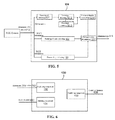
- FIG. 4 shows a schematic working principle diagram of an information analytic processing apparatus according to an embodiment.
- the information analytic processing apparatus 120 may perform analytic processing on the information (711 and/or 712) from the RGB-D sensor 111 and/or 112.
- the information analytic processing apparatus 120 includes a foreground detecting module 1211, a passenger detecting module 1212, a passenger height calculating module 1214 and a child passenger determining module 1215.
- the information 711 or 712 includes the D information and the RGB information.
- analytic processing is performed in the foreground detecting module 1211 on at least the D information of an area (for example, the passenger waiting area or the elevator cabin) monitored by the RGB-D sensor, for example, a background feature is extracted and calculated specifically, thereby obtaining foreground feature information.
- the information 711 and/or 712 may be acquired by the RGB-D sensor 111 and/or 112 respectively when there is no passenger.
- the foreground feature information obtained by the analytic processing performed by the foreground detecting module 1211 is transmitted to the passenger detecting module 1212, and the currently obtained D information is also transmitted to the passenger detecting module 1212.
- the obtained foreground information may include multiple passengers, the foreground information needs to be further divided according to the depth D information, so as to implement detection and separation of the passengers, for example, multiple passengers may be detected and counting is implemented.
- the passenger height calculating module 1214 performs calculation analysis at least based on the passenger detected by the passenger detecting module 1212 and the D information corresponding to the detected passenger to acquire a height feature of the passenger.
- the passenger height calculating module 1214 may further acquire calibration information from the corresponding RGB-D sensor, for example, information that calibrates an angle, a position and the like of the sensor, and introduce the calibration information into the calculation analytic processing, thereby improving the accuracy of the calculation, and being advantageous in obtaining a more accurate height feature.
- the child passenger determining module 1215 determines whether each detected passenger is a child at least based on the height feature of the passenger 92, for example, determines that the passenger is a child when a height feature value is less than or equal to a predetermined value, and triggers sending of the alarm message 610 when all passengers are determined as children.
- the predetermined value may be preset according to statistics on children heights, and different predetermined values may be set for different elevator types and/or different application scenarios.
- the alarm message 610 may not be sent.
- the detection on the passengers and the detection on the height features of the passengers are relatively more accurate, thereby being advantageous in improving the accuracy of determining children passengers.
- the analytic processing on the D information may adopt various existing specific algorithms, and the algorithm type thereof is not limited.
- the information analytic processing apparatus 120 may further include a passenger counting module 1213, which makes statistics on the number of the passengers based on the detected passenger information after the passenger detection ends, and then sends the number result to the passenger height calculating module 1214.
- a passenger counting module 1213 which makes statistics on the number of the passengers based on the detected passenger information after the passenger detection ends, and then sends the number result to the passenger height calculating module 1214.
- FIG. 5 shows a schematic working principle diagram of an information analytic processing apparatus according to another embodiment.
- the information analytic processing apparatus 120 of this embodiment further includes: a facial age feature detecting module 122 and/or a human shape detecting module 123.
- a facial age feature detecting module 122 and/or a human shape detecting module 123 In the information analytic processing apparatus in the embodiment shown in FIG. 4 , children passengers are generally determined based on height feature information; however, there may be mistaken determinations, for example, an adult passenger whose height is lower than the predetermined value.
- the facial age feature detecting module 122 and the human shape detecting module 123 further perform analytic processing in combination with the planar RGB information.
- the facial age feature detecting module 122 is further disposed in the information analytic processing apparatus 120, receives RGB information in the information 711 and/or 712, the RGB information being RGB information related to the passenger, and performs analytic processing on the RGB information, for example, extracts facial key feature information, thereby obtaining facial age feature information of each passenger.
- the facial age feature information of each passenger is sent to the child passenger determining module 1215, and the child passenger determining module 1215 determines whether each passenger is a child based on the facial age feature information.
- the alarm message 610 is sent.
- the human shape detecting module 123 is further disposed in the information analytic processing apparatus 120, receives RGB information in the information 711 and/or 712, the RGB information being RGB information related to the passenger, and performs image analytic processing on the RGB information, for example, extracts body shape feature information, thereby obtaining shape information of each passenger.
- the shape information of each passenger is sent to the child passenger determining module 1215, and the child passenger determining module 1215 determines whether each passenger is a child based on the shape information.
- the alarm message 610 is sent.
- the child passenger determining module 1215 may further determine whether all passengers are all children based on the height feature, the shape information and the facial age feature information together, and the alarm message 610 is sent when all the passengers are children.
- a confirming apparatus 130 is further configured to cancel the sending of the control instruction 610 when it is confirmed that the passengers are not all children, so as to ensure normal running of the elevator system.
- the elevator system further includes the confirming apparatus 130, where the alarm message 610 is sent to the confirming apparatus 130, and the information acquired by the RGB-D sensor 111 and/or 112 may be sent to the confirming apparatus 130 indirectly by the information analytic processing apparatus 120, and may also be directly sent to the confirming apparatus 130.
- the confirming apparatus 130 may be disposed at a position convenient for a worker managing the elevator to monitor.
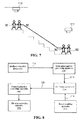
- FIG. 6 shows a schematic working principle diagram of a confirming apparatus according to an embodiment.
- the confirming apparatus 130 includes an alarming component 131, a displaying component 132, and a confirming component 133.
- the alarming component 131 may receive the alarm message 610, and trigger an alarm according to the received alarm message, so as to remind the worker managing the elevator to perform manual confirmation.
- the displaying component 132 may receive the information 711 and/or 712 sent by the RGB-D sensor, display the information in real time, especially the RGB information in the information acquired from the RGB-D sensor, thereby implementing displaying of a two-dimensional image.
- the worker managing the elevator may conveniently confirm whether the passengers in the current monitoring area are all children based on the display image, that is, perform further manual confirmation on the determination of the information analytic processing apparatus 120, so as to prevent a mistaken determination of the information analytic processing apparatus 120.
- the confirming component 133 sends the control instruction 620 used to ensure the children safety when it is determined that the passengers are all children, and specifically, the confirming component 133 is provided with a button, and the button is pressed based on the alarm and the displayed content to perform confirmation, thereby triggering the generation of the control instruction 620 based on the alarm message 610.
- the disposition of the confirming apparatus 130 further implements accurate and reliable monitoring on the situation of children using the elevator, thereby preventing the normal running of the elevator system from being affected due to inaccurate monitoring on the situation of children using the elevator.
- the control instruction 620 may be determined according to the specific situation of the elevator system.
- the control instruction 620 at least includes a first control instruction of ignoring an elevator call request of the current passenger waiting area, and in this way, when the child passenger calls the elevator in the passenger waiting area separately or alone, the elevator call request will be automatically ignored, so as to prevent the child passenger from taking the elevator separately or alone, and also be conducive to ensuring the running efficiency of the running elevator system.
- the control instruction 620 at least includes a second control instruction of ignoring a transport request in the elevator cabin, and in this way, when the child passenger presses a floor button on a panel 191 in the elevator cabin 190 separately or alone, the corresponding transport request will be automatically ignored, and the elevator cabin 190 will keep staying at the passenger waiting area, so as to prevent the child passenger from taking the elevator separately or alone.
- a control instruction converting apparatus 140 is further provided, and the control instruction converting apparatus 140 receives one or more instructions in the control instruction 610 from the information analytic processing apparatus 120, and converts the instruction into a command message readable by an elevator controlling apparatus 150.
- the disposition of the control instruction converting apparatus 140 can easily implement the modification on the existing elevator system, so as to be compatible with the information analytic processing apparatus 120 of the elevator system of the present invention.
- the elevator controlling apparatus 150 is further included, which is a control center of the elevator system, and responds to various instructions (for example, the control instruction 610) to send commands for controlling various components of the elevator system to act.
- various instructions for example, the control instruction 610
- the specific type, disposition manner and the like of the elevator controlling apparatus 150 are not limited.
- the elevator system may perform accurate determination on children passengers, can accurately and reliably monitor situations of children using the elevator, and can send corresponding control instructions in time, thereby preventing children from taking the elevator separately or alone, and greatly reducing the occurrence probability of accidents of children taking the elevator.
- the elevator system in the embodiment shown in FIG. 1 is not limited to be applied in the vertical elevator system, and may also be analogically applied to, for example, an escalator system.
- FIG. 7 shows an exemplary schematic mounting diagram of mounting an RGB-D sensor in an escalator system.
- the RGB-D sensor 111/112 of the elevator system in the embodiment shown in FIG. 1 may be mounted at an exit/entrance of the escalator system, so as to monitor passengers at the exit/entrance position.
- the information analytic processing apparatus 120 and the confirming apparatus 130 of the escalator system as shown in FIG. 1 may also work based on the working principles in the embodiments shown in FIG. 4 to FIG. 6 .
- a control instruction 610 is sent, and the control instruction 610 at least includes a third control instruction of stopping running of the escalator, so as to stop the running of the escalator in time, thereby ensuring the children safety.
- the control instruction 610 may further includes a fourth control instruction of sending a warning broadcast, so as to perform warning broadcasting in time to remind the guardian or worker around the children to notice and take corresponding measures.
- FIG. 8 shows a schematic modular structural diagram of an elevator system according to another embodiment of the present invention.
- the elevator system mainly includes an intelligent wearable device 210 and an information analytic processing apparatus 220.
- the intelligent wearable device 210 stores age feature information of a passenger wearing this device 210, and the age feature information may be specifically a certain age or a certain age range.
- the intelligent wearable device 210 may be owned and worn by the passenger, and may also be distributed by a building where the elevator system is located for the passengers to wear.
- the intelligent wearable device 210 may specifically be an RFID card, a smart phone, a smart bracelet, or the like, and the specific type thereof is not limited in the embodiment of the present invention.
- the information analytic processing apparatus 220 is configured to acquire the age feature information from the intelligent wearable device 210.
- the information analytic processing apparatus 220 may include an apparatus that is disposed in a predetermined area of the building and similar to a base station, and when a passenger carrying the intelligent wearable device 210 enters this predetermined area (for example, a passenger waiting area or an elevator cabin), the information analytic processing apparatus 220 may automatically read the age feature information stored in the intelligent wearable device 210, and therefore, the acquisition of the age feature information is very convenient.
- the information analytic processing apparatus 220 further perform real-time analytic processing on the age feature information to implement detection and determination on a child, so as to determine whether a child uses the elevator.
- the information analytic processing apparatus 220 further determines whether to generate the alarm message 610 according to the detection and determination situation.
- the information analytic processing apparatus 220 is a core component of an intelligent elevator control system, and by means of the alarm message 610 sent by it, the alarm message 610 being the basis of controllably trigger sending of a control command 620 in a subsequent process, it is conducive to ensuring the safety of children passengers.
- the elevator system is further provided with a confirming component 230 and an image acquiring apparatus 215.
- the image acquiring apparatus 215 may be similar to the RGB-D sensor 111 and/or 112 in the embodiments shown in FIG. 1 , and mounting and disposing manners thereof corresponding to the vertical elevator system and the escalator system are basically the same as the mounting and disposing of the RGB-D sensor in the embodiment shown in FIG. 1 (see FIG. 2 , FIG. 3 and FIG. 7 ), and the RGB information acquired by the RGB-D sensor is directly or indirectly sent to the confirming component 230 to perform real-time displaying.
- the image acquiring apparatus 215 may be a 2D smart IP camera, and 2D image information of passengers acquired by the image acquiring apparatus is transmitted to the confirming component 230. It should be understood that, the specific type of the image acquiring apparatus 215 is not limited in the embodiment of the present invention.
- the confirming component 230 receives the alarm message and can display the image information transmitted by the image acquiring apparatus 215 at least when receiving the alarm message 610.
- the worker is reminded to perform manual confirmation after the alarm message 610 is received, and the confirming component 230 is further configured to confirm whether the passengers are all children at least based on the displayed image information, and send the control instruction 620 used to ensure children safety when it is confirmed that the passengers are all children.
- the specific configuration of the confirming component 230 is basically the same as the confirming component 130 of the elevator system in the embodiment shown in FIG. 1 , for example, it may be configured to work according to the modular structure shown in FIG. 6 .
- the control instruction 620 sent by the confirming component 230 may also be determined according to the specific situation of the elevator system.
- a control instruction converting apparatus 140 is further provided, and the control instruction converting apparatus 140 receives one or more instructions in the control instruction 610 from the information analytic processing apparatus 120, and converts the instruction into a command message readable by the elevator controlling apparatus 150.
- the disposition of the control instruction converting apparatus 140 can easily implement the modification on the existing elevator system, so as to be compatible with the information analytic processing apparatus 120 of the elevator system of the present invention.
- the elevator controlling apparatus 150 is further included, which is a control center of the elevator system, and responds to various instructions (for example, the control instruction 610) to send commands for controlling various components of the elevator system to act.
- various instructions for example, the control instruction 610
- the specific type, disposition manner and the like of the elevator controlling apparatus 150 are not limited.
- the elevator system according to the embodiment shown in FIG. 8 may directly acquire the age feature information of the passengers by means of the intelligent wearable device, so as to perform accurate determination on children passengers, can accurately and reliably monitor situations of children using the elevator, and send corresponding control instructions in time, thereby preventing children from taking the elevator separately or alone, and greatly reducing the occurrence probability of accidents of children taking the elevator.
- the elevator system refers to a passenger transporting apparatus disposed in a building, and the specific type thereof is not limited to the vertical elevator system and the escalator system in the embodiments.
- it may also be a moving walkway system.
- Persons skilled in the art may analogically apply the present invention to other types of elevator systems according to the teaching and inspiration of the above embodiments, so as to at least implement the function of monitoring children using the elevator.
- the elevator system and the control method thereof in the present invention are mainly illustrated in the above examples. Some implementation manners of the present invention are described; however, persons of ordinary skill in the art should understand that the present invention may be implemented in many other forms without departing from the substance and scope thereof, for example, a certain module of the information analytic processing apparatus 120 shown in FIG. 4 is deleted. Therefore, the displayed examples and implementation manners are considered as schematic instead of limited, and the present invention may incorporate various modifications and replacements without departing from the spirit and scope of the present invention defined in the accompanying claims.
Landscapes
- Indicating And Signalling Devices For Elevators (AREA)
- Maintenance And Inspection Apparatuses For Elevators (AREA)
- Elevator Control (AREA)
Abstract
Description
- The present invention relates to the technical field of elevator control, and in particular, to an elevator system capable of monitoring children use and a control method thereof.
- As a convenient passenger transport tool, elevators are widely applied in buildings, for example, in fields such as office buildings, shopping malls and schools. More and more passengers tend to take an elevator system because of its good ride experiences, especially for children or kids, the elevator system seems to bring fresh experiences for them, and they are willing to ride various types of elevators, including a vertical elevator (also referred to as a lift) and an escalator.
- Because of the universal application of the elevator, it is very easily overlooked by the general passengers that the elevator is a special device and has a certain safety risk, especially when a child takes the elevator alone, a large safety risk exists; and therefore, monitoring on children taking the elevator is easily neglected. As a result, elevator providers or units using elevators generally require that children should be accompanied by guardians thereof while taking elevators, so as to avoid safety accidents.
- In the existing elevator systems, there are various technologies proposed for monitoring or identifying whether a child takes an elevator alone, for example, the Chinese Patent Application No.
CN201110227551.8 - An objective of the present invention is to implement accurate monitoring on a situation of children using an elevator.
- Another objective of the present invention is to reduce the occurrence probability of safety accident when children take an elevator.
- To implement the above or other objectives, the present invention provides the following technical solutions.
- According to an aspect of the present invention, an elevator system capable of monitoring children use is provided, which includes an elevator controlling apparatus, and further includes:
- an RGB-D sensor, mounted at a predetermined position to at least acquire red green blue (RGB) information and depth (D) information; and
- an information analytic processing apparatus, configured to perform real-time analytic processing on at least the D information or a combination of the RGB information and the D information, so as to implement detection and determination on a child.
- According to another aspect of the present invention, an elevator system control method capable of monitoring children use is provided, including:
- S1: at least acquiring RGB information and depth information through an RGB-D sensor;
- S2: performing real-time analytic processing on at least the D information or a combination of the RGB information and the D information, so as to implement detection and determination on a child, and sending an alarm message when all passengers are determined as children;
- S3: real-time displaying at least a part of the information acquired by the RGB-D sensor at least when the alarm message is received, and confirming whether the passengers are all children based on the displayed information acquired by the RGB-D sensor; and
- S4: sending a control instruction used to ensure children safety when it is confirmed that the passengers are all children.
- According to still another aspect of the present invention, an elevator system capable of monitoring children use is provided, which includes an elevator controlling apparatus, and further includes:
- an intelligent wearable device, worn by a passenger and at least storing age feature information of the passenger; and
- an information analytic processing apparatus (220), configured to acquire the age feature information of the passenger from the intelligent wearable device and perform real-time analytic processing, so as to implement detection and determination on a child.
- According to still another aspect of the present invention, an elevator system control method capable of monitoring children use is provided, including:
- S1: at least acquiring age feature information of a passenger from an intelligent wearable device worn by the passenger, and acquiring image information from an image acquiring apparatus;
- S2: performing real-time analytic processing on the age feature information, so as to implement detection and determination on a child, and sending an alarm message when all passengers are determined as children;
- S3: real-time displaying the image information at least when the alarm message is received, and confirming whether the passengers are all children based on the displayed image information; and
- S4: sending a control instruction used to ensure children safety when it is confirmed that the passengers are all children.
- The above and other advantages of the present invention will be more complete and clear through the following detailed descriptions with reference to the accompanying drawings, where identical or similar elements are presented by using the same reference numerals.
-
FIG. 1 is a schematic modular structural diagram of an elevator system according to an embodiment of the present invention; -
FIG. 2 is an exemplary schematic mounting diagram of mounting an RGB-D sensor at a passenger waiting area; -
FIG. 3 is an exemplary schematic mounting diagram of mounting an RGB-D sensor in an elevator cabin; -
FIG. 4 is a schematic working principle diagram of an information analytic processing apparatus according to an embodiment; -
FIG. 5 is a schematic working principle diagram of an information analytic processing apparatus according to another embodiment; -
FIG. 6 is a schematic working principle diagram of a confirming apparatus according to an embodiment; -
FIG. 7 is an exemplary schematic mounting diagram of mounting an RGB-D sensor in an escalator system; and -
FIG. 8 is a schematic modular structural diagram of an elevator system according to another embodiment of the present invention. - Some of multiple possible embodiments of the present invention are described in the following, are intended to provide basic understanding on the present invention, and are not intended to determine key or critical elements of the present invention or limit the protection scope of the present invention. It is easily understood that, according to the technical solution of the present invention, persons of ordinary skill in the art can propose various other implementation manners that can be replaced with each other, without departing from the essential spirit of the present invention. Therefore, the following specific implementation manners and the accompanying drawings are merely exemplary descriptions on the technical solution of the present invention, and should not be considered as all of the present invention, or as constraints or limitations on the technical solutions of the present invention.
- In the following descriptions, for clarity and simplicity, all components of an elevator system are not shown one by one in the accompanying drawings, and multiple components that can completely implement the present invention are shown in the accompanying drawings in a focused manner, and for persons skilled in the art, operations of various components are familiar and apparent.
- In this text, a "passenger waiting area" and a "passenger arriving area" are defined with respect to a process of a passenger taking an elevator, and for a certain floor, it may be a "passenger waiting area" of one elevator taking process and may also be a "passenger arrival area" of another elevator taking process.
- In this text, "children", also referred to as "kids", refer to younger passengers who take the elevator without being accompanied by guardians and may have safety risks. The specific age range and/or height range corresponding to the definition of the "children" or "kids" may be set according to safety risk evaluation of the elevator.
-
FIG. 1 shows a schematic modular structural diagram of an elevator system according to an embodiment of the present invention. In this embodiment, the elevator system mainly includes an RGB-D (red green blue-depth) sensor, which includes an RGB-D sensor 111 and an RGB-D sensor 112 disposed at different positions. When the elevator system is a vertical elevator (vertical lift) system, at least one RGB-D sensor 111 is disposed at apassenger waiting area 81, and at least one RGB-D sensor 112 is disposed in anelevator cabin 190 of the elevator system. The RGB-D sensors D sensors - Illustrations are made in the following by using the elevator system being the vertical elevator system as an example.
-
FIG. 2 shows an exemplary schematic mounting diagram of mounting an RGB-D sensor at a passenger waiting area; andFIG. 3 shows an exemplary schematic mounting diagram of mounting an RGB-D sensor in an elevator cabin. - Referring to
FIG. 1 to FIG. 2 , thepassenger waiting area 81 may have one or more passengers in a certain period of time.Passengers 92 are schematically shown as children passenger, who are objects monitored by the elevator system of the present invention, especially, using of the elevator system by them is monitored. Definitely, those who are monitored may also include passengers (not shown) other than children, and they are passengers allowed to take the elevator alone, for example, a guardian of thechild passenger 92. - The RGB-
D sensor 111 is mounted at thepassenger waiting area 81, which can collect information related to passengers in a monitoring range thereof, so as to obtaininformation 711. Theinformation 711 includes RGB information and D information, which may include RGB information and D information related to a foreground of thepassenger waiting area 81, and may also include RGB information and D information related to the passenger of thepassenger waiting area 81. - Referring to
FIG. 1 andFIG. 3 , theelevator cabin 190 of the elevator system may have one ormore passengers 92 in a certain period of time, and the RGB-D sensor 112 is mounted in theelevator cabin 190, which can collect information related to passengers in theelevator cabin 190, so as to obtaininformation 712. Theinformation 712 includes RGB information and D information, which may include RGB information and D information related to a foreground of theelevator cabin 190, and may also include RGB information and D information related to the passenger of theelevator cabin 190. - It should be noted that, the RGB-
D sensor 111 of thepassenger waiting area 81 and the RGB-D sensor 112 of theelevator cabin 190 may adopt RGB-D sensors of the same type, and may also adopt RGB-D sensors of different types. The specific mounting position of the RGB-D sensor in thepassenger waiting area 81 or theelevator cabin 190 is not limited by the embodiment shown in the present invention, and the RGB-D sensor may be mounted specifically at a selected corresponding position to identify the passenger more clearly. - Continuously as shown in
FIG. 1 , the elevator system mainly includes an informationanalytic processing apparatus 120, theinformation 711 and theinformation 712 acquired from the RGB-D sensors are sent to the informationanalytic processing apparatus 120, and the informationanalytic processing apparatus 120 performs analytic processing on the information. The informationanalytic processing apparatus 120 may be disposed integrally, or may be disposed separately corresponding to each RGB-D sensor. Specifically, the informationanalytic processing apparatus 120 may be a PC server corresponding to the RGB-D sensor, and various collected RGB information and D information are transmitted to the PC server to perform real-time analytic processing, so as to implement detection and determination on children, and decide whether to generate analarm message 610 according to a detection and determination situation. The informationanalytic processing apparatus 120 is a core component of an intelligent elevator control system, and by means of thealarm message 610 sent by it, thealarm message 610 being the basis of controllably trigger sending of acontrol command 620 in a subsequent process, it is conducive to ensuring the safety of children passengers. Exemplary illustrations are made in detail on the information analytic processing apparatus of the elevator system according to the embodiment of the present invention in the following at least with reference toFIG. 1 to FIG. 5 , and a control method of the elevator system is also illustrated in an exemplary manner. -
FIG. 4 shows a schematic working principle diagram of an information analytic processing apparatus according to an embodiment. Referring toFIG. 1 to FIG. 4 , the informationanalytic processing apparatus 120 may perform analytic processing on the information (711 and/or 712) from the RGB-D sensor 111 and/or 112. When being divided according to functional modules, in this embodiment, the informationanalytic processing apparatus 120 includes aforeground detecting module 1211, apassenger detecting module 1212, a passengerheight calculating module 1214 and a child passenger determining module 1215. Theinformation foreground detecting module 1211 on at least the D information of an area (for example, the passenger waiting area or the elevator cabin) monitored by the RGB-D sensor, for example, a background feature is extracted and calculated specifically, thereby obtaining foreground feature information. Theinformation 711 and/or 712 may be acquired by the RGB-D sensor 111 and/or 112 respectively when there is no passenger. - Further, the foreground feature information obtained by the analytic processing performed by the
foreground detecting module 1211 is transmitted to thepassenger detecting module 1212, and the currently obtained D information is also transmitted to thepassenger detecting module 1212. The obtained foreground information may include multiple passengers, the foreground information needs to be further divided according to the depth D information, so as to implement detection and separation of the passengers, for example, multiple passengers may be detected and counting is implemented. - Further, the passenger
height calculating module 1214 performs calculation analysis at least based on the passenger detected by thepassenger detecting module 1212 and the D information corresponding to the detected passenger to acquire a height feature of the passenger. In this embodiment, the passengerheight calculating module 1214 may further acquire calibration information from the corresponding RGB-D sensor, for example, information that calibrates an angle, a position and the like of the sensor, and introduce the calibration information into the calculation analytic processing, thereby improving the accuracy of the calculation, and being advantageous in obtaining a more accurate height feature. - Further, the child passenger determining module 1215 determines whether each detected passenger is a child at least based on the height feature of the
passenger 92, for example, determines that the passenger is a child when a height feature value is less than or equal to a predetermined value, and triggers sending of thealarm message 610 when all passengers are determined as children. It should be noted that, the predetermined value may be preset according to statistics on children heights, and different predetermined values may be set for different elevator types and/or different application scenarios. Moreover, it should be understood that, when there are both a child passenger and an adult passenger whose height feature is greater than the predetermined value in the passengers, it may be determined that the child in the currentpassenger waiting area 81 or the child in theelevator cabin 190 is accompanied by a guardian to take the elevator, and it may be considered as a relatively safe situation; therefore, thealarm message 610 may not be sent. - In the information
analytic processing apparatus 120 in the above embodiment, because of the introduction of the D information, the detection on the passengers and the detection on the height features of the passengers are relatively more accurate, thereby being advantageous in improving the accuracy of determining children passengers. It should be noted that, the analytic processing on the D information may adopt various existing specific algorithms, and the algorithm type thereof is not limited. - In an embodiment, the information
analytic processing apparatus 120 may further include apassenger counting module 1213, which makes statistics on the number of the passengers based on the detected passenger information after the passenger detection ends, and then sends the number result to the passengerheight calculating module 1214. -
FIG. 5 shows a schematic working principle diagram of an information analytic processing apparatus according to another embodiment. Compared with the information analytic processing apparatus in the embodiment shown inFIG. 4 , the informationanalytic processing apparatus 120 of this embodiment further includes: a facial agefeature detecting module 122 and/or a humanshape detecting module 123. In the information analytic processing apparatus in the embodiment shown inFIG. 4 , children passengers are generally determined based on height feature information; however, there may be mistaken determinations, for example, an adult passenger whose height is lower than the predetermined value. The facial agefeature detecting module 122 and the humanshape detecting module 123 further perform analytic processing in combination with the planar RGB information. - The applicant noticed that facial features of adult passengers and child passenger are different and are image identifiable. Therefore, the facial age
feature detecting module 122 is further disposed in the informationanalytic processing apparatus 120, receives RGB information in theinformation 711 and/or 712, the RGB information being RGB information related to the passenger, and performs analytic processing on the RGB information, for example, extracts facial key feature information, thereby obtaining facial age feature information of each passenger. The facial age feature information of each passenger is sent to the child passenger determining module 1215, and the child passenger determining module 1215 determines whether each passenger is a child based on the facial age feature information. In combination with the determination based on the height feature information of the passenger, when the two determination processes both determine that the passenger is a child, the passenger is determined as a child, or when all passengers are determined as children in both of the two determination processes, thealarm message 610 is sent. - It should be noted that, in the analytic processing of the facial age
feature detecting module 122, specific algorithms of various facial image recognition may be adopted, and the specific algorithm type is not limited. - On the other hand, the applicant noticed that shapes of adult passengers and child passenger are different and are image identifiable. Therefore, the human
shape detecting module 123 is further disposed in the informationanalytic processing apparatus 120, receives RGB information in theinformation 711 and/or 712, the RGB information being RGB information related to the passenger, and performs image analytic processing on the RGB information, for example, extracts body shape feature information, thereby obtaining shape information of each passenger. The shape information of each passenger is sent to the child passenger determining module 1215, and the child passenger determining module 1215 determines whether each passenger is a child based on the shape information. In combination with the determination based on the height feature information of the passenger, when the two determination processes both determine that the passenger is a child, the passenger is determined as a child, or when all passengers are determined as children in both of the two determination processes, thealarm message 610 is sent. - It should be noted that, in the analytic processing of the
shape detecting module 123, specific algorithms of various body shape image recognition may be adopted, and the specific algorithm type is not limited. - In other embodiments, in
FIG. 5 , the child passenger determining module 1215 may further determine whether all passengers are all children based on the height feature, the shape information and the facial age feature information together, and thealarm message 610 is sent when all the passengers are children. - It should be further understood that, a confirming
apparatus 130 is further configured to cancel the sending of thecontrol instruction 610 when it is confirmed that the passengers are not all children, so as to ensure normal running of the elevator system. - Continuously as shown in
FIG. 1 , the elevator system further includes the confirmingapparatus 130, where thealarm message 610 is sent to the confirmingapparatus 130, and the information acquired by the RGB-D sensor 111 and/or 112 may be sent to the confirmingapparatus 130 indirectly by the informationanalytic processing apparatus 120, and may also be directly sent to the confirmingapparatus 130. The confirmingapparatus 130 may be disposed at a position convenient for a worker managing the elevator to monitor. -
FIG. 6 shows a schematic working principle diagram of a confirming apparatus according to an embodiment. In this embodiment, the confirmingapparatus 130 includes analarming component 131, a displayingcomponent 132, and a confirmingcomponent 133. Thealarming component 131 may receive thealarm message 610, and trigger an alarm according to the received alarm message, so as to remind the worker managing the elevator to perform manual confirmation. The displayingcomponent 132 may receive theinformation 711 and/or 712 sent by the RGB-D sensor, display the information in real time, especially the RGB information in the information acquired from the RGB-D sensor, thereby implementing displaying of a two-dimensional image. Further, in the confirmingcomponent 133, the worker managing the elevator may conveniently confirm whether the passengers in the current monitoring area are all children based on the display image, that is, perform further manual confirmation on the determination of the informationanalytic processing apparatus 120, so as to prevent a mistaken determination of the informationanalytic processing apparatus 120. The confirmingcomponent 133 sends thecontrol instruction 620 used to ensure the children safety when it is determined that the passengers are all children, and specifically, the confirmingcomponent 133 is provided with a button, and the button is pressed based on the alarm and the displayed content to perform confirmation, thereby triggering the generation of thecontrol instruction 620 based on thealarm message 610. - The disposition of the confirming
apparatus 130 further implements accurate and reliable monitoring on the situation of children using the elevator, thereby preventing the normal running of the elevator system from being affected due to inaccurate monitoring on the situation of children using the elevator. - The
control instruction 620 may be determined according to the specific situation of the elevator system. - For the
passenger waiting area 81 of the vertical elevator system, if it is confirmed that the waiting passengers are all children, thecontrol instruction 620 at least includes a first control instruction of ignoring an elevator call request of the current passenger waiting area, and in this way, when the child passenger calls the elevator in the passenger waiting area separately or alone, the elevator call request will be automatically ignored, so as to prevent the child passenger from taking the elevator separately or alone, and also be conducive to ensuring the running efficiency of the running elevator system. - For the
elevator cabin 190 of the vertical elevator system, if it is confirmed that the passengers in the elevator cabin are all children, thecontrol instruction 620 at least includes a second control instruction of ignoring a transport request in the elevator cabin, and in this way, when the child passenger presses a floor button on apanel 191 in theelevator cabin 190 separately or alone, the corresponding transport request will be automatically ignored, and theelevator cabin 190 will keep staying at the passenger waiting area, so as to prevent the child passenger from taking the elevator separately or alone. - Continuously as shown in
FIG. 1 , in the elevator system of this embodiment, optionally, a controlinstruction converting apparatus 140 is further provided, and the controlinstruction converting apparatus 140 receives one or more instructions in thecontrol instruction 610 from the informationanalytic processing apparatus 120, and converts the instruction into a command message readable by an elevator controlling apparatus 150. The disposition of the controlinstruction converting apparatus 140 can easily implement the modification on the existing elevator system, so as to be compatible with the informationanalytic processing apparatus 120 of the elevator system of the present invention. - Continuously as shown in
FIG. 1 , in the elevator system of this embodiment, the elevator controlling apparatus 150 is further included, which is a control center of the elevator system, and responds to various instructions (for example, the control instruction 610) to send commands for controlling various components of the elevator system to act. The specific type, disposition manner and the like of the elevator controlling apparatus 150 are not limited. - It should be understood that, the elevator system according to the embodiment of the present invention may perform accurate determination on children passengers, can accurately and reliably monitor situations of children using the elevator, and can send corresponding control instructions in time, thereby preventing children from taking the elevator separately or alone, and greatly reducing the occurrence probability of accidents of children taking the elevator.
- The elevator system in the embodiment shown in
FIG. 1 is not limited to be applied in the vertical elevator system, and may also be analogically applied to, for example, an escalator system. -
FIG. 7 shows an exemplary schematic mounting diagram of mounting an RGB-D sensor in an escalator system. The RGB-D sensor 111/112 of the elevator system in the embodiment shown inFIG. 1 may be mounted at an exit/entrance of the escalator system, so as to monitor passengers at the exit/entrance position. The informationanalytic processing apparatus 120 and the confirmingapparatus 130 of the escalator system as shown inFIG. 1 may also work based on the working principles in the embodiments shown inFIG. 4 to FIG. 6 . In the case that the passengers at the exit/entrance position are all confirmed as children, acontrol instruction 610 is sent, and thecontrol instruction 610 at least includes a third control instruction of stopping running of the escalator, so as to stop the running of the escalator in time, thereby ensuring the children safety. Thecontrol instruction 610 may further includes a fourth control instruction of sending a warning broadcast, so as to perform warning broadcasting in time to remind the guardian or worker around the children to notice and take corresponding measures. -
FIG. 8 shows a schematic modular structural diagram of an elevator system according to another embodiment of the present invention. In this embodiment, the elevator system mainly includes an intelligentwearable device 210 and an information analytic processing apparatus 220. The intelligentwearable device 210 stores age feature information of a passenger wearing thisdevice 210, and the age feature information may be specifically a certain age or a certain age range. The intelligentwearable device 210 may be owned and worn by the passenger, and may also be distributed by a building where the elevator system is located for the passengers to wear. The intelligentwearable device 210 may specifically be an RFID card, a smart phone, a smart bracelet, or the like, and the specific type thereof is not limited in the embodiment of the present invention. - Continuously as shown in
FIG. 8 , the information analytic processing apparatus 220 is configured to acquire the age feature information from the intelligentwearable device 210. In an embodiment, the information analytic processing apparatus 220 may include an apparatus that is disposed in a predetermined area of the building and similar to a base station, and when a passenger carrying the intelligentwearable device 210 enters this predetermined area (for example, a passenger waiting area or an elevator cabin), the information analytic processing apparatus 220 may automatically read the age feature information stored in the intelligentwearable device 210, and therefore, the acquisition of the age feature information is very convenient. The information analytic processing apparatus 220 further perform real-time analytic processing on the age feature information to implement detection and determination on a child, so as to determine whether a child uses the elevator. In still another embodiment, the information analytic processing apparatus 220 further determines whether to generate thealarm message 610 according to the detection and determination situation. The information analytic processing apparatus 220 is a core component of an intelligent elevator control system, and by means of thealarm message 610 sent by it, thealarm message 610 being the basis of controllably trigger sending of acontrol command 620 in a subsequent process, it is conducive to ensuring the safety of children passengers. - Continuously as shown in
FIG. 8 , to further improve the accuracy of determining the children using the elevator, the elevator system is further provided with a confirmingcomponent 230 and animage acquiring apparatus 215. Theimage acquiring apparatus 215 may be similar to the RGB-D sensor 111 and/or 112 in the embodiments shown inFIG. 1 , and mounting and disposing manners thereof corresponding to the vertical elevator system and the escalator system are basically the same as the mounting and disposing of the RGB-D sensor in the embodiment shown inFIG. 1 (seeFIG. 2 ,FIG. 3 andFIG. 7 ), and the RGB information acquired by the RGB-D sensor is directly or indirectly sent to the confirmingcomponent 230 to perform real-time displaying. In still another embodiment, theimage acquiring apparatus 215 may be a 2D smart IP camera, and 2D image information of passengers acquired by the image acquiring apparatus is transmitted to the confirmingcomponent 230. It should be understood that, the specific type of theimage acquiring apparatus 215 is not limited in the embodiment of the present invention. - The confirming
component 230 receives the alarm message and can display the image information transmitted by theimage acquiring apparatus 215 at least when receiving thealarm message 610. The worker is reminded to perform manual confirmation after thealarm message 610 is received, and the confirmingcomponent 230 is further configured to confirm whether the passengers are all children at least based on the displayed image information, and send thecontrol instruction 620 used to ensure children safety when it is confirmed that the passengers are all children. The specific configuration of the confirmingcomponent 230 is basically the same as the confirmingcomponent 130 of the elevator system in the embodiment shown inFIG. 1 , for example, it may be configured to work according to the modular structure shown inFIG. 6 . Thecontrol instruction 620 sent by the confirmingcomponent 230 may also be determined according to the specific situation of the elevator system. - Continuously as shown in
FIG. 8 , in the elevator system of this embodiment, optionally, a controlinstruction converting apparatus 140 is further provided, and the controlinstruction converting apparatus 140 receives one or more instructions in thecontrol instruction 610 from the informationanalytic processing apparatus 120, and converts the instruction into a command message readable by the elevator controlling apparatus 150. The disposition of the controlinstruction converting apparatus 140 can easily implement the modification on the existing elevator system, so as to be compatible with the informationanalytic processing apparatus 120 of the elevator system of the present invention. - Continuously as shown in
FIG. 8 , in the elevator system of this embodiment, the elevator controlling apparatus 150 is further included, which is a control center of the elevator system, and responds to various instructions (for example, the control instruction 610) to send commands for controlling various components of the elevator system to act. The specific type, disposition manner and the like of the elevator controlling apparatus 150 are not limited. - The elevator system according to the embodiment shown in
FIG. 8 may directly acquire the age feature information of the passengers by means of the intelligent wearable device, so as to perform accurate determination on children passengers, can accurately and reliably monitor situations of children using the elevator, and send corresponding control instructions in time, thereby preventing children from taking the elevator separately or alone, and greatly reducing the occurrence probability of accidents of children taking the elevator. - It should be understood that, when it is so-called that a component is "connected" or "coupled" to another component, it may be directly connected or coupled to another component, or there may be an intermediate component. In contrast, when it is so-called that a component is "directly coupled" or "directly connected" to another component, there is no intermediate component.
- In the present invention, the elevator system refers to a passenger transporting apparatus disposed in a building, and the specific type thereof is not limited to the vertical elevator system and the escalator system in the embodiments. For example, it may also be a moving walkway system. Persons skilled in the art may analogically apply the present invention to other types of elevator systems according to the teaching and inspiration of the above embodiments, so as to at least implement the function of monitoring children using the elevator.
- The elevator system and the control method thereof in the present invention are mainly illustrated in the above examples. Some implementation manners of the present invention are described; however, persons of ordinary skill in the art should understand that the present invention may be implemented in many other forms without departing from the substance and scope thereof, for example, a certain module of the information
analytic processing apparatus 120 shown inFIG. 4 is deleted. Therefore, the displayed examples and implementation manners are considered as schematic instead of limited, and the present invention may incorporate various modifications and replacements without departing from the spirit and scope of the present invention defined in the accompanying claims. - Certain aspects and preferred features of the invention are set out in the following clauses:
-
Clause 1. An elevator system capable of monitoring children use, comprising an elevator controlling apparatus, wherein the elevator system further comprises:- an RGB-D sensor (111, 112), mounted at a predetermined position to at least acquire red green blue (RGB) information and depth (D) information; and
- an information analytic processing apparatus (120), configured to perform real-time analytic processing on at least the D information or a combination of the RGB information and the D information, so as to implement detection and determination on a child.
- Clause 2. The elevator system according to
Clause 1, wherein,
the information analytic processing apparatus (120) is further configured to send an alarm message (610) when passengers are all determined as children; and
the elevator system further comprises: a confirming apparatus (130), configured to receive the alarm message and real-time display at least the RGB information acquired by the RGB-D sensor at least when the alarm message is received, and configured to confirm whether the passengers are all children based on at least the displayed RGB information, and send a control instruction (620) used to ensure children safety to the elevator controlling apparatus when it is confirmed that the passengers are all children. -
Clause 3. The elevator system according toClause 1 or 2, wherein the information analytic processing apparatus comprises:- a foreground detecting module (1211), configured to perform, at least based on the D information, analytic processing on an area monitored by the RGB-D sensor to obtain foreground feature information;
- a passenger detecting module (1212), configured to perform analytic processing at least based on the currently obtained D information as well as the foreground feature information to detect the passenger;
- a passenger height calculating module (1214), configured to perform calculation analysis at least based on the D information corresponding to the detected passenger to acquire a height feature of the passenger; and
- a child passenger determining module (1215), configured to determine whether each passenger is a child at least based on the height feature of the passenger, and send the alarm message (610) when all passengers are determined as children.
- Clause 4. The elevator system according to
Clause 3, wherein the information analytic processing apparatus further comprises: a passenger counting module (1213), configured to make statistics on the number of the passengers. - Clause 5. The elevator system according to
Clause 3, wherein the information analytic processing apparatus further comprises: a facial age feature detecting module (122), configured to perform analytic processing at least based on the RGB information related to the passenger to obtain facial age feature information of each passenger; and further, the child passenger determining module (1215) is further configured to determine whether each passenger is a child based on the facial age feature information. - Clause 6. The elevator system according to
Clause 3, wherein the information analytic processing apparatus further comprises: a human shape detecting module (123), configured to perform analytic processing at least based on the RGB information related to the passenger to obtain shape information of each passenger; and further, the child passenger determining module (1215) is further configured to determine whether each passenger is a child based on the shape information. - Clause 7. The elevator system according to Clause 2, wherein the confirming apparatus (130) comprises:
- an alarming component (131), configured to trigger an alarm according to the received alarm message;
- a displaying component (132), configured to real-time display the RGB information acquired by the RGB-D sensor; and
- an confirming component (133), configured to confirm whether the passengers are all children at least based on the displayed RGB information, and send a control instruction (620) used to ensure children safety when it is confirmed that the passengers are all children.
-
Clause 8. The elevator system according to Clause 2, further comprising:- a control instruction converting apparatus (140), configured to convert the control instruction into a command message readable by the elevator controlling apparatus.
- Clause 9. The elevator system according to Clause 2, wherein the elevator system is a vertical elevator system comprising an elevator cabin, and the RGB-D sensor comprises a first RGB-D sensor (111) disposed at a passenger waiting area of the vertical elevator system.
- Clause 10. The elevator system according to Clause 9, wherein the control instruction (620) used to ensure children safety at least comprises a first control instruction of ignoring an elevator call request of the current passenger waiting area.
- Clause 11. The elevator system according to Clause 9, wherein the RGB-D sensor further comprises a second RGB-D sensor (112) disposed in the elevator cabin of the vertical elevator system.
- Clause 12. The elevator system according to Clause 11, wherein the control instruction (620) used to ensure children safety at least comprises a second control instruction of ignoring a transport request in the elevator cabin.
- Clause 13. The elevator system according to Clause 2, wherein the elevator system is an escalator system, and the RGB-D sensor comprises a first/second RGB-D sensor (111, 112) disposed at an exit/entrance of the escalator system.
- Clause 14. The elevator system according to Clause 13, wherein the control instruction (620) used to ensure children safety at least comprises a third control instruction of stopping running of the escalator.
- Clause 15. The elevator system according to Clause 14, wherein the control instruction (620) used to ensure children safety at least comprises a fourth control instruction of sending a warning broadcast.
- Clause 16. The elevator system according to Clause 2, wherein the confirming apparatus is further configured to cancel the sending of the control instruction when it is confirmed that the passengers are not all children, so as to ensure normal running of the elevator system.
- Clause 17. An elevator system control method capable of monitoring children use, comprising:
- S1: at least acquiring RGB information and depth information through an RGB-D sensor;
- S2: performing real-time analytic processing on at least the D information or a combination of the RGB information and the D information, so as to implement detection and determination on a child, and sending an alarm message when passengers are determined as all children;
- S3: real-time displaying at least the RGB information acquired by the RGB-D sensor at least when the alarm message is received, and confirming whether the passengers are all children based on the displayed RGB information; and
- S4: sending a control instruction used to ensure children safety when it is confirmed that the passengers are all children.
- Clause 18. The elevator system control method according to Clause 17, wherein the step S2 comprises:
- performing, at least based on the D information, analytic processing on an area monitored by the RGB-D sensor to obtain foreground feature information;
- performing analytic processing at least based on the currently obtained D information as well as the foreground feature information to detect the passenger;
- performing calculation analysis at least based on the D information corresponding to the detected passenger to acquire a height feature of the passenger; and
- determining whether each passenger is a child at least based on the height feature of the passenger, and sending the alarm message when all passengers are determined as children.
- Clause 19. The elevator system control method according to Clause 18, wherein the step S2 further comprises: making statistics on the number of the passengers.
- Clause 20. The elevator system control method according to Clause 18, wherein the step S2 further comprises:
- performing analytic processing at least based on the RGB information related to the passenger, so as to obtain facial age feature information of each passenger; and
- determining whether each passenger is a child based on the facial age feature information.
- Clause 21. The elevator system control method according to Clause 18 or 20, wherein the step S2 further comprises:
- performing analytic processing at least based on the RGB information related to the passenger, so as to obtain shape information of each passenger; and
- determining whether each passenger is a child based on the shape information.
- Clause 22. The elevator system control method according to Clause 17, wherein the elevator system is a vertical elevator system comprising an elevator cabin, and the RGB-D sensor comprises a first RGB-D sensor (111) disposed at a passenger waiting area of the vertical elevator system; and
the control instruction (620) used to ensure children safety at least comprises a first control instruction of ignoring an elevator call request of the current passenger waiting area. - Clause 23. The elevator system control method according to Clause 20, wherein the RGB-D sensor further comprises a second RGB-D sensor (112) disposed in the elevator cabin of the vertical elevator system; and
the control instruction used to ensure children safety at least comprises a second control instruction of ignoring a transport request in the elevator cabin. - Clause 24. The elevator system control method according to Clause 17, wherein the elevator system is an escalator system, and the RGB-D sensor comprises a first/second RGB-D sensor (111, 112) disposed at an exit/entrance of the escalator system; and
the control instruction (620) used to ensure children safety at least comprises a third control instruction of stopping running of the escalator. - Clause 25. The elevator system control method according to Clause 24, wherein the control instruction used to ensure children safety at least comprises a fourth control instruction of sending a warning broadcast.
- Clause 26. The elevator system control method according to Clause 17, wherein the step S4 further comprises: canceling the sending of the control instruction when it is confirmed that the passengers are not all children, so as to ensure normal running of the elevator system.
- Clause 27. An elevator system capable of monitoring children use, comprising an elevator controlling apparatus, wherein the elevator system further comprises:
- an intelligent wearable device (210), worn by a passenger and at least storing age feature information of the passenger; and
- an information analytic processing apparatus (220), configured to acquire the age feature information of the passenger from the intelligent wearable device and perform real-time analytic processing, so as to implement detection and determination on a child.
- Clause 28. The elevator system according to Clause 27, wherein,
the information analytic processing apparatus (220) is further configured to send an alarm message (610) when the passengers are all determined as children; and
the elevator system further comprises:- an image acquiring apparatus (215), mounted at a predetermined position to at least acquire image information of the passenger; and
- a confirming apparatus (230), configured to receive the alarm message and real-time display the image information at least when the alarm message is received, and configured to confirm whether the passengers are all children based on at least the displayed image information, and send a control instruction (620) used to ensure children safety to the elevator controlling apparatus when it is confirmed that the passengers are all children.
- Clause 29. The elevator system according to Clause 28, wherein the image acquiring apparatus is an RGB-D sensor or a 2D smart IP camera.
- Clause 30. The elevator system according to Clause 28, wherein the confirming apparatus (230) comprises:
- an alarming component, configured to trigger an alarm according to the received alarm message;
- a displaying component, configured to display the image information in real time; and
- a confirming component, configured to confirm whether the passengers are all children at least based on the displayed image information, and send the control instruction (620) used to ensure children safety when it is confirmed that the passengers are all children.
- Clause 31. The elevator system according to Clause 28, further comprising:
- a control instruction converting apparatus (140), configured to convert the control instruction into a command message readable by the elevator controlling apparatus.
- Clause 32. The elevator system according to Clause 28, wherein the elevator system is a vertical elevator system comprising an elevator cabin, and the image acquiring apparatus comprises a first image acquiring apparatus disposed at a passenger waiting area of the vertical elevator system.
- Clause 33. The elevator system according to Clause 32, wherein the control instruction (620) used to ensure children safety at least comprises a first control instruction of ignoring an elevator call request of the current passenger waiting area.
- Clause 34. The elevator system according to Clause 32, wherein the image acquiring apparatus comprises a second image acquiring apparatus disposed in an elevator cabin of the vertical elevator system.
- Clause 35. The elevator system according to Clause 34, wherein the control instruction (620) used to ensure children safety at least comprises a second control instruction of ignoring a transport request in the elevator cabin.
- Clause 36. The elevator system according to Clause 28, wherein the elevator system is an escalator system, and the image acquiring apparatus comprises a first/second image acquiring apparatus disposed at an exit/entrance of the escalator system.
- Clause 37. The elevator system according to Clause 36, wherein the control instruction (620) used to ensure children safety at least comprises a third control instruction of stopping running of the escalator.
- Clause 38. The elevator system according to Clause 37, wherein the control instruction (620) used to ensure children safety at least comprises a fourth control instruction of sending a warning broadcast.
- Clause 39. The elevator system according to Clause 28, wherein the confirming apparatus is further configured to cancel the sending of the control instruction when it is confirmed that the passengers are not all children, so as to ensure normal running of the elevator system.
- Clause 40. The elevator system according to Clause 27, wherein the intelligent wearable device is an RFID card, a smart phone, or a smart bracelet.
- Clause 41. An elevator system control method capable of monitoring children use, comprising:
- S1: at least acquiring age feature information of a passenger from an intelligent wearable device worn by the passenger, and acquiring image information from an image acquiring apparatus;
- S2: performing real-time analytic processing at least on the age feature information, so as to implement detection and determination on a child, and sending an alarm message when all passengers are determined as children;
- S3: real-time displaying the image information at least when the alarm message is received, and confirming whether the passengers are all children based on the displayed image information; and
- S4: sending a control instruction used to ensure children safety when it is confirmed that the passengers are all children.
Claims (15)
- An elevator system capable of monitoring children use, comprising an elevator controlling apparatus, wherein the elevator system further comprises:an RGB-D sensor (111, 112), mounted at a predetermined position to at least acquire red green blue (RGB) information and depth (D) information; andan information analytic processing apparatus (120), configured to perform real-time analytic processing on at least the D information or a combination of the RGB information and the D information, so as to implement detection and determination on a child.
- The elevator system according to claim 1, wherein,
the information analytic processing apparatus (120) is further configured to send an alarm message (610) when passengers are all determined as children; and
the elevator system further comprises: a confirming apparatus (130), configured to receive the alarm message and real-time display at least the RGB information acquired by the RGB-D sensor at least when the alarm message is received, and configured to confirm whether the passengers are all children based on at least the displayed RGB information, and send a control instruction (620) used to ensure children safety to the elevator controlling apparatus when it is confirmed that the passengers are all children. - The elevator system according to claim 1 or 2, wherein the information analytic processing apparatus comprises:a foreground detecting module (1211), configured to perform, at least based on the D information, analytic processing on an area monitored by the RGB-D sensor to obtain foreground feature information;a passenger detecting module (1212), configured to perform analytic processing at least based on the currently obtained D information as well as the foreground feature information to detect the passenger;a passenger height calculating module (1214), configured to perform calculation analysis at least based on the D information corresponding to the detected passenger to acquire a height feature of the passenger; anda child passenger determining module (1215), configured to determine whether each passenger is a child at least based on the height feature of the passenger, and send the alarm message (610) when all passengers are determined as children.
- The elevator system according to claim 3, wherein the information analytic processing apparatus further comprises: a passenger counting module (1213), configured to make statistics on the number of the passengers.
- The elevator system according to claim 3 or 4, wherein the information analytic processing apparatus further comprises:a facial age feature detecting module (122), configured to perform analytic processing at least based on the RGB information related to the passenger to obtain facial age feature information of each passenger; and further, the child passenger determining module (1215) is further configured to determine whether each passenger is a child based on the facial age feature information; and/ora human shape detecting module (123), configured to perform analytic processing at least based on the RGB information related to the passenger to obtain shape information of each passenger; and further, the child passenger determining module (1215) is further configured to determine whether each passenger is a child based on the shape information.
- The elevator system according to claim 2, wherein the confirming apparatus (130) comprises:an alarming component (131), configured to trigger an alarm according to the received alarm message;a displaying component (132), configured to real-time display the RGB information acquired by the RGB-D sensor; anda confirming component (133), configured to confirm whether the passengers are all children at least based on the displayed RGB information, and send a control instruction (620) used to ensure children safety when it is confirmed that the passengers are all children.
- The elevator system according to claim 2, further comprising:a control instruction converting apparatus (140), configured to convert the control instruction into a command message readable by the elevator controlling apparatus.
- The elevator system according to claim 2, wherein the elevator system is a vertical elevator system comprising an elevator cabin, and the RGB-D sensor comprises a first RGB-D sensor (111) disposed at a passenger waiting area of the vertical elevator system; and wherein the control instruction (620) used to ensure children safety preferably at least comprises a first control instruction of ignoring an elevator call request of the current passenger waiting area.
- The elevator system according to claim 8, wherein the RGB-D sensor further comprises a second RGB-D sensor (112) disposed in the elevator cabin of the vertical elevator system; and wherein the control instruction (620) used to ensure children safety preferably at least comprises a second control instruction of ignoring a transport request in the elevator cabin.
- The elevator system according to claim 2, wherein the elevator system is an escalator system, and the RGB-D sensor comprises a first/second RGB-D sensor (111, 112) disposed at an exit/entrance of the escalator system; and wherein the control instruction (620) used to ensure children safety preferably at least comprises a third control instruction of stopping running of the escalator.
- The elevator system according to claim 10, wherein the control instruction (620) used to ensure children safety at least comprises a fourth control instruction of sending a warning broadcast.
- The elevator system according to claim 2, wherein the confirming apparatus is further configured to cancel the sending of the control instruction when it is confirmed that the passengers are not all children, so as to ensure normal running of the elevator system.
- An elevator system control method capable of monitoring children use, comprising:S1: at least acquiring RGB information and depth information through an RGB-D sensor;S2: performing real-time analytic processing on at least the D information or a combination of the RGB information and the D information, so as to implement detection and determination on a child, and sending an alarm message when passengers are determined as all children;S3: real-time displaying at least the RGB information acquired by the RGB-D sensor at least when the alarm message is received, and confirming whether the passengers are all children based on the displayed RGB information; andS4: sending a control instruction used to ensure children safety when it is confirmed that the passengers are all children.
- An elevator system capable of monitoring children use, comprising an elevator controlling apparatus, wherein the elevator system further comprises:an intelligent wearable device (210), worn by a passenger and at least storing age feature information of the passenger; andan information analytic processing apparatus (220), configured to acquire the age feature information of the passenger from the intelligent wearable device and perform real-time analytic processing, so as to implement detection and determination on a child.
- An elevator system control method capable of monitoring children use, comprising:S1: at least acquiring age feature information of a passenger from an intelligent wearable device worn by the passenger, and acquiring image information from an image acquiring apparatus;S2: performing real-time analytic processing at least on the age feature information, so as to implement detection and determination on a child, and sending an alarm message when all passengers are determined as children;S3: real-time displaying the image information at least when the alarm message is received, and confirming whether the passengers are all children based on the displayed image information; andS4: sending a control instruction used to ensure children safety when it is confirmed that the passengers are all children.
Applications Claiming Priority (1)
| Application Number | Priority Date | Filing Date | Title |
|---|---|---|---|
| CN201510331620.8A CN106315324B (en) | 2015-06-16 | 2015-06-16 | Elevator system capable of monitoring use of children and control method thereof |
Publications (3)
| Publication Number | Publication Date |
|---|---|
| EP3115326A2 true EP3115326A2 (en) | 2017-01-11 |
| EP3115326A3 EP3115326A3 (en) | 2017-04-05 |
| EP3115326B1 EP3115326B1 (en) | 2021-02-17 |
Family
ID=56132847
Family Applications (1)
| Application Number | Title | Priority Date | Filing Date |
|---|---|---|---|
| EP16174748.0A Active EP3115326B1 (en) | 2015-06-16 | 2016-06-16 | Elevator system capable of monitoring children use and control method thereof |
Country Status (3)
| Country | Link |
|---|---|
| US (1) | US10294072B2 (en) |
| EP (1) | EP3115326B1 (en) |
| CN (1) | CN106315324B (en) |
Cited By (3)
| Publication number | Priority date | Publication date | Assignee | Title |
|---|---|---|---|---|
| CN108928687A (en) * | 2018-07-12 | 2018-12-04 | 芜湖博高光电科技股份有限公司 | A kind of intelligent elevator control system and its control method based on millimeter wave detection |
| EP3674242B1 (en) | 2018-12-28 | 2022-11-16 | Otis Elevator Company | Enhancing elevator sensor operation for improved maintenance |
| EP4570732A1 (en) * | 2023-12-11 | 2025-06-18 | Siemens Schweiz AG | Escalator and/or escalator with detection of unattended infants |
Families Citing this family (32)
| Publication number | Priority date | Publication date | Assignee | Title |
|---|---|---|---|---|
| CN106315316A (en) * | 2015-06-16 | 2017-01-11 | 奥的斯电梯公司 | Elevator system and control method for same |
| US10144617B2 (en) * | 2016-09-30 | 2018-12-04 | International Business Machines Corporation | Adjusting aspects of a moving platform |
| WO2018209530A1 (en) * | 2017-05-15 | 2018-11-22 | 深圳市永恒丰科技有限公司 | Elevator control method and device |
| WO2018209526A1 (en) * | 2017-05-15 | 2018-11-22 | 深圳市永恒丰科技有限公司 | Elevator control method and system, and elevator side terminal |
| CN106976768A (en) * | 2017-05-25 | 2017-07-25 | 广州日滨科技发展有限公司 | A kind of apparatus for controlling elevator and method |
| WO2018218550A1 (en) * | 2017-05-31 | 2018-12-06 | 深圳市永恒丰科技有限公司 | Method for controlling elevator by means of elevator-side terminal |
| CN107416629B (en) * | 2017-09-05 | 2019-06-21 | 日立楼宇技术(广州)有限公司 | Control method and system for safe operation of elevator |
| CN109353907B (en) * | 2017-09-05 | 2020-09-15 | 日立楼宇技术(广州)有限公司 | Safety prompting method and system for elevator operation |
| CN107673152B (en) * | 2017-09-11 | 2020-11-10 | 浙江新再灵科技股份有限公司 | Alarming method for children taking alone in elevator car |
| CN107844741A (en) * | 2017-09-11 | 2018-03-27 | 浙江新再灵科技股份有限公司 | The detection warning system and method that children drive in the wrong direction on escalator |
| CN109484935B (en) * | 2017-09-13 | 2020-11-20 | 杭州海康威视数字技术股份有限公司 | A kind of elevator car monitoring method, device and system |
| CN107891806A (en) * | 2017-10-13 | 2018-04-10 | 信利光电股份有限公司 | A kind of Vehicle security system and its application method |
| CN110540116A (en) * | 2018-05-29 | 2019-12-06 | 张量 | Elevator monitoring method, device and system |
| EP3599204B1 (en) * | 2018-07-26 | 2022-01-12 | Otis Elevator Company | Elevator component inspection system and method |
| WO2020049652A1 (en) * | 2018-09-05 | 2020-03-12 | 三菱電機株式会社 | Elevator |
| ES2932197T3 (en) | 2018-09-10 | 2023-01-17 | Tk Escalator Norte S A | Risk detection system for a passenger movement facility |
| CN109448176A (en) * | 2018-10-08 | 2019-03-08 | 厦门盈趣科技股份有限公司 | A kind of virgin lock starting method and device |
| CN109516334B (en) * | 2018-11-21 | 2021-02-02 | 日立楼宇技术(广州)有限公司 | Elevator taking protection method, device, system, equipment and storage medium |
| CN109711289B (en) * | 2018-12-13 | 2021-11-16 | Oppo广东移动通信有限公司 | Riding reminding method and device, electronic equipment and storage medium |
| CN109987469A (en) * | 2019-04-13 | 2019-07-09 | 广东联合富士电梯有限公司 | Elevator passenger imaging system intelligent control scheme |
| CN111056393B (en) * | 2019-12-24 | 2021-05-25 | 上海三菱电梯有限公司 | Elevator car monitoring system |
| CN113401738A (en) * | 2020-03-16 | 2021-09-17 | 奥的斯电梯公司 | Elevator operation management method and device, elevator system and readable storage medium |
| CN111362077A (en) * | 2020-04-26 | 2020-07-03 | 苏州市职业大学 | An elevator monitoring system to prevent children from riding alone |
| CN112184737B (en) * | 2020-10-10 | 2024-06-14 | 上海阅目科技有限公司 | A detection and alarm system for children riding alone in elevators based on image analysis |
| CN113076798B (en) * | 2021-03-01 | 2024-02-13 | 北京安科特科技有限公司 | Real-time personnel positioning and tracking method, device, electronic equipment and storage medium |
| CN115246603B (en) * | 2021-07-13 | 2023-04-11 | 菱王电梯有限公司 | Elevator control method and device and elevator system |
| CN113879925B (en) * | 2021-09-10 | 2023-05-23 | 北京声智科技有限公司 | Elevator control method, device, equipment and storage medium |
| CN113979253B (en) * | 2021-09-13 | 2023-10-27 | 北京声智科技有限公司 | Data processing methods, devices, electronic equipment and computer-readable storage media |
| CN115100674A (en) * | 2022-02-07 | 2022-09-23 | 海纳云物联科技有限公司 | A deep learning-based detection method and system for children alone riding a ladder |
| CN115043285B (en) * | 2022-06-08 | 2023-11-21 | 东莞先知大数据有限公司 | Method for determining a child's illegal operation of an elevator, electronic device and storage medium |
| EP4570724A1 (en) * | 2023-12-11 | 2025-06-18 | Cedes AG | Safety device for a passenger lift |
| CN118125250A (en) * | 2024-04-07 | 2024-06-04 | 快意电梯股份有限公司 | A method for preventing children from misusing elevators |
Family Cites Families (24)
| Publication number | Priority date | Publication date | Assignee | Title |
|---|---|---|---|---|
| JPH01313292A (en) * | 1988-06-09 | 1989-12-18 | Nippon Otis Elevator Co | Load distribution detector for elevator |
| JP2749191B2 (en) | 1990-11-06 | 1998-05-13 | 新川電機株式会社 | How to count the number of people passing by height |
| JPH05278977A (en) * | 1992-04-01 | 1993-10-26 | Mitsubishi Electric Corp | Elevator control device |
| JPH0616372A (en) | 1992-06-30 | 1994-01-25 | Toshiba Corp | elevator |
| US5844487A (en) | 1997-08-20 | 1998-12-01 | Britt; Paul E. | Alert alarm responsive to an unaccompanied child |
| JPH11335046A (en) | 1998-05-28 | 1999-12-07 | Hitachi Building Systems Co Ltd | Elevator car lock-up prevention device |
| US6341668B1 (en) | 2000-04-03 | 2002-01-29 | Televator One, Llc | Interactive elevator communication system |
| DE50110045D1 (en) | 2000-06-13 | 2006-07-20 | Cedes Ag | SAFETY DEVICE FOR LIFTING DOORS |
| JP2007001758A (en) | 2005-06-27 | 2007-01-11 | Hitachi Ltd | Elevator control device |
| JP5076070B2 (en) | 2007-10-26 | 2012-11-21 | オプテックス株式会社 | Object detection device, object detection method, and object detection program |
| ES2578524T3 (en) | 2008-01-17 | 2016-07-27 | Inventio Ag | Procedure for assigning calls from an elevator installation, and elevator installation with a call assignment according to this procedure |
| EP2316777A4 (en) | 2008-08-26 | 2014-06-25 | Mitsubishi Electric Corp | ELEVATOR DOOR DEVICE |
| EP2208701A1 (en) | 2009-01-16 | 2010-07-21 | Inventio Ag | Method for controlling a lift assembly |
| EP2267674A1 (en) | 2009-06-11 | 2010-12-29 | Koninklijke Philips Electronics N.V. | Subject detection |
| US8523667B2 (en) | 2010-03-29 | 2013-09-03 | Microsoft Corporation | Parental control settings based on body dimensions |
| JP2012121710A (en) | 2010-12-10 | 2012-06-28 | Mitsubishi Electric Building Techno Service Co Ltd | Elevator |
| CN102910510A (en) | 2011-08-05 | 2013-02-06 | 张瀚予 | Control device for preventing children from taking elevator alone |
| CN202170211U (en) * | 2011-08-05 | 2012-03-21 | 张瀚予 | Control device for preventing child from taking elevator alone |
| US9247211B2 (en) * | 2012-01-17 | 2016-01-26 | Avigilon Fortress Corporation | System and method for video content analysis using depth sensing |
| US20140267758A1 (en) | 2013-03-15 | 2014-09-18 | Pelco, Inc. | Stereo infrared detector |
| EP2784016A1 (en) | 2013-03-27 | 2014-10-01 | Inventio AG | Child safety device of a lift assembly |
| EP2984529B1 (en) | 2013-04-12 | 2020-08-12 | KONE Corporation | Building automation system control apparatus, method and computer program for providing control signalling |
| US20140331242A1 (en) * | 2013-05-01 | 2014-11-06 | Microsoft Corporation | Management of user media impressions |
| BR112016013506B1 (en) * | 2013-12-20 | 2022-08-23 | Inventio Ag | ESCALATOR OR TREADMILL, HAVING TWO AREAS OF ACCESS AND A METHOD FOR OPERATING ESCALATOR OR TREADMILL, HAVING TWO AREAS OF ACCESS |
-
2015
- 2015-06-16 CN CN201510331620.8A patent/CN106315324B/en active Active
-
2016
- 2016-06-14 US US15/182,240 patent/US10294072B2/en active Active
- 2016-06-16 EP EP16174748.0A patent/EP3115326B1/en active Active
Cited By (3)
| Publication number | Priority date | Publication date | Assignee | Title |
|---|---|---|---|---|
| CN108928687A (en) * | 2018-07-12 | 2018-12-04 | 芜湖博高光电科技股份有限公司 | A kind of intelligent elevator control system and its control method based on millimeter wave detection |
| EP3674242B1 (en) | 2018-12-28 | 2022-11-16 | Otis Elevator Company | Enhancing elevator sensor operation for improved maintenance |
| EP4570732A1 (en) * | 2023-12-11 | 2025-06-18 | Siemens Schweiz AG | Escalator and/or escalator with detection of unattended infants |
Also Published As
| Publication number | Publication date |
|---|---|
| EP3115326B1 (en) | 2021-02-17 |
| CN106315324B (en) | 2020-04-14 |
| US10294072B2 (en) | 2019-05-21 |
| US20160368734A1 (en) | 2016-12-22 |
| CN106315324A (en) | 2017-01-11 |
| EP3115326A3 (en) | 2017-04-05 |
Similar Documents
| Publication | Publication Date | Title |
|---|---|---|
| US10294072B2 (en) | Elevator capable of monitoring use of child and a control method thereof | |
| US11760605B2 (en) | Elevator door monitoring system, elevator system and elevator door monitoring method | |
| CN107662869B (en) | Big data analysis processing system and method for passenger conveyor | |
| JP4066168B2 (en) | Intruder monitoring device | |
| EP3611124B1 (en) | Automatic method of detecting visually impaired, pregnant, or disabled elevator passenger(s) | |
| JP2014028667A (en) | Escalator monitoring system | |
| JP2013025523A (en) | Monitoring system and congestion rate calculation method | |
| CN102007426A (en) | Position-monitoring device for persons | |
| CN104766040A (en) | Shopping guide robot system and customer identification notification method for shopping guide robot | |
| EP3418991A1 (en) | Body fall smart control system and method therefor | |
| CN109801421A (en) | A kind of subway intelligent and safe detection system and method | |
| US20230154307A1 (en) | Accident sign detection system and accident sign detection method | |
| CN111062238B (en) | Escalator flow monitoring method and system based on human skeleton information and multi-target tracking | |
| CN107632565A (en) | Power construction building site intellectualized management system and method | |
| KR101219407B1 (en) | escalator monitoring system using image processing technology | |
| KR20160050263A (en) | Mover identification apparatus and mover identification server | |
| JP6163302B2 (en) | Monitoring system | |
| JP2003224844A (en) | Home supervisory system | |
| CN205061207U (en) | Elevator operation monitored control system | |
| CN121121817A (en) | Substation maintenance and management methods based on smart safety helmets | |
| CN202929726U (en) | Video passenger flow estimation system | |
| CN103530920B (en) | Based on number checking system and the method for grating type Intelligent Recognition unit | |
| CN214309133U (en) | Temperature measurement safety inspection system | |
| KR102085645B1 (en) | Passenger counting system and method | |
| CN114821960A (en) | Active safety protection system for building site personnel based on narrowband Internet of things technology |
Legal Events
| Date | Code | Title | Description |
|---|---|---|---|
| PUAI | Public reference made under article 153(3) epc to a published international application that has entered the european phase |
Free format text: ORIGINAL CODE: 0009012 |
|
| STAA | Information on the status of an ep patent application or granted ep patent |
Free format text: STATUS: THE APPLICATION HAS BEEN PUBLISHED |
|
| AK | Designated contracting states |
Kind code of ref document: A2 Designated state(s): AL AT BE BG CH CY CZ DE DK EE ES FI FR GB GR HR HU IE IS IT LI LT LU LV MC MK MT NL NO PL PT RO RS SE SI SK SM TR |
|
| AX | Request for extension of the european patent |
Extension state: BA ME |
|
| RIN1 | Information on inventor provided before grant (corrected) |
Inventor name: FANG, HUI Inventor name: LI, QIANG Inventor name: ZHAO, JIANWEI |
|
| PUAL | Search report despatched |
Free format text: ORIGINAL CODE: 0009013 |
|
| AK | Designated contracting states |
Kind code of ref document: A3 Designated state(s): AL AT BE BG CH CY CZ DE DK EE ES FI FR GB GR HR HU IE IS IT LI LT LU LV MC MK MT NL NO PL PT RO RS SE SI SK SM TR |
|
| AX | Request for extension of the european patent |
Extension state: BA ME |
|
| RIC1 | Information provided on ipc code assigned before grant |
Ipc: B66B 25/00 20060101ALI20170302BHEP Ipc: B66B 5/00 20060101AFI20170302BHEP Ipc: B66B 29/00 20060101ALI20170302BHEP |
|
| RAP1 | Party data changed (applicant data changed or rights of an application transferred) |
Owner name: OTIS ELEVATOR COMPANY |
|
| STAA | Information on the status of an ep patent application or granted ep patent |
Free format text: STATUS: REQUEST FOR EXAMINATION WAS MADE |
|
| 17P | Request for examination filed |
Effective date: 20171005 |
|
| RBV | Designated contracting states (corrected) |
Designated state(s): AL AT BE BG CH CY CZ DE DK EE ES FI FR GB GR HR HU IE IS IT LI LT LU LV MC MK MT NL NO PL PT RO RS SE SI SK SM TR |
|
| GRAP | Despatch of communication of intention to grant a patent |
Free format text: ORIGINAL CODE: EPIDOSNIGR1 |
|
| STAA | Information on the status of an ep patent application or granted ep patent |
Free format text: STATUS: GRANT OF PATENT IS INTENDED |
|
| INTG | Intention to grant announced |
Effective date: 20201019 |
|
| GRAS | Grant fee paid |
Free format text: ORIGINAL CODE: EPIDOSNIGR3 |
|
| GRAA | (expected) grant |
Free format text: ORIGINAL CODE: 0009210 |
|
| STAA | Information on the status of an ep patent application or granted ep patent |
Free format text: STATUS: THE PATENT HAS BEEN GRANTED |
|
| AK | Designated contracting states |
Kind code of ref document: B1 Designated state(s): AL AT BE BG CH CY CZ DE DK EE ES FI FR GB GR HR HU IE IS IT LI LT LU LV MC MK MT NL NO PL PT RO RS SE SI SK SM TR |
|
| REG | Reference to a national code |
Ref country code: GB Ref legal event code: FG4D |
|
| REG | Reference to a national code |
Ref country code: CH Ref legal event code: EP |
|
| REG | Reference to a national code |
Ref country code: DE Ref legal event code: R096 Ref document number: 602016052464 Country of ref document: DE |
|
| REG | Reference to a national code |
Ref country code: AT Ref legal event code: REF Ref document number: 1361202 Country of ref document: AT Kind code of ref document: T Effective date: 20210315 |
|
| REG | Reference to a national code |
Ref country code: IE Ref legal event code: FG4D |
|
| REG | Reference to a national code |
Ref country code: LT Ref legal event code: MG9D |
|
| REG | Reference to a national code |
Ref country code: NL Ref legal event code: MP Effective date: 20210217 |
|
| PG25 | Lapsed in a contracting state [announced via postgrant information from national office to epo] |
Ref country code: GR Free format text: LAPSE BECAUSE OF FAILURE TO SUBMIT A TRANSLATION OF THE DESCRIPTION OR TO PAY THE FEE WITHIN THE PRESCRIBED TIME-LIMIT Effective date: 20210518 Ref country code: HR Free format text: LAPSE BECAUSE OF FAILURE TO SUBMIT A TRANSLATION OF THE DESCRIPTION OR TO PAY THE FEE WITHIN THE PRESCRIBED TIME-LIMIT Effective date: 20210217 Ref country code: FI Free format text: LAPSE BECAUSE OF FAILURE TO SUBMIT A TRANSLATION OF THE DESCRIPTION OR TO PAY THE FEE WITHIN THE PRESCRIBED TIME-LIMIT Effective date: 20210217 Ref country code: LT Free format text: LAPSE BECAUSE OF FAILURE TO SUBMIT A TRANSLATION OF THE DESCRIPTION OR TO PAY THE FEE WITHIN THE PRESCRIBED TIME-LIMIT Effective date: 20210217 Ref country code: BG Free format text: LAPSE BECAUSE OF FAILURE TO SUBMIT A TRANSLATION OF THE DESCRIPTION OR TO PAY THE FEE WITHIN THE PRESCRIBED TIME-LIMIT Effective date: 20210517 Ref country code: NO Free format text: LAPSE BECAUSE OF FAILURE TO SUBMIT A TRANSLATION OF THE DESCRIPTION OR TO PAY THE FEE WITHIN THE PRESCRIBED TIME-LIMIT Effective date: 20210517 Ref country code: PT Free format text: LAPSE BECAUSE OF FAILURE TO SUBMIT A TRANSLATION OF THE DESCRIPTION OR TO PAY THE FEE WITHIN THE PRESCRIBED TIME-LIMIT Effective date: 20210617 |
|
| REG | Reference to a national code |
Ref country code: AT Ref legal event code: MK05 Ref document number: 1361202 Country of ref document: AT Kind code of ref document: T Effective date: 20210217 |
|
| PG25 | Lapsed in a contracting state [announced via postgrant information from national office to epo] |
Ref country code: SE Free format text: LAPSE BECAUSE OF FAILURE TO SUBMIT A TRANSLATION OF THE DESCRIPTION OR TO PAY THE FEE WITHIN THE PRESCRIBED TIME-LIMIT Effective date: 20210217 Ref country code: NL Free format text: LAPSE BECAUSE OF FAILURE TO SUBMIT A TRANSLATION OF THE DESCRIPTION OR TO PAY THE FEE WITHIN THE PRESCRIBED TIME-LIMIT Effective date: 20210217 Ref country code: LV Free format text: LAPSE BECAUSE OF FAILURE TO SUBMIT A TRANSLATION OF THE DESCRIPTION OR TO PAY THE FEE WITHIN THE PRESCRIBED TIME-LIMIT Effective date: 20210217 Ref country code: PL Free format text: LAPSE BECAUSE OF FAILURE TO SUBMIT A TRANSLATION OF THE DESCRIPTION OR TO PAY THE FEE WITHIN THE PRESCRIBED TIME-LIMIT Effective date: 20210217 Ref country code: RS Free format text: LAPSE BECAUSE OF FAILURE TO SUBMIT A TRANSLATION OF THE DESCRIPTION OR TO PAY THE FEE WITHIN THE PRESCRIBED TIME-LIMIT Effective date: 20210217 |
|
| PG25 | Lapsed in a contracting state [announced via postgrant information from national office to epo] |
Ref country code: IS Free format text: LAPSE BECAUSE OF FAILURE TO SUBMIT A TRANSLATION OF THE DESCRIPTION OR TO PAY THE FEE WITHIN THE PRESCRIBED TIME-LIMIT Effective date: 20210617 |
|
| PG25 | Lapsed in a contracting state [announced via postgrant information from national office to epo] |
Ref country code: CZ Free format text: LAPSE BECAUSE OF FAILURE TO SUBMIT A TRANSLATION OF THE DESCRIPTION OR TO PAY THE FEE WITHIN THE PRESCRIBED TIME-LIMIT Effective date: 20210217 Ref country code: EE Free format text: LAPSE BECAUSE OF FAILURE TO SUBMIT A TRANSLATION OF THE DESCRIPTION OR TO PAY THE FEE WITHIN THE PRESCRIBED TIME-LIMIT Effective date: 20210217 Ref country code: SM Free format text: LAPSE BECAUSE OF FAILURE TO SUBMIT A TRANSLATION OF THE DESCRIPTION OR TO PAY THE FEE WITHIN THE PRESCRIBED TIME-LIMIT Effective date: 20210217 Ref country code: AT Free format text: LAPSE BECAUSE OF FAILURE TO SUBMIT A TRANSLATION OF THE DESCRIPTION OR TO PAY THE FEE WITHIN THE PRESCRIBED TIME-LIMIT Effective date: 20210217 |
|
| REG | Reference to a national code |
Ref country code: DE Ref legal event code: R097 Ref document number: 602016052464 Country of ref document: DE |
|
| PG25 | Lapsed in a contracting state [announced via postgrant information from national office to epo] |
Ref country code: ES Free format text: LAPSE BECAUSE OF FAILURE TO SUBMIT A TRANSLATION OF THE DESCRIPTION OR TO PAY THE FEE WITHIN THE PRESCRIBED TIME-LIMIT Effective date: 20210217 Ref country code: DK Free format text: LAPSE BECAUSE OF FAILURE TO SUBMIT A TRANSLATION OF THE DESCRIPTION OR TO PAY THE FEE WITHIN THE PRESCRIBED TIME-LIMIT Effective date: 20210217 Ref country code: SK Free format text: LAPSE BECAUSE OF FAILURE TO SUBMIT A TRANSLATION OF THE DESCRIPTION OR TO PAY THE FEE WITHIN THE PRESCRIBED TIME-LIMIT Effective date: 20210217 Ref country code: RO Free format text: LAPSE BECAUSE OF FAILURE TO SUBMIT A TRANSLATION OF THE DESCRIPTION OR TO PAY THE FEE WITHIN THE PRESCRIBED TIME-LIMIT Effective date: 20210217 |
|
| PLBE | No opposition filed within time limit |
Free format text: ORIGINAL CODE: 0009261 |
|
| STAA | Information on the status of an ep patent application or granted ep patent |
Free format text: STATUS: NO OPPOSITION FILED WITHIN TIME LIMIT |
|
| 26N | No opposition filed |
Effective date: 20211118 |
|
| PG25 | Lapsed in a contracting state [announced via postgrant information from national office to epo] |
Ref country code: AL Free format text: LAPSE BECAUSE OF FAILURE TO SUBMIT A TRANSLATION OF THE DESCRIPTION OR TO PAY THE FEE WITHIN THE PRESCRIBED TIME-LIMIT Effective date: 20210217 Ref country code: MC Free format text: LAPSE BECAUSE OF FAILURE TO SUBMIT A TRANSLATION OF THE DESCRIPTION OR TO PAY THE FEE WITHIN THE PRESCRIBED TIME-LIMIT Effective date: 20210217 |
|
| REG | Reference to a national code |
Ref country code: CH Ref legal event code: PL |
|
| GBPC | Gb: european patent ceased through non-payment of renewal fee |
Effective date: 20210616 |
|
| PG25 | Lapsed in a contracting state [announced via postgrant information from national office to epo] |
Ref country code: SI Free format text: LAPSE BECAUSE OF FAILURE TO SUBMIT A TRANSLATION OF THE DESCRIPTION OR TO PAY THE FEE WITHIN THE PRESCRIBED TIME-LIMIT Effective date: 20210217 |
|
| REG | Reference to a national code |
Ref country code: BE Ref legal event code: MM Effective date: 20210630 |
|
| PG25 | Lapsed in a contracting state [announced via postgrant information from national office to epo] |
Ref country code: LU Free format text: LAPSE BECAUSE OF NON-PAYMENT OF DUE FEES Effective date: 20210616 |
|
| PG25 | Lapsed in a contracting state [announced via postgrant information from national office to epo] |
Ref country code: LI Free format text: LAPSE BECAUSE OF NON-PAYMENT OF DUE FEES Effective date: 20210630 Ref country code: IT Free format text: LAPSE BECAUSE OF FAILURE TO SUBMIT A TRANSLATION OF THE DESCRIPTION OR TO PAY THE FEE WITHIN THE PRESCRIBED TIME-LIMIT Effective date: 20210217 Ref country code: IE Free format text: LAPSE BECAUSE OF NON-PAYMENT OF DUE FEES Effective date: 20210616 Ref country code: GB Free format text: LAPSE BECAUSE OF NON-PAYMENT OF DUE FEES Effective date: 20210616 Ref country code: CH Free format text: LAPSE BECAUSE OF NON-PAYMENT OF DUE FEES Effective date: 20210630 |
|
| PG25 | Lapsed in a contracting state [announced via postgrant information from national office to epo] |
Ref country code: IS Free format text: LAPSE BECAUSE OF FAILURE TO SUBMIT A TRANSLATION OF THE DESCRIPTION OR TO PAY THE FEE WITHIN THE PRESCRIBED TIME-LIMIT Effective date: 20210617 |
|
| PG25 | Lapsed in a contracting state [announced via postgrant information from national office to epo] |
Ref country code: BE Free format text: LAPSE BECAUSE OF NON-PAYMENT OF DUE FEES Effective date: 20210630 |
|
| PG25 | Lapsed in a contracting state [announced via postgrant information from national office to epo] |
Ref country code: HU Free format text: LAPSE BECAUSE OF FAILURE TO SUBMIT A TRANSLATION OF THE DESCRIPTION OR TO PAY THE FEE WITHIN THE PRESCRIBED TIME-LIMIT; INVALID AB INITIO Effective date: 20160616 |
|
| PG25 | Lapsed in a contracting state [announced via postgrant information from national office to epo] |
Ref country code: CY Free format text: LAPSE BECAUSE OF FAILURE TO SUBMIT A TRANSLATION OF THE DESCRIPTION OR TO PAY THE FEE WITHIN THE PRESCRIBED TIME-LIMIT Effective date: 20210217 |
|
| PG25 | Lapsed in a contracting state [announced via postgrant information from national office to epo] |
Ref country code: MK Free format text: LAPSE BECAUSE OF FAILURE TO SUBMIT A TRANSLATION OF THE DESCRIPTION OR TO PAY THE FEE WITHIN THE PRESCRIBED TIME-LIMIT Effective date: 20210217 |
|
| PG25 | Lapsed in a contracting state [announced via postgrant information from national office to epo] |
Ref country code: MT Free format text: LAPSE BECAUSE OF FAILURE TO SUBMIT A TRANSLATION OF THE DESCRIPTION OR TO PAY THE FEE WITHIN THE PRESCRIBED TIME-LIMIT Effective date: 20210217 |
|
| PGFP | Annual fee paid to national office [announced via postgrant information from national office to epo] |
Ref country code: DE Payment date: 20250520 Year of fee payment: 10 |
|
| PGFP | Annual fee paid to national office [announced via postgrant information from national office to epo] |
Ref country code: FR Payment date: 20250520 Year of fee payment: 10 |
|
| PG25 | Lapsed in a contracting state [announced via postgrant information from national office to epo] |
Ref country code: TR Free format text: LAPSE BECAUSE OF FAILURE TO SUBMIT A TRANSLATION OF THE DESCRIPTION OR TO PAY THE FEE WITHIN THE PRESCRIBED TIME-LIMIT Effective date: 20210217 |