EP3114246B1 - Hot formable, air hardenable, weldable, steel sheet - Google Patents
Hot formable, air hardenable, weldable, steel sheet Download PDFInfo
- Publication number
- EP3114246B1 EP3114246B1 EP15745897.7A EP15745897A EP3114246B1 EP 3114246 B1 EP3114246 B1 EP 3114246B1 EP 15745897 A EP15745897 A EP 15745897A EP 3114246 B1 EP3114246 B1 EP 3114246B1
- Authority
- EP
- European Patent Office
- Prior art keywords
- steel sheet
- steel
- strength
- hot
- sheet according
- Prior art date
- Legal status (The legal status is an assumption and is not a legal conclusion. Google has not performed a legal analysis and makes no representation as to the accuracy of the status listed.)
- Active
Links
Images

Classifications
-
- C—CHEMISTRY; METALLURGY
- C22—METALLURGY; FERROUS OR NON-FERROUS ALLOYS; TREATMENT OF ALLOYS OR NON-FERROUS METALS
- C22C—ALLOYS
- C22C38/00—Ferrous alloys, e.g. steel alloys
- C22C38/18—Ferrous alloys, e.g. steel alloys containing chromium
- C22C38/38—Ferrous alloys, e.g. steel alloys containing chromium with more than 1.5% by weight of manganese
-
- C—CHEMISTRY; METALLURGY
- C21—METALLURGY OF IRON
- C21D—MODIFYING THE PHYSICAL STRUCTURE OF FERROUS METALS; GENERAL DEVICES FOR HEAT TREATMENT OF FERROUS OR NON-FERROUS METALS OR ALLOYS; MAKING METAL MALLEABLE, e.g. BY DECARBURISATION OR TEMPERING
- C21D8/00—Modifying the physical properties of ferrous metals or ferrous alloys by deformation combined with, or followed by, heat treatment
- C21D8/02—Modifying the physical properties of ferrous metals or ferrous alloys by deformation combined with, or followed by, heat treatment during manufacturing of plates or strips
-
- C—CHEMISTRY; METALLURGY
- C21—METALLURGY OF IRON
- C21D—MODIFYING THE PHYSICAL STRUCTURE OF FERROUS METALS; GENERAL DEVICES FOR HEAT TREATMENT OF FERROUS OR NON-FERROUS METALS OR ALLOYS; MAKING METAL MALLEABLE, e.g. BY DECARBURISATION OR TEMPERING
- C21D9/00—Heat treatment, e.g. annealing, hardening, quenching or tempering, adapted for particular articles; Furnaces therefor
- C21D9/46—Heat treatment, e.g. annealing, hardening, quenching or tempering, adapted for particular articles; Furnaces therefor for sheet metals
-
- C—CHEMISTRY; METALLURGY
- C22—METALLURGY; FERROUS OR NON-FERROUS ALLOYS; TREATMENT OF ALLOYS OR NON-FERROUS METALS
- C22C—ALLOYS
- C22C38/00—Ferrous alloys, e.g. steel alloys
- C22C38/02—Ferrous alloys, e.g. steel alloys containing silicon
-
- C—CHEMISTRY; METALLURGY
- C22—METALLURGY; FERROUS OR NON-FERROUS ALLOYS; TREATMENT OF ALLOYS OR NON-FERROUS METALS
- C22C—ALLOYS
- C22C38/00—Ferrous alloys, e.g. steel alloys
- C22C38/04—Ferrous alloys, e.g. steel alloys containing manganese
-
- C—CHEMISTRY; METALLURGY
- C22—METALLURGY; FERROUS OR NON-FERROUS ALLOYS; TREATMENT OF ALLOYS OR NON-FERROUS METALS
- C22C—ALLOYS
- C22C38/00—Ferrous alloys, e.g. steel alloys
- C22C38/06—Ferrous alloys, e.g. steel alloys containing aluminium
-
- C—CHEMISTRY; METALLURGY
- C22—METALLURGY; FERROUS OR NON-FERROUS ALLOYS; TREATMENT OF ALLOYS OR NON-FERROUS METALS
- C22C—ALLOYS
- C22C38/00—Ferrous alloys, e.g. steel alloys
- C22C38/12—Ferrous alloys, e.g. steel alloys containing tungsten, tantalum, molybdenum, vanadium, or niobium
-
- C—CHEMISTRY; METALLURGY
- C22—METALLURGY; FERROUS OR NON-FERROUS ALLOYS; TREATMENT OF ALLOYS OR NON-FERROUS METALS
- C22C—ALLOYS
- C22C38/00—Ferrous alloys, e.g. steel alloys
- C22C38/18—Ferrous alloys, e.g. steel alloys containing chromium
- C22C38/22—Ferrous alloys, e.g. steel alloys containing chromium with molybdenum or tungsten
-
- C—CHEMISTRY; METALLURGY
- C22—METALLURGY; FERROUS OR NON-FERROUS ALLOYS; TREATMENT OF ALLOYS OR NON-FERROUS METALS
- C22C—ALLOYS
- C22C38/00—Ferrous alloys, e.g. steel alloys
- C22C38/18—Ferrous alloys, e.g. steel alloys containing chromium
- C22C38/24—Ferrous alloys, e.g. steel alloys containing chromium with vanadium
-
- C—CHEMISTRY; METALLURGY
- C22—METALLURGY; FERROUS OR NON-FERROUS ALLOYS; TREATMENT OF ALLOYS OR NON-FERROUS METALS
- C22C—ALLOYS
- C22C38/00—Ferrous alloys, e.g. steel alloys
- C22C38/18—Ferrous alloys, e.g. steel alloys containing chromium
- C22C38/26—Ferrous alloys, e.g. steel alloys containing chromium with niobium or tantalum
-
- C—CHEMISTRY; METALLURGY
- C22—METALLURGY; FERROUS OR NON-FERROUS ALLOYS; TREATMENT OF ALLOYS OR NON-FERROUS METALS
- C22C—ALLOYS
- C22C38/00—Ferrous alloys, e.g. steel alloys
- C22C38/18—Ferrous alloys, e.g. steel alloys containing chromium
- C22C38/28—Ferrous alloys, e.g. steel alloys containing chromium with titanium or zirconium
-
- C—CHEMISTRY; METALLURGY
- C22—METALLURGY; FERROUS OR NON-FERROUS ALLOYS; TREATMENT OF ALLOYS OR NON-FERROUS METALS
- C22C—ALLOYS
- C22C38/00—Ferrous alloys, e.g. steel alloys
- C22C38/18—Ferrous alloys, e.g. steel alloys containing chromium
- C22C38/32—Ferrous alloys, e.g. steel alloys containing chromium with boron
-
- C—CHEMISTRY; METALLURGY
- C23—COATING METALLIC MATERIAL; COATING MATERIAL WITH METALLIC MATERIAL; CHEMICAL SURFACE TREATMENT; DIFFUSION TREATMENT OF METALLIC MATERIAL; COATING BY VACUUM EVAPORATION, BY SPUTTERING, BY ION IMPLANTATION OR BY CHEMICAL VAPOUR DEPOSITION, IN GENERAL; INHIBITING CORROSION OF METALLIC MATERIAL OR INCRUSTATION IN GENERAL
- C23C—COATING METALLIC MATERIAL; COATING MATERIAL WITH METALLIC MATERIAL; SURFACE TREATMENT OF METALLIC MATERIAL BY DIFFUSION INTO THE SURFACE, BY CHEMICAL CONVERSION OR SUBSTITUTION; COATING BY VACUUM EVAPORATION, BY SPUTTERING, BY ION IMPLANTATION OR BY CHEMICAL VAPOUR DEPOSITION, IN GENERAL
- C23C2/00—Hot-dipping or immersion processes for applying the coating material in the molten state without affecting the shape; Apparatus therefor
- C23C2/02—Pretreatment of the material to be coated, e.g. for coating on selected surface areas
-
- C—CHEMISTRY; METALLURGY
- C23—COATING METALLIC MATERIAL; COATING MATERIAL WITH METALLIC MATERIAL; CHEMICAL SURFACE TREATMENT; DIFFUSION TREATMENT OF METALLIC MATERIAL; COATING BY VACUUM EVAPORATION, BY SPUTTERING, BY ION IMPLANTATION OR BY CHEMICAL VAPOUR DEPOSITION, IN GENERAL; INHIBITING CORROSION OF METALLIC MATERIAL OR INCRUSTATION IN GENERAL
- C23C—COATING METALLIC MATERIAL; COATING MATERIAL WITH METALLIC MATERIAL; SURFACE TREATMENT OF METALLIC MATERIAL BY DIFFUSION INTO THE SURFACE, BY CHEMICAL CONVERSION OR SUBSTITUTION; COATING BY VACUUM EVAPORATION, BY SPUTTERING, BY ION IMPLANTATION OR BY CHEMICAL VAPOUR DEPOSITION, IN GENERAL
- C23C2/00—Hot-dipping or immersion processes for applying the coating material in the molten state without affecting the shape; Apparatus therefor
- C23C2/02—Pretreatment of the material to be coated, e.g. for coating on selected surface areas
- C23C2/022—Pretreatment of the material to be coated, e.g. for coating on selected surface areas by heating
- C23C2/0224—Two or more thermal pretreatments
-
- C—CHEMISTRY; METALLURGY
- C23—COATING METALLIC MATERIAL; COATING MATERIAL WITH METALLIC MATERIAL; CHEMICAL SURFACE TREATMENT; DIFFUSION TREATMENT OF METALLIC MATERIAL; COATING BY VACUUM EVAPORATION, BY SPUTTERING, BY ION IMPLANTATION OR BY CHEMICAL VAPOUR DEPOSITION, IN GENERAL; INHIBITING CORROSION OF METALLIC MATERIAL OR INCRUSTATION IN GENERAL
- C23C—COATING METALLIC MATERIAL; COATING MATERIAL WITH METALLIC MATERIAL; SURFACE TREATMENT OF METALLIC MATERIAL BY DIFFUSION INTO THE SURFACE, BY CHEMICAL CONVERSION OR SUBSTITUTION; COATING BY VACUUM EVAPORATION, BY SPUTTERING, BY ION IMPLANTATION OR BY CHEMICAL VAPOUR DEPOSITION, IN GENERAL
- C23C2/00—Hot-dipping or immersion processes for applying the coating material in the molten state without affecting the shape; Apparatus therefor
- C23C2/02—Pretreatment of the material to be coated, e.g. for coating on selected surface areas
- C23C2/024—Pretreatment of the material to be coated, e.g. for coating on selected surface areas by cleaning or etching
-
- C—CHEMISTRY; METALLURGY
- C23—COATING METALLIC MATERIAL; COATING MATERIAL WITH METALLIC MATERIAL; CHEMICAL SURFACE TREATMENT; DIFFUSION TREATMENT OF METALLIC MATERIAL; COATING BY VACUUM EVAPORATION, BY SPUTTERING, BY ION IMPLANTATION OR BY CHEMICAL VAPOUR DEPOSITION, IN GENERAL; INHIBITING CORROSION OF METALLIC MATERIAL OR INCRUSTATION IN GENERAL
- C23C—COATING METALLIC MATERIAL; COATING MATERIAL WITH METALLIC MATERIAL; SURFACE TREATMENT OF METALLIC MATERIAL BY DIFFUSION INTO THE SURFACE, BY CHEMICAL CONVERSION OR SUBSTITUTION; COATING BY VACUUM EVAPORATION, BY SPUTTERING, BY ION IMPLANTATION OR BY CHEMICAL VAPOUR DEPOSITION, IN GENERAL
- C23C2/00—Hot-dipping or immersion processes for applying the coating material in the molten state without affecting the shape; Apparatus therefor
- C23C2/04—Hot-dipping or immersion processes for applying the coating material in the molten state without affecting the shape; Apparatus therefor characterised by the coating material
- C23C2/06—Zinc or cadmium or alloys based thereon
-
- C—CHEMISTRY; METALLURGY
- C23—COATING METALLIC MATERIAL; COATING MATERIAL WITH METALLIC MATERIAL; CHEMICAL SURFACE TREATMENT; DIFFUSION TREATMENT OF METALLIC MATERIAL; COATING BY VACUUM EVAPORATION, BY SPUTTERING, BY ION IMPLANTATION OR BY CHEMICAL VAPOUR DEPOSITION, IN GENERAL; INHIBITING CORROSION OF METALLIC MATERIAL OR INCRUSTATION IN GENERAL
- C23C—COATING METALLIC MATERIAL; COATING MATERIAL WITH METALLIC MATERIAL; SURFACE TREATMENT OF METALLIC MATERIAL BY DIFFUSION INTO THE SURFACE, BY CHEMICAL CONVERSION OR SUBSTITUTION; COATING BY VACUUM EVAPORATION, BY SPUTTERING, BY ION IMPLANTATION OR BY CHEMICAL VAPOUR DEPOSITION, IN GENERAL
- C23C2/00—Hot-dipping or immersion processes for applying the coating material in the molten state without affecting the shape; Apparatus therefor
- C23C2/04—Hot-dipping or immersion processes for applying the coating material in the molten state without affecting the shape; Apparatus therefor characterised by the coating material
- C23C2/12—Aluminium or alloys based thereon
-
- C—CHEMISTRY; METALLURGY
- C23—COATING METALLIC MATERIAL; COATING MATERIAL WITH METALLIC MATERIAL; CHEMICAL SURFACE TREATMENT; DIFFUSION TREATMENT OF METALLIC MATERIAL; COATING BY VACUUM EVAPORATION, BY SPUTTERING, BY ION IMPLANTATION OR BY CHEMICAL VAPOUR DEPOSITION, IN GENERAL; INHIBITING CORROSION OF METALLIC MATERIAL OR INCRUSTATION IN GENERAL
- C23C—COATING METALLIC MATERIAL; COATING MATERIAL WITH METALLIC MATERIAL; SURFACE TREATMENT OF METALLIC MATERIAL BY DIFFUSION INTO THE SURFACE, BY CHEMICAL CONVERSION OR SUBSTITUTION; COATING BY VACUUM EVAPORATION, BY SPUTTERING, BY ION IMPLANTATION OR BY CHEMICAL VAPOUR DEPOSITION, IN GENERAL
- C23C2/00—Hot-dipping or immersion processes for applying the coating material in the molten state without affecting the shape; Apparatus therefor
- C23C2/34—Hot-dipping or immersion processes for applying the coating material in the molten state without affecting the shape; Apparatus therefor characterised by the shape of the material to be treated
- C23C2/36—Elongated material
- C23C2/40—Plates; Strips
-
- C—CHEMISTRY; METALLURGY
- C21—METALLURGY OF IRON
- C21D—MODIFYING THE PHYSICAL STRUCTURE OF FERROUS METALS; GENERAL DEVICES FOR HEAT TREATMENT OF FERROUS OR NON-FERROUS METALS OR ALLOYS; MAKING METAL MALLEABLE, e.g. BY DECARBURISATION OR TEMPERING
- C21D1/00—General methods or devices for heat treatment, e.g. annealing, hardening, quenching or tempering
- C21D1/18—Hardening; Quenching with or without subsequent tempering
-
- C—CHEMISTRY; METALLURGY
- C21—METALLURGY OF IRON
- C21D—MODIFYING THE PHYSICAL STRUCTURE OF FERROUS METALS; GENERAL DEVICES FOR HEAT TREATMENT OF FERROUS OR NON-FERROUS METALS OR ALLOYS; MAKING METAL MALLEABLE, e.g. BY DECARBURISATION OR TEMPERING
- C21D2211/00—Microstructure comprising significant phases
- C21D2211/002—Bainite
-
- C—CHEMISTRY; METALLURGY
- C21—METALLURGY OF IRON
- C21D—MODIFYING THE PHYSICAL STRUCTURE OF FERROUS METALS; GENERAL DEVICES FOR HEAT TREATMENT OF FERROUS OR NON-FERROUS METALS OR ALLOYS; MAKING METAL MALLEABLE, e.g. BY DECARBURISATION OR TEMPERING
- C21D2211/00—Microstructure comprising significant phases
- C21D2211/008—Martensite
-
- C—CHEMISTRY; METALLURGY
- C21—METALLURGY OF IRON
- C21D—MODIFYING THE PHYSICAL STRUCTURE OF FERROUS METALS; GENERAL DEVICES FOR HEAT TREATMENT OF FERROUS OR NON-FERROUS METALS OR ALLOYS; MAKING METAL MALLEABLE, e.g. BY DECARBURISATION OR TEMPERING
- C21D8/00—Modifying the physical properties of ferrous metals or ferrous alloys by deformation combined with, or followed by, heat treatment
- C21D8/02—Modifying the physical properties of ferrous metals or ferrous alloys by deformation combined with, or followed by, heat treatment during manufacturing of plates or strips
- C21D8/0221—Modifying the physical properties of ferrous metals or ferrous alloys by deformation combined with, or followed by, heat treatment during manufacturing of plates or strips characterised by the working steps
- C21D8/0226—Hot rolling
-
- C—CHEMISTRY; METALLURGY
- C21—METALLURGY OF IRON
- C21D—MODIFYING THE PHYSICAL STRUCTURE OF FERROUS METALS; GENERAL DEVICES FOR HEAT TREATMENT OF FERROUS OR NON-FERROUS METALS OR ALLOYS; MAKING METAL MALLEABLE, e.g. BY DECARBURISATION OR TEMPERING
- C21D8/00—Modifying the physical properties of ferrous metals or ferrous alloys by deformation combined with, or followed by, heat treatment
- C21D8/02—Modifying the physical properties of ferrous metals or ferrous alloys by deformation combined with, or followed by, heat treatment during manufacturing of plates or strips
- C21D8/0221—Modifying the physical properties of ferrous metals or ferrous alloys by deformation combined with, or followed by, heat treatment during manufacturing of plates or strips characterised by the working steps
- C21D8/0236—Cold rolling
Definitions
- the present invention relates to steel sheet.
- the present invention relates to steel sheet that can be hot formed into parts having uniform, very high tensile strength and high weldability.
- Modern vehicles contain an increasing portion of high-strength and ultra-high-strength steels in order to improve passenger safety and reduce vehicle weight.
- the configuration of many formed vehicle body parts prevents the use of cold formed advanced high-strength steels.
- hot forming followed by quenching to a martensite condition has become a popular means for producing ultra-high-strength steel parts.
- Special steels are used for hot stamping to ensure necessary hardenability to fit operational parameters. Many of these special steels are designed for quenching in water cooled dies.
- USIBOR which contains (in % by weight or wt%) 0.15-0.25%C, 0.8-1.5%Mn, 0.1-0.35%Si, 0.01-0.2%Cr, less than 0.1%Ti, less than 0.1%Al, less than 0.05%P, less than 0.03%S, and 0.0005-0.01%B.
- This chemistry is encompassed by the steel disclosed in U.S. Patent No. 6,296,805 . In this chemistry Ti and B are necessary to achieve high mechanical properties after hot pressing in a water cooled die.
- the manufacture of high-strength parts from USIBOR is described in U.S. Patent No. 6,564,604 .
- the process includes heating hot rolled or cold rolled blanks above 700°C in a furnace, transferring heated blanks to dies, press forming the blanks in the die and keeping the water cooled die, with the formed blank in it, closed until the part reaches room temperature. Rapid cooling in the water cooled die, i.e. quenching, is necessary to obtain the martensite structure and hence high strength.
- the quenched steel might have been coated with Zn or Al-Si prior to heat treating for hot stamping via a continuous hot dip coating process to protect the steel substrate from oxidation during hot stamping and from subsequent corrosion attack.
- USIBOR is widely used for hot stamping and can achieve a tensile strength of 1500 MPa after quenching in a water cooled die
- USIBOR has a number of disadvantages.
- One disadvantage is that USIBOR containing 0.25 wt% C has poor weldability.
- the microstructure of USIBOR is highly sensitive to cooling rate and displays ferrite or bainite formation if cooling rates in the water cooled die are slow, hence uniform distribution of strength across hot stamped parts may not be guaranteed.
- the hot stamping process using USIBOR is generally long and the productivity of the expensive equipment used for hot stamping is relatively low.
- the ductility (e.g, elongation) of USIBOR having a tensile strength greater than 1500 MPa is relatively low.
- Air hardening steels are also well known.
- WO2006/048009 discloses air-hardenable steel containing, in mass%, 0.07-0.15% C, 0.15-0.30% Si, 1.60-2.10% Mn, 0.5-1.0% Cr, 0.30-0.60% Mo, 0.12-0.20% V, 0.010-0.050% Ti and 0.0015-0.0040% B.
- the steel can be readily welded and galvanized. It exhibits high strength, e.g., a yield strength of 750-850 MPa and a tensile strength of 850-1000 MPa.
- the steel has the disadvantage of using large amounts of expensive elements such as Mo and V.
- Patent application publication DE 102 61 210 A1 describes another air-hardenable steel alloy for the production of automobile parts in a hot pressing process.
- the alloy contains, in mass%, 0.09-0.13% C, 0.15-0.3% Si, 1.1-1.6% Mn, max 0.015% P, max 0.011% S, 1.0-1.6% Cr, 0.3-0.6% Mo, 0.02-0.05% Al and 0.12-0.25% V.
- the steel exhibits a yield strength of 750-1100 MPa, a tensile strength of 950-1300 MPa, and an elongation of 7-16%.
- One disadvantage of this steel is the necessity of using a large amount of expensive Mo and V.
- Unexamined Japanese Patent Application No. 2006-213959 provides a method for manufacturing hot press, high-strength, steel members with excellent productivity.
- the method uses steel sheet that contains, in mass %, 0.05 to 0.35% C, 0.005 to 1.0% Si, 0 to 4.0 Mn, 0 to 3.0% Cr, 0 to 4.0% Cu, 0 to 3.0% Ni, 0.0002 to 0.1% B, 0.001 to 3.0% Ti, ⁇ 0.1% P, ⁇ 0.05% S, 0.005 to 0.1% Al and ⁇ 0.01% N, with the balance Fe and inevitable impurities, where Mn+Cr/3.1+(Cu+Ni)/1.4 ⁇ 2.5%.
- the steel sheet is heated at 750-1300°C for 10-6000 seconds, and then is press-formed at 300°C or more. After pressing, the molded product is removed from the mold and is cooled from 1200-1100°C down to 5-40°C at a cooling speed of 0.1°C/second or more to yield members having a martensite structure of 60% or more in area ratio.
- the step of quenching in the press mold can be eliminated.
- the members obtained have little material quality variation internally, and the shape of the members is good, with excellent uniformity.
- Unexamined Japanese Patent Application No. 2006-212663 provides a method of manufacturing hot press high-strength steel members of excellent formability.
- the method uses steel sheet that contains, in mass%, 0.05 to 0.35% C, 0.005 to 1.0% Si, 0 to 4.0% Mn, 0 to 3.0% Cr, 0 to 4.0% Cu, 0 to 3.0% Ni, 0.0002 to 0.1% B, 0.001 to 3.0% Ti, ⁇ 0.1% P, ⁇ 0.05% S, 0.005 to 0.1% Al and ⁇ 0.01% N, with a balance of Fe and inevitable impurities, where Mn+Cr/3.1+(Cu+Ni)/1.4 ⁇ 2.5.
- the steel sheet is heated to 750-1300°C, is kept there for 10-6000 seconds, and then is press-formed two or more times at 300°C to yield members having a martensite structure of 60% or more in area ratio.
- the resulting members exhibit high-strength and little variability in internal material quality.
- JP 2004 315882 describes a steel sheet having a tensile strength greater than or equal to 900 MPa.
- JP 2000 080 440 and JP 2005 105 367 describe steel sheets having a tensile strength greater than or equal to 780 MPa.
- EP 2 578 718 , EP 2 138 599 , JP 2009 209384 , EP 2 426 230 , US 2013/273391 and JP 2000 282175 describe steel sheets having a tensile strength greater than or equal to 980 MPa.
- WO 2013/149732 describes a steel sheet having a tensile strength greater than or equal to 1000 MPa.
- the tensile strength of steel is known to increase with C content.
- an increase in C content decreases weldability.
- the present invention provides a high tensile strength (800-1400 MPa) steel sheet according to claim 1.
- the steel sheet can be hot formed in a die and can be cooled in the die, or in a cooling medium such as air, nitrogen, oil or water.
- the chemistry of the steel particularly the content of Mn+Cr of from 2.7 and 5 wt%, makes the formed sheet insensitive to cooling rate and ensures a uniform distribution of strength across parts independent of the time delay between operations and final cooling/quenching.
- a Nb content from 0.003 to 0.1 wt% makes the tensile strength less sensitive to the amount of C and reduces the amount of C needed for same tensile strength.
- the present invention provides a steel sheet that can be hot formed into a part having a uniform distribution of strength and improved weldability.
- the steel sheet is a low alloy steel composition and contains, in wt%, 0.04 ⁇ C ⁇ 0.30, 0.5 ⁇ Mn ⁇ 4, 0 ⁇ Cr ⁇ 4, 2.7 ⁇ Mn+Cr ⁇ 5, 0.003 ⁇ Nb ⁇ 0.1, 0.015 ⁇ Al ⁇ 0.1 and 0.05 ⁇ Si ⁇ 1.0.
- the steel sheet can contain one or more of Ti ⁇ 0.2, V ⁇ 0.2, Mo ⁇ 0.3 and B ⁇ 0.015. This chemistry makes a sheet that after hot forming is insensitive to cooling rate and ensures a uniform distribution of strength across parts independent of the time delay between operations and final cooling/quenching.
- the guaranteed uniformity of tensile properties regardless of cooling rate in specific locations of a formed part can substantially increase the productivity of hot forming.
- tensile strength increases with increasing C, the increase in C decreases weldability.
- Nb the tensile strength increase can be maintained and weldability improved.
- concentrations of the various component elements of the steel sheets of the present invention are limited for the followings reasons.
- concentrations are given in weight % (i.e., wt%).
- the amount of C is limited to the range of from 0.04 to 0.30 wt%.
- the lower limit for the amount of C is 0.06 wt%, more preferably 0.08 wt%.
- the upper limit for the amount of C is 0.18 wt%, more preferably 0.16 wt%.
- the amount of Mn is limited to the range of from 0.5 to 4 wt%.
- the lower limit for the amount of Mn is 1 wt%, more preferably, 1.5 wt%.
- the upper limit for the amount of Mn is 3.5 wt%, more preferably 3.0 wt%.
- Chromium is important for improving quenchability. However, too much Cr will adversely affect manufacturability during manufacturing. Thus, the amount of Cr is limited to the range of from 0 to 4 wt%. Preferably, the lower limit for the amount of Cr is 0.2, more preferably, 0.5 wt%. Preferably, the upper limit for the amount of Cr is 3.5 wt%, more preferably 3.0 wt%.
- the combined amount of Mn and Cr is limited to the range of from 2.7 to 5 wt% in order to make the steel insensitive to cooling rate after forming and to ensure a uniform distribution of strength across parts independent of the time delay between operations and final cooling/quenching.
- the lower limit for Mn+Cr is 3.0, more preferably, 3.3 wt%.
- the upper limit for Mn+Cr is 4.7 wt%, more preferably 4.4 wt%.
- the amount of Nb is limited to the range of from 0.003 to 0.1 wt%.
- the lower limit for the amount of Nb is 0.005, more preferably, 0.010 wt%.
- the upper limit for the amount of Nb is 0.09 wt%, more preferably 0.085 wt%.
- the amount of Al is limited to the range of from 0.015 to 0.1 wt%.
- the lower limit for the amount of Al is 0.02, more preferably, 0.03 wt%.
- the upper limit for the amount of Al is 0.09 wt%, more preferably 0.08 wt%.
- the amount of Si is effective for increasing the strength of steel sheet. However, too much Si creates a problem of surface scale.
- the amount of Si is limited to the range of from 0.05 to 1.0 wt%, and preferably from 0.05 to 0.35 wt%.
- the lower limit for the amount of Si is 0.07, more preferably, 0.1 wt%.
- the upper limit for the amount of Si is 0.3 wt%, more preferably 0.25 wt%.
- Ti can be optionally added to the steel with B in an amount of ⁇ 0.2 wt%, and preferably ⁇ 0.1 wt% to improve quenchability.
- Ti combines with N at very high temperature, hence preventing BN formation.
- B in solution improves quenchability.
- Ti beyond the stoichiometric ratio to nitrogen is a carbide forming element. It strengthen steel by forming very fine carbides. It's effect is similar to Nb.
- V can be optionally added to the steel in an amount of ⁇ 0.2 wt% to increase the strength of the steel via fine precipitation. It also adds to hardenability of steel.
- Mo can be optionally added to the steel in an amount of ⁇ 0.3 wt% to increase strength and improve quenchability.
- B can be optionally added to the steel in an amount of ⁇ 0.015 wt%, and preferably ⁇ 0.005 wt% to increase hardenability and hence strength of the steel.
- the steel also contains Fe and can contain unavoidable impurities.
- the steel sheet of the present invention has a martensitic microstructure, the microstructure comprising between 95 and 100 area% of martensite.
- the microstructure is predominantly martensite.
- the amount of bainite is preferably less than 5% and more preferably less than 1%.
- the steel sheet of the present invention has a tensile strength in the range of 800-1400 MPa.
- the lower limit of the tensile strength is preferably 900 MPa, more preferably 1000 MPa.
- the final strength depends mostly on carbon content in martensite.
- the steel sheet of the present invention has an elongation in the range of from 4 to 9%, preferably 5 to 9%, more preferably 6 to 9%.
- the steel sheet of the present invention can be made by processes that begin with conventional steelmaking and casting processes and then follow with hot rolling.
- the cast slabs may be charged directly to a reheating furnace before hot rolling or cooled before doing so. There is no restriction on the finishing temperature in the hot rolling process other than that it should be above Ar 3 .
- the coiling temperature after hot rolling depends on the processing after hot rolling. If cold rolling is required to obtain the final thickness, then a coiling temperature between 700°C and 600°C is preferred. If the final required thickness can be obtained directly by hot rolling, then a coiling temperature between 600°C and 500°C is recommended.
- the hot rolled sheet can be pickled.
- the hot rolled sheet can be pickled before cold rolling to the required thickness.
- the hot rolled or cold rolled steel sheet can be protected from oxidation and/or corrosion by coating one or both sides of the steel sheet with Zn, Al or an Al alloy, such as Al-Si.
- the coating can be performed by continuously hot dip coating the steel sheet.
- Steel sheets with or without coatings are heated to the temperature of full austenitization, i.e., to at least Ac 3 + 5°C, before being formed, e.g., by stamping, in one or several dies to the shape desired.
- the hot formed part is then cooled in a die or in a cooling medium such as air, nitrogen, oil or water. Different cooling media provide different cooling rates.
- the formed parts exhibit uniform martensite structure across the parts regardless of cooling rate.
- the final strength can be controlled by the chemistry (in particular, the amounts of C and Nb) and/or by heating below or above the temperature of full austenitization.
- examples 52 to 56, 62 to 65 and 142 have a composition according to the invention.
- critical cooling rate i.e., "the minimum cooling rate from austenitization temperature to avoid ferrite” was evaluated.
- CCT Continuous Cooling Transformation
- FIG. 3 An example of such diagram is shown in Figure 3 .
- ferrite transformation does not occur at cooling rates higher than 1°C/sec.
- Microstructures at 3°C/sec and higher cooling rates shown in Figure 4-A & C show a martensitic microstructure.
- Figure 4-B & D there is high degree of tempering at the lower cooling rates.
- high hardness of 350HV was obtained at 3°C/sec cooling rate and it increases as the cooling rate increase. Cooling a steel of the present invention in any medium (air, oil, die, nitrogen) which results in cooling rates higher than 1°C/sec or preferably higher than 3°C/sec will produce a fully martensitic - high strength steel.
- Figure 1 and Figure 2 show that the same high tensile strength can be obtained when, for a C content ranging from 0.04 to 0.20 wt%, some C is replaced with Nb in amounts ranging from 0.003 to 0.055 wt%.
Landscapes
- Chemical & Material Sciences (AREA)
- Engineering & Computer Science (AREA)
- Materials Engineering (AREA)
- Mechanical Engineering (AREA)
- Metallurgy (AREA)
- Organic Chemistry (AREA)
- Chemical Kinetics & Catalysis (AREA)
- Physics & Mathematics (AREA)
- Thermal Sciences (AREA)
- Crystallography & Structural Chemistry (AREA)
- Heat Treatment Of Sheet Steel (AREA)
- Heat Treatment Of Strip Materials And Filament Materials (AREA)
- Heat Treatment Of Steel (AREA)
- Coating With Molten Metal (AREA)
- Heat Treatment Of Articles (AREA)
Description
- The present invention relates to steel sheet. In particular, the present invention relates to steel sheet that can be hot formed into parts having uniform, very high tensile strength and high weldability.
- Modern vehicles contain an increasing portion of high-strength and ultra-high-strength steels in order to improve passenger safety and reduce vehicle weight. The configuration of many formed vehicle body parts prevents the use of cold formed advanced high-strength steels. As a result, hot forming followed by quenching to a martensite condition has become a popular means for producing ultra-high-strength steel parts.
- Special steels are used for hot stamping to ensure necessary hardenability to fit operational parameters. Many of these special steels are designed for quenching in water cooled dies.
- An example of such a hot stamping steel is USIBOR, which contains (in % by weight or wt%) 0.15-0.25%C, 0.8-1.5%Mn, 0.1-0.35%Si, 0.01-0.2%Cr, less than 0.1%Ti, less than 0.1%Al, less than 0.05%P, less than 0.03%S, and 0.0005-0.01%B. This chemistry is encompassed by the steel disclosed in
U.S. Patent No. 6,296,805 . In this chemistry Ti and B are necessary to achieve high mechanical properties after hot pressing in a water cooled die. - The manufacture of high-strength parts from USIBOR is described in
U.S. Patent No. 6,564,604 . The process includes heating hot rolled or cold rolled blanks above 700°C in a furnace, transferring heated blanks to dies, press forming the blanks in the die and keeping the water cooled die, with the formed blank in it, closed until the part reaches room temperature. Rapid cooling in the water cooled die, i.e. quenching, is necessary to obtain the martensite structure and hence high strength. The quenched steel might have been coated with Zn or Al-Si prior to heat treating for hot stamping via a continuous hot dip coating process to protect the steel substrate from oxidation during hot stamping and from subsequent corrosion attack. - Although USIBOR is widely used for hot stamping and can achieve a tensile strength of 1500 MPa after quenching in a water cooled die, USIBOR has a number of disadvantages. One disadvantage is that USIBOR containing 0.25 wt% C has poor weldability. In addition, the microstructure of USIBOR is highly sensitive to cooling rate and displays ferrite or bainite formation if cooling rates in the water cooled die are slow, hence uniform distribution of strength across hot stamped parts may not be guaranteed. Furthermore, the hot stamping process using USIBOR is generally long and the productivity of the expensive equipment used for hot stamping is relatively low. Moreover, the ductility (e.g, elongation) of USIBOR having a tensile strength greater than 1500 MPa is relatively low.
- Air hardening steels are also well known. For example,
WO2006/048009 discloses air-hardenable steel containing, in mass%, 0.07-0.15% C, 0.15-0.30% Si, 1.60-2.10% Mn, 0.5-1.0% Cr, 0.30-0.60% Mo, 0.12-0.20% V, 0.010-0.050% Ti and 0.0015-0.0040% B. The steel can be readily welded and galvanized. It exhibits high strength, e.g., a yield strength of 750-850 MPa and a tensile strength of 850-1000 MPa. However, the steel has the disadvantage of using large amounts of expensive elements such as Mo and V. - Patent application publication
DE 102 61 210 A1 describes another air-hardenable steel alloy for the production of automobile parts in a hot pressing process. The alloy contains, in mass%, 0.09-0.13% C, 0.15-0.3% Si, 1.1-1.6% Mn, max 0.015% P, max 0.011% S, 1.0-1.6% Cr, 0.3-0.6% Mo, 0.02-0.05% Al and 0.12-0.25% V. When the steel is quenched in a die an upper bainite structure can be obtained without additional quenching. The steel exhibits a yield strength of 750-1100 MPa, a tensile strength of 950-1300 MPa, and an elongation of 7-16%. One disadvantage of this steel is the necessity of using a large amount of expensive Mo and V. - Unexamined Japanese Patent Application No.
2006-213959 - Unexamined Japanese Patent Application No.
2006-212663 -
JP 2004 315882 -
JP 2000 080 440 JP 2005 105 367 -
EP 2 578 718 ,EP 2 138 599 ,JP 2009 209384 EP 2 426 230 ,US 2013/273391 andJP 2000 282175 -
WO 2013/149732 describes a steel sheet having a tensile strength greater than or equal to 1000 MPa. - The tensile strength of steel is known to increase with C content. However, an increase in C content decreases weldability.
- A need exists for a hot-formable, air-hardenable, high-strength, steel sheet that does not include large amounts of expensive elements, such as Mo, and, in addition to having little internal variability in tensile strength, exhibits excellent weldability.
- The present invention provides a high tensile strength (800-1400 MPa) steel sheet according to
claim 1. Following austenization at or above Ac3 +20°C, the steel sheet can be hot formed in a die and can be cooled in the die, or in a cooling medium such as air, nitrogen, oil or water. The chemistry of the steel, particularly the content of Mn+Cr of from 2.7 and 5 wt%, makes the formed sheet insensitive to cooling rate and ensures a uniform distribution of strength across parts independent of the time delay between operations and final cooling/quenching. A Nb content from 0.003 to 0.1 wt% makes the tensile strength less sensitive to the amount of C and reduces the amount of C needed for same tensile strength. Furthermore, since a reduction in C improves weldability, the addition of Nb achieves the same high tensile strength as C alone but with improved weldability. Coating the steel sheet with a coating of Zn, Al or Al alloy can improve the corrosion resistance of the steel sheet. - The preferred embodiments of the invention will be described in detail, with reference to the following figures, where:
-
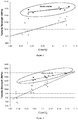
FIG. 1 shows the change in tensile strength (MPa) with C for various steel sheet compositions when the amount of C ranges from 0.06 to 0.12 wt%, with and without Nb addition; -
FIG. 2 shows the change in tensile strength (MPa) with C for various steel sheet compositions when the amount of C ranges from 0.06 to 0.18 wt%, with and without Nb; -
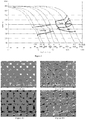
FIG. 3 depicts a Continuous Cooling Transformation (CCT) diagram for a steel according to the present invention, plotting cooling curves as temperature in degrees C vs log of time in seconds; -
FIGS. 4a-4d are photomicrographs, taken at varying magnifications, of a steel of the present invention cooled at different cooling rates; -
FIG. 5 is a plot of weld current vs sample number for steels of the present invention, the plot specifically shows the non-scatter of expulsion of the steel in spot welding. - FIG. 6 is a collection of four (4) photomicrographs showing, from top to bottom and left to right, a complete spot weld of a steel of the present invention, a higher magnification of the base metal, heat affected zone, and the welded zone of the spot weld.
- The present invention provides a steel sheet that can be hot formed into a part having a uniform distribution of strength and improved weldability. The steel sheet is a low alloy steel composition and contains, in wt%, 0.04≤ C≤ 0.30, 0.5≤ Mn≤ 4, 0≤ Cr≤ 4, 2.7≤ Mn+Cr≤ 5, 0.003≤ Nb≤ 0.1, 0.015≤ Al≤ 0.1 and 0.05≤ Si≤ 1.0. Optionally, the steel sheet can contain one or more of Ti≤ 0.2, V≤ 0.2, Mo<0.3 and B≤ 0.015. This chemistry makes a sheet that after hot forming is insensitive to cooling rate and ensures a uniform distribution of strength across parts independent of the time delay between operations and final cooling/quenching. The guaranteed uniformity of tensile properties regardless of cooling rate in specific locations of a formed part can substantially increase the productivity of hot forming. Although tensile strength increases with increasing C, the increase in C decreases weldability. However, by substituting a portion of C with Nb the tensile strength increase can be maintained and weldability improved.
- The concentrations of the various component elements of the steel sheets of the present invention are limited for the followings reasons. The concentrations are given in weight % (i.e., wt%).
- Carbon is essential for increasing the strength of the steel. However, if too much C is added, welding becomes difficult. Thus, the amount of C is limited to the range of from 0.04 to 0.30 wt%. Preferably, the lower limit for the amount of C is 0.06 wt%, more preferably 0.08 wt%. Preferably, the upper limit for the amount of C is 0.18 wt%, more preferably 0.16 wt%.
- Manganese, besides being a solid solution strengthening elements, also inhibits ferrite transformation, so it is an important chemical element for ensuring quenchability. However, adding too much Mn will not only encourage co-segregation with P and S, but also adversely affect manufacturability during steel making, casting, and hot rolling. Thus, the amount of Mn is limited to the range of from 0.5 to 4 wt%. Preferably, the lower limit for the amount of Mn is 1 wt%, more preferably, 1.5 wt%. Preferably, the upper limit for the amount of Mn is 3.5 wt%, more preferably 3.0 wt%.
- Chromium is important for improving quenchability. However, too much Cr will adversely affect manufacturability during manufacturing. Thus, the amount of Cr is limited to the range of from 0 to 4 wt%. Preferably, the lower limit for the amount of Cr is 0.2, more preferably, 0.5 wt%. Preferably, the upper limit for the amount of Cr is 3.5 wt%, more preferably 3.0 wt%.
- The combined amount of Mn and Cr is limited to the range of from 2.7 to 5 wt% in order to make the steel insensitive to cooling rate after forming and to ensure a uniform distribution of strength across parts independent of the time delay between operations and final cooling/quenching. Preferably, the lower limit for Mn+Cr is 3.0, more preferably, 3.3 wt%. Preferably, the upper limit for Mn+Cr is 4.7 wt%, more preferably 4.4 wt%.
- Previously, small additions of Nb to HSLA steels has been known for its significant effect on preventing austenite recrystallization and hence fine ferrite grain size, as well as precipitation hardening of ferrite by fine carbo-nitrides. Also, larger quantities of Nb have been added to high C creep resistant alloyed steels. However, up to now, the effect of small additions of Nb on low to mid carbon steels with martensitic microstructure has not been reported in open literature. The inventors have discovered that a small addition of Nb to air hardenable the steels of the present invention reduces the sensitivity of tensile strength on the C content, and significantly increases strength of steel, thus reducing the quantity of C needed to achieve a specific tensile strength. Since carbon reduction improves weldability, the addition of Nb helps to achieve the desired high tensile strength with improved weldability. To achieve these effects, the amount of Nb is limited to the range of from 0.003 to 0.1 wt%. Preferably, the lower limit for the amount of Nb is 0.005, more preferably, 0.010 wt%. Preferably, the upper limit for the amount of Nb is 0.09 wt%, more preferably 0.085 wt%.
- Al in small amount is added to steel as deoxidizer. However, too much Al results in many nonmetal inclusions and surface blemishes. Al is also a strong ferrite forming element and significantly increases full austenitization temperature. These are undesirable effects for air hardenable steels. Thus, the amount of Al is limited to the range of from 0.015 to 0.1 wt%. Preferably, the lower limit for the amount of Al is 0.02, more preferably, 0.03 wt%. Preferably, the upper limit for the amount of Al is 0.09 wt%, more preferably 0.08 wt%.
- Si is effective for increasing the strength of steel sheet. However, too much Si creates a problem of surface scale. Thus, the amount of Si is limited to the range of from 0.05 to 1.0 wt%, and preferably from 0.05 to 0.35 wt%. Preferably, the lower limit for the amount of Si is 0.07, more preferably, 0.1 wt%. Preferably, the upper limit for the amount of Si is 0.3 wt%, more preferably 0.25 wt%.
- Ti can be optionally added to the steel with B in an amount of ≤ 0.2 wt%, and preferably ≤ 0.1 wt% to improve quenchability. Ti combines with N at very high temperature, hence preventing BN formation. B in solution improves quenchability. Ti beyond the stoichiometric ratio to nitrogen is a carbide forming element. It strengthen steel by forming very fine carbides. It's effect is similar to Nb.
- V can be optionally added to the steel in an amount of ≤ 0.2 wt% to increase the strength of the steel via fine precipitation. It also adds to hardenability of steel.
- Mo can be optionally added to the steel in an amount of ≤ 0.3 wt% to increase strength and improve quenchability.
- B can be optionally added to the steel in an amount of ≤ 0.015 wt%, and preferably ≤ 0.005 wt% to increase hardenability and hence strength of the steel.
- The steel also contains Fe and can contain unavoidable impurities.
- The steel sheet of the present invention has a martensitic microstructure, the microstructure comprising between 95 and 100 area% of martensite. The microstructure is predominantly martensite. The amount of bainite is preferably less than 5% and more preferably less than 1%.
- The steel sheet of the present invention has a tensile strength in the range of 800-1400 MPa. The lower limit of the tensile strength is preferably 900 MPa, more preferably 1000 MPa. The final strength depends mostly on carbon content in martensite.
- The steel sheet of the present invention has an elongation in the range of from 4 to 9%, preferably 5 to 9%, more preferably 6 to 9%.
- The steel sheet of the present invention can be made by processes that begin with conventional steelmaking and casting processes and then follow with hot rolling. The cast slabs may be charged directly to a reheating furnace before hot rolling or cooled before doing so. There is no restriction on the finishing temperature in the hot rolling process other than that it should be above Ar3.
- The coiling temperature after hot rolling depends on the processing after hot rolling. If cold rolling is required to obtain the final thickness, then a coiling temperature between 700°C and 600°C is preferred. If the final required thickness can be obtained directly by hot rolling, then a coiling temperature between 600°C and 500°C is recommended.
- The hot rolled sheet can be pickled. For cold-rolled products, the hot rolled sheet can be pickled before cold rolling to the required thickness.
- The hot rolled or cold rolled steel sheet can be protected from oxidation and/or corrosion by coating one or both sides of the steel sheet with Zn, Al or an Al alloy, such as Al-Si. The coating can be performed by continuously hot dip coating the steel sheet.
- Steel sheets with or without coatings are heated to the temperature of full austenitization, i.e., to at least Ac3 + 5°C, before being formed, e.g., by stamping, in one or several dies to the shape desired. The hot formed part is then cooled in a die or in a cooling medium such as air, nitrogen, oil or water. Different cooling media provide different cooling rates. The formed parts exhibit uniform martensite structure across the parts regardless of cooling rate.
- The final strength can be controlled by the chemistry (in particular, the amounts of C and Nb) and/or by heating below or above the temperature of full austenitization.
- 50mm slabs of the chemistries shown in Table 1 were made in laboratory. The slabs were hot rolled to 3.5mm sheets. The reheating temperature was 1220°C, finishing temperature of 850°C and coiling temperature of 700°C. The hot rolled sheets were surface ground on both sides to 2.5mm thickness to remove a decarburized surface layer that would have been caused during the laboratory reheating process. The 2.5mm sheets were cold rolled to 1mm (60% cold reduction) in a reversing laboratory cold mill. Specimens from the cold rolled sheets were austenitized at 900°C for 300sec in a salt bath and then oil quenched. Some samples were instrumented with a thermocouple to measure the cooling rate during oil quenching. Average cooling rate from 800°C to 300°C was 150°C/s. Mechanical properties of quenched samples were measured in transverse to rolling direction. Summary of the mechanical properties are given in Table 2
- Tensile strength data in Table 2 plotted against carbon in the chemistry,
Figure 1 . Tensile strength strongly depends on carbon, as noted by many previous publications (for example see "Martensite transformation, structure and properties in hardenable steels, G. Krauss, Hardenability concepts with applications to steel, D.V. Doane & J.S. Kirkaldy ed., October 24-26, 1977, page 235). However,Figure 1 also shows that the steels with Nb have higher strength than the steel with similar carbon without Nb. In addition, strength of Nb added steel is less dependent on carbon since slope of the line fitted to the tensile strength of steels with Nb is much less than the one for steels without Nb. The difference in strength of steels with and without Nb becomes less as C is increased and both group of steels have similar strength at 0.17% C and higher,Figure 2 . - In Tables 1 and 2, examples 52 to 56, 62 to 65 and 142 have a composition according to the invention.
- To determine effect of cooling rate on final strength of quenched material, "critical cooling rate" i.e., "the minimum cooling rate from austenitization temperature to avoid ferrite" was evaluated. In these experiments, Continuous Cooling Transformation (CCT) diagram of the steel was produced using MMC dilatometer. In these test a small sample was heated to 900°C and then cooled at predetermined cooling rates while the sample dilatation (change in length) was measured. Different phase transformations during cooling were identified from the dilatation data as well as by evaluating the microstructure and final hardness of the cooled sample. Several cooling rates are required to construct the CCT diagram.
- An example of such diagram is shown in
Figure 3 . As it seen from this figure, ferrite transformation does not occur at cooling rates higher than 1°C/sec. Microstructures at 3°C/sec and higher cooling rates shown inFigure 4-A & C show a martensitic microstructure. However, there is high degree of tempering at the lower cooling rates,Figure 4-B & D . Despite tempering martensite, high hardness of 350HV was obtained at 3°C/sec cooling rate and it increases as the cooling rate increase. Cooling a steel of the present invention in any medium (air, oil, die, nitrogen) which results in cooling rates higher than 1°C/sec or preferably higher than 3°C/sec will produce a fully martensitic - high strength steel. - Spot weldability of steels 55, 63, 81 and 141 were evaluated according to ISO18278-2 specification in homogeneous joint configuration. These tests showed non-scattered results under expulsion,
Figure 4 , with uniform microstructure of the weld nugget,Figure 5 . - Table 1 and Table 2,
Figure 1 and Figure 2 show that the same high tensile strength can be obtained when, for a C content ranging from 0.04 to 0.20 wt%, some C is replaced with Nb in amounts ranging from 0.003 to 0.055 wt%. - The disclosure herein of a numerical range is intended to be the disclosure of the endpoints of that numerical range and of every rational number within that numerical range.
Table 1 Steel C Mn Cr Nb Ti V B Al Mo Mn+Cr 6 0.0386 1.96 1.02 0.032 2.98 7 0.076 1.98 1.02 0.035 3.01 8 0.1084 1.94 1.02 0.031 2.96 10 0.0341 2.89 0.97 0.031 3.85 11 0.0736 2.88 1.03 0.025 3.91 12 0.1117 2.91 0.99 0.032 3.91 14 0.0366 1.91 2.01 0.027 3.92 15 0.0731 1.94 1.99 0.032 3.93 16 0.1058 1.94 2.00 0.026 3.94 19 0.0366 0.98 2.94 0.029 3.93 20 0.0712 0.99 2.97 0.027 3.96 21 0.1048 0.99 3.01 0.031 4.00 22 0.0342 2.85 1.99 0.03 4.84 52 0.0765 2.00 1.04 0.029 0.02 0.046 3.04 53 0.106 1.98 1.04 0.029 0.019 0.052 3.01 55 0.105 1.99 1.98 0.03 0.019 0.034 3.97 56 0.1102 1.95 2.01 0.049 0.042 3.96 57 0.1106 1.98 2.02 0.051 0.034 4.00 58 0.1121 1.97 2.02 0.094 0.034 3.99 59 0.0737 1.99 1.07 0.029 0.0032 0.043 3.05 61 0.0768 1.96 1.01 0.023 0.187 2.97 62 0.0759 2.98 0.029 0.019 0.042 2.98 63 0.0769 4.08 0.03 0.019 0.046 4.08 64 0.114 1.99 2.07 0.049 0.038 4.06 65 0.0812 3.03 1.03 0.031 0.017 0.026 4.06 81 0.0768 4.06 0.03 0.023 0.018 4.06 141 0.125 2.05 0.52 0.053 0.029 2.57 142 0.154 2.09 1.02 0.057 0.03 3.10 143 0.157 2.07 0.52 0.052 0.026 2.58 Table 2 Stell YS (MPa) TS (MPA) TE (%) 6 521 669 7 7 592 802 7 8 809 1094 6 10 695 892 7 11 832 1097 6 12 787 1063 6 14 606 780 7 15 752 1002 5 16 862 1172 7 19 516 687 8 20 683 926 7 21 834 1121 5 22 720 940 6 52 914 1221 6 53 959 1293 7 55 982 1317 6 56 965 1277 7 57 841 1149 6 58 628 904 9 59 839 1083 7 61 717 918 4 62 744 980 6 63 984 1284 6 64 988 1328 6 65 954 1239 6 81 909 1155 7 141 1025 1340 7 142 1004 1392 7 143 1042 1384 7
Claims (16)
- A steel sheet comprising, in weight%,0.04≤ C≤ 0.30,0.5≤ Mn≤ 4,0≤ Cr≤ 4,2.7≤ Mn+Cr≤ 5,0.003≤ Nb≤ 0.1,0.015≤ Al≤ 0.1,0.05≤ Si≤ 1.0,optionallyTi ≤ 0.2,V ≤ 0.2,Mo ≤ 0.3B ≤ 0.015the rest being Fe and unavoidable impurities,wherein the steel sheet has a tensile strength in the range of 800-1400 MPa and an elongation comprised between 4 and 9%, and wherein the steel sheet has a microstructure comprising 95 to 100 area% martensite.
- The steel sheet according to Claim 1, wherein 0.06≤ C≤ 0.18.
- The steel sheet according to Claim 1, wherein 0.08≤ C≤ 0.16.
- The steel sheet according to Claim 1, wherein 0.2≤ Mn≤ 3.5.
- The steel sheet according to Claim 1, wherein 0.5≤ Mn≤ 3.0.
- The steel sheet according to Claim 1, wherein 0.2≤ Cr≤ 3.5.
- The steel sheet according to Claim 1, wherein 0.5≤ Cr≤ 3.0.
- The steel sheet according to Claim 1, wherein 3.0≤ Mn+Cr≤ 4.7.
- The steel sheet according to Claim 1, wherein 3.3≤ Mn+Cr≤ 4.4.
- The steel sheet according to Claim 1, wherein 0.005≤ Nb≤ 0.060.
- The steel sheet according to Claim 1, wherein 0.010≤ Nb≤ 0.055.
- The steel sheet according to Claim 1, wherein at least one surface of the steel sheet is coated with layer comprising Zn, Al or an Al alloy.
- The steel sheet according to Claim 1, wherein the steel sheet has a microstructure comprising less than 5 area% bainite.
- The steel sheet according to Claim 1, wherein the steel sheet is a hot formed steel sheet.
- A method of making a steel sheet according to claim 1, the method comprising hot rolling a steel having a composition according to claim 1.
- Use of a steel sheet according to claim 1, said use comprising hot forming the steel sheet of Claim 1.
Priority Applications (1)
| Application Number | Priority Date | Filing Date | Title |
|---|---|---|---|
| PL15745897T PL3114246T3 (en) | 2014-02-05 | 2015-02-05 | Hot formable, air hardenable, weldable, steel sheet |
Applications Claiming Priority (2)
| Application Number | Priority Date | Filing Date | Title |
|---|---|---|---|
| US201461935948P | 2014-02-05 | 2014-02-05 | |
| PCT/US2015/014694 WO2015120205A1 (en) | 2014-02-05 | 2015-02-05 | Hot formable, air hardenable, weldable, steel sheet |
Publications (3)
| Publication Number | Publication Date |
|---|---|
| EP3114246A1 EP3114246A1 (en) | 2017-01-11 |
| EP3114246A4 EP3114246A4 (en) | 2018-04-04 |
| EP3114246B1 true EP3114246B1 (en) | 2019-08-28 |
Family
ID=53778462
Family Applications (1)
| Application Number | Title | Priority Date | Filing Date |
|---|---|---|---|
| EP15745897.7A Active EP3114246B1 (en) | 2014-02-05 | 2015-02-05 | Hot formable, air hardenable, weldable, steel sheet |
Country Status (14)
| Country | Link |
|---|---|
| EP (1) | EP3114246B1 (en) |
| JP (2) | JP2017510703A (en) |
| KR (3) | KR20160117543A (en) |
| CN (2) | CN105980591A (en) |
| BR (1) | BR112016018119B8 (en) |
| CA (1) | CA2938851C (en) |
| ES (1) | ES2746260T3 (en) |
| HU (1) | HUE045244T2 (en) |
| MA (1) | MA39245B2 (en) |
| MX (1) | MX388136B (en) |
| PL (1) | PL3114246T3 (en) |
| RU (1) | RU2695688C1 (en) |
| UA (1) | UA119344C2 (en) |
| WO (1) | WO2015120205A1 (en) |
Families Citing this family (4)
| Publication number | Priority date | Publication date | Assignee | Title |
|---|---|---|---|---|
| KR102030815B1 (en) * | 2016-12-28 | 2019-10-11 | 연세대학교 산학협력단 | High intensity medium manganese steel forming parts for warm stamping and manufacturing method for the same |
| EP3589757A1 (en) * | 2017-03-01 | 2020-01-08 | Ak Steel Properties, Inc. | Hot-rolled steel with very high strength and method for production |
| EP3749791B1 (en) * | 2018-02-06 | 2023-06-07 | Integrated Heat Treating Solutions, LLC | High pressure instantaneously uniform quench to control part properties |
| WO2020229877A1 (en) * | 2019-05-15 | 2020-11-19 | Arcelormittal | A cold rolled martensitic steel and a method for it's manufacture |
Family Cites Families (25)
| Publication number | Priority date | Publication date | Assignee | Title |
|---|---|---|---|---|
| JP2000080440A (en) * | 1998-08-31 | 2000-03-21 | Kawasaki Steel Corp | High strength cold rolled thin steel sheet and method for producing the same |
| JP2000282175A (en) * | 1999-04-02 | 2000-10-10 | Kawasaki Steel Corp | Ultra-high strength hot rolled steel sheet excellent in workability and method for producing the same |
| TW567231B (en) * | 2001-07-25 | 2003-12-21 | Nippon Steel Corp | Multi-phase steel sheet excellent in hole expandability and method of producing the same |
| EP1288322A1 (en) * | 2001-08-29 | 2003-03-05 | Sidmar N.V. | An ultra high strength steel composition, the process of production of an ultra high strength steel product and the product obtained |
| JP4351465B2 (en) * | 2003-04-15 | 2009-10-28 | 新日本製鐵株式会社 | Hot-dip galvanized high-strength steel sheet excellent in hole expansibility and method for producing the same |
| JP4325277B2 (en) * | 2003-05-28 | 2009-09-02 | 住友金属工業株式会社 | Hot forming method and hot forming parts |
| JP4486336B2 (en) * | 2003-09-30 | 2010-06-23 | 新日本製鐵株式会社 | High yield ratio high strength cold-rolled steel sheet and high yield ratio high strength hot-dip galvanized steel sheet excellent in weldability and ductility, high yield ratio high-strength galvannealed steel sheet, and manufacturing method thereof |
| JP4430511B2 (en) * | 2004-10-29 | 2010-03-10 | 新日本製鐵株式会社 | Manufacturing method of high-strength cold-rolled steel sheet with excellent hole expandability |
| JP5228447B2 (en) * | 2006-11-07 | 2013-07-03 | 新日鐵住金株式会社 | High Young's modulus steel plate and method for producing the same |
| JP5194878B2 (en) * | 2007-04-13 | 2013-05-08 | Jfeスチール株式会社 | High-strength hot-dip galvanized steel sheet excellent in workability and weldability and method for producing the same |
| EP1990431A1 (en) * | 2007-05-11 | 2008-11-12 | ArcelorMittal France | Method of manufacturing annealed, very high-resistance, cold-laminated steel sheets, and sheets produced thereby |
| KR100928788B1 (en) * | 2007-12-28 | 2009-11-25 | 주식회사 포스코 | High strength steel sheet with excellent weldability and manufacturing method |
| JP5167865B2 (en) * | 2008-02-29 | 2013-03-21 | Jfeスチール株式会社 | High-strength hot-dip galvanized steel sheet excellent in workability and weldability and method for producing the same |
| JP4924730B2 (en) * | 2009-04-28 | 2012-04-25 | Jfeスチール株式会社 | High-strength hot-dip galvanized steel sheet excellent in workability, weldability and fatigue characteristics and method for producing the same |
| JP5041084B2 (en) * | 2010-03-31 | 2012-10-03 | Jfeスチール株式会社 | High-tensile hot-rolled steel sheet excellent in workability and manufacturing method thereof |
| JP5434960B2 (en) * | 2010-05-31 | 2014-03-05 | Jfeスチール株式会社 | High-strength hot-dip galvanized steel sheet excellent in bendability and weldability and method for producing the same |
| EP2581465B1 (en) * | 2010-06-14 | 2019-01-30 | Nippon Steel & Sumitomo Metal Corporation | Hot-stamp-molded article, process for production of steel sheet for hot stamping, and process for production of hot-stamp-molded article |
| EP2687620A4 (en) * | 2011-03-18 | 2014-10-15 | Nippon Steel & Sumitomo Metal Corp | STEEL SHEET FOR HOT STAMPED ELEMENT AND METHOD FOR MANUFACTURING THE SAME |
| KR20130132623A (en) * | 2011-04-01 | 2013-12-04 | 신닛테츠스미킨 카부시키카이샤 | Hot stamp-molded high-strength component having excellent corrosion resistance after coating, and method for manufacturing same |
| JP5533765B2 (en) * | 2011-04-04 | 2014-06-25 | 新日鐵住金株式会社 | High-strength cold-rolled steel sheet with excellent local deformability and its manufacturing method |
| PL2703511T3 (en) * | 2011-04-27 | 2018-10-31 | Nippon Steel & Sumitomo Metal Corporation | Steel sheet for hot stamping members and method for producing same |
| JP5742697B2 (en) * | 2011-12-12 | 2015-07-01 | 新日鐵住金株式会社 | Hot stamping molded body excellent in balance between strength and toughness, manufacturing method thereof, and manufacturing method of steel sheet for hot stamping molded body |
| BR112014017100B1 (en) * | 2012-01-13 | 2019-04-24 | Nippon Steel & Sumitomo Metal Corporation | HOT STAMPED STEEL AND METHOD FOR HOT STAMPED PRODUCTION |
| JP5860333B2 (en) * | 2012-03-30 | 2016-02-16 | 株式会社神戸製鋼所 | High yield ratio high strength cold-rolled steel sheet with excellent workability |
| EP2834384A1 (en) * | 2012-04-05 | 2015-02-11 | Tata Steel IJmuiden BV | Steel strip having a low si content |
-
2015
- 2015-02-05 BR BR112016018119A patent/BR112016018119B8/en active IP Right Grant
- 2015-02-05 ES ES15745897T patent/ES2746260T3/en active Active
- 2015-02-05 JP JP2016550745A patent/JP2017510703A/en active Pending
- 2015-02-05 CN CN201580007549.6A patent/CN105980591A/en active Pending
- 2015-02-05 MA MA39245A patent/MA39245B2/en unknown
- 2015-02-05 MX MX2016010006A patent/MX388136B/en unknown
- 2015-02-05 PL PL15745897T patent/PL3114246T3/en unknown
- 2015-02-05 KR KR1020167024062A patent/KR20160117543A/en not_active Ceased
- 2015-02-05 CN CN202110560953.3A patent/CN113416892A/en active Pending
- 2015-02-05 CA CA2938851A patent/CA2938851C/en active Active
- 2015-02-05 HU HUE15745897A patent/HUE045244T2/en unknown
- 2015-02-05 KR KR1020187026542A patent/KR20180104199A/en not_active Ceased
- 2015-02-05 RU RU2016135709A patent/RU2695688C1/en active
- 2015-02-05 KR KR1020217011542A patent/KR20210047366A/en not_active Ceased
- 2015-02-05 EP EP15745897.7A patent/EP3114246B1/en active Active
- 2015-02-05 WO PCT/US2015/014694 patent/WO2015120205A1/en not_active Ceased
- 2015-05-02 UA UAA201609209A patent/UA119344C2/en unknown
-
2018
- 2018-11-05 JP JP2018208132A patent/JP6830468B2/en active Active
Non-Patent Citations (1)
| Title |
|---|
| None * |
Also Published As
| Publication number | Publication date |
|---|---|
| JP2019065396A (en) | 2019-04-25 |
| ES2746260T3 (en) | 2020-03-05 |
| MX388136B (en) | 2025-03-19 |
| JP2017510703A (en) | 2017-04-13 |
| BR112016018119B1 (en) | 2020-11-17 |
| HUE045244T2 (en) | 2019-12-30 |
| BR112016018119B8 (en) | 2020-12-15 |
| CA2938851A1 (en) | 2015-08-13 |
| KR20210047366A (en) | 2021-04-29 |
| MX2016010006A (en) | 2016-12-16 |
| BR112016018119A2 (en) | 2017-08-08 |
| KR20160117543A (en) | 2016-10-10 |
| MA39245A1 (en) | 2017-03-31 |
| UA119344C2 (en) | 2019-06-10 |
| MA39245B2 (en) | 2021-04-30 |
| JP6830468B2 (en) | 2021-02-17 |
| EP3114246A4 (en) | 2018-04-04 |
| CN113416892A (en) | 2021-09-21 |
| WO2015120205A1 (en) | 2015-08-13 |
| CA2938851C (en) | 2020-06-09 |
| PL3114246T3 (en) | 2020-03-31 |
| RU2695688C1 (en) | 2019-07-25 |
| CN105980591A (en) | 2016-09-28 |
| KR20180104199A (en) | 2018-09-19 |
| EP3114246A1 (en) | 2017-01-11 |
Similar Documents
| Publication | Publication Date | Title |
|---|---|---|
| JP6854271B2 (en) | Steel plate used for hot stamping | |
| EP2627790B1 (en) | Method of hot forming a steel blank and the hot formed part | |
| EP3088552B1 (en) | Steel sheet for hot press formed product having superior bendability and ultra-high strength and method for manufacturing same | |
| EP3221476B1 (en) | Method for manufacturing a high strength steel product and steel product thereby obtained | |
| EP3653736B1 (en) | Hot-rolled steel strip and manufacturing method | |
| EP2660345A2 (en) | Steel sheet having enhanced ductility for a molding member, molding member, and method for manufacturing same | |
| EP2647730B1 (en) | A method for manufacturing a high strength formable continuously annealed steel strip | |
| KR20130006461A (en) | Method for producing workpieces from lightweight steel having material properties that can be adjusted over the wall thickness | |
| EP3927858B1 (en) | High strength steel with improved mechanical properties | |
| CN110832100B (en) | Steel material for tailor-welded blanks and method for producing hot stamped parts using the same | |
| KR20060047587A (en) | High-strength hot-dip galvanized steel sheet with excellent spot weldability and stability of material properties | |
| JP6830468B2 (en) | Hot-forming air-quenching weldable steel sheet | |
| CN112210724B (en) | ESP (electronic stability program) production-based high-strength hot forming steel and method | |
| KR101406444B1 (en) | Ultra high strength cold rolled steel sheet having excellent elongation and bendability and method for manufacturing the same | |
| US20180105892A9 (en) | Hot formable, air hardenable, weldable, steel sheet | |
| JP2025541884A (en) | Cold-rolled steel sheet and its manufacturing method | |
| KR20190075588A (en) | High-strength steel sheet having excellent yield strength and formability, and method for manufacturing thereof | |
| WO2026022517A1 (en) | High strength steel part and associated hot stamping process |
Legal Events
| Date | Code | Title | Description |
|---|---|---|---|
| STAA | Information on the status of an ep patent application or granted ep patent |
Free format text: STATUS: THE INTERNATIONAL PUBLICATION HAS BEEN MADE |
|
| PUAI | Public reference made under article 153(3) epc to a published international application that has entered the european phase |
Free format text: ORIGINAL CODE: 0009012 |
|
| STAA | Information on the status of an ep patent application or granted ep patent |
Free format text: STATUS: REQUEST FOR EXAMINATION WAS MADE |
|
| 17P | Request for examination filed |
Effective date: 20161021 |
|
| AK | Designated contracting states |
Kind code of ref document: A1 Designated state(s): AL AT BE BG CH CY CZ DE DK EE ES FI FR GB GR HR HU IE IS IT LI LT LU LV MC MK MT NL NO PL PT RO RS SE SI SK SM TR |
|
| AX | Request for extension of the european patent |
Extension state: BA ME |
|
| RIN1 | Information on inventor provided before grant (corrected) |
Inventor name: JUN, HYUN Inventor name: HASSANI, FARID Inventor name: FONSTEIN, NINA |
|
| DAX | Request for extension of the european patent (deleted) | ||
| REG | Reference to a national code |
Ref country code: DE Ref legal event code: R079 Ref document number: 602015036738 Country of ref document: DE Free format text: PREVIOUS MAIN CLASS: C22C0038380000 Ipc: C22C0038020000 |
|
| A4 | Supplementary search report drawn up and despatched |
Effective date: 20180305 |
|
| RIC1 | Information provided on ipc code assigned before grant |
Ipc: C22C 38/38 20060101ALI20180227BHEP Ipc: C21D 8/02 20060101ALI20180227BHEP Ipc: C23C 2/02 20060101ALI20180227BHEP Ipc: C23C 2/06 20060101ALI20180227BHEP Ipc: C23C 2/40 20060101ALI20180227BHEP Ipc: C22C 38/32 20060101ALI20180227BHEP Ipc: C21D 9/46 20060101ALI20180227BHEP Ipc: C23C 2/12 20060101ALI20180227BHEP Ipc: C22C 38/24 20060101ALI20180227BHEP Ipc: C22C 38/12 20060101ALI20180227BHEP Ipc: C22C 38/04 20060101ALI20180227BHEP Ipc: C22C 38/26 20060101ALI20180227BHEP Ipc: C22C 38/22 20060101ALI20180227BHEP Ipc: C22C 38/06 20060101ALI20180227BHEP Ipc: C22C 38/28 20060101ALI20180227BHEP Ipc: C22C 38/02 20060101AFI20180227BHEP |
|
| GRAP | Despatch of communication of intention to grant a patent |
Free format text: ORIGINAL CODE: EPIDOSNIGR1 |
|
| STAA | Information on the status of an ep patent application or granted ep patent |
Free format text: STATUS: GRANT OF PATENT IS INTENDED |
|
| INTG | Intention to grant announced |
Effective date: 20181030 |
|
| GRAJ | Information related to disapproval of communication of intention to grant by the applicant or resumption of examination proceedings by the epo deleted |
Free format text: ORIGINAL CODE: EPIDOSDIGR1 |
|
| STAA | Information on the status of an ep patent application or granted ep patent |
Free format text: STATUS: REQUEST FOR EXAMINATION WAS MADE |
|
| GRAP | Despatch of communication of intention to grant a patent |
Free format text: ORIGINAL CODE: EPIDOSNIGR1 |
|
| STAA | Information on the status of an ep patent application or granted ep patent |
Free format text: STATUS: GRANT OF PATENT IS INTENDED |
|
| INTC | Intention to grant announced (deleted) | ||
| INTG | Intention to grant announced |
Effective date: 20190312 |
|
| GRAS | Grant fee paid |
Free format text: ORIGINAL CODE: EPIDOSNIGR3 |
|
| GRAA | (expected) grant |
Free format text: ORIGINAL CODE: 0009210 |
|
| STAA | Information on the status of an ep patent application or granted ep patent |
Free format text: STATUS: THE PATENT HAS BEEN GRANTED |
|
| AK | Designated contracting states |
Kind code of ref document: B1 Designated state(s): AL AT BE BG CH CY CZ DE DK EE ES FI FR GB GR HR HU IE IS IT LI LT LU LV MC MK MT NL NO PL PT RO RS SE SI SK SM TR |
|
| REG | Reference to a national code |
Ref country code: GB Ref legal event code: FG4D |
|
| REG | Reference to a national code |
Ref country code: CH Ref legal event code: EP |
|
| REG | Reference to a national code |
Ref country code: AT Ref legal event code: REF Ref document number: 1172497 Country of ref document: AT Kind code of ref document: T Effective date: 20190915 |
|
| REG | Reference to a national code |
Ref country code: IE Ref legal event code: FG4D |
|
| REG | Reference to a national code |
Ref country code: DE Ref legal event code: R096 Ref document number: 602015036738 Country of ref document: DE |
|
| REG | Reference to a national code |
Ref country code: SE Ref legal event code: TRGR |
|
| REG | Reference to a national code |
Ref country code: RO Ref legal event code: EPE |
|
| REG | Reference to a national code |
Ref country code: NL Ref legal event code: FP |
|
| REG | Reference to a national code |
Ref country code: HU Ref legal event code: AG4A Ref document number: E045244 Country of ref document: HU |
|
| REG | Reference to a national code |
Ref country code: SK Ref legal event code: T3 Ref document number: E 32486 Country of ref document: SK |
|
| REG | Reference to a national code |
Ref country code: LT Ref legal event code: MG4D |
|
| PG25 | Lapsed in a contracting state [announced via postgrant information from national office to epo] |
Ref country code: PT Free format text: LAPSE BECAUSE OF FAILURE TO SUBMIT A TRANSLATION OF THE DESCRIPTION OR TO PAY THE FEE WITHIN THE PRESCRIBED TIME-LIMIT Effective date: 20191230 Ref country code: BG Free format text: LAPSE BECAUSE OF FAILURE TO SUBMIT A TRANSLATION OF THE DESCRIPTION OR TO PAY THE FEE WITHIN THE PRESCRIBED TIME-LIMIT Effective date: 20191128 Ref country code: NO Free format text: LAPSE BECAUSE OF FAILURE TO SUBMIT A TRANSLATION OF THE DESCRIPTION OR TO PAY THE FEE WITHIN THE PRESCRIBED TIME-LIMIT Effective date: 20191128 Ref country code: LT Free format text: LAPSE BECAUSE OF FAILURE TO SUBMIT A TRANSLATION OF THE DESCRIPTION OR TO PAY THE FEE WITHIN THE PRESCRIBED TIME-LIMIT Effective date: 20190828 Ref country code: HR Free format text: LAPSE BECAUSE OF FAILURE TO SUBMIT A TRANSLATION OF THE DESCRIPTION OR TO PAY THE FEE WITHIN THE PRESCRIBED TIME-LIMIT Effective date: 20190828 |
|
| PG25 | Lapsed in a contracting state [announced via postgrant information from national office to epo] |
Ref country code: AL Free format text: LAPSE BECAUSE OF FAILURE TO SUBMIT A TRANSLATION OF THE DESCRIPTION OR TO PAY THE FEE WITHIN THE PRESCRIBED TIME-LIMIT Effective date: 20190828 Ref country code: IS Free format text: LAPSE BECAUSE OF FAILURE TO SUBMIT A TRANSLATION OF THE DESCRIPTION OR TO PAY THE FEE WITHIN THE PRESCRIBED TIME-LIMIT Effective date: 20191228 Ref country code: RS Free format text: LAPSE BECAUSE OF FAILURE TO SUBMIT A TRANSLATION OF THE DESCRIPTION OR TO PAY THE FEE WITHIN THE PRESCRIBED TIME-LIMIT Effective date: 20190828 Ref country code: GR Free format text: LAPSE BECAUSE OF FAILURE TO SUBMIT A TRANSLATION OF THE DESCRIPTION OR TO PAY THE FEE WITHIN THE PRESCRIBED TIME-LIMIT Effective date: 20191129 Ref country code: LV Free format text: LAPSE BECAUSE OF FAILURE TO SUBMIT A TRANSLATION OF THE DESCRIPTION OR TO PAY THE FEE WITHIN THE PRESCRIBED TIME-LIMIT Effective date: 20190828 |
|
| REG | Reference to a national code |
Ref country code: ES Ref legal event code: FG2A Ref document number: 2746260 Country of ref document: ES Kind code of ref document: T3 Effective date: 20200305 |
|
| PG25 | Lapsed in a contracting state [announced via postgrant information from national office to epo] |
Ref country code: EE Free format text: LAPSE BECAUSE OF FAILURE TO SUBMIT A TRANSLATION OF THE DESCRIPTION OR TO PAY THE FEE WITHIN THE PRESCRIBED TIME-LIMIT Effective date: 20190828 Ref country code: DK Free format text: LAPSE BECAUSE OF FAILURE TO SUBMIT A TRANSLATION OF THE DESCRIPTION OR TO PAY THE FEE WITHIN THE PRESCRIBED TIME-LIMIT Effective date: 20190828 |
|
| PG25 | Lapsed in a contracting state [announced via postgrant information from national office to epo] |
Ref country code: IS Free format text: LAPSE BECAUSE OF FAILURE TO SUBMIT A TRANSLATION OF THE DESCRIPTION OR TO PAY THE FEE WITHIN THE PRESCRIBED TIME-LIMIT Effective date: 20200224 Ref country code: SM Free format text: LAPSE BECAUSE OF FAILURE TO SUBMIT A TRANSLATION OF THE DESCRIPTION OR TO PAY THE FEE WITHIN THE PRESCRIBED TIME-LIMIT Effective date: 20190828 |
|
| REG | Reference to a national code |
Ref country code: DE Ref legal event code: R097 Ref document number: 602015036738 Country of ref document: DE |
|
| PLBE | No opposition filed within time limit |
Free format text: ORIGINAL CODE: 0009261 |
|
| STAA | Information on the status of an ep patent application or granted ep patent |
Free format text: STATUS: NO OPPOSITION FILED WITHIN TIME LIMIT |
|
| PG2D | Information on lapse in contracting state deleted |
Ref country code: IS |
|
| 26N | No opposition filed |
Effective date: 20200603 |
|
| PG25 | Lapsed in a contracting state [announced via postgrant information from national office to epo] |
Ref country code: SI Free format text: LAPSE BECAUSE OF FAILURE TO SUBMIT A TRANSLATION OF THE DESCRIPTION OR TO PAY THE FEE WITHIN THE PRESCRIBED TIME-LIMIT Effective date: 20190828 |
|
| REG | Reference to a national code |
Ref country code: CH Ref legal event code: PL |
|
| PG25 | Lapsed in a contracting state [announced via postgrant information from national office to epo] |
Ref country code: MC Free format text: LAPSE BECAUSE OF FAILURE TO SUBMIT A TRANSLATION OF THE DESCRIPTION OR TO PAY THE FEE WITHIN THE PRESCRIBED TIME-LIMIT Effective date: 20190828 Ref country code: LU Free format text: LAPSE BECAUSE OF NON-PAYMENT OF DUE FEES Effective date: 20200205 |
|
| PG25 | Lapsed in a contracting state [announced via postgrant information from national office to epo] |
Ref country code: LI Free format text: LAPSE BECAUSE OF NON-PAYMENT OF DUE FEES Effective date: 20200229 Ref country code: CH Free format text: LAPSE BECAUSE OF NON-PAYMENT OF DUE FEES Effective date: 20200229 |
|
| PG25 | Lapsed in a contracting state [announced via postgrant information from national office to epo] |
Ref country code: IE Free format text: LAPSE BECAUSE OF NON-PAYMENT OF DUE FEES Effective date: 20200205 |
|
| PG25 | Lapsed in a contracting state [announced via postgrant information from national office to epo] |
Ref country code: MT Free format text: LAPSE BECAUSE OF FAILURE TO SUBMIT A TRANSLATION OF THE DESCRIPTION OR TO PAY THE FEE WITHIN THE PRESCRIBED TIME-LIMIT Effective date: 20190828 Ref country code: CY Free format text: LAPSE BECAUSE OF FAILURE TO SUBMIT A TRANSLATION OF THE DESCRIPTION OR TO PAY THE FEE WITHIN THE PRESCRIBED TIME-LIMIT Effective date: 20190828 |
|
| PG25 | Lapsed in a contracting state [announced via postgrant information from national office to epo] |
Ref country code: MK Free format text: LAPSE BECAUSE OF FAILURE TO SUBMIT A TRANSLATION OF THE DESCRIPTION OR TO PAY THE FEE WITHIN THE PRESCRIBED TIME-LIMIT Effective date: 20190828 |
|
| P01 | Opt-out of the competence of the unified patent court (upc) registered |
Effective date: 20230427 |
|
| PGFP | Annual fee paid to national office [announced via postgrant information from national office to epo] |
Ref country code: NL Payment date: 20260121 Year of fee payment: 12 |
|
| PGFP | Annual fee paid to national office [announced via postgrant information from national office to epo] |
Ref country code: HU Payment date: 20260223 Year of fee payment: 12 |
|
| PGFP | Annual fee paid to national office [announced via postgrant information from national office to epo] |
Ref country code: SE Payment date: 20260121 Year of fee payment: 12 |
|
| PGFP | Annual fee paid to national office [announced via postgrant information from national office to epo] |
Ref country code: GB Payment date: 20260122 Year of fee payment: 12 |
|
| PGFP | Annual fee paid to national office [announced via postgrant information from national office to epo] |
Ref country code: ES Payment date: 20260302 Year of fee payment: 12 |
|
| PGFP | Annual fee paid to national office [announced via postgrant information from national office to epo] |
Ref country code: DE Payment date: 20260121 Year of fee payment: 12 |
|
| PGFP | Annual fee paid to national office [announced via postgrant information from national office to epo] |
Ref country code: AT Payment date: 20260123 Year of fee payment: 12 |
|
| PGFP | Annual fee paid to national office [announced via postgrant information from national office to epo] |
Ref country code: FI Payment date: 20260121 Year of fee payment: 12 Ref country code: BE Payment date: 20260121 Year of fee payment: 12 Ref country code: RO Payment date: 20260202 Year of fee payment: 12 Ref country code: IT Payment date: 20260121 Year of fee payment: 12 |
|
| PGFP | Annual fee paid to national office [announced via postgrant information from national office to epo] |
Ref country code: FR Payment date: 20260121 Year of fee payment: 12 |
|
| PGFP | Annual fee paid to national office [announced via postgrant information from national office to epo] |
Ref country code: TR Payment date: 20260126 Year of fee payment: 12 |
|
| PGFP | Annual fee paid to national office [announced via postgrant information from national office to epo] |
Ref country code: CZ Payment date: 20260129 Year of fee payment: 12 |
|
| PGFP | Annual fee paid to national office [announced via postgrant information from national office to epo] |
Ref country code: PL Payment date: 20260122 Year of fee payment: 12 |
|
| PGFP | Annual fee paid to national office [announced via postgrant information from national office to epo] |
Ref country code: SK Payment date: 20260129 Year of fee payment: 12 |