EP3104299A1 - Erstellung von marken in der vorstufe eines druckprozesses - Google Patents
Erstellung von marken in der vorstufe eines druckprozesses Download PDFInfo
- Publication number
- EP3104299A1 EP3104299A1 EP16168000.4A EP16168000A EP3104299A1 EP 3104299 A1 EP3104299 A1 EP 3104299A1 EP 16168000 A EP16168000 A EP 16168000A EP 3104299 A1 EP3104299 A1 EP 3104299A1
- Authority
- EP
- European Patent Office
- Prior art keywords
- marks
- placeholders
- neutral
- file
- information
- Prior art date
- Legal status (The legal status is an assumption and is not a legal conclusion. Google has not performed a legal analysis and makes no representation as to the accuracy of the status listed.)
- Granted
Links
Images



Classifications
-
- G—PHYSICS
- G06—COMPUTING OR CALCULATING; COUNTING
- G06K—GRAPHICAL DATA READING; PRESENTATION OF DATA; RECORD CARRIERS; HANDLING RECORD CARRIERS
- G06K19/00—Record carriers for use with machines and with at least a part designed to carry digital markings
- G06K19/06—Record carriers for use with machines and with at least a part designed to carry digital markings characterised by the kind of the digital marking, e.g. shape, nature, code
- G06K19/06009—Record carriers for use with machines and with at least a part designed to carry digital markings characterised by the kind of the digital marking, e.g. shape, nature, code with optically detectable marking
- G06K19/06046—Constructional details
-
- B—PERFORMING OPERATIONS; TRANSPORTING
- B41—PRINTING; LINING MACHINES; TYPEWRITERS; STAMPS
- B41F—PRINTING MACHINES OR PRESSES
- B41F33/00—Indicating, counting, warning, control or safety devices
- B41F33/16—Programming systems for automatic control of sequence of operations
-
- B—PERFORMING OPERATIONS; TRANSPORTING
- B41—PRINTING; LINING MACHINES; TYPEWRITERS; STAMPS
- B41P—INDEXING SCHEME RELATING TO PRINTING, LINING MACHINES, TYPEWRITERS, AND TO STAMPS
- B41P2233/00—Arrangements for the operation of printing presses
- B41P2233/10—Starting-up the machine
- B41P2233/13—Pre-registering
-
- B—PERFORMING OPERATIONS; TRANSPORTING
- B41—PRINTING; LINING MACHINES; TYPEWRITERS; STAMPS
- B41P—INDEXING SCHEME RELATING TO PRINTING, LINING MACHINES, TYPEWRITERS, AND TO STAMPS
- B41P2233/00—Arrangements for the operation of printing presses
- B41P2233/50—Marks on printed material
-
- G—PHYSICS
- G06—COMPUTING OR CALCULATING; COUNTING
- G06K—GRAPHICAL DATA READING; PRESENTATION OF DATA; RECORD CARRIERS; HANDLING RECORD CARRIERS
- G06K1/00—Methods or arrangements for marking the record carrier in digital fashion
- G06K1/12—Methods or arrangements for marking the record carrier in digital fashion otherwise than by punching
- G06K1/121—Methods or arrangements for marking the record carrier in digital fashion otherwise than by punching by printing code marks
Definitions
- the present invention relates to a method for creating marks by a computer in the preliminary stage of a printing process.
- the invention lies in the technical field of electronic reproduction technology.
- registration marks which are also known as register marks from the English-speaking world and are required in particular for multicolor printing for the controls of register-accurate overprinting of the various printing inks.
- the register or register marks usually have the form of small crosses. When applying each printing ink, this small cross is applied in the respective printing ink. Occurring deviations in the position of the printed image between the individual applied printing inks can then be easily identified on the basis of deviations in the cross-shaped registration marks printed on one another.
- the register or register marks may also take other forms, e.g. B. it is known from the prior art to make the registration marks in the form of bar codes or matrix codes, whereby information about the print job can be transferred to the printed image.
- Color markers are used to check whether the printed colors resulting from the printing substrate have the correct color values. Usually, they consist of collections of the same size color fields, in which all the inks used plus the possible resulting color combinations in appropriate gradation, are printed. Whether all possible color combinations or only a part is used, depends on the desired control sharpness. The color measuring fields are recorded after printing by means of cameras or a spectrometer and the measured values are compared with the expected values.
- the creation and positioning of the marks required for the execution of the print job is automatically taken over by the workflow system, but is also subject to the control and, if necessary, the manual change by the user of the workflow system.
- the prepress is usually divided into two areas: The customer created with his own software, which can range from its own image editing software to commercial print software, his print job. In this print order data, the position and position of the image objects to be printed and text passages are recorded and more or less precisely specified. If the customer already has a commercial, d. H. If professional software is used to create a print job, it will usually also insert and place corresponding marks in the print job data. The print job data is then passed on by the customer to the print shop. This results in the problem that the customer's pre-stage software does not yet have all the necessary information necessary to create the trademarks. The reason for this is that she can not know how and by which printing presses with which configuration the print job is executed later in the printing house.
- the prepress software in the print shop receives print job data with marks that it can not use.
- Setting the marks completely in the prepress software of the print shop is often difficult because positioning the marks by automatic in these later process stages of the printing process is too risky and manual positioning is often due to the actual work task of the printer in the printing house and the technical conditions is not practicable implemented.
- the object of the present invention is therefore to disclose a method for creating marks in the preliminary stage of a printing process, which comprises the transfer of Information about the placement of marks from a first part of the preliminary stage to a subsequent part of the preliminary stage, ie from one workflow software to the next workflow software.
- the inventive solution to this problem is a method for creating marks for the establishment of a printing press by a computer in the preliminary stage of a printing process, which is characterized in that the precursor comprises at least two separate applications, wherein the first, creating application neutral placeholder with Information about size and position for required marks is created, while the second, applying application recognizes the placeholders and replaced by the specific brands required.
- this method it is possible to use two different workflow systems to create a print job, as may occur in the scenario of incompatible prepress software between customer and printer.
- the first, creating application in this case the workflow system at the customer, places a placeholder, which exactly possesses the size of the actual brand, where the required brands are actually placed.
- This placeholder is created in exactly the position and with exactly the size of the actual brand, thus the two most important placement information for the brand, namely size and position, already recorded and are in the transmission of the print job data to the second workflow system in the Printing available to this.
- the two workflow systems it is not necessarily necessary for the two workflow systems to be one workflow system at the customer and another at a print shop. Scenarios are also conceivable where two different incompatible workflow systems are used within a print shop or at a customer. The disclosed method is also applicable to these scenarios.
- the neutral placeholder has the form of a matrix code, in particular a QR code.
- information-containing code has several advantages. In addition to the position information and the information about the size of the brands to be inserted later, certain job-specific information can be encoded in the matrix code. This can z. For example, machine parameters for the machines to be used, details of the client or the order number.
- the use of a matrix code, in particular a QR code also has the advantage that these types of code can be detected particularly easily during a scan of the document.
- the neutral placeholder has the form of a barcode.
- a barcode can also be used.
- other forms of codes for information transmission which may form the geometric shape of a placeholder for the brands to be replaced, are possible.
- a further preferred development of the method according to the invention is that further print job-specific information is encoded in the matrix or bar code.
- the codes used contain information about the current print job.
- the neutral placeholder has the form of a defined image structure. If no information about the current print job is to be transmitted to the second workflow system, a specific, predefined image structure can also be used as placeholder. The only requirements for these are that they can fill the marks to be replaced as placeholders in the same position and size. They also need to be easily recognized by the second software system.
- a further preferred development of the method according to the invention is that the first, creating application creates a pre-stage file in which the neutral placeholders are placed, and this pre-stage file is transmitted to the second, applying application.
- the type of information transfer between the two types of pre-stage software, ie the two workflow systems, is implemented in the form of a file.
- the print job is created with all necessary and as far as known information, and the data thus collected regarding used image objects and text passages, as well as the placeholders for the later marks are stored in a file.
- the format of this file depends on the type of the first workflow system used.
- the file is now sent to the second workflow system, which can be done over the Internet, in the form of a disk, or any other type of network.
- the second workflow system as a creating and applying application, analyzes this precursor file and converts the print job data it contains as a print job.
- the second application scans the pre-stage file for these placeholders, analyzes the size and position of the placeholders for the marks, and replaces the placeholders with knowledge the information of the print job and the available printing presses for the implementation by the appropriate brands.
- a further preferred development of the method according to the invention is that the second application is supplemented by a software module which scans the pre-stage file for the neutral placeholders placed there and the information contained in the placeholders about the marks of the second application to be created Provided.
- a software module is needed which integrates the second workflow system into the Location offset.
- the software module is usually implemented as a plug-in and must be in the second workflow system are integrated or linked to it, that when accessing the pre-stage file, which was created by the first workflow system, it scans this pre-stage file and provides the information about the found placeholder to the second workflow system.
- any information encoded in the placeholders must be decrypted and also passed on to the second workflow system.
- pre-stage file is designed in PDF format.
- pre-production files are mostly realized as PDF files, whereby these PDF files usually have a predefined format.
- This format is usually JDF (Job Definition File).
- a further preferred embodiment of the method according to the invention is that the pre-stage file is implemented with the neutral placeholders as a screened image or unlatched halftone image.
- the pre-stage file can already be available as a rasterized image or as an un-rasterized image.
- the marks which are created by the second application, instead of the neutral placeholders are color measurement or register marks.
- the main tasks of the required brands used are color measurement or register marks. Ie. Marks with which the registration of overprinting different color separations is controlled or also color marks, which are used to check whether the printed colors resulting from the printing substrate have the correct color values.
- FIG. 4 The structure of the entire digital pre-stage system 16 is schematically illustrated in FIG. 4 shown.
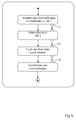
- the course of the method according to the invention is exemplary and schematic in FIG FIG. 5 shown.
- the first workflow system 13 in accordance with the print job, creates a pre-stage file 20 by the customer on a computer of the first workflow system 17 and uses specific marks in addition to the actual print job data, such as the image objects and text fields.
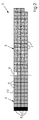
- FIG. 1 an example of such a mark, in this case a registration mark 1, is shown.
- Register marks 1 thus allow the control of the register-accurate overprinting of several print separations.
- FIG. 2 on the other hand, the example of a color measuring mark 3 shows that the color measuring marks 3 are used for quality control of the resulting color values in the form of test elements 3 on the printing substrate. They consist of individual color fields 10, which consist of the colors used. Most of the color fields are divided into two parts 4, 5. In the first sub-area 4 tone color fields 9 are each one of the colors used in different screening. These range from full-tone color fields 8 to completely white color fields 6. In the second area 5 are mixed color fields 7, which combinations of colors used, also with different screening values, among themselves.
- placeholders are used. These placeholders can z. B. the form of a bar code 11 or a matrix code, in particular a QR code 12, have. Examples of a barcode 11 or such a QR-code 12 are in FIG. 3 shown. With these codes 11, 12 further order-specific information can be transmitted to the second workflow system 14.
- QR codes 12 are always used as placeholders, since these not only offer the possibility to store information which can also be stored quite normally in the prestage file 20, but above all because the QR codes 12 are particularly easy to recognize when scanning the pre-stage file 20 due to their geometric shape.
- the pre-stage file 20 now contains placeholders for all marks 1, 3 which the first workflow system 13 could not set.
- the pre-stage file 21 in JDF format thus created is then transmitted to the second workflow system 14. Since compatibility between the interfaces of the first and second workflow system 15 can not be assumed, the second workflow system 14 includes a software module 19 in the form of a plug-in which scans the pre-stage file 21 for the placeholders, the information contained therein Registered position, size and print job data and this information to the second workflow system 14 is available.
- the SW module 19 is preferably integrated into the second workflow system 14.
- the software module 19 acts as an independent program on the computer of the second workflow system 18 and cooperates therewith.
- the second workflow system 14 can then use the information thus obtained to create the required registration and / or color measurement marks 1, 3 and to complete the prestage file 20 with the finished marks 1, 3.
Landscapes
- Physics & Mathematics (AREA)
- General Physics & Mathematics (AREA)
- Engineering & Computer Science (AREA)
- Theoretical Computer Science (AREA)
- Inking, Control Or Cleaning Of Printing Machines (AREA)
- Record Information Processing For Printing (AREA)
- Making Paper Articles (AREA)
- Editing Of Facsimile Originals (AREA)
Abstract
Description
- Die vorliegende Erfindung betrifft ein Verfahren zur Erstellung von Marken durch einen Rechner in der Vorstufe eines Druckprozesses.
- Die Erfindung liegt in dem technischen Gebiet der elektronischen Reproduktionstechnik.
- Bei der Durchführung von Druckaufträgen ist es aus Gründen der Qualitätssicherung notwendig, auf das Drucksubstrat, neben dem eigentlich zu druckenden Druckbild, bestimmte Arten von Marken von platzieren. Diese Marken werden für Prozesse zur Qualitätssicherung benötigt und zudem lassen sich mit ihnen auch druckauftragsspezifische Informationen über den Druckauftrag von der Druckvorstufe auf das eigentliche Drucksubstrat übertragen. Diese Marken umfassen dabei in der Hauptsache Passermarken, welche aus dem englischen Sprachraum auch als Registermarken bekannt sind und insbesondere im Mehrfarbendruck für die Kontrollen des passergenauen Übereinanderdruckens der verschiedenen Druckfarben notwendig sind. Die Passer- oder Registermarken haben dabei üblicherweise die Form von kleinen Kreuzen. Bei dem Auftragen jeder Druckfarbe wird dieses kleine Kreuz in der jeweiligen Druckfarbe aufgebracht. Auftretende Abweichungen in der Lage des Druckbildes zwischen den einzelnen aufgebrachten Druckfarben lassen sich dann anhand von Abweichungen in den übereinander gedruckten kreuzförmigen Passermarken leicht identifizieren.
- Die Passer- oder Registermarken können auch andere Formen annehmen, z. B. ist es aus dem Stand der Technik bekannt, die Passermarken in Form von Barcodes oder Matrixcodes zu gestalten, wodurch Informationen über den Druckauftrag auf das Druckbild übertragen werden können.
- So ist aus der Patentanmeldung
DE 000010345290 A1 eine Vorrichtung zur Erfassung von Passermarken bekannt, wobei die Passermarken von Matrix-Codes gebildet sind, welche mittels einer Kamera zur Positionierung und Identifikation eines Arbeitsmediums erfassbar sind. - Ein weiterer, aus dem Stand der Technik bekannter Markentyp, ist die Farbmessmarke. Mittels Farbmessmarken wird kontrolliert wird, ob die gedruckten, aus dem Drucksubstrat resultierenden Farben die korrekten Farbwerte aufweisen. Üblicherweise bestehen sie aus Sammlungen jeweils gleich großer Farbmessfelder, in denen alle verwendeten Druckfarben plus die möglichen, resultierenden Farbkombinationen in entsprechender Abstufung, abgedruckt sind. Ob alle möglichen Farbkombinationen oder nur ein Teil verwendet wird, hängt von der gewünschten Kontrollschärfe ab. Die Farbmessfelder werden nach dem Druck mittels Kameras oder eines Spektrometers erfasst und die gemessenen Werte mit den zu erwartenden Werten abgeglichen.
- Die Koordination über die Art, Anzahl, Position und Größe der betreffenden Marken wird dabei von der jeweils benutzten Druckvorstufe des Druckprozesses übernommen. Für diese Druckvorstufe ist es aus dem Stand der Technik bekannt, Workflowsysteme zu verwenden, die als computergestützte Software den kompletten Druckauftrag von der Auftragserstellung durch den Kunden bis zur Erstellung der detaillierten Druckauftragsdaten für die Druckmaschine reichen. Auch die Überwachung des Druckprozesses in der Druckmaschine und die Verarbeitung etwaiger auftretender Qualitätsprobleme werden vom Workflowsystem mit übernommen. Beispiele für ein solches vollständiges Workflowsystem sind z. B. die verschiedenen Ausführungen des Prinect-Systems der Heidelberger Druckmaschinen AG.
- Das Erstellen und Positionieren der für die Durchführung des Druckauftrages notwendigen Marken wird dabei vom Workflowsystem automatisiert übernommen, unterliegt jedoch auch der Kontrolle und bei Bedarf der manuellen Veränderung durch den Anwender des Workflowsystems.
- So offenbart die Patentanmeldung
DE 102011112232 A1 , Barcodes während eines Workflows anzupassen, indem dieser jeweils neu erzeugt wird. Hierfür müssen alle Informationen über den Barcode besorgt und die Seite neu erzeugt werden. - In der Praxis kommt es jedoch häufig vor, dass insbesondere kleinere Druckereien über kein vollständiges Workflowsystem ä la Prinect verfügen. Dort ist die Vorstufe meist in zwei Bereiche geteilt: Der Kunde erstellt mit seiner eigenen Software, die von eigener Bildbearbeitungssoftware bis hin zu kommerzieller Druckauftragssoftware reichen kann, seinen Druckauftrag. In diesen Druckauftragsdaten sind die Lage und Position der zu druckenden Bildobjekte sowie Textstellen festgehalten und mehr oder weniger genau spezifiziert. Falls der Kunde bereits eine kommerzielle, d. h. professionelle Software für die Erstellung eines Druckauftrages verwendet, so wird diese in der Regel auch bereits entsprechende Marken in die Druckauftragsdaten einsetzen und platzieren. Die Druckauftragsdaten werden dann vom Kunden an die ausführende Druckerei weitergereicht. Dabei ergibt sich das Problem, dass die Vorstufensoftware des Kunden noch nicht alle notwendigen Informationen, die zur Erstellung der Marken notwendig sind, besitzt. Der Grund hierfür ist, dass sie nicht wissen kann, wie und von welchen Druckmaschinen, mit welcher Konfiguration der Druckauftrag später in der Druckerei ausgeführt wird.
- Ein weiteres großes Problem ist oft, dass, selbst wenn alle notwendigen Informationen vorhanden wären, die Vorstufensoftware beim Kunden Marken verwendet, die die Vorstufensoftware in der Druckerei nicht kennt oder nicht verarbeiten kann. Die beiden Workflowsysteme sind also inkompatibel.
- In beiden Fällen erhält die Vorstufensoftware in der Druckerei Druckauftragsdaten mit Marken, die sie nicht verwenden kann. Ein Setzen der Marken komplett in der Vorstufensoftware der Druckerei ist dagegen oft schwierig, da ein Positionieren der Marken per Automatik in diesen späteren Prozessstufen des Druckprozesses zu riskant ist und eine manuelle Positionierung aufgrund der eigentlichen Arbeitsaufgabe des Druckers in der Druckerei und der technischen Rahmenbedingungen dort oft nicht praktikabel umsetzbar ist.
- Die Aufgabe der vorliegenden Erfindung ist es daher, ein Verfahren zur Erstellung von Marken in der Vorstufe eines Druckprozesses zu offenbaren, welches die Übertragung von Informationen über die Platzierung von Marken von einem ersten Teil der Vorstufe zu einem nachfolgenden Teil der Vorstufe, d. h. von einer Workflowsoftware zur nächsten Workflowsoftware, ermöglicht.
- Die erfindungsgemäße Lösung dieser Aufgabe stellt ein Verfahren zur Erstellung von Marken für die Einrichtung einer Druckmaschine durch einen Rechner in der Vorstufe eines Druckprozesses dar, welches dadurch gekennzeichnet ist, dass die Vorstufe mindestens zwei separate Applikationen umfasst, wobei die erste, erstellende Applikation neutrale Platzhalter mit Informationen über Größe und Position für benötigte Marken erstellt, während die zweite, anwendende Applikation die Platzhalter erkennt und durch die konkret benötigten Marken ersetzt. Mit Hilfe dieses Verfahrens ist es möglich, zwei verschiedene Workflowsysteme zur Erstellung eines Druckauftrages zu verwenden, wie sie beim Szenario von inkompatibler Vorstufensoftware zwischen Kunde und Druckerei auftreten kann.
- Die erste, erstellende Applikation, in diesem Fall also das Workflowsystem beim Kunden, setzt dabei an die Stelle, wo eigentlich die benötigten Marken gesetzt werden, einen Platzhalter, welcher genau die Größe der eigentlichen Marke besitzt, ein. Dadurch, dass dieser Platzhalter an genau der Position und mit genau der Größe der eigentlichen Marke erstellt wird, sind somit die beiden wichtigsten Platzierungsinformationen für die Marke, nämlich Größe und Position, bereits festgehalten und stehen bei der Übermittlung der Druckauftragsdaten an das zweite Workflowsystem in der Druckerei diesem zur Verfügung. Dabei ist es nicht zwangsläufig notwendig, dass es sich bei den beiden Workflowsystemen um ein Workflowsystem beim Kunden und ein Anderes in einer Druckerei handelt. Es sind auch Szenarien denkbar, wo innerhalb einer Druckerei oder bei einem Kunden zwei verschiedene, miteinander inkompatible Workflowsysteme verwendet werden. Auch für diese Szenarien ist das offenbarte Verfahren anwendbar.
- Vorteilhafte und daher bevorzugte Weiterbildungen des Verfahrens ergeben sich aus den zugehörigen Unteransprüchen sowie aus der Beschreibung mit den zugehörigen Zeichnungen.
- Eine bevorzugte Weiterbildung des erfindungsgemäßen Verfahrens ist dabei, dass der neutrale Platzhalter die Form eines Matrixcodes, insbesondere eines QR-Codes, besitzt. Die Verwendung eines Informationen beinhaltenden Codes hat mehrere Vorteile. Neben den Positionsinformationen und den Informationen über die Größe der später einzufügenden Marken, können in den Matrixcode auch bestimmte auftragsspezifische Informationen kodiert werden. Dies können z. B. Maschinenparameter für die zu verwendenden Maschinen sein, Angaben zum Auftraggeber oder die Auftragsnummer. Die Verwendung eines Matrixcodes, insbesondere eines QR-Codes, hat zudem den Vorteil, dass diese Code-Arten besonders leicht bei einem Scan des Dokumentes erkannt werden können.
- Eine weitere bevorzugte Weiterbildung des erfindungsgemäßen Verfahrens ist dabei, dass der neutrale Platzhalter die Form eines Barcodes besitzt.
Als Alternative zur Verwendung eines Matrixcodes kann auch ein Barcode verwendet werden. Auch weitere Formen von Codes zur Informationsübertragung, welche die geometrische Form eines Platzhalters für die zu ersetzenden Marken bilden können, sind möglich. - Eine weitere bevorzugte Weiterbildung des erfindungsgemäßen Verfahrens ist dabei, dass in dem Matrix- oder Barcode weitere druckauftragsspezifische Informationen kodiert sind. Wie bereits erwähnt enthalten die verwendeten Codes Informationen über den aktuellen Druckauftrag.
- Eine weitere bevorzugte Weiterbildung des erfindungsgemäßen Verfahrens ist dabei, dass der neutrale Platzhalter die Form einer fest definierten Bildstruktur aufweist.
Sollen keine Informationen über den aktuellen Druckauftrag an das zweite Workflowsystem übermittelt werden, so kann als Platzhalter auch eine bestimmte, fest definierte Bildstruktur verwendet werden. Die einzigen Anforderungen an diese sind, dass sie die zu ersetzenden Marken als Platzhalter in gleicher Position und Größe ausfüllen können. Sie müssen zudem vom zweiten Softwaresystem problemlos erkannt werden können. - Eine weitere bevorzugte Weiterbildung des erfindungsgemäßen Verfahrens ist dabei, dass die erste, erstellende Applikation eine Vorstufendatei erstellt, in welcher die neutralen Platzhalter platziert sind, und diese Vorstufendatei der zweiten, anwendenden Applikation übermittelt wird.
Die Art der Informationsübertragung zwischen den beiden Arten der Vorstufensoftware, d. h. den beiden Workflowsystemen, wird in Form einer Datei umgesetzt. So wird in der ersten Vorstufensoftware der Druckauftrag mit allen notwendigen und soweit bekannten Informationen erstellt, und die so gesammelten Daten bezüglich verwendeter Bildobjekte und Textstellen, sowie die Platzhalter für die späteren Marken werden in einer Datei abgespeichert. Das Format dieser Datei ist dabei abhängig von der verwendeten Art des ersten Workflowsystems. Die Datei wird nun an das zweite Workflowsystem übermittelt, wobei dies über das Internet, in Form eines Datenträgers oder jede andere Art von Netzwerk geschehen kann. Das zweite Workflowsystem, als erstellende und anwendende Applikation, analysiert diese Vorstufendatei und setzt die darin enthaltenen Druckauftragsdaten als Druckauftrag um. Bezüglich der Marken und deren Platzhalter, welche durch das erste Workflowsystem in Form der ersten, erstellenden Applikation gesetzt worden sind, scannt die zweite Applikation die Vorstufendatei nach diesen Platzhaltern, analysiert die Größe und Position der Platzhalter für die Marken und ersetzt die Platzhalter im Wissen um die Informationen des Druckauftrages und die zur Umsetzung zur Verfügung stehenden Druckmaschinen durch die entsprechend passenden Marken. - Eine weitere bevorzugte Weiterbildung des erfindungsgemäßen Verfahrens ist dabei, dass die zweite, anwendende Applikation um ein Softwaremodul ergänzt wird, welches die Vorstufendatei nach den dort platzierten neutralen Platzhaltern scannt und die in den Platzhaltern enthaltenen Informationen über die zu erstellenden Marken der zweiten, anwendenden Applikation zur Verfügung gestellt.
Da die zweite, anwendende Applikation, also das zweite Workflowsystem, im Normalfall aufgrund der Inkompatibilität zwischen beiden Systemen nicht von Haus aus über die Fähigkeiten zum Suchen und Ersetzen der Platzhalter durch die benötigten Marken verfügt, wird ein Softwaremodul benötigt, welches das zweite Workflowsystem in die Lage hierzu versetzt. Das Softwaremodul wird üblicherweise als Plug-in realisiert und muss so in das zweite Workflowsystem integriert oder mit diesem verbunden werden, dass es bei Zugriff auf die Vorstufendatei, welche vom ersten Workflowsystem erstellt wurde, diese Vorstufendatei scannt und die Informationen über die gefundenen Platzhalter dem zweiten Workflowsystem zur Verfügung stellt. Zudem müssen eventuell in den Platzhaltern kodierte Informationen entschlüsselt und ebenfalls an das zweite Workflowsystem weitergegeben werden. - Eine weitere bevorzugte Weiterbildung des erfindungsgemäßen Verfahrens ist dabei, dass die Vorstufendatei im PDF-Format gestaltet ist.
In der Druckindustrie sind Vorstufendateien meist als PDF-Dateien realisiert, wobei diese PDF-Dateien meist ein vorgegebenes Format besitzen. Dieses Format ist üblicherweise JDF (Job Definition File). - Eine weitere bevorzugte Weiterbildung des erfindungsgemäßen Verfahrens ist dabei, dass die Vorstufendatei mit den neutralen Platzhaltern als gerastertes Bild oder ungerastertes Halbtonbild umgesetzt ist.
Je nachdem, ob der Rasterimageprozessor, der für die Rasterung im Rahmen des Vorstufenprozesses zuständig ist, bereits im ersten Workflowsystem oder erst im zweiten Workflowsystem zum Einsatz kommt, kann die Vorstufendatei bereits als gerastertes Bild oder als noch ungerastertes Bild vorliegen. - Eine weitere Weiterbildung des erfindungsgemäßen Verfahrens ist dabei, dass die Marken, welche von der zweiten, anwendenden Applikation anstelle der neutralen Platzhalter erstellt werden, Farbmess- oder Registermarken sind.
Die Hauptaufgabengebiete der eingesetzten benötigten Marken sind Farbmess- oder Registermarken. D. h. Marken, mit welchen das passergenaue Übereinanderdrucken verschiedener Farbauszüge kontrolliert wird oder auch Farbmessmarken, mit welchen kontrolliert wird, ob die gedruckten, aus dem Drucksubstrat resultierenden Farben die korrekten Farbwerte aufweisen. - Das Verfahren sowie funktionell vorteilhafte Weiterbildungen des Verfahrens werden nachfolgend unter Bezug auf die zugehörigen Zeichnungen anhand wenigstens eines bevorzugten Ausführungsbeispiels näher beschrieben.
- In den Zeichnungen sind einander entsprechende Elemente mit jeweils denselben Bezugszeichen versehen.
- Die Zeichnungen zeigen:
- Figur 1
- ein Beispiel einer Passermarke,
- Figur 2
- ein Beispiel einer Farbmessmarke,
- Figur 3
- ein Beispiel eines Bar- bzw. eines QR-Codes,
- Figur 4
- den Aufbau des Vorstufensystems mit zwei Workflowsystemen,
- Figur 5
- den Ablauf des erfindungsgemäßen Verfahrens.
- Der Aufbau des gesamten digitalen Vorstufensystems 16 ist schematisch in
Figur 4 dargestellt. Der Ablauf des erfindungsgemäßen Verfahrens ist dagegen beispielhaft und schematisch inFigur 5 dargestellt. - Dabei wird vom ersten Workflowsystem 13, gemäß des Druckauftrages, vom Kunden an einem Rechner des ersten Workflowsystems 17 eine Vorstufendatei 20 erstellt und neben den eigentlichen Druckauftragsdaten, wie den Bildobjekten und Textfeldern, bestimmte Marken eingesetzt.
- In
Figur 1 ist ein Beispiel für eine solche Marke, in diesem Fall eine Passermarke 1, dargestellt. Die Abweichungen 2 in den übereinander gedruckten kreuzförmigen Passermarken, verursacht durch Abweichungen 2 in der Lage des Druckbildes zwischen den einzelnen aufgebrachten Druckfarben, sind hier gut zu erkennen. Passermarken 1 ermöglichen damit die Kontrolle des passergenauen Übereinanderdrucks mehrerer Druckauszüge.Figur 2 dagegen zeigt das Beispiel einer Farbmessmarke 3. Die Farbmessmarken 3 werden zur Qualitätskontrolle der resultierenden Farbwerte in Form von Testelementen 3 auf dem Drucksubstrat verwendet. Sie bestehen aus einzelnen Farbfeldern 10, welche aus den verwendeten Farben bestehen. Meist sind die Farbfelder in zwei Teilbereichen 4, 5 eingeteilt. Im ersten Teilbereich 4 stehen Tonwertfarbfelder 9 aus jeweils einer der verwendeten Farben in unterschiedlicher Rasterung. Diese reichen von Volltonfarbfeldern 8 bis zu komplett weißen Farbfeldern 6. Im zweiten Bereich 5 stehen gemischte Farbfelder 7, welche Kombinationen der verwendeten Farben, ebenfalls mit unterschiedlichen Rasterungswerten, untereinander enthalten. - Da zu diesem Zeitpunkt des Vorstufenprozesses das erste Workflowsystem 13 noch nicht sämtliche notwendigen Informationen zur Erstellung aller benötigten Marken 1, 3 für den eigentlichen Druck besitzt, werden entsprechende Platzhalter eingesetzt. Diese Platzhalter können z. B. die Form eines Barcodes 11 oder eines Matrixcodes, insbesondere eines QR-Codes 12, haben. Beispiele für einen Barcode 11 oder einen solchen QR-Code 12 sind in
Figur 3 dargestellt. Mit diesen Codes 11, 12 können weitere auftragsspezifische Informationen an das zweite Workflowsystem 14 übermittelt werden. In einer besonders bevorzugten Ausführungsvariante werden als Platzhalter stets QR-Codes 12 verwendet, da diese nicht nur die Möglichkeit bieten darin Informationen zu speichern, welche ja auch ganz normal in der Vorstufendatei 20 gespeichert werden können, sondern vor allem, da die QR-Codes 12 aufgrund ihrer geometrischen Form besonders leicht beim Scannen der Vorstufendatei 20 zu erkennen sind. - Die Platzhalter werden nun an genau den Stellen eingesetzt, wo bereits bekannt ist, dass Marken benötigt werden. Die Vorstufendatei 20 enthält nun neben den eigentlichen Druckauftragsdaten Platzhalter für alle Marken 1, 3, welche das erste Workflowsystem 13 nicht setzen konnte. Die so erstellte Vorstufendatei 21 im JDF-Format wird dann an das zweite Workflowsystem 14 übermittelt. Da eine Kompatibilität zwischen den Interfaces des ersten und zweiten Workflowsystems 15 nicht angenommen werden kann, beinhaltet das zweite Workflowsystem 14 ein Softwaremodul 19 in Form eines Plug-in, welches die Vorstufendatei 21 nach den Platzhaltern scannt, die darin enthaltenen Informationen über Position, Größe und Druckauftragsdaten registriert und diese Informationen dem zweiten Workflowsystem 14 zur Verfügung stellt. Das SW-Modul 19 ist dabei bevorzugt in das zweiten Workflowsystem 14 integriert. Es ist jedoch auch möglich, dass in einer alternativen Ausführungsvariante das SW-Modul 19 als eigenständiges Programm auf dem Rechner des zweiten Workflowsystems 18 agiert und mit diesem zusammenarbeitet. Das zweite Workflowsystem 14 kann dann mit den so erhaltenen Informationen die benötigten Passer- und/oder Farbmessmarken 1, 3 erstellen und die Vorstufendatei 20 mit den fertigen Marken 1, 3 ergänzen. Die Vorstufendatei 22, welche nun nicht mehr die Platzhalter, sondern die benötigten Passer- und/oder Farbmessmarken 1, 3 enthält, wird anschließend zur Erledigung des Druckauftrages an die Druckmaschine geschickt.
-
- 1
- Passermarke
- 2
- Abweichungen der einzelnen Farbauszüge
- 3
- Farbmessmarke/Testelement
- 4, 5
- Teilbereiche
- 6
- weißes Farbfeld
- 7
- gemischte Farbfelder
- 8
- Volltonfarbfeld
- 9
- Tonwertfarbfelder
- 10
- Farbfeld
- 11
- Barcode
- 12
- QR-Code
- 13
- erstes Workflowsystem
- 14
- zweites Workflowsystem
- 15
- Interface zwischen erstem und zweitem Workflowsystem
- 16
- Digitale Vorstufe
- 17
- Rechner des ersten Workflowsystems
- 18
- Rechner des zweiten Workflowsystems
- 19
- SW-Modul
- 20
- Vorstufendatei
- 21
- Vorstufendatei mit Platzhalter
- 22
- Vorstufendatei mit fertigen Marken
Claims (10)
- Verfahren zur Erstellung von Marken (1, 3) für die Einrichtung einer Druckmaschine durch einen Rechner (17, 18) in der Vorstufe (16) eines Druckprozesses,
dadurch gekennzeichnet,
dass die Vorstufe (16) mindestens zwei separate Applikationen (13, 14) umfasst, wobei die erste, erstellende Applikation (13) neutrale Platzhalter mit Informationen über Größe und Position für benötigte Marken (1, 3) erstellt, während die zweite, anwendende Applikation (14) die Platzhalter erkennt und durch die konkret benötigten Marken (1, 3) ersetzt. - Verfahren nach Anspruch 1,
dadurch gekennzeichnet,
dass der neutrale Platzhalter die Form eines Matrix-Codes, insbesondere eines QR-Codes (12), besitzt. - Verfahren nach Anspruch 1,
dadurch gekennzeichnet,
dass der neutrale Platzhalter die Form eines Bar-Codes (11) besitzt. - Verfahren nach einem der Ansprüche 2 oder 3,
dadurch gekennzeichnet,
dass in den Matrix- oder Bar-Code (11, 12) weitere, druckauftragsspezifische Informationen codiert sind. - Verfahren nach Anspruch 1,
dadurch gekennzeichnet,
dass der neutrale Platzhalter die Form einer fest definierten Bildstruktur aufweist. - Verfahren nach einem der vorherigen Ansprüche,
dadurch gekennzeichnet,
dass die erste, erstellende Applikation (13) eine Vorstufendatei (21) erstellt, in welcher die neutralen Platzhalter platziert sind und diese Vorstufendatei (21) der zweiten, anwendenden Applikation (14) übermittelt wird. - Verfahren nach einem Anspruch 6,
dadurch gekennzeichnet,
dass die zweite, anwendende Applikation (14) um ein Softwaremodul (19) ergänzt wird, welches die Vorstufendatei (21) nach den dort platzierten neutralen Platzhaltern scannt und die in den Platzhaltern enthaltenen Informationen über die zu erstellenden Marken (1,3) der zweiten, anwendenden Applikation (14) zur Verfügung stellt. - Verfahren nach einem der vorherigen Ansprüche,
dadurch gekennzeichnet,
dass die Vorstufendatei (20) im PDF-Format gestaltet ist. - Verfahren nach einem der vorherigen Ansprüche,
dadurch gekennzeichnet,
dass die Vorstufendatei mit den neutralen Platzhaltern (21) als gerastertes Bild oder ungerastertes Halbtonbild umgesetzt ist. - Verfahren nach einem der vorherigen Ansprüche,
dadurch gekennzeichnet,
dass die Marken (1,3), welche von der zweiten, anwendenden Applikation (14) anstelle der neutralen Platzhalter erstellt werden, Farbmess- oder Registermarken (1, 3) sind.
Applications Claiming Priority (1)
| Application Number | Priority Date | Filing Date | Title |
|---|---|---|---|
| DE102015210491.5A DE102015210491A1 (de) | 2015-06-09 | 2015-06-09 | Erstellung von Marken in der Vorstufe eines Druckprozesses |
Publications (2)
| Publication Number | Publication Date |
|---|---|
| EP3104299A1 true EP3104299A1 (de) | 2016-12-14 |
| EP3104299B1 EP3104299B1 (de) | 2022-08-10 |
Family
ID=56087099
Family Applications (1)
| Application Number | Title | Priority Date | Filing Date |
|---|---|---|---|
| EP16168000.4A Active EP3104299B1 (de) | 2015-06-09 | 2016-05-03 | Erstellung von marken in der vorstufe eines druckprozesses |
Country Status (3)
| Country | Link |
|---|---|
| EP (1) | EP3104299B1 (de) |
| CN (1) | CN106240155B (de) |
| DE (1) | DE102015210491A1 (de) |
Cited By (1)
| Publication number | Priority date | Publication date | Assignee | Title |
|---|---|---|---|---|
| WO2022229778A1 (en) * | 2021-04-28 | 2022-11-03 | Printing International Nv | Product printing method, device and software program |
Citations (4)
| Publication number | Priority date | Publication date | Assignee | Title |
|---|---|---|---|---|
| DE10345290A1 (de) | 2003-09-30 | 2005-04-28 | Leuze Electronic Gmbh & Co Kg | Vorrichtung zur Erfassung von Passermarken |
| US20100147960A1 (en) * | 2008-12-17 | 2010-06-17 | Global Graphics Software Limited | Methods, devices, and systems for printing bar codes |
| EP2565816A2 (de) * | 2011-09-01 | 2013-03-06 | Heidelberger Druckmaschinen AG | Verfahren und Vorrichtung zur Erzeugung eines Barcodes auf einem Substrat |
| US20140367464A1 (en) * | 2010-11-05 | 2014-12-18 | Barcode Graphics, Inc. | Systems and methods for barcode integration in packaging design and printing |
Family Cites Families (4)
| Publication number | Priority date | Publication date | Assignee | Title |
|---|---|---|---|---|
| DE19847666B4 (de) * | 1998-10-15 | 2005-10-20 | Eltromat Gmbh | Vorrichtung und Verfahren zur Registerregelung einer Druckmaschine beim Mehrfarbendruck |
| KR101442638B1 (ko) * | 2008-09-03 | 2014-09-24 | 삼성전자주식회사 | 화상형성장치 및 화상형성방법 |
| CN101430715B (zh) * | 2008-12-11 | 2011-01-05 | 北大方正集团有限公司 | 一种排版后数据的存储方法和装置 |
| US8296653B2 (en) * | 2009-04-06 | 2012-10-23 | Xerox Corporation | Variable imaging asset upload and verification |
-
2015
- 2015-06-09 DE DE102015210491.5A patent/DE102015210491A1/de not_active Withdrawn
-
2016
- 2016-05-03 EP EP16168000.4A patent/EP3104299B1/de active Active
- 2016-06-06 CN CN201610391028.1A patent/CN106240155B/zh active Active
Patent Citations (5)
| Publication number | Priority date | Publication date | Assignee | Title |
|---|---|---|---|---|
| DE10345290A1 (de) | 2003-09-30 | 2005-04-28 | Leuze Electronic Gmbh & Co Kg | Vorrichtung zur Erfassung von Passermarken |
| US20100147960A1 (en) * | 2008-12-17 | 2010-06-17 | Global Graphics Software Limited | Methods, devices, and systems for printing bar codes |
| US20140367464A1 (en) * | 2010-11-05 | 2014-12-18 | Barcode Graphics, Inc. | Systems and methods for barcode integration in packaging design and printing |
| EP2565816A2 (de) * | 2011-09-01 | 2013-03-06 | Heidelberger Druckmaschinen AG | Verfahren und Vorrichtung zur Erzeugung eines Barcodes auf einem Substrat |
| DE102011112232A1 (de) | 2011-09-01 | 2013-03-07 | Heidelberger Druckmaschinen Aktiengesellschaft | Verfahren und Vorrichtung zur Erzeugung eines Barcodes auf einem Substrat |
Cited By (2)
| Publication number | Priority date | Publication date | Assignee | Title |
|---|---|---|---|---|
| WO2022229778A1 (en) * | 2021-04-28 | 2022-11-03 | Printing International Nv | Product printing method, device and software program |
| BE1029347B1 (nl) * | 2021-04-28 | 2022-12-05 | Printing Int | Productbedrukking |
Also Published As
| Publication number | Publication date |
|---|---|
| CN106240155B (zh) | 2019-11-08 |
| DE102015210491A1 (de) | 2016-12-15 |
| CN106240155A (zh) | 2016-12-21 |
| EP3104299B1 (de) | 2022-08-10 |
Similar Documents
| Publication | Publication Date | Title |
|---|---|---|
| EP2463101B1 (de) | System und Verfahren zur Erzeugung und Inspektion von Drucken mit statischen und variablen Inhalten | |
| EP2902203A1 (de) | Verfahren und Vorrichtung zur Steuerung und Regelung eines digitalen Druckprozesses | |
| DE102006056858B4 (de) | Verfahren zum Überprüfen der Druckqualität | |
| EP2960058B1 (de) | Verfahren und vorrichtung zur markenlosen steuerung und regelung eines digitalen druckprozesses | |
| EP0763427B2 (de) | Verfahren zum Steuern der Bebilderung eines Druckformträgers für eine Druckmaschine | |
| EP2538371B1 (de) | Verfahren zum Scannen von Dokumenten und automatischen Steuern der Weiterverarbeitung der Dokumente | |
| DE102008000031B4 (de) | Verfahren zur Kontrolle einer Anordnung von an Formzylindern einer Druckmaschine angeordneten Druckformen | |
| EP3104299B1 (de) | Erstellung von marken in der vorstufe eines druckprozesses | |
| EP1155855B2 (de) | Druckprozesssteuerung | |
| EP3628489B1 (de) | Registermessung ohne registermarken | |
| EP3124246B1 (de) | Verfahren zur steuerung bzw. regelung eines produktionsprozesses in druckanlagen | |
| DE102021104128A1 (de) | Druckoptimierte Sicherheitselemente | |
| DE102009007864A1 (de) | Druckbildabhängige Positionierung von Farbmess-Streifen | |
| EP1155845A2 (de) | Kommunikationssystem, insbesondere bei der Herstellung von Print-Medien | |
| EP1727679B1 (de) | Verfahren zur identifikation eines einzelnen nutzens mit einem druckbild von fehlerhafter qualität auf einem bedruckstoff mit mehreren nutzen | |
| DE102017215049B3 (de) | Datengestützte Bestimmung von Druckplattenwechseln | |
| WO2023144153A1 (de) | Verfahren zum bedrucken einer papierbahn | |
| DE102018201669A1 (de) | Verfahren zum Erhalt des Schwarzaufbaus von Objekten | |
| DE102022122498B4 (de) | Verfahren zum Herstellen und Serialisieren einer Mehrzahl von Druckprodukten | |
| DE102005024473B4 (de) | Verfahren zur Übermittlung eines Farbauszugs und Management Information System | |
| EP4742647A1 (de) | Verfahren zum drucken eines zu druckenden dekors und vorrichtung | |
| WO2026017211A1 (de) | Verfahren zum aufbringen einer identifikationsnummer für ein bauteil auf einem rohbauprodukt und/oder auf einem zwischenprodukt sowie herstellungssystem | |
| DE102024120490A1 (de) | Verfahren zum Aufbringen einer Identifikationsnummer für ein Bauteil auf einem Rohbauprodukt und/oder auf einem Zwischenprodukt sowie Herstellungssystem | |
| EP2108518B1 (de) | Bebilderungsverfahren für Bogenvarianten versionierter Druckprodukte | |
| EP2685397A1 (de) | System zur schnellen und optimierten Bearbeitung medizinischer Proben |
Legal Events
| Date | Code | Title | Description |
|---|---|---|---|
| PUAI | Public reference made under article 153(3) epc to a published international application that has entered the european phase |
Free format text: ORIGINAL CODE: 0009012 |
|
| STAA | Information on the status of an ep patent application or granted ep patent |
Free format text: STATUS: THE APPLICATION HAS BEEN PUBLISHED |
|
| AK | Designated contracting states |
Kind code of ref document: A1 Designated state(s): AL AT BE BG CH CY CZ DE DK EE ES FI FR GB GR HR HU IE IS IT LI LT LU LV MC MK MT NL NO PL PT RO RS SE SI SK SM TR |
|
| AX | Request for extension of the european patent |
Extension state: BA ME |
|
| STAA | Information on the status of an ep patent application or granted ep patent |
Free format text: STATUS: REQUEST FOR EXAMINATION WAS MADE |
|
| 17P | Request for examination filed |
Effective date: 20170614 |
|
| RBV | Designated contracting states (corrected) |
Designated state(s): AL AT BE BG CH CY CZ DE DK EE ES FI FR GB GR HR HU IE IS IT LI LT LU LV MC MK MT NL NO PL PT RO RS SE SI SK SM TR |
|
| RAP1 | Party data changed (applicant data changed or rights of an application transferred) |
Owner name: HEIDELBERGER DRUCKMASCHINEN AG |
|
| STAA | Information on the status of an ep patent application or granted ep patent |
Free format text: STATUS: EXAMINATION IS IN PROGRESS |
|
| 17Q | First examination report despatched |
Effective date: 20200103 |
|
| GRAP | Despatch of communication of intention to grant a patent |
Free format text: ORIGINAL CODE: EPIDOSNIGR1 |
|
| STAA | Information on the status of an ep patent application or granted ep patent |
Free format text: STATUS: GRANT OF PATENT IS INTENDED |
|
| INTG | Intention to grant announced |
Effective date: 20220330 |
|
| GRAS | Grant fee paid |
Free format text: ORIGINAL CODE: EPIDOSNIGR3 |
|
| GRAA | (expected) grant |
Free format text: ORIGINAL CODE: 0009210 |
|
| STAA | Information on the status of an ep patent application or granted ep patent |
Free format text: STATUS: THE PATENT HAS BEEN GRANTED |
|
| AK | Designated contracting states |
Kind code of ref document: B1 Designated state(s): AL AT BE BG CH CY CZ DE DK EE ES FI FR GB GR HR HU IE IS IT LI LT LU LV MC MK MT NL NO PL PT RO RS SE SI SK SM TR |
|
| REG | Reference to a national code |
Ref country code: AT Ref legal event code: REF Ref document number: 1511093 Country of ref document: AT Kind code of ref document: T Effective date: 20220815 Ref country code: CH Ref legal event code: EP |
|
| REG | Reference to a national code |
Ref country code: DE Ref legal event code: R096 Ref document number: 502016015148 Country of ref document: DE |
|
| REG | Reference to a national code |
Ref country code: IE Ref legal event code: FG4D Free format text: LANGUAGE OF EP DOCUMENT: GERMAN |
|
| REG | Reference to a national code |
Ref country code: NL Ref legal event code: MP Effective date: 20220810 |
|
| REG | Reference to a national code |
Ref country code: LT Ref legal event code: MG9D |
|
| PG25 | Lapsed in a contracting state [announced via postgrant information from national office to epo] |
Ref country code: SE Free format text: LAPSE BECAUSE OF FAILURE TO SUBMIT A TRANSLATION OF THE DESCRIPTION OR TO PAY THE FEE WITHIN THE PRESCRIBED TIME-LIMIT Effective date: 20220810 Ref country code: RS Free format text: LAPSE BECAUSE OF FAILURE TO SUBMIT A TRANSLATION OF THE DESCRIPTION OR TO PAY THE FEE WITHIN THE PRESCRIBED TIME-LIMIT Effective date: 20220810 Ref country code: PT Free format text: LAPSE BECAUSE OF FAILURE TO SUBMIT A TRANSLATION OF THE DESCRIPTION OR TO PAY THE FEE WITHIN THE PRESCRIBED TIME-LIMIT Effective date: 20221212 Ref country code: NO Free format text: LAPSE BECAUSE OF FAILURE TO SUBMIT A TRANSLATION OF THE DESCRIPTION OR TO PAY THE FEE WITHIN THE PRESCRIBED TIME-LIMIT Effective date: 20221110 Ref country code: NL Free format text: LAPSE BECAUSE OF FAILURE TO SUBMIT A TRANSLATION OF THE DESCRIPTION OR TO PAY THE FEE WITHIN THE PRESCRIBED TIME-LIMIT Effective date: 20220810 Ref country code: LV Free format text: LAPSE BECAUSE OF FAILURE TO SUBMIT A TRANSLATION OF THE DESCRIPTION OR TO PAY THE FEE WITHIN THE PRESCRIBED TIME-LIMIT Effective date: 20220810 Ref country code: LT Free format text: LAPSE BECAUSE OF FAILURE TO SUBMIT A TRANSLATION OF THE DESCRIPTION OR TO PAY THE FEE WITHIN THE PRESCRIBED TIME-LIMIT Effective date: 20220810 Ref country code: FI Free format text: LAPSE BECAUSE OF FAILURE TO SUBMIT A TRANSLATION OF THE DESCRIPTION OR TO PAY THE FEE WITHIN THE PRESCRIBED TIME-LIMIT Effective date: 20220810 Ref country code: ES Free format text: LAPSE BECAUSE OF FAILURE TO SUBMIT A TRANSLATION OF THE DESCRIPTION OR TO PAY THE FEE WITHIN THE PRESCRIBED TIME-LIMIT Effective date: 20220810 |
|
| PG25 | Lapsed in a contracting state [announced via postgrant information from national office to epo] |
Ref country code: PL Free format text: LAPSE BECAUSE OF FAILURE TO SUBMIT A TRANSLATION OF THE DESCRIPTION OR TO PAY THE FEE WITHIN THE PRESCRIBED TIME-LIMIT Effective date: 20220810 Ref country code: IS Free format text: LAPSE BECAUSE OF FAILURE TO SUBMIT A TRANSLATION OF THE DESCRIPTION OR TO PAY THE FEE WITHIN THE PRESCRIBED TIME-LIMIT Effective date: 20221210 Ref country code: HR Free format text: LAPSE BECAUSE OF FAILURE TO SUBMIT A TRANSLATION OF THE DESCRIPTION OR TO PAY THE FEE WITHIN THE PRESCRIBED TIME-LIMIT Effective date: 20220810 Ref country code: GR Free format text: LAPSE BECAUSE OF FAILURE TO SUBMIT A TRANSLATION OF THE DESCRIPTION OR TO PAY THE FEE WITHIN THE PRESCRIBED TIME-LIMIT Effective date: 20221111 |
|
| PG25 | Lapsed in a contracting state [announced via postgrant information from national office to epo] |
Ref country code: SM Free format text: LAPSE BECAUSE OF FAILURE TO SUBMIT A TRANSLATION OF THE DESCRIPTION OR TO PAY THE FEE WITHIN THE PRESCRIBED TIME-LIMIT Effective date: 20220810 Ref country code: RO Free format text: LAPSE BECAUSE OF FAILURE TO SUBMIT A TRANSLATION OF THE DESCRIPTION OR TO PAY THE FEE WITHIN THE PRESCRIBED TIME-LIMIT Effective date: 20220810 Ref country code: DK Free format text: LAPSE BECAUSE OF FAILURE TO SUBMIT A TRANSLATION OF THE DESCRIPTION OR TO PAY THE FEE WITHIN THE PRESCRIBED TIME-LIMIT Effective date: 20220810 Ref country code: CZ Free format text: LAPSE BECAUSE OF FAILURE TO SUBMIT A TRANSLATION OF THE DESCRIPTION OR TO PAY THE FEE WITHIN THE PRESCRIBED TIME-LIMIT Effective date: 20220810 |
|
| REG | Reference to a national code |
Ref country code: DE Ref legal event code: R097 Ref document number: 502016015148 Country of ref document: DE |
|
| PG25 | Lapsed in a contracting state [announced via postgrant information from national office to epo] |
Ref country code: SK Free format text: LAPSE BECAUSE OF FAILURE TO SUBMIT A TRANSLATION OF THE DESCRIPTION OR TO PAY THE FEE WITHIN THE PRESCRIBED TIME-LIMIT Effective date: 20220810 Ref country code: EE Free format text: LAPSE BECAUSE OF FAILURE TO SUBMIT A TRANSLATION OF THE DESCRIPTION OR TO PAY THE FEE WITHIN THE PRESCRIBED TIME-LIMIT Effective date: 20220810 |
|
| P01 | Opt-out of the competence of the unified patent court (upc) registered |
Effective date: 20230502 |
|
| PLBE | No opposition filed within time limit |
Free format text: ORIGINAL CODE: 0009261 |
|
| STAA | Information on the status of an ep patent application or granted ep patent |
Free format text: STATUS: NO OPPOSITION FILED WITHIN TIME LIMIT |
|
| PG25 | Lapsed in a contracting state [announced via postgrant information from national office to epo] |
Ref country code: AL Free format text: LAPSE BECAUSE OF FAILURE TO SUBMIT A TRANSLATION OF THE DESCRIPTION OR TO PAY THE FEE WITHIN THE PRESCRIBED TIME-LIMIT Effective date: 20220810 |
|
| 26N | No opposition filed |
Effective date: 20230511 |
|
| PG25 | Lapsed in a contracting state [announced via postgrant information from national office to epo] |
Ref country code: SI Free format text: LAPSE BECAUSE OF FAILURE TO SUBMIT A TRANSLATION OF THE DESCRIPTION OR TO PAY THE FEE WITHIN THE PRESCRIBED TIME-LIMIT Effective date: 20220810 |
|
| REG | Reference to a national code |
Ref country code: CH Ref legal event code: PL |
|
| PG25 | Lapsed in a contracting state [announced via postgrant information from national office to epo] |
Ref country code: MC Free format text: LAPSE BECAUSE OF FAILURE TO SUBMIT A TRANSLATION OF THE DESCRIPTION OR TO PAY THE FEE WITHIN THE PRESCRIBED TIME-LIMIT Effective date: 20220810 |
|
| GBPC | Gb: european patent ceased through non-payment of renewal fee |
Effective date: 20230503 |
|
| REG | Reference to a national code |
Ref country code: BE Ref legal event code: MM Effective date: 20230531 |
|
| PG25 | Lapsed in a contracting state [announced via postgrant information from national office to epo] |
Ref country code: MC Free format text: LAPSE BECAUSE OF FAILURE TO SUBMIT A TRANSLATION OF THE DESCRIPTION OR TO PAY THE FEE WITHIN THE PRESCRIBED TIME-LIMIT Effective date: 20220810 Ref country code: LU Free format text: LAPSE BECAUSE OF NON-PAYMENT OF DUE FEES Effective date: 20230503 Ref country code: LI Free format text: LAPSE BECAUSE OF NON-PAYMENT OF DUE FEES Effective date: 20230531 Ref country code: CH Free format text: LAPSE BECAUSE OF NON-PAYMENT OF DUE FEES Effective date: 20230531 |
|
| REG | Reference to a national code |
Ref country code: IE Ref legal event code: MM4A |
|
| PG25 | Lapsed in a contracting state [announced via postgrant information from national office to epo] |
Ref country code: IE Free format text: LAPSE BECAUSE OF NON-PAYMENT OF DUE FEES Effective date: 20230503 |
|
| PG25 | Lapsed in a contracting state [announced via postgrant information from national office to epo] |
Ref country code: IE Free format text: LAPSE BECAUSE OF NON-PAYMENT OF DUE FEES Effective date: 20230503 Ref country code: GB Free format text: LAPSE BECAUSE OF NON-PAYMENT OF DUE FEES Effective date: 20230503 |
|
| PG25 | Lapsed in a contracting state [announced via postgrant information from national office to epo] |
Ref country code: IT Free format text: LAPSE BECAUSE OF FAILURE TO SUBMIT A TRANSLATION OF THE DESCRIPTION OR TO PAY THE FEE WITHIN THE PRESCRIBED TIME-LIMIT Effective date: 20220810 Ref country code: FR Free format text: LAPSE BECAUSE OF NON-PAYMENT OF DUE FEES Effective date: 20230531 Ref country code: BE Free format text: LAPSE BECAUSE OF NON-PAYMENT OF DUE FEES Effective date: 20230531 |
|
| REG | Reference to a national code |
Ref country code: AT Ref legal event code: MM01 Ref document number: 1511093 Country of ref document: AT Kind code of ref document: T Effective date: 20230503 |
|
| PG25 | Lapsed in a contracting state [announced via postgrant information from national office to epo] |
Ref country code: AT Free format text: LAPSE BECAUSE OF NON-PAYMENT OF DUE FEES Effective date: 20230503 |
|
| PG25 | Lapsed in a contracting state [announced via postgrant information from national office to epo] |
Ref country code: AT Free format text: LAPSE BECAUSE OF NON-PAYMENT OF DUE FEES Effective date: 20230503 |
|
| PG25 | Lapsed in a contracting state [announced via postgrant information from national office to epo] |
Ref country code: BG Free format text: LAPSE BECAUSE OF FAILURE TO SUBMIT A TRANSLATION OF THE DESCRIPTION OR TO PAY THE FEE WITHIN THE PRESCRIBED TIME-LIMIT Effective date: 20220810 |
|
| PG25 | Lapsed in a contracting state [announced via postgrant information from national office to epo] |
Ref country code: BG Free format text: LAPSE BECAUSE OF FAILURE TO SUBMIT A TRANSLATION OF THE DESCRIPTION OR TO PAY THE FEE WITHIN THE PRESCRIBED TIME-LIMIT Effective date: 20220810 |
|
| PGFP | Annual fee paid to national office [announced via postgrant information from national office to epo] |
Ref country code: DE Payment date: 20250531 Year of fee payment: 10 |
|
| PG25 | Lapsed in a contracting state [announced via postgrant information from national office to epo] |
Ref country code: CY Free format text: LAPSE BECAUSE OF FAILURE TO SUBMIT A TRANSLATION OF THE DESCRIPTION OR TO PAY THE FEE WITHIN THE PRESCRIBED TIME-LIMIT; INVALID AB INITIO Effective date: 20160503 |
|
| PG25 | Lapsed in a contracting state [announced via postgrant information from national office to epo] |
Ref country code: HU Free format text: LAPSE BECAUSE OF FAILURE TO SUBMIT A TRANSLATION OF THE DESCRIPTION OR TO PAY THE FEE WITHIN THE PRESCRIBED TIME-LIMIT; INVALID AB INITIO Effective date: 20160503 |
|
| PG25 | Lapsed in a contracting state [announced via postgrant information from national office to epo] |
Ref country code: TR Free format text: LAPSE BECAUSE OF FAILURE TO SUBMIT A TRANSLATION OF THE DESCRIPTION OR TO PAY THE FEE WITHIN THE PRESCRIBED TIME-LIMIT Effective date: 20220810 |