EP3098214B1 - Monoesters or monoester salts of hexahydro-beta-acid and application thereof as animal feed additives - Google Patents
Monoesters or monoester salts of hexahydro-beta-acid and application thereof as animal feed additives Download PDFInfo
- Publication number
- EP3098214B1 EP3098214B1 EP14882819.7A EP14882819A EP3098214B1 EP 3098214 B1 EP3098214 B1 EP 3098214B1 EP 14882819 A EP14882819 A EP 14882819A EP 3098214 B1 EP3098214 B1 EP 3098214B1
- Authority
- EP
- European Patent Office
- Prior art keywords
- hexahydro
- acid
- salt
- ester
- dissolved
- Prior art date
- Legal status (The legal status is an assumption and is not a legal conclusion. Google has not performed a legal analysis and makes no representation as to the accuracy of the status listed.)
- Active
Links
- 0 CC(C)CCC1(CCC(C)C)C(O)=C(C(*)=O)C(OC(*)=O)=C(CCC(C)C)C1=O Chemical compound CC(C)CCC1(CCC(C)C)C(O)=C(C(*)=O)C(OC(*)=O)=C(CCC(C)C)C1=O 0.000 description 1
Images





Classifications
-
- C—CHEMISTRY; METALLURGY
- C07—ORGANIC CHEMISTRY
- C07C—ACYCLIC OR CARBOCYCLIC COMPOUNDS
- C07C69/00—Esters of carboxylic acids; Esters of carbonic or haloformic acids
- C07C69/02—Esters of acyclic saturated monocarboxylic acids having the carboxyl group bound to an acyclic carbon atom or to hydrogen
- C07C69/12—Acetic acid esters
-
- C—CHEMISTRY; METALLURGY
- C07—ORGANIC CHEMISTRY
- C07C—ACYCLIC OR CARBOCYCLIC COMPOUNDS
- C07C49/00—Ketones; Ketenes; Dimeric ketenes; Ketonic chelates
- C07C49/587—Unsaturated compounds containing a keto groups being part of a ring
- C07C49/703—Unsaturated compounds containing a keto groups being part of a ring containing hydroxy groups
- C07C49/713—Unsaturated compounds containing a keto groups being part of a ring containing hydroxy groups a keto group being part of a six-membered ring
-
- A—HUMAN NECESSITIES
- A23—FOODS OR FOODSTUFFS; TREATMENT THEREOF, NOT COVERED BY OTHER CLASSES
- A23K—FODDER
- A23K20/00—Accessory food factors for animal feeding-stuffs
- A23K20/10—Organic substances
-
- A—HUMAN NECESSITIES
- A23—FOODS OR FOODSTUFFS; TREATMENT THEREOF, NOT COVERED BY OTHER CLASSES
- A23K—FODDER
- A23K20/00—Accessory food factors for animal feeding-stuffs
- A23K20/10—Organic substances
- A23K20/116—Heterocyclic compounds
- A23K20/121—Heterocyclic compounds containing oxygen or sulfur as hetero atom
-
- C—CHEMISTRY; METALLURGY
- C07—ORGANIC CHEMISTRY
- C07C—ACYCLIC OR CARBOCYCLIC COMPOUNDS
- C07C69/00—Esters of carboxylic acids; Esters of carbonic or haloformic acids
- C07C69/02—Esters of acyclic saturated monocarboxylic acids having the carboxyl group bound to an acyclic carbon atom or to hydrogen
- C07C69/12—Acetic acid esters
- C07C69/16—Acetic acid esters of dihydroxylic compounds
-
- C—CHEMISTRY; METALLURGY
- C07—ORGANIC CHEMISTRY
- C07C—ACYCLIC OR CARBOCYCLIC COMPOUNDS
- C07C69/00—Esters of carboxylic acids; Esters of carbonic or haloformic acids
- C07C69/02—Esters of acyclic saturated monocarboxylic acids having the carboxyl group bound to an acyclic carbon atom or to hydrogen
- C07C69/22—Esters of acyclic saturated monocarboxylic acids having the carboxyl group bound to an acyclic carbon atom or to hydrogen having three or more carbon atoms in the acid moiety
- C07C69/28—Esters of acyclic saturated monocarboxylic acids having the carboxyl group bound to an acyclic carbon atom or to hydrogen having three or more carbon atoms in the acid moiety esterified with dihydroxylic compounds
-
- C—CHEMISTRY; METALLURGY
- C07—ORGANIC CHEMISTRY
- C07F—ACYCLIC, CARBOCYCLIC OR HETEROCYCLIC COMPOUNDS CONTAINING ELEMENTS OTHER THAN CARBON, HYDROGEN, HALOGEN, OXYGEN, NITROGEN, SULFUR, SELENIUM OR TELLURIUM
- C07F1/00—Compounds containing elements of Groups 1 or 11 of the Periodic Table
- C07F1/08—Copper compounds
-
- C—CHEMISTRY; METALLURGY
- C07—ORGANIC CHEMISTRY
- C07F—ACYCLIC, CARBOCYCLIC OR HETEROCYCLIC COMPOUNDS CONTAINING ELEMENTS OTHER THAN CARBON, HYDROGEN, HALOGEN, OXYGEN, NITROGEN, SULFUR, SELENIUM OR TELLURIUM
- C07F13/00—Compounds containing elements of Groups 7 or 17 of the Periodic Table
- C07F13/005—Compounds without a metal-carbon linkage
-
- C—CHEMISTRY; METALLURGY
- C07—ORGANIC CHEMISTRY
- C07F—ACYCLIC, CARBOCYCLIC OR HETEROCYCLIC COMPOUNDS CONTAINING ELEMENTS OTHER THAN CARBON, HYDROGEN, HALOGEN, OXYGEN, NITROGEN, SULFUR, SELENIUM OR TELLURIUM
- C07F15/00—Compounds containing elements of Groups 8, 9, 10 or 18 of the Periodic Table
- C07F15/02—Iron compounds
- C07F15/025—Iron compounds without a metal-carbon linkage
-
- C—CHEMISTRY; METALLURGY
- C07—ORGANIC CHEMISTRY
- C07F—ACYCLIC, CARBOCYCLIC OR HETEROCYCLIC COMPOUNDS CONTAINING ELEMENTS OTHER THAN CARBON, HYDROGEN, HALOGEN, OXYGEN, NITROGEN, SULFUR, SELENIUM OR TELLURIUM
- C07F15/00—Compounds containing elements of Groups 8, 9, 10 or 18 of the Periodic Table
- C07F15/06—Cobalt compounds
- C07F15/065—Cobalt compounds without a metal-carbon linkage
-
- C—CHEMISTRY; METALLURGY
- C07—ORGANIC CHEMISTRY
- C07F—ACYCLIC, CARBOCYCLIC OR HETEROCYCLIC COMPOUNDS CONTAINING ELEMENTS OTHER THAN CARBON, HYDROGEN, HALOGEN, OXYGEN, NITROGEN, SULFUR, SELENIUM OR TELLURIUM
- C07F3/00—Compounds containing elements of Groups 2 or 12 of the Periodic Table
- C07F3/003—Compounds containing elements of Groups 2 or 12 of the Periodic Table without C-Metal linkages
-
- C—CHEMISTRY; METALLURGY
- C07—ORGANIC CHEMISTRY
- C07F—ACYCLIC, CARBOCYCLIC OR HETEROCYCLIC COMPOUNDS CONTAINING ELEMENTS OTHER THAN CARBON, HYDROGEN, HALOGEN, OXYGEN, NITROGEN, SULFUR, SELENIUM OR TELLURIUM
- C07F3/00—Compounds containing elements of Groups 2 or 12 of the Periodic Table
- C07F3/02—Magnesium compounds
-
- C—CHEMISTRY; METALLURGY
- C07—ORGANIC CHEMISTRY
- C07F—ACYCLIC, CARBOCYCLIC OR HETEROCYCLIC COMPOUNDS CONTAINING ELEMENTS OTHER THAN CARBON, HYDROGEN, HALOGEN, OXYGEN, NITROGEN, SULFUR, SELENIUM OR TELLURIUM
- C07F3/00—Compounds containing elements of Groups 2 or 12 of the Periodic Table
- C07F3/06—Zinc compounds
-
- C—CHEMISTRY; METALLURGY
- C07—ORGANIC CHEMISTRY
- C07C—ACYCLIC OR CARBOCYCLIC COMPOUNDS
- C07C2601/00—Systems containing only non-condensed rings
- C07C2601/12—Systems containing only non-condensed rings with a six-membered ring
- C07C2601/16—Systems containing only non-condensed rings with a six-membered ring the ring being unsaturated
Definitions
- the present invention relates to the field of feed for poultry and livestock, specifically to monoesters or monoester salts of hexahydro- ⁇ -acid and application thereof as animal feed additives.
- a plurality of US patents such as US8197863B2 , US8012516B2 , US20080213342A1 , US20060269588 , US20040219240 , US7090873 , US20060134248 , US8012516 , US20110311663 , US7553504 , US20130018106 and US6251461 , and a plurality of European patents, such as EP2606742A1 , EP1542543A1 , EP2429311A2 and EP1722635A2 , have disclosed the application of hops acids and hydrogenated ⁇ -acids as substitutes for antibiotic growth promoters used in feed.
- WO2009/098300 discloses compounds for use as animal feed additives.
- the first object of the present invention is to provide monoesters, or acetate ester salts of hexahydro- ⁇ -acids which are more stable, can promote the growth of animals, and are preferable to be used as feed additives.
- the acetate ester salts of hexahydro- ⁇ -acid of the present invention have a structural formula as shown in formula (II).
- R 1 is isopropyl, isobutyl or sec-butyl; M is a divalent metal ion of, e.g. copper, zinc, manganese, cobalt, iron, calcium or magnesium.
- the acetate ester salts of hexahydro- ⁇ -acid mainly refer to the salts formed by the coordination between a divalent metal (such as copper, zinc, manganese, cobalt, calcium or magnesium) ion and two phenolic hydroxyl groups separately in two acetate esters of hexahydro- ⁇ -acid.
- a divalent metal such as copper, zinc, manganese, cobalt, calcium or magnesium
- the monoesters of hexahydro- ⁇ -acids of the present invention have a structural formula as shown in formula (III).
- R 1 is isopropyl, isobutyl or sec-butyl;
- the present invention also includes an application of the above-mentioned acetate ester salts or monoesters of hexahydro- ⁇ -acid in preparation of animal growth-promoting feed additives.
- Said animal includes pig, chickens, ducks, geese, beef cattle, dairy cattle, sheep, fish, shrimp, foxes, martens or raccoon dogs, in all growth stages.
- the animal growth-promoting feed is complete formula feed.
- a dosage of the compound as shown in formula (II) or (III) as animal growth-promoting feed additive is 0.1 ⁇ 200ppm in the complete formula feed.
- the hexahydro- ⁇ -acid mainly includes hexahydrolupulone, hexahydroadlupulone and hexahydrocolupulone, which are disclosed in prior art.
- the acetate ester salts of hexahydro- ⁇ -acid include calcium salt, magnesium salt, copper salt, zinc salt, manganese salt, iron salt and cobalt salt of acetate ester of hexahydro- ⁇ -acid.
- the monoesters of hexahydro- ⁇ -acid include the esters ranged from acetate ester to hexadecanoate ester of hexahydro- ⁇ -acid.
- the compounds of the present invention as shown in formula (II) and (III) show low toxicity or non-toxicity to animals, and have higher stability and better growth promotion effects than those disclosed in other patents, which make them more suitable to be applied as growth promoters used in feed and have a very good application prospect in cultivation industry.
- the water phase was collected, adjusted with aqueous solution of 20% phosphate acid, and extracted with 1L of n-hexane.
- the resulting organic phase was concentrated in vacuum to give about 400g of crude product of ⁇ -acid (the content was about 90%).
- 6.0g of hexahydro- ⁇ -acid was dissolved in 15ml of 95% ethanol, followed by addition of 1.8g of potassium hydroxide, and then stirred to give salt.
- the resulting solution was added with 3.0g of zinc chloride and stirred for 1 hour, then added dropwise with 20ml of water and stirred for 1 hour, and added with 60ml of water and stirred for 2 hours. Then the solution was filtrated, the filter cake was washed with water, and dried to give 6.8g of yellowish solids (zinc salt of hexahydro- ⁇ -acid), the yield of which is about 99% ( Fig 3 ).
- 6.1g of hexahydro- ⁇ -acid was dissolved in 24ml of 95% ethanol, followed by addition of 2.0g of potassium hydroxide, and then stirred to give salt.
- the resulting solution was added with 4.6g of ferrous sulfate heptahydrate and stirred for 1 hour, then added dropwise with 20ml of water and stirred for 1 hour, and added with 60ml of water and stirred for 2 hours. Then the solution was filtrated, the filter cake was washed with water, and dried to give 6.1g of brown solids (ferrous salt of hexahydro- ⁇ -acid), the yield of which is about 88% ( Fig 6 ).
- Synthesis of acetate ester salt derivatives of hexahydro- ⁇ -acid is as shown below, wherein the first step is the formation of potassium salts by the reaction between hydroxyl group and potassium hydroxide, followed by the formation of corresponding salt by replacing the potassium with other metal.
- the esters and/or salts of hexahydro- ⁇ -acid prepared in the above embodiments were mixed with corncob powder to obtain premixes with a mass fraction of 2%.
- Samples (the premixes) were placed in crucibles, and then placed in oven at 100°C for different durations. Then 1.0g of each of the samples (three duplicate samples from each sample) and 50ml of ethanol were added into a conical flask, followed by the addition of 100 ⁇ L of concentrated hydrochloric acid. The mixture was then subjected to sonication for 5 minutes, and then filtrated. The filtrate was transferred into a 50ml volumetric flask, topped up to the final volume with ethanol, and then filtered with a 0.45 ⁇ m microporous membrane and subjected to HPLC analysis.
- Results of the stability test were as shown in table 1. Results showed that the thermal stability of each of the esters and/or salts of hexahydro- ⁇ -acid was enhanced.
- Table 1 Change of the main component of the esters and/or salts of hexahydro- ⁇ -acid after being heated at 100 °C for different durations Compound Initial content (%) Content when being heated at 100°C for 20h (%) Content when being heated at 100°C for 44h (%) Hexahydro- ⁇ -acid 2.0 0.06 0 Mono acetate ester of hexahydro- ⁇ -acid 2.0 1.52 1.11 Mono decanoate ester of hexahydro- ⁇ -acid 2.0 1.93 1.82 Copper salt of acetate ester of hexahydro- ⁇ -acid 2.0 1.50 1.28 Magnesium salt of acetate ester of hexahydro- ⁇ -acid 2.0 1.42 0.7 Calcium salt of acetate ester of hexahydro- ⁇ -acid 2.0 1.
- the broilers were kept in cages and fed with food and water ad libitum during a 30 days test period, wherein weight gain and feed conversion efficiency of the broilers fed with mono decanoate ester of hexahydro- ⁇ -acid had been significantly improved, and improvement of the productivity of the broilers fed with mono decanoate ester of hexahydro- ⁇ -acid was more significant than that of the broilers fed with hexahydro- ⁇ -acid in the same dosage (table 3).
- Table 2 Grouping of tested animals and dosage of additives Group Quantity of the broilers Additive Dosage Administraton 1 100 - - - 2 100 Hexahydro- ⁇ -acid 2ppm Mixed with feed 3 100 Mono decanoate ester of hexahydro- ⁇ -acid 2ppm Mixed with feed 4 100 Hexahydro- ⁇ -acid 20ppm Mixed with feed 5 100 Mono decanoate ester of hexahydro- ⁇ -acid 20ppm Mixed with feed -: control blank, wherein neither mono decanoate ester of hexahydro- ⁇ -acid nor hexahydro- ⁇ -acid was added
- Table 3 Application effect of mono decanoate ester of hexahydro- ⁇ -acid and hexahydro- ⁇ -acid in broiler feed Group Initial weight (g) Survival rate (%) Average weight gain (g) Consumption (kg) Average daily weight gain (g) Feed conversion efficiency 1 39.0 100 738
- Table 4 Grouping of the animals, and dosages of additives Group Quantity of the pigs Additive Dosage (mg/kg) Administration 1 20 - - - 2 20 - - - 3 20 Cetylate ester of hexahydro- ⁇ -acid 5 Mixed with feed 4 20 Cetylate ester of hexahydro- ⁇ -acid 25 Mixed with feed 5 20 Cetylate ester of hexahydro- ⁇ -acid 5 Mixed with feed 6 20 Cetylate ester of hexahydro- ⁇ -acid 25 Mixed with feed -: control blank, wherein cetylate ester of hexahydro- ⁇ -acid was not added
- Table 5 Application effect of cetylate ester of hexahydro- ⁇ -acid in pig feed Group Average initial weight (kg) Average weight gain (kg) Average daily weight gain (kg/day) Consumption (kg) Feed conversion efficiency 1 17.01 5.875 0.419 271.3 2.309 2 16.87 5.685 0.406
Landscapes
- Chemical & Material Sciences (AREA)
- Organic Chemistry (AREA)
- Life Sciences & Earth Sciences (AREA)
- Polymers & Plastics (AREA)
- Animal Husbandry (AREA)
- Zoology (AREA)
- Engineering & Computer Science (AREA)
- Food Science & Technology (AREA)
- Fodder In General (AREA)
- Pharmaceuticals Containing Other Organic And Inorganic Compounds (AREA)
- Acyclic And Carbocyclic Compounds In Medicinal Compositions (AREA)
Description
- The present invention relates to the field of feed for poultry and livestock, specifically to monoesters or monoester salts of hexahydro-β-acid and application thereof as animal feed additives.
- A plurality of US patents, such as
US8197863B2 ,US8012516B2 ,US20080213342A1 ,US20060269588 ,US20040219240 ,US7090873 ,US20060134248 ,US8012516 ,US20110311663 ,US7553504 ,US20130018106 andUS6251461 , and a plurality of European patents, such asEP2606742A1 ,EP1542543A1 ,EP2429311A2 andEP1722635A2 , have disclosed the application of hops acids and hydrogenated β-acids as substitutes for antibiotic growth promoters used in feed.WO2009/098300 discloses compounds for use as animal feed additives. However, recited in the above-mentioned patents is the application of extracts from hops or hops acids (e.g. a mixture of α-acids and β-acids) as feed additives those already included in the Chinese Feed Additive Catalogue but only serve as condiment for feed. Secondly, the grounds of the patents are mainly results of trial in vitro rather than feeding trial. What's more, there is no data so far, to demonstrate safety and stability of these natural products, or the salts and ester thereof, as animal feed additives. - Hexahydro-β-acids are also mentioned in the above-mentioned patents, but application of the esters, salts or ester salts thereof as animal feed additives has not been reported so far.
- The first object of the present invention is to provide monoesters, or acetate ester salts of hexahydro-β-acids which are more stable, can promote the growth of animals, and are preferable to be used as feed additives.
- The acetate ester salts of hexahydro-β-acid of the present invention have a structural formula as shown in formula (II).

- R1 is isopropyl, isobutyl or sec-butyl; M is a divalent metal ion of, e.g. copper, zinc, manganese, cobalt, iron, calcium or magnesium.
- The acetate ester salts of hexahydro-β-acid mainly refer to the salts formed by the coordination between a divalent metal (such as copper, zinc, manganese, cobalt, calcium or magnesium) ion and two phenolic hydroxyl groups separately in two acetate esters of hexahydro-β-acid.
- The monoesters of hexahydro-β-acids of the present invention have a structural formula as shown in formula (III).

- R1 is isopropyl, isobutyl or sec-butyl; R2 is -(CH2)nCH3, and n=0∼16.
- The present invention also includes an application of the above-mentioned acetate ester salts or monoesters of hexahydro-β-acid in preparation of animal growth-promoting feed additives.
- Said animal includes pig, chickens, ducks, geese, beef cattle, dairy cattle, sheep, fish, shrimp, foxes, martens or raccoon dogs, in all growth stages.
- The animal growth-promoting feed is complete formula feed. A dosage of the compound as shown in formula (II) or (III) as animal growth-promoting feed additive is 0.1∼200ppm in the complete formula feed.
- The hexahydro-β-acid mainly includes hexahydrolupulone, hexahydroadlupulone and hexahydrocolupulone, which are disclosed in prior art.
- The acetate ester salts of hexahydro-β-acid include calcium salt, magnesium salt, copper salt, zinc salt, manganese salt, iron salt and cobalt salt of acetate ester of hexahydro-β-acid.
- The monoesters of hexahydro-β-acid include the esters ranged from acetate ester to hexadecanoate ester of hexahydro-β-acid.
- The compounds of the present invention as shown in formula (II) and (III) show low toxicity or non-toxicity to animals, and have higher stability and better growth promotion effects than those disclosed in other patents, which make them more suitable to be applied as growth promoters used in feed and have a very good application prospect in cultivation industry.
- The present invention is described in further detail with reference to embodiments which shall not be regarded as limits to the present invention.
- 1kg of hop extracts, 1L of absolute ethanol, and 90g of potassium hydroxide (which was dissolved in 100ml of water) were added into a 5L vessel, and stirred at room temperature to give a uniform mixture. The mixture was added with 3L of tap water with stirring, stirred for one hour, let stand for 30 minutes, and filtrated to remove grease and insolubles. The filtrate was collected, and the layers were separated. CO2 gas was passed through the water phase to give a great amount of precipitate. Then the water phase was added with 1.2L of aqueous solution of 10% potassium hydroxide, followed by addition of 200mL of n-hexane, and the layers were separated. The organic phase and the oil layer were removed. The water phase was collected, adjusted with aqueous solution of 20% phosphate acid, and extracted with 1L of n-hexane. The resulting organic phase was concentrated in vacuum to give about 400g of crude product of β-acid (the content was about 90%).
-

- To a hydrogenation reactor was added about 360g of the crude product of β-acid, followed by 95% ethanol to afford a total volume of 2.5L, and eventually 36g of 10% palladium on carbon. Agitation began and the reactor were purged with nitrogen for three times and then with hydrogen for three times. Then the reaction was continued for 12∼15 hours at room temperature under a pressure of 0.6∼0.7MPa. After the reaction was complete, the resulting solution was filtrated to remove the palladium on carbon. The filtrate was concentrated in vacuum to remove 3/4 of the solvent, added with 3.5L tap water with stirring, stirred for about 1∼2 hours, and then subjected to suction filtration. The solids were collected as hexahydro-β-acid, about 340g after being dried over night at 50°C.
- Synthesis of salt derivatives of the hexahydro-β-acid is as shown below, wherein the first step is the formation of potassium salt by the reaction between hydroxyl group and potassium hydroxide, followed by the formation of corresponding salt by replacing the potassium with other metal.

- 5.0g of hexahydro-β-acid was dissolved in 15ml of 95% ethanol. 2.1g of potassium hydroxide was dissolved in 32ml of water. The potassium hydroxide solution was added dropwise into the hexahydro-β-acid solution, and the resulting mixture was stirred to give potassium salt. Then 5.0g of copper chloride dihydrate was dissolved in 30ml of water, and the resulting solution was added dropwise into the potassium salt solution. Then the resulting mixture was stirred for 1 hour and filtrated. The filter cake was washed with water, and dried to give 5.4g of dark blue solids (copper salt of hexahydro-β-acid), the yield of which is about 93%.
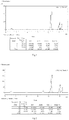
- 5.0g of hexahydro-β-acid was dissolved in 15ml of ethanol. 1.8g of potassium hydroxide was dissolved in 20ml of water. The potassium hydroxide solution was added into the hexahydro-β-acid solution, and the resulting mixture was stirred for 1 hour. 2.9g of magnesium chloride hexahydrate (1eq) was dissolved in 20ml of water, and the resulting solution was added dropwise into the potassium salt solution. Then the resulting mixture was stirred for 1 hour to give white solids and then filtrated. The filter cake was washed with water, and dried to give 5.0g of white solids (magnesium salt of hexahydro-β-acid), the yield of which is about 97% (
Fig 1 ). - 5.0g of hexahydro-β-acid was dissolved in 15ml of 95% ethanol. 1.9g of potassium hydroxide was dissolved in 32ml of water. The potassium hydroxide solution was added dropwise into the hexahydro-β-acid solution, and the resulting mixture was stirred to give potassium salt. 3.4g of calcium chloride was dissolved in 20ml of water, and the resulting solution was added dropwise into the potassium salt solution. Then the resulting mixture was stirred for 1 hour and filtrated. The filter cake was washed with water, and dried to give 4.4g of yellowish solids (calcium salt of hexahydro-β-acid), the yield of which is about 80% (
Fig 2 ). - 6.0g of hexahydro-β-acid was dissolved in 15ml of 95% ethanol, followed by addition of 1.8g of potassium hydroxide, and then stirred to give salt. The resulting solution was added with 3.0g of zinc chloride and stirred for 1 hour, then added dropwise with 20ml of water and stirred for 1 hour, and added with 60ml of water and stirred for 2 hours. Then the solution was filtrated, the filter cake was washed with water, and dried to give 6.8g of yellowish solids (zinc salt of hexahydro-β-acid), the yield of which is about 99% (
Fig 3 ). - 5.0g of hexahydro-β-acid was dissolved in 15ml of 95% ethanol. 2.0g of potassium hydroxide was dissolved in 32ml of water. The potassium hydroxide solution was added dropwise into the hexahydro-β-acid solution, and the resulting mixture was stirred to give potassium salt. 4.3g of manganese chloride was dissolved in 50ml of water, and the resulting solution was added dropwise into the potassium salt solution. Then the resulting mixture was stirred for 1 hour and filtrated. The filter cake was washed with water, and dried to give 5.6g of yellow solids (manganese salt of hexahydro-β-acid), the yield of which is about 98% (
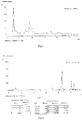
Fig 4 ). - 5.0g of hexahydro-β-acid was dissolved in 15ml of 95% ethanol. 2.0g of potassium hydroxide was dissolved in 32ml of water. The potassium hydroxide solution was added dropwise into the hexahydro-β-acid solution, and the resulting mixture was stirred to give potassium salt. 7.0g of cobalt chloride hexahydrate was dissolved in 50ml of water, and the resulting solution was added dropwise into the potassium salt solution. Then the resulting mixture was stirred for 1 hour and filtrated. The filter cake was washed with water, and dried to give 5.3g of yellowish solids (cobalt salt of hexahydro-β-acid), the yield of which is about 93% (
Fig 5 ). - 6.1g of hexahydro-β-acid was dissolved in 24ml of 95% ethanol, followed by addition of 2.0g of potassium hydroxide, and then stirred to give salt. The resulting solution was added with 4.6g of ferrous sulfate heptahydrate and stirred for 1 hour, then added dropwise with 20ml of water and stirred for 1 hour, and added with 60ml of water and stirred for 2 hours. Then the solution was filtrated, the filter cake was washed with water, and dried to give 6.1g of brown solids (ferrous salt of hexahydro-β-acid), the yield of which is about 88% (
Fig 6 ). - Synthesis of acetate ester salt derivatives of hexahydro-β-acid is as shown below, wherein the first step is the formation of potassium salts by the reaction between hydroxyl group and potassium hydroxide, followed by the formation of corresponding salt by replacing the potassium with other metal.

- 5g of acetate ester of hexahydro-β-acid was dissolved in 40ml of 95% ethanol. The resulting solution was cooled to 0°C with stirring, and then added with 95ml of aqueous solution of 1% potassium hydroxide dropwise within about 20 minutes. 2.0g of copper chloride dihydrate was dissolved in 20ml of water, and the resulting solution was added dropwise into the potassium solution. Then the resulting mixture was stirred for 1 hour and filtrated. The filter cake was washed with water, and dried to give 4.5g of dark green solids (copper salt of acetate ester of hexahydro-β-acid), the yield of which is about 83% (
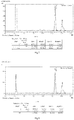
Fig 7 ). - 5.3g of acetate ester of hexahydro-β-acid was dissolved in 40ml of 95% ethanol. The resulting solution was cooled to 0°C with stirring, and then added with 100ml of aqueous solution of 1% potassium hydroxide dropwise within about 0.5h. 0.98g of magnesium sulfate was dissolved in 10ml of water, and the resulting solution was added dropwise into the potassium solution. Then the resulting mixture was stirred for 1 hour and filtrated. The filter cake was washed with water, and dried to give 4.8g of yellowish solids (magnesium salt of acetate ester of hexahydro-β-acid), the yield of which is about 87% (
Fig 8 ). - 5.3g of acetate ester of hexahydro-β-acid was dissolved in 40ml of 95% ethanol. The resulting solution was cooled to 0°C with stirring, and then added with 100ml of aqueous solution of 1% potassium hydroxide dropwise within about 0.5h. 1.0g of calcium chloride was dissolved in 10ml of water, and the resulting solution was added into the potassium solution. Then the resulting mixture was stirred for 1 hour and filtrated. The filter cake was washed with water, and dried to give 2.5g of yellowish solids (calcium salt of acetate ester of hexahydro-β-acid), the yield of which is about 46% (
Fig 9 ). - 5.0g of acetate ester of hexahydro-β-acid was dissolved in 40ml of 95% ethanol. The resulting solution was added with 95ml of aqueous solution of 1% potassium hydroxide dropwise within about 20 minutes. 0.9g of zinc chloride was dissolved in 20ml of water, and the resulting solution was added into the potassium solution. Then the resulting mixture was stirred for 1 hour and filtrated. The filter cake was washed with water, and dried to give 2.5g of yellowish solids (zinc salt of acetate ester of hexahydro-β-acid), the yield of which is about 46% (
Fig 10 ). - 10.4g of acetate ester of hexahydro-β-acid was dissolved in 80ml of 95% ethanol. The resulting solution was cooled to 0°C, and added with 200ml of aqueous solution of 1% potassium hydroxide dropwise within about 0.5h, followed by the addition of 4.5g of cobalt chloride hexahydrate. Then the resulting mixture was stirred for 1 hour and filtrated. The filter cake was washed with water, and dried to give 8.0g of brown solids (cobalt salt of acetate ester of hexahydro-β-acid), the yield of which is about 73% (
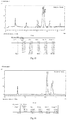
Fig 11 ). - 10.5g of acetate ester of hexahydro-β-acid was dissolved in 80ml of 95% ethanol. The resulting solution was cooled to -5°C, and added with 200ml of aqueous solution of 1% potassium hydroxide dropwise within about 20 minutes. 1.9g of manganese chloride was dissolved in 30ml of water, and the resulting solution was added dropwise into the potassium solution. Then the resulting mixture was stirred for 1 hour and filtrated. The filter cake was washed with water, and dried to give 8.0g of dark brown solids (manganese salt of acetate ester of hexahydro-β-acid), the yield of which is about 72%.
- 10.5g of acetate ester of hexahydro-β-acid was dissolved in 80ml of 95% ethanol. The resulting solution was cooled to -5°C, and added with 200ml of aqueous solution of 1% potassium hydroxide dropwise within about 20 minutes. 5.0g of FeSO4·7H2O was dissolved in 30ml of water, and the resulting solution was added dropwise into the potassium solution. Then the resulting mixture was stirred for 1 hour and filtrated. The filter cake was washed with water, and dried to give 5.0g of red-brown solids (manganese salt of acetate ester of hexahydro-β-acid), the yield of which is about 45% (
Fig 12 ). - Various monoester derivatives of hexahydro-β-acid were formed by the reaction between hexahydro-β-acid and acyl chloride with triethylamine as alkali and dichloride methane as solvent. Following is a schematic of the preparation of the target ester derivatives. Water should be prevented from involving in the preparation.
-

- 20g of hexahydro-P-acid (with a molecular weight of 420) was dissolved in 200ml of dichloride methane, followed by the addition of 4.8g of triethylamine (with a molecular weight of 101.19). The resulting mixture was cooled to -5∼0C with stirring. 3.9g of acetyl chloride (with a molecular weight of 78.5) was dissolved in 20ml of dichloride methane, and the resulting solution was added dropwise into the hexahydro-β-acid solution within 0.5h. Then the reaction was continued for 1 hour, monitored by HPLC. The mixture was then let stand until room temperature, added with 40ml of pure water, stirred, and the layers were separated. The organic phase was washed with 100ml of water for three times, dried over anhydrous sodium sulfate, and subjected to decompression to remove the solvent and give 22.6g of oily product (mono acetate ester of hexahydro-β-acid), the yield of which is 104% (
Fig 13 ). - 20.4g of hexahydro-β-acid (with a molecular weight of 420) was dissolved in 100ml of dichloride methane, followed by the addition of 4.8g of triethylamine (with a molecular weight of 101.19). The resulting mixture was cooled to -5∼0C with stirring. 9.8g of decanoly chloride (molecular weight: 190.71, d: 0.92) was dissolved in 50ml of dichloride methane, and the resulting solution was added dropwise into the hexahydro-β-acid solution within 0.5h. Then the reaction was continued for 1 hour, monitored by TLC. The mixture was then let stand until room temperature, added with 40ml of pure water, stirred, and the layers were separated. The organic phase was washed with 50ml of water for three times, dried over anhydrous sodium sulfate, decolored on silica gel, and the solvent was removed to give 27.5g of oily product (mono decanoate ester of hexahydro-β-acid), the yield of which is 102% (
Fig 14 ). - 10.0g of hexahydro-β-acid (with a molecular weight of ∼420) was dissolved in 40ml of dichloride methane, followed by the addition of stearoyl chloride (with a molecular weight of 302.9). The resulting mixture was cooled to 0 °C. 2.4g of triethylamine (with a molecular weight of 101.19) was dissolved in 6ml of dichloride methane, and the resulting solution was added dropwise into the hexahydro-β-acid solution within 0.5h. The reaction was continued for 2 hours, monitored by TLC. The mixture was then let stand until room temperature, and added with 50ml of pure water. No distinct liquid-separation was observed. Then the mixture was added with 5g of sodium chloride and stirred, the layers were separated. The organic phase was dried over anhydrous sodium sulfate, and then the solvent was removed, to give 16.9g of oily product (mono stearate ester of hexahydro-β-acid), the yield of which is 103% (
Fig 15 ). - 5.0g of hexahydro-β-acid (with a molecular weight of ∼420) was dissolved in 40ml of dichloride methane, followed by the addition of 1.8g of butyryl chloride (with a molecular weight of 106.6). The resulting mixture was cooled to 0 °C . 3ml of triethylamine (with a molecular weight of 101.19) was dissolved in 6ml of dichloride methane, and the resulting solution was added dropwise into the hexahydro-β-acid solution within 0.5h. Then the reaction was continued for 2 hours, monitored by TLC. The mixture was then let stand until room temperature, added with 50ml of pure water, stirred, and the layers were separated. The organic phase was dried over anhydrous sodium sulfate, and the solvent was removed. Then a column chromatography was performed to give 2.4g of oily product (butyrate ester of hexahydro-β-acid), the yield of which is 40% (
Fig 16 ). - 5.0g of hexahydro-β-acid (with a molecular weight of ∼420) was dissolved in 40ml of dichloride methane, followed by the addition of 2.9g of caprylyl chloride (with a molecular weight of 162.6). The resulting mixture was cooled to 0 °C . 3ml of triethylamine (with a molecular weight of 101.19) was dissolved in 6ml of dichloride methane, and the resulting solution was added dropwise into the hexahydro-β-acid solution within 0.5h. Then the reaction was continued for 2 hours, monitored by TLC. The mixture was then let stand until room temperature, added with 50ml of pure water, stirred, and the layers were separated. The organic phase was dried over anhydrous sodium sulfate, and the solvent was removed. Then a column chromatography was performed to give 3g of oily product (caprylate ester of hexahydro-β-acid), the yield of which is 46% (
Fig 17 ). - 5.0g of hexahydro-β-acid (with a molecular weight of ∼420) was dissolved in 40ml of dichloride methane, followed by the addition of 4.2ml of lauroyl chloride (with a molecular weight of 218.8). The resulting mixture was cooled to 0 °C . 3ml of triethylamine (with a molecular weight of 101.19) was dissolved in 6ml of dichloride methane, and the resulting solution was added dropwise into the hexahydro-β-acid solution within 0.5h. Then the reaction was continued for 2 hours, monitored by TLC. The mixture was then let stand until room temperature, added with 50ml of pure water, stirred, and the layers were separated. The organic phase was dried over anhydrous sodium sulfate, and the solvent was removed. Then a column chromatography was performed to give 4g of oily product (laurate ester of hexahydro-β-acid), the yield of which is 53% (
Fig 18 ). - 5.0g of hexahydro-β-acid (with a molecular weight of ∼420) was dissolved in 40ml of dichloride methane, followed by the addition of 5.5ml of palmitic chloride (with a molecular weight of 274.9). The resulting mixture was cooled to 0 °C. 3ml of triethylamine (with a molecular weight of 101.19) was dissolved in 6ml of dichloride methane, and the resulting solution was added dropwise into the hexahydro-β-acid solution within 0.5h. Then the reaction was continued for 2 hours, monitored by TLC. The mixture was then let stand until room temperature, added with 50ml of pure water, stirred, and the layers were separated. The organic phase was dried over anhydrous sodium sulfate, and the solvent was removed. Then a column chromatography was performed to give 3.5g of oily product (cetylate ester of hexahydro-β-acid), the yield of which is 44% (
Fig 19 ). - The esters and/or salts of hexahydro-β-acid prepared in the above embodiments were mixed with corncob powder to obtain premixes with a mass fraction of 2%. Samples (the premixes) were placed in crucibles, and then placed in oven at 100°C for different durations. Then 1.0g of each of the samples (three duplicate samples from each sample) and 50ml of ethanol were added into a conical flask, followed by the addition of 100µL of concentrated hydrochloric acid. The mixture was then subjected to sonication for 5 minutes, and then filtrated. The filtrate was transferred into a 50ml volumetric flask, topped up to the final volume with ethanol, and then filtered with a 0.45µm microporous membrane and subjected to HPLC analysis.
- Results of the stability test were as shown in table 1. Results showed that the thermal stability of each of the esters and/or salts of hexahydro-β-acid was enhanced.
Table 1: Change of the main component of the esters and/or salts of hexahydro-β-acid after being heated at 100 °C for different durations Compound Initial content (%) Content when being heated at 100°C for 20h (%) Content when being heated at 100°C for 44h (%) Hexahydro-β-acid 2.0 0.06 0 Mono acetate ester of hexahydro-β-acid 2.0 1.52 1.11 Mono decanoate ester of hexahydro-β-acid 2.0 1.93 1.82 Copper salt of acetate ester of hexahydro-β-acid 2.0 1.50 1.28 Magnesium salt of acetate ester of hexahydro-β-acid 2.0 1.42 0.7 Calcium salt of acetate ester of hexahydro-β-acid 2.0 1.21 0.31 Zinc salt of acetate ester of hexahydro-β-acid 2.0 1.64 0.70 Manganese salt of acetate ester of hexahydro-β-acid 2.0 0 0 Cobalt salt of acetate ester of hexahydro-β-acid 2.0 0.17 0.12 Ferrous salt of acetate ester of hexahydro-β-acid 2.0 1.69 1.63 Magnesium salt of hexahydro-β-acid 2.0 1.49 0.91 Calcium salt of hexahydro-β-acid 2.0 0.35 0.09 Zinc salt of hexahydro-β-acid 2.0 0.95 0.52 Ferrous salt of hexahydro-β-acid 2.0 0.14 0.05 Butyrate ester of hexahydro-β-acid 2.0 1.74 0.69 Caprylate ester of hexahydro-β-acid 2.0 2.0 1.51 Laurate ester of hexahydro-β-acid 2.0 2.0 1.96 Cetylate ester of hexahydro-β-acid 2.0 1.98 1.93 - 500 1-day-aged, healthy, fast-grown yellow feather broilers (female) in the same growing state and similar in weight were randomly divided into five groups according to table 2, 100 broilers in each group. Broilers of each group were fed with different dosages of mono decanoate ester of hexahydro-β-acid or hexahydro-β-acid.
- The broilers were kept in cages and fed with food and water ad libitum during a 30 days test period, wherein weight gain and feed conversion efficiency of the broilers fed with mono decanoate ester of hexahydro-β-acid had been significantly improved, and improvement of the productivity of the broilers fed with mono decanoate ester of hexahydro-β-acid was more significant than that of the broilers fed with hexahydro-β-acid in the same dosage (table 3).
Table 2: Grouping of tested animals and dosage of additives Group Quantity of the broilers Additive Dosage Administraton 1 100 - - - 2 100 Hexahydro-β-acid 2ppm Mixed with feed 3 100 Mono decanoate ester of hexahydro-β-acid 2ppm Mixed with feed 4 100 Hexahydro-β-acid 20ppm Mixed with feed 5 100 Mono decanoate ester of hexahydro-β-acid 20ppm Mixed with feed -: control blank, wherein neither mono decanoate ester of hexahydro-β-acid nor hexahydro-β-acid was added Table 3: Application effect of mono decanoate ester of hexahydro-β-acid and hexahydro-β-acid in broiler feed Group Initial weight (g) Survival rate (%) Average weight gain (g) Consumption (kg) Average daily weight gain (g) Feed conversion efficiency 1 39.0 100 738 154.64 24.6 2.09 2 39.0 100 745 147.76 24.83 1.983 3 39.3 100 768 147.94 25.6 1.926 4 39.2 100 758 149.18 25.26 1.968 5 39.5 100 797 146.42 26.57 1.837 - 120 67-day-aged, Duroc-Yorkshire-Landrace crossbred lean pigs similar in weight were randomly divided into six groups, 20 pigs in each group. Pigs in each group were fed with mono cetylate ester of hexahydro-β-acid with the types and the dosages listed in table 4. The pigs were fed with food and water ad libitum for 14 days, wherein weight gain and feed conversion efficiency of the pigs fed with mono cetylate ester of hexahydro-β-acid had been significantly improved. Grouping and results of the trial were as shown in table 4 and table 5.
Table 4: Grouping of the animals, and dosages of additives Group Quantity of the pigs Additive Dosage (mg/kg) Administration 1 20 - - - 2 20 - - - 3 20 Cetylate ester of hexahydro-β- acid 5 Mixed with feed 4 20 Cetylate ester of hexahydro-β- acid 25 Mixed with feed 5 20 Cetylate ester of hexahydro-β- acid 5 Mixed with feed 6 20 Cetylate ester of hexahydro-β- acid 25 Mixed with feed -: control blank, wherein cetylate ester of hexahydro-β-acid was not added Table 5: Application effect of cetylate ester of hexahydro-β-acid in pig feed Group Average initial weight (kg) Average weight gain (kg) Average daily weight gain (kg/day) Consumption (kg) Feed conversion efficiency 1 17.01 5.875 0.419 271.3 2.309 2 16.87 5.685 0.406 257.9 2.269 3 17.53 7.18 0.512 298.4 2.078 4 17.74 7.985 0.570 272.5 1.706 5 17.02 7.11 0.508 277.2 1.949 6 17.81 8.12 0.580 274.5 1.690
Claims (5)
- Acetate ester salts of hexahydro-P-acid, having a structural formula as shown in formula (II):

- Monoesters of hexahydro-β-acid, having a structural formula as shown in formula (III):

- An application of the acetate ester salts of hexahydro-β-acid according to claim 1, or the monoesters of hexahydro-β-acid according to claim 2, in preparation of animal growth-promoting feed additives.
- The application according to claim 3, wherein the animal include pigs, chickens, ducks, geese, beef cattle, dairy cattle, sheep, fish, shrimp, foxes, martens or raccoon dogs, in all growth stages.
- The application according to claim 3, wherein an additive dosage of the compound as shown in formula (II) or (III) as animal growth-promoting feed additive is 0.1∼200ppm.
Applications Claiming Priority (2)
| Application Number | Priority Date | Filing Date | Title |
|---|---|---|---|
| CN201410056734.1A CN103980104B (en) | 2014-02-19 | 2014-02-19 | Six hydrogen β-acid monoesters, inner complex salt or monoester salt and the application as animal feedstuff additive thereof |
| PCT/CN2014/073654 WO2015123905A1 (en) | 2014-02-19 | 2014-03-19 | Hexahydrocolupulone monoester, inner complex salt or monoester salt, and application thereof as animal feed additive |
Publications (4)
| Publication Number | Publication Date |
|---|---|
| EP3098214A1 EP3098214A1 (en) | 2016-11-30 |
| EP3098214A4 EP3098214A4 (en) | 2017-01-04 |
| EP3098214B1 true EP3098214B1 (en) | 2017-11-29 |
| EP3098214B9 EP3098214B9 (en) | 2018-04-25 |
Family
ID=51272307
Family Applications (1)
| Application Number | Title | Priority Date | Filing Date |
|---|---|---|---|
| EP14882819.7A Active EP3098214B9 (en) | 2014-02-19 | 2014-03-19 | Monoesters or monoester salts of hexahydro-beta-acid and application thereof as animal feed additives |
Country Status (8)
| Country | Link |
|---|---|
| US (1) | US9573879B2 (en) |
| EP (1) | EP3098214B9 (en) |
| CN (1) | CN103980104B (en) |
| BR (1) | BR112016017423B1 (en) |
| CA (1) | CA2939440C (en) |
| ES (1) | ES2659578T3 (en) |
| MX (1) | MX368560B (en) |
| WO (1) | WO2015123905A1 (en) |
Families Citing this family (7)
| Publication number | Priority date | Publication date | Assignee | Title |
|---|---|---|---|---|
| CN104710307A (en) * | 2015-02-16 | 2015-06-17 | 广州英赛特生物技术有限公司 | Hexahydrocolupulone di-aliphatic ester and utilization thereof as animal feed additive |
| CN105481893A (en) * | 2015-12-09 | 2016-04-13 | 广州英赛特生物技术有限公司 | Hexahydro beta-acid monophosphate derivative, and applications thereof in preparing animal feed additives |
| EP3973789B1 (en) * | 2019-05-23 | 2023-11-01 | Anipha Technologies Pty Ltd | FEED COMPOSITION COMPRISING HEXAHYDRO-ß-ACID COMPONENT COMPOUNDS AND APPLICATION THEREOF |
| CN111685239A (en) * | 2020-01-19 | 2020-09-22 | 浙江农林大学 | Copper monolaurate feed additive and preparation method thereof |
| CN112500289B (en) * | 2020-11-20 | 2023-12-26 | 广州英赛特生物技术有限公司 | Precursor compounds of hexahydro-beta-acid component compounds, feed compositions and applications thereof |
| CN113476431B (en) * | 2021-08-13 | 2023-07-11 | 广州英赛特生物技术有限公司 | Application of a cyclotriketone derivative in the preparation of animal medicine |
| CN115340158B (en) * | 2022-06-27 | 2023-09-19 | 海南晨海水产有限公司 | A kind of water quality improver for multi-striated butterfly fish breeding pond and preparation method thereof |
Family Cites Families (8)
| Publication number | Priority date | Publication date | Assignee | Title |
|---|---|---|---|---|
| US4190604A (en) * | 1978-08-16 | 1980-02-26 | Ciba-Geigy Corporation | Process for producing desoxy-α-acids |
| US5370863A (en) * | 1992-12-16 | 1994-12-06 | Miller Brewing Company | Oral care compositions containing hop acids and method |
| US6251461B1 (en) | 1997-10-10 | 2001-06-26 | S. S. Steiner, Inc. | Antimicrobial activity of hops extract against Clostridium botulinum, Clostridium difficile and Helicobacter pylori |
| US20040219240A1 (en) | 2001-06-20 | 2004-11-04 | Babish John G. | Anti-inflammatory pharmaceutical compositions for reducing inflammation and the treatment or prevention of gastric toxicity |
| CA2499992C (en) | 2002-09-23 | 2013-10-15 | John I. Haas, Inc. | Hop acids as a replacement for antibiotics in animal feed |
| WO2005089104A2 (en) * | 2004-02-23 | 2005-09-29 | Segal, Janet | Feeds containing hop acids and uses thereof as supplements in animal feeds |
| WO2009098300A2 (en) * | 2008-02-08 | 2009-08-13 | Basf Se | The use of hops-derivatives for controlling parasites in and on animals |
| NZ595585A (en) * | 2009-04-21 | 2013-11-29 | John I Hass | Animal feed compositions and feeding methods |
-
2014
- 2014-02-19 CN CN201410056734.1A patent/CN103980104B/en active Active
- 2014-03-19 US US15/119,288 patent/US9573879B2/en active Active
- 2014-03-19 MX MX2016010616A patent/MX368560B/en active IP Right Grant
- 2014-03-19 WO PCT/CN2014/073654 patent/WO2015123905A1/en not_active Ceased
- 2014-03-19 ES ES14882819.7T patent/ES2659578T3/en active Active
- 2014-03-19 EP EP14882819.7A patent/EP3098214B9/en active Active
- 2014-03-19 BR BR112016017423-2A patent/BR112016017423B1/en active IP Right Grant
- 2014-03-19 CA CA2939440A patent/CA2939440C/en active Active
Non-Patent Citations (1)
| Title |
|---|
| None * |
Also Published As
| Publication number | Publication date |
|---|---|
| EP3098214A4 (en) | 2017-01-04 |
| US9573879B2 (en) | 2017-02-21 |
| WO2015123905A1 (en) | 2015-08-27 |
| BR112016017423B1 (en) | 2021-05-18 |
| US20160368853A1 (en) | 2016-12-22 |
| CN103980104B (en) | 2015-10-28 |
| EP3098214A1 (en) | 2016-11-30 |
| ES2659578T3 (en) | 2018-03-16 |
| CN103980104A (en) | 2014-08-13 |
| CA2939440C (en) | 2018-05-01 |
| CA2939440A1 (en) | 2015-08-27 |
| EP3098214B9 (en) | 2018-04-25 |
| MX2016010616A (en) | 2017-05-17 |
| MX368560B (en) | 2019-10-07 |
| BR112016017423A2 (en) | 2017-08-08 |
Similar Documents
| Publication | Publication Date | Title |
|---|---|---|
| EP3098214B9 (en) | Monoesters or monoester salts of hexahydro-beta-acid and application thereof as animal feed additives | |
| CN101182313B (en) | The chemical synthesis process of quinolone | |
| GB2528793A (en) | Triazine compound for combating coccidiosis in chickens | |
| JPWO2003028475A1 (en) | Feeds and fertilizers containing pentacyclic triterpenes | |
| JP3474198B2 (en) | Animal feed composition | |
| WO2016131204A1 (en) | Hexahydro beta-acid di-fatty acid ester and application thereof as animal feed additive | |
| CN103755561B (en) | β-Japan cypress phenolic ester or salt and preparing the application in animal feedstuff additive | |
| CN102603778A (en) | N-carbamyl-L-glutamic zinc complex and preparation method of N-carbamyl-L-glutamic zinc complex | |
| CN112500289B (en) | Precursor compounds of hexahydro-beta-acid component compounds, feed compositions and applications thereof | |
| CN105085613B (en) | Novel thiostrepton analogue and its preparation method and use | |
| CA1173029A (en) | Acylated laidlomycin derivatives | |
| CN105481893A (en) | Hexahydro beta-acid monophosphate derivative, and applications thereof in preparing animal feed additives | |
| CN103739487B (en) | β-acid monoester salt and the application as animal feedstuff additive thereof | |
| EP3085685A1 (en) | Beta-hinokitol derivative and uses thereof in preparation of special antibacterial agent for animal and antimicrobial growth promoter for feed | |
| US9938230B2 (en) | Esters or salts of 2-hydroxy-4-propylcyclohepta-2,4,6-trienone and application thereof in preparation of animal antibacterial agents and growth promoters used in feed | |
| JP2010285358A (en) | Antihypertensive agent | |
| KR20180100299A (en) | Butyrate and Its Derivatives and Compound Formulas of Benzoic Acid, and Processes for Their Preparation and Their Use as Feed Additives | |
| RU2400484C2 (en) | Dihydrate of iron (ii) hydroascorbate riboflavinate for improving growth and development of chickens | |
| JP4825957B2 (en) | Antitumor agent | |
| JP5962398B2 (en) | Metabolic promoter | |
| KR20080044100A (en) | Animal feed composition containing by-products obtained from purification process of the conjugated linoleic acid | |
| KR20110102260A (en) | Feed composition for improving poultry productivity | |
| RU2246224C2 (en) | Method for producing of premix for combined feed | |
| RU2226843C1 (en) | Process of producing mixed fodder premix | |
| EP3887380A1 (en) | Anti-cancer activities of a new family of ethacrynic acid derivatives |
Legal Events
| Date | Code | Title | Description |
|---|---|---|---|
| PUAI | Public reference made under article 153(3) epc to a published international application that has entered the european phase |
Free format text: ORIGINAL CODE: 0009012 |
|
| 17P | Request for examination filed |
Effective date: 20160728 |
|
| AK | Designated contracting states |
Kind code of ref document: A1 Designated state(s): AL AT BE BG CH CY CZ DE DK EE ES FI FR GB GR HR HU IE IS IT LI LT LU LV MC MK MT NL NO PL PT RO RS SE SI SK SM TR |
|
| AX | Request for extension of the european patent |
Extension state: BA ME |
|
| A4 | Supplementary search report drawn up and despatched |
Effective date: 20161202 |
|
| RIC1 | Information provided on ipc code assigned before grant |
Ipc: C07C 67/28 20060101ALI20161128BHEP Ipc: C07C 49/713 20060101ALI20161128BHEP Ipc: C07C 69/16 20060101ALI20161128BHEP Ipc: C07C 69/28 20060101ALI20161128BHEP Ipc: C07C 45/77 20060101AFI20161128BHEP |
|
| DAX | Request for extension of the european patent (deleted) | ||
| RIC1 | Information provided on ipc code assigned before grant |
Ipc: A23K 20/10 20160101AFI20170707BHEP Ipc: A23K 20/121 20160101ALI20170707BHEP Ipc: C07F 1/08 20060101ALI20170707BHEP Ipc: C07C 69/12 20060101ALI20170707BHEP |
|
| REG | Reference to a national code |
Ref country code: DE Ref legal event code: R079 Ref document number: 602014018066 Country of ref document: DE Free format text: PREVIOUS MAIN CLASS: C07C0045770000 Ipc: C07C0049713000 |
|
| GRAP | Despatch of communication of intention to grant a patent |
Free format text: ORIGINAL CODE: EPIDOSNIGR1 |
|
| RIC1 | Information provided on ipc code assigned before grant |
Ipc: C07C 49/713 20060101AFI20170817BHEP Ipc: C07C 69/12 20060101ALI20170817BHEP Ipc: A23K 20/10 20160101ALI20170817BHEP Ipc: A23K 20/121 20160101ALI20170817BHEP Ipc: C07C 69/16 20060101ALI20170817BHEP Ipc: C07C 69/28 20060101ALI20170817BHEP |
|
| INTG | Intention to grant announced |
Effective date: 20170919 |
|
| GRAS | Grant fee paid |
Free format text: ORIGINAL CODE: EPIDOSNIGR3 |
|
| GRAA | (expected) grant |
Free format text: ORIGINAL CODE: 0009210 |
|
| AK | Designated contracting states |
Kind code of ref document: B1 Designated state(s): AL AT BE BG CH CY CZ DE DK EE ES FI FR GB GR HR HU IE IS IT LI LT LU LV MC MK MT NL NO PL PT RO RS SE SI SK SM TR |
|
| REG | Reference to a national code |
Ref country code: CH Ref legal event code: EP |
|
| REG | Reference to a national code |
Ref country code: AT Ref legal event code: REF Ref document number: 950234 Country of ref document: AT Kind code of ref document: T Effective date: 20171215 |
|
| REG | Reference to a national code |
Ref country code: IE Ref legal event code: FG4D |
|
| REG | Reference to a national code |
Ref country code: DE Ref legal event code: R096 Ref document number: 602014018066 Country of ref document: DE |
|
| REG | Reference to a national code |
Ref country code: CH Ref legal event code: NV Representative=s name: LEMAN CONSULTING S.A., CH |
|
| REG | Reference to a national code |
Ref country code: NL Ref legal event code: FP |
|
| REG | Reference to a national code |
Ref country code: ES Ref legal event code: FG2A Ref document number: 2659578 Country of ref document: ES Kind code of ref document: T3 Effective date: 20180316 |
|
| REG | Reference to a national code |
Ref country code: FR Ref legal event code: PLFP Year of fee payment: 5 |
|
| REG | Reference to a national code |
Ref country code: LT Ref legal event code: MG4D |
|
| REG | Reference to a national code |
Ref country code: CH Ref legal event code: NV Representative=s name: IP PARTNERS J. WENGER, CH |
|
| REG | Reference to a national code |
Ref country code: AT Ref legal event code: MK05 Ref document number: 950234 Country of ref document: AT Kind code of ref document: T Effective date: 20171129 |
|
| PG25 | Lapsed in a contracting state [announced via postgrant information from national office to epo] |
Ref country code: LT Free format text: LAPSE BECAUSE OF FAILURE TO SUBMIT A TRANSLATION OF THE DESCRIPTION OR TO PAY THE FEE WITHIN THE PRESCRIBED TIME-LIMIT Effective date: 20171129 Ref country code: NO Free format text: LAPSE BECAUSE OF FAILURE TO SUBMIT A TRANSLATION OF THE DESCRIPTION OR TO PAY THE FEE WITHIN THE PRESCRIBED TIME-LIMIT Effective date: 20180228 Ref country code: SE Free format text: LAPSE BECAUSE OF FAILURE TO SUBMIT A TRANSLATION OF THE DESCRIPTION OR TO PAY THE FEE WITHIN THE PRESCRIBED TIME-LIMIT Effective date: 20171129 Ref country code: FI Free format text: LAPSE BECAUSE OF FAILURE TO SUBMIT A TRANSLATION OF THE DESCRIPTION OR TO PAY THE FEE WITHIN THE PRESCRIBED TIME-LIMIT Effective date: 20171129 |
|
| PG25 | Lapsed in a contracting state [announced via postgrant information from national office to epo] |
Ref country code: BG Free format text: LAPSE BECAUSE OF FAILURE TO SUBMIT A TRANSLATION OF THE DESCRIPTION OR TO PAY THE FEE WITHIN THE PRESCRIBED TIME-LIMIT Effective date: 20180228 Ref country code: GR Free format text: LAPSE BECAUSE OF FAILURE TO SUBMIT A TRANSLATION OF THE DESCRIPTION OR TO PAY THE FEE WITHIN THE PRESCRIBED TIME-LIMIT Effective date: 20180301 Ref country code: LV Free format text: LAPSE BECAUSE OF FAILURE TO SUBMIT A TRANSLATION OF THE DESCRIPTION OR TO PAY THE FEE WITHIN THE PRESCRIBED TIME-LIMIT Effective date: 20171129 Ref country code: RS Free format text: LAPSE BECAUSE OF FAILURE TO SUBMIT A TRANSLATION OF THE DESCRIPTION OR TO PAY THE FEE WITHIN THE PRESCRIBED TIME-LIMIT Effective date: 20171129 Ref country code: AT Free format text: LAPSE BECAUSE OF FAILURE TO SUBMIT A TRANSLATION OF THE DESCRIPTION OR TO PAY THE FEE WITHIN THE PRESCRIBED TIME-LIMIT Effective date: 20171129 Ref country code: HR Free format text: LAPSE BECAUSE OF FAILURE TO SUBMIT A TRANSLATION OF THE DESCRIPTION OR TO PAY THE FEE WITHIN THE PRESCRIBED TIME-LIMIT Effective date: 20171129 |
|
| PG25 | Lapsed in a contracting state [announced via postgrant information from national office to epo] |
Ref country code: DK Free format text: LAPSE BECAUSE OF FAILURE TO SUBMIT A TRANSLATION OF THE DESCRIPTION OR TO PAY THE FEE WITHIN THE PRESCRIBED TIME-LIMIT Effective date: 20171129 Ref country code: SK Free format text: LAPSE BECAUSE OF FAILURE TO SUBMIT A TRANSLATION OF THE DESCRIPTION OR TO PAY THE FEE WITHIN THE PRESCRIBED TIME-LIMIT Effective date: 20171129 Ref country code: CZ Free format text: LAPSE BECAUSE OF FAILURE TO SUBMIT A TRANSLATION OF THE DESCRIPTION OR TO PAY THE FEE WITHIN THE PRESCRIBED TIME-LIMIT Effective date: 20171129 Ref country code: CY Free format text: LAPSE BECAUSE OF FAILURE TO SUBMIT A TRANSLATION OF THE DESCRIPTION OR TO PAY THE FEE WITHIN THE PRESCRIBED TIME-LIMIT Effective date: 20171129 Ref country code: EE Free format text: LAPSE BECAUSE OF FAILURE TO SUBMIT A TRANSLATION OF THE DESCRIPTION OR TO PAY THE FEE WITHIN THE PRESCRIBED TIME-LIMIT Effective date: 20171129 |
|
| REG | Reference to a national code |
Ref country code: DE Ref legal event code: R097 Ref document number: 602014018066 Country of ref document: DE |
|
| PG25 | Lapsed in a contracting state [announced via postgrant information from national office to epo] |
Ref country code: PL Free format text: LAPSE BECAUSE OF FAILURE TO SUBMIT A TRANSLATION OF THE DESCRIPTION OR TO PAY THE FEE WITHIN THE PRESCRIBED TIME-LIMIT Effective date: 20171129 Ref country code: RO Free format text: LAPSE BECAUSE OF FAILURE TO SUBMIT A TRANSLATION OF THE DESCRIPTION OR TO PAY THE FEE WITHIN THE PRESCRIBED TIME-LIMIT Effective date: 20171129 Ref country code: SM Free format text: LAPSE BECAUSE OF FAILURE TO SUBMIT A TRANSLATION OF THE DESCRIPTION OR TO PAY THE FEE WITHIN THE PRESCRIBED TIME-LIMIT Effective date: 20171129 |
|
| PLBE | No opposition filed within time limit |
Free format text: ORIGINAL CODE: 0009261 |
|
| STAA | Information on the status of an ep patent application or granted ep patent |
Free format text: STATUS: NO OPPOSITION FILED WITHIN TIME LIMIT |
|
| 26N | No opposition filed |
Effective date: 20180830 |
|
| PG25 | Lapsed in a contracting state [announced via postgrant information from national office to epo] |
Ref country code: SI Free format text: LAPSE BECAUSE OF FAILURE TO SUBMIT A TRANSLATION OF THE DESCRIPTION OR TO PAY THE FEE WITHIN THE PRESCRIBED TIME-LIMIT Effective date: 20171129 Ref country code: MC Free format text: LAPSE BECAUSE OF FAILURE TO SUBMIT A TRANSLATION OF THE DESCRIPTION OR TO PAY THE FEE WITHIN THE PRESCRIBED TIME-LIMIT Effective date: 20171129 |
|
| REG | Reference to a national code |
Ref country code: IE Ref legal event code: MM4A |
|
| PG25 | Lapsed in a contracting state [announced via postgrant information from national office to epo] |
Ref country code: LU Free format text: LAPSE BECAUSE OF NON-PAYMENT OF DUE FEES Effective date: 20180319 |
|
| PG25 | Lapsed in a contracting state [announced via postgrant information from national office to epo] |
Ref country code: IE Free format text: LAPSE BECAUSE OF NON-PAYMENT OF DUE FEES Effective date: 20180319 |
|
| PG25 | Lapsed in a contracting state [announced via postgrant information from national office to epo] |
Ref country code: MT Free format text: LAPSE BECAUSE OF NON-PAYMENT OF DUE FEES Effective date: 20180319 |
|
| PG25 | Lapsed in a contracting state [announced via postgrant information from national office to epo] |
Ref country code: TR Free format text: LAPSE BECAUSE OF FAILURE TO SUBMIT A TRANSLATION OF THE DESCRIPTION OR TO PAY THE FEE WITHIN THE PRESCRIBED TIME-LIMIT Effective date: 20171129 |
|
| PG25 | Lapsed in a contracting state [announced via postgrant information from national office to epo] |
Ref country code: PT Free format text: LAPSE BECAUSE OF FAILURE TO SUBMIT A TRANSLATION OF THE DESCRIPTION OR TO PAY THE FEE WITHIN THE PRESCRIBED TIME-LIMIT Effective date: 20171129 |
|
| PG25 | Lapsed in a contracting state [announced via postgrant information from national office to epo] |
Ref country code: MK Free format text: LAPSE BECAUSE OF NON-PAYMENT OF DUE FEES Effective date: 20171129 Ref country code: HU Free format text: LAPSE BECAUSE OF FAILURE TO SUBMIT A TRANSLATION OF THE DESCRIPTION OR TO PAY THE FEE WITHIN THE PRESCRIBED TIME-LIMIT; INVALID AB INITIO Effective date: 20140319 |
|
| PG25 | Lapsed in a contracting state [announced via postgrant information from national office to epo] |
Ref country code: AL Free format text: LAPSE BECAUSE OF FAILURE TO SUBMIT A TRANSLATION OF THE DESCRIPTION OR TO PAY THE FEE WITHIN THE PRESCRIBED TIME-LIMIT Effective date: 20171129 Ref country code: IS Free format text: LAPSE BECAUSE OF FAILURE TO SUBMIT A TRANSLATION OF THE DESCRIPTION OR TO PAY THE FEE WITHIN THE PRESCRIBED TIME-LIMIT Effective date: 20180329 |
|
| P01 | Opt-out of the competence of the unified patent court (upc) registered |
Effective date: 20230615 |
|
| PGFP | Annual fee paid to national office [announced via postgrant information from national office to epo] |
Ref country code: ES Payment date: 20250401 Year of fee payment: 12 |
|
| PGFP | Annual fee paid to national office [announced via postgrant information from national office to epo] |
Ref country code: CH Payment date: 20250401 Year of fee payment: 12 |
|
| REG | Reference to a national code |
Ref country code: CH Ref legal event code: U11 Free format text: ST27 STATUS EVENT CODE: U-0-0-U10-U11 (AS PROVIDED BY THE NATIONAL OFFICE) Effective date: 20260401 |
|
| PGFP | Annual fee paid to national office [announced via postgrant information from national office to epo] |
Ref country code: GB Payment date: 20260325 Year of fee payment: 13 |
|
| PGFP | Annual fee paid to national office [announced via postgrant information from national office to epo] |
Ref country code: DE Payment date: 20260324 Year of fee payment: 13 |
|
| PGFP | Annual fee paid to national office [announced via postgrant information from national office to epo] |
Ref country code: BE Payment date: 20260330 Year of fee payment: 13 Ref country code: IT Payment date: 20260323 Year of fee payment: 13 |
|
| PGFP | Annual fee paid to national office [announced via postgrant information from national office to epo] |
Ref country code: NL Payment date: 20260330 Year of fee payment: 13 |
|
| PGFP | Annual fee paid to national office [announced via postgrant information from national office to epo] |
Ref country code: FR Payment date: 20260330 Year of fee payment: 13 |