EP3097910A1 - Anti-inflammatory agent containing rare fatty acid - Google Patents
Anti-inflammatory agent containing rare fatty acid Download PDFInfo
- Publication number
- EP3097910A1 EP3097910A1 EP15740348.6A EP15740348A EP3097910A1 EP 3097910 A1 EP3097910 A1 EP 3097910A1 EP 15740348 A EP15740348 A EP 15740348A EP 3097910 A1 EP3097910 A1 EP 3097910A1
- Authority
- EP
- European Patent Office
- Prior art keywords
- cis
- acid
- oxo
- hydroxy
- fatty acid
- Prior art date
- Legal status (The legal status is an assumption and is not a legal conclusion. Google has not performed a legal analysis and makes no representation as to the accuracy of the status listed.)
- Granted
Links
Images





Classifications
-
- A—HUMAN NECESSITIES
- A61—MEDICAL OR VETERINARY SCIENCE; HYGIENE
- A61K—PREPARATIONS FOR MEDICAL, DENTAL OR TOILETRY PURPOSES
- A61K31/00—Medicinal preparations containing organic active ingredients
- A61K31/185—Acids; Anhydrides, halides or salts thereof, e.g. sulfur acids, imidic, hydrazonic or hydroximic acids
- A61K31/19—Carboxylic acids, e.g. valproic acid
- A61K31/20—Carboxylic acids, e.g. valproic acid having a carboxyl group bound to a chain of seven or more carbon atoms, e.g. stearic, palmitic, arachidic acids
-
- A—HUMAN NECESSITIES
- A23—FOODS OR FOODSTUFFS; TREATMENT THEREOF, NOT COVERED BY OTHER CLASSES
- A23L—FOODS, FOODSTUFFS OR NON-ALCOHOLIC BEVERAGES, NOT OTHERWISE PROVIDED FOR; PREPARATION OR TREATMENT THEREOF
- A23L33/00—Modifying nutritive qualities of foods; Dietetic products; Preparation or treatment thereof
- A23L33/10—Modifying nutritive qualities of foods; Dietetic products; Preparation or treatment thereof using additives
- A23L33/115—Fatty acids or derivatives thereof; Fats or oils
- A23L33/12—Fatty acids or derivatives thereof
-
- A—HUMAN NECESSITIES
- A61—MEDICAL OR VETERINARY SCIENCE; HYGIENE
- A61K—PREPARATIONS FOR MEDICAL, DENTAL OR TOILETRY PURPOSES
- A61K31/00—Medicinal preparations containing organic active ingredients
- A61K31/185—Acids; Anhydrides, halides or salts thereof, e.g. sulfur acids, imidic, hydrazonic or hydroximic acids
- A61K31/19—Carboxylic acids, e.g. valproic acid
- A61K31/20—Carboxylic acids, e.g. valproic acid having a carboxyl group bound to a chain of seven or more carbon atoms, e.g. stearic, palmitic, arachidic acids
- A61K31/201—Carboxylic acids, e.g. valproic acid having a carboxyl group bound to a chain of seven or more carbon atoms, e.g. stearic, palmitic, arachidic acids having one or two double bonds, e.g. oleic, linoleic acids
-
- A—HUMAN NECESSITIES
- A61—MEDICAL OR VETERINARY SCIENCE; HYGIENE
- A61K—PREPARATIONS FOR MEDICAL, DENTAL OR TOILETRY PURPOSES
- A61K31/00—Medicinal preparations containing organic active ingredients
- A61K31/185—Acids; Anhydrides, halides or salts thereof, e.g. sulfur acids, imidic, hydrazonic or hydroximic acids
- A61K31/19—Carboxylic acids, e.g. valproic acid
- A61K31/20—Carboxylic acids, e.g. valproic acid having a carboxyl group bound to a chain of seven or more carbon atoms, e.g. stearic, palmitic, arachidic acids
- A61K31/202—Carboxylic acids, e.g. valproic acid having a carboxyl group bound to a chain of seven or more carbon atoms, e.g. stearic, palmitic, arachidic acids having three or more double bonds, e.g. linolenic
-
- A—HUMAN NECESSITIES
- A61—MEDICAL OR VETERINARY SCIENCE; HYGIENE
- A61K—PREPARATIONS FOR MEDICAL, DENTAL OR TOILETRY PURPOSES
- A61K45/00—Medicinal preparations containing active ingredients not provided for in groups A61K31/00 - A61K41/00
- A61K45/06—Mixtures of active ingredients without chemical characterisation, e.g. antiphlogistics and cardiaca
-
- A—HUMAN NECESSITIES
- A61—MEDICAL OR VETERINARY SCIENCE; HYGIENE
- A61P—SPECIFIC THERAPEUTIC ACTIVITY OF CHEMICAL COMPOUNDS OR MEDICINAL PREPARATIONS
- A61P29/00—Non-central analgesic, antipyretic or antiinflammatory agents, e.g. antirheumatic agents; Non-steroidal antiinflammatory drugs [NSAID]
Definitions
- the present invention relates to an anti-inflammatory agent containing a rare fatty acid. More particularly, the present invention relates to an anti-inflammatory agent utilizing the physiological function, for example, an action to suppress an inflammation reaction in vivo, of rare fatty acids such as oxo fatty acid, hydroxy fatty acid and the like. The present invention also relates to a food, a pharmaceutical product, a feed and the like containing the agent.
- Inflammation is a defense reaction of living organisms which is observed when biological tissues are injured by bacterial infection, action of physicochemical factor and the like, wherein the causal substance of injury and injured tissues are removed thereby.
- NO nitric oxide
- M1 macrophage acts as a mediator. While NO acts as a biological defense factor, it exacerbates inflammation when produced in large amounts during inflammation. For example, in adipose tissue in obese state, inflammation is promoted by mutual activation of activated M1 macrophage and adipocyte and a disease state is induced. Therefore, an anti-inflammatory action of a substance that suppresses NO production by M1 macrophage is expected.
- hydroxylated fatty acids produced by lipoxygenase have been reported.
- 9-hydroxy-trans-10,cis-12-octadecadienoic acid, 13-hydroxy-cis-9,trans-11-octadecadienoic acid are produced from linoleic acid; 13-hydroxy-10-oxo-trans-11-octadecenoic acid, 9-hydroxy-13-oxo-trans-10-octadecenoic acid, 9-hydroxy-10-oxo-cis-12-octadecenoic acid, 13-hydroxy-12-oxo-cis-9-octadecenoic acid are further produced by a combined use with hydroxy peroxide isomerase, and these hydroxylated fatty acids and oxo fatty acids are reported to have an anti-inflammatory action (patent document 1).
- EPA eicosapentaenoic acid
- DHA docosahexaenoic acid
- oxidizing enzymes such as lipoxygenase, monooxygenase and the like
- rare fatty acids such as hydroxylated fatty acid, oxo fatty acid and the like
- oxo fatty acids such as 9-oxo-octadecadienoic acid, 13-oxo-octadecadienoic acid and the like contained in tomato
- lifestyle-related diseases such as lipid metabolism improvement and the like
- physiological functions other than metabolism improvement and intestinal protection for example, physiological functions such as anti-inflammatory action and the like, of these hydroxylated fatty acid, oxo fatty acid, as well as hydroxylated fatty acid and oxo fatty acid, each having a carbon atom number other than 18 or hydroxylated fatty acid and oxo fatty acid, each having hydroxyl group, carbonyl group at a position other than C10-position are unknown.
- An object of the present invention is to provide a novel anti-inflammatory agent containing a rare fatty acid, which suppresses an inflammatory reaction.
- the present inventors have conducted intensive studies in view of the above-mentioned problems and found that rare fatty acids such as a C10-position hydroxylated fatty acid having 18 carbon atoms and a C10-position oxo fatty acid having 18 carbon atoms, obtained using a fatty acid saturating enzyme group derived from Lactobacillus plantarum and a chemical oxidation reaction, and a C13-position hydroxylated fatty acid having 18 carbon atoms and a C13-position oxo fatty acid having 18 carbon atoms, obtained using a hydration enzyme derived from Lactobacillus acidophilus and a chemical oxidation reaction and the like, which were found by the inventors, have a conventionally-unknown anti-inflammatory action based on an action to suppress NO production by M1 macrophage.
- rare fatty acids such as a C10-position hydroxylated fatty acid having 18 carbon atoms and a C10-position oxo fatty acid having 18 carbon
- the present inventors have found that the above-mentioned rare fatty acids have an effect to increase resistance of cells to H 2 O 2 stress, and an effect to increase expression of an anti-oxidant enzyme HO-1 mRNA. Furthermore, the present inventors have found that the above-mentioned rare fatty acids suppress differentiation of monocyte and macrophage into M1 macrophage by directly or indirectly inducing differentiation of monocyte and macrophage into M2 macrophage.
- the present invention has been completed based on the above findings.
- the present invention provides the following:
- hydroxylated fatty acids such as 10-hydroxy-cis-12-octadecenoic acid and 13-hydroxy-cis-9-octadecenoic acid or oxo fatty acids such as 10-oxo-cis-12-octadecenoic acid and 13-oxo-cis-9-octadecenoic acid (hereinafter to be also referred to as rare fatty acid derivative) have an anti-inflammatory action which is a physiological function conventionally not known.
- the present invention provides an anti-inflammatory agent containing a rare fatty acid derivative such as hydroxylated fatty acid and the like, based on the function.
- anti-inflammatory means suppression of inflammation in vivo.
- an “anti-inflammatory agent” means, for example, prophylaxis and/or suppression of inflammation such as tissue injury (rheumatism, arteriosclerosis etc.) due to allergic disease, chronic inflammation and nerve inflammation disease.
- nitric oxide (NO) production by M1 macrophage can be measured.
- macrophage is one kind of immunocyte that plays a central role in the biological defense mechanism against biological exposure to foreign substances such as pathogenic bacteria and the like that invade from the outer world
- when macrophage is activated it becomes M1 macrophage, and produces inflammatory mediators including NO, prostaglandin E2, cytokines such as TNF- ⁇ and the like.
- inflammatory mediators including NO, prostaglandin E2, cytokines such as TNF- ⁇ and the like.
- promoted production of these inflammatory mediators causes tissue disorders due to chronic inflammation, and induces arteriosclerosis, rheumatism and the like.
- the rare fatty acid derivative of the present invention can be judged to highly possibly have an anti-inflammatory effect, or have an anti-inflammatory effect.
- the NO production amount can be evaluated by the Griess method, though the method is not limited.
- the cell survival rate relative to H 2 O 2 can be measured.
- H 2 O 2 as an active oxygen promotes production of inflammatory cytokine, and causes inflammatory diseases like the above-mentioned M1 macrophage. Reduction of oxidative stress by H 2 O 2 affords an anti-inflammatory action. Therefore, whether the survival rate of cultured cells relative to H 2 O 2 increases by the below-mentioned rare fatty acid derivative of the present invention is confirmed and, when the survival rate increased, the rare fatty acid derivative can be judged to highly possibly have an anti-inflammatory effect, or have an anti-inflammatory effect.
- HO-1 heme oxygenase
- HO-1 is an important enzyme as a defense mechanism in the body that protects cells from oxidative stress. Lack of HO-1 promotes cell injury due to oxidative stress, promotes inflammation; on the other hand, promoted expression of HO-1 suppresses oxidative stress, and suppresses inflammation due to cell injury. Therefore, whether the expression of HO-1 in the cultured cells is promoted by the below-mentioned rare fatty acid derivative of the present invention is confirmed and, when the HO-1 expression was promoted, the rare fatty acid derivative can be judged to highly possibly have an anti-inflammatory effect, or have an anti-inflammatory effect.
- intranuclear transcription factor Nrf2 promotion of the expression of intranuclear transcription factor Nrf2 can also be measured.
- the intranuclear expression of Nrf2 is promoted and activated by electrophilic substance, active oxygen, endoplasmic reticulum stress and the like, and Nrf2 controls oxidative stress-adaptive reaction and suppresses inflammation in higher animals. Therefore, whether the intranuclear expression of Nrf2 in the cultured cells is promoted by the below-mentioned rare fatty acid derivative of the present invention is confirmed and, when the intranuclear expression of Nrf2 was promoted, the rare fatty acid derivative can be judged to highly possibly have an anti-inflammatory effect, or have an anti-inflammatory effect.
- the transcription activity of Nrf2 in the cultured cells is promoted by the below-mentioned rare fatty acid derivative of the present invention is confirmed and, when the transcription activity of Nrf2 was promoted, the rare fatty acid derivative can be judged to highly possibly have an anti-inflammatory effect, or have an anti-inflammatory effect.
- M2 macrophage is activated on infection with bacterium, virus or fungi, and produces a tumor necrosis factor (TNF), nitric oxide, and cytokines such as IL-6, IFN, IL-1 ⁇ and the like, which are important for the elimination of such pathogens.
- TNF tumor necrosis factor
- nitric oxide nitric oxide
- cytokines such as IL-6, IFN, IL-1 ⁇ and the like, which are important for the elimination of such pathogens.
- M2 macrophage is involved in parasitic infection, allergic response, fat metabolism, wound therapy, cancer metastasis and the like. It is known that macrophage is differentiated into M1 or M2, and the proportion of M1 can be decreased by inducing differentiation into M2, as a result of which inflammation is suppressed.
- rare fatty acid derivative of the present invention Therefore, whether expression of cellular surface antigen expressed in M2 macrophage and expression of mRNA marker expressed in M2 macrophage are promoted by the below-mentioned rare fatty acid derivative of the present invention is confirmed and, when they were promoted, the rare fatty acid derivative can be judged to highly possibly have an anti-inflammatory effect, or have an anti-inflammatory effect.
- the rare fatty acid derivative refers to a rare fatty acid derivative that can be produced using a fatty acid saturating enzyme group derived from Lactobacillus plantarum and a chemical oxidation reaction (hereinafter sometimes to be abbreviated as "LP-rare fatty acid derivative”), a rare fatty acid derivative that can be produced using a hydration enzyme derived from Lactobacillus acidophilus and a chemical oxidation reaction (hereinafter sometimes to be abbreviated as "LA-rare fatty acid derivative”), and 12-oxo-cis-9-octadecenoic acid produced by a chemical oxidation reaction of ricinoleic acid.
- LP-rare fatty acid derivative a rare fatty acid saturating enzyme group derived from Lactobacillus plantarum and a chemical oxidation reaction
- LA-rare fatty acid derivative a rare fatty acid derivative that can be produced using a hydration enzyme derived from Lactobacillus acidophilus and a chemical oxid
- the LP-rare fatty acid derivative of the present invention refers to a fatty acid having 18 carbon atoms and a hydroxyl group or carbonyl group at the 10-position.
- the fatty acid having 18 carbon atoms and a hydroxyl group or carbonyl group at the 10-position refers to a hydroxylated fatty acid having 18 carbon atoms and a hydroxyl group at the 10-position (hereinafter sometimes to be abbreviated as "10-hydroxy fatty acid”), or oxo fatty acid having 18 carbon atoms and a carbonyl group at the 10-position (hereinafter sometimes to be abbreviated as "10-oxo fatty acid").
- the fatty acid having 18 carbon atoms and a hydroxyl group or carbonyl group at the 10-position may be a saturated fatty acid or an unsaturated fatty acid.
- the fatty acid having 18 carbon atoms and a hydroxyl group or carbonyl group at the 10-position is an unsaturated fatty acid, an unsaturated fatty acid having a trans double bond at the 11-position, or at least one cis double bond at the 6-position, the 12-position, the 15-position is preferable.
- the unsaturated fatty acid may further has a cis double bond at the 6-position or 15-position.
- the saturated fatty acid or the unsaturated fatty acid having a trans double bond at the 11-position or at least one cis double bond at the 6-position is not particularly limited, 10-hydroxy-cis-12-octadecenoic acid, 10-hydroxy-cis-12,cis-15-octadecadienoic acid, 10-hydroxy-cis-6,cis-12-octadecadienoic acid, 10-hydroxy-cis-6,cis-12,cis-12,cis-15-octadecatrienoic acid, 10,12-dihydroxy-octadecanoic acid, 10-hydroxy
- the LA-rare fatty acid derivative in the present invention refers to a fatty acid having 18 carbon atoms and a hydroxyl group or carbonyl group at the 13-position, a fatty acid having 16 carbon atoms and a hydroxyl group or carbonyl group at the 10-position, a fatty acid having 20 carbon atoms and a hydroxyl group or carbonyl group at the 15-position or a fatty acid having 18 or 20 carbon atoms and a hydroxyl group or carbonyl group at the 12-position.
- a fatty acid having 18 carbon atoms and a hydroxyl group or carbonyl group at the 13-position refers to a hydroxylated fatty acid having 18 carbon atoms and a hydroxyl group at the 13-position (hereinafter sometimes to be abbreviated as "13-hydroxy fatty acid”), or an oxo fatty acid having 18 carbon atoms and a carbonyl group at the 13-position (hereinafter sometimes to be abbreviated as "13-oxo fatty acid”).
- a fatty acid having 18 carbon atoms and a hydroxyl group or carbonyl group at the 10-position and the 13-position (hereinafter sometimes to be abbreviated as "10,13-dihydroxy fatty acid” or “10,13-dioxo fatty acid”), and a fatty acid having 18 carbon atoms and a hydroxyl group at the 13-position and a carbonyl group at the 10-position (hereinafter sometimes to be abbreviated as "10-oxo-13-hydroxy fatty acid”) are also encompassed in one embodiment of the "13-hydroxy fatty acid” or "13-oxo fatty acid”.
- the fatty acid having 18 carbon atoms and a hydroxyl group or carbonyl group at the 13-position may be a saturated fatty acid or an unsaturated fatty acid.
- the fatty acid having 18 carbon atoms and a hydroxyl group or carbonyl group at the 13-position is an unsaturated fatty acid
- an unsaturated fatty acid having at least one cis double bond at the 6-position, 9-position, the 15-position is preferable, and an unsaturated fatty acid having a cis double bond at the 9-position is more preferable.
- the fatty acid having 16 carbon atoms and a hydroxyl group or a carbonyl group at the 10-position refers to a hydroxylated fatty acid having 16 carbon atoms and a hydroxyl group at the 10-position (hereinafter sometimes to be abbreviated as "10-hydroxy fatty acid”), or oxo fatty acid having 16 carbon atoms and a carbonyl group at the 10-position (hereinafter sometimes to be abbreviated as "10-oxo fatty acid”).
- the fatty acid having 16 carbon atoms and a hydroxyl group or a carbonyl group at the 10-position may be a saturated fatty acid or an unsaturated fatty acid.
- the fatty acid having 20 carbon atoms and a hydroxyl group or carbonyl group at the 15-position refers to a hydroxylated fatty acid having 20 carbon atoms and a hydroxyl group at the 15-position (hereinafter sometimes to be abbreviated as "15-hydroxy fatty acid”), or oxo fatty acid having 20 carbon atoms and a carbonyl group at the 15-position fatty acid (hereinafter sometimes to be abbreviated as "15-oxo fatty acid”).
- the fatty acid having 20 carbon atoms and a hydroxyl group or carbonyl group at the 15-position may be a saturated fatty acid or an unsaturated fatty acid. When it is an unsaturated fatty acid, an unsaturated fatty acid having at least one cis double bond at the 5-position, the 8-position, the 11-position, the 17-position is preferable.
- the fatty acid having 18 or 20 carbon atoms and a hydroxyl group or carbonyl group at the 12-position refers to a hydroxylated fatty acid having 18 or 20 carbon atoms and a hydroxyl group at the 12-position (hereinafter sometimes to be abbreviated as "12-hydroxy fatty acid”), or oxo fatty acid having 18 or 20 carbon atoms and a carbonyl group at the 12-position (hereinafter sometimes to be abbreviated as "12-oxo fatty acid”).
- the fatty acid having 18 or 20 carbon atoms and a hydroxyl group or carbonyl group at the 12-position may be a saturated fatty acid or an unsaturated fatty acid.
- an unsaturated fatty acid When it is an unsaturated fatty acid, an unsaturated fatty acid having at least one cis double bond at the 5-position, the 8-position, the 9-position, the 14-position, the 17-position is preferable. Also, a saturated fatty acid having 18 carbon atoms and a hydroxyl group at the 12-position is also preferable.
- the saturated fatty acid or the unsaturated fatty acid having at least one cis double bond at the 6-position, 9-position, the 15-position, which has 18 carbon atoms and a hydroxyl group or carbonyl group at the 13-position is not particularly limited, 13-hydroxy-cis-9-octadecenoic acid, 13-hydroxy-cis-6,cis-9-octadecadienoic acid, 13-hydroxy-cis-9,cis-15-octadecadienoic acid, 13-hydroxy-cis-6,cis-9,cis-15-octadecatrienoic acid, 10,13-dihydroxy-octadecanoic acid, 10,13-dihydroxy-cis-6-octadecenoic acid, 10,13-dihydroxy-cis-15-octadecenoic acid, 10,13-dihydroxy-cis-6,cis-15-octadecadienoic acid, 10-oxo-13-hydroxy-o
- saturated fatty acid having 16 carbon atoms and a hydroxyl group or carbonyl group at the 10-position is not particularly limited, 10-hydroxy-hexadecanoic acid or 10-oxo-hexadecanoic acid and the like can be mentioned.
- the unsaturated fatty acid having at least one cis double bond at the 5-position, the 8-position, the 11-position, the 17-position, which has 20 carbon atoms and a hydroxyl group or carbonyl group at the 15-position is not particularly limited, 15-hydroxy-cis-11-eicosenoic acid, 15-hydroxy-cis-11,cis-17-eicosadienoic acid, 15-hydroxy-cis-8,cis-11-eicosadienoic acid, 15-hydroxy-cis-5,cis-8,cis-11-eicosatrienoic acid, 15-hydroxy-cis-8,cis-11,cis-17-eicosatrienoic acid, 15-hydroxy-cis-5,cis-11-eicosadienoic acid, 15-hydroxy-cis-5,cis-11,cis-17-eicosatrienoic acid, 15-hydroxy-cis-5,cis-11-eicosadienoic acid, 15-hydroxy-cis-5,cis-11,cis
- a saturated fatty acid or an unsaturated fatty acid having at least one cis double bond at the 5-position, the 8-position, the 9-position, the 14-position, the 17-position, which has 18 or 20 carbon atoms and a hydroxyl group or carbonyl group at the 12-position preferably, saturated fatty acid having 18 carbon atoms and a hydroxyl group at the 12-position
- 12-hydroxy-octadecanoic acid 12-hydroxy-cis-14-eicosenoic acid, 12-hydroxy-cis-14,cis-17-eicosadienoic acid, 12-hydroxy-cis-8,cis-14-eicosadienoic acid, 12-hydroxy-cis-5,cis-8-eicosadienoic acid, 12-hydroxy-cis-8,cis-14,cis-17-eicosatrienoic acid, 12-hydroxy-cis-5,cis-8,cis-14-eicosatrienoic acid, 12-hydroxy-cis-5,cis-8,cis-14-eicosatrien
- the LP-rare fatty acid derivative to be used in the present invention can be prepared by the method of PCT/JP2012/78747 ( WO 2013/168310 ) found by the inventors.
- 10-hydroxy-cis-12-octadecenoic acid can be prepared in reference to Biochemical and Biophysical Research Communications 416 (2011) p.188-193 and the like.
- the LA-rare fatty acid derivative can be prepared by the following method.
- 12-hydroxy-octadecanoic acid and the like commercially available products can be used.
- 12-Oxo-cis-9-octadecenoic acid can be prepared by a chemical oxidation reaction of a commercially available product of ricinoleic acid.
- a hydroxylated fatty acid is produced from an unsaturated fatty acid having 16, 18, 20 carbon atoms by a novel fatty acid hydration enzyme (FA-HY), and an oxo fatty acid can be produced by further oxidizing the hydroxyl group of the hydroxylated fatty acid by an enzyme reaction or chemical reaction.
- FA-HY novel fatty acid hydration enzyme
- More specific examples of the above-mentioned (b) include a protein containing (i) an amino acid sequence which is the amino acid sequence shown in SEQ ID NO: 2, wherein 1 - 20, preferably 1 - 10, more preferably 1 - several (5, 4, 3 or 2) amino acids are deleted, (ii) an amino acid sequence which is the amino acid sequence shown in SEQ ID NO: 2, wherein 1 - 20, preferably 1 - 10, more preferably 1 - several number (5, 4, 3 or 2) amino acids are added, (iii) an amino acid sequence which is the amino acid sequence shown in SEQ ID NO: 2, wherein 1 - 20, preferably 1 - 10, more preferably 1 - several (5, 4, 3 or 2) amino acids are inserted, (iv) an amino acid sequence which is the amino acid sequence shown in SEQ ID NO: 2, wherein 1 - 20, preferably 1 - 10, more preferably 1 - several (5, 4, 3 or 2) amino acids are substituted by other amino acids, or (v) an amino acid sequence obtained by combining them.
- amino acids with similar properties e.g., glycine and alanine, valine and leucine and isoleucine, serine and threonine, aspartic acid and glutamic acid, asparagine and glutamine, lysine and arginine, cysteine and methionine, phenylalanine and tyrosine etc.
- amino acids with similar properties e.g., glycine and alanine, valine and leucine and isoleucine, serine and threonine, aspartic acid and glutamic acid, asparagine and glutamine, lysine and arginine, cysteine and methionine, phenylalanine and tyrosine etc.
- deletion, substitution and insertion are not particularly limited as long as the above-mentioned enzyme activity is maintained.
- the "stringent conditions” are conditions under which nucleotide sequences having high identity, for example, identity of 70, 80, 90, 95 or 99% or above, hybridize to each other and nucleotide sequences having identity lower than that do not hybridize; specifically, conditions of washing once, more preferably 2 - 3 times, at the salt concentration and temperature corresponding to those in the washing conditions of general Southern hybridization (60°C, 1xSSC, 0.1% SDS, preferably, 0.1xSSC, 0.1% SDS, more preferably, 68°C, 0.1xSSC, 0.1% SDS) and the like.
- the enzyme activity that the enzyme protein consisting of the amino acid sequence shown in SEQ ID NO: 2 has is not particularly limited as long as it has at least one, preferably all, of (1) an enzyme activity capable of converting an unsaturated fatty acid having 18 carbon atoms and a cis double bond at the 12-position (hereinafter sometimes to be abbreviated as "cis-12 unsaturated fatty acid”) utilized as a substrate to a hydroxylated fatty acid having 18 carbon atoms and a hydroxyl group at the 13-position (13-hydroxy fatty acid) (reaction 1), (2) an enzyme activity capable of converting an unsaturated fatty acid having 16 carbon atoms and a cis double bond at the 9-position (hereinafter sometimes to be abbreviated as "cis-9 unsaturated fatty acid”)) utilized as a substrate to a hydroxylated fatty acid having 16 carbon atoms and a hydroxyl group at the 10-position (10-hydroxy fatty acid
- cis-12 unsaturated fatty acid is not particularly limited as long as they are an unsaturated fatty acid having 18 carbon atoms and a cis double bond at the 12-position, an unsaturated fatty acid having 16 carbon atoms and a cis double bond at the 9-position, an unsaturated fatty acid having 20 carbon atoms and a cis double bond at the 14-position, an unsaturated fatty acid having 18 or 20 carbon atoms and a cis double bond at the 11-position, respectively and, for example, monovalent unsaturated fatty acid, divalent unsaturated fatty acid, trivalent unsaturated fatty acid, tetravalent unsaturated fatty acid, pentavalent unsaturated fatty acid and the like can be mentioned.
- fatty acid encompasses not only free acids but also ester form, salt with basic compound and the like.
- DHA and myristoleic acid also encompass not only free acids but also ester form, salt with basic compound and the like.
- the above-mentioned FA-HY can be isolated from, for example, the fungus, culture medium of Lactobacillus acidophilus by a protein separation and purification technique known per se.
- FA-HY may be used as the fungus of Lactobacillus acidophilus containing FA-HY or fungal debris thereof.
- the fungus of Lactobacillus acidophilus containing FA-HY is not particularly limited as long as it contains the above-mentioned FA-HY and, for example, NITE BP-01788 deposited on January 17, 2014 at the NITE Patent Microorganisms Depositary (NPMD) and the like can be mentioned.
- FA-HY can also be produced as a recombinant protein by isolating a gene encoding FA-HY, subcloning same into a suitable vector, introducing same into a suitable host such as Escherichia coli and the like and culturing same.
- FA-HY may be a purified one or a crudely purified one.
- hydratase may be expressed in fungus such as Escherichia coli and the like and the fungus itself may be used or culture medium thereof may be used.
- the enzyme may be of a free form, or immobilized by various carriers.
- one suitable for a host cell to be introduced with the vector may be appropriately selected according to the object (e.g., protein expression) and can be used.
- an expression vector it contains the nucleic acid of the present invention, which is operably linked to an appropriate promoter, and preferably contains a transcription termination signal, i.e., terminator region, at the downstream of the nucleic acid of the present invention.
- it can also contain a selection marker gene for selection of a transformant (drug resistance gene, gene that complements auxotrophic mutation etc.).
- it may contain a sequence encoding a tag sequence useful for separation and purification of the expressed protein and the like.
- the vector may be incorporated into the genome of a target host cell.
- the vector of the present invention can be introduced into a target host cell by a transformation method known per se such as a competent cell method, a protoplast method, a calcium phosphate coprecipitation method and the like.
- the "host cell” may be any cell as long as it can express a vector containing a nucleic acid encoding the above-mentioned FA-HY, and bacterium, yeast, fungi, higher eukaryotic cell and the like can be mentioned.
- the bacterium include gram-positive bacteria such as bacillus, Streptomyces and the like and gram negative bacteria such as Escherichia coli and the like.
- a recombinant cell introduced with a vector containing a nucleic acid encoding FA-HY can be cultivated by a method known per se which is suitable for the host cell.
- Purification of the above-mentioned FA-HY can be performed by a method known per se, for example, fungi collected by centrifugation and the like are ruptured by ultrasonication or glass beads and the like, solid such as cell debris is removed by centrifugation and the like, and the like to give a crude enzyme solution, which is subjected to a salting out method using ammonium sulfate, sodium sulfate and the like, chromatographys such as ion exchange chromatography, gel filtration chromatography, affinity chromatography and the like, gel electrophoresis and the like.
- the above-mentioned FA-HY has, as mentioned above, an enzyme activity capable of converting cis-12 unsaturated fatty acid, cis-9 unsaturated fatty acid, cis-14 unsaturated fatty acid, cis-11 unsaturated fatty acid, DHA, myristoleic acid utilized as substrates to 13-hydroxy fatty acid, 10-hydroxy fatty acid, 15-hydroxy fatty acid, 12-hydroxy fatty acid, 14-hydroxy-cis-4,cis-7,cis-10,cis-16,cis-19-docosapentaenoic acid, 10-hydroxy-tetradecanoic acid, respectively.
- the present invention also provides [1] a method of producing 13-hydroxy fatty acid from cis-12 unsaturated fatty acid by a hydration reaction using the above-mentioned FA-HY (production method 1), [2] a method of producing 10-hydroxy fatty acid from cis-9 unsaturated fatty acid by a hydration reaction using the above-mentioned FA-HY (production method 2), [3] a method of producing 15-hydroxy fatty acid from cis-14 unsaturated fatty acid by a hydration reaction using the above-mentioned FA-HY (production method 3), [4] a method of producing 12-hydroxy fatty acid from cis-11 unsaturated fatty acid by a hydration reaction using the above-mentioned FA-HY (production method 4), [A] a method of producing 14-hydroxy-cis-4,cis-7,cis-10,cis-16,cis-19-docosapentaenoic acid from DHA by a hydration reaction using the above-ment
- Examples of the "cis-12 unsaturated fatty acid" in the above-mentioned production method 1 include cis-9,cis-12-octadecadienoic acid (linoleic acid), cis-6,cis-9,cis-12-octadecatrienoic acid ( ⁇ -linolenic acid), cis-9,cis-12,cis-15-octadecatrienoic acid ( ⁇ -linolenic acid), cis-6,cis-9,cis-12,cis-15-octadecatetraenoic acid (stearidonic acid), as well as 10-hydroxy-cis-12-octadecenoic acid, 10-hydroxy-cis-6,cis-12-octadecadienoic acid, 10-hydroxy-cis-12,cis-15-octadecadienoic acid, 10-hydroxy-cis-6,cis-12,cis-15-octadecatrienoic acid, 10-oxo-cis-12-o
- Examples of the "13-hydroxy fatty acid" produced by the above-mentioned production method 1 include 13-hydroxy-cis-9-octadecenoic acid induced from cis-9,cis-12-octadecadienoic acid (linoleic acid), 13-hydroxy-cis-6,cis-9-octadecadienoic acid induced from cis-6,cis-9,cis-12-octadecatrienoic acid ( ⁇ -linolenic acid), 13-hydroxy-cis-9,cis-15-octadecadienoic acid induced from cis-9,cis-12,cis-15-octadecatrienoic acid ( ⁇ -linolenic acid), 13-hydroxy-cis-6,cis-9,cis-15-octadecatrienoic acid induced from cis-6,cis-9,cis-12,cis-15-octadecatetraenoic acid (stearidonic acid), 10,13-
- Examples of the "cis-9 unsaturated fatty acid" in the above-mentioned production method 2 include cis-9-hexadecenoic acid (pulmitoleic acid) and the like.
- Examples of the "10-hydroxy fatty acid" produced by the above-mentioned production method 2 include 10-hydroxy-hexadecanoic acid induced from cis-9-hexadecenoic acid (pulmitoleic acid) and the like.
- Examples of the "cis-14 unsaturated fatty acid" in the above-mentioned production method 3 include cis-11,cis-14-eicosadienoic acid, cis-11,cis-14,cis-17-eicosatrienoic acid, cis-8,cis-11,cis-14-eicosatrienoic acid (dihomo- ⁇ -linolenic acid), cis-5,cis-8,cis-11,cis-14-eicosatetraenoic acid (arachidonic acid), cis-8,cis-11,cis-14,cis-17-eicosatetraenoic acid, cis-5,cis-11,cis-14-eicosatrienoic acid (sciadonic acid), cis-5,cis-11,cis-14,cis-17-eicosatetraenoic acid (juniperonic acid) and the like.
- Examples of the "15-hydroxy fatty acid" produced by the above-mentioned production method 3 include 15-hydroxy-cis-11-eicosenoic acid induced from cis-11,cis-14-eicosadienoic acid, 15-hydroxy-cis-11,cis-17-eicosadienoic acid induced from cis-11,cis-14,cis-17-eicosatrienoic acid, 15-hydroxy-cis-8,cis-11-eicosadienoic acid induced from cis-8,cis-11,cis-14-eicosatrienoic acid (dihomo- ⁇ -linolenicacid), 15-hydroxy-cis-5,cis-8,cis-11-eicosatrienoic acid induced from cis-5,cis-8,cis-11,cis-14-eicosatetraenoic acid (arachidonic acid), 15-hydroxy-cis-8,cis-11,cis-17-eicosatrienoic acid induced from cis
- Examples of the "cis-11 unsaturated fatty acid" in the above-mentioned production method 4 include cis-11-octadecenoic acid (cis-vaccenic acid), cis-11,cis-14-eicosadienoic acid, cis-11,cis-14,cis-17-eicosatrienoic acid, cis-8,cis-11,cis-14-eicosatrienoic acid (dihomo- ⁇ -linolenicacid), cis-5,cis-8,cis-11-eicosatrienoic acid (mead acid), cis-8,cis-11,cis-14,cis-17-eicosatetraenoic acid, cis-5,cis-8,cis-11,cis-14-eicosatetraenoic acid (arachidonic acid) and the like.
- cis-11-octadecenoic acid cis-vaccenic acid
- Examples of the "12-hydroxy fatty acid " produced by the above-mentioned production method 4 include 12-hydroxy-octadecanoic acid induced from cis-11-octadecenoic acid(cis-vaccenic acid), 12-hydroxy-cis-14-eicosenoic acid induced from cis-11,cis-14-eicosadienoic acid, 12-hydroxy-cis-14,cis-17-eicosadienoic acid induced from cis-11,cis-14,cis-17-eicosatrienoic acid, 12-hydroxy-cis-8,cis-14-eicosadienoic acid induced from cis-8,cis-11,cis-14-eicosatrienoic acid (dihomo- ⁇ -linolenic acid), 12-hydroxy-cis-5,cis-8-eicosadienoic acid induced from cis-5,cis-8,cis-11-eicosatrienoic acid (mead acid), 12-hydroxy-cis-8
- the hydration reaction may be performed in a suitable buffer (e.g., phosphate buffer, tris buffer, borate buffer etc.) by mixing unsaturated fatty acid, which is a substrate, and the above-mentioned FA-HY at suitable concentrations and incubating the mixture.
- a suitable buffer e.g., phosphate buffer, tris buffer, borate buffer etc.
- the substrate concentration is, for example, 1 - 1000 g/L, preferably 10 - 500 g/L, more preferably 20 - 250 g/L.
- the amount of the above-mentioned FA-HY to be added is, for example, 0.001 - 10 mg/mL, preferably 0.1 - 5 mg/mL, more preferably 0.2 - 2 mg/mL.
- a "cofactor" may be used for a hydration reaction (reaction 1 - 4, reaction A or reaction I) and, for example, FAD and the like can be used.
- the concentration of addition may be any as long as the hydration reaction proceeds efficiently. It is preferably 0.001 - 20 mM, more preferably 0.01 - 10 mM.
- an "activator” may be used for the hydration reaction and, for example, 1 or 2 compounds selected from the group consisting of NADH and NADPH can be mentioned.
- the concentration of addition thereof may be any as long as the hydration reaction proceeds efficiently. It is preferably 0.1 - 20 mM, more preferably 1 - 10 mM.
- the hydration reaction is desirably performed at a preferable temperature and in a preferable pH range for the above-mentioned FA-HY.
- the reaction temperature is 5 - 50°C, preferably 20 - 45°C.
- the pH of the reaction mixture is, for example, pH 4 - 10, preferably pH 5 - 9.
- the reaction time is not particularly limited and it is, for example, 10 min - 72 hr, preferably 30 min - 36 hr.
- the above-mentioned FA-HY is provided to the reaction system in the form of recombinant cells (e.g., Escherichia coli, Bacillus subtilis, yeast, insect cell, animal cell etc.) introduced with an expression vector containing a nucleic acid encoding same.
- the hydration reaction can also be performed by cultivating the cells in a liquid medium suitable for the culture of the cells and added with cofactor and a substrate and, where necessary, an activator.
- an oxo fatty acid having 18 carbon atoms and a carbonyl group at the 13-position (hereinafter sometimes to be abbreviated as "13-oxo fatty acid”) is produced from 13-hydroxy fatty acid obtained in the above-mentioned production methods 1 - 4, production method A, production method I (reaction 5), an oxo fatty acid having 16 carbon atoms and a carbonyl group at the 10-position (hereinafter sometimes to be abbreviated as "10-oxo fatty acid”) is produced from 10-hydroxy fatty acid (reaction 6), an oxo fatty acid having 20 carbon atoms and a carbonyl group at the 15-position (hereinafter sometimes to be abbreviated as "15-oxo fatty acid”) is produced from 15-hydroxy fatty acid (reaction 7), an oxo fatty acid having 18 or 20 carbon atoms and a carbonyl group at the 12-position (hereinafter sometimes to be abbreviated as "13-oxo fatty acid
- [5] a method of producing 13-oxo fatty acid, comprising subjecting cis-12 unsaturated fatty acid to a hydration reaction using the above-mentioned FA-HY to induce 13-hydroxy fatty acid, and subjecting the 13-hydroxy fatty acid to a dehydrogenation reaction or chemical oxidation (production method 5),
- [6] a method of producing 10-oxo fatty acid, comprising subjecting cis-9 unsaturated fatty acid to a hydration reaction using the above-mentioned FA-HY to induce 10-hydroxy fatty acid, and subjecting the 10-hydroxy fatty acid to a dehydrogenation reaction or chemical oxidation (production method 6)
- [7] a method of producing 15-oxo fatty acid, comprising subjecting cis-14 unsaturated fatty acid to a hydration reaction using the above-mentioned FA-HY to induce 15-hydroxy fatty acid, and subjecting the 15-hydroxy fatty acid to a dehydrogenation reaction or chemical oxidation
- Examples of the "13-oxo fatty acid" produced by the above-mentioned production method 5 include 13-oxo-cis-9-octadecenoic acid induced from cis-9,cis-12-octadecadienoic acid (linoleic acid), 13-oxo-cis-6,cis-9-octadecadienoic acid induced from cis-6,cis-9,cis-12-octadecatrienoic acid ( ⁇ -linolenic acid), 13-oxo-cis-9,cis-15-octadecadienoic acid induced from cis-9,cis-12,cis-15-octadecatrienoic acid ( ⁇ -linolenic acid), 13-oxo-cis-6,cis-9,cis-15-octadecatrienoic acid induced from cis-6,cis-9,cis-12,cis-15-octadecatrienoic acid (
- Examples of the "10-oxo fatty acid" produced by the above-mentioned production method 6 include 10-oxo-hexadecanoic acid induced from cis-9-hexadecenoic acid (pulmitoleic acid) and the like.
- Examples of the "15-oxo fatty acid" produced by the above-mentioned production method 7 include15-oxo-cis-11-eicosenoic acid induced from cis-11,cis-14-eicosadienoic acid, 15-oxo-cis-11,cis-17-eicosadienoic acid induced from cis-11,cis-14,cis-17-eicosatrienoic acid, 15-oxo-cis-8,cis-11-eicosadienoic acid induced from cis-8,cis-11,cis-14-eicosatrienoic acid (dihomo- ⁇ -linolenicacid), 15-oxo-cis-5,cis-8,cis-11-eicosatrienoic acid induced from cis-5,cis-8,cis-11,cis-14-eicosatetraenoic acid (arachidonic acid), 15-oxo-cis-8,cis-11,cis-17-eico
- Examples of the "12-oxo fatty acid" produced by the above-mentioned production method 8 include 12-oxo-octadecanoic acid induced from cis-11-octadecenoic acid (cis-vaccenic acid), 12-oxo-cis-14-eicosenoic acid induced from cis-11,cis-14-eicosadienoic acid, 12-oxo-cis-14,cis-17-eicosadienoic acid induced from cis-11,cis-14,cis-17-eicosatrienoic acid, 12-oxo-cis-8,cis-14-eicosadienoic acid induced from cis-8,cis-11,cis-14-eicosatrienoic acid (dihomo- ⁇ -linolenicacid), 12-oxo-cis-5,cis-8-eicosadienoic acid induced from cis-5,cis-8,cis-11-eicosatrienoic acid
- the dehydrogenase to be used in the above-mentioned production methods 5 - 8, production method B or production method II is not particularly limited as long as it is an enzyme capable of converting 13-hydroxy fatty acid, 10-hydroxy fatty acid, 15-hydroxy fatty acid, 12-hydroxy fatty acid, 14-hydroxy-cis-4,cis-7,cis-10,cis-16,cis-19-docosapentaenoic acid, 10-hydroxy-tetradecanoic acid utilized as substrates to 13-oxo fatty acid, 10-oxo fatty acid, 15-oxo fatty acid, 12-oxo fatty acid, 14-oxo-cis-4,cis-7,cis-10,cis-16,cis-19-docosapentaenoic acid, 10-oxo-tetradecanoic acid, respectively and, for example, lactobacillus-derived hydroxylated fatty acid - dehydrogenase (CLA-DH) is preferable.
- CLA-DH lacto
- Lactobacillus plantarum-derived CLA-DH More preferred is Lactobacillus plantarum-derived CLA-DH, and particularly preferred is L. plantarum FERM BP-10549 strain-derived CLA-DH.
- CLA-DH can be obtained by the method described in JP-A-2007-259712 , the method described in WO 2013/168310 .
- Dehydrogenase may be a purified one or a crudely purified one. Alternatively, dehydrogenase may be expressed in fungus such as Escherichia coli and the like and the fungus itself may be used or culture medium thereof may be used. Furthermore, the enzyme may be of a free form, or immobilized by various carriers.
- the dehydrogenation reaction is performed in a suitable buffer (e.g., phosphate buffer, tris buffer, borate buffer etc.) by mixing 13-hydroxy fatty acid, 10-hydroxy fatty acid, 15-hydroxy fatty acid, 12-hydroxy fatty acid, as substrates and dehydrogenase at suitable concentrations and incubating the mixture.
- the substrate concentration is, for example, 0.01 - 100 g/L, preferably 0.05 - 50 g/L, more preferably 0.1 - 5 g/L.
- the amount of dehydrogenase to be added is, for example, 0.001 - 10 mg/mL, preferably 0.005 - 1 mg/mL, more preferably 0.05 - 0.2 mg/mL.
- a "cofactor” may be used for the dehydrogenation reaction and, for example, NAD + , NADP + and the like can be used.
- the concentration of addition thereof may be any as long as the hydration reaction proceeds efficiently. It is preferably 0.001 - 20 mM, more preferably 0.01 - 10 mM.
- the dehydrogenation reaction is desirably performed within the ranges of preferable temperature and preferable pH of dehydrogenase.
- the reaction temperature is 5 - 50°C, preferably 20 - 45°C.
- the pH of the reaction mixture is, for example, pH 4 - 10, preferably pH 5 - 9.
- the reaction time is not particularly limited and it is, for example, 10 min - 72 hr, preferably 30 min - 36 hr.
- dehydrogenase is subjected to the reaction system in the form of recombinant cells (e.g., Escherichia coli, Bacillus subtilis, yeast, insect cell, animal cell etc.) introduced with an expression vector containing a nucleic acid encoding same.
- the oxidation reaction can also be performed by cultivating the cells in a liquid medium suitable for the culture of the cells and added with a substrate and, where necessary, a cofactor and an activator.
- chromic acid oxidation preferably Jones oxidation and the like
- chromic acid salts or complexes of the compound such as anhydrous chromic acid CrO 3 , chromic acid H 2 CrO 4 and dichromic acid H 2 Cr 2 O 7 can be used.
- the precipitated sediment is filtered through filter paper, placed in a separating funnel, diethyl ether (150 ml) and Milli-Q water (300 ml) are added, the mixture is shaken well, and the diethyl ether layer is washed several times with Milli-Q water.
- diethyl ether 150 ml
- Milli-Q water 300 ml
- To the diethyl ether layer after washing is added an appropriate amount of sodium sulfate (anhydrous), the mixture is stirred and the residual water is removed.
- the anhydrous sodium sulfate added is filtered off through filter paper, the obtained diethyl ether layer is concentrated by a rotary evaporator, and the reaction product (oxo fatty acid) and unreacted substrate are extracted.
- An extract obtained by an oxidation reaction with anhydrous chromic acid (mixture containing substrate and resultant product (oxo fatty acid)) is subjected to moderate-pressure chromatography, a solution that comes out from the column is recovered in fractions.
- the recovered each fraction is analyzed by LC/MS and gas chromatography, fractions containing oxo fatty acid alone are collected and concentrated by a rotary evaporator.
- a part of the obtained final resultant product is methylesterified, the purity of oxo fatty acid is evaluated by gas chromatography, and oxo fatty acid having a purity of not less than 98% can be obtained.
- An anti-inflammatory agent containing the rare fatty acid derivative of the present invention can be applied to the prophylaxis or improvement of inflammatory diseases.
- the "inflammatory disease” is not limited as long as it accompanies an inflammation reaction in vivo, and an "inflammatory disease involving macrophage” is preferable.
- inflammatory disease examples include gout, arteriosclerosis, gastric ulcer, nephritis (glomerulonephritis, IgA nephropathy, diabetic nephropathy etc.), periodontal disease (gingiva inflammation, pericoronitis etc.), hepatitis (alcoholic hepatitis, non-alcoholic hepatitis etc.), cirrhosis, asthma, bronchitis, cerebral infarction, aneurysm, delayed allergy, endometriosis, acute respiratory distress syndrome, disorder due to kidney transplantation, acute myocardial infarction, diabetes, systemic lupus erythematosus, Crohn's disease, atopic dermatitis, pneumonia, arthritis (chronic rheumatoid-like arthritis etc.), endotoxin shock, sepsis due to infections, chronic ulcerative colitis, chronic bronchitis, cystitis, chronic osteomyelitis, erosive esophagitis, cholang
- the "inflammatory disease involving macrophage” includes, for example, hepatitis, asthma, systemic lupus erythematosus, Crohn's disease, atopic dermatitis, arthritis, diabetic neuropathy, and dementia.
- an anti-inflammatory agent containing the rare fatty acid derivative of the present invention can also be applied to the prophylaxis or improvement of nerve inflammation diseases.
- the "nerve inflammation disease” refers to a disease caused by nerval inflammation, and the agent can also be used for the prophylaxis or improvement of diabetic neuropathy, dementia (Alzheimer-type etc.), multiple sclerosis and the like.
- an anti-inflammatory agent containing the rare fatty acid derivative of the present invention can also be applied to the prophylaxis or improvement of cancer caused by inflammation.
- the "cancer caused by inflammation” is a cancer resulting from chronic inflammation, and the agent can also be used for the prophylaxis or improvement of, for example, large intestine cancer, lung cancer, bladder cancer, mouth cavity cancer, tongue cancer, skin cancer, esophageal cancer, melanoma, bile duct cancer, large intestine cancer, gall bladder cancer, stomach cancer, cervix cancer, liver cancer and the like.
- the rare fatty acid derivative of the present invention can also be used as an inhibitor of M1 macrophage.
- Activated macrophage becomes M1 macrophage, produces inflammatory mediators such as nitric oxide (NO), prostaglandin E2, TNF- ⁇ and the like, and causes chronic inflammations.
- NO nitric oxide
- the rare fatty acid derivative of the present invention has an effect to suppress NO production amount by M1 macrophage, and induce differentiation of macrophage and monocyte, which is a progenitor cell thereof, into M2 macrophage.
- Differentiation into M2 macrophage can also be induced by a direct action on monocyte or macrophage before differentiation, as well as by an indirect action obtained by placing the intestine in a Th2 cytokine-dominant environment. Therefore, inflammatory diseases involving macrophage can be prevented or improved by suppression of NO production by M1 macrophage, and suppression of differentiation into M1 macrophage by promoting differentiation of macrophage and monocyte into M2 macrophage.
- the rare fatty acid derivative of the present invention can also be used as an inhibitor of cell death based on the oxidative stress.
- the oxidative stress is a stress caused by active oxygen, and examples of the active oxygen include H 2 O 2 , superoxide, hydroxy radical, oxygen and the like.
- the active oxygen promotes production of inflammatory cytokines and causes inflammatory diseases. Therefore, the inflammatory diseases can be prevented or improved by reducing the oxidative stress.
- the rare fatty acid derivative of the present invention can also be used as a promoter of HO-1 expression.
- HO-1 is an important enzyme as a defense mechanism in the body that protects cells from oxidative stress. Lack of HO-1 promotes cell injury due to oxidative stress and promotes inflammation. Therefore, inflammatory diseases can be prevented or improved by promoting HO-1 expression.
- the rare fatty acid derivative of the present invention can also be used as a promoter of intranuclear expression of Nrf2.
- Nrf2 controls oxidative stress-adoptive reaction and suppresses inflammation. Therefore, inflammatory diseases can be prevented or improved by promoting intranuclear expression of Nrf2.
- An anti-inflammatory agent (or M1 macrophage inhibitor, inhibitor of cell death based on oxidative stress, HO-1 expression promoter or Nrf2 intranuclear expression promoter) containing the rare fatty acid derivative of the present invention can be used as, for example, a pharmaceutical product, a food, a feed, a cosmetic and the like, or by adding the agent to them.
- the dosage form of the pharmaceutical product includes dispersion, granule, pill, soft capsule, hard capsules, tablet, chewable tablet, quick-integrating tablet, syrup, liquid, suspension, suppository, ointment, cream, gel, adhesive, inhalant, injection and the like.
- a preparation thereof is prepared according to a conventional method. Since rare fatty acid derivatives are poorly soluble in water, they are dissolved in a non-hydrophilic organic solvent such as plant-derived oil, animal-derived oil and the like or dispersed or emulsified in an aqueous solution together with an emulsifier, a dispersing agent, a surfactant and the like by a homogenizer (high-pressure homogenizer) and used.
- a homogenizer high-pressure homogenizer
- additives examples include animal and plant oils such as soybean oil, safflower oil, olive oil, germ oil, sunflower oil, beef fat, sardine oil and the like, polyalcohols such as polyethylene glycol, propylene glycol, glycerol, sorbitol and the like, surfactants such as sorbitan ester of fatty acid, sucrose ester of fatty acid, glycerin fatty acid ester, polyglycerol ester of fatty acid and the like, excipients such as purified water, lactose, starch, crystalline cellulose, D-mannitol, lecithin, gum arabic, sorbitol solution, carbohydrate solution and the like, sweetener, colorant, pH adjuster, flavor and the like.
- a liquid preparation may be dissolved or suspended in water or other suitable medium when in use.
- tablet and granules may be coated by a well-known method.
- intravenous, intraperitoneal, intramuscular, subcutaneous, transdermal, intraarticular, intrasynovial, intrathecal, intraperiosteum, sublingual, oral administrations and the like are preferable, and intravenous administration or intraperitoneal administration is particularly preferable.
- the intravenous administration may be any of drip administration and bolus administration.
- the form of the food is not particularly limited as long as it permits oral ingestion, such as solution, suspension, powder, solid formed article and the like.
- Specific examples include supplements (powder, granule, soft capsule, hard capsule, tablet, chewable tablet, quick-integrating tablet, syrup, liquid etc.), drinks (carbonic acid drinks, lactic acid drinks, sport drinks, fruit juice drinks, vegetable drinks, soymilk beverage, coffee drinks, tea drinks, powder drinks, concentrated drinks, nutrition drinks, alcohol drinks etc.), confectionery (gummy candy, jelly, gum, chocolate, cookie, candy, caramel, Japanese confectionery, snack etc.), instant food (instant noodles, retort food, can, microwavable foods, instant soup, miso soups, freeze-dried food etc.), oil, fats and oils food (mayonnaise, dressing, butter, cream, margarine etc.), wheat powder products (bread, pasta, noodle, cake mix, bread crumb etc.), seasoning (sauce,
- the above-mentioned foods can contain, where necessary, various nutrients, various vitamins (vitamin A, vitamin B1, vitamin B2, vitamin B6, vitamin C, vitamin D, vitamin E, vitamin K etc.), various minerals (magnesium, zinc, iron, sodium, potassium, selenium etc.), dietary fiber, dispersing agent, stabilizer such as emulsifier and the like, sweetener, flavor components (citric acid, malic acid etc.), flavor, royal jelly, propolis, Agaricus and the like.
- the feed is, for example, pet food, stock raising or aquaculture feed additive and the like.
- the anti-inflammatory agent of the present invention is used as a cosmetic or a cosmetic additive
- the cosmetic is, for example, cream, gel, skin milk, serum, toner, microemulsion essence, facial mask, foundation, lip rouge, eye shadow, shampoo, conditioner, bath additive and the like, and a flavor and the like may be mixed therewith.
- Only one kind of rare fatty acid derivative may be blended with the pharmaceutical product, food, feed, cosmetic and the like of the present invention or two or more kinds thereof may be used in combination.
- the dose of the pharmaceutical product of the present invention or the ingestion amount of the food of the present invention can be appropriately determined according to the age and body weight of the patients or those who ingest same, symptom, administration time, dosage form, administration method, combination of medicaments and the like.
- the total amount of the rare fatty acid derivative as an active ingredient is 0.02 - 100 mg/kg body weight, preferably 0.2 - 50 mg/kg body weight, per day for an adult, or 0.002 mg - 50 mg/kg body weight, preferably 0.02 - 50 mg/kg body weight, by parenteral administration, which can be administered once a day or in several (2 - 5) portions per day.
- the ingestion amount of the feed of the present invention and the amount of use of the cosmetic of the present invention can each appropriately determined according to the above-mentioned ingestion amount of the food and the above-mentioned dose of the pharmaceutical product.
- the following rare fatty acid derivatives (No. 4 - No. 23) used in the present invention were prepared based on the above-mentioned methods, and other fatty acids (No. 1 - No. 3, No. 24, LA, ALA, GLA) were purchased as general reagents.
- BAY11-7082 which is a I ⁇ B ⁇ phosphorylation inhibitor, was purchased from Cayman Chemical, and other reagents were purchased from Wako Pure Chemical Industries, Ltd. or Nacalai Tesque and others.
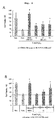
- the mouse-derived macrophage-like cell line RAW264.7 was seeded in a 48 well plate 1 ⁇ 10 5 cells per well. After culture for 5 hr, Escherichia coli-derived lipopolysaccharide (LPS) was added to 100 ng/mL over 24 hr to activate RAW264.7 cells. Simultaneously with LPS, various compounds (No. 1 - No. 17, LA, ALA) were added at 10 ⁇ M, and the concentration of nitrous acid (NO 2 - ), which is an oxide of nitric oxide (NO) produced by macrophage activation, in the culture medium was measured.
- LPS Escherichia coli-derived lipopolysaccharide
- the amount of NO 2 in the culture medium was quantified by the Griess method and in reference to Shan Lin et al., Molecular Nutrition and Food Research 57 (2013) p1135-1144 , "Auraptene suppresses inflammatory responses in activated RAW264 macrophages by inhibiting p38 mitogen-activated protein kinase activation", the section of Material and methods Measurements of TNF- ⁇ , MCP-1, and NO concentrations. The quantification was actually performed as follows. RAW264.7 culture medium treated with LPS and various compounds for 24 hr was recovered.
- the cell line HepG2 derived from human liver cancer was cultured in D-MEM (10% FBS, 100 U/mL penicillin, 100 ⁇ g/mL streptomycin), seeded in a 96 well plate at 3.0x10 4 cells/well, and cultured at 37°C, 5% CO 2 for 24 hr.
- D-MEM 10% FBS, 100 U/mL penicillin, 100 ⁇ g/mL streptomycin
- Various compounds tBHQ, No. 11 - No. 13
- serum-free D-MEM 100 U/mL penicillin, 100 ⁇ g/mL streptomycin, 0.1% BSA, 0.3% ethanol
- the supernatant was removed from the 96 well plate, the above-mentioned test medium was added at 100 ⁇ L/well, and the cells were cultured at 37°C, 5% CO 2 for 24 hr. Thereafter, the supernatant was removed again from the 96 well plate, 5 mM H 2 O 2 -containing D-MEM (100 U/mL penicillin, 100 ⁇ g/mL streptomycin) was added at 100 ⁇ L/well, 37°C, and the cells were cultured at 5% CO 2 for 30 min.
- 5 mM H 2 O 2 -containing D-MEM 100 U/mL penicillin, 100 ⁇ g/mL streptomycin
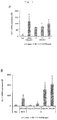
- the supernatant was removed from the 96 well plate, WST-1 reagent-containing D-MEM (7 ⁇ g/mL 1-Methosy PMS, 33 ⁇ g/mL WST-1) was added at 100 ⁇ L/well, the cells were cultured at 37°C, 5% CO 2 for 2 hr, and the absorbance at 450 nm was measured. The results are shown in Fig. 2A , B.
- HepG2 cells were seeded in a 24 well plate at 1.5x10 5 cells/well, and cultured at 37°C, 5% CO 2 for 24 hr.
- Various compounds tBHQ, No. 11 - No. 13
- serum-free D-MEM 100 U/mL penicillin, 100 ⁇ g/mL streptomycin, 0.1% BSA, 0.3% ethanol
- test media having adjusted concentrations.
- the supernatant was removed from the 24 well plate, the above-mentioned test medium was added at 500 ⁇ L/well, and the cells were cultured at 37°C, 5% CO 2 for 6 hr.
- Real-time PCR method was performed using the cDNA as a template, and SYBR Green, and the expression of anti-oxidant enzyme HO-1 mRNA was evaluated.
- GAPDH was used as the internal standard, and 43 cycles of initial denaturation at 95°C for 15 min, amplification reaction at 95°C for 15 sec and 60°C for 30 sec were performed under PCR conditions. The results are shown in Fig. 3A , B.
- HepG2 cells were seeded in a 12 well plate at 3.0x10 4 cells/well, and cultured at 37°C, 5% CO 2 for 24 hr.
- Various compounds tBHQ, No. 11 - No. 13
- serum-free D-MEM 100 U/mL penicillin, 100 ⁇ g/mL streptomycin, 0.1% BSA, 0.3% ethanol
- test media having adjusted concentrations.
- the supernatant was removed from the 12 well plate, the above-mentioned test medium was added at 1 mL/well, and the cells were cultured at 37°C, 5% CO 2 for 24 hr.
- the cells were washed with sterile PBS, and dissolved in 100 ⁇ L of dissolution buffer (10 mM HEPES-KOH, 250 mM sucrose, 10 mM potassium chloride, 1.5 mM magnesium chloride, 1 mM EDTA, 1 mM EGTA, proteinase inhibitor cocktail, pH 7.6).
- dissolution buffer 10 mM HEPES-KOH, 250 mM sucrose, 10 mM potassium chloride, 1.5 mM magnesium chloride, 1 mM EDTA, 1 mM EGTA, proteinase inhibitor cocktail, pH 7.6
- the solution was centrifuged at 1,000xg, 4°C for 5 min, the supernatant was removed, cell pellets were dissolved in 30 ⁇ L of nucleus extraction buffer (20 mM HEPES-KOH, 100 mM sodium chloride, 1% SDS, 1 mM EDTA, 1 mM EGTA, proteinase inhibitor cocktail, pH 6.8), and the mixture was shaken at 4°C for 1 hr. Thereafter, the solution was centrifuged at 10,000xg, 4°C for 15 min, the supernatant was recovered to give a nucleoprotein fraction.
- nucleus extraction buffer (20 mM HEPES-KOH, 100 mM sodium chloride, 1% SDS, 1 mM EDTA, 1 mM EGTA, proteinase inhibitor cocktail, pH 6.8
- the above-mentioned supernatant recovered as the nucleoprotein fraction was measured for the protein concentration by using Bio-Rad DC Protein Assay kit, diluted to the same protein amount and used as a sample.
- a loading buffer and 2-mercaptoethanol To the above-mentioned sample were added a loading buffer and 2-mercaptoethanol and the mixture was boiled at 95°C for 5 min.
- the above-mentioned boiled sample was applied by 20 ⁇ L each to 5% concentration gel and 10% electrophoresis gel, and the mixture was electrophoresed at 20 mA for 20 min and 150 V for 60 min.
- the protein was transferred from the gel on a PVDF membrane at 15 V for 35 min, the PVDF membrane after transfer was immersed in a blocking buffer, and stood overnight.
- the PVDF membrane was reacted with a 400-fold diluted antihuman Nrf2 rabbit antibody for 2 hr, washed and reacted with 500-fold diluted HRP-labeled anti-rabbit IgG for 1 hr. Using Chemi-Lumi One Super, the band on the PVDF membrane was detected. The results are shown in Fig. 4 .
- Rat adrenal gland medulla pheochromocytoma PC12 cells incorporating a luciferase gene expression vector containing a luciferase gene linked to a rat NQO1 promoter region containing the binding region of rat Nrf2 were cultured in D-MEM (High-Glucose, 15% HS, 5% FBS, 300 mg/mL hygromycin B). The cells were seeded in a 96 well plate at PC12 cells 5.0x10 4 cells/well, and cultured at 37°C, 5% CO 2 for 24 hr.
- D-MEM High-Glucose, 15% HS, 5% FBS, 300 mg/mL hygromycin B
- test media were dissolved in D-MEM (High- Glucose, 15% HS, 5% FBS, 300 mg/mL hygromycin B, 0.3% ethanol) to prepare test media having adjusted concentrations.
- D-MEM High- Glucose, 15% HS, 5% FBS, 300 mg/mL hygromycin B, 0.3% ethanol
- the supernatant was removed from the 96 well plate, the above-mentioned test medium was added at 100 ⁇ L/well, and the cells were cultured at 37°C, 5% CO 2 for 9 hr. Thereafter, the supernatant was removed again from the 96 well plate, luminescence reagent was added at 50 ⁇ L/well, and the luminescence intensity was measured. The results are shown in Fig. 5 .
- C57BL/6N mouse male, 6- to 12-week-old (SHIMIZU experiment material) was sacrificed by cervical dislocation, and femur including the knee joint and the hip joint was isolated.
- the femur was transferred to a 100 mm dish (Thermo Fisher Scientific) containing RPMI 1640 medium (nacalai tesque), and the bone marrow fluid was collected on the dish from the femur.
- the cell aggregates in the dish were suspended, and placed in a 50 mL centrifugation tube.
- the suspended cell aggregates were centrifuged at 1500 rpm for 10 min, the supernatant was removed, the cell pellets were suspended in 2 mL of RBC lysis buffer (0.01 M Tris-HCl buffer containing 8.3 g/L ammonium chloride), and the suspension was stood for 3 min. Thereafter, the medium (8 mL) was added to quench the reaction by dilution, the mixture was centrifuged at 1500 rpm for 10 min, and the supernatant was removed.
- a single cell suspension of bone marrow-derived cells was prepared from the cell pellets by using a 40 ⁇ m-cell strainer (BD Bioscience).
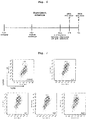
- the viable cells in the above-mentioned bone marrow-derived cells were counted by using Trypan Blue staining solution (nacalai tesque), seeded in a 100 mm dish at a density of 1.2x10 6 cells/dish, and cultured in a CO 2 incubator according to the schedule described in Fig. 6 .
- a cell medium RPMI 1640 medium added with 10% FBS (Biowest), 1% Penicillin/Streptomycin (nacalai tesque), 20%(v/v) L929 conditioned medium and 55 ⁇ M ⁇ -mercaptoethanol (Gibco) was used.
- IL-4 (20 ng/mL) and various compounds (LA, GLA, ALA, No.1-3, 7, 8, 9, 14-24) (30 ⁇ M) were added to the medium.
- the cell surface antigen expressing on M2 macrophage at 48 hr after addition of IL-4 and various compounds (LA, GLA, ALA, No.1-3, 7, 8, 9, 14-24) was confirmed.
- the cells were recovered in a 4 mL Falcon tube (BD Bioscience), and centrifuged at 1500 rpm for 5 min to give cell pellets.
- the cells were washed with FACS buffer (0.1% BSA (fatty acid free) (nacalai tesque), and the cell pellets were uniformized by tapping.
- BD pharmingen TM Purified Rat anti-Mouse CD16/CD32 (BD Bioscience) was added, and the mixture was tapped and stood at 4°C for 10 min (Fc blocking).
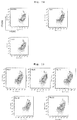
- a fluorochrome-labeled monoclonal antibody Anti-Mouse CD206 Alexa Fluor 647 (BioLegend), Anti-Mouse F4/80 Antigen FITC (eBioscience) was added, and the mixture was tapped and stood at 4°C for 30 min. Thereafter, the cells were washed with FACS buffer, the cell pellets were uniformized by tapping, and Viability Dye 7-AAD (eBioscience) was added. The cell surface antigen was measured by BD Accuri TM C6 flow cytometer (BD Bioscience). For the analysis, FlowJo TM (Tomy Digital Biology) was used. The results are shown in Figs. 7 - 10 .
- mRNA expression of the cells was confirmed.
- cells were seeded in a well, 700 ⁇ L of Sepasol RNAIsuper (nacalai tesque) was added and the mixture was shaken for 30 min. The cells were dispersed and the dispersion was transferred into a 1.5 mL tube. To the 1.5 mL tube was added 150 ⁇ L of chloroform (nacalai tesque), mixed by inverting, stood at room temperature for 5 min, and centrifuged at 4°C, 15,000 rpm for 65 min.
- Sepasol RNAIsuper nacalai tesque
- the aqueous layer (350 ⁇ L) was transferred into another 1.5 mL tube, 350 ⁇ L of isopropanol (nacalai tesque) were further added.
- the tube was mixed by inverting, stood at room temperature for 15 min, and centrifuged at 4°C, 15,000 rpm for 65 min, and the supernatant was removed.
- To the precipitate was added 500 ⁇ L of 75% ethanol (nacalai tesque) and the mixture was centrifuged at 4°C, 15,000 rpm for 15 min, and the upper layer was removed. This operation was performed twice in total.
- Total RNA was air dried for about 40 min, dissolved in 20 ⁇ L of Ultra pure water (Invitrogen), and the mRNA concentration was measured by Nano Drop (Scrum). The mRNA concentration was adjusted with Ultra pure water to 1000 ng/ ⁇ L on ice to give an RNA solution. Oligo dT primer (Gibco) (1 ⁇ L) and RNA solution (10 ⁇ L) (1000 ng/ ⁇ L) were added into a 0.2 mL 8-tube, incubated in a Thermal Cycler at 70°C for 10 min to destroy the higher order structure of RNA.
- RNA sample/primer mixture 10 ⁇ l 5 x reverse transcription buffer (Promega) 4 ⁇ l RNase inhibiter (TOYOBO) 0.5 ⁇ l 2.5 mM dNTP Mix (TAKARA) 2 ⁇ l Nuclease Free Water 2.5 ⁇ l Superscript (II) reverse transcriptase (Promega) 1 ⁇ l Total 20 ⁇ l
- the obtained cDNA was diluted 5-fold with Ultra pure water.
- a plasmid solution (5 ⁇ L) to be used as the standard was taken in a 0.6 mL tube, and diluted 10-fold with Ultra pure water (45 ⁇ L). This operation was repeated, and a plasmid solution diluted 10 2 - to 10 9 -fold was produced.
- the reagent shown in Table 2 per sample was prepared in a 1.5 mL tube and dispensed to a 96 well plate by 12 ⁇ L each. Ultra pure water as a negative control, the dilution solution (10 3 -10 8 dilution) at each concentration produced above as the standard, and cDNA of a sample for measurement were added by 3 ⁇ L each to the plate.
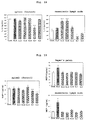
- the plate was set in Light-Cycler TM (Roche), and PCR was performed. With each of the Arginase 1 mRNA expression level and IL-1 ⁇ expression level of the cells added with IL-4 alone as 1, the Arginase 1 mRNA expression level and IL-1 ⁇ expression level when IL-4 and various compounds were concurrently added are shown in Figs. 11 , 12 .
- Table 2 dH 2 O 8.4 ⁇ l SYBR Green (TOYOBO) 8.0 ⁇ l Total 0.8 ⁇ l
- an inflammatory macrophage is released in blood in a monocyte state and, after circulation in the whole body, infiltrates into the peripheral tissues, and differentiates into a tissue-specific macrophage according to the environment of the peripheral tissues.
- addition of various compounds of fatty acid derivative in the initial stage of differentiation of monocyte into macrophage promotes induction of differentiation of monocyte into M2 macrophage was studied.
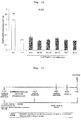
- culture according to the schedule described in Fig. 13 was performed.
- As the cell medium RPMI 1640 medium added with 10% FBS, 1% Penicillin/Streptomycin, 5%(v/v) L929 conditioned medium and 55 ⁇ M ⁇ -mercaptoethanol (Gibco), IL-4 (20 ng/mL) and various compounds (ALA, No.7, 8, 16, 22, 23) (30 ⁇ M) was used from the initial day of culture to day 3 of culture.
- RPMI 1640 medium added with 10% FBS, 1% Penicillin/Streptomycin, 20%(v/v) L929 conditioned medium and 55 ⁇ M ⁇ -mercaptoethanol (Gibco) was used.
- the cells on day 7 of culture were recovered, and mRNA expression and cell surface antigen were confirmed in the same manner as in Example 6. The results are shown in Figs. 14 - 17 .
- BALB/c mouse ( ⁇ , 6- to 12-week-old) (fresh water experiment material) was sacrificed by cervical dislocation, and the mesenteric lymph node and Peyer's patch were isolated. Each tissue was finely cut, and treated with RPMI 1640 (5% FBS, 1.0 mg/mL Collagenase containing) medium at 37°C for 30 min. The tissue was further mashed with the plunger part of a 1 mL syringe to give a cell suspension.
- RPMI 1640 5% FBS, 1.0 mg/mL Collagenase containing
- the cell suspension was centrifuged at 1500 rpm for 10 min, the supernatant was removed and, using a 40 ⁇ m-cell strainer, a single cell suspension of the mesentericlymph node-derived cells and a single cell suspension of the Peyer's patch-derived cells were prepared.
- BALB/c mouse was sacrificed by cervical dislocation, and the spleen was isolated.
- the spleen was mashed on a 100 mm dish to give a cell suspension.
- the cell aggregates in the dish were suspended, and placed in a 50 mL centrifugation tube.
- the suspended cell aggregates were centrifuged at 1500 rpm for 10 min, the supernatant was removed, the cell pellets were suspended in 2 mL of RBC lysis buffer, and the suspension was stood for 3 min. Thereafter, the medium (8 mL) was added to quench the reaction by dilution, the mixture was centrifuged at 1500 rpm for 10 min, and the supernatant was removed.
- a single cell suspension of spleen-derived cells was prepared from the cell pellets by using a 40 ⁇ m-cell strainer.
- the viable cells in each of the above-mentioned mesentericlymph node-derived cells, Peyer's patch-derived cells and spleen-derived cells were counted by using Trypan Blue staining solution, seeded at 1.0x10 6 cells/well in a 96 well plate, various compounds (ALA, No.7, 8, 16, 22, 23) were added and the cells were cultured for 18 - 24 hr in the presence of lymphocyte activators PMA and Ionomycin. After culture, each supernatant was recovered. As the medium for culture, RPMI 1640 added with 10% FBS, 1% Penicillin/Streptomycin was used.
- the concentration of IL-4 and MCP-1 contained in the each recovered supernatant was measured by ELISA. Basically, the recommended protocol of ELISA Ready-SET-Go! (R) (eBioscience) was adopted. Capture antibody was diluted with a coating buffer, added to a 96 well plate at 50 ⁇ L/well, and the plate was sealed and stood overnight at 4°C. The well was washed 3 times with 250 ⁇ L/well of Wash buffer, ELISA/ELISPOT Diluent was added to the well at 100 ⁇ L/well, and the mixture was stood at room temperature for 1 hr.
- R ELISA Ready-SET-Go!
- TMB solution was added to the well at 50 ⁇ L/well, and the well was stood at room temperature for 15 min.
- 1 M H 3 PO 4 solution was added to the well at 25 ⁇ L/well to discontinue the enzyme reaction.
- the absorbance at wavelength 450 nm was measured by a Microplate Reader. The results are shown in Figs. 18, 19 .
- the present invention has clarified that rare fatty acid derivatives have a conventionally-unknown anti-inflammatory effect as a physiological function thereof.
- An anti-inflammatory agent containing the rare fatty acid derivative is applicable to various fields such as pharmaceutical product, food, feed and the like, and the present invention is industrially extremely useful.
Landscapes
- Health & Medical Sciences (AREA)
- Life Sciences & Earth Sciences (AREA)
- Chemical & Material Sciences (AREA)
- Veterinary Medicine (AREA)
- Public Health (AREA)
- General Health & Medical Sciences (AREA)
- Animal Behavior & Ethology (AREA)
- Medicinal Chemistry (AREA)
- Pharmacology & Pharmacy (AREA)
- Epidemiology (AREA)
- Polymers & Plastics (AREA)
- Oil, Petroleum & Natural Gas (AREA)
- Food Science & Technology (AREA)
- Engineering & Computer Science (AREA)
- Nutrition Science (AREA)
- Mycology (AREA)
- Rheumatology (AREA)
- Organic Chemistry (AREA)
- Chemical Kinetics & Catalysis (AREA)
- General Chemical & Material Sciences (AREA)
- Nuclear Medicine, Radiotherapy & Molecular Imaging (AREA)
- Pain & Pain Management (AREA)
- Acyclic And Carbocyclic Compounds In Medicinal Compositions (AREA)
- Fodder In General (AREA)
- Coloring Foods And Improving Nutritive Qualities (AREA)
- Enzymes And Modification Thereof (AREA)
- Cosmetics (AREA)
- Preparation Of Compounds By Using Micro-Organisms (AREA)
- Micro-Organisms Or Cultivation Processes Thereof (AREA)
- Organic Low-Molecular-Weight Compounds And Preparation Thereof (AREA)
Abstract
Description
- The present invention relates to an anti-inflammatory agent containing a rare fatty acid. More particularly, the present invention relates to an anti-inflammatory agent utilizing the physiological function, for example, an action to suppress an inflammation reaction in vivo, of rare fatty acids such as oxo fatty acid, hydroxy fatty acid and the like. The present invention also relates to a food, a pharmaceutical product, a feed and the like containing the agent.
- Inflammation is a defense reaction of living organisms which is observed when biological tissues are injured by bacterial infection, action of physicochemical factor and the like, wherein the causal substance of injury and injured tissues are removed thereby. As regards inflammatory reaction in living organisms, it is known that nitric oxide (NO) produced by M1 macrophage acts as a mediator. While NO acts as a biological defense factor, it exacerbates inflammation when produced in large amounts during inflammation. For example, in adipose tissue in obese state, inflammation is promoted by mutual activation of activated M1 macrophage and adipocyte and a disease state is induced. Therefore, an anti-inflammatory action of a substance that suppresses NO production by M1 macrophage is expected.
- As a fatty acid derivative showing an anti-inflammatory action, hydroxylated fatty acids produced by lipoxygenase have been reported. For example, when a plant-derived lipoxygenase is used, 9-hydroxy-trans-10,cis-12-octadecadienoic acid, 13-hydroxy-cis-9,trans-11-octadecadienoic acid are produced from linoleic acid; 13-hydroxy-10-oxo-trans-11-octadecenoic acid, 9-hydroxy-13-oxo-trans-10-octadecenoic acid, 9-hydroxy-10-oxo-cis-12-octadecenoic acid, 13-hydroxy-12-oxo-cis-9-octadecenoic acid are further produced by a combined use with hydroxy peroxide isomerase, and these hydroxylated fatty acids and oxo fatty acids are reported to have an anti-inflammatory action (patent document 1). Also, as endogenous anti-inflammatory lipid mediator in mammals, epoxy form and hydroxylated form of ω3 fatty acids such as eicosapentaenoic acid (EPA), docosahexaenoic acid (DHA) and the like, which are produced by the action of oxidizing enzymes such as lipoxygenase, monooxygenase and the like, have been reported (patent document 2).
- As for rare fatty acids such as hydroxylated fatty acid, oxo fatty acid and the like, since a part of oxo fatty acids such as 9-oxo-octadecadienoic acid, 13-oxo-octadecadienoic acid and the like contained in tomato have been reported to have an activity to improve lifestyle-related diseases, such as lipid metabolism improvement and the like (
patent document 3,non-patent documents 1, 2), the physiological functions of rare fatty acids are drawing attention. - As regards production of rare fatty acids such as oxo fatty acid, hydroxylated fatty acid and the like, a production method of C10-position hydroxylated fatty acid and C10-position oxo fatty acid, each having 18 carbon atoms, which uses hydration dehydrase derived from lactobacillus plantarum, and which was found by the inventors, has been reported (patent document 4). In addition, a metabolism improving effect (patent document 5), and an intestine protective action (patent document 6) relating to these C10-position hydroxylated fatty acid and C10-position oxo fatty acid have also been reported. However, the physiological functions other than metabolism improvement and intestinal protection, for example, physiological functions such as anti-inflammatory action and the like, of these hydroxylated fatty acid, oxo fatty acid, as well as hydroxylated fatty acid and oxo fatty acid, each having a carbon atom number other than 18 or hydroxylated fatty acid and oxo fatty acid, each having hydroxyl group, carbonyl group at a position other than C10-position are unknown.
-
- patent document 1:
-
JP-A-2005-008594 - patent document 2:
-
WO 2012/023254 - patent document 3:
-
JP-A-2011-184411 - patent document 4:
-
WO 2013/168310 - patent document 5:
-
WO 2014/069227 - patent document 6:
-
WO 2014/129384 -
- non-patent document 1: Kim Y-I,(2011), Mol. Nutr. Food Res., vol.55, p.585-593
- non-patent document 2: Kim Y-I,(2012), PLoS ONE, vol.7, no.2, e31317
- An object of the present invention is to provide a novel anti-inflammatory agent containing a rare fatty acid, which suppresses an inflammatory reaction.
- The present inventors have conducted intensive studies in view of the above-mentioned problems and found that rare fatty acids such as a C10-position hydroxylated fatty acid having 18 carbon atoms and a C10-position oxo fatty acid having 18 carbon atoms, obtained using a fatty acid saturating enzyme group derived from Lactobacillus plantarum and a chemical oxidation reaction, and a C13-position hydroxylated fatty acid having 18 carbon atoms and a C13-position oxo fatty acid having 18 carbon atoms, obtained using a hydration enzyme derived from Lactobacillus acidophilus and a chemical oxidation reaction and the like, which were found by the inventors, have a conventionally-unknown anti-inflammatory action based on an action to suppress NO production by M1 macrophage. In addition, the present inventors have found that the above-mentioned rare fatty acids have an effect to increase resistance of cells to H2O2 stress, and an effect to increase expression of an anti-oxidant enzyme HO-1 mRNA. Furthermore, the present inventors have found that the above-mentioned rare fatty acids suppress differentiation of monocyte and macrophage into M1 macrophage by directly or indirectly inducing differentiation of monocyte and macrophage into M2 macrophage.
- The present invention has been completed based on the above findings.
- Accordingly, the present invention provides the following:
- [1] An anti-inflammatory agent comprising the following fatty acid:
- (1) a fatty acid having 18 carbon atoms and a hydroxyl group or carbonyl group at the 10-position,
- (2) a fatty acid having 18 carbon atoms and a hydroxyl group or carbonyl group at the 13-position,
- (3) a fatty acid having 18 or 20 carbon atoms and a hydroxyl group or carbonyl group at the 12-position,
- (4) a fatty acid having 20 carbon atoms and a hydroxyl group or carbonyl group at the 15-position, or
- (5) a fatty acid having 16 carbon atoms and a hydroxyl group or carbonyl group at the 10-position;
- [2] the agent of [1], comprising the following fatty acid:
- (1) a saturated fatty acid or an unsaturated fatty acid having a trans double bond at the 11-position or at least one cis double bond at the 6-position, the 12-position, the 15-position, which has 18 carbon atoms and a hydroxyl group or carbonyl group at the 10-position,
- (2) a saturated fatty acid or an unsaturated fatty acid having at least one cis double bond at the 6-position, the 9-position, the 15-position, which has 18 carbon atoms and a hydroxyl group or carbonyl group at the 13-position,
- (3) a saturated fatty acid or an unsaturated fatty acid having at least one cis double bond at the 5-position, the 8-position, the 9-position, the 14-position, the 17-position, which has 18 or 20 carbon atoms and a hydroxyl group or carbonyl group at the 12-position,
- (4) an unsaturated fatty acid having at least one cis double bond at the 5-position, the 8-position, the 11-position, the 17-position, which has 20 carbon atoms and a hydroxyl group or carbonyl group at the 15-position, or
- (5) a saturated fatty acid having 16 carbon atoms and a hydroxyl group or carbonyl group at the 10-position;
- [3] the agent of [2], comprising the following fatty acid:
- (1) a saturated fatty acid or an unsaturated fatty acid having a trans double bond at the 11-position or at least one cis double bond at the 6-position, the 12-position, which has 18 carbon atoms and a hydroxyl group or carbonyl group at the 10-position,
- (2) a saturated fatty acid or an unsaturated fatty acid having at least one cis double bond at the 6-position, the 9-position, the 15-position, which has 18 carbon atoms and a hydroxyl group or carbonyl group at the 13-position, or
- (3) saturated fatty acid having 18 carbon atoms and a hydroxyl group at the 12-position;
- [4] the agent of [2], wherein
- (1) the saturated fatty acid or the unsaturated fatty acid having a trans double bond at the 11-position or at least one cis double bond at the 6-position, the 12-position, the 15-position, which has 18 carbon atoms and a hydroxyl group or carbonyl group at the 10-position, is 10-hydroxy-cis-12-octadecenoic acid, 10-hydroxy-cis-12,cis-15-octadecadienoic acid, 10-hydroxy-cis-6,cis-12-octadecadienoic acid, 10-hydroxy-cis-6,cis-12,cis-15-octadecatrienoic acid, 10,12-dihydroxy-octadecanoic acid, 10-hydroxy-octadecanoic acid, 10-hydroxy-cis-15-octadecenoic acid, 10-hydroxy-cis-6-octadecenoic acid, 10-hydroxy-cis-6,cis-15-octadecadienoic acid, 10-hydroxy-trans-11-octadecenoic acid, 10-hydroxy-trans-ll,cis-15-octadecadienoic acid, 10-hydroxy-cis-6,trans-11-octadecadienoic acid, 10-hydroxy-cis-6,trans-11,cis-15-octadecatrienoic acid, 10-oxo-cis-12-octadecenoic acid, 10-oxo-cis-12,cis-15-octadecadienoic acid, 10-oxo-cis-6,cis-12-octadecadienoic acid, 10-oxo-cis-6,cis-12,cis-15-octadecatrienoic acid, 10-oxo-octadecanoic acid, 10-oxo-cis-6-octadecenoic acid, 10-oxo-cis-15-octadecenoic acid, 10-oxo-cis-6,cis-15-octadecadienoic acid, 10-oxo-trans-11-octadecenoic acid, 10-oxo-cis-6,trans-11-octadecadienoic acid, 10-oxo-trans-11,cis-15-octadecadienoic acid or 10-oxo-cis-6,trans-11,cis-15-octadecatrienoic acid,
- (2) the saturated fatty acid or the unsaturated fatty acid having at least one cis double bond at the 6-position, the 9-position, the 15-position, which has 18 carbon atoms and a hydroxyl group or carbonyl group at the 13-position, is 13-hydroxy-cis-9-octadecenoic acid, 13-hydroxy-cis-6,cis-9-octadecadienoic acid, 13-hydroxy-cis-9,cis-15-octadecadienoic acid, 13-hydroxy-cis-6,cis-9,cis-15-octadecatrienoic acid, 10,13-dihydroxy-octadecanoic acid, 10,13-dihydroxy-cis-6-octadecenoic acid, 10,13-dihydroxy-cis-15-octadecenoic acid, 10,13-dihydroxy-cis-6,cis-15-octadecadienoic acid, 10-oxo-13-hydroxy-octadecanoic acid, 10-oxo-13-hydroxy-cis-6-octadecenoic acid, 10-oxo-13-hydroxy-cis-15-octadecenoic acid, 10-oxo-13-hydroxy-cis-6,cis-15-octadecadienoic acid, 13-hydroxy-cis-5,cis-9-octadecadienoic acid, 13-hydroxy-trans-5,cis-9-octadecadienoic acid, 13-oxo-cis-9-octadecenoic acid, 13-oxo-cis-6,cis-9-octadecadienoic acid, 13-oxo-cis-9,cis-15-octadecadienoic acid, 13-oxo-cis-6,cis-9,cis-15-octadecatrienoic acid, 10,13-dioxo-octadecanoic acid, 10,13-dioxo-cis-6-octadecenoic acid, 10,13-dioxo-cis-15-octadecenoic acid, 10,13-dioxo-cis-6,cis-15-octadecadienoic acid, 13-oxo-cis-5,cis-9-octadecadienoic acid or 13-oxo-trans-5,cis-9-octadecadienoic acid,
- (3) the saturated fatty acid or the unsaturated fatty acid having at least one cis double bond at the 5-position, the 8-position, the 9-position, the 14-position, the 17-position, which has 18 or 20 carbon atoms and a hydroxyl group or carbonyl group at the 12-position, is 12-hydroxy-octadecanoic acid, 12-hydroxy-cis-14-eicosenoic acid, 12-hydroxy-cis-14,cis-17-eicosadienoic acid, 12-hydroxy-cis-8,cis-14-eicosadienoic acid, 12-hydroxy-cis-5,cis-8-eicosadienoic acid, 12-hydroxy-cis-8,cis-14,cis-17-eicosatrienoic acid, 12-hydroxy-cis-5,cis-8,cis-14-eicosatrienoic acid, 12-oxo-octadecanoic acid, 12-oxo-cis-9-octadecenoic acid, 12-oxo-cis-14-eicosenoic acid, 12-oxo-cis-14,cis-17-eicosadienoic acid, 12-oxo-cis-8,cis-14-eicosadienoic acid, 12-oxo-cis-5,cis-8-eicosadienoic acid, 12-oxo-cis-8,cis-14,cis-17-eicosatrienoic acid, or 12-oxo-cis-5,cis-8,cis-14-eicosatrienoic acid,
- (4) the unsaturated fatty acid having at least one cis double bond at the 5-position, the 8-position, the 11-position, the 17-position, which has 20 carbon atoms and a hydroxyl group or carbonyl group at the 15-position, is 15-hydroxy-cis-11-eicosenoic acid, 15-hydroxy-cis-11,cis-17-eicosadienoic acid, 15-hydroxy-cis-8,cis-11-eicosadienoic acid, 15-hydroxy-cis-5,cis-8,cis-11-eicosatrienoic acid, 15-hydroxy-cis-8,cis-11,cis-17-eicosatrienoic acid, 15-hydroxy-cis-5,cis-11-eicosadienoic acid, 15-hydroxy-cis-5,cis-11,cis-17-eicosatrienoic acid, 15-oxo-cis-11-eicosenoic acid, 15-oxo-cis-11,cis-17-eicosadienoic acid, 15-oxo-cis-8,cis-11-eicosadienoic acid, 15-oxo-cis-5,cis-8,cis-11-eicosatrienoic acid, 15-oxo-cis-8,cis-11,cis-17-eicosatrienoic acid, 15-oxo-cis-5,cis-11-eicosadienoic acid or 15-oxo-cis-5,cis-11,cis-17-eicosatrienoic acid,
- (5) the saturated fatty acid having 16 carbon atoms and a hydroxyl group or carbonyl group at the 10-position is 10-hydroxy-hexadecanoic acid or 10-oxo-hexadecanoic acid;
- [5] the agent of [3], wherein
- (1) the saturated fatty acid or the unsaturated fatty acid having a trans double bond at the 11-position or at least one cis double bond at the 6-position, the 12-position, which has 18 carbon atoms and a hydroxyl group or carbonyl group at the 10-position, is 10-hydroxy-cis-12-octadecenoic acid, 10-hydroxy-octadecanoic acid, 10-oxo-cis-12-octadecenoic acid, 10-hydroxy-cis-12,cis-15-octadecadienoic acid, 10-hydroxy-cis-6,cis-12-octadecadienoic acid, 10-oxo-cis-12,cis-15-octadecadienoic acid, 10-oxo-cis-6,cis-12-octadecadienoic acid, 10-oxo-trans-11-octadecenoic acid, 10-oxo-trans-11,cis-15-octadecadienoic acid or 10-oxo-cis-6,trans-11-octadecadienoic acid,
- (2) the saturated fatty acid or the unsaturated fatty acid having at least one cis double bond at the 6-position, the 9-position, the 15-position, which has 18 carbon atoms and a hydroxyl group or carbonyl group at the 13-position, is 13-hydroxy-cis-9-octadecenoic acid, 13-hydroxy-cis-6,cis-9-octadecadienoic acid, 13-hydroxy-cis-9,cis-15-octadecadienoic acid, 10,13-dihydroxy-octadecanoic acid, 10,13-dihydroxy-cis-6-octadecenoic acid, 10,13-dihydroxy-cis-15-octadecenoic acid, 13-oxo-cis-9-octadecenoic acid, 13-oxo-cis-6,cis-9-octadecadienoic acid, or 13-oxo-cis-9,cis-15-octadecadienoic acid, or
- (3) the saturated fatty acid having 18 carbon atoms and a hydroxyl group at the 12-position is 12-hydroxy-octadecanoic acid;
- [6] the agent of any one of [1]-[5] for use for the prophylaxis or improvement of an inflammatory disease involving macrophage;
- [7] the agent of any one of [1]-[5], which is a food or a food additive;
- [8] the agent of any one of [1]-[5], which is a pharmaceutical product;
- [9] the agent of any one of [1]-[5], which is a feed or a feed additive;
- [10] an M1 macrophage inhibitor comprising the following fatty acid:
- (1) a fatty acid having 18 carbon atoms and a hydroxyl group or carbonyl group at the 10-position,
- (2) a fatty acid having 18 carbon atoms and a hydroxyl group or carbonyl group at the 13-position,
- (3) a fatty acid having 18 or 20 carbon atoms and a hydroxyl group or carbonyl group at the 12-position,
- (4) a fatty acid having 20 carbon atoms and a hydroxyl group or carbonyl group at the 15-position, or
- (5) a fatty acid having 16 carbon atoms and a hydroxyl group or carbonyl group at the 10-position;
- [11] the inhibitor of [10], comprising the following fatty acid:
- (1) a saturated fatty acid or an unsaturated fatty acid having a trans double bond at the 11-position or at least one cis double bond at the 6-position, the 12-position, the 15-position, which has 18 carbon atoms and a hydroxyl group or carbonyl group at the 10-position,
- (2) a saturated fatty acid or an unsaturated fatty acid having at least one cis double bond at the 6-position, the 9-position, the 15-position, which has 18 carbon atoms and a hydroxyl group or carbonyl group at the 13-position,
- (3) a saturated fatty acid or an unsaturated fatty acid having at least one cis double bond at the 5-position, the 8-position, the 9-position, the 14-position, the 17-position, which has 18 or 20 carbon atoms and a hydroxyl group or carbonyl group at the 12-position,
- (4) an unsaturated fatty acid having at least one cis double bond at the 5-position, the 8-position, the 11-position, the 17-position, which has 20 carbon atoms and a hydroxyl group or carbonyl group at the 15-position, or,
- (5) a saturated fatty acid having 16 carbon atoms and a hydroxyl group or carbonyl group at the 10-position;
- [12] the inhibitor of [11], comprising the following fatty acid:
- (1) a saturated fatty acid or an unsaturated fatty acid having a trans double bond at the 11-position or at least one cis double bond at the 6-position, the 12-position, which has 18 carbon atoms and a hydroxyl group or carbonyl group at the 10-position,
- (2) a saturated fatty acid or an unsaturated fatty acid having at least one cis double bond at the 6-position, the 9-position, the 15-position, which has 18 carbon atoms and a hydroxyl group or carbonyl group at the 13-position, or
- (3) a saturated fatty acid having 18 carbon atoms and a hydroxyl group at the 12-position;
- [13] the inhibitor of [11], wherein
- (1) the saturated fatty acid or the unsaturated fatty acid having a trans double bond at the 11-position or at least one cis double bond at the 6-position, the 12-position, the 15-position, which has 18 carbon atoms and a hydroxyl group or carbonyl group at the 10-position, is 10-hydroxy-cis-12-octadecenoic acid, 10-hydroxy-cis-12,cis-15-octadecadienoic acid, 10-hydroxy-cis-6,cis-12-octadecadienoic acid, 10-hydroxy-cis-6,cis-12,cis-15-octadecatrienoic acid, 10,12-dihydroxy-octadecanoic acid, 10-hydroxy-octadecanoic acid, 10-hydroxy-cis-15-octadecenoic acid, 10-hydroxy-cis-6-octadecenoic acid, 10-hydroxy-cis-6,cis-15-octadecadienoic acid, 10-hydroxy-trans-11-octadecenoic acid, 10-hydroxy-trans-11,cis-15-octadecadienoic acid, 10-hydroxy-cis-6,trans-11-octadecadienoic acid, 10-hydroxy-cis-6,trans-11,cis-15-octadecatrienoic acid, 10-oxo-cis-12-octadecenoic acid, 10-oxo-cis-12,cis-15-octadecadienoic acid, 10-oxo-cis-6,cis-12-octadecadienoic acid, 10-oxo-cis-6,cis-12,cis-15-octadecatrienoic acid, 10-oxo-octadecanoic acid, 10-oxo-cis-6-octadecenoic acid, 10-oxo-cis-15-octadecenoic acid, 10-oxo-cis-6,cis-15-octadecadienoic acid, 10-oxo-trans-11-octadecenoic acid, 10-oxo-cis-6,trans-11-octadecadienoic acid, 10-oxo-trans-11,cis-15-octadecadienoic acid or 10-oxo-cis-6,trans-11,cis-15-octadecatrienoic acid,
- (2) the saturated fatty acid or the unsaturated fatty acid having at least one cis double bond at the 6-position, the 9-position, the 15-position, which has 18 carbon atoms and a hydroxyl group or carbonyl group at the 13-position, is 13-hydroxy-cis-9-octadecenoic acid, 13-hydroxy-cis-6,cis-9-octadecadienoic acid, 13-hydroxy-cis-9,cis-15-octadecadienoic acid, 13-hydroxy-cis-6,cis-9,cis-15-octadecatrienoic acid, 10,13-dihydroxy-octadecanoic acid, 10,13-dihydroxy-cis-6-octadecenoic acid, 10,13-dihydroxy-cis-15-octadecenoic acid, 10,13-dihydroxy-cis-6,cis-15-octadecadienoic acid, 10-oxo-13-hydroxy-octadecanoic acid, 10-oxo-13-hydroxy-cis-6-octadecenoic acid, 10-oxo-13-hydroxy-cis-15-octadecenoic acid, 10-oxo-13-hydroxy-cis-6,cis-15-octadecadienoic acid, 13-hydroxy-cis-5,cis-9-octadecadienoic acid, 13-hydroxy-trans-5,cis-9-octadecadienoic acid, 13-oxo-cis-9-octadecenoic acid, 13-oxo-cis-6,cis-9-octadecadienoic acid, 13-oxo-cis-9,cis-15-octadecadienoic acid, 13-oxo-cis-6,cis-9,cis-15-octadecatrienoic acid, 10,13-dioxo-octadecanoic acid, 10,13-dioxo-cis-6-octadecenoic acid, 10,13-dioxo-cis-15-octadecenoic acid, 10,13-dioxo-cis-6,cis-15-octadecadienoic acid, 13-oxo-cis-5,cis-9-octadecadienoic acid or 13-oxo-trans-5,cis-9-octadecadienoic acid,
- (3) the saturated fatty acid or the unsaturated fatty acid having at least one cis double bond at the 5-position, the 8-position, the 9-position, the 14-position, the 17-position, which has 18 or 20 carbon atoms and a hydroxyl group or carbonyl group at the 12-position, is 12-hydroxy-octadecanoic acid, 12-hydroxy-cis-14-eicosenoic acid, 12-hydroxy-cis-14,cis-17-eicosadienoic acid, 12-hydroxy-cis-8,cis-14-eicosadienoic acid, 12-hydroxy-cis-5,cis-8-eicosadienoic acid, 12-hydroxy-cis-8,cis-14,cis-17-eicosatrienoic acid, 12-hydroxy-cis-5,cis-8,cis-14-eicosatrienoic acid, 12-oxo-octadecanoic acid, 12-oxo-cis-9-octadecenoic acid, 12-oxo-cis-14-eicosenoic acid, 12-oxo-cis-14,cis-17-eicosadienoic acid, 12-oxo-cis-8,cis-14-eicosadienoic acid, 12-oxo-cis-5,cis-8-eicosadienoic acid, 12-oxo-cis-8,cis-14,cis-17-eicosatrienoic acid, or 12-oxo-cis-5,cis-8,cis-14-eicosatrienoic acid,
- (4) the unsaturated fatty acid having at least one cis double bond at the 5-position, the 8-position, the 11-position, the 17-position, which has 20 carbon atoms and a hydroxyl group or carbonyl group at the 15-position, is 15-hydroxy-cis-11-eicosenoic acid, 15-hydroxy-cis-11,cis-17-eicosadienoic acid, 15-hydroxy-cis-8,cis-11-eicosadienoic acid, 15-hydroxy-cis-5,cis-8,cis-11-eicosatrienoic acid, 15-hydroxy-cis-8,cis-11,cis-17-eicosatrienoic acid, 15-hydroxy-cis-5,cis-11-eicosadienoic acid, 15-hydroxy-cis-5,cis-11,cis-17-eicosatrienoic acid, 15-oxo-cis-11-eicosenoic acid, 15-oxo-cis-11,cis-17-eicosadienoic acid, 15-oxo-cis-8,cis-11-eicosadienoic acid, 15-oxo-cis-5,cis-8,cis-11-eicosatrienoic acid, 15-oxo-cis-8,cis-11,cis-17-eicosatrienoic acid, 15-oxo-cis-5,cis-11-eicosadienoic acid or 15-oxo-cis-5,cis-11,cis-17-eicosatrienoic acid,
- (5) the saturated fatty acid having 16 carbon atoms and a hydroxyl group or carbonyl group at the 10-position is 10-hydroxy-hexadecanoic acid or 10-oxo-hexadecanoic acid;
- [14] the inhibitor of [12], wherein
- (1) the saturated fatty acid or the unsaturated fatty acid having a trans double bond at the 11-position or at least one cis double bond at the 6-position, the 12-position, which has 18 carbon atoms and a hydroxyl group or carbonyl group at the 10-position, is 10-hydroxy-cis-12-octadecenoic acid, 10-hydroxy-octadecanoic acid, 10-oxo-cis-12-octadecenoic acid, 10-hydroxy-cis-12,cis-15-octadecadienoic acid, 10-hydroxy-cis-6,cis-12-octadecadienoic acid, 10-oxo-cis-12,cis-15-octadecadienoic acid, 10-oxo-cis-6,cis-12-octadecadienoic acid, 10-oxo-trans-11-octadecenoic acid, 10-oxo-trans-11,cis-15-octadecadienoic acid or 10-oxo-cis-6,trans-11-octadecadienoic acid,
- (2) the saturated fatty acid or the unsaturated fatty acid having at least one cis double bond at the 6-position, the 9-position, the 15-position, which has 18 carbon atoms and a hydroxyl group or carbonyl group at the 13-position, is 13-hydroxy-cis-9-octadecenoic acid, 13-hydroxy-cis-6,cis-9-octadecadienoic acid, 13-hydroxy-cis-9,cis-15-octadecadienoic acid, 10,13-dihydroxy-octadecanoic acid, 10,13-dihydroxy-cis-6-octadecenoic acid, 10,13-dihydroxy-cis-15-octadecenoic acid, 13-oxo-cis-9-octadecenoic acid, 13-oxo-cis-6,cis-9-octadecadienoic acid, or 13-oxo-cis-9,cis-15-octadecadienoic acid, or
- (3) the saturated fatty acid having 18 carbon atoms and a hydroxyl group at the 12-position is 12-hydroxy-octadecanoic acid;
- [15] a method for the prophylaxis or treatment of an inflammatory disease, comprising administering an effective amount of the fatty acid of any one of [1]-[5] to patients;
- [16] the method of [15], wherein the inflammatory disease is an inflammatory disease involving macrophage;
- [17] the fatty acid of any one of [1]-[5] for use for the prophylaxis or treatment of an inflammatory disease;
- [18] the fatty acid of [17], wherein the inflammatory disease is an inflammatory disease involving macrophage;
- [19] use of the fatty acid of any one of [1]-[5] in producing a prophylactic or therapeutic agent for an inflammatory disease;
- [20] the use of [19], wherein the inflammatory disease is an inflammatory disease involving macrophage.
- In the present invention, it was found that hydroxylated fatty acids such as 10-hydroxy-cis-12-octadecenoic acid and 13-hydroxy-cis-9-octadecenoic acid or oxo fatty acids such as 10-oxo-cis-12-octadecenoic acid and 13-oxo-cis-9-octadecenoic acid (hereinafter to be also referred to as rare fatty acid derivative) have an anti-inflammatory action which is a physiological function conventionally not known.
- The present invention provides an anti-inflammatory agent containing a rare fatty acid derivative such as hydroxylated fatty acid and the like, based on the function.
-
-
Fig. 1 shows the measurement results of NO production amount by the Griess method, wherein Cont. shows negative control (ethanol addition), Posi. shows positive control (IκBα phosphorylation inhibitor addition), and the vertical axis shows NO production amount. -
Fig. 2 shows the measurement results of cell survival rate relative to H2O2. A: Various compounds (No. 11 - No. 13) were each used at 30 µM. B: Compound No. 11 was used at 10, 20, 30 µM. Nor. shows cells free of an H2O2 treatment, Con. shows negative control, tBHQ shows positive control, and the vertical axis shows cell survival rate. -
Fig. 3 shows the measurement results of anti-oxidant enzyme HO-1 mRNA expression. A: Various compounds (No. 11 - No. 13) were each used at 30 µM. B: Compound No. 11 was used at 10, 30, 60, 90 µM. Con. shows negative control, tBHQ shows positive control, and the vertical axis shows relative expression level of HO-1 mRNA. -
Fig. 4 shows Western blot images and a graph showing the measurement results of intranuclear expression of transcription factor Nrf2. Con. shows negative control, tBHQ shows positive control, and the vertical axis shows relative expression level of intranuclear Nrf2. -
Fig. 5 shows the measurement results of transcription activity of transcription factor Nrf2. Con. shows negative control, tBHQ shows positive control, and the vertical axis shows relative luciferase activity. -
Fig. 6 shows a culture schedule for inducing differentiation of mouse bone marrow-derived cells into M2 macrophage. -
Fig. 7 shows the proportion of cells having cellular surface antigen of M2 macrophage. -
Fig. 8 shows the proportion of cells having cellular surface antigen of M2 macrophage. -
Fig. 9 shows the proportion of cells having cellular surface antigen of M2 macrophage. -
Fig. 10 shows the proportion of cells having cellular surface antigen of M2 macrophage. -
Fig. 11 shows anArginase 1 mRNA expression level. -
Fig. 12 shows an IL-1β mRNA expression level. -
Fig. 13 shows a culture schedule for inducing differentiation of mouse bone marrow-derived cells into M2 macrophage. -
Fig. 14 shows the proportion of cells having cellular surface antigen of M2 macrophage. -
Fig. 15 shows the proportion of cells having cellular surface antigen of M2 macrophage. -
Fig. 16 shows the expression level ofArginase 1 mRNA. -
Fig. 17 shows the expression level of IL-1β mRNA. -
Fig. 18 shows the IL-4 expression level. -
Fig. 19 shows the MCP-1 expression level. - The present invention is explained in detail below.
- In the present invention, "anti-inflammatory" means suppression of inflammation in vivo. To be specific, an "anti-inflammatory agent" means, for example, prophylaxis and/or suppression of inflammation such as tissue injury (rheumatism, arteriosclerosis etc.) due to allergic disease, chronic inflammation and nerve inflammation disease.
- As an index of the above-mentioned anti-inflammatory activity, nitric oxide (NO) production by M1 macrophage can be measured. While macrophage is one kind of immunocyte that plays a central role in the biological defense mechanism against biological exposure to foreign substances such as pathogenic bacteria and the like that invade from the outer world, when macrophage is activated, it becomes M1 macrophage, and produces inflammatory mediators including NO, prostaglandin E2, cytokines such as TNF-α and the like. Promoted production of these inflammatory mediators causes tissue disorders due to chronic inflammation, and induces arteriosclerosis, rheumatism and the like. Therefore, whether NO production by M1 macrophage activated by lipopolysaccharide (LPS) is suppressed by the below-mentioned rare fatty acid derivative of the present invention is confirmed and, when NO production is suppressed, the rare fatty acid derivative can be judged to highly possibly have an anti-inflammatory effect, or have an anti-inflammatory effect. As one example, the NO production amount can be evaluated by the Griess method, though the method is not limited.
- As an index of the above-mentioned anti-inflammatory activity, moreover, the cell survival rate relative to H2O2 can be measured. H2O2 as an active oxygen promotes production of inflammatory cytokine, and causes inflammatory diseases like the above-mentioned M1 macrophage. Reduction of oxidative stress by H2O2 affords an anti-inflammatory action. Therefore, whether the survival rate of cultured cells relative to H2O2 increases by the below-mentioned rare fatty acid derivative of the present invention is confirmed and, when the survival rate increased, the rare fatty acid derivative can be judged to highly possibly have an anti-inflammatory effect, or have an anti-inflammatory effect.
- As an index of the above-mentioned anti-inflammatory activity, moreover, promotion of the expression of heme oxygenase (HO-1) can also be measured. HO-1 is an important enzyme as a defense mechanism in the body that protects cells from oxidative stress. Lack of HO-1 promotes cell injury due to oxidative stress, promotes inflammation; on the other hand, promoted expression of HO-1 suppresses oxidative stress, and suppresses inflammation due to cell injury. Therefore, whether the expression of HO-1 in the cultured cells is promoted by the below-mentioned rare fatty acid derivative of the present invention is confirmed and, when the HO-1 expression was promoted, the rare fatty acid derivative can be judged to highly possibly have an anti-inflammatory effect, or have an anti-inflammatory effect.
- Alternatively, as an index of the above-mentioned anti-inflammatory activity, promotion of the expression of intranuclear transcription factor Nrf2 can also be measured. The intranuclear expression of Nrf2 is promoted and activated by electrophilic substance, active oxygen, endoplasmic reticulum stress and the like, and Nrf2 controls oxidative stress-adaptive reaction and suppresses inflammation in higher animals. Therefore, whether the intranuclear expression of Nrf2 in the cultured cells is promoted by the below-mentioned rare fatty acid derivative of the present invention is confirmed and, when the intranuclear expression of Nrf2 was promoted, the rare fatty acid derivative can be judged to highly possibly have an anti-inflammatory effect, or have an anti-inflammatory effect. Alternatively, whether the transcription activity of Nrf2 in the cultured cells is promoted by the below-mentioned rare fatty acid derivative of the present invention is confirmed and, when the transcription activity of Nrf2 was promoted, the rare fatty acid derivative can be judged to highly possibly have an anti-inflammatory effect, or have an anti-inflammatory effect.
- Alternatively, as an index of the above-mentioned anti-inflammatory activity, an expression marker of M2 macrophage can also be measured. M1 macrophage is activated on infection with bacterium, virus or fungi, and produces a tumor necrosis factor (TNF), nitric oxide, and cytokines such as IL-6, IFN, IL-1β and the like, which are important for the elimination of such pathogens. On the other hand, M2 macrophage is involved in parasitic infection, allergic response, fat metabolism, wound therapy, cancer metastasis and the like. It is known that macrophage is differentiated into M1 or M2, and the proportion of M1 can be decreased by inducing differentiation into M2, as a result of which inflammation is suppressed. Therefore, whether expression of cellular surface antigen expressed in M2 macrophage and expression of mRNA marker expressed in M2 macrophage are promoted by the below-mentioned rare fatty acid derivative of the present invention is confirmed and, when they were promoted, the rare fatty acid derivative can be judged to highly possibly have an anti-inflammatory effect, or have an anti-inflammatory effect.
- In the present invention, the rare fatty acid derivative refers to a rare fatty acid derivative that can be produced using a fatty acid saturating enzyme group derived from Lactobacillus plantarum and a chemical oxidation reaction (hereinafter sometimes to be abbreviated as "LP-rare fatty acid derivative"), a rare fatty acid derivative that can be produced using a hydration enzyme derived from Lactobacillus acidophilus and a chemical oxidation reaction (hereinafter sometimes to be abbreviated as "LA-rare fatty acid derivative"), and 12-oxo-cis-9-octadecenoic acid produced by a chemical oxidation reaction of ricinoleic acid.
- The LP-rare fatty acid derivative of the present invention refers to a fatty acid having 18 carbon atoms and a hydroxyl group or carbonyl group at the 10-position. As used herein, the fatty acid having 18 carbon atoms and a hydroxyl group or carbonyl group at the 10-position refers to a hydroxylated fatty acid having 18 carbon atoms and a hydroxyl group at the 10-position (hereinafter sometimes to be abbreviated as "10-hydroxy fatty acid"), or oxo fatty acid having 18 carbon atoms and a carbonyl group at the 10-position (hereinafter sometimes to be abbreviated as "10-oxo fatty acid"). The fatty acid having 18 carbon atoms and a hydroxyl group or carbonyl group at the 10-position may be a saturated fatty acid or an unsaturated fatty acid. When the fatty acid having 18 carbon atoms and a hydroxyl group or carbonyl group at the 10-position is an unsaturated fatty acid, an unsaturated fatty acid having a trans double bond at the 11-position, or at least one cis double bond at the 6-position, the 12-position, the 15-position is preferable. The unsaturated fatty acid may further has a cis double bond at the 6-position or 15-position.
- More specifically, while the saturated fatty acid or the unsaturated fatty acid having a trans double bond at the 11-position or at least one cis double bond at the 6-position, the 12-position, the 15-position, which has 18 carbon atoms and a hydroxyl group or carbonyl group at the 10-position (preferably, a saturated fatty acid or an unsaturated fatty acid having a trans double bond at the 11-position or at least one cis double bond at the 6-position, the 12-position, which has 18 carbon atoms and a hydroxyl group or carbonyl group at the 10-position) is not particularly limited, 10-hydroxy-cis-12-octadecenoic acid, 10-hydroxy-cis-12,cis-15-octadecadienoic acid, 10-hydroxy-cis-6,cis-12-octadecadienoic acid, 10-hydroxy-cis-6,cis-12,cis-15-octadecatrienoic acid, 10,12-dihydroxy-octadecanoic acid, 10-hydroxy-octadecanoic acid, 10-hydroxy-cis-15-octadecenoic acid, 10-hydroxy-cis-6-octadecenoic acid, 10-hydroxy-cis-6,cis-15-octadecadienoic acid, 10-hydroxy-trans-11-octadecenoic acid, 10-hydroxy-trans-11,cis-15-octadecadienoic acid, 10-hydroxy-cis-6,trans-11-octadecadienoic acid, 10-hydroxy-cis-6,trans-11,cis-15-octadecatrienoic acid, 10-oxo-cis-12-octadecenoic acid, 10-oxo-cis-12,cis-15-octadecadienoic acid, 10-oxo-cis-6,cis-12-octadecadienoic acid, 10-oxo-cis-6,cis-12,cis-15-octadecatrienoic acid, 10-oxooctadecanoic acid, 10-oxo-cis-6-octadecenoic acid, 10-oxo-cis-15-octadecenoic acid, 10-oxo-cis-6,cis-15-octadecadienoic acid, 10-oxo-trans-11-octadecenoic acid, 10-oxo-cis-6,trans-11-octadecadienoic acid, 10-oxo-trans-11,cis-15-octadecadienoic acid or 10-oxo-cis-6,trans-11,cis-15-octadecatrienoic acid and the like can be mentioned, preferably, 10-hydroxy-cis-12-octadecenoic acid, 10-hydroxy-octadecanoic acid, 10-oxo-cis-12-octadecenoic acid, 10-hydroxy-cis-12,cis-15-octadecadienoic acid, 10-hydroxy-cis-6,cis-12-octadecadienoic acid, 10-oxo-cis-12,cis-15-octadecadienoic acid, 10-oxo-cis-6,cis-12-octadecadienoic acid, 10-oxo-trans-11-octadecenoic acid, 10-oxo-trans-11,cis-15-octadecadienoic acid or 10-oxo-cis-6,trans-11-octadecadienoic acid can be mentioned, more preferably, 10-oxo-trans-11-octadecenoic acid, 10-oxo-trans-11,cis-15-octadecadienoic acid, or 10-oxo-cis-6,trans-11-octadecadienoic acid can be mentioned.
- The LA-rare fatty acid derivative in the present invention refers to a fatty acid having 18 carbon atoms and a hydroxyl group or carbonyl group at the 13-position, a fatty acid having 16 carbon atoms and a hydroxyl group or carbonyl group at the 10-position, a fatty acid having 20 carbon atoms and a hydroxyl group or carbonyl group at the 15-position or a fatty acid having 18 or 20 carbon atoms and a hydroxyl group or carbonyl group at the 12-position.
- In the present invention, a fatty acid having 18 carbon atoms and a hydroxyl group or carbonyl group at the 13-position refers to a hydroxylated fatty acid having 18 carbon atoms and a hydroxyl group at the 13-position (hereinafter sometimes to be abbreviated as "13-hydroxy fatty acid"), or an oxo fatty acid having 18 carbon atoms and a carbonyl group at the 13-position (hereinafter sometimes to be abbreviated as "13-oxo fatty acid"). As used herein, a fatty acid having 18 carbon atoms and a hydroxyl group or carbonyl group at the 10-position and the 13-position (hereinafter sometimes to be abbreviated as "10,13-dihydroxy fatty acid" or "10,13-dioxo fatty acid"), and a fatty acid having 18 carbon atoms and a hydroxyl group at the 13-position and a carbonyl group at the 10-position (hereinafter sometimes to be abbreviated as "10-oxo-13-hydroxy fatty acid") are also encompassed in one embodiment of the "13-hydroxy fatty acid" or "13-oxo fatty acid". In addition, the fatty acid having 18 carbon atoms and a hydroxyl group or carbonyl group at the 13-position may be a saturated fatty acid or an unsaturated fatty acid. When the fatty acid having 18 carbon atoms and a hydroxyl group or carbonyl group at the 13-position is an unsaturated fatty acid, an unsaturated fatty acid having at least one cis double bond at the 6-position, 9-position, the 15-position is preferable, and an unsaturated fatty acid having a cis double bond at the 9-position is more preferable.
- In the present invention, moreover, the fatty acid having 16 carbon atoms and a hydroxyl group or a carbonyl group at the 10-position refers to a hydroxylated fatty acid having 16 carbon atoms and a hydroxyl group at the 10-position (hereinafter sometimes to be abbreviated as "10-hydroxy fatty acid"), or oxo fatty acid having 16 carbon atoms and a carbonyl group at the 10-position (hereinafter sometimes to be abbreviated as "10-oxo fatty acid"). In addition, the fatty acid having 16 carbon atoms and a hydroxyl group or a carbonyl group at the 10-position may be a saturated fatty acid or an unsaturated fatty acid.
- In the present invention, the fatty acid having 20 carbon atoms and a hydroxyl group or carbonyl group at the 15-position refers to a hydroxylated fatty acid having 20 carbon atoms and a hydroxyl group at the 15-position (hereinafter sometimes to be abbreviated as "15-hydroxy fatty acid"), or oxo fatty acid having 20 carbon atoms and a carbonyl group at the 15-position fatty acid (hereinafter sometimes to be abbreviated as "15-oxo fatty acid"). In addition, the fatty acid having 20 carbon atoms and a hydroxyl group or carbonyl group at the 15-position may be a saturated fatty acid or an unsaturated fatty acid. When it is an unsaturated fatty acid, an unsaturated fatty acid having at least one cis double bond at the 5-position, the 8-position, the 11-position, the 17-position is preferable.
- In the present invention, the fatty acid having 18 or 20 carbon atoms and a hydroxyl group or carbonyl group at the 12-position refers to a hydroxylated fatty acid having 18 or 20 carbon atoms and a hydroxyl group at the 12-position (hereinafter sometimes to be abbreviated as "12-hydroxy fatty acid"), or oxo fatty acid having 18 or 20 carbon atoms and a carbonyl group at the 12-position (hereinafter sometimes to be abbreviated as "12-oxo fatty acid"). In addition, the fatty acid having 18 or 20 carbon atoms and a hydroxyl group or carbonyl group at the 12-position may be a saturated fatty acid or an unsaturated fatty acid. When it is an unsaturated fatty acid, an unsaturated fatty acid having at least one cis double bond at the 5-position, the 8-position, the 9-position, the 14-position, the 17-position is preferable. Also, a saturated fatty acid having 18 carbon atoms and a hydroxyl group at the 12-position is also preferable.
- More specifically, while the saturated fatty acid or the unsaturated fatty acid having at least one cis double bond at the 6-position, 9-position, the 15-position, which has 18 carbon atoms and a hydroxyl group or carbonyl group at the 13-position, is not particularly limited, 13-hydroxy-cis-9-octadecenoic acid, 13-hydroxy-cis-6,cis-9-octadecadienoic acid, 13-hydroxy-cis-9,cis-15-octadecadienoic acid, 13-hydroxy-cis-6,cis-9,cis-15-octadecatrienoic acid, 10,13-dihydroxy-octadecanoic acid, 10,13-dihydroxy-cis-6-octadecenoic acid, 10,13-dihydroxy-cis-15-octadecenoic acid, 10,13-dihydroxy-cis-6,cis-15-octadecadienoic acid, 10-oxo-13-hydroxy-octadecanoic acid, 10-oxo-13-hydroxy-cis-6-octadecenoic acid, 10-oxo-13-hydroxy-cis-15-octadecenoic acid, 10-oxo-13-hydroxy-cis-6,cis-15-octadecadienoic acid, 13-hydroxy-cis-5,cis-9-octadecadienoic acid, 13-hydroxy-trans-5,cis-9-octadecadienoic acid, 13-oxo-cis-9-octadecenoic acid, 13-oxo-cis-6,cis-9-octadecadienoic acid, 13-oxo-cis-9,cis-15-octadecadienoic acid, 13-oxo-cis-6,cis-9,cis-15-octadecatrienoic acid, 10,13-dioxo-octadecanoic acid, 10,13-dioxo-cis-6-octadecenoic acid, 10,13-dioxo-cis-15-octadecenoic acid, 10,13-dioxo-cis-6,cis-15-octadecadienoic acid, 13-oxo-cis-5,cis-9-octadecadienoic acid or 13-oxo-trans-5,cis-9-octadecadienoic acid and the like can be mentioned, preferably, 13-hydroxy-cis-9-octadecenoic acid, 13-hydroxy-cis-6,cis-9-octadecadienoic acid, 13-hydroxy-cis-9,cis-15-octadecadienoic acid, 10,13-dihydroxy-octadecanoic acid, 10,13-dihydroxy-cis-6-octadecenoic acid, 10,13-dihydroxy-cis-15-octadecenoic acid, 13-oxo-cis-9-octadecenoic acid, 13-oxo-cis-9,cis-15-octadecadienoic acid, or 13-oxo-cis-6,cis-9-octadecadienoic acid can be mentioned, more preferably, 13-oxo-cis-9,cis-15-octadecadienoic acid or 13-hydroxy-cis-9,cis-15-octadecadienoic acid can be mentioned.
- While the saturated fatty acid having 16 carbon atoms and a hydroxyl group or carbonyl group at the 10-position is not particularly limited, 10-hydroxy-hexadecanoic acid or 10-oxo-hexadecanoic acid and the like can be mentioned.
- While the unsaturated fatty acid having at least one cis double bond at the 5-position, the 8-position, the 11-position, the 17-position, which has 20 carbon atoms and a hydroxyl group or carbonyl group at the 15-position, is not particularly limited, 15-hydroxy-cis-11-eicosenoic acid, 15-hydroxy-cis-11,cis-17-eicosadienoic acid, 15-hydroxy-cis-8,cis-11-eicosadienoic acid, 15-hydroxy-cis-5,cis-8,cis-11-eicosatrienoic acid, 15-hydroxy-cis-8,cis-11,cis-17-eicosatrienoic acid, 15-hydroxy-cis-5,cis-11-eicosadienoic acid, 15-hydroxy-cis-5,cis-11,cis-17-eicosatrienoic acid, 15-oxo-cis-11-eicosenoic acid, 15-oxo-cis-11,cis-17-eicosadienoic acid, 15-oxo-cis-8,cis-11-eicosadienoic acid, 15-oxo-cis-5,cis-8,cis-11-eicosatrienoic acid, 15-oxo-cis-8,cis-11,cis-17-eicosatrienoic acid, 15-oxo-cis-5,cis-11-eicosadienoic acid or 15-oxo-cis-5,cis-11,cis-17-eicosatrienoic acid and the like can be mentioned.
- As the a saturated fatty acid or an unsaturated fatty acid having at least one cis double bond at the 5-position, the 8-position, the 9-position, the 14-position, the 17-position, which has 18 or 20 carbon atoms and a hydroxyl group or carbonyl group at the 12-position (preferably, saturated fatty acid having 18 carbon atoms and a hydroxyl group at the 12-position), 12-hydroxy-octadecanoic acid, 12-hydroxy-cis-14-eicosenoic acid, 12-hydroxy-cis-14,cis-17-eicosadienoic acid, 12-hydroxy-cis-8,cis-14-eicosadienoic acid, 12-hydroxy-cis-5,cis-8-eicosadienoic acid, 12-hydroxy-cis-8,cis-14,cis-17-eicosatrienoic acid, 12-hydroxy-cis-5,cis-8,cis-14-eicosatrienoic acid, 12-oxo-octadecanoic acid, 12-oxo-cis-9-octadecenoic acid, 12-oxo-cis-14-eicosenoic acid, 12-oxo-cis-14,cis-17-eicosadienoic acid, 12-oxo-cis-8,cis-14-eicosadienoic acid, 12-oxo-cis-5,cis-8-eicosadienoic acid, 12-oxo-cis-8,cis-14,cis-17-eicosatrienoic acid, or 12-oxo-cis-5,cis-8,cis-14-eicosatrienoic acid and the like can be mentioned, preferably, 12-hydroxy-octadecanoic acid can be mentioned.
- The LP-rare fatty acid derivative to be used in the present invention can be prepared by the method of
PCT/JP2012/78747 WO 2013/168310 ) found by the inventors. In addition, 10-hydroxy-cis-12-octadecenoic acid can be prepared in reference to Biochemical and Biophysical Research Communications 416 (2011) p.188-193 and the like. In addition, the LA-rare fatty acid derivative can be prepared by the following method. Alternatively, as 12-hydroxy-octadecanoic acid and the like, commercially available products can be used. 12-Oxo-cis-9-octadecenoic acid can be prepared by a chemical oxidation reaction of a commercially available product of ricinoleic acid. - As the LA-rare fatty acid derivative to be used in the present invention, a hydroxylated fatty acid is produced from an unsaturated fatty acid having 16, 18, 20 carbon atoms by a novel fatty acid hydration enzyme (FA-HY), and an oxo fatty acid can be produced by further oxidizing the hydroxyl group of the hydroxylated fatty acid by an enzyme reaction or chemical reaction.
- The above-mentioned novel fatty acid hydration enzyme "FA-HY" is
- (a) the enzyme protein consisting of the amino acid sequence shown in SEQ ID NO: 2,
- (b) a protein comprising an amino acid sequence wherein one or plural amino acids in the amino acid sequence shown in SEQ ID NO: 2 are deleted and/or substituted and/or inserted and/or added, and having an enzyme activity that the enzyme protein consisting of the amino acid sequence shown in SEQ ID NO: 2 has, or
- (c) a protein encoded by a base sequence that hybridizes to a nucleic acid consisting of a chain sequence complementary to the base sequence shown in SEQ ID NO: 1 under stringent conditions, and having an enzyme activity that the enzyme protein consisting of the amino acid sequence shown in SEQ ID NO: 2 has.
- More specific examples of the above-mentioned (b) include a protein containing (i) an amino acid sequence which is the amino acid sequence shown in SEQ ID NO: 2, wherein 1 - 20, preferably 1 - 10, more preferably 1 - several (5, 4, 3 or 2) amino acids are deleted, (ii) an amino acid sequence which is the amino acid sequence shown in SEQ ID NO: 2, wherein 1 - 20, preferably 1 - 10, more preferably 1 - several number (5, 4, 3 or 2) amino acids are added, (iii) an amino acid sequence which is the amino acid sequence shown in SEQ ID NO: 2, wherein 1 - 20, preferably 1 - 10, more preferably 1 - several (5, 4, 3 or 2) amino acids are inserted, (iv) an amino acid sequence which is the amino acid sequence shown in SEQ ID NO: 2, wherein 1 - 20, preferably 1 - 10, more preferably 1 - several (5, 4, 3 or 2) amino acids are substituted by other amino acids, or (v) an amino acid sequence obtained by combining them. When amino acids with similar properties (e.g., glycine and alanine, valine and leucine and isoleucine, serine and threonine, aspartic acid and glutamic acid, asparagine and glutamine, lysine and arginine, cysteine and methionine, phenylalanine and tyrosine etc.) are substituted with each other and the like, a greater number of substitutions and the like are possible.
- When amino acids are deleted, substituted or inserted as mentioned above, the positions of deletion, substitution and insertion are not particularly limited as long as the above-mentioned enzyme activity is maintained.
- In the above-mentioned (c), the "stringent conditions" are conditions under which nucleotide sequences having high identity, for example, identity of 70, 80, 90, 95 or 99% or above, hybridize to each other and nucleotide sequences having identity lower than that do not hybridize; specifically, conditions of washing once, more preferably 2 - 3 times, at the salt concentration and temperature corresponding to those in the washing conditions of general Southern hybridization (60°C, 1xSSC, 0.1% SDS, preferably, 0.1xSSC, 0.1% SDS, more preferably, 68°C, 0.1xSSC, 0.1% SDS) and the like.




- Regarding the above-mentioned (b) or (c), the enzyme activity that the enzyme protein consisting of the amino acid sequence shown in SEQ ID NO: 2 has is not particularly limited as long as it has at least one, preferably all, of (1) an enzyme activity capable of converting an unsaturated fatty acid having 18 carbon atoms and a cis double bond at the 12-position (hereinafter sometimes to be abbreviated as "cis-12 unsaturated fatty acid") utilized as a substrate to a hydroxylated fatty acid having 18 carbon atoms and a hydroxyl group at the 13-position (13-hydroxy fatty acid) (reaction 1), (2) an enzyme activity capable of converting an unsaturated fatty acid having 16 carbon atoms and a cis double bond at the 9-position (hereinafter sometimes to be abbreviated as "cis-9 unsaturated fatty acid")) utilized as a substrate to a hydroxylated fatty acid having 16 carbon atoms and a hydroxyl group at the 10-position (10-hydroxy fatty acid) (reaction 2), (3) an enzyme activity capable of converting an unsaturated fatty acid having 20 carbon atoms and a cis double bond at the 14-position (hereinafter sometimes to be abbreviated as "cis-14 unsaturated fatty acid")) utilized as a substrate to a hydroxylated fatty acid having 20 carbon atoms and a hydroxyl group at the 15-position (15-hydroxy fatty acid) (reaction 3), (4) an enzyme activity capable of converting an unsaturated fatty acid having 18 or 20 carbon atoms and a cis double bond at the 11-position (hereinafter sometimes to be abbreviated as "cis-11 unsaturated fatty acid")) utilized as a substrate to a hydroxylated fatty acid having 18 or 20 carbon atoms and a hydroxyl group at the 12-position (12-hydroxy fatty acid) (reaction 4), an enzyme activity capable of converting cis-4,cis-7,cis-10,cis-13,cis-16,cis-19-docosahexaenoic acid (DHA) to 14-hydroxy-cis-4,cis-7,cis-10,cis-16,cis-19-docosapentaenoic acid (reaction A), and an enzyme activity capable of converting cis-9-tetradecenoic acid (myristoleic acid) to 10-hydroxy-tetradecanoic acid (reaction I).
- The above-mentioned "cis-12 unsaturated fatty acid", "cis-9 unsaturated fatty acid", "cis-14 unsaturated fatty acid", and "cis-11 unsaturated fatty acid" are not particularly limited as long as they are an unsaturated fatty acid having 18 carbon atoms and a cis double bond at the 12-position, an unsaturated fatty acid having 16 carbon atoms and a cis double bond at the 9-position, an unsaturated fatty acid having 20 carbon atoms and a cis double bond at the 14-position, an unsaturated fatty acid having 18 or 20 carbon atoms and a cis double bond at the 11-position, respectively and, for example, monovalent unsaturated fatty acid, divalent unsaturated fatty acid, trivalent unsaturated fatty acid, tetravalent unsaturated fatty acid, pentavalent unsaturated fatty acid and the like can be mentioned. In the present specification, the "fatty acid" encompasses not only free acids but also ester form, salt with basic compound and the like. The "DHA" and "myristoleic acid" also encompass not only free acids but also ester form, salt with basic compound and the like.
- The above-mentioned FA-HY can be isolated from, for example, the fungus, culture medium of Lactobacillus acidophilus by a protein separation and purification technique known per se. Alternatively, FA-HY may be used as the fungus of Lactobacillus acidophilus containing FA-HY or fungal debris thereof. The fungus of Lactobacillus acidophilus containing FA-HY is not particularly limited as long as it contains the above-mentioned FA-HY and, for example, NITE BP-01788 deposited on January 17, 2014 at the NITE Patent Microorganisms Depositary (NPMD) and the like can be mentioned. Alternatively, FA-HY can also be produced as a recombinant protein by isolating a gene encoding FA-HY, subcloning same into a suitable vector, introducing same into a suitable host such as Escherichia coli and the like and culturing same. FA-HY may be a purified one or a crudely purified one. Alternatively, hydratase may be expressed in fungus such as Escherichia coli and the like and the fungus itself may be used or culture medium thereof may be used. Furthermore, the enzyme may be of a free form, or immobilized by various carriers.
- As a vector containing a nucleic acid encoding the above-mentioned FA-HY, one suitable for a host cell to be introduced with the vector may be appropriately selected according to the object (e.g., protein expression) and can be used. In the case of an expression vector, it contains the nucleic acid of the present invention, which is operably linked to an appropriate promoter, and preferably contains a transcription termination signal, i.e., terminator region, at the downstream of the nucleic acid of the present invention. Furthermore, it can also contain a selection marker gene for selection of a transformant (drug resistance gene, gene that complements auxotrophic mutation etc.). Also, it may contain a sequence encoding a tag sequence useful for separation and purification of the expressed protein and the like. In addition, the vector may be incorporated into the genome of a target host cell. The vector of the present invention can be introduced into a target host cell by a transformation method known per se such as a competent cell method, a protoplast method, a calcium phosphate coprecipitation method and the like.
- In the present specification, the "host cell" may be any cell as long as it can express a vector containing a nucleic acid encoding the above-mentioned FA-HY, and bacterium, yeast, fungi, higher eukaryotic cell and the like can be mentioned. Examples of the bacterium include gram-positive bacteria such as bacillus, Streptomyces and the like and gram negative bacteria such as Escherichia coli and the like. A recombinant cell introduced with a vector containing a nucleic acid encoding FA-HY can be cultivated by a method known per se which is suitable for the host cell.
- "Purification" of the above-mentioned FA-HY can be performed by a method known per se, for example, fungi collected by centrifugation and the like are ruptured by ultrasonication or glass beads and the like, solid such as cell debris is removed by centrifugation and the like, and the like to give a crude enzyme solution, which is subjected to a salting out method using ammonium sulfate, sodium sulfate and the like, chromatographys such as ion exchange chromatography, gel filtration chromatography, affinity chromatography and the like, gel electrophoresis and the like.
- The above-mentioned FA-HY has, as mentioned above, an enzyme activity capable of converting cis-12 unsaturated fatty acid, cis-9 unsaturated fatty acid, cis-14 unsaturated fatty acid, cis-11 unsaturated fatty acid, DHA, myristoleic acid utilized as substrates to 13-hydroxy fatty acid, 10-hydroxy fatty acid, 15-hydroxy fatty acid, 12-hydroxy fatty acid, 14-hydroxy-cis-4,cis-7,cis-10,cis-16,cis-19-docosapentaenoic acid, 10-hydroxy-tetradecanoic acid, respectively. Therefore, the present invention also provides [1] a method of producing 13-hydroxy fatty acid from cis-12 unsaturated fatty acid by a hydration reaction using the above-mentioned FA-HY (production method 1), [2] a method of producing 10-hydroxy fatty acid from cis-9 unsaturated fatty acid by a hydration reaction using the above-mentioned FA-HY (production method 2), [3] a method of producing 15-hydroxy fatty acid from cis-14 unsaturated fatty acid by a hydration reaction using the above-mentioned FA-HY (production method 3), [4] a method of producing 12-hydroxy fatty acid from cis-11 unsaturated fatty acid by a hydration reaction using the above-mentioned FA-HY (production method 4), [A] a method of producing 14-hydroxy-cis-4,cis-7,cis-10,cis-16,cis-19-docosapentaenoic acid from DHA by a hydration reaction using the above-mentioned FA-HY (production method A), and [I] a method of producing 10-hydroxy-tetradecanoic acid from myristoleic acid by a hydration reaction using the FA-HY of the present invention (production method I).
- Examples of the "cis-12 unsaturated fatty acid" in the above-mentioned production method 1 include cis-9,cis-12-octadecadienoic acid (linoleic acid), cis-6,cis-9,cis-12-octadecatrienoic acid (γ-linolenic acid), cis-9,cis-12,cis-15-octadecatrienoic acid (α-linolenic acid), cis-6,cis-9,cis-12,cis-15-octadecatetraenoic acid (stearidonic acid), as well as 10-hydroxy-cis-12-octadecenoic acid, 10-hydroxy-cis-6,cis-12-octadecadienoic acid, 10-hydroxy-cis-12,cis-15-octadecadienoic acid, 10-hydroxy-cis-6,cis-12,cis-15-octadecatrienoic acid, 10-oxo-cis-12-octadecenoic acid, 10-oxo-cis-6,cis-12-octadecadienoic acid, 10-oxo-cis-12,cis-15-octadecadienoic acid, 10-oxo-cis-6,cis-12,cis-15-octadecatrienoic acid, cis-5,cis-9,cis-12-octadecatrienoic acid(pinolenic acid), trans-5,cis-9,cis-12-octadecatrienoic acid (columbinic acid), which are now producible by
WO 2013/168310 , and the like. These substrates may be obtained by a method other thanWO 2013/168310 . - Examples of the "13-hydroxy fatty acid" produced by the above-mentioned production method 1 include 13-hydroxy-cis-9-octadecenoic acid induced from cis-9,cis-12-octadecadienoic acid (linoleic acid), 13-hydroxy-cis-6,cis-9-octadecadienoic acid induced from cis-6,cis-9,cis-12-octadecatrienoic acid (γ-linolenic acid), 13-hydroxy-cis-9,cis-15-octadecadienoic acid induced from cis-9,cis-12,cis-15-octadecatrienoic acid (α-linolenic acid), 13-hydroxy-cis-6,cis-9,cis-15-octadecatrienoic acid induced from cis-6,cis-9,cis-12,cis-15-octadecatetraenoic acid (stearidonic acid), 10,13-dihydroxy-octadecanoic acid induced from 10-hydroxy-cis-12-octadecenoic acid, 10,13-dihydroxy-cis-6-octadecenoic acid induced from 10-hydroxy-cis-6,cis-12-octadecadienoic acid, 10,13-dihydroxy-cis-15-octadecenoic acid induced from 10-hydroxy-cis-12,cis-15-octadecadienoic acid, 10,13-dihydroxy-cis-6,cis-15-octadecadienoic acid induced from 10-hydroxy-cis-6,cis-12,cis-15-octadecatrienoic acid, 10-oxo-13-hydroxy-octadecanoic acid induced from 10-oxo-cis-12-octadecenoic acid, 10-oxo-13-hydroxy-cis-6-octadecenoic acid induced from 10-oxo-cis-6,cis-12-octadecadienoic acid, 10-oxo-13-hydroxy-cis-15-octadecenoic acid induced from 10-oxo-cis-12,cis-15-octadecadienoic acid, 10-oxo-13-hydroxy-cis-6,cis-15-octadecadienoic acid induced from 10-oxo-cis-6,cis-12,cis-15-octadecatrienoic acid, 13-hydroxy-cis-5,cis-9-octadecadienoic acid induced from cis-5,cis-9,cis-12-octadecatrienoic acid (pinolenic acid), 13-hydroxy-trans-5,cis-9-octadecadienoic acid induced from trans-5,cis-9,cis-12-octadecatrienoic acid (columbinic acid) and the like.
- Examples of the "cis-9 unsaturated fatty acid" in the above-mentioned
production method 2 include cis-9-hexadecenoic acid (pulmitoleic acid) and the like. - Examples of the "10-hydroxy fatty acid" produced by the above-mentioned
production method 2 include 10-hydroxy-hexadecanoic acid induced from cis-9-hexadecenoic acid (pulmitoleic acid) and the like. - Examples of the "cis-14 unsaturated fatty acid" in the above-mentioned
production method 3 include cis-11,cis-14-eicosadienoic acid, cis-11,cis-14,cis-17-eicosatrienoic acid, cis-8,cis-11,cis-14-eicosatrienoic acid (dihomo-γ-linolenic acid), cis-5,cis-8,cis-11,cis-14-eicosatetraenoic acid (arachidonic acid), cis-8,cis-11,cis-14,cis-17-eicosatetraenoic acid, cis-5,cis-11,cis-14-eicosatrienoic acid (sciadonic acid), cis-5,cis-11,cis-14,cis-17-eicosatetraenoic acid (juniperonic acid) and the like. - Examples of the "15-hydroxy fatty acid" produced by the above-mentioned production method 3 include 15-hydroxy-cis-11-eicosenoic acid induced from cis-11,cis-14-eicosadienoic acid, 15-hydroxy-cis-11,cis-17-eicosadienoic acid induced from cis-11,cis-14,cis-17-eicosatrienoic acid, 15-hydroxy-cis-8,cis-11-eicosadienoic acid induced from cis-8,cis-11,cis-14-eicosatrienoic acid (dihomo-γ-linolenicacid), 15-hydroxy-cis-5,cis-8,cis-11-eicosatrienoic acid induced from cis-5,cis-8,cis-11,cis-14-eicosatetraenoic acid (arachidonic acid), 15-hydroxy-cis-8,cis-11,cis-17-eicosatrienoic acid induced from cis-8,cis-11,cis-14,cis-17-eicosatetraenoic acid, 15-hydroxy-cis-5,cis-11-eicosadienoic acid induced from cis-5,cis-11,cis-14-eicosatrienoic acid (sciadonic acid), 15-hydroxy-cis-5,cis-11,cis-17-eicosatrienoic acid induced from cis-5,cis-11,cis-14,cis-17-eicosatetraenoic acid (juniperonic acid) and the like.
- Examples of the "cis-11 unsaturated fatty acid" in the above-mentioned
production method 4 include cis-11-octadecenoic acid (cis-vaccenic acid), cis-11,cis-14-eicosadienoic acid, cis-11,cis-14,cis-17-eicosatrienoic acid, cis-8,cis-11,cis-14-eicosatrienoic acid (dihomo-γ-linolenicacid), cis-5,cis-8,cis-11-eicosatrienoic acid (mead acid), cis-8,cis-11,cis-14,cis-17-eicosatetraenoic acid, cis-5,cis-8,cis-11,cis-14-eicosatetraenoic acid (arachidonic acid) and the like. - Examples of the "12-hydroxy fatty acid " produced by the above-mentioned production method 4 include 12-hydroxy-octadecanoic acid induced from cis-11-octadecenoic acid(cis-vaccenic acid), 12-hydroxy-cis-14-eicosenoic acid induced from cis-11,cis-14-eicosadienoic acid, 12-hydroxy-cis-14,cis-17-eicosadienoic acid induced from cis-11,cis-14,cis-17-eicosatrienoic acid, 12-hydroxy-cis-8,cis-14-eicosadienoic acid induced from cis-8,cis-11,cis-14-eicosatrienoic acid (dihomo-γ-linolenic acid), 12-hydroxy-cis-5,cis-8-eicosadienoic acid induced from cis-5,cis-8,cis-11-eicosatrienoic acid (mead acid), 12-hydroxy-cis-8,cis-14,cis-17-eicosatrienoic acid induced from cis-8,cis-11,cis-14,cis-17-eicosatetraenoic acid, 12-hydroxy-cis-5,cis-8,cis-14-eicosatrienoic acid induced from cis-5,cis-8,cis-11,cis-14-eicosatetraenoic acid (arachidonic acid) and the like.
- The hydration reaction may be performed in a suitable buffer (e.g., phosphate buffer, tris buffer, borate buffer etc.) by mixing unsaturated fatty acid, which is a substrate, and the above-mentioned FA-HY at suitable concentrations and incubating the mixture. The substrate concentration is, for example, 1 - 1000 g/L, preferably 10 - 500 g/L, more preferably 20 - 250 g/L. The amount of the above-mentioned FA-HY to be added is, for example, 0.001 - 10 mg/mL, preferably 0.1 - 5 mg/mL, more preferably 0.2 - 2 mg/mL.
- A "cofactor" may be used for a hydration reaction (reaction 1 - 4, reaction A or reaction I) and, for example, FAD and the like can be used. The concentration of addition may be any as long as the hydration reaction proceeds efficiently. It is preferably 0.001 - 20 mM, more preferably 0.01 - 10 mM.
- Furthermore, an "activator" may be used for the hydration reaction and, for example, 1 or 2 compounds selected from the group consisting of NADH and NADPH can be mentioned. The concentration of addition thereof may be any as long as the hydration reaction proceeds efficiently. It is preferably 0.1 - 20 mM, more preferably 1 - 10 mM.
- The hydration reaction is desirably performed at a preferable temperature and in a preferable pH range for the above-mentioned FA-HY. For example, the reaction temperature is 5 - 50°C, preferably 20 - 45°C. The pH of the reaction mixture is, for example, pH 4 - 10, preferably pH 5 - 9. The reaction time is not particularly limited and it is, for example, 10 min - 72 hr, preferably 30 min - 36 hr.
- In one preferable embodiment of the present invention, the above-mentioned FA-HY is provided to the reaction system in the form of recombinant cells (e.g., Escherichia coli, Bacillus subtilis, yeast, insect cell, animal cell etc.) introduced with an expression vector containing a nucleic acid encoding same. In this case, the hydration reaction can also be performed by cultivating the cells in a liquid medium suitable for the culture of the cells and added with cofactor and a substrate and, where necessary, an activator.





- Furthermore, by a dehydrogenation reaction or chemical oxidation using chrome acid, an oxo fatty acid having 18 carbon atoms and a carbonyl group at the 13-position (hereinafter sometimes to be abbreviated as "13-oxo fatty acid") is produced from 13-hydroxy fatty acid obtained in the above-mentioned production methods 1 - 4, production method A, production method I (reaction 5), an oxo fatty acid having 16 carbon atoms and a carbonyl group at the 10-position (hereinafter sometimes to be abbreviated as "10-oxo fatty acid") is produced from 10-hydroxy fatty acid (reaction 6), an oxo fatty acid having 20 carbon atoms and a carbonyl group at the 15-position (hereinafter sometimes to be abbreviated as "15-oxo fatty acid") is produced from 15-hydroxy fatty acid (reaction 7), an oxo fatty acid having 18 or 20 carbon atoms and a carbonyl group at the 12-position (hereinafter sometimes to be abbreviated as "12-oxo fatty acid") is produced from 12-hydroxy fatty acid (reaction 8), 14-oxo-cis-4,cis-7,cis-10,cis-16,cis-19-docosapentaenoic acid is produced from 14-hydroxy-cis-4,cis-7,cis-10,cis-16,cis-19-docosapentaenoic acid (reaction B), and 10-oxo-tetradecanoic acid is produced from 10-hydroxy-tetradecanoic acid (reaction II).
- Therefore, [5] a method of producing 13-oxo fatty acid, comprising subjecting cis-12 unsaturated fatty acid to a hydration reaction using the above-mentioned FA-HY to induce 13-hydroxy fatty acid, and subjecting the 13-hydroxy fatty acid to a dehydrogenation reaction or chemical oxidation (production method 5), [6] a method of producing 10-oxo fatty acid, comprising subjecting cis-9 unsaturated fatty acid to a hydration reaction using the above-mentioned FA-HY to induce 10-hydroxy fatty acid, and subjecting the 10-hydroxy fatty acid to a dehydrogenation reaction or chemical oxidation (production method 6), [7] a method of producing 15-oxo fatty acid, comprising subjecting cis-14 unsaturated fatty acid to a hydration reaction using the above-mentioned FA-HY to induce 15-hydroxy fatty acid, and subjecting the 15-hydroxy fatty acid to a dehydrogenation reaction or chemical oxidation (production method 7), [8] a method of producing 12-oxo fatty acid, comprising subjecting cis-11 unsaturated fatty acid to a hydration reaction using the above-mentioned FA-HY to induce 12-hydroxy fatty acid, and subjecting the 12-hydroxy fatty acid to a dehydrogenation reaction or chemical oxidation (production method 8), [B] a method of producing 14-oxo-cis-4,cis-7,cis-10,cis-16,cis-19-docosapentaenoic acid, comprising subjecting DHA to a hydration reaction using the FA-HY of the present invention to induce 14-hydroxy-cis-4,cis-7,cis-10,cis-16,cis-19-docosapentaenoic acid, and subjecting the 14-hydroxy-cis-4,cis-7,cis-10,cis-16,cis-19-docosapentaenoic acid to a dehydrogenation reaction or chemical oxidation (production method B), and [II] a method of producing 10-oxo-tetradecanoic acid, comprising subjecting myristoleic acid to a hydration reaction using the FA-HY of the present invention to induce 10-hydroxy-tetradecanoic acid, and subjecting the 10-hydroxy-tetradecanoic acid to a dehydrogenation reaction or chemical oxidation (production method II) are provided.
- The "cis-12 unsaturated fatty acid", "cis-9 unsaturated fatty acid", "cis-14 unsaturated fatty acid", "cis-11 unsaturated fatty acid" in the above-mentioned production methods 5 - 8 are the same as the substrates in the above-mentioned production methods 1 - 4.
- Examples of the "13-oxo fatty acid" produced by the above-mentioned production method 5 include 13-oxo-cis-9-octadecenoic acid induced from cis-9,cis-12-octadecadienoic acid (linoleic acid), 13-oxo-cis-6,cis-9-octadecadienoic acid induced from cis-6,cis-9,cis-12-octadecatrienoic acid (γ-linolenic acid), 13-oxo-cis-9,cis-15-octadecadienoic acid induced from cis-9,cis-12,cis-15-octadecatrienoic acid (α-linolenic acid), 13-oxo-cis-6,cis-9,cis-15-octadecatrienoic acid induced from cis-6,cis-9,cis-12,cis-15-octadecatetraenoic acid (stearidonic acid), 10,13-dioxo-octadecanoic acid induced from 10-hydroxy-cis-12-octadecenoic acid or 10-oxo-cis-12-octadecenoic acid, 10,13-dioxo-cis-6-octadecenoic acid induced from 10-hydroxy-cis-6,cis-12-octadecadienoic acid or 10-oxo-cis-6,cis-12-octadecadienoic acid, 10,13-dioxo-cis-15-octadecenoic acid induced from 10-hydroxy-cis-12,cis-15-octadecadienoic acid or 10-oxo-cis-12,cis-15-octadecadienoic acid, 10,13-dioxo-cis-6,cis-15-octadecadienoic acid induced from 10-hydroxy-cis-6,cis-12,cis-15-octadecatrienoic acid or 10-oxo-cis-6,cis-12,cis-15-octadecatrienoic acid, 13-oxo-cis-5,cis-9-octadecadienoic acid induced from cis-5,cis-9,cis-12-octadecatrienoic acid (pinolenic acid), 13-oxo-trans-5,cis-9-octadecadienoic acid induced from trans-5,cis-9,cis-12-octadecatrienoic acid (columbinic acid) and the like.
- Examples of the "10-oxo fatty acid" produced by the above-mentioned
production method 6 include 10-oxo-hexadecanoic acid induced from cis-9-hexadecenoic acid (pulmitoleic acid) and the like. - Examples of the "15-oxo fatty acid" produced by the above-mentioned production method 7 include15-oxo-cis-11-eicosenoic acid induced from cis-11,cis-14-eicosadienoic acid, 15-oxo-cis-11,cis-17-eicosadienoic acid induced from cis-11,cis-14,cis-17-eicosatrienoic acid, 15-oxo-cis-8,cis-11-eicosadienoic acid induced from cis-8,cis-11,cis-14-eicosatrienoic acid (dihomo-γ-linolenicacid), 15-oxo-cis-5,cis-8,cis-11-eicosatrienoic acid induced from cis-5,cis-8,cis-11,cis-14-eicosatetraenoic acid (arachidonic acid), 15-oxo-cis-8,cis-11,cis-17-eicosatrienoic acid induced from cis-8,cis-11,cis-14,cis-17-eicosatetraenoic acid, 15-oxo-cis-5,cis-11-eicosadienoic acid induced from cis-5,cis-11,cis-14-eicosatrienoic acid (sciadonic acid), 15-oxo-cis-5,cis-11,cis-17-eicosatrienoic acid induced from cis-5,cis-11,cis-14,cis-17-eicosatetraenoic acid (juniperonic acid) and the like.
- Examples of the "12-oxo fatty acid" produced by the above-mentioned production method 8 include 12-oxo-octadecanoic acid induced from cis-11-octadecenoic acid (cis-vaccenic acid), 12-oxo-cis-14-eicosenoic acid induced from cis-11,cis-14-eicosadienoic acid, 12-oxo-cis-14,cis-17-eicosadienoic acid induced from cis-11,cis-14,cis-17-eicosatrienoic acid, 12-oxo-cis-8,cis-14-eicosadienoic acid induced from cis-8,cis-11,cis-14-eicosatrienoic acid (dihomo-γ-linolenicacid), 12-oxo-cis-5,cis-8-eicosadienoic acid induced from cis-5,cis-8,cis-11-eicosatrienoic acid (mead acid), 12-oxo-cis-8,cis-14,cis-17-eicosatrienoic acid induced from cis-8,cis-11,cis-14,cis-17-eicosatetraenoic acid, 12-oxo-cis-5,cis-8,cis-14-eicosatrienoic acid induced from cis-5,cis-8,cis-11,cis-14-eicosatetraenoic acid (arachidonic acid) and the like.
- The dehydrogenase to be used in the above-mentioned production methods 5 - 8, production method B or production method II is not particularly limited as long as it is an enzyme capable of converting 13-hydroxy fatty acid, 10-hydroxy fatty acid, 15-hydroxy fatty acid, 12-hydroxy fatty acid, 14-hydroxy-cis-4,cis-7,cis-10,cis-16,cis-19-docosapentaenoic acid, 10-hydroxy-tetradecanoic acid utilized as substrates to 13-oxo fatty acid, 10-oxo fatty acid, 15-oxo fatty acid, 12-oxo fatty acid, 14-oxo-cis-4,cis-7,cis-10,cis-16,cis-19-docosapentaenoic acid, 10-oxo-tetradecanoic acid, respectively and, for example, lactobacillus-derived hydroxylated fatty acid - dehydrogenase (CLA-DH) is preferable. More preferred is Lactobacillus plantarum-derived CLA-DH, and particularly preferred is L. plantarum FERM BP-10549 strain-derived CLA-DH. CLA-DH can be obtained by the method described in
JP-A-2007-259712 WO 2013/168310 . Dehydrogenase may be a purified one or a crudely purified one. Alternatively, dehydrogenase may be expressed in fungus such as Escherichia coli and the like and the fungus itself may be used or culture medium thereof may be used. Furthermore, the enzyme may be of a free form, or immobilized by various carriers. - The dehydrogenation reaction is performed in a suitable buffer (e.g., phosphate buffer, tris buffer, borate buffer etc.) by mixing 13-hydroxy fatty acid, 10-hydroxy fatty acid, 15-hydroxy fatty acid, 12-hydroxy fatty acid, as substrates and dehydrogenase at suitable concentrations and incubating the mixture. The substrate concentration is, for example, 0.01 - 100 g/L, preferably 0.05 - 50 g/L, more preferably 0.1 - 5 g/L. The amount of dehydrogenase to be added is, for example, 0.001 - 10 mg/mL, preferably 0.005 - 1 mg/mL, more preferably 0.05 - 0.2 mg/mL.
- A "cofactor" may be used for the dehydrogenation reaction and, for example, NAD+, NADP+ and the like can be used. The concentration of addition thereof may be any as long as the hydration reaction proceeds efficiently. It is preferably 0.001 - 20 mM, more preferably 0.01 - 10 mM.
- The dehydrogenation reaction is desirably performed within the ranges of preferable temperature and preferable pH of dehydrogenase. For example, the reaction temperature is 5 - 50°C, preferably 20 - 45°C. The pH of the reaction mixture is, for example, pH 4 - 10, preferably pH 5 - 9. The reaction time is not particularly limited and it is, for example, 10 min - 72 hr, preferably 30 min - 36 hr.
- In one embodiment of the present invention, dehydrogenase is subjected to the reaction system in the form of recombinant cells (e.g., Escherichia coli, Bacillus subtilis, yeast, insect cell, animal cell etc.) introduced with an expression vector containing a nucleic acid encoding same. In this case, the oxidation reaction can also be performed by cultivating the cells in a liquid medium suitable for the culture of the cells and added with a substrate and, where necessary, a cofactor and an activator.
- In addition, by replacing the dehydrogenation reaction with a chemical oxidation using chromic acid, an oxo fatty acid similar to that by enzyme reaction can be chemically obtained.
- As the chemical oxidation, methods known per se, for example, chromic acid oxidation, preferably Jones oxidation and the like can be mentioned. As the chromic acid, salts or complexes of the compound such as anhydrous chromic acid CrO3, chromic acid H2CrO4 and dichromic acid H2Cr2O7 can be used.
- To be specific, sulfuric acid (2.3 ml) and water (7.7 ml) are added to anhydrous chromic acid (2.67 g), and acetone (90 ml) is added to the mixture to give a chromic acid solution. 2 g of hydroxylated fatty acid and 40 ml of acetone are added in an Erlenmeyer flask, and the above-mentioned chromic acid solution is added by one drop while stirring in a stirrer on ice. When the solution turns from blue to tea green, dropwise addition of the chromic acid solution is stopped, and the reaction is discontinued with isopropyl alcohol. The precipitated sediment is filtered through filter paper, placed in a separating funnel, diethyl ether (150 ml) and Milli-Q water (300 ml) are added, the mixture is shaken well, and the diethyl ether layer is washed several times with Milli-Q water. To the diethyl ether layer after washing is added an appropriate amount of sodium sulfate (anhydrous), the mixture is stirred and the residual water is removed. The anhydrous sodium sulfate added is filtered off through filter paper, the obtained diethyl ether layer is concentrated by a rotary evaporator, and the reaction product (oxo fatty acid) and unreacted substrate are extracted.
- An extract obtained by an oxidation reaction with anhydrous chromic acid (mixture containing substrate and resultant product (oxo fatty acid)) is subjected to moderate-pressure chromatography, a solution that comes out from the column is recovered in fractions. The recovered each fraction is analyzed by LC/MS and gas chromatography, fractions containing oxo fatty acid alone are collected and concentrated by a rotary evaporator. A part of the obtained final resultant product is methylesterified, the purity of oxo fatty acid is evaluated by gas chromatography, and oxo fatty acid having a purity of not less than 98% can be obtained.
- An anti-inflammatory agent containing the rare fatty acid derivative of the present invention can be applied to the prophylaxis or improvement of inflammatory diseases. The "inflammatory disease" is not limited as long as it accompanies an inflammation reaction in vivo, and an "inflammatory disease involving macrophage" is preferable. Examples of the "inflammatory disease" include gout, arteriosclerosis, gastric ulcer, nephritis (glomerulonephritis, IgA nephropathy, diabetic nephropathy etc.), periodontal disease (gingiva inflammation, pericoronitis etc.), hepatitis (alcoholic hepatitis, non-alcoholic hepatitis etc.), cirrhosis, asthma, bronchitis, cerebral infarction, aneurysm, delayed allergy, endometriosis, acute respiratory distress syndrome, disorder due to kidney transplantation, acute myocardial infarction, diabetes, systemic lupus erythematosus, Crohn's disease, atopic dermatitis, pneumonia, arthritis (chronic rheumatoid-like arthritis etc.), endotoxin shock, sepsis due to infections, chronic ulcerative colitis, chronic bronchitis, cystitis, chronic osteomyelitis, erosive esophagitis, cholangitis, chronic cholecystitis, gastritis, chronic cervix inflammation, the following nerve inflammation disease, cancer caused by inflammation and the like. Of these, the "inflammatory disease involving macrophage" includes, for example, hepatitis, asthma, systemic lupus erythematosus, Crohn's disease, atopic dermatitis, arthritis, diabetic neuropathy, and dementia.
- Furthermore, an anti-inflammatory agent containing the rare fatty acid derivative of the present invention can also be applied to the prophylaxis or improvement of nerve inflammation diseases. The "nerve inflammation disease" refers to a disease caused by nerval inflammation, and the agent can also be used for the prophylaxis or improvement of diabetic neuropathy, dementia (Alzheimer-type etc.), multiple sclerosis and the like. Alternatively, an anti-inflammatory agent containing the rare fatty acid derivative of the present invention can also be applied to the prophylaxis or improvement of cancer caused by inflammation. The "cancer caused by inflammation" is a cancer resulting from chronic inflammation, and the agent can also be used for the prophylaxis or improvement of, for example, large intestine cancer, lung cancer, bladder cancer, mouth cavity cancer, tongue cancer, skin cancer, esophageal cancer, melanoma, bile duct cancer, large intestine cancer, gall bladder cancer, stomach cancer, cervix cancer, liver cancer and the like.
- In addition, the rare fatty acid derivative of the present invention can also be used as an inhibitor of M1 macrophage. Activated macrophage becomes M1 macrophage, produces inflammatory mediators such as nitric oxide (NO), prostaglandin E2, TNF-α and the like, and causes chronic inflammations. As shown in the below-mentioned Examples, the rare fatty acid derivative of the present invention has an effect to suppress NO production amount by M1 macrophage, and induce differentiation of macrophage and monocyte, which is a progenitor cell thereof, into M2 macrophage. Differentiation into M2 macrophage can also be induced by a direct action on monocyte or macrophage before differentiation, as well as by an indirect action obtained by placing the intestine in a Th2 cytokine-dominant environment. Therefore, inflammatory diseases involving macrophage can be prevented or improved by suppression of NO production by M1 macrophage, and suppression of differentiation into M1 macrophage by promoting differentiation of macrophage and monocyte into M2 macrophage.
- Furthermore, the rare fatty acid derivative of the present invention can also be used as an inhibitor of cell death based on the oxidative stress. The oxidative stress is a stress caused by active oxygen, and examples of the active oxygen include H2O2, superoxide, hydroxy radical, oxygen and the like. The active oxygen promotes production of inflammatory cytokines and causes inflammatory diseases. Therefore, the inflammatory diseases can be prevented or improved by reducing the oxidative stress.
- Alternatively, the rare fatty acid derivative of the present invention can also be used as a promoter of HO-1 expression. HO-1 is an important enzyme as a defense mechanism in the body that protects cells from oxidative stress. Lack of HO-1 promotes cell injury due to oxidative stress and promotes inflammation. Therefore, inflammatory diseases can be prevented or improved by promoting HO-1 expression.
- In addition, the rare fatty acid derivative of the present invention can also be used as a promoter of intranuclear expression of Nrf2. When intranuclear expression of Nrf2 is promoted, Nrf2 controls oxidative stress-adoptive reaction and suppresses inflammation. Therefore, inflammatory diseases can be prevented or improved by promoting intranuclear expression of Nrf2.
- An anti-inflammatory agent (or M1 macrophage inhibitor, inhibitor of cell death based on oxidative stress, HO-1 expression promoter or Nrf2 intranuclear expression promoter) containing the rare fatty acid derivative of the present invention can be used as, for example, a pharmaceutical product, a food, a feed, a cosmetic and the like, or by adding the agent to them.
- The dosage form of the pharmaceutical product includes dispersion, granule, pill, soft capsule, hard capsules, tablet, chewable tablet, quick-integrating tablet, syrup, liquid, suspension, suppository, ointment, cream, gel, adhesive, inhalant, injection and the like. A preparation thereof is prepared according to a conventional method. Since rare fatty acid derivatives are poorly soluble in water, they are dissolved in a non-hydrophilic organic solvent such as plant-derived oil, animal-derived oil and the like or dispersed or emulsified in an aqueous solution together with an emulsifier, a dispersing agent, a surfactant and the like by a homogenizer (high-pressure homogenizer) and used.
- Examples of the additives that can be used for formulating include animal and plant oils such as soybean oil, safflower oil, olive oil, germ oil, sunflower oil, beef fat, sardine oil and the like, polyalcohols such as polyethylene glycol, propylene glycol, glycerol, sorbitol and the like, surfactants such as sorbitan ester of fatty acid, sucrose ester of fatty acid, glycerin fatty acid ester, polyglycerol ester of fatty acid and the like, excipients such as purified water, lactose, starch, crystalline cellulose, D-mannitol, lecithin, gum arabic, sorbitol solution, carbohydrate solution and the like, sweetener, colorant, pH adjuster, flavor and the like. A liquid preparation may be dissolved or suspended in water or other suitable medium when in use. Also, tablet and granules may be coated by a well-known method.
- For administration in the form of an injection, intravenous, intraperitoneal, intramuscular, subcutaneous, transdermal, intraarticular, intrasynovial, intrathecal, intraperiosteum, sublingual, oral administrations and the like are preferable, and intravenous administration or intraperitoneal administration is particularly preferable. The intravenous administration may be any of drip administration and bolus administration.
- When the anti-inflammatory agent of the present invention is used as a food or a food additive, the form of the food is not particularly limited as long as it permits oral ingestion, such as solution, suspension, powder, solid formed article and the like. Specific examples include supplements (powder, granule, soft capsule, hard capsule, tablet, chewable tablet, quick-integrating tablet, syrup, liquid etc.), drinks (carbonic acid drinks, lactic acid drinks, sport drinks, fruit juice drinks, vegetable drinks, soymilk beverage, coffee drinks, tea drinks, powder drinks, concentrated drinks, nutrition drinks, alcohol drinks etc.), confectionery (gummy candy, jelly, gum, chocolate, cookie, candy, caramel, Japanese confectionery, snack etc.), instant food (instant noodles, retort food, can, microwavable foods, instant soup, miso soups, freeze-dried food etc.), oil, fats and oils food (mayonnaise, dressing, butter, cream, margarine etc.), wheat powder products (bread, pasta, noodle, cake mix, bread crumb etc.), seasoning (sauce, tomato processing seasoning, flavor seasoning, cooking mixture, soup etc.), processed meat products (meat ham, sausage etc.).
- The above-mentioned foods can contain, where necessary, various nutrients, various vitamins (vitamin A, vitamin B1, vitamin B2, vitamin B6, vitamin C, vitamin D, vitamin E, vitamin K etc.), various minerals (magnesium, zinc, iron, sodium, potassium, selenium etc.), dietary fiber, dispersing agent, stabilizer such as emulsifier and the like, sweetener, flavor components (citric acid, malic acid etc.), flavor, royal jelly, propolis, Agaricus and the like.
- When the anti-inflammatory agent of the present invention is used as a feed or a feed additive, the feed is, for example, pet food, stock raising or aquaculture feed additive and the like.
- When the anti-inflammatory agent of the present invention is used as a cosmetic or a cosmetic additive, the cosmetic is, for example, cream, gel, skin milk, serum, toner, microemulsion essence, facial mask, foundation, lip rouge, eye shadow, shampoo, conditioner, bath additive and the like, and a flavor and the like may be mixed therewith.
- Only one kind of rare fatty acid derivative may be blended with the pharmaceutical product, food, feed, cosmetic and the like of the present invention or two or more kinds thereof may be used in combination.
- The dose of the pharmaceutical product of the present invention or the ingestion amount of the food of the present invention can be appropriately determined according to the age and body weight of the patients or those who ingest same, symptom, administration time, dosage form, administration method, combination of medicaments and the like. For example, when the pharmaceutical product of the present invention is orally administered, the total amount of the rare fatty acid derivative as an active ingredient is 0.02 - 100 mg/kg body weight, preferably 0.2 - 50 mg/kg body weight, per day for an adult, or 0.002 mg - 50 mg/kg body weight, preferably 0.02 - 50 mg/kg body weight, by parenteral administration, which can be administered once a day or in several (2 - 5) portions per day. When it is ingested as a food, it can be added to a food such that the total ingestion amount of the rare fatty acid derivative as an active ingredient is 1 - 6000 mg, preferably 10 - 3000 mg, per day for an adult. The ingestion amount of the feed of the present invention and the amount of use of the cosmetic of the present invention can each appropriately determined according to the above-mentioned ingestion amount of the food and the above-mentioned dose of the pharmaceutical product.
- The present invention is explained in more detail in the following by referring to Examples. The Examples are mere exemplifications of the present invention and do not limit the scope of the present invention in any manner.
- The following rare fatty acid derivatives (No. 4 - No. 23) used in the present invention were prepared based on the above-mentioned methods, and other fatty acids (No. 1 - No. 3, No. 24, LA, ALA, GLA) were purchased as general reagents. BAY11-7082, which is a IκBα phosphorylation inhibitor, was purchased from Cayman Chemical, and other reagents were purchased from Wako Pure Chemical Industries, Ltd. or Nacalai Tesque and others.
- No. 1:
- trans-10,cis-12-octadecadienoic acid
- No. 2:
- cis-9,trans-11-octadecadienoic acid
- No. 3:
- trans-9,trans-11-octadecadienoic acid
- No. 4:
- 10-hydroxy-cis-12-octadecenoic acid
- No. 5:
- 10-hydroxy-octadecanoic acid
- No. 6:
- 10-oxo-cis-12-octadecenoic acid
- No. 7:
- 10-hydroxy-cis-12,cis-15-octadecadienoic acid
- No. 8:
- 10-oxo-cis-12,cis-15-octadecadienoic acid
- No. 9:
- 10-oxo-cis-6,cis-12-octadecadienoic acid
- No. 10:
- 12-hydroxy-octadecanoic acid
- No. 11:
- 10-oxo-trans-11-octadecenoic acid
- No. 12:
- 10-oxo-trans-11,cis-15-octadecadienoic acid
- No. 13:
- 10-oxo-cis-6,trans-11-octadecadienoic acid
- No. 14:
- 13-hydroxy-cis-9-octadecenoic acid
- No. 15:
- 13-oxo-cis-9-octadecenoic acid
- No. 16:
- 13-oxo-cis-9,cis-15-octadecadienoic acid
- No. 17:
- 13-oxo-cis-6,cis-9-octadecadienoic acid
- No. 18:
- 10,13-dihydroxy-octadecanoic acid
- No. 19:
- 13-hydroxy-cis-6,cis-9-octadecadienoic acid
- No. 20:
- 10,13-dihydroxy-cis-6-octadecenoic acid
- No. 21:
- 10-hydroxy-cis-6,cis-12-octadecadienoic acid
- No. 22:
- 13-hydroxy-cis-9,cis-15-octadecadienoic acid
- No. 23:
- 10,13-dihydroxy-cis-15-octadecenoic acid
- No. 24:
- trans-9,trans-11,trans-13-octadecatrienoic acid
- LA:
- linoleic acid
- GLA:
- γ-linolenic acid
- ALA:
- α-linolenic acid
- tBHQ:
- tert-butylhydroquinone
- The mouse-derived macrophage-like cell line RAW264.7 was seeded in a 48
well plate 1×10⁵ cells per well. After culture for 5 hr, Escherichia coli-derived lipopolysaccharide (LPS) was added to 100 ng/mL over 24 hr to activate RAW264.7 cells. Simultaneously with LPS, various compounds (No. 1 - No. 17, LA, ALA) were added at 10 µM, and the concentration of nitrous acid (NO2 -), which is an oxide of nitric oxide (NO) produced by macrophage activation, in the culture medium was measured. The amount of NO2 in the culture medium was quantified by the Griess method and in reference to Shan Lin et al., Molecular Nutrition and Food Research 57 (2013) p1135-1144, "Auraptene suppresses inflammatory responses in activated RAW264 macrophages by inhibiting p38 mitogen-activated protein kinase activation", the section of Material and methods Measurements of TNF-α, MCP-1, and NO concentrations. The quantification was actually performed as follows. RAW264.7 culture medium treated with LPS and various compounds for 24 hr was recovered. 0.2% N-(1-naphthyl) ethylenediamine and 2% Sulfanilamide/10% H3PO4 were blended at 1:1 immediately before reaction to give a Griess reagent, RAW264.7 culture medium and the Griess reagent were mixed at 1:1 and reacted at room temperature for 10 min. After completion of the reaction, absorbance at 550 nm was measured. NaNO2 was used as the NO2 - standard product, and the NO2 - concentration in the culture medium was calculated. The concentration of the sample was adjusted with ethanol. Ethanol was used as a negative control, and BAY11-7082 (5 µM), which is a IκBα phosphorylation inhibitor, was used as a positive control. The results are shown inFig. 1 . - The cell line HepG2 derived from human liver cancer was cultured in D-MEM (10% FBS, 100 U/mL penicillin, 100 µg/mL streptomycin), seeded in a 96 well plate at 3.0x10⁴ cells/well, and cultured at 37°C, 5% CO2 for 24 hr. Various compounds (tBHQ, No. 11 - No. 13) were dissolved in serum-free D-MEM (100 U/mL penicillin, 100 µg/mL streptomycin, 0.1% BSA, 0.3% ethanol) to prepare test media having adjusted concentrations. The supernatant was removed from the 96 well plate, the above-mentioned test medium was added at 100 µL/well, and the cells were cultured at 37°C, 5% CO2 for 24 hr. Thereafter, the supernatant was removed again from the 96 well plate, 5 mM H2O2-containing D-MEM (100 U/mL penicillin, 100 µg/mL streptomycin) was added at 100 µL/well, 37°C, and the cells were cultured at 5% CO2 for 30 min. The supernatant was removed from the 96 well plate, WST-1 reagent-containing D-MEM (7 µg/mL 1-Methosy PMS, 33 µg/mL WST-1) was added at 100 µL/well, the cells were cultured at 37°C, 5% CO2 for 2 hr, and the absorbance at 450 nm was measured. The results are shown in
Fig. 2A , B. - HepG2 cells were seeded in a 24 well plate at 1.5x10⁵ cells/well, and cultured at 37°C, 5% CO2 for 24 hr. Various compounds (tBHQ, No. 11 - No. 13) were dissolved in serum-free D-MEM (100 U/mL penicillin, 100 µg/mL streptomycin, 0.1% BSA, 0.3% ethanol) to prepare test media having adjusted concentrations. The supernatant was removed from the 24 well plate, the above-mentioned test medium was added at 500 µL/well, and the cells were cultured at 37°C, 5% CO2 for 6 hr. Thereafter, the supernatant was removed again from the 24 well plate, the cells were washed twice with sterile PBS, and the cells were recovered using 300 µL/well Sepasol. RNA was extracted from the recovered cells, and cDNA was synthesized. Real-time PCR method was performed using the cDNA as a template, and SYBR Green, and the expression of anti-oxidant enzyme HO-1 mRNA was evaluated. GAPDH was used as the internal standard, and 43 cycles of initial denaturation at 95°C for 15 min, amplification reaction at 95°C for 15 sec and 60°C for 30 sec were performed under PCR conditions. The results are shown in
Fig. 3A , B. - HepG2 cells were seeded in a 12 well plate at 3.0x10⁴ cells/well, and cultured at 37°C, 5% CO2 for 24 hr. Various compounds (tBHQ, No. 11 - No. 13) were dissolved in serum-free D-MEM (100 U/mL penicillin, 100 µg/mL streptomycin, 0.1% BSA, 0.3% ethanol) to prepare test media having adjusted concentrations. The supernatant was removed from the 12 well plate, the above-mentioned test medium was added at 1 mL/well, and the cells were cultured at 37°C, 5% CO2 for 24 hr. Thereafter, the supernatant was removed again from the 12 well plate, the cells were washed with sterile PBS, and dissolved in 100 µL of dissolution buffer (10 mM HEPES-KOH, 250 mM sucrose, 10 mM potassium chloride, 1.5 mM magnesium chloride, 1 mM EDTA, 1 mM EGTA, proteinase inhibitor cocktail, pH 7.6). The solution was centrifuged at 1,000xg, 4°C for 5 min, the supernatant was removed, cell pellets were dissolved in 30 µL of nucleus extraction buffer (20 mM HEPES-KOH, 100 mM sodium chloride, 1% SDS, 1 mM EDTA, 1 mM EGTA, proteinase inhibitor cocktail, pH 6.8), and the mixture was shaken at 4°C for 1 hr. Thereafter, the solution was centrifuged at 10,000xg, 4°C for 15 min, the supernatant was recovered to give a nucleoprotein fraction. The above-mentioned supernatant recovered as the nucleoprotein fraction was measured for the protein concentration by using Bio-Rad DC Protein Assay kit, diluted to the same protein amount and used as a sample. To the above-mentioned sample were added a loading buffer and 2-mercaptoethanol and the mixture was boiled at 95°C for 5 min. The above-mentioned boiled sample was applied by 20 µL each to 5% concentration gel and 10% electrophoresis gel, and the mixture was electrophoresed at 20 mA for 20 min and 150 V for 60 min. The protein was transferred from the gel on a PVDF membrane at 15 V for 35 min, the PVDF membrane after transfer was immersed in a blocking buffer, and stood overnight. Then, the PVDF membrane was reacted with a 400-fold diluted antihuman Nrf2 rabbit antibody for 2 hr, washed and reacted with 500-fold diluted HRP-labeled anti-rabbit IgG for 1 hr. Using Chemi-Lumi One Super, the band on the PVDF membrane was detected. The results are shown in
Fig. 4 . - Rat adrenal gland medulla pheochromocytoma PC12 cells incorporating a luciferase gene expression vector containing a luciferase gene linked to a rat NQO1 promoter region containing the binding region of rat Nrf2 were cultured in D-MEM (High-Glucose, 15% HS, 5% FBS, 300 mg/mL hygromycin B). The cells were seeded in a 96 well plate at PC12 cells 5.0x10⁴ cells/well, and cultured at 37°C, 5% CO2 for 24 hr. Various compounds (tBHQ, No. 11 - No. 13) were dissolved in D-MEM (High- Glucose, 15% HS, 5% FBS, 300 mg/mL hygromycin B, 0.3% ethanol) to prepare test media having adjusted concentrations. The supernatant was removed from the 96 well plate, the above-mentioned test medium was added at 100 µL/well, and the cells were cultured at 37°C, 5% CO2 for 9 hr. Thereafter, the supernatant was removed again from the 96 well plate, luminescence reagent was added at 50 µL/well, and the luminescence intensity was measured. The results are shown in
Fig. 5 . - C57BL/6N mouse (male, 6- to 12-week-old) (SHIMIZU experiment material) was sacrificed by cervical dislocation, and femur including the knee joint and the hip joint was isolated. The femur was transferred to a 100 mm dish (Thermo Fisher Scientific) containing RPMI 1640 medium (nacalai tesque), and the bone marrow fluid was collected on the dish from the femur. The cell aggregates in the dish were suspended, and placed in a 50 mL centrifugation tube. The suspended cell aggregates were centrifuged at 1500 rpm for 10 min, the supernatant was removed, the cell pellets were suspended in 2 mL of RBC lysis buffer (0.01 M Tris-HCl buffer containing 8.3 g/L ammonium chloride), and the suspension was stood for 3 min. Thereafter, the medium (8 mL) was added to quench the reaction by dilution, the mixture was centrifuged at 1500 rpm for 10 min, and the supernatant was removed. A single cell suspension of bone marrow-derived cells was prepared from the cell pellets by using a 40 µm-cell strainer (BD Bioscience).
- The viable cells in the above-mentioned bone marrow-derived cells were counted by using Trypan Blue staining solution (nacalai tesque), seeded in a 100 mm dish at a density of 1.2x10⁶ cells/dish, and cultured in a CO2 incubator according to the schedule described in
Fig. 6 . As a cell medium, RPMI 1640 medium added with 10% FBS (Biowest), 1% Penicillin/Streptomycin (nacalai tesque), 20%(v/v) L929 conditioned medium and 55 µM β-mercaptoethanol (Gibco) was used. Onday 6 of culture, IL-4 (20 ng/mL) and various compounds (LA, GLA, ALA, No.1-3, 7, 8, 9, 14-24) (30 µM) were added to the medium. - The cell surface antigen expressing on M2 macrophage at 48 hr after addition of IL-4 and various compounds (LA, GLA, ALA, No.1-3, 7, 8, 9, 14-24) was confirmed. First, the cells were recovered in a 4 mL Falcon tube (BD Bioscience), and centrifuged at 1500 rpm for 5 min to give cell pellets. The cells were washed with FACS buffer (0.1% BSA (fatty acid free) (nacalai tesque), and the cell pellets were uniformized by tapping. Furthermore, BD pharmingen™ Purified Rat anti-Mouse CD16/CD32 (BD Bioscience) was added, and the mixture was tapped and stood at 4°C for 10 min (Fc blocking). To detect the cell surface antigen (CD206, F4/80) expressing on M2 macrophage, a fluorochrome-labeled monoclonal antibody (Anti-Mouse CD206 Alexa Fluor 647 (BioLegend), Anti-Mouse F4/80 Antigen FITC (eBioscience)) was added, and the mixture was tapped and stood at 4°C for 30 min. Thereafter, the cells were washed with FACS buffer, the cell pellets were uniformized by tapping, and Viability Dye 7-AAD (eBioscience) was added. The cell surface antigen was measured by BD Accuri™ C6 flow cytometer (BD Bioscience). For the analysis, FlowJo™ (Tomy Digital Biology) was used. The results are shown in
Figs. 7 - 10 . - At 24 hr after addition of IL-4 and various compounds (ALA, No.7, 8, 16, 22, 23), mRNA (
Arginase 1, IL-1β) expression of the cells was confirmed. First, cells were seeded in a well, 700 µL of Sepasol RNAIsuper (nacalai tesque) was added and the mixture was shaken for 30 min. The cells were dispersed and the dispersion was transferred into a 1.5 mL tube. To the 1.5 mL tube was added 150 µL of chloroform (nacalai tesque), mixed by inverting, stood at room temperature for 5 min, and centrifuged at 4°C, 15,000 rpm for 65 min. The aqueous layer (350 µL) was transferred into another 1.5 mL tube, 350 µL of isopropanol (nacalai tesque) were further added. The tube was mixed by inverting, stood at room temperature for 15 min, and centrifuged at 4°C, 15,000 rpm for 65 min, and the supernatant was removed. To the precipitate was added 500 µL of 75% ethanol (nacalai tesque) and the mixture was centrifuged at 4°C, 15,000 rpm for 15 min, and the upper layer was removed. This operation was performed twice in total. The obtained precipitate (Total RNA) was air dried for about 40 min, dissolved in 20 µL of Ultra pure water (Invitrogen), and the mRNA concentration was measured by Nano Drop (Scrum). The mRNA concentration was adjusted with Ultra pure water to 1000 ng/µL on ice to give an RNA solution. Oligo dT primer (Gibco) (1 µL) and RNA solution (10 µL) (1000 ng/µL) were added into a 0.2 mL 8-tube, incubated in a Thermal Cycler at 70°C for 10 min to destroy the higher order structure of RNA. Furthermore, the reagents shown in Table 1 were added to the 0.2 mL 8-tube, and the mixture was incubated in a Thermal Cycler (TAKARA) at 42°C for 50 min and at 70°C for 15 min. After cooling on ice, the reaction mixture was gathered on the bottom of the tube by light centrifugation, and cDNA was obtained.Table 1 RNA sample/ primer mixture 10 µl 5 x reverse transcription buffer (Promega) 4 µl RNase inhibiter (TOYOBO) 0.5 µl 2.5 mM dNTP Mix (TAKARA) 2 µl Nuclease Free Water 2.5 µl Superscript (II) reverse transcriptase (Promega) 1 µl Total 20 µl - The obtained cDNA was diluted 5-fold with Ultra pure water. A plasmid solution (5 µL) to be used as the standard was taken in a 0.6 mL tube, and diluted 10-fold with Ultra pure water (45 µL). This operation was repeated, and a plasmid solution diluted 102- to 109-fold was produced. The reagent shown in Table 2 per sample was prepared in a 1.5 mL tube and dispensed to a 96 well plate by 12 µL each. Ultra pure water as a negative control, the dilution solution (103-108 dilution) at each concentration produced above as the standard, and cDNA of a sample for measurement were added by 3 µL each to the plate. The plate was set in Light-Cycler™ (Roche), and PCR was performed. With each of the
Arginase 1 mRNA expression level and IL-1β expression level of the cells added with IL-4 alone as 1, theArginase 1 mRNA expression level and IL-1β expression level when IL-4 and various compounds were concurrently added are shown inFigs. 11 ,12 .Table 2 dH2O 8.4 µl SYBR Green (TOYOBO) 8.0 µl Total 0.8 µl - It is considered that, in the body, an inflammatory macrophage is released in blood in a monocyte state and, after circulation in the whole body, infiltrates into the peripheral tissues, and differentiates into a tissue-specific macrophage according to the environment of the peripheral tissues. In this Example, whether addition of various compounds of fatty acid derivative in the initial stage of differentiation of monocyte into macrophage promotes induction of differentiation of monocyte into M2 macrophage was studied.
- Using the bone marrow-derived cells prepared in Example 6 and considering from the initial day of culture to
day 3 of culture as the initial stage of differentiation, culture according to the schedule described inFig. 13 was performed. As the cell medium, RPMI 1640 medium added with 10% FBS, 1% Penicillin/Streptomycin, 5%(v/v) L929 conditioned medium and 55 µM β-mercaptoethanol (Gibco), IL-4 (20 ng/mL) and various compounds (ALA, No.7, 8, 16, 22, 23) (30 µM) was used from the initial day of culture today 3 of culture. Afterday 3 of culture, RPMI 1640 medium added with 10% FBS, 1% Penicillin/Streptomycin, 20%(v/v) L929 conditioned medium and 55 µM β-mercaptoethanol (Gibco) was used. The cells onday 7 of culture were recovered, and mRNA expression and cell surface antigen were confirmed in the same manner as in Example 6. The results are shown inFigs. 14 - 17 . - It is known that various environmental factors such as cytokine and the like in the peripheral tissue are important for the differentiation of monocyte into M2 macrophage. Therefore, whether a Th2 cytokine dominant environment can be formed in the intestine as a result of an interaction between immunocyte and various compounds of fatty acid derivatives was studied.
- BALB/c mouse (♂, 6- to 12-week-old) (fresh water experiment material) was sacrificed by cervical dislocation, and the mesenteric lymph node and Peyer's patch were isolated. Each tissue was finely cut, and treated with RPMI 1640 (5% FBS, 1.0 mg/mL Collagenase containing) medium at 37°C for 30 min. The tissue was further mashed with the plunger part of a 1 mL syringe to give a cell suspension. The cell suspension was centrifuged at 1500 rpm for 10 min, the supernatant was removed and, using a 40 µm-cell strainer, a single cell suspension of the mesentericlymph node-derived cells and a single cell suspension of the Peyer's patch-derived cells were prepared.
- In addition, BALB/c mouse was sacrificed by cervical dislocation, and the spleen was isolated. The spleen was mashed on a 100 mm dish to give a cell suspension. The cell aggregates in the dish were suspended, and placed in a 50 mL centrifugation tube. The suspended cell aggregates were centrifuged at 1500 rpm for 10 min, the supernatant was removed, the cell pellets were suspended in 2 mL of RBC lysis buffer, and the suspension was stood for 3 min. Thereafter, the medium (8 mL) was added to quench the reaction by dilution, the mixture was centrifuged at 1500 rpm for 10 min, and the supernatant was removed. A single cell suspension of spleen-derived cells was prepared from the cell pellets by using a 40 µm-cell strainer.
- The viable cells in each of the above-mentioned mesentericlymph node-derived cells, Peyer's patch-derived cells and spleen-derived cells were counted by using Trypan Blue staining solution, seeded at 1.0x10⁶ cells/well in a 96 well plate, various compounds (ALA, No.7, 8, 16, 22, 23) were added and the cells were cultured for 18 - 24 hr in the presence of lymphocyte activators PMA and Ionomycin. After culture, each supernatant was recovered. As the medium for culture, RPMI 1640 added with 10% FBS, 1% Penicillin/Streptomycin was used.
- The concentration of IL-4 and MCP-1 contained in the each recovered supernatant was measured by ELISA. Basically, the recommended protocol of ELISA Ready-SET-Go!(R) (eBioscience) was adopted. Capture antibody was diluted with a coating buffer, added to a 96 well plate at 50 µL/well, and the plate was sealed and stood overnight at 4°C. The well was washed 3 times with 250 µL/well of Wash buffer, ELISA/ELISPOT Diluent was added to the well at 100 µL/well, and the mixture was stood at room temperature for 1 hr. 50 µL/well of standard and each supernatant were added to the well, the well was stood at room temperature for 2 - 3 hr and washed 3 times with Wash buffer at 250 µL/well. Detection antibody was diluted with ELISA/ELISPOT Diluent, added to the well at 50 µL/well, the well was stood at room temperature for 1 hr, and washed 3 times with 250 µL/well of Wash buffer. Avidin-HRP was diluted with ELISA/ELISPOT Diluent, was added to the well at 50 µL/well, and the well was stood at room temperature for 15 min and washed 6 times with 250 µL/well of Wash buffer. TMB solution was added to the well at 50 µL/well, and the well was stood at room temperature for 15 min. 1 M H3PO4 solution was added to the well at 25 µL/well to discontinue the enzyme reaction. The absorbance at wavelength 450 nm was measured by a Microplate Reader. The results are shown in
Figs. 18, 19 . - While the present invention has been described with emphasis on preferred embodiments, it is obvious to those skilled in the art that the preferred embodiments can be modified.
- The contents disclosed in any publication cited herein, including patents and patent applications, are hereby incorporated in their entireties by reference, to the extent that they have been disclosed herein.
- The present invention has clarified that rare fatty acid derivatives have a conventionally-unknown anti-inflammatory effect as a physiological function thereof. An anti-inflammatory agent containing the rare fatty acid derivative is applicable to various fields such as pharmaceutical product, food, feed and the like, and the present invention is industrially extremely useful.
- This application is based on patent application Nos. 2014-011866 (filing date: January 24, 2014) and 2014-162982 (filing date: August 8, 2014) filed in Japan, the contents of which are incorporated in full herein.


Claims (20)
- An anti-inflammatory agent comprising the following fatty acid:(1) a fatty acid having 18 carbon atoms and a hydroxyl group or carbonyl group at the 10-position,(2) a fatty acid having 18 carbon atoms and a hydroxyl group or carbonyl group at the 13-position,(3) a fatty acid having 18 or 20 carbon atoms and a hydroxyl group or carbonyl group at the 12-position,(4) a fatty acid having 20 carbon atoms and a hydroxyl group or carbonyl group at the 15-position, or(5) a fatty acid having 16 carbon atoms and a hydroxyl group or carbonyl group at the 10-position.
- The agent according to claim 1, comprising the following fatty acid:(1) a saturated fatty acid or an unsaturated fatty acid having a trans double bond at the 11-position or at least one cis double bond at the 6-position, the 12-position, the 15-position, which has 18 carbon atoms and a hydroxyl group or carbonyl group at the 10-position,(2) a saturated fatty acid or an unsaturated fatty acid having at least one cis double bond at the 6-position, the 9-position, the 15-position, which has 18 carbon atoms and a hydroxyl group or carbonyl group at the 13-position,(3) a saturated fatty acid or an unsaturated fatty acid having at least one cis double bond at the 5-position, the 8-position, the 9-position, the 14-position, the 17-position, which has 18 or 20 carbon atoms and a hydroxyl group or carbonyl group at the 12-position,(4) an unsaturated fatty acid having at least one cis double bond at the 5-position, the 8-position, the 11-position, the 17-position, which has 20 carbon atoms and a hydroxyl group or carbonyl group at the 15-position, or(5) a saturated fatty acid having 16 carbon atoms and a hydroxyl group or carbonyl group at the 10-position.
- The agent according to claim 2, comprising the following fatty acid:(1) a saturated fatty acid or an unsaturated fatty acid having a trans double bond at the 11-position or at least one cis double bond at the 6-position, the 12-position, which has 18 carbon atoms and a hydroxyl group or carbonyl group at the 10-position,(2) a saturated fatty acid or an unsaturated fatty acid having at least one cis double bond at the 6-position, the 9-position, the 15-position, which has 18 carbon atoms and a hydroxyl group or carbonyl group at the 13-position, or(3) saturated fatty acid having 18 carbon atoms and a hydroxyl group at the 12-position.
- The agent according to claim 2, wherein(1) the saturated fatty acid or the unsaturated fatty acid having a trans double bond at the 11-position or at least one cis double bond at the 6-position, the 12-position, the 15-position, which has 18 carbon atoms and a hydroxyl group or carbonyl group at the 10-position, is 10-hydroxy-cis-12-octadecenoic acid, 10-hydroxy-cis-12,cis-15-octadecadienoic acid, 10-hydroxy-cis-6,cis-12-octadecadienoic acid, 10-hydroxy-cis-6,cis-12,cis-15-octadecatrienoic acid, 10,12-dihydroxy-octadecanoic acid, 10-hydroxy-octadecanoic acid, 10-hydroxy-cis-15-octadecenoic acid, 10-hydroxy-cis-6-octadecenoic acid, 10-hydroxy-cis-6,cis-15-octadecadienoic acid, 10-hydroxy-trans-11-octadecenoic acid, 10-hydroxy-trans-11,cis-15-octadecadienoic acid, 10-hydroxy-cis-6,trans-11-octadecadienoic acid, 10-hydroxy-cis-6,trans-11,cis-15-octadecatrienoic acid, 10-oxo-cis-12-octadecenoic acid, 10-oxo-cis-12,cis-15-octadecadienoic acid, 10-oxo-cis-6,cis-12-octadecadienoic acid, 10-oxo-cis-6,cis-12,cis-15-octadecatrienoic acid, 10-oxo-octadecanoic acid, 10-oxo-cis-6-octadecenoic acid, 10-oxo-cis-15-octadecenoic acid, 10-oxo-cis-6,cis-15-octadecadienoic acid, 10-oxo-trans-11-octadecenoic acid, 10-oxo-cis-6,trans-11-octadecadienoic acid, 10-oxo-trans-11,cis-15-octadecadienoic acid or 10-oxo-cis-6,trans-11,cis-15-octadecatrienoic acid,(2) the saturated fatty acid or the unsaturated fatty acid having at least one cis double bond at the 6-position, the 9-position, the 15-position, which has 18 carbon atoms and a hydroxyl group or carbonyl group at the 13-position, is 13-hydroxy-cis-9-octadecenoic acid, 13-hydroxy-cis-6,cis-9-octadecadienoic acid, 13-hydroxy-cis-9,cis-15-octadecadienoic acid, 13-hydroxy-cis-6,cis-9,cis-15-octadecatrienoic acid, 10,13-dihydroxy-octadecanoic acid, 10,13-dihydroxy-cis-6-octadecenoic acid, 10,13-dihydroxy-cis-15-octadecenoic acid, 10,13-dihydroxy-cis-6,cis-15-octadecadienoic acid, 10-oxo-13-hydroxy-octadecanoic acid, 10-oxo-13-hydroxy-cis-6-octadecenoic acid, 10-oxo-13-hydroxy-cis-15-octadecenoic acid, 10-oxo-13-hydroxy-cis-6,cis-15-octadecadienoic acid, 13-hydroxy-cis-5,cis-9-octadecadienoic acid, 13-hydroxy-trans-5,cis-9-octadecadienoic acid, 13-oxo-cis-9-octadecenoic acid, 13-oxo-cis-6,cis-9-octadecadienoic acid, 13-oxo-cis-9,cis-15-octadecadienoic acid, 13-oxo-cis-6,cis-9,cis-15-octadecatrienoic acid, 10,13-dioxo-octadecanoic acid, 10,13-dioxo-cis-6-octadecenoic acid, 10,13-dioxo-cis-15-octadecenoic acid, 10,13-dioxo-cis-6,cis-15-octadecadienoic acid, 13-oxo-cis-5,cis-9-octadecadienoic acid or 13-oxo-trans-5,cis-9-octadecadienoic acid,(3) the saturated fatty acid or the unsaturated fatty acid having at least one cis double bond at the 5-position, the 8-position, the 9-position, the 14-position, the 17-position, which has 18 or 20 carbon atoms and a hydroxyl group or carbonyl group at the 12-position, is 12-hydroxy-octadecanoic acid, 12-hydroxy-cis-14-eicosenoic acid, 12-hydroxy-cis-14,cis-17-eicosadienoic acid, 12-hydroxy-cis-8,cis-14-eicosadienoic acid, 12-hydroxy-cis-5,cis-8-eicosadienoic acid, 12-hydroxy-cis-8,cis-14,cis-17-eicosatrienoic acid, 12-hydroxy-cis-5,cis-8,cis-14-eicosatrienoic acid, 12-oxo-octadecanoic acid, 12-oxo-cis-9-octadecenoic acid, 12-oxo-cis-14-eicosenoic acid, 12-oxo-cis-14,cis-17-eicosadienoic acid, 12-oxo-cis-8,cis-14-eicosadienoic acid, 12-oxo-cis-5,cis-8-eicosadienoic acid, 12-oxo-cis-8,cis-14,cis-17-eicosatrienoic acid, or 12-oxo-cis-5,cis-8,cis-14-eicosatrienoic acid,(4) the unsaturated fatty acid having at least one cis double bond at the 5-position, the 8-position, the 11-position, the 17-position, which has 20 carbon atoms and a hydroxyl group or carbonyl group at the 15-position, is 15-hydroxy-cis-11-eicosenoic acid, 15-hydroxy-cis-11,cis-17-eicosadienoic acid, 15-hydroxy-cis-8,cis-11-eicosadienoic acid, 15-hydroxy-cis-5,cis-8,cis-11-eicosatrienoic acid, 15-hydroxy-cis-8,cis-11,cis-17-eicosatrienoic acid, 15-hydroxy-cis-5,cis-11-eicosadienoic acid, 15-hydroxy-cis-5,cis-11,cis-17-eicosatrienoic acid, 15-oxo-cis-11-eicosenoic acid, 15-oxo-cis-11,cis-17-eicosadienoic acid, 15-oxo-cis-8,cis-11-eicosadienoic acid, 15-oxo-cis-5,cis-8,cis-11-eicosatrienoic acid, 15-oxo-cis-8,cis-11,cis-17-eicosatrienoic acid, 15-oxo-cis-5,cis-11-eicosadienoic acid or 15-oxo-cis-5,cis-11,cis-17-eicosatrienoic acid,(5) the saturated fatty acid having 16 carbon atoms and a hydroxyl group or carbonyl group at the 10-position is 10-hydroxy-hexadecanoic acid or 10-oxo-hexadecanoic acid.
- The agent according to claim 3, wherein(1) the saturated fatty acid or the unsaturated fatty acid having a trans double bond at the 11-position or at least one cis double bond at the 6-position, the 12-position, which has 18 carbon atoms and a hydroxyl group or carbonyl group at the 10-position, is 10-hydroxy-cis-12-octadecenoic acid, 10-hydroxy-octadecanoic acid, 10-oxo-cis-12-octadecenoic acid, 10-hydroxy-cis-12,cis-15-octadecadienoic acid, 10-hydroxy-cis-6,cis-12-octadecadienoic acid, 10-oxo-cis-12,cis-15-octadecadienoic acid, 10-oxo-cis-6,cis-12-octadecadienoic acid, 10-oxo-trans-11-octadecenoic acid, 10-oxo-trans-11,cis-15-octadecadienoic acid or 10-oxo-cis-6,trans-11-octadecadienoic acid,(2) the saturated fatty acid or the unsaturated fatty acid having at least one cis double bond at the 6-position, the 9-position, the 15-position, which has 18 carbon atoms and a hydroxyl group or carbonyl group at the 13-position, is 13-hydroxy-cis-9-octadecenoic acid, 13-hydroxy-cis-6,cis-9-octadecadienoic acid, 13-hydroxy-cis-9,cis-15-octadecadienoic acid, 10,13-dihydroxy-octadecanoic acid, 10,13-dihydroxy-cis-6-octadecenoic acid, 10,13-dihydroxy-cis-15-octadecenoic acid, 13-oxo-cis-9-octadecenoic acid, 13-oxo-cis-6,cis-9-octadecadienoic acid, or 13-oxo-cis-9,cis-15-octadecadienoic acid, or(3) the saturated fatty acid having 18 carbon atoms and a hydroxyl group at the 12-position is 12-hydroxy-octadecanoic acid.
- The agent according to any one of claims 1 to 5 for use for the prophylaxis or improvement of an inflammatory disease involving macrophage.
- The agent according to any one of claims 1 to 5, which is a food or a food additive.
- The agent according to any one of claims 1 to 5, which is a pharmaceutical product.
- The agent according to any one of claims 1 to 5, which is a feed or a feed additive.
- An M1 macrophage inhibitor comprising the following fatty acid:(1) a fatty acid having 18 carbon atoms and a hydroxyl group or carbonyl group at the 10-position,(2) a fatty acid having 18 carbon atoms and a hydroxyl group or carbonyl group at the 13-position,(3) a fatty acid having 18 or 20 carbon atoms and a hydroxyl group or carbonyl group at the 12-position,(4) a fatty acid having 20 carbon atoms and a hydroxyl group or carbonyl group at the 15-position, or(5) a fatty acid having 16 carbon atoms and a hydroxyl group or carbonyl group at the 10-position.
- The inhibitor according to claim 10, comprising the following fatty acid:(1) a saturated fatty acid or an unsaturated fatty acid having a trans double bond at the 11-position or at least one cis double bond at the 6-position, the 12-position, the 15-position, which has 18 carbon atoms and a hydroxyl group or carbonyl group at the 10-position,(2) a saturated fatty acid or an unsaturated fatty acid having at least one cis double bond at the 6-position, the 9-position, the 15-position, which has 18 carbon atoms and a hydroxyl group or carbonyl group at the 13-position,(3) a saturated fatty acid or an unsaturated fatty acid having at least one cis double bond at the 5-position, the 8-position, the 9-position, the 14-position, the 17-position, which has 18 or 20 carbon atoms and a hydroxyl group or carbonyl group at the 12-position,(4) an unsaturated fatty acid having at least one cis double bond at the 5-position, the 8-position, the 11-position, the 17-position, which has 20 carbon atoms and a hydroxyl group or carbonyl group at the 15-position, or,(5) a saturated fatty acid having 16 carbon atoms and a hydroxyl group or carbonyl group at the 10-position.
- The inhibitor according to claim 11, comprising the following fatty acid:(1) a saturated fatty acid or an unsaturated fatty acid having a trans double bond at the 11-position or at least one cis double bond at the 6-position, the 12-position, which has 18 carbon atoms and a hydroxyl group or carbonyl group at the 10-position,(2) a saturated fatty acid or an unsaturated fatty acid having at least one cis double bond at the 6-position, the 9-position, the 15-position, which has 18 carbon atoms and a hydroxyl group or carbonyl group at the 13-position, or(3) a saturated fatty acid having 18 carbon atoms and a hydroxyl group at the 12-position.
- The inhibitor according to claim 11, wherein(1) the saturated fatty acid or the unsaturated fatty acid having a trans double bond at the 11-position or at least one cis double bond at the 6-position, the 12-position, the 15-position, which has 18 carbon atoms and a hydroxyl group or carbonyl group at the 10-position, is 10-hydroxy-cis-12-octadecenoic acid, 10-hydroxy-cis-12,cis-15-octadecadienoic acid, 10-hydroxy-cis-6,cis-12-octadecadienoic acid, 10-hydroxy-cis-6,cis-12,cis-15-octadecatrienoic acid, 10,12-dihydroxy-octadecanoic acid, 10-hydroxy-octadecanoic acid, 10-hydroxy-cis-15-octadecenoic acid, 10-hydroxy-cis-6-octadecenoic acid, 10-hydroxy-cis-6,cis-15-octadecadienoic acid, 10-hydroxy-trans-11-octadecenoic acid, 10-hydroxy-trans-11,cis-15-octadecadienoic acid, 10-hydroxy-cis-6,trans-11-octadecadienoic acid, 10-hydroxy-cis-6,trans-11,cis-15-octadecatrienoic acid, 10-oxo-cis-12-octadecenoic acid, 10-oxo-cis-12,cis-15-octadecadienoic acid, 10-oxo-cis-6,cis-12-octadecadienoic acid, 10-oxo-cis-6,cis-12,cis-15-octadecatrienoic acid, 10-oxo-octadecanoic acid, 10-oxo-cis-6-octadecenoic acid, 10-oxo-cis-15-octadecenoic acid, 10-oxo-cis-6,cis-15-octadecadienoic acid, 10-oxo-trans-11-octadecenoic acid, 10-oxo-cis-6,trans-11-octadecadienoic acid, 10-oxo-trans-11,cis-15-octadecadienoic acid or 10-oxo-cis-6,trans-11,cis-15-octadecatrienoic acid,(2) the saturated fatty acid or the unsaturated fatty acid having at least one cis double bond at the 6-position, the 9-position, the 15-position, which has 18 carbon atoms and a hydroxyl group or carbonyl group at the 13-position, is 13-hydroxy-cis-9-octadecenoic acid, 13-hydroxy-cis-6,cis-9-octadecadienoic acid, 13-hydroxy-cis-9,cis-15-octadecadienoic acid, 13-hydroxy-cis-6,cis-9,cis-15-octadecatrienoic acid, 10,13-dihydroxy-octadecanoic acid, 10,13-dihydroxy-cis-6-octadecenoic acid, 10,13-dihydroxy-cis-15-octadecenoic acid, 10,13-dihydroxy-cis-6,cis-15-octadecadienoic acid, 10-oxo-13-hydroxy-octadecanoic acid, 10-oxo-13-hydroxy-cis-6-octadecenoic acid, 10-oxo-13-hydroxy-cis-15-octadecenoic acid, 10-oxo-13-hydroxy-cis-6,cis-15-octadecadienoic acid, 13-hydroxy-cis-5,cis-9-octadecadienoic acid, 13-hydroxy-trans-5,cis-9-octadecadienoic acid, 13-oxo-cis-9-octadecenoic acid, 13-oxo-cis-6,cis-9-octadecadienoic acid, 13-oxo-cis-9,cis-15-octadecadienoic acid, 13-oxo-cis-6,cis-9,cis-15-octadecatrienoic acid, 10,13-dioxo-octadecanoic acid, 10,13-dioxo-cis-6-octadecenoic acid, 10,13-dioxo-cis-15-octadecenoic acid, 10,13-dioxo-cis-6,cis-15-octadecadienoic acid, 13-oxo-cis-5,cis-9-octadecadienoic acid or 13-oxo-trans-5,cis-9-octadecadienoic acid,(3) the saturated fatty acid or the unsaturated fatty acid having at least one cis double bond at the 5-position, the 8-position, the 9-position, the 14-position, the 17-position, which has 18 or 20 carbon atoms and a hydroxyl group or carbonyl group at the 12-position, is 12-hydroxy-octadecanoic acid, 12-hydroxy-cis-14-eicosenoic acid, 12-hydroxy-cis-14,cis-17-eicosadienoic acid, 12-hydroxy-cis-8,cis-14-eicosadienoic acid, 12-hydroxy-cis-5,cis-8-eicosadienoic acid, 12-hydroxy-cis-8,cis-14,cis-17-eicosatrienoic acid, 12-hydroxy-cis-5,cis-8,cis-14-eicosatrienoic acid, 12-oxo-octadecanoic acid, 12-oxo-cis-9-octadecenoic acid, 12-oxo-cis-14-eicosenoic acid, 12-oxo-cis-14,cis-17-eicosadienoic acid, 12-oxo-cis-8,cis-14-eicosadienoic acid, 12-oxo-cis-5,cis-8-eicosadienoic acid, 12-oxo-cis-8,cis-14,cis-17-eicosatrienoic acid, or 12-oxo-cis-5,cis-8,cis-14-eicosatrienoic acid,(4) the unsaturated fatty acid having at least one cis double bond at the 5-position, the 8-position, the 11-position, the 17-position, which has 20 carbon atoms and a hydroxyl group or carbonyl group at the 15-position, is 15-hydroxy-cis-11-eicosenoic acid, 15-hydroxy-cis-11,cis-17-eicosadienoic acid, 15-hydroxy-cis-8,cis-11-eicosadienoic acid, 15-hydroxy-cis-5,cis-8,cis-11-eicosatrienoic acid, 15-hydroxy-cis-8,cis-11,cis-17-eicosatrienoic acid, 15-hydroxy-cis-5,cis-11-eicosadienoic acid, 15-hydroxy-cis-5,cis-11,cis-17-eicosatrienoic acid, 15-oxo-cis-11-eicosenoic acid, 15-oxo-cis-11,cis-17-eicosadienoic acid, 15-oxo-cis-8,cis-11-eicosadienoic acid, 15-oxo-cis-5,cis-8,cis-11-eicosatrienoic acid, 15-oxo-cis-8,cis-11,cis-17-eicosatrienoic acid, 15-oxo-cis-5,cis-11-eicosadienoic acid or 15-oxo-cis-5,cis-11,cis-17-eicosatrienoic acid,(5) the saturated fatty acid having 16 carbon atoms and a hydroxyl group or carbonyl group at the 10-position is 10-hydroxy-hexadecanoic acid or 10-oxo-hexadecanoic acid.
- The inhibitor according to claim 12, wherein(1) the saturated fatty acid or the unsaturated fatty acid having a trans double bond at the 11-position or at least one cis double bond at the 6-position, the 12-position, which has 18 carbon atoms and a hydroxyl group or carbonyl group at the 10-position, is 10-hydroxy-cis-12-octadecenoic acid, 10-hydroxy-octadecanoic acid, 10-oxo-cis-12-octadecenoic acid, 10-hydroxy-cis-12,cis-15-octadecadienoic acid, 10-hydroxy-cis-6,cis-12-octadecadienoic acid, 10-oxo-cis-12,cis-15-octadecadienoic acid, 10-oxo-cis-6,cis-12-octadecadienoic acid, 10-oxo-trans-11-octadecenoic acid, 10-oxo-trans-11,cis-15-octadecadienoic acid or 10-oxo-cis-6,trans-11-octadecadienoic acid,(2) the saturated fatty acid or the unsaturated fatty acid having at least one cis double bond at the 6-position, the 9-position, the 15-position, which has 18 carbon atoms and a hydroxyl group or carbonyl group at the 13-position, is 13-hydroxy-cis-9-octadecenoic acid, 13-hydroxy-cis-6,cis-9-octadecadienoic acid, 13-hydroxy-cis-9,cis-15-octadecadienoic acid, 10,13-dihydroxy-octadecanoic acid, 10,13-dihydroxy-cis-6-octadecenoic acid, 10,13-dihydroxy-cis-15-octadecenoic acid, 13-oxo-cis-9-octadecenoic acid, 13-oxo-cis-6,cis-9-octadecadienoic acid, or 13-oxo-cis-9,cis-15-octadecadienoic acid, or(3) the saturated fatty acid having 18 carbon atoms and a hydroxyl group at the 12-position is 12-hydroxy-octadecanoic acid.
- A method for the prophylaxis or treatment of an inflammatory disease, comprising administering an effective amount of the fatty acid according to any one of claims 1 to 5 to patients.
- The method according to claim 15, wherein the inflammatory disease is an inflammatory disease involving macrophage.
- The fatty acid according to any one of claims 1 to 5 for use for the prophylaxis or treatment of an inflammatory disease.
- The fatty acid according to claim 17, wherein the inflammatory disease is an inflammatory disease involving macrophage.
- Use of the fatty acid according to any one of claims 1 to 5 in producing a prophylactic or therapeutic agent for an inflammatory disease.
- The use according to claim 19, wherein the inflammatory disease is an inflammatory disease involving macrophage.
Applications Claiming Priority (3)
| Application Number | Priority Date | Filing Date | Title |
|---|---|---|---|
| JP2014011866 | 2014-01-24 | ||
| JP2014162982 | 2014-08-08 | ||
| PCT/JP2015/051844 WO2015111701A1 (en) | 2014-01-24 | 2015-01-23 | Anti-inflammatory agent containing rare fatty acid |
Publications (3)
| Publication Number | Publication Date |
|---|---|
| EP3097910A1 true EP3097910A1 (en) | 2016-11-30 |
| EP3097910A4 EP3097910A4 (en) | 2017-11-22 |
| EP3097910B1 EP3097910B1 (en) | 2020-05-13 |
Family
ID=53681498
Family Applications (1)
| Application Number | Title | Priority Date | Filing Date |
|---|---|---|---|
| EP15740348.6A Active EP3097910B1 (en) | 2014-01-24 | 2015-01-23 | Anti-inflammatory agent containing rare fatty acid |
Country Status (7)
| Country | Link |
|---|---|
| US (2) | US20170000752A1 (en) |
| EP (1) | EP3097910B1 (en) |
| JP (2) | JP6609850B2 (en) |
| CN (2) | CN106163511A (en) |
| DK (1) | DK3097910T3 (en) |
| ES (1) | ES2810323T3 (en) |
| WO (1) | WO2015111701A1 (en) |
Families Citing this family (12)
| Publication number | Priority date | Publication date | Assignee | Title |
|---|---|---|---|---|
| CN106163511A (en) | 2014-01-24 | 2016-11-23 | 国立大学法人京都大学 | Anti-inflammatory agent containing rare fatty acids |
| EP3206659B1 (en) * | 2014-10-17 | 2019-12-25 | DSM IP Assets B.V. | Use of a cosmetic composition comprising 10-hydroxystearic acid |
| WO2016184591A1 (en) * | 2015-05-20 | 2016-11-24 | Oslo Universitetssykehus Hf | Composition for renal protection in renal transplant recipients |
| JP7046378B2 (en) * | 2017-03-17 | 2022-04-04 | Noster株式会社 | A composition for suppressing the growth of bacteria having a menaquinone synthetic pathway via a phthalosine or a phthalosin derivative. |
| WO2019045011A1 (en) | 2017-08-31 | 2019-03-07 | 国立大学法人京都大学 | Hydroxylated fatty acid homopolymer and production method thereof |
| CN108640831B (en) * | 2018-04-13 | 2020-08-04 | 江南大学 | Separation, preparation and application of lactic acid bacteria source 10-hydroxyoctadecenoic acid |
| SG10201902000YA (en) | 2019-03-06 | 2020-10-29 | Nat Univ Singapore | Isthmin 1 for treatment of lung inflammation |
| WO2020203751A1 (en) | 2019-03-29 | 2020-10-08 | 国立大学法人京都大学 | Production method for rare fatty acid using novel enzyme, and novel rare fatty acid |
| CN112168812B (en) * | 2019-07-02 | 2022-07-08 | 瑞微(深圳)生物科技有限公司 | Use of palmitoleic acid for preparing a composition for preventing or treating inflammatory diseases |
| KR102577431B1 (en) * | 2022-05-18 | 2023-09-11 | 제주대학교 산학협력단 | Composition for anti-inflammation comprising (9Z,11E)-13-Oxooctadeca-9,11-dienoic acid |
| WO2024143312A1 (en) * | 2022-12-26 | 2024-07-04 | 株式会社明治 | Abc transporter expression facilitating agent, cholesterol elimination facilitating agent, inflammatory cytokine production suppressing agent, anti-inflammatory agent, and arteriosclerosis prevention agent |
| WO2025154418A1 (en) * | 2024-01-17 | 2025-07-24 | イビデン株式会社 | Agent for increasing polyphenol content in leaves of plant of family theaceae, and agent for increasing theanine content |
Family Cites Families (29)
| Publication number | Priority date | Publication date | Assignee | Title |
|---|---|---|---|---|
| US4908384A (en) * | 1986-08-29 | 1990-03-13 | Mcneilab, Inc. | Fatty acid leukotriene synthesis inhibitors |
| US5648380A (en) * | 1991-03-01 | 1997-07-15 | Warner-Lambert Company | Anti-inflammatory wound healing compositions and methods for preparing and using same |
| CA2123678A1 (en) * | 1991-11-26 | 1993-06-10 | Alain Martin | Wound healing compositions containing a pyruvate, an antioxidant and a mixture of fatty acids |
| US5260336A (en) * | 1992-04-30 | 1993-11-09 | New England Deaconess Hospital Corporation | Monounsaturated fat as dietary supplement to minimize the effects of catabolic illness |
| JP3103274B2 (en) * | 1994-06-01 | 2000-10-30 | 花王株式会社 | Sebum secretion inhibitor |
| IT1295658B1 (en) * | 1997-09-29 | 1999-05-24 | Menarini Ricerche Spa | PHARMACEUTICAL COMPOSITIONS CONTAINING RICINOLEIC ACID AND THEIR USE FOR ANTI-FLAMMATORY AND ANALGESIC THERAPY |
| JP2003073329A (en) * | 2001-09-04 | 2003-03-12 | Kagome Co Ltd | Aldehyde dehydrogenase inhibitors |
| AU2003280517A1 (en) * | 2002-06-27 | 2004-01-19 | Salov, S.P.A. | Dietary extra-virgin olive oil with omega-3 fatty acids and relevant production technique |
| AU2004224332A1 (en) * | 2003-03-20 | 2004-10-07 | Imagenetix, Inc. | Esterified fatty acid composition |
| JP2005008594A (en) | 2003-06-20 | 2005-01-13 | Tamanoi Vineger Co Ltd | Antiinflammatory agent and nitrogen monoxide formation inhibitor |
| US7722906B2 (en) * | 2004-03-26 | 2010-05-25 | Biopharm Research & Development Corporation Limited | Polyunsaturated fatty acid fractions of Nigella sativa L. seeds |
| JP2009051732A (en) * | 2005-12-13 | 2009-03-12 | Meiji Seika Kaisha Ltd | Composition having ppar ligand activity |
| EP1983977A4 (en) * | 2006-01-31 | 2011-11-30 | Martek Biosciences Corp | OXYLIPINES OF STEARIDONIC ACID AND GAMMA-LINOLENIC ACID AND METHODS OF MAKING AND USING |
| JP2007259712A (en) | 2006-03-27 | 2007-10-11 | Asahi Kasei Pharma Kk | Method for producing conjugated fatty acid |
| BRPI0714562A2 (en) * | 2006-07-19 | 2013-04-02 | Resolvyx Pharmaceuticals Inc | compositions and methods for the treatment of mucositis |
| RU2009111266A (en) * | 2006-08-29 | 2010-10-10 | Коммонвелт Сайентифик энд Индастриал Рисерч Организейшн (AU) | FATTY ACID SYNTHESIS |
| KR100793081B1 (en) * | 2006-11-20 | 2008-01-10 | 제주대학교 산학협력단 | A composition for the prevention and treatment of inflammatory diseases containing a compound isolated from the extract of Pansy sage as an active ingredient |
| EP2120920A4 (en) * | 2007-02-20 | 2011-06-15 | Martek Biosciences Corp | OXYLIPINES DERIVED FROM LONG CHAIN POLYUNSATURATED FATTY ACIDS AND METHODS OF MAKING AND USING SAME |
| CN101611894A (en) * | 2008-06-26 | 2009-12-30 | 威海清华紫光科技开发有限公司 | Purification method of deep-sea fish oil and fat-lowering health care product of deep-sea fish oil |
| WO2010039529A2 (en) * | 2008-09-23 | 2010-04-08 | Resolvyx Pharmaceuticals, Inc. | Compositions and methods for the treament of inflammatory disease |
| WO2013003689A2 (en) * | 2011-06-30 | 2013-01-03 | Nitromega Corp. | Compositions containing nitro fatty acids |
| GB0907413D0 (en) * | 2009-04-29 | 2009-06-10 | Equateq Ltd | Novel methods |
| JP5728726B2 (en) | 2010-03-11 | 2015-06-03 | 国立大学法人京都大学 | Lifestyle-related disease improving agent containing tomato extract |
| EP2607358A4 (en) | 2010-08-19 | 2014-01-29 | Univ Tokyo | NEW ANTI-INFLAMMATORY METABOLITE DERIVED FROM OMEGA-3 TYPE FATTY ACID |
| US9719115B2 (en) | 2012-05-10 | 2017-08-01 | Kyoto University | Method for producing oxo fatty acid and rare fatty acid |
| EP2913051B1 (en) | 2012-10-29 | 2018-09-19 | Kyoto University | Metabolism-improving agent comprising rare fatty acid |
| KR101281470B1 (en) * | 2012-12-31 | 2013-07-03 | 전상문 | Compositions for skin external comprising castor oil extracted hexane, undecylenic acid, propyl alcohol, propylene glycol and water for prevention or treatment of tinea pedis |
| DK2959897T3 (en) | 2013-02-21 | 2019-08-12 | Univ Kyoto | GUT PROTECTION AGENT CONTAINING HYDROXYLATED FAT ACID |
| CN106163511A (en) | 2014-01-24 | 2016-11-23 | 国立大学法人京都大学 | Anti-inflammatory agent containing rare fatty acids |
-
2015
- 2015-01-23 CN CN201580005505.XA patent/CN106163511A/en active Pending
- 2015-01-23 EP EP15740348.6A patent/EP3097910B1/en active Active
- 2015-01-23 US US15/113,714 patent/US20170000752A1/en not_active Abandoned
- 2015-01-23 CN CN202211463156.4A patent/CN116440112A/en active Pending
- 2015-01-23 WO PCT/JP2015/051844 patent/WO2015111701A1/en not_active Ceased
- 2015-01-23 JP JP2015559129A patent/JP6609850B2/en active Active
- 2015-01-23 DK DK15740348.6T patent/DK3097910T3/en active
- 2015-01-23 ES ES15740348T patent/ES2810323T3/en active Active
-
2019
- 2019-10-09 JP JP2019185891A patent/JP6940854B2/en active Active
-
2020
- 2020-11-19 US US16/953,129 patent/US12697318B2/en active Active
Also Published As
| Publication number | Publication date |
|---|---|
| EP3097910A4 (en) | 2017-11-22 |
| US12697318B2 (en) | 2026-08-04 |
| JP6609850B2 (en) | 2019-11-27 |
| EP3097910B1 (en) | 2020-05-13 |
| DK3097910T3 (en) | 2020-07-27 |
| CN116440112A (en) | 2023-07-18 |
| WO2015111701A1 (en) | 2015-07-30 |
| CN106163511A (en) | 2016-11-23 |
| US20170000752A1 (en) | 2017-01-05 |
| JP2020097565A (en) | 2020-06-25 |
| JP6940854B2 (en) | 2021-09-29 |
| ES2810323T3 (en) | 2021-03-08 |
| US20210069141A1 (en) | 2021-03-11 |
| JPWO2015111701A1 (en) | 2017-03-23 |
Similar Documents
| Publication | Publication Date | Title |
|---|---|---|
| US20210069141A1 (en) | Anti-inflammatory agent containing rare fatty acid | |
| JP6340523B2 (en) | Metabolism improving agent containing rare fatty acids | |
| US12491173B2 (en) | Metabolism-improving agent comprising rare fatty acid | |
| US20100284979A1 (en) | Modulation of Tissue Fatty Acid Composition of a Host by Human Gut Bacteria | |
| CN104994846B (en) | Gut protectors containing hydroxylated fatty acids | |
| US20170022526A1 (en) | Method for producing rare fatty acid using novel enzyme, and novel rare fatty acid | |
| US20160208297A1 (en) | Omega3 unsaturated fatty acid enzyme and method for producing eicosapentaenoic acid | |
| CN107109378B (en) | Novel omega-3 fatty acid desaturase and method for producing eicosapentaenoic acid | |
| JP2007252333A (en) | Method for producing conjugated highly unsaturated fatty acid | |
| IE20080790U1 (en) | Modulation of tissue fatty acid composition of a host by human gut bacteria |
Legal Events
| Date | Code | Title | Description |
|---|---|---|---|
| PUAI | Public reference made under article 153(3) epc to a published international application that has entered the european phase |
Free format text: ORIGINAL CODE: 0009012 |
|
| 17P | Request for examination filed |
Effective date: 20160818 |
|
| AK | Designated contracting states |
Kind code of ref document: A1 Designated state(s): AL AT BE BG CH CY CZ DE DK EE ES FI FR GB GR HR HU IE IS IT LI LT LU LV MC MK MT NL NO PL PT RO RS SE SI SK SM TR |
|
| AX | Request for extension of the european patent |
Extension state: BA ME |
|
| DAX | Request for extension of the european patent (deleted) | ||
| A4 | Supplementary search report drawn up and despatched |
Effective date: 20171020 |
|
| RIC1 | Information provided on ipc code assigned before grant |
Ipc: A61K 31/20 20060101AFI20171016BHEP Ipc: A61P 29/00 20060101ALI20171016BHEP Ipc: A61K 31/201 20060101ALI20171016BHEP Ipc: C12N 9/88 20060101ALI20171016BHEP Ipc: A61K 31/202 20060101ALI20171016BHEP |
|
| STAA | Information on the status of an ep patent application or granted ep patent |
Free format text: STATUS: EXAMINATION IS IN PROGRESS |
|
| 17Q | First examination report despatched |
Effective date: 20190125 |
|
| GRAP | Despatch of communication of intention to grant a patent |
Free format text: ORIGINAL CODE: EPIDOSNIGR1 |
|
| STAA | Information on the status of an ep patent application or granted ep patent |
Free format text: STATUS: GRANT OF PATENT IS INTENDED |
|
| INTG | Intention to grant announced |
Effective date: 20191204 |
|
| RIN1 | Information on inventor provided before grant (corrected) |
Inventor name: GOTO, TSUYOSHI Inventor name: OGAWA, JUN Inventor name: KISHINO, SHIGENOBU Inventor name: TAKAHASHI, NOBUYUKI Inventor name: SUGAWARA, TATSUYA Inventor name: KAWADA, TERUO Inventor name: YONEJIMA, YASUNORI |
|
| GRAS | Grant fee paid |
Free format text: ORIGINAL CODE: EPIDOSNIGR3 |
|
| GRAA | (expected) grant |
Free format text: ORIGINAL CODE: 0009210 |
|
| STAA | Information on the status of an ep patent application or granted ep patent |
Free format text: STATUS: THE PATENT HAS BEEN GRANTED |
|
| AK | Designated contracting states |
Kind code of ref document: B1 Designated state(s): AL AT BE BG CH CY CZ DE DK EE ES FI FR GB GR HR HU IE IS IT LI LT LU LV MC MK MT NL NO PL PT RO RS SE SI SK SM TR |
|
| REG | Reference to a national code |
Ref country code: GB Ref legal event code: FG4D |
|
| REG | Reference to a national code |
Ref country code: CH Ref legal event code: EP |
|
| REG | Reference to a national code |
Ref country code: DE Ref legal event code: R096 Ref document number: 602015052737 Country of ref document: DE |
|
| REG | Reference to a national code |
Ref country code: AT Ref legal event code: REF Ref document number: 1269337 Country of ref document: AT Kind code of ref document: T Effective date: 20200615 |
|
| REG | Reference to a national code |
Ref country code: CH Ref legal event code: NV Representative=s name: BOHEST AG, CH |
|
| REG | Reference to a national code |
Ref country code: DK Ref legal event code: T3 Effective date: 20200720 |
|
| REG | Reference to a national code |
Ref country code: SE Ref legal event code: TRGR |
|
| REG | Reference to a national code |
Ref country code: NL Ref legal event code: FP |
|
| REG | Reference to a national code |
Ref country code: LT Ref legal event code: MG4D |
|
| PG25 | Lapsed in a contracting state [announced via postgrant information from national office to epo] |
Ref country code: GR Free format text: LAPSE BECAUSE OF FAILURE TO SUBMIT A TRANSLATION OF THE DESCRIPTION OR TO PAY THE FEE WITHIN THE PRESCRIBED TIME-LIMIT Effective date: 20200814 Ref country code: NO Free format text: LAPSE BECAUSE OF FAILURE TO SUBMIT A TRANSLATION OF THE DESCRIPTION OR TO PAY THE FEE WITHIN THE PRESCRIBED TIME-LIMIT Effective date: 20200813 Ref country code: IS Free format text: LAPSE BECAUSE OF FAILURE TO SUBMIT A TRANSLATION OF THE DESCRIPTION OR TO PAY THE FEE WITHIN THE PRESCRIBED TIME-LIMIT Effective date: 20200913 Ref country code: PT Free format text: LAPSE BECAUSE OF FAILURE TO SUBMIT A TRANSLATION OF THE DESCRIPTION OR TO PAY THE FEE WITHIN THE PRESCRIBED TIME-LIMIT Effective date: 20200914 Ref country code: FI Free format text: LAPSE BECAUSE OF FAILURE TO SUBMIT A TRANSLATION OF THE DESCRIPTION OR TO PAY THE FEE WITHIN THE PRESCRIBED TIME-LIMIT Effective date: 20200513 Ref country code: LT Free format text: LAPSE BECAUSE OF FAILURE TO SUBMIT A TRANSLATION OF THE DESCRIPTION OR TO PAY THE FEE WITHIN THE PRESCRIBED TIME-LIMIT Effective date: 20200513 |
|
| PG25 | Lapsed in a contracting state [announced via postgrant information from national office to epo] |
Ref country code: HR Free format text: LAPSE BECAUSE OF FAILURE TO SUBMIT A TRANSLATION OF THE DESCRIPTION OR TO PAY THE FEE WITHIN THE PRESCRIBED TIME-LIMIT Effective date: 20200513 Ref country code: BG Free format text: LAPSE BECAUSE OF FAILURE TO SUBMIT A TRANSLATION OF THE DESCRIPTION OR TO PAY THE FEE WITHIN THE PRESCRIBED TIME-LIMIT Effective date: 20200813 Ref country code: RS Free format text: LAPSE BECAUSE OF FAILURE TO SUBMIT A TRANSLATION OF THE DESCRIPTION OR TO PAY THE FEE WITHIN THE PRESCRIBED TIME-LIMIT Effective date: 20200513 Ref country code: LV Free format text: LAPSE BECAUSE OF FAILURE TO SUBMIT A TRANSLATION OF THE DESCRIPTION OR TO PAY THE FEE WITHIN THE PRESCRIBED TIME-LIMIT Effective date: 20200513 |
|
| REG | Reference to a national code |
Ref country code: AT Ref legal event code: MK05 Ref document number: 1269337 Country of ref document: AT Kind code of ref document: T Effective date: 20200513 |
|
| PG25 | Lapsed in a contracting state [announced via postgrant information from national office to epo] |
Ref country code: AL Free format text: LAPSE BECAUSE OF FAILURE TO SUBMIT A TRANSLATION OF THE DESCRIPTION OR TO PAY THE FEE WITHIN THE PRESCRIBED TIME-LIMIT Effective date: 20200513 |
|
| PG25 | Lapsed in a contracting state [announced via postgrant information from national office to epo] |
Ref country code: AT Free format text: LAPSE BECAUSE OF FAILURE TO SUBMIT A TRANSLATION OF THE DESCRIPTION OR TO PAY THE FEE WITHIN THE PRESCRIBED TIME-LIMIT Effective date: 20200513 Ref country code: EE Free format text: LAPSE BECAUSE OF FAILURE TO SUBMIT A TRANSLATION OF THE DESCRIPTION OR TO PAY THE FEE WITHIN THE PRESCRIBED TIME-LIMIT Effective date: 20200513 Ref country code: SM Free format text: LAPSE BECAUSE OF FAILURE TO SUBMIT A TRANSLATION OF THE DESCRIPTION OR TO PAY THE FEE WITHIN THE PRESCRIBED TIME-LIMIT Effective date: 20200513 Ref country code: CZ Free format text: LAPSE BECAUSE OF FAILURE TO SUBMIT A TRANSLATION OF THE DESCRIPTION OR TO PAY THE FEE WITHIN THE PRESCRIBED TIME-LIMIT Effective date: 20200513 Ref country code: RO Free format text: LAPSE BECAUSE OF FAILURE TO SUBMIT A TRANSLATION OF THE DESCRIPTION OR TO PAY THE FEE WITHIN THE PRESCRIBED TIME-LIMIT Effective date: 20200513 |
|
| REG | Reference to a national code |
Ref country code: DE Ref legal event code: R097 Ref document number: 602015052737 Country of ref document: DE |
|
| PG25 | Lapsed in a contracting state [announced via postgrant information from national office to epo] |
Ref country code: PL Free format text: LAPSE BECAUSE OF FAILURE TO SUBMIT A TRANSLATION OF THE DESCRIPTION OR TO PAY THE FEE WITHIN THE PRESCRIBED TIME-LIMIT Effective date: 20200513 Ref country code: SK Free format text: LAPSE BECAUSE OF FAILURE TO SUBMIT A TRANSLATION OF THE DESCRIPTION OR TO PAY THE FEE WITHIN THE PRESCRIBED TIME-LIMIT Effective date: 20200513 |
|
| REG | Reference to a national code |
Ref country code: ES Ref legal event code: FG2A Ref document number: 2810323 Country of ref document: ES Kind code of ref document: T3 Effective date: 20210308 |
|
| PLBE | No opposition filed within time limit |
Free format text: ORIGINAL CODE: 0009261 |
|
| STAA | Information on the status of an ep patent application or granted ep patent |
Free format text: STATUS: NO OPPOSITION FILED WITHIN TIME LIMIT |
|
| 26N | No opposition filed |
Effective date: 20210216 |
|
| PG25 | Lapsed in a contracting state [announced via postgrant information from national office to epo] |
Ref country code: SI Free format text: LAPSE BECAUSE OF FAILURE TO SUBMIT A TRANSLATION OF THE DESCRIPTION OR TO PAY THE FEE WITHIN THE PRESCRIBED TIME-LIMIT Effective date: 20200513 |
|
| REG | Reference to a national code |
Ref country code: DE Ref legal event code: R081 Ref document number: 602015052737 Country of ref document: DE Owner name: NOSTER INC., MUKO-SHI, JP Free format text: FORMER OWNERS: KYOTO UNIVERSITY, KYOTO-SHI, JP; NITTO PHARMACEUTICAL INDUSTRIES, LTD., MUKO-SHI, KYOTO, JP Ref country code: DE Ref legal event code: R081 Ref document number: 602015052737 Country of ref document: DE Owner name: KYOTO UNIVERSITY, JP Free format text: FORMER OWNERS: KYOTO UNIVERSITY, KYOTO-SHI, JP; NITTO PHARMACEUTICAL INDUSTRIES, LTD., MUKO-SHI, KYOTO, JP |
|
| PG25 | Lapsed in a contracting state [announced via postgrant information from national office to epo] |
Ref country code: MC Free format text: LAPSE BECAUSE OF FAILURE TO SUBMIT A TRANSLATION OF THE DESCRIPTION OR TO PAY THE FEE WITHIN THE PRESCRIBED TIME-LIMIT Effective date: 20200513 |
|
| REG | Reference to a national code |
Ref country code: NL Ref legal event code: PD Owner name: NOSTER INC.; JP Free format text: DETAILS ASSIGNMENT: CHANGE OF OWNER(S), ASSIGNMENT; FORMER OWNER NAME: NITTO PHARMACEUTICAL INDUSTRIES, LTD. Effective date: 20210817 |
|
| PG25 | Lapsed in a contracting state [announced via postgrant information from national office to epo] |
Ref country code: LU Free format text: LAPSE BECAUSE OF NON-PAYMENT OF DUE FEES Effective date: 20210123 |
|
| REG | Reference to a national code |
Ref country code: BE Ref legal event code: MM Effective date: 20210131 |
|
| REG | Reference to a national code |
Ref country code: GB Ref legal event code: 732E Free format text: REGISTERED BETWEEN 20211111 AND 20211117 |
|
| PG25 | Lapsed in a contracting state [announced via postgrant information from national office to epo] |
Ref country code: IE Free format text: LAPSE BECAUSE OF NON-PAYMENT OF DUE FEES Effective date: 20210123 |
|
| PG25 | Lapsed in a contracting state [announced via postgrant information from national office to epo] |
Ref country code: BE Free format text: LAPSE BECAUSE OF NON-PAYMENT OF DUE FEES Effective date: 20210131 |
|
| PG25 | Lapsed in a contracting state [announced via postgrant information from national office to epo] |
Ref country code: HU Free format text: LAPSE BECAUSE OF FAILURE TO SUBMIT A TRANSLATION OF THE DESCRIPTION OR TO PAY THE FEE WITHIN THE PRESCRIBED TIME-LIMIT; INVALID AB INITIO Effective date: 20150123 |
|
| PG25 | Lapsed in a contracting state [announced via postgrant information from national office to epo] |
Ref country code: CY Free format text: LAPSE BECAUSE OF FAILURE TO SUBMIT A TRANSLATION OF THE DESCRIPTION OR TO PAY THE FEE WITHIN THE PRESCRIBED TIME-LIMIT Effective date: 20200513 |
|
| PG25 | Lapsed in a contracting state [announced via postgrant information from national office to epo] |
Ref country code: MK Free format text: LAPSE BECAUSE OF FAILURE TO SUBMIT A TRANSLATION OF THE DESCRIPTION OR TO PAY THE FEE WITHIN THE PRESCRIBED TIME-LIMIT Effective date: 20200513 |
|
| PG25 | Lapsed in a contracting state [announced via postgrant information from national office to epo] |
Ref country code: MT Free format text: LAPSE BECAUSE OF FAILURE TO SUBMIT A TRANSLATION OF THE DESCRIPTION OR TO PAY THE FEE WITHIN THE PRESCRIBED TIME-LIMIT Effective date: 20200513 |
|
| REG | Reference to a national code |
Ref country code: DE Ref legal event code: R081 Ref document number: 602015052737 Country of ref document: DE Owner name: NOSTER INC., MUKO-SHI, JP Free format text: FORMER OWNERS: KYOTO UNIVERSITY, KYOTO-SHI, JP; NOSTER INC., MUKO-SHI, KYOTO, JP |
|
| REG | Reference to a national code |
Ref country code: NL Ref legal event code: PD Owner name: NOSTER INC.; JP Free format text: DETAILS ASSIGNMENT: CHANGE OF OWNER(S), ASSIGNMENT; FORMER OWNER NAME: NOSTER INC. Effective date: 20241029 |
|
| REG | Reference to a national code |
Ref country code: ES Ref legal event code: PC2A Owner name: NOSTER INC. Effective date: 20241128 Ref country code: GB Ref legal event code: 732E Free format text: REGISTERED BETWEEN 20241107 AND 20241113 |
|
| PG25 | Lapsed in a contracting state [announced via postgrant information from national office to epo] |
Ref country code: TR Free format text: LAPSE BECAUSE OF FAILURE TO SUBMIT A TRANSLATION OF THE DESCRIPTION OR TO PAY THE FEE WITHIN THE PRESCRIBED TIME-LIMIT Effective date: 20200513 |
|
| PGFP | Annual fee paid to national office [announced via postgrant information from national office to epo] |
Ref country code: GB Payment date: 20251204 Year of fee payment: 12 |
|
| PGFP | Annual fee paid to national office [announced via postgrant information from national office to epo] |
Ref country code: FR Payment date: 20251212 Year of fee payment: 12 |
|
| PGFP | Annual fee paid to national office [announced via postgrant information from national office to epo] |
Ref country code: SE Payment date: 20251210 Year of fee payment: 12 |
|
| REG | Reference to a national code |
Ref country code: CH Ref legal event code: U11 Free format text: ST27 STATUS EVENT CODE: U-0-0-U10-U11 (AS PROVIDED BY THE NATIONAL OFFICE) Effective date: 20260201 |
|
| PGFP | Annual fee paid to national office [announced via postgrant information from national office to epo] |
Ref country code: NL Payment date: 20260126 Year of fee payment: 12 |
|
| PGFP | Annual fee paid to national office [announced via postgrant information from national office to epo] |
Ref country code: ES Payment date: 20260203 Year of fee payment: 12 |
|
| PGFP | Annual fee paid to national office [announced via postgrant information from national office to epo] |
Ref country code: DE Payment date: 20251204 Year of fee payment: 12 Ref country code: DK Payment date: 20260115 Year of fee payment: 12 |
|
| PGFP | Annual fee paid to national office [announced via postgrant information from national office to epo] |
Ref country code: IT Payment date: 20251128 Year of fee payment: 12 |
|
| PGFP | Annual fee paid to national office [announced via postgrant information from national office to epo] |
Ref country code: CH Payment date: 20260201 Year of fee payment: 12 |