EP3090054B1 - A method for improving stem volume growth and biomass production in trees - Google Patents
A method for improving stem volume growth and biomass production in trees Download PDFInfo
- Publication number
- EP3090054B1 EP3090054B1 EP14876044.0A EP14876044A EP3090054B1 EP 3090054 B1 EP3090054 B1 EP 3090054B1 EP 14876044 A EP14876044 A EP 14876044A EP 3090054 B1 EP3090054 B1 EP 3090054B1
- Authority
- EP
- European Patent Office
- Prior art keywords
- acid sequence
- nucleic acid
- tree
- cambial
- cytokinin
- Prior art date
- Legal status (The legal status is an assumption and is not a legal conclusion. Google has not performed a legal analysis and makes no representation as to the accuracy of the status listed.)
- Active
Links
Images

Classifications
-
- C—CHEMISTRY; METALLURGY
- C12—BIOCHEMISTRY; BEER; SPIRITS; WINE; VINEGAR; MICROBIOLOGY; ENZYMOLOGY; MUTATION OR GENETIC ENGINEERING
- C12N—MICROORGANISMS OR ENZYMES; COMPOSITIONS THEREOF; PROPAGATING, PRESERVING, OR MAINTAINING MICROORGANISMS; MUTATION OR GENETIC ENGINEERING; CULTURE MEDIA
- C12N15/00—Mutation or genetic engineering; DNA or RNA concerning genetic engineering, vectors, e.g. plasmids, or their isolation, preparation or purification; Use of hosts therefor
- C12N15/09—Recombinant DNA-technology
- C12N15/63—Introduction of foreign genetic material using vectors; Vectors; Use of hosts therefor; Regulation of expression
- C12N15/79—Vectors or expression systems specially adapted for eukaryotic hosts
- C12N15/82—Vectors or expression systems specially adapted for eukaryotic hosts for plant cells, e.g. plant artificial chromosomes (PACs)
- C12N15/8241—Phenotypically and genetically modified plants via recombinant DNA technology
- C12N15/8261—Phenotypically and genetically modified plants via recombinant DNA technology with agronomic (input) traits, e.g. crop yield
-
- C—CHEMISTRY; METALLURGY
- C12—BIOCHEMISTRY; BEER; SPIRITS; WINE; VINEGAR; MICROBIOLOGY; ENZYMOLOGY; MUTATION OR GENETIC ENGINEERING
- C12N—MICROORGANISMS OR ENZYMES; COMPOSITIONS THEREOF; PROPAGATING, PRESERVING, OR MAINTAINING MICROORGANISMS; MUTATION OR GENETIC ENGINEERING; CULTURE MEDIA
- C12N15/00—Mutation or genetic engineering; DNA or RNA concerning genetic engineering, vectors, e.g. plasmids, or their isolation, preparation or purification; Use of hosts therefor
- C12N15/09—Recombinant DNA-technology
- C12N15/63—Introduction of foreign genetic material using vectors; Vectors; Use of hosts therefor; Regulation of expression
- C12N15/79—Vectors or expression systems specially adapted for eukaryotic hosts
- C12N15/82—Vectors or expression systems specially adapted for eukaryotic hosts for plant cells, e.g. plant artificial chromosomes (PACs)
- C12N15/8216—Methods for controlling, regulating or enhancing expression of transgenes in plant cells
- C12N15/8222—Developmentally regulated expression systems, tissue, organ specific, temporal or spatial regulation
- C12N15/8223—Vegetative tissue-specific promoters
- C12N15/8229—Meristem-specific, e.g. nodal, apical
-
- C—CHEMISTRY; METALLURGY
- C12—BIOCHEMISTRY; BEER; SPIRITS; WINE; VINEGAR; MICROBIOLOGY; ENZYMOLOGY; MUTATION OR GENETIC ENGINEERING
- C12N—MICROORGANISMS OR ENZYMES; COMPOSITIONS THEREOF; PROPAGATING, PRESERVING, OR MAINTAINING MICROORGANISMS; MUTATION OR GENETIC ENGINEERING; CULTURE MEDIA
- C12N15/00—Mutation or genetic engineering; DNA or RNA concerning genetic engineering, vectors, e.g. plasmids, or their isolation, preparation or purification; Use of hosts therefor
- C12N15/09—Recombinant DNA-technology
- C12N15/63—Introduction of foreign genetic material using vectors; Vectors; Use of hosts therefor; Regulation of expression
- C12N15/79—Vectors or expression systems specially adapted for eukaryotic hosts
- C12N15/82—Vectors or expression systems specially adapted for eukaryotic hosts for plant cells, e.g. plant artificial chromosomes (PACs)
- C12N15/8241—Phenotypically and genetically modified plants via recombinant DNA technology
- C12N15/8261—Phenotypically and genetically modified plants via recombinant DNA technology with agronomic (input) traits, e.g. crop yield
- C12N15/8291—Hormone-influenced development
- C12N15/8295—Cytokinins
-
- C—CHEMISTRY; METALLURGY
- C12—BIOCHEMISTRY; BEER; SPIRITS; WINE; VINEGAR; MICROBIOLOGY; ENZYMOLOGY; MUTATION OR GENETIC ENGINEERING
- C12N—MICROORGANISMS OR ENZYMES; COMPOSITIONS THEREOF; PROPAGATING, PRESERVING, OR MAINTAINING MICROORGANISMS; MUTATION OR GENETIC ENGINEERING; CULTURE MEDIA
- C12N9/00—Enzymes; Proenzymes; Compositions thereof; Processes for preparing, activating, inhibiting, separating or purifying enzymes
- C12N9/10—Transferases (2.)
- C12N9/1085—Transferases (2.) transferring alkyl or aryl groups other than methyl groups (2.5)
-
- C—CHEMISTRY; METALLURGY
- C12—BIOCHEMISTRY; BEER; SPIRITS; WINE; VINEGAR; MICROBIOLOGY; ENZYMOLOGY; MUTATION OR GENETIC ENGINEERING
- C12Y—ENZYMES
- C12Y205/00—Transferases transferring alkyl or aryl groups, other than methyl groups (2.5)
- C12Y205/01—Transferases transferring alkyl or aryl groups, other than methyl groups (2.5) transferring alkyl or aryl groups, other than methyl groups (2.5.1)
- C12Y205/01027—Adenylate dimethylallyltransferase (2.5.1.27)
-
- C—CHEMISTRY; METALLURGY
- C12—BIOCHEMISTRY; BEER; SPIRITS; WINE; VINEGAR; MICROBIOLOGY; ENZYMOLOGY; MUTATION OR GENETIC ENGINEERING
- C12N—MICROORGANISMS OR ENZYMES; COMPOSITIONS THEREOF; PROPAGATING, PRESERVING, OR MAINTAINING MICROORGANISMS; MUTATION OR GENETIC ENGINEERING; CULTURE MEDIA
- C12N9/00—Enzymes; Proenzymes; Compositions thereof; Processes for preparing, activating, inhibiting, separating or purifying enzymes
- C12N9/10—Transferases (2.)
-
- Y—GENERAL TAGGING OF NEW TECHNOLOGICAL DEVELOPMENTS; GENERAL TAGGING OF CROSS-SECTIONAL TECHNOLOGIES SPANNING OVER SEVERAL SECTIONS OF THE IPC; TECHNICAL SUBJECTS COVERED BY FORMER USPC CROSS-REFERENCE ART COLLECTIONS [XRACs] AND DIGESTS
- Y02—TECHNOLOGIES OR APPLICATIONS FOR MITIGATION OR ADAPTATION AGAINST CLIMATE CHANGE
- Y02A—TECHNOLOGIES FOR ADAPTATION TO CLIMATE CHANGE
- Y02A40/00—Adaptation technologies in agriculture, forestry, livestock or agroalimentary production
- Y02A40/10—Adaptation technologies in agriculture, forestry, livestock or agroalimentary production in agriculture
- Y02A40/146—Genetically Modified [GMO] plants, e.g. transgenic plants
Definitions
- the present invention relates to a method for producing a transgenic plant capable of increased stem volume growth and/or biomass production and also to a method for improving the stem volume growth and/or the production of biomass in trees.
- the invention relates also to a genetically modified tree, a wood product derived from said tree, genetic constructs and vectors and a tree expressing said genetic constructs and vectors.
- Cambial meristem forms a thin cylinder along a tree trunk (or a root or branch), and it produces new vascular tissues both inwards and outwards.
- These tissues, secondary xylem and phloem form the bulk of lateral growth in plant organs.
- the conducting vascular cells in both of them acquire their final functional form gradually, through a multi-step differentiation process.
- the developing xylem cells will undergo expansion, secondary cell wall formation, programmed cell death and final lignification.
- functional phloem cells will be formed through the succession of several developmental steps, including the differentiation of sieve elements and companion cells.
- Cytokinin signaling has been shown to be required for cambial function.
- Transgenic Populus trees with impaired cytokinin signaling displayed compromised radial growth caused by a decreased number of cell divisions in the vascular cambium (Nieminen et al., 2008).
- genes encoding cytokinin receptors and cytokinin primary response genes were abundant in the cambial region of Populus stem (Nieminen et al., 2008).
- IPT isopentenyl transferase
- One object of the present invention is to provide a solution to the problems encountered in the prior art. Specifically, the present invention aims to provide a solution how to improve the growth of trees. Furthermore, the present invention aims to increase the stem volume growth and production of biomass in trees.
- the invention is based on the finding that it is possible to enhance the cell division in the cambial cells by enhancing the cytokine signaling in cambial cells. More specifically, it is possible to enhance the cell division in cambial cells by allowing expression of specific genes encoding cytokinin biosynthetic isopentenyl-transferase enzyme in cambial cells.
- cytokinin biosynthetic isopentenyl-transferase enzyme having a nucleic acid sequence encoding an amino acid sequence showing at least 80% identity to SEQ ID NO: 2 in cambial cells results in enhanced stem volume growth and/or increased biomass production.
- the present invention provides a genetic construct comprising a first nucleic acid sequence (effector) encoding cytokinin biosynthetic isopentenyl-transferase enzyme operable linked to a second nucleic acid sequence (promoter) allowing expression of said first nucleic acid sequence in cambial cells as defined in claim 1.
- the present invention provides in another aspect a vector comprising the genetic construct as defined in claim 4.
- the present invention provides a tree which overexpresses an endogenous nucleic acid sequence, or expresses an exogenous nucleic acid sequence, encoding cytokinin biosynthetic isopentenyl-transferase enzyme in cambial cells as defined in claim 5.
- the present invention provides a method for producing a transgenic plant capable of increased biomass production and/or increased stem volume growth compared to wild type plant as defined in claim 13.
- the present invention provides a method for improving the production of biomass and/or increased stem volume growth in trees as defined in claim 14.
- the present disclosure provides transgenic trees having increased stem volume growth and/or biomass production. Genetic constructs and vectors are described useful in producing said transgenic trees as well as methods used in producing these trees.
- the present disclosure provides a genetic construct comprising a first nucleic acid sequence (effector) encoding cytokinin biosynthetic isopentenyl-transferase enzyme operable linked to a second nucleic acid sequence (promoter) allowing expression of said first nucleic acid sequence in cambial cells.
- a first nucleic acid sequence is meant here an effector gene, which encodes cytokinin biosynthetic isopentenyl-transferase enzyme.
- the first nucleic acid sequence is selected from the group of
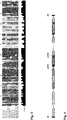
- the disclosure encompasses also examples where the first nucleic acid sequence encodes an amino acid sequence comprising a conserved domain area A', B' and/or C' having an amino acid sequence of domain A', B' and/or C' of Arabidopsis thaliana as shown in Figure 2 .
- IPTs cytokinin biosynthetic isopentenyl-transferase enzyme
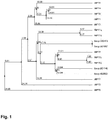
- AtlPT7 orthologs identified from Populus trichocarpa PtlPT7a eugene3.00041149; PtlPT7b eugene3.00080280; PtlPT5a fgenesh4_pg.C_LG_X000229; PtlPT5b_fgenesh4_pg.C_LG_VIII001825) and Eucalyptus grandis (Eucgr.B01146; Eucgr.G00473; Eucgr.G01887; Eucgr.H03602) genomes as shown in Fig. 3 .
- AtlPT7 and AtlPT5 have been shown to form a clade together. AtlPT5 appears to be closest Arabidopsis ortholog for the AtlPT7. Between the AtlPT7 orthologs, the consensus sequence, called here consensus area D, with over 50% similar identity is shown in Figure 3 (capital letters indicate amino acids with 100% identical amino acids, whereas lowercase letters indicate identical amino acids in 50-90% of the compared sequences). In A. thaliana IPT7 amino acids 40-141 correspond the conserved sequence, third line in Figure 3 (in Sequence listing SEQ ID NO: 6).
- BLAST Basic Local Alignment Search Tool
- a BLAST search enables a researcher to compare a query sequence with a library or database of sequences, and identify library sequences that resemble the query sequence above a certain threshold. Different types of BLASTs are available according to the query sequences. The BLAST program was designed by Stephen Altschul (Altschul, 1990).
- the gene encoding cytokinin biosynthetic isopentenyl-transferase enzyme can be selected among genes encoding different IPTs, preferably from the group of genes encoding IPTs, which belong to enzyme class EC 2.5.1.27.
- cytokinin biosynthetic isopentenyl-transferase enzyme comprise a conserved domain area or areas A, B and/or C having an amino acid sequence or sequences selected from the group of SEQ ID NO: 3, 4 and 5.
- the gene encoding cytokinin biosynthetic isopentenyl-transferase enzyme comprise a conserved domain area or areas A', B' and/or C' having an amino acid sequence or sequences of the corresponding domain areas A', B' and/or C' shown in Figure 2 of 9 IPTs of Arabidopsis thaliana.
- the gene encoding cytokinin biosynthetic isopentenyl-transferase enzyme comprise an area D having at least 80% identity, preferably at least 85% identity, more preferably at least 90% identity, still more preferably at least 95% identity, more and more preferably at least 98% identity, still more preferably at least 99% identity, most preferably 100% identity to amino acid sequence SEQ ID NO:6, (i.e. with the corresponding area in SEQ ID NO:2).
- the other areas of the gene encoding cytokinin biosynthetic isopentenyl-transferase enzyme can vary in broader range than the area encoding conserved domain A, B and /or C or A', B' and/or C' and/or area D.
- the identity % in these areas can be less than 80%, less than 75%, less than 70%, less than 60%, or even less than 50%.
- a gene encoding cytokinin biosynthetic isopentenyl-transferase enzyme encodes an amino acid sequence showing at least 80% identity, preferably at least 85% identity, more preferably at least 90% identity, still more preferably at least 95%, more and more preferably at least 98%, still more preferably at least 99%, most preferably at least 100% identity to SEQ ID NO: 2.
- a gene encoding cytokinin biosynthetic isopentenyl-transferase enzyme can be selected among genes encoding different IPTs, preferably the gene encodes IPT 7 or IPT 5, more preferably IPT7.
- a gene encoding cytokinin biosynthetic isopentenyl-transferase enzyme may be derived from any plant genera or species expressing a functional cytokinin biosynthetic isopentenyl-transferase enzyme.
- the plant is an angiosperm, preferably an Arabidopsis, a Betula, a Populus or a Eucalyptus plant.
- Arabidopsis thaliana isopentenyltransferase 7 (AtIPT7) is from Arabidopsis, the gene sequence, and functional analysis of a highly orthologous Arabidopsis IPT, AtIPT4, protein has been published by Kakimoto 2001.
- the present invention has been exemplified by using Arabidopsis cytokinin biosynthetic isopentenyl-transferase enzyme IPT7 encoding gene (gene AT3G23630) SEQ ID NO: 1.
- Said gene encodes amino acid sequence SEQ ID NO: 2.
- amino acid sequence SEQ ID NO: 2 has been compared with IPTs from other sources, it has been found that close homologies can be found in domain area A, domain area B, and/or in domain area C or between different IPTs in Arabidopsis thaliana, it has been found that close homologies can be found in domain area A', domain area B', and/or in domain area C' (see Figures 2 and 3 ).
- the identity % of these areas between amino acid sequences from different origin is at least 80%, preferably at least 85%, more preferably at least 90%, still more preferably at least 95% even more preferably at least 97%, more and more preferably at least 98%, more and more preferably at least 99%, most preferably 100% identity.
- genes functioning in similar manner as IPT7 gene from Arabidopsis from several other plant genera and species and/or from different IPTs. It is also possible to use nucleic acid sequences comprising substitutions, insertions, deletions or other modifications compared to SEQ ID NO:1, provided that the nucleic acid sequence encodes cytokinin biosynthetic isopentenyl-transferase enzyme, preferably belonging to enzyme class EC 2.5.1.27. More preferably the enzyme belongs to IPT7.
- Nucleic acid sequences encoding cytokinin biosynthetic isopentenyl-transferase enzymes and which are used in the genetic constructs as described herein are typically sequences isolated from their origin, for example A. thaliana IPT7 is used in a genetic construct introduced to Populus cells to grow a transgenic Populus tree. However, it is also possible to enhance the expression of endogenous nucleic acid sequences encoding IPTs.
- the genetic construct according to this disclosure comprises a second nucleic acid sequence, which is a promoter allowing expression of cytokinin biosynthetic isopentenyl-transferase enzyme in meristematic cells of a plant.
- a promoter allowing expression of cytokinin biosynthetic isopentenyl-transferase enzyme in meristematic cells of a plant.
- the promoter allows expression in cambial cells and apical cells, more preferably specifically in cambial cells.
- a promoter is meant a DNA region binding RNA polymerase and directing the enzyme to the appropriate transcription initiation site for a particular polynucleotide sequence.
- a promoter may additionally comprise other recognition sequences referred to as upstream promoter elements, which influence the transcription initiation rate.
- birch meristem promoter pBpCRE1 An example of a promoter allowing expression in meristematic cells in cambium and in apical cells is birch meristem promoter pBpCRE1.
- the promoter is preferably defined by SEQ ID NO: 7 (GenBank EU583454, Nieminen et al. 2008).
- a promoter allowing expression in meristematic cells is a promoter allowing expression specifically in cambial cells.
- a promoter allowing expression specifically in cambial cells.
- Such specifically in cambial cells expressing promoter is Populus cambial specific promoter pLM5, preferably defined by SEQ ID NO: 8 (pLM5 promoter is described also in WO2004097024A1 as SEQIDNO4 LMX5 A055P19U).
- the first nucleic acid sequence is operable linked to the second nucleic acid sequence (promoter).
- operable linked is meant that two genetic elements are linked by a functional linkage, for example an effector gene is operable linked to a promoter allowing expression of the effector gene.
- a genetic construct can contain also a selectable marker for the selection of cells comprising the introduced genetic construct.
- Selectable markers are for example antibiotic resistances ampicilline, carbenicilline and hygromysin B resistance.
- promoter pLMX5 which has been operably linked to the effector gene by inserting it into the close proximity of the effector gene in the Gateway 2 nd box cloning site ( Fig.4 )
- transgenic trees with the LMX5::AtIPT7 construct display ectopic overexpression of Arabidopsis thaliana adenosine phosphate-isopentenyltransferase 7(IPT; EC 2.5.1.27), expressed in the cambial zone through the LMX5 promoter (described in Love et al. 2009).
- cytokinin signaling has been stimulated by increasing the amount of cytokinin plant hormone in the cambial zone.
- Suitable vector is for example bacterium Agrobacterium tumefaciens.
- the present disclosure provides a tree, which overexpresses an endogenous nucleic acid sequence encoding cytokinin biosynthetic isopentenyl-transferase enzyme, or expresses an exogenous nucleic acid sequence encoding cytokinin biosynthetic isopentenyl-transferase enzyme.
- the effector gene needs to be expressed in cambial cells.
- a promoter allowing expression in meristematic cells generally.
- it is of disadvantage if the cell division is enhanced in any meristematic cells. If for example the leaves of a tree are grown very large or tight that may of disadvantage, although the stem volume is increased at the same time.
- a promoter allowing expression in cambial cells and apical cells is preferably used, since the overall growth of the tree is not huge, only the stem volume growth and growth of the height.
- Most preferably a promoter is used, allowing expression specifically in cambial cells. In this case the stem volume growth is increased, but not the overall growth of the tree and not either the height of the tree is increased. All the comparisons are meant to be made to a wild type tree of the same species, age and growth conditions.
- the effector gene can be introduced to a tree by using the genetic construct as described herein.
- the expression of an effector gene being endogenous to a tree can be improved.
- the expression of Populus IPT 7 can be improved.
- Expression of the gene can be enhanced through ectopic overexpression, by driving the endogenous gene as through an alternative promoter, driving a higher expression level than the endogenous promoter. This can be done by introducing a novel copy of the endogenous gene, under the chosen promoter, into the genome.
- expression of the endogenous gene can be enhanced through activation tagging, where enhancer elements are introduced into plant genome, where they are able to enhance transcription of genes in their proximity.
- enhanced expression of the endogenous gene may also be attained through genome editing, e.g. with engineered nucleases, which can be used to delete silencor elements repressing expression of the desired genes.
- a transgenic tree produced as described herein expresses at least 40%, preferably at least 44%, more preferably at least 46%, still more preferably at least 50%, more and more preferably at least 60% higher levels of cytokinin signaling in cambial cells during cambial development compared to a WT tree.
- the stem volume growth in said tree is at least 35% higher, preferably at least 38%, more preferably at least 40%, still more preferably at least 45%, more and more preferably at least 50% higher compared to wild type (WT) tree.
- the tree expressing an effector gene in cambial cells belongs preferably to angiosperms.
- the tree is an annual tree or a perennial tree, preferably a perennial tree.
- the tree belongs to genera Betula, Populus or Eucalyptus.
- Preferably the tree belongs to genus Populus.
- the Populus is selected from the group of Populus species P. tremula, P. alba, P. tremuloides, P. canescens, P. deltoids, P. fremontii, P. nigra, P. Canadensis, P. inopina and Populus tremula x tremuloides.
- the function of the construct has been tested and confirmed in the hybrid aspen, Populus tremula x tremuloides.
- the tree expressing an effector gene in cambial cells belongs to gymnosperms.
- the tree is preferably spruce or pine.
- the present disclosure encompasses also various wood products obtainable from the transgenic trees of the disclosure.
- wood products are for example trunks, branches, roots and seeds.
- the present disclosure provides also a method for producing a transgenic plant capable of increased biomass production and/or increased stem volume growth compared to wild type plant.
- the method comprises the steps of
- Agrobacterium based transformation methods for angiosperm trees have been published by e.g. Häggman et al. 2003, Seppänen et al. 2004 and Nilsson et al. 1992.
- the method comprises that plants explants (leaf discs, stem segments, etc.) are incubated in an Agrobacterium culture, after which they are co-cultured with Agrobacterium bacteria on a solid culture medium.
- Agrobacterium bacteria are removed by washing.
- Plants explants are grown on a callus production medium supplemented by an antibiotic to limit the callus production to transgenic cells harbouring the antibiotic resistance gene.
- the forming callus tissues are transferred onto a regeneration medium for shoot production.
- the regenerated shoots are transferred onto a root induction medium. After the roots are formed, the plantlets can be grown in soil.
- the present disclosure provides also a method for improving the production of biomass and/or increased stem volume growth in trees.
- the method comprises the steps of
- Agrobacterium mediated transformation plant explants are co-cultured with Agrobacterium bacteria containing the desired transgene.
- Agrobacterium bacteria will transform plant cells in the explants through the integration of transgenic DNA into the plant genome. Placed on selectable rooting and shooting media, transgenic plants will be regenerated from the transformed cells.
- particles of gold or tungsten are coated with DNA and shot into plant cells. Inserted DNA will integrate into the plant genome.
- transient holes are formed in plant protoplast membranes using electric shock; this allows transgene DNA to enter plant protoplasts.
- transgenic material will integrate into the plant genome.
- biomass production is meant here the additional amount of biomass (stem dry weight mass) of transgenic trees compared to wild type trees at the same age.
- stem dry mass of WT trees was measured at the age of 16 weeks (average of 3 trees) and was 35 ⁇ 2 (STDEV) g, whereas the stem of pLMX5-IPT7 trees (3 trees) was 51 ⁇ 8 g.
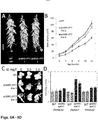
- Transgenic IPT7 overexpressing trees had more stem volume compared to WT trees ( Fig. 5 ).
- the stem volume growth in transgenic trees was in average 53% higher, and at least 38% higher, if standard errors were taken into account.
- Transgenic trees expressed in average 83% and at least 44%, if standard errors were taken into account, higher levels of cytokinin signaling in cambial cells during cambial development compared to WT trees.
- transgenic tree is sterile tree not capable of flower, pollus or seed development.
- Methods used to produce sterile trees are known for a person skilled in the art.
- Transgenic trees can be clonally propagated and tested for their sterility (for abolished, aborted or sterile flower, pollen or seed development).
- transgenic trees displaying an elevated cytokinin signaling level is described herein.
- the status and pattern of auxin and cytokinin distribution and signaling were analyzed.
- the concentration of auxin and cytokinin profiles across the cambial meristem in Populus stem was characterized. Furthermore, to correlate the cytokinin hormonal profiling with cytokinin signaling, an extensive analysis of the expression profiles of cytokinin biosynthetic and signaling genes across the Populus cambial zone was made.
- PtSUC2 was used as a phloem cell marker, PtANT, as a marker for dividing cambial cells, and PtCOMT2 for phloem fibers and xylem cells. The markers correlated well with the identity of the tissues determined through microscopy during the cryo-sectioning.
- the present invention is based on a detailed analysis of cytokinin function in the regulation of cambial development in a tree stem.
- cytokinin hormone has a concentration gradient across the cambial zone. The cytokinin concentration peak coincides with the high expression domain of biosynthetic and signaling genes of this hormone.
- the cambial distribution profile of cytokinin is distinct, but partially overlapping with, the concentration profiles of auxin.
- the high auxin concentration is restricted at the domain of actively dividing, undifferentiated cambial cells; whereas the high cytokinin concentration has a larger domain extending from the undifferented cambium to the developing phloem.
- biomass accumulation in tree stem can be enhanced by stimulating cytokinin signaling in the transgenic Populus trees.
- These trees displayed enhanced cytokinin responsiveness together with an elevated level of cytokinin signaling.
- the cambial cell division activity of the transgenic trees was increased as compared to the WT trees, and respectively the radial growth of the stem was accelerated.
- the stimulatory effect of cytokinin on the radial growth was independent of the apical growth rate.
- this stimulative action of cytokinin appeared to take place through crosstalk between CK and auxin: an elevated CK concentration and signaling increased the level and widened the domain of auxin concentration and signaling in the cambial region.
- the partially overlapping domains of auxin and cytokinin action have specific functions in the regulation of different developmental processes taking place across the cambial zone.
- Cross-talk between auxin and cytokinin at the middle of the cambium may define the stem cell niche for the maintenance of an actively dividing cell pool.
- the high cytokinin to auxin ratio at the phloem side of the cambial zone contributes to the determination of the phloem identity of the developing vascular cells.
- transgenic Populus (P. tremula x tremuloides ) trees were engineered to display elevated cytokinin signaling during cambial development.
- AtlPT7 gene from Arabidopsis encoding a cytokinin biosynthetic isopentenyltransferase was used.
- the AtlPT7 was expressed under the cambial specific PttLMX5 promoter (Love et al. 2009), which shows a high expression in the cambial and developing xylem cells.
- Fig. 5A To evaluate the effect of AtlPT7 activity on tree development, growth dynamics of the transgenic trees was studied under greenhouse conditions ( FIG. 5A ).
- the apical growth rate of the pLMX5::AtIPT7 lines was similar to wild-type plants; the transgenic plants had the same height as the controls at the same age ( Fig. 5A ).
- the diameter of the stem was increased in the transgenic trees as compared to the WT trees.
- stem volume which was counted as the additive volume of internodes without the leaves, was larger than that of the WT trees ( Fig. 5B ).
- Fig 5A shows the phenotypes of WT and pLMX5-IPT7 line 1 and 3 Populus trees in the age of three months. All trees had similar height.
- Fig 5B shows the trunk volume of the transgenic pLMX5-IPT7 Populus lines 1 and 3 as compared to the WT.
- the total stem volume of the transgenic lines was increased as compared to the WT. Values are averages ( ⁇ SD) from five individual trees per each line.
- cytokinin responsiveness of the transgenic trees was tested.
- classic cytokinin responsiveness assay Skoog & Miller 1957
- a low cytokinin-to-auxin ratio induces root regeneration from plant segments and a high cytokinin-to-auxin ratio promotes instead shoot regeneration.
- shoot segments were cut from greenhouse grown transgenic and WT lines, and then grown in in vitro conditions on a medium with a varying concentration of trans-Zeatin (tZ).
- the transgenic lines display an elevated basal level of cytokinin signaling, as even a moderate concentration of applied cytokinin can induce shoot production; a typical cytokinin response phenotype. Additionally, the transgenic lines produced roots on the medium with 0 mg/l tZ. As auxin, together with cytokinin, promotes root formation, the result indicates that these lines may have had both more cytokinin and auxin than the control trees.
- Fig 5C depicts cytokinin responsiveness assay of the WT and pLMX5-IPT7 lines.
- Stem segments were grown on a medium with 0.5 mg/L auxin (IAA) and 0, 0.5 or 1.5 mg/L cytokinin t-zeatin.
- Transgenic lines regenerated shoots already in low cytokinin concentrations (0.5 mg/L), whereas WT required a higher (1.5 mg/L) concentration of this hormone.
- the status of cambial cytokinin signaling in the transgenic trees was studied.
- the expression levels of two cytokinin marker genes were analyzed. Two marker genes were used to evaluate the cytokinin signaling level: a cytokinin receptor PttHK3a and a type-A response regulator PttRR7.
- the level of auxin signaling was studied through an auxin signaling marker gene (PttlAA3).
- the PttRR7 represents a primary response gene of cytokinin phosphorelay: expression of A-type response regulator genes is upregulated by cytokinin signaling: the expression level of this gene reflects the level of cytokinin response taking place in the analyzed trees.
- the expression of cytokinin receptor PttHK3a was essentially the same as in the WT trees whereas the expression levels of PttRR7 and PttlAA3 were elevated ( Fig. 5D ).
- Fig 5D depicts the expression of a cytokinin receptor ( PttHK3a ), a cytokinin signaling primary response gene (type-A RR PttRR7 ) and an auxin signaling marker gene ( PttlAA3 ) in the WT and pLMX5-IPT7 line 1 stem.
- the expression levels of PttRR7 and PttlAA3 were elevated in the pLMX5-IPT7 line as compared to WT, whereas the expression of PttHK3a was not affected.
- the cambial anatomy of transgenic trees was analyzed.
- Meristematic undifferentiated cambial cells were defined in the cross-sections as the small and flat, thin-walled cells localized in the cambial cell files between the differentiating xylem and phloem cells.
- the first differentiating xylem and phloem cells were defined as having a larger and more round size.
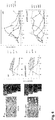
- the vascular cambium contained more meristematic cells in the cambial cell files than the WT trees (24 vs 15) ( Fig. 6A-B ). Based on the increased cell number, it can be concluded that the cambial cell files were undergoing additional cell divisions, as compared to the WT.
- the elevated cytokinin signaling level also affected the morphology of the produced xylem cells.
- the dimensions of the xylem cells, vessels and fibers was analyzed, in macerated stem samples. As compared to the WT trees, the length and width of the xylem cells in the IPT7-trees was not significantly different.
- auxin and cytokinin signaling marker genes were characterized across the cambial zone.
- PttRR7 was used as a marker for cytokinin and PttlAA3 for auxin signaling.
- cryo-sections representing phloem, developing phloem, cambium, developing xylem and xylem were analyzed.
- the PttSUC2 and PttCOMT were used as marker genes for phloem and phloem fibers and xylem cells, respectively, to confirm the identity of the sections.
- Two wild-type trees and two IPT7 trees were analyzed.
- the RR7 expression peaks in the developing phloem tissue, where also the phloem marker PtSUC2 has high expression ( Fig. 6 ).
- Cambium where the phloem and xylem markers have low expression levels, displays high IAA3 and rising RR7 expression levels.
- Developing xylem tissue has high IAA3 and a rising COMT expression, whereas in maturing xylem only the xylem marker expression is high.
- the IPT7-trees have a wider domain of high auxin signaling.
- the cambium which is a domain of high RR7 and IAA3 expression
- developing xylem a domain of high IAA3 and moderate RR7 expression
- tissues are larger in the transgenic lines as compared to the WT tree ( Fig. 6 ).
- This widened domain of auxin signaling corresponds with the increase in the number of meristematic cells.
- the width of high cytokinin concentration domain (fractions 3-7 in both WT and pLMX5::IPT7) was instead not affected.
- the cambial domain with high auxin marker gene expression and decreasing cytokinin marker gene expression (WT fractions 5-7 vs pLMX5::IPT7 fractions 5-11) was wider in the transgenic line than in the WT tree (3 vs 7 fractions).
- the level of transgene AtlPT7 expression was below detection limit in WT, whereas had a high expression at the cambial zone of the pLMX5::IPT7 tree.
Landscapes
- Health & Medical Sciences (AREA)
- Genetics & Genomics (AREA)
- Life Sciences & Earth Sciences (AREA)
- Engineering & Computer Science (AREA)
- Chemical & Material Sciences (AREA)
- Organic Chemistry (AREA)
- Wood Science & Technology (AREA)
- Zoology (AREA)
- Bioinformatics & Cheminformatics (AREA)
- General Engineering & Computer Science (AREA)
- Biomedical Technology (AREA)
- Biotechnology (AREA)
- Molecular Biology (AREA)
- General Health & Medical Sciences (AREA)
- Biochemistry (AREA)
- Microbiology (AREA)
- Plant Pathology (AREA)
- Biophysics (AREA)
- Physics & Mathematics (AREA)
- Cell Biology (AREA)
- Medicinal Chemistry (AREA)
- Endocrinology (AREA)
- Breeding Of Plants And Reproduction By Means Of Culturing (AREA)
- Micro-Organisms Or Cultivation Processes Thereof (AREA)
- Enzymes And Modification Thereof (AREA)
Applications Claiming Priority (2)
| Application Number | Priority Date | Filing Date | Title |
|---|---|---|---|
| FI20136335 | 2013-12-30 | ||
| PCT/FI2014/051057 WO2015101709A1 (en) | 2013-12-30 | 2014-12-29 | A method for improving stem volume growth and biomass production in trees |
Publications (3)
| Publication Number | Publication Date |
|---|---|
| EP3090054A1 EP3090054A1 (en) | 2016-11-09 |
| EP3090054A4 EP3090054A4 (en) | 2017-05-24 |
| EP3090054B1 true EP3090054B1 (en) | 2019-12-18 |
Family
ID=53493308
Family Applications (1)
| Application Number | Title | Priority Date | Filing Date |
|---|---|---|---|
| EP14876044.0A Active EP3090054B1 (en) | 2013-12-30 | 2014-12-29 | A method for improving stem volume growth and biomass production in trees |
Country Status (6)
| Country | Link |
|---|---|
| US (2) | US20160333367A1 (https=) |
| EP (1) | EP3090054B1 (https=) |
| CN (1) | CN105916988A (https=) |
| BR (1) | BR112016015327B1 (https=) |
| UY (1) | UY35939A (https=) |
| WO (1) | WO2015101709A1 (https=) |
Families Citing this family (8)
| Publication number | Priority date | Publication date | Assignee | Title |
|---|---|---|---|---|
| CN114555796A (zh) * | 2019-09-20 | 2022-05-27 | 由农业部部长代表的美利坚合众国 | 用于修饰植物特征而不修饰植物基因组的组合物和方法 |
| AU2021268958A1 (en) * | 2020-05-06 | 2022-12-08 | Salk Institute For Biological Studies | Expression of IPT7 From TSS Promoter Increases Root Mass and Carbon Sequestration |
| CN118667837A (zh) * | 2022-08-19 | 2024-09-20 | 首都师范大学 | 一种植株籽粒大小调控基因及其应用 |
| CN117568396B (zh) * | 2023-11-20 | 2025-02-18 | 西南大学 | 过量表达毛白杨独脚金内酯受体PtoD14基因在提高木材产量中的应用 |
| CN117821496B (zh) * | 2024-01-05 | 2025-06-24 | 西南大学 | 过表达生长素转运蛋白PtoPIN1a基因在提高毛白杨生物量中的应用 |
| CN119614619A (zh) * | 2025-01-17 | 2025-03-14 | 西南大学 | 毛白杨IPT5b基因在创制高产耐荫杨树种质上的应用 |
| CN119955847B (zh) * | 2025-04-11 | 2025-08-08 | 聊城大学 | PagSIZ1基因在调控杨树生长发育中的应用 |
| CN121022915B (zh) * | 2025-09-05 | 2026-03-17 | 山东农业大学 | 一种与杨树水分利用率相关的PtoERF54基因及其应用 |
Family Cites Families (11)
| Publication number | Priority date | Publication date | Assignee | Title |
|---|---|---|---|---|
| EP1033405A3 (en) * | 1999-02-25 | 2001-08-01 | Ceres Incorporated | Sequence-determined DNA fragments and corresponding polypeptides encoded thereby |
| WO2002072818A1 (en) * | 2001-03-12 | 2002-09-19 | Suntory Limited | Genes encoding proteins participating in cytokinin synthesis |
| AU2001289843A1 (en) * | 2001-08-28 | 2002-02-13 | Bayer Cropscience Ag | Polypeptides for identifying herbicidally active compounds |
| WO2004074442A2 (en) * | 2003-02-14 | 2004-09-02 | Monsanto Technology Llc | Plant regulatory sequences for selective control of gene expression |
| SE0301233D0 (sv) * | 2003-04-28 | 2003-04-28 | Swetree Technologies Ab | Tissue specific promoters |
| DE602004008180T2 (de) * | 2003-10-10 | 2008-04-30 | Sumitomo Chemical Co., Ltd. | Transformierte Zellen, die einen Cytokinin Rezeptor und ein Cytokinin Biosynthese-Enzym koexprimieren |
| US7253340B2 (en) * | 2004-02-02 | 2007-08-07 | University Of Florida Research Foundation | Floral organ tissue-specific expression of isopentenyl transferase |
| US20060064786A1 (en) | 2004-09-17 | 2006-03-23 | Pioneer Hi-Bred International, Inc. | Isopentenyl transferase sequences and methods of use |
| CA2526686A1 (en) * | 2004-12-11 | 2006-06-11 | Sungene Gmbh | Expression cassettes for regulating meristem-preferential or meristem-specific expression in plants |
| JP2007197355A (ja) | 2006-01-25 | 2007-08-09 | Osaka Univ | 植物の二次肥厚促進剤及び二次肥厚が促進される植物の生産方法 |
| WO2007090143A2 (en) * | 2006-02-01 | 2007-08-09 | Pioneer Hi-Bred International, Inc. | Soybean isopentenyl transferase genes and methods of use |
-
2014
- 2014-12-29 US US15/108,992 patent/US20160333367A1/en not_active Abandoned
- 2014-12-29 WO PCT/FI2014/051057 patent/WO2015101709A1/en not_active Ceased
- 2014-12-29 EP EP14876044.0A patent/EP3090054B1/en active Active
- 2014-12-29 BR BR112016015327-8A patent/BR112016015327B1/pt active IP Right Grant
- 2014-12-29 CN CN201480071586.9A patent/CN105916988A/zh active Pending
- 2014-12-30 UY UY0001035939A patent/UY35939A/es active IP Right Grant
-
2018
- 2018-11-26 US US16/200,012 patent/US11427831B2/en active Active
Non-Patent Citations (1)
| Title |
|---|
| None * |
Also Published As
| Publication number | Publication date |
|---|---|
| US11427831B2 (en) | 2022-08-30 |
| EP3090054A1 (en) | 2016-11-09 |
| US20160333367A1 (en) | 2016-11-17 |
| US20190185872A1 (en) | 2019-06-20 |
| EP3090054A4 (en) | 2017-05-24 |
| BR112016015327B1 (pt) | 2022-08-09 |
| UY35939A (es) | 2015-07-31 |
| CN105916988A (zh) | 2016-08-31 |
| WO2015101709A1 (en) | 2015-07-09 |
| BR112016015327A2 (https=) | 2017-09-19 |
Similar Documents
| Publication | Publication Date | Title |
|---|---|---|
| US11427831B2 (en) | Method for improving stem volume growth and biomass production in trees | |
| US11732270B2 (en) | Compositions and methods for manipulating the development of plants | |
| JPH08508412A (ja) | エチレンに対する修正された応答をもつ植物 | |
| EP0874056B1 (en) | C3 plants expressing photosynthetic enzymes of C4 plants | |
| CN116419673A (zh) | 从tss启动子表达ipt7增加根质量和碳固存 | |
| Tanaka et al. | Creating ruffled flower petals in Cyclamen persicum by expression of the chimeric cyclamen TCP repressor | |
| US10072271B2 (en) | Methods for improving crop yield | |
| Kuluev et al. | Morphological and physiological characteristics of transgenic tobacco plants expressing expansin genes: AtEXP10 from Arabidopsis and PnEXPA1 from poplar | |
| US10647988B2 (en) | Method for promoting an increase in plant biomass, productivity and drought resistance | |
| KR20120121350A (ko) | 식물의 생산성 증대 기능, 노화 지연 기능 및 스트레스 내성 기능을 갖는 atpg7 단백질과 그 유전자 및 이들의 용도 | |
| DE19734218A1 (de) | Verfahren zur Ertragssteigerung in Pflanzen | |
| CA3154052A1 (en) | Plants having a modified lazy protein | |
| JP6121457B2 (ja) | 改善された成長特性を有する植物 | |
| US20230279419A1 (en) | Enhancement of productivity in c3 plants | |
| Zhang et al. | Functional characterization of three TERMINAL FLOWER 1-like genes from Platanus acerifolia | |
| KR20150003099A (ko) | 식물의 생산성 증대 기능, 스트레스 내성 기능 및 노화 지연 기능을 갖는 atpg6 단백질과 그 유전자 및 이들의 용도 | |
| KR20150001926A (ko) | 식물의 생산성 증대 기능, 스트레스 내성 기능 및 노화 지연 기능을 갖는 atpg10 단백질과 그 유전자 및 이들의 용도 | |
| JPH0589A (ja) | 遺伝子発現の誘導方法 | |
| KR20190044442A (ko) | 벼 유래의 v p 유전자의 수확량 및 환경 스트레스 조절자로서의 용도 | |
| Wise | Cellulose biosynthesis in Physcomitrella patens | |
| Kwon et al. | CGMMV Resistant Watermelon Rootstock and Environmental Risk Assessment |
Legal Events
| Date | Code | Title | Description |
|---|---|---|---|
| PUAI | Public reference made under article 153(3) epc to a published international application that has entered the european phase |
Free format text: ORIGINAL CODE: 0009012 |
|
| 17P | Request for examination filed |
Effective date: 20160615 |
|
| AK | Designated contracting states |
Kind code of ref document: A1 Designated state(s): AL AT BE BG CH CY CZ DE DK EE ES FI FR GB GR HR HU IE IS IT LI LT LU LV MC MK MT NL NO PL PT RO RS SE SI SK SM TR |
|
| AX | Request for extension of the european patent |
Extension state: BA ME |
|
| DAX | Request for extension of the european patent (deleted) | ||
| A4 | Supplementary search report drawn up and despatched |
Effective date: 20170426 |
|
| RIC1 | Information provided on ipc code assigned before grant |
Ipc: A01H 7/00 20060101ALI20170420BHEP Ipc: C12N 15/82 20060101AFI20170420BHEP Ipc: A01H 5/00 20060101ALI20170420BHEP Ipc: A01H 1/00 20060101ALI20170420BHEP Ipc: C12N 9/10 20060101ALI20170420BHEP |
|
| STAA | Information on the status of an ep patent application or granted ep patent |
Free format text: STATUS: EXAMINATION IS IN PROGRESS |
|
| 17Q | First examination report despatched |
Effective date: 20180115 |
|
| GRAP | Despatch of communication of intention to grant a patent |
Free format text: ORIGINAL CODE: EPIDOSNIGR1 |
|
| STAA | Information on the status of an ep patent application or granted ep patent |
Free format text: STATUS: GRANT OF PATENT IS INTENDED |
|
| INTG | Intention to grant announced |
Effective date: 20190614 |
|
| GRAJ | Information related to disapproval of communication of intention to grant by the applicant or resumption of examination proceedings by the epo deleted |
Free format text: ORIGINAL CODE: EPIDOSDIGR1 |
|
| STAA | Information on the status of an ep patent application or granted ep patent |
Free format text: STATUS: EXAMINATION IS IN PROGRESS |
|
| GRAR | Information related to intention to grant a patent recorded |
Free format text: ORIGINAL CODE: EPIDOSNIGR71 |
|
| GRAS | Grant fee paid |
Free format text: ORIGINAL CODE: EPIDOSNIGR3 |
|
| STAA | Information on the status of an ep patent application or granted ep patent |
Free format text: STATUS: GRANT OF PATENT IS INTENDED |
|
| GRAA | (expected) grant |
Free format text: ORIGINAL CODE: 0009210 |
|
| STAA | Information on the status of an ep patent application or granted ep patent |
Free format text: STATUS: THE PATENT HAS BEEN GRANTED |
|
| INTC | Intention to grant announced (deleted) | ||
| AK | Designated contracting states |
Kind code of ref document: B1 Designated state(s): AL AT BE BG CH CY CZ DE DK EE ES FI FR GB GR HR HU IE IS IT LI LT LU LV MC MK MT NL NO PL PT RO RS SE SI SK SM TR |
|
| INTG | Intention to grant announced |
Effective date: 20191112 |
|
| REG | Reference to a national code |
Ref country code: CH Ref legal event code: EP |
|
| REG | Reference to a national code |
Ref country code: DE Ref legal event code: R096 Ref document number: 602014058751 Country of ref document: DE |
|
| REG | Reference to a national code |
Ref country code: IE Ref legal event code: FG4D |
|
| REG | Reference to a national code |
Ref country code: AT Ref legal event code: REF Ref document number: 1214631 Country of ref document: AT Kind code of ref document: T Effective date: 20200115 |
|
| REG | Reference to a national code |
Ref country code: FI Ref legal event code: FGE |
|
| REG | Reference to a national code |
Ref country code: SE Ref legal event code: TRGR |
|
| REG | Reference to a national code |
Ref country code: NL Ref legal event code: MP Effective date: 20191218 |
|
| PG25 | Lapsed in a contracting state [announced via postgrant information from national office to epo] |
Ref country code: LT Free format text: LAPSE BECAUSE OF FAILURE TO SUBMIT A TRANSLATION OF THE DESCRIPTION OR TO PAY THE FEE WITHIN THE PRESCRIBED TIME-LIMIT Effective date: 20191218 Ref country code: GR Free format text: LAPSE BECAUSE OF FAILURE TO SUBMIT A TRANSLATION OF THE DESCRIPTION OR TO PAY THE FEE WITHIN THE PRESCRIBED TIME-LIMIT Effective date: 20200319 Ref country code: BG Free format text: LAPSE BECAUSE OF FAILURE TO SUBMIT A TRANSLATION OF THE DESCRIPTION OR TO PAY THE FEE WITHIN THE PRESCRIBED TIME-LIMIT Effective date: 20200318 Ref country code: NO Free format text: LAPSE BECAUSE OF FAILURE TO SUBMIT A TRANSLATION OF THE DESCRIPTION OR TO PAY THE FEE WITHIN THE PRESCRIBED TIME-LIMIT Effective date: 20200318 Ref country code: LV Free format text: LAPSE BECAUSE OF FAILURE TO SUBMIT A TRANSLATION OF THE DESCRIPTION OR TO PAY THE FEE WITHIN THE PRESCRIBED TIME-LIMIT Effective date: 20191218 |
|
| REG | Reference to a national code |
Ref country code: LT Ref legal event code: MG4D |
|
| PG25 | Lapsed in a contracting state [announced via postgrant information from national office to epo] |
Ref country code: RS Free format text: LAPSE BECAUSE OF FAILURE TO SUBMIT A TRANSLATION OF THE DESCRIPTION OR TO PAY THE FEE WITHIN THE PRESCRIBED TIME-LIMIT Effective date: 20191218 Ref country code: HR Free format text: LAPSE BECAUSE OF FAILURE TO SUBMIT A TRANSLATION OF THE DESCRIPTION OR TO PAY THE FEE WITHIN THE PRESCRIBED TIME-LIMIT Effective date: 20191218 |
|
| PG25 | Lapsed in a contracting state [announced via postgrant information from national office to epo] |
Ref country code: AL Free format text: LAPSE BECAUSE OF FAILURE TO SUBMIT A TRANSLATION OF THE DESCRIPTION OR TO PAY THE FEE WITHIN THE PRESCRIBED TIME-LIMIT Effective date: 20191218 |
|
| PG25 | Lapsed in a contracting state [announced via postgrant information from national office to epo] |
Ref country code: EE Free format text: LAPSE BECAUSE OF FAILURE TO SUBMIT A TRANSLATION OF THE DESCRIPTION OR TO PAY THE FEE WITHIN THE PRESCRIBED TIME-LIMIT Effective date: 20191218 Ref country code: NL Free format text: LAPSE BECAUSE OF FAILURE TO SUBMIT A TRANSLATION OF THE DESCRIPTION OR TO PAY THE FEE WITHIN THE PRESCRIBED TIME-LIMIT Effective date: 20191218 Ref country code: CZ Free format text: LAPSE BECAUSE OF FAILURE TO SUBMIT A TRANSLATION OF THE DESCRIPTION OR TO PAY THE FEE WITHIN THE PRESCRIBED TIME-LIMIT Effective date: 20191218 Ref country code: PT Free format text: LAPSE BECAUSE OF FAILURE TO SUBMIT A TRANSLATION OF THE DESCRIPTION OR TO PAY THE FEE WITHIN THE PRESCRIBED TIME-LIMIT Effective date: 20200513 Ref country code: RO Free format text: LAPSE BECAUSE OF FAILURE TO SUBMIT A TRANSLATION OF THE DESCRIPTION OR TO PAY THE FEE WITHIN THE PRESCRIBED TIME-LIMIT Effective date: 20191218 |
|
| REG | Reference to a national code |
Ref country code: CH Ref legal event code: PL |
|
| REG | Reference to a national code |
Ref country code: BE Ref legal event code: MM Effective date: 20191231 |
|
| PG25 | Lapsed in a contracting state [announced via postgrant information from national office to epo] |
Ref country code: IS Free format text: LAPSE BECAUSE OF FAILURE TO SUBMIT A TRANSLATION OF THE DESCRIPTION OR TO PAY THE FEE WITHIN THE PRESCRIBED TIME-LIMIT Effective date: 20200418 Ref country code: SK Free format text: LAPSE BECAUSE OF FAILURE TO SUBMIT A TRANSLATION OF THE DESCRIPTION OR TO PAY THE FEE WITHIN THE PRESCRIBED TIME-LIMIT Effective date: 20191218 Ref country code: SM Free format text: LAPSE BECAUSE OF FAILURE TO SUBMIT A TRANSLATION OF THE DESCRIPTION OR TO PAY THE FEE WITHIN THE PRESCRIBED TIME-LIMIT Effective date: 20191218 |
|
| REG | Reference to a national code |
Ref country code: DE Ref legal event code: R097 Ref document number: 602014058751 Country of ref document: DE |
|
| PG25 | Lapsed in a contracting state [announced via postgrant information from national office to epo] |
Ref country code: MC Free format text: LAPSE BECAUSE OF FAILURE TO SUBMIT A TRANSLATION OF THE DESCRIPTION OR TO PAY THE FEE WITHIN THE PRESCRIBED TIME-LIMIT Effective date: 20191218 |
|
| REG | Reference to a national code |
Ref country code: AT Ref legal event code: MK05 Ref document number: 1214631 Country of ref document: AT Kind code of ref document: T Effective date: 20191218 |
|
| PLBE | No opposition filed within time limit |
Free format text: ORIGINAL CODE: 0009261 |
|
| STAA | Information on the status of an ep patent application or granted ep patent |
Free format text: STATUS: NO OPPOSITION FILED WITHIN TIME LIMIT |
|
| PG25 | Lapsed in a contracting state [announced via postgrant information from national office to epo] |
Ref country code: LU Free format text: LAPSE BECAUSE OF NON-PAYMENT OF DUE FEES Effective date: 20191229 Ref country code: ES Free format text: LAPSE BECAUSE OF FAILURE TO SUBMIT A TRANSLATION OF THE DESCRIPTION OR TO PAY THE FEE WITHIN THE PRESCRIBED TIME-LIMIT Effective date: 20191218 Ref country code: IE Free format text: LAPSE BECAUSE OF NON-PAYMENT OF DUE FEES Effective date: 20191229 Ref country code: DK Free format text: LAPSE BECAUSE OF FAILURE TO SUBMIT A TRANSLATION OF THE DESCRIPTION OR TO PAY THE FEE WITHIN THE PRESCRIBED TIME-LIMIT Effective date: 20191218 |
|
| 26N | No opposition filed |
Effective date: 20200921 |
|
| PG25 | Lapsed in a contracting state [announced via postgrant information from national office to epo] |
Ref country code: BE Free format text: LAPSE BECAUSE OF NON-PAYMENT OF DUE FEES Effective date: 20191231 Ref country code: SI Free format text: LAPSE BECAUSE OF FAILURE TO SUBMIT A TRANSLATION OF THE DESCRIPTION OR TO PAY THE FEE WITHIN THE PRESCRIBED TIME-LIMIT Effective date: 20191218 Ref country code: AT Free format text: LAPSE BECAUSE OF FAILURE TO SUBMIT A TRANSLATION OF THE DESCRIPTION OR TO PAY THE FEE WITHIN THE PRESCRIBED TIME-LIMIT Effective date: 20191218 Ref country code: CH Free format text: LAPSE BECAUSE OF NON-PAYMENT OF DUE FEES Effective date: 20191231 Ref country code: LI Free format text: LAPSE BECAUSE OF NON-PAYMENT OF DUE FEES Effective date: 20191231 |
|
| PG25 | Lapsed in a contracting state [announced via postgrant information from national office to epo] |
Ref country code: IT Free format text: LAPSE BECAUSE OF FAILURE TO SUBMIT A TRANSLATION OF THE DESCRIPTION OR TO PAY THE FEE WITHIN THE PRESCRIBED TIME-LIMIT Effective date: 20191218 |
|
| PG25 | Lapsed in a contracting state [announced via postgrant information from national office to epo] |
Ref country code: PL Free format text: LAPSE BECAUSE OF FAILURE TO SUBMIT A TRANSLATION OF THE DESCRIPTION OR TO PAY THE FEE WITHIN THE PRESCRIBED TIME-LIMIT Effective date: 20191218 |
|
| PG25 | Lapsed in a contracting state [announced via postgrant information from national office to epo] |
Ref country code: CY Free format text: LAPSE BECAUSE OF FAILURE TO SUBMIT A TRANSLATION OF THE DESCRIPTION OR TO PAY THE FEE WITHIN THE PRESCRIBED TIME-LIMIT Effective date: 20191218 |
|
| PG25 | Lapsed in a contracting state [announced via postgrant information from national office to epo] |
Ref country code: HU Free format text: LAPSE BECAUSE OF FAILURE TO SUBMIT A TRANSLATION OF THE DESCRIPTION OR TO PAY THE FEE WITHIN THE PRESCRIBED TIME-LIMIT; INVALID AB INITIO Effective date: 20141229 Ref country code: MT Free format text: LAPSE BECAUSE OF FAILURE TO SUBMIT A TRANSLATION OF THE DESCRIPTION OR TO PAY THE FEE WITHIN THE PRESCRIBED TIME-LIMIT Effective date: 20191218 |
|
| PG25 | Lapsed in a contracting state [announced via postgrant information from national office to epo] |
Ref country code: TR Free format text: LAPSE BECAUSE OF FAILURE TO SUBMIT A TRANSLATION OF THE DESCRIPTION OR TO PAY THE FEE WITHIN THE PRESCRIBED TIME-LIMIT Effective date: 20191218 |
|
| PG25 | Lapsed in a contracting state [announced via postgrant information from national office to epo] |
Ref country code: MK Free format text: LAPSE BECAUSE OF FAILURE TO SUBMIT A TRANSLATION OF THE DESCRIPTION OR TO PAY THE FEE WITHIN THE PRESCRIBED TIME-LIMIT Effective date: 20191218 |
|
| PGFP | Annual fee paid to national office [announced via postgrant information from national office to epo] |
Ref country code: DE Payment date: 20251126 Year of fee payment: 12 |
|
| PGFP | Annual fee paid to national office [announced via postgrant information from national office to epo] |
Ref country code: GB Payment date: 20251119 Year of fee payment: 12 |
|
| PGFP | Annual fee paid to national office [announced via postgrant information from national office to epo] |
Ref country code: FI Payment date: 20251119 Year of fee payment: 12 |
|
| PGFP | Annual fee paid to national office [announced via postgrant information from national office to epo] |
Ref country code: FR Payment date: 20251120 Year of fee payment: 12 |
|
| PGFP | Annual fee paid to national office [announced via postgrant information from national office to epo] |
Ref country code: SE Payment date: 20251119 Year of fee payment: 12 |