EP3089999B1 - Integriertes verfahren zur rückgewinnung eines spektrums von bioprodukten aus frischalgen - Google Patents
Integriertes verfahren zur rückgewinnung eines spektrums von bioprodukten aus frischalgen Download PDFInfo
- Publication number
- EP3089999B1 EP3089999B1 EP14841413.9A EP14841413A EP3089999B1 EP 3089999 B1 EP3089999 B1 EP 3089999B1 EP 14841413 A EP14841413 A EP 14841413A EP 3089999 B1 EP3089999 B1 EP 3089999B1
- Authority
- EP
- European Patent Office
- Prior art keywords
- degree
- agar
- extraction
- followed
- cellulose
- Prior art date
- Legal status (The legal status is an assumption and is not a legal conclusion. Google has not performed a legal analysis and makes no representation as to the accuracy of the status listed.)
- Not-in-force
Links
- 238000000034 method Methods 0.000 title claims description 102
- 241001474374 Blennius Species 0.000 title claims description 90
- 230000008569 process Effects 0.000 title claims description 81
- 238000001228 spectrum Methods 0.000 title claims description 19
- 229920001817 Agar Polymers 0.000 claims description 100
- 235000010419 agar Nutrition 0.000 claims description 94
- 239000008272 agar Substances 0.000 claims description 93
- 238000000605 extraction Methods 0.000 claims description 83
- 239000000047 product Substances 0.000 claims description 67
- 239000000499 gel Substances 0.000 claims description 62
- 229920002678 cellulose Polymers 0.000 claims description 61
- 239000001913 cellulose Substances 0.000 claims description 60
- 150000002632 lipids Chemical class 0.000 claims description 55
- 239000000049 pigment Substances 0.000 claims description 52
- 239000002028 Biomass Substances 0.000 claims description 43
- XLYOFNOQVPJJNP-UHFFFAOYSA-N water Substances O XLYOFNOQVPJJNP-UHFFFAOYSA-N 0.000 claims description 41
- 239000000463 material Substances 0.000 claims description 33
- 239000000679 carrageenan Substances 0.000 claims description 31
- 235000010418 carrageenan Nutrition 0.000 claims description 31
- 229920001525 carrageenan Polymers 0.000 claims description 31
- 229940113118 carrageenan Drugs 0.000 claims description 31
- 239000006228 supernatant Substances 0.000 claims description 31
- UHVMMEOXYDMDKI-JKYCWFKZSA-L zinc;1-(5-cyanopyridin-2-yl)-3-[(1s,2s)-2-(6-fluoro-2-hydroxy-3-propanoylphenyl)cyclopropyl]urea;diacetate Chemical compound [Zn+2].CC([O-])=O.CC([O-])=O.CCC(=O)C1=CC=C(F)C([C@H]2[C@H](C2)NC(=O)NC=2N=CC(=CC=2)C#N)=C1O UHVMMEOXYDMDKI-JKYCWFKZSA-L 0.000 claims description 31
- OKKJLVBELUTLKV-UHFFFAOYSA-N Methanol Chemical compound OC OKKJLVBELUTLKV-UHFFFAOYSA-N 0.000 claims description 30
- 229910052500 inorganic mineral Inorganic materials 0.000 claims description 27
- 239000011707 mineral Substances 0.000 claims description 27
- 241001137890 Gelidiella acerosa Species 0.000 claims description 24
- 241000873911 Gracilaria dura Species 0.000 claims description 24
- 239000007788 liquid Substances 0.000 claims description 19
- 239000002904 solvent Substances 0.000 claims description 19
- HEDRZPFGACZZDS-UHFFFAOYSA-N Chloroform Chemical compound ClC(Cl)Cl HEDRZPFGACZZDS-UHFFFAOYSA-N 0.000 claims description 18
- HEMHJVSKTPXQMS-UHFFFAOYSA-M Sodium hydroxide Chemical compound [OH-].[Na+] HEMHJVSKTPXQMS-UHFFFAOYSA-M 0.000 claims description 18
- 238000011084 recovery Methods 0.000 claims description 18
- 239000008363 phosphate buffer Substances 0.000 claims description 17
- 241001428244 Gelidium pusillum Species 0.000 claims description 16
- VEXZGXHMUGYJMC-UHFFFAOYSA-N Hydrochloric acid Chemical compound Cl VEXZGXHMUGYJMC-UHFFFAOYSA-N 0.000 claims description 15
- 239000000284 extract Substances 0.000 claims description 15
- 238000001035 drying Methods 0.000 claims description 14
- 239000000203 mixture Substances 0.000 claims description 14
- 238000005406 washing Methods 0.000 claims description 14
- 239000000126 substance Substances 0.000 claims description 13
- LFQSCWFLJHTTHZ-UHFFFAOYSA-N Ethanol Chemical compound CCO LFQSCWFLJHTTHZ-UHFFFAOYSA-N 0.000 claims description 12
- KFZMGEQAYNKOFK-UHFFFAOYSA-N Isopropanol Chemical compound CC(C)O KFZMGEQAYNKOFK-UHFFFAOYSA-N 0.000 claims description 12
- BFNBIHQBYMNNAN-UHFFFAOYSA-N ammonium sulfate Chemical compound N.N.OS(O)(=O)=O BFNBIHQBYMNNAN-UHFFFAOYSA-N 0.000 claims description 12
- 229910052921 ammonium sulfate Inorganic materials 0.000 claims description 12
- 235000011130 ammonium sulphate Nutrition 0.000 claims description 12
- 238000005119 centrifugation Methods 0.000 claims description 12
- 239000002253 acid Substances 0.000 claims description 11
- 239000003513 alkali Substances 0.000 claims description 11
- 238000007796 conventional method Methods 0.000 claims description 11
- 239000000243 solution Substances 0.000 claims description 11
- 235000015097 nutrients Nutrition 0.000 claims description 9
- 239000001166 ammonium sulphate Substances 0.000 claims description 7
- 238000010411 cooking Methods 0.000 claims description 7
- 239000004744 fabric Substances 0.000 claims description 7
- 235000000346 sugar Nutrition 0.000 claims description 7
- 238000009835 boiling Methods 0.000 claims description 6
- 239000012153 distilled water Substances 0.000 claims description 6
- 239000000706 filtrate Substances 0.000 claims description 6
- 229960004592 isopropanol Drugs 0.000 claims description 6
- 239000002244 precipitate Substances 0.000 claims description 6
- 108090000623 proteins and genes Proteins 0.000 claims description 6
- 102000004169 proteins and genes Human genes 0.000 claims description 6
- 239000002002 slurry Substances 0.000 claims description 6
- 239000008399 tap water Substances 0.000 claims description 6
- 235000020679 tap water Nutrition 0.000 claims description 6
- 238000010257 thawing Methods 0.000 claims description 6
- 108010059892 Cellulase Proteins 0.000 claims description 5
- 240000004808 Saccharomyces cerevisiae Species 0.000 claims description 5
- 235000014680 Saccharomyces cerevisiae Nutrition 0.000 claims description 5
- 238000002835 absorbance Methods 0.000 claims description 5
- 239000008351 acetate buffer Substances 0.000 claims description 5
- 239000000413 hydrolysate Substances 0.000 claims description 5
- 238000011002 quantification Methods 0.000 claims description 5
- 238000002798 spectrophotometry method Methods 0.000 claims description 5
- 230000009466 transformation Effects 0.000 claims description 5
- 238000005033 Fourier transform infrared spectroscopy Methods 0.000 claims description 4
- 238000004061 bleaching Methods 0.000 claims description 4
- 238000001914 filtration Methods 0.000 claims description 4
- 230000002906 microbiologic effect Effects 0.000 claims description 4
- 230000001376 precipitating effect Effects 0.000 claims description 4
- 239000007974 sodium acetate buffer Substances 0.000 claims description 4
- 241000894007 species Species 0.000 claims description 4
- 101001126084 Homo sapiens Piwi-like protein 2 Proteins 0.000 claims description 3
- 239000001888 Peptone Substances 0.000 claims description 3
- 108010080698 Peptones Proteins 0.000 claims description 3
- 102100029365 Piwi-like protein 2 Human genes 0.000 claims description 3
- GYMWQLRSSDFGEQ-ADRAWKNSSA-N [(3e,8r,9s,10r,13s,14s,17r)-13-ethyl-17-ethynyl-3-hydroxyimino-1,2,6,7,8,9,10,11,12,14,15,16-dodecahydrocyclopenta[a]phenanthren-17-yl] acetate;(8r,9s,13s,14s,17r)-17-ethynyl-13-methyl-7,8,9,11,12,14,15,16-octahydro-6h-cyclopenta[a]phenanthrene-3,17-diol Chemical compound OC1=CC=C2[C@H]3CC[C@](C)([C@](CC4)(O)C#C)[C@@H]4[C@@H]3CCC2=C1.O/N=C/1CC[C@@H]2[C@H]3CC[C@](CC)([C@](CC4)(OC(C)=O)C#C)[C@@H]4[C@@H]3CCC2=C\1 GYMWQLRSSDFGEQ-ADRAWKNSSA-N 0.000 claims description 3
- 229940041514 candida albicans extract Drugs 0.000 claims description 3
- 229940106157 cellulase Drugs 0.000 claims description 3
- 238000007710 freezing Methods 0.000 claims description 3
- 230000008014 freezing Effects 0.000 claims description 3
- 238000002290 gas chromatography-mass spectrometry Methods 0.000 claims description 3
- 230000001939 inductive effect Effects 0.000 claims description 3
- 235000019319 peptone Nutrition 0.000 claims description 3
- 238000004611 spectroscopical analysis Methods 0.000 claims description 3
- 150000008163 sugars Chemical class 0.000 claims description 3
- 239000012138 yeast extract Substances 0.000 claims description 3
- 238000010438 heat treatment Methods 0.000 claims description 2
- 230000003301 hydrolyzing effect Effects 0.000 claims description 2
- 238000005185 salting out Methods 0.000 claims description 2
- 238000002791 soaking Methods 0.000 claims description 2
- 238000010561 standard procedure Methods 0.000 claims description 2
- 230000001954 sterilising effect Effects 0.000 claims description 2
- 238000004659 sterilization and disinfection Methods 0.000 claims description 2
- 235000010980 cellulose Nutrition 0.000 description 56
- 241001519524 Kappaphycus alvarezii Species 0.000 description 15
- 238000002474 experimental method Methods 0.000 description 14
- 238000004519 manufacturing process Methods 0.000 description 13
- 238000006243 chemical reaction Methods 0.000 description 9
- 238000011534 incubation Methods 0.000 description 9
- 238000001556 precipitation Methods 0.000 description 9
- 239000002994 raw material Substances 0.000 description 8
- 239000002910 solid waste Substances 0.000 description 8
- 239000003086 colorant Substances 0.000 description 7
- 229930014626 natural product Natural products 0.000 description 7
- 238000002360 preparation method Methods 0.000 description 7
- QTBSBXVTEAMEQO-UHFFFAOYSA-N Acetic acid Chemical compound CC(O)=O QTBSBXVTEAMEQO-UHFFFAOYSA-N 0.000 description 6
- 241000617250 Sarconema <heartworm> Species 0.000 description 6
- 235000013305 food Nutrition 0.000 description 6
- 230000012010 growth Effects 0.000 description 6
- 230000007062 hydrolysis Effects 0.000 description 6
- 238000006460 hydrolysis reaction Methods 0.000 description 6
- 229920001282 polysaccharide Polymers 0.000 description 6
- 238000012545 processing Methods 0.000 description 6
- 238000013459 approach Methods 0.000 description 5
- 239000003054 catalyst Substances 0.000 description 5
- 238000005516 engineering process Methods 0.000 description 5
- 150000004676 glycans Chemical class 0.000 description 5
- 239000005017 polysaccharide Substances 0.000 description 5
- UKLNMMHNWFDKNT-UHFFFAOYSA-M sodium chlorite Chemical compound [Na+].[O-]Cl=O UKLNMMHNWFDKNT-UHFFFAOYSA-M 0.000 description 5
- 238000004458 analytical method Methods 0.000 description 4
- 230000003197 catalytic effect Effects 0.000 description 4
- 238000012512 characterization method Methods 0.000 description 4
- 238000000855 fermentation Methods 0.000 description 4
- 230000004151 fermentation Effects 0.000 description 4
- 238000011065 in-situ storage Methods 0.000 description 4
- 239000004615 ingredient Substances 0.000 description 4
- 238000002844 melting Methods 0.000 description 4
- 230000008018 melting Effects 0.000 description 4
- 239000002417 nutraceutical Substances 0.000 description 4
- 235000021436 nutraceutical agent Nutrition 0.000 description 4
- 239000012044 organic layer Substances 0.000 description 4
- 238000001157 Fourier transform infrared spectrum Methods 0.000 description 3
- 241000206572 Rhodophyta Species 0.000 description 3
- 238000011161 development Methods 0.000 description 3
- 235000014113 dietary fatty acids Nutrition 0.000 description 3
- 230000000694 effects Effects 0.000 description 3
- 239000000194 fatty acid Substances 0.000 description 3
- 229930195729 fatty acid Natural products 0.000 description 3
- 150000004665 fatty acids Chemical class 0.000 description 3
- 239000000446 fuel Substances 0.000 description 3
- 239000000416 hydrocolloid Substances 0.000 description 3
- 239000000543 intermediate Substances 0.000 description 3
- 239000012263 liquid product Substances 0.000 description 3
- 230000000813 microbial effect Effects 0.000 description 3
- 239000000843 powder Substances 0.000 description 3
- 229920000936 Agarose Polymers 0.000 description 2
- 241000195493 Cryptophyta Species 0.000 description 2
- 241000588724 Escherichia coli Species 0.000 description 2
- 241000206581 Gracilaria Species 0.000 description 2
- 241001428219 Gracilariaceae Species 0.000 description 2
- 241000703939 Gracilariopsis longissima Species 0.000 description 2
- 229910019142 PO4 Inorganic materials 0.000 description 2
- VYPSYNLAJGMNEJ-UHFFFAOYSA-N Silicium dioxide Chemical compound O=[Si]=O VYPSYNLAJGMNEJ-UHFFFAOYSA-N 0.000 description 2
- 239000003905 agrochemical Substances 0.000 description 2
- 229920000615 alginic acid Polymers 0.000 description 2
- 235000010443 alginic acid Nutrition 0.000 description 2
- 230000004071 biological effect Effects 0.000 description 2
- 230000015572 biosynthetic process Effects 0.000 description 2
- 150000001720 carbohydrates Chemical class 0.000 description 2
- 235000014633 carbohydrates Nutrition 0.000 description 2
- 210000002421 cell wall Anatomy 0.000 description 2
- 238000011156 evaluation Methods 0.000 description 2
- 239000003337 fertilizer Substances 0.000 description 2
- 239000010410 layer Substances 0.000 description 2
- 238000005259 measurement Methods 0.000 description 2
- 238000005374 membrane filtration Methods 0.000 description 2
- 239000006916 nutrient agar Substances 0.000 description 2
- 235000016709 nutrition Nutrition 0.000 description 2
- 239000008188 pellet Substances 0.000 description 2
- 235000020777 polyunsaturated fatty acids Nutrition 0.000 description 2
- 238000000746 purification Methods 0.000 description 2
- 239000012134 supernatant fraction Substances 0.000 description 2
- 230000009885 systemic effect Effects 0.000 description 2
- 238000012360 testing method Methods 0.000 description 2
- 239000002699 waste material Substances 0.000 description 2
- 239000003643 water by type Substances 0.000 description 2
- 241001147461 Bangiales Species 0.000 description 1
- 241000196324 Embryophyta Species 0.000 description 1
- 108090000790 Enzymes Proteins 0.000 description 1
- 102000004190 Enzymes Human genes 0.000 description 1
- 241001428398 Gelidiales Species 0.000 description 1
- 241000206672 Gelidium Species 0.000 description 1
- 241001519517 Kappaphycus Species 0.000 description 1
- 239000012901 Milli-Q water Substances 0.000 description 1
- 240000007594 Oryza sativa Species 0.000 description 1
- 235000007164 Oryza sativa Nutrition 0.000 description 1
- 241000206609 Porphyra Species 0.000 description 1
- 241000206619 Porphyra sp. Species 0.000 description 1
- 241001671983 Pusa Species 0.000 description 1
- 229920000297 Rayon Polymers 0.000 description 1
- 241000138938 Sargassum wightii Species 0.000 description 1
- 244000098338 Triticum aestivum Species 0.000 description 1
- ZNOZWUKQPJXOIG-XSBHQQIPSA-L [(2r,3s,4r,5r,6s)-6-[[(1r,3s,4r,5r,8s)-3,4-dihydroxy-2,6-dioxabicyclo[3.2.1]octan-8-yl]oxy]-4-[[(1r,3r,4r,5r,8s)-8-[(2s,3r,4r,5r,6r)-3,4-dihydroxy-6-(hydroxymethyl)-5-sulfonatooxyoxan-2-yl]oxy-4-hydroxy-2,6-dioxabicyclo[3.2.1]octan-3-yl]oxy]-5-hydroxy-2-( Chemical compound O[C@@H]1[C@@H](O)[C@@H](OS([O-])(=O)=O)[C@@H](CO)O[C@H]1O[C@@H]1[C@@H]2OC[C@H]1O[C@H](O[C@H]1[C@H]([C@@H](CO)O[C@@H](O[C@@H]3[C@@H]4OC[C@H]3O[C@H](O)[C@@H]4O)[C@@H]1O)OS([O-])(=O)=O)[C@@H]2O ZNOZWUKQPJXOIG-XSBHQQIPSA-L 0.000 description 1
- 238000010306 acid treatment Methods 0.000 description 1
- 239000000654 additive Substances 0.000 description 1
- 238000012870 ammonium sulfate precipitation Methods 0.000 description 1
- 239000006286 aqueous extract Substances 0.000 description 1
- 230000009286 beneficial effect Effects 0.000 description 1
- 239000006227 byproduct Substances 0.000 description 1
- 210000004027 cell Anatomy 0.000 description 1
- 230000008859 change Effects 0.000 description 1
- 239000003610 charcoal Substances 0.000 description 1
- 239000007795 chemical reaction product Substances 0.000 description 1
- 239000008395 clarifying agent Substances 0.000 description 1
- 239000013065 commercial product Substances 0.000 description 1
- 239000002537 cosmetic Substances 0.000 description 1
- 238000002845 discoloration Methods 0.000 description 1
- 238000011143 downstream manufacturing Methods 0.000 description 1
- 239000003814 drug Substances 0.000 description 1
- 230000007071 enzymatic hydrolysis Effects 0.000 description 1
- 238000006047 enzymatic hydrolysis reaction Methods 0.000 description 1
- 229940088598 enzyme Drugs 0.000 description 1
- PCHJSUWPFVWCPO-UHFFFAOYSA-N gold Chemical compound [Au] PCHJSUWPFVWCPO-UHFFFAOYSA-N 0.000 description 1
- 239000010931 gold Substances 0.000 description 1
- 229910052737 gold Inorganic materials 0.000 description 1
- 230000007773 growth pattern Effects 0.000 description 1
- 230000036541 health Effects 0.000 description 1
- 230000007407 health benefit Effects 0.000 description 1
- 230000006872 improvement Effects 0.000 description 1
- 238000011835 investigation Methods 0.000 description 1
- 238000011031 large-scale manufacturing process Methods 0.000 description 1
- 239000002609 medium Substances 0.000 description 1
- 238000005457 optimization Methods 0.000 description 1
- 239000003960 organic solvent Substances 0.000 description 1
- 239000010452 phosphate Substances 0.000 description 1
- NBIIXXVUZAFLBC-UHFFFAOYSA-K phosphate Chemical compound [O-]P([O-])([O-])=O NBIIXXVUZAFLBC-UHFFFAOYSA-K 0.000 description 1
- 230000002035 prolonged effect Effects 0.000 description 1
- 239000002964 rayon Substances 0.000 description 1
- 230000009467 reduction Effects 0.000 description 1
- 239000013557 residual solvent Substances 0.000 description 1
- 235000009566 rice Nutrition 0.000 description 1
- 239000011734 sodium Substances 0.000 description 1
- 239000002689 soil Substances 0.000 description 1
- 238000001179 sorption measurement Methods 0.000 description 1
- 239000007921 spray Substances 0.000 description 1
- 239000007858 starting material Substances 0.000 description 1
- 230000009469 supplementation Effects 0.000 description 1
- 230000001502 supplementing effect Effects 0.000 description 1
- 238000002211 ultraviolet spectrum Methods 0.000 description 1
- 238000003809 water extraction Methods 0.000 description 1
Images




Classifications
-
- C—CHEMISTRY; METALLURGY
- C08—ORGANIC MACROMOLECULAR COMPOUNDS; THEIR PREPARATION OR CHEMICAL WORKING-UP; COMPOSITIONS BASED THEREON
- C08B—POLYSACCHARIDES; DERIVATIVES THEREOF
- C08B37/00—Preparation of polysaccharides not provided for in groups C08B1/00 - C08B35/00; Derivatives thereof
- C08B37/0003—General processes for their isolation or fractionation, e.g. purification or extraction from biomass
-
- C—CHEMISTRY; METALLURGY
- C08—ORGANIC MACROMOLECULAR COMPOUNDS; THEIR PREPARATION OR CHEMICAL WORKING-UP; COMPOSITIONS BASED THEREON
- C08B—POLYSACCHARIDES; DERIVATIVES THEREOF
- C08B37/00—Preparation of polysaccharides not provided for in groups C08B1/00 - C08B35/00; Derivatives thereof
- C08B37/0006—Homoglycans, i.e. polysaccharides having a main chain consisting of one single sugar, e.g. colominic acid
- C08B37/0036—Galactans; Derivatives thereof
- C08B37/0039—Agar; Agarose, i.e. D-galactose, 3,6-anhydro-D-galactose, methylated, sulfated, e.g. from the red algae Gelidium and Gracilaria; Agaropectin; Derivatives thereof, e.g. Sepharose, i.e. crosslinked agarose
-
- C—CHEMISTRY; METALLURGY
- C08—ORGANIC MACROMOLECULAR COMPOUNDS; THEIR PREPARATION OR CHEMICAL WORKING-UP; COMPOSITIONS BASED THEREON
- C08B—POLYSACCHARIDES; DERIVATIVES THEREOF
- C08B37/00—Preparation of polysaccharides not provided for in groups C08B1/00 - C08B35/00; Derivatives thereof
- C08B37/0006—Homoglycans, i.e. polysaccharides having a main chain consisting of one single sugar, e.g. colominic acid
- C08B37/0036—Galactans; Derivatives thereof
- C08B37/0042—Carragenan or carragen, i.e. D-galactose and 3,6-anhydro-D-galactose, both partially sulfated, e.g. from red algae Chondrus crispus or Gigantia stellata; kappa-Carragenan; iota-Carragenan; lambda-Carragenan; Derivatives thereof
-
- C—CHEMISTRY; METALLURGY
- C11—ANIMAL OR VEGETABLE OILS, FATS, FATTY SUBSTANCES OR WAXES; FATTY ACIDS THEREFROM; DETERGENTS; CANDLES
- C11B—PRODUCING, e.g. BY PRESSING RAW MATERIALS OR BY EXTRACTION FROM WASTE MATERIALS, REFINING OR PRESERVING FATS, FATTY SUBSTANCES, e.g. LANOLIN, FATTY OILS OR WAXES; ESSENTIAL OILS; PERFUMES
- C11B1/00—Production of fats or fatty oils from raw materials
- C11B1/10—Production of fats or fatty oils from raw materials by extracting
-
- C—CHEMISTRY; METALLURGY
- C12—BIOCHEMISTRY; BEER; SPIRITS; WINE; VINEGAR; MICROBIOLOGY; ENZYMOLOGY; MUTATION OR GENETIC ENGINEERING
- C12P—FERMENTATION OR ENZYME-USING PROCESSES TO SYNTHESISE A DESIRED CHEMICAL COMPOUND OR COMPOSITION OR TO SEPARATE OPTICAL ISOMERS FROM A RACEMIC MIXTURE
- C12P19/00—Preparation of compounds containing saccharide radicals
- C12P19/04—Polysaccharides, i.e. compounds containing more than five saccharide radicals attached to each other by glycosidic bonds
-
- C—CHEMISTRY; METALLURGY
- C12—BIOCHEMISTRY; BEER; SPIRITS; WINE; VINEGAR; MICROBIOLOGY; ENZYMOLOGY; MUTATION OR GENETIC ENGINEERING
- C12P—FERMENTATION OR ENZYME-USING PROCESSES TO SYNTHESISE A DESIRED CHEMICAL COMPOUND OR COMPOSITION OR TO SEPARATE OPTICAL ISOMERS FROM A RACEMIC MIXTURE
- C12P19/00—Preparation of compounds containing saccharide radicals
- C12P19/14—Preparation of compounds containing saccharide radicals produced by the action of a carbohydrase (EC 3.2.x), e.g. by alpha-amylase, e.g. by cellulase, hemicellulase
-
- C—CHEMISTRY; METALLURGY
- C12—BIOCHEMISTRY; BEER; SPIRITS; WINE; VINEGAR; MICROBIOLOGY; ENZYMOLOGY; MUTATION OR GENETIC ENGINEERING
- C12P—FERMENTATION OR ENZYME-USING PROCESSES TO SYNTHESISE A DESIRED CHEMICAL COMPOUND OR COMPOSITION OR TO SEPARATE OPTICAL ISOMERS FROM A RACEMIC MIXTURE
- C12P7/00—Preparation of oxygen-containing organic compounds
- C12P7/02—Preparation of oxygen-containing organic compounds containing a hydroxy group
- C12P7/04—Preparation of oxygen-containing organic compounds containing a hydroxy group acyclic
- C12P7/06—Ethanol, i.e. non-beverage
- C12P7/065—Ethanol, i.e. non-beverage with microorganisms other than yeasts
-
- C—CHEMISTRY; METALLURGY
- C12—BIOCHEMISTRY; BEER; SPIRITS; WINE; VINEGAR; MICROBIOLOGY; ENZYMOLOGY; MUTATION OR GENETIC ENGINEERING
- C12P—FERMENTATION OR ENZYME-USING PROCESSES TO SYNTHESISE A DESIRED CHEMICAL COMPOUND OR COMPOSITION OR TO SEPARATE OPTICAL ISOMERS FROM A RACEMIC MIXTURE
- C12P7/00—Preparation of oxygen-containing organic compounds
- C12P7/64—Fats; Fatty oils; Ester-type waxes; Higher fatty acids, i.e. having at least seven carbon atoms in an unbroken chain bound to a carboxyl group; Oxidised oils or fats
- C12P7/6436—Fatty acid esters
- C12P7/6445—Glycerides
- C12P7/6463—Glycerides obtained from glyceride producing microorganisms, e.g. single cell oil
-
- C—CHEMISTRY; METALLURGY
- C13—SUGAR INDUSTRY
- C13K—SACCHARIDES OBTAINED FROM NATURAL SOURCES OR BY HYDROLYSIS OF NATURALLY OCCURRING DISACCHARIDES, OLIGOSACCHARIDES OR POLYSACCHARIDES
- C13K1/00—Glucose; Glucose-containing syrups
- C13K1/02—Glucose; Glucose-containing syrups obtained by saccharification of cellulosic materials
-
- Y—GENERAL TAGGING OF NEW TECHNOLOGICAL DEVELOPMENTS; GENERAL TAGGING OF CROSS-SECTIONAL TECHNOLOGIES SPANNING OVER SEVERAL SECTIONS OF THE IPC; TECHNICAL SUBJECTS COVERED BY FORMER USPC CROSS-REFERENCE ART COLLECTIONS [XRACs] AND DIGESTS
- Y02—TECHNOLOGIES OR APPLICATIONS FOR MITIGATION OR ADAPTATION AGAINST CLIMATE CHANGE
- Y02E—REDUCTION OF GREENHOUSE GAS [GHG] EMISSIONS, RELATED TO ENERGY GENERATION, TRANSMISSION OR DISTRIBUTION
- Y02E50/00—Technologies for the production of fuel of non-fossil origin
- Y02E50/10—Biofuels, e.g. bio-diesel
-
- Y—GENERAL TAGGING OF NEW TECHNOLOGICAL DEVELOPMENTS; GENERAL TAGGING OF CROSS-SECTIONAL TECHNOLOGIES SPANNING OVER SEVERAL SECTIONS OF THE IPC; TECHNICAL SUBJECTS COVERED BY FORMER USPC CROSS-REFERENCE ART COLLECTIONS [XRACs] AND DIGESTS
- Y02—TECHNOLOGIES OR APPLICATIONS FOR MITIGATION OR ADAPTATION AGAINST CLIMATE CHANGE
- Y02P—CLIMATE CHANGE MITIGATION TECHNOLOGIES IN THE PRODUCTION OR PROCESSING OF GOODS
- Y02P20/00—Technologies relating to chemical industry
- Y02P20/10—Process efficiency
Definitions
- the present invention relates to an integrated process for the complete utilization of fresh seaweed biomass so as to recover a spectrum of bio-products such as natural colorants, total lipids, phycocolloids (agar & refined carrageenan), liquid rich in minerals of agricultural importance and cellulose therefrom.
- bio-products such as natural colorants, total lipids, phycocolloids (agar & refined carrageenan), liquid rich in minerals of agricultural importance and cellulose therefrom.
- the process ensures complete utilization of raw materials without any leftover solid waste.
- the solvents utilized during lipid extraction were shown to be reusable for two to three cycles without compromising on the yield and quality of successive products.
- Seaweeds harvested from both cultivated farms and wild stocks are primarily used as human food particularly in Asian countries such as Japan, China and Korea. Seaweeds are also used as a source for production of phycocolloids, phytosupplements (soil additives, fertilizers), pharmaceuticals, nutraceuticals and cosmetics. Phycocolloids, with global market value over USD 1 billion are the second major commercial product extracted from seaweeds after edible seaweed market.
- native agars obtained from the above seaweeds without alkali pretreatment yielded gel strength in the range of 250 to 800 ⁇ 25 g cm -2 .
- the drawback of their process is 1) pretreatment of sample with acid and alkali and 2) the entire biomass was processed for production of agar alone and not for other bioproducts as described in the present invention.
- E. Marinho-Soriano in Agar polysaccharides from Gracilaria species (Rhodophyta, Gracilariaceae), J. Biotechnol. 89: 81-84 (2001 ) described extraction of agar polysaccharides from different species of Gracilaria (Rhodo phyta, Gracilariaceae) including Gracilaria dura, using hot water extraction at 110 degree C for 1 hr, without any pretreatment of the seaweed.
- the gel strength of G . dura agar was 318 g cm -2 .
- this method also deals with extraction of a single product from feedstock despite having possibilities to prepare multiple products.
- the major drawback of this process is the defatting of biomass prior to cellulose extraction, and prolonged process duration.
- Eswaran et al. in patent US 6,893,479 described an integrated method for production of carrageenan and liquid fertilizer from fresh seaweeds.
- the limitation of this process is that it provides only two products from fresh biomass as initial starting material ignoring the rest of the spectrum of products as isolated in the present invention.
- the inventors of the present invention realized that there exists a dire need to provide a holistic approach to derive a spectrum of bioproducts such as natural colorants, total lipids, phycocolloids, cellulose and nutrient rich liquid product of commercial value from fresh seaweeds, wherein the process ensures complete utilization of raw materials without leftover solid waste, while simultaneously reusing the solvents utilized for two to three successive cycles without compromising on the quality of the successive products.
- bioproducts such as natural colorants, total lipids, phycocolloids, cellulose and nutrient rich liquid product of commercial value from fresh seaweeds
- the main objective of the present invention is thus to develop a systemic process that utilizes the total seaweed biomass for production of a spectrum of bio-products such as natural colorants, total lipids, agar, cellulose and nutrient rich liquid product having high commercial value.
- Another objective of the present invention is to produce bioethanol from the cellulose recovered in the integrated process as feedstock. Yet another objective is to reuse the organic solvents used in lipid extraction for subsequent extraction processes and test the lipid yields obtained using the recycled solvent. Still another objective is to compare the yields and quality of co-generated products obtained from this process with those obtained individually from the processing of primary biomass following conventional processes. Yet another objective is to compare the physico-chemical properties of agar produced from this method with those obtained individually from the processing of primary biomass following conventional processes.
- Still another objective is to test the suitability of phycocolloid (agar) extracted from this process for its microbiological application. Yet another objective is to establish the scope of feasibility of this integrated process for other seaweeds.
- Still another objective is to minimize the usage of chemicals in the integrated process.
- Yet another objective is the complete utilization of algal biomass without leaving any waste.
- the present invention relates to the development of an integrated process for recovery of a spectrum of commercially valuable bioproducts such as natural colorants, total lipids, phycocolloids, nutrient rich liquid product and energy dense cellulose from fresh seaweeds. Further, the isolated cellulose is targeted for bioethanol production. The feasibility of the developed method was further confirmed by experimenting with four more red seaweeds such as Gracilaria dura, Gelidium pusillum, Kappaphycus alvarezii and Sarconema scinaioides.
- seaweeds such as pigments, proteins, carbohydrates, minerals, lipids, cell wall polysaccharides etc. are enormous useful in food, pharmaceutical, agrochemical, nutraceutical, industrial and personal care products, if extracted without affecting their yield and quality.
- the seaweed markets worldwide are growing steadily and have an estimated market value of over USD 7.0 billion per annum. Till date the processing technologies developed for recovering the said valuable products from seaweeds are designed to extract only one or two products and use chemical conversions through catalytic routes for transformation of various natural products into high value end products.
- the present invention discloses a holistic approach to derive a spectrum of bioproducts such as natural colorants, total lipids, phycocolloids, cellulose and liquid rich in minerals of agricultural importance from fresh seaweeds.
- bioproducts such as natural colorants, total lipids, phycocolloids, cellulose and liquid rich in minerals of agricultural importance from fresh seaweeds.
- the yield and quality of products obtained via the present process is quite comparable with those obtained individually from the same source. It is noteworthy that the recovery of natural products one after the other resulted in increased gel strength of the recovered agar (546 to 1240 g/cm 2 ) as compared to that obtained from the same source individually (250 to 750 g/cm 2 ). Further, the process ensures complete utilization of raw materials without any leftover solid waste. Furthermore, the solvents utilized during lipid extraction were shown to be reusable for two to three cycles without compromising on the yield and quality of successive products.
- This new invented process virtually demonstrates the means and order of recovery of a spectrum of bioproducts in their totality in an integrated manner from fresh seaweeds. Most of the bioproducts obtained through this process are primary products and can be further functionalized aiming at speciality applications using catalyst driven chemical conversion routes.
- Fresh seaweeds used for the purposes of the present invention were collected from following Indian coasts SI. No. Name of the Seaweed Complete postal address of the place including the PIN CODE from where the fresh seaweed was Collected 1 Gracilaria dura Veraval Coast, Post Office Veraval Rayon Factory (Sub Office), Junagadh, kann, India, Pin Code:- 362266. Adri Coast, Post Office Adri (Branch Office), Junagadh, kann, India, Pin Code:- 362255 2 Gelidiella acerosa Veraval Coast, Post Office Veraval Rayon Factory (Sub Office), Junagadh, kann, India, Pin Code:- 362266.
- the culture Saccharomyces cerevisiae, as used for the purposes of the present invention was commercially procured from MTCC, Institute of Microbial Technology, Chandigarh, India vide number MTCC No. 180.
- the Escherichia coli, as used for the purposes of the present invention was revived from EZ competent cells procured from Qiazen Cat. No. 231222.
- Seaweeds are known to contain a variety of products such as pigments, proteins, carbohydrates, minerals, lipids, cell wall polysaccharides etc. in various proportions depending on the species and the season of growth. All these products have been used as ingredients in diverse food, pharmaceutical, agrochemical, nutraceutical, industrial and personal care products, and have well established international and national markets.
- the seaweed markets worldwide are growing steadily and have an estimated market value over USD 7.4 billion per annum.
- Most of the processing technologies developed so far for seaweeds are aimed at extraction of one or mostly two products and use chemical conversions through catalytic routes for transformation of various natural products into high value products.
- the present invention provides a process that enables the recovery of a spectrum of bioproducts of commercial importance in an integrated manner along with bioethanol from fresh seaweeds.
- the complete process for the recovery of bioproducts from seaweed biomass is illustrated in Figure 1 .
- the steps comprising the said integrated process developed in the present invention are given here as under:
- the present invention provides a holistic approach to recover a spectrum of bioproducts of commercial value by utilizing the total biomass leaving no residual solid waste.
- the present invention provides a process that has the possible reusability of solvents used for lipid extraction.
- the solvents used for lipid extraction were recovered and used up to three successive cycles without affecting the lipid yields and residual biomass contents.
- the yield and quality of the products co-generated through this invented process is quite comparable with those obtained individually from the same source of primary biomass (Table 1 & Table 2). Further, the recovery of natural products in sequence has resulted in significant increase in gel strength of agar (Table 1).
- the process ensures total utilization of the raw materials used.
- the invention relates to agar from G. acerosa having the following characteristics:
- the invention relates to agar from G. pusillum having the following characteristics:
- the invention relates to agar from G . dura having the following physicochemical properties:
- the invention relates to refined carrageenan from K. alvarezii having the following characteristics:
- the invention relates to refined carrageenan from Sarconema scinaioides having gel strength of 100 g/cm 2 (1% gel in 1% KCl).
- pretreatment is not required for agar extraction as opposed to the conventional extraction methods.
- the process enables to produce agar with high gel strength without alkali treatment as conventionally done.
- the gel strength of the phycocolloid (agar) obtained is superior than that obtained using conventional agar extraction and exhibits 1.5 to 2.9 fold increase in gel strength.
- the agar produced from different species of seaweeds such as Gelidiella acerosa, Gelidium pusillum and Gracilaria dura is suitable for microbiological applications in concentrations equal or lower to that compared with the commercial agar.
- the produced agar shows gel strength in the range of 500-1200 g/cm 2 .
- the residual mass minimizes the use of chemicals up to 75 to 90% for cellulose extraction.
- the cellulose is produced without any additional discoloration and defatting as opposed to the conventional methods.
- the liquid obtained after salting out of the pigment contained high amount of ammonium sulphate in addition to good quantity of seaweeds based macro- and micro-minerals.
- the solvents used during lipid extraction were shown to be reusable for three cycles without compromising on the yield and quality of the successive products.
- the present invention provides an integrated process to recover a spectrum of bioproducts from fresh seaweeds, wherein the steps comprising:
- the pellet containing pigment was dissolved in phosphate buffer and R-phycoerythrine (R-PE) and R-phycocyanine (R-PC) content were quantified using spectrophotometric method.
- the absorbance was taken by double beam UV-Vis spectrophotometer at 280, 564, 618 and 730 nm.
- the concentration of pigments R-PE and R-PC were calculated according to equation given by Sampath-Wiley et al. (2007).
- the R-PE and R-PC contents were 419 ⁇ 3 and 303 ⁇ 4 ⁇ g/ g fresh weight basis (FW).
- the residue as obtained following the pigment extraction was then used for recovery of total lipid.
- the total lipids were extracted with chloroform and methanol (1:2 v/v) followed by centrifugation in 4000 rpm at 4 degree C for 20 minutes. Both the aqueous and greenish organic layers were collected separately. The process was repeated four times.
- Organic extract was filtered and washed with equal volume of mili Q water and dried using rotary evaporator. The lipid yield was measured gravimetrically. The lipid yield was 1.41 ⁇ 0.10 on dry weight basis (DW).
- Residue leftover from lipid extraction was kept at 65°C for 1 hr to remove residual solvents and thereafter used as feedstock for agar extraction.
- 1:5 (w/v) volume of distilled water was added to residue and cooked at 120 degree C for 1.5 hrs in autoclave.
- the cooked material was homogenized immediately using mixer grinder and centrifuged at 7000 rpm for 6 minutes at hot condition. The supernatant was collected and left for gel formation at room temperature.
- the gelled material was frozen in the freezer at -20 degree C for 15 hrs and thawed to obtain the native agar.
- the agar was purified twice by freeze thawing.
- Agar obtained after thawing was dried at 65 degree C for 12 hrs.
- Agar yield was 23.24 ⁇ 0.55% (DW) (Table 1), having 1240 ⁇ 20 g/cm 2 gel strength (1.5% gel; 20degree C.), and 41 ⁇ 1degree C gelling temperature.
- the residual pulp that remained after agar extraction was dried at room temperature and further used for cellulose extraction. Residual pulp was soaked in acetate buffer containing 36% NaClO 2 (w/w) for bleaching at 60 degree C for 8 hrs. The bleached pulp was washed with water to neutralize. Thereafter, the pulp was treated with 0.5 M NaOH solution at 60 degree C for 12 hrs. The alkali treated pulp was washed with water till neutrality. The neutralized pulp was then separated and dried at room temperature. The dried biomass obtained was re-suspended in 5% v/v hydrochloric acid and heated up to boiling. The resultant slurry was kept overnight at room temperature, followed by washing with water, to remove the excess acid and dried to obtain cellulose. Cellulose yield was 8.84 ⁇ 0.5% (DW) (Table 1). The experiment was performed in triplicates.
- Kappaphycus alvarezii fresh sample was processed for extraction of multiple products in an integrated manner as in example 1 except the pigment extraction wherein 40% ammonium sulphate was employed to achieve maximum yields, while residue obtained from lipid extraction was used as feedstock for carrageenan.
- Residual material was treated with 8% KOH for 2 hrs at 72 °C. After incubation the material was filtered through muslin cloth. The material was added with 100 ml water and neutralized with HCl, further cooked at 80 degree C for 45 minutes. The cooked material was homogenized well and centrifuged at 7000 rpm for 3 minutes. The supernatant was collected and precipitated with chilled iso-propanol (1:2 v/v).
- Precipitate was dried at 65 °C for 4 hrs.
- the residual mass obtained from centrifugation was used for cellulose extraction as per example 1.
- the R-PE and R-PC contents were 54 ⁇ 3 and 40 ⁇ 3 ⁇ g/ g on fresh weight basis (FW) (Table 2).
- the supernatant 186 ⁇ 5 ml obtained following the precipitation of pigments was analyzed for mineral composition using ICP. Macro and micro minerals composition of liquid extract is presented in Table 3.
- the lipid yield was 0.66 ⁇ 0.04 (DW).
- Refined Carrageenan yield was 35.97 ⁇ 1.46 % (DW) (Table 2), having 1040 ⁇ 36 g/cm 2 gel strength (1% gel; 20degree C.).
- Cellulose yield was 3.24 ⁇ 0.17 % (DW). The experiment was performed in triplicates.
- a 50 g of washed fresh Gracilaria dura sample was homogenized in 100 ml of 0.1M chilled phosphate buffer (pH 6.8) using mixer grinder and incubated for 12 hrs at 4 °C. Following the incubation, the contents in phosphate buffer was mixed thoroughly and centrifuged at 7000 rpm at 4 °C for 15 minutes. The supernatant containing crude pigment was collected and residual part was further subjected to pigment extraction as above using 50 ml of phosphate buffer. The supernatant fraction with pigments was subjected to ultra membrane filtration.
- the filtrate was dissolved in phosphate buffer and R-phycoerythrine (R-PE) and R-phycocyanine (R-PC) content were quantified using spectrophotometric method.
- the absorbance was read in double beam UV-Vis spectrophotometer (UV-160, Shmadzu, Japan) at 280, 564, 618 and 730 nm.
- the concentration of pigments R-PE and R-PC were calculated according to equation given by Sampath-Wiley et al. (2007).
- the R-PE and R-PC contents were 329.76 ⁇ g/g and 129.64 ⁇ g/g fresh weight basis (FW) which were comparable to those values obtained through ammonium sulfate precipitation.
- Ultra membrane filtration of pigment solution could be avoided the use of ammonium sulfate while in large scale production
- the solvents (chloroform and methanol) used for lipid extraction were recovered using rotary evaporator.
- the chloroform was recovered from greenish organic layer while methanol was recovered from collected upper aqueous layer.
- both recycled chloroform and recycled methanol were used up to three times in experiment with 50, 40 and 35 g Gracilaria dura.
- the lipid yields were comparable for each cycle (0.94, 0.91, and 0.85% DW) indicating the possible reusability of solvents.
- cellulose hydrolysis was carried out using commercial enzyme cellulase 22086 (Novozyme, Denmark). The cellulose hydrolysis was optimized with respect to enzyme dosage and incubation period. For this 0.5 g extracted cellulose ( G . acerosa ) was hydrolyzed with different concentration of cellulase i.e. 1%, 2% and 5% v/v in a fix volume (30 ml) of sodium acetate buffer (pH 4.8) and incubated for different time intervals ranging from 12 to 48 h at 45 degree C on an orbital shaker. Samples were taken out periodically after an interval of 12 h each and centrifuged.
- a fix volume 30 ml
- sodium acetate buffer pH 4.8
- the reducing sugar was measured spectrophotometrically using 3, 5-dinitrosalisylic acid (DNS) method.
- Fermentation of the cellulose hydrolysate was carried out using yeast strain Saccharomyces cerevisiae, (MTCC No. 180, Institute of Microbial Technology, Chandigarh, India).
- the hydrolysate obtained after enzymatic hydrolysis was enriched with peptone (5 g/L) and yeast extract (3 g/L).
- the fresh yeast culture (10 9 CFU/mL) was then inoculated in the fermentation broth. Fermentation was carried out at a temperature of 28 ⁇ 2 °C on an orbital shaker with shaking speed of 120 rpm for an incubation period ranging from 12 to 48 h.
- acerosa fresh sample was processed for extraction of multiple products in an integrated manner as described in example 1. All experimental components were increased proportionately w.r.t. the biomass. Pigments were extracted with 1L and 0.5L of phosphate buffer in two cycles. Total lipids were recovered using repeated extraction with 0.5L of solvent Chloroform:Methanol (1:2) till greenish organic layer appeared. The residue obtained after lipid extraction was mixed with 2.5L distilled water and autoclaved at 120 degree C for 1.5 hours followed by centrifugation and freezing and thawing. Residual pulp (31.25g) remaining after agar extraction was bleached with 11.25 g NaClO 2 in 0.47L of sodium acetate buffer at 60 degree C for 8 h.
- the bleached samples were washed with water till neutrality. Thereafter, the samples were treated with 0.19L of 0.5 M NaOH solution at 60 degree C for 12 h. The alkali treated mass was washed with water till neutrality. The neutralized biomass was re-suspended in 0.125L of 5% v/v hydrochloric acid and heated up to boiling. The resultant slurry was kept overnight at room temperature, followed by washing with water to remove the excess acid and dried to obtain cellulose. The R-PE and R-PC contents were 403 and 297 ⁇ g/ g (FW). 1550 ml of the supernatant obtained following the precipitation of pigments was used for analysis of minerals using ICP. Lipid yield was 1.45 % (DW). Agar yields was 23.44 % (DW), having 1200 g/cm 2 gel strength (1.5% gel; 20degree C.), and 41 degree C gelling temperature. Cellulose yield was 9.6 % (DW).
- the agarophytic and carrageenophytic seaweed dry samples of G . dura, G. acerosa and G. pusillum, K. alvarezii and S. scinaioides were processed for total lipid extraction following the methods of Bligh and Dyer [Canadian Journal of Biochemistry and Biophysiology. 1959, 37(8):911-915 ], and lipid content were determined by the gravimetric method.
- Total lipids yield for G . dura, G. acerosa, G pusillum, K. alvarezii and S. scinaioides were 1.53 ⁇ 0.26%, 1.34 ⁇ 0.08 %, 1.03 ⁇ 0.1%, 0.68 ⁇ 0.04%, and 1.13 ⁇ 0.08 respectively.
- the experiment was performed in triplicates.
- the agarophytic and carrageenophytic dry samples of G . acerosa, G. pusillum, G. dura, K. alvarezii and S. scinaioides were processed for cellulose extraction following the methods of Mihranyan et al. [International Journal of Pharmaceutics. 2004, 269: 433-442 ].
- 10 g of dried algal powder of each alga was defatted with methanol.
- the defatted algal powders were bleached with 36% NaClO2 (w/w) in 150 ml acetate buffer at 60 degree C for 6 hrs.
- the bleached algal samples were washed with water till neutrality.
- the washed materials were treated with 60 ml of 0.5 M NaOH solution at 60 degree C for 12 hrs.
- the alkali treated algal materials were washed with water until the pH reached 7, filtered and dried at room temperature.
- the dried materials were re-suspended in 40 ml hydrochloric acid (5% v/v) and were heated up to boiling and resultant slurry were kept overnight at 30 degree C, followed by water washing for removing the excess acid, filtered and dried to get cellulose.
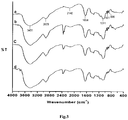
- Cellulose yields were calculated based on initial seaweed samples used for extraction process. Characterization of Celluloses was carried out by using the instrument Fourier transforms infrared (FT-IR) Perkin-Elmer Spectrum GX FTIR (USA). The cellulose yields for G .
- FT-IR Fourier transforms infrared
- nutrient agar plates were prepared by supplementing different concentrations of extracted agar viz; 0.75% G . acerosa agar (Gel strength 1240 g/cm 2 ), 0.75% G. pusillum agar (Gel strength 1150 g/cm 2 ) and 1.5% G . dura agar (Gel strength 546 g/cm 2 ).
- the agar plates were further evaluated for microbial growth. For this, E. coli freshly revived from EZ competent cell (Quiazen Cat. No. 231222) was spread on agar plates and incubated at 37 degree C for 24 hrs.
Landscapes
- Chemical & Material Sciences (AREA)
- Life Sciences & Earth Sciences (AREA)
- Organic Chemistry (AREA)
- Health & Medical Sciences (AREA)
- Engineering & Computer Science (AREA)
- Biochemistry (AREA)
- General Health & Medical Sciences (AREA)
- Chemical Kinetics & Catalysis (AREA)
- Wood Science & Technology (AREA)
- Zoology (AREA)
- General Chemical & Material Sciences (AREA)
- Microbiology (AREA)
- Polymers & Plastics (AREA)
- Bioinformatics & Cheminformatics (AREA)
- General Engineering & Computer Science (AREA)
- Biotechnology (AREA)
- Genetics & Genomics (AREA)
- Molecular Biology (AREA)
- Materials Engineering (AREA)
- Medicinal Chemistry (AREA)
- Oil, Petroleum & Natural Gas (AREA)
- Sustainable Development (AREA)
- Cell Biology (AREA)
- Emergency Medicine (AREA)
- Preparation Of Compounds By Using Micro-Organisms (AREA)
- Polysaccharides And Polysaccharide Derivatives (AREA)
- Edible Seaweed (AREA)
Claims (12)
- Integriertes Verfahren zur Rückgewinnung eines Spektrums von Bioprodukten aus Frischalgen, wobei die Schritt e folgendes umfassen:[a] Homogenisieren der Frischalgen unter Verwendung eine Mixers in Phosphatpuffer mit einem pH im Bereich von 6,8 bis 7,0 und Inkubieren bei einer Temperatur im Bereich von 4 bis 6 °C für eine Zeitdauer von 10 bis 12 Stunden und anschließende Zentrifugation bei 5000 bis 7000 U/min bei 4 bis 10°C während 12 bis 15 Minuten und Abtrennen des Pigmente und Protein enthaltenden Überstands von der Rückstandsmasse;[b] Präzipitieren der Pigmente aus dem Überstand, wie in Schritt [a] erhalten, mit 30% Ammoniumsulfat für Agarophyten und 40% Ammoniumsulfat für Carrageenophyten und anschließende Zentrifugation bei 6500 bis 8000 U/min bei 4 bis 10°C während 12 bis 15 Minuten und Auflösen der pelletierten Pigmente in Phosphatpuffer mit einem pH im Bereich von 6,8 bis 7,0 und anschließende Quantifizierung der Pigmente unter Verwendung von spektrophotometrischem Verfahren, Aufzeichnen der Extinktion unter Verwendung eines Doppelstrahl-UV-VIS-Spektralphotometers bei 280, 564, 618 und 730 nm und Berechnen der Konzentration an Pigmenten, R-PE und R-PC, nach der folgenden Gleichung:

 [c] Analysieren der Zusammensetzung des aus Schritt [b] erhaltenen Überstands auf das Vorliegen verschiedener pflanzlicher Nährstoffe, darunter Makro- und Mikromineralien, unter Verwendung von Massenspektrometrie mit induktiv gekoppeltem Plasma (ICP);[d] Extrahieren der Gesamtlipide aus der Rückstandsmasse wie in Schritt [a] erhalten, unter Verwendung der Lösungsmittel Chloroform und Methanol, gemischt in einem Verhältnis von 1:2 Vol./Vol. und anschließende Zentrifugation bei 4000 bis 5000 U/min bei 4 bis 10°C während 10 bis 15 Minuten und Abtrennen der wässrig-grünlichen organischen Extraktschicht von der Rückstandsmasse;[e] Filtrieren des organischen Extrakts, wie in Schritt [d] erhalten, und Waschen mit gleichem Volumen an Mili Q-Wasser und anschließendes Trocknen unter Verwendung eines Rotationsverdampfers und gravimetrische Quantifizierung von Lipiden;[f] Durchführen mit der Rückstandsmasse wie in Schritt [d] erhalten, einer Agarextraktion, wenn die Alge eine Agarophyte ist, durch Trocknen bei einer Temperatur im Bereich von 60 bis 65 °C während 50 Minuten bis 1 Stunde und anschließendes Kochen mit 1:5 Gew./Vol. (Frischalgen-Ausgangsbiomasse) destilliertem Wasser bei 115 bis 120 °C während 1 Stunde 20 Minuten bis 1,5 Stunden in einem Autoklaven und sofortiges Homogenisieren des gekochten Materials unter Verwendung eines Mixers und anschließende Zentrifugation bei 6000 bis 7000 U/min bei 40 bis 60 °C während 4 bis 6 Minuten unter Erhalt des Überstands und der Rückstandsmasse;[g] Ermöglichen, dass der Überstand, wie in Schritt [f] erhalten, ein Gel bildet, bei einer Temperatur im Bereich von 25 bis 30 °C und anschließendes Gefrieren bei -15 bis -20 °C während 12 bis 15 Stunden und Auftauen unter Erhalt des nativen Agars, der bei 60 bis 65 °C während 10 bis 12 Stunden unter Erhalt des Trockenagars getrocknet wird;[h] Durchführen mit der Rückstandsmasse, wie in Schritt [d] erhalten, einer Carrageenan-Extraktion, wenn die Alge eine Carrageenophyte ist, durch Trocknen bei einer Temperatur im Bereich von 60 bis 65 °C während 50 Minuten bis 1 Stunde und anschließendes Kochen mit 8% OH bei 70 bis 72 °C während 1 Stunde 45 Minuten bis 2 Stunden, Filtrieren des Inhalts über ein Musselintuch und Waschen des Filtrats mit Leitungswasser bis zur Neutralität und anschließendes Kochen mit 100 ml Wasser bei 75 bis 78 °C während 40 bis 45 Minuten;[i] Homogenisieren des gekochten Materials, wie in Schritt [h] erhalten, und Zentrifugieren bei 6000 bis 7000 U/min während 3 bis 5 Minuten unter Erhalt des Überstands und der Rückstandsmasse, Präzipitieren des Überstands in eiskaltem Isopropanol (1:2 Vol./Vol.) und Trocknen des Präzipitats bei 60 bis 65 °C während 4 bis 6 Stunden unter Erhalt von Carrageenan;[j] Charakterisieren des in Schritt e [g] bzw. [i] erhaltenen Agars bzw. Carrageenans unter Verwendung von Fourier-Transformations-Infrarot(FT-IR)-Spektroskopie und Messen der Gelfestigkeit von Agar und Carrageenan unter Befolgen von Standardverfahren;[k] Trocknen der Rückstandsmasse, wie in Schritten [f] und [i] erhalten, und Einweichen in Acetatpuffer von pH 4,5 bis 5, enthaltend 36% NaClO2 (Gew./Gew.), zum Bleichen bei 60 bis 65 °C während 7 bis 8 Stunden, Waschen des gebleichten Materials mit Wasser zur Neutralisation und Behandeln des gewaschenen Materials mit 0,5 M NaOH-Lösung bei 60 bis 65 °C während 10 bis 12 Stunden und anschließendes Waschen mit Wasser bis zur Neutralität;[l] Trocknen des neutralisierten Materials, wie in Schritt [k] erhalten, und Behandeln mit 5% Vol./Vol. Chlorwasserstoffsäure und anschließendes Erwärmen bis zum Sieden, Inkubieren bei einer Temperatur von 25 bis 30 °C während 10 bis 14 Stunden und Waschen der Aufschlämmung mit Wasser bis zur Neutralität und anschließendes Trocknen, um Cellulose zu erhalten;[m] Hydrolysieren der Cellulose, wie in Schritt [l] erhalten, mit handelsüblicher Cellulase in Natriumacetatpuffer von pH 4,8 und Inkubieren während 36 Stunden bei 45 °C auf einem Orbitalschüttler, Messen des reduzierenden Zuckers spektralphotometrisch unter Verwendung des 3,5-Dinitrosalicylsäure-Verfahrens;[n] Anreichern des Hydrolysats, wie in Schritt [m] erhalten, mit 5 g L-Pepton und 3 g/L Hefeextrakt und anschließende Sterilisation in einem Autoklaven, Überimpfen der Kultur von Saccharomyces cerevisiae und Inkubieren während 12 Stunden bei 28 ± 2 °C auf einem Orbitalschüttler unter Erhalt von Ethanol; Analysieren der Ethanolausbeute und der reduzierenden Restzucker durch GC-MS- bzw. DNS-Verfahren.
 - Verfahren nach Anspruch 1, wobei die Ausbeuten der Produkte mit denjenigen vergleichbar sind, die jeweils unter Befolgen des herkömmlichen Verfahrens erhalten werden.
- Verfahren nach Anspruch 1-2, wobei, im Gegensatz zu herkömmlichen Verfahren, Vorbehandlung während der Agar-Extraktion nicht erforderlich ist.
- Verfahren nach Anspruch 1-3, wobei sich Agar mit hoher Gelfestigkeit ohne Alkali-Behandlung, wie sie herkömmlicherweise erfolgt, erzeugen lässt.
- Verfahren nach Anspruch 1-4, wobei die Gelfestigkeit von erhaltenem Phycocolloid (Agar) größer ist als diejenige desselben, das aus herkömmlicher Agar-Extraktion erhalten wird, und es zeigt eine 1,5 bis 2,9-fache Zunahme in der Gelfestigkeit.
- Verfahren nach Anspruch 1-5 wobei der für verschiedene Species (Gelidiella acerosa, Gelidium pusillum und Gracilaria dura) erzeugte Agar zur mikrobiologischen Anwendung mit gleichen oder geringeren Konzentrationen geeignet ist.
- Verfahren nach Anspruch 1-6, wobei der erzeugte Agar Gelfestigkeit im Bereich von 500-1200 g/cm2 zeigt.
- Verfahren nach Anspruch 1-7, wobei sich nach der Rückgewinnung von mehreren Produkten nacheinander 10-25% verbleibender Rückstand ergab, der dann als Ausgangsmaterial während der Cellulose-Extraktion verwendet wird.
- Verfahren nach Anspruch 1-8, wobei die Rückstandsmasse die Verwendung von Chemikalien bis zu 75 bis 90% während der Cellulose-Extraktion minimiert.
- Verfahren nach Anspruch 1-9, wobei Cellulose, im Gegensatz zu herkömmlichen Verfahren, ohne jede zusätzliche Entfärbung und Entfettung erzeugt wird.
- Verfahren nach Anspruch 1-10, wobei die nach Aussalzen von Pigment erhaltene Flüssigkeit eine hohe Menge Ammoniumsulfat, zusätzlich zu einer günstigen Menge an Algen-basierten Makro- und Mikromineralien enthielt.
- Verfahren nach Anspruch 1-11, wobei sich die während der Lipid-Extraktion verwendeten Lösungsmittel als wiederverwendbar während dreier Zyklen ohne Beeinträchtigung der Ausbeute und Qualität von aufeinanderfolgenden Produkten erwiesen.
Applications Claiming Priority (2)
| Application Number | Priority Date | Filing Date | Title |
|---|---|---|---|
| IN3811DE2013 | 2013-12-30 | ||
| PCT/IN2014/000805 WO2015102021A1 (en) | 2013-12-30 | 2014-12-30 | An integrated process to recover a spectrum of bioproducts from fresh seaweeds |
Publications (2)
| Publication Number | Publication Date |
|---|---|
| EP3089999A1 EP3089999A1 (de) | 2016-11-09 |
| EP3089999B1 true EP3089999B1 (de) | 2018-08-29 |
Family
ID=52598805
Family Applications (1)
| Application Number | Title | Priority Date | Filing Date |
|---|---|---|---|
| EP14841413.9A Not-in-force EP3089999B1 (de) | 2013-12-30 | 2014-12-30 | Integriertes verfahren zur rückgewinnung eines spektrums von bioprodukten aus frischalgen |
Country Status (4)
| Country | Link |
|---|---|
| US (1) | US10000579B2 (de) |
| EP (1) | EP3089999B1 (de) |
| AU (1) | AU2014374908B2 (de) |
| WO (1) | WO2015102021A1 (de) |
Families Citing this family (6)
| Publication number | Priority date | Publication date | Assignee | Title |
|---|---|---|---|---|
| CN105925343A (zh) * | 2016-04-19 | 2016-09-07 | 常州市奥普泰科光电有限公司 | 一种冷轧轧制油添加剂的制备方法 |
| US10426184B1 (en) | 2018-05-08 | 2019-10-01 | Nutriomix, Inc. | Seaweed meal and method of making the same |
| CN111841080B (zh) * | 2020-07-07 | 2022-03-25 | 江苏大学 | 利用超声波改善枸杞多糖层析脱色中酸碱洗脱效果的方法 |
| US20230257695A1 (en) * | 2021-12-01 | 2023-08-17 | Luyef Biotechnologies Inc. | Methods for creating edible scaffolding using chilean seaweed (cochayuyo) |
| WO2023230307A1 (en) * | 2022-05-27 | 2023-11-30 | The Regents Of The University Of California | Methods for cobinamide synthesis |
| CN117946292B (zh) * | 2024-03-22 | 2024-06-07 | 青岛浩大海洋生物科技股份有限公司 | 一种海藻多糖衍生物的制备方法 |
Family Cites Families (4)
| Publication number | Priority date | Publication date | Assignee | Title |
|---|---|---|---|---|
| US5801240A (en) | 1997-03-07 | 1998-09-01 | Tanvest Limited | Method for extracting semi-refined carrageenan from seaweed |
| US6893479B2 (en) | 2002-08-19 | 2005-05-17 | Council Of Scientific & Industrial Research | Integrated method for production of carrageenan and liquid fertilizer from fresh seaweeds |
| US8927475B2 (en) * | 2008-08-08 | 2015-01-06 | The Dial Corporation | Consumer products comprising algae derived ingredients |
| JP5769715B2 (ja) | 2009-09-07 | 2015-08-26 | カウンスィル オブ サイエンティフィック アンド インダストリアル リサーチCouncil Of Scientific & Industrial Research | Kappaphycusalvarezii(カラギナン原藻)から抽出したエタノール及び海藻樹液の統合生産プロセス |
-
2014
- 2014-12-30 EP EP14841413.9A patent/EP3089999B1/de not_active Not-in-force
- 2014-12-30 US US15/109,232 patent/US10000579B2/en not_active Expired - Fee Related
- 2014-12-30 AU AU2014374908A patent/AU2014374908B2/en not_active Ceased
- 2014-12-30 WO PCT/IN2014/000805 patent/WO2015102021A1/en not_active Ceased
Also Published As
| Publication number | Publication date |
|---|---|
| AU2014374908A1 (en) | 2016-07-14 |
| US10000579B2 (en) | 2018-06-19 |
| WO2015102021A1 (en) | 2015-07-09 |
| WO2015102021A8 (en) | 2016-01-07 |
| AU2014374908B2 (en) | 2019-04-04 |
| US20160355610A1 (en) | 2016-12-08 |
| EP3089999A1 (de) | 2016-11-09 |
Similar Documents
| Publication | Publication Date | Title |
|---|---|---|
| Baghel et al. | Biorefining of marine macroalgal biomass for production of biofuel and commodity chemicals | |
| Huang et al. | Preparation, deproteinization and comparison of bioactive polysaccharides | |
| AU2014374908B2 (en) | An integrated process to recover a spectrum of bioproducts from fresh seaweeds | |
| Baghel et al. | Characterization of agarophytic seaweeds from the biorefinery context | |
| Arauzo et al. | Effect of protein during hydrothermal carbonization of brewer’s spent grain | |
| Baghel et al. | A simple process for recovery of a stream of products from marine macroalgal biomass | |
| Figueira et al. | Structural characterization of ulvan polysaccharide from cultivated and collected Ulva fasciata (Chlorophyta) | |
| Amin et al. | Extraction and quantification of chlorophyll from microalgae Chlorella sp. | |
| CN106343410A (zh) | 一种海带提取物的生产方法 | |
| CN105624248B (zh) | 一种紫花苜蓿生物活性肽的制备方法 | |
| Cardoso et al. | Extraction of marine bioactive compounds from seaweed: Coupling environmental concerns and high yields | |
| CN103319617A (zh) | 利用超声波协同酶法提取紫薯多糖的方法及应用 | |
| CN104928341A (zh) | 一种联合超声波辅助酶解和微生物发酵麸皮制备阿魏酸的工艺 | |
| Srivastava et al. | Advanced extraction technologies and functional applications of algal polysaccharides in modern food systems | |
| CN101974394B (zh) | 纳米海参酒及其制备方法 | |
| CN101869265B (zh) | 一种酶法辅助水提松花粉中不溶性膳食纤维的方法 | |
| RU2565178C2 (ru) | Способ получения пигмента-меланина из базидиоспор трутовых грибов | |
| Naz et al. | Extraction and purification of protein from algae (microalgae and seaweeds) | |
| CN109851687A (zh) | 一种从海带中分离制备岩藻多糖和褐藻胶的方法 | |
| JP2021507724A (ja) | 新鮮な藻類のカスケード処理のための方法 | |
| Bāliņa et al. | Comprehensive literature review on valuable compounds and extraction technologies: the Eastern Baltic Sea seaweeds | |
| KR100827422B1 (ko) | 클로렐라 추출물의 제조방법 | |
| CN113699208A (zh) | 一种燕麦肽及其制备方法 | |
| Gajaria et al. | Emerging trends on the integrated extraction of seaweed proteins: Challenges and opportunities | |
| Mishra | A study on downstream processing for the production of pullulan by Aureobasidium pullulans-SB-01 from the fermentation broth |
Legal Events
| Date | Code | Title | Description |
|---|---|---|---|
| PUAI | Public reference made under article 153(3) epc to a published international application that has entered the european phase |
Free format text: ORIGINAL CODE: 0009012 |
|
| 17P | Request for examination filed |
Effective date: 20160628 |
|
| AK | Designated contracting states |
Kind code of ref document: A1 Designated state(s): AL AT BE BG CH CY CZ DE DK EE ES FI FR GB GR HR HU IE IS IT LI LT LU LV MC MK MT NL NO PL PT RO RS SE SI SK SM TR |
|
| AX | Request for extension of the european patent |
Extension state: BA ME |
|
| DAX | Request for extension of the european patent (deleted) | ||
| GRAP | Despatch of communication of intention to grant a patent |
Free format text: ORIGINAL CODE: EPIDOSNIGR1 |
|
| STAA | Information on the status of an ep patent application or granted ep patent |
Free format text: STATUS: GRANT OF PATENT IS INTENDED |
|
| INTG | Intention to grant announced |
Effective date: 20180320 |
|
| GRAS | Grant fee paid |
Free format text: ORIGINAL CODE: EPIDOSNIGR3 |
|
| GRAA | (expected) grant |
Free format text: ORIGINAL CODE: 0009210 |
|
| STAA | Information on the status of an ep patent application or granted ep patent |
Free format text: STATUS: THE PATENT HAS BEEN GRANTED |
|
| AK | Designated contracting states |
Kind code of ref document: B1 Designated state(s): AL AT BE BG CH CY CZ DE DK EE ES FI FR GB GR HR HU IE IS IT LI LT LU LV MC MK MT NL NO PL PT RO RS SE SI SK SM TR |
|
| REG | Reference to a national code |
Ref country code: GB Ref legal event code: FG4D |
|
| REG | Reference to a national code |
Ref country code: CH Ref legal event code: EP |
|
| REG | Reference to a national code |
Ref country code: AT Ref legal event code: REF Ref document number: 1035022 Country of ref document: AT Kind code of ref document: T Effective date: 20180915 |
|
| REG | Reference to a national code |
Ref country code: IE Ref legal event code: FG4D |
|
| REG | Reference to a national code |
Ref country code: DE Ref legal event code: R096 Ref document number: 602014031503 Country of ref document: DE |
|
| REG | Reference to a national code |
Ref country code: NL Ref legal event code: MP Effective date: 20180829 |
|
| REG | Reference to a national code |
Ref country code: LT Ref legal event code: MG4D |
|
| PG25 | Lapsed in a contracting state [announced via postgrant information from national office to epo] |
Ref country code: NL Free format text: LAPSE BECAUSE OF FAILURE TO SUBMIT A TRANSLATION OF THE DESCRIPTION OR TO PAY THE FEE WITHIN THE PRESCRIBED TIME-LIMIT Effective date: 20180829 Ref country code: SE Free format text: LAPSE BECAUSE OF FAILURE TO SUBMIT A TRANSLATION OF THE DESCRIPTION OR TO PAY THE FEE WITHIN THE PRESCRIBED TIME-LIMIT Effective date: 20180829 Ref country code: BG Free format text: LAPSE BECAUSE OF FAILURE TO SUBMIT A TRANSLATION OF THE DESCRIPTION OR TO PAY THE FEE WITHIN THE PRESCRIBED TIME-LIMIT Effective date: 20181129 Ref country code: RS Free format text: LAPSE BECAUSE OF FAILURE TO SUBMIT A TRANSLATION OF THE DESCRIPTION OR TO PAY THE FEE WITHIN THE PRESCRIBED TIME-LIMIT Effective date: 20180829 Ref country code: NO Free format text: LAPSE BECAUSE OF FAILURE TO SUBMIT A TRANSLATION OF THE DESCRIPTION OR TO PAY THE FEE WITHIN THE PRESCRIBED TIME-LIMIT Effective date: 20181129 Ref country code: IS Free format text: LAPSE BECAUSE OF FAILURE TO SUBMIT A TRANSLATION OF THE DESCRIPTION OR TO PAY THE FEE WITHIN THE PRESCRIBED TIME-LIMIT Effective date: 20181229 Ref country code: FI Free format text: LAPSE BECAUSE OF FAILURE TO SUBMIT A TRANSLATION OF THE DESCRIPTION OR TO PAY THE FEE WITHIN THE PRESCRIBED TIME-LIMIT Effective date: 20180829 Ref country code: LT Free format text: LAPSE BECAUSE OF FAILURE TO SUBMIT A TRANSLATION OF THE DESCRIPTION OR TO PAY THE FEE WITHIN THE PRESCRIBED TIME-LIMIT Effective date: 20180829 Ref country code: GR Free format text: LAPSE BECAUSE OF FAILURE TO SUBMIT A TRANSLATION OF THE DESCRIPTION OR TO PAY THE FEE WITHIN THE PRESCRIBED TIME-LIMIT Effective date: 20181130 |
|
| REG | Reference to a national code |
Ref country code: AT Ref legal event code: MK05 Ref document number: 1035022 Country of ref document: AT Kind code of ref document: T Effective date: 20180829 |
|
| PG25 | Lapsed in a contracting state [announced via postgrant information from national office to epo] |
Ref country code: LV Free format text: LAPSE BECAUSE OF FAILURE TO SUBMIT A TRANSLATION OF THE DESCRIPTION OR TO PAY THE FEE WITHIN THE PRESCRIBED TIME-LIMIT Effective date: 20180829 Ref country code: AL Free format text: LAPSE BECAUSE OF FAILURE TO SUBMIT A TRANSLATION OF THE DESCRIPTION OR TO PAY THE FEE WITHIN THE PRESCRIBED TIME-LIMIT Effective date: 20180829 Ref country code: HR Free format text: LAPSE BECAUSE OF FAILURE TO SUBMIT A TRANSLATION OF THE DESCRIPTION OR TO PAY THE FEE WITHIN THE PRESCRIBED TIME-LIMIT Effective date: 20180829 |
|
| PG25 | Lapsed in a contracting state [announced via postgrant information from national office to epo] |
Ref country code: IT Free format text: LAPSE BECAUSE OF FAILURE TO SUBMIT A TRANSLATION OF THE DESCRIPTION OR TO PAY THE FEE WITHIN THE PRESCRIBED TIME-LIMIT Effective date: 20180829 Ref country code: RO Free format text: LAPSE BECAUSE OF FAILURE TO SUBMIT A TRANSLATION OF THE DESCRIPTION OR TO PAY THE FEE WITHIN THE PRESCRIBED TIME-LIMIT Effective date: 20180829 Ref country code: PL Free format text: LAPSE BECAUSE OF FAILURE TO SUBMIT A TRANSLATION OF THE DESCRIPTION OR TO PAY THE FEE WITHIN THE PRESCRIBED TIME-LIMIT Effective date: 20180829 Ref country code: CZ Free format text: LAPSE BECAUSE OF FAILURE TO SUBMIT A TRANSLATION OF THE DESCRIPTION OR TO PAY THE FEE WITHIN THE PRESCRIBED TIME-LIMIT Effective date: 20180829 Ref country code: ES Free format text: LAPSE BECAUSE OF FAILURE TO SUBMIT A TRANSLATION OF THE DESCRIPTION OR TO PAY THE FEE WITHIN THE PRESCRIBED TIME-LIMIT Effective date: 20180829 Ref country code: AT Free format text: LAPSE BECAUSE OF FAILURE TO SUBMIT A TRANSLATION OF THE DESCRIPTION OR TO PAY THE FEE WITHIN THE PRESCRIBED TIME-LIMIT Effective date: 20180829 Ref country code: EE Free format text: LAPSE BECAUSE OF FAILURE TO SUBMIT A TRANSLATION OF THE DESCRIPTION OR TO PAY THE FEE WITHIN THE PRESCRIBED TIME-LIMIT Effective date: 20180829 |
|
| PG25 | Lapsed in a contracting state [announced via postgrant information from national office to epo] |
Ref country code: SK Free format text: LAPSE BECAUSE OF FAILURE TO SUBMIT A TRANSLATION OF THE DESCRIPTION OR TO PAY THE FEE WITHIN THE PRESCRIBED TIME-LIMIT Effective date: 20180829 Ref country code: DK Free format text: LAPSE BECAUSE OF FAILURE TO SUBMIT A TRANSLATION OF THE DESCRIPTION OR TO PAY THE FEE WITHIN THE PRESCRIBED TIME-LIMIT Effective date: 20180829 Ref country code: SM Free format text: LAPSE BECAUSE OF FAILURE TO SUBMIT A TRANSLATION OF THE DESCRIPTION OR TO PAY THE FEE WITHIN THE PRESCRIBED TIME-LIMIT Effective date: 20180829 |
|
| REG | Reference to a national code |
Ref country code: DE Ref legal event code: R097 Ref document number: 602014031503 Country of ref document: DE |
|
| REG | Reference to a national code |
Ref country code: DE Ref legal event code: R119 Ref document number: 602014031503 Country of ref document: DE |
|
| PLBE | No opposition filed within time limit |
Free format text: ORIGINAL CODE: 0009261 |
|
| STAA | Information on the status of an ep patent application or granted ep patent |
Free format text: STATUS: NO OPPOSITION FILED WITHIN TIME LIMIT |
|
| REG | Reference to a national code |
Ref country code: CH Ref legal event code: PL |
|
| 26N | No opposition filed |
Effective date: 20190531 |
|
| GBPC | Gb: european patent ceased through non-payment of renewal fee |
Effective date: 20181230 |
|
| PG25 | Lapsed in a contracting state [announced via postgrant information from national office to epo] |
Ref country code: MC Free format text: LAPSE BECAUSE OF FAILURE TO SUBMIT A TRANSLATION OF THE DESCRIPTION OR TO PAY THE FEE WITHIN THE PRESCRIBED TIME-LIMIT Effective date: 20180829 Ref country code: SI Free format text: LAPSE BECAUSE OF FAILURE TO SUBMIT A TRANSLATION OF THE DESCRIPTION OR TO PAY THE FEE WITHIN THE PRESCRIBED TIME-LIMIT Effective date: 20180829 Ref country code: LU Free format text: LAPSE BECAUSE OF NON-PAYMENT OF DUE FEES Effective date: 20181230 |
|
| REG | Reference to a national code |
Ref country code: BE Ref legal event code: MM Effective date: 20181231 Ref country code: IE Ref legal event code: MM4A |
|
| PG25 | Lapsed in a contracting state [announced via postgrant information from national office to epo] |
Ref country code: DE Free format text: LAPSE BECAUSE OF NON-PAYMENT OF DUE FEES Effective date: 20190702 Ref country code: IE Free format text: LAPSE BECAUSE OF NON-PAYMENT OF DUE FEES Effective date: 20181230 |
|
| PG25 | Lapsed in a contracting state [announced via postgrant information from national office to epo] |
Ref country code: BE Free format text: LAPSE BECAUSE OF NON-PAYMENT OF DUE FEES Effective date: 20181231 |
|
| PG25 | Lapsed in a contracting state [announced via postgrant information from national office to epo] |
Ref country code: LI Free format text: LAPSE BECAUSE OF NON-PAYMENT OF DUE FEES Effective date: 20181231 Ref country code: CH Free format text: LAPSE BECAUSE OF NON-PAYMENT OF DUE FEES Effective date: 20181231 Ref country code: GB Free format text: LAPSE BECAUSE OF NON-PAYMENT OF DUE FEES Effective date: 20181230 |
|
| PG25 | Lapsed in a contracting state [announced via postgrant information from national office to epo] |
Ref country code: MT Free format text: LAPSE BECAUSE OF NON-PAYMENT OF DUE FEES Effective date: 20181230 |
|
| PG25 | Lapsed in a contracting state [announced via postgrant information from national office to epo] |
Ref country code: TR Free format text: LAPSE BECAUSE OF FAILURE TO SUBMIT A TRANSLATION OF THE DESCRIPTION OR TO PAY THE FEE WITHIN THE PRESCRIBED TIME-LIMIT Effective date: 20180829 |
|
| PG25 | Lapsed in a contracting state [announced via postgrant information from national office to epo] |
Ref country code: PT Free format text: LAPSE BECAUSE OF FAILURE TO SUBMIT A TRANSLATION OF THE DESCRIPTION OR TO PAY THE FEE WITHIN THE PRESCRIBED TIME-LIMIT Effective date: 20180829 |
|
| PG25 | Lapsed in a contracting state [announced via postgrant information from national office to epo] |
Ref country code: MK Free format text: LAPSE BECAUSE OF NON-PAYMENT OF DUE FEES Effective date: 20180829 Ref country code: CY Free format text: LAPSE BECAUSE OF FAILURE TO SUBMIT A TRANSLATION OF THE DESCRIPTION OR TO PAY THE FEE WITHIN THE PRESCRIBED TIME-LIMIT Effective date: 20180829 Ref country code: HU Free format text: LAPSE BECAUSE OF FAILURE TO SUBMIT A TRANSLATION OF THE DESCRIPTION OR TO PAY THE FEE WITHIN THE PRESCRIBED TIME-LIMIT; INVALID AB INITIO Effective date: 20141230 |
|
| PGFP | Annual fee paid to national office [announced via postgrant information from national office to epo] |
Ref country code: FR Payment date: 20201223 Year of fee payment: 7 |
|
| PG25 | Lapsed in a contracting state [announced via postgrant information from national office to epo] |
Ref country code: FR Free format text: LAPSE BECAUSE OF NON-PAYMENT OF DUE FEES Effective date: 20211231 |