EP3088922B1 - Optisches produkt, brillenglas und brille - Google Patents
Optisches produkt, brillenglas und brille Download PDFInfo
- Publication number
- EP3088922B1 EP3088922B1 EP15749191.1A EP15749191A EP3088922B1 EP 3088922 B1 EP3088922 B1 EP 3088922B1 EP 15749191 A EP15749191 A EP 15749191A EP 3088922 B1 EP3088922 B1 EP 3088922B1
- Authority
- EP
- European Patent Office
- Prior art keywords
- layer
- quotient
- film
- crack
- examples
- Prior art date
- Legal status (The legal status is an assumption and is not a legal conclusion. Google has not performed a legal analysis and makes no representation as to the accuracy of the status listed.)
- Active
Links
Images

Classifications
-
- G—PHYSICS
- G02—OPTICS
- G02B—OPTICAL ELEMENTS, SYSTEMS OR APPARATUS
- G02B1/00—Optical elements characterised by the material of which they are made; Optical coatings for optical elements
- G02B1/10—Optical coatings produced by application to, or surface treatment of, optical elements
- G02B1/11—Anti-reflection coatings
-
- G—PHYSICS
- G02—OPTICS
- G02B—OPTICAL ELEMENTS, SYSTEMS OR APPARATUS
- G02B1/00—Optical elements characterised by the material of which they are made; Optical coatings for optical elements
- G02B1/10—Optical coatings produced by application to, or surface treatment of, optical elements
- G02B1/11—Anti-reflection coatings
- G02B1/113—Anti-reflection coatings using inorganic layer materials only
- G02B1/115—Multilayers
-
- G—PHYSICS
- G02—OPTICS
- G02B—OPTICAL ELEMENTS, SYSTEMS OR APPARATUS
- G02B1/00—Optical elements characterised by the material of which they are made; Optical coatings for optical elements
- G02B1/10—Optical coatings produced by application to, or surface treatment of, optical elements
- G02B1/14—Protective coatings, e.g. hard coatings
-
- G—PHYSICS
- G02—OPTICS
- G02B—OPTICAL ELEMENTS, SYSTEMS OR APPARATUS
- G02B5/00—Optical elements other than lenses
- G02B5/20—Filters
- G02B5/28—Interference filters
- G02B5/281—Interference filters designed for the infrared light
- G02B5/282—Interference filters designed for the infrared light reflecting for infrared and transparent for visible light, e.g. heat reflectors, laser protection
-
- G—PHYSICS
- G02—OPTICS
- G02B—OPTICAL ELEMENTS, SYSTEMS OR APPARATUS
- G02B5/00—Optical elements other than lenses
- G02B5/20—Filters
- G02B5/28—Interference filters
- G02B5/285—Interference filters comprising deposited thin solid films
-
- G—PHYSICS
- G02—OPTICS
- G02C—SPECTACLES; SUNGLASSES OR GOGGLES INSOFAR AS THEY HAVE THE SAME FEATURES AS SPECTACLES; CONTACT LENSES
- G02C7/00—Optical parts
- G02C7/02—Lenses; Lens systems ; Methods of designing lenses
-
- G—PHYSICS
- G02—OPTICS
- G02C—SPECTACLES; SUNGLASSES OR GOGGLES INSOFAR AS THEY HAVE THE SAME FEATURES AS SPECTACLES; CONTACT LENSES
- G02C7/00—Optical parts
- G02C7/02—Lenses; Lens systems ; Methods of designing lenses
- G02C7/022—Ophthalmic lenses having special refractive features achieved by special materials or material structures
-
- G—PHYSICS
- G02—OPTICS
- G02C—SPECTACLES; SUNGLASSES OR GOGGLES INSOFAR AS THEY HAVE THE SAME FEATURES AS SPECTACLES; CONTACT LENSES
- G02C7/00—Optical parts
- G02C7/10—Filters, e.g. for facilitating adaptation of the eyes to the dark; Sunglasses
-
- G—PHYSICS
- G02—OPTICS
- G02C—SPECTACLES; SUNGLASSES OR GOGGLES INSOFAR AS THEY HAVE THE SAME FEATURES AS SPECTACLES; CONTACT LENSES
- G02C7/00—Optical parts
- G02C7/10—Filters, e.g. for facilitating adaptation of the eyes to the dark; Sunglasses
- G02C7/104—Filters, e.g. for facilitating adaptation of the eyes to the dark; Sunglasses having spectral characteristics for purposes other than sun-protection
-
- G—PHYSICS
- G02—OPTICS
- G02C—SPECTACLES; SUNGLASSES OR GOGGLES INSOFAR AS THEY HAVE THE SAME FEATURES AS SPECTACLES; CONTACT LENSES
- G02C2202/00—Generic optical aspects applicable to one or more of the subgroups of G02C7/00
- G02C2202/16—Laminated or compound lenses
Definitions
- the present invention relates to optical products such as spectacle lenses (including sunglass lenses), and spectacles (including sunglasses) that use the spectacle lenses.
- the spectacle lens disclosed in JP 2006-276123 A includes antireflection films on an object-side surface and an eyeball-side surface of a lens base.
- the antireflection film contains at least one of silicon oxide, titanium oxide, lanthanum titanate, tantalum oxide, and niobium oxide, whereby the object-side antireflection film is caused to have a compressive stress, and the eyeball-side antireflection film is caused to have a compressive stress less than that of the object-side antireflection film or to have a tensile stress.
- an antireflection film is formed of a combination of ternary materials, i.e., silicon oxide, a sintered mixture of titanium oxide, lanthanum oxide, and titanium, and a material having a refractive index higher than that of silicon oxide, thereby providing heat resistance performance.
- ternary materials i.e., silicon oxide, a sintered mixture of titanium oxide, lanthanum oxide, and titanium, and a material having a refractive index higher than that of silicon oxide, thereby providing heat resistance performance.
- JP 2007 078780 A discloses a spectacle lens having a base material and the multilayered reflection preventing layer layered on the base material directly or via another layer.
- the multilayered reflection preventing layer has at least one organic layer and at least one inorganic layer and the uppermost layer thereof is an organic layer.
- EP 2 199 835 A1 discloses an optical component including a plastic substrate and an antireflection film disposed on the substrate, wherein the antireflection film is a multilayer film having alternately-laminated six or more layers including high refractive index layers and low refractive index layers.
- EP 2 624 044 A1 discloses an optical component including a plastic base which has a convex surface and a concave surface; and a multilayer film which is disposed on at least the convex surface of the plastic base.
- the multilayer film has an average reflectivity of 2% to 10% over a wavelength range of 400 nm to 500 nm.
- the antireflection film should be formed so that silicon oxide or the like has a predetermined compressive stress or tensile stress. Therefore, the film structure for providing sufficient heat resistance while having antireflective performance is complicated, resulting in high costs.
- the present invention has an object to provide an optical product, a spectacle lens, and spectacles, which have antireflective performance, require less number of types of materials for film formation, have a simple film structure which makes film formation easy and reduces costs, and have sufficient heat resistance.
- the present invention exerts an effect of providing an optical product, a spectacle lens, and spectacles which require less number of types of materials for film formation, have a simple film structure which makes film formation easy and reduces costs, and have both antireflective properties and heat resistance.
- a spectacle lens according to the present invention has an optical multilayer film on one surface or both surfaces of a base.
- the base may be made of any material, and is preferably translucent.
- the material (base material) of the base include a polyurethane resin, a thiourethane resin, an episulfide resin, a polycarbonate resin, a polyester resin, an acrylic resin, a polyether sulfone resin, a poly(4-methylpentene-1) resin, and a diethylene glycol bis(allyl carbonate) resin.
- the material include, as a preferable material (for, in particular, a spectacle lens) having a high refractive index, an episulfide resin obtained by addition-polymerization of an episulfide group with polythiol and/or a sulfur-containing polyol.
- the optical multilayer film satisfies the following conditions.
- both of the films preferably satisfy the following conditions, and more preferably have the same layered structure.
- the optical multilayer film has a five-layer structure in which low refractive index layers and high refractive index layers are alternately layered.
- a nearest layer to the base is a first layer
- odd-numbered layers are the low refractive index layers
- even-numbered layers are high refractive index layers.
- the low refractive index layers are formed by using silica (silicon dioxide, SiO 2 ), and the high refractive index layers are formed by using zirconia (zirconium dioxide, ZrO 2 ).
- a quotient obtained by dividing the physical thickness of the fourth layer (high refractive index layer) by the physical thickness of the second layer (high refractive index layer) is defined in claim 1.
- the reflectance in a visible region (in which the wavelength is greater than or equal to 400 nanometers (nm) and not greater than 800 nm, or is greater than or equal to 400 nm and not greater than 780 nm) is likely to increase, which makes it difficult to design an optical multilayer film for preventing reflection of light in the visible region.
- the quotient is greater than or equal to 1 and the physical thickness of the second layer is less than the physical thickness of the fourth layer, it is easy to increase the transmittance in the visible region, whereby sufficient antireflective performance can be provided.
- the physical thickness of the fourth layer exceeds four times the physical thickness of the second layer.
- a stress in the second layer and a stress in the fourth layer, which occur during heating are not well balanced, and one of the stresses becomes excessively greater than the other stress, whereby an excess force is applied to the optical multilayer film and the base during heating.
- Such excess force causes distortion or crack, and heat resistance becomes relatively insufficient.
- the stress in the second layer and the stress in the fourth layer, which occur during heating are well balanced, whereby an excess force is prevented from being applied to the optical multilayer film and the base during heating.
- distortion and crack are prevented, and sufficient heat resistance performance can be provided.
- the stresses are better balanced, and the heat resistance is more improved.
- the optical multilayer film is preferably formed by a vacuum deposition method or a sputtering method.
- another kind of film such as a hard coating film or an antifouling film (water repellent film) may be additionally provided between the optical multilayer film and the base and/or on the surface of the optical multilayer film.
- the kind of the film to be additionally provided may be different between both the surfaces, or whether or not the film is provided may be determined for each surface.
- the hard coating film is advantageously formed by hard coating solution being uniformly applied to the surface of the base.
- an organosiloxane resin containing inorganic oxide particles can be preferably used.
- An organosiloxane resin obtained by hydrolyzing and condensing an alkoxysilane is preferred as the organosiloxane resin.
- specific examples of the organosiloxane resin include ⁇ -glycidoxypropyltrimethoxysilane, ⁇ -glycidoxypropyltriethoxysilane, methyl trimethoxysilane, ethyl silicate, and a combination thereof.
- the hydrolysis condensates of the alkoxysilanes are manufactured by hydrolyzing the alkoxysilane compounds or a combination thereof by an acidic aqueous solution such as hydrochloric acid.
- the inorganic oxide particles specifically, a sol of zinc oxide, silicon dioxide (silica particulates), aluminum oxide, titanium oxide (titania particulates), zirconium oxide (zirconia particulates), tin oxide, beryllium oxide, antimony oxide, tungsten oxide, or cerium oxide, or mixed crystals of two or more of the sols, can be used.
- the diameter of the inorganic oxide particle is preferably greater than or equal to 1 nm and not greater than 100 nm, and more preferably greater than or equal to 1 nm and not greater than 50 nm in order to ensure transparency of the hard coating film.
- an amount (concentration) of the inorganic oxide particles to be blended is preferably greater than or equal to 40% by weight of all the components of the hard coating film and not greater than 60% by weight thereof in order to ensure appropriate levels of hardness and toughness of the hard coating film.
- the hard coating solution may contain an acetylacetone metal salt, an ethylenediaminetetraacetic acid metal salt, and/or the like, as a curing catalyst.
- the hard coating solution may contain a surfactant, a colorant, a solvent, or the like, as necessary for, for example, ensuring adhesion to the base, facilitating formation, and coloring with a desired (semi)transparent color.
- the physical film thickness of the hard coating film is preferably greater than or equal to 0.5 ⁇ m (micrometer) and not greater than 4.0 ⁇ m.
- a sufficient hardness is obtained and a possibility of occurrence of physical problems is not high.
- the film thickness is less than the lower limit, a sufficient hardness is not obtained, and when the thickness is more than the upper limit, the possibility of occurrence of the physical problems such as generation of cracks or fragility is significantly increased.
- a primer layer may be additionally provided between the hard coating film and the base surface.
- a material of the primer layer include a polyurethanebased resin, an acrylic resin, a methacrylic resin, an organosilicon resin, and a combination thereof.
- the optical multilayer film of the optical product has the five-layer structure in which the low refractive index layers and the high refractive index layers are alternately layered.
- the low refractive index layers are formed by using SiO 2
- the high refractive index layers are formed by using ZrO 2 . Therefore, the optical multilayer film has a simple film structure, and is easily formed at low costs.
- the quotient obtained by dividing the physical thickness of the fourth layer by the physical thickness of the second layer is defined in claim 1. Therefore, it is possible to provide sufficient heat resistance while ensuring antireflective properties in a visible region (in which light has, for example, a wavelength greater than or equal to 400 nm and not greater than 800 nm, a wavelength greater than or equal to 450 nm and not greater than 800 nm, a wavelength greater than or equal to 450 nm and not greater than 750 nm, or the like).
- the base is a spectacle lens base
- the optical product is a spectacle lens.
- spectacles that are excellent in heat resistance while preventing reflection of light in the visible region can be produced at relatively low costs by using the spectacle lens.
- a plurality of spectacle lens bases of the same type were prepared, and intermediate films and optical multilayer films were formed on both surfaces of each spectacle lens base such that the kinds of these films are different among the spectacle lens bases, to produce the spectacle lenses according to Examples 1 to 5 and Comparative Examples 1 to 6.
- the spectacle lens base was a spherical lens base made of a thiourethane-based resin and having the power of S-2.00, and the refractive index was 1.60, and the Abbe number was 41, and a circular lens having a standard size as a spectacle lens was obtained.
- the intermediate film was implemented as a hard coating film formed by application of hard coating solution.
- the hard coating solution was produced as follows.
- This hard coat solution was applied to each surface of the spectacle lens base as follows.
- the hard coating solution was uniformly applied by a spin coating method, and was left as it was in an environment of 120°C for 1.5 hours, whereby the hard coating solution was heat-cured.
- the physical film thickness was 2.5 ⁇ m.
- the film structure was the same on both the surfaces, and each of the optical multilayer films had a five-layer structure in which the low refractive index layers and the high refractive index layers were alternately deposited.
- the film thicknesses of at least one of the low refractive index layers and the high refractive index layers are different for each of Examples 1 to 5 and Comparative Examples.
- Examples 1 to 5 and Comparative Examples 1 to 6 have the same refractive index of SiO 2 , and the same refractive index of ZrO 2 .
- Each of the optical multilayer films according to Examples 1 to 5 and Comparative Examples was formed by a vacuum deposition method.
- the odd-numbered layers were the low refractive index layers, and were formed of silicon dioxide.
- the even-numbered layers were the high refractive index layers, and were formed of zircon dioxide.
- Example 2 the quotient is about 1.30, and the ratio is about 2:3. In Example 3, the quotient is 2.00, and the ratio is 1:2. Examples 4 and 5 do not fall under the scope of protection as defined in claim 1.
- Example 1 in Comparative Example 6, the quotient is about 4.88, and the ratio is about 1:5.
- Example 1 Example 2
- Example 3 Example 4
- Example 5 Com.
- Example 6 ZrO 2 physical thickness ratio between 2nd layer and 4th layer 1:1 2:3 1:2 1:3 1:4 1:5
- Layer Material Refractive index Physical thickness [nm] 1st layer SiOz 1.4776 29.01 44.05 78.20 78.00 78.00 73.61 2nd layer ZrOz 2.0939 43.00 42.30 30.64 28.00 24.00 20.78 3rd layer SiOz 1.4776 24.95 22.71 23.83 16.83 17.60 20.75 4th layer ZrOz 2.0939 47.00 55.00 61.28 83.50 95.45 101.47 5th layer SiOz 1.4776 98.92 98.00 98.50 89.44 84.73 83.08 [Table 2] Com.
- Example 1 Com.
- Example 2 Com.
- Example 3 Com.
- Example 4 Com.
- Example 5 ZrOz physical thickness ratio between 2nd layer and 4th layer 3:2 2:1 3:2 3:1 5:1
- Layer Materia 1 Refractiv e index Physical thickness [nm] 1st layer SiOz 1.4776 22.38 35.00 22.00 23.06 18.67 2nd layer ZrOz 2.0939 30.00 30.00 50.00 50.00 50.00 3rd layer SiOz 1.4776 47.00 76.72 34.07 43.00 28.85 4th layer ZrOz 2.0939 20.00 15.00 33.00 16.50 10.00 5th layer SiOz 1.4776 98.77 132.24 119.95 115.26 99.31
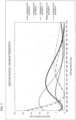
- FIG. 1 shows the spectral reflectance distributions in the visible region according to Examples 1 to 5 and Comparative Example 6, and FIG. 2 shows the spectral reflectance distributions in the visible region according to Comparative Examples 1 to 5.
- each of Examples 1 to 5 and Comparative Example 6 the maximum reflectance in the visible region (in which the wavelength is greater than or equal to 420 nm and not greater than 720 nm) is not greater than 3%. More specifically, the transmittance of 2.2% at the wavelength of 518 nm in Example 1 is the maximum reflectance. Therefore, it is found that each of Examples 1 to 5 and Comparative Example 6 has antireflective performance in the visible region.
- Examples 1 to 5 and Comparative Example 6 were examined for heat resistance by a heat resistance test and an accelerated heat resistance test. Comparative Examples 1 to 5 were not examined for heat resistance because the antireflective properties thereof were insufficient.
- Example 1 Example 2
- Example 3 ZrOz physical thickness ratio between 2nd layer and 4th layer 1:1 2:3 1:2
- Result of heat resistance test 60°C 30 min No problem 30 min No problem 30 min No problem 70°C 30 min No problem 30 min No problem 30 min No problem 30 min No problem 30 min No problem 80°C 30 min No problem 30 min No problem 30 min No problem 30 min No problem 90°C 30 min No problem 30 min No problem 30 min No problem 100°C 30 min No problem 30 min No problem 30 min No problem 110°C 30 min No problem 30 min No problem 30 min No problem 30 min No problem 120°C 30 min No problem 20 min Crack 10 min Crack 130°C 5 min Crack --- --- Example 4
- Example 6 ZrO 2 physical thickness ratio between 2nd layer and 4th layer 1:3 1:4 1:5 Result of heat resistance test 60°C 30 min No problem 30 min No problem 30 min No problem 30 min No problem 70°C 30 min No problem 30 min No problem 30 min No problem 30 min No problem 30 min No problem 80°C 30 min No problem 30 min No problem 30 min No problem 30 min No problem 90°C 30 min No problem 30 min No problem 30 min No problem 100°C 30 min No problem 30 min No problem 10 min Crack 110°C 30 min Crack 30 min Crack --- 120°C --- --- 130°C --- --- --- --- --- --- ---
- Comparative Example 6 having the quotient of about 4.88, and the ratio of about 1:5), the sample was loaded in the oven at 60°C, and withstood until 5 minutes elapsed at 100°C, but crack occurred after 10 minutes elapsed at 100°C.
- Example 5 having the quotient of about 3.98, and the ratio of about 1:4
- Example 4 having the quotient of about 2.98, and the ratio of about 1:3
- Example 3 having the quotient of 2.00, and the ratio of 1:2
- Example 2 having the quotient of about 1.30, and the ratio of about 2:3
- Example 1 having the quotient of about 1.09, and the ratio of about 1:1
- crack did not occur until 5 minutes elapsed at 130°C.
- Example 5 has the higher heat resistance, and Examples 4, 3, 2 and 1 have still higher resistances in this order.
- Example 4 shows the result of the accelerated heat resistance test.
- Example 1 Example 2
- Example 3 ZrO 2 physical thickness ratio between 2nd layer and 4th laver 1:1 2:3 1:2 Result of accelerated heat resistance test 60°C 30 min No problem 30 min No problem 30 min No problem 70°C 30 min No problem 30 min No problem 30 min No problem 30 min No problem 80°C 30 min No problem 30 min No problem 30 min No problem 90°C 30 min Crack 10 min Crack 5 min Crack 100°C --- --- --- 110°C --- --- 120°C --- --- --- 130°C --- --- Example 4
- Example 5 Com.
- Example 6 ZrO 2 physical thickness ratio between 2nd layer and 4th layer 1:3 1:4 1:5 Result of accelerated heat resistance test 60°C 30 min No problem 30 min No problem 30 min No problem 70°C 30 min No problem 30 min No problem 30 min No problem 30 min No problem 80°C 10 min Crack 15 min Crack 10 min Crack 90°C --- --- 100°C --- --- 110°C --- --- 120°C --- --- 130°C --- --- --- --- --- ---
- Example 5 In contrast, in Example 5 (having the quotient of about 3.98), the sample was loaded in the oven at 60°C, and crack did not occur until 15 minutes elapsed at 80°C. Also in Example 4 (having the quotient of about 2.98), crack did not occur until 10 minutes elapsed at 80°C. Further, in Example 3 (having the quotient of 2.00), crack did not occur until 5 minutes elapsed at 90°C. Furthermore, in Example 2 (having the quotient of about 1.30), crack did not occur until 10 minutes elapsed at 90°C. Moreover, in Example 1 (having the quotient of about 1.09), crack did not occur until 30 minutes elapsed at 90°C.
- Example 4 has the equivalent heat resistance (durability of heat resistance performance) after elapse of a long period of time
- Example 5 has a little higher heat resistance after elapse of a long period of time
- Examples 3, 2 and 1, in this order have still higher heat resistances after elapse of a long period of time.
- Example 5 to Example 1 seen in order, as the quotient approaches closer to 1 (the ratio of the physical thickness of the fourth layer to that of the second layer approaches closer to 1:1), the heat resistance is more improved while the antireflective function is maintained.
- Spectacles that allow achievement of both antireflective properties to light in a visible region and heat resistance can be produced by using the spectacle lens according to Examples 1 to 5. Further, optical products, such as films for windows (buildings, vehicles, and the like), camera lens filters, and the like, having the same characteristics as those of Examples 1 to 5, can be produced.
Landscapes
- Physics & Mathematics (AREA)
- General Physics & Mathematics (AREA)
- Optics & Photonics (AREA)
- Health & Medical Sciences (AREA)
- Ophthalmology & Optometry (AREA)
- General Health & Medical Sciences (AREA)
- Chemical & Material Sciences (AREA)
- Inorganic Chemistry (AREA)
- Spectroscopy & Molecular Physics (AREA)
- Surface Treatment Of Optical Elements (AREA)
- Eyeglasses (AREA)
Claims (4)
- Optisches Produkt, das auf einer oder beiden Oberflächen einer Basis einen optischen Mehrschichtfilm aufweist, der jede der folgenden Bedingungen erfüllt:(1) es ist eine fünfschichtige Struktur gebildet, in der SiO2 und ZrO2 abwechselnd geschichtet sind; und(2) wobei eine Schicht, die der Basis am nächsten liegt, eine erste Schicht ist, ein Quotient, der durch Dividieren einer physikalischen Dicke einer vierten Schicht, die ZrO2 ist, durch eine physikalische Dicke einer zweiten Schicht, die ZrO2 ist, erhalten wird, größer als oder gleich 1 ist, dadurch gekennzeichnet, dassder Quotient 1,30 oder 2,00 beträgt, so dass ein Riss nicht aufgetreten ist, wenn das optische Produkt mindestens bis zum Ablauf von 10 Minuten bei 120 °C in einen Ofen platziert wurde, oderder Quotient 1,09 beträgt, so dass ein Riss nicht aufgetreten ist, wenn das optische Produkt mindestens bis zum Ablauf von 5 Minuten bei 130 °C in einen Ofen platziert wurde.
- Das optisches Produkt gemäß Anspruch 1, wobei jede der zweiten Schicht und der vierten Schicht einen Brechungsindex von 2,0939 aufweist.
- Ein Brillenglas, umfassend das optische Produkt gemäß Anspruch 1 oder 2.
- Eine Brille, umfassend das Brillenglas gemäß Anspruch 3.
Applications Claiming Priority (2)
| Application Number | Priority Date | Filing Date | Title |
|---|---|---|---|
| JP2014025752A JP2015152735A (ja) | 2014-02-13 | 2014-02-13 | 光学製品並びに眼鏡レンズ及び眼鏡 |
| PCT/JP2015/052347 WO2015122278A1 (ja) | 2014-02-13 | 2015-01-28 | 光学製品並びに眼鏡レンズ及び眼鏡 |
Publications (3)
| Publication Number | Publication Date |
|---|---|
| EP3088922A1 EP3088922A1 (de) | 2016-11-02 |
| EP3088922A4 EP3088922A4 (de) | 2017-08-30 |
| EP3088922B1 true EP3088922B1 (de) | 2024-10-09 |
Family
ID=53800026
Family Applications (1)
| Application Number | Title | Priority Date | Filing Date |
|---|---|---|---|
| EP15749191.1A Active EP3088922B1 (de) | 2014-02-13 | 2015-01-28 | Optisches produkt, brillenglas und brille |
Country Status (7)
| Country | Link |
|---|---|
| US (1) | US10107941B2 (de) |
| EP (1) | EP3088922B1 (de) |
| JP (1) | JP2015152735A (de) |
| KR (1) | KR102241953B1 (de) |
| CN (1) | CN106415329B (de) |
| ES (1) | ES2989835T3 (de) |
| WO (1) | WO2015122278A1 (de) |
Families Citing this family (5)
| Publication number | Priority date | Publication date | Assignee | Title |
|---|---|---|---|---|
| CN108431678A (zh) * | 2016-08-22 | 2018-08-21 | 豪雅镜片泰国有限公司 | 眼镜镜片及眼镜 |
| JP6473282B1 (ja) * | 2017-09-29 | 2019-02-20 | ホヤ レンズ タイランド リミテッドHOYA Lens Thailand Ltd | 眼鏡レンズおよび眼鏡 |
| CN109143600A (zh) * | 2018-09-04 | 2019-01-04 | 长春理工大学光电信息学院 | 一种3d镜片及其制备方法 |
| WO2020127564A2 (en) * | 2018-12-18 | 2020-06-25 | Essilor International | Optical article having a reflective coating with high abrasion-resistance |
| JP7448605B1 (ja) * | 2022-10-05 | 2024-03-12 | 株式会社コゾフィルタース | フィルターレンズ、及びデジタルカメラ用フィルターレンズ |
Family Cites Families (11)
| Publication number | Priority date | Publication date | Assignee | Title |
|---|---|---|---|---|
| JP2005234188A (ja) | 2004-02-19 | 2005-09-02 | Ito Kogaku Kogyo Kk | 光学無機薄膜を備えた光学要素 |
| JP2005274938A (ja) * | 2004-03-24 | 2005-10-06 | Seiko Epson Corp | プラスチックレンズ |
| JP2006251760A (ja) | 2005-02-08 | 2006-09-21 | Seiko Epson Corp | 光学部品およびその製造方法 |
| JP2006276123A (ja) | 2005-03-28 | 2006-10-12 | Seiko Epson Corp | プラスチック製眼鏡レンズ及びその製造方法 |
| JP2007078780A (ja) * | 2005-09-12 | 2007-03-29 | Seiko Epson Corp | 光学物品およびその製造方法 |
| CN100495123C (zh) * | 2005-12-30 | 2009-06-03 | 上海三联(集团)有限公司茂昌眼镜公司 | 超硬防污树脂眼镜片及其制造方法 |
| CA2701672C (en) | 2007-09-28 | 2017-10-24 | Nikon-Essilor Co., Ltd. | Optical component and method for manufacturing the same |
| JP2011017949A (ja) * | 2009-07-10 | 2011-01-27 | Seiko Epson Corp | 光学物品の製造方法およびその方法により製造された光学物品 |
| JP2012093689A (ja) * | 2010-09-29 | 2012-05-17 | Nikon-Essilor Co Ltd | 光学部品およびその製造方法 |
| CN104040379B (zh) | 2012-01-10 | 2016-02-10 | 纳卢克斯株式会社 | 光学多层膜 |
| CN202870323U (zh) * | 2012-10-11 | 2013-04-10 | 温州绿宝视光科技有限公司 | 蓝光抑制镀膜镜片 |
-
2014
- 2014-02-13 JP JP2014025752A patent/JP2015152735A/ja active Pending
-
2015
- 2015-01-28 WO PCT/JP2015/052347 patent/WO2015122278A1/ja not_active Ceased
- 2015-01-28 KR KR1020167021964A patent/KR102241953B1/ko active Active
- 2015-01-28 ES ES15749191T patent/ES2989835T3/es active Active
- 2015-01-28 CN CN201580005202.8A patent/CN106415329B/zh active Active
- 2015-01-28 EP EP15749191.1A patent/EP3088922B1/de active Active
-
2016
- 2016-06-28 US US15/194,970 patent/US10107941B2/en active Active
Also Published As
| Publication number | Publication date |
|---|---|
| CN106415329A (zh) | 2017-02-15 |
| EP3088922A4 (de) | 2017-08-30 |
| KR20160120727A (ko) | 2016-10-18 |
| JP2015152735A (ja) | 2015-08-24 |
| US20160306190A1 (en) | 2016-10-20 |
| EP3088922A1 (de) | 2016-11-02 |
| KR102241953B1 (ko) | 2021-04-19 |
| ES2989835T3 (es) | 2024-11-27 |
| WO2015122278A1 (ja) | 2015-08-20 |
| US10107941B2 (en) | 2018-10-23 |
| CN106415329B (zh) | 2019-01-11 |
Similar Documents
| Publication | Publication Date | Title |
|---|---|---|
| EP3088921B1 (de) | Optisches produkt, brillenglas und brille | |
| US8746880B2 (en) | Optical product and eyeglass plastic lens | |
| EP2051110B1 (de) | Optischer Artikel und Herstellungsverfahren für optischen Artikel | |
| EP2275841B1 (de) | Verfahren zur Herstellung einer Hartbeschichtungsflüssigkeit und Kunststofflinsenherstellungsverfahren | |
| US20240094557A1 (en) | Eyeglass lens, composition for primer layer formation, and method for manufacturing eyeglass lens | |
| US10107941B2 (en) | Optical product, and spectacle lens and spectacles | |
| US11668957B2 (en) | Optical product, plastic spectacle lens, and spectacles | |
| US11709292B2 (en) | Optical plastic product, and plastic spectacle lens and spectacles | |
| US20180113238A1 (en) | Optical product, plastic lens, and eye glasses | |
| EP3505997A1 (de) | Brillenglas und brille | |
| JPH07119843B2 (ja) | 反射防止性高屈折率プラスチックレンズ | |
| JP2002328201A (ja) | 反射防止膜を有する光学部材 | |
| TW202534386A (zh) | 眼鏡鏡片及眼鏡 | |
| EP4212924A1 (de) | Optisches kunststoffprodukt und brillenlinse aus kunststoff |
Legal Events
| Date | Code | Title | Description |
|---|---|---|---|
| PUAI | Public reference made under article 153(3) epc to a published international application that has entered the european phase |
Free format text: ORIGINAL CODE: 0009012 |
|
| 17P | Request for examination filed |
Effective date: 20160729 |
|
| AK | Designated contracting states |
Kind code of ref document: A1 Designated state(s): AL AT BE BG CH CY CZ DE DK EE ES FI FR GB GR HR HU IE IS IT LI LT LU LV MC MK MT NL NO PL PT RO RS SE SI SK SM TR |
|
| AX | Request for extension of the european patent |
Extension state: BA ME |
|
| DAX | Request for extension of the european patent (deleted) | ||
| A4 | Supplementary search report drawn up and despatched |
Effective date: 20170802 |
|
| RIC1 | Information provided on ipc code assigned before grant |
Ipc: G02C 7/02 20060101ALI20170724BHEP Ipc: G02B 1/11 20150101AFI20170724BHEP Ipc: G02C 7/10 20060101ALI20170724BHEP Ipc: G02B 5/28 20060101ALI20170724BHEP |
|
| STAA | Information on the status of an ep patent application or granted ep patent |
Free format text: STATUS: EXAMINATION IS IN PROGRESS |
|
| 17Q | First examination report despatched |
Effective date: 20190816 |
|
| GRAP | Despatch of communication of intention to grant a patent |
Free format text: ORIGINAL CODE: EPIDOSNIGR1 |
|
| STAA | Information on the status of an ep patent application or granted ep patent |
Free format text: STATUS: GRANT OF PATENT IS INTENDED |
|
| INTG | Intention to grant announced |
Effective date: 20240529 |
|
| GRAS | Grant fee paid |
Free format text: ORIGINAL CODE: EPIDOSNIGR3 |
|
| GRAA | (expected) grant |
Free format text: ORIGINAL CODE: 0009210 |
|
| STAA | Information on the status of an ep patent application or granted ep patent |
Free format text: STATUS: THE PATENT HAS BEEN GRANTED |
|
| AK | Designated contracting states |
Kind code of ref document: B1 Designated state(s): AL AT BE BG CH CY CZ DE DK EE ES FI FR GB GR HR HU IE IS IT LI LT LU LV MC MK MT NL NO PL PT RO RS SE SI SK SM TR |
|
| P01 | Opt-out of the competence of the unified patent court (upc) registered |
Free format text: CASE NUMBER: APP_49339/2024 Effective date: 20240830 |
|
| REG | Reference to a national code |
Ref country code: CH Ref legal event code: EP |
|
| REG | Reference to a national code |
Ref country code: DE Ref legal event code: R096 Ref document number: 602015090083 Country of ref document: DE |
|
| REG | Reference to a national code |
Ref country code: IE Ref legal event code: FG4D |
|
| REG | Reference to a national code |
Ref country code: ES Ref legal event code: FG2A Ref document number: 2989835 Country of ref document: ES Kind code of ref document: T3 Effective date: 20241127 |
|
| REG | Reference to a national code |
Ref country code: LT Ref legal event code: MG9D |
|
| REG | Reference to a national code |
Ref country code: NL Ref legal event code: MP Effective date: 20241009 |
|
| REG | Reference to a national code |
Ref country code: AT Ref legal event code: MK05 Ref document number: 1731157 Country of ref document: AT Kind code of ref document: T Effective date: 20241009 |
|
| PG25 | Lapsed in a contracting state [announced via postgrant information from national office to epo] |
Ref country code: NL Free format text: LAPSE BECAUSE OF FAILURE TO SUBMIT A TRANSLATION OF THE DESCRIPTION OR TO PAY THE FEE WITHIN THE PRESCRIBED TIME-LIMIT Effective date: 20241009 |
|
| PG25 | Lapsed in a contracting state [announced via postgrant information from national office to epo] |
Ref country code: NL Free format text: LAPSE BECAUSE OF FAILURE TO SUBMIT A TRANSLATION OF THE DESCRIPTION OR TO PAY THE FEE WITHIN THE PRESCRIBED TIME-LIMIT Effective date: 20241009 |
|
| PG25 | Lapsed in a contracting state [announced via postgrant information from national office to epo] |
Ref country code: IS Free format text: LAPSE BECAUSE OF FAILURE TO SUBMIT A TRANSLATION OF THE DESCRIPTION OR TO PAY THE FEE WITHIN THE PRESCRIBED TIME-LIMIT Effective date: 20250209 Ref country code: HR Free format text: LAPSE BECAUSE OF FAILURE TO SUBMIT A TRANSLATION OF THE DESCRIPTION OR TO PAY THE FEE WITHIN THE PRESCRIBED TIME-LIMIT Effective date: 20241009 Ref country code: PT Free format text: LAPSE BECAUSE OF FAILURE TO SUBMIT A TRANSLATION OF THE DESCRIPTION OR TO PAY THE FEE WITHIN THE PRESCRIBED TIME-LIMIT Effective date: 20250210 |
|
| PG25 | Lapsed in a contracting state [announced via postgrant information from national office to epo] |
Ref country code: FI Free format text: LAPSE BECAUSE OF FAILURE TO SUBMIT A TRANSLATION OF THE DESCRIPTION OR TO PAY THE FEE WITHIN THE PRESCRIBED TIME-LIMIT Effective date: 20241009 |
|
| PG25 | Lapsed in a contracting state [announced via postgrant information from national office to epo] |
Ref country code: BG Free format text: LAPSE BECAUSE OF FAILURE TO SUBMIT A TRANSLATION OF THE DESCRIPTION OR TO PAY THE FEE WITHIN THE PRESCRIBED TIME-LIMIT Effective date: 20241009 |
|
| PG25 | Lapsed in a contracting state [announced via postgrant information from national office to epo] |
Ref country code: NO Free format text: LAPSE BECAUSE OF FAILURE TO SUBMIT A TRANSLATION OF THE DESCRIPTION OR TO PAY THE FEE WITHIN THE PRESCRIBED TIME-LIMIT Effective date: 20250109 |
|
| PG25 | Lapsed in a contracting state [announced via postgrant information from national office to epo] |
Ref country code: GR Free format text: LAPSE BECAUSE OF FAILURE TO SUBMIT A TRANSLATION OF THE DESCRIPTION OR TO PAY THE FEE WITHIN THE PRESCRIBED TIME-LIMIT Effective date: 20250110 Ref country code: AT Free format text: LAPSE BECAUSE OF FAILURE TO SUBMIT A TRANSLATION OF THE DESCRIPTION OR TO PAY THE FEE WITHIN THE PRESCRIBED TIME-LIMIT Effective date: 20241009 Ref country code: LV Free format text: LAPSE BECAUSE OF FAILURE TO SUBMIT A TRANSLATION OF THE DESCRIPTION OR TO PAY THE FEE WITHIN THE PRESCRIBED TIME-LIMIT Effective date: 20241009 |
|
| PG25 | Lapsed in a contracting state [announced via postgrant information from national office to epo] |
Ref country code: PL Free format text: LAPSE BECAUSE OF FAILURE TO SUBMIT A TRANSLATION OF THE DESCRIPTION OR TO PAY THE FEE WITHIN THE PRESCRIBED TIME-LIMIT Effective date: 20241009 |
|
| PG25 | Lapsed in a contracting state [announced via postgrant information from national office to epo] |
Ref country code: RS Free format text: LAPSE BECAUSE OF FAILURE TO SUBMIT A TRANSLATION OF THE DESCRIPTION OR TO PAY THE FEE WITHIN THE PRESCRIBED TIME-LIMIT Effective date: 20250109 |
|
| PG25 | Lapsed in a contracting state [announced via postgrant information from national office to epo] |
Ref country code: SM Free format text: LAPSE BECAUSE OF FAILURE TO SUBMIT A TRANSLATION OF THE DESCRIPTION OR TO PAY THE FEE WITHIN THE PRESCRIBED TIME-LIMIT Effective date: 20241009 |
|
| PG25 | Lapsed in a contracting state [announced via postgrant information from national office to epo] |
Ref country code: DK Free format text: LAPSE BECAUSE OF FAILURE TO SUBMIT A TRANSLATION OF THE DESCRIPTION OR TO PAY THE FEE WITHIN THE PRESCRIBED TIME-LIMIT Effective date: 20241009 |
|
| REG | Reference to a national code |
Ref country code: DE Ref legal event code: R097 Ref document number: 602015090083 Country of ref document: DE |
|
| PG25 | Lapsed in a contracting state [announced via postgrant information from national office to epo] |
Ref country code: EE Free format text: LAPSE BECAUSE OF FAILURE TO SUBMIT A TRANSLATION OF THE DESCRIPTION OR TO PAY THE FEE WITHIN THE PRESCRIBED TIME-LIMIT Effective date: 20241009 |
|
| PG25 | Lapsed in a contracting state [announced via postgrant information from national office to epo] |
Ref country code: RO Free format text: LAPSE BECAUSE OF FAILURE TO SUBMIT A TRANSLATION OF THE DESCRIPTION OR TO PAY THE FEE WITHIN THE PRESCRIBED TIME-LIMIT Effective date: 20241009 |
|
| PG25 | Lapsed in a contracting state [announced via postgrant information from national office to epo] |
Ref country code: SK Free format text: LAPSE BECAUSE OF FAILURE TO SUBMIT A TRANSLATION OF THE DESCRIPTION OR TO PAY THE FEE WITHIN THE PRESCRIBED TIME-LIMIT Effective date: 20241009 |
|
| PG25 | Lapsed in a contracting state [announced via postgrant information from national office to epo] |
Ref country code: CZ Free format text: LAPSE BECAUSE OF FAILURE TO SUBMIT A TRANSLATION OF THE DESCRIPTION OR TO PAY THE FEE WITHIN THE PRESCRIBED TIME-LIMIT Effective date: 20241009 |
|
| PLBE | No opposition filed within time limit |
Free format text: ORIGINAL CODE: 0009261 |
|
| STAA | Information on the status of an ep patent application or granted ep patent |
Free format text: STATUS: NO OPPOSITION FILED WITHIN TIME LIMIT |
|
| REG | Reference to a national code |
Ref country code: CH Ref legal event code: PL |
|
| PG25 | Lapsed in a contracting state [announced via postgrant information from national office to epo] |
Ref country code: SE Free format text: LAPSE BECAUSE OF FAILURE TO SUBMIT A TRANSLATION OF THE DESCRIPTION OR TO PAY THE FEE WITHIN THE PRESCRIBED TIME-LIMIT Effective date: 20241009 |
|
| PG25 | Lapsed in a contracting state [announced via postgrant information from national office to epo] |
Ref country code: LU Free format text: LAPSE BECAUSE OF NON-PAYMENT OF DUE FEES Effective date: 20250128 Ref country code: MC Free format text: LAPSE BECAUSE OF FAILURE TO SUBMIT A TRANSLATION OF THE DESCRIPTION OR TO PAY THE FEE WITHIN THE PRESCRIBED TIME-LIMIT Effective date: 20241009 |
|
| 26N | No opposition filed |
Effective date: 20250710 |
|
| GBPC | Gb: european patent ceased through non-payment of renewal fee |
Effective date: 20250128 |
|
| PG25 | Lapsed in a contracting state [announced via postgrant information from national office to epo] |
Ref country code: GB Free format text: LAPSE BECAUSE OF NON-PAYMENT OF DUE FEES Effective date: 20250128 |
|
| PG25 | Lapsed in a contracting state [announced via postgrant information from national office to epo] |
Ref country code: CH Free format text: LAPSE BECAUSE OF NON-PAYMENT OF DUE FEES Effective date: 20250131 |
|
| PGFP | Annual fee paid to national office [announced via postgrant information from national office to epo] |
Ref country code: FR Payment date: 20251128 Year of fee payment: 12 |
|
| PGFP | Annual fee paid to national office [announced via postgrant information from national office to epo] |
Ref country code: BE Payment date: 20251223 Year of fee payment: 12 |
|
| PG25 | Lapsed in a contracting state [announced via postgrant information from national office to epo] |
Ref country code: IE Free format text: LAPSE BECAUSE OF NON-PAYMENT OF DUE FEES Effective date: 20250128 |
|
| PGFP | Annual fee paid to national office [announced via postgrant information from national office to epo] |
Ref country code: ES Payment date: 20260203 Year of fee payment: 12 |
|
| PGFP | Annual fee paid to national office [announced via postgrant information from national office to epo] |
Ref country code: DE Payment date: 20251203 Year of fee payment: 12 |
|
| PGFP | Annual fee paid to national office [announced via postgrant information from national office to epo] |
Ref country code: IT Payment date: 20251219 Year of fee payment: 12 |