EP3083340B1 - Safety apparatus for motor vehicles or the like - Google Patents
Safety apparatus for motor vehicles or the like Download PDFInfo
- Publication number
- EP3083340B1 EP3083340B1 EP14836973.9A EP14836973A EP3083340B1 EP 3083340 B1 EP3083340 B1 EP 3083340B1 EP 14836973 A EP14836973 A EP 14836973A EP 3083340 B1 EP3083340 B1 EP 3083340B1
- Authority
- EP
- European Patent Office
- Prior art keywords
- motor vehicle
- communication unit
- communication
- supporting body
- unit
- Prior art date
- Legal status (The legal status is an assumption and is not a legal conclusion. Google has not performed a legal analysis and makes no representation as to the accuracy of the status listed.)
- Active
Links
Images
Classifications
-
- B—PERFORMING OPERATIONS; TRANSPORTING
- B60—VEHICLES IN GENERAL
- B60R—VEHICLES, VEHICLE FITTINGS, OR VEHICLE PARTS, NOT OTHERWISE PROVIDED FOR
- B60R25/00—Fittings or systems for preventing or indicating unauthorised use or theft of vehicles
- B60R25/10—Fittings or systems for preventing or indicating unauthorised use or theft of vehicles actuating a signalling device
- B60R25/102—Fittings or systems for preventing or indicating unauthorised use or theft of vehicles actuating a signalling device a signal being sent to a remote location, e.g. a radio signal being transmitted to a police station, a security company or the owner
-
- G—PHYSICS
- G08—SIGNALLING
- G08G—TRAFFIC CONTROL SYSTEMS
- G08G1/00—Traffic control systems for road vehicles
- G08G1/20—Monitoring the location of vehicles belonging to a group, e.g. fleet of vehicles, countable or determined number of vehicles
- G08G1/205—Indicating the location of the monitored vehicles as destination, e.g. accidents, stolen, rental
-
- B—PERFORMING OPERATIONS; TRANSPORTING
- B60—VEHICLES IN GENERAL
- B60R—VEHICLES, VEHICLE FITTINGS, OR VEHICLE PARTS, NOT OTHERWISE PROVIDED FOR
- B60R25/00—Fittings or systems for preventing or indicating unauthorised use or theft of vehicles
- B60R25/10—Fittings or systems for preventing or indicating unauthorised use or theft of vehicles actuating a signalling device
- B60R25/102—Fittings or systems for preventing or indicating unauthorised use or theft of vehicles actuating a signalling device a signal being sent to a remote location, e.g. a radio signal being transmitted to a police station, a security company or the owner
- B60R25/1025—Fittings or systems for preventing or indicating unauthorised use or theft of vehicles actuating a signalling device a signal being sent to a remote location, e.g. a radio signal being transmitted to a police station, a security company or the owner preventing jamming or interference of said signal
-
- G—PHYSICS
- G08—SIGNALLING
- G08G—TRAFFIC CONTROL SYSTEMS
- G08G1/00—Traffic control systems for road vehicles
-
- B—PERFORMING OPERATIONS; TRANSPORTING
- B60—VEHICLES IN GENERAL
- B60R—VEHICLES, VEHICLE FITTINGS, OR VEHICLE PARTS, NOT OTHERWISE PROVIDED FOR
- B60R25/00—Fittings or systems for preventing or indicating unauthorised use or theft of vehicles
- B60R25/10—Fittings or systems for preventing or indicating unauthorised use or theft of vehicles actuating a signalling device
- B60R2025/1013—Alarm systems characterised by the type of warning signal, e.g. visual, audible
-
- B—PERFORMING OPERATIONS; TRANSPORTING
- B60—VEHICLES IN GENERAL
- B60R—VEHICLES, VEHICLE FITTINGS, OR VEHICLE PARTS, NOT OTHERWISE PROVIDED FOR
- B60R25/00—Fittings or systems for preventing or indicating unauthorised use or theft of vehicles
- B60R25/10—Fittings or systems for preventing or indicating unauthorised use or theft of vehicles actuating a signalling device
- B60R2025/1013—Alarm systems characterised by the type of warning signal, e.g. visual, audible
- B60R2025/1016—Remote signals alerting owner or authorities, e.g. radio signals
Definitions
- the present invention relates to a safety apparatus for motor vehicles or the like, usable in particular for alarm signaling in case of insurance fraud or in case of attempted theft or unwanted intrusion into the motor vehicle.
- Telematic appliances which, after being installed on board a vehicle, are able to determine the way the vehicle itself is used over time.
- Such appliances find application, e.g., in the insurance field, for the determination of customized rates on the basis of the actual use of the vehicle or for the determination and subsequent assessment of sudden events, such as accidents involving the vehicle.
- the appliances of known type generally comprise a control unit installable on board the vehicle, inside the passenger compartment, and connectable to the electronic system of the vehicle itself.
- Such appliances also comprise a radio-wave device, of the type commonly used in the field of mobile phones such as, e.g., a GSM, GPRS, UMTS transceiver or the like.
- a radio-wave device of the type commonly used in the field of mobile phones such as, e.g., a GSM, GPRS, UMTS transceiver or the like.
- the radio-wave device in particular, supports the sending of information collected by the appliance towards a remote data storage and processing unit. Eventually, the radio-wave device is employed for receiving, from the remote unit, updates of the software controlling the appliance on board the vehicle.
- These appliances generally also comprise a satellite receiver, of the type of a GPS receiver or equivalent, which allows locating the vehicle using the detected coordinates of latitude, longitude and, possibly, altitude.
- the operation of the appliance involves the collection, at regular time intervals, or following exceptional events such as, e.g., an accident or a sudden stop, of information relating to the vehicle position by means of the GPS receiver and the subsequent transmission of such information to the remote unit by means of the radio-wave device.
- the information thus collected by the remote unit is then processed for the determination of useful data to the specific area of application.
- Further information can be collected by the appliance through the use of additional devices such as, e.g., an accelerometer mounted on the vehicle and able to detect sudden accelerations and decelerations.
- additional devices such as, e.g., an accelerometer mounted on the vehicle and able to detect sudden accelerations and decelerations.
- the accelerometer e.g., can be employed in the insurance field to determine the dynamics of an accident and, therefore, the related responsibilities.
- the document EP 2 268 507 A2 e.g. describes a safety apparatus for motor vehicles comprising a supporting element able to house a device for measuring the instantaneous acceleration of the motor vehicle, a communication unit, a location device and an electronic siren able to send an emergency signal in case of an accident of the motor vehicle detected by the acceleration measuring device.
- the appliances of known type are susceptible to improvements.
- one of the main objects of these appliances is undoubtedly to significantly reduce the possibility of tax fraud.
- Such devices in practice, emit a disturbance signal that operates within the frequency spectrum used by the mobile phone standards, and that, therefore, is superimposed to the alarm signal transmitted by the communication device of the anti-theft system.
- Document DE 20 2013 104281 U1 discloses a theft protection system for vehicles comprising and a GSM/GPRS module which is connected to a control device in order to send text messages and/or calls to a telephone of the vehicle owner and/or a control center.
- a control server is operatively connected to the GSM/GPRS module and it is set in order to send SMS messages and/or alarm calls to the phone of the vehicle owner and/or to the control center when a predefined time interval between two successive calls of the GSM/GPRS module is exceeded.
- the main aim of the present invention is to devise a safety apparatus for motor vehicles or the like capable of reducing the risk of insurance fraud or theft.
- Another object of the present invention is to devise a safety apparatus for motor vehicles or the like which allows to achieve the above mentioned improvements of the prior art in the ambit of a simple, rational, easy and effective to use as well as affordable solution.
- reference numeral 1 globally designates a safety apparatus usable in particular for alarm signaling in case of insurance fraud or in case of attempted theft or unwanted intrusion into the motor vehicle.
- the apparatus 1 comprises a supporting body, schematized in the illustration by reference 2, made up of a substantially box-shaped container body and fixable onto a motor vehicle by means of suitable fastening means, not illustrated in the figures.
- the fastening means can be made up of suitable brackets, adhesives means or other fastening systems.
- the container body 2 is fixable in correspondence with a substantially protected position of the motor vehicle, such as e.g. the engine compartment, in order to make difficult the unwanted access and tampering of the apparatus 1 and to ensure the protection of the device itself following any impact of the motor vehicle.
- the motor vehicle such as e.g. the engine compartment
- Different positions of the container body 2 can include, e.g., its fastening in correspondence with one of the wheelhouses of the motor vehicle.
- the apparatus 1 comprises an electronic siren 3 able to emit an alarm acoustic signal.
- the electronic siren 3 is housed within the container body 2.
- the electronic siren 3 can be associated with a control unit 4 on the motor vehicle, which can be made up of a conventional control unit of an anti-theft/anti-intrusion system positioned within the internal compartment of the motor vehicle itself.
- the control unit 4 can be associated, e.g., with a plurality of detection sensors 5 installed on board the motor vehicle of the type of ultrasonic sensors or the like able to detect any intrusion inside the internal compartment of the motor vehicle.
- the apparatus 1 comprises a device for measuring the instantaneous acceleration of the motor vehicle, indicated generally in the illustrations by the reference 6.
- the acceleration measuring device 6 can be used to determine the driving style of the motor vehicle's driver and to detect any accident of the motor vehicle, as well as to collect useful information in order to reconstruct the dynamics and the intensity of the impacts.
- the acceleration measuring device 6 can be used to determine the variations in the inclination of the motor vehicle in the event of any attempted theft by means of lifting.
- the acceleration measuring device 6 is suitable for measuring the instantaneous acceleration/deceleration of the motor vehicle along three directions substantially orthogonal and, in particular, can be composed of one or more three-axis accelerometers.
- the arrangement of the three acceleration/deceleration measurement directions with respect to the motor vehicle is not relevant to the proper operation of the accelerometer 6.
- a communication unit generally designated in the illustrations by reference 7, associated with the accelerometer 6 and able to communicate with a remote unit C.
- the communication unit 7 comprises a transmitter and, possibly, a receiver operating in the frequency spectrum with mobile phone protocols of the GSM, GPRS, UMTS type or the like.
- the communication unit 7 is used for the communication to the remote unit C of useful information for insurance purposes, such as information relating to the vehicle position and to the vehicle instantaneous acceleration, as well as for sending signals of different type, such as alarm signals in case of theft of the vehicle.
- the communication unit 7 is able to send an emergency signal by activating a call to one or more predefined telephone numbers such as, e.g., private numbers or emergency numbers of medical staff, police or otherwise.
- the apparatus 1 can have at least a storage unit 9 able to store the software controlling the apparatus itself or data such as, e.g., the predefined telephone numbers to call in case of emergency.
- the apparatus 1 comprises an electronic control unit 10, the type of a microprocessor or the like, connected to the accelerometer 6, to the communication unit 7, to the electronic siren 3 and to the storage unit 9.
- the electronic control unit 10 is achievable, e.g., on a printed circuit board placed and fixed within the container body 2.
- the electronic control unit 10 is possibly connectable to the control unit 4 on the motor vehicle and is able to coordinate the operation of the accelerometer 6 with that of the communication unit 7, as well as to activate the electronic siren 3 upon signaling of the control unit 4.
- the apparatus 1 comprises a location device 11 for locating the position of the motor vehicle.
- the location device 11 is also housed within the container body 2.
- the location device 11 can be made up of a satellite signal receiver and of a Global Positioning System (GPS), Galileo Positioning System satellite navigation system or the like, installed on board the vehicle.
- GPS Global Positioning System
- Galileo Positioning System satellite navigation system or the like, installed on board the vehicle.
- the position of the motor vehicle detected by the location device 11 is sent together with the other information from the communication unit 7 to the remote unit C, in order to monitor the movements of the motor vehicle and any sudden events for insurance purposes, to reveal the position of the motor vehicle and to allow the intervention of assistance/aid quickly in the event of an accident, or even to signal the position of the motor vehicle in case of theft or attempted theft.
- the apparatus in particular the electronic control unit 10, can be connected to the control unit 4 and to other devices that can be present on the motor vehicle by means of a communication channel 12.
- the communication channel 12 is preferably made up of the conventional CAN (Controller Area Network) channel already present on the vehicle. This avoids the installation of additional conductor cables, thus simplifying the installation operations of the apparatus 1.
- CAN Controller Area Network
- connection of the apparatus 1 by means of a channel 12 of different type cannot however be ruled out.
- the apparatus 1 can have a connection port able to allow the connection to the communication channel 12 and, therefore, to the control unit 4.
- connection port is made up of a conventional connector, of the type normally present on the known electric sirens and used in anti-theft or intrusion detection systems for motor vehicles.
- the apparatus 1 can be powered directly from the battery of the motor vehicle or, alternatively, it can have a power supply internal battery which ensures the correct operation even in case of accident.
- the apparatus 1 also comprises check means able to periodically check the presence of the radiofrequency communication between the communication unit 7 and the remote unit C, illustrated schematically in Figure 1 and globally indicated by reference 13.
- the check means 13 are connected to the electronic control unit 10 and are able to send an alarm signal to the electronic control unit 10 in the event of a forced interruption of the radiofrequency communication being detected between the communication unit 7 and the remote unit C.
- forced interruption is meant an interruption of the radiofrequency communication due, e.g., to the use of special devices for the disturbance of GSM signals or other mobile phone standards, devices usable generally to avoid the sending of alarm signals during the theft of a motor vehicle. These devices, in fact, emit a blinding signal operating within the frequency spectrum used by the mobile phone standards and that, therefore, is superimposed to the signals transmitted or received by the communication unit 7.
- the check means 13 are made integral inside the communication unit 7 itself.
- the check means 13 can be made up of a special piece of hardware and/or software program.
- the same modem which constitutes the communication unit 7 can detect the blinding of the radiofrequency signal and to communicate such blinding by means of an alarm signal on a predefined output pin.
- the apparatus 1 also comprises activation means 14 operatively connected to the check means 13 and to the electronic siren 3 and able to activate the electronic siren itself in case of a forced interruption in the radiofrequency communication being detected between the communication unit 7 and the remote unit C.
- the activation means 14 are made integral inside the electronic control unit 10.
- the activation means 14 can be made up of a specific software program stored within the storage unit 9 and processed by the electronic control unit 10.
- the apparatus according to the invention is able to reduce the risk of insurance fraud or theft.
- the check means of the apparatus detect such attempt and the activation means activates the electronic siren, thus signaling the attempt to blinding the signal.
Landscapes
- Engineering & Computer Science (AREA)
- Mechanical Engineering (AREA)
- Physics & Mathematics (AREA)
- General Physics & Mathematics (AREA)
- Alarm Systems (AREA)
- Burglar Alarm Systems (AREA)
- Emergency Alarm Devices (AREA)
- Seats For Vehicles (AREA)
- Motorcycle And Bicycle Frame (AREA)
- Superstructure Of Vehicle (AREA)
Description
- The present invention relates to a safety apparatus for motor vehicles or the like, usable in particular for alarm signaling in case of insurance fraud or in case of attempted theft or unwanted intrusion into the motor vehicle.
- Telematic appliances are known which, after being installed on board a vehicle, are able to determine the way the vehicle itself is used over time.
- Such appliances find application, e.g., in the insurance field, for the determination of customized rates on the basis of the actual use of the vehicle or for the determination and subsequent assessment of sudden events, such as accidents involving the vehicle.
- The appliances of known type generally comprise a control unit installable on board the vehicle, inside the passenger compartment, and connectable to the electronic system of the vehicle itself.
- Such appliances also comprise a radio-wave device, of the type commonly used in the field of mobile phones such as, e.g., a GSM, GPRS, UMTS transceiver or the like.
- The radio-wave device, in particular, supports the sending of information collected by the appliance towards a remote data storage and processing unit. Eventually, the radio-wave device is employed for receiving, from the remote unit, updates of the software controlling the appliance on board the vehicle. These appliances generally also comprise a satellite receiver, of the type of a GPS receiver or equivalent, which allows locating the vehicle using the detected coordinates of latitude, longitude and, possibly, altitude.
- In practice, the operation of the appliance involves the collection, at regular time intervals, or following exceptional events such as, e.g., an accident or a sudden stop, of information relating to the vehicle position by means of the GPS receiver and the subsequent transmission of such information to the remote unit by means of the radio-wave device.
- The information thus collected by the remote unit is then processed for the determination of useful data to the specific area of application.
- Further information can be collected by the appliance through the use of additional devices such as, e.g., an accelerometer mounted on the vehicle and able to detect sudden accelerations and decelerations.
- The accelerometer, e.g., can be employed in the insurance field to determine the dynamics of an accident and, therefore, the related responsibilities.
- The
document EP 2 268 507 A2 , e.g. describes a safety apparatus for motor vehicles comprising a supporting element able to house a device for measuring the instantaneous acceleration of the motor vehicle, a communication unit, a location device and an electronic siren able to send an emergency signal in case of an accident of the motor vehicle detected by the acceleration measuring device. - The appliances of known type, nevertheless, are susceptible to improvements. In particular, one of the main objects of these appliances is undoubtedly to significantly reduce the possibility of tax fraud.
- In fact, through the continuous communication with the remote unit for the exchange of data, such as those relating to the position, speed and acceleration of the vehicle, it is possible to trace continuously over time any event involving the vehicle itself, thus permitting a check of the actual use of the vehicle and, in particular, the detection and reconstruction of sudden events such as accidents. The use however is known of special devices for the disturbance of GSM, GPRS signals or other second and third generation mobile phone standards, which, if used in the proximity of a motor vehicle having such telematic appliance, allow to stop any signal to or from the appliance itself.
- Such devices, in practice, emit a disturbance signal that operates within the frequency spectrum used by the mobile phone standards, and that, therefore, is superimposed to the alarm signal transmitted by the communication device of the anti-theft system.
- In this way, therefore, it is possible to black out the communications between the appliance installed on board the vehicle and the remote unit in order to encourage insurance fraud or theft.
- Document
DE 20 2013 104281 U1 discloses a theft protection system for vehicles comprising and a GSM/GPRS module which is connected to a control device in order to send text messages and/or calls to a telephone of the vehicle owner and/or a control center. A control server is operatively connected to the GSM/GPRS module and it is set in order to send SMS messages and/or alarm calls to the phone of the vehicle owner and/or to the control center when a predefined time interval between two successive calls of the GSM/GPRS module is exceeded. - The main aim of the present invention is to devise a safety apparatus for motor vehicles or the like capable of reducing the risk of insurance fraud or theft.
- Another object of the present invention is to devise a safety apparatus for motor vehicles or the like which allows to achieve the above mentioned improvements of the prior art in the ambit of a simple, rational, easy and effective to use as well as affordable solution.
- The above mentioned objects are achieved by the present safety apparatus for motor vehicles or the like according to claim 1.
- Other characteristics and advantages of the present invention will become better evident from the description of a preferred, but not exclusive, embodiment of a safety apparatus for motor vehicles or the like, illustrated by way of an indicative, but not limitative example in the accompanying drawings, in which:
-
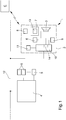
Figure 1 is a general functional diagram of the appliance according to the invention. - With particular reference to these figures, reference numeral 1 globally designates a safety apparatus usable in particular for alarm signaling in case of insurance fraud or in case of attempted theft or unwanted intrusion into the motor vehicle.
- The apparatus 1 comprises a supporting body, schematized in the illustration by
reference 2, made up of a substantially box-shaped container body and fixable onto a motor vehicle by means of suitable fastening means, not illustrated in the figures. - For example, the fastening means can be made up of suitable brackets, adhesives means or other fastening systems.
- In particular, the
container body 2 is fixable in correspondence with a substantially protected position of the motor vehicle, such as e.g. the engine compartment, in order to make difficult the unwanted access and tampering of the apparatus 1 and to ensure the protection of the device itself following any impact of the motor vehicle. - Different positions of the
container body 2 can include, e.g., its fastening in correspondence with one of the wheelhouses of the motor vehicle. - Advantageously, the apparatus 1 comprises an
electronic siren 3 able to emit an alarm acoustic signal. - The
electronic siren 3 is housed within thecontainer body 2. - With reference to a possible embodiment of the apparatus 1, the
electronic siren 3 can be associated with a control unit 4 on the motor vehicle, which can be made up of a conventional control unit of an anti-theft/anti-intrusion system positioned within the internal compartment of the motor vehicle itself. - The control unit 4 can be associated, e.g., with a plurality of
detection sensors 5 installed on board the motor vehicle of the type of ultrasonic sensors or the like able to detect any intrusion inside the internal compartment of the motor vehicle. - Inside the
container body 2, the apparatus 1 comprises a device for measuring the instantaneous acceleration of the motor vehicle, indicated generally in the illustrations by thereference 6. - The
acceleration measuring device 6 can be used to determine the driving style of the motor vehicle's driver and to detect any accident of the motor vehicle, as well as to collect useful information in order to reconstruct the dynamics and the intensity of the impacts. - Usefully, the
acceleration measuring device 6 can be used to determine the variations in the inclination of the motor vehicle in the event of any attempted theft by means of lifting. - In particular, the
acceleration measuring device 6 is suitable for measuring the instantaneous acceleration/deceleration of the motor vehicle along three directions substantially orthogonal and, in particular, can be composed of one or more three-axis accelerometers. - Conveniently, the arrangement of the three acceleration/deceleration measurement directions with respect to the motor vehicle is not relevant to the proper operation of the
accelerometer 6. - This allows great freedom of positioning the
accelerometer 6, and therefore the entire apparatus 1, during installation on the motor vehicle, while ensuring at the same time the detection of variations in inclination along any direction in a reliable and safe manner. - This frees, therefore, the positioning of the apparatus 1 from any mechanical limits of the housing inside the engine compartment of the motor vehicle or in other housing sites on the vehicle, by greatly simplifying installation.
- Within the
container body 2 is also housed a communication unit, generally designated in the illustrations by reference 7, associated with theaccelerometer 6 and able to communicate with a remote unit C. - In particular, the communication unit 7 comprises a transmitter and, possibly, a receiver operating in the frequency spectrum with mobile phone protocols of the GSM, GPRS, UMTS type or the like.
- The communication unit 7 is used for the communication to the remote unit C of useful information for insurance purposes, such as information relating to the vehicle position and to the vehicle instantaneous acceleration, as well as for sending signals of different type, such as alarm signals in case of theft of the vehicle.
- Furthermore, in case of accident detected by the
accelerometer 6, the communication unit 7 is able to send an emergency signal by activating a call to one or more predefined telephone numbers such as, e.g., private numbers or emergency numbers of medical staff, police or otherwise. - The presence of an
internal antenna 8 associated with the communication unit 7 makes the apparatus 1 largely autonomous in the management of communications. - Conveniently, the apparatus 1 can have at least a
storage unit 9 able to store the software controlling the apparatus itself or data such as, e.g., the predefined telephone numbers to call in case of emergency. - The apparatus 1 comprises an
electronic control unit 10, the type of a microprocessor or the like, connected to theaccelerometer 6, to the communication unit 7, to theelectronic siren 3 and to thestorage unit 9. Theelectronic control unit 10 is achievable, e.g., on a printed circuit board placed and fixed within thecontainer body 2. - The
electronic control unit 10 is possibly connectable to the control unit 4 on the motor vehicle and is able to coordinate the operation of theaccelerometer 6 with that of the communication unit 7, as well as to activate theelectronic siren 3 upon signaling of the control unit 4. - Advantageously, the apparatus 1 comprises a
location device 11 for locating the position of the motor vehicle. Thelocation device 11 is also housed within thecontainer body 2. - In particular, the
location device 11 can be made up of a satellite signal receiver and of a Global Positioning System (GPS), Galileo Positioning System satellite navigation system or the like, installed on board the vehicle. - The position of the motor vehicle detected by the
location device 11 is sent together with the other information from the communication unit 7 to the remote unit C, in order to monitor the movements of the motor vehicle and any sudden events for insurance purposes, to reveal the position of the motor vehicle and to allow the intervention of assistance/aid quickly in the event of an accident, or even to signal the position of the motor vehicle in case of theft or attempted theft. - Conveniently, the apparatus 1, in particular the
electronic control unit 10, can be connected to the control unit 4 and to other devices that can be present on the motor vehicle by means of acommunication channel 12. - Conveniently, the
communication channel 12 is preferably made up of the conventional CAN (Controller Area Network) channel already present on the vehicle. This avoids the installation of additional conductor cables, thus simplifying the installation operations of the apparatus 1. - The connection of the apparatus 1 by means of a
channel 12 of different type cannot however be ruled out. - In addition the apparatus 1 can have a connection port able to allow the connection to the
communication channel 12 and, therefore, to the control unit 4. - Conveniently, such connection port is made up of a conventional connector, of the type normally present on the known electric sirens and used in anti-theft or intrusion detection systems for motor vehicles.
- In the event of an anti-theft/intrusion detection system being already present on the motor vehicle, this allows for the installation of the apparatus 1 by simply replacing the conventional electric siren already installed.
- The apparatus 1 can be powered directly from the battery of the motor vehicle or, alternatively, it can have a power supply internal battery which ensures the correct operation even in case of accident.
- Advantageously, the apparatus 1 also comprises check means able to periodically check the presence of the radiofrequency communication between the communication unit 7 and the remote unit C, illustrated schematically in
Figure 1 and globally indicated byreference 13. - The check means 13 are connected to the
electronic control unit 10 and are able to send an alarm signal to theelectronic control unit 10 in the event of a forced interruption of the radiofrequency communication being detected between the communication unit 7 and the remote unit C. - Specifically, by forced interruption is meant an interruption of the radiofrequency communication due, e.g., to the use of special devices for the disturbance of GSM signals or other mobile phone standards, devices usable generally to avoid the sending of alarm signals during the theft of a motor vehicle. These devices, in fact, emit a blinding signal operating within the frequency spectrum used by the mobile phone standards and that, therefore, is superimposed to the signals transmitted or received by the communication unit 7.
- Preferably, the check means 13 are made integral inside the communication unit 7 itself.
- The check means 13 can be made up of a special piece of hardware and/or software program. For example, the same modem which constitutes the communication unit 7 can detect the blinding of the radiofrequency signal and to communicate such blinding by means of an alarm signal on a predefined output pin.
- The apparatus 1 also comprises activation means 14 operatively connected to the check means 13 and to the
electronic siren 3 and able to activate the electronic siren itself in case of a forced interruption in the radiofrequency communication being detected between the communication unit 7 and the remote unit C. - Preferably, the activation means 14 are made integral inside the
electronic control unit 10. - In particular, the activation means 14 can be made up of a specific software program stored within the
storage unit 9 and processed by theelectronic control unit 10. - It is found in practice how the described invention achieves the intended objects.
- In particular, the fact is underlined that the apparatus according to the invention is able to reduce the risk of insurance fraud or theft.
- In fact, in the event of special devices being used for the disturbance of radiofrequency communication between the communication unit and the remote unit, the check means of the apparatus detect such attempt and the activation means activates the electronic siren, thus signaling the attempt to blinding the signal.
- In this way, therefore, it is possible to significantly reduce insurance fraud or theft of the motor vehicle.
- Additionally, by positioning all components of the apparatus within a single housing container body the risk of tampering or, even, of malfunctions due to the occurrence of an accident is considerably reduced.
Claims (3)
- Safety apparatus (1) for motor vehicles, comprising at least a supporting body (2) associable with a motor vehicle, at least an acceleration measuring device (6) associated with said supporting body (2) and able to measure the instantaneous acceleration of said motor vehicle along at least one direction, at least one communication unit (7) associated with said supporting body (2) and able to set up a radiofrequency communication with at least a remote unit (C), at least a location device (11) associated with said supporting body and able to locate the position of said motor vehicle, at least an electronic siren (3) associated with said supporting body (2) and able to emit an alarm acoustic signal, characterised by the fact that it comprises check means (13) configured for periodically checking the presence of said radiofrequency communication between said communication unit (7) and said remote unit (C), and activation means (14) operatively connected to said check means (13) and to said electronic siren (3), wherein said check means (13) are configured for sending at least an alarm signal to said activation means (14) if said radiofrequency communication between said communication unit (7) and said remote unit (C) is interrupted, and wherein said activation means (14) are configured for activating said electronic siren (3) if said check means (13) detect a forced interruption of said radiofrequency communication, and wherein said supporting body (2) is made up of a substantially box-shaped container body (2) which can be fixed on said motor vehicle and which houses at least said acceleration measuring device (6), said communication unit (7), said location device (11), said electronic siren (3), said check means (13) and said activation means (14), wherein said check means (13) are made integral inside said communication unit (7), wherein said safety apparatus (1) comprises at least an antenna (8) operatively connected to said communication unit (7) and associated with said supporting body (2) or housed inside said container body (2), and wherein said safety apparatus (1) comprises at least a power supply internal battery.
- Apparatus (1) according to claim 1, characterized by the fact that it comprises at least an electronic control unit (10) associable with at least one of said acceleration measuring device (6), said communication unit (7), said location device (11), said electronic siren (3), said check means (13) and said activation means (14).
- Apparatus (1) according to one or more of the preceding claims, characterized by the fact that said electronic control unit (10) is operatively associable with at least a control unit (4) on said motor vehicle.
Applications Claiming Priority (2)
| Application Number | Priority Date | Filing Date | Title |
|---|---|---|---|
| IT000357A ITMO20130357A1 (en) | 2013-12-20 | 2013-12-20 | SAFETY APPARATUS FOR MOTOR VEHICLES OR SIMILAR |
| PCT/IB2014/066904 WO2015092645A1 (en) | 2013-12-20 | 2014-12-15 | Safety apparatus for motor vehicles or the like |
Publications (2)
| Publication Number | Publication Date |
|---|---|
| EP3083340A1 EP3083340A1 (en) | 2016-10-26 |
| EP3083340B1 true EP3083340B1 (en) | 2019-08-28 |
Family
ID=50073328
Family Applications (1)
| Application Number | Title | Priority Date | Filing Date |
|---|---|---|---|
| EP14836973.9A Active EP3083340B1 (en) | 2013-12-20 | 2014-12-15 | Safety apparatus for motor vehicles or the like |
Country Status (6)
| Country | Link |
|---|---|
| EP (1) | EP3083340B1 (en) |
| CN (1) | CN106163886A (en) |
| IT (1) | ITMO20130357A1 (en) |
| MY (1) | MY177955A (en) |
| RU (1) | RU2678614C1 (en) |
| WO (1) | WO2015092645A1 (en) |
Family Cites Families (3)
| Publication number | Priority date | Publication date | Assignee | Title |
|---|---|---|---|---|
| ITMO20080127A1 (en) * | 2008-04-29 | 2009-10-30 | Meta System Spa | SAFETY APPARATUS FOR MOTOR VEHICLES OR SIMILAR |
| RU2468531C1 (en) * | 2011-05-19 | 2012-11-27 | Общество с ограниченной ответственностью "Кодос-Б" | Method of multi-channel communication when monitoring and managing mobile objects |
| ITMC20130023U1 (en) * | 2012-09-21 | 2014-03-22 | Giuliani Doriana | ANTITHEFT FOR VEHICLE. |
-
2013
- 2013-12-20 IT IT000357A patent/ITMO20130357A1/en unknown
-
2014
- 2014-12-15 MY MYPI2016001138A patent/MY177955A/en unknown
- 2014-12-15 CN CN201480075983.3A patent/CN106163886A/en active Pending
- 2014-12-15 RU RU2016125785A patent/RU2678614C1/en active
- 2014-12-15 EP EP14836973.9A patent/EP3083340B1/en active Active
- 2014-12-15 WO PCT/IB2014/066904 patent/WO2015092645A1/en not_active Ceased
Non-Patent Citations (1)
| Title |
|---|
| None * |
Also Published As
| Publication number | Publication date |
|---|---|
| RU2678614C1 (en) | 2019-01-30 |
| RU2016125785A (en) | 2018-01-25 |
| WO2015092645A1 (en) | 2015-06-25 |
| EP3083340A1 (en) | 2016-10-26 |
| MY177955A (en) | 2020-09-28 |
| ITMO20130357A1 (en) | 2015-06-21 |
| CN106163886A (en) | 2016-11-23 |
Similar Documents
| Publication | Publication Date | Title |
|---|---|---|
| EP2481037B1 (en) | Driver assistance device and system for vehicle accident detection and method for detecting a vehicle accident | |
| EP2489093B1 (en) | Electric battery for vehicles | |
| EP1968029B1 (en) | System and method for detecting ways of using a vehicle, particularly for applications in the insurance field | |
| CA2882465C (en) | Vehicle control system including accelerometer based security warning and related methods | |
| EP2303647B1 (en) | Signalling system and method for anti-theft systems for a motor vehicle | |
| EP2268507B1 (en) | Safety apparatus for motor vehicles or the like | |
| GB2480675A (en) | An alarm for alerting a person to the theft of a trailer | |
| ITMO20090251A1 (en) | TELEMATIC EQUIPMENT FOR VEHICLES | |
| WO2017013685A1 (en) | Apparatus for automatic alerting in case of crash of a means of transportation | |
| WO2015092645A1 (en) | Safety apparatus for motor vehicles or the like | |
| WO2015140702A1 (en) | Telematic device for bicycles or similar vehicles | |
| WO2019215635A1 (en) | Telematic device for motor vehicles | |
| JP2003226228A (en) | Stolen vehicle tracking device | |
| US20230022638A1 (en) | Crash analysis device and methods of use | |
| KR100988758B1 (en) | Accident Detection and Prevention Method of Transportation Means Using Satellite Navigation Terminal and Its System | |
| EP2863616A1 (en) | Emergency call device for vehicles | |
| EP4244102A1 (en) | Online monitoring system for motor vehicles | |
| KR200299849Y1 (en) | Auto mobile Accident Alarm System | |
| ITMC20130023U1 (en) | ANTITHEFT FOR VEHICLE. | |
| KR20220124376A (en) | Agricultural machinery accident alarm device and method | |
| JP2000298787A (en) | Motorcycle accident notification device, monitoring center and motorcycle accident notification system | |
| Ninawe et al. | A Review on Post Crash Assistance | |
| TR201617965A2 (en) | An anti-theft security system | |
| KR20020060122A (en) | Auto mobile Accident Alarm System | |
| KR20130067570A (en) | Apparatus transporting state information of vehicel usign telematics |
Legal Events
| Date | Code | Title | Description |
|---|---|---|---|
| PUAI | Public reference made under article 153(3) epc to a published international application that has entered the european phase |
Free format text: ORIGINAL CODE: 0009012 |
|
| 17P | Request for examination filed |
Effective date: 20160705 |
|
| AK | Designated contracting states |
Kind code of ref document: A1 Designated state(s): AL AT BE BG CH CY CZ DE DK EE ES FI FR GB GR HR HU IE IS IT LI LT LU LV MC MK MT NL NO PL PT RO RS SE SI SK SM TR |
|
| AX | Request for extension of the european patent |
Extension state: BA ME |
|
| DAX | Request for extension of the european patent (deleted) | ||
| STAA | Information on the status of an ep patent application or granted ep patent |
Free format text: STATUS: EXAMINATION IS IN PROGRESS |
|
| 17Q | First examination report despatched |
Effective date: 20180503 |
|
| GRAP | Despatch of communication of intention to grant a patent |
Free format text: ORIGINAL CODE: EPIDOSNIGR1 |
|
| STAA | Information on the status of an ep patent application or granted ep patent |
Free format text: STATUS: GRANT OF PATENT IS INTENDED |
|
| INTG | Intention to grant announced |
Effective date: 20190320 |
|
| GRAS | Grant fee paid |
Free format text: ORIGINAL CODE: EPIDOSNIGR3 |
|
| GRAA | (expected) grant |
Free format text: ORIGINAL CODE: 0009210 |
|
| STAA | Information on the status of an ep patent application or granted ep patent |
Free format text: STATUS: THE PATENT HAS BEEN GRANTED |
|
| AK | Designated contracting states |
Kind code of ref document: B1 Designated state(s): AL AT BE BG CH CY CZ DE DK EE ES FI FR GB GR HR HU IE IS IT LI LT LU LV MC MK MT NL NO PL PT RO RS SE SI SK SM TR |
|
| REG | Reference to a national code |
Ref country code: GB Ref legal event code: FG4D |
|
| REG | Reference to a national code |
Ref country code: CH Ref legal event code: EP |
|
| REG | Reference to a national code |
Ref country code: DE Ref legal event code: R096 Ref document number: 602014052696 Country of ref document: DE |
|
| REG | Reference to a national code |
Ref country code: AT Ref legal event code: REF Ref document number: 1172012 Country of ref document: AT Kind code of ref document: T Effective date: 20190915 |
|
| REG | Reference to a national code |
Ref country code: IE Ref legal event code: FG4D |
|
| REG | Reference to a national code |
Ref country code: NL Ref legal event code: MP Effective date: 20190828 |
|
| REG | Reference to a national code |
Ref country code: LT Ref legal event code: MG4D |
|
| PG25 | Lapsed in a contracting state [announced via postgrant information from national office to epo] |
Ref country code: FI Free format text: LAPSE BECAUSE OF FAILURE TO SUBMIT A TRANSLATION OF THE DESCRIPTION OR TO PAY THE FEE WITHIN THE PRESCRIBED TIME-LIMIT Effective date: 20190828 Ref country code: SE Free format text: LAPSE BECAUSE OF FAILURE TO SUBMIT A TRANSLATION OF THE DESCRIPTION OR TO PAY THE FEE WITHIN THE PRESCRIBED TIME-LIMIT Effective date: 20190828 Ref country code: BG Free format text: LAPSE BECAUSE OF FAILURE TO SUBMIT A TRANSLATION OF THE DESCRIPTION OR TO PAY THE FEE WITHIN THE PRESCRIBED TIME-LIMIT Effective date: 20191128 Ref country code: HR Free format text: LAPSE BECAUSE OF FAILURE TO SUBMIT A TRANSLATION OF THE DESCRIPTION OR TO PAY THE FEE WITHIN THE PRESCRIBED TIME-LIMIT Effective date: 20190828 Ref country code: PT Free format text: LAPSE BECAUSE OF FAILURE TO SUBMIT A TRANSLATION OF THE DESCRIPTION OR TO PAY THE FEE WITHIN THE PRESCRIBED TIME-LIMIT Effective date: 20191230 Ref country code: NO Free format text: LAPSE BECAUSE OF FAILURE TO SUBMIT A TRANSLATION OF THE DESCRIPTION OR TO PAY THE FEE WITHIN THE PRESCRIBED TIME-LIMIT Effective date: 20191128 Ref country code: LT Free format text: LAPSE BECAUSE OF FAILURE TO SUBMIT A TRANSLATION OF THE DESCRIPTION OR TO PAY THE FEE WITHIN THE PRESCRIBED TIME-LIMIT Effective date: 20190828 Ref country code: NL Free format text: LAPSE BECAUSE OF FAILURE TO SUBMIT A TRANSLATION OF THE DESCRIPTION OR TO PAY THE FEE WITHIN THE PRESCRIBED TIME-LIMIT Effective date: 20190828 |
|
| PG25 | Lapsed in a contracting state [announced via postgrant information from national office to epo] |
Ref country code: ES Free format text: LAPSE BECAUSE OF FAILURE TO SUBMIT A TRANSLATION OF THE DESCRIPTION OR TO PAY THE FEE WITHIN THE PRESCRIBED TIME-LIMIT Effective date: 20190828 Ref country code: LV Free format text: LAPSE BECAUSE OF FAILURE TO SUBMIT A TRANSLATION OF THE DESCRIPTION OR TO PAY THE FEE WITHIN THE PRESCRIBED TIME-LIMIT Effective date: 20190828 Ref country code: GR Free format text: LAPSE BECAUSE OF FAILURE TO SUBMIT A TRANSLATION OF THE DESCRIPTION OR TO PAY THE FEE WITHIN THE PRESCRIBED TIME-LIMIT Effective date: 20191129 Ref country code: AL Free format text: LAPSE BECAUSE OF FAILURE TO SUBMIT A TRANSLATION OF THE DESCRIPTION OR TO PAY THE FEE WITHIN THE PRESCRIBED TIME-LIMIT Effective date: 20190828 Ref country code: RS Free format text: LAPSE BECAUSE OF FAILURE TO SUBMIT A TRANSLATION OF THE DESCRIPTION OR TO PAY THE FEE WITHIN THE PRESCRIBED TIME-LIMIT Effective date: 20190828 Ref country code: IS Free format text: LAPSE BECAUSE OF FAILURE TO SUBMIT A TRANSLATION OF THE DESCRIPTION OR TO PAY THE FEE WITHIN THE PRESCRIBED TIME-LIMIT Effective date: 20191228 |
|
| REG | Reference to a national code |
Ref country code: AT Ref legal event code: MK05 Ref document number: 1172012 Country of ref document: AT Kind code of ref document: T Effective date: 20190828 |
|
| PG25 | Lapsed in a contracting state [announced via postgrant information from national office to epo] |
Ref country code: TR Free format text: LAPSE BECAUSE OF FAILURE TO SUBMIT A TRANSLATION OF THE DESCRIPTION OR TO PAY THE FEE WITHIN THE PRESCRIBED TIME-LIMIT Effective date: 20190828 |
|
| PG25 | Lapsed in a contracting state [announced via postgrant information from national office to epo] |
Ref country code: EE Free format text: LAPSE BECAUSE OF FAILURE TO SUBMIT A TRANSLATION OF THE DESCRIPTION OR TO PAY THE FEE WITHIN THE PRESCRIBED TIME-LIMIT Effective date: 20190828 Ref country code: RO Free format text: LAPSE BECAUSE OF FAILURE TO SUBMIT A TRANSLATION OF THE DESCRIPTION OR TO PAY THE FEE WITHIN THE PRESCRIBED TIME-LIMIT Effective date: 20190828 Ref country code: PL Free format text: LAPSE BECAUSE OF FAILURE TO SUBMIT A TRANSLATION OF THE DESCRIPTION OR TO PAY THE FEE WITHIN THE PRESCRIBED TIME-LIMIT Effective date: 20190828 Ref country code: DK Free format text: LAPSE BECAUSE OF FAILURE TO SUBMIT A TRANSLATION OF THE DESCRIPTION OR TO PAY THE FEE WITHIN THE PRESCRIBED TIME-LIMIT Effective date: 20190828 Ref country code: AT Free format text: LAPSE BECAUSE OF FAILURE TO SUBMIT A TRANSLATION OF THE DESCRIPTION OR TO PAY THE FEE WITHIN THE PRESCRIBED TIME-LIMIT Effective date: 20190828 |
|
| PG25 | Lapsed in a contracting state [announced via postgrant information from national office to epo] |
Ref country code: SK Free format text: LAPSE BECAUSE OF FAILURE TO SUBMIT A TRANSLATION OF THE DESCRIPTION OR TO PAY THE FEE WITHIN THE PRESCRIBED TIME-LIMIT Effective date: 20190828 Ref country code: CZ Free format text: LAPSE BECAUSE OF FAILURE TO SUBMIT A TRANSLATION OF THE DESCRIPTION OR TO PAY THE FEE WITHIN THE PRESCRIBED TIME-LIMIT Effective date: 20190828 Ref country code: SM Free format text: LAPSE BECAUSE OF FAILURE TO SUBMIT A TRANSLATION OF THE DESCRIPTION OR TO PAY THE FEE WITHIN THE PRESCRIBED TIME-LIMIT Effective date: 20190828 Ref country code: IS Free format text: LAPSE BECAUSE OF FAILURE TO SUBMIT A TRANSLATION OF THE DESCRIPTION OR TO PAY THE FEE WITHIN THE PRESCRIBED TIME-LIMIT Effective date: 20200224 |
|
| REG | Reference to a national code |
Ref country code: DE Ref legal event code: R097 Ref document number: 602014052696 Country of ref document: DE |
|
| PLBE | No opposition filed within time limit |
Free format text: ORIGINAL CODE: 0009261 |
|
| STAA | Information on the status of an ep patent application or granted ep patent |
Free format text: STATUS: NO OPPOSITION FILED WITHIN TIME LIMIT |
|
| PG2D | Information on lapse in contracting state deleted |
Ref country code: IS |
|
| REG | Reference to a national code |
Ref country code: CH Ref legal event code: PL |
|
| 26N | No opposition filed |
Effective date: 20200603 |
|
| REG | Reference to a national code |
Ref country code: BE Ref legal event code: MM Effective date: 20191231 |
|
| PG25 | Lapsed in a contracting state [announced via postgrant information from national office to epo] |
Ref country code: MC Free format text: LAPSE BECAUSE OF FAILURE TO SUBMIT A TRANSLATION OF THE DESCRIPTION OR TO PAY THE FEE WITHIN THE PRESCRIBED TIME-LIMIT Effective date: 20190828 Ref country code: SI Free format text: LAPSE BECAUSE OF FAILURE TO SUBMIT A TRANSLATION OF THE DESCRIPTION OR TO PAY THE FEE WITHIN THE PRESCRIBED TIME-LIMIT Effective date: 20190828 |
|
| PG25 | Lapsed in a contracting state [announced via postgrant information from national office to epo] |
Ref country code: IE Free format text: LAPSE BECAUSE OF NON-PAYMENT OF DUE FEES Effective date: 20191215 Ref country code: LU Free format text: LAPSE BECAUSE OF NON-PAYMENT OF DUE FEES Effective date: 20191215 |
|
| PG25 | Lapsed in a contracting state [announced via postgrant information from national office to epo] |
Ref country code: LI Free format text: LAPSE BECAUSE OF NON-PAYMENT OF DUE FEES Effective date: 20191231 Ref country code: CH Free format text: LAPSE BECAUSE OF NON-PAYMENT OF DUE FEES Effective date: 20191231 Ref country code: BE Free format text: LAPSE BECAUSE OF NON-PAYMENT OF DUE FEES Effective date: 20191231 |
|
| PG25 | Lapsed in a contracting state [announced via postgrant information from national office to epo] |
Ref country code: CY Free format text: LAPSE BECAUSE OF FAILURE TO SUBMIT A TRANSLATION OF THE DESCRIPTION OR TO PAY THE FEE WITHIN THE PRESCRIBED TIME-LIMIT Effective date: 20190828 |
|
| PG25 | Lapsed in a contracting state [announced via postgrant information from national office to epo] |
Ref country code: MT Free format text: LAPSE BECAUSE OF FAILURE TO SUBMIT A TRANSLATION OF THE DESCRIPTION OR TO PAY THE FEE WITHIN THE PRESCRIBED TIME-LIMIT Effective date: 20190828 Ref country code: HU Free format text: LAPSE BECAUSE OF FAILURE TO SUBMIT A TRANSLATION OF THE DESCRIPTION OR TO PAY THE FEE WITHIN THE PRESCRIBED TIME-LIMIT; INVALID AB INITIO Effective date: 20141215 |
|
| PG25 | Lapsed in a contracting state [announced via postgrant information from national office to epo] |
Ref country code: MK Free format text: LAPSE BECAUSE OF FAILURE TO SUBMIT A TRANSLATION OF THE DESCRIPTION OR TO PAY THE FEE WITHIN THE PRESCRIBED TIME-LIMIT Effective date: 20190828 |
|
| P01 | Opt-out of the competence of the unified patent court (upc) registered |
Effective date: 20230527 |
|
| PGFP | Annual fee paid to national office [announced via postgrant information from national office to epo] |
Ref country code: IT Payment date: 20250530 Year of fee payment: 11 |
|
| PGFP | Annual fee paid to national office [announced via postgrant information from national office to epo] |
Ref country code: GB Payment date: 20260327 Year of fee payment: 12 |
|
| PGFP | Annual fee paid to national office [announced via postgrant information from national office to epo] |
Ref country code: DE Payment date: 20260327 Year of fee payment: 12 |
|
| PGFP | Annual fee paid to national office [announced via postgrant information from national office to epo] |
Ref country code: FR Payment date: 20260325 Year of fee payment: 12 |