EP3077592B1 - Verfahren zur herstellung von modifizierten produkte aus cellulose und modifiziere produkte aus cellulose - Google Patents
Verfahren zur herstellung von modifizierten produkte aus cellulose und modifiziere produkte aus cellulose Download PDFInfo
- Publication number
- EP3077592B1 EP3077592B1 EP14815783.7A EP14815783A EP3077592B1 EP 3077592 B1 EP3077592 B1 EP 3077592B1 EP 14815783 A EP14815783 A EP 14815783A EP 3077592 B1 EP3077592 B1 EP 3077592B1
- Authority
- EP
- European Patent Office
- Prior art keywords
- cellulose
- pulp
- modified cellulose
- cellulose pulp
- modified
- Prior art date
- Legal status (The legal status is an assumption and is not a legal conclusion. Google has not performed a legal analysis and makes no representation as to the accuracy of the status listed.)
- Active
Links
Images



Classifications
-
- D—TEXTILES; PAPER
- D21—PAPER-MAKING; PRODUCTION OF CELLULOSE
- D21C—PRODUCTION OF CELLULOSE BY REMOVING NON-CELLULOSE SUBSTANCES FROM CELLULOSE-CONTAINING MATERIALS; REGENERATION OF PULPING LIQUORS; APPARATUS THEREFOR
- D21C5/00—Other processes for obtaining cellulose, e.g. cooking cotton linters ; Processes characterised by the choice of cellulose-containing starting materials
- D21C5/005—Treatment of cellulose-containing material with microorganisms or enzymes
-
- C—CHEMISTRY; METALLURGY
- C08—ORGANIC MACROMOLECULAR COMPOUNDS; THEIR PREPARATION OR CHEMICAL WORKING-UP; COMPOSITIONS BASED THEREON
- C08B—POLYSACCHARIDES; DERIVATIVES THEREOF
- C08B11/00—Preparation of cellulose ethers
-
- C—CHEMISTRY; METALLURGY
- C08—ORGANIC MACROMOLECULAR COMPOUNDS; THEIR PREPARATION OR CHEMICAL WORKING-UP; COMPOSITIONS BASED THEREON
- C08B—POLYSACCHARIDES; DERIVATIVES THEREOF
- C08B15/00—Preparation of other cellulose derivatives or modified cellulose, e.g. complexes
-
- D—TEXTILES; PAPER
- D21—PAPER-MAKING; PRODUCTION OF CELLULOSE
- D21C—PRODUCTION OF CELLULOSE BY REMOVING NON-CELLULOSE SUBSTANCES FROM CELLULOSE-CONTAINING MATERIALS; REGENERATION OF PULPING LIQUORS; APPARATUS THEREFOR
- D21C9/00—After-treatment of cellulose pulp, e.g. of wood pulp, or cotton linters ; Treatment of dilute or dewatered pulp or process improvement taking place after obtaining the raw cellulosic material and not provided for elsewhere
- D21C9/001—Modification of pulp properties
-
- D—TEXTILES; PAPER
- D21—PAPER-MAKING; PRODUCTION OF CELLULOSE
- D21C—PRODUCTION OF CELLULOSE BY REMOVING NON-CELLULOSE SUBSTANCES FROM CELLULOSE-CONTAINING MATERIALS; REGENERATION OF PULPING LIQUORS; APPARATUS THEREFOR
- D21C9/00—After-treatment of cellulose pulp, e.g. of wood pulp, or cotton linters ; Treatment of dilute or dewatered pulp or process improvement taking place after obtaining the raw cellulosic material and not provided for elsewhere
- D21C9/001—Modification of pulp properties
- D21C9/002—Modification of pulp properties by chemical means; preparation of dewatered pulp, e.g. in sheet or bulk form, containing special additives
-
- D—TEXTILES; PAPER
- D21—PAPER-MAKING; PRODUCTION OF CELLULOSE
- D21C—PRODUCTION OF CELLULOSE BY REMOVING NON-CELLULOSE SUBSTANCES FROM CELLULOSE-CONTAINING MATERIALS; REGENERATION OF PULPING LIQUORS; APPARATUS THEREFOR
- D21C9/00—After-treatment of cellulose pulp, e.g. of wood pulp, or cotton linters ; Treatment of dilute or dewatered pulp or process improvement taking place after obtaining the raw cellulosic material and not provided for elsewhere
- D21C9/001—Modification of pulp properties
- D21C9/007—Modification of pulp properties by mechanical or physical means
-
- D—TEXTILES; PAPER
- D21—PAPER-MAKING; PRODUCTION OF CELLULOSE
- D21C—PRODUCTION OF CELLULOSE BY REMOVING NON-CELLULOSE SUBSTANCES FROM CELLULOSE-CONTAINING MATERIALS; REGENERATION OF PULPING LIQUORS; APPARATUS THEREFOR
- D21C9/00—After-treatment of cellulose pulp, e.g. of wood pulp, or cotton linters ; Treatment of dilute or dewatered pulp or process improvement taking place after obtaining the raw cellulosic material and not provided for elsewhere
- D21C9/18—De-watering; Elimination of cooking or pulp-treating liquors from the pulp
-
- D—TEXTILES; PAPER
- D21—PAPER-MAKING; PRODUCTION OF CELLULOSE
- D21H—PULP COMPOSITIONS; PREPARATION THEREOF NOT COVERED BY SUBCLASSES D21C OR D21D; IMPREGNATING OR COATING OF PAPER; TREATMENT OF FINISHED PAPER NOT COVERED BY CLASS B31 OR SUBCLASS D21G; PAPER NOT OTHERWISE PROVIDED FOR
- D21H11/00—Pulp or paper, comprising cellulose or lignocellulose fibres of natural origin only
- D21H11/16—Pulp or paper, comprising cellulose or lignocellulose fibres of natural origin only modified by a particular after-treatment
-
- D—TEXTILES; PAPER
- D21—PAPER-MAKING; PRODUCTION OF CELLULOSE
- D21H—PULP COMPOSITIONS; PREPARATION THEREOF NOT COVERED BY SUBCLASSES D21C OR D21D; IMPREGNATING OR COATING OF PAPER; TREATMENT OF FINISHED PAPER NOT COVERED BY CLASS B31 OR SUBCLASS D21G; PAPER NOT OTHERWISE PROVIDED FOR
- D21H11/00—Pulp or paper, comprising cellulose or lignocellulose fibres of natural origin only
- D21H11/16—Pulp or paper, comprising cellulose or lignocellulose fibres of natural origin only modified by a particular after-treatment
- D21H11/18—Highly hydrated, swollen or fibrillatable fibres
Definitions
- the invention relates to a method for making modified cellulose products.
- the invention also relates to a modified cellulose product.
- Cellulose is a renewable natural polymer that can be converted to many chemical derivatives.
- the derivatization takes place mostly by chemical reactions of the hydroxyl groups in the ⁇ -D-glucopyranose units of the polymer.
- chemical derivatization the properties of the cellulose can be altered in comparison to the original chemical form while retaining the polymeric structure.
- cellulose in fibers is derivatized in a suitable way, the fibers are easier to disintegrate to the level of fibrils, nanofibrillar cellulose, because of weakened bonds between the fibrils.
- the cellulose can be anionized or cationized.
- catalytic oxidation of cellulose by heterocyclic nitroxyl compounds such as "TEMPO", i.e. 2,2,6,6-tetramethylpiperidinyl-1-oxy free radical
- TEMPO heterocyclic nitroxyl compounds
- Another method to produce anionic cellulose is carboxymethylation of cellulose molecules.
- Cationic cellulose can be produced by adding quaternary ammonium groups to cellulose molecules.
- pulp which contains cellulosic fibers in suspension is subjected to chemical modification to reach a suitable degree of substitution, whereafter the fibers are disintegrated to fibrils with nanofibrillar cellulose as product.
- Nanofibrillar cellulose can be produced in a variety of ways, but the common feature is that the modified pulp is processed at a relatively low consistency. Consequently, the resulting nanofibrillar cellulose is a liquid dispersion with a correspondingly low concentration.
- concentration of the nanofibrillar cellulose in the dispersion is usually below 5 wt-%, usually about 1 to 4 wt-%.
- WO2013/072559 discloses a method for producing nanofibrils cellulose, wherein cellulose based fibre material, in which internal bonds in the cellulose fibre have been weakened by chemical modification, is introduced in a refining gap for separating fibrils.
- the fibre material is supplied at a consistency of 2-4%.
- nanofibrillar cellulose forms a highly viscous gel in concentrations above 1%. Raising the concentration of this type of gel to decrease transportation costs from the manufacturing location is desirable. Although methods have been developed for lowering the water content of the gel, it requires time and energy, and increase the price of the nanofibrillar cellulose. With some grades of nanofibrillar cellulose, excessive dewatering or drying can even alter the properties of the nanofibrillar cellulose so that it has no longer the same rheological characteristics when it is redispersed in water at the location of use.
- the present disclosure provides a method for making modified cellulose products, comprising
- the present disclosure also provides a modified cellulose product which is modified cellulose pulp where the fibers have increased susceptibility to disintegration as a result of the modification, packed in a rigid container or in a bag, especially in a big bag (FIBC-type bag), in a dry matter content of 20 - 60 wt-%.
- a modified cellulose product which is modified cellulose pulp where the fibers have increased susceptibility to disintegration as a result of the modification, packed in a rigid container or in a bag, especially in a big bag (FIBC-type bag), in a dry matter content of 20 - 60 wt-%.
- Cellulose in fibrous form cellulose pulp
- the manufacturing location is the location where the cellulose pulp is modified, and it can be for example a chemical pulp mill which uses the chemical pulp produced by the mill as the raw material.
- the modified cellulose in fibrous form exists as suspension or more or less dry mass after the cellulose has been processed to modified cellulose, depending on the modification method.
- the pulp contains residual substances, which must be removed from the modified cellulose pulp by washing.
- the modified cellulose pulp becomes an aqueous suspension, which is dewatered at the manufacturing location to dry matter content suitable for dispatch, whereafter the modified cellulose is transported in this dry matter content to the location of use.
- the modified cellulose pulp is diluted with washing water, whereafter the washing water, together with the dissolved substances (such as salts) and possible other impurities carried by the water from the pulp, is removed mechanically from the pulp, for example by pressing. This can be repeated the required number of times so that the washed modified cellulose pulp has the content of residual substances below the required limit.
- the washing efficiency can also be expressed by conductivity, which is discussed later.
- the modified cellulose pulp can be already at the dry matter content suitable for transport, or its dry mater content can be increased further, for example by air drying, where water is removed by evaporation.
- Drying the modified cellulose in fibrous form does not affect the properties of the cellulose when it is dried to a suitable range, which is dependent on the modified cellulose grade.
- the degree of drying can also be dependent on the means of transport and the transport distance.
- the fibres of the modified cellulose pulp can be dispersed to suitable consistency and processed to nanofibrillar cellulose at the site of use.
- Conventional pulp drying methods can be used in the drying of the modified cellulose to the desired dry matter content for dispatch. Water can be removed mechanically by a belt filter press or a pressure filter. The modifed cellulose pulp can be transported in the dry matter obtained by mechanical dewatering. The dry matter content where the modified pulp will be transported can ultimately be reached by evaporation.
- Modification of cellulose to increase the susceptibility of fibers to disintegration can be chemical modification to make derivatized cellulose, such as anionization or cationization.
- the modified cellulose is suspended to the consistency suitable for processing it to the nanofibrillar cellulose by means of a disintegrating device and other equipment at the location.
- the produced nanofibrillar cellulose can be further diluted from the production concentration to the concentration suitable for the end use.
- the fibrous raw material for modification of cellulose is obtained normally from cellulose raw material of plant origin.
- the raw material can be based on any plant material that contains cellulosic fibers, which in turn comprise microfibrils of cellulose.
- the fibers may also contain some hemicelluloses, the amount of which is dependent on the plant source.
- the plant material may be wood.
- Wood can be from softwood tree such as spruce, pine, fir, larch, douglas-fir or hemlock, or from hardwood tree such as birch, aspen, poplar, alder, eucalyptus or acacia, or from a mixture of softwoods and hardwoods.
- Non-wood material can be from agricultural residues, grasses or other plant substances such as straw, leaves, bark, seeds, hulls, flowers, vegetables or fruits from cotton, corn, wheat, oat, rye, barley, rice, flax, hemp, manila hemp, sisal hemp, jute, ramie, kenaf, bagasse, bamboo or reed.
- agricultural residues, grasses or other plant substances such as straw, leaves, bark, seeds, hulls, flowers, vegetables or fruits from cotton, corn, wheat, oat, rye, barley, rice, flax, hemp, manila hemp, sisal hemp, jute, ramie, kenaf, bagasse, bamboo or reed.
- fibers from non-parenchymal plant material where the fibrils of the fibers are in secondary cell walls.
- the fibrils originating in secondary cell walls are essentially crystalline with degree of crystallinity of at least 55 %.
- the source can be wood or non-wood plant material.
- wood fibres are one abundant fibrous raw material source.
- the raw material can be for example chemical pulp.
- the pulp can be for example softwood pulp or hardwood pulp or a mixture of these.
- nanofibrillar cellulose is obtainable from them by disintegrating the fibers to the level of microfibrils or microfibril bundles.
- the modification is performed to fibrous raw material which exists as a suspension in a liquid, that is, pulp.
- the modification treatment to the fibers can be chemical or physical.
- chemical modification the chemical structure of cellulose molecule is changed by chemical reaction ("derivatization" of cellulose), preferably so that the length of the cellulose molecule is not affected but functional groups are added to ⁇ -D-glucopyranose units of the polymer.
- the chemical modification of cellulose takes place at a certain conversion degree, which is dependent on the dosage of reactants and the reaction conditions, and as a rule it is not complete so that the cellulose will stay in solid form as fibrils and does not dissolve in water.
- anionic, cationic, or nonionic substances or any combination of these are physically adsorbed on cellulose surface.
- the modification treatment can also be enzymatic.
- the cellulose in the fibers can be especially ionically charged after the modification, because the ionic charge of the cellulose weakens the internal bonds of the fibers and will later facilitate the disintegration to nanofibrillar cellulose.
- the ionic charge can be achieved by chemical or physical modification of the cellulose.
- the fibers can have higher anionic or cationic charge after the modification compared with the starting raw material. Most commonly used chemical modification methods for making an anionic charge are oxidation, where hydroxyl groups are oxidized to aldehydes and carboxyl groups, and carboxymethylation.
- a cationic charge in turn can be created chemically by cationization by attaching a cationic group to the cellulose, such as quaternary ammonium group.
- One preferred modification method is the oxidation of cellulose.
- the primary hydroxyl groups of cellulose are oxidized catalytically by a heterocyclic nitroxyl compound, for example 2,2,6,6-tetramethylpiperidinyl-1-oxy free radical, "TEMPO".
- TEMPO 2,2,6,6-tetramethylpiperidinyl-1-oxy free radical
- the consistency of the pulp can vary according to the modification method.
- the consistency is normally 1-4 wt-%.
- higher consistencies in the MC (medium consistency) range up to 12 wt-%, preferably 8-12%, or even higher than 12%) can be used to reduce the amount of water needed.
- cellulose can be oxidized catalytically at pulp initial consistency of 8-12% with good selectivity.
- the consistency values given above represent the starting consistency of the pulp.
- the consistency of the pulp may change during the modification process for example due to materials added in course of the process.
- fibers in the pulp will contain cellulose that is more susceptible to fibrillation (disintegration to fibrils) than before the modification, that is, the product can be called "easily fibrillated pulp”.
- the pulp where the cellulose is chemically modified can be characterized by degree of substitution or content of chemical groups.
- degree of substitution or content of chemical groups For pulp modified by catalytic oxidation, the following values can be given:
- the degree of substitution can be in the range of 0.05 - 0.3, preferably 0.10 - 0.25. In the case of cationized cellulose, the degree of substitution can be 0.05 - 0.8, preferably 0.1-0.45.
- the fibers of the modified cellulose pulp can be more easily disintegrated to nanofibrillar cellulose.
- the quality of the modified cellulose used for making nanofibrillar cellulose can thus be characterized with the conductivity.
- the measured conductivity of the modified cellulose pulp when suspended at a consistency of 2.5 wt-% in deionized water, is below 200 mS/m, preferably below 150 mS/m, and most preferably below 100 mS/m.
- the conductivity values as low as below 50 mS/m can even be attained by washing, if very high quality modified pulp is made.
- the conductivity values measured in the above mentioned way can be used also to characterize carboxymethylated cellulose, which also contains salt after the modification, but the conductivity can be used as a quality standard in general for all modified cellulose pulp grades, including cationized cellulose.
- the conductivity is determined in deionized water at a fixed consistency so that the ions of water do not interfere with the result and the values give a certain standard exclusively for the modified cellulose pulp transported to the user.
- the conductivity of the suspension before the fibrillation will be dependent on the consistency of the cellulose pulp and on the water used at the location.
- the fibers containing the modified cellulose are transported to another location from the manufacturing location.
- the pulp obtained after the modification is set to suitable dry matter content in connection with washing or after the washing to reduce the transportation costs.
- the dry matter content of the pulp is dependent of the pulp grade, and can be 5 -95 wt-%, more preferably 10 - 95 wt-%,and most preferably 20 - 60 wt-% for transport.
- Prior to setting the final dry matter content of transporting the pulp is washed in one or more steps to remove the chemical residues of the modification process and to reduce the conductivity, which has proved important.
- the setting of the final dry matter content of transporting thus comprises dewatering by removal of the washing water together with residual substances entrained by the washing water, such as dissolved salts. After washing, the dry matter content can be increased further by evaporation.
- the dry matter content of 20 - 60 wt-% is suitable for transport, because the processing costs increase with the amount of water which is to be removed from the modified pulp, especially in higher dry matter contents.
- the range of 20 - 60 wt-% is especially suitable for modified cellulose pulp where the cellulose is catalytically oxidized.
- the cellulosic fibers of the modified cellulose pulp can be dewatered more easily than strongly hydrophilic nanofibrillar cellulose, irrespective of the modification method and the grade of the modified cellulose pulp.
- the pulp is modified moderately and is not disintegrated mechanically before the transport.
- the SR number (Schopper-Riegler) of such pulp is typically below 20, which characterizes the easy dewaterability of the pulp and is a typical value for unbeaten pulp.
- the modified cellulose pulp For the transport of the modified cellulose pulp, any means of transport conventionally used for pulp can be used.
- the modified cellulose pulp can be transported in closed rigid containers, especially in shipping containers, or in bags, especially so called big bags, also known as FIBC /flexible intermediate bulk container). If the dry matter content is 60 wt-% or more, the modified cellulose pulp can be transported in bales.
- the transport can take place by road vehicles, trains or ships, or even as air freight.
- the modified cellulose in fibrous form is transported to the location of use, where it is made to nanofibrillar cellulose.
- Nanofibrillar cellulose refers to a collection of isolated cellulose microfibrils or microfibril bundles derived from cellulose raw material. Nanofibrillar cellulose has typically a high aspect ratio: the length might exceed one micrometer while the number-average diameter is typically below 200 nm. The diameter of nanofibril bundles can also be larger but generally less than 5 ⁇ m. The smallest nanofibrils are similar to so called elementary fibrils, which are typically 2-12 nm in diameter. The dimensions of the fibrils or fibril bundles are dependent on raw material and disintegration method. The nanofibrillar cellulose may also contain some hemicelluloses; the amount is dependent on the plant source.
- nanofibrillar cellulose from the fibers of the modified cellulose is carried out with suitable equipment such as a refiner, grinder, homogenizer, colloider, friction grinder, ultrasound sonicator, fluidizer such as microfluidizer, macrofluidizer or fluidizer-type homogenizer.
- suitable equipment such as a refiner, grinder, homogenizer, colloider, friction grinder, ultrasound sonicator, fluidizer such as microfluidizer, macrofluidizer or fluidizer-type homogenizer.
- the fibers of the modified cellulose are diluted to suitable consistency, which is dependent on the disintegration method.
- the starting concentration of the pulp in most cases is between 1 - 5%.
- the NFC issues from the disintegration at approximately the same concentration as the starting pulp.
- the fibers of modified cellulose are preferably diluted to the same concentration as is desired for the NFC of the end application.
- the concentration of NFC obtained from the disintegration is adjusted for the end use. It is for example possible that the fibers are disintegrated at higher consistency than the final use concentration of the NFC, and the NFC obtained from the disintegration is diluted to the final use concentration.
- the energy demand of the easily fibrillated pulp (expressable as kWh/ton or correspondingr variables) to reach the same target level of fibrillation is lower with modified pulp, compared with the unmodified pulp from the same batch and processed at the same consistency.
- the unmodified pulp cannot even be disintegrated to nanofibrillar cellulose.
- the conductivity of the modified cellulose pulp influences the fibrillation result.
- the nanofibrillar cellulose can also be characterized through some rheological values.
- NFC forms a viscous gel, "hydrogel” when dispersed in water already at relatively low concentrations (1-2 wt-%).
- a characteristic feature of the NFC is its shear thinning behaviour in aqueous dispersion, which is seen as a decrease in viscosity with increasing shear rate. Further, a "threshold" shear stress must be exceeded before the material starts to flow readily. This critical shear stress is often called the yield stress.
- the viscosity of the NFC can be best characterized by zero-shear viscosity, which corresponds to the "plateau" of constant viscosity at small shearing stresses approaching zero.
- the zero-shear viscosity of the NFC measured with a stress controlled rotational rheometer at a concentration of 0.5% (aqueous medium) can vary within wide boundaries, depending on the modification method and conversion degree, and it is typically between 1000 and 100000 Pa ⁇ s, preferably 5000 and 50000 Pa ⁇ s.
- the yield stress of the NFC determined by the same method is between 1 and 50 Pa, preferably in the range of 3 - 15 Pa.
- Fig. 1 illustrates the method together with alternative uses of the NFC.
- the manufacturing location is a pulp mill that produces for example chemical pulp for cellulosic raw material.
- the chemical pulp which is manufactured with known chemical pulping methods, is dispatched to various destinations (arrow "fiber").
- the chemical pulp is also modified at the pulp mill to make easily fibrillated pulp, where fibers contain modified cellulose (process "TEMPO or CM modification”).
- TEMPO catalytic oxidation
- CM carboxymethylation
- any chemical, physical or enzymatic modification method can be used which produces easily fibrillated pulp.
- the pulp is dried or concentrated to desired dry matter content prior it is dispatched to the destination, location of use.
- the arrow "dry or concentrated fiber” represents the transport of this dried or concentrated easily fibrillated pulp.
- the transport can take place by road, railroad or sea or by combination of these modes of transport.
- the location of use in this case is a paper mill where the easily fibrillated pulp is disintegrated to NFC by "on-site” fibrillation (process “Fibrillation”). At the paper mill the NFC can be processed further depending on the end use at the paper mill.
- the NFC can stay at the original concentration obtained from the disintegration (in this example 1 wt-%) and for adding the NFC to paper coating composition, it can be concentrated from the original concentration (in this example to 5 wt-%).
- the paper mill In addition to using the on-site manufactured NFC at the location of use, the paper mill, it can be dispatched from there further to customers, for example in a concentrated state (10 - 95 wt-%). These other customers may use the NFC to other purposes than for paper manufacture, and/or they can be paper mills using the NFC for paper manufacture.
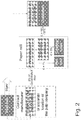
- Fig. 2 differs from Fig. 1 in that the pulp produced by the pulp mill is modified in a separate location which is the manufacturing location for the easily fibrillated pulp.
- This manufacturing location dispatches the easily fibrillated pulp to the location of use, the paper mill, in a same way as in Fig. 1 , but additionally the manufacturing location dispatches the easily fibrillated pulp directly to other customers, which may use the "on-site" fibrillated NFC to other purposes than for paper manufacture.
- the manufacturing location is a pulp mill as in Fig. 1 , and it dispatches the easily fibrillated pulp directly to customers, which may use the "on-site" fibrillateded NFC to other purposes than for paper manufacture.
- the dispatch in Figs. 1 and 2 can take place by road, railway or sea in a suitable vehicle or vessel.
- Figures 6 and 7 show the setup of the manufacturing apparatus at the location of use for two alternative modes for making the nanofibrillar cellulose, Fig. 6 for the continuous mode and Fig. 7 for the batch mode.
- the manufacturing apparatus installed at the location of use comprises a pulper PPR, a disintegrating device DIS, a discharge vessel DV, a conduit connecting the pulper to the disintegrating device, a conduit connecting the disintegrating device to the discharge vessel, and a pump (P-1) for feeding modified cellulose pulp from the pulper PPR to the disintegrating device DIS.
- These elements are common for the continuous mode and the batch mode.
- the apparatus can also have a feeding chest FC, which acts as a intermediate buffer container to ensure continuous feed of the pulp to the disintegrating device DIS in the continuous mode.
- the apparatus also comprises a conduit connecting the feeding chest to the disintegrating device and and a pump (P-10) for feeding modified cellulose pulp from the feeding chest to the disintegrating device.
- P-10 a pump for feeding modified cellulose pulp from the feeding chest to the disintegrating device.
- the pulper PPR the modified cellulose pulp is pulped and diluted to a consistency of about 6 - 7 wt-%.
- the final dilution to the disintegration consistency can take place in the feeding chest FC, to which dilution water is also added, or in any place between the pulper and the disintegrating device.
- the feeding chest FC can be replaced by another pulper.
- the pulpers feed alternately the pulp to the disintegrating device DIS to ensure even supply to the disintegrating process.
- the apparatus comprises a circulation conduit connecting the outlet of the discharge vessel DV to the inlet of the disintegrating device DIS ( Fig. 6 , continuous) or to the feeding chest FC ( Fig. 7 , batch).
- the valveV-1 after a discharge pump (E-8) is closed to the exit direction and it is open to the circulation direction.
- the circulation direction is closed and the exit direction is opened, and the nanofibrillar cellulose NFC exits the disintegrating process pumped by the discharge pump.
- Fig. 6 there is a three-way connection V-1 after the discharge vessel DV, and there is a pump (E-8) in the discharge conduit which leads out of the disintegrating process and a pump (E-10) in the circulation conduit that connects the outlet of the discharge vessel DV to the inlet of the disintegrating vessel DIS.
- the circulation ratio can be adjusted by adjusting the output of the pumps E-8 and E-10.
- the circulation ratio is 10 - 90 %, preferably 30 - 70%. In the circulation ratio of 67%, 2/3 of the total flow is returned back, which means 3 passes through the disintegrating device DIS.
- the continuous mode also includes the alternative where the pulp suspension is passed once through the disintegrating device DIS, which is possible especially with high-quality modified pulp of low conductivity.
- the apparatus both in Figs. 6 and 7 also comprises a dilution device DIL connected to the outlet of the discharge vessel DV for diluting the nanofibrillar cellulose to the use concentration.
- DIL dilution device
- This device is not necessarily needed if the nanofibrillar cellulose exits the disintegrating process at the use concentration, or if it is to be diluted later, just before the use.
- the disintegrating device DIS can be a disperser-type device, where the modified cellulose pulp flows through several counter-rotating rotors in such a way that the material is repeatedly subjected to shear and impact forces by the effect of the different counter-rotating rotors, or it can be a homogenizer, where the modified cellulose pulp is subjected to homogenization by the effect of pressure.
- the apparatus can also comprise instrumentation for measuring some variables of the modified cellulose pulp and/or the nanofibrillar cellulose NFC which characterize the efficiency of the fibrillation and the quality of the product.
- This instrumentation comprises a temperature sensor T1 before the disintegrating device DIS and a temperature sensor T2 after the disintegrating device DIS for measuring the temperature difference T2-T1, which equals the temperature rise during the disintegration and is a measure of the efficiency of the process, and it can be also used for the process control.
- the apparatus also comprises an on-line turbidometer TUR which can be calibrated to the modified cellulose pulp grade that is processed and consequently to the nanofibrillar cellulose grade that is produced.
- the apparatus can also comprise an on-line viscometer VIS based on pressure difference. These measuring instruments are placed in a suitable place after the disintegrating device DIS, preferably to the place where the final product flows. In fig. 6 , these on-line instruments are placed before the dilution device DIL and in Fig. 7 , the instruments are placed after the dilution device DIL. Both on-line instruments are not necessarily needed. The customer can choose between an on-line turbidometer TUR an on-line viscometer VIS, according to the properties of the NFC important in the use of the NFC.
- Fig. 8 is an example how the apparatus can be transported to the location of use. It is possible to send the apparatus to the user in the same transport as the modified cellulose pulp or separately.
- a compact transport container is used.
- Fig. 8 shows, in horizontal section, a standard DC (dry cargo) shipping container CON (ISO shipping container), with the length L of 20 ft and width W x height of 8 ft, corresponding to the nominal length x width x height of 6m x 2.4m x 2.4m.
- a pulper PPR, a feeding chest FC, a disintegrating device DIS, and a discharge vessel DV can be packed.
- the pulper PPR and the feeding chest FC comprise also the mixer motor M.
- the apparatus comprises two pulpers and no feeding chest, like in one alternative of the continuous mode apparatus, the pulpers can be smaller.
- a dilution device DIL can also be packed in the container CON.
- the container can also include the instrumentation, such as the temperature sensors, on-line turbidometer and on-line viscometer, all packed in an instrument box INST.
- the disintegrating device DIS is a disperser-type device that has several counterrotating rotors, its general shape is a cylinder with diameter w and height h, as shown in Fig. 8 .
- the container CON shown in Fig. 8 comprises the elements for installing the apparatus in the setup of Fig. 6 or Fig. 7 , or in any other setup.
- Customers that use the NFC to other purposes than for papermaking can be construction companies, composite material manufacturers, pharmaceutical companies, cosmetics manufacturers, food companies, oil companies, or coating material manufacturers.
- the customers and the related uses are not limited to the listed customers, but the modified cellulose pulp can be dispatched anywhere where there is need to use nanofibrillar cellulose.
Landscapes
- Engineering & Computer Science (AREA)
- Life Sciences & Earth Sciences (AREA)
- Chemical & Material Sciences (AREA)
- Wood Science & Technology (AREA)
- Biochemistry (AREA)
- Chemical Kinetics & Catalysis (AREA)
- Microbiology (AREA)
- General Chemical & Material Sciences (AREA)
- Mechanical Engineering (AREA)
- Materials Engineering (AREA)
- Health & Medical Sciences (AREA)
- Medicinal Chemistry (AREA)
- Polymers & Plastics (AREA)
- Organic Chemistry (AREA)
- Polysaccharides And Polysaccharide Derivatives (AREA)
- Paper (AREA)
Claims (13)
- Verfahren zur Herstellung von modifizierten Celluloseprodukten, umfassend:- Verarbeiten von Cellulosebrei zu modifiziertem Cellulosebrei, vorzugsweise durch chemische oder physikalische oder enzymatische Modifikation, an einem Herstellungsort, vorzugsweise in einem Zellstoffwerk, zur Erhöhung der möglichen Zerfallsanfälligkeit von Fasern, gekennzeichnet durch:- Festlegen des modifizierten Cellulosebreis auf einen geeigneten Trockensubstanzgehalt, wobei der Trockensubstanzgehalt des modifizierten Cellulosebreis auf 20 - 60 Gew.-% festgelegt wird, und- Transportieren des modifizierten Cellulosebreis mit dem festgelegten Trockensubstanzgehalt an einen Einsatzort, wo der modifizierte Cellulosebrei zu nanofibrillärer Cellulose mit einer Nullscherviskosität, gemessen mit einem spannungsgesteuerten Rotationsrheometer bei einer Konzentration von 0,5% (wässriges Medium) zwischen 1.000 und 100.000 Pa·s, zersetzt wird.
- Verfahren nach Anspruch 1, dadurch gekennzeichnet, dass die Verarbeitung von Cellulosebrei durch chemische Modifikation erfolgt, wobei anionisierte oder kationisierte Cellulose erhalten, die chemische Modifikation vorzugsweise aus katalytischer Oxidation von Cellulose ausgewählt wird, Carboxylgruppen in der Cellulose, Carboxymethylierung von Cellulose und Kationisierung von Cellulose erzeugt werden.
- Verfahren nach einem der vorstehenden Ansprüche, dadurch gekennzeichnet, dass der modifizierte Cellulosebrei zu nanofibrillärer Zellulose mit einer Nullscherviskosität, gemessen mit einem spannungsgesteuerten Rotationsrheometer bei einer Konzentration von 0,5% (wässriges Medium) zwischen 5.000 und 50.000 Pa·s, zersetzt wird.
- Verfahren nach einem der vorstehenden Ansprüche, dadurch gekennzeichnet, dass der modifizierte Cellulosebrei vor dem Transport des modifizierten Cellulosebreis gewaschen wird, vorzugsweise durch Verdünnen mit Waschwasser, und das Festlegen des Trockensubstanzgehaltes das Konzentrieren des modifizierten Cellulosebreis durch mechanische Entfernung des Waschwassers umfasst.
- Verfahren nach Anspruch 4, dadurch gekennzeichnet, dass das Festlegen des Trockensubstanzgehalts eine weitere Erhöhung des Trockensubstanzgehalts durch Verdunstung nach dem Waschen umfasst.
- Verfahren nach einem der vorstehenden Ansprüche, dadurch gekennzeichnet, dass die modifizierte Cellulose gewaschen wird und die gemessene Leitfähigkeit des modifizierten Cellulosebreis nach dem Waschen, wenn bei einer Konsistenz von 2,5 Gew.-% in deionisiertem Wasser suspendiert, unter 200 mS/m, vorzugsweise unter 150 mS/m und am meisten bevorzugt unter 100 mS/m liegt.
- Verfahren nach einem der vorstehenden Ansprüche, dadurch gekennzeichnet, dass der modifizierte Cellulosebrei in starren Behältern oder in Säcken, insbesondere in Big-Bags (FIBC-Säcken), transportiert wird.
- Verfahren nach einem der vorstehenden Ansprüche, dadurch gekennzeichnet, dass es umfasst:Verdünnen des modifizierten Cellulosebreis am Einsatzort vom erhöhten Trockensubstanzgehalt auf eine zersetzende Konsistenz, undZersetzen des modifizierten Cellulosebreis auf die zersetzende Konsistenz zu nanofibrillärer Zellulose, vorzugsweise umfassend:Mischen des modifizierten Cellulosebreis mit Wasser in einem Pulper,Zuführen des modifizierten Cellulosebreis aus dem Pulper zu einer Zersetzungsvorrichtung,Behandeln desmodifizierten Cellulosebreis in der Zersetzungsvorrichtung, um den modifizierten Cellulosebrei zu nanofibrillärer Zellulose zu zersetzen, undSammeln der nanofibrillären Cellulose, die aus der Zersetzungsvorrichtung austritt.
- Verfahren nach Anspruch 8, dadurch gekennzeichnet, dass die nanofibrilläre Cellulose in einem kontinuierlichen Modus hergestellt wird, vorzugsweise so, dass während des kontinuierlichen Modus ein Teil der Abführung der Zersetzungsvorrichtung zur Zuführung der Zersetzungsvorrichtung rückgeführt wird.
- Verfahren nach Anspruch 8, dadurch gekennzeichnet, dass die nanofibrilläre Cellulose im Batch-Verfahren hergestellt wird.
- Modifiziertes Celluloseprodukt, das modifizierter Cellulosebrei ist, bei dem die Fasern durch die Modifikation eine erhöhte Zersetzungsanfälligkeit aufweisen, verpackt in einem starren Behälter oder in einem Beutel, insbesondere in einem Big-Bag (FIBC-Sack), mit einem Trockenmassegehalt von 20-60 Gew.-%.
- Modifiziertes Celluloseprodukt nach Anspruch 11, dadurch gekennzeichnet, dass der modifizierte Cellulosebrei chemisch modifizierter Cellulosebrei ist, wobei die Cellulose anionisierte oder kationisierte Cellulose und die anionisierte Cellulose vorzugsweise oxidierte carboxylgruppenhaltige Cellulose oder carboxymethylierte Cellulose ist.
- Modifiziertes Celluloseprodukt nach einem der vorstehenden Ansprüche 11-12, dadurch gekennzeichnet, dass die gemessene Leitfähigkeit des modifizierten Cellulosebreis, wenn bei einer Konsistenz von 2,5 Gew.-% in deionisiertem Wasser suspendiert, unter 200 mS/m, vorzugsweise unter 150 mS/m und am meisten bevorzugt unter 100 mS/m liegt.
Applications Claiming Priority (2)
| Application Number | Priority Date | Filing Date | Title |
|---|---|---|---|
| FI20136235A FI127124B2 (en) | 2013-12-05 | 2013-12-05 | A process for making modified cellulosic products and a modified cellulosic product |
| PCT/FI2014/050955 WO2015082774A1 (en) | 2013-12-05 | 2014-12-04 | Method for making modified cellulose products |
Publications (3)
| Publication Number | Publication Date |
|---|---|
| EP3077592A1 EP3077592A1 (de) | 2016-10-12 |
| EP3077592B1 true EP3077592B1 (de) | 2018-06-13 |
| EP3077592B2 EP3077592B2 (de) | 2021-08-25 |
Family
ID=52134222
Family Applications (1)
| Application Number | Title | Priority Date | Filing Date |
|---|---|---|---|
| EP14815783.7A Active EP3077592B2 (de) | 2013-12-05 | 2014-12-04 | Verfahren zur herstellung von modifizierten produkte aus cellulose und modifiziere produkte aus cellulose |
Country Status (6)
| Country | Link |
|---|---|
| US (1) | US10214855B2 (de) |
| EP (1) | EP3077592B2 (de) |
| JP (1) | JP7139094B2 (de) |
| CN (1) | CN105793490A (de) |
| FI (1) | FI127124B2 (de) |
| WO (1) | WO2015082774A1 (de) |
Cited By (1)
| Publication number | Priority date | Publication date | Assignee | Title |
|---|---|---|---|---|
| CN109487546A (zh) * | 2018-10-30 | 2019-03-19 | 浙江农林大学 | 一种高效环保的阳离子纳纤化纤维素制备方法 |
Families Citing this family (14)
| Publication number | Priority date | Publication date | Assignee | Title |
|---|---|---|---|---|
| FI126042B (en) | 2014-03-31 | 2016-06-15 | Upm Kymmene Corp | Process for the manufacture of nanofibrillar cellulose and nanofibrillar cellulose product |
| EP3161087B1 (de) * | 2014-06-26 | 2023-12-27 | UPM Specialty Papers Oy | Trägerschicht für einen releaseliner mit nanofibrillärer zellulose |
| FI126688B (en) * | 2014-06-30 | 2017-03-31 | Upm Kymmene Corp | Method and apparatus for monitoring the quality of nanofibrillary cellulose |
| US9816230B2 (en) * | 2014-12-31 | 2017-11-14 | Innovatech Engineering, LLC | Formation of hydrated nanocellulose sheets with or without a binder for the use as a dermatological treatment |
| SE540103C2 (en) * | 2016-07-11 | 2018-03-27 | Stora Enso Oyj | Method of manufacturing intermediate product for conversioninto microfibrillated cellulose |
| JP6762820B2 (ja) * | 2016-09-16 | 2020-09-30 | 大王製紙株式会社 | セルロースナノファイバーの製造装置 |
| JP7019236B2 (ja) * | 2017-02-21 | 2022-02-15 | 日本製紙株式会社 | セルロースナノファイバーの製造方法 |
| SE542671C2 (en) * | 2017-07-05 | 2020-06-23 | Stora Enso Oyj | Dosing of nanocellulose suspension in gel phase |
| EP3456639A1 (de) | 2017-09-19 | 2019-03-20 | Borregaard AS | Kompaktes system zur verpackung von mikrofibrillierter cellulose |
| SI3533458T1 (sl) * | 2018-03-02 | 2023-09-29 | Upm-Kymmene Corporation | Medicinski izdelek, ki vsebuje bioaktivno molekulo, ki je imobilizirana na nanofibrilarno celulozo in postopek za njegovo pripravo |
| US11512432B2 (en) | 2018-03-30 | 2022-11-29 | Nippon Paper Industries Co., Ltd. | Oxidized microfibrillated cellulose fibers and composition thereof |
| JP7233413B2 (ja) | 2018-03-30 | 2023-03-06 | 日本製紙株式会社 | カルボキシメチル化ミクロフィブリルセルロース繊維およびその組成物 |
| EP3822410A1 (de) * | 2019-11-12 | 2021-05-19 | BillerudKorsnäs AB | Verfahren zur herstellung einer folie mit chemisch modifizierten cellulosefasern |
| CN114981499A (zh) * | 2020-03-19 | 2022-08-30 | 日本制纸株式会社 | 使用可移动式纸浆解纤装置单元的现场解纤方法和可移动式纸浆解纤装置单元 |
Citations (9)
| Publication number | Priority date | Publication date | Assignee | Title |
|---|---|---|---|---|
| US4481077A (en) | 1983-03-28 | 1984-11-06 | International Telephone And Telegraph Corporation | Process for preparing microfibrillated cellulose |
| WO2011004300A1 (en) | 2009-07-07 | 2011-01-13 | Stora Enso Oyj | Process for producing microfibrillated cellulose |
| WO2011141877A1 (en) | 2010-05-12 | 2011-11-17 | Stora Enso Oyj | A process for the production of a composition comprising fibrillated cellulose and a composition |
| WO2013072559A1 (en) | 2011-11-14 | 2013-05-23 | Upm-Kymmene Corporation | A method for producing nanofibril cellulose |
| WO2013076376A1 (en) | 2011-11-23 | 2013-05-30 | Upm-Kymmene Corporation | A method and a system for manufacturing cellulose material |
| WO2013117823A1 (en) | 2012-02-10 | 2013-08-15 | Upm-Kymmene Corporation | Method for pretreating cellulose pulp |
| WO2013150475A1 (en) | 2012-04-05 | 2013-10-10 | Stora Enso Oyj | Method for the preparation of cellulose ethers with a high solids process, product obtained and uses of the product |
| WO2014029909A1 (en) | 2012-08-20 | 2014-02-27 | Stora Enso Oyj | Method and intermediate for the production of highly refined or microfibrillated cellulose |
| WO2015007953A1 (en) | 2013-07-16 | 2015-01-22 | Stora Enso Oyj | A method of producing oxidized or microfibrillated cellulose |
Family Cites Families (17)
| Publication number | Priority date | Publication date | Assignee | Title |
|---|---|---|---|---|
| US6379494B1 (en) * | 1999-03-19 | 2002-04-30 | Weyerhaeuser Company | Method of making carboxylated cellulose fibers and products of the method |
| CN2384701Y (zh) | 1999-07-06 | 2000-06-28 | 殷远方 | 钢模机 |
| US6900975B2 (en) * | 2002-07-05 | 2005-05-31 | Sunjit Suni Jut Sanayi Ve Tioaret A.S. | Inner device for neutralization of electrostatic charges from material in contact |
| MXPA04012799A (es) * | 2002-07-18 | 2005-03-31 | Japan Absorbent Tech Inst | Metodo y aparato para producir celulosa microfibrilada. |
| ITVI20040181A1 (it) | 2004-07-21 | 2004-10-21 | Comer Spa | Reattore particolarmente adatto per la depurazione di sospensioni fibrose disperse in liquidi |
| JP5269513B2 (ja) * | 2008-07-31 | 2013-08-21 | 第一工業製薬株式会社 | スプレー用組成物およびそれを用いたスプレー噴霧装置 |
| SE0950535A1 (sv) * | 2009-07-07 | 2010-10-12 | Stora Enso Oyj | Metod för framställning av mikrofibrillär cellulosa |
| KR101239809B1 (ko) * | 2010-05-07 | 2013-03-06 | 삼성메디슨 주식회사 | 클러터 필터링을 위한 초음파 영상 장치 및 그 방법 |
| FI127301B (fi) | 2011-02-10 | 2018-03-15 | Upm Kymmene Corp | Menetelmä nanoselluloosan käsittelemiseksi ja menetelmällä saatu tuote |
| JP5875833B2 (ja) * | 2011-11-10 | 2016-03-02 | 第一工業製薬株式会社 | 増粘用セルロース繊維の製法 |
| FI126013B (en) | 2012-02-13 | 2016-05-31 | Upm Kymmene Corp | A method and system for treating fibril cellulose, as well as a fibril cellulose material |
| FI125941B (en) * | 2012-02-13 | 2016-04-15 | Upm Kymmene Corp | Method and apparatus for treating fibril pulp and a fibril pulp product |
| SE1250595A1 (sv) | 2012-06-07 | 2013-12-08 | Mikrofibrillerad cellulosa med hög torrsubstanshalt och tillverkning därav | |
| FI126300B2 (en) * | 2012-12-04 | 2024-12-17 | Upm Kymmene Corp | Method and device for transporting viscous material |
| DK3418447T3 (da) | 2013-03-15 | 2023-10-02 | Fiberlean Tech Ltd | Fremgangsmåde til behandling af mikrofibrilleret cellulose |
| FI126386B (en) * | 2013-04-25 | 2016-11-15 | Upm Kymmene Corp | A process for catalytic oxidation of cellulose |
| FI128835B (en) * | 2013-05-14 | 2021-01-15 | Upm Kymmene Corp | Method and apparatus for producing nanofibrillar cellulose |
-
2013
- 2013-12-05 FI FI20136235A patent/FI127124B2/en active IP Right Grant
-
2014
- 2014-12-04 EP EP14815783.7A patent/EP3077592B2/de active Active
- 2014-12-04 US US15/035,496 patent/US10214855B2/en active Active
- 2014-12-04 JP JP2016536586A patent/JP7139094B2/ja active Active
- 2014-12-04 CN CN201480066304.6A patent/CN105793490A/zh active Pending
- 2014-12-04 WO PCT/FI2014/050955 patent/WO2015082774A1/en not_active Ceased
Patent Citations (9)
| Publication number | Priority date | Publication date | Assignee | Title |
|---|---|---|---|---|
| US4481077A (en) | 1983-03-28 | 1984-11-06 | International Telephone And Telegraph Corporation | Process for preparing microfibrillated cellulose |
| WO2011004300A1 (en) | 2009-07-07 | 2011-01-13 | Stora Enso Oyj | Process for producing microfibrillated cellulose |
| WO2011141877A1 (en) | 2010-05-12 | 2011-11-17 | Stora Enso Oyj | A process for the production of a composition comprising fibrillated cellulose and a composition |
| WO2013072559A1 (en) | 2011-11-14 | 2013-05-23 | Upm-Kymmene Corporation | A method for producing nanofibril cellulose |
| WO2013076376A1 (en) | 2011-11-23 | 2013-05-30 | Upm-Kymmene Corporation | A method and a system for manufacturing cellulose material |
| WO2013117823A1 (en) | 2012-02-10 | 2013-08-15 | Upm-Kymmene Corporation | Method for pretreating cellulose pulp |
| WO2013150475A1 (en) | 2012-04-05 | 2013-10-10 | Stora Enso Oyj | Method for the preparation of cellulose ethers with a high solids process, product obtained and uses of the product |
| WO2014029909A1 (en) | 2012-08-20 | 2014-02-27 | Stora Enso Oyj | Method and intermediate for the production of highly refined or microfibrillated cellulose |
| WO2015007953A1 (en) | 2013-07-16 | 2015-01-22 | Stora Enso Oyj | A method of producing oxidized or microfibrillated cellulose |
Non-Patent Citations (1)
| Title |
|---|
| EYHOLZER, CH. ET AL.: "Preparation and characterization of water-redispersible nanofibrillated cellulose in powder form", CELLULOSE, vol. 17, 2010, pages 19 - 30, XP019767584 |
Cited By (2)
| Publication number | Priority date | Publication date | Assignee | Title |
|---|---|---|---|---|
| CN109487546A (zh) * | 2018-10-30 | 2019-03-19 | 浙江农林大学 | 一种高效环保的阳离子纳纤化纤维素制备方法 |
| CN109487546B (zh) * | 2018-10-30 | 2021-04-13 | 浙江农林大学 | 一种高效环保的阳离子纳纤化纤维素制备方法 |
Also Published As
| Publication number | Publication date |
|---|---|
| JP2016540861A (ja) | 2016-12-28 |
| EP3077592A1 (de) | 2016-10-12 |
| JP7139094B2 (ja) | 2022-09-20 |
| US20160289894A1 (en) | 2016-10-06 |
| US10214855B2 (en) | 2019-02-26 |
| FI127124B2 (en) | 2021-02-15 |
| CN105793490A (zh) | 2016-07-20 |
| FI127124B (en) | 2017-11-30 |
| EP3077592B2 (de) | 2021-08-25 |
| WO2015082774A1 (en) | 2015-06-11 |
Similar Documents
| Publication | Publication Date | Title |
|---|---|---|
| EP3077592B1 (de) | Verfahren zur herstellung von modifizierten produkte aus cellulose und modifiziere produkte aus cellulose | |
| US11274396B2 (en) | Method for producing nanofibrillar cellulose and nanofibrillar cellulose product | |
| US9416493B2 (en) | Method, system and apparatus for processing fibril cellulose and fibril cellulose material | |
| CN105209685B (zh) | 制备纳米原纤纤维素的方法和制备纸产品的方法 | |
| US10570564B2 (en) | Method for preparing nanofibrillar cellulose | |
| JP2015521694A (ja) | ナノセルロース繊維を製造するためのエネルギー効率に優れた方法 | |
| CN105019301A (zh) | 用于生产配料的方法、配料和纸 | |
| González Tovar et al. | Suitability of rapeseed chemithermomechanical pulp as raw material in papermaking | |
| Kekäläinen et al. | Nanofibrillation of TEMPO-oxidized bleached hardwood kraft cellulose at high solids content | |
| EP3350368B1 (de) | Verfahren zur herstellung von nanofibrilär cellulose | |
| Nikula | Improving cost efficiency using microfibrillated cellulose in the industrial production of three-ply board | |
| KR20220125356A (ko) | 음이온성 셀룰로스 유도체를 함유하는 제품 및 제지 산업에서의 그의 용도 |
Legal Events
| Date | Code | Title | Description |
|---|---|---|---|
| PUAI | Public reference made under article 153(3) epc to a published international application that has entered the european phase |
Free format text: ORIGINAL CODE: 0009012 |
|
| 17P | Request for examination filed |
Effective date: 20160517 |
|
| AK | Designated contracting states |
Kind code of ref document: A1 Designated state(s): AL AT BE BG CH CY CZ DE DK EE ES FI FR GB GR HR HU IE IS IT LI LT LU LV MC MK MT NL NO PL PT RO RS SE SI SK SM TR |
|
| AX | Request for extension of the european patent |
Extension state: BA ME |
|
| DAX | Request for extension of the european patent (deleted) | ||
| STAA | Information on the status of an ep patent application or granted ep patent |
Free format text: STATUS: EXAMINATION IS IN PROGRESS |
|
| 17Q | First examination report despatched |
Effective date: 20170424 |
|
| GRAP | Despatch of communication of intention to grant a patent |
Free format text: ORIGINAL CODE: EPIDOSNIGR1 |
|
| STAA | Information on the status of an ep patent application or granted ep patent |
Free format text: STATUS: GRANT OF PATENT IS INTENDED |
|
| INTG | Intention to grant announced |
Effective date: 20180126 |
|
| GRAS | Grant fee paid |
Free format text: ORIGINAL CODE: EPIDOSNIGR3 |
|
| GRAA | (expected) grant |
Free format text: ORIGINAL CODE: 0009210 |
|
| STAA | Information on the status of an ep patent application or granted ep patent |
Free format text: STATUS: THE PATENT HAS BEEN GRANTED |
|
| AK | Designated contracting states |
Kind code of ref document: B1 Designated state(s): AL AT BE BG CH CY CZ DE DK EE ES FI FR GB GR HR HU IE IS IT LI LT LU LV MC MK MT NL NO PL PT RO RS SE SI SK SM TR |
|
| REG | Reference to a national code |
Ref country code: GB Ref legal event code: FG4D |
|
| REG | Reference to a national code |
Ref country code: CH Ref legal event code: EP Ref country code: AT Ref legal event code: REF Ref document number: 1008644 Country of ref document: AT Kind code of ref document: T Effective date: 20180615 |
|
| REG | Reference to a national code |
Ref country code: IE Ref legal event code: FG4D |
|
| REG | Reference to a national code |
Ref country code: DE Ref legal event code: R096 Ref document number: 602014027089 Country of ref document: DE |
|
| REG | Reference to a national code |
Ref country code: SE Ref legal event code: TRGR |
|
| REG | Reference to a national code |
Ref country code: NL Ref legal event code: MP Effective date: 20180613 |
|
| REG | Reference to a national code |
Ref country code: LT Ref legal event code: MG4D |
|
| REG | Reference to a national code |
Ref country code: NO Ref legal event code: T2 Effective date: 20180613 |
|
| PG25 | Lapsed in a contracting state [announced via postgrant information from national office to epo] |
Ref country code: ES Free format text: LAPSE BECAUSE OF FAILURE TO SUBMIT A TRANSLATION OF THE DESCRIPTION OR TO PAY THE FEE WITHIN THE PRESCRIBED TIME-LIMIT Effective date: 20180613 Ref country code: FI Free format text: LAPSE BECAUSE OF FAILURE TO SUBMIT A TRANSLATION OF THE DESCRIPTION OR TO PAY THE FEE WITHIN THE PRESCRIBED TIME-LIMIT Effective date: 20180613 Ref country code: BG Free format text: LAPSE BECAUSE OF FAILURE TO SUBMIT A TRANSLATION OF THE DESCRIPTION OR TO PAY THE FEE WITHIN THE PRESCRIBED TIME-LIMIT Effective date: 20180913 Ref country code: LT Free format text: LAPSE BECAUSE OF FAILURE TO SUBMIT A TRANSLATION OF THE DESCRIPTION OR TO PAY THE FEE WITHIN THE PRESCRIBED TIME-LIMIT Effective date: 20180613 Ref country code: CY Free format text: LAPSE BECAUSE OF FAILURE TO SUBMIT A TRANSLATION OF THE DESCRIPTION OR TO PAY THE FEE WITHIN THE PRESCRIBED TIME-LIMIT Effective date: 20180613 |
|
| PG25 | Lapsed in a contracting state [announced via postgrant information from national office to epo] |
Ref country code: LV Free format text: LAPSE BECAUSE OF FAILURE TO SUBMIT A TRANSLATION OF THE DESCRIPTION OR TO PAY THE FEE WITHIN THE PRESCRIBED TIME-LIMIT Effective date: 20180613 Ref country code: RS Free format text: LAPSE BECAUSE OF FAILURE TO SUBMIT A TRANSLATION OF THE DESCRIPTION OR TO PAY THE FEE WITHIN THE PRESCRIBED TIME-LIMIT Effective date: 20180613 Ref country code: HR Free format text: LAPSE BECAUSE OF FAILURE TO SUBMIT A TRANSLATION OF THE DESCRIPTION OR TO PAY THE FEE WITHIN THE PRESCRIBED TIME-LIMIT Effective date: 20180613 Ref country code: GR Free format text: LAPSE BECAUSE OF FAILURE TO SUBMIT A TRANSLATION OF THE DESCRIPTION OR TO PAY THE FEE WITHIN THE PRESCRIBED TIME-LIMIT Effective date: 20180914 |
|
| REG | Reference to a national code |
Ref country code: AT Ref legal event code: MK05 Ref document number: 1008644 Country of ref document: AT Kind code of ref document: T Effective date: 20180613 |
|
| PG25 | Lapsed in a contracting state [announced via postgrant information from national office to epo] |
Ref country code: NL Free format text: LAPSE BECAUSE OF FAILURE TO SUBMIT A TRANSLATION OF THE DESCRIPTION OR TO PAY THE FEE WITHIN THE PRESCRIBED TIME-LIMIT Effective date: 20180613 |
|
| PG25 | Lapsed in a contracting state [announced via postgrant information from national office to epo] |
Ref country code: CZ Free format text: LAPSE BECAUSE OF FAILURE TO SUBMIT A TRANSLATION OF THE DESCRIPTION OR TO PAY THE FEE WITHIN THE PRESCRIBED TIME-LIMIT Effective date: 20180613 Ref country code: RO Free format text: LAPSE BECAUSE OF FAILURE TO SUBMIT A TRANSLATION OF THE DESCRIPTION OR TO PAY THE FEE WITHIN THE PRESCRIBED TIME-LIMIT Effective date: 20180613 Ref country code: SK Free format text: LAPSE BECAUSE OF FAILURE TO SUBMIT A TRANSLATION OF THE DESCRIPTION OR TO PAY THE FEE WITHIN THE PRESCRIBED TIME-LIMIT Effective date: 20180613 Ref country code: PL Free format text: LAPSE BECAUSE OF FAILURE TO SUBMIT A TRANSLATION OF THE DESCRIPTION OR TO PAY THE FEE WITHIN THE PRESCRIBED TIME-LIMIT Effective date: 20180613 Ref country code: EE Free format text: LAPSE BECAUSE OF FAILURE TO SUBMIT A TRANSLATION OF THE DESCRIPTION OR TO PAY THE FEE WITHIN THE PRESCRIBED TIME-LIMIT Effective date: 20180613 Ref country code: IS Free format text: LAPSE BECAUSE OF FAILURE TO SUBMIT A TRANSLATION OF THE DESCRIPTION OR TO PAY THE FEE WITHIN THE PRESCRIBED TIME-LIMIT Effective date: 20181013 Ref country code: AT Free format text: LAPSE BECAUSE OF FAILURE TO SUBMIT A TRANSLATION OF THE DESCRIPTION OR TO PAY THE FEE WITHIN THE PRESCRIBED TIME-LIMIT Effective date: 20180613 |
|
| PG25 | Lapsed in a contracting state [announced via postgrant information from national office to epo] |
Ref country code: IT Free format text: LAPSE BECAUSE OF FAILURE TO SUBMIT A TRANSLATION OF THE DESCRIPTION OR TO PAY THE FEE WITHIN THE PRESCRIBED TIME-LIMIT Effective date: 20180613 Ref country code: SM Free format text: LAPSE BECAUSE OF FAILURE TO SUBMIT A TRANSLATION OF THE DESCRIPTION OR TO PAY THE FEE WITHIN THE PRESCRIBED TIME-LIMIT Effective date: 20180613 |
|
| REG | Reference to a national code |
Ref country code: DE Ref legal event code: R026 Ref document number: 602014027089 Country of ref document: DE |
|
| PLBI | Opposition filed |
Free format text: ORIGINAL CODE: 0009260 |
|
| PLAX | Notice of opposition and request to file observation + time limit sent |
Free format text: ORIGINAL CODE: EPIDOSNOBS2 |
|
| 26 | Opposition filed |
Opponent name: STORA ENSO OYJ Effective date: 20190312 |
|
| PG25 | Lapsed in a contracting state [announced via postgrant information from national office to epo] |
Ref country code: DK Free format text: LAPSE BECAUSE OF FAILURE TO SUBMIT A TRANSLATION OF THE DESCRIPTION OR TO PAY THE FEE WITHIN THE PRESCRIBED TIME-LIMIT Effective date: 20180613 Ref country code: SI Free format text: LAPSE BECAUSE OF FAILURE TO SUBMIT A TRANSLATION OF THE DESCRIPTION OR TO PAY THE FEE WITHIN THE PRESCRIBED TIME-LIMIT Effective date: 20180613 |
|
| PLBB | Reply of patent proprietor to notice(s) of opposition received |
Free format text: ORIGINAL CODE: EPIDOSNOBS3 |
|
| REG | Reference to a national code |
Ref country code: CH Ref legal event code: PL |
|
| PG25 | Lapsed in a contracting state [announced via postgrant information from national office to epo] |
Ref country code: MC Free format text: LAPSE BECAUSE OF FAILURE TO SUBMIT A TRANSLATION OF THE DESCRIPTION OR TO PAY THE FEE WITHIN THE PRESCRIBED TIME-LIMIT Effective date: 20180613 Ref country code: LU Free format text: LAPSE BECAUSE OF NON-PAYMENT OF DUE FEES Effective date: 20181204 |
|
| REG | Reference to a national code |
Ref country code: IE Ref legal event code: MM4A |
|
| REG | Reference to a national code |
Ref country code: BE Ref legal event code: MM Effective date: 20181231 |
|
| PG25 | Lapsed in a contracting state [announced via postgrant information from national office to epo] |
Ref country code: IE Free format text: LAPSE BECAUSE OF NON-PAYMENT OF DUE FEES Effective date: 20181204 |
|
| PG25 | Lapsed in a contracting state [announced via postgrant information from national office to epo] |
Ref country code: AL Free format text: LAPSE BECAUSE OF FAILURE TO SUBMIT A TRANSLATION OF THE DESCRIPTION OR TO PAY THE FEE WITHIN THE PRESCRIBED TIME-LIMIT Effective date: 20180613 Ref country code: BE Free format text: LAPSE BECAUSE OF NON-PAYMENT OF DUE FEES Effective date: 20181231 |
|
| PG25 | Lapsed in a contracting state [announced via postgrant information from national office to epo] |
Ref country code: LI Free format text: LAPSE BECAUSE OF NON-PAYMENT OF DUE FEES Effective date: 20181231 Ref country code: CH Free format text: LAPSE BECAUSE OF NON-PAYMENT OF DUE FEES Effective date: 20181231 |
|
| PG25 | Lapsed in a contracting state [announced via postgrant information from national office to epo] |
Ref country code: MT Free format text: LAPSE BECAUSE OF NON-PAYMENT OF DUE FEES Effective date: 20181204 |
|
| PG25 | Lapsed in a contracting state [announced via postgrant information from national office to epo] |
Ref country code: TR Free format text: LAPSE BECAUSE OF FAILURE TO SUBMIT A TRANSLATION OF THE DESCRIPTION OR TO PAY THE FEE WITHIN THE PRESCRIBED TIME-LIMIT Effective date: 20180613 |
|
| PLAB | Opposition data, opponent's data or that of the opponent's representative modified |
Free format text: ORIGINAL CODE: 0009299OPPO |
|
| R26 | Opposition filed (corrected) |
Opponent name: STORA ENSO OYJ Effective date: 20190312 |
|
| PG25 | Lapsed in a contracting state [announced via postgrant information from national office to epo] |
Ref country code: PT Free format text: LAPSE BECAUSE OF FAILURE TO SUBMIT A TRANSLATION OF THE DESCRIPTION OR TO PAY THE FEE WITHIN THE PRESCRIBED TIME-LIMIT Effective date: 20180613 |
|
| PG25 | Lapsed in a contracting state [announced via postgrant information from national office to epo] |
Ref country code: MK Free format text: LAPSE BECAUSE OF NON-PAYMENT OF DUE FEES Effective date: 20180613 Ref country code: HU Free format text: LAPSE BECAUSE OF FAILURE TO SUBMIT A TRANSLATION OF THE DESCRIPTION OR TO PAY THE FEE WITHIN THE PRESCRIBED TIME-LIMIT; INVALID AB INITIO Effective date: 20141204 |
|
| PUAH | Patent maintained in amended form |
Free format text: ORIGINAL CODE: 0009272 |
|
| STAA | Information on the status of an ep patent application or granted ep patent |
Free format text: STATUS: PATENT MAINTAINED AS AMENDED |
|
| 27A | Patent maintained in amended form |
Effective date: 20210825 |
|
| AK | Designated contracting states |
Kind code of ref document: B2 Designated state(s): AL AT BE BG CH CY CZ DE DK EE ES FI FR GB GR HR HU IE IS IT LI LT LU LV MC MK MT NL NO PL PT RO RS SE SI SK SM TR |
|
| REG | Reference to a national code |
Ref country code: DE Ref legal event code: R102 Ref document number: 602014027089 Country of ref document: DE |
|
| REG | Reference to a national code |
Ref country code: SE Ref legal event code: RPEO |
|
| REG | Reference to a national code |
Ref country code: NO Ref legal event code: TB2 |
|
| PGFP | Annual fee paid to national office [announced via postgrant information from national office to epo] |
Ref country code: SE Payment date: 20250312 Year of fee payment: 11 |
|
| PGFP | Annual fee paid to national office [announced via postgrant information from national office to epo] |
Ref country code: DE Payment date: 20250327 Year of fee payment: 11 |
|
| PGFP | Annual fee paid to national office [announced via postgrant information from national office to epo] |
Ref country code: NO Payment date: 20250327 Year of fee payment: 11 |
|
| PGFP | Annual fee paid to national office [announced via postgrant information from national office to epo] |
Ref country code: FR Payment date: 20250325 Year of fee payment: 11 |
|
| PGFP | Annual fee paid to national office [announced via postgrant information from national office to epo] |
Ref country code: GB Payment date: 20250327 Year of fee payment: 11 |