EP3077516B1 - Genetic transformation of bifidobacteria - Google Patents
Genetic transformation of bifidobacteria Download PDFInfo
- Publication number
- EP3077516B1 EP3077516B1 EP13840184.9A EP13840184A EP3077516B1 EP 3077516 B1 EP3077516 B1 EP 3077516B1 EP 13840184 A EP13840184 A EP 13840184A EP 3077516 B1 EP3077516 B1 EP 3077516B1
- Authority
- EP
- European Patent Office
- Prior art keywords
- strain
- lactis
- animalis subsp
- bifidobacterium animalis
- bifidobacterium
- Prior art date
- Legal status (The legal status is an assumption and is not a legal conclusion. Google has not performed a legal analysis and makes no representation as to the accuracy of the status listed.)
- Active
Links
Images




Classifications
-
- C—CHEMISTRY; METALLURGY
- C12—BIOCHEMISTRY; BEER; SPIRITS; WINE; VINEGAR; MICROBIOLOGY; ENZYMOLOGY; MUTATION OR GENETIC ENGINEERING
- C12N—MICROORGANISMS OR ENZYMES; COMPOSITIONS THEREOF; PROPAGATING, PRESERVING, OR MAINTAINING MICROORGANISMS; MUTATION OR GENETIC ENGINEERING; CULTURE MEDIA
- C12N15/00—Mutation or genetic engineering; DNA or RNA concerning genetic engineering, vectors, e.g. plasmids, or their isolation, preparation or purification; Use of hosts therefor
- C12N15/09—Recombinant DNA-technology
- C12N15/63—Introduction of foreign genetic material using vectors; Vectors; Use of hosts therefor; Regulation of expression
- C12N15/74—Vectors or expression systems specially adapted for prokaryotic hosts other than E. coli, e.g. Lactobacillus, Micromonospora
- C12N15/746—Vectors or expression systems specially adapted for prokaryotic hosts other than E. coli, e.g. Lactobacillus, Micromonospora for lactic acid bacteria (Streptococcus; Lactococcus; Lactobacillus; Pediococcus; Enterococcus; Leuconostoc; Propionibacterium; Bifidobacterium; Sporolactobacillus)
-
- C—CHEMISTRY; METALLURGY
- C12—BIOCHEMISTRY; BEER; SPIRITS; WINE; VINEGAR; MICROBIOLOGY; ENZYMOLOGY; MUTATION OR GENETIC ENGINEERING
- C12N—MICROORGANISMS OR ENZYMES; COMPOSITIONS THEREOF; PROPAGATING, PRESERVING, OR MAINTAINING MICROORGANISMS; MUTATION OR GENETIC ENGINEERING; CULTURE MEDIA
- C12N1/00—Microorganisms; Compositions thereof; Processes of propagating, maintaining or preserving microorganisms or compositions thereof; Processes of preparing or isolating a composition containing a microorganism; Culture media therefor
- C12N1/20—Bacteria; Culture media therefor
-
- C—CHEMISTRY; METALLURGY
- C12—BIOCHEMISTRY; BEER; SPIRITS; WINE; VINEGAR; MICROBIOLOGY; ENZYMOLOGY; MUTATION OR GENETIC ENGINEERING
- C12N—MICROORGANISMS OR ENZYMES; COMPOSITIONS THEREOF; PROPAGATING, PRESERVING, OR MAINTAINING MICROORGANISMS; MUTATION OR GENETIC ENGINEERING; CULTURE MEDIA
- C12N9/00—Enzymes; Proenzymes; Compositions thereof; Processes for preparing, activating, inhibiting, separating or purifying enzymes
- C12N9/10—Transferases (2.)
- C12N9/1003—Transferases (2.) transferring one-carbon groups (2.1)
- C12N9/1007—Methyltransferases (general) (2.1.1.)
-
- C—CHEMISTRY; METALLURGY
- C12—BIOCHEMISTRY; BEER; SPIRITS; WINE; VINEGAR; MICROBIOLOGY; ENZYMOLOGY; MUTATION OR GENETIC ENGINEERING
- C12Y—ENZYMES
- C12Y201/00—Transferases transferring one-carbon groups (2.1)
- C12Y201/01—Methyltransferases (2.1.1)
Definitions
- the present invention relates to methods and means for genetically transforming a Bifidobacterium strain.
- Bifidobacteria are Gram-positive bacteria. They are mainly found in the gastrointestinal tract of mammals, in particular humans. Species of the genus Bifidobacterium have increased industrial potential because of their health-associated benefits. They are widely used as probiotic organisms in a vast array of compositions for preventing or treating many intestinal disorders. Certain members of the Bifidobacterium genus are used for the preparation of fermented milk products. By way of example, Bifidobacterium animalis subsp.
- lactis CNCM 1-2494 deposited according to the Budapest Treaty with the CNCM on June 20, 2000 (also known under the code DN-173 010 and first disclosed in International Application WO 02/02800 ) was described as a glycosylation modulator of the gastro-intestinal cell surface.
- R-M restriction-modification
- MTases methyltransferases
- REases restriction enzymes
- REases The classification of REases is based on their subunit composition, co-factor requirement, recognition sequence structure and the cleavage site relative to the recognition sequence.
- Type I R-M systems consist of three different subunits, HsdM, HsdR and HsdS that are responsible for modification, restriction and specificity of sequence recognition, respectively.
- Type I REases require ATP, Mg 2+ and AdoMet for activity. In general they interact with two asymmetrical bi-partite recognition sites, translocate the DNA in an ATP hydrolysis-dependent manner and cut the DNA distal to the recognition sites, approximately half-way between two sites ( Murray N.E., 2002, Microbiology 148:3-20 ).
- Type IV R-M systems are specified by either one of two structural genes encoding an endonuclease with a specificity for methylated, hydroxymethylated or glucosyl-hydroxymethylated bases in the target DNA molecule.
- Dominguez et al. (2013, Microbiology. 159:328-38 ) developed a conjugation system to transfer genetic material between E. coli and Bifidobacterium species.
- Dominguez W. et al. created an E. coli-Bifidobacterium shuttle vector, namely pDOJHR-WD2, based on plasmid RP4. This vector was transferred from E. coli into strains representing four Bifidobacterium species, namely B. bifidum, B. breve, B. longum subsp. longum and infantis, and B. animalis subsp. lactis.
- R-M restriction-modification
- BanLI methyltransferase a first type II R-M system, referred to as BanLI methyltransferase, that encodes a novel methylase and restriction endonuclease, recognizing the nucleotide sequence (A/G)TCAGG
- BanLII methyltransferase a second type II R-M system that is an isoschizomer of AvaII, referred to as BanLII methyltransferase, recognizing the nucleotide sequence GG(A/T)CC.
- the inventors have cloned the methylase-encoding genes for each R-M system on the low copy number plasmid pWSK29 ( Wang R.F. and Kushner S.R., 1991, Gene, 100:195-199 ) either singly or together. They have observed that expression of the B. animalis subsp. lactis CNCM 1-2494 methylases in E. coli protects plasmid DNA from restriction with BanLI and BanLII.
- the present description provides a method for genetically transforming a Bifidobacterium strain comprising the following steps:
- steps i) and ii) can be carried out in any order or simultaneously.
- step i) is replaced by a step of providing an E. coli or Gram-positive bacterium strain transformed either with a recombinant vector DNA comprising a gene encoding a BanLI methyltransferase from a Bifidobacterium and a recombinant vector DNA comprising a gene encoding a BanLII methyltransferase strain from a Bifidobacterium, or with a recombinant vector DNA comprising both a gene encoding a BanLI methyltransferase from a Bifidobacterium and a gene encoding a BanLII methyltransferase from a Bifidobacterium.
- the present invention relates to a method for genetically transforming a strain of the species Bifidobacterium animalis subsp. lactis , comprising the following steps:
- steps i) and ii) can be carried out in any order or simultaneously.
- the present invention also relates to a method for genetically transforming a strain of the species Bifidobacterium animalis subsp. lactis comprising the following steps:
- the amino acid sequence of the BanLI methyltransferase has at least 60% identity, or by order of increasing preference at least 65%, 70%, 75%, 80%, 85%, 90%, 95%, 96%, 97%, 98%, 99% or 100% identity, with the amino acid sequence SEQ ID NO: 1 ( B. animalis subsp.
- lactis CNCM I-2494 BanLI methyltransferase and/or the amino acid sequence of the BanLII methyltransferase has at least 55% identity, or by order of increasing preference at least 60%, 65%, 70%, 75%, 80%, 85%, 90%, 95%, 96%, 97%, 98%, 99% or 100% identity, with the amino acid sequence SEQ ID NO: 3 ( B. animalis subsp. lactis CNCM I-2494 BanLII methyltransferase).
- BanLI methyltransferase is a methyltranferase that methylates the internal adenine base of the nucleotide sequence RTCAGG (wherein R represents A or G).
- BanLII methyltransferase is an isoschizomer of the known AvaII methyltransferase (M.AvaII) from Anabaena variabilis , i . e ., it methylates the same internal cytosine base of the nucleotide sequence GGWCC (wherein W represents A or T) as M.AvaII.
- BanLI methyltransferase and/or BanLII methyltransferase are from a Bifidobacterium strain of the same Bifidobacterium species as the Bifidobacterium strain to be targeted for genetic transformation in step ii).
- BanLI methyltransferase and/or BanLII methyltransferase are from the Bifidobacterium strain to be targeted for genetic transformation in step ii).
- BanLI methyltransferase and BanLII methyltransferase are from a B. animalis strain, preferably a B. animalis subsp lactis strain, more preferably from B. animalis subsp. lactis CNCM 1-2494 (respectively SEQ ID NO: 1 and 3).
- recombinant DNA vector comprising a gene encoding a methyltransferase enzyme and capable of replicating in an E. coli or Gram-positive bacterium strain.
- These recombinant DNA vectors generally comprise an antibiotic resistance gene, such as an ampicillin or streptomycin resistance gene, a cloning site a replication origin from an E. coli ( e.g. , ColEI ori ) and/or a Gram-positive bacterial plasmid and the gene encoding the methyltransferase enzyme, including appropriate sequences to allow expression of the methyltransferase.
- Methods for preparing a recombinant shuttle vector DNA comprising a DNA sequence of interest to introduce in a Bifidobacterium strain, and capable of replicating both in an E. coli or a Gram-positive bacteria strain and in a Bifidobacterium strain are known in the art (see e.g., Cronin et al., 2007; Alvarez-Mart ⁇ n et al., 2007; O'Connell Motherway et al., 2009; Kim et al., 2010 and Yasui et al., 2008 all cited above; Patent Application EP 1 829 963 ).
- These recombinant shuttle vectors generally comprise an antibiotic resistance gene, such as a tetracycline or chloramphenicol resistance gene, a cloning site and two replication origins including a replication origin from E. coli ( e.g., ColEI ori ) or from a Gram-positive bacterium strain and a replication origin from a Bifidobacterium strain ( e.g., repB from B. longum ).
- an antibiotic resistance gene such as a tetracycline or chloramphenicol resistance gene
- a cloning site and two replication origins including a replication origin from E. coli ( e.g., ColEI ori ) or from a Gram-positive bacterium strain and a replication origin from a Bifidobacterium strain (e.g., repB from B. longum ).
- the DNA sequence of interest to introduce in a Bifidobacterium strain may, for example, encode proteins that have immuno modulator or anti-tumor properties.
- Genetic transformation methods include electroporation ( i . e ., electrotransformation), transduction, heat shock and protoplast fusion, preferably electroporation.
- the transformation steps are carried out by electroporation, transduction, heat shock or protoplast fusion.
- the Bifidobacterium strain is cultivated prior to transformation ( e . g ., electroporation) and/or resuspended after the transformation in an appropriate medium at a temperature comprised between 36°C and 43°C, preferably between 41°C and 43°C, more preferably at 42°C.
- Said appropriate medium is advantageously a MRS (Man, Rogosa and Sharpes) medium optionally supplemented with cysteine and/or a carbohydrate.
- MRS Man, Rogosa and Sharpes
- Said appropriate medium is preferably a MRS medium supplemented with cysteine and a carbohydrate.
- the carbohydrate can be a xylo-oligosaccharide, lactose, raffinose, stachyose or maltose, preferably maltose.
- said MRS medium is a modified MRS medium comprising or consisting of peptone from casein, meat extract, yeast extract, dipotassium hydrogen phosphate (K 2 HPO 4 ), potassium dihydrogen phosphate (KH 2 PO 4 ), pyruvic acid, polysorbate 80, tri-ammonium citrate, magnesium sulfate hydrate (MgSO 4 .7H 2 O), manganese sulfate hydrate (MnSO 4 .4H 2 O), cysteine-HCl and ferrous sulfate hydrate (FeSO 4 .7H 2 O), that is supplemented with cysteine and maltose.
- MgSO 4 .7H 2 O magnesium sulfate hydrate
- MnSO 4 .4H 2 O manganese sulfate hydrate
- cysteine-HCl and ferrous sulfate hydrate FeSO 4 .7H 2 O
- the modified MRS medium is the medium described in Table 2 below, supplemented with 0.05% cysteine and 1% maltose.
- the Bifidobacterium strain is cultivated and/or resuspended in the appropriate medium anaerobically.
- the Bifidobacterium animalis subsp. lactis strain is cultivated and/or resuspended in the appropriate medium at a temperature comprised between 36°C and 46°C, preferably between 41°C and 43°C, more preferably at 42°C.
- the present invention also relates to an isolated recombinant expression cassette, characterized in that it comprises a polynucleotide sequence encoding a BanLI methyltransferase enzyme having at least 60% identity with the amino acid sequence SEQ ID NO: 1 and methylates the adenine base at position 4 of the nucleotide sequence RTCAGG, and/or a polynucleotide sequence encoding a BanLII methyltransferase enzyme having at least 55% identity with the amino acid sequence SEQ ID NO: 3 and that has at least 55% identity with the amino acid sequence SEQ ID NO: 3 and methylates the cytosine base at position 4 of the nucleotide sequence GGWCC, under control of a promoter functional in a E. coli bacterium.
- the present invention also relates to a recombinant vector capable of replicating in a E. coli bacterium, characterized in that it comprises a recombinant expression cassette according to the invention.
- the present invention also relates to a transformed Escherichia coli characterized in that it contains a recombinant vector according to the invention.
- the present description also provides a method for genetically transforming a Bifidobacterium cell comprising the steps of cultivating the Bifidobacterium cell in a first appropriate medium, preparing the competent Bifidobacterium cells for transformation, transforming the competent Bifidobacterium cells and resuspending the Bifidobacterium cells in a second appropriate medium, wherein the first appropriate medium and/or the second appropriate medium is a MRS medium supplemented with cysteine and maltose.
- the transformation method includes electroporation, transduction, heat shock and protoplast fusion, preferably electroporation.
- the method for genetically transforming a Bifidobacterium cell comprises the steps of cultivating the Bifidobacterium cell in a first appropriate medium, preparing the electrocompetent cell, electrotransforming the electrocompetent Bifidobacterium cell and resuspending the Bifidobacterium cell in a second appropriate medium, wherein the first appropriate medium and/or the second appropriate medium is a MRS medium supplemented with cysteine and maltose.
- the MRS medium is a modified MRS medium as defined above.
- the Bifidobacterium strain is cultivated and/or resuspended in the appropriate medium anaerobically.
- the Bifidobacterium strain is cultivated and/or resuspended in the appropriate medium at a temperature comprised between 36°C and 46°C, preferably between 41°C and 43°C, more preferably at 42°C.
- the method for genetically transforming a Bifidobacterium cell comprises the steps of:
- Said modified Rogosa medium can be the medium described in Table 2 below.
- the Bifidobacterium strain transformed according to the methods of the invention can be any strain of the genus Bifidobacterium, such as a strain of the species B. adolescentis, B. animalis , B. bifidum, B. breve, B. dentium, B. infantis, B. longum, B. pseudolongum or B. thermophilum.
- the Bifidobacterium strain is a B. animalis strain more preferably a B. animalis subsp. lactis strain and the most preferably the strain B. animalis subsp. lactis CNCM 1-2494.
- the present description also provides a modified MRS medium comprising or consisting of peptone from casein, meat extract, yeast extract, dipotassium hydrogen phosphate (K 2 HPO 4 ), potassium dihydrogen phosphate (KH 2 PO 4 ), pyruvic acid, polysorbate 80, tri-ammonium citrate, magnesium sulfate hydrate (MgSO 4 .7H 2 O), manganese sulfate hydrate (MnSO 4 .4H 2 O), cysteine-HCl, ferrous sulfate hydrate (FeSO 4 .7H 2 O), cysteine and maltose.
- a modified MRS medium comprising or consisting of peptone from casein, meat extract, yeast extract, dipotassium hydrogen phosphate (K 2 HPO 4 ), potassium dihydrogen phosphate (KH 2 PO 4 ), pyruvic acid, polysorbate 80, tri-ammonium citrate, magnesium sulfate hydrate (MgSO 4 .7H 2
- the modified MRS medium is the medium described in Table 2 below, that is supplemented with 0.05% cysteine and 1% maltose.
- the present description also provides the use of a modified MRS medium according to the present invention for cultivating a bacterium, preferably a Bifidobacterium strain (e . g ., a strain of the species B. adolescentis, B. animalis , B. bifidum, B. breve, B. infantis, B. longum, B. pseudolongum or B. thermophilum), more preferably a B. animalis strain, and most preferably a B. animalis subsp lactis strain, such as the strain B. animalis subsp. lactis CNCM 1-2494.
- a Bifidobacterium strain e . g ., a strain of the species B. adolescentis, B. animalis , B. bifidum, B. breve, B. infantis, B. longum, B. pseudolongum or B. thermophilum
- B. animalis strain e. g ., a
- the present description also provides an isolated recombinant expression cassette, comprising a polynucleotide sequence encoding an BanLI methyltransferase having at least 60% identity, or by order of increasing preference at least 65%, 70%, 75%, 80%, 85%, 90%, 95%, 96%, 97%, 98%, 99% or 100% identity, with the amino acid sequence SEQ ID NO: 1 (M.BanLI) and/or a polynucleotide sequence encoding a BanLII methyltransferase having at least 55% identity, or by order of increasing preference at least 60%, 65%, 70%, 75%, 80%, 85%, 90%, 95%, 96%, 97%, 98%, 99% or 100% identity with the amino acid sequence SEQ ID NO:3 (M.BanLII), under control of a promoter functional in a bacterium.
- the present description also provides a recombinant vector comprising a recombinant expression cassette according to the present invention.
- the present description also provides a transformed Escherichia coli or Gram-positive bacterium strain, preferably a transformed E. coli strain, containing a recombinant vector according to the present invention.
- the present description also provides an isolated cDNA encoding the BanLI methyltransferase, having the nucleotide sequence SEQ ID NO:2.
- the present description also provides an isolated cDNA encoding the BanLII methyltransferase, having the nucleotide sequence SEQ ID NO: 4.
- the present description also provides an isolated methyltransferase (BanLI) having the amino acid sequence SEQ ID NO: 1.
- the present description also provides an isolated methyltransferase (BanLII) having the amino acid sequence SEQ ID NO:3.
- EXAMPLE 1 GENETIC TRANSFORMATION OF BIFIDOBACTERIUM ANIMALIS SUBSP. LACTIS CNCM I-2494
- DNA fragments encompassing the coding sequences of BanLI methyltransferase and BanLII methyltransferase were generated by PCR amplification from chromosomal DNA of B. animalis subsp. lactis CNCM 1-2494 using PFU Ultra DNA polymerase and primer combinations BanLIF and BanLIR or BanLIIF and BanLIIR (see Table 1 below).
- Each forward primer contained the sequence of a ribosome binding site to facilitate translation of each mRNA.
- PstI and HindIII sites were incorporated into the forward and reverse primers, respectively to facilitate ligation to similarly digested pNZ44 ( McGrath S. et al., 2001, Appl Environ Microbiol. 67:608-616 ).
- Ligations were electroporated into L. lactis NZ9000 ( Kuipers O.P. et al., 1993, Eur J Biochem. 216:281-291 ; Kuipers O.P. et al., 1998, J Biotechnol. 64:15-21 ) and transformants selected based on chloramphenicol resistance.
- the presence and integrity of the cloned insert was confirmed by restriction analysis followed by sequencing of the BanLI insert.
- the BanLI-encoding sequence, together with the constitutive p44 lactococcal promoter, specified by pNZ44, were amplified by PCR from a representative pNZ44-BanLI plasmid using the primer pair BanLIF1 and BanLIR (see Table 1).
- the resultant fragment was restricted with BglII and HindIII and ligated to the compatible BamHI and HindIII sites on pWSK29 ( Wang R.F. and Kushner S.R., 1991, Gene, 100:195-199 ).
- pWSK29-M.BanLII M.AvaII
- M.BanLII-encoding sequence was transcriptionally fused to the lac promoter on pWSK29.
- the amplified fragment was restricted with Xbal and PstI and ligated to similarly digested pWSK29.
- Each ligation was transformed into E. coli XllBlue.
- the plasmid content of a number of Amp r transformants was screened by restriction analysis and the integrity of positively identified clones was verified by sequencing.
- the resultant plasmids were designated pWSK29-M.BanLI and pWSK29-M.BanLII.
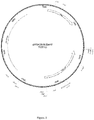
- plasmid pWSK29-M.BanLI-M.BanLII (see Figure 3 ), which expresses two of the identified B. animalis subsp. lactis CNCM 1-2494 methyltransferases
- the DNA fragment encompassing p44-M.BanLI was amplified from pWSK29-M.BanLI by PCR using primer combinations BanLIF2 and BanLIR2 (see Table 1), both of which had SalI restriction sites incorporated at their 5' ends.
- the resulting amplicon was digested with SalI, and ligated into similarly digested pWSK29-M.BanLII.
- the resulting ligation mixture was introduced into E. coli XllBlue by electrotransformation and transformants selected based on ampicillin resistance.
- the plasmid content of a number of Amp r transformants was screened by restriction analysis and the integrity of positively identified clones was verified by sequencing.
- spectinomycin resistance gene together with its own promoter were amplified from pMG36 ( van de Guchte M. et al., 1989, Appl Environ Microbiol. 55:224-8 ) carrying a spectinomycin resistant marker (pMG36S), using the primer combinations SpecF and SpecR (see Table 1) that harbor SacI sites at their 5' end or SpecF1 and SpecR1 (see Table 1) that contain EcoRI and HindIII sites, respectively.
- the 1117 bp amplicon was digested with either SacI or a combination of EcoRI and HinDIII and ligated to similarly digested pAM5 (Alvarez-Martin et al.
- pDM1 the tet r cassette of pAM5 was replaced with the spectinomycin resistance cassette, while pDM2 is pDG7 harbouring the spectinomycin cassette cloned in the unique EcoRI and HinDIII sites.
- DM-MRS 48 ml of DM-MRS (see Table 2 below) supplemented with 0.05% cysteine and 1% maltose was inoculated with 2 ml of an overnight culture of B. animalis subsp. lactis CNCM 1-2494 and incubated anaerobically at 42°C (DM-MRS is autoclaved at 121°C for 15 min. Prior to inoculation DM-MRS is supplemented with cysteine HCL 0.05% and maltose 1%. Table 2 : Composition of DM-MRS broth g/L Difco Proteose Peptone No.
- the bacterial cells were collected by centrifugation at 6,500 g for 10 min at 4°C, and the pellet washed twice with chilled sucrose citrate buffer (1 mM citrate [pH 5.8], 0.5 M sucrose). The cells were subsequently suspended in 300 ⁇ l of chilled sucrose citrate buffer. Fifty microliters of the cell suspension was used for each electrotransformation, the cells and plasmid DNA were mixed and held on ice prior to the pulse at 25 ⁇ F, 200 ohms and 2 kV. After transformation, the cells were suspended in 1ml of DM-MRS supplemented with cysteine and maltose and incubated for 3 hours at 42°C. Serial dilutions were plated on RCA supplemented with maltose and containing the appropriate antibiotic and incubated at 42°C for 24-36h at which point transformant colonies were visible.
- DM-MRS DM-MRS supplemented with cysteine and maltose
- EXAMPLE 2 DEVELOPMENT OF A GROWTH MEDIUM FOR GROWING A BIFIDOBACTERIUM STRAIN
- DM-MRS modified MRS medium
- This medium allows B. animalis subsp. lactis CNCM 1-2494 be reproducibly subcultured in the presence of 1% maltose and 0.05% cysteine over five consecutive subcultures ( Figure 7 ).
- This medium further allows growth that is entirely dependent on the supplementation of maltose as the sole carbon and energy source of the strain.
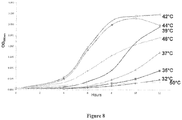
- the temperature of 42°C is an optimum temperature for growing B. animalis subsp. lactis CNCM 1-2494 in DM-MRS (see Figure 8 ).
Landscapes
- Health & Medical Sciences (AREA)
- Life Sciences & Earth Sciences (AREA)
- Chemical & Material Sciences (AREA)
- Genetics & Genomics (AREA)
- Engineering & Computer Science (AREA)
- Organic Chemistry (AREA)
- Bioinformatics & Cheminformatics (AREA)
- Zoology (AREA)
- Wood Science & Technology (AREA)
- Biotechnology (AREA)
- General Engineering & Computer Science (AREA)
- Biomedical Technology (AREA)
- Biochemistry (AREA)
- General Health & Medical Sciences (AREA)
- Microbiology (AREA)
- Molecular Biology (AREA)
- Medicinal Chemistry (AREA)
- Plant Pathology (AREA)
- Biophysics (AREA)
- Physics & Mathematics (AREA)
- Tropical Medicine & Parasitology (AREA)
- Virology (AREA)
- Micro-Organisms Or Cultivation Processes Thereof (AREA)
Description
- The present invention relates to methods and means for genetically transforming a Bifidobacterium strain.
- Bifidobacteria are Gram-positive bacteria. They are mainly found in the gastrointestinal tract of mammals, in particular humans. Species of the genus Bifidobacterium have increased industrial potential because of their health-associated benefits. They are widely used as probiotic organisms in a vast array of compositions for preventing or treating many intestinal disorders. Certain members of the Bifidobacterium genus are used for the preparation of fermented milk products. By way of example, Bifidobacterium animalis subsp. lactis CNCM 1-2494 deposited according to the Budapest Treaty with the CNCM on June 20, 2000 (also known under the code DN-173 010 and first disclosed in International Application
WO 02/02800 - While there is clinical evidence for the purported beneficial effects on health, there is still a lack of fundamental knowledge of the genetics of bifidobacteria and the molecular mechanisms by which they exert their beneficial activities. This is mainly because bifidobacteria are fastidious to grow since they require a rich media and mostly strict anaerobic conditions. Furthermore, they are considered to be recalcitrant to genetic transformation and currently just a few genetic engineering techniques are available to study them at the molecular level.
- Several authors have reported on the development of vector systems to enhance transformation efficiency of bifidobacteria. However, low transformation efficiency still remains a major drawback using these strategies:
- Missich R. et al. (1994, Plasmid. 32:208-11) reported on the construction of an Escherichia coli-Bifidobacterium longum (B. longum) shuttle vector, namely pRM2, and its transformation into B. longum by electroporation. However, Missich R. et al. point out a low transformation efficiency.
- Argnani A. et al. (1996, Microbiology. 142:109-14) described the development of a transformation procedure for Bifidobacterium strains. Transformation was achieved using a plasmid, designated pDG7, that harbors bifidobacterial replication functions, and also with plasmids that bear replication functions from Corynebacteria. The transformation protocol is based on electroporation of bifidobacteria, which were made competent by pre-incubation in electroporation buffer for several hours at 4°C. Plasmids harboring replication functions originating from Lactobacillus species or Lactococcus strains frequently fail in their ability to transform bifidobacterial strains.
- Rossi M. et al. (1996, Res Microbiol. 147:133-43) reported on the nucleotide sequence and characterization of the B. longum B2577 cryptic plasmid pMB1. Using the pMB1 replicon, a set of E. coli-bifidobacterial shuttle vectors was constructed and their ability to be transformed into B. animalis MB209 was evaluated.
- Matsumura H. et al. (1997, Biosci Biotechnol Biochem. 61:1211-2) described the construction of an E. coli-bifidobacterial shuttle vector, namely pBLES1000, and the transformation by electroporation of this vector into some, but not all, B. longum strains.
- Guglielmetti S. et al. (2007, Appl Microbiol Biotechnol. 74:1053-61) reported on the identification and partial characterization of three plasmids from B. longum biovar longum NAL8 and the construction of an E. coli-bifidobacterial shuttle vector, namely pGOSBif33.
- Cronin M. et al. (2007, Appl Environ Microbiol. 73:7858-66) described the isolation and sequence of the Bifidobacterium asteroides plasmid pCIBA089. Cronin et al. characterized the replication protein and created two E. coli-Bifidobacterium shuttle vectors (pPKCm and pSKEM) using the pCIBAO89 replication functions.
- Serafini F. et al. (2012, FEMS Microbiol Lett. 333:146-52) reported on the transformation of B. bifidum PRL2010 with the broad host range chloramphenicol-resistant plasmid pNZ8048. The procedure involves growth of the strain in a medium with a high concentration (16%) of FOS (fructo-oligosaccharides).
- Alvarez-Martín P. et al. (2007, Appl Microbiol Biotechnol. 76:1395-402) described the characterization of the bifidobacterial replication functions on the plasmid pBC1. A set of shuttle vectors were constructed and their use for the genetic accessibility of bifidobacterial strains was evaluated.
- Various optimization strategies for genetic transformation of Bifidobacterium have been documented. These strategies are based on restriction-modification (R-M) systems, which commonly found in bacteria to provide protection against parasitic invaders such as bacteriophages, and which also allow the cells to discriminate between endogenous (or self) and exogenous DNA. R-M systems appear to be important in Bifidobacterium, as R-M gene clusters coding for methyltransferases (MTases) and restriction enzymes (REases), belonging to type I, II and/or IV appear to be present in all sequenced strains of Bifidobacterium. The classification of REases is based on their subunit composition, co-factor requirement, recognition sequence structure and the cleavage site relative to the recognition sequence. Type I R-M systems consist of three different subunits, HsdM, HsdR and HsdS that are responsible for modification, restriction and specificity of sequence recognition, respectively. Type I REases require ATP, Mg2+ and AdoMet for activity. In general they interact with two asymmetrical bi-partite recognition sites, translocate the DNA in an ATP hydrolysis-dependent manner and cut the DNA distal to the recognition sites, approximately half-way between two sites (Murray N.E., 2002, Microbiology 148:3-20). Typically, in a type II R-M system the REase recognises and usually cleaves within a short (typically between 4 and 8 bp) palindromic DNA sequence. Protection of "self' DNA from restriction occurs by methylation using a MTase, which biochemically modifies specific adenosyl or cytosyl residues within the sequence recognised by the corresponding REase (Kobayashi I., 2001, Nucleic Acids Res. 29:3742-56; Pingoud A. et al., 2005, Cell Mol Life Sci. 62:685-707). Type IV R-M systems are specified by either one of two structural genes encoding an endonuclease with a specificity for methylated, hydroxymethylated or glucosyl-hydroxymethylated bases in the target DNA molecule.
- Taken into account the R-M system present in bifidobacteria, a significant increase in transformation efficiency has been reported when E. coli-Bifidobacterium shuttle vectors were methylated in E. coli by Bifidobacterium methylases (see for review Martin P.A. et al., 2010; "Mobile Genetic Elements, Cloning Vectors and Genetic Manipulation of Bifidobacteria" In Bifidobacteria: Genomics and Molecular Aspects; Caister Academic Press; Norfolk, UK; August 2010; Chapter 13; pp 235-259; see also Brancaccio et al., 2013; "Tough nuts to crack: Site-directed mutagenesis of bifidobacteria remains a challenge", Bioengineered. 4(4): 197-202). In particular:
- O'Connell Motherway M. et al. (2009, Microb Biotechnol. 2:321-32) have described the identification and characterization of three different R-M systems in B. breve UCC2003, including the methylase-specifying genes bbrIM (encoding an isoschizomer of BbeI), bbrIIM (encoding an isoschizomer of SalI) and bbrIIIM (encoding an isoschizomer of PstI). O'Connell Motherway et al. also reported that methylation of plasmid DNA pMA5 from E. coli by two of these three methylases allows significant improvement of the transformation efficiency of B. breve with this plasmid, compared to the un-methylated plasmid.
- Kim J.Y. et al. (2010, J Microbiol Biotechnol. 20:1022-6) report that in vitro methylation of plasmid DNA pYBamy59 from E. coli by CpG or GpC methyltransferase at SacII sites allows improvement of transformation efficiency of B. longum MJ1 with this plasmid, compared to the un-methylated plasmid.
- Yasui K. et al. (2008, Nucleic Acids Res. 37:e3) and Suzuki T. et al. (2011, Methods Mol Biol. 765:309-26) describe the methylation of plasmid DNA in E. coli by two type II DNA methyltransferases at predicted Sau3AI and KpnII sites, thereby improving transformation efficiency of B. adolescentis strains, compared to the un-methylated plasmid. Yasui et al. also describe a system called Plasmid Artificial Modification (PAM), which describes the experimental steps of preparing an appropriate E. coli strain containing a PAM vector coding for the methylases of the target host (Bifidobacterium), introducing an E. coli-Bifidobacterium shuttle vector into said E. coli strain, modification of the shuttle vector DNA by the methylases coded by the PAM vector, extraction of the methylated shuttle vector DNA and introduction into the Bifidobacterium by electroporation.
- The above-mentioned methods are based on electroporation for transforming bifidobacteria, but generally these methods still produce a low transformation efficiency and are strain specific.
- Dominguez et al. (2013, Microbiology. 159:328-38) developed a conjugation system to transfer genetic material between E. coli and Bifidobacterium species. Dominguez W. et al. created an E. coli-Bifidobacterium shuttle vector, namely pDOJHR-WD2, based on plasmid RP4. This vector was transferred from E. coli into strains representing four Bifidobacterium species, namely B. bifidum, B. breve, B. longum subsp. longum and infantis, and B. animalis subsp. lactis.
- It appears from the foregoing, that there is still a need for molecular tools and improved transformation procedures to allow reliable and efficient transformation of strains of Bifidobacterium species.
- From the genome analysis of B. animalis subsp. lactis CNCM 1-2494 the inventors have identified that two type II restriction-modification (R-M) systems are encoded by this strain: a first type II R-M system, referred to as BanLI methyltransferase, that encodes a novel methylase and restriction endonuclease, recognizing the nucleotide sequence (A/G)TCAGG and a second type II R-M system that is an isoschizomer of AvaII, referred to as BanLII methyltransferase, recognizing the nucleotide sequence GG(A/T)CC. The inventors have cloned the methylase-encoding genes for each R-M system on the low copy number plasmid pWSK29 (Wang R.F. and Kushner S.R., 1991, Gene, 100:195-199) either singly or together. They have observed that expression of the B. animalis subsp. lactis CNCM 1-2494 methylases in E. coli protects plasmid DNA from restriction with BanLI and BanLII.
- Based on the above findings the inventors have developed a transformation procedure and molecular tools to allow efficient transformation of B. animalis subsp. lactis CNCM 1-2494 (which was previously not genetically accessible), thereby making this strain genetically accessible. This transformation procedure and associated molecular tools can be applied to any Bifidobacterium species to improve the Bifidobacterium transformation efficiency.
- Accordingly, the present description provides a method for genetically transforming a Bifidobacterium strain comprising the following steps:
- i) transforming an Escherichia coli strain or a Gram-positive bacterium strain such as a Lactobacillus species or a Bacillus species, preferably an E. coli strain, either with a recombinant vector DNA comprising a gene encoding a methyltransferase enzyme from a Bifidobacterium that methylates the adenine base (i.e., adenosyl residue) at position 4 of the nucleotide sequence RTCAGG (referred to as BanLI methyltransferase) and a recombinant vector DNA comprising a gene encoding a methyltransferase enzyme from a Bifidobacterium that methylates the cytosine base (i.e., cytosyl residue) at position 4 of the nucleotide sequence GGWCC (referred to as BanLII methyltransferase), or with a recombinant vector DNA comprising both a gene encoding a BanLI methyltransferase from a Bifidobacterium and a gene encoding a BanLII methyltransferase from a Bifidobacterium, wherein said recombinant vectors DNA are capable of replicating in said E. coli or Gram-positive bacterium strain,
- ii) transforming the E. coli or Gram-positive bacterium strain of step i) with a recombinant shuttle vector DNA comprising a DNA sequence of interest to introduce in a Bifidobacterium strain, wherein said shuttle vector DNA is capable of replicating in the E. coli or the Gram-positive bacteria strain of step i) and in the Bifidobacterium strain to be targeted for genetic transformation,
- iii) cultivating the transformed E. coli or Gram-positive bacterium strain obtained in step ii),
- iv) extracting the shuttle vector DNA from the transformed E. coli or Gram-positive bacterium strain,
- v) transforming (e.g., electrotransforming) the Bifidobacterium strain with the shuttle vector DNA obtained from step iv),
- vi) recovering the transformed Bifidobacterium strain of step v).
- In an embodiment of the method described steps i) and ii) can be carried out in any order or simultaneously.
- In an embodiment of the method described step i) is replaced by a step of providing an E. coli or Gram-positive bacterium strain transformed either with a recombinant vector DNA comprising a gene encoding a BanLI methyltransferase from a Bifidobacterium and a recombinant vector DNA comprising a gene encoding a BanLII methyltransferase strain from a Bifidobacterium, or with a recombinant vector DNA comprising both a gene encoding a BanLI methyltransferase from a Bifidobacterium and a gene encoding a BanLII methyltransferase from a Bifidobacterium.
- The subject matter of the invention is defined by
claims 1 to 13. - The present invention relates to a method for genetically transforming a strain of the species Bifidobacterium animalis subsp. lactis, comprising the following steps:
- i) transforming an Escherichia coli strain either :
- with a recombinant vector DNA comprising a gene encoding a BanLI methyltransferase enzyme from a Bifidobacterium animalis subsp. lactis that has at least 60% identity with the amino acid sequence SEQ ID NO: 1 and methylates the adenine base at position 4 of the nucleotide sequence RTCAGG and a recombinant vector DNA comprising a gene encoding a BanLII methyltransferase enzyme from a Bifidobacterium animalis subsp. lactis that has at least 55% identity with the amino acid sequence SEQ ID NO: 3 and methylates the cytosine base at position 4 of the nucleotide sequence GGWCC, or
- with a recombinant vector DNA comprising both a gene encoding the BanLI methyltransferase enzyme from a Bifidobacterium animalis subsp. lactis and a gene encoding the BanLII methyltransferase enzyme from a Bifidobacterium animalis subsp. lactis,
- ii) transforming the E. coli strain of step i) with a recombinant shuttle vector DNA comprising a DNA sequence of interest to introduce in a Bifidobacterium animalis subsp. lactis strain, wherein the said shuttle vector DNA is capable of replicating in the E. coli strain of step i) and in the Bifidobacterium animalis subsp. lactis strain to be targeted for genetic transformation,
- iii) cultivating the transformed E. coli strain obtained in step ii),
- iv) extracting the shuttle vector DNA from the transformed E. coli strain,
- v) transforming, preferably electrotransforming, a Bifidobacterium animalis subsp. lactis strain with the shuttle vector DNA obtained from step iv),
- vi) recovering the transformed Bifidobacterium animalis subsp. lactis strain of step v).
- In an embodiment of the method according to the invention steps i) and ii) can be carried out in any order or simultaneously.
- The present invention also relates to a method for genetically transforming a strain of the species Bifidobacterium animalis subsp. lactis comprising the following steps:
- (i) providing an E. coli strain transformed either:
- with a recombinant vector DNA comprising a gene encoding a BanLI methyltransferase enzyme from a Bifidobacterium animalis subsp. lactis that has at least 60% identity with the amino acid sequence SEQ ID NO: 1 and methylates the adenine base at position 4 of the nucleotide sequence RTCAGG and a recombinant vector DNA comprising a gene encoding a BanLII methyltransferase enzyme from a Bifidobacterium animalis subsp. lactis, that has at least 55% identity with the amino acid sequence SEQ ID NO: 3 and methylates the cytosine base at position 4 of the nucleotide sequence GGWCC, or
- with a recombinant vector DNA comprising both a gene encoding the BanLI methyltransferase enzyme from a Bifidobacterium animalis subsp. lactis and a gene encoding the BanLII methyltransferase enzyme from a Bifidobacterium animalis subsp. lactis
- ii) transforming the E. coli strain of step i) with a recombinant shuttle vector DNA comprising a DNA sequence of interest to introduce in a Bifidobacterium animalis subsp. lactis strain, wherein the said shuttle vector DNA is capable of replicating in the E. coli strain of step i) and in the Bifidobacterium animalis subsp. lactis strain to be targeted for genetic transformation,
- iii) cultivating the transformed E. coli strain obtained in step ii),
- iv) extracting the shuttle vector DNA from the transformed E. coli strain,
- v) transforming, preferably electrotransforming, a Bifidobacterium animalis subsp. lactis strain with the shuttle vector DNA obtained from step iv),
- vi) recovering the transformed Bifidobacterium animalis subsp. lactis strain of step v).
- In a preferred embodiment of the methods according to the invention, the amino acid sequence of the BanLI methyltransferase has at least 60% identity, or by order of increasing preference at least 65%, 70%, 75%, 80%, 85%, 90%, 95%, 96%, 97%, 98%, 99% or 100% identity, with the amino acid sequence SEQ ID NO: 1 (B. animalis subsp. lactis CNCM I-2494 BanLI methyltransferase) and/or the amino acid sequence of the BanLII methyltransferase has at least 55% identity, or by order of increasing preference at least 60%, 65%, 70%, 75%, 80%, 85%, 90%, 95%, 96%, 97%, 98%, 99% or 100% identity, with the amino acid sequence SEQ ID NO: 3 (B. animalis subsp. lactis CNCM I-2494 BanLII methyltransferase).
- BanLI methyltransferase (M.BanLI) is a methyltranferase that methylates the internal adenine base of the nucleotide sequence RTCAGG (wherein R represents A or G).
- BanLII methyltransferase (M.BanLII) is an isoschizomer of the known AvaII methyltransferase (M.AvaII) from Anabaena variabilis, i.e., it methylates the same internal cytosine base of the nucleotide sequence GGWCC (wherein W represents A or T) as M.AvaII.
- Advantageously, BanLI methyltransferase and/or BanLII methyltransferase are from a Bifidobacterium strain of the same Bifidobacterium species as the Bifidobacterium strain to be targeted for genetic transformation in step ii). Preferably BanLI methyltransferase and/or BanLII methyltransferase are from the Bifidobacterium strain to be targeted for genetic transformation in step ii).
- In a preferred embodiment of the methods according to the invention BanLI methyltransferase and BanLII methyltransferase are from a B. animalis strain, preferably a B. animalis subsp lactis strain, more preferably from B. animalis subsp. lactis CNCM 1-2494 (respectively SEQ ID NO: 1 and 3).
- Methods for preparing a recombinant DNA vector comprising a gene encoding a methyltransferase enzyme and capable of replicating in an E. coli or Gram-positive bacterium strain are well known in the art. These recombinant DNA vectors generally comprise an antibiotic resistance gene, such as an ampicillin or streptomycin resistance gene, a cloning site a replication origin from an E. coli (e.g., ColEI ori) and/or a Gram-positive bacterial plasmid and the gene encoding the methyltransferase enzyme, including appropriate sequences to allow expression of the methyltransferase.
- Methods for preparing a recombinant shuttle vector DNA comprising a DNA sequence of interest to introduce in a Bifidobacterium strain, and capable of replicating both in an E. coli or a Gram-positive bacteria strain and in a Bifidobacterium strain are known in the art (see e.g., Cronin et al., 2007; Alvarez-Martín et al., 2007; O'Connell Motherway et al., 2009; Kim et al., 2010 and Yasui et al., 2008 all cited above;
Patent Application EP 1 829 963 ). These recombinant shuttle vectors generally comprise an antibiotic resistance gene, such as a tetracycline or chloramphenicol resistance gene, a cloning site and two replication origins including a replication origin from E. coli (e.g., ColEI ori) or from a Gram-positive bacterium strain and a replication origin from a Bifidobacterium strain (e.g., repB from B. longum). - The DNA sequence of interest to introduce in a Bifidobacterium strain may, for example, encode proteins that have immuno modulator or anti-tumor properties.
- Methods for preparing E. coli, Gram positive bacteria and Bifidobacterium cells for transformation and methods for transforming these cells are well known in the art. Genetic transformation methods include electroporation (i.e., electrotransformation), transduction, heat shock and protoplast fusion, preferably electroporation.
- In a preferred embodiment of the methods according to the invention, the transformation steps are carried out by electroporation, transduction, heat shock or protoplast fusion.
- For genetic transformation protocols of bifidobacteria see for review Martin P.A. et al., 2010; "Mobile Genetic Elements, Cloning Vectors and Genetic Manipulation of Bifidobacteria" In Bifidobacteria: Genomics and Molecular Aspects; Caister Academic Press; Norfolk, UK; August 2010; Chapter 13; pp 235-259.
- In an advantageous embodiment of step v), the Bifidobacterium strain is cultivated prior to transformation (e.g., electroporation) and/or resuspended after the transformation in an appropriate medium at a temperature comprised between 36°C and 43°C, preferably between 41°C and 43°C, more preferably at 42°C.
- Said appropriate medium is advantageously a MRS (Man, Rogosa and Sharpes) medium optionally supplemented with cysteine and/or a carbohydrate.
- Said appropriate medium is preferably a MRS medium supplemented with cysteine and a carbohydrate.
- The carbohydrate can be a xylo-oligosaccharide, lactose, raffinose, stachyose or maltose, preferably maltose.
- Advantageously, said MRS medium is a modified MRS medium comprising or consisting of peptone from casein, meat extract, yeast extract, dipotassium hydrogen phosphate (K2HPO4), potassium dihydrogen phosphate (KH2PO4), pyruvic acid, polysorbate 80, tri-ammonium citrate, magnesium sulfate hydrate (MgSO4.7H2O), manganese sulfate hydrate (MnSO4.4H2O), cysteine-HCl and ferrous sulfate hydrate (FeSO4.7H2O), that is supplemented with cysteine and maltose.
- In a particular embodiment, the modified MRS medium is the medium described in Table 2 below, supplemented with 0.05% cysteine and 1% maltose.
- Advantageously, the Bifidobacterium strain is cultivated and/or resuspended in the appropriate medium anaerobically.
- In a particular embodiment, the Bifidobacterium animalis subsp. lactis strain is cultivated and/or resuspended in the appropriate medium at a temperature comprised between 36°C and 46°C, preferably between 41°C and 43°C, more preferably at 42°C.
- The present invention also relates to an isolated recombinant expression cassette, characterized in that it comprises a polynucleotide sequence encoding a BanLI methyltransferase enzyme having at least 60% identity with the amino acid sequence SEQ ID NO: 1 and methylates the adenine base at position 4 of the nucleotide sequence RTCAGG, and/or a polynucleotide sequence encoding a BanLII methyltransferase enzyme having at least 55% identity with the amino acid sequence SEQ ID NO: 3 and that has at least 55% identity with the amino acid sequence SEQ ID NO: 3 and methylates the cytosine base at position 4 of the nucleotide sequence GGWCC, under control of a promoter functional in a E. coli bacterium.
- The present invention also relates to a recombinant vector capable of replicating in a E. coli bacterium, characterized in that it comprises a recombinant expression cassette according to the invention.
- The present invention also relates to a transformed Escherichia coli characterized in that it contains a recombinant vector according to the invention.
- The present description also provides a method for genetically transforming a Bifidobacterium cell comprising the steps of cultivating the Bifidobacterium cell in a first appropriate medium, preparing the competent Bifidobacterium cells for transformation, transforming the competent Bifidobacterium cells and resuspending the Bifidobacterium cells in a second appropriate medium, wherein the first appropriate medium and/or the second appropriate medium is a MRS medium supplemented with cysteine and maltose.
- The transformation method includes electroporation, transduction, heat shock and protoplast fusion, preferably electroporation.
- In a preferred embodiment, the method for genetically transforming a Bifidobacterium cell comprises the steps of cultivating the Bifidobacterium cell in a first appropriate medium, preparing the electrocompetent cell, electrotransforming the electrocompetent Bifidobacterium cell and resuspending the Bifidobacterium cell in a second appropriate medium, wherein the first appropriate medium and/or the second appropriate medium is a MRS medium supplemented with cysteine and maltose.
- Advantageously, the MRS medium is a modified MRS medium as defined above.
- Advantageously, the Bifidobacterium strain is cultivated and/or resuspended in the appropriate medium anaerobically.
- Advantageously, the Bifidobacterium strain is cultivated and/or resuspended in the appropriate medium at a temperature comprised between 36°C and 46°C, preferably between 41°C and 43°C, more preferably at 42°C.
- In a particular embodiment, the method for genetically transforming a Bifidobacterium cell comprises the steps of:
- a) growing a Bifidobacterium culture overnight anaerobically at a temperature comprised between 36°C and 46°C, preferably between 41°C and 43°C, more preferably at 42°C, in a MRS medium supplemented with cysteine (preferably 0.05% cysteine) and maltose (preferably 1.0% maltose),
- b) inoculating a fresh modified Rogosa medium supplemented with cysteine (preferably 0.05% cysteine) and maltose (preferably 1.0% cysteine) with the Bifidobacterium cells cultured overnight of step a) (advantageously, 4% inoculum) .
- c) incubating the Bifidobacterium cells anaerobically at 36°C to 46°C, preferably 41°C to 43°C, more preferably at 42°C, until O.D600nm reaches ∼ 0.6-0.7,
- d) harvesting the Bifidobacterium cells by centrifugation, advantageously cold rotor at about 4°C, at 6,500 g for 10 mins,
- e) washing the Bifidobacterium cells, advantageously washing twice with ice cold 0.5M sucrose in 1mM citrate buffer (pH 5.8),
- f) resuspending the Bifidobacterium cells, advantageously resuspending in ice cold buffer,
- g) electrotransforming the Bifidobacterium cells,
- h) resuspending the Bifidobacterium cells in an appropriate medium, preferably a modified Rogosa medium supplemented with cysteine (preferably 0.05% cysteine) and maltose (preferably 1.0% maltose), and incubating the Bifidobacterium cells at a temperature comprised between 36°C and 46°C, preferably between 41°C and 43°C, more preferably at 42°C; advantageously incubating for 2 to 6 hours, preferably for 2 to 3 hours, more preferably for 2.5 hours, anaerobically,
- i) spread plating, preferably asceptically spread plating, serial dilutions of the transformed Bifidobacterium cells on Reinforced Clostridial Agar (RCA) medium supplemented with 1% maltose and the appropriate antibiotic, preferably spectinomycin,
- j) incubation of plates anaerobically at a temperature comprised between 36°C and 46°C, preferably 42°C, advantageously for 2 to 5 days, preferably for 2.5 days.
- Said modified Rogosa medium can be the medium described in Table 2 below.
- The Bifidobacterium strain transformed according to the methods of the invention can be any strain of the genus Bifidobacterium, such as a strain of the species B. adolescentis, B. animalis, B. bifidum, B. breve, B. dentium, B. infantis, B. longum, B. pseudolongum or B. thermophilum.
- Preferably, the Bifidobacterium strain is a B. animalis strain more preferably a B. animalis subsp. lactis strain and the most preferably the strain B. animalis subsp. lactis CNCM 1-2494.
- The present description also provides a modified MRS medium comprising or consisting of peptone from casein, meat extract, yeast extract, dipotassium hydrogen phosphate (K2HPO4), potassium dihydrogen phosphate (KH2PO4), pyruvic acid, polysorbate 80, tri-ammonium citrate, magnesium sulfate hydrate (MgSO4.7H2O), manganese sulfate hydrate (MnSO4.4H2O), cysteine-HCl, ferrous sulfate hydrate (FeSO4.7H2O), cysteine and maltose.
- In a particular embodiment, the modified MRS medium is the medium described in Table 2 below, that is supplemented with 0.05% cysteine and 1% maltose.
- The present description also provides the use of a modified MRS medium according to the present invention for cultivating a bacterium, preferably a Bifidobacterium strain (e.g., a strain of the species B. adolescentis, B. animalis, B. bifidum, B. breve, B. infantis, B. longum, B. pseudolongum or B. thermophilum), more preferably a B. animalis strain, and most preferably a B. animalis subsp lactis strain, such as the strain B. animalis subsp. lactis CNCM 1-2494.
- The present description also provides an isolated recombinant expression cassette, comprising a polynucleotide sequence encoding an BanLI methyltransferase having at least 60% identity, or by order of increasing preference at least 65%, 70%, 75%, 80%, 85%, 90%, 95%, 96%, 97%, 98%, 99% or 100% identity, with the amino acid sequence SEQ ID NO: 1 (M.BanLI) and/or a polynucleotide sequence encoding a BanLII methyltransferase having at least 55% identity, or by order of increasing preference at least 60%, 65%, 70%, 75%, 80%, 85%, 90%, 95%, 96%, 97%, 98%, 99% or 100% identity with the amino acid sequence SEQ ID NO:3 (M.BanLII), under control of a promoter functional in a bacterium.The present description also provides a recombinant vector comprising a recombinant expression cassette according to the present invention.
- The present description also provides a transformed Escherichia coli or Gram-positive bacterium strain, preferably a transformed E. coli strain, containing a recombinant vector according to the present invention.
- The present description also provides an isolated cDNA encoding the BanLI methyltransferase, having the nucleotide sequence SEQ ID NO:2.
- The present description also provides an isolated cDNA encoding the BanLII methyltransferase, having the nucleotide sequence SEQ ID NO: 4.
- The present description also provides an isolated methyltransferase (BanLI) having the amino acid sequence SEQ ID NO: 1.
- The present description also provides an isolated methyltransferase (BanLII) having the amino acid sequence SEQ ID NO:3.
- In addition to the preceding features, the description further comprises other features which will emerge from the following description, which refers to examples illustrating the present invention, as well as to the appended figures.
-
Figure 1 represents the plasmid map of expression vector pWSK29-M.BanLI. -
Figure 2 represents the plasmid map of expression vector pWSK29-M.BanLII. -
Figure 3 represents the plasmid map of expression vector pWSK29-M.BanLI-M.BanLII. -
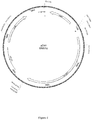
Figure 4 represents the plasmid map of the replicative vector pDM1. -
Figure 5 represents the plasmid map of the replicative vector pDM2. -
Figure 6 represents the transformation efficiencies of B. animalis subsp. lactis CNCM 1-2494 with pDM1 isolated from E. coli (XL1Blue), XL1Blue harbouring pWSK29, or derivatives harbouring the individual methylase encoding genes singly or in combination. The final column represents the transformation efficiency of pDM1 isolated from B. animalis subsp. lactis CNCM 1-2494 (DN 173-010). -
Figure 7 represents the culture of B. animalis subsp. lactis CNCM 1-2494 in DM-MRS medium supplemented with 1% maltose and 0.05% cysteine. This medium allows reproductible growth of the strain over 5 consecutive subcultures. -
Figure 8 represents the growth profiles of B. animalis subsp. lactis CNCM 1-2494 at temperatures ranging from 32°C to 50°C in DM-MRS medium supplemented with 1% maltose and 0.05% cysteine. - For the construction of plasmids pWSK29-M.BanLI (see
Figure 1 ) and pWSK29-M.BanLII (seeFigure 2 ), DNA fragments encompassing the coding sequences of BanLI methyltransferase and BanLII methyltransferase were generated by PCR amplification from chromosomal DNA of B. animalis subsp. lactis CNCM 1-2494 using PFU Ultra DNA polymerase and primer combinations BanLIF and BanLIR or BanLIIF and BanLIIR (see Table 1 below).Table 1: Oligonucleotide primers used in this Example Purpose Primer Sequence SEQ ID NO: Cloning of m.BanLI in pNZ44 BanLIF 
5 BanLIR gctctataagcttttactttccttgcgcttcttc 6 Cloning of p44-MBanLI in pWSK29 BanLIF1 cgtccgagatctgttagttgaagaaggtttttatattacag 7 Construction of transcriptional fusion of BanLII to plac on pWSK29 BanLIIF 
8 BanLIIR gctctactgcagcaatggaggcgtgcaaatc 9 Construction of pWSK29-M.BanLI-M. BanLII BanLIF2 tcagctgtcgacacaattgtaacccatacaggag 10 BanLIR2 gcgacggtcgactttactttccttgcgcttcttc 11 Construction of pDM1 SpecF gtcctggagctcgcacacgaaaaacaagttaag 12 SpecR ctggaagagctccaatgaataggtttacacttactttag 13 Construction of pDM2 SpecF1 ctggaaaagcttcaatgaataggtttacacttactttag 14 SpecR1 gtcctggaattcgcacacgaaaaacaagttaag 15 - Each forward primer contained the sequence of a ribosome binding site to facilitate translation of each mRNA. For the BanLI-encoding fragment PstI and HindIII sites were incorporated into the forward and reverse primers, respectively to facilitate ligation to similarly digested pNZ44 (McGrath S. et al., 2001, Appl Environ Microbiol. 67:608-616). Ligations were electroporated into L. lactis NZ9000 (Kuipers O.P. et al., 1993, Eur J Biochem. 216:281-291; Kuipers O.P. et al., 1998, J Biotechnol. 64:15-21) and transformants selected based on chloramphenicol resistance. The presence and integrity of the cloned insert was confirmed by restriction analysis followed by sequencing of the BanLI insert. The BanLI-encoding sequence, together with the constitutive p44 lactococcal promoter, specified by pNZ44, were amplified by PCR from a representative pNZ44-BanLI plasmid using the primer pair BanLIF1 and BanLIR (see Table 1). The resultant fragment was restricted with BglII and HindIII and ligated to the compatible BamHI and HindIII sites on pWSK29 (Wang R.F. and Kushner S.R., 1991, Gene, 100:195-199). For the construction of pWSK29-M.BanLII (M.AvaII) the M.BanLII-encoding sequence was transcriptionally fused to the lac promoter on pWSK29. The amplified fragment was restricted with Xbal and PstI and ligated to similarly digested pWSK29. Each ligation was transformed into E. coli XllBlue. The plasmid content of a number of Ampr transformants was screened by restriction analysis and the integrity of positively identified clones was verified by sequencing. The resultant plasmids were designated pWSK29-M.BanLI and pWSK29-M.BanLII.
- For plasmid pWSK29-M.BanLI-M.BanLII (see
Figure 3 ), which expresses two of the identified B. animalis subsp. lactis CNCM 1-2494 methyltransferases, the DNA fragment encompassing p44-M.BanLI was amplified from pWSK29-M.BanLI by PCR using primer combinations BanLIF2 and BanLIR2 (see Table 1), both of which had SalI restriction sites incorporated at their 5' ends. The resulting amplicon was digested with SalI, and ligated into similarly digested pWSK29-M.BanLII. The resulting ligation mixture was introduced into E. coli XllBlue by electrotransformation and transformants selected based on ampicillin resistance. The plasmid content of a number of Ampr transformants was screened by restriction analysis and the integrity of positively identified clones was verified by sequencing. - The spectinomycin resistance gene together with its own promoter were amplified from pMG36 (van de Guchte M. et al., 1989, Appl Environ Microbiol. 55:224-8) carrying a spectinomycin resistant marker (pMG36S), using the primer combinations SpecF and SpecR (see Table 1) that harbor SacI sites at their 5' end or SpecF1 and SpecR1 (see Table 1) that contain EcoRI and HindIII sites, respectively. In each case the 1117 bp amplicon was digested with either SacI or a combination of EcoRI and HinDIII and ligated to similarly digested pAM5 (Alvarez-Martin et al., 2007, cited above) or pDG7 (Argnani et al., 1996, cited above), respectively. The ligations were transformed into E. coli EC101 with selection on LB agar containing spectinomycin. A number of spectinomycin-resistant transformants were selected and screened for plasmid content by restriction analysis and DNA sequencing. In the resultant plasmid, pDM1, the tetr cassette of pAM5 was replaced with the spectinomycin resistance cassette, while pDM2 is pDG7 harbouring the spectinomycin cassette cloned in the unique EcoRI and HinDIII sites.
- 48 ml of DM-MRS (see Table 2 below) supplemented with 0.05% cysteine and 1% maltose was inoculated with 2 ml of an overnight culture of B. animalis subsp. lactis CNCM 1-2494 and incubated anaerobically at 42°C (DM-MRS is autoclaved at 121°C for 15 min. Prior to inoculation DM-MRS is supplemented with cysteine HCL 0.05% and
maltose 1%.Table 2: Composition of DM-MRS broth g/L Difco Proteose Peptone No. 3 10g Difco Beef Extract 10g Difco Yeast Extract 5g Polysorbate (Tween) 80 1ml Tri-ammonium citrate 2g MgSO4.7H20 0.575g MnSO4.4H20 0.120g K2HPO4 3g KH2PO4 3g Pyruvic acid 0.2g Cysteine-HCl 0.3g FeSO4.7H2O 0.034g pH6.8 - At an optical density (OD600 nm) of approximately 0.8, the bacterial cells were collected by centrifugation at 6,500 g for 10 min at 4°C, and the pellet washed twice with chilled sucrose citrate buffer (1 mM citrate [pH 5.8], 0.5 M sucrose). The cells were subsequently suspended in 300µl of chilled sucrose citrate buffer. Fifty microliters of the cell suspension was used for each electrotransformation, the cells and plasmid DNA were mixed and held on ice prior to the pulse at 25µF, 200 ohms and 2 kV. After transformation, the cells were suspended in 1ml of DM-MRS supplemented with cysteine and maltose and incubated for 3 hours at 42°C. Serial dilutions were plated on RCA supplemented with maltose and containing the appropriate antibiotic and incubated at 42°C for 24-36h at which point transformant colonies were visible.
- The results (see
Figure 6 ) show that the transformation efficiency of B. animalis subsp lactis CNCM 1-2494 with pDM1 DNA isolated from genetically modified E. coli habouring BanLI and BanLII methyltransferase encoding genes increases by 10 fold as compared to un-methylated pDM1 DNA. - Following testing of various growth media, a modified MRS medium (named DM-MRS; see Table 2 above) was formulated. This medium allows B. animalis subsp. lactis CNCM 1-2494 be reproducibly subcultured in the presence of 1% maltose and 0.05% cysteine over five consecutive subcultures (
Figure 7 ). This medium further allows growth that is entirely dependent on the supplementation of maltose as the sole carbon and energy source of the strain. - Further, the temperature of 42°C is an optimum temperature for growing B. animalis subsp. lactis CNCM 1-2494 in DM-MRS (see
Figure 8 ). -
- <110> COMPAGNIE GERVAIS DANONE UNIVERSITY COLLEGE CORK - NATIONAL UNIVERSITY OF IRELAND, CORK VAN SINDEREN, Douwe O'CONNELL MOTHERWAY, Mary WATSON, Debbie SMOKVINA, Tamara GARAULT, Peggy
- <120> GENETIC TRANSFORMATION OF BIFIDOBACTERIA
- <130> XRN/ah/F191/261
- <160> 15
- <170> PatentIn version 3.5
- <210> 1
<211> 363
<212> PRT
<213> Bifidobacterium lactis - <400> 1


- <210> 2
<211> 1092
<212> DNA
<213> Bifidobacterium lactis - <400> 2


- <210> 3
<211> 502
<212> PRT
<213> Bifidobacterium lactis - <400> 3


- <210> 4
<211> 1509
<212> DNA
<213> Bifidobacterium lactis - <400> 4


- <210> 5
<211> 51
<212> DNA
<213> Artificial Sequence - <220>
<223> Primer - <400> 5
cgtccgctgc agataaggag gcactcacca tggctacgcc tctcaatcga g 51 - <210> 6
<211> 34
<212> DNA
<213> Artificial Sequence - <220>
<223> Primer - <400> 6
gctctataag cttttacttt ccttgcgctt cttc 34 - <210> 7
<211> 41
<212> DNA
<213> Artificial Sequence - <220>
<223> Primer - <400> 7
cgtccgagat ctgttagttg aagaaggttt ttatattaca g 41 - <210> 8
<211> 49
<212> DNA
<213> Artificial Sequence - <220>
<223> Primer - <400> 8
cgtccgtcta gaataaggag gcactcacca tgccgcgtgt gttcaattg 49 - <210> 9
<211> 31
<212> DNA
<213> Artificial Sequence - <220>
<223> Primer - <400> 9
gctctactgc agcaatggag gcgtgcaaat c 31 - <210> 10
<211> 34
<212> DNA
<213> Artificial Sequence - <220>
<223> Primer - <400> 10
tcagctgtcg acacaattgt aacccataca ggag 34 - <210> 11
<211> 34
<212> DNA
<213> Artificial Sequence - <220>
<223> Primer - <400> 11
gcgacggtcg actttacttt ccttgcgctt cttc 34 - <210> 12
<211> 33
<212> DNA
<213> Artificial Sequence - <220>
<223> Primer - <400> 12
gtcctggagc tcgcacacga aaaacaagtt aag 33 - <210> 13
<211> 39
<212> DNA
<213> Artificial Sequence - <220>
<223> Primer - <400> 13
ctggaagagc tccaatgaat aggtttacac ttactttag 39 - <210> 14
<211> 39
<212> DNA
<213> Artificial Sequence - <220>
<223> Primer - <400> 14
ctggaaaagc ttcaatgaat aggtttacac ttactttag 39 - <210> 15
<211> 33
<212> DNA
<213> Artificial Sequence - <220>
<223> Primer - <400> 15
gtcctggaat tcgcacacga aaaacaagtt aag 33
Claims (13)
- A method for genetically transforming a strain of the species Bifidobacterium animalis subsp. lactis, comprising the following steps:i) transforming an Escherichia coli strain either :- with a recombinant vector DNA comprising a gene encoding a BanLI methyltransferase enzyme from a Bifidobacterium animalis subsp. lactis that has at least 60% identity with the amino acid sequence SEQ ID NO: 1 and methylates the adenine base at position 4 of the nucleotide sequence RTCAGG and a recombinant vector DNA comprising a gene encoding a BanLII methyltransferase enzyme from a Bifidobacterium animalis subsp. lactis that has at least 55% identity with the amino acid sequence SEQ ID NO: 3 and methylates the cytosine base at position 4 of the nucleotide sequence GGWCC, or- with a recombinant vector DNA comprising both a gene encoding said BanLI methyltransferase enzyme from a Bifidobacterium animalis subsp. lactis and a gene encoding said BanLII methyltransferase enzyme from a Bifidobacterium animalis subsp. lactis,wherein said recombinant vectors DNA are capable of replicating in said E. coli strain,ii) transforming the E. coli strain of step i) with a recombinant shuttle vector DNA comprising a DNA sequence of interest to introduce in a Bifidobacterium animalis subsp. lactis strain, wherein the said shuttle vector DNA is capable of replicating in the E. coli strain of step i) and in the Bifidobacterium animalis subsp. lactis strain to be targeted for genetic transformation,iii) cultivating the transformed E. coli strain obtained in step ii),iv) extracting the shuttle vector DNA from the transformed E. coli strain,v) transforming, preferably electrotransforming, a Bifidobacterium animalis subsp. lactis strain with the shuttle vector DNA obtained from step iv),vi) recovering the transformed Bifidobacterium animalis subsp. lactis strain of step v).
- The method according to claim 1, characterized in that steps i) and ii) are carried out in any order or simultaneously.
- A method for genetically transforming a strain of the species Bifidobacterium animalis subsp. lactis comprising the following steps:(i) providing an E. coli strain transformed either:- with a recombinant vector DNA comprising a gene encoding a BanLI methyltransferase enzyme from a Bifidobacterium animalis subsp. lactis that has at least 60% identity with the amino acid sequence SEQ ID NO: 1 and methylates the adenine base at position 4 of the nucleotide sequence RTCAGG and a recombinant vector DNA comprising a gene encoding a BanLII methyltransferase enzyme from a Bifidobacterium animalis subsp. lactis that has at least 55% identity with the amino acid sequence SEQ ID NO: 3 and methylates the cytosine base at position 4 of the nucleotide sequence GGWCC, or- with a recombinant vector DNA comprising both a gene encoding said BanLI methyltransferase enzyme from a Bifidobacterium animalis subsp. lactis and a gene encoding said BanLII methyltransferase enzyme from a Bifidobacterium animalis subsp. lactisii) transforming the E. coli strain of step i) with a recombinant shuttle vector DNA comprising a DNA sequence of interest to introduce in a Bifidobacterium animalis subsp. lactis strain, wherein the said shuttle vector DNA is capable of replicating in the E. coli strain of step i) and in the Bifidobacterium animalis subsp. lactis strain to be targeted for genetic transformation,iii) cultivating the transformed E. coli strain obtained in step ii),iv) extracting the shuttle vector DNA from the transformed E. coli strain,v) transforming, preferably electrotransforming, a Bifidobacterium animalis subsp. lactis strain with the shuttle vector DNA obtained from step iv),vi) recovering the transformed Bifidobacterium animalis subsp. lactis strain of step v).
- The method according to any one of claims 1 to 3, characterized in that the BanLI methyltransferase and/or the BanLII methyltransferase are from the Bifidobacterium animalis subsp. lactis strain to be targeted for genetic transformation in step ii).
- The method according to any one of claims 1 to 4, characterized in that the Bifidobacterium animalis subsp. lactis strain is cultivated prior to transformation and/or resuspended after the transformation in an appropriate medium at a temperature comprised between 36°C and 46°C, preferably between 41°C and 43°C, more preferably at 42°C.
- The method according to claim 5, characterized in that the said appropriate medium is a MRS medium optionally supplemented with cysteine and/or a carbohydrate, preferably maltose.
- The method according to any one of claims 1 to 6, characterized in that the transformation steps are carried out by electroporation, transduction, heat shock or protoplast fusion.
- The method according to any one of claims 6 to 7, characterized in that the MRS medium is a modified MRS medium comprising or consisting of peptone from casein, meat extract, yeast extract, dipotassium hydrogen phosphate (K2HPO4), potassium dihydrogen phosphate (KH2PO4), pyruvic acid, polysorbate 80, tri-ammonium citrate, magnesium sulfate hydrate (MgSO4.7H2O), manganese sulfate hydrate (MnSO4.4H2O), cysteine-HCl and ferrous sulfate hydrate (FeSO4.7H2O), supplemented with cysteine and maltose.
- The method according to any one of claims 5 to 8, characterized in that the Bifidobacterium animalis subsp. lactis strain is cultivated and/or resuspended in the appropriate medium anaerobically.
- The method according to any one of claims 5 to 9, characterized in that the Bifidobacterium animalis subsp. lactis strain is cultivated and/or resuspended in the appropriate medium at a temperature comprised between 36°C and 46°C, preferably between 41°C and 43°C, more preferably at 42°C.
- An isolated recombinant expression cassette, characterized in that it comprises a polynucleotide sequence encoding a BanLI methyltransferase enzyme having at least 60% identity with the amino acid sequence SEQ ID NO: 1 and methylates the adenine base at position 4 of the nucleotide sequence RTCAGG, and/or a polynucleotide sequence encoding a BanLII methyltransferase enzyme having at least 55% identity with the amino acid sequence SEQ ID NO: 3 and methylates the cytosine base at position 4 of the nucleotide sequence GGWCC, under control of a promoter functional in a E. coli bacterium.
- A recombinant vector capable of replicating in a E. coli bacterium, characterized in that it comprises a recombinant expression cassette of claim 11.
- A transformed Escherichia coli characterized in that it contains a recombinant vector as defined in claim 12.
Applications Claiming Priority (1)
| Application Number | Priority Date | Filing Date | Title |
|---|---|---|---|
| PCT/IB2013/002951 WO2015082949A1 (en) | 2013-12-02 | 2013-12-02 | Genetic transformation of bifidobacteria |
Publications (2)
| Publication Number | Publication Date |
|---|---|
| EP3077516A1 EP3077516A1 (en) | 2016-10-12 |
| EP3077516B1 true EP3077516B1 (en) | 2019-01-02 |
Family
ID=50382485
Family Applications (1)
| Application Number | Title | Priority Date | Filing Date |
|---|---|---|---|
| EP13840184.9A Active EP3077516B1 (en) | 2013-12-02 | 2013-12-02 | Genetic transformation of bifidobacteria |
Country Status (3)
| Country | Link |
|---|---|
| US (1) | US10184127B2 (en) |
| EP (1) | EP3077516B1 (en) |
| WO (1) | WO2015082949A1 (en) |
-
2013
- 2013-12-02 US US15/101,078 patent/US10184127B2/en active Active
- 2013-12-02 EP EP13840184.9A patent/EP3077516B1/en active Active
- 2013-12-02 WO PCT/IB2013/002951 patent/WO2015082949A1/en not_active Ceased
Non-Patent Citations (1)
| Title |
|---|
| C. MILANI ET AL: "Comparative Genomics of Bifidobacterium animalis subsp. lactis Reveals a Strict Monophyletic Bifidobacterial Taxon", APPLIED AND ENVIRONMENTAL MICROBIOLOGY, vol. 79, no. 14, 3 May 2013 (2013-05-03), US, pages 4304 - 4315, XP055462437, ISSN: 0099-2240, DOI: 10.1128/AEM.00984-13 * |
Also Published As
| Publication number | Publication date |
|---|---|
| US10184127B2 (en) | 2019-01-22 |
| WO2015082949A1 (en) | 2015-06-11 |
| EP3077516A1 (en) | 2016-10-12 |
| US20160304885A1 (en) | 2016-10-20 |
Similar Documents
| Publication | Publication Date | Title |
|---|---|---|
| Lee et al. | Sequence analysis of two cryptic plasmids from Bifidobacterium longum DJO10A and construction of a shuttle cloning vector | |
| EP3555320B1 (en) | Methods and strain | |
| Van Waasbergen et al. | Genetic analysis of the marine manganese-oxidizing Bacillus sp. strain SG-1: protoplast transformation, Tn917 mutagenesis, and identification of chromosomal loci involved in manganese oxidation | |
| Davis et al. | Development of a transformation and gene reporter system for group II, non-proteolytic Clostridium botulinum type B strains | |
| Chen et al. | Characterization of pMC11, a plasmid with dual origins of replication isolated from Lactobacillus casei MCJ and construction of shuttle vectors with each replicon | |
| KR101613897B1 (en) | Shuttle vector comprising a promoter inducibly expressed under bile acid and composition comprising the same | |
| US10184127B2 (en) | Genetic transformation of bifidobacteria | |
| EP0965643B1 (en) | Mobile genetic elements as tools for genetic modification of L. delbrueckii or L. helveticus | |
| WO1994001574A1 (en) | Method of integrating gene into chromosome of lactobacillus delbrueckii species and product of gene integration | |
| JP6017514B2 (en) | Intracellular DNA amplification method | |
| Sudhamani et al. | Characterisation of pSMA23, a 3.5 kbp plasmid of Lactobacillus casei, and application for heterologous expression in Lactobacillus | |
| Jechlinger et al. | Cold-sensitive E-lysis systems | |
| US20220064588A1 (en) | Phage resistant lactic acid bacteria | |
| Fernández et al. | A novel genetic label for detection of specific probiotic lactic acid bacteria | |
| US10801031B2 (en) | Shuttle vector, prokaryotic host cells, kit, and method for producing proteins | |
| Bustos et al. | Genetic characterization and gene expression of bile salt hydrolase (bsh) from Lactobacillus reuteri CRL 1098, a probiotic strain | |
| Jeong et al. | Improvement of fibrinolytic activity of Bacillus subtilis 168 by integration of a fibrinolytic gene into the chromosome | |
| KR100953104B1 (en) | Novel plasmids derived from leukonostock and shuttle vectors comprising the same | |
| Davis et al. | Gene cloning in clostridia | |
| GB2544957A (en) | Modifying bacteriophage | |
| Rossi et al. | Genetic modification of Lactobacillus plantarum by heterologous gene integration in a not functional region of the chromosome | |
| Li et al. | Development of an antibiotic-free plasmid selection system based on thymine auxotrophy in Lactococcus lactis | |
| Thompson et al. | Electrotransformation of Lactobacillus plantarum using linearized plasmid DNA | |
| Jakubauskas et al. | Bioinformatic and partial functional analysis of pEspA and pEspB, two plasmids from Exiguobacterium arabatum sp. nov. RFL1109 | |
| Bustos | Font de Valdez G, Raya R, Taranto MP (2016) Genetic characterization and gene expression of bile salt hydrolase (bsh) from Lactobacillus reuteri CRL 1098, a probiotic strain |
Legal Events
| Date | Code | Title | Description |
|---|---|---|---|
| PUAI | Public reference made under article 153(3) epc to a published international application that has entered the european phase |
Free format text: ORIGINAL CODE: 0009012 |
|
| 17P | Request for examination filed |
Effective date: 20160629 |
|
| AK | Designated contracting states |
Kind code of ref document: A1 Designated state(s): AL AT BE BG CH CY CZ DE DK EE ES FI FR GB GR HR HU IE IS IT LI LT LU LV MC MK MT NL NO PL PT RO RS SE SI SK SM TR |
|
| AX | Request for extension of the european patent |
Extension state: BA ME |
|
| DAX | Request for extension of the european patent (deleted) | ||
| STAA | Information on the status of an ep patent application or granted ep patent |
Free format text: STATUS: EXAMINATION IS IN PROGRESS |
|
| 17Q | First examination report despatched |
Effective date: 20170607 |
|
| GRAP | Despatch of communication of intention to grant a patent |
Free format text: ORIGINAL CODE: EPIDOSNIGR1 |
|
| STAA | Information on the status of an ep patent application or granted ep patent |
Free format text: STATUS: GRANT OF PATENT IS INTENDED |
|
| INTG | Intention to grant announced |
Effective date: 20180720 |
|
| GRAS | Grant fee paid |
Free format text: ORIGINAL CODE: EPIDOSNIGR3 |
|
| GRAA | (expected) grant |
Free format text: ORIGINAL CODE: 0009210 |
|
| STAA | Information on the status of an ep patent application or granted ep patent |
Free format text: STATUS: THE PATENT HAS BEEN GRANTED |
|
| AK | Designated contracting states |
Kind code of ref document: B1 Designated state(s): AL AT BE BG CH CY CZ DE DK EE ES FI FR GB GR HR HU IE IS IT LI LT LU LV MC MK MT NL NO PL PT RO RS SE SI SK SM TR |
|
| REG | Reference to a national code |
Ref country code: GB Ref legal event code: FG4D |
|
| REG | Reference to a national code |
Ref country code: CH Ref legal event code: EP Ref country code: AT Ref legal event code: REF Ref document number: 1084418 Country of ref document: AT Kind code of ref document: T Effective date: 20190115 |
|
| REG | Reference to a national code |
Ref country code: IE Ref legal event code: FG4D |
|
| REG | Reference to a national code |
Ref country code: DE Ref legal event code: R096 Ref document number: 602013049338 Country of ref document: DE |
|
| REG | Reference to a national code |
Ref country code: NL Ref legal event code: FP |
|
| REG | Reference to a national code |
Ref country code: LT Ref legal event code: MG4D |
|
| REG | Reference to a national code |
Ref country code: CH Ref legal event code: NV Representative=s name: VALIPAT S.A. C/O BOVARD SA NEUCHATEL, CH |
|
| REG | Reference to a national code |
Ref country code: AT Ref legal event code: MK05 Ref document number: 1084418 Country of ref document: AT Kind code of ref document: T Effective date: 20190102 |
|
| RAP2 | Party data changed (patent owner data changed or rights of a patent transferred) |
Owner name: COMPAGNIE GERVAIS DANONE |
|
| REG | Reference to a national code |
Ref country code: NL Ref legal event code: PD Owner name: COMPAGNIE GERVAIS DANONE; FR Free format text: DETAILS ASSIGNMENT: CHANGE OF OWNER(S), ASSIGNMENT; FORMER OWNER NAME: UNIVERSITY COLLEGE CORK, NATIONAL UNIVERSITY OF IRELAND CORK Effective date: 20190627 |
|
| PG25 | Lapsed in a contracting state [announced via postgrant information from national office to epo] |
Ref country code: ES Free format text: LAPSE BECAUSE OF FAILURE TO SUBMIT A TRANSLATION OF THE DESCRIPTION OR TO PAY THE FEE WITHIN THE PRESCRIBED TIME-LIMIT Effective date: 20190102 Ref country code: LT Free format text: LAPSE BECAUSE OF FAILURE TO SUBMIT A TRANSLATION OF THE DESCRIPTION OR TO PAY THE FEE WITHIN THE PRESCRIBED TIME-LIMIT Effective date: 20190102 Ref country code: PL Free format text: LAPSE BECAUSE OF FAILURE TO SUBMIT A TRANSLATION OF THE DESCRIPTION OR TO PAY THE FEE WITHIN THE PRESCRIBED TIME-LIMIT Effective date: 20190102 Ref country code: FI Free format text: LAPSE BECAUSE OF FAILURE TO SUBMIT A TRANSLATION OF THE DESCRIPTION OR TO PAY THE FEE WITHIN THE PRESCRIBED TIME-LIMIT Effective date: 20190102 Ref country code: NO Free format text: LAPSE BECAUSE OF FAILURE TO SUBMIT A TRANSLATION OF THE DESCRIPTION OR TO PAY THE FEE WITHIN THE PRESCRIBED TIME-LIMIT Effective date: 20190402 Ref country code: SE Free format text: LAPSE BECAUSE OF FAILURE TO SUBMIT A TRANSLATION OF THE DESCRIPTION OR TO PAY THE FEE WITHIN THE PRESCRIBED TIME-LIMIT Effective date: 20190102 Ref country code: PT Free format text: LAPSE BECAUSE OF FAILURE TO SUBMIT A TRANSLATION OF THE DESCRIPTION OR TO PAY THE FEE WITHIN THE PRESCRIBED TIME-LIMIT Effective date: 20190502 |
|
| PG25 | Lapsed in a contracting state [announced via postgrant information from national office to epo] |
Ref country code: GR Free format text: LAPSE BECAUSE OF FAILURE TO SUBMIT A TRANSLATION OF THE DESCRIPTION OR TO PAY THE FEE WITHIN THE PRESCRIBED TIME-LIMIT Effective date: 20190403 Ref country code: HR Free format text: LAPSE BECAUSE OF FAILURE TO SUBMIT A TRANSLATION OF THE DESCRIPTION OR TO PAY THE FEE WITHIN THE PRESCRIBED TIME-LIMIT Effective date: 20190102 Ref country code: IS Free format text: LAPSE BECAUSE OF FAILURE TO SUBMIT A TRANSLATION OF THE DESCRIPTION OR TO PAY THE FEE WITHIN THE PRESCRIBED TIME-LIMIT Effective date: 20190502 Ref country code: LV Free format text: LAPSE BECAUSE OF FAILURE TO SUBMIT A TRANSLATION OF THE DESCRIPTION OR TO PAY THE FEE WITHIN THE PRESCRIBED TIME-LIMIT Effective date: 20190102 Ref country code: BG Free format text: LAPSE BECAUSE OF FAILURE TO SUBMIT A TRANSLATION OF THE DESCRIPTION OR TO PAY THE FEE WITHIN THE PRESCRIBED TIME-LIMIT Effective date: 20190402 Ref country code: RS Free format text: LAPSE BECAUSE OF FAILURE TO SUBMIT A TRANSLATION OF THE DESCRIPTION OR TO PAY THE FEE WITHIN THE PRESCRIBED TIME-LIMIT Effective date: 20190102 |
|
| REG | Reference to a national code |
Ref country code: DE Ref legal event code: R097 Ref document number: 602013049338 Country of ref document: DE |
|
| PG25 | Lapsed in a contracting state [announced via postgrant information from national office to epo] |
Ref country code: RO Free format text: LAPSE BECAUSE OF FAILURE TO SUBMIT A TRANSLATION OF THE DESCRIPTION OR TO PAY THE FEE WITHIN THE PRESCRIBED TIME-LIMIT Effective date: 20190102 Ref country code: SK Free format text: LAPSE BECAUSE OF FAILURE TO SUBMIT A TRANSLATION OF THE DESCRIPTION OR TO PAY THE FEE WITHIN THE PRESCRIBED TIME-LIMIT Effective date: 20190102 Ref country code: CZ Free format text: LAPSE BECAUSE OF FAILURE TO SUBMIT A TRANSLATION OF THE DESCRIPTION OR TO PAY THE FEE WITHIN THE PRESCRIBED TIME-LIMIT Effective date: 20190102 Ref country code: AL Free format text: LAPSE BECAUSE OF FAILURE TO SUBMIT A TRANSLATION OF THE DESCRIPTION OR TO PAY THE FEE WITHIN THE PRESCRIBED TIME-LIMIT Effective date: 20190102 Ref country code: DK Free format text: LAPSE BECAUSE OF FAILURE TO SUBMIT A TRANSLATION OF THE DESCRIPTION OR TO PAY THE FEE WITHIN THE PRESCRIBED TIME-LIMIT Effective date: 20190102 Ref country code: AT Free format text: LAPSE BECAUSE OF FAILURE TO SUBMIT A TRANSLATION OF THE DESCRIPTION OR TO PAY THE FEE WITHIN THE PRESCRIBED TIME-LIMIT Effective date: 20190102 Ref country code: EE Free format text: LAPSE BECAUSE OF FAILURE TO SUBMIT A TRANSLATION OF THE DESCRIPTION OR TO PAY THE FEE WITHIN THE PRESCRIBED TIME-LIMIT Effective date: 20190102 Ref country code: IT Free format text: LAPSE BECAUSE OF FAILURE TO SUBMIT A TRANSLATION OF THE DESCRIPTION OR TO PAY THE FEE WITHIN THE PRESCRIBED TIME-LIMIT Effective date: 20190102 |
|
| PLBE | No opposition filed within time limit |
Free format text: ORIGINAL CODE: 0009261 |
|
| STAA | Information on the status of an ep patent application or granted ep patent |
Free format text: STATUS: NO OPPOSITION FILED WITHIN TIME LIMIT |
|
| PG25 | Lapsed in a contracting state [announced via postgrant information from national office to epo] |
Ref country code: SM Free format text: LAPSE BECAUSE OF FAILURE TO SUBMIT A TRANSLATION OF THE DESCRIPTION OR TO PAY THE FEE WITHIN THE PRESCRIBED TIME-LIMIT Effective date: 20190102 |
|
| 26N | No opposition filed |
Effective date: 20191003 |
|
| PG25 | Lapsed in a contracting state [announced via postgrant information from national office to epo] |
Ref country code: SI Free format text: LAPSE BECAUSE OF FAILURE TO SUBMIT A TRANSLATION OF THE DESCRIPTION OR TO PAY THE FEE WITHIN THE PRESCRIBED TIME-LIMIT Effective date: 20190102 |
|
| PG25 | Lapsed in a contracting state [announced via postgrant information from national office to epo] |
Ref country code: TR Free format text: LAPSE BECAUSE OF FAILURE TO SUBMIT A TRANSLATION OF THE DESCRIPTION OR TO PAY THE FEE WITHIN THE PRESCRIBED TIME-LIMIT Effective date: 20190102 |
|
| REG | Reference to a national code |
Ref country code: BE Ref legal event code: MM Effective date: 20191231 |
|
| PG25 | Lapsed in a contracting state [announced via postgrant information from national office to epo] |
Ref country code: MC Free format text: LAPSE BECAUSE OF FAILURE TO SUBMIT A TRANSLATION OF THE DESCRIPTION OR TO PAY THE FEE WITHIN THE PRESCRIBED TIME-LIMIT Effective date: 20190102 |
|
| PG25 | Lapsed in a contracting state [announced via postgrant information from national office to epo] |
Ref country code: IE Free format text: LAPSE BECAUSE OF NON-PAYMENT OF DUE FEES Effective date: 20191202 Ref country code: LU Free format text: LAPSE BECAUSE OF NON-PAYMENT OF DUE FEES Effective date: 20191202 |
|
| PG25 | Lapsed in a contracting state [announced via postgrant information from national office to epo] |
Ref country code: BE Free format text: LAPSE BECAUSE OF NON-PAYMENT OF DUE FEES Effective date: 20191231 |
|
| PG25 | Lapsed in a contracting state [announced via postgrant information from national office to epo] |
Ref country code: CY Free format text: LAPSE BECAUSE OF FAILURE TO SUBMIT A TRANSLATION OF THE DESCRIPTION OR TO PAY THE FEE WITHIN THE PRESCRIBED TIME-LIMIT Effective date: 20190102 |
|
| PG25 | Lapsed in a contracting state [announced via postgrant information from national office to epo] |
Ref country code: MT Free format text: LAPSE BECAUSE OF FAILURE TO SUBMIT A TRANSLATION OF THE DESCRIPTION OR TO PAY THE FEE WITHIN THE PRESCRIBED TIME-LIMIT Effective date: 20190102 Ref country code: HU Free format text: LAPSE BECAUSE OF FAILURE TO SUBMIT A TRANSLATION OF THE DESCRIPTION OR TO PAY THE FEE WITHIN THE PRESCRIBED TIME-LIMIT; INVALID AB INITIO Effective date: 20131202 |
|
| PG25 | Lapsed in a contracting state [announced via postgrant information from national office to epo] |
Ref country code: MK Free format text: LAPSE BECAUSE OF FAILURE TO SUBMIT A TRANSLATION OF THE DESCRIPTION OR TO PAY THE FEE WITHIN THE PRESCRIBED TIME-LIMIT Effective date: 20190102 |
|
| P01 | Opt-out of the competence of the unified patent court (upc) registered |
Effective date: 20230516 |
|
| REG | Reference to a national code |
Ref country code: CH Ref legal event code: U11 Free format text: ST27 STATUS EVENT CODE: U-0-0-U10-U11 (AS PROVIDED BY THE NATIONAL OFFICE) Effective date: 20260101 |
|
| PGFP | Annual fee paid to national office [announced via postgrant information from national office to epo] |
Ref country code: DE Payment date: 20251211 Year of fee payment: 13 |
|
| PGFP | Annual fee paid to national office [announced via postgrant information from national office to epo] |
Ref country code: GB Payment date: 20251219 Year of fee payment: 13 |
|
| PGFP | Annual fee paid to national office [announced via postgrant information from national office to epo] |
Ref country code: FR Payment date: 20251119 Year of fee payment: 13 Ref country code: NL Payment date: 20251219 Year of fee payment: 13 |
|
| PGFP | Annual fee paid to national office [announced via postgrant information from national office to epo] |
Ref country code: CH Payment date: 20260101 Year of fee payment: 13 |