EP3067979A2 - All-solid-state battery containing nano-solid electrolyte and method of manufacturing the same - Google Patents
All-solid-state battery containing nano-solid electrolyte and method of manufacturing the same Download PDFInfo
- Publication number
- EP3067979A2 EP3067979A2 EP15193602.8A EP15193602A EP3067979A2 EP 3067979 A2 EP3067979 A2 EP 3067979A2 EP 15193602 A EP15193602 A EP 15193602A EP 3067979 A2 EP3067979 A2 EP 3067979A2
- Authority
- EP
- European Patent Office
- Prior art keywords
- solid
- solid electrolyte
- state battery
- positive electrode
- lithium
- Prior art date
- Legal status (The legal status is an assumption and is not a legal conclusion. Google has not performed a legal analysis and makes no representation as to the accuracy of the status listed.)
- Granted
Links
Images

Classifications
-
- H—ELECTRICITY
- H01—ELECTRIC ELEMENTS
- H01M—PROCESSES OR MEANS, e.g. BATTERIES, FOR THE DIRECT CONVERSION OF CHEMICAL ENERGY INTO ELECTRICAL ENERGY
- H01M10/00—Secondary cells; Manufacture thereof
- H01M10/05—Accumulators with non-aqueous electrolyte
- H01M10/056—Accumulators with non-aqueous electrolyte characterised by the materials used as electrolytes, e.g. mixed inorganic/organic electrolytes
- H01M10/0561—Accumulators with non-aqueous electrolyte characterised by the materials used as electrolytes, e.g. mixed inorganic/organic electrolytes the electrolyte being constituted of inorganic materials only
- H01M10/0562—Solid materials
-
- H—ELECTRICITY
- H01—ELECTRIC ELEMENTS
- H01M—PROCESSES OR MEANS, e.g. BATTERIES, FOR THE DIRECT CONVERSION OF CHEMICAL ENERGY INTO ELECTRICAL ENERGY
- H01M10/00—Secondary cells; Manufacture thereof
- H01M10/05—Accumulators with non-aqueous electrolyte
- H01M10/052—Li-accumulators
- H01M10/0525—Rocking-chair batteries, i.e. batteries with lithium insertion or intercalation in both electrodes; Lithium-ion batteries
-
- H—ELECTRICITY
- H01—ELECTRIC ELEMENTS
- H01M—PROCESSES OR MEANS, e.g. BATTERIES, FOR THE DIRECT CONVERSION OF CHEMICAL ENERGY INTO ELECTRICAL ENERGY
- H01M10/00—Secondary cells; Manufacture thereof
- H01M10/05—Accumulators with non-aqueous electrolyte
- H01M10/056—Accumulators with non-aqueous electrolyte characterised by the materials used as electrolytes, e.g. mixed inorganic/organic electrolytes
-
- H—ELECTRICITY
- H01—ELECTRIC ELEMENTS
- H01M—PROCESSES OR MEANS, e.g. BATTERIES, FOR THE DIRECT CONVERSION OF CHEMICAL ENERGY INTO ELECTRICAL ENERGY
- H01M10/00—Secondary cells; Manufacture thereof
- H01M10/05—Accumulators with non-aqueous electrolyte
- H01M10/056—Accumulators with non-aqueous electrolyte characterised by the materials used as electrolytes, e.g. mixed inorganic/organic electrolytes
- H01M10/0564—Accumulators with non-aqueous electrolyte characterised by the materials used as electrolytes, e.g. mixed inorganic/organic electrolytes the electrolyte being constituted of organic materials only
- H01M10/0565—Polymeric materials, e.g. gel-type or solid-type
-
- H—ELECTRICITY
- H01—ELECTRIC ELEMENTS
- H01M—PROCESSES OR MEANS, e.g. BATTERIES, FOR THE DIRECT CONVERSION OF CHEMICAL ENERGY INTO ELECTRICAL ENERGY
- H01M10/00—Secondary cells; Manufacture thereof
- H01M10/05—Accumulators with non-aqueous electrolyte
- H01M10/058—Construction or manufacture
-
- H—ELECTRICITY
- H01—ELECTRIC ELEMENTS
- H01M—PROCESSES OR MEANS, e.g. BATTERIES, FOR THE DIRECT CONVERSION OF CHEMICAL ENERGY INTO ELECTRICAL ENERGY
- H01M4/00—Electrodes
- H01M4/02—Electrodes composed of, or comprising, active material
- H01M4/04—Processes of manufacture in general
- H01M4/049—Manufacturing of an active layer by chemical means
-
- H—ELECTRICITY
- H01—ELECTRIC ELEMENTS
- H01M—PROCESSES OR MEANS, e.g. BATTERIES, FOR THE DIRECT CONVERSION OF CHEMICAL ENERGY INTO ELECTRICAL ENERGY
- H01M4/00—Electrodes
- H01M4/02—Electrodes composed of, or comprising, active material
- H01M4/13—Electrodes for accumulators with non-aqueous electrolyte, e.g. for lithium-accumulators; Processes of manufacture thereof
-
- H—ELECTRICITY
- H01—ELECTRIC ELEMENTS
- H01M—PROCESSES OR MEANS, e.g. BATTERIES, FOR THE DIRECT CONVERSION OF CHEMICAL ENERGY INTO ELECTRICAL ENERGY
- H01M4/00—Electrodes
- H01M4/02—Electrodes composed of, or comprising, active material
- H01M4/36—Selection of substances as active materials, active masses, active liquids
- H01M4/38—Selection of substances as active materials, active masses, active liquids of elements or alloys
- H01M4/381—Alkaline or alkaline earth metals elements
- H01M4/382—Lithium
-
- H—ELECTRICITY
- H01—ELECTRIC ELEMENTS
- H01M—PROCESSES OR MEANS, e.g. BATTERIES, FOR THE DIRECT CONVERSION OF CHEMICAL ENERGY INTO ELECTRICAL ENERGY
- H01M4/00—Electrodes
- H01M4/02—Electrodes composed of, or comprising, active material
- H01M4/36—Selection of substances as active materials, active masses, active liquids
- H01M4/48—Selection of substances as active materials, active masses, active liquids of inorganic oxides or hydroxides
- H01M4/485—Selection of substances as active materials, active masses, active liquids of inorganic oxides or hydroxides of mixed oxides or hydroxides for inserting or intercalating light metals, e.g. LiTi2O4 or LiTi2OxFy
-
- H—ELECTRICITY
- H01—ELECTRIC ELEMENTS
- H01M—PROCESSES OR MEANS, e.g. BATTERIES, FOR THE DIRECT CONVERSION OF CHEMICAL ENERGY INTO ELECTRICAL ENERGY
- H01M4/00—Electrodes
- H01M4/02—Electrodes composed of, or comprising, active material
- H01M4/36—Selection of substances as active materials, active masses, active liquids
- H01M4/48—Selection of substances as active materials, active masses, active liquids of inorganic oxides or hydroxides
- H01M4/50—Selection of substances as active materials, active masses, active liquids of inorganic oxides or hydroxides of manganese
- H01M4/505—Selection of substances as active materials, active masses, active liquids of inorganic oxides or hydroxides of manganese of mixed oxides or hydroxides containing manganese for inserting or intercalating light metals, e.g. LiMn2O4 or LiMn2OxFy
-
- H—ELECTRICITY
- H01—ELECTRIC ELEMENTS
- H01M—PROCESSES OR MEANS, e.g. BATTERIES, FOR THE DIRECT CONVERSION OF CHEMICAL ENERGY INTO ELECTRICAL ENERGY
- H01M4/00—Electrodes
- H01M4/02—Electrodes composed of, or comprising, active material
- H01M4/36—Selection of substances as active materials, active masses, active liquids
- H01M4/48—Selection of substances as active materials, active masses, active liquids of inorganic oxides or hydroxides
- H01M4/52—Selection of substances as active materials, active masses, active liquids of inorganic oxides or hydroxides of nickel, cobalt or iron
- H01M4/525—Selection of substances as active materials, active masses, active liquids of inorganic oxides or hydroxides of nickel, cobalt or iron of mixed oxides or hydroxides containing iron, cobalt or nickel for inserting or intercalating light metals, e.g. LiNiO2, LiCoO2 or LiCoOxFy
-
- H—ELECTRICITY
- H01—ELECTRIC ELEMENTS
- H01M—PROCESSES OR MEANS, e.g. BATTERIES, FOR THE DIRECT CONVERSION OF CHEMICAL ENERGY INTO ELECTRICAL ENERGY
- H01M4/00—Electrodes
- H01M4/02—Electrodes composed of, or comprising, active material
- H01M4/36—Selection of substances as active materials, active masses, active liquids
- H01M4/58—Selection of substances as active materials, active masses, active liquids of inorganic compounds other than oxides or hydroxides, e.g. sulfides, selenides, tellurides, halogenides or LiCoFy; of polyanionic structures, e.g. phosphates, silicates or borates
- H01M4/583—Carbonaceous material, e.g. graphite-intercalation compounds or CFx
- H01M4/587—Carbonaceous material, e.g. graphite-intercalation compounds or CFx for inserting or intercalating light metals
-
- H—ELECTRICITY
- H01—ELECTRIC ELEMENTS
- H01M—PROCESSES OR MEANS, e.g. BATTERIES, FOR THE DIRECT CONVERSION OF CHEMICAL ENERGY INTO ELECTRICAL ENERGY
- H01M4/00—Electrodes
- H01M4/02—Electrodes composed of, or comprising, active material
- H01M4/62—Selection of inactive substances as ingredients for active masses, e.g. binders, fillers
- H01M4/621—Binders
- H01M4/622—Binders being polymers
- H01M4/623—Binders being polymers fluorinated polymers
-
- H—ELECTRICITY
- H01—ELECTRIC ELEMENTS
- H01M—PROCESSES OR MEANS, e.g. BATTERIES, FOR THE DIRECT CONVERSION OF CHEMICAL ENERGY INTO ELECTRICAL ENERGY
- H01M4/00—Electrodes
- H01M4/02—Electrodes composed of, or comprising, active material
- H01M4/62—Selection of inactive substances as ingredients for active masses, e.g. binders, fillers
- H01M4/624—Electric conductive fillers
- H01M4/625—Carbon or graphite
-
- H—ELECTRICITY
- H01—ELECTRIC ELEMENTS
- H01M—PROCESSES OR MEANS, e.g. BATTERIES, FOR THE DIRECT CONVERSION OF CHEMICAL ENERGY INTO ELECTRICAL ENERGY
- H01M10/00—Secondary cells; Manufacture thereof
- H01M10/05—Accumulators with non-aqueous electrolyte
- H01M10/052—Li-accumulators
-
- H—ELECTRICITY
- H01—ELECTRIC ELEMENTS
- H01M—PROCESSES OR MEANS, e.g. BATTERIES, FOR THE DIRECT CONVERSION OF CHEMICAL ENERGY INTO ELECTRICAL ENERGY
- H01M10/00—Secondary cells; Manufacture thereof
- H01M10/42—Methods or arrangements for servicing or maintenance of secondary cells or secondary half-cells
- H01M10/44—Methods for charging or discharging
-
- H—ELECTRICITY
- H01—ELECTRIC ELEMENTS
- H01M—PROCESSES OR MEANS, e.g. BATTERIES, FOR THE DIRECT CONVERSION OF CHEMICAL ENERGY INTO ELECTRICAL ENERGY
- H01M2220/00—Batteries for particular applications
- H01M2220/20—Batteries in motive systems, e.g. vehicle, ship, plane
-
- H—ELECTRICITY
- H01—ELECTRIC ELEMENTS
- H01M—PROCESSES OR MEANS, e.g. BATTERIES, FOR THE DIRECT CONVERSION OF CHEMICAL ENERGY INTO ELECTRICAL ENERGY
- H01M2300/00—Electrolytes
- H01M2300/0017—Non-aqueous electrolytes
- H01M2300/0065—Solid electrolytes
- H01M2300/0068—Solid electrolytes inorganic
-
- H—ELECTRICITY
- H01—ELECTRIC ELEMENTS
- H01M—PROCESSES OR MEANS, e.g. BATTERIES, FOR THE DIRECT CONVERSION OF CHEMICAL ENERGY INTO ELECTRICAL ENERGY
- H01M2300/00—Electrolytes
- H01M2300/0017—Non-aqueous electrolytes
- H01M2300/0065—Solid electrolytes
- H01M2300/0082—Organic polymers
-
- H—ELECTRICITY
- H01—ELECTRIC ELEMENTS
- H01M—PROCESSES OR MEANS, e.g. BATTERIES, FOR THE DIRECT CONVERSION OF CHEMICAL ENERGY INTO ELECTRICAL ENERGY
- H01M2300/00—Electrolytes
- H01M2300/0085—Immobilising or gelification of electrolyte
-
- H—ELECTRICITY
- H01—ELECTRIC ELEMENTS
- H01M—PROCESSES OR MEANS, e.g. BATTERIES, FOR THE DIRECT CONVERSION OF CHEMICAL ENERGY INTO ELECTRICAL ENERGY
- H01M2300/00—Electrolytes
- H01M2300/0088—Composites
-
- Y—GENERAL TAGGING OF NEW TECHNOLOGICAL DEVELOPMENTS; GENERAL TAGGING OF CROSS-SECTIONAL TECHNOLOGIES SPANNING OVER SEVERAL SECTIONS OF THE IPC; TECHNICAL SUBJECTS COVERED BY FORMER USPC CROSS-REFERENCE ART COLLECTIONS [XRACs] AND DIGESTS
- Y02—TECHNOLOGIES OR APPLICATIONS FOR MITIGATION OR ADAPTATION AGAINST CLIMATE CHANGE
- Y02E—REDUCTION OF GREENHOUSE GAS [GHG] EMISSIONS, RELATED TO ENERGY GENERATION, TRANSMISSION OR DISTRIBUTION
- Y02E60/00—Enabling technologies; Technologies with a potential or indirect contribution to GHG emissions mitigation
- Y02E60/10—Energy storage using batteries
-
- Y—GENERAL TAGGING OF NEW TECHNOLOGICAL DEVELOPMENTS; GENERAL TAGGING OF CROSS-SECTIONAL TECHNOLOGIES SPANNING OVER SEVERAL SECTIONS OF THE IPC; TECHNICAL SUBJECTS COVERED BY FORMER USPC CROSS-REFERENCE ART COLLECTIONS [XRACs] AND DIGESTS
- Y02—TECHNOLOGIES OR APPLICATIONS FOR MITIGATION OR ADAPTATION AGAINST CLIMATE CHANGE
- Y02P—CLIMATE CHANGE MITIGATION TECHNOLOGIES IN THE PRODUCTION OR PROCESSING OF GOODS
- Y02P70/00—Climate change mitigation technologies in the production process for final industrial or consumer products
- Y02P70/50—Manufacturing or production processes characterised by the final manufactured product
-
- Y—GENERAL TAGGING OF NEW TECHNOLOGICAL DEVELOPMENTS; GENERAL TAGGING OF CROSS-SECTIONAL TECHNOLOGIES SPANNING OVER SEVERAL SECTIONS OF THE IPC; TECHNICAL SUBJECTS COVERED BY FORMER USPC CROSS-REFERENCE ART COLLECTIONS [XRACs] AND DIGESTS
- Y02—TECHNOLOGIES OR APPLICATIONS FOR MITIGATION OR ADAPTATION AGAINST CLIMATE CHANGE
- Y02T—CLIMATE CHANGE MITIGATION TECHNOLOGIES RELATED TO TRANSPORTATION
- Y02T10/00—Road transport of goods or passengers
- Y02T10/60—Other road transportation technologies with climate change mitigation effect
- Y02T10/70—Energy storage systems for electromobility, e.g. batteries
Definitions
- the present invention relates to an all-solid-state battery containing nano-solid electrolyte which may have improved stability and enhanced performance and may be manufactured without changing a process.
- lithium ion rechargeable batteries have been developed at a rapid pace, and in particular, have become an essential element in portable devices such as smartphones and notebook computers.
- ESS energy storage system
- EV global electric vehicles
- I information technology
- non-aqueous electrolytic solution obtained by mixing lithium salt and non-aqueous solvent or a gel electrolyte maintaining a non-aqueous solvent by a polymer has been used.
- the non-aqueous electrolytic solution usually has conductivity of about 10 -2 S/cm or greater, which are excellent properties.
- the non-aqueous solvent is combustible, and thus, when an error such as excessive charging or an internal short circuit occurs, the electrolytic solution, which is volatile at high temperatures, may lead to ignition or explosion, thus lacking stability.
- This problem should be solved in the development field of medium and large rechargeable batteries sensitive in terms of securing stability and durability.
- all-solid-state lithium ion rechargeable batteries in which all of the components of cells are in a solid state by replacing the organic liquid electrolytes that cause an explosion with a non-combustible inorganic solid electrolyte has come into prominence as next-generation batteries.
- a solid electrolyte that can be in an all-solid-state lithium ion rechargeable battery include a gel type polymer electrolyte, an inorganic sulfide-based electrolyte, an oxide-based solid electrolyte, and the like.
- the sulfide-based solid electrolyte has a high lithium ion conductivity value of 10 -3 S.cm -1 or greater and has a wide potential window of 5V or greater, which helps reduce a degradation of characteristics in an extreme environment.
- the sulfide-based solid electrolyte has a great advantage in designing a lithium ion rechargeable battery having high energy density.
- an interior of a positive electrode, an interface between the positive electrode and a solid electrolyte, an interior of a solid electrolyte layer, an interface between the solid electrolyte and a negative electrode, and an interior of the negative electrode may include air gaps, and due to the air gaps, contact characteristics of each interface may be reduced to increase contact resistance and internal resistance of a battery. Further, when such a battery has a large area or a wet process is applied to a process for a large amount of batteries, the air gaps may be increased in size and number. This may reduce ion conductivity, which means mobility of lithium ions, and when the ion conductivity is low, capacity of batteries may be reduced and performance such as durability and output fall short of expectation.
- a technique of filling the air gaps of the positive electrode, negative electrode, and the solid electrolyte with an electrolytic solution has been presented. This technique solves the problems of stability and interface resistance to a degree; however, since the electrolytic solution includes a non-aqueous solvent or ionic liquid, ion conductivity due to volatilization of the solvent or a side reaction between the solvent and an electrode may be reduced.
- a certain lithium ion rechargeable battery including a porous body formed of a solid electrolyte having lithium ion conductivity and an organic polymer and non-aqueous electrolytic solution filling fine holes of the porous body to provide lithium ion conductivity or a composite electrolyte having a polymer gel including a non-aqueous electrolytic solution has also been presented.
- This lithium ion rechargeable battery may have an effect of reducing interface resistance and increasing discharge capacity, but also may have a problem in that a process of forming the porous body is cumbersome and electric conductivity is reduced due to an organic polymer such as carboxymethylcellulose (CMC), and styrenebutadiene rubber (SBR) used to form the porous body.
- CMC carboxymethylcellulose
- SBR styrenebutadiene rubber
- the present invention has been made to solve the above-mentioned problems occurring in the prior art while advantages achieved by the prior art are maintained intact.
- the present invention provides an all-solid-state lithium ion rechargeable battery having battery performance enhanced by considerably reducing internal resistance, while retaining excellent stability and durability.
- the present invention provides an economical and effective process in manufacturing an all-solid-state lithium ion rechargeable battery.
- an all-solid-state lithium ion rechargeable battery may include: a positive electrode; a negative electrode; an inorganic solid electrolyte layer disposed between the positive electrode and the negative electrode; and an inorganic solid electrolyte filler filling air gaps of the positive electrode, the negative electrode, and the inorganic solid electrolyte layer.
- air gaps of the positive electrode, the negative electrode, and the inorganic solid electrolyte layer may be filled with the nano-scale inorganic solid electrolyte filler, such that contact characteristics between the solid electrolyte and both electrodes may be enhanced, reducing interface resistance between the solid electrolyte and the positive electrode and the negative electrode. As consequence, internal resistance of the battery may be lowered.
- the inorganic solid electrolyte filler may typically may fill the air gaps of the positive electrode, the negative electrode, and the inorganic solid electrolyte layer. Additionally, the inorganic solid electrolyte filler may also fill air gaps between the positive electrode and the inorganic solid electrolyte layer and between the negative electrode and the inorganic solid electrolyte layer.
- the inorganic solid electrolyte filler may be a filler having a nano-scale average particle diameter (D 50 ) ranging from about 10 to about 1000 nm.
- the inorganic solid electrolyte filler may have a circular or oval shape and has a bimodal particle size distribution of a smaller size fraction of about 100 nm or less and a larger size fraction ranging from about 100 to about 1000 nm, rather than a single size of a narrow particle size range.
- the proportion of the size fractions suitably can vary widely. For instance, the smaller size fraction and the larger size fraction may be at a ratio of about 60 to 90: about 10 to 40.
- bimodal refers to having two different modes or maximum distributions.
- the bimodal size distribution may include two different ranges of size distributions, and each range may be apart by a predetermined interval or gap.
- the inorganic solid electrolyte filler may have bimodal size distribution, the spaces formed between the larger particles may be filled with the smaller particles thereby reducing empty gaps and substantially improving packing the entire space occupied by the inorganic solid electrolyte filler.
- the inorganic solid electrolyte layer or the inorganic solid electrolyte filler used in the present invention may include at least one selected from the group consisting of La 0.51 Li 0.34 TiO 2.94 (LLTO), Li 7 La 3 Zr 2 O 12 (LLZO), Li 1.3 Al 0.3 Ti 1.7 (PO 4 ) 3 (LATP), Li 2+2x Zn 1-x GeO 4 (LISICON), Li 2 S, Li 2 S-P 2 S 5 , Li 2 S-SiS 2 , Li 2 S-GeS 2 , Li 2 S-B 2 S 5 , Li 2 S-Al 2 S 5 , Li 3.25 Ge 0.25 P 0.75 S 4 (Thio-LISICON), Li 3 N, and Li 3+y PO 4 - x N x (LIPON), and thereamong, preferably, Li 2 S, Li 2 S-P 2 S 5 , Li 2 S-SiS 2 , Li 2 S-GeS 2 , Li 2 S-B 2 S 5
- the polymer gel electrolyte may be a gel electrolyte obtained by steps comprising impregnating a polymer host formed of a thermoplastic polymer, a thermosetting polymer, or a copolymer thereof with an electrolytic solution and swelling the same.
- the thermoplastic polymer may be, for example, polyethyleneoxide (PEO), polyvinylidenefluoride (PVDF), or polyacrylonitrile (PAN), and the thermosetting polymer may be, for example, tetraethyleneglycoldiacrylate, polyethyleneglycoldiacrylate (PEGDA), or trimethylolpropanetriacrylate.
- an electrolytic solution may be obtained by steps comprising dissolving at least one lithium salt selected from the group consisting of LiPF 6 , LiClO 4 , LiBF 4 , and LiN(SO 2 CF 3 ) 2 in at least one organic solvent selected from the group consisting of ethylene carbonate, propylene carbonate, dimethoxyethane, dimethylcarbonate, ethylmethylcarbonate, and diethylcarbonate may be used.
- the positive electrode and the negative electrode used in the present invention may be composite electrodes including a positive electrode and negative electrode active material, respectively, a conductor, a binder, and an inorganic solid electrolyte particle used in a general lithium battery.
- a positive electrode active material preferably, a lithium cobalt-based composite oxide, a lithium nickel-based composite oxide, a lithium manganese-based composite oxide, a lithium vanadium-based composite oxide, or a lithium iron-based composite oxide may be used.
- the negative electrode active material preferably, metal lithium, a lithium alloy, hard carbon, soft carbon, fullerene, TiO 2 , or SnO 2 may be used.
- the conductor preferably, graphene, carbon nano-tube, Ketjen black, activated carbon, or vapor grown carbon fiber (VGCF) is used. Particularly, two or more types thereof may be mixed to be used in a hybrid conductor form.
- the binder may include one or more selected from the group consisting of polytetrafluoroethylene (PTFE), polyvinylidene fluoride (PVDF), carboxymethylcellulose (CMC), styrenebutadiene rubber (SBR), and polyimide.
- PTFE polytetrafluoroethylene
- PVDF polyvinylidene fluoride
- CMC carboxymethylcellulose
- SBR styrenebutadiene rubber
- polyimide polyimide
- the all-solid-state battery may be manufactured through a process comprising: stacking a positive electrode, an inorganic solid electrolyte layer, and a negative electrode; and injecting a solution including a monomer for formation of a polymer gel, an organic solvent, and inorganic solid electrolyte filler particles into the stacked body.
- a process comprising: stacking a positive electrode, an inorganic solid electrolyte layer, and a negative electrode; and injecting a solution including a monomer for formation of a polymer gel, an organic solvent, and inorganic solid electrolyte filler particles into the stacked body.
- any injection process of an existing lithium battery process may be used as is without changing a design.
- vehicle or “vehicular” or other similar terms as used herein is inclusive of motor vehicles in general such as passenger automobiles including sports utility vehicles (SUV), buses, trucks, various commercial vehicles, watercraft including a variety of boats and ships, aircraft, and the like, and includes hybrid vehicles, electric vehicles, plug-in hybrid electric vehicles, hydrogen-powered vehicles and other alternative fuel vehicles, e.g., fuel derived from resources other than petroleum.
- a hybrid vehicle is a vehicle that has two or more sources of power, for example both gasoline-powered and electric-powered vehicles.
- An all-solid-state battery containing a nano-solid electrolyte of the present invention includes a positive electrode, a negative electrode, and an inorganic solid electrolyte layer.
- This configuration of the battery may be the same as that of the related art all-solid-state battery as shown in FIG. 1 or may be slightly modified within the scope of the present invention.
- air gaps may be formed in each interface and within each member.
- a positive electrode or a negative electrode may be formed of a mixture obtained by sufficiently mixing positive electrode or negative electrode active material particles, inorganic solid electrolyte particles, a carbon conductor, and a binder for settlement within an electrode at a suitable composition ratio.
- the composition ratio of the above components in the positive electrode or the negative electrode may be about 50 wt% to 85 wt%: about 10 wt% to 45 wt%: about 0.5 wt% to 5 wt%: about 0.5 wt% to 5%, based on the total weight of the electrode, or particularly about 60 wt% to 75 wt%: about 20 wt% to 35 wt%: about 0.5 wt% to 5 wt%: about 0.5 wt% to 5 wt%.
- the composition ratio is outside the aforementioned range, battery capacity or output performance may be degraded, and thus, the aforementioned range is preferred in order to maximize a function of an electrode complex.
- the positive electrode active material particles may be, for example, a metal oxide including lithium to be inserted or removed electrochemically through an oxidation-reduction reaction.
- a metal oxide including lithium a lithium cobalt-based composite oxide such as LiCoO 2 , a lithium nickel-based composite oxide such as LiNiO 2 , a lithium manganese-based composite oxide such as LiMn 2 O 4 , a lithium vanadium-based composite oxide such as LiV 2 O 5 , or a lithium iron-based composite oxide such as LiFeO 2 , as described above, may be used without limitation.
- the solid electrolyte may be an inorganic solid electrolyte such as oxide-based solid electrolyte and a sulfide-based solid electrolyte.
- a solid electrolyte having lithium ion conductivity of about 10 -4 S/cm or greater at room temperature may be preferably used, and a solid electrolyte having lithium ion conductivity of about 10 -3 S/cm or greater at room temperature may be particularly used.
- Typical oxide-based solid electrolytes may include La 0.51 Li 0.34 TiO 2.94 (LLTO) having a Perovskite structure, Li 7 La 3 Zr 2 O 12 (LLZO) having a garnet structure, NASICON-type Li 1.3 Al 0.3 Ti 1.7 (PO 4 ) 3 (LATP), and lithium super ionic conductor (LISICON), but without being limited thereto, and typical sulfide-based solid electrolytes may include Li 2 S, Li 2 S-P 2 S 5 , Li 2 S-SiS 2 , Li 2 S-GeS 2 , Li 2 S-B 2 S 5 , Li 2 S-Al 2 S 5 , or Li 3.25 Ge 0 . 25 P 0.75 S 4 under a trade name of Thio-LISICON, and also include Li 3 N or LIPON(Li 3 +yPO 4 - x N x ), but without being limited thereto.
- LLTO La 0.51 Li 0.34 TiO 2.94
- LLZO
- the conductor may not be particularly limited and may be any conductor used in a battery in the related arts.
- graphene, carbon nano-tube, Ketjen black, activated carbon, super p carbon in the form of powder, Denka in the form of rod, and vapor grown carbon fiber (VGCF) are used.
- VGCF vapor grown carbon fiber
- the binder a polymer compound of fluorine-based, diene-based, acryl-based, and silicon-based polymer may be preferably used.
- the binder may include, for example, polytetrafluoroethylene (PTFE), polyvinylidene fluoride (PVDF), carboxymethylcellulose (CMC), styrenebutadiene rubber (SBR), polyimide, and the like, but without being limited thereto.
- the negative electrode active material may be, for example, a negative electrode active material particle allowing lithium to be inserted or removed electrochemically through an oxidation-reduction reaction.
- a particle may include metal lithium or a lithium alloy such as LiAl-based, LiAg-based, LiPb-based, and LiSi-based alloys.
- general carbon materials such as hard carbon obtained by sintering and carbonizing graphite or a resin, soft carbon obtained by thermally treating cokes, and fullerene may be used, or a metal oxide such as TiO 2 or SnO 2 having a potential of 2V or less with respect to lithium may also be used, but the present invention is not limited thereto.
- a carbon material such as graphite, a carbon fiber, and activated carbon may be preferably used.
- the characteristics of the all-solid-state battery of the present invention may be illustrated in FIG. 2 .
- air gaps present in the all-solid-state battery electrode jelly roll positive electrode-inorganic solid electrolyte layer-negative electrode
- an inorganic solid electrolyte filler including a mixture of a nano-solid electrolyte and a polymer gel electrolyte, such that a degradation of contact characteristics with respect to interfaces due to the air gaps may be overcome, contact resistance and internal resistance of the battery may be reduced, and ion conductivity and characteristics of the all-solid-state battery may be considerably improved.
- the inorganic solid electrolyte filler since the air gap problem greatly arising during a wet process for increasing an area of a battery and a process for a large amount of batteries may be overcome by the inorganic solid electrolyte filler according to the present invention, it may contribute to commercialization of all-solid-state batteries. Further, since the inorganic solid electrolyte filler may be injected to the air gaps within the battery through an injection process of the existing lithium battery manufacturing process, a design of the conventional manufacturing process may not be changed, thereby providing efficiency in an economical aspect.
- the polymer gel electrolyte mixed with the nano-solid electrolyte may be a gel electrolyte generally used in a lithium battery (LiB), and preferably, a gel electrolyte obtained by steps comprising impregnating a polymer host formed of a thermoplastic polymer such as polyethyleneoxide (PEO), polyvinylidenefluoride (PVDF), or polyacrylonitrile (PAN), a thermosetting polymer obtained by polymerizing tetraethyleneglycoldiacrylate, polyethyleneglycoldiacrylate (PEGDA), or trimethylolpropanetriacrylate, and a copolymer obtained by polymerizing two or more types of these monomer and oligomer, with an electrolytic solution and swelling the same, but the present invention is not limited thereto.
- a thermoplastic polymer such as polyethyleneoxide (PEO), polyvinylidenefluoride (PVDF), or polyacrylonitrile (PAN)
- PEO polyethyleneoxide
- an electrolytic solution obtained by dissolving lithium salt such as LiPF 6 , LiClO 4 , LiBF 4 , or LiN(SO 2 CF 3 ) 2 in a mixture solvent including ethylene carbonate, propylene carbonate, dimethoxyethane, dimethylcarbonate, ethylmethylcarbonate, and diethylcarbonate may be used.
- the all-solid-state battery of the present invention may include a positive electrode current collector and a negative electrode current collector.
- the positive electrode current collector may be installed on a side of a composite positive electrode opposite to a side thereof in contact with a solid electrolyte layer
- the negative electrode current collector may be installed on a side of a composite negative electrode opposite to a side thereof in contact with a solid electrolyte layer.
- the positive electrode current collector and the negative electrode current collector may be installed, or the positive electrode current collector and the negative electrode current collector may also be installed through heat treatment under the same atmosphere as that of the composite positive electrode (negative electrode) and the solid electrolyte layer.
- the positive electrode current collector and/or the negative electrode current collector may be formed of a conductive material known in the art, for example, silver, copper, nickel, cobalt, aluminum, stainless steel, gold, and platinum, and preferably, each of these elements may not react to a positive electrode active material and a negative electrode active material.
- the stacked body including the positive electrode, the inorganic solid electrolyte layer, and the negative electrode, and a method for impregnating the air gaps of the stacked body with a nano-solid electrolyte will be described.
- positive electrode active material powder When a positive electrode is manufactured, positive electrode active material powder, inorganic solid electrolyte powder, carbon conductive powder and a binder may be applied to an organic solvent, and sufficiently mixed in an appropriate composition ratio to obtain slurry.
- organic solvent cyclic aliphatic hydrocarbons such as cyclopentane and cyclohexane, or aromatic hydrocarbons such as toluene and xylene may be applied, and in particular, these solvents may be used alone or two or more types thereof may be mixed. That is, these solvents may be suitably and selectively used in terms of a dry rate or an environment.
- a non-polar solvent based on aromatic hydrocarbons may be particularly used in terms of chemical reactivity.
- negative electrode active material powder like the manufacturing of the positive electrode, negative electrode active material powder, inorganic solid electrolyte powder, carbon conductive powder and a binder may be applied to an organic solvent, and sufficiently mixed in an appropriate composition ratio to obtain slurry.
- the organic solvent may be the same as that of the case of the positive electrode, and as the negative electrode active material, carbons such as natural graphite, artificial graphite, soft carbon, or hard carbon may be applied.
- the same elements may be mixed in the same manner as that for manufacturing the electrode slurry.
- the solid electrolyte and the binder may be mixed in the ratio of about 90 wt% to 100 wt% : about 0 wt% to 10 wt% and the binder solution may be prepared with a solid content of about 5% or greater.
- the binder may be applied to secure physical properties of the slurry and maintain binding strength between electrolyte particles, but may disadvantageously hinder ion conduction between electrolyte particles.
- the weight ratio of the binder may be minimized.
- a small amount of the binder i.e., less than about 10%, may be used according to characteristics of the electrolyte film, or preferably, the binder may not be applied on the assumption that electrolyte binding strength is secured.
- the nano-composite electrolyte as a mixture of a nano-solid electrolyte and a polymer gel electrolyte of the present invention may be prepared by mixing a nano-scale solid electrolyte and a gel electrolyte generally used in a lithium battery in the ratio of about 60 wt% to 90 wt%: about 10 wt% to 40 wt% in a mixer, and such a preparation process may be suitably performed under a dry room atmosphere.
- the solid electrolyte is applied within the range of about 60 wt% to 90 wt%.
- the nano-scale solid electrolyte may be nanosized through a ball milling process in addition to the existing solid electrolyte manufacturing process. As consequence, for example, a BET specific surface area at a level of about 30 to 70m 2 /g may be obtained.
- the manufactured composite positive electrode, the solid electrolyte, and the composite negative electrode may be sequentially stacked, without being rolled, and thereafter, the prepared composite electrolyte may be injected into air gaps of the stacked body by using an injection process, thereby manufacturing the all-solid-state battery of the present invention.
- the all-solid-state battery of the present invention is manufactured through the same method or slightly modified method as the conventional lithium battery manufacturing process, except for the injection of the composite electrolyte during the injection process. Since there may have no change point in terms of facilities, the all-solid-state battery of the present invention may be applied without incurring extra cost.
- specific conditions of the injection process need to be changed in order to be applicable. That is, in order to secure uniformity of the electrolyte within a cell structure by maximizing impregnation characteristics, an aging process, or the like, needs to be performed after a vacuum/pressing treatment or after injection.
- Example 1 Manufacturing all-solid-state battery containing nano-solid electrolyte
- a solid electrolyte was prepared.
- the solid electrolyte was obtained by mixing Li 2 S (Alfa, 99.9%), an amorphous sulfide solid electrolyte, and starting powder of P 2 S 5 (Aldrich, 99%) in a mole ratio of 75:25, and subsequently performing mechanical milling of high energy for 20 hours.
- the process was performed within a globe box under a nitrogen atmosphere in order to avoid contact with moisture in the air, and the amorphous solid electrolyte synthesized through the milling process was heat-treated at a temperature of 230°C, at which a metastable electrolyte having high ion conductivity may be precipitated, for three hours to become a solid electrolyte in a glass-ceramics state.
- Lithium cobalt oxide (LiCoO 2 , Aldrich) positive electrode active material powder 75Li 2 S. 25P 2 S 5 solid electrolyte powder, conductive powder, and a binder were sufficiently mixed in a composition ratio of 65:25:5:5 to prepare a composite positive electrode slurry.
- the conductive powder powder obtained by mixing VGCF and Super p carbon in a mixture ratio of 2:1 by weight ratio was used, and as the binder, polytetrafluoroethylene (PTFE) was used.
- the conductive powder (or conductor), easy to be cohesive, was dispersed for 30 minutes through ultrasonic dispersion by using anhydrous toluene as a solvent for uniform dispersion, and thereafter, was mixed together with the solid electrolyte, the positive electrode active material, and the binder to obtain uniformly dispersed slurry.
- the mixing process was continued on the all-solid-state composite positive electrode mixed with anhydrous toluene in a wet manner until the anhydrous toluene was sufficiently evaporated, and after the anhydrous toluene was sufficiently evaporated, the all-solid-state composite positive electrode was dried at a temperature of 120°C for three hours.
- Composite negative electrode slurry was prepared in the same manner as that of the composite positive electrode slurry, except for the use of metal lithium as a negative electrode active material.
- a ball milling process was performed in addition to the existing solid electrolyte manufacturing process.
- Micrometer-scale powder (75Li 2 S.25P 2 S 5 ) obtained was applied to a high energy milling machine, and wet milling was performed in order to control a particle size and obtain uniform particles.
- an organic solvent generally, toluene, xylene, dodecane, or dibutylether
- the solid electrolyte powder, which underwent the wet ball milling process was nanosized to obtain a BET specific surface area at a level of about 55m 2 /g.
- LiPF 6 was dissolved in a mixture solvent obtained by mixing ethylenecarbonate (EC) and diethylcarbonate (DEC) in a volume ratio of 3:7 to prepare a non-aqueous electrolytic solution including 1 mol/L of LiPF 6 , and subsequently, 89.95 part by weight of the non-aqueous electrolytic solution and 10 part by weight of polyethyleneglycoldiacrylate (PEGDA) (molecular weight: 250, Aldrich) were mixed and 0.05 part by weight of benzoyl peroxide was added thereto as a polymerization initiator to obtain a polymer gel electrolyte.
- PEGDA polyethyleneglycoldiacrylate
- the polymer gel electrolyte and the nano-scale solid electrolyte were mixed in the ratio of 15:85 by weight ratio to obtain a hybrid nano-composite electrolyte to be injected to air gaps of the battery through an injection process of the lithium battery manufacturing process.
- the composite positive electrode, the solid electrolyte, and the composite negative electrode manufactured in steps 1 to 3 were sequentially stacked, without being rolled, and the nano-composite electrolyte prepared in step 4 was subsequently injected to air gaps of the solid electrolyte through an injection process to impregnate all of the air gaps within the composite positive electrode and the composite negative electrode and air gaps between interfaces, as well as air gaps within the solid electrolyte with the nano-composite electrolyte.
- the other remaining processes for example, aging, degassing, and charging and discharging processes, were performed in the same manner as those of the existing lithium battery process, thus manufacturing an all-solid-state lithium ion rechargeable battery.
- the all-solid-state lithium ion rechargeable battery manufactured in Example 1 was installed in an electrochemical device. Thereafter, an operation of applying a current between the composite positive electrode and the composite negative electrode at a temperature of 25°C to perform charging until a cell voltage reaches 4.2V and subsequently perform discharging until the cell voltage reaches 1.9V was repeated 20 cycles, and the cycle performance was evaluated.
- current was applied with a current density of 0.125mA/cm 2 in first to fifth cycles, and current was applied with a current density of 0.375mA/cm 2 in sixth to twentieth cycles.
- Discharge capacity in 10 th cycle was 135 mAh/g (an average after 5 times), superior to that of 94mAh/g of a general all-solid-state battery without the nano-solid electrolyte.
- a cell voltage at charge capacity of 75mAh/g (SOC: about 50%) was measured as 3.4 V when the nano-solid electrolyte was applied and 3.9V without the nano-solid electrolyte.
- An all-solid-state battery was manufactured in the same manner as that of Example 1, except that the polymer gel electrolyte and the nano-scale solid electrolyte (75Li 2 S.25P 2 S 5 ) were mixed in the ratio of 50:50 by weight ratio.
- the all-solid-state battery was tested for evaluation in the same manner as that of the all-solid-state battery of the present invention.
- the results showed that when the polymer gel electrolyte and the nano-scale solid electrolyte were mixed in the ratio of 15:85 by weight ratio, discharge capacity was 135 mAh/g (in average for five times), while that of the all-solid-state battery of this Example was 77 mAh/g.
- the all-solid-state battery containing the inorganic nano-solid electrolyte has substantially improved battery performance as well as excellent safety
- the all-solid-state battery may be widely used and contribute to development of industry such as electric vehicles, or the like, in which middle and large lithium ion rechargeable batteries are used.
Landscapes
- Chemical & Material Sciences (AREA)
- General Chemical & Material Sciences (AREA)
- Chemical Kinetics & Catalysis (AREA)
- Electrochemistry (AREA)
- Engineering & Computer Science (AREA)
- Inorganic Chemistry (AREA)
- Manufacturing & Machinery (AREA)
- Materials Engineering (AREA)
- Physics & Mathematics (AREA)
- Condensed Matter Physics & Semiconductors (AREA)
- General Physics & Mathematics (AREA)
- Dispersion Chemistry (AREA)
- Secondary Cells (AREA)
- Conductive Materials (AREA)
Abstract
Description
- This application is based on and claims the benefit of priority to
Korean Patent Application No. 10-2015-0032390, filed on March 9, 2015 - The present invention relates to an all-solid-state battery containing nano-solid electrolyte which may have improved stability and enhanced performance and may be manufactured without changing a process.
- Initially distributed by Sony Corporation in the 1990s, lithium ion rechargeable batteries have been developed at a rapid pace, and in particular, have become an essential element in portable devices such as smartphones and notebook computers. In accordance with the development of small lithium ion rechargeable batteries, recently, a medium and large rechargeable battery market has regularly grown, since energy storage system (ESS) service has emerged due to accelerated market competition in global electric vehicles (EV) and worldwide power shortage. Thus, in the near future, an initiative of lithium ion rechargeable battery market is expected be shifted from small batteries for information technology (IT) to medium and large batteries.
- As electrolytes of lithium ion rechargeable batteries currently on the market, a non-aqueous electrolytic solution obtained by mixing lithium salt and non-aqueous solvent or a gel electrolyte maintaining a non-aqueous solvent by a polymer has been used. The non-aqueous electrolytic solution usually has conductivity of about 10-2S/cm or greater, which are excellent properties.
- However, the non-aqueous solvent is combustible, and thus, when an error such as excessive charging or an internal short circuit occurs, the electrolytic solution, which is volatile at high temperatures, may lead to ignition or explosion, thus lacking stability. This problem should be solved in the development field of medium and large rechargeable batteries sensitive in terms of securing stability and durability. Thus, all-solid-state lithium ion rechargeable batteries in which all of the components of cells are in a solid state by replacing the organic liquid electrolytes that cause an explosion with a non-combustible inorganic solid electrolyte has come into prominence as next-generation batteries.
- For example, a solid electrolyte that can be in an all-solid-state lithium ion rechargeable battery include a gel type polymer electrolyte, an inorganic sulfide-based electrolyte, an oxide-based solid electrolyte, and the like. Among the options, the sulfide-based solid electrolyte has a high lithium ion conductivity value of 10-3S.cm-1 or greater and has a wide potential window of 5V or greater, which helps reduce a degradation of characteristics in an extreme environment. Further, the sulfide-based solid electrolyte has a great advantage in designing a lithium ion rechargeable battery having high energy density.
- However, in spite of such advantages, all-solid-state lithium ion rechargeable batteries may have a disadvantage in that they are difficult be commercialized due to low battery performance. When a solid state polymer electrolyte is used, an interior of a positive electrode, an interface between the positive electrode and a solid electrolyte, an interior of a solid electrolyte layer, an interface between the solid electrolyte and a negative electrode, and an interior of the negative electrode may include air gaps, and due to the air gaps, contact characteristics of each interface may be reduced to increase contact resistance and internal resistance of a battery. Further, when such a battery has a large area or a wet process is applied to a process for a large amount of batteries, the air gaps may be increased in size and number. This may reduce ion conductivity, which means mobility of lithium ions, and when the ion conductivity is low, capacity of batteries may be reduced and performance such as durability and output fall short of expectation.
- A technique of filling the air gaps of the positive electrode, negative electrode, and the solid electrolyte with an electrolytic solution has been presented. This technique solves the problems of stability and interface resistance to a degree; however, since the electrolytic solution includes a non-aqueous solvent or ionic liquid, ion conductivity due to volatilization of the solvent or a side reaction between the solvent and an electrode may be reduced.
- Additionally, a certain lithium ion rechargeable battery including a porous body formed of a solid electrolyte having lithium ion conductivity and an organic polymer and non-aqueous electrolytic solution filling fine holes of the porous body to provide lithium ion conductivity or a composite electrolyte having a polymer gel including a non-aqueous electrolytic solution has also been presented. This lithium ion rechargeable battery may have an effect of reducing interface resistance and increasing discharge capacity, but also may have a problem in that a process of forming the porous body is cumbersome and electric conductivity is reduced due to an organic polymer such as carboxymethylcellulose (CMC), and styrenebutadiene rubber (SBR) used to form the porous body.
- Thus, development of an all-solid-state lithium ion rechargeable battery having excellent battery performance, while retaining excellent safety and durability, is still in need.
- The present invention has been made to solve the above-mentioned problems occurring in the prior art while advantages achieved by the prior art are maintained intact.
- In one aspect, the present invention provides an all-solid-state lithium ion rechargeable battery having battery performance enhanced by considerably reducing internal resistance, while retaining excellent stability and durability.
- In another aspect, the present invention provides an economical and effective process in manufacturing an all-solid-state lithium ion rechargeable battery.
- According to an exemplary embodiment of the present invention, an all-solid-state lithium ion rechargeable battery (also referred to simply as an "all-solid-state battery") may include: a positive electrode; a negative electrode; an inorganic solid electrolyte layer disposed between the positive electrode and the negative electrode; and an inorganic solid electrolyte filler filling air gaps of the positive electrode, the negative electrode, and the inorganic solid electrolyte layer.
- Preferably, in the all-solid-state lithium ion rechargeable battery, air gaps of the positive electrode, the negative electrode, and the inorganic solid electrolyte layer may be filled with the nano-scale inorganic solid electrolyte filler, such that contact characteristics between the solid electrolyte and both electrodes may be enhanced, reducing interface resistance between the solid electrolyte and the positive electrode and the negative electrode. As consequence, internal resistance of the battery may be lowered.
- In particular, the inorganic solid electrolyte filler may typically may fill the air gaps of the positive electrode, the negative electrode, and the inorganic solid electrolyte layer. Additionally, the inorganic solid electrolyte filler may also fill air gaps between the positive electrode and the inorganic solid electrolyte layer and between the negative electrode and the inorganic solid electrolyte layer.
- Preferably, the inorganic solid electrolyte filler may be a filler having a nano-scale average particle diameter (D50) ranging from about 10 to about 1000 nm. Further, in order to charge particles and obtain high density, preferably, the inorganic solid electrolyte filler may have a circular or oval shape and has a bimodal particle size distribution of a smaller size fraction of about 100 nm or less and a larger size fraction ranging from about 100 to about 1000 nm, rather than a single size of a narrow particle size range. The proportion of the size fractions suitably can vary widely. For instance, the smaller size fraction and the larger size fraction may be at a ratio of about 60 to 90: about 10 to 40.
- The term "bimodal" as used herein refers to having two different modes or maximum distributions. For example, the bimodal size distribution may include two different ranges of size distributions, and each range may be apart by a predetermined interval or gap.
- According to an exemplary embodiment, since the inorganic solid electrolyte filler may have bimodal size distribution, the spaces formed between the larger particles may be filled with the smaller particles thereby reducing empty gaps and substantially improving packing the entire space occupied by the inorganic solid electrolyte filler.
- Preferably, the inorganic solid electrolyte layer or the inorganic solid electrolyte filler used in the present invention may include at least one selected from the group consisting of La0.51Li0.34TiO2.94 (LLTO), Li7La3Zr2O12 (LLZO), Li1.3Al0.3Ti1.7(PO4)3 (LATP), Li2+2xZn1-xGeO4 (LISICON), Li2S, Li2S-P2S5, Li2S-SiS2, Li2S-GeS2, Li2S-B2S5, Li2S-Al2S5, Li3.25Ge0.25P0.75S4 (Thio-LISICON), Li3N, and Li3+yPO4-xNx (LIPON), and thereamong, preferably, Li2S, Li2S-P2S5, Li2S-SiS2, Li2S-GeS2, Li2S-B2S5, Li2S-Al2S5, or Li3.25Ge0.25P0.75S4 (Thio-LISICON), and sulfide-based solid electrolyte, is used in terms of ion conductivity.
- Preferably, the polymer gel electrolyte may be a gel electrolyte obtained by steps comprising impregnating a polymer host formed of a thermoplastic polymer, a thermosetting polymer, or a copolymer thereof with an electrolytic solution and swelling the same. The thermoplastic polymer may be, for example, polyethyleneoxide (PEO), polyvinylidenefluoride (PVDF), or polyacrylonitrile (PAN), and the thermosetting polymer may be, for example, tetraethyleneglycoldiacrylate, polyethyleneglycoldiacrylate (PEGDA), or trimethylolpropanetriacrylate. Meanwhile, as the electrolytic solution, an electrolytic solution may be obtained by steps comprising dissolving at least one lithium salt selected from the group consisting of LiPF6, LiClO4, LiBF4, and LiN(SO2CF3)2 in at least one organic solvent selected from the group consisting of ethylene carbonate, propylene carbonate, dimethoxyethane, dimethylcarbonate, ethylmethylcarbonate, and diethylcarbonate may be used.
- Preferably, the positive electrode and the negative electrode used in the present invention may be composite electrodes including a positive electrode and negative electrode active material, respectively, a conductor, a binder, and an inorganic solid electrolyte particle used in a general lithium battery. As the positive electrode active material, preferably, a lithium cobalt-based composite oxide, a lithium nickel-based composite oxide, a lithium manganese-based composite oxide, a lithium vanadium-based composite oxide, or a lithium iron-based composite oxide may be used. As the negative electrode active material, preferably, metal lithium, a lithium alloy, hard carbon, soft carbon, fullerene, TiO2, or SnO2 may be used. As the conductor, preferably, graphene, carbon nano-tube, Ketjen black, activated carbon, or vapor grown carbon fiber (VGCF) is used. Particularly, two or more types thereof may be mixed to be used in a hybrid conductor form.
- Further, the binder may include one or more selected from the group consisting of polytetrafluoroethylene (PTFE), polyvinylidene fluoride (PVDF), carboxymethylcellulose (CMC), styrenebutadiene rubber (SBR), and polyimide.
- In an exemplary embodiment of the present invention, the all-solid-state battery may be manufactured through a process comprising: stacking a positive electrode, an inorganic solid electrolyte layer, and a negative electrode; and injecting a solution including a monomer for formation of a polymer gel, an organic solvent, and inorganic solid electrolyte filler particles into the stacked body. In particular, any injection process of an existing lithium battery process may be used as is without changing a design.
- Further provided are vehicle that comprise the all-solid-state battery as described herein.
- The above and other objects, features and advantages of the present invention will be more apparent from the following detailed description taken in conjunction with the accompanying drawings.
-
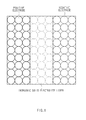
FIG. 1 illustrates an internal configuration of a conventional all-sold-state battery. -
FIG. 2 illustrates an exemplary structure including a nano-solid electrolyte filler filling air gaps of a composite positive electrode, a composite negative electrode, an inorganic solid electrolyte layer, and the interior of an all-solid-state battery according to an exemplary embodiment of the present invention. -
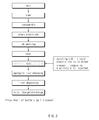
FIG. 3 shows a flow chart of an exemplary manufacturing process in which a composite electrolyte including a nano-solid electrolyte of the present invention may be injected during an injection process of an conventional lithium battery (LiB) manufacturing process, according to an exemplary embodiment of the present invention. - The terminology used herein is for the purpose of describing particular exemplary embodiments only and is not intended to be limiting of the invention. As used herein, the singular forms "a", "an" and "the" are intended to include the plural forms as well, unless the context clearly indicates otherwise. It will be further understood that the terms "comprises" and/or "comprising," when used in this specification, specify the presence of stated features, integers, steps, operations, elements, and/or components, but do not preclude the presence or addition of one or more other features, integers, steps, operations, elements, components, and/or groups thereof. As used herein, the term "and/or" includes any and all combinations of one or more of the associated listed items.
- Unless specifically stated or obvious from context, as used herein, the term "about" is understood as within a range of normal tolerance in the art, for example within 2 standard deviations of the mean. "About" can be understood as within 10%, 9%, 8%, 7%, 6%, 5%, 4%, 3%, 2%, 1%, 0.5%, 0.1%, 0.05%, or 0.01% of the stated value. Unless otherwise clear from the context, all numerical values provided herein are modified by the term "about."
- It is understood that the term "vehicle" or "vehicular" or other similar terms as used herein is inclusive of motor vehicles in general such as passenger automobiles including sports utility vehicles (SUV), buses, trucks, various commercial vehicles, watercraft including a variety of boats and ships, aircraft, and the like, and includes hybrid vehicles, electric vehicles, plug-in hybrid electric vehicles, hydrogen-powered vehicles and other alternative fuel vehicles, e.g., fuel derived from resources other than petroleum. As referred to herein, a hybrid vehicle is a vehicle that has two or more sources of power, for example both gasoline-powered and electric-powered vehicles.
- Hereinafter, exemplary embodiment of the present invention will be described in detail with reference to the accompanying drawings.
- An all-solid-state battery containing a nano-solid electrolyte of the present invention includes a positive electrode, a negative electrode, and an inorganic solid electrolyte layer. This configuration of the battery may be the same as that of the related art all-solid-state battery as shown in
FIG. 1 or may be slightly modified within the scope of the present invention. Generally, as illustrated inFIG. 1 , air gaps may be formed in each interface and within each member. - In an exemplary embodiment of the all-solid-state battery of the present invention, a positive electrode or a negative electrode may be formed of a mixture obtained by sufficiently mixing positive electrode or negative electrode active material particles, inorganic solid electrolyte particles, a carbon conductor, and a binder for settlement within an electrode at a suitable composition ratio. Preferably, the composition ratio of the above components in the positive electrode or the negative electrode may be about 50 wt% to 85 wt%: about 10 wt% to 45 wt%: about 0.5 wt% to 5 wt%: about 0.5 wt% to 5%, based on the total weight of the electrode, or particularly about 60 wt% to 75 wt%: about 20 wt% to 35 wt%: about 0.5 wt% to 5 wt%: about 0.5 wt% to 5 wt%. When the composition ratio is outside the aforementioned range, battery capacity or output performance may be degraded, and thus, the aforementioned range is preferred in order to maximize a function of an electrode complex.
- The positive electrode active material particles may be, for example, a metal oxide including lithium to be inserted or removed electrochemically through an oxidation-reduction reaction. As such, a metal oxide including lithium, a lithium cobalt-based composite oxide such as LiCoO2, a lithium nickel-based composite oxide such as LiNiO2, a lithium manganese-based composite oxide such as LiMn2O4, a lithium vanadium-based composite oxide such as LiV2O5, or a lithium iron-based composite oxide such as LiFeO2, as described above, may be used without limitation.
- The solid electrolyte may be an inorganic solid electrolyte such as oxide-based solid electrolyte and a sulfide-based solid electrolyte. In general, a solid electrolyte having lithium ion conductivity of about 10-4S/cm or greater at room temperature may be preferably used, and a solid electrolyte having lithium ion conductivity of about 10-3S/cm or greater at room temperature may be particularly used. Typical oxide-based solid electrolytes may include La0.51Li0.34TiO2.94 (LLTO) having a Perovskite structure, Li7La3Zr2O12 (LLZO) having a garnet structure, NASICON-type Li1.3Al0.3Ti1.7 (PO4)3(LATP), and lithium super ionic conductor (LISICON), but without being limited thereto, and typical sulfide-based solid electrolytes may include Li2S, Li2S-P2S5, Li2S-SiS2, Li2S-GeS2, Li2S-B2S5, Li2S-Al2S5, or Li3.25Ge0.25P0.75S4 under a trade name of Thio-LISICON, and also include Li3N or LIPON(Li3+yPO4-xNx), but without being limited thereto.
- The conductor may not be particularly limited and may be any conductor used in a battery in the related arts. Preferably, graphene, carbon nano-tube, Ketjen black, activated carbon, super p carbon in the form of powder, Denka in the form of rod, and vapor grown carbon fiber (VGCF) are used. As the binder, a polymer compound of fluorine-based, diene-based, acryl-based, and silicon-based polymer may be preferably used. The binder may include, for example, polytetrafluoroethylene (PTFE), polyvinylidene fluoride (PVDF), carboxymethylcellulose (CMC), styrenebutadiene rubber (SBR), polyimide, and the like, but without being limited thereto.
- The negative electrode active material may be, for example, a negative electrode active material particle allowing lithium to be inserted or removed electrochemically through an oxidation-reduction reaction. Such a particle may include metal lithium or a lithium alloy such as LiAl-based, LiAg-based, LiPb-based, and LiSi-based alloys. Further, general carbon materials such as hard carbon obtained by sintering and carbonizing graphite or a resin, soft carbon obtained by thermally treating cokes, and fullerene may be used, or a metal oxide such as TiO2 or SnO2 having a potential of 2V or less with respect to lithium may also be used, but the present invention is not limited thereto. In particular, a carbon material such as graphite, a carbon fiber, and activated carbon may be preferably used.
- The characteristics of the all-solid-state battery of the present invention may be illustrated in
FIG. 2 . For example, air gaps present in the all-solid-state battery electrode jelly roll (positive electrode-inorganic solid electrolyte layer-negative electrode) may be impregnated with an inorganic solid electrolyte filler including a mixture of a nano-solid electrolyte and a polymer gel electrolyte, such that a degradation of contact characteristics with respect to interfaces due to the air gaps may be overcome, contact resistance and internal resistance of the battery may be reduced, and ion conductivity and characteristics of the all-solid-state battery may be considerably improved. Also, since the air gap problem greatly arising during a wet process for increasing an area of a battery and a process for a large amount of batteries may be overcome by the inorganic solid electrolyte filler according to the present invention, it may contribute to commercialization of all-solid-state batteries. Further, since the inorganic solid electrolyte filler may be injected to the air gaps within the battery through an injection process of the existing lithium battery manufacturing process, a design of the conventional manufacturing process may not be changed, thereby providing efficiency in an economical aspect. - The polymer gel electrolyte mixed with the nano-solid electrolyte may be a gel electrolyte generally used in a lithium battery (LiB), and preferably, a gel electrolyte obtained by steps comprising impregnating a polymer host formed of a thermoplastic polymer such as polyethyleneoxide (PEO), polyvinylidenefluoride (PVDF), or polyacrylonitrile (PAN), a thermosetting polymer obtained by polymerizing tetraethyleneglycoldiacrylate, polyethyleneglycoldiacrylate (PEGDA), or trimethylolpropanetriacrylate, and a copolymer obtained by polymerizing two or more types of these monomer and oligomer, with an electrolytic solution and swelling the same, but the present invention is not limited thereto. As the electrolytic solution used in the gel electrolyte, for example, an electrolytic solution obtained by dissolving lithium salt such as LiPF6, LiClO4, LiBF4, or LiN(SO2CF3)2 in a mixture solvent including ethylene carbonate, propylene carbonate, dimethoxyethane, dimethylcarbonate, ethylmethylcarbonate, and diethylcarbonate may be used.
- Also, the all-solid-state battery of the present invention may include a positive electrode current collector and a negative electrode current collector. For example, the positive electrode current collector may be installed on a side of a composite positive electrode opposite to a side thereof in contact with a solid electrolyte layer, and the negative electrode current collector may be installed on a side of a composite negative electrode opposite to a side thereof in contact with a solid electrolyte layer. In this case, for example, after manufacturing of a stacked body including the composite positive electrode, the solid electrolyte, and the composite negative electrode of the present invention may be terminated, the positive electrode current collector and the negative electrode current collector may be installed, or the positive electrode current collector and the negative electrode current collector may also be installed through heat treatment under the same atmosphere as that of the composite positive electrode (negative electrode) and the solid electrolyte layer.
- In addition, the positive electrode current collector and/or the negative electrode current collector may be formed of a conductive material known in the art, for example, silver, copper, nickel, cobalt, aluminum, stainless steel, gold, and platinum, and preferably, each of these elements may not react to a positive electrode active material and a negative electrode active material.
- Hereinafter, the stacked body including the positive electrode, the inorganic solid electrolyte layer, and the negative electrode, and a method for impregnating the air gaps of the stacked body with a nano-solid electrolyte will be described.
- When a positive electrode is manufactured, positive electrode active material powder, inorganic solid electrolyte powder, carbon conductive powder and a binder may be applied to an organic solvent, and sufficiently mixed in an appropriate composition ratio to obtain slurry. As the organic solvent, cyclic aliphatic hydrocarbons such as cyclopentane and cyclohexane, or aromatic hydrocarbons such as toluene and xylene may be applied, and in particular, these solvents may be used alone or two or more types thereof may be mixed. That is, these solvents may be suitably and selectively used in terms of a dry rate or an environment. In the present invention, when a sulfide-based electrolyte is used as the solid electrolyte, a non-polar solvent based on aromatic hydrocarbons may be particularly used in terms of chemical reactivity.
- When a negative electrode is manufactured, like the manufacturing of the positive electrode, negative electrode active material powder, inorganic solid electrolyte powder, carbon conductive powder and a binder may be applied to an organic solvent, and sufficiently mixed in an appropriate composition ratio to obtain slurry. The organic solvent may be the same as that of the case of the positive electrode, and as the negative electrode active material, carbons such as natural graphite, artificial graphite, soft carbon, or hard carbon may be applied.
- Subsequently, in preparing solid electrolyte slurry, the same elements may be mixed in the same manner as that for manufacturing the electrode slurry. Preferably, the solid electrolyte and the binder may be mixed in the ratio of about 90 wt% to 100 wt% : about 0 wt% to 10 wt% and the binder solution may be prepared with a solid content of about 5% or greater. In general, the binder may be applied to secure physical properties of the slurry and maintain binding strength between electrolyte particles, but may disadvantageously hinder ion conduction between electrolyte particles. Thus, preferably, the weight ratio of the binder may be minimized. Thus, a small amount of the binder, i.e., less than about 10%, may be used according to characteristics of the electrolyte film, or preferably, the binder may not be applied on the assumption that electrolyte binding strength is secured.
- The nano-composite electrolyte as a mixture of a nano-solid electrolyte and a polymer gel electrolyte of the present invention may be prepared by mixing a nano-scale solid electrolyte and a gel electrolyte generally used in a lithium battery in the ratio of about 60 wt% to 90 wt%: about 10 wt% to 40 wt% in a mixer, and such a preparation process may be suitably performed under a dry room atmosphere. When the weight ratios of the electrolytes are outside of the foregoing weight ratios, it may be difficult to secure connectivity between nano-solid electrolyte particles which may cause most lithium ions to be transferred through the gel electrolyte having low conductivity, rather than through the solid electrolyte and fundamentally degrade performance of the battery. Thus, preferably, the solid electrolyte is applied within the range of about 60 wt% to 90 wt%. Further, the nano-scale solid electrolyte may be nanosized through a ball milling process in addition to the existing solid electrolyte manufacturing process. As consequence, for example, a BET specific surface area at a level of about 30 to 70m2/g may be obtained.
- The manufactured composite positive electrode, the solid electrolyte, and the composite negative electrode may be sequentially stacked, without being rolled, and thereafter, the prepared composite electrolyte may be injected into air gaps of the stacked body by using an injection process, thereby manufacturing the all-solid-state battery of the present invention. As illustrated in
FIG. 3 , it can be seen that the all-solid-state battery of the present invention is manufactured through the same method or slightly modified method as the conventional lithium battery manufacturing process, except for the injection of the composite electrolyte during the injection process. Since there may have no change point in terms of facilities, the all-solid-state battery of the present invention may be applied without incurring extra cost. However, according to circumstances, specific conditions of the injection process need to be changed in order to be applicable. That is, in order to secure uniformity of the electrolyte within a cell structure by maximizing impregnation characteristics, an aging process, or the like, needs to be performed after a vacuum/pressing treatment or after injection. - In order to manufacture a stacked body for an all-solid-state battery, first, a solid electrolyte was prepared. The solid electrolyte was obtained by mixing Li2S (Alfa, 99.9%), an amorphous sulfide solid electrolyte, and starting powder of P2S5 (Aldrich, 99%) in a mole ratio of 75:25, and subsequently performing mechanical milling of high energy for 20 hours. Since the sulfide-based solid electrolyte reacts to moisture, the process was performed within a globe box under a nitrogen atmosphere in order to avoid contact with moisture in the air, and the amorphous solid electrolyte synthesized through the milling process was heat-treated at a temperature of 230°C, at which a metastable electrolyte having high ion conductivity may be precipitated, for three hours to become a solid electrolyte in a glass-ceramics state.
- Lithium cobalt oxide (LiCoO2, Aldrich) positive electrode active material powder, 75Li2S. 25P2S5 solid electrolyte powder, conductive powder, and a binder were sufficiently mixed in a composition ratio of 65:25:5:5 to prepare a composite positive electrode slurry. As the conductive powder, powder obtained by mixing VGCF and Super p carbon in a mixture ratio of 2:1 by weight ratio was used, and as the binder, polytetrafluoroethylene (PTFE) was used.
- Before mixing the four types of materials, the conductive powder (or conductor), easy to be cohesive, was dispersed for 30 minutes through ultrasonic dispersion by using anhydrous toluene as a solvent for uniform dispersion, and thereafter, was mixed together with the solid electrolyte, the positive electrode active material, and the binder to obtain uniformly dispersed slurry. The mixing process was continued on the all-solid-state composite positive electrode mixed with anhydrous toluene in a wet manner until the anhydrous toluene was sufficiently evaporated, and after the anhydrous toluene was sufficiently evaporated, the all-solid-state composite positive electrode was dried at a temperature of 120°C for three hours.
- Composite negative electrode slurry was prepared in the same manner as that of the composite positive electrode slurry, except for the use of metal lithium as a negative electrode active material.
- In order to secure nano-scale electrolyte powder for preparing nano-composite electrolyte to be realized in the present invention, a ball milling process was performed in addition to the existing solid electrolyte manufacturing process. Micrometer-scale powder (75Li2S.25P2S5) obtained was applied to a high energy milling machine, and wet milling was performed in order to control a particle size and obtain uniform particles. As a solvent used herein, an organic solvent (generally, toluene, xylene, dodecane, or dibutylether) able to minimize reactivity with the electrolyte was applied, and in particular, in order to control a desired particle size, the specification of the solvent may be altered. The solid electrolyte powder, which underwent the wet ball milling process, was nanosized to obtain a BET specific surface area at a level of about 55m2/g.
- LiPF6 was dissolved in a mixture solvent obtained by mixing ethylenecarbonate (EC) and diethylcarbonate (DEC) in a volume ratio of 3:7 to prepare a non-aqueous electrolytic solution including 1 mol/L of LiPF6, and subsequently, 89.95 part by weight of the non-aqueous electrolytic solution and 10 part by weight of polyethyleneglycoldiacrylate (PEGDA) (molecular weight: 250, Aldrich) were mixed and 0.05 part by weight of benzoyl peroxide was added thereto as a polymerization initiator to obtain a polymer gel electrolyte.
- The polymer gel electrolyte and the nano-scale solid electrolyte (75Li2S.25P2S5) were mixed in the ratio of 15:85 by weight ratio to obtain a hybrid nano-composite electrolyte to be injected to air gaps of the battery through an injection process of the lithium battery manufacturing process.
- The composite positive electrode, the solid electrolyte, and the composite negative electrode manufactured in steps 1 to 3 were sequentially stacked, without being rolled, and the nano-composite electrolyte prepared in step 4 was subsequently injected to air gaps of the solid electrolyte through an injection process to impregnate all of the air gaps within the composite positive electrode and the composite negative electrode and air gaps between interfaces, as well as air gaps within the solid electrolyte with the nano-composite electrolyte. Thereafter, the other remaining processes, for example, aging, degassing, and charging and discharging processes, were performed in the same manner as those of the existing lithium battery process, thus manufacturing an all-solid-state lithium ion rechargeable battery.
- The all-solid-state lithium ion rechargeable battery manufactured in Example 1 was installed in an electrochemical device. Thereafter, an operation of applying a current between the composite positive electrode and the composite negative electrode at a temperature of 25°C to perform charging until a cell voltage reaches 4.2V and subsequently perform discharging until the cell voltage reaches 1.9V was repeated 20 cycles, and the cycle performance was evaluated. Here, current was applied with a current density of 0.125mA/cm2 in first to fifth cycles, and current was applied with a current density of 0.375mA/cm2 in sixth to twentieth cycles.
- Discharge capacity in 10th cycle was 135 mAh/g (an average after 5 times), superior to that of 94mAh/g of a general all-solid-state battery without the nano-solid electrolyte. Also, a cell voltage at charge capacity of 75mAh/g (SOC: about 50%) was measured as 3.4 V when the nano-solid electrolyte was applied and 3.9V without the nano-solid electrolyte. Through the results, it can be supposed that the heterogeneous electrolytes of the nano-solid electrolyte plus polymer gel electrolyte contribute to enhancement of cell internal resistance due to internal air gaps.
- An all-solid-state battery was manufactured in the same manner as that of Example 1, except that the polymer gel electrolyte and the nano-scale solid electrolyte (75Li2S.25P2S5) were mixed in the ratio of 50:50 by weight ratio.
- The all-solid-state battery was tested for evaluation in the same manner as that of the all-solid-state battery of the present invention. The results showed that when the polymer gel electrolyte and the nano-scale solid electrolyte were mixed in the ratio of 15:85 by weight ratio, discharge capacity was 135 mAh/g (in average for five times), while that of the all-solid-state battery of this Example was 77 mAh/g.
- As described above, according to the exemplary embodiments of the present invention, since the all-solid-state battery containing the inorganic nano-solid electrolyte has substantially improved battery performance as well as excellent safety, the all-solid-state battery may be widely used and contribute to development of industry such as electric vehicles, or the like, in which middle and large lithium ion rechargeable batteries are used.
- Hereinabove, although the present invention has been described with reference to exemplary embodiments and the accompanying drawings, the present invention is not limited thereto, but may be variously modified and altered by those skilled in the art to which the present invention pertains without departing from the spirit and scope of the present invention claimed in the following claims.
Claims (15)
- An all-solid-state battery comprising:a positive electrode;a negative electrode;an inorganic solid electrolyte layer disposed between the positive electrode and the negative electrode; andan inorganic solid electrolyte filler filling air gaps of the positive electrode, the negative electrode, and the inorganic solid electrolyte layer.
- The all-solid-state battery according to claim 1, wherein the inorganic solid electrolyte filler is a mixture of a polymer gel electrolyte and a nano-scale solid electrolyte.
- The all-solid-state battery according to claim 2, wherein the inorganic solid electrolyte filler is obtained by mixing the nano-scale solid electrolyte and the polymer gel electrolyte in a weight ratio of about 60 to 90: about 10 to 40.
- The all-solid-state battery according to claim 2 or 3, wherein the nano-scale solid electrolyte has an average particle diameter (D50) ranging from about 10 to about 1000 nm, and has a bimodal particle size distribution of a smaller size fraction of about 100 nm or less, and a larger size fraction ranging from about 100 to about 1000 nm.
- The all-solid-state battery according to any one of claims 1 to 4, wherein the inorganic solid electrolyte layer or the inorganic solid electrolyte filler comprises at least one selected from the group consisting of La0.51Li0.34TiO2.94 (LLTO), Li7La3Zr2O12 (LLZO), Li1.3Al0.3Ti1.7(PO4)3 (LATP), Li2+2xZn1-xGeO4(LISICON), Li2S, Li2S-P2S5, Li2S-SiS2, Li2S-GeS2, Li2S-B2S5, Li2S-Al2S5, Li3.25Ge0.25P0.75S4(Thio-LISICON), Li3N, and Li3+yPO4-xNx (LIPON).
- The all-solid-state battery according to any one of claims 2 to 5, wherein the polymer gel electrolyte is a gel electrolyte obtained by steps comprising impregnating a polymer host formed of a thermoplastic polymer, a thermosetting polymer, or a copolymer thereof with an electrolytic solution and swelling the same.
- The all-solid-state battery according to claim 6, wherein the electrolytic solution is a solution obtained by steps comprising dissolving at least one lithium salt selected from the group consisting of LiPF6, LiClO4, LiBF4, and LiN(SO2CF3)2 in at least one organic solvent selected from the group consisting of ethylene carbonate, propylene carbonate, dimethoxyethane, dimethylcarbonate, ethylmethylcarbonate, and diethylcarbonate.
- The all-solid-state battery according to any one of claims 1 to 7, wherein the positive electrode is a composite electrode comprising a positive electrode active material, a conductor, a binder, and inorganic solid electrolyte particles.
- The all-solid-state battery according to any one of claims 1 to 8, wherein the negative electrode is a composite electrode comprising a negative electrode active material, a conductor, a binder, and inorganic solid electrolyte particles.
- The all-solid-state battery according to claim 8 or 9, wherein the positive electrode active material comprises at least one selected from the group consisting of a lithium cobalt-based composite oxide, a lithium nickel-based composite oxide, a lithium manganese-based composite oxide, a lithium vanadium-based composite oxide, and a lithium iron-based composite oxide.
- The all-solid-state battery according to claim 9 or 10, wherein the negative electrode active material comprises at least one selected from the group consisting of metal lithium, a lithium alloy, hard carbon, soft carbon, fullerene, TiO2, and SnO2.
- The all-solid-state battery according to any one of claims 8 to 11, wherein the conductor comprises one or more selected from the group consisting of graphene, carbon nano-tube, Ketjen black, activated carbon, and vapor grown carbon fiber (VGCF).
- The all-solid-state battery according to any one of claims 8 to 12, wherein the binder comprises one or more selected from the group consisting of polytetrafluoroethylene (PTFE), polyvinylidene fluoride (PVDF), carboxymethylcellulose (CMC), styrenebutadiene rubber (SBR), and polyimide.
- A method for manufacturing an all-solid-state battery, the method comprising:stacking a positive electrode, an inorganic solid electrolyte layer, and a negative electrode; andinjecting a solution comprises a monomer for formation of a polymer gel, an organic solvent, and inorganic solid electrolyte filler particles into the stacked body.
- A vehicle comprising an all-solid-state battery of any one of the claims 1 to 13.
Applications Claiming Priority (1)
| Application Number | Priority Date | Filing Date | Title |
|---|---|---|---|
| KR1020150032390A KR101704172B1 (en) | 2015-03-09 | 2015-03-09 | All-solid-state batteries containing nano solid electrolyte and method of manufacturing the same |
Publications (3)
| Publication Number | Publication Date |
|---|---|
| EP3067979A2 true EP3067979A2 (en) | 2016-09-14 |
| EP3067979A3 EP3067979A3 (en) | 2016-11-09 |
| EP3067979B1 EP3067979B1 (en) | 2018-08-08 |
Family
ID=54477927
Family Applications (1)
| Application Number | Title | Priority Date | Filing Date |
|---|---|---|---|
| EP15193602.8A Active EP3067979B1 (en) | 2015-03-09 | 2015-11-09 | All-solid-state battery containing nano-solid electrolyte and method of manufacturing the same |
Country Status (4)
| Country | Link |
|---|---|
| US (1) | US20160268627A1 (en) |
| EP (1) | EP3067979B1 (en) |
| KR (1) | KR101704172B1 (en) |
| CN (1) | CN105958116B (en) |
Cited By (7)
| Publication number | Priority date | Publication date | Assignee | Title |
|---|---|---|---|---|
| WO2019007501A1 (en) * | 2017-07-05 | 2019-01-10 | Toyota Motor Europe | New lithium mixed metal sulfide with high ionic conductivity |
| JPWO2019093403A1 (en) * | 2017-11-13 | 2020-06-18 | 株式会社村田製作所 | All solid state battery |
| CN111725558A (en) * | 2019-03-20 | 2020-09-29 | 宁德时代新能源科技股份有限公司 | A solid-state electrolyte and its all-solid-state lithium metal battery |
| WO2020254294A1 (en) * | 2019-06-18 | 2020-12-24 | Fraunhofer-Gesellschaft zur Förderung der angewandten Forschung e.V. | Alkaline metal secondary battery and uses thereof |
| CN113839005A (en) * | 2020-06-24 | 2021-12-24 | 中国科学院上海硅酸盐研究所 | Gel composite positive electrode for solid-state battery and preparation method thereof |
| US20220255062A1 (en) * | 2019-08-09 | 2022-08-11 | Idemitsu Kosan Co., Ltd. | Electrode composite material and method for manufacturing same |
| EP4243115A4 (en) * | 2021-08-31 | 2025-08-06 | Lg Energy Solution Ltd | ELECTRODE FOR SOLID-STATE BATTERY |
Families Citing this family (64)
| Publication number | Priority date | Publication date | Assignee | Title |
|---|---|---|---|---|
| EP3367490B1 (en) * | 2015-09-16 | 2019-07-31 | Kabushiki Kaisha Toshiba | Secondary battery, battery pack, and vehicle |
| KR101879503B1 (en) | 2016-09-21 | 2018-07-18 | 주식회사 세븐킹에너지 | Hybrid solid electrolyte for rechargeable batteries and preparation method of the same |
| US10707531B1 (en) | 2016-09-27 | 2020-07-07 | New Dominion Enterprises Inc. | All-inorganic solvents for electrolytes |
| CN107968219A (en) * | 2016-10-19 | 2018-04-27 | 东莞新能源科技有限公司 | Inorganic solid electrolyte film, preparation method thereof and inorganic all-solid-state battery |
| JP6870285B2 (en) * | 2016-11-14 | 2021-05-12 | 株式会社村田製作所 | Charging device |
| CN108091923B (en) * | 2016-11-22 | 2020-07-28 | 东莞新能源科技有限公司 | Solid electrolyte, method for preparing same, and all-solid-state lithium secondary battery |
| KR20180066694A (en) * | 2016-12-09 | 2018-06-19 | 한국생산기술연구원 | Cathode composite with high power performance and all solid lithium secondary battery comprising the same |
| JP6931529B2 (en) * | 2016-12-09 | 2021-09-08 | Fdk株式会社 | Manufacturing method of all-solid-state battery |
| KR102463414B1 (en) * | 2016-12-16 | 2022-11-03 | 현대자동차주식회사 | Solid electrolyte membrane with controlled pore, and method for manufacturing the electrolyte membrane |
| CN108269968A (en) * | 2016-12-30 | 2018-07-10 | 香港科技大学深圳研究院 | For the electrode composite and rechargeable battery of rechargeable battery |
| CN108270032A (en) * | 2016-12-30 | 2018-07-10 | 香港科技大学深圳研究院 | Electrolyte and rechargeable battery between the electrode of rechargeable battery |
| JP7129144B2 (en) * | 2017-01-24 | 2022-09-01 | 日立造船株式会社 | All-solid-state battery and manufacturing method thereof |
| US10734673B2 (en) * | 2017-06-23 | 2020-08-04 | GM Global Technology Operations LLC | Ionically-conductive reinforced glass ceramic separators/solid electrolytes |
| JP6940316B2 (en) * | 2017-06-23 | 2021-09-22 | 株式会社日立製作所 | Secondary battery and manufacturing method of secondary battery |
| CN110945701A (en) * | 2017-07-24 | 2020-03-31 | 公立大学法人首都大学东京 | Electrolyte composition, electrolyte membrane, and battery |
| US20190036158A1 (en) * | 2017-07-28 | 2019-01-31 | Robert Bosch Gmbh | Battery having a single-ion conducting layer |
| KR102264691B1 (en) * | 2017-08-11 | 2021-06-15 | (주)엘지에너지솔루션 | Pre-lithiation Method using lithium metal and inorganic compound |
| WO2019034563A1 (en) * | 2017-08-18 | 2019-02-21 | Robert Bosch Gmbh | Composite reinforced solid electrolyte to prevent protrusions |
| CN107591567A (en) * | 2017-08-18 | 2018-01-16 | 电子科技大学 | A kind of hybrid nanostructure solid lithium ion battery and preparation method thereof |
| JP7041804B2 (en) | 2017-09-13 | 2022-03-25 | エルジー エナジー ソリューション リミテッド | Electrodes for all-solid-state batteries containing solid electrolytes |
| CN108172893B (en) * | 2017-12-15 | 2019-12-31 | 浙江隆劲电池科技有限公司 | A lithium ion battery |
| WO2019212314A1 (en) * | 2018-05-03 | 2019-11-07 | 주식회사 엘지화학 | Method for manufacturing all-solid-state battery comprising polymer-based solid electrolyte and all-solid-state battery manufactured by same method |
| CN108336402B (en) * | 2018-05-13 | 2020-07-07 | 清陶(昆山)能源发展有限公司 | Ceramic matrix composite solid electrolyte and preparation method thereof |
| DE112019002209T5 (en) | 2018-05-31 | 2021-01-07 | Robert Bosch Gmbh | Electrode configuration with a protrusion inhibition separator |
| US11205798B2 (en) * | 2018-07-30 | 2021-12-21 | GM Global Technology Operations LLC | Capacitor-assisted solid-state battery |
| US11171365B2 (en) * | 2018-07-30 | 2021-11-09 | GM Global Technology Operations LLC | Capacitor-assisted solid-state battery with quasi-solid-state electrolyte |
| CN108987799B (en) * | 2018-08-09 | 2021-07-20 | 河南科技学院 | An all-solid-state battery solid-state electrolyte and its preparation method and application |
| US10854916B2 (en) | 2018-09-26 | 2020-12-01 | University Of Maryland, College Park | Lithium metal sulfides as lithium super-ionic conductors |
| CN109802131A (en) * | 2019-01-03 | 2019-05-24 | 江西星盈科技有限公司 | Lithium ion battery and its negative electrode tab and negative electrode material and preparation process |
| CN109768330B (en) * | 2019-01-07 | 2020-12-08 | 东莞赣锋电子有限公司 | A kind of preparation method of solid electrolyte lithium ion battery and battery |
| CN109830746B (en) * | 2019-01-29 | 2022-03-22 | 蜂巢能源科技有限公司 | Solid electrolyte and application thereof, cathode material and preparation method and application thereof |
| JP7277213B2 (en) * | 2019-03-28 | 2023-05-18 | Ube株式会社 | Solid electrolyte composition, molded article using the same, and all-solid secondary battery |
| CN111799502B (en) * | 2019-04-08 | 2022-03-11 | 北京理工大学 | Garnet-type solid-state composite electrolyte, preparation method and application |
| KR102882003B1 (en) * | 2019-05-02 | 2025-11-06 | 현대자동차주식회사 | A composite anode for all-solid state battery and process for preparing thereof |
| KR102775484B1 (en) * | 2019-05-08 | 2025-03-04 | 주식회사 엘지에너지솔루션 | Method for Preparing Cathode of Solid State Battery and Cathode of Solid State Battery Prepared Thereby |
| KR102774902B1 (en) * | 2019-05-08 | 2025-03-04 | 주식회사 엘지에너지솔루션 | Method for Preparing Electrode of Solid State Battery and Electrode of Solid State Battery Manufactured Thereby |
| JP7441106B2 (en) * | 2019-06-10 | 2024-02-29 | ケメット エレクトロニクス コーポレーション | Conductive polymer dispersions for improved reliability |
| WO2020253638A1 (en) * | 2019-06-18 | 2020-12-24 | 青岛九环新越新能源科技股份有限公司 | Composite electrode-based solid cell, laminated cell, composite cell and composite power cell |
| CN110492170A (en) * | 2019-08-30 | 2019-11-22 | 电子科技大学 | A kind of high ionic conductivity composite solid electrolyte and preparation method thereof |
| CN111081955A (en) * | 2019-12-20 | 2020-04-28 | 中国电子科技集团公司第十八研究所 | A kind of in-situ preparation method of solid-state battery |
| CN111463508A (en) * | 2020-03-31 | 2020-07-28 | 珠海冠宇电池股份有限公司 | Solid-state battery containing free radical quencher |
| CN111816856B (en) * | 2020-07-21 | 2022-08-26 | 深圳先进技术研究院 | Composite material, preparation method thereof and negative electrode |
| CN111799503A (en) * | 2020-07-21 | 2020-10-20 | 哈尔滨工业大学 | A kind of composite solid electrolyte film based on NASICON type electrolyte and preparation method thereof |
| CN112072164B (en) * | 2020-08-28 | 2023-05-12 | 蜂巢能源科技有限公司 | Solid state lithium battery and preparation method thereof |
| KR102857651B1 (en) * | 2020-09-09 | 2025-09-08 | 삼성에스디아이 주식회사 | Solid-state battery |
| CN112599726B (en) * | 2020-12-25 | 2023-05-16 | 上海奥威科技开发有限公司 | Gel polymer lithium ion capacitor battery and preparation method thereof |
| KR102804108B1 (en) * | 2021-02-24 | 2025-05-13 | 고려대학교 산학협력단 | Composite lithium powder anode for all solid electrolyte batteries and manufacturing method thereof and an all solid electrolyte batteries comprising the same |
| CN113054241A (en) * | 2021-03-04 | 2021-06-29 | 湖南立方新能源科技有限责任公司 | Solid-state lithium battery and preparation method thereof |
| EP4354464A4 (en) * | 2021-06-07 | 2024-12-18 | Panasonic Intellectual Property Management Co., Ltd. | SOLID ELECTROLYTE COMPOSITION, METHOD FOR PRODUCING MULTILAYER BODY COMPRISING SOLID ELECTROLYTE SHEET AND ELECTRODE, AND METHOD FOR PRODUCING BATTERY |
| CN113471426B (en) * | 2021-06-29 | 2022-08-09 | 江西瑞马新能源材料技术有限公司 | Solid-state silicon composite lithium battery |
| US20230035720A1 (en) * | 2021-07-30 | 2023-02-02 | Solid Energies Inc. | Large-dimension, flexible, ultrathin high-conductivity polymer-based composite solid-state electrolyte membrane |
| CN115939504A (en) * | 2021-08-13 | 2023-04-07 | 通用汽车环球科技运作有限责任公司 | Gel electrolyte system for solid state batteries |
| US20240304794A1 (en) * | 2021-08-17 | 2024-09-12 | Lg Energy Solution, Ltd. | Cathode active material composite, secondary battery cathode comprising same, and secondary battery comprising same |
| US20230106377A1 (en) * | 2021-10-01 | 2023-04-06 | Licap Technologies, Inc. | Dry electrode manufacture for solid state energy storage devices |
| WO2023122203A1 (en) * | 2021-12-21 | 2023-06-29 | Hyzon Motors Inc. | Method of making and processing catholyte and anolyte for solid state batteries |
| NL2030828B1 (en) | 2022-02-04 | 2023-08-11 | Real Scientists Ltd | A thin film energy storage device |
| CN116666728A (en) * | 2022-02-21 | 2023-08-29 | 通用汽车环球科技运作有限责任公司 | Solid Interlayers for Solid State Batteries |
| CN114843613A (en) * | 2022-04-02 | 2022-08-02 | 双登集团股份有限公司 | Manufacturing method of composite positive plate and solid-state battery |
| CN115312841B (en) * | 2022-07-26 | 2025-10-31 | 浙江固泰动力技术有限公司 | Ceramic composite electrolyte of solid lithium battery and preparation method and application thereof |
| CN115312873B (en) * | 2022-09-15 | 2025-07-22 | 深圳市合壹新能技术有限公司 | Quasi-solid state battery and preparation method thereof |
| EP4666334A2 (en) | 2023-02-16 | 2025-12-24 | Anthro Energy, Inc. | Gel electrolyte composition for a battery and a method of implementation |
| CN116666609B (en) * | 2023-07-31 | 2023-10-10 | 山东硅纳新材料科技有限公司 | High-energy-density solid-state silicon-sulfur integrated electrode and preparation method and application thereof |
| WO2025091014A1 (en) | 2023-10-27 | 2025-05-01 | Anthro Energy, Inc. | System and method for improved battery structural properties |
| CN117855583B (en) * | 2024-03-08 | 2024-08-16 | 河南师范大学 | Preparation method and application of bulk composite solid electrolyte with high filler content |
Family Cites Families (14)
| Publication number | Priority date | Publication date | Assignee | Title |
|---|---|---|---|---|
| JP3748995B2 (en) * | 1997-09-10 | 2006-02-22 | 昭和電工株式会社 | Polymer solid electrolyte and use thereof |
| JP2001243984A (en) * | 2000-02-28 | 2001-09-07 | Kyocera Corp | Solid electrolyte battery and its manufacturing method |
| JP2002280079A (en) * | 2001-03-19 | 2002-09-27 | Sony Corp | Battery |
| JP2008243736A (en) | 2007-03-28 | 2008-10-09 | Arisawa Mfg Co Ltd | Lithium ion secondary battery and manufacturing method thereof |
| JP5211526B2 (en) * | 2007-03-29 | 2013-06-12 | Tdk株式会社 | All-solid lithium ion secondary battery and method for producing the same |
| EP2001073B1 (en) * | 2007-06-06 | 2012-02-22 | Nissan Motor Co., Ltd. | Secondary battery and method of producing the secondary battery |
| JP4661843B2 (en) * | 2007-08-28 | 2011-03-30 | ソニー株式会社 | Nonaqueous electrolyte secondary battery |
| JP5556797B2 (en) * | 2010-12-17 | 2014-07-23 | トヨタ自動車株式会社 | Secondary battery |
| JP5720589B2 (en) * | 2012-01-26 | 2015-05-20 | トヨタ自動車株式会社 | All solid battery |
| JP2013182836A (en) * | 2012-03-02 | 2013-09-12 | Honda Motor Co Ltd | Lithium ion conductive electrolyte and lithium ion secondary battery using the same |
| JP2014067574A (en) | 2012-09-26 | 2014-04-17 | Honda Motor Co Ltd | Solid electrolyte, composite electrolyte, and lithium ion secondary battery having the same |
| KR101422726B1 (en) * | 2012-10-10 | 2014-07-28 | 한국화학연구원 | Solid polymer electrolyte composition comprising plasticizer having core-shell structure |
| JP5987103B2 (en) * | 2013-02-26 | 2016-09-06 | 株式会社日立製作所 | All solid ion secondary battery |
| US9853323B2 (en) * | 2013-10-31 | 2017-12-26 | Samsung Electronics Co., Ltd. | Positive electrode for lithium-ion secondary battery, and lithium-ion secondary battery |
-
2015
- 2015-03-09 KR KR1020150032390A patent/KR101704172B1/en active Active
- 2015-11-09 EP EP15193602.8A patent/EP3067979B1/en active Active
- 2015-11-12 US US14/939,209 patent/US20160268627A1/en not_active Abandoned
- 2015-11-26 CN CN201510835654.0A patent/CN105958116B/en active Active
Non-Patent Citations (1)
| Title |
|---|
| None |
Cited By (12)
| Publication number | Priority date | Publication date | Assignee | Title |
|---|---|---|---|---|
| WO2019007501A1 (en) * | 2017-07-05 | 2019-01-10 | Toyota Motor Europe | New lithium mixed metal sulfide with high ionic conductivity |
| US11370670B2 (en) | 2017-07-05 | 2022-06-28 | Toyota Motor Europe | Lithium mixed metal sulfide with high ionic conductivity |
| JPWO2019093403A1 (en) * | 2017-11-13 | 2020-06-18 | 株式会社村田製作所 | All solid state battery |
| EP3713000A4 (en) * | 2017-11-13 | 2021-10-20 | Murata Manufacturing Co., Ltd. | SOLID STATE BATTERY |
| JP6992818B2 (en) | 2017-11-13 | 2022-01-13 | 株式会社村田製作所 | All solid state battery |
| US12327836B2 (en) | 2017-11-13 | 2025-06-10 | Murata Manufacturing Co., Ltd. | All-solid-state battery |
| CN111725558A (en) * | 2019-03-20 | 2020-09-29 | 宁德时代新能源科技股份有限公司 | A solid-state electrolyte and its all-solid-state lithium metal battery |
| CN111725558B (en) * | 2019-03-20 | 2023-03-17 | 宁德时代新能源科技股份有限公司 | Solid electrolyte and all-solid-state lithium metal battery thereof |
| WO2020254294A1 (en) * | 2019-06-18 | 2020-12-24 | Fraunhofer-Gesellschaft zur Förderung der angewandten Forschung e.V. | Alkaline metal secondary battery and uses thereof |
| US20220255062A1 (en) * | 2019-08-09 | 2022-08-11 | Idemitsu Kosan Co., Ltd. | Electrode composite material and method for manufacturing same |
| CN113839005A (en) * | 2020-06-24 | 2021-12-24 | 中国科学院上海硅酸盐研究所 | Gel composite positive electrode for solid-state battery and preparation method thereof |
| EP4243115A4 (en) * | 2021-08-31 | 2025-08-06 | Lg Energy Solution Ltd | ELECTRODE FOR SOLID-STATE BATTERY |
Also Published As
| Publication number | Publication date |
|---|---|
| KR20160108932A (en) | 2016-09-21 |
| EP3067979B1 (en) | 2018-08-08 |
| KR101704172B1 (en) | 2017-02-07 |
| US20160268627A1 (en) | 2016-09-15 |
| CN105958116B (en) | 2019-09-24 |
| CN105958116A (en) | 2016-09-21 |
| EP3067979A3 (en) | 2016-11-09 |
Similar Documents
| Publication | Publication Date | Title |
|---|---|---|
| EP3067979B1 (en) | All-solid-state battery containing nano-solid electrolyte and method of manufacturing the same | |
| CN111384399B (en) | Protective coating for lithium metal electrodes | |
| US9444090B2 (en) | Lithium metal doped electrodes for lithium-ion rechargeable chemistry | |
| US9246161B2 (en) | All-solid battery | |
| US11626591B2 (en) | Silicon-containing electrochemical cells and methods of making the same | |
| CN107195857A (en) | Primer-surface for high performance silicon base electrode | |
| US20210125791A1 (en) | Incorporation of lithium-ion source material into an activated carbon electrode for a capacitor-assisted battery | |
| US11522221B2 (en) | Gelation reagent for forming gel electrolyte and methods relating thereto | |
| JP6692123B2 (en) | Lithium ion secondary battery | |
| KR20190059119A (en) | An all solid lithium-polymer secondary battery and method of manufacturing them a secondary battery including a positive electrode | |
| KR20130069432A (en) | Coating of disordered carbon active material using water-based binder slurry | |
| CN112420980A (en) | Electrode for lithium ion secondary battery and lithium ion secondary battery | |
| US20170288260A1 (en) | Composite Cathode and Lithium-Ion Battery Comprising Same, and Method for Producing Said Composite Cathode | |
| KR20190060719A (en) | Anode Having Double Active Material Layers, Method of Preparing the Same, and Secondary Battery Comprising the Same | |
| CN114784372A (en) | Preparation method of composite solid electrolyte | |
| KR20240040463A (en) | Electrode for all solid battery | |
| KR101283331B1 (en) | Unification-typed Electrode Assembly and Secondary Battery Using the Same | |
| KR20180028797A (en) | Anode with improved swelling phenomenon and Lithium secondary battery comprising the anode | |
| KR20200050627A (en) | Composite Electrode Including Gel-Type Polymer Electrolyte for All-Solid-State Battery, Method Of Manufacturing The Same, And All-Solid-State Lithium Battery Comprising The Same | |
| KR20220130199A (en) | Salt additive for sulfur secondary battery | |
| JP2005317469A (en) | Negative electrode for lithium ion secondary battery and lithium ion secondary battery using the same | |
| KR20210098314A (en) | Non-aqueous electrolytic power storage device and method for manufacturing non-aqueous electrolytic power storage device | |
| CN116504924A (en) | Protective coatings for lithium metal electrodes and methods of forming the same | |
| EP4293738A1 (en) | Method for manufacturing electrode for all-solid-state battery, and electrode manufactured thereby | |
| US20220181629A1 (en) | Elastic binding polymers for electrochemical cells |
Legal Events
| Date | Code | Title | Description |
|---|---|---|---|
| PUAI | Public reference made under article 153(3) epc to a published international application that has entered the european phase |
Free format text: ORIGINAL CODE: 0009012 |
|
| AK | Designated contracting states |
Kind code of ref document: A2 Designated state(s): AL AT BE BG CH CY CZ DE DK EE ES FI FR GB GR HR HU IE IS IT LI LT LU LV MC MK MT NL NO PL PT RO RS SE SI SK SM TR |
|
| AX | Request for extension of the european patent |
Extension state: BA ME |
|
| PUAL | Search report despatched |
Free format text: ORIGINAL CODE: 0009013 |
|
| AK | Designated contracting states |
Kind code of ref document: A3 Designated state(s): AL AT BE BG CH CY CZ DE DK EE ES FI FR GB GR HR HU IE IS IT LI LT LU LV MC MK MT NL NO PL PT RO RS SE SI SK SM TR |
|
| AX | Request for extension of the european patent |
Extension state: BA ME |
|
| RIC1 | Information provided on ipc code assigned before grant |
Ipc: H01M 10/44 20060101ALN20161006BHEP Ipc: H01M 10/052 20100101ALN20161006BHEP Ipc: H01M 4/525 20100101ALN20161006BHEP Ipc: H01M 4/13 20100101ALI20161006BHEP Ipc: H01M 10/056 20100101ALI20161006BHEP Ipc: H01M 10/0525 20100101AFI20161006BHEP Ipc: H01M 10/058 20100101ALI20161006BHEP Ipc: H01M 4/38 20060101ALN20161006BHEP Ipc: H01M 4/62 20060101ALN20161006BHEP |
|
| 17P | Request for examination filed |
Effective date: 20170509 |
|
| RBV | Designated contracting states (corrected) |
Designated state(s): AL AT BE BG CH CY CZ DE DK EE ES FI FR GB GR HR HU IE IS IT LI LT LU LV MC MK MT NL NO PL PT RO RS SE SI SK SM TR |
|
| GRAP | Despatch of communication of intention to grant a patent |
Free format text: ORIGINAL CODE: EPIDOSNIGR1 |
|
| RIC1 | Information provided on ipc code assigned before grant |
Ipc: H01M 10/058 20100101ALI20180131BHEP Ipc: H01M 10/44 20060101ALN20180131BHEP Ipc: H01M 10/056 20100101ALI20180131BHEP Ipc: H01M 4/38 20060101ALN20180131BHEP Ipc: H01M 4/62 20060101ALN20180131BHEP Ipc: H01M 4/13 20100101ALI20180131BHEP Ipc: H01M 10/0525 20100101AFI20180131BHEP Ipc: H01M 4/525 20100101ALN20180131BHEP Ipc: H01M 10/052 20100101ALN20180131BHEP |
|
| INTG | Intention to grant announced |
Effective date: 20180227 |
|
| RIC1 | Information provided on ipc code assigned before grant |
Ipc: H01M 4/62 20060101ALN20180216BHEP Ipc: H01M 10/44 20060101ALN20180216BHEP Ipc: H01M 4/525 20100101ALN20180216BHEP Ipc: H01M 10/056 20100101ALI20180216BHEP Ipc: H01M 10/0525 20100101AFI20180216BHEP Ipc: H01M 4/38 20060101ALN20180216BHEP Ipc: H01M 10/058 20100101ALI20180216BHEP Ipc: H01M 4/13 20100101ALI20180216BHEP Ipc: H01M 10/052 20100101ALN20180216BHEP |
|
| GRAS | Grant fee paid |
Free format text: ORIGINAL CODE: EPIDOSNIGR3 |
|
| GRAA | (expected) grant |
Free format text: ORIGINAL CODE: 0009210 |
|
| AK | Designated contracting states |
Kind code of ref document: B1 Designated state(s): AL AT BE BG CH CY CZ DE DK EE ES FI FR GB GR HR HU IE IS IT LI LT LU LV MC MK MT NL NO PL PT RO RS SE SI SK SM TR |
|
| REG | Reference to a national code |
Ref country code: GB Ref legal event code: FG4D |
|
| REG | Reference to a national code |
Ref country code: CH Ref legal event code: EP Ref country code: AT Ref legal event code: REF Ref document number: 1028034 Country of ref document: AT Kind code of ref document: T Effective date: 20180815 |
|
| REG | Reference to a national code |
Ref country code: IE Ref legal event code: FG4D |
|
| REG | Reference to a national code |
Ref country code: DE Ref legal event code: R096 Ref document number: 602015014570 Country of ref document: DE |
|
| REG | Reference to a national code |
Ref country code: FR Ref legal event code: PLFP Year of fee payment: 4 |
|
| REG | Reference to a national code |
Ref country code: NL Ref legal event code: MP Effective date: 20180808 |
|
| REG | Reference to a national code |
Ref country code: LT Ref legal event code: MG4D |
|
| REG | Reference to a national code |
Ref country code: AT Ref legal event code: MK05 Ref document number: 1028034 Country of ref document: AT Kind code of ref document: T Effective date: 20180808 |
|
| PG25 | Lapsed in a contracting state [announced via postgrant information from national office to epo] |
Ref country code: GR Free format text: LAPSE BECAUSE OF FAILURE TO SUBMIT A TRANSLATION OF THE DESCRIPTION OR TO PAY THE FEE WITHIN THE PRESCRIBED TIME-LIMIT Effective date: 20181109 Ref country code: SE Free format text: LAPSE BECAUSE OF FAILURE TO SUBMIT A TRANSLATION OF THE DESCRIPTION OR TO PAY THE FEE WITHIN THE PRESCRIBED TIME-LIMIT Effective date: 20180808 Ref country code: LT Free format text: LAPSE BECAUSE OF FAILURE TO SUBMIT A TRANSLATION OF THE DESCRIPTION OR TO PAY THE FEE WITHIN THE PRESCRIBED TIME-LIMIT Effective date: 20180808 Ref country code: PL Free format text: LAPSE BECAUSE OF FAILURE TO SUBMIT A TRANSLATION OF THE DESCRIPTION OR TO PAY THE FEE WITHIN THE PRESCRIBED TIME-LIMIT Effective date: 20180808 Ref country code: RS Free format text: LAPSE BECAUSE OF FAILURE TO SUBMIT A TRANSLATION OF THE DESCRIPTION OR TO PAY THE FEE WITHIN THE PRESCRIBED TIME-LIMIT Effective date: 20180808 Ref country code: IS Free format text: LAPSE BECAUSE OF FAILURE TO SUBMIT A TRANSLATION OF THE DESCRIPTION OR TO PAY THE FEE WITHIN THE PRESCRIBED TIME-LIMIT Effective date: 20181208 Ref country code: FI Free format text: LAPSE BECAUSE OF FAILURE TO SUBMIT A TRANSLATION OF THE DESCRIPTION OR TO PAY THE FEE WITHIN THE PRESCRIBED TIME-LIMIT Effective date: 20180808 Ref country code: NO Free format text: LAPSE BECAUSE OF FAILURE TO SUBMIT A TRANSLATION OF THE DESCRIPTION OR TO PAY THE FEE WITHIN THE PRESCRIBED TIME-LIMIT Effective date: 20181108 Ref country code: BG Free format text: LAPSE BECAUSE OF FAILURE TO SUBMIT A TRANSLATION OF THE DESCRIPTION OR TO PAY THE FEE WITHIN THE PRESCRIBED TIME-LIMIT Effective date: 20181108 Ref country code: AT Free format text: LAPSE BECAUSE OF FAILURE TO SUBMIT A TRANSLATION OF THE DESCRIPTION OR TO PAY THE FEE WITHIN THE PRESCRIBED TIME-LIMIT Effective date: 20180808 Ref country code: NL Free format text: LAPSE BECAUSE OF FAILURE TO SUBMIT A TRANSLATION OF THE DESCRIPTION OR TO PAY THE FEE WITHIN THE PRESCRIBED TIME-LIMIT Effective date: 20180808 |
|
| PG25 | Lapsed in a contracting state [announced via postgrant information from national office to epo] |
Ref country code: AL Free format text: LAPSE BECAUSE OF FAILURE TO SUBMIT A TRANSLATION OF THE DESCRIPTION OR TO PAY THE FEE WITHIN THE PRESCRIBED TIME-LIMIT Effective date: 20180808 Ref country code: LV Free format text: LAPSE BECAUSE OF FAILURE TO SUBMIT A TRANSLATION OF THE DESCRIPTION OR TO PAY THE FEE WITHIN THE PRESCRIBED TIME-LIMIT Effective date: 20180808 Ref country code: HR Free format text: LAPSE BECAUSE OF FAILURE TO SUBMIT A TRANSLATION OF THE DESCRIPTION OR TO PAY THE FEE WITHIN THE PRESCRIBED TIME-LIMIT Effective date: 20180808 |
|
| PG25 | Lapsed in a contracting state [announced via postgrant information from national office to epo] |
Ref country code: EE Free format text: LAPSE BECAUSE OF FAILURE TO SUBMIT A TRANSLATION OF THE DESCRIPTION OR TO PAY THE FEE WITHIN THE PRESCRIBED TIME-LIMIT Effective date: 20180808 Ref country code: ES Free format text: LAPSE BECAUSE OF FAILURE TO SUBMIT A TRANSLATION OF THE DESCRIPTION OR TO PAY THE FEE WITHIN THE PRESCRIBED TIME-LIMIT Effective date: 20180808 Ref country code: RO Free format text: LAPSE BECAUSE OF FAILURE TO SUBMIT A TRANSLATION OF THE DESCRIPTION OR TO PAY THE FEE WITHIN THE PRESCRIBED TIME-LIMIT Effective date: 20180808 Ref country code: CZ Free format text: LAPSE BECAUSE OF FAILURE TO SUBMIT A TRANSLATION OF THE DESCRIPTION OR TO PAY THE FEE WITHIN THE PRESCRIBED TIME-LIMIT Effective date: 20180808 Ref country code: IT Free format text: LAPSE BECAUSE OF FAILURE TO SUBMIT A TRANSLATION OF THE DESCRIPTION OR TO PAY THE FEE WITHIN THE PRESCRIBED TIME-LIMIT Effective date: 20180808 |
|
| REG | Reference to a national code |
Ref country code: DE Ref legal event code: R097 Ref document number: 602015014570 Country of ref document: DE |
|
| PG25 | Lapsed in a contracting state [announced via postgrant information from national office to epo] |
Ref country code: SM Free format text: LAPSE BECAUSE OF FAILURE TO SUBMIT A TRANSLATION OF THE DESCRIPTION OR TO PAY THE FEE WITHIN THE PRESCRIBED TIME-LIMIT Effective date: 20180808 Ref country code: DK Free format text: LAPSE BECAUSE OF FAILURE TO SUBMIT A TRANSLATION OF THE DESCRIPTION OR TO PAY THE FEE WITHIN THE PRESCRIBED TIME-LIMIT Effective date: 20180808 Ref country code: SK Free format text: LAPSE BECAUSE OF FAILURE TO SUBMIT A TRANSLATION OF THE DESCRIPTION OR TO PAY THE FEE WITHIN THE PRESCRIBED TIME-LIMIT Effective date: 20180808 |
|
| PLBE | No opposition filed within time limit |
Free format text: ORIGINAL CODE: 0009261 |
|
| STAA | Information on the status of an ep patent application or granted ep patent |
Free format text: STATUS: NO OPPOSITION FILED WITHIN TIME LIMIT |
|
| REG | Reference to a national code |
Ref country code: CH Ref legal event code: PL |
|
| 26N | No opposition filed |
Effective date: 20190509 |
|
| PG25 | Lapsed in a contracting state [announced via postgrant information from national office to epo] |
Ref country code: MC Free format text: LAPSE BECAUSE OF FAILURE TO SUBMIT A TRANSLATION OF THE DESCRIPTION OR TO PAY THE FEE WITHIN THE PRESCRIBED TIME-LIMIT Effective date: 20180808 Ref country code: LU Free format text: LAPSE BECAUSE OF NON-PAYMENT OF DUE FEES Effective date: 20181109 |
|
| REG | Reference to a national code |
Ref country code: BE Ref legal event code: MM Effective date: 20181130 |
|
| REG | Reference to a national code |
Ref country code: IE Ref legal event code: MM4A |
|
| PG25 | Lapsed in a contracting state [announced via postgrant information from national office to epo] |
Ref country code: LI Free format text: LAPSE BECAUSE OF NON-PAYMENT OF DUE FEES Effective date: 20181130 Ref country code: SI Free format text: LAPSE BECAUSE OF FAILURE TO SUBMIT A TRANSLATION OF THE DESCRIPTION OR TO PAY THE FEE WITHIN THE PRESCRIBED TIME-LIMIT Effective date: 20180808 Ref country code: CH Free format text: LAPSE BECAUSE OF NON-PAYMENT OF DUE FEES Effective date: 20181130 |
|
| PG25 | Lapsed in a contracting state [announced via postgrant information from national office to epo] |
Ref country code: IE Free format text: LAPSE BECAUSE OF NON-PAYMENT OF DUE FEES Effective date: 20181109 |
|
| PG25 | Lapsed in a contracting state [announced via postgrant information from national office to epo] |
Ref country code: BE Free format text: LAPSE BECAUSE OF NON-PAYMENT OF DUE FEES Effective date: 20181130 |
|
| PG25 | Lapsed in a contracting state [announced via postgrant information from national office to epo] |
Ref country code: MT Free format text: LAPSE BECAUSE OF NON-PAYMENT OF DUE FEES Effective date: 20181109 |
|
| PG25 | Lapsed in a contracting state [announced via postgrant information from national office to epo] |
Ref country code: TR Free format text: LAPSE BECAUSE OF FAILURE TO SUBMIT A TRANSLATION OF THE DESCRIPTION OR TO PAY THE FEE WITHIN THE PRESCRIBED TIME-LIMIT Effective date: 20180808 |
|
| PG25 | Lapsed in a contracting state [announced via postgrant information from national office to epo] |
Ref country code: PT Free format text: LAPSE BECAUSE OF FAILURE TO SUBMIT A TRANSLATION OF THE DESCRIPTION OR TO PAY THE FEE WITHIN THE PRESCRIBED TIME-LIMIT Effective date: 20180808 |
|
| PG25 | Lapsed in a contracting state [announced via postgrant information from national office to epo] |
Ref country code: MK Free format text: LAPSE BECAUSE OF NON-PAYMENT OF DUE FEES Effective date: 20180808 Ref country code: CY Free format text: LAPSE BECAUSE OF FAILURE TO SUBMIT A TRANSLATION OF THE DESCRIPTION OR TO PAY THE FEE WITHIN THE PRESCRIBED TIME-LIMIT Effective date: 20180808 Ref country code: HU Free format text: LAPSE BECAUSE OF FAILURE TO SUBMIT A TRANSLATION OF THE DESCRIPTION OR TO PAY THE FEE WITHIN THE PRESCRIBED TIME-LIMIT; INVALID AB INITIO Effective date: 20151109 |
|
| P01 | Opt-out of the competence of the unified patent court (upc) registered |
Effective date: 20230523 |
|
| PGFP | Annual fee paid to national office [announced via postgrant information from national office to epo] |
Ref country code: DE Payment date: 20251020 Year of fee payment: 11 |
|
| PGFP | Annual fee paid to national office [announced via postgrant information from national office to epo] |
Ref country code: GB Payment date: 20251023 Year of fee payment: 11 |
|
| PGFP | Annual fee paid to national office [announced via postgrant information from national office to epo] |
Ref country code: FR Payment date: 20251021 Year of fee payment: 11 |