EP3060225B1 - Delivery system and probiotic composition for animals - Google Patents
Delivery system and probiotic composition for animals Download PDFInfo
- Publication number
- EP3060225B1 EP3060225B1 EP14855334.0A EP14855334A EP3060225B1 EP 3060225 B1 EP3060225 B1 EP 3060225B1 EP 14855334 A EP14855334 A EP 14855334A EP 3060225 B1 EP3060225 B1 EP 3060225B1
- Authority
- EP
- European Patent Office
- Prior art keywords
- composition
- acids
- probiotic
- bacillus
- probiotic composition
- Prior art date
- Legal status (The legal status is an assumption and is not a legal conclusion. Google has not performed a legal analysis and makes no representation as to the accuracy of the status listed.)
- Active
Links
Images



Classifications
-
- A—HUMAN NECESSITIES
- A61—MEDICAL OR VETERINARY SCIENCE; HYGIENE
- A61K—PREPARATIONS FOR MEDICAL, DENTAL OR TOILETRY PURPOSES
- A61K35/00—Medicinal preparations containing materials or reaction products thereof with undetermined constitution
- A61K35/66—Microorganisms or materials therefrom
- A61K35/74—Bacteria
- A61K35/741—Probiotics
- A61K35/744—Lactic acid bacteria, e.g. enterococci, pediococci, lactococci, streptococci or leuconostocs
- A61K35/745—Bifidobacteria
-
- A—HUMAN NECESSITIES
- A01—AGRICULTURE; FORESTRY; ANIMAL HUSBANDRY; HUNTING; TRAPPING; FISHING
- A01K—ANIMAL HUSBANDRY; AVICULTURE; APICULTURE; PISCICULTURE; FISHING; REARING OR BREEDING ANIMALS, NOT OTHERWISE PROVIDED FOR; NEW BREEDS OF ANIMALS
- A01K7/00—Watering equipment for stock or game
- A01K7/02—Automatic devices
-
- A—HUMAN NECESSITIES
- A23—FOODS OR FOODSTUFFS; TREATMENT THEREOF, NOT COVERED BY OTHER CLASSES
- A23K—FODDER
- A23K10/00—Animal feeding-stuffs
- A23K10/10—Animal feeding-stuffs obtained by microbiological or biochemical processes
- A23K10/16—Addition of microorganisms or extracts thereof, e.g. single-cell proteins, to feeding-stuff compositions
- A23K10/18—Addition of microorganisms or extracts thereof, e.g. single-cell proteins, to feeding-stuff compositions of live microorganisms
-
- A—HUMAN NECESSITIES
- A61—MEDICAL OR VETERINARY SCIENCE; HYGIENE
- A61D—VETERINARY INSTRUMENTS, IMPLEMENTS, TOOLS, OR METHODS
- A61D7/00—Devices or methods for introducing solid, liquid, or gaseous remedies or other materials into or onto the bodies of animals
-
- A—HUMAN NECESSITIES
- A61—MEDICAL OR VETERINARY SCIENCE; HYGIENE
- A61K—PREPARATIONS FOR MEDICAL, DENTAL OR TOILETRY PURPOSES
- A61K35/00—Medicinal preparations containing materials or reaction products thereof with undetermined constitution
- A61K35/66—Microorganisms or materials therefrom
- A61K35/74—Bacteria
- A61K35/741—Probiotics
-
- A—HUMAN NECESSITIES
- A61—MEDICAL OR VETERINARY SCIENCE; HYGIENE
- A61K—PREPARATIONS FOR MEDICAL, DENTAL OR TOILETRY PURPOSES
- A61K35/00—Medicinal preparations containing materials or reaction products thereof with undetermined constitution
- A61K35/66—Microorganisms or materials therefrom
- A61K35/74—Bacteria
- A61K35/741—Probiotics
- A61K35/742—Spore-forming bacteria, e.g. Bacillus coagulans, Bacillus subtilis, clostridium or Lactobacillus sporogenes
-
- A—HUMAN NECESSITIES
- A61—MEDICAL OR VETERINARY SCIENCE; HYGIENE
- A61K—PREPARATIONS FOR MEDICAL, DENTAL OR TOILETRY PURPOSES
- A61K35/00—Medicinal preparations containing materials or reaction products thereof with undetermined constitution
- A61K35/66—Microorganisms or materials therefrom
- A61K35/74—Bacteria
- A61K35/741—Probiotics
- A61K35/744—Lactic acid bacteria, e.g. enterococci, pediococci, lactococci, streptococci or leuconostocs
Definitions
- This invention relates to stabilized probiotic compositions, including synbiotic compositions and compositions used in conjunction with acidified drinking water, a system for dosing and delivering the compositions to animals and plants, and a non-therapeutic method for controlling odor associated with animal waste products.
- Probiotics have been used in farm and agricultural applications for many years.
- a primary use for probiotic formulations is as a feed additive, but other uses include the treatment of housing, animal wound care, pond treatments, and water treatment.
- the probiotic material is typically added directly to the feed (known as direct-fed microbials or "DFM") and consumed by the animal.
- DFM products are commercially available in a variety of product forms, including powder, paste, gel, bolus, and capsules, which may be mixed in feed, top-dressed, given as a paste, or mixed into drinking water or a milk replacer. Usage doses vary by product, from single dose applications to continuous feeding application.
- DFM products must be stored in a cool, dry area away from heat, direct sunlight, and high levels of humidity to avoid damaging the bacteria or rendering the bacteria ineffective as a probiotic.
- Some forms of commercially available DFM products contain bacterial spores, particularly Bacillus species, which are considered more stable and may have long shelf lives even under harsh environmental conditions, such as elevated temperatures, dryness and pH extremes. These spores will germinate into vegetative cells and grow when conditions become favorable.
- Bacillus species are approved by the Food & Drug Administration and the Association of American Feed Control Officials (AAFCO) for use in DFM products in the U.S., including B . subtilis, B. licheniformis, B. pumilus, B. coagulans, and B . lentus.
- Other countries have approved use of other Bacillus species as probiotic microorganisms.
- DFM products Even relatively stable bacterial species used in DFM products may be sensitive to certain conditions typically found in application of DFM products to livestock. For example, the water activity in the feed can reduce the shelf-life of even the most stable bacterial forms.
- Various techniques are known to help increase shelf life of the bacteria in DFM products. Microencapsulation is one known method to increase shelf life of probiotic formulas to allow use in DFM products.
- U.S. Patent No. 6,254,910 discloses a delivery system for delivering unstable or sensitive ingredients, wherein the unstable or sensitive ingredient is coextruded with other food ingredients so that it is encapsulated within an outer layer of food ingredients, with each layer having specific moisture contents.
- probiotic species including Bacillus coagulans, preferably in spore form, are disclosed in the ⁇ 910 patent as unstable or sensitive ingredients that are suitable for encapsulation to protect the probiotic and increase the probability of survival during processing and in the environmental conditions of use.
- Other encapsulation technologies including spray drying extrusion, emulsion and phase separation have been used, but with limited success and added expense.
- a known encapsulated probiotic product known as Bac-In-A-Box, is commercially available from SG Austria (http://www.sqaustria.com/probiotics). Newer microencapsulation techniques using calcium-alginate gel capsule formation appear promising, but are still in the development stage and are not yet suitable for large industrial applications.
- U.S. Patent No. 5,501,857 discloses a capsule within a capsule having bacterial species, such as one from the genera Lactobacillus or Bifidobacterium, in the inner capsule and other beneficial ingredients, such as vitamins, in the outer capsule, with each capsule being surrounded by a gelatin shell.
- the capsule within a capsule structure allows the use of multiple beneficial ingredients that are not compatible within a single capsule.
- These capsules have the drawback of requiring direct oral administration to the animals. Similar direct oral administration compositions and methods are disclosed in WO 2010/079104 , WO 2012/167882 , and U.S. Patent Application Publication No. 2013/0017174 .
- these formulas are generally complex and must be administered directly to each animal, which is time consuming and may be difficult.
- the water used in the biogenerator must be pathogen free and the device must prevent airborne transmission of undesirable microorganisms, which may grow in the device and be administered to the animals. These devices also require power and sufficient water pressure. Additionally, the growth of bacteria in the biogenerator is temperature dependent and the device would need to be temperature controlled to ensure proper growth of the bacteria. The normal ambient temperature and environmental variations (such as humidity) at sites where the device would typically be used, such as a barn, would result in adverse growth variations and inconsistencies without temperature and environmental control. DFM products that deliver vegetative state bacteria to the animals' feed or drinking water might also be more susceptible to the harsh stomach environment once ingested by the animals and may not survive to reach the intestinal tract where the probiotics are generally most effective. Additionally, the quantity of bacteria must be fed to the animals at the appropriate time and in a proper concentration to be effective, and this can be difficult to achieve with existing probiotic delivery technology.
- U.S. Patent No. 5,320,256 discloses a system for delivering a sterile liquid comprising a compressible reservoir for storing the sterile liquid, a flexible delivery element extending from the reservoir with the delivery element having a hollow interior, and a series of shut off valves to allow delivery and prevent backflow of the liquid or air into the system.
- the '256 patent is not specifically related to delivery of probiotic formulas or delivery of sterile liquids to animals or in agricultural settings.
- Another example, which is specifically for delivery of medicines, vitamins, nutrients, and the like to animals, is found in U.S. Patent No. 6,723,076 .
- the delivery system disclosed in the '076 patent comprises a sealed, collapsible bag with two flexible tubes attached for filling the bag and administering the solution from the bag to an animal with a syringe gun.
- U.S. Patent No. 4,999,193 discloses adding spores of bacteria, particularly Bacillus cereus (IP 5832 strain), to animal feed or drinking water. Spores are known to be able to withstand high temperatures, making them better suited for incorporation into animal feed during manufacture of the feed, which typically involves heat. Although the use of spore form bacteria addresses the problems associated with temperature stability, the prior art does not provide an adequate delivery system that eliminates outside contamination while achieving controlled delivery in a manner that is easily used in existing facilities without requiring any retrofitting or additional power sources.
- WO 2012/027214 discloses a synbiotic combination of spore form Bacillus bacteria with probiotic carbohydrates, including arabinoxylan, arabinoxylan oligosaccharides, xylose, soluble fiber dextrin, soluble corn fiber, and polydextrose.
- a probiotic is a non-digestible carbohydrate or soluble fiber that provides a beneficial physiological effect on the host by selectively stimulating the favorable growth or activity of gut beneficial bacteria and/or reducing pathogenic populations.
- Prebiotics are resistant to digestive gastric acid and digestive enzymes in the animal's stomach and small intestine and are able to reach the large intestine substantially intact or only partially degraded (other than dissolving in water present in the gastrointestinal tract).
- the probiotics provide a carbohydrate food source for beneficial bacteria and undergo complete or partial fermentation in the colon (part of the large intestine within which additional nutrient absorption occurs through the process of fermentation). Fermentation occurs by the action of bacteria within the colon on the probiotic food mass, producing gases and short-chain fatty acids (SCFA).
- SCFAs such as butyric acid, acetic acid, propionic acid, and valeric acids
- SCFAs are produced by increasing beneficial bacterial populations, probiotics also suppress the populations of pathogenic bacteria in the colon, such as Clostridia, E. Coli, and Salmonella.
- probiotics including polysaccharides, oligosaccharides, fructooligosaccharides (FOS), galactooligosaccharides (GOS), soya-oligosaccharides (SOS), xylo-oligosaccharides (XOS), pyrodextrins, isomalto-oligosaccharides (IMO), and lactulose.
- Specific water-soluble dietary fiber prebiotics also include Fructans (inulin), Xanthan Gum (E415), Pectin (E440), Natriumalginat (E401), Kaliumalginat (E402), Ammoniumalginat (E403), Calciumalginat (E404), PGA (E405), Agar (E406), and Carrageen (E407).
- Fructans inulin
- Xanthan Gum E415)
- Pectin E440
- Natriumalginat E401
- Kaliumalginat E402
- Ammoniumalginat E403
- Calciumalginat E404
- PGA E405
- Agar E406
- Carrageen E407
- villus/crypt ratio (or ratio of villus height crypt depth).
- the villus/crypt ratio is an indicator of the likely digestive capacity of the small intestine. It is within the small intestine that the final stages of enzymatic digestion occur, liberating small molecules capable of being absorbed, such as, sugars, monosaccharides, disaccharides, amino acids, dipeptides, and lipids. All of this absorption and much of the enzymatic digestion takes place on the surface of small intestinal epithelial cells, and to accommodate these processes, a huge mucosal surface area is required.
- the villi are minute (finger-like, hair-like, worm-like) projections from epithelial lining of the small intestine.
- Villus height is measured from the tip (top) of the villus to the villus-crypt junction.
- the villi are filled with blood vessels where the circulating blood takes picks up the nutrients.
- the crypt is the area between villi.
- Crypt depth is defined as the depth of the invagination, or in folding of the wall, between adjacent villi. Measurements for crypt depth are measured from the base upwards to the region of transition between the crypt and villus.
- Villus surface area is calculated by using formula, VW/2 times VL, where VW equals the villous width and VL equals villus length. More surface area provides more absorption of nutrients.
- the increase in villus/crypt ratio found in the poultry symbiotic study indicates an increase in digestion and absorption of nutrients.
- Biolfims are formed when microbial cells attach to surfaces in the water system, such as pipes and drinking nipples/nozzles, and form a film or slime layer. These biofilms can build-up, resulting in clogging parts of the system, or portions of the biofilm may also break-off causing additional clogging in other areas of the system, which reduce the amount of water available to the animals or plants.
- One known method for removing biofilms in these water systems is to flush the film by increasing the pressure in the water line. This method may cause damage to parts of the water system and typically leaves behind a mineral deposit from the biofilm, which will serve as a shelter for microorganisms and result in the biofilm being reestablished.
- Chemical treatment products such as chlorine and hydrogen peroxide are also known to be used and have good sanitizing abilities; however, these products are not beneficial to gut health for the animals or soil health for plants and may even be harmful.
- acidified water by adding certain organic acids to the water.
- the use of acidified water is beneficial for several reasons, including that the acid, in its non-dissociated form, can penetrate through the bacterial wall and destroy certain microorganisms, which can reduce biofilm formation in the water system, aid in keeping drinking trough, nipples/nozzles clean, and can reduce the number of bacteria in the water. Since the bacteria in the water may be pathogenic and may cause illness when ingested by the animal, reduction of the bacteria in the water may be particularly helpful in light of bans on antibiotic use in certain geographic areas, such as Europe.
- pigs will drop their feed intake but maintain their water intake.
- palatable water is important for the GIT health of the animals.
- the use of acids can also be corrosive to metal components in the water system, resulting in added repair and replacement costs.
- a mix of organic acids may be used to acidify the drinking water, since the mix has a buffering effect that makes the pH decrease slowly.
- a synergistic mix of organic acids has also a greater antibacterial effect, is more tasteful, and is less corrosive when compared with single acids.
- US 2011/256216 relates to probiotic confection-based compositions comprising lactic acid-producing bacteria and oil-based compositions comprising the same; US 2011/189132 is directed to methods to reduce or inhibit populations of pathogenic bacteria in animals. These methods include providing a number of administrations of probiotic microorganism compositions containing one or more strains or species of probiotic microorganisms.
- US 2013/202562 relates to the use of microorganism based compositions and methods to enhance the health of recipient subjects, improve soil conditions, and accelerate biodegradation.
- Timmerman et al., Poultry Science, Vol. 85, 2006, pages 1383 to 1388 study probiotic compositions for use in broiler productivity.
- US 6,461,607 relates to the utilization of one or more species or strains of lactic acid-producing bacteria, preferably strains of Bacillus coagulans, for the control of gastrointestinal tract pathogens, including antibiotic-resistant gastrointestinal tract pathogens, and their associated diseases by both a reduction in the rate of colonization and the severity of the deleterious physiological effects of the colonization of the antibiotic-resistant pathogen.
- EP 0 826 311 elates to an oral composition containing Bacillus subtilis Kubota for animals.
- This invention relates to stabilized probiotic compositions, including compositions comprising probiotics and prebiotics, and a system for dosing and delivering the compositions to drinking water, including delivering the compositions with acidified water to provide additional benefits.
- the invention further relates to a non-therapeutic method for controlling odor associated with animal waste products.
- the invention relates to a probiotic composition for use in treating animals, the composition comprising a bacteria spore dry powder blend comprising 40 to 60% table salt and 60 to 40% of one or more Bacillus species in spore form that combined make up 0.1 to 10% by weight of the composition; 0.05 to 0.5% by weight total of one or more of acids or salts of the acids selected from sorbic acid, benzoic acid, citric acid, sodium propionate, sodium benzoate, and potassium sorbate; and a thickener; sodium chloride in addition to the table salt in the bacteria spore dry powder blend; potassium chloride; and water; and wherein the composition has a pH of 4.0 to 5.5.
- the invention further relates to a system for dosing and delivering a probiotic composition to drinking water, the composition comprising a bacteria spore dry powder blend comprising 40 to 60% table salt and 60 to 40% of one or more Bacillus species in spore form that combined make up 0.1 to 10% by weight of the composition; 0.05 to 0.5% by weight total of one or more of acids or salts of the acids selected from sorbic acid, benzoic acid, citric acid, sodium propionate, sodium benzoate, and potassium sorbate; and a thickener; sodium chloride in addition to the table salt in the bacteria spore dry powder blend; potassium chloride; andwater; and wherein the composition has a pH of 4.0 to 5.5, the system comprising a container having an initial volume of probiotic composition; a tube in fluid communication with the container to deliver an amount of the probiotic composition from the container to the drinking water; a controller for controlling the flow of the probiotic composition through the tube; and wherein the container is sealed to prevent contamination of the probiotic composition within the container.
- the invention also relates to a non-therapeutical method for controlling odors associated with animal waste products, the method comprising providing drinking water for an animal; acidifying the drinking water by adding an amount of more than one of acetic acid, propionic acid, sorbic acid, lactic acid, citric acid, benzoic acid, or fumaric acid or calcium formate, calcium propionate, potassium diformate, potassium sorbate, sodium butyrate, sodium benzoate, or sodium formate , to the drinking water; measuring the pH of the drinking water and altering the amount of acids or salts of acids added to maintain the drinking water at a pH between 4.5 and 6.5; and adding an amount of a probiotic composition comprising one or more bacteria species from the Bacillus genus in spore form, water, sodium chloride, potassium chloride, a thickener, and one or more of acids or salts of the acids selected from sorbic acid, benzoic acid, citric acid, sodium propionate, sodium benzoate, and potassium sorbate to the drinking water such
- the probiotic compositions comprise suspended probiotic spores that are stable over a wide range of environmental conditions, including temperature fluctuations that would typically be encountered in farm and agricultural settings.
- the compositions are thermally stable and will not settle, change composition or activity under the extreme conditions found in these animal farming and similar settings.
- the preferred probiotic compositions according to the invention comprise one or more species from the Bacillus genus in spore form, which are stable during adverse conditions.
- the composition comprises bacteria spores, 0.00005 to 3.0 % by weight surfactant, 0.002 to 5.0 % by weight thickener, and optionally 0.01 to 2.0% by weight of acidifiers, acids, or salts of acids (including those used as a preservative or stabilizer), with the balance being water.
- the composition comprises bacterial spores, 0.1 to 5.0 % by weight thickener, 0.05 to 0.5% by weight acids or salts of acids, optionally 0.1-20% by weight water activity reducers, and optionally 0.1% to 20% additional acidifier (acids or salts of acids), with the balance being water.
- the optional acidifiers reduce the pH of the composition to beneficial levels and may be used to acidify smaller quantities of drinking water when the composition is added to drinking water according to a preferred method of use, as discussed in more detail below.
- the bacterial spores are in a dry, powder blend of 40-60% salt (table salt) and 60-40% bacteria spores that combined make up 0.1 to 10 % by weight of the composition.
- the compositions preferably comprise 1.0 ⁇ 10 8 to 3.0 ⁇ 10 8 cfu/ml of the composition (spore suspension), which when diluted with drinking water (for animal watering applications) provide 10 4 to 10 6 cfu/ml bacterial strains in the drinking water.
- the thickener in the preferred embodiments is one that also acts as a prebiotic, such as xanthan gum, to provide additional benefits.
- the system for delivering probiotic compositions, and preferably those compositions according to the invention and including probiotics, or other treatment compositions or sterile liquids comprises packaging the compositions or liquids in a container and delivering them directly to a planter or a water or feed station using gravity feed or a battery powered non-contact pump.
- the compositions or liquids are preferably packaged in a container, most preferably a collapsible pouch or bag with an attached or attachable tube (similar to an IV-bag or a Mylar bag with an integrated dispensing port attachable to tubing).
- the container and tubing may be sterilized or may be used without sterilization.
- the probiotic composition is protected from contamination by other, outside bacterial species or fungi, while it is being stored at the site of consumption prior to being dispensed to the animal or plant.
- the composition or liquid is delivered from the container through the delivery tube to animal feed stations, animal water supply troughs, pressurized drinking water lines, ponds, and planters.
- the delivery through the tube is controlled by a non-contact pump or gravity feed with a valve to control the flow of the composition.
- the pump or valve are controlled so that the flow of the composition can be selectively started and stopped for certain durations as needed to achieve a proper dosage or volume of discharge, depending on the particular composition or liquid involved and the animal or plant species to which the composition or liquid are being delivered, or to time the dosage to match a particular feeding and drinking schedule.
- the pump or valve may also be controlled in response to external stimuli, such as motion or light. It is not necessary to vent the collapsible bag, so airborne contaminates and undesirable bacteria are not introduced into the feed container.
- a duck-bill type valve or similar mechanism is attached to the end of the delivery tube to prevent any contaminants or undesirable bacteria from growing in the end of the tube.
- the feed container is preferably hung at a sufficient height above the pump or discharge point to provide sufficient hydrostatic pressure to feed the pump or discharge the composition, and to protect it from the animals.
- it may optionally be placed or hung inside a protective cabinet or housing.
- the system for delivering compositions and liquids according to the invention is simple and low-cost and does not require an on-site source of sterile water or electric power supply to operate.
- the probiotic composition according to the invention comprises one or more bacterial species, a thickener, one or more acidifiers, acids or salts of acids, and optionally a surfactant.
- the composition may also optionally include probiotics, to the extent the thickener is not also a probiotic or in addition to any thickener that is a probiotic.
- the composition may also optionally include one or more water activity reducers.
- the compositions according to the invention comprise various species of suspended probiotic spores, as described in more detail below. The use of these species in spore form increases the stability of the probiotics in the harsh environmental conditions, particularly temperature fluctuations that occur in stables, barns, and other farm and agricultural settings.
- a suitable thickener is included in the composition according to embodiments of the invention.
- the thickener is preferably one that does not separate or degrade at varying temperatures typically found in non-climate controlled environments, such as barns, farms, and nurseries.
- the thickener aids in stabilizing the suspension so the bacterial mixture remains homogenous and dispersed through a volume of the composition and does not settle out of the suspension.
- this ensures that the concentration of probiotic materials is evenly distributed throughout the container so that the dosage of probiotic material delivered remains consistent or relatively consistent (depending on the specific delivery method and control mechanism used) throughout a treatment cycle.
- xanthan gum which is a polysaccharide composed of pentasaccharide repeat units of glucose, mannose, and glurcuronic acid and a known probiotic. Unlike some other gums, xanthan gum is very stable under a wide range of temperatures and pH. Xanthan gum, like all soluble fibers, helps balance intestinal pH and tends to slow the movement of food and extends the mouth to cecum transition time. This slowing may allow more time for the spores to germinate in the stomach before reaching the intestines, which allows for use of the more stable spore form bacteria rather than the use of vegetative bacteria that may not survive the harsh environmental conditions of use or may not survive the animal's stomach.
- Another preferred thickener is acacia gum, which is also a known prebiotic.
- Other preferred thickeners include locust bean gum, guar gum and gum arabic, which are also believed to be prebiotics. In addition to probiotic benefits, these fibers do not bind to minerals and vitamins, and therefore, do not restrict or interfere with their absorption and may even improve absorption of certain minerals, such as calcium. Other thickeners that are not considered probiotics may also be used.
- the composition may optionally include one or more prebiotics, which are preferably used if the thickener used is not a prebiotic but may also be used in addition to a prebiotic thickener.
- Prebiotics are classified as disaccharides, oligosaccharides and polysaccharides, and can include Inulin, Oligofructose, Fructo-oligosaccharides (FOS), Galacto-oligosaccharide (GOS), trans-Glacto-Oligosaccharides (TOS) and Short-Chain Fructo-oligosaccharides (scFOS), soy Fructo-oligosaccharide (soyFOS), Gluco-oligosaccharides, Glyco-oligosaccharides, Lactitol, Malto-oligosaccharides, Xylo-oligosaccharides, Stachyose, Lactulose, Raffinose. Mannan-oligosaccharide (MO
- the embodiments include one or more acids, or salts of acids to act as a preservative or to acidify the composition, selected from citric acid, sodium propionate, benzoic acid, sodium benzoate, and potassium sorbate.
- Other known preservatives preferably generally regarded as safe (GRAS) food preservatives, may also be used.
- GRAS safe
- One or more of these same acids or salts or acids may also be optionally added as an acidifier, in addition to any amount used as a preservative.
- the optional acidifier may be used to acidify a smaller amount of drinking water, such as the water at a single, smaller scale trough.
- the composition has a pH between 4.0 and 5.5. Reducing the pH of the composition may have antimicrobial activity with respect to yeast, molds, and pathogenic bacteria.
- water activity reducers such as sodium chloride, potassium chloride, or corn syrup (a 70% solution of corn syrup), are optionally included in the composition according either preferred embodiment.
- the water activity reducer aids in inhibiting microorganism growth, so that the bacterial spores do not prematurely germinate while the composition is being stored prior to the time it is discharged to the point of consumption by the animals or plants to be treated. They also aid in inhibiting growth of contamination microorganisms
- the embodiment optionally includes a surfactant.
- the surfactant is preferably one that is safe for ingestion by animals, although other surfactants may be used with other applications, such as delivery to plants. Most preferably, the surfactant is Polysorbate 80. Although any GRAS or AAFCO approved surfactants or emulsifiers may be used with either embodiment, there are concerns that some animals may not tolerate all approved surfactants well. Because the benefits of the surfactant in stabilizing the suspension so the bacterial mixture remains homogenous and does not settle out may also be achieved by the use of the thickener, it is not necessary to add the surfactant.
- the bacterial species used in the embodiments are one or more species from the Bacillus genus.
- the most preferred species for the probiotic bacteria include the following: Bacillus pumilus, Bacillus licheniformis, Bacillus amylophilus, Bacillus subtilis, Bacillus amyloliquefaciens, Bacillus clausii, Bacillus firmus, Bacillus megaterium, Bacillus mesentericus, Bacillus subtilis var. natto, or Bacillus toyonensis, but any Bacillus species approved as a probiotic in the country of use may also be used.
- the bacteria are in spore form, as the spore form is more stable to environmental fluctuations, such as ambient temperature changes. Additionally, as compared to vegetative state DFM, spores are believed to be better able to survive through the stomach once ingested by an animal to germinate in the intestines, where they are beneficial.
- the spores used in the compositions according to the invention are a dry powder blend that comprises around 40-60% salt (table salt) and 60-40% bacterial spores. The spores are spray-dried from a liquid fermentation concentrate. Salt is used to dilute the pure spray-dried spore powder to a standard spore count in the final spore powder blend.
- Bacillus strains will grow at different rates, resulting in varying final count numbers for the fermentation batch liquor.
- the fermentation liquor is centrifuged to concentrate the spores in the liquor. Then, the concentrated liquor is spray-dried which results in a powder containing only Bacillus spores.
- the addition of salt to the spray-dried Bacillus spore powder aids in standardizing the spore blend count per gram from batch to batch.
- Other forms of bacterial spores or spore blends may also be used.
- the dry spore blend is pre-mixed with a portion of the water used in the composition, around 3-30% of the total water, and the resulting bacteria spore solution is added to the other ingredients, including the remaining water. This aids in dispersing the bacteria spores throughout the composition.
- a probiotic composition according to an preferred embodiment of the invention comprises bacterial spores that provide 10 8 cfu/ml of the spore suspension (which, when diluted in drinking water provides approximately 10 4 to 10 6 cfu/ml drinking water), 0.1 to 5.0% thickener (preferably one that also acts as a prebiotic), 0.05-0.5% of one or more preservatives, optionally 0.1-20% of one or more water activity reducers, and optionally 0.1-20% of one or more acidifiers.
- the balance of the composition in the preferred embodiments is water and the percentages herein are by weight. It is preferred to use deionized or distilled water, to remove salts or outside bacteria, but tap water or other sources of water may also be used..
- each composition is water (around 1 L in these samples). Deionized water was used in each composition, except composition No. 1, which used tap water. The percentages indicated are by weight.
- Each formula was targeted to have a pH between 4.0 and 5.5, but some formulas were found to have actual pH values far less than expected.
- Formula No. 1 was targeted to have a pH between 5.0 and 5.5, but its actual pH was 2.1-2.3, which is too low and may be harmful to the spores, create stability issues with packaging, and be subject to more restrictive transportation regulations.
- Formula No. 1 also exhibited weak thickening.
- Formula No. 2 is the same as No. 1, except the source of water is different.
- Formula No. 2 had an actual pH of 2.2-2.3 and also exhibited weak thickening.
- the amount of acids and salts of acids in Formula No. 3 was decreased to raise the pH and to determine if the thickness improved while using the same amount of thickener as in Nos. 1 and 2. While Formula No. 3 was an improvement over Nos. 1 and 2, it still exhibited weak thickening and its actual pH was 6.6, over the target value range. Additional acids were added to Formula No. 4 to lower the pH and additional thickener was added. Formula No. 4 had improved thickening, but further improvements in thickening would be beneficial.
- the amount of acid in Formula No. 5 was substantially increased, which resulted in an actual pH of 1.0.
- the amount of acid in Formula No. 6 was decreased and the thickener increased, which resulted in a composition that was too thick to drop.
- Formula No. 7 increased the thickener and amount of water activity reducers, but exhibited issues with mixing of benzoic acid and sorbic acid.
- the benzoic acid and sorbic acid were removed in Formula No. 8.
- Formula Nos. 1-7 provided 2 ⁇ 10 11 cfu/gm and No. 8 provided 1 ⁇ 10 11 cfu/gm bacteria spores.
- No. 8 is the most preferred as it exhibited adequate thickening and had an actual pH of around 4.5 +/- 0.2, and used less spore blend.
- compositions according the embodiments of the invention use 0.01% to 0.3% bacteria spore blend and more preferably between 0.03% to 0.1% bacteria spore blend.
- a reduction in the amount of spore blend used substantially reduces the costs of the composition.
- differing amounts of spore blend may be used in the compositions according to the invention. For example, smaller percentages of spore blend may be used in the compositions for use with chickens, whereas larger percentages would be used in composition for use with pigs.
- a composition according to formula No. 8 was tested for shelf-life at various temperatures. Samples of Formula No. 8 were sealed in a plastic bag, such as one used in a preferred delivery system as described below, and stored for two months at temperatures around 4-8° C (39-46° F), 30° C (86° F), and 35° C (95° F) to simulate typical temperature ranges in which the probiotic composition may be stored and used in agricultural settings. At the end of the first month of the storage period, each sample was observed and tested. All three samples had a pH of 4.5 and there was no settling, layering or change of appearance in any of the three samples, indicating that the bacteria spores remained suspended and dispersed throughout the composition during the storage period.
- each sample contained bacteria spores of 2.12 ⁇ 10 8 cfu/mL.
- the samples contained bacteria spores of 2.09 ⁇ 10 8 cfu/mL spore suspension (lowest temperature sample), 1.99 ⁇ 10 8 cfu/mL (middle temperature sample), and 2.15 10 8 cfu/mL (high temperature sample).
- the bacteria counts are somewhat variable in different samples, especially thickened samples; however, these are considered to be comparable counts. Each sample was tested again after two months in storage.
- the samples contained bacteria spores of 2.08 ⁇ 10 8 cfu/ml (lowest temperature sample); 2.01 ⁇ 10 8 cfu/ml (middle temperature sample); and 2.0 ⁇ 10 8 cfu/ml (high temperature sample).
- the target shelf life is 2 ⁇ 10 8 cfu/ml spore suspension, so the samples are within the targeted shelf life after two months of storage.
- the spore blend (40-60% spore powder and 60-40% salt) used in each sample formula was the same, providing at least 2 ⁇ 10 11 spores/gram.
- the spore species in the blend were multiple Bacillus subtilis and Bacillus licheniformis strains.
- the spore blend powder was premixed with 100 mL of water with stirring for 30 minutes prior to adding to the other ingredients. Premixing with water aids in mixing the spore blend with the other ingredients and dispersing the spores throughout the composition.
- Another aspect of the invention is a system for dosing and delivering probiotic compositions, and preferably probiotic compositions according to the invention as described herein, directly into animal feed or drinking water at the point of consumption.
- probiotic compositions comprising one or more Bacillus species
- the system of the invention may be used with compositions comprising other bacteria genera and other species.
- one or more species from the following genera Bacillus, Bacteriodes, Bifidobacterium, Pediococcus, Enterococcus, Lactobacillus, and Propionibacterium (including Bacillus pumilus, Bacillus licheniformis, Bacillus amylophilus, Bacillus subtilis, Bacillus amyloliquefaciens, Bacillus clausii, Bacillus firmus, Bacillus megaterium, Bacillus mesentericus, Bacillus subtilis var.
- Bacillus toyonensis Bacteriodes ruminocola, Bacteriodes ruminocola, Bacterioides suis, Bifidobacterium adolescentis, Bifidobacterium animalis, Bifidobacterium bifidum, Bifidobacterium infantis, Bifidobacterium longum, Bifidobacterium thermophilum, Pediococcus acidilacticii, Pediococcus cerevisiae, Pediococcus pentosaceus, Enterococcus cremoris, Enterococcus diacetylactis, Enterococcus faecium, Enterococcus intermedius, Enterococcus lactis, Enterococcus thermophilus, Lactobacillus delbruekii, Lactobacillus fermentum, Lactobacillus helveticus, Lactobacillus lactis, Lactobacillus planta
- Delivery system 10 preferably comprises a container 12, tubing 15, non-contact pump 20, and controller 22.
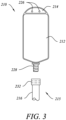
- Container 12 is preferably a collapsible bag, similar to an IV bag, containing the probiotic composition.
- An upper end 14 of container 12 is preferably a sealed-off section of the collapsible bag through which one or more holes 26 are provided to facilitate hanging container 12 from hooks or a nail at the site of consumption.
- container 12 may be hung from clips or similar mechanisms and upper end 14 may include externally protruding ridges to aid in securing container 12 to such clips.
- Container 12 may be sterilized, preferably by UV sterilization, prior to container 12 being filled with a probiotic composition to ensure there is no contamination. Optionally, air may be removed from the head space in the container, but it is not necessary.
- Attached at or attachable to a lower end of container 12 is a tube 15 having a first portion 16 disposed near container 12 and a second portion 18 disposed near the point of consumption where the probiotic formula will be dispensed.
- Tube 15 may be integrally formed with container 12 or pre-attached to container 12, as will be understood by those of ordinary skill in the art, prior to shipping to the site of use. Tube 15 may also be sterilized, preferably by UV sterilization, prior to shipping.
- tube portion 18 When integrally formed with or pre-attached to container 12, the distal end of tube portion 18 is preferably sealed with a removable seal or covering, or may include a valve, to seal-off container 12 once filled with a probiotic composition.
- the seal or covering would be removed or the valve opened when the probiotic composition is ready to be dispensed at the point of use.
- Tube 15 passes through a non-contact pump 20, such as a peristaltic pump, which allows the probiotic composition to be pumped from container 12 through tubing 15 to be dispensed at the point of consumption without any potentially contaminating contact with the pump or the exterior environment in which system 10 is being used.
- Container 12 preferably collapses as it is emptied by the pumping action without the need for an air vent.
- Pump 20 is preferably battery operated so that an external power source is not needed, making it easy to add system 10 to existing animal feed or drinking locations, but may also be adapted to connect to an outlet or other external power source.
- Container 12 is preferably hung above pump 20 at a sufficient height to provide the head pressure needed to deliver the probiotic composition to an inlet on pump 20. Most preferably, the lower end of container 12 will be hung at least 15,24 cm (6 inches) above the inlet to pump 20.
- the distal end of tube portion 18 preferably includes a "duck bill” valve or similar mechanism to prevent any contamination by backflow into the tubing.
- the distal end of tube portion 18 may also include spray or dispersion structures designed to dispense the probiotic composition in a wider pattern. A wider dispersion pattern is particularly preferred if the probiotic composition is dispensed into stagnant drinking water, a large water or feed trough, dry animal feed, or animal housing or bedding material in order to spread the composition over more surface area.
- a wider dispersion pattern may also avoid saturating dry feed with moisture.
- the distal end of tube portion 18 may also be split into multiple tubes or attached to a manifold to facilitate delivery of the probiotic composition to multiple locations, such as multiple drinking troughs within a barn.
- a controller 22 is preferably connected to pump 20 to periodically activate the pumping action.
- Controller 22 may comprise one or more control mechanisms for activating pump 20, such as a simple timer that activates pump 20 for a given duration or cycle at specified time intervals.
- controller 22 may be a timer programmed to activate pump 20 for a 60 second cycle every six hours.
- Other control mechanisms may also be used in addition to or in place of a timer.
- a motion detector may be used in conjunction with a timer to activate pump 20 for a 60 second cycle when motion is detected for a specified period of time. Such a mechanism would allow the probiotic composition to be delivered to the animal's drinking water or feed when the presence of animals is detected by motion.
- the bacteria in the probiotic compositions according to the invention may survive for hours after being dispensed, so that they are likely to still be viable when an animal arrives to feed or drink even if it was dispensed when no animals are present, so dispensing when animals are present is not critical.
- the controller 22 may also be configured to sense ambient light conditions (such as daylight or simulated daylight, when animals are more likely to be eating or drinking) or temperatures, or other variables that may be encountered at the point of consumption. Sensing these conditions may result in the probiotic composition being dispensed at times when the animals are more likely to be active and feeding or drinking to avoid wasting the probiotic composition.
- the controller 22 may also be configured to sense RFID tags, or similar technology, attached to the animals.
- the controller 22 would read the signal from the RFID tag, determine which animal is present, and selectively trigger the pump to dispense the probiotic composition if the animal is to receive the probiotics. This may be particularly useful if it is desired to provide probiotics to certain animals, but is not considered necessary for other animals, without requiring individual administration of a capsule or injection.
- RFID tags may also allow the system to monitor how long an animal is present at the water or feeding station, which may be used to correlate how much probiotic was actually ingested. Other control mechanisms may be used with the invention, as will be understood by those of ordinary skill in the art.
- Controller 22 is preferably battery operated so that an external power source is not needed, making it easy to add system 10 to existing animal feed or drinking locations, but may also be adapted to connect to an outlet or other external power source. Controller 22 may be incorporated into pump 20 and need not be a separate component of system 10.
- Delivery system 110 relies on gravity to dispense the probiotic compositions, rather than a pumping system.
- Delivery system 110 preferably comprises a container 112, tubing 115, valve 124, and controller 122.
- Container 112 is preferably a collapsible bag, similar to container 12.
- Tubing 115 preferably comprises a first portion 116 disposed near container 112 and a second portion 118 disposed near the point of consumption where the probiotic composition will be dispensed.
- a valve 124 is disposed along the length of tubing 115 (separating portion 116 from 118).
- Valve 124 is preferably a pinch valve, but other types of valves may also be used. Actuation of valve 124 from an open to closed position is controlled by controller 122.
- the various control mechanisms for controller 122 are the same as for controller 22.
- controller 122 may be programmed for the lowest expected head pressure. Variations in the programming may be set according to the height at which container 112 is hung.
- Controller 122 is preferably battery operated so that an external power source is not needed, making it easy to add system 110 to existing animal feed or drinking locations, but may also be adapted to connect to an outlet or other external power source.
- Container 212 comprises an integrally formed or pre-attached spout 228.
- Spout 228 is preferably sealed with a removable cap during shipping and storage.
- Spout 228 preferably has threads that mate with threads inside the cap so that it is easily removed when the probiotic composition inside container 212 is ready to be dispensed.
- spout 228 may have a removable seal or covering to seal-off container 212, without requiring the use of a cap.
- Tubing 215 preferably comprises an upper end 216 that comprises a connector 232 designed to mate with spout 228 to allow fluid communication between container 212 and tubing 215 through spout 228.
- connector 232 comprises threads that mate with threads on spout 228.
- tubing 215 Prior to shipping, it is preferred that tubing 215 be sterilized, preferably by UV sterilization, and that both ends of tubing 215 be sealed to prevent contamination during shipping and storage. The seals would be removed when tubing 215 is attached to container 212 and ready to dispense the probiotic composition.
- Container 212 and tubing 215 may be used with the other parts of delivery systems 10, 110, or 210, depending on whether a pump-fed application or gravity-fed application is desired.
- Container 212 also preferably comprises an upper end 214 that forms a sealed-off section through which one or more holes 226 are provided to facilitate hanging container 212 from hooks or a nail at the site of consumption.
- container 212 may be hung from clips or similar mechanisms and upper end 214 may include externally protruding ridges to aid in securing container 212 to such clips.
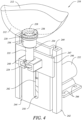
- Delivery system 210 is similar to delivery system 110 in that it relies on gravity to dispense the probiotic compositions or other fluids, rather than a pumping system. Delivery system 210 has the added benefit of allowing adjustment in the dosage volume using a piston-type valve actuated by a simple motor to vary the volume of dosing based on how long the motor is operated. Delivery system 210 preferably comprises a container 212, a metering valve 234, a valve mounting structure 240, a motor 252, a cam 254, and a motor mounting structure 264. Container 212 is similar to that shown in FIG.
- Container 212 is preferably hung at an elevated location, as discussed with respect to container 112 of system 110.
- Container 212 comprises a spout 228 that is connectable in fluid communication with metering valve 234.
- Metering valve 234 is preferably a capacity dosage piston system comprising an upper portion 236, a lower portion 235, and a piston 224.
- Upper portion 236 attaches to spout 228 to form a fluid tight seal.
- Upper portion 236 may comprise threads to mate with threads on spout 228 to connect the two parts together.
- the flow of fluid from container 212 is regulated by the piston 224, which is actuated by motor 252 and cam 254, as described below.
- Each pump stroke of piston 224 causes an amount of fluid from container 212 to be dispensed.
- Lower portion 235 is preferably configured to allow piston 224 to be inserted into the body of lower portion 235 and for sliding motion of piston 224 in and out of lower portion 235 as piston 224 is actuated by cam 254 to dispense an amount of fluid.
- Valve mounting structure 240 preferably comprises a valve mounting base 242, a valve slider 246, and a piston bracket 248.
- Base 242 preferably comprises one or more slots 244 into which one or more corresponding protrusions 247 on valve slider 246 are inserted to attach valve slider 246 to base 244 in a slidable configuration.
- Piston bracket 248 is preferably connected to valve sider 246 and configured to mate with a portion of the body of piston 224, such that when valve slider 246 slides up or down relative to base 242, piston 224 correspondingly slides up or down relative to lower portion 235. The sliding motion of valve slider 246 is actuated by cam 254.
- Cam 254 preferably comprises a rotational body 256 and a shaft 258 disposed between and connected to rotational body 256 and first shaft connector 262 at one end and to a second shaft connector 260 at the other end.
- First shaft connector 262 allows shaft 258 to pivot as rotational body 256 rotates.
- Second shaft connector 260 connects cam shaft 258 to valve slider 246 through an elongated aperture 250 in valve mounting base 242.
- Cam 254 is connected to motor 252 by drive shaft 253.
- Motor 252 and drive shaft 253 drive rotational body 256 to rotate, which is translated into linear movement of valve slider 246 along the length of aperture 250 through cam shaft 258 and second shaft connector 260.
- valve bracket 248 and consequently piston 224 are also moved up and down, which actuates opening or closing valve 234 to start or stop the flow of probiotic composition or other fluid from container 212.
- Tubing (similar to tubing 215, which may include all the features previously described for tubing 15) to carry the probiotic composition or other fluid from container 212 to the point of delivery, such as a water trough, is disposed through opening 249 in bracket 248, to allow fluid communication through valve 234 when valve 234 is in an open position.
- Motor 252 is preferably a simple DC gear motor with an internal timing mechanism, but other types of motors may also be used.
- the timing mechanism activates the motor 252 to move piston 224 to open valve 234 for a predetermined amount of time and then activates the motor 252 again to close valve 234.
- the motor may run continuously for a period of time, repeatedly opening and closing the valve 234 until the desired dosage of fluid from container 212 is dispensed, then shut-off until the next predetermined cycle time.
- the cycle of opening and closing valve 234 would be periodically repeated, such as once every 24 hours, once every 8 hours, or any other selected cycle interval needed to dose the desired amount of probiotics or other fluid from container 212.
- the timing mechanism may be adjustable by a user or include multiple cycle timing options that may be selected by a user to achieve the desired activation and dosing schedule.
- Motor 252 may also be separately connected to a controller, similar to controller 122, and the various control mechanisms are the same as for controller 22 or 122.
- Other types of valves such as a solenoid valve controlled by a programmable timer, may also be used with systems according to the invention to meter a dosage of fluid at given cycles to achieve a desired dosing rate.
- Motor mounting structure 264 supports motor 252 and allows it to be securely attached to any suitable structure in the area where the fluid is to be discharged.
- One or more apertures 266 are preferably disposed through mounting structure 264 to allow it to be secured by screws or any conventional attachment mechanism.
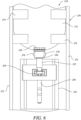
- system 210 is disposed in a housing 270 and mounting structure 264 would be secured to an interior bottom wall of housing 270.
- Housing 270 is partially shown in FIG. 6 .
- Housing 270 preferably comprises walls 272 on the sides, front, back, top and bottom surfaces, but the front, bottom and top walls are not shown in FIG. 6 .
- housing 270 preferably comprises a plurality of support tabs 274 that extend inwardly from one or more walls 272, preferably from side walls 272, to aid in supporting and securing container 212 within housing 270.
- a spout retainer 276 is also preferably provided to allow insertion of spout 228 and to aid in supporting container 212 within housing. Hooks or clips may also be disposed on a top wall or near an upper end of a back wall of housing 270 to hang container 212 within housing 270 using holes 226 or by clipping onto upper end 214 of container 212.
- Housing 270 protects container 212 from inadvertent puncturing and could provide some protection for the motor 252 (or other type of controller) from the environmental conditions in the place of use.
- the containers and controllers used with system 10 and 110 are also preferably located within a cabinet or housing, such as housing 270 shown in FIG. 6 , to provide additional protection for these components.
- Housing 270 or such other cabinet would preferably be located in an elevated position (particularly for systems 110 and 210, which rely on gravity feed) and securely attached to a wall or similar structure.
- Other parts of the systems 10, 110, or 210 may also be placed within housing 270 or such other cabinet.
- Containers 12, 112, and 212 are designed to be discarded and replaced with new containers 12, 112, or 212 when the probiotic contents are all or substantially all consumed over the course of repeated dosing cycles.
- Preferably tubing 15 and 115 are pre-attached to the containers or integrally formed with the containers and are similarly discarded at the end of a container cycle.
- Tubing 215 is also preferably discarded and new tubing 215 used with each new container 212, but tubing 215 may be reused with a new container if desired.
- the size and volume of the feed container containing the probiotic composition, treatment composition or other sterile liquid may be scaled according to the use environment.
- containers 12, 112, or 212 will be sized to hold 1 liter to 25 liters of probiotic composition, treatment composition or other sterile liquid. Although dosing amounts may vary, depending on environmental conditions, type of feed mechanism used, and the type and number of animals involved, a one liter supply of probiotic composition according to the invention added to drinking water will be sufficient to provide an average pig with 5.4 ⁇ 10 9 spores per day for 30 days or could supply 2,000 chickens at a rate of 10 6 spores per day per chicken for 50 days. This allows the use of smaller sized containers in most applications, which are easier to handle by a single person, but may require more frequent replacement with new containers to replenish the supply of probiotic composition. Larger sized containers may also be used and containers 12, 112, or 212 may be placed within a cabinet or other housing (such as housing 270 shown in FIG. 6 ) to help support the size and weight of the container or may be replaced within larger bottles or barrels as needed.
- a cabinet or other housing such as housing 270 shown in FIG.
- Systems 10, 110, and 210 may be used to dispense probiotic and/or synbiotic compositions to animal feed, drinking water, bedding or housing areas. When dispensed to bedding and housing areas, the probiotic composition spores might compete with pathogenic bacteria, and should degrade organic matter, thus reducing odors. Most preferably, systems 10, 110, and 210 are used to dispense probiotic and/or synbiotic compositions to animal drinking water. Frequently, the drinking water is dispensed in a trough with flowing water. The dispensing point at the end of tubing portion 18 or 118 or similar end of tubing 215 may be located at the head of the trough so that the probiotic composition may flow downstream to reach multiple animal drinking locations.
- a flow meter to proportion the probiotic feed rate to the water flow rate or a venturi to pull the probiotic composition proportional to the water flow rate may be used.
- a water level sensor When used with an individual, non-flowing water station, a water level sensor could be incorporated into the system. In combination with the controller, the water sensor could track the animal's water intake in order to determine the amount of probiotic ingested. This information could be used as part of an optimization program for animal husbandry. This type of system is also useful with household pets, which typically have individual water bowls. Those of ordinary skill in the art will understand the modifications need to incorporate such features.
- the amount or rate of probiotic composition dispensed or fed will be a function of the rate of pumping, the duration of the pumping cycle, and the size of tubing used.
- the amount or rate of probiotic dispensed or fed will be a function of the duration the valve is opened, the head pressure, and the size of tubing used.
- the amount or rate of probiotic dispensed or fed will be a function of the number of pump strokes or the duration the valve is opened, the head pressure, and size of tubing used.
- the viscosity of the probiotic composition may also impact the amount or rate with which the composition is dispensed.
- the desirable doses of the probiotic compositions will vary depending on the probiotic used and the particular animal or plant species involved. For example, larger size or "finishing" pigs are generally regarded as requiring some of the highest doses of probiotics to be beneficial.
- a typical pig weighing between 65,77 kg (about 145 pounds) and 101,6 kg (about 224 pounds) will drink an average of 9 liters of water per day.
- a suggested dose of DFM Bacillus is around 5 ⁇ 10 9 cfu/pig/day/9 liters of water.
- a probiotic composition, such as one according to the invention may provide around 5.5 ⁇ 10 5 cfu/mL to around 6.0 ⁇ 10 5 cfu/mL.
- a one liter probiotic composition will provide around 32 mL/day and provide a spore count of around 6.0 ⁇ 10 5 cfu/mL or a total of 5.4 ⁇ 10 9 spores/day - the amount needed per pig. Therefore, a one liter supply will last around one month for a single pig in this weight range. Smaller pigs or chickens or other types of animals would typically require smaller doses of probiotics, which would make a one liter supply last longer or be sufficient to dose a larger number of animals. Various factors may alter these numbers, which are intended to be exemplary and not limiting.
- the water flow-rate may also impact the dose that reaches each animal drinking from the trough.
- the desirable dose of probiotics will increase.
- Those of ordinary skill in the art will understand how to determine the desirable dose, and how to adjust the parameters of the systems of the invention in order to achieve those doses, so as to deliver an effective amount of probiotic composition to the animal or plant consuming the probiotic.
- the systems of the invention may also be used to deliver probiotics to plants by delivery to a planter or the soil around a plant, water tank or cistern, or to aquatic species, such as in a pond or fish tank.
- the systems of the invention are designed to be easily programmed and re-programmed at the point of consumption to adjust the amount of probiotic dispensed to achieve the desired doses of probiotics based on the variables present.
- the bacteria should be able to survive for several hours once dispensed from the system, and may even germinate in the drinking water or pond or fish tank, if that is the point of consumption to which the probiotic is dispensed. While it is an object of the invention to provide a system that will efficiently maximize delivery of the probiotic composition to the intended animals or plants, rather than the compositions being wasted because they are not consumed before the bacteria are no longer viable, the timing of delivery and dosage amounts need not be precise.
- systems 10, 110, and 210 are used to dispense probiotic and/or synbiotic compositions to animal drinking water in conjunction with acidified drinking water.
- probiotic compositions according to the invention may include additional acidifiers that may be used to acidify water delivered to animals. Because the size of the probiotic containers are typically relatively small, using the container of probiotic composition to acidify the drinking water is feasible only in small scale situations involving a single, smaller sized trough or drinking station. When a larger scale watering system is used, it is preferred to have a separate acidification system to be used in conjunction with system 10, 110, or 210.
- Various acidizing products are commercially available, such as Vevo Vital, Acid LAC, Selko-pH, Lupro-COD NA, and Amasil NA. Generally, they are used with a dosing/injection system, such as one commercially available from Dosatron.
- acids or salts of acids are preferred to be used to acidify the drinking water based on their antimicrobial activity.
- acetic acid inhibits growth of E. coli and Salmonella
- propionic acid and sorbic acid are antifungal (yeasts, molds) and have anti-bacterial activity with respect to E. coli (including ETEC), Coliforms, and Salmonella
- lactic acid also has high anti-bacterial activity with respect to E. coli (including ETEC), Coliforms, and Salmonella, however it can be metabolized by many yeasts and molds
- fumaric acid has anti-bacterial activity for E.
- the acids selected to acidify the drinking water have a pH value lower than the pKa value so that the undissociated form will be dominate.
- the undissociated form is desirable because it is able to penetrate the cell wall of the pathogenic bacteria, without negatively impacting the beneficial bacteria in the probiotic composition.
- acidifiers are included in the preferred list of preservatives or acidifiers used with probiotic compositions according to the invention.
- different dosing rates for acidifiers will be used, depending on the number, type, age, and size of animals, seasonal and environmental conditions (as animals will usually consume more water during periods of elevated temperatures and during daylight or simulated daylight hours).
- the water in the water system is tested to determine its pH before adding any acidifier and the amount of acidifier added is adjusted based on that base measurement. This avoids adding too much (which may be harmful to the animals and water system equipment) or too little acidifier (which eliminates the benefits to either or both the water system and animals).
- sufficient acids or salts of acids be added to the drinking water to achieve a pH in the range of about 4.5 to 6.5, most preferably between about 4.5 to 5.0.
- DFM DFM using compositions according to the invention.
- many of the Bacillus species will survive through the intestinal tract and remain viable in feces as either spores or vegetative forms. Having these beneficial bacteria in the feces aids in reducing odors associated with the animal waste products.
- treatment compositions containing bacteria may be directly applied to animal waste, such as manure piles, housing and bedding to reduce odors, a problem frequently encountered is that it may be difficult to adequately and evenly distribute the bacterial treatment over the surfaces having substances that produce the odors, and particularly to distribute the bacterial treatment through a pile of manure.
- Having the treatment bacteria in the feces of the animal through a DFM application aids in evenly distributing the beneficial bacteria throughout the feces and throughout manure piles or storage facilities.
Landscapes
- Life Sciences & Earth Sciences (AREA)
- Health & Medical Sciences (AREA)
- Microbiology (AREA)
- Mycology (AREA)
- Chemical & Material Sciences (AREA)
- Veterinary Medicine (AREA)
- Molecular Biology (AREA)
- Animal Behavior & Ethology (AREA)
- General Health & Medical Sciences (AREA)
- Public Health (AREA)
- Medicinal Chemistry (AREA)
- Pharmacology & Pharmacy (AREA)
- Epidemiology (AREA)
- Zoology (AREA)
- Engineering & Computer Science (AREA)
- Animal Husbandry (AREA)
- Environmental Sciences (AREA)
- Polymers & Plastics (AREA)
- Food Science & Technology (AREA)
- Physiology (AREA)
- Biotechnology (AREA)
- Biochemistry (AREA)
- Biodiversity & Conservation Biology (AREA)
- Biomedical Technology (AREA)
- Wood Science & Technology (AREA)
- Fodder In General (AREA)
- Medicines Containing Material From Animals Or Micro-Organisms (AREA)
- Micro-Organisms Or Cultivation Processes Thereof (AREA)
Description
- This invention relates to stabilized probiotic compositions, including synbiotic compositions and compositions used in conjunction with acidified drinking water, a system for dosing and delivering the compositions to animals and plants, and a non-therapeutic method for controlling odor associated with animal waste products.
- Probiotics have been used in farm and agricultural applications for many years. A primary use for probiotic formulations is as a feed additive, but other uses include the treatment of housing, animal wound care, pond treatments, and water treatment. When used as a feed additive, the probiotic material is typically added directly to the feed (known as direct-fed microbials or "DFM") and consumed by the animal. DFM products are commercially available in a variety of product forms, including powder, paste, gel, bolus, and capsules, which may be mixed in feed, top-dressed, given as a paste, or mixed into drinking water or a milk replacer. Usage doses vary by product, from single dose applications to continuous feeding application. Most DFM products must be stored in a cool, dry area away from heat, direct sunlight, and high levels of humidity to avoid damaging the bacteria or rendering the bacteria ineffective as a probiotic. Some forms of commercially available DFM products contain bacterial spores, particularly Bacillus species, which are considered more stable and may have long shelf lives even under harsh environmental conditions, such as elevated temperatures, dryness and pH extremes. These spores will germinate into vegetative cells and grow when conditions become favorable. Several Bacillus species are approved by the Food & Drug Administration and the Association of American Feed Control Officials (AAFCO) for use in DFM products in the U.S., including B. subtilis, B. licheniformis, B. pumilus, B. coagulans, and B. lentus. Other countries have approved use of other Bacillus species as probiotic microorganisms.
- Even relatively stable bacterial species used in DFM products may be sensitive to certain conditions typically found in application of DFM products to livestock. For example, the water activity in the feed can reduce the shelf-life of even the most stable bacterial forms. Various techniques are known to help increase shelf life of the bacteria in DFM products. Microencapsulation is one known method to increase shelf life of probiotic formulas to allow use in DFM products. For example,
U.S. Patent No. 6,254,910 discloses a delivery system for delivering unstable or sensitive ingredients, wherein the unstable or sensitive ingredient is coextruded with other food ingredients so that it is encapsulated within an outer layer of food ingredients, with each layer having specific moisture contents. Several probiotic species, including Bacillus coagulans, preferably in spore form, are disclosed in the `910 patent as unstable or sensitive ingredients that are suitable for encapsulation to protect the probiotic and increase the probability of survival during processing and in the environmental conditions of use. Other encapsulation technologies including spray drying extrusion, emulsion and phase separation have been used, but with limited success and added expense. A known encapsulated probiotic product, known as Bac-In-A-Box, is commercially available from SG Austria (http://www.sqaustria.com/probiotics). Newer microencapsulation techniques using calcium-alginate gel capsule formation appear promising, but are still in the development stage and are not yet suitable for large industrial applications. - Similarly,
U.S. Patent No. 5,501,857 discloses a capsule within a capsule having bacterial species, such as one from the genera Lactobacillus or Bifidobacterium, in the inner capsule and other beneficial ingredients, such as vitamins, in the outer capsule, with each capsule being surrounded by a gelatin shell. The capsule within a capsule structure allows the use of multiple beneficial ingredients that are not compatible within a single capsule. These capsules have the drawback of requiring direct oral administration to the animals. Similar direct oral administration compositions and methods are disclosed inWO 2010/079104 ,WO 2012/167882 , andU.S. Patent Application Publication No. 2013/0017174 . However, these formulas are generally complex and must be administered directly to each animal, which is time consuming and may be difficult. - It is also known to add probiotic bacteria to animal drinking water using a biogenerator to produce the bacteria in a vegetative state. Such a method is disclosed in
U.S. Patent No. 4,910,024 , which describes a biogenerator technology and method for delivering temperature-sensitive probiotic bacteria in a live, vegetative condition into a potentially large number of domestic animals as a means of increasing nutrient absorption efficiency and controlling the proliferation of harmful microorganisms in the digestive tracts of such animals. There are several drawbacks to the use of an on-site biogenerator to deliver probiotics. A primary drawback is the difficulty with maintaining sterility or preventing contamination from external sources of bacteria, yeast, and fungi. Ideally, the water used in the biogenerator must be pathogen free and the device must prevent airborne transmission of undesirable microorganisms, which may grow in the device and be administered to the animals. These devices also require power and sufficient water pressure. Additionally, the growth of bacteria in the biogenerator is temperature dependent and the device would need to be temperature controlled to ensure proper growth of the bacteria. The normal ambient temperature and environmental variations (such as humidity) at sites where the device would typically be used, such as a barn, would result in adverse growth variations and inconsistencies without temperature and environmental control. DFM products that deliver vegetative state bacteria to the animals' feed or drinking water might also be more susceptible to the harsh stomach environment once ingested by the animals and may not survive to reach the intestinal tract where the probiotics are generally most effective. Additionally, the quantity of bacteria must be fed to the animals at the appropriate time and in a proper concentration to be effective, and this can be difficult to achieve with existing probiotic delivery technology. - There are also known systems for delivery of sterile liquids. For example,
U.S. Patent No. 5,320,256 discloses a system for delivering a sterile liquid comprising a compressible reservoir for storing the sterile liquid, a flexible delivery element extending from the reservoir with the delivery element having a hollow interior, and a series of shut off valves to allow delivery and prevent backflow of the liquid or air into the system. The '256 patent is not specifically related to delivery of probiotic formulas or delivery of sterile liquids to animals or in agricultural settings. Another example, which is specifically for delivery of medicines, vitamins, nutrients, and the like to animals, is found inU.S. Patent No. 6,723,076 . The delivery system disclosed in the '076 patent comprises a sealed, collapsible bag with two flexible tubes attached for filling the bag and administering the solution from the bag to an animal with a syringe gun. Although these systems address some of the problems associated with probiotic delivery, they do not address problems related to the environmental stability of the probiotic composition or automated and controlled dosing of the probiotic composition to a feed or water supply. - It is also known to administer probiotics to animals in spore form. In addition to the `910 patent discussed above,
U.S. Patent No. 4,999,193 discloses adding spores of bacteria, particularly Bacillus cereus (IP 5832 strain), to animal feed or drinking water. Spores are known to be able to withstand high temperatures, making them better suited for incorporation into animal feed during manufacture of the feed, which typically involves heat. Although the use of spore form bacteria addresses the problems associated with temperature stability, the prior art does not provide an adequate delivery system that eliminates outside contamination while achieving controlled delivery in a manner that is easily used in existing facilities without requiring any retrofitting or additional power sources. - In addition to providing probiotics, it also known to provide prebiotics in combination with probiotics. This combination is generally known as synbiotics. For example,
WO 2012/027214 discloses a synbiotic combination of spore form Bacillus bacteria with probiotic carbohydrates, including arabinoxylan, arabinoxylan oligosaccharides, xylose, soluble fiber dextrin, soluble corn fiber, and polydextrose. A probiotic is a non-digestible carbohydrate or soluble fiber that provides a beneficial physiological effect on the host by selectively stimulating the favorable growth or activity of gut beneficial bacteria and/or reducing pathogenic populations. Prebiotics are resistant to digestive gastric acid and digestive enzymes in the animal's stomach and small intestine and are able to reach the large intestine substantially intact or only partially degraded (other than dissolving in water present in the gastrointestinal tract). Once in the large intestine, the probiotics provide a carbohydrate food source for beneficial bacteria and undergo complete or partial fermentation in the colon (part of the large intestine within which additional nutrient absorption occurs through the process of fermentation). Fermentation occurs by the action of bacteria within the colon on the probiotic food mass, producing gases and short-chain fatty acids (SCFA). The production of SCFAs, such as butyric acid, acetic acid, propionic acid, and valeric acids, is increased when probiotics are added to animal feed. Scientific studies have indicated that SCFAs have significant health benefits. By increasing beneficial bacterial populations, probiotics also suppress the populations of pathogenic bacteria in the colon, such as Clostridia, E. Coli, and Salmonella. - A variety of probiotics are known, including polysaccharides, oligosaccharides, fructooligosaccharides (FOS), galactooligosaccharides (GOS), soya-oligosaccharides (SOS), xylo-oligosaccharides (XOS), pyrodextrins, isomalto-oligosaccharides (IMO), and lactulose. Specific water-soluble dietary fiber prebiotics also include Fructans (inulin), Xanthan Gum (E415), Pectin (E440), Natriumalginat (E401), Kaliumalginat (E402), Ammoniumalginat (E403), Calciumalginat (E404), PGA (E405), Agar (E406), and Carrageen (E407). Ingestion of these probiotic fibers can change how other nutrients and chemicals are absorbed through bulking and viscositys and can also change the nature of the contents of the gastrointestinal tract, having been shown to increase populations of Lactobacilli and Bifidobacteria in the intestine and cecum of livestock. In poultry studies (particularly studies regarding broilers), providing a synbiotic combination of probiotic and prebiotic has been shown to increase the villus/crypt ratio (or ratio of villus height crypt depth). The villus/crypt ratio is an indicator of the likely digestive capacity of the small intestine. It is within the small intestine that the final stages of enzymatic digestion occur, liberating small molecules capable of being absorbed, such as, sugars, monosaccharides, disaccharides, amino acids, dipeptides, and lipids. All of this absorption and much of the enzymatic digestion takes place on the surface of small intestinal epithelial cells, and to accommodate these processes, a huge mucosal surface area is required. The villi are minute (finger-like, hair-like, worm-like) projections from epithelial lining of the small intestine. Villus height is measured from the tip (top) of the villus to the villus-crypt junction. The villi are filled with blood vessels where the circulating blood takes picks up the nutrients. The crypt is the area between villi. Crypt depth is defined as the depth of the invagination, or in folding of the wall, between adjacent villi. Measurements for crypt depth are measured from the base upwards to the region of transition between the crypt and villus. Villus surface area is calculated by using formula, VW/2 times VL, where VW equals the villous width and VL equals villus length. More surface area provides more absorption of nutrients. The increase in villus/crypt ratio found in the poultry symbiotic study indicates an increase in digestion and absorption of nutrients.
- Some studies have also shown the importance and benefits of this kind of synergy between probiotics and prebiotics and the effectiveness in helping young animals to achieve better growth performance. Studies using B. subtilis as the probiotic and inulin as the probiotic have shown that the combination is more effective in swine and poultry populations than the use of B. subtilis alone. For example, this synbiotic combination was shown to reduce (P<0.05) excreta pH, intestinal digesta and cecal content pH compared with a control group. The combination also modulated the ileal and caecal microflora composition by decreasing (P<0.05) numbers of Clostridium and Conforms and increasing (P<0.05) numbers of Bifidobacteria and Lactobacilli compared with a control group. In another study, weaned piglets were shown to have increased levels of butyrate (a SCFA) when fed with a diet containing probiotics. The importance of butyrate on gut improvement is well known, as this is crucial to optimize nutrient absorption.
- Another issue encountered in animal and plant watering systems is bacteria populations in the drinking water and water transport systems. Municipal water supplies typically have some levels of bacteria present and local sources of water (such as an on-site pond) may contain bacteria from surrounding soil, fish, and run-off. These bacteria are known to result in or contribute to the formation of biofilms in the drinking water system. Biolfims are formed when microbial cells attach to surfaces in the water system, such as pipes and drinking nipples/nozzles, and form a film or slime layer. These biofilms can build-up, resulting in clogging parts of the system, or portions of the biofilm may also break-off causing additional clogging in other areas of the system, which reduce the amount of water available to the animals or plants. One known method for removing biofilms in these water systems is to flush the film by increasing the pressure in the water line. This method may cause damage to parts of the water system and typically leaves behind a mineral deposit from the biofilm, which will serve as a shelter for microorganisms and result in the biofilm being reestablished. Chemical treatment products, such as chlorine and hydrogen peroxide are also known to be used and have good sanitizing abilities; however, these products are not beneficial to gut health for the animals or soil health for plants and may even be harmful.
- It is also know to acidify the water by adding certain organic acids to the water. The use of acidified water is beneficial for several reasons, including that the acid, in its non-dissociated form, can penetrate through the bacterial wall and destroy certain microorganisms, which can reduce biofilm formation in the water system, aid in keeping drinking trough, nipples/nozzles clean, and can reduce the number of bacteria in the water. Since the bacteria in the water may be pathogenic and may cause illness when ingested by the animal, reduction of the bacteria in the water may be particularly helpful in light of bans on antibiotic use in certain geographic areas, such as Europe. Additionally, when ingested by animals in sufficient quantities to result in a stomach pH below about 6, the growth of pathogenic microorganisms (from other sources, such as food) is inhibited. Typically, weak organic acids, such as acetic acid, butyric acid, lactic acid, and sorbic acid, are used to acidify drinking water. There are a number of drawbacks to or difficulties with acidifying drinking water. For example, it can be difficult to maintain the pH level at a desired range (below 7 and usually below 5.5). Applying single acids in drinking water typically results in the pH decreasing quickly, which can have negative results, such as less water intake and decreased performance, including lower feed conversion rate and lower daily weight gain in the animals. For example, during a period of disease, pigs will drop their feed intake but maintain their water intake. Thus, palatable water is important for the GIT health of the animals. The use of acids can also be corrosive to metal components in the water system, resulting in added repair and replacement costs. To decrease these effects, a mix of organic acids may be used to acidify the drinking water, since the mix has a buffering effect that makes the pH decrease slowly. A synergistic mix of organic acids has also a greater antibacterial effect, is more tasteful, and is less corrosive when compared with single acids. Incorrect use of acidified drinking water can also result in proliferation of bacterial populations and growth of algae (which can result in further clogging of the water system) and reduction of feed intake (which can result in decreased weight gain and inadequate absorption of nutrients). Additionally, some acids are known to cause fungal growth, which can clog system parts and be detrimental to the animal.
- Although it is known to use probiotics alone or in combination with prebiotics and to separately use acidified drinking water to provide health benefits to animals and to improve cleanliness in plant and animal water systems, it has not previously been known to combine probiotics, probiotics, and acidified drinking water together to provide synergistic health benefits.
US 2011/256216 relates to probiotic confection-based compositions comprising lactic acid-producing bacteria and oil-based compositions comprising the same;US 2011/189132 is directed to methods to reduce or inhibit populations of pathogenic bacteria in animals. These methods include providing a number of administrations of probiotic microorganism compositions containing one or more strains or species of probiotic microorganisms.US 2013/202562 relates to the use of microorganism based compositions and methods to enhance the health of recipient subjects, improve soil conditions, and accelerate biodegradation. Timmerman et al., Poultry Science, Vol. 85, 2006, pages 1383 to 1388 study probiotic compositions for use in broiler productivity.US 6,461,607 relates to the utilization of one or more species or strains of lactic acid-producing bacteria, preferably strains of Bacillus coagulans, for the control of gastrointestinal tract pathogens, including antibiotic-resistant gastrointestinal tract pathogens, and their associated diseases by both a reduction in the rate of colonization and the severity of the deleterious physiological effects of the colonization of the antibiotic-resistant pathogen.EP 0 826 311 elates to an oral composition containing Bacillus subtilis Kubota for animals. - This invention relates to stabilized probiotic compositions, including compositions comprising probiotics and prebiotics, and a system for dosing and delivering the compositions to drinking water, including delivering the compositions with acidified water to provide additional benefits. The invention further relates to a non-therapeutic method for controlling odor associated with animal waste products. The invention relates to a probiotic composition for use in treating animals, the composition comprising a bacteria spore dry powder blend comprising 40 to 60% table salt and 60 to 40% of one or more Bacillus species in spore form that combined make up 0.1 to 10% by weight of the composition; 0.05 to 0.5% by weight total of one or more of acids or salts of the acids selected from sorbic acid, benzoic acid, citric acid, sodium propionate, sodium benzoate, and potassium sorbate; and a thickener; sodium chloride in addition to the table salt in the bacteria spore dry powder blend; potassium chloride; and water; and wherein the composition has a pH of 4.0 to 5.5. The invention further relates to a system for dosing and delivering a probiotic composition to drinking water, the composition comprising a bacteria spore dry powder blend comprising 40 to 60% table salt and 60 to 40% of one or more Bacillus species in spore form that combined make up 0.1 to 10% by weight of the composition; 0.05 to 0.5% by weight total of one or more of acids or salts of the acids selected from sorbic acid, benzoic acid, citric acid, sodium propionate, sodium benzoate, and potassium sorbate; and a thickener; sodium chloride in addition to the table salt in the bacteria spore dry powder blend; potassium chloride; andwater; and wherein the composition has a pH of 4.0 to 5.5, the system comprising a container having an initial volume of probiotic composition; a tube in fluid communication with the container to deliver an amount of the probiotic composition from the container to the drinking water; a controller for controlling the flow of the probiotic composition through the tube; and wherein the container is sealed to prevent contamination of the probiotic composition within the container. The invention also relates to a non-therapeutical method for controlling odors associated with animal waste products, the method comprising providing drinking water for an animal; acidifying the drinking water by adding an amount of more than one of acetic acid, propionic acid, sorbic acid, lactic acid, citric acid, benzoic acid, or fumaric acid or calcium formate, calcium propionate, potassium diformate, potassium sorbate, sodium butyrate, sodium benzoate, or sodium formate , to the drinking water; measuring the pH of the drinking water and altering the amount of acids or salts of acids added to maintain the drinking water at a pH between 4.5 and 6.5; and adding an amount of a probiotic composition comprising one or more bacteria species from the Bacillus genus in spore form, water, sodium chloride, potassium chloride, a thickener, and one or more of acids or salts of the acids selected from sorbic acid, benzoic acid, citric acid, sodium propionate, sodium benzoate, and potassium sorbate to the drinking water such that the drinking water contains 104 to 106 cfu/ml bacterial strains and at least some of the bacteria species survive through the animal's gastrointestinal tract and are present in spore or vegetative form in the animal's feces, wherein the composition has a pH between 4.0 and 5.5; and wherein the probiotic composition and acids or salts of acids are added prior to or during a time when an animal will drink the drinking water and the bacteria in the feces reduce odor causing compounds.
- The probiotic compositions comprise suspended probiotic spores that are stable over a wide range of environmental conditions, including temperature fluctuations that would typically be encountered in farm and agricultural settings. The compositions are thermally stable and will not settle, change composition or activity under the extreme conditions found in these animal farming and similar settings. The preferred probiotic compositions according to the invention comprise one or more species from the Bacillus genus in spore form, which are stable during adverse conditions.
- According to one preferred embodiment, the composition comprises bacteria spores, 0.00005 to 3.0 % by weight surfactant, 0.002 to 5.0 % by weight thickener, and optionally 0.01 to 2.0% by weight of acidifiers, acids, or salts of acids (including those used as a preservative or stabilizer), with the balance being water. According to another preferred embodiment, the composition comprises bacterial spores, 0.1 to 5.0 % by weight thickener, 0.05 to 0.5% by weight acids or salts of acids, optionally 0.1-20% by weight water activity reducers, and optionally 0.1% to 20% additional acidifier (acids or salts of acids), with the balance being water. The optional acidifiers reduce the pH of the composition to beneficial levels and may be used to acidify smaller quantities of drinking water when the composition is added to drinking water according to a preferred method of use, as discussed in more detail below.
- The bacterial spores are in a dry, powder blend of 40-60% salt (table salt) and 60-40% bacteria spores that combined make up 0.1 to 10 % by weight of the composition. The compositions preferably comprise 1.0 × 10⁸ to 3.0 × 10 8 cfu/ml of the composition (spore suspension), which when diluted with drinking water (for animal watering applications) provide 104 to 106 cfu/ml bacterial strains in the drinking water. Most preferably, the thickener in the preferred embodiments is one that also acts as a prebiotic, such as xanthan gum, to provide additional benefits.
- The system for delivering probiotic compositions, and preferably those compositions according to the invention and including probiotics, or other treatment compositions or sterile liquids comprises packaging the compositions or liquids in a container and delivering them directly to a planter or a water or feed station using gravity feed or a battery powered non-contact pump. The compositions or liquids are preferably packaged in a container, most preferably a collapsible pouch or bag with an attached or attachable tube (similar to an IV-bag or a Mylar bag with an integrated dispensing port attachable to tubing). Depending on the type of container used, the container and tubing may be sterilized or may be used without sterilization. By using the systems of the invention, the probiotic composition is protected from contamination by other, outside bacterial species or fungi, while it is being stored at the site of consumption prior to being dispensed to the animal or plant. The composition or liquid is delivered from the container through the delivery tube to animal feed stations, animal water supply troughs, pressurized drinking water lines, ponds, and planters. The delivery through the tube is controlled by a non-contact pump or gravity feed with a valve to control the flow of the composition. The pump or valve are controlled so that the flow of the composition can be selectively started and stopped for certain durations as needed to achieve a proper dosage or volume of discharge, depending on the particular composition or liquid involved and the animal or plant species to which the composition or liquid are being delivered, or to time the dosage to match a particular feeding and drinking schedule. The pump or valve may also be controlled in response to external stimuli, such as motion or light. It is not necessary to vent the collapsible bag, so airborne contaminates and undesirable bacteria are not introduced into the feed container. According to one preferred embodiment, a duck-bill type valve or similar mechanism is attached to the end of the delivery tube to prevent any contaminants or undesirable bacteria from growing in the end of the tube. Whether used with a non-contact pump or gravity feed, the feed container is preferably hung at a sufficient height above the pump or discharge point to provide sufficient hydrostatic pressure to feed the pump or discharge the composition, and to protect it from the animals. To aid in securing the container and protecting it from possible puncturing, it may optionally be placed or hung inside a protective cabinet or housing. The system for delivering compositions and liquids according to the invention is simple and low-cost and does not require an on-site source of sterile water or electric power supply to operate.
- The system and method of the invention are further described and explained in relation to the following drawings wherein:
-
FIG. 1 is a side elevation view of one embodiment of a delivery system according to the invention; -
FIG. 2 is a side elevation view of another embodiment of a delivery system according to the invention; -
FIG. 3 is a side elevation view of an alternative container and tubing for use with the delivery systems according to the invention; -
FIG. 4 is a front perspective view of another preferred embodiment of a delivery system according to the invention; -
FIG. 5 is a rear perspective view of the embodiment of the delivery system ofFIG. 4 ; -
FIG. 6 is a partial front perspective view of the delivery system ofFIG. 4 within a support housing; and -
FIG. 7 is a side elevation cross-sectional view of the delivery system ofFIG. 4 . - The probiotic composition according to the invention comprises one or more bacterial species, a thickener, one or more acidifiers, acids or salts of acids, and optionally a surfactant. In an embodiment the composition may also optionally include probiotics, to the extent the thickener is not also a probiotic or in addition to any thickener that is a probiotic. In an embodiment the composition may also optionally include one or more water activity reducers. Most preferably, the compositions according to the invention comprise various species of suspended probiotic spores, as described in more detail below. The use of these species in spore form increases the stability of the probiotics in the harsh environmental conditions, particularly temperature fluctuations that occur in stables, barns, and other farm and agricultural settings.
- A suitable thickener is included in the composition according to embodiments of the invention. The thickener is preferably one that does not separate or degrade at varying temperatures typically found in non-climate controlled environments, such as barns, farms, and nurseries. The thickener aids in stabilizing the suspension so the bacterial mixture remains homogenous and dispersed through a volume of the composition and does not settle out of the suspension. When used with the system of delivery described below, this ensures that the concentration of probiotic materials is evenly distributed throughout the container so that the dosage of probiotic material delivered remains consistent or relatively consistent (depending on the specific delivery method and control mechanism used) throughout a treatment cycle.
- The most preferred thickener is xanthan gum, which is a polysaccharide composed of pentasaccharide repeat units of glucose, mannose, and glurcuronic acid and a known probiotic. Unlike some other gums, xanthan gum is very stable under a wide range of temperatures and pH. Xanthan gum, like all soluble fibers, helps balance intestinal pH and tends to slow the movement of food and extends the mouth to cecum transition time. This slowing may allow more time for the spores to germinate in the stomach before reaching the intestines, which allows for use of the more stable spore form bacteria rather than the use of vegetative bacteria that may not survive the harsh environmental conditions of use or may not survive the animal's stomach. Another preferred thickener is acacia gum, which is also a known prebiotic. Other preferred thickeners include locust bean gum, guar gum and gum arabic, which are also believed to be prebiotics. In addition to probiotic benefits, these fibers do not bind to minerals and vitamins, and therefore, do not restrict or interfere with their absorption and may even improve absorption of certain minerals, such as calcium. Other thickeners that are not considered probiotics may also be used.
- The composition may optionally include one or more prebiotics, which are preferably used if the thickener used is not a prebiotic but may also be used in addition to a prebiotic thickener. Prebiotics are classified as disaccharides, oligosaccharides and polysaccharides, and can include Inulin, Oligofructose, Fructo-oligosaccharides (FOS), Galacto-oligosaccharide (GOS), trans-Glacto-Oligosaccharides (TOS) and Short-Chain Fructo-oligosaccharides (scFOS), soy Fructo-oligosaccharide (soyFOS), Gluco-oligosaccharides, Glyco-oligosaccharides, Lactitol, Malto-oligosaccharides, Xylo-oligosaccharides, Stachyose, Lactulose, Raffinose. Mannan-oligosaccharide (MOS) are probiotics may not enrich probiotic bacterial populations, but will bind with and remove pathogens from the intestinal tract and are believed to stimulate the immune system.
- The embodiments include one or more acids, or salts of acids to act as a preservative or to acidify the composition, selected from citric acid, sodium propionate, benzoic acid, sodium benzoate, and potassium sorbate. Other known preservatives, preferably generally regarded as safe (GRAS) food preservatives, may also be used. One or more of these same acids or salts or acids may also be optionally added as an acidifier, in addition to any amount used as a preservative. Depending on the dosing mechanism and environment, the optional acidifier may be used to acidify a smaller amount of drinking water, such as the water at a single, smaller scale trough. For larger water systems and multiple troughs or drinking stations, it is preferred to use a separate acidification system since larger quantities of acid or salts or acids will be need to reduce the pH of the larger volume of water. Even if not used to fully acidify the drinking water, these acids and salts of acids aid in reducing the pH of the composition. The composition has a pH between 4.0 and 5.5. Reducing the pH of the composition may have antimicrobial activity with respect to yeast, molds, and pathogenic bacteria.
- One or more water activity reducers, such as sodium chloride, potassium chloride, or corn syrup (a 70% solution of corn syrup), are optionally included in the composition according either preferred embodiment. The water activity reducer aids in inhibiting microorganism growth, so that the bacterial spores do not prematurely germinate while the composition is being stored prior to the time it is discharged to the point of consumption by the animals or plants to be treated. They also aid in inhibiting growth of contamination microorganisms
- The embodiment optionally includes a surfactant. The surfactant is preferably one that is safe for ingestion by animals, although other surfactants may be used with other applications, such as delivery to plants. Most preferably, the surfactant is Polysorbate 80. Although any GRAS or AAFCO approved surfactants or emulsifiers may be used with either embodiment, there are concerns that some animals may not tolerate all approved surfactants well. Because the benefits of the surfactant in stabilizing the suspension so the bacterial mixture remains homogenous and does not settle out may also be achieved by the use of the thickener, it is not necessary to add the surfactant.
- Most preferably, the bacterial species used in the embodiments are one or more species from the Bacillus genus. The most preferred species for the probiotic bacteria include the following: Bacillus pumilus, Bacillus licheniformis, Bacillus amylophilus, Bacillus subtilis, Bacillus amyloliquefaciens, Bacillus clausii, Bacillus firmus, Bacillus megaterium, Bacillus mesentericus, Bacillus subtilis var. natto, or Bacillus toyonensis, but any Bacillus species approved as a probiotic in the country of use may also be used. It is preferred that the bacteria are in spore form, as the spore form is more stable to environmental fluctuations, such as ambient temperature changes. Additionally, as compared to vegetative state DFM, spores are believed to be better able to survive through the stomach once ingested by an animal to germinate in the intestines, where they are beneficial. Most preferably, the spores used in the compositions according to the invention are a dry powder blend that comprises around 40-60% salt (table salt) and 60-40% bacterial spores. The spores are spray-dried from a liquid fermentation concentrate. Salt is used to dilute the pure spray-dried spore powder to a standard spore count in the final spore powder blend. During production fermentation, different Bacillus strains will grow at different rates, resulting in varying final count numbers for the fermentation batch liquor. The fermentation liquor is centrifuged to concentrate the spores in the liquor. Then, the concentrated liquor is spray-dried which results in a powder containing only Bacillus spores. The addition of salt to the spray-dried Bacillus spore powder aids in standardizing the spore blend count per gram from batch to batch. Other forms of bacterial spores or spore blends may also be used. Most preferably, the dry spore blend is pre-mixed with a portion of the water used in the composition, around 3-30% of the total water, and the resulting bacteria spore solution is added to the other ingredients, including the remaining water. This aids in dispersing the bacteria spores throughout the composition.
- A probiotic composition according to an preferred embodiment of the invention comprises bacterial spores that provide 108 cfu/ml of the spore suspension (which, when diluted in drinking water provides approximately 104 to 106 cfu/ml drinking water), 0.1 to 5.0% thickener (preferably one that also acts as a prebiotic), 0.05-0.5% of one or more preservatives, optionally 0.1-20% of one or more water activity reducers, and optionally 0.1-20% of one or more acidifiers. The balance of the composition in the preferred embodiments is water and the percentages herein are by weight. It is preferred to use deionized or distilled water, to remove salts or outside bacteria, but tap water or other sources of water may also be used..
- Several examples of probiotic compositions according preferred embodiments of the invention were made and tested for different parameters. These compositions are set forth in Table 1 below. Formula No. 1 to 6 are comparative examples not in accordance with the invention.
TABLE 1 Ingredient/ Formula No. 1 2 3 4 5 6 7 8 Potassium Sorbate 0.33% 0.33% 0.1% 0.1% 0.1% 0.1% 0.1% 0.1% Citric Acid 0.34% 0.34% 0.1% 0.1% 5.0% 0.1% 0.1% 0.1% Sodium Benzoate 0.33% 0.33% 0.1% 0.1% 0.1% 0.1% 0.1% 0.1% Benzoic Acid - - - 0.1% - 0.1% 0.1% -- Sorbic Acid - - - 0.1% - - 0.1% -- Sodium Propionate - - - - 10.0% 0.1% - -- Xanthan Gum 0.2% 0.2% 0.2% 0.3% 0.4% 0.4% 0.5% 0.5% Sodium Chloride 0.2% 0.2% - 0.2% - 0.2% 0.1% 0.2% Potassium Chloride - - - - - - 0.1% 0.1% Spore Blend 0.1% 0.1% 0.1% 0.1% 0.1% 0.1% 0.1% 0.1% - The balance of each composition is water (around 1 L in these samples). Deionized water was used in each composition, except composition No. 1, which used tap water. The percentages indicated are by weight. Each formula was targeted to have a pH between 4.0 and 5.5, but some formulas were found to have actual pH values far less than expected. Formula No. 1 was targeted to have a pH between 5.0 and 5.5, but its actual pH was 2.1-2.3, which is too low and may be harmful to the spores, create stability issues with packaging, and be subject to more restrictive transportation regulations. Formula No. 1 also exhibited weak thickening. Formula No. 2 is the same as No. 1, except the source of water is different. Formula No. 2 had an actual pH of 2.2-2.3 and also exhibited weak thickening. The amount of acids and salts of acids in Formula No. 3 was decreased to raise the pH and to determine if the thickness improved while using the same amount of thickener as in Nos. 1 and 2. While Formula No. 3 was an improvement over Nos. 1 and 2, it still exhibited weak thickening and its actual pH was 6.6, over the target value range. Additional acids were added to Formula No. 4 to lower the pH and additional thickener was added. Formula No. 4 had improved thickening, but further improvements in thickening would be beneficial. The amount of acid in Formula No. 5 was substantially increased, which resulted in an actual pH of 1.0. The amount of acid in Formula No. 6 was decreased and the thickener increased, which resulted in a composition that was too thick to drop. Formula No. 7 increased the thickener and amount of water activity reducers, but exhibited issues with mixing of benzoic acid and sorbic acid. The benzoic acid and sorbic acid were removed in Formula No. 8. Formula Nos. 1-7 provided 2 × 10¹¹ cfu/gm and No. 8 provided 1 × 10¹¹ cfu/gm bacteria spores. Of these sample formulas, No. 8 is the most preferred as it exhibited adequate thickening and had an actual pH of around 4.5 +/- 0.2, and used less spore blend.
- It is preferred that the compositions according the embodiments of the invention use 0.01% to 0.3% bacteria spore blend and more preferably between 0.03% to 0.1% bacteria spore blend. A reduction in the amount of spore blend used substantially reduces the costs of the composition. Depending on the end use application, differing amounts of spore blend may be used in the compositions according to the invention. For example, smaller percentages of spore blend may be used in the compositions for use with chickens, whereas larger percentages would be used in composition for use with pigs.
- A composition according to formula No. 8 was tested for shelf-life at various temperatures. Samples of Formula No. 8 were sealed in a plastic bag, such as one used in a preferred delivery system as described below, and stored for two months at temperatures around 4-8° C (39-46° F), 30° C (86° F), and 35° C (95° F) to simulate typical temperature ranges in which the probiotic composition may be stored and used in agricultural settings. At the end of the first month of the storage period, each sample was observed and tested. All three samples had a pH of 4.5 and there was no settling, layering or change of appearance in any of the three samples, indicating that the bacteria spores remained suspended and dispersed throughout the composition during the storage period. None of the samples contained any fungal contamination or gram-negative bacteria contamination. At time count zero (when the samples were initially stored), each sample contained bacteria spores of 2.12 × 10⁸ cfu/mL. At the end of the one month storage period, the samples contained bacteria spores of 2.09 × 10⁸ cfu/mL spore suspension (lowest temperature sample), 1.99 × 10⁸ cfu/mL (middle temperature sample), and 2.15 108 cfu/mL (high temperature sample). The bacteria counts are somewhat variable in different samples, especially thickened samples; however, these are considered to be comparable counts. Each sample was tested again after two months in storage. The samples contained bacteria spores of 2.08 × 10⁸ cfu/ml (lowest temperature sample); 2.01 × 10⁸ cfu/ml (middle temperature sample); and 2.0 × 10⁸ cfu/ml (high temperature sample). The target shelf life is 2 × 10⁸ cfu/ml spore suspension, so the samples are within the targeted shelf life after two months of storage. These test results demonstrate that probiotic compositions according to a preferred embodiment of the invention are stable over a range of temperatures, with the bacteria spores remaining viable, suspended, and dispersed throughout the composition. The spore blend (40-60% spore powder and 60-40% salt) used in each sample formula was the same, providing at least 2 × 10¹¹ spores/gram. The spore species in the blend were multiple Bacillus subtilis and Bacillus licheniformis strains. The spore blend powder was premixed with 100 mL of water with stirring for 30 minutes prior to adding to the other ingredients. Premixing with water aids in mixing the spore blend with the other ingredients and dispersing the spores throughout the composition.
- Another aspect of the invention is a system for dosing and delivering probiotic compositions, and preferably probiotic compositions according to the invention as described herein, directly into animal feed or drinking water at the point of consumption. Although it is preferred to use probiotic compositions comprising one or more Bacillus species as according to the compositions of the invention, the system of the invention may be used with compositions comprising other bacteria genera and other species. For example, one or more species from the following genera: Bacillus, Bacteriodes, Bifidobacterium, Pediococcus, Enterococcus, Lactobacillus, and Propionibacterium (including Bacillus pumilus, Bacillus licheniformis, Bacillus amylophilus, Bacillus subtilis, Bacillus amyloliquefaciens, Bacillus clausii, Bacillus firmus, Bacillus megaterium, Bacillus mesentericus, Bacillus subtilis var. natto, or Bacillus toyonensis Bacteriodes ruminocola, Bacteriodes ruminocola, Bacterioides suis, Bifidobacterium adolescentis, Bifidobacterium animalis, Bifidobacterium bifidum, Bifidobacterium infantis, Bifidobacterium longum, Bifidobacterium thermophilum, Pediococcus acidilacticii, Pediococcus cerevisiae, Pediococcus pentosaceus, Enterococcus cremoris, Enterococcus diacetylactis, Enterococcus faecium, Enterococcus intermedius, Enterococcus lactis, Enterococcus thermophilus, Lactobacillus delbruekii, Lactobacillus fermentum, Lactobacillus helveticus, Lactobacillus lactis, Lactobacillus plantarum, Lactobacillus reuteri, Lactobacillus brevis, Lactobacillus buchneri, Lactobacillus bulgaricus, Lactobacillus casei, Lactobacillus farciminis, Lactobacillus cellobiosus, Lactobacillus curvatus, Propionibacterium acidipropionici, Propionibacterium freudenreichii, Propionibacterium shermanii) and/or one or more of the following species: Leuconostoc mesenteroides, Megasphaera elsdennii may be used with the system and method of the invention.
- Referring to
FIG. 1 , one preferred embodiment of adelivery system 10 is depicted.Delivery system 10 preferably comprises acontainer 12,tubing 15,non-contact pump 20, andcontroller 22.Container 12 is preferably a collapsible bag, similar to an IV bag, containing the probiotic composition. Anupper end 14 ofcontainer 12 is preferably a sealed-off section of the collapsible bag through which one ormore holes 26 are provided to facilitate hangingcontainer 12 from hooks or a nail at the site of consumption. Alternatively,container 12 may be hung from clips or similar mechanisms andupper end 14 may include externally protruding ridges to aid in securingcontainer 12 to such clips.Container 12 may be sterilized, preferably by UV sterilization, prior tocontainer 12 being filled with a probiotic composition to ensure there is no contamination. Optionally, air may be removed from the head space in the container, but it is not necessary. Attached at or attachable to a lower end ofcontainer 12 is atube 15 having afirst portion 16 disposed nearcontainer 12 and asecond portion 18 disposed near the point of consumption where the probiotic formula will be dispensed.Tube 15 may be integrally formed withcontainer 12 or pre-attached tocontainer 12, as will be understood by those of ordinary skill in the art, prior to shipping to the site of use.Tube 15 may also be sterilized, preferably by UV sterilization, prior to shipping. When integrally formed with or pre-attached tocontainer 12, the distal end oftube portion 18 is preferably sealed with a removable seal or covering, or may include a valve, to seal-offcontainer 12 once filled with a probiotic composition. The seal or covering would be removed or the valve opened when the probiotic composition is ready to be dispensed at the point of use. -
Tube 15 passes through anon-contact pump 20, such as a peristaltic pump, which allows the probiotic composition to be pumped fromcontainer 12 throughtubing 15 to be dispensed at the point of consumption without any potentially contaminating contact with the pump or the exterior environment in whichsystem 10 is being used.Container 12 preferably collapses as it is emptied by the pumping action without the need for an air vent.Pump 20 is preferably battery operated so that an external power source is not needed, making it easy to addsystem 10 to existing animal feed or drinking locations, but may also be adapted to connect to an outlet or other external power source. -
Container 12 is preferably hung abovepump 20 at a sufficient height to provide the head pressure needed to deliver the probiotic composition to an inlet onpump 20. Most preferably, the lower end ofcontainer 12 will be hung at least 15,24 cm (6 inches) above the inlet to pump 20. The distal end oftube portion 18 preferably includes a "duck bill" valve or similar mechanism to prevent any contamination by backflow into the tubing. The distal end oftube portion 18 may also include spray or dispersion structures designed to dispense the probiotic composition in a wider pattern. A wider dispersion pattern is particularly preferred if the probiotic composition is dispensed into stagnant drinking water, a large water or feed trough, dry animal feed, or animal housing or bedding material in order to spread the composition over more surface area. A wider dispersion pattern may also avoid saturating dry feed with moisture. The distal end oftube portion 18 may also be split into multiple tubes or attached to a manifold to facilitate delivery of the probiotic composition to multiple locations, such as multiple drinking troughs within a barn. - A
controller 22 is preferably connected to pump 20 to periodically activate the pumping action.Controller 22 may comprise one or more control mechanisms for activatingpump 20, such as a simple timer that activates pump 20 for a given duration or cycle at specified time intervals. For example,controller 22 may be a timer programmed to activatepump 20 for a 60 second cycle every six hours. Other control mechanisms may also be used in addition to or in place of a timer. For example, a motion detector may be used in conjunction with a timer to activatepump 20 for a 60 second cycle when motion is detected for a specified period of time. Such a mechanism would allow the probiotic composition to be delivered to the animal's drinking water or feed when the presence of animals is detected by motion. This has the advantage over a timer only control mechanism, which may dispense the probiotic composition when no animals are present and may result in wasting the probiotic. The bacteria in the probiotic compositions according to the invention may survive for hours after being dispensed, so that they are likely to still be viable when an animal arrives to feed or drink even if it was dispensed when no animals are present, so dispensing when animals are present is not critical. Thecontroller 22 may also be configured to sense ambient light conditions (such as daylight or simulated daylight, when animals are more likely to be eating or drinking) or temperatures, or other variables that may be encountered at the point of consumption. Sensing these conditions may result in the probiotic composition being dispensed at times when the animals are more likely to be active and feeding or drinking to avoid wasting the probiotic composition. - The
controller 22 may also be configured to sense RFID tags, or similar technology, attached to the animals. Thecontroller 22 would read the signal from the RFID tag, determine which animal is present, and selectively trigger the pump to dispense the probiotic composition if the animal is to receive the probiotics. This may be particularly useful if it is desired to provide probiotics to certain animals, but is not considered necessary for other animals, without requiring individual administration of a capsule or injection. The use of RFID tags may also allow the system to monitor how long an animal is present at the water or feeding station, which may be used to correlate how much probiotic was actually ingested. Other control mechanisms may be used with the invention, as will be understood by those of ordinary skill in the art.Controller 22 is preferably battery operated so that an external power source is not needed, making it easy to addsystem 10 to existing animal feed or drinking locations, but may also be adapted to connect to an outlet or other external power source.Controller 22 may be incorporated intopump 20 and need not be a separate component ofsystem 10. - Referring to
FIG. 2 , a preferred embodiment of adelivery system 110 is depicted.Delivery system 110 relies on gravity to dispense the probiotic compositions, rather than a pumping system.Delivery system 110 preferably comprises acontainer 112,tubing 115,valve 124, andcontroller 122.Container 112 is preferably a collapsible bag, similar tocontainer 12.Tubing 115 preferably comprises afirst portion 116 disposed nearcontainer 112 and asecond portion 118 disposed near the point of consumption where the probiotic composition will be dispensed. Rather than passing through a non-contact pump, as insystem 10, avalve 124 is disposed along the length of tubing 115 (separatingportion 116 from 118). The features previously described forcontainer 12 andtubing 15 are also applicable tocontainer 112 andtubing 115.Valve 124 is preferably a pinch valve, but other types of valves may also be used. Actuation ofvalve 124 from an open to closed position is controlled bycontroller 122. The various control mechanisms forcontroller 122 are the same as forcontroller 22. As the probiotic composition incontainer 112 is dispensed, the head pressure will change and the amount of probiotic dispensed will vary over time unless thecontroller 122 is programmed to keep the valve open longer or to open with greater frequency as the volume of probiotic composition withincontainer 112 decreases. For simplicity,controller 122 may be programmed for the lowest expected head pressure. Variations in the programming may be set according to the height at whichcontainer 112 is hung. Most preferably, the lower end ofcontainer 112 will be hung at least 15,24 cm (6 inches) above the level of dispensing at the end oftubing portion 118.Controller 122 is preferably battery operated so that an external power source is not needed, making it easy to addsystem 110 to existing animal feed or drinking locations, but may also be adapted to connect to an outlet or other external power source. - As shown in
FIG. 3 , an alternate configuration for a container and tubing suitable for use withsystem Container 212 comprises an integrally formed orpre-attached spout 228.Spout 228 is preferably sealed with a removable cap during shipping and storage.Spout 228 preferably has threads that mate with threads inside the cap so that it is easily removed when the probiotic composition insidecontainer 212 is ready to be dispensed. Alternatively, spout 228 may have a removable seal or covering to seal-offcontainer 212, without requiring the use of a cap.Tubing 215 preferably comprises anupper end 216 that comprises aconnector 232 designed to mate withspout 228 to allow fluid communication betweencontainer 212 andtubing 215 throughspout 228. Preferably,connector 232 comprises threads that mate with threads onspout 228. Prior to shipping, it is preferred thattubing 215 be sterilized, preferably by UV sterilization, and that both ends oftubing 215 be sealed to prevent contamination during shipping and storage. The seals would be removed whentubing 215 is attached tocontainer 212 and ready to dispense the probiotic composition.Container 212 andtubing 215 may be used with the other parts ofdelivery systems tubing 15, such as a duck bill valve or spray nozzle, may also be used withtubing 215.Container 212 also preferably comprises anupper end 214 that forms a sealed-off section through which one ormore holes 226 are provided to facilitate hangingcontainer 212 from hooks or a nail at the site of consumption. Alternatively,container 212 may be hung from clips or similar mechanisms andupper end 214 may include externally protruding ridges to aid in securingcontainer 212 to such clips. - As shown in
FIGS. 4-7 , another preferred embodiment of adelivery system 210 according to the invention is shown.Delivery system 210 is similar todelivery system 110 in that it relies on gravity to dispense the probiotic compositions or other fluids, rather than a pumping system.Delivery system 210 has the added benefit of allowing adjustment in the dosage volume using a piston-type valve actuated by a simple motor to vary the volume of dosing based on how long the motor is operated.Delivery system 210 preferably comprises acontainer 212, ametering valve 234, avalve mounting structure 240, amotor 252, acam 254, and amotor mounting structure 264.Container 212 is similar to that shown inFIG. 3 , but other containers and mechanisms for attaching the container used withsystem 210 tometering valve 234 and delivery tubing (similar to tubing 216) may be used.Container 212 is preferably hung at an elevated location, as discussed with respect tocontainer 112 ofsystem 110.Container 212 comprises aspout 228 that is connectable in fluid communication withmetering valve 234.Metering valve 234 is preferably a capacity dosage piston system comprising anupper portion 236, alower portion 235, and apiston 224.Upper portion 236 attaches to spout 228 to form a fluid tight seal.Upper portion 236 may comprise threads to mate with threads onspout 228 to connect the two parts together. The flow of fluid fromcontainer 212 is regulated by thepiston 224, which is actuated bymotor 252 andcam 254, as described below. Each pump stroke ofpiston 224 causes an amount of fluid fromcontainer 212 to be dispensed.Lower portion 235 is preferably configured to allowpiston 224 to be inserted into the body oflower portion 235 and for sliding motion ofpiston 224 in and out oflower portion 235 aspiston 224 is actuated bycam 254 to dispense an amount of fluid. -
Valve mounting structure 240 preferably comprises avalve mounting base 242, avalve slider 246, and apiston bracket 248.Base 242 preferably comprises one ormore slots 244 into which one or morecorresponding protrusions 247 onvalve slider 246 are inserted to attachvalve slider 246 tobase 244 in a slidable configuration.Piston bracket 248 is preferably connected tovalve sider 246 and configured to mate with a portion of the body ofpiston 224, such that whenvalve slider 246 slides up or down relative tobase 242,piston 224 correspondingly slides up or down relative tolower portion 235. The sliding motion ofvalve slider 246 is actuated bycam 254.Cam 254 preferably comprises arotational body 256 and ashaft 258 disposed between and connected torotational body 256 andfirst shaft connector 262 at one end and to asecond shaft connector 260 at the other end.First shaft connector 262 allowsshaft 258 to pivot asrotational body 256 rotates.Second shaft connector 260 connectscam shaft 258 tovalve slider 246 through anelongated aperture 250 invalve mounting base 242.Cam 254 is connected tomotor 252 bydrive shaft 253.Motor 252 and driveshaft 253 driverotational body 256 to rotate, which is translated into linear movement ofvalve slider 246 along the length ofaperture 250 throughcam shaft 258 andsecond shaft connector 260. Asvalve slider 246 moves up and down relative to mountingbase 242,valve bracket 248 and consequentlypiston 224 are also moved up and down, which actuates opening or closingvalve 234 to start or stop the flow of probiotic composition or other fluid fromcontainer 212. Tubing (similar totubing 215, which may include all the features previously described for tubing 15) to carry the probiotic composition or other fluid fromcontainer 212 to the point of delivery, such as a water trough, is disposed through opening 249 inbracket 248, to allow fluid communication throughvalve 234 whenvalve 234 is in an open position. -
Motor 252 is preferably a simple DC gear motor with an internal timing mechanism, but other types of motors may also be used. The timing mechanism activates themotor 252 to movepiston 224 to openvalve 234 for a predetermined amount of time and then activates themotor 252 again to closevalve 234. Alternatively, the motor may run continuously for a period of time, repeatedly opening and closing thevalve 234 until the desired dosage of fluid fromcontainer 212 is dispensed, then shut-off until the next predetermined cycle time. The cycle of opening and closingvalve 234 would be periodically repeated, such as once every 24 hours, once every 8 hours, or any other selected cycle interval needed to dose the desired amount of probiotics or other fluid fromcontainer 212. Most preferably, the timing mechanism may be adjustable by a user or include multiple cycle timing options that may be selected by a user to achieve the desired activation and dosing schedule.Motor 252 may also be separately connected to a controller, similar tocontroller 122, and the various control mechanisms are the same as forcontroller -
Motor mounting structure 264 supportsmotor 252 and allows it to be securely attached to any suitable structure in the area where the fluid is to be discharged. One ormore apertures 266 are preferably disposed through mountingstructure 264 to allow it to be secured by screws or any conventional attachment mechanism. Most preferably,system 210 is disposed in ahousing 270 and mountingstructure 264 would be secured to an interior bottom wall ofhousing 270.Housing 270 is partially shown inFIG. 6 .Housing 270 preferably compriseswalls 272 on the sides, front, back, top and bottom surfaces, but the front, bottom and top walls are not shown inFIG. 6 . Preferably either the front or top wall is a removable or openable door or cover to allow access to the interior ofhousing 270 to allow replacement ofcontainer 212 and other parts of thesystem 210 as needed.Housing 270 preferably comprises a plurality ofsupport tabs 274 that extend inwardly from one ormore walls 272, preferably fromside walls 272, to aid in supporting and securingcontainer 212 withinhousing 270. Aspout retainer 276 is also preferably provided to allow insertion ofspout 228 and to aid in supportingcontainer 212 within housing. Hooks or clips may also be disposed on a top wall or near an upper end of a back wall ofhousing 270 to hangcontainer 212 withinhousing 270 usingholes 226 or by clipping ontoupper end 214 ofcontainer 212.Housing 270 protectscontainer 212 from inadvertent puncturing and could provide some protection for the motor 252 (or other type of controller) from the environmental conditions in the place of use. Most preferably, the containers and controllers used withsystem housing 270 shown inFIG. 6 , to provide additional protection for these components.Housing 270 or such other cabinet would preferably be located in an elevated position (particularly forsystems systems housing 270 or such other cabinet. -
Containers new containers tubing Tubing 215 is also preferably discarded andnew tubing 215 used with eachnew container 212, buttubing 215 may be reused with a new container if desired. The size and volume of the feed container containing the probiotic composition, treatment composition or other sterile liquid may be scaled according to the use environment. Typically,containers containers housing 270 shown inFIG. 6 ) to help support the size and weight of the container or may be replaced within larger bottles or barrels as needed. -
Systems systems tubing portion tubing 215 may be located at the head of the trough so that the probiotic composition may flow downstream to reach multiple animal drinking locations. Other components may be added to these systems which enhance the ability to control the feed of the probiotics. For example, a flow meter to proportion the probiotic feed rate to the water flow rate or a venturi to pull the probiotic composition proportional to the water flow rate may be used. When used with an individual, non-flowing water station, a water level sensor could be incorporated into the system. In combination with the controller, the water sensor could track the animal's water intake in order to determine the amount of probiotic ingested. This information could be used as part of an optimization program for animal husbandry. This type of system is also useful with household pets, which typically have individual water bowls. Those of ordinary skill in the art will understand the modifications need to incorporate such features. - With respect to
system 10, the amount or rate of probiotic composition dispensed or fed will be a function of the rate of pumping, the duration of the pumping cycle, and the size of tubing used. With respect tosystem 110, the amount or rate of probiotic dispensed or fed will be a function of the duration the valve is opened, the head pressure, and the size of tubing used. With respect tosystem 210, the amount or rate of probiotic dispensed or fed will be a function of the number of pump strokes or the duration the valve is opened, the head pressure, and size of tubing used. The viscosity of the probiotic composition may also impact the amount or rate with which the composition is dispensed. The desirable doses of the probiotic compositions will vary depending on the probiotic used and the particular animal or plant species involved. For example, larger size or "finishing" pigs are generally regarded as requiring some of the highest doses of probiotics to be beneficial. A typical pig weighing between 65,77 kg (about 145 pounds) and 101,6 kg (about 224 pounds) will drink an average of 9 liters of water per day. A suggested dose of DFM Bacillus is around 5 × 10⁹ cfu/pig/day/9 liters of water. A probiotic composition, such as one according to the invention, may provide around 5.5 × 10⁵ cfu/mL to around 6.0 × 10⁵ cfu/mL. Dosed out over a month, a one liter probiotic composition will provide around 32 mL/day and provide a spore count of around 6.0 × 10⁵ cfu/mL or a total of 5.4 × 10⁹ spores/day - the amount needed per pig. Therefore, a one liter supply will last around one month for a single pig in this weight range. Smaller pigs or chickens or other types of animals would typically require smaller doses of probiotics, which would make a one liter supply last longer or be sufficient to dose a larger number of animals. Various factors may alter these numbers, which are intended to be exemplary and not limiting. For example, when dispensed into a water trough with flowing water, the water flow-rate may also impact the dose that reaches each animal drinking from the trough. As animals grow, the desirable dose of probiotics will increase. Those of ordinary skill in the art will understand how to determine the desirable dose, and how to adjust the parameters of the systems of the invention in order to achieve those doses, so as to deliver an effective amount of probiotic composition to the animal or plant consuming the probiotic. - Although primarily described herein with respect to animal watering and feeding stations, the systems of the invention may also be used to deliver probiotics to plants by delivery to a planter or the soil around a plant, water tank or cistern, or to aquatic species, such as in a pond or fish tank. The systems of the invention are designed to be easily programmed and re-programmed at the point of consumption to adjust the amount of probiotic dispensed to achieve the desired doses of probiotics based on the variables present.
- Generally, overdosing is not problematic for the animal or plant involved, but may result in wasting the probiotic composition, which increases the costs involved. Additionally, when used with the probiotic compositions of the invention, the bacteria should be able to survive for several hours once dispensed from the system, and may even germinate in the drinking water or pond or fish tank, if that is the point of consumption to which the probiotic is dispensed. While it is an object of the invention to provide a system that will efficiently maximize delivery of the probiotic composition to the intended animals or plants, rather than the compositions being wasted because they are not consumed before the bacteria are no longer viable, the timing of delivery and dosage amounts need not be precise.
- Most preferably,
systems system - Although commercially available acidifiers (which may contain a single acid or blend of acids or salts of acids) may be used in conjunction with
system - An additional benefit of DFM using compositions according to the invention is that many of the Bacillus species, will survive through the intestinal tract and remain viable in feces as either spores or vegetative forms. Having these beneficial bacteria in the feces aids in reducing odors associated with the animal waste products. Although treatment compositions containing bacteria may be directly applied to animal waste, such as manure piles, housing and bedding to reduce odors, a problem frequently encountered is that it may be difficult to adequately and evenly distribute the bacterial treatment over the surfaces having substances that produce the odors, and particularly to distribute the bacterial treatment through a pile of manure. Having the treatment bacteria in the feces of the animal through a DFM application aids in evenly distributing the beneficial bacteria throughout the feces and throughout manure piles or storage facilities.
Claims (14)
- A probiotic composition for use in treating animals, the composition comprising:a bacteria spore dry powder blend comprising 40 to 60% table salt and 60 to 40% of one or more Bacillus species in spore form that combined make up 0.1 to 10% by weight of the composition;0.05 to 0.5% by weight total of one or more of acids or salts of the acids selected from sorbic acid, benzoic acid, citric acid, sodium propionate, sodium benzoate, and potassium sorbate; anda thickener;sodium chloride in addition to the table salt in the bacteria spore dry powder blend;potassium chloride; andwater; andwherein the composition has a pH of 4.0 to 5.5.
- The probiotic composition according to claim 1, wherein the Bacillus species comprises one or more of: Bacillus pumilus, Bacillus licheniformis, Bacillus amylophilus, Bacillus subtilis, Bacillus amyloliquefaciens, Bacillus clausii, Bacillus firmus, Bacillus megaterium, Bacillus mesentericus, Bacillus subtilis var. natto, or Bacillus toyonensis.
- The probiotic composition of claim 2, wherein the acids or salts of the acids comprise citric acid, sodium benzoate, and potassium sorbate.
- The probiotic composition of claim 3, wherein the thickener is one or more of xanthan gum, acacia gum, locust bean gum, guar gum or gum arabic.
- The probiotic composition of claim 1 comprising bacteria spore counts of 1.0 × 10⁸ to 3.0 × 10⁸ cfu/mL of composition, 0.1 to 5.0% by weight thickener.
- The probiotic composition of claim 2 wherein the thickener comprises 0.1 to 5.0% by weight xanthan gum.
- The probiotic composition of claim 1, wherein the bacteria spores are suspended and evenly distributed in the aqueous composition.
- The probiotic composition of claim 5 further comprising an additional 0.1 to 20% by weight total of one or more additional acids or salts of acids to acidify the composition.
- The probiotic composition of claim 1 further comprising a surfactant, preferably wherein the surfactant is polysorbate 80.
- The probiotic composition of claim 5 comprising 0.1-20% by weight total of the sodium chloride and potassium chloride.
- System for dosing and delivering a probiotic composition to drinking water,the composition comprising:a bacteria spore dry powder blend comprising 40 to 60% table salt and 60 to 40% of one or more Bacillus species in spore form that combined make up 0.1 to 10% by weight of the composition;0.05 to 0.5% by weight total of one or more of acids or salts of the acids selected from sorbic acid, benzoic acid, citric acid, sodium propionate, sodium benzoate, and potassium sorbate; anda thickener;sodium chloride in addition to the table salt in the bacteria spore dry powder blend;potassium chloride; andwater; andwherein the composition has a pH of 4.0 to 5.5,the system comprising:a container having an initial volume of probiotic composition;a tube in fluid communication with the container to deliver an amount of the probiotic composition from the container to the drinking water;a controller for controlling the flow of the probiotic composition through the tube; andwherein the container is sealed to prevent contamination of the probiotic composition within the container.
- The system of claim 11 wherein the controller comprises a motor, wherein the valve comprises a piston, and wherein the motor comprises an internal timer that actuates the piston to open and close the valve for a predetermined amount of time to achieve a desired dosage of probiotic composition and cycles opening and closing the valve at predetermined intervals.
- A non-therapeutical method for controlling odors associated with animal waste products, the method comprising:providing drinking water for an animal;acidifying the drinking water by adding an amount of more than one of acetic acid, propionic acid, sorbic acid, lactic acid, citric acid, benzoic acid, or fumaric acid or calcium formate, calcium propionate, potassium diformate, potassium sorbate, sodium butyrate, sodium benzoate, or sodium formate , to the drinking water;measuring the pH of the drinking water and altering the amount of acids or salts of acids added to maintain the drinking water at a pH between 4.5 and 6.5; andadding an amount of a probiotic composition comprising one or more bacteria species from the Bacillus genus in spore form, water, sodium chloride, potassium chloride, a thickener, and one or more of acids or salts of the acids selected from sorbic acid, benzoic acid, citric acid, sodium propionate, sodium benzoate, and potassium sorbate to the drinking water such that the drinking water contains 104 to 106 cfu/ml bacterial strains and at least some of the bacteria species survive through the animal's gastrointestinal tract and are present in spore or vegetative form in the animal's feces, wherein the composition has a pH between 4.0 and 5.5; andwherein the probiotic composition and acids or salts of acids are added prior to or during a time when an animal will drink the drinking water and the bacteria in the feces reduce odor causing compounds.
- The method of claim 13, wherein one or more acids or salts of the acids consists of citric acid, sodium benzoate, and potassium sorbate and the composition has a pH of 4.5 +/- 0.2.
Applications Claiming Priority (2)
| Application Number | Priority Date | Filing Date | Title |
|---|---|---|---|
| US201361895775P | 2013-10-25 | 2013-10-25 | |
| PCT/US2014/062446 WO2015061789A2 (en) | 2013-10-25 | 2014-10-27 | Delivery system and probiotic composition for animals and plants |
Publications (3)
| Publication Number | Publication Date |
|---|---|
| EP3060225A2 EP3060225A2 (en) | 2016-08-31 |
| EP3060225A4 EP3060225A4 (en) | 2017-11-15 |
| EP3060225B1 true EP3060225B1 (en) | 2024-06-19 |
Family
ID=56444265
Family Applications (1)
| Application Number | Title | Priority Date | Filing Date |
|---|---|---|---|
| EP14855334.0A Active EP3060225B1 (en) | 2013-10-25 | 2014-10-27 | Delivery system and probiotic composition for animals |
Country Status (5)
| Country | Link |
|---|---|
| EP (1) | EP3060225B1 (en) |
| CN (1) | CN105658225B (en) |
| DK (1) | DK3060225T3 (en) |
| ES (1) | ES2983088T3 (en) |
| PL (1) | PL3060225T3 (en) |
Families Citing this family (4)
| Publication number | Priority date | Publication date | Assignee | Title |
|---|---|---|---|---|
| SG11201901835RA (en) | 2016-09-06 | 2019-03-28 | Trisco ICAP Pty Ltd | Storage and delivery system |
| CA3110499A1 (en) * | 2018-08-27 | 2020-03-05 | NCH Life Sciences LLC | System and method of metastable state mixing |
| CN114667064A (en) * | 2019-08-01 | 2022-06-24 | 美国宝微技术股份有限公司 | Stable aqueous microbial compositions |
| CN113994890B (en) * | 2021-09-15 | 2023-07-07 | 佩利奥(上海)科技有限公司 | Extrusion type pet feeding mechanism |
Family Cites Families (7)
| Publication number | Priority date | Publication date | Assignee | Title |
|---|---|---|---|---|
| JPS52102419A (en) * | 1976-02-23 | 1977-08-27 | Seikenkai | Lactic acid producing bacillus preparation |
| JP2879321B2 (en) * | 1996-03-14 | 1999-04-05 | 久保田 豊秋 | Oral composition for animals |
| US6461607B1 (en) * | 1998-08-24 | 2002-10-08 | Ganeden Biotech, Inc. | Probiotic, lactic acid-producing bacteria and uses thereof |
| US9492487B2 (en) * | 2010-02-01 | 2016-11-15 | Matthew Ryan Garner | Microbial product containing multiple microorganisms |
| US9301982B2 (en) * | 2010-04-14 | 2016-04-05 | Ganeden Biotech, Inc. | Probiotic confection and lipid compositions |
| US8722386B2 (en) * | 2010-10-20 | 2014-05-13 | Osprey Biotechnics, Inc. | Compositions for stabilizing Bacillus spores and methods of use thereof |
| US9096836B2 (en) * | 2011-11-23 | 2015-08-04 | Sustainable Commmunity Development, L.L.C. | Liquid microorganism consortia formulation |
-
2014
- 2014-10-27 EP EP14855334.0A patent/EP3060225B1/en active Active
- 2014-10-27 ES ES14855334T patent/ES2983088T3/en active Active
- 2014-10-27 CN CN201480058465.0A patent/CN105658225B/en active Active
- 2014-10-27 DK DK14855334.0T patent/DK3060225T3/en active
- 2014-10-27 PL PL14855334.0T patent/PL3060225T3/en unknown
Also Published As
| Publication number | Publication date |
|---|---|
| DK3060225T3 (en) | 2024-07-01 |
| EP3060225A2 (en) | 2016-08-31 |
| EP3060225A4 (en) | 2017-11-15 |
| ES2983088T3 (en) | 2024-10-21 |
| CN105658225B (en) | 2021-12-21 |
| PL3060225T3 (en) | 2024-10-28 |
| CN105658225A (en) | 2016-06-08 |
Similar Documents
| Publication | Publication Date | Title |
|---|---|---|
| US12115199B2 (en) | Delivery system and probiotic composition for animals and plants | |
| Wu et al. | Effects of the antimicrobial peptide cecropin AD on performance and intestinal health in weaned piglets challenged with Escherichia coli | |
| JP5114631B2 (en) | β-Hydroxy short to medium chain fatty acid polymer | |
| US11401500B2 (en) | System, method, and composition for incubating spores for use in aquaculture, agriculture, wastewater, and environmental remediation applications | |
| CN105901305A (en) | Antibiotic substitute feed additive, its formula, feed with antibiotic substitute feed additive and production method of feed with antibiotic substitute feed additive | |
| KR20170033433A (en) | Animal feed compositions and feed additives | |
| CN105658225B (en) | Delivery system for animals and plants and probiotic composition | |
| US20130084271A1 (en) | Probiotic composition for pets and method of providing the same | |
| CN106659197A (en) | Pet food composition having probiotic bifidobacterium animalis | |
| JP6596135B2 (en) | Composition for improving intestinal environment, inhibiting weight gain by ingesting a high-fat diet, or inhibiting H. pylori | |
| JP5329229B2 (en) | Methods for altering stool quality and / or frequency of defecation | |
| CN106689672A (en) | Synbiotics composition, synbiotics preparation, preparation method and application thereof | |
| RU2062038C1 (en) | Pig growing method | |
| CN214318678U (en) | Chicken and poultry plant's degassing unit with dust fall function | |
| CN102461732A (en) | A composition containing butyric acid bacteria | |
| CN103142768A (en) | Anti-stress biostime traditional Chinese medicine composition for piglets and preparation method of traditional Chinese medicine composition | |
| CN102754733A (en) | Novel micro-ecologic preparation for pig and preparation method thereof | |
| EP3649869B1 (en) | Powder composition and gel composition comprising aquatic photosynthesizing organisms | |
| Yang | Environmental sustainability and social desirability issues in pig feeding | |
| Santos et al. | Nutritional strategies to modulate microflora | |
| RU2013100187A (en) | BIOLOGICALLY ACTIVE COMPLEX BASED ON CELLLESS PROBIOTICS, FODDER COMPOSITION ITS CONTAINING AND METHOD FOR FEEDING YOUNG PEOPLE IN AGRICULTURAL ANIMALS AND BIRDS | |
| Salim et al. | GLOBAL TRENDS OF USING ANTIBIOTIC GROWTH PROMOTERS AND ALTERNATIVE STRATEGIES TO COMBAT AMR AND SUSTAINABLE ANIMAL PRODUCTION | |
| WO2017105186A1 (en) | Mixture of probiotics and prebiotics plus nutrients in biological interaction, and use thereof for treating intestinal dysbiosis in poultry, increasing the immunological response thereof and conversion factor | |
| Ravichandran et al. | Probiotics in Management | |
| Bowhay et al. | Effects of Megasphaera elsdenii on Growth Performance and Characteristics of Cecal Digesta in Broiler Chickens |
Legal Events
| Date | Code | Title | Description |
|---|---|---|---|
| PUAI | Public reference made under article 153(3) epc to a published international application that has entered the european phase |
Free format text: ORIGINAL CODE: 0009012 |
|
| 17P | Request for examination filed |
Effective date: 20160519 |
|
| AK | Designated contracting states |
Kind code of ref document: A2 Designated state(s): AL AT BE BG CH CY CZ DE DK EE ES FI FR GB GR HR HU IE IS IT LI LT LU LV MC MK MT NL NO PL PT RO RS SE SI SK SM TR |
|
| AX | Request for extension of the european patent |
Extension state: BA ME |
|
| DAX | Request for extension of the european patent (deleted) | ||
| RIC1 | Information provided on ipc code assigned before grant |
Ipc: A01K 7/02 20060101ALI20170517BHEP Ipc: A61D 7/00 20060101ALI20170517BHEP Ipc: A61K 35/74 20150101AFI20170517BHEP Ipc: A23K 10/18 20160101ALI20170517BHEP |
|
| A4 | Supplementary search report drawn up and despatched |
Effective date: 20171016 |
|
| RIC1 | Information provided on ipc code assigned before grant |
Ipc: A61K 35/74 20150101AFI20171010BHEP Ipc: A01K 7/02 20060101ALI20171010BHEP Ipc: A23K 10/18 20160101ALI20171010BHEP Ipc: A61D 7/00 20060101ALI20171010BHEP |
|
| STAA | Information on the status of an ep patent application or granted ep patent |
Free format text: STATUS: EXAMINATION IS IN PROGRESS |
|
| 17Q | First examination report despatched |
Effective date: 20190521 |
|
| REG | Reference to a national code |
Ref legal event code: R079 Free format text: PREVIOUS MAIN CLASS: A61K0035740000 Ipc: A61K0035742000 Ref country code: DE Ref legal event code: R079 Ref document number: 602014090376 Country of ref document: DE Free format text: PREVIOUS MAIN CLASS: A61K0035740000 Ipc: A61K0035742000 |
|
| GRAP | Despatch of communication of intention to grant a patent |
Free format text: ORIGINAL CODE: EPIDOSNIGR1 |
|
| STAA | Information on the status of an ep patent application or granted ep patent |
Free format text: STATUS: GRANT OF PATENT IS INTENDED |
|
| RIC1 | Information provided on ipc code assigned before grant |
Ipc: A61K 47/00 20060101ALI20231222BHEP Ipc: A61K 9/00 20060101ALI20231222BHEP Ipc: A23K 10/18 20160101ALI20231222BHEP Ipc: A61D 7/00 20060101ALI20231222BHEP Ipc: A01K 7/02 20060101ALI20231222BHEP Ipc: A61K 35/742 20150101AFI20231222BHEP |
|
| INTG | Intention to grant announced |
Effective date: 20240129 |
|
| GRAS | Grant fee paid |
Free format text: ORIGINAL CODE: EPIDOSNIGR3 |
|
| GRAA | (expected) grant |
Free format text: ORIGINAL CODE: 0009210 |
|
| STAA | Information on the status of an ep patent application or granted ep patent |
Free format text: STATUS: THE PATENT HAS BEEN GRANTED |
|
| AK | Designated contracting states |
Kind code of ref document: B1 Designated state(s): AL AT BE BG CH CY CZ DE DK EE ES FI FR GB GR HR HU IE IS IT LI LT LU LV MC MK MT NL NO PL PT RO RS SE SI SK SM TR |
|
| P01 | Opt-out of the competence of the unified patent court (upc) registered |
Effective date: 20240514 |
|
| REG | Reference to a national code |
Ref country code: GB Ref legal event code: FG4D |
|
| REG | Reference to a national code |
Ref country code: CH Ref legal event code: EP |
|
| REG | Reference to a national code |
Ref country code: DK Ref legal event code: T3 Effective date: 20240628 |
|
| REG | Reference to a national code |
Ref country code: DE Ref legal event code: R096 Ref document number: 602014090376 Country of ref document: DE |
|
| PG25 | Lapsed in a contracting state [announced via postgrant information from national office to epo] |
Ref country code: BG Free format text: LAPSE BECAUSE OF FAILURE TO SUBMIT A TRANSLATION OF THE DESCRIPTION OR TO PAY THE FEE WITHIN THE PRESCRIBED TIME-LIMIT Effective date: 20240619 |
|
| PG25 | Lapsed in a contracting state [announced via postgrant information from national office to epo] |
Ref country code: HR Free format text: LAPSE BECAUSE OF FAILURE TO SUBMIT A TRANSLATION OF THE DESCRIPTION OR TO PAY THE FEE WITHIN THE PRESCRIBED TIME-LIMIT Effective date: 20240619 Ref country code: FI Free format text: LAPSE BECAUSE OF FAILURE TO SUBMIT A TRANSLATION OF THE DESCRIPTION OR TO PAY THE FEE WITHIN THE PRESCRIBED TIME-LIMIT Effective date: 20240619 |
|
| REG | Reference to a national code |
Ref country code: LT Ref legal event code: MG9D |
|
| PG25 | Lapsed in a contracting state [announced via postgrant information from national office to epo] |
Ref country code: GR Free format text: LAPSE BECAUSE OF FAILURE TO SUBMIT A TRANSLATION OF THE DESCRIPTION OR TO PAY THE FEE WITHIN THE PRESCRIBED TIME-LIMIT Effective date: 20240920 |
|
| REG | Reference to a national code |
Ref country code: ES Ref legal event code: FG2A Ref document number: 2983088 Country of ref document: ES Kind code of ref document: T3 Effective date: 20241021 |
|
| REG | Reference to a national code |
Ref country code: NL Ref legal event code: MP Effective date: 20240619 |
|
| PG25 | Lapsed in a contracting state [announced via postgrant information from national office to epo] |
Ref country code: LV Free format text: LAPSE BECAUSE OF FAILURE TO SUBMIT A TRANSLATION OF THE DESCRIPTION OR TO PAY THE FEE WITHIN THE PRESCRIBED TIME-LIMIT Effective date: 20240619 |
|
| PG25 | Lapsed in a contracting state [announced via postgrant information from national office to epo] |
Ref country code: NO Free format text: LAPSE BECAUSE OF FAILURE TO SUBMIT A TRANSLATION OF THE DESCRIPTION OR TO PAY THE FEE WITHIN THE PRESCRIBED TIME-LIMIT Effective date: 20240919 Ref country code: LV Free format text: LAPSE BECAUSE OF FAILURE TO SUBMIT A TRANSLATION OF THE DESCRIPTION OR TO PAY THE FEE WITHIN THE PRESCRIBED TIME-LIMIT Effective date: 20240619 Ref country code: HR Free format text: LAPSE BECAUSE OF FAILURE TO SUBMIT A TRANSLATION OF THE DESCRIPTION OR TO PAY THE FEE WITHIN THE PRESCRIBED TIME-LIMIT Effective date: 20240619 Ref country code: GR Free format text: LAPSE BECAUSE OF FAILURE TO SUBMIT A TRANSLATION OF THE DESCRIPTION OR TO PAY THE FEE WITHIN THE PRESCRIBED TIME-LIMIT Effective date: 20240920 Ref country code: FI Free format text: LAPSE BECAUSE OF FAILURE TO SUBMIT A TRANSLATION OF THE DESCRIPTION OR TO PAY THE FEE WITHIN THE PRESCRIBED TIME-LIMIT Effective date: 20240619 Ref country code: BG Free format text: LAPSE BECAUSE OF FAILURE TO SUBMIT A TRANSLATION OF THE DESCRIPTION OR TO PAY THE FEE WITHIN THE PRESCRIBED TIME-LIMIT Effective date: 20240619 Ref country code: RS Free format text: LAPSE BECAUSE OF FAILURE TO SUBMIT A TRANSLATION OF THE DESCRIPTION OR TO PAY THE FEE WITHIN THE PRESCRIBED TIME-LIMIT Effective date: 20240919 |
|
| PG25 | Lapsed in a contracting state [announced via postgrant information from national office to epo] |
Ref country code: NL Free format text: LAPSE BECAUSE OF FAILURE TO SUBMIT A TRANSLATION OF THE DESCRIPTION OR TO PAY THE FEE WITHIN THE PRESCRIBED TIME-LIMIT Effective date: 20240619 |
|
| REG | Reference to a national code |
Ref country code: AT Ref legal event code: MK05 Ref document number: 1695493 Country of ref document: AT Kind code of ref document: T Effective date: 20240619 |
|
| PG25 | Lapsed in a contracting state [announced via postgrant information from national office to epo] |
Ref country code: NL Free format text: LAPSE BECAUSE OF FAILURE TO SUBMIT A TRANSLATION OF THE DESCRIPTION OR TO PAY THE FEE WITHIN THE PRESCRIBED TIME-LIMIT Effective date: 20240619 |
|
| PG25 | Lapsed in a contracting state [announced via postgrant information from national office to epo] |
Ref country code: PT Free format text: LAPSE BECAUSE OF FAILURE TO SUBMIT A TRANSLATION OF THE DESCRIPTION OR TO PAY THE FEE WITHIN THE PRESCRIBED TIME-LIMIT Effective date: 20241021 |
|
| PG25 | Lapsed in a contracting state [announced via postgrant information from national office to epo] |
Ref country code: PT Free format text: LAPSE BECAUSE OF FAILURE TO SUBMIT A TRANSLATION OF THE DESCRIPTION OR TO PAY THE FEE WITHIN THE PRESCRIBED TIME-LIMIT Effective date: 20241021 |
|
| PG25 | Lapsed in a contracting state [announced via postgrant information from national office to epo] |
Ref country code: EE Free format text: LAPSE BECAUSE OF FAILURE TO SUBMIT A TRANSLATION OF THE DESCRIPTION OR TO PAY THE FEE WITHIN THE PRESCRIBED TIME-LIMIT Effective date: 20240619 |
|
| PG25 | Lapsed in a contracting state [announced via postgrant information from national office to epo] |
Ref country code: IS Free format text: LAPSE BECAUSE OF FAILURE TO SUBMIT A TRANSLATION OF THE DESCRIPTION OR TO PAY THE FEE WITHIN THE PRESCRIBED TIME-LIMIT Effective date: 20241019 Ref country code: AT Free format text: LAPSE BECAUSE OF FAILURE TO SUBMIT A TRANSLATION OF THE DESCRIPTION OR TO PAY THE FEE WITHIN THE PRESCRIBED TIME-LIMIT Effective date: 20240619 |
|
| PG25 | Lapsed in a contracting state [announced via postgrant information from national office to epo] |
Ref country code: CZ Free format text: LAPSE BECAUSE OF FAILURE TO SUBMIT A TRANSLATION OF THE DESCRIPTION OR TO PAY THE FEE WITHIN THE PRESCRIBED TIME-LIMIT Effective date: 20240619 |
|
| PG25 | Lapsed in a contracting state [announced via postgrant information from national office to epo] |
Ref country code: SK Free format text: LAPSE BECAUSE OF FAILURE TO SUBMIT A TRANSLATION OF THE DESCRIPTION OR TO PAY THE FEE WITHIN THE PRESCRIBED TIME-LIMIT Effective date: 20240619 Ref country code: RO Free format text: LAPSE BECAUSE OF FAILURE TO SUBMIT A TRANSLATION OF THE DESCRIPTION OR TO PAY THE FEE WITHIN THE PRESCRIBED TIME-LIMIT Effective date: 20240619 |
|
| PG25 | Lapsed in a contracting state [announced via postgrant information from national office to epo] |
Ref country code: SM Free format text: LAPSE BECAUSE OF FAILURE TO SUBMIT A TRANSLATION OF THE DESCRIPTION OR TO PAY THE FEE WITHIN THE PRESCRIBED TIME-LIMIT Effective date: 20240619 |
|
| PG25 | Lapsed in a contracting state [announced via postgrant information from national office to epo] |
Ref country code: SM Free format text: LAPSE BECAUSE OF FAILURE TO SUBMIT A TRANSLATION OF THE DESCRIPTION OR TO PAY THE FEE WITHIN THE PRESCRIBED TIME-LIMIT Effective date: 20240619 Ref country code: SK Free format text: LAPSE BECAUSE OF FAILURE TO SUBMIT A TRANSLATION OF THE DESCRIPTION OR TO PAY THE FEE WITHIN THE PRESCRIBED TIME-LIMIT Effective date: 20240619 Ref country code: RO Free format text: LAPSE BECAUSE OF FAILURE TO SUBMIT A TRANSLATION OF THE DESCRIPTION OR TO PAY THE FEE WITHIN THE PRESCRIBED TIME-LIMIT Effective date: 20240619 Ref country code: IS Free format text: LAPSE BECAUSE OF FAILURE TO SUBMIT A TRANSLATION OF THE DESCRIPTION OR TO PAY THE FEE WITHIN THE PRESCRIBED TIME-LIMIT Effective date: 20241019 Ref country code: EE Free format text: LAPSE BECAUSE OF FAILURE TO SUBMIT A TRANSLATION OF THE DESCRIPTION OR TO PAY THE FEE WITHIN THE PRESCRIBED TIME-LIMIT Effective date: 20240619 Ref country code: CZ Free format text: LAPSE BECAUSE OF FAILURE TO SUBMIT A TRANSLATION OF THE DESCRIPTION OR TO PAY THE FEE WITHIN THE PRESCRIBED TIME-LIMIT Effective date: 20240619 Ref country code: AT Free format text: LAPSE BECAUSE OF FAILURE TO SUBMIT A TRANSLATION OF THE DESCRIPTION OR TO PAY THE FEE WITHIN THE PRESCRIBED TIME-LIMIT Effective date: 20240619 |
|
| REG | Reference to a national code |
Ref country code: DE Ref legal event code: R097 Ref document number: 602014090376 Country of ref document: DE |
|
| PLBE | No opposition filed within time limit |
Free format text: ORIGINAL CODE: 0009261 |
|
| STAA | Information on the status of an ep patent application or granted ep patent |
Free format text: STATUS: NO OPPOSITION FILED WITHIN TIME LIMIT |
|
| 26N | No opposition filed |
Effective date: 20250320 |
|
| REG | Reference to a national code |
Ref country code: CH Ref legal event code: PL |
|
| PG25 | Lapsed in a contracting state [announced via postgrant information from national office to epo] |
Ref country code: MC Free format text: LAPSE BECAUSE OF FAILURE TO SUBMIT A TRANSLATION OF THE DESCRIPTION OR TO PAY THE FEE WITHIN THE PRESCRIBED TIME-LIMIT Effective date: 20240619 |
|
| PG25 | Lapsed in a contracting state [announced via postgrant information from national office to epo] |
Ref country code: BE Free format text: LAPSE BECAUSE OF NON-PAYMENT OF DUE FEES Effective date: 20241031 Ref country code: LU Free format text: LAPSE BECAUSE OF NON-PAYMENT OF DUE FEES Effective date: 20241027 |
|
| PG25 | Lapsed in a contracting state [announced via postgrant information from national office to epo] |
Ref country code: CH Free format text: LAPSE BECAUSE OF NON-PAYMENT OF DUE FEES Effective date: 20241031 |
|
| REG | Reference to a national code |
Ref country code: BE Ref legal event code: MM Effective date: 20241031 |
|
| PG25 | Lapsed in a contracting state [announced via postgrant information from national office to epo] |
Ref country code: SE Free format text: LAPSE BECAUSE OF FAILURE TO SUBMIT A TRANSLATION OF THE DESCRIPTION OR TO PAY THE FEE WITHIN THE PRESCRIBED TIME-LIMIT Effective date: 20240619 |
|
| PGFP | Annual fee paid to national office [announced via postgrant information from national office to epo] |
Ref country code: IT Payment date: 20250922 Year of fee payment: 12 |
|
| PGFP | Annual fee paid to national office [announced via postgrant information from national office to epo] |
Ref country code: GB Payment date: 20250802 Year of fee payment: 12 |
|
| PGFP | Annual fee paid to national office [announced via postgrant information from national office to epo] |
Ref country code: FR Payment date: 20250908 Year of fee payment: 12 |
|
| PG25 | Lapsed in a contracting state [announced via postgrant information from national office to epo] |
Ref country code: IE Free format text: LAPSE BECAUSE OF NON-PAYMENT OF DUE FEES Effective date: 20241027 |
|
| PGFP | Annual fee paid to national office [announced via postgrant information from national office to epo] |
Ref country code: DE Payment date: 20250902 Year of fee payment: 12 |
|
| PGFP | Annual fee paid to national office [announced via postgrant information from national office to epo] |
Ref country code: DK Payment date: 20251014 Year of fee payment: 12 |
|
| PGFP | Annual fee paid to national office [announced via postgrant information from national office to epo] |
Ref country code: PL Payment date: 20251027 Year of fee payment: 12 |
|
| PG25 | Lapsed in a contracting state [announced via postgrant information from national office to epo] |
Ref country code: CY Free format text: LAPSE BECAUSE OF FAILURE TO SUBMIT A TRANSLATION OF THE DESCRIPTION OR TO PAY THE FEE WITHIN THE PRESCRIBED TIME-LIMIT; INVALID AB INITIO Effective date: 20141027 |
|
| PGFP | Annual fee paid to national office [announced via postgrant information from national office to epo] |
Ref country code: ES Payment date: 20251106 Year of fee payment: 12 |
|
| PG25 | Lapsed in a contracting state [announced via postgrant information from national office to epo] |
Ref country code: HU Free format text: LAPSE BECAUSE OF FAILURE TO SUBMIT A TRANSLATION OF THE DESCRIPTION OR TO PAY THE FEE WITHIN THE PRESCRIBED TIME-LIMIT; INVALID AB INITIO Effective date: 20141027 |