EP3058095B1 - Hochauflösende allelidentifikation - Google Patents
Hochauflösende allelidentifikation Download PDFInfo
- Publication number
- EP3058095B1 EP3058095B1 EP14843178.6A EP14843178A EP3058095B1 EP 3058095 B1 EP3058095 B1 EP 3058095B1 EP 14843178 A EP14843178 A EP 14843178A EP 3058095 B1 EP3058095 B1 EP 3058095B1
- Authority
- EP
- European Patent Office
- Prior art keywords
- alleles
- locus
- pair
- sequencing reads
- candidate alleles
- Prior art date
- Legal status (The legal status is an assumption and is not a legal conclusion. Google has not performed a legal analysis and makes no representation as to the accuracy of the status listed.)
- Active
Links
Images




Classifications
-
- C—CHEMISTRY; METALLURGY
- C12—BIOCHEMISTRY; BEER; SPIRITS; WINE; VINEGAR; MICROBIOLOGY; ENZYMOLOGY; MUTATION OR GENETIC ENGINEERING
- C12Q—MEASURING OR TESTING PROCESSES INVOLVING ENZYMES, NUCLEIC ACIDS OR MICROORGANISMS; COMPOSITIONS OR TEST PAPERS THEREFOR; PROCESSES OF PREPARING SUCH COMPOSITIONS; CONDITION-RESPONSIVE CONTROL IN MICROBIOLOGICAL OR ENZYMOLOGICAL PROCESSES
- C12Q1/00—Measuring or testing processes involving enzymes, nucleic acids or microorganisms; Compositions therefor; Processes of preparing such compositions
- C12Q1/68—Measuring or testing processes involving enzymes, nucleic acids or microorganisms; Compositions therefor; Processes of preparing such compositions involving nucleic acids
- C12Q1/6876—Nucleic acid products used in the analysis of nucleic acids, e.g. primers or probes
- C12Q1/6881—Nucleic acid products used in the analysis of nucleic acids, e.g. primers or probes for tissue or cell typing, e.g. human leukocyte antigen [HLA] probes
-
- G—PHYSICS
- G16—INFORMATION AND COMMUNICATION TECHNOLOGY [ICT] SPECIALLY ADAPTED FOR SPECIFIC APPLICATION FIELDS
- G16B—BIOINFORMATICS, i.e. INFORMATION AND COMMUNICATION TECHNOLOGY [ICT] SPECIALLY ADAPTED FOR GENETIC OR PROTEIN-RELATED DATA PROCESSING IN COMPUTATIONAL MOLECULAR BIOLOGY
- G16B30/00—ICT specially adapted for sequence analysis involving nucleotides or amino acids
-
- A—HUMAN NECESSITIES
- A61—MEDICAL OR VETERINARY SCIENCE; HYGIENE
- A61P—SPECIFIC THERAPEUTIC ACTIVITY OF CHEMICAL COMPOUNDS OR MEDICINAL PREPARATIONS
- A61P43/00—Drugs for specific purposes, not provided for in groups A61P1/00-A61P41/00
-
- G—PHYSICS
- G16—INFORMATION AND COMMUNICATION TECHNOLOGY [ICT] SPECIALLY ADAPTED FOR SPECIFIC APPLICATION FIELDS
- G16B—BIOINFORMATICS, i.e. INFORMATION AND COMMUNICATION TECHNOLOGY [ICT] SPECIALLY ADAPTED FOR GENETIC OR PROTEIN-RELATED DATA PROCESSING IN COMPUTATIONAL MOLECULAR BIOLOGY
- G16B20/00—ICT specially adapted for functional genomics or proteomics, e.g. genotype-phenotype associations
-
- G—PHYSICS
- G16—INFORMATION AND COMMUNICATION TECHNOLOGY [ICT] SPECIALLY ADAPTED FOR SPECIFIC APPLICATION FIELDS
- G16B—BIOINFORMATICS, i.e. INFORMATION AND COMMUNICATION TECHNOLOGY [ICT] SPECIALLY ADAPTED FOR GENETIC OR PROTEIN-RELATED DATA PROCESSING IN COMPUTATIONAL MOLECULAR BIOLOGY
- G16B20/00—ICT specially adapted for functional genomics or proteomics, e.g. genotype-phenotype associations
- G16B20/20—Allele or variant detection, e.g. single nucleotide polymorphism [SNP] detection
-
- G—PHYSICS
- G16—INFORMATION AND COMMUNICATION TECHNOLOGY [ICT] SPECIALLY ADAPTED FOR SPECIFIC APPLICATION FIELDS
- G16B—BIOINFORMATICS, i.e. INFORMATION AND COMMUNICATION TECHNOLOGY [ICT] SPECIALLY ADAPTED FOR GENETIC OR PROTEIN-RELATED DATA PROCESSING IN COMPUTATIONAL MOLECULAR BIOLOGY
- G16B20/00—ICT specially adapted for functional genomics or proteomics, e.g. genotype-phenotype associations
- G16B20/40—Population genetics; Linkage disequilibrium
-
- G—PHYSICS
- G16—INFORMATION AND COMMUNICATION TECHNOLOGY [ICT] SPECIALLY ADAPTED FOR SPECIFIC APPLICATION FIELDS
- G16B—BIOINFORMATICS, i.e. INFORMATION AND COMMUNICATION TECHNOLOGY [ICT] SPECIALLY ADAPTED FOR GENETIC OR PROTEIN-RELATED DATA PROCESSING IN COMPUTATIONAL MOLECULAR BIOLOGY
- G16B30/00—ICT specially adapted for sequence analysis involving nucleotides or amino acids
- G16B30/20—Sequence assembly
-
- C—CHEMISTRY; METALLURGY
- C12—BIOCHEMISTRY; BEER; SPIRITS; WINE; VINEGAR; MICROBIOLOGY; ENZYMOLOGY; MUTATION OR GENETIC ENGINEERING
- C12Q—MEASURING OR TESTING PROCESSES INVOLVING ENZYMES, NUCLEIC ACIDS OR MICROORGANISMS; COMPOSITIONS OR TEST PAPERS THEREFOR; PROCESSES OF PREPARING SUCH COMPOSITIONS; CONDITION-RESPONSIVE CONTROL IN MICROBIOLOGICAL OR ENZYMOLOGICAL PROCESSES
- C12Q2600/00—Oligonucleotides characterized by their use
- C12Q2600/156—Polymorphic or mutational markers
Definitions
- the present invention relates generally to computer-implemented inventions. Particularly, the invention relates to a method, a computer system and a computer program product of determining the alleles present at a locus.
- loci While most the human genome is made up of conserved sequences shared by essentially the entire human population, a small but significant fraction of the genome is highly variable. These sequence differences are not evenly spread across the genome. Rather, certain genomic regions ("loci") contain many more sequence variations (“polymorphisms”) than others.
- loci certain genomic regions
- polymorphisms sequence variations
- the identity of the specific nucleotide sequence at a particular locus i.e., the allele present at that locus
- the allele an individual carries at a particular locus can influence whether an individual susceptible to a disease or whether a therapeutic agent is likely to be efficacious.
- HLA proteins present antigen peptides to lymphocytes in order to mediate key immunological events, including self-antigen tolerance and immune responses to pathogens or tumors.
- Class I HLAs are ubiquitously expressed by all nucleated cells and present cytosolic antigens to cytotoxic T cells.
- Class II HLAs are primarily expressed by immune cells and present extracellular antigens to helper T cells.
- HLA-A Humans have six major HLA proteins, three class I proteins (HLA-A, HLA-B and HLA-C) and three class II proteins (HLA-DQ, HLA-DR and HLA-DP).
- HLA-A human immunoglobulin A
- HLA-B human immunoglobulin B
- HLA-C human immunoglobulin DQ
- HLA-DR human immunoglobulin DQ
- the class II proteins are heterodimers made up of an ⁇ chain and a ⁇ chain, each of which is encoded by its own HLA locus (e.g., the HLA-DQA1 locus, the HLA-DQB1 locus, the HLA-DRA locus, the HLA-DRB1 locus, the HLA-DRB3 locus, the HLA-DRB4 locus, the HLA-DRB5 locus, the HLA-DPA1 locus and the HLA-DPB1 locus).
- HLA-DQA1 locus e.g., the HLA-DQA1 locus, the HLA-DQB1 locus, the HLA-DRA locus, the HLA-DRB1 locus, the HLA-DRB3 locus, the HLA-DRB4 locus, the HLA-DRB5 locus, the HLA-DPA1 locus and the HLA-DPB1 locus.
- each of the major HLA loci are present on chromos
- HLA loci are highly polymorphic. Polymorphisms in the HLA loci often result in differences in the amino acid sequences of HLA proteins. This HLA diversity allows a wide range of different antigens to be presented to immune cells within a population. However, these variations in HLA sequence also result in histoincompatibility of organs and tissues between individuals, greatly complicating surgical transplantation procedures. If the HLA proteins expressed by a transplanted organ or tissue are recognized as foreign by the transplant recipient's immune system, the likely result is organ rejection. Similarly, a transplantation that includes the transfer of immune cells that recognize as foreign the HLA proteins expressed by cells in the transplant recipient can result in graft versus host disease.
- HLA typing An individual's HLA type at an HLA locus is made up of the two HLA alleles (or the two copies of a single HLA allele if homozygous) present at the individual's two copies of the HLA locus.
- HLA types are also increasingly recognized to play a significant role in numerous diseases. For instance, there are strong associations between certain HLA types and autoimmune disorders, including lupus, inflammatory bowel diseases, multiple sclerosis, arthritis and type I diabetes ( e.g., Graham et al., Eur. Hum. Genet. 15:823-830 (2007 ); Fu et al., J. Autoimmun. 37:104-112 (2011 ); Cassinotti et al., Am. J. Gastroenterol 104:195-217 (2009 ); Luckey et al., J. Autoimmun. 37:122-128 (2011 ); Lemire, M., BMC Proc.
- class II HLA DQA1*02:01(DQ2) and DRB1*03:01(DR3) are frequently present in systemic lupus erythematosus patients and are significantly associated with disease susceptibility ( Graham et al., Eur. Hum. Genet. 15:823-830 (2007 )). Presence of other class II HLA proteins also correlate with either the resistance or susceptibility to breast and cervical cancers ( e.g., Chaudhuri et al., Proc. Nuc. Acad. Sci. USA 97:11451-11454 (2000 ); Garcia-Corona et al., Arch. Dermatol. 140:1227-1231 (2004 )).
- HLA types have been resolved at low resolution by distinguishing "two-digit" antigen groups that approximate serologic specificities in peptide binding.
- two-digit HLA typing is insufficient.
- a single amino acid difference between two HLA proteins of the same two-digit type can result in altered T-cell recognition specificity and tissue rejection (e.g., Archbold et al., Trends Immunol. 29:220-226 (2008 ); Tynan et al., Nat. Immunol. 6:1114-1122 (2005 ); Fleischhauer et al., N. Eng. J. Med.
- HLA typing at the amino acid sequence level can be critical.
- resolving HLA types at high-resolution substantially improves the clinical outcome in unrelated cord blood transplantation and in cancer vaccination trials ( Nagorson et al., Cancer Immunol. Immunother. 57:1903-1910 (2008 ); Liao et al., Bone Marrow Transplant. 40:201-208 (2007 )).
- HLA loci renders accurate, high-resolution typing a considerable challenge, particularly at high throughput. More than 7527 four-digit HLA alleles are present at the major class I and class II HLA loci in the human population.
- Existing HLA typing methodologies capable of resolving HLA types at four-digit resolution such as group specific PCR by sequencing specific priming (SSP) and sequence-based typing (SBT), have low throughput.
- SSP sequencing specific priming
- SBT sequence-based typing
- Other proposed typing strategies specifically target the HLA loci via PCR-amplification, followed by deep sequencing. Such methods require long reads and a high coverage (depth) in order to produce accurate assignment of four-digit HLA alleles.
- genome-wide sequencing such as transcriptome or whole exome/genome sequencing
- genome-wide sequencing such as transcriptome or whole exome/genome sequencing
- These read length and coverage limitations reduce the accuracy of current methodologies that attempt to use genome-wide sequencing processes for HLA typing.
- the four-digit HLA type identification accuracy of current methods using short read sequencing has been reported to be between 32% and 84% ( e.g., Boegel et al., Genome Med. 4:102 (2013 ); Kim and Pourmand PLoS One 8:e67885 (2013 )).
- provided herein are methods (including computer implemented methods), computer programs and computer systems for accurately determining the alleles present at a locus (e.g ., determining the HLA type at an HLA locus).
- the locus is an HLA locus.
- the locus is a mitochondrial hypervariable region (HV) locus (e.g., an HV1 locus or an HV2 locus).
- the locus is a blood group antigen (BGA) locus.
- the locus is a moderately polymorphic locus (i.e., a locus that averages at least 1 SNP per 100 nucleotides of length), a highly polymorphic locus (i.e. a locus that averages at least 1 SNP per 20 nucleotides of length), or a very highly polymorphic locus ( i.e., a locus that averages at least 1 SNP per 10 nucleotides of length).
- a moderately polymorphic locus i.e., a locus that averages at least 1 SNP per 100 nucleotides of length
- a highly polymorphic locus i.e. a locus that averages at least 1 SNP per 20 nucleotides of length
- a very highly polymorphic locus i.e., a locus that averages at least 1 SNP per 10 nucleotides of length.
- the locus contains on average per 100 bases: 1 or more but less than 20 SNPs, 2 or more but less than 20 SNPs, 3 or more but less than 20 SNPs, 4 or more but less than 20 SNPs, 5 or more but less than 20 SNPs, 6 or more but less than 20 SNPs, 7 or more but less than 20 SNPs, 8 or more but less than 20 SNPs, 9 or more but less than 20 SNPs, 10 or more but less than 20 SNPs, 11 or more but less than 20 SNPs, 12 or more but less than 20 SNPs, 13 or more but less than 20 SNPs, 14 or more but less than 20 SNPs, 15 or more but less than 20 SNPs, 16 or more but less than 20 SNPs, 17 or more but less than 20 SNPs, 18 or more but less than 20 SNPs, or 19 or more but less than 20 SNPs.
- the moderately polymorphic locus contains on average per 100 bases: 1 or more but less than 5 SNPs, 2 or more but less than 5 SNPs, 3 or more but less than 5 SNPs, or 4 or more but less than 5 SNPs. In various embodiments, the moderately polymorphic locus contains on average per 100 bases: about 1-2 SNPs, 2-3 SNPs, or about 3-4 SNPs.
- the highly polymorphic locus contains on average per 100 bases: 5 or more but less than 10 SNPs, 6 or more but less than 10 SNPs, 7 or more but less than 10 SNPs, 8 or more but less than 10 SNPs, 9 or more but less than 10 SNPs per 100 nucleotides of length. In various embodiments, the highly polymorphic locus contains in on average per 100 bases: about 5-6 SNPs, about 6-7 SNPs, about 7-8 SNPs, or about 8-9 SNPs.
- the very highly polymorphic locus contains on average per 100 bases: 10 or more but less than 20 SNPs, 11 or more but less than 20 SNPs, 12 or more but less than 20 SNPs, 13 or more but less than 20 SNPs, 14 or more but less than 20 SNPs, 15 or more but less than 20 SNPs, 16 or more but less than 20 SNPs, 17 or more but less than 20 SNPs, 18 or more but less than 20 SNPs, or 19 or more but less than 20 SNPs.
- the very highly polymorphic locus contains on average per 100 bases: about 10-11 SNPs, about 11-12 SNPs, about 12-13 SNPs, about 13-14 SNPs, about 14-15 SNPs, about 15-16 SNPs, about 16-17 SNPs, about 17-18 SNPs, or about 18-19 SNPs. In one embodiment, the very highly polymorphic locus contains on average per 100 bases about 20 SNPs.
- the computer-implemented method includes: a) receiving sequence data at a computer system, the sequence data comprising a plurality of sequencing reads; b) mapping, by the computer system, the plurality of sequencing reads to a reference sequence comprising a genome sequence and a plurality of allele sequences of the locus to identify pairs of candidate alleles; and c) identifying, by the computer system, a pair of candidate alleles with the greatest likelihood of accounting for the sequencing reads that map to the locus as the alleles that are present at the locus, wherein the pair of candidate alleles with the greatest likelihood of accounting for the sequencing reads is determined by: i) for each pair of candidate alleles, determining genotype log-likelihood scores for each individual SNP in the locus, each genotype log-likelihood score being the sum of the log-probabilities for each individual SNP in the locus that the pair of candidate alleles could account the sequences present at the individual SNP in the sequencing reads that map to
- the alleles are HLA alleles, HV alleles or BGA alleles and the locus is an HLA locus, an HV locus or a BGA locus. In some embodiments, the alleles that are present at the locus make up the HLA type at the locus.
- the reference sequence also includes a genome sequence ( e.g ., a genome sequence with the locus masked or removed). In some embodiments, the alleles and sequences are human.
- step b) of the above method includes the steps, performed by the computer system, of: i) mapping the sequencing reads to a reference sequence, the reference sequence comprising a genome sequence and a plurality of allele sequences of the locus; ii) identifying as a first set of candidate alleles the alleles to which map the greatest number of sequencing reads; iii) identifying as a second set of candidate alleles the alleles to which map the greatest number of sequencing reads, excluding the sequencing reads that map to the first set of candidate alleles; and iv) if less than 90% of the sequencing reads that map to the locus map to an allele of the first or second set of candidate alleles, identifying as a third set of candidate alleles the alleles to which map the greatest number of sequencing reads, excluding the reads that map to the first or second set of candidate alleles.
- the identified alleles are selected from a set of protein groups.
- the term "protein group" includes a set of alleles that encode the same protein with identical amino acid sequences.
- the second set of candidate alleles includes both the alleles to which map the greatest number of sequencing reads excluding the sequencing reads that map to the first set of candidate alleles, and the alleles to which map the second greatest number of sequencing reads, without excluding the sequencing reads that map to the first set of candidate alleles, if the sequencing reads that map to the locus, excluding the sequencing reads that map to the first set of candidate alleles, are greater than 1% of the number of sequencing reads that map to the first set of candidate alleles.
- the third set of candidate alleles are only identified in step iv) if the number of sequencing reads that map to the alleles to which map the greatest number of sequencing reads, excluding the reads that map to the first or second set of candidate alleles, make up at least 10% of the total number of sequencing reads that map to the locus.
- step b) of the above method includes the steps, performed by the computer system, of: i) mapping the sequencing reads to a reference sequence at a low stringency, the reference sequence comprising a human genome sequence and the a plurality of allele sequences of the locus; ii) identifying as pre-candidate alleles all alleles from each four-digit protein families for which at least one allele was among the top 10% of alleles mapped; iii) mapping the sequencing reads to a reference sequence at a higher stringency, the reference sequence comprising the pre-candidate alleles; iv) identifying as a first set of candidate alleles the pre-candidate alleles to which map the greatest number of sequencing reads; v) identifying as a second set of candidate alleles the pre-candidate alleles to which map the greatest number of sequencing reads, excluding the sequencing reads that map to the first set of candidate alleles; and vi) if less than 90% of the sequencing reads
- the identified alleles are selected from a set of peptide groups.
- the second set of candidate alleles includes both the alleles to which map the greatest number of sequencing reads, excluding the sequencing reads that map to the first set of candidate alleles, and the alleles to which map the second greatest number of sequencing reads, without excluding the sequencing reads that map to the first set of candidate alleles, if the sequencing reads that map to the locus, excluding the sequencing reads that map to the first set of candidate alleles, are greater than 1% of the number of sequencing reads that map to the first set of candidate alleles.
- the third set of candidate alleles are only identified if the number of sequencing reads that map to the HLA alleles to which map the greatest number of sequencing reads, excluding the reads that map to the first or second set of candidate alleles, make up at least 10% of the total number of sequencing reads that map to the HLA locus.
- the pair of candidate alleles with the greatest likelihood of accounting for the sequencing reads is the pair of candidate alleles that have the greatest likelihood of accounting for: i) individual single nucleotide polymorphisms (SNPs) present in the sequencing reads that map to the candidate alleles; and ii) the sequential pairs of SNPs present in the sequencing reads that map to the candidate alleles.
- SNPs single nucleotide polymorphisms
- the pair of candidate alleles with the greatest likelihood of accounting for the sequencing reads is the pair of candidate alleles that have the greatest likelihood of accounting for: i) individual SNPs present in the sequencing reads that map to the candidate alleles; ii) the sequential pairs of SNPs present in the sequencing reads that map to the candidate alleles; and iii) the frequency of the pair of candidate alleles in the organism from which the sequence data originated (e.g., in humans).
- the pair of candidate alleles with the greatest likelihood of accounting for the sequencing reads is determined by: i) for each pair of candidate alleles, determining genotype log-likelihood scores for each individual SNP in the locus, each genotype log-likelihood score being the sum of the log-probabilities for each individual SNP in the locus that the pair of candidate alleles could account the sequences present at the individual SNP in the sequencing reads that map to the SNP; ii) for each pair of candidate alleles, determining phase log-likelihood scores for each sequential pair of SNPs in the locus, each phase log-likelihood score being the sum of the log-probabilities for each sequential pair of SNPs in the locus that the pair of candidate alleles could account for the sequences present at the sequential pair of SNPs in the sequencing reads that map to the sequential pair of SNPs; and iii) for each pair of candidate alleles, determining a frequency log-likelihood score
- a computer-implemented method includes: a) receiving sequence data at a computer system, the sequence data comprising a plurality of sequencing reads; b) mapping, by the computer system, the sequencing reads to a reference sequence, the reference sequence comprising a genome sequence and a plurality of allele sequences of the locus; d) identifying, by the computer system, as a first set of candidate alleles the alleles to which map the greatest number of sequencing reads; e) if less than 90% of the sequencing reads that map to the locus map to an allele of the first or second set of candidate alleles, identifying, by the computer system, as a third set of candidate alleles the alleles to which map the greatest number of sequencing reads excluding the reads that map to the first or second set of candidate alleles; f) for each pair of candidate alleles, determining, by the computer system, genotype log-likelihood scores for each individual SNP in the locus, each genotype log-
- the identified alleles are selected from a set of peptide groups.
- the second set of candidate alleles includes both the alleles to which map the greatest number of sequencing reads, excluding the sequencing reads that map to the first set of candidate alleles, and the alleles to which map the second greatest number of sequencing reads, without excluding the sequencing reads that map to the first set of candidate alleles, if the sequencing reads that map to the locus, excluding the sequencing reads that map to the first set of candidate alleles, are greater than 1% of the number of sequencing reads that map to the first set of candidate alleles.
- the alleles are HLA alleles, HV alleles or BGA alleles and the locus is an HLA locus, an HV locus or a BGA locus. In some embodiments, the alleles that are present at the locus make up the HLA type at the locus. In some embodiments the alleles and sequences are human. In some embodiments, the third set of candidate alleles are only identified in step e) if the number of sequencing reads that map to the alleles to which map the greatest number of sequencing reads, excluding the reads that map to the first or second set of candidate alleles, make up at least 10% of the total number of sequencing reads that map to the locus.
- the sequence data are genome-wide sequencing data.
- the genome-wide sequencing data are transcriptome sequencing data, whole exome sequencing data, or whole genome sequencing data.
- the coverage of the sequence data is less than 60 fold, 50 fold, 40 fold, 30 fold, 20 fold or 15 fold. In some embodiments, the coverage of the sequence data is greater than 60 fold.
- the average length of the sequencing reads is less than 100, 90, 80, 70, 60, 50, 45, 40 or 35 nucleotides. In some embodiments, the length of the sequencing reads is greater than 100 nucleotides.
- the reference sequence includes a human genome sequence.
- the sequence of the locus e.g., the HLA locus
- the human genome sequence is GRCh37/hg19.
- the methods described herein include the step of performing a genome-wide sequencing process on a sample to generate the sequence data. In some embodiments, the methods described herein include performing a nucleic acid amplification process that produces an amplification product that comprises a nucleic acid sequence of the locus and performing a sequencing process on the amplification product.
- a computer-implemented method provided herein is performed to determine the HLA type of the recipient at the HLA locus. In some embodiments, a computer-implemented method provided herein is performed to determine the HLA type of the cell, tissue or organ at the HLA locus. In some embodiments, a computer-implemented method provided herein is performed to determine the HLA type at the HLA locus of both the cell, tissue or organ and the recipient.
- the computer system includes: at least one processor; memory associated with the at least one processor; a display; and a program supported in the memory for determining alleles at a locus (e.g., the HLA type at an HLA locus), the program containing a plurality of instructions which, when executed by the at least one processor, cause the at least one processor to: a) receiving sequence data of a subject, the sequence data comprising a plurality of sequencing reads; b) mapping a plurality of sequencing reads to a reference sequence comprising a genome sequence and a plurality of allele sequences of the locus to identify pairs of candidate alleles; and c) identifying, by the computer system, a pair of candidate alleles with the greatest likelihood of accounting for the sequencing reads that map to the locus as the alleles present at the locus, wherein the pair of candidate alleles with the greatest likelihood of accounting for
- the identified alleles are selected from a set of peptide groups.
- the alleles are HLA alleles, HV alleles or BGA alleles and the locus is an HLA locus, an HV locus or a BGA locus.
- the second set of candidate alleles includes both the alleles to which map the greatest number of sequencing reads, excluding the sequencing reads that map to the first set of candidate alleles, and the alleles to which map the second greatest number of sequencing reads, without excluding the sequencing reads that map to the first set of candidate alleles, if the sequencing reads that map to the locus, excluding the sequencing reads that map to the first set of candidate alleles, are greater than 1% of the number of sequencing reads that map to the first set of candidate alleles.
- the third set of candidate alleles are only identified in if the number of sequencing reads that map to the alleles to which map the greatest number of sequencing reads, excluding the reads that map to the first or second set of candidate alleles, make up at least 10% of the total number of sequencing reads that map to the locus.
- the alleles that are present at the locus make up the HLA type at the locus.
- the reference sequence also includes a genome sequence ( e.g ., a genome sequence with the locus masked or removed). In some embodiments the alleles and sequences are human.
- a computer program product for determining the alleles present at a locus.
- the computer program product resides on a non-transitory computer readable medium having a plurality of instructions stored thereon which, when executed by a computer processor, cause that computer processor to: a) receive sequence data of a subject, the sequence data comprising a plurality of sequencing reads; b) map the sequencing reads to a reference sequence comprising a genome sequence and a plurality of allele sequences of the locus to identify candidate alleles; and c) identify the pair of candidate alleles with the greatest likelihood of accounting for the sequencing reads that map to the locus as the alleles present at the locus, wherein the pair of candidate alleles with the greatest likelihood of accounting for the sequencing reads is determined by: i) for each pair of candidate alleles, determining genotype log-likelihood scores for each individual SNP in the locus, each genotype log-likelihood score being the sum of the log-
- the identified alleles are selected from a set of peptide groups.
- the second set of candidate alleles includes both the alleles to which map the greatest number of sequencing reads, excluding the sequencing reads that map to the first set of candidate alleles, and the alleles to which map the second greatest number of sequencing reads, without excluding the sequencing reads that map to the first set of candidate alleles, if the sequencing reads that map to the locus, excluding the sequencing reads that map to the first set of candidate alleles, are greater than 1% of the number of sequencing reads that map to the first set of candidate alleles.
- the third set of candidate alleles are only identified in if the number of sequencing reads that map to the alleles to which map the greatest number of sequencing reads, excluding the reads that map to the first or second set of candidate alleles, make up at least 10% of the total number of sequencing reads that map to the locus.
- the method includes: a) receiving sequence data at a computer system, the sequence data comprising a plurality of sequencing reads; b) mapping, by the computer system, the sequencing reads to a reference sequence comprising a plurality of alleles of the locus to identify candidate alleles; and c) identifying, by the computer system, the one or more candidate alleles with the greatest likelihood of accounting for the sequencing reads that map to the locus as the allele that is present at the locus.
- the alleles are HV alleles and the locus is a HV locus. In some embodiments, the alleles that are present at the locus make up the genotype at the locus.
- the reference sequence also includes a genome sequence (e.g., a genome sequence with the locus masked or removed). In some embodiments of the method, the computer system or the computer program product, the genome sequence is a human genome sequence and the plurality of allele sequences are human sequences.
- the method, the computer system or the computer program product includes the steps, performed by the computer system, of: i) mapping the sequencing reads to a reference sequence, the reference sequence comprising a human genome sequence and a plurality of allele sequences of the locus; ii) identifying as a first set of candidate alleles the alleles to which map the greatest number of sequencing reads; iii) identifying as a second set of candidate alleles the alleles to which map the greatest number of sequencing reads, excluding the sequencing reads that map to the first set of candidate alleles; and iv) if less than 90% of the sequencing reads that map to the locus map to an allele of the first or second set of candidate alleles, identifying as a third set of candidate alleles the alleles to which map the greatest number of sequencing reads, excluding the reads that map to the first or second set of candidate alleles.
- the identified alleles are selected from a set of peptide groups. In some embodiments, if the number of sequencing reads that map to the locus following exclusion of the sequencing reads that map to the first set of candidate alleles is greater than 1% of the number of sequencing reads that map to the first set of candidate alleles, further identifying as a subset of the second set of candidate alleles the alleles to which map the second greatest number of sequencing reads without excluding the sequencing reads that map to the first set of candidate alleles.
- the third set of candidate alleles are only identified in step iv) if the number of sequencing reads that map to the alleles to which map the greatest number of sequencing reads, excluding the reads that map to the first or second set of candidate alleles, make up at least 10% of the total number of sequencing reads that map to the locus.
- the pair of candidate alleles with the greatest likelihood of accounting for the sequencing reads is the pair of candidate alleles that have the greatest likelihood of accounting for: i) individual single nucleotide polymorphisms (SNPs) present in the sequencing reads that map to the candidate alleles; and ii) the sequential pairs of SNPs present in the sequencing reads that map to the candidate alleles.
- SNPs single nucleotide polymorphisms
- the pair of candidate alleles with the greatest likelihood of accounting for the sequencing reads is the pair of candidate alleles that have the greatest likelihood of accounting for: i) individual single nucleotide polymorphisms (SNPs) present in the sequencing reads that map to the candidate alleles; ii) the sequential pairs of SNPs present in the sequencing reads that map to the candidate alleles; and iii) the frequency of the pair of candidate alleles in humans.
- SNPs single nucleotide polymorphisms
- the one or more candidate alleles with the greatest likelihood of accounting for the sequencing reads are determined by: i) for each individual candidate allele and each combination of candidate alleles, determining genotype log-likelihood scores for each individual SNP in the locus, each genotype log-likelihood score being the sum of the log-probabilities for each individual SNP in the locus individual candidate allele or combination of alleles could account the sequences present at the individual SNP in the sequencing reads that map to the SNP; and ii) for each individual candidate allele and each combination of candidate alleles, determining phase log-likelihood scores for each sequential pair of SNPs in the locus, each phase log-likelihood score being the sum of the log-probabilities for each sequential pair of SNPs in the locus that the individual candidate allele or combination of candidate alleles could account for the sequences present at the sequential pair of SNPs in the sequencing reads that map to the sequential pair of SNPs; wherein the individual candidate allele
- the pair of candidate alleles with the greatest likelihood of accounting for the sequencing reads is further determined by: iii) for each pair of candidate alleles, determining a frequency log-likelihood score, the frequency log-likelihood score being the sum of the log-frequencies at which each of the pair of candidate alleles are present in the human population; wherein the pair of candidate alleles for which the sum of the genotype log-likelihood scores, the phase log-likelihood scores and the frequency log-likelihood score is highest is the pair of candidate alleles with the greatest likelihood of accounting for the sequencing reads.
- the computer system or the computer program product wherein the sequencing reads are paired-end reads.
- sequencing reads are single-end reads.
- the sequence data genome-wide sequencing data.
- the genome-wide sequencing data are transcriptome sequencing data, whole exome sequencing data or whole genome sequencing data.
- the coverage of the sequence data is less than 60 fold, 50 fold, 40 fold, 30 fold, 20 fold or 15 fold.
- the average length of the sequencing reads is less than 100, 90, 80, 70, 60, 50, 45, 40 or 35 nucleotides.
- the reference sequence further comprises a human genome sequence.
- the sequence of the HLA locus in the genome sequence has been removed or masked.
- the human genome sequence is GRCh37/hg19.
- the method, the computer system or the computer program product described herein include the step of performing a genome-wide sequencing process on a sample from the subject prior to generate the sequence data. In some embodiments, the method, the computer system or the computer program product described herein include performing a nucleic acid amplification process that produces an amplification product that comprises a nucleic acid sequence of the locus of the subject and performing a sequencing process on the amplification product.
- the locus is a highly polymorphic locus.
- the locus is a HLA locus.
- the organ, tissue or cell comprises skin, bone, a heart valve, a heart, a lung, a kidney, a liver, a pancreas, an intestine, a stomach, a testis or a portion thereof.
- the organ, tissue or cell comprises bone marrow, hematopoietic stem cells or adult stem cells.
- a process for accurately determining the alleles present at a locus e.g., a highly polymorphic locus.
- the method is referred to as PAT ( P recise A llele T yping) or PHLAT ( P recise HLA T yping).
- PAT P recise A llele T yping
- PHLAT P recise HLA T yping
- the terms PHLAT and PAT are used interchangeably herein.
- the PAT process is broadly applicable to the identification of the alleles present at any locus, including highly polymorphic loci such as HLA loci, BGA loci and HV loci.
- Certain embodiments of the PAT process are useful in a wide range of applications, including, for example, organ transplantation, personalized medicine, diagnostics, forensics and anthropology.
- embodiments of the PAT process can be used to prevent organ rejection and graft versus host disease, to determine disease susceptibility, to optimize vaccination strategies, to predict
- the PAT process is used to determine the HLA type at an HLA locus.
- the PAT process allows accurate four-digit and two-digit HLA typing using a wide range of sequencing data, even sequencing data that has short read lengths and/or low sequence coverage.
- Accurate HLA types can be predicted based on sequencing data generated using many different sequencing methods, including whole genome-wide sequencing methodologies (e.g ., transcriptome sequencing, whole exome sequencing and whole genome sequencing) and HLA-specific sequencing methodologies (e.g ., nucleic acid amplification of an HLA locus followed by sequencing of the resulting amplification product).
- the PAT process can be used, for example, to facilitate transplantation of cells, organs or tissues between a donor and recipient having matching or partially matching HLA types.
- the PAT process is used to identify and/or facilitate the treatment of individuals who are predisposed to certain diseases or conditions, including immunogenic diseases such as lupus, inflammatory bowel disease, multiple sclerosis, arthritis and type I diabetes, and cancer, such as breast or cervical cancer.
- the PAT process is used to facilitate tumor immunotherapy and/or cancer vaccination therapies.
- the PAT process is used to determine the geographic and/or ethnic origin of a subject or sample.
- the PAT process includes two parts: 1) the selection of candidate alleles from among the possible alleles of a locus; and 2) the ranking of pairs of the candidate alleles to identify which pair of candidate alleles is most likely to be the pair of alleles at the locus.
- the candidate alleles are selected based on read counts.
- the pairs of candidate alleles are ranked based on the likelihood that observed data could be accounted for by each allele pair.
- the most likely alleles are determined based on both the sequence consistency at individual positions and the phase consistency across consecutive positions.
- the frequency of alleles in the human population is also factored into the ranking of the allele pairs.
- the methods described herein can be used to determine the HLA type of any major or minor HLA locus.
- the HLA locus is a class I HLA locus.
- the HLA locus is an HLA-A locus, an HLA-B locus or an HLA-C locus.
- the HLA locus is a class II HLA locus.
- the HLA locus is an HLA-DQA1 locus, an HLA-DQB1 locus, an HLA-DRA locus, an HLA-DRB1 locus, an HLA-DRB3 locus, an HLA-DRB4 locus, an HLA-DRB5 locus, an HLA-DPA1 locus or an HLA-DPB1 locus.
- the HLA locus is a minor HLA locus.
- the sequences of HLA alleles are known in the art. For example, genomic and coding DNA sequences (CDS) of HLA alleles can be obtained from IMGT release 3.8.0.
- the methods described herein are used to determine the genotype of a mitochondrial DNA locus, such as an HV locus (e.g., the hypervariable region 1 (HV1) locus or the hypervariable region 2 (HV2) locus).
- HV1 hypervariable region 1
- HV2 hypervariable region 2
- mitochondrial DNA is haploid, and therefore, in theory, would contain only on copy of the locus.
- loci in mitochondrial DNA are often duplicated. It is therefore possible for mitochondrial DNA to contain one, two or multiple copies of a loci.
- HV alleles when the methods described herein are applied to mitochondrial DNA (or any locus encoded by a haploid genome, including germ-cell genomes, viral genomes or bacterial genomes) one or more alleles will be identified as being present at a locus, rather than a pair of alleles.
- the sequences of HV alleles are known in the art. HV allele sequences can be found, for example, in the HvrBase++ database (http://www.hvrbase.org), as described in Kohl et al., Nucleic Acids Research 34:D700-D704 (2006 ).
- the methods described herein are used to determine the alleles present at a BGA locus.
- Exemplary BGA loci include the ABO locus and the Rh locus. Sequences of BGA locus alleles are known in the art. For example, BGA locus sequences can be obtained from NCBI's Blood Group Antigen Gene Mutation Database, as described in Patnaik et al., Nucleic Acids Research 40:D1023-D1029 (2012 ).
- the processes described herein are computer-implemented.
- the processes may be implemented in software, hardware, firmware, or any combination thereof.
- the processes are preferably implemented in one or more computer programs executing on a programmable computer system including at least one processor, a storage medium readable by the processor (including, e.g., volatile and non-volatile memory and/or storage elements), and input and output devices.
- the computer system may comprise one or more physical machines or virtual machines running on one or more physical machines.
- the computer system may comprise a cluster of computers or numerous distributed computers that are connected by the Internet or other network.
- Each computer program can be a set of instructions or program code in a code module resident in the random access memory of the computer system. Until required by the computer system, the set of instructions may be stored in another computer memory (e.g ., in a hard disk drive, or in a removable memory such as an optical disk, external hard drive, memory card, or flash drive) or stored on another computer system and downloaded via the Internet or other network.
- Each computer program can be implemented in a variety of computer programming languages including, by way of example, Python.
- sequence data can be obtained or received through any method.
- the sequence data can be obtained directly, by performing a sequencing process on a sample.
- the sequence data can be obtained indirectly, for example, from a third party, a database and/or a publication.
- the sequence data are received at a computer system, for example, from a data storage device or from a separate computer system.
- sequence data are genome-wide sequencing data.
- sequence data are transcriptome sequencing data.
- sequence data are whole exome sequencing data.
- sequenced data are whole genome sequencing data.
- sequence data are enriched for sequence data encoding for the locus.
- sequence data are RNA sequence data.
- sequence data are DNA sequence data.
- the sequence data comprise a plurality of sequencing reads.
- the sequencing reads have an average read length of no more than 35, 36, 37, 38, 39, 40, 45, 50, 55, 60, 65, 70, 75, 80, 85, 90, 95, 100, 125, 150, 175, 200, 250, 300, 400, 500, 600, 700, 800, 900 or 1000 nucleotides.
- the sequencing reads have an average read length of at least 30, 31, 32, 33, 34, 35, 36, 37, 38, 39, 40, 45, 50, 55, 60, 65, 70, 75, 80, 85, 90, 95, 100, 125, 150, 175, 200 or 250 nucleotides.
- the coverage of the sequencing reads is no more than 100x, 90x, 80x, 70x, 60x, 50x, 40x, 30x or 20x. In some embodiments the coverage of the sequencing reads is at least 50x, 45x, 40x, 35x, 30x, 25x, 20x, 19x, 18x, 17x, 16x, 15x, 14x, 13x, 12x, 11x or 10x.
- the sequence data can be produced by any sequencing method known in the art.
- the sequencing data are produced using chain termination sequencing, sequencing by ligation, sequencing by synthesis, pyrosequencing, ion semiconductor sequencing, single-molecule real-time sequencing, dilute-'n'-go sequencing and/or 454 sequencing.
- the sequence data are the result of a process whereby a nucleic acid amplification process is performed to amplify at least part of one or more genomic locus or transcript, followed by the sequencing of the resulting amplification product.
- nucleic acid amplification processes useful in the performance of methods disclosed herein include, but are not limited to, polymerase chain reaction (PCR), LATE-PCR, ligase chain reaction (LCR), strand displacement amplification (SDA), transcription mediated amplification (TMA), self-sustained sequence replication (3SR), Q ⁇ replicase based amplification, nucleic acid sequence-based amplification (NASBA), repair chain reaction (RCR), boomerang DNA amplification (BDA) and/or rolling circle amplification (RCA).
- PCR polymerase chain reaction
- LCR ligase chain reaction
- SDA strand displacement amplification
- TMA transcription mediated amplification
- TMA transcription mediated amplification
- SDA transcription mediated amplification
- SDA transcription
- the method includes the step of performing a sequencing process on a sample. Any sample can be used, so long as the sample contains DNA and/or RNA (e.g., DNA or RNA encoding an HLA molecule).
- the sample is from a perspective organ, cell or tissue donor. In some embodiments, the sample is from a perspective organ, cell or tissue recipient.
- the source of the sample may be, for example, solid tissue, as from a fresh, frozen and/or preserved organ, tissue sample, biopsy, or aspirate; blood or any blood constituents, serum, blood; bodily fluids such as cerebral spinal fluid, amniotic fluid, peritoneal fluid or interstitial fluid, urine, saliva, stool, tears; or cells from any time in gestation or development of the subject.
- any sequencing method available in the art is performed.
- the sequencing is performed using chain termination sequencing, sequencing by ligation, sequencing by synthesis, pyrosequencing, ion semiconductor sequencing, single-molecule real-time sequencing, dilute-'n'-go sequencing and/or 454 sequencing.
- a nucleic acid amplification process is performed to amplify at least part of one or more genomic locus or transcript (e.g ., an HLA genomic locus or transcript), followed by the sequencing of the resulting amplification product.
- the nucleic acid amplification method performed is polymerase chain reaction (PCR), LATE-PCR, ligase chain reaction (LCR), strand displacement amplification (SDA), transcription mediated amplification (TMA), self-sustained sequence replication (3SR), Q ⁇ replicase based amplification, nucleic acid sequence-based amplification (NASBA), repair chain reaction (RCR), boomerang DNA amplification (BDA) and/or rolling circle amplification (RCA).
- the methods disclosed herein include a step for the selection of candidate alleles (e.g., steps 20 and 30 of Figure 7 and steps 20, 32, 34 and 36 of Figure 8 ).
- the selection of candidate alleles is performed by mapping sequencing reads to a reference sequence, followed by a series of read counting steps. This mapping process can be performed, for example, using any available sequence mapping software.
- Bowtie 2 is used.
- the Bowtie 2 mapping parameter is set as very-sensitive ( i.e. -D 20 -R 3 -N 0 -L 20 -I S,1,0.50) in the end-to-end mode.
- the reference sequence includes a plurality of alleles, such as HLA alleles ( e.g., on artificial chromosomes).
- the reference sequence further includes a human genome sequence ( e.g ., GRCh37/hg19).
- one or more locus (e.g., an HLA locus) in the human genome sequence are excluded from the reference sequence or masked ( e.g ., by replacing the locus sequence with Ns).
- the alleles included in the reference sequence can be obtained from any source of allele sequences.
- genomic and coding DNA sequences (CDS) of the alleles can be obtained from IMGT release 3.8.0 and mapped to the coordinates in human reference genome build 37/hg19.
- CDS genomic and coding DNA sequences
- only the genomic sequences of the alleles from transcription start site to the stop codon are included in the reference sequence.
- Alleles with only CDS but not genomic record can be used by filling in the non-coding regions with the genomic sequence of a reference allele (e.g., the sequence from the hg19 genome at the corresponding locus).
- the genomic sequence imputation of non-coding sequences has little or no impact on HLA typing because polymorphisms in non-coding regions do not alter HLA types at the protein level.
- pre-candidate alleles are selected by mapping the sequence reads to the reference sequence at a low stringency.
- an upper quantile threshold e.g. the upper 95th, 90th, 85th, 80th, 75th, 70th, 65th, 60th, 55th or 50th percentile
- the upper quantile threshold is the upper 90th percentile. In some embodiments, the upper quantile threshold is 70th percentile.
- the upper quantile is the upper 90th percentile if there are a large number of alleles at a locus (e.g., at least 200, 300, 400, 500, 600, 700, 800, 900 or 1000 alleles) but the upper quantile threshold is the upper 70th percentile if a small number of alleles are present at a locus (( e.g., no more than 200, 300, 400, 500, 600, 700, 800, 900 or 1000 alleles).
- all alleles from a protein (four-digit) family are retained so long as at least one member of the family fell within the threshold.
- all alleles from each four-digit protein families for which at least one allele is among the top 5%, 10%, 15%, 20%, 25% or 30% of alleles mapped are selected as pre-candidate alleles. In some embodiments, the top 10% of alleles mapped are selected. In some embodiments, the top 30% of alleles mapped are selected.
- the top 10% of alleles mapped are selected if there are a large number of alleles at a locus (e.g., at least 200, 300, 400, 500, 600, 700, 800, 900 or 1000 alleles) but the top 30% of alleles mapped are selected if a small number of alleles are present at a locus (( e.g., no more than 200, 300, 400, 500, 600, 700, 800, 900 or 1000 alleles).
- only pre-candidate alleles are included in the subsequent candidate selection process.
- all alleles in the reference sequence are included in the subsequent candidate selection process. An exemplary embodiment of this pre-selection process is illustrated in steps I and II of Figure 1 .
- the number of reads mapped to the retained alleles are calculated using a stringent criterion. For example, in some embodiments reads are only counted for the allele it matches best (or multiple alleles if tied) judging by the sequence identity over SNP sites within the corresponding locus that were covered by the read. In some embodiments, at least 99% sequence identity is required to count a read.
- the SNPs per locus are the polymorphic sites of the retained alleles at that locus. In some embodiments, sites that coincide with indels (insertions or deletions) in any of the retained alleles are excluded. An exemplary embodiment of this mapping process is illustrated in step III of Figure 1 .
- candidate alleles are selected using a series of read-counting steps (e.g., steps 32, 34 and 36 of Figure 7 ).
- the alleles to which map the greatest number of sequencing reads are identified as a first set of candidate alleles.
- the alleles to which map the greatest number of sequencing reads, excluding the sequencing reads that map to the first set of candidate alleles are identified as a second set of candidate alleles.
- the alleles to which map the greatest number of sequencing reads, excluding the reads that map to the first or second set of candidate alleles are identified as a third set of candidate alleles.
- the identified alleles are selected from a set of protein groups.
- step IV of Figure 1 An exemplary embodiment of the candidate allele selection process is illustrated in step IV of Figure 1 .
- the alleles are first sorted by read counts from high to low, (referred to as level 0 ranking in Figure 1 ).
- the allele (or alleles if tied) with the largest read counts is selected and stored as candidates.
- the read counts in the remaining alleles are adjusted by excluding the reads shared with the previously selected alleles.
- the adjusted read counts are sorted in descending order (referred to as level 1 ranking in Figure 1 ) and the new top allele (or alleles if tied) is selected as a candidate allele.
- the alleles from the second top ranking alleles at level 0 are included as candidate alleles if they possessed a non-negligible number of reads distinct from the top alleles.
- the alleles to which the second greatest number of sequencing reads map before excluding the sequencing reads that map to the first set of candidate alleles are included in the level 1 ranking if, after exclusion of the reads that map to alleles selected in the level 0 ranking, they retain a number of sequencing reads that is at least 1% of the number of sequencing reads mapped to level 0 ranked alleles.
- the read counting procedure is repeated (referred to as level 2 ranking in Figure 1 ) and the new top allele (or alleles if tied) is included among the candidate alleles if at least 10% of the sequencing reads that map to the locus map to new top allele or alleles.
- the locus is determined to be homozygous ( i.e., both copies of the locus contain the same allele) if the following criteria are satisfied: the top allele in level 0 accounted for at least 80%, 85%, 90% or 95% of the reads and no other allele accounted for more than 3%, 4%, 5%, 6%, 7%, 8%, 9% or 10% of the remaining reads. In some embodiments, the locus is determined to be homozygous if the following criteria are satisfied: the top allele in level 0 accounted for at least 90% of the reads and no other allele accounted for, excluding the reads mapped to the top allele in level 0, more than 5% of the remaining reads.
- candidate alleles and their associated reads are included in subsequent analysis.
- the candidate alleles are subjected to evaluation over all pair-wise combinations (including self-pair) of the candidate alleles to discover pair that is most likely to be present at the locus (e.g., the pair most likely to make up the HLA type). Examples of this aspect of the process are depicted in step 40 of Figure 7 and steps 42, 44 and 46 of Figure 8 .
- the methods provided herein include steps for identifying a pair of candidate alleles that have the greatest likelihood of being the alleles present at a locus.
- the pair of candidate alleles identified are the pair with the greatest likelihood of accounting for the sequences of the sequencing reads that map to the locus.
- the pair of candidate alleles identified are the pair that have the greatest likelihood of accounting for: 1) individual single nucleotide polymorphisms (SNPs) present in the sequencing reads that map to the candidate alleles; and 2) the sequential pairs of SNPs present in the sequencing reads that map to the candidate alleles.
- SNPs single nucleotide polymorphisms
- the pair of candidate alleles identified are the pair that have the greatest likelihood of accounting for: 1) individual single nucleotide polymorphisms (SNPs) present in the sequencing reads that map to the candidate alleles; 2) the sequential pairs of SNPs present in the sequencing reads that map to the candidate alleles; and 3) the frequency of the pair of candidate alleles in humans.
- SNPs single nucleotide polymorphisms
- the pair of candidate alleles with the greatest likelihood of accounting for the sequences of the sequencing reads that map to the candidate alleles are determined by: 1) for each pair of candidate alleles, determining genotype log-likelihood scores for each individual SNP in the locus, each genotype log-likelihood score being the sum of the log-probabilities for each individual SNP in the locus that the pair of candidate alleles could account the sequences present at the individual SNP in the sequencing reads that map to the SNP; and 2) for each pair of candidate alleles, determining phase log-likelihood scores for each sequential pair of SNPs in the locus, each phase log-likelihood score being the sum of the log-probabilities for each sequential pair of SNPs in the locus that the pair of candidate alleles could account for the sequences present at the sequential pair of SNPs in the sequencing reads that map to the sequential pair of SNPs; wherein the pair of candidate alleles for which the sum of the genotype log-
- the pair of candidate alleles with the greatest likelihood of accounting for the sequences of the sequencing reads that map to the candidate alleles are determined by: 1) for each pair of candidate alleles, determining genotype log-likelihood scores for each individual SNP in the locus, each genotype log-likelihood score being the sum of the log-probabilities for each individual SNP in the locus that the pair of candidate alleles could account the sequences present at the individual SNP in the sequencing reads that map to the SNP; 2) for each pair of candidate alleles, determining phase log-likelihood scores for each sequential pair of SNPs in the locus, each phase log-likelihood score being the sum of the log-probabilities for each sequential pair of SNPs in the locus that the pair of candidate alleles could account for the sequences present at the sequential pair of SNPs in the sequencing reads that map to the sequential pair of SNPs; and 3) for each pair of candidate alleles, determining a frequency log-likelihood scores
- the pair of candidate alleles with the highest log-likelihood score ( LL total ) is identified as the alleles present at the locus ( e.g., the HLA type at the HLA locus).
- the LL total is calculated according to eq. 1. As shown in eq. 1, ( LL total ) of each allele pair integrates the likelihoods of the observed genotype over individual SNP sites ( LL geno ) and the phase across multiple sites ( LL phase ), together with the probability of the allele pair present in human ( LL freq ).
- LL total ⁇ LL geno i + ⁇ LL phase i , i + 1 + LL freq , i ⁇ SNP sites at given locus
- the log-likelihood score for an individual SNP in a locus is calculated according to a Bayesian model.
- the posterior log-likelihood LL geno i is proportional to the conditional log-likelihood logP ( D i
- the marginal prior logP ( G i ) is assumed constant for any genotype and therefore removed.
- G i ) is the product of individual conditional log-likelihoods of observing a base j at site i, P b j i
- G i ⁇ j P b j i
- G i , b j i ⁇ base from read j at site i , G i g 1 g 2 P b j i
- the phase likelihood over two adjacent SNP sites ( LL phase ) is modeled analogously to the genotype likelihood of one SNP site, described above.
- LL phase i , i + 1 is proportional to the log-probability of observing the pairs of bases on the same strand across two adjacent SNP sites i and i + 1 ( D i,i +1 ), given the phase sequence of the allele pair interested at the two sites ( G i,i +1 ).
- H i,i +1 ) is the product of the conditional log-likelihoods from all reads covering the site i and i + 1 (eq. S1).
- q err is the out-of-phase error rate (0.01).
- Eq. 3 avoids the bias of favoring allele pairs with heterogeneous phase sequence g 1 i g 1 i + 1 , g 2 i g 2 i + 1 , g 1 i g 1 i + 1 ⁇ g 2 i g 2 i + 1 induced by calculating a binomial probability based on the number of in-phase and out-of-phase reads.
- the in-phase read count for the heterogeneous phase is the sum of, and therefore always larger than, the in-phase read counts supporting the two homogeneous phases g 1 i g 1 i + 1 , g 1 i g 1 i + 1 and g 2 i g 2 i + 1 , g 2 i g 2 i + 1 .
- the heterogeneous phase always has a higher probability than the two corresponding homogeneous phases in the binomial model.
- Bayesian model described herein favors a heterogeneous phase only with roughly balanced g 1 i g 1 i + 1 and g 2 i g 2 i + 1 reads but not when one type predominates, which suggests a homogeneous phase after all.
- the log-frequencies at which each of the pair of candidate alleles are present in the human population are considered when determining the most likely pair of candidate alleles.
- Allele frequencies for the major class I and II loci are known in the art. For example, such allele frequencies can downloaded from Allele Frequency Net.
- the maximum frequency from the documented alleles was used and shared by all the alleles within.
- a background value of 0.0001 is assigned to any protein family (and its alleles) with unknown frequency.
- LL freq is computed as the sum of the log-frequencies of the two alleles.
- the PHLAT workflow started with a reference-based read mapping (step I in Figure 1 ) using Bowtie 2.
- the reference genome was constructed by extending human genome GRCh37/hg19 with a collection of artificial chromosomes, each of which presented the genomic DNA sequence of one HLA allele.
- the corresponding genomic sequences at HLA-A, B, C, DQA1, DQB1 and DRB1 loci on the chromosome 6 were masked by N's to avoid duplicated mapping.
- the Bowtie 2 mapping parameter was set as --very-sensitive (i.e. -D 20 - R 3 -N 0 -L 20 -I S,1,0.50) in the --end-to-end mode.
- the best alignment (or one of the equally good alignments) for each read was reported. Performance of PHLAT did not alter significantly by changing the mapping engine to Bowtie when the read lengths were applicable to it (data not shown).
- the genomic and coding DNA sequences (CDS) of the alleles were obtained from IMGT release 3.8.0 and mapped to the coordinates in human reference genome build 37/hg19.
- the genomic DNA sequences were used for Bowtie 2 mapping ( Figure 1 , step I and see below) whereas CDS sequences were used for all other procedures ( Figure 1 steps II-V). Only the genomic sequences from transcription start site (TSS) to the stop codon were retained.
- the non-coding regions were filled with the genomic sequence of the reference allele used in the hg19 genome at the corresponding locus (e.g. A*03:01:01:01 is the reference allele for HLA-A locus), so long as no available data had suggested variations outside the CDS regions of that allele.
- the genomic sequence imputation had little if any impact to HLA typing, as polymorphisms in non-coding regions did not alter HLA types at the protein level.
- HLA type predictions were accomplished in two major steps: a selection of top candidate alleles (step II-IV in Figure 1 ) and a likelihood based ranking (step V in Figure 1 ).
- the allele selection greatly reduced the computational cost of the likelihood ranking during which every pair-wise combination of alleles must be evaluated.
- the likelihood scores integrated genotype and phase information as well as prior knowledge to resolve the highly homologous HLA alleles at high resolution.
- the top candidate allele selection involved iterations of read counting.
- a upper quantile threshold e.g. 90 percentile
- All alleles from one peptide (four-digit) family were retained as long as one member of the family was selected.
- the number of reads mapped to the retained alleles was recomputed according to a more stringent criterion (step III in Figure 1 ). Using the coordinate of each read output by Bowtie 2, the read was compared against all retained alleles at this location.
- the protein groups were first sorted by read counts from high to low, referred as level 0 ranking.
- the group (or groups if tied) with the largest read counts were selected and all associated alleles were stored as candidates.
- the read counts in the remaining protein groups were adjusted by excluding the reads shared with the previously selected groups.
- the adjusted read counts were sorted in descending order (level 1 ranking) and the new top groups were selected.
- the alleles from the second top ranking protein groups at level 0 were included if they possessed a non-negligible number of unique reads (> 1% of the reads mapped to the top ranking group) that are not shared with the top groups. Often the alleles selected from level 0 and level 1 rankings could explain majority of the reads ( ⁇ 90%) mapped to the locus. Otherwise, the procedure was repeated (level 2 ranking) and the new top protein group at the locus were selected.
- a homozygous genotype at four-digit resolution was determined if the following criteria was satisfied: the top protein group in level 0 explained the majority of the reads (>90%) and the remaining reads explained by any other groups were negligible (less than 5%) compared to the explained ones.
- LL total a total log-likelihood score (LL total ) of each allele pair integrated the likelihoods of the observed genotype over individual SNP sites ( LL geno ) and the phase across multiple sites ( LL phase ), together with the probability of the allele pair present in human ( LL freq ).
- LL total ⁇ LL geno i + ⁇ LL phase i , i + 1 + LL freq , i ⁇ SNP sites at given locus
- the posterior log-likelihood LL geno i was proportional to the conditional log-likelihood logP ( D i
- the marginal prior logP ( G i ) was assumed constant for any genotype and therefore was removed.
- G i ) was the product of individual conditional log-likelihoods of observing a base j at site i, P b j i
- G i ⁇ j P b i i
- G i , b j i ⁇ base from read j at site i , G i g 1 g 2 P b j i
- phase likelihood over two adjacent SNP sites was modeled analogously to the genotype likelihood of one SNP site.
- there were 15 possible mismatch (out-of-phase) states and 1 matching (in-phase) state instead of 3 mismatches and 1 match for a single site.
- LL phase i , i + 1 was proportional to the log-probability of observing the pairs of bases on the same strand across two adjacent SNP sites i and i + 1 ( D i, i+1 ), given the phase sequence of the allele pair interested at the two sites (G i,i +1 ).
- Eq. 3 corrected the bias to favor allele pairs with heterogeneous phase sequence g 1 i g 1 i + 1 , g 2 i g 2 i + 1 , g 1 i g 1 i + 1 ⁇ g 2 i g 2 i + 1 in previous work, induced by calculating a binomial probability based on the number of in-phase and out-of-phase reads.
- the in-phase read count for the heterogeneous phase is the sum of, and therefore always larger than, the in-phase read counts supporting the two homogeneous phases g 1 i g 1 i + 1 , g 1 i g 1 i + 1 and g 2 i g 2 i + 1 , g 2 i g 2 i + 1 .
- the heterogeneous phase always has a higher probability than the two corresponding homogeneous phases in the binomial model.
- Bayesian model described herein favors a heterogeneous phase only with roughly balanced g 1 i g 1 i + 1 and g 2 i g 2 i + 1 reads, but not when one type predominates, which suggests a homogeneous phase after all.
- the allele frequencies for the major class I and II loci were downloaded from the Allele Frequency Net. For each protein (four-digit) family, the maximum frequency from the documented alleles was used and shared by all the alleles within. A background value of 0.0001 was assigned to protein families (and alleles) with unknown frequency. LL freq was computed as the sum of the log-frequencies of the two alleles.
- RNAseq HapMap transcriptome sequencing
- the HapMap RNAseq data employed paired-end 37bp reads. Similar read lengths ( ⁇ 35bp) were often used in transcriptome sequencing studies. However, they were within the low extreme of applicable read lengths. Using prior techniques, it has been difficult to accurately determine genotypes using such very short reads. The difficulties are augmented at the highly polymorphic HLA loci. Predictions of the four-digit HLA types using the HapMap RNAseq dataset with previous HLA typing methods have been inaccurate ( Figure 3 ). For example, the seq2HLA process was not suitable to resolve four-digit HLA types, with a low accuracy of 32% ( Boegel et al., Genome Med. 4:102 (2013 )).
- PHLAT predicted two-digit HLA types more accurately than previous methods. PHLAT predicted only 5 of 564 two-digit alleles incorrectly (an accuracy of 99.1%), whereas the two-digit accuracy of previous HLA prediction processes was no higher than 97.3% for this dataset ( Figure 3 ).
- PHLAT also provided an option to exclude very rare HLA alleles that did not have any record of population frequency at the Allele Frequency Net. With this option, the search for most likely HLA types was reduced to 2094 alleles at HLA-A (526), HLA-B(674), HLA-C(373), HLA-DQA1(33), HLA-DQB1(81), HLA-DRB1(407) loci. Use of PHLAT under these conditions resulted in an accuracy of 93.0% at four-digit resolution when excluding rare alleles, comparable to the accuracy with rare alleles included (92.3%, see above).
- the HapMap whole exome sequencing (WXS) dataset and the accompanying class I four-digit HLA types were gathered from Utah residents with ancestry from northern and western Europe, Japan and Nigeria.
- the WXS data were obtained from a public database via study accessions SRP004078, SRR004076 and SRR004074, and the HLA genotypes were taken from Warren et al., Genome Med. 4:95 (2012 ) and Abecasis et al., Nature 467:1061-1073 (2010 ).
- the sequencing was processed by paired-end 101bp reads, with a median coverage ⁇ 60x over the CDS regions of the HLA loci (also see Results).
- the performance of various HLA typing processes using the WXS dataset is provided in Figure 3 .
- the assembly mode of HLAminer was applied to the dataset as it delivered better results than the alignment mode, presumably because the contigs were more useful than individual reads in sequence alignment with the alleles and were less dependent of the coverage.
- the accuracy of HLAminer was 53.3%.
- HLAforest was also executed locally on the same dataset with default settings, resulting in an accuracy of 45.6%.
- the performance of HLAforest was poorer with the WXS dataset compared to the HapMap RNAseq dataset despite that the WXS data having much longer reads.
- the PHLAT process described in Example 1 was applied to targeted amplicon sequencing data.
- the data were generated by amplifying class I HLA-A and HLA-B loci in five human cell lines using a PCR amplification ( Figure 4 ). Briefly, in the first round of PCR, amplicons were generated for the exon 2 and 3 at HLA-A and B loci (primers sequences provided in Figure 5 ) and Illumina sequencing adapters were added simultaneously. The four amplicons were pooled with a 1:1:1:1 ratio and barcoded using a second round of PCR. Finally, sequencing of pooled five samples was performed on an Illumina MiSeq (Illumina Inc. CA) by a multiplexed paired-end run with 2x250 cycles. De-multiplexed FASTQ files of the five samples were obtained by MiSeq Reporter software.
- the HLA-A and B loci of the five samples were also genotyped by Sanger sequencing as follows. Genomic DNA was extracted from the above 5 cell lines by QIAamp® DNA Mini kit (Qiagen Inc. CA) at the concentration of 15-30 ng/ ⁇ L, and subsequently PCR-amplified and purified using the SeCore Sequencing Kit (Life Technologies Inc., CA). The sequencing reactions were set up on the 3730x1 automated ABI sequencing instrument. The uTYPE® SBT software (Invitrogen Inc. CA) was used to process the sequence files and create the HLA typing report. Independent HLA typing of the five samples was executed by a commercial vendor (Life Technologies Inc., CA) and returned matching results.
- the PHLAT process of Example 1 uses the Bowtie 2 aligner, which is capable of managing both short and long reads.
- PHLAT was tested on a paired-end 250bp amplicon sequencing dataset of 5 samples.
- PHLAT predicted the HLA type with 100% accuracy at both two-digit and four-digit resolutions (Table 1).
- HLAminer previously disclosed processes were not able to predict HLA type using this sequencing data. After running the assembly mode of HLAminer, obtained an accuracy of 50% and 95% for four-digit and two-digit resolution, respectively.
- Mistyped four-digit alleles in PHLAT are collected from the HapMap RNAseq, 1000 Genome WXS and the HapMap WXS datasets, and are summarized per allele type ( Figure 6A ). It was investigated whether certain allele types were enriched, and if so, whether the algorithm or other reasons introduce them. At the HLA-A, B, C and DRBI loci, almost all the alleles had a limited sample size ( ⁇ 10 total occurrences) and mistyping incidents ( ⁇ 2). Thus, there was no apparent enrichment for allele type.
- HLA-DQA1 and HLA-DQB1loci a few specific alleles dominate the observed prediction errors.
- Figure 6A among a total of twenty faulty predictions at HLA-DQA1, ten HLADQA1 *03:01 alleles are typed as HLA-DQA1 *03:03, and six HLA-DQA1 *05:01 alleles are mistaken as HLADQA1 *05:05.
- HLA-DQB1 locus five HLA-DQB1 *02:01 alleles are called as HLA-DQB1 *02:02. These errors account for >80% of all false predictions at the HLA-DQA1 and HLA-DQB1loci.
- These alleles also exhibit low prediction accuracies in this study (61.5%-73.7% ).
- HLAforest and HLAminer exhibit a similar tendency to mistype DQA1 *03:01 as DQA1 *03:03 in the same samples miscalled by PHLAT. HLAforest makes identical errors as PHLAT in seven samples.
- the output from HLAminer, DQA1 *03:01P is a P-designation annotation that groups DQA1 *03:01, DQA1 *03:03 and a few other alleles. Rerun of HLAminer without the P-designation reveals that DQA1 *03:03 is the most confident prediction in all the samples mistyped by PHLAT.
- aligners e.g.
- the DQA1 *03:03 inference is supported by a decent amount of reads in all cases.
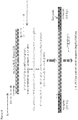
- Figure 6B illustrates the read mapping details around the single SNP site differentiating the DQA1 *03:01 and DQA1 *03:03 alleles (chr6: 32609965, base A for DQA1 *03:03 and C for DQA1 *03:01) in one representative sample where such a mistyping occurs (subject NA12156).
- the second allele in this samples is DQA1 *02:01, whose sequence is C at this position.
- These reads have passed through the PHLA T pipeline and are used for the HLA prediction.
- sample NA12156 about half of the bases are A's, resulting a heterozygous genotype of AC.
- each SNP is located within an exon segment (sequence taken from the DQA1 *05:05 allele) homologous to the HLA- DQA2 gene.
- These segments are of 72-116 nucleotides in length and differ from the HLADQA2 sequence (hg19 genome) at 2-4 chromosomal positions. All the positions in the HLA-DQA2 gene have a dbSNP record wherein the alternative base matches the sequence in the DQA1 *05:05 allele. Thus, it is possible to confuse the reads from the HLA-DQA2 and HLA-DQA1loci regarding to these regions.
- the SNP favoring the HLADQB1 * 02:02 allele over the HLA-DQB1 *02:01 allele (chr6: 32629905). It is inside a homologous region of 91 nucleotides between the HLA-DQB1 and HLA-DQB2 genes. HLA-DQB2 alleles are poorly studied and not recorded in IMGT database either.
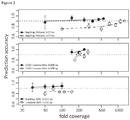
- the PHLAT HLA prediction outcomes from the datasets described above were compiled to systematically investigate how the sequencing parameters impacted the accuracy of HLA inference.
- the benchmarking datasets offered test cases over a wide range of read length (37bp-250bp) and depth (from ⁇ 60x to >1000x) as well as different sequencing protocols (paired-end or used as single-end).
- Figure 2 illustrated the results from three datasets: the HapMap RNAseq, 1000Genome WXS and HapMap WXS.
- the HapMap RNAseq and HapMap WXS datasets are described in examples 2 and 3.
- the samples were binned by their post-mapping fold coverage at the HLA loci (x-axis).
- the y-coordinates of the symbols represented the mean accuracy (at four-digit resolution) of the samples within each bin, with error bars indicating the variance.
- the samples were also processed under the single-end assumption (open symbols) by ignoring the paired relationship between the reads. The trend of the symbols was illustrated by the smooth lines derived via spline interpolation.
Landscapes
- Life Sciences & Earth Sciences (AREA)
- Health & Medical Sciences (AREA)
- Physics & Mathematics (AREA)
- Chemical & Material Sciences (AREA)
- Engineering & Computer Science (AREA)
- Bioinformatics & Cheminformatics (AREA)
- Proteomics, Peptides & Aminoacids (AREA)
- Analytical Chemistry (AREA)
- General Health & Medical Sciences (AREA)
- Biotechnology (AREA)
- Biophysics (AREA)
- Genetics & Genomics (AREA)
- Theoretical Computer Science (AREA)
- Spectroscopy & Molecular Physics (AREA)
- Medical Informatics (AREA)
- Evolutionary Biology (AREA)
- Bioinformatics & Computational Biology (AREA)
- Molecular Biology (AREA)
- Organic Chemistry (AREA)
- Zoology (AREA)
- Wood Science & Technology (AREA)
- Immunology (AREA)
- Cell Biology (AREA)
- General Engineering & Computer Science (AREA)
- Biochemistry (AREA)
- Microbiology (AREA)
- Physiology (AREA)
- Ecology (AREA)
- General Chemical & Material Sciences (AREA)
- Animal Behavior & Ethology (AREA)
- Public Health (AREA)
- Nuclear Medicine, Radiotherapy & Molecular Imaging (AREA)
- Veterinary Medicine (AREA)
- Pharmacology & Pharmacy (AREA)
- Medicinal Chemistry (AREA)
- Chemical Kinetics & Catalysis (AREA)
- Measuring Or Testing Involving Enzymes Or Micro-Organisms (AREA)
- Materials For Medical Uses (AREA)
- Medicines Containing Material From Animals Or Micro-Organisms (AREA)
- Micro-Organisms Or Cultivation Processes Thereof (AREA)
Claims (14)
- Computerimplementiertes Verfahren zum Bestimmen der an einem Locus vorhandenen Allele, umfassend:a) Empfangen von Sequenzdaten eines Individuums an einem Computersystem, wobei die Sequenzdaten eine Vielzahl von Sequenzierungs-Reads umfassen;b) durch das Computersystem erfolgendes Zuordnen der Vielzahl von Sequenzierungs-Reads zu einer Referenzsequenz, die eine Genomsequenz und eine Vielzahl von Allelsequenzen des Locus umfasst, so dass Paare von Allelkandidaten identifiziert werden;c) durch das Computersystem erfolgendes Identifizieren eines Paares von Allelkandidaten mit der größten Wahrscheinlichkeit, dass es die Sequenzierungs-Reads ergibt, die dem Locus als die am Locus vorhandenen Allele zugeordnet werden, wobei das Paar von Allelkandidaten mit der größten Wahrscheinlichkeit, dass es die Sequenzierungs-Reads ergibt, bestimmt wird durch:wobei das Paar von Allelkandidaten, für das die Summe der Genotyp-Log-Likelihood-Scores und der Phasen-Log-Likelihood-Scores am höchsten ist, das Paar von Allelkandidaten mit der größten Wahrscheinlichkeit ist, dass es die Sequenzierungs-Reads ergibt.i. für jedes Paar von Allelkandidaten erfolgendes Bestimmen von Genotyp-Log-Likelihood-Scores für jeden einzelnen SNP in dem Locus, wobei jeder Genotyp-Log-Likelihood-Score die Summe der Log-Wahrscheinlichkeiten für jeden einzelnen SNP in dem Locus ist, mit der das Paar von Allelkandidaten die Sequenzen ergeben könnte, die an dem einzelnen SNP in den Sequenzierungs-Reads vorhanden sind, die dem SNP zugeordnet werden;ii. für jedes Paar von Allelkandidaten erfolgendes Bestimmen von Phasen-Log-Likelihood-Scores für jedes aufeinanderfolgende Paar von SNPs in dem Locus, wobei jeder Phasen-Log-Likelihood-Score die Summe der Log-Wahrscheinlichkeiten für jedes aufeinanderfolgende Paar von SNPs in dem Locus ist, mit der das Paar von Allelkandidaten die Sequenzen ergeben könnte, die an dem aufeinanderfolgenden Paar von SNPs in den Sequenzierungs-Reads vorhanden sind, die dem aufeinanderfolgenden Paar von SNPs zugeordnet werden;
- Computersystem, umfassend:mindestens einen Prozessor;Speicher, der zu dem mindestens einen Prozessor gehört;einen Bildschirm; undein in dem Speicher unterstütztes Programm zum Bestimmen der an einem Locus vorhandenen Allele, wobei das Programm eine Vielzahl von Befehlen enthält, die, wenn sie von dem mindestens einen Prozessor ausgeführt werden, den mindestens einen Prozessor veranlassen:wobei das Paar von Allelkandidaten, für das die Summe der Genotyp-Log-Likelihood-Scores und der Phasen-Log-Likelihood-Scores am höchsten ist, das Paar von Allelkandidaten mit der größten Wahrscheinlichkeit ist, dass es die Sequenzierungs-Reads ergibt.a) Sequenzdaten eines Individuums zu empfangen, wobei die Sequenzdaten eine Vielzahl von Sequenzierungs-Reads umfassen;b) eine Vielzahl von Sequenzierungs-Reads zu einer Referenzsequenz zuzuordnen, die eine Genomsequenz und eine Vielzahl von Allelsequenzen des Locus umfasst, so dass Paare von Allelkandidaten identifiziert werden;c) durch das Computersystem ein Paar von Allelkandidaten mit der größten Wahrscheinlichkeit zu identifizieren, dass es die Sequenzierungs-Reads ergibt, die dem Locus als die am Locus vorhandenen Allele zugeordnet werden, wobei das Paar von Allelkandidaten mit der größten Wahrscheinlichkeit, dass es die Sequenzierungs-Reads ergibt, bestimmt wird durch:i. für jedes Paar von Allelkandidaten erfolgendes Bestimmen von Genotyp-Log-Likelihood-Scores für jeden einzelnen SNP in dem Locus, wobei jeder Genotyp-Log-Likelihood-Score die Summe der Log-Wahrscheinlichkeiten für jeden einzelnen SNP in dem Locus ist, mit der das Paar von Allelkandidaten die Sequenzen ergeben könnte, die an dem einzelnen SNP in den Sequenzierungs-Reads vorhanden sind, die dem SNP zugeordnet werden;ii. für jedes Paar von Allelkandidaten erfolgendes Bestimmen von Phasen-Log-Likelihood-Scores für jedes aufeinanderfolgende Paar von SNPs in dem Locus, wobei jeder Phasen-Log-Likelihood-Score die Summe der Log-Wahrscheinlichkeiten für jedes aufeinanderfolgende Paar von SNPs in dem Locus ist, mit der das Paar von Allelkandidaten die Sequenzen ergeben könnte, die an dem aufeinanderfolgenden Paar von SNPs in den Sequenzierungs-Reads vorhanden sind, die dem aufeinanderfolgenden Paar von SNPs zugeordnet werden; und
- Computerprogrammprodukt zum Bestimmen der an einem Locus vorhandenen Allele, wobei sich das Computerprogrammprodukt auf einem nichtflüchtigen computerlesbaren Medium befindet, auf dem eine Vielzahl von Befehlen gespeichert ist, die, wenn sie von einem Computerprozessor ausgeführt werden, diesen Computerprozessor veranlassen:a) Sequenzdaten eines Individuums zu empfangen, wobei die Sequenzdaten eine Vielzahl von Sequenzierungs-Reads umfassen;b) die Sequenzierungs-Reads einer Referenzsequenz zuzuordnen, die eine Genomsequenz und eine Vielzahl von Allelsequenzen des Locus umfasst, so dass Allelkandidaten identifiziert werden; undc) ein Paar von Allelkandidaten mit der größten Wahrscheinlichkeit zu identifizieren, dass es die Sequenzierungs-Reads ergibt, die dem Locus als die am Locus vorhandenen Allele zugeordnet werden, wobei das Paar von Allelkandidaten mit der größten Wahrscheinlichkeit, dass es die Sequenzierungs-Reads ergibt, bestimmt wird durch:wobei das Paar von Allelkandidaten, für das die Summe der Genotyp-Log-Likelihood-Scores und der Phasen-Log-Likelihood-Scores am höchsten ist, das Paar von Allelkandidaten mit der größten Wahrscheinlichkeit ist, dass es die Sequenzierungs-Reads ergibt.i. für jedes Paar von Allelkandidaten erfolgendes Bestimmen von Genotyp-Log-Likelihood-Scores für jeden einzelnen SNP in dem Locus, wobei jeder Genotyp-Log-Likelihood-Score die Summe der Log-Wahrscheinlichkeiten für jeden einzelnen SNP in dem Locus ist, mit der das Paar von Allelkandidaten die Sequenzen ergeben könnte, die an dem einzelnen SNP in den Sequenzierungs-Reads vorhanden sind, die dem SNP zugeordnet werden; undii. für jedes Paar von Allelkandidaten erfolgendes Bestimmen von Phasen-Log-Likelihood-Scores für jedes aufeinanderfolgende Paar von SNPs in dem Locus, wobei jeder Phasen-Log-Likelihood-Score die Summe der Log-Wahrscheinlichkeiten für jedes aufeinanderfolgende Paar von SNPs in dem Locus ist, mit der das Paar von Allelkandidaten die Sequenzen ergeben könnte, die an dem aufeinanderfolgenden Paar von SNPs in den Sequenzierungslesevorgängen vorhanden sind, die dem aufeinanderfolgenden Paar von SNPs zugeordnet werden; und
- Verfahren nach Anspruch 1, Computersystem nach Anspruch 2 oder Computerprogrammprodukt nach Anspruch 3, wobei die Genomsequenz eine menschliche Genomsequenz ist und die Vielzahl von Allelsequenzen menschliche Sequenzen sind.
- Verfahren nach Anspruch 1, Computersystem nach Anspruch 2 oder Computerprogrammprodukt nach Anspruch 3, wobei Schritt b) die vom Computersystem ausgeführten Schritte umfasst:i. Zuordnen der Sequenzierungs-Reads zu einer Referenzsequenz, wobei die Referenzsequenz eine menschliche Genomsequenz und eine Vielzahl von Allelsequenzen des Locus umfasst;ii. Identifizieren der Allele, denen die größte Anzahl von Sequenzierungs-Reads zugeordnet wird, als einen ersten Satz von Allelkandidaten;iii. Identifizieren der Allele, denen die größte Anzahl von Sequenzierungs-Reads zugeordnet wird, mit Ausnahme der Sequenzierungs-Reads, die dem ersten Satz von Allelkandidaten zugeordnet werden, als einen zweiten Satz von Allelkandidaten; undiv. wenn weniger als 90% der Sequenzierungs-Reads, die dem Locus zugeordnet werden, einem Allel des ersten oder zweiten Satzes von Allelkandidaten zugeordnet werden, Identifizieren der Allele, denen die größte Anzahl von Sequenzierungs-Reads zugeordnet wird, mit Ausnahme der Reads, die dem ersten oder zweiten Satz von Allelkandidaten zugeordnet werden, als einen dritten Satz von Allelkandidaten.
- Verfahren nach Anspruch 1, Computersystem nach Anspruch 2 oder Computerprogrammprodukt nach Anspruch 3, wobei das Paar von Allelkandidaten mit der größten Wahrscheinlichkeit, dass es die Sequenzierungs-Reads ergibt, das Paar von Allelkandidaten mit der größten Wahrscheinlichkeit ist, dass es:i. einzelne Einzelnukleotid-Polymorphismen (SNPs), die in den Sequenzierungs-Reads vorhanden sind, die den Allelkandidaten zugeordnet werden; undii. aufeinanderfolgende SNP-Paare, die in den Sequenzierungs-Reads vorhanden sind, die den Allelkandidaten zugeordnet werden,
ergibt. - Verfahren nach Anspruch 1, Computersystem nach Anspruch 2 oder Computerprogrammprodukt nach Anspruch 3, wobei das Paar von Allelkandidaten mit der größten Wahrscheinlichkeit, dass es die Sequenzierungs-Reads ergibt, das Paar von Allelkandidaten mit der größten Wahrscheinlichkeit ist, dass es:i. einzelne Einzelnukleotid-Polymorphismen (SNPs), die in den Sequenzierungs-Reads vorhanden sind, die den Allelkandidaten zugeordnet werden;ii. aufeinanderfolgende SNP-Paare, die in den Sequenzierungs-Reads vorhanden sind, die den Allelkandidaten zugeordnet werden; undiii. der Häufigkeit des Paares von Allelkandidaten beim Menschen
ergibt. - Verfahren nach Anspruch 1, Computersystem nach Anspruch 2 oder Computerprogrammprodukt nach Anspruch 3, wobei das Paar von Allelkandidaten mit der größten Wahrscheinlichkeit, dass es die Sequenzierungs-Reads ergibt, weiter bestimmt wird durch:
iii. für jedes Paar von Allelkandidaten erfolgendes Bestimmen eines Häufigkeits-log-Likelihood-Scores, wobei der Häufigkeits-log-Likelihood-Score die Summe der Log-Häufigkeiten ist, mit der jedes Paar von Allelkandidaten in der menschlichen Population zugegen ist;
wobei das Paar von Allelkandidaten, für die die Summe der Genotyp-Log-Likelihood-Scores, der Phasen-Log-Likelihood-Scores und der Häufigkeits-Log-Likelihood-Scores am höchsten ist, das Paar von Allelkandidaten mit der größten Wahrscheinlichkeit ist, dass es die Sequenzierungs-Reads ergibt. - Verfahren nach Anspruch 1, Computersystem nach Anspruch 2 oder Computerprogrammprodukt nach Anspruch 3, wobei die Sequenzierungs-Reads Paired-End-Reads sind.
- Verfahren nach Anspruch 1, Computersystem nach Anspruch 2 oder Computerprogrammprodukt nach Anspruch 3, wobei die Sequenzierungs-Reads Single-End-Reads sind.
- Verfahren nach Anspruch 1, Computersystem nach Anspruch 2 oder Computerprogrammprodukt nach Anspruch 3, wobei Schritt a) das Durchführen eines genomweiten Sequenzierungsprozesses an einer Probe aus dem Individuum vor dem Erstellen der Sequenzdaten umfasst.
- Verfahren nach Anspruch 1, Computersystem nach Anspruch 2 oder Computerprogrammprodukt nach Anspruch 3, wobei Schritt a) das Durchführen eines Nukleinsäureamplifikationsprozesses, der ein Amplifikationsprodukt erzeugt, das eine Nukleinsäuresequenz des Locus des Individuums umfasst, und das Durchführen eines Sequenzierungsprozesses an dem Amplifikationsprodukt umfasst.
- Verfahren nach Anspruch 1, Computersystem nach Anspruch 2 oder Computerprogrammprodukt nach Anspruch 3, wobei der Locus ein stark polymorpher Locus ist.
- Verfahren nach Anspruch 1, Computersystem nach Anspruch 2 oder Computerprogrammprodukt nach Anspruch 3, wobei der Locus ein HLA-Locus ist.
Applications Claiming Priority (2)
| Application Number | Priority Date | Filing Date | Title |
|---|---|---|---|
| US201361891193P | 2013-10-15 | 2013-10-15 | |
| PCT/IB2014/002843 WO2015056103A2 (en) | 2013-10-15 | 2014-10-14 | High resolution allele identification |
Publications (2)
| Publication Number | Publication Date |
|---|---|
| EP3058095A2 EP3058095A2 (de) | 2016-08-24 |
| EP3058095B1 true EP3058095B1 (de) | 2019-12-25 |
Family
ID=52630401
Family Applications (1)
| Application Number | Title | Priority Date | Filing Date |
|---|---|---|---|
| EP14843178.6A Active EP3058095B1 (de) | 2013-10-15 | 2014-10-14 | Hochauflösende allelidentifikation |
Country Status (8)
| Country | Link |
|---|---|
| US (2) | US10162933B2 (de) |
| EP (1) | EP3058095B1 (de) |
| JP (2) | JP6491651B2 (de) |
| KR (1) | KR102386134B1 (de) |
| CN (1) | CN106103736B (de) |
| AU (1) | AU2014335877B2 (de) |
| CA (1) | CA2927319C (de) |
| WO (1) | WO2015056103A2 (de) |
Families Citing this family (53)
| Publication number | Priority date | Publication date | Assignee | Title |
|---|---|---|---|---|
| US9898575B2 (en) | 2013-08-21 | 2018-02-20 | Seven Bridges Genomics Inc. | Methods and systems for aligning sequences |
| US9116866B2 (en) | 2013-08-21 | 2015-08-25 | Seven Bridges Genomics Inc. | Methods and systems for detecting sequence variants |
| CN106103736B (zh) | 2013-10-15 | 2020-03-03 | 瑞泽恩制药公司 | 高分辨率等位基因鉴定 |
| US10832797B2 (en) | 2013-10-18 | 2020-11-10 | Seven Bridges Genomics Inc. | Method and system for quantifying sequence alignment |
| US11049587B2 (en) | 2013-10-18 | 2021-06-29 | Seven Bridges Genomics Inc. | Methods and systems for aligning sequences in the presence of repeating elements |
| EP3058093B1 (de) | 2013-10-18 | 2019-07-17 | Seven Bridges Genomics Inc. | Verfahren und systeme zur identifikation krankheitsinduzierter mutationen |
| CN105793689B (zh) | 2013-10-18 | 2020-04-17 | 七桥基因公司 | 用于将遗传样本基因分型的方法和系统 |
| US9063914B2 (en) | 2013-10-21 | 2015-06-23 | Seven Bridges Genomics Inc. | Systems and methods for transcriptome analysis |
| CN114807335A (zh) * | 2013-12-10 | 2022-07-29 | 伊鲁米那股份有限公司 | 用于鉴定基因的等位基因的试剂盒和探针 |
| AU2015204819B2 (en) | 2014-01-10 | 2021-05-06 | Seven Bridges Genomics Inc. | Systems and methods for use of known alleles in read mapping |
| US9817944B2 (en) | 2014-02-11 | 2017-11-14 | Seven Bridges Genomics Inc. | Systems and methods for analyzing sequence data |
| US10192026B2 (en) | 2015-03-05 | 2019-01-29 | Seven Bridges Genomics Inc. | Systems and methods for genomic pattern analysis |
| US10793895B2 (en) | 2015-08-24 | 2020-10-06 | Seven Bridges Genomics Inc. | Systems and methods for epigenetic analysis |
| AU2016311444B2 (en) | 2015-08-25 | 2019-02-07 | Nantomics, Llc | Systems and methods for high-accuracy variant calling |
| US10724110B2 (en) | 2015-09-01 | 2020-07-28 | Seven Bridges Genomics Inc. | Systems and methods for analyzing viral nucleic acids |
| US10584380B2 (en) | 2015-09-01 | 2020-03-10 | Seven Bridges Genomics Inc. | Systems and methods for mitochondrial analysis |
| US20180268101A1 (en) * | 2015-09-28 | 2018-09-20 | Sirona Genomics, Inc. | Linkage disequilibrium method and database |
| US11347704B2 (en) | 2015-10-16 | 2022-05-31 | Seven Bridges Genomics Inc. | Biological graph or sequence serialization |
| KR101651817B1 (ko) * | 2015-10-28 | 2016-08-29 | 대한민국 | Ngs 라이브러리 제작용 프라이머 세트 및 이를 이용한 ngs 라이브러리 제작방법 및 키트 |
| US20170199960A1 (en) | 2016-01-07 | 2017-07-13 | Seven Bridges Genomics Inc. | Systems and methods for adaptive local alignment for graph genomes |
| US20170270245A1 (en) | 2016-01-11 | 2017-09-21 | Edico Genome, Corp. | Bioinformatics systems, apparatuses, and methods for performing secondary and/or tertiary processing |
| US10364468B2 (en) | 2016-01-13 | 2019-07-30 | Seven Bridges Genomics Inc. | Systems and methods for analyzing circulating tumor DNA |
| US10262102B2 (en) | 2016-02-24 | 2019-04-16 | Seven Bridges Genomics Inc. | Systems and methods for genotyping with graph reference |
| US10790044B2 (en) | 2016-05-19 | 2020-09-29 | Seven Bridges Genomics Inc. | Systems and methods for sequence encoding, storage, and compression |
| EP3464635A4 (de) * | 2016-05-27 | 2020-01-22 | Human Longevity, Inc. | Verfahren zur typisierung von menschlichem leukozyten-antigen |
| EP3472356A4 (de) | 2016-06-17 | 2019-07-24 | Mayo Foundation for Medical Education and Research | Verfahren und materialien zur effektiven verwendung der kombinierten gezielten anreicherung von genomregionen und zur gesamtgenomsequenzierung mit geringer reichweite |
| KR101815529B1 (ko) * | 2016-07-29 | 2018-01-30 | (주)신테카바이오 | 휴먼 하플로타이핑 시스템 및 방법 |
| US11289177B2 (en) | 2016-08-08 | 2022-03-29 | Seven Bridges Genomics, Inc. | Computer method and system of identifying genomic mutations using graph-based local assembly |
| US11250931B2 (en) | 2016-09-01 | 2022-02-15 | Seven Bridges Genomics Inc. | Systems and methods for detecting recombination |
| US11324801B2 (en) | 2016-09-02 | 2022-05-10 | University Of Utah Research Foundation | NNIF and nNIF-related peptides and related methods |
| JP2019530476A (ja) * | 2016-09-26 | 2019-10-24 | シロナ ゲノミクス, インコーポレイテッドSirona Genomics, Inc. | ヒト白血球抗原遺伝子型決定方法およびサンプル集団におけるhlaハプロタイプの多様性の決定 |
| US10319465B2 (en) | 2016-11-16 | 2019-06-11 | Seven Bridges Genomics Inc. | Systems and methods for aligning sequences to graph references |
| KR101936933B1 (ko) * | 2016-11-29 | 2019-01-09 | 연세대학교 산학협력단 | 염기서열의 변이 검출방법 및 이를 이용한 염기서열의 변이 검출 디바이스 |
| US20210265010A1 (en) * | 2016-12-15 | 2021-08-26 | Sirona Genomics, Inc. | Genotyping diploid samples with coverage plot of unexplained reads |
| JP6902258B2 (ja) * | 2016-12-28 | 2021-07-14 | 国立大学法人京都大学 | 被験者のhla遺伝子のアレルペアを判定する方法 |
| US10726110B2 (en) | 2017-03-01 | 2020-07-28 | Seven Bridges Genomics, Inc. | Watermarking for data security in bioinformatic sequence analysis |
| US11347844B2 (en) | 2017-03-01 | 2022-05-31 | Seven Bridges Genomics, Inc. | Data security in bioinformatic sequence analysis |
| EP3651791A1 (de) | 2017-07-14 | 2020-05-20 | The Francis Crick Institute Limited | Analyse von hla-allelen bei tumoren und verwendung davon |
| KR102035615B1 (ko) * | 2017-08-07 | 2019-10-23 | 연세대학교 산학협력단 | 유전자 패널에 기초한 염기서열의 변이 검출방법 및 이를 이용한 염기서열의 변이 검출 디바이스 |
| AU2018330415A1 (en) * | 2017-09-06 | 2020-03-19 | Nant Holdings Ip, Llc | HLA tissue matching and methods therefor |
| US12046325B2 (en) | 2018-02-14 | 2024-07-23 | Seven Bridges Genomics Inc. | System and method for sequence identification in reassembly variant calling |
| US12364715B2 (en) | 2018-02-23 | 2025-07-22 | Enzyvant Therapeutics Gmbh | Methods of determining the suitability of cultured thymus tissue for implantation into humans and associated methods of use |
| AU2019225151B2 (en) | 2018-02-23 | 2026-02-05 | Duke University | Cultured thymus tissue transplantation promotes donor-specific tolerance to allogeneic solid organ transplants |
| US11819520B2 (en) | 2018-02-23 | 2023-11-21 | Duke University | Cultured thymus tissue transplantation promotes donor-specific tolerance to allogeneic solid organ transplants |
| CN109448789A (zh) * | 2018-09-17 | 2019-03-08 | 上海派森诺生物科技股份有限公司 | 一种基于perl语言的种群特异SNP位点的自动化分析方法 |
| CN110942806A (zh) * | 2018-09-25 | 2020-03-31 | 深圳华大法医科技有限公司 | 一种血型基因分型方法和装置及存储介质 |
| WO2020235972A1 (ko) * | 2019-05-22 | 2020-11-26 | 서울대학교산학협력단 | Ngs 데이터를 이용하여 유전형을 예측하는 방법 및 장치 |
| CN111312332B (zh) * | 2020-02-13 | 2020-10-30 | 国家卫生健康委科学技术研究所 | 基于hla基因的生物信息处理方法、装置及终端 |
| KR20240155233A (ko) * | 2022-02-04 | 2024-10-28 | 엔이씨 온코이뮤니티 에이에스 | Hla 타이핑 방법 |
| WO2023172848A1 (en) | 2022-03-08 | 2023-09-14 | Illumina, Inc. | Multi-pass software-accelerated genomic read mapping engine |
| KR20240169696A (ko) * | 2022-04-07 | 2024-12-03 | 가던트 헬쓰, 인크. | 대립유전자 유형결정을 위한 방법 및 시스템 |
| WO2023225607A2 (en) * | 2022-05-18 | 2023-11-23 | The University Of North Carolina At Chapel Hill | Unique molecular identifier enhanced hla genotyping and transcript quantitation using nanopore technology |
| WO2024112946A1 (en) * | 2022-11-22 | 2024-05-30 | University Of Southern California | Cell-free dna methylation test for breast cancer |
Family Cites Families (3)
| Publication number | Priority date | Publication date | Assignee | Title |
|---|---|---|---|---|
| US20100256917A1 (en) * | 2007-06-15 | 2010-10-07 | Mcvean Gilean | Allelic determination |
| US20130110407A1 (en) * | 2011-09-16 | 2013-05-02 | Complete Genomics, Inc. | Determining variants in genome of a heterogeneous sample |
| CN106103736B (zh) | 2013-10-15 | 2020-03-03 | 瑞泽恩制药公司 | 高分辨率等位基因鉴定 |
-
2014
- 2014-10-14 CN CN201480066695.1A patent/CN106103736B/zh active Active
- 2014-10-14 CA CA2927319A patent/CA2927319C/en active Active
- 2014-10-14 KR KR1020167012427A patent/KR102386134B1/ko active Active
- 2014-10-14 WO PCT/IB2014/002843 patent/WO2015056103A2/en not_active Ceased
- 2014-10-14 EP EP14843178.6A patent/EP3058095B1/de active Active
- 2014-10-14 JP JP2016523227A patent/JP6491651B2/ja active Active
- 2014-10-14 AU AU2014335877A patent/AU2014335877B2/en active Active
- 2014-10-14 US US14/513,952 patent/US10162933B2/en active Active
-
2018
- 2018-10-19 US US16/165,510 patent/US11594302B2/en active Active
-
2019
- 2019-03-01 JP JP2019037501A patent/JP6715977B2/ja active Active
Non-Patent Citations (1)
| Title |
|---|
| None * |
Also Published As
| Publication number | Publication date |
|---|---|
| AU2014335877B2 (en) | 2020-09-17 |
| CN106103736A (zh) | 2016-11-09 |
| KR20160063400A (ko) | 2016-06-03 |
| JP2019145114A (ja) | 2019-08-29 |
| WO2015056103A3 (en) | 2016-01-21 |
| WO2015056103A2 (en) | 2015-04-23 |
| CA2927319A1 (en) | 2015-04-23 |
| JP6491651B2 (ja) | 2019-03-27 |
| AU2014335877A2 (en) | 2016-06-16 |
| US20150110754A1 (en) | 2015-04-23 |
| EP3058095A2 (de) | 2016-08-24 |
| JP2016541043A (ja) | 2016-12-28 |
| US10162933B2 (en) | 2018-12-25 |
| JP6715977B2 (ja) | 2020-07-01 |
| US11594302B2 (en) | 2023-02-28 |
| US20190121940A1 (en) | 2019-04-25 |
| CA2927319C (en) | 2023-03-28 |
| KR102386134B1 (ko) | 2022-04-12 |
| AU2014335877A1 (en) | 2016-05-05 |
| CN106103736B (zh) | 2020-03-03 |
Similar Documents
| Publication | Publication Date | Title |
|---|---|---|
| US11594302B2 (en) | High resolution allele identification | |
| Bai et al. | Inference of high resolution HLA types using genome-wide RNA or DNA sequencing reads | |
| US20240309472A1 (en) | Methods for determination of transplant rejection | |
| CN102770558B (zh) | 由母本生物样品进行胎儿基因组的分析 | |
| AU2016293025A1 (en) | System and methodology for the analysis of genomic data obtained from a subject | |
| TWI675918B (zh) | 基於單倍型之通用非侵入性單基因疾病產前檢測 | |
| US20260053909A1 (en) | Genomic variants in ig gene regions and uses of same | |
| JP6798697B2 (ja) | Hla遺伝子のpcrプライマーセット及びそれを用いたシークエンス法 | |
| JP7523817B2 (ja) | 移植拒絶リスクを予測する新規の方法 | |
| CN103074444A (zh) | 组织相容性抗原决定簇基因高通量测序的hla基因分型方法 | |
| HK1228458B (en) | High resolution allele identification | |
| HK1228458A1 (en) | High resolution allele identification | |
| JP2020178555A (ja) | 緑内障のリスクを判定する方法 | |
| EP4504973A2 (de) | Verfahren und systeme zur alleltypisierung | |
| US20240294984A1 (en) | Methods and systems for allele typing | |
| 이선호 | New Methods for SNV/InDel Calling and Haplotyping from Next Generation Sequencing Data | |
| CN117425734A (zh) | 用于确定移植排斥的方法 | |
| WO2026062660A1 (en) | Methods for noise reduced and bias reduced genetic analysis | |
| CN118974828A (zh) | 用于等位基因分型的方法和系统 | |
| JP2020178554A (ja) | 化学物質過敏症のリスクを判定する方法 | |
| JP2020178542A (ja) | 十二指腸潰瘍のリスクを判定する方法 | |
| Christodoulou et al. | G001. Development of TAF1 Genotyping Assay for X-Linked Dystonia-Parkinsonism-Associated Haplotype Detection | |
| HK40006642A (en) | Universal haplotype-based noninvasive prenatal testing for single gene diseases |
Legal Events
| Date | Code | Title | Description |
|---|---|---|---|
| PUAI | Public reference made under article 153(3) epc to a published international application that has entered the european phase |
Free format text: ORIGINAL CODE: 0009012 |
|
| 17P | Request for examination filed |
Effective date: 20160513 |
|
| AK | Designated contracting states |
Kind code of ref document: A2 Designated state(s): AL AT BE BG CH CY CZ DE DK EE ES FI FR GB GR HR HU IE IS IT LI LT LU LV MC MK MT NL NO PL PT RO RS SE SI SK SM TR |
|
| AX | Request for extension of the european patent |
Extension state: BA ME |
|
| DAX | Request for extension of the european patent (deleted) | ||
| STAA | Information on the status of an ep patent application or granted ep patent |
Free format text: STATUS: EXAMINATION IS IN PROGRESS |
|
| 17Q | First examination report despatched |
Effective date: 20170327 |
|
| REG | Reference to a national code |
Ref country code: HK Ref legal event code: DE Ref document number: 1228458 Country of ref document: HK |
|
| REG | Reference to a national code |
Ref country code: DE Ref legal event code: R079 Ref document number: 602014059076 Country of ref document: DE Free format text: PREVIOUS MAIN CLASS: C12Q0001680000 Ipc: C12Q0001688100 |
|
| GRAP | Despatch of communication of intention to grant a patent |
Free format text: ORIGINAL CODE: EPIDOSNIGR1 |
|
| STAA | Information on the status of an ep patent application or granted ep patent |
Free format text: STATUS: GRANT OF PATENT IS INTENDED |
|
| RIC1 | Information provided on ipc code assigned before grant |
Ipc: C12Q 1/6881 20180101AFI20190627BHEP Ipc: G16B 20/00 20190101ALI20190627BHEP Ipc: G16B 30/00 20190101ALI20190627BHEP |
|
| INTG | Intention to grant announced |
Effective date: 20190712 |
|
| GRAS | Grant fee paid |
Free format text: ORIGINAL CODE: EPIDOSNIGR3 |
|
| GRAA | (expected) grant |
Free format text: ORIGINAL CODE: 0009210 |
|
| STAA | Information on the status of an ep patent application or granted ep patent |
Free format text: STATUS: THE PATENT HAS BEEN GRANTED |
|
| AK | Designated contracting states |
Kind code of ref document: B1 Designated state(s): AL AT BE BG CH CY CZ DE DK EE ES FI FR GB GR HR HU IE IS IT LI LT LU LV MC MK MT NL NO PL PT RO RS SE SI SK SM TR |
|
| REG | Reference to a national code |
Ref country code: GB Ref legal event code: FG4D |
|
| REG | Reference to a national code |
Ref country code: CH Ref legal event code: EP |
|
| REG | Reference to a national code |
Ref country code: AT Ref legal event code: REF Ref document number: 1217187 Country of ref document: AT Kind code of ref document: T Effective date: 20200115 |
|
| REG | Reference to a national code |
Ref country code: DE Ref legal event code: R096 Ref document number: 602014059076 Country of ref document: DE |
|
| REG | Reference to a national code |
Ref country code: IE Ref legal event code: FG4D |
|
| REG | Reference to a national code |
Ref country code: NL Ref legal event code: MP Effective date: 20191225 |
|
| PG25 | Lapsed in a contracting state [announced via postgrant information from national office to epo] |
Ref country code: LT Free format text: LAPSE BECAUSE OF FAILURE TO SUBMIT A TRANSLATION OF THE DESCRIPTION OR TO PAY THE FEE WITHIN THE PRESCRIBED TIME-LIMIT Effective date: 20191225 Ref country code: GR Free format text: LAPSE BECAUSE OF FAILURE TO SUBMIT A TRANSLATION OF THE DESCRIPTION OR TO PAY THE FEE WITHIN THE PRESCRIBED TIME-LIMIT Effective date: 20200326 Ref country code: NO Free format text: LAPSE BECAUSE OF FAILURE TO SUBMIT A TRANSLATION OF THE DESCRIPTION OR TO PAY THE FEE WITHIN THE PRESCRIBED TIME-LIMIT Effective date: 20200325 Ref country code: SE Free format text: LAPSE BECAUSE OF FAILURE TO SUBMIT A TRANSLATION OF THE DESCRIPTION OR TO PAY THE FEE WITHIN THE PRESCRIBED TIME-LIMIT Effective date: 20191225 Ref country code: LV Free format text: LAPSE BECAUSE OF FAILURE TO SUBMIT A TRANSLATION OF THE DESCRIPTION OR TO PAY THE FEE WITHIN THE PRESCRIBED TIME-LIMIT Effective date: 20191225 Ref country code: BG Free format text: LAPSE BECAUSE OF FAILURE TO SUBMIT A TRANSLATION OF THE DESCRIPTION OR TO PAY THE FEE WITHIN THE PRESCRIBED TIME-LIMIT Effective date: 20200325 Ref country code: FI Free format text: LAPSE BECAUSE OF FAILURE TO SUBMIT A TRANSLATION OF THE DESCRIPTION OR TO PAY THE FEE WITHIN THE PRESCRIBED TIME-LIMIT Effective date: 20191225 |
|
| REG | Reference to a national code |
Ref country code: LT Ref legal event code: MG4D |
|
| PG25 | Lapsed in a contracting state [announced via postgrant information from national office to epo] |
Ref country code: HR Free format text: LAPSE BECAUSE OF FAILURE TO SUBMIT A TRANSLATION OF THE DESCRIPTION OR TO PAY THE FEE WITHIN THE PRESCRIBED TIME-LIMIT Effective date: 20191225 Ref country code: RS Free format text: LAPSE BECAUSE OF FAILURE TO SUBMIT A TRANSLATION OF THE DESCRIPTION OR TO PAY THE FEE WITHIN THE PRESCRIBED TIME-LIMIT Effective date: 20191225 |
|
| PG25 | Lapsed in a contracting state [announced via postgrant information from national office to epo] |
Ref country code: AL Free format text: LAPSE BECAUSE OF FAILURE TO SUBMIT A TRANSLATION OF THE DESCRIPTION OR TO PAY THE FEE WITHIN THE PRESCRIBED TIME-LIMIT Effective date: 20191225 |
|
| PG25 | Lapsed in a contracting state [announced via postgrant information from national office to epo] |
Ref country code: NL Free format text: LAPSE BECAUSE OF FAILURE TO SUBMIT A TRANSLATION OF THE DESCRIPTION OR TO PAY THE FEE WITHIN THE PRESCRIBED TIME-LIMIT Effective date: 20191225 Ref country code: RO Free format text: LAPSE BECAUSE OF FAILURE TO SUBMIT A TRANSLATION OF THE DESCRIPTION OR TO PAY THE FEE WITHIN THE PRESCRIBED TIME-LIMIT Effective date: 20191225 Ref country code: CZ Free format text: LAPSE BECAUSE OF FAILURE TO SUBMIT A TRANSLATION OF THE DESCRIPTION OR TO PAY THE FEE WITHIN THE PRESCRIBED TIME-LIMIT Effective date: 20191225 Ref country code: PT Free format text: LAPSE BECAUSE OF FAILURE TO SUBMIT A TRANSLATION OF THE DESCRIPTION OR TO PAY THE FEE WITHIN THE PRESCRIBED TIME-LIMIT Effective date: 20200520 Ref country code: EE Free format text: LAPSE BECAUSE OF FAILURE TO SUBMIT A TRANSLATION OF THE DESCRIPTION OR TO PAY THE FEE WITHIN THE PRESCRIBED TIME-LIMIT Effective date: 20191225 |
|
| PG25 | Lapsed in a contracting state [announced via postgrant information from national office to epo] |
Ref country code: SM Free format text: LAPSE BECAUSE OF FAILURE TO SUBMIT A TRANSLATION OF THE DESCRIPTION OR TO PAY THE FEE WITHIN THE PRESCRIBED TIME-LIMIT Effective date: 20191225 Ref country code: SK Free format text: LAPSE BECAUSE OF FAILURE TO SUBMIT A TRANSLATION OF THE DESCRIPTION OR TO PAY THE FEE WITHIN THE PRESCRIBED TIME-LIMIT Effective date: 20191225 Ref country code: IS Free format text: LAPSE BECAUSE OF FAILURE TO SUBMIT A TRANSLATION OF THE DESCRIPTION OR TO PAY THE FEE WITHIN THE PRESCRIBED TIME-LIMIT Effective date: 20200425 |
|
| REG | Reference to a national code |
Ref country code: DE Ref legal event code: R097 Ref document number: 602014059076 Country of ref document: DE |
|
| PG25 | Lapsed in a contracting state [announced via postgrant information from national office to epo] |
Ref country code: DK Free format text: LAPSE BECAUSE OF FAILURE TO SUBMIT A TRANSLATION OF THE DESCRIPTION OR TO PAY THE FEE WITHIN THE PRESCRIBED TIME-LIMIT Effective date: 20191225 Ref country code: ES Free format text: LAPSE BECAUSE OF FAILURE TO SUBMIT A TRANSLATION OF THE DESCRIPTION OR TO PAY THE FEE WITHIN THE PRESCRIBED TIME-LIMIT Effective date: 20191225 |
|
| PLBE | No opposition filed within time limit |
Free format text: ORIGINAL CODE: 0009261 |
|
| STAA | Information on the status of an ep patent application or granted ep patent |
Free format text: STATUS: NO OPPOSITION FILED WITHIN TIME LIMIT |
|
| REG | Reference to a national code |
Ref country code: AT Ref legal event code: MK05 Ref document number: 1217187 Country of ref document: AT Kind code of ref document: T Effective date: 20191225 |
|
| PG25 | Lapsed in a contracting state [announced via postgrant information from national office to epo] |
Ref country code: SI Free format text: LAPSE BECAUSE OF FAILURE TO SUBMIT A TRANSLATION OF THE DESCRIPTION OR TO PAY THE FEE WITHIN THE PRESCRIBED TIME-LIMIT Effective date: 20191225 |
|
| 26N | No opposition filed |
Effective date: 20200928 |
|
| PG25 | Lapsed in a contracting state [announced via postgrant information from national office to epo] |
Ref country code: IT Free format text: LAPSE BECAUSE OF FAILURE TO SUBMIT A TRANSLATION OF THE DESCRIPTION OR TO PAY THE FEE WITHIN THE PRESCRIBED TIME-LIMIT Effective date: 20191225 Ref country code: AT Free format text: LAPSE BECAUSE OF FAILURE TO SUBMIT A TRANSLATION OF THE DESCRIPTION OR TO PAY THE FEE WITHIN THE PRESCRIBED TIME-LIMIT Effective date: 20191225 |
|
| PG25 | Lapsed in a contracting state [announced via postgrant information from national office to epo] |
Ref country code: PL Free format text: LAPSE BECAUSE OF FAILURE TO SUBMIT A TRANSLATION OF THE DESCRIPTION OR TO PAY THE FEE WITHIN THE PRESCRIBED TIME-LIMIT Effective date: 20191225 |
|
| PG25 | Lapsed in a contracting state [announced via postgrant information from national office to epo] |
Ref country code: MC Free format text: LAPSE BECAUSE OF FAILURE TO SUBMIT A TRANSLATION OF THE DESCRIPTION OR TO PAY THE FEE WITHIN THE PRESCRIBED TIME-LIMIT Effective date: 20191225 Ref country code: LU Free format text: LAPSE BECAUSE OF NON-PAYMENT OF DUE FEES Effective date: 20201014 |
|
| REG | Reference to a national code |
Ref country code: BE Ref legal event code: MM Effective date: 20201031 |
|
| PG25 | Lapsed in a contracting state [announced via postgrant information from national office to epo] |
Ref country code: BE Free format text: LAPSE BECAUSE OF NON-PAYMENT OF DUE FEES Effective date: 20201031 |
|
| PG25 | Lapsed in a contracting state [announced via postgrant information from national office to epo] |
Ref country code: TR Free format text: LAPSE BECAUSE OF FAILURE TO SUBMIT A TRANSLATION OF THE DESCRIPTION OR TO PAY THE FEE WITHIN THE PRESCRIBED TIME-LIMIT Effective date: 20191225 Ref country code: MT Free format text: LAPSE BECAUSE OF FAILURE TO SUBMIT A TRANSLATION OF THE DESCRIPTION OR TO PAY THE FEE WITHIN THE PRESCRIBED TIME-LIMIT Effective date: 20191225 Ref country code: CY Free format text: LAPSE BECAUSE OF FAILURE TO SUBMIT A TRANSLATION OF THE DESCRIPTION OR TO PAY THE FEE WITHIN THE PRESCRIBED TIME-LIMIT Effective date: 20191225 |
|
| PG25 | Lapsed in a contracting state [announced via postgrant information from national office to epo] |
Ref country code: MK Free format text: LAPSE BECAUSE OF FAILURE TO SUBMIT A TRANSLATION OF THE DESCRIPTION OR TO PAY THE FEE WITHIN THE PRESCRIBED TIME-LIMIT Effective date: 20191225 |
|
| P01 | Opt-out of the competence of the unified patent court (upc) registered |
Effective date: 20230317 |
|
| PGFP | Annual fee paid to national office [announced via postgrant information from national office to epo] |
Ref country code: GB Payment date: 20250923 Year of fee payment: 12 |
|
| PGFP | Annual fee paid to national office [announced via postgrant information from national office to epo] |
Ref country code: FR Payment date: 20250924 Year of fee payment: 12 |
|
| PGFP | Annual fee paid to national office [announced via postgrant information from national office to epo] |
Ref country code: IE Payment date: 20250925 Year of fee payment: 12 |
|
| REG | Reference to a national code |
Ref country code: CH Ref legal event code: U11 Free format text: ST27 STATUS EVENT CODE: U-0-0-U10-U11 (AS PROVIDED BY THE NATIONAL OFFICE) Effective date: 20251101 |
|
| PGFP | Annual fee paid to national office [announced via postgrant information from national office to epo] |
Ref country code: DE Payment date: 20250923 Year of fee payment: 12 |
|
| PGFP | Annual fee paid to national office [announced via postgrant information from national office to epo] |
Ref country code: CH Payment date: 20251101 Year of fee payment: 12 |