EP3051944B1 - Method of delivering an agriculturally active ingredient - Google Patents
Method of delivering an agriculturally active ingredient Download PDFInfo
- Publication number
- EP3051944B1 EP3051944B1 EP14790850.3A EP14790850A EP3051944B1 EP 3051944 B1 EP3051944 B1 EP 3051944B1 EP 14790850 A EP14790850 A EP 14790850A EP 3051944 B1 EP3051944 B1 EP 3051944B1
- Authority
- EP
- European Patent Office
- Prior art keywords
- foam
- formulation
- methyl
- water
- active ingredient
- Prior art date
- Legal status (The legal status is an assumption and is not a legal conclusion. Google has not performed a legal analysis and makes no representation as to the accuracy of the status listed.)
- Active
Links
Images








Classifications
-
- A—HUMAN NECESSITIES
- A01—AGRICULTURE; FORESTRY; ANIMAL HUSBANDRY; HUNTING; TRAPPING; FISHING
- A01N—PRESERVATION OF BODIES OF HUMANS OR ANIMALS OR PLANTS OR PARTS THEREOF; BIOCIDES, e.g. AS DISINFECTANTS, AS PESTICIDES OR AS HERBICIDES; PEST REPELLANTS OR ATTRACTANTS; PLANT GROWTH REGULATORS
- A01N25/00—Biocides, pest repellants or attractants, or plant growth regulators, characterised by their forms, or by their non-active ingredients or by their methods of application, e.g. seed treatment or sequential application; Substances for reducing the noxious effect of the active ingredients to organisms other than pests
- A01N25/16—Foams
-
- A—HUMAN NECESSITIES
- A01—AGRICULTURE; FORESTRY; ANIMAL HUSBANDRY; HUNTING; TRAPPING; FISHING
- A01N—PRESERVATION OF BODIES OF HUMANS OR ANIMALS OR PLANTS OR PARTS THEREOF; BIOCIDES, e.g. AS DISINFECTANTS, AS PESTICIDES OR AS HERBICIDES; PEST REPELLANTS OR ATTRACTANTS; PLANT GROWTH REGULATORS
- A01N25/00—Biocides, pest repellants or attractants, or plant growth regulators, characterised by their forms, or by their non-active ingredients or by their methods of application, e.g. seed treatment or sequential application; Substances for reducing the noxious effect of the active ingredients to organisms other than pests
-
- A—HUMAN NECESSITIES
- A01—AGRICULTURE; FORESTRY; ANIMAL HUSBANDRY; HUNTING; TRAPPING; FISHING
- A01N—PRESERVATION OF BODIES OF HUMANS OR ANIMALS OR PLANTS OR PARTS THEREOF; BIOCIDES, e.g. AS DISINFECTANTS, AS PESTICIDES OR AS HERBICIDES; PEST REPELLANTS OR ATTRACTANTS; PLANT GROWTH REGULATORS
- A01N25/00—Biocides, pest repellants or attractants, or plant growth regulators, characterised by their forms, or by their non-active ingredients or by their methods of application, e.g. seed treatment or sequential application; Substances for reducing the noxious effect of the active ingredients to organisms other than pests
- A01N25/02—Biocides, pest repellants or attractants, or plant growth regulators, characterised by their forms, or by their non-active ingredients or by their methods of application, e.g. seed treatment or sequential application; Substances for reducing the noxious effect of the active ingredients to organisms other than pests containing liquids as carriers, diluents or solvents
- A01N25/04—Dispersions, emulsions, suspoemulsions, suspension concentrates or gels
-
- A—HUMAN NECESSITIES
- A01—AGRICULTURE; FORESTRY; ANIMAL HUSBANDRY; HUNTING; TRAPPING; FISHING
- A01N—PRESERVATION OF BODIES OF HUMANS OR ANIMALS OR PLANTS OR PARTS THEREOF; BIOCIDES, e.g. AS DISINFECTANTS, AS PESTICIDES OR AS HERBICIDES; PEST REPELLANTS OR ATTRACTANTS; PLANT GROWTH REGULATORS
- A01N25/00—Biocides, pest repellants or attractants, or plant growth regulators, characterised by their forms, or by their non-active ingredients or by their methods of application, e.g. seed treatment or sequential application; Substances for reducing the noxious effect of the active ingredients to organisms other than pests
- A01N25/22—Biocides, pest repellants or attractants, or plant growth regulators, characterised by their forms, or by their non-active ingredients or by their methods of application, e.g. seed treatment or sequential application; Substances for reducing the noxious effect of the active ingredients to organisms other than pests containing ingredients stabilising the active ingredients
-
- A—HUMAN NECESSITIES
- A01—AGRICULTURE; FORESTRY; ANIMAL HUSBANDRY; HUNTING; TRAPPING; FISHING
- A01N—PRESERVATION OF BODIES OF HUMANS OR ANIMALS OR PLANTS OR PARTS THEREOF; BIOCIDES, e.g. AS DISINFECTANTS, AS PESTICIDES OR AS HERBICIDES; PEST REPELLANTS OR ATTRACTANTS; PLANT GROWTH REGULATORS
- A01N25/00—Biocides, pest repellants or attractants, or plant growth regulators, characterised by their forms, or by their non-active ingredients or by their methods of application, e.g. seed treatment or sequential application; Substances for reducing the noxious effect of the active ingredients to organisms other than pests
- A01N25/26—Biocides, pest repellants or attractants, or plant growth regulators, characterised by their forms, or by their non-active ingredients or by their methods of application, e.g. seed treatment or sequential application; Substances for reducing the noxious effect of the active ingredients to organisms other than pests in coated particulate form
- A01N25/28—Microcapsules or nanocapsules
-
- A—HUMAN NECESSITIES
- A01—AGRICULTURE; FORESTRY; ANIMAL HUSBANDRY; HUNTING; TRAPPING; FISHING
- A01N—PRESERVATION OF BODIES OF HUMANS OR ANIMALS OR PLANTS OR PARTS THEREOF; BIOCIDES, e.g. AS DISINFECTANTS, AS PESTICIDES OR AS HERBICIDES; PEST REPELLANTS OR ATTRACTANTS; PLANT GROWTH REGULATORS
- A01N25/00—Biocides, pest repellants or attractants, or plant growth regulators, characterised by their forms, or by their non-active ingredients or by their methods of application, e.g. seed treatment or sequential application; Substances for reducing the noxious effect of the active ingredients to organisms other than pests
- A01N25/30—Biocides, pest repellants or attractants, or plant growth regulators, characterised by their forms, or by their non-active ingredients or by their methods of application, e.g. seed treatment or sequential application; Substances for reducing the noxious effect of the active ingredients to organisms other than pests characterised by the surfactants
-
- A—HUMAN NECESSITIES
- A01—AGRICULTURE; FORESTRY; ANIMAL HUSBANDRY; HUNTING; TRAPPING; FISHING
- A01N—PRESERVATION OF BODIES OF HUMANS OR ANIMALS OR PLANTS OR PARTS THEREOF; BIOCIDES, e.g. AS DISINFECTANTS, AS PESTICIDES OR AS HERBICIDES; PEST REPELLANTS OR ATTRACTANTS; PLANT GROWTH REGULATORS
- A01N37/00—Biocides, pest repellants or attractants, or plant growth regulators containing organic compounds containing a carbon atom having three bonds to hetero atoms with at the most two bonds to halogen, e.g. carboxylic acids
- A01N37/08—Biocides, pest repellants or attractants, or plant growth regulators containing organic compounds containing a carbon atom having three bonds to hetero atoms with at the most two bonds to halogen, e.g. carboxylic acids containing carboxylic groups or thio analogues thereof, directly attached by the carbon atom to a cycloaliphatic ring; Derivatives thereof
-
- A—HUMAN NECESSITIES
- A01—AGRICULTURE; FORESTRY; ANIMAL HUSBANDRY; HUNTING; TRAPPING; FISHING
- A01N—PRESERVATION OF BODIES OF HUMANS OR ANIMALS OR PLANTS OR PARTS THEREOF; BIOCIDES, e.g. AS DISINFECTANTS, AS PESTICIDES OR AS HERBICIDES; PEST REPELLANTS OR ATTRACTANTS; PLANT GROWTH REGULATORS
- A01N53/00—Biocides, pest repellants or attractants, or plant growth regulators containing cyclopropane carboxylic acids or derivatives thereof
-
- B—PERFORMING OPERATIONS; TRANSPORTING
- B01—PHYSICAL OR CHEMICAL PROCESSES OR APPARATUS IN GENERAL
- B01F—MIXING, e.g. DISSOLVING, EMULSIFYING OR DISPERSING
- B01F23/00—Mixing according to the phases to be mixed, e.g. dispersing or emulsifying
- B01F23/20—Mixing gases with liquids
- B01F23/23—Mixing gases with liquids by introducing gases into liquid media, e.g. for producing aerated liquids
- B01F23/232—Mixing gases with liquids by introducing gases into liquid media, e.g. for producing aerated liquids using flow-mixing means for introducing the gases, e.g. baffles
-
- B—PERFORMING OPERATIONS; TRANSPORTING
- B01—PHYSICAL OR CHEMICAL PROCESSES OR APPARATUS IN GENERAL
- B01F—MIXING, e.g. DISSOLVING, EMULSIFYING OR DISPERSING
- B01F23/00—Mixing according to the phases to be mixed, e.g. dispersing or emulsifying
- B01F23/20—Mixing gases with liquids
- B01F23/23—Mixing gases with liquids by introducing gases into liquid media, e.g. for producing aerated liquids
- B01F23/235—Mixing gases with liquids by introducing gases into liquid media, e.g. for producing aerated liquids for making foam
-
- B—PERFORMING OPERATIONS; TRANSPORTING
- B65—CONVEYING; PACKING; STORING; HANDLING THIN OR FILAMENTARY MATERIAL
- B65D—CONTAINERS FOR STORAGE OR TRANSPORT OF ARTICLES OR MATERIALS, e.g. BAGS, BARRELS, BOTTLES, BOXES, CANS, CARTONS, CRATES, DRUMS, JARS, TANKS, HOPPERS, FORWARDING CONTAINERS; ACCESSORIES, CLOSURES, OR FITTINGS THEREFOR; PACKAGING ELEMENTS; PACKAGES
- B65D83/00—Containers or packages with special means for dispensing contents
- B65D83/76—Containers or packages with special means for dispensing contents for dispensing fluent contents by means of a piston
- B65D83/768—Containers or packages with special means for dispensing contents for dispensing fluent contents by means of a piston the piston or movable bottom being pulled upwards to dispense the contents
-
- C—CHEMISTRY; METALLURGY
- C05—FERTILISERS; MANUFACTURE THEREOF
- C05G—MIXTURES OF FERTILISERS COVERED INDIVIDUALLY BY DIFFERENT SUBCLASSES OF CLASS C05; MIXTURES OF ONE OR MORE FERTILISERS WITH MATERIALS NOT HAVING A SPECIFIC FERTILISING ACTIVITY, e.g. PESTICIDES, SOIL-CONDITIONERS, WETTING AGENTS; FERTILISERS CHARACTERISED BY THEIR FORM
- C05G3/00—Mixtures of one or more fertilisers with additives not having a specially fertilising activity
- C05G3/60—Biocides or preservatives, e.g. disinfectants, pesticides or herbicides; Pest repellants or attractants
-
- C—CHEMISTRY; METALLURGY
- C05—FERTILISERS; MANUFACTURE THEREOF
- C05G—MIXTURES OF FERTILISERS COVERED INDIVIDUALLY BY DIFFERENT SUBCLASSES OF CLASS C05; MIXTURES OF ONE OR MORE FERTILISERS WITH MATERIALS NOT HAVING A SPECIFIC FERTILISING ACTIVITY, e.g. PESTICIDES, SOIL-CONDITIONERS, WETTING AGENTS; FERTILISERS CHARACTERISED BY THEIR FORM
- C05G5/00—Fertilisers characterised by their form
- C05G5/20—Liquid fertilisers
Definitions
- the present invention relates to a method of delivering an agriculturally active ingredient directly to seeds in a field. Neither the composition nor the devices used and herein described as embodiments are claimed per se.
- the active ingredient is typically added to a tank and mixed with a diluent such as water before being sprayed on the field or crop.
- the active ingredient may be in one of many known formulation types, for example, an emulsion concentrate (EC), a water-dispersible granule (WG), a microencapsulate (ME), or a suspension concentrate (SC).
- EC emulsion concentrate
- WG water-dispersible granule
- ME microencapsulate
- SC suspension concentrate
- a typical application rate can be from approximately 28-2341/ha (3-25 gallons/acre). Application to 202 ha (500 acres) at a typical rate thus requires 5700-47,0001 (1500-12,500 gallons) of liquid
- a tractor carrying a full load of seeds or other plant-generative material cannot accommodate such a high volume of liquid, so fertilizer, insecticide, or other treatment at time of planting requires multiple trips to refill the tractor's tanks. Rather than make these trips, most growers prefer to load seed once and plant uninterrupted all day long. Although this saves valuable planting time, it prevents a grower from applying fertilizer, insecticide, or other beneficial agricultural treatments at the time of planting.
- Application of treatment post-planting requires additional costs in terms of time, fuel and equipment. It would be beneficial if a grower could load both seed and fertilizer, insecticide, or other beneficial treatments once and plant uninterrupted while applying a planting-time treatment.
- WO 2006/124508A1 and GB 1462560A provide pesticide compositions and methods of applying same which are useful in understanding the present invention.
- the field of agriculture is in need of new techniques for formulating and applying agricultural active ingredients such as insecticides, herbicides, fungicides, pesticides, fertilizers, and plant nutrients.
- advances are needed that can reduce the volume of agricultural formulation needed to treat a particular area of field. This includes advances in increasing the efficacy of a given volume of an agricultural formulation, as well as advances that allow more precise delivery of an agricultural formulation to the area where it can be most effective.
- Such high-precision, ultra-low-volume application techniques allow greater areas to be covered while using lower amounts of active ingredient and lower volumes of water.
- Such techniques also reduce the amount of active ingredient applied to areas where such application may be either wasteful or actively harmful. These techniques also have environmental benefits: by reducing the amount of agricultural active that is applied, they reduce the amount that is released into the environment. Precise application of agricultural actives also allows accurate positioning of a lethal dose, which helps to prevent resistant strains from developing.
- the present disclosure describes a method of delivering an agriculturally active ingredient directly to seeds in a field as they are being planted in-furrow, comprising the steps of;
- the agriculturally active ingredient is the insecticide bifenthrin.
- the foaming agent can be sodium lauryl sulfate, sodium dodecylbenzene sulfonate, or a combination thereof.
- the foam stabilizer can be glycerine, xanthan gum, or a combination thereof.
- the liquid agricultural formulation also contains a dispersant and a preservative.
- the dispersant can be an alkyl polyglucoside.
- the foaming agent is sodium lauryl sulfate
- the foam stabilizer is glycerine
- the formulation also contains sodium dodecylbenzene sulfonate and xanthan gum.
- the liquid agricultural formulation can be foamed to create an agricultural foam.
- the resulting foam contains the liquid agricultural formulation of the previous embodiment, as well as air.
- the foam is capable of providing a crop-protective effect when administered to a seed in-furrow.
- the foam may have an expansion factor of 15, 25, 40, 50, 60, 70, or 80,, such as an expansion factor ranging between 40 and 60.
- the agriculturally active ingredient is present in the liquid agricultural formulation in the form of a microemulsion, an oil-in-water concentrated emulsion, a suspension, a suspension concentrate, an emulsifiable concentrate, or a microencapsulate.
- the agriculturally active ingredient is in the form of a suspension concentrate.
- the suspension concentrate is stable over a timescale of two years.
- the liquid agricultural formulation contains bifenthrin and is insecticidally effective when administered at a rate of 1 gallon per acre or less.
- this disclosure describes a liquid agricultural formulation comprising bifenthrin, glycerine, an alkyl polyglucoside, a phosphate ester, and an alkyl sulfate.
- the alkyl sulfate is sodium decyl sulfate, and is present at a concentration of at least 0.5% or 1.25%.
- the phosphate ester is tridecyl alcohol ethoxylated phosphate ester, and is present at a concentration of at least 1%, 5%, 10%, or 20%.
- the present disclosure meets the needs for ultra-low-volume, high-precision application of agricultural active ingredients by providing a formulation capable of being foamed and applied in-furrow during planting.
- the foamable formulations of the present disclosure can be applied at between 2.3-9.41/ha (0.25-1 gallon/acre) much lower than the volumes at which conventional methods are effective.
- Broadcast spray of an agricultural ingredient using typical concentrations and conventional spraying by ground-based equipment, typically requires between 94-3741/ha (10-40 gallons/ acre) of liquid.
- Agricultural actives mixed with fertilizer and applied as a liquid in-furrow typically require about 28-112 1/ha (3-12 gallons/acre) of liquid.
- the foamable formulations of the present disclosure substantially reduce the volume of liquid that is required to be carried by the tractor.
- the foam has an expansion factor between 15-100, preferably 15-80.
- the foam may have an expansion factor ranging between 40-60.
- Table 1 Typical Liquid Volumes Needed for Various Delivery Methods at 7.4 km/h and 76 cm rows (4.6 mph w/ 30" Rows) Acre Distance Rate Application Gallons / acre mL / acre mL / foot mL / second mL / minute Broadcast Liquid 25 a 94625 5.43 36.66 2199 Fertilizer Liquid 9 b 34065 1.96 13.20 792 T-Band Liquid 3 c 11355 0.65 4.40 264 Diluted Liquid Foam formulation 0.25 d 946 0.05 0.37 22 Expanded Foam formulation (25X) 6.25 e 23656 1.36 9.16 550 Expanded Foam formulation (50X) 12.50 f 47303 2.43 16.38 983 a, b, c, d- volume of the formulations when diluted with water.
- 1 gallon/acre is 9.41/ha
- 1mL/ acre is 2.47 ml/ha
- 1mL/foot is 3.27 ml/m.
- the foamable formulations of the present disclosure are stable, aqueous compositions suitable for generation of air foams in a dynamic system. Planting equipment is large, with a substantial distance from the foam generation chamber to the nozzle through which the foam is delivered to the furrow. In order to survive until delivery in-furrow, the foam must be stable as it flows through the conduit from the foam generation chamber to the nozzle. But the fluid dynamics of that flow can cause a foam to break down. As a result, foams that are stable when stationary are not necessarily stable when they flow through a conduit. Similarly, the characteristics of a foam generated in an ambient atmosphere can be substantially different than a foam generated within an enclosure, e.g. conduit.
- Foams generated from the formulations of the present disclosure are stable when formed and delivered through the apparatus and corresponding methods as described below.
- Another factor in the development of the foamable formulations of the present disclosure is the important role of water quality and other environmental conditions in affecting the quality of the foam resulting from the present foamable formulations.
- Environmental conditions on a farm are uncontrolled. Weather can vary from cold, humid conditions to hot, dry conditions within a short period of time. Available water sources can vary in their pH and in their hardness.
- the foamable formulations of the present disclosure generate acceptable foams under a wide range of environmental conditions.
- the foamable formulations disclosed herein, and the associated apparatus and methods for deploying these foamable formulations do not require any heat treatments to be applied to the system (i.e. foam or apparatus) components.
- the foamable formulations disclosed herein can be deposited or ejected from a nozzle which is placed in close proximity to the furrow.
- the nozzle can be located within a furrow at approximately 5-10 cm (2 - 4 inches) from the ground. The positioning of the nozzle in such proximity to the furrow is beneficial as it inhibits or eliminates undesired breakage of the foam and scattering of the foamable formulation due to wind gusts and the like.
- the foam generated by the formulations of the present disclosure may be applied through a nozzle directly in-furrow to seeds as they are being planted.
- This direct, precise application of the active ingredient to where it is most needed further reduces the amount of active ingredient that must be applied, further reducing the weight carried on the tractor.
- the foamable formulations of the present disclosure include at least one active ingredient, at least one foaming agent, and at least one foam stabilizer. It is recognized that the foamable formulations may include more than one active ingredient, foaming agent and/or foam stabilizer. They may be prepared and used without dilution, or they may be diluted with water before use. The formulation may be diluted by mixing with water in the storage tank on the tractor ("tank mixing"), in these embodiments the formulation can be configured such that the mixture will remain stable upon mixing (i.e. introducing water to the formulation).
- the formulation can be configured such that the mixture will require agitation prior to foaming, wherein the agitation can be provided by a mechanical mixture member (not shown) located within the tank.
- the mixing motion can be provided by the vibration and oscillation induced by normal operation of the tractor over the terrain.
- mixing the formulation with water can occur inline while it is being pumped to the foaming chamber.
- the mixing can occur at a location upstream of the discharge or ejection nozzle(s).
- a valve(s) e.g. a solenoid valve
- the valve(s) can be positioned at a location between the mixture point (i.e., where water is introduced to the formulation) and the discharge nozzle which can serve to open and close the conduit on demand. This can be advantageous as it allows for intermittent stoppage of the foam discharge (e.g. during periods when the tractor is beyond the planting/foaming area) without interfering with or reducing the time required for sufficient interaction between the formulation and the water.
- the valve(s) can be located at a point downstream from the mixture point (i.e. where water is introduced to the formulation) such that the water has enough time (and length within the conduit) to interact with the formulation to generate the desired foam consistency and characteristics.
- the valve(s) can then open and close as desired to allow foam to dispense from the nozzles.
- the tractor can reposition as needed without wasting any of the foam.
- the foam is retained in a "standby" mode within the conduit and is ready for discharge as soon as the valve is re-opened. Accordingly, the system disclosed herein minimizes waste due to unwanted discharge of foam (e.g. when a tractor is repositioning), as well as the dwell time required to prepare the foam for discharge (since the foam can be retained close to the nozzle location rather than in a tank disposed upstream).
- the active ingredient of the foamable formulation is an agriculturally appropriate active ingredient that can be formulated in a suspension concentrate or other appropriate formulation type, including herbicides, insecticides, fungicides, and fertilizers or combinations thereof.
- the final concentration of the active ingredient in the foamable formulation can range from 0.01-0.72 kg/l (0.1-6.00 lbs a.i./gallon), 0.09-0.48 kg/l (0.75- 4.00 lbs a.i./gallon), and preferably from 0.09-0.24 kg/l (0.75-2.00 lbs a.i./gallon).
- Suitable active ingredients for the foamable formulations of the present disclosure include the following:
- Insecticides Al) the class of carbamates consisting of aldicarb, alanycarb, benfuracarb, carbaryl, carbofuran, carbosulfan, methiocarb, methomyl, oxamyl, pirimicarb, propoxur and thiodicarb; A2) the class of organophosphates consisting of acephate, azinphos-ethyl, azinphos-methyl, chlorfenvinphos, chlorpyrifos, chlorpyrifos-methyl, demeton-S-methyl, diazinon, dichlorvos/DDVP, dicrotophos, dimethoate, disulfoton, ethion, fenitrothion, fenthion, isoxathion, malathion, methamidaphos, methidathion, mevinphos, monocrotophos, oxymethoate, oxydemeton-methyl, parathion, para
- Fungicides B1) azoles selected from the group consisting of bitertanol, bromuconazole, cyproconazole, difenoconazole, diniconazole, enilconazole, epoxiconazole, fluquinconazole, fenbuconazole, flusilazole, flutriafol, hexaconazole, imibenconazole, ipconazole, metconazole, myclobutanil, penconazole, propiconazole, prothioconazole, simeconazole, triadimefon, triadimenol, tebuconazole, tetraconazole, triticonazole, prochloraz, pefurazoate, imazalil, triflumizole, cyazofamid, benomyl, carbendazim, thiabendazole,fuberidazole, ethaboxam, etri
- acetyl-CoA carboxylase inhibitors for example cyclohexenone oxime ethers, such as alloxydim, clethodim, cloproxydim, cycloxydim, sethoxydim, tralkoxydim, butroxydim, clefoxydim or tepraloxydim; phenoxyphenoxypropionic esters, such as clodinafop-propargyl, cyhalofop-butyl, diclofop-methyl, fenoxaprop-ethyl, fenoxaprop-P-ethyl, fenthiapropethyl, fluazifop-butyl, fluazifop-P-butyl, haloxyfop-ethoxyethyl, haloxyfop-methyl, haloxyfop-P-methyl, isoxapyrifop, propaqui
- sulfonamides such as florasulam, flumetsulam or metosulam
- sulfonylureas such as amidosulfuron, azimsulfuron, bensulfuron-methyl, chlorimuron-ethyl, chlorsulfuron, cinosulfuron, cyclosulfamuron, ethametsulfuron-methyl, ethoxysulfuron, flazasulfuron, halosulfuron-methyl, imazosulfuron, metsulfuron-methyl, nicosulfuron, primisulfuron-methyl, prosulfuron, pyrazosulfuron-ethyl, rimsulfuron, sulfometuron-methyl, thifensulfuron-methyl, triasulfuron, tribenuron-methyl, triflusulfuron-methyl, tritosulfuron,
- auxin herbicides for example pyridinecarboxylic acids, such as clopyralid or picloram; or 2,4-D or benazolin; C5) auxin transport inhibitors, for example naptalame or diffufenzopyr; C6) carotenoid biosynthesis inhibitors, for example benzofenap, clomazone (dimethazone), diffufenican, fluorochloridone, fluridone, pyrazolynate, pyrazoxyfen, isoxaflutole, isoxachlortole, mesotrione, sulcotrione (chlormesulone), ketospiradox, flurtamone, norflurazon or amitrol; C7) enolpyruvylshikimate-3-phosphate synthase inhibitors (EPSPS), for example glyphosate or s
- EPSPS enolpyruvylshikimate-3-phosphate synthase inhibitors
- mitosis inhibitors for example carbamates, such as asulam, carbetamid, chlorpropham, orbencarb, pronamid (propyzamid), propham or tiocarbazil; dinitroanilines, such as benefin, butralin, dinitramin, ethalfluralin, fluchloralin, oryzalin, pendimethalin, prodiamine or trifluralin; pyridines, such as dithiopyr or thiazopyr; or butamifos, chlorthal-dimethyl (DCPA) or maleic hydrazide; C11) protoporphyrinogen IX oxidase inhibitors, for example diphenyl ethers, such as acifluorf
- Nematicides Benomyl, cloethocarb, aldoxycarb, tirpate, diamidafos, fenamiphos, cadusafos, dichlofenthion, ethoprophos, fensulfothion, fosthiazate, heterophos, isamidofof, isazofos, phosphocarb, thionazin, imicyafos, mecarphon, acetoprole, benclothiaz, chloropicrin, dazomet, fluensulfone and suitable combinations thereof.
- Dl Antiauxins, such as clofibric acid, 2,3,5-tri-iodobenzoic acid; D2) Auxins such as 4-CPA, 2,4-D, 2,4-DB, 2,4-DEP, dichlorprop, fenoprop , IAA ,IBA, naphthaleneacetamide, a-naphthaleneacetic acids, 1-naphthol, naphthoxyacetic acids, potassium naphthenate, sodium naphthenate, 2,4,5-T; D3) cytokinins, such as 2iP, benzyladenine, 4-hydroxyphenethyl alcohol, kinetin, zeatin; D4) defoliants, such as calcium cyanamide, dimethipin, endothal, ethephon, merphos, metoxuron, pentachlorophenol, thidiazuron, tribufos; D5) ethylene inhibitors, such as aviglycine, 1-
- suitable combination of any one of insecticides, herbicides, fungicides, nematicides and plant growth promoters are provided to expand and provide better coverage in the furrow.
- the presently disclosed system illustrate a low volume system for delivering suitable combinations in a larger crop area, and reducing the refill time, it can further expand the coverage in the furrow at higher volumes.
- one of ordinary skill in the art may decide to use 11-19l (3-5 gallons) of carrier to expand a foam that is 10-20 x more than the amount used for corn.
- the objective is not necessarily to save water volume and reduce refill time, but instead to get much greater coverage or a much larger "Zone of Protection" than could have been achieved with standard liquid applications.
- those of ordinary skill in the art would appreciate that added benefits in sweat potatoes due to the Zero tolerance for wireworms.
- the active ingredient may be added to the foamable formulations of the present disclosure in any appropriate conventional form, for example an emulsion concentrate (EC), a suspension concentrate (SC), a suspo-emulsion (SE), a capsule suspension (CS), a water dispersible granule (WG), an emulsifiable granule (EG), a water in oil emulsion (EO), an oil in water emulsion (EW), a micro-emulsion (ME), an oil dispersion (OD), an oil miscible flowable (OF), an oil miscible liquid (OL), a soluble concentrate (SL), an ultra-low volume suspension (SU), an ultra-low volume liquid (UL), a dispersible concentrate (DC), a wettable powder (WP) or any technically feasible formulation in combination with agriculturally acceptable adjuvants.
- EC emulsion concentrate
- SC suspension concentrate
- SE suspo-emulsion
- CS capsule suspension
- WG water dispersible granule
- EG
- Suitable foaming agents are anionic surfactants including alkyl-, alkylaryl- and arylsulfonates (such as sodium lauryl sarcosinate and such as sodium alkylbenzenesulfonate), alkyl-, alkylaryl- and arylsulfates, protein hydrolysates, derivatives of polycarboxylic acid (such as ammonium lauryl ether carboxylate), olefin sulfonates (such as sodium alpha olefin sulfonate), sarcosinates (such as ammonium cyclohexyl palmitoyl taurinate), succinates (such as disodium N-octadecyl sulfosuccinamate), phosphorus derivatives (such as phosphoric acid esters and their equivalent salts.
- alkyl-, alkylaryl- and arylsulfonates such as sodium lauryl sarcosinate and such as sodium
- foaming agents are Bio-Soft D-40, Bioterge AS-40, Ammonyx DO, Ammonyx LO, Steol CA-330, Cedepal TD-407, and Polystep B-25.
- the total concentration of foaming agents in the formulation will be dependent on the foaming agents used, and may comprise between 0.1% and 30%, more preferably between 5% and 25%, and even more preferably between 17% and 23%.
- the tank mix chemical formulation has a suitable viscosity to allow the active ingredient in the foamable formulation to be delivered at a range of from 0.09-0.48 kg/l (0.75 - 4.00 lbs a.i./gallon), and preferably from 0.09-0.24 kg/l (0.75-2.00 lbs a.i./gallon).
- a suitable viscosity can range from 3 to 10,000 cps, preferably 10 to 7000 cps.
- the viscosity of the formulation is adjusted to the speed of the apparatus to provide optimal foaming at a range of speeds including approximately 113-454g (4 -16 ounces) of chemical formulation per acre, and 680-1814g (24- 64 ounces) of water per acre and a ground speed ranging from 3.2-11.2 km/h (2-7 miles per hour).
- the present invention provides the delivery of the chemical formulation with at least 0.09 kg/l (0.75 lbs a.i./gallon) to be delivered at a rate of at least 0.23 ml/m2 (0.25 gallons/acre).
- Suitable foam stabilizers act to stabilize the foam generated from the liquid, foamable formulation.
- suitable foam stabilizers include glycerine, Kelzan, carrageenan, xanthan gum, guar gum, gum Arabic, gum tragacanth, polyox, alginin, and sodium alginate. Glycerine and Kelzan are particularly preferred.
- the total concentration of foam stabilizers in the formulation will be dependent on the foaming agents used, and may comprise between 0.1% and 15% of the total formulation, preferably 1-14%, more preferably 7-12%.
- the foamable formulations of the present invention may also include dispersants, and/or preservatives.
- Suitable dispersants include nonionic and/or ionic substances, for example from the classes of the alcohol-POE and/or -POP ethers, acid and/or POP POE esters, alkylaryl and/or POP POE ethers, fat and/or POP POE adducts, POE- and/or POP-polyol derivatives, POE-and/or POP-sorbitan or -sugar adducts, alkyl or aryl sulfates, alkyl- or arylsulfonates and alkyl or aryl phosphates or the corresponding PO-ether adducts, and mixtures thereox.
- Alkyl polyglucosides and phosphate esters are preferred dispersants.
- Suitable preservatives include but are not limited to C12 to C15 alkyl benzoates, alkyl p-hydroxybenzoates, aloe vera extract, ascorbic acid, benzalkonium chloride, benzoic acid, benzoic acid esters of C 9 to C 15 alcohols, butylated hydroxytoluene, butylated hydroxyanisole, tert-butylhydroquinone, castor oil, cetyl alcohols, chlorocresol, citric acid, cocoa butter, coconut oil, diazolidinyl urea, diisopropyl adipate, dimethyl polysiloxane, DMDM hydantoin, ethanol, ethylenediaminetetraacetic acid, fatty acids, fatty alcohols, hexadecyl alcohol, hydroxybenzoate esters, iodopropynyl butylcarbamate, isononyl iso-nonanoate, jojoba oil,
- Preferred preservatives include sodium o-phenylphenate, 5-chloro-2-methyl-4-isothiazolin-3-one, 2-methyl-4-isothiazolin-3-one, and 1,2-benisothiazolin-3 -one.
- Agricultural agent means a bioactive agent used in agriculture, such as a herbicide, pesticide, insecticide, fungicide, or fertilizer.
- Bioactive agent means a substance such as a chemical that can act on a cell, virus, organ or organism, including but not limited to insecticides, fungicides and herbicides, which substance creates a change in the functioning of the cell, virus, organ or organism.
- a particle size, D90 shall mean that at least about 90% of the particles in the composition are smaller than the given D90, as measured by Horiba LA920 particle size analyzer.
- Example 1 Bifenthrin technical (514.29 g) was combined with Agnique ® PG9116 (35.00 g, available from Cognis Corp.), DextrolTM OC-180 (35.00 g, available from Ashland Inc.), and deionized water (815.71 g), then milled until the bifenthrin was reduced to a D90 of less than 2 microns.
- the resulting bifenthrin SC was then mixed in a low-speed mixer with glycerine, Stepwet ® DF-95 (available from Stepan Co.), Bio-soft ® D-40 (available from Stepan Co.), Ammonyx ® DO (available from Stepan Co.), KathonTM CG/ICP (available from Dow Chemical Co.), Kelzan ® (2% aqueous solution), and deionized water to create 18 foamable formulations.
- Compositions are given as weight percent of total formulation in the following tables.
- formulations were tested on a field test unit to determine their foaming characteristics, including stability when pumped through a conduit and expansion factor.
- the formulations were tank mixed with water, and the resulting fluid was foamed and applied with a four-row configuration at a speed of 8.4 km/h (5.2 mph) and a rate of 2.24 kg/ha (32 oz/ acre).
- Air Pressure 124 kPa (18 PSI) Air Pr. 138 kPa (20 PSI) Air Pressure Formulation Row Row Row Row Row 1 Row Row 4 Ave. 4-1 17x 20x 23x 22x 20.5x 4-2 23x 25x 20x 24x 23x 4-3 22x 25x 25x 19x 22.75x 4-4 35x 33x 33x 40x 30x 27x 27x 32.6x
- Example 5 Bifenthrin technical (95.8%) was added to Agnique PG9116 and Dextrol OC-180 and milled until reduced to a D 90 of less than 4 microns. The remaining ingredients were added in the proportions given below and mixed in a low speed mixer:
- This formulation was tested on a field test unit to determine its foaming characteristics, including stability when pumped through a conduit and expansion factor.
- the formulation was tank mixed with water, to an active ingredient concentration of 4.6%, and the resulting fluid was foamed and applied with a four-row configuration at a speed of 8.4 km/h (5.2 mph) and a rate of 2.24 kg/ha (32 oz/acre).
- the four rows generated expansion factors of 40.0, 45.7, 46.7, and 44.5 (mean 44.2).
- a delivery system 10 is provided for installation on agricultural equipment (e.g. seed planters) that delivers the high expansion foam, as described above, in the seed furrow using an ultra-low rate of water carrier.
- agricultural equipment e.g. seed planters
- the apparatus and corresponding methods of this delivery system can be incorporated into an original equipment manufacturer (OEM) design and fabricated as a new machine, or alternatively, provided as a kit for retro-fitting existing agricultural equipment.
- OEM original equipment manufacturer
- components of the system may be incorporated in a standalone delivery system, for example, a backpack delivery system that can be utilized by an individual farmer.
- the system applies a foaming formulation, as described above, into the furrow with a total volume of water and chemical used of, for example, 2.24-4.48 kg/ha (32-64 oz/ acre)
- the system utilizes water, compressed air, and the foaming chemical formulation to generate the high expansion aqueous foam which is then delivered to the individual seed row furrows.
- system 10 described herein automatically adjusts the amount of water and chemical being used to maintain the proper application rate depending on section width and speed of the planter, as well as distributing the foam evenly between rows and monitoring the flow of foam to each these rows for volume, quality and blockage.
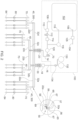
- the delivery system 10 includes a control module 12, a tank and pump assembly 100, 200, a valve assembly 20, 30, foam mixing chambers 40, monitoring units 70, control valves 80 and delivery nozzles 84.
- the control module 12 includes a "computing device” or “electronic device” that includes a processor and non-transitory, computer-readable memory.
- the memory may contain programming instructions that, when executed by the processor, cause the computing device to perform one or more operations according to the programming instructions.
- a "computing device” or “electronic device” may be a single device, or any number of devices having one or more processors that communicate with each other and share data and/or instructions.
- Examples of computing devices or electronic devices include, without limitation, personal computers, servers, mainframes, and portable electronic devices such as smartphones, personal digital assistants, tablet computers, laptop computers and the like.
- the control module 12 may be a standalone device or may be integrated with computing or electronic devise already provided on the agricultural equipment.
- the control module 12 is configured to communicate with the agricultural equipment to monitor the operating state of the agricultural equipment, for example, the ground speed of the equipment and the operational state of each planter (e.g. planting or not planting, seed delivery rate).
- the control module 12 is also configured to communicate with various components of the delivery system to receive operational information from the components and to send control signals to the components as will be described in more detail hereinafter.
- the control module 12 may also be configured to communicate with a remote network.
- the control module 12 may send information to the remote network, for example, operating history of the delivery system 10, such that the information may be stored, analyzed or otherwise used apart from the delivery system 10.
- the control module 12 may receive information from the remote network which may assist with control of the components. For example, historical data on chemical selection and application rate for a given crop in a given region may be communicated to the control module 12 to facilitate optimization of the delivery system 10. Other storage, processing and control may be completed utilizing the control module 12, alone or in combination with the remote network.
- tank mixing the chemical formulation and water are contained within a single tank 102 (referred to as "tank mixing" herein).
- the tank 102 has a sufficient capacity (e.g. 566 1 (150 gallons)).
- the water conduit (or line, which may be used interchangeably throughout this disclosure) 104 is coupled to the tank 102 to provide water from an external source for mixing with the chemical formulation.
- the water conduit includes a valve 105 for controlling the flow of water and can be operated on a continuous or intermittent basis, as so desired.
- a tank rinse nozzle 106 can be incorporated into water conduit 104 which can accelerate and disperse the water about the interior of the tank at sufficient pressure to remove any chemical residue or debris.
- conduit 100 as a water delivery line, it will be understood by artisans of ordinary skill that a medium other than, or in addition to, water can be employed in the system described herein.
- the tank mix configuration of the present system mixes the chemical formulation with water in a single tank to achieve the desired application rate of both water and chemical formulation.
- the mixed solution exits the tank through a line 108 and a hand controlled ball valve 110 into a strainer 112.
- the line contains a tee that will allow for a vacuum switch 114, which monitors the line to verify that there is solution in the system.
- the vacuum switch is preferably in communication with the control module 12, and if no solution is detected, the control module 12 can generate an alarm to alert an operator to check for blockages, or a shut off signal to terminate the system operation. Further downstream the line then tees again to allow for an optional pump 116 that can be used for agitation.
- the pump 116 and agitation line 118 are provided to deliver a medium, e.g. water, into the tank at a controlled pressure so as to stir up the solution.
- a medium e.g. water
- the chemical formulation employed within the system may remain stable and dispersed without the need for agitation, thereby rendering the agitation pump and line unnecessary.
- the main line 108 then enters a pump 120 which is monitored by the control module 12 to maintain an optimal flow rate.
- the speed of the pump is adjusted by the control module 12 to maintain the desired rate based on various factors, for example, ground speed or section width of the planter.
- the pump 120 is a 12-volt electric positive displacement metering pump that is rated for a maximum flow of 1.25kg (44 ounces) per minute.
- the pump is preferably a positive displacement, non-return metering pump.
- Downstream of the pump 120, the fluid stream (i.e. mixture of chemical formulation and water) then continues to a solenoid valve manifold block 20 through line 14.
- a monitoring unit 70 may be positioned along the line 14 to insure the flow has not been interrupted.
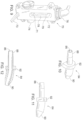
- Fig. 9 depicts an exemplary monitoring unit 70.
- the monitoring unit 70 includes a housing 72 with an internal chamber 78 with an inlet 74 and an outlet 76.
- a contact 71 is provided at the bottom of the chamber 78 and a cartridge 79 is configured to move within the chamber 78.
- the cartridge 79 is configured such that when proper flow exists between the inlet 74 and the outlet 76, the cartridge 79 is suspended within the chamber 78 and spaced from the contact 71. If the flow is blocked or otherwise improper, the cartridge 79 drops and contacts the contact 71, thereby causing a signal indicating improper flow to be sent through wires 73 (or wirelessly) to the control module 12.
- the control module 12 can generate an alarm to alert an operator to check for blockages and/or a shut off signal to terminate the system operation.
- the manifold 20 divides the fluid stream into four separate sub-streams 22a-d, with each sub-stream directed towards a respective foam mixing chamber 40.
- Manifold 20 houses a valve (e.g. solenoid) for each of the sub-streams 22a-d, which can operate independently of each other under the control of the control module 12. Accordingly, only select lines 22a-d can be operated at a given time. Likewise, a first line can be operated in a first mode (e.g. continuously) while a second line can be operated in a second mode (e.g. intermittingly).
- a compressed air line 16 is also provided which includes one or more compressors 130, 132. From the compressor(s), the air line passes thru a relief valve 134 which allows the high pressure air that can buildup on the compressor diaphragm to be evacuated. The small diaphragm compressors that are being used will not start with high pressure on them, and to help with power consumption form the tractor, the compressor(s) are started with only atmospheric pressure on them. From the relief valve 124, the high pressure air flows thru a pressure regulator 18, through a second valve manifold 30 and to a respective foam mixing chamber 40. Manifold 30 houses a valve (e.g. solenoid) for each of the sub-streams 32a-d, which can operate independently of each other under the control of the control module 12.
- a valve e.g. solenoid
- first line can be operated in a first mode (e.g. continuously) while a second line can be operated in a second mode (e.g. intermittingly).
- the chemical formulation and medium e.g. water
- injection mixing the chemical formulation and medium
- the water is stored in a first tank 202 and the chemical is kept in a separate tank 202. While only one chemical tank is illustrated, it is contemplated that more than one chemical tank may be provided whereby the control module 12 may select a desired chemical for a specific application and/or may mix multiple chemicals to achieve the desired foamable formation.
- the chemical stream exits the chemical tank 204 thru a line 206 and a hand controlled ball valve 208 into a strainer 210.
- the line 206 contains a tee that will allow for a vacuum switch 212 which will monitor the line to verify that there is chemical in the system and no blocks in the supply line.
- the vacuum switch 212 is preferably in communication with the control module 12, and if no chemical is detected, the control module 12 can generate an alarm to alert an operator to check for blockages, or a shut off signal to terminate the system operation.
- the chemical line then enters a metering pump 214.
- the pump 214 may be, for example, a 12-volt electric positive displacement pump that is rated for a maximum flow of 567g (20 ounces) per minute.
- the pump is monitored by the control module 12 for flow rate.
- the control module 12 may monitor the pump's speed with a magnet wheel and a Hall Effect sensor.
- the speed of the pump 214 is adjusted by the control module 12 to maintain the desired rate based on ground speed, width and/or GPS derived prescription.
- the chemical stream then continues thru a monitoring unit 70, as described above, that monitors if the flow of chemical has been interrupted.
- the chemical line then continues on to a cross with an electronic pressure transducer 216 and a hydrostatic relief valve 218 to protect the pump 214.
- the chemical line then continues through a check valve 220 and on to a tee or mixing device 240.
- the line contains a tee that will allow for a vacuum switch 228 which monitors the line to verify that there is water in the system and no blocks in the supply line.
- the vacuum switch 228 is preferably in communication with the control module 12, and if no water is detected, the control module 12 can generate an alarm to alert an operator to check for blockages, or a shut off signal to terminate the system operation.
- the water line then enters a metering pump 230.
- the pump 230 may be, for example, a 12-volt electric positive displacement pump that is rated for a maximum flow of 1.1kg (40 ounces) per minute.
- the pump 230 is monitored by the control module 12 for flow rate.
- the control module 12 may monitor the pump's speed with a magnet wheel and a Hall Effect sensor.
- the speed of the pump 230 is adjusted by the control module 12 to maintain the desired rate based on ground speed, width and/or GPS derived prescription.
- the water stream then continues thru a monitoring unit 70, as described above, that monitors if the flow of chemical has been interrupted.
- the water line then continues to a cross with an electronic pressure transducer 232 and a hydrostatic relief valve 234 to protect the pump 230.
- the water line then continues through a check valve 236 and on to the tee or mixing device 240.
- the now mixed solution of water and foamable formulation continues on to a valve manifold block 20 via the line 14 similar and continues therefrom as described with respect to the previous embodiment.
- a flush line 242 may be connected with the line 14 via a check valve 244.
- a compressed air line 16 is also provided which includes one or more compressors 250, 252. From the compressor(s), the air line passes thru a relief valve 254 which allows the high pressure air that can buildup on the compressor diaphragm to be evacuated. The small diaphragm compressors that are being used will not start with high pressure on them, and to help with power consumption form the tractor, the compressor(s) are started with only atmospheric pressure on them. From the relief valve 254, the high pressure air flows to the pressure regulator 18 and then continues in the manner described with respect to the previous embodiment.
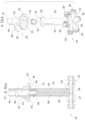
- each foam mixing chamber 40 includes a chamber body 42 and a mixing tee 50.
- the chamber body 42 includes a tube 44 with a hollow interior chamber 45.
- the chamber 45 is communication with an inlet port 43 and a manifold head 48 via an internal passage 47.
- the manifold head 48 defines a plurality of outlet ports 49.
- the manifold head 48 is provided with six outlet ports 49, however, more or fewer outlet ports 49 may be provided. Additionally, ports 49 which are not needed may be capped.
- a flange 46 is provided about the inlet port 43 for connection with the mixing tee 50.
- the mixing tee 50 includes a body 52 with a connection flange 54 extending about the tee outlet port 53.
- a seat 55 is provided to receive the flange 46 such that the tee outlet port 53 is in communication with the inlet port 43.
- the flange 46 connects within the seat 55 with an interference fit.
- alternative coupling arrangements e.g. threaded connection, tongue-and-grove mating, etc.
- the mixing tee 50 can be formed integrally with the chamber body 42 such that the assembly is a unitary component.
- the tee body 52 defines an air connection 56 with an inlet port 57 and a fluid connection 58 with an inlet port 59.
- Both ports 57 and 59 are in communication with the tee outlet port 53.
- air coming from the air line 32a-d preferably passes through a check valve strainer 65 and an orifice plate 67 as it enters the port 59.
- the orifice plate 67 includes a through hole sized to permit passage of a desired air flow.
- fluid coming from the fluid line 22 a-d passes through a check valve strainer 65, an orifice core 69 and an orifice plate 67.
- the orifice plate 67 again includes a through hole sized to permit passage of a desired fluid flow while the orifice core 69 engages the fluid flow and begins to agitate the foamable formulation.
- the interior chamber 45 houses a foaming medium 66 configured to agitate the foamable formulation as it passes through the chamber 45.
- the foaming medium 66 includes a plurality of glass spheres 68 packed tightly within the chamber 45.
- the spheres 68 are chosen to have a size which provides a desired amount of surface contact area to achieve the desired foam expansion.
- the spheres 68 may have a diameter of 5-6 mm.
- the length of the chamber 45 may similarly be selected to achieve a desired expansion. It is contemplated that other foaming mediums may be utilized, for example, steel wool, provided the medium provides a predictable rate of expansion.
- an upper screen 63 is positioned over the internal passage 47 and a lower screen 61 is maintained by a locking plug 60 positioned in the inlet port 43.
- the locking plug 60 includes a through passage 62 to allow flow into the chamber 45.
- the locking plug 60 may have an interference fit, threaded fit or the like.
- the mixture of chemical formulation and water enterers the foam mixing chamber 40 through the inlet port 59 on the mixing tee 50 and the compressed air stream enters the inlet port 59 of the mixing tee 50.
- the pressured air flow through the inlet port 59 drives the solution into the interior chamber 45 such that the solution passes through foaming medium 66 and foams.
- the foamed solution exits through the internal passage 47 into the manifold head 48 from which the foamed solution is distributed through the outlet ports 49.
- the foam mixing chamber 40 is preferably oriented in a vertical orientation with the outlet ports 49 above the inlet ports 57, 59. Such vertical orientation is believed to improve the foam quality and/or prevent the solution from pooling in the mixing chamber 45.
- the foam mixing chamber 300 generally includes an outer housing member 300, a mixing tee 320 and an internal divider member 330.
- the outer housing member includes a tube 304 with a hollow interior chamber 305 extending between an open end 303 to a closed end 306.
- a manifold head 308 is provided proximate the open end 303 and defines a plurality of outlet ports 309 in communication with the interior chamber 305.
- the manifold head 308 is provided with six outlet ports 309, however, more or fewer outlet ports 309 may be provided. Additionally, ports 309 which are not needed may be capped.
- a flange 310 is provided about the open end 303 for connection with the mixing tee 320.
- the mixing tee 320 is similar to the previous embodiment and includes a body 322 with a connection flange 324 extending about the tee outlet port 323.
- a seat 325 is provided to receive a flange 334 of the internal divider member 330 as described below.
- the tee body 322 defines an air connection 326 with an inlet port 327 and a fluid connection 328 with an inlet port 329. Both ports 327 and 329 are in communication with the tee outlet port 323.
- a check valve strainer 65, an orifice plate 67 and/or an orifice core 69 may be positioned in the ports 327, 329.
- the internal divider member 330 includes a tubular body 332 defining an interior chamber 335 extending between an inlet port 333 and an outlet port 337.
- a flange 334 is provided about the inlet port 333 such that when it is seated in the seat 325 of the mixing tee 320, the inlet port 333 is aligned with the tee outlet port 323.
- the interior divider member 330 defines a passage 311 between the outer housing member 302 and the interior divider member 330.
- the passage 311 communicates between the outlet port 337 and the outlet ports 309.
- the flange 334 seals with respect to the outer housing member 302 such that the tee outlet 323 is not in communication with the passage 311, an instead flow from the mixing tee 320 must flow through the plug passage 62 and into the interior chamber 335 as indicated by arrow A.
- the interior chamber 335 contains a mixing medium 66, for example glass spheres 68, similar to the previous embodiment.
- the incoming solution flows through the foaming medium 66 and the foam flows out of the outlet 337.
- the foam is redirected by the closed end 306 to flow through the passage 311 to the outlet ports 309, as indicated by the arrows B and C.
- the manifold head 308 distributes the foam to flow out of the outlet ports 309 as indicated by arrow D.
- Either foam mixing chamber 40, 300 configuration can be employed in the "tank mixing” or “injection mixing” configurations. Furthermore, some applications can employ a combination of the two configurations. Both foaming chamber configurations are advantageous in that they provide for forming of a foam internally, i.e., without exposure to ambient conditions such as wind or excess water which may undesirably dilute the chemical formulation. Moreover, forming the foam at a location upstream from the dispensing nozzles, as disclosed herein, is beneficial in that it can provide additional dwell time for the formulation to mix or dissolve within the water. This additional dwell time provides a more consistent mixture and for a "fully developed" hydrodynamic flow profile to be established within conduit leading to the dispensing nozzles.
- the foam stream exiting the foam mixing chamber 40, 300 is directed to a respective nozzle 84 for direct delivery within a respective planting furrow.
- a monitoring unit 70 and a control valve 80 are positioned along each specific line.
- the monitoring unit 70 as described above, is configured to monitor if a sufficient foam flow is passing therethrough. If the control module 12 receives a signal indicating that foam flow is not sufficient, the control module 12 can generate an alarm to alert an operator to check for blockages and/or a shut off signal to terminate the system operation.
- the control valves 80 are controlled by the control module 12 and can be control to close the row line to stop the stream of foam when the planter is, for example, stopped or turning. Additionally, the system can be configured such that the valve 80 is controlled for intermittent application of the foam. For example, the foam may be applied only directly to each seed and the flow stopped during the travel between seeds.
- Each nozzle 84 includes an internal passage 86 extending from a proximate end 88 to a distal end 90.
- the proximate end 88 is configured with a diameter which allows the proximate end 88 to be readily inserted within the foaming line.
- the proximate end 92 can also be tapered or pointed to further ease the insertion of the nozzle into the foaming line.
- the nozzle 84 includes a flange 92 disposed between the two ends of the nozzle which serves as a stop member to prevent over-insertion of the nozzle within the foaming line.
- the distal end 90 of the nozzle 84 acts as the dispensing orifice.
- the distal end 90 may include a sharp degree of taper which is beneficial in that in facilitates dispensing or release of the foam rope, as compared to blunt nozzle discharge orifices wherein the foam often clings to the nozzle and expand or grow to the size of that blunt end.
- An additional benefit of the tapered dispensing end 90 is that it does not reduce foam discharge velocity (as blunt orifices are known to do) and in some instances can serve to accelerate the velocity of the foam being dispensed, thereby providing a more continuous discharge rope within a furrow, particularly when the planter is traveling at high speeds.
- the foam dispensing system described herein can be incorporated into a seed planting device such that the seed and foam are dispensed simultaneously.
- the foam discharge nozzle can be located to dispense foam either in front of the seed tube or behind the seed tube depending on customer practices and preferences. In some applications it is beneficial to dispense the foam after the seed has been ejected from the planter so that the seed is ensured to make sufficient contact with the soil.
- the foaming discharge rate can be adjusted as needed in applications in which the foam is dispensed in advance of the seed to ensure that the proper amount of foam is deposited in the furrow so as to avoid over saturating or filling the furrow and "floating" the seed such that there is too little contact with the soil.
- the nozzle can be configured to articulate so as to provide a non-linear (e.g. zig-zag) rope of foam into the furrow.
- the valves within the lines can be operated independently to control the flow of water, air and/or chemical formulation to discharge foam on a continuous or intermittent basis, as so desired.
- the apparatus and methods disclosed herein provide an optimal foaming system that is capable of operating over a range of speeds, while minimizing the volume of chemical formulation employed.
- some exemplary ranges include approximately 0.28-1.12 kg/ha (4-16 oz/acre) of chemical formulation and 1,68-4.48 kg/ha (24-64 oz/acre) of water per acre with a planter having a ground speed ranging from 3.2-11.2 km/h (2-7 miles per hour).
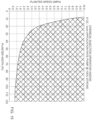
- Figs. 13-17 depict graphical representations of exemplary speeds and plantar width ranges of the delivery system 10 when using, for example, a 12-volt electric positive displacement pump. Other results may be achieved utilizing other equipment.
- the graphs represent the significant flexibility of the delivery system 10 by controlling the various components via the control module 12. With such flexibility, it is not necessary for the user to reconfigure the system each time operating conditions are varied.
- Example 5 formulation was equal or better than the currently marketed by FMC Corporation, Capture ® LFR ® Insecticide which is a formulation that also contains bifenthrin as active ingredient; and a commercial Corn Rootworm standard treatment using Force ® 3G, which contains tefluthrin insecticide distributed by AMVAC.
- Test plots were prepared by preparing the test fields for planting followed by planting field corn and treating the planted furrows with either Capture ® LFR ® Insecticide with liquid fertilizer, Force ® 3G insecticide or foam created using the formulation of Example 5 prior to covering the furrow. Untreated control test plots were also included. The data collected from five locations in the Midwest including Coleman, SD, Concord, NE, Wyoming, IL, Clay Center, NE and Nashua, IA shown in the following Table A.
- Example 5 formulation of the present invention had significantly lower corn rootworm feeding damage than the untreated.
- the Example 5 formulation further exhibited equal to or better than control of corn rootworm feeding than that of Capture ® LFR ® and Force ® 3G.
- the level of feeding damage prevention was statistically equal to the comparative formulations (P ⁇ 0.10, Duncan's New MRT). Table A.
- Example 5 formulation of bifenthrin applied at low total volume rates per surface area (3.4 and 2.2 kg/ha (48 and 32 oz/acre)) provide corn rootworm feeding damage protection that is statistically equal to or better than Capture ® LFR ® applied at 47 1/ha (5gallons/acre) of liquid fertilizer and statistically equal to Force ® 3G.
Landscapes
- Life Sciences & Earth Sciences (AREA)
- Health & Medical Sciences (AREA)
- General Health & Medical Sciences (AREA)
- Pest Control & Pesticides (AREA)
- Engineering & Computer Science (AREA)
- Plant Pathology (AREA)
- Zoology (AREA)
- Dentistry (AREA)
- Wood Science & Technology (AREA)
- Agronomy & Crop Science (AREA)
- Environmental Sciences (AREA)
- Toxicology (AREA)
- Chemical & Material Sciences (AREA)
- Chemical Kinetics & Catalysis (AREA)
- Organic Chemistry (AREA)
- Mechanical Engineering (AREA)
- Dispersion Chemistry (AREA)
- Agricultural Chemicals And Associated Chemicals (AREA)
- Fertilizers (AREA)
- Pretreatment Of Seeds And Plants (AREA)
- Medicinal Preparation (AREA)
- Catching Or Destruction (AREA)
Priority Applications (1)
| Application Number | Priority Date | Filing Date | Title |
|---|---|---|---|
| EP23194346.5A EP4282272A3 (en) | 2013-09-30 | 2014-09-30 | Method of delivering an agriculturally active ingredient |
Applications Claiming Priority (4)
| Application Number | Priority Date | Filing Date | Title |
|---|---|---|---|
| US201361884369P | 2013-09-30 | 2013-09-30 | |
| US201361891729P | 2013-10-16 | 2013-10-16 | |
| US201361893003P | 2013-10-18 | 2013-10-18 | |
| PCT/US2014/058340 WO2015048757A2 (en) | 2013-09-30 | 2014-09-30 | Foam formulations and apparatus for delivery |
Related Child Applications (2)
| Application Number | Title | Priority Date | Filing Date |
|---|---|---|---|
| EP23194346.5A Division EP4282272A3 (en) | 2013-09-30 | 2014-09-30 | Method of delivering an agriculturally active ingredient |
| EP23194346.5A Division-Into EP4282272A3 (en) | 2013-09-30 | 2014-09-30 | Method of delivering an agriculturally active ingredient |
Publications (2)
| Publication Number | Publication Date |
|---|---|
| EP3051944A2 EP3051944A2 (en) | 2016-08-10 |
| EP3051944B1 true EP3051944B1 (en) | 2023-11-01 |
Family
ID=51842796
Family Applications (2)
| Application Number | Title | Priority Date | Filing Date |
|---|---|---|---|
| EP14790850.3A Active EP3051944B1 (en) | 2013-09-30 | 2014-09-30 | Method of delivering an agriculturally active ingredient |
| EP23194346.5A Pending EP4282272A3 (en) | 2013-09-30 | 2014-09-30 | Method of delivering an agriculturally active ingredient |
Family Applications After (1)
| Application Number | Title | Priority Date | Filing Date |
|---|---|---|---|
| EP23194346.5A Pending EP4282272A3 (en) | 2013-09-30 | 2014-09-30 | Method of delivering an agriculturally active ingredient |
Country Status (17)
| Country | Link |
|---|---|
| US (5) | US10834921B2 (enExample) |
| EP (2) | EP3051944B1 (enExample) |
| JP (2) | JP6863739B2 (enExample) |
| KR (2) | KR102508139B1 (enExample) |
| CN (2) | CN114097779A (enExample) |
| AU (4) | AU2014324442B2 (enExample) |
| BR (1) | BR112016006171A2 (enExample) |
| CA (1) | CA2923994C (enExample) |
| CL (1) | CL2016000694A1 (enExample) |
| ES (1) | ES2973335T3 (enExample) |
| GT (1) | GT201600060A (enExample) |
| MX (2) | MX385093B (enExample) |
| NZ (1) | NZ719046A (enExample) |
| UA (1) | UA120354C2 (enExample) |
| UY (1) | UY35757A (enExample) |
| WO (1) | WO2015048757A2 (enExample) |
| ZA (1) | ZA201602067B (enExample) |
Families Citing this family (11)
| Publication number | Priority date | Publication date | Assignee | Title |
|---|---|---|---|---|
| BR112016006171A2 (pt) | 2013-09-30 | 2020-05-19 | Fmc Corporation | formulações de espuma e dispositivo para sua entrega |
| UY36181A (es) | 2014-06-24 | 2016-09-30 | Fmc Corp | Formulaciones de espumas y concentrados emulsionables |
| MA44111A (fr) * | 2015-12-23 | 2018-10-31 | Fmc Corp | Traitement in situ de semences dans un sillon |
| GB201612925D0 (en) * | 2016-07-26 | 2016-09-07 | Provensis Ltd | Method and device for generating injectable foam |
| DK3490376T3 (da) | 2016-07-29 | 2023-06-12 | Fmc Corp | Markeringssystem til bekræftelse af egnede agrokemiske sammensætninger og formuleringer |
| BR112019004640B1 (pt) | 2016-09-09 | 2022-07-26 | Fmc Corporation | Sistema de dispersão química concentrada e método para dispersar uma substância química concentrada |
| CN109497086B (zh) * | 2018-12-24 | 2021-04-23 | 赵言元 | 一种微泡沫杀虫剂及其制备方法 |
| MX2023009934A (es) * | 2021-02-25 | 2023-11-28 | Willowood Chemicals Ltd | Composición insecticida que comprende diamida, agonista de la hormona de la muda y piretroide. |
| KR102740532B1 (ko) * | 2021-11-03 | 2024-12-16 | 대한민국 | 스마트 온실 로봇을 위한 농약 자동 공급 장치 및 그 동작 방법 |
| WO2023161736A1 (en) | 2022-02-22 | 2023-08-31 | Precision Planting Llc | Seed retaining |
| WO2023161738A1 (en) | 2022-02-22 | 2023-08-31 | Precision Planting Llc | Method to maintain seed spacing |
Family Cites Families (113)
| Publication number | Priority date | Publication date | Assignee | Title |
|---|---|---|---|---|
| US858601A (en) * | 1906-06-02 | 1907-07-02 | John Ehrhardt Jr | Plaster-board. |
| US3165114A (en) | 1962-08-15 | 1965-01-12 | Curran L Garrett | Dispensing package for fluid soluble materials |
| US3618856A (en) | 1967-04-28 | 1971-11-09 | Range Engineering Dev Corp | Method and means for dispersing foam |
| US3879550A (en) | 1973-05-02 | 1975-04-22 | American Cyanamid Co | 3,5-BIS(4-PYRIDYLMETHYL)-2H-13,5-tetrahydrothiodiazine-2-thione used as a fungicide |
| US3922977A (en) | 1973-08-02 | 1975-12-02 | Gen Foods Corp | Plant husbandry |
| DE2422954A1 (de) * | 1974-05-11 | 1975-11-13 | Bayer Ag | Mittel zur reduzierung der drift beim ausbringen waessriger spritzbruehen von pflanzenschutzmitteln |
| US4038037A (en) * | 1974-09-10 | 1977-07-26 | Wilmsen Hans | Apparatus for the manufacture of homogeneous, fine-pored synthetic resin foams |
| GB1582445A (en) * | 1976-04-10 | 1981-01-07 | British Industrial Plastics | Urea-formaldehyde resin foams and apparatus for their production |
| GB1582446A (en) * | 1977-07-11 | 1981-01-07 | British Industrial Plastics | Apparatus for the production of aminoplast resin foam |
| US4190427A (en) * | 1977-05-04 | 1980-02-26 | General Foods Corporation | Plant care composition |
| US4356934A (en) | 1977-11-18 | 1982-11-02 | Chevron Research Company | Apparatus for spray-treating seeds during planting |
| SU858601A1 (ru) | 1980-01-30 | 1981-08-30 | Московская Ордена Ленина И Ордена Трудового Красного Знамени Сельскохозяйственная Академия Им.К.А.Тимирязева | Способ посадки картофел |
| US4366081A (en) * | 1980-05-09 | 1982-12-28 | Hull Donald A | Mixing apparatus for foam generation |
| US4394289A (en) * | 1981-07-01 | 1983-07-19 | Brown Lamar W | Continuous foam generating system |
| US4405779A (en) | 1981-07-09 | 1983-09-20 | Wiley Richard H | 6-(Carbo-t-butoxy)-3-mercapto-4-acetamino-1,2,4-triazin-5-ones |
| DE3134230A1 (de) | 1981-08-29 | 1983-03-10 | Bayer Ag, 5090 Leverkusen | Verfahren zur herstellung von 4-methyl-5-oxo-3-thioxo-tetrahydro-1,2,4-(2h,4h)-triazinen |
| DE3485439D1 (de) * | 1983-10-24 | 1992-02-20 | Lockley Services Pty Ltd | Schaumbare biozidezusammensetzung. |
| DE3425078A1 (de) * | 1984-07-07 | 1986-02-06 | Bernhard 7913 Senden Holz | Einrichtung zum erzeugen von schaum |
| US4538545A (en) * | 1984-07-11 | 1985-09-03 | Rio Linda Chemical Co., Inc. | Foam generating and distributing manifold apparatus |
| US4638926A (en) | 1985-10-31 | 1987-01-27 | Brock James R | Wettable spray box |
| US4836939A (en) | 1986-07-25 | 1989-06-06 | Rockwood Systems Corporation | Stable expandable foam & concentrate & method |
| US4872785A (en) * | 1988-01-22 | 1989-10-10 | Schrage Timothy L | Shut-off means for air-actuated planter |
| US5031834A (en) | 1988-12-02 | 1991-07-16 | Virgil Simpson | Marking foam system for agricultural equipment |
| US4975425A (en) * | 1989-03-16 | 1990-12-04 | Mobay Corporation | Pesticidal and herbicidal foams |
| EP0400914B1 (en) | 1989-06-02 | 1996-06-26 | Pfizer Inc. | Agricultural foam compositions |
| UA19185A (uk) | 1989-12-11 | 1997-12-25 | Дніпропетровський хіміко-технологічний інститут | Засіб для передпосівhої обробки hасіhhя ярового ячмеhю і гороху |
| DE4002297A1 (de) | 1990-01-26 | 1991-08-01 | Bayer Ag | Trisubstituierte 1,2,4-triazin-3,5-dione und neue zwischenprodukte |
| US4981178A (en) * | 1990-03-16 | 1991-01-01 | Bundy Eric D | Apparatus for compressed air foam discharge |
| US5834006A (en) | 1990-04-05 | 1998-11-10 | Dow Agrosciences Llc | Latex-based agricultural compositions |
| GB2247411A (en) * | 1990-06-26 | 1992-03-04 | Ics Texicon Ltd | Producing foam |
| US5308827A (en) | 1990-11-28 | 1994-05-03 | Fumakilla Limited | Herbicidal foam composition |
| JPH05904A (ja) | 1990-11-28 | 1993-01-08 | Fumakilla Ltd | フオーム状除草製剤及びその施用方法 |
| EP0488668B1 (en) | 1990-11-28 | 1997-04-23 | Fumakilla Limited | Foam-forming herbicidal composition and method of application |
| JPH07119162B2 (ja) | 1991-03-29 | 1995-12-20 | 大日本除虫菊株式会社 | 発泡エアゾール殺虫剤ならびにこれを用いた塗布方法 |
| FR2679101B1 (fr) | 1991-07-17 | 1993-11-26 | Quinoleine Derives | Procede de protection de semences vegetales et dispositif permettant la mise en óoeuvre du procede. |
| RU2016016C1 (ru) | 1992-05-20 | 1994-07-15 | Товарищество с ограниченной ответственностью "Вакант" | Состав для искусственного янтаря и способ получения искусственного янтаря |
| US5798316A (en) | 1992-08-26 | 1998-08-25 | Theodoridis; George | Herbicidal combinations containing 2- (4-heterocyclic-phenoxymethyl)phenoxy!alkanoates |
| US5255747A (en) * | 1992-10-01 | 1993-10-26 | Hale Fire Pump Company | Compressed air foam system |
| US5460106A (en) | 1993-09-24 | 1995-10-24 | Foam Innovations, Inc. | Method, apparatus and device for delivering and distributing a foam containing a soil additive into soil |
| IL116148A (en) | 1994-11-30 | 2001-03-19 | Rhone Poulenc Agrochimie | Complexible composition for insect control |
| JPH08225414A (ja) | 1994-11-30 | 1996-09-03 | Nippon Nohyaku Co Ltd | 白蟻類防除用乳化性組成物及びその使用方法 |
| US5881493A (en) | 1995-09-14 | 1999-03-16 | D. B. Smith & Co. Inc. | Methods for applying foam |
| US6453832B1 (en) | 1997-06-23 | 2002-09-24 | Paul E. Schaffert | Liquid distribution apparatus for distributing liquid into a seed furrow |
| GB2306965B (en) * | 1995-11-06 | 1999-09-01 | American Cyanamid Co | Aqueous spray compositions |
| CA2169008C (en) | 1996-02-07 | 2006-10-03 | Russell J. Memory | Seed coating apparatus |
| DE19606594A1 (de) | 1996-02-22 | 1997-08-28 | Bayer Ag | Substituierte 2-Aryl-1,2,4-triazin-3,5-di(thi)one |
| GB9621589D0 (en) | 1996-10-16 | 1996-12-04 | Culmstock Ltd | Pesticidal methods, compositions and devices |
| US5900191A (en) * | 1997-01-14 | 1999-05-04 | Stable Air, Inc. | Foam producing apparatus and method |
| US5816502A (en) | 1997-04-08 | 1998-10-06 | Sperry; Judy O. | Lawn chemical dispersal system |
| US7022651B1 (en) | 1997-08-06 | 2006-04-04 | Lightcap Jr Donald V | Composition, method, and apparatus for protecting plants from injury caused by frost or freezing temperatures |
| US6071858A (en) | 1997-12-12 | 2000-06-06 | Bayer Corporation | Stable, dry compositions for use as herbicides |
| US6289829B1 (en) | 1998-09-18 | 2001-09-18 | Aventis Cropscience S.A. | Planting apparatus with improved liquid pesticide delivery device and related method for delivering liquid pesticide |
| US6180088B1 (en) | 1998-11-17 | 2001-01-30 | Nihon Nohyaku Co., Ltd. | Foamable aerosol agricultural-chemical composition and method of controlling diseases and insect pests |
| WO2001089503A1 (en) * | 2000-05-19 | 2001-11-29 | Effcon Laboratories, Inc. | Pest treatment composition |
| EP1318720A2 (en) | 2000-09-14 | 2003-06-18 | Stepan Company | Antimicrobial ternary surfactant blend comprising cationic, anionic, and bridging surfactants, and methods of preparing same |
| NZ512271A (en) * | 2001-06-08 | 2003-09-26 | Stuart Dundonald Reid | Travelling irrigator with governor controlling winding speed and depth of liquid application |
| US6651908B1 (en) | 2001-07-12 | 2003-11-25 | Richway Industries, Ltd. | Foam marking device for yards |
| US6718891B1 (en) * | 2001-08-06 | 2004-04-13 | David Burbage, Jr. | Row control system for vacuum operated seed planter |
| US7658948B2 (en) | 2005-01-07 | 2010-02-09 | The Andersons, Inc. | Foaming granule and method for making same |
| WO2003026422A1 (en) | 2001-09-26 | 2003-04-03 | Platte Chemical Co. | Herbicide microemulsion-forming-concentrates, microemulsions, and methods |
| US6755400B2 (en) | 2001-10-26 | 2004-06-29 | Michael F. Howe | Foam generator, foamable pesticide, and method |
| JP4071036B2 (ja) | 2001-11-26 | 2008-04-02 | クミアイ化学工業株式会社 | バシルスsp.D747菌株およびそれを用いた植物病害防除剤および害虫防除剤 |
| US8119150B2 (en) * | 2002-10-25 | 2012-02-21 | Foamix Ltd. | Non-flammable insecticide composition and uses thereof |
| EP1599451B1 (en) | 2002-12-03 | 2013-04-24 | Merial Limited | Pesticidal 1-aryl-3-amidoxime-pyrazole derivatives |
| JP2004195329A (ja) * | 2002-12-17 | 2004-07-15 | Kitagawa Iron Works Co Ltd | 電解生成物及びその製造方法 |
| PT1599463E (pt) | 2003-01-28 | 2013-09-03 | Du Pont | Insecticidas à base de ciano-antranilamida |
| US7370589B2 (en) | 2003-04-24 | 2008-05-13 | University Of Tennessee Research Foundation | Systems and methods for fluid dispensing |
| US6990911B2 (en) | 2003-06-17 | 2006-01-31 | Ag-Solutions, Inc. | Seed planting assembly and liquid application device for same |
| US20050215433A1 (en) | 2004-03-26 | 2005-09-29 | Benitez Francisco M | Aromatic fluid as agricultural solvent |
| DE102004062775A1 (de) * | 2004-12-21 | 2006-06-29 | Stockhausen Gmbh | Alkoholischer Pumpschaum |
| EP1830869B1 (en) | 2004-12-24 | 2013-05-22 | Spinifex Pharmaceuticals Pty Ltd | Method of treatment or prophylaxis |
| US9919979B2 (en) * | 2005-01-21 | 2018-03-20 | Bayer Cropscience Lp | Fertilizer-compatible composition |
| KR101328861B1 (ko) | 2005-03-21 | 2013-11-14 | 바스프 에스이 | 살충제 혼합물 |
| WO2006124508A1 (en) * | 2005-05-19 | 2006-11-23 | Fmc Corporation | Insecticidal compositions suitable for use in preparation of insecticidal liquid fertilizers |
| AU2006254350B2 (en) * | 2005-05-31 | 2011-05-12 | Rijk Zwaan Zaadteelt En Zaadhandel B.V. | Method of producing haploid and doubled haploid plant embryos |
| CN100382700C (zh) | 2005-06-03 | 2008-04-23 | 南京第一农药有限公司 | 联苯菊酯水乳剂及其制备工艺 |
| WO2007085899A2 (en) | 2005-07-06 | 2007-08-02 | Foamix Ltd. | Foamable arthropocidal composition for tropical application |
| US7318581B2 (en) * | 2005-08-01 | 2008-01-15 | Natural Choice Corporation | Carbonating apparatus |
| EP3009000A1 (en) * | 2005-12-22 | 2016-04-20 | FMC Corporation | Formulations of bifenthrin and enriched cypermethrin |
| EP2041089A1 (en) | 2006-06-30 | 2009-04-01 | Basf Se | Substituted 1-(azolin-2-yl)-amino-2-aryl-1-hetaryl-ethane compounds |
| JP2008074659A (ja) * | 2006-09-21 | 2008-04-03 | Taiheiyo Cement Corp | 気泡混入珪酸カルシウム硬化体 |
| ITMI20062368A1 (it) | 2006-12-11 | 2008-06-12 | Isagro Spa | Composizioni erbicide |
| WO2008105964A1 (en) | 2007-02-26 | 2008-09-04 | Stepan Company | Adjuvants for agricultural applications |
| AR065986A1 (es) | 2007-04-12 | 2009-07-15 | Uniqema Americas Inc | Composiciones agroquimicas |
| WO2009007328A2 (de) | 2007-07-06 | 2009-01-15 | Basf Se | Verwendung von homo- und copolymeren zur stabilisierung von wirkstoffformulierungen |
| JP5048775B2 (ja) | 2007-08-31 | 2012-10-17 | 日本曹達株式会社 | 効力の増強された農薬組成物および農薬活性成分の効力の増強方法 |
| US7658233B1 (en) * | 2008-09-03 | 2010-02-09 | Aho Melvin S | Self-propelled transportable rock picker |
| JP5459755B2 (ja) | 2008-09-30 | 2014-04-02 | 住化エンビロサイエンス株式会社 | 害虫駆除剤 |
| US20130164361A1 (en) * | 2009-03-28 | 2013-06-27 | Tyratech, Inc | Enhanced formulations, compositions and methods for pest control |
| US8993004B2 (en) | 2009-04-03 | 2015-03-31 | Croda, Inc. | Pest control composition |
| WO2010129345A2 (en) * | 2009-04-28 | 2010-11-11 | Basf Corporation | Foamable pesticide compositions |
| EP2442656A4 (en) | 2009-06-15 | 2014-04-16 | Accuform Technologies Llc | COMPOSITIONS WITH REDUCED EVAPORATION AND METHOD THEREFOR |
| US20120270733A1 (en) * | 2009-07-31 | 2012-10-25 | Syngenta Crop Protection Llc | Compositions for improved seed handling characteristics |
| MX2012002308A (es) * | 2009-08-28 | 2012-03-29 | Basf Corp | Composiciones plaguicidas espumosas y metodos de aplicacion. |
| US20110070278A1 (en) | 2009-09-22 | 2011-03-24 | Humberto Benito Lopez | Metconazole compositions and methods of use |
| WO2011081787A2 (en) * | 2009-12-15 | 2011-07-07 | Fmc Corporation | Sustained-release silica microcapsules |
| AU2010338304B2 (en) | 2009-12-30 | 2014-05-08 | Akzo Nobel Chemicals International B.V. | Amides, use of amides as solvents for organic compounds, compositions and emulsions containing amides, and method for treating a plant |
| EA027488B1 (ru) | 2010-06-29 | 2017-07-31 | Фмк Корпорейшн | Производные 6-ацил-1,2,4-триазин-3,5-диона и гербициды |
| EP2615919B1 (en) * | 2010-09-14 | 2015-01-14 | Basf Se | Composition containing a pyripyropene insecticide and an adjuvant |
| US20120087987A1 (en) | 2010-10-12 | 2012-04-12 | Ecolab Usa Inc. | Combined use of two insecticides |
| US8709976B2 (en) * | 2010-12-13 | 2014-04-29 | E I Du Pont De Nemours And Company | Anthranilic diamide compositions for propagle coating |
| JP5927015B2 (ja) | 2011-04-19 | 2016-05-25 | クミアイ化学工業株式会社 | 光と微生物による養液栽培植物の病害及び/又は害虫防除方法 |
| WO2013043262A2 (en) | 2011-08-01 | 2013-03-28 | Bobrick Washroom Equipment, Inc. | Foam producing apparatus and method |
| US9686979B2 (en) * | 2011-08-23 | 2017-06-27 | Vive Crop Protection Inc. | Pyrethroid formulations |
| CA2849080C (en) | 2011-09-19 | 2021-07-13 | Rhodia Operations | Adjuvant compositions, agricultural pesticide compositions, and methods for making and using such compositions |
| RU2533900C2 (ru) | 2011-12-14 | 2014-11-27 | Владимир Иванович Коваленко | Способ посева семян с одновременным внесением минеральных и органических удобрений и устройство для внесения брикетов из питательной смеси с семенами. |
| WO2013087430A1 (de) | 2011-12-14 | 2013-06-20 | Basf Se | Emulgierbares konzentrat enthaltend pestizid, amid und carbonat |
| WO2013135605A1 (en) * | 2012-03-12 | 2013-09-19 | Basf Se | Liquid concentrate formulation containing a pyripyropene insecticide ii |
| WO2014079813A1 (en) | 2012-11-23 | 2014-05-30 | Basf Se | Pesticidal mixtures |
| GB2510400A (en) | 2013-02-01 | 2014-08-06 | Cambridge Consultants | Foam Dispenser |
| EP2958908B1 (en) * | 2013-02-20 | 2018-12-19 | Basf Se | Anthranilamide compounds, their mixtures and the use thereof as pesticides |
| BR112016006171A2 (pt) | 2013-09-30 | 2020-05-19 | Fmc Corporation | formulações de espuma e dispositivo para sua entrega |
| EP3967120B1 (en) | 2015-06-23 | 2025-12-10 | Inflexion Point Technologies, LLC | System and method for prescriptive seed treatment |
-
2014
- 2014-09-30 BR BR112016006171-3A patent/BR112016006171A2/pt not_active Application Discontinuation
- 2014-09-30 CN CN202111493594.0A patent/CN114097779A/zh active Pending
- 2014-09-30 US US14/502,251 patent/US10834921B2/en active Active
- 2014-09-30 CN CN201480053792.7A patent/CN105592701A/zh active Pending
- 2014-09-30 CA CA2923994A patent/CA2923994C/en active Active
- 2014-09-30 UA UAA201604799A patent/UA120354C2/uk unknown
- 2014-09-30 UY UY0001035757A patent/UY35757A/es not_active Application Discontinuation
- 2014-09-30 KR KR1020227003846A patent/KR102508139B1/ko active Active
- 2014-09-30 KR KR1020167011285A patent/KR102361200B1/ko active Active
- 2014-09-30 EP EP14790850.3A patent/EP3051944B1/en active Active
- 2014-09-30 ES ES14790850T patent/ES2973335T3/es active Active
- 2014-09-30 NZ NZ719046A patent/NZ719046A/en unknown
- 2014-09-30 AU AU2014324442A patent/AU2014324442B2/en active Active
- 2014-09-30 EP EP23194346.5A patent/EP4282272A3/en active Pending
- 2014-09-30 WO PCT/US2014/058340 patent/WO2015048757A2/en not_active Ceased
- 2014-09-30 JP JP2016518681A patent/JP6863739B2/ja active Active
- 2014-09-30 MX MX2016004116A patent/MX385093B/es unknown
-
2016
- 2016-03-24 CL CL2016000694A patent/CL2016000694A1/es unknown
- 2016-03-29 ZA ZA2016/02067A patent/ZA201602067B/en unknown
- 2016-03-29 GT GT201600060A patent/GT201600060A/es unknown
- 2016-03-30 MX MX2021009377A patent/MX2021009377A/es unknown
-
2017
- 2017-09-18 US US15/706,824 patent/US10785974B2/en active Active
-
2018
- 2018-09-13 AU AU2018229499A patent/AU2018229499B2/en active Active
-
2019
- 2019-02-27 JP JP2019034215A patent/JP6906557B2/ja active Active
-
2020
- 2020-02-28 AU AU2020201494A patent/AU2020201494B2/en active Active
- 2020-05-28 US US16/885,424 patent/US11330815B2/en active Active
- 2020-06-05 US US16/893,532 patent/US12433291B2/en active Active
- 2020-08-14 US US16/993,531 patent/US20200367489A1/en not_active Abandoned
-
2022
- 2022-01-20 AU AU2022200376A patent/AU2022200376B2/en active Active
Also Published As
Similar Documents
| Publication | Publication Date | Title |
|---|---|---|
| US11330815B2 (en) | Foam formulations and apparatus for delivery | |
| US20230389555A1 (en) | In situ treatment of seed in furrow | |
| WO2015200428A1 (en) | Foam formulations and emulsifiable concentrates | |
| BR112019004640B1 (pt) | Sistema de dispersão química concentrada e método para dispersar uma substância química concentrada | |
| HK1229635B (en) | Method of delivering an agriculturally active ingredient | |
| EA039087B1 (ru) | Сельскохозяйственная пена для защиты сельскохозяйственной культуры и способы ее применения | |
| EA050447B1 (ru) | Сельскохозяйственная пена для защиты сельскохозяйственной культуры и способ получения сельскохозяйственной пены |
Legal Events
| Date | Code | Title | Description |
|---|---|---|---|
| PUAI | Public reference made under article 153(3) epc to a published international application that has entered the european phase |
Free format text: ORIGINAL CODE: 0009012 |
|
| 17P | Request for examination filed |
Effective date: 20160425 |
|
| AK | Designated contracting states |
Kind code of ref document: A2 Designated state(s): AL AT BE BG CH CY CZ DE DK EE ES FI FR GB GR HR HU IE IS IT LI LT LU LV MC MK MT NL NO PL PT RO RS SE SI SK SM TR |
|
| AX | Request for extension of the european patent |
Extension state: BA ME |
|
| RIN1 | Information on inventor provided before grant (corrected) |
Inventor name: GRANT, SHAWN Inventor name: MARTIN, TIMOTHY, M. Inventor name: HARPER, MICHAEL Inventor name: DESTEFANO, NEIL Inventor name: PRESTEGORD, ADAM |
|
| DAX | Request for extension of the european patent (deleted) | ||
| REG | Reference to a national code |
Ref country code: HK Ref legal event code: DE Ref document number: 1229635 Country of ref document: HK |
|
| STAA | Information on the status of an ep patent application or granted ep patent |
Free format text: STATUS: EXAMINATION IS IN PROGRESS |
|
| 17Q | First examination report despatched |
Effective date: 20180212 |
|
| RAP1 | Party data changed (applicant data changed or rights of an application transferred) |
Owner name: FMC CORPORATION |
|
| REG | Reference to a national code |
Ref country code: DE Ref legal event code: R079 Free format text: PREVIOUS MAIN CLASS: A01N0025160000 Ipc: A01N0025000000 Ref country code: DE Ref legal event code: R079 Ref document number: 602014088740 Country of ref document: DE Free format text: PREVIOUS MAIN CLASS: A01N0025160000 Ipc: A01N0025000000 |
|
| GRAP | Despatch of communication of intention to grant a patent |
Free format text: ORIGINAL CODE: EPIDOSNIGR1 |
|
| STAA | Information on the status of an ep patent application or granted ep patent |
Free format text: STATUS: GRANT OF PATENT IS INTENDED |
|
| RIC1 | Information provided on ipc code assigned before grant |
Ipc: A01P 7/00 20060101ALI20230425BHEP Ipc: A01N 53/00 20060101ALI20230425BHEP Ipc: A01N 25/16 20060101ALI20230425BHEP Ipc: A01N 25/30 20060101ALI20230425BHEP Ipc: A01N 25/00 20060101AFI20230425BHEP |
|
| INTG | Intention to grant announced |
Effective date: 20230517 |
|
| GRAS | Grant fee paid |
Free format text: ORIGINAL CODE: EPIDOSNIGR3 |
|
| P01 | Opt-out of the competence of the unified patent court (upc) registered |
Effective date: 20230822 |
|
| GRAA | (expected) grant |
Free format text: ORIGINAL CODE: 0009210 |
|
| STAA | Information on the status of an ep patent application or granted ep patent |
Free format text: STATUS: THE PATENT HAS BEEN GRANTED |
|
| AK | Designated contracting states |
Kind code of ref document: B1 Designated state(s): AL AT BE BG CH CY CZ DE DK EE ES FI FR GB GR HR HU IE IS IT LI LT LU LV MC MK MT NL NO PL PT RO RS SE SI SK SM TR |
|
| REG | Reference to a national code |
Ref country code: GB Ref legal event code: FG4D |
|
| REG | Reference to a national code |
Ref country code: CH Ref legal event code: EP |
|
| REG | Reference to a national code |
Ref country code: DE Ref legal event code: R096 Ref document number: 602014088740 Country of ref document: DE |
|
| REG | Reference to a national code |
Ref country code: IE Ref legal event code: FG4D |
|
| REG | Reference to a national code |
Ref country code: LT Ref legal event code: MG9D |
|
| REG | Reference to a national code |
Ref country code: NL Ref legal event code: MP Effective date: 20231101 |
|
| PG25 | Lapsed in a contracting state [announced via postgrant information from national office to epo] |
Ref country code: GR Free format text: LAPSE BECAUSE OF FAILURE TO SUBMIT A TRANSLATION OF THE DESCRIPTION OR TO PAY THE FEE WITHIN THE PRESCRIBED TIME-LIMIT Effective date: 20240202 |
|
| PG25 | Lapsed in a contracting state [announced via postgrant information from national office to epo] |
Ref country code: IS Free format text: LAPSE BECAUSE OF FAILURE TO SUBMIT A TRANSLATION OF THE DESCRIPTION OR TO PAY THE FEE WITHIN THE PRESCRIBED TIME-LIMIT Effective date: 20240301 |
|
| PG25 | Lapsed in a contracting state [announced via postgrant information from national office to epo] |
Ref country code: LT Free format text: LAPSE BECAUSE OF FAILURE TO SUBMIT A TRANSLATION OF THE DESCRIPTION OR TO PAY THE FEE WITHIN THE PRESCRIBED TIME-LIMIT Effective date: 20231101 |
|
| REG | Reference to a national code |
Ref country code: AT Ref legal event code: MK05 Ref document number: 1626113 Country of ref document: AT Kind code of ref document: T Effective date: 20231101 |
|
| PG25 | Lapsed in a contracting state [announced via postgrant information from national office to epo] |
Ref country code: NL Free format text: LAPSE BECAUSE OF FAILURE TO SUBMIT A TRANSLATION OF THE DESCRIPTION OR TO PAY THE FEE WITHIN THE PRESCRIBED TIME-LIMIT Effective date: 20231101 |
|
| PG25 | Lapsed in a contracting state [announced via postgrant information from national office to epo] |
Ref country code: AT Free format text: LAPSE BECAUSE OF FAILURE TO SUBMIT A TRANSLATION OF THE DESCRIPTION OR TO PAY THE FEE WITHIN THE PRESCRIBED TIME-LIMIT Effective date: 20231101 |
|
| PG25 | Lapsed in a contracting state [announced via postgrant information from national office to epo] |
Ref country code: NL Free format text: LAPSE BECAUSE OF FAILURE TO SUBMIT A TRANSLATION OF THE DESCRIPTION OR TO PAY THE FEE WITHIN THE PRESCRIBED TIME-LIMIT Effective date: 20231101 Ref country code: LT Free format text: LAPSE BECAUSE OF FAILURE TO SUBMIT A TRANSLATION OF THE DESCRIPTION OR TO PAY THE FEE WITHIN THE PRESCRIBED TIME-LIMIT Effective date: 20231101 Ref country code: IS Free format text: LAPSE BECAUSE OF FAILURE TO SUBMIT A TRANSLATION OF THE DESCRIPTION OR TO PAY THE FEE WITHIN THE PRESCRIBED TIME-LIMIT Effective date: 20240301 Ref country code: GR Free format text: LAPSE BECAUSE OF FAILURE TO SUBMIT A TRANSLATION OF THE DESCRIPTION OR TO PAY THE FEE WITHIN THE PRESCRIBED TIME-LIMIT Effective date: 20240202 Ref country code: BG Free format text: LAPSE BECAUSE OF FAILURE TO SUBMIT A TRANSLATION OF THE DESCRIPTION OR TO PAY THE FEE WITHIN THE PRESCRIBED TIME-LIMIT Effective date: 20240201 Ref country code: AT Free format text: LAPSE BECAUSE OF FAILURE TO SUBMIT A TRANSLATION OF THE DESCRIPTION OR TO PAY THE FEE WITHIN THE PRESCRIBED TIME-LIMIT Effective date: 20231101 Ref country code: PT Free format text: LAPSE BECAUSE OF FAILURE TO SUBMIT A TRANSLATION OF THE DESCRIPTION OR TO PAY THE FEE WITHIN THE PRESCRIBED TIME-LIMIT Effective date: 20240301 |
|
| PG25 | Lapsed in a contracting state [announced via postgrant information from national office to epo] |
Ref country code: SE Free format text: LAPSE BECAUSE OF FAILURE TO SUBMIT A TRANSLATION OF THE DESCRIPTION OR TO PAY THE FEE WITHIN THE PRESCRIBED TIME-LIMIT Effective date: 20231101 Ref country code: RS Free format text: LAPSE BECAUSE OF FAILURE TO SUBMIT A TRANSLATION OF THE DESCRIPTION OR TO PAY THE FEE WITHIN THE PRESCRIBED TIME-LIMIT Effective date: 20231101 Ref country code: PL Free format text: LAPSE BECAUSE OF FAILURE TO SUBMIT A TRANSLATION OF THE DESCRIPTION OR TO PAY THE FEE WITHIN THE PRESCRIBED TIME-LIMIT Effective date: 20231101 Ref country code: NO Free format text: LAPSE BECAUSE OF FAILURE TO SUBMIT A TRANSLATION OF THE DESCRIPTION OR TO PAY THE FEE WITHIN THE PRESCRIBED TIME-LIMIT Effective date: 20240201 Ref country code: LV Free format text: LAPSE BECAUSE OF FAILURE TO SUBMIT A TRANSLATION OF THE DESCRIPTION OR TO PAY THE FEE WITHIN THE PRESCRIBED TIME-LIMIT Effective date: 20231101 Ref country code: HR Free format text: LAPSE BECAUSE OF FAILURE TO SUBMIT A TRANSLATION OF THE DESCRIPTION OR TO PAY THE FEE WITHIN THE PRESCRIBED TIME-LIMIT Effective date: 20231101 |
|
| REG | Reference to a national code |
Ref country code: ES Ref legal event code: FG2A Ref document number: 2973335 Country of ref document: ES Kind code of ref document: T3 Effective date: 20240619 |
|
| PG25 | Lapsed in a contracting state [announced via postgrant information from national office to epo] |
Ref country code: DK Free format text: LAPSE BECAUSE OF FAILURE TO SUBMIT A TRANSLATION OF THE DESCRIPTION OR TO PAY THE FEE WITHIN THE PRESCRIBED TIME-LIMIT Effective date: 20231101 |
|
| PG25 | Lapsed in a contracting state [announced via postgrant information from national office to epo] |
Ref country code: CZ Free format text: LAPSE BECAUSE OF FAILURE TO SUBMIT A TRANSLATION OF THE DESCRIPTION OR TO PAY THE FEE WITHIN THE PRESCRIBED TIME-LIMIT Effective date: 20231101 |
|
| PG25 | Lapsed in a contracting state [announced via postgrant information from national office to epo] |
Ref country code: SK Free format text: LAPSE BECAUSE OF FAILURE TO SUBMIT A TRANSLATION OF THE DESCRIPTION OR TO PAY THE FEE WITHIN THE PRESCRIBED TIME-LIMIT Effective date: 20231101 |
|
| PG25 | Lapsed in a contracting state [announced via postgrant information from national office to epo] |
Ref country code: SM Free format text: LAPSE BECAUSE OF FAILURE TO SUBMIT A TRANSLATION OF THE DESCRIPTION OR TO PAY THE FEE WITHIN THE PRESCRIBED TIME-LIMIT Effective date: 20231101 Ref country code: SK Free format text: LAPSE BECAUSE OF FAILURE TO SUBMIT A TRANSLATION OF THE DESCRIPTION OR TO PAY THE FEE WITHIN THE PRESCRIBED TIME-LIMIT Effective date: 20231101 Ref country code: RO Free format text: LAPSE BECAUSE OF FAILURE TO SUBMIT A TRANSLATION OF THE DESCRIPTION OR TO PAY THE FEE WITHIN THE PRESCRIBED TIME-LIMIT Effective date: 20231101 Ref country code: EE Free format text: LAPSE BECAUSE OF FAILURE TO SUBMIT A TRANSLATION OF THE DESCRIPTION OR TO PAY THE FEE WITHIN THE PRESCRIBED TIME-LIMIT Effective date: 20231101 Ref country code: DK Free format text: LAPSE BECAUSE OF FAILURE TO SUBMIT A TRANSLATION OF THE DESCRIPTION OR TO PAY THE FEE WITHIN THE PRESCRIBED TIME-LIMIT Effective date: 20231101 Ref country code: CZ Free format text: LAPSE BECAUSE OF FAILURE TO SUBMIT A TRANSLATION OF THE DESCRIPTION OR TO PAY THE FEE WITHIN THE PRESCRIBED TIME-LIMIT Effective date: 20231101 |
|
| REG | Reference to a national code |
Ref country code: DE Ref legal event code: R097 Ref document number: 602014088740 Country of ref document: DE |
|
| PLBE | No opposition filed within time limit |
Free format text: ORIGINAL CODE: 0009261 |
|
| STAA | Information on the status of an ep patent application or granted ep patent |
Free format text: STATUS: NO OPPOSITION FILED WITHIN TIME LIMIT |
|
| 26N | No opposition filed |
Effective date: 20240802 |
|
| PG25 | Lapsed in a contracting state [announced via postgrant information from national office to epo] |
Ref country code: SI Free format text: LAPSE BECAUSE OF FAILURE TO SUBMIT A TRANSLATION OF THE DESCRIPTION OR TO PAY THE FEE WITHIN THE PRESCRIBED TIME-LIMIT Effective date: 20231101 |
|
| PG25 | Lapsed in a contracting state [announced via postgrant information from national office to epo] |
Ref country code: SI Free format text: LAPSE BECAUSE OF FAILURE TO SUBMIT A TRANSLATION OF THE DESCRIPTION OR TO PAY THE FEE WITHIN THE PRESCRIBED TIME-LIMIT Effective date: 20231101 |
|
| PGFP | Annual fee paid to national office [announced via postgrant information from national office to epo] |
Ref country code: ES Payment date: 20241001 Year of fee payment: 11 |
|
| PGFP | Annual fee paid to national office [announced via postgrant information from national office to epo] |
Ref country code: CH Payment date: 20241002 Year of fee payment: 11 |
|
| PG25 | Lapsed in a contracting state [announced via postgrant information from national office to epo] |
Ref country code: MC Free format text: LAPSE BECAUSE OF FAILURE TO SUBMIT A TRANSLATION OF THE DESCRIPTION OR TO PAY THE FEE WITHIN THE PRESCRIBED TIME-LIMIT Effective date: 20231101 |
|
| PG25 | Lapsed in a contracting state [announced via postgrant information from national office to epo] |
Ref country code: LU Free format text: LAPSE BECAUSE OF NON-PAYMENT OF DUE FEES Effective date: 20240930 |
|
| GBPC | Gb: european patent ceased through non-payment of renewal fee |
Effective date: 20240930 |
|
| PG25 | Lapsed in a contracting state [announced via postgrant information from national office to epo] |
Ref country code: GB Free format text: LAPSE BECAUSE OF NON-PAYMENT OF DUE FEES Effective date: 20240930 |
|
| REG | Reference to a national code |
Ref country code: BE Ref legal event code: MM Effective date: 20240930 |
|
| PG25 | Lapsed in a contracting state [announced via postgrant information from national office to epo] |
Ref country code: BE Free format text: LAPSE BECAUSE OF NON-PAYMENT OF DUE FEES Effective date: 20240930 |
|
| PG25 | Lapsed in a contracting state [announced via postgrant information from national office to epo] |
Ref country code: IE Free format text: LAPSE BECAUSE OF NON-PAYMENT OF DUE FEES Effective date: 20240930 |
|
| REG | Reference to a national code |
Ref country code: CH Ref legal event code: U11 Free format text: ST27 STATUS EVENT CODE: U-0-0-U10-U11 (AS PROVIDED BY THE NATIONAL OFFICE) Effective date: 20251001 |
|
| PG25 | Lapsed in a contracting state [announced via postgrant information from national office to epo] |
Ref country code: FI Free format text: LAPSE BECAUSE OF FAILURE TO SUBMIT A TRANSLATION OF THE DESCRIPTION OR TO PAY THE FEE WITHIN THE PRESCRIBED TIME-LIMIT Effective date: 20231101 |
|
| PGFP | Annual fee paid to national office [announced via postgrant information from national office to epo] |
Ref country code: DE Payment date: 20250929 Year of fee payment: 12 |
|
| PGFP | Annual fee paid to national office [announced via postgrant information from national office to epo] |
Ref country code: IT Payment date: 20250919 Year of fee payment: 12 |
|
| PGFP | Annual fee paid to national office [announced via postgrant information from national office to epo] |
Ref country code: FR Payment date: 20250925 Year of fee payment: 12 |