EP3051690A1 - Vorrichtung zur drahtlosen stromübertragung - Google Patents
Vorrichtung zur drahtlosen stromübertragung Download PDFInfo
- Publication number
- EP3051690A1 EP3051690A1 EP13894055.6A EP13894055A EP3051690A1 EP 3051690 A1 EP3051690 A1 EP 3051690A1 EP 13894055 A EP13894055 A EP 13894055A EP 3051690 A1 EP3051690 A1 EP 3051690A1
- Authority
- EP
- European Patent Office
- Prior art keywords
- power
- input
- coil
- ground
- feeding
- Prior art date
- Legal status (The legal status is an assumption and is not a legal conclusion. Google has not performed a legal analysis and makes no representation as to the accuracy of the status listed.)
- Withdrawn
Links
Images






Classifications
-
- H—ELECTRICITY
- H02—GENERATION; CONVERSION OR DISTRIBUTION OF ELECTRIC POWER
- H02J—ELECTRIC POWER NETWORKS; CIRCUIT ARRANGEMENTS OR SYSTEMS FOR SUPPLYING OR DISTRIBUTING ELECTRIC POWER; SYSTEMS FOR STORING ELECTRIC ENERGY
- H02J50/00—Circuit arrangements or systems for wireless supply or distribution of electric power
- H02J50/10—Circuit arrangements or systems for wireless supply or distribution of electric power using inductive coupling
-
- B—PERFORMING OPERATIONS; TRANSPORTING
- B60—VEHICLES IN GENERAL
- B60L—PROPULSION OF ELECTRICALLY-PROPELLED VEHICLES; SUPPLYING ELECTRIC POWER FOR AUXILIARY EQUIPMENT OF ELECTRICALLY-PROPELLED VEHICLES; ELECTRODYNAMIC BRAKE SYSTEMS FOR VEHICLES IN GENERAL; MAGNETIC SUSPENSION OR LEVITATION FOR VEHICLES; MONITORING OPERATING VARIABLES OF ELECTRICALLY-PROPELLED VEHICLES; ELECTRIC SAFETY DEVICES FOR ELECTRICALLY-PROPELLED VEHICLES
- B60L53/00—Methods of charging batteries, specially adapted for electric vehicles; Charging stations or on-board charging equipment therefor; Exchange of energy storage elements in electric vehicles
- B60L53/10—Methods of charging batteries, specially adapted for electric vehicles; Charging stations or on-board charging equipment therefor; Exchange of energy storage elements in electric vehicles characterised by the energy transfer between the charging station and the vehicle
- B60L53/12—Inductive energy transfer
- B60L53/122—Circuits or methods for driving the primary coil, e.g. supplying electric power to the coil
-
- H—ELECTRICITY
- H02—GENERATION; CONVERSION OR DISTRIBUTION OF ELECTRIC POWER
- H02J—ELECTRIC POWER NETWORKS; CIRCUIT ARRANGEMENTS OR SYSTEMS FOR SUPPLYING OR DISTRIBUTING ELECTRIC POWER; SYSTEMS FOR STORING ELECTRIC ENERGY
- H02J50/00—Circuit arrangements or systems for wireless supply or distribution of electric power
- H02J50/10—Circuit arrangements or systems for wireless supply or distribution of electric power using inductive coupling
- H02J50/12—Circuit arrangements or systems for wireless supply or distribution of electric power using inductive coupling of the resonant type
-
- H—ELECTRICITY
- H02—GENERATION; CONVERSION OR DISTRIBUTION OF ELECTRIC POWER
- H02J—ELECTRIC POWER NETWORKS; CIRCUIT ARRANGEMENTS OR SYSTEMS FOR SUPPLYING OR DISTRIBUTING ELECTRIC POWER; SYSTEMS FOR STORING ELECTRIC ENERGY
- H02J50/00—Circuit arrangements or systems for wireless supply or distribution of electric power
- H02J50/80—Circuit arrangements or systems for wireless supply or distribution of electric power involving the exchange of data, concerning supply or distribution of electric power, between transmitting devices and receiving devices
-
- H—ELECTRICITY
- H02—GENERATION; CONVERSION OR DISTRIBUTION OF ELECTRIC POWER
- H02J—ELECTRIC POWER NETWORKS; CIRCUIT ARRANGEMENTS OR SYSTEMS FOR SUPPLYING OR DISTRIBUTING ELECTRIC POWER; SYSTEMS FOR STORING ELECTRIC ENERGY
- H02J2105/00—Networks for supplying or distributing electric power characterised by their spatial reach or by the load
- H02J2105/30—Networks for supplying or distributing electric power characterised by their spatial reach or by the load the load networks being external to vehicles, i.e. exchanging power with vehicles
- H02J2105/33—Networks for supplying or distributing electric power characterised by their spatial reach or by the load the load networks being external to vehicles, i.e. exchanging power with vehicles exchanging power with road vehicles
- H02J2105/37—Networks for supplying or distributing electric power characterised by their spatial reach or by the load the load networks being external to vehicles, i.e. exchanging power with vehicles exchanging power with road vehicles exchanging power with electric vehicles [EV] or with hybrid electric vehicles [HEV]
-
- H—ELECTRICITY
- H02—GENERATION; CONVERSION OR DISTRIBUTION OF ELECTRIC POWER
- H02J—ELECTRIC POWER NETWORKS; CIRCUIT ARRANGEMENTS OR SYSTEMS FOR SUPPLYING OR DISTRIBUTING ELECTRIC POWER; SYSTEMS FOR STORING ELECTRIC ENERGY
- H02J7/00—Circuit arrangements for charging or discharging batteries or for supplying loads from batteries
- H02J7/60—Circuit arrangements for charging or discharging batteries or for supplying loads from batteries including safety or protection arrangements
- H02J7/62—Circuit arrangements for charging or discharging batteries or for supplying loads from batteries including safety or protection arrangements against overcurrent
-
- H—ELECTRICITY
- H02—GENERATION; CONVERSION OR DISTRIBUTION OF ELECTRIC POWER
- H02J—ELECTRIC POWER NETWORKS; CIRCUIT ARRANGEMENTS OR SYSTEMS FOR SUPPLYING OR DISTRIBUTING ELECTRIC POWER; SYSTEMS FOR STORING ELECTRIC ENERGY
- H02J7/00—Circuit arrangements for charging or discharging batteries or for supplying loads from batteries
- H02J7/60—Circuit arrangements for charging or discharging batteries or for supplying loads from batteries including safety or protection arrangements
- H02J7/64—Circuit arrangements for charging or discharging batteries or for supplying loads from batteries including safety or protection arrangements against overvoltage
-
- Y—GENERAL TAGGING OF NEW TECHNOLOGICAL DEVELOPMENTS; GENERAL TAGGING OF CROSS-SECTIONAL TECHNOLOGIES SPANNING OVER SEVERAL SECTIONS OF THE IPC; TECHNICAL SUBJECTS COVERED BY FORMER USPC CROSS-REFERENCE ART COLLECTIONS [XRACs] AND DIGESTS
- Y02—TECHNOLOGIES OR APPLICATIONS FOR MITIGATION OR ADAPTATION AGAINST CLIMATE CHANGE
- Y02T—CLIMATE CHANGE MITIGATION TECHNOLOGIES RELATED TO TRANSPORTATION
- Y02T10/00—Road transport of goods or passengers
- Y02T10/60—Other road transportation technologies with climate change mitigation effect
- Y02T10/70—Energy storage systems for electromobility, e.g. batteries
-
- Y—GENERAL TAGGING OF NEW TECHNOLOGICAL DEVELOPMENTS; GENERAL TAGGING OF CROSS-SECTIONAL TECHNOLOGIES SPANNING OVER SEVERAL SECTIONS OF THE IPC; TECHNICAL SUBJECTS COVERED BY FORMER USPC CROSS-REFERENCE ART COLLECTIONS [XRACs] AND DIGESTS
- Y02—TECHNOLOGIES OR APPLICATIONS FOR MITIGATION OR ADAPTATION AGAINST CLIMATE CHANGE
- Y02T—CLIMATE CHANGE MITIGATION TECHNOLOGIES RELATED TO TRANSPORTATION
- Y02T10/00—Road transport of goods or passengers
- Y02T10/60—Other road transportation technologies with climate change mitigation effect
- Y02T10/7072—Electromobility specific charging systems or methods for batteries, ultracapacitors, supercapacitors or double-layer capacitors
-
- Y—GENERAL TAGGING OF NEW TECHNOLOGICAL DEVELOPMENTS; GENERAL TAGGING OF CROSS-SECTIONAL TECHNOLOGIES SPANNING OVER SEVERAL SECTIONS OF THE IPC; TECHNICAL SUBJECTS COVERED BY FORMER USPC CROSS-REFERENCE ART COLLECTIONS [XRACs] AND DIGESTS
- Y02—TECHNOLOGIES OR APPLICATIONS FOR MITIGATION OR ADAPTATION AGAINST CLIMATE CHANGE
- Y02T—CLIMATE CHANGE MITIGATION TECHNOLOGIES RELATED TO TRANSPORTATION
- Y02T90/00—Enabling technologies or technologies with a potential or indirect contribution to GHG emissions mitigation
- Y02T90/10—Technologies relating to charging of electric vehicles
- Y02T90/12—Electric charging stations
-
- Y—GENERAL TAGGING OF NEW TECHNOLOGICAL DEVELOPMENTS; GENERAL TAGGING OF CROSS-SECTIONAL TECHNOLOGIES SPANNING OVER SEVERAL SECTIONS OF THE IPC; TECHNICAL SUBJECTS COVERED BY FORMER USPC CROSS-REFERENCE ART COLLECTIONS [XRACs] AND DIGESTS
- Y02—TECHNOLOGIES OR APPLICATIONS FOR MITIGATION OR ADAPTATION AGAINST CLIMATE CHANGE
- Y02T—CLIMATE CHANGE MITIGATION TECHNOLOGIES RELATED TO TRANSPORTATION
- Y02T90/00—Enabling technologies or technologies with a potential or indirect contribution to GHG emissions mitigation
- Y02T90/10—Technologies relating to charging of electric vehicles
- Y02T90/14—Plug-in electric vehicles
-
- Y—GENERAL TAGGING OF NEW TECHNOLOGICAL DEVELOPMENTS; GENERAL TAGGING OF CROSS-SECTIONAL TECHNOLOGIES SPANNING OVER SEVERAL SECTIONS OF THE IPC; TECHNICAL SUBJECTS COVERED BY FORMER USPC CROSS-REFERENCE ART COLLECTIONS [XRACs] AND DIGESTS
- Y02—TECHNOLOGIES OR APPLICATIONS FOR MITIGATION OR ADAPTATION AGAINST CLIMATE CHANGE
- Y02T—CLIMATE CHANGE MITIGATION TECHNOLOGIES RELATED TO TRANSPORTATION
- Y02T90/00—Enabling technologies or technologies with a potential or indirect contribution to GHG emissions mitigation
- Y02T90/10—Technologies relating to charging of electric vehicles
- Y02T90/16—Information or communication technologies improving the operation of electric vehicles
Definitions
- the present invention relates to a contactless power transmission apparatus used for charging or the like of an electric propulsion vehicle such as an electric automobile or plug-in hybrid automobile.
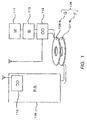
- FIG. 1 is a schematic diagram illustrating a configuration of contactless power transmission apparatus 106 according to the related art.
- a power feeding apparatus (primary side) F connected to a power panel of power supply 109 on a ground side is disposed so as to face a power receiving apparatus (secondary side) G with an air gap interposed in between and without any physical contact during power supply.
- This air gap is a void space.
- Power receiving apparatus G is mounted on an electric propulsion vehicle.
- an alternating current (AC) is given to primary coil 107 (power feeding coil) provided for power feeding apparatus F and a magnetic field is generated
- secondary coil 108 power receiving coil
- Power is thereby transmitted contactlessly from primary coil 107 to secondary coil 108.
- Power receiving apparatus G is connected to, for example, vehicle-mounted battery 110, and vehicle-mounted battery 110 is charged with the power transmitted as described above. Vehicle-mounted motor 111 is driven by the power stored in battery 110. Note that necessary information is exchanged between power feeding apparatus F and power receiving apparatus G during contactless power supply processing via, for example, wireless communication apparatus 112.
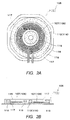
- FIGS. 2A and 2B are schematic diagrams illustrating an inner structure of power feeding apparatus F and power receiving apparatus G. Particularly, FIG. 2A is a schematic diagram illustrating an inner structure of power feeding apparatus F seen from above and power receiving apparatus G seen from below. FIG 2B is a schematic diagram illustrating an inner structure of power feeding apparatus F and power receiving apparatus G seen laterally.
- power feeding apparatus F includes primary coil 107, primary magnetic core 113, back plate 115 and cover 116 or the like.
- power receiving apparatus G has a structure symmetric with respect to power feeding apparatus F and includes secondary coil 108, secondary magnetic core 114, back plate 115, and cover 116, for example. Surfaces of primary coil 107 and primary magnetic core 113 and surfaces of secondary coil 108 and secondary magnetic core 114 are respectively covered fixedly with mold resin 117 into which foamed material 118 is mixed.
- primary coil 107 of power feeding apparatus F and secondary coil 108 of power receiving apparatus G are formed by spirally winding litz wires 121 and 122 which are a bundle of a plurality of elemental wires.
- primary coil 107 of power feeding apparatus F on the ground side is disposed so as to face secondary coil 108 of power receiving apparatus G mounted on the vehicle.
- primary coil 107 and secondary coil 108 facing each other, and a magnetic field generated from primary coil 107 interlinking with secondary coil 108 over a wide range, power is transmitted contactlessly.
- Wireless communication apparatus 112 performs processing such as information processing, encryption processing for preventing crosstalk, and device authentication processing in parallel, and thus the speed of wireless communication is restricted to a certain degree.
- a relay or the like for switching to another device is disposed between power receiving apparatus G and battery 110.
- the relay for switching to another device is opened due to some malfunction during power transmission, thus leading to the open-load condition of power receiving apparatus G.
- the speed of wireless communication is insufficient in this situation and thus allows the power transmission to continue from power feeding apparatus F, the inside of power receiving apparatus G may suffer overvoltage, which may break power receiving apparatus G.
- power feeding apparatus F detect abnormal conditions with power feeding apparatus F alone and handle the abnormal conditions including the overvoltage condition of power receiving apparatus G in consideration of a case where malfunction occurs to the wireless communication itself.
- An object of the present invention is to provide a contactless power transmission apparatus capable of preventing breaking a power receiving apparatus by detecting input of a power supply, and by stopping supply of a current to a primary coil when the variation width of magnitude of the input is equal to or more than a predetermined value.
- the present invention employs the following configuration.
- a contactless power transmission apparatus includes: a primary coil that generates a magnetic field through a current supplied from a power supply; an input detection section that detects a magnitude of input from the power supply; a control section that controls the current supplied from the power supply to the primary coil based on a detection signal of the input detection section; and a secondary coil that receives power through a magnetic field from the primary coil, in which the control section stops supply of a current to the primary coil when an input variation equal to or more than a predetermined value is detected based on a detection signal of the input detection section.
- the primary coil and the secondary coil are opposite to each other with a gap interposed therebetween, and thus the degree of magnetic coupling of the primary coil relative to the secondary coil is low, with apparent impedance being small. That is, the steepness (Q) of resonance is high, and the frequency characteristics of input power, output power, and the like are extremely steep.
- the input power increases or decreases abruptly when the apparent impedance seen from the primary coil varies in the case where a malfunction occurs to a relay connecting a rectification section with a battery or the like, which is a load, and causes a sudden open-load condition, or in the case where a short-circuit breakdown or the like of the secondary coil occurs.
- the present invention includes an input detection section that detects the magnitude of power or the like input to a power supply, and a control section that controls a current supplied from the power supply to a primary coil based on a detection signal of the input detection section; when the control section detects a variation in magnitude of input equal to or more than a predetermined value, supply of a current to the primary coil is stopped, and thus it is possible to detect abnormality in a secondary coil, a rectification section, or the like without using wireless communication to quickly move on to a safe operation.
- a contactless power transmission apparatus includes: a primary coil that generates a magnetic field through a current supplied from a power supply; an input detection section that detects a magnitude of input from the power supply; a control section that controls the current supplied from the power supply to the primary coil based on a detection signal of the input detection section; and a secondary coil that receives power through a magnetic field from the primary coil, in which the control section stops supply of a current to the primary coil when an input variation equal to or more than a predetermined value is detected based on a detection signal of the input detection section.
- Such a configuration allows the control section to control the power supply to stop supply of a current to the primary coil when the control section detects a variation in magnitude of input equal to or more than a predetermined value. Therefore, it is possible to detect abnormality in the secondary coil, the rectification section, or the like without using wireless communication to quickly move on to a safe operation.
- FIG. 4 is a block diagram of a contactless power transmission apparatus according to the present invention.
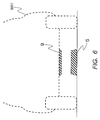
- FIGS. 5 and 6 are outline views of a vehicle placed in a parking space.
- the contactless power transmission apparatus is composed of power feeding apparatus 1 placed, for example, in a parking space, and power receiving apparatus 8 mounted on, for example, an electric propulsion vehicle.
- Power feeding apparatus 1 includes primary-side rectification circuit 3 connected to AC power supply 2, inverter section 4, ground-side coil unit 5, control section (power-feeding-apparatus side control section, for example, microcomputer) 6, and input detection section (for example, current transformer that detects an input current) 23.
- Primary-side rectification circuit 3 and inverter section 4 constitute power control apparatus 7 which is a high-frequency power supply.
- power receiving apparatus 8 includes vehicle-side coil unit 9, secondary-side rectification section 10 which is a rectification section that rectifies power, battery 11 which is a load, and control section (power-receiving-apparatus side control section, for example, microcomputer) 12.
- AC power supply 2 is a 200 V commercial power supply which is a low-frequency AC power supply, and is connected to an input end of primary-side rectification circuit 3, an output end of primary-side rectification circuit 3 is connected to an input end of inverter section 4, and an output end of inverter section 4 is connected to ground-side coil unit 5.
- an output end of vehicle-side coil unit 9 is connected to an input end of secondary-side rectification section 10, and an output end of secondary-side rectification section 10 is connected to battery 11.
- Ground-side coil unit 5 is installed on the ground, and power control apparatus 7 is installed in an upright position at a predetermined distance from, for example, ground-side coil unit 5 (see FIG. 5 ). Meanwhile, vehicle-side coil unit 9 is attached to, for example, a body bottom section (e.g., chassis).
- a body bottom section e.g., chassis
- Ground-side coil 13 which is a primary coil and ground-side resonance capacitor 14 are installed inside ground-side coil unit 5 which is placed on the ground. Ground-side coil 13 and ground-side resonance capacitor 14 are connected in series, and their other terminals are connected to the output end of inverter section 4.
- vehicle-side coil 15 which is a secondary coil and vehicle-side resonance capacitor 16 are installed inside vehicle-side coil unit 9 attached to the body bottom section.
- Vehicle-side coil 15 and vehicle-side resonance capacitor 16 are connected in series, and their other terminals are connected to the input end of secondary-side rectification section 10.
- a resonance frequency between ground-side coil 13 and ground-side resonance capacitor 14 is set to be substantially identical to a resonance frequency between vehicle-side coil 15 and vehicle-side resonance capacitor 16.
- the number of turns of each of ground-side coil 13 and vehicle-side coil 15 is 30. Note that, in FIG. 7 to be described hereinafter, the number of turns of each of ground-side coil 13 and vehicle-side coil 15 is illustrated in a simplified manner.
- FIG. 7 is a cross-sectional view of portions of ground-side coil 13 and vehicle-side coil 15 in particular in ground-side coil unit 5 and vehicle-side coil unit 9 of the contactless power transmission apparatus of the present embodiment.
- ground-side coil unit 5 includes base 17 fixed on the ground side, ground-side coil 13 installed on base 17, and cover 18 which is a case that covers ground-side coil 13.
- Vehicle-side coil unit 9 includes base 19 fixed to the body, vehicle-side coil 15 installed on base 19, and cover 20 which is a case that covers vehicle-side coil 15.
- Ground-side coil 13 is formed by spirally winding coil wire 21 to form a plurality of turns
- vehicle-side coil 15 is formed by spirally winding coil wire 22 to form a plurality of turns.
- Ground-side coil 13 and vehicle-side coil 15 each have a circular-plate shape and are designed to have substantially the same outer and inner diameters.
- Litz wires are used as coil wires 21 and 22 of ground-side coil 13 and vehicle-side coil 15, but other conductive wires may also be used.
- power-feeding-apparatus side control section 6 wirelessly communicates with power-receiving-apparatus side control section 12, and power-receiving-apparatus side control section 12 determines a power command value according to a detected residual voltage of battery 11 and sends the determined power command value to power-feeding-apparatus side control section 6.
- power-receiving-apparatus side control section 12 transmits the voltage and current of battery 11 and receiving power calculated therefrom to power-feeding-apparatus side control section 6.
- Power-feeding-apparatus side control section 6 compares the received power command value with the actual receiving power, and drives inverter section 4 so as to obtain receiving power corresponding to the power command value within a range not exceeding rated input power of power feeding apparatus 1.
- power-feeding-apparatus side control section 6 starts driving inverter section 4 at a high frequency, by a predetermined width, apart from a resonance frequency between ground-side coil 13 and ground-side resonance capacitor 14 and a resonance frequency between vehicle-side coil 15 and vehicle-side resonance capacitor 16.
- the reason that driving is started at a high frequency apart from the resonance frequencies is that being apart from the resonance frequencies makes the impedance seen from ground-side coil 13 and inverter section 4 higher and makes it possible to suppress the output power to a low level and avoid a transient overloaded operation state (overvoltage and overcurrent) immediately after the driving starts.
- power-feeding-apparatus side control section 6 causes the drive frequency of inverter section 4 to gradually decrease to approach the resonance frequencies.
- the impedance seen from ground-side coil 13 and inverter section 4 decreases and the receiving power gradually increases.
- power-receiving-apparatus side control section 12 detects receiving power and changes a power command value for power-feeding-apparatus side control section 6 so that no overcurrent or overvoltage is applied to battery 11.
- current transformer 23 which is an input detection section outputs a voltage in accordance with the magnitude of an input current input to power feeding apparatus 1, and then outputs a detection signal in accordance with the magnitude of the input current to power-feeding-apparatus side control section 6 via a circuit (not illustrated) that rectifies an output voltage.
- Power-feeding-apparatus side control section 6 recognizes the magnitude of an input current from the detection signal, estimates the input current from a voltage of a commercial power supply connected to power feeding apparatus 1, and controls inverter section 4 to autonomously limit transmission power to power receiving apparatus 8 so as not to exceed rated input power.
- power-feeding-apparatus side control section 6 sets the drive frequency of inverter section 4 to be higher. Further, when the input power does not reach the rated input power and the receiving power of power receiving apparatus 8 does not reach the power command value, either, power-feeding-apparatus side control section 6 sets the drive frequency of inverter section 4 to be lower.
- vehicle-side coil unit 9 is located opposite to ground-side coil unit 5 by moving the body (vehicle) as appropriate.
- Power-feeding-apparatus side control section 6 controls driving of inverter section 4 to thereby cause ground-side coil 13 to generate a high-frequency magnetic field.
- vehicle-side coil 15 an induced electromotive force is generated by the magnetic field of ground-side coil 13 disposed opposite thereto and a high-frequency current is induced in vehicle-side coil 15.
- Power receiving apparatus 8 extracts power using this high-frequency current and charges battery 11 with the extracted power.
- power-feeding-apparatus side control section 6 and power-receiving-apparatus side control section 12 pair with each other in order to prevent crosstalk and erroneous operation due to noise or the like from the outside, and communicate information while sending and receiving authentication signals.
- information is encrypted for wireless communication, and decoding processing is performed on the receiving side.
- processing is highly concentrated on the wireless communication portions of power-feeding-apparatus side control section 6 and power-receiving-apparatus side control section 12.
- an increase in the speed of wireless communication may broaden the wireless communication frequency band, which may affect the wireless communication in other channels communicating at the same frequency, or may increase heat generation of the wireless communication portions of power-feeding-apparatus side control section 6 and power-receiving-apparatus side control section 12.
- the wireless communication portions of power-feeding-apparatus side control section 6 and power-receiving-apparatus side control section 12 must reduce the influence received by the outside noise while suppressing the influence on other wireless communication, so that there is a limit to the amount of information communicable by the wireless communication and the speed thereof.
- ground-side coil 13 and vehicle-side coil 15 are opposite to each other, there is a distance therebetween, and thus the degree of magnetic coupling of ground-side coil 13 relative to vehicle-side coil 15 is low, with apparent impedance being small. That is, the steepness (Q) of resonance is high, and the frequency characteristics of input power, output power, and the like are extremely steep.
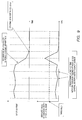
- FIG. 8 is a graph in which the horizontal axis represents a frequency and the vertical axis represents input power.
- the inductance decreases, and thus the resonance frequency becomes higher, which causes the frequency characteristic of input power to shift toward a higher frequency. Therefore, when inverter section 4 continues the operation at the same frequency, the input power increases abruptly.
- the impedance seen from ground-side coil 13 varies, and thus the resonance frequency becomes lower, which causes the frequency characteristic of the input power to shift toward a lower frequency. Therefore, the input power decreases abruptly in this case.
- power, a voltage, and a current to be received by power-receiving apparatus 8 also vary largely, and thus it is possible for power-receiving-apparatus side control section 12 to detect the variations in power, a voltage, and a current and transmit information to power-feeding-apparatus side control section 6 by wireless communication.
- the variations in power, a voltage, and a current to be received by power-receiving apparatus 8 during abnormality are very fast variations of about several hundred ⁇ sec, and thus it is difficult for the wireless communication which performs mutual authentication, encryption and decoding, while suppressing the influence on other communications to secure sufficiently faster speed than the variation speeds of power, a voltage, and a current.
- There is a fear that insufficient transmission of information by wireless communication may lead to secondary damage to the components of power feeding apparatus 1 and power receiving apparatus 8 due to excessive input power.
- power feeding apparatus 1 includes current transformer 23 which is an input detection section.
- the detection signal of current transformer 23 is input to power-feeding-apparatus side control section 6.
- FIG. 9 is a graph illustrating temporal variations in an input current during power feeding operation recognized by power-feeding-apparatus side control section 6 and in an absolute value of a variation width of the input current.
- power-feeding-apparatus side control section 6 recognizes, through AD conversion, a detection signal in accordance with the magnitude of an input current at a predetermined time interval.
- power-feeding-apparatus side control section 6 retains therein a threshold of acceptable variation width of an input current within a predetermined period of time, and compares an input current newly recognized through AD conversion this time with an input current having been recognized through AD conversion up to this time to determine whether the input current exceeds the threshold of acceptable variation width.
- power-feeding-apparatus side control section 6 immediately stops driving inverter section 4 irrespective of wireless communication from power-receiving-apparatus side control section 12 to stop feeding power to power receiving apparatus 8.
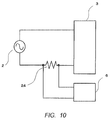
- the present embodiment provides an example of using current transformer 23 for an input detection section; however, as illustrated, for example, in FIG. 10 , resistor 24 may be inserted in series into a power line connecting AC power supply 2 to power feeding apparatus 1 to detect a voltage generated across the terminals of resistor 24 for detection of magnitude of the input.
- a suitable input detection section may be provided, depending on power feeding apparatus 1.
- FIG. 11 is a graph illustrating temporal variations in an input current during power feeding operation recognized by power-feeding-apparatus side control section 6 and in an absolute value of a variation width of the input current.
- power-feeding-apparatus side control section 6 has a first threshold of acceptable variation width of magnitude of the input and a second threshold of acceptable variation width greater than that of the first threshold.
- power-feeding-apparatus side control section 6 When the variation width of magnitude of the input exceeds the first threshold due to, for example, the operation of a vehicle-side component, but does not exceed the second threshold, power-feeding-apparatus side control section 6 does not stop driving inverter section 4 and controls the input power to be decreased, thus making possible to continue stable power feeding.
- the variation width of magnitude of the input exceeds the second threshold due to, for example, the malfunction of a component power-feeding-apparatus side control section 6 performs a control to immediately stop driving inverter section 4 to thereby reduce the number of stopping times of power feeding apparatus 1, thus making possible to continue stable power feeding.
- relay 25 which is a connection section for switching between conduction and cutoff is typically provided between power receiving apparatus 8 and battery 11, in order to avoid electrical interference with other vehicle-side components.
- battery 11 is disposed outside power receiving apparatus 8.
- the relay 25 is controlled by power-receiving-apparatus side control section 12 so as to switch between conduction and cutoff, and is designed to be conducted during power transmission from power feeding apparatus 1 to power receiving apparatus 8 and to be cut off in other occasions.
- power-feeding-apparatus side control section 6 can perform detection and can perform stopping without any problem, and thus can also serve the role of relay 25 of detecting erroneous operation, which relay 25 is a connection section for switching between conduction and cutoff disposed between power receiving apparatus 8 and battery 11.
- FIG. 13 is a graph illustrating temporal variations in an input current during power feeding operation recognized by power-feeding-apparatus side control section 6 and in an absolute value of a variation width of the input current.
- the variation in the voltage of battery 11 leads to the variation in apparent impedance seen from ground-side coil 13; thus, for example, when the control of power-feeding-apparatus side control section 6 over inverter section 4 is slower than the variation in the voltage of battery 11, variations in input power, receiving power, and the like occur. Therefore, by providing a threshold for a variation which occurs for a shorter period of time than the time of the variation of input magnitude caused by the variation in apparent impedance due to, for example, the variation in the voltage of battery 11 which may occur during a normal operation, it becomes possible for power-feeding-apparatus side control section 6 to detect only the period of abnormality.
- a threshold of acceptable variation width of magnitude of the input within a predetermined period of time which is retained by power-feeding-apparatus side control section 6, to be greater than the variation width of magnitude of the input within a predetermined period of time which may occur during normal operation, it becomes possible to detect only the period of abnormality.
- the present embodiment provides an example of detecting the period of abnormality with the variation in magnitude of the input.
- the voltage or current depends on apparent impedance and input power. Therefore, when the apparent impedance becomes lower due to some malfunction than apparent impedance during normal operation, and as a result the frequency characteristic of the input power varies to cause the input power to be lowered, there are almost no variations in coil currents and voltages, causing a case where detection is not possible during abnormality. Accordingly, it is desirable to perform detection with input magnitude.
- the present invention is also applicable to a configuration in which the power receiving apparatus is disposed on the ground side and the power feeding apparatus is disposed on the vehicle side.
- the present invention it is possible to detect abnormality in a secondary coil, a rectification section, or the like without using wireless communication to quickly move on to a safe operation. Therefore, it is applicable to a power feeding apparatus and a power receiving apparatus of contactless power transmission used for charging or the like of an electric propulsion vehicle such as an electric automobile or plug-in hybrid automobile.
Landscapes
- Engineering & Computer Science (AREA)
- Power Engineering (AREA)
- Computer Networks & Wireless Communication (AREA)
- Transportation (AREA)
- Mechanical Engineering (AREA)
- Charge And Discharge Circuits For Batteries Or The Like (AREA)
- Electric Propulsion And Braking For Vehicles (AREA)
Applications Claiming Priority (1)
| Application Number | Priority Date | Filing Date | Title |
|---|---|---|---|
| PCT/JP2013/005493 WO2015040649A1 (ja) | 2013-09-17 | 2013-09-17 | 非接触電力伝送装置 |
Publications (2)
| Publication Number | Publication Date |
|---|---|
| EP3051690A1 true EP3051690A1 (de) | 2016-08-03 |
| EP3051690A4 EP3051690A4 (de) | 2016-08-24 |
Family
ID=52688338
Family Applications (1)
| Application Number | Title | Priority Date | Filing Date |
|---|---|---|---|
| EP13894055.6A Withdrawn EP3051690A4 (de) | 2013-09-17 | 2013-09-17 | Vorrichtung zur drahtlosen stromübertragung |
Country Status (4)
| Country | Link |
|---|---|
| US (1) | US10110062B2 (de) |
| EP (1) | EP3051690A4 (de) |
| CN (1) | CN105531899A (de) |
| WO (1) | WO2015040649A1 (de) |
Cited By (2)
| Publication number | Priority date | Publication date | Assignee | Title |
|---|---|---|---|---|
| WO2019001818A1 (de) * | 2017-06-29 | 2019-01-03 | Audi Ag | Verfahren zur regelung eines kontaktlosen energieübertragungsvorgangs, kraftfahrzeug und ladestation |
| US10797521B2 (en) | 2017-08-15 | 2020-10-06 | Delta Electronics (Thailand) Public Company Limited | Control circuit and control method for wireless power transmission device |
Families Citing this family (7)
| Publication number | Priority date | Publication date | Assignee | Title |
|---|---|---|---|---|
| JP6043462B2 (ja) * | 2012-09-27 | 2016-12-14 | Ihi運搬機械株式会社 | 車両給電装置 |
| CN105674551B (zh) * | 2016-01-05 | 2018-12-21 | 芜湖美的厨卫电器制造有限公司 | 无线供电电热水器及无线供电电热水器的供电和控制方法 |
| GB2546787A (en) * | 2016-01-29 | 2017-08-02 | Bombardier Primove Gmbh | A system and a method for deactivating an inductive power transfer and a secondary unit |
| CN105680572B (zh) * | 2016-03-10 | 2019-01-08 | 江苏亚开电气有限公司 | 一种非侵入式自供电无线传感检测系统 |
| CN110957751A (zh) * | 2019-12-02 | 2020-04-03 | 中国科学院电工研究所 | 一种大功率电动汽车双向无线充电系统及其功率分配方法 |
| JP2023154312A (ja) * | 2022-04-06 | 2023-10-19 | トヨタ自動車株式会社 | 非接触給電システム、地上給電装置及びコンピュータプラグラム |
| US20240088711A1 (en) * | 2022-09-09 | 2024-03-14 | Stmicroelectronics Asia Pacific Pte Ltd. | Power regulation in wireless power transmitter |
Family Cites Families (8)
| Publication number | Priority date | Publication date | Assignee | Title |
|---|---|---|---|---|
| JP4356844B2 (ja) | 2006-10-05 | 2009-11-04 | 昭和飛行機工業株式会社 | 非接触給電装置 |
| JP5262785B2 (ja) * | 2009-02-09 | 2013-08-14 | 株式会社豊田自動織機 | 非接触電力伝送装置 |
| JP2011211760A (ja) * | 2010-03-26 | 2011-10-20 | Panasonic Electric Works Co Ltd | 非接触給電装置及び非接触充電システム |
| US9553485B2 (en) * | 2011-10-13 | 2017-01-24 | Integrated Device Technology, Inc. | Apparatus, system, and method for detecting a foreign object in an inductive wireless power transfer system based on input power |
| US9450648B2 (en) * | 2011-10-13 | 2016-09-20 | Integrated Device Technology, Inc. | Apparatus, system, and method for detecting a foreign object in an inductive wireless power transfer system |
| KR101338654B1 (ko) * | 2011-12-19 | 2013-12-06 | 엘지이노텍 주식회사 | 무선전력 송신장치, 무선전력 수신장치, 무선전력 전송 시스템 및 무선전력 전송 방법 |
| KR101848097B1 (ko) * | 2012-01-11 | 2018-04-11 | 삼성전자주식회사 | 공진 방식 무선 전력 송신 장치용 과전압 보호 장치 및 그 제어 방법 |
| JP2013225962A (ja) * | 2012-04-20 | 2013-10-31 | Panasonic Corp | 非接触電力伝送装置 |
-
2013
- 2013-09-17 CN CN201380079524.8A patent/CN105531899A/zh active Pending
- 2013-09-17 EP EP13894055.6A patent/EP3051690A4/de not_active Withdrawn
- 2013-09-17 WO PCT/JP2013/005493 patent/WO2015040649A1/ja not_active Ceased
-
2016
- 2016-03-11 US US15/067,301 patent/US10110062B2/en active Active
Cited By (2)
| Publication number | Priority date | Publication date | Assignee | Title |
|---|---|---|---|---|
| WO2019001818A1 (de) * | 2017-06-29 | 2019-01-03 | Audi Ag | Verfahren zur regelung eines kontaktlosen energieübertragungsvorgangs, kraftfahrzeug und ladestation |
| US10797521B2 (en) | 2017-08-15 | 2020-10-06 | Delta Electronics (Thailand) Public Company Limited | Control circuit and control method for wireless power transmission device |
Also Published As
| Publication number | Publication date |
|---|---|
| CN105531899A (zh) | 2016-04-27 |
| US10110062B2 (en) | 2018-10-23 |
| EP3051690A4 (de) | 2016-08-24 |
| US20160193930A1 (en) | 2016-07-07 |
| WO2015040649A1 (ja) | 2015-03-26 |
Similar Documents
| Publication | Publication Date | Title |
|---|---|---|
| US10110062B2 (en) | Wireless power transmission device | |
| JP6152960B2 (ja) | 非接触電力伝送装置及び非接触電力伝送方法 | |
| JP4478729B1 (ja) | 共鳴型非接触充電装置 | |
| JP5285418B2 (ja) | 共鳴型非接触電力供給装置 | |
| KR102181510B1 (ko) | 자동차 배터리를 충전하기 위한 비접촉식 충전 시스템 | |
| CN102971939B (zh) | 电压检测器、异常检测装置、非接触输电装置、非接触受电装置以及车辆 | |
| US9685800B2 (en) | Charging/discharging system | |
| KR101171024B1 (ko) | 비접촉 수전장치 및 그것을 구비하는 차량 | |
| EP3166203A1 (de) | Stromaufnahmevorrichtung, kontaktloses stromversorgungssystem und stromeinspeisungsvorrichtung | |
| US10279691B2 (en) | Contactless feeding pad and contactless feeding device | |
| US11091040B2 (en) | Method and apparatus for triggering an emergency shutdown of the inductive charging of a motor vehicle | |
| CN104143845A (zh) | 用于电动汽车的无线充电检测系统 | |
| US11577618B2 (en) | Wired/wireless integrated power reception system | |
| EP3057113A1 (de) | Kontaktlose energieübertragungsvorrichtung | |
| CN109756006A (zh) | 用于电动交通工具无线充电器输出保护的系统和方法 | |
| JP2016015862A (ja) | 受電装置 | |
| KR20220020661A (ko) | 전기 자동차 충전 컨트롤러 | |
| CN104518548A (zh) | 电驱动车辆的充电站 | |
| JP2013215073A (ja) | 非接触電力伝送システムの給電装置及び受電装置 | |
| JP2015220853A (ja) | 非接触給電システム | |
| CN105071554A (zh) | 一种电动汽车无线充电装置及无线充电系统 | |
| EP4272996A1 (de) | Ladesteuerung für elektrofahrzeug | |
| CN104656628B (zh) | 用于接触器的烧结检测装置和方法 | |
| KR102898388B1 (ko) | 릴레이 장치 및 이를 포함하는 전기 자동차 충전 컨트롤러 | |
| CN103427464A (zh) | 一种电动汽车自动无线充电方法及成套装置 |
Legal Events
| Date | Code | Title | Description |
|---|---|---|---|
| PUAI | Public reference made under article 153(3) epc to a published international application that has entered the european phase |
Free format text: ORIGINAL CODE: 0009012 |
|
| 17P | Request for examination filed |
Effective date: 20160310 |
|
| AK | Designated contracting states |
Kind code of ref document: A1 Designated state(s): AL AT BE BG CH CY CZ DE DK EE ES FI FR GB GR HR HU IE IS IT LI LT LU LV MC MK MT NL NO PL PT RO RS SE SI SK SM TR |
|
| AX | Request for extension of the european patent |
Extension state: BA ME |
|
| A4 | Supplementary search report drawn up and despatched |
Effective date: 20160726 |
|
| RIC1 | Information provided on ipc code assigned before grant |
Ipc: B60L 11/18 20060101ALN20160720BHEP Ipc: H02J 7/08 20060101AFI20160720BHEP Ipc: H02J 50/10 20160101ALI20160720BHEP Ipc: H02J 7/00 20060101ALN20160720BHEP Ipc: H02J 7/02 20060101ALI20160720BHEP |
|
| DAX | Request for extension of the european patent (deleted) | ||
| 17Q | First examination report despatched |
Effective date: 20190423 |
|
| STAA | Information on the status of an ep patent application or granted ep patent |
Free format text: STATUS: THE APPLICATION IS DEEMED TO BE WITHDRAWN |
|
| 18D | Application deemed to be withdrawn |
Effective date: 20200903 |