EP3044595B1 - Dynamische testauswahl- und probenvorbereitungsvorrichtung sowie verfahren dafür und maschinenlesbare medien dafür - Google Patents
Dynamische testauswahl- und probenvorbereitungsvorrichtung sowie verfahren dafür und maschinenlesbare medien dafür Download PDFInfo
- Publication number
- EP3044595B1 EP3044595B1 EP14843287.5A EP14843287A EP3044595B1 EP 3044595 B1 EP3044595 B1 EP 3044595B1 EP 14843287 A EP14843287 A EP 14843287A EP 3044595 B1 EP3044595 B1 EP 3044595B1
- Authority
- EP
- European Patent Office
- Prior art keywords
- assay
- plate
- sample
- wells
- samples
- Prior art date
- Legal status (The legal status is an assumption and is not a legal conclusion. Google has not performed a legal analysis and makes no representation as to the accuracy of the status listed.)
- Revoked
Links
Images




Classifications
-
- C—CHEMISTRY; METALLURGY
- C12—BIOCHEMISTRY; BEER; SPIRITS; WINE; VINEGAR; MICROBIOLOGY; ENZYMOLOGY; MUTATION OR GENETIC ENGINEERING
- C12Q—MEASURING OR TESTING PROCESSES INVOLVING ENZYMES, NUCLEIC ACIDS OR MICROORGANISMS; COMPOSITIONS OR TEST PAPERS THEREFOR; PROCESSES OF PREPARING SUCH COMPOSITIONS; CONDITION-RESPONSIVE CONTROL IN MICROBIOLOGICAL OR ENZYMOLOGICAL PROCESSES
- C12Q1/00—Measuring or testing processes involving enzymes, nucleic acids or microorganisms; Compositions therefor; Processes of preparing such compositions
- C12Q1/68—Measuring or testing processes involving enzymes, nucleic acids or microorganisms; Compositions therefor; Processes of preparing such compositions involving nucleic acids
- C12Q1/6806—Preparing nucleic acids for analysis, e.g. for polymerase chain reaction [PCR] assay
-
- G—PHYSICS
- G01—MEASURING; TESTING
- G01N—INVESTIGATING OR ANALYSING MATERIALS BY DETERMINING THEIR CHEMICAL OR PHYSICAL PROPERTIES
- G01N35/00—Automatic analysis not limited to methods or materials provided for in any single one of groups G01N1/00 - G01N33/00; Handling materials therefor
- G01N35/02—Automatic analysis not limited to methods or materials provided for in any single one of groups G01N1/00 - G01N33/00; Handling materials therefor using a plurality of sample containers moved by a conveyor system past one or more treatment or analysis stations
- G01N35/028—Automatic analysis not limited to methods or materials provided for in any single one of groups G01N1/00 - G01N33/00; Handling materials therefor using a plurality of sample containers moved by a conveyor system past one or more treatment or analysis stations having reaction cells in the form of microtitration plates
-
- B—PERFORMING OPERATIONS; TRANSPORTING
- B01—PHYSICAL OR CHEMICAL PROCESSES OR APPARATUS IN GENERAL
- B01L—CHEMICAL OR PHYSICAL LABORATORY APPARATUS FOR GENERAL USE
- B01L3/00—Containers or dishes for laboratory use, e.g. laboratory glassware; Droppers
- B01L3/50—Containers for the purpose of retaining a material to be analysed, e.g. test tubes
- B01L3/508—Containers for the purpose of retaining a material to be analysed, e.g. test tubes rigid containers not provided for above
- B01L3/5085—Containers for the purpose of retaining a material to be analysed, e.g. test tubes rigid containers not provided for above for multiple samples, e.g. microtitration plates
-
- B—PERFORMING OPERATIONS; TRANSPORTING
- B01—PHYSICAL OR CHEMICAL PROCESSES OR APPARATUS IN GENERAL
- B01L—CHEMICAL OR PHYSICAL LABORATORY APPARATUS FOR GENERAL USE
- B01L3/00—Containers or dishes for laboratory use, e.g. laboratory glassware; Droppers
- B01L3/54—Labware with identification means
- B01L3/545—Labware with identification means for laboratory containers
-
- B—PERFORMING OPERATIONS; TRANSPORTING
- B01—PHYSICAL OR CHEMICAL PROCESSES OR APPARATUS IN GENERAL
- B01L—CHEMICAL OR PHYSICAL LABORATORY APPARATUS FOR GENERAL USE
- B01L3/00—Containers or dishes for laboratory use, e.g. laboratory glassware; Droppers
- B01L3/54—Labware with identification means
- B01L3/545—Labware with identification means for laboratory containers
- B01L3/5453—Labware with identification means for laboratory containers for test tubes
-
- B—PERFORMING OPERATIONS; TRANSPORTING
- B01—PHYSICAL OR CHEMICAL PROCESSES OR APPARATUS IN GENERAL
- B01L—CHEMICAL OR PHYSICAL LABORATORY APPARATUS FOR GENERAL USE
- B01L9/00—Supporting devices; Holding devices
- B01L9/56—Means for indicating position of a recipient or sample in an array
-
- G—PHYSICS
- G01—MEASURING; TESTING
- G01N—INVESTIGATING OR ANALYSING MATERIALS BY DETERMINING THEIR CHEMICAL OR PHYSICAL PROPERTIES
- G01N35/00—Automatic analysis not limited to methods or materials provided for in any single one of groups G01N1/00 - G01N33/00; Handling materials therefor
- G01N35/00029—Automatic analysis not limited to methods or materials provided for in any single one of groups G01N1/00 - G01N33/00; Handling materials therefor provided with flat sample substrates, e.g. slides
-
- G—PHYSICS
- G01—MEASURING; TESTING
- G01N—INVESTIGATING OR ANALYSING MATERIALS BY DETERMINING THEIR CHEMICAL OR PHYSICAL PROPERTIES
- G01N35/00—Automatic analysis not limited to methods or materials provided for in any single one of groups G01N1/00 - G01N33/00; Handling materials therefor
- G01N35/00584—Control arrangements for automatic analysers
- G01N35/00722—Communications; Identification
-
- G—PHYSICS
- G01—MEASURING; TESTING
- G01N—INVESTIGATING OR ANALYSING MATERIALS BY DETERMINING THEIR CHEMICAL OR PHYSICAL PROPERTIES
- G01N35/00—Automatic analysis not limited to methods or materials provided for in any single one of groups G01N1/00 - G01N33/00; Handling materials therefor
- G01N35/0099—Automatic analysis not limited to methods or materials provided for in any single one of groups G01N1/00 - G01N33/00; Handling materials therefor comprising robots or similar manipulators
-
- B—PERFORMING OPERATIONS; TRANSPORTING
- B01—PHYSICAL OR CHEMICAL PROCESSES OR APPARATUS IN GENERAL
- B01L—CHEMICAL OR PHYSICAL LABORATORY APPARATUS FOR GENERAL USE
- B01L2300/00—Additional constructional details
- B01L2300/08—Geometry, shape and general structure
- B01L2300/0809—Geometry, shape and general structure rectangular shaped
- B01L2300/0829—Multi-well plates; Microtitration plates
-
- B—PERFORMING OPERATIONS; TRANSPORTING
- B01—PHYSICAL OR CHEMICAL PROCESSES OR APPARATUS IN GENERAL
- B01L—CHEMICAL OR PHYSICAL LABORATORY APPARATUS FOR GENERAL USE
- B01L7/00—Heating or cooling apparatus; Heat insulating devices
- B01L7/52—Heating or cooling apparatus; Heat insulating devices with provision for submitting samples to a predetermined sequence of different temperatures, e.g. for treating nucleic acid samples
-
- G—PHYSICS
- G01—MEASURING; TESTING
- G01N—INVESTIGATING OR ANALYSING MATERIALS BY DETERMINING THEIR CHEMICAL OR PHYSICAL PROPERTIES
- G01N35/00—Automatic analysis not limited to methods or materials provided for in any single one of groups G01N1/00 - G01N33/00; Handling materials therefor
- G01N35/00029—Automatic analysis not limited to methods or materials provided for in any single one of groups G01N1/00 - G01N33/00; Handling materials therefor provided with flat sample substrates, e.g. slides
- G01N2035/00099—Characterised by type of test elements
-
- G—PHYSICS
- G01—MEASURING; TESTING
- G01N—INVESTIGATING OR ANALYSING MATERIALS BY DETERMINING THEIR CHEMICAL OR PHYSICAL PROPERTIES
- G01N35/00—Automatic analysis not limited to methods or materials provided for in any single one of groups G01N1/00 - G01N33/00; Handling materials therefor
- G01N35/00584—Control arrangements for automatic analysers
- G01N35/0092—Scheduling
Definitions
- the present invention relates generally to methods and apparatus for preparing test plates for performing assays, such as by using polymerase chain reaction (PCR) testing.
- PCR polymerase chain reaction
- diagnostic instruments e.g., clinical analyzers or immunoassay Instruments
- diagnostic instruments may conduct assays (e.g., immunoassays) using magnetic particles, one or more reagents, buffers, controls, or other additives to identify one or more components (e.g., nucleic acids) in, or characteristics of, a patient sample.
- Some immunoassay systems may use polymerase chain reaction (PCR), wherein a sample preparation apparatus providing automated sample preparation and extraction technology is used.
- PCR polymerase chain reaction
- an amplification and detection (AD) device may be used to isolate and purify both DNA and/or RNA from processed eluate from the biological samples.
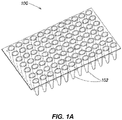
- the PCR micro-well plate 100 receives eluted samples from the extraction plate as well as mastermix and possibly other components specifc to the assay being conducted and undergoes processing in an AD device to replicate and quantify the component of interest (e.g., nucleic acid).
- the per test, per patient cost of PCR assay materials is increased when any potential test postions (e.g., test wells) in the PCR plate are unused when an assay is run. Additionally, the per test, per patient cost may be increased when manual preparation is used in place of automated preparation due to high labor cost components.
- kPCR sample preparation on a PCR test plate 100 has historically been either prepared manually, or automatically prepared by using a fixed assay selection and a fixed plate layout on the PCR micro-well plate 100.
- SP kPCR sample preparation
- Patient samples from multiple sample containers e.g., 101A-101D
- These patient samples are then processed via sequential additions of reagent, magnetic particles, wash buffers, elution buffer, and possibly other components to produce patient sample eluates (purified samples).
- patient sample eluates are then transferred to the PCR micro-well plate 100 and each undergoes the same assay on the PCR micro-well plate 100.
- Automated sample preparation although it may reduce the human preparation error, has historically been inflexible with fixed assay selection and a fixed plate layout.
- only one assay is conducted on the PCR micro-well plate 100 thus providing a single result per patient sample for a single assay only.
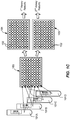
- split plate assays have been used wherein patient sample is transferred to multiple extraction plate wells of the extraction plate 103, and then processed eluate from those multiples of patient samples are transferred to first and second test plates 104, 105 wherein a first assay is conducted on the first test plate 104, and a second assay is conducted on the second test plate 105.
- first assay results are produced for the patient samples from the first test plate 104
- second assay results are produced for the patient samples from the second test plate 105.
- a method of preparing samples for assaying on a test plate having a plurality of wells includes receiving, via a user interface, instructions to run a first assay type and a second assay type, determining sample identifications for a plurality of samples to be assayed, receiving assay orders corresponding to the sample identifications, defining, based on the assay orders and sample identifications, first and second assay regions of the plurality of wells, wherein each defined assay region includes at least one of the plurality of wells, and creating an electronic plate map including a graphical representation of the test plate indicating the first assay region and the second assay region and instructions to run a first assay type on samples contained within the first assay region, and to run a second assay type on samples contained within the second assay region, wherein the electronic plate map includes and defines two or more assay regions, which are each a collection of physical well locations on the test plate.
- the method includes performing sample processing of multiple patient samples in multiple extraction plate wells of an extraction plate to prepare multiple eluted samples in at least some of the multiple extraction plate wells, and transferring, based upon the electronic plate map including multiple assay regions, one of the multiple eluted samples from a single extraction plate well of the multiple extraction plate wells into multiple test wells of the test plate, wherein each of the multiple test wells of the test plate are in a different one of the multiple assay regions and each is configured to carry out a different assay type.
- a method as described above wherein the test plate is a PCR plate having a plurality of PCR plate wells.
- the method includes providing a plurality of patient samples to be assayed, the patient samples including sample identifications, receiving assay orders corresponding to the plurality of patient samples from an LIS system, selecting, based upon the assay orders and sample identifications, a number and type of assays to perform on the PCR plate, dynamically defining assay data sets for each of the types of assays including types and numbers of pre-processed controls and post-processed controls, preparing the plurality of patient samples and the pre-processed controls through to patient sample eluate and control sample eluate on extraction plate wells of an extraction plate, defining, based on the types of assays, number of assays to perform, and a number of controls, an electronic plate map including multiple assay regions including a plurality of PCR plate wells, wherein each of the multiple assay regions includes at least one of the plurality of
- a sample preparation apparatus includes an extraction plate, a test plate, a memory operative to store at least patient sample identifications, assay orders for each patient sample, and number and type of assays, a processor coupled to the memory and operable to generate an electronic plate map including a graphical representation of the test plate indicating the multiple assay regions based at least on a number of the patient samples, a number and type of assay orders for each of the patient samples, and number of controls, and one or more robots each including one or more coupled pipettes configured to patient sample eluate from an extraction plate well of the extraction plate and master mix to the multiple assay regions.
- a machine-readable medium having non-transient instructions stored thereon.
- the machine-readable medium includes a dynamic run setup module configured to define a plurality of assay data sets with desired run configurations based at least in part on a number and type of assays to run, and number and type of controls, and a work list and plate map display module configured to generate an electronic plate map including a graphical representation indicating multiple assay regions of a test plate of patient sample eluate and control eluate and optionally one or more post-processed controls.
- test plate micro-wells e.g., test plate micro-wells
- a low sample preparation throughput within the lab may result from allowing for an adequate number of assay orders to be placed and to more fully populate the PCR plate, but at the expense of high labor cost, increased risk of errors, and variability.
- one or more embodiments of the present invention provide sample preparation methods and sample preparation apparatus including improved flexiblity, throughput, and/or efficiency.
- sample preparation method and sample preparation apparatus embodiments of the present invention provide the ability to run a large number of different patient samples, and a large number of assay types (e.g., two or more assay types per patient sample) on a single test plate (e.g., PCR plate). In some embodiments, three or more assay types, four or more assay types, five or more assay types, or even six or more assay types may be run per patient sample.
- the multiple assay types may be included in multiple assay regions provided on the test plate (e.g., PCR plate), each of which may receive different master mixes.
- the sample preparation apparatus and methods provide extreme flexibility in terms of selection of patient samples, assays per patient sample, assay kits, and the types and numbers of controls desired per assay.
- the apparatus and methods produce, as a deliverable, an electronic plate map that may be displayed to the user, printed, and may later be used by an amplification and detection device (AD device) to aid in processing the various sample assays.
- the assay results may be returned to the sample preparation apparatus, which may interface assay results with a Laboratory Information System (LIS).
- LIS Laboratory Information System
- the sample preparation apparatus and method may allow the use of pre-processed controls, post-processed controls, or both. Other controls, such as universal negative controls may be included as part of the sample preparation process.
- FIG. 2 through FIG. 15 will be referred to herein to fully explain the sample preparation method (hereinafter “SP method”) and the sample preparation apparatus (hereinafter SP “apparatus 200”) that are provided according to embodiments.
- SP method sample preparation method
- apparatus 200 sample preparation apparatus
- the SP apparatus 200 includes an extraction plate 220, which may be a 96 well (e.g., 8x12), deep-well plate, and a test plate 225, which may be a PCR test plate.
- Test plate 225 may include 96 (e.g., 8x12) wells.
- the SP apparatus 200 may further include one or more sample racks 226 that may be configured to contain patient samples 228 that may be contained in sample containers 229 (e.g., sample tubes).
- Patient samples 228 may be urine, whole blood, blood serum or plasma, swab extracts from urogenital, nasopharyngeal, buccal or eye swabs, cerebral spinal fluid, semen, stool, breast milk, saliva, sputum, cell culture, amniotic fluid, ascites, bronchial alveoli lavage (BAL), collection media, peripheral blood mononuclear cells (PBMC), buffy coat, or the like.
- the sample racks 226 may be loaded onto one or more autoload trays, and may be automatically loaded via a prompt in accordance with some embodiments of the method.
- a reader 233 may read a sample rack identifier, sample container identifiers on each sample container, and sample slot locations (i.e., spaced locations in the sample rack 226).
- This sample identification data on patient samples and their location in the sample racks 226 may be stored in memory 230M of a controller 230 of the SP apparatus 200.
- the SP apparatus 200 may include one or more access areas 227 that are configured to contain consumables.
- the consumables may include components that are used in portions of the SP method 400 that may be taking place on the extraction plate 220 or later on the test plate 225.
- Consumables may include plates, pipette tips, one or more Reagents, wash buffers, elution buffer, lysis buffer, magnetic beads, pre-processed controls, post-processed controls, internal controls, Proteinase K, and/or other processing components.
- Consumables may be loaded onto one or more autoload trays, which may be automatically loaded into the SP apparatus 200, such that they reside at, and are accessible from, the one or more access areas 227 in accordance with one or more aspects.
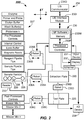
- the SP apparatus 200 may include the controller 230 including a processor 230P and the memory 230M.
- Processor 230P may include any suitable microprocessor or other processing device adapted to execute sample preparation (SP) software program instructions and interface with memory 230M and various other components of the SP apparatus.
- Processor 230P may be a windows-based computer, for example.
- Memory 230M may be operative to store at least patient sample identifications of patient samples 228 from the sample containers 229, the location of each in the sample rack 226, assay orders for each patient sample 228, and number of different assays types to be performed.
- Processor 230P may be coupled to the memory 230M and may execute the SP software program to generate an electronic plate map, as will be apparent from the following.
- the electronic plate map includes information about the multiple assay regions based at least on the number of patient samples and number and type of assay orders for each patient sample, and number of controls for each assay type.
- a plurality of robots (e.g., robots 235A, 235B, 235C, 235D) having one or more pipettes (e.g., pipettes 236A, 236B, 236C, 236D) coupled to and moveable thereby may be controlled by drive signals from the controller 230 to cause various movement of the pipettes 236A, 236B, 236C, 236D in coordinate space (e.g., X and Z and/or X, Y, and Z, wherein Z is into and out of the paper in FIG. 2 ).
- coordinate space e.g., X and Z and/or X, Y, and Z, wherein Z is into and out of the paper in FIG. 2 ).
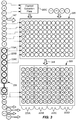
- One or more robots may be used to move one or more pipettes (like pipette 236A) in two or more coordinate directions in order to aspirate patient samples 228 from the sample containers 229 residing in the sample rack 226, and dispense a predefined volume of the patient samples 228 into extraction wells in the extraction plate 220, as shown in FIG. 3 .
- patient sample S1 may be aspirated from a first sample container 229A received in a first slot of the sample rack 226 and then dispensed to an extraction plate well of the extraction plate 220
- patient sample 2 229B (labeled S2) may be aspirated from sample container 229B and dispensed to another extraction plate well of the extraction plate 220
- patient sample S3 may be aspirated from sample container 229C and dispensed to another extraction plate well, and so on.
- the extraction wells may include multiple patient samples (e.g., S1 to S6), calibrators, other controls (e.g., universal controls UC) such as negative controls and/or pre-processed controls (e.g., pre-processed controls PR1-PR4). Any suitable type of control may be used.
- the controls may include calibrators, pre-processed controls, or any other type of pre-extracted material, and combinations thereof, for example.
- one or more robots may be used to aspirate and dispense some of the consumables.
- Consumables may include a lysis buffer, magnetic beads, and internal controls (if used).
- Consumables may include reagents such as Proteinase K, wash buffers, and/or elution buffers.
- the lysis buffer, magnetic beads and internal controls (if used) may be premixed to form a lysis cocktail that may be contained in wells of cocktail extraction plate 320C, such as a 96-well deep well plate.
- the remaining liquid levels of the various consumables may be monitored and stored.
- remaining levels of patient samples S1-Sn and/or pre-processed controls may be monitored and stored.
- Other consumable items may be monitored, as well.
- any suitable aspiration and dispensing system may be used for the aspiration and dispensing of patient samples 228 and various consumables, such as described in US 5,777,221 ; US 6,060,320 ; US 6,158,269 ; US 6,250,130 ; US 6,463,969 : US 7,998,751 ; US 7,205,158 .
- Other suitable aspiration and dispensing systems may be used.
- Pipette tips may be replaced after each dispense from a supply of reagent pipette tips and sample pipette tips.
- controller 230 may receive Tech input from an input device 231.
- Input device 231 may be a keyboard, mouse, touchscreen, or combinations thereof.
- a display 232 may display various screens of software modules of a sample preparation software program (SP software program) used to execute the sample preparation method 400.
- Display 232 may be any suitable display device, such as a screen or other display device, for example.
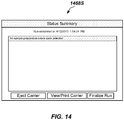
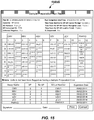
- the display 232 may display various screens generated by the SP software program including a listing of selectable dynamic protocols, a dynamic assays setup screen, a work list correlating the patient samples 228 with assay orders, lists or images of pre-extract controls and post-extract controls to be used, load time reminders for post-extract controls, partial or full lists of required inventories, and possibly their placement location on the one or more carriers or auto load trays, a sample container usage summary, a patient sample usage summary, a status summary, a sample preparation report, and/or graphical representations of plate maps.
- controller 230 may also receive input from a reader 233, which may be a barcode reader, radio frequency identification device (RFID), or other suitable reader device configured to read an identifier (e.g., device, tag, barcode, or other readable indicia) on each of the sample containers 229.
- Reader 233 may also read identifiers on the sample racks 226, and/or the slot position of the sample containers 229 within the sample rack 226.
- the controller 230 may include an internal database stored in the memory 230M that correlates the identification of the patient samples 228 (e.g., S1 to Sn) with sample rack 226 and rack slot position in the sample rack 226 containing them.
- Controller 230 may also receive input from a laboratory information system 234 (hereinafter LIS 234).
- LIS 234 may include a LIS communicator 234D.
- LIS communicator 234D may interface and communicate digitally with controller 230 through an LIS interface module 2301, which may receive assay order information from the LIS communicator 234D for patient samples 228, and also return result files and/or other information to the LIS communicator 234D.
- Communication between the LIS interface module 2301 and the LIS communicator 234D may be by using ASTM 1394 and 1381 protocols for example. Other suitable communication protocols may be used.
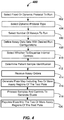
- the sample preparation (SP) method 400 and SP software program 600 and various modules thereof will now be explained in more detail, with reference to FIGs. 4 through 15 .
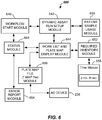
- the SP method 400 may start at a workflow start module 640 ( FIG. 6 ) of the SP software program of the SP method 400 by allowing the Tech to optionally select whether the desired assays to be run are dynamic or fixed.
- “Dynamic assay” as used herein means that more than one assay type will be run on the test plate 225 for at least some of the patient samples (S1-Sn) that are contained in an extraction plate well of the extraction plate, and that the combination of assay types and controls may be dynamically selectable.
- “Fixed assay,” as used herein means that one and only one assay will be run for each eluted sample contained in each extraction plate well, and that only one assay type per test plate is run.
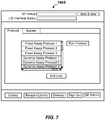
- FIG. 7 An example work flow screen 740S of the workflow start module 640 is shown in FIG. 7 .
- the Tech can select between fixed or dynamic assay protocols (see also block 402 of FIG. 4 ).
- more than one fixed assay protocol may be selected, such as Fixed Assay Protocol 1 through Fixed Assay Protocol 3.
- Such fixed assay protocols may be any assay protocol that currently exists, and thus the sample preparation for the fixed assay protocols may be carried out in accordance with prior art methods.
- the Tech may select to run a dynamic assay protocol (see also block 402 - FIG. 4 ).
- a dynamic assay protocol see also block 402 - FIG. 4 .
- more than one dynamic assay protocol type may be selected (see block 404).
- dynamic assay protocol 1 through dynamic assay protocol 3 are shown, and one dynamic assay protocol may be selected. More or less numbers of dynamic assay protocol types may be presented as options.
- Dynamic assay protocol 1 through dynamic assay protocol 3 may vary from each other in terms of extraction process steps, the volume of sample and/or buffer aspirated, incubation time and temperature, and/or PCR reaction components dispensed, or other assay specific factors.
- the Tech selects a dynamic assay protocol type (e.g., dynamic assay protocol 1 through dynamic assay protocol 3), they may select RunProtocol and then commence to the selection portion of the SP method 400 where various data sets may be defined.
- a dynamic assay protocol or fixed assay protocol in block 402 may be optional.
- the SP apparatus 200 may be dedicated to running only dynamic protocols, thus no selection may be required.
- selection of the dynamic assay protocol type in block 404 may be optional, as some methods and some SP apparatus may be simplified to running only one particular type of dynamic assay protocol.
- the SP method 400 and SP Apparatus 200 may also include in the SP software program, a dynamic assay run setup module 642 as shown in FIG. 8 .
- the Tech may, in block 406 ( FIG. 4 ), select a number of assay configurations to run.
- the SP program may receive as an input, via a user interface (including the input device 231 and display 232), instructions to run a first assay type and a second assay type.
- the number of assays to run may be two or more, three or more, four or more, five or more, or even six or more, for example.
- This block 406 is also shown as optional, as in some embodiments of the SP apparatus, a fixed number of dynamic assay types may be predefined. However, for maximum flexibility for small-scale labs, dynamically defining the assay types to be used provides excellent flexibility to accommodate varying test workloads.
- the Tech may define assay data sets with desired run configurations in block 408.
- the defined assay data sets may include various combinations that may be defined from selectable options on a dynamic assay run setup screen 842S that may be displayed on display 232, as shown in FIG. 8 .
- Each defined assay data set (e.g., six data sets shown) may include at least the assay name (e.g., CMV, EBV, HSV, VZV, JCV, PARVO are shown), number of pre-processed controls, and number of post-processed controls.
- the assay data set may also include kit lot number, expiration date, for example.
- multiple data sets may be selected with various combinations of pre-processed controls and post-processed controls.
- one or more of the assay data set may be selected and populated off from a separate list of possible assay run configurations.
- the use of an internal control (IC) may be optionally selected in block 410.
- the use of IC is provided as a global variable and is applied to all assays, if selected.
- the use of internal controls (ICs) may be provided as a per-assay selectable variable, much like pre-processed controls.
- the SP method 400 determines patient sample information.
- SP software program may initiate a drive signal to a motor and thus pull/load the sample carrier (e.g., containing one or more sample racks 226) onto a deck of the SP apparatus 200.
- SP software program may read all sample rack IDs (e.g., IDs on sample rack 226), patient sample ID's (e.g., barcodes on each sample container 229), and sample slot locations (e.g., barcodes or other readable indicia at each slot location) for all sample containers 229 (e.g., sample tubes) contained on the sample rack 226.
- the reading may be performed by any suitable reader 233, such as barcode or other reader device described herein.
- the SP software program may determine patient sample identifications for a plurality of patient samples to be assayed in block 412.
- the SP method 400 may receive assay orders.
- the LIS 234 (if available, connected, communicating) may be queried and respond with the assay orders associated with open orders in the LIS 234 for each of the sample IDs for each patient sample 228 that have been read by reader 233 and stored in memory 230M.
- the SP Software may perform a first-pass/recommended population of the work list file of the work list and plate map display module 644 based on the previously read sample IDs and open assay orders from the LIS 234, and a dynamic assay process/run configuration (based on the number of patient samples, number of assay types, types of assays per patient sample, and number of controls per assay type).
- the SP software program may tally the number of patient samples and controls per assay type and define the dynamic TDef configuration, which includes at least a first region and a second region of the test plate 225.
- Dynamic assay run configuration is defined herein as the user defined layout and population of the PCR plate. The dynamic run configuration may be populated in any order.
- a recommended population of the work list 945 may be modified by the Tech.
- the Tech may review the patient samples 228, and the recommended assay orders, and make changes as they see fit by changing the selections on the work list 945 of the work list and plate map display screen 944S.
- Any patient sample 228 that does not have an order in the LIS 234 may be flagged (e.g., by being displayed as a separate color) be manually entered by the Tech in the work list 945, such as STAT samples.
- Calibrator samples may also be entered if provided in the sample rack 226, and treated like any other patient sample.
- the assay orders may be received by being manually populated by the Tech by entering a sample ID and toggling the desired assay selections on the work list 945.
- any new assay orders that have been manually entered may be transmitted to the LIS 234 by LIS interface module 2301.
- the SP method 400 utilizing the plate map file module 660 of the SP software program may generate (e.g., create) an electronic plate map.
- the plate map may be generated (e.g., created) within the work list and plate map display module 644.
- the electronic plate map may be a data file that contains a compilation of sample information, assay type, controls information, corresponding test plate well location and assay region information based on the dynamic TDef.
- block 416 involves defining, based on the received assay orders from block 412 and sample identifications from 412, at least first and second assay regions of the plurality of test plate wells of the test plate 225, wherein each defined assay region includes at least one of the plurality of test plate wells.
- electronic plate map includes and defines two or more assay regions, which are each a collection of physical well locations on the test plate 225. Depending upon the capability of the SP apparatus 200, multiple assay regions may be provided, such as two to six, or more.
- the electronic plate map includes instructions generated by the plate map file module 660 to run a first assay type on samples contained within the first assay region, and to run a second assay type on samples contained within the second assay region. If more than two assays are selected in block 406, then further instructions are provided to run additional assay types on sample eluate and possibly control eluate or controls contained within the additional assay regions.
- the electronic plate map may be based at least upon the number and identity of the patient samples, and the number and type of assays to be performed for each patient sample.
- the electronic plate map may also be based on, number of post-processing controls, number of pre-processing controls, number of other controls (e.g., universal controls and/or calibrators), and possibly other information.
- the number and location/size of the multiple assay regions of the test plate 225 may be set by the SP software program.
- Each assay region may be selected as a zone on the PCR plate.
- Assay regions may be provided in any suitable pattern on the test plate 225. Each may be of a different size, and may be of different shapes. Assay regions may be any suitable polygonal shape.
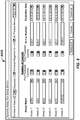
- the contents of the electronic plate map may be displayed as a graphical representation on the display 232 as a plate map 946, as shown in FIG. 9 .
- the SP method 400 displays a graphical representation of the test plate 225 indicating at least a first assay region and a second assay region.
- Other assay regions may be included, depending on the number of assay types selected.
- Six assay regions (CMV, EBV, HSV, VZV, JCV, PARVO) are shown as equal-sized columns in FIG. 9 , but other numbers of zones and sizes of zones may be selected.
- Color coding may be provided for visual effect. For example, pre-processed control eluate may be indicated with one color, while patient sample eluate, post-processed controls and other controls may be designated by other colors.
- the plate map 946 may be displayed as a part of the work list and plate map display screen 944S.
- the plate map 946 and the work list 945 are displayed on the same work list and map display screen 944S. However, they could be displayed on separate display screens in some embodiments.
- a Tech may make manual changes (edits) to the work list 945 and those changes may immediately be graphically illustrated on the plate map 946. Accordingly, the Tech and SP software program can help plan to ensure complete or nearly complete utilization and population of the test wells of the test plate 225 before running the sample preparation on the extraction plate 220.
- the SP software program may include a required inventory module 652 as shown in FIG. 6 .
- Required inventory module 652 may prepare a list or visual image of some or all of the inventory requirements that may be needed to run the various assays in accordance with the SP method 400.
- the inventory requirements may be based upon information in the electronic plate map file, for example.
- inventory requirements may include, in one embodiment, deep well extraction plates, PCR test plate, and numbers of pipette tips (of one or more sizes).
- a list or image file maybe created and may be displayed as an inventory list or image on the display 232 or may be provided in other suitable format (e.g., a hard copy printout).
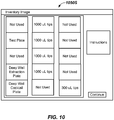
- a graphical inventory image 1050S as shown FIG.
- the Tech 10 may graphically instruct the Tech where and how many of an inventory item to load onto a given location on a carrier or tray (e.g., an autoload tray) of the SP apparatus 200. Instructions may be provided along with the graphical inventory image 1050S. When the Tech has loaded the autoload tray, then they may select Continue and the tray may be loaded into the SP apparatus 200.
- a carrier or tray e.g., an autoload tray
- Similar inventory images may be provided by the required inventory module 652 for other inventory items, such as for sample preparation SP consumables and No SP consumables (e.g., pre-processed controls, post-processed controls, universal controls, proteinase K, internal controls, lysis buffers, magnetic particles, wash buffers, elution buffers, master mixes, enzyme mix, primer and probe mix, or the like).
- SP consumables are consumables used on the extraction plate 220, whereas No SP consumables are used later in processing taking place on the test plate 225.
- Inventory images may instruct the Tech where and/or how many of each of the consumables to load on a given carrier or tray (e.g., an autoload tray).
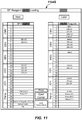
- FIG. 11 illustrates an SP analyte reagent carrier loading screen 1154s. This screen displays an image and/or otherwise provides (e.g., a printed list) a list of the various SP reagents and No SP reagents for each selected assay type and their location on a SP carrier and a No SP carrier.
- the SP method 400 may then process the patient samples, as well as the selected controls, on the extraction plate 220 to produce eluted samples (eluate) at the end of the processing phase of the extraction plate 220.
- the eluted samples may include eluted patient samples and eluted control samples.
- a reagent such as Proteinase K (PK) may be dispensed by the robot 235B of the SP apparatus 200 to dispense PK to all extraction plate wells of the extraction plate 220 that will receive a patient sample 228 or a control (i.e., all that will be populated) based upon the work list 945 and the electronic plate map.
- the arrow 347 designates that all extraction plate wells that will be populated may receive PK.
- the SP apparatus 200 may also dispense controls and/or calibrators.
- an ordered pre-processed control e.g., PR1 - a pre-processed control for a first assay type 1 being selected
- a universal control if selected, may be aspirated and dispensed by the one or more robots 235B and one or more coupled pipettes 236B to one or more extraction plate wells of the extraction plate 220, as shown.
- UC universal control
- Additional ordered pre-processed controls may be aspirated and dispensed by the one or more robots 235B and one or more coupled pipettes 236B to extraction plate wells of the extraction plate 220, as shown.
- pre-processed controls may be selected by the Tech when running the dynamic assay run setup module 642.
- Internal controls and/or universal controls (UC) may also be dispensed.
- a clean pipette may be picked up by the one or more robots 235B for each new aspiration and dispense of a different pre-processed control or other control.
- a number of assay regions on the test plate 225 are designated. The sizes or each of the assay regions are selected based on the number of patient samples having that particular assay being ordered, the number or pre-processed controls, the number of post-processed controls for that assay, and the number of other controls or calibrators.
- the depicted test plate 225 e.g., PCR test plate
- four assay regions 225A, 225B, 225C, and 225D are provided, based upon four assays being selected in the dynamic assay run setup module 642.
- assay regions may be selected, such as two or more, three or more, four or more, five or more, or even six or more plate regions.
- Each assay region may be dedicated to a certain assay, such as CMV, EBV, JCV, BKV, HSV, VZV, HHV-6, Parvo, or Adeno, for example. Other types and numbers of assays may be run.
- any combination of selected pre-processed controls for those assay types may be provided to extraction plate wells of the extraction plate 220.
- patient samples e.g., S1 - Sn shown
- patient samples may be aspirated and dispensed by the one or more robots 235A and coupled pipettes 236A directly to one or more extraction plate wells of the extraction plate 220.
- between about 1 and about 96 patient samples may be dispensed to the extraction plate 220, for example.
- Other numbers of patient samples may be dispensed based upon the size of the test plate 225 that is used.
- lysis buffer and magnetic beads may be aspirated and dispensed by one or more robots 235B and one or more coupled pipettes 236B directly to each of the populated extraction plate wells of the extraction plate 220 containing patient samples S1-Sn or controls (e.g., PR1, PR2, PR3, PR4, and/or UC).
- the internal controls (IC), if selected, lysis buffer (LB), and magnetic beads (MB) may be provided as a premixed cocktail on a cocktail extraction plate 320C as shown in FIG. 3 .
- pre-processed controls e.g., PR1-PR4
- other controls e.g., universal controls (UC) and/or calibrators
- patient samples S1-Sn
- the premixed cocktail of internal controls IC
- lysis buffer LB
- magnetic beads MB
- a patient sample usage module 650 may track and amount of patient sample used and what assays have been populated on the test plate 225. The patient sample volumes may be displayed graphically.
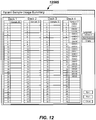
- the patient sample usage module 650 may also generate a patient sample usage summary screen 1256S ( FIG. 12 ) that may display the sample IDs and their position on the one or more sample racks 226 (e.g., deck 1-Deck 4), and may also signify whether a sample has received an order or not (e.g., by color). Further, the patient sample usage summary screen 1256S may indicate whether a location on the sample rack 226 is empty.
- the extraction plate 220 and its contents may undergo various processing cycles including incubation (including heating and cooling), shaking, multiple washing cycles with addition of various wash buffers (e.g., WB1-WB3 or the like), magnetic separation, and the addition of the elution buffer (EB).
- the various processing cycles are all known and will not be further expanded on herein.
- the various test plate wells of the test plate 225 may be populated with purified samples (referred to as "eluate" herein).
- the act of populating is designated by arrow 348, wherein one or more robots 235D and one or more coupled pipettes 236D aspirate and dispense the various eluted patient samples and eluted control samples from the extraction plate wells of the extraction plate 220 and transfer these eluate to the various assay regions (e.g., 225A-225D) of the test plate 225.
- Eluate includes patient sample eluate (e.g., SE1, SE2, SE3, SE4, SE5, SE6, S.E, through SnE) that have been processed through the extraction plate wells of the extraction plate 220, as well as any control sample eluate (e.g., PR1E, PR2E, PR3E, PR4E, UCE) from the various controls (e.g., universal control UC and pre-processed controls PR1-PR4) that have been processed through the extraction plate 220.
- patient sample eluate e.g., SE1, SE2, SE3, SE4, SE5, SE6, S.E, through SnE
- any control sample eluate e.g., PR1E, PR2E, PR3E, PR4E, UCE
- controls e.g., universal control UC and pre-processed controls PR1-PR4
- the assay regions may be populated in any order or sequence.
- the population method may include a first in first out (FIFO) methodology.
- FIFO first in first out
- eluate from a single well of the extraction plate 220 should be aspirated and then dispensed before going on to dispense a different eluate.
- the pre-processed control eluate (e.g., PR1E, PR2E, PR3E, PR4E) may each be aspired and dispensed first into the various assay regions (e.g., assay regions 225A-225D), followed by aspirating and dispensing the universal control eluate (UCE) to the various assay regions (e.g., assay regions 225A-225D).
- UCE universal control eluate
- P01, P03 post-processed control
- the patient sample eluate may be aspired and dispensed into the various assay regions (e.g., assay regions 225A-225D).
- Assay regions 225A-225D Other orders of dispensing of the pre-processed controls, post-processed controls, Universal controls and/or sample eluate may be used.
- Each one of the patient sample eluate may be aspirated from an individual extraction plate well and then dispensed into multiple test plate wells of the test plate 225 located within the various assay regions according to one aspect. Dispensing may be based on the electronic plate map (e.g., plate map file - *.MAP file)). Thus, a patient sample eluate, based on the determined assay orders, may be dispensed into one assay region only, more than one assay region, or all assay regions. As should be apparent, extreme flexibility in assay population, including full or near full utilization of the test plate 225 may be provided by the SP method 400 and SP apparatus 200.
- pre-processed controls may be selected and provided for some, all, or none of the assay regions, as selected by the Tech when running the dynamic assay run setup module 642.
- any post-processed controls e.g., post-processed controls P01, P03
- any post-processed controls may be aspirated and dispensed directly to one or more test plate wells of the respective assay regions (e.g., assay regions 224A, 225B, 225C, and 225D) of the test plate 225, depending upon which assay region has post-processed controls as part of its assay data set.
- Post-processed controls may be selected and provided for some, all, or none of the assay regions, as selected by the Tech when running the dynamic assay run setup module 642.
- a time module 655 may instruct the Tech when to add the post-processed controls (e.g., post processed controls P01, P03).
- Time module 655 may audibly beep and may should a time remaining until the No SP carrier may be loaded.
- Primer or probe (or primer probe mix) for those protocols desiring primer and probe may be added corresponding assay region.
- enzyme for those protocols desiring enzyme may be added to the corresponding assay region.
- control sample eluate e.g., PR1E
- a single assay e.g., assay region 225A
- a universal control elate UCE in each region (e.g., assay regions 225A-225D).
- An assay region may include patient sample eluate only and no controls, patient sample eluate (with or without internal controls) together with various combinations of universal control eluate, pre-processed control eluate, and post-processed controls. Certain controls have been described herein. However, the SP method 400 and SP apparatus 200 may easily incorporate other controls or calibrators either globally or as a selectable part of any assay data set, such as positive controls or independent controls.
- the master mixes e.g., MM1-MM4
- any other NO SP reagent may be aspirated and dispensed to the respective assay regions (e.g., assay regions 225A-225D) by one or more robots 235C and one or more coupled pipettes 236C, wherein one type of master mix is dedicated to each assay type, and a single assay type is provided in each assay region (e.g., assay regions 225A-225D).
- master mix MM1 is dispensed to all test plate wells in the first assay region 225A
- master mix MM2 is dispensed to all test plate wells in the second assay region 225A, and so on. Additional reagent dispenses may take place per assay in some embodiments.
- the test plate 225 may be transferred to the AD Device 238.
- SP sample preparation
- FIG. 5A illustrates a flowchart of a method of populating a test plate (e.g., test plate 225) having multiple test wells according to further embodiments.
- the method 500A includes, in block 502A, performing sample processing of multiple patient samples (e.g., patient samples S1-Sn) in multiple extraction wells of an extraction plate (e.g., extraction plate 220) to prepare multiple eluted samples (e.g., S1E-SnE) in at least some of the multiple extraction wells, and, in block 504A, transferring, based upon an electronic plate map (see plate map 946 of FIG. 9 ) including multiple assay regions (e.g., 6 assay regions shown in FIG.
- test plate 225 multiple test wells of the test plate
- each of the multiple test wells of the test plate are in a different one of the multiple assay regions (e.g., 225A-225D) and each is configured to carry out a different assay type (e.g., assay types CMV-PARVO).
- assay types CMV-PARVO assay types CMV-PARVO
- FIG. 5B illustrates a flowchart of a method of preparing samples for assaying on a PCR plate having a plurality of PCR plate wells according to further embodiments.
- the method 500B includes, in block 502B, providing a plurality of patient samples (e.g., S1-Sn) to be assayed, the patient samples including sample identifications (e.g., barcodes of sample containers 229), and in block 504B, receiving assay orders corresponding to the plurality of patient samples from an LIS (e.g., LIS 234).
- an LIS e.g., LIS 234
- the method 500B includes, in block 506B, selecting, based upon the assay orders and sample identifications, a number and type of assays to perform on the PCR plate, and, in block 508B, dynamically defining assay data sets for each of the types of assays including at least types and numbers of pre-processed controls and post-processed controls.
- the method 500B includes, in block 510B, preparing the plurality of patient samples and the pre-processed controls through to patient sample eluate and control sample eluate on extraction plate wells of an extraction plate (e.g., extraction plate 220).
- the method 500B includes, in block 512B, defining, based on the types of assays, number of assays to perform, and a number of controls, an electronic plate map (e.g., see plate map 946 of FIG. 9 ) including multiple assay regions including a plurality of PCR plate wells, wherein each of the multiple assay regions (e.g., assay regions 225A-225D) includes at least one of the plurality of PCR plate wells, and, in block 514B, dispensing patient sample eluate from an extraction plate well into the multiple assay regions wherein the number of multiple assay regions on the PCR plate (e.g., test plate 225) is 2 or more; and a different assay is to be performed in each of the multiple assay regions.
- an electronic plate map e.g., see plate map 946 of FIG. 9
- each of the multiple assay regions e.g., assay regions 225A-225D
- each of the multiple assay regions includes at least one of the
- Some embodiments, or portions thereof, may be provided as a computer program product or software that may include a machine-readable medium having non-transient instructions stored thereon, which may be used to program the controller 230, to perform a sample preparation method in accordance with one or more embodiments.
- a machine-readable medium having non-transient instructions stored thereon may be provided.
- the "machine-readable medium” refers to any statutory medium that participates in providing data ( e.g., instructions) that may be read by a computer, a processor, or like device. Such a medium may take many forms, including but not limited to non-volatile media, volatile media, and specific statutory types of transmission media.
- Non-volatile media include, for example, optical or magnetic disks, and other persistent memory.
- Volatile media include DRAM, which typically constitutes the main memory.
- Common forms of computer-readable media include, for example, a floppy disk, a flexible disk, hard disk, magnetic tape, any other magnetic medium, a CD-ROM, Digital Video Disc (DVD), any other optical medium, punch cards, paper tape, any other physical medium with patterns of holes, a RAM, a PROM, an EPROM, a FLASH-EEPROM, a USB memory stick, a dongle, any other memory chip or cartridge, a carrier wave, or any other medium from which a computer can read.
- the terms "computer-readable memory” and / or “tangible media” specifically exclude signals, waves, and wave forms or other intangible or transitory media that may nevertheless be readable by a computer.
- the machine-readable medium having non-transient instructions includes a dynamic run setup module configured to define a plurality of assay data sets with desired run configurations based at least in part on a number and type of assays to run, and number and type of controls; and a work list and plate map display module configured to generate an electronic plate map including spatial information correlated to locations (e.g., test plate well locations) within multiple assay regions of a test plate of patient sample eluate and control eluate and optionally one or more post-processed controls.
- locations e.g., test plate well locations
- the sample preparation software program may further include additional modules that are adapted to carry out specific programming tasks, such as workflow start module 640, patient sample usage module 650, required inventory module 652, status module 668, and error report module 664, as discussed above.
Landscapes
- Chemical & Material Sciences (AREA)
- Health & Medical Sciences (AREA)
- Analytical Chemistry (AREA)
- Chemical Kinetics & Catalysis (AREA)
- Life Sciences & Earth Sciences (AREA)
- General Health & Medical Sciences (AREA)
- Clinical Laboratory Science (AREA)
- Physics & Mathematics (AREA)
- Biochemistry (AREA)
- Immunology (AREA)
- General Physics & Mathematics (AREA)
- Pathology (AREA)
- Organic Chemistry (AREA)
- Engineering & Computer Science (AREA)
- Zoology (AREA)
- Wood Science & Technology (AREA)
- Proteomics, Peptides & Aminoacids (AREA)
- Hematology (AREA)
- Robotics (AREA)
- Biophysics (AREA)
- Molecular Biology (AREA)
- Microbiology (AREA)
- Bioinformatics & Cheminformatics (AREA)
- General Engineering & Computer Science (AREA)
- Genetics & Genomics (AREA)
- Biotechnology (AREA)
- Apparatus Associated With Microorganisms And Enzymes (AREA)
- Automatic Analysis And Handling Materials Therefor (AREA)
Claims (21)
- Verfahren zur Vorbereitung von Proben zum Testen auf einer Testplatte mit mehreren Löchern, umfassend:Empfangen, über eine Benutzerschnittstelle, von Anweisungen zum Durchführen eines ersten Testtyps und eines zweiten Testtyps;Bestimmen von Probenkennungen für mehrere zu testende Proben;Empfangen von Testaufträgen, die den Probenkennungen entsprechen;Definieren, basierend auf den Testaufträgen und den Probenkennungen, einer ersten und einer zweiten Testregion der mehreren Löcher, wobei jede definierte Testregion wenigstens eines der mehreren Löcher aufweist; undErstellen einer elektronischen Plattenübersicht, die eine grafische Darstellung der Testplatte, welche die erste Testregion und die zweite Testregion ausweist, und Anweisungen zum Durchführen eines ersten Testtyps an Proben, die in der ersten Testregion enthalten sind, und zum Durchführen eines zweiten Testtyps an Proben, die in der zweiten Testregion enthalten sind, beinhaltet, wobei die elektronische Plattenübersicht zwei oder mehr Testregionen aufweist und definiert, die jeweils eine Gruppe physischer Lochpositionen auf der Testplatte darstellen.
- Verfahren nach Anspruch 1, das drei oder mehr Testregionen umfasst und bei dem in jeder der drei oder mehr Testregionen ein anderer Testtyp vorbereitet wird.
- Verfahren nach Anspruch 2, das das Anzeigen einer grafischen Darstellung der Testplatte umfasst, die die drei oder mehr Testregionen ausweist.
- Verfahren nach Anspruch 1, umfassend:
gleichzeitig einzuschließen:ein oder mehrere vorverarbeitete Kontrollprobeneluate von einer Extraktionsplatte in einer oder mehreren Testregionen der Testplatte, undeine oder mehrere nachverarbeitete Kontrollen in einer oder mehreren Testregionen der Testplatte. - Verfahren nach Anspruch 1, umfassend das Definieren von Testdatensätzen für sowohl den ersten Testtyp als auch den zweiten Testtyp, die in einer bestimmten Reihe durchgeführt werden, wobei die Testdatensätze wenigstens einen Testnamen und ein Vorhandensein vorverarbeiteter Kontrollen, ein Vorhandensein nachverarbeiteter Kontrollen oder beides beinhalten.
- Verfahren nach Anspruch 1, umfassend das Anzeigen einer grafischen Darstellung von wenigstens einigen Inventaranforderungen, die zur Vorbereitung der an der Testplatte durchzuführenden Tests dienen, einschließend die erste Testregion und die zweite Testregion.
- Verfahren nach Anspruch 1, umfassend das Definieren der ersten und der zweiten Testregion basierend auf den Testaufträgen, den Probenkennungen und Kontrollen.
- Verfahren nach Anspruch 1, umfassend, gleichzeitig eine oder mehrere vorverarbeitete Kontrollproben sowie eine oder mehrere nachverarbeitete Kontrollproben auf der Testplatte einzuschließen.
- Verfahren nach Anspruch 1, umfassend das Bereitstellen einer Liste von wenigstens einigen Inventaranforderungen zum Verarbeiten des ersten und des zweiten Tests und der Proben.
- Verfahren nach Anspruch 1, umfassend das Erzeugen einer Inventarbilddatei basierend auf der elektronischen Plattenübersicht.
- Verfahren nach Anspruch 1, ferner umfassend das Übertragen der elektronischen Plattenübersicht an eine Verstärkungs- und Detektionsvorrichtung.
- Verfahren nach Anspruch 11, wobei die elektronische Plattenübersicht Anweisungen beinhaltet, einen ersten Testtyp an eluierten Patientenproben und einer ersten Mastermischung, die in der ersten Testregion enthalten sind, durchzuführen und einen zweiten Testtyp an eluierten Patientenproben und einer zweiten Mastermischung, die in der zweiten Testregion enthalten sind, durchzuführen.
- Verfahren nach Anspruch 1, umfassend:Durchführen einer Probenverarbeitung mehrerer Patientenproben in mehreren Extraktionsplattenlöchern einer Extraktionsplatte, um mehrere eluierte Proben in wenigstens einigen der mehreren Extraktionsplattenlöcher vorzubereiten; undÜberführen, basierend auf der elektronischen Plattenübersicht, die mehrere Testregionen aufweist, einer der mehreren eluierten Proben aus einem einzelnen Extraktionsplattenloch der mehreren Extraktionsplattenlöcher in mehrere Testlöcher der Testplatte, wobei jedes der mehreren Testlöcher der Testplatte in einer anderen der mehreren Testregionen liegt und jeweils dafür ausgelegt ist, einen anderen Testtyp durchzuführen.
- Verfahren nach Anspruch 13, wobei die eine der mehreren eluierten Proben aus dem einzelnen Extraktionsloch der mehreren Löcher in drei oder mehr der mehreren Testlöcher der Testplatte überführt werden, wobei jedes der drei oder mehr der mehreren Testlöcher in einer anderen Plattenregion liegt.
- Verfahren nach Anspruch 13, wobei die eine der mehreren eluierten Proben auf zwischen zwei und sechs der mehreren Testlöcher einer Testplatte überführt wird.
- Verfahren nach Anspruch 13, wobei die verschiedenen Testtypen jeweils in einer anderen Testregion der Testplatte vorgesehen sind.
- Verfahren gemäß Anspruch 1, wobei die Testplatte eine PCR-Platte mit mehreren PCR-Plattenlöchern ist, umfassend:Bereitstellen mehrerer zu testender Patientenproben, wobei die Patientenproben Probenkennungen aufweisen;Empfangen von Testaufträgen, die den mehreren Patientenproben entsprechen, von einem Laborinformationssystem (LIS);Auswählen, basierend auf den Testaufträgen und den Probenkennungen, einer Anzahl und eines Typs von Tests, die an der PCR-Platte durchgeführt werden sollen;dynamisches Definieren von Testdatensätzen für jeden der Testtypen einschließlich Typen und Anzahl vorverarbeiteter Kontrollen und nachverarbeiteter Kontrollen;Vorbereiten der mehreren Patientenproben und der vorverarbeiteten Kontrollen bis hin zum Patientenprobeneluat und Kontrollprobeneluat in Extraktionsplattenlöchern einer Extraktionsplatte;Definieren, basierend auf den Testtypen, einer Anzahl von durchzuführenden Tests und einer Anzahl von Kontrollen, der elektronischen Plattenübersicht, welche mehrere Testregionen aufweist, die mehrere PCR-Plattenlöcher aufweisen, wobei jede der mehreren Testregionen wenigstens eines der mehreren PCR-Plattenlöcher aufweist; undVerteilen des Patientenprobeneluats aus einem Extraktionsplattenloch in die mehreren Testregionen, wobei eine Anzahl der mehreren Testregionen auf der PCR-Platte zwei oder mehr beträgt; und wobei in jeder der mehreren Testregionen ein anderer Test durchgeführt wird.
- Probenvorbereitungsvorrichtung, umfassend:eine Extraktionsplatte;eine Testplatte;einen Speicher, der dazu dient, wenigstens Patientenprobenkennungen, Testaufträge für jede Patientenprobe und Anzahl und Typ der Tests zu speichern;einen Prozessor, der mit dem Speicher verbunden ist und dazu dient, eine elektronische Plattenübersicht zu erzeugen, die eine grafische Darstellung der Testplatte aufweist, welche die mehreren Testregionen ausweist, die jeweils eine Gruppe physischer Lochpositionen auf der Testplatte bilden, basierend wenigstens auf einer Anzahl der Patientenproben, einer Anzahl und einem Typ der Testaufträge für jede der Patientenproben und der Anzahl der Kontrollen; undeinen oder mehrere Roboter, die jeweils eine oder mehrere gekoppelte Pipetten aufweisen, welche dafür ausgelegt sind, Patientenprobeneluat aus einem Extraktionsplattenloch der Extraktionsplatte und eine Mastermischung in die mehreren Testregionen zu überführen.
- Probenvorbereitungsvorrichtung nach Anspruch 18, umfassend eine Kommunikationsvorrichtung, die dafür ausgelegt ist, eine elektronische Datendatei, welche Informationen aus der elektronischen Plattenübersicht beinhaltet, an eine Verstärkungs- und Detektionsvorrichtung zu übertragen.
- Probenvorbereitungsvorrichtung nach Anspruch 18, umfassend Probenvorbereitungs-Software, die ein Modul erforderlichen Inventars beinhaltet, das dafür ausgelegt ist, vom Prozessor ausgeführt zu werden, um eine Bilddatei oder eine Liste von wenigstens einigen der Inventaranforderungen für die mehreren Tests vorzubereiten.
- Maschinenlesbares Medium mit darauf gespeicherten nichttransienten Anweisungen zum Durchführen eines Verfahrens nach Anspruch 1-17,
umfassend:ein dynamisches Ablaufeinrichtungsmodul, das dafür ausgelegt ist, mehrere Testdatensätze mit gewünschten Ablaufkonfigurationen zu definieren, wenigstens teilweise basierend auf einer Anzahl und einem Typ der auszuführenden Tests sowie einer Anzahl und einem Typ von Kontrollen; undein Anzeigemodul für Arbeitsliste und Plattenübersicht, das dafür ausgelegt ist, eine elektronische Plattenübersicht zu erzeugen, die eine grafische Darstellung aufweist, welche mehrere Testregionen einer Testplatte mit Patientenprobeneluat und Kontrolleluat sowie wahlweise einer oder mehreren nachverarbeiteten Kontrollen ausweist.
Applications Claiming Priority (2)
| Application Number | Priority Date | Filing Date | Title |
|---|---|---|---|
| US201361876798P | 2013-09-12 | 2013-09-12 | |
| PCT/US2014/055420 WO2015038910A1 (en) | 2013-09-12 | 2014-09-12 | Dynamic assay selection and sample preparation apparatus and methods and machine-readable mediums thereof |
Publications (3)
| Publication Number | Publication Date |
|---|---|
| EP3044595A1 EP3044595A1 (de) | 2016-07-20 |
| EP3044595A4 EP3044595A4 (de) | 2016-09-28 |
| EP3044595B1 true EP3044595B1 (de) | 2018-07-25 |
Family
ID=52666327
Family Applications (1)
| Application Number | Title | Priority Date | Filing Date |
|---|---|---|---|
| EP14843287.5A Revoked EP3044595B1 (de) | 2013-09-12 | 2014-09-12 | Dynamische testauswahl- und probenvorbereitungsvorrichtung sowie verfahren dafür und maschinenlesbare medien dafür |
Country Status (4)
| Country | Link |
|---|---|
| US (1) | US20160319329A1 (de) |
| EP (1) | EP3044595B1 (de) |
| CN (2) | CN110702933A (de) |
| WO (1) | WO2015038910A1 (de) |
Families Citing this family (31)
| Publication number | Priority date | Publication date | Assignee | Title |
|---|---|---|---|---|
| US8470265B2 (en) | 2009-01-23 | 2013-06-25 | Biotix, Inc. | Anti-static pipette tip trays |
| EP3021123B1 (de) * | 2014-11-17 | 2021-12-29 | Brand Gmbh + Co Kg | Steuerungseinrichtung für pipettierautomaten |
| US10730053B2 (en) | 2014-12-10 | 2020-08-04 | Biotix, Inc. | Static-defeating apparatus for pipette tips |
| USD865216S1 (en) | 2014-12-10 | 2019-10-29 | Biotix, Inc. | Pipette tip sheet |
| USD849962S1 (en) | 2014-12-10 | 2019-05-28 | Biotix, Inc. | Pipette tip retention sheet |
| US10137453B2 (en) | 2014-12-10 | 2018-11-27 | Biotix, Inc. | Static-defeating apparatus for pipette tips |
| USD815753S1 (en) | 2014-12-10 | 2018-04-17 | Biotix, Inc. | Pipette tip sheet |
| JP6612539B2 (ja) * | 2015-06-30 | 2019-11-27 | シスメックス株式会社 | 遺伝子検査用検体処理装置 |
| CN107850610B (zh) * | 2015-10-16 | 2021-02-26 | 深圳迈瑞生物医疗电子股份有限公司 | 一种样本测试申请方法、装置及样本分析仪 |
| EP3171177A1 (de) * | 2015-11-19 | 2017-05-24 | F. Hoffmann-La Roche AG | Verfahren und laborsystem zur verteilung biologischer proben auf mikroplatten |
| USD849961S1 (en) | 2016-05-13 | 2019-05-28 | Becton, Dickinson And Company | Tube retention tray |
| USD827149S1 (en) * | 2016-05-13 | 2018-08-28 | Becton, Dickinson And Company | Process plate |
| USD825774S1 (en) * | 2016-05-13 | 2018-08-14 | Becton, Dickinson And Company | Process plate |
| WO2018119321A1 (en) * | 2016-12-22 | 2018-06-28 | Counsyl, Inc. | Automatic diagnostic laboratory and laboratory information management system for high throughput |
| JP7227911B2 (ja) * | 2017-01-27 | 2023-02-22 | ロンザ リミテッド | 自動化システムを動的に制御すること |
| US20180300455A1 (en) * | 2017-04-14 | 2018-10-18 | Orig3N, Inc. | Chain of custody for biological samples and biological material used in genotyping tests |
| CN108985117A (zh) * | 2018-05-31 | 2018-12-11 | 重庆微标科技股份有限公司 | 一种标本或试管智能批量识别仪及识别方法 |
| WO2020037297A1 (en) * | 2018-08-16 | 2020-02-20 | Life Technologies Corporation | System and method for automated reagent verification |
| USD903899S1 (en) | 2018-09-28 | 2020-12-01 | Becton, Dickinson And Company | Process plate |
| US20210127829A1 (en) * | 2018-12-21 | 2021-05-06 | Idetic Llc | Rack for supporting collection containers |
| CN114174832B (zh) | 2019-09-30 | 2025-09-16 | 深圳迈瑞生物医疗电子股份有限公司 | 一种样本分析系统及样本管理方法 |
| JP7389607B2 (ja) * | 2019-10-04 | 2023-11-30 | 株式会社日立ハイテクサイエンス | オートサンプラの制御装置及びそれを含む自動測定システム |
| EP3885449A1 (de) | 2020-03-27 | 2021-09-29 | TCI Co., Ltd. | Automatisches nukleinsäuredetektionssystem und verfahren dafür |
| TWI767250B (zh) * | 2020-03-27 | 2022-06-11 | 大江生醫股份有限公司 | 自動化核酸檢測系統與自動化核酸分配系統 |
| USD998174S1 (en) * | 2020-04-21 | 2023-09-05 | Fate Therapeutics, Inc. | Vial rack |
| USD956263S1 (en) * | 2020-07-02 | 2022-06-28 | Ultima Genomics, Inc. | Sample cartridge |
| USD998172S1 (en) | 2021-03-12 | 2023-09-05 | Ultima Genomics, Inc. | Sample rack |
| US20240183872A1 (en) * | 2021-04-01 | 2024-06-06 | Siemens Healthcare Diagnostics Inc. | Diagnostic instruments having sorting capability and sorting methods thereof |
| EP4356232A1 (de) * | 2021-06-16 | 2024-04-24 | Agilent Technologies, Inc. | Visuelle schnittstelle zur erzeugung von gruppen und zum experimentaufbau |
| US12090483B2 (en) * | 2021-10-12 | 2024-09-17 | Amazon Technologies, Inc. | Diagnostic sample collection system |
| CN115555072B (zh) * | 2022-08-10 | 2025-06-13 | 常熟市疾病预防控制中心 | 一种核酸检测样品编号与实验板号自动唯一对应的方法 |
Citations (12)
| Publication number | Priority date | Publication date | Assignee | Title |
|---|---|---|---|---|
| US6043880A (en) | 1997-09-15 | 2000-03-28 | Becton Dickinson And Company | Automated optical reader for nucleic acid assays |
| WO2003097808A2 (en) | 2002-05-17 | 2003-11-27 | Becton, Dickinson And Company | Automated system for isolating, amplyifying and detecting a target nucleic acid sequence |
| US20040033610A1 (en) | 2002-03-11 | 2004-02-19 | Lovell Craig P. | System and method for flexibly representing and processing assay plates |
| US6720149B1 (en) | 1995-06-07 | 2004-04-13 | Affymetrix, Inc. | Methods for concurrently processing multiple biological chip assays |
| WO2004099378A2 (en) | 2003-04-30 | 2004-11-18 | Aurora Discovery, Inc. | Automated laboratory for high-throughput biological assays and rna interference |
| US20050009070A1 (en) | 2003-05-23 | 2005-01-13 | Bio-Rad Laboratories, Inc., A Corporation Of The State Of Delaware | Localized temperature control for spatial arrays of reaction media |
| US20060051243A1 (en) | 2003-07-18 | 2006-03-09 | Dade Behring Inc. | Automated analyzer |
| US20070112804A1 (en) | 2005-11-07 | 2007-05-17 | Desimas Bruce E | Systems and methods for generating automated software workflows for biological testing |
| WO2008131022A1 (en) | 2007-04-17 | 2008-10-30 | Guava Technologies, Inc. | Graphical user interface for analysis and comparison of location-specific multiparameter data sets |
| WO2011063139A1 (en) | 2009-11-18 | 2011-05-26 | Qiagen | Laboratory central control unit method and system |
| US20120156683A1 (en) | 2010-12-17 | 2012-06-21 | Mei Wang Baker | One-step method of elution of dna from blood samples |
| US20130157273A1 (en) | 2011-12-20 | 2013-06-20 | Roche Molecular Systems, Inc. | Method for Nucleic Acid Testing |
Family Cites Families (8)
| Publication number | Priority date | Publication date | Assignee | Title |
|---|---|---|---|---|
| DE2118432C3 (de) * | 1971-04-16 | 1974-08-29 | Siemens Ag, 1000 Berlin Und 8000 Muenchen | Probenverteiler für die Untersuchung von Flüssigkeitsproben |
| US6419827B1 (en) * | 1998-10-29 | 2002-07-16 | Applera Corporation | Purification apparatus and method |
| JP4724380B2 (ja) * | 1999-04-20 | 2011-07-13 | 独立行政法人産業技術総合研究所 | 核酸の測定方法に用いる核酸プローブおよびデータを解析する方法 |
| JP2004144739A (ja) * | 2002-10-02 | 2004-05-20 | Matsushita Electric Ind Co Ltd | 検体用サンプリング素子、検体処理装置および検体処理方法 |
| CN1826218B (zh) * | 2003-07-18 | 2010-09-22 | Dade白令公司 | 自动多检测器分析仪 |
| US7625680B2 (en) * | 2006-09-29 | 2009-12-01 | Tokyo Electron Limited | Method of real time dynamic CD control |
| JP5141039B2 (ja) * | 2007-02-22 | 2013-02-13 | 東洋紡株式会社 | 核酸増幅装置及び核酸増幅方法 |
| KR101423936B1 (ko) * | 2009-03-11 | 2014-07-29 | (주)바이오니아 | 실시간 핵산 분석 통합 장치 및 이를 이용한 타겟 핵산의 검출방법 |
-
2014
- 2014-09-12 WO PCT/US2014/055420 patent/WO2015038910A1/en not_active Ceased
- 2014-09-12 CN CN201911065447.6A patent/CN110702933A/zh active Pending
- 2014-09-12 EP EP14843287.5A patent/EP3044595B1/de not_active Revoked
- 2014-09-12 CN CN201480050134.2A patent/CN105518462A/zh active Pending
- 2014-09-12 US US14/912,776 patent/US20160319329A1/en not_active Abandoned
Patent Citations (12)
| Publication number | Priority date | Publication date | Assignee | Title |
|---|---|---|---|---|
| US6720149B1 (en) | 1995-06-07 | 2004-04-13 | Affymetrix, Inc. | Methods for concurrently processing multiple biological chip assays |
| US6043880A (en) | 1997-09-15 | 2000-03-28 | Becton Dickinson And Company | Automated optical reader for nucleic acid assays |
| US20040033610A1 (en) | 2002-03-11 | 2004-02-19 | Lovell Craig P. | System and method for flexibly representing and processing assay plates |
| WO2003097808A2 (en) | 2002-05-17 | 2003-11-27 | Becton, Dickinson And Company | Automated system for isolating, amplyifying and detecting a target nucleic acid sequence |
| WO2004099378A2 (en) | 2003-04-30 | 2004-11-18 | Aurora Discovery, Inc. | Automated laboratory for high-throughput biological assays and rna interference |
| US20050009070A1 (en) | 2003-05-23 | 2005-01-13 | Bio-Rad Laboratories, Inc., A Corporation Of The State Of Delaware | Localized temperature control for spatial arrays of reaction media |
| US20060051243A1 (en) | 2003-07-18 | 2006-03-09 | Dade Behring Inc. | Automated analyzer |
| US20070112804A1 (en) | 2005-11-07 | 2007-05-17 | Desimas Bruce E | Systems and methods for generating automated software workflows for biological testing |
| WO2008131022A1 (en) | 2007-04-17 | 2008-10-30 | Guava Technologies, Inc. | Graphical user interface for analysis and comparison of location-specific multiparameter data sets |
| WO2011063139A1 (en) | 2009-11-18 | 2011-05-26 | Qiagen | Laboratory central control unit method and system |
| US20120156683A1 (en) | 2010-12-17 | 2012-06-21 | Mei Wang Baker | One-step method of elution of dna from blood samples |
| US20130157273A1 (en) | 2011-12-20 | 2013-06-20 | Roche Molecular Systems, Inc. | Method for Nucleic Acid Testing |
Non-Patent Citations (22)
| Title |
|---|
| "A review of the benefits offered by the Triturus", SOMAGEN LABORATORY QUARTERLY, 2001, XP055586215, Retrieved from the Internet <URL:http://www.somagen.com/wp-content/uploads/2015/06/Fall-2001.compressed.pdf> [retrieved on 20190425] |
| "Automated Immunoassay analyzers", CAP TODAY, June 2008 (2008-06-01), pages 24,26,28,30,32,34,36 - 38,40,42,44,46,48,50,52,54,56,58,60,64,66,68,70,72, XP055586651 |
| "ELISA THE OPEN ELISA AUTOMATION THAT SUITS YOU", GRIFOLS, 7 November 2003 (2003-11-07), XP055586204, Retrieved from the Internet <URL:https://cic.ugr.es/descargas/lar/PDF6.pdf> |
| "Elysis Quattro User Manual", HUMAN, January 2011 (2011-01-01), pages 1 - 88, XP055586112, Retrieved from the Internet <URL:https://www.udh.med.sa/advices/ELISYS_QUATTRO_USER_MANUAL.pdf> [retrieved on 20190425] |
| "Elysis Uno Specifications & More", HUMAN, August 2012 (2012-08-01), XP055586091, Retrieved from the Internet <URL:http://www.ariaha.com/resources/attachment/1365664531_8931955e3f74740c72e6e64278b97b85.pdf> [retrieved on 20190425] |
| "Elysis Uno User Manual", HUMAN, May 2009 (2009-05-01), pages 1 - 152, XP055586070, Retrieved from the Internet <URL:http://www.frankshospitalworkshop.com/equipment/documents/automated_analyzer/user_manuals/Human_Elisys_Uno_-_User_manual.pdf> [retrieved on 20190425] |
| "ETI-Max 3000 User's Guide", DIASORIN, April 2002 (2002-04-01), pages 1 - 76, XP055586122, Retrieved from the Internet <URL:https://www.yeec.com/uploadimages1/forum/BACKMAN/eti-max3000%E8%A1%80%E5%87%9D%E4%BD%BF%E7%94%A8%E6%89%8B%E5%86%8C.pdf> [retrieved on 20190425] |
| "Positive patient identification products", CAP TODAY, July 2012 (2012-07-01), pages 100 - 102,104,106, XP055586656 |
| "Triturus Analyzer Instructions for use", GRIFOLS, 2010, pages 1 - 23-2, XP055586189 |
| ANNE FORD: "Immunoassay market overflowing with change", CAP TODAY, June 2005 (2005-06-01), pages 20 - 22,24,26,28,30,32-35,38,40-44,46,48,50,53-54,56, XP055586619 |
| ANNE FORD: "The nuts and bolts of selecting instruments", CAP TODAY, March 2003 (2003-03-01), pages 72 - 80,82-86,90-92,94,96-97, XP055586615 |
| BUSTIN ET AL.: "The MIQE Guidelines: Minimum Information for Publication of Quantitative Real-Time PCR Experiments", CLINICAL CHEMISTRY, vol. 55, no. 4, 2009, pages 611 - 622, XP055096284 |
| FAGE ET AL.: "Dosage des Stéroïdes : de la RIA a l'Elisa", 29E COLLOQUE CORATA - BIOCLINORD, 13 June 2012 (2012-06-13), Lille FR, pages 298 - 299, XP055586141 |
| KIMBALL ET AL.: "A comparison of automated methods for the quantitation of serum 25-hydroxyvitamin D and 1,25-dihydroxyvitamin D", CLINICAL BIOCHEMISTRY, vol. 40, 11 August 2007 (2007-08-11), pages 1305 - 1310, XP022301028 |
| LORENZ: "Liquid-Handling Robotic Workstations for Functional Genomics", JALA, vol. 9, no. 4, 1 August 2004 (2004-08-01), pages 262 - 267, XP055057357 |
| MINA ET AL.: "A robust method for testing urinary iodine using a microtitre robotic system", JOURNAL OF TRACE ELEMENTS IN MEDICINE AND BIOLOGY, vol. 25, December 2011 (2011-12-01), pages 213 - 217, XP028127115 |
| RODRIGUEZ MORENO ET AL.: "TPI.68 Evaluation of the triturus enzyme immunoassay autoanalyzer for the measurement of b2-glycoprotein I (p.S225)", CLINICA CHIMICA ACTA, vol. 355, 10 May 2005 (2005-05-10), pages S203 - S318, XP055586575 |
| SELMYER: "Interfacing the Clinical Laboratory: A Primer for LIS Managers", MED TECHNET, 7 October 1996 (1996-10-07), pages 1 - 25, XP055586604 |
| SHARMA ET AL.: "Bradkyinin-forming components in Kuwaiti patients with type 2 diabetes", INTERNATIONAL JOURNAL OF IMMUNOPATHOLOGY AND PHARMACOLOGY, vol. 26, no. 3, July 2013 (2013-07-01), pages 699 - 705, XP055586105 |
| STENCZER ET AL.: "Circulating levels of the anti-angiogenic thrombospondin 2 are elevated in pre-eclampsia", ACTA OBSTETRICIA ET GYNECOLOGICA SCANDINAVICA, vol. 90, November 2011 (2011-11-01), pages 1291 - 1295, XP055586099 |
| STRATEC GEMINI INSTRUCTIONS FOR USE, September 2011 (2011-09-01), pages 1 - 14-8, Retrieved from the Internet <URL:http s:/ /www.diasource-diagnostics.com/var/ftp _diasource/IFO /R VD IA916280000. pdf> [retrieved on 20190425] |
| VAN DE PUT ET AL.: "P6.7 CISBIO Chromogranine A ELISA kit evaluation on Stratec Gemini", TUMOR BIOLOGY, vol. 33, 2012, pages S81 - S116, XP055586166, [retrieved on 20120929] |
Also Published As
| Publication number | Publication date |
|---|---|
| EP3044595A1 (de) | 2016-07-20 |
| CN105518462A (zh) | 2016-04-20 |
| EP3044595A4 (de) | 2016-09-28 |
| CN110702933A (zh) | 2020-01-17 |
| US20160319329A1 (en) | 2016-11-03 |
| WO2015038910A1 (en) | 2015-03-19 |
Similar Documents
| Publication | Publication Date | Title |
|---|---|---|
| EP3044595B1 (de) | Dynamische testauswahl- und probenvorbereitungsvorrichtung sowie verfahren dafür und maschinenlesbare medien dafür | |
| US6326147B1 (en) | Methods, apparatus, articles of manufacture, and user interfaces for performing automated biological assay preparation and macromolecule purification | |
| EP3430410B1 (de) | Verfahren zur automatischen analyse | |
| JP2021092577A5 (de) | ||
| DeLaughter | The use of the Fluidigm C1 for RNA expression analyses of single cells | |
| JP6513083B2 (ja) | 自動分析装置 | |
| JP5372418B2 (ja) | 核酸分析装置,自動分析装置、及び分析方法 | |
| WO2005008218A2 (en) | Operator interface module segmented by function in an automatic clinical analyzer | |
| JP2015511314A (ja) | 分子診断試験の分布及び試験間のコンパチビリティ判断のための外部ファイル | |
| US20180372766A1 (en) | Analysis Systems and Methods of Identifying Consumables and Reagents | |
| EP3626652A1 (de) | Verbrauchbares verwaltungssystem für laboratorien | |
| CN109477131B (zh) | 多试验处理和分析的方法和系统 | |
| EP3171177A1 (de) | Verfahren und laborsystem zur verteilung biologischer proben auf mikroplatten | |
| JP2020160053A (ja) | 分析実験室の動作方法 | |
| US20080028871A1 (en) | Sample processing apparatus and sample processing method | |
| EP3645997B1 (de) | Verfahren und vorrichtung zur steuerung eines nachweiszusammensetzungherstellungsinstruments | |
| US9970951B2 (en) | Genetic testing device, genetic testing method and program | |
| May | Automated sample preparation | |
| EP2703820B1 (de) | Bewegliches Spitzenabfallrack | |
| US11977090B2 (en) | Walk-away time visualization methods and systems | |
| US20240093267A1 (en) | High-throughput automated preprocessing method and system for nucleic acid detection | |
| Felder et al. | Process evaluation of a fully automated molecular diagnostics system | |
| EP4549955A1 (de) | Automatisches probenpoolingsystem und probenpoolingverfahren damit | |
| TWI832753B (zh) | 用於核酸檢測之自動化前處理方法 | |
| US20190249225A1 (en) | Dispenser mapping apparatus for multi-analysis and the operation method thereof |
Legal Events
| Date | Code | Title | Description |
|---|---|---|---|
| PUAI | Public reference made under article 153(3) epc to a published international application that has entered the european phase |
Free format text: ORIGINAL CODE: 0009012 |
|
| 17P | Request for examination filed |
Effective date: 20160412 |
|
| AK | Designated contracting states |
Kind code of ref document: A1 Designated state(s): AL AT BE BG CH CY CZ DE DK EE ES FI FR GB GR HR HU IE IS IT LI LT LU LV MC MK MT NL NO PL PT RO RS SE SI SK SM TR |
|
| AX | Request for extension of the european patent |
Extension state: BA ME |
|
| A4 | Supplementary search report drawn up and despatched |
Effective date: 20160831 |
|
| RIC1 | Information provided on ipc code assigned before grant |
Ipc: G01N 35/00 20060101AFI20160825BHEP Ipc: B01L 3/00 20060101ALI20160825BHEP |
|
| DAX | Request for extension of the european patent (deleted) | ||
| STAA | Information on the status of an ep patent application or granted ep patent |
Free format text: STATUS: EXAMINATION IS IN PROGRESS |
|
| 17Q | First examination report despatched |
Effective date: 20170518 |
|
| GRAP | Despatch of communication of intention to grant a patent |
Free format text: ORIGINAL CODE: EPIDOSNIGR1 |
|
| STAA | Information on the status of an ep patent application or granted ep patent |
Free format text: STATUS: GRANT OF PATENT IS INTENDED |
|
| INTG | Intention to grant announced |
Effective date: 20180206 |
|
| GRAS | Grant fee paid |
Free format text: ORIGINAL CODE: EPIDOSNIGR3 |
|
| GRAA | (expected) grant |
Free format text: ORIGINAL CODE: 0009210 |
|
| STAA | Information on the status of an ep patent application or granted ep patent |
Free format text: STATUS: THE PATENT HAS BEEN GRANTED |
|
| AK | Designated contracting states |
Kind code of ref document: B1 Designated state(s): AL AT BE BG CH CY CZ DE DK EE ES FI FR GB GR HR HU IE IS IT LI LT LU LV MC MK MT NL NO PL PT RO RS SE SI SK SM TR |
|
| REG | Reference to a national code |
Ref country code: GB Ref legal event code: FG4D |
|
| REG | Reference to a national code |
Ref country code: CH Ref legal event code: EP |
|
| REG | Reference to a national code |
Ref country code: AT Ref legal event code: REF Ref document number: 1022324 Country of ref document: AT Kind code of ref document: T Effective date: 20180815 |
|
| REG | Reference to a national code |
Ref country code: IE Ref legal event code: FG4D |
|
| REG | Reference to a national code |
Ref country code: DE Ref legal event code: R096 Ref document number: 602014029308 Country of ref document: DE |
|
| REG | Reference to a national code |
Ref country code: CH Ref legal event code: NV Representative=s name: BOVARD AG PATENT- UND MARKENANWAELTE, CH |
|
| REG | Reference to a national code |
Ref country code: FR Ref legal event code: PLFP Year of fee payment: 5 |
|
| REG | Reference to a national code |
Ref country code: NL Ref legal event code: MP Effective date: 20180725 |
|
| REG | Reference to a national code |
Ref country code: LT Ref legal event code: MG4D |
|
| PG25 | Lapsed in a contracting state [announced via postgrant information from national office to epo] |
Ref country code: NL Free format text: LAPSE BECAUSE OF FAILURE TO SUBMIT A TRANSLATION OF THE DESCRIPTION OR TO PAY THE FEE WITHIN THE PRESCRIBED TIME-LIMIT Effective date: 20180725 |
|
| REG | Reference to a national code |
Ref country code: AT Ref legal event code: MK05 Ref document number: 1022324 Country of ref document: AT Kind code of ref document: T Effective date: 20180725 |
|
| PG25 | Lapsed in a contracting state [announced via postgrant information from national office to epo] |
Ref country code: GR Free format text: LAPSE BECAUSE OF FAILURE TO SUBMIT A TRANSLATION OF THE DESCRIPTION OR TO PAY THE FEE WITHIN THE PRESCRIBED TIME-LIMIT Effective date: 20181026 Ref country code: SE Free format text: LAPSE BECAUSE OF FAILURE TO SUBMIT A TRANSLATION OF THE DESCRIPTION OR TO PAY THE FEE WITHIN THE PRESCRIBED TIME-LIMIT Effective date: 20180725 Ref country code: BG Free format text: LAPSE BECAUSE OF FAILURE TO SUBMIT A TRANSLATION OF THE DESCRIPTION OR TO PAY THE FEE WITHIN THE PRESCRIBED TIME-LIMIT Effective date: 20181025 Ref country code: IS Free format text: LAPSE BECAUSE OF FAILURE TO SUBMIT A TRANSLATION OF THE DESCRIPTION OR TO PAY THE FEE WITHIN THE PRESCRIBED TIME-LIMIT Effective date: 20181125 Ref country code: RS Free format text: LAPSE BECAUSE OF FAILURE TO SUBMIT A TRANSLATION OF THE DESCRIPTION OR TO PAY THE FEE WITHIN THE PRESCRIBED TIME-LIMIT Effective date: 20180725 Ref country code: AT Free format text: LAPSE BECAUSE OF FAILURE TO SUBMIT A TRANSLATION OF THE DESCRIPTION OR TO PAY THE FEE WITHIN THE PRESCRIBED TIME-LIMIT Effective date: 20180725 Ref country code: NO Free format text: LAPSE BECAUSE OF FAILURE TO SUBMIT A TRANSLATION OF THE DESCRIPTION OR TO PAY THE FEE WITHIN THE PRESCRIBED TIME-LIMIT Effective date: 20181025 Ref country code: FI Free format text: LAPSE BECAUSE OF FAILURE TO SUBMIT A TRANSLATION OF THE DESCRIPTION OR TO PAY THE FEE WITHIN THE PRESCRIBED TIME-LIMIT Effective date: 20180725 Ref country code: LT Free format text: LAPSE BECAUSE OF FAILURE TO SUBMIT A TRANSLATION OF THE DESCRIPTION OR TO PAY THE FEE WITHIN THE PRESCRIBED TIME-LIMIT Effective date: 20180725 Ref country code: PL Free format text: LAPSE BECAUSE OF FAILURE TO SUBMIT A TRANSLATION OF THE DESCRIPTION OR TO PAY THE FEE WITHIN THE PRESCRIBED TIME-LIMIT Effective date: 20180725 |
|
| PG25 | Lapsed in a contracting state [announced via postgrant information from national office to epo] |
Ref country code: AL Free format text: LAPSE BECAUSE OF FAILURE TO SUBMIT A TRANSLATION OF THE DESCRIPTION OR TO PAY THE FEE WITHIN THE PRESCRIBED TIME-LIMIT Effective date: 20180725 Ref country code: LV Free format text: LAPSE BECAUSE OF FAILURE TO SUBMIT A TRANSLATION OF THE DESCRIPTION OR TO PAY THE FEE WITHIN THE PRESCRIBED TIME-LIMIT Effective date: 20180725 Ref country code: HR Free format text: LAPSE BECAUSE OF FAILURE TO SUBMIT A TRANSLATION OF THE DESCRIPTION OR TO PAY THE FEE WITHIN THE PRESCRIBED TIME-LIMIT Effective date: 20180725 |
|
| REG | Reference to a national code |
Ref country code: DE Ref legal event code: R026 Ref document number: 602014029308 Country of ref document: DE |
|
| PG25 | Lapsed in a contracting state [announced via postgrant information from national office to epo] |
Ref country code: MC Free format text: LAPSE BECAUSE OF FAILURE TO SUBMIT A TRANSLATION OF THE DESCRIPTION OR TO PAY THE FEE WITHIN THE PRESCRIBED TIME-LIMIT Effective date: 20180725 Ref country code: ES Free format text: LAPSE BECAUSE OF FAILURE TO SUBMIT A TRANSLATION OF THE DESCRIPTION OR TO PAY THE FEE WITHIN THE PRESCRIBED TIME-LIMIT Effective date: 20180725 Ref country code: CZ Free format text: LAPSE BECAUSE OF FAILURE TO SUBMIT A TRANSLATION OF THE DESCRIPTION OR TO PAY THE FEE WITHIN THE PRESCRIBED TIME-LIMIT Effective date: 20180725 Ref country code: RO Free format text: LAPSE BECAUSE OF FAILURE TO SUBMIT A TRANSLATION OF THE DESCRIPTION OR TO PAY THE FEE WITHIN THE PRESCRIBED TIME-LIMIT Effective date: 20180725 Ref country code: IT Free format text: LAPSE BECAUSE OF FAILURE TO SUBMIT A TRANSLATION OF THE DESCRIPTION OR TO PAY THE FEE WITHIN THE PRESCRIBED TIME-LIMIT Effective date: 20180725 Ref country code: EE Free format text: LAPSE BECAUSE OF FAILURE TO SUBMIT A TRANSLATION OF THE DESCRIPTION OR TO PAY THE FEE WITHIN THE PRESCRIBED TIME-LIMIT Effective date: 20180725 |
|
| PLBI | Opposition filed |
Free format text: ORIGINAL CODE: 0009260 |
|
| PLAX | Notice of opposition and request to file observation + time limit sent |
Free format text: ORIGINAL CODE: EPIDOSNOBS2 |
|
| PG25 | Lapsed in a contracting state [announced via postgrant information from national office to epo] |
Ref country code: SK Free format text: LAPSE BECAUSE OF FAILURE TO SUBMIT A TRANSLATION OF THE DESCRIPTION OR TO PAY THE FEE WITHIN THE PRESCRIBED TIME-LIMIT Effective date: 20180725 Ref country code: SM Free format text: LAPSE BECAUSE OF FAILURE TO SUBMIT A TRANSLATION OF THE DESCRIPTION OR TO PAY THE FEE WITHIN THE PRESCRIBED TIME-LIMIT Effective date: 20180725 Ref country code: DK Free format text: LAPSE BECAUSE OF FAILURE TO SUBMIT A TRANSLATION OF THE DESCRIPTION OR TO PAY THE FEE WITHIN THE PRESCRIBED TIME-LIMIT Effective date: 20180725 |
|
| 26 | Opposition filed |
Opponent name: ROCHE DIAGNOSTICS INTERNATIONAL AG Effective date: 20190425 |
|
| REG | Reference to a national code |
Ref country code: BE Ref legal event code: MM Effective date: 20180930 |
|
| REG | Reference to a national code |
Ref country code: IE Ref legal event code: MM4A |
|
| PG25 | Lapsed in a contracting state [announced via postgrant information from national office to epo] |
Ref country code: LU Free format text: LAPSE BECAUSE OF NON-PAYMENT OF DUE FEES Effective date: 20180912 |
|
| PG25 | Lapsed in a contracting state [announced via postgrant information from national office to epo] |
Ref country code: IE Free format text: LAPSE BECAUSE OF NON-PAYMENT OF DUE FEES Effective date: 20180912 |
|
| PG25 | Lapsed in a contracting state [announced via postgrant information from national office to epo] |
Ref country code: BE Free format text: LAPSE BECAUSE OF NON-PAYMENT OF DUE FEES Effective date: 20180930 Ref country code: SI Free format text: LAPSE BECAUSE OF FAILURE TO SUBMIT A TRANSLATION OF THE DESCRIPTION OR TO PAY THE FEE WITHIN THE PRESCRIBED TIME-LIMIT Effective date: 20180725 |
|
| PLBB | Reply of patent proprietor to notice(s) of opposition received |
Free format text: ORIGINAL CODE: EPIDOSNOBS3 |
|
| PG25 | Lapsed in a contracting state [announced via postgrant information from national office to epo] |
Ref country code: MT Free format text: LAPSE BECAUSE OF NON-PAYMENT OF DUE FEES Effective date: 20180912 |
|
| PG25 | Lapsed in a contracting state [announced via postgrant information from national office to epo] |
Ref country code: TR Free format text: LAPSE BECAUSE OF FAILURE TO SUBMIT A TRANSLATION OF THE DESCRIPTION OR TO PAY THE FEE WITHIN THE PRESCRIBED TIME-LIMIT Effective date: 20180725 |
|
| PG25 | Lapsed in a contracting state [announced via postgrant information from national office to epo] |
Ref country code: PT Free format text: LAPSE BECAUSE OF FAILURE TO SUBMIT A TRANSLATION OF THE DESCRIPTION OR TO PAY THE FEE WITHIN THE PRESCRIBED TIME-LIMIT Effective date: 20180725 |
|
| PG25 | Lapsed in a contracting state [announced via postgrant information from national office to epo] |
Ref country code: CY Free format text: LAPSE BECAUSE OF FAILURE TO SUBMIT A TRANSLATION OF THE DESCRIPTION OR TO PAY THE FEE WITHIN THE PRESCRIBED TIME-LIMIT Effective date: 20180725 Ref country code: HU Free format text: LAPSE BECAUSE OF FAILURE TO SUBMIT A TRANSLATION OF THE DESCRIPTION OR TO PAY THE FEE WITHIN THE PRESCRIBED TIME-LIMIT; INVALID AB INITIO Effective date: 20140912 Ref country code: MK Free format text: LAPSE BECAUSE OF NON-PAYMENT OF DUE FEES Effective date: 20180725 |
|
| RDAF | Communication despatched that patent is revoked |
Free format text: ORIGINAL CODE: EPIDOSNREV1 |
|
| APAH | Appeal reference modified |
Free format text: ORIGINAL CODE: EPIDOSCREFNO |
|
| APBM | Appeal reference recorded |
Free format text: ORIGINAL CODE: EPIDOSNREFNO |
|
| APBP | Date of receipt of notice of appeal recorded |
Free format text: ORIGINAL CODE: EPIDOSNNOA2O |
|
| APBQ | Date of receipt of statement of grounds of appeal recorded |
Free format text: ORIGINAL CODE: EPIDOSNNOA3O |
|
| PGFP | Annual fee paid to national office [announced via postgrant information from national office to epo] |
Ref country code: DE Payment date: 20220620 Year of fee payment: 9 |
|
| PGFP | Annual fee paid to national office [announced via postgrant information from national office to epo] |
Ref country code: FR Payment date: 20220921 Year of fee payment: 9 |
|
| PGFP | Annual fee paid to national office [announced via postgrant information from national office to epo] |
Ref country code: GB Payment date: 20221011 Year of fee payment: 9 |
|
| PGFP | Annual fee paid to national office [announced via postgrant information from national office to epo] |
Ref country code: CH Payment date: 20221220 Year of fee payment: 9 |
|
| PLAB | Opposition data, opponent's data or that of the opponent's representative modified |
Free format text: ORIGINAL CODE: 0009299OPPO |
|
| REG | Reference to a national code |
Ref country code: DE Ref legal event code: R103 Ref document number: 602014029308 Country of ref document: DE Ref country code: DE Ref legal event code: R064 Ref document number: 602014029308 Country of ref document: DE |
|
| APBU | Appeal procedure closed |
Free format text: ORIGINAL CODE: EPIDOSNNOA9O |
|
| R26 | Opposition filed (corrected) |
Opponent name: ROCHE DIAGNOSTICS INTERNATIONAL AG Effective date: 20190425 |
|
| RDAG | Patent revoked |
Free format text: ORIGINAL CODE: 0009271 |
|
| STAA | Information on the status of an ep patent application or granted ep patent |
Free format text: STATUS: PATENT REVOKED |
|
| REG | Reference to a national code |
Ref country code: CH Ref legal event code: PL |
|
| 27W | Patent revoked |
Effective date: 20230403 |
|
| GBPR | Gb: patent revoked under art. 102 of the ep convention designating the uk as contracting state |
Effective date: 20230403 |