EP3028177B1 - Devices, systems and methods of virtualizing a mirror - Google Patents
Devices, systems and methods of virtualizing a mirror Download PDFInfo
- Publication number
- EP3028177B1 EP3028177B1 EP14833667.0A EP14833667A EP3028177B1 EP 3028177 B1 EP3028177 B1 EP 3028177B1 EP 14833667 A EP14833667 A EP 14833667A EP 3028177 B1 EP3028177 B1 EP 3028177B1
- Authority
- EP
- European Patent Office
- Prior art keywords
- user
- image
- color
- video
- mask
- Prior art date
- Legal status (The legal status is an assumption and is not a legal conclusion. Google has not performed a legal analysis and makes no representation as to the accuracy of the status listed.)
- Active
Links
Images




Classifications
-
- G—PHYSICS
- G06—COMPUTING OR CALCULATING; COUNTING
- G06F—ELECTRIC DIGITAL DATA PROCESSING
- G06F3/00—Input arrangements for transferring data to be processed into a form capable of being handled by the computer; Output arrangements for transferring data from processing unit to output unit, e.g. interface arrangements
- G06F3/01—Input arrangements or combined input and output arrangements for interaction between user and computer
- G06F3/011—Arrangements for interaction with the human body, e.g. for user immersion in virtual reality
-
- G—PHYSICS
- G06—COMPUTING OR CALCULATING; COUNTING
- G06T—IMAGE DATA PROCESSING OR GENERATION, IN GENERAL
- G06T19/00—Manipulating three-dimensional [3D] models or images for computer graphics
- G06T19/006—Mixed reality
-
- G—PHYSICS
- G06—COMPUTING OR CALCULATING; COUNTING
- G06F—ELECTRIC DIGITAL DATA PROCESSING
- G06F3/00—Input arrangements for transferring data to be processed into a form capable of being handled by the computer; Output arrangements for transferring data from processing unit to output unit, e.g. interface arrangements
- G06F3/002—Specific input/output arrangements not covered by G06F3/01 - G06F3/16
- G06F3/005—Input arrangements through a video camera
-
- G—PHYSICS
- G06—COMPUTING OR CALCULATING; COUNTING
- G06F—ELECTRIC DIGITAL DATA PROCESSING
- G06F3/00—Input arrangements for transferring data to be processed into a form capable of being handled by the computer; Output arrangements for transferring data from processing unit to output unit, e.g. interface arrangements
- G06F3/01—Input arrangements or combined input and output arrangements for interaction between user and computer
- G06F3/03—Arrangements for converting the position or the displacement of a member into a coded form
- G06F3/033—Pointing devices displaced or positioned by the user, e.g. mice, trackballs, pens or joysticks; Accessories therefor
- G06F3/038—Control and interface arrangements therefor, e.g. drivers or device-embedded control circuitry
-
- G—PHYSICS
- G06—COMPUTING OR CALCULATING; COUNTING
- G06T—IMAGE DATA PROCESSING OR GENERATION, IN GENERAL
- G06T11/00—Two-dimensional [2D] image generation
- G06T11/10—Texturing; Colouring; Generation of textures or colours
-
- G—PHYSICS
- G06—COMPUTING OR CALCULATING; COUNTING
- G06T—IMAGE DATA PROCESSING OR GENERATION, IN GENERAL
- G06T13/00—Animation
- G06T13/80—Two-dimensional [2D] animation, e.g. using sprites
-
- G—PHYSICS
- G06—COMPUTING OR CALCULATING; COUNTING
- G06T—IMAGE DATA PROCESSING OR GENERATION, IN GENERAL
- G06T15/00—Three-dimensional [3D] image rendering
- G06T15/10—Geometric effects
- G06T15/20—Perspective computation
- G06T15/205—Image-based rendering
-
- G—PHYSICS
- G06—COMPUTING OR CALCULATING; COUNTING
- G06T—IMAGE DATA PROCESSING OR GENERATION, IN GENERAL
- G06T19/00—Manipulating three-dimensional [3D] models or images for computer graphics
- G06T19/20—Editing of three-dimensional [3D] images, e.g. changing shapes or colours, aligning objects or positioning parts
-
- G—PHYSICS
- G06—COMPUTING OR CALCULATING; COUNTING
- G06T—IMAGE DATA PROCESSING OR GENERATION, IN GENERAL
- G06T7/00—Image analysis
- G06T7/10—Segmentation; Edge detection
- G06T7/11—Region-based segmentation
-
- H—ELECTRICITY
- H04—ELECTRIC COMMUNICATION TECHNIQUE
- H04N—PICTORIAL COMMUNICATION, e.g. TELEVISION
- H04N13/00—Stereoscopic video systems; Multi-view video systems; Details thereof
- H04N13/30—Image reproducers
- H04N13/366—Image reproducers using viewer tracking
- H04N13/383—Image reproducers using viewer tracking for tracking with gaze detection, i.e. detecting the lines of sight of the viewer's eyes
-
- H—ELECTRICITY
- H04—ELECTRIC COMMUNICATION TECHNIQUE
- H04N—PICTORIAL COMMUNICATION, e.g. TELEVISION
- H04N5/00—Details of television systems
- H04N5/222—Studio circuitry; Studio devices; Studio equipment
- H04N5/262—Studio circuits, e.g. for mixing, switching-over, change of character of image, other special effects ; Cameras specially adapted for the electronic generation of special effects
- H04N5/265—Mixing
-
- H—ELECTRICITY
- H04—ELECTRIC COMMUNICATION TECHNIQUE
- H04N—PICTORIAL COMMUNICATION, e.g. TELEVISION
- H04N5/00—Details of television systems
- H04N5/222—Studio circuitry; Studio devices; Studio equipment
- H04N5/262—Studio circuits, e.g. for mixing, switching-over, change of character of image, other special effects ; Cameras specially adapted for the electronic generation of special effects
- H04N5/272—Means for inserting a foreground image in a background image, i.e. inlay, outlay
-
- H—ELECTRICITY
- H04—ELECTRIC COMMUNICATION TECHNIQUE
- H04N—PICTORIAL COMMUNICATION, e.g. TELEVISION
- H04N7/00—Television systems
- H04N7/18—Closed-circuit television [CCTV] systems, i.e. systems in which the video signal is not broadcast
- H04N7/183—Closed-circuit television [CCTV] systems, i.e. systems in which the video signal is not broadcast for receiving images from a single remote source
-
- G—PHYSICS
- G06—COMPUTING OR CALCULATING; COUNTING
- G06T—IMAGE DATA PROCESSING OR GENERATION, IN GENERAL
- G06T2207/00—Indexing scheme for image analysis or image enhancement
- G06T2207/10—Image acquisition modality
- G06T2207/10016—Video; Image sequence
-
- G—PHYSICS
- G06—COMPUTING OR CALCULATING; COUNTING
- G06T—IMAGE DATA PROCESSING OR GENERATION, IN GENERAL
- G06T2207/00—Indexing scheme for image analysis or image enhancement
- G06T2207/30—Subject of image; Context of image processing
- G06T2207/30196—Human being; Person
-
- G—PHYSICS
- G06—COMPUTING OR CALCULATING; COUNTING
- G06T—IMAGE DATA PROCESSING OR GENERATION, IN GENERAL
- G06T2210/00—Indexing scheme for image generation or computer graphics
- G06T2210/16—Cloth
Definitions
- the invention relates to computer system programmed for performing color change on an object within a video in real time.
- This disclosure refers to a computerized technique that takes a video, a still, or a group of still images, before or after the transformation described in US 2013/0229482 A1 , and continue the computerized method to address additional functionalities, such as user interface, augmented reality, color change, texture change, shape manipulation of an object, body or background, and more.
- a 2D and/or 3D model or mask will be created for one or more items or elements (e.g., shirt, dress, pants, head, shoe, glass, entire body, and the like), then the model or mask manipulation can enable the augmented reality features like color, texture replacement and manipulation, or geometric measurement, or complete object replacement.
- the disclosed technique is differentiated from other techniques that are using only 3D camera (IR or dual camera). In the following disclosed techniques one can build the model from a single regular camera and can improve the results with multiple cameras and additional information from IR, 3D camera or other sensors and information regarding the object sought to be manipulated.
- Embodiments of the present invention utilize a camera and a flat panel display to provide the user with the experience of looking at a mirror. That is, the image stream from the camera is manipulated and transformed such that when it is displayed on the screen, it appears to mimic a reflection in a mirror, rather than a recorded video stream. Since the "virtual mirror" image is digitally produced, it can be stored and manipulated to provide further enhancement features. For example, the image can be manipulated to change colors, to enable multi-level user identification and authentication, and to enable body measurements.
- the system includes a calibrated camera, such that the system is capable of providing augmented reality features, for example, color, texture, shape manipulation of body items or background in, e.g., a virtual mirror or video conference applications. It is also capable of performing body measurements and body monitoring for commercial, security, and healthcare applications.
- various embodiments may include single or multiple cameras from all types of sensors, including but not limited to, CCD, CMOS, IR CMOS and the like, and format protocols including HDMI, Firewire, USB, IP, HDbaseT wireless and the like, and any available resolutions including HD, regular SIF, 4k, 8k and the like.
- the display can include single or multiple screens or virtual screen, and regular screens in all sizes, shapes and proportions.
- the display can include mirror like screens, smartphones or tablets, projectors, holograms, 3D screens, Google glass, projector head mount display (HMD), glass (with switchable obscure layer) and the like.
- Each of the disclosed embodiments can be provided regardless of whether screen resides near the camera.
- the screen can be located in a control room.
- a camera main stream or recorded information can be accessed via remote control, via other address directly with physical infrastructure, or over the cloud.
- the mask, and/or alpha channel per object from a video user movement is learned and different objects to fit or not to fit with the object shape and form can be installed in a convincing manner.
- the disclosed embodiments can be distinguished from prior techniques, which attempt to do everything virtually.
- the embodiments include manipulation with a mask to cover other changes such as different cloth, the changing face of a user, a change of the user's body type, elimination of a user from an image and the like.
- cloth recognition which can identify the items and the clothes the user is wearing.
- it can include a hidden code or information in the fabric.
- Other features and embodiments may include: a microwave scanner, where the microwave sensor is integrated in the screen; body measurement features including, e.g., 2D and 3D body line detection or 2D/3D model/mask generation out of a video; analytic conclusion from the measurements, e.g., body type, origin, sex, age, suggested sizes of clothes, suggested diet or treatment and the like; body line tracking over time for diagnosis, identification of changes, user identification, and the like.
- body measurement features including, e.g., 2D and 3D body line detection or 2D/3D model/mask generation out of a video
- analytic conclusion from the measurements e.g., body type, origin, sex, age, suggested sizes of clothes, suggested diet or treatment and the like
- body line tracking over time for diagnosis, identification of changes, user identification, and the like.
- the main camera stream can be manipulated in real time to change the appearance of the user, or to completely make him disappear from the video or image.
- the camera DSP or separate DSP or GPU capable device needs to get the camera stream and process the camera stream via remote control center and package it again as a camera main stream.
- a parallel computing to the camera main stream (sniffer) is also an option in one embodiment.
- base video transformation can be used to create reliable virtual dressing.
- Base video transformation can be used to create a reliable video conference when the user/users on the other side of the line can see the participant as if the participant were looking directly at them, rather than having an image from the viewpoint of the camera. Alternately, transformation can be used to create an image as if a user were looking into the eyes of another user in order to provide a convincing, live experience.
- Base video transformation for augmented reality can be provided for multiple purposes including though not limited to: body manipulation and resizing, body measurements, medical diagnostic/monitoring/training and/or tracking, gaming, dressing, dating, meetings, security, full body simulators, dancing training, hair dressing, makeup, general training, traveling, and the like.
- the embodiments can be used with a threat prevention action based on recognition of a specified activity (e.g., lock door, turn on/off a light, release fog, shooting machine, e.g., electrical shock, bullets, paper and the like). Due to the geometry of the calibrated image, the location of the target in the image can be measured very accurately and can be used to operate an accurate attack on a target efficiently without risking others.
- a specified activity e.g., lock door, turn on/off a light, release fog, shooting machine, e.g., electrical shock, bullets, paper and the like. Due to the geometry of the calibrated image, the location of the target in the image can be measured very accurately and can be used to operate an accurate attack on a target efficiently without risking others.
- the video/still recording module 105 can be adapted to record a single image (frame) or a short take based on software control.
- the video/still recording module 105 can be adapted to send/receive information to/from the control element module 108. Also, the video/still recording module 105 can be adapted to send information to the one or plurality of screens 106.
- the rendering module can render the object with an enhanced rendering technique of interpolating the object and the frame into higher resolution, can combine the object at high resolution, can smooth the edges, and can decimate the object back to the required resolution with better quality of integration into the frame. Additional techniques include working directly on the edge of the object by averaging with some weighting factor the value of the pixel in order to better blend the object with the background color.
- the mask manipulation in module 304 can be required to create a shorter mask for the new dress, and the difference between the original mask and the mask after manipulation can be a new mask for manipulation.
- some part will be the estimation of the user's legs and some part will represent background that would be newly visible with the shorter dress length.
- the new mask can be divided to legs and background, and the new rendered object can take the combination of background image and predicted legs to create a new rendered item.
- the result after rendering the modified item into the video is a user with shorter dress. Multiple techniques can be used to predict how the legs should look in the useable area.
- the pixels belonging to that element needs to identified. This is normally done by comparing colors and assuming that pixels of same color belong to the same object. However, such a procedure is not accurate. In the disclosed embodiments, the comparison is done using variables other than color.
- the method attempts to simulate the human eye, which can distinguish objects even when parts of the objects may be shaded and other parts may be highly illuminated or even reflective. For example, in one embodiment the object is recognized as a known object with predictable boundaries.
- the pixels may also be evaluated using the predictive location of the item, the known or approximate geometry of the object, the texture of the object, a standard deviation from the texture, standard deviation from a representative color, etc.
- Each of these variables can be assigned specific weight in a statistical evaluation of each pixel.
- each parameter may be assigned a different error or statistical deviation value.
- FIG. 4 depicts computing methods to create a model for color and texture exchange, which can be referred to as a Colograma.
- This technique is most beneficial for parallel computing that can support a large number of users or a large number of frames/video as opposed to super high quality color exchange techniques that can be found in software programs such as Photoshop. Such methods can take a lot of time and may not be practical to conduct on any large number of user images or video.
- the description of FIG. 4 is just an example and any derivative of the depicted flow is part of the present invention.
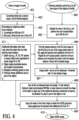
- FIG. 4 a simplified example of a method to segment/extract an object from a video is depicted. The method of Figure 4 may be executed by the systems described with respect to Figures 2 and 3 .
- the image or video to be modified is received in 401.
- the frame of the color image or video is converted into a line vector, which is optional, although vectorization of the image can speed the process time dramatically.
- the size of the vector is 1 by n, wherein n is the total number of pixels in the frame, i.e., the total number of pixels in the width times the total number of pixels in the height of the frame, time 3 for each of RGB colors.
- n is the total number of pixels in the frame, i.e., the total number of pixels in the width times the total number of pixels in the height of the frame, time 3 for each of RGB colors.
- the effect of the brightness is eliminated. There are many techniques to eliminate the effect of the brightness. In this example, energy averaging per pixel in the XYZ chromatic space is used, by dividing each pixel by the sum of XYZ.
- the CIE XYZ color space encompasses all color sensations that an average person can experience.
- Y is defined as the luminance, and for any given Y value, the XZ plane will contain all possible chromaticities at that luminance.
- a 3 X 3 matrix can be used to convert RGB to XYZ, using the chromaticity coordinates of an RGB system (x r , y r ), (x g , y g ) and (x b , y b ) and its reference white (Xw, Yw, Zw).
- the object selection is performed by first determining a comparison color that can be used for examining all pixels for determination of whether each pixel does or does not belong to the object.
- the comparison color is determined by using statistical analysis of the color of several K pixels that are believed to be within the object. This may be done by first selecting several points K(x,y) believed to belonging to the object to be transformed, by, e.g., knowin the geometry or the approximate location of the object within the image.
- K is the number of locations/zones with distinguished color that can be segmented out of the background or out of other objects.
- a window, or zone is selected around the specific point, so as to ensure that the point or pixel is not an anomaly, but rather representative of the particular zone.
- each point K(x,y) is passed through the same transformation as performed in module 403.
- k iterations are performed to find each pixel's color and from that to find the best representative color of the object. This color can be used for the follow up investigation to find all of the pixels that belong to the object.
- K equals to or is larger than 2 in this technique.
- the Euclidian distance 2D or 3D is calculated. The minimum distance and K value is saved and is used as the comparison or representative color. This operation can be done on all pixels at once in a relatively fast process.
- dist sqrt X ⁇ xi k 2 + Y ⁇ yi k 2 + Z ⁇ zi k 2
- the labeled image can be obtained.
- the Euclidian distance "dist” is just an example of a computational method to distinguish between colors; there are other methods to calculate the distance between colors, e.g., a color distance model based on human perception of color (chromatic, saturation and brightness), advanced calibrated techniques to match the sensitivity and the ability to separate color with the human eye like in CIE76, CIE94, CIEDE2000 and the like or any combination with histogram stretching IR/3D depth camera, color integration over time or any other method to improve sensitivity of the color detection (module 411). Applying or crossing the additional information from module 411 can happen at the distance comparison level 406, at the very end of the model creation 409, or any combination depending on the nature of the additional information (deterministic, statistic, time variant, and the like).
- the image of the IR camera can be registered with the image of the standard camera. Then, the image of the IR camera can be used to easily separate the user from the background.
- This information can be used to limit the pixels of the standard camera that are to be evaluated whether they belong to the object or not. For example, when the comparison is done using a vector, the information from the IR camera can be used to reduce the number of entries in the vector that should be evaluated.
- a texture mask can be used to remove pixels from the evaluation vector. For example, the texture of the carpet can be stored and any section of the image having the same texture can be eliminated from the evaluation since it is known that the user would not be wearing a carpet.
- several layers or masks may be used to operate on the vector and increase the accuracy of the results of isolating the object and assigning all of the pixels that belong to the object.
- zone likelihood a given pixel needs to have neighbors or some mass of pixels
- zone characteristic a boundary filter to isolate the object boundary before making a final decision
- depth information which typically needs to match the contour of the depth information with the end image of the object in 2D or 3D
- time integration to determine if pixel is in the object zone over multiple frames, and the like.
- Module 407 is an example where it is desired to separate a specific color or colors.
- the obtained black and white mask is applied on the original color image and the 3D model for color and texture changes is obtained.
- the model can be 2D alpha channel of gray scale or 3D in the color space.
- Module 410 can obtain a 2D or 3D model of the object. In case of video from a single camera, it is possible to obtain a 3D model even if the user is moving in front of the camera, e.g., turning around in front of the camera. In this case, it is also possible to obtain object measurement in multiple cuts to estimate the user's 3D body curves.
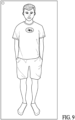
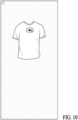
- FIG. 10 is an example of a 2D model or mask of the shirt, without the color information. Instead, a grey scale mask of the selected object, in this case the shirt, is generated and can be used later with any applied color. The texture of the shirt is preserved in this manner, so it is relatively easy to manipulate the color or the texture or even change the boundary of the model to create a different object.
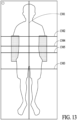
- FIG. 5 depicts an example of a method to extract a body measurement from an image, multiple images or a short video.
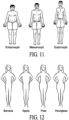
- the body measurements can be used for various applications and services, such as, e.g., estimation of weight, determine best fitting clothes, monitor body shape and weight over time, etc. Since the system acquires many images of the user at different stances and orientations, it may be beneficial to select the best image for performing the body measurements.
- the determination of which image to select may be performed before or as a part of the process illustrated in Figure 5 .
- a good body measurement can be obtained when the image is of user's body in perpendicular alignment to the optical axis of the camera. This may be determined by first determining whether the face appear symmetrical along a vertical line passing midway between the eyes.
- the image is analyzed using a body line and Body Mass Indicator (BMI) analysis by first using a process similar to the EyesMatch approach described in US 2013/0229482 A1 .
- BMI Body Mass Indicator
- the image can be rearranged and transformed to compensate for distortion due to the setup geometry of the camera and optic distortion.
- Example of setup distortion factors include the user distance to the camera, the camera height, camera projection angle, the optics of the camera's FOV and other optic distortions.
- each pixel area representation can be roughly uniform in area (cm 2 ). Processing can be done in CPU, GPU, DSP in the camera, local computer near the camera, or remote server.
- the image can be made to pass an edge detection filter that can emphasize color changes and enhance the visibility of the body line.
- the edge detection can support edges of the body line so it can support multiple edge directions. For example, an edge filter with vertical, horizontal and +/- 45° capabilities can yield a good edge detection of the body line.
- Information on the user's BMI can be learned or estimated from the object model described in FIG. 4 or directly from the image BMI analysis as described in FIG. 5 .
- the system can capture two images (e.g., consecutive images) that will be used to calculate depth or texture.
- the system can extract two or more images from the video and based on central mass detection can calculate the distance and use the distance for the stereoscopic calculation of the texture. That is, when taking a stereoscopic image using two cameras, the distance between the cameras is known, so that triangulation can be performed using the distance between the two cameras and their angle of optical axis. But if there's only one camera, then the system takes two images using the same camera, but separate in time.
- only a 3D sensor will generate depth measurement that will be used to control a parametric model of the user's avatar.
- the user can be virtually dressed and explored in 360 0 .
- the system can be controlled to adapt position movement to the user for mirror application or video conferencing.
- a registration technique can be used where the registration pointers can be allocated in multiple ways, e.g., automatic noticeable element detection and RANSAM random sampling and matching technique.
- the data from a depth sensor or 3D camera can pass a similar mapping transformation engine and the result can be the base of a more accurate 3D avatar of the user.
- the avatar can be used fully or partially as a model base to present virtual elements on the user.
- Other technique to fit the registration mapping is to identify element in the image like head, hands, upper body legs and match the movement of the avatar to these elements motion.
- the motion can be measured and estimated every 1 or more frames and the smooth coarse of the avatar movement can be done by Kalman filter technique.
- the avatar motion can be done in real-time, semi real-time, or offline.
- the system receives the stream of images (either from one camera, from two cameras, or from a 3D camera), and use the stream of images to generate virtual reality in real time.
- the original images from the camera are discarded, and instead the virtual world is presented on the monitor.
- the real time images are used to generate the virtual reality, the virtual reality images faithfully represent the real world as imaged by the cameras.
- the real time images can be used to generate an avatar in real time, where the avatar faithfully represents the user captured in the images.
- the background and articles worn by the user can be changed, such that the user's avatar can be displayed as if it is in a different location wearing the same or different articles as the user.
- the real time images can be used to generate an avatar that corresponds to the user and which wears the same coat, however the background can be changed to display a ski slope, so that the user can imaging himself wearing the coat on a ski slope.
- the store the real time images and then operate on the images off line, such that higher processing capacity is available, so as to generate a movie using avatar based on the user.
- the movie can then be sent to the user, e.g., over the Internet.
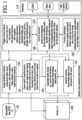
- FIG. 6 is an example of a security system application for multilevel user learning and authentication. This is just one example of possible flow implementation; any combination of the flow or different functional separation between the diagram modules is part of the invention.
- stills or video from device 601 can be input into an image grabbing module 602.
- the image grabbing module 602 can be controlled by a trigger event such as those previously described and processed by trigger event module 607, which can provide tracking information and rules to initiate an image grabbing process.
- the image grabbing module 602 can grab the image from the input 601 and push it into the EyesMatch transformation module 603 with the additional tracking information (real time geometric measurement).
- the EyesMatch transformation module 603 can calculate a transformation to manipulate with the camera point of view, angle of view, and the like to create a calibrated image of the scene.
- the EyesMatch transformation can be performed locally in GPU/CPU/DSP, in the cloud and the like.
- advanced information on the user or on the geometric structure of the scene can feed the tracking algorithm and may take part in the calibration.
- the additional information can be provided as one time geometric information, e.g., user height, distance between his eyes and the like. In that case the additional geometric information can be used to calculate the required transformation. The difference between the distorted image and the known geometric can be used to calculate and calibrate the transformation.
- the calibrated output from the EyesMatch transformation module 603 can then be fed into the security scanner module 604, which can also be called a scene analytic module.
- the security scanner module 604 can be adapted to learn one or more of the following: body line or body curve scanning based on multiple techniques, e.g., edge detection, statistical edge detection, IR camera, microwave sensor, 3D camera, single camera and multiple cuts when a user is turning around.
- a complete 3D model of the body can also be taken when the user is turning in front of the video camera and the user's clothes can be extracted to an alpha channel as described in the technique depicted in FIG. 4 , i.e., Colograma, and the like.
- Other learning or authentication methods include, for example, cloth detection, whereby a signature to an item is created and sorted in a database.
- the database can be updated from the internet, by scanning clothes from multiple databases and ecommerce stores or by actively scanning and updating information by the operator, for example, a uniform of security personnel, the type of fabric and the like can be entered.
- the combination of EyesMatch with face recognition can allow the operator to install a camera above a user's height, for example, above a door facing down about 30-45 degrees; such installation allows the user to move freely below the camera.
- the detectable face recognition range is about 1-5 meters in front of the camera. This is an advantage since known face recognition systems are not very accurate if the user's head is scanned at an angle of +/- 15 degrees.
- Additional body authentication sensors can include voice, smell, palm, fingerprint, eyes, DNA, skeleton with X-ray sensors or ultrasound, teeth, hair, impression, color, eyes, blood, halo, temperature, skin marks, ears and the like.
- the video, stills or the analyzed data can be recorded with a video/still recording module 605 directly from the camera, from the EyesMatch transformation module 604, from the processed image or from data out of the sensors.
- the visual video/image or analyzed data can be displayed in front of the user screen (full body or smaller), delivered over the cloud or delivered directly to a control center to be displayed on a screen 606 or to a module for further processing and analysis.
- Modules 607, 608, 609 and 610 are similar to modules 107, 108, 109 and 110, respectively (see, FIG. 1 and associated descriptions thereof).
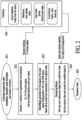
- FIG. 7 depicts an example of a security system application for parallel or in-band camera manipulation.
- the capability of the device in FIG. 7 can reside in a stand-alone device as depicted in FIG. 7 or as part of the camera DSP capability; the control of the feature activation can be done wirelessly or via wired infrastructure.
- some of the capability can be supported in a remote location, e.g., measurement and tracking.
- the device can be deployed in front of the camera and can project a manipulated image on a small screen to the camera.
- the camera main stream can feed the device or the device can be adapted for taping and sniffing the camera main stream. After processing, the device can be adapted to send parallel data to the operator.
- the device can have multiple image computing capability, EyesMatch geometric capability, e.g., in the EyesMatch transformation module 703, body measurement and user authentication, e.g., in the security scanning module 704, and augmented reality capabilities, e.g., in the augmented reality module 706, where the image can be manipulated on the main stream or in parallel to the main stream, e.g., manipulations can include a change of a user's body type, color, items held by the user, hair style, complete user disappearance and the like.
- manipulations can include a change of a user's body type, color, items held by the user, hair style, complete user disappearance and the like.
- the video stream can feed another device like a robot, a head mounted display, a user application and the like.
- the interface to control the device functionality can be over the wire or wireless infrastructure or to a local or remote location.
- the measurement module can reside in the device or in the cloud.
- the device can support real-time control and triggers for other devices, e.g., a projector for changing the image the user may see (camouflage), or a trigger event for an accurate threat eliminating device that needs an accurate coordination in front of the camera.
- a projector for changing the image the user may see cameraouflage
- a trigger event for an accurate threat eliminating device that needs an accurate coordination in front of the camera.
- Video can be shared real-time with additional stations. There are multiple ways to share the video. Some exemplary scenarios are discussed in detail below.
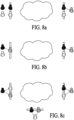
- the remote user can have any suitable device; the main experience is to see the user who is standing in front of the mirror and is doing something for review. The user will be able to see a mirror image of himself based on EyesMatch or any other technology.
- FIG. 8a depicts this scenario.
- the remote user can just see the user broadcast, text the user, speak to the user and/or be seen in a small window on the mirror screen.
- FIG. 8b depicts sharing a full body video conference.
- the image that is being sent to the other side needs to be flipped left-right on the remote location. This can be done by flipping the mirror captured locally or on the remote side.
- the EyesMatch or body distortion correction can be done per user with tracking capability per user or for both simultaneously.
- augmented reality capability can replace the background as described above.
- Colograma or another technique can be used to replace the background with a plain background.
- the connection line can be placed between the users to eliminate lines or discontinuity with respect to the users themselves.
- the screen can be divided to allow multiple users from multiple locations to be displayed at the same time, or multiple screens can be placed one next to the other as depicted, for example, in FIG. 8c .
- FIG. 8c depicts multiple mirrors/full body stations with split screen or multiple screens. As shown in FIG. 8c , the order the users are depicted in the mirror allows for correct gaze communication. When the user is looking to the right, for example, on the remote screen, after the flip, he will be seeing the user looking left toward the remote user.
- the remote location in addition to the EyesMatch or any computerized image processing at one side, can have additional computerized capability to manipulate on the far end video based on the local user tracking, e.g., if the user gets closer to the screen, the far end video or image will be processed to look a bit bigger and projected to provide a better feeling of a live session. Another example is when a user gets closer on one end, he will see a wider FOV of the far end.
- the present invention includes virtual mirror control and virtual system features to ease the usability of the virtual mirror.
- the virtual mirror control and virtual system can include various modes of operation including, for example, on, off, restart, mirror, display, idle, and the like.
- the virtual mirror control and virtual system can include authentication and registration of users, which can be automatic, manual or a combination of automatic and manual.
- the virtual mirror control and virtual system can include an optimal flow of operation to ease and enhance the user experience.
- the virtual mirror control and virtual system can include one or more interfaces to control the mirror, e.g., automatic gesture, voice, eye pointing, mobile application, remote expert, local assistance, and the like.
- the virtual mirror control and virtual system can include a comprehensive combination of interfaces, including the following: playing a recorded video (automatic/manual); advance effects (item color manipulation, augmented reality features, gaming features, background change, 3D effect, lighting effect and the like); screen mode (orientation/full size or split screen); sharing techniques and methods to share the experience with friends/experts in real-time and on the go; mobile user application for controlling display and sharing, for example, sharing of personal videos and images taken from the virtual mirror or the user mobile device; retail or enterprise remote for general management (provide retailer information about the user in real-time with advanced control and analytics capability); and a module to teach the user how to operate the mirror (animation, video, voice, visual hints and the like).
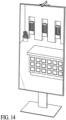
- the image presented on the monitor includes a frame 1505 superimposed on the video image.
- the user looking at the monitor sees his artificial "reflection" on the monitor and the superimposed frame or bracket 1505.
- the user may then present a code, such that the code fits within the frame on the monitor.
- the code is a printed barcode on a card.
- the user may download an app onto the user's mobile device, e.g., a smartphone.
- the app includes a barcode, such as a QR code, specifically corresponding to the user or the user's smartphone.
- the user sees the frame the user opens the app and presents the smartphone such that the smartphone fits within the frame.
- the controller then identifies the code within the frame and thereby identifies the user.
- the mirror can be configured to start recording automatically when it recognizes the user, if the user does not want such auto-recognition, the mirror can be configured to locally save the video, the user can trigger one of the previous thumbnails, the mirror can be configured to switch to a display mode and the mirror can be configured to play the video. That is, the user can be prompted to execute a process by which a particular scene is cut by the user and not saved in the system.
- the thumbnails 1510 are configured so as to pop up on top of the mimicked mirror stream as can be seen, for example, in FIG. 15 .
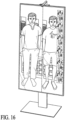
- the thumbnails can be sent to the background when the real-time mirror-mimicking video is playing or in split mode when there is no gesture control identification as shown, for example, in FIG. 16 .
- the user can also set the screen to a split mode as shown, for example, in FIG. 16 .
- FIG. 16 depicts a side-by-side setting where the user can still see himself in real-time on one side of the screen and can play previously recorded videos on the other half.
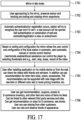
- step 1702 as a user approaches the mirror and the user's presence is sensed, e.g., by motion sensor or by detecting a change in the image seen by the camera, the system initiates operation in mirror mode. That is, the controller perform transformation operation on the image of the user, such that the image presented on the monitor mimics the user's reflection in a mirror.
- the system initiates authentication procedure to identify and authenticate the user. For example, in one embodiment the system uses face recognition to identify and authenticate the user, while in another embodiment the user may be authenticated using a device such as a smartphone with capabilities such as, WiFi, Bluetooth, NFC, etc.
- the mirror station can support instruction to the user, so that when the system identifies a user that is not controlling the mirror in the correct manner, a short explanation can pop up and guide the user through the process.
- the mirror system can be used to provide augmented merchandizing by enabling better service to users, promoting merchandize, and providing feedback to merchandizers.
- the mirror can be configured to complement and augment the business process. Since the mirror station according to the present invention is a new device in the marketplace, uses of the mirror to create a revenue stream is unique as well.
- the next few embodiments include details providing examples as to how an active mirror can be used to augment the business and to create new a revenue streams.
- the mirror can insert commercials, coupons and logos into the mirror in idle mode, within a specified portion of the mirror, or via split screen mode.
- the mirror can also introduce commercials, coupons and logos into recorded videos so a user can view the video with the commercial/coupon/logo. These displays can be sold as advertising.
- the user can share the commercial/coupon/logo by e.g., uploading a session to social network sites. The user can be offered an incentive in exchange for sharing the commercial/coupon/logo.
- the user's try-on session of clothing can be analyzed for measurements and/or characteristics such as BMI, sex, origin, age, body measurements, facial expression, voice expression, recommended sizes and the like.
- This data can be incorporated into ecommerce applications.
- This data is of high value and can be shared with brands, the user, a third party based on an agreement with the user and the brands, etc.
- a revenue stream can be generated from the analyzed data regarding the user, for example, by presenting the user with focused and accurate advertising according to recorded sessions.
- the present invention includes the mechanical design and appearance design of the equipment.
- the screen can be mounted so as to stand on the wall either vertically or horizontally or can be switchable between vertical and horizontal (by a larger or similar mechanical solution, the screen can be tilted, rotated and the like).
- the screen can be mounted on a dedicated stand, mounted on a wall or mounted behind the wall. When the screen is inside the wall, thermal ventilation duct should be provided to support the screen and the computing device.
- the frame can be presented in a manner as depicted in FIGS. 14 , 15 and 16 .
- a minimal frame can be used or the frame can be hidden behind a wall.
- the screen can be LED, LCD, plasma, glass, projector and the like.
- Lighting can include a combination of white, yellow or any combination in a spot or a projector combination and can be configured to improve the video quality and the colors.
- a dedicated carpet can be used to allow background changes, to define a user zone, to improve user detection and tracking in front of the mirror, to instruct the user where to stand and to instruct the user on how to operate the mirror.
- the terms used to describe such components are intended to correspond, unless otherwise indicated, to any component which performs the specified function of the described component (e.g., a functional equivalent), even though not structurally equivalent to the disclosed structure, which performs the function in the herein illustrated exemplary aspects of the claimed subject matter.
- the innovation includes a system as well as a computer-readable storage medium having computer-executable instructions for performing the acts and/or events of the various methods of the claimed subject matter.
- a component As used in this application, the terms “component,” “module,” “system,” or the like are generally intended to refer to a computer-related entity, either hardware (e.g., a circuit), a combination of hardware and software, software, or an entity related to an operational machine with one or more specific functionalities.
- a component may be, but is not limited to being, a process running on a processor (e.g., digital signal processor), a processor, an object, an executable, a thread of execution, a program, and/or a computer.
- a processor e.g., digital signal processor
- an application running on a controller and the controller can be a component.
- One or more components may reside within a process and/or thread of execution and a component may be localized on one computer and/or distributed between two or more computers.
- a “device” can come in the form of specially designed hardware; generalized hardware made specialized by the execution of software thereon that enables the hardware to perform specific function; software stored on a computer-readable medium; or a combination thereof.
- Communications media typically embody computer-readable instructions, data structures, program modules or other structured or unstructured data in a data signal that can be transitory such as a modulated data signal, e.g., a carrier wave or other transport mechanism, and includes any information delivery or transport media.
- modulated data signal or signals refers to a signal that has one or more of its characteristics set or changed in such a manner as to encode information in one or more signals.
- communication media include wired media, such as a wired network or direct-wired connection, and wireless media such as acoustic, RF, infrared and other wireless media.
Landscapes
- Engineering & Computer Science (AREA)
- Theoretical Computer Science (AREA)
- Physics & Mathematics (AREA)
- General Engineering & Computer Science (AREA)
- General Physics & Mathematics (AREA)
- Human Computer Interaction (AREA)
- Multimedia (AREA)
- Signal Processing (AREA)
- Computer Graphics (AREA)
- Software Systems (AREA)
- Computer Hardware Design (AREA)
- Geometry (AREA)
- Architecture (AREA)
- Computing Systems (AREA)
- Computer Vision & Pattern Recognition (AREA)
- Image Analysis (AREA)
- Image Processing (AREA)
- User Interface Of Digital Computer (AREA)
- Processing Or Creating Images (AREA)
- Closed-Circuit Television Systems (AREA)
- Studio Devices (AREA)
Priority Applications (1)
| Application Number | Priority Date | Filing Date | Title |
|---|---|---|---|
| EP24186863.7A EP4538969A3 (en) | 2013-08-04 | 2014-04-16 | Devices, systems and methods of virtualizing a mirror |
Applications Claiming Priority (3)
| Application Number | Priority Date | Filing Date | Title |
|---|---|---|---|
| US201361862025P | 2013-08-04 | 2013-08-04 | |
| US201361892368P | 2013-10-17 | 2013-10-17 | |
| PCT/US2014/034333 WO2015020703A1 (en) | 2013-08-04 | 2014-04-16 | Devices, systems and methods of virtualizing a mirror |
Related Child Applications (1)
| Application Number | Title | Priority Date | Filing Date |
|---|---|---|---|
| EP24186863.7A Division EP4538969A3 (en) | 2013-08-04 | 2014-04-16 | Devices, systems and methods of virtualizing a mirror |
Publications (3)
| Publication Number | Publication Date |
|---|---|
| EP3028177A1 EP3028177A1 (en) | 2016-06-08 |
| EP3028177A4 EP3028177A4 (en) | 2017-05-10 |
| EP3028177B1 true EP3028177B1 (en) | 2024-07-10 |
Family
ID=52461830
Family Applications (2)
| Application Number | Title | Priority Date | Filing Date |
|---|---|---|---|
| EP14833667.0A Active EP3028177B1 (en) | 2013-08-04 | 2014-04-16 | Devices, systems and methods of virtualizing a mirror |
| EP24186863.7A Pending EP4538969A3 (en) | 2013-08-04 | 2014-04-16 | Devices, systems and methods of virtualizing a mirror |
Family Applications After (1)
| Application Number | Title | Priority Date | Filing Date |
|---|---|---|---|
| EP24186863.7A Pending EP4538969A3 (en) | 2013-08-04 | 2014-04-16 | Devices, systems and methods of virtualizing a mirror |
Country Status (9)
| Country | Link |
|---|---|
| EP (2) | EP3028177B1 (enExample) |
| JP (1) | JP6389888B2 (enExample) |
| KR (2) | KR102266361B1 (enExample) |
| CN (2) | CN105556508B (enExample) |
| AU (1) | AU2014304760B2 (enExample) |
| ES (1) | ES2995983T3 (enExample) |
| IL (1) | IL243910B (enExample) |
| RU (1) | RU2668408C2 (enExample) |
| WO (1) | WO2015020703A1 (enExample) |
Families Citing this family (87)
| Publication number | Priority date | Publication date | Assignee | Title |
|---|---|---|---|---|
| US11681422B2 (en) * | 2010-02-16 | 2023-06-20 | John W. Rowles | Methods for a user selectable digital mirror |
| KR102471447B1 (ko) | 2016-02-03 | 2022-11-28 | 엘지전자 주식회사 | 미러형 디스플레이 장치 및 그 제어방법 |
| US10169922B2 (en) * | 2016-02-16 | 2019-01-01 | Microsoft Technology Licensing, Llc | Reality mixer for mixed reality |
| JP2019516191A (ja) * | 2016-05-03 | 2019-06-13 | レオニ カーベル ゲーエムベーハー | 操作者の強調された視認のための色の区分けを備える映像システム |
| KR101664940B1 (ko) * | 2016-05-12 | 2016-10-12 | (주)엘리비젼 | 가상현실을 이용한 헤어 스마트 미러 시스템 |
| CN106127732B (zh) * | 2016-06-13 | 2019-01-01 | 深圳市太赫兹科技创新研究院 | 微波图像中人体性别检测方法和装置 |
| CA2963108A1 (en) | 2016-06-29 | 2017-12-29 | EyesMatch Ltd. | System and method for digital makeup mirror |
| WO2018005884A1 (en) * | 2016-06-29 | 2018-01-04 | EyesMatch Ltd. | System and method for digital makeup mirror |
| KR102193036B1 (ko) * | 2016-07-05 | 2020-12-18 | 삼성전자주식회사 | 디스플레이장치, 디스플레이장치의 구동방법 및 컴퓨터 판독가능 기록매체 |
| RU2724674C1 (ru) * | 2016-07-08 | 2020-06-25 | Конинклейке Филипс Н.В. | Устройство для предоставления семантической информации и способ функционирования его |
| KR20180023609A (ko) | 2016-08-26 | 2018-03-07 | 삼성전자주식회사 | 디스플레이 장치 및 그 제어 방법 |
| WO2018048902A1 (en) | 2016-09-06 | 2018-03-15 | Platform Orthopedic Solutions Inc | A system, platform, device and method for personalized shopping |
| KR20180035434A (ko) * | 2016-09-29 | 2018-04-06 | 삼성전자주식회사 | 디스플레이 장치 및 그의 제어 방법 |
| CN106730814A (zh) * | 2016-11-22 | 2017-05-31 | 深圳维京人网络科技有限公司 | 基于ar及人脸识别技术的海洋捕鱼类游戏 |
| US20180160777A1 (en) | 2016-12-14 | 2018-06-14 | Black Brass, Inc. | Foot measuring and sizing application |
| CN106693361A (zh) * | 2016-12-23 | 2017-05-24 | 武汉市马里欧网络有限公司 | 一种基于超声波手势识别的ar换装游戏投影方法及系统 |
| US11861673B2 (en) | 2017-01-06 | 2024-01-02 | Nike, Inc. | System, platform and method for personalized shopping using an automated shopping assistant |
| CN107168619B (zh) * | 2017-03-29 | 2023-09-19 | 腾讯科技(深圳)有限公司 | 用户生成内容处理方法和装置 |
| KR101886754B1 (ko) * | 2017-05-04 | 2018-09-10 | 국방과학연구소 | 머신 러닝을 위한 학습 이미지 생성 장치 및 방법 |
| CN107105310B (zh) * | 2017-05-05 | 2020-07-10 | 广州盈可视电子科技有限公司 | 一种视频直播中人物形象替换方法、装置和一种录播系统 |
| CN107105311B (zh) * | 2017-05-25 | 2020-06-19 | 北京小米移动软件有限公司 | 直播方法及装置 |
| CN107274725B (zh) * | 2017-05-26 | 2019-08-02 | 华中师范大学 | 一种基于镜面反射的移动增强现实型卡片识别方法 |
| EP3462284A4 (en) * | 2017-06-12 | 2019-07-17 | Midea Group Co., Ltd. | CONTROL METHOD, CONTROL DEVICE, INTELLIGENT MIRROR AND COMPUTER READABLE STORAGE MEDIUM |
| CN107230237A (zh) * | 2017-06-19 | 2017-10-03 | 歌尔科技有限公司 | 信息处理方法及装置 |
| CN111066051B (zh) | 2017-06-27 | 2024-09-10 | 耐克创新有限合伙公司 | 使用自动化购物助手进行个性化购物的系统、平台以及方法 |
| JP6765657B2 (ja) * | 2017-06-27 | 2020-10-07 | 公立大学法人会津大学 | 認証装置、認証方法及びコンピュータプログラム |
| CN107707839A (zh) * | 2017-09-11 | 2018-02-16 | 广东欧珀移动通信有限公司 | 图像处理方法及装置 |
| CN107590481A (zh) * | 2017-09-28 | 2018-01-16 | 北京小米移动软件有限公司 | 穿衣镜、数据处理方法及装置 |
| CN107692701A (zh) * | 2017-10-10 | 2018-02-16 | 北京奇虎科技有限公司 | 一种智能镜子的显示方法及装置 |
| CN107808128B (zh) * | 2017-10-16 | 2021-04-02 | 深圳市云之梦科技有限公司 | 一种虚拟形象重建人体五官测量的方法及系统 |
| US11120515B1 (en) | 2017-11-03 | 2021-09-14 | Wells Fargo Bank, N.A. | Property enhancement analysis |
| CN109963145B (zh) * | 2017-12-25 | 2024-04-26 | 广东虚拟现实科技有限公司 | 视觉显示系统及方法,以及头戴显示装置 |
| CN108038467B (zh) * | 2017-12-26 | 2019-05-31 | 南京信息工程大学 | 一种镜像图与粗细层次结合的稀疏人脸识别方法 |
| CN111788623B (zh) * | 2018-01-06 | 2023-02-28 | 凯尔Os公司 | 智能镜系统及其使用方法 |
| CN111837152B (zh) | 2018-01-24 | 2025-07-01 | 耐克创新有限合伙公司 | 使用虚拟购物助手进行个性化购物的系统、平台和方法 |
| US11403491B2 (en) * | 2018-04-06 | 2022-08-02 | Siemens Aktiengesellschaft | Object recognition from images using cad models as prior |
| CN108693123A (zh) * | 2018-04-22 | 2018-10-23 | 北京工业大学 | 激光干涉仪测量导轨直线运动精度的一种快速校准方法 |
| CN110634177A (zh) | 2018-06-21 | 2019-12-31 | 华为技术有限公司 | 一种物体建模运动方法、装置与设备 |
| CN109254664B (zh) * | 2018-09-20 | 2022-04-29 | 鎏玥(上海)科技有限公司 | 一种实时追踪人体镜中影像的系统 |
| KR101961072B1 (ko) * | 2018-11-12 | 2019-03-21 | 김현기 | 온라인용 크레인 게임기 및 크레인게임 시스템 |
| CN109671142B (zh) * | 2018-11-23 | 2023-08-04 | 南京图玩智能科技有限公司 | 一种智能美妆方法及智能美妆镜 |
| CN109597204A (zh) * | 2018-12-21 | 2019-04-09 | 梁枫 | 一种基于平面镜反射获取用户光学图像信息的方法及系统 |
| KR102707337B1 (ko) | 2019-01-28 | 2024-09-20 | 삼성전자주식회사 | 전자 장치 및 전자 장치의 그래픽 객체 제어 방법 |
| RU2702495C1 (ru) * | 2019-03-13 | 2019-10-08 | Общество с ограниченной ответственностью "ТрансИнжКом" | Способ и система сбора информации для устройства совмещенной реальности в режиме реального времени |
| CN109976519B (zh) * | 2019-03-14 | 2022-05-03 | 浙江工业大学 | 一种基于增强现实的交互显示装置及其交互显示方法 |
| CN113795825B (zh) * | 2019-05-06 | 2024-08-27 | 谷歌有限责任公司 | 根据动态用户队列和/或多模式存在检测为自动化助理指配优先级 |
| CN110232667B (zh) * | 2019-06-17 | 2021-06-04 | 厦门美图之家科技有限公司 | 图像畸变修正方法、装置、电子设备及可读存储介质 |
| US11462000B2 (en) * | 2019-08-26 | 2022-10-04 | Apple Inc. | Image-based detection of surfaces that provide specular reflections and reflection modification |
| CN114375177A (zh) * | 2019-09-01 | 2022-04-19 | Lg电子株式会社 | 身体测量装置及其控制方法 |
| CN110599593B (zh) * | 2019-09-12 | 2021-03-23 | 北京三快在线科技有限公司 | 数据合成的方法、装置、设备及存储介质 |
| KR102283904B1 (ko) | 2019-10-28 | 2021-08-02 | 주식회사 베이리스 | 딥러닝에 기반한 이미지의 객체 인식 시스템 및 그 인식 방법 |
| KR102850953B1 (ko) | 2020-01-21 | 2025-08-28 | 삼성전자주식회사 | 디스플레이 장치 및 그 제어방법 |
| JP6929979B2 (ja) * | 2020-01-31 | 2021-09-01 | ユニ・チャーム株式会社 | 表示制御装置、表示制御方法および表示制御プログラム |
| CN111294548B (zh) * | 2020-02-20 | 2021-06-04 | 深圳市鹏创软件有限公司 | 画面翻转方法、装置、设备与计算机可读存储介质 |
| CN111449684B (zh) * | 2020-04-09 | 2023-05-05 | 济南康硕生物技术有限公司 | 心脏超声标准扫查切面快速获取方法及系统 |
| CN121501235A (zh) * | 2020-05-13 | 2026-02-10 | 华为技术有限公司 | 图像显示方法、装置、终端设备、存储介质及程序产品 |
| JP7231257B2 (ja) * | 2020-05-15 | 2023-03-01 | 株式会社知財アシスト | 姿見装置および姿見装置用のミラーユニットならびにプログラム |
| CN116235210A (zh) | 2020-05-29 | 2023-06-06 | 耐克创新有限合伙公司 | 用于处理捕获的图像的系统和方法 |
| CN111610847B (zh) * | 2020-05-29 | 2022-05-17 | Oppo广东移动通信有限公司 | 第三方应用程序的页面展示方法、装置、电子设备 |
| CN111667584B (zh) * | 2020-06-09 | 2024-02-09 | 福州市极化律网络科技有限公司 | 多用户的虚拟世界探索方法及存储介质 |
| US11373375B2 (en) * | 2020-08-27 | 2022-06-28 | Micron Technology, Inc. | Augmented reality product display |
| KR102992345B1 (ko) | 2020-08-31 | 2026-07-21 | 삼성전자주식회사 | 전자 장치 및 그 제어 방법 |
| US12039633B2 (en) * | 2020-10-05 | 2024-07-16 | Nvidia Corporation | Light-resampling with surface similarity test |
| US20220111518A1 (en) * | 2020-10-13 | 2022-04-14 | Autodesk, Inc. | Techniques for robot control based on generated robot simulations |
| KR102620689B1 (ko) | 2020-11-26 | 2024-01-05 | 주식회사 원인터내셔널 | 도어 영상 분석 기반의 ai 비서 장치 및 시스템 |
| JP7414707B2 (ja) * | 2020-12-18 | 2024-01-16 | トヨタ自動車株式会社 | 画像表示システム |
| CN114693570B (zh) * | 2020-12-28 | 2025-08-22 | 北京陌陌信息技术有限公司 | 一种人体模型图像的融合处理方法、设备和存储介质 |
| KR102396638B1 (ko) * | 2021-02-09 | 2022-05-12 | 주식회사 아라니아 | 포토 카드로부터의 영상 속 객체 크기를 조정하는 영상 재생 방법 |
| KR102396640B1 (ko) * | 2021-02-10 | 2022-05-12 | 주식회사 아라니아 | 포토 카드로부터의 영상 속 객체 크기 및 시작 시간을 조정하는 영상재생방법 |
| KR102396641B1 (ko) * | 2021-02-10 | 2022-05-12 | 주식회사 아라니아 | 포토카드로부터 영상의 동작 시점 및 객체크기를 동기화하는 영상 재생 방법 |
| WO2022177007A1 (ja) * | 2021-02-22 | 2022-08-25 | 株式会社楽日 | 拡張現実デザイン印刷システム |
| IT202100005693A1 (it) * | 2021-03-11 | 2021-06-11 | Habits Italia S R L | Dispositivo riflettente a realtà aumentata |
| KR102687741B1 (ko) * | 2021-03-22 | 2024-07-22 | 광운대학교 산학협력단 | 가상현실에서 정교한 3 차원 조작을 위한 가상 거울의 자동 제어 방법 및 그를 위한 장치 |
| CN113362263B (zh) * | 2021-05-27 | 2023-09-15 | 百度在线网络技术(北京)有限公司 | 变换虚拟偶像的形象的方法、设备、介质及程序产品 |
| EP4352596A4 (en) * | 2021-06-10 | 2025-07-02 | Eyesmatch Ltd | SYSTEM AND METHOD FOR DIGITAL MEASUREMENTS OF SUBJECTS |
| CN115497130A (zh) * | 2021-06-18 | 2022-12-20 | 华为技术有限公司 | 人脸图像显示方法、可读存储介质、程序产品及电子设备 |
| WO2023275661A1 (ja) * | 2021-06-30 | 2023-01-05 | 株式会社半導体エネルギー研究所 | 電子機器 |
| KR102527398B1 (ko) * | 2021-11-23 | 2023-04-28 | 엔에이치엔클라우드 주식회사 | 화상미팅 프로그램 기반의 가상 피팅 방법 및 그 시스템 |
| CN114742978B (zh) * | 2022-04-08 | 2025-11-04 | 北京字跳网络技术有限公司 | 一种图像处理方法、装置及电子设备 |
| WO2023218861A1 (ja) * | 2022-05-12 | 2023-11-16 | 株式会社Nttドコモ | シミュレーション装置 |
| US12112441B2 (en) | 2022-06-30 | 2024-10-08 | Apple Inc. | Content transformations based on reflective object recognition |
| KR102733070B1 (ko) * | 2022-11-14 | 2024-11-21 | 주식회사 딥파인 | 증강현실 콘텐츠 배치가 가능한 증강콘텐츠 처리시스템 |
| CN116070661B (zh) * | 2022-11-24 | 2026-06-30 | 大连理工大学 | 一种自适应屏幕比例的大容量qr码编码、解码方法 |
| CN115686870B (zh) * | 2022-12-29 | 2023-05-16 | 深圳开鸿数字产业发展有限公司 | 并行计算方法、终端及计算机可读存储介质 |
| CN116743721A (zh) * | 2023-06-08 | 2023-09-12 | 北京蜂巢世纪科技有限公司 | 数据传输方法、装置、增强实现设备及存储介质 |
| WO2025033754A1 (ko) * | 2023-08-04 | 2025-02-13 | 삼성전자주식회사 | 반사체를 포함하는 외부 공간에 대한 정보를 획득하기 위한 웨어러블 장치 및 그 방법 |
| KR20260073928A (ko) * | 2024-11-15 | 2026-05-22 | 삼성전자주식회사 | 미러 디스플레이를 제어하는 전자 장치 및 그 동작 방법 |
Family Cites Families (40)
| Publication number | Priority date | Publication date | Assignee | Title |
|---|---|---|---|---|
| US5230039A (en) * | 1991-02-19 | 1993-07-20 | Silicon Graphics, Inc. | Texture range controls for improved texture mapping |
| US5937081A (en) * | 1996-04-10 | 1999-08-10 | O'brill; Michael R. | Image composition system and method of using same |
| JPH09284583A (ja) * | 1996-04-17 | 1997-10-31 | Toppan Printing Co Ltd | 色修正装置 |
| US5923776A (en) * | 1996-05-23 | 1999-07-13 | The United States Of America As Represented By The Secretary Of The Navy | Object extraction in images |
| US6366694B1 (en) * | 1998-03-26 | 2002-04-02 | Intel Corporation | Integrated color interpolation and color space conversion algorithm from 8-bit Bayer pattern RGB color space to 24-bit CIE XYZ color space |
| US6195467B1 (en) * | 1999-03-25 | 2001-02-27 | Image Processing Technologies, Inc. | Method and apparatus for sharpening a grayscale image |
| JP3698633B2 (ja) * | 2000-10-25 | 2005-09-21 | 株式会社タニタ | 体型判定装置 |
| GB0109720D0 (en) * | 2001-04-20 | 2001-06-13 | Koninkl Philips Electronics Nv | Display apparatus and image encoded for display by such an apparatus |
| US7953648B2 (en) * | 2001-11-26 | 2011-05-31 | Vock Curtis A | System and methods for generating virtual clothing experiences |
| US20030110099A1 (en) * | 2001-12-11 | 2003-06-12 | Philips Electronics North America Corporation | Virtual wearing of clothes |
| US7197165B2 (en) * | 2002-02-04 | 2007-03-27 | Canon Kabushiki Kaisha | Eye tracking using image data |
| US8045007B2 (en) * | 2004-12-24 | 2011-10-25 | Fujifilm Corporation | Image capturing system and image capturing method |
| US7634502B2 (en) * | 2005-01-24 | 2009-12-15 | Paul Colton | System and method for improved content delivery |
| JP2006221520A (ja) * | 2005-02-14 | 2006-08-24 | Chuden Gijutsu Consultant Kk | 画像特徴量抽出システムおよび方法 |
| EP1859432A4 (en) * | 2005-03-01 | 2011-09-14 | Nissi Vilcovsky | DEVICES, SYSTEMS AND METHOD FOR RECORDING AND DISPLAYING APPEARANCE PICTURES |
| US9269157B2 (en) * | 2005-03-01 | 2016-02-23 | Eyesmatch Ltd | Methods for extracting objects from digital images and for performing color change on the object |
| JP2007004427A (ja) * | 2005-06-23 | 2007-01-11 | Fujifilm Holdings Corp | 画像表示システムおよび画像表示装置ならびにプログラム |
| US20070040033A1 (en) * | 2005-11-18 | 2007-02-22 | Outland Research | Digital mirror system with advanced imaging features and hands-free control |
| JP4742168B2 (ja) * | 2006-05-22 | 2011-08-10 | アクシス アーベー | ビデオ監視カメラが検出した対象物の特性を識別する方法および機器 |
| US8270709B2 (en) * | 2006-08-31 | 2012-09-18 | Corel Corporation | Color selection and/or matching in a color image |
| US8508546B2 (en) * | 2006-09-19 | 2013-08-13 | Adobe Systems Incorporated | Image mask generation |
| US8004536B2 (en) * | 2006-12-01 | 2011-08-23 | Adobe Systems Incorporated | Coherent image selection and modification |
| KR20090012651A (ko) * | 2007-07-31 | 2009-02-04 | 주식회사 에프엑스코드 | 3차원 의상 데이터를 이용한 가상 의상의 데코레이션 방법 |
| US8174539B1 (en) * | 2007-08-15 | 2012-05-08 | Adobe Systems Incorporated | Imprint for visualization and manufacturing |
| US8019182B1 (en) * | 2007-08-20 | 2011-09-13 | Adobe Systems Incorporated | Digital image modification using pyramid vignettes |
| CN101933047B (zh) * | 2008-02-01 | 2012-09-05 | 惠普开发有限公司 | 数字图像中的牙齿定位与白化 |
| CN100592342C (zh) * | 2008-03-21 | 2010-02-24 | 中国科学院计算技术研究所 | 一种用于人体-服装冲突检测的候选集的建立方法 |
| US8184175B2 (en) * | 2008-08-26 | 2012-05-22 | Fpsi, Inc. | System and method for detecting a camera |
| US8000727B1 (en) * | 2008-10-15 | 2011-08-16 | Sprint Communications Company L.P. | Optical image processing for accessing building control from a wireless communication device |
| CN101667250A (zh) * | 2009-10-10 | 2010-03-10 | 上海水晶石信息技术有限公司 | 基于CamShift算法与手形遮罩的手识别装置及其方法 |
| CN101833731A (zh) * | 2010-04-30 | 2010-09-15 | 翁荣森 | 针对销售终端的服饰智能搭配系统及方法 |
| KR101164747B1 (ko) * | 2010-07-28 | 2012-07-12 | 광주과학기술원 | 이동 단말기에서 영상 합성방법 |
| US8730297B2 (en) * | 2010-11-15 | 2014-05-20 | Cisco Technology, Inc. | System and method for providing camera functions in a video environment |
| US8542398B2 (en) * | 2010-12-21 | 2013-09-24 | Hewlett-Packard Development Company, L.P. | Method and system to select a trim size |
| US8688559B2 (en) * | 2011-03-08 | 2014-04-01 | Bank Of America Corporation | Presenting investment-related information on a mobile communication device |
| JP2012253483A (ja) * | 2011-06-01 | 2012-12-20 | Sony Corp | 画像処理装置、画像処理方法、およびプログラム |
| RU115085U1 (ru) * | 2011-08-26 | 2012-04-20 | Дмитрий Васильевич Головацкий | Трехмерная примерочная "mamagi" |
| US8913300B2 (en) * | 2011-10-04 | 2014-12-16 | Google Inc. | Occlusion of vector image data |
| US20130088562A1 (en) * | 2011-10-07 | 2013-04-11 | Hanwha Solution & Consulting Co., Ltd | Communication terminal for providing silhouette function on video screen for video call and method thereof |
| CN102663398A (zh) * | 2012-03-31 | 2012-09-12 | 上海博康智能信息技术有限公司 | 一种彩色图像颜色特征提取方法及装置 |
-
2014
- 2014-04-16 ES ES14833667T patent/ES2995983T3/es active Active
- 2014-04-16 RU RU2016107189A patent/RU2668408C2/ru active
- 2014-04-16 EP EP14833667.0A patent/EP3028177B1/en active Active
- 2014-04-16 WO PCT/US2014/034333 patent/WO2015020703A1/en not_active Ceased
- 2014-04-16 AU AU2014304760A patent/AU2014304760B2/en active Active
- 2014-04-16 KR KR1020167005737A patent/KR102266361B1/ko active Active
- 2014-04-16 EP EP24186863.7A patent/EP4538969A3/en active Pending
- 2014-04-16 CN CN201480051213.5A patent/CN105556508B/zh active Active
- 2014-04-16 KR KR1020217017921A patent/KR102506341B1/ko active Active
- 2014-04-16 JP JP2016531604A patent/JP6389888B2/ja active Active
- 2014-04-16 CN CN201910662187.4A patent/CN110609617B/zh active Active
-
2016
- 2016-02-02 IL IL243910A patent/IL243910B/en active IP Right Grant
Non-Patent Citations (1)
| Title |
|---|
| GARCIA MARTIN CECILIA ET AL: "Human Friendly Interface Design for Virtual Fitting Room Applications on Android Based Mobile Devices", JOURNAL OF SIGNAL AND INFORMATION PROCESSING, vol. 03, no. 04, 1 January 2012 (2012-01-01), pages 481 - 490, XP055823755, ISSN: 2159-4465, DOI: 10.4236/jsip.2012.34061 * |
Also Published As
| Publication number | Publication date |
|---|---|
| CN105556508A (zh) | 2016-05-04 |
| BR112016002493A2 (pt) | 2017-08-01 |
| RU2016107189A3 (enExample) | 2018-03-16 |
| CN105556508B (zh) | 2019-08-16 |
| CN110609617B (zh) | 2023-09-26 |
| WO2015020703A1 (en) | 2015-02-12 |
| IL243910B (en) | 2021-03-25 |
| AU2014304760B2 (en) | 2020-01-16 |
| KR20160041965A (ko) | 2016-04-18 |
| RU2016107189A (ru) | 2017-09-07 |
| RU2668408C2 (ru) | 2018-09-28 |
| CN110609617A (zh) | 2019-12-24 |
| AU2014304760A1 (en) | 2016-02-25 |
| IL243910A0 (en) | 2016-04-21 |
| JP2016532197A (ja) | 2016-10-13 |
| EP3028177A4 (en) | 2017-05-10 |
| KR102266361B1 (ko) | 2021-06-16 |
| EP3028177A1 (en) | 2016-06-08 |
| JP6389888B2 (ja) | 2018-09-12 |
| EP4538969A2 (en) | 2025-04-16 |
| KR20210073611A (ko) | 2021-06-18 |
| ES2995983T3 (en) | 2025-02-11 |
| KR102506341B1 (ko) | 2023-03-03 |
| EP4538969A3 (en) | 2025-08-20 |
Similar Documents
| Publication | Publication Date | Title |
|---|---|---|
| US9369638B2 (en) | Methods for extracting objects from digital images and for performing color change on the object | |
| US8982110B2 (en) | Method for image transformation, augmented reality, and teleperence | |
| AU2014304760B2 (en) | Devices, systems and methods of virtualizing a mirror | |
| US8970569B2 (en) | Devices, systems and methods of virtualizing a mirror | |
| US8976160B2 (en) | User interface and authentication for a virtual mirror | |
| US10109315B2 (en) | Devices, systems and methods for auto-delay video presentation | |
| EP3243331B1 (en) | Devices, systems and methods for auto-delay video presentation | |
| US12444110B2 (en) | System and method for digital makeup mirror | |
| WO2018005884A1 (en) | System and method for digital makeup mirror | |
| KR101556158B1 (ko) | 실사 영상 기반의 스마트 피팅장치를 이용한 소셜 서비스시스템 | |
| BR112016002493B1 (pt) | Método para realizar mudança de cor em um objeto dentro de uma imagem digital |
Legal Events
| Date | Code | Title | Description |
|---|---|---|---|
| PUAI | Public reference made under article 153(3) epc to a published international application that has entered the european phase |
Free format text: ORIGINAL CODE: 0009012 |
|
| 17P | Request for examination filed |
Effective date: 20160301 |
|
| AK | Designated contracting states |
Kind code of ref document: A1 Designated state(s): AL AT BE BG CH CY CZ DE DK EE ES FI FR GB GR HR HU IE IS IT LI LT LU LV MC MK MT NL NO PL PT RO RS SE SI SK SM TR |
|
| AX | Request for extension of the european patent |
Extension state: BA ME |
|
| DAX | Request for extension of the european patent (deleted) | ||
| A4 | Supplementary search report drawn up and despatched |
Effective date: 20170406 |
|
| RIC1 | Information provided on ipc code assigned before grant |
Ipc: G06T 11/00 20060101AFI20170401BHEP |
|
| STAA | Information on the status of an ep patent application or granted ep patent |
Free format text: STATUS: EXAMINATION IS IN PROGRESS |
|
| 17Q | First examination report despatched |
Effective date: 20190425 |
|
| REG | Reference to a national code |
Ref country code: DE Ref legal event code: R079 Free format text: PREVIOUS MAIN CLASS: G06F0017000000 Ipc: G06T0011000000 Ref country code: DE Ref legal event code: R079 Ref document number: 602014090483 Country of ref document: DE Free format text: PREVIOUS MAIN CLASS: G06F0017000000 Ipc: G06T0011000000 |
|
| GRAJ | Information related to disapproval of communication of intention to grant by the applicant or resumption of examination proceedings by the epo deleted |
Free format text: ORIGINAL CODE: EPIDOSDIGR1 |
|
| STAA | Information on the status of an ep patent application or granted ep patent |
Free format text: STATUS: GRANT OF PATENT IS INTENDED |
|
| GRAP | Despatch of communication of intention to grant a patent |
Free format text: ORIGINAL CODE: EPIDOSNIGR1 |
|
| RIC1 | Information provided on ipc code assigned before grant |
Ipc: H04N 7/18 20060101ALI20240108BHEP Ipc: G06T 3/00 20060101ALI20240108BHEP Ipc: G06F 3/01 20060101ALI20240108BHEP Ipc: G06T 11/00 20060101AFI20240108BHEP |
|
| INTG | Intention to grant announced |
Effective date: 20240130 |
|
| GRAS | Grant fee paid |
Free format text: ORIGINAL CODE: EPIDOSNIGR3 |
|
| GRAA | (expected) grant |
Free format text: ORIGINAL CODE: 0009210 |
|
| STAA | Information on the status of an ep patent application or granted ep patent |
Free format text: STATUS: THE PATENT HAS BEEN GRANTED |
|
| AK | Designated contracting states |
Kind code of ref document: B1 Designated state(s): AL AT BE BG CH CY CZ DE DK EE ES FI FR GB GR HR HU IE IS IT LI LT LU LV MC MK MT NL NO PL PT RO RS SE SI SK SM TR |
|
| REG | Reference to a national code |
Ref country code: CH Ref legal event code: EP |
|
| REG | Reference to a national code |
Ref country code: DE Ref legal event code: R096 Ref document number: 602014090483 Country of ref document: DE |
|
| REG | Reference to a national code |
Ref country code: SE Ref legal event code: TRGR |
|
| REG | Reference to a national code |
Ref country code: LT Ref legal event code: MG9D |
|
| REG | Reference to a national code |
Ref country code: NL Ref legal event code: MP Effective date: 20240710 |
|
| PG25 | Lapsed in a contracting state [announced via postgrant information from national office to epo] |
Ref country code: PT Free format text: LAPSE BECAUSE OF FAILURE TO SUBMIT A TRANSLATION OF THE DESCRIPTION OR TO PAY THE FEE WITHIN THE PRESCRIBED TIME-LIMIT Effective date: 20241111 |
|
| REG | Reference to a national code |
Ref country code: AT Ref legal event code: MK05 Ref document number: 1702714 Country of ref document: AT Kind code of ref document: T Effective date: 20240710 |
|
| PG25 | Lapsed in a contracting state [announced via postgrant information from national office to epo] |
Ref country code: NL Free format text: LAPSE BECAUSE OF FAILURE TO SUBMIT A TRANSLATION OF THE DESCRIPTION OR TO PAY THE FEE WITHIN THE PRESCRIBED TIME-LIMIT Effective date: 20240710 |
|
| PG25 | Lapsed in a contracting state [announced via postgrant information from national office to epo] |
Ref country code: PT Free format text: LAPSE BECAUSE OF FAILURE TO SUBMIT A TRANSLATION OF THE DESCRIPTION OR TO PAY THE FEE WITHIN THE PRESCRIBED TIME-LIMIT Effective date: 20241111 Ref country code: NL Free format text: LAPSE BECAUSE OF FAILURE TO SUBMIT A TRANSLATION OF THE DESCRIPTION OR TO PAY THE FEE WITHIN THE PRESCRIBED TIME-LIMIT Effective date: 20240710 |
|
| PG25 | Lapsed in a contracting state [announced via postgrant information from national office to epo] |
Ref country code: NO Free format text: LAPSE BECAUSE OF FAILURE TO SUBMIT A TRANSLATION OF THE DESCRIPTION OR TO PAY THE FEE WITHIN THE PRESCRIBED TIME-LIMIT Effective date: 20241010 |
|
| PG25 | Lapsed in a contracting state [announced via postgrant information from national office to epo] |
Ref country code: FI Free format text: LAPSE BECAUSE OF FAILURE TO SUBMIT A TRANSLATION OF THE DESCRIPTION OR TO PAY THE FEE WITHIN THE PRESCRIBED TIME-LIMIT Effective date: 20240710 Ref country code: GR Free format text: LAPSE BECAUSE OF FAILURE TO SUBMIT A TRANSLATION OF THE DESCRIPTION OR TO PAY THE FEE WITHIN THE PRESCRIBED TIME-LIMIT Effective date: 20241011 Ref country code: PL Free format text: LAPSE BECAUSE OF FAILURE TO SUBMIT A TRANSLATION OF THE DESCRIPTION OR TO PAY THE FEE WITHIN THE PRESCRIBED TIME-LIMIT Effective date: 20240710 |
|
| PG25 | Lapsed in a contracting state [announced via postgrant information from national office to epo] |
Ref country code: BG Free format text: LAPSE BECAUSE OF FAILURE TO SUBMIT A TRANSLATION OF THE DESCRIPTION OR TO PAY THE FEE WITHIN THE PRESCRIBED TIME-LIMIT Effective date: 20240710 |
|
| PG25 | Lapsed in a contracting state [announced via postgrant information from national office to epo] |
Ref country code: LV Free format text: LAPSE BECAUSE OF FAILURE TO SUBMIT A TRANSLATION OF THE DESCRIPTION OR TO PAY THE FEE WITHIN THE PRESCRIBED TIME-LIMIT Effective date: 20240710 |
|
| PG25 | Lapsed in a contracting state [announced via postgrant information from national office to epo] |
Ref country code: IS Free format text: LAPSE BECAUSE OF FAILURE TO SUBMIT A TRANSLATION OF THE DESCRIPTION OR TO PAY THE FEE WITHIN THE PRESCRIBED TIME-LIMIT Effective date: 20241110 Ref country code: AT Free format text: LAPSE BECAUSE OF FAILURE TO SUBMIT A TRANSLATION OF THE DESCRIPTION OR TO PAY THE FEE WITHIN THE PRESCRIBED TIME-LIMIT Effective date: 20240710 |
|
| PG25 | Lapsed in a contracting state [announced via postgrant information from national office to epo] |
Ref country code: HR Free format text: LAPSE BECAUSE OF FAILURE TO SUBMIT A TRANSLATION OF THE DESCRIPTION OR TO PAY THE FEE WITHIN THE PRESCRIBED TIME-LIMIT Effective date: 20240710 |
|
| PG25 | Lapsed in a contracting state [announced via postgrant information from national office to epo] |
Ref country code: RS Free format text: LAPSE BECAUSE OF FAILURE TO SUBMIT A TRANSLATION OF THE DESCRIPTION OR TO PAY THE FEE WITHIN THE PRESCRIBED TIME-LIMIT Effective date: 20241010 |
|
| PG25 | Lapsed in a contracting state [announced via postgrant information from national office to epo] |
Ref country code: RS Free format text: LAPSE BECAUSE OF FAILURE TO SUBMIT A TRANSLATION OF THE DESCRIPTION OR TO PAY THE FEE WITHIN THE PRESCRIBED TIME-LIMIT Effective date: 20241010 Ref country code: PL Free format text: LAPSE BECAUSE OF FAILURE TO SUBMIT A TRANSLATION OF THE DESCRIPTION OR TO PAY THE FEE WITHIN THE PRESCRIBED TIME-LIMIT Effective date: 20240710 Ref country code: NO Free format text: LAPSE BECAUSE OF FAILURE TO SUBMIT A TRANSLATION OF THE DESCRIPTION OR TO PAY THE FEE WITHIN THE PRESCRIBED TIME-LIMIT Effective date: 20241010 Ref country code: LV Free format text: LAPSE BECAUSE OF FAILURE TO SUBMIT A TRANSLATION OF THE DESCRIPTION OR TO PAY THE FEE WITHIN THE PRESCRIBED TIME-LIMIT Effective date: 20240710 Ref country code: IS Free format text: LAPSE BECAUSE OF FAILURE TO SUBMIT A TRANSLATION OF THE DESCRIPTION OR TO PAY THE FEE WITHIN THE PRESCRIBED TIME-LIMIT Effective date: 20241110 Ref country code: HR Free format text: LAPSE BECAUSE OF FAILURE TO SUBMIT A TRANSLATION OF THE DESCRIPTION OR TO PAY THE FEE WITHIN THE PRESCRIBED TIME-LIMIT Effective date: 20240710 Ref country code: GR Free format text: LAPSE BECAUSE OF FAILURE TO SUBMIT A TRANSLATION OF THE DESCRIPTION OR TO PAY THE FEE WITHIN THE PRESCRIBED TIME-LIMIT Effective date: 20241011 Ref country code: FI Free format text: LAPSE BECAUSE OF FAILURE TO SUBMIT A TRANSLATION OF THE DESCRIPTION OR TO PAY THE FEE WITHIN THE PRESCRIBED TIME-LIMIT Effective date: 20240710 Ref country code: BG Free format text: LAPSE BECAUSE OF FAILURE TO SUBMIT A TRANSLATION OF THE DESCRIPTION OR TO PAY THE FEE WITHIN THE PRESCRIBED TIME-LIMIT Effective date: 20240710 Ref country code: AT Free format text: LAPSE BECAUSE OF FAILURE TO SUBMIT A TRANSLATION OF THE DESCRIPTION OR TO PAY THE FEE WITHIN THE PRESCRIBED TIME-LIMIT Effective date: 20240710 |
|
| REG | Reference to a national code |
Ref country code: ES Ref legal event code: FG2A Ref document number: 2995983 Country of ref document: ES Kind code of ref document: T3 Effective date: 20250211 |
|
| REG | Reference to a national code |
Ref country code: DE Ref legal event code: R097 Ref document number: 602014090483 Country of ref document: DE |
|
| PG25 | Lapsed in a contracting state [announced via postgrant information from national office to epo] |
Ref country code: RO Free format text: LAPSE BECAUSE OF FAILURE TO SUBMIT A TRANSLATION OF THE DESCRIPTION OR TO PAY THE FEE WITHIN THE PRESCRIBED TIME-LIMIT Effective date: 20240710 Ref country code: SM Free format text: LAPSE BECAUSE OF FAILURE TO SUBMIT A TRANSLATION OF THE DESCRIPTION OR TO PAY THE FEE WITHIN THE PRESCRIBED TIME-LIMIT Effective date: 20240710 Ref country code: DK Free format text: LAPSE BECAUSE OF FAILURE TO SUBMIT A TRANSLATION OF THE DESCRIPTION OR TO PAY THE FEE WITHIN THE PRESCRIBED TIME-LIMIT Effective date: 20240710 |
|
| PG25 | Lapsed in a contracting state [announced via postgrant information from national office to epo] |
Ref country code: EE Free format text: LAPSE BECAUSE OF FAILURE TO SUBMIT A TRANSLATION OF THE DESCRIPTION OR TO PAY THE FEE WITHIN THE PRESCRIBED TIME-LIMIT Effective date: 20240710 |
|
| PG25 | Lapsed in a contracting state [announced via postgrant information from national office to epo] |
Ref country code: CZ Free format text: LAPSE BECAUSE OF FAILURE TO SUBMIT A TRANSLATION OF THE DESCRIPTION OR TO PAY THE FEE WITHIN THE PRESCRIBED TIME-LIMIT Effective date: 20240710 |
|
| PG25 | Lapsed in a contracting state [announced via postgrant information from national office to epo] |
Ref country code: SK Free format text: LAPSE BECAUSE OF FAILURE TO SUBMIT A TRANSLATION OF THE DESCRIPTION OR TO PAY THE FEE WITHIN THE PRESCRIBED TIME-LIMIT Effective date: 20240710 |
|
| PLBE | No opposition filed within time limit |
Free format text: ORIGINAL CODE: 0009261 |
|
| STAA | Information on the status of an ep patent application or granted ep patent |
Free format text: STATUS: NO OPPOSITION FILED WITHIN TIME LIMIT |
|
| 26N | No opposition filed |
Effective date: 20250411 |
|
| PGFP | Annual fee paid to national office [announced via postgrant information from national office to epo] |
Ref country code: ES Payment date: 20250714 Year of fee payment: 12 |
|
| REG | Reference to a national code |
Ref country code: CH Ref legal event code: H13 Free format text: ST27 STATUS EVENT CODE: U-0-0-H10-H13 (AS PROVIDED BY THE NATIONAL OFFICE) Effective date: 20251125 |
|
| PG25 | Lapsed in a contracting state [announced via postgrant information from national office to epo] |
Ref country code: LU Free format text: LAPSE BECAUSE OF NON-PAYMENT OF DUE FEES Effective date: 20250416 |
|
| PG25 | Lapsed in a contracting state [announced via postgrant information from national office to epo] |
Ref country code: MC Free format text: LAPSE BECAUSE OF FAILURE TO SUBMIT A TRANSLATION OF THE DESCRIPTION OR TO PAY THE FEE WITHIN THE PRESCRIBED TIME-LIMIT Effective date: 20240710 |
|
| REG | Reference to a national code |
Ref country code: BE Ref legal event code: MM Effective date: 20250430 |
|
| PG25 | Lapsed in a contracting state [announced via postgrant information from national office to epo] |
Ref country code: BE Free format text: LAPSE BECAUSE OF NON-PAYMENT OF DUE FEES Effective date: 20250430 |
|
| PG25 | Lapsed in a contracting state [announced via postgrant information from national office to epo] |
Ref country code: CH Free format text: LAPSE BECAUSE OF NON-PAYMENT OF DUE FEES Effective date: 20250430 |
|
| PG25 | Lapsed in a contracting state [announced via postgrant information from national office to epo] |
Ref country code: IE Free format text: LAPSE BECAUSE OF NON-PAYMENT OF DUE FEES Effective date: 20250416 |
|
| PG25 | Lapsed in a contracting state [announced via postgrant information from national office to epo] |
Ref country code: CY Free format text: LAPSE BECAUSE OF FAILURE TO SUBMIT A TRANSLATION OF THE DESCRIPTION OR TO PAY THE FEE WITHIN THE PRESCRIBED TIME-LIMIT Effective date: 20240710 |
|
| PG25 | Lapsed in a contracting state [announced via postgrant information from national office to epo] |
Ref country code: LT Free format text: LAPSE BECAUSE OF FAILURE TO SUBMIT A TRANSLATION OF THE DESCRIPTION OR TO PAY THE FEE WITHIN THE PRESCRIBED TIME-LIMIT Effective date: 20240710 |
|
| PGFP | Annual fee paid to national office [announced via postgrant information from national office to epo] |
Ref country code: GB Payment date: 20260429 Year of fee payment: 13 |
|
| PGFP | Annual fee paid to national office [announced via postgrant information from national office to epo] |
Ref country code: IT Payment date: 20260410 Year of fee payment: 13 |
|
| PGFP | Annual fee paid to national office [announced via postgrant information from national office to epo] |
Ref country code: DE Payment date: 20260410 Year of fee payment: 13 |
|
| PGFP | Annual fee paid to national office [announced via postgrant information from national office to epo] |
Ref country code: SE Payment date: 20260408 Year of fee payment: 13 |
|
| PGFP | Annual fee paid to national office [announced via postgrant information from national office to epo] |
Ref country code: FR Payment date: 20260415 Year of fee payment: 13 |