EP3019610B2 - Verfahren zur durchführung von oligonucleotidvermitteltem antisense-exon-skipping in der netzhaut einer person, die darauf angewiesen ist - Google Patents
Verfahren zur durchführung von oligonucleotidvermitteltem antisense-exon-skipping in der netzhaut einer person, die darauf angewiesen ist Download PDFInfo
- Publication number
- EP3019610B2 EP3019610B2 EP14737236.1A EP14737236A EP3019610B2 EP 3019610 B2 EP3019610 B2 EP 3019610B2 EP 14737236 A EP14737236 A EP 14737236A EP 3019610 B2 EP3019610 B2 EP 3019610B2
- Authority
- EP
- European Patent Office
- Prior art keywords
- antisense oligonucleotide
- retinal
- disease
- mrna
- aon
- Prior art date
- Legal status (The legal status is an assumption and is not a legal conclusion. Google has not performed a legal analysis and makes no representation as to the accuracy of the status listed.)
- Active
Links
Images

Classifications
-
- C—CHEMISTRY; METALLURGY
- C12—BIOCHEMISTRY; BEER; SPIRITS; WINE; VINEGAR; MICROBIOLOGY; ENZYMOLOGY; MUTATION OR GENETIC ENGINEERING
- C12N—MICROORGANISMS OR ENZYMES; COMPOSITIONS THEREOF; PROPAGATING, PRESERVING, OR MAINTAINING MICROORGANISMS; MUTATION OR GENETIC ENGINEERING; CULTURE MEDIA
- C12N15/00—Mutation or genetic engineering; DNA or RNA concerning genetic engineering, vectors, e.g. plasmids, or their isolation, preparation or purification; Use of hosts therefor
- C12N15/09—Recombinant DNA-technology
- C12N15/11—DNA or RNA fragments; Modified forms thereof; Non-coding nucleic acids having a biological activity
- C12N15/111—General methods applicable to biologically active non-coding nucleic acids
-
- H—ELECTRICITY
- H04—ELECTRIC COMMUNICATION TECHNIQUE
- H04W—WIRELESS COMMUNICATION NETWORKS
- H04W24/00—Supervisory, monitoring or testing arrangements
- H04W24/08—Testing, supervising or monitoring using real traffic
-
- A—HUMAN NECESSITIES
- A61—MEDICAL OR VETERINARY SCIENCE; HYGIENE
- A61P—SPECIFIC THERAPEUTIC ACTIVITY OF CHEMICAL COMPOUNDS OR MEDICINAL PREPARATIONS
- A61P25/00—Drugs for disorders of the nervous system
-
- A—HUMAN NECESSITIES
- A61—MEDICAL OR VETERINARY SCIENCE; HYGIENE
- A61P—SPECIFIC THERAPEUTIC ACTIVITY OF CHEMICAL COMPOUNDS OR MEDICINAL PREPARATIONS
- A61P25/00—Drugs for disorders of the nervous system
- A61P25/28—Drugs for disorders of the nervous system for treating neurodegenerative disorders of the central nervous system, e.g. nootropic agents, cognition enhancers, drugs for treating Alzheimer's disease or other forms of dementia
-
- A—HUMAN NECESSITIES
- A61—MEDICAL OR VETERINARY SCIENCE; HYGIENE
- A61P—SPECIFIC THERAPEUTIC ACTIVITY OF CHEMICAL COMPOUNDS OR MEDICINAL PREPARATIONS
- A61P27/00—Drugs for disorders of the senses
- A61P27/02—Ophthalmic agents
-
- A—HUMAN NECESSITIES
- A61—MEDICAL OR VETERINARY SCIENCE; HYGIENE
- A61P—SPECIFIC THERAPEUTIC ACTIVITY OF CHEMICAL COMPOUNDS OR MEDICINAL PREPARATIONS
- A61P43/00—Drugs for specific purposes, not provided for in groups A61P1/00-A61P41/00
-
- C—CHEMISTRY; METALLURGY
- C12—BIOCHEMISTRY; BEER; SPIRITS; WINE; VINEGAR; MICROBIOLOGY; ENZYMOLOGY; MUTATION OR GENETIC ENGINEERING
- C12N—MICROORGANISMS OR ENZYMES; COMPOSITIONS THEREOF; PROPAGATING, PRESERVING, OR MAINTAINING MICROORGANISMS; MUTATION OR GENETIC ENGINEERING; CULTURE MEDIA
- C12N15/00—Mutation or genetic engineering; DNA or RNA concerning genetic engineering, vectors, e.g. plasmids, or their isolation, preparation or purification; Use of hosts therefor
- C12N15/09—Recombinant DNA-technology
- C12N15/11—DNA or RNA fragments; Modified forms thereof; Non-coding nucleic acids having a biological activity
- C12N15/113—Non-coding nucleic acids modulating the expression of genes, e.g. antisense oligonucleotides; Antisense DNA or RNA; Triplex- forming oligonucleotides; Catalytic nucleic acids, e.g. ribozymes; Nucleic acids used in co-suppression or gene silencing
-
- H—ELECTRICITY
- H04—ELECTRIC COMMUNICATION TECHNIQUE
- H04L—TRANSMISSION OF DIGITAL INFORMATION, e.g. TELEGRAPHIC COMMUNICATION
- H04L1/00—Arrangements for detecting or preventing errors in the information received
-
- H—ELECTRICITY
- H04—ELECTRIC COMMUNICATION TECHNIQUE
- H04L—TRANSMISSION OF DIGITAL INFORMATION, e.g. TELEGRAPHIC COMMUNICATION
- H04L1/00—Arrangements for detecting or preventing errors in the information received
- H04L1/12—Arrangements for detecting or preventing errors in the information received by using return channel
- H04L1/16—Arrangements for detecting or preventing errors in the information received by using return channel in which the return channel carries supervisory signals, e.g. repetition request signals
- H04L1/18—Automatic repetition systems, e.g. Van Duuren systems
- H04L1/1867—Arrangements specially adapted for the transmitter end
- H04L1/1874—Buffer management
-
- H—ELECTRICITY
- H04—ELECTRIC COMMUNICATION TECHNIQUE
- H04L—TRANSMISSION OF DIGITAL INFORMATION, e.g. TELEGRAPHIC COMMUNICATION
- H04L43/00—Arrangements for monitoring or testing data switching networks
- H04L43/08—Monitoring or testing based on specific metrics, e.g. QoS, energy consumption or environmental parameters
- H04L43/0876—Network utilisation, e.g. volume of load or congestion level
- H04L43/0882—Utilisation of link capacity
-
- H—ELECTRICITY
- H04—ELECTRIC COMMUNICATION TECHNIQUE
- H04L—TRANSMISSION OF DIGITAL INFORMATION, e.g. TELEGRAPHIC COMMUNICATION
- H04L47/00—Traffic control in data switching networks
- H04L47/70—Admission control; Resource allocation
- H04L47/83—Admission control; Resource allocation based on usage prediction
-
- H—ELECTRICITY
- H04—ELECTRIC COMMUNICATION TECHNIQUE
- H04W—WIRELESS COMMUNICATION NETWORKS
- H04W28/00—Network traffic management; Network resource management
- H04W28/02—Traffic management, e.g. flow control or congestion control
- H04W28/0205—Traffic management, e.g. flow control or congestion control at the air interface
-
- H—ELECTRICITY
- H04—ELECTRIC COMMUNICATION TECHNIQUE
- H04W—WIRELESS COMMUNICATION NETWORKS
- H04W28/00—Network traffic management; Network resource management
- H04W28/02—Traffic management, e.g. flow control or congestion control
- H04W28/0231—Traffic management, e.g. flow control or congestion control based on communication conditions
-
- H—ELECTRICITY
- H04—ELECTRIC COMMUNICATION TECHNIQUE
- H04W—WIRELESS COMMUNICATION NETWORKS
- H04W28/00—Network traffic management; Network resource management
- H04W28/02—Traffic management, e.g. flow control or congestion control
- H04W28/0278—Traffic management, e.g. flow control or congestion control using buffer status reports
-
- H—ELECTRICITY
- H04—ELECTRIC COMMUNICATION TECHNIQUE
- H04W—WIRELESS COMMUNICATION NETWORKS
- H04W72/00—Local resource management
- H04W72/50—Allocation or scheduling criteria for wireless resources
- H04W72/52—Allocation or scheduling criteria for wireless resources based on load
-
- H—ELECTRICITY
- H04—ELECTRIC COMMUNICATION TECHNIQUE
- H04W—WIRELESS COMMUNICATION NETWORKS
- H04W72/00—Local resource management
- H04W72/50—Allocation or scheduling criteria for wireless resources
- H04W72/54—Allocation or scheduling criteria for wireless resources based on quality criteria
- H04W72/542—Allocation or scheduling criteria for wireless resources based on quality criteria using measured or perceived quality
-
- C—CHEMISTRY; METALLURGY
- C12—BIOCHEMISTRY; BEER; SPIRITS; WINE; VINEGAR; MICROBIOLOGY; ENZYMOLOGY; MUTATION OR GENETIC ENGINEERING
- C12N—MICROORGANISMS OR ENZYMES; COMPOSITIONS THEREOF; PROPAGATING, PRESERVING, OR MAINTAINING MICROORGANISMS; MUTATION OR GENETIC ENGINEERING; CULTURE MEDIA
- C12N2310/00—Structure or type of the nucleic acid
- C12N2310/10—Type of nucleic acid
- C12N2310/11—Antisense
-
- C—CHEMISTRY; METALLURGY
- C12—BIOCHEMISTRY; BEER; SPIRITS; WINE; VINEGAR; MICROBIOLOGY; ENZYMOLOGY; MUTATION OR GENETIC ENGINEERING
- C12N—MICROORGANISMS OR ENZYMES; COMPOSITIONS THEREOF; PROPAGATING, PRESERVING, OR MAINTAINING MICROORGANISMS; MUTATION OR GENETIC ENGINEERING; CULTURE MEDIA
- C12N2310/00—Structure or type of the nucleic acid
- C12N2310/30—Chemical structure
- C12N2310/31—Chemical structure of the backbone
- C12N2310/315—Phosphorothioates
-
- C—CHEMISTRY; METALLURGY
- C12—BIOCHEMISTRY; BEER; SPIRITS; WINE; VINEGAR; MICROBIOLOGY; ENZYMOLOGY; MUTATION OR GENETIC ENGINEERING
- C12N—MICROORGANISMS OR ENZYMES; COMPOSITIONS THEREOF; PROPAGATING, PRESERVING, OR MAINTAINING MICROORGANISMS; MUTATION OR GENETIC ENGINEERING; CULTURE MEDIA
- C12N2310/00—Structure or type of the nucleic acid
- C12N2310/30—Chemical structure
- C12N2310/32—Chemical structure of the sugar
- C12N2310/321—2'-O-R Modification
-
- C—CHEMISTRY; METALLURGY
- C12—BIOCHEMISTRY; BEER; SPIRITS; WINE; VINEGAR; MICROBIOLOGY; ENZYMOLOGY; MUTATION OR GENETIC ENGINEERING
- C12N—MICROORGANISMS OR ENZYMES; COMPOSITIONS THEREOF; PROPAGATING, PRESERVING, OR MAINTAINING MICROORGANISMS; MUTATION OR GENETIC ENGINEERING; CULTURE MEDIA
- C12N2310/00—Structure or type of the nucleic acid
- C12N2310/30—Chemical structure
- C12N2310/35—Nature of the modification
- C12N2310/352—Nature of the modification linked to the nucleic acid via a carbon atom
- C12N2310/3521—Methyl
-
- C—CHEMISTRY; METALLURGY
- C12—BIOCHEMISTRY; BEER; SPIRITS; WINE; VINEGAR; MICROBIOLOGY; ENZYMOLOGY; MUTATION OR GENETIC ENGINEERING
- C12N—MICROORGANISMS OR ENZYMES; COMPOSITIONS THEREOF; PROPAGATING, PRESERVING, OR MAINTAINING MICROORGANISMS; MUTATION OR GENETIC ENGINEERING; CULTURE MEDIA
- C12N2320/00—Applications; Uses
- C12N2320/30—Special therapeutic applications
- C12N2320/33—Alteration of splicing
-
- H—ELECTRICITY
- H04—ELECTRIC COMMUNICATION TECHNIQUE
- H04L—TRANSMISSION OF DIGITAL INFORMATION, e.g. TELEGRAPHIC COMMUNICATION
- H04L1/00—Arrangements for detecting or preventing errors in the information received
- H04L1/12—Arrangements for detecting or preventing errors in the information received by using return channel
- H04L1/16—Arrangements for detecting or preventing errors in the information received by using return channel in which the return channel carries supervisory signals, e.g. repetition request signals
- H04L1/18—Automatic repetition systems, e.g. Van Duuren systems
- H04L1/1829—Arrangements specially adapted for the receiver end
- H04L1/1835—Buffer management
- H04L1/1841—Resequencing
-
- H—ELECTRICITY
- H04—ELECTRIC COMMUNICATION TECHNIQUE
- H04W—WIRELESS COMMUNICATION NETWORKS
- H04W24/00—Supervisory, monitoring or testing arrangements
Definitions
- the present invention relates to methods for performing antisense oligonucleotide-mediated exon skipping in the retina of a subject in need thereof.
- RNA transcript diversity evolves from several mechanisms, but RNA alternative splicing represents a major factor driving phenotypic diversity in higher eukaryotes. Indeed splicing events are highly prevalent, estimated to occur for 95% of all multiexon genes. There are numerous modes of RNA alternative splicing observed, of which the most common is exon skipping. In this mode, a particular exon may be included in mRNAs under some conditions or in particular tissues, and omitted from the mRNA in others.
- splicing events alter the encoded protein, more than half causing a shift in the mRNA reading frame.
- Common genetic variants can afford changes in alternative splicing within a "normal" physiological range.
- abnormal variations in splicing are implicated in a large proportion of human genetic disorders, and in particular retinal diseases; more up to 50% of diseases with genetic components involve splicing mutations. Mutations causing aberrant splicing typically result in nonfunctional protein or nonsense-mediated RNA decay, if a codon phase shift introduces premature termination signals.
- IRDs inherited retinal diseases
- bipolar cells congenital stationary night blindness (bipolar cells), hereditary optic neuropathies (retinal ganglion cells) but for the majority of cases the cause is mutation in genes expressed in the photoreceptor or retinal pigment epithelial (RPE) cells.
- RPE retinal pigment epithelial
- Mutations in over 200 genes have been identified that cause IRDs ( http://www.sph.uth.tmc.edu/RetNet/ ) with a range of inheritance patterns exhibited.
- the most common IRD is retinitis pigmentosa, for which at least 30 genes have been associated. Around 10% of retinal disease cases are the result of early onset retinal dystrophy.
- LCA Leber congenital amaurosis
- mutant mRNAs are transcribed from the mutant allele.
- the mutant mRNAs include an additional exon encoding a stop codon.
- antisense oligonucleotide-mediated exon skipping strategy is currently investigated to correct the aberrant splicing in retina of a subject suffering from a retinal disease.
- This approach appears particularly promising. Indeed: 1) spectacular results were recently reported in patients with Duchenne Muscular dystrophy who received muscular injections of therapeutic antisense oligonucleotides to skip DMD mutant exons ( Heemskerk et al., Ann N Y Acad Sci. 2009 ), 2) the wild-type protein is expressed from the mutant allele (in small quantities) preventing the risk of immune response after exon skipping.
- the major drawbacks of adenoviral delivery of AONs in outer retinal cells are 1) technical prejudice: it is only possible to reach transduction of outer retinal cells through a subretinal injection that causes retinal detachment with possible serious adverse effects, 2) technical limitations: limited retinal detachment and thus limited distribution of adenoviral particules; need to adapt the AAV serotype that transduce efficiently the target retinal cells and ( Dalkara et al., Gene Ther., 2012 ) 3) medical uncertainties: absence of clearance of the adenoviral particule in the retina; possible ectopic expression of a retinal specific protein ( Stieger et al., Mol Ther., 2008 ) which could lead to the rise of antibodies that could insult the retina (e.g. cancer associated retinopathy due to ectopic expression of recoverin by the tumor, Matsubara et al., Br J Cancer. , 1996 ).
- the inventors now overcome the prejudice and limitations by surprisingly demonstrating that it is possible to perform antisense oligonucleotide mediated exon skipping in retina with intravitreal injections of the antisense oligonucleotide.
- the results, although preliminary provide first and highly convincing evidence for the proof of concept of the use of this strategy to modify the splicing of pre-mRNA in the nucleus of all retina cell layers, including photoreceptors cells. Accordingly, the present invention is defined by the claims.
- splicing refers to the modification of a pre-mRNA following transcription, in which introns are removed and exons are joined. Splicing occurs in a series of reactions that are catalyzed by a large RNA-protein complex composed of five small nuclear ribonucleoproteins (snRNPs) referred to as a spliceosome and more than 100 other factors ( Will et Llocatingmann, Curr Opin Cell Biol. 2001 ). Within an intron, a 3' splice site, a 5' splice site, and a branch site are required for splicing.
- snRNPs small nuclear ribonucleoproteins
- the 2'-OH of a specific branch-point nucleotide within an intron which is defined during spliceosome assembly, performs a nucleophilic attack on the first nucleotide of the intron at the 5' splice site forming a lariat intermediate.
- the 3'-OH of the released 5' exon performs a nucleophilic attack at the last nucleotide of the intron at the 3' splice site thus joining the exons and releasing the intron lariat.
- Pre-mRNA splicing is also regulated by intronic and exonic regulatory sequence i.e.
- intronic sequence silencer ISS
- intronic sequence enhancer ISE
- ESS exonic sequence silencer
- ESE exonic sequence enhancer
- TSL terminal stem loop
- intronic silencer sequences are between 8 and 16 nucleotides and are less conserved than the splice sites at exon- intron junctions.
- Terminal stem loop sequences are typically between 12 and 24 nucleotides and form a secondary loop structure due to the complementarity, and hence binding, within the 12-24 nucleotide sequence.
- ESE Exonic Splicing Enhancer
- ESS Exonic Splicing Silencer
- exon skipping refers to the modification of pre-mRNA splicing by the targeting of splice donor and/or acceptor and branch sites within a pre-mRNA with one or more complementary antisense oligonucleotide(s) (AONs).
- AONs complementary antisense oligonucleotide(s)
- AON antisense oligonucleotides
- antisense oligonucleotide refers to an oligonucleotide that is capable of interacting with and/or hybridizing to a pre-mRNA or an mRNA having a complementary nucleotide sequence thereby modifying gene expression.
- the antisense oligonucleotide is complementary to the nucleic acid sequence that is necessary for preventing splicing of the targeted exon including cryptic exon, supplementary exon, pseudo-exon or intron sequence retained after splicing.
- complementary refers to a nucleic acid molecule that can form hydrogen bond(s) with another nucleic acid molecule by either traditional Watson-Crick base pairing or other non-traditional types of pairing (e.g., Hoogsteen or reversed Hoogsteen hydrogen bonding) between complementary nucleosides or nucleotides.
- the binding free energy for a AON with its complementary sequence is sufficient to allow the relevant function of the AON to proceed and there is a sufficient degree of complementarity to avoid non-specific binding of the AON to non-target sequences under conditions in which specific binding is desired, i.e., under physiological conditions in the case of in vivo therapeutic treatment.
- nucleic acid molecule need not be 100% complementary to a target nucleic acid sequence to be specifically hybridizable. That is, two or more nucleic acid molecules may be less than fully complementary. Complementarity is indicated by a percentage of contiguous residues in a nucleic acid molecule that can form hydrogen bonds with a second nucleic acid molecule. For example, if a first nucleic acid molecule has 10 nucleotides and a second nucleic acid molecule has 10 nucleotides, then base pairing of 5, 6, 7, 8, 9, or 10 nucleotides between the first and second nucleic acid molecules represents 50%, 60%, 70%, 80%, 90%, and 100% complementarity, respectively.
- “Perfectly” or “fully” complementary nucleic acid molecules means those in which all the contiguous residues of a first nucleic acid molecule will hydrogen bond with the same number of contiguous residues in a second nucleic acid molecule, wherein the nucleic acid molecules either both have the same number of nucleotides (i.e., have the same length) or the two molecules have different lengths.
- treating means reversing, alleviating, inhibiting the progress of, or preventing the disorder or condition to which such term applies, or one or more symptoms of such disorder or condition (e.g., retinal degenerative or stationary diseases).
- the term "subject” or “patient in need thereof”, is intended for a human or non-human mammal affected or likely to be affected with a retinal disease.
- the present invention relates to a method for performing naked antisense oligonucleotide-mediated exon skipping in a photoreceptor cell of a subject in need thereof comprising the step of injecting into the vitreous of the subject an amount of the antisense oligonucleotide, wherein the subject suffers from a retinal disease caused by a mutation which modified the splicing and/or creates a premature termination in a gene important to the functioning and/or the survival of the photoreceptor cell, and wherein the naked antisense oligonucleotide performs antisense oligonucleotide-mediated exon skipping in the pre-mRNA from the gene which mutation causes the retinal disease, in the photoreceptor cell of the subject, wherein naked antisense oligonucleotide is stabilised.
- the method is particularly suitable for the treatment of a retinal disease.
- the method of the invention is particularly suitable for a mutated gene causing a retinal disease.
- the retinal diseases include but are not limited to the diseases reported in Table A.
- the retinal disease is a retinal stationary disease or a retinal degenerative disease.
- Retinal degenerative disease include but are not limited to Retinitis Pigmentosa, age-related macular degeneration, Bardet-Biedel syndrome, Bassen-Kornzweig syndrome, Best disease, choroidema, gyrate atrophy, Leber congenital amaurosis, Refsun syndrome, Stargardt disease, Usher syndrome or hereditary optic neuropathies (HON).
- Stationary retinal disease include but are not limited to congenital stationary night blindness (CSNB), dyschromatopsia or achromatopsia.
- the retinal disease is Leber congenital amaurosis associated with c.2991+1655 A>G mutation.
- the AON's used in the practice of the invention may be of any suitable type, e.g. oligodeoxyribonucleotides, oligoribonucleotides, morpholinos, tricyclo-DNA-antisense oligonucleotides, U7- or U1-mediated AONs.
- AONs employed in the practice of the invention are generally from about 10 to about 50 nucleotides in length, and may be for example, about 10 or fewer, or about 15, or about 20 or about 30 nucleotides or more in length.
- the optimal length of the AON's for a targeted complementary sequence is generally in the range of from about 15 to about 30 nucleotides long depending on the chemical backbone used and on the target sequence.
- morpholino-AONs are about 25 nucleotides long
- 2'PMO-AONs are about 20 nucleotides long
- tricyclo-AONs are about 15 nucleotides long.
- the AONs of the invention can be synthesized de novo using any of a number of procedures well known in the art. For example, the b-cyanoethyl phosphoramidite method (Beaucage et al., 1981); nucleoside H-phosphonate method (Garegg et al., 1986; Froehler et al., 1986, Garegg et al., 1986, Gaffney et al., 1988). These chemistries can be performed by a variety of automated nucleic acid synthesizers available in the market. These nucleic acids may be referred to as synthetic nucleic acids.
- AON's can be produced on a large scale in plasmids (see Sambrook, et al., 1989).
- AON's can be prepared from existing nucleic acid sequences using known techniques, such as those employing restriction enzymes, exonucleases or endonucleases. AON's prepared in this manner may be referred to as isolated nucleic acids.
- a “stabilized” AON refers to an AON that is relatively resistant to in vivo degradation (e.g. via an exo- or endo-nuclease). Stabilization can be a function of length or secondary structure. Alternatively, AON stabilization can be accomplished via phosphate backbone modifications. Preferred stabilized AON's of the instant invention have a modified backbone, e.g. have phosphorothioate linkages to provide maximal activity and protect the AON from degradation by intracellular exo- and endo-nucleases.
- stabilizing modifications include phosphodiester modifications, combinations of phosphodiester and phosphorothioate modifications, methylphosphonate, methylphosphorothioate, phosphorodithioate, p-ethoxy, and combinations thereof.
- Chemically stabilized, modified versions of the AON's also include "Morpholinos” (phosphorodiamidate morpholino oligomers, PMOs), 2'-O-Met oligomers, tricyclo (tc)-DNAs, U7 short nuclear (sn) RNAs, or tricyclo-DNA-oligoantisense molecules ( U.S. Provisional Patent Application Serial No. 61/212,384 For: Tricyclo-DNA Antisense Oligonucleotides, Compositions and Methods for the Treatment of Disease, filed April 10, 2009, the complete contents of which is hereby incorporated by reference).
- the antisense oligonucleotides of the invention may be 2'-O-Me RNA/ENA chimera oligonucleotides ( Takagi M, Yagi M, Ishibashi K, Takeshima Y, Surono A, Matsuo M, Koizumi M.Design of 2'-O-Me RNA/ENA chimera oligonucleotides to induce exon skipping in dystrophin pre-mRNA. Nucleic Acids Symp Ser (Oxf). 2004;(48):297-8 ).
- the antisense oligonucleotides of the invention are 2'-O-methyl-phosphorothioate oligonucleotides.
- antisense oligonucleotide that may be suitable for carrying out the method of the invention.
- Many methods and told have been indeed developed for designing an AON that is able to target the exon of interest.
- mfold software and ESEfinder program for details see: Gerard et al., 2012
- suitable antisense oligonucleotides have been also described in the prior art.
- the antisense oligonucleotides described in WO2012168435 may be suitable for targeting c.2991+1655 A>G.
- the antisense oligonucleotide is not delivered in association with a viral vector. Accordingly, the antisense oligonucleotide is injected alone (i.e. "naked") in the vitreous of the patient and use of viral vectors is thus excluded from the scope of the invention.
- viral vectors include, but are not limited to nucleic acid sequences from the following viruses: RNA viruses such as a retrovirus (as for example moloney murine leukemia virus and lentiviral derived vectors), harvey murine sarcoma virus, murine mammary tumor virus, and rous sarcoma virus; adenovirus, adeno-associated virus; SV40-type viruses; polyoma viruses; Epstein-Barr viruses; papilloma viruses; herpes virus; vaccinia virus; polio virus.
- retrovirus as for example moloney murine leukemia virus and lentiviral derived vectors
- harvey murine sarcoma virus murine mammary tumor virus
- rous sarcoma virus adenovirus, adeno-associated virus
- SV40-type viruses polyoma viruses
- Epstein-Barr viruses Epstein-Barr viruses
- papilloma viruses herpes virus
- the antisense oligonucleotide is injected in the vitreous of the patient in a therapeutically effective amount.
- therapeutically effective amount means an amount of AON that is sufficient, in the subject (e.g., human) to which it is administered, to treat or prevent the retinal disease.
- the amount of an AON to be administered will be an amount that is sufficient to induce amelioration of unwanted disease symptoms.
- Such an amount may vary inter alia depending on such factors as the gender, age, weight, overall physical condition, of the patient, etc. and may be determined on a case by case basis. The amount may also vary according to the type of condition being treated, and the other components of a treatment protocol (e.g. administration of other medicaments such as steroids, etc.).
- the present invention also provides a pharmaceutical composition containing an antisense oligonucleotide for use in the invention that is compatible for intravitreal injection.
- the pharmaceutical compositions for use in the present invention include a pharmaceutically or physiologically acceptable carrier such as saline, sodium phosphate, etc., although this need not always be the case.
- Suitable carriers, excipients and diluents include lactose, dextrose, sucrose, sorbitol, mannitol, starches, gum acacia, calcium phosphates, alginate, tragacanth, gelatin, calcium silicate, microcrystalline cellulose, polyvinylpyrrolidone, celluose, water syrup, methyl cellulose, methyl and propylhydroxybenzoates, mineral oil, etc.
- the formulations can also include lubricating agents, wetting agents, emulsifying agents, preservatives, buffering agents, etc.
- FIGURES are a diagrammatic representation of FIGURES.
- the method consists in skipping a nucleotidic sequence by intravitreal injections of a stabilized antisense oligonucleotideto reach the whole retinal surface and to target the pre-mRNA from a gene which mutation cause inherited retinal diseases.
- NIH-3T3 cells mouse fibroblast cell line
- DMEM Invitrogen
- FCS 50% FCS
- 50 U / ml penicillin 50 mg / ml streptomycin
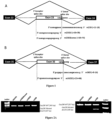
- AONs and transfection Antisense oligonucleotides specific to donor splice sites and ESE around the two exons were identified by ESEfinder 3.0 program (Cartegni and Krainer, 2003). The corresponding selected sequences are represented in Figure 1 . All AONs were synthetized by Sigma-Aldrich (St Quentin Fallavier, France) and contain 2'-O-methyl RNA and full-length phosphorothioate backbones. NIH-3T3 cells at 80% confluence were transfected in DMEM using Lipofectamine2000 (Invitrogen) according to the manufacturer's instruction. Each 2'-OMePS AON was transfected at 150 nmol/l in at least three separate experiments. A sense version of each ESE AON was used as control to assess the specificity of AONs ( Figure 1 ). After 4 hours of incubation at 37 °C, the transfection medium was replaced by fresh culture medium.
- NIH-3T3 cells were seeded on glass coverslips in 12-well plates, 24 hours before transfection.
- Antisense m23D(xx), m23ESE(xx), m36D(xx) and sense m23ESEsense(xx) oligonucleotides carrying a 5'-end fluorescein group were obtained from Sigma Aldrich.
- Fibroblasts were transfected as described previously. Untreated fibroblasts were processed in the same conditions. After 4 h of incubation, cells were fixed with PFA 4% (15 minutes at room temperature) and washed twice in PBS.
- a mounting media containing 4',6-diamidino-2-phenylindole (DAPI) (ProLong Gold antifade reagent with DAPI; Invitrogen) was used to label nuclei.
- Immunofluorescence images were obtained using a ZEISS LSM700 confocal microscope (Carl Zeiss, Germany). The final images were generated using ImageJ (National Institutes of Health, Bethesda, MA). Percentages of fluorescent cells were calculated (over 90% of all cells were labelled) from three independent experiments for each oligonucleotide transfection (n > 100 counted cells for each transfection).
- the advancement of the needle was directly observed under a binocular when the needle tip lay in the vitreous cavity.
- the needle was kept in the vitreous cavity for about 20 seconds then withdrawn gently and antibiotic ointment was applied to prevent infection.
- the right eyes were non-injected and used as contralateral controls.
- the injected and contralateral eyes were enucleated at 2, 6 or 10 days after injection and processed for further analysis.
- the sampled eyes were either immersed in PFA 4% to be cut and mounted onto glass slides and examined by confocal microscopy (ZEISS LSM700) after nuclei labeled using DAPI (ProLong Gold antifade reagent with DAPI; Invitrogen); or the retinas were extracted to recover ARN as described below. Between 2 and 5 animals were used for each experimental setup.
- ZEISS LSM700 confocal microscopy
- RNA extraction and cDNA synthesis Twenty-four hours after transfection, the transfected and untreated cells were processed. Similarly, RNA from retinas at 2, 6 and 10 days post-injection for both injected and non-injected eyes were obtained as below. Total RNA was extracted using the RNeasy Mini Kit (Qiagen, Courtaboeuf, France) according to manufacturer's protocol. All samples were DNase treated by the RNase-free DNase set (Qiagen, Courtaboeuf, France). Concentration and purity of total RNA was assessed using the Nanodrop-1000 spectrophotometer (Fisher Scientific, Illkirch, France) before storage at -80 °C.
- First-stranded cDNA synthesis was performed from 500 ng of total RNA extracted using Verso cDNA kit (Thermo Fisher Scientific) with random hexamer:anchored oligo(dT) primers at a 3:1 (vol:vol) ratio according to the manufacturer's instructions.
- a non-RT reaction (without enzyme) for one sample was prepared to serve as control in RT-qPCR experiments.
- RT-PCR Reverse transcription PCR
- cDNAs 5 ⁇ l were amplified in 50 ⁇ l of IX Phusion HF buffer containing 5 mM dNTPs (Fischer Scientific, Illkirch, France), 0.02 units of Phusion High-Fidelity DNA polymerase (Fischer Scientific, Illkirch, France) and 10 ⁇ M of each primer Cep290(ex22) forward, 5'-gaccaccttgagaaggaaac-3' (SEQ ID NO:1) and Cep290(ex24) reverse, 5'-catcctgctcagcttgatc-3' (SEQ ID NO:2) or Cep290(ex35) forward, 5'-cccaccaaactattgccaac-3' (SEQ ID NO:3) and Cep290(ex37) reverse, 5'-gagagtcatcttgttctgctac-3' (SEQ ID NO:4).
- PCRs were carried out on a 2720 Thermal Cycler (Applied Biosystems, Courtaboeuf, France) under the following conditions: initial denaturation at 98°C for 5 min, followed by 30 cycles of 10 sec-denaturation at 98°C, 30 sec-annealing at 60 °C and 30 sec-extension at 72°C.
- the PCR products were separated (20 ⁇ l) by electrophoresis in a 3 % agarose gel stained with ethidium bromide and visualized under UV lights. No template (NTC) reactions were used as negative control. The final confirmation of identity of these products was carried out by Sanger sequencing to establish that the correct and expected exon junctions have been maintained.
- RT-qPCR Real-time quantitative PCR
- mice TATA boxbinding protein mRNA Tbp
- B2m mouse ⁇ -2-microglobulin mRNA
- Gusb mouse ⁇ -glucuronidase mRNA
- Hprt1 mouse hypoxanthine phosphoribosyltransferase 1 mRNA
- Ppia mouse peptidylprolyl isomerase A mRNA
- Alb mouse albumin gene was used to control the non-contamination of cDNAs by genomic DNA. Primers were designed using the Oligo Primer Analysis Software v.7 available at http://www.oligo.net.
- Primer sequences were as follows: Cep290ex23wt forward, 5'-tgactgctaagtacagggacatct tg-3' (SEQ ID NO:5); Cep290ex23wt reverse, 5'-aggagatgttttcacactccaggt-3' (SEQ ID NO:6); Cep290ex23mt forward, 5'-ctggccccagttgtaatttgtga-3' (SEQ ID NO:7); Cep290ex23mt reverse, 5'-ctgttcccaggcttgttcaatagt-3' (SEQ ID NO:8); Cep290ex36wt forward, 5'-tgactgctaagtacagggacatc
- cDNAs (5 ⁇ l of a 1:25 dilution in nuclease-free water) were subjected to real-time PCR amplification in a buffer (20 ⁇ l) containing SYBR GREEN PCR Master Mix (Applied Biosystems, Courtaboeuf, France) and 300 nmol/l of forward and reverse primers, on a MasterCycler epgradients Realplex 2 (Eppendorf, Germany) under the following conditions: Taq polymerase activation and initial denaturation at 95 °C for 15 minutes, followed by 50 cycles for 15 seconds at 95 °C, and 1 minute at 62 °C.
- the specificity of amplification products was determined from melting curve analysis performed at the end of each run using a cycle at 95 °C for 15 seconds, 60 °C for 15 seconds, and 95 °C for 15 seconds. Data were analyzed using the Realplex software (Eppendorf, Germany). For each cDNA sample, the mean of quantification cycle (Cq) values was calculated from triplicates (SD ⁇ 0.5 Cq). Cep290 expression levels were normalized to the "normalization factor" obtained from the geNorm software for Microsoft Excel which uses the most stable reference genes and amplification efficiency estimates calculated for each primer pair using fourfold serial dilution curves (1:5, 1:25, 1:125, 1:625).
- IP immunoprecipitation
- ⁇ Macs Separation Columns and ⁇ Macs Protein G Microbeads ⁇ Macs Separation Columns and ⁇ Macs Protein G Microbeads (Miltenyi Biotec) with a rabbit polyclonal anti-cep290 (1:100; Novus Biologicals, Littletown, CO), according to supplier's recommendations.
- 150 ⁇ g of initial protein extracts resuspended with LDS sample buffer 1X (Life Technologies, USA) with 10% ⁇ -mercaptoéthanol
- immunoprecipitates were heated at 90 °C for 10 min and loaded on a 4-15% Mini-PROTEAN TGX precast polyacrylamide gels (BioRad).
- proteins were transferred to a 0.2 ⁇ m PVDF membrane using the Trans-Blot Turbo transfer system (BioRad) which was probed with the following primary antibody: rabbit polyclonal anti-human Cep290 (1:1800; Novus Biologicals, Littletown, CO) and secondary antibody: goat anti-rabbit IgG-HRP (1:5,000, Abcam, France). Blots were revealed with the use of SuperSignal ® West Dura Extended Duration Substrate (Thermo Scientific, USA) and ChemiDoc XRS+ Imaging System (Bio-Rad, USA). Western blot images were acquired and analyzed with the Image Lab Software 3.0.1 build 18 (Bio-Rad, USA).
- transgenic mouse line harbouring the human mutant intron 26 (c.2991+1655A>G) is not yet available
- AON sequences to skip wild-type mouse exons.
- the skipping of exon 23 is expected to result in a shift of the reading frame and to the production, if stable, of a truncated protein ( Figure 1A ).
- the skipping of exon 36 is expected to preserve the reading frame ( Figure 1B ).
- Antisense oligonucleotides specific to donor splice sites and ESE around the two exons were tested in vitro using NIH-3T3 mouse fibroblast line according to our protocol reported in MTNA (Gerard et al., 2012).
- the potential of AONs to induce skipping was first determined by reverse-transcription PCR (RT-PCR) analysis using mRNA extracted from non-treated and transfected NIH-3T3 cells. Transfection NIH-3T3 cells using 150 nM of AONs resulted in skipping as shown by the apparition of shorter PCR bands which Sanger sequencing demonstrated loss of exon 23 and 36 respectively.
- RT-qPCR real-time quantitative PCR
- NIH-3T3 cells were transfected using fluorescently-labeled m23D and m36D antisense and m23ESEsense oligonucleotides to make sure that these results were not due to reduced delivery of the sense oligonucleotide. Similar transfection efficiencies were measured (>90%).
- m23D AON fluorescently-labeled m23D AON.
- Ten nmol of AON were injected into the vitreous of the left eye of 8 week-old C57BL/6J mice. The animals were sacrificed at day 2, 6 and 10 post-injection and both injected (left) and non-injected (right) eyes were dissected to isolate neuroretinas.
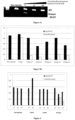
- Messenger-RNAs were prepared from treated and untreated retinas. RT-PCRs were performed using primers able to amplify both the wild-type and modified Cep290 transcripts, whereas RT-qPCRs were performed using primers specific to the wild-type mRNA and the mutant transcript lacking exon 23.
- RT-qPCR analysis were consistent with RT-PCR results with decreased expression of wild-type mRNAs in treated eyes compared to non-treated eyes and detectable mutant mRNAs in treated eyes but not in untreated ones ( Figure 3B ).
- Cep290 is ubiquitously expressed (Papon et al., 2010). In the retina, it is expressed in several cell layers, including the ganglion cell layer, the inner nuclear layer and the photoreceptors cell layer (Baye et al., 2011). But it is in this last cell layer of the retina that the amount of CEP290 protein is the most abundant (Chang et al., 2006). Histological analysis of the distribution of fluorescent AONs in the retina demonstrated the presence of fluorescence in the photoreceptor nuclear layer ( Figure 4B ). However, to confirm that skipping occurred in photoreceptors, we have set up collaboration with M.P. Felder (Institute of Cellular and Integrative Neurosciences, CNRS UPR 3212, University of France) to isolate the photoreceptor layer of non-injected and injected eyes using vibratome. This will be perfomed in the following weeks.
- AON Antisense oligonucleotide specific to ESE sites on the exon 10 was identified by ESEfinder 3.0 program (Cartegni and Krainer, 2003). The corresponding selected sequence: m10ESE (+60+88) 5'- CAAAGAAGTACCAGATCTGGGGCCCTAC -3' (SEQ ID NO:25). AON was synthetized by Sigma-Aldrich (St Quentin Fallavier, France) and contain 2'-O-methyl RNA and full-length phosphorothioate backbones.
- the advancement of the needle was directly observed under a binocular when the needle tip lay in the vitreous cavity.
- the needle was kept in the vitreous cavity for about 20 seconds then withdrawn gently and antibiotic ointment was applied to prevent infection.
- the right eyes were non-injected and used as contralateral controls.
- the injected and contralateral eyes were enucleated at 2, 6 or 10 days after injection and processed for further analysis.
- the retinas were extracted to recover ARN as described below. Two 2 animals were used for each experimental setup.
- RNA extraction and cDNA synthesis Total RNA from retinas at 2, 6 and 10 days post-injection for both injected and non-injected eyes was extracted using the RNeasy Mini Kit (Qiagen, Courtaboeuf, France) according to manufacturer's protocol. All samples were DNase treated by the RNase-free DNase set (Qiagen, Courtaboeuf, France). Concentration and purity of total RNA was assessed using the Nanodrop-1000 spectrophotometer (Fisher Scientific, Illkirch, France) before storage at -80 °C.
- First-stranded cDNA synthesis was performed from 500 ng of total RNA extracted using Verso cDNA kit (Thermo Fisher Scientific) with random hexamer:anchored oligo(dT) primers at a 3:1 (vol:vol) ratio according to the manufacturer's instructions.
- RT-PCR Reverse transcription PCR
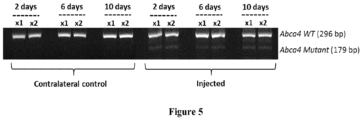
- cDNAs 5 ⁇ l were amplified in 50 ⁇ l of IX Phusion HF buffer containing 5 mM dNTPs (Fischer Scientific, Illkirch, France), 0.02 units of Phusion High-Fidelity DNA polymerase (Fischer Scientific, Illkirch, France) and 10 ⁇ M of each primer Abca4(ex9) forward, 5'- tgatccagagcctggagtcaa -3' (SEQ ID NO:26) and Abca4(ex11) reverse, 5'-ttcttctccgagctgcctatt -3' (SEQ ID NO:27).
- PCRs were carried out on a 2720 Thermal Cycler (Applied Biosystems, Courtaboeuf, France) under the following conditions: initial denaturation at 98°C for 5 min, followed by 30 cycles of 10 sec-denaturation at 98°C, 30 sec-annealing at 60 °C and 30 sec-extension at 72°C.
- the PCR products were separated (20 ⁇ l) by electrophoresis in a 3 % agarose gel stained with ethidium bromide and visualized under UV lights. No template (NTC) reactions were used as negative control. The final confirmation of identity of these products was carried out by Sanger sequencing to establish that the correct and expected exon junctions have been maintained.
- SLSN1 Senior-Loken syndrome 1 juvenile nephronophtisis with retinal dystrophy different from Leber congenital amaurosis
- PANK2 8 HARP hypoprebetalipoproteinemia, acanthocytosis, retinitis pigmentosa and pallidal degeneration
- PANK2 Hallervorden-Spatz disease with progressive rigidity dystonia, retinitis pigmentosa, brain iron accumulation, including forms with extensive accumulation of both tau and alpha-synuclein .
- HARP syndrome characterized by hypoprebetalipoproteinemia, acanthocytosis, retinitis pigmentosa, and pallidal degeneration
- PAX6 14 AN aniridia, homologous to mouse small eye, Drosophila eyeless, also including atypical phenotypes such as ocular coloboma as well as anophthalmia, foveal hypoplasia and central nervous system defect in compound heterozygotes ASMD3 ocular anterior segment mesenchymal dysgenesis 3, including Peters anomaly, Axenfeld anomaly, corneal dystrophy associated with congenital cataract, autosomal dominant ECTP ectopia pupillae FVH foveal hypoplasia, isolated OPNAB optic nerve hypoplasia and aplasia, bilateral, including Morning glory disc anomaly WAGR contiguous gene syndrome characterized by predisposition to nephroblastoma (Wilms tumor), aniridia, genitourinary abnormalities, mental retard
Landscapes
- Engineering & Computer Science (AREA)
- Health & Medical Sciences (AREA)
- Life Sciences & Earth Sciences (AREA)
- Biomedical Technology (AREA)
- Genetics & Genomics (AREA)
- Bioinformatics & Cheminformatics (AREA)
- Organic Chemistry (AREA)
- Chemical & Material Sciences (AREA)
- Signal Processing (AREA)
- Computer Networks & Wireless Communication (AREA)
- General Engineering & Computer Science (AREA)
- Molecular Biology (AREA)
- Wood Science & Technology (AREA)
- Zoology (AREA)
- Biotechnology (AREA)
- General Health & Medical Sciences (AREA)
- Microbiology (AREA)
- Biochemistry (AREA)
- Biophysics (AREA)
- Plant Pathology (AREA)
- Physics & Mathematics (AREA)
- Public Health (AREA)
- Pharmacology & Pharmacy (AREA)
- Veterinary Medicine (AREA)
- Animal Behavior & Ethology (AREA)
- Nuclear Medicine, Radiotherapy & Molecular Imaging (AREA)
- Chemical Kinetics & Catalysis (AREA)
- General Chemical & Material Sciences (AREA)
- Medicinal Chemistry (AREA)
- Neurosurgery (AREA)
- Neurology (AREA)
- Quality & Reliability (AREA)
- Psychiatry (AREA)
- Hospice & Palliative Care (AREA)
- Environmental & Geological Engineering (AREA)
- Ophthalmology & Optometry (AREA)
- Pharmaceuticals Containing Other Organic And Inorganic Compounds (AREA)
- Medicines That Contain Protein Lipid Enzymes And Other Medicines (AREA)
- Mobile Radio Communication Systems (AREA)
Claims (5)
- Nacktes Antisense-Oligonukleotid, das dazu bestimmt ist, bei der Behandlung einer Netzhauterkrankung, die durch eine Mutation verursacht wird, die das Spleißen verändert und/oder einen prämaturen Terminus in einem Gen erzeugt, das wichtig für die Funktion und/oder das Überleben einer Photorezeptorzelle ist, bei einem Subjekt, das dies benötigt, verwendet zu werden, wobei das nackte Antisense-Oligonukleotid in den Glaskörper des Subjekts injiziert wird, wobei das nackte Antisense-Oligonukleotid einen durch ein Antisense-Oligonukleotid induzierten Exon-Sprung in der prä-mRNA des Gens, dessen Mutation die Netzhauterkrankung verursacht, in einer Photorezeptorzelle des Subjekts ausführt, wobei das nackte Antisense-Oligonukleotid stabilisiert ist.
- Nacktes Antisense-Oligonukleotid, das dazu bestimmt ist, gemäß Anspruch 1 verwendet zu werden, wobei das nackte Antisense-Oligonukleotid einen durch ein Antisense-Oligonukleotid induzierten Exon-Sprung in dem Kern einer Photorezeptorzelle des Subjekts realisiert.
- Nacktes Antisense-Oligonukleotid, das dazu bestimmt ist, gemäß Anspruch 1 verwendet zu werden, wobei die Netzhauterkrankung eine degenerative oder stationäre Netzhauterkrankung ist.
- Nacktes Antisense-Oligonukleotid, das dazu bestimmt ist, gemäß Anspruch 1 verwendet zu werden, wobei die Netzhauterkrankung ausgewählt ist aus der Gruppe, bestehend aus Retinitis pigmentosa, altersbedingter Makuladegeneration, Bardet-Biedl-Syndrom, Bassen-Kornzweig-Syndrom, Best-Krankheit, Chorioideremie, Gyreatrophie, Leberscher kongenitaler Amaurose, Refsum-Syndrom, Stargardt-Krankheit, Usher-Syndrom, hereditären optischen Neuropathien, kongenitaler stationärer Nachtblindheit und Dyschromatopsie und Achromatopsie.
- Nacktes Antisense-Oligonukleotid, das dazu bestimmt ist, gemäß Anspruch 1 verwendet zu werden, wobei das nackte Antisense-Oligonukleotid ausgewählt ist aus der Gruppe, bestehend aus blockierten Nukleinsäure-Oligonukleotiden (LNA), Morpholinos-Oligonukleotiden, Tricyclo-DNA-Antisense-Oligonukleotiden, 2'-O-Me RNA/ENA und 2'-O-Methyl-Phosphorothioat-Oligonukleotiden.
Priority Applications (2)
| Application Number | Priority Date | Filing Date | Title |
|---|---|---|---|
| EP20168215.0A EP3702461A1 (de) | 2013-07-08 | 2014-07-08 | Verfahren zur durchführung von oligonucleotidvermitteltem antisense-exon-skipping in der netzhaut einer darauf angewiesenen person |
| EP14737236.1A EP3019610B2 (de) | 2013-07-08 | 2014-07-08 | Verfahren zur durchführung von oligonucleotidvermitteltem antisense-exon-skipping in der netzhaut einer person, die darauf angewiesen ist |
Applications Claiming Priority (3)
| Application Number | Priority Date | Filing Date | Title |
|---|---|---|---|
| EP13305968 | 2013-07-08 | ||
| PCT/EP2014/064604 WO2015004133A1 (en) | 2013-07-08 | 2014-07-08 | Methods for performing antisense oligonucleotide-mediated exon skipping in the retina of a subject in need thereof |
| EP14737236.1A EP3019610B2 (de) | 2013-07-08 | 2014-07-08 | Verfahren zur durchführung von oligonucleotidvermitteltem antisense-exon-skipping in der netzhaut einer person, die darauf angewiesen ist |
Related Child Applications (2)
| Application Number | Title | Priority Date | Filing Date |
|---|---|---|---|
| EP20168215.0A Division EP3702461A1 (de) | 2013-07-08 | 2014-07-08 | Verfahren zur durchführung von oligonucleotidvermitteltem antisense-exon-skipping in der netzhaut einer darauf angewiesenen person |
| EP20168215.0A Division-Into EP3702461A1 (de) | 2013-07-08 | 2014-07-08 | Verfahren zur durchführung von oligonucleotidvermitteltem antisense-exon-skipping in der netzhaut einer darauf angewiesenen person |
Publications (3)
| Publication Number | Publication Date |
|---|---|
| EP3019610A1 EP3019610A1 (de) | 2016-05-18 |
| EP3019610B1 EP3019610B1 (de) | 2020-05-06 |
| EP3019610B2 true EP3019610B2 (de) | 2025-03-19 |
Family
ID=48793143
Family Applications (2)
| Application Number | Title | Priority Date | Filing Date |
|---|---|---|---|
| EP20168215.0A Pending EP3702461A1 (de) | 2013-07-08 | 2014-07-08 | Verfahren zur durchführung von oligonucleotidvermitteltem antisense-exon-skipping in der netzhaut einer darauf angewiesenen person |
| EP14737236.1A Active EP3019610B2 (de) | 2013-07-08 | 2014-07-08 | Verfahren zur durchführung von oligonucleotidvermitteltem antisense-exon-skipping in der netzhaut einer person, die darauf angewiesen ist |
Family Applications Before (1)
| Application Number | Title | Priority Date | Filing Date |
|---|---|---|---|
| EP20168215.0A Pending EP3702461A1 (de) | 2013-07-08 | 2014-07-08 | Verfahren zur durchführung von oligonucleotidvermitteltem antisense-exon-skipping in der netzhaut einer darauf angewiesenen person |
Country Status (5)
| Country | Link |
|---|---|
| US (2) | US11667913B2 (de) |
| EP (2) | EP3702461A1 (de) |
| JP (3) | JP6571075B2 (de) |
| ES (1) | ES2794499T5 (de) |
| WO (1) | WO2015004133A1 (de) |
Families Citing this family (21)
| Publication number | Priority date | Publication date | Assignee | Title |
|---|---|---|---|---|
| WO2015004133A1 (en) * | 2013-07-08 | 2015-01-15 | INSERM (Institut National de la Santé et de la Recherche Médicale) | Methods for performing antisense oligonucleotide-mediated exon skipping in the retina of a subject in need thereof |
| GB201503408D0 (en) | 2015-02-27 | 2015-04-15 | Proqr Therapeutics N V | Oligonucleotides |
| GB201504124D0 (en) | 2015-03-11 | 2015-04-22 | Proqr Therapeutics B V | Oligonucleotides |
| US11236333B2 (en) | 2016-12-13 | 2022-02-01 | Stichting Katholieke Universiteit | Antisense oligonucleotides for the treatment of Stargardt disease |
| GB201706009D0 (en) | 2017-04-13 | 2017-05-31 | Proqr Therapeutics Ii Bv | Antisense oligonucleotides for the treatment of stargardt disease |
| EP3824086A1 (de) * | 2018-07-19 | 2021-05-26 | Stichting Katholieke Universiteit | Antisense-oligonukleotide zur wiederherstellung aberranter spleissung von abca4 |
| EP3840758A1 (de) * | 2018-08-21 | 2021-06-30 | Deep Genomics Incorporated | Therapeutische spleiss-schaltende oligonukleotide |
| US11416850B1 (en) * | 2018-12-28 | 2022-08-16 | United Services Automobile Association (Usaa) | Peer to peer navigation system and method |
| US12398393B2 (en) | 2019-01-28 | 2025-08-26 | Proqr Therapeutics Ii B.V. | RNA-editing oligonucleotides for the treatment of usher syndrome |
| WO2020157014A1 (en) | 2019-01-28 | 2020-08-06 | Proqr Therapeutics Ii B.V. | Antisense oligonucleotides for the treatment of leber's congenital amaurosis |
| WO2020212567A1 (en) | 2019-04-18 | 2020-10-22 | Proqr Therapeutics Ii B.V. | Antisense oligonucleotides for the treatment of usher syndrome |
| EP3959315A1 (de) * | 2019-04-26 | 2022-03-02 | INSERM (Institut National de la Santé et de la Recherche Médicale) | Verfahren zur behandlung von retinalen dystrophien durch exon-skipping-strategie |
| WO2020254249A1 (en) | 2019-06-21 | 2020-12-24 | Proqr Therapeutics Ii B.V. | Delivery of nucleic acids for the treatment of auditory disorders |
| US11739324B2 (en) | 2019-06-25 | 2023-08-29 | Stichting Katholieke Universiteit | Antisense oligonucleotides rescue aberrant splicing of ABCA4 |
| WO2021023863A1 (en) * | 2019-08-08 | 2021-02-11 | Stichting Katholieke Universiteit | Antisense oligonucleotides rescue aberrant splicing of abca4 |
| EP4081638A1 (de) | 2019-12-23 | 2022-11-02 | ProQR Therapeutics II B.V. | Antisense-oligonukleotide zur nukleotid-deaminierung bei der behandlung von morbus stargardt |
| US20230134677A1 (en) | 2020-03-04 | 2023-05-04 | Proqr Therapeutics Ii B.V. | Antisense oligonucleotides for use in the treatment of usher syndrome |
| WO2022090256A1 (en) | 2020-10-26 | 2022-05-05 | Proqr Therapeutics Ii B.V. | Antisense oligonucleotides for the treatment of stargardt disease |
| US20250154504A1 (en) | 2022-02-14 | 2025-05-15 | Proqr Therapeutics Ii B.V. | Guide oligonucleotides for nucleic acid editing in the treatment of hypercholesterolemia |
| AU2023357356A1 (en) * | 2022-10-06 | 2025-04-10 | Stichting Radboud Universitair Medisch Centrum | Antisense oligonucleotides for treatment of usher 2a. exon 68 |
| AU2023357354A1 (en) * | 2022-10-06 | 2025-04-10 | Stichting Radboud Universitair Medisch Centrum | Antisense oligonucleotides for treatment of usher 2a. exons 30-31 |
Family Cites Families (9)
| Publication number | Priority date | Publication date | Assignee | Title |
|---|---|---|---|---|
| US4390929A (en) | 1981-05-11 | 1983-06-28 | The Perkin-Elmer Corporation | Precise lamp positioner |
| IL83715A0 (en) | 1987-08-31 | 1988-01-31 | Yeda Res & Dev | Pharmaceutical anti-protozoal compositions |
| US11078262B2 (en) * | 2007-04-30 | 2021-08-03 | Allergan, Inc. | High viscosity macromolecular compositions for treating ocular conditions |
| US20090214478A1 (en) * | 2008-02-21 | 2009-08-27 | Alberto Auricchio | Method of treating ocular diseases by gene therapy |
| US20090285840A1 (en) * | 2008-04-29 | 2009-11-19 | New York Society For The Ruptured And Crippled Maintaining The Hospital For Special Surgery | Methods for treating pathological neovascularization |
| DK4005603T3 (da) | 2011-04-22 | 2024-11-25 | Univ California | Adeno-associerede virus-virioner med variant kapsid og fremgangsmåder til anvendelse heraf |
| WO2012168435A1 (en) | 2011-06-10 | 2012-12-13 | INSERM (Institut National de la Santé et de la Recherche Médicale) | Methods for the treatment of leber congenital amaurosis |
| CA2847664C (en) * | 2011-09-05 | 2021-08-31 | Stichting Katholieke Universiteit | Antisense oligonucleotides for the treatment of leber congenital amaurosis |
| WO2015004133A1 (en) * | 2013-07-08 | 2015-01-15 | INSERM (Institut National de la Santé et de la Recherche Médicale) | Methods for performing antisense oligonucleotide-mediated exon skipping in the retina of a subject in need thereof |
-
2014
- 2014-07-08 WO PCT/EP2014/064604 patent/WO2015004133A1/en not_active Ceased
- 2014-07-08 EP EP20168215.0A patent/EP3702461A1/de active Pending
- 2014-07-08 EP EP14737236.1A patent/EP3019610B2/de active Active
- 2014-07-08 US US14/903,477 patent/US11667913B2/en active Active
- 2014-07-08 ES ES14737236T patent/ES2794499T5/es active Active
- 2014-07-08 JP JP2016524795A patent/JP6571075B2/ja active Active
-
2019
- 2019-08-07 JP JP2019145472A patent/JP2019206578A/ja active Pending
-
2021
- 2021-01-20 JP JP2021006996A patent/JP7342047B2/ja active Active
-
2023
- 2023-04-24 US US18/305,809 patent/US20240117344A1/en active Pending
Also Published As
| Publication number | Publication date |
|---|---|
| JP2021073227A (ja) | 2021-05-13 |
| ES2794499T5 (en) | 2025-08-12 |
| EP3702461A1 (de) | 2020-09-02 |
| ES2794499T3 (es) | 2020-11-18 |
| US20240117344A1 (en) | 2024-04-11 |
| JP2019206578A (ja) | 2019-12-05 |
| EP3019610A1 (de) | 2016-05-18 |
| JP7342047B2 (ja) | 2023-09-11 |
| US20190037583A2 (en) | 2019-01-31 |
| US20160150555A1 (en) | 2016-05-26 |
| US11667913B2 (en) | 2023-06-06 |
| WO2015004133A1 (en) | 2015-01-15 |
| JP2016523946A (ja) | 2016-08-12 |
| JP6571075B2 (ja) | 2019-09-04 |
| EP3019610B1 (de) | 2020-05-06 |
Similar Documents
| Publication | Publication Date | Title |
|---|---|---|
| US20240117344A1 (en) | Methods for performing antisense oligonucleotide-mediated exon skipping in the retina of a subject in need thereof | |
| US11492621B2 (en) | Methods for the treatment of Leber congenital amaurosis | |
| US20220235355A1 (en) | Antisense oligonucleotides for the treatment of leber congenital amaurosis | |
| CN105209619B (zh) | miR-204和miR-211及其用途 | |
| JP2020512828A (ja) | スタルガルト病の処置のためのアンチセンスオリゴヌクレオチド | |
| US20220340901A1 (en) | Methods for the treatment of retinal dystrophies by exon-skipping strategy |
Legal Events
| Date | Code | Title | Description |
|---|---|---|---|
| PUAI | Public reference made under article 153(3) epc to a published international application that has entered the european phase |
Free format text: ORIGINAL CODE: 0009012 |
|
| 17P | Request for examination filed |
Effective date: 20160108 |
|
| AK | Designated contracting states |
Kind code of ref document: A1 Designated state(s): AL AT BE BG CH CY CZ DE DK EE ES FI FR GB GR HR HU IE IS IT LI LT LU LV MC MK MT NL NO PL PT RO RS SE SI SK SM TR |
|
| AX | Request for extension of the european patent |
Extension state: BA ME |
|
| DAX | Request for extension of the european patent (deleted) | ||
| STAA | Information on the status of an ep patent application or granted ep patent |
Free format text: STATUS: EXAMINATION IS IN PROGRESS |
|
| 17Q | First examination report despatched |
Effective date: 20170602 |
|
| TPAC | Observations filed by third parties |
Free format text: ORIGINAL CODE: EPIDOSNTIPA |
|
| GRAP | Despatch of communication of intention to grant a patent |
Free format text: ORIGINAL CODE: EPIDOSNIGR1 |
|
| STAA | Information on the status of an ep patent application or granted ep patent |
Free format text: STATUS: GRANT OF PATENT IS INTENDED |
|
| INTG | Intention to grant announced |
Effective date: 20191113 |
|
| RAP1 | Party data changed (applicant data changed or rights of an application transferred) |
Owner name: INSERM (INSTITUT NATIONAL DE LA SANTE ET DE LA REC Owner name: UNIVERSITE PARIS DESCARTES Owner name: FONDATION IMAGINE Owner name: ASSISTANCE PUBLIQUE-HOPITAUX DE PARIS (APHP) |
|
| GRAS | Grant fee paid |
Free format text: ORIGINAL CODE: EPIDOSNIGR3 |
|
| GRAA | (expected) grant |
Free format text: ORIGINAL CODE: 0009210 |
|
| STAA | Information on the status of an ep patent application or granted ep patent |
Free format text: STATUS: THE PATENT HAS BEEN GRANTED |
|
| RAP1 | Party data changed (applicant data changed or rights of an application transferred) |
Owner name: FONDATION IMAGINE Owner name: UNIVERSITE DE PARIS Owner name: ASSISTANCE PUBLIQUE-HOPITAUX DE PARIS (APHP) Owner name: INSERM (INSTITUT NATIONAL DE LA SANTE ET DE LA RECHERCHE MEDICALE) |
|
| AK | Designated contracting states |
Kind code of ref document: B1 Designated state(s): AL AT BE BG CH CY CZ DE DK EE ES FI FR GB GR HR HU IE IS IT LI LT LU LV MC MK MT NL NO PL PT RO RS SE SI SK SM TR |
|
| REG | Reference to a national code |
Ref country code: GB Ref legal event code: FG4D |
|
| REG | Reference to a national code |
Ref country code: CH Ref legal event code: EP Ref country code: CH Ref legal event code: NV Representative=s name: MICHELI AND CIE SA, CH Ref country code: AT Ref legal event code: REF Ref document number: 1266758 Country of ref document: AT Kind code of ref document: T Effective date: 20200515 |
|
| REG | Reference to a national code |
Ref country code: IE Ref legal event code: FG4D |
|
| REG | Reference to a national code |
Ref country code: DE Ref legal event code: R096 Ref document number: 602014064959 Country of ref document: DE |
|
| REG | Reference to a national code |
Ref country code: SE Ref legal event code: TRGR |
|
| REG | Reference to a national code |
Ref country code: NL Ref legal event code: FP |
|
| REG | Reference to a national code |
Ref country code: LT Ref legal event code: MG4D |
|
| PG25 | Lapsed in a contracting state [announced via postgrant information from national office to epo] |
Ref country code: LT Free format text: LAPSE BECAUSE OF FAILURE TO SUBMIT A TRANSLATION OF THE DESCRIPTION OR TO PAY THE FEE WITHIN THE PRESCRIBED TIME-LIMIT Effective date: 20200506 Ref country code: NO Free format text: LAPSE BECAUSE OF FAILURE TO SUBMIT A TRANSLATION OF THE DESCRIPTION OR TO PAY THE FEE WITHIN THE PRESCRIBED TIME-LIMIT Effective date: 20200806 Ref country code: GR Free format text: LAPSE BECAUSE OF FAILURE TO SUBMIT A TRANSLATION OF THE DESCRIPTION OR TO PAY THE FEE WITHIN THE PRESCRIBED TIME-LIMIT Effective date: 20200807 Ref country code: PT Free format text: LAPSE BECAUSE OF FAILURE TO SUBMIT A TRANSLATION OF THE DESCRIPTION OR TO PAY THE FEE WITHIN THE PRESCRIBED TIME-LIMIT Effective date: 20200907 Ref country code: IS Free format text: LAPSE BECAUSE OF FAILURE TO SUBMIT A TRANSLATION OF THE DESCRIPTION OR TO PAY THE FEE WITHIN THE PRESCRIBED TIME-LIMIT Effective date: 20200906 Ref country code: FI Free format text: LAPSE BECAUSE OF FAILURE TO SUBMIT A TRANSLATION OF THE DESCRIPTION OR TO PAY THE FEE WITHIN THE PRESCRIBED TIME-LIMIT Effective date: 20200506 |
|
| REG | Reference to a national code |
Ref country code: ES Ref legal event code: FG2A Ref document number: 2794499 Country of ref document: ES Kind code of ref document: T3 Effective date: 20201118 |
|
| PG25 | Lapsed in a contracting state [announced via postgrant information from national office to epo] |
Ref country code: LV Free format text: LAPSE BECAUSE OF FAILURE TO SUBMIT A TRANSLATION OF THE DESCRIPTION OR TO PAY THE FEE WITHIN THE PRESCRIBED TIME-LIMIT Effective date: 20200506 Ref country code: RS Free format text: LAPSE BECAUSE OF FAILURE TO SUBMIT A TRANSLATION OF THE DESCRIPTION OR TO PAY THE FEE WITHIN THE PRESCRIBED TIME-LIMIT Effective date: 20200506 Ref country code: HR Free format text: LAPSE BECAUSE OF FAILURE TO SUBMIT A TRANSLATION OF THE DESCRIPTION OR TO PAY THE FEE WITHIN THE PRESCRIBED TIME-LIMIT Effective date: 20200506 Ref country code: BG Free format text: LAPSE BECAUSE OF FAILURE TO SUBMIT A TRANSLATION OF THE DESCRIPTION OR TO PAY THE FEE WITHIN THE PRESCRIBED TIME-LIMIT Effective date: 20200806 |
|
| PG25 | Lapsed in a contracting state [announced via postgrant information from national office to epo] |
Ref country code: AL Free format text: LAPSE BECAUSE OF FAILURE TO SUBMIT A TRANSLATION OF THE DESCRIPTION OR TO PAY THE FEE WITHIN THE PRESCRIBED TIME-LIMIT Effective date: 20200506 |
|
| PG25 | Lapsed in a contracting state [announced via postgrant information from national office to epo] |
Ref country code: CZ Free format text: LAPSE BECAUSE OF FAILURE TO SUBMIT A TRANSLATION OF THE DESCRIPTION OR TO PAY THE FEE WITHIN THE PRESCRIBED TIME-LIMIT Effective date: 20200506 Ref country code: EE Free format text: LAPSE BECAUSE OF FAILURE TO SUBMIT A TRANSLATION OF THE DESCRIPTION OR TO PAY THE FEE WITHIN THE PRESCRIBED TIME-LIMIT Effective date: 20200506 Ref country code: DK Free format text: LAPSE BECAUSE OF FAILURE TO SUBMIT A TRANSLATION OF THE DESCRIPTION OR TO PAY THE FEE WITHIN THE PRESCRIBED TIME-LIMIT Effective date: 20200506 Ref country code: SM Free format text: LAPSE BECAUSE OF FAILURE TO SUBMIT A TRANSLATION OF THE DESCRIPTION OR TO PAY THE FEE WITHIN THE PRESCRIBED TIME-LIMIT Effective date: 20200506 Ref country code: RO Free format text: LAPSE BECAUSE OF FAILURE TO SUBMIT A TRANSLATION OF THE DESCRIPTION OR TO PAY THE FEE WITHIN THE PRESCRIBED TIME-LIMIT Effective date: 20200506 |
|
| REG | Reference to a national code |
Ref country code: DE Ref legal event code: R026 Ref document number: 602014064959 Country of ref document: DE |
|
| PLBI | Opposition filed |
Free format text: ORIGINAL CODE: 0009260 |
|
| PLAX | Notice of opposition and request to file observation + time limit sent |
Free format text: ORIGINAL CODE: EPIDOSNOBS2 |
|
| PG25 | Lapsed in a contracting state [announced via postgrant information from national office to epo] |
Ref country code: SK Free format text: LAPSE BECAUSE OF FAILURE TO SUBMIT A TRANSLATION OF THE DESCRIPTION OR TO PAY THE FEE WITHIN THE PRESCRIBED TIME-LIMIT Effective date: 20200506 Ref country code: PL Free format text: LAPSE BECAUSE OF FAILURE TO SUBMIT A TRANSLATION OF THE DESCRIPTION OR TO PAY THE FEE WITHIN THE PRESCRIBED TIME-LIMIT Effective date: 20200506 Ref country code: MC Free format text: LAPSE BECAUSE OF FAILURE TO SUBMIT A TRANSLATION OF THE DESCRIPTION OR TO PAY THE FEE WITHIN THE PRESCRIBED TIME-LIMIT Effective date: 20200506 |
|
| 26 | Opposition filed |
Opponent name: HOFFMAN EITLE PATENT- UND RECHTSANWAELTE PARTNERSCHAFTSGESELLSCHAFT MBB Effective date: 20210205 |
|
| REG | Reference to a national code |
Ref country code: AT Ref legal event code: UEP Ref document number: 1266758 Country of ref document: AT Kind code of ref document: T Effective date: 20200506 |
|
| PG25 | Lapsed in a contracting state [announced via postgrant information from national office to epo] |
Ref country code: SI Free format text: LAPSE BECAUSE OF FAILURE TO SUBMIT A TRANSLATION OF THE DESCRIPTION OR TO PAY THE FEE WITHIN THE PRESCRIBED TIME-LIMIT Effective date: 20200506 |
|
| PLBB | Reply of patent proprietor to notice(s) of opposition received |
Free format text: ORIGINAL CODE: EPIDOSNOBS3 |
|
| PG25 | Lapsed in a contracting state [announced via postgrant information from national office to epo] |
Ref country code: TR Free format text: LAPSE BECAUSE OF FAILURE TO SUBMIT A TRANSLATION OF THE DESCRIPTION OR TO PAY THE FEE WITHIN THE PRESCRIBED TIME-LIMIT Effective date: 20200506 Ref country code: MT Free format text: LAPSE BECAUSE OF FAILURE TO SUBMIT A TRANSLATION OF THE DESCRIPTION OR TO PAY THE FEE WITHIN THE PRESCRIBED TIME-LIMIT Effective date: 20200506 Ref country code: CY Free format text: LAPSE BECAUSE OF FAILURE TO SUBMIT A TRANSLATION OF THE DESCRIPTION OR TO PAY THE FEE WITHIN THE PRESCRIBED TIME-LIMIT Effective date: 20200506 |
|
| PG25 | Lapsed in a contracting state [announced via postgrant information from national office to epo] |
Ref country code: MK Free format text: LAPSE BECAUSE OF FAILURE TO SUBMIT A TRANSLATION OF THE DESCRIPTION OR TO PAY THE FEE WITHIN THE PRESCRIBED TIME-LIMIT Effective date: 20200506 |
|
| REG | Reference to a national code |
Ref country code: DE Ref legal event code: R081 Ref document number: 602014064959 Country of ref document: DE Owner name: UNIVERSITE PARIS CITE, FR Free format text: FORMER OWNERS: ASSISTANCE PUBLIQUE-HOPITAUX DE PARIS (APHP), PARIS, FR; FONDATION IMAGINE, PARIS, FR; INSERM (INSTITUT NATIONAL DE LA SANTE ET DE LA RECHERCHE MEDICALE), PARIS, FR; UNIVERSITE DE PARIS, PARIS, FR Ref country code: DE Ref legal event code: R081 Ref document number: 602014064959 Country of ref document: DE Owner name: INSERM (INSTITUT NATIONAL DE LA SANTE ET DE LA, FR Free format text: FORMER OWNERS: ASSISTANCE PUBLIQUE-HOPITAUX DE PARIS (APHP), PARIS, FR; FONDATION IMAGINE, PARIS, FR; INSERM (INSTITUT NATIONAL DE LA SANTE ET DE LA RECHERCHE MEDICALE), PARIS, FR; UNIVERSITE DE PARIS, PARIS, FR Ref country code: DE Ref legal event code: R081 Ref document number: 602014064959 Country of ref document: DE Owner name: FONDATION IMAGINE, FR Free format text: FORMER OWNERS: ASSISTANCE PUBLIQUE-HOPITAUX DE PARIS (APHP), PARIS, FR; FONDATION IMAGINE, PARIS, FR; INSERM (INSTITUT NATIONAL DE LA SANTE ET DE LA RECHERCHE MEDICALE), PARIS, FR; UNIVERSITE DE PARIS, PARIS, FR Ref country code: DE Ref legal event code: R081 Ref document number: 602014064959 Country of ref document: DE Owner name: ASSISTANCE PUBLIQUE-HOPITAUX DE PARIS (APHP), FR Free format text: FORMER OWNERS: ASSISTANCE PUBLIQUE-HOPITAUX DE PARIS (APHP), PARIS, FR; FONDATION IMAGINE, PARIS, FR; INSERM (INSTITUT NATIONAL DE LA SANTE ET DE LA RECHERCHE MEDICALE), PARIS, FR; UNIVERSITE DE PARIS, PARIS, FR |
|
| REG | Reference to a national code |
Ref country code: LU Ref legal event code: HC Owner name: ASSISTANCE PUBLIQUE-HOPITAUX DE PARIS (APHP); FR Free format text: FORMER OWNER: UNIVERSITE DE PARIS Effective date: 20220720 |
|
| REG | Reference to a national code |
Ref country code: NL Ref legal event code: HC Owner name: UNIVERSITE PARIS CITE; FR Free format text: DETAILS ASSIGNMENT: CHANGE OF OWNER(S), CHANGE OF OWNER(S) NAME; FORMER OWNER NAME: UNIVERSITE DE PARIS Effective date: 20220818 |
|
| REG | Reference to a national code |
Ref country code: BE Ref legal event code: HC Owner name: ASSISTANCE PUBLIQUE-HOPITAUX DE PARIS (APHP); FR Free format text: DETAILS ASSIGNMENT: CHANGE OF OWNER(S), CHANGE OF OWNER(S) NAME; FORMER OWNER NAME: UNIVERSITE DE PARIS Effective date: 20220812 |
|
| REG | Reference to a national code |
Ref country code: ES Ref legal event code: PC2A Owner name: UNIVERSITE PARIS CITE Effective date: 20221019 |
|
| REG | Reference to a national code |
Ref country code: AT Ref legal event code: HC Ref document number: 1266758 Country of ref document: AT Kind code of ref document: T Owner name: ASSISTANCE PUBLIQUE-HOPITAUX DE PARIS (APHP), FR Effective date: 20221213 Ref country code: AT Ref legal event code: HC Ref document number: 1266758 Country of ref document: AT Kind code of ref document: T Owner name: UNIVERSITE PARIS CITE, FR Effective date: 20221213 Ref country code: AT Ref legal event code: HC Ref document number: 1266758 Country of ref document: AT Kind code of ref document: T Owner name: FONDATION IMAGINE, FR Effective date: 20221213 Ref country code: AT Ref legal event code: HC Ref document number: 1266758 Country of ref document: AT Kind code of ref document: T Owner name: INSERM (INSTITUT NATIONAL DE LA SANTE ET DE LA, FR Effective date: 20221213 |
|
| RAP4 | Party data changed (patent owner data changed or rights of a patent transferred) |
Owner name: ASSISTANCE PUBLIQUE-HOPITAUX DE PARIS Owner name: UNIVERSITE DE PARIS Owner name: FONDATION IMAGINE Owner name: INSERM (INSTITUT NATIONAL DE LA SANTE ET DE LA RECHERCHE MEDICALE) |
|
| PUAH | Patent maintained in amended form |
Free format text: ORIGINAL CODE: 0009272 |
|
| STAA | Information on the status of an ep patent application or granted ep patent |
Free format text: STATUS: PATENT MAINTAINED AS AMENDED |
|
| 27A | Patent maintained in amended form |
Effective date: 20250319 |
|
| AK | Designated contracting states |
Kind code of ref document: B2 Designated state(s): AL AT BE BG CH CY CZ DE DK EE ES FI FR GB GR HR HU IE IS IT LI LT LU LV MC MK MT NL NO PL PT RO RS SE SI SK SM TR |
|
| REG | Reference to a national code |
Ref country code: DE Ref legal event code: R102 Ref document number: 602014064959 Country of ref document: DE |
|
| P01 | Opt-out of the competence of the unified patent court (upc) registered |
Free format text: CASE NUMBER: APP_9279/2025 Effective date: 20250225 |
|
| REG | Reference to a national code |
Ref country code: SE Ref legal event code: RPEO |
|
| REG | Reference to a national code |
Ref country code: NL Ref legal event code: FP |
|
| PGFP | Annual fee paid to national office [announced via postgrant information from national office to epo] |
Ref country code: GB Payment date: 20250619 Year of fee payment: 12 |
|
| PGFP | Annual fee paid to national office [announced via postgrant information from national office to epo] |
Ref country code: LU Payment date: 20250619 Year of fee payment: 12 Ref country code: NL Payment date: 20250620 Year of fee payment: 12 Ref country code: BE Payment date: 20250619 Year of fee payment: 12 |
|
| PGFP | Annual fee paid to national office [announced via postgrant information from national office to epo] |
Ref country code: FR Payment date: 20250619 Year of fee payment: 12 |
|
| PGFP | Annual fee paid to national office [announced via postgrant information from national office to epo] |
Ref country code: IE Payment date: 20250623 Year of fee payment: 12 |
|
| PGFP | Annual fee paid to national office [announced via postgrant information from national office to epo] |
Ref country code: SE Payment date: 20250619 Year of fee payment: 12 |
|
| REG | Reference to a national code |
Ref country code: ES Ref legal event code: DC2A Ref document number: 2794499 Country of ref document: ES Kind code of ref document: T5 Effective date: 20250812 |
|
| PGFP | Annual fee paid to national office [announced via postgrant information from national office to epo] |
Ref country code: ES Payment date: 20250801 Year of fee payment: 12 |
|
| PGFP | Annual fee paid to national office [announced via postgrant information from national office to epo] |
Ref country code: DE Payment date: 20250620 Year of fee payment: 12 |
|
| PGFP | Annual fee paid to national office [announced via postgrant information from national office to epo] |
Ref country code: IT Payment date: 20250619 Year of fee payment: 12 |
|
| PGFP | Annual fee paid to national office [announced via postgrant information from national office to epo] |
Ref country code: AT Payment date: 20250623 Year of fee payment: 12 |
|
| PGFP | Annual fee paid to national office [announced via postgrant information from national office to epo] |
Ref country code: CH Payment date: 20250801 Year of fee payment: 12 |