EP3016043A1 - Method and apparatus for calculating smart indicator - Google Patents
Method and apparatus for calculating smart indicator Download PDFInfo
- Publication number
- EP3016043A1 EP3016043A1 EP15176088.1A EP15176088A EP3016043A1 EP 3016043 A1 EP3016043 A1 EP 3016043A1 EP 15176088 A EP15176088 A EP 15176088A EP 3016043 A1 EP3016043 A1 EP 3016043A1
- Authority
- EP
- European Patent Office
- Prior art keywords
- smart
- index
- indicates
- safety
- activity
- Prior art date
- Legal status (The legal status is an assumption and is not a legal conclusion. Google has not performed a legal analysis and makes no representation as to the accuracy of the status listed.)
- Ceased
Links
Images



Classifications
-
- G—PHYSICS
- G06—COMPUTING OR CALCULATING; COUNTING
- G06F—ELECTRIC DIGITAL DATA PROCESSING
- G06F17/00—Digital computing or data processing equipment or methods, specially adapted for specific functions
- G06F17/40—Data acquisition and logging
-
- G—PHYSICS
- G06—COMPUTING OR CALCULATING; COUNTING
- G06N—COMPUTING ARRANGEMENTS BASED ON SPECIFIC COMPUTATIONAL MODELS
- G06N7/00—Computing arrangements based on specific mathematical models
-
- G—PHYSICS
- G06—COMPUTING OR CALCULATING; COUNTING
- G06Q—INFORMATION AND COMMUNICATION TECHNOLOGY [ICT] SPECIALLY ADAPTED FOR ADMINISTRATIVE, COMMERCIAL, FINANCIAL, MANAGERIAL OR SUPERVISORY PURPOSES; SYSTEMS OR METHODS SPECIALLY ADAPTED FOR ADMINISTRATIVE, COMMERCIAL, FINANCIAL, MANAGERIAL OR SUPERVISORY PURPOSES, NOT OTHERWISE PROVIDED FOR
- G06Q10/00—Administration; Management
- G06Q10/06—Resources, workflows, human or project management; Enterprise or organisation planning; Enterprise or organisation modelling
Definitions
- the present disclosure relates to the field of smart homes, and more particularly, to a method and apparatus for calculating a smart indicator.
- Smart home based on dwellings, is a network-based smart home control system which integrates an automation control system, a computer network system, and network communication technologies.
- the smart home improves safety, convenience, comfort, and artistry of homes, and achieves an environmentally-friendly and energy-saving living environment.
- the smart home is connected to a smart home system via a configured touch screen, speech recognition-based control, wireless remote control or the like.
- the smart home configures household appliances, performs scenario operations, such that a plurality of appliances are linked and that the household appliances in the smart home are capable of communicating with each other.
- a user may not acquire smart indicators such as safety degree of his or her household appliance, activity degree of the user, and linkage of the appliances.
- the present disclosure provides a method and apparatus for calculating a smart indicator.
- a method for calculating a smart indicator comprises the steps of:
- the step of acquiring association information of smart indices includes the step of:
- the step of acquiring usage information of a safety device corresponding to the safety index comprises the step of:
- N i of safety devices of the type i is greater than a maximum number P max of the safety devices, a value of N i is set to P max .
- the step of acquiring login information of a smart home APP corresponding to the activity index comprises the step of:
- the step of acquiring configuration information of a smart scenario corresponding to the linkage index comprises the step of:
- the step of obtaining the smart indicator by a weight calculation according to the smart indices comprises the step of :
- the method further comprises the step of:
- an apparatus for calculating a smart indicator comprises:
- the acquiring module is configured to acquire usage information of a safety device corresponding to the safety index, login information of a smart home APP corresponding to the activity index, and configuration information of a smart scenario corresponding to the linkage index; and the first calculating module is configured to calculate a safety index according to the usage information of a safety device, calculate an activity index according to the login information of a smart home APP, and calculate a linkage index according to the configuration information of a smart scenario.
- the acquiring module is specifically configured to acquire the total number n of types of safety devices corresponding to a safety index A 1 , and the number N i of safety devices of a corresponding type i;
- N i of safety devices of the type i is greater than a maximum number P max of the safety devices, a value of N i is set to P max .
- the acquiring module is specifically configured to acquire an activity cycle T corresponding to an activity index A 2 , and login times M j of a user on the j th day within the activity cycle T, and calculate a difference Q j of days between the j th day and a current date; and
- the acquiring module is specifically configured to acquire the number L of smart scenarios corresponding to a linkage index A 3 ;
- the apparatus further comprises:
- an apparatus for calculating a smart indicator comprises:
- a computer program is provided according to a fourth aspect of the present disclosure.
- the computer program performs the steps of the method for calculating a smart indicator when this program is executed by a computer.
- This program can use any programming language and take the form of source code, object code or a code intermediate between source code and object code, such as a partially compiled form, or any other desirable form.
- the invention is also directed to a computer-readable information medium containing instructions of the computer program as described above.
- the information medium can be any entity or device capable of storing the program.
- the support can include storage means such as a ROM, for example a CD ROM or a microelectronic circuit ROM, or magnetic storage means, for example a diskette (floppy disk) or a hard disk.
- the information medium can be an integrated circuit in which the program is incorporated, the circuit being adapted to execute the method in question or to be used in its execution.
- Association information of smart indices is acquired, smart indices are calculated respectively according to the acquired association information, and a smart indicator is obtained by a weight calculation according to the smart indices and the number of devices.
- a user may acquire a smartness degree of his or her home, and sense of participation of the user is improved, thereby promoting user's enthusiasm, and thus enhancing home smartness degree.
- the base of the logarithm function is a real number whose value is greater than 1 and may be adaptively selected as required, but the base is omitted from expression for sake of clarity and concision.
- the base of the logarithm function is "e”, whose value is approximately equal to 2.71828.
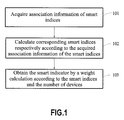
- FIG. 1 is a flowchart illustrating a method for calculating a smart indicator according to an exemplary embodiment of the present disclosure.
- the method for calculating a smart indicator may be applied in a terminal. As illustrated in FIG. 1 , the method for calculating a smart indicator includes the following steps.
- step 101 association information of smart indices is acquired.
- the association information includes: usage information of a safety device, login information of a smart home APP (for example, a software application designed to run on smartphones or other devices), configuration information of a smart scenario, and the number of devices.
- a smart home APP for example, a software application designed to run on smartphones or other devices
- step 102 smart indices are calculated respectively according to the acquired association information of smart indices; wherein the smart indices include: a safety index, an activity index, and a linkage index.
- the smart indicator is obtained by a weight calculation according to the smart indices and the number of devices.
- a weight calculation refers to a calculation relative to a weight of a smart index.
- association information of smart indices is acquired, smart indices are calculated respectively according to the acquired association information, and a smart indicator is obtained by a weight calculation according to the calculated smart indices and the number of devices (for example, household appliances in a smart home).
- devices for example, household appliances in a smart home.
- FIG. 2 is a flowchart illustrating a method for calculating a smart indicator according to another exemplary embodiment of the present disclosure.
- the method for calculating a smart indicator may be applied in a terminal. As illustrated in FIG. 2 , the method for calculating a smart indicator includes the following steps.
- step 201 usage information of a safety device corresponding to the safety index, login information of a smart home APP corresponding to the activity index, and configuration information of a smart scenario corresponding to the linkage index are acquired.
- the safety index refers to an indicator reflecting safety of a smart device
- the usage information of a safety device refers to usage details of a safety device for monitoring latent safety risks in a smart home, and mainly includes: the number of used devices and the types thereof.
- the step of acquiring usage information of a safety device corresponding to a safety index includes: acquiring the types of the safety devices, and the number of safety devices of each type.
- the acquired safety devices include: a safety camera, a door magnetic alarm, an audible and visual alarm, a gas sensor, and a smoke sensor.
- the safety devices are not limited to those listed herein.
- the activity index refers to an indicator reflecting an APP usage activity of a smart device
- the login information of a smart home APP refers to a key indicator for estimating user dependency on a smart home APP, and is mainly determined according to the login times and login duration of the user.
- the step of acquiring login information of a smart home APP corresponding to an activity index includes: acquiring an activity cycle T, the login times of the user each day within the activity cycle T, and a difference of days between a login date and a current date, wherein the activity cycle T is predetermined.
- a predetermined activity cycle is 15 days, the times of logging into the smart home APP each day within 15 days is acquired.
- the linkage index refers to an indicator reflecting an association relation between smart devices;
- the configuration information of a smart scenario refers to correspondence information between a preset action and performing a corresponding operation.
- the step of acquiring configuration information of a smart scenario corresponding to a linkage index includes: acquiring the number of smart scenarios, wherein a smart scenario refers to a user-predetermined behavior for triggering and performing a corresponding operation after detection or inputting of the user-predetermined behavior. For example, when it is detected whether the user's mobile phone is connected to the WiFi at home, the home door is automatically opened. Still for example, the user enables a home camera for monitoring via a smart home APP on a smart phone, and checks the scene picked up by the home camera.
- a safety index is calculated according to the usage information of a safety device.
- a 1 indicates a safety index
- n indicates the total number of types of the safety devices
- i indicates the safety devices of the type i
- a i indicates a weight of the safety devices of the type i
- N i indicates the number of safety devices of the type i.
- N i of safety devices of the type i is greater than a maximum number P max of the safety devices, a value of N i is set to P max .
- the safety index is set to the maximum threshold.
- step 203 an activity index is calculated according to the login information of a smart home APP.
- a 2 indicates an activity index
- T indicates an activity cycle
- M j indicates login times of a user on the j th day within the activity cycle T
- j indicates the j th day within the activity cycle
- Q j indicates a difference of days within the activity cycle T between the j th day and a current date.
- the activity cycle is five days.
- the difference of days is four days away from the current date, and the login times is 15; on the second day, the difference of days is three days away from the current date, and the login times is 20; on the third day, the difference of days is two days away from the current date, and the login times is 50; on the fourth day, the difference of days is one day away from the current date, and the login times is 21; on the fifth day, the difference of days is zero day away from the current date, and the login times is 24.
- a linkage index is calculated according to the configuration information of a smart scenario.
- a 3 indicates a linkage index
- b indicates a weight of the smart scenarios
- L indicates the number of smart scenarios.
- a weight of a smart scenario is 20, and the number of smart scenarios is 9999.
- steps 202 to 204 are subjected to no definite sequence, and may be performed in any sequence.
- a smart indicator is obtained by a weight calculation according to the smart indices and the number of devices.
- S indicates a smart indicator
- a 1 indicates a safety index
- c 1 indicates a weight of the safety index A 1
- a 2 indicates an activity index
- c 2 indicates a weight of the activity index A 2
- a 3 indicates a linkage index
- c 3 indicates a weight of the linkage index A 3
- R indicates the number of devices
- c 4 indicates a weight of the number R of devices
- k 1,2,3,4.
- step 206 the safety index, the activity index, the linkage index, and the smart indicator are displayed.
- the smart indicator, the safety index, the activity index, and the linkage index are displayed.
- smart indicators of other users may be acquired from a cloud database, and a current smartness ranking of the user may be calculated, thereby further improving sense of participation of the user.
- usage information of a safety device corresponding to a safety index, login information of a smart home APP corresponding to an activity index, and configuration information of a smart scenario corresponding to a linkage index are acquired, a safety index is calculated according to the usage information of a safety device, an activity index is calculated according to the login information of a smart home APP, a linkage index is calculated according to the configuration information of a smart scenario, and a smart indicator is obtained by a weight calculation according to the smart indicator and the number of devices.
- a user may acquire a smartness degree of his or her home, and sense of participation of the user is improved, thereby promoting user's enthusiasm, and thus enhancing home smartness degree.
- FIG. 4 is a block diagram illustrating an apparatus for calculating a smart indicator according to an exemplary embodiment of the present disclosure. As illustrated in FIG. 4 , the apparatus includes:
- an acquiring module 401 configured to acquire association information of smart indices; the association information including: usage information of a safety device, login information of a smart home APP, configuration information of a smart scenario, and the number of devices;
- a first calculating module 402 configured to calculate smart indices respectively according to the association information of smart indices acquired by the acquiring module; the smart indices including: a safety index, an activity index, and a linkage index; and
- a second calculating module 403 configured to obtain a smart indicator by a weight calculation according to the smart indices calculated by the first calculating module and the number of devices.
- the acquiring module 401 is configured to acquire usage information of a safety device corresponding to the safety index, login information of a smart home APP corresponding to the activity index, and configuration information of a smart scenario corresponding to the linkage index; and the first calculating module 402 is configured to calculate a safety index according to the usage information of a safety device, calculate an activity index according to the login information of a smart home APP, and calculate a linkage index according to the configuration information of a smart scenario.
- N i of safety devices of the type i is greater than a maximum number P max of the safety devices, a value of N i is set to P max .
- association information of smart indices is acquired, smart indices are calculated respectively according to the acquired association information, and a smart indicator is obtained by a weight calculation according to the smart indices and the number of devices.
- a user may acquire a smartness degree of his or her home, and sense of participation of the user is improved, thereby promoting user's enthusiasm, and thus enhancing home smartness degree.
- FIG. 5 is a block diagram illustrating an apparatus for calculating a smart indicator according to an exemplary embodiment of the present disclosure. As illustrated in FIG. 5 , the apparatus includes:
- an acquiring module 501 configured to acquire association information of smart indices; the association information including: usage information of a safety device, login information of a smart home APP, configuration information of a smart scenario, and the number of devices;
- a first calculating module 502 configured to calculate smart indices respectively according to the association information of smart indices acquired by the acquiring module; the smart indices including: a safety index, an activity index, and a linkage index;
- a second calculating module 503, configured to obtain the smart indicator by a weight calculation according to the smart indices calculated by the first calculating module and the number of devices;
- a display module 504 configured to display the safety index, the activity index, the linkage index, and the smart indicator.
- association information of smart indices is acquired, smart indices are calculated respectively according to the acquired association information, a smart indicator is obtained by a weight calculation according to the smart indices and the number of devices, and the safety index, the activity index, the linkage index, and the smart indicator are displayed.
- a user may acquire a smartness degree of his or her home, and sense of participation of the user is improved, thereby promoting user's enthusiasm, and thus enhancing home smartness degree.
- FIG. 6 is a block diagram illustrating an apparatus 600 for calculating a smart indicator according to an exemplary embodiment of the present disclosure.
- the apparatus 600 may be a mobile phone, a computer, a digital broadcast terminal, a messaging device, a gaming console, a tablet, a medical device, an exercise equipment, a personal digital assistant, and the like.
- the apparatus 600 may include one or more of the following components: a processing component 602, a memory 604, a power component 606, a multimedia component 608, an audio component 610, an input/output (I/O) interface 612, a sensor component 614, and a communication component 616.
- a processing component 602 a memory 604, a power component 606, a multimedia component 608, an audio component 610, an input/output (I/O) interface 612, a sensor component 614, and a communication component 616.
- the processing component 602 typically controls overall operations of the apparatus 600, such as the operations associated with display, telephone calls, data communications, camera operations, and recording operations.
- the processing component 602 may include one or more processors 618 to execute instructions to perform all or a part of the steps in the above-described methods.
- the processing component 602 may include one or more modules which facilitate the interaction between the processing component 602 and other components.
- the processing component 602 may include a multimedia module to facilitate the interaction between the multimedia component 608 and the processing component 602.
- the memory 604 is configured to store various types of data to support the operations of the apparatus 600. Examples of such data include instructions for any application or method operated on the apparatus 600, contact data, phonebook data, messages, pictures, videos, and the like.
- the memory 604 may be implemented using any type of volatile or non-volatile memory devices, or a combination thereof, such as a static random access memory (SRAM), an electrically erasable programmable read-only memory (EEPROM), an erasable programmable read-only memory (EPROM), a programmable read-only memory (PROM), a read-only memory (ROM), a magnetic memory, a flash memory, a magnetic or optical disk.
- SRAM static random access memory
- EEPROM electrically erasable programmable read-only memory
- EPROM erasable programmable read-only memory
- PROM programmable read-only memory
- ROM read-only memory
- magnetic memory a magnetic memory
- flash memory a flash memory
- magnetic or optical disk a magnetic
- the power component 606 provides power to various components of the apparatus 600.
- the power component 606 may include a power management system, one or more power supplies, and other components associated with the generation, management, and distribution of power in the apparatus 600.
- the multimedia component 608 includes a screen providing an output interface between the apparatus 600 and the user.
- the screen may include a liquid crystal display (LCD) and a touch panel (TP). If the screen includes the touch panel, the screen may be implemented as a touch screen to receive input signals from the user.
- the touch panel includes one or more touch sensors to sense touches, swipes, and gestures on the touch panel. The touch sensors may not only sense a boundary of a touch or swipe action, but also sense a period of time and a pressure associated with the touch or swipe action.
- the multimedia component 608 includes a front camera and/or a rear camera. The front camera and/or the rear camera may receive external multimedia data while the apparatus 600 is in an operation mode, such as a photographing mode or a video mode. Each of the front camera and the rear camera may be a fixed optical lens system or have focus and optical zoom capability.
- the audio component 610 is configured to output and/or input audio signals.
- the audio component 610 includes a microphone (MIC) configured to receive an external audio signal when the apparatus 600 is in an operation mode, such as a call mode, a recording mode, or a voice recognition mode.
- the received audio signal may be further stored in the memory 604 or transmitted via the communication component 616.
- the audio component 610 further includes a speaker to output audio signals.
- the I/O interface 612 provides an interface between the processing component 602 and a peripheral interface module, such as a keyboard, a click wheel, a button, or the like.
- a peripheral interface module such as a keyboard, a click wheel, a button, or the like.
- the buttons may include, but are not limited to, a home button, a volume button, a starting button, and a locking button.
- the sensor component 614 includes one or more sensors to provide status assessments of various aspects of the apparatus 600.
- the sensor component 614 may detect an open/closed status of the apparatus 600, relative positioning of components, e.g., the display and the keypad, of the apparatus 600, a change in position of the apparatus 600 or a component of the apparatus 600, a presence or absence of user contact with the apparatus 600, an orientation or an acceleration/deceleration of the apparatus 600, and a change in temperature of the apparatus 600.
- the sensor component 614 may include a proximity sensor configured to detect the presence of nearby objects without any physical contact.
- the sensor component 614 may also include a light sensor, such as a CMOS or CCD image sensor, for use in imaging applications.
- the sensor component 614 may also include an accelerometer sensor, a gyroscope sensor, a magnetic sensor, a pressure sensor, or a temperature sensor.
- the communication component 616 is configured to facilitate communications, wired or wirelessly, between the apparatus 600 and other devices.
- the apparatus 600 may access a wireless network based on a communication standard, such as WiFi, 2G, or 3G, or a combination thereof.
- the communication component 616 receives a broadcast signal or broadcast associated information from an external broadcast management system via a broadcast channel.
- the communication component 816 further includes a near field communication (NFC) module to facilitate short-range communications.
- the NFC module may be implemented based on a radio frequency identification (RFID) technology, an infrared data association (IrDA) technology, an ultra-wideband (UWB) technology, a Bluetooth (BT) technology, and other technologies.
- RFID radio frequency identification
- IrDA infrared data association
- UWB ultra-wideband
- BT Bluetooth
- the apparatus 600 may be implemented with one or more application specific integrated circuits (ASICs), digital signal processors (DSPs), digital signal processing devices (DSPDs), programmable logic devices (PLDs), field programmable gate arrays (FPGAs), controllers, micro-controllers, microprocessors, or other electronic components, for performing the above-described methods.
- ASICs application specific integrated circuits
- DSPs digital signal processors
- DSPDs digital signal processing devices
- PLDs programmable logic devices
- FPGAs field programmable gate arrays
- controllers micro-controllers, microprocessors, or other electronic components, for performing the above-described methods.
- non-transitory computer-readable storage medium including instructions, such as included in the memory 604, executable by the processor 618 in the apparatus 600, for performing the above-described methods.
- the non-transitory computer-readable storage medium may be a ROM, a random access memory (RAM), a compact disc read-only memory (CD-ROM), a magnetic tape, a floppy disc, an optical data storage device, or the like.
Landscapes
- Engineering & Computer Science (AREA)
- Business, Economics & Management (AREA)
- Physics & Mathematics (AREA)
- Theoretical Computer Science (AREA)
- General Physics & Mathematics (AREA)
- Economics (AREA)
- Entrepreneurship & Innovation (AREA)
- Human Resources & Organizations (AREA)
- Strategic Management (AREA)
- Tourism & Hospitality (AREA)
- Educational Administration (AREA)
- Quality & Reliability (AREA)
- Development Economics (AREA)
- Marketing (AREA)
- General Business, Economics & Management (AREA)
- Game Theory and Decision Science (AREA)
- Operations Research (AREA)
- General Engineering & Computer Science (AREA)
- Mathematical Physics (AREA)
- Software Systems (AREA)
- Data Mining & Analysis (AREA)
- Algebra (AREA)
- Pure & Applied Mathematics (AREA)
- Mathematical Analysis (AREA)
- Mathematical Optimization (AREA)
- Computational Mathematics (AREA)
- Evolutionary Computation (AREA)
- Artificial Intelligence (AREA)
- Computing Systems (AREA)
- Telephonic Communication Services (AREA)
- Computer Hardware Design (AREA)
- Databases & Information Systems (AREA)
- Signal Processing (AREA)
- Computer Networks & Wireless Communication (AREA)
- User Interface Of Digital Computer (AREA)
- Management, Administration, Business Operations System, And Electronic Commerce (AREA)
- Probability & Statistics with Applications (AREA)
- Data Exchanges In Wide-Area Networks (AREA)
- Information Transfer Between Computers (AREA)
- Mobile Radio Communication Systems (AREA)
Abstract
Description
- The present disclosure relates to the field of smart homes, and more particularly, to a method and apparatus for calculating a smart indicator.
- Smart home, based on dwellings, is a network-based smart home control system which integrates an automation control system, a computer network system, and network communication technologies. The smart home improves safety, convenience, comfort, and artistry of homes, and achieves an environmentally-friendly and energy-saving living environment.
- In the prior art, the smart home is connected to a smart home system via a configured touch screen, speech recognition-based control, wireless remote control or the like. the smart home configures household appliances, performs scenario operations, such that a plurality of appliances are linked and that the household appliances in the smart home are capable of communicating with each other. In the above process, however, a user may not acquire smart indicators such as safety degree of his or her household appliance, activity degree of the user, and linkage of the appliances.
- To solve the problem in the prior art, the present disclosure provides a method and apparatus for calculating a smart indicator.
- According to a first aspect of embodiments of the present disclosure, a method for calculating a smart indicator is provided. The method comprises the steps of:
- acquiring association information of smart indices; the association information including: usage information of a safety device, login information of a smart home APP, configuration information of a smart scenario, and the number of devices;
- calculating smart indices respectively according to the acquired association information of smart indices; the smart indices including: a safety index, an activity index, and a linkage index; and
- obtaining the smart indicator by a weight calculation according to the smart indices and the number of devices.
- Optionally, the step of acquiring association information of smart indices includes the step of:
- acquiring usage information of a safety device corresponding to the safety index, login information of a smart home APP corresponding to the activity index, and configuration information of a smart scenario corresponding to the linkage index; and
- the step of calculating smart indices respectively according to the acquired association information of smart indices comprises the steps of:
- calculating a safety index according to the usage information of a safety device, calculating an activity index according to the login information of a smart home APP, and calculating a linkage index according to the configuration information of a smart scenario.
- Optionally, the step of acquiring usage information of a safety device corresponding to the safety index comprises the step of:
- acquiring the total number n of types of safety devices corresponding to a safety index A 1, and the number Ni of safety devices of a corresponding type i; and
- the step of calculating a safety index according to the usage information of a safety device comprises the step of :
- obtaining the safety index A 1 according to a formula


- Optionally, when the number Ni of safety devices of the type i is greater than a maximum number P max of the safety devices, a value of Ni is set to P max.
- Optionally, the step of acquiring login information of a smart home APP corresponding to the activity index comprises the step of:
- acquiring an activity cycle T corresponding to an activity index A 2, and login times Mj of a user on the jth day within the activity cycle T, and calculating a difference Qj of days between the jth day and a current date; and
- the step of calculating an activity index according to the login information of a smart home APP comprises:
- obtaining the activity index A2 according to a formula

- Optionally, the step of acquiring configuration information of a smart scenario corresponding to the linkage index comprises the step of:
- acquiring the number L of smart scenarios corresponding to a linkage index A 3; and
- the step of calculating a linkage index according to the configuration information of a smart scenario comprises the step of:
- obtaining the linkage index A3 according to a formula A 3=b*log(L+1) o; wherein, A 3 indicates a linkage index, b indicates a weight of a smart scenario, and L indicates the number of smart scenarios.
- Optionally, the step of obtaining the smart indicator by a weight calculation according to the smart indices comprises the step of :
- obtaining the smart indicator according to a formula s = c 1 A 1+c 2A2+c 3 A 3+c 4log(R+1); wherein, S indicates a smart indicator, A 1 indicates a safety index, c 1 indicates a weight of the safety index A 1, A 2 indicates an activity index, c 2 indicates a weight of the activity index A 2, A 3 indicates a linkage index, c 3 indicates a weight of the linkage index A 3, R indicates the number of devices, c 4 indicates a weight of the number R of devices,

- Optionally, the method further comprises the step of:
- displaying the safety index, the activity index, the linkage index, and the smart indicator.
- According to a second aspect of embodiments of the present disclosure, an apparatus for calculating a smart indicator is provided. The apparatus comprises:
- an acquiring module, configured to acquire association information of smart indices; the association information including: usage information of a safety device, login information of a smart home APP, configuration information of a smart scenario, and the number of devices;
- a first calculating module, configured to calculate smart indices respectively according to the association information of smart indices acquired by the acquiring module; the smart indices including: a safety index, an activity index, and a linkage index; and
- a second calculating module, configured to obtain the smart indicator by a weight calculation according to the smart indices calculated by the first calculating module and the number of devices.
- Optionally, the acquiring module is configured to acquire usage information of a safety device corresponding to the safety index, login information of a smart home APP corresponding to the activity index, and configuration information of a smart scenario corresponding to the linkage index; and the first calculating module is configured to calculate a safety index according to the usage information of a safety device, calculate an activity index according to the login information of a smart home APP, and calculate a linkage index according to the configuration information of a smart scenario.
- Optionally, the acquiring module is specifically configured to acquire the total number n of types of safety devices corresponding to a safety index A 1, and the number Ni of safety devices of a corresponding type i; and
- the first calculating module is specifically configured to obtain the safety index A 1 according to a formula


- Optionally, when the number Ni of safety devices of the type i is greater than a maximum number P max of the safety devices, a value of Ni is set to P max.
- Optionally, the acquiring module is specifically configured to acquire an activity cycle T corresponding to an activity index A 2, and login times Mj of a user on the jth day within the activity cycle T, and calculate a difference Qj of days between the jth day and a current date; and
- the first calculating module is specifically configured to obtain the activity index A2 according to a formula

- Optionally, the acquiring module is specifically configured to acquire the number L of smart scenarios corresponding to a linkage index A 3 ; and
- the first calculating module is specifically configured to obtain the linkage index A3 according to a formula A 3=b*log(L+1) ; wherein, A 3 indicates a linkage index, b indicates a weight of a smart scenario, and L indicates the number of smart scenarios.
- Optionally, the second calculating module is configured to obtain the smart indicator according to a formula s=c1 A 1+c 2A2+c 3 A 3+c 4log(R+1); wherein, S indicates a smart indicator, A1 indicates a safety index, c 1 indicates a weight of the safety index A 1, A 2 indicates an activity index, c2 indicates a weight of the activity index A 2, A 3 indicates a linkage index, c 3 indicates a weight of the linkage index A 3, R indicates the number of devices, c 4 indicates a weight of the number R of devices,

- Optionally, the apparatus further comprises:
- a display module, configured to display the safety index, the activity index, the linkage index, and the smart indicator.
- According to a third aspect of embodiments of the present disclosure, an apparatus for calculating a smart indicator is provided. The apparatus comprises:
- a processor; and
- a memory for storing instructions executable by the processor;
- wherein the processor is configured to:
- acquire association information of smart indices;
- calculate smart indices respectively according to the acquired association information of smart indices; and
- obtain the smart indicator by a weight calculation according to the smart indices and the number of devices.
- A computer program is provided according to a fourth aspect of the present disclosure. The computer program performs the steps of the method for calculating a smart indicator when this program is executed by a computer.
- This program can use any programming language and take the form of source code, object code or a code intermediate between source code and object code, such as a partially compiled form, or any other desirable form.
- The invention is also directed to a computer-readable information medium containing instructions of the computer program as described above.
- The information medium can be any entity or device capable of storing the program. For example, the support can include storage means such as a ROM, for example a CD ROM or a microelectronic circuit ROM, or magnetic storage means, for example a diskette (floppy disk) or a hard disk.
- Alternatively, the information medium can be an integrated circuit in which the program is incorporated, the circuit being adapted to execute the method in question or to be used in its execution.
- The technical solutions provided in the embodiments of the present disclosure may achieve the following beneficial effects:
- Association information of smart indices is acquired, smart indices are calculated respectively according to the acquired association information, and a smart indicator is obtained by a weight calculation according to the smart indices and the number of devices. As such, a user may acquire a smartness degree of his or her home, and sense of participation of the user is improved, thereby promoting user's enthusiasm, and thus enhancing home smartness degree.
- It shall be appreciated that the above general description and the detailed description hereinafter are only illustrative, but not for limiting the present disclosure.
- The accompanying drawings herein, which are incorporated into and constitute a part of the specification, illustrate embodiments consistent with the present disclosure, and together with the description, serve to explain the principles of the present disclosure.
-
FIG. 1 is a flowchart illustrating a method for calculating a smart indicator according to an exemplary embodiment of the present disclosure; -
FIG. 2 is a flowchart illustrating a method for calculating a smart indicator according to another exemplary embodiment of the present disclosure; -
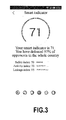
FIG. 3 is a schematic diagram illustrating a display interface of a smart indicator according to an exemplary embodiment of the present disclosure; -
FIG. 4 is a block diagram illustrating an apparatus for calculating a smart indicator according to an exemplary embodiment of the present disclosure; -
FIG. 5 is a block diagram illustrating an apparatus for calculating a smart indicator according to another exemplary embodiment of the present disclosure; and -
FIG. 6 is a block diagram illustrating an apparatus for calculating a smart indicator according to an exemplary embodiment of the present disclosure. - Reference will now be made in detail to exemplary embodiments, examples of which are illustrated in the accompanying drawings. The following description refers to the accompanying drawings in which the same numbers in different drawings represent the same or similar elements unless otherwise represented. The implementations set forth in the following description of exemplary embodiments do not represent all implementations consistent with the present disclosure. Instead, they are merely examples of apparatuses and methods consistent with aspects related to the present disclosure as recited in the appended claims.
- It should be noted that in all formulas containing a logarithm function described in the present disclosure, the base of the logarithm function is a real number whose value is greater than 1 and may be adaptively selected as required, but the base is omitted from expression for sake of clarity and concision. At least in some of the formulas described hereinafter, the base of the logarithm function is "e", whose value is approximately equal to 2.71828.
-
FIG. 1 is a flowchart illustrating a method for calculating a smart indicator according to an exemplary embodiment of the present disclosure. The method for calculating a smart indicator may be applied in a terminal. As illustrated inFIG. 1 , the method for calculating a smart indicator includes the following steps. - In
step 101, association information of smart indices is acquired. - The association information includes: usage information of a safety device, login information of a smart home APP (for example, a software application designed to run on smartphones or other devices), configuration information of a smart scenario, and the number of devices.
- In
step 102, smart indices are calculated respectively according to the acquired association information of smart indices; wherein the smart indices include: a safety index, an activity index, and a linkage index. - In
step 103, the smart indicator is obtained by a weight calculation according to the smart indices and the number of devices. In this document, a "weight calculation" refers to a calculation relative to a weight of a smart index. - In conclusion, with the method for calculating a smart indicator according to the present disclosure, association information of smart indices is acquired, smart indices are calculated respectively according to the acquired association information, and a smart indicator is obtained by a weight calculation according to the calculated smart indices and the number of devices (for example, household appliances in a smart home). As such, a user may be aware of the smartness degree of his or her home; the sense of participation of the user is improved, thus the user's enthusiasm is promoted, and home smartness degree is enhanced.
-
FIG. 2 is a flowchart illustrating a method for calculating a smart indicator according to another exemplary embodiment of the present disclosure. The method for calculating a smart indicator may be applied in a terminal. As illustrated inFIG. 2 , the method for calculating a smart indicator includes the following steps. - In
step 201, usage information of a safety device corresponding to the safety index, login information of a smart home APP corresponding to the activity index, and configuration information of a smart scenario corresponding to the linkage index are acquired. - By way of example without limitation, the safety index refers to an indicator reflecting safety of a smart device; the usage information of a safety device refers to usage details of a safety device for monitoring latent safety risks in a smart home, and mainly includes: the number of used devices and the types thereof. In this case, the step of acquiring usage information of a safety device corresponding to a safety index includes: acquiring the types of the safety devices, and the number of safety devices of each type. For example, the acquired safety devices include: a safety camera, a door magnetic alarm, an audible and visual alarm, a gas sensor, and a smoke sensor. However, the safety devices are not limited to those listed herein.
- By way of example without limitation, the activity index refers to an indicator reflecting an APP usage activity of a smart device; the login information of a smart home APP refers to a key indicator for estimating user dependency on a smart home APP, and is mainly determined according to the login times and login duration of the user. In this case, the step of acquiring login information of a smart home APP corresponding to an activity index includes: acquiring an activity cycle T, the login times of the user each day within the activity cycle T, and a difference of days between a login date and a current date, wherein the activity cycle T is predetermined. For example, a predetermined activity cycle is 15 days, the times of logging into the smart home APP each day within 15 days is acquired. For another example, it is supposed that today is October 31, 2014, then using today as a deadline date for estimation, the times of logging into the smart home APP each day within a cycle (ex. a cycle from October 16, 2014 to October 31, 2014) is acquired, and a difference of days between each login date and the deadline date is calculated. It should be noted that, since the greater the calculated difference of days is, the less an impact on the estimation of the activity of the user is..
- By way of example without limitation, the linkage index refers to an indicator reflecting an association relation between smart devices; the configuration information of a smart scenario refers to correspondence information between a preset action and performing a corresponding operation. In this case, the step of acquiring configuration information of a smart scenario corresponding to a linkage index includes: acquiring the number of smart scenarios, wherein a smart scenario refers to a user-predetermined behavior for triggering and performing a corresponding operation after detection or inputting of the user-predetermined behavior. For example, when it is detected whether the user's mobile phone is connected to the WiFi at home, the home door is automatically opened. Still for example, the user enables a home camera for monitoring via a smart home APP on a smart phone, and checks the scene picked up by the home camera.
- In
step 202, a safety index is calculated according to the usage information of a safety device. - In this embodiment, a safety index A 1 is obtained according to a formula

- In the above formula, A 1 indicates a safety index, n indicates the total number of types of the safety devices, i indicates the safety devices of the type i, ai indicates a weight of the safety devices of the type i,

- For example, there are totally five types of safety devices, and the acquired five types of safety devices and the number of such devices are as follows. First type: two safety cameras; second type: one door magnetic alarm; third type: five audible and visual alarms; fourth type: three gas sensors; and fifth type: two smoke sensors; weights of the five types of safety devices are respectively 30, 20, 20, 15, and 15. The above values are taken into the above safety index calculation formula to obtain:

- Where, when the number Ni of safety devices of the type i is greater than a maximum number P max of the safety devices, a value of Ni is set to P max.
- For example, when P max =4, the above values are taken into the safety index calculation formula to obtain:

- In addition, it should be noted that, when the obtained safety index is greater than a predetermined maximum threshold, the safety index is set to the maximum threshold.
- In
step 203, an activity index is calculated according to the login information of a smart home APP. - In this embodiment, an activity index A 2 is obtained according to a formula T

- In the above formula, A 2 indicates an activity index, T indicates an activity cycle, Mj indicates login times of a user on the jth day within the activity cycle T, j indicates the jth day within the activity cycle, and Qj indicates a difference of days within the activity cycle T between the jth day and a current date. For example, the activity cycle is five days. Within these five days, on the first day, the difference of days is four days away from the current date, and the login times is 15; on the second day, the difference of days is three days away from the current date, and the login times is 20; on the third day, the difference of days is two days away from the current date, and the login times is 50; on the fourth day, the difference of days is one day away from the current date, and the login times is 21; on the fifth day, the difference of days is zero day away from the current date, and the login times is 24. The above values are taken into the above activity index calculation formula to obtain:

- In
step 204, a linkage index is calculated according to the configuration information of a smart scenario. - In this embodiment, a linkage index A 3 is obtained according to a formula A 3=b*log(L+1)of the linkage index A 3.
- In the above formula, A 3 indicates a linkage index, b indicates a weight of the smart scenarios, and L indicates the number of smart scenarios.
- For example, a weight of a smart scenario is 20, and the number of smart scenarios is 9999. The above values are taken into the above linkage index calculation formula to obtain A 3=20*log(9999+1)=60.
- It should be noted that
steps 202 to 204 are subjected to no definite sequence, and may be performed in any sequence. - In
step 205, a smart indicator is obtained by a weight calculation according to the smart indices and the number of devices. - In this embodiment, a smart indicator S is obtained according to a formula s=c 1 A 1+c 2A2+c 3 A 3+c 4log(R+1)of the smart indicator S.
- In the above formula, S indicates a smart indicator, A1 indicates a safety index, c 1 indicates a weight of the safety index A 1, A 2 indicates an activity index, c 2 indicates a weight of the activity index A 2, A 3 indicates a linkage index, c 3 indicates a weight of the linkage index A 3, R indicates the number of devices, c 4 indicates a weight of the number R of devices,

- For example, the safety index A 1=50, the weight of the safety index c 1=0.5, the activity index A 2=9, the weight of the activity index c 2=0.3, the linkage index A 3=60, the weight of the linkage index c 3=0.3, the number of devices R=99, and the weight of the number of devices c 4=0.1. The above values are taken into the above smart indicator calculation formula to obtain: S=38.
- In
step 206, the safety index, the activity index, the linkage index, and the smart indicator are displayed. - As illustrated in
FIG. 3 , the smart indicator, the safety index, the activity index, and the linkage index are displayed. - In addition, with reference to the above embodiments, smart indicators of other users may be acquired from a cloud database, and a current smartness ranking of the user may be calculated, thereby further improving sense of participation of the user.
- In conclusion, with the method for calculating a smart indicator according to the present disclosure, usage information of a safety device corresponding to a safety index, login information of a smart home APP corresponding to an activity index, and configuration information of a smart scenario corresponding to a linkage index are acquired, a safety index is calculated according to the usage information of a safety device, an activity index is calculated according to the login information of a smart home APP, a linkage index is calculated according to the configuration information of a smart scenario, and a smart indicator is obtained by a weight calculation according to the smart indicator and the number of devices. As such, a user may acquire a smartness degree of his or her home, and sense of participation of the user is improved, thereby promoting user's enthusiasm, and thus enhancing home smartness degree.
-
FIG. 4 is a block diagram illustrating an apparatus for calculating a smart indicator according to an exemplary embodiment of the present disclosure. As illustrated inFIG. 4 , the apparatus includes: - an acquiring
module 401, configured to acquire association information of smart indices; the association information including: usage information of a safety device, login information of a smart home APP, configuration information of a smart scenario, and the number of devices; - a
first calculating module 402, configured to calculate smart indices respectively according to the association information of smart indices acquired by the acquiring module; the smart indices including: a safety index, an activity index, and a linkage index; and - a
second calculating module 403, configured to obtain a smart indicator by a weight calculation according to the smart indices calculated by the first calculating module and the number of devices. - The acquiring
module 401 is configured to acquire usage information of a safety device corresponding to the safety index, login information of a smart home APP corresponding to the activity index, and configuration information of a smart scenario corresponding to the linkage index; and thefirst calculating module 402 is configured to calculate a safety index according to the usage information of a safety device, calculate an activity index according to the login information of a smart home APP, and calculate a linkage index according to the configuration information of a smart scenario. - In the calculation of a safety index, the acquiring
module 401 is specifically configured to acquire the total number n of types of safety devices corresponding to a safety index A 1, and the number Ni of safety devices of a corresponding type i; and thefirst calculating module 402 is specifically configured to obtain the safety index A 1 according to a formula
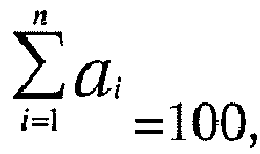
- When the number Ni of safety devices of the type i is greater than a maximum number P max of the safety devices, a value of Ni is set to P max.
- In the calculation of an activity index, the acquiring
module 401 is specifically configured to acquire an activity cycle T corresponding to an activity index A 2, and login times Mj of a user on the jth day within the activity cycle T, and calculate a difference Qj of days between the jth day and a current date within the activity cycle T; and thefirst calculating module 402 is specifically configured to obtain the activity index A2 according to a formula
- In the calculation of a linkage index, the acquiring
module 401 is specifically configured to acquire the number L of smart scenarios corresponding to a linkage index A 3; and thefirst calculating module 402 is specifically configured to obtain the linkage index A3 according to a formula A 3=b*log(L+1) of the linkage index A3; wherein in the formula, A 3 indicates a linkage index, b indicates a weight of a smart scenario, and L indicates the number of smart scenarios. - The
second calculating module 403 is configured to obtain the smart indicator S according to a formula s=c 1 A 1+c 2A2+c 3 A 3+c 4log(R+1) of the smart indicator S; wherein in the formula, S indicates a smart indicator, A 1 indicates a safety index, c 1 indicates a weight of the safety index A 1, A 2 indicates an activity index, c 2 indicates a weight of the activity index A 2, A 3 indicates a linkage index, c 3 indicates a weight of the linkage index A 3, R indicates the number of devices, c 4 indicates a weight of the number R of devices,
- With the apparatus for calculating a smart indicator according to the present disclosure, association information of smart indices is acquired, smart indices are calculated respectively according to the acquired association information, and a smart indicator is obtained by a weight calculation according to the smart indices and the number of devices. As such, a user may acquire a smartness degree of his or her home, and sense of participation of the user is improved, thereby promoting user's enthusiasm, and thus enhancing home smartness degree.
- With reference to the above apparatus,
FIG. 5 is a block diagram illustrating an apparatus for calculating a smart indicator according to an exemplary embodiment of the present disclosure. As illustrated inFIG. 5 , the apparatus includes: - an acquiring
module 501, configured to acquire association information of smart indices; the association information including: usage information of a safety device, login information of a smart home APP, configuration information of a smart scenario, and the number of devices; - a
first calculating module 502, configured to calculate smart indices respectively according to the association information of smart indices acquired by the acquiring module; the smart indices including: a safety index, an activity index, and a linkage index; - a
second calculating module 503, configured to obtain the smart indicator by a weight calculation according to the smart indices calculated by the first calculating module and the number of devices; and - a display module 504, configured to display the safety index, the activity index, the linkage index, and the smart indicator.
- With the apparatus for calculating a smart indicator according to the present disclosure, association information of smart indices is acquired, smart indices are calculated respectively according to the acquired association information, a smart indicator is obtained by a weight calculation according to the smart indices and the number of devices, and the safety index, the activity index, the linkage index, and the smart indicator are displayed. As such, a user may acquire a smartness degree of his or her home, and sense of participation of the user is improved, thereby promoting user's enthusiasm, and thus enhancing home smartness degree.
- With respect to the apparatuses in the above embodiments, the specific implementations of operations executed by various modules thereof have been described in detail in the embodiments illustrating the methods, which are not described herein any further.
-
FIG. 6 is a block diagram illustrating anapparatus 600 for calculating a smart indicator according to an exemplary embodiment of the present disclosure. For example, theapparatus 600 may be a mobile phone, a computer, a digital broadcast terminal, a messaging device, a gaming console, a tablet, a medical device, an exercise equipment, a personal digital assistant, and the like. - Referring to
FIG. 6 , theapparatus 600 may include one or more of the following components: aprocessing component 602, amemory 604, apower component 606, amultimedia component 608, anaudio component 610, an input/output (I/O)interface 612, asensor component 614, and acommunication component 616. - The
processing component 602 typically controls overall operations of theapparatus 600, such as the operations associated with display, telephone calls, data communications, camera operations, and recording operations. Theprocessing component 602 may include one or more processors 618 to execute instructions to perform all or a part of the steps in the above-described methods. In addition, theprocessing component 602 may include one or more modules which facilitate the interaction between theprocessing component 602 and other components. For example, theprocessing component 602 may include a multimedia module to facilitate the interaction between themultimedia component 608 and theprocessing component 602. - The
memory 604 is configured to store various types of data to support the operations of theapparatus 600. Examples of such data include instructions for any application or method operated on theapparatus 600, contact data, phonebook data, messages, pictures, videos, and the like. Thememory 604 may be implemented using any type of volatile or non-volatile memory devices, or a combination thereof, such as a static random access memory (SRAM), an electrically erasable programmable read-only memory (EEPROM), an erasable programmable read-only memory (EPROM), a programmable read-only memory (PROM), a read-only memory (ROM), a magnetic memory, a flash memory, a magnetic or optical disk. - The
power component 606 provides power to various components of theapparatus 600. Thepower component 606 may include a power management system, one or more power supplies, and other components associated with the generation, management, and distribution of power in theapparatus 600. - The
multimedia component 608 includes a screen providing an output interface between theapparatus 600 and the user. In some embodiments, the screen may include a liquid crystal display (LCD) and a touch panel (TP). If the screen includes the touch panel, the screen may be implemented as a touch screen to receive input signals from the user. The touch panel includes one or more touch sensors to sense touches, swipes, and gestures on the touch panel. The touch sensors may not only sense a boundary of a touch or swipe action, but also sense a period of time and a pressure associated with the touch or swipe action. In some embodiments, themultimedia component 608 includes a front camera and/or a rear camera. The front camera and/or the rear camera may receive external multimedia data while theapparatus 600 is in an operation mode, such as a photographing mode or a video mode. Each of the front camera and the rear camera may be a fixed optical lens system or have focus and optical zoom capability. - The
audio component 610 is configured to output and/or input audio signals. For example, theaudio component 610 includes a microphone (MIC) configured to receive an external audio signal when theapparatus 600 is in an operation mode, such as a call mode, a recording mode, or a voice recognition mode. The received audio signal may be further stored in thememory 604 or transmitted via thecommunication component 616. In some embodiments, theaudio component 610 further includes a speaker to output audio signals. - The I/
O interface 612 provides an interface between theprocessing component 602 and a peripheral interface module, such as a keyboard, a click wheel, a button, or the like. The buttons may include, but are not limited to, a home button, a volume button, a starting button, and a locking button. - The
sensor component 614 includes one or more sensors to provide status assessments of various aspects of theapparatus 600. For example, thesensor component 614 may detect an open/closed status of theapparatus 600, relative positioning of components, e.g., the display and the keypad, of theapparatus 600, a change in position of theapparatus 600 or a component of theapparatus 600, a presence or absence of user contact with theapparatus 600, an orientation or an acceleration/deceleration of theapparatus 600, and a change in temperature of theapparatus 600. Thesensor component 614 may include a proximity sensor configured to detect the presence of nearby objects without any physical contact. Thesensor component 614 may also include a light sensor, such as a CMOS or CCD image sensor, for use in imaging applications. In some embodiments, thesensor component 614 may also include an accelerometer sensor, a gyroscope sensor, a magnetic sensor, a pressure sensor, or a temperature sensor. - The
communication component 616 is configured to facilitate communications, wired or wirelessly, between theapparatus 600 and other devices. Theapparatus 600 may access a wireless network based on a communication standard, such as WiFi, 2G, or 3G, or a combination thereof. In one exemplary embodiment, thecommunication component 616 receives a broadcast signal or broadcast associated information from an external broadcast management system via a broadcast channel. In one exemplary embodiment, the communication component 816 further includes a near field communication (NFC) module to facilitate short-range communications. For example, the NFC module may be implemented based on a radio frequency identification (RFID) technology, an infrared data association (IrDA) technology, an ultra-wideband (UWB) technology, a Bluetooth (BT) technology, and other technologies. - In exemplary embodiments, the
apparatus 600 may be implemented with one or more application specific integrated circuits (ASICs), digital signal processors (DSPs), digital signal processing devices (DSPDs), programmable logic devices (PLDs), field programmable gate arrays (FPGAs), controllers, micro-controllers, microprocessors, or other electronic components, for performing the above-described methods. - In exemplary embodiments, there is also provided a non-transitory computer-readable storage medium including instructions, such as included in the
memory 604, executable by the processor 618 in theapparatus 600, for performing the above-described methods. For example, the non-transitory computer-readable storage medium may be a ROM, a random access memory (RAM), a compact disc read-only memory (CD-ROM), a magnetic tape, a floppy disc, an optical data storage device, or the like. - Other embodiments of the present disclosure will be apparent to those skilled in the art from consideration of the specification and practice disclosed herein. This application is intended to cover any variations, uses, or adaptations of the present disclosure following the general principles thereof and including such departures from the present disclosure as coming within common knowledge or customary technical means in the art. It is intended that the specification and embodiments be considered as exemplary only, with a true scope and spirit of the present disclosure being indicated by the appended claims.
- It will be appreciated that the present disclosure is not limited to the exact construction that has been described above and illustrated in the accompanying drawings, and that various modifications and changes can be made without departing from the scope thereof. The scope of the present disclosure is only defined by the appended claims.
Claims (15)
- A method for calculating a smart indicator, characterized in that the method comprises steps of :acquiring (101) association information of smart indices; the association information including: usage information of a safety device, login information of a smart home APP, configuration information of a smart scenario, and the number of devices;calculating (102) smart indices respectively according to the acquired association information of smart indices; the smart indices including: a safety index, an activity index, and a linkage index; andobtaining (103) the smart indicator by a weight calculation according to the smart indices and the number of devices.
- The method according to claim 1, characterized in that the step of acquiring (101) association information of smart indices comprises the step of:acquiring (201) usage information of a safety device corresponding to the safety index, login information of a smart home APP corresponding to the activity index, and configuration information of a smart scenario corresponding to the linkage index; andthe step of calculating (102) smart indices respectively according to the acquired association information of smart indices comprises the steps of:calculating (202) a safety index according to the usage information of a safety device, calculating (203) an activity index according to the login information of a smart home APP, and calculating (204) a linkage index according to the configuration information of a smart scenario.
- The method according to claim 2, characterized in that the step of acquiring (201) usage information of a safety device corresponding to the safety index comprises:acquiring the total number n of types of safety devices corresponding to a safety index A 1, and the number Ni of safety devices of a corresponding type i; andthe step of calculating (202) a safety index according to the usage information of a safety device comprises the step of:obtaining the safety index A 1 according to a formula


- The method according to claim 2 or 3, characterized in that the step of acquiring (201) login information of a smart home APP corresponding to the activity index comprises the step of:acquiring an activity cycle T corresponding to an activity index A 2, and login times Mj of a user on the jth day within the activity cycle T, and calculating a difference Qj of days between the jth day and a current date; andthe step of calculating (203) an activity index according to the login information of a smart home APP comprises the step of :obtaining the activity index A2 according to a formula

- The method according to any one of claims 2 to 4, characterized in that the step of acquiring (201) configuration information of a smart scenario corresponding to the linkage index comprises the step of:acquiring the number L of smart scenarios corresponding to a linkage index A 3; andthe step of calculating (204) a linkage index according to the configuration information of a smart scenario comprises the step of :obtaining the linkage index A3 according to a formula A 3=b*log(L+1) of the linkage index A3; wherein in the formula, A 3 indicates a linkage index, b indicates a weight of a smart scenario, and L indicates the number of smart scenarios.
- The method according to any one of claims 1 to 5, characterized in that the step of obtaining (103) the smart indicator by a weight calculation according to the smart indices comprises the step of:obtaining the smart indicator according to a formula s=c 1 A 1+c 2A2+c 3 A 3+c 4log(R+1); wherein, S indicates a smart indicator, A 1 indicates a safety index, c 1 indicates a weight of the safety index A 1, A 2 indicates an activity index, c 2 indicates a weight of the activity index A 2, A 3 indicates a linkage index, c 3 indicates a weight of the linkage index A 3, R indicates the number of devices, c 4 indicates a weight of the number R of devices,

- The method according to any one of claims 1 to 6, characterized in that the method further comprises the step of:displaying (206) the safety index, the activity index, the linkage index, and the smart indicator.
- An apparatus for calculating a smart indicator, characterized in that the apparatus comprises:an acquiring module (401, 501), configured to acquire association information of smart indices; the association information comprising: usage information of a safety device, login information of a smart home APP, configuration information of a smart scenario, and the number of devices;a first calculating module (402, 502), configured to calculate smart indices respectively according to the association information of smart indices acquired by the acquiring module (401, 501); the smart indices comprising: a safety index, an activity index, and a linkage index; anda second calculating module (403, 503), configured to obtain the smart indicator by a weight calculation according to the smart indices calculated by the first calculating module (402, 502) and the number of devices.
- The apparatus according to claim 8, characterized in that the acquiring module (401, 501) is configured to acquire the total number n of types of safety devices corresponding to a safety index A 1, and the number Ni of safety devices of a corresponding type i; and
the first calculating module (402, 502) is configured to obtain the safety index A 1 n according to a formula

- The apparatus according to any one of claims 8-9, characterized in that the acquiring module (401, 501) is configured to acquire an activity cycle T corresponding to an activity index A 2, and login times Mj of a user on the jth day within the activity cycle T, and calculate a difference Qj of days between the jth day and a current date; and
the first calculating module (402, 502) is configured to obtain the activity index A2 according to a formula
- The apparatus according to claim any one of 8-10, characterized in that the acquiring module (401, 501) is configured to acquire the number L of smart scenarios corresponding to a linkage index A 3; and
the first calculating module (402, 502) is configured to obtain the linkage index A 3 according to a formula A 3=b*log(L+1); wherein, A 3 indicates a linkage index, b indicates a weight of a smart scenario, and L indicates the number of smart scenarios. - The apparatus according to any one of claim 8-11, characterized in that the second calculating module (403, 503) is configured to obtain the smart indicator according to a formula s=c 1 A 1+c 2 A 2+c 3 A 3+c 4log(R+1); wherein in the formula, S indicates a smart indicator, A 1 indicates a safety index, c 1 indicates a weight of the safety index A 1, A 2 indicates an activity index, c 2 indicates a weight of the activity index A 2, A 3 indicates a linkage index, c 3 indicates a weight of the linkage index A 3, R indicates the number of devices, c 4 indicates a weight of the number R of devices,

- An apparatus for calculating a smart indicator, characterized by comprising:a processor; anda memory for storing instructions executable by the processor;wherein the processor is configured to:acquire association information of smart indices;calculate corresponding smart indices respectively according to the acquired association information of the smart indices; andobtain the smart indicator by a weight calculation according to the smart indices and the number of devices.
- A computer program including instructions for executing the steps of a method for calculating a smart indicator according to any one of claims 1 to 7 when said program is executed by a computer.
- A recording medium readable by a computer and having recorded thereon a computer program including instructions for executing the steps of a method for calculating a smart indicator according to any one of claims 1 to 7.
Applications Claiming Priority (1)
| Application Number | Priority Date | Filing Date | Title |
|---|---|---|---|
| CN201410602700.8A CN104392011B (en) | 2014-10-31 | 2014-10-31 | Intelligent index calculating method and device |
Publications (1)
| Publication Number | Publication Date |
|---|---|
| EP3016043A1 true EP3016043A1 (en) | 2016-05-04 |
Family
ID=52609915
Family Applications (1)
| Application Number | Title | Priority Date | Filing Date |
|---|---|---|---|
| EP15176088.1A Ceased EP3016043A1 (en) | 2014-10-31 | 2015-07-09 | Method and apparatus for calculating smart indicator |
Country Status (8)
| Country | Link |
|---|---|
| EP (1) | EP3016043A1 (en) |
| JP (1) | JP6262875B2 (en) |
| KR (1) | KR101839007B1 (en) |
| CN (1) | CN104392011B (en) |
| BR (1) | BR112015017262A2 (en) |
| MX (1) | MX350067B (en) |
| RU (1) | RU2621976C2 (en) |
| WO (1) | WO2016065819A1 (en) |
Families Citing this family (2)
| Publication number | Priority date | Publication date | Assignee | Title |
|---|---|---|---|---|
| CN104392011B (en) * | 2014-10-31 | 2017-10-20 | 小米科技有限责任公司 | Intelligent index calculating method and device |
| JP2021105941A (en) * | 2019-12-27 | 2021-07-26 | 学校法人幾徳学園 | Information processing system, life evaluation method, and program |
Citations (4)
| Publication number | Priority date | Publication date | Assignee | Title |
|---|---|---|---|---|
| WO2013008252A2 (en) * | 2011-07-08 | 2013-01-17 | Shetty Ravindra K | An integrated, interoperable and re-configurable automation system |
| JP2013097492A (en) * | 2011-10-31 | 2013-05-20 | Hochiki Corp | Alarm cooperation system, alarm cooperation method, alarm unit, and power smart meter |
| US20140084165A1 (en) * | 2012-09-21 | 2014-03-27 | Nest Labs, Inc. | Selectable lens button for a hazard detector and method therefor |
| CN203745868U (en) * | 2013-12-31 | 2014-07-30 | 青岛高校信息产业有限公司 | Smart home control alarm system |
Family Cites Families (10)
| Publication number | Priority date | Publication date | Assignee | Title |
|---|---|---|---|---|
| RU2191435C1 (en) * | 2001-10-24 | 2002-10-20 | Общество с ограниченной ответственностью "Мастерская Бушэ" | Software-hardware complex for controlling actuating devices and monitoring controlled environment |
| RU2301498C2 (en) * | 2002-05-17 | 2007-06-20 | Леново(Бейцзин) Лимитед | Method for realization of dynamic network organization and combined usage of resources by devices |
| CN1173524C (en) * | 2002-12-20 | 2004-10-27 | 联想(北京)有限公司 | Method for service call among equipments in home network |
| FI117526B3 (en) * | 2005-03-17 | 2016-07-05 | Innohome Oy | Accessory that controls and monitors the operation of home appliances and entertainment equipment |
| US8831820B2 (en) * | 2009-01-28 | 2014-09-09 | Toyota Jidosha Kabushiki Kaisha | Vehicle group control method and vehicle group control device |
| WO2013062101A1 (en) * | 2011-10-27 | 2013-05-02 | ホーチキ株式会社 | Alert linking system and network adapter |
| CN102768635B (en) * | 2012-06-07 | 2015-02-11 | 北京奇虎科技有限公司 | Computer health index display equipment and computer health index display method |
| CN103279094A (en) * | 2013-05-14 | 2013-09-04 | 四川大学 | Remote household appliance intelligent control system based on Android mobile phone |
| CN103346938A (en) * | 2013-06-25 | 2013-10-09 | 重庆邮电大学 | Intelligent housing system based on cloud computing service |
| CN104392011B (en) * | 2014-10-31 | 2017-10-20 | 小米科技有限责任公司 | Intelligent index calculating method and device |
-
2014
- 2014-10-31 CN CN201410602700.8A patent/CN104392011B/en active Active
-
2015
- 2015-03-24 RU RU2015124591A patent/RU2621976C2/en active
- 2015-03-24 MX MX2015007393A patent/MX350067B/en active IP Right Grant
- 2015-03-24 BR BR112015017262A patent/BR112015017262A2/en not_active Application Discontinuation
- 2015-03-24 KR KR1020157013674A patent/KR101839007B1/en active Active
- 2015-03-24 JP JP2016555897A patent/JP6262875B2/en active Active
- 2015-03-24 WO PCT/CN2015/074940 patent/WO2016065819A1/en not_active Ceased
- 2015-07-09 EP EP15176088.1A patent/EP3016043A1/en not_active Ceased
Patent Citations (4)
| Publication number | Priority date | Publication date | Assignee | Title |
|---|---|---|---|---|
| WO2013008252A2 (en) * | 2011-07-08 | 2013-01-17 | Shetty Ravindra K | An integrated, interoperable and re-configurable automation system |
| JP2013097492A (en) * | 2011-10-31 | 2013-05-20 | Hochiki Corp | Alarm cooperation system, alarm cooperation method, alarm unit, and power smart meter |
| US20140084165A1 (en) * | 2012-09-21 | 2014-03-27 | Nest Labs, Inc. | Selectable lens button for a hazard detector and method therefor |
| CN203745868U (en) * | 2013-12-31 | 2014-07-30 | 青岛高校信息产业有限公司 | Smart home control alarm system |
Also Published As
| Publication number | Publication date |
|---|---|
| CN104392011A (en) | 2015-03-04 |
| JP6262875B2 (en) | 2018-01-17 |
| BR112015017262A2 (en) | 2017-07-11 |
| RU2015124591A (en) | 2017-01-10 |
| RU2621976C2 (en) | 2017-06-08 |
| WO2016065819A1 (en) | 2016-05-06 |
| KR20160064037A (en) | 2016-06-07 |
| JP2017507433A (en) | 2017-03-16 |
| MX2015007393A (en) | 2016-07-18 |
| MX350067B (en) | 2017-08-25 |
| KR101839007B1 (en) | 2018-03-15 |
| CN104392011B (en) | 2017-10-20 |
Similar Documents
| Publication | Publication Date | Title |
|---|---|---|
| US10706173B2 (en) | Method and device for displaying notification information | |
| EP3109185B1 (en) | Method and device for prompting change of garbage bag | |
| EP3015779B1 (en) | Air purification prompting method and apparatus, and user equipment | |
| EP2930705A1 (en) | Method and apparatus for controlling smart terminal | |
| US10264085B2 (en) | Method and device for presenting push notifications | |
| US9800666B2 (en) | Method and client terminal for remote assistance | |
| EP2930704A1 (en) | Method and device for remote intelligent control | |
| EP3413549A1 (en) | Method and device for displaying notification information | |
| EP2958018A1 (en) | Method and device for prompting application removal | |
| EP3322227B1 (en) | Methods and apparatuses for controlling wireless connection, computer program and recording medium | |
| EP3300407A1 (en) | Method and device for processing verification code | |
| EP3024211B1 (en) | Method and device for announcing voice call | |
| US20150288533A1 (en) | Method and device for remote intelligent control | |
| US20150288764A1 (en) | Method and apparatus for controlling smart terminal | |
| EP3015965A1 (en) | Method and apparatus for prompting device connection | |
| CN112948704A (en) | Model training method and device for information recommendation, electronic equipment and medium | |
| CN107734303B (en) | Video identification method and device | |
| EP3015949A1 (en) | Method and device for displaying information | |
| US20160125303A1 (en) | Method and apparatus for calculating smart indicator | |
| EP3125514A1 (en) | Method and device for state notification | |
| US20160139770A1 (en) | Method for presenting prompt on mobile terminal and the same mobile terminal | |
| EP3016043A1 (en) | Method and apparatus for calculating smart indicator | |
| EP3171326A1 (en) | Contact managing method and apparatus, computer program and recording medium | |
| WO2017096952A1 (en) | Information pushing method and apparatus | |
| EP2996295A1 (en) | Method and device for processing pwm data |
Legal Events
| Date | Code | Title | Description |
|---|---|---|---|
| PUAI | Public reference made under article 153(3) epc to a published international application that has entered the european phase |
Free format text: ORIGINAL CODE: 0009012 |
|
| AK | Designated contracting states |
Kind code of ref document: A1 Designated state(s): AL AT BE BG CH CY CZ DE DK EE ES FI FR GB GR HR HU IE IS IT LI LT LU LV MC MK MT NL NO PL PT RO RS SE SI SK SM TR |
|
| AX | Request for extension of the european patent |
Extension state: BA ME |
|
| 17P | Request for examination filed |
Effective date: 20160930 |
|
| RBV | Designated contracting states (corrected) |
Designated state(s): AL AT BE BG CH CY CZ DE DK EE ES FI FR GB GR HR HU IE IS IT LI LT LU LV MC MK MT NL NO PL PT RO RS SE SI SK SM TR |
|
| 17Q | First examination report despatched |
Effective date: 20170512 |
|
| STAA | Information on the status of an ep patent application or granted ep patent |
Free format text: STATUS: THE APPLICATION HAS BEEN REFUSED |
|
| 18R | Application refused |
Effective date: 20181209 |