EP3006599A1 - Procédé de revêtement de la surface d'un substrat métallique - Google Patents
Procédé de revêtement de la surface d'un substrat métallique Download PDFInfo
- Publication number
- EP3006599A1 EP3006599A1 EP15188934.2A EP15188934A EP3006599A1 EP 3006599 A1 EP3006599 A1 EP 3006599A1 EP 15188934 A EP15188934 A EP 15188934A EP 3006599 A1 EP3006599 A1 EP 3006599A1
- Authority
- EP
- European Patent Office
- Prior art keywords
- sol
- gel precursors
- metal substrate
- coating
- process according
- Prior art date
- Legal status (The legal status is an assumption and is not a legal conclusion. Google has not performed a legal analysis and makes no representation as to the accuracy of the status listed.)
- Granted
Links
Images


Classifications
-
- C—CHEMISTRY; METALLURGY
- C09—DYES; PAINTS; POLISHES; NATURAL RESINS; ADHESIVES; COMPOSITIONS NOT OTHERWISE PROVIDED FOR; APPLICATIONS OF MATERIALS NOT OTHERWISE PROVIDED FOR
- C09D—COATING COMPOSITIONS, e.g. PAINTS, VARNISHES OR LACQUERS; FILLING PASTES; CHEMICAL PAINT OR INK REMOVERS; INKS; CORRECTING FLUIDS; WOODSTAINS; PASTES OR SOLIDS FOR COLOURING OR PRINTING; USE OF MATERIALS THEREFOR
- C09D5/00—Coating compositions, e.g. paints, varnishes or lacquers, characterised by their physical nature or the effects produced; Filling pastes
- C09D5/002—Priming paints
-
- C—CHEMISTRY; METALLURGY
- C23—COATING METALLIC MATERIAL; COATING MATERIAL WITH METALLIC MATERIAL; CHEMICAL SURFACE TREATMENT; DIFFUSION TREATMENT OF METALLIC MATERIAL; COATING BY VACUUM EVAPORATION, BY SPUTTERING, BY ION IMPLANTATION OR BY CHEMICAL VAPOUR DEPOSITION, IN GENERAL; INHIBITING CORROSION OF METALLIC MATERIAL OR INCRUSTATION IN GENERAL
- C23C—COATING METALLIC MATERIAL; COATING MATERIAL WITH METALLIC MATERIAL; SURFACE TREATMENT OF METALLIC MATERIAL BY DIFFUSION INTO THE SURFACE, BY CHEMICAL CONVERSION OR SUBSTITUTION; COATING BY VACUUM EVAPORATION, BY SPUTTERING, BY ION IMPLANTATION OR BY CHEMICAL VAPOUR DEPOSITION, IN GENERAL
- C23C22/00—Chemical surface treatment of metallic material by reaction of the surface with a reactive liquid, leaving reaction products of surface material in the coating, e.g. conversion coatings, passivation of metals
- C23C22/78—Pretreatment of the material to be coated
-
- C—CHEMISTRY; METALLURGY
- C09—DYES; PAINTS; POLISHES; NATURAL RESINS; ADHESIVES; COMPOSITIONS NOT OTHERWISE PROVIDED FOR; APPLICATIONS OF MATERIALS NOT OTHERWISE PROVIDED FOR
- C09D—COATING COMPOSITIONS, e.g. PAINTS, VARNISHES OR LACQUERS; FILLING PASTES; CHEMICAL PAINT OR INK REMOVERS; INKS; CORRECTING FLUIDS; WOODSTAINS; PASTES OR SOLIDS FOR COLOURING OR PRINTING; USE OF MATERIALS THEREFOR
- C09D5/00—Coating compositions, e.g. paints, varnishes or lacquers, characterised by their physical nature or the effects produced; Filling pastes
- C09D5/16—Antifouling paints; Underwater paints
- C09D5/1656—Antifouling paints; Underwater paints characterised by the film-forming substance
- C09D5/1662—Synthetic film-forming substance
- C09D5/1675—Polyorganosiloxane-containing compositions
-
- C—CHEMISTRY; METALLURGY
- C23—COATING METALLIC MATERIAL; COATING MATERIAL WITH METALLIC MATERIAL; CHEMICAL SURFACE TREATMENT; DIFFUSION TREATMENT OF METALLIC MATERIAL; COATING BY VACUUM EVAPORATION, BY SPUTTERING, BY ION IMPLANTATION OR BY CHEMICAL VAPOUR DEPOSITION, IN GENERAL; INHIBITING CORROSION OF METALLIC MATERIAL OR INCRUSTATION IN GENERAL
- C23C—COATING METALLIC MATERIAL; COATING MATERIAL WITH METALLIC MATERIAL; SURFACE TREATMENT OF METALLIC MATERIAL BY DIFFUSION INTO THE SURFACE, BY CHEMICAL CONVERSION OR SUBSTITUTION; COATING BY VACUUM EVAPORATION, BY SPUTTERING, BY ION IMPLANTATION OR BY CHEMICAL VAPOUR DEPOSITION, IN GENERAL
- C23C18/00—Chemical coating by decomposition of either liquid compounds or solutions of the coating forming compounds, without leaving reaction products of surface material in the coating; Contact plating
- C23C18/02—Chemical coating by decomposition of either liquid compounds or solutions of the coating forming compounds, without leaving reaction products of surface material in the coating; Contact plating by thermal decomposition
- C23C18/12—Chemical coating by decomposition of either liquid compounds or solutions of the coating forming compounds, without leaving reaction products of surface material in the coating; Contact plating by thermal decomposition characterised by the deposition of inorganic material other than metallic material
- C23C18/1204—Chemical coating by decomposition of either liquid compounds or solutions of the coating forming compounds, without leaving reaction products of surface material in the coating; Contact plating by thermal decomposition characterised by the deposition of inorganic material other than metallic material inorganic material, e.g. non-oxide and non-metallic such as sulfides, nitrides based compounds
- C23C18/1208—Oxides, e.g. ceramics
- C23C18/1216—Metal oxides
-
- C—CHEMISTRY; METALLURGY
- C23—COATING METALLIC MATERIAL; COATING MATERIAL WITH METALLIC MATERIAL; CHEMICAL SURFACE TREATMENT; DIFFUSION TREATMENT OF METALLIC MATERIAL; COATING BY VACUUM EVAPORATION, BY SPUTTERING, BY ION IMPLANTATION OR BY CHEMICAL VAPOUR DEPOSITION, IN GENERAL; INHIBITING CORROSION OF METALLIC MATERIAL OR INCRUSTATION IN GENERAL
- C23C—COATING METALLIC MATERIAL; COATING MATERIAL WITH METALLIC MATERIAL; SURFACE TREATMENT OF METALLIC MATERIAL BY DIFFUSION INTO THE SURFACE, BY CHEMICAL CONVERSION OR SUBSTITUTION; COATING BY VACUUM EVAPORATION, BY SPUTTERING, BY ION IMPLANTATION OR BY CHEMICAL VAPOUR DEPOSITION, IN GENERAL
- C23C18/00—Chemical coating by decomposition of either liquid compounds or solutions of the coating forming compounds, without leaving reaction products of surface material in the coating; Contact plating
- C23C18/02—Chemical coating by decomposition of either liquid compounds or solutions of the coating forming compounds, without leaving reaction products of surface material in the coating; Contact plating by thermal decomposition
- C23C18/12—Chemical coating by decomposition of either liquid compounds or solutions of the coating forming compounds, without leaving reaction products of surface material in the coating; Contact plating by thermal decomposition characterised by the deposition of inorganic material other than metallic material
- C23C18/1204—Chemical coating by decomposition of either liquid compounds or solutions of the coating forming compounds, without leaving reaction products of surface material in the coating; Contact plating by thermal decomposition characterised by the deposition of inorganic material other than metallic material inorganic material, e.g. non-oxide and non-metallic such as sulfides, nitrides based compounds
- C23C18/122—Inorganic polymers, e.g. silanes, polysilazanes, polysiloxanes
-
- C—CHEMISTRY; METALLURGY
- C23—COATING METALLIC MATERIAL; COATING MATERIAL WITH METALLIC MATERIAL; CHEMICAL SURFACE TREATMENT; DIFFUSION TREATMENT OF METALLIC MATERIAL; COATING BY VACUUM EVAPORATION, BY SPUTTERING, BY ION IMPLANTATION OR BY CHEMICAL VAPOUR DEPOSITION, IN GENERAL; INHIBITING CORROSION OF METALLIC MATERIAL OR INCRUSTATION IN GENERAL
- C23C—COATING METALLIC MATERIAL; COATING MATERIAL WITH METALLIC MATERIAL; SURFACE TREATMENT OF METALLIC MATERIAL BY DIFFUSION INTO THE SURFACE, BY CHEMICAL CONVERSION OR SUBSTITUTION; COATING BY VACUUM EVAPORATION, BY SPUTTERING, BY ION IMPLANTATION OR BY CHEMICAL VAPOUR DEPOSITION, IN GENERAL
- C23C18/00—Chemical coating by decomposition of either liquid compounds or solutions of the coating forming compounds, without leaving reaction products of surface material in the coating; Contact plating
- C23C18/02—Chemical coating by decomposition of either liquid compounds or solutions of the coating forming compounds, without leaving reaction products of surface material in the coating; Contact plating by thermal decomposition
- C23C18/12—Chemical coating by decomposition of either liquid compounds or solutions of the coating forming compounds, without leaving reaction products of surface material in the coating; Contact plating by thermal decomposition characterised by the deposition of inorganic material other than metallic material
- C23C18/1225—Deposition of multilayers of inorganic material
-
- C—CHEMISTRY; METALLURGY
- C23—COATING METALLIC MATERIAL; COATING MATERIAL WITH METALLIC MATERIAL; CHEMICAL SURFACE TREATMENT; DIFFUSION TREATMENT OF METALLIC MATERIAL; COATING BY VACUUM EVAPORATION, BY SPUTTERING, BY ION IMPLANTATION OR BY CHEMICAL VAPOUR DEPOSITION, IN GENERAL; INHIBITING CORROSION OF METALLIC MATERIAL OR INCRUSTATION IN GENERAL
- C23C—COATING METALLIC MATERIAL; COATING MATERIAL WITH METALLIC MATERIAL; SURFACE TREATMENT OF METALLIC MATERIAL BY DIFFUSION INTO THE SURFACE, BY CHEMICAL CONVERSION OR SUBSTITUTION; COATING BY VACUUM EVAPORATION, BY SPUTTERING, BY ION IMPLANTATION OR BY CHEMICAL VAPOUR DEPOSITION, IN GENERAL
- C23C18/00—Chemical coating by decomposition of either liquid compounds or solutions of the coating forming compounds, without leaving reaction products of surface material in the coating; Contact plating
- C23C18/02—Chemical coating by decomposition of either liquid compounds or solutions of the coating forming compounds, without leaving reaction products of surface material in the coating; Contact plating by thermal decomposition
- C23C18/12—Chemical coating by decomposition of either liquid compounds or solutions of the coating forming compounds, without leaving reaction products of surface material in the coating; Contact plating by thermal decomposition characterised by the deposition of inorganic material other than metallic material
- C23C18/1229—Composition of the substrate
- C23C18/1241—Metallic substrates
-
- C—CHEMISTRY; METALLURGY
- C23—COATING METALLIC MATERIAL; COATING MATERIAL WITH METALLIC MATERIAL; CHEMICAL SURFACE TREATMENT; DIFFUSION TREATMENT OF METALLIC MATERIAL; COATING BY VACUUM EVAPORATION, BY SPUTTERING, BY ION IMPLANTATION OR BY CHEMICAL VAPOUR DEPOSITION, IN GENERAL; INHIBITING CORROSION OF METALLIC MATERIAL OR INCRUSTATION IN GENERAL
- C23C—COATING METALLIC MATERIAL; COATING MATERIAL WITH METALLIC MATERIAL; SURFACE TREATMENT OF METALLIC MATERIAL BY DIFFUSION INTO THE SURFACE, BY CHEMICAL CONVERSION OR SUBSTITUTION; COATING BY VACUUM EVAPORATION, BY SPUTTERING, BY ION IMPLANTATION OR BY CHEMICAL VAPOUR DEPOSITION, IN GENERAL
- C23C18/00—Chemical coating by decomposition of either liquid compounds or solutions of the coating forming compounds, without leaving reaction products of surface material in the coating; Contact plating
- C23C18/02—Chemical coating by decomposition of either liquid compounds or solutions of the coating forming compounds, without leaving reaction products of surface material in the coating; Contact plating by thermal decomposition
- C23C18/12—Chemical coating by decomposition of either liquid compounds or solutions of the coating forming compounds, without leaving reaction products of surface material in the coating; Contact plating by thermal decomposition characterised by the deposition of inorganic material other than metallic material
- C23C18/125—Process of deposition of the inorganic material
- C23C18/1254—Sol or sol-gel processing
-
- C—CHEMISTRY; METALLURGY
- C23—COATING METALLIC MATERIAL; COATING MATERIAL WITH METALLIC MATERIAL; CHEMICAL SURFACE TREATMENT; DIFFUSION TREATMENT OF METALLIC MATERIAL; COATING BY VACUUM EVAPORATION, BY SPUTTERING, BY ION IMPLANTATION OR BY CHEMICAL VAPOUR DEPOSITION, IN GENERAL; INHIBITING CORROSION OF METALLIC MATERIAL OR INCRUSTATION IN GENERAL
- C23C—COATING METALLIC MATERIAL; COATING MATERIAL WITH METALLIC MATERIAL; SURFACE TREATMENT OF METALLIC MATERIAL BY DIFFUSION INTO THE SURFACE, BY CHEMICAL CONVERSION OR SUBSTITUTION; COATING BY VACUUM EVAPORATION, BY SPUTTERING, BY ION IMPLANTATION OR BY CHEMICAL VAPOUR DEPOSITION, IN GENERAL
- C23C18/00—Chemical coating by decomposition of either liquid compounds or solutions of the coating forming compounds, without leaving reaction products of surface material in the coating; Contact plating
- C23C18/02—Chemical coating by decomposition of either liquid compounds or solutions of the coating forming compounds, without leaving reaction products of surface material in the coating; Contact plating by thermal decomposition
- C23C18/12—Chemical coating by decomposition of either liquid compounds or solutions of the coating forming compounds, without leaving reaction products of surface material in the coating; Contact plating by thermal decomposition characterised by the deposition of inorganic material other than metallic material
- C23C18/125—Process of deposition of the inorganic material
- C23C18/1283—Control of temperature, e.g. gradual temperature increase, modulation of temperature
-
- Y—GENERAL TAGGING OF NEW TECHNOLOGICAL DEVELOPMENTS; GENERAL TAGGING OF CROSS-SECTIONAL TECHNOLOGIES SPANNING OVER SEVERAL SECTIONS OF THE IPC; TECHNICAL SUBJECTS COVERED BY FORMER USPC CROSS-REFERENCE ART COLLECTIONS [XRACs] AND DIGESTS
- Y02—TECHNOLOGIES OR APPLICATIONS FOR MITIGATION OR ADAPTATION AGAINST CLIMATE CHANGE
- Y02T—CLIMATE CHANGE MITIGATION TECHNOLOGIES RELATED TO TRANSPORTATION
- Y02T50/00—Aeronautics or air transport
- Y02T50/60—Efficient propulsion technologies, e.g. for aircraft
Definitions
- the invention relates to methods for coating the surface of metal substrates.
- pre-treatments can make it possible to ensure good cohesion between the substrate and the deposition of material formed during the surface treatment, the deposition of material being for example constituted by a layer of paint, varnish or a layer formed by a sol -gel.
- the pre-treatments can still give the elements present on the surface of the substrate a good reactivity when performing chemical or electro-chemical treatments (for example chemical conversion, anodic oxidation or static chemical deposition).
- the figure 1 illustrates examples of pre-treatments known from the state of the art.
- these pre-treatments can be relatively long to implement and can make relatively relatively difficult processes for coating known metal substrates.
- sol-gel precursors applied during step a) may have the same chemical nature. Alternatively, they may have different chemical natures (i.e. a different sol-gel precursor mixture may be applied).
- the coating compounds applied in step c) may have the same chemical nature. Alternatively, they may have different chemical natures (i.e. a mixture of different coating compounds may be applied).
- the metal substrate comprises aluminum.
- the substrate treated during step a) may or may not have an oxidation layer on its surface.
- the sol-gel precursors may, during step a), be applied to this oxidation layer of the substrate.
- the metal substrate is not surface oxidized and sol-gel precursors are applied in step a) on the metal substrate in the non-oxidized state.
- step b) makes it possible to evaporate all or part of the liquid medium, which can make it possible to further improve the bonding of the sol-gel precursors to the metal substrate in order to improve the adhesion of the anchoring layer to said substrate.
- the bonds between the sol-gel precursors present in the anchoring layer and the metal substrate can be of any kind, for example being covalent bonds, hydrogen bonds or ionic bonds.
- step b) allows the sol-gel precursors to storing -OH groups (for example alcohol or carboxylic acid groups, optionally in alcoholate or carboxylate form) and / or -O-Alk, Alk denoting an alkyl, connected to a silicon or metal atom. These groups are as explained below useful for binding sol-gel precursors to coating compounds.
- the coating compounds comprise one or more chemical functions (called binding functions) capable of forming a bond with the residual -OH and / or -O-Alk groups of the sol-gel precursors.
- binding functions may, for example, be chosen from the groups -OH and / or -O-Alk ', Alk' denoting a different or identical alkyl group Alk, for example connected to a silicon or metal atom or to a carbon chain which may comprise one or more polymerizable functions such as epoxy or acrylate functions, or from alkyl halide groups, for example alkyl chlorides.
- Step c) makes it possible to obtain an interaction between the residual -OH and / or -O-Alk groups of the sol-gel precursors anchored to the metal substrate and the fixing functions, for example the -OH and / or -O groups.
- -Alk ' coating compounds and thus to obtain a good adhesion of the coating to the anchoring layer and, therefore, to the metal substrate.
- this interaction can advantageously result in the formation of covalent bonds between the coating compounds and the sol-gel precursors.
- the interaction between the -OH and / or -O-Alk groups of the sol-gel precursors and the binding functions of the coating compounds may result in the formation of other types of bonds, for example hydrogen bonds and / or ionic bonds.
- the invention advantageously makes it possible to simply, quickly and inexpensively functionalize the surface of a metal substrate by means of the anchoring layer and to obtain a coating deposited on this anchoring layer having a very good adhesion to the metal substrate.
- the invention advantageously makes it possible to dispense with the steps illustrated in FIG. figure 1 performed between the pre-degreasing and the treatment to give the substrate its final properties.
- the invention thus makes it possible to have a method in which the step of pre-treatment of the metal substrate (formation of the layer anchoring) is particularly simple to perform.
- the method may advantageously be such that no step of etching the surface of the metal substrate is carried out before step a).
- sol-gel precursors alkoxysilane or metallo-organic
- the metal substrate comprises, for example, aluminum coated with an oxidation layer on its surface
- sol-gel precursors of the alkoxysilane type comprising, for example, an organic amine ligand group (see below). below).
- the metal of the metal substrate is not coated with an oxidation layer, it may be preferable to use metallo-organic sol-gel precursors.
- alkoxysilane sol-gel precursors and "metallo-organic sol-gel precursors” refer to the non-hydrolysed or at least partially hydrolysed forms of these precursors.
- the invention covers both the cases where the sol-gel precursors are applied during step a) on the metal substrate in non-hydrolysed form, in partially hydrolysed form and in completely intact form. hydrolysed.
- the sol-gel precursors may comprise sol-gel precursors of the alkoxysilane type.
- alkoxysilane precursors When the alkoxysilane precursors are in at least partially hydrolysed form, it is to be understood that all or part of the silicon-bonded alkoxyl groups (-OR groups above) of said precursors are hydrolyzed to form silanol groups (Si-OH). When the alkoxysilane precursors are in completely hydrolysed form, it is to be understood that all of the silicon-bonded alkoxy groups of said precursors are hydrolyzed to form silanol groups.
- the alkoxysilane sol-gel precursors may, in step a), be in the monomeric or oligomeric state.
- the oligomeric state corresponds to a state in which silicon atoms are linked by at least one oxo- (-Si-O-Si-) bridge obtained as a result of a condensation reaction.
- the precursors have -Si-O-Si- motifs.
- the condensation is sufficiently limited so that the precursors do not precipitate and always retain after-step b) -OH groups and / or -O-Alk residues as explained above.
- the organic ligating function of the alkoxysilane precursors interacts with the metal substrate to ensure proper anchoring of the anchoring layer to the metal substrate.
- the sol-gel precursors of the alkoxysilane type may each have at least one ligating organic function capable of binding to the metal substrate, the organic ligating function which may comprise at least one of the following ligand groups: alkoxyl, amine, acryloxy, methacryloxy, dimethyl phosphate, diethyl phosphate, epoxy and vinyl, preferably amine, acryloxy and methacryloxy.
- sol-gel precursors of the alkoxysilane type each having an amine, acryloxy or methacryloxy ligand group may be particularly advantageous when the metal substrate comprises aluminum.
- the sol-gel precursors applied during step a) may be chosen from the following compounds: (methacryloxymethyl) methyldimethoxysilane (CAS 121177-93-3), (methacryloxymethyl) methyldiethoxysilane (CAS 3978-58- 3), (methacryloxymethyl) dimethylmethoxysilane (CAS 130771-16-3), diethylphosphatoethylmethyldiethoxysilane (CAS 18048-06-1), 3-aminopropyltriethoxysilane (CAS 919-30-2), methacryloxypropyltriisopropoxysilane (CAS 80750-05-6), n aminophenyltrimethoxysilane (CAS 70411-42-6), methacryloxypropyltriethoxysilane (CAS 21142-29-0), N- (2-aminoethyl) -3-aminopropyltrimethoxysilane, 3-methacryloxypropyltrimethoxysilane, 3-methacryl
- the alkoxysilane sol-gel precursors may comprise methacryloxypropyltrimethoxysilane (MAPTMS) and / or (3-aminopropyl) -triethoxysilane (APTES).
- MATMS methacryloxypropyltrimethoxysilane
- APTES (3-aminopropyl) -triethoxysilane
- all the sol-gel precursors applied may be MAPTMS.
- all sol-gel precursors applied may be APTES.
- the sol-gel precursors may comprise metallo-organic sol-gel precursors.
- the metallo-organic sol-gel precursors can, during step a), be in the monomeric state, that is to say in an uncured state. In this case, they do not have a -Me-O-Me- pattern. It is possible that the metallo-organic sol-gel precursors applied are grouped into nodules, this may be the case if said precursors have long carbon chains which can regroup for reasons of lipophilic affinity in order to form nodules of some molecules of precursors.
- the metallo-organic sol-gel precursors may comprise iron.
- the metallo-organic sol-gel precursors comprise iron propionate.
- the metallo-organic sol-gel precursors may comprise other metals, such as chromium, nickel, cobalt, copper or zinc.
- all the sol-gel precursors applied may be iron propionate.
- the sol-gel precursors applied during step a) may be in at least partially hydrolysed form.
- sol-gel precursors may be applied in unhydrolyzed form in step a).
- sol-gel precursors in a form at least partially hydrolysed during step a) insofar as the -OH groups connected to the silicon or to the metal of said precursors can very easily (without thermal or with limited heat input) interact with the binding functions of the coating compounds and can very easily allow the formation of bonds between the coating compounds and the sol-gel precursors.
- the coating compounds and / or sol-gel precursors may comprise, before step c), -OH groups.
- Such a configuration advantageously leads to a facilitated interaction between the coating compounds and the sol-gel precursors.
- the coating compounds may be chosen from the following compounds: (methacryloxymethyl) methyldimethoxysilane (CAS 121177-93-3), (methacryloxymethyl) methyldiethoxysilane (CAS 3978-58-3), (methacryloxymethyl) dimethylmethoxysilane (CAS 130771-16-3), diethylphosphatoethylmethyldiethoxysilane (CAS 18048-06-1), 3-aminopropyltriethoxysilane (CAS 919-30-2), methacryloxypropyltriisopropoxysilane (CAS 80750-05-6), m-aminophenyltrimethoxysilane (CAS 70411-42-6), 3- (acryloxypropyl) tris (trimethylsiloxy) silane (CAS 17096-12-7), methacryloxypropyltriethoxysilane (CAS 21142-29-0), N- (2-aminoethyl) -3-aminopropyltrimeth
- the coating compounds can, when they are applied to the anchoring layer, be formulated in a liquid medium chosen from 1-propanol, n-propanol, 2-butanol, n-butanol, amyl alcohols, esters and the like. of these alcohols, and mixtures thereof.
- a second heat treatment may be performed after the application of the second composition on the anchoring layer.
- the second heat treatment can be carried out at a temperature sufficient to promote the formation of bonds between the sol-gel precursors and the coating compounds.
- the implementation of such a second heat treatment is advantageous especially when the coating compounds and / or the sol-gel precursors comprise -O-Alk or -O-Alk 'groups in order to promote the formation of covalent bonds. between the coating compounds and the sol-gel precursors of the anchor layer.
- the coating compounds and sol-gel precursors have many -OH functions, it is possible to obtain good adhesion of the coating to the anchoring layer at room temperature without performing this second heat treatment. It is therefore not necessary to carry out this second heat treatment. It may indeed be sufficient to obtain good adhesion between the coating and the anchoring layer to allow sufficient time for the coating compounds and sol-gel precursors to form bonds between them at room temperature (20). ° C).
- the implementation of the second heat treatment may advantageously make it possible to improve the hardness of the anchoring layer and / or the coating.
- the second heat treatment is carried out at a temperature sufficient to condense the sol-gel precursors of the anchoring layer between them and / or the coating compounds between them.
- the coating compounds may be sol-gel precursors based for example on at least partially hydrolysed epoxy-silanes and the second heat treatment may make it possible to condense these coating compounds together.
- the sol-gel precursors of the anchoring layer and the coating compounds can form bonds at room temperature between them and the second heat treatment can be carried out in order to condense the sol-gel precursors between and / or the coating compounds with each other assuming that they further include condensable groups (-OH and / or -O-Alk and / or -O-Alk ') to form -Si-O- units. Si- and / or -Me-O-Me-.
- the second heat treatment may be performed after applying the second composition to the anchor layer to both promote bond formation between sol-gel precursors and coating compounds and to condense precursors sol-gel between them and / or the coating compounds between them.
- the method may further comprise, prior to step a), a step a ') of treating the surface of the metal substrate such as air or oxygen plasma treatment.
- a step a ' of treating the surface of the metal substrate such as air or oxygen plasma treatment. This step makes it possible to perfectly degrease the metal surface, eliminate organic residues from a protective blister or removing residues of protective grease or lubricant embedded in the grooves from the cutting or forming tool passes.
- the coating obtained may be a paint layer.
- the coating can be obtained by a sol-gel process, when the coating compounds constitute sol-gel precursors.
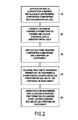
- figure 2 a block diagram illustrating a succession of steps that can be implemented in the context of the present invention.
- the dashed steps are optional.
- a first liquid composition is applied to the surface of a substrate comprising, for example, aluminum (step 10).
- the treated substrate may for example comprise an aluminum alloy, for example an aluminum and copper alloy (aluminum alloy of the 2000 series) or an aluminum and zinc alloy (aluminum alloy of the series 7000).
- the substrate comprises a steel.
- the treated substrate may be an anodized aluminum alloy, for example intended to be used in a braking application in the aeronautical field.
- the substrate may thus be intended to constitute a wheel or a means for applying the press force such as a hydraulic crown. More generally, the treated substrate may be intended to constitute a casing or a primary part of aircraft cell.
- the first composition comprises sol-gel precursors of alkoxysilane type and / or sol-gel precursors of metallo-organic type.
- the first composition may advantageously comprise a single type of sol-gel alkoxysilane or metallo-organic precursor intended not to be completely condensed following step b).
- the solvent may for example be an alcohol.
- the solvent when using APTES, the solvent may comprise ethanol and, when using MAPTMS, the solvent may comprise iso-propanol.
- alkoxysilane sol-gel precursors can be dissolved in a light solvent such as ethanol, iso-propanol, n-propanol, 1-butanol, 2-butanol, 2-propanol, acetic acid, propionic acid, butanoic acid, ethyl acetate, propyl acetate and mixtures thereof.
- the sol-gel precursors of the alkoxysilane type can be dissolved in a polar solvent different from water and having a high vapor pressure greater than or equal to 4 millibars at 20 ° C., for example between 4 millibars and 30 millibars at 20 ° C. vs.
- the sol-gel precursors alkoxysilane type can, at the time of their application on the surface of the metal substrate, be in at least partially hydrolysed form, for example following the addition of acidic water.
- the sol-gel precursors alkoxysilane type may be present in the first composition in a mass content greater than or equal to 4g / L, for example greater than or equal to 20g / L.
- the sol-gel precursors of the alkoxysilane type may, for example, be present in the first composition in a mass content for example of between 4 g / l and 40 g / l.
- the metallo-organic sol-gel precursors can be dissolved in a light solvent such as ethanol, iso-propanol, n-propanol, 1-butanol, 2-butanol or 2-methyl-2. propanol, acetic acid, propionic acid, butanoic acid, ethyl acetate, propyl acetate, and mixtures thereof.
- metallo-organic sol-gel precursors can be dissolved in a polar solvent different from water and having a high vapor pressure greater than or equal to 4 millibars at 20 ° C., for example between 4 millibars and 30 millibars at 20 ° C. ° C.
- the sol-gel precursors of metallo-organic type may be present in the first composition in a mass content greater than or equal to 3 g / l, for example greater than or equal to 14 g / l.
- the sol-gel precursors of the metallo-organic type may, for example, be present in the first composition in a mass content for example of between 3 g / l and 30 g / l.
- the first composition may, during step a), be applied by any known means, for example by spraying, by immersing the metal substrate in a bath comprising the first composition or with the aid of an applicator such as a wipe, a brush or brush.
- the surface of the metal substrate has not undergone any etching step before the application of the first composition.
- a first heat treatment is carried out so as to form an anchoring layer on the metal substrate (step 20).
- a first temperature sufficient to eliminate all or part of the liquid medium of the first composition and promote the binding of sol-gel precursors to the metal substrate is imposed.
- the first temperature and the duration of application thereof are chosen so as to avoid complete condensation of the sol-gel precursors with each other.
- the first temperature imposed during step b) may, for example, be greater than or equal to 80 ° C, for example greater than or equal to 100 ° C.
- the first temperature imposed during step b) may, for example, be less than or equal to 180 ° C.
- the first temperature imposed during step b) may, for example, be between 80 ° C and 180 ° C, for example between 100 ° C and 180 ° C.
- the duration of application of the first temperature during step b) may, in turn, be less than or equal to 30 minutes. More specifically, for sol-gel precursors alkoxysilane type, the duration of application of the first temperature in step b) may, for example, be between 2 minutes and 10 minutes. For sol-gel precursors of metallo-organic type, the duration of application of the first temperature during step b) may, for example, be between 10 minutes and 30 minutes.
- the anchoring layer formed can be cooled down to, for example, room temperature (20 ° C.).
- a second composition (step 30) is applied to the anchoring layer.
- the second composition comprises coating compounds for obtaining a coating on the anchoring layer by bond formation between the sol-gel precursors and the coating compounds as explained above.
- the coating compounds may be sol-gel precursors, the coating being intended to be obtained by sol-gel route.
- the coating compounds may be present in the second composition in a content greater than or equal to 0.1 mol / l, for example between 0.1 mol / l and 1 mol / l.
- a second heat treatment can be carried out at a temperature sufficient, for example, to promote the formation of bonds between the sol-gel precursors and the coating compounds (step 40).
- the second temperature imposed during the second heat treatment may, for example, be greater than or equal to 80 ° C, for example be greater than or equal to 100 ° C.
- the second temperature may, for example, be between 80 ° C and 180 ° C, for example between 100 ° C and 180 ° C.
- the second temperature can be imposed for at least 15 minutes, for example at least one hour.
- the second heat treatment may, as an alternative or in combination, make it possible to condense the sol-gel precursors together and / or to condense the coating compounds together, as explained above.
- step 30 a coating is obtained on the anchoring layer by forming bonds between the sol-gel precursors and the coating compounds (step 50).
- Step c) can be performed directly after step b) (i.e. without any further processing being performed between steps b) and c)).
- the coating obtained after step c) may constitute a paint layer.
- the coating obtained after step c) can be obtained sol-gel when the coating compounds are sol-gel precursors.
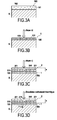
- FIG. 3A the result obtained after implementation of step a) according to the invention.
- a first composition 100 in the form of a solution in which the sol-gel precursors 101 are present is applied to the metal substrate S.
- These sol-gel precursors 101 are present in a solvent 102 which may be as described above.
- the solvent 102 was removed by evaporation so as to form an anchoring layer 1 in contact with the metal substrate.
- the sol-gel precursors 101 present in the anchoring layer 1 have developed a bond 105 with the metal substrate S (see FIG. figure 3B ).
- the sol-gel precursors 101 present in the anchoring layer after implementation of step b) are not condensed with each other (no bond between the sol-gel precursors 101). It is not beyond the scope of the present invention if, after step b), there is a partial condensation of the sol-gel precursors 101 between them as long as these precursors 101 retain -OH groups and / or -O- Alk able to interact with the coating compounds so as to form a bond with them.
- the metal substrate S is an aluminum substrate whose surface has been etched (the substrate has no oxidation layer on its surface) and the sol-gel precursors 101 applied to the surface of the substrate S are MAPTMS.
- the sol-gel precursors 101 form, as illustrated, a link This linkage 105 is carried out by a ligand group 104, here of methacryloxy type, which is part of the organic ligand function of the sol-gel precursors 101.
- the ligand group 104 constitutes a hydrophobic part which will tend to orient on the side of the surface of the substrate S which also constitutes a hydrophobic region.
- the sol-gel precursors 101 of MAPTMS have, in the example illustrated, been applied to the substrate S in partially hydrolysed form. It is advantageous to apply the sol-gel precursors 101 in a form at least partially hydrolysed so that the latter have a hydrophilic part which will tend to orient on the opposite side to the surface of the substrate S. Thus, the groups - Residual OH and OCH 3 will tend to predominate towards the opposite side of the substrate S, which will improve the interactions with the subsequently applied coating compounds and, consequently, the adhesion of the coating to the coating layer. anchor.
- the precursors of MAPTMS may alternatively be applied in fully hydrolysed form. There may still be during step b) a partial condensation of the sol-gel precursors between them within the anchoring layer.
- a second composition is applied to the anchoring layer 1.
- This second composition comprises coating compounds 201.
- the coating compounds 201 and the sol-gel precursors 101 comprise sufficient groups. -OH so that bonds 205 are formed at room temperature between the sol-gel precursors 101 and the coating compounds 201 so as to ensure the adhesion of the coating 2 to the anchoring layer 1 (see figure 3C ).
- the thickness e of the coating 2 formed in step c) may be greater than or equal to 500 nm, preferably 1 ⁇ m.
- the thickness e corresponds to the largest dimension of the coating 2 measured perpendicularly to the surface of the substrate S.
- a second heat treatment can then be performed so as to condense the sol-gel precursors 101 between them and the coating compounds 201 between them. There is then creation of links 110 between the sol-gel precursors 101 and creation of links 210 between the coating compounds 201 (see 3D figure ).
- Such a treatment advantageously makes it possible to increase the hardness of the coating 2 and possibly of the anchoring layer 1.
- two types of substrates were coated according to the invention, namely: a type 304 stainless steel substrate and a mirror-polished aluminum substrate.
- the surface of the metal substrate was first cleaned.
- the cleaning may, for example, be by degreasing with acetone, rinsing with ethanol then with water and drying by compressed air or by using a solution of degreaser marketed by Ceetal under the name Major Font NM to 5% in the water in ultrasonic tank. It is also possible to carry out a washing with deionized water followed by air jet drying.
- the metal substrate is then coated with a first composition comprising MAPTMS (3-methacryloxypropyltrimethoxysilane) sol-gel precursors in solution in iso-propanol.
- the MAPTMS sol-gel precursor content in the first composition is between 2.48 g / L and 12.4 g / L.
- the first composition is sprayed onto the metal substrate.
- the solvent was evaporated by placing the substrate coated with the first composition in an oven maintained at a temperature of 100 ° C for a time of between 2 minutes and 10 minutes. The substrate was then removed from the oven and cooled to room temperature.
- the coated substrate was introduced into an oven maintained at a temperature of 150 ° C for a period of one hour in order to increase the hardness of the anchor layer and the coating layer (condensation of condensable species present in these layers).
- Table 1 results obtained by applying MAPTMS ⁇ / u> Samples Scotch test Pencil hardness Thickness of the coating Grid Stripe Sclerometre hardness polished stainless steel type 304 not ripped off not scratched by H 10.7 ⁇ m Class 1 (ISO2409) Not scratched by 5N Mirror polished aluminum not ripped off Not scratched by 2H 12.3 ⁇ m Class 1 (ISO2409) Not scratched by 4N
- the "scotch test” makes it possible to determine the adhesion of the coating to the underlying metallic substrate.
- the pencil hardness, grid check and sclerometer hardness tests are used to determine the hardness of the coating and the anchoring layer.
- Table 1 show that the process according to the invention is particularly simple and makes it possible to obtain coatings having excellent adhesion to a substrate and a very good hardness.
- the treated metal substrate is an aluminum alloy of the 2000 series.
- the surface of the metal substrate can first be cleaned as detailed in Example 1.
- the metal substrate is then coated with a first composition comprising APTES ((3-aminopropyl) -triethoxysilane) sol-gel precursors in solution in ethanol.
- APTES ((3-aminopropyl) -triethoxysilane) sol-gel precursors in solution in ethanol.
- the content of APTES sol-gel precursors in the first composition is 5 g / l.
- the solution is spray-applied and the thickness of the obtained film is about 2 ⁇ m.
- the solvent was evaporated by placing the coated substrate of the first composition in an oven maintained at a temperature of 120 ° C for a time of between 2 minutes and 10 minutes. The substrate was then removed from the oven and cooled to room temperature. An epoxy type coating was then formed on the anchor layer obtained.
- the coated substrate was introduced into an oven maintained at a temperature of 120 ° C. for a period of one hour in order to increase the hardness of the anchoring layer and the coating (condensation of the condensable species present). in these layers).
- Table 2 results obtained by application of APTES ⁇ / u> Samples Scotch test Pencil hardness Thickness of the coating Grid Stripe Sclerometre hardness Aviation Aluminum MB not ripped off Not scratched by 5H 4 ⁇ m Class 1 (ISO2409) Not scratched by 4N
- two types of substrates were coated according to the invention, namely: a type 304 stainless steel substrate and a mirror-polished aluminum substrate.
- the surface of the metal substrate can first be cleaned as detailed in Example 1.
- the metal substrate is then coated with a solution of iron acetate in propionic acid in an iron acetate concentration of 0.05 mol.L -1 .
- the iron acetate forming in this solution iron propionate.
- the solvent was evaporated by placing the substrate coated with the first composition in an oven maintained at a temperature of 150 ° C for a period of between 10 minutes and 30 minutes. The substrate was then removed from the oven and cooled to room temperature. An epoxy type coating was then formed on the anchor layer obtained.
- the coated substrate was introduced into an oven maintained at a temperature of 150 ° C. for a period of one hour in order to increase the hardness of the anchoring layer and the coating (condensation of the condensable species present). in these layers).
- Table 3 Results obtained by application of a solution of iron acetate in propionic acid ⁇ / u> Samples Scotch test Pencil hardness Thickness of the coating Grid Stripe Sclerometre hardness polished stainless steel type 304 not ripped off not scratched by 6H 3.2 ⁇ m Class 0 (ISO2409) Not scratched by 4N Mirror polished aluminum not ripped off Not scratched by F 4.3 ⁇ m Class 1 (ISO2409) Not scratched by 5N
Landscapes
- Chemical & Material Sciences (AREA)
- Engineering & Computer Science (AREA)
- Organic Chemistry (AREA)
- Materials Engineering (AREA)
- Mechanical Engineering (AREA)
- Chemical Kinetics & Catalysis (AREA)
- General Chemical & Material Sciences (AREA)
- Metallurgy (AREA)
- Thermal Sciences (AREA)
- Physics & Mathematics (AREA)
- Inorganic Chemistry (AREA)
- Wood Science & Technology (AREA)
- Life Sciences & Earth Sciences (AREA)
- Ceramic Engineering (AREA)
- Dispersion Chemistry (AREA)
- Application Of Or Painting With Fluid Materials (AREA)
- Paints Or Removers (AREA)
- Laminated Bodies (AREA)
Abstract
Description
- L'invention concerne des procédés de revêtement de la surface de substrats métalliques.
- Il est connu de réaliser des pré-traitements chimiques ou mécaniques avant certains traitements de surface de substrats métalliques. Ces pré-traitements peuvent permettre d'assurer une bonne cohésion entre le substrat et le dépôt de matière formé lors du traitement de surface, le dépôt de matière étant par exemple constitué par une couche de peinture, de vernis ou une couche formée par voie sol-gel. Les pré-traitements peuvent encore conférer aux éléments présents à la surface du substrat une bonne réactivité lors de la réalisation de traitements chimiques ou électro-chimiques (par exemple de conversion chimique, d'oxydation anodique ou de dépôt chimique statique).
- La
figure 1 illustre des exemples de pré-traitements connus de l'état de la technique. Toutefois, ces pré-traitements peuvent être relativement longs à mettre en oeuvre et peuvent rendre relativement complexes les procédés de revêtement de substrats métalliques connus. - Il existe, par conséquent, un besoin pour obtenir des procédés de revêtement de substrats métalliques simples et peu coûteux à mettre en oeuvre tout en permettant d'assurer une très bonne adhésion du revêtement formé au substrat métallique sous-jacent.
- A cet effet, l'invention propose, selon un premier aspect, un procédé de revêtement de la surface d'un substrat métallique comportant les étapes suivantes :
- a) application sur la surface d'un substrat métallique d'une première composition comportant dans un milieu liquide des précurseurs sol-gel de type alcoxysilane et/ou de type métallo-organique, lesdits précurseurs sol-gel étant aptes à se lier avec le substrat métallique,
- b) soumission de la première composition à un premier traitement thermique de manière à former une couche d'ancrage sur le substrat métallique dans laquelle les précurseurs sol-gel sont liés au substrat métallique, une première température étant imposée durant le premier traitement thermique laquelle est suffisante pour éliminer tout ou partie du milieu liquide et favoriser la liaison des précurseurs sol-gel au substrat métallique, le premier traitement thermique étant configuré pour éviter une condensation complète des précurseurs sol-gel entre eux,
- c) application sur la couche d'ancrage d'une deuxième composition comportant des composés de revêtement de manière à obtenir un revêtement sur la couche d'ancrage par formation de liaisons entre les précurseurs sol-gel et les composés de revêtement.
- Les précurseurs sol-gel appliqués lors de l'étape a) peuvent avoir la même nature chimique. En variante, ils peuvent avoir des natures chimiques différentes (i.e. un mélange de précurseurs sol-gel différents peut être appliqué).
- Les composés de revêtement appliqués lors de l'étape c) peuvent avoir la même nature chimique. En variante, ils peuvent avoir des natures chimiques différentes (i.e. un mélange de composés de revêtement différents peut être appliqué).
- Dans un exemple de réalisation, le substrat métallique comporte de l'aluminium.
- Le substrat traité lors de l'étape a) peut ou non présenter une couche d'oxydation à sa surface. Ainsi, dans un exemple de réalisation, les précurseurs sol-gel peuvent, lors de l'étape a), être appliqués sur cette couche d'oxydation du substrat. En variante, le substrat métallique n'est pas oxydé en surface et les précurseurs sol-gel sont appliqués lors de l'étape a) sur le substrat métallique à l'état non oxydé.
- Le premier traitement thermique réalisé lors de l'étape b) permet d'évaporer tout ou partie du milieu liquide, ce qui peut permettre d'améliorer encore la liaison des précurseurs sol-gel au substrat métallique afin d'améliorer l'adhésion de la couche d'ancrage au dit substrat. Les liaisons entre les précurseurs sol-gel présents dans la couche d'ancrage et le substrat métallique peuvent être de toute sorte, par exemple être des liaisons covalentes, des liaisons hydrogènes ou des liaisons ioniques. En outre, en évitant la condensation complète des précurseurs sol-gel, l'étape b) permet aux précurseurs sol-gel de conserver des groupements -OH (par exemple des groupements alcool ou acide carboxylique, éventuellement sous forme alcoolate ou carboxylate) et/ou -O-Alk, Alk désignant un alkyle, reliés à un atome de silicium ou de métal. Ces groupements sont comme expliqué plus bas utile pour assurer la liaison des précurseurs sol-gel aux composés de revêtement.
- Les composés de revêtement comportent une ou plusieurs fonctions chimiques (dites fonctions de fixation) aptes à former une liaison avec les groupements -OH et/ou -O-Alk résiduels des précurseurs sol-gel. Ces fonctions de fixation peuvent, par exemple, être choisies parmi les groupements -OH et/ou -O-Alk', Alk' désignant un alkyle différent ou identique du groupement Alk, par exemple reliés à un atome de silicium ou de métal ou à une chaine carbonée laquelle peut comporter une ou plusieurs fonctions polymérisables comme des fonctions epoxy ou acrylate, ou parmi les groupements halogénures d'alkyle, par exemple chlorures d'alkyles.
- L'étape c) permet d'obtenir une interaction entre les groupements -OH et/ou -O-Alk résiduels des précurseurs sol-gel ancrés au substrat métallique et les fonctions de fixation, par exemple les groupements -OH et/ou -O-Alk', des composés de revêtement et ainsi d'obtenir une bonne adhésion du revêtement à la couche d'ancrage et, par conséquent, au substrat métallique. En particulier, cette interaction peut avantageusement résulter en la formation de liaisons covalentes entre les composés de revêtement et les précurseurs sol-gel. L'interaction entre les groupements -OH et/ou -O-Alk des précurseurs sol-gel et les fonctions de fixation des composés de revêtement peut encore résulter en la formation d'autres types de liaisons comme, par exemple, des liaisons hydrogène et/ou des liaisons ioniques.
- L'invention permet avantageusement de fonctionnaliser de manière simple, rapide et peu coûteuse la surface d'un substrat métallique par l'intermédiaire de la couche d'ancrage et d'obtenir un revêtement déposé sur cette couche d'ancrage présentant une très bonne adhérence au substrat métallique. L'invention permet avantageusement de s'affranchir des étapes illustrées à la
figure 1 réalisées entre le pré-dégraissage et le traitement visant à conférer au substrat ses propriétés finales. L'invention permet ainsi de disposer d'un procédé dans lequel l'étape de pré-traitement du substrat métallique (formation de la couche d'ancrage) est particulièrement simple à réaliser. En particulier, le procédé peut avantageusement être tel qu'aucune étape de décapage de la surface du substrat métallique n'est réalisée avant l'étape a). - Il peut être avantageux d'employer l'un ou l'autre des types de précurseurs sol-gel (alcoxysilane ou métallo-organique) selon la composition du substrat métallique traité. Si le substrat métallique comporte par exemple de l'aluminium revêtu d'une couche d'oxydation à sa surface, on peut préférentiellement utiliser des précurseurs sol-gel de type alcoxysilane, comportant par exemple un groupement organique ligand de type amine (voir ci-dessous). Dans le cas où le métal du substrat métallique n'est pas revêtu d'une couche d'oxydation, il peut être préférable d'utiliser des précurseurs sol-gel de type métallo-organique.
- Dans l'invention et sauf mention contraire, les expressions « précurseurs sol-gel de type alcoxysilane » et « précurseurs sol-gel de type métallo-organique » désignent les formes non hydrolysée ou au moins partiellement hydrolysée de ces précurseurs. Ainsi, comme il sera détaillé plus bas, l'invention couvre à la fois les cas où les précurseurs sol-gel sont appliqués lors de l'étape a) sur le substrat métallique sous forme non hydrolysée, sous forme partiellement hydrolysée et sous forme intégralement hydrolysée.
- Dans un exemple de réalisation, les précurseurs sol-gel peuvent comporter des précurseurs sol-gel de type alcoxysilane.
- Les précurseurs sol-gel de type alcoxysilane, lorsqu'il sont à l'état non hydrolysé et à l'état monomère, présentent la formule générale suivante : AmSi(OR)nX4-n-m où :
- R est un groupement alkyle, et, lorsqu'il y a plusieurs groupements R, chaque groupement R est un groupement alkyle et les groupements R peuvent être identiques ou différents,
- A est une fonction organique ligante apte à former une liaison avec le substrat métallique, la fonction organique ligante peut de préférence comporter un groupement ligand A' choisi parmi les groupements alcoxyle, amine, acryloxy, méthacryloxy, diméthyl phosphate, diéthyl phosphate, époxy ou vinyle, et, lorsqu'il y a plusieurs fonctions A, chaque groupement A' peut être tel que défini ci-avant et les groupements A' peuvent être identiques ou différents, le(s) groupement(s) ligand(s) A' peut (peuvent) éventuellement être relié(s) au silicium par l'intermédiaire d'un groupement alkyle R',
- X est un groupement relié au silicium, X peut être de toute sorte par exemple être un atome d'hydrogène, une chaîne hydrocarbonée comportant de 1 à 30 atomes de carbone, saturée ou insaturée, interrompue ou non par un ou plusieurs hétéroatomes, non substituée ou substituée, ou un atome d'halogène et, lorsqu'il y a plusieurs groupements X, les groupements X peuvent être identiques ou différents, et
- n est un entier compris entre 1 et 3,
- m est un entier compris entre 1 et 3.
- Lorsque les précurseurs de type alcoxysilane sont sous forme au moins partiellement hydrolysée, il faut comprendre que tout ou partie des groupements alcoxyles reliés au silicium (groupements -OR ci-dessus) desdits précurseurs sont hydrolysés pour former des groupements silanols (Si-OH). Lorsque les précurseurs de type alcoxysilane sont sous forme complètement hydrolysée, il faut comprendre que l'intégralité des groupements alcoxyles reliés au silicium desdits précurseurs sont hydrolysés pour former des groupements silanols.
- En outre, les précurseurs sol-gel de type alcoxysilane peuvent, lors de l'étape a), être à l'état monomère ou oligomère. L'état oligomère correspond à un état dans lequel des atomes de silicium sont liés par au moins un pont oxo- (-Si-O-Si-) obtenu suite à une réaction de condensation. Dans ce cas, les précurseurs présentent des motifs -Si-O-Si-. Lorsque ces précurseurs sont à l'état oligomère, la condensation est suffisamment limitée pour que les précurseurs ne précipitent pas et conservent toujours après l'étape b) des groupements -OH et/ou -O-Alk résiduels comme expliqué plus haut.
- La fonction organique ligante des précurseurs de type alcoxysilane interagit avec le substrat métallique afin d'assurer un bon ancrage de la couche d'ancrage au substrat métallique.
- Dans un exemple de réalisation, les précurseurs sol-gel de type alcoxysilane peuvent chacun avoir au moins une fonction organique ligante apte à se lier au substrat métallique, la fonction organique ligante pouvant comporter l'un au moins des groupements ligands suivants : alcoxyle, amine, acryloxy, méthacryloxy, diméthyl phosphate, diéthyl phosphate, époxy et vinyle, de préférence amine, acryloxy et méthacryloxy.
- Le choix de précurseurs sol-gel de type alcoxysilane comportant chacun un groupement ligand de type amine, acryloxy ou méthacryloxy peut être particulièrement avantageux lorsque le substrat métallique comporte de l'aluminium.
- Dans un exemple de réalisation, les précurseurs sol-gel appliqués lors de l'étape a) peuvent être choisis parmi les composés suivants : (methacryloxymethyl)methyldimethoxysilane (CAS 121177-93-3), (methacryloxymethyl)methyldiethoxysilane (CAS 3978-58-3), (methacryloxymethyl)dimethylmethoxysilane (CAS 130771-16-3), diethylphosphatoethylmethyldiethoxysilane (CAS 18048-06-1), 3-aminopropyltriethoxysilane (CAS 919-30-2), methacryloxypropyltriisopropoxysilane (CAS 80750-05-6), m-aminophenyltrimethoxysilane (CAS 70411-42-6), methacryloxypropyltriethoxysilane (CAS 21142-29-0), N-(2-Aminoethyl)-3-aminopropyltrimethoxysilane, 3-methacryloxypropyltrimethoxysilane (CAS 2530-85-0), acetoxypropyltrimethoxysilane (CAS 59004-18-1), p-aminophenyltrimethoxysilane (CAS 33976-43-1), 3-(acryloxypropyl)trimethoxysilane (CAS 4369-14-6), diethylphosphatoethyltriethoxysilane (CAS 757-44-8), 3-mercaptopropyltriethoxysilane (CAS 14814-09-6), 3-aminopropylmethyldiethoxysilane (CAS 3179-76-8), 3-mercaptopropyltrimethoxysilane (CAS 4420-74-0), carboxyethylsilanetriol sous forme de sel de sodium (CAS 18191-40-7), 3-mercaptopropylmethyldimethoxysilane (CAS 31001-77-1), 4-aminobutyltriethoxysilane (CAS 3069-30-5), et leurs mélanges.
- De préférence, les précurseurs sol-gel de type alcoxysilane peuvent comporter du méthacryloxypropyltriméthoxysilane (MAPTMS) et/ou du (3-aminopropyl)-triéthoxysilane (APTES).
- Dans un exemple de réalisation, tous les précurseurs sol-gel appliqués peuvent être du MAPTMS. En variante, tous les précurseurs sol-gel appliqués peuvent être de l'APTES.
- Dans un exemple de réalisation, les précurseurs sol-gel peuvent comporter des précurseurs sol-gel de type métallo-organique.
- Les précurseurs sol-gel de type métallo-organique, lorsqu'il sont à l'état non hydrolysé et à l'état monomère, présentent la formule générale suivante : Me(OOCR")n'X'm' où :
- Me est un métal compris dans les colonnes 2 à 13 du tableau périodique, Me est de préférence le fer,
- R" est un groupement alkyle, et, lorsqu'il y a plusieurs groupements R", chaque groupement R" est un groupement alkyle et les groupements R" peuvent être identiques ou différents, CR" peut être une chaîne carbonée comportant entre 1 et 5 atomes de carbone et comportant de préférence au moins 3 atomes de carbone,
- X' est un groupement relié au métal Me, X' peut être de toute sorte et par exemple être un halogène, un groupement nitrate de formule -NO3, une fonction organique ligante par exemple un groupement acétyl acétonate ou un groupement amine, un groupement acide organique de formule -OOCR'" différent du ou des groupements de formule -OOCR", CR'" désignant une chaine carbonée comportant de 1 à 30 atomes de carbone, saturée ou insaturée, et, lorsqu'il y a plusieurs groupements X', les groupements X' peuvent être identiques ou différents, et
- m'et n' sont des entiers, n' est supérieur ou égal à 1, m'est supérieur ou égal à 0 et la somme m'+n' est égale à la valence du métal Me.
- Lorsque les précurseurs de type métallo-organique sont sous forme au moins partiellement hydrolysée, il faut comprendre que tout ou partie des groupements -OOCR" reliés au métal desdits précurseurs sont remplacés par des groupements -OH reliés au métal. Lorsque les précurseurs de type métallo-organique sont sous forme complètement hydrolysée, il faut comprendre que l'intégralité des groupements -OOCR" reliés au métal desdits précurseurs sont remplacés par des groupements-OH reliés au métal.
- En outre, les précurseurs sol-gel de type métallo-organique peuvent, lors de l'étape a), être à l'état monomère, c'est-à-dire être dans un état non polymérisé. Dans ce cas, ils ne présentent pas de motif -Me-O-Me-. Il est possible que les précurseurs sol-gel de type métallo-organique appliqués soient regroupés en nodules, cela peut être le cas si lesdits précurseurs présentent des chaînes carbonées longues lesquelles peuvent se regrouper pour des raisons d'affinité lipophile afin de former des nodules de quelques molécules de précurseurs.
- De préférence, les précurseurs sol-gel de type métallo-organique peuvent comporter du fer. De préférence, les précurseurs sol-gel de type métallo-organique comportent du propionate de fer. En variante, les précurseurs sol-gel de type métallo-organique peuvent comporter d'autres métaux, comme du chrome, du nickel, du cobalt, du cuivre ou du zinc.
- Dans un exemple de réalisation, tous les précurseurs sol-gel appliqués peuvent être du propionate de fer.
- Dans un exemple de réalisation, les précurseurs sol-gel appliqués lors de l'étape a) peuvent être sous forme au moins partiellement hydrolysée. En variante, les précurseurs sol-gel peuvent être appliqués sous une forme non hydrolysée lors de l'étape a).
- Il peut être avantageux d'appliquer les précurseurs sol-gel sous une forme au moins partiellement hydrolysée lors de l'étape a) dans la mesure où les groupements -OH reliés au silicium ou au métal desdits précurseurs peuvent très facilement (sans apport thermique ou avec un apport thermique limité) interagir avec les fonctions de fixation des composés de revêtement et peuvent très facilement permettre la formation de liaisons entre les composés de revêtement et les précurseurs sol-gel.
- De préférence, les composés de revêtement et/ou les précurseurs sol-gel peuvent comporter, avant l'étape c), des groupements -OH.
- Une telle configuration conduit avantageusement à une interaction facilitée entre les composés de revêtement et les précurseurs sol-gel.
- Dans un exemple de réalisation, les composés de revêtement peuvent être choisis parmi les composés suivants : (methacryloxymethyl)methyldimethoxysilane (CAS 121177-93-3), (methacryloxymethyl)methyldiethoxysilane (CAS 3978-58-3), (methacryloxymethyl)dimethylmethoxysilane (CAS 130771-16-3), diethylphosphatoethylmethyldiethoxysilane (CAS 18048-06-1), 3-aminopropyltriethoxysilane (CAS 919-30-2), methacryloxypropyltriisopropoxysilane (CAS 80750-05-6), m-aminophenyltrimethoxysilane (CAS 70411-42-6), 3-(acryloxypropyl)tris(trimethylsiloxy)silane (CAS 17096-12-7), methacryloxypropyltriethoxysilane (CAS 21142-29-0), N-(2-Aminoethyl)-3-aminopropyltrimethoxysilane, 2-(Acryloxyethoxy)trimethylsilane (CAS 18269-99-3), 3-methacryloxypropyltrimethoxysilane (CAS 2530-85-0), acetoxypropyltrimethoxysilane (CAS 59004-18-1), p-aminophenyltrimethoxysilane (CAS 33976-43-1), 3-(acryloxypropyl)trimethoxysilane (CAS 4369-14-6), diethylphosphatoethyltriethoxysilane (CAS 757-44-8), 3-(acryloxypropyl)trichlorosilane (CAS 38595-89-0), 3-mercaptopropyltriethoxysilane (CAS 14814-09-6), 3-(acryloxypropyl)methyldichlorosilane (CAS 71550-63-5), 3-aminopropylmethyldiethoxysilane (CAS 3179-76-8), 3-mercaptopropyltrimethoxysilane (CAS 4420-74-0), carboxyethylsilanetriol sous forme de sel de sodium (CAS 18191-40-7), 3-mercaptopropylmethyldimethoxysilane (CAS 31001-77-1), 4-aminobutyltriethoxysilane (CAS 3069-30-5), methacryloxyethoxytrimethylsilane (CAS 17407-09-9), et leurs mélanges.
- Les composés de revêtement peuvent lorsqu'ils sont appliqués sur la couche d'ancrage être formulés dans un milieu liquide choisi parmi le 1-propanol, le n-propanol, le 2-butanol, le n-butanol, les alcools amyliques, les esters de ces alcools, et leurs mélanges.
- Dans un exemple de réalisation, un deuxième traitement thermique peut être réalisé après l'application de la deuxième composition sur la couche d'ancrage.
- Le deuxième traitement thermique peut être réalisé à une température suffisante pour favoriser la formation de liaisons entre les précurseurs sol-gel et les composés de revêtement. Ainsi, la mise en oeuvre d'un tel deuxième traitement thermique est avantageuse notamment lorsque les composés de revêtement et/ou les précurseurs sol-gel comportent des groupements -O-Alk ou -O-Alk' afin de favoriser la formation de liaisons covalentes entre les composés de revêtement et les précurseurs sol-gel de la couche d'ancrage. Toutefois, lorsque les composés de revêtement et les précurseurs sol-gel comportent de nombreuses fonctions -OH, il est possible d'obtenir une bonne adhésion du revêtement à la couche d'ancrage à température ambiante sans effectuer ce deuxième traitement thermique. Il n'est donc pas nécessaire de réaliser ce deuxième traitement thermique. Il peut en effet être suffisant pour obtenir une bonne adhésion entre le revêtement et la couche d'ancrage de laisser suffisamment de temps aux composés de revêtement et aux précurseurs sol-gel afin qu'ils forment des liaisons entre eux à une température ambiante (20°C).
- En alternative ou en combinaison, la mise en oeuvre du deuxième traitement thermique peut avantageusement permettre d'améliorer la dureté de la couche d'ancrage et/ou du revêtement. Dans ce cas, le deuxième traitement thermique est réalisé à une température suffisante pour condenser les précurseurs sol-gel de la couche d'ancrage entre eux et/ou les composés de revêtement entre eux. Dans ce cas, les composés de revêtement peuvent être des précurseurs sol-gel à base par exemple d'epoxy-silanes au moins partiellement hydrolysés et le deuxième traitement thermique peut permettre de condenser ces composés de revêtement entre eux.
- Ainsi, dans un exemple de réalisation, les précurseurs sol-gel de la couche d'ancrage et les composés de revêtement peuvent former entre eux des liaisons à température ambiante puis le deuxième traitement thermique peut être réalisé afin de condenser les précurseurs sol-gel entre eux et/ou les composés de revêtement entre eux dans l'hypothèse où ils comporteraient encore des groupements condensables (-OH et/ou -O-Alk et/ou -O-Alk') afin de former des motifs -Si-O-Si- et/ou -Me-O-Me-.
- En variante, le deuxième traitement thermique peut être réalisé après l'application de la deuxième composition sur la couche d'ancrage afin à la fois de favoriser la formation de liaisons entre les précurseurs sol-gel et les composés de revêtement et de condenser les précurseurs sol-gel entre eux et/ou les composés de revêtement entre eux.
- Dans un exemple de réalisation, le procédé peut, en outre, comporter, avant l'étape a), une étape a') de traitement de la surface du substrat métallique telle que traitement au plasma air ou oxygène. Cette étape permet de parfaitement dégraisser la surface métallique, d'éliminer des résidus organiques provenant d'un blister de protection ou d'éliminer des résidus de graisse de protection ou de lubrifiant incrustés dans les rainures provenant des passes d'outils de découpe ou de façonnage.
- Dans un exemple de réalisation, le revêtement obtenu peut constituer une couche de peinture. Dans un exemple de réalisation, le revêtement peut être obtenu par un procédé sol-gel, lorsque les composés de revêtement constituent des précurseurs sol-gel.
-
- la
figure 1 représente une succession d'étapes connue permettant de traiter la surface d'un substrat métallique, - la
figure 2 représente un schéma-blocs montrant la succession d'étapes d'un exemple de procédé selon l'invention, - les
figures 3A à 3D représentent, de manière très schématique et partielle, l'évolution obtenue suite à la mise en oeuvre de différentes étapes d'un procédé selon l'invention, et - la
figure 4 représente la liaison de précurseurs sol-gel de la couche d'ancrage au substrat métallique sous-jacent. - On a représenté à la
figure 2 un schéma-blocs illustrant une succession d'étapes pouvant être mise en oeuvre dans le cadre de la présente invention. Les étapes encadrées en pointillés sont optionnelles. - Dans un premier temps, une première composition liquide est appliquée sur la surface d'un substrat comportant par exemple de l'aluminium (étape 10). Le substrat traité peut par exemple comporter un alliage d'aluminium, par exemple un alliage d'aluminium et de cuivre (alliage d'aluminium de la série 2000) ou un alliage d'aluminium et de zinc (alliage d'aluminium de la série 7000). En variante, le substrat comporte un acier.
- Dans un exemple de réalisation, le substrat traité peut être un alliage d'aluminium anodisé, par exemple destiné à être utilisé dans une application freinage dans le domaine aéronautique. Le substrat peut ainsi être destiné à constituer une roue ou un moyen d'application de l'effort de presse tel qu'une couronne hydraulique. De façon plus générale, le substrat traité peut être destiné à constituer un carter ou une pièce primaire de cellule d'avion.
- Comme mentionné plus haut, la première composition comporte des précurseurs sol-gel de type alcoxysilane et/ou des précurseurs sol-gel de type métallo-organique. La première composition peut avantageusement comporter un unique type de précurseur sol-gel alcoxysilane ou métallo-organique destiné à ne pas être complètement condensé suite à l'étape b).
- Lorsque la première composition comporte des précurseurs sol-gel de type alcoxysilane, le solvant peut par exemple être un alcool. En particulier, lorsque l'on utilise de l'APTES, le solvant peut comporter de l'éthanol et, lorsque l'on utilise du MAPTMS, le solvant peut comporter de l'iso-propanol.
- Plus généralement, les précurseurs sol-gel de type alcoxysilane peuvent être dissous dans un solvant léger tel que l'éthanol, l'iso-propanol, le n-propanol, le 1-butanol, le 2-butanol, le 2-methyl-2-propanol, l'acide acétique, l'acide propionique, l'acide butanoique, l'acétate d'éthyle, l'acétate de propyle et leurs mélanges. Les précurseurs sol-gel de type alcoxysilane peuvent être dissous dans un solvant polaire différent de l'eau et présentant une tension de vapeur élevée supérieure ou égale à 4 millibars à 20°C, par exemple comprise entre 4 millibars et 30 millibars à 20°C. Comme expliqué plus haut, les précurseurs sol-gel de type alcoxysilane peuvent, au moment de leur application sur la surface du substrat métallique, être sous forme au moins partiellement hydrolysée, par exemple suite à l'ajout d'eau acide.
- Les précurseurs sol-gel de type alcoxysilane peuvent être présents dans la première composition en une teneur massique supérieure ou égale à 4g/L, par exemple supérieure ou égale à 20g/L. Les précurseurs sol-gel de type alcoxysilane peuvent, par exemple, être présent dans la première composition en une teneur massique par exemple comprise entre 4g/L et 40g/L.
- Les précurseurs sol-gel de type métallo-organique peuvent être dissous dans un solvant léger tel que l'éthanol, l'iso-propanol, le n-propanol, le 1-butanol, le 2-butanol, le 2-methyl-2-propanol, l'acide acétique, l'acide propionique, l'acide butanoique, l'acétate d'éthyle, l'acétate de propyle, et leurs mélanges. D'une manière générale, les précurseurs sol-gel de type métallo-organique peuvent être dissous dans un solvant polaire différent de l'eau et présentant une tension de vapeur élevée supérieure ou égale à 4 millibars à 20°C, par exemple comprise entre 4 millibars et 30 millibars à 20°C.
- Les précurseurs sol-gel de type métallo-organique peuvent être présents dans la première composition en une teneur massique supérieure ou égale à 3 g/L, par exemple supérieure ou égale à 14 g/L. Les précurseurs sol-gel de type métallo-organique peuvent, par exemple, être présents dans la première composition en une teneur massique par exemple comprise entre 3 g/L et 30g/L.
- La première composition peut, durant l'étape a), être appliquée par tout moyen connu, par exemple par pulvérisation, en immergeant le substrat métallique dans un bain comportant la première composition ou à l'aide d'un applicateur comme une lingette, un pinceau ou une brosse. Dans un exemple de réalisation, la surface du substrat métallique n'a subi aucune étape de décapage avant l'application de la première composition. Indépendamment de la nature des précurseurs sol-gel utilisés, on peut lors de l'étape a) appliquer une masse de précurseurs sol-gel par unité de surface du substrat métallique comprise entre 0,4g/m2 et 4g/m2, par exemple entre 0,4g/m2 et 2g/m2.
- Une fois la première composition déposée sur le substrat métallique, on réalise un premier traitement thermique de manière à former une couche d'ancrage sur le substrat métallique (étape 20). Durant le premier traitement thermique, une première température suffisante pour éliminer tout ou partie du milieu liquide de la première composition et favoriser la liaison des précurseurs sol-gel au substrat métallique est imposée. La première température et la durée d'application de celle-ci sont choisies afin d'éviter une condensation complète des précurseurs sol-gel entre eux.
- Indépendamment de la nature des précurseurs sol-gel utilisés, la première température imposée durant l'étape b) peut, par exemple, être supérieure ou égale à 80°C, par exemple être supérieure ou égale à 100°C. La première température imposée durant l'étape b) peut, par exemple, être inférieure ou égale à 180°C. La première température imposée durant l'étape b) peut, par exemple, être comprise entre 80°C et 180°C, par exemple entre 100°C et 180°C.
- La durée d'application de la première température lors de l'étape b) peut, quant à elle, être inférieure ou égale à 30 minutes. Plus précisément, pour des précurseurs sol-gel de type alcoxysilane, la durée d'application de la première température lors de l'étape b) peut, par exemple, être comprise entre 2 minutes et 10 minutes. Pour des précurseurs sol-gel de type métallo-organique, la durée d'application de la première température lors de l'étape b) peut, par exemple, être comprise entre 10 minutes et 30 minutes.
- Après l'étape b) et avant l'étape c), on peut refroidir la couche d'ancrage formée, en la ramenant par exemple à la température ambiante (20°C).
- Après réalisation de l'étape 20, on applique sur la couche d'ancrage une deuxième composition (étape 30). La deuxième composition comporte des composés de revêtement permettant d'obtenir un revêtement sur la couche d'ancrage par formation de liaisons entre les précurseurs sol-gel et les composés de revêtement comme expliqué plus haut. Dans un exemple de réalisation, les composés de revêtement peuvent être des précurseurs sol-gel, le revêtement étant destiné à être obtenu par voie sol-gel.
- Les composés de revêtement peuvent être présents dans la deuxième composition en une teneur supérieure ou égale à 0,1 mol/L, par exemple comprise entre 0,1 mol/L et 1 mol/L.
- Une fois les composés de revêtement appliqués, on peut réaliser un deuxième traitement thermique à une température suffisante par exemple pour favoriser la formation de liaisons entre les précurseurs sol-gel et les composés de revêtement (étape 40). La deuxième température imposée durant le deuxième traitement thermique peut, par exemple, être supérieure ou égale à 80°C, par exemple être supérieure ou égale à 100°C. La deuxième température peut, par exemple, être comprise entre 80°C et 180°C, par exemple entre 100°C et 180°C. La deuxième température peut être imposée durant au moins 15 minutes, par exemple au moins une heure.
- Le deuxième traitement thermique peut, en alternative ou en combinaison, permettre de condenser les précurseurs sol-gel entre eux et/ou de condenser les composés de revêtement entre eux, comme expliqué plus haut.
- Une fois l'étape 30, et éventuellement l'étape 40, réalisée(s), on obtient un revêtement sur la couche d'ancrage par formation de liaisons entre les précurseurs sol-gel et les composés de revêtement (étape 50).
- L'étape c) peut être réalisée directement après l'étape b) (i.e. sans qu'aucun autre traitement ne soit effectué entre les étapes b) et c)).
- Le revêtement obtenu après l'étape c) peut constituer une couche de peinture. Le revêtement obtenu après l'étape c) peut être obtenu par voie sol-gel lorsque les composés de revêtement sont des précurseurs sol-gel.
- On va maintenant décrire les
figures 3A à 3D qui représentent l'évolution obtenue après mise en oeuvre de différentes étapes selon l'invention. Dans ces figures, les dimensions des différentes couches n'ont pas été respectées par souci de clarté. - On a représenté à la
figure 3A le résultat obtenu après mise en oeuvre de l'étape a) selon l'invention. Comme illustré, une première composition 100 sous forme de solution dans laquelle les précurseurs sol-gel 101 sont présents est appliquée sur le substrat métallique S. Ces précurseurs sol-gel 101 sont présents dans un solvant 102 lequel peut être tel que décrit plus haut. Suite à l'étape b), le solvant 102 a été éliminé par évaporation de manière à former une couche d'ancrage 1 au contact du substrat métallique. Les précurseurs sol-gel 101 présents dans la couche d'ancrage 1 ont développé une liaison 105 avec le substrat métallique S (voirfigure 3B ). Comme illustré à lafigure 3B , les précurseurs sol-gel 101 présents dans la couche d'ancrage après mise en oeuvre de l'étape b) ne sont pas condensés entre eux (pas de liaison entre les précurseurs sol-gel 101). On ne sort pas du cadre de la présente invention s'il y a, après l'étape b), une condensation partielle des précurseurs sol-gel 101 entre eux tant que ces précurseurs 101 conservent des groupements -OH et/ou -O-Alk aptes à interagir avec les composés de revêtement de manière à former une liaison avec ces derniers. - Il a été représenté à la
figure 4 la fixation des précurseurs sol-gel 101 au substrat métallique S. Dans l'exemple illustré à lafigure 4 , le substrat métallique S est un substrat d'aluminium dont la surface a été décapée (le substrat ne présente pas de couche d'oxydation à sa surface) et les précurseurs sol-gel 101 appliqués à la surface du substrat S sont du MAPTMS. Les précurseurs sol-gel 101 forment comme illustré une liaison 105 avec le substrat S. Cette liaison 105 est réalisée par un groupement ligand 104, ici de type méthacryloxy, lequel fait partie de la fonction organique ligante des précurseurs sol-gel 101. Le groupement ligand 104 constitue une partie hydrophobe qui va avoir tendance à s'orienter du côté de la surface du substrat S laquelle constitue aussi une région hydrophobe. - Par ailleurs, les précurseurs sol-gel 101 de MAPTMS ont, dans l'exemple illustré, été appliqués sur le substrat S sous forme partiellement hydrolysée. Il est avantageux d'appliquer les précurseurs sol-gel 101 sous une forme au moins partiellement hydrolysée afin que ces derniers présentent une partie hydrophile qui va avoir tendance à s'orienter du côté opposé à la surface du substrat S. Ainsi, les groupements -OH et-OCH3 résiduels 103 auront tendance à majoritairement s'orienter du côté opposé au substrat S, ce qui permettra d'améliorer les interactions avec les composés de revêtement appliqués ultérieurement et, par conséquent, l'adhésion du revêtement à la couche d'ancrage.
- Bien entendu, les précurseurs de MAPTMS peuvent, en variante, être appliqués sous forme totalement hydrolysée. Il peut encore y avoir lors de l'étape b) une condensation partielle des précurseurs sol-gel entre eux au sein de la couche d'ancrage.
- Dans un deuxième temps, une deuxième composition est appliquée sur la couche d'ancrage 1. Cette deuxième composition comporte des composés de revêtement 201. Dans l'exemple illustré, les composés de revêtement 201 et les précurseurs sol-gel 101 comportent suffisamment de groupements -OH pour que des liaisons 205 se forment à température ambiante entre les précurseurs sol-gel 101 et les composés de revêtement 201 de manière à assurer l'adhérence du revêtement 2 à la couche d'ancrage 1 (voir
figure 3C ). - Dans un exemple de réalisation, l'épaisseur e du revêtement 2 formé lors de l'étape c) peut être supérieure ou égale à 500 nm, de préférence à 1 µm. L'épaisseur e correspond à la plus grande dimension du revêtement 2 mesurée perpendiculairement à la surface du substrat S.
- On peut ensuite réaliser un deuxième traitement thermique de manière à condenser les précurseurs sol-gel 101 entre eux et les composés de revêtement 201 entre eux. Il y a alors création de liaisons 110 entre les précurseurs sol-gel 101 et création de liaisons 210 entre les composés de revêtement 201 (voir
figure 3D ). Un tel traitement permet avantageusement d'augmenter la dureté du revêtement 2 et éventuellement de la couche d'ancrage 1. - Dans cet exemple, on a revêtu conformément à l'invention deux types de substrats, à savoir : un substrat en acier inox poli type 304 et un substrat en aluminium poli miroir.
- Avant application de la première composition, la surface du substrat métallique a tout d'abord été nettoyée. Le nettoyage peut, par exemple, se faire par dégraissage à l'acétone, rinçage à l'éthanol puis à l'eau et séchage par air comprimé ou en utilisant une solution de dégraissant commercialisée par la société Ceetal sous la dénomination Major Font NM à 5% dans l'eau en bac à ultrasons. On peut encore réaliser un lavage à l'eau dé-ionisée suivi d'un séchage par jet d'air.
- Le substrat métallique est ensuite revêtu par une première composition comportant des précurseurs sol-gel MAPTMS (3-méthacryloxypropyltriméthoxysilane) en solution dans de l'iso-propanol. La teneur en précurseurs sol-gel MAPTMS dans la première composition est comprise entre 2,48 g/L et 12,4 g/L. La première composition est pulvérisée sur le substrat métallique.
- Après application de la première composition sur le substrat métallique, le solvant a été évaporé par placement du substrat revêtu de la première composition dans une étuve maintenue à une température de 100°C pendant une durée comprise entre 2 minutes et 10 minutes. Le substrat a ensuite été extrait de l'étuve et ramené à la température ambiante.
- Un revêtement type époxyde a alors été formé sur la couche d'ancrage obtenue.
- Après formation du revêtement, le substrat revêtu a été introduit dans une étuve maintenue à une température de 150°C pendant une durée d'une heure afin d'augmenter la dureté de la couche d'ancrage et de la couche de revêtement (condensation des espèces condensables présentes dans ces couches).
- On a regroupé dans le tableau 1 ci-dessous les résultats obtenus.
Tableau 1 : résultats obtenus par application de MAPTMS Echantillons Scotch test Dureté crayon Epaisseur du revêtement Rayure quadrillage Dureté sclérometre acier inox poli type 304 pas arraché pas rayé par H 10,7 µm Classe 1 (ISO2409) Pas rayé par 5N Aluminium poli miroir pas arraché Pas rayé par 2H 12,3 µm Classe 1 (ISO2409) Pas rayé par 4N - Le « scotch test » permet de déterminer l'adhérence du revêtement au substrat métallique sous-jacent. Les essais de dureté crayon, rayure quadrillage et dureté scléromètre permettent de déterminer la dureté du revêtement et de la couche d'ancrage.
- Les résultats fournis dans le tableau 1 montrent que le procédé selon l'invention est particulièrement simple et permet d'obtenir des revêtements présentant une excellente adhérence à un substrat ainsi qu'une très bonne dureté.
- Dans cet exemple, le substrat métallique traité est un alliage d'aluminium de la série 2000.
- Avant application de la première composition, la surface du substrat métallique peut tout d'abord être nettoyée comme détaillé à l'exemple 1.
- Le substrat métallique est ensuite revêtu par une première composition comportant des précurseurs sol-gel APTES ((3-aminopropyl)-triéthoxysilane) en solution dans de l'éthanol. La teneur en précurseurs sol-gel APTES dans la première composition est de 5 g/L. La solution est appliquée par pulvérisation au pistolet et l'épaisseur du film obtenu est d'environ 2 µm.
- Après application de la première composition sur le substrat métallique, le solvant a été évaporé par placement du substrat revêtu de la première composition dans une étuve maintenue à une température de 120°C pendant une durée comprise entre 2 minutes et 10 minutes. Le substrat a ensuite été extrait de l'étuve et ramené à la température ambiante. Un revêtement type époxyde a alors été formé sur la couche d'ancrage obtenue.
- Après formation du revêtement, le substrat revêtu a été introduit dans une étuve maintenue à une température de 120°C pendant une durée d'une heure afin d'augmenter la dureté de la couche d'ancrage et du revêtement (condensation des espèces condensables présentes dans ces couches).
- On a regroupé dans le tableau 2 ci-dessous les résultats obtenus.
Tableau 2 : résultats obtenus par application d'APTES Echantillons Scotch test Dureté crayon Epaisseur du revêtement Rayure quadrillage Dureté sclérometre Aluminium aviation MB pas arraché Pas rayé par 5H 4 µm Classe 1 (ISO2409) Pas rayé par 4N - Les résultats fournis dans le tableau 2 montrent que le procédé selon l'invention est particulièrement simple et permet d'obtenir des revêtements présentant une excellente adhérence à un substrat ainsi qu'une très bonne dureté.
- Dans cet exemple, on a revêtu conformément à l'invention deux types de substrats, à savoir : un substrat en acier inox poli type 304 et un substrat en aluminium poli miroir.
- Avant application de la première composition, la surface du substrat métallique peut tout d'abord être nettoyée comme détaillé à l'exemple 1.
- Le substrat métallique est ensuite revêtu par une solution d'acétate de fer dans de l'acide propionique en une concentration en acétate de fer de 0,05 mol.L-1. L'acétate de fer formant dans cette solution du propionate de fer.
- Après application de la première composition sur le substrat métallique, le solvant a été évaporé par placement du substrat revêtu de la première composition dans une étuve maintenue à une température de 150°C pendant une durée comprise entre 10 minutes et 30 minutes. Le substrat a ensuite été extrait de l'étuve et ramené à la température ambiante. Un revêtement type époxyde a alors été formé sur la couche d'ancrage obtenue.
- Après formation du revêtement, le substrat revêtu a été introduit dans une étuve maintenue à une température de 150°C pendant une durée d'une heure afin d'augmenter la dureté de la couche d'ancrage et du revêtement (condensation des espèces condensables présentes dans ces couches).
- On a regroupé dans le tableau 3 ci-dessous les résultats obtenus :
Tableau 3 : résultats obtenus par application d'une solution d'acétate de fer dans de l'acide propionique Echantillons Scotch test Dureté crayon Epaisseur du revêtement Rayure quadrillage Dureté sclérometre acier inox poli type 304 pas arraché pas rayé par 6H 3,2 µm Classe 0 (ISO2409) Pas rayé par 4N Aluminium poli miroir pas arraché Pas rayé par F 4,3 µm Classe 1 (ISO2409) Pas rayé par 5N - L'expression « comportant/contenant un(e) » doit se comprendre comme « comportant/contenant au moins un(e) ».
- L'expression « compris(e) entre ... et ... » ou « allant de ... à ... » doit se comprendre comme incluant les bornes.
Claims (16)
- Procédé de revêtement de la surface d'un substrat métallique (S) comportant les étapes suivantes :a) application sur la surface d'un substrat métallique (S) d'une première composition (100) sous forme de solution comportant dans un milieu liquide (102) des précurseurs sol-gel (101) de type alcoxysilane ou de type métallo-organique, lesdits précurseurs sol-gel (101) étant aptes à se lier avec le substrat métallique (S), les précurseurs sol-gel appliqués lors de l'étape a) ayant la même nature chimique,b) soumission de la première composition à un premier traitement thermique de manière à former une couche d'ancrage (1) sur le substrat métallique (S) dans laquelle les précurseurs sol-gel (101) sont liés au substrat métallique (S), une première température étant imposée durant le premier traitement thermique laquelle est suffisante pour éliminer tout ou partie du milieu liquide (102) et favoriser la liaison des précurseurs sol-gel (101) au substrat métallique (S), le premier traitement thermique étant configuré pour éviter une condensation complète des précurseurs sol-gel (101) entre eux,c) application sur la couche d'ancrage (1) d'une deuxième composition comportant des composés de revêtement (201) de manière à obtenir un revêtement (2) sur la couche d'ancrage (1) par formation de liaisons (205) entre les précurseurs sol-gel (101) et les composés de revêtement (201).
- Procédé selon la revendication 1, caractérisé en ce que les précurseurs sol-gel sont des précurseurs sol-gel de type alcoxysilane.
- Procédé selon la revendication 2, caractérisé en ce que les précurseurs sol-gel de type alcoxysilane ont chacun au moins une fonction organique ligante apte à se lier au substrat métallique (S), la fonction organique ligante comportant l'un au moins des groupements ligands suivants : alcoxyle, amine, acryloxy, méthacryloxy, diméthyl phosphate, diéthyl phosphate, époxy, vinyle et thiol.
- Procédé selon la revendication 3, caractérisé en ce que la fonction organique ligante des précurseurs sol-gel de type alcoxysilane comporte l'un au moins des groupements ligands suivants : amine, acryloxy et méthacryloxy.
- Procédé selon l'une quelconque des revendications 2 à 4, caractérisé en ce que les précurseurs sol-gel de type alcoxysilane sont du méthacryloxypropyltriméthoxysilane ou du (3-aminopropyl)-triéthoxysilane.
- Procédé selon l'une quelconque des revendications 1 à 5, caractérisé en ce que les précurseurs sol-gel sont des précurseurs sol-gel de type métallo-organique.
- Procédé selon la revendication 6, caractérisé en ce que les précurseurs sol-gel de type métallo-organique comportent du fer.
- Procédé selon l'une quelconque des revendications 6 et 7, dans lequel les précurseurs sol-gel de type métallo-organique ont chacun au moins une fonction organique ligante apte à se lier au substrat métallique (S), la fonction organique ligante comportant l'un au moins des groupements ligands suivants : alcoxyle, amine, acryloxy, méthacryloxy, diméthyl phosphate, diéthyl phosphate, époxy et vinyle.
- Procédé selon la revendication 8, caractérisé en ce que les précurseurs sol-gel de type métallo-organique sont du propionate de fer ou du butyrate de fer.
- Procédé selon l'une quelconque des revendications 1 à 9, caractérisé en ce que les composés de revêtement sont choisis parmi les composés suivants :(methacryloxymethyl)methyldimethoxysilane,(methacryloxymethyl)methyldiethoxysilane,(methacryloxymethyl)dimethylmethoxysilane,diethylphosphatoethylmethyldiethoxysilane, 3-aminopropyltriethoxysilane, methacryloxypropyltriisopropoxysilane, m-aminophenyltrimethoxysilane, 3-(acryloxypropyl)tris(trimethylsiloxy)silane,methacryloxypropyltriethoxysilane, N-(2-aminoethyl)-3-aminopropyltrimethoxysilane, 2-(acryloxyethoxy)trimethylsilane, 3-methacryloxypropyltrimethoxysilane,acetoxypropyltrimethoxysilane, p-aminophenyltrimethoxysilane, 3-(acryloxypropyl)trimethoxysilane,diethylphosphatoethyltriethoxysilane, 3-(acryloxypropyl)trichlorosilane, 3-mercaptopropyltriethoxysilane, 3-(acryloxypropyl)methyldichlorosilane, 3-aminopropylmethyldiethoxysilane, 3-mercaptopropyltrimethoxysilane, carboxyethylsilanetriol sous forme de sel de sodium, 3-mercaptopropylmethyldimethoxysilane, 4-aminobutyltriethoxysilane, methacryloxyethoxytrimethylsilane, et leurs mélanges.
- Procédé selon l'une quelconque des revendications 1 à 10, caractérisé en ce que les composés de revêtement et/ou les précurseurs sol-gel comportent, avant l'étape c), des groupements -OH.
- Procédé selon l'une quelconque des revendications 1 à 11, caractérisé en ce que les précurseurs sol-gel appliqués lors de l'étape a) sont sous forme au moins partiellement hydrolysée.
- Procédé selon l'une quelconque des revendications 1 à 12, caractérisé en ce que un deuxième traitement thermique est réalisé après l'application de la deuxième composition sur la couche d'ancrage.
- Procédé selon l'une quelconque des revendications 1 à 13, caractérisé en ce que le substrat métallique (S) comporte de l'aluminium.
- Procédé selon l'une quelconque des revendications 1 à 14, caractérisé en ce que le revêtement (2) obtenu constitue une couche de peinture ou en ce que le revêtement (2) est obtenu par un procédé sol-gel.
- Procédé selon l'une quelconque des revendications 1 à 15, caractérisé en ce qu'aucune étape de décapage de la surface du substrat métallique (S) n'est réalisée avant l'étape a).
Applications Claiming Priority (1)
| Application Number | Priority Date | Filing Date | Title |
|---|---|---|---|
| FR1459762A FR3027033B1 (fr) | 2014-10-10 | 2014-10-10 | Procede de revetement de la surface d'un substrat metallique |
Publications (2)
| Publication Number | Publication Date |
|---|---|
| EP3006599A1 true EP3006599A1 (fr) | 2016-04-13 |
| EP3006599B1 EP3006599B1 (fr) | 2019-03-27 |
Family
ID=52345298
Family Applications (1)
| Application Number | Title | Priority Date | Filing Date |
|---|---|---|---|
| EP15188934.2A Active EP3006599B1 (fr) | 2014-10-10 | 2015-10-08 | Procédé de revêtement de la surface d'un substrat métallique |
Country Status (4)
| Country | Link |
|---|---|
| US (1) | US10066301B2 (fr) |
| EP (1) | EP3006599B1 (fr) |
| ES (1) | ES2731225T3 (fr) |
| FR (1) | FR3027033B1 (fr) |
Families Citing this family (2)
| Publication number | Priority date | Publication date | Assignee | Title |
|---|---|---|---|---|
| GB201702740D0 (en) * | 2017-02-20 | 2017-04-05 | Dublin Inst Of Tech | Surface activation |
| JP2020530883A (ja) * | 2017-08-14 | 2020-10-29 | インターフェーズ マテリアルズ インコーポレイテッド | 表面処理剤 |
Citations (3)
| Publication number | Priority date | Publication date | Assignee | Title |
|---|---|---|---|---|
| US6605365B1 (en) * | 1996-11-04 | 2003-08-12 | The Boeing Company | Pigmented alkoxyzirconium sol |
| DE102011078066A1 (de) * | 2011-06-24 | 2012-12-27 | Oskar Frech Gmbh + Co. Kg | Gießtechnisches Bauteil und Verfahren zum Aufbringen einer Korrosionsschutzschicht |
| GB2499847A (en) * | 2012-03-02 | 2013-09-04 | Univ Sheffield Hallam | Metal coated with polysiloxane sol-gel containing polyaniline |
-
2014
- 2014-10-10 FR FR1459762A patent/FR3027033B1/fr active Active
-
2015
- 2015-10-08 ES ES15188934T patent/ES2731225T3/es active Active
- 2015-10-08 EP EP15188934.2A patent/EP3006599B1/fr active Active
- 2015-10-09 US US14/879,242 patent/US10066301B2/en active Active
Patent Citations (3)
| Publication number | Priority date | Publication date | Assignee | Title |
|---|---|---|---|---|
| US6605365B1 (en) * | 1996-11-04 | 2003-08-12 | The Boeing Company | Pigmented alkoxyzirconium sol |
| DE102011078066A1 (de) * | 2011-06-24 | 2012-12-27 | Oskar Frech Gmbh + Co. Kg | Gießtechnisches Bauteil und Verfahren zum Aufbringen einer Korrosionsschutzschicht |
| GB2499847A (en) * | 2012-03-02 | 2013-09-04 | Univ Sheffield Hallam | Metal coated with polysiloxane sol-gel containing polyaniline |
Non-Patent Citations (1)
| Title |
|---|
| "Chemical Solution Deposition of Functional Oxide Thin Films", 1 January 2013, SPRINGER VIENNA, Vienna, ISBN: 978-3-21-199311-8, article THEODOR SCHNELLER ET AL: "Carboxylate Based Precursor Systems", pages: 29 - 49, XP055195717, DOI: 10.1007/978-3-211-99311-8_2 * |
Also Published As
| Publication number | Publication date |
|---|---|
| US20160102406A1 (en) | 2016-04-14 |
| US10066301B2 (en) | 2018-09-04 |
| EP3006599B1 (fr) | 2019-03-27 |
| FR3027033A1 (fr) | 2016-04-15 |
| ES2731225T3 (es) | 2019-11-14 |
| FR3027033B1 (fr) | 2019-05-03 |
Similar Documents
| Publication | Publication Date | Title |
|---|---|---|
| EP3145642B1 (fr) | Nouveau procede d'obtention de surfaces superhydrophobes ou superhydrophiles | |
| CA2610244C (fr) | Sol pour le revetement par voie sol-gel d'une surface et procede de revetement par voie sol-gel le mettant en oeuvre | |
| EP2846931B1 (fr) | Recouvrement de surfaces destinees a l'horlogerie a l'aide de compositions catanioniques contenant des molecules phosphoniques et des amines | |
| EP2652533B1 (fr) | Element optique comprenant un aerogel sans fissure | |
| FR2490553A1 (fr) | Procede de fabrication d'un stratifie revetu de cuivre et stratifie obtenu | |
| EP2771911B1 (fr) | Procede de traitement et de collage direct d'une couche de materiau | |
| EP3006599B1 (fr) | Procédé de revêtement de la surface d'un substrat métallique | |
| EP2208809B9 (fr) | Composition et procede de revetement de substrat metallique | |
| WO2013054066A1 (fr) | Procédé de traitement anticorrosion d'un substrat métallique solide et substrat métallique susceptible d'être obtenu par un tel procédé | |
| EP2766508B1 (fr) | Procédé de traitement anticorrosion d'un substrat métallique solide | |
| FR2953823A1 (fr) | Substrat hydrophobe comprenant un double primage | |
| FR2982607A1 (fr) | Materiau fonctionnel a haute durabilite | |
| FR3000092A1 (fr) | Traitement de surface par plasma chlore dans un procede de collage | |
| FR2714049A1 (fr) | Perfectionnements apportés à des produits de structure. | |
| FR2879208A1 (fr) | Procede de collage de deux surfaces libres, respectivement de premier et second substrats differents | |
| EP3961684B1 (fr) | Procédé de fabrication d'un substrat-poignée destiné au collage temporaire d'un substrat | |
| EP3192853B1 (fr) | Procede de traitement d'une surface pour l'obtention d'un revêtement oleophobe et/ou hydrophobe | |
| FR3057475A1 (fr) | Procede de generation d'un jet de nanoparticules | |
| CH722241A2 (fr) | Utilisation d'un polymère linéaire à base de siloxanes comme agent épilame et procédé d'épilamage | |
| FR3159044A1 (fr) | Procédé de collage direct entre deux substrats | |
| FR2818271A1 (fr) | Procede pour la fabrication d'un produit multitouche, application du procede et utilisation d'un promoteur d'adhesion associee | |
| EP4492158A1 (fr) | Procede de depot ameliore d'une ceramique | |
| WO2025242997A1 (fr) | Procede de colmatage des alliages d'aluminium utilisant un silane et piece a base d'aluminium ou d'un alliage d'aluminium obtenu par ce procede | |
| FR2694369A1 (fr) | Procédé de lubrification d'une pièce mécanique de frottement. | |
| FR3159043A1 (fr) | Procédé de collage direct entre deux substrats |
Legal Events
| Date | Code | Title | Description |
|---|---|---|---|
| PUAI | Public reference made under article 153(3) epc to a published international application that has entered the european phase |
Free format text: ORIGINAL CODE: 0009012 |
|
| 17P | Request for examination filed |
Effective date: 20151008 |
|
| AK | Designated contracting states |
Kind code of ref document: A1 Designated state(s): AL AT BE BG CH CY CZ DE DK EE ES FI FR GB GR HR HU IE IS IT LI LT LU LV MC MK MT NL NO PL PT RO RS SE SI SK SM TR |
|
| AX | Request for extension of the european patent |
Extension state: BA ME |
|
| RAP1 | Party data changed (applicant data changed or rights of an application transferred) |
Owner name: RBNANO Owner name: SAFRAN LANDING SYSTEMS |
|
| STAA | Information on the status of an ep patent application or granted ep patent |
Free format text: STATUS: EXAMINATION IS IN PROGRESS |
|
| 17Q | First examination report despatched |
Effective date: 20170313 |
|
| GRAP | Despatch of communication of intention to grant a patent |
Free format text: ORIGINAL CODE: EPIDOSNIGR1 |
|
| STAA | Information on the status of an ep patent application or granted ep patent |
Free format text: STATUS: GRANT OF PATENT IS INTENDED |
|
| RIC1 | Information provided on ipc code assigned before grant |
Ipc: C23C 18/12 20060101AFI20181004BHEP Ipc: C09D 5/16 20060101ALI20181004BHEP Ipc: C09D 5/00 20060101ALI20181004BHEP |
|
| INTG | Intention to grant announced |
Effective date: 20181030 |
|
| GRAS | Grant fee paid |
Free format text: ORIGINAL CODE: EPIDOSNIGR3 |
|
| GRAA | (expected) grant |
Free format text: ORIGINAL CODE: 0009210 |
|
| STAA | Information on the status of an ep patent application or granted ep patent |
Free format text: STATUS: THE PATENT HAS BEEN GRANTED |
|
| AK | Designated contracting states |
Kind code of ref document: B1 Designated state(s): AL AT BE BG CH CY CZ DE DK EE ES FI FR GB GR HR HU IE IS IT LI LT LU LV MC MK MT NL NO PL PT RO RS SE SI SK SM TR |
|
| REG | Reference to a national code |
Ref country code: GB Ref legal event code: FG4D Free format text: NOT ENGLISH |
|
| REG | Reference to a national code |
Ref country code: CH Ref legal event code: EP |
|
| REG | Reference to a national code |
Ref country code: AT Ref legal event code: REF Ref document number: 1113190 Country of ref document: AT Kind code of ref document: T Effective date: 20190415 |
|
| REG | Reference to a national code |
Ref country code: IE Ref legal event code: FG4D Free format text: LANGUAGE OF EP DOCUMENT: FRENCH |
|
| REG | Reference to a national code |
Ref country code: DE Ref legal event code: R096 Ref document number: 602015027048 Country of ref document: DE |
|
| PG25 | Lapsed in a contracting state [announced via postgrant information from national office to epo] |
Ref country code: LT Free format text: LAPSE BECAUSE OF FAILURE TO SUBMIT A TRANSLATION OF THE DESCRIPTION OR TO PAY THE FEE WITHIN THE PRESCRIBED TIME-LIMIT Effective date: 20190327 Ref country code: SE Free format text: LAPSE BECAUSE OF FAILURE TO SUBMIT A TRANSLATION OF THE DESCRIPTION OR TO PAY THE FEE WITHIN THE PRESCRIBED TIME-LIMIT Effective date: 20190327 Ref country code: NO Free format text: LAPSE BECAUSE OF FAILURE TO SUBMIT A TRANSLATION OF THE DESCRIPTION OR TO PAY THE FEE WITHIN THE PRESCRIBED TIME-LIMIT Effective date: 20190627 Ref country code: FI Free format text: LAPSE BECAUSE OF FAILURE TO SUBMIT A TRANSLATION OF THE DESCRIPTION OR TO PAY THE FEE WITHIN THE PRESCRIBED TIME-LIMIT Effective date: 20190327 |
|
| REG | Reference to a national code |
Ref country code: NL Ref legal event code: MP Effective date: 20190327 |
|
| PG25 | Lapsed in a contracting state [announced via postgrant information from national office to epo] |
Ref country code: HR Free format text: LAPSE BECAUSE OF FAILURE TO SUBMIT A TRANSLATION OF THE DESCRIPTION OR TO PAY THE FEE WITHIN THE PRESCRIBED TIME-LIMIT Effective date: 20190327 Ref country code: NL Free format text: LAPSE BECAUSE OF FAILURE TO SUBMIT A TRANSLATION OF THE DESCRIPTION OR TO PAY THE FEE WITHIN THE PRESCRIBED TIME-LIMIT Effective date: 20190327 Ref country code: LV Free format text: LAPSE BECAUSE OF FAILURE TO SUBMIT A TRANSLATION OF THE DESCRIPTION OR TO PAY THE FEE WITHIN THE PRESCRIBED TIME-LIMIT Effective date: 20190327 Ref country code: RS Free format text: LAPSE BECAUSE OF FAILURE TO SUBMIT A TRANSLATION OF THE DESCRIPTION OR TO PAY THE FEE WITHIN THE PRESCRIBED TIME-LIMIT Effective date: 20190327 Ref country code: BG Free format text: LAPSE BECAUSE OF FAILURE TO SUBMIT A TRANSLATION OF THE DESCRIPTION OR TO PAY THE FEE WITHIN THE PRESCRIBED TIME-LIMIT Effective date: 20190627 Ref country code: GR Free format text: LAPSE BECAUSE OF FAILURE TO SUBMIT A TRANSLATION OF THE DESCRIPTION OR TO PAY THE FEE WITHIN THE PRESCRIBED TIME-LIMIT Effective date: 20190628 |
|
| REG | Reference to a national code |
Ref country code: AT Ref legal event code: MK05 Ref document number: 1113190 Country of ref document: AT Kind code of ref document: T Effective date: 20190327 |
|
| PG25 | Lapsed in a contracting state [announced via postgrant information from national office to epo] |
Ref country code: EE Free format text: LAPSE BECAUSE OF FAILURE TO SUBMIT A TRANSLATION OF THE DESCRIPTION OR TO PAY THE FEE WITHIN THE PRESCRIBED TIME-LIMIT Effective date: 20190327 Ref country code: PT Free format text: LAPSE BECAUSE OF FAILURE TO SUBMIT A TRANSLATION OF THE DESCRIPTION OR TO PAY THE FEE WITHIN THE PRESCRIBED TIME-LIMIT Effective date: 20190727 Ref country code: SK Free format text: LAPSE BECAUSE OF FAILURE TO SUBMIT A TRANSLATION OF THE DESCRIPTION OR TO PAY THE FEE WITHIN THE PRESCRIBED TIME-LIMIT Effective date: 20190327 Ref country code: AL Free format text: LAPSE BECAUSE OF FAILURE TO SUBMIT A TRANSLATION OF THE DESCRIPTION OR TO PAY THE FEE WITHIN THE PRESCRIBED TIME-LIMIT Effective date: 20190327 Ref country code: RO Free format text: LAPSE BECAUSE OF FAILURE TO SUBMIT A TRANSLATION OF THE DESCRIPTION OR TO PAY THE FEE WITHIN THE PRESCRIBED TIME-LIMIT Effective date: 20190327 Ref country code: CZ Free format text: LAPSE BECAUSE OF FAILURE TO SUBMIT A TRANSLATION OF THE DESCRIPTION OR TO PAY THE FEE WITHIN THE PRESCRIBED TIME-LIMIT Effective date: 20190327 |
|
| REG | Reference to a national code |
Ref country code: ES Ref legal event code: FG2A Ref document number: 2731225 Country of ref document: ES Kind code of ref document: T3 Effective date: 20191114 |
|
| PG25 | Lapsed in a contracting state [announced via postgrant information from national office to epo] |
Ref country code: SM Free format text: LAPSE BECAUSE OF FAILURE TO SUBMIT A TRANSLATION OF THE DESCRIPTION OR TO PAY THE FEE WITHIN THE PRESCRIBED TIME-LIMIT Effective date: 20190327 Ref country code: PL Free format text: LAPSE BECAUSE OF FAILURE TO SUBMIT A TRANSLATION OF THE DESCRIPTION OR TO PAY THE FEE WITHIN THE PRESCRIBED TIME-LIMIT Effective date: 20190327 |
|
| PG25 | Lapsed in a contracting state [announced via postgrant information from national office to epo] |
Ref country code: AT Free format text: LAPSE BECAUSE OF FAILURE TO SUBMIT A TRANSLATION OF THE DESCRIPTION OR TO PAY THE FEE WITHIN THE PRESCRIBED TIME-LIMIT Effective date: 20190327 Ref country code: IS Free format text: LAPSE BECAUSE OF FAILURE TO SUBMIT A TRANSLATION OF THE DESCRIPTION OR TO PAY THE FEE WITHIN THE PRESCRIBED TIME-LIMIT Effective date: 20190727 |
|
| REG | Reference to a national code |
Ref country code: DE Ref legal event code: R097 Ref document number: 602015027048 Country of ref document: DE |
|
| PG25 | Lapsed in a contracting state [announced via postgrant information from national office to epo] |
Ref country code: DK Free format text: LAPSE BECAUSE OF FAILURE TO SUBMIT A TRANSLATION OF THE DESCRIPTION OR TO PAY THE FEE WITHIN THE PRESCRIBED TIME-LIMIT Effective date: 20190327 |
|
| PLBE | No opposition filed within time limit |
Free format text: ORIGINAL CODE: 0009261 |
|
| STAA | Information on the status of an ep patent application or granted ep patent |
Free format text: STATUS: NO OPPOSITION FILED WITHIN TIME LIMIT |
|
| PG25 | Lapsed in a contracting state [announced via postgrant information from national office to epo] |
Ref country code: SI Free format text: LAPSE BECAUSE OF FAILURE TO SUBMIT A TRANSLATION OF THE DESCRIPTION OR TO PAY THE FEE WITHIN THE PRESCRIBED TIME-LIMIT Effective date: 20190327 |
|
| 26N | No opposition filed |
Effective date: 20200103 |
|
| PG25 | Lapsed in a contracting state [announced via postgrant information from national office to epo] |
Ref country code: TR Free format text: LAPSE BECAUSE OF FAILURE TO SUBMIT A TRANSLATION OF THE DESCRIPTION OR TO PAY THE FEE WITHIN THE PRESCRIBED TIME-LIMIT Effective date: 20190327 |
|
| PG25 | Lapsed in a contracting state [announced via postgrant information from national office to epo] |
Ref country code: MC Free format text: LAPSE BECAUSE OF FAILURE TO SUBMIT A TRANSLATION OF THE DESCRIPTION OR TO PAY THE FEE WITHIN THE PRESCRIBED TIME-LIMIT Effective date: 20190327 |
|
| REG | Reference to a national code |
Ref country code: CH Ref legal event code: PL |
|
| PG25 | Lapsed in a contracting state [announced via postgrant information from national office to epo] |
Ref country code: LU Free format text: LAPSE BECAUSE OF NON-PAYMENT OF DUE FEES Effective date: 20191008 Ref country code: CH Free format text: LAPSE BECAUSE OF NON-PAYMENT OF DUE FEES Effective date: 20191031 Ref country code: LI Free format text: LAPSE BECAUSE OF NON-PAYMENT OF DUE FEES Effective date: 20191031 |
|
| REG | Reference to a national code |
Ref country code: BE Ref legal event code: MM Effective date: 20191031 |
|
| PG25 | Lapsed in a contracting state [announced via postgrant information from national office to epo] |
Ref country code: BE Free format text: LAPSE BECAUSE OF NON-PAYMENT OF DUE FEES Effective date: 20191031 |
|
| PG25 | Lapsed in a contracting state [announced via postgrant information from national office to epo] |
Ref country code: IE Free format text: LAPSE BECAUSE OF NON-PAYMENT OF DUE FEES Effective date: 20191008 |
|
| PG25 | Lapsed in a contracting state [announced via postgrant information from national office to epo] |
Ref country code: CY Free format text: LAPSE BECAUSE OF FAILURE TO SUBMIT A TRANSLATION OF THE DESCRIPTION OR TO PAY THE FEE WITHIN THE PRESCRIBED TIME-LIMIT Effective date: 20190327 |
|
| PG25 | Lapsed in a contracting state [announced via postgrant information from national office to epo] |
Ref country code: HU Free format text: LAPSE BECAUSE OF FAILURE TO SUBMIT A TRANSLATION OF THE DESCRIPTION OR TO PAY THE FEE WITHIN THE PRESCRIBED TIME-LIMIT; INVALID AB INITIO Effective date: 20151008 Ref country code: MT Free format text: LAPSE BECAUSE OF FAILURE TO SUBMIT A TRANSLATION OF THE DESCRIPTION OR TO PAY THE FEE WITHIN THE PRESCRIBED TIME-LIMIT Effective date: 20190327 |
|
| PG25 | Lapsed in a contracting state [announced via postgrant information from national office to epo] |
Ref country code: MK Free format text: LAPSE BECAUSE OF FAILURE TO SUBMIT A TRANSLATION OF THE DESCRIPTION OR TO PAY THE FEE WITHIN THE PRESCRIBED TIME-LIMIT Effective date: 20190327 |
|
| PGFP | Annual fee paid to national office [announced via postgrant information from national office to epo] |
Ref country code: DE Payment date: 20251020 Year of fee payment: 11 |
|
| PGFP | Annual fee paid to national office [announced via postgrant information from national office to epo] |
Ref country code: GB Payment date: 20251029 Year of fee payment: 11 |
|
| PGFP | Annual fee paid to national office [announced via postgrant information from national office to epo] |
Ref country code: IT Payment date: 20251031 Year of fee payment: 11 |
|
| PGFP | Annual fee paid to national office [announced via postgrant information from national office to epo] |
Ref country code: FR Payment date: 20251023 Year of fee payment: 11 |
|
| PGFP | Annual fee paid to national office [announced via postgrant information from national office to epo] |
Ref country code: ES Payment date: 20251114 Year of fee payment: 11 |