EP2996801B1 - Zusammensetzung auf basis eines hydroxyapatitpulvers zur behandlung von b- oder t-lymphom - Google Patents
Zusammensetzung auf basis eines hydroxyapatitpulvers zur behandlung von b- oder t-lymphom Download PDFInfo
- Publication number
- EP2996801B1 EP2996801B1 EP14719037.5A EP14719037A EP2996801B1 EP 2996801 B1 EP2996801 B1 EP 2996801B1 EP 14719037 A EP14719037 A EP 14719037A EP 2996801 B1 EP2996801 B1 EP 2996801B1
- Authority
- EP
- European Patent Office
- Prior art keywords
- powder
- tumor
- composition
- proteins
- hydroxyapatite
- Prior art date
- Legal status (The legal status is an assumption and is not a legal conclusion. Google has not performed a legal analysis and makes no representation as to the accuracy of the status listed.)
- Active
Links
Images



Classifications
-
- A—HUMAN NECESSITIES
- A61—MEDICAL OR VETERINARY SCIENCE; HYGIENE
- A61K—PREPARATIONS FOR MEDICAL, DENTAL OR TOILETRY PURPOSES
- A61K39/00—Medicinal preparations containing antigens or antibodies
- A61K39/385—Haptens or antigens, bound to carriers
-
- B—PERFORMING OPERATIONS; TRANSPORTING
- B01—PHYSICAL OR CHEMICAL PROCESSES OR APPARATUS IN GENERAL
- B01J—CHEMICAL OR PHYSICAL PROCESSES, e.g. CATALYSIS OR COLLOID CHEMISTRY; THEIR RELEVANT APPARATUS
- B01J20/00—Solid sorbent compositions or filter aid compositions; Sorbents for chromatography; Processes for preparing, regenerating or reactivating thereof
- B01J20/02—Solid sorbent compositions or filter aid compositions; Sorbents for chromatography; Processes for preparing, regenerating or reactivating thereof comprising inorganic material
- B01J20/04—Solid sorbent compositions or filter aid compositions; Sorbents for chromatography; Processes for preparing, regenerating or reactivating thereof comprising inorganic material comprising compounds of alkali metals, alkaline earth metals or magnesium
- B01J20/048—Solid sorbent compositions or filter aid compositions; Sorbents for chromatography; Processes for preparing, regenerating or reactivating thereof comprising inorganic material comprising compounds of alkali metals, alkaline earth metals or magnesium containing phosphorus, e.g. phosphates, apatites, hydroxyapatites
-
- A—HUMAN NECESSITIES
- A61—MEDICAL OR VETERINARY SCIENCE; HYGIENE
- A61K—PREPARATIONS FOR MEDICAL, DENTAL OR TOILETRY PURPOSES
- A61K39/00—Medicinal preparations containing antigens or antibodies
- A61K39/0005—Vertebrate antigens
- A61K39/0011—Cancer antigens
- A61K39/001176—Heat shock proteins
-
- A—HUMAN NECESSITIES
- A61—MEDICAL OR VETERINARY SCIENCE; HYGIENE
- A61K—PREPARATIONS FOR MEDICAL, DENTAL OR TOILETRY PURPOSES
- A61K9/00—Medicinal preparations characterised by special physical form
- A61K9/0012—Galenical forms characterised by the site of application
- A61K9/0019—Injectable compositions; Intramuscular, intravenous, arterial, subcutaneous administration; Compositions to be administered through the skin in an invasive manner
-
- A—HUMAN NECESSITIES
- A61—MEDICAL OR VETERINARY SCIENCE; HYGIENE
- A61P—SPECIFIC THERAPEUTIC ACTIVITY OF CHEMICAL COMPOUNDS OR MEDICINAL PREPARATIONS
- A61P35/00—Antineoplastic agents
-
- B—PERFORMING OPERATIONS; TRANSPORTING
- B01—PHYSICAL OR CHEMICAL PROCESSES OR APPARATUS IN GENERAL
- B01J—CHEMICAL OR PHYSICAL PROCESSES, e.g. CATALYSIS OR COLLOID CHEMISTRY; THEIR RELEVANT APPARATUS
- B01J20/00—Solid sorbent compositions or filter aid compositions; Sorbents for chromatography; Processes for preparing, regenerating or reactivating thereof
- B01J20/28—Solid sorbent compositions or filter aid compositions; Sorbents for chromatography; Processes for preparing, regenerating or reactivating thereof characterised by their form or physical properties
- B01J20/28002—Solid sorbent compositions or filter aid compositions; Sorbents for chromatography; Processes for preparing, regenerating or reactivating thereof characterised by their form or physical properties characterised by their physical properties
- B01J20/28004—Sorbent size or size distribution, e.g. particle size
-
- B—PERFORMING OPERATIONS; TRANSPORTING
- B01—PHYSICAL OR CHEMICAL PROCESSES OR APPARATUS IN GENERAL
- B01J—CHEMICAL OR PHYSICAL PROCESSES, e.g. CATALYSIS OR COLLOID CHEMISTRY; THEIR RELEVANT APPARATUS
- B01J20/00—Solid sorbent compositions or filter aid compositions; Sorbents for chromatography; Processes for preparing, regenerating or reactivating thereof
- B01J20/28—Solid sorbent compositions or filter aid compositions; Sorbents for chromatography; Processes for preparing, regenerating or reactivating thereof characterised by their form or physical properties
- B01J20/28002—Solid sorbent compositions or filter aid compositions; Sorbents for chromatography; Processes for preparing, regenerating or reactivating thereof characterised by their form or physical properties characterised by their physical properties
- B01J20/28011—Other properties, e.g. density, crush strength
-
- B—PERFORMING OPERATIONS; TRANSPORTING
- B01—PHYSICAL OR CHEMICAL PROCESSES OR APPARATUS IN GENERAL
- B01J—CHEMICAL OR PHYSICAL PROCESSES, e.g. CATALYSIS OR COLLOID CHEMISTRY; THEIR RELEVANT APPARATUS
- B01J20/00—Solid sorbent compositions or filter aid compositions; Sorbents for chromatography; Processes for preparing, regenerating or reactivating thereof
- B01J20/28—Solid sorbent compositions or filter aid compositions; Sorbents for chromatography; Processes for preparing, regenerating or reactivating thereof characterised by their form or physical properties
- B01J20/28054—Solid sorbent compositions or filter aid compositions; Sorbents for chromatography; Processes for preparing, regenerating or reactivating thereof characterised by their form or physical properties characterised by their surface properties or porosity
- B01J20/28057—Surface area, e.g. B.E.T specific surface area
- B01J20/28059—Surface area, e.g. B.E.T specific surface area being less than 100 m2/g
-
- B—PERFORMING OPERATIONS; TRANSPORTING
- B01—PHYSICAL OR CHEMICAL PROCESSES OR APPARATUS IN GENERAL
- B01J—CHEMICAL OR PHYSICAL PROCESSES, e.g. CATALYSIS OR COLLOID CHEMISTRY; THEIR RELEVANT APPARATUS
- B01J20/00—Solid sorbent compositions or filter aid compositions; Sorbents for chromatography; Processes for preparing, regenerating or reactivating thereof
- B01J20/281—Sorbents specially adapted for preparative, analytical or investigative chromatography
-
- B—PERFORMING OPERATIONS; TRANSPORTING
- B01—PHYSICAL OR CHEMICAL PROCESSES OR APPARATUS IN GENERAL
- B01J—CHEMICAL OR PHYSICAL PROCESSES, e.g. CATALYSIS OR COLLOID CHEMISTRY; THEIR RELEVANT APPARATUS
- B01J20/00—Solid sorbent compositions or filter aid compositions; Sorbents for chromatography; Processes for preparing, regenerating or reactivating thereof
- B01J20/30—Processes for preparing, regenerating, or reactivating
- B01J20/3078—Thermal treatment, e.g. calcining or pyrolizing
-
- C—CHEMISTRY; METALLURGY
- C01—INORGANIC CHEMISTRY
- C01B—NON-METALLIC ELEMENTS; COMPOUNDS THEREOF; METALLOIDS OR COMPOUNDS THEREOF NOT COVERED BY SUBCLASS C01C
- C01B25/00—Phosphorus; Compounds thereof
- C01B25/16—Oxyacids of phosphorus; Salts thereof
- C01B25/26—Phosphates
- C01B25/32—Phosphates of magnesium, calcium, strontium, or barium
- C01B25/325—Preparation by double decomposition
-
- A—HUMAN NECESSITIES
- A61—MEDICAL OR VETERINARY SCIENCE; HYGIENE
- A61K—PREPARATIONS FOR MEDICAL, DENTAL OR TOILETRY PURPOSES
- A61K39/00—Medicinal preparations containing antigens or antibodies
- A61K2039/54—Medicinal preparations containing antigens or antibodies characterised by the route of administration
-
- A—HUMAN NECESSITIES
- A61—MEDICAL OR VETERINARY SCIENCE; HYGIENE
- A61K—PREPARATIONS FOR MEDICAL, DENTAL OR TOILETRY PURPOSES
- A61K39/00—Medicinal preparations containing antigens or antibodies
- A61K2039/555—Medicinal preparations containing antigens or antibodies characterised by a specific combination antigen/adjuvant
- A61K2039/55505—Inorganic adjuvants
-
- A—HUMAN NECESSITIES
- A61—MEDICAL OR VETERINARY SCIENCE; HYGIENE
- A61K—PREPARATIONS FOR MEDICAL, DENTAL OR TOILETRY PURPOSES
- A61K39/00—Medicinal preparations containing antigens or antibodies
- A61K2039/80—Vaccine for a specifically defined cancer
- A61K2039/804—Blood cells [leukemia, lymphoma]
-
- B—PERFORMING OPERATIONS; TRANSPORTING
- B01—PHYSICAL OR CHEMICAL PROCESSES OR APPARATUS IN GENERAL
- B01J—CHEMICAL OR PHYSICAL PROCESSES, e.g. CATALYSIS OR COLLOID CHEMISTRY; THEIR RELEVANT APPARATUS
- B01J2220/00—Aspects relating to sorbent materials
- B01J2220/50—Aspects relating to the use of sorbent or filter aid materials
- B01J2220/58—Use in a single column
Definitions
- the field of the invention is that of immunotherapy treatments, in particular cancer treatments.
- the invention relates to autologous treatments by immunostimulation.
- the invention relates to means of fight in particular against cancer, comprising anti-tumor drugs, preferably vaccines, obtained from the tumor antigens of the patients.
- the present invention relates in particular to a medicament, for example a tumor vaccine, based on hydroxyapatite and / or tricalcium phosphate.
- T-system stimulating vaccines in active and specific form.
- One of these immunotherapy strategies is based on the use of heat shock proteins as an adjuvant.
- the function of an adjuvant is to react the immune system to a molecule to which it would not necessarily react or at least not at the doses used. It triggers a reaction to the foreign body bringing a large number of antigen presenting cells (APCs) to the injection site which will then inform the lymphocyte lines of the molecules which they must identify and eliminate.
- APCs antigen presenting cells
- heat shock proteins such as gp 96 or HSP 70 are extracted from the tumor.
- HSPs heat shock proteins
- These proteins are chaperones and s '' associate with numerous peptides including peptides (antigens) specific to each patient's tumor. They thus constitute a molecular imprint of the tumor to be eradicated and differ from one patient to another and from one tumor to another. For the same patient it also varies during the development of the tumor due to the genetic instability of cancer cells.
- This strategy requires purifying the vaccinating proteins from each tumor against which they must immunize the patient.
- the purification protocol is long, difficult to industrialize and subject to multiple endotoxin contamination. It is conventional to purify HSPs from a tumor ground material which is subjected to a series of centrifugation, precipitation, chromatography on Con A, electrophoretic analysis, and chromatography on Mono Q FPLC.
- Licences US Nos 6,447,781 , 6,436,404 , 6,410,028 , 6,383,494 and 6,030,618 describe methods of purifying HSP proteins consisting in using Con A SEPHAROSIS chromatographic columns. However, these methods can be improved.
- PAH particles can be used to purify proteins from complex solutions.
- PAH powders are used as a fixed bed in chromatography columns through which the solution containing the molecule or molecules to be purified is percolated. These molecules attach to the surface of the PAH powder particles, from where they are desorbed using various concentrations of saline solutions such as phosphate buffers or sodium chloride, or calcium which allows to separate the different molecules of the solution by gradients of phosphate buffers or others.
- WO 2006/122914 describes the ability of these PAH particles to purify heat shock proteins from tissue extracts.
- the purification of heat shock proteins from a tumor biopsy provides peptides and proteins specific for the tumor. These peptides and proteins vary not only from one patient to another but also throughout the development of the tumor in the same individual due to the gene instability of the cancer cell.
- WO 2006/122914 more particularly describes a process for the preparation in a single step of tumor antigens intended to put them in a form recognizable by the immune system in order to be able to apply it on a large scale by personnel not qualified as a biochemist.
- the same PAH powder can be used both to purify tumor-specific proteins and to stimulate the immune system against them when powders and proteins are injected together.
- the processes for preparing PAH powders and the powders themselves can be improved.
- the powders must have a large specific surface in order to fix a large amount of protein.
- the specific surface properties must allow the fixation of proteins, in particular the proteins of thermal shock and more particularly still gp96 and Hsp70.
- the powders which have fixed the specific proteins of a tumor given, particularly those of thermal shock must not cause, after injection, annoying tissue reactions, or systemic side effect.
- the inventors had the merit of developing a process for the production of an improved hydroxyapatite and / or tricalcium phosphate powder.
- the powder can also have a ratio of the width at mid-height to the total height of the line on an X-ray diffraction spectrum, by placing itself at an angle value of 2 ⁇ equal at around 31,773 degrees +/- 1%, reported as a percentage, between 0.2% and 0.35%, preferably equal to 0.3% +/- 10%.
- Also described here is a process for producing a hydroxyapatite and / or tricalcium phosphate powder, characterized in that it comprises at least one step of sintering a hydroxyapatite and / or tricalcium phosphate powder at a temperature between 400 ° C and 600 ° C.
- the cytoplasmic protein extraction step aims to extract all the cytoplasmic proteins present in the tumor cells from the sample, for example previously taken from the subject to be treated.
- the chromatography column can be pressurized manually.
- the process for preparing the composition as described above can further comprise a step e) of suspending the powder resulting from step c) or d) in an injection liquid, without opening the column containing the powder.
- the present invention relates to the composition obtained according to the preparation method described above for its therapeutic use in the treatment of tumors. It is used as a therapeutic anti-tumor auto-vaccine.
- the present invention relates to the composition as defined above for its use in the treatment of B or T lymphomas in a subject.
- the process for producing a hydroxyapatite and / or tricalcium phosphate powder described here comprises at least one step of sintering a hydroxyapatite and / or tricalcium phosphate powder at a temperature between 400 ° C and 600 ° vs.
- the process used here consists of slow precipitation at high temperature, obtained by double decomposition of a calcium salt and of a phosphorus salt in basic medium.
- the reaction is long, it takes place at constant temperature in a large reaction volume and is followed by a maturation phase and a washing phase with water.
- the precipitate thus obtained undergoes a new transformation step: the solid / solution separation.
- This last step is carried out either by filtration, drying by steaming and crushing, or by atomization using a fluidized bed.
- the atomization makes it possible to have spherical particles which when used in a chromatography column do not compact and allow the passage of the fluid at lower pressure. Furthermore, these particles are easier to inject with small diameter needles.
- the powder will undergo two transformation steps specific to the application of the invention: the particle size selection step by dry sieving to retain only the particle size section of interest , less than 25 ⁇ m or between 25 and 45 ⁇ m, then a last step during which the powder will be sintered at an optimal temperature to ensure a fusion of the grains leading to very particular powders surface conditions, in particular characterized by surface measurements specific as defined in the present invention, namely ⁇ 30 m 2 / g. These last two steps can be reversed: selection then sintering or sintering then selection.
- the sintering is obtained by a rise in temperature carried out with a departure from the ambient temperature to reach a value of approximately 600 ° C., for example between 500 and 800 ° C. Return to ambient temperature is achieved, oven closed, in a free descent mode.
- steps to control the purity of the PAH powder can be carried out by X-ray diffraction.
- the presence of foreign phases mainly lime CaO and tricalcium phosphate Ca 3 (PO 4 ) 2
- Acceptance thresholds for the presence of these impurities are defined.
- a particular characteristic of the powder is measured, it is the width at mid-height of certain diffraction lines of the X-ray diffraction spectrum of the powder produced, in order to validate the thermal path of the sample analyzed.
- the present invention relates to a hydroxyapatite and / or tricalcium phosphate powder obtained according to the production process as defined above.
- the PAH and / or tricalcium phosphate powder according to the invention has surface properties which allow, including without coupling agent, the specific fixation of the active substances, and more particularly of tumor antigens and their transport to cells of the system. mononuclear phagocytes.
- the powder can also have a percentage ratio of the width at half-height to the total height of the line on an X-ray diffraction spectrum, by positioning itself at a 2 ⁇ angle value of approximately 31,773 + / - 1%, between 0.2% and 0.35%, preferably equal to 0.3% +/- 10%.
- the powders having, in addition to the particle size and the specific surface as defined above are chosen as a form of spherical particles.
- the spherical particles are particularly suitable for implementation according to the invention, unlike the needle-shaped particles.
- the particle size of the powder is chosen so that the powder can penetrate the cells to be targeted.
- the quantity of proteins fixed on the powder varies according to the specific surface of the powder. This parameter therefore has direct consequences on the final properties of the powder to induce an immune response and generate a treatment of the cells or of the targeted pathology.
- the spherical shape of the particles allows better fixation of the specific proteins but above all better physical resistance of the powder particles in the column, in particular when the latter is pressurized manually. It is therefore important to find the right balance between these parameters to have the powder and an optimal therapeutic composition.
- the particle size and the specific surface are influenced by the sintering temperature used in the process for producing PAH and / or tricalcium phosphate powder.
- the sintering temperature is too high in the process for producing the PAH and / or tricalcium phosphate powder mentioned above, the PAH and / or tricalcium phosphate powder obtained does not have a satisfactory specific surface because it does not allow to fix enough proteins and, when it is introduced in vivo into the patient, it will therefore not induce a sufficient immune reaction via the antigen presenting cells.
- the powder obtained is not sufficiently resistant and it becomes soluble at the various pHs which are found in the cellular environment.
- non-spherical, non-ceramic powders and with an unsuitable particle size tend to agglomerate. It is therefore necessary that they are not too sensitive to humidification.
- the columns made of PAH powder and / or tricalcium phosphate, on which will percolate a tumor sample in order to retain the specific proteins of the patient's tumor (and in particular the proteins thermal shock) will clog and no longer let any liquid pass.
- very soluble powders release a lot of calcium and can, in addition to the disadvantage of clogging, polymerize the fibrin generally contained in the samples to be percolated and thus obstruct the column.
- the optimum sintering temperature for the preparation of PAH and / or tricalcium phosphate powder is between 400 and 600 ° C.
- the PAH and / or tricalcium phosphate powder obtained via the above production process can then be used directly, once loaded with specific proteins of a patient's tumor, as a drug injectable directly into the body for the purpose of treating said tumor.
- This new process for the production of hydroxyapatite powder and / or tricalcium phosphate makes it possible to have a new PAH powder and / or tricalcium phosphate which is a new more efficient vector material carrying out both the purification, the vectorization in the body and transport of active substances in target cells: antigen presenting cells (APCs).
- APCs antigen presenting cells
- the present invention relates to a composition based on said PAH powder and / or tricalcium phosphate.
- the preparation of the tumor sample (step a) consists in taking a cell sample in vivo, directly from the patient's tumor.
- the sample is taken by puncture in the tumor, for example from a biopsy of a patient suffering from cancer.
- They may also be tumor samples comprising tumor cells from the patient to be treated, already taken beforehand, the latter being ground materials, lyophilisates, dialysates or a centrifugation pellet.
- the extraction of cytoplasmic proteins from the tumor sample can be done according to known conventional methods.
- the extraction method aims to extract all of the cytoplasmic proteins from the tumor cells in the sample, in particular it does not include a step of selection or purification of specific proteins and in particular of antigens possibly contained in cytoplasmic proteins.
- the cytoplasmic protein extract is passed or percolated through a chromatography column containing PAH and / or tricalcium phosphate powder according to the invention and as defined above (step c of the preparation process of the composition).
- This step consists of bringing PAH and / or tricalcium phosphate powder according to the invention into contact with the protein extract from step b of the process.
- the PAH and / or tricalcium phosphate powder according to the invention has the advantage of being strong enough not to clog in the column and thus be able to let "pass" the protein extract of the tumor sample which will percolate in the column.
- the chromatography column containing the PAH and / or tricalcium phosphate powder according to the invention is pressurized.
- the protein solution which will percolate on the column containing the PAH and / or tricalcium phosphate powder cannot theoretically pass through the powder at atmospheric pressure, this is why it is necessary, in this case, to use a column that can be pressurized manually via a piston for example.
- the contacting can be, for example, a purification carried out using one or more columns separated or not by a tank system into which certain solutions can be introduced or subtracted and through which or which we can percolate a crushed tumor.
- the protein (s) adsorbed on the chromatography column can be recovered, for example, by elution of the column (s) using a buffer solution of preferably phosphate buffer - of appropriate molarity and pH, the eluate thus obtained comprising tumor antigens and / or the adjuvant factors immobilized and sought after.
- a buffer solution of preferably phosphate buffer - of appropriate molarity and pH
- composition comprising the (or) protein (s) from a patient's tumor adsorbed on the PAH and / or tricalcium phosphate powder.
- the column washing step makes it possible to separate the PAH and / or tricalcium phosphate powder (mineral support) from the proteins of the tumor sample which are not specifically adsorbed.
- This step is advantageously carried out several times with phosphate buffers or saline solution of increasing concentration.
- the first washing is carried out with a phosphate buffer or an NaCl solution of concentration less than or equal to 200 mM while a second washing can be carried out with a phosphate buffer or an NaCl solution of concentration between 300 to 500 mM.
- the PAH and / or tricalcium phosphate powder according to the invention after having been brought into contact with the proteins extracted from the tumor sample, advantageously fix the proteins specific for a tumor. of a given patient or the proteins that stimulate the immune system, which represent the immunogenic proteins.
- the PAH and / or tricalcium phosphate powder from step c) or d) of the process for preparing the pharmaceutical composition is advantageously resuspended with a suitable solution, preferably an injection liquid (step e) so that it can then be administered to the patient.
- a suitable solution preferably an injection liquid (step e) so that it can then be administered to the patient.
- CMC CarboxyMethyl Cellulose
- PAH and / or tricalcium phosphate powder carrying the specific proteins of a patient's tumor is used directly as a pharmaceutical composition or medicament.
- the chromatography column containing the PAH and / or tricalcium phosphate powder according to the invention has the capacity to be closed at its two ends. This makes it possible to inject a suspension liquid or an injection solution or liquid into the column and to then be able to administer directly to the subject or patient. Closing the column at both ends is advantageous because, once the injection liquid has been introduced into the column, the latter is agitated in order to correctly suspend the powder according to the invention loaded with proteins, preferably specific proteins. of the patient's tumor.
- the non-opening of the column is a considerable advantage because it makes it possible to limit the risks of contamination.
- Step d-bis occurs whether or not there is a step regarding washing (s) of the chromatography column.
- composition according to the invention comes from the production process as defined above. It corresponds to the PAH and / or tricalcium phosphate powder according to the invention charged with proteins adsorbed on said PAH and / or tricalcium phosphate powder, according to the method of the invention.
- composition according to the invention thus obtained comprises tumor antigens associated noncovalently with PAH and / or tricalcium phosphate powder.
- At least 90%, for example at least 95%, or even at least 99% of the proteins (mole%) which bind to the cell membrane of the APCs bind to the CD91 receptors.
- Vaccine proteins that bind to other cellular receptors have not been detected by immunohistochemistry.
- compositions according to the invention all comprise at least four migration bands of molecular weight between 110 and 40 kDa. (see Figure 8 ).
- composition according to the invention may also comprise suitable pharmaceutical excipients or vehicles.
- the composition according to the invention comprises carboxymethylcellulose, used as an additive to keep the powders in suspension in the solution.
- carboxymethylcellulose used as an additive to keep the powders in suspension in the solution.
- it is an injection solution consisting of 2% carboxymethyl cellulose in a 0.02M NaCl solution.
- composition according to the invention as described above can be advantageously used as a medicament.
- composition according to the invention is used in the treatment of B or T lymphoma.
- composition is useful in particular in the treatment of pathologies in humans, or in animals, for example the mammal, and in particular the dog, the horse or the cat. It has been shown in particular that the use of the composition gives particularly convincing and interesting results in the treatment of canine pathologies, and for example in the treatment of dog osteosarcoma and dog B or T lymphomas or in the treatment of equine pathologies such as horse melanoma or in the treatment of feline pathologies such as cat fibrosarcoma (see examples below). However, these treatments can be applied to any living being, human, mammal or other animals likely to develop cancerous tumors.
- the composition according to the invention therefore comprises the PAH and / or tricalcium phosphate powder having adsorbed the patient-specific tumor antigens and having been resuspended.
- the composition may preferably include the following antigens: heat shock proteins, HSP70, gp96, HSP27 and their associated peptides, ⁇ -catenin, P-cadherin, Her-2 / neu.
- It is used for example for autologous treatments by immunotherapy, in particular as an anti-tumor vaccine.
- It is a composition used as a self-vaccine, preferably as an anti-tumor self-vaccine.
- this composition can be used in the treatment of the following pathologies or of at least one of the following pathologies: osteosarcomas, B or T lymphomas, breast tumors, melanomas, hemangiosarcomas, mastocytomas, fibrosarcomas, brain or central nervous system tumors, schwanomas, mesotheliomas, seminomas, teratomas, or blastomas in a subject, man or animal.
- composition in question therefore comprises a hydroxyapatite and / or tricalcium phosphate powder having undergone a sintering step limited to a given temperature, such as between 400 ° C and 600 ° C.
- composition according to the invention can be used for therapeutic use in combination with a therapeutic agent, preferably an anti-tumor agent and / or a radiotherapeutic agent.
- a therapeutic agent preferably an anti-tumor agent and / or a radiotherapeutic agent.
- immunotherapy can be associated with any type of anticancer medicine as long as the lymphopenia is not too important. It can be associated with anticancer drugs with a cytotoxic dose or with a lower dose known as metronomic, for example with cyclophosphamide doses of 50 mg / day associated with 2.5 mg of methotrexate on the first and second day of treatment, in the case of cancer. recurrent breast cancer in humans.
- anti-tumor agent they may be chemotherapeutic molecules.
- the latter are classified as alkylating agents, antimetabolites, vegetable alkaloids, topoisomerase inhibitors and anti-tumor antibiotics. All of these drugs affect mitosis and / or DNA synthesis and function to some degree.
- agents which do not act directly on DNA such as tyrosine kinase inhibitors and in particular the tatinosinase inhibitor imatinib mesylate which directly targets a molecular abnormality in certain types of cancers such as leukemia and colon cancer.
- powder combination drugs according to the invention modify the behavior of tumor cells without directly attacking the cells. Hormones are used in particular for this type of adjuvant therapy.
- Alkylating agents have the ability to add an alkyl group to a large number of electronegative groups in the cell. They limit cell growth by binding the guanine nucleotides of the DNA double helix. The two strands of DNA can no longer unwind or separate. The cell can no longer divide. These agents do not generally act specifically on the cancer cell and some require conversion in vivo to active substances (for example cyclophosphamide).
- an alkylating agent which can be used in chemotherapy mention may be made of: cisplatin, carboplatin (or paraplatin), ifosfamide, chlorambucil, busulfan, thiotepa.
- cyclophosphamide has been shown to be particularly beneficial for immunotherapy. This molecule potentiates delayed hypersensitivity reactions. The mechanism for potentiating delayed hypersensitivity is through the reduction of the functions of regulatory T cells.
- Antimetabolites act by taking the place of purines or pyrimidines which are nucleotides, elementary components of DNA. Errors in the arrangement of bases are thus made during DNA replication during the S phase of the cell cycle, thus stopping cell development and division and causing apoptosis.
- Alkaloids are derivatives of plants and block cell division by preventing the synthesis of microtubules and the formation of the mitotic spindle, vital for cell division.
- Topoisomerase inhibitors act by definition on topoisomerases which are essential enzymes maintaining the topology of DNA. Inhibition of type I or type II topoisomerase interferes with DNA transcription and replication by disturbing the DNA supercoiling.
- camptothecin derivatives As topoisomerase type I inhibitors, there may be mentioned camptothecin derivatives.
- amsacrine As inhibitors of type II topoisomerase, there may be mentioned amsacrine, anthracyclines, derivatives of epipodophyllotoxin.
- anthracyclines doxorubicins and daunorubicin which also inhibit topoisomerase type II, actinomycin D, mitomycin C, plicamycin, bleomycin which acts in a unique way by oxidizing the DNA-bleomycin- complex Fe (II) thus forming free radicals which induce chromosomal damage and aberrations.
- anthracyclines doxorubicins and daunorubicin which also inhibit topoisomerase type II, actinomycin D, mitomycin C, plicamycin, bleomycin which acts in a unique way by oxidizing the DNA-bleomycin- complex Fe (II) thus forming free radicals which induce chromosomal damage and aberrations.
- antiasparagines L-asparaginase
- Asparagine is an essential amino acid for certain cancer cells that they are unable to synthesize, unlike normal cells. They therefore depend on circulating asparagine.
- anti-cancer drugs whose association has an interest with anti-tumor vaccines: monoclonal antibodies such as anti VEGF, anti CD20, CD19, CD30 and others.
- the radiations used are X and gamma photons (or rays), electrons, more rarely protons or neutrons.
- the invention therefore also relates to a combination of therapeutic treatment comprising the administration of an effective dose of the hydroxyapatite powder and / or tricalcium phosphate as defined above and / or of the composition of the invention such as defined above with at least one effective dose of a therapeutic agent, preferably an anti-tumor agent and / or a radiotherapeutic agent as defined above.
- a therapeutic agent preferably an anti-tumor agent and / or a radiotherapeutic agent as defined above.
- composition according to the invention anti-tumor auto-vaccine
- anti-tumor agent can be carried out concomitantly, in the form of a single composition or of two separate compositions, or at different times, according to the optimal protocol according to the patient and the pathology to be treated.
- the inventors have shown that, remarkably, complete remission of certain tumors, in particular in dogs when the composition according to the invention is used in combination with another anti-tumor agent (cf. examples below).
- composition as defined above combined with at least one therapeutic agent such as an anti-tumor agent defined above and / or at least one radiotherapeutic agent therefore also represents a drug combination covered by the present invention.
- composition according to the invention is preferably administered by injection.
- the injection of the composition and the therapeutic agent can be simultaneous or independent over time.
- composition according to the invention is particularly reliable in terms of contamination.
- its production process can be carried out almost in a completely closed environment and with the same PAH and / or tricalcium phosphate powder, which limits the risks of contamination.
- PAH and / or tricalcium phosphate powder used to purify and fix biological materials (preferably proteins specific to the patient's given tumor and more particularly heat shock proteins) which will be injected directly without being removed beforehand.
- biological materials preferably proteins specific to the patient's given tumor and more particularly heat shock proteins
- compositions are intended to be phagocytosed by macrophages and / or other APC cells and / or dendritic cells. It also allows in vivo transport of one or more active substances.
- the PAH and / or tricalcium phosphate powder according to the invention makes it possible to vectorize any substance / molecule adsorbable on the latter, using the cells presenting the APCs antigen or other similar cells.
- the composition may be intended for activating macrophages and / or other APC cells, that is to say causing the synthesis of substances chosen from the group comprising cytokines, lymphokines, growth factors and / or rendering the mature dendritic cells.
- the composition according to the invention can cause a local influx of macrophages, dendritic cells and / or other APC cells presenting the antigen or antigens adsorbed on the powder.
- PAHs and / or tricalcium phosphate are examples of macrophages, dendritic cells and / or other APC cells presenting the antigen or antigens adsorbed on the powder.
- the composition according to the invention once administered in vivo or in vitro , allows the prolonged release (for example for a few hours to several days) of the active substance (s) adsorbed (s) on PAH and / or tricalcium phosphate powder.
- the pharmaceutical composition or medicament according to the invention is advantageously used in an amount between 15 and 100 ⁇ g dose / galenical unit.
- a dose administered by injection to the patient comprises between 30 and 50 mg of hydroxyapatite and between 1000 and 2000 ⁇ g of proteins, preferably 100% or, at least 90%, for example at least 95 %, or even at least 99% of the proteins (mole%) which bind to the cellular membrane of the APCs bind to the CD91 receptors.
- CD91 refers to the transmembrane receptor expressed in humans, in particular of protein sequence (UNIPROT) Q07954, also called LRP1, and interacting with HSP proteins, in particular gp96.
- the composition it is advantageous to carry out a revaccination of the affected subjects.
- the second vaccine is preferably obtained from a new sample of tumors in the affected subject.
- the disclosure further relates to a kit for implementing the process for preparing the composition as defined above (with or without the powder sintering step), characterized in that it comprises the hydroxyapatite powder and / or tricalcium phosphate as defined above, intended to interact with the cytoplasmic proteins extracted from a tumor sample.
- This kit optionally includes a device intended to receive the hydroxyapatite and / or tricalcium phosphate powder and / or a device intended to administer, preferably to inject, in vivo said powder having interacted with the cytoplasmic proteins of a tumor sample.
- the device intended for administering the powder in vivo can for example be a syringe.
- This kit advantageously allows a practitioner in animal or human medicine to purify the tumor-specific peptides using PAH and / or tricalcium phosphate powders, to fix them on these same powders which will then be injected into a patient.
- the tumor-specific peptides linked to the heat shock proteins attached to the PAH and / or tricalcium phosphate powder originate from the patient in whom the powder will be re-administered, preferably reinjected.
- the injection into the patient is preferably carried out in the subcutaneous or intradermal tissues.
- the PAH and / or tricalcium phosphate particles according to the invention are a good vector for transporting the proteins specific for a patient's tumor, to the inside the macrophages and cells which present the antigens and which they are adapted to treat pathologies such as cancer. This will be seen more clearly on reading the following examples.
- the process for the preparation of stoichiometric phosphocalcic hydroxyapatite Ca 10 (PO4) 6 (OH) 2 consists of slow precipitation at high temperature, obtained by double decomposition of a calcium salt and a phosphorus salt in basic medium.
- the reaction is long, it takes place at constant temperature in a large reaction volume and is followed by a maturation phase and a washing phase with water.
- the precipitate thus obtained undergoes a new transformation step: the solid / solution separation.
- This last step is carried out either by filtration, drying by steaming and crushing, or by atomization using a fluidized bed.
- the powder will undergo two transformation steps specific to the application of the invention: the particle size selection step by dry sieving to retain only the particle size section of interest , less than 25 ⁇ m or between 25 and 45 ⁇ m. then a step during which the powder will be sintered at an optimal temperature to ensure a melting of the grains leading to surface conditions of the very particular powders, in particular characterized by specific surface measurements as defined in the present invention, namely ⁇ 30 m 2 / g.
- steps to check the purity of the PAH powder are carried out by X-ray diffraction.
- the width at mid-height of certain diffraction lines of the X-ray diffraction spectrum of the powder produced is measured. , in order to validate the thermal path of the analyzed sample.
- the figure 1 illustrates the X-ray diffraction spectrum of a hydroxyapatite powder sintered at 600 ° C according to the invention.
- the x-axis figure 2 teta corresponding to the diffraction angle and the intensity (height) of the different peaks on the ordinate.
- Example 2 Process for preparing the composition.
- a ground biopsy is centrifuged at 6000 rpm for 5 minutes in order to remove the membrane debris.
- the supernatant is stored, transferred to a sterile centrifuge tube and diluted to 50% (1V / 1V) in a supersaturated solution of ammonium sulphate (NH 4 ) 2 SO 4 , then placed at 4 ° C for 1 h and finally centrifuged at 6000 rpm for 30 minutes.
- the pellet resuspended in 1 ml of a 0.02M solution of (Na 2 HPO 4 ; NaH 2 PO 4 ) at pH 6.8 and then is diluted to 75% (1V / 2.3V) in the same solution ammonium sulfate.
- step b) passage of the proteins of step b) through a chromatography column containing the PAH powder
- the powder prepared by the method of Example 1 is placed in a chromatography column, the lower end of which is plugged.
- the content of the tube obtained at the end of step b) is poured into the chromatography column and passed through the hydroxyapatite powder (calcium phosphate).
- the upper end of the column is plugged and the column is then vigorously agitated and then left to stand for 3 minutes.
- a syringe filled with air is fitted to the upper end of the column, the lower end of which is uncapped. Slow pressure is exerted on the syringe plunger to pass all of the liquid through the PAH column thus contacted with the proteins in the tumor sample.
- the column is then washed with a phosphate buffer or 0.02 M NaCl solution and pH 6.8.
- the phosphate buffer is then removed by pressure using the syringe and then replaced by the injection solution.
- 4 ml of an injection solution consisting of 2% carboxymethyl cellulose in a 0.02M NaCl solution is introduced into the PAH column .
- the PAH column loaded with tumor specific proteins is closed at both ends and then agitated in order to suspend the PAH powder in the injection liquid.
- the composition is ready for use. It will suffice to connect 1 ml syringes in order to pump 0.5 ml directly into the column and to inject this dose to the patient to be treated.
- Example 3 Kit comprising PAH powder according to the invention and its implementation.
- the kit must allow a practitioner in animal or human medicine to purify the peptides specific for a patient's tumor and this by contacting the PAH powders according to the invention and the tumor sample. This PAH powder will fix these specific peptides of the tumor to be then injected into the tissue subcutaneously or intradermally
- Example 2 The steps of Example 2 above are implemented.
- This kit contains the material strictly necessary in order to extract the cytoplasmic proteins from a tumor sample, to purify the cellular HSPs and to fix them on the PAH powders and to prepare the suspension for injection. It combines saline solutions in an original way in order to extract the cytoplasmic proteins and a closed device making it possible to pass, in a sterile manner and under pressure, a protein solution through a closed column containing a powder according to the invention, biocompatible and injectable, of wash the powder to remove proteins of no biological interest, disperse the powders in an injection solution and load syringes without opening the column.
- the non-opening of the column is a considerable advantage because it makes it possible to limit the risks of contamination.
- the kit also contains sterile 1ml syringes and sterile needles. Small and large format labels, centrifuge tubes and sterile sample collection.
- the inflammasome is an oligomeric protein complex involved in innate or non-specific immunity. It is formed following the recognition of various inflammatory signals (LPS, uric acid crystals, various viral and bacterial components) by proteins of the NLPR family. The inflammasome promotes the maturation of the inflammatory cytokines IL-1 ⁇ and IL-18, by cleaving them via the activation of its caspase 1. The inflammasome is responsible for the activation of inflammatory processes, and can induce a phenomenon of pyroptosis, cell death program different from apoptosis.
- the inflammatory cytokines synthesized at the tumor level may be involved in the development of the tumor, the activation of the inflammasome by the adjuvants at a distance from the tumor is essential for the cross priming of T lymphocytes and for the recruitment of APCs.
- PAH powders have been tested on their ability to stimulate the inflammasome.
- the powders are used as a second signal (after a ligand (PMA) active on TLR receptors) and are brought into contact with cells (THP1 from vivogen®) which will produce ILlb.
- the contact is made for 1 1/2 h, 3 1/2 h, and 7 1/2 h.
- This IL1b will act on a second cell line which has an alkaline phosphatase gene coupled to the transcription factor (NF-kB) on which the IL-lb acts. After reaction with its substrate, the alkaline phosphatase is measured in optical density (OD).
- alkaline phosphatase is here a reflection of the activation of the immune system implemented in the anti-tumor process. There is therefore a correlation between the measurement of alkaline phosphatase activity and the activation of the inflamasome (NLPR3).
- the amount of alkaline phosphatase is measured by spectrophotometry according to conventional methods.
- Powders with the following characteristics have been tested.
- Powder Amount of PAH in% Form of powder particles
- Granulometry in ⁇ m
- Sintering temperature for powder preparation in ° C
- Specific surface in m 2 / g
- AT > 98 irregular 0-25 900 2.9
- B > 98 irregular 0-25 500 33.53
- VS > 98 irregular 0-25 500
- D > 98 irregular 80-160 1180 0.77
- F > 98 spherical 0-25 600 31.11
- G > 98 irregular 0-25 600 34.69
- H 98 acicular 0-25 0 10.11
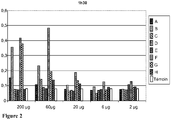
- the figure 2 illustrates the measurement of the alkaline phosphatase activity after 1 1/2 h of contacting the powder with cells and this according to the different doses of powder.
- the figure 3 illustrates the measurement of alkaline phosphatase activity after 3 1/2 h of contacting the powder with cells and this according to the different doses of powder.
- the figure 4 illustrates the measurement of the alkaline phosphatase activity after 7 1/2 h of contacting the powder with cells and this as a function of the different doses of powder.
- powders B, F and G allow better activation of the inflammasome, in particular with doses of between 20 ⁇ l and 200 ⁇ l. These powders can therefore intervene in the activation of the cytotoxic immune system via the anti-tumor mechanism.
- the powders B, F and G all have 3 common characteristics, namely a particle size between 0 and 25 ⁇ m, a specific surface greater than 30 m 2 / g and the sintering is carried out at a temperature of 500 ° C and 600 ° vs.
- Proteins from a vaccine prepared as described from a dog osteosarcoma are desorbed from the particles by a solution of K 2 HPO 4 . These proteins are labeled with a biotin molecule using sulfo-NHS-biotin. They are then brought into contact with the RAW cells in culture after or not whether the cd91s have been blocked or not by anti-cd91 antibodies. The cells are then placed in the presence of a streptavidin labeled with peroxidase and revealed by a diaminobenzidine. The positive control is a gp96 labeled and used in the same manner.
- Osteosarcoma is a primary bone malignancy. It is preferably located on long bones. Dogs with osteosarcoma have a very poor life prognosis. Average survival is around 2 months. Amputation and chemotherapy give better results but they are not always possible.
- heat shock proteins can associate with peptides synthesized by cancer cells and activate the immune system (via T lymphocytes and in particular CD8), it has been tested in healthy dogs suffering from osteosarcoma , a vaccination method based on the injection of powders according to the invention carrying proteins specific to the tumor of the dog (these are mainly the heat shock proteins associated with tumor peptides). It was measured if vaccination with these powders could have a clinical effect on these healthy and pathological dogs.
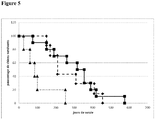
- tumor proteins from biopsies of dogs suffering from osteosarcoma were adsorbed on a PAH powder according to the invention. Eight injections were given to dogs at different time intervals. After this self-vaccine, the overall survival and the progression-free survival of osteosarcoma were measured in each dog and compared with data from the literature.
- progression-free survival is very close to overall survival and that the area of inflammation in the tumor area regresses after each injection.
- a remodeling of the tumor region is observed on X-rays after vaccination.
- the figure 5 illustrates these survival results for untreated dogs / dogs under chemotherapy / dogs vaccinated with the composition according to the invention.
- Lymphoma is a cancer of the lymphatic system that develops at the expense of lymphocytes. It is characterized by malignant cell overgrowth in secondary lymphoid organs. Among aggressive malignant lymphomas are phenotype B and T phenotype lymphomas, also called B and T lymphomas.
- a study of the effect of the composition according to the invention on lymphomas was carried out on 50 dogs suffering from histologically proven B lymphomas.
- Substages (a) corresponding to without clinical signs and (b) with clinical signs are also evaluated.
- a lymph node is removed from a dog with B lymphoma and the immunotherapy doses are prepared according to the protocol mentioned above with the method for preparing the composition and the vaccination kit (cf. examples 1 to 4).
- a dose is injected subcutaneously once a week for 4 weeks then once a month for 4 months. 8 doses are therefore used.
- Data from the literature and experimental data give the following results: Median survival (in days) Average survival (in days) Dogs at stage V (a or b) not treated 7 43 Dogs at stage V (a or b) under chemotherapy 36 93 Dogs at stage V (a or b) with more than 30% infiltrated cord, untreated 4 4 Dogs at stage V (a or b) with 30% infiltrated marrow under chemotherapy 21 30 Dogs at stage V (a or b) under chemotherapy and vaccinated with the drug according to the invention (group 1) > 210 > 225 Dogs at stage V (a or b) vaccinated with the drug according to the invention (group 2) 160 208
- a study of the effect of the composition according to the invention on lymphomas was carried out on 50 dogs suffering from histologically proven B lymphomas.
- a lymph node is removed from a dog with B lymphoma and the immunotherapy doses are prepared according to the protocol mentioned above with the method for preparing the composition and the vaccination kit (cf. examples 1 to 4).
- a dose prepared according to Example 2 is injected subcutaneously once a week for 4 weeks then once a month for 4 months. 8 doses are therefore used.
- the vaccine is prepared from a lymph node surgical biopsy.
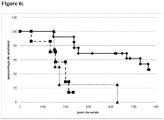
- the figure 6 illustrates the results of the study. These are three curves showing the survival in days and the percentage of survival of dogs with B lymphoma treated with the self-vaccine according to the present invention alone (- ⁇ -), of dogs treated with the self-vaccine according to present invention in combination with chemotherapy (- ⁇ -) and dogs treated with a placebo in combination with chemotherapy (- ⁇ -).
- the survival curves show a very significantly increased survival when the dogs receive a treatment combining chemotherapy and immunotherapy (the composition according to the invention) compared to those receiving only the doses of chemotherapy.
- the group receiving immunotherapy only has a survival comparable to that receiving chemotherapy alone
- the dogs received identical relief chemotherapy. Three of them also received a revaccination with vaccines made from the initial biopsy while 4 other dogs received a revaccination with a vaccine made from a new biopsy made at relapse. Both groups had greater survival than dogs who received rescue chemotherapy alone. The group of dogs vaccinated from the new biopsy has a longer survival than those of dogs vaccinated from the initial biopsy. There is therefore an interest in relapse to make a new vaccine from a new biopsy.
- Equine melanomas are much more common in gray and white horses than in horses with a dark coat. Certain breeds are particularly exposed such as the Camargue having a prevalence of nearly 70% after 15 years.
- composition according to the invention as described
- the stimulation of the immune system against abnormal proteins synthesized by tumor cells via the composition according to the invention and as described in example 2 is an interesting alternative, and all the more so since 'it has little or no side effects.
- the implementation is compatible with keeping the animal in its usual environment.
- the abnormal proteins of the cancer cells of the melanoma of the horse were adsorbed on a powder of hydroxyapatite according to the technique described in example 2 (mineral adjuvant of vaccination) with the kit described and this in order to stimulate the immune system of the animal from which cancer cells were isolated.
- An ovoid tumor of the horse was chosen as a control because it is easily measurable.
- the vaccine consists of an injection of 0.5 ml of the composition (hydroxyapatite powder loaded with specific proteins from the horse's tumor) into the subcutaneous tissue every week for 1 month and every month for 4 months, which makes a total of 8 injections.
- the tumor volume calculated from the measurements performed has reduced by 70% in just under 3 months.
- a treatment according to the invention was repeated using an initial lymph node biopsy or taken after the recurrence.
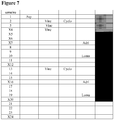
- Two groups were differentiated: a group having received chemotherapy plus treatment according to the invention and treated again according to the invention after recurrence with the initial biopsy (I), a second group having received chemotherapy plus treatment according to invention and treated again according to the invention after recurrence with the second biopsy (post recurrence) (II).
- Example 12 Synthesis of gamma interferon by T lymphocytes stimulated by dendritic cells activated in vitro by the powder used according to the invention.
- the kit according to the invention was used to purify proteins from a tumor obtained by transplanting RT-4T1 cells into balb / c mice.
- Dendritic cells of these mice are obtained from macrophages cultured in the presence of Il-4 and GM-CSF. At five days of culture, these cells are placed in the presence of varying amounts of solution for 106 cells for 48 hours. These cells are then brought into contact with T lymphocytes from the same mouse line, the gamma interferon synthesized by these cells is assayed by Elisa test. From 20 ⁇ l of solution of 106 cells, there is a significant synthesis of gamma interferon compared to the negative control.
Landscapes
- Chemical & Material Sciences (AREA)
- Health & Medical Sciences (AREA)
- Life Sciences & Earth Sciences (AREA)
- Organic Chemistry (AREA)
- Chemical Kinetics & Catalysis (AREA)
- Medicinal Chemistry (AREA)
- Veterinary Medicine (AREA)
- Pharmacology & Pharmacy (AREA)
- Animal Behavior & Ethology (AREA)
- General Health & Medical Sciences (AREA)
- Public Health (AREA)
- Analytical Chemistry (AREA)
- Epidemiology (AREA)
- Microbiology (AREA)
- Immunology (AREA)
- Mycology (AREA)
- Dermatology (AREA)
- Oncology (AREA)
- General Chemical & Material Sciences (AREA)
- Nuclear Medicine, Radiotherapy & Molecular Imaging (AREA)
- Inorganic Chemistry (AREA)
- Physics & Mathematics (AREA)
- Thermal Sciences (AREA)
- Medicines That Contain Protein Lipid Enzymes And Other Medicines (AREA)
- Medicinal Preparation (AREA)
- Pharmaceuticals Containing Other Organic And Inorganic Compounds (AREA)
- Medicines Containing Antibodies Or Antigens For Use As Internal Diagnostic Agents (AREA)
Claims (10)
- Zusammensetzung zur Verwendung als Anti-Tumor-Autovakzine für die Behandlung eines B- oder T-Lymphoms eines Subjekts, umfassend ein Hydroxylapatit- und/oder Trikalziumphosphat-Pulver mit darauf adsorbierten zytoplasmatischen Proteinen, die aus einer Tumorprobe des Subjekts erhalten wurden, wobei das Pulver eine spezifische Oberfläche SS ≥ 30 m2/g und eine Granulometriegröße G ≤ 200 µm aufweist.
- Zusammensetzung zur Verwendung nach Anspruch 1, wobei das Pulver einen Sinterschritt bei 400 bis 600°C durchlaufen hat.
- Zusammensetzung zur Verwendung nach Anspruch 1 oder 2, wobei das Pulver eine Granulometrie G ≤ 25 µm aufweist.
- Zusammensetzung zur Verwendung nach Anspruch 1 oder 2, wobei das Pulver eine Granulometrie G von 25µm bis 45µm aufweist.
- Zusammensetzung zur Verwendung nach einem der Ansprüche 1 bis 4, wobei das Röntgendiffraktionsspektrum des Pulvers ein Verhältnis der halben Breite zur vollen Höhe des Scheitels in einem Röntgendiffraktionsspektrum bei einem Winkelwert bei 2θ gleich 31.773 Grad +/- 1%, angegeben als Prozentsatz, zwischen 0,2% und 0,35% aufweist.
- Zusammensetzung zur Verwendung nach einem der Ansprüche 1 bis 5, wobei das Pulver in einer Injektionsflüssigkeit suspendiert ist.
- Zusammensetzung zur Verwendung nach einem der Ansprüche 1 bis 6, wobei das Subjekt ein Mensch ist.
- Zusammensetzung zur Verwendung nach einem der Ansprüche 1 bis 6, wobei das Subjekt ein Hund ist.
- Zusammensetzung zur Verwendung nach einem der Ansprüche 1 bis 8, zur therapeutischen Verwendung in Kombination mit einem Antitumormittel und/oder einem strahlentherapeutischen Mittel.
- Zusammensetzung zur Verwendung nach einem der Ansprüche 1 bis 9, dadurch gekennzeichnet, dass eine dem Subjekt durch Injektion verabreichte Dosis zwischen 30 und 50 mg Hydroxylapatit und zwischen 1000 und 2000 µg Proteine enthält.
Applications Claiming Priority (2)
| Application Number | Priority Date | Filing Date | Title |
|---|---|---|---|
| FR1354361A FR3005649B1 (fr) | 2013-05-15 | 2013-05-15 | Poudre d'hydroxyapatite et son procede de production, composition a base de cette poudre et son procede de preparation et kit comprenant cette poudre |
| PCT/FR2014/050478 WO2014184453A1 (fr) | 2013-05-15 | 2014-03-04 | Poudre d'hydroxyapatite et son procede de production, composition a base de cette poudre et son procede de preparation et kit comprenant cette poudre |
Publications (2)
| Publication Number | Publication Date |
|---|---|
| EP2996801A1 EP2996801A1 (de) | 2016-03-23 |
| EP2996801B1 true EP2996801B1 (de) | 2020-07-01 |
Family
ID=49237267
Family Applications (1)
| Application Number | Title | Priority Date | Filing Date |
|---|---|---|---|
| EP14719037.5A Active EP2996801B1 (de) | 2013-05-15 | 2014-03-04 | Zusammensetzung auf basis eines hydroxyapatitpulvers zur behandlung von b- oder t-lymphom |
Country Status (5)
| Country | Link |
|---|---|
| US (1) | US11338034B2 (de) |
| EP (1) | EP2996801B1 (de) |
| ES (1) | ES2820538T3 (de) |
| FR (1) | FR3005649B1 (de) |
| WO (1) | WO2014184453A1 (de) |
Families Citing this family (4)
| Publication number | Priority date | Publication date | Assignee | Title |
|---|---|---|---|---|
| FR3078887B1 (fr) | 2018-03-14 | 2020-12-18 | Urodelia | Vaccins autologues contre le cancer |
| CN109549954B (zh) * | 2018-12-13 | 2020-09-04 | 中国科学院深圳先进技术研究院 | 一种磷基材料制剂及其制备方法和应用 |
| EP4124663A1 (de) | 2021-07-29 | 2023-02-01 | Hastim | Verfahren zur vorhersage einer reaktion auf eine krebstherapie |
| FR3165777A1 (fr) | 2024-08-27 | 2026-03-06 | Hastim | Vaccin autologue contre le cancer enrichi en HSP110 |
Family Cites Families (6)
| Publication number | Priority date | Publication date | Assignee | Title |
|---|---|---|---|---|
| JPH01230413A (ja) * | 1988-03-11 | 1989-09-13 | Kanto Chem Co Inc | 球形ヒドロキシアパタイト焼結体の製造方法、並びに該球形とヒドロキシアパタイト焼結体から成るクロマトグラフイ用充填剤 |
| US5935576A (en) | 1995-09-13 | 1999-08-10 | Fordham University | Compositions and methods for the treatment and prevention of neoplastic diseases using heat shock proteins complexed with exogenous antigens |
| US6017540A (en) | 1997-02-07 | 2000-01-25 | Fordham University | Prevention and treatment of primary and metastatic neoplastic diseases and infectious diseases with heat shock/stress protein-peptide complexes |
| JP4172937B2 (ja) * | 2002-01-11 | 2008-10-29 | Hoya株式会社 | 粉体の製造方法 |
| FR2885525B1 (fr) | 2005-05-13 | 2009-09-18 | Urodelia Sa | Medicament notamment anti-cancereux, destine a des traitements par immunotherapie, en particulier autologue |
| JP5724050B2 (ja) * | 2009-09-28 | 2015-05-27 | Hoya株式会社 | 粉体、粉体の製造方法、吸着装置 |
-
2013
- 2013-05-15 FR FR1354361A patent/FR3005649B1/fr active Active
-
2014
- 2014-03-04 US US14/891,476 patent/US11338034B2/en active Active
- 2014-03-04 EP EP14719037.5A patent/EP2996801B1/de active Active
- 2014-03-04 WO PCT/FR2014/050478 patent/WO2014184453A1/fr not_active Ceased
- 2014-03-04 ES ES14719037T patent/ES2820538T3/es active Active
Non-Patent Citations (1)
| Title |
|---|
| None * |
Also Published As
| Publication number | Publication date |
|---|---|
| FR3005649B1 (fr) | 2023-03-31 |
| US11338034B2 (en) | 2022-05-24 |
| WO2014184453A1 (fr) | 2014-11-20 |
| ES2820538T3 (es) | 2021-04-21 |
| US20210308259A1 (en) | 2021-10-07 |
| EP2996801A1 (de) | 2016-03-23 |
| FR3005649A1 (fr) | 2014-11-21 |
Similar Documents
| Publication | Publication Date | Title |
|---|---|---|
| Obrador et al. | Glioblastoma therapy: past, present and future | |
| US20220016164A1 (en) | Pharmaceutical composition for use in the treatment of pancreatic cancer | |
| CN115103689A (zh) | 用于药物递送的树枝状大分子组合物和方法 | |
| EP1885337B1 (de) | Arzneimittel, insbesondere antikrebsmittel, zur behandlung unter verwendung von immuntherapie, insbesondere autologer | |
| Yang et al. | A new concept of enhancing immuno-chemotherapeutic effects against B16F10 tumor via systemic administration by taking advantages of the limitation of EPR effect | |
| CN114349950B (zh) | 一种抗体合成菌-纳米刺激剂杂合体系统及其应用 | |
| EP3765067B1 (de) | Autologe krebsvakzine | |
| JP2020511147A (ja) | 薬剤負荷ナノ粒子が表面に結合したcar t細胞の養子移入およびその使用 | |
| EP2996801A1 (de) | Hydroxyapatitpulver und verfahren zu seiner herstellung, zusammensetzung auf basis dieses pulver und verfahren zur herstellung davon sowie kit mit diesem pulver | |
| JP5642892B2 (ja) | 多形膠芽腫の治療のためのマシテンタンを含有する組み合わせ剤 | |
| FR3072281A1 (fr) | Nanovecteurs et utilisations, en particulier pour le traitement de tumeurs | |
| WO2021084166A1 (fr) | Nanostructure d'or comprenant des enzymes et des agents antioxydants | |
| CA3140681A1 (en) | Compositions and methods relating to erythrocytes with adhered particles | |
| EP3917561A1 (de) | Pharmazeutische zusammensetzung zur verwendung in der behandlung von pankreaskarzinom | |
| EP4247435A1 (de) | Verfahren zur herstellung von nanopartikeln | |
| US20240026294A1 (en) | Nanoparticle-mediated immune cell manufacture and use thereof | |
| Gong et al. | Leveraging Naturally Assembled Tumor Extracellular Vesicles as Self-Adjuvanting Nanovaccines to Potentiate Cancer Immunotherapy via cGAS/STING Activation | |
| WO2021061944A1 (en) | Creatine for immunotherapy | |
| Gutierrez | Utilization of Detonation Nanodiamonds: Nanocarrier for Gene Therapy in Non-Small Cell Lung Cancer | |
| NL2024515B1 (en) | Pharmaceutical composition for use in the treatment of pancreatic cancer | |
| WO2026047307A1 (fr) | Vaccin autologue contre le cancer enrichi en hsp110 | |
| Liu et al. | ROS-Responsive MnO | |
| HK40081468A (en) | Dendrimer compositions and methods for drug delivery | |
| Sunil | Credit Author Statement Vishnu Sunil: Conceptualization, Methodology, Investigation, Data Curation, Writing–Original Draft. Anbu Mozhi: Methodology, Investigation (H&E staining, TUNEL assay). Wenbo Zhan: Methodology, Formal Analysis, Investigation. Jia Heng Teoh: Methodology, Investigation (3D printing). Chi-Hwa Wang– |
Legal Events
| Date | Code | Title | Description |
|---|---|---|---|
| PUAI | Public reference made under article 153(3) epc to a published international application that has entered the european phase |
Free format text: ORIGINAL CODE: 0009012 |
|
| 17P | Request for examination filed |
Effective date: 20151208 |
|
| AK | Designated contracting states |
Kind code of ref document: A1 Designated state(s): AL AT BE BG CH CY CZ DE DK EE ES FI FR GB GR HR HU IE IS IT LI LT LU LV MC MK MT NL NO PL PT RO RS SE SI SK SM TR |
|
| AX | Request for extension of the european patent |
Extension state: BA ME |
|
| DAX | Request for extension of the european patent (deleted) | ||
| STAA | Information on the status of an ep patent application or granted ep patent |
Free format text: STATUS: EXAMINATION IS IN PROGRESS |
|
| 17Q | First examination report despatched |
Effective date: 20181106 |
|
| GRAP | Despatch of communication of intention to grant a patent |
Free format text: ORIGINAL CODE: EPIDOSNIGR1 |
|
| STAA | Information on the status of an ep patent application or granted ep patent |
Free format text: STATUS: GRANT OF PATENT IS INTENDED |
|
| INTG | Intention to grant announced |
Effective date: 20200122 |
|
| RIN1 | Information on inventor provided before grant (corrected) |
Inventor name: FRAYSSINET, PATRICK Inventor name: ROUQUET, NICOLE |
|
| GRAS | Grant fee paid |
Free format text: ORIGINAL CODE: EPIDOSNIGR3 |
|
| GRAA | (expected) grant |
Free format text: ORIGINAL CODE: 0009210 |
|
| STAA | Information on the status of an ep patent application or granted ep patent |
Free format text: STATUS: THE PATENT HAS BEEN GRANTED |
|
| AK | Designated contracting states |
Kind code of ref document: B1 Designated state(s): AL AT BE BG CH CY CZ DE DK EE ES FI FR GB GR HR HU IE IS IT LI LT LU LV MC MK MT NL NO PL PT RO RS SE SI SK SM TR |
|
| REG | Reference to a national code |
Ref country code: CH Ref legal event code: EP Ref country code: AT Ref legal event code: REF Ref document number: 1285632 Country of ref document: AT Kind code of ref document: T Effective date: 20200715 |
|
| REG | Reference to a national code |
Ref country code: IE Ref legal event code: FG4D Free format text: LANGUAGE OF EP DOCUMENT: FRENCH |
|
| REG | Reference to a national code |
Ref country code: DE Ref legal event code: R096 Ref document number: 602014067215 Country of ref document: DE |
|
| REG | Reference to a national code |
Ref country code: CH Ref legal event code: NV Representative=s name: VALIPAT S.A. C/O BOVARD SA NEUCHATEL, CH |
|
| REG | Reference to a national code |
Ref country code: LT Ref legal event code: MG4D |
|
| PG25 | Lapsed in a contracting state [announced via postgrant information from national office to epo] |
Ref country code: BG Free format text: LAPSE BECAUSE OF FAILURE TO SUBMIT A TRANSLATION OF THE DESCRIPTION OR TO PAY THE FEE WITHIN THE PRESCRIBED TIME-LIMIT Effective date: 20201001 |
|
| REG | Reference to a national code |
Ref country code: NL Ref legal event code: MP Effective date: 20200701 |
|
| REG | Reference to a national code |
Ref country code: AT Ref legal event code: MK05 Ref document number: 1285632 Country of ref document: AT Kind code of ref document: T Effective date: 20200701 |
|
| PG25 | Lapsed in a contracting state [announced via postgrant information from national office to epo] |
Ref country code: FI Free format text: LAPSE BECAUSE OF FAILURE TO SUBMIT A TRANSLATION OF THE DESCRIPTION OR TO PAY THE FEE WITHIN THE PRESCRIBED TIME-LIMIT Effective date: 20200701 Ref country code: CZ Free format text: LAPSE BECAUSE OF FAILURE TO SUBMIT A TRANSLATION OF THE DESCRIPTION OR TO PAY THE FEE WITHIN THE PRESCRIBED TIME-LIMIT Effective date: 20200701 Ref country code: NO Free format text: LAPSE BECAUSE OF FAILURE TO SUBMIT A TRANSLATION OF THE DESCRIPTION OR TO PAY THE FEE WITHIN THE PRESCRIBED TIME-LIMIT Effective date: 20201001 Ref country code: AT Free format text: LAPSE BECAUSE OF FAILURE TO SUBMIT A TRANSLATION OF THE DESCRIPTION OR TO PAY THE FEE WITHIN THE PRESCRIBED TIME-LIMIT Effective date: 20200701 Ref country code: SE Free format text: LAPSE BECAUSE OF FAILURE TO SUBMIT A TRANSLATION OF THE DESCRIPTION OR TO PAY THE FEE WITHIN THE PRESCRIBED TIME-LIMIT Effective date: 20200701 Ref country code: GR Free format text: LAPSE BECAUSE OF FAILURE TO SUBMIT A TRANSLATION OF THE DESCRIPTION OR TO PAY THE FEE WITHIN THE PRESCRIBED TIME-LIMIT Effective date: 20201002 Ref country code: PT Free format text: LAPSE BECAUSE OF FAILURE TO SUBMIT A TRANSLATION OF THE DESCRIPTION OR TO PAY THE FEE WITHIN THE PRESCRIBED TIME-LIMIT Effective date: 20201102 Ref country code: LT Free format text: LAPSE BECAUSE OF FAILURE TO SUBMIT A TRANSLATION OF THE DESCRIPTION OR TO PAY THE FEE WITHIN THE PRESCRIBED TIME-LIMIT Effective date: 20200701 Ref country code: HR Free format text: LAPSE BECAUSE OF FAILURE TO SUBMIT A TRANSLATION OF THE DESCRIPTION OR TO PAY THE FEE WITHIN THE PRESCRIBED TIME-LIMIT Effective date: 20200701 |
|
| PG25 | Lapsed in a contracting state [announced via postgrant information from national office to epo] |
Ref country code: PL Free format text: LAPSE BECAUSE OF FAILURE TO SUBMIT A TRANSLATION OF THE DESCRIPTION OR TO PAY THE FEE WITHIN THE PRESCRIBED TIME-LIMIT Effective date: 20200701 Ref country code: LV Free format text: LAPSE BECAUSE OF FAILURE TO SUBMIT A TRANSLATION OF THE DESCRIPTION OR TO PAY THE FEE WITHIN THE PRESCRIBED TIME-LIMIT Effective date: 20200701 Ref country code: RS Free format text: LAPSE BECAUSE OF FAILURE TO SUBMIT A TRANSLATION OF THE DESCRIPTION OR TO PAY THE FEE WITHIN THE PRESCRIBED TIME-LIMIT Effective date: 20200701 Ref country code: IS Free format text: LAPSE BECAUSE OF FAILURE TO SUBMIT A TRANSLATION OF THE DESCRIPTION OR TO PAY THE FEE WITHIN THE PRESCRIBED TIME-LIMIT Effective date: 20201101 |
|
| PG25 | Lapsed in a contracting state [announced via postgrant information from national office to epo] |
Ref country code: NL Free format text: LAPSE BECAUSE OF FAILURE TO SUBMIT A TRANSLATION OF THE DESCRIPTION OR TO PAY THE FEE WITHIN THE PRESCRIBED TIME-LIMIT Effective date: 20200701 |
|
| REG | Reference to a national code |
Ref country code: DE Ref legal event code: R097 Ref document number: 602014067215 Country of ref document: DE |
|
| REG | Reference to a national code |
Ref country code: ES Ref legal event code: FG2A Ref document number: 2820538 Country of ref document: ES Kind code of ref document: T3 Effective date: 20210421 |
|
| PG25 | Lapsed in a contracting state [announced via postgrant information from national office to epo] |
Ref country code: RO Free format text: LAPSE BECAUSE OF FAILURE TO SUBMIT A TRANSLATION OF THE DESCRIPTION OR TO PAY THE FEE WITHIN THE PRESCRIBED TIME-LIMIT Effective date: 20200701 Ref country code: SM Free format text: LAPSE BECAUSE OF FAILURE TO SUBMIT A TRANSLATION OF THE DESCRIPTION OR TO PAY THE FEE WITHIN THE PRESCRIBED TIME-LIMIT Effective date: 20200701 Ref country code: DK Free format text: LAPSE BECAUSE OF FAILURE TO SUBMIT A TRANSLATION OF THE DESCRIPTION OR TO PAY THE FEE WITHIN THE PRESCRIBED TIME-LIMIT Effective date: 20200701 Ref country code: EE Free format text: LAPSE BECAUSE OF FAILURE TO SUBMIT A TRANSLATION OF THE DESCRIPTION OR TO PAY THE FEE WITHIN THE PRESCRIBED TIME-LIMIT Effective date: 20200701 |
|
| PLBE | No opposition filed within time limit |
Free format text: ORIGINAL CODE: 0009261 |
|
| STAA | Information on the status of an ep patent application or granted ep patent |
Free format text: STATUS: NO OPPOSITION FILED WITHIN TIME LIMIT |
|
| PG25 | Lapsed in a contracting state [announced via postgrant information from national office to epo] |
Ref country code: AL Free format text: LAPSE BECAUSE OF FAILURE TO SUBMIT A TRANSLATION OF THE DESCRIPTION OR TO PAY THE FEE WITHIN THE PRESCRIBED TIME-LIMIT Effective date: 20200701 |
|
| 26N | No opposition filed |
Effective date: 20210406 |
|
| PG25 | Lapsed in a contracting state [announced via postgrant information from national office to epo] |
Ref country code: SK Free format text: LAPSE BECAUSE OF FAILURE TO SUBMIT A TRANSLATION OF THE DESCRIPTION OR TO PAY THE FEE WITHIN THE PRESCRIBED TIME-LIMIT Effective date: 20200701 |
|
| PG25 | Lapsed in a contracting state [announced via postgrant information from national office to epo] |
Ref country code: SI Free format text: LAPSE BECAUSE OF FAILURE TO SUBMIT A TRANSLATION OF THE DESCRIPTION OR TO PAY THE FEE WITHIN THE PRESCRIBED TIME-LIMIT Effective date: 20200701 |
|
| PG25 | Lapsed in a contracting state [announced via postgrant information from national office to epo] |
Ref country code: MC Free format text: LAPSE BECAUSE OF FAILURE TO SUBMIT A TRANSLATION OF THE DESCRIPTION OR TO PAY THE FEE WITHIN THE PRESCRIBED TIME-LIMIT Effective date: 20200701 |
|
| PG25 | Lapsed in a contracting state [announced via postgrant information from national office to epo] |
Ref country code: LU Free format text: LAPSE BECAUSE OF NON-PAYMENT OF DUE FEES Effective date: 20210304 Ref country code: IE Free format text: LAPSE BECAUSE OF NON-PAYMENT OF DUE FEES Effective date: 20210304 |
|
| REG | Reference to a national code |
Ref country code: BE Ref legal event code: HC Owner name: HASTIM; FR Free format text: DETAILS ASSIGNMENT: CHANGE OF OWNER(S), CHANGE OF OWNER(S) NAME; FORMER OWNER NAME: URODELIA Effective date: 20220311 |
|
| REG | Reference to a national code |
Ref country code: DE Ref legal event code: R081 Ref document number: 602014067215 Country of ref document: DE Owner name: HASTIM, FR Free format text: FORMER OWNER: URODELIA, SAIGUEDE, FR |
|
| REG | Reference to a national code |
Ref country code: ES Ref legal event code: PC2A Owner name: HASTIM Effective date: 20220915 |
|
| PG25 | Lapsed in a contracting state [announced via postgrant information from national office to epo] |
Ref country code: HU Free format text: LAPSE BECAUSE OF FAILURE TO SUBMIT A TRANSLATION OF THE DESCRIPTION OR TO PAY THE FEE WITHIN THE PRESCRIBED TIME-LIMIT; INVALID AB INITIO Effective date: 20140304 |
|
| PG25 | Lapsed in a contracting state [announced via postgrant information from national office to epo] |
Ref country code: CY Free format text: LAPSE BECAUSE OF FAILURE TO SUBMIT A TRANSLATION OF THE DESCRIPTION OR TO PAY THE FEE WITHIN THE PRESCRIBED TIME-LIMIT Effective date: 20200701 |
|
| P01 | Opt-out of the competence of the unified patent court (upc) registered |
Effective date: 20230526 |
|
| PG25 | Lapsed in a contracting state [announced via postgrant information from national office to epo] |
Ref country code: MK Free format text: LAPSE BECAUSE OF FAILURE TO SUBMIT A TRANSLATION OF THE DESCRIPTION OR TO PAY THE FEE WITHIN THE PRESCRIBED TIME-LIMIT Effective date: 20200701 |
|
| PG25 | Lapsed in a contracting state [announced via postgrant information from national office to epo] |
Ref country code: TR Free format text: LAPSE BECAUSE OF FAILURE TO SUBMIT A TRANSLATION OF THE DESCRIPTION OR TO PAY THE FEE WITHIN THE PRESCRIBED TIME-LIMIT Effective date: 20200701 |
|
| PG25 | Lapsed in a contracting state [announced via postgrant information from national office to epo] |
Ref country code: MT Free format text: LAPSE BECAUSE OF FAILURE TO SUBMIT A TRANSLATION OF THE DESCRIPTION OR TO PAY THE FEE WITHIN THE PRESCRIBED TIME-LIMIT Effective date: 20200701 |
|
| REG | Reference to a national code |
Ref country code: CH Ref legal event code: R18 Free format text: ST27 STATUS EVENT CODE: U-0-0-R10-R18 (AS PROVIDED BY THE NATIONAL OFFICE) Effective date: 20260209 |
|
| REG | Reference to a national code |
Ref country code: CH Ref legal event code: R18 Free format text: ST27 STATUS EVENT CODE: U-0-0-R10-R18 (AS PROVIDED BY THE NATIONAL OFFICE) Effective date: 20260320 |
|
| PGFP | Annual fee paid to national office [announced via postgrant information from national office to epo] |
Ref country code: GB Payment date: 20260331 Year of fee payment: 13 |
|
| PGFP | Annual fee paid to national office [announced via postgrant information from national office to epo] |
Ref country code: IT Payment date: 20260316 Year of fee payment: 13 Ref country code: BE Payment date: 20260330 Year of fee payment: 13 |
|
| PGFP | Annual fee paid to national office [announced via postgrant information from national office to epo] |
Ref country code: FR Payment date: 20260316 Year of fee payment: 13 |
|
| REG | Reference to a national code |
Ref country code: CH Ref legal event code: U11 Free format text: ST27 STATUS EVENT CODE: U-0-0-U10-U11 (AS PROVIDED BY THE NATIONAL OFFICE) Effective date: 20260504 |
|
| PGFP | Annual fee paid to national office [announced via postgrant information from national office to epo] |
Ref country code: ES Payment date: 20260424 Year of fee payment: 13 |
|
| PGFP | Annual fee paid to national office [announced via postgrant information from national office to epo] |
Ref country code: DE Payment date: 20260416 Year of fee payment: 13 |
|
| PGFP | Annual fee paid to national office [announced via postgrant information from national office to epo] |
Ref country code: CH Payment date: 20260504 Year of fee payment: 13 |