EP2996552B1 - Apparatus and method for intravascular measurements - Google Patents
Apparatus and method for intravascular measurements Download PDFInfo
- Publication number
- EP2996552B1 EP2996552B1 EP14820180.9A EP14820180A EP2996552B1 EP 2996552 B1 EP2996552 B1 EP 2996552B1 EP 14820180 A EP14820180 A EP 14820180A EP 2996552 B1 EP2996552 B1 EP 2996552B1
- Authority
- EP
- European Patent Office
- Prior art keywords
- display unit
- portable apparatus
- stenosis
- sensor
- pressure measurements
- Prior art date
- Legal status (The legal status is an assumption and is not a legal conclusion. Google has not performed a legal analysis and makes no representation as to the accuracy of the status listed.)
- Active
Links
Images




Classifications
-
- A—HUMAN NECESSITIES
- A61—MEDICAL OR VETERINARY SCIENCE; HYGIENE
- A61B—DIAGNOSIS; SURGERY; IDENTIFICATION
- A61B5/00—Measuring for diagnostic purposes; Identification of persons
- A61B5/02—Detecting, measuring or recording for evaluating the cardiovascular system, e.g. pulse, heart rate, blood pressure or blood flow
- A61B5/02007—Evaluating blood vessel condition, e.g. elasticity, compliance
-
- A—HUMAN NECESSITIES
- A61—MEDICAL OR VETERINARY SCIENCE; HYGIENE
- A61B—DIAGNOSIS; SURGERY; IDENTIFICATION
- A61B5/00—Measuring for diagnostic purposes; Identification of persons
- A61B5/02—Detecting, measuring or recording for evaluating the cardiovascular system, e.g. pulse, heart rate, blood pressure or blood flow
- A61B5/021—Measuring pressure in heart or blood vessels
- A61B5/0215—Measuring pressure in heart or blood vessels by means inserted into the body
-
- A—HUMAN NECESSITIES
- A61—MEDICAL OR VETERINARY SCIENCE; HYGIENE
- A61B—DIAGNOSIS; SURGERY; IDENTIFICATION
- A61B5/00—Measuring for diagnostic purposes; Identification of persons
- A61B5/74—Details of notification to user or communication with user or patient; User input means
- A61B5/742—Details of notification to user or communication with user or patient; User input means using visual displays
-
- A—HUMAN NECESSITIES
- A61—MEDICAL OR VETERINARY SCIENCE; HYGIENE
- A61B—DIAGNOSIS; SURGERY; IDENTIFICATION
- A61B2560/00—Constructional details of operational features of apparatus; Accessories for medical measuring apparatus
- A61B2560/02—Operational features
- A61B2560/0204—Operational features of power management
-
- A—HUMAN NECESSITIES
- A61—MEDICAL OR VETERINARY SCIENCE; HYGIENE
- A61B—DIAGNOSIS; SURGERY; IDENTIFICATION
- A61B2560/00—Constructional details of operational features of apparatus; Accessories for medical measuring apparatus
- A61B2560/02—Operational features
- A61B2560/0266—Operational features for monitoring or limiting apparatus function
- A61B2560/028—Arrangements to prevent overuse, e.g. by counting the number of uses
-
- A—HUMAN NECESSITIES
- A61—MEDICAL OR VETERINARY SCIENCE; HYGIENE
- A61B—DIAGNOSIS; SURGERY; IDENTIFICATION
- A61B2560/00—Constructional details of operational features of apparatus; Accessories for medical measuring apparatus
- A61B2560/04—Constructional details of apparatus
- A61B2560/0431—Portable apparatus, e.g. comprising a handle or case
-
- A—HUMAN NECESSITIES
- A61—MEDICAL OR VETERINARY SCIENCE; HYGIENE
- A61B—DIAGNOSIS; SURGERY; IDENTIFICATION
- A61B5/00—Measuring for diagnostic purposes; Identification of persons
- A61B5/74—Details of notification to user or communication with user or patient; User input means
- A61B5/7475—User input or interface means, e.g. keyboard, pointing device, joystick
Definitions
- the disclosed technology relates to intravascular diagnosis. More particularly, the disclosed technology relates to diagnosing the severity of stenosis in the vasculature of a patient.
- US2007/255144A1 discloses a sensor assembly arranged to be disposed in a body for measuring a physiological variable. More particularly there is disclosed a sensor and guide wire assembly which communicates with an external unit by an inductive coupling between a first coil provided in the sensor assembly and a second, external coil which is disposed in or connected to the external unit.
- US2010/137736A1 discloses a system and method that allows diagnosis of a patient for physiological abnormality such as a neurological deficiency.
- US2011/009694A1 discloses a hand-held minimally dimensioned diagnostic device, having integrated distal end visualization.
- the disclosed technology relates to diagnosing the severity of stenoses in the vasculature of a patient.
- the disclosed technology relates to diagnosing the severity of stenosis in the vasculature of a patient.
- the disclosed technology can be used as an adjunct to conventional angiographic procedures to provide important quantitative measurements of a blood vessel lumen.
- the illustrated apparatus 100 includes a monitoring guidewire 102 and a portable display unit 104.
- the portable display unit 104 can be a handheld display unit, such that any and all aspects and embodiments described herein as being applicable to a portable display unit are also applicable to the disclosed handheld display unit.
- the handheld display unit can be equal to or less than 30cm x 30 cm x 30cm in size.
- the monitoring guidewire 102 is introduced into the vasculature of a patient with the assistance of conventional interventional equipment known to those skilled in the art, such as catheters.
- the portable display unit 104 can communicate with the monitoring guidewire 102 and can display information based on the communications received from the monitoring guidewire 102.
- the illustrated monitoring guidewire 102 can include several components, including a core wire 106 and one or more sensors 108 disposed in a distal region of the core wire 106.
- distal and proximal refer to physical directions within a blood vessel lumen. Specifically, in relation to the insertion point of a device into a patient, the term “distal” refers to the direction from the insertion point inwards into a blood vessel, and the term “proximal” refers to the direction from the inside of a blood vessel out towards the insertion point.
- proximal and distal can also refer to different ends of a device, with “proximal” being the end towards an insertion point into a blood vessel lumen and with “distal” being the end away from the insertion point.
- the one or more sensors 108 disposed in a distal region of the core wire 106 can include one or more hemodynamic pressure sensors and/or one or more temperature sensors.
- the pressure sensor(s) can be a piezo-resistive pressure sensor.
- the monitoring guidewire 102 can also include a protective structure 110 surrounding the sensor(s) 108, and can include a communication unit 112. The protective structure 110 of the monitoring guidewire 102 will be described in more detail later herein in connection with FIGS. 5-6 .
- the communication unit 112 can employ wireless communication technology such as bluetooth, WiFi (802.11), or any other wireless technology.
- the communication unit 112 can be a wireline communication unit that can include one or more wires for communicating electromagnetic signals and/or one or more optical fibers for communicating optical signals.
- the monitoring guidewire 102 can include other components that are not illustrated, such as a power source, A/D converters, application specific integrated circuits (ASIC), a processor, memory, timing circuitry, and/or other power, analog, or digital circuitry. Such components will be known to those skilled in the art.
- the portable display unit 104 can include a display screen 114, one or more batteries 116, memory and/or storage 118, a communication unit 120, power management unit 122, and a processor 124.
- the processor 124 can be a general purpose processor or can be an application specific integrated circuit.
- the display screen 114 can be a liquid crystal display, an organic light emitting diode display, or another type of display technology.
- the memory / storage 118 can include one or more of solid state memory / storage, magnetic disc storage, and/or any other type of memory / storage that will be known to those skilled in the art.
- the memory / storage 118 can include software instructions that are executed by the processor 124.
- the communication unit 120 can employ wireless communication technology such as bluetooth, WiFi (802.11), or any other wireless technology.
- the communication unit 120 can be a wireline communication unit that can include one or more wires for communicating electromagnetic signals and/or one or more optical fibers for communicating optical signals.
- the portable display unit 104 can include other components that are not illustrated, such as user interface, operating system software, display driver circuitry, A/D converters, application specific integrated circuits (ASIC), timing circuitry, and/or other power, analog, or digital circuitry. Such components will be known to those skilled in the art.
- the monitoring guidewire contains a pressure sensor and/or other sensors at the distal end.
- the electrical signals from the sensor(s) can be sent over a wire connection to the portable display unit.
- the portable display unit can include a communications port that receives external sensor input such as aortic output pressure (AO IN) from pressure transducers / hemodynamic systems (not shown).
- the portable display unit can also include an output communication port for outputting data to an external storage device, to another display, to a printer, and/or to a hemodynamic system (not shown).
- the monitoring guidewire 302 can be approximately 180 centimeters in length. In other embodiments, the monitoring guidewire 302 can be another length.
- the monitoring guidewire 302 can have one or more sensors in the distal region 304 of the monitoring guidewire 302.
- the portable display unit 306 can have a small form factor such that it is a handheld display unit. In one embodiment, a handheld display unit can be equal to or less than 30cm x 30 cm x 30cm in size.
- FIG. 4 is a diagram of another exemplary embodiment of the disclosed intravascular diagnosis apparatus.
- the monitoring guidewire 402 can be attached and detached from a connector 406 of the portable display unit 400.
- the connector 406 can include a button (not shown) which opens an aperture in the connector 406.
- a user can press and hold the button of the connector 406 and insert the monitoring guidewire 402 into the aperture until the monitoring guidewire 402 is fully inserted into connector 406. Once inserted, the user can release the button, which will then secure the monitoring guidewire 402 in place and provide a connection between the monitoring guidewire 402 and connector 406.
- the connector 406 can engage the monitoring guidewire 402 by a screw engagement, a twist engagement, a snap engagement, or an interference fit.
- the described types of engagement are exemplary and do not limit the scope of the disclosed technology.
- Other types of ways for the connector 406 to engage the monitoring guidewire 402 are contemplated to be within the scope of the disclosed technology.
- the connector connection establishes a communicative connection between the monitoring guidewire 402 and the portable display unit 400.
- the monitoring guidewire 402 and the connector 406 can contain electrical wires that connect the monitoring guidewire 402 to the portable display unit 400 and convey signals from the monitoring guidewire sensor(s) to the portable display unit 400.
- the connector connection establishes a mechanical connection between the monitoring guidewire 402 and the connector 406 to control the guidewire 402 within a vasculature.
- the connector 406 is tethered to the main housing 410 of the portable display unit 400.
- the tether can be 6 inches to 12 inches long and can allow a user to manipulate the monitoring guidewire 402 freely without the portable display unit main housing 410 being an impediment.
- the tether can be another length.
- the connector can be a connection port integrated in the portable display unit main housing 410.
- the connector 406 establishes a communicative connection with the monitoring guidewire 402.
- a torquer (not shown) can be configured to engage the monitoring guidewire 402 to control the guidewire within a vasculature when the monitoring guidewire 402 is not mechanically and/or electrically connected to the connector 406.
- the torquer can be configured to engage the monitoring guidewire 402 to control the guidewire within a vasculature when the monitoring guidewire 402 is mechanically and/or electrically connected to the connector 406.
- the monitoring guidewire 402 does not need a torquer or the connector 406 for insertion into the vasculature of a patient and for navigation therein, and provides this capability by itself.
- the portable display unit 400 includes a display screen 404 that can display sensor measurements and/or computed information (e.g., fractional flow reserve ratio), in numerical format and/or in waveform format.
- the portable display unit 400 can include one or more buttons (not shown) or a touch screen to allow a user to provide input to the portable display unit 400.
- the screen 404 of the portable display unit can be folded in the main housing 410 before use to minimize the size of packaging when delivering the portal display unit 400.
- the user can pivot the screen 404 from the folded position to an open position (as illustrated), providing an appropriate viewing angle to the user for the diagnosis procedure.
- pivoting of the display screen 404 from the folded position to an open position acts as an ON switch that enables power to be delivered to the portable display unit.
- the portable display unit 400 also includes a communication port 408.
- the communication port 408 allows a user to connect the portable display unit 400 to an external system (not shown).
- the external system can communicate a sensor signal to the portable display unit 400 through the communication port 408.
- the sensor signal received at the communication port can be can be a pressure measurement and can be used in calculating fractional flow reserve.
- the monitoring guidewire 102 can include a protective structure 110 surrounding the sensor(s) 108.
- a protective structure 502 surrounding the sensor(s) 510 at the distal region of the monitoring guidewire is shown.
- the protective structure 502 is a housing that has been laser etched with a particular pattern cut to provide flexibility and/or torque translation at the distal tip or portion of the monitoring guidewire where the sensor 510 resides.
- the sensor(s) 510 can be situated in the laser etched housing at a window 504 in the housing so as to allow blood to contact the sensor(s) 510 in order to take sensor measurements.
- the core wire 508 can be grinded to provide an appropriate profile for balancing flexibility and torque translation.
- the monitoring guidewire need not include a core wire 508. Rather, the protective structure 502 can extend along the entire monitoring guidewire or a substantial portion thereof, and can be laser etched along some or all portions to provide desired flexibility and/or torque translation.
- FIG. 6 there is shown a diagram of two exemplary protective structures surrounding the sensor(s) at the distal region of a monitoring guidewire.
- One of the embodiments is a laser etched housing as described in connection with FIG. 5 .
- the other embodiment provides a coil over the sensor(s) as the protective structure. The coil is relaxed to create a window where the sensor(s) are located to allow blood to contact the sensor(s).
- the illustrated embodiments are exemplary and do not limit the scope of protective structures contemplated in the disclosed technology. Other protective structures are contemplated to be within the scope of the disclosed technology.
- the portable display unit 104 can be configured to operate for a predetermined duration or for a predetermined number of uses, and then be disposed.
- the battery 116 and/or power management unit 122 can implement these features so that the portable display unit 104 can be inoperable after being used for a particular duration or for a particular number of diagnosis procedures. Even so, the portable display unit 104 can be disposed while it is still operable, prior to it being inoperable.
- the predetermined duration can correspond to the approximate length of time of a single intravascular diagnosis procedure. In one embodiment, the predetermined duration can correspond to the approximate length of time of multiple diagnosis procedures, such as three procedures. In one embodiment, the predetermined duration can be twelve hours or twenty-four hours or several days.
- the portable display unit 104 can include one or more batteries 116 that are configured to power the portable display unit 104 for the desired duration, such that the batteries 116 are substantially depleted at the end of the desired duration. In one embodiment, the one or more batteries 116 are non-rechargeable, so that the portable display unit 104 is disposed after the batteries 116 are depleted.
- the power management unit 122 can control the operating time of the portable display unit 104 by preventing the portably display unit 104 from powering down after the display screen 114 is turned on. In such an embodiment, the portable display unit 104 will operate continuously until the batteries 116 are depleted or substantially depleted. The portable display unit 104 can be disposed prior to the batteries 116 being depleted, while the portable display unit 104 is still operable.
- the portable display unit 104 can track the number of diagnosis procedures performed and can be configured to be inoperable after a particular number of procedures has been performed. In one embodiment, the portable display unit 104 can track the number of diagnosis procedures performed by the number of times the portable display unit 114 has been turned on and/or off. In one embodiment, the portable display unit 104 can be configured to be inoperable after a single diagnosis procedure has been performed. In one aspect of the disclosed technology, the power management unit 122 can prevent the portable display unit 104 from being powered on after the particular number of procedures has been reached.
- the batteries 116 can be rechargeable and can be recharged by a power source of the portable display unit 104 and/or by a power source external to the portable display unit 104. Even when the batteries 116 are not yet depleted, the power management unit 122 can cause the portable display unit 104 to be inoperable by preventing the batteries 116 from powering the portable display unit 104.
- the intravascular diagnosis procedure will now be described with continuing reference to FIG. 1 and with reference to FIGS. 7-11 .
- Diagnosing the severity of one or more stenoses within the vasculature of a patient has been studied based on hemodynamic pressure measurements distal to a stenosis in comparison with aortic output pressure.
- the ratio of pressure distal to a stenosis to the aortic output pressure is known as "factional flow reserve", or FFR.
- the value of the FFR indicates the severity of the stenosis, and clinical data provides guidance on the type of surgical procedure that would be effective for particular FFR ranges.
- the disclosed technology includes multiple ways of computing FFR, including what will be referred to herein as “push-forward FFR”, “pull-back FFR”, and “simultaneous FFR”. Each of these can be implemented by software code or machine code stored in memory / storage 118 of the portable display unit 104 ( FIG. 1 ).
- the processor 124 can execute the software code to compute the FFR, and the resulting information can be displayed on the display screen 114.
- Each of the computation methods will now be described.
- Simultaneous FFR involves simultaneous pressure readings from two separate pressure sensors, and a computation of FFR in real-time as the pressure readings from the two separate pressure sensors are received.
- one pressure sensor is located in the monitoring guidewire 102, and is used to measure pressure distal to a stenosis in a patient.
- the pressure readings can be communicated by the communication unit 112 of the monitoring guidewire 102 to the communication unit 120 of the portable display unit 104
- This communication can be a wireless communication or can be a wireline communication through, for example, the connector illustrated in FIG. 3 .
- the other pressure sensor can measure aortic output pressure and is external to the apparatus 100 of FIG. 1 .
- the portable display unit 104 can designate the received pressure measurements as pressure distal to a stenosis (904).
- the external sensor readings can be communicated to the communication unit 120 of the portable display unit by, for example, the communication port illustrated in FIG. 3 (906).
- the portable display unit 104 can designate the received pressure measurements as pressure proximal to a stenosis (908).
- the moving means over time can compute the mean over a window of time that spans one heartbeat.
- the window of time can span less than one heartbeat or more than one heartbeat.
- the window can include newer measurements and remove older measurements to compute the moving means.
- the portable display unit 104 can receive pressure measurements and can compute the simultaneous FFR based on the received measurements.
- the portable display unit 104 can store the received pressure measurements and/or the computed simultaneous FFR in memory / storage 118, and can display the computed simultaneous FFR and/or a graph of the received pressure measurements on the display screen 114 (912).
- push-forward FFR does not receive external pressure measurements.
- push-forward FFR is computed using pressure measurements from only the pressure sensor(s) 108 in the distal region of the monitoring guidewire 102.
- a stenosis can be located and, as shown in FIG. 8 , the monitoring guidewire can be inserted into a patient to a point proximal to the stenosis.
- Pressure can be measured at this position by the sensor(s) 108 and communicated by the communication unit 112 to the portable display unit 104 (1002).
- the portable display unit 104 can store the measurements in this position in the memory / storage 118 as pressure proximal to a stenosis (1004).
- the monitoring guidewire 102 can be pushed forward past the stenosis to a point distal to the stenosis, as illustrated in FIG. 7 .
- Pressure can be measured at this position by the sensor(s) 108 and communicated by the communication unit 112 to the portable display unit 104 (1006).
- the portal display unit 104 can designate the pressure measurements received at this position as pressure distal to the stenosis (1008).
- the portal display unit 104 can display the computed push-forward FFR and/or a graph of the received and stored pressure measurements (1012).
- Push-forward FFR can be computed in the case of one stenosis and can also be computed in the case of multiple stenosis.
- P saved are moving means over time of pressure measurements proximal to all of the stenosis.
- P saved are moving means over time computed based on recorded pressure measurements.
- P saved are moving means over time computed and recorded as pressure measurements are received, and the pressure measurements may or may not be recorded. For example, in the case of two stenoses, P saved are based on pressure measurements proximal to both the first and second stenosis.
- Push-forward FFR can be calculated in this position and displayed on the display screen 114.
- P sensor are based on real time pressure measurements distal to both of the two stenoses.
- Push-forward FFR can be calculated in this position and displayed on the display screen 114.
- push-forward FFR enables FFR to be computed and displayed as the monitoring guidewire 102 is pushed forward across one or more stenoses in a blood vessel lumen.
- the only measurements and/or moving means that need to be recorded for push-forward FFR computations are pressure measurements and/or moving means of pressure measurements proximal to all stenoses, and this is performed at the outset.
- pull-back FFR does not receive external pressure measurements. Rather, pull-back FFR is computed using pressure measurements from only the pressure sensor(s) 108 in the distal region of the monitoring guidewire 102.
- a stenosis can be located and, as shown in FIG. 7 , the monitoring guidewire can be inserted into a patient to a point distal to the stenosis. Pressure can be measured at this position by the sensor(s) 108 and communicated by the communication unit 112 to the portable display unit 104 (1102).
- the portable display unit 104 can store the measurements in this position in the memory / storage 118 as pressure distal to a stenosis (1104).
- the monitoring guidewire 102 can be pulled back through the stenosis to a point proximal to the stenosis, as illustrated in FIG. 8 .
- Pressure can be measured at this position by the sensor(s) 108 and communicated by the communication unit 112 to the portable display unit 104 (1106).
- the portable display unit 104 can designate the measurements received in this position as pressure proximal to a stenosis (1108).
- the portal display unit 104 can display the computed pull-back FFR and/or a graph of the received and stored pressure measurements (1112).
- Pull-back FFR can be computed in the case of one stenosis and can also be computed in the case of multiple stenosis.
- P sensor are based on real-time pressure measurements proximal to all of the stenosis, which are the final pressure measurements that are taken.
- the monitoring guidewire pressure sensor 108 is initially placed at a position distal to both the first and the second stenoses. Pressure can be measured at this position by the sensor(s) 108 and communicated by the communication unit 112 to the portable display unit 104.
- P saved_d1 are moving means over time computed later based on recorded pressure measurements.
- P saved_d1 are moving means over time computed and recorded while the pressure measurements are received in this position, and the pressure measurements may or may not be recorded.
- the memory / storage 118 can record the pressure measurements in this position and/or computed moving means over time based on such pressure measurements. Pull-back FFR cannot yet be calculated because there is no real-time measurement yet proximal to all of the stenoses.
- the monitoring guidewire 102 can be pulled back through the first stenosis to a point between the first and second stenosis. Pressure can be measured at this position by the sensor(s) 108 and communicated by the communication unit 112 to the portable display unit 104.
- P saved_d2 are moving means over time computed later based on recorded pressure measurements.
- P saved_d1 are moving means over time computed and recorded while the pressure measurements are received in this position, and the pressure measurements may or may not be recorded.
- the memory / storage 118 can record the pressure measurements in this position and/or computed moving means over time based on such pressure measurements.
- pull-back FFR cannot yet be calculated because there is no real-time measurement yet proximal to all of the stenoses.
- the monitoring guidewire 102 can be pulled back through the second stenosis to a point proximal to both the first and second stenosis. Real-time pressure can be measured at this position by the sensor(s) 108 and communicated by the communication unit 112 to the portable display unit 104.
- the portable display unit 104 is configured with capability to compute fractional flow reserve using any of the three ways.
- the portable display unit 104 can be configured to automatically use one of the three ways of computing fractional flow reserve.
- the portable display unit 104 can be configured to automatically select one of the three ways of computing fractional flow reserve when a condition is present and to automatically select another of the three ways of computing fractional flow reserve when other conditions are present.
- the portable display unit 104 can be configured to permit a user to manually select one of the three ways of computing fraction flow reserve.
- FFR fractional flow reserve
Landscapes
- Health & Medical Sciences (AREA)
- Life Sciences & Earth Sciences (AREA)
- Medical Informatics (AREA)
- Biophysics (AREA)
- Pathology (AREA)
- Engineering & Computer Science (AREA)
- Biomedical Technology (AREA)
- Heart & Thoracic Surgery (AREA)
- Physics & Mathematics (AREA)
- Molecular Biology (AREA)
- Surgery (AREA)
- Animal Behavior & Ethology (AREA)
- General Health & Medical Sciences (AREA)
- Public Health (AREA)
- Veterinary Medicine (AREA)
- Cardiology (AREA)
- Vascular Medicine (AREA)
- Physiology (AREA)
- Measuring Pulse, Heart Rate, Blood Pressure Or Blood Flow (AREA)
Description
- The disclosed technology relates to intravascular diagnosis. More particularly, the disclosed technology relates to diagnosing the severity of stenosis in the vasculature of a patient.
- Reduced blood flow due to atherosclerotic occlusion of vessels is a major cause of vascular diseases. Pressure measurements in arterial vessels and particularly in coronary arteries prior to treatment have been used for lesion characterization and treatment selection. More specifically, pressure gradient across a lesion has been clinically used as an indicator for lesion severity. Measurements made during and after treatment allow one to assess therapy efficacy. Existing equipment for monitoring intravascular measurements have multiple, separate parts and bulky monitors. There is, accordingly, continuing interest in improved monitoring equipment.
-
US2007/255144A1 discloses a sensor assembly arranged to be disposed in a body for measuring a physiological variable. More particularly there is disclosed a sensor and guide wire assembly which communicates with an external unit by an inductive coupling between a first coil provided in the sensor assembly and a second, external coil which is disposed in or connected to the external unit. -
US2010/137736A1 discloses a system and method that allows diagnosis of a patient for physiological abnormality such as a neurological deficiency. -
US2011/009694A1 discloses a hand-held minimally dimensioned diagnostic device, having integrated distal end visualization. - The disclosed technology relates to diagnosing the severity of stenoses in the vasculature of a patient.
- In one aspect of the disclosed technology, there is disclosed a portable apparatus according to
claim 1. - Features of some examples are set forth in the dependent claims.
-
-
FIG. 1 is a block diagram of an exemplary intravascular diagnosis apparatus in accordance with the disclosed technology. -
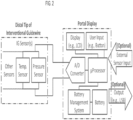
FIG. 2 is a block diagram of an embodiment of the disclosed technology; -
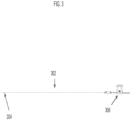
FIG. 3 is a diagram of an exemplary apparatus in accordance with the disclosed technology; -
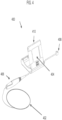
FIG. 4 is another diagram of an exemplary apparatus in accordance with the disclosed technology; -
FIG. 5 is a diagram of an exemplary distal tip of the disclosed monitoring guidewire; -
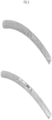
FIG. 6 is a diagram of two embodiments of the distal tip of the disclosed monitoring guidewire; -
FIG. 7 is a diagram of one position for the disclosed monitoring guidewire for estimating fractional flow reserve; -
FIG. 8 is a diagram of another position for the disclosed monitoring guidewire for estimating fractional flow reserve; -
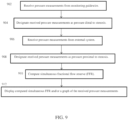
FIG. 9 is a flow diagram of exemplary operation of the disclosed technology for computing simultaneous fractional flow reserve; -
FIG. 10 is a flow diagram of exemplary operation of the disclosed technology for computing push-forward fractional flow reserve; and -
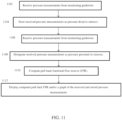
FIG. 11 is a flow diagram of exemplary operation of the disclosed technology for computing pull-back fractional flow reserve. - The disclosed technology relates to diagnosing the severity of stenosis in the vasculature of a patient. The disclosed technology can be used as an adjunct to conventional angiographic procedures to provide important quantitative measurements of a blood vessel lumen.
- Referring now to
FIG. 1 , there is shown a block diagram of an exemplary intravascular diagnosis apparatus in accordance with the disclosed technology. The illustratedapparatus 100 includes amonitoring guidewire 102 and aportable display unit 104. In one embodiment, theportable display unit 104 can be a handheld display unit, such that any and all aspects and embodiments described herein as being applicable to a portable display unit are also applicable to the disclosed handheld display unit. In one embodiment, the handheld display unit can be equal to or less than 30cm x 30 cm x 30cm in size. In operation, themonitoring guidewire 102 is introduced into the vasculature of a patient with the assistance of conventional interventional equipment known to those skilled in the art, such as catheters. Theportable display unit 104 can communicate with themonitoring guidewire 102 and can display information based on the communications received from themonitoring guidewire 102. - The illustrated
monitoring guidewire 102 can include several components, including acore wire 106 and one ormore sensors 108 disposed in a distal region of thecore wire 106. As used herein, the terms "distal" and "proximal" refer to physical directions within a blood vessel lumen. Specifically, in relation to the insertion point of a device into a patient, the term "distal" refers to the direction from the insertion point inwards into a blood vessel, and the term "proximal" refers to the direction from the inside of a blood vessel out towards the insertion point. As used herein, the terms "proximal" and "distal" can also refer to different ends of a device, with "proximal" being the end towards an insertion point into a blood vessel lumen and with "distal" being the end away from the insertion point. - With continuing reference to
FIG. 1 , the one ormore sensors 108 disposed in a distal region of thecore wire 106 can include one or more hemodynamic pressure sensors and/or one or more temperature sensors. In one embodiment, the pressure sensor(s) can be a piezo-resistive pressure sensor. As illustrated inFIG. 1 , themonitoring guidewire 102 can also include aprotective structure 110 surrounding the sensor(s) 108, and can include acommunication unit 112. Theprotective structure 110 of themonitoring guidewire 102 will be described in more detail later herein in connection withFIGS. 5-6 . - In one embodiment, the
communication unit 112 can employ wireless communication technology such as bluetooth, WiFi (802.11), or any other wireless technology. In one embodiment, thecommunication unit 112 can be a wireline communication unit that can include one or more wires for communicating electromagnetic signals and/or one or more optical fibers for communicating optical signals. Themonitoring guidewire 102 can include other components that are not illustrated, such as a power source, A/D converters, application specific integrated circuits (ASIC), a processor, memory, timing circuitry, and/or other power, analog, or digital circuitry. Such components will be known to those skilled in the art. - Referring now to the illustrated
portable display unit 104, theportable display unit 104 can include adisplay screen 114, one ormore batteries 116, memory and/orstorage 118, acommunication unit 120, power management unit 122, and aprocessor 124. In one embodiment, theprocessor 124 can be a general purpose processor or can be an application specific integrated circuit. In one embodiment, thedisplay screen 114 can be a liquid crystal display, an organic light emitting diode display, or another type of display technology. In one embodiment, the memory /storage 118 can include one or more of solid state memory / storage, magnetic disc storage, and/or any other type of memory / storage that will be known to those skilled in the art. In one embodiment, the memory /storage 118 can include software instructions that are executed by theprocessor 124. In one embodiment, thecommunication unit 120 can employ wireless communication technology such as bluetooth, WiFi (802.11), or any other wireless technology. In one embodiment, thecommunication unit 120 can be a wireline communication unit that can include one or more wires for communicating electromagnetic signals and/or one or more optical fibers for communicating optical signals. Theportable display unit 104 can include other components that are not illustrated, such as user interface, operating system software, display driver circuitry, A/D converters, application specific integrated circuits (ASIC), timing circuitry, and/or other power, analog, or digital circuitry. Such components will be known to those skilled in the art. - Referring now to
FIG. 2 , there is shown a system block diagram of another embodiment of the disclosed technology. The monitoring guidewire contains a pressure sensor and/or other sensors at the distal end. The electrical signals from the sensor(s) can be sent over a wire connection to the portable display unit. The portable display unit can include a communications port that receives external sensor input such as aortic output pressure (AO IN) from pressure transducers / hemodynamic systems (not shown). The portable display unit can also include an output communication port for outputting data to an external storage device, to another display, to a printer, and/or to a hemodynamic system (not shown). - Referring now to
FIG. 3 , there is shown an exemplary embodiment of the disclosed intravascular diagnosis apparatus. In one embodiment, the monitoring guidewire 302 can be approximately 180 centimeters in length. In other embodiments, the monitoring guidewire 302 can be another length. The monitoring guidewire 302 can have one or more sensors in the distal region 304 of the monitoring guidewire 302. In the illustrated embodiment, the portable display unit 306 can have a small form factor such that it is a handheld display unit. In one embodiment, a handheld display unit can be equal to or less than 30cm x 30 cm x 30cm in size. -
FIG. 4 is a diagram of another exemplary embodiment of the disclosed intravascular diagnosis apparatus. In the illustrated embodiment, themonitoring guidewire 402 can be attached and detached from aconnector 406 of theportable display unit 400. In one embodiment, theconnector 406 can include a button (not shown) which opens an aperture in theconnector 406. To attach or detach themonitoring guidewire 402, a user can press and hold the button of theconnector 406 and insert themonitoring guidewire 402 into the aperture until themonitoring guidewire 402 is fully inserted intoconnector 406. Once inserted, the user can release the button, which will then secure themonitoring guidewire 402 in place and provide a connection between the monitoringguidewire 402 andconnector 406. In other embodiments, theconnector 406 can engage themonitoring guidewire 402 by a screw engagement, a twist engagement, a snap engagement, or an interference fit. The described types of engagement are exemplary and do not limit the scope of the disclosed technology. Other types of ways for theconnector 406 to engage themonitoring guidewire 402 are contemplated to be within the scope of the disclosed technology. - In one embodiment, the connector connection establishes a communicative connection between the monitoring
guidewire 402 and theportable display unit 400. Themonitoring guidewire 402 and theconnector 406 can contain electrical wires that connect the monitoring guidewire 402 to theportable display unit 400 and convey signals from the monitoring guidewire sensor(s) to theportable display unit 400. - In one embodiment, the connector connection establishes a mechanical connection between the monitoring
guidewire 402 and theconnector 406 to control theguidewire 402 within a vasculature. In the illustrated embodiment, theconnector 406 is tethered to themain housing 410 of theportable display unit 400. In one embodiment, the tether can be 6 inches to 12 inches long and can allow a user to manipulate themonitoring guidewire 402 freely without the portable display unitmain housing 410 being an impediment. In one embodiment, the tether can be another length. In one embodiment (not shown), the connector can be a connection port integrated in the portable display unitmain housing 410. - In one embodiment, the
connector 406 establishes a communicative connection with themonitoring guidewire 402. In one embodiment, a torquer (not shown) can be configured to engage the monitoring guidewire 402 to control the guidewire within a vasculature when themonitoring guidewire 402 is not mechanically and/or electrically connected to theconnector 406. In one embodiment, the torquer can be configured to engage the monitoring guidewire 402 to control the guidewire within a vasculature when themonitoring guidewire 402 is mechanically and/or electrically connected to theconnector 406. In one embodiment, themonitoring guidewire 402 does not need a torquer or theconnector 406 for insertion into the vasculature of a patient and for navigation therein, and provides this capability by itself. - With continuing reference to
FIG. 4 , theportable display unit 400 includes adisplay screen 404 that can display sensor measurements and/or computed information (e.g., fractional flow reserve ratio), in numerical format and/or in waveform format. Theportable display unit 400 can include one or more buttons (not shown) or a touch screen to allow a user to provide input to theportable display unit 400. In one embodiment, thescreen 404 of the portable display unit can be folded in themain housing 410 before use to minimize the size of packaging when delivering theportal display unit 400. When a user takes theportable display unit 400 out of the packaging for use, the user can pivot thescreen 404 from the folded position to an open position (as illustrated), providing an appropriate viewing angle to the user for the diagnosis procedure. In one embodiment, pivoting of thedisplay screen 404 from the folded position to an open position acts as an ON switch that enables power to be delivered to the portable display unit. - In the illustrated embodiment, the
portable display unit 400 also includes acommunication port 408. In one embodiment, thecommunication port 408 allows a user to connect theportable display unit 400 to an external system (not shown). The external system can communicate a sensor signal to theportable display unit 400 through thecommunication port 408. In one embodiment, the sensor signal received at the communication port can be can be a pressure measurement and can be used in calculating fractional flow reserve. - Referring again to
FIG. 1 , themonitoring guidewire 102 can include aprotective structure 110 surrounding the sensor(s) 108. With reference toFIG. 5 , there is shown a diagram of an exemplaryprotective structure 502 surrounding the sensor(s) 510 at the distal region of the monitoring guidewire. In the illustrated embodiment, theprotective structure 502 is a housing that has been laser etched with a particular pattern cut to provide flexibility and/or torque translation at the distal tip or portion of the monitoring guidewire where thesensor 510 resides. The sensor(s) 510 can be situated in the laser etched housing at awindow 504 in the housing so as to allow blood to contact the sensor(s) 510 in order to take sensor measurements. In the illustrated embodiment, thecore wire 508 can be grinded to provide an appropriate profile for balancing flexibility and torque translation. In one embodiment, the monitoring guidewire need not include acore wire 508. Rather, theprotective structure 502 can extend along the entire monitoring guidewire or a substantial portion thereof, and can be laser etched along some or all portions to provide desired flexibility and/or torque translation. - Referring to
FIG. 6 , there is shown a diagram of two exemplary protective structures surrounding the sensor(s) at the distal region of a monitoring guidewire. One of the embodiments is a laser etched housing as described in connection withFIG. 5 . The other embodiment provides a coil over the sensor(s) as the protective structure. The coil is relaxed to create a window where the sensor(s) are located to allow blood to contact the sensor(s). The illustrated embodiments are exemplary and do not limit the scope of protective structures contemplated in the disclosed technology. Other protective structures are contemplated to be within the scope of the disclosed technology. - Various aspects and embodiments of the disclosed technology have been described above. The illustrations and descriptions are merely exemplary and do not limit the scope of the disclosed technology. Even though not illustrated, various embodiments can be combined and are contemplated to fall within the scope of the disclosed technology. Furthermore, although certain features are illustrated as being in a particular location or device, the location and device are merely exemplary, and it is contemplated that various features can be located differently than as illustrated and still be within the scope of the disclosed technology.
- The following description will now reference
FIG. 1 , and in particular, thebattery 116 and the power management unit 122 of theportable display unit 104. In one aspect of the disclosed technology, theportable display unit 104 can be configured to operate for a predetermined duration or for a predetermined number of uses, and then be disposed. Thebattery 116 and/or power management unit 122 can implement these features so that theportable display unit 104 can be inoperable after being used for a particular duration or for a particular number of diagnosis procedures. Even so, theportable display unit 104 can be disposed while it is still operable, prior to it being inoperable. - In one embodiment, the predetermined duration can correspond to the approximate length of time of a single intravascular diagnosis procedure. In one embodiment, the predetermined duration can correspond to the approximate length of time of multiple diagnosis procedures, such as three procedures. In one embodiment, the predetermined duration can be twelve hours or twenty-four hours or several days. In one aspect of the disclosed technology, the
portable display unit 104 can include one ormore batteries 116 that are configured to power theportable display unit 104 for the desired duration, such that thebatteries 116 are substantially depleted at the end of the desired duration. In one embodiment, the one ormore batteries 116 are non-rechargeable, so that theportable display unit 104 is disposed after thebatteries 116 are depleted. In one embodiment, the power management unit 122 can control the operating time of theportable display unit 104 by preventing theportably display unit 104 from powering down after thedisplay screen 114 is turned on. In such an embodiment, theportable display unit 104 will operate continuously until thebatteries 116 are depleted or substantially depleted. Theportable display unit 104 can be disposed prior to thebatteries 116 being depleted, while theportable display unit 104 is still operable. - In one embodiment, the
portable display unit 104 can track the number of diagnosis procedures performed and can be configured to be inoperable after a particular number of procedures has been performed. In one embodiment, theportable display unit 104 can track the number of diagnosis procedures performed by the number of times theportable display unit 114 has been turned on and/or off. In one embodiment, theportable display unit 104 can be configured to be inoperable after a single diagnosis procedure has been performed. In one aspect of the disclosed technology, the power management unit 122 can prevent theportable display unit 104 from being powered on after the particular number of procedures has been reached. Thebatteries 116 can be rechargeable and can be recharged by a power source of theportable display unit 104 and/or by a power source external to theportable display unit 104. Even when thebatteries 116 are not yet depleted, the power management unit 122 can cause theportable display unit 104 to be inoperable by preventing thebatteries 116 from powering theportable display unit 104. - The intravascular diagnosis procedure will now be described with continuing reference to
FIG. 1 and with reference toFIGS. 7-11 . Diagnosing the severity of one or more stenoses within the vasculature of a patient has been studied based on hemodynamic pressure measurements distal to a stenosis in comparison with aortic output pressure. The ratio of pressure distal to a stenosis to the aortic output pressure is known as "factional flow reserve", or FFR. The value of the FFR indicates the severity of the stenosis, and clinical data provides guidance on the type of surgical procedure that would be effective for particular FFR ranges. - The disclosed technology includes multiple ways of computing FFR, including what will be referred to herein as "push-forward FFR", "pull-back FFR", and "simultaneous FFR". Each of these can be implemented by software code or machine code stored in memory /
storage 118 of the portable display unit 104 (FIG. 1 ). Theprocessor 124 can execute the software code to compute the FFR, and the resulting information can be displayed on thedisplay screen 114. Each of the computation methods will now be described. - Simultaneous FFR involves simultaneous pressure readings from two separate pressure sensors, and a computation of FFR in real-time as the pressure readings from the two separate pressure sensors are received. Referring to
FIG. 1 andFIG. 9 , one pressure sensor is located in themonitoring guidewire 102, and is used to measure pressure distal to a stenosis in a patient. The pressure readings can be communicated by thecommunication unit 112 of the monitoring guidewire 102 to thecommunication unit 120 of theportable display unit 104 - (902). This communication can be a wireless communication or can be a wireline communication through, for example, the connector illustrated in
FIG. 3 . The other pressure sensor can measure aortic output pressure and is external to theapparatus 100 ofFIG. 1 . Theportable display unit 104 can designate the received pressure measurements as pressure distal to a stenosis (904). The external sensor readings can be communicated to thecommunication unit 120 of the portable display unit by, for example, the communication port illustrated inFIG. 3 (906). Theportable display unit 104 can designate the received pressure measurements as pressure proximal to a stenosis (908). Theportable display unit 104 can compute the simultaneous FFR as the pressure measurements are received (910), by the formula: FFR = (Psensor-Pra)/(Pport-Pra ), where: - Pport are moving means over time of real-time pressure measurements received at the communications port,
- Psensor are moving means over time of real-time pressure measurements from the pressure sensor in the distal region of the core wire of the monitoring guidewire, and
- Pra is a constant, which can be zero or another constant value.
- In one embodiment, the moving means over time can compute the mean over a window of time that spans one heartbeat. In other embodiments, the window of time can span less than one heartbeat or more than one heartbeat. As new sensor measurements are received over time (902, 906), the window can include newer measurements and remove older measurements to compute the moving means.
- The
portable display unit 104 can receive pressure measurements and can compute the simultaneous FFR based on the received measurements. Theportable display unit 104 can store the received pressure measurements and/or the computed simultaneous FFR in memory /storage 118, and can display the computed simultaneous FFR and/or a graph of the received pressure measurements on the display screen 114 (912). - In contrast to simultaneous FFR, the push-forward FFR does not receive external pressure measurements. With continuing reference to
FIG. 1 , push-forward FFR is computed using pressure measurements from only the pressure sensor(s) 108 in the distal region of themonitoring guidewire 102. Using traditional angiography, a stenosis can be located and, as shown inFIG. 8 , the monitoring guidewire can be inserted into a patient to a point proximal to the stenosis. Pressure can be measured at this position by the sensor(s) 108 and communicated by thecommunication unit 112 to the portable display unit 104 (1002). Theportable display unit 104 can store the measurements in this position in the memory /storage 118 as pressure proximal to a stenosis (1004). Next, themonitoring guidewire 102 can be pushed forward past the stenosis to a point distal to the stenosis, as illustrated inFIG. 7 . Pressure can be measured at this position by the sensor(s) 108 and communicated by thecommunication unit 112 to the portable display unit 104 (1006). Theportal display unit 104 can designate the pressure measurements received at this position as pressure distal to the stenosis (1008). Theprocessor 124 can compute the push-forward FFR (1010) by the formula: FFR = (Psensor-Pra)/(Psaved-Pra ), where: - Psaved are moving means over time of recorded pressure measurements proximal to the stenosis,
- Psensor are moving means over time of real time pressure measurements distal to the stenosis, and
- Pra is a constant, which can be zero or another constant value.
- Aspects of computing the moving means over time were described above in connection with simultaneous FFR, and such aspects apply to push-forward FFR as well.
- The
portal display unit 104 can display the computed push-forward FFR and/or a graph of the received and stored pressure measurements (1012). - Push-forward FFR can be computed in the case of one stenosis and can also be computed in the case of multiple stenosis. In either case, Psaved are moving means over time of pressure measurements proximal to all of the stenosis. In one embodiment, Psaved are moving means over time computed based on recorded pressure measurements. In one embodiment, Psaved are moving means over time computed and recorded as pressure measurements are received, and the pressure measurements may or may not be recorded. For example, in the case of two stenoses, Psaved are based on pressure measurements proximal to both the first and second stenosis. When the monitoring
guidewire pressure sensor 108 is pushed forward to a position between the first and the second stenosis, Psensor are based on real time pressure measurements between the two stenoses. Push-forward FFR can be calculated in this position and displayed on thedisplay screen 114. When the monitoringguidewire pressure sensor 108 is pushed forward to a position distal to both the first and second stenoses, Psensor are based on real time pressure measurements distal to both of the two stenoses. Push-forward FFR can be calculated in this position and displayed on thedisplay screen 114. Thus, push-forward FFR enables FFR to be computed and displayed as themonitoring guidewire 102 is pushed forward across one or more stenoses in a blood vessel lumen. The only measurements and/or moving means that need to be recorded for push-forward FFR computations are pressure measurements and/or moving means of pressure measurements proximal to all stenoses, and this is performed at the outset. - Similar to push-forward FFR, the pull-back FFR does not receive external pressure measurements. Rather, pull-back FFR is computed using pressure measurements from only the pressure sensor(s) 108 in the distal region of the
monitoring guidewire 102. Using traditional angiography, a stenosis can be located and, as shown inFIG. 7 , the monitoring guidewire can be inserted into a patient to a point distal to the stenosis. Pressure can be measured at this position by the sensor(s) 108 and communicated by thecommunication unit 112 to the portable display unit 104 (1102). Theportable display unit 104 can store the measurements in this position in the memory /storage 118 as pressure distal to a stenosis (1104). Next, themonitoring guidewire 102 can be pulled back through the stenosis to a point proximal to the stenosis, as illustrated inFIG. 8 . Pressure can be measured at this position by the sensor(s) 108 and communicated by thecommunication unit 112 to the portable display unit 104 (1106). Theportable display unit 104 can designate the measurements received in this position as pressure proximal to a stenosis (1108). Theprocessor 124 can compute the pull-back FFR (1110) by the formula:
- Psaved are moving means over time of recorded pressure measurements distal to the stenosis,
- Psensor are moving means over time of real time pressure measurements proximal to the stenosis, and
- Pra is a constant, which can be zero or another constant value.
- Aspects of computing the moving means over time were described above in connection with simultaneous FFR, and such aspects apply to pull-back FFR as well.
- The
portal display unit 104 can display the computed pull-back FFR and/or a graph of the received and stored pressure measurements (1112). - Pull-back FFR can be computed in the case of one stenosis and can also be computed in the case of multiple stenosis. In either case, Psensor are based on real-time pressure measurements proximal to all of the stenosis, which are the final pressure measurements that are taken. For example, in the case of two stenoses, the monitoring
guidewire pressure sensor 108 is initially placed at a position distal to both the first and the second stenoses. Pressure can be measured at this position by the sensor(s) 108 and communicated by thecommunication unit 112 to theportable display unit 104. In one embodiment, Psaved_d1 are moving means over time computed later based on recorded pressure measurements. In one embodiment, Psaved_d1 are moving means over time computed and recorded while the pressure measurements are received in this position, and the pressure measurements may or may not be recorded. The memory /storage 118 can record the pressure measurements in this position and/or computed moving means over time based on such pressure measurements. Pull-back FFR cannot yet be calculated because there is no real-time measurement yet proximal to all of the stenoses. Next, themonitoring guidewire 102 can be pulled back through the first stenosis to a point between the first and second stenosis. Pressure can be measured at this position by the sensor(s) 108 and communicated by thecommunication unit 112 to theportable display unit 104. In one embodiment, Psaved_d2 are moving means over time computed later based on recorded pressure measurements. In one embodiment, Psaved_d1 are moving means over time computed and recorded while the pressure measurements are received in this position, and the pressure measurements may or may not be recorded. The memory /storage 118 can record the pressure measurements in this position and/or computed moving means over time based on such pressure measurements. Once again, pull-back FFR cannot yet be calculated because there is no real-time measurement yet proximal to all of the stenoses. Lastly, themonitoring guidewire 102 can be pulled back through the second stenosis to a point proximal to both the first and second stenosis. Real-time pressure can be measured at this position by the sensor(s) 108 and communicated by thecommunication unit 112 to theportable display unit 104. Only at this point are there enough measurements to compute the two pull-back FFR: FFR1 = (Psaved_d1-Pra)/(Psensor-Pra ) and FFR2 = (Psaved_d2-Pra)/(Psensor-Pra ). Therefore, pull-back FFR does not allow FFR to be calculated and displayed as the monitoring guidewire is being pulled back through multiple stenoses. - Accordingly, three computations for fractional flow reserve have been described above in connection with
FIGS. 7-11 . In one aspect of the disclosed technology, and with reference toFIG. 1 , theportable display unit 104 is configured with capability to compute fractional flow reserve using any of the three ways. In one embodiment, theportable display unit 104 can be configured to automatically use one of the three ways of computing fractional flow reserve. In one embodiment, theportable display unit 104 can be configured to automatically select one of the three ways of computing fractional flow reserve when a condition is present and to automatically select another of the three ways of computing fractional flow reserve when other conditions are present. In one embodiment, theportable display unit 104 can be configured to permit a user to manually select one of the three ways of computing fraction flow reserve. - The disclosed technology measures pressure and calculates fractional flow reserve (FFR). FFR is a calculation that has been clinically demonstrated to assist in determining whether to treat or not to treat an intermediate coronary lesion. Using the disclosed technology will thus assist a physician in determining what to do with an intermediate lesion. The disclosed FFR equations are exemplary and do not limit the scope of the disclosed technology. Other ways to compute FFR are contemplated to be within the scope of the disclosed technology.
- The illustrations, embodiments, and specifications disclosed herein are exemplary and do not limit the spirit and scope of the disclosed technology. Combinations of one or more disclosed embodiments or specification, or portions of one or more embodiments or specifications, are contemplated as being within the scope of the disclosed technology.
Claims (29)
- A portable apparatus (100) for intravascular diagnosis, the portable apparatus comprising:a monitoring guidewire (102) comprising a core wire (106) and a pressure sensor (108) disposed in a distal region of the core wire; anda display unit (104) configured to be inoperable after a predetermined number of uses or after a predetermined duration of use, the display unit (104) comprising a processor and a display screen (114), wherein the display unit (104) is capable of receiving communication from the monitoring guidewire (102), is configured to perform computations using the processor based on communications received from the monitoring guidewire (102), and is configured to display information on the display screen (114) based on the computations, wherein the computations include calculating fractional flow reserve.
- The portable apparatus (100) of claim 1, the display unit (104) further comprising one or more batteries (116) configured to power the display unit for a predetermined duration of use, the display unit configured to be inoperable after the one or more batteries(116) are depleted.
- The portable apparatus (100) of claim 2, wherein the one or more batteries (116) are non-rechargeable.
- The portable apparatus (100) of claim 1, wherein the display unit (104) is configured to be inoperable after a predetermined number of uses greater than one.
- The portable apparatus (100) of claim 4, the display unit (104) further comprising one or more batteries (116) configured to power the display unit.
- The portable apparatus (100) of claim 5, wherein the one or more batteries (116) are rechargeable by at least one of: a power source of the display unit, and a power source external to the display unit.
- The portable apparatus (100) of claim 4, wherein the monitoring guidewire is a single use.
- The portable apparatus (100) of claim 1, wherein the display unit is configured to be inoperable after a single use.
- The portable apparatus (100) of claim 1, wherein the display unit (104) and the monitoring guidewire (102) communicate wirelessly.
- The portable apparatus (100) of claim 1, wherein the display unit (104) further comprises a connector configured to establish a communicative connection with the monitoring guidewire (102).
- The portable apparatus (100) of claim 10, wherein the connector is further configured to establish a mechanical connection with the monitoring guidewire (102) to control the guidewire within a vasculature.
- The portable apparatus (100) of claim 1, further comprising a torquer configured to engage the monitoring guidewire (102) to control the guidewire within a vasculature.
- The portable apparatus (100) of claim 1, wherein the monitoring guidewire (102) further comprises a housing surrounding the pressure sensor (108), the housing being laser etched to provide flexibility for the housing.
- The portable apparatus (100) of claim 1, wherein the monitoring guidewire (102) further comprises a flexible coil surrounding the pressure sensor (108), the coil having a relaxed portion over the sensor.
- The portable apparatus (100) of claim 1, wherein communication from the monitoring guidewire (102) includes measurements from the pressure sensor (108), and wherein computations using the processor include computing the fractional flow reserve based on pressure measurements from only the pressure sensor (108) disposed in the distal region of the core wire.
- The portable apparatus (100) of claim 15, wherein the fractional flow reserve includes a push-forward fraction flow reserve computed as
 Psaved are moving means over time of recorded pressure measurements proximal to a first stenosis,Psensor are moving means over time of real time pressure measurements distal to the first stenosis, andPra is a constant.
 - The portable apparatus (100) of claim 16, wherein Psensor are moving means over time of real time pressure measurements distal to the first stenosis and proximal to a second stenosis.
- The portable apparatus (100) of claim 16, wherein:Psaved are moving means over time of recorded pressure measurements proximal to the first stenosis and proximal to a second stenosis, andPsensor are moving means over time of real time pressure measurements distal to the first stenosis and distal to the second stenosis.
- The portable apparatus of claim 15, wherein the fractional flow reserve includes a pull-back fraction flow reserve computed as
 Psaved are moving means over time of recorded pressure measurements distal to a first stenosis,Psensor are moving means over time of real time pressure measurements proximal to the first stenosis, andPra is a constant.
 - The portable apparatus (100) of claim 19, wherein Psensor are moving means over time of real time pressure measurements proximal to the first stenosis and distal to a second stenosis.
- The portable apparatus (100) of claim 19, wherein:Psaved are moving means over time of recorded pressure measurements distal to the first stenosis and distal to a second stenosis, andPsensor are moving means over time of real time pressure measurements proximal to the first stenosis and proximal to the second stenosis.
- The portable apparatus (100) of claim 15, wherein the display unit (104) displays on the display screen (114) the fractional flow reserve.
- The portable apparatus (100) of claim 15, wherein the display unit (104) displays a graph of the pressure measurements.
- The portable apparatus (100) of claim 1, the display unit (104) further comprising a communications port configured to receive communications that include pressure measurements.
- The portable apparatus (100) of claim 24, wherein the computations using the processor include computing a simultaneous fractional flow reserve as
 Pport are moving means over lime of real-time pressure measurements received at the communications port,Psensor are moving means over time of real-time pressure measurements from the pressure sensor disposed in the distal region of the core wire, andPra is a constant.
 - The portable apparatus (100) of claim 24, wherein the display unit is configured with capability to compute the fractional flow reserve in at least two ways comprising: computing the fractional flow reserve based on pressure measurements from only the pressure sensor (108) disposed in the distal region of the core wire, and computing the fractional flow reserve based on the pressure measurements from the pressure sensor (108) and based on pressure measurements received at the communications port.
- The portable apparatus (100) of claim 26, the display unit (104) being configured to automatically use one of the at least two ways of computing fractional flow reserve,
- The portable apparatus (100) of claim 26, the display unit being configured to automatically select one of the at least two ways of computing the fractional flow reserve when a condition is present and to automatically select another of the at least two ways of computing the fractional flow reserve when the condition is absent.
- The portable apparatus (100) of claim 26, the display unit being configured to permit a user to manually select one of the at least two ways of computing the fractional flow reserve.
Applications Claiming Priority (3)
| Application Number | Priority Date | Filing Date | Title |
|---|---|---|---|
| US201361841517P | 2013-07-01 | 2013-07-01 | |
| US201461985858P | 2014-04-29 | 2014-04-29 | |
| PCT/US2014/045171 WO2015003024A2 (en) | 2013-07-01 | 2014-07-01 | Apparatus and method for intravascular measurements |
Publications (4)
| Publication Number | Publication Date |
|---|---|
| EP2996552A2 EP2996552A2 (en) | 2016-03-23 |
| EP2996552A4 EP2996552A4 (en) | 2017-04-19 |
| EP2996552B1 true EP2996552B1 (en) | 2024-09-04 |
| EP2996552C0 EP2996552C0 (en) | 2024-09-04 |
Family
ID=52116272
Family Applications (1)
| Application Number | Title | Priority Date | Filing Date |
|---|---|---|---|
| EP14820180.9A Active EP2996552B1 (en) | 2013-07-01 | 2014-07-01 | Apparatus and method for intravascular measurements |
Country Status (8)
| Country | Link |
|---|---|
| US (2) | US10702170B2 (en) |
| EP (1) | EP2996552B1 (en) |
| JP (1) | JP5976983B1 (en) |
| KR (1) | KR101697908B1 (en) |
| CN (1) | CN104902811B (en) |
| AU (1) | AU2014284381B2 (en) |
| CA (1) | CA2915252C (en) |
| WO (1) | WO2015003024A2 (en) |
Families Citing this family (9)
| Publication number | Priority date | Publication date | Assignee | Title |
|---|---|---|---|---|
| US10835183B2 (en) | 2013-07-01 | 2020-11-17 | Zurich Medical Corporation | Apparatus and method for intravascular measurements |
| ES2842279T3 (en) * | 2015-06-23 | 2021-07-13 | Zurich Medical Corp | Device for intravascular measurements |
| CN108289984B (en) * | 2015-11-02 | 2024-03-19 | 心脏器械股份有限公司 | Methods and systems for adverse event prediction using pump operating data |
| IL254009A0 (en) * | 2016-08-18 | 2017-09-28 | Nutriseal Lp | Insertion device positioning guidance system and method |
| CN106264514B (en) * | 2016-09-27 | 2023-05-05 | 上海爱声生物医疗科技有限公司 | A Wireless Fractional Blood Flow Reserve Measurement System |
| US10548815B2 (en) * | 2018-04-30 | 2020-02-04 | Envizion Medical Ltd. | Insertion device positioning guidance system and method |
| EP3692893A1 (en) * | 2019-02-05 | 2020-08-12 | Koninklijke Philips N.V. | Sensor having an adapted housing |
| CN114376546B (en) * | 2020-12-28 | 2024-03-12 | 深圳北芯生命科技股份有限公司 | A system that supports dual diagnostic modes |
| CN117617927B (en) * | 2024-01-25 | 2024-06-18 | 浙江巴泰医疗科技有限公司 | Pressure guide wire and method for manufacturing the same |
Citations (3)
| Publication number | Priority date | Publication date | Assignee | Title |
|---|---|---|---|---|
| US6651669B1 (en) * | 1999-09-07 | 2003-11-25 | Scimed Life Systems, Inc. | Systems and methods to identify and disable re-used single use devices based on cataloging catheter usage |
| WO2007062315A2 (en) * | 2005-11-21 | 2007-05-31 | Acist Medical Systems, Inc. | Medical fluid injection system |
| US20110270179A1 (en) * | 2010-04-28 | 2011-11-03 | Ouyang Xiaolong | Single use medical devices |
Family Cites Families (209)
| Publication number | Priority date | Publication date | Assignee | Title |
|---|---|---|---|---|
| US5178153A (en) | 1984-03-08 | 1993-01-12 | Einzig Robert E | Fluid flow sensing apparatus for in vivo and industrial applications employing novel differential optical fiber pressure sensors |
| US4867173A (en) | 1986-06-30 | 1989-09-19 | Meadox Surgimed A/S | Steerable guidewire |
| US4691709A (en) | 1986-07-01 | 1987-09-08 | Cordis Corporation | Apparatus for measuring velocity of blood flow in a blood vessel |
| SE454045B (en) | 1986-08-04 | 1988-03-28 | Radisensor Ab | LEADER FOR MECHANICAL CONTROL OF A CATHETIC DURING HEART AND KERL SURGERY |
| US4777951A (en) | 1986-09-19 | 1988-10-18 | Mansfield Scientific, Inc. | Procedure and catheter instrument for treating patients for aortic stenosis |
| US5163445A (en) | 1987-04-10 | 1992-11-17 | Cardiometrics, Inc. | Apparatus, system and method for measuring spatial average velocity and/or volumetric flow of blood in a vessel and screw joint for use therewith |
| US5113868A (en) | 1987-06-01 | 1992-05-19 | The Regents Of The University Of Michigan | Ultraminiature pressure sensor with addressable read-out circuit |
| US4953553A (en) | 1989-05-11 | 1990-09-04 | Advanced Cardiovascular Systems, Inc. | Pressure monitoring guidewire with a flexible distal portion |
| US4884579A (en) | 1988-04-18 | 1989-12-05 | Target Therapeutics | Catheter guide wire |
| SE8801517L (en) | 1988-04-22 | 1989-10-23 | Radisensor Ab | CATHETS FOR INTRAVASCULAR PRESSURE Saturation |
| US4901731A (en) | 1988-04-27 | 1990-02-20 | Millar Instruments, Inc. | Single sensor pressure differential device |
| US5873821A (en) * | 1992-05-18 | 1999-02-23 | Non-Invasive Technology, Inc. | Lateralization spectrophotometer |
| US5065769A (en) | 1988-11-23 | 1991-11-19 | Boston Scientific Corporation | Small diameter guidewires of multi-filar, cross-wound coils |
| US4928693A (en) | 1989-03-13 | 1990-05-29 | Schneider (Usa), Inc. | Pressure monitor catheter |
| US5063935A (en) | 1989-04-27 | 1991-11-12 | C. R. Bard, Inc. | Catheter guidewire with varying radiopacity |
| US5313957A (en) * | 1990-01-05 | 1994-05-24 | Medamicus, Inc. | Guide wire mounted pressure transducer |
| SE506135C2 (en) | 1990-07-11 | 1997-11-17 | Radi Medical Systems | Sensor and conductor construction |
| US5040543A (en) | 1990-07-25 | 1991-08-20 | C. R. Bard, Inc. | Movable core guidewire |
| US5509411A (en) | 1993-01-29 | 1996-04-23 | Cardima, Inc. | Intravascular sensing device |
| US5699796A (en) | 1993-01-29 | 1997-12-23 | Cardima, Inc. | High resolution intravascular signal detection |
| US5226421A (en) | 1992-03-06 | 1993-07-13 | Cardiometrics, Inc. | Doppler elongate flexible member having an inflatable balloon mounted thereon |
| US5645082A (en) | 1993-01-29 | 1997-07-08 | Cardima, Inc. | Intravascular method and system for treating arrhythmia |
| US5873835A (en) | 1993-04-29 | 1999-02-23 | Scimed Life Systems, Inc. | Intravascular pressure and flow sensor |
| US5358409A (en) | 1993-08-31 | 1994-10-25 | Cardiometrics, Inc. | Rotary connector for flexible elongate member having electrical properties |
| DE69433383T2 (en) | 1993-10-01 | 2004-10-07 | Target Therapeutics Inc | MULTIPOLE CATHETER AND MULTIPOLAR GUIDE WIRE FOR MEASURING THE ELECTRICAL HEART ACTIVITY |
| US5517989A (en) | 1994-04-01 | 1996-05-21 | Cardiometrics, Inc. | Guidewire assembly |
| US5412994A (en) | 1994-06-14 | 1995-05-09 | Cook; James D. | Offset pressure sensor |
| DE69534748T2 (en) | 1994-09-02 | 2006-11-02 | Volcano Corp. (n.d, Ges.d.Staates Delaware), Rancho Cordova | ULTRAMINIATUR PRESSURE SENSOR AND GUIDE WIRE THEREFORE |
| US5797856A (en) | 1995-01-05 | 1998-08-25 | Cardiometrics, Inc. | Intravascular guide wire and method |
| EP0738495B1 (en) | 1995-04-18 | 2002-06-26 | Schneider (Europe) GmbH | Pressure measuring guide wire |
| US5668320A (en) | 1995-06-19 | 1997-09-16 | Cardiometrics, Inc. | Piezoresistive pressure transducer circuitry accommodating transducer variability |
| SE9600333D0 (en) | 1995-06-22 | 1996-01-30 | Radi Medical Systems | Sensor arrangement |
| US20030069522A1 (en) | 1995-12-07 | 2003-04-10 | Jacobsen Stephen J. | Slotted medical device |
| JP3737554B2 (en) | 1996-01-09 | 2006-01-18 | 株式会社東海理化電機製作所 | Catheter with sensor function |
| US6004279A (en) | 1996-01-16 | 1999-12-21 | Boston Scientific Corporation | Medical guidewire |
| SE9600334D0 (en) | 1996-01-30 | 1996-01-30 | Radi Medical Systems | Combined flow, pressure and temperature sensor |
| US5690120A (en) | 1996-05-24 | 1997-11-25 | Sarcos, Inc. | Hybrid catheter guide wire apparatus |
| US6440088B1 (en) | 1996-05-24 | 2002-08-27 | Precision Vascular Systems, Inc. | Hybrid catheter guide wire apparatus and method |
| US6017319A (en) | 1996-05-24 | 2000-01-25 | Precision Vascular Systems, Inc. | Hybrid tubular guide wire for catheters |
| US6248083B1 (en) | 1997-03-25 | 2001-06-19 | Radi Medical Systems Ab | Device for pressure measurements |
| ES2246530T3 (en) | 1997-03-25 | 2006-02-16 | Radi Medical Systems Ab | FEMALE CONNECTOR. |
| DE69820043T2 (en) | 1997-03-25 | 2004-08-26 | Radi Medical Systems Ab | DEVICE FOR MEASURING PRESSURE |
| EP0879615A1 (en) | 1997-05-21 | 1998-11-25 | Schneider (Europe) GmbH | Pressure monitoring guide wire |
| US5938624A (en) | 1997-09-10 | 1999-08-17 | Radi Medical Systems Ab | Male connector with a continous surface for a guide wire and method therefor |
| US6033366A (en) | 1997-10-14 | 2000-03-07 | Data Sciences International, Inc. | Pressure measurement device |
| US6824550B1 (en) | 2000-04-06 | 2004-11-30 | Norbon Medical, Inc. | Guidewire for crossing occlusions or stenosis |
| US20080140101A1 (en) | 2006-12-07 | 2008-06-12 | Revascular Therapeutic, Inc. | Apparatus for crossing occlusions or stenoses |
| US20060074442A1 (en) | 2000-04-06 | 2006-04-06 | Revascular Therapeutics, Inc. | Guidewire for crossing occlusions or stenoses |
| US9254143B2 (en) | 1998-02-25 | 2016-02-09 | Revascular Therapeutics, Inc. | Guidewire for crossing occlusions or stenoses having a shapeable distal end |
| US6089103A (en) | 1998-05-06 | 2000-07-18 | Radi Medical Systems Ab | Method of flow measurements |
| US6162182A (en) | 1998-08-26 | 2000-12-19 | Becton, Dickinson And Company | Pressure tip cannula |
| US6193669B1 (en) | 1998-12-11 | 2001-02-27 | Florence Medical Ltd. | System and method for detecting, localizing, and characterizing occlusions, stent positioning, dissections and aneurysms in a vessel |
| US6312380B1 (en) | 1998-12-23 | 2001-11-06 | Radi Medical Systems Ab | Method and sensor for wireless measurement of physiological variables |
| US6142958A (en) | 1998-12-23 | 2000-11-07 | Radi Medical Systems Ab | Sensor and guide wire assembly |
| GB2345543A (en) | 1999-01-06 | 2000-07-12 | Intravascular Res Ltd | Ultrasonic visualisation system with remote components |
| US6210339B1 (en) | 1999-03-03 | 2001-04-03 | Endosonics Corporation | Flexible elongate member having one or more electrical contacts |
| US20030032886A1 (en) | 1999-03-09 | 2003-02-13 | Elhanan Dgany | System for determining coronary flow reserve (CFR) value for a stenosed blood vessel, CFR processor therefor, and method therefor |
| US6471656B1 (en) * | 1999-06-25 | 2002-10-29 | Florence Medical Ltd | Method and system for pressure based measurements of CFR and additional clinical hemodynamic parameters |
| EP1055392B1 (en) | 1999-05-27 | 2008-03-19 | Radi Medical Systems Ab | Method for temperature compensation in a combined pressure and temperature sensor |
| US6409677B1 (en) | 1999-05-27 | 2002-06-25 | Radi Medical Systems Ab | Method for temperature compensation in a combined pressure and temperature sensor |
| US6265792B1 (en) | 1999-09-08 | 2001-07-24 | Endosonics Corporation | Medical device having precision interconnect |
| AU7443200A (en) | 1999-09-22 | 2001-04-24 | Florence Medical Ltd. | A method and system for determination of ffr based on flow rate measurements |
| US6579246B2 (en) | 1999-12-22 | 2003-06-17 | Sarcos, Lc | Coronary guidewire system |
| US6672172B2 (en) | 2000-01-31 | 2004-01-06 | Radi Medical Systems Ab | Triggered flow measurement |
| US6615067B2 (en) | 2000-03-21 | 2003-09-02 | Radi Medical Systems Ab | Method and device for measuring physical characteristics in a body |
| EP1136036B1 (en) | 2000-03-21 | 2003-02-19 | Radi Medical Systems Ab | Resonance based pressure transducer system |
| US6565514B2 (en) * | 2000-08-25 | 2003-05-20 | Radi Medical Systems Ab | Method and system for determining physiological variables |
| US6926674B2 (en) | 2001-04-19 | 2005-08-09 | Radi Medical Systems Ab | Combined pressure-volume sensor and guide wire assembly |
| US7017420B2 (en) | 2001-06-08 | 2006-03-28 | Silex Microsystems Ab | Miniaturized pressure sensor |
| WO2003000116A2 (en) * | 2001-06-20 | 2003-01-03 | Microvention, Inc. | Medical devices having full or partial polymer coatings and their methods of manufacture |
| WO2003022122A2 (en) | 2001-09-10 | 2003-03-20 | Florence Medical Ltd. | Individual ffr determination for lesions of a multi-lesioned blood vessel |
| SE523337C2 (en) | 2001-11-07 | 2004-04-13 | Radi Medical Systems | Male connector for guide wire used in treatment of coronary disease, has core wire formed with longitudinal cavity in which conductors are placed and protected from damage, during bending |
| US6908442B2 (en) | 2001-11-07 | 2005-06-21 | Radi Medical Systems Ab | Bending resistant male connector for a guide wire |
| DE60202346T2 (en) | 2001-11-07 | 2005-12-08 | Radi Medical Systems Ab | Guide wire with plug for electrical signals |
| US7018346B2 (en) | 2001-12-18 | 2006-03-28 | Scimed Life Systems, Inc. | Guide wire with adjustable flexibility |
| US7134994B2 (en) * | 2002-05-20 | 2006-11-14 | Volcano Corporation | Multipurpose host system for invasive cardiovascular diagnostic measurement acquisition and display |
| CA2493013C (en) | 2002-07-25 | 2011-07-19 | Boston Scientific Limited | Medical device for navigation through anatomy and method of making same |
| US8162856B2 (en) | 2002-09-23 | 2012-04-24 | Volcano Corporation | Sensor catheter having reduced cross-talk wiring arrangements |
| JP4495725B2 (en) | 2003-03-31 | 2010-07-07 | ラディ・メディカル・システムズ・アクチェボラーグ | Apparatus and computer program for pressure measurement |
| CA2521144A1 (en) | 2003-04-28 | 2004-11-11 | Board Of Regents, The University Of Texas System | Catheter imaging probe and method |
| US20040225232A1 (en) | 2003-05-09 | 2004-11-11 | Radi Medical Systems Ab | Sensor guide wire |
| US7144378B2 (en) * | 2003-10-31 | 2006-12-05 | Arnott Richard J | Quick-release torquer apparatus for delivering and maintaining a medical guideware |
| EP1684628B1 (en) | 2003-11-21 | 2018-06-13 | St. Jude Medical Coordination Center BVBA | Sensor and guide wire assembly |
| US7326204B2 (en) | 2004-01-16 | 2008-02-05 | St. Jude Medical, Atrial Fibrillation Division, Inc. | Brush electrode and method for ablation |
| US8012145B2 (en) | 2004-04-30 | 2011-09-06 | Volcano Corporation | Medical hub having transparent observation section |
| US20080200773A1 (en) | 2004-05-26 | 2008-08-21 | Gheorghe Aurel Marie Pop | Catheter and Portable Data Managing Device |
| US10258285B2 (en) | 2004-05-28 | 2019-04-16 | St. Jude Medical, Atrial Fibrillation Division, Inc. | Robotic surgical system and method for automated creation of ablation lesions |
| US7263894B2 (en) | 2004-06-07 | 2007-09-04 | Radi Medical Systems Ab | Sensor and guide wire assembly |
| WO2005120336A1 (en) | 2004-06-07 | 2005-12-22 | Radi Medical Systems Ab | Powering a guide wire mounted sensor for intra-vascular measurements of physiological variables by means of inductive coupling |
| US20060052700A1 (en) | 2004-09-08 | 2006-03-09 | Radi Medical Systems Ab | Pressure measurement system |
| US9326756B2 (en) | 2006-05-17 | 2016-05-03 | St. Jude Medical, Atrial Fibrillation Division, Inc. | Transseptal catheterization assembly and methods |
| US8277386B2 (en) | 2004-09-27 | 2012-10-02 | Volcano Corporation | Combination sensor guidewire and methods of use |
| US20060135864A1 (en) * | 2004-11-24 | 2006-06-22 | Westerlund L E | Peri-orbital trauma monitor and ocular pressure / peri-orbital edema monitor for non-ophthalmic surgery |
| EP2286721B1 (en) * | 2005-03-01 | 2018-10-24 | Masimo Laboratories, Inc. | Physiological Parameter Confidence Measure |
| US7878981B2 (en) * | 2005-03-01 | 2011-02-01 | Checkpoint Surgical, Llc | Systems and methods for intra-operative stimulation |
| US8657789B2 (en) | 2005-04-28 | 2014-02-25 | St. Jude Medical, Atrial Fibrillation Division, Inc. | Peelable atraumatic tip and body for a catheter or sheath |
| US20080091193A1 (en) | 2005-05-16 | 2008-04-17 | James Kauphusman | Irrigated ablation catheter having magnetic tip for magnetic field control and guidance |
| US7857810B2 (en) | 2006-05-16 | 2010-12-28 | St. Jude Medical, Atrial Fibrillation Division, Inc. | Ablation electrode assembly and methods for improved control of temperature and minimization of coagulation and tissue damage |
| US8777929B2 (en) | 2005-06-28 | 2014-07-15 | St. Jude Medical, Atrial Fibrillation Division, Inc. | Auto lock for catheter handle |
| US8267872B2 (en) | 2005-07-07 | 2012-09-18 | St. Jude Medical, Cardiology Division, Inc. | Steerable guide wire with torsionally stable tip |
| SE0501889L (en) | 2005-08-25 | 2007-02-26 | Millicore Ab | Kärlresistansmätare |
| US8229545B2 (en) | 2005-09-15 | 2012-07-24 | St. Jude Medical, Atrial Fibrillation Division, Inc. | System and method for mapping complex fractionated electrogram information |
| US7775988B2 (en) | 2005-09-30 | 2010-08-17 | Radi Medical Systems Ab | Method for determining the blood flow in a coronary artery |
| US7988633B2 (en) | 2005-10-12 | 2011-08-02 | Volcano Corporation | Apparatus and method for use of RFID catheter intelligence |
| WO2007047974A2 (en) | 2005-10-20 | 2007-04-26 | Board Of Regents, The University Of Texas System | Rotating optical catheter tip for optical coherence tomography |
| US8369922B2 (en) | 2005-12-06 | 2013-02-05 | St. Jude Medical Atrial Fibrillation Division, Inc. | Method for displaying catheter electrode-tissue contact in electro-anatomic mapping and navigation system |
| US8597183B2 (en) | 2005-12-09 | 2013-12-03 | Pneumoflex Systems, Llc | Involuntary contraction induced pressure as a medical diagnostic tool using involuntary reflex cough test |
| ATE539336T1 (en) | 2006-03-21 | 2012-01-15 | Radi Medical Systems | PRESSURE SENSOR |
| US8758333B2 (en) | 2006-04-04 | 2014-06-24 | The Spectranetics Corporation | Laser-assisted guidewire having a variable stiffness shaft |
| US20070255145A1 (en) | 2006-04-28 | 2007-11-01 | Radi Medical Systems Ab | Sensor and guide wire assembly |
| ES2347010T3 (en) | 2006-04-28 | 2010-10-22 | Radi Medical Systems Ab | SENSOR AND CABLE GUIDE ASSEMBLY. |
| US20080091169A1 (en) | 2006-05-16 | 2008-04-17 | Wayne Heideman | Steerable catheter using flat pull wires and having torque transfer layer made of braided flat wires |
| US20080234660A2 (en) | 2006-05-16 | 2008-09-25 | Sarah Cumming | Steerable Catheter Using Flat Pull Wires and Method of Making Same |
| US7988639B2 (en) | 2006-05-17 | 2011-08-02 | St. Jude Medical, Atrial Fibrillation Division, Inc. | System and method for complex geometry modeling of anatomy using multiple surface models |
| US20070270741A1 (en) | 2006-05-17 | 2007-11-22 | Hassett James A | Transseptal needle assembly and methods |
| US8480636B2 (en) | 2006-05-17 | 2013-07-09 | St. Jude Medical, Atrial Fibrillation Division, Inc. | Catheter with aspiration passageway |
| US7774051B2 (en) | 2006-05-17 | 2010-08-10 | St. Jude Medical, Atrial Fibrillation Division, Inc. | System and method for mapping electrophysiology information onto complex geometry |
| US7678109B2 (en) | 2006-06-23 | 2010-03-16 | St. Jude Medical, Atrial Fibrillation Division, Inc. | Ablation device and method comprising movable ablation elements |
| US8052683B2 (en) | 2006-06-23 | 2011-11-08 | St. Jude Medical, Atrial Fibrillation Division, Inc. | Device for ablation and visualization |
| US20070299438A1 (en) | 2006-06-23 | 2007-12-27 | Holzbaur Michael C | Torque transfer agent for introducer and method |
| US20070299403A1 (en) | 2006-06-23 | 2007-12-27 | Crowe John E | Directional introducer |
| WO2008034010A2 (en) | 2006-09-13 | 2008-03-20 | Boston Scientific Limited | Crossing guidewire |
| US8174395B2 (en) | 2006-11-20 | 2012-05-08 | St. Jude Medical Systems Ab | Transceiver unit in a measurement system |
| EP1922988B1 (en) | 2006-11-20 | 2015-04-08 | St. Jude Medical Systems AB | Transceiver unit in a pressure measurement system |
| US7967761B2 (en) | 2006-12-01 | 2011-06-28 | Radi Medical Systems Ab | Sensor and guide wire assembly |
| US8556914B2 (en) | 2006-12-15 | 2013-10-15 | Boston Scientific Scimed, Inc. | Medical device including structure for crossing an occlusion in a vessel |
| US8382689B2 (en) | 2007-02-08 | 2013-02-26 | St. Jude Medical, Atrial Fibrillation Division, Inc. | Device and method for high intensity focused ultrasound ablation with acoustic lens |
| US8182466B2 (en) | 2006-12-29 | 2012-05-22 | St. Jude Medical, Atrial Fibrillation Division, Inc. | Dual braided catheter shaft |
| US8265745B2 (en) | 2006-12-29 | 2012-09-11 | St. Jude Medical, Atrial Fibillation Division, Inc. | Contact sensor and sheath exit sensor |
| US9549689B2 (en) | 2007-03-09 | 2017-01-24 | St. Jude Medical, Atrial Fibrillation Division, Inc. | System and method for correction of inhomogeneous fields |
| US7706891B2 (en) | 2007-03-21 | 2010-04-27 | St. Jude Medical, Atrial Fibrillation Division, Inc. | Catheter employing shape memory alloy shaping wire or pull wire and method of its manufacture |
| US8979837B2 (en) | 2007-04-04 | 2015-03-17 | St. Jude Medical, Atrial Fibrillation Division, Inc. | Flexible tip catheter with extended fluid lumen |
| US20080262474A1 (en) | 2007-04-20 | 2008-10-23 | Boston Scientific Scimed, Inc. | Medical device |
| US8734440B2 (en) | 2007-07-03 | 2014-05-27 | St. Jude Medical, Atrial Fibrillation Division, Inc. | Magnetically guided catheter |
| US20090036832A1 (en) | 2007-08-03 | 2009-02-05 | Boston Scientific Scimed, Inc. | Guidewires and methods for manufacturing guidewires |
| US8105246B2 (en) | 2007-08-03 | 2012-01-31 | Boston Scientific Scimed, Inc. | Elongate medical device having enhanced torque and methods thereof |
| US8216151B2 (en) | 2007-09-25 | 2012-07-10 | Radi Medical Systems Ab | Pressure wire assembly |
| EP2767227A1 (en) | 2007-09-25 | 2014-08-20 | Radi Medical Systems Ab | Pressure wire assembly |
| DE102007048880B4 (en) | 2007-10-11 | 2009-07-30 | Up Management Gmbh | A sphygmomanometer and method of operating a sphygmomanometer |
| US20100318000A1 (en) | 2007-10-26 | 2010-12-16 | St.Jude Medical Systems Ab | Sensor guide wire |
| EP2211701A1 (en) | 2007-10-26 | 2010-08-04 | St. Jude Medical Systems AB | Sensor guide wire with micro-cable winding |
| US8858591B2 (en) | 2007-10-31 | 2014-10-14 | Radi Medical Systems Ab | Method and device for sealing a puncture hole in a bodily organ |
| US8974398B2 (en) * | 2007-11-08 | 2015-03-10 | St. Jude Medical Coordination Center Bvba | Removable energy source for sensor guidewire |
| US7998089B2 (en) | 2007-11-08 | 2011-08-16 | Radi Medical Systems Ab | Method of making a guide wire based assembly and reusing an energy source |
| US8162934B2 (en) | 2007-12-21 | 2012-04-24 | St. Jude Medical, Atrial Fibrillation Division, Inc. | Medical catheter assembly with deflection pull ring and distal tip interlock |
| US10660690B2 (en) | 2007-12-28 | 2020-05-26 | St. Jude Medical, Atrial Fibrillation Division, Inc. | System and method for measurement of an impedance using a catheter such as an ablation catheter |
| US8684999B2 (en) | 2007-12-31 | 2014-04-01 | St. Jude Medical, Atrial Fibrillation Division, Inc. | Catheter shaft and method of manufacture |
| US20090177119A1 (en) | 2008-01-03 | 2009-07-09 | Boston Scientific Scimed, Inc. | Articulating intracorporeal medical device |
| CA2650705C (en) | 2008-01-23 | 2017-07-11 | Mediguide Ltd. | Guidewire interconnecting apparatus |
| US9095685B2 (en) * | 2008-01-23 | 2015-08-04 | Mediguide Ltd. | Sensor mounted flexible guidewire |
| CA2716657A1 (en) | 2008-03-05 | 2009-09-11 | Robert Hoch | Pressure sensing catheter |
| US8684962B2 (en) | 2008-03-27 | 2014-04-01 | St. Jude Medical, Atrial Fibrillation Division, Inc. | Robotic catheter device cartridge |
| US8343096B2 (en) | 2008-03-27 | 2013-01-01 | St. Jude Medical, Atrial Fibrillation Division, Inc. | Robotic catheter system |
| US8437832B2 (en) | 2008-06-06 | 2013-05-07 | Biosense Webster, Inc. | Catheter with bendable tip |
| CA2803747C (en) * | 2008-09-11 | 2016-10-25 | Acist Medical Systems, Inc. | Physiological sensor delivery device and method |
| EP2355706A4 (en) | 2008-09-22 | 2014-05-07 | Dtherapeutics Llc | Devices, systems, and methods for determining fractional flow reserve |
| US20110009694A1 (en) * | 2009-07-10 | 2011-01-13 | Schultz Eric E | Hand-held minimally dimensioned diagnostic device having integrated distal end visualization |
| US20100125197A1 (en) | 2008-11-18 | 2010-05-20 | Fishel Robert S | Method and apparatus for addressing vascular stenotic lesions |
| US8468919B2 (en) | 2008-12-08 | 2013-06-25 | Next Vascular, Llc | Micro-cutting machine for forming cuts in products |
| US8795254B2 (en) | 2008-12-10 | 2014-08-05 | Boston Scientific Scimed, Inc. | Medical devices with a slotted tubular member having improved stress distribution |
| US8317715B2 (en) | 2009-03-17 | 2012-11-27 | Opsens Inc. | Eccentric pressure catheter with guidewire compatibility |
| US20110054487A1 (en) | 2009-09-02 | 2011-03-03 | Circulite, Inc. | Coaxial transseptal guide-wire and needle assembly |
| SE534637C2 (en) | 2009-09-15 | 2011-11-01 | St Jude Medical Systems Ab | Quick change guide unit with pressure sensor |
| US8376991B2 (en) | 2009-11-09 | 2013-02-19 | St. Jude Medical, Atrial Fibrillation Division, Inc. | Device for reducing axial shortening of catheter or sheath due to repeated deflection |
| US20110160680A1 (en) | 2009-12-29 | 2011-06-30 | Cook Incorporated | Wire guide with cannula |
| US20110160832A1 (en) | 2009-12-30 | 2011-06-30 | Amit Cohen | Electrical Metering of Active Fixation Lead Extension |
| US8478384B2 (en) * | 2010-01-19 | 2013-07-02 | Lightlab Imaging, Inc. | Intravascular optical coherence tomography system with pressure monitoring interface and accessories |
| SE534291C2 (en) * | 2010-01-27 | 2011-06-28 | St Jude Medical Systems Ab | Sensor control wire device and system for intravascular measurements of a physiological variable |
| GB2479340A (en) | 2010-03-10 | 2011-10-12 | Imp Innovations Ltd | Method and apparatus for the measurement of a fluid flow restriction in a vessel |
| EP2552530A1 (en) | 2010-03-31 | 2013-02-06 | Boston Scientific Scimed, Inc. | Guidewire with a flexural rigidity profile |
| SE535022C2 (en) | 2010-06-30 | 2012-03-20 | St Jude Medical Systems Ab | Sensor guide wire comprising a multi-hole sensor capsule |
| ES2556781T3 (en) | 2010-09-29 | 2016-01-20 | St. Jude Medical Coordination Center Bvba | Sensor guide wire |
| US8340766B2 (en) | 2010-10-07 | 2012-12-25 | St. Jude Medical, Atrial Fibrillation Division, Inc. | Method and system for identifying cardiac arrhythmia driver sites |
| US20130218032A1 (en) | 2010-11-09 | 2013-08-22 | Opsens Inc. | Guidewire with internal pressure sensor |
| US8391956B2 (en) * | 2010-11-18 | 2013-03-05 | Robert D. Zellers | Medical device location systems, devices and methods |
| US8764683B2 (en) | 2010-12-29 | 2014-07-01 | Mediguide Ltd. | Medical device guidewire with a position sensor |
| GB201100137D0 (en) | 2011-01-06 | 2011-02-23 | Davies Helen C S | Apparatus and method of assessing a narrowing in a fluid tube |
| US9456756B2 (en) | 2011-01-30 | 2016-10-04 | Guided Interventions, Llc | System for detection of blood pressure using a pressure sensing guide wire |
| EP2706908B1 (en) | 2011-05-11 | 2019-07-10 | Acist Medical Systems, Inc. | Intravascular sensing system |
| EP2717759A4 (en) | 2011-06-13 | 2014-12-10 | Angiometrix Corp | MULTIFUNCTIONAL GUIDE WIRE ASSEMBLIES AND SYSTEM FOR ANALYZING ANATOMICAL AND FUNCTIONAL PARAMETERS |
| JP2013039305A (en) | 2011-08-19 | 2013-02-28 | Asahi Intecc Co Ltd | Guidewire |
| US9339348B2 (en) | 2011-08-20 | 2016-05-17 | Imperial Colege of Science, Technology and Medicine | Devices, systems, and methods for assessing a vessel |
| EP2747634A4 (en) | 2011-08-22 | 2015-05-06 | Lake Region Mfg Inc D B A Lake Region Medical | Low profile, multi-conductor guidewire |
| CN103997963B (en) | 2011-09-23 | 2016-11-09 | 奥索传感器公司 | Enable the apparatus and method of the orthopedic tool of measurement parameter |
| US8911448B2 (en) * | 2011-09-23 | 2014-12-16 | Orthosensor, Inc | Device and method for enabling an orthopedic tool for parameter measurement |
| US8696584B2 (en) | 2011-10-05 | 2014-04-15 | 3Dt Holdings, Llc | Devices, systems and methods for determining fractional flow reserve in the presence of a catheter |
| US20130116579A1 (en) | 2011-10-28 | 2013-05-09 | St. Jude Medical Systems Ab | Medical system, and a method in relation to the medical system |
| WO2013082032A1 (en) | 2011-11-28 | 2013-06-06 | Mazar Scott T | Steerable guide wire with pressure sensor |
| FR2984720B1 (en) | 2011-12-22 | 2014-03-07 | Univ Grenoble 1 | METHOD AND DEVICE FOR MONITORING THE MEASUREMENT OF ARTERIAL PRESSURE BY ARTERIAL CATHETERISM OF A PATIENT |
| WO2013109815A1 (en) | 2012-01-19 | 2013-07-25 | Volcano Corporation | Interface devices, systems, and methods for use with intravascular pressure monitoring devices |
| US10373700B2 (en) | 2012-03-13 | 2019-08-06 | Siemens Healthcare Gmbh | Non-invasive functional assessment of coronary artery stenosis including simulation of hyperemia by changing resting microvascular resistance |
| US20130338538A1 (en) | 2012-04-16 | 2013-12-19 | Agency For Science, Technology And Research | Guide wire arrangement |
| US20130274618A1 (en) | 2012-04-17 | 2013-10-17 | Boston Scientific Scimed, Inc. | Guidewire system for use in transcatheter aortic valve implantation procedures |
| WO2013164682A1 (en) | 2012-05-03 | 2013-11-07 | St. Jude Medical Systems Ab | Tube and sensor guide wire comprising tube |
| US9364640B2 (en) | 2012-05-07 | 2016-06-14 | St. Jude Medical Atrial Fibrillation Division, Inc. | Medical device guidewire with helical cutout and coating |
| CA2911446C (en) | 2012-05-25 | 2020-10-13 | Vascular Imaging Corporation | Optical fiber pressure sensor |
| US20130324842A1 (en) | 2012-05-29 | 2013-12-05 | The Johns Hopkins University | Method for Estimating Pressure Gradients and Fractional Flow Reserve from Computed Tomography Angiography: Transluminal Attenuation Flow Encoding |
| US20140005558A1 (en) | 2012-06-29 | 2014-01-02 | Boston Scientific Scimed, Inc. | Pressure sensing guidewire |
| CN104519791B (en) | 2012-08-06 | 2017-07-14 | 慧灵医疗有限公司 | Pressure sensor catheter and associated method |
| US10582860B2 (en) | 2012-08-27 | 2020-03-10 | Boston Scientific Scimed, Inc. | Pressure-sensing medical devices and medical device systems |
| US9895108B2 (en) | 2012-08-31 | 2018-02-20 | Volcano Corporation | Pressure sensing intravascular devices with reduced drift and associated systems and methods |
| EP2890291B1 (en) | 2012-08-31 | 2020-06-24 | Volcano Corporation | Mounting structures for components of intravascular devices |
| JP6086984B2 (en) | 2012-09-17 | 2017-03-01 | ボストン サイエンティフィック サイムド,インコーポレイテッドBoston Scientific Scimed,Inc. | Pressure sensing guide wire |
| US20140180028A1 (en) | 2012-12-21 | 2014-06-26 | Volcano Corporation | Guidewire with adjustable tip |
| US9924903B2 (en) | 2012-12-27 | 2018-03-27 | Volcano Corporation | Pressure-sensing guide wire with sliding pressure sensor |
| WO2014105578A1 (en) | 2012-12-27 | 2014-07-03 | Volcano Corporation | Intravascular guidewire with hyper flexible distal end portion |
| US10028666B2 (en) | 2013-03-15 | 2018-07-24 | Boston Scientific Scimed, Inc. | Pressure sensing guidewire |
| US10117620B2 (en) | 2013-03-15 | 2018-11-06 | St. Jude Medical Coordination Center Bvba | Sensor guide wire device and system including a sensor guide wire device |
| US20140276117A1 (en) | 2013-03-15 | 2014-09-18 | Volcano Corporation | Intravascular Devices, Systems, and Methods |
-
2014
- 2014-07-01 WO PCT/US2014/045171 patent/WO2015003024A2/en not_active Ceased
- 2014-07-01 CN CN201480002922.4A patent/CN104902811B/en active Active
- 2014-07-01 US US14/321,776 patent/US10702170B2/en active Active
- 2014-07-01 AU AU2014284381A patent/AU2014284381B2/en active Active
- 2014-07-01 EP EP14820180.9A patent/EP2996552B1/en active Active
- 2014-07-01 CA CA2915252A patent/CA2915252C/en active Active
- 2014-07-01 JP JP2016524335A patent/JP5976983B1/en active Active
- 2014-07-01 KR KR1020167001577A patent/KR101697908B1/en active Active
-
2020
- 2020-06-15 US US16/946,290 patent/US11471061B2/en active Active
Patent Citations (3)
| Publication number | Priority date | Publication date | Assignee | Title |
|---|---|---|---|---|
| US6651669B1 (en) * | 1999-09-07 | 2003-11-25 | Scimed Life Systems, Inc. | Systems and methods to identify and disable re-used single use devices based on cataloging catheter usage |
| WO2007062315A2 (en) * | 2005-11-21 | 2007-05-31 | Acist Medical Systems, Inc. | Medical fluid injection system |
| US20110270179A1 (en) * | 2010-04-28 | 2011-11-03 | Ouyang Xiaolong | Single use medical devices |
Also Published As
| Publication number | Publication date |
|---|---|
| AU2014284381B2 (en) | 2019-04-18 |
| WO2015003024A3 (en) | 2015-04-09 |
| CA2915252A1 (en) | 2015-01-08 |
| US20200305728A1 (en) | 2020-10-01 |
| WO2015003024A2 (en) | 2015-01-08 |
| US20150005648A1 (en) | 2015-01-01 |
| CN104902811A (en) | 2015-09-09 |
| JP2016529957A (en) | 2016-09-29 |
| CN104902811B (en) | 2019-08-16 |
| CA2915252C (en) | 2023-03-21 |
| KR101697908B1 (en) | 2017-01-18 |
| JP5976983B1 (en) | 2016-08-24 |
| EP2996552C0 (en) | 2024-09-04 |
| US10702170B2 (en) | 2020-07-07 |
| AU2014284381A1 (en) | 2016-01-07 |
| KR20160025564A (en) | 2016-03-08 |
| EP2996552A2 (en) | 2016-03-23 |
| US11471061B2 (en) | 2022-10-18 |
| EP2996552A4 (en) | 2017-04-19 |
Similar Documents
| Publication | Publication Date | Title |
|---|---|---|
| US11471061B2 (en) | Apparatus and method for intravascular measurements | |
| US20210068755A1 (en) | Apparatus and method for intravascular measurements | |
| EP3313496B1 (en) | Apparatus for intravascular measurements | |
| US9084539B2 (en) | Wireless pressure wire system with integrated power | |
| JP2016533785A (en) | Intravascular device, system, and method | |
| US20130116579A1 (en) | Medical system, and a method in relation to the medical system | |
| US20210204818A1 (en) | Diagnostic Systems and Methods Including Temperature-Sensing Vascular Devices | |
| US8372021B2 (en) | Measuring and testing device for retractable medical devices |
Legal Events
| Date | Code | Title | Description |
|---|---|---|---|
| PUAI | Public reference made under article 153(3) epc to a published international application that has entered the european phase |
Free format text: ORIGINAL CODE: 0009012 |
|
| 17P | Request for examination filed |
Effective date: 20151216 |
|
| AK | Designated contracting states |
Kind code of ref document: A2 Designated state(s): AL AT BE BG CH CY CZ DE DK EE ES FI FR GB GR HR HU IE IS IT LI LT LU LV MC MK MT NL NO PL PT RO RS SE SI SK SM TR |
|
| AX | Request for extension of the european patent |
Extension state: BA ME |
|
| DAX | Request for extension of the european patent (deleted) | ||
| RIC1 | Information provided on ipc code assigned before grant |
Ipc: A61B 5/00 20060101AFI20170103BHEP Ipc: A61B 5/02 20060101ALI20170103BHEP Ipc: A61B 5/026 20060101ALI20170103BHEP |
|
| A4 | Supplementary search report drawn up and despatched |
Effective date: 20170320 |
|
| RIC1 | Information provided on ipc code assigned before grant |
Ipc: A61B 5/0215 20060101ALI20170314BHEP Ipc: A61B 5/00 20060101AFI20170314BHEP Ipc: A61B 5/026 20060101ALI20170314BHEP Ipc: A61B 5/02 20060101ALI20170314BHEP |
|
| STAA | Information on the status of an ep patent application or granted ep patent |
Free format text: STATUS: EXAMINATION IS IN PROGRESS |
|
| 17Q | First examination report despatched |
Effective date: 20200520 |
|
| GRAP | Despatch of communication of intention to grant a patent |
Free format text: ORIGINAL CODE: EPIDOSNIGR1 |
|
| STAA | Information on the status of an ep patent application or granted ep patent |
Free format text: STATUS: GRANT OF PATENT IS INTENDED |
|
| INTG | Intention to grant announced |
Effective date: 20240307 |
|
| GRAS | Grant fee paid |
Free format text: ORIGINAL CODE: EPIDOSNIGR3 |
|
| GRAA | (expected) grant |
Free format text: ORIGINAL CODE: 0009210 |
|
| STAA | Information on the status of an ep patent application or granted ep patent |
Free format text: STATUS: THE PATENT HAS BEEN GRANTED |
|
| AK | Designated contracting states |
Kind code of ref document: B1 Designated state(s): AL AT BE BG CH CY CZ DE DK EE ES FI FR GB GR HR HU IE IS IT LI LT LU LV MC MK MT NL NO PL PT RO RS SE SI SK SM TR |
|
| REG | Reference to a national code |
Ref country code: GB Ref legal event code: FG4D |
|
| REG | Reference to a national code |
Ref country code: CH Ref legal event code: EP |
|
| REG | Reference to a national code |
Ref country code: IE Ref legal event code: FG4D |
|
| REG | Reference to a national code |
Ref country code: DE Ref legal event code: R096 Ref document number: 602014090821 Country of ref document: DE |
|
| U01 | Request for unitary effect filed |
Effective date: 20240927 |
|
| U07 | Unitary effect registered |
Designated state(s): AT BE BG DE DK EE FI FR IT LT LU LV MT NL PT RO SE SI Effective date: 20241024 |
|
| PG25 | Lapsed in a contracting state [announced via postgrant information from national office to epo] |
Ref country code: NO Free format text: LAPSE BECAUSE OF FAILURE TO SUBMIT A TRANSLATION OF THE DESCRIPTION OR TO PAY THE FEE WITHIN THE PRESCRIBED TIME-LIMIT Effective date: 20241204 |
|
| PG25 | Lapsed in a contracting state [announced via postgrant information from national office to epo] |
Ref country code: GR Free format text: LAPSE BECAUSE OF FAILURE TO SUBMIT A TRANSLATION OF THE DESCRIPTION OR TO PAY THE FEE WITHIN THE PRESCRIBED TIME-LIMIT Effective date: 20241205 Ref country code: PL Free format text: LAPSE BECAUSE OF FAILURE TO SUBMIT A TRANSLATION OF THE DESCRIPTION OR TO PAY THE FEE WITHIN THE PRESCRIBED TIME-LIMIT Effective date: 20240904 |
|
| PG25 | Lapsed in a contracting state [announced via postgrant information from national office to epo] |
Ref country code: HR Free format text: LAPSE BECAUSE OF FAILURE TO SUBMIT A TRANSLATION OF THE DESCRIPTION OR TO PAY THE FEE WITHIN THE PRESCRIBED TIME-LIMIT Effective date: 20240904 |
|
| PG25 | Lapsed in a contracting state [announced via postgrant information from national office to epo] |
Ref country code: ES Free format text: LAPSE BECAUSE OF FAILURE TO SUBMIT A TRANSLATION OF THE DESCRIPTION OR TO PAY THE FEE WITHIN THE PRESCRIBED TIME-LIMIT Effective date: 20240904 Ref country code: RS Free format text: LAPSE BECAUSE OF FAILURE TO SUBMIT A TRANSLATION OF THE DESCRIPTION OR TO PAY THE FEE WITHIN THE PRESCRIBED TIME-LIMIT Effective date: 20241204 |
|
| PG25 | Lapsed in a contracting state [announced via postgrant information from national office to epo] |
Ref country code: RS Free format text: LAPSE BECAUSE OF FAILURE TO SUBMIT A TRANSLATION OF THE DESCRIPTION OR TO PAY THE FEE WITHIN THE PRESCRIBED TIME-LIMIT Effective date: 20241204 Ref country code: PL Free format text: LAPSE BECAUSE OF FAILURE TO SUBMIT A TRANSLATION OF THE DESCRIPTION OR TO PAY THE FEE WITHIN THE PRESCRIBED TIME-LIMIT Effective date: 20240904 Ref country code: NO Free format text: LAPSE BECAUSE OF FAILURE TO SUBMIT A TRANSLATION OF THE DESCRIPTION OR TO PAY THE FEE WITHIN THE PRESCRIBED TIME-LIMIT Effective date: 20241204 Ref country code: HR Free format text: LAPSE BECAUSE OF FAILURE TO SUBMIT A TRANSLATION OF THE DESCRIPTION OR TO PAY THE FEE WITHIN THE PRESCRIBED TIME-LIMIT Effective date: 20240904 Ref country code: GR Free format text: LAPSE BECAUSE OF FAILURE TO SUBMIT A TRANSLATION OF THE DESCRIPTION OR TO PAY THE FEE WITHIN THE PRESCRIBED TIME-LIMIT Effective date: 20241205 Ref country code: ES Free format text: LAPSE BECAUSE OF FAILURE TO SUBMIT A TRANSLATION OF THE DESCRIPTION OR TO PAY THE FEE WITHIN THE PRESCRIBED TIME-LIMIT Effective date: 20240904 |
|
| PG25 | Lapsed in a contracting state [announced via postgrant information from national office to epo] |
Ref country code: IS Free format text: LAPSE BECAUSE OF FAILURE TO SUBMIT A TRANSLATION OF THE DESCRIPTION OR TO PAY THE FEE WITHIN THE PRESCRIBED TIME-LIMIT Effective date: 20250104 |
|
| PG25 | Lapsed in a contracting state [announced via postgrant information from national office to epo] |
Ref country code: SM Free format text: LAPSE BECAUSE OF FAILURE TO SUBMIT A TRANSLATION OF THE DESCRIPTION OR TO PAY THE FEE WITHIN THE PRESCRIBED TIME-LIMIT Effective date: 20240904 |
|
| PG25 | Lapsed in a contracting state [announced via postgrant information from national office to epo] |
Ref country code: CZ Free format text: LAPSE BECAUSE OF FAILURE TO SUBMIT A TRANSLATION OF THE DESCRIPTION OR TO PAY THE FEE WITHIN THE PRESCRIBED TIME-LIMIT Effective date: 20240904 |
|
| PG25 | Lapsed in a contracting state [announced via postgrant information from national office to epo] |
Ref country code: SK Free format text: LAPSE BECAUSE OF FAILURE TO SUBMIT A TRANSLATION OF THE DESCRIPTION OR TO PAY THE FEE WITHIN THE PRESCRIBED TIME-LIMIT Effective date: 20240904 |
|
| PLBE | No opposition filed within time limit |
Free format text: ORIGINAL CODE: 0009261 |
|
| STAA | Information on the status of an ep patent application or granted ep patent |
Free format text: STATUS: NO OPPOSITION FILED WITHIN TIME LIMIT |
|
| 26N | No opposition filed |
Effective date: 20250605 |
|
| U20 | Renewal fee for the european patent with unitary effect paid |
Year of fee payment: 12 Effective date: 20250728 |
|
| PGFP | Annual fee paid to national office [announced via postgrant information from national office to epo] |
Ref country code: IE Payment date: 20250728 Year of fee payment: 12 |
|
| REG | Reference to a national code |
Ref country code: CH Ref legal event code: H13 Free format text: ST27 STATUS EVENT CODE: U-0-0-H10-H13 (AS PROVIDED BY THE NATIONAL OFFICE) Effective date: 20260224 |
|
| GBPC | Gb: european patent ceased through non-payment of renewal fee |
Effective date: 20250701 |
|
| PG25 | Lapsed in a contracting state [announced via postgrant information from national office to epo] |
Ref country code: GB Free format text: LAPSE BECAUSE OF NON-PAYMENT OF DUE FEES Effective date: 20250701 |
|
| PG25 | Lapsed in a contracting state [announced via postgrant information from national office to epo] |
Ref country code: CH Free format text: LAPSE BECAUSE OF NON-PAYMENT OF DUE FEES Effective date: 20250731 |