EP2994535B1 - Herstellung von myxopyronin und dessen derivaten - Google Patents
Herstellung von myxopyronin und dessen derivaten Download PDFInfo
- Publication number
- EP2994535B1 EP2994535B1 EP14725669.7A EP14725669A EP2994535B1 EP 2994535 B1 EP2994535 B1 EP 2994535B1 EP 14725669 A EP14725669 A EP 14725669A EP 2994535 B1 EP2994535 B1 EP 2994535B1
- Authority
- EP
- European Patent Office
- Prior art keywords
- seq
- module
- amino acids
- enzyme
- artificial sequence
- Prior art date
- Legal status (The legal status is an assumption and is not a legal conclusion. Google has not performed a legal analysis and makes no representation as to the accuracy of the status listed.)
- Active
Links
- 0 **N*C**I*C(*)=O Chemical compound **N*C**I*C(*)=O 0.000 description 7
- BIIBLKKCVLFDSP-QZUPYRSWSA-N C/C(/C(CC(SCCNC(C)=O)=O)=O)=C\C=C\c1ccccc1 Chemical compound C/C(/C(CC(SCCNC(C)=O)=O)=O)=C\C=C\c1ccccc1 BIIBLKKCVLFDSP-QZUPYRSWSA-N 0.000 description 1
- JFSFLNMXIKASST-HRLWBZPXSA-N CC(C)(O1)OC(/C(/C)=C/C=C/c2cccc(Br)c2)=CC1=O Chemical compound CC(C)(O1)OC(/C(/C)=C/C=C/c2cccc(Br)c2)=CC1=O JFSFLNMXIKASST-HRLWBZPXSA-N 0.000 description 1
- HOHUYGIKZAIILF-UHFFFAOYSA-N CC(C)(OC(C1=C(CCCCCNC(OC)=O)O)=O)OC1=O Chemical compound CC(C)(OC(C1=C(CCCCCNC(OC)=O)O)=O)OC1=O HOHUYGIKZAIILF-UHFFFAOYSA-N 0.000 description 1
- NKOOQWNVOIDVLF-UHFFFAOYSA-N CC(NCCSC(CC(CCCCCNC(OC)=O)=O)=O)=O Chemical compound CC(NCCSC(CC(CCCCCNC(OC)=O)=O)=O)=O NKOOQWNVOIDVLF-UHFFFAOYSA-N 0.000 description 1
- QHCJOEIKKLEMRY-BQYQJAHWSA-N CCC/C=C(\C)/C(O)=C(C(OC(C)(C)O1)=O)C1=O Chemical compound CCC/C=C(\C)/C(O)=C(C(OC(C)(C)O1)=O)C1=O QHCJOEIKKLEMRY-BQYQJAHWSA-N 0.000 description 1
- ZXWCLHTVPXKPCQ-HRCSPUOPSA-N CCC/C=C/C=C(\C)/C(SCCNC(C)=O)=O Chemical compound CCC/C=C/C=C(\C)/C(SCCNC(C)=O)=O ZXWCLHTVPXKPCQ-HRCSPUOPSA-N 0.000 description 1
- FHAYDILUIHHYDE-UHFFFAOYSA-N CCCC(CC(SCCNC(C)=O)=O)=O Chemical compound CCCC(CC(SCCNC(C)=O)=O)=O FHAYDILUIHHYDE-UHFFFAOYSA-N 0.000 description 1
- UCPHDHPRWRSRPR-NJHPPEEMSA-N CCCC/C=C/C=C(\C)/C(CC(SCCNC(C)=O)=O)=O Chemical compound CCCC/C=C/C=C(\C)/C(CC(SCCNC(C)=O)=O)=O UCPHDHPRWRSRPR-NJHPPEEMSA-N 0.000 description 1
- QICJGJJHIQBWJR-DUXPYHPUSA-N O=C/C=C/c1cc(Br)ccc1 Chemical compound O=C/C=C/c1cc(Br)ccc1 QICJGJJHIQBWJR-DUXPYHPUSA-N 0.000 description 1
- DCHPWNOJPJRSEA-DUXPYHPUSA-N Oc1cccc(/C=C/C=O)c1 Chemical compound Oc1cccc(/C=C/C=O)c1 DCHPWNOJPJRSEA-DUXPYHPUSA-N 0.000 description 1
- RMVRSNDYEFQCLF-UHFFFAOYSA-N Sc1ccccc1 Chemical compound Sc1ccccc1 RMVRSNDYEFQCLF-UHFFFAOYSA-N 0.000 description 1
Images











Classifications
-
- C—CHEMISTRY; METALLURGY
- C12—BIOCHEMISTRY; BEER; SPIRITS; WINE; VINEGAR; MICROBIOLOGY; ENZYMOLOGY; MUTATION OR GENETIC ENGINEERING
- C12N—MICROORGANISMS OR ENZYMES; COMPOSITIONS THEREOF; PROPAGATING, PRESERVING, OR MAINTAINING MICROORGANISMS; MUTATION OR GENETIC ENGINEERING; CULTURE MEDIA
- C12N9/00—Enzymes; Proenzymes; Compositions thereof; Processes for preparing, activating, inhibiting, separating or purifying enzymes
- C12N9/10—Transferases (2.)
-
- C—CHEMISTRY; METALLURGY
- C12—BIOCHEMISTRY; BEER; SPIRITS; WINE; VINEGAR; MICROBIOLOGY; ENZYMOLOGY; MUTATION OR GENETIC ENGINEERING
- C12N—MICROORGANISMS OR ENZYMES; COMPOSITIONS THEREOF; PROPAGATING, PRESERVING, OR MAINTAINING MICROORGANISMS; MUTATION OR GENETIC ENGINEERING; CULTURE MEDIA
- C12N15/00—Mutation or genetic engineering; DNA or RNA concerning genetic engineering, vectors, e.g. plasmids, or their isolation, preparation or purification; Use of hosts therefor
- C12N15/09—Recombinant DNA-technology
- C12N15/11—DNA or RNA fragments; Modified forms thereof; Non-coding nucleic acids having a biological activity
- C12N15/52—Genes encoding for enzymes or proenzymes
-
- C—CHEMISTRY; METALLURGY
- C12—BIOCHEMISTRY; BEER; SPIRITS; WINE; VINEGAR; MICROBIOLOGY; ENZYMOLOGY; MUTATION OR GENETIC ENGINEERING
- C12N—MICROORGANISMS OR ENZYMES; COMPOSITIONS THEREOF; PROPAGATING, PRESERVING, OR MAINTAINING MICROORGANISMS; MUTATION OR GENETIC ENGINEERING; CULTURE MEDIA
- C12N9/00—Enzymes; Proenzymes; Compositions thereof; Processes for preparing, activating, inhibiting, separating or purifying enzymes
- C12N9/0004—Oxidoreductases (1.)
-
- C—CHEMISTRY; METALLURGY
- C12—BIOCHEMISTRY; BEER; SPIRITS; WINE; VINEGAR; MICROBIOLOGY; ENZYMOLOGY; MUTATION OR GENETIC ENGINEERING
- C12P—FERMENTATION OR ENZYME-USING PROCESSES TO SYNTHESISE A DESIRED CHEMICAL COMPOUND OR COMPOSITION OR TO SEPARATE OPTICAL ISOMERS FROM A RACEMIC MIXTURE
- C12P17/00—Preparation of heterocyclic carbon compounds with only O, N, S, Se or Te as ring hetero atoms
- C12P17/02—Oxygen as only ring hetero atoms
- C12P17/06—Oxygen as only ring hetero atoms containing a six-membered hetero ring, e.g. fluorescein
Definitions
- the present invention relates to a process for the production of the myxobacterial compound myxopyronin and of derivatives of myxopyronin, e.g. for the production of a pharmaceutical composition containing myxopyronin and/or its derivative. Further, the invention relates to the derivatives obtainable by the production process, especially for use of the derivative in a medical treatment, e.g. in the medical treatment of a bacterial infection.
- the production process uses enzymes from the natural myxopyronin synthetic pathway for producing derivatives of myxopyronin and uses the enzymes constituting the entire myxopyronin synthetic pathway for producing myxopyronin.
- the production process uses the enzymes expressed in a microorganism, which can be the source organism of the genes encoding the enzymes, or uses the enzymes expressed in a heterologous host microorganism, e.g. a bacterium or fungus, including a yeast.
- a microorganism e.g. a bacterium or fungus, including a yeast.
- the genes encoding the enzymes are contained in the microorganism.
- the production process can use the enzymes in a cell-free medium, e.g. following disruption and/or isolation of the enzymes from a microorganism expressing the enzymes, optionally with immobilization of the enzymes to a carrier, and/or preferably with addition of at least one precursor compound to myxopyronin or its derivative.
- Erol et al., ChemBioChem 2010, 11, 1253-1265 describe the genes of the putative corallopyronin A biosynthetic gene cluster from Corallococcus coralloides and feeding experiments using 13 C- and 15 N-labelled acetate, sodium bicarbonate, methyl-methionine, and glycine to deduce the natural synthetic pathway for corallopyronin A from NMR analyses.
- Irschik et al., J. Antibiot. 1983 describe that Myxococcus fulvus produces myxopyronin.
- Myxopyronin can be described as two half molecules, also termed Western chain and Eastern chain, which are fused in a pyrone ring moiety :
- the invention achieves the object by the features of the claims.
- the invention provides a process for producing myxopyronin and derivatives of myxopyronin by providing synthetic pathway enzymes in a microorganism or in vitro, e.g. extracellularly, for instance following expression of the enzymes in a microorganism and separating the enzymes from the microorganism.
- Myxopyronin and derivatives of myxopyronin produced according to the invention are compounds in which a first chain, also called Western chain, and a second chain, also called Eastern chain, are condensed forming a pyrone ring.
- the embodiments of the invention can be combined with one another.
- the synthetic pathway enzymes can be produced by expression from at least one expression cassette comprising the nucleic acid sequences encoding the enzymes in a microorganism, wherein one or more coding sequences can be contained in one expression cassette, e.g. each coding sequence can be contained in a separate expression cassette or at least two coding sequences can be contained in one expression cassette.
- These enzymes are MxnA-MxnB-MxnC-MxnD-MxnE-MxnF-MxnG-MxnH-MxnI-MxnJ-MxnK-MxnL-MxnM, which in the process preferably are encoded in 5' to 3' by genes mxnA-mxnB-mxnC-mxnD-mxnE-mxnF-mxnG-mxnH-mxnI-mxnJ-mxnK-mxnL-mxnM.
- Enzymes MxnA, MxnI and MxnJ preferably additionally MxnH, catalyze the synthesis of the Eastern chain molecule portion, and enzymes MxnA and MxnK, preferably additionally MxnC-MxnD-MxnE-MxnF-MxnG, catalyze the biosynthetic pathway for synthesis of the Western chain molecule portion.
- the enzyme MxnA is provided, e.g. to catalyse loading of the carrier protein module of MxnI and/or of the carrier protein module of MxnK and/or of the carrier protein module of MxnJ.
- the enzymes are described herein as comprising as their portions modules or consisting of modules as their portions.
- the modules comprise as their portions catalytic domains containing catalytic centers.
- Nucleic acid sequences are given in 5'-3', amino acid sequences are given from N-terminus to C-terminus.
- the Eastern chain molecule portion and the Western chain molecule portion are both enzyme-linked, e.g. to a carrier protein domain, via a sulfur atom (S), and are condensed at their respective S-linked termini, resulting in a pyrone ring, which condensation reaction is catalyzed by the enzyme MxnB.
- the Eastern chain molecule portion and/or the Western chain molecule portion can be activated by being linked to the sulfur atom of an auxiliary group, and the enzyme MxnB can be present in a cell-free medium, e.g. as an isolated protein, to catalyze the condensation reaction to the pyrone ring.
- the enzymes MxnA-MxnB-MxnC-MxnD-MxnE-MxnF-MxnG-MxnH-MxnI-MxnJ-MxnK-MxnL-MxnM which constitute the natural synthetic pathway can be expressed in a heterologous host microorganism.
- At least one enzyme thereof can be inactivated, e.g. mutated to obtain disfunctionality, or deleted, for producing myxopyronin or a derivative thereof.
- enzyme MxnL and/or MxnM and/or MxnC-MxnG can be inactivated and the active enzymes can consist of MxnA-MxnB-MxnC-MxnD-MxnE-MxnF-MxnG-MxnH-MxnI-MxnJ-MxnK-MxnM, MxnA-MxnB-MxnC-MxnD-MxnE-MxnF-MxnG-MxnH-MxnI-MxnJ-MxnK-MxnL, MxnA-MxnB- MxnH-MxnI-MxnJ-MxnK-MxnM, MxnA-MxnB- MxnH-Mxn
- At least one catalytic center of at least one of MxnK and MxnI-MxnJ can be inactivated, which catalytic center preferably is a ketosynthase (KS), ketoreductase (KR), dehydrogenase (DH), methyltransferase (MT), hydroxymethylglutaryl-CoA synthase (HMG-CoA), enoyl-CoA hydratase/isomerase (ECH).
- KS ketosynthase
- KR ketoreductase
- DH dehydrogenase
- MT methyltransferase
- HMG-CoA hydroxymethylglutaryl-CoA synthase
- EH enoyl-CoA hydratase/isomerase
- the enzymes can be expressed in an original myxopyronin producer strain which e.g. has been genetically manipulated, e.g. using homologous recombination, for inactivation of at least one enzyme or catalytic center, e.g. when providing the enzymes by homologous expression.
- the process comprises cultivating a microorganism expressing the enzymes and isolating the myxopyronin or its derivative from the cultivation medium and/or from the microorganism.
- the invention provides a process for producing myxopyronin or a process for producing at least one derivative of myxopyronin by cultivating a microorganism expressing at least partially modified enzymes, which are modified e.g. by inactivation and/or change of activity of at least one enzyme of the enzymes MxnA-MxnB-MxnC-MxnD-MxnE-MxnF-MxnG-MxnH-MxnI-MxnJ-MxnK-MxnL-MxnM and/or of at least one domain of one of these enzymes and/or of at least one catalytic center of one of these domains.
- Inactivation can be by at least partial deletion and/or exchange, e.g. of at least one amino acid or by complete deletion of an enzyme, domain or catalytic center.
- Insertion or exchange of at least one catalytic center, domain, module or enzyme can be by insertion or replacement of at least one additional catalytic center, domain or enzyme into the synthetic pathway enzymes comprising or consisting of MxnA-MxnB-MxnC-MxnD-MxnE-MxnF-MxnG-MxnH-MxnI-MxnJ-MxnK-MxnL-MxnM or a portion of these, which catalytic center, domain, module or enzyme is selected from MxnA-MxnB-MxnC-MxnD-MxnE-MxnF-MxnG-MxnH-MxnI-MxnJ-MxnK-MxnL-MxnM, resulting e.g.
- homologous catalytic center, domain, module or enzyme in at least one additional or exchanged homologous catalytic center, domain, module or enzyme, and/or which catalytic center, domain, module or enzyme is selected from enzymes CorJ, CorK, CorL, Orfl, CorM, CorL, CorM, CorN and CorO and their catalytic centers, domains and modules, respectively.
- changes to the amino acid sequence are preferably made by changes to the nucleic acid sequence encoding the amino acid sequence of the enzyme, domain or catalytic center, respectively.
- the amino acid sequences of the enzymes are given in Table 1.
- Table 1 Enzymes and functions origin Myxococcus (amino acids) origin Corallococcus (amino acids) function [Catalytic domains] MxnA (798) SEQ ID NO: 1 CorA (763) SEQ ID NO: 15 Acyltransferase - Enoylreductase [AT-ER] MxnB (335) SEQ ID NO: 2 CorB (335) SEQ ID NO: 16 Ketosynthase [KS] MxnC (83) SEQ ID NO: 3 CorC (83) SEQ ID NO: 17 Acyl carrier protein [CP] MxnD (423) SEQ ID NO: 4 CorD (423) SEQ ID NO: 18 Ketosynthase [KS] MxnE (410) SEQ
- Catalytic domains are: PM, phosphomutase; CP, carrier protein; KS, ketosynthase; A, adenylation; DH, dehydratase; KR, ketoreductase; AT, acyltransferase; MT, methyl transferase; ER, enoyl reductase; KS, ketosynthase.
- a "*" denotes inactivity of the domain.
- the indicated enzyme from Corallococcus can be used. Reference to a Myxococcus gene therefore includes reference to the Corallococcus gene indicated in the same row of table 1.
- the C-terminal elongation module of MxnJ is included in the domain 6E of MxnJ.
- Modules of enzymes enzyme inactivated modules sequence (amino acids (aa) of enzyme sequence) to be deleted or mutated for inactivation inactivation results in MxnK : 1W-2W aa 1 to 2531, preferably aa 1 to 2467 of SEQ ID NO: 11 MxnK consisting of modules 3W to 5W (aa 2532 to 6023, preferably aa 2468 to 6023 of SEQ ID NO: 11) MxnK : 1W-3W aa 1 to 3348, preferably aa 1 to 3272 of SEQ ID NO: 11 MxnK consisting of modules 4W to 5W (aa 3349 to 6023, preferably aa 3273 to 6023 of SEQ ID NO: 11) MxnK : 1W-4W aa 1 to 5251, preferably a
- a precursor compound for the Western chain also termed Western chain precursor
- a precursor compound for the Eastern chain also termed Eastern chain precursor
- a precursor compound for the Eastern chain is added to a microorganism expressing the synthetic pathway enzymes of the first and/or second embodiment, in which at least one catalytic domain is inactivated in the synthetic pathway enzymes MxnK and/or MxnI-MxnJ, wherein the inactivated catalytic domain preferably is a catalytic domain the inactivation of which in the absence of precursor results in a stop of synthesis by the enzyme when expressed in a microorganism.
- a preferred inactivated catalytic domain is selected from a carrier protein (CP) and a ketoreductase (KR).
- CP carrier protein
- KR ketoreductase
- a portion of the entire set of synthetic enzymes is provided in a microorganism, which portion catalyzes the condensation of the pyrone ring, the portion e.g. comprising or consisting of enzymes MxnB, optionally of MxnA-MxnB, and a Western chain precursor is provided and at least a portion of MxnK for binding the Western chain precursor and catalyzing the conversion of the Western chain precursor to a converted Western chain precursor and MxnB, optionally MxnH and/or MxnA, and further optionally additionally MxnC-MxnD-MxnE-MxnF-MxnG.
- This embodiment allows the production of compounds in which the converted Western chain precursor is condensed to the natural Eastern chain molecule portion. Additionally or alternatively, an Eastern chain precursor is provided and a portion of MxnI-MxnJ is provided for binding the Eastern chain precursor and catalyzing the conversion of the Eastern chain precursor to a converted Eastern chain precursor, which is condensed to the converted Western chain precursor or to the Western molecule portion.
- the following enzymes are provided by genetic manipulation in a microorganism with the genes encoding the enzymes and expression of the enzymes, in combination with providing a Western chain precursor.
- the enzymes which are provided can e.g.
- MxnA-MxnB MxnI-MxnJ, preferably MxnH, and MxnK in which at least one catalytic domain is inactivated, the inactivation resulting in the interruption of the synthetic pathway of MxnK, e.g. MxnK optionally consisting of modules 3W-5W, modules 4W-5W or module 5W of MxnK, and further optionally additionally MxnC-D-E-F-G.
- modules 1W-2W amino acids No. 1 to 2531, preferably amino acids No. 1 to 2467 in SEQ ID NO: 11
- MxnK can consist of modules 3W to 5W, respectively.
- the moduleslW to 3W (amino acids No. 1 to 3348, preferably amino acids No. 1 to 3272 in SEQ ID NO: 11) can be functionally absent, e.g.
- modules 1W to 4W (amino acids No. 1 to 5251, preferably amino acids No. 1 to 5203 in SEQ ID NO: 11) can be functionally absent, e.g. be deleted or inactivated, or the portion of enzyme MxnK can consist of module 5W (amino acids No.5252 to 6023, preferably amino acids No. 5204 to 6023 in SEQ ID NO: 11), respectively.
- functionally absent modules can e.g. be modules in which the amino acids forming at least one of its catalytic domains are mutated or deleted.
- the Western chain precursor When providing a Western chain precursor, preferably a portion of enzyme MxnK is present and the Western chain precursor can have a structure that becomes bound to a domain of MxnK, preferably to the carrier protein (CP), e.g. the Western chain precursor preferably has a structure comprising a keto-group linked to a sulfur atom of an auxiliary group.
- the structure of the Western chain precursor mimics a biosynthetic intermediate.
- the auxiliary group can e.g. be comprise or consist of a ⁇ -keto- N -acetylcysteamine group (SNAC) or a thiophenol group, the sulfur atom of which is bound to the C of the keto-group.
- the Western chain precursor can have the following structure: R W -CH 2 -CH 2 -CH 2 -C(O)-X.
- R can e.g.
- the process can optionally be in the absence of MxnH and include the provision of a methylated precursor compound.
- the process can comprise the provision of enzymes comprising or consisting of MxnI and MxnJ, preferably additionally MxnA, for synthesis of the Eastern chain molecule portion and the provision of at least a part of the enzymes for synthesis of the Western chain molecule portion, optionally with provision of a Western chain precursor and of enzyme MxnB.
- the methylated precursor compound can e.g.
- a portion of the entire set of synthetic enzymes is provided, e.g. in a microorganism, which portion of the entire set of synthetic enzymes catalyzes the condensation of the pyrone ring.
- the portion can comprise or consist of MxnB, preferably MxnA-MxnB.
- an Eastern chain precursor is provided, and at least a portion of MxnI-MxnJ is provided, which portion catalyzes the conversion of an added Eastern chain precursor to a converted Eastern chain precursor and MxnA, optionally MxnA-MxnB, preferably MxnK, and optionally MxnC- MxnD-MxnE-MxnF-MxnG are provided.
- the enzymes which are provided can e.g. comprise or consist of MxnA-MxnB, and in a first variant modules 1E-6E of MxnI-MxnJ, in a second variant modules 2E-6E of MxnI-MxnJ, in a third variant modules 4E to 6E or MxnI-MxnJ, or in a fourth variant module 6E of MxnJ.
- a Western chain precursor when at least one catalytic domain or a module of MxnK is inactivated as described above, further optionally in combination with MxnC-MxnD-MxnE-MxnF-MxnG.
- MxnI-MxnJ consisting of modules 1E-6E can be provided, e.g. by inactivating or deleting at least the loading domain (LM, amino acids No. 1 to 530, preferably amino acids No. 1 to 466, in SEQ ID NO: 9 (MxnI)), in a second variant, MxnI-MxnJ consisting of modules 2E-6E can be provided by inactivating at least module 1E (amino acids No. 1 to 1781, preferably amino acids No. 1 to 1759, in SEQ ID NO: 9 (MxnI)), in a third variant, MxnJ consisting of modules 4E-6E can be provided by inactivating at least module 3E, e.g.
- MxnI by deleting or inactivating MxnI (SEQ ID NO: 9), and optionally amino acids No. 1 to 405, preferably No. 1 to 450, of SEQ ID NO: 10, optionally MxnI (SEQ ID NO: 9), and further optionally the part of MxnJ comprised of amino acids No. 1 to 405, in SEQ ID NO: 10)
- MxnI-MxnJ consisting of modules 5E and 6E can be provided, e.g. by inactivating at least module 4E.
- MxnI (SEQ ID NO: 9) can be functionally absent, e.g.
- module 4E being functionally absent, optionally part of MxnJ, e.g. amino acids No. 1 to 3052, preferably complete MxnI and the part of MxnJ comprised of amino acids No. 1 to 3006 in SEQ ID NO :10 can be functionally absent, e.g. deleted or inactivated.
- an enzyme comprising or consisting of module 6E (amino acids No. 3007 to 3849, preferably amino acids No. 3053 to 3849 in SEQ ID NO: 10) of MxnJ is provided for binding the Eastern chain precursor, optionally in combination with providing MxnA.
- the Eastern chain precursor can have the structure R E -O-C(O)-X.
- the Eastern chain precursor can have the following structure: R E -O-C(O)-NH-CH 2 -C(O)-X.
- R E can e.g. be any alkyl, aryl or aromatic hydrocarbon, each optionally containing a heteroatom, or R E can be H.
- X is an auxiliary group having a sulfur atom that is bound to the carbon atom.
- the set of synthetic enzymes can be provided by genetic manipulation in an original myxopyronin producer microorganism by inactivating or deleting the genes encoding synthetic enzymes, modules or domains thereof which are in excess of the genes encoding the portion of the natural set of enzymes used in the process. Accordingly, the portion of the natural set of enzymes used in the process of the invention forms synthetic enzymes.
- the natural steps for the synthesis of the Western chain molecule portion can be replaced by providing a Western chain precursor and preferably at least a part of the enzymes catalysing the synthesis of the Western chain molecule portion, e.g. a part of the modules or domains of MxnK.
- the precursor is not necessarily bound to the synthetic enzyme, but the precursor can have an auxiliary group, preferably bound via a sulfur atom of the auxiliary group, e.g.
- the precursor can be bound to the sulfur atom of a thioalkyl or a thioaryl which may be substituted further by heteroatoms, e.g. by an amine group, an alkyl amine, an alkyl amide, e.g. to the sulfur atom of an N -2-thioalkyl carbon acid amide, wherein the carbon chain of the alkyl and of the acid moiety can be a linear or branched C1 to C6 group, especially N -2-thioethylacetamide.
- a thioaryl the precursor can be bound to the sulfur atom of a thiophenol group.
- the natural steps for the synthesis of the Eastern chain molecule portion e.g. the provision of the enzymes catalysing the Eastern chain molecule portion is replaced by providing an Eastern chain precursor and preferably an enzyme comprising or consisting of module 6E of MxnI-MxnJ, modules 4E-6E of MxnI-MxnJ, modules2E-6E of MxnI-MxnJ, or modules1E-6E of MxnI-MxnJ.
- the Western chain molecule portion and the Eastern chain molecule portion, respectively, are synthesized by the host microorganism, whereas the Western chain precursor and the Eastern chain precursor, respectively, are compounds which are added to the culture of the microorganism.
- Western chain precursor and Eastern chain precursor can be produced synthetically.
- R1 can be R W for the Western chain precursor and R E for the Eastern chain precursor, respectively.
- the precursor can have the following structure wherein X is the auxiliary group, e.g.
- MxnC-MxnM, or CorC-ORF1, respectively, including the intermediate enzymes given in Table 1 or modules or domains thereof can be absent or be inactivated in this embodiment.
- the process includes provision of enzyme MxnL, MxnM or MxnM-MxnL.
- at least a portion of enzymes MxnK and MxnJ are absent or inactive, preventing synthesis of Western chain molecule portion and of the Eastern chain molecule portion, and enzymes MxnC-MxnG and/or MxnH can optionally be present or absent.
- the process can comprise the provision of a Western chain precursor and the provision of enzyme MxnB, preferably of MxnA-MxnB, and of enzymes MxnI-MxnJ, optionally in addition MxnL and/or MxnM in order to provide the synthetic pathway enzymes for synthesis of the Eastern chain molecule portion in the host microorganism.
- MxnB preferably of MxnA-MxnB
- MxnI-MxnJ optionally in addition MxnL and/or MxnM
- CorB can be provided, and in the alternative to MxnA-MxnB, CorA-CorB can be provided, in the alternative to MxnI-MxnJ, CorI-CorJ can be provided, in the alternative to MxnL and/or MxnM, ORF1 can be provided.
- enzyme MxnK is absent or inactive, preventing synthesis of Western chain molecule portion
- enzymes MxnC-MxnG and/or MxnH can optionally be provided or absent.
- the Eastern chain precursor can be a methylcarbonate, preferably activated by binding to the S of an auxiliary group. In the presence of enzyme MxnH, the Eastern chain precursor is methylated by MxnH.
- the process can comprise the provision of a Eastern chain precursor and the provision of enzymes MxnA-MxnB, alternatively CorA-CorB, preferably in combination with a C-terminal elongation module of MxnJ, e.g. module 6E of MxnJ, alternatively a C-terminal elongation module of CorJ, and of enzyme MxnK, optionally in addition MxnL and/or MxnM, alternatively CorK-CorL, optionally with ORF1, for synthesis of the Western chain molecule portion in the host microorganism.
- enzymes MxnA-MxnB, alternatively CorA-CorB preferably in combination with a C-terminal elongation module of MxnJ, e.g. module 6E of MxnJ, alternatively a C-terminal elongation module of CorJ
- MxnK optionally in addition MxnL and/or MxnM, alternatively CorK-CorL, optionally with ORF1,
- enzymes MxnI-MxnJ are absent or inactive, preventing synthesis of Eastern chain molecule portion, preferably an enzyme comprising or consisting of module 6E of MxnJ is provided, and enzymes MxnC-MxnG and/or MxnH can optionally be provided or absent.
- R2 can e.g. be a branched or linear alkyl chain, optionally having one or two double bonds, and/ or further optionally bound to an aryl, e.g. to a phenyl ring, which is optionally substituted with a hydroxyl or amine group.
- R2 preferably is a C1 to C24, e.g. C1 to C12, each branched or linear alkyl or aryl, optionally containing one or two double bonds, preferably a C4 linear chain, optionally carrying a terminal amine or amide group, e.g a methoxy amide group.
- the Western chain precursor and/or the Eastern chain precursor can have the following structure : wherein only the sulfur atom (S) of the auxiliary group X is shown.
- the process can provide a part of or all of the enzymes which catalyse the synthesis of the Eastern chain molecule portion, and providing a precursor for the Western chain only.
- the Eastern chain of the product corresponds to the natural Eastern chain of myxopyronin and the Western chain corresponds to the Western chain precursor which is bound to the auxiliary molecule.
- the process can provide a portion of or all of the enzymes which catalyse the synthesis of the Western chain molecule portion, and providing a precursor for the Eastern chain only.
- the Western chain of the product is produced by the microorganism and corresponds e.g. to the natural Western chain of myxopyronin, e.g. when enzymes MxnA-MxnK are provided or to a derivative of the natural Western chain, e.g. when MxnC-MxnG and/or MxnH are functionally absent from the microorganism, and the Eastern chain corresponds to that of the Eastern chain precursor which is bound to the auxiliary molecule with the pyrone ring produced by MxnB.
- the process provides the complete synthetic pathway enzymes constituting the natural biosynthetic pathway of myxopyronin synthesis, from which optionally genes are inactivated, e.g. genes encoding MxnC-MxnG and/or MxnH and/or MxnL and/or MxnM are deleted, resulting e.g. in an alteration of the product synthesized.
- the pathway enzymes are expressed in a microorganism, and myxopyronin is synthesized entirely by the microorganism. Accordingly, in this embodiment, the process excludes the provision of specific precursor compounds.
- a process for production of myxopyronin can comprise expression of MxnA-MxnK, with expression of MxnL-MxnM an option at least in Myxococcus ( M. fulvus Mx f50), as deletion of MxnL-MxnM did not prevent synthesis of myxopyronin in M. fulvus.
- a process for production of myxopyronin using synthesis of the Western chain molecule portion by expression of MxnK but without expression of MxnC-MxnG results in myxopyronin derivatives having no methyl group on C21 of the Western chain.
- production of myxopyronin using biosynthesis of the Eastern chain molecule portion by expression of MxnI-MxnJ, and/or using biosynthesis of the Western chain molecule portion by expression of at least a portion of MxnK, optionally in the presence or absence of MxnC-MxnG, can optionally be without expression of MxnH, preferably in the presence of MxnH with addition of the precursor in the form of a carbon acid monoalkyl ester, wherein the carbon acid contains a C1 to C12 linear or branched alkyl linked to the acid group, and wherein the alkyl e.g. is a linear or branched C1 to C12, preferably a carbon acid monomethyl ester.
- the carbon acid monoalkyl ester in this embodiment is integrated into the Eastern chain.
- the enzyme or enzymes catalyzing the synthesis can be provided by expression from a nucleic acid sequence encoding the enzyme and enzymes, resp, wherein the nucleic acid sequence is contained in at least one expression cassette.
- the nucleic acid sequence can encode the enzyme or enzymes by the codon usage of the host microorganism.
- bacteria are preferred, most preferably Gram-negative bacteria, e.g. Pseudomonas spp, Myxococcus spp.
- the enzymes can be provided in vivo by the microorganism or can be provided in vitro, e.g. produced and obtained by the microorganism, e.g. extracted or isolated from the microorganism.
- incubating the microorganism can comprise cultivating the microorganism in cultivating medium under agitation and/or aeration.
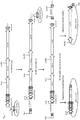
- FIG. 1 the genes encoding the enzymes for myxopyronin synthesis in Myxococcus are arranged adjacent one another.
- * denotes catalytic domains which may not entirely have the catalytic function indicated due to diversions, e.g. from known catalytic domains.
- Figure 2 A schematically shows the catalytic domains of the enzymes encoded by the respective genes participating in myxopyronin synthesis. From analysis, MxnI is assumed to provide an N-terminal phosphomutase (PM) domain which could be involved in the activation of sodium biscarbonate as a starter unit by phosphoryl group transfer to enable subsequent attachment to the CP domain of the loading module.
- PM N-terminal phosphomutase
- Synthesis of the Eastern chain molecule portion comprises elongation of the starter unit with glycine and of three malonyl-CoA extender units by a mixed polyketide synthetase/nonribosomal peptide megasynthetase consisting of two subunits (enzymes MxnI and MxnJ) and harbouring a total of six elongation modules (1E-6E) in addition to the loading module (PM-CP) indicated at the N-terminus of module 1E of MxnI.
- MxnI-MxnJ are PKS/NPRS (polyketide synthetase/non-ribosomal peptide synthase) comprising one loading module and six extension modules.
- Module 1E catalyses glycine incorporation, which is then elongated by module 2E (KS-DH-KR-CP) with malonyl-CoA.
- Module 3E represents a split module (KS from MxnI and DH*-CP from MxnJ), which is not assumed to incorporate an extender unit, but wherein the dehydrogenase domain DH might catalyse the shift of a double bond from ⁇ , ⁇ position to ⁇ , ⁇ position.
- Module 4E (KS-DH-KR-MT-CP) incorporates another malonyl-CoA extender unit, which gets methylated by the MT domain.
- KS*-CP ketosynthase domain of module 5E
- KS-CP*-CP A third malonyl-CoA extender unit is incorporated by module 6E (KS-CP*-CP), in which one of the tandem-CP domains is assumed to be inactive, to generate the final eastern chain intermediate with a ⁇ -carbonyl functionality, which is essential for the chain condensation for pyrone ring formation.
- MxnM might have an editing/proofreading activity to remove aberrant acyl units from blocked MxnI/MxnJ modules, and optionally also from blocked MxnK modules.
- the Western chain molecule portion is catalysed by MxnK. It is assumed that initiation is with acetyl-CoA for myxopyronin A or with propionyl-CoA for myxopyronin B, which is directly loaded onto the N-terminal KS domain of module 1W; a typical loading module was not found. After elongation with the first malonyl-CoA unit by module 1W (KS-DH-KR-CP), the resulting ⁇ -keto compound is completely reduced by internal DH-KR activities plus the trans -ER activity of MxnA.
- module 2W is inactive and accordingly module 2W is not involved in chain elongation.
- modules 3W, 4W, 5W are assumed to catalyse incorporation of three additional malonyl-CoA extender units to yield the Western chain molecule portion.
- the chain elongation by module 3W includes ⁇ -branching to introduce a methyl group in ⁇ -position, catalysed by MxnC-MxnG.
- Chain elongation on module 4W includes a complete reduction of the reduction of the ⁇ -carbonyl functionality by internal DH-KR activities plus the trans-ER activity from MxnA.
- MxnM might have an editing/proofreading activity to remove aberrant acyl units from blocked MxnK modules, and also from blocked MxnI/MxnJ modules.
- Fig. 2 C shows the condensation of the enzyme-bound Western chain molecule portion and the enzyme-bound Eastern chain molecule portion to the pyrone ring that is substituted with the R W and R E as provided by the natural biosynthetic enzymes.
- genes encoding synthetic pathway enzymes for synthesis of myxopyronin were isolated from Myxococcus fulvus Mxf50 genomic DNA and subcloned to generate expression constructs that were transferred into host microorganisms, preferably a heterologous host, e.g. by electroporation.
- host microorganisms preferably a heterologous host, e.g. by electroporation.
- suicide plasmids were constructed as described below.
- the Tn5 promoter was amplified by PCR using primers mxn33/ mxn41 with pCRII-TOPO vector as a template to obtain fragment 1.
- a 1191 bp fragment of mxnA was amplified from M. fulvus Mxf50 genomic DNA by PCR using primers mxn42/mxn30 to obtain fragment 2.
- Fragment 1 and fragment 2 were linked together using overlap PCR with primers mxn33/mxn30. The joined fragments were then subcloned into pJET1.2 vector to obtain plasmid pTn5-mxnA/pJET.
- a minimal linear cloning vector p15A-Tet was obtained by PCR using primers mxn52/mxn53 with pACYC184 as a template.
- pTn5-mxnA/pJET plasmid was hydrolyzed with PacI/EcoRV and ligated to the PacI/PvuII hydrolyzed cloning vector p15A-Tet to generate pHSU-mxn16.
- a 1491 bp fragment right after the 3'-end of the myxopyronin A gene cluster was amplified from M. fulvus Mxf50 genomic DNA using primers mxn64/mxn65.
- the amplified fragment was cloned into pCRII-TOPO vector to create pHSU-mxn19.
- a 1380 bp fragment of mxnJ was amplified from M. fulvus Mxf50 genomic DNA using primers mxn124 and mxn125.
- a zeocin resistance cassette was amplified from pCDNA-Zeo as the template using primers mxn128/mxn129 and it was subcloned to a minimal linear cloning vector p15A-Tet obtained by PCR using primers mxn126/mxn127 with pACYC184 as a template to obtain p15A-Tet-Zeo plasmid.
- pHSU-mxn16 was transformed into M. fulvus Mx f50 to obtain mutant Mx f50::pHSU-mxn16.
- a set of different PCRs using the primer combinations mxn60/p15A-Tet1 and mxn61/p15A-Tet2 was carried out to verify the correct integration of the inactivation plasmid.
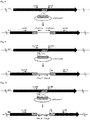
- the next single crossover was performed by transforming pHSU-mxn19 into Mx f50::pHSU-mxn16 to obtain Mx f50::pHSU-mxn16::pHSU-mxn19 as depicted in Fig. 3 .
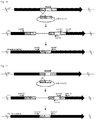
- mutant was confirmed by PCR using the primer combinations mxn94/pTOPO-out and mxn95/pTOPO-in. Further confirmation of this mutant was also performed by Southern Blot analysis. Second, pHSU-mxn32 was transformed into M. fulvus Mxf50 to obtain mutant Mx f50::pHSU-mxn32 as depicted in Fig. 4 . For genotypic analysis of the single cross-over, a set of different PCRs using the primer combinations mxn136/p15A-Tet2 and p15A-Tet3/mxn137 was carried out to verify the correct integration of the inactivation plasmid.
- genomic DNA of mutant Mx f50::pHSU-mxn16::pHSU-mxn19 was hydrolyzed with EcoRV and subsequently re-ligated to generate pHSU-mxn26 ( Fig. 3 ). Independently, it was also hydrolyzed with PacI/PvuI and subsequently re-ligated to generate pHSU-mxn27 ( Fig. 3 ).
- the genomic DNA of mutant Mx f50::pHSU-mxn32 was hydrolyzed with PvuI and then re-ligated to generate pHSU-mxn35 ( Fig. 4 ).
- pHSU-mxn35 was hydrolyzed with AflIIIPacI to replace the zeocin cassette with the amplified ampicillin cassette hydrolyzed with the same set of restriction enzymes to generate pHSU-mxn40 ( Fig. 4 ).
- the cloning method for the generation of an expression construct harbouring the complete pathway is shown in Fig. 5 .
- the Western chain biosynthesis pathway was completed by integration of the 18.5 kb AvrII fragment from pHSU-mxn40 into pHSU-mxn27 via Red/ET recombination.
- Another round of Red/ET recombineering was performed to exchange the 6.2 kb 3' end of mxnI in pHSU-mxn26 with a chloramphenicol resistance (CmR) cassette to generate pHSU-mxn31.
- CmR chloramphenicol resistance
- pHSU-mxn31 and pHSU-mxn41 were then hydrolyzed with SpeI/PacI to ligate the mxnK-M fragment into pHSU-mxn41 to generate pHSU-mxn42.
- a kanamycin resistance cassette was amplified from pCRII-TOPO vector as a template using primers mxn144/mxn145. The amplified cassette was then subcloned into pJET1.2 vector to obtain pHSU-mxn37.
- pHSU-mxn37 and pHSU-mxn42 were hydrolyzed with PacI to ligate the kanamycin resistance cassette into pHSU-mxn42 to generate pHSU-mxn43.
- the expression construct pHSU-mxn43 described above and shown in Fig. 5 was transformed into the expression host M. xanthus DK1622 ⁇ mchA-tet by the following procedure : M. xanthus DK1622 ⁇ mchA-tet was grown in baffle flasks with CTT medium supplemented with 6.25 ⁇ g/ml oxytetracycline at 30 °C until an OD600 between 0.6-0.9 was reached. Cells were then harvested from 2-4 ml culture (1-2 x 10 9 cells/ml) by centrifugation at 12.500 rpm for 1 min at room temperature.
- plasmid DNA was mixed with the cell suspension, and electroporation was carried out under the following conditions: 25 ⁇ F, 400 ⁇ , 650 V using 0.1 cm electroporation cuvettes and a GenePulser XCell device (Bio-Rad). 1 ml CTT medium was directly added to the cell suspension immediately after electroporation and the cells were transferred into a 2 ml centrifuge tube.
- a multiplasmid approach could be used for construction of expression constructs harbouring parts of the synthetic pathway enzymes.
- the cloning method for the generation of two compatible expression constructs harbouring two portions of the pathway is schematically depicted in Fig. 6 .
- a suitable selection marker exemplified by the zeocin resistance gene, zeoR, was ligated into pHSU-mxn41 using AflII/PacI restriction sites to generate the expression construct pHSU-mxn44.
- construct pHSU-mxn31 was modified by Red/ET recombination to insert a suitable promotor upstream of mxnK together with another selection marker, exemplified here by the apramycin resistance cassette (ApraR), which was flanked by two unique restriction sites (R1 and R2) to generate plasmid pHSU-mxn45.
- ApraR apramycin resistance cassette
- the plasmid was further modified by ligation of a suitable homology region via the restriction sites R1/R2 to yield the second expression plasmid pHSU-mxn46.
- the expression constructs pHSU-mxn44 and pHSU-mxn46 described above were transformed consecutively into M. xanthus DK1622 ⁇ mchA-tet according to the following procedure M. xanthus DK1622 ⁇ mchA-tet was grown in baffle flasks with CTT medium supplemented with 6.25 ⁇ g/ml oxytetracycline at 30 °C until an OD600 between 0.6-0.9 was reached. Cells were then harvested from 2-4 ml culture (1-2 x 10 9 cells/ml) by centrifugation at 12.500 rpm for 1 min at room temperature.
- plasmid DNA was mixed with the cell suspension, and electroporation was carried out under the following conditions: 25 ⁇ F, 400 ⁇ , 650 V using 0.1 cm electroporation cuvettes and a GenePulser XCell device (Bio-Rad). 1 ml CTT medium was directly added to the cell suspension immediately after electroporation and the cells were transferred into a 2 ml centrifuge tube.
- M. xanthus DK1622 ⁇ mchA-tet:: pHSU-mxn43 and M. xanthus DK1622 ⁇ mchA-tet:: pHSU-mxn44/pHSU-mxn46 were cultivated in CTT medium at 30 °C, e.g. in 300 ml baffle flasks with 50 ml medium for 2 days at 105 rpm. Following centrifugation, supernatant was extracted twice with an equal volume ethyl acetate, from the extract the ethyl acetate was evaporated, the residue was dissolved in 1 ml methanol to give the extract.
- HPLC-MS High Performance Liquid Chromatography-Mass Spectrometry
- HPLC-MS Thermo Ultimate 3000 RSLC, coupled to a Bruker Daltonics Amazon electrospray ionization (ESI)-MS ion trap instrument
- ESI Amazon electrospray ionization
- Compounds were separated on a Waters Acquity BEH C18 column (50 x 2.1 mm; 1.7 ⁇ m particle diameter) at a flow rate of 600 ⁇ l min -1 and 45 °C by a linear gradient with (A) H 2 O + 0.1 % formic acid (FA) to (B) acetonitrile (ACN) + 0.1 % FA at a flow rate of 600 ⁇ l min -1 and 45 °C.
- ACN acetonitrile
- the gradient was initiated by a 0.33 min isocratic step at 5 % B, followed by an increase to 95 % B in 9 min to end up with a 1 min flush step at 95 % B before re-equilibration with initial conditions.
- Detection was carried out by both diode array (DAD) and ESI-MS.
- DAD diode array
- ESI-MS ESI-MS.
- measurements were performed on a Dionex Ultimate 3000 RSLC system using a Waters BEH C18 column (50 x 2.1 mm, 1.7 ⁇ m dp) by injecting 5 ⁇ l of the methanolic extract. Separation was achieved by the same gradient as above with 0.33 min isocratic step at 5 % B. UV and MS detection were performed simultaneously.
- Example 1 Deletion of nucleic acid sequences in Myxococcus for inactivation of synthetic pathway genes
- M. fulvus Mx f50 which was shown in Example 1 to contain the genes encoding the entire synthetic pathway enzymes, was grown in baffle flask with CY medium (0.3 % casitone, 0.1 % yeast extract, 0.1 % CaCl 2 x 2 H 2 O) supplemented with 5 x 10 -4 ⁇ g/L vitamin B12 at 30 °C until an OD600 between 0.6-0.9 was reached.
- Cells were then harvested from 2-4 ml culture (1-2 x 10 9 cells/ml) by centrifugation at 12500 rpm for 1 min at room temperature. After two washing steps with 1 ml H 2 O at room temperature, cells were resuspended in 65 ⁇ l H 2 O. Plasmid DNA (1-2 ⁇ g) was mixed with the cell suspension, and electroporation was carried out under the following conditions: 25 ⁇ F, 400 ⁇ , 650 V using 0.1 cm electroporation cuvettes and a GenePulser XCell device (Bio-Rad). 1 ml CY medium was directly added to the cell suspension immediately after electroporation and the cells were transferred into a 2 ml centrifuge tube.
- the cells were mixed with 2 ml CY soft agar (CY medium with 0.7 % agar) and plated on CY agar plates (CY medium with 1.7 % agar) supplemented with 50 ⁇ g ml -1 kanamycin or 6.25 ⁇ g ml -1 oxytetracycline. The plates were incubated at 30 °C for 7-10 days until colonies became visible.
- markerless double cross-over mutants For the construction of markerless double cross-over mutants the following procedure was used: After verification of the single cross-over mutants (kanamycin-resistant mutants) by PCR, because integration via two different homology regions was possible, a selected single cross-over mutant was grown in CY medium in the absence of antibiotic. After 3-4 days 1 ml of the well-grown culture was transferred into 50 ml fresh medium to start another cultivation cycle at 30 °C for 3-4 days. This procedure was repeated three times to increase the possibility for a second cross-over event, which would result in the loss of the inactivating plasmid.
- a counter-selection system based on the sacB gene was used. For this, different dilutions of the cell population were plated on CY agar supplemented with 6 % sucrose for counter-selection. After 7-10 days, first colonies became visible, which were then grown in CY medium to isolate genomic DNA for genotypic verification and to extract the cultures for analysis for production of myxopyronin.
- insertional mutagenesis of its coding gene mxnI was employed, using knock-out plasmid pHSU-mxn13, which was constructed by amplification of a 1474 bp fragment for homologous recombination from M. fulvus Mx f50 genomic DNA by PCR using the primers mxn50 (SEQ ID NO: 29) and mxn51 (SEQ ID NO: 30) containing BamHI and EcoRV restriction sites. The resulting fragment was cloned into pCRII-TOPO vector to generate pHSU-mxn13. The plasmid was transformed into M. fulvus Mx f50 by electroporation.
- a set of different PCR experiments using the primer combinations mxn58 (SEQ ID NO: 31)/pTOPO-in (SEQ ID NO: 32) and mxn59 (SEQ ID NO: 33)/pTOPO-out (SEQ ID NO: 34) was carried out to verify the correct integration of the inactivation plasmid.
- the cloning method is schematically depicted in Fig. 8 .
- the resultant microorganism contained the synthetic pathway enzymes of MxnA-MxnB-MxnC-MxnD-MxnE-MxnF-MxnG-MxnH-MxnJ-MxnK-MxnL-MxnM.
- insertional mutagenesis of its coding gene mxnJ was employed, using knock-out plasmid pHSU-mxn30, which was constructed by amplification of a 1439 bp fragment for homologous recombination was amplified from M. fulvus Mx f50 genomic DNA by PCR using the primers mxn120 (SEQ ID NO: 35) and mxn121 (SEQ ID NO: 36).
- the Tn5 promoter was amplified from the pCRII-TOPO vector backbone using the primers mxn33 (SEQ ID NO: 37) and mxn34 (SEQ ID NO: 38).
- both PCR products were fused by overlapping PCR using the primers mxn33 and mxn121.
- the resulting product (Tn5 -mxnJ homologous fragment) was hydrolyzed by Eco RV and Bam HI and ligated into the pSupKan vector hydrolyzed by the same enzymes to generate pHSU-mxn30.
- the plasmid was transformed into M. fulvus Mx f50 by electroporation.
- a set of different PCRs using the primer combinations mxn130 (SEQ ID NO: 39) /pSubB (SEQ ID NO: 40) and mxn131 (SEQ ID NO: 41) /pSupE (SEQ ID NO: 42) was carried out to verify the correct integration of the inactivation plasmid.
- the cloning method is schematically depicted in Fig. 9 .
- the resultant microorganism contained the synthetic pathway enzymes of MxnA-MxnB-MxnC-MxnD-MxnE-MxnF-MxnG-MxnH-MxnI- MxnK-MxnL-MxnM.
- insertional mutagenesis of its coding gene mxnK was employed, using knock-out plasmid pHSU-mxn12, which was constructed by amplification of a 1448 bp fragment for homologous recombination from M. fulvus Mx f50 genomic DNA by PCR using the primers mxn35 (SEQ ID NO: 43) and mxn36 (SEQ ID NO: 44).
- the Tn5 promoter was amplified from the pCRII-TOPO vector backbone using the primers mxn33 and mxn34.
- the resultant microorganism contained the synthetic pathway enzymes of MxnA-MxnB-MxnC-MxnD-MxnE-MxnF-MxnG-MxnH-MxnI-MxnJ-MxnL-MxnM.
- an enzyme was inactivated by inactivating the gene encoding it by in-frame deletion. This is shown on the example of mxnK.
- a gene inactivation plasmid harbouring two fragments was constructed. The fragments are 1001 bp and 1262 bp in size and homologous to the upstream and downstream area of the chromosomal target region. These fragments were amplified from M. fulvus Mx f50 genomic DNA by PCR using the primers mxn54 (SEQ ID NO: 45)/mxn55 (SEQ ID NO: 46) and mxn56 (SEQ ID NO: 47)/mxn57 (SEQ ID NO: 48).
- a set of different PCRs using the primer combinations mxn68 (SEQ ID NO: 49)/mxn69 (SEQ ID NO: 50), mxn70 (SEQ ID NO: 51)/mxn72 (SEQ ID NO: 52) and mxn73 (SEQ ID NO: 53)/mxn71 (SEQ ID NO: 54) was carried out to verify for correct integration of the inactivation plasmid.
- PCRs using the primers mxn68/mxn71 were carried out. Further confirmation of the deletion mutant was obtained by Southern Blot analysis. This cloning procedure is schematically shown in Fig.
- the resultant microorganism contained the synthetic pathway enzymes of MxnA-MxnB-MxnC-MxnD-MxnE-MxnF-MxnG-MxnH-MxnI-MxnJ-MxnL-MxnM.
- Inactivation of of MxnH could be obtained by in frame deletion of its coding gene mxnH .
- PCRs using the primers mxn110/mxn111, mxn112/mxn107 and mxn110/mxn149 were carried out as schematically depicted in Fig. 12 .
- the resultant microorganism contained the synthetic pathway enzymes of MxnA-MxnB-MxnC-MxnD-MxnE-MxnF-MxnG-MxnI-MxnJ-MxnK-MxnL-MxnM.
- Inactivation of MxnC-MxnH could be obtained by in frame deletion of its coding genes mxnC-mxnH .
- a gene inactivation plasmid harbouring two fragments, which are 1016 bp and 1237 bp in size and homologous to the upstream and downstream area of the chromosomal target region, was constructed. These fragments were amplified from M. fulvus Mx f50 genomic DNA by PCR using the primers mxn85/mxn119 and mxn83/mxn84.
- PCRs using the primers mxn102/mxn104, mxn106/mxn107 and mxn102/mxn149 were carried out.
- the cloning method is schematically depticted in Fig.13 .
- the resultant microorganism contained the synthetic pathway enzymes of MxnA-MxnB-MxnI-MxnJ-MxnK-MxnL-MxnM.
- Inactivation of MxnC-MxnG could be obtained by in frame deletion of its coding genes mxnC - mxnG .
- a gene inactivation plasmid harbouring two fragments, which are 1016 bp and 1250 bp in size and homologous to the upstream and downstream area of the chromosomal target region, was constructed. These fragments were amplified from M. fulvus Mx f50 genomic DNA by PCR using the primers mxn85/mxn119 and mxn87/mxn88.
- PCRs using the primers mxn102/mxn104, mxn105/mxn103 and mxn102/mxn150 were carried out.
- the cloning method is schematically depicted in Fig.14 .
- the resultant microorganism contained the synthetic pathway enzymes of MxnA-MxnB-MxnH-MxnI-MxnJ-MxnK-MxnL-MxnM.
- the gradient was initiated by a 0.5 min isocratic step at 5 % B, followed by an increase to 95 % B in 9 min to end up with a 1 min flush step at 95 % B before re-equilibration with initial conditions.
- Detection was by both diode array and ESI-MS.
- measurements were performed on a Dionex Ultimate 3000 RSLC system using a Waters BEH C18, 50 x 2.1 mm, 1.7 ⁇ m dp column by injection of 2 ⁇ l methanolic sample.
- Separation was achieved by a linear gradient with (A) H 2 O + 0.1 % FA to (B) ACN + 0.1 % FA at a flow rate of 600 ⁇ l/min and 45 °C.
- the gradient was initiated by a 0.33 min isocratic step at 5 % B, followed by an increase to 95 % B in 9 min to end up with a 1 min flush step at 95 % B before re-equilibration with initial conditions.
- UV and MS detection were performed simultaneously.
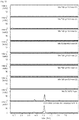
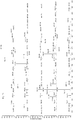
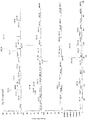
- results from HPLC-MS are shown in Fig. 15 .
- myxopyronin could be detected, but in extracts of the gene inactivation mutant strains obtained e.g. by insertional inactivation of mxnI (Mx f50::pHSU-mxn13), inactivation of mxnJ (Mx f50::pHSU-mxn30), inactivation of mxnK (Mx f50::pHSU-mxn12), inactivation by in frame deletion of mxnK (Mx f50::pHSU-mxn18), inactivation of mxnH by in frame deletion (Mx f50::pHSU-mxn23), inactivation of mxnC-mxnH by in frame deletion (Mx f50::pHSU-mxn22) no myxopyronin was found.
- Example 2 Deletion of nucleic acid sequences in Myxococcus for inactivation of synthetic pathway enzymes
- Example 2 For inactivation of enzymes, the Myxococcus producer M. fulvus Mx f50 of Example 2 was used, alternatively the M. xanthus DK1622 ⁇ mchA-tet::pHSU-mxn43 expression strain of Example 1 was used.
- Inactivation of mxnL could be obtained by in frame deletion.
- a gene inactivation plasmid harbouring two fragments, which are 1232 bp and 1109 bp in size and homologous to the upstream and downstream area of the chromosomal target region, was constructed. These fragments were amplified from M. fulvus Mx f50 genomic DNA by PCR using the primers mxn113/mxn1 14 and mxn115/mxn1 16.
- the resultant microorganism contained the synthetic pathway enzymes of MxnA-MxnB-MxnC-MxnD-MxnE-MxnF-MxnG-MxnH-MxnI-MxnJ-MxnK-MxnM.
- Inactivation of MxnM could be obtained by in frame deletion.
- a gene inactivation plasmid harbouring two fragments, which are 1110 bp and 1199 bp in size and homologous to the upstream and downstream area of the chromosomal target region, was constructed. These fragments were amplified from M. fulvus Mx f50 genomic DNA by PCR using the primers mxn132/mxn133 and mxn134/mxn135.
- PCRs using the primers mxn140/mxn141, mxn142/mxn143 and mxn140/mxn143 were carried out.
- the cloning process is schematically depicted in Figure 17 .
- the resultant microorganism contained the synthetic pathway enzymes of MxnA-MxnB-MxnC-MxnD-MxnE-MxnF-MxnG-MxnH-MxnI-MxnJ-MxnK-MxnL.
- Extracts from supernatants of cultures of these microorganisms were produced and analysed on samples taken during the cultivation as described in Example 2.
- the results measured for myxopyronin A during the cultivation are shown in Fig. 18 a) for the wild-type M. fulvus Mx f50 (WT), in Fig. 18 b) for the microorganism containing the synthetic pathway enzymes of MxnA-MxnB-MxnC-MxnD-MxnE-MxnF-MxnG-MxnH-MxnJ-MxnJ-MxnK-MxnM ( ⁇ mxnL), and in Fig.
- Example3 Inactivation of catalytic centers of domains of synthetic pathway genes
- single or multiple catalytic centers of domains can be inactivated in enzymes, preferably by mutating the coding sequence of amino acids defining the catalytic center, e.g. catalytically active amino acids.
- the preferred amino acids to be changed for inactivation of a catalytic center, e.g. deleted or exchanged for a catalytically inactive amino acid, e.g. for Leucine, Isoleucine, Alanine, or Valine, are given in Table 3 below in bold face, which amino acids participate in the catalytic activity.
- Table 3 amino acids of catalytic centers enzyme - catalytic center - domain amino acids keto synthase (KS) MxnI-KS-1E SEAV D AA C ASSLVAL H (SEQ ID NO: 136)-----V E A H GTGT (SEQ ID NO: 137 ) ----- IGH AE (SEQ ID NO: 138) , amino acids No. 694-885 of SEQ ID NO: 9 MxnI-KS-2E SEAV D TA C S SS LVA IH (SEQ ID NO: 139)-----I ETH GTGT(SEQ ID NO: 140)-----I GH LE ( SEQ ID NO: 141) , amino acids No.
- ketoreductase (KR) amino acids MxnI-KR-2E T G GA GA L G (SEQ ID NO: 208)-----HAAGQRQ D Q (SEQ ID NO: 209)-----FS S LVALTGNVGQTD YA FA N A (SEQ ID NO: 210) , amino acids No. 2903-3050 of SEQ ID NO: 9 MxnJ-KR-4E V G GT GG I G (SEQ ID NO: 211)-----HSALVLQ D A (SEQ ID NO: 212)----FS S AVGIAGGAGQSN YA AA S R (SEQ ID NO: 213) , amino acids No.
- SEQ ID NO: 26 carrier protein (CP) amino acids MxnI-CP-L GGAHFD S ISL (SEQ ID NO: 238) , amino acids No. 424-433 of SEQ ID NO: 9 MxnI-CP-1E G---FT S VTL (SEQ ID NO: 239) , amino acids No. 1720-1726 of SEQ ID NO: 9 MxnI-CP-2E G---YD S ISF (SEQ ID NO: 240) , amino acids No. 3192-3198 of SEQ ID NO: 9 MxnJ-CP-3E G---LT S LSL (SEQ ID NO: 241) , amino acids No.
- SEQ ID NO: 26 dehydratase (DH) amino acids MxnI-DH-2E L RD H VIG G KKLL P (SEQ ID NO: 269) , amino acids No. 2402-2414 of SEQ ID NO: 9 MxnJ-DH-3E L RD H TVF G QRVLL (SEQ ID NO: 270) , amino acids No. 53-65 of SEQ ID NO: 9 MxnJ-DH-4E L RD H VVGSRGVL P (SEQ ID NO: 271) , amino acids No. 1091-1103 of SEQ ID NO: 10 MxnK-DH-1W I RD H VVG G NRLI P (SEQ ID NO: 272) , amino acids No.
- SEQ ID NO: 26 methyltransferase (MT) amino acids MxnJ-MT-4E V E V G A G (SEQ ID NO: 281) , amino acids No. 1982-1987 of SEQ ID NO: 10 MxnK-MT-4W L E V G A G (SEQ ID NO: 282) , amino acids No. 4914-4919 of SEQ ID NO: 11 CorJ-MT-4E V E V G A G (SEQ ID NO: 283) , amino acids No. 1962-1967 of SEQ ID NO: 24 CorL-MT-6W L E V G A G (SEQ ID NO: 284) , amino acids No. 3865-3870 of SEQ ID NO: 26
- the amino acids sections given as amino acid Nos. of the amino acid sequence of an enzyme comprises or defines the respective enzyme section containing the domain.
- the amino acid alignment for catalytic centers shows the importance of conserved amino acids, which are printed in bold. Accordingly, mutation of the coding sequence to change, e.g. elemination at least one of these amino acids, preferably two or three of these conserved amino acids or all of the amino acids given for a catalytic center, can be used for inactivation of the respective domain, preferably of the module indicated.
- Example 7 Examples for cloning methods for inactivating one specific catalytic center are given in Example 7 below for the domain CP of modules 1W and 4W, respectively.
- At least one ketoreductase (KR) catalytic center is inactivated.
- KR ketoreductase
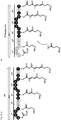
- Fig. 19 schematically shows the effect of inactivation of the KR domain of module 2E results in the production of a myxopyronin derivative.
- the inactivation of the KR domain of module 2E results in the ⁇ -ketoester intermediate not being reduced to the hydroxy ester intermediate, and accordingly the ⁇ -ketoester group occurs in the side chain to the pyrone ring.
- a myxopyronin derivative for production of a myxopyronin derivative, at least one catalytic center of a dehydrogenase (DH) catalytic domain is inactivated.
- DH dehydrogenase
- FIG. 20 schematically shows the effect of inactivation of the DH domain of module 2E results in the production of a myxopyronin derivative.
- the inactivation of the DH domain of module 2E results in the hydroxyester intermediate not being dehydrated, and accordingly the ⁇ -hydroxyl group occurs in the side chain to the pyrone ring.
- the catalytic center of at least one methyltransferase (MT) domain is inactivated.
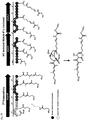
- Fig. 21 schematically shows the effect of inactivation of the MT domain of module 4E results in the production of a the effect of inactivation of the MT domain of module 4E results in the production of a myxopyronin derivative.
- the inactivation of an MT domain, e.g. of module 4W results in the absence of a methyl group in the side chain to the pyrone ring, in this case in the absence of the methyl group bound to the ⁇ -carbon.
- MxnB catalyses the condensation of precursors to form the pyrone ring moiety having the chains of the precursors.
- the peptides were expressed from separate expression cassettes: For expression of MxnB, the coding nucleic acid sequence mxnB was amplified from M. fulvus Mx f50 genomic DNA by PCR using primers mxn9 and mxn10. The PCR products were cloned into into pJET1.2 blunt (Thermo Fisher Scientific) vector resulting in pJET-MxnB and sequenced.
- the resultant pJET-HSU-mxn5 was digested with Nde I and Hind III and the DNA fragment harboring the MxnB encoding region was cloned into the Nde I and Hind III site of pColdI resulting in pColdI-HSU-mxn5, encoding MxnB with an N-terminal hexahistidine tag.
- CP-6E CP domain of module 6E
- the coding sequence for CP-6E was amplified from M. fulvus Mx f50 genomic DNA by PCR using the primers mxn214 and mxn215.
- the PCR products were cloned into into pJET1.2 blunt (Thermo Fisher Scientific) vector resulting in pJET-CP-6E and sequenced.
- pJET-HSU-mxn59 was digested with Nde I and Hind III, and the DNA fragment harboring CP-6E encoding region was cloned into the Nde I and Hind III site of pColdI, resulting in pColdI-HSU-mxn59 with an N-terminal hexahistidine tag.
- a chaperone was co-expressed using pGro7 to obtain pColdI-pGro7-mxn59.
- pColdI-HSU-mxn59 was co-expressed with pSUMtaA to obtain pColdI-pSUMtaHSU-mxn64.
- CP-5W CP domain of module 5W
- the coding sequence for CP-5W was amplified from M. fulvus Mx f50 genomic DNA by PCR using the primers mxn230 and mxn231.
- the PCR products were cloned into into pJET1.2 blunt (Thermo Fisher Scientific) vector resulting in pJET-MxnB and sequenced using the primers pJET1.2For/pJET1.2Rev, respectively.
- pJET-HSU-mxn63 was digested with Nde I and Hind III and the DNA fragment harboring CP-5W encoding region was cloned into the Nde I and Hind III site of pColdI resulting in pColdI-HSU-mxn63 with an N-terminal hexahistidine tag. Furthermore, pColdI-HSU-mxn63 was co-expressed with pSUMtaA to obtain pColdI-pSUMtaHSU-mxn65.
- MxnB the catalytic center of the CP domain of module 6E of MxnJ (CP-6E) and the catalytic center of the CP domain of module 5W of MxnK (CP-5W) were each separately produced by heterologous expression.
- the expression was induced by addition of isopropyl- ⁇ -d-thiogalactopyranoside (IPTG, 0.15 mM) and cultivation was continued at 16°C for 20 h.
- IPTG isopropyl- ⁇ -d-thiogalactopyranoside
- the cells were harvested by centrifugation (8,000 rpm ; 20 min) and resuspended in lysis buffer (40 mM Tris-HCl buffer pH 7.5 containing glycerol 10%, 300 mM NaCl and 10 mM imidazole). Cells were lyzed by sonication and a cell-free extract was prepared by removing cell debris by centrifugation at 8,000 rpm for 10 min at 4°C. The cell-free extract was purified by using Ni-NTA Superflow resin (Qiagen), washed with buffer containing imidazole (20 mm), and eluted by imidazole (200 mm) in the same buffer.
- lysis buffer 40 mM Tris-HCl buffer pH 7.5 containing glycerol 10%, 300 mM NaCl and 10 mM imidazole.
- the elution buffer was exchanged with buffer (40 mm Tris-HCl buffer pH 7.5 containing glycerol 10%, 300 mM NaCl) using ultrafiltration (Amicon, Milipore). Protein concentrations were estimated by the Bradford assay (Bio-Rad) with bovine serum albumin as a standard. The purified proteins were flash frozen in liquid nitrogen and stored at -80°C.
- a mixture (total of 100 ⁇ L) containing 100 ⁇ M CP-6E or CP-5W, 30 ⁇ M MxnB, 1 mM JHS274 and 1 mM JHS486 was prepared and incubated at 37°C for 8 h.
- the reaction mixtures were extracted with ethyl acetate and the organic layer was evaporated.
- the residue was dissolved in 100 ⁇ l methanol and a 5 ⁇ l aliquot of the extract was analyzed by residue was dissolved in 100 ⁇ l methanol and a 5 ⁇ l aliquot of the extract was analyzed by HPLC/MS as described in Example 2. Results from HPLC-MS are shown in Fig.
- Example 5 Production of myxopyronin derivatives using enzymes with MxnK inactivated and Western chain precursor feeding
- the block mutant resulting from inactivation of MxnK by markerless mutagenesis of mxnK ( M.fulvus Mx f50 ⁇ pHSU-mxn18, containing pHSU-mxn18 described in Example 2), has been found not to produce myxopyronin A.
- a pre-culture of M . fulvus Mx f50ApHSU-mxn18 was grown in CY medium at 30 °C until an OD 600 between 0.3 to 0.6.
- the pre-culture was used to inoculate 20 mL CY medium (7.2 x 10 6 cells/mL). Cultivation was carried out for further 12-24 hours before feeding precursor acting as a substrate mimic.
- N -acetyl-cysteamine (SNAC)-esters that were used as a Western chain precursor each were fed to the different cultures to a final concentration of 100 ⁇ M. They were further cultivated for another 48 h before the cells were harvested.
- myxopyronin derivatives can be produced by expression of the synthetic enzymes, wherein MxnK is inactivated, e.g. the enzymes provided consist of MxnA, MxnI, MxnJ, MxnK, and optionally comprising MxnL and MxnM, e.g. by expression in a microorganism, in combination with adding a Western chain precursor.
- MxnK could be inactivated at one of its catalytic domains, e.g. at a CP domain, in combination with feeding a Western chain precursor.
- the remaining portion of MxnK converts the Western chain precursor to a converted Western chain precursor which is then condensed to the Eastern chain by MxnB, resulting in a myxopyronin derivative having a Western chain originating from the converted Western chain precursor.
- Example 6 Production of myxopyronin derivatives using enzymes with one catalytic center of MxnK inactivated and Western chain precursor feeding
- a CP (carrier protein) catalytic domain was inactivated in different modules of MxnK.
- MxnK could be partially inactivated, e.g. by inactivating the CP catalytic domain of module 1W of MxnK.
- a point mutation was induced in its coding sequence mxnK using a gene inactivation plasmid harbouring 2445 bp fragment. The fragment was amplified from pHSU-mxn43 plasmid of Example 1 by overlap PCR using the primers mxn169/mxn170 and mxn171/mxn172.
- MxnK could be partially inactivated at catalytic domain CP of its module 4W by point mutation.
- a gene inactivation plasmid harbouring a 2486 bp fragment was constructed. The fragment was amplified from pHSU-mxn43 plasmid by overlap PCR using the primers mxn174/mxn175 and mxn176/mxn177. After hydrolysis of the fragment with PvuI and NotI, it was ligated into pSWU41 hydrolyzed with PvuI and NotI to generate pHSU-mxn49.
- a set of different PCRs using the primer combinations mxn191/mxn70 and pSWU41-F/mxn193 was carried out to verify the correct integration of the inactivation plasmid.
- PCR using primer combination mxn195/mxn206 was performed and the amplified product was sequenced.
- the cloning method is schematically shown in Fig. 25 .
- a block mutant of at least one carrier protein (CP) catalytic domain of MxnK inactivated was cultivated with feeding a Western chain precursor.
- the Western chain precursor can be converted by catalytic centers arranged C-terminally to the inactivated catalytic center.
- enzymes in which at least one catalytic domain is inactivated can be termed Mutasynthon.
- Example 7 Production of myxopyronin derivatives using enzymes with one catalytic center of MxnI-MxnJ inactivated and Eastern chain precursor feeding
- Fig. 27 schematically shows in a) the wild-type (wt) synthesis of the Eastern chain molecule portion, in b) MxnI-MxnJ having an inactivated CP domain in the N-terminal load module and the binding of the fed Eastern chain precursor by the CP domain of module 1E and its subsequent conversion by the following modules of MxnI-MxnJ, in c) MxnI-MxnJ having an inactivated CP domain in module 1E and the binding of the fed Eastern chain precursor by the CP domain of module 2E and its subsequent conversion by the following catalytic centers of MxnI-MxnJ, in d) MxnI-MxnJ having an inactivated CP domain in module 3E and the binding of the fed Eastern chain precursor by the CP domain of module 4E and its subsequent conversion by the following modules of MxnI-MxnJ, and in e) MxnI-MxnJ having an inactivated CP domain in the module 4E and the binding of the
- a pre-culture of M . fulvus Mx f50::pHSU-mxn30 was grown in CY medium at 30 °C until an OD 600 between 0.3-0.6.
- the pre-culture was used to inoculate 20 mL CY medium (7.2 x 10 6 cells/mL). Cultivation was carried out for further 12-24 hours before feeding the substrate mimics.
- N -acetyl-cysteamine (SNAC)-esters mimicking Eastern chain to the cultures to the final 100 ⁇ M. They were further grown for another 48 hours before the cells were harvested. Analysis of the crude extract was performed by HPLC/MS.
- Example 8 Production of myxopyronin derivatives using enzymes with one CP catalytic center of MxnK inactivated and Western chain precursor feeding and one catalytic center of MxnI-MxnJ inactivated
- M. fulvus Mx f50 ::pHSU-mxn48 wherein the CP catalytic domain of module 1W of MxnK is inactivated, is used in combination with inactivation of at least one catalytic domain of MxnI-MxnJ.
- the inactivation of at least one catalytic domain of MxnI-MxnJ is exemplified by the inactivation of the MT catalytic domain in module 4E of MxnJ.
- Example 9 Production of myxopyronin derivatives using enzymes with one catalytic center of MxnK inactivated and one CP catalytic center of MxnI-MxnJ inactivated with Eastern chain precursor feeding
- M. fulvus Mx f50 in which the MT catalytic domain of module 4W of MxnK is inactivated is described in combination with inactivation of the CP catalytic domain of module 1E of MxnI-MxnJ, with feeding of an Eastern chain precursor during cultivation.
- the synthetic pathway of the resultant myxopyronin derivative is schematically depicted in Fig.
- Example 10 Production of myxopyronin derivatives using enzymes, wherein at least one catalytic center or domain or enzyme of MxnI-MxnJ-MxnK is exchanged for at least one catalytic center or domain or enzyme of CorI-CorJ-CorK-CorL
- an apramycin resistance cassette was amplified by PCR using primers mxn200/mxn201 with pKC1132 vector as the template.
- the fragment Z ( ⁇ 13 kb) in cosmid BA5 was exchanged with the apramycin resistance cassette (ApraR) via Red/ET recombineering to generate pHSU-mxn51.
- another apramycin resistance cassette amplified by PCR using primers mxn202/mxn203 with pKC1132 vector as the template.
- the fragment Y in cosmid AM24 was then exchanged with the apramycin resistance cassette (ApraR) via Red/ET recombineering to generate pHSU-mxn52.
- Red/ET recombineering was performed to exchange fragment X in cosmid AM24 with a chloroamphenicol resistance (CmR) cassette to generate pHSU-mxn53.
- CmR chloroamphenicol resistance
- the next round of Red/ET recombination was then performed to integrate corK* fragment from pHSU-mxn53 into pHSU-mxn51 to generate pHSU-mxn54.
- Both pHSU-mxn41 and pHSU-mxn54 were then hydrolyzed with SpeI/PacI to ligate the corK-O fragment into pHSU-mxn41 to generate pHSU-mxn55.
- pHSU-mxn37 and pHSU-mxn42 are to be hydrolyzed with PacI to ligate the kanamycin resistance cassette into pHSU-mxn55 to generate pHSU-mxn56.
- the expression construct pHSU-mxn56 described above shown in Figure 8 can then be transformed into an expression host, e.g. M. xanthus DK1622 ⁇ mchA-tet by electroporation as described above.
- Precursor compounds could be synthesized by the following methods:
- acylmeldrums acid (20.0 mmol) was dissolved in toluene (25 mL) and acetone (2.0 mL). The solution was heated at reflux for 2 h. The solvents were removed under reduced pressure and the crude material was purified by flash chromatography (SiO 2 , n- hexane/EtOAc) or vacuum distillation.
- the title compound was prepared from IM-4 according to the general procedure shown for IM-7 and used in the next step without further purification.
Landscapes
- Health & Medical Sciences (AREA)
- Life Sciences & Earth Sciences (AREA)
- Chemical & Material Sciences (AREA)
- Genetics & Genomics (AREA)
- Engineering & Computer Science (AREA)
- Organic Chemistry (AREA)
- Zoology (AREA)
- Wood Science & Technology (AREA)
- Bioinformatics & Cheminformatics (AREA)
- Biomedical Technology (AREA)
- Biotechnology (AREA)
- General Engineering & Computer Science (AREA)
- Microbiology (AREA)
- Biochemistry (AREA)
- General Health & Medical Sciences (AREA)
- Molecular Biology (AREA)
- Medicinal Chemistry (AREA)
- Plant Pathology (AREA)
- Biophysics (AREA)
- Physics & Mathematics (AREA)
- Chemical Kinetics & Catalysis (AREA)
- General Chemical & Material Sciences (AREA)
- Enzymes And Modification Thereof (AREA)
- Preparation Of Compounds By Using Micro-Organisms (AREA)
Claims (16)
- Verfahren zum Herstellen einer Verbindung, die eine erste Kette (Westkette) und eine zweite Kette (Ostkette) aufweist, die kondensiert sind und einen Pyronring bilden, durch Ausstatten eines Mikroorganismus mit synthetischen Stoffwechselenzymen, die die Synthese der Verbindung katalysieren, wobei der Mikroorganismus genetisch manipuliert ist, um Gene zu enthalten, die die synthetischen Stoffwechselenzyme kodieren, die die Enzyme MxnA (SEQ ID NO: 1), MxnB (SEQ ID NO: 2), MxnC (SEQ ID NO: 3), MxnD (SEQ ID NO: 4), MxnE (SEQ ID NO: 5), MxnF (SEQ ID NO: 6), MxnG (SEQ ID NO: 7), MxnH (SEQ ID NO: 8), MxnI (SEQ ID NO: 9), MxnJ (SEQ ID NO: 10) und MxnK (SEQ ID NO: 11) umfassen, Inkubieren des Mikroorganismus und Abtrennen der Verbindung von dem Mikroorganismus, dadurch gekennzeichnet, dass wenigstens eine katalytische Domäne eines Enzyms abwesend oder inaktiviert ist, wobei die Domäne aus der Gruppe ausgewählt ist, die ausa) der Ketosynthase (KS) des Moduls 1E von MxnI, das die Aminosäuren Nr. 694-885 von SEQ ID NO: 9 umfasst,b) der Ketosynthase (KS) des Moduls 2E von MxnI, das die Aminosäuren Nr. 1945-2135 von SEQ ID NO: 9 umfasst,c) der Ketosynthase (KS) des Moduls 3E von MxnI, das die Aminosäuren Nr. 3442-3633 von SEQ ID NO: 10 umfasst,d) der Ketosynthase (KS) des Moduls 4E von MxnJ, das die Aminosäuren Nr. 605-795 von SEQ ID NO: 10 umfasst,e) der Ketosynthase (KS) des Moduls 5E von MxnJ, das die Aminosäuren Nr. 2476-2660 von SEQ ID NO: 10 umfasst,f) der Ketosynthase (KS) des Moduls 6E von MxnJ, das die Aminosäuren Nr. 3208-3399 von SEQ ID NO: 10 umfasst,g) der Ketosynthase (KS) des Moduls 1W von MxnK, das die Aminosäuren Nr. 180-364 von SEQ ID NO: 11 umfasst,h) der Ketosynthase (KS) des Moduls 2W von MxnK, das die Aminosäuren Nr. 1926-2110 von SEQ ID NO: 11 umfasst,i) der Ketosynthase (KS) des Moduls 3Wvon MxnK, das die Aminosäuren Nr. 2684-2875 von SEQ ID NO: 11 umfasst,j) der Ketosynthase (KS) des Moduls 4W von MxnK, das die Aminosäuren Nr. 3504-3688 von SEQ ID NO: 11 umfasst,k) der Ketosynthase (KS) des Moduls 5W von MxnK, dass die Aminosäuren Nr. 5409-5593 von SEQ ID NO: 11 umfasst,l) der Ketoreduktase (KR) des Moduls 2E von MxnI, dass die Aminosäuren Nr. 2903-3050 von SEQ ID NO: 9 umfasst,m) der Ketoreduktase (KR) des Moduls 4E von MxnJ, dass die Aminosäuren Nr. 1568-1715 von SEQ ID NO: 10 umfasst,n) der Ketoreduktase (KR) des Moduls 1W von MxnK, dass die Aminosäuren Nr. 1418-1560 von SEQ ID NO: 11 umfasst,o) der Ketoreduktase (KR) des Moduls 4W von MxnK, dass die Aminosäuren Nr. 4470-4617 von SEQ ID NO: 11 umfasst,p) dem Trägerprotein (CP) des Moduls L von MxnI, dass die Aminosäuren Nr. 424-433 von SEQ ID NO: 9 umfasst,q) dem Trägerprotein (CP) des Moduls 1E von MxnI, dass die Aminosäuren Nr. 1720-1726 von SEQ ID NO: 9 umfasst,r) dem Trägerprotein (CP) des Moduls 2E von MxnI, dass die Aminosäuren Nr. 3192-3198 von SEQ ID NO: 9 umfasst,s) dem Trägerprotein (CP) des Moduls 3E von MxnJ, dass die Aminosäuren Nr. 366-372 von SEQ ID NO: 9 umfasst,t) dem Trägerprotein (CP) des Moduls 4E von MxnJ, dass die Aminosäuren Nr. 2238-2244 von SEQ ID NO: 10 umfasst,u) dem Trägerprotein (CP) des Moduls 5E von MxnJ, dass die Aminosäuren Nr. 2967-2973 von SEQ ID NO: 10 umfasst,v) dem Trägerprotein (CP) des Moduls 6E von MxnJ, dass die Aminosäuren Nr. 3810-3816 von SEQ ID NO: 10 umfasst,w) dem Trägerprotein (CP*) des Moduls 6E von MxnJ, dass die Aminosäuren Nr. 3566-3572 von SEQ ID NO: 12 umfasst,x) dem Trägerprotein (CP) des Moduls 1W von MxnK, dass die Aminosäuren Nr. 1683-1689 von SEQ ID NO: 11 umfasst,y) dem Trägerprotein (CP) des Moduls 2W von MxnK, dass die Aminosäuren Nr. 2429-2435 von SEQ ID NO: 11 umfasst,z) dem Trägerprotein (CP) des Moduls 3W von MxnK, dass die Aminosäuren Nr. 3234-3240 von SEQ ID NO: 11 umfasst,aa) dem Trägerprotein (CP) des Moduls 4W von MxnK, dass die Aminosäuren Nr. 5165-5171 von SEQ ID NO: 11 umfasst,bb) dem Trägerprotein (CP*) des Moduls 5W von MxnK, dass die Aminosäuren Nr. 5894-5900 von SEQ ID NO: 11 umfasst,cc) dem Trägerprotein (CP) des Moduls 5W von MxnK, dass die Aminosäuren Nr. 5984-5990 von SEQ ID NO: 11 umfasst,dd) der Dehydratase (DH) des Moduls 2E von MxnI, dass die Aminosäuren Nr. 2402-2414 von SEQ ID NO: 9 umfasst,ee) der Dehydratase (DH) des Moduls 3E von MxnJ, dass die Aminosäuren Nr. 53-65 von SEQ ID NO: 9 umfasst,ff) der Dehydratase (DH) des Moduls 4E von MxnJ, dass die Aminosäuren Nr. 1091-1103 von SEQ ID NO: 10 umfasst,gg) der Dehydratase (DH) des Moduls 1W von MxnK, dass die Aminosäuren Nr. 955-967 von SEQ ID NO: 11 umfasst,hh) der Dehydratase (DH) des Moduls 4W von MxnK, dass die Aminosäuren Nr. 3980-3992 von SEQ ID NO: 11 umfasst,ii) der Methyltransferase (MT) des Moduls 4E von MxnJ, dass die Aminosäuren Nr. 1982-1987 von SEQ ID NO: 10 umfasst,jj) der Methyltransferase (MT) des Moduls 4W von MxnK, dass die Aminosäuren Nr. 4914-4919 von SEQ ID NO: 11 umfasst,
besteht, wobei in den Ausführungsformen, in denen wenigstens eine katalytische Domäne in den synthetischen Stoffwechselenzymen MxnK und/oder MxnI-MxnJ inaktiviert ist, wobei die inaktivierte katalytische Domäne eine katalytische Domäne ist, deren Inaktivierung in Abwesenheit von Vorläufer zum Stop der Synthese durch das Enzym führt, wenn es in einem Mikroorganismus exprimiert wird, ein Vorläufer der Westkette und/oder ein Vorläufer der Ostkette dem Mikroorganismus zugegeben wird, der die syntetischen Stoffwechselenzyme exprimiert, oder wobei in Ausführungsformen, in denen die Inaktivierung durch Austausch von wenigstens einem katalytischen Zentrum, Domain, Module oder Enzym erfolgt, der Austausch durch Insertion wenigstens eines katalytischen Zentrums, Domäne, Moduls oder Enzym folgt, ausgewählt aus den Enzymen CorJ (SEQ ID NO: 25), CorK (SEQ ID NO: 26), CorL (SEQ ID NO: 27), Orfl (SEQ ID NO: 27), CorM (SEQ ID NO: 28), CorM (SEQ ID NO: 28), CorN (SEQ ID NO: 29) und CorO (SEQ ID NO: 30) und deren katalytischen Zentren, Domänen oder Modulen, oder Enzym MxnI (SEQ ID NO: 9) durch das Enzym CorI (SEQ ID NO: 24) ersetzt ist. - Verfahren nach Anspruch 1, dadurch gekennzeichnet, dass wenigstens eines von Enzymen MxnA (SEQ ID NO: 1) durch das Enzym CorA (SEQ ID NO: 16) ersetzt ist, Enzym MxnB (SEQ ID NO: 2) durch das Enzym CorB (SEQ ID NO: 17) ersetzt ist, Enzym MxnC (SEQ ID NO: 3) durch das Enzym CorC (SEQ ID NO: 18) ersetzt ist, Enzym MxnD (SEQ ID NO: 4) durch das Enzym CorD (SEQ ID NO: 19) ersetzt ist, Enzym MxnE (SEQ ID NO: 5) durch das Enzym CorE (SEQ ID NO: 20) ersetzt ist, Enzym MxnF (SEQ ID NO: 6) durch das Enzym CorF (SEQ ID NO: 21) ersetzt ist, Enzym MxnG (SEQ ID NO: 7) durch das Enzym CorG (SEQ ID NO: 22) ersetzt ist, Enzym MxnH (SEQ ID NO: 8) durch das Enzym CorH (SEQ ID NO: 23) ersetzt ist, Enzym MxnJ (SEQ ID NO: 10) durch das Enzym CorJ (SEQ ID NO: 25) ersetzt ist, Enzym MxnK (SEQ ID NO: 11) durch das Enzym CorK (SEQ ID NO: 26) und CorL (SEQ ID NO: 27) ersetzt ist.
- Verfahren nach Anspruch 2, dadurch gekennzeichnet, dass wenigstens eine katalytische Domäne eines Enzyms abwesend oder inaktiviert ist, wobei die Domäne aus der Gruppe ausgewählt ist, die ausa) der Ketosynthase (KS) des Moduls 1E von Corl, das die Aminosäuren Nr. 688-880 von SEQ ID NO: 23 umfasst,b) der Ketosynthase (KS) des Moduls 2E von Corl, das die Aminosäuren Nr. 1925-2115 von SEQ ID NO: 23 umfasst,c) der Ketosynthase (KS) des Moduls 3E von Corl, das die Aminosäuren Nr. 3416-3607 von SEQ ID NO: 23 umfasst,d) der Ketosynthase (KS) des Moduls 4E von CorJ, das die Aminosäuren Nr. 586-776 von SEQ ID NO: 24 umfasst,e) der Ketosynthase (KS) des Moduls 5E von CorJ, das die Aminosäuren Nr. 2448-2632 von SEQ ID NO: 24 umfasst,f) der Ketosynthase (KS) des Moduls 6E von CorJ, das die Aminosäuren Nr. 3172-3363 von SEQ ID NO: 24 umfasst,g) der Ketosynthase (KS) des Moduls 1W von CorK, das die Aminosäuren Nr. 171-355 von SEQ ID NO: 25 umfasst,h) der Ketosynthase (KS) des Moduls 2W von CorK, das die Aminosäuren Nr. 1898-2082 von SEQ ID NO: 25 umfasst,i) der Ketosynthase (KS) des Moduls 3W von CorK, das die Aminosäuren Nr. 3362-3550 von SEQ ID NO: 25 umfasst,j) der Ketosynthase (KS) des Moduls 4W von CorL, das die Aminosäuren Nr. 449-633 von SEQ ID NO: 26 umfasst,k) der Ketosynthase (KS) des Moduls 5W von CorL, das die Aminosäuren Nr. 1678-1869 von SEQ ID NO: 26 umfasst,l) der Ketosynthase (KS) des Moduls 6W von CorL, das die Aminosäuren Nr. 2484-2668 von SEQ ID NO: 26 umfasst,m) der Ketosynthase (KS) des Moduls 7W von CorL, das die Aminosäuren Nr. 4355-4539 von SEQ ID NO: 26 umfasst,n) der Ketoreduktase (KR) des Moduls 2E von Corl, das die Aminosäuren Nr. 2874-3021 von SEQ ID NO: 23 umfasst,o) der Ketoreduktase (KR) des Moduls 4E von CorJ, das die Aminosäuren Nr. 1548-1695 von SEQ ID NO: 24 umfasst,p) der Ketoreduktase (KR) des Moduls 1W von CorK, das die Aminosäuren Nr. 1401-1543 von SEQ ID NO: 25 umfasst,q) der Ketoreduktase (KR) des Moduls 2W von CorK, das die Aminosäuren Nr. 2826-2972 von SEQ ID NO: 25 umfasst,r) der Ketoreduktase (KR) des Moduls 4W von CorL, das die Aminosäuren Nr. 1139-1285 von SEQ ID NO: 26 umfasst,s) der Ketoreduktase (KR) des Moduls 6W von CorL, das die Aminosäuren Nr. 3427-3574 von SEQ ID NO: 26 umfasst,t) dem Trägerprotein (CP) des Moduls L von Corl, das die Aminosäuren Nr. 416-425 von SEQ ID NO: 23 umfasst,u) dem Trägerprotein (CP) des Moduls 1E von Corl, das die Aminosäuren Nr. 1706-1712 von SEQ ID NO: 23 umfasst,v) dem Trägerprotein (CP) des Moduls 2E von Corl, das die Aminosäuren Nr. 3166-3172 von SEQ ID NO: 23 umfasst,w) dem Trägerprotein (CP) des Moduls 3E von CorJ, das die Aminosäuren Nr. 350-356 von SEQ ID NO: 24 umfasst,x) dem Trägerprotein (CP) des Moduls 4E von CorJ, das die Aminosäuren Nr. 2206-2212 von SEQ ID NO: 24 umfasst,y) dem Trägerprotein (CP) des Moduls 5E von CorJ, das die Aminosäuren Nr. 2935-2941 von SEQ ID NO: 24 umfasst,z) dem Trägerprotein (CP) des Moduls 6E* von CorJ, das die Aminosäuren Nr. 3530-3536 von SEQ ID NO: 24 umfasst,aa) dem Trägerprotein (CP) des Moduls 6E von CorJ, das die Aminosäuren Nr. 3765-3771 von SEQ ID NO: 24 umfasst,bb) dem Trägerprotein (CP) des Moduls 1W von CorK, das die Aminosäuren Nr. 1663-1669 von SEQ ID NO: 25 umfasst,cc) dem Trägerprotein (CP) des Moduls 2W von CorK, das die Aminosäuren Nr. 3109-3115 von SEQ ID NO: 25 umfasst,dd) dem Trägerprotein (CP) des Moduls 3W* von CorK, das die Aminosäuren Nr. 3900-3906 von SEQ ID NO: 25 umfasst,ee) dem Trägerprotein (CP) des Moduls 3W von CorK, das die Aminosäuren Nr. 3994-4090 von SEQ ID NO: 25 umfasst,ff) dem Trägerprotein (CP) des Moduls 4W von CorL, das die Aminosäuren Nr. 1443-1449 von SEQ ID NO: 25 umfasst,gg) dem Trägerprotein (CP) des Moduls 5W von CorL, das die Aminosäuren Nr. 2208-2214 von SEQ ID NO: 26 umfasst,hh) dem Trägerprotein (CP) des Moduls 6W von CorL, das die Aminosäuren Nr. 4116-4122 von SEQ ID NO: 26 umfasst,ii) dem Trägerprotein (CP) des Moduls 7W* von CorL, das die Aminosäuren Nr. 4826-4832 von SEQ ID NO: 26 umfasst,jj) dem Trägerprotein (CP) des Moduls 7W von CorL, das die Aminosäuren Nr. 4920-4926 von SEQ ID NO: 26 umfasst,kk) der Dehydratase (DH) des Moduls 2E von Corl, das die Aminosäuren Nr. 2380-2392 von SEQ ID NO: 23 umfasst,ll) der Dehydratase (DH) des Moduls 3E von CorJ, das die Aminosäuren Nr. 44-56 von SEQ ID NO: 24 umfasst,mm) der Dehydratase (DH) des Moduls 4E von CorJ, das die Aminosäuren Nr. 1073-1085 von SEQ ID NO: 24 umfasst,nn) der Dehydratase (DH) des Moduls 1W von CorK, das die Aminosäuren Nr. 942-954 von SEQ ID NO: 25 umfasst,oo) der Dehydratase (DH) des Moduls 2W von CorK, das die Aminosäuren Nr. 2319-2331 von SEQ ID NO: 25 umfasst,pp) der Dehydratase (DH) des Moduls 4W von CorL, das die Aminosäuren Nr. 19-31 von SEQ ID NO: 26 umfasst,qq) der Dehydratase (DH) des Moduls 6W von CorL, das die Aminosäuren Nr. 2949-2961 von SEQ ID NO: 26 umfasst,rr) der Methyltransferase (MT) des Moduls 4E von CorJ, das die Aminosäuren Nr. 1962-1967 von SEQ ID NO: 24 umfasst,ss) der Methyltransferase (MT) des Moduls 6W von CorL, das die Aminosäuren Nr. 3865-3870 von SEQ ID NO: 26 umfasst,
besteht. - Verfahren nach einem der voranstehenden Ansprüche, dadurch gekennzeichnet, dass in dem Enzym MxnK (SEQ ID NO: 11) das Modul 1W inaktiviert ist und durch Zugeben eines Vorläufers der Westkette mit der Struktur

- Verfahren nach einem der voranstehenden Ansprüche, dadurch gekennzeichnet, dass in dem Enzym MxnK (SEQ ID NO: 11) das Modul 2W inaktiviert ist, und durch Zugeben eines Vorläufers der Westkette mit der Struktur

- Verfahren nach einem der voranstehenden Ansprüche, dadurch gekennzeichnet, dass in dem Enzym MxnK (SEQ ID NO: 11) das Modul 3W inaktiviert ist, und durch Zugeben eines Vorläufers der Westkette mit der Struktur

- Verfahren nach einem der voranstehenden Ansprüche, dadurch gekennzeichnet, dass in dem Enzym MxnK (SEQ ID NO: 11) das Modul 4W inaktiviert ist, und durch Zugeben eines Vorläufers der Westkette mit der Struktur

- Verfahren nach einem der Ansprüche 5 bis 7, dadurch gekennzeichnet, dass der Vorläufer der Westkette eine Struktur aufweist, die ausgewählt ist unter RW-CH2-CH2-CH2-C(O)-X, RW-CH2-CH2-C(CH3)=CH2-C(O)-X, RW-CH2-CH2-C(CH3)=CH-CH=C(CH3)-C(O)-X.
- Verfahren nach einem der voranstehenden Ansprüche, dadurch gekennzeichnet, dass in dem Enzym MxnI (SEQ ID NO: 9) das Lademodul (LM), das die Aminosäuren 1 bis 466 der SEQ ID NO: 9 umfasst, inaktiviert ist und durch Zugeben eines Vorläufers der Ostkette mit der Struktur

- Verfahren nach einem der voranstehenden Ansprüche, dadurch gekennzeichnet, dass in dem Enzym MxnI (SEQ ID NO: 9) das Modul 1E inaktiviert ist und durch Zugeben eines Vorläufers der Ostkette mit der Struktur

- Verfahren nach einem der voranstehenden Ansprüche, dadurch gekennzeichnet, dass in dem Enzym MxnI (SEQ ID NO: 9) das Lademodul und das Modul 3E, das die Aminosäuren 1 bis 1759 der SEQ ID NO: 9 umfasst, inaktiviert ist und durch Zugeben eines Vorläufers der Ostkette mit der Struktur

- Verfahren nach einem der voranstehenden Ansprüche, dadurch gekennzeichnet, dass das Enzym MxnI (SEQ ID NO: 9) und das Modul 3E, das die Aminosäuren 1 bis 405 der SEQ ID NO: 10 umfasst, funktional abwesend sind und durch Zugeben eines Vorläufers der Ostkette mit der Struktur

- Verfahren nach einem der Ansprüche 5 bis 12, bei dem der Vorläufer ausgewählt ist unter


- Verfahren nach einem der voranstehenden Ansprüche, dadurch gekennzeichnet, dass in dem Enzym MxnI das Modul 4E, das die Aminosäuren 1 bis 3052 von SEQ ID NO: 9 umfasst, inaktiviert ist, und durch Zugeben eines Vorläufers der Ostkette mit der Struktur
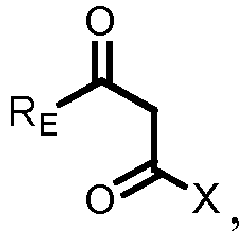
- Verfahren nach einem der voranstehenden Ansprüche, dadurch gekennzeichnet, dass das Enzym MxnI (SEQ ID NO: 9) funktional abwesend ist und dass das Enzym MxnJ aus Modul 6E besteht, das aus den Aminosäuren Nr. 3007 bis 3849 von SEQ ID NO: 10 besteht.
- Verfahren nach einem der voranstehenden Ansprüche, dadurch gekennzeichnet, dass die Enzyme, die zumindest MxnB umfassen, von dem Mikroorganismus getrennt werden und die Verbindung in einer zellfreien Reaktion von den Enzymen hergestellt wird.
Priority Applications (1)
| Application Number | Priority Date | Filing Date | Title |
|---|---|---|---|
| EP14725669.7A EP2994535B1 (de) | 2013-05-10 | 2014-05-12 | Herstellung von myxopyronin und dessen derivaten |
Applications Claiming Priority (3)
| Application Number | Priority Date | Filing Date | Title |
|---|---|---|---|
| EP13167392 | 2013-05-10 | ||
| PCT/EP2014/059677 WO2014181000A1 (en) | 2013-05-10 | 2014-05-12 | Production of myxopyronin and of its derivatives |
| EP14725669.7A EP2994535B1 (de) | 2013-05-10 | 2014-05-12 | Herstellung von myxopyronin und dessen derivaten |
Publications (2)
| Publication Number | Publication Date |
|---|---|
| EP2994535A1 EP2994535A1 (de) | 2016-03-16 |
| EP2994535B1 true EP2994535B1 (de) | 2018-12-05 |
Family
ID=48325491
Family Applications (1)
| Application Number | Title | Priority Date | Filing Date |
|---|---|---|---|
| EP14725669.7A Active EP2994535B1 (de) | 2013-05-10 | 2014-05-12 | Herstellung von myxopyronin und dessen derivaten |
Country Status (4)
| Country | Link |
|---|---|
| EP (1) | EP2994535B1 (de) |
| ES (1) | ES2713437T3 (de) |
| HU (1) | HUE041663T2 (de) |
| WO (1) | WO2014181000A1 (de) |
-
2014
- 2014-05-12 ES ES14725669T patent/ES2713437T3/es active Active
- 2014-05-12 HU HUE14725669A patent/HUE041663T2/hu unknown
- 2014-05-12 WO PCT/EP2014/059677 patent/WO2014181000A1/en not_active Ceased
- 2014-05-12 EP EP14725669.7A patent/EP2994535B1/de active Active
Non-Patent Citations (1)
| Title |
|---|
| None * |
Also Published As
| Publication number | Publication date |
|---|---|
| ES2713437T3 (es) | 2019-05-21 |
| HUE041663T2 (hu) | 2019-05-28 |
| WO2014181000A1 (en) | 2014-11-13 |
| EP2994535A1 (de) | 2016-03-16 |
Similar Documents
| Publication | Publication Date | Title |
|---|---|---|
| AU2020200157B2 (en) | Recombinant production of steviol glycosides | |
| Shen et al. | The Streptomyces glaucescens tcmKL polyketide synthase and tcmN polyketide cyclase genes govern the size and shape of aromatic polyketides | |
| RU2720094C2 (ru) | Способ выделения и очистки амброксида | |
| JPH09505983A (ja) | 新規ポリケチドの組換え産生 | |
| JP4599357B2 (ja) | プラジエノライドの生合成に関与するポリペプチドをコードするdna | |
| KR20010111577A (ko) | 미오-이노시톨-1-포스페이트 신타아제 및미오-이노시톨-2-디히드로게나아제를 사용한1,2,3-트리히드록시벤젠 및 1,2,3,4-테트라히드록시벤젠의합성 | |
| EP2048231B1 (de) | Plasmid, transformante und verfahren zur herstellung von 3-carboxymuconolacton | |
| JPH1156372A (ja) | ユビキノン−10の生成方法 | |
| CN104427870B (zh) | Uk‑2生物合成基因和使用其提高uk‑2生产率的方法 | |
| KR102079003B1 (ko) | 활성이 증대된 테트라하이드로다이드제인 환원효소 및 에쿠올 유도체 생산에의 응용 | |
| CN110791466B (zh) | 一种合成丁三醇油酸酯的重组菌及其构建方法和应用 | |
| ES2713437T3 (es) | Producción de mixopironina y de sus derivados | |
| US9394553B2 (en) | Biosynthetic gene cluster for chejuenolide of marine microorganism Hahella chejuensis | |
| US7670827B2 (en) | Strain belonging to the genus Streptomyces and being capable of producing nemadictin and process for producing nemadictin using the strain | |
| US20070111293A1 (en) | Genes from a gene cluster | |
| JP2003533166A (ja) | オイゲノールおよびフェルラ酸の異化作用の特異的不活性化遺伝子による置換フェノール生産のための生産株の構築 | |
| US9217169B2 (en) | Synthetic pathway enzymes for the production of argyrins | |
| US7416870B2 (en) | Methods of directing C-O bond formation utilizing a type II polyketide synthase system | |
| Schneider et al. | A Fatty Acid α-Ketol, a Product of the Plant Lipoxygenase Pathway, Is Oxidized to 3 (Z)-Dodecendioic Acid by a Bacterial Monooxygenase | |
| KR20240041434A (ko) | 효모에서 폴리케티드를 제조하기 위한 방법 | |
| CN121950552A (zh) | 一种合成缩醛磷脂的工程酵母菌及构建方法和应用 | |
| Wang | Understanding, engineering and chemical modification of pyrichalasin H biosynthesis from Magnaporthe grisea NI980 | |
| CN120536392A (zh) | 莨菪碱4β-羟化酶及其应用 | |
| IL299113A (en) | A method for the production of oleic acid in a type of host Ambozoa | |
| Cohen | Insights into the assembly of anthraquinone-fused enediynes through biosynthetic investigations of dynemicin A. |
Legal Events
| Date | Code | Title | Description |
|---|---|---|---|
| PUAI | Public reference made under article 153(3) epc to a published international application that has entered the european phase |
Free format text: ORIGINAL CODE: 0009012 |
|
| 17P | Request for examination filed |
Effective date: 20151106 |
|
| AK | Designated contracting states |
Kind code of ref document: A1 Designated state(s): AL AT BE BG CH CY CZ DE DK EE ES FI FR GB GR HR HU IE IS IT LI LT LU LV MC MK MT NL NO PL PT RO RS SE SI SK SM TR |
|
| AX | Request for extension of the european patent |
Extension state: BA ME |
|
| DAX | Request for extension of the european patent (deleted) | ||
| STAA | Information on the status of an ep patent application or granted ep patent |
Free format text: STATUS: EXAMINATION IS IN PROGRESS |
|
| 17Q | First examination report despatched |
Effective date: 20170413 |
|
| REG | Reference to a national code |
Ref country code: DE Ref legal event code: R079 Ref document number: 602014037392 Country of ref document: DE Free format text: PREVIOUS MAIN CLASS: C12P0017060000 Ipc: C12N0015520000 |
|
| RIC1 | Information provided on ipc code assigned before grant |
Ipc: C12N 15/52 20060101AFI20180702BHEP Ipc: C12N 9/10 20060101ALI20180702BHEP Ipc: C12N 9/02 20060101ALI20180702BHEP Ipc: C12P 17/06 20060101ALI20180702BHEP |
|
| GRAP | Despatch of communication of intention to grant a patent |
Free format text: ORIGINAL CODE: EPIDOSNIGR1 |
|
| STAA | Information on the status of an ep patent application or granted ep patent |
Free format text: STATUS: GRANT OF PATENT IS INTENDED |
|
| INTG | Intention to grant announced |
Effective date: 20180814 |
|
| GRAS | Grant fee paid |
Free format text: ORIGINAL CODE: EPIDOSNIGR3 |
|
| GRAA | (expected) grant |
Free format text: ORIGINAL CODE: 0009210 |
|
| STAA | Information on the status of an ep patent application or granted ep patent |
Free format text: STATUS: THE PATENT HAS BEEN GRANTED |
|
| AK | Designated contracting states |
Kind code of ref document: B1 Designated state(s): AL AT BE BG CH CY CZ DE DK EE ES FI FR GB GR HR HU IE IS IT LI LT LU LV MC MK MT NL NO PL PT RO RS SE SI SK SM TR |
|
| REG | Reference to a national code |
Ref country code: GB Ref legal event code: FG4D |
|
| REG | Reference to a national code |
Ref country code: CH Ref legal event code: EP |
|
| REG | Reference to a national code |
Ref country code: AT Ref legal event code: REF Ref document number: 1073093 Country of ref document: AT Kind code of ref document: T Effective date: 20181215 |
|
| REG | Reference to a national code |
Ref country code: IE Ref legal event code: FG4D |
|
| REG | Reference to a national code |
Ref country code: DE Ref legal event code: R096 Ref document number: 602014037392 Country of ref document: DE |
|
| REG | Reference to a national code |
Ref country code: CH Ref legal event code: NV Representative=s name: DENNEMEYER AG, CH |
|
| REG | Reference to a national code |
Ref country code: NL Ref legal event code: FP |
|
| REG | Reference to a national code |
Ref country code: AT Ref legal event code: MK05 Ref document number: 1073093 Country of ref document: AT Kind code of ref document: T Effective date: 20181205 |
|
| REG | Reference to a national code |
Ref country code: LT Ref legal event code: MG4D |
|
| PG25 | Lapsed in a contracting state [announced via postgrant information from national office to epo] |
Ref country code: LV Free format text: LAPSE BECAUSE OF FAILURE TO SUBMIT A TRANSLATION OF THE DESCRIPTION OR TO PAY THE FEE WITHIN THE PRESCRIBED TIME-LIMIT Effective date: 20181205 Ref country code: AT Free format text: LAPSE BECAUSE OF FAILURE TO SUBMIT A TRANSLATION OF THE DESCRIPTION OR TO PAY THE FEE WITHIN THE PRESCRIBED TIME-LIMIT Effective date: 20181205 Ref country code: FI Free format text: LAPSE BECAUSE OF FAILURE TO SUBMIT A TRANSLATION OF THE DESCRIPTION OR TO PAY THE FEE WITHIN THE PRESCRIBED TIME-LIMIT Effective date: 20181205 Ref country code: HR Free format text: LAPSE BECAUSE OF FAILURE TO SUBMIT A TRANSLATION OF THE DESCRIPTION OR TO PAY THE FEE WITHIN THE PRESCRIBED TIME-LIMIT Effective date: 20181205 Ref country code: NO Free format text: LAPSE BECAUSE OF FAILURE TO SUBMIT A TRANSLATION OF THE DESCRIPTION OR TO PAY THE FEE WITHIN THE PRESCRIBED TIME-LIMIT Effective date: 20190305 Ref country code: BG Free format text: LAPSE BECAUSE OF FAILURE TO SUBMIT A TRANSLATION OF THE DESCRIPTION OR TO PAY THE FEE WITHIN THE PRESCRIBED TIME-LIMIT Effective date: 20190305 Ref country code: LT Free format text: LAPSE BECAUSE OF FAILURE TO SUBMIT A TRANSLATION OF THE DESCRIPTION OR TO PAY THE FEE WITHIN THE PRESCRIBED TIME-LIMIT Effective date: 20181205 |
|
| REG | Reference to a national code |
Ref country code: ES Ref legal event code: FG2A Ref document number: 2713437 Country of ref document: ES Kind code of ref document: T3 Effective date: 20190521 |
|
| REG | Reference to a national code |
Ref country code: HU Ref legal event code: AG4A Ref document number: E041663 Country of ref document: HU |
|
| PG25 | Lapsed in a contracting state [announced via postgrant information from national office to epo] |
Ref country code: RS Free format text: LAPSE BECAUSE OF FAILURE TO SUBMIT A TRANSLATION OF THE DESCRIPTION OR TO PAY THE FEE WITHIN THE PRESCRIBED TIME-LIMIT Effective date: 20181205 Ref country code: GR Free format text: LAPSE BECAUSE OF FAILURE TO SUBMIT A TRANSLATION OF THE DESCRIPTION OR TO PAY THE FEE WITHIN THE PRESCRIBED TIME-LIMIT Effective date: 20190306 Ref country code: SE Free format text: LAPSE BECAUSE OF FAILURE TO SUBMIT A TRANSLATION OF THE DESCRIPTION OR TO PAY THE FEE WITHIN THE PRESCRIBED TIME-LIMIT Effective date: 20181205 Ref country code: AL Free format text: LAPSE BECAUSE OF FAILURE TO SUBMIT A TRANSLATION OF THE DESCRIPTION OR TO PAY THE FEE WITHIN THE PRESCRIBED TIME-LIMIT Effective date: 20181205 |
|
| PG25 | Lapsed in a contracting state [announced via postgrant information from national office to epo] |
Ref country code: PT Free format text: LAPSE BECAUSE OF FAILURE TO SUBMIT A TRANSLATION OF THE DESCRIPTION OR TO PAY THE FEE WITHIN THE PRESCRIBED TIME-LIMIT Effective date: 20190405 Ref country code: PL Free format text: LAPSE BECAUSE OF FAILURE TO SUBMIT A TRANSLATION OF THE DESCRIPTION OR TO PAY THE FEE WITHIN THE PRESCRIBED TIME-LIMIT Effective date: 20181205 Ref country code: CZ Free format text: LAPSE BECAUSE OF FAILURE TO SUBMIT A TRANSLATION OF THE DESCRIPTION OR TO PAY THE FEE WITHIN THE PRESCRIBED TIME-LIMIT Effective date: 20181205 |
|
| PG25 | Lapsed in a contracting state [announced via postgrant information from national office to epo] |
Ref country code: RO Free format text: LAPSE BECAUSE OF FAILURE TO SUBMIT A TRANSLATION OF THE DESCRIPTION OR TO PAY THE FEE WITHIN THE PRESCRIBED TIME-LIMIT Effective date: 20181205 Ref country code: IS Free format text: LAPSE BECAUSE OF FAILURE TO SUBMIT A TRANSLATION OF THE DESCRIPTION OR TO PAY THE FEE WITHIN THE PRESCRIBED TIME-LIMIT Effective date: 20190405 Ref country code: SK Free format text: LAPSE BECAUSE OF FAILURE TO SUBMIT A TRANSLATION OF THE DESCRIPTION OR TO PAY THE FEE WITHIN THE PRESCRIBED TIME-LIMIT Effective date: 20181205 Ref country code: EE Free format text: LAPSE BECAUSE OF FAILURE TO SUBMIT A TRANSLATION OF THE DESCRIPTION OR TO PAY THE FEE WITHIN THE PRESCRIBED TIME-LIMIT Effective date: 20181205 Ref country code: SM Free format text: LAPSE BECAUSE OF FAILURE TO SUBMIT A TRANSLATION OF THE DESCRIPTION OR TO PAY THE FEE WITHIN THE PRESCRIBED TIME-LIMIT Effective date: 20181205 |
|
| REG | Reference to a national code |
Ref country code: DE Ref legal event code: R097 Ref document number: 602014037392 Country of ref document: DE |
|
| PLBE | No opposition filed within time limit |
Free format text: ORIGINAL CODE: 0009261 |
|
| STAA | Information on the status of an ep patent application or granted ep patent |
Free format text: STATUS: NO OPPOSITION FILED WITHIN TIME LIMIT |
|
| PG25 | Lapsed in a contracting state [announced via postgrant information from national office to epo] |
Ref country code: SI Free format text: LAPSE BECAUSE OF FAILURE TO SUBMIT A TRANSLATION OF THE DESCRIPTION OR TO PAY THE FEE WITHIN THE PRESCRIBED TIME-LIMIT Effective date: 20181205 Ref country code: DK Free format text: LAPSE BECAUSE OF FAILURE TO SUBMIT A TRANSLATION OF THE DESCRIPTION OR TO PAY THE FEE WITHIN THE PRESCRIBED TIME-LIMIT Effective date: 20181205 |
|
| 26N | No opposition filed |
Effective date: 20190906 |
|
| PG25 | Lapsed in a contracting state [announced via postgrant information from national office to epo] |
Ref country code: MC Free format text: LAPSE BECAUSE OF FAILURE TO SUBMIT A TRANSLATION OF THE DESCRIPTION OR TO PAY THE FEE WITHIN THE PRESCRIBED TIME-LIMIT Effective date: 20181205 |
|
| REG | Reference to a national code |
Ref country code: BE Ref legal event code: MM Effective date: 20190531 |
|
| PG25 | Lapsed in a contracting state [announced via postgrant information from national office to epo] |
Ref country code: LU Free format text: LAPSE BECAUSE OF NON-PAYMENT OF DUE FEES Effective date: 20190512 |
|
| PG25 | Lapsed in a contracting state [announced via postgrant information from national office to epo] |
Ref country code: TR Free format text: LAPSE BECAUSE OF FAILURE TO SUBMIT A TRANSLATION OF THE DESCRIPTION OR TO PAY THE FEE WITHIN THE PRESCRIBED TIME-LIMIT Effective date: 20181205 |
|
| PG25 | Lapsed in a contracting state [announced via postgrant information from national office to epo] |
Ref country code: IE Free format text: LAPSE BECAUSE OF NON-PAYMENT OF DUE FEES Effective date: 20190512 |
|
| PG25 | Lapsed in a contracting state [announced via postgrant information from national office to epo] |
Ref country code: BE Free format text: LAPSE BECAUSE OF NON-PAYMENT OF DUE FEES Effective date: 20190531 |
|
| PG25 | Lapsed in a contracting state [announced via postgrant information from national office to epo] |
Ref country code: CY Free format text: LAPSE BECAUSE OF FAILURE TO SUBMIT A TRANSLATION OF THE DESCRIPTION OR TO PAY THE FEE WITHIN THE PRESCRIBED TIME-LIMIT Effective date: 20181205 |
|
| PG25 | Lapsed in a contracting state [announced via postgrant information from national office to epo] |
Ref country code: MT Free format text: LAPSE BECAUSE OF FAILURE TO SUBMIT A TRANSLATION OF THE DESCRIPTION OR TO PAY THE FEE WITHIN THE PRESCRIBED TIME-LIMIT Effective date: 20181205 |
|
| PG25 | Lapsed in a contracting state [announced via postgrant information from national office to epo] |
Ref country code: MK Free format text: LAPSE BECAUSE OF FAILURE TO SUBMIT A TRANSLATION OF THE DESCRIPTION OR TO PAY THE FEE WITHIN THE PRESCRIBED TIME-LIMIT Effective date: 20181205 |
|
| PGFP | Annual fee paid to national office [announced via postgrant information from national office to epo] |
Ref country code: NL Payment date: 20250522 Year of fee payment: 12 |
|
| PGFP | Annual fee paid to national office [announced via postgrant information from national office to epo] |
Ref country code: DE Payment date: 20250506 Year of fee payment: 12 |
|
| PGFP | Annual fee paid to national office [announced via postgrant information from national office to epo] |
Ref country code: ES Payment date: 20250616 Year of fee payment: 12 |
|
| PGFP | Annual fee paid to national office [announced via postgrant information from national office to epo] |
Ref country code: IT Payment date: 20250529 Year of fee payment: 12 |
|
| PGFP | Annual fee paid to national office [announced via postgrant information from national office to epo] |
Ref country code: HU Payment date: 20250606 Year of fee payment: 12 Ref country code: FR Payment date: 20250528 Year of fee payment: 12 |
|
| PGFP | Annual fee paid to national office [announced via postgrant information from national office to epo] |
Ref country code: CH Payment date: 20250620 Year of fee payment: 12 |
|
| PGFP | Annual fee paid to national office [announced via postgrant information from national office to epo] |
Ref country code: GB Payment date: 20260324 Year of fee payment: 13 |