EP2992340B1 - System und verfahren zur usv-batterie-überwachung und -datenanalyse - Google Patents
System und verfahren zur usv-batterie-überwachung und -datenanalyse Download PDFInfo
- Publication number
- EP2992340B1 EP2992340B1 EP14791732.2A EP14791732A EP2992340B1 EP 2992340 B1 EP2992340 B1 EP 2992340B1 EP 14791732 A EP14791732 A EP 14791732A EP 2992340 B1 EP2992340 B1 EP 2992340B1
- Authority
- EP
- European Patent Office
- Prior art keywords
- data point
- raw data
- point values
- values
- ones
- Prior art date
- Legal status (The legal status is an assumption and is not a legal conclusion. Google has not performed a legal analysis and makes no representation as to the accuracy of the status listed.)
- Active
Links
Images




Classifications
-
- G—PHYSICS
- G01—MEASURING; TESTING
- G01R—MEASURING ELECTRIC VARIABLES; MEASURING MAGNETIC VARIABLES
- G01R31/00—Arrangements for testing electric properties; Arrangements for locating electric faults; Arrangements for electrical testing characterised by what is being tested not provided for elsewhere
- G01R31/36—Arrangements for testing, measuring or monitoring the electrical condition of accumulators or electric batteries, e.g. capacity or state of charge [SoC]
- G01R31/3644—Constructional arrangements
- G01R31/3648—Constructional arrangements comprising digital calculation means, e.g. for performing an algorithm
-
- G—PHYSICS
- G01—MEASURING; TESTING
- G01R—MEASURING ELECTRIC VARIABLES; MEASURING MAGNETIC VARIABLES
- G01R31/00—Arrangements for testing electric properties; Arrangements for locating electric faults; Arrangements for electrical testing characterised by what is being tested not provided for elsewhere
- G01R31/36—Arrangements for testing, measuring or monitoring the electrical condition of accumulators or electric batteries, e.g. capacity or state of charge [SoC]
- G01R31/367—Software therefor, e.g. for battery testing using modelling or look-up tables
-
- G—PHYSICS
- G05—CONTROLLING; REGULATING
- G05B—CONTROL OR REGULATING SYSTEMS IN GENERAL; FUNCTIONAL ELEMENTS OF SUCH SYSTEMS; MONITORING OR TESTING ARRANGEMENTS FOR SUCH SYSTEMS OR ELEMENTS
- G05B13/00—Adaptive control systems, i.e. systems automatically adjusting themselves to have a performance which is optimum according to some preassigned criterion
- G05B13/02—Adaptive control systems, i.e. systems automatically adjusting themselves to have a performance which is optimum according to some preassigned criterion electric
- G05B13/04—Adaptive control systems, i.e. systems automatically adjusting themselves to have a performance which is optimum according to some preassigned criterion electric involving the use of models or simulators
-
- H—ELECTRICITY
- H02—GENERATION; CONVERSION OR DISTRIBUTION OF ELECTRIC POWER
- H02J—CIRCUIT ARRANGEMENTS OR SYSTEMS FOR SUPPLYING OR DISTRIBUTING ELECTRIC POWER; SYSTEMS FOR STORING ELECTRIC ENERGY
- H02J9/00—Circuit arrangements for emergency or stand-by power supply, e.g. for emergency lighting
- H02J9/04—Circuit arrangements for emergency or stand-by power supply, e.g. for emergency lighting in which the distribution system is disconnected from the normal source and connected to a standby source
- H02J9/06—Circuit arrangements for emergency or stand-by power supply, e.g. for emergency lighting in which the distribution system is disconnected from the normal source and connected to a standby source with automatic change-over, e.g. UPS systems
-
- G—PHYSICS
- G01—MEASURING; TESTING
- G01R—MEASURING ELECTRIC VARIABLES; MEASURING MAGNETIC VARIABLES
- G01R31/00—Arrangements for testing electric properties; Arrangements for locating electric faults; Arrangements for electrical testing characterised by what is being tested not provided for elsewhere
- G01R31/36—Arrangements for testing, measuring or monitoring the electrical condition of accumulators or electric batteries, e.g. capacity or state of charge [SoC]
- G01R31/389—Measuring internal impedance, internal conductance or related variables
Definitions
- the present disclosure relates to battery monitoring systems and methods, and more particularly to a battery monitoring system and method for collecting data from uninterruptible power supplies (UPSs) being monitored, and analyzing and filtering the data to produce a data set that even more accurately represents a performance of the UPSs in order to even more effectively predict future system operation and/or a remaining useful life (RUL) of the batteries used in the UPSs.
- UPSs uninterruptible power supplies
- RUL remaining useful life
- UPS Uninterruptible Power Supply
- At least three important challenges surround the data collected from present day sensors that are being used to monitor the batteries of UPSs: (1) verifying the quality of the data by distinguishing noise from the valid data that is diagnostic of true battery conditions, (2) refining the identification of data error types so that appropriate diagnoses can be rapidly made and necessary interventions can be undertaken, and (3) identifying and recognizing patterns in valid data in order to make predictions about system operation and remaining useful life (RUL) of batteries.
- RUL predictions should increase system uptime by permitting intervention before the batteries actually fail.
- a significant cost savings may also be realized by changing from periodic inspections of batteries to an inspection cycle that more closely follows the reliability bathtub curve.
- data noise may result from a variety of events. For example, human intervention such as replacement of a battery or board may result in some degree of data noise being generated. Network failures that prevent proper data streaming, or instrumentation problems such as loose wires, bad sensors, failed multiplexors, disconnected battery lug, altered calibration value, etc., in many instances will also result in data noise. These events may create characteristic patterns in the data stream. At present, a human must attempt to interpret the data and make an effort to identify and report the specific anomalies. As a result, necessary interventions may therefore be delayed until long after the events occur. Automatic cleansing and categorization of data would enable faster determination of root causes of problems (e.g., is it the battery or the instrumentation?) and may be expected to provide a clean dataset on which to build predictive RUL models.
- root causes of problems e.g., is it the battery or the instrumentation
- US 2003/0014205 A1 discloses a method and apparatus for testing semiconductors, comprising a test system comprising an outlier element configured to identify significant data in a set of test results.
- the test system may be configured to provide the data in an output report.
- US 2004/0267477 A1 discloses a method and apparatus for data analysis configured to automatically select one or more outlier identification algorithms for identifying statistical outliers in test data for components.
- Another drawback is that even data points that were created pursuant to some intervention by a user (i.e., disconnecting a battery cable, or momentarily upsetting a battery cable connection) will be considered in the least-squares linear regression curve fitting, when in fact such data points are not indicative of any true performance degradation of the battery string. Outlier data point values are also considered by present day curve fitting algorithms. These factors can cumulatively significantly reduce the quality and reliability of a battery health analysis being drawn from a conventional least-squares linear regression curve fitting.
- the present disclosure relates to a method, as defined in claims 1 to 8, for analyzing raw data collected over a period of time, using a processing/analysis system, to verify a quality of the raw data collected.
- the method may include collecting raw data point values over a period of time.
- the processing/analysis system may be used to identify and remove specific ones of the raw data point values determined to be outliers residing outside of a predetermined range of data point values. For each one of the specific remaining ones of the raw data point values, the processing/analysis system may examine at least two other ones of the raw data point values obtained at points in time prior to a given one of the raw data point values being examined.
- the processing/analysis system may use the at least two other ones of the raw data point values to determine a predicted data point value relative to the given one of the raw data point values being examined, and to compare the predicted data point value and the given one of the raw data point values being examined. From the comparing, the processing/analysis system may be used to determine whether the given one of the raw data point values being examined is a valid data point value.
- the present disclosure relates to a method for analyzing raw data relating to battery measurement values collected over a period of time, using a processing/analysis system, to verify a quality of the raw data collected.
- the method may include collecting raw data point values over a period of time using the processing/analysis system.
- the processing/analysis system may also be used to perform a data cleansing operation by identifying and removing specific ones of the raw data point values determined to be outliers residing outside of a predetermined range of data point values.
- the processing/analysis system may be used to perform a data condensing operation by examining successive pairs of the raw data point values which were obtained adjacent one another in time, and whenever the two raw data point values of a given successive pair of points are identical, then discarding one raw data point value of the pair being examined, to thus form a condensed collection of raw data point values.
- the processing/analysis system may examine a plurality of ones of the raw data point values that were obtained previous in time to a given one of the raw data point values of a pair which is under consideration, and then may assign a weight to each one of the plurality of ones of the raw data point values that were obtained previous in time to create weighted data point values.
- the processing/analysis system may use the weighted data point values to generate a predicted data point value which is associated with the raw data point value under consideration.
- the system may further be used to perform a comparison between the predicted data point value and the raw data point value under consideration to determine an error relative to the raw data point value under consideration.
- the present disclosure relates to a system, as defined in claims 9 and 10, for analyzing raw data collected over a period of time to verify a quality of the raw data collected, and to eliminate from further consideration data point values determined to be erroneous data point values.
- the system may include a processing system configured to run an algorithm, and operable to collect raw data point values over a period of time.
- a database may be used which is in communication with the processor and which is configured to store the collected raw data point values.
- the processing/analysis system may further be configured to identify and remove specific ones of the raw data point values determined to be outliers residing outside of a predetermined range of data point values.
- the processing/analysis system may also be used, for each one of the specific remaining one of the raw data point values, to examine at least two other ones of the raw data point values obtained at points in time prior to a given one of the raw data point values being examined.
- the at least two other ones of the raw data point values may be used in connection with the algorithm to determine a predicted data point value relative to the given one of the raw data point values being examined.
- the processing system may use the predicted data point value and the given one of the raw data point values being examined to determine if the given one of the raw data point values being examined is an erroneous data point value.
- the system 10 may include a processing/analysis system 12 (hereinafter simply “processing system 12"), including both hardware and software components, that receives measured battery resistance values obtained by monitoring subsystems 14.
- processing system 12 may be sensors or any other devices/subsystems that are used to collect the raw battery resistance measurement data that will need to be analyzed. Suitable battery monitoring and diagnostic systems are available from Albercorp of Pompano Beach, Florida under product numbers BDS40 and BDS256.
- the measured battery resistance values obtained may be stored in a database 16 or any other suitable memory component.
- the processing system 12 may also be in communication with a terminal 18 for displaying the measured battery resistance values.
- the terminal 18 may comprise without limitation a portion of a PC, a laptop, a tablet or possibly even a smartphone.
- Each UPS will typically include at least one battery string.
- the battery string may be comprised of different numbers of "jars", with a plurality of battery cells making up a single jar.
- the present system 10 is not limited to any one configuration of battery strings.
- the jars within a battery string are connected in series, which means that the voltage drop across a string is the sum of the individual voltage drops across the jars of a given string.
- the failure of a single jar will degrade an entire string.
- present day monitoring/analysis systems are not able to analyze the raw battery resistance data collected in a manner that clearly indicates to the user when a potential problem is likely to occur, as compared to other events (i.e., momentarily disconnecting a jar; loose connection, etc.) that would similarly appear, just from looking at the raw collected data, to suggest a potentially imminent failure of a battery string.
- the system 10 and method of the present disclosure achieves this capability in part through the use of a method for analyzing the collected battery resistance values.
- a plurality of operations may be performed to "cleanse” (i.e., filter) and condense the collected raw data point values before attempting to perform an error analysis on the collected raw data point values.
- the error analysis may involve a unique methodology for weighting the condensed set of actual data point values prior to making a prediction as to the possible error of each actual data point value.
- a flowchart 100 presents a plurality of high level operations that may be performed by the processing system 12 in condensing and analyzing raw data point values.
- the raw battery resistance values i.e., raw data point values
- the monitoring subsystems 14 For this example it will be assumed that the raw data point values from a single battery string of UPS 1 are being considered.
- data point values are analyzed to identify and remove values that are extreme outliers. This may be accomplished by testing the data in a 3x box/whisker extreme outlier test. This involves comparing all the collected data point values at once.
- the second quartile (Q2) indicates the median value of all values.
- the first quartile (Q1) indicates the median value between the lowest value and Q2.
- the third quartile (Q3) indicates the median value between the highest value and Q2.
- the inter-quartile-range (IQR) is Q3-Q1. The most relevant data will appear in the IQR, and extreme outliers will be those that are above Q3 + 3*IQR or below Q1-3*IQR. The extreme outliers are then flagged.
- a sequence of comparisons is performed of adjacent-in-time data point values to eliminate identical values and create a condensed data point set.
- This condensed data point set is the set of data points that is used for further analysis. This may represent a significant reduction in the overall number of data point values that are analyzed but without compromising the accuracy of the results of the analysis.
- a weighting analysis may be performed on each data point value in the condensed data point set. This operation, to be described in greater detail in the following paragraphs, may be used to assign different weights to data point values that preceded, in time, a particular data point value under consideration, and which are being used to predict whether the data point value under consideration is a valid data point or an erroneous data point (e.g., a high or low outlier).
- each data point value may then be stored in the database 16 with an additional field in a suitable format, for example a comma separated value (CSV) format.
- the additional field may have a word or value, for example, "Good” or simply a numeric error value, that indicates the difference between the predicted data point value associated with a specific data point, and the actual resistance value of the data point.
- the condensed set of data point values may be plotted on a graph along with points indicating the magnitude of the error for each one of the data point values.
- a prognostic health monitoring (“PHM”) algorithm 200 is shown in Figure 3 for performing certain ones of the operations described above in connection with Figure 2 . It will be understood that the PHM algorithm 200 may run on the processing system 12 or on any other suitable processor or controller, provided it is able to communicate its results to the terminal 18. For the PHM algorithm 200, the following may apply:
- the PHM algorithm 200 has an underlying premise that for the response variable (i.e., the jar resistance being measured, "Y"), at any given point in time the rate of change should be locally linear, even if the overall function is nonlinear. So it is possible to build a linear model, based on the raw measured (i.e., actual) data point values, which may be used to predict the next point data point value or, put differently, what the next data point value should be. In order to ensure that the model only focuses on local linearity, the preceding data point values points are preferably not used uniformly in building the model, but rather they are weighted exponentially.
- the analysis performed by the algorithm 200 may involve multiplying each error value by that associated data point value's weight prior to determining an overall error of a calculated regression line. This is useful if different data point values have varying amounts of uncertainty, or if the points are unusual with respect to how far they are from a certain point of interest.
- the PHM algorithm 200 takes the original (uncondensed) dataset, as well as the indices for fields X and Y and parameters A and E. It should be noted that throughout the PHM algorithm 200, the first index on datasets (for example, the i in S[i][j]) refers to the "ith" instance (zero-indexed), while the second index refers to the "jth" feature (field, also zero-indexed).
- Lines 1 through 9 of the PHM algorithm 200 concern the data cleansing operation (operation 104 in Figure 2 ) that is performed prior to executing a main error detection algorithm.
- First the instances are sorted based on the X field, and then each pair of adjacent instances is examined. Each instance will be understood as representing a single actual data point value. If they differ, the second instance is retained in the dataset. If they do not differ the second instance is not retained; that is, only the first instance, which is the earlier in time instance, is retained in the dataset. In either event, the next pair of instances (i.e., actual data point values) is then considered.
- lines 6 and 7 of the PHM algorithm 200 have the effect of ensuring that no adjacent pairs of instances are entirely identical. It is important to note that only completely identical instances are removed; if the X value is the same but the Y value differs, for example, the instance is retained (even if two instances on the same day with different readings is an error on its own).
- the foregoing operations of examining adjacent pairs of instances and saving only one or the other of each pair may be thought of as a data "cleansing" or condensing operation to create the condensed set of data point values, also referred to herein simply as the "dataset".
- lines 10 through 26 of the PHM algorithm 200 operate to effectively build a separate model for each instance of the data set being examined. It should be noted that for the first two instances, only a value of n/a (not applicable) can be produced, because the WLS algorithm requires at least two points to build a model, and since only those points prior to the point being examined are included, such models can only be built starting with the third point.
- the PHM algorithm 200 proceeds through the main loop (lines 13 through 26), the first set of points found prior to the point being examined are partitioned out (lines 14 through 16), and then the algorithm 200 checks if the most recent point prior to the point being examined is more than a predetermined time interval earlier than the point being examined (line 18). If so, a variable called "WeightFactor" is defined which is how much longer than a predetermined quantity of time this value is. For example, consider that the predetermined time interval is set to one month (i.e., 2628000 seconds).
- WeightFactor would be 2.5 minus 1 (resulting in 1.5 months, in seconds), minus 2628000 (line 19 of algorithm 200). If the most recent point is one month or less from the point being examined, however, WeightFactor is set to 0 (line 21 of algorithm 200), so it will have no effect on the algorithm 200.
- the weights for each of the data point values prior to the one being examined are found.
- the weights for the data point values are based on their distances from the point of interest, "A" (the age parameter), and WeightFactor (lines 22 through 23 of the PHM algorithm 200).
- the effect of the WeightFactor is to contract the closest point to the point being examined to only one month prior to the point being examined, and to also slide all other points prior in time to the point being examined forward by the same amount. Note this is only done if the immediately-preceding data point is at least one month prior to the point being examined. Because this only affects the weighting (and not the actual underlying data), these changes will only affect the weights used for the currently examined data point, not future data points (which will be tested again with line 18 when the loop of the algorithm 200 enters another cycle).
- the PHM algorithm 200 involves building a WLS model using the partitioned data points, the calculated weights, and the indices to be used as the X and Y fields (line 24).
- this model is used to predict the magnitude (i.e., value in resistance) of the instance being examined, and the difference between this predicted value and the actual value is stored in an "Errors" array in the database 16 ( Figure 1 ).
- Figures 4a and 4b presents a fairly typical case, where the resistance data breaks into three clear data value time sequences: one labeled 400a where it starts a bit over 5000 m ⁇ and slowly rises; one labeled 400b where it starts at nearly 5000 m ⁇ exactly and remains relatively stationary; and finally one labeled 400c where it starts well below 5000 m ⁇ and also does not show significant movement.
- Post-cleansing, data value sequences 400a', 400b' and 400c' reveal that the duplicated values are mostly removed. This demonstrates that the data cleansing feature described above can help remove the differences between datasets which share many similar underlying properties.
- Figures 5a and 5b also shows much the same effect of the data cleansing.
- Figure 5a one distinct regime of data 500a is shown.
- Figure 5b the data regime of Figure 5a is shown after being cleansed, and is labeled 500b.
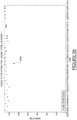
- Figures 6a and 6b show uncleansed and cleansed data streams 600a and 600b, respectively. This illustrates a relatively constant data source with similar patterns.
- Figures 7 through 9 demonstrate the issue of data point outliers.
- Figure 7a shows an example with extreme high outliers 702 and 704, as well as one high outlier 706.
- Figure 8 shows a data stream 800a with extreme low outliers 802 and 804 that fall in the beginning and in the middle, respectively, of its time sequence.
- the data stream 900 of Figure 9 has notable outlier problems in both directions. Note that repeated values in Figure 9 may present a challenge for automated analysis of sensor data. This is because the frequent repeated values may erroneously lead an algorithm to believe that a signal is more stable than it really is. Outliers, and in particular high outlier values, can obscure human interpretation of sensor data because graphs such as these which scale to the largest observed value are often of minimal help when the highest observed value dwarfs the important values. Thus, by removing these high and low outliers, the resulting data, which can be thought of as a filtered dataset, can be more easily interpreted to find true patterns.
- the removal of outliers can also eliminate some useful values. In particular, this is so for many of the values towards the end of the first data stream 700a, which appear in Figure 7a to be steadily progressing upwards without creating a true outlier.
- the cleansed data stream is shown as data stream 700b in Figure 7b . This is an inherent risk of removing data value instances. However, practitioners could add back the missing data as appropriate or use this to help choose better threshold values for future analysis.
- output graphs are presented that illustrate the error values relative to each actual data point value of the condensed dataset.
- the output graph may present a very clear pattern that may reveal when noise and jumps signal an important event that has occurred with a given jar.
- three distinct data streams 1000a, 1000b and 1000c are present that represent three epochs.
- Error thresholds 1002, 1004, 1006 and 1008 correspond to values of 100, 200, 300 and 500 m ⁇ .
- the initial data stream 1000a shows the expected behavior of a slow rise in jar resistance followed by a sudden increase in the rate of rise followed by a jar replacement event 1000d.
- the output graph 1100 shown in Figure 11 demonstrates how the PHM algorithm 200 acts when there are no significant changes in the data point values. A few minor jumps are visible as each run of identical values changes, but not changes of the magnitude seen in the previous data. The PHM algorithm 200 does not report dramatic changes; although some error points register between the threshold values of 200 and 300 m ⁇ , none exceed 300 m ⁇ . This provides an important control, showing that the PHM algorithm will not produce false positives when it encounters minor jumps.
- Figure 12 demonstrates another benefit of the PHM algorithm 200, that being the ability to detect unusual data value outliers.
- the dataset shown in Figure 12 has two regions, 1200a and 1200b, with erroneous values: one, during region 1200a, which spans the last quarter of 2006, contains instances with zero resistance.
- the error values (shown as inverted triangles) highlight these issues.
- markedly elevated error value 1202 indicates that a resistance value was expected that was similar to the range seen previously, rather than zero. And when the low resistance range ends, this is indicated by error value 1204.
- the range of high outliers begins, as noted by error value 1206, and its end is denoted by error value 1208. Note that in both cases the end of a span of erroneous values, and a return to a more typical range, is signified by an instance marked as erroneous (i.e., error values 1204 and 1208). This is because the PHM algorithm 200 does not explicitly know beforehand what appropriate data values are, but it is able to recognize when a data value has changed significantly (i.e., by a suspiciously high or low degree). Additional human intervention may be used to recognize whether the battery is changing from good to bad or from bad to good.
- Error flags i.e., inverted triangles 1308, 1310 and 1312 denote these instances.
- the error flags 1308, 1310 and 1312 flag data point values having abnormally low resistance, which unmistakably signals a significant event occurring with respect to a given jar.
- the system 10 and its PHM algorithm 200 demonstrate how changes in resistance values of a jar can be detected in an automated fashion, and how the system 10 is resistant to noise and able to detect extreme examples of noise.
- the threshold value of 500 m ⁇ has been found to be a generally appropriate value for distinguishing between true jumps and errors as opposed to false positives.
- some sub-critical jumps have been found with error values below 500 m ⁇ , all important instances have values above this amount.
Landscapes
- General Physics & Mathematics (AREA)
- Physics & Mathematics (AREA)
- Engineering & Computer Science (AREA)
- Software Systems (AREA)
- Artificial Intelligence (AREA)
- Computer Vision & Pattern Recognition (AREA)
- Evolutionary Computation (AREA)
- Medical Informatics (AREA)
- Health & Medical Sciences (AREA)
- Automation & Control Theory (AREA)
- Business, Economics & Management (AREA)
- Emergency Management (AREA)
- Power Engineering (AREA)
- Testing And Monitoring For Control Systems (AREA)
- Management, Administration, Business Operations System, And Electronic Commerce (AREA)
- Debugging And Monitoring (AREA)
Claims (10)
- Verfahren zur Analyse von über einen Zeitraum erfassten Rohdaten unter Verwendung eines Verarbeitungs-/Analysesystems (12) zum Überprüfen einer Integrität der erfassten Rohdaten, wobei das Verfahren umfasst:Erfassen (102) von Rohdaten-Punktwerten über einen Zeitraum;Verwenden des Verarbeitungs-/Analysesystems (12)
zum Identifizieren und Entfernen (103) bestimmter der Rohdaten-Punktwerte, bestimmt durch die Ausreißer außerhalb eines vorbestimmten Bereichs von Datenpunktwerten; und
für jeden der bestimmten verbleibenden Rohdaten-Punktwerte:zum Prüfen (104) von mindestens zwei anderen der Rohdaten-Punktwerte, erhalten zu Zeitpunkten vor einem gegebenen der untersuchten Rohdaten-Punktwerte;zum Verwenden (108) der mindestens zwei anderen Rohdaten-Punktwerte, um einen vorhergesagten Datenpunktwert relativ zu dem gegebenen der untersuchten Rohdaten-Punktwerte zu bestimmen;zum Vergleichen (110) des vorhergesagten Datenpunktwerts und des gegebenen der untersuchten Rohdaten-Punktwerte; undzum Bestimmen aus dem Vergleich, ob der gegebene der untersuchten Rohdaten-Punktwerte ein gültiger Datenpunktwert ist;wobei der Vorgang des Untersuchens von mindestens zwei anderen der Rohdaten-Punktwerte das Untersuchen von mindestens zwei zeitlich benachbarten der Rohdaten-Punktwerte und die Zuweisung eines Gewichts zu jedem umfasst, um gewichtete Datenpunktwerte zu erzeugen, wobei das Gewicht für den jenigen, der dem gegebenen der Rohdaten-Punktwerte am nächsten ist, größer ist. - Verfahren nach Anspruch 1, wobei die gewichteten Datenpunktwerte in einem durch das Verarbeitungs-/Analysesystem ausgeführten Algorithmus verwendet werden, um den vorhergesagten Datenpunktwert zu erzeugen (108) .
- Verfahren nach Anspruch 2, wobei der Algorithmus einen gewichteten Algorithmus der kleinsten Quadrate umfasst.
- Verfahren nach Anspruch 1, wobei jeder der verbleibenden Rohdaten-Punktwerte zusammen mit Informationen, die eine Genauigkeit in Bezug auf seinen zugeordneten vorhergesagten Datenpunktwert angeben, in einer Datenbank gespeichert wird (110).
- Verfahren nach Anspruch 1, wobei das Untersuchen der beiden zeitlich nächsten Rohdaten-Punktwerte die Bestimmung umfasst, ob die beiden zeitlich nächsten Rohdaten-Punktwerte identisch sind, und, falls dies so ist, anschließendes Verwerfen von einem der beiden zeitlich nächsten Rohdaten-Punktwerte.
- Verfahren nach Anspruch 5, weiter umfassend das Reduzieren der Menge von Rohdaten-Punktwerten durch Untersuchen nachfolgender benachbarter Paare der über den Zeitraum erfassten Rohdaten-Punktwerte, und für jedes benachbarte Paar der Rohdaten-Punktwerte Vornehmen einer Bestimmung, ob die Rohdaten-Punktwerte des betrachteten benachbarten Paars identisch sind, und wenn das berücksichtigte benachbarte Paar von Rohdaten-Punktwerten als identisch bestimmt wird, anschließendes Verwerfen von einem der beiden Rohdaten-Punktwerte.
- Verfahren nach Anspruch 6, weiter umfassend, wenn das berücksichtigte benachbarte Paar von Rohdaten-Punktwerten als identisch bestimmt wird, anschließendes Verwerfen von einem des Paars, der zeitlich am nächsten am gegebenen der Rohdaten-Punktwerte liegt.
- Verfahren nach Anspruch 1, wobei jeder der Rohdaten-Punktwerte in einem Schaubild zusammen mit einer Angabe eines auf den ihm zugeordneten vorhergesagten Datenpunktwert bezogenen Fehlers eingetragen wird.
- System, das ein Verarbeitungssystem (12) und eine Datenbank (16) zum Analysieren von über einen Zeitraum erfassten Rohdaten verwendet, um eine Qualität der erfassten Rohdaten zu überprüfen und um Datenpunktwerte, die als fehlerhafte Datenpunktwerte bestimmt worden sind, von der weiteren Berücksichtigung zu eliminieren, wobei das System Folgendes umfasst:das Verarbeitungssystem (12), dafür ausgelegt, einen Algorithmus auszuführen, und betreibbar zum Erfassen von Rohdaten-Punktwerten über einen Zeitraum;die Datenbank (16) in Kommunikation mit dem Verarbeitungssystem (12) und dafür ausgelegt, die erfassten Rohdaten-Punktwerte zu speichern;wobei das Verarbeitungssystem weiter für Folgendes ausgelegt ist:Identifizieren und Entfernen (103) von bestimmten der Rohdaten-Punktwerte, bestimmt als Ausreißer, die außerhalb eines vorbestimmten Bereichs von Datenpunktwerten liegen;für jeden der bestimmten verbleibenden der Rohdaten-Punktwerte: Prüfen (104) von mindestens zwei anderen der Rohdaten-Punktwerte, erhalten zu Zeitpunkten vor einem gegebenen der untersuchten Rohdaten-Punktwerte; undVerwenden (108) der mindestens zwei anderen der Rohdaten-Punktwerte in Verbindung mit dem Algorithmus zum Bestimmen eines vorhergesagten Datenpunktwerts in Bezug auf den gegebenen der untersuchten Rohdaten-Punktwerte;Verwenden (110) des vorhergesagten Datenpunktwerts und des gegebenen der untersuchten Rohdaten-Punktwerte, um zu bestimmen, ob der gegebene der untersuchten Rohdaten-Punktwerte ein fehlerhafter Datenpunktwert ist;wobei das Verarbeitungssystem weiter dafür ausgelegt ist, den mindestens zwei anderen der Rohdaten-Punktwerte Gewichte zuzuweisen, wobei die Gewichte basierend darauf zugewiesen werden, wie zeitlich nahe jeder der anderen der Rohdaten-Punktwerte zu dem gegebenen der untersuchten Rohdaten-Punktwerte ist.
- System nach Anspruch 9, wobei das Verarbeitungssystem dafür ausgelegt ist, den Algorithmus zum Zuweisen der Gewichte zu verwenden, sodass denjenigen der Rohdaten-Punktwerte, die zeitlich am nächsten an dem gegebenen der Rohdaten-Punktwerte liegen, höhere Gewichte zugewiesen werden als denjenigen der Rohdaten-Punktwerte, die zeitlich am weitesten von dem gegebenen der Rohdaten-Punktwerte entfernt sind.
Applications Claiming Priority (2)
| Application Number | Priority Date | Filing Date | Title |
|---|---|---|---|
| US201361819317P | 2013-05-03 | 2013-05-03 | |
| PCT/US2014/036812 WO2014179801A1 (en) | 2013-05-03 | 2014-05-05 | System and method for ups battery monitoring and data analysis |
Publications (3)
| Publication Number | Publication Date |
|---|---|
| EP2992340A1 EP2992340A1 (de) | 2016-03-09 |
| EP2992340A4 EP2992340A4 (de) | 2017-01-11 |
| EP2992340B1 true EP2992340B1 (de) | 2018-10-03 |
Family
ID=51844016
Family Applications (1)
| Application Number | Title | Priority Date | Filing Date |
|---|---|---|---|
| EP14791732.2A Active EP2992340B1 (de) | 2013-05-03 | 2014-05-05 | System und verfahren zur usv-batterie-überwachung und -datenanalyse |
Country Status (4)
| Country | Link |
|---|---|
| US (1) | US10852357B2 (de) |
| EP (1) | EP2992340B1 (de) |
| CN (1) | CN105247379B (de) |
| WO (1) | WO2014179801A1 (de) |
Families Citing this family (17)
| Publication number | Priority date | Publication date | Assignee | Title |
|---|---|---|---|---|
| CN104569838B (zh) * | 2014-12-23 | 2017-11-21 | 深圳市科陆电子科技股份有限公司 | 基于远程监控的集装箱储能设备核心部件的评价方法 |
| CN105759220A (zh) * | 2016-04-08 | 2016-07-13 | 上海电机学院 | 一种不间断电源电池实时检测系统 |
| CN106168799B (zh) * | 2016-06-30 | 2019-05-03 | 常伟 | 一种基于大数据机器学习进行电动汽车电池预测性维护的方法 |
| US9842139B1 (en) | 2016-12-28 | 2017-12-12 | Accenture Global Solutions Limited | Metadata-driven program code generation for clinical data analysis |
| CN106950507A (zh) * | 2017-05-12 | 2017-07-14 | 国家电网公司 | 一种智能时钟电池用高可靠性寿命评估方法 |
| CN108828453B (zh) * | 2018-06-29 | 2020-11-03 | 深圳市科列技术股份有限公司 | 一种针对动力电池充电数据的获取方法和装置 |
| JP7310137B2 (ja) * | 2018-12-28 | 2023-07-19 | 株式会社Gsユアサ | データ処理装置、データ処理方法、及びコンピュータプログラム |
| CN110417111B (zh) * | 2019-07-05 | 2020-11-27 | 北京中大科慧科技发展有限公司 | 一种电能质量检测方法 |
| EP4414729B1 (de) * | 2019-07-24 | 2025-09-03 | Eco Stor AS | Verfahren zur vorhersage des gesundheitszustands und der verbleibenden lebensdauer für gebrauchte elektrofahrzeugbatterien |
| AU2020385550B2 (en) * | 2019-11-20 | 2023-11-23 | Dekra Se | Method for determining a state value of a traction battery |
| DE102020215201A1 (de) * | 2020-12-02 | 2022-06-02 | Robert Bosch Gesellschaft mit beschränkter Haftung | Verfahren und Vorrichtung zur Vorhersage eines Alterungszustands einer Gerätebatterie in einem batteriebetriebenen Gerät |
| CN112558477B (zh) * | 2020-12-03 | 2022-04-01 | 大连海事大学 | 一种基于加速度信息的无人船状态和扰动观测器 |
| KR102831544B1 (ko) * | 2021-01-13 | 2025-07-07 | 주식회사 엘지에너지솔루션 | 배터리 관리 장치 및 방법 |
| EP4123319B1 (de) | 2021-07-23 | 2024-02-14 | Siemens Aktiengesellschaft | Verfahren, vorrichtung und computerprogrammprodukt zur lebensdauerabschätzung von batteriespeichern |
| EP4123321B1 (de) | 2021-07-23 | 2024-10-30 | Siemens Aktiengesellschaft | Verfahren, vorrichtung und computerprogrammprodukt zur restwertbestimmung von batteriespeichern |
| CN114859257B (zh) * | 2022-05-27 | 2025-04-29 | 北京理工新源信息科技有限公司 | 基于电压中心簇偏离量累计感知动力电池安全状态的方法 |
| CN117353751B (zh) * | 2023-12-06 | 2024-02-23 | 山东万辉新能源科技有限公司 | 基于大数据的无人充电桩交易数据智能管理系统 |
Family Cites Families (20)
| Publication number | Priority date | Publication date | Assignee | Title |
|---|---|---|---|---|
| US5568450A (en) * | 1994-10-18 | 1996-10-22 | The United States Of America As Represented By The Secretary Of The Navy | System and processor for real-time extraction of ocean bottom properties |
| US6064180A (en) | 1996-10-29 | 2000-05-16 | General Motors Corporation | Method and apparatus for determining battery state-of-charge using neural network architecture |
| US6329792B1 (en) | 1997-07-04 | 2001-12-11 | Estco Energy Inc. | Device and system for management of battery back up power source |
| JP2001351698A (ja) * | 2000-06-05 | 2001-12-21 | Matsushita Electric Ind Co Ltd | 鉛蓄電池の充電状態検出方法およびそれを用いた鉛蓄電池の劣化判定方法 |
| US7167811B2 (en) | 2001-05-24 | 2007-01-23 | Test Advantage, Inc. | Methods and apparatus for data analysis |
| US7395170B2 (en) | 2001-05-24 | 2008-07-01 | Test Advantage, Inc. | Methods and apparatus for data analysis |
| AU2002312045A1 (en) * | 2001-05-24 | 2002-12-03 | Test Advantage, Inc. | Methods and apparatus for semiconductor testing |
| US8417477B2 (en) | 2001-05-24 | 2013-04-09 | Test Acuity Solutions, Inc. | Methods and apparatus for local outlier detection |
| EP2472277A3 (de) | 2003-06-27 | 2012-10-17 | The Furukawa Electric Co., Ltd. | Verfahren und Vorrichtung zur Messung der internen Impedanz einer Sekundärzelle und Beurteilung der Verschlechterung |
| JP4595367B2 (ja) | 2004-03-30 | 2010-12-08 | トヨタ自動車株式会社 | 燃料電池の劣化診断方法及び装置 |
| JP4514541B2 (ja) * | 2004-07-29 | 2010-07-28 | 三洋電機株式会社 | 電池の残容量検出方法 |
| US7554294B2 (en) | 2005-01-28 | 2009-06-30 | The Johns Hopkins University | Battery health monitor |
| US7676334B2 (en) * | 2005-03-04 | 2010-03-09 | Autonetworks Technologies, Ltd. | Battery condition monitor |
| CN101542509A (zh) * | 2005-10-18 | 2009-09-23 | 霍尼韦尔国际公司 | 用于早期事件检测的系统、方法和计算机程序 |
| US7877233B2 (en) | 2006-07-26 | 2011-01-25 | Invensys Systems, Inc. | Selectively presenting timestamped time-series data values for retrieved supervisory control and manufacturing/production parameters |
| US8407018B2 (en) | 2009-03-24 | 2013-03-26 | American Power Conversion Corporation | Battery life estimation |
| US8164433B2 (en) | 2009-04-17 | 2012-04-24 | Ac Propulsion, Inc. | Detecting faults in a wiring harness |
| US8332342B1 (en) | 2009-11-19 | 2012-12-11 | The United States of America as represented by the Administrator of the National Aeronautics & Space Administration (NASA) | Model-based prognostics for batteries which estimates useful life and uses a probability density function |
| CN102623761B (zh) | 2011-01-28 | 2015-02-04 | 比亚迪股份有限公司 | 一种电池组管理系统及其管理方法 |
| CN102778653A (zh) * | 2012-06-20 | 2012-11-14 | 哈尔滨工业大学 | 基于ar模型和rpf算法的数据驱动的锂离子电池循环寿命预测方法 |
-
2014
- 2014-05-05 US US14/787,796 patent/US10852357B2/en active Active
- 2014-05-05 CN CN201480025188.3A patent/CN105247379B/zh active Active
- 2014-05-05 WO PCT/US2014/036812 patent/WO2014179801A1/en not_active Ceased
- 2014-05-05 EP EP14791732.2A patent/EP2992340B1/de active Active
Non-Patent Citations (1)
| Title |
|---|
| None * |
Also Published As
| Publication number | Publication date |
|---|---|
| WO2014179801A1 (en) | 2014-11-06 |
| CN105247379A (zh) | 2016-01-13 |
| EP2992340A4 (de) | 2017-01-11 |
| US20160109526A1 (en) | 2016-04-21 |
| US10852357B2 (en) | 2020-12-01 |
| CN105247379B (zh) | 2019-04-09 |
| EP2992340A1 (de) | 2016-03-09 |
Similar Documents
| Publication | Publication Date | Title |
|---|---|---|
| EP2992340B1 (de) | System und verfahren zur usv-batterie-überwachung und -datenanalyse | |
| CN116879662B (zh) | 基于数据分析的变压器故障检测方法 | |
| CN118536048B (zh) | 开关柜绝缘状态监测管理系统 | |
| JP7664918B2 (ja) | 異常変調原因特定装置、異常変調原因特定方法及び異常変調原因特定プログラム | |
| CN118261584B (zh) | 基于多参量数据的变压器状态评估方法及系统 | |
| CN111033413B (zh) | 监视设备和用于监视系统的方法 | |
| US10613153B2 (en) | Method and apparatus for defect pre-warning of power device | |
| CN117114454A (zh) | 一种基于Apriori算法的直流套管状态评估方法及系统 | |
| CN112149860A (zh) | 一种自动异常检测方法和系统 | |
| CN118277924B (zh) | 基于数据驱动的桌面式电源智能检测方法 | |
| CN118174788B (zh) | 一种光纤配线柜的故障检测方法、装置、设备及存储介质 | |
| JP5621967B2 (ja) | 異常データ分析システム | |
| CN115081673B (zh) | 一种油气管道的异常预测方法、装置、电子设备及介质 | |
| CN116453437B (zh) | 显示屏模组的测试方法、装置、设备及存储介质 | |
| CN119936543B (zh) | 一种基于油中气体的变压器故障检测方法和相关设备 | |
| CN119153070A (zh) | 一种多参数监护数据分析方法 | |
| CN120469846B (zh) | 硬盘故障检测方法及电子设备 | |
| CN117763432A (zh) | 通讯故障预测方法、装置、设备及存储介质 | |
| US11339763B2 (en) | Method for windmill farm monitoring | |
| CN109270568A (zh) | 一种核电厂核仪表探测器和电缆性能检测方法及系统 | |
| CN119226099A (zh) | 一种应用于水利工程的计算机监控系统 | |
| CN120403965B (zh) | 一种压力传感器故障检测分析处理系统 | |
| Guoliang et al. | Cable Situation Awareness and Early Warning Method for Multi-source Input Fusion | |
| CN118860716A (zh) | 主板故障检测方法及计算机设备 | |
| CN119444660A (zh) | 一种基于图像识别的电缆缺陷检测系统及方法 |
Legal Events
| Date | Code | Title | Description |
|---|---|---|---|
| PUAI | Public reference made under article 153(3) epc to a published international application that has entered the european phase |
Free format text: ORIGINAL CODE: 0009012 |
|
| 17P | Request for examination filed |
Effective date: 20151201 |
|
| AK | Designated contracting states |
Kind code of ref document: A1 Designated state(s): AL AT BE BG CH CY CZ DE DK EE ES FI FR GB GR HR HU IE IS IT LI LT LU LV MC MK MT NL NO PL PT RO RS SE SI SK SM TR |
|
| AX | Request for extension of the european patent |
Extension state: BA ME |
|
| DAX | Request for extension of the european patent (deleted) | ||
| A4 | Supplementary search report drawn up and despatched |
Effective date: 20161214 |
|
| RIC1 | Information provided on ipc code assigned before grant |
Ipc: G01R 31/36 20060101AFI20161208BHEP Ipc: H02J 9/06 20060101ALI20161208BHEP Ipc: G05B 13/04 20060101ALI20161208BHEP Ipc: G06F 17/18 20060101ALI20161208BHEP |
|
| GRAP | Despatch of communication of intention to grant a patent |
Free format text: ORIGINAL CODE: EPIDOSNIGR1 |
|
| STAA | Information on the status of an ep patent application or granted ep patent |
Free format text: STATUS: GRANT OF PATENT IS INTENDED |
|
| INTG | Intention to grant announced |
Effective date: 20180320 |
|
| GRAJ | Information related to disapproval of communication of intention to grant by the applicant or resumption of examination proceedings by the epo deleted |
Free format text: ORIGINAL CODE: EPIDOSDIGR1 |
|
| STAA | Information on the status of an ep patent application or granted ep patent |
Free format text: STATUS: REQUEST FOR EXAMINATION WAS MADE |
|
| GRAR | Information related to intention to grant a patent recorded |
Free format text: ORIGINAL CODE: EPIDOSNIGR71 |
|
| GRAS | Grant fee paid |
Free format text: ORIGINAL CODE: EPIDOSNIGR3 |
|
| STAA | Information on the status of an ep patent application or granted ep patent |
Free format text: STATUS: GRANT OF PATENT IS INTENDED |
|
| GRAA | (expected) grant |
Free format text: ORIGINAL CODE: 0009210 |
|
| STAA | Information on the status of an ep patent application or granted ep patent |
Free format text: STATUS: THE PATENT HAS BEEN GRANTED |
|
| INTC | Intention to grant announced (deleted) | ||
| AK | Designated contracting states |
Kind code of ref document: B1 Designated state(s): AL AT BE BG CH CY CZ DE DK EE ES FI FR GB GR HR HU IE IS IT LI LT LU LV MC MK MT NL NO PL PT RO RS SE SI SK SM TR |
|
| INTG | Intention to grant announced |
Effective date: 20180824 |
|
| REG | Reference to a national code |
Ref country code: GB Ref legal event code: FG4D |
|
| REG | Reference to a national code |
Ref country code: CH Ref legal event code: EP Ref country code: AT Ref legal event code: REF Ref document number: 1049201 Country of ref document: AT Kind code of ref document: T Effective date: 20181015 |
|
| REG | Reference to a national code |
Ref country code: IE Ref legal event code: FG4D Ref country code: DE Ref legal event code: R096 Ref document number: 602014033442 Country of ref document: DE |
|
| REG | Reference to a national code |
Ref country code: NL Ref legal event code: MP Effective date: 20181003 |
|
| REG | Reference to a national code |
Ref country code: LT Ref legal event code: MG4D |
|
| REG | Reference to a national code |
Ref country code: AT Ref legal event code: MK05 Ref document number: 1049201 Country of ref document: AT Kind code of ref document: T Effective date: 20181003 |
|
| PG25 | Lapsed in a contracting state [announced via postgrant information from national office to epo] |
Ref country code: NL Free format text: LAPSE BECAUSE OF FAILURE TO SUBMIT A TRANSLATION OF THE DESCRIPTION OR TO PAY THE FEE WITHIN THE PRESCRIBED TIME-LIMIT Effective date: 20181003 |
|
| PG25 | Lapsed in a contracting state [announced via postgrant information from national office to epo] |
Ref country code: FI Free format text: LAPSE BECAUSE OF FAILURE TO SUBMIT A TRANSLATION OF THE DESCRIPTION OR TO PAY THE FEE WITHIN THE PRESCRIBED TIME-LIMIT Effective date: 20181003 Ref country code: IS Free format text: LAPSE BECAUSE OF FAILURE TO SUBMIT A TRANSLATION OF THE DESCRIPTION OR TO PAY THE FEE WITHIN THE PRESCRIBED TIME-LIMIT Effective date: 20190203 Ref country code: CZ Free format text: LAPSE BECAUSE OF FAILURE TO SUBMIT A TRANSLATION OF THE DESCRIPTION OR TO PAY THE FEE WITHIN THE PRESCRIBED TIME-LIMIT Effective date: 20181003 Ref country code: BG Free format text: LAPSE BECAUSE OF FAILURE TO SUBMIT A TRANSLATION OF THE DESCRIPTION OR TO PAY THE FEE WITHIN THE PRESCRIBED TIME-LIMIT Effective date: 20190103 Ref country code: LT Free format text: LAPSE BECAUSE OF FAILURE TO SUBMIT A TRANSLATION OF THE DESCRIPTION OR TO PAY THE FEE WITHIN THE PRESCRIBED TIME-LIMIT Effective date: 20181003 Ref country code: HR Free format text: LAPSE BECAUSE OF FAILURE TO SUBMIT A TRANSLATION OF THE DESCRIPTION OR TO PAY THE FEE WITHIN THE PRESCRIBED TIME-LIMIT Effective date: 20181003 Ref country code: PL Free format text: LAPSE BECAUSE OF FAILURE TO SUBMIT A TRANSLATION OF THE DESCRIPTION OR TO PAY THE FEE WITHIN THE PRESCRIBED TIME-LIMIT Effective date: 20181003 Ref country code: LV Free format text: LAPSE BECAUSE OF FAILURE TO SUBMIT A TRANSLATION OF THE DESCRIPTION OR TO PAY THE FEE WITHIN THE PRESCRIBED TIME-LIMIT Effective date: 20181003 Ref country code: ES Free format text: LAPSE BECAUSE OF FAILURE TO SUBMIT A TRANSLATION OF THE DESCRIPTION OR TO PAY THE FEE WITHIN THE PRESCRIBED TIME-LIMIT Effective date: 20181003 Ref country code: NO Free format text: LAPSE BECAUSE OF FAILURE TO SUBMIT A TRANSLATION OF THE DESCRIPTION OR TO PAY THE FEE WITHIN THE PRESCRIBED TIME-LIMIT Effective date: 20190103 Ref country code: AT Free format text: LAPSE BECAUSE OF FAILURE TO SUBMIT A TRANSLATION OF THE DESCRIPTION OR TO PAY THE FEE WITHIN THE PRESCRIBED TIME-LIMIT Effective date: 20181003 |
|
| PG25 | Lapsed in a contracting state [announced via postgrant information from national office to epo] |
Ref country code: PT Free format text: LAPSE BECAUSE OF FAILURE TO SUBMIT A TRANSLATION OF THE DESCRIPTION OR TO PAY THE FEE WITHIN THE PRESCRIBED TIME-LIMIT Effective date: 20190203 Ref country code: AL Free format text: LAPSE BECAUSE OF FAILURE TO SUBMIT A TRANSLATION OF THE DESCRIPTION OR TO PAY THE FEE WITHIN THE PRESCRIBED TIME-LIMIT Effective date: 20181003 Ref country code: RS Free format text: LAPSE BECAUSE OF FAILURE TO SUBMIT A TRANSLATION OF THE DESCRIPTION OR TO PAY THE FEE WITHIN THE PRESCRIBED TIME-LIMIT Effective date: 20181003 Ref country code: GR Free format text: LAPSE BECAUSE OF FAILURE TO SUBMIT A TRANSLATION OF THE DESCRIPTION OR TO PAY THE FEE WITHIN THE PRESCRIBED TIME-LIMIT Effective date: 20190104 Ref country code: SE Free format text: LAPSE BECAUSE OF FAILURE TO SUBMIT A TRANSLATION OF THE DESCRIPTION OR TO PAY THE FEE WITHIN THE PRESCRIBED TIME-LIMIT Effective date: 20181003 |
|
| REG | Reference to a national code |
Ref country code: DE Ref legal event code: R097 Ref document number: 602014033442 Country of ref document: DE |
|
| PG25 | Lapsed in a contracting state [announced via postgrant information from national office to epo] |
Ref country code: DK Free format text: LAPSE BECAUSE OF FAILURE TO SUBMIT A TRANSLATION OF THE DESCRIPTION OR TO PAY THE FEE WITHIN THE PRESCRIBED TIME-LIMIT Effective date: 20181003 |
|
| PLBE | No opposition filed within time limit |
Free format text: ORIGINAL CODE: 0009261 |
|
| STAA | Information on the status of an ep patent application or granted ep patent |
Free format text: STATUS: NO OPPOSITION FILED WITHIN TIME LIMIT |
|
| RAP2 | Party data changed (patent owner data changed or rights of a patent transferred) |
Owner name: VERTIV CORPORATION |
|
| PG25 | Lapsed in a contracting state [announced via postgrant information from national office to epo] |
Ref country code: SK Free format text: LAPSE BECAUSE OF FAILURE TO SUBMIT A TRANSLATION OF THE DESCRIPTION OR TO PAY THE FEE WITHIN THE PRESCRIBED TIME-LIMIT Effective date: 20181003 Ref country code: RO Free format text: LAPSE BECAUSE OF FAILURE TO SUBMIT A TRANSLATION OF THE DESCRIPTION OR TO PAY THE FEE WITHIN THE PRESCRIBED TIME-LIMIT Effective date: 20181003 Ref country code: SM Free format text: LAPSE BECAUSE OF FAILURE TO SUBMIT A TRANSLATION OF THE DESCRIPTION OR TO PAY THE FEE WITHIN THE PRESCRIBED TIME-LIMIT Effective date: 20181003 Ref country code: EE Free format text: LAPSE BECAUSE OF FAILURE TO SUBMIT A TRANSLATION OF THE DESCRIPTION OR TO PAY THE FEE WITHIN THE PRESCRIBED TIME-LIMIT Effective date: 20181003 |
|
| 26N | No opposition filed |
Effective date: 20190704 |
|
| PG25 | Lapsed in a contracting state [announced via postgrant information from national office to epo] |
Ref country code: SI Free format text: LAPSE BECAUSE OF FAILURE TO SUBMIT A TRANSLATION OF THE DESCRIPTION OR TO PAY THE FEE WITHIN THE PRESCRIBED TIME-LIMIT Effective date: 20181003 |
|
| REG | Reference to a national code |
Ref country code: CH Ref legal event code: PL |
|
| PG25 | Lapsed in a contracting state [announced via postgrant information from national office to epo] |
Ref country code: MC Free format text: LAPSE BECAUSE OF FAILURE TO SUBMIT A TRANSLATION OF THE DESCRIPTION OR TO PAY THE FEE WITHIN THE PRESCRIBED TIME-LIMIT Effective date: 20181003 Ref country code: LI Free format text: LAPSE BECAUSE OF NON-PAYMENT OF DUE FEES Effective date: 20190531 Ref country code: CH Free format text: LAPSE BECAUSE OF NON-PAYMENT OF DUE FEES Effective date: 20190531 |
|
| REG | Reference to a national code |
Ref country code: BE Ref legal event code: MM Effective date: 20190531 |
|
| PG25 | Lapsed in a contracting state [announced via postgrant information from national office to epo] |
Ref country code: LU Free format text: LAPSE BECAUSE OF NON-PAYMENT OF DUE FEES Effective date: 20190505 |
|
| PG25 | Lapsed in a contracting state [announced via postgrant information from national office to epo] |
Ref country code: TR Free format text: LAPSE BECAUSE OF FAILURE TO SUBMIT A TRANSLATION OF THE DESCRIPTION OR TO PAY THE FEE WITHIN THE PRESCRIBED TIME-LIMIT Effective date: 20181003 |
|
| PG25 | Lapsed in a contracting state [announced via postgrant information from national office to epo] |
Ref country code: IE Free format text: LAPSE BECAUSE OF NON-PAYMENT OF DUE FEES Effective date: 20190505 |
|
| PG25 | Lapsed in a contracting state [announced via postgrant information from national office to epo] |
Ref country code: BE Free format text: LAPSE BECAUSE OF NON-PAYMENT OF DUE FEES Effective date: 20190531 |
|
| REG | Reference to a national code |
Ref country code: DE Ref legal event code: R081 Ref document number: 602014033442 Country of ref document: DE Owner name: VERTIV CORPORATION, COLUMBUS, US Free format text: FORMER OWNER: LIEBERT CORPORATION, COLUMBUS, OHIO, US |
|
| PG25 | Lapsed in a contracting state [announced via postgrant information from national office to epo] |
Ref country code: CY Free format text: LAPSE BECAUSE OF FAILURE TO SUBMIT A TRANSLATION OF THE DESCRIPTION OR TO PAY THE FEE WITHIN THE PRESCRIBED TIME-LIMIT Effective date: 20181003 |
|
| PG25 | Lapsed in a contracting state [announced via postgrant information from national office to epo] |
Ref country code: MT Free format text: LAPSE BECAUSE OF FAILURE TO SUBMIT A TRANSLATION OF THE DESCRIPTION OR TO PAY THE FEE WITHIN THE PRESCRIBED TIME-LIMIT Effective date: 20181003 Ref country code: HU Free format text: LAPSE BECAUSE OF FAILURE TO SUBMIT A TRANSLATION OF THE DESCRIPTION OR TO PAY THE FEE WITHIN THE PRESCRIBED TIME-LIMIT; INVALID AB INITIO Effective date: 20140505 |
|
| PG25 | Lapsed in a contracting state [announced via postgrant information from national office to epo] |
Ref country code: MK Free format text: LAPSE BECAUSE OF FAILURE TO SUBMIT A TRANSLATION OF THE DESCRIPTION OR TO PAY THE FEE WITHIN THE PRESCRIBED TIME-LIMIT Effective date: 20181003 |
|
| P01 | Opt-out of the competence of the unified patent court (upc) registered |
Effective date: 20230621 |
|
| PGFP | Annual fee paid to national office [announced via postgrant information from national office to epo] |
Ref country code: DE Payment date: 20250529 Year of fee payment: 12 |
|
| PGFP | Annual fee paid to national office [announced via postgrant information from national office to epo] |
Ref country code: GB Payment date: 20250527 Year of fee payment: 12 |
|
| PGFP | Annual fee paid to national office [announced via postgrant information from national office to epo] |
Ref country code: IT Payment date: 20250521 Year of fee payment: 12 |
|
| PGFP | Annual fee paid to national office [announced via postgrant information from national office to epo] |
Ref country code: FR Payment date: 20250526 Year of fee payment: 12 |