EP2989768B1 - Drahtlose andockvorrichtung - Google Patents
Drahtlose andockvorrichtung Download PDFInfo
- Publication number
- EP2989768B1 EP2989768B1 EP14716601.1A EP14716601A EP2989768B1 EP 2989768 B1 EP2989768 B1 EP 2989768B1 EP 14716601 A EP14716601 A EP 14716601A EP 2989768 B1 EP2989768 B1 EP 2989768B1
- Authority
- EP
- European Patent Office
- Prior art keywords
- peripheral
- virtual
- dockee
- data
- privacy level
- Prior art date
- Legal status (The legal status is an assumption and is not a legal conclusion. Google has not performed a legal analysis and makes no representation as to the accuracy of the status listed.)
- Active
Links
Images

Classifications
-
- G—PHYSICS
- G06—COMPUTING OR CALCULATING; COUNTING
- G06F—ELECTRIC DIGITAL DATA PROCESSING
- G06F13/00—Interconnection of, or transfer of information or other signals between, memories, input/output devices or central processing units
- G06F13/38—Information transfer, e.g. on bus
- G06F13/40—Bus structure
- G06F13/4063—Device-to-bus coupling
- G06F13/4068—Electrical coupling
- G06F13/4081—Live connection to bus, e.g. hot-plugging
-
- G—PHYSICS
- G06—COMPUTING OR CALCULATING; COUNTING
- G06F—ELECTRIC DIGITAL DATA PROCESSING
- G06F1/00—Details not covered by groups G06F3/00 - G06F13/00 and G06F21/00
- G06F1/16—Constructional details or arrangements
-
- G—PHYSICS
- G06—COMPUTING OR CALCULATING; COUNTING
- G06F—ELECTRIC DIGITAL DATA PROCESSING
- G06F13/00—Interconnection of, or transfer of information or other signals between, memories, input/output devices or central processing units
- G06F13/10—Program control for peripheral devices
- G06F13/102—Program control for peripheral devices where the program performs an interfacing function, e.g. device driver
-
- H—ELECTRICITY
- H04—ELECTRIC COMMUNICATION TECHNIQUE
- H04L—TRANSMISSION OF DIGITAL INFORMATION, e.g. TELEGRAPHIC COMMUNICATION
- H04L63/00—Network architectures or network communication protocols for network security
- H04L63/10—Network architectures or network communication protocols for network security for controlling access to devices or network resources
- H04L63/105—Multiple levels of security
-
- H—ELECTRICITY
- H04—ELECTRIC COMMUNICATION TECHNIQUE
- H04W—WIRELESS COMMUNICATION NETWORKS
- H04W12/00—Security arrangements; Authentication; Protecting privacy or anonymity
- H04W12/08—Access security
-
- H—ELECTRICITY
- H04—ELECTRIC COMMUNICATION TECHNIQUE
- H04W—WIRELESS COMMUNICATION NETWORKS
- H04W88/00—Devices specially adapted for wireless communication networks, e.g. terminals, base stations or access point devices
- H04W88/08—Access point devices
Definitions
- the invention relates to a dockee device for wireless communication with a host device, the host device being arranged for coupling to at least one peripheral, the host device comprising a host communication unit for accommodating said wireless communication, and a docking processor arranged for wireless docking at least one dockee device for providing access to the at least one peripheral for the dockee device, the dockee device comprising a dockee communication unit for accommodating said wireless communication, and a dockee processor arranged for wireless docking to the host device for getting access to at least one actual peripheral.
- the invention further relates to a host device for wireless communication to a dockee device, a method and a computer program product for wireless communication between a host and dockee devices.
- the invention relates to the field of wireless communication, e.g. via Wi-Fi, and more specific to a setup for a wireless docking system.
- Wired docking stations for portable electronic devices typically have only a single physical docking connector to dock one device at a time.
- a wireless docking station called a wireless docking host (WDH) or host device
- WDH wireless docking host
- the local screen and the limited interaction means of portable devices are not sufficient.
- Wireless docking provides access to peripherals via a docking host.
- the dockee can be connected to a large range of peripherals in a so called Wireless Docking Environment. From that moment on, the wireless Docking environment and the Dockee act as a user friendly and ergonomic computing environment.
- WO 2012/117306A1 describes wireless docking in a system having a host device and dockee devices, which may be based on Wi-Fi (as described in IEEE802.11).
- the host device enables a dockee to access to a set of peripherals locally connected via a wire or wirelessly to the host device (such as USB mouse, HDMI display, Bluetooth headset) through a set of message exchange protocols over a wireless link (e.g. Wi-Fi).
- the wireless docking host may provide information about its presence through a Wi-Fi beacon that dockees can use to select and initiate connections with a chosen host.
- NFC Near Field Communication
- the wireless nature of the communication in the wireless docking system allows in principle to connect a plurality of dockees to a host simultaneously. Hence, as peripherals may be shared by multiple dockees, information from each dockee may now be shared between dockees. However, such sharing may not be intended by the user of the dockee device.
- a dockee device is provided as defined in claim 1 and a host is provided as defined in claim 13.
- the computer program product as described in the opening paragraph comprises a program that is operative to cause a processor to perform the method as described above.
- the computer program product maybe a so-called "app" to be installed and used on a smartphone or tablet.
- the measures have the effect that, in the dockee device, a control system is provided for controlling which data is to be transferred and/or rendered via which actual peripherals, and which data is not transferred outside the dockee.
- the virtual docking environment provides one or more configurable virtual peripheral devices, each virtual peripheral device having a respective privacy level as configured by assigning a privacy level to the virtual peripheral.
- the privacy level defines a level of confidentiality to be assigned to a peripheral that is indicative of the relation between the user of the dockee device and others having access to said peripheral.
- Such other persons may have physical access to the peripheral, e.g. viewing a display or activating a button, or electronic access, e.g. reading an external memory.
- the privacy level may be public level (indicating that there are no confidentiality restrictions), group level (indicating that the peripheral may be accessed by a known group), personal level (indicating that the peripheral may be accessed only in the presence of the owner of the dockee), or private level (indicating that the peripheral may be accessed only by the owner of the dockee).
- the type of access depends on the peripheral, for example for displays having access has the meaning of being visible.
- the virtual docking environment and the virtual peripherals therein, are maintained in the dockee device, e.g. stored and made accessible via a user interface. During docking, the virtual peripherals are mapped to actual peripherals that are accessible via the host.
- Mapping implies that the properties and restrictions defined for the virtual device are now applied to the mapped actual device, in particular the peripheral privacy level is assigned to the actual device.
- peripheral privacy level is assigned to the actual device.
- other properties of the peripherals can be used in the mapping: screen size or screen resolution can be taken into account when mapping the presentation on multiple public presentation displays
- a virtual audio peripheral speaker system has been provided in the virtual environment having a public level as its privacy level. Then, when docking, the public level of the virtual audio speaker system is assigned to the actual audio speaker system. Not all audio data is transferred to the speaker peripheral of the host to which the dockee is docked, but only data that the dockee determines to be in accordance with the privacy level assigned to the speaker system. So, when audio data for an audio peripheral is to be rendered, the dockee processor determines the nature of the data.
- a ringtone generated by the mobile telephone has a personal privacy level, as it is to be rendered only in the presence of the owner of the mobile telephone.
- data having the personal privacy level
- different types of data are routed to different peripherals according to the privacy levels of the respective peripherals.
- certain types of data having the personal or private level as the data privacy level will not be transferred and/or rendered via shared peripherals, unless such shared peripherals have been assigned the corresponding privacy level, or the data has been rated to a less restricted data privacy level corresponding to the intended peripheral.
- the virtual environment and settings therein may be prepared prior to actual docking, and may be stored and reused later and/or in other docking systems.
- the user can conveniently manage the data transfer restrictions before being docked.
- the invention is also based on the following recognition.
- docking assumes that the dockee gets access to a peripheral so as to control the peripheral to perform its intended function, i.e. the peripheral "as it is”. Any data going to the docked peripheral is to be controlled and/or routed by the user.
- Smartphones and tablets are getting more and more powerful, being able to store and run large amounts of content and applications, ranging from personal content/apps to public content/apps.
- Wireless docking enables the possibilities of these portable devices (dockees) to be extended even further by giving these dockee devices access to dedicated peripherals, such as large display, mouse, keyboard, webcam, etc. made accessible through a wireless docking host.
- Wireless docking use cases range from using a dockee at home for entertainment purposes, to professional usages in a meeting room, lecture room, home office, company office, public office, car, etc.
- the content and applications on the dockees is primarily meant for private use on the dockee only. However, during docking these contents and applications will now be transferred and/or rendered using the peripherals. Because of all these different usages/contexts for wireless docking, not all content and applications is suitable to be rendered on the peripherals in all these different contexts.
- peripheral privacy level is assigned to control data transfer and/or of data from that dockee on the actual peripheral.
- peripherals to be docked to are initially represented in a virtual environment as virtual peripherals, enabling to configure a virtual peripheral privacy level for that dockee.
- the virtual peripherals are mapped to the actual peripherals.
- a same peripheral may be shared by different dockees, and have possibly different privacy levels for each of the respective dockees.
- the dockee processor is arranged for providing a user interface for enabling configuring the virtual peripheral by assigning the privacy level.
- the user may set or change peripheral privacy levels of respective virtual peripherals, and/or may add or delete such virtual peripherals.
- a drag-drop interface may be provided using a graphical visualization of the virtual peripherals and/or actual peripherals being docked with.
- the dockee processor may be arranged for displaying the virtual docking environment for enabling the user to perceive which data is to be transferred and/or rendered by a respective peripheral. Via a user interface the user may perceive the virtual docking environment, and may also see types of data being controlled according to the respective assigned peripheral privacy levels.
- the system applies a range of at least two privacy levels, ranked according to increasing confidentiality, for example a set comprising at least one of public level, group level, personal level, private level.
- the dockee processor is arranged for providing multiple virtual peripheral devices of a same predefined type, respective ones of the multiple virtual peripheral devices having respective different peripheral privacy levels, and, when docked, controlling the data transfer to respective different actual peripherals according to the respective different peripheral privacy levels.
- the dockee processor is arranged for providing multiple virtual peripheral devices of a same predefined type, respective ones of the multiple virtual peripheral devices having respective different peripheral privacy levels, and, when docked, controlling the data transfer to respective different actual peripherals according to the respective different peripheral privacy levels.
- such instances of one type of data but having different data privacy levels are to be rendered, such instances are routed to different peripherals according to the privacy levels of the respective peripherals.
- the virtual peripheral device is of a predefined type being one of a virtual display screen; a virtual audio device; a virtual camera device.
- peripherals are common, but further peripherals like in interactive smart board or touch screen, mechanical or motorized peripherals, etc. may be provided.
- virtual display screen may have a peripheral privacy level for constituting one of a public presentation screen, a personal presentation screen, a private display screen, a group collaboration screen.
- the dockee processor may be arranged for providing the virtual display screen having a peripheral privacy level for constituting one of a public presentation screen, a personal presentation screen, a private display screen, a group collaboration screen.
- the dockee processor may be arranged for providing the virtual audio device having a peripheral privacy level for constituting one of a public audio installation, a group audio installation, a personal audio installation, a private audio device, a private audio recorder, an audio silencer.
- the dockee processor may be arranged for providing the virtual camera device having peripheral privacy level for constituting one of a public camera, a group camera, a personal camera, a private camera.
- a private camera may for example be mapped to a camera located in the bedroom of the owner of a smartphone.
- the virtual peripheral device is a virtual shared memory
- the dockee processor is arranged for, when docking, mapping the at least one virtual shared memory on an actual shared memory provided via the host device as the at least one actual peripheral, and, when docked, controlling data transfer with the actual shared memory according to the periphery privacy level.
- the user of the dockee device may controllably share data files via actual shared memory, while maintaining control over the data files that are shared, as defined prior by configuring the virtual memory in the virtual environment.
- the dockee processor is arranged for assigning a privacy level to selected data in the dockee device, and, when docked, controlling the data transfer with the at least one actual peripheral according to the peripheral privacy level and the data privacy level. This has the effect that the selected data will be routed to a peripheral that has at least the corresponding peripheral privacy level.
- a privacy level is considered to have a higher ranking if it indicates a more private level.
- the dockee processor may be arranged for assigning a privacy level to any data of a selected application in the dockee device, and, when docked, controlling the data transfer of the selected application with the at least one actual peripheral according to the peripheral privacy level and the data privacy level.
- Data as generated or imported by the application is controllably transferred to and/or from docked peripherals according to the peripheral privacy level and data privacy level assigned to the application.
- the dockee processor may be arranged for automatically assigning a predetermined privacy level to any data in the dockee device, and providing a user interface for enabling a user to override the automatically assigned predetermined privacy level by a selectable privacy level.
- the dockee processor is arranged for providing at least one presentation policy in the virtual docking environment, the presentation policy comprising at least one of
- the dockee processor is arranged for receiving configuration data from the host device, and for adapting the configuration of the virtual environment and/or the mapping in accordance with the configuration data.
- the host device for wireless communication with such dockee device is arranged for coupling to at least one peripheral and comprises a host communication unit for accommodating said wireless communication, and a docking processor arranged for docking at least one dockee device for providing access to the at the least one peripheral for the dockee device.
- the docking processor is arranged for providing the configuration data and sending the configuration data to the dockee device, e.g. via said wireless communication.
- the configuration data comprises at least one of
- the dockee processor is arranged for gathering configuration data, and for adapting the configuration of the virtual docking environment and/or the mapping in accordance with the configuration data, the configuration data comprising at least one of
- the at least one peripheral comprises at least one of a set of output peripherals like a beamer, a display screen, a loudspeaker system, a printer; or at least one of a set of input peripherals like a mouse, room control unit; or bidirectional peripherals like a smartboard, a data storage unit.
- Wireless docking is about enabling portable devices, in this context called wireless dockees (WDs) or dockee devices to wirelessly connect to a group of peripherals via a host device, so that applications on the portable device can make use of these peripherals to improve the experience and productivity of working/interacting with these applications.
- the grouping of peripherals the discovery/advertisement of groups of peripherals, managing the connections to groups of peripherals, is performed by a so-called wireless docking host (WDH), which makes its functionality available through a wireless docking protocol.
- WDH wireless docking host
- Possible wireless dockees include (but are not limited to) dockee phones, laptops, tablets, portable media players, cameras, electronic watches.
- Possible WDHs include (but are not limited to) dedicated wireless docking station devices, display devices, audio devices, printers, PCs.
- the wireless docking host may also be a small (PC like) dongle with a display, USB and audio interface.
- Possible peripherals include (but are not limited to) wireless mice, keyboards, display devices, audio devices, webcams, printers, storage devices, USB hubs. These peripherals are considered to support standards such as Wi-Fi Serial Bus and Wi-Fi Miracast to make their functionality available through the wireless network to other devices such as dockees and WDHs. Wired peripherals may be connected to the wireless host.
- FIG. 1 shows a wireless docking system.
- the system includes a host device 100 for wireless communication with one or more dockee devices 120,130,140, for example mobile phones, laptops or tablet computers. Only the first dockee device 120 is described in detail below, but further dockee devices have similar components and functions.
- the host device is coupled to a number of peripherals 110,111,112, for example peripherals for rendering audio or video (AV) data.
- AV data is used for any type of video data, audio data or a combination of video and audio data.
- the peripherals may include video output devices like a beamer or a display screen 111, graphical input/output devices like a smartboard 110 or a touch screen, audio output devices like a loudspeaker system 112 or a headphone, user control devices like a mouse or a room control unit; data processing devices like a data storage unit or a printer.
- the host device 100 has a host communication unit 102 for accommodating said wireless communication, for example a WiFi unit, well known as such.
- the host device further has a docking processor 101 arranged for docking at least one dockee device for providing access to the at least one peripheral for the dockee.
- the process of docking a wireless device to a wireless docking host (WDH) is a process of establishing a data link via the available radio channel such as WiFi or Bluetooth, and is known as such as discussed above with reference to WO 2012/117306A1 .
- a description of Bluetooth can be found, for example, in Bluetooth Specification, Core Package version 2.1 + EDR, issued: 26 July 2007.
- the docking process involves providing access to one or more peripherals for the dockee device.
- the dockee device 120 has a dockee communication unit 121 for accommodating said wireless communication with the host. In practice, there may be multiple communication units for that pupose, for example Bluetooth ,Wi-Fi and 60GHz.
- the dockee device further has a dockee processor 122 arranged for docking, as a dockee device, with the host device for getting access to the at least one peripheral.
- the dockee processor further has the following functions.
- the dockee processor 122 provides at least one virtual peripheral device in a virtual docking environment.
- the virtual docking environment is a data structure defining one or more virtual peripherals.
- a virtual peripheral is a data structure defining a peripheral device like a display, i.e. a device type and properties corresponding to actual devices that may become available in an actual docking system, such as a large display, a beamer or a loudspeaker system. In practice such data structures may be stored in tables or in database in a non-volatile memory of the dockee device.
- the virtual peripheral device has a privacy level, called a peripheral privacy level, which defines the level of confidentiality of data that may be handled by such peripheral according to the dockee, when actually docked to an actual peripheral of a type corresponding to the virtual peripheral.
- a peripheral privacy level which defines the level of confidentiality of data that may be handled by such peripheral according to the dockee, when actually docked to an actual peripheral of a type corresponding to the virtual peripheral.
- the dockee processor is arranged for, when docking, mapping the at least one virtual peripheral device on the at least one peripheral.
- mapping first a device type match is determined, so that the device type as defined for the virtual peripheral substantially corresponds to an available actual peripheral, e.g. a virtual display matching a display device coupled to the host.
- the status and confidentiality of the actual peripheral is acquired, e.g. by status information provided by said peripheral or by the host.
- all actual peripherals of the host may be set to a predetermined level, e.g. being public.
- Peripherals provided by the mobile dockee itself, such as the local display may be set to personal level.
- the user may set, change or determine the privacy rating of any actual peripheral, and/or may set or adapt a mapping manually.
- an environment of virtual devices is created, and their privacy level can be consulted by the user.
- a representation of a virtual environment with virtual devices is available on the dockee and can be consulted.
- the rendering of content is assigned to a virtual device.
- a default assignment may be predetermined, e.g. by the manufacturer of the dockee device.
- virtual devices are mapped to real peripheral devices in the docking environment.
- the user of the dockee can see the configuration of the virtual peripherals and, when docked, see the mapping to actual peripherals.
- a representation may be displayed of how content is rendered and stored, how events are rendered.
- the user may adapt the configuration, for example set or adapt the mapping permanently or temporarily, overruling the automatic mapping for specific situations. It is noted that the manipulation of content and the management of the virtual environment can be done on the dockee, but, optionally, may also be done via the docking host when the dockee is docked.
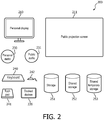
- FIG. 2 shows a dockee in an environment of virtual devices.
- the figure shows a dockee 220 and a number of virtual peripheral devices in a virtual environment 200, which virtual devices may be mapped to actual peripherals coupled to a host station (not shown as such).
- the virtual peripherals have been assigned a peripheral privacy level, and include a personal display 210, a public presentation screen 211 (e.g. using a beamer), a personal audio output device 230, a public audio output system (e.g. a loudspeaker system in a conference venue), input devices like a keyboard 240, a mouse 242 and a touchpad 241, and storage devices like a private storage 251, a public shared storage 252 and a group shared temporary storage 253.
- a personal display 210 e.g. using a beamer
- a personal audio output device 230 e.g. using a beamer
- a public audio output system e.g. a loudspeaker system in a conference venue
- various virtual devices may be included in such a virtual docking environment provided in the dockee.
- Detailed examples of virtual devices are
- the dockee processor is arranged for providing at least one presentation policy in the virtual docking environment.
- a presentation policy is a data structure that defines a set of assignments of peripheral privacy levels, data privacy levels and/or mapping instructions to be applied when activated. The activation may be triggered by the user, or automatically based on the actual location or environment. For example, a presentation policy may be set up for a workspace at home, or for the office, or for a conference room.
- a presentation policy may comprise one or more of the following setup data:
- the function of the docking system based on a virtual docking environment including a presentation policy, using the mapping and data control as described above, is now elucidated based on a practical use case, which requires maintaining privacy during a presentation.
- the user enters the meeting room, and docks the dockee in the wireless docking environment of the meeting room.
- the meeting room corresponds to a setup in the presentation policy, which is correspondingly activated.
- the virtual devices are mapped to real devices.
- the user For the presentation as defined in the presentation policy, the user needs a public presentation screen and optionally a personal presentation screen for the notes.
- further events, applications and or data may be configured to have privacy levels in the presentation policy, or in general by default in the virtual docking environment.
- the standard phone application is assigned a private level. So, during the presentation, the presenter may receive a phone call. The information about this call (such as name and/or other address book information) and audio (and/or video) of such call is routed to display and/or audio devices having a private level, e.g. the private display on the mobile phone and/or an audio recorder device. So, even if the user forgot to disable the triggering of these calls, the trigger is not shown on the public presentation screen.
- a phone call can have a private, personal or even public level, e.g. related to the caller, such as public level is colleagues at work; private level is family or friends, and personal level can be a level in between such as a business contact, supplier contact. Calls may be routed according to their privacy level.
- the user When preparing a presentation on a workplace, the user wants to see the presentation.
- the user activates the presentation policy for the workspace.
- the workplace display which may be assigned a personal level, is used to show the presentation data having the public level, while the display on the dockee can be used for the notes.
- the trigger When a phone call is received, the trigger can be shown on the workplace display as this has the personal level, and the phone application may also have the personal level, i.e. the normal policy for treating such calls.
- a presentation can be configured to show the notes in the primary monitor and the presentation on "monitor 2".
- these descriptions have no meaning: if there is only one monitor available in a meeting room, this "primary monitor" is probably used as the public presentation screen.
- the display of a mobile dockee may be assigned a personal level.
- the application PowerPoint may be assigned a public data level for the presentation data and a personal level for the notes. So, according to the assignments in the virtual docking environment, the presentation show is rendered on any public display device, and the notes are shown on personal displays.
- the policy may also include an assignment for a situation when the dockee is not docked.
- a mapping may be defined in which only the presentation data is rendered on the display of the dockee. The mapping may enable switching between the presentation data and the notes to be displayed on the display of the dockee.
- the user can manage and change this policy: the reception of a call can be part of the presentation.
- the user can overrule the default policy. For example, by defining a different privacy level for calls from a specific source.
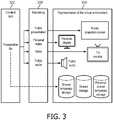
- FIG. 3 shows a presentation policy in a virtual docking environment.
- the figure shows data 320, a content item embodied by a presentation file.
- the data is shown to have multiple data elements, each having a data privacy level, such as public presentation data, personal notes data, public video data and public audio data.
- a rendering application 310 the various data elements are retrieved from the presentation file, and have to be routed to a respective peripheral.
- a virtual environment 300 is shown, schematically representing various virtual peripherals, such as a personal display, a public presentation screen, a TV monitor, and a public audio system.
- the routing of said various data elements to respective virtual peripherals is indicated by arrows.
- the required virtual peripherals are mapped to actual available peripherals, and subsequently, data transfer with the actual peripherals is controlled according to the periphery privacy level.
- the function of the virtual environment is further elucidated by a further use case.
- the user may prepare a presentation on the dockee or when docked in his workplace. From the content (e.g. the presentation file), the different rendering needs are derived (e.g. presentation display, notes display, timing clock, light settings, video, 3D video, public audio, private audio, presentation pointer). Rendering data as generated by the application will be routed to the virtual device types according to the assigned privacy levels.
- a mapping is visualized as a global policy, for a specific type of content, for a specific trigger, or a specific content item. It is noted that also data as such may have a data privacy level, such a private pictures. Also, the location were a file is stored can be used to assign a data privacy level.
- the presentation contains a public part and personal notes.
- the rendering data is routed
- the virtual environment comprises, as a virtual peripheral device, a virtual shared memory.
- the dockee processor is arranged for, when docking, mapping the at least one virtual shared memory on an actual shared memory provided via the host device as the at least one peripheral, and, when docked, controlling data transfer with the actual shared memory according to the periphery privacy level.
- Figure 3 shows a shared temporary storage, e.g. having a group privacy level, a public shared storage and a public shared temporary storage. Data having a certain privacy level may be stored on a storage peripheral having a corresponding (or higher) level.
- storing of the presentation file (having public data privacy level) on the public shared temporary storage is schematically indicated by a dashed arrow. If the user wants to intentionally share private content, a copy can be created on a Shared Storage device. The system may ask for a conformation in view of the violation of privacy levels.
- the user has also the possibility to copy or move the presentation file from his (local or networked) storage to Public Shared Storage.
- the user docks together with the other participants in the meeting and presentation, the content is shared between all participants.
- audio device types like "private audio recorder” and "audio silencer” are defined.
- audio triggers can be routed to such device. For example, using a private audio recorder for a phone call, no audible trigger is given and the call is directed to an answering machine.
- Such application usually called App
- App may be implemented on the dockee, or in the host.
- any audible trigger is routed to be silenced.
- the silencer may translate the audio signal into another type of rendering, e.g. a message on the private screen, an LED that gives a signal.
- Actual audio devices corresponding to the virtual audio recorder or silencer may be provided in a meeting by the host.
- the dockee devices When users are docking into the meeting environment, the dockee devices will detect the actual audio recorder device or the audio silencer and map the virtual audio devices on the actual ones. Hence the dockee audio triggers are not rendered in a disturbing way anymore, but are routed to the actual recorder or silencer.
- Such audio devices as provided by the host may have the personal or private level by providing a password to the dockee, or accepting a password from the dockee, for accessing recorded audio or silenced audio triggers.
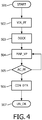
- FIG. 4 shows a method of providing wireless docking.
- a host device is arranged for coupling to at least one peripheral, and comprises a host communication unit for accommodating wireless communication to a dockee device, and a docking processor arranged for docking the dockee device for providing access to the at the least one peripheral for the dockee device.
- the dockee device has a dockee communication unit for accommodating said wireless communication, and a dockee processor arranged for docking at the host device for getting access to the at least one peripheral.
- the method starts at step START 501.
- VIR_PF 502 at least one virtual peripheral is defined and configured.
- the virtual peripheral is configured by assigning a privacy level to the virtual peripheral, the privacy level defining a level of confidentiality that is indicative of a relation between a user of the dockee device and other persons having access to a respective peripheral.
- the virtual peripheral device is provided as part of a virtual docking environment.
- the virtual peripheral device has a privacy level, predefined or assigned, either by its nature or by the user via a user interface.
- an external display screen may be provided to represent a public display screen having the public privacy level
- a local display may be provided to represent a personal display screen having the personal privacy level.
- step DOCK 503 the dockee device is docked for providing access to the at least one actual peripheral.
- step DOCK 503 the dockee device is docked for providing access to the at least one actual peripheral.
- step DOCK 503 the dockee device is docked for providing access to the at least one actual peripheral.
- the properties and restrictions as defined for the virtual peripheral are now applied to the actual peripheral, e.g. the public screen defined in the virtual docking environment as a virtual peripheral is mapped on a beamer and presentation screen available via the host.
- the virtual peripheral device is mapped on the actual peripheral.
- AC-PF 505 it is detected whether further actual peripherals are available. If so, the mapping in step MAP-VP is repeated.
- CON DTR 506 the data transfer to and/or from the actual peripheral is controlled to comply with the assigned privacy level of the peripherals. Data is monitored to be of a corresponding or lower privacy level before being exchanged with the peripheral. Hence, when docked, data transfer with the at least one peripheral is controlled according to the peripheral privacy level.
- step UN_DK 507 the dockee is removed from the environment of the host, or is actively undocked via the user interface. Any mapping is removed, and data transfer is disabled.
- the invention has been mainly explained by embodiments using wireless docking, the invention is also suitable for any wireless system where a wireless device needs to connect to, and share, one or more peripherals. It is to be noted that the invention may be implemented in hardware and/or software, using programmable components.
Landscapes
- Engineering & Computer Science (AREA)
- Theoretical Computer Science (AREA)
- General Engineering & Computer Science (AREA)
- Computer Security & Cryptography (AREA)
- Physics & Mathematics (AREA)
- General Physics & Mathematics (AREA)
- Computer Networks & Wireless Communication (AREA)
- Signal Processing (AREA)
- Computer Hardware Design (AREA)
- Computing Systems (AREA)
- Human Computer Interaction (AREA)
- Telephone Function (AREA)
- Mobile Radio Communication Systems (AREA)
- User Interface Of Digital Computer (AREA)
Claims (15)
- Andockgerät (120) zum drahtlosen Andocken an ein Host-Gerät (100) zum Koppeln an mindestens eine Peripheriegerät (110, 111, 112), wobei das anzudockende Gerät Folgendes umfasst:- eine Andockgerät-Kommunikationseinheit (121) zur Ermöglichung von drahtloser Kommunikation, und- einen Andockgerät-Prozessor (122) zum drahtlosen Andocken an das Host-Gerät zum Erhalten von Zugang zu mindestens einem tatsächlichen Peripheriegerät,dadurch gekennzeichnet, dass der Andockgerät-Prozessor eingerichtet ist zum- Bereitstellen von mindestens einem virtuellen Peripheriegerät in einer virtuellen Andockumgebung (300), wobei die virtuelle Andockumgebung eine Datenstruktur ist, die ein oder mehrere virtuelle Peripheriegeräte definiert, und das virtuelle Peripheriegerät eine Datenstruktur ist, die ein Peripheriegerät durch einen Gerätetyp und Eigenschaften definiert, die einem tatsächlichen Gerät entsprechen, das in einem tatsächlichen Andocksystem verfügbar werden kann, wobei die Datenstrukturen vor dem Andocken in einem Speicher des Andockgeräts gespeichert werden,wobei das virtuelle Peripheriegerät eine Peripheriegerät-Datenschutzstufe aufweist, die durch Zuweisen einer Datenschutzstufe zu dem virtuellen Peripheriegerät konfiguriert ist, wobei die Datenschutzstufe ein Niveau der Vertraulichkeit von Daten definiert, die durch ein Peripheriegerät entsprechend dem Andockgerät gehandhabt werden können,- Abbilden, beim Andocken, des mindestens einen virtuellen Peripheriegeräts auf das mindestens eine Peripheriegerät, wobei das Abbilden das Zuweisen der Peripheriegerät-Datenschutzstufe zu dem mindestens einen Peripheriegerät umfasst, und- Steuern, wenn angedockt, der Datenübertragung mit dem mindestens einen Peripheriegerät entsprechend der Peripheriegerät-Datenschutzstufe.
- Gerät nach Anspruch 1, wobei der Andockgerät-Prozessor (122) dafür eingerichtet ist, eine Benutzerschnittstelle bereitzustellen, um das Konfigurieren des virtuellen Peripheriegeräts durch Zuweisen der Datenschutzstufe zu ermöglichen und/oder um die virtuelle Andockumgebung anzuzeigen, damit der Benutzer wahrnehmen kann, welche Daten durch ein jeweiliges Peripheriegerät zu übertragen und/oder zu wiederzugeben sind.
- Gerät nach Anspruch 1, wobei die Datenschutzstufe aus einem Satz stammt, der mindestens eines von einer öffentlichen Stufe, einer Gruppenstufe, einer persönlichen Stufe und einer privaten Stufe umfasst.
- Gerät nach Anspruch 1, wobei der Andockgerät-Prozessor (122) eingerichtet ist zum- Bereitstellen mehrerer virtueller Peripheriegeräte des gleichen vordefinierten Typs, wobei jeweilige der mehreren virtuellen Peripheriegeräte jeweils verschiedene Peripheriegerät-Datenschutzstufen aufweisen, und- Steuern, wenn angedockt, der Datenübertragung zu jeweiligen unterschiedlichen tatsächlichen Peripheriegeräten entsprechend den jeweils verschiedenen Peripheriegerät-Datenschutzstufen.
- Gerät nach Anspruch 1, wobei das virtuelle Peripheriegerät von einem vordefinierten Typ ist, der eines von Folgendem ist:- ein virtueller Anzeigebildschirm;- ein virtuelles Audiogerät;- ein virtuelles Kameragerät.
- Gerät nach Anspruch 5, wobei der Andockgerät-Prozessor (122) eingerichtet ist zum Bereitstellen
des virtuellen Anzeigebildschirms mit einer Peripheriegerät-Datenschutzstufe, um eines von Folgendem darzustellen:- einen öffentlichen Präsentationsbildschirm,- einen persönlichen Präsentationsbildschirm,- einen privaten Präsentationsbildschirm,- einen Gruppenzusammenarbeitsbildschirm; oderdes virtuellen Audiogeräts mit einer Peripheriegerät-Datenschutzstufe, um eines von Folgendem darzustellen:- eine öffentliche Audioanlage,- eine Gruppenaudioanlage,- eine persönliche Audioanlage,- eine private Audioanlage,- einen privaten Audiorecorder,- einen Audio-Silencer; oderdes virtuellen Kamerageräts mit einer Peripheriegerät-Datenschutzstufe, um eines von Folgendem darzustellen:- eine öffentliche Kamera,- eine Gruppenkamera,- eine persönliche Kamera,- einer privaten Kamera. - Gerät nach Anspruch 1, wobei das virtuelle Peripheriegerät ein virtueller gemeinsam genutzter Speicher ist und der Andockgerät-Prozessor (122) eingerichtet ist zum- Abbilden, beim Andocken, des mindestens einen virtuellen gemeinsam genutzten Speichers auf den tatsächlichen gemeinsam genutzten Speicher, der über das Host-Gerät als das mindestens eine Peripheriegerät bereitgestellt wird, und- Steuern, wenn angedockt, der Datenübertragung mit dem tatsächlichen gemeinsam genutzten Speicher entsprechend der Peripheriegerät-Datenschutzstufe.
- Gerät nach Anspruch 1, wobei der Andockgerät-Prozessor (122) dafür eingerichtet ist, ausgewählten Daten in dem Andockgerät eine Datenschutzstufe zuzuweisen, und im angedockten Zustand die Datenübertragung mit dem mindestens einen Peripheriegerät entsprechend der Peripheriegerät-Datenschutzstufe und der Daten-Datenschutzstufe zu steuern.
- Gerät nach Anspruch 1, wobei der Andockgerät-Prozessor (122) dafür eingerichtet ist, beliebigen Daten einer ausgewählten Anwendung in dem Andockgerät eine Datenschutzstufe zuzuweisen, und im angedockten Zustand die Datenübertragung der ausgewählten Anwendung mit dem mindestens einen Peripheriegerät entsprechend der Peripheriegerät-Datenschutzstufe und der Daten-Datenschutzstufe zu steuern.
- Gerät nach Anspruch 8 oder 9, wobei der Andockgerät-Prozessor (122) eingerichtet ist zum- automatischen Zuweisen einer vorgegebenen Datenschutzstufe zu beliebigen Daten in dem Andockgerät, und- Bereitstellen einer Benutzerschnittstelle, um einem Benutzer zu ermöglichen, die automatisch zugewiesene vorgegebene Datenschutzstufe durch eine auswählbare Datenschutzstufe außer Kraft zu setzen.
- Gerät nach Anspruch 1, wobei der Andockgerät-Prozessor (122) dafür eingerichtet ist, mindestens eine Präsentationspolitik in der virtuellen Andockumgebung bereitzustellen, wobei die Präsentationspolitik mindestens eines von Folgendem umfasst- eine Zuweisung von Daten von Elementen in einer Multimedia-Präsentation zu einem ausgewählten virtuellen Peripheriegerät, die bei der Auswahl der Präsentationspolitik anzuwenden ist;- eine Zuweisung von jeweiligen Daten eines gleichen Typs wie durch eine Anwendung erzeugt zu jeweiligen verschiedenen virtuellen Peripheriegeräten eines gleichen Typs, jedoch mit unterschiedlichen Peripheriegerät-Datenschutzstufen, die bei der Auswahl der Präsentationspolitik anzuwenden ist;- eine Abbildungskonfiguration, die bei der Auswahl der Präsentationspolitik anzuwenden ist;- eine Datenschutzstufenzuweisung für mindestens ein virtuelles Peripheriegerät und/oder eine Datenschutzstufenzuweisung für ausgewählte Daten und/oder eine ausgewählte Anwendung, die bei der Auswahl der Präsentationspolitik anzuwenden ist.
- Gerät nach Anspruch 1, wobei der Andockgerät-Prozessor (122) dafür eingerichtet ist, Konfigurationsdaten von dem Host-Gerät zu empfangen und die Konfiguration der virtuellen Andockumgebung und/oder die Abbildung entsprechend den Konfigurationsdaten anzupassen, wobei die Konfigurationsdaten die Datenschutzstufe umfassen, die durch mindestens eines von Folgendem definiert wird:- eine Peripheriegerät-Datenschutzstufe für ein virtuelles Peripheriegerät eines vordefinierten Typs;- eine Peripheriegerät-Datenschutzstufe für ein angedocktes Peripheriegerät eines vordefinierten Typs;- eine Daten-Datenschutzstufe für ausgewählte Daten in dem Andockgerät;- eine Daten-Datenschutzstufe für beliebige Daten einer ausgewählten Anwendung in dem Andockgerät;- eine Abbildungsanweisung zum Abbilden eines virtuellen Peripheriegeräts eines vordefinierten Typs mit einer vordefinierten Datenschutzstufe auf ein Peripheriegerät, wie es an das Host-Gerät gekoppelt ist.
- Drahtloses Andocksystem umfassend ein Host-Gerät und ein Andockgerät (120) nach Anspruch 12, wobei das Host-Gerät zur Kopplung an mindestens ein Peripheriegerät (110, 111, 11) eingerichtet ist, wobei das Host-Gerät Folgendes umfasst:- eine Host-Gerät-Kommunikationseinheit (102) zur Ermöglichung von drahtloser Kommunikation, und- einen Andockprozessor (101) zum Andocken des mindestens einen Andockgeräts, um dem Andockgerät Zugang zu dem mindestens einen Peripheriegerät bereitzustellen, wobei der Andockprozessor dafür eingerichtet ist, Konfigurationsdaten bereitzustellen und die Konfigurationsdaten über die genannte drahtlose Kommunikation an das Andockgerät zu senden,dadurch gekennzeichnet, dass die Konfigurationsdaten dazu dienen, mindestens ein virtuelles Peripheriegerät in einer virtuellen Andockumgebung (300) zu konfigurierten, wobei die virtuelle Andockumgebung eine Datenstruktur ist, die ein oder mehrere virtuelle Peripheriegeräte definiert, und das virtuelle Peripheriegerät eine Datenstruktur ist, die ein Peripheriegerät durch einen Gerätetyp und Eigenschaften definiert, die einem tatsächlichen Gerät entsprechen, das in einem tatsächlichen Andocksystem verfügbar werden kann, wobei die Datenstrukturen vor dem Andocken in einem Speicher des Andockgeräts gespeichert werden,
wobei die Konfigurationsdaten die Datenschutzstufe umfassen, die ein Niveau der Vertraulichkeit von Daten definiert, die durch ein Peripheriegerät entsprechend dem Andockgerät gehandhabt werden können, wobei die Datenschutzstufe durch mindestens eines von Folgendem definiert wird:- eine Peripheriegerät-Datenschutzstufe für ein virtuelles Peripheriegerät eines vordefinierten Typs;- eine Peripheriegerät-Datenschutzstufe für ein angedocktes Peripheriegerät eines vordefinierten Typs;- eine Daten-Datenschutzstufe für ausgewählte Daten in dem Andockgerät;- eine Daten-Datenschutzstufe für beliebige Daten einer ausgewählten Anwendung in dem Andockgerät;- eine Abbildungsanweisung zum Abbilden eines virtuellen Peripheriegeräts eines vordefinierten Typs mit einer vordefinierten Datenschutzstufe auf ein Peripheriegerät, wie es an das Host-Gerät gekoppelt ist. - Verfahren zur Bereitstellung von drahtlosem Andocken für ein Host-Gerät (100) und ein Andockgerät (120),
wobei das Host-Gerät zur Kopplung mit zur Kopplung an mindestens ein Peripheriegerät (110, 111, 112) eingerichtet ist, wobei das Host-Gerät Folgendes umfasst:- eine Host-Gerät-Kommunikationseinheit (102) zur Ermöglichung von drahtloser Kommunikation, und- einen Andockprozessor (101), der für das drahtlose Andocken des mindestens einen Andockgeräts eingerichtet ist, um dem Andockgerät Zugang zu dem mindestens einen Peripheriegerät bereitzustellen,wobei das Andockgerät Folgendes umfasst:- eine Andockgerät-Kommunikationseinheit (121) zur Ermöglichung von drahtloser Kommunikation, und- einen Andockgerät-Prozessor (122), der für das drahtlose Andocken an das Host-Gerät eingerichtet ist, um Zugang zu mindestens einem tatsächlichen Peripheriegerät zu erhalten, dadurch gekennzeichnet, dass das Verfahren Folgendes umfasst: in dem Andockgerät- Bereitstellen von mindestens einem virtuellen Peripheriegerät in einer virtuellen Andockumgebung, wobei die virtuelle Andockumgebung eine Datenstruktur ist, die ein oder mehrere virtuelle Peripheriegeräte definiert, und das virtuelle Peripheriegerät eine Datenstruktur ist, die ein Peripheriegerät durch einen Gerätetyp und Eigenschaften definiert, die einem tatsächlichen Gerät entsprechen, das in einem tatsächlichen Andocksystem verfügbar werden kann, wobei die Datenstrukturen vor dem Andocken in einem Speicher des Andockgeräts gespeichert werden, wobei das virtuelle Peripheriegerät eine Peripheriegerät-Datenschutzstufe aufweist,- Konfigurieren des virtuellen Peripheriegeräts durch Zuweisen einer Datenschutzstufe zu dem virtuellen Peripheriegerät konfiguriert ist, wobei die Datenschutzstufe ein Niveau der Vertraulichkeit von Daten definiert, die durch ein Peripheriegerät entsprechend dem Andockgerät gehandhabt werden können,- Abbilden, beim Andocken, des mindestens einen virtuellen Peripheriegeräts auf das mindestens eine Peripheriegerät, wobei das Abbilden das Zuweisen der Peripheriegerät-Datenschutzstufe zu dem mindestens einen Peripheriegerät umfasst, und- Steuern, wenn angedockt, der Datenübertragung mit dem mindestens einen Peripheriegerät entsprechend der Peripheriegerät-Datenschutzstufe. - Computerprogrammprodukt zur drahtlosen Kommunikation zwischen einem Host-Gerät und einem Andockgerät, umfassend ein Programm, das betriebsfähig ist, um das Host-Gerät und das Andockgerät zu veranlassen, das Verfahren von Anspruch 14 durchzuführen.
Priority Applications (1)
| Application Number | Priority Date | Filing Date | Title |
|---|---|---|---|
| EP14716601.1A EP2989768B1 (de) | 2013-04-25 | 2014-04-11 | Drahtlose andockvorrichtung |
Applications Claiming Priority (3)
| Application Number | Priority Date | Filing Date | Title |
|---|---|---|---|
| EP13165289 | 2013-04-25 | ||
| PCT/EP2014/057421 WO2014173705A1 (en) | 2013-04-25 | 2014-04-11 | Wireless docking device. |
| EP14716601.1A EP2989768B1 (de) | 2013-04-25 | 2014-04-11 | Drahtlose andockvorrichtung |
Publications (2)
| Publication Number | Publication Date |
|---|---|
| EP2989768A1 EP2989768A1 (de) | 2016-03-02 |
| EP2989768B1 true EP2989768B1 (de) | 2019-07-17 |
Family
ID=48226982
Family Applications (1)
| Application Number | Title | Priority Date | Filing Date |
|---|---|---|---|
| EP14716601.1A Active EP2989768B1 (de) | 2013-04-25 | 2014-04-11 | Drahtlose andockvorrichtung |
Country Status (8)
| Country | Link |
|---|---|
| US (1) | US9727517B2 (de) |
| EP (1) | EP2989768B1 (de) |
| JP (1) | JP6184585B2 (de) |
| CN (1) | CN105122770B (de) |
| BR (1) | BR112015026695B1 (de) |
| ES (1) | ES2748173T3 (de) |
| RU (1) | RU2667982C2 (de) |
| WO (1) | WO2014173705A1 (de) |
Families Citing this family (11)
| Publication number | Priority date | Publication date | Assignee | Title |
|---|---|---|---|---|
| EP3227758B1 (de) * | 2014-12-03 | 2018-09-12 | Koninklijke Philips N.V. | Drahtloses docksystem für ein audio-videorelais |
| US9971708B2 (en) | 2015-12-02 | 2018-05-15 | Advanced Micro Devices, Inc. | System and method for application migration between docking station and dockable device |
| US20180095500A1 (en) * | 2016-09-30 | 2018-04-05 | Intel Corporation | Tap-to-dock |
| US20180367326A1 (en) * | 2017-06-20 | 2018-12-20 | Microsoft Technology Licensing, Llc | Automatic connection switching for meeting room management devices |
| CN109426735A (zh) * | 2017-08-29 | 2019-03-05 | 中兴通讯股份有限公司 | 一种保护个人隐私的方法及系统 |
| US10623701B1 (en) * | 2018-08-29 | 2020-04-14 | Facebook, Inc. | Systems and methods for facilitating control and communication between computing devices and presentation systems |
| GB2584408B (en) * | 2019-05-15 | 2023-04-26 | Displaylink Uk Ltd | Cloud-based hotdesking |
| US20210097208A1 (en) * | 2019-09-30 | 2021-04-01 | Microsoft Technology Licensing, Llc | Privacy Safeguards for Projecting Content onto a Shared Display Device |
| US11468181B2 (en) | 2020-04-21 | 2022-10-11 | Microsoft Technology Licensing, Llc | Secure access to accessory device resources |
| US11341075B2 (en) * | 2020-08-12 | 2022-05-24 | Dell Products L.P. | Method for selectively connecting to a smart peripheral and system therefor |
| WO2023277918A1 (en) * | 2021-06-30 | 2023-01-05 | Hewlett-Packard Development Company, L.P. | Controlling driver access based on docking status |
Family Cites Families (19)
| Publication number | Priority date | Publication date | Assignee | Title |
|---|---|---|---|---|
| JPH0675862A (ja) * | 1992-08-26 | 1994-03-18 | Hitachi Ltd | ドッキングステーション向き接続承認方法 |
| US5884191A (en) * | 1996-09-06 | 1999-03-16 | Ericsson Inc. | Interface system for providing hands-free operation of a radiotelephone and accessories in a mobile office environment |
| US7076270B2 (en) * | 2001-02-28 | 2006-07-11 | Dell Products L.P. | Docking station for wireless communication device |
| US7503067B2 (en) * | 2004-02-02 | 2009-03-10 | Toshiba Corporation | Preset security levels |
| US8239916B2 (en) * | 2006-11-06 | 2012-08-07 | At&T Intellectual Property I, L.P. | Methods, data processing systems, and computer program products for assigning privacy levels to data elements |
| US8713090B2 (en) * | 2006-12-15 | 2014-04-29 | Microsoft Corporation | Enhancing user experiences using aggregated device usage data |
| US20080252419A1 (en) | 2007-04-11 | 2008-10-16 | Batchelor Michael D | Wireless access control system and method |
| US20090037610A1 (en) * | 2007-07-31 | 2009-02-05 | Krancher Robort E | Electronic device interface control system |
| US8495486B2 (en) * | 2007-12-21 | 2013-07-23 | The Invention Science Fund I, Llc | Look ahead of links/alter links |
| US9128669B2 (en) * | 2009-03-27 | 2015-09-08 | Qualcomm Incorporated | System and method of managing security between a portable computing device and a portable computing device docking station |
| JP2011008530A (ja) * | 2009-06-25 | 2011-01-13 | Fuji Xerox Co Ltd | プログラム及び情報処理装置 |
| US8479011B2 (en) * | 2009-10-07 | 2013-07-02 | Gemalto Sa | Method and apparatus for using cryptographic mechanisms to provide access to a portable device using integrated authentication using another portable device |
| US9135998B2 (en) * | 2010-11-09 | 2015-09-15 | Micron Technology, Inc. | Sense operation flags in a memory device |
| US8826446B1 (en) * | 2011-01-19 | 2014-09-02 | Google Inc. | System and method for applying privacy settings to a plurality of applications |
| EP2681944B1 (de) | 2011-03-01 | 2020-04-08 | Koninklijke Philips N.V. | Verfahren zur ermöglichung einer gesicherten drahtlosen kommunikation zwischen vorrichtungen |
| US8554970B2 (en) | 2011-04-18 | 2013-10-08 | Nokia Corporation | Method, apparatus and computer program product for creating a wireless docking group |
| US20140223575A1 (en) * | 2011-04-25 | 2014-08-07 | Alcatel Lucent | Privacy protection in recommendation services |
| US10091826B2 (en) | 2011-09-13 | 2018-10-02 | Koninklijke Philips N.V. | Wireless LAN connection handover by docking system and generic network device driver |
| US8555409B2 (en) * | 2011-11-02 | 2013-10-08 | Wyse Technolgoy Inc. | System and method for providing private session-based access to a redirected USB device or local device |
-
2014
- 2014-04-11 WO PCT/EP2014/057421 patent/WO2014173705A1/en not_active Ceased
- 2014-04-11 JP JP2016509374A patent/JP6184585B2/ja active Active
- 2014-04-11 EP EP14716601.1A patent/EP2989768B1/de active Active
- 2014-04-11 RU RU2015150148A patent/RU2667982C2/ru active
- 2014-04-11 BR BR112015026695-9A patent/BR112015026695B1/pt active IP Right Grant
- 2014-04-11 CN CN201480023059.0A patent/CN105122770B/zh active Active
- 2014-04-11 ES ES14716601T patent/ES2748173T3/es active Active
- 2014-04-11 US US14/784,591 patent/US9727517B2/en active Active
Non-Patent Citations (1)
| Title |
|---|
| None * |
Also Published As
| Publication number | Publication date |
|---|---|
| BR112015026695B1 (pt) | 2023-02-28 |
| WO2014173705A1 (en) | 2014-10-30 |
| JP2016526196A (ja) | 2016-09-01 |
| US9727517B2 (en) | 2017-08-08 |
| RU2015150148A3 (de) | 2018-03-28 |
| EP2989768A1 (de) | 2016-03-02 |
| JP6184585B2 (ja) | 2017-08-23 |
| CN105122770A (zh) | 2015-12-02 |
| US20160070670A1 (en) | 2016-03-10 |
| RU2667982C2 (ru) | 2018-09-25 |
| BR112015026695A2 (pt) | 2017-07-25 |
| ES2748173T3 (es) | 2020-03-13 |
| CN105122770B (zh) | 2019-02-12 |
| RU2015150148A (ru) | 2017-05-26 |
Similar Documents
| Publication | Publication Date | Title |
|---|---|---|
| EP2989768B1 (de) | Drahtlose andockvorrichtung | |
| US11395110B2 (en) | Messaging system interacting with dynamic extension app | |
| EP3192220B1 (de) | Gemeinsame nutzung in echtzeit während eines telefonanrufes | |
| KR102078867B1 (ko) | 제어권 관리 방법, 그에 따른 클라이언트 기기 및 그에 따른 마스터 기기 | |
| RU2700188C2 (ru) | Представление вычислительной среды на множественных устройствах | |
| CN103220404B (zh) | 受信呼叫管理方法与系统与数据存取方法 | |
| US10965480B2 (en) | Electronic tool and methods for recording a meeting | |
| US20180107493A1 (en) | Synchronous control method and device via external apparatus | |
| KR20140117447A (ko) | 노트 작성 애플리케이션 특성의 로밍 기법 | |
| JP2015191487A (ja) | プレゼンテーションサーバ及びモバイル端末 | |
| TW201637415A (zh) | 用於大型會議的橋接裝置 | |
| WO2013192288A1 (en) | Closed network presentation | |
| US9497580B1 (en) | Using application context to facilitate pairing with a peripheral device | |
| CN107517459A (zh) | 一种无线传屏中建立连接的方法、装置、系统及存储介质 | |
| KR20200021735A (ko) | 다수의 디바이스를 하나의 스크린에 노출하는 미러링 서비스의 제어 관리 방법 | |
| KR102146062B1 (ko) | 매장 단말을 이용한 스마트 기기의 원격 체험을 위한 서버, 방법, 및 기록 매체 | |
| US20140245169A1 (en) | User preference and capability profile | |
| CN114090970B (zh) | 无线投影的控制方法及无线投影的控制系统 | |
| KR102709283B1 (ko) | 멀티미디어 디바이스, 서버, 시스템 및 그 제어 방법 | |
| CN113496039A (zh) | 一种权限管理方法及终端 | |
| US20180004476A1 (en) | Media production to operating system supported display | |
| GB2627009A (en) | Computer implemented method | |
| JP2010128693A (ja) | 情報共有化システム | |
| TWM526130U (zh) | 資料結構改良之記憶卡裝置 |
Legal Events
| Date | Code | Title | Description |
|---|---|---|---|
| PUAI | Public reference made under article 153(3) epc to a published international application that has entered the european phase |
Free format text: ORIGINAL CODE: 0009012 |
|
| 17P | Request for examination filed |
Effective date: 20151125 |
|
| AK | Designated contracting states |
Kind code of ref document: A1 Designated state(s): AL AT BE BG CH CY CZ DE DK EE ES FI FR GB GR HR HU IE IS IT LI LT LU LV MC MK MT NL NO PL PT RO RS SE SI SK SM TR |
|
| AX | Request for extension of the european patent |
Extension state: BA ME |
|
| DAX | Request for extension of the european patent (deleted) | ||
| REG | Reference to a national code |
Ref country code: DE Ref legal event code: R079 Ref document number: 602014050104 Country of ref document: DE Free format text: PREVIOUS MAIN CLASS: H04L0029060000 Ipc: G06F0013400000 |
|
| GRAP | Despatch of communication of intention to grant a patent |
Free format text: ORIGINAL CODE: EPIDOSNIGR1 |
|
| STAA | Information on the status of an ep patent application or granted ep patent |
Free format text: STATUS: GRANT OF PATENT IS INTENDED |
|
| RIC1 | Information provided on ipc code assigned before grant |
Ipc: G06F 13/10 20060101ALI20190212BHEP Ipc: H04L 29/06 20060101ALI20190212BHEP Ipc: H04W 12/08 20090101ALI20190212BHEP Ipc: G06F 13/40 20060101AFI20190212BHEP Ipc: H04W 88/08 20090101ALI20190212BHEP |
|
| INTG | Intention to grant announced |
Effective date: 20190228 |
|
| GRAS | Grant fee paid |
Free format text: ORIGINAL CODE: EPIDOSNIGR3 |
|
| GRAA | (expected) grant |
Free format text: ORIGINAL CODE: 0009210 |
|
| STAA | Information on the status of an ep patent application or granted ep patent |
Free format text: STATUS: THE PATENT HAS BEEN GRANTED |
|
| AK | Designated contracting states |
Kind code of ref document: B1 Designated state(s): AL AT BE BG CH CY CZ DE DK EE ES FI FR GB GR HR HU IE IS IT LI LT LU LV MC MK MT NL NO PL PT RO RS SE SI SK SM TR |
|
| REG | Reference to a national code |
Ref country code: GB Ref legal event code: FG4D |
|
| REG | Reference to a national code |
Ref country code: CH Ref legal event code: EP |
|
| REG | Reference to a national code |
Ref country code: DE Ref legal event code: R096 Ref document number: 602014050104 Country of ref document: DE |
|
| REG | Reference to a national code |
Ref country code: IE Ref legal event code: FG4D |
|
| REG | Reference to a national code |
Ref country code: AT Ref legal event code: REF Ref document number: 1156485 Country of ref document: AT Kind code of ref document: T Effective date: 20190815 |
|
| REG | Reference to a national code |
Ref country code: NL Ref legal event code: FP |
|
| REG | Reference to a national code |
Ref country code: LT Ref legal event code: MG4D |
|
| REG | Reference to a national code |
Ref country code: AT Ref legal event code: MK05 Ref document number: 1156485 Country of ref document: AT Kind code of ref document: T Effective date: 20190717 |
|
| PG25 | Lapsed in a contracting state [announced via postgrant information from national office to epo] |
Ref country code: FI Free format text: LAPSE BECAUSE OF FAILURE TO SUBMIT A TRANSLATION OF THE DESCRIPTION OR TO PAY THE FEE WITHIN THE PRESCRIBED TIME-LIMIT Effective date: 20190717 Ref country code: LT Free format text: LAPSE BECAUSE OF FAILURE TO SUBMIT A TRANSLATION OF THE DESCRIPTION OR TO PAY THE FEE WITHIN THE PRESCRIBED TIME-LIMIT Effective date: 20190717 Ref country code: HR Free format text: LAPSE BECAUSE OF FAILURE TO SUBMIT A TRANSLATION OF THE DESCRIPTION OR TO PAY THE FEE WITHIN THE PRESCRIBED TIME-LIMIT Effective date: 20190717 Ref country code: NO Free format text: LAPSE BECAUSE OF FAILURE TO SUBMIT A TRANSLATION OF THE DESCRIPTION OR TO PAY THE FEE WITHIN THE PRESCRIBED TIME-LIMIT Effective date: 20191017 Ref country code: BG Free format text: LAPSE BECAUSE OF FAILURE TO SUBMIT A TRANSLATION OF THE DESCRIPTION OR TO PAY THE FEE WITHIN THE PRESCRIBED TIME-LIMIT Effective date: 20191017 Ref country code: SE Free format text: LAPSE BECAUSE OF FAILURE TO SUBMIT A TRANSLATION OF THE DESCRIPTION OR TO PAY THE FEE WITHIN THE PRESCRIBED TIME-LIMIT Effective date: 20190717 Ref country code: PT Free format text: LAPSE BECAUSE OF FAILURE TO SUBMIT A TRANSLATION OF THE DESCRIPTION OR TO PAY THE FEE WITHIN THE PRESCRIBED TIME-LIMIT Effective date: 20191118 Ref country code: AT Free format text: LAPSE BECAUSE OF FAILURE TO SUBMIT A TRANSLATION OF THE DESCRIPTION OR TO PAY THE FEE WITHIN THE PRESCRIBED TIME-LIMIT Effective date: 20190717 |
|
| PG25 | Lapsed in a contracting state [announced via postgrant information from national office to epo] |
Ref country code: AL Free format text: LAPSE BECAUSE OF FAILURE TO SUBMIT A TRANSLATION OF THE DESCRIPTION OR TO PAY THE FEE WITHIN THE PRESCRIBED TIME-LIMIT Effective date: 20190717 Ref country code: LV Free format text: LAPSE BECAUSE OF FAILURE TO SUBMIT A TRANSLATION OF THE DESCRIPTION OR TO PAY THE FEE WITHIN THE PRESCRIBED TIME-LIMIT Effective date: 20190717 Ref country code: IS Free format text: LAPSE BECAUSE OF FAILURE TO SUBMIT A TRANSLATION OF THE DESCRIPTION OR TO PAY THE FEE WITHIN THE PRESCRIBED TIME-LIMIT Effective date: 20191117 Ref country code: GR Free format text: LAPSE BECAUSE OF FAILURE TO SUBMIT A TRANSLATION OF THE DESCRIPTION OR TO PAY THE FEE WITHIN THE PRESCRIBED TIME-LIMIT Effective date: 20191018 Ref country code: RS Free format text: LAPSE BECAUSE OF FAILURE TO SUBMIT A TRANSLATION OF THE DESCRIPTION OR TO PAY THE FEE WITHIN THE PRESCRIBED TIME-LIMIT Effective date: 20190717 |
|
| REG | Reference to a national code |
Ref country code: ES Ref legal event code: FG2A Ref document number: 2748173 Country of ref document: ES Kind code of ref document: T3 Effective date: 20200313 |
|
| RAP2 | Party data changed (patent owner data changed or rights of a patent transferred) |
Owner name: KONINKLIJKE PHILIPS N.V. |
|
| PG25 | Lapsed in a contracting state [announced via postgrant information from national office to epo] |
Ref country code: TR Free format text: LAPSE BECAUSE OF FAILURE TO SUBMIT A TRANSLATION OF THE DESCRIPTION OR TO PAY THE FEE WITHIN THE PRESCRIBED TIME-LIMIT Effective date: 20190717 |
|
| PG25 | Lapsed in a contracting state [announced via postgrant information from national office to epo] |
Ref country code: PL Free format text: LAPSE BECAUSE OF FAILURE TO SUBMIT A TRANSLATION OF THE DESCRIPTION OR TO PAY THE FEE WITHIN THE PRESCRIBED TIME-LIMIT Effective date: 20190717 Ref country code: EE Free format text: LAPSE BECAUSE OF FAILURE TO SUBMIT A TRANSLATION OF THE DESCRIPTION OR TO PAY THE FEE WITHIN THE PRESCRIBED TIME-LIMIT Effective date: 20190717 Ref country code: IT Free format text: LAPSE BECAUSE OF FAILURE TO SUBMIT A TRANSLATION OF THE DESCRIPTION OR TO PAY THE FEE WITHIN THE PRESCRIBED TIME-LIMIT Effective date: 20190717 Ref country code: RO Free format text: LAPSE BECAUSE OF FAILURE TO SUBMIT A TRANSLATION OF THE DESCRIPTION OR TO PAY THE FEE WITHIN THE PRESCRIBED TIME-LIMIT Effective date: 20190717 Ref country code: DK Free format text: LAPSE BECAUSE OF FAILURE TO SUBMIT A TRANSLATION OF THE DESCRIPTION OR TO PAY THE FEE WITHIN THE PRESCRIBED TIME-LIMIT Effective date: 20190717 |
|
| PG25 | Lapsed in a contracting state [announced via postgrant information from national office to epo] |
Ref country code: SK Free format text: LAPSE BECAUSE OF FAILURE TO SUBMIT A TRANSLATION OF THE DESCRIPTION OR TO PAY THE FEE WITHIN THE PRESCRIBED TIME-LIMIT Effective date: 20190717 Ref country code: IS Free format text: LAPSE BECAUSE OF FAILURE TO SUBMIT A TRANSLATION OF THE DESCRIPTION OR TO PAY THE FEE WITHIN THE PRESCRIBED TIME-LIMIT Effective date: 20200224 Ref country code: SM Free format text: LAPSE BECAUSE OF FAILURE TO SUBMIT A TRANSLATION OF THE DESCRIPTION OR TO PAY THE FEE WITHIN THE PRESCRIBED TIME-LIMIT Effective date: 20190717 Ref country code: CZ Free format text: LAPSE BECAUSE OF FAILURE TO SUBMIT A TRANSLATION OF THE DESCRIPTION OR TO PAY THE FEE WITHIN THE PRESCRIBED TIME-LIMIT Effective date: 20190717 |
|
| REG | Reference to a national code |
Ref country code: DE Ref legal event code: R097 Ref document number: 602014050104 Country of ref document: DE |
|
| PLBE | No opposition filed within time limit |
Free format text: ORIGINAL CODE: 0009261 |
|
| STAA | Information on the status of an ep patent application or granted ep patent |
Free format text: STATUS: NO OPPOSITION FILED WITHIN TIME LIMIT |
|
| PG2D | Information on lapse in contracting state deleted |
Ref country code: IS |
|
| 26N | No opposition filed |
Effective date: 20200603 |
|
| PG25 | Lapsed in a contracting state [announced via postgrant information from national office to epo] |
Ref country code: SI Free format text: LAPSE BECAUSE OF FAILURE TO SUBMIT A TRANSLATION OF THE DESCRIPTION OR TO PAY THE FEE WITHIN THE PRESCRIBED TIME-LIMIT Effective date: 20190717 |
|
| PG25 | Lapsed in a contracting state [announced via postgrant information from national office to epo] |
Ref country code: MC Free format text: LAPSE BECAUSE OF FAILURE TO SUBMIT A TRANSLATION OF THE DESCRIPTION OR TO PAY THE FEE WITHIN THE PRESCRIBED TIME-LIMIT Effective date: 20190717 |
|
| REG | Reference to a national code |
Ref country code: CH Ref legal event code: PL |
|
| PG25 | Lapsed in a contracting state [announced via postgrant information from national office to epo] |
Ref country code: CH Free format text: LAPSE BECAUSE OF NON-PAYMENT OF DUE FEES Effective date: 20200430 Ref country code: LI Free format text: LAPSE BECAUSE OF NON-PAYMENT OF DUE FEES Effective date: 20200430 Ref country code: LU Free format text: LAPSE BECAUSE OF NON-PAYMENT OF DUE FEES Effective date: 20200411 |
|
| REG | Reference to a national code |
Ref country code: BE Ref legal event code: MM Effective date: 20200430 |
|
| PG25 | Lapsed in a contracting state [announced via postgrant information from national office to epo] |
Ref country code: BE Free format text: LAPSE BECAUSE OF NON-PAYMENT OF DUE FEES Effective date: 20200430 |
|
| PG25 | Lapsed in a contracting state [announced via postgrant information from national office to epo] |
Ref country code: IE Free format text: LAPSE BECAUSE OF NON-PAYMENT OF DUE FEES Effective date: 20200411 |
|
| PG25 | Lapsed in a contracting state [announced via postgrant information from national office to epo] |
Ref country code: MT Free format text: LAPSE BECAUSE OF FAILURE TO SUBMIT A TRANSLATION OF THE DESCRIPTION OR TO PAY THE FEE WITHIN THE PRESCRIBED TIME-LIMIT Effective date: 20190717 Ref country code: CY Free format text: LAPSE BECAUSE OF FAILURE TO SUBMIT A TRANSLATION OF THE DESCRIPTION OR TO PAY THE FEE WITHIN THE PRESCRIBED TIME-LIMIT Effective date: 20190717 |
|
| PG25 | Lapsed in a contracting state [announced via postgrant information from national office to epo] |
Ref country code: MK Free format text: LAPSE BECAUSE OF FAILURE TO SUBMIT A TRANSLATION OF THE DESCRIPTION OR TO PAY THE FEE WITHIN THE PRESCRIBED TIME-LIMIT Effective date: 20190717 |
|
| PGFP | Annual fee paid to national office [announced via postgrant information from national office to epo] |
Ref country code: NL Payment date: 20250424 Year of fee payment: 12 |
|
| PGFP | Annual fee paid to national office [announced via postgrant information from national office to epo] |
Ref country code: DE Payment date: 20250428 Year of fee payment: 12 |
|
| PGFP | Annual fee paid to national office [announced via postgrant information from national office to epo] |
Ref country code: ES Payment date: 20250513 Year of fee payment: 12 Ref country code: GB Payment date: 20250422 Year of fee payment: 12 |
|
| PGFP | Annual fee paid to national office [announced via postgrant information from national office to epo] |
Ref country code: FR Payment date: 20250424 Year of fee payment: 12 |