EP2968112B1 - Stabile wässrige formulierungen von adenovirusvektoren - Google Patents
Stabile wässrige formulierungen von adenovirusvektoren Download PDFInfo
- Publication number
- EP2968112B1 EP2968112B1 EP14714307.7A EP14714307A EP2968112B1 EP 2968112 B1 EP2968112 B1 EP 2968112B1 EP 14714307 A EP14714307 A EP 14714307A EP 2968112 B1 EP2968112 B1 EP 2968112B1
- Authority
- EP
- European Patent Office
- Prior art keywords
- formulation
- formulations
- adenovirus
- infectivity
- months
- Prior art date
- Legal status (The legal status is an assumption and is not a legal conclusion. Google has not performed a legal analysis and makes no representation as to the accuracy of the status listed.)
- Active
Links
Images





Classifications
-
- A—HUMAN NECESSITIES
- A61—MEDICAL OR VETERINARY SCIENCE; HYGIENE
- A61K—PREPARATIONS FOR MEDICAL, DENTAL OR TOILETRY PURPOSES
- A61K47/00—Medicinal preparations characterised by the non-active ingredients used, e.g. carriers or inert additives; Targeting or modifying agents chemically bound to the active ingredient
- A61K47/30—Macromolecular organic or inorganic compounds, e.g. inorganic polyphosphates
- A61K47/36—Polysaccharides; Derivatives thereof, e.g. gums, starch, alginate, dextrin, hyaluronic acid, chitosan, inulin, agar or pectin
- A61K47/38—Cellulose; Derivatives thereof
-
- A—HUMAN NECESSITIES
- A61—MEDICAL OR VETERINARY SCIENCE; HYGIENE
- A61K—PREPARATIONS FOR MEDICAL, DENTAL OR TOILETRY PURPOSES
- A61K39/00—Medicinal preparations containing antigens or antibodies
- A61K39/12—Viral antigens
- A61K39/235—Adenoviridae
-
- A—HUMAN NECESSITIES
- A61—MEDICAL OR VETERINARY SCIENCE; HYGIENE
- A61K—PREPARATIONS FOR MEDICAL, DENTAL OR TOILETRY PURPOSES
- A61K47/00—Medicinal preparations characterised by the non-active ingredients used, e.g. carriers or inert additives; Targeting or modifying agents chemically bound to the active ingredient
- A61K47/30—Macromolecular organic or inorganic compounds, e.g. inorganic polyphosphates
- A61K47/36—Polysaccharides; Derivatives thereof, e.g. gums, starch, alginate, dextrin, hyaluronic acid, chitosan, inulin, agar or pectin
-
- A—HUMAN NECESSITIES
- A61—MEDICAL OR VETERINARY SCIENCE; HYGIENE
- A61K—PREPARATIONS FOR MEDICAL, DENTAL OR TOILETRY PURPOSES
- A61K9/00—Medicinal preparations characterised by special physical form
- A61K9/0012—Galenical forms characterised by the site of application
- A61K9/0019—Injectable compositions; Intramuscular, intravenous, arterial, subcutaneous administration; Compositions to be administered through the skin in an invasive manner
-
- C—CHEMISTRY; METALLURGY
- C07—ORGANIC CHEMISTRY
- C07K—PEPTIDES
- C07K14/00—Peptides having more than 20 amino acids; Gastrins; Somatostatins; Melanotropins; Derivatives thereof
- C07K14/005—Peptides having more than 20 amino acids; Gastrins; Somatostatins; Melanotropins; Derivatives thereof from viruses
-
- C—CHEMISTRY; METALLURGY
- C12—BIOCHEMISTRY; BEER; SPIRITS; WINE; VINEGAR; MICROBIOLOGY; ENZYMOLOGY; MUTATION OR GENETIC ENGINEERING
- C12N—MICROORGANISMS OR ENZYMES; COMPOSITIONS THEREOF; PROPAGATING, PRESERVING, OR MAINTAINING MICROORGANISMS; MUTATION OR GENETIC ENGINEERING; CULTURE MEDIA
- C12N15/00—Mutation or genetic engineering; DNA or RNA concerning genetic engineering, vectors, e.g. plasmids, or their isolation, preparation or purification; Use of hosts therefor
- C12N15/09—Recombinant DNA-technology
- C12N15/63—Introduction of foreign genetic material using vectors; Vectors; Use of hosts therefor; Regulation of expression
- C12N15/79—Vectors or expression systems specially adapted for eukaryotic hosts
- C12N15/85—Vectors or expression systems specially adapted for eukaryotic hosts for animal cells
- C12N15/86—Viral vectors
-
- C—CHEMISTRY; METALLURGY
- C12—BIOCHEMISTRY; BEER; SPIRITS; WINE; VINEGAR; MICROBIOLOGY; ENZYMOLOGY; MUTATION OR GENETIC ENGINEERING
- C12N—MICROORGANISMS OR ENZYMES; COMPOSITIONS THEREOF; PROPAGATING, PRESERVING, OR MAINTAINING MICROORGANISMS; MUTATION OR GENETIC ENGINEERING; CULTURE MEDIA
- C12N7/00—Viruses; Bacteriophages; Compositions thereof; Preparation or purification thereof
-
- A—HUMAN NECESSITIES
- A61—MEDICAL OR VETERINARY SCIENCE; HYGIENE
- A61K—PREPARATIONS FOR MEDICAL, DENTAL OR TOILETRY PURPOSES
- A61K47/00—Medicinal preparations characterised by the non-active ingredients used, e.g. carriers or inert additives; Targeting or modifying agents chemically bound to the active ingredient
- A61K47/06—Organic compounds, e.g. natural or synthetic hydrocarbons, polyolefins, mineral oil, petrolatum or ozokerite
- A61K47/16—Organic compounds, e.g. natural or synthetic hydrocarbons, polyolefins, mineral oil, petrolatum or ozokerite containing nitrogen, e.g. nitro-, nitroso-, azo-compounds, nitriles, cyanates
- A61K47/18—Amines; Amides; Ureas; Quaternary ammonium compounds; Amino acids; Oligopeptides having up to five amino acids
- A61K47/183—Amino acids, e.g. glycine, EDTA or aspartame
-
- A—HUMAN NECESSITIES
- A61—MEDICAL OR VETERINARY SCIENCE; HYGIENE
- A61K—PREPARATIONS FOR MEDICAL, DENTAL OR TOILETRY PURPOSES
- A61K47/00—Medicinal preparations characterised by the non-active ingredients used, e.g. carriers or inert additives; Targeting or modifying agents chemically bound to the active ingredient
- A61K47/30—Macromolecular organic or inorganic compounds, e.g. inorganic polyphosphates
- A61K47/32—Macromolecular compounds obtained by reactions only involving carbon-to-carbon unsaturated bonds, e.g. carbomers, poly(meth)acrylates, or polyvinyl pyrrolidone
-
- A—HUMAN NECESSITIES
- A61—MEDICAL OR VETERINARY SCIENCE; HYGIENE
- A61K—PREPARATIONS FOR MEDICAL, DENTAL OR TOILETRY PURPOSES
- A61K48/00—Medicinal preparations containing genetic material which is inserted into cells of the living body to treat genetic diseases; Gene therapy
- A61K48/0008—Medicinal preparations containing genetic material which is inserted into cells of the living body to treat genetic diseases; Gene therapy characterised by an aspect of the 'non-active' part of the composition delivered, e.g. wherein such 'non-active' part is not delivered simultaneously with the 'active' part of the composition
-
- C—CHEMISTRY; METALLURGY
- C12—BIOCHEMISTRY; BEER; SPIRITS; WINE; VINEGAR; MICROBIOLOGY; ENZYMOLOGY; MUTATION OR GENETIC ENGINEERING
- C12N—MICROORGANISMS OR ENZYMES; COMPOSITIONS THEREOF; PROPAGATING, PRESERVING, OR MAINTAINING MICROORGANISMS; MUTATION OR GENETIC ENGINEERING; CULTURE MEDIA
- C12N2710/00—MICROORGANISMS OR ENZYMES; COMPOSITIONS THEREOF; PROPAGATING, PRESERVING, OR MAINTAINING MICROORGANISMS; MUTATION OR GENETIC ENGINEERING; CULTURE MEDIA dsDNA viruses
- C12N2710/00011—Details
- C12N2710/10011—Adenoviridae
- C12N2710/10311—Mastadenovirus, e.g. human or simian adenoviruses
- C12N2710/10341—Use of virus, viral particle or viral elements as a vector
- C12N2710/10343—Use of virus, viral particle or viral elements as a vector viral genome or elements thereof as genetic vector
-
- C—CHEMISTRY; METALLURGY
- C12—BIOCHEMISTRY; BEER; SPIRITS; WINE; VINEGAR; MICROBIOLOGY; ENZYMOLOGY; MUTATION OR GENETIC ENGINEERING
- C12N—MICROORGANISMS OR ENZYMES; COMPOSITIONS THEREOF; PROPAGATING, PRESERVING, OR MAINTAINING MICROORGANISMS; MUTATION OR GENETIC ENGINEERING; CULTURE MEDIA
- C12N2710/00—MICROORGANISMS OR ENZYMES; COMPOSITIONS THEREOF; PROPAGATING, PRESERVING, OR MAINTAINING MICROORGANISMS; MUTATION OR GENETIC ENGINEERING; CULTURE MEDIA dsDNA viruses
- C12N2710/00011—Details
- C12N2710/10011—Adenoviridae
- C12N2710/10311—Mastadenovirus, e.g. human or simian adenoviruses
- C12N2710/10351—Methods of production or purification of viral material
Definitions
- the present invention relates to aqueous formulations comprising an adenovirus vector and sodium carboxymethyl cellulose.
- the present invention further relates to methods for the preparation of a storage stable adenovirus aqueous formulation.
- adenovirus vectors are becoming increasingly important for use in vaccine development and gene therapy applications.
- Adenoviruses for gene therapy traditionally have been formulated and stored at less than -60 °C to ensure good virus stability during storage.
- When formulated conventionally as liquid compositions, such vectors are insufficiently stable during prolonged storage and/or at ambient temperature.
- U.S. Patent No. 7,456,009 describes adenovirus formulations with improved stability when stored at 2 °C - 8 °C.
- the formulations comprise a buffer, sugar, salt, divalent cation, non-ionic surfactant, and a free-radical scavenger.
- U.S. Patent No. 7,880,097 describes adenovirus formulation with bulking agents, cryoprotectants, and lyoprotectants in both aqueous and lyophilized formulations, allowing storage at 4 °C for up to six months.
- adenovirus vector formulations having at least a twelve-month shelf life, and preferably at least a twenty-four months shelf-life, at 2 °C - 8 °C and for at least three months at 25 °C.
- the present invention is directed to an aqueous formulation comprising an adenovirus vector and sodium carboxymethyl cellulose.
- the present invention is also directed to a method for preparing a storage stable adenovirus aqueous formulation, comprising forming a mixture of an adenovirus vector and sodium carboxymethyl cellulose.
- an aqueous formulation comprising an adenovirus vector and at least one anionic polymer
- a method for preparing a storage stable adenovirus aqueous formulation comprising forming a mixture of an adenovirus vector and at least one anionic polymer.
- the at least one anionic polymer is selected from the group consisting of dextran sulfates, carboxymethyl cellulose, polyglutamate, polyaspartate, and salt forms thereof, for example sodium salts.
- the at least one anionic polymer may be at a concentration ranging from about 0.5 mg/mL to about 10 mg/mL.
- the at least one anionic polymer is dextran sulfate.
- the dextran sulfate may have an average molecular weight between about 3000 Da and 30000000 Da.
- the dextran sulfate is selected from the group consisting of: dextran sulfate having an average molecular weight of about 5000 Da, dextran sulfate having an average molecular weight between about 6500 Da and about 10000 Da, dextran sulfate having an average molecular weight between about 9000 Da and about 20000 Da, and dextran sulfate having an average molecular weight between about 500000 Da and about 3000000 Da.
- the formulation comprises one dextran sulfate with an average molecular weight between about 6500 Da and about 10000 Da at a concentration ranging from about 4 mg/mL to about 6 mg/mL and one dextran sulfate with an average molecular weight between about 500000 Da and about 3000000 Da at a concentration ranging from about 0.9 mg/mL to about 6 mg/mL.
- the at least one anionic polymer of the present invention is sodium carboxymethyl cellulose.
- the sodium carboxymethyl cellulose may have an average molecular weight between about 20000 Da and about 1000000 Da, preferably an average molecular weight of about 90000 Da.
- the formulation further comprises at least one buffer.
- the at least one buffer is a displaced buffer having a ionizable group with a pKa value at least one unit higher or lower than the pH of the formulation and has no ionizable group with a pKa value within one unit of the pH of the formulation.
- the formulation comprises a combination of two displaced buffers preferably TRIS and benzoate ion, each at a concentration ranging from about 5 mM to about 50 mM, preferably from about 5 mM to about 20 mM. Displacement buffer systems are discussed, for example, in US Pat. Pub. No. 2010/0028372A1 and in WO2008/084237 .
- the pH of the formulation is between 5 and 8, between 5.5 and 7.5, or preferably between 6 and 7.
- the formulation further comprises a tonicity modifier selected from the group consisting of 1,2-propanediol, glycerol, mannitol, sorbitol, sucrose, lactose, maltose, and trehalose.
- a tonicity modifier selected from the group consisting of 1,2-propanediol, glycerol, mannitol, sorbitol, sucrose, lactose, maltose, and trehalose.
- the tonicity modifier is sucrose.
- the tonicity modifier is at a concentration sufficient to provide osmolarity between about 100 mOsm/l and about 1000 mOsm/l, preferably between about 200 mOsm/l and about 500 mOsm/l.
- the formulation further comprises a non-ionic surfactant selected from the group consisting of polysorbates and poloxamers.
- suitable polysorbates include, but are not limited to, polysorbate 80, polysorbate 60, polysorbate 40, and polysorbate 20.
- suitable poloxamers include, but are not limited to, poloxamer 182, poloxamer 188, poloxamer 331, poloxamer 338, and poloxamer 407.
- the non-ionic surfactant is polysorbate 80 (Tween 80) at a concentration ranging from 0.05 mg/mL to about 0.6 mg/mL.
- the formulation further comprises EDTA at a concentration of less than about 5 mM, such as less than about 1 mM, or preferably ranging from about 0.05 mM to about 0.5 mM.
- the formulation further comprises at least one salt of a divalent cation selected from the group consisting of MgCl 2 , MgSO 4 , CaCl 2 , CaSO 4 ZnCl 2 , ZnSO 4 , MnCl 2 , and MnSO 4 .
- the salt is MgCl 2 at a concentration ranging from about 0.5 mM to about 5 mM, preferably of about 1.5 mM.
- the formulation further comprises polyvinyl alcohol at a concentration ranging from about 1 mg/mL to about 10 mg/mL, preferably about 5 mM.
- the formulation maintains high infectivity when stored for twenty-four months at a temperature ranging from 2 °C to 8 °C or for three months at a temperature of 25 °C. In some embodiments, the formulation loses less than 2 log infectivity, preferably less than 1 log infectivity, or more preferably less than 0.5 log infectivity of the starting infectivity when stored for twenty-four months at a temperature ranging from 2 °C to 8 °C or for three months at a temperature of 25 °C. In one embodiment the log infectivity is measured by Fluorescence Activated Cell Sorter (FACS) assay. In another embodiment the log infectivity is measured by TCID 50 assay.
- FACS Fluorescence Activated Cell Sorter
- the formulation is a pharmaceutical formulation suitable for administration by injection or infusion, e.g., intramuscular, intravenous, subcutaneous or transdermal.
- the pharmaceutical formulation can be used as a prophylactic vaccine or in gene therapy.
- the gene therapy is cancer gene therapy.
- the injection is directly into tumor cells.
- values of physical parameters such as pH and pKa are those measured at 25 °C.
- the present invention addresses the need for stable aqueous formulations of adenovirus vectors produced for administration by, e.g., intramuscular injection.
- the advantages of the present invention are improvement in the thermal stability of such formulations, which has a number of benefits including (i) improvement of shelf life and (ii) ease of storage, transportation and use outside of frozen conditions.
- the present invention is expected to fulfill target product characteristics of shelf life of at least twelve months and preferably twenty-four months at 2-8 °C or for three months at 25 °C.
- the present invention is directed to an aqueous formulation comprising an adenovirus vector and sodium carboxymethyl cellulose.
- the present invention is based on the surprising discovery that the inclusion of anionic polymers such as sodium carboxymethyl cellulose in the formulation enhances long-term stability of the vector composition.
- the adenovirus is a human adenovirus.
- the human adenovirus is a serotype from a subgroup which shows negligible or no tumor growth in animals, such as subgroup C (Ad1, Ad2, Ad5 and Ad6), subgroup D (Ad8, Ad9, Ad10, Ad13, Ad15, Ad17, Ad19, Ad20, Ad22, Ad23, Ad24, Ad25, Ad26, Ad27, Ad28, Ad29, Ad30, Ad32, Ad33, Ad36, Ad37, Ad38, Ad39, Ad42, Ad43, Ad44, Ad45, Ad46, and Ad4), subgroup B (Ad3, Ad7, Ad11, Ad14, Ad16, Ad21, Ad34, and Ad35) and subgroup E (Ad4).
- subgroup C Ad1, Ad2, Ad5 and Ad6
- subgroup D Ad8, Ad9, Ad10, Ad13, Ad15, Ad17, Ad19, Ad20, Ad22, Ad23, Ad24, Ad25, Ad26, Ad27
- the serotype is Ad5 or Ad35 as a single vector, maintaining a concentration in an aqueous solution in the range from about 1x10 7 to about 1x10 13 vp/ml (virus particles/milliliter), from about 1x10 7 vp/mL to about 1x10 12 vp/mL, or from about 1x10 7 vp/mL to about 1x10 10 vp/mL.
- anionic polymer has its ordinary meaning as understood by those skilled in the art and thus includes, by way of non-limiting example, any polymer with a negative net charge.
- the anionic polymer has a repeating subunit which includes, for example, an ionized carboxyl, phosphate or sulfate group having a negative net charge.
- the anionic polymer is a polymer of a natural origin with a negative net charge, on which modifications such as enzymatic or chemical fragmentation or derivatization have been performed.
- the anionic polymer can associate with the fibers and knob proteins on the surface of the adenovirus, protect these components from detrimental interactions, and thus increase stability of the formulation.
- anionic polymers include, but are not limited to, dextran sulfate, keratan sulfate, heparin, salts of hyaluronic acid, salts of colominic acid, chondroitin sulfate, carrageenan, glucomannan, salts of carboxymethyl cellulose, salts of alginic acid, salts of pectinic acid, salts of pectic acid, agar, carboxylic acid salts of polysaccharides, polyglutamate, polyaspartate, salts of poly(galacturonic acid), salts of acrylic acid polymers and copolymers, salts of methacrylic acid polymers and copolymers, poly(vinyl sulfate), as well as fragments or derivatives thereof.
- suitable salts associated with anionic polymers include, but are not limited to, sodium, potassium, calcium, zinc, magnesium or ammonium salts, or organic counter ions including substituted ammonium or guanidin
- the anionic polymer in respect of the present invention is sodium carboxymethyl cellulose.
- the sodium carboxymethyl cellulose is at a concentration ranging from about 0.5 mg/mL to about 10 mg/mL.
- the at least one anionic polymer is dextran sulfate.
- Dextran sulfate is a complex glucan (polysaccharide) formed by units of glucose molecules each of which contains approximately two sulfate group as shown in the following formula:
- Dextran sulfate is prepared by means of dextran sulfation and subsequent purification by means of methods well-known by the person skilled in the art.
- the formulation comprises one anionic polymer which is sodium carboxymethyl cellulose. In some embodiments, the formulation comprises a mixture of anionic polymers, one of which is sodium carboxymethyl cellulose.
- the sodium carboxymethyl cellulose has an average molecular weight between about 20000 Da and 1000000 Da, between about 50000 Da and 800000 Da, or between 90000 Da and 700000 Da. In some embodiments, the sodium carboxymethyl cellulose has an average molecular weight of about 90000 Da.
- the formulation further comprises at least one buffer.
- the buffer can be either a conventional buffer or a displaced buffer.
- a typical aqueous adenovirus solution is formulated in a conventional buffer.
- a conventional buffer include, but are not limited to, phosphate, citrate, histidine, succinate, acetate, and glycine.
- the term "conventional buffer,” as used herein, is defined as any chemical species with pK a less than one unit but preferably less than 0.5 units away from pH of the formulation as measured at the intended temperature range of storage of the formulation which possesses a buffering capacity for the adenovirus.
- displaced buffer is defined as any additive present in a formulation of specified pH which is capable of exchanging protons and has a pK a value(s) at least 1 unit, or at least 2 units, or at least 3 units more or less than the pH of the formulation at the intended temperature range of storage of the formulation.
- the formulation contains one displacement buffer with a pKa value at least one unit more than the pH of the formulation and at least one displacement buffer with a pKa value at least one unit less than the pH of the formulation at the intended temperature range of the storage of the formulation.
- the at least one buffer is a displaced buffer having an ionizable group with a pKa value at least one unit higher or lower than the pH of the formulation and having no ionizable group with a pKa value within one unit of the pH of the formulation.
- Examples of compounds that can be usefully incorporated into the adenovirus formulation as additives and that may, subject to the pH of the formulation, function as displaced buffers are known and include, but are not limited to, histidine, maleate, sulphite, cyclamate, hydrogen sulphate, serine, arginine, lysine, asparagine, methionine, threonine, tyrosine, isoleucine, valine, leucine, alanine, glycine, tryptophan, gentisate, salicylate, glyoxylate, aspartame, glucuronate, aspartate, glutamate, tartrate, gluconate, lactate, glycolic acid, adenine, succinate, ascorbate, benzoate, phenylacetate, gallate, cytosine, p-aminobenzoic acid, sorbate, acetate, propionate, alginate, urate, 2-(N-morpholin
- the buffer is selected from the group consisting of tris(hydroxymethyl)aminomethane (TRIS), benzoate ion, and a combination thereof.
- Tris(hydroxymethyl)aminomethane (TRIS) can be used as the source of benzoate ion.
- Either TRIS base or TRIS hydrochloride can be used as a source of TRIS.
- the buffer comprises TRIS and benzoate ion.
- the concentration of each buffer is usually in the range between about 1 mM and 100 mM, for example between about 5 mM and about 50 mM, or between about 5 mM and about 20 mM.
- the pH of the formulation is between 5 and 8. In some embodiments, the pH of the formulation is between 5.5 and 7.5. In certain embodiments, the pH of the formulation is between 6 and 7.
- the formulation further comprises a tonicity modifier.
- a purpose of including a tonicity modifier in the formulation is to attain the desired ionic strength or osmolarity.
- the tonicity modifier include, but are not limited to, an inorganic salt, an amino acid, and a sugar or sugar alcohol.
- the tonicity modifier is an inorganic salt which is a combination of sodium, potassium, calcium, or ammonium cation, with chloride, sulfate nitrate, lactate, succinate, acetate, maleate, or lactate anion.
- the tonicity modifier is an amino acid selected from the group consisting of histidine, glycine, arginine, and methionine.
- the tonicity modifier is a sugar or sugar alcohol selected from the group consisting of 1,2-propanediol, glycerol, mannitol, sorbitol, sucrose, lactose, maltose, and trehalose. In some embodiments, the tonicity modifier is sucrose.
- the aqueous formulations of the present invention cover a wide range of osmolarity, including hypotonic, isotonic, and hypertonic formulations.
- the formulation is substantially isotonic.
- the tonicity modifier is at a concentration sufficient to provide osmolarity between about 100 mOsm/l and about 1000 mOsm/l. In some embodiments, the tonicity modifier is at a concentration sufficient to provide osmolarity between about 200 mOsm/l and about 500 mOsm/l. In some embodiments, the tonicity modifier is at a concentration sufficient to provide osmolarity between about 250 mOsm/l and about 350 mOsm/l.
- the formulation is intended for administration to a subject by intramuscular or subcutaneous injection, and the osmolarity of the formulation is selected to minimize pain upon injection.
- Contributions to ionic strength or osmolarity may come from ions produced by the buffering compound as well as from the ions of non-buffering salts.
- the formulation further comprises a surfactant.
- the surfactant is a non-ionic surfactant.
- the non-ionic surfactant is selected from the group consisting of polysorbates and poloxamers. Examples of polysorbates include, but are not limited to, polysorbate 20, polysorbate 40, polysorbate 60, and polysorbate 80. Examples of poloxamers include, but are not limited to, poloxamer 182, poloxamer 188, poloxamer 331, poloxamer 338, and poloxamer 407. In some embodiments, the non-ionic surfactant is polysorbate 80.
- the polysorbate 80 is at a concentration ranging from about 0.05 mg/mL to about 0.6 mg/mL.
- the addition of the non-ionic surfactant can decrease the surface tension of the aqueous formulation, reduce absorption to container surfaces and increase the adenovirus stability.
- the formulation further comprises ethylenediaminetetraacetic acid anion (EDTA).
- EDTA is at a concentration of less than about 5 mM. In some embodiments, EDTA is at a concentration of less than about 1 mM. In some embodiments, EDTA is at a concentration ranging from about 0.05 mM to about 0.5 mM.
- the formulation comprises at least one salt of a divalent cation.
- the at least one salt of a divalent cation is selected from the group consisting of MgCl 2 , MgSO 4 , CaCl 2 , CaSO 4 , ZnCl 2 , ZnSO 4 , MnCl 2 , and MnSO 4 .
- the at least one salt of a divalent cation is at a concentration ranging from about 0.5 mM to about 5 mM.
- the at least one salt of a divalent cation is at a concentration of about 1.5 mM.
- the at least one salt of a divalent cation is MgCl 2 .
- the formulation comprises polyvinyl alcohol (PVA).
- PVA polyvinyl alcohol
- the PVA is at a concentration ranging from about 1 mg/mL to about 10 mg/mL. In some embodiments, the PVA is at a concentration of about 5 mg/mL.
- the addition of PVA can associate with key proteins at the surface of adenovirus and prevent detrimental interactions.
- the formulations of the invention maintain high infectivity when stored for at least twelve months, e.g. for twenty-four months at a temperature ranging from 2 °C to 8 °C. In some embodiments, the formulations maintain high infectivity when stored for at least twelve months, e.g. for twenty-four months at a temperature of about 4 °C. In some embodiments, the formulation maintains high infectivity when stored for three months at a temperature of 25 °C. Methods to measure the activity (e.g., infectivity and/or viability) of viruses are routine and conventional.
- adenoviruses for example, one can measure the number of infectious particles with, e.g., cytopathic effect (CPE), end point dilution (EPD), a plaque forming assay, or can use Fluorescence Activated Cell Sorter (FACS) analysis, e.g., in conjunction with FITC labeled anti-penton (coat protein) antibody.
- CPE cytopathic effect
- EPD end point dilution
- FACS Fluorescence Activated Cell Sorter
- Such measurements detect the amount of available (measurable) viral infectivity, e.g., infective virions that are not adsorbed to other virions or to the walls of the container in which they reside.
- the formulation loses less than 2 log infectivity of the starting infectivity when stored for at least twelve months, e.g. for twenty-four months at a temperature ranging from 2 °C to 8 °C or for three months at 25 °C. In some embodiments, the formulation loses less than 1 log infectivity of the starting infectivity when stored for at least twelve months, e.g. for twenty-four months at a temperature ranging from 2 °C to 8 °C or for three months at 25 °C. In some embodiments, the formulation loses less than 0.5 log infectivity of the starting infectivity when stored for at least twelve months, e.g.
- the log infectivity of the formulation is measured by a FACS assay. In some embodiments, the log infectivity of the formulation is measured by a TCID 50 assay.
- the formulation is a pharmaceutical formulation.
- the adenovirus vectors can be combined with one or more pharmaceutically acceptable carriers for an injectable pharmaceutical formulation.
- carrier refers to a diluent, adjuvant, excipient, or vehicle with which the compound is administered.
- Such pharmaceutical carriers can be sterile liquids, such as water and oils, including those of petroleum, animal, vegetable or synthetic origin, such as peanut oil, soybean oil, mineral oil, sesame oil and the like. Water or aqueous solution saline solutions and aqueous dextrose and glycerol solutions are preferably employed as carriers, particularly for injectable solutions. Suitable pharmaceutical carriers are described in "Remington's Pharmaceutical Sciences" by E.W.
- saline solutions monosodium or disodium phosphate, sodium, potassium, calcium or magnesium chloride and the like or mixtures of such salts
- dry, especially freeze-dried compositions which upon addition, depending on the case, of sterilized water or physiological saline, allow the constitution of injectable solutions.
- the sterile injectable preparations can be a solution or suspension in a nontoxic parenterally acceptable solvent or diluent.
- pharmaceutically acceptable carriers are saline, buffered saline, isotonic saline (e.g., monosodium or disodium phosphate, sodium, potassium, calcium or magnesium chloride, or mixtures of such salts), Ringer's solution, dextrose, water, sterile water, glycerol, ethanol, and combinations thereof.
- 1,3-Butanediol and sterile fixed oils are conveniently employed as solvents or suspending media. Any bland fixed oil can be employed including synthetic mono- or di-glycerides. Fatty acids such as oleic acid also find use in the preparation of injectables.
- the pharmaceutical formulation can be introduced parenterally or transmucosally, e.g., orally, nasally, or rectally, or transdermally.
- the pharmaceutical formulation is administered parenterally, e.g., via intravenous injection, and also including, but are not limited to, intra-arteriole, intramuscular, intradermal, subcutaneous, intraperitoneal, intraventricular, intravitreal and intracranial administration.
- the pharmaceutical formulation is suitable for administration by injection or infusion.
- the pharmaceutical formulations of the present invention provide long-term storage stability for adenovirus vector compositions at varying degrees of virus concentration and may be administered to a variety of vertebrate organisms, e.g., mammals and especially humans.
- the stabilized pharmaceutical formulations of the present invention are preferably recombinant adenovirus-based compositions, wherein administered as a vaccine, for example, may offer a prophylactic advantage to previously uninfected individuals and/or provide a therapeutic effect by reducing viral load levels within an infected individual, thus prolonging the asymptomatic phase of a particular microbial infection, such as an HIV infection.
- a particular aspect of the invention is a recombinant adenovirus formulation (i.e., an adenovirus containing a whole or a portion of a transgene which is expressed within the target host subsequent to host administration, such as in any mammalian/human gene therapy- or gene vaccination-based methodology available to the skilled artisan) which shows enhanced stability characteristics described herein with a virus concentration in the range from about 1x10 7 vp/mL to about 1x10 13 vp/mL, from about 1x10 7 vp/mL to about 1x10 12 vp/mL, or from about 1x10 7 vp/mL to about 1x10 10 vp/mL.
- a virus concentration in the range from about 1x10 7 vp/mL to about 1x10 13 vp/mL, from about 1x10 7 vp/mL to about 1x10 12 vp/mL, or from about 1x10 7 vp/mL to about 1x10
- compositions of the formulations of the present invention are administered to an individual in amounts sufficient to treat, prevent or diagnose the respective disorder.
- the effective amount for human administration may vary according to a variety of factors such as the individual's condition, weight, sex and age. Other factors include the mode of administration.
- the amount of expressible DNA to be administered to a human recipient will depend on the strength of the transcriptional and translational promoters used in the recombinant viral construct, and, if used as a vaccine, on the immunogenicity of the expressed gene product, as well as the level of pre-existing immunity to a virus such as adenovirus.
- the pharmaceutical formulation is used in gene therapy. In some embodiments, the pharmaceutical formulation is used in cancer gene therapy. In some embodiments, for gene therapy of a cancer, the pharmaceutical formulation is administered by injection into a tumor or into tissues surrounding the tumor. In a particular embodiment, the pharmaceutical formulation is administered by direct injection into the tumor.
- the present invention is also directed to a method for the preparation of a storage stable aqueous formulation, comprising: forming a mixture of an adenovirus vector and sodium carboxymethyl cellulose.
- the adenovirus is a human adenovirus.
- the human adenovirus is a serotype from a subgroup which shows negligible or no tumor growth in animals, such as subgroup C (Ad1, Ad2, Ad5 and Ad6), subgroup D (Ad8, Ad9, Ad10, Ad13, Ad15, Ad17, Ad19, Ad20, Ad22, Ad23, Ad24, Ad25, Ad26, Ad27, Ad28, Ad29, Ad30, Ad32, Ad33, Ad36, Ad37, Ad38, Ad39, Ad42, Ad43, Ad44, Ad45, Ad46, and Ad4), subgroup B (Ad3, Ad7, Ad11, Ad14, Ad16, Ad21, Ad34, and Ad35) and subgroup E (Ad4).
- subgroup C Ad1, Ad2, Ad5 and Ad6
- subgroup D Ad8, Ad9, Ad10, Ad13, Ad15, Ad17, Ad19, Ad20, Ad22, Ad23, Ad24, Ad25, Ad26, Ad27
- the serotype is Ad5 or Ad35 as a single vector, maintaining a concentration in an aqueous solution in the range from about 1 x 10 7 to about 1 x 10 13 vp/ml (virus particles/milliliter), from about 1x10 7 vp/mL to about 1x10 12 vp/mL, or from about 1x10 7 vp/mL to about 1x10 10 vp/mL.
- anionic polymers examples include dextran sulfate, keratan sulfate, heparin, salts of hyaluronic acid, salts of colominic acid, chondroitin sulfate, carrageenan, glucomannan, salts of carboxymethyl cellulose, salts of alginic acid, salts of pectinic acid, salts of pectic acid, agar, carboxylic acid salts of polysaccharides, polyglutamate, polyasparate, salts of poly(galacturonic acid), salts of acrylic acid polymers and copolymers, salts of methacrylic acid polymers and copolymers, poly(vinyl sulfate), as well as fragments or derivatives thereof.
- suitable salts associated with anionic polymers include, but are not limited to, sodium, potassium, calcium, zinc, magnesium or ammonium salts, or organic counter ions including substituted ammonium or guanidinium ions.
- the sodium carboxymethyl cellulose is at a concentration ranging from about 0.5 mg/mL to about 10 mg/mL.
- the mixture comprises one anionic polymer which is sodium carboxymethyl cellulose. In some embodiments, the mixture comprises a combination of anionic polymers, one of which is sodium carboxymethyl cellulose.
- the sodium carboxymethyl cellulose has an average molecular weight between about 20000 Da and 1000000 Da, between about 50000 Da and 800000 Da, or between 90000 Da and 700000 Da. In some embodiments, the sodium carboxymethyl cellulose has an average molecular weight of about 90000 Da.
- the mixture also comprises at least one buffer.
- the buffer can be either a conventional buffer or a displaced buffer.
- a typical aqueous adenovirus solution is formulated in a conventional buffer.
- a conventional buffer include, but are not limited to, phosphate, citrate, histidine, succinate, acetate, and glycine.
- the at least one buffer is a displaced buffer having an ionizable group with a pKa value at least one unit higher or lower than the pH of the formulation and having no ionizable group with a pKa value within one unit of the pH of the formulation.
- Examples of compounds that can be usefully incorporated in the solution as additives and that may, subject to the pH of the formulation, function as displaced buffers are known and include, but are not limited to, histidine, maleate, sulphite, cyclamate, hydrogen sulphate, serine, arginine, lysine, asparagine, methionine, threonine, tyrosine, isoleucine, valine, leucine, alanine, glycine, tryptophan, gentisate, salicylate, glyoxylate, aspartame, glucuronate, aspartate, glutamate, tartrate, gluconate, lactate, glycolic acid, adenine, succinate, ascorbate, benzoate, phenylacetate, gallate, cytosine, p-aminobenzoic acid, sorbate, acetate, propionate, alginate, urate, 2-(N-morpholino)ethane
- the buffer is selected from the group consisting of TRIS, benzoate ion, and a combination thereof.
- Benzoic acid or its salts such as sodium or potassium salt, can be used as the source of benzoate ion.
- Either TRIS base or TRIS hydrochloride can be used as a source of TRIS.
- the buffer comprises TRIS and benzoate ion.
- the concentration of each buffer is usually in the range between about 1 mM and 100 mM, between about 5 mM and about 50 mM, or between about 5 mM and about 20 mM.
- the pH of the formulation is between 5 and 8. In some embodiments, the pH of the formulation is between 5.5 and 7.5. In some embodiments, the pH of the formulation is between 6 and 7.
- the mixture also comprises a tonicity modifier.
- a purpose of inclusion of a tonicity modifier in the formulation is to attain the desired ionic strength or osmolarity.
- the tonicity modifier include, but are not limited to, an inorganic salt, an amino acid, and a sugar or sugar alcohol.
- the tonicity modifier is an inorganic salt which is a combination of sodium, potassium, calcium, or ammonium, with chloride, sulfate nitrate, lactate, succinate, acetate, maleate, or lactate.
- the tonicity modifier is an amino acid selected from the group consisting of histidine, glycine, arginine, and methionine.
- the tonicity modifier is a sugar or sugar alcohol selected from the group consisting of 1,2-propanediol, glycerol, mannitol, sorbitol, sucrose, lactose, maltose, and trehalose. In some embodiments, the tonicity modifier is sucrose.
- the aqueous formulations of the present invention cover a wide range of osmolarity, including hypotonic, isotonic, and hypertonic formulations.
- the formulation is substantially isotonic.
- the tonicity modifier is at a concentration sufficient to provide osmolarity between about 100 mOsm/l and about 1000 mOsm/l. In some embodiments, the tonicity modifier is at a concentration sufficient to provide osmolarity between about 200 mOsm/l and about 500 mOsm/l. In some embodiments, the tonicity modifier is at a concentration sufficient to provide osmolarity between about 250 mOsm/l and about 350 mOsm/l.
- the formulation is intended for administration to a subject by intramuscular or subcutaneous injection, and the osmolarity of the formulation is selected to minimize pain upon injection.
- Contributions to ionic strength or osmolarity may come from ions produced by the buffering compound as well as from the ions of non-buffering salts.
- the mixture further comprises a surfactant.
- the surfactant is a non-ionic surfactant.
- the non-ionic surfactant is selected from the group consisting of polysorbates and poloxamers. Examples of polysorbates include, but are not limited to, polysorbate 20, polysorbate 40, polysorbate 60, and polysorbate 80. Examples of poloxamers include, but are not limited to, poloxamer 182, poloxamer 188, poloxamer 331, poloxamer 338, and poloxamer 407. In some embodiments, the non-ionic surfactant is polysorbate 80.
- the polysorbate 80 is at a concentration ranging from about 0.05 mg/mL to about 0.6 mg/mL.
- the addition of the non-ionic surfactant can decrease the surface tension of the aqueous formulation, reduce absorption to container surfaces and increase the adenovirus stability.
- the mixture also comprises ethylenediaminetetraacetic acid anion (EDTA).
- EDTA is at a concentration of less than about 5 mM. In some embodiments, EDTA is at a concentration of less than about 1 mM. In some embodiments, EDTA is at a concentration ranging from about 0.05 mM to about 0.5 mM.
- the mixture also comprises at least one salt of a divalent cation.
- the at least one salt of a divalent cation is selected from the group consisting of MgCl 2 , MgSO 4 , CaCl 2 , CaSO 4 ZnCl 2 , ZnSO 4 , MnCl 2 , and MnSO 4 .
- the at least one salt of a divalent cation is at a concentration ranging from about 0.5 mM to about 5 mM.
- the at least one salt of a divalent cation is at a concentration of about 1.5 mM.
- the at least one salt of a divalent cation is MgCl 2 .
- the mixture also comprises polyvinyl alcohol (PVA).
- PVA polyvinyl alcohol
- the PVA is at a concentration ranging from about 1 mg/mL to about 10 mg/mL. In some embodiments, the PVA is at a concentration of about 5 mg/mL.
- the addition of PVA can associate with key proteins at the surface of adenovirus and prevent detrimental interactions.
- the storage stable adenovirus aqueous formulation maintains high infectivity when stored for twenty-four months at a temperature ranging from 2 °C to 8 °C. In some embodiments, the storage stable adenovirus aqueous formulation maintains high infectivity when stored for twenty-four months at a temperature of about 4 °C. In some embodiments, the storage stable adenovirus aqueous formulation maintains high infectivity when stored for three months at a temperature of 25 °C. Methods to measure the activity (e.g., infectivity and/or viability) of viruses are routine and conventional.
- adenoviruses for example, one can measure the number of infectious particles with, e.g., cytopathic effect (CPE), end point dilution (EPD), a plaque forming assay, or can use Fluorescence Activated Cell Sorter (FACS) analysis, e.g., in conjunction with FITC labeled anti-penton (coat protein) antibody.
- CPE cytopathic effect
- EPD end point dilution
- FACS Fluorescence Activated Cell Sorter
- Such measurements detect the amount of available (measurable) viral infectivity, e.g., infective virions that are not adsorbed to other virions or to the walls of the container in which they reside.
- the storage stable adenovirus aqueous formulation loses less than 2 log infectivity of the starting infectivity when stored for at least twelve months, e.g. for twenty-four months at a temperature ranging from 2 °C to 8 °C or for three months at 25 °C. In some embodiments, the storage stable adenovirus aqueous formulation loses less than 1 log infectivity of the starting infectivity when stored for at least twelve months, e.g. for twenty-four months at a temperature ranging from 2 °C to 8 °C or for three months at 25 °C.
- the storage stable adenovirus aqueous formulation loses less than 0.5 log infectivity of the starting infectivity when stored for at least twelve months, e.g. for twenty-four months at a temperature ranging from 2 °C to 8 °C or for three months at 25 °C.
- the log infectivity of the formulation is measured by a FACS assay set out in the General Methods.
- the log infectivity of the formulation is measured by a TCID 50 assay set out in the General Methods.
- the storage stable adenovirus aqueous formulation is a pharmaceutical formulation.
- the adenovirus vectors can be combined with one or more pharmaceutically acceptable carriers for an injectable pharmaceutical formulation.
- the pharmaceutical formulation is suitable for administration by injection or infusion.
- the TCID 50 (Tissue Culture Infectious Dose 50) assay is a method for titrating the infectivity of adenovirus, using a TCID 50 end-point dilution method in a 96-well format.
- 96 well plates were seeded at 1 x 10 5 Human Embryonic Kidney (HEK) 293 cells/mL 1 day prior to infection with adenovirus samples.
- the adenovirus samples were removed from storage and serially diluted from 10 -1 to 10 -12 in Dulbecco's Modified Eagle Media (DMEM) + 2% fetal bovine serum (FBS) + 4 mM glutamine (Gln).
- DMEM Dulbecco's Modified Eagle Media
- FBS 2% fetal bovine serum
- Gln glutamine
- Each dilution was used to infect 8 wells on a 96 well plate (100 ⁇ L/well).
- One column of wells per plate had fresh DMEM + 2%FBS +4 mM Gln added to it (100 ⁇ L/well), to act as a negative control.
- the plates were moved to the 37 °C incubator and screened for cytopathic effects (CPE) after 7 - 10 days.
- CPE cytopathic effects
- the log infective virus titre (in TCID50/mL) is determined using the Spearman-Karber method of calculation.
- the FACS (Fluorescence Activated Cell Sorter) assay is a method to determine the number of virus particles per mL, i.e., the virus titre/mL.
- HEK 293 cells were seeded in DMEM + 10%FBS + 4 mM Gln 1-2 days prior to being infected with a dilution of one of the Adenovirus vectors. The following method was typically used: A cell count was performed on one well so that a Muliplicity of Infection (MOI) determination could be calculated at a later date.
- the adenovirus samples were removed from storage and diluted 1 in 10 in Dulbecco's Modified Eagle Media (DMEM) + 2% fetal bovine serum (FBS) + 4 mM glutamine (Gln).
- DMEM Dulbecco's Modified Eagle Media
- FBS fetal bovine serum
- the TCID 50 assay (see General Methods) was used to titrate the infectivity of the formulations at T0 (start), 24 hr at 40 °C storage, and 91 hr at 40 °C storage.
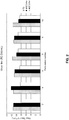
- FIG. 4 indicates that the stability of adenovirus formulations with sodium chloride increases with the addition of EDTA.
- Table 4 FORMULATION NUMBER Citrate (mM) Phosphate (mM) NaCl (mM) 1,2-propanediol (mM) EDTA (mM) pH 4 5 5 150 7 9 5 5 5 300 7 19 5 5 150 1 7 20 5 5 300 1 7
- Formulation 23 was formulated with an additional 5 mg/mL PEI, a cationic polymer.
- the TCID 50 assay (see General Methods) was used to titrate the infectivity of the formulations at T0 (start), 24 hr at 40 °C storage, and 91 hr at 40 °C storage.
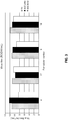
- FIG. 5 indicates that the addition of PEI with average M n ⁇ 1,800 decreases the stability of adenovirus formulations.
- Table 5 FORMULATION NUMBER Citrate (mM) Phosphate (mM) NaCl (mM) PEI (mg/ml) pH 4 5 5 150 7 23 5 5 150 5 7
- the TCID 50 assay (see General Methods) was used to titrate the infectivity of the formulations at T0 (start), 120 hr at 40 °C storage, and 288 hr at 40 °C storage.
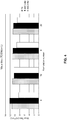
- FIG. 6B indicates that the addition of CMC increases the stability of adenovirus formulations; as indicated no virus titre was detected in Formulation 30 at the 288 hr time point.
- Table 6 FORMULATION NUMBER Citrate (mM) Phosphate (mM) TRIS (mM) NaCl (mM) Benzoate (mM) EDTA (mM) CMC (mg/mL) pH 4 5 5 150 7 24 5 5 150 5 7 30 10 150 10 1 7 44 10 150 10 1 5 7
- Formulations 30-35 Table 7
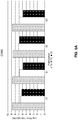
- Formulations 32 and 33 were formulated with MgCl 2 ; whereas Formulations 34 and 35 were formulated with CaCl 2 .
- the TCID 50 assay (see General Methods) was used to titrate the infectivity of the formulations at T0 (start), 120hr at 40 °C storage, and 288hr at 40 °C storage.
- FIG. 7 indicates that the addition of MgCl 2 and CaCl 2 both have a positive effect on the stability of adenovirus formulations.
- Formulation 53 was formulated with 2.5 mg/mL dextran sulfate with a low average molecular weight (Mw 6500 ⁇ 10000 Da) and 2.5 mg/mL dextran sulfate with a high average molecular weight (Mw 5000000 ⁇ 3000000 Da).
- the FACS assay (see General Methods) was used to determine the infectivity of the formulations at T0 (start), T2 (day), and T6 (day). The formulations were incubated at 45 °C.
- FIG. 9A compares the effect from the addition of dextran sulfate on the stability of adenovirus formulations.
- Ad5GFP system was used.
- FIG. 9B compares the effect from the addition of dextran sulfate on the stability of adenovirus formulations.
- Table 9 FORMULATION NUMBER Citrate (mM) Phosphate (mM) Sucrose (mM) Dextran (low) (mg/mL) Dextran (high) (mg/mL) pH 31 5 5 300 7 51 5 5 300 5 7 52 5 5 300 5 7 53 5 5 300 2.5 2.5 7
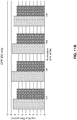
- the FACS assay was used to determine the infectivity of the formulations at T0 (start), T14 (37 °C, 14 days), T20 (25 °C, 20 days), T41 (37 °C, 41 days), and T42 (25 °C, 42 days).
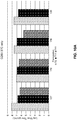
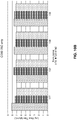
- FIG. 10A compares the infectivity of these formulations with Ad5CD80 system and an incubation temperature of 37 °C.
- Formulations 127 and 132 containing Ad5CD80 lost less than 1.3 log infectivity; whereas Comparative Examples 1 and 2 lost 1.5 log infectivity and 7.65 log infectivity, respectively.
- FIG. 10B compares the infectivity of these formulations with Ad5CD80 system and an incubation temperature of 25 °C. All formulations lost less than 1 log infectivity.
- FIG. 11A compares the infectivity of these formulations with Ad5GFP system and an incubation temperature of 37 °C. At 37 °C after 41 days, Formulations 127 and 132 containing Ad5GFP lost less than 1.6 log infectivity; whereas Comparative Examples 1 and 2 had lost 1.8 log infectivity.
- FIG. 11B compares the infectivity of these formulations with Ad5GFP system and an incubation temperature of 25 °C. All formulations lost less than 1 log infectivity.
- Table 10 Sample ID Formulation 127 Formulation 132 Comparative Example 1 Comparative Example 2 Formulation(s) 20mM TRIS, 8mM Benzoate, 0.1mM EDTA, 150mM Sucrose, 0.6 mg/mL Tween 80, 4 mg/mL Dextran Sulfate (MW 6,500 - 10,000), 2 mg/mL Dextran Sulfate (MW >500,000), 5 mg/mL Polyvinyl Alcohol, pH 6 20mM TRIS, 5mM Benzoate 0.3mM EDTA, 400mM Sucrose, 0.2 mg/mL Tween 80, 6 mg/mL Dextrar Sulfate (MW 6,500 - 10,000), 6 mg/mL Dextran Sulfate (MW>500,000), 1.5 mM MgCl 2 , pH 7 10mM His
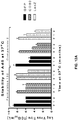
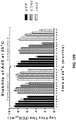
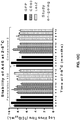
- Formulation 132 (Formulation 132) was compared with an adenovirus formulation disclosed in U.S. Patent No. 7,880,097 (Formulation AQF4-4) ("Comparative Example 2"; Formulation 139) in a stability study (Tables 11a and b) and FIG. 12A , 12B and 12C .
- Ad5CD80, Ad5GFP and Ad5LacZ systems were used. The formulations were incubated at three different temperatures (25 °C, 37 °C and 2-8°C).
- the TCID50 assay (see General Methods) was used to determine the infectivity of the formulations at 37°C (T0 (start), T1, T2 months), 25°C (T0, T1, T3, T4, T6 months) and 2-8°C (TO, T2, T6 and T12 months).
- FIG. 12A compares the infectivity of Formulation 132 and Comparator Formulation 2 using Ad5GFP, Ad5CD80 and Ad5LacZ systems at an incubation temperature of 37°C.
- Formulations 132 containing Ad5CD80, Ad5GFP and Ad5LacZ lost 2.08, 2.75 and 2.58 log infectivity respectively; whereas Comparative Formulation 2 containing Ad5CD80, Ad5GFP and Ad5LacZ lost 4.17, 3.42 and 4.00 log infective titre respectively.
- FIG. 12B compares the infectivity of Formulation 132 and Comparator Formulation 2 using Ad5GFP, Ad5CD80 and Ad5LacZ systems at an incubation temperature of 25°C. At 25 °C after 12 months, Formulations 132 containing Ad5CD80, Ad5GFP and Ad5LacZ lost 2.42, 2.92 and 2.42 log infectivity respectively; whereas Comparative Formulation 2 containing Ad5CD80, Ad5GFP and Ad5LacZ lost 5.00, 5.08 and 4.92 log infective titre respectively.
- FIG. 12C compares the infectivity of Formulation 132 and Comparator Formulation 2 using Ad5GFP, Ad5CD80 and Ad5LacZ systems at an incubation temperature of 2-8°C. At 2-8°C after 12 months, Formulations 132 containing Ad5CD80, Ad5GFP and Ad5LacZ lost 0.92, 1.42 and 0.58 log infectivity respectively; whereas Comparative Formulation 2 containing Ad5CD80, Ad5GFP and Ad5LacZ lost 0.08, 1.25 and 0.25 log infective titre respectively.
- Table 11a Sample ID Formulation 132 Comparative Example 2 Formulation(s) 20mM TRIS, 5mM Benzoate, 0.3mM EDTA, 400mM Sucrose, 0.2 mg/mLTween 80, 6 mg/mL Dextran Sulfate (MW 6,500 - 10,000), 6 mg/mL Dextran Sulfate (MW >500,000), 1.5 mM MgCl2, pH 7 10mM TRIS, 150mM NaCl, 146mM Sucrose, 0.1 mg/mL Tween 80, 1mM MgCl 2 , 274.76mM Mannitol at pH 8.2.
Landscapes
- Health & Medical Sciences (AREA)
- Life Sciences & Earth Sciences (AREA)
- Chemical & Material Sciences (AREA)
- Genetics & Genomics (AREA)
- General Health & Medical Sciences (AREA)
- Medicinal Chemistry (AREA)
- Engineering & Computer Science (AREA)
- Organic Chemistry (AREA)
- Bioinformatics & Cheminformatics (AREA)
- Zoology (AREA)
- Wood Science & Technology (AREA)
- Public Health (AREA)
- Pharmacology & Pharmacy (AREA)
- Veterinary Medicine (AREA)
- Animal Behavior & Ethology (AREA)
- Epidemiology (AREA)
- Biotechnology (AREA)
- Virology (AREA)
- General Engineering & Computer Science (AREA)
- Biomedical Technology (AREA)
- Microbiology (AREA)
- Biochemistry (AREA)
- Inorganic Chemistry (AREA)
- Molecular Biology (AREA)
- Immunology (AREA)
- Biophysics (AREA)
- Physics & Mathematics (AREA)
- Dermatology (AREA)
- Plant Pathology (AREA)
- Proteomics, Peptides & Aminoacids (AREA)
- Mycology (AREA)
- Gastroenterology & Hepatology (AREA)
- Medicinal Preparation (AREA)
- Chemical Kinetics & Catalysis (AREA)
- General Chemical & Material Sciences (AREA)
- Oil, Petroleum & Natural Gas (AREA)
Claims (15)
- Wässrige Formulierung, umfassend einen Adenovirusvektor und Natriumcarboxymethylcellulose.
- Formulierung nach Anspruch 1, wobei die Natriumcarboxymethylcellulose in einer Konzentration im Bereich von 0,5 mg/ml bis 10 mg/ml vorliegt.
- Formulierung nach Anspruch 1 oder Anspruch 2, wobei die Natriumcarboxymethylcellulose ein mittleres Molekulargewicht zwischen 20000 Da und 1000000 Da aufweist.
- Formulierung nach einem der vorhergehenden Ansprüche, ferner umfassend wenigstens einen Puffer.
- Formulierung nach einem der vorhergehenden Ansprüche, wobei der pH-Wert der Formulierung zwischen 5 und 8 liegt.
- Formulierung nach Anspruch 5, wobei der pH-Wert der Formulierung zwischen 6 und 7 liegt.
- Formulierung nach einem der vorhergehenden Ansprüche, ferner umfassend einen Tonizitätsmodifikator.
- Formulierung nach Anspruch 7, wobei der Tonizitätsmodifikator aus der aus 1,2-Propandiol, Glycerin, Mannit, Sorbit, Saccharose, Lactose, Maltose und Trehalose bestehenden Gruppe ausgewählt ist.
- Formulierung nach einem der vorhergehenden Ansprüche, ferner umfassend ein nichtionisches Tensid.
- Formulierung nach Anspruch 9, wobei das nichtionische Tensid aus der aus Polysorbaten und Poloxameren bestehenden Gruppe ausgewählt ist.
- Formulierung nach einem der vorhergehenden Ansprüche, wobei es sich bei der Formulierung um eine pharmazeutische Formulierung handelt, die für eine Verabreichung durch Injektion oder Infusion geeignet ist.
- Pharmazeutische Formulierung gemäß Anspruch 11 zur Verwendung als prophylaktischer Impfstoff oder zur Verwendung in der Gentherapie.
- Verfahren zur Herstellung einer lagerstabilen wässrigen Adenovirus-Flüssigformulierung, umfassend:Bilden eines Gemischs von einem Adenovirusvektor und Natriumcarboxymethylcellulose.
- Verfahren nach Anspruch 13, wobei die Natriumcarboxymethylcellulose in einer Konzentration im Bereich von 0,5 mg/ml bis 10 mg/ml vorliegt.
- Verfahren nach Anspruch 13 oder Anspruch 14, wobei es sich bei der Formulierung um eine pharmazeutische Formulierung handelt, die für eine Verabreichung durch Injektion oder Infusion geeignet ist.
Applications Claiming Priority (2)
| Application Number | Priority Date | Filing Date | Title |
|---|---|---|---|
| US201361793461P | 2013-03-15 | 2013-03-15 | |
| PCT/GB2014/050826 WO2014140645A1 (en) | 2013-03-15 | 2014-03-14 | Stable aqueous formulations of adenovirus vectors |
Publications (3)
| Publication Number | Publication Date |
|---|---|
| EP2968112A1 EP2968112A1 (de) | 2016-01-20 |
| EP2968112B1 true EP2968112B1 (de) | 2017-08-23 |
| EP2968112B2 EP2968112B2 (de) | 2020-08-12 |
Family
ID=50397187
Family Applications (1)
| Application Number | Title | Priority Date | Filing Date |
|---|---|---|---|
| EP14714307.7A Active EP2968112B2 (de) | 2013-03-15 | 2014-03-14 | Stabile wässrige formulierungen von adenovirusvektoren |
Country Status (3)
| Country | Link |
|---|---|
| US (2) | US9254332B2 (de) |
| EP (1) | EP2968112B2 (de) |
| WO (1) | WO2014140645A1 (de) |
Families Citing this family (10)
| Publication number | Priority date | Publication date | Assignee | Title |
|---|---|---|---|---|
| US9254332B2 (en) | 2013-03-15 | 2016-02-09 | Arecor Limited | Stable aqueous formulations of adenovirus vectors |
| CA2946392A1 (en) | 2014-04-25 | 2015-10-29 | James M. Wilson | Ldlr variants and their use in compositions for reducing cholesterol levels |
| EP3270960A4 (de) * | 2015-03-20 | 2018-08-08 | Bluebird Bio, Inc. | Vektorformulierungen |
| US11883470B2 (en) | 2016-07-25 | 2024-01-30 | The Trustees Of The University Of Pennsylvania | Compositions comprising a lecithin cholesterol acyltransferase variant and uses thereof |
| PT3534922T (pt) | 2016-11-04 | 2024-06-07 | Takeda Pharmaceuticals Co | Formulações de vírus adenoassociado |
| KR20190118163A (ko) | 2017-02-20 | 2019-10-17 | 더 트러스티스 오브 더 유니버시티 오브 펜실바니아 | 가족성 고콜레스테롤혈증을 치료하기 위한 유전자 요법 |
| US20200390877A1 (en) * | 2017-12-07 | 2020-12-17 | Merck Sharp & Dohme Corp. | Formulations of dengue virus vaccine compositions |
| AU2019299964A1 (en) * | 2018-07-11 | 2021-01-21 | Takeda Pharmaceutical Company Limited | AAV compositions |
| CN113966228A (zh) * | 2019-06-11 | 2022-01-21 | 葛兰素史密斯克莱生物公司 | 黏膜疫苗配制剂 |
| CN115554418B (zh) * | 2022-11-22 | 2023-04-14 | 四川至善唯新生物科技有限公司 | 一种重组腺相关病毒载体的药物组合物及其用途 |
Citations (7)
| Publication number | Priority date | Publication date | Assignee | Title |
|---|---|---|---|---|
| US6251678B1 (en) | 1999-02-05 | 2001-06-26 | Merck & Co., Inc. | Human papillomavirus vaccine formulations |
| WO2001095875A1 (en) | 2000-06-09 | 2001-12-20 | Genzyme Corporation | Low molecular weight polymeric compositions |
| US20020146828A1 (en) | 2001-01-05 | 2002-10-10 | John Hural | Microparticles and methods for delivery of recombinant viral vaccines |
| WO2006085987A2 (en) | 2004-07-09 | 2006-08-17 | University Of Iowa Research Foundation | Rna interference in respiratory epitheial cells |
| US7456009B2 (en) | 2000-03-07 | 2008-11-25 | Merck & Co., Inc. | Adenovirus formulations |
| US7888097B2 (en) | 1998-11-16 | 2011-02-15 | Crucell Holland B.V. | Formulation for adenovirus storage |
| WO2012059762A1 (en) | 2010-11-03 | 2012-05-10 | Arecor Limited | Novel composition comprising glucagon |
Family Cites Families (4)
| Publication number | Priority date | Publication date | Assignee | Title |
|---|---|---|---|---|
| US7880097B2 (en) | 2005-04-22 | 2011-02-01 | Iosafe, Inc. | Fire resistant and/or water resistant enclosure for operable computer digital data storage device |
| GB0700523D0 (en) | 2007-01-11 | 2007-02-21 | Insense Ltd | The Stabilisation Of Proteins |
| WO2008106646A2 (en) | 2007-03-01 | 2008-09-04 | Introgen Therapeutics, Inc | Methods and formulations for topical gene therapy |
| US9254332B2 (en) | 2013-03-15 | 2016-02-09 | Arecor Limited | Stable aqueous formulations of adenovirus vectors |
-
2014
- 2014-03-13 US US14/208,919 patent/US9254332B2/en active Active
- 2014-03-14 WO PCT/GB2014/050826 patent/WO2014140645A1/en not_active Ceased
- 2014-03-14 EP EP14714307.7A patent/EP2968112B2/de active Active
-
2016
- 2016-01-05 US US14/988,138 patent/US9744242B2/en active Active
Patent Citations (7)
| Publication number | Priority date | Publication date | Assignee | Title |
|---|---|---|---|---|
| US7888097B2 (en) | 1998-11-16 | 2011-02-15 | Crucell Holland B.V. | Formulation for adenovirus storage |
| US6251678B1 (en) | 1999-02-05 | 2001-06-26 | Merck & Co., Inc. | Human papillomavirus vaccine formulations |
| US7456009B2 (en) | 2000-03-07 | 2008-11-25 | Merck & Co., Inc. | Adenovirus formulations |
| WO2001095875A1 (en) | 2000-06-09 | 2001-12-20 | Genzyme Corporation | Low molecular weight polymeric compositions |
| US20020146828A1 (en) | 2001-01-05 | 2002-10-10 | John Hural | Microparticles and methods for delivery of recombinant viral vaccines |
| WO2006085987A2 (en) | 2004-07-09 | 2006-08-17 | University Of Iowa Research Foundation | Rna interference in respiratory epitheial cells |
| WO2012059762A1 (en) | 2010-11-03 | 2012-05-10 | Arecor Limited | Novel composition comprising glucagon |
Non-Patent Citations (12)
| Title |
|---|
| "Aqualon CMC , Product Grades Available", ASHLAND, 2016, XP055492100 |
| "FMC Product overview: Avicel RC-591", FMC, 2003, XP055492101 |
| ALFONSO R. GENNARO: "Remington, The Science and Practise of Pharmacy. 21st ed.", 2006, LIPPINCOTT WILLIAMS & WILKINS, ISBN: 978-0-7817-4673-6, article "Gels and magmas", pages: 770 - 771, XP055631666 |
| ANONYMOUS, WIKIPEDIA, THE FREE ENCYCLOPEDIA, 17 May 2019 (2019-05-17), XP055631669, Retrieved from the Internet <URL:https://en.wikipedia.org/wiki/Eagle%27s_minimal_essential_medium> |
| ANONYMOUS: "AQUALON® Sodium Carboxymethylcellulose , Physical and Chemical Properties", HERCULES - PRODUCT INFORMATION, 1999, XP055631655 |
| F. MATHOT ET AL.: "Development of a freeze-dried Ebola-expressing adenoviral vector", BIOPROCESS INTERNATIONAL, vol. 16, no. 5, 2018, pages 26 - 31, XP009507346 |
| GABELNICK H. L. ET AL: "Rheology of Biological Systems", 1973, THOMAS BOOKS, ISBN: 978-0-398-02589-2, article "Chapter 11: Pseudosynovial fluids based on sodium carboxymethylcellulose", pages: 278 - 298, XP055631642 |
| HAMAJIMA, K. ET AL.: "Intranasal administration of HIV-DNA vaccine formulated with a polymer, carboxymethylcellulose, augments mucosal antibody production and cell -mediated immune response", CLINICAL IMMUNOLOGY AND IMMUNOPATHOLOGY, vol. 88, no. 2, 1998, pages 205 - 210, XP001573312 |
| SEILER, M. P. ET AL.: "Thixotropic solutions enhance viral-mediated gene transfer to airway epithelia", AMERICAN JOURNAL OF RESPIRATORY CELL AND MOLECULAR BIOLOGY, vol. 27, no. 2, 2002, pages 133 - 140, XP002399883 |
| SINN, P. L. ET AL.: "Viscoelastic gel formulations enhance airway epithelial gene transfer with viral vectors", AMERICAN JOURNAL OF RESPIRATORY CELL AND MOLECULAR BIOLOGY, vol. 32, no. 5, 2005, pages 404 - 410, XP002399885 |
| WADE AINLEY ET AL: "Handbook of Pharmaceutical excipients", 1994, APA, article "Carboxymethylcellulose Sodium", pages: 78 - 81, XP055336531 |
| ZHAO, G. H.: "Characterisation of the interactive properties of microcrystalline cellulose-carboxymethyl cellulose hydrogels", INTERNATIONAL JOURNAL OF PHARMACEUTICS, vol. 415, no. 1-2, 2011, pages 95 - 101, XP028099852 |
Also Published As
| Publication number | Publication date |
|---|---|
| US9254332B2 (en) | 2016-02-09 |
| WO2014140645A1 (en) | 2014-09-18 |
| EP2968112B2 (de) | 2020-08-12 |
| US9744242B2 (en) | 2017-08-29 |
| US20140348876A1 (en) | 2014-11-27 |
| US20160199496A1 (en) | 2016-07-14 |
| EP2968112A1 (de) | 2016-01-20 |
Similar Documents
| Publication | Publication Date | Title |
|---|---|---|
| EP2968112B2 (de) | Stabile wässrige formulierungen von adenovirusvektoren | |
| JP5118798B2 (ja) | アデノウイルス製剤 | |
| US12350375B2 (en) | Method for obtaining efficient viral vector-based compositions for vaccination or gene therapy | |
| KR102258348B1 (ko) | 개선된 아데노바이러스 제형 | |
| EP2898890B1 (de) | Stabilisierung von Virenpartikeln | |
| ES2299275T3 (es) | Procedimiento y composiciones para conservar adenovirus. | |
| US20050186225A1 (en) | Adenovirus formulations | |
| JP4550421B2 (ja) | ウイルスの保存のための組成物 | |
| ES2272053T3 (es) | Composiciones que comprenden virus y metodos para concentrar preparaciones de virus. | |
| US20030153065A1 (en) | Composition and method for maintaining non-enveloped viral vectors | |
| CN110430867B (zh) | 从水性混合物冷冻干燥的组合物及其制备方法 | |
| Li et al. | An artificially designed interfering lncRNA expressed by oncolytic adenovirus competitively consumes oncomiRs to exert antitumor efficacy in hepatocellular carcinoma | |
| Toniolo et al. | Spray dried VSV-vectored vaccine is thermally stable and immunologically active in vivo | |
| CN1961961B (zh) | 一种药物制剂及其制备方法 | |
| Turner et al. | Encapsulation of viral vectors for gene therapy applications | |
| US20040033239A1 (en) | Adenovirus formulations | |
| CN1883707A (zh) | 重组腺病毒的冻干制剂及其制备方法 | |
| Edeling et al. | Preliminary stability studies of a ß-SARS-CoV-2 virus-like particle vaccine | |
| AU2006202389B2 (en) | Adenovirus formulations | |
| EP3953457A1 (de) | Breiter und lang anhaltender influenza-impfstoff |
Legal Events
| Date | Code | Title | Description |
|---|---|---|---|
| PUAI | Public reference made under article 153(3) epc to a published international application that has entered the european phase |
Free format text: ORIGINAL CODE: 0009012 |
|
| 17P | Request for examination filed |
Effective date: 20150923 |
|
| AK | Designated contracting states |
Kind code of ref document: A1 Designated state(s): AL AT BE BG CH CY CZ DE DK EE ES FI FR GB GR HR HU IE IS IT LI LT LU LV MC MK MT NL NO PL PT RO RS SE SI SK SM TR |
|
| AX | Request for extension of the european patent |
Extension state: BA ME |
|
| DAX | Request for extension of the european patent (deleted) | ||
| RIC1 | Information provided on ipc code assigned before grant |
Ipc: A61K 47/38 20060101ALI20160823BHEP Ipc: A61K 48/00 20060101ALI20160823BHEP Ipc: A61K 9/00 20060101AFI20160823BHEP Ipc: C12N 15/86 20060101ALI20160823BHEP |
|
| GRAP | Despatch of communication of intention to grant a patent |
Free format text: ORIGINAL CODE: EPIDOSNIGR1 |
|
| INTG | Intention to grant announced |
Effective date: 20161010 |
|
| GRAJ | Information related to disapproval of communication of intention to grant by the applicant or resumption of examination proceedings by the epo deleted |
Free format text: ORIGINAL CODE: EPIDOSDIGR1 |
|
| STAA | Information on the status of an ep patent application or granted ep patent |
Free format text: STATUS: REQUEST FOR EXAMINATION WAS MADE |
|
| GRAP | Despatch of communication of intention to grant a patent |
Free format text: ORIGINAL CODE: EPIDOSNIGR1 |
|
| STAA | Information on the status of an ep patent application or granted ep patent |
Free format text: STATUS: GRANT OF PATENT IS INTENDED |
|
| INTC | Intention to grant announced (deleted) | ||
| INTG | Intention to grant announced |
Effective date: 20170314 |
|
| RAP1 | Party data changed (applicant data changed or rights of an application transferred) |
Owner name: ARECOR LIMITED |
|
| GRAS | Grant fee paid |
Free format text: ORIGINAL CODE: EPIDOSNIGR3 |
|
| GRAA | (expected) grant |
Free format text: ORIGINAL CODE: 0009210 |
|
| STAA | Information on the status of an ep patent application or granted ep patent |
Free format text: STATUS: THE PATENT HAS BEEN GRANTED |
|
| AK | Designated contracting states |
Kind code of ref document: B1 Designated state(s): AL AT BE BG CH CY CZ DE DK EE ES FI FR GB GR HR HU IE IS IT LI LT LU LV MC MK MT NL NO PL PT RO RS SE SI SK SM TR |
|
| REG | Reference to a national code |
Ref country code: GB Ref legal event code: FG4D |
|
| REG | Reference to a national code |
Ref country code: CH Ref legal event code: EP |
|
| REG | Reference to a national code |
Ref country code: AT Ref legal event code: REF Ref document number: 920559 Country of ref document: AT Kind code of ref document: T Effective date: 20170915 |
|
| REG | Reference to a national code |
Ref country code: IE Ref legal event code: FG4D |
|
| REG | Reference to a national code |
Ref country code: DE Ref legal event code: R096 Ref document number: 602014013479 Country of ref document: DE |
|
| REG | Reference to a national code |
Ref country code: CH Ref legal event code: NV Representative=s name: ISLER AND PEDRAZZINI AG, CH |
|
| REG | Reference to a national code |
Ref country code: SE Ref legal event code: TRGR |
|
| REG | Reference to a national code |
Ref country code: NL Ref legal event code: FP |
|
| REG | Reference to a national code |
Ref country code: LT Ref legal event code: MG4D |
|
| REG | Reference to a national code |
Ref country code: AT Ref legal event code: MK05 Ref document number: 920559 Country of ref document: AT Kind code of ref document: T Effective date: 20170823 |
|
| PG25 | Lapsed in a contracting state [announced via postgrant information from national office to epo] |
Ref country code: FI Free format text: LAPSE BECAUSE OF FAILURE TO SUBMIT A TRANSLATION OF THE DESCRIPTION OR TO PAY THE FEE WITHIN THE PRESCRIBED TIME-LIMIT Effective date: 20170823 Ref country code: NO Free format text: LAPSE BECAUSE OF FAILURE TO SUBMIT A TRANSLATION OF THE DESCRIPTION OR TO PAY THE FEE WITHIN THE PRESCRIBED TIME-LIMIT Effective date: 20171123 Ref country code: HR Free format text: LAPSE BECAUSE OF FAILURE TO SUBMIT A TRANSLATION OF THE DESCRIPTION OR TO PAY THE FEE WITHIN THE PRESCRIBED TIME-LIMIT Effective date: 20170823 Ref country code: AT Free format text: LAPSE BECAUSE OF FAILURE TO SUBMIT A TRANSLATION OF THE DESCRIPTION OR TO PAY THE FEE WITHIN THE PRESCRIBED TIME-LIMIT Effective date: 20170823 Ref country code: LT Free format text: LAPSE BECAUSE OF FAILURE TO SUBMIT A TRANSLATION OF THE DESCRIPTION OR TO PAY THE FEE WITHIN THE PRESCRIBED TIME-LIMIT Effective date: 20170823 |
|
| PG25 | Lapsed in a contracting state [announced via postgrant information from national office to epo] |
Ref country code: IS Free format text: LAPSE BECAUSE OF FAILURE TO SUBMIT A TRANSLATION OF THE DESCRIPTION OR TO PAY THE FEE WITHIN THE PRESCRIBED TIME-LIMIT Effective date: 20171223 Ref country code: ES Free format text: LAPSE BECAUSE OF FAILURE TO SUBMIT A TRANSLATION OF THE DESCRIPTION OR TO PAY THE FEE WITHIN THE PRESCRIBED TIME-LIMIT Effective date: 20170823 Ref country code: BG Free format text: LAPSE BECAUSE OF FAILURE TO SUBMIT A TRANSLATION OF THE DESCRIPTION OR TO PAY THE FEE WITHIN THE PRESCRIBED TIME-LIMIT Effective date: 20171123 Ref country code: PL Free format text: LAPSE BECAUSE OF FAILURE TO SUBMIT A TRANSLATION OF THE DESCRIPTION OR TO PAY THE FEE WITHIN THE PRESCRIBED TIME-LIMIT Effective date: 20170823 Ref country code: LV Free format text: LAPSE BECAUSE OF FAILURE TO SUBMIT A TRANSLATION OF THE DESCRIPTION OR TO PAY THE FEE WITHIN THE PRESCRIBED TIME-LIMIT Effective date: 20170823 Ref country code: RS Free format text: LAPSE BECAUSE OF FAILURE TO SUBMIT A TRANSLATION OF THE DESCRIPTION OR TO PAY THE FEE WITHIN THE PRESCRIBED TIME-LIMIT Effective date: 20170823 Ref country code: GR Free format text: LAPSE BECAUSE OF FAILURE TO SUBMIT A TRANSLATION OF THE DESCRIPTION OR TO PAY THE FEE WITHIN THE PRESCRIBED TIME-LIMIT Effective date: 20171124 |
|
| REG | Reference to a national code |
Ref country code: FR Ref legal event code: PLFP Year of fee payment: 5 |
|
| PG25 | Lapsed in a contracting state [announced via postgrant information from national office to epo] |
Ref country code: RO Free format text: LAPSE BECAUSE OF FAILURE TO SUBMIT A TRANSLATION OF THE DESCRIPTION OR TO PAY THE FEE WITHIN THE PRESCRIBED TIME-LIMIT Effective date: 20170823 Ref country code: DK Free format text: LAPSE BECAUSE OF FAILURE TO SUBMIT A TRANSLATION OF THE DESCRIPTION OR TO PAY THE FEE WITHIN THE PRESCRIBED TIME-LIMIT Effective date: 20170823 Ref country code: CZ Free format text: LAPSE BECAUSE OF FAILURE TO SUBMIT A TRANSLATION OF THE DESCRIPTION OR TO PAY THE FEE WITHIN THE PRESCRIBED TIME-LIMIT Effective date: 20170823 |
|
| REG | Reference to a national code |
Ref country code: DE Ref legal event code: R026 Ref document number: 602014013479 Country of ref document: DE |
|
| PLBI | Opposition filed |
Free format text: ORIGINAL CODE: 0009260 |
|
| PG25 | Lapsed in a contracting state [announced via postgrant information from national office to epo] |
Ref country code: IT Free format text: LAPSE BECAUSE OF FAILURE TO SUBMIT A TRANSLATION OF THE DESCRIPTION OR TO PAY THE FEE WITHIN THE PRESCRIBED TIME-LIMIT Effective date: 20170823 Ref country code: SM Free format text: LAPSE BECAUSE OF FAILURE TO SUBMIT A TRANSLATION OF THE DESCRIPTION OR TO PAY THE FEE WITHIN THE PRESCRIBED TIME-LIMIT Effective date: 20170823 Ref country code: EE Free format text: LAPSE BECAUSE OF FAILURE TO SUBMIT A TRANSLATION OF THE DESCRIPTION OR TO PAY THE FEE WITHIN THE PRESCRIBED TIME-LIMIT Effective date: 20170823 Ref country code: SK Free format text: LAPSE BECAUSE OF FAILURE TO SUBMIT A TRANSLATION OF THE DESCRIPTION OR TO PAY THE FEE WITHIN THE PRESCRIBED TIME-LIMIT Effective date: 20170823 |
|
| PLAX | Notice of opposition and request to file observation + time limit sent |
Free format text: ORIGINAL CODE: EPIDOSNOBS2 |
|
| 26 | Opposition filed |
Opponent name: GLAXOSMITHKLINE BIOLOGICALS SA Effective date: 20180523 |
|
| PG25 | Lapsed in a contracting state [announced via postgrant information from national office to epo] |
Ref country code: SI Free format text: LAPSE BECAUSE OF FAILURE TO SUBMIT A TRANSLATION OF THE DESCRIPTION OR TO PAY THE FEE WITHIN THE PRESCRIBED TIME-LIMIT Effective date: 20170823 |
|
| PLBB | Reply of patent proprietor to notice(s) of opposition received |
Free format text: ORIGINAL CODE: EPIDOSNOBS3 |
|
| PG25 | Lapsed in a contracting state [announced via postgrant information from national office to epo] |
Ref country code: MC Free format text: LAPSE BECAUSE OF FAILURE TO SUBMIT A TRANSLATION OF THE DESCRIPTION OR TO PAY THE FEE WITHIN THE PRESCRIBED TIME-LIMIT Effective date: 20170823 |
|
| REG | Reference to a national code |
Ref country code: IE Ref legal event code: MM4A |
|
| PG25 | Lapsed in a contracting state [announced via postgrant information from national office to epo] |
Ref country code: LU Free format text: LAPSE BECAUSE OF NON-PAYMENT OF DUE FEES Effective date: 20180314 |
|
| PG25 | Lapsed in a contracting state [announced via postgrant information from national office to epo] |
Ref country code: IE Free format text: LAPSE BECAUSE OF NON-PAYMENT OF DUE FEES Effective date: 20180314 |
|
| PG25 | Lapsed in a contracting state [announced via postgrant information from national office to epo] |
Ref country code: MT Free format text: LAPSE BECAUSE OF NON-PAYMENT OF DUE FEES Effective date: 20180314 |
|
| PG25 | Lapsed in a contracting state [announced via postgrant information from national office to epo] |
Ref country code: TR Free format text: LAPSE BECAUSE OF FAILURE TO SUBMIT A TRANSLATION OF THE DESCRIPTION OR TO PAY THE FEE WITHIN THE PRESCRIBED TIME-LIMIT Effective date: 20170823 |
|
| PGFP | Annual fee paid to national office [announced via postgrant information from national office to epo] |
Ref country code: SE Payment date: 20200324 Year of fee payment: 7 |
|
| PG25 | Lapsed in a contracting state [announced via postgrant information from national office to epo] |
Ref country code: PT Free format text: LAPSE BECAUSE OF FAILURE TO SUBMIT A TRANSLATION OF THE DESCRIPTION OR TO PAY THE FEE WITHIN THE PRESCRIBED TIME-LIMIT Effective date: 20170823 |
|
| PGFP | Annual fee paid to national office [announced via postgrant information from national office to epo] |
Ref country code: CH Payment date: 20200319 Year of fee payment: 7 |
|
| PG25 | Lapsed in a contracting state [announced via postgrant information from national office to epo] |
Ref country code: HU Free format text: LAPSE BECAUSE OF FAILURE TO SUBMIT A TRANSLATION OF THE DESCRIPTION OR TO PAY THE FEE WITHIN THE PRESCRIBED TIME-LIMIT; INVALID AB INITIO Effective date: 20140314 Ref country code: CY Free format text: LAPSE BECAUSE OF FAILURE TO SUBMIT A TRANSLATION OF THE DESCRIPTION OR TO PAY THE FEE WITHIN THE PRESCRIBED TIME-LIMIT Effective date: 20170823 Ref country code: MK Free format text: LAPSE BECAUSE OF NON-PAYMENT OF DUE FEES Effective date: 20170823 |
|
| PUAH | Patent maintained in amended form |
Free format text: ORIGINAL CODE: 0009272 |
|
| STAA | Information on the status of an ep patent application or granted ep patent |
Free format text: STATUS: PATENT MAINTAINED AS AMENDED |
|
| PG25 | Lapsed in a contracting state [announced via postgrant information from national office to epo] |
Ref country code: AL Free format text: LAPSE BECAUSE OF FAILURE TO SUBMIT A TRANSLATION OF THE DESCRIPTION OR TO PAY THE FEE WITHIN THE PRESCRIBED TIME-LIMIT Effective date: 20170823 |
|
| REG | Reference to a national code |
Ref country code: CH Ref legal event code: AELC |
|
| 27A | Patent maintained in amended form |
Effective date: 20200812 |
|
| AK | Designated contracting states |
Kind code of ref document: B2 Designated state(s): AL AT BE BG CH CY CZ DE DK EE ES FI FR GB GR HR HU IE IS IT LI LT LU LV MC MK MT NL NO PL PT RO RS SE SI SK SM TR |
|
| REG | Reference to a national code |
Ref country code: DE Ref legal event code: R102 Ref document number: 602014013479 Country of ref document: DE |
|
| REG | Reference to a national code |
Ref country code: NL Ref legal event code: FP |
|
| REG | Reference to a national code |
Ref country code: SE Ref legal event code: RPEO |
|
| REG | Reference to a national code |
Ref country code: CH Ref legal event code: PL |
|
| PG25 | Lapsed in a contracting state [announced via postgrant information from national office to epo] |
Ref country code: SE Free format text: LAPSE BECAUSE OF NON-PAYMENT OF DUE FEES Effective date: 20210315 Ref country code: CH Free format text: LAPSE BECAUSE OF NON-PAYMENT OF DUE FEES Effective date: 20210331 Ref country code: LI Free format text: LAPSE BECAUSE OF NON-PAYMENT OF DUE FEES Effective date: 20210331 |
|
| P01 | Opt-out of the competence of the unified patent court (upc) registered |
Effective date: 20230504 |
|
| PGFP | Annual fee paid to national office [announced via postgrant information from national office to epo] |
Ref country code: GB Payment date: 20260317 Year of fee payment: 13 |
|
| PGFP | Annual fee paid to national office [announced via postgrant information from national office to epo] |
Ref country code: DE Payment date: 20260318 Year of fee payment: 13 |
|
| PGFP | Annual fee paid to national office [announced via postgrant information from national office to epo] |
Ref country code: BE Payment date: 20260317 Year of fee payment: 13 |
|
| PGFP | Annual fee paid to national office [announced via postgrant information from national office to epo] |
Ref country code: NL Payment date: 20260317 Year of fee payment: 13 |
|
| PGFP | Annual fee paid to national office [announced via postgrant information from national office to epo] |
Ref country code: FR Payment date: 20260317 Year of fee payment: 13 |