EP2965526B1 - Wireless docking system for audio-video - Google Patents
Wireless docking system for audio-video Download PDFInfo
- Publication number
- EP2965526B1 EP2965526B1 EP14708861.1A EP14708861A EP2965526B1 EP 2965526 B1 EP2965526 B1 EP 2965526B1 EP 14708861 A EP14708861 A EP 14708861A EP 2965526 B1 EP2965526 B1 EP 2965526B1
- Authority
- EP
- European Patent Office
- Prior art keywords
- data
- rendering
- dockee
- video
- audio
- Prior art date
- Legal status (The legal status is an assumption and is not a legal conclusion. Google has not performed a legal analysis and makes no representation as to the accuracy of the status listed.)
- Active
Links
Images

Classifications
-
- H—ELECTRICITY
- H04—ELECTRIC COMMUNICATION TECHNIQUE
- H04N—PICTORIAL COMMUNICATION, e.g. TELEVISION
- H04N21/00—Selective content distribution, e.g. interactive television or video on demand [VOD]
- H04N21/20—Servers specifically adapted for the distribution of content, e.g. VOD servers; Operations thereof
- H04N21/23—Processing of content or additional data; Elementary server operations; Server middleware
- H04N21/234—Processing of video elementary streams, e.g. splicing of video streams or manipulating encoded video stream scene graphs
- H04N21/23418—Processing of video elementary streams, e.g. splicing of video streams or manipulating encoded video stream scene graphs involving operations for analysing video streams, e.g. detecting features or characteristics
-
- H—ELECTRICITY
- H04—ELECTRIC COMMUNICATION TECHNIQUE
- H04N—PICTORIAL COMMUNICATION, e.g. TELEVISION
- H04N21/00—Selective content distribution, e.g. interactive television or video on demand [VOD]
- H04N21/40—Client devices specifically adapted for the reception of or interaction with content, e.g. set-top-box [STB]; Operations thereof
- H04N21/43—Processing of content or additional data, e.g. demultiplexing additional data from a digital video stream; Elementary client operations, e.g. monitoring of home network or synchronising decoder's clock; Client middleware
- H04N21/436—Interfacing a local distribution network, e.g. communicating with another STB or one or more peripheral devices inside the home
- H04N21/4363—Adapting the video stream to a specific local network, e.g. a Bluetooth® network
- H04N21/43637—Adapting the video stream to a specific local network, e.g. a Bluetooth® network involving a wireless protocol, e.g. Bluetooth®, RF or wireless LAN [IEEE 802.11]
-
- H—ELECTRICITY
- H04—ELECTRIC COMMUNICATION TECHNIQUE
- H04L—TRANSMISSION OF DIGITAL INFORMATION, e.g. TELEGRAPHIC COMMUNICATION
- H04L47/00—Traffic control in data switching networks
- H04L47/70—Admission control; Resource allocation
- H04L47/78—Architectures of resource allocation
- H04L47/783—Distributed allocation of resources, e.g. bandwidth brokers
-
- H—ELECTRICITY
- H04—ELECTRIC COMMUNICATION TECHNIQUE
- H04N—PICTORIAL COMMUNICATION, e.g. TELEVISION
- H04N21/00—Selective content distribution, e.g. interactive television or video on demand [VOD]
- H04N21/20—Servers specifically adapted for the distribution of content, e.g. VOD servers; Operations thereof
- H04N21/23—Processing of content or additional data; Elementary server operations; Server middleware
- H04N21/233—Processing of audio elementary streams
-
- H—ELECTRICITY
- H04—ELECTRIC COMMUNICATION TECHNIQUE
- H04N—PICTORIAL COMMUNICATION, e.g. TELEVISION
- H04N21/00—Selective content distribution, e.g. interactive television or video on demand [VOD]
- H04N21/20—Servers specifically adapted for the distribution of content, e.g. VOD servers; Operations thereof
- H04N21/23—Processing of content or additional data; Elementary server operations; Server middleware
- H04N21/234—Processing of video elementary streams, e.g. splicing of video streams or manipulating encoded video stream scene graphs
- H04N21/2343—Processing of video elementary streams, e.g. splicing of video streams or manipulating encoded video stream scene graphs involving reformatting operations of video signals for distribution or compliance with end-user requests or end-user device requirements
- H04N21/234345—Processing of video elementary streams, e.g. splicing of video streams or manipulating encoded video stream scene graphs involving reformatting operations of video signals for distribution or compliance with end-user requests or end-user device requirements the reformatting operation being performed only on part of the stream, e.g. a region of the image or a time segment
-
- H—ELECTRICITY
- H04—ELECTRIC COMMUNICATION TECHNIQUE
- H04N—PICTORIAL COMMUNICATION, e.g. TELEVISION
- H04N21/00—Selective content distribution, e.g. interactive television or video on demand [VOD]
- H04N21/20—Servers specifically adapted for the distribution of content, e.g. VOD servers; Operations thereof
- H04N21/23—Processing of content or additional data; Elementary server operations; Server middleware
- H04N21/238—Interfacing the downstream path of the transmission network, e.g. adapting the transmission rate of a video stream to network bandwidth; Processing of multiplex streams
-
- H—ELECTRICITY
- H04—ELECTRIC COMMUNICATION TECHNIQUE
- H04N—PICTORIAL COMMUNICATION, e.g. TELEVISION
- H04N21/00—Selective content distribution, e.g. interactive television or video on demand [VOD]
- H04N21/20—Servers specifically adapted for the distribution of content, e.g. VOD servers; Operations thereof
- H04N21/23—Processing of content or additional data; Elementary server operations; Server middleware
- H04N21/239—Interfacing the upstream path of the transmission network, e.g. prioritizing client content requests
-
- H—ELECTRICITY
- H04—ELECTRIC COMMUNICATION TECHNIQUE
- H04N—PICTORIAL COMMUNICATION, e.g. TELEVISION
- H04N21/00—Selective content distribution, e.g. interactive television or video on demand [VOD]
- H04N21/40—Client devices specifically adapted for the reception of or interaction with content, e.g. set-top-box [STB]; Operations thereof
- H04N21/41—Structure of client; Structure of client peripherals
- H04N21/4104—Peripherals receiving signals from specially adapted client devices
- H04N21/4122—Peripherals receiving signals from specially adapted client devices additional display device, e.g. video projector
-
- H—ELECTRICITY
- H04—ELECTRIC COMMUNICATION TECHNIQUE
- H04N—PICTORIAL COMMUNICATION, e.g. TELEVISION
- H04N21/00—Selective content distribution, e.g. interactive television or video on demand [VOD]
- H04N21/40—Client devices specifically adapted for the reception of or interaction with content, e.g. set-top-box [STB]; Operations thereof
- H04N21/41—Structure of client; Structure of client peripherals
- H04N21/414—Specialised client platforms, e.g. receiver in car or embedded in a mobile appliance
- H04N21/41407—Specialised client platforms, e.g. receiver in car or embedded in a mobile appliance embedded in a portable device, e.g. video client on a mobile phone, PDA, laptop
-
- H—ELECTRICITY
- H04—ELECTRIC COMMUNICATION TECHNIQUE
- H04N—PICTORIAL COMMUNICATION, e.g. TELEVISION
- H04N21/00—Selective content distribution, e.g. interactive television or video on demand [VOD]
- H04N21/40—Client devices specifically adapted for the reception of or interaction with content, e.g. set-top-box [STB]; Operations thereof
- H04N21/41—Structure of client; Structure of client peripherals
- H04N21/414—Specialised client platforms, e.g. receiver in car or embedded in a mobile appliance
- H04N21/4143—Specialised client platforms, e.g. receiver in car or embedded in a mobile appliance embedded in a Personal Computer [PC]
-
- H—ELECTRICITY
- H04—ELECTRIC COMMUNICATION TECHNIQUE
- H04N—PICTORIAL COMMUNICATION, e.g. TELEVISION
- H04N21/00—Selective content distribution, e.g. interactive television or video on demand [VOD]
- H04N21/40—Client devices specifically adapted for the reception of or interaction with content, e.g. set-top-box [STB]; Operations thereof
- H04N21/41—Structure of client; Structure of client peripherals
- H04N21/422—Input-only peripherals, i.e. input devices connected to specially adapted client devices, e.g. global positioning system [GPS]
- H04N21/4223—Cameras
-
- H—ELECTRICITY
- H04—ELECTRIC COMMUNICATION TECHNIQUE
- H04N—PICTORIAL COMMUNICATION, e.g. TELEVISION
- H04N21/00—Selective content distribution, e.g. interactive television or video on demand [VOD]
- H04N21/40—Client devices specifically adapted for the reception of or interaction with content, e.g. set-top-box [STB]; Operations thereof
- H04N21/41—Structure of client; Structure of client peripherals
- H04N21/426—Internal components of the client ; Characteristics thereof
- H04N21/42653—Internal components of the client ; Characteristics thereof for processing graphics
-
- H—ELECTRICITY
- H04—ELECTRIC COMMUNICATION TECHNIQUE
- H04N—PICTORIAL COMMUNICATION, e.g. TELEVISION
- H04N21/00—Selective content distribution, e.g. interactive television or video on demand [VOD]
- H04N21/40—Client devices specifically adapted for the reception of or interaction with content, e.g. set-top-box [STB]; Operations thereof
- H04N21/43—Processing of content or additional data, e.g. demultiplexing additional data from a digital video stream; Elementary client operations, e.g. monitoring of home network or synchronising decoder's clock; Client middleware
- H04N21/437—Interfacing the upstream path of the transmission network, e.g. for transmitting client requests to a VOD server
-
- H—ELECTRICITY
- H04—ELECTRIC COMMUNICATION TECHNIQUE
- H04N—PICTORIAL COMMUNICATION, e.g. TELEVISION
- H04N21/00—Selective content distribution, e.g. interactive television or video on demand [VOD]
- H04N21/40—Client devices specifically adapted for the reception of or interaction with content, e.g. set-top-box [STB]; Operations thereof
- H04N21/43—Processing of content or additional data, e.g. demultiplexing additional data from a digital video stream; Elementary client operations, e.g. monitoring of home network or synchronising decoder's clock; Client middleware
- H04N21/438—Interfacing the downstream path of the transmission network originating from a server, e.g. retrieving encoded video stream packets from an IP network
-
- H—ELECTRICITY
- H04—ELECTRIC COMMUNICATION TECHNIQUE
- H04N—PICTORIAL COMMUNICATION, e.g. TELEVISION
- H04N21/00—Selective content distribution, e.g. interactive television or video on demand [VOD]
- H04N21/40—Client devices specifically adapted for the reception of or interaction with content, e.g. set-top-box [STB]; Operations thereof
- H04N21/43—Processing of content or additional data, e.g. demultiplexing additional data from a digital video stream; Elementary client operations, e.g. monitoring of home network or synchronising decoder's clock; Client middleware
- H04N21/44—Processing of video elementary streams, e.g. splicing a video clip retrieved from local storage with an incoming video stream or rendering scenes according to encoded video stream scene graphs
- H04N21/4402—Processing of video elementary streams, e.g. splicing a video clip retrieved from local storage with an incoming video stream or rendering scenes according to encoded video stream scene graphs involving reformatting operations of video signals for household redistribution, storage or real-time display
- H04N21/440245—Processing of video elementary streams, e.g. splicing a video clip retrieved from local storage with an incoming video stream or rendering scenes according to encoded video stream scene graphs involving reformatting operations of video signals for household redistribution, storage or real-time display the reformatting operation being performed only on part of the stream, e.g. a region of the image or a time segment
-
- H—ELECTRICITY
- H04—ELECTRIC COMMUNICATION TECHNIQUE
- H04N—PICTORIAL COMMUNICATION, e.g. TELEVISION
- H04N7/00—Television systems
- H04N7/14—Systems for two-way working
- H04N7/141—Systems for two-way working between two video terminals, e.g. videophone
- H04N7/147—Communication arrangements, e.g. identifying the communication as a video-communication, intermediate storage of the signals
-
- H—ELECTRICITY
- H04—ELECTRIC COMMUNICATION TECHNIQUE
- H04W—WIRELESS COMMUNICATION NETWORKS
- H04W4/00—Services specially adapted for wireless communication networks; Facilities therefor
- H04W4/18—Information format or content conversion, e.g. adaptation by the network of the transmitted or received information for the purpose of wireless delivery to users or terminals
-
- G—PHYSICS
- G06—COMPUTING OR CALCULATING; COUNTING
- G06F—ELECTRIC DIGITAL DATA PROCESSING
- G06F2203/00—Indexing scheme relating to G06F3/00 - G06F3/048
- G06F2203/038—Indexing scheme relating to G06F3/038
- G06F2203/0384—Wireless input, i.e. hardware and software details of wireless interface arrangements for pointing devices
Definitions
- the invention relates to a host device for wireless docking with a dockee device, the host device being arranged for rendering audio or video (AV) data.
- the invention further relates to a dockee device for wireless docking to a host device, a method and a computer program product for wireless docking between a host and a dockee device.
- the host device comprises a host communication unit for accommodating wireless communication, a remote client unit for providing at least one AV rendering function to a remote client for enabling rendering the audio data via a sound device or the video data via a screen, and at least one transfer unit arranged for enabling transmitting a downstream of first AV data to the dockee device, and receiving an upstream of second AV data to be rendered from the dockee device.
- the dockee device comprises a dockee communication unit for accommodating the wireless communication, a remote server unit for cooperating with the remote client unit for enabling said AV rendering function, and an application unit for receiving of the downstream of AV data and for generating of the upstream of AV data.
- the invention relates to the field of wireless communication, e.g. via Wi-Fi, and more specific to a setup for a wireless docking system having audio and/or video rendering capabilities.
- Wired docking stations for portable electronic devices typically have only a single physical docking connector to dock one device at a time.
- the docking station may provide the portable device with power and peripheral functions not provided by the device itself, for example a large(r) screen, high(er) quality speakers, mouse and keyboard.
- Wireless docking is known, for example, from WO 2012/117306A1 .
- a wireless docking station (called a host) enables a mobile device (called a dockee) to access to its peripherals via wireless communication between the dockee device and the host device.
- the wireless docking station enables applications in the dockee device to receive audio and/or video (AV) data.
- the AV data may originate from the peripherals or external sources of the host, and is transferred in the direction of the dockee device in a data stream, usually called downstream.
- the application in the dockee device may add or process the AV data, and or generate AV data, and send a stream of AV data to the host device, usually called upstream.
- Document US2010/0333004 describes a system for modifying a video signal.
- a graphical representation in particular a screen layout, is displayed for modifying by an operator.
- the modified layout is transferred to a video composing server and used for displaying video from external sources on a monitor.
- Document GB 2486425 describes rendering multimedia content from a mobile device onto an external display device coupled to a host. Graphical elements may be cached at the host and the mobile device may transmit reference numbers and coordinates for including such elements on the external display.
- the available bandwidth is limited.
- the up- and downstream containing the audio and/or video data are transferred simultaneously between the host and a dockee.
- a wireless docking system is provided as defined in claim 1
- a host device is provided as defined in claim 2
- a method is provided as defined in claim 10.
- the predetermined pattern is part of the upstream by the virtue of the dockee device including the predetermined pattern into the second AV data
- the AV router is arranged for recognizing the predetermined pattern in the second AV data, and replacing the second AV data corresponding to said recognized pattern by at least part of the first AV data.
- the AV router may insert the predetermined pattern in the downstream and replace the returned pattern in the upstream by the originally intended AV data.
- the measures have the following effect.
- the required bandwidth of the downstream is reduced, because the predetermined pattern is transferred using less video data.
- the bandwidth required for the upstream is reduced, because the predetermined pattern, which is inserted by an application in second AV data of the upstream, is transferred using less video data.
- the inserted pattern is replaced by the original video content as intended, and the resulting second AV data are used for rendering.
- the amount of data that needs to be transferred via the wireless communication is reduced.
- the AV router is arranged for receiving rendering commands from the dockee device, the rendering commands being indicative of said replacing at least part of the second AV data by at least part of the first AV data.
- the AV router subsystem may use the information received from the dockee about the intended use of the content of the AV input and output peripherals connected to the second wireless device to determine a routing path which has minimal duplication of content being sent back and forth between the first and second wireless device.
- the dockee device comprises a dockee router for routing and processing the upstream and the downstream in the dockee device and for communicating with the AV router so as to exchange routing control commands so as to determine the AV routing as supported by the host device.
- the predetermined pattern includes at least one of
- Wireless docking is about enabling portable or mobile devices (so called wireless dockees or WDs) to wirelessly connect to a group of peripherals, so that applications on the dockee device can make use of these peripherals to improve the experience and productivity of working/interacting with these applications.
- WDH wireless docking host
- Possible dockees include (but are not limited to) mobile phones, laptops, tablets, portable media players, cameras, electronic watches.
- Possible WDHs include (but are not limited to) dedicated wireless docking station devices, display devices, audio devices, printers, PCs.
- Possible peripherals include (but are not limited to) wireless mice, keyboards, display devices, audio devices, webcams, printers, storage devices, USB hubs.
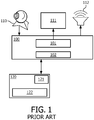
- FIG. 1 shows a wireless docking system.
- the prior art system includes a host device 100 for wireless communication with a dockee device 120, for example a mobile phone, laptop or tablet computer.
- the dockee device 120 is described in detail below.
- the host device is coupled to a number of peripherals 110, 111,112 for rendering audio or video (AV) data.
- AV data is used for any type of video data, audio data or a combination of video and audio data.
- the peripherals may include video output devices like a beamer or a display screen 111, video input devices like a camera or webcam 110, in graphical interactive devices like a touch screen, audio input/output devices like a loudspeaker system 112, a headphone and/or a microphone, user control devices like a mouse, a 3D gesture detection device or a room control unit; data processing devices like a data storage unit or a printer.
- the host device 100 has a host communication unit 102 for accommodating said wireless communication, for example a WiFi unit, well known as such.
- the host device further has a docking processor 101 arranged for docking at least one dockee device.
- the process of docking a wireless device to a wireless docking host (WDH) is a process of establishing a data link via the available radio channel such as WiFi, Wireless Serial Bus or Bluetooth, and is known as such as discussed above with reference to WO 2012/117306A1 .
- a description of Bluetooth can be found, for example, in Bluetooth Specification, Core Package version 2.1 + EDR, issued: 26 July 2007.
- the docking process involves providing access to one or more peripherals for the dockee device.
- the dockee device 120 has a dockee communication unit 121 for accommodating said wireless communication with the host.
- the dockee device further has a dockee processor 122 arranged for docking, as a dockee device, with the host device for getting access to the at least one peripheral.
- a dockee device connects wirelessly to a docking station (also known as wireless docking host or WDH), in order to hook up to peripherals (e.g. a screen, keyboard) provided by the docking station.
- the devices are expected to support WiFi, for example the version 'n' (as defined in IEEE 802.11n).
- WiFi 'n' has the disadvantage however that the supported data rate is not high enough to support some wireless docking use cases. For example, to smoothly play video games in a docked situation in the high definition screen of the docking station, a screen update rate of e.g.
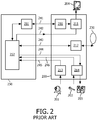
- FIG. 2 shows a docking system rendering AV data as provided by an application in a dockee.
- a prior art wireless docking host 200 is arranged for wireless communication with a dockee device 250, and for rendering audio or video (AV) data, similar to Figure 1 above.
- the host device has a host communication unit for accommodating said wireless communication, and a remote client unit 210 for providing at least one AV rendering function to a remote client as indicated by arrow 241. It is noted that the remote client unit and the remote server unit communicate to exchange control data, but video data is assumed to be streamed from the dockee to the host, so called upstream. Data streaming from the host to the dockee is called downstream.
- the host device has at least one transfer unit 211,212,213,214 arranged for enabling transmitting a downstream of first AV data to the dockee device. At least one of the transfer units is further arranged for receiving an upstream of second AV data to be rendered from the dockee device.
- a first transfer unit is an video output unit 211 coupled to a display screen 204, which is receiving a upstream of video data as indicated by arrow 242.
- a second transfer unit is a network input/output unit 212 interfacing to a network 230 like the internet, transferring a further upstream and/or downstream of AV data.
- a third transfer unit is a video input unit 213 coupled to a camera 201, which is transmitting an upstream of video data as indicated by arrow 245.
- a fourth transfer unit is an audio unit interfacing to a microphone 202 for audio input which is transmitting a downstream of audio data as indicated by arrow 246, and also coupled to a loudspeaker system 203 for audio output for receiving an upstream of audio data as indicated by arrow 244.
- the dockee device has a remote server unit 251 for cooperating with the remote client unit 210 for enabling said AV rendering function.
- the dockee device also has an application unit 252 for receiving of the first stream of AV data and for generating of the second stream of AV data based on the first stream of AV data.
- the application unit may be a processor running an application or socalled app that receives and/or transmits audio and/or video data.
- Streaming high resolution video over a network connection may require a very large bandwidth.
- the video content is sent from the dockee to the docking station to enable the docking station rendering it on a connected display peripheral.
- the video content may be sent from the docking station to the dockee.
- the webcam output is inserted by a dockee application in the video output as part of a user interface without further processing. If the display connected to the docking station is used to render the user interface, this means that the video content from the webcam has to be streamed up and down from docking station to dockee and back to be able to display it on a monitor, thereby using unnecessary bandwidth.
- the system described below can be used in wireless docking devices to decrease the bandwidth used by reducing the uplink bandwidth, and reducing the downlink bandwidth for this situation, and possibly other situations as well.
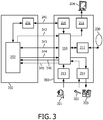
- FIG 3 shows a docking system rendering AV data via an AV router. Similar to Figure 2 a wireless docking host 300 is arranged for wireless communication with a dockee device 250. The host device has an AV router 310 arranged for processing the upstream and the downstream so as to replace the first AV data by a predetermined pattern before transmitting the downstream to the dockee device, and replace at least part of the second AV data by at least part of the first AV data after receiving the upstream from the dockee device and before rendering via said AV rendering function.
- the host has the same transfer units as the host device 200 in Figure 2 .
- the host device 300 further has an AV router 310 arranged for processing the downstream and the upstream so as to replace the first AV data by a predetermined pattern before transmitting the downstream to the dockee device, and replace at least part of the second AV data by at least part of the first AV data after receiving the upstream from the dockee device and before rendering via said AV rendering function.
- the video output unit 211 is receiving a processed stream of video data via the AV router as indicated by arrow 342.
- the network input/output unit 212 is transferring a further upstream and/or downstream 343 of AV data after processing via the AV router.
- the video input unit 213 is transmitting, via the AV router, a downstream of video data as indicated by arrow 345.
- the audio unit 214 is transmitting, via the AV router, a downstream of audio data as indicated by arrow 346, and is receiving, via the AV router, an upstream of audio data as indicated by arrow 344.
- the main element of the invention is a system consisting of a first wireless device running one or more applications, the wireless device being connected to a second wireless device that is connected to one or more AV input peripherals, and one or more AV output peripherals, whereby the system can automatically determine a routing path based upon the content coming from the AV input peripherals and the content delivered to the AV output peripherals, with minimal duplication of content being sent back and forth between the first and second wireless device.
- the system consists of a first wireless device, usually dockee, and a second wireless device, usually stationary like a PC.
- the second wireless device is connected to at least one audiovisual input peripheral and audiovisual output peripheral and has an AV router subsystem with a processing unit to which the input and output peripherals are coupled.
- the subsystem controls rendering the audiovisual content received directly from the AV input peripheral or an external source (e.g. home network/Internet) on the AV output peripheral connected to the second wireless device.
- the AV router may use rendering instructions (e.g. area of the screen) provided by the dockee device.
- the AV router subsystem may use the information received from the dockee about the intended use of the content of the AV input and output peripherals connected to the second wireless device to determine a routing path which has minimal duplication of content being sent back and forth between the first and second wireless device.
- the AV router is arranged for receiving rendering commands from the dockee device, e.g. from remote server unit.
- the rendering commands may be indicative of said replacing at least part of the second AV data by at least part of the first AV data.
- the rendering commands may include video rendering commands, such as
- the rendering instructions as provided by the dockee device include one or more of the following: compression codec to apply, a set of filters to apply, quality reduction parameters to apply, morphing to apply, synchronization/timing parameters to apply.
- the rendering commands may include graphical rendering commands, such as
- Such graphical rendering commands may relate to the display output, i.e. the display output showing the user interface of the application(s) running on the dockee.
- Such display output is being sent from the dockee device to the host device to be displayed on the A/V output device simultaneously with the re-routed A/V content from the A/V input device.
- rendering commands may include audio rendering commands, such as
- the rendering instructions may further include one or more of the following: a set of coordinates, mask, color key, dedicated commands (e.g. within the remote display protocol), reference point, visual marker, predefined location, icon, audio volume, etc.
- the rendering instructions may be given in relation to the display output structure, i.e. the display output showing the user interface of the application(s) running on the first wireless device.
- the display structure is sent from the dockee to the host to be displayed on the A/V output device simultaneously with the A/V content from an A/V input device as intercepted by the AV router.
- the rendering instructions include recognition instructions
- the host device processes the audiovisual content provided by the A/V input peripheral based on the recognition instructions provided by the first wireless device and may send the processing results to the dockee.
- the recognition instructions may include one or more of the following: image recognition, text recognition, speech recognition, motion recognition.
- the processing results provided by the host include one or more of the following: written text (recognized to be part of the content coming from the A/V input peripheral), URL/URI, identifier string, icon, action identification.
- the system consists of a wireless dockee device and a wireless host device.
- the host may be connected, via Wi-Fi or Ethernet, to one or more external sources (e.g. home network/Internet).
- the AV router controls rendering audiovisual content received from the external source, e.g. on an A/V output peripheral.
- the AV router is arranged for recognizing the predetermined pattern only in a patterned area of a full screen display output, and replacing the second AV data in the patterned area by a corresponding amount of the first AV data.
- the AV router may be arranged for recognizing in the patterned area, a scaling and/or cropping of the predetermined pattern, processing the first AV data corresponding to the scaling and/or cropping, and replacing the second AV data in the patterned area by a corresponding amount of the processed first AV data.
- an audiovisual pattern may also indicate the rendering area while being generated by dockee device in a known way, so that can be recognized by host device.
- the pattern may be generated by the host device and inserted as video data in the downstream.
- the dockee device also including that pattern in the display output, the pattern becomes part of the upstream and can be recognized by the host device.
- the host device generates a pattern that is sent to the dockee device as part of the A/V content; in effect the host device uses the pattern as returned in the upstream as part of a rendering instruction sent from the dockee device on how to display the original content from the A/V input device of the host.
- the use of such pattern is beneficial since the system achieves A/V throughput optimization without modification of the dockee device.
- Traditional remote desktop systems would require the application to send additional coordinate and scaling information to the rendering device.
- the dockee application replicates the received pattern as it would when receiving a video stream. Furthermore, selecting a suitable pattern makes it possible to highly compress the A/V stream back and forth between the first and second wireless device.
- the pattern comprises at least one of: a black background, one or more white squares or rectangles, possibly having different sizes for detecting scaling and/or cropping of the pattern.
- the pattern may be indicative of the position of the A/V content, and whether or not the video is scaled and/or cropped by comparing the pattern originally sent from the rendering device to the sending device, and the pattern received back from the dockee device in the second video data.
- the pattern generated by the second wireless device includes temporal information that the second wireless device uses to determine the delay with which the A/V content from the A/V input device needs to be rendered on the A/V output device in order to be synchronized with the display output that is being sent from the first wireless device to the second wireless device.
- the system is a wireless docking system, the second wireless device being a wireless docking station and the first wireless device being a portable device (called wireless dockee) being docked to the wireless docking station.
- the rendering commands as send by the dockee device include information about additional streams with which the AV data in upstream should be multiplexed, or an indication of an external source or destination for the first and/or second AV data.
- the instructions may include one or more of the following: URL, URI, USB device identifier, SAMBA/CIFS/NFS/WEBDAV destination, Skype address, email address, IMS/SIP address, streaming destination (RTP).
- the host device may transfer the second AV data to a destination via a network like the internet.
- the audiovisual content provided by the A/V input peripheral may be processed before sending it to the destination indicated by the first wireless device, using instructions provided by the first wireless device, e.g. a compression codec to apply.
- the audiovisual content that is sent to a destination using instructions provided by the dockee and the audiovisual content that is received from an external source, e.g. a server the Internet, by the host may be packaged in a secure protocol such as Skype.
- the host may implement the secure protocol.
- the dockee will provide the necessary information such as a destination URL to the host for setting up the protocol connection.
- the host may route the audiovisual content based on the network connection information available in the dockee, e.g. TCP/IP port and protocol type.
- the host device implements a secure protocol server consisting of two secure protocol transceivers, and where the dockee is responsible for setting up a connection to the desired destination, e.g. a server on the Internet.
- the dockee is responsible for setting up a connection to the desired destination, e.g. a server on the Internet.
- the dockee device In a wireless docking environment typically all network traffic originating from the dockee device will pass through the host device, so the dockee device is able to intercept the setup of the connection and route the connection to the first secure protocol transceiver to setup a secure connection to the first wireless device.
- the connection information received by the first secure protocol receiver is used by the host to set up a new connection with the second secure protocol transceiver to the original destination which was received from the dockee.
- the first secure protocol transceiver may be connected to the second secure protocol transceiver by means of an internal bus on which audiovisual content is not encrypted.
- the second wireless device Upon receiving audiovisual content via one of the secure protocol connections, the second wireless device replaces the audiovisual content with content from the connected audiovisual input peripherals before retransmission by means of the complementing secure protocol transceiver.
- the host device implements a generic secure protocol that can be controlled by the dockee, such as HTTPS.
- the dockee is responsible for setting up the connection the desired destination.
- the first wireless device After establishing a connection to the desired destination the first wireless device sends the secure connection information (e.g. encryption key) to the second wireless device, together with instructions (e.g. SDP descriptor) how to setup the audiovisual stream (e.g. RTP) that can be made secure using the secure connection information received from the dockee.
- the secure connection information e.g. encryption key
- the second wireless device sends the secure connection information (e.g. encryption key) to the second wireless device, together with instructions (e.g. SDP descriptor) how to setup the audiovisual stream (e.g. RTP) that can be made secure using the secure connection information received from the dockee.
- instructions e.g. SDP descriptor
- the dockee device has a subsystem which communicates information with the wireless host device, e.g. with the AV router, about the AV input and output peripherals and external sources connected to the wireless host device to determine a dockee routing path which has minimal duplication of content being sent back and forth between the wireless host and dockee devices.
- a dockee subsystem is called a dockee router.
- FIG 4 shows an example of a wireless docking system having a dockee router unit.
- the host has the same transfer units 211,212,213,214 and peripherals 201,202,203,204 as the host device 200 in Figure 2
- the dockee has the same remote server unit 251 for cooperating with the remote client unit 210 and application unit 252 as the dockee device 250 in Figure 2 .
- the wireless docking host 400 is arranged for wireless communication with the dockee device 450.
- the host device has an AV router 410 arranged for processing the upstream 442 and the downstream 441 so as to replace the first AV data by a predetermined pattern before transmitting the downstream as modified to the dockee device.
- the dockee device has a dockee router 460 for routing and processing the upstream and the downstream in the dockee device.
- the AV router 410 is further arranged for processing the downstream and the upstream so as to replace at least part of the second AV data by at least part of the first AV data after receiving the upstream from the dockee device and before rendering via said AV rendering function.
- an application in the dockee application unit 252 may want to use a webcam 201, microphone 202, display 204 and speaker(s) 203 and internet connection 230 of docking host 400 to set up a video conference.
- the dockee 450 is docked to the docking host 400.
- the dockee and docking host exchange xml packaged service capability/request data that may include routing control commands, upon which the AV router 410 and/or the dockee router 460 can determine the AV throughput optimization capabilities supported by the docking host.
- the dockee in this example will request the docking host to provide a display 204 for video playback, a webcam 201 for video recording, a microphone 202 for audio recording and speaker(s) 203 for audio playback.
- the dockee router may communicate to the docking AV router to establish a routing of audio and video from the AV input devices directly to the AV output devices, and instead to insert a predetermined pattern in the downstream. The routing may be based upon reception, by the dockee router, of system events which indicate that the application wants to use the available audio and video resources.
- the docking host Upon receiving, by the AV router, the request from dockee router the docking host will expose the requested peripherals to dockee and configure the A/V router to route video from webcam and/or video from internet connection directly to the display, and route audio from microphone directly to internet connection and audio originating from internet connection directly to speaker(s).
- the dockee router may provide a virtual webcam driver 461 to the dockee application so as to provide a first video pattern 444 and/or a virtual external AV driver to generate a stream with a second video pattern 445 which both may be used in the application.
- the video patterns may be provided and/or controlled via the predetermined pattern as indicated in the downstream 441 in the first AV data that replaces the original video data as inserted by the AV router 410.
- an internet connection may be established with a remote site, also running a video conferencing application.
- An AV stream originating from the remote internet source is routed by the AV router, e.g. captured in audio video multiplexer and multiplexed with Remote Desktop Output 443 originating from the dockee.
- the user interface of the application comprising video data 447 and/or audio data 446, and still containing said predetermined video or audio patterns from the above virtual drivers, is, together with further desktop content transferred via the upstream to docking host, e.g. an upstream 443 via the remote desktop server unit 251 and remote desktop client unit 210, or as a separate AV upstream 442.
- Any video data from video input unit 213 is forwarded to the AV router.
- the AV router determines the location of the first video pattern and/or second video pattern in the second AV data, e.g. using a video pattern detector 411.
- the location of one or more video patterns as detected is processed to insert corresponding video content originating from webcam and/or video content originating from the external A/V source into video content for display 204 at the locations received from video pattern detector 411, e.g. via a audio video multiplexer.
- the resulting multiplexed video content is then forwarded to the display 204.
- Audio originating from the external AV source via the network 230 is forwarded via audio unit 214 to the speaker(s) 203 for playback.
- audio input from audio input unit 213 and the microphone is rendered into the external A/V stream.
- the video content from the webcam, external video content, audio from the microphone and external audio are no longer transferred to the dockee, but instead are directly processed by docking host via the AV router, thus saving bandwidth on the wireless connection. Instead, on the wireless connection, there is transferred the predetermined pattern.
- the system achieves an improvement of the bandwidth by proper selection of the predetermined pattern for video and/or audio. Said pattern, where present in the upstream, replaced by the original video and/or audio.
- further routing and/or rendering commands may be exchanged with a dockee comprising a dockee router, so as to further enhance the replacement process, and/or reduce the amount of data of the predetermined pattern in the downstream.
- the predetermined pattern may include various elements. Basically, the pattern is chosen to require little bandwidth when transmitted, usually compressed by a video compression function.
- a suitable example pattern may have a single background color, e.g. black or zero intensity pixels. This background may constitute the predetermined pattern.
- the predetermined video pattern may have one or more objects, for example geometrical objects like disc, square or rectangle. A few objects may be shown in a predetermined arrangement, for example having different sizes.
- Such objects or arrangement enable the AV router to detect where and whether a part of the original video has been inserted, and whether it has been scaled or cropped, as the pattern will be scaled/cropped by the application before insertion in the second AV data so as to enable the AV router in the host to detect both the area covered by the pattern, and scaling and/or cropping.
- the pattern may have elements having a single foreground color, or an arrangement of elements having different predetermined colors. It is noted that the word predetermined in this context only means that the AV router is aware of the pattern as inserted in the first AV data, so as to be enabled to detect the returned pattern in the second AV data.
- the predetermined pattern may include an audio pattern of silence, which is easily replaced as it may be ignored and superseded by inserting the original audio.
- the pattern may include an audio pattern of a sequence of predetermined sounds. This may for example be a sine wave or a pattern of clicks, which may be removed by a matched filter in the AV router before adding the original sound.
- the strength of the sound elements may be detected to enable sound level control while mixing the original sound from the microphone 202 and sound generated by the application in the dockee device.
- Some predetermined sound element may also be inserted based on actual sound input to enable sound dependent functions of the application, like speech detection and sound level control.
- the predetermined pattern may include temporal information, such as a gradual or stepwise change of the pattern, size, color or number of elements, etc.
- the AV router may be arranged for using the temporal information to determine a delay between sending the first data in the downstream and receiving the second AV data in the upstream, and delaying AV content from the AV input device according to the determined delay before said replacing so as to synchronize the AV data to be rendered.
- a method of wireless docking between a host device and a dockee device is based on wireless communication between a host device and one or more dockee devices.
- the host device and mobiel device are as described above.
- the method includes processing the downstream and the upstream so as to replace the first AV data by a predetermined pattern before transmitting the downstream to the dockee device, and replace at least part of the second AV data by at least part of the first AV data after receiving the upstream from the dockee device and before rendering via said AV rendering function.
- the invention has been mainly explained by embodiments using wireless docking, the invention is also suitable for any wireless system where wireless devices need to connect to, or share, one or more audio and/or video peripherals. It is to be noted that the invention may be implemented in hardware and/or software, using programmable components.
Landscapes
- Engineering & Computer Science (AREA)
- Signal Processing (AREA)
- Multimedia (AREA)
- Computer Networks & Wireless Communication (AREA)
- General Engineering & Computer Science (AREA)
- Computer Graphics (AREA)
- Two-Way Televisions, Distribution Of Moving Picture Or The Like (AREA)
- Mobile Radio Communication Systems (AREA)
- Television Signal Processing For Recording (AREA)
- Selective Calling Equipment (AREA)
Priority Applications (1)
| Application Number | Priority Date | Filing Date | Title |
|---|---|---|---|
| EP14708861.1A EP2965526B1 (en) | 2013-03-08 | 2014-03-07 | Wireless docking system for audio-video |
Applications Claiming Priority (3)
| Application Number | Priority Date | Filing Date | Title |
|---|---|---|---|
| EP13158283 | 2013-03-08 | ||
| EP14708861.1A EP2965526B1 (en) | 2013-03-08 | 2014-03-07 | Wireless docking system for audio-video |
| PCT/EP2014/054410 WO2014135670A1 (en) | 2013-03-08 | 2014-03-07 | Wireless docking system for audio-video |
Publications (2)
| Publication Number | Publication Date |
|---|---|
| EP2965526A1 EP2965526A1 (en) | 2016-01-13 |
| EP2965526B1 true EP2965526B1 (en) | 2018-01-10 |
Family
ID=47877844
Family Applications (1)
| Application Number | Title | Priority Date | Filing Date |
|---|---|---|---|
| EP14708861.1A Active EP2965526B1 (en) | 2013-03-08 | 2014-03-07 | Wireless docking system for audio-video |
Country Status (8)
| Country | Link |
|---|---|
| US (1) | US10863233B2 (enExample) |
| EP (1) | EP2965526B1 (enExample) |
| JP (1) | JP6396342B2 (enExample) |
| CN (1) | CN105122822B (enExample) |
| BR (1) | BR112015021283B1 (enExample) |
| RU (1) | RU2648982C2 (enExample) |
| TW (1) | TWI634806B (enExample) |
| WO (1) | WO2014135670A1 (enExample) |
Families Citing this family (2)
| Publication number | Priority date | Publication date | Assignee | Title |
|---|---|---|---|---|
| US20180367326A1 (en) * | 2017-06-20 | 2018-12-20 | Microsoft Technology Licensing, Llc | Automatic connection switching for meeting room management devices |
| US11259069B1 (en) * | 2020-02-05 | 2022-02-22 | Visualon, Inc. | Synchronized video player |
Citations (3)
| Publication number | Priority date | Publication date | Assignee | Title |
|---|---|---|---|---|
| US20030027517A1 (en) | 2001-08-06 | 2003-02-06 | Callway Edward G. | Wireless display apparatus and method |
| US20070262973A1 (en) | 2006-05-12 | 2007-11-15 | Xgi Technology Inc. | Architecture for remote displaying system |
| US20100321466A1 (en) | 1998-12-21 | 2010-12-23 | Roman Kendyl A | Handheld Wireless Digital Audio and Video Receiver |
Family Cites Families (34)
| Publication number | Priority date | Publication date | Assignee | Title |
|---|---|---|---|---|
| WO1998043158A1 (en) * | 1997-03-24 | 1998-10-01 | Evolve Products, Inc. | Two-way remote control with advertising display |
| US8151306B2 (en) * | 2000-01-14 | 2012-04-03 | Terayon Communication Systems, Inc. | Remote control for wireless control of system including home gateway and headend, either or both of which have digital video recording functionality |
| US20010039663A1 (en) * | 2000-05-03 | 2001-11-08 | Hughes Electronics Corporation | Portable device for use with digital over-the-air communication system for use with terrestrial broadcasting system |
| GB0123349D0 (en) * | 2001-09-28 | 2001-11-21 | Koninkl Philips Electronics Nv | Audio and/or visual system method and components |
| US6937168B2 (en) * | 2002-06-14 | 2005-08-30 | Intel Corporation | Transcoding media content from a personal video recorder for a portable device |
| US20070086724A1 (en) * | 2002-07-17 | 2007-04-19 | Jeff Grady | Interface systems for portable digital media storage and playback devices |
| JP2004135062A (ja) | 2002-10-10 | 2004-04-30 | Matsushita Electric Ind Co Ltd | 映像コミュニケーションシステム及び映像コミュニケーション方法 |
| EP2375675B1 (en) * | 2004-03-10 | 2013-05-01 | Qualcomm Incorporated | High data rate interface apparatus and method |
| WO2006028203A1 (ja) * | 2004-09-10 | 2006-03-16 | Sharp Kabushiki Kaisha | データ処理装置およびコンテンツデータ送信装置 |
| JP2006121542A (ja) * | 2004-10-25 | 2006-05-11 | Sharp Corp | 無線伝送システム |
| JP4434973B2 (ja) * | 2005-01-24 | 2010-03-17 | 株式会社東芝 | 映像表示装置、映像合成配信装置、プログラム、システム及び方法 |
| US8019883B1 (en) * | 2005-05-05 | 2011-09-13 | Digital Display Innovations, Llc | WiFi peripheral mode display system |
| US20070263865A1 (en) * | 2005-07-01 | 2007-11-15 | Searete Llc, A Limited Liability Corporation Of The State Of Delaware | Authorization rights for substitute media content |
| US7720439B2 (en) * | 2005-07-28 | 2010-05-18 | D-Link Systems, Inc. | Wireless media device cradle |
| EP1961209A4 (en) * | 2005-12-16 | 2012-09-05 | Infra Com Ltd | INFRARED MULTIMEDIA WIRELESS SYSTEM |
| US20070189711A1 (en) * | 2006-01-30 | 2007-08-16 | Ash Noah B | Device and method for data exchange between content recording device and portable communication device |
| JP4766023B2 (ja) | 2007-09-28 | 2011-09-07 | ソニー株式会社 | Dlna対応機器、dlna接続設定方法およびプログラム |
| US20090187957A1 (en) * | 2008-01-17 | 2009-07-23 | Gokhan Avkarogullari | Delivery of Media Assets Having a Multi-Part Media File Format to Media Presentation Devices |
| JP5310007B2 (ja) | 2008-10-16 | 2013-10-09 | ソニー株式会社 | 情報処理システム、表示装置、出力装置および情報処理装置 |
| JP2010212947A (ja) * | 2009-03-10 | 2010-09-24 | Sony Corp | 情報処理装置および方法、情報処理システム、並びにプログラム |
| US9369759B2 (en) * | 2009-04-15 | 2016-06-14 | Samsung Electronics Co., Ltd. | Method and system for progressive rate adaptation for uncompressed video communication in wireless systems |
| NO331338B1 (no) * | 2009-06-24 | 2011-11-28 | Cisco Systems Int Sarl | Fremgangsmate og anordning for endring av en videokonferanse-layout |
| US8493992B2 (en) * | 2010-02-04 | 2013-07-23 | Texas Instruments Incorporated | Interrelated WiFi and USB protocols and other application framework processes, circuits and systems |
| KR20120015931A (ko) * | 2010-08-13 | 2012-02-22 | 삼성전자주식회사 | 휴대용 전자 장치 및 그것의 디스플레이 미러링 방법 |
| JP5073032B2 (ja) * | 2010-09-27 | 2012-11-14 | 株式会社東芝 | 情報出力装置、情報処理システムおよび情報処理方法 |
| US20120123868A1 (en) | 2010-11-17 | 2012-05-17 | David Brudnicki | System and Method for Physical-World Based Dynamic Contactless Data Emulation in a Portable Communication Device |
| GB2486425A (en) * | 2010-12-13 | 2012-06-20 | Sivapathalingham Sivavakeesar | Rendering multimedia content from a mobile device onto an external display device |
| US9503771B2 (en) * | 2011-02-04 | 2016-11-22 | Qualcomm Incorporated | Low latency wireless display for graphics |
| EP2686996B1 (en) * | 2011-03-16 | 2017-09-06 | Koninklijke Philips N.V. | Pairing between wireless devices |
| JP5755943B2 (ja) * | 2011-06-03 | 2015-07-29 | 任天堂株式会社 | 情報処理プログラム、情報処理装置、情報処理システム及び情報処理方法 |
| JP2013005155A (ja) * | 2011-06-15 | 2013-01-07 | Panasonic Corp | データ処理装置およびデータ処理方法 |
| JP2013168750A (ja) * | 2012-02-14 | 2013-08-29 | Funai Electric Co Ltd | テレビジョン受像機 |
| US8789095B2 (en) * | 2012-05-15 | 2014-07-22 | At&T Intellectual Property I, Lp | Apparatus and method for providing media content |
| US20140092304A1 (en) * | 2012-10-02 | 2014-04-03 | Shih-Yao Chen | Tv and wireless electronic device combination system |
-
2014
- 2014-03-07 TW TW103108027A patent/TWI634806B/zh active
- 2014-03-07 RU RU2015142658A patent/RU2648982C2/ru active
- 2014-03-07 BR BR112015021283-2A patent/BR112015021283B1/pt not_active IP Right Cessation
- 2014-03-07 WO PCT/EP2014/054410 patent/WO2014135670A1/en not_active Ceased
- 2014-03-07 CN CN201480013084.0A patent/CN105122822B/zh active Active
- 2014-03-07 US US14/770,838 patent/US10863233B2/en active Active
- 2014-03-07 JP JP2015560704A patent/JP6396342B2/ja active Active
- 2014-03-07 EP EP14708861.1A patent/EP2965526B1/en active Active
Patent Citations (3)
| Publication number | Priority date | Publication date | Assignee | Title |
|---|---|---|---|---|
| US20100321466A1 (en) | 1998-12-21 | 2010-12-23 | Roman Kendyl A | Handheld Wireless Digital Audio and Video Receiver |
| US20030027517A1 (en) | 2001-08-06 | 2003-02-06 | Callway Edward G. | Wireless display apparatus and method |
| US20070262973A1 (en) | 2006-05-12 | 2007-11-15 | Xgi Technology Inc. | Architecture for remote displaying system |
Also Published As
| Publication number | Publication date |
|---|---|
| BR112015021283B1 (pt) | 2023-05-09 |
| US20160007080A1 (en) | 2016-01-07 |
| US10863233B2 (en) | 2020-12-08 |
| CN105122822B (zh) | 2018-10-26 |
| JP6396342B2 (ja) | 2018-09-26 |
| RU2015142658A (ru) | 2017-04-11 |
| JP2016517644A (ja) | 2016-06-16 |
| TWI634806B (zh) | 2018-09-01 |
| BR112015021283A2 (pt) | 2017-07-18 |
| WO2014135670A1 (en) | 2014-09-12 |
| RU2648982C2 (ru) | 2018-03-29 |
| EP2965526A1 (en) | 2016-01-13 |
| TW201440565A (zh) | 2014-10-16 |
| CN105122822A (zh) | 2015-12-02 |
Similar Documents
| Publication | Publication Date | Title |
|---|---|---|
| US11936921B2 (en) | Method for managing network live streaming data and related apparatus, and device and storage medium | |
| US11641450B2 (en) | Apparatus for video communication | |
| CN102595239B (zh) | 一种终端系统的多屏互动方法、装置及智能电视机 | |
| CN105164631B (zh) | 用于创建多装置媒体呈现的方法和设备 | |
| WO2022228572A1 (zh) | 显示设备及用户界面的控制方法 | |
| WO2022121775A1 (zh) | 一种投屏方法及设备 | |
| US20160334837A1 (en) | Peripherals in a wireless docking system | |
| TW201642942A (zh) | 針對輸出裝置及網路品質的雲遊戲資料流動態調整 | |
| WO2023011058A1 (zh) | 显示设备、通信终端及投屏画面动态显示方法 | |
| JP6535431B2 (ja) | 会議システム、共有表示装置に対する表示方法および切換装置 | |
| TW201539312A (zh) | 顯示裝置及其圖像顯示方法 | |
| WO2020125604A1 (zh) | 数据传输方法、装置、设备及存储介质 | |
| WO2016065514A1 (zh) | 图像显示方法、用户终端和视频接收设备 | |
| US9438643B2 (en) | Multi-device conference participation | |
| TW202325007A (zh) | 虛擬視訊會議系統及會議方法 | |
| US10863233B2 (en) | Wireliss docking system for audio-video | |
| CN117812524A (zh) | 显示设备、播放设备和数据传输方法 | |
| US20170127120A1 (en) | User terminal and control method therefor | |
| CN106210867A (zh) | 一种数据分享的方法和装置 | |
| CN119729092A (zh) | 显示设备及多屏幕互动的资源分配方法 | |
| CN118259820A (zh) | 一种启用白板绘制的方法及相关装置 | |
| CN105913626A (zh) | 一种实现从源端显示屏到目的端显示屏的镜像功能的设备 | |
| CN121241581A (zh) | 显示设备及设备控制方法 | |
| CN122601898A (zh) | 一种显示设备及一种多路投屏声音播控方法 | |
| CN106921887A (zh) | 数据信息共享方法、客户端、服务器及系统 |
Legal Events
| Date | Code | Title | Description |
|---|---|---|---|
| PUAI | Public reference made under article 153(3) epc to a published international application that has entered the european phase |
Free format text: ORIGINAL CODE: 0009012 |
|
| 17P | Request for examination filed |
Effective date: 20151008 |
|
| AK | Designated contracting states |
Kind code of ref document: A1 Designated state(s): AL AT BE BG CH CY CZ DE DK EE ES FI FR GB GR HR HU IE IS IT LI LT LU LV MC MK MT NL NO PL PT RO RS SE SI SK SM TR |
|
| AX | Request for extension of the european patent |
Extension state: BA ME |
|
| DAX | Request for extension of the european patent (deleted) | ||
| STAA | Information on the status of an ep patent application or granted ep patent |
Free format text: STATUS: EXAMINATION IS IN PROGRESS |
|
| 17Q | First examination report despatched |
Effective date: 20170110 |
|
| GRAP | Despatch of communication of intention to grant a patent |
Free format text: ORIGINAL CODE: EPIDOSNIGR1 |
|
| STAA | Information on the status of an ep patent application or granted ep patent |
Free format text: STATUS: GRANT OF PATENT IS INTENDED |
|
| INTG | Intention to grant announced |
Effective date: 20170728 |
|
| GRAS | Grant fee paid |
Free format text: ORIGINAL CODE: EPIDOSNIGR3 |
|
| GRAA | (expected) grant |
Free format text: ORIGINAL CODE: 0009210 |
|
| STAA | Information on the status of an ep patent application or granted ep patent |
Free format text: STATUS: THE PATENT HAS BEEN GRANTED |
|
| AK | Designated contracting states |
Kind code of ref document: B1 Designated state(s): AL AT BE BG CH CY CZ DE DK EE ES FI FR GB GR HR HU IE IS IT LI LT LU LV MC MK MT NL NO PL PT RO RS SE SI SK SM TR |
|
| REG | Reference to a national code |
Ref country code: CH Ref legal event code: EP Ref country code: AT Ref legal event code: REF Ref document number: 963661 Country of ref document: AT Kind code of ref document: T Effective date: 20180115 |
|
| REG | Reference to a national code |
Ref country code: IE Ref legal event code: FG4D |
|
| REG | Reference to a national code |
Ref country code: DE Ref legal event code: R096 Ref document number: 602014019814 Country of ref document: DE |
|
| REG | Reference to a national code |
Ref country code: FR Ref legal event code: PLFP Year of fee payment: 5 |
|
| REG | Reference to a national code |
Ref country code: NL Ref legal event code: MP Effective date: 20180110 |
|
| REG | Reference to a national code |
Ref country code: AT Ref legal event code: MK05 Ref document number: 963661 Country of ref document: AT Kind code of ref document: T Effective date: 20180110 |
|
| PG25 | Lapsed in a contracting state [announced via postgrant information from national office to epo] |
Ref country code: NL Free format text: LAPSE BECAUSE OF FAILURE TO SUBMIT A TRANSLATION OF THE DESCRIPTION OR TO PAY THE FEE WITHIN THE PRESCRIBED TIME-LIMIT Effective date: 20180110 |
|
| PG25 | Lapsed in a contracting state [announced via postgrant information from national office to epo] |
Ref country code: HR Free format text: LAPSE BECAUSE OF FAILURE TO SUBMIT A TRANSLATION OF THE DESCRIPTION OR TO PAY THE FEE WITHIN THE PRESCRIBED TIME-LIMIT Effective date: 20180110 Ref country code: LT Free format text: LAPSE BECAUSE OF FAILURE TO SUBMIT A TRANSLATION OF THE DESCRIPTION OR TO PAY THE FEE WITHIN THE PRESCRIBED TIME-LIMIT Effective date: 20180110 Ref country code: FI Free format text: LAPSE BECAUSE OF FAILURE TO SUBMIT A TRANSLATION OF THE DESCRIPTION OR TO PAY THE FEE WITHIN THE PRESCRIBED TIME-LIMIT Effective date: 20180110 Ref country code: NO Free format text: LAPSE BECAUSE OF FAILURE TO SUBMIT A TRANSLATION OF THE DESCRIPTION OR TO PAY THE FEE WITHIN THE PRESCRIBED TIME-LIMIT Effective date: 20180410 Ref country code: ES Free format text: LAPSE BECAUSE OF FAILURE TO SUBMIT A TRANSLATION OF THE DESCRIPTION OR TO PAY THE FEE WITHIN THE PRESCRIBED TIME-LIMIT Effective date: 20180110 Ref country code: CY Free format text: LAPSE BECAUSE OF FAILURE TO SUBMIT A TRANSLATION OF THE DESCRIPTION OR TO PAY THE FEE WITHIN THE PRESCRIBED TIME-LIMIT Effective date: 20180110 |
|
| PG25 | Lapsed in a contracting state [announced via postgrant information from national office to epo] |
Ref country code: AT Free format text: LAPSE BECAUSE OF FAILURE TO SUBMIT A TRANSLATION OF THE DESCRIPTION OR TO PAY THE FEE WITHIN THE PRESCRIBED TIME-LIMIT Effective date: 20180110 Ref country code: RS Free format text: LAPSE BECAUSE OF FAILURE TO SUBMIT A TRANSLATION OF THE DESCRIPTION OR TO PAY THE FEE WITHIN THE PRESCRIBED TIME-LIMIT Effective date: 20180110 Ref country code: PL Free format text: LAPSE BECAUSE OF FAILURE TO SUBMIT A TRANSLATION OF THE DESCRIPTION OR TO PAY THE FEE WITHIN THE PRESCRIBED TIME-LIMIT Effective date: 20180110 Ref country code: GR Free format text: LAPSE BECAUSE OF FAILURE TO SUBMIT A TRANSLATION OF THE DESCRIPTION OR TO PAY THE FEE WITHIN THE PRESCRIBED TIME-LIMIT Effective date: 20180411 Ref country code: IS Free format text: LAPSE BECAUSE OF FAILURE TO SUBMIT A TRANSLATION OF THE DESCRIPTION OR TO PAY THE FEE WITHIN THE PRESCRIBED TIME-LIMIT Effective date: 20180510 Ref country code: SE Free format text: LAPSE BECAUSE OF FAILURE TO SUBMIT A TRANSLATION OF THE DESCRIPTION OR TO PAY THE FEE WITHIN THE PRESCRIBED TIME-LIMIT Effective date: 20180110 Ref country code: LV Free format text: LAPSE BECAUSE OF FAILURE TO SUBMIT A TRANSLATION OF THE DESCRIPTION OR TO PAY THE FEE WITHIN THE PRESCRIBED TIME-LIMIT Effective date: 20180110 Ref country code: BG Free format text: LAPSE BECAUSE OF FAILURE TO SUBMIT A TRANSLATION OF THE DESCRIPTION OR TO PAY THE FEE WITHIN THE PRESCRIBED TIME-LIMIT Effective date: 20180410 |
|
| REG | Reference to a national code |
Ref country code: DE Ref legal event code: R026 Ref document number: 602014019814 Country of ref document: DE |
|
| PLBI | Opposition filed |
Free format text: ORIGINAL CODE: 0009260 |
|
| PLAX | Notice of opposition and request to file observation + time limit sent |
Free format text: ORIGINAL CODE: EPIDOSNOBS2 |
|
| PG25 | Lapsed in a contracting state [announced via postgrant information from national office to epo] |
Ref country code: AL Free format text: LAPSE BECAUSE OF FAILURE TO SUBMIT A TRANSLATION OF THE DESCRIPTION OR TO PAY THE FEE WITHIN THE PRESCRIBED TIME-LIMIT Effective date: 20180110 Ref country code: IT Free format text: LAPSE BECAUSE OF FAILURE TO SUBMIT A TRANSLATION OF THE DESCRIPTION OR TO PAY THE FEE WITHIN THE PRESCRIBED TIME-LIMIT Effective date: 20180110 Ref country code: EE Free format text: LAPSE BECAUSE OF FAILURE TO SUBMIT A TRANSLATION OF THE DESCRIPTION OR TO PAY THE FEE WITHIN THE PRESCRIBED TIME-LIMIT Effective date: 20180110 Ref country code: RO Free format text: LAPSE BECAUSE OF FAILURE TO SUBMIT A TRANSLATION OF THE DESCRIPTION OR TO PAY THE FEE WITHIN THE PRESCRIBED TIME-LIMIT Effective date: 20180110 |
|
| REG | Reference to a national code |
Ref country code: CH Ref legal event code: PL |
|
| 26 | Opposition filed |
Opponent name: MOLNIA, DAVID Effective date: 20181010 |
|
| PG25 | Lapsed in a contracting state [announced via postgrant information from national office to epo] |
Ref country code: SK Free format text: LAPSE BECAUSE OF FAILURE TO SUBMIT A TRANSLATION OF THE DESCRIPTION OR TO PAY THE FEE WITHIN THE PRESCRIBED TIME-LIMIT Effective date: 20180110 Ref country code: CZ Free format text: LAPSE BECAUSE OF FAILURE TO SUBMIT A TRANSLATION OF THE DESCRIPTION OR TO PAY THE FEE WITHIN THE PRESCRIBED TIME-LIMIT Effective date: 20180110 Ref country code: MC Free format text: LAPSE BECAUSE OF FAILURE TO SUBMIT A TRANSLATION OF THE DESCRIPTION OR TO PAY THE FEE WITHIN THE PRESCRIBED TIME-LIMIT Effective date: 20180110 Ref country code: DK Free format text: LAPSE BECAUSE OF FAILURE TO SUBMIT A TRANSLATION OF THE DESCRIPTION OR TO PAY THE FEE WITHIN THE PRESCRIBED TIME-LIMIT Effective date: 20180110 Ref country code: SM Free format text: LAPSE BECAUSE OF FAILURE TO SUBMIT A TRANSLATION OF THE DESCRIPTION OR TO PAY THE FEE WITHIN THE PRESCRIBED TIME-LIMIT Effective date: 20180110 |
|
| REG | Reference to a national code |
Ref country code: BE Ref legal event code: MM Effective date: 20180331 |
|
| REG | Reference to a national code |
Ref country code: IE Ref legal event code: MM4A |
|
| PG25 | Lapsed in a contracting state [announced via postgrant information from national office to epo] |
Ref country code: LU Free format text: LAPSE BECAUSE OF NON-PAYMENT OF DUE FEES Effective date: 20180307 |
|
| PG25 | Lapsed in a contracting state [announced via postgrant information from national office to epo] |
Ref country code: IE Free format text: LAPSE BECAUSE OF NON-PAYMENT OF DUE FEES Effective date: 20180307 |
|
| PLBB | Reply of patent proprietor to notice(s) of opposition received |
Free format text: ORIGINAL CODE: EPIDOSNOBS3 |
|
| PG25 | Lapsed in a contracting state [announced via postgrant information from national office to epo] |
Ref country code: SI Free format text: LAPSE BECAUSE OF FAILURE TO SUBMIT A TRANSLATION OF THE DESCRIPTION OR TO PAY THE FEE WITHIN THE PRESCRIBED TIME-LIMIT Effective date: 20180110 Ref country code: LI Free format text: LAPSE BECAUSE OF NON-PAYMENT OF DUE FEES Effective date: 20180331 Ref country code: CH Free format text: LAPSE BECAUSE OF NON-PAYMENT OF DUE FEES Effective date: 20180331 Ref country code: BE Free format text: LAPSE BECAUSE OF NON-PAYMENT OF DUE FEES Effective date: 20180331 |
|
| PLCK | Communication despatched that opposition was rejected |
Free format text: ORIGINAL CODE: EPIDOSNREJ1 |
|
| PG25 | Lapsed in a contracting state [announced via postgrant information from national office to epo] |
Ref country code: MT Free format text: LAPSE BECAUSE OF NON-PAYMENT OF DUE FEES Effective date: 20180307 |
|
| REG | Reference to a national code |
Ref country code: DE Ref legal event code: R100 Ref document number: 602014019814 Country of ref document: DE |
|
| RAP2 | Party data changed (patent owner data changed or rights of a patent transferred) |
Owner name: KONINKLIJKE PHILIPS N.V. |
|
| PG25 | Lapsed in a contracting state [announced via postgrant information from national office to epo] |
Ref country code: PT Free format text: LAPSE BECAUSE OF FAILURE TO SUBMIT A TRANSLATION OF THE DESCRIPTION OR TO PAY THE FEE WITHIN THE PRESCRIBED TIME-LIMIT Effective date: 20180110 |
|
| PG25 | Lapsed in a contracting state [announced via postgrant information from national office to epo] |
Ref country code: MK Free format text: LAPSE BECAUSE OF NON-PAYMENT OF DUE FEES Effective date: 20180110 Ref country code: HU Free format text: LAPSE BECAUSE OF FAILURE TO SUBMIT A TRANSLATION OF THE DESCRIPTION OR TO PAY THE FEE WITHIN THE PRESCRIBED TIME-LIMIT; INVALID AB INITIO Effective date: 20140307 |
|
| PLBN | Opposition rejected |
Free format text: ORIGINAL CODE: 0009273 |
|
| STAA | Information on the status of an ep patent application or granted ep patent |
Free format text: STATUS: OPPOSITION REJECTED |
|
| 27O | Opposition rejected |
Effective date: 20200210 |
|
| PGFP | Annual fee paid to national office [announced via postgrant information from national office to epo] |
Ref country code: GB Payment date: 20260323 Year of fee payment: 13 |
|
| PGFP | Annual fee paid to national office [announced via postgrant information from national office to epo] |
Ref country code: DE Payment date: 20260320 Year of fee payment: 13 |
|
| PGFP | Annual fee paid to national office [announced via postgrant information from national office to epo] |
Ref country code: FR Payment date: 20260323 Year of fee payment: 13 |
|
| PGFP | Annual fee paid to national office [announced via postgrant information from national office to epo] |
Ref country code: TR Payment date: 20260225 Year of fee payment: 13 |