EP2962916B1 - System und verfahren zur erzeugung von fahrzeugbewegungsplänen in einem grossen eisenbahnnetz - Google Patents
System und verfahren zur erzeugung von fahrzeugbewegungsplänen in einem grossen eisenbahnnetz Download PDFInfo
- Publication number
- EP2962916B1 EP2962916B1 EP15168088.1A EP15168088A EP2962916B1 EP 2962916 B1 EP2962916 B1 EP 2962916B1 EP 15168088 A EP15168088 A EP 15168088A EP 2962916 B1 EP2962916 B1 EP 2962916B1
- Authority
- EP
- European Patent Office
- Prior art keywords
- network
- networks
- sub
- line sub
- feeder line
- Prior art date
- Legal status (The legal status is an assumption and is not a legal conclusion. Google has not performed a legal analysis and makes no representation as to the accuracy of the status listed.)
- Active
Links
Images






Classifications
-
- B—PERFORMING OPERATIONS; TRANSPORTING
- B61—RAILWAYS
- B61L—GUIDING RAILWAY TRAFFIC; ENSURING THE SAFETY OF RAILWAY TRAFFIC
- B61L27/00—Central railway traffic control systems; Trackside control; Communication systems specially adapted therefor
- B61L27/10—Operations, e.g. scheduling or time tables
-
- B—PERFORMING OPERATIONS; TRANSPORTING
- B61—RAILWAYS
- B61L—GUIDING RAILWAY TRAFFIC; ENSURING THE SAFETY OF RAILWAY TRAFFIC
- B61L27/00—Central railway traffic control systems; Trackside control; Communication systems specially adapted therefor
- B61L27/10—Operations, e.g. scheduling or time tables
- B61L27/12—Preparing schedules
-
- B—PERFORMING OPERATIONS; TRANSPORTING
- B61—RAILWAYS
- B61L—GUIDING RAILWAY TRAFFIC; ENSURING THE SAFETY OF RAILWAY TRAFFIC
- B61L27/00—Central railway traffic control systems; Trackside control; Communication systems specially adapted therefor
- B61L27/10—Operations, e.g. scheduling or time tables
- B61L27/16—Trackside optimisation of vehicle or train operation
-
- B—PERFORMING OPERATIONS; TRANSPORTING
- B61—RAILWAYS
- B61L—GUIDING RAILWAY TRAFFIC; ENSURING THE SAFETY OF RAILWAY TRAFFIC
- B61L27/00—Central railway traffic control systems; Trackside control; Communication systems specially adapted therefor
- B61L27/70—Details of trackside communication
Definitions
- the present subject matter described herein in general, relates to planning and scheduling of trains in a large size railway network. More particularly, the present subject matter relates to continuously re-generating reactive on-line train schedules for trains running in the large size railway network by interactively partitioning the large size railway network.
- the large size railway networks have large numbers of stations and connecting the stations with thousands of trains moving on multiple tracks.
- the continuous monitoring and re-planning of the large number of trains in the large railway network is a complex process. Further generation of high-quality, feasible and safe train schedules in the large railway network are extremely hard.
- large numbers of human resources or train dispatchers are engaged in continuously monitoring and controlling of the thousands of trains over the vast networks. Unless the train dispatchers can react rapidly and effectively to mitigate continuous deviations and disruptions, the economic viability of the highly capital-intensive railway industry is adversely impacted.
- Train dispatching is of crucial importance in the operations of a railway network because sub-optimal dispatching decisions regarding meeting and passing of the trains greatly degrade throughput, transit times and on-time performance. Dispatching decisions taken with limited local knowledge of railway network adversely impact performance at the overall railway network level. Rail companies differ on relative importance of tactical versus operational planning. The unpredictability of deviations and disruptions on top of day-to-day variability in traffic patterns, often make tactical traffic planning appear like a futile exercise. According to one study, 45% of variance of train arrival times is due to variance in over-the-line transit times. Unfortunately, dispatchers neither have nor can cognitively use the complete network wide information and thus dispatcher's decisions are local and not holistic.
- the dispatchers locally avoid delaying higher priority trains, often clearing lower priority trains into sidings far in advance of incoming high-priority trains without consideration for network-wide effects.
- the dispatchers generally use the same heuristics even in abnormal conditions of network congestion and periods of dense traffic, when this strategy can often backfire as delaying a cluster of low priority trains may increase the congestion in which soon all the trains are delayed regardless of the priority of the trains; affecting overall performance of the railway network.
- US6459964B1 discloses a predictive train scheduler that continually adjusts train routes and controls in real time so that train throughput on the railway system is optimized.
- the schedule repairer makes intelligent decisions through the collection of real time data as well as the use of predictive algorithms which are able to estimate potential conflicts, resolve the conflicts and leave the rest of the movement plan undisturbed in a very short amount of time.
- DE19726542A1 discloses a method of controlling and securing a traffic system involving calculating a new conflict free route plan during the operation of the system and controlling the system according to the new plan.
- a system for continuously executing sense and respond cycles to re-generate reactive on-line train schedules for trains running in a railway network by interactively partitioning the railway network.
- the railway network is a large country wide railway network.
- the system comprises a set of processors and memory coupled to the set of processors.
- the system comprises a collection of persistent data storage managed by a database management system coupled to the processors.
- the set of processors are capable of executing programmed instructions stored in the memory to enable users to configure the partitions of the railway network into first type sub-networks and second type sub-networks and to store the data for the partitions.
- the user configurable first type sub-networks comprise one or more trunk lines and one or more feeder lines.
- the set of processors are capable of executing programmed instructions stored in the memory to further enable users to configure groups of one or more feeder line sub-networks into feeder line sub-network groups.
- the user configurable second type sub-networks comprise one or more supervisory dispatch control territories.
- the set of processors are also capable of executing programmed instructions stored in the memory to enable users to enter, store and modify static data about the railway network, including of partitions, stations, platforms, loops, and about the trains planned in the network.
- the geographies of the first type sub-networks and second type sub-networks overlap and the first type sub-networks and second type sub-networks are alternate representations of the same railway network.
- First type sub-networks may be wholly or partially included in one or more second type sub-networks.
- the second type sub-networks may contain one or more first type sub-networks, in part or in whole.
- the set of processors are capable of executing programmed instructions stored in the memory to continuously execute sense and respond cycles. While executing each sense and respond cycle, the processor senses static data updates and dynamic data from users, and dynamic data corresponding to arrivals and departures of trains at timetable points, from field, received through field data acquisition functionality. A set of processors then respond by analyzing the dynamic data associated with the trains to compute a degree of deviation of the actual status of the trains with respect to an incumbent train schedule for each trunk line sub-network and each feeder line sub-network of the one or more first type sub-networks. The incumbent train schedule is computed in one or more preceding sense and respond cycle or copied from the timetable data.
- the processor further responds by estimating the congestions in the one or more first type railway subnetworks and identifies trains that can benefit from rerouting and selects the best rerouting option for the trains by comparing congestions in the first type sub-networks.
- the congestion in the one or more first type sub-networks is computed by comparing the density of traffic to design capacity of the one or more first type sub-networks.
- the processor selects one or more first level train scheduling methods from a plurality of first level train scheduling methods relevant to the one or more trunk line sub-networks and the one or more feeder line sub-networks, based on the degree of deviation and congestion.
- the processor further computes a number of computing processors required to execute the selected one or more first level train scheduling methods for each trunk line sub-network and each feeder line sub-network.
- the processor further communicates requirement of the number of computing processors to a controller method and receives the allocable number and identities of allocated computing processors from the controller method.
- the processor further executes, in parallel, the one or more first level train scheduling methods so selected, for each trunk line sub-network and each feeder line sub-network group, and in sequence for each feeder line sub-network in each feeder line sub-network group, on the dynamically allocated computing processors by using updated static data, dynamic data, and advisory information as relevant to each trunk line sub-network and each feeder line sub- network, to generate a first level train schedule for each trunk line sub-network and each feeder line sub-network , wherein the advisory information is received from the one or more preceding sense and respond cycles.
- the processor On completion of the first level schedules, the processor generates, in parallel, a second level train schedule for each of the one or more supervisory dispatch control territories by executing a second level train scheduling method using the first level train schedule of each trunk line sub-network and each feeder line sub-network to: 1) identify and resolve one or more conflicts among the first level train schedules of the one or more trunk line sub-networks and the one or more feeder line sub-networks and 2) compute advisory information based on resolutions of the one or more conflicts.
- the advisory information may comprise resource allocations for applicable two or more first level train schedulers.
- the applicable two or more first level train schedulers may be the first level train schedulers for which the one or more conflicts are resolved.
- the advisory information prevents recurrence of the one or more conflicts between the applicable two or more first level train schedulers in a next sense and respond cycle.
- the one or more conflicts occur at junction points of the one or more trunk lines and feeder lines, constituting the one or more first type sub-networks.
- the processor further collates the second level train schedules for each of the one or more supervisory dispatch control territories to generate a reactive on-line train schedule for the railway network.
- a method for interactively partitioning the railway network and continuously executing sense and respond cycles to re-generate reactive on-line train schedules for trains running in the railway network is disclosed.
- the railway network is a large country wide railway network.
- the method of configuration of the partitions of the railway network comprises logically breaking up the railway network into first type sub-networks and second type sub-networks.
- the first type sub-networks and the second type sub-networks are user configurable.
- the first type sub-networks comprise one or more trunk line sub-networks and one or more feeder line sub-networks.
- the methods further group one or more feeder line sub-networks into feeder line sub-network groups based on user configuration.
- the second type sub-networks comprise one or more supervisory dispatch control territories and the one or more supervisory dispatch control territories are user configurable.
- First type sub-networks may be wholly or partially included in one or more second type sub-networks.
- Second type sub-networks may contain one or more first type sub-networks, in part or in whole.
- the method further enable users to enter, store and modify static data about the railway network, including of partitions, stations, platforms, loops, and about the trains planned in the network.
- the method further comprises executing each sense and respond cycle.
- Executing each sense and respond cycle comprises sensing static data updates and dynamic data from users and the dynamic data corresponding to arrivals and departures of trains at timetable points, from the field, received through field data acquisition functionality.
- Executing each sense and respond cycle further comprises responding by analyzing, by a set of processors, the dynamic data associated with the trains to compute a degree of deviation of an actual status of the trains with respect to an incumbent train schedule for each trunk line sub-network of the one or more trunk line sub-networks and each feeder line sub-network of the one or more feeder line sub-networks.
- the incumbent train schedules are computed in one or more preceding sense and respond cycles or copied from the timetable data.
- Executing each sense and respond cycle further comprises responding, by estimating congestions in the one or more first type railway sub-networks, and identifying trains that can benefit from rerouting and selecting best rerouting option for the trains by comparing the congestions in the one or more first type railway sub-networks.
- Executing each respond further comprises selecting, one or more first level train scheduling methods from a plurality of first level train scheduling methods relevant to the one or more trunk line sub-networks and the one or more feeder line sub-networks, based on a degree of deviation and congestion.
- the congestion in the one or more first type sub-networks is computed by comparing the density of traffic to design capacity of the one or more first type sub-networks.
- Executing each sense and respond cycle further comprises computing a number of computing processors required for executing selected one or more first level train scheduling methods for each trunk line sub-network and each feeder line sub-network and communicating a request for requirement of the number of computing processors to a controller method.
- Executing each response further comprises receiving allocable number and identities of dynamically allocated computing processors from the controller method and executing, in parallel, the one or more first level train scheduling methods so selected, for each trunk line sub-network and each feeder line sub-network group, and in sequence for each feeder line sub-network in each feeder line sub-network group, on the dynamically allocated computing processors by using at least one of updated static data, the dynamic data, and advisory information as relevant to each trunk line sub-network and each feeder line sub- network, to generate a first level train schedule for each trunk line sub-network and each feeder line sub-network.
- the advisory information is received from the one or more preceding sense and respond cycles.
- each sense and respond cycle further comprises generating, in parallel, by the processor, a second level train schedule for each of the one or more supervisory dispatch control territories by executing a second level train scheduling method using the first level train schedule of each trunk line sub-network and each feeder line sub-network, in parallel, to 1) identify and resolve one or more conflicts among the first level train schedules of the one or more trunk line sub-networks and the one or more feeder line sub-networks and 2) compute the advisory information based on resolutions of the one or more conflicts.
- the advisory information may comprise resource allocation for applicable two or more first level train schedulers.
- the applicable two or more first level train schedulers may be the first level train schedulers for which the one or more conflicts are resolved.
- Executing each sense and respond cycle further comprises collating, by the processor, the second level train schedule for each of the one or more supervisory dispatch control territories to generate a reactive on-line train schedule for the entire railway network.
- a computer program product having embodied thereon a computer program for interactively partitioning a railway network and re-generating reactive on-line train schedules for trains running in the railway network.
- the railway network is a large country wide railway network.
- the computer program comprises interactively partitioning the railway network into first type sub-networks and second type sub-networks.
- the first type sub-networks and the second type sub-networks are user configurable.
- the first type sub-networks comprise one or more trunk line sub-networks and one or more feeder line sub-networks.
- the one or more feeder line sub-networks are grouped into one or more feeder line sub-network groups based on the user configuration.
- the second type sub-networks comprise one or more supervisory dispatch control territories and the one or more supervisory dispatch control territories are user configurable.
- First type sub-networks may be wholly or partially included in one or more second type sub-networks.
- Second type sub-networks may contain one or more first type sub-networks, in part or in whole.
- the computer program further comprises a program code for managing the static data received from the user, storing and enabling change of the data by the user, the data corresponding to the railway network, its user-configured partitions of two types, stations, tracks and to the trains and their planned timetables.
- the computer program further comprises a program code for executing each sense and respond cycle.
- the computer program further comprises a program code for receiving static data updates and dynamic data from users, and dynamic data corresponding to arrivals and departures of trains at timetable points, from the field.
- the computer program further comprises a program code for analyzing, by a set of processors, the dynamic data associated with the trains to compute a degree of deviation of the actual status of the trains with respect to an incumbent train schedule for each trunk line sub-network of the one or more trunk line sub-networks and each feeder line sub-network of the one or more feeder line sub-networks.
- the incumbent train schedule is computed in one or more preceding sense and respond cycle or copied from timetable data.
- the computer program further responds by estimating the congestions in the one or more first type railway subnetworks and identifies trains that can benefit from rerouting and selects the best rerouting option by comparing the sub-network congestions.
- the computer program further comprises a program code for selecting, one or more first level train scheduling methods from a plurality of first level train scheduling methods relevant to the one or more trunk line sub-networks and the one or more feeder line sub-networks, based on the degree of deviation and congestion.
- the congestion in the one or more first type sub-networks is computed by comparing the density of traffic to design capacity of the one or more first type sub-networks.
- the computer program further comprises a program code for computing a number of computing processors required for executing selected one or more first level train scheduling methods for each trunk line sub-network and each feeder line sub-network.
- the computer program further comprises a program code for communicating a request for requirement of the number of computing processors to a controller method, and a program code for receiving the number and identities of allocated computing processors from the controller method.
- the computer program further comprises a program code for executing, in parallel, the one or more first level train scheduling methods so selected, for each trunk line sub-network and each feeder line sub-network group, and in sequence for each feeder line sub-network in each feeder line sub-network group, on the dynamically allocated computing processors by using updated static data, the dynamic data, and advisory information as relevant to each trunk line sub-network and each feeder line sub- network, to generate a first level train schedule for each trunk line sub-network and each feeder line sub-network.
- the advisory information is received from the one or more preceding sense and respond cycles.
- the computer program further comprises a program code for generating, in parallel, a second level train schedule for each of the one or more supervisory dispatch control territories by executing a second level train scheduling method using the first level train schedule of each trunk line sub-network and each feeder line sub-network, in parallel, to 1) identify and resolve one or more conflicts among the first level train schedules of the one or more trunk line sub-networks and the one or more feeder line sub-networks and 2) compute the advisory information based on resolutions of the one or more conflicts.
- the advisory information may comprise resource allocation for applicable two or more first level train schedulers.
- the applicable two or more first level train schedulers may be the first level train schedules for which the one or more conflicts are resolved.
- the computer program further comprises a program code for collating the second level train schedules for each of the one or more supervisory dispatch control territories to generate an on-line train schedule for the entire railway network.
- the railway network is a large size countrywide railway network.
- the railway network is partitioned into first type sub-networks and second type sub-networks.
- the first type sub-networks and the second type sub-networks may be user configurable.
- the first type sub-networks comprise one or more trunk line sub-networks and one or more feeder line sub-networks.
- the one or more feeder line sub-networks may be grouped into one or more feeder line sub-network groups, based on the user configuration.
- the second type sub-networks may comprise one or more supervisory dispatch control territories and are user configurable.
- first type sub-networks and second type sub-networks overlap and the first type sub-networks and second type sub-networks are alternate representations of the same railway network.
- First type sub-networks may be wholly or partially included in one or more second type sub-networks.
- Second type sub-networks may contain one or more first type sub-networks, in part or in whole.
- each sense and respond cycle static data updates are received from a user, and dynamic data corresponding to arrivals and departures of trains at timetable points are received from field.
- the dynamic data corresponding to arrivals and departures of trains may be sensed by sensors from the fields.
- the dynamic data associated with the trains may be analyzed by a set of processors to compute a degree of deviation of the actual status of the trains with respect to an incumbent train schedule for each trunk line sub-network of the one or more trunk line sub-networks and each feeder line sub-network of the one or more feeder line sub-networks.
- the incumbent train schedule used above is computed in one or more preceding sense and respond cycles or copied from the timetable data.
- Congestion in the one or more first type sub-networks may be computed by comparing the density of traffic to design capacity of the one or more first type sub-networks.
- the congestion in the one or more first type railway sub-networks may be analyzed by a set of processors to identify trains that can benefit from rerouting and select the best rerouting option by comparing the congestions in the one or more first type sub-networks.
- one or more first level train scheduling is selected from a plurality of first level train scheduling methods relevant to the one or more trunk line sub-networks and the one or more feeder line sub-networks, based on a degree of deviation and congestion.
- a number of computing processors required to execute selected one or more first level train scheduling methods for each trunk line sub-network and each feeder line sub-network is computed. Further, a request for requirement of the number of computing processors may be communicated and the allocable number and identities of allocated computing processors may be received. Based on the allocable number and identities of allocated computing processors, the computing processors are allocated in order to execute the one or more first level train scheduling methods so selected, for each trunk line sub-network and each feeder line sub-network.
- the one or more first level train scheduling methods so selected are executed, in parallel, for each trunk line sub-network and each feeder line sub-network group, and in sequence for each feeder line sub-network in each feeder line sub-network group, on the dynamically allocated computing processors by using updated static data, the dynamic data, and advisory information as relevant to each trunk line sub-network and each feeder line sub- network, to generate a first level train schedule for each trunk line sub-network and each feeder line sub-network.
- the advisory information is received from the one or more preceding sense and respond cycles.
- a second level train schedule for each of the one or more supervisory dispatch control territories is generated, in parallel, by executing a second level train scheduling method using the first level train schedule of each trunk line sub-network and each feeder line sub-network.
- the second level train schedule for each of the one or more supervisory dispatch control territories is generated, in parallel, to identify and resolve one or more conflicts among the first level train schedules of the one or more trunk line sub-networks and the one or more feeder line sub-networks and to compute the advisory information based on resolutions of the one or more conflicts.
- the one or more conflicts occur at junction points of one or more lines, trunk and / or feeder, of the first type sub-networks.
- the advisory information may comprise resource allocations for applicable two or more first level train schedulers, and the advisory information prevents recurrence of the one or more conflicts between the applicable two or more first level train schedulers in a next sense and respond cycle. Subsequent to generation of the second level train schedules, the second level train schedules for each of the one or more supervisory dispatch control territories are collated to generate an on-line train schedule for the railway network.
- a network implementation 100 of system 102 for interactively partitioning a large railway network, and continuously executing sense and respond cycles to re-generate reactive on-line train schedules for trains running in the railway network is illustrated, in accordance with an embodiment of the present subject matter.
- the system 102 in order to re-generate the reactive on-line train schedules for the trains, the system 102, at first partitions the railway network into first type sub-networks and second type sub-networks. Post partitioning, the system 102 executes each sense and respond cycle to re-generate reactive on-line train schedules for the trains running in the railway network.
- the system 102 receives updated static data from a user, and dynamic data corresponding to arrivals and departures of the trains at timetable points from the user and / or from the field. Further, the system 102 also receives advisory information as relevant to one or more trunk line sub-networks and/or one or more feeder line sub- networks, from the one or more preceding sense and respond cycles. After receiving the updated static data and the dynamic data and the advisory information, the system 102 analyzes the dynamic data associated with the trains to compute a degree of deviation of the actual status of the trains with respect to an incumbent train schedule for each trunk line sub-network of the one or more trunk line sub-networks and each feeder line sub-network of the one or more feeder line sub-networks.
- the incumbent train schedule used herein is computed in one or more preceding sense and respond cycles or copied from the timetable data.
- the congestions in the one or more first type railway sub-networks may now be estimated to identify trains that can benefit from rerouting and the best rerouting option selected by comparing the congestions in the one or more first type sub-networks.
- the system 102 selects one or more first level train scheduling methods from a plurality of first level train scheduling methods relevant to the one or more trunk line sub-networks and the one or more feeder line sub-networks, based on the degree of deviation and congestion.
- the system 102 further computes a number of computing processors required to execute the selected one or more first level train scheduling methods for each trunk line sub-network and each feeder line sub-network.
- Post computing the number of computing processors required the system 102 may communicate a request for requirement of the number of computing processors and may receive the allocable number and identities of allocated computing processors.
- the system 102 executes in parallel, the one or more first level train scheduling methods so selected, for each trunk line sub-network and each feeder line sub-network group, and in sequence for each feeder line sub-network in each feeder line sub-network group, on the allocated computing processors by using at least one of updated static data, the dynamic data, and the advisory information as relevant to each trunk line sub-network and each feeder line sub- networks, to generate a first level train schedule for each trunk line sub-network and each feeder line sub-network.
- the system 102 generates in parallel, a second level train schedule for each of the one or more supervisory dispatch control territories by executing a second level train scheduling method using the first level train schedule of each trunk line sub-network and each feeder line sub-network.
- the system 102 generates the second level train schedule for each of the one or more supervisory dispatch control territories, in parallel, to 1) identify and resolve one or more conflicts among the first level train schedules of the one or more trunk line sub-networks and the one or more feeder line sub-networks and 2) compute the advisory information based on resolutions of the one or more conflicts.
- the one or more conflicts occur at junction points of one or more lines, trunk and /or feeder, of the first type sub-networks.
- the advisory information may comprise resource allocations for applicable two or more first level train schedulers, and the advisory information prevents recurrence of the one or more conflicts between the applicable two or more first level train schedulers in a next sense and respond cycle.
- the applicable two or more first level train schedulers may be the first level train schedulers for which the one or more conflicts are resolved.
- the system 102 collates the second level train schedule for each of the one or more supervisory dispatch control territories to generate a reactive on-line train schedule for the large railway network.
- the large railway network may be a countrywide railway network.
- system 102 may also be implemented in a variety of multi-processor computing systems.
- the system 102 may be implemented in a Multiple Instructions Multiple Data (MIMD) environment.
- system 102 may be implemented in a cloud environment.
- the system 102 may be accessed by multiple users through one or more user devices 104-1, 104-2...104-N, collectively referred to as user devices 104 hereinafter, or applications residing on the user devices 104.
- user devices 104 may include, but are not limited to, a portable computer, a personal digital assistant, a handheld device, and a workstation.
- the user devices 104 are communicatively coupled to the system 102 through a network 106.
- the network 106 may be any combination of high speed, high bandwidth, reliable, robust data network.
- the network may be an InfiniBand network communications link.
- the network could be a TCP/IP based network.
- the network 106 may include a variety of network devices, including routers, bridges, servers, computing devices, storage devices, and the like.
- the system 102 is illustrated in accordance with an embodiment of the present subject matter.
- the system 102 includes a plurality of processors 110, an input/output (I/O) interface 112, and memory 114.
- the memory (114) could be distributed and shared.
- the I/O interface 112 may include a variety of software and hardware interfaces. Further, the I/O interface 112 may enable the system 102 to communicate with other computing devices, database servers, user interfaces and display devices. The I/O interface 112 can facilitate multiple communications within a wide variety of networks and protocol types.
- the memory 114 may include any computer-readable medium known in the art.
- the memory 114 may include programmed instructions and data 116.
- the data 116 serves as a repository for storing static data and dynamic data received, processed and generated by execution of the programmed instructions.
- the data 116 may also include a system database 118.
- the network implementation 100 of system 102 further comprises field event data acquisition functionality 120.
- the field event data acquisition functionality 120 further comprises a plurality of sensors distributed and embedded throughout the railway network to sense actual data associated with events occurring in the railway network and corresponding data associated with arrivals and departures of the trains.
- the field event data acquisition functionality receives field event data from railway SCADA systems and / or user interfaces 104.
- the system 102 based on the received field event data, may extract arrival and /or departure events at timetable points, and may further partition arrival and /or departure events for each first type sub-network.
- the system 102 may further update the field events data to the database 118 and may further communicate relevant events to each first type sub-network scheduling and second type sub-network scheduling functionality.
- a user may use the client device 104 to access the system 102 via the I/O interface 112.
- the user may register using the I/O interface 112 in order to use the system 102.
- the working of the system 102 may be explained in detail below.
- the system 102 is used for re-generating reactive on-line train schedules for trains running in the railway network.
- the plurality of processors 110 of the system 102 may comprise multiple multi-processor servers working in a parallel or distributed architecture.
- the plurality of processors 110 may be connected over a communication link 1024.
- the communication link 1024 may be a high speed communication link.
- the plurality of processors 110 may be connected using point-to-point or bi-directional serial interconnects.
- the bi-directional serial interconnects may be selected from InfiniBand, Myrinet, Fibre Channel, PCI Express, Serial ATA,1GE/10GE, HIPPI OR SCSI with RDMA features, RoCE (RDMA over Converged Ethernet), or iWARP (Internet Wide Area RDMA Protocol).
- the plurality of processors may be connected using interconnects known to a person skilled in the art.
- the memory 114 may be distributed or shared and may be coupled to the plurality of processors 110.
- the memory 114 may comprise the programmed instructions to be dynamically executed by the plurality of processors 110.
- the communication link 1024 among the plurality of the processors 110 is illustrated in accordance with an embodiment of the present disclosure.
- the communication link 1024 may be used for high speed communication while executing the programmed instructions on respective processors/sub-processors/core processors to communicate with each other.
- the system 102 further comprises a collection of persistent data storage managed by a database management system coupled to the plurality of processors 110.
- the system 102 partitions a railway network.
- the system 102 partitions the railway network into first type sub-networks and second type sub-networks.
- the first type sub-networks and the second type sub-networks may be user configurable.
- the first type sub-networks comprise one or more trunk line sub-networks and one or more feeder line sub-networks.
- the first type sub-network includes terminal stations at extremities of the sub-network and several stations and sections between the terminal stations.
- the system 102 may group the one or more feeder line sub-networks into one or more feeder line sub-network groups, based on the user configuration.
- the second type sub-networks comprise one or more supervisory dispatch control territories and the one or more supervisory dispatch control territories may be user configurable.
- the first type sub-networks may be wholly or partially included in one or more second type sub-networks.
- the second type sub-networks may contain one or more first level sub-networks, in part or in whole.
- the railway network may be a countrywide railway network of large size for a country like US, India, Japan, China, and the like.
- the railway network may comprise thousands of stations and platforms interconnected by thousands of block sections.
- the railway network may be of unconstrained size. Thousands of trains may run concurrently on the network.
- the railway network comprises main lines and feeder lines.
- the feeder lines connect to the main lines for allowing more people to access the main lines.
- the main lines may connect major stations of a railway network.
- the main lines may carry a bulk of the traffic, particularly for longer distances between the major stations.
- Feeder lines may be of short distance and may carry less traffic.
- One or more lines, Trunk or Feeder, connect at junction stations.
- user may define the first type sub-networks and second type sub-networks.
- junction stations or the nodes in the first type sub-network and the second type sub-network may be understood as the meeting points of two or more trunk lines or feeder lines of first type sub-networks.
- a possible partitioning of the Indian Railway network into first type sub-networks is shown.
- Each route shown with different style of line shows a trunk line sub-network.
- India to Howrah (Kolkata) Kalyan (Mumbai) to India, and Mumbai to Delhi are different possible trunk line sub-networks.
- Kalyan, Vadodara, Kharagpur are examples of main line junctions.
- possible partitioning of the railway network into first type sub-networks is shown.
- Each route shown with different style of line shows trunk and feeder line sub-network. Feeder lines are marked as "Other lines" in the legend. Any country-wide railway network may be partitioned into one or more trunk or main lines and zero or more feeder lines, and connected into a network.
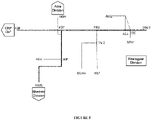
- partitioning of the railway network into a second type sub-networks is shown. More particularly, referring to Figure 5 , in one example, partitioning of the railway network into supervisory dispatch control territories is shown.
- a possible partitioning of the Indian Railway network into supervisory dispatch control territories is shown.
- supervisory dispatch control territory of Kharagpur (KGP) Division of South East Railway (SER, Indian Railways) is shown.
- KGP Kharagpur
- SER South East Railway
- the acronyms are known in Indian railway literature.
- HWH-AHB line segment is part of the possible main line between Howrah (Kolkata) and Mumbai.
- the KGP-RNTL line-segment is part of the possible main line between Kharagpur and Vijaywada.
- the PKU-HLZ and HYP BGY lines are examples of possible feeder lines and PKU, TMZ and HIP are their junctions.
- the other junctions in this example of supervisory control sub-network of Kharagpur Divisional are ADL and SRC.
- Adra, Chakradharpur (CKP) and Bhadrak Divisional supervisory control areas border the Kharagpur control area and trains are exchanged at the MDN, ASB and RNTL, which need not necessarily be and incidentally are not junction stations.
- the system 102 In order to re-generate reactive on-line train schedules for trains running in the railway network, subsequent to partitioning, the system 102 continuously executes sense and respond cycles. Referring to figure 6 , execution of a sense and respond cycle is explained.
- the system 102 may reschedule all the trains in the railway network in a continuous and rapid sense and respond cycle.
- the Respond cycle may have five stages as stated below. In first stage, the system 102 analyzes the 'situation' for each first type sub-network and infer intelligent conclusions about the degree of deviation from incumbent predictions made in the preceding or earlier sense and respond cycle and also the level of congestion.
- the system 102 may use analysis from first stage to decide which train to be rerouted via which route and which scheduling method to apply to which first type sub-network of the railway network.
- the railway scheduling is implemented in bi-level method.
- the first level scheduling methods are executed and may locally generate good and feasible plans for each first type sub-network.
- the second level scheduling methods may work in the fourth stage on the second type sub-networks to remove mutual inconsistencies between the first type train schedules for the first type sub-networks at junctions of the first type sub-networks.
- the fifth stage finally accumulates the second level train schedules for the entire railway network.
- the fifth stage may further compute advisory information from resolutions of the one or more conflicts.
- the advisory information may comprise resource allocations, for applicable two or more first level train schedulers.
- the applicable two or more first level train schedulers may be the first level train schedules for which the one or more conflicts are resolved.
- the advisory information may prevent recurrence of the one or more conflicts between the applicable two or more first level train schedules in a next sense and respond cycle.
- the system 102 receives static data from the user.
- the static data may be predefined and may comprise static railway track data, configuration of the first type sub-networks, configuration of the second type sub-networks, temporary railway track data, temporary railway network modification data, train timetable, thresholds for deviation for each first type sub-network and the like.
- the continuously executing sense and respond cycles may comprise sensing static data updates and dynamic data, and responding by providing updated on-line train schedules. While executing each sense and respond cycle, the system 102 may begin by sensing the static data updates from a user, and the dynamic data corresponding to the trains from the field.
- the dynamic data may comprise actual arrival and departure events of the trains at timetable points and change in the availability of the resources in the railway network.
- the dynamic data may comprise the advisory information as relevant to one or more trunk line sub-networks and one or more feeder line sub- networks.
- the advisory information may be received from the one or more preceding sense and respond cycles.
- the status of the availability of resources associated with the railway network may change dynamically.
- the resources may comprise the block sections, the stations, the tracks, the platforms and the track loops and the like.
- the system 102 may receive dynamic data corresponding to the trains of each of the plurality of first type sub-networks and second type sub-networks in the railway network.
- the system 102 may receive the static data updates and the dynamic data whenever there are changes in the railway network for each of the plurality of first type sub-networks and second type sub-networks in the system.
- system 102 may receive the static data updates and the dynamic data at regular or irregular time intervals.
- the dynamic data may be acquired through one or more users and a plurality of sensors distributed and embedded throughout the railway network termed as "field.”
- the system 102 further analyzes, by using a set of processors, the dynamic data associated with the trains.
- the system 102 analyzes the dynamic data associated with the trains to compute a degree of deviation of the actual status of the trains with respect to an incumbent train schedule for each trunk line sub-network of the one or more trunk line sub-networks and each feeder line sub-network of the one or more feeder line sub-networks.
- the incumbent train schedule is computed in one or more preceding sense and respond cycles or copied from the timetable data.
- the system 102 may compute the degree of deviation for each trunk line sub-network and each feeder line sub-network by comparing the dynamic data of actual train arrival or departure events with one or more predicted events contained in the train schedules computed in preceding one or more sense and respond cycles or from the timetable data.
- the system 102 may compute the congestion of the one or more first type sub-networks by comparing a density of traffic to design capacity of the one or more first type sub-networks.
- the system 102 may select one or more trains based on the deviation of the one or more trains and/or impact by congestion in the railway network and divert the one or more trains by rerouting the one or more trains over less congested sub-networks.
- the system 102 may reroute the one or more trains at junctions.
- the system 102 may identify the one or more trains at junctions at which rerouting may be considered.
- the system 102 may further estimate congestion or a delay along alternate routes for each of the identified trains.
- the system 102 may further reroute the one or more trains by assigning faster or less energy route to the identified trains as per configuration.
- the system may further obtain consent of the user for rerouting the identified trains.
- the system 102 may select, based on a degree of deviation and congestion, one or more first level train scheduling methods from a plurality of first level train scheduling methods relevant to the one or more trunk line sub-networks and the one or more feeder line sub-networks.
- the system 102 may select the one or more first level train scheduling methods for each trunk line sub-network and each feeder line sub-network based on at least one of the degree of deviation between the first threshold and the second threshold, an updated track status, changes in infrastructure and traffic congestion for the first type sub-networks.
- the first level train scheduling method may be a heuristic or meta-heuristic method based on at least one of priority, degree of deviation and congestion.
- the system 102 may adjust and extrapolate the incumbent train schedules computed in the one or more preceding sense and respond cycles to provide reactive on-line train schedules for the trains running in the first type railway sub-network.
- the system 102 may execute the selected one or more first level train scheduling methods relevant to the first type sub-networks. If the first type sub-network is a trunk line sub-network, then the system 102 may compute the train schedule on the allocated processors in parallel. If the first type sub-network is a feeder line sub-network, then the system 102 may compute in parallel the train schedules for each feeder line sub-network group, and in sequence for each feeder line sub-network in each feeder line sub-network group, on the allocated processors.
- the system 102 may assist the user in selecting the best mitigating option and traffic movement plan based on updated static data (static data updates) describing the disruptive event.
- updated static data static data updates
- the decisions on and extents or descriptions of holding, termination or rerouting of existing trains and/or origination of new trains with user-defined priorities and timetables of the trains may be received from the user as updated static data (static data updates) based on such assistance.
- the system 102 may repeatedly re-compute the train schedules for the affected one or more trunk line sub-networks and the one or more feeder line sub-networks, in parallel to the computations for the other first type sub-networks, based on the user inputs and the other dynamic data on train arrivals and departures received from the field.
- the 'field' is the railway network area where a plurality of sensors are deployed to sense dynamic data associated with the trains.
- the system 102 may compute a number of computing processors required to execute, in parallel or in sequence, the selected one or more first level train scheduling methods for each trunk line sub-network and each feeder line sub-network.
- the system 102 at first may receive and collect requests for such requirements of the number of computing processors from all the first type sub-networks. Then the system 102 may prioritize the requests based on the number of computing processors required by each request. The system 102 may further plan and communicate the dynamic allocation of the computing processors and associated resources to each request for each first type sub-network, based on the total number of computing processors available at that time. The system 102 may further allocate the computing processors and associated resources to each request from each first type sub-network.
- the system 102 may communicate a request for requirement of the number of computing processors. Subsequent to communicating a request for requirement of the number of computing processors, the system 102 may receive allocable number and identities of allocated computing processors.
- the system executes, in parallel, the one or more first level train scheduling methods so selected, for each trunk line sub-network and each feeder line sub-network group, and in sequence for each feeder line sub-network in each feeder line sub-network group, on the allocated computing processors by using at least one of updated static data, the dynamic data, and advisory information as relevant to each trunk line sub-network and each feeder line sub-network, to generate a first level train schedule for each trunk line sub-network and each feeder line sub-network.
- the advisory information is received from the one or more preceding sense and respond cycles.
- the system 102 Post generating the first level train schedule for each trunk line sub-network and each feeder line sub-network, the system 102 generate a second level train schedule for one or more supervisory dispatch control territories by executing a second level train scheduling method using the first level train schedule of each trunk line sub-network and each feeder line sub-network, in parallel.
- the system 102 generates a second level train schedule for one or more supervisory dispatch control territories, in parallel, to 1) identify and resolve one or more conflicts among the first level train schedules of the one or more trunk line sub-networks and the one or more feeder line sub-networks and 2) compute the advisory information based on resolutions of the one or more conflicts.
- the one or more conflicts occur at junction points of the one or more trunk lines and feeder lines of the one or more first type sub-networks.
- the advisory information may comprise resource allocations for applicable two or more first level train schedulers.
- the advisory information may prevent recurrence of the one or more conflicts between the applicable two or more first level train schedulers in a next sense and respond cycle.
- the applicable two or more first level train schedulers may be the first level train schedulers for which the one or more conflicts are resolved.
- the system 102 may resolve the one or more conflicts between the first level train schedules of the one or more trunk line sub-networks and the one or more feeder line sub-networks without modifying an entry time or an exit time of the trains in the one or more supervisory dispatch control territories as scheduled in the first level train schedules.
- the system 102 may resolve the one or more conflicts between the two or more first level train schedules of the one or more trunk line sub-networks and the one or more feeder line sub-networks based on at least one of a priority, a degree of deviation and the congestion and the advisory information may be computed based on resolution of the one or more conflicts.
- system 102 may be implemented on a parallel computing environment comprising a plurality of processors, comprising computing servers, chips or cores, and wherein the plurality of processors are physically and functionally integrated with high speed communication links.
- the first level train scheduling methods may comprise a heuristic based N-step look-ahead technique with backtracking.
- the trains may be assigned time to leave current station, time to arrive and depart from next 0 ⁇ n ⁇ N stations.
- Lower priority trains may be backtracked and assigned to previous track loop of the dynamically changing resources that may be available for allocation.
- the first level train scheduling methods may comprise a meta-heuristic that examines in parallel local neighborhoods in the search space for the location and timing of the meets and passes between trains contending for the same track resources.
- the first level train scheduling methods may comprise one or more configurable parallelizable algorithms to generate more optimal first level train schedules for each selected first type sub-network.
- the one or more parallelizable algorithms may be dynamically configured to the number of processors that may be dynamically allocated to each first type sub-network depending on the extent of the deviations and disruptions and subsequent processing requirements of the other first type sub-networks in the large railway network.
- the first level train scheduling methods may be further decomposed for parallel and faster execution without impacting the quality and optimality of the solutions regarding the locations and timings of the meets and passes.
- the heuristic based N-step look-ahead with backtracking comprises step 1 including allocation of two consecutive unary resources viz. a block section and a loop line.
- a block section is a section between two stations such that reordering of the trains (Crossing and / or precedence) can be done at either of the two stations.
- the block section is between departing station and next to departing station, in a direction from origin to destination of the train/voyage.
- the loop line (siding or stabling line where a train can be parked for halt time) is accessible from the block section, at the next station of the departing station.
- N is an integer number 1 or more which is pre-defined.
- N 1 is a case where the trains are advanced station by station.
- a large value of N shows that the train is advanced from the origin or current position to the destination in a single iteration.
- Backtracking implements releasing the dynamically changing resources allocated to the train and moving the dynamically changing resources back to the previous step(s) and allocating the dynamically changing resources for the previous step(s).
- the first level train scheduling method may implement following features for each train of the trains selected for planning, by ordering the trains on basis of priorities and departure times of the trains, at origins of the trains.
- the first level train scheduling methods may be so configured to rapidly minimize deviations of scheduled trains from published timetables or maximize throughput of non-timetabled trains ensuring absence of the conflicts, within parameterized duration from the current time, in the use of the resources by the trains taking into account factors like the extent of movement status deviation from plan/schedule and the congestion on sections of the first type sub-networks.
- the (cumulative) reactive online train schedule for the railway network may include but is not limited to schedules having conflict-free movements of trains, within parameterized duration from the current time, over interrelated voyages of the trains, schedules that are superior to common sense and manually-generated plans, and schedules that are computed as rapidly as occurrence of events within the railway network.
- the system 102 may collect and store the data required for re-generating the reactive on-line train schedules for trains running in the railway network in the database 118.
- the data from database 118 may be implemented on integrated collection of at least one of one or more processors to enable high-speed, high-reliability, high-availability, and security in data management.
- the database 118 may receive static data updates and dynamic data relating to track, sub-network configurations and thresholds for deviations in first type sub-networks and network and train timetable from the user and field and display the updated data on the user interface.
- the system 118 may identify trunk line sub-networks, feeder line sub-networks, feeder line sub-network groups, management jurisdictions and timetable points and maintain the information.
- the system 102 may further capture field event data from users or may receive the field event data from railway SCADA systems via suitable interfaces and store the field event data in the database 118.
- the system 102 may further communicate relevant events to each sub-network scheduling methods.
- the system 102 may further display the trains and the resources for the railway network in the I/O interface 104.
- the system 102 may have variety of interactive and configurable user interfaces.
- the interactive and configurable user interfaces may include train graphs, detail track displays, schematic network displays at different levels of zoom.
- the interactive and configurable user interfaces may enable users to understand and manage the large size railway network, infrastructure associated with the railway network, and the reactive online train schedules.
- the system and the method enable customizable partitioning of the railway network into first type sub-networks and second type sub-networks, wherein the first type sub-networks and the second type sub-networks are user configurable; and wherein the first type sub-networks comprise one or more trunk line sub-networks and one or more feeder line sub-networks; and wherein one or more feeder line sub-networks are grouped based on the user configuration; and wherein the second type sub-networks comprise one or more supervisory dispatch control territories and the one or more supervisory dispatch control territories are user configurable.
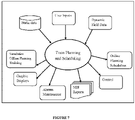
- the Figure 7 illustrates an information management process for planning and scheduling of trains.
- the system 102 may be configured to provide operations management throughout the railway network by means of a plurality of processors.
- the system may receive input comprising static data, dynamic data, controller inputs, field data, and advisory information.
- the system 102 may further process the input data and give output in the form of simulation, planning, training, maintenance alarms, passenger information, MIS reports and graphic displays.
- Figure 8 illustrates a control center layout and a connection of the control center to the field and hardware used in implementation of system 102 in an exemplary embodiment of the disclosure.
- Hardware components for the control center may only use commercially available equipment.
- a minimum of three workstations may be used at each control site for two planners/controllers and a maintenance workstation that communicates over a LAN to a possibly a dual replicated server for fault tolerance.
- the system 102 may be installed on one or more such servers. These are multi-processor systems on which independent copies of the system 102 may be implemented. Display systems are typically run on different workstations for dispatchers/planners/controllers as depicted in the Fig 8 .
- the maintenance workstation monitors performance of the control center including the servers, software workstations, displays and communication network (dual Ethernet LAN).
- the maintenance workstation may also be used as a planner/ controller position backup.
- the functions available in the control center may be controlled by password entry.
- additional workstations can be added to the control center any time.
- the nature and configurations of the hardware and communications components and user roles as depicted in figure 8 are merely indicative.
- the system 102 is used for vehicle movement modeling in a large size railway network.
- the system 102 provides adaptive rescheduling of vehicles/trains movement in the railway network.
- the system ensures absence of conflicts in vehicle movements in the railway network.
- the system 102 may also generate graphs and visual layouts of vehicle/trains movement over the railway network.
- Terminal Servers being used to connect to possible serial devices or parallel devices in the field. Alternate devices like routers, switches and hubs may be used to connect to other and more types of field devices and external systems.
- system and method enable continuously executing sense and respond cycles to re-generate reactive on-line train schedules for trains running in the railway network.
- system and method enable scaling up of railway planning and scheduling problem space by at least two orders of magnitude with thousands of trains and thousands of stations, while reducing the planning and scheduling cycle response time by one order of magnitude, to approximately a minute.
- system and method enable generation of an online reactive train schedule for a country wide railway network that minimizes deviations of operations of the trains from the train schedules and also from tactical plans.
- the system and the method enable grouping one or more feeder line sub-networks based on the user configuration to improve the efficiency of the computations by sequentially scheduling the feeder lines in a group on the same processor within the time it takes to schedule the most complex trunk line sub-network.
- the system and the method enable a bi-level scheduling approach to cover the entire network wherein repeatedly and rapidly the first level generates high-optimality schedules and both levels generate feasible plans.
- a method 900 for re-generating reactive on-line train schedules for trains running in the railway network is described, in accordance with an embodiment of the present subject matter.
- a method 900 for interactively partitioning a railway network and continuously executing sense and respond cycles to re-generate reactive on-line train schedules for trains running in the railway network is shown, in accordance with an embodiment of the present subject matter.
- the railway network may be a country wide railway network.
- the method 900 may be described in the general context of computer executable instructions.
- computer executable instructions can include routines, programs, objects, components, data structures, procedures, modules, functions, etc., that perform particular functions or implement particular abstract data types.
- the method 900 may also be practiced in a distributed computing environment where functions are performed by processing devices that are linked through a fast and reliable communications network.
- computer executable instructions may be located in both local and distributed computer storage media, including memory storage devices.
- the order in which the method 900 is described is not intended to be construed as a limitation, and any number of the described method blocks can be combined in any order to implement the method 900.
- the method can be implemented in any suitable hardware, software, firmware, or combination thereof. However, for ease of explanation, in the embodiments described below, the method 900 may be considered to be implemented in the above described system 102.
- the railway network is partitioned into first type sub-networks and second type sub-networks.
- the first type sub-networks and the second type sub-networks may be user configurable.
- the first type sub-networks comprise one or more trunk line sub-networks and one or more feeder line sub-networks.
- the one or more feeder line sub-networks may be grouped into one or more feeder line sub-network groups based on the user configuration.
- the second type sub-networks comprise one or more supervisory dispatch control territories and are user configurable.
- the railway network is partitioned into first type sub-networks and second type sub-networks by the system 102.
- the first type sub-networks may be wholly or partially included in one or more second type sub-networks.
- the second type sub-networks may contain one or more first type sub-networks, in part or in whole.
- static data associated with the railway network may be received.
- static data about the railway network including of stations, platforms, loops, and about the trains planned in the network may also be modified. If there is a cold start for the method, static data structures for tracks and trains may be populated and trains may be positioned as per system time, timetable, user inputs, and events.
- actual data and predicted events may be compared for each first type sub-network. Further track and train status may be updated in the database 118, infrastructure changes input may be analyzed, and sub-network level traffic congestion level may be analyzed.
- the static data comprises static railway track data, configuration of the first type sub-networks and thresholds for the deviation of status for the first type sub-networks, and configuration of the second type sub-networks, temporary railway track data, temporary railway network modification data, and train timetable and the like.
- the dynamic data comprises arrivals and departures of the trains at timetable points and availability of resources in the railway network.
- the static data may be managed by receiving the static data from the user, storing and enabling change of the static data by the user, the data corresponding to the railway network, user-configured partitions of two types of railway sub-network, thresholds for the deviations of the status for the first type sub-networks, stations, tracks and the trains and planned timetables of the trains.
- each sense and respond cycle is executed to re-generate reactive on-line train schedules for trains running in the railway network.
- the method 704 further comprises sensing the static data updates (updated static data) and the dynamic data and responding by providing updated on-line reactive train schedule in the continuous sense and respond cycle.
- each sense and respond cycle is executed by the system 102 to re-generate reactive on-line train schedules for the trains running in the railway network. Further, the block 904 may be explained in greater detail in Figure 10 .
- the method 900 may be executed on a parallel computing environment comprising a plurality of processors, and wherein the plurality of processors are physically and functionally integrated with a high speed communication link.
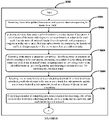
- a method block 904 is explained by a method 1000 for executing a sense and respond cycle is shown, in accordance with an embodiment of the present subject matter.
- static data updates (updated static data) from one or more users or from the field corresponding to train movements may be received.
- the static data updates and dynamic data from the user and the dynamic data from the field corresponding to trains is received by the system 102.
- the dynamic data associated with the trains is analyzed by using a set of processors, to compute a degree of deviation of the actual status of the trains with respect to an incumbent train schedule for each trunk line sub-network of the one or more trunk line sub-networks and each feeder line sub-network of the one or more feeder line sub-networks.
- the incumbent train schedule is computed in one or more preceding sense and respond cycles or copied from the timetable data.
- the dynamic data associated with the trains is analyzed by using a set of processors by the system 102.
- the dynamic data associated with the trains may be analyzed by using a set of processors, to compute the congestion of the one or more first type sub-networks by comparing the density of traffic to the design capacity.
- the degree of deviation for each trunk line sub-network and each feeder line sub-network may be computed by comparing the dynamic data of actual train arrival or departure events with one or more predicted events contained in the train schedules computed in preceding one or more sense and respond cycles or in the timetable data. Further, the congestion in the one or more first type sub-networks is computed by comparing the density of traffic to design capacity of the one or more first type sub-networks.
- rerouting of the trains at junctions may be carried out.
- the rerouting of the trains may comprise, identifying trains at junctions at which rerouting is to be considered, estimating congestion or delay along alternate routes for each of the identified trains, assigning faster or less energy route to the identified trains as per configuration, and obtaining a consent of a user for rerouting the identified trains.
- one or more first level train scheduling methods from first level train scheduling methods relevant to the one or more trunk line sub-networks and the one or more feeder line sub-networks are selected based on at least on a degree of deviation and congestion for that sub-network.
- the one or more first level train scheduling methods may be selected by the system 102 for the same sub-network in different cycles or for different sub-networks in the same cycle.
- the method 1000 at block 1008 further comprises adjusting and extrapolating the incumbent train schedules computed in the one or more preceding sense and respond cycles when the degree of deviation for each trunk line sub-network and each feeder line sub-networks is within a first threshold.
- the method 1000 at block 1008 further comprises computing the deviation and congestion in each trunk line sub-network and each feeder line sub-network, and when the degree of deviation for each trunk line sub-network and each feeder line sub-network is greater than the first threshold but within a second threshold, then executing, in parallel, the one or more first level train scheduling methods so selected, relevant to the first type sub-networks, on the dynamically allocated computing processors, for each trunk line sub-network and each feeder line sub-network group, and in sequence for each feeder line sub-network in each feeder line sub-network group, on the allocated computing processors by using the static data update, the dynamic data, and the advisory information as relevant to each trunk line sub-network and each feeder line sub- network, to generate a first level train schedule for each trunk line sub-network and each feeder line sub-network.
- the advisory information may be received from the one or more preceding sense and respond cycles.
- the method 1000 at block 1008 further comprises assisting the train dispatchers to update train schedules to mitigate the impact of the disruptions, when the degree of deviation is greater than the second threshold for each trunk line sub-network and each feeder line sub-network, and wherein the updated train timetable are received from a user, and wherein the updated train timetable is attributable to an event occurred in the railway network related to at least one of an accident, a relief of congestion, an arrival or a departure of a special train.
- the method 1000 at block 1008 further comprises selecting the one or more first level train scheduling methods for each trunk line sub-network and each feeder line sub-network based on the degree of deviation between the first threshold and the second threshold, an updated track status, changes in infrastructure and traffic congestion for the first type sub-networks.
- the first level train scheduling method may be a heuristic or meta-heuristic method based on at least one of priority, degree of deviation and congestion.
- a number of computing processors required for executing selected one or more first level train scheduling methods for each trunk line sub-network and each feeder line sub-network is computed.
- the number of computing processors required for executing selected one or more first level train scheduling methods may be computed by the system 102.
- a request for requirement of the number of computing processors may be communicated to a controller method.
- the request for requirement of the number of computing processors may be communicated by the system 102.
- the controller method further allocates the computing processors required for responding in each sense and respond cycle.
- the controller method may collect and accumulate requests for requirement of the number of computing processors by each of the first type sub-networks.
- the controller method may further prioritize the requests to allocate computing processors based on the number of computing processors required by each request and the total number of processors available in total in the system. Further, the controller method may plan and communicate the allocation and identities of the computing processors to each requesting processors.
- the controller method may be executed by the system 102.
- identities of allocated computing processors may be received by the system 102.
- identities of dynamically allocated computing processors may be received from the controller method.
- the one or more first level train scheduling methods so selected is executed, in parallel, for each trunk line sub-network and each feeder line sub-network group, and in sequence for each feeder line sub-network in each feeder line sub-network group on the allocated computing processors, by using at least one of the static data update, the dynamic data, and the advisory information as relevant to each trunk line sub-network and each feeder line sub- network, to generate a first level train schedule for each trunk line sub-network and each feeder line sub-network.
- the one or more first level train scheduling methods so selected, for each trunk line sub-network and each feeder line sub-network group, is executed and the first level train schedule for each trunk line sub-network and each feeder line sub-network is generated by the system 102.
- a second level train schedule for each of the one or more supervisory dispatch control territories is generated by executing a second level train scheduling method, using the first level train schedule of each trunk line sub-network and each feeder line sub-network, in parallel, to 1)identify and resolve one or more conflicts among the first level train schedules of the one or more trunk line sub-networks and the one or more feeder line sub-networks and 2) compute the advisory information based on resolutions of the one or more conflicts.
- the advisory actions may comprise resource allocations.
- the one or more conflicts occurs at junction points of the one or more lines, trunk and feeder, constituting the one or more first type sub-networks.
- a second level train schedule for each of the one or more type two sub-networks comprising supervisory dispatch control territories are generated by the system 102 to identify and resolve the one or more conflicts among the first level train schedule of the one or more trunk line sub-networks and the one or more feeder line sub-networks.
- the one or more conflicts between/among the first level train schedules of the one or more trunk line and feeder lines may be resolved without modifying an entry time or an exit time of the trains in the one or more supervisory dispatch control territories as scheduled in the first level train schedules and based on at least one of a priority, a degree of deviation, the congestion and the advisory information is computed based on resolution of the one or more conflicts.
- the second level train schedule for each of the one or more type two sub-networks comprising supervisory dispatch control territories is collated to generate a reactive on-line train schedule for the entire railway network.
- the second level train schedule for each of the one or more type two sub-networks comprising supervisory dispatch control territories may be collated by the system 102 to generate a reactive on-line train schedule for the railway network.
Landscapes
- Engineering & Computer Science (AREA)
- Mechanical Engineering (AREA)
- Train Traffic Observation, Control, And Security (AREA)
- Management, Administration, Business Operations System, And Electronic Commerce (AREA)
Claims (19)
- Verfahren zum Regenerieren reaktiver Online-Fahrpläne für Züge, die in einem Eisenbahnnetz fahren, das Züge, Stationen, Plattformen und Bahnstrecken umfasst, wobei das Eisenbahnnetz Hauptlinien der Bahnstrecken und Zubringerlinien der Bahnstrecken umfasst, die sich mit den Hauptlinien verbinden, wobei das Verfahren umfasst, das Eisenbahnnetz zu unterteilen und kontinuierlich Abtast- und Ansprechzyklen durchzuführen, und wobei das Unterteilen des Eisenbahnnetzes umfasst:Unterteilen des Eisenbahnnetzes in eine erste Art von Teilnetzwerken und eine zweite Art von Teilnetzwerken, wobei jede der ersten Art von Teilnetzwerken Endstationen an Enden des Teilnetzwerks und mehrere Stationen und Abschnitte zwischen den Endstationen enthält,und wobei die erste Art von Teilnetzwerken ein oder mehrere Hauptlinienteilnetzwerke und ein oder mehrere Zubringerlinienteilnetzwerke umfasst,und wobei die Zubringerlinienteilnetzwerke in ein oder mehrere Zubringerlinienteilnetzwerkgruppen gruppiert sind,und wobei die zweite Art von Teilnetzwerken ein oder mehrere Teilnetzwerke umfasst, die auf Grundlage von Fahrdienststeuerungsgebieten des Eisenbahnnetzes unterteilt sind;und wobei das Ausführen jedes Abtast- und Ansprechzyklus umfasst:Empfangen von statischen Datenaktualisierungen von einem Benutzer, und von dynamischen Daten, die Zügen aus dem Feld entsprechen;Analysieren, durch einen Satz von Prozessoren (110), der dynamischen Daten, die mit den Zügen verbunden sind, um einen Grad an Abweichung eines tatsächlichen Status der Züge im Hinblick auf einen bevorstehenden Fahrplan für jedes Hauptlinienteilnetzwerk des einen oder der mehreren Hauptlinienteilnetzwerke oder jedes Zubringerliniennetzwerk des einen oder der mehreren Zubringerliniennetzwerke zu berechnen, wobei der bevorstehende Fahrplan in einem oder mehreren vorhergehenden Abtast- und Ansprechzyklen berechnet oder aus Zeittabellendaten kopiert ist;Auswählen von einem oder mehreren Erstniveaufahrplanungsverfahren aus den Erstniveaufahrplanungsverfahren, die für das eine oder die mehreren Hauptlinienteilnetzwerke und das eine oder die mehreren Zubringerliniennetzwerke relevant sind, auf Grundlage des Grads an Abweichung und Stau;Berechnen einer Anzahl an Rechenprozessoren, die erforderlich sind, um ein ausgewähltes eines oder mehrerer Erstniveaufahrplanungsverfahren für jedes Hauptliniennetzwerk und jedes Zubringerliniennetzwerk durchzuführen;Berechnen von Identitäten dynamisch zugeteilter Rechenprozessoren;paralleles Ausführen des/der so ausgewählten einen oder mehreren Erstniveaufahrplanungsverfahren(s) für jedes Hauptlinienteilnetzwerk und jede Zubringerlinienteilnetzwerkgruppe und in Folge für jedes Zubringerlinienteilnetzwerk in jeder Zubringerlinienteilnetzwerkgruppe auf den dynamisch zugeteilten Rechenprozessoren unter Verwendung der aktualisierten statischen Daten, dynamischen Daten und/oder beratender Information als relevant für jedes Hauptlinienteilnetzwerk und jedes Zubringerlinienteilnetzwerk, um einen Erstniveaufahrplan für jedes Hauptlinienteilnetzwerk und jedes Zubringerlinienteilnetzwerk zu generieren, wobei die beratende Information aus dem einen oder den mehreren vorhergehenden Abtast- und Ansprechzyklen erhalten ist;Generieren, durch den Prozessor (110), eines Zweitniveaufahrplans für jedes der Fahrdienststeuerungsgebiete, indem ein Zweitniveaufahrplanungsverfahren unter Verwendung des Erstniveaufahrplans jedes Hauptlinienteilnetzwerks und jedes Zubringerlinienteilnetzwerks parallel ausgeführt wird, umeinen oder mehrere Konflikte zwischen den Erstniveaufahrplänen des einen oder der mehreren Hauptlinienteilnetzwerke und des einen oder der mehreren Zubringerlinienteilnetzwerke zu identifizieren und zu lösen, undBerechnen der beratenden Information auf Grundlage von Lösungen des einen Konflikts oder der mehreren Konflikte, und wobei der eine oder die mehreren Konflikte an Schnittstellen des einen oder der mehreren der Hauptlinienteilnetzwerke und des einen oder der mehreren der Zubringerlinienteilnetzwerke stattfinden; undVergleichen, durch den Prozessor (110), des Zweitniveaufahrplans für jedes der Fahrdienststeuerungsgebiete, um einen reaktiven Online-Fahrplan für das Eisenbahnnetz zu generieren.
- Verfahren nach Anspruch 1, wobei der kontinuierliche Abtast- und Ansprechzyklus ein Abtasten der dynamischen Daten und ein Reagieren durch Bereitstellen eines aktualisierten Online-Fahrplans umfasst.
- Verfahren nach Anspruch 1, wobei Geografien der ersten Art von Teilnetzwerken und der zweiten Art von Teilnetzwerken einander überlappen, und die erste Art von Teilnetzwerken und die zweite Art von Teilnetzwerken abwechselnde Darstellungen desselben Eisenbahnnetzes sind, und wobei die erste Art von Teilnetzwerken vollständig oder teilweise in einem oder mehreren zweiten Arten von Teilnetzwerken enthalten sind, und wobei die zweite Art von Teilnetzwerken eine oder mehrere Erstniveauteilnetzwerke zum Teil oder im Ganzen umfassen.
- Verfahren nach Anspruch 1, wobei die statischen Daten statische Bahnstreckendaten, eine Konfiguration der ersten Art von Teilnetzwerken, eine Konfiguration der zweiten Art von Teilnetzwerken, temporäre Bahnstreckendaten, temporäre Eisenbahnnetzmodifikationsdaten und einen Zugfahrplan umfassen, und wobei die dynamischen Daten Ankünfte and Abfahrten der Züge an Zugfahrplanpunkten und eine Verfügbarkeit von Ressourcen im Eisenbahnnetz umfassen, und wobei die beratende Information Ressourcenzuteilungen für anwendbare zwei oder mehr Erstniveaufahrpläne umfasst, und wobei die Anwendung der beratenden Information ein Wiederauftreten des einen oder der mehreren Konflikte zwischen den anwendbaren zwei oder mehr Erstniveaufahrplänen in einem nächsten Abtast- und Ansprechzyklus verhindert.
- Verfahren nach Anspruch 1, wobei der Grad an Abweichung für jedes Hauptlinienteilnetzwerk und jedes Zubringerlinienteilnetzwerk berechnet wird, indem die dynamischen Daten der tatsächlichen Zugankunfts- oder Abfahrtsereignisse mit einem oder mehreren vorhergesagten Ereignissen verglichen werden, die in den Fahrplänen enthalten sind, die in dem vorhergehenden einen oder mehreren Abtast- und Ansprechzyklen berechnet wurde.
- Verfahren nach Anspruch 1, wobei der Stau in dem einen oder den mehreren Teilnetzwerken der ersten Art berechnet wird, indem die Verkehrsdichte mit der Auslegungskapazität des einen oder der mehreren Teilnetzwerke der ersten Art verglichen wird.
- Verfahren nach Anspruch 1, drüber hinaus umfassend, die Züge an Schnittstellen umzuleiten, wobei die Umleitung der Züge umfasst:Identifizieren von Zügen an Schnittstellen, an denen eine Umleitung ins Auge gefasst werden soll,Schätzen des Staus oder der Verzögerung entlang von alternativen Routen für jeden der identifizierten Züge,Zuteilen einer schnelleren oder energieärmeren Route an die identifizierten Züge laut Auslegung, undErhalten einer Zustimmung des Benutzers zum Umleiten der identifizierten Züge.
- Verfahren nach Anspruch 1, darüber hinaus umfassend, die bevorstehenden Fahrpläne anzupassen und zu extrapolieren, die in dem einen oder den mehreren vorhergehenden Abtast- und Ansprechzyklen berechnet wurden, wenn der Grad an Abweichung für jedes Hauptlinienteilnetzwerk und jedes Zubringerlinienteilnetzwerk innerhalb eines ersten Schwellenwerts liegt.
- Verfahren nach Anspruch 8, wobei, wenn der Grad an Abweichung für jedes Hauptlinienteilnetzwerk und jedes Zubringerlinienteilnetzwerk größer als der erste Schwellenwert ist, aber innerhalb eines zweiten Schwellenwerts liegt, dann parallel das eine oder mehrere Erstniveaufahrplanverfahren, das so ausgewählt wurde, das relevant für die Teilnetzwerke der ersten Art sind, an den dynamisch zugeteilten Rechenprozessoren für jedes Hauptlinienteilnetzwerk und jedes Zubringerlinienteilnetzwerk, und in der Folge für jedes Zubringerlinienteilnetzwerk in jeder Zubringerlinienteilnetzwerkgruppe an den zugeteilten Rechenprozessoren unter Verwendung der statischen Datenaktualisierung, der dynamischen Daten und/oder der beratenden Information als relevant für jedes Hauptlinienteilnetzwerk und jedes Zubringerlinienteilnetzwerk auszuführen, um den Erstniveaufahrplan für jedes Hauptlinienteilnetzwerk und jedes Zubringerlinienteilnetzwerk zu generieren, wobei die beratende Information aus dem einen oder den mehreren vorhergehenden Abtast- und Ansprechzyklen erhalten ist.
- Verfahren nach Anspruch 9, wobei, wenn der Grad an Abweichung für jedes Hauptlinienteilnetzwerk und jedes Zubringerlinienteilnetzwerk größer als der zweite Schwellenwert ist, und wobei ein aktualisierter Zugfahrplan interaktiv vom Benutzer erhalten wird, und wobei die Aktualisierungen des Zugfahrplans einem in dem Eisenbahnnetz aufgetretenen Ereignis zuzuschreiben sind, das sich auf einen Unfall, eine Entstauung, eine Ankunft und/oder Abfahrt eines speziellen Zugs bezieht.
- Verfahren nach Anspruch 9, das darüber hinaus umfasst, den einen oder die mehreren Erstniveaufahrplanverfahren für jedes Hauptlinienteilnetzwerk und jedes Zubringerlinienteilnetzwerk auf Grundlage der Abweichung zwischen dem ersten Schwellenwert und dem zweiten Schwellenwert, einem aktualisierten Bahnstatus, Änderungen in der Infrastruktur und einem Verkehrsstau für die erste Art von Teilnetzwerken auszuwählen.
- Verfahren nach Anspruch 1, wobei es sich bei dem Erstniveaufahrplanungsverfahren um ein heuristisches oder meta-heuristische Verfahren handelt, das auf der Priorität, dem Grad an Abweichung und/oder dem Stau beruht.
- Verfahren nach Anspruch 1, wobei der eine oder die mehreren Konflikte zwischen den Erstniveaufahrplänen der einen oder mehreren Haupt- und Zubringerlinien gelöst werden, ohne eine Einfahrzeit oder eine Ausfahrzeit der Züge in den Fahrdienststeuerungsgebieten zu modifizieren, wie sie in den Erstniveaufahrplänen geplant sind und auf mindestens einer Priorität, dem Grad an Abweichung, und/oder dem Stau beruhen, und die beratende Information auf Grundlage der Lösung des einen Konflikts oder der mehreren Konflikte berechnet wird.
- Verfahren nach Anspruch 1, das auf einer parallele Rechenumgebung durchgeführt wird, die mehrere Prozessoren umfasst, und wobei die mehreren Prozessoren physikalisch und funktional mit einer Hochgeschwindigkeitskommunikationsverbindung zusammengefasst sind.
- Verfahren nach Anspruch 1, wobei das Berechnen einer Anzahl von Rechenprozessoren darüber hinaus umfasst:Empfangen und Einholen von Anfragen nach einem Bedarf einer Anzahl von Rechenprozessoren durch jedes der Teilnetzwerke der ersten Art;Priorisieren der Anfragen, um Rechenprozessoren auf Grundlage der Anzahl von Rechenprozessoren, die durch jede Anfrage angefordert werden, und der Gesamtanzahl an Prozessoren, die insgesamt in dem System verfügbar sind, zuzuteilen;Planen der Zuteilung und der Identitäten der Rechenprozessoren für jede Anfrage auf Grundlage der Gesamtanzahl an verfügbaren Rechenprozessoren.
- System (102) zum Regenerieren reaktiver Online-Fahrpläne für Züge, die in einem Eisenbahnnetz fahren, das Züge, Stationen, Plattformen und Bahnstrecken umfasst, wobei das Eisenbahnnetz Hauptlinien der Bahnstrecken und Zubringerlinien der Bahnstrecken umfasst, die sich mit den Hauptlinien verbinden, und das System das Zugnetz unterteilt und kontinuierlich Abtast- und Ansprechzyklen durchführt, um reaktive Online-Fahrpläne für die Züge zu regenerieren, die in dem Eisenbahnnetz fahren, wobei das System umfasst:einen Satz Prozessoren (110), undeine Sammlung persistenter Datenspeicherung, die durch ein Datenbankmanagementsystem gemanagt wird, das an die Prozessoren (110) angeschlossen ist; undeine Speichersammlung (114), die an den Satz von Prozessoren (110) angeschlossen ist, wobei der Satz von Prozessoren (110) in der Lage ist, programmierte Instruktionen, die in dem Speicher (114) gespeichert sind, auszuführen, um:das Eisenbahnnetz in erste Art von Teilnetzwerken und eine zweite Art von Teilnetzwerken zu unterteilen,wobei jedes der ersten Art von Teilnetzwerken Endstationen an Enden des Teilnetzwerks und mehrere Stationen und Abschnitte zwischen den Endstationen enthält,und wobei die erste Art von Teilnetzwerken ein oder mehrere Hauptlinienteilnetzwerke und ein oder mehrere Zubringerlinienteilnetzwerke umfasst,und wobei die Zubringerlinienteilnetzwerke in eine oder mehrere Zubringerlinienteilnetzwerkgruppen gruppiert sind,und wobei die zweite Art von Teilnetzwerken ein oder mehrere Teilnetzwerke umfasst, die auf Grundlage von Fahrdienststeuerungsgebieten des Eisenbahnnetzes unterteilt sind,und die statischen Daten zu managen, speichern und verfügbar zu machen, die dem Eisenbahnnetz, seinen Unterteilungen, den Zügen und ihren Fahrplänen entsprechen;und jeden Abtast- und Ansprechzyklus auszuführen,und wobei das Ausführen jedes Abtast- und Ansprechzyklusses umfasst:Empfangen von dynamischen Daten, die aktualisierten dynamischen Daten und den Ankünften und Abfahrten von Zügen entsprechen,Analysieren der dynamischen Daten, die mit den Zügen verbunden sind, um einen Grad an Abweichung von einem tatsächlichen Status der Züge im Hinblick auf einen Fahrplan für jedes Hauptlinienteilnetzwerk des einen oder der mehreren Hauptlinienteilnetzwerke und jedes Zubringerliniennetzwerk des einen oder der mehreren Zubringerliniennetzwerke und Fahrplandaten zu berechnen, wobei der Fahrplan in einem oder mehreren vorhergehenden Abtast- und Ansprechzyklen berechnet ist;Auswählen von einem oder mehreren Erstniveaufahrplanungsverfahren aus den Erstniveaufahrplanungsverfahren, die für das eine oder die mehreren Hauptlinienteilnetzwerke und das eine oder dir mehreren Zubringerliniennetzwerke relevant sind, auf Grundlage des Grads an Abweichung und Stau;Berechnen einer Anzahl an Rechenprozessoren, die erforderlich sind, um ein ausgewähltes oder mehrere ausgewählte Erstniveaufahrplanungsverfahren für jedes Hauptlinienteilnetzwerk und jedes Zubringerlinienteilnetzwerk durchzuführen;Berechnen von Identitäten dynamisch zugeteilter Rechenprozessoren;paralleles Ausführen des so ausgewählten einen oder der so ausgewählten mehreren Erstniveaufahrplanungsverfahren(s) für jedes Hauptlinienteilnetzwerk und jedes Zubringerlinienteilnetzwerk und in Folge für jedes Zubringerlinienteilnetzwerk in jeder Zubringerlinienteilnetzwerkgruppe auf den dynamisch zugeteilten Rechenprozessoren unter Verwendung der aktualisierten statischen Daten, der dynamischen Daten und/oder der beratenden Information als relevant für jedes Hauptlinienteilnetzwerk und jedes Zubringerlinienteilnetzwerk, um einen Erstniveaufahrplan für jedes Hauptlinienteilnetzwerk und jedes Zubringerlinienteilnetzwerk zu generieren, wobei die beratende Information aus dem einen oder den mehreren vorhergehenden Abtast- und Ansprechzyklen erhalten ist;Generieren eines Zweitniveaufahrplans für jedes der Fahrdienststeuerungsgebiete, indem ein Zweitniveaufahrplanungsverfahren unter Verwendung des Erstniveaufahrplans jedes Hauptlinienteilnetzwerks und jedes Zubringerlinienteilnetzwerks parallel ausgeführt wird, umeinen oder mehrere Konflikte zwischen den Erstniveaufahrplänen des einen oder der mehreren Hauptlinienteilnetzwerke und des einen oder der mehreren Zubringerlinienteilnetzwerke zu identifizieren und zu lösen, undBerechnen der beratenden Information auf Grundlage von Lösungen des einen Konflikts oder der mehreren Konflikte, und wobei der eine oder die mehreren Konflikte an Schnittstellen des einen oder der mehreren der Hauptlinienteilnetzwerke und des einen oder der mehreren der Zubringerlinienteilnetzwerke stattfinden; undVergleichen des Zweitniveaufahrplans für jedes der Fahrdienststeuerungsgebiete, um einen reaktiven Online-Fahrplan für das Eisenbahnnetz zu generieren.
- Verfahren nach Anspruch 1, wobei das Erstniveaufahrplanverfahren und das Zweitniveaufahrplanverfahren eine heuristisch-basierte N-Schritt-Vorausschautechnik mit Rückverfolgung umfassen, wobei den Zügen eine Zeit, die momentane Station zu verlassen, eine Zeit zur Ankunft und Abfahrt von den nächsten 0 ≤ n ≤ N Stationen zugewiesen wird, wobei N eine vordefinierte ganze Zahl ist.
- Verfahren nach Anspruch 1, wobei das Eisenbahnnetz tausende von Zügen, Stationen, Plattformen und mehrere Bahnstrecken umfasst, wobei die Stationen und Plattformen miteinander durch Blockabschnitte verbunden sind.
- Verfahren nach Anspruch 1, wobei Geografien der ersten Art von Teilnetzwerken und der zweiten Art von Teilnetzwerken einander überlappen, und die erste Art von Teilnetzwerken und die zweite Art von Teilnetzwerken abwechselnde Darstellungen desselben Eisenbahnnetzes sind, wobei die erste Art von Teilnetzwerken ganz oder teilweise in dem einen oder den mehreren Teilnetzwerken der zweiten Art enthalten ist.
Applications Claiming Priority (1)
| Application Number | Priority Date | Filing Date | Title |
|---|---|---|---|
| IN1676MU2014 | 2014-05-19 |
Publications (2)
| Publication Number | Publication Date |
|---|---|
| EP2962916A1 EP2962916A1 (de) | 2016-01-06 |
| EP2962916B1 true EP2962916B1 (de) | 2022-11-30 |
Family
ID=53483651
Family Applications (1)
| Application Number | Title | Priority Date | Filing Date |
|---|---|---|---|
| EP15168088.1A Active EP2962916B1 (de) | 2014-05-19 | 2015-05-19 | System und verfahren zur erzeugung von fahrzeugbewegungsplänen in einem grossen eisenbahnnetz |
Country Status (7)
| Country | Link |
|---|---|
| US (1) | US9381928B2 (de) |
| EP (1) | EP2962916B1 (de) |
| CN (1) | CN105083336B (de) |
| AU (1) | AU2015202606B2 (de) |
| CA (1) | CA2891151C (de) |
| ES (1) | ES2934178T3 (de) |
| ZA (1) | ZA201503345B (de) |
Families Citing this family (18)
| Publication number | Priority date | Publication date | Assignee | Title |
|---|---|---|---|---|
| US10572847B2 (en) * | 2014-10-10 | 2020-02-25 | Conduent Business Services, Llc | Dynamic space-time diagram for visualization of transportation schedule adherence |
| FR3047835B1 (fr) * | 2016-02-12 | 2018-03-16 | Alstom Transport Technologies | Infrastructure de supervision d'un reseau de transport multimodal terrestre |
| DK3243726T3 (da) * | 2016-05-09 | 2020-09-14 | Alstom Transp Tech | Trafikstyringsfremgangsmåde og trafikstyringssystem |
| JP2017213962A (ja) * | 2016-05-31 | 2017-12-07 | 東日本旅客鉄道株式会社 | 車両運用業務支援装置および車両運用業務支援システム |
| US11562300B2 (en) | 2016-06-10 | 2023-01-24 | Conduent Business Services, Llc | System and method for optimal automated booking of on-demand transportation in multi-modal journeys |
| JP6726605B2 (ja) * | 2016-11-21 | 2020-07-22 | 株式会社日立製作所 | 交通需給マッチングシステムおよび交通需給マッチング方法 |
| CN106953886B (zh) * | 2016-12-21 | 2020-08-14 | 北京交通大学 | 一种基于以太网的列车通信网络周期信息调度方法 |
| US10546255B2 (en) * | 2017-05-05 | 2020-01-28 | Conduent Business Services, Llc | Efficient optimization of schedules in a public transportation system |
| US11176812B2 (en) | 2018-03-26 | 2021-11-16 | International Business Machines Corporation | Real-time service level monitor |
| CN109377778B (zh) * | 2018-11-15 | 2021-04-06 | 浪潮集团有限公司 | 一种基于多路rdma和v2x的协同自动驾驶系统及方法 |
| CN112441082B (zh) * | 2019-08-28 | 2022-05-13 | 比亚迪股份有限公司 | 列车调度方法、装置、计算机可读存储介质及电子设备 |
| CN111137328B (zh) * | 2020-01-22 | 2024-02-20 | 卡斯柯信号有限公司 | 一种有轨电车行车调度管理系统 |
| JP7365281B2 (ja) * | 2020-03-26 | 2023-10-19 | 株式会社日立製作所 | 資源運用計画支援装置、及び資源運用計画支援方法 |
| CN112803419B (zh) * | 2021-02-25 | 2023-08-08 | 南京地铁建设有限责任公司 | 潮流安全校验方法、装置、设备和存储介质 |
| CN113625264B (zh) * | 2021-06-16 | 2024-08-30 | 中国铁道科学研究院集团有限公司铁道建筑研究所 | 一种并行处理铁路检测大数据的方法及系统 |
| CN115482781B (zh) * | 2022-10-11 | 2025-05-16 | 武汉华星光电技术有限公司 | 像素驱动电路及显示面板 |
| CN115796422B (zh) * | 2023-02-06 | 2023-04-28 | 临沂贺信科技发展有限公司 | 一种智能干线运输的物流调度优化方法及系统 |
| CN118644045A (zh) * | 2024-08-09 | 2024-09-13 | 青岛大数据科技发展有限公司 | 一种轨道车辆调度信息的生成方法,装置,设备及存储介质 |
Family Cites Families (15)
| Publication number | Priority date | Publication date | Assignee | Title |
|---|---|---|---|---|
| JPH0827811B2 (ja) * | 1985-02-28 | 1996-03-21 | 株式会社日立製作所 | 輸送計画作成方法およびシステム |
| US5177684A (en) | 1990-12-18 | 1993-01-05 | The Trustees Of The University Of Pennsylvania | Method for analyzing and generating optimal transportation schedules for vehicles such as trains and controlling the movement of vehicles in response thereto |
| US6459964B1 (en) * | 1994-09-01 | 2002-10-01 | G.E. Harris Railway Electronics, L.L.C. | Train schedule repairer |
| US5623413A (en) * | 1994-09-01 | 1997-04-22 | Harris Corporation | Scheduling system and method |
| US20040172175A1 (en) | 2003-02-27 | 2004-09-02 | Julich Paul M. | System and method for dispatching by exception |
| DE19726542B4 (de) * | 1997-05-07 | 2004-04-22 | Schwanhäußer, Wulf, Prof. Dr.-Ing. | Verfahren zur Steuerung und Sicherung eines fahrplangebundenen Verkehrssystems |
| US6546371B1 (en) * | 1999-12-30 | 2003-04-08 | Ge-Harris Railway Electronics, L.L.C. | Train corridor scheduling process including various cost functions associated with railway operations |
| US6587738B1 (en) * | 1999-12-30 | 2003-07-01 | Ge-Harris Railway Electronics, L.L.C. | Optimal locomotive assignment for a railroad network |
| US6377877B1 (en) * | 2000-09-15 | 2002-04-23 | Ge Harris Railway Electronics, Llc | Method of determining railyard status using locomotive location |
| US7469827B2 (en) * | 2005-11-17 | 2008-12-30 | Google Inc. | Vehicle information systems and methods |
| US7734383B2 (en) * | 2006-05-02 | 2010-06-08 | General Electric Company | Method and apparatus for planning the movement of trains using dynamic analysis |
| CH702918B1 (fr) * | 2007-04-25 | 2011-10-14 | Viacam S A R L | Dispositif de contrôle et de commande de la signalisation routière et ferroviaire. |
| CN102616251B (zh) * | 2011-01-27 | 2014-12-10 | 中国铁路总公司 | 高速列车自动排路方法及控制装置 |
| CN102632910B (zh) * | 2012-03-31 | 2015-08-19 | 北京大学 | 一种基于感知控制的高速列车闭塞区间智能控制系统 |
| CN102717819B (zh) * | 2012-06-27 | 2015-07-01 | 李志恒 | 能够精确到秒的高速铁路列车调度系统及方法 |
-
2015
- 2015-05-12 CA CA2891151A patent/CA2891151C/en active Active
- 2015-05-13 ZA ZA2015/03345A patent/ZA201503345B/en unknown
- 2015-05-14 US US14/712,366 patent/US9381928B2/en active Active
- 2015-05-14 AU AU2015202606A patent/AU2015202606B2/en active Active
- 2015-05-19 ES ES15168088T patent/ES2934178T3/es active Active
- 2015-05-19 EP EP15168088.1A patent/EP2962916B1/de active Active
- 2015-05-19 CN CN201510257612.3A patent/CN105083336B/zh active Active
Also Published As
| Publication number | Publication date |
|---|---|
| CA2891151A1 (en) | 2015-11-19 |
| US9381928B2 (en) | 2016-07-05 |
| AU2015202606B2 (en) | 2020-07-02 |
| EP2962916A1 (de) | 2016-01-06 |
| ZA201503345B (en) | 2016-02-24 |
| ES2934178T3 (es) | 2023-02-17 |
| US20150329129A1 (en) | 2015-11-19 |
| CN105083336B (zh) | 2018-07-03 |
| CN105083336A (zh) | 2015-11-25 |
| AU2015202606A1 (en) | 2015-12-03 |
| CA2891151C (en) | 2023-07-04 |
Similar Documents
| Publication | Publication Date | Title |
|---|---|---|
| US9381928B2 (en) | System and method for generating vehicle movement plans in a large railway network | |
| Corman et al. | Dispatching and coordination in multi-area railway traffic management | |
| US7512481B2 (en) | System and method for computer aided dispatching using a coordinating agent | |
| US12157509B2 (en) | Method and apparatus for operation of railway systems | |
| Bekta¸ s et al. | Chapter 11: Dynamic vehicle routing problems | |
| Jin et al. | Multi-agent intersection management for connected vehicles using an optimal scheduling approach | |
| Lin et al. | Rhythmic control of automated traffic—Part II: Grid network rhythm and online routing | |
| Corman et al. | Rescheduling dense train traffic over complex station interlocking areas | |
| Ghaemi et al. | Railway disruption timetable: Short-turnings in case of complete blockage | |
| Corman et al. | Assessment of advanced dispatching measures for recovering disrupted railway traffic situations | |
| WO2003097425A1 (en) | Scheduling method and system for rail networks | |
| KR102127916B1 (ko) | 자율 협업 기반의 열차 관제 방법 | |
| Samà et al. | Optimal aircraft traffic flow management at a terminal control area during disturbances | |
| CN116811969B (zh) | 带有人机交互功能的列车运行计划自动调整系统和方法 | |
| Samà et al. | Comparing centralized and rolling horizon approaches for optimal aircraft traffic control in terminal areas | |
| Zaninotto et al. | Intelligent decision support for scheduling and rerouting trains on an Italian railway line | |
| Kersbergen et al. | Distributed model predictive control for rescheduling of railway traffic | |
| Liu et al. | Schedule extra train (s) into existing timetable using actor-critic reinforcement learning | |
| Galadíková et al. | Simulation-based optimization of personnel assignment in railway nodes | |
| Tien et al. | A route-based queuing network model for air traffic flow contingency management | |
| D’Ariano et al. | Evaluating the performance of railway dynamic traffic management | |
| Corman et al. | Railway dynamic traffic management in complex and densely used networks | |
| Eaton | Ant colony optimisation for dynamic and dynamic multi-objective railway rescheduling problems | |
| AU2004202558B2 (en) | System and method of computer aided dispatching using a coordinating agent | |
| Belousov et al. | Network-centric approach to adaptive real-time train scheduling |
Legal Events
| Date | Code | Title | Description |
|---|---|---|---|
| PUAI | Public reference made under article 153(3) epc to a published international application that has entered the european phase |
Free format text: ORIGINAL CODE: 0009012 |
|
| AK | Designated contracting states |
Kind code of ref document: A1 Designated state(s): AL AT BE BG CH CY CZ DE DK EE ES FI FR GB GR HR HU IE IS IT LI LT LU LV MC MK MT NL NO PL PT RO RS SE SI SK SM TR |
|
| AX | Request for extension of the european patent |
Extension state: BA ME |
|
| 17P | Request for examination filed |
Effective date: 20160706 |
|
| RBV | Designated contracting states (corrected) |
Designated state(s): AL AT BE BG CH CY CZ DE DK EE ES FI FR GB GR HR HU IE IS IT LI LT LU LV MC MK MT NL NO PL PT RO RS SE SI SK SM TR |
|
| STAA | Information on the status of an ep patent application or granted ep patent |
Free format text: STATUS: EXAMINATION IS IN PROGRESS |
|
| 17Q | First examination report despatched |
Effective date: 20181023 |
|
| REG | Reference to a national code |
Ref country code: DE Ref legal event code: R079 Ref document number: 602015081760 Country of ref document: DE Free format text: PREVIOUS MAIN CLASS: B61L0027000000 Ipc: B61L0027160000 |
|
| RIC1 | Information provided on ipc code assigned before grant |
Ipc: B61L 27/12 20220101ALI20220517BHEP Ipc: B61L 27/16 20220101AFI20220517BHEP |
|
| GRAP | Despatch of communication of intention to grant a patent |
Free format text: ORIGINAL CODE: EPIDOSNIGR1 |
|
| STAA | Information on the status of an ep patent application or granted ep patent |
Free format text: STATUS: GRANT OF PATENT IS INTENDED |
|
| INTG | Intention to grant announced |
Effective date: 20220624 |
|
| GRAS | Grant fee paid |
Free format text: ORIGINAL CODE: EPIDOSNIGR3 |
|
| GRAA | (expected) grant |
Free format text: ORIGINAL CODE: 0009210 |
|
| STAA | Information on the status of an ep patent application or granted ep patent |
Free format text: STATUS: THE PATENT HAS BEEN GRANTED |
|
| AK | Designated contracting states |
Kind code of ref document: B1 Designated state(s): AL AT BE BG CH CY CZ DE DK EE ES FI FR GB GR HR HU IE IS IT LI LT LU LV MC MK MT NL NO PL PT RO RS SE SI SK SM TR |
|
| REG | Reference to a national code |
Ref country code: CH Ref legal event code: EP Ref country code: GB Ref legal event code: FG4D |
|
| REG | Reference to a national code |
Ref country code: NO Ref legal event code: T2 Effective date: 20221130 |
|
| REG | Reference to a national code |
Ref country code: AT Ref legal event code: REF Ref document number: 1534472 Country of ref document: AT Kind code of ref document: T Effective date: 20221215 |
|
| REG | Reference to a national code |
Ref country code: IE Ref legal event code: FG4D |
|
| REG | Reference to a national code |
Ref country code: DE Ref legal event code: R096 Ref document number: 602015081760 Country of ref document: DE |
|
| REG | Reference to a national code |
Ref country code: NL Ref legal event code: FP |
|
| REG | Reference to a national code |
Ref country code: ES Ref legal event code: FG2A Ref document number: 2934178 Country of ref document: ES Kind code of ref document: T3 Effective date: 20230217 |
|
| REG | Reference to a national code |
Ref country code: LT Ref legal event code: MG9D |
|
| PG25 | Lapsed in a contracting state [announced via postgrant information from national office to epo] |
Ref country code: SE Free format text: LAPSE BECAUSE OF FAILURE TO SUBMIT A TRANSLATION OF THE DESCRIPTION OR TO PAY THE FEE WITHIN THE PRESCRIBED TIME-LIMIT Effective date: 20221130 Ref country code: PT Free format text: LAPSE BECAUSE OF FAILURE TO SUBMIT A TRANSLATION OF THE DESCRIPTION OR TO PAY THE FEE WITHIN THE PRESCRIBED TIME-LIMIT Effective date: 20230331 Ref country code: LT Free format text: LAPSE BECAUSE OF FAILURE TO SUBMIT A TRANSLATION OF THE DESCRIPTION OR TO PAY THE FEE WITHIN THE PRESCRIBED TIME-LIMIT Effective date: 20221130 Ref country code: FI Free format text: LAPSE BECAUSE OF FAILURE TO SUBMIT A TRANSLATION OF THE DESCRIPTION OR TO PAY THE FEE WITHIN THE PRESCRIBED TIME-LIMIT Effective date: 20221130 |
|
| REG | Reference to a national code |
Ref country code: AT Ref legal event code: MK05 Ref document number: 1534472 Country of ref document: AT Kind code of ref document: T Effective date: 20221130 |
|
| PG25 | Lapsed in a contracting state [announced via postgrant information from national office to epo] |
Ref country code: RS Free format text: LAPSE BECAUSE OF FAILURE TO SUBMIT A TRANSLATION OF THE DESCRIPTION OR TO PAY THE FEE WITHIN THE PRESCRIBED TIME-LIMIT Effective date: 20221130 Ref country code: PL Free format text: LAPSE BECAUSE OF FAILURE TO SUBMIT A TRANSLATION OF THE DESCRIPTION OR TO PAY THE FEE WITHIN THE PRESCRIBED TIME-LIMIT Effective date: 20221130 Ref country code: LV Free format text: LAPSE BECAUSE OF FAILURE TO SUBMIT A TRANSLATION OF THE DESCRIPTION OR TO PAY THE FEE WITHIN THE PRESCRIBED TIME-LIMIT Effective date: 20221130 Ref country code: IS Free format text: LAPSE BECAUSE OF FAILURE TO SUBMIT A TRANSLATION OF THE DESCRIPTION OR TO PAY THE FEE WITHIN THE PRESCRIBED TIME-LIMIT Effective date: 20230330 Ref country code: HR Free format text: LAPSE BECAUSE OF FAILURE TO SUBMIT A TRANSLATION OF THE DESCRIPTION OR TO PAY THE FEE WITHIN THE PRESCRIBED TIME-LIMIT Effective date: 20221130 Ref country code: GR Free format text: LAPSE BECAUSE OF FAILURE TO SUBMIT A TRANSLATION OF THE DESCRIPTION OR TO PAY THE FEE WITHIN THE PRESCRIBED TIME-LIMIT Effective date: 20230301 |
|
| P01 | Opt-out of the competence of the unified patent court (upc) registered |
Effective date: 20230526 |
|
| PG25 | Lapsed in a contracting state [announced via postgrant information from national office to epo] |
Ref country code: SM Free format text: LAPSE BECAUSE OF FAILURE TO SUBMIT A TRANSLATION OF THE DESCRIPTION OR TO PAY THE FEE WITHIN THE PRESCRIBED TIME-LIMIT Effective date: 20221130 Ref country code: RO Free format text: LAPSE BECAUSE OF FAILURE TO SUBMIT A TRANSLATION OF THE DESCRIPTION OR TO PAY THE FEE WITHIN THE PRESCRIBED TIME-LIMIT Effective date: 20221130 Ref country code: EE Free format text: LAPSE BECAUSE OF FAILURE TO SUBMIT A TRANSLATION OF THE DESCRIPTION OR TO PAY THE FEE WITHIN THE PRESCRIBED TIME-LIMIT Effective date: 20221130 Ref country code: DK Free format text: LAPSE BECAUSE OF FAILURE TO SUBMIT A TRANSLATION OF THE DESCRIPTION OR TO PAY THE FEE WITHIN THE PRESCRIBED TIME-LIMIT Effective date: 20221130 Ref country code: CZ Free format text: LAPSE BECAUSE OF FAILURE TO SUBMIT A TRANSLATION OF THE DESCRIPTION OR TO PAY THE FEE WITHIN THE PRESCRIBED TIME-LIMIT Effective date: 20221130 Ref country code: AT Free format text: LAPSE BECAUSE OF FAILURE TO SUBMIT A TRANSLATION OF THE DESCRIPTION OR TO PAY THE FEE WITHIN THE PRESCRIBED TIME-LIMIT Effective date: 20221130 |
|
| PGFP | Annual fee paid to national office [announced via postgrant information from national office to epo] |
Ref country code: DE Payment date: 20230426 Year of fee payment: 9 |
|
| PG25 | Lapsed in a contracting state [announced via postgrant information from national office to epo] |
Ref country code: SK Free format text: LAPSE BECAUSE OF FAILURE TO SUBMIT A TRANSLATION OF THE DESCRIPTION OR TO PAY THE FEE WITHIN THE PRESCRIBED TIME-LIMIT Effective date: 20221130 Ref country code: AL Free format text: LAPSE BECAUSE OF FAILURE TO SUBMIT A TRANSLATION OF THE DESCRIPTION OR TO PAY THE FEE WITHIN THE PRESCRIBED TIME-LIMIT Effective date: 20221130 |
|
| REG | Reference to a national code |
Ref country code: DE Ref legal event code: R097 Ref document number: 602015081760 Country of ref document: DE |
|
| PLBE | No opposition filed within time limit |
Free format text: ORIGINAL CODE: 0009261 |
|
| STAA | Information on the status of an ep patent application or granted ep patent |
Free format text: STATUS: NO OPPOSITION FILED WITHIN TIME LIMIT |
|
| 26N | No opposition filed |
Effective date: 20230831 |
|
| PG25 | Lapsed in a contracting state [announced via postgrant information from national office to epo] |
Ref country code: SI Free format text: LAPSE BECAUSE OF FAILURE TO SUBMIT A TRANSLATION OF THE DESCRIPTION OR TO PAY THE FEE WITHIN THE PRESCRIBED TIME-LIMIT Effective date: 20221130 |
|
| PG25 | Lapsed in a contracting state [announced via postgrant information from national office to epo] |
Ref country code: MC Free format text: LAPSE BECAUSE OF FAILURE TO SUBMIT A TRANSLATION OF THE DESCRIPTION OR TO PAY THE FEE WITHIN THE PRESCRIBED TIME-LIMIT Effective date: 20221130 |
|
| PG25 | Lapsed in a contracting state [announced via postgrant information from national office to epo] |
Ref country code: MC Free format text: LAPSE BECAUSE OF FAILURE TO SUBMIT A TRANSLATION OF THE DESCRIPTION OR TO PAY THE FEE WITHIN THE PRESCRIBED TIME-LIMIT Effective date: 20221130 Ref country code: LU Free format text: LAPSE BECAUSE OF NON-PAYMENT OF DUE FEES Effective date: 20230519 |
|
| REG | Reference to a national code |
Ref country code: IE Ref legal event code: MM4A |
|
| PG25 | Lapsed in a contracting state [announced via postgrant information from national office to epo] |
Ref country code: IE Free format text: LAPSE BECAUSE OF NON-PAYMENT OF DUE FEES Effective date: 20230519 |
|
| PG25 | Lapsed in a contracting state [announced via postgrant information from national office to epo] |
Ref country code: IE Free format text: LAPSE BECAUSE OF NON-PAYMENT OF DUE FEES Effective date: 20230519 |
|
| PGFP | Annual fee paid to national office [announced via postgrant information from national office to epo] |
Ref country code: NL Payment date: 20240529 Year of fee payment: 10 |
|
| PGFP | Annual fee paid to national office [announced via postgrant information from national office to epo] |
Ref country code: GB Payment date: 20240419 Year of fee payment: 10 |
|
| PGFP | Annual fee paid to national office [announced via postgrant information from national office to epo] |
Ref country code: CH Payment date: 20240602 Year of fee payment: 10 |
|
| PGFP | Annual fee paid to national office [announced via postgrant information from national office to epo] |
Ref country code: NO Payment date: 20240429 Year of fee payment: 10 Ref country code: IT Payment date: 20240521 Year of fee payment: 10 Ref country code: FR Payment date: 20240426 Year of fee payment: 10 |
|
| PGFP | Annual fee paid to national office [announced via postgrant information from national office to epo] |
Ref country code: BE Payment date: 20240520 Year of fee payment: 10 |
|
| PG25 | Lapsed in a contracting state [announced via postgrant information from national office to epo] |
Ref country code: BG Free format text: LAPSE BECAUSE OF FAILURE TO SUBMIT A TRANSLATION OF THE DESCRIPTION OR TO PAY THE FEE WITHIN THE PRESCRIBED TIME-LIMIT Effective date: 20221130 |
|
| PG25 | Lapsed in a contracting state [announced via postgrant information from national office to epo] |
Ref country code: BG Free format text: LAPSE BECAUSE OF FAILURE TO SUBMIT A TRANSLATION OF THE DESCRIPTION OR TO PAY THE FEE WITHIN THE PRESCRIBED TIME-LIMIT Effective date: 20221130 |
|
| PG25 | Lapsed in a contracting state [announced via postgrant information from national office to epo] |
Ref country code: CY Free format text: LAPSE BECAUSE OF FAILURE TO SUBMIT A TRANSLATION OF THE DESCRIPTION OR TO PAY THE FEE WITHIN THE PRESCRIBED TIME-LIMIT; INVALID AB INITIO Effective date: 20150519 |
|
| PG25 | Lapsed in a contracting state [announced via postgrant information from national office to epo] |
Ref country code: HU Free format text: LAPSE BECAUSE OF FAILURE TO SUBMIT A TRANSLATION OF THE DESCRIPTION OR TO PAY THE FEE WITHIN THE PRESCRIBED TIME-LIMIT; INVALID AB INITIO Effective date: 20150519 |
|
| REG | Reference to a national code |
Ref country code: DE Ref legal event code: R119 Ref document number: 602015081760 Country of ref document: DE |
|
| PG25 | Lapsed in a contracting state [announced via postgrant information from national office to epo] |
Ref country code: TR Free format text: LAPSE BECAUSE OF FAILURE TO SUBMIT A TRANSLATION OF THE DESCRIPTION OR TO PAY THE FEE WITHIN THE PRESCRIBED TIME-LIMIT Effective date: 20221130 |
|
| REG | Reference to a national code |
Ref country code: CH Ref legal event code: H13 Free format text: ST27 STATUS EVENT CODE: U-0-0-H10-H13 (AS PROVIDED BY THE NATIONAL OFFICE) Effective date: 20251223 |
|
| REG | Reference to a national code |
Ref country code: NL Ref legal event code: MM Effective date: 20250601 |
|
| PG25 | Lapsed in a contracting state [announced via postgrant information from national office to epo] |
Ref country code: NO Free format text: LAPSE BECAUSE OF NON-PAYMENT OF DUE FEES Effective date: 20250531 |
|
| PG25 | Lapsed in a contracting state [announced via postgrant information from national office to epo] |
Ref country code: CH Free format text: LAPSE BECAUSE OF NON-PAYMENT OF DUE FEES Effective date: 20250531 |
|
| GBPC | Gb: european patent ceased through non-payment of renewal fee |
Effective date: 20250519 |
|
| REG | Reference to a national code |
Ref country code: BE Ref legal event code: MM Effective date: 20250531 |
|
| PG25 | Lapsed in a contracting state [announced via postgrant information from national office to epo] |
Ref country code: NL Free format text: LAPSE BECAUSE OF NON-PAYMENT OF DUE FEES Effective date: 20250601 |
|
| PG25 | Lapsed in a contracting state [announced via postgrant information from national office to epo] |
Ref country code: GB Free format text: LAPSE BECAUSE OF NON-PAYMENT OF DUE FEES Effective date: 20250519 |
|
| PGFP | Annual fee paid to national office [announced via postgrant information from national office to epo] |
Ref country code: ES Payment date: 20260227 Year of fee payment: 11 |
|
| PG25 | Lapsed in a contracting state [announced via postgrant information from national office to epo] |
Ref country code: DE Free format text: LAPSE BECAUSE OF NON-PAYMENT OF DUE FEES Effective date: 20251202 |
|
| PG25 | Lapsed in a contracting state [announced via postgrant information from national office to epo] |
Ref country code: BE Free format text: LAPSE BECAUSE OF NON-PAYMENT OF DUE FEES Effective date: 20250531 Ref country code: IT Free format text: LAPSE BECAUSE OF NON-PAYMENT OF DUE FEES Effective date: 20250519 |
|
| PG25 | Lapsed in a contracting state [announced via postgrant information from national office to epo] |
Ref country code: FR Free format text: LAPSE BECAUSE OF NON-PAYMENT OF DUE FEES Effective date: 20250531 |