EP2955166A1 - Piezoelectric oriented ceramic and method for manufacturing same - Google Patents
Piezoelectric oriented ceramic and method for manufacturing same Download PDFInfo
- Publication number
- EP2955166A1 EP2955166A1 EP14749006.4A EP14749006A EP2955166A1 EP 2955166 A1 EP2955166 A1 EP 2955166A1 EP 14749006 A EP14749006 A EP 14749006A EP 2955166 A1 EP2955166 A1 EP 2955166A1
- Authority
- EP
- European Patent Office
- Prior art keywords
- grain
- piezoelectric ceramic
- oriented
- oriented piezoelectric
- calcined powder
- Prior art date
- Legal status (The legal status is an assumption and is not a legal conclusion. Google has not performed a legal analysis and makes no representation as to the accuracy of the status listed.)
- Withdrawn
Links
- 239000000919 ceramic Substances 0.000 title claims abstract description 130
- 238000000034 method Methods 0.000 title claims abstract description 38
- 238000004519 manufacturing process Methods 0.000 title claims abstract description 16
- 239000002245 particle Substances 0.000 claims abstract description 65
- 229910052708 sodium Inorganic materials 0.000 claims abstract description 27
- 229910052744 lithium Inorganic materials 0.000 claims abstract description 25
- -1 potassium niobate compound Chemical class 0.000 claims abstract description 12
- 238000002441 X-ray diffraction Methods 0.000 claims abstract description 10
- 239000000843 powder Substances 0.000 claims description 55
- 239000002002 slurry Substances 0.000 claims description 33
- 239000011230 binding agent Substances 0.000 claims description 20
- 239000004925 Acrylic resin Substances 0.000 claims description 18
- 229920000178 Acrylic resin Polymers 0.000 claims description 18
- 239000011268 mixed slurry Substances 0.000 claims description 18
- 239000002994 raw material Substances 0.000 claims description 13
- RKTYLMNFRDHKIL-UHFFFAOYSA-N copper;5,10,15,20-tetraphenylporphyrin-22,24-diide Chemical compound [Cu+2].C1=CC(C(=C2C=CC([N-]2)=C(C=2C=CC=CC=2)C=2C=CC(N=2)=C(C=2C=CC=CC=2)C2=CC=C3[N-]2)C=2C=CC=CC=2)=NC1=C3C1=CC=CC=C1 RKTYLMNFRDHKIL-UHFFFAOYSA-N 0.000 claims description 12
- 238000007493 shaping process Methods 0.000 claims description 12
- 150000001875 compounds Chemical class 0.000 claims description 9
- 238000001354 calcination Methods 0.000 claims description 4
- 230000008569 process Effects 0.000 abstract description 3
- 239000011734 sodium Substances 0.000 description 40
- 239000000523 sample Substances 0.000 description 35
- CDBYLPFSWZWCQE-UHFFFAOYSA-L Sodium Carbonate Chemical compound [Na+].[Na+].[O-]C([O-])=O CDBYLPFSWZWCQE-UHFFFAOYSA-L 0.000 description 20
- BWHMMNNQKKPAPP-UHFFFAOYSA-L potassium carbonate Chemical compound [K+].[K+].[O-]C([O-])=O BWHMMNNQKKPAPP-UHFFFAOYSA-L 0.000 description 20
- AMWRITDGCCNYAT-UHFFFAOYSA-L hydroxy(oxo)manganese;manganese Chemical compound [Mn].O[Mn]=O.O[Mn]=O AMWRITDGCCNYAT-UHFFFAOYSA-L 0.000 description 18
- LFQSCWFLJHTTHZ-UHFFFAOYSA-N Ethanol Chemical compound CCO LFQSCWFLJHTTHZ-UHFFFAOYSA-N 0.000 description 16
- 239000011572 manganese Substances 0.000 description 15
- 239000010955 niobium Substances 0.000 description 15
- 229910052700 potassium Inorganic materials 0.000 description 15
- XLYOFNOQVPJJNP-UHFFFAOYSA-N water Substances O XLYOFNOQVPJJNP-UHFFFAOYSA-N 0.000 description 11
- 239000000203 mixture Substances 0.000 description 10
- 229910000484 niobium oxide Inorganic materials 0.000 description 10
- URLJKFSTXLNXLG-UHFFFAOYSA-N niobium(5+);oxygen(2-) Chemical compound [O-2].[O-2].[O-2].[O-2].[O-2].[Nb+5].[Nb+5] URLJKFSTXLNXLG-UHFFFAOYSA-N 0.000 description 10
- 229910000027 potassium carbonate Inorganic materials 0.000 description 10
- 238000002360 preparation method Methods 0.000 description 10
- 229910000029 sodium carbonate Inorganic materials 0.000 description 10
- XGZVUEUWXADBQD-UHFFFAOYSA-L lithium carbonate Chemical compound [Li+].[Li+].[O-]C([O-])=O XGZVUEUWXADBQD-UHFFFAOYSA-L 0.000 description 9
- 229910052808 lithium carbonate Inorganic materials 0.000 description 9
- 238000009837 dry grinding Methods 0.000 description 8
- 238000010304 firing Methods 0.000 description 8
- 239000000463 material Substances 0.000 description 8
- 238000001878 scanning electron micrograph Methods 0.000 description 8
- 239000002904 solvent Substances 0.000 description 8
- 238000005238 degreasing Methods 0.000 description 7
- 239000002270 dispersing agent Substances 0.000 description 7
- RVTZCBVAJQQJTK-UHFFFAOYSA-N oxygen(2-);zirconium(4+) Chemical compound [O-2].[O-2].[Zr+4] RVTZCBVAJQQJTK-UHFFFAOYSA-N 0.000 description 7
- 239000008213 purified water Substances 0.000 description 7
- 229910001928 zirconium oxide Inorganic materials 0.000 description 7
- 229920005822 acrylic binder Polymers 0.000 description 6
- 230000015572 biosynthetic process Effects 0.000 description 6
- AYJRCSIUFZENHW-DEQYMQKBSA-L barium(2+);oxomethanediolate Chemical compound [Ba+2].[O-][14C]([O-])=O AYJRCSIUFZENHW-DEQYMQKBSA-L 0.000 description 5
- YXEUGTSPQFTXTR-UHFFFAOYSA-K lanthanum(3+);trihydroxide Chemical compound [OH-].[OH-].[OH-].[La+3] YXEUGTSPQFTXTR-UHFFFAOYSA-K 0.000 description 5
- 238000002156 mixing Methods 0.000 description 5
- VTYYLEPIZMXCLO-UHFFFAOYSA-L Calcium carbonate Chemical compound [Ca+2].[O-]C([O-])=O VTYYLEPIZMXCLO-UHFFFAOYSA-L 0.000 description 4
- 230000004907 flux Effects 0.000 description 4
- 238000010438 heat treatment Methods 0.000 description 4
- 239000002253 acid Substances 0.000 description 3
- 239000011575 calcium Substances 0.000 description 3
- 238000005516 engineering process Methods 0.000 description 3
- 239000013074 reference sample Substances 0.000 description 3
- 239000010936 titanium Substances 0.000 description 3
- GWEVSGVZZGPLCZ-UHFFFAOYSA-N Titan oxide Chemical compound O=[Ti]=O GWEVSGVZZGPLCZ-UHFFFAOYSA-N 0.000 description 2
- 230000004931 aggregating effect Effects 0.000 description 2
- 229910000416 bismuth oxide Inorganic materials 0.000 description 2
- 229910000019 calcium carbonate Inorganic materials 0.000 description 2
- TYIXMATWDRGMPF-UHFFFAOYSA-N dibismuth;oxygen(2-) Chemical compound [O-2].[O-2].[O-2].[Bi+3].[Bi+3] TYIXMATWDRGMPF-UHFFFAOYSA-N 0.000 description 2
- 238000011156 evaluation Methods 0.000 description 2
- 229910052751 metal Inorganic materials 0.000 description 2
- 239000002184 metal Substances 0.000 description 2
- 239000000376 reactant Substances 0.000 description 2
- 238000006467 substitution reaction Methods 0.000 description 2
- OGIDPMRJRNCKJF-UHFFFAOYSA-N titanium oxide Inorganic materials [Ti]=O OGIDPMRJRNCKJF-UHFFFAOYSA-N 0.000 description 2
- 229910003334 KNbO3 Inorganic materials 0.000 description 1
- 239000004372 Polyvinyl alcohol Substances 0.000 description 1
- 239000011449 brick Substances 0.000 description 1
- 239000012461 cellulose resin Substances 0.000 description 1
- 230000008859 change Effects 0.000 description 1
- 238000006243 chemical reaction Methods 0.000 description 1
- 239000003989 dielectric material Substances 0.000 description 1
- 230000000694 effects Effects 0.000 description 1
- 230000008020 evaporation Effects 0.000 description 1
- 238000001704 evaporation Methods 0.000 description 1
- 238000002474 experimental method Methods 0.000 description 1
- 230000006872 improvement Effects 0.000 description 1
- 229920002037 poly(vinyl butyral) polymer Polymers 0.000 description 1
- 229920002689 polyvinyl acetate Polymers 0.000 description 1
- 239000011118 polyvinyl acetate Substances 0.000 description 1
- 229920002451 polyvinyl alcohol Polymers 0.000 description 1
- 239000011347 resin Substances 0.000 description 1
- 229920005989 resin Polymers 0.000 description 1
- 230000004044 response Effects 0.000 description 1
- 238000003756 stirring Methods 0.000 description 1
Images
Classifications
-
- C—CHEMISTRY; METALLURGY
- C04—CEMENTS; CONCRETE; ARTIFICIAL STONE; CERAMICS; REFRACTORIES
- C04B—LIME, MAGNESIA; SLAG; CEMENTS; COMPOSITIONS THEREOF, e.g. MORTARS, CONCRETE OR LIKE BUILDING MATERIALS; ARTIFICIAL STONE; CERAMICS; REFRACTORIES; TREATMENT OF NATURAL STONE
- C04B35/00—Shaped ceramic products characterised by their composition; Ceramics compositions; Processing powders of inorganic compounds preparatory to the manufacturing of ceramic products
- C04B35/01—Shaped ceramic products characterised by their composition; Ceramics compositions; Processing powders of inorganic compounds preparatory to the manufacturing of ceramic products based on oxide ceramics
- C04B35/495—Shaped ceramic products characterised by their composition; Ceramics compositions; Processing powders of inorganic compounds preparatory to the manufacturing of ceramic products based on oxide ceramics based on vanadium, niobium, tantalum, molybdenum or tungsten oxides or solid solutions thereof with other oxides, e.g. vanadates, niobates, tantalates, molybdates or tungstates
-
- H—ELECTRICITY
- H10—SEMICONDUCTOR DEVICES; ELECTRIC SOLID-STATE DEVICES NOT OTHERWISE PROVIDED FOR
- H10N—ELECTRIC SOLID-STATE DEVICES NOT OTHERWISE PROVIDED FOR
- H10N30/00—Piezoelectric or electrostrictive devices
- H10N30/01—Manufacture or treatment
- H10N30/09—Forming piezoelectric or electrostrictive materials
- H10N30/093—Forming inorganic materials
- H10N30/097—Forming inorganic materials by sintering
-
- H—ELECTRICITY
- H10—SEMICONDUCTOR DEVICES; ELECTRIC SOLID-STATE DEVICES NOT OTHERWISE PROVIDED FOR
- H10N—ELECTRIC SOLID-STATE DEVICES NOT OTHERWISE PROVIDED FOR
- H10N30/00—Piezoelectric or electrostrictive devices
- H10N30/80—Constructional details
- H10N30/85—Piezoelectric or electrostrictive active materials
- H10N30/853—Ceramic compositions
- H10N30/8542—Alkali metal based oxides, e.g. lithium, sodium or potassium niobates
-
- C—CHEMISTRY; METALLURGY
- C04—CEMENTS; CONCRETE; ARTIFICIAL STONE; CERAMICS; REFRACTORIES
- C04B—LIME, MAGNESIA; SLAG; CEMENTS; COMPOSITIONS THEREOF, e.g. MORTARS, CONCRETE OR LIKE BUILDING MATERIALS; ARTIFICIAL STONE; CERAMICS; REFRACTORIES; TREATMENT OF NATURAL STONE
- C04B2235/00—Aspects relating to ceramic starting mixtures or sintered ceramic products
- C04B2235/02—Composition of constituents of the starting material or of secondary phases of the final product
- C04B2235/30—Constituents and secondary phases not being of a fibrous nature
- C04B2235/32—Metal oxides, mixed metal oxides, or oxide-forming salts thereof, e.g. carbonates, nitrates, (oxy)hydroxides, chlorides
- C04B2235/3201—Alkali metal oxides or oxide-forming salts thereof
-
- C—CHEMISTRY; METALLURGY
- C04—CEMENTS; CONCRETE; ARTIFICIAL STONE; CERAMICS; REFRACTORIES
- C04B—LIME, MAGNESIA; SLAG; CEMENTS; COMPOSITIONS THEREOF, e.g. MORTARS, CONCRETE OR LIKE BUILDING MATERIALS; ARTIFICIAL STONE; CERAMICS; REFRACTORIES; TREATMENT OF NATURAL STONE
- C04B2235/00—Aspects relating to ceramic starting mixtures or sintered ceramic products
- C04B2235/02—Composition of constituents of the starting material or of secondary phases of the final product
- C04B2235/30—Constituents and secondary phases not being of a fibrous nature
- C04B2235/32—Metal oxides, mixed metal oxides, or oxide-forming salts thereof, e.g. carbonates, nitrates, (oxy)hydroxides, chlorides
- C04B2235/3201—Alkali metal oxides or oxide-forming salts thereof
- C04B2235/3203—Lithium oxide or oxide-forming salts thereof
-
- C—CHEMISTRY; METALLURGY
- C04—CEMENTS; CONCRETE; ARTIFICIAL STONE; CERAMICS; REFRACTORIES
- C04B—LIME, MAGNESIA; SLAG; CEMENTS; COMPOSITIONS THEREOF, e.g. MORTARS, CONCRETE OR LIKE BUILDING MATERIALS; ARTIFICIAL STONE; CERAMICS; REFRACTORIES; TREATMENT OF NATURAL STONE
- C04B2235/00—Aspects relating to ceramic starting mixtures or sintered ceramic products
- C04B2235/02—Composition of constituents of the starting material or of secondary phases of the final product
- C04B2235/30—Constituents and secondary phases not being of a fibrous nature
- C04B2235/32—Metal oxides, mixed metal oxides, or oxide-forming salts thereof, e.g. carbonates, nitrates, (oxy)hydroxides, chlorides
- C04B2235/3205—Alkaline earth oxides or oxide forming salts thereof, e.g. beryllium oxide
- C04B2235/3208—Calcium oxide or oxide-forming salts thereof, e.g. lime
-
- C—CHEMISTRY; METALLURGY
- C04—CEMENTS; CONCRETE; ARTIFICIAL STONE; CERAMICS; REFRACTORIES
- C04B—LIME, MAGNESIA; SLAG; CEMENTS; COMPOSITIONS THEREOF, e.g. MORTARS, CONCRETE OR LIKE BUILDING MATERIALS; ARTIFICIAL STONE; CERAMICS; REFRACTORIES; TREATMENT OF NATURAL STONE
- C04B2235/00—Aspects relating to ceramic starting mixtures or sintered ceramic products
- C04B2235/02—Composition of constituents of the starting material or of secondary phases of the final product
- C04B2235/30—Constituents and secondary phases not being of a fibrous nature
- C04B2235/32—Metal oxides, mixed metal oxides, or oxide-forming salts thereof, e.g. carbonates, nitrates, (oxy)hydroxides, chlorides
- C04B2235/3205—Alkaline earth oxides or oxide forming salts thereof, e.g. beryllium oxide
- C04B2235/3215—Barium oxides or oxide-forming salts thereof
-
- C—CHEMISTRY; METALLURGY
- C04—CEMENTS; CONCRETE; ARTIFICIAL STONE; CERAMICS; REFRACTORIES
- C04B—LIME, MAGNESIA; SLAG; CEMENTS; COMPOSITIONS THEREOF, e.g. MORTARS, CONCRETE OR LIKE BUILDING MATERIALS; ARTIFICIAL STONE; CERAMICS; REFRACTORIES; TREATMENT OF NATURAL STONE
- C04B2235/00—Aspects relating to ceramic starting mixtures or sintered ceramic products
- C04B2235/02—Composition of constituents of the starting material or of secondary phases of the final product
- C04B2235/30—Constituents and secondary phases not being of a fibrous nature
- C04B2235/32—Metal oxides, mixed metal oxides, or oxide-forming salts thereof, e.g. carbonates, nitrates, (oxy)hydroxides, chlorides
- C04B2235/3224—Rare earth oxide or oxide forming salts thereof, e.g. scandium oxide
- C04B2235/3227—Lanthanum oxide or oxide-forming salts thereof
-
- C—CHEMISTRY; METALLURGY
- C04—CEMENTS; CONCRETE; ARTIFICIAL STONE; CERAMICS; REFRACTORIES
- C04B—LIME, MAGNESIA; SLAG; CEMENTS; COMPOSITIONS THEREOF, e.g. MORTARS, CONCRETE OR LIKE BUILDING MATERIALS; ARTIFICIAL STONE; CERAMICS; REFRACTORIES; TREATMENT OF NATURAL STONE
- C04B2235/00—Aspects relating to ceramic starting mixtures or sintered ceramic products
- C04B2235/02—Composition of constituents of the starting material or of secondary phases of the final product
- C04B2235/30—Constituents and secondary phases not being of a fibrous nature
- C04B2235/32—Metal oxides, mixed metal oxides, or oxide-forming salts thereof, e.g. carbonates, nitrates, (oxy)hydroxides, chlorides
- C04B2235/3231—Refractory metal oxides, their mixed metal oxides, or oxide-forming salts thereof
- C04B2235/3232—Titanium oxides or titanates, e.g. rutile or anatase
-
- C—CHEMISTRY; METALLURGY
- C04—CEMENTS; CONCRETE; ARTIFICIAL STONE; CERAMICS; REFRACTORIES
- C04B—LIME, MAGNESIA; SLAG; CEMENTS; COMPOSITIONS THEREOF, e.g. MORTARS, CONCRETE OR LIKE BUILDING MATERIALS; ARTIFICIAL STONE; CERAMICS; REFRACTORIES; TREATMENT OF NATURAL STONE
- C04B2235/00—Aspects relating to ceramic starting mixtures or sintered ceramic products
- C04B2235/02—Composition of constituents of the starting material or of secondary phases of the final product
- C04B2235/30—Constituents and secondary phases not being of a fibrous nature
- C04B2235/32—Metal oxides, mixed metal oxides, or oxide-forming salts thereof, e.g. carbonates, nitrates, (oxy)hydroxides, chlorides
- C04B2235/3231—Refractory metal oxides, their mixed metal oxides, or oxide-forming salts thereof
- C04B2235/3244—Zirconium oxides, zirconates, hafnium oxides, hafnates, or oxide-forming salts thereof
-
- C—CHEMISTRY; METALLURGY
- C04—CEMENTS; CONCRETE; ARTIFICIAL STONE; CERAMICS; REFRACTORIES
- C04B—LIME, MAGNESIA; SLAG; CEMENTS; COMPOSITIONS THEREOF, e.g. MORTARS, CONCRETE OR LIKE BUILDING MATERIALS; ARTIFICIAL STONE; CERAMICS; REFRACTORIES; TREATMENT OF NATURAL STONE
- C04B2235/00—Aspects relating to ceramic starting mixtures or sintered ceramic products
- C04B2235/02—Composition of constituents of the starting material or of secondary phases of the final product
- C04B2235/30—Constituents and secondary phases not being of a fibrous nature
- C04B2235/32—Metal oxides, mixed metal oxides, or oxide-forming salts thereof, e.g. carbonates, nitrates, (oxy)hydroxides, chlorides
- C04B2235/3231—Refractory metal oxides, their mixed metal oxides, or oxide-forming salts thereof
- C04B2235/3251—Niobium oxides, niobates, tantalum oxides, tantalates, or oxide-forming salts thereof
-
- C—CHEMISTRY; METALLURGY
- C04—CEMENTS; CONCRETE; ARTIFICIAL STONE; CERAMICS; REFRACTORIES
- C04B—LIME, MAGNESIA; SLAG; CEMENTS; COMPOSITIONS THEREOF, e.g. MORTARS, CONCRETE OR LIKE BUILDING MATERIALS; ARTIFICIAL STONE; CERAMICS; REFRACTORIES; TREATMENT OF NATURAL STONE
- C04B2235/00—Aspects relating to ceramic starting mixtures or sintered ceramic products
- C04B2235/02—Composition of constituents of the starting material or of secondary phases of the final product
- C04B2235/30—Constituents and secondary phases not being of a fibrous nature
- C04B2235/32—Metal oxides, mixed metal oxides, or oxide-forming salts thereof, e.g. carbonates, nitrates, (oxy)hydroxides, chlorides
- C04B2235/3262—Manganese oxides, manganates, rhenium oxides or oxide-forming salts thereof, e.g. MnO
-
- C—CHEMISTRY; METALLURGY
- C04—CEMENTS; CONCRETE; ARTIFICIAL STONE; CERAMICS; REFRACTORIES
- C04B—LIME, MAGNESIA; SLAG; CEMENTS; COMPOSITIONS THEREOF, e.g. MORTARS, CONCRETE OR LIKE BUILDING MATERIALS; ARTIFICIAL STONE; CERAMICS; REFRACTORIES; TREATMENT OF NATURAL STONE
- C04B2235/00—Aspects relating to ceramic starting mixtures or sintered ceramic products
- C04B2235/02—Composition of constituents of the starting material or of secondary phases of the final product
- C04B2235/30—Constituents and secondary phases not being of a fibrous nature
- C04B2235/32—Metal oxides, mixed metal oxides, or oxide-forming salts thereof, e.g. carbonates, nitrates, (oxy)hydroxides, chlorides
- C04B2235/3298—Bismuth oxides, bismuthates or oxide forming salts thereof, e.g. zinc bismuthate
-
- C—CHEMISTRY; METALLURGY
- C04—CEMENTS; CONCRETE; ARTIFICIAL STONE; CERAMICS; REFRACTORIES
- C04B—LIME, MAGNESIA; SLAG; CEMENTS; COMPOSITIONS THEREOF, e.g. MORTARS, CONCRETE OR LIKE BUILDING MATERIALS; ARTIFICIAL STONE; CERAMICS; REFRACTORIES; TREATMENT OF NATURAL STONE
- C04B2235/00—Aspects relating to ceramic starting mixtures or sintered ceramic products
- C04B2235/60—Aspects relating to the preparation, properties or mechanical treatment of green bodies or pre-forms
- C04B2235/602—Making the green bodies or pre-forms by moulding
- C04B2235/6025—Tape casting, e.g. with a doctor blade
-
- C—CHEMISTRY; METALLURGY
- C04—CEMENTS; CONCRETE; ARTIFICIAL STONE; CERAMICS; REFRACTORIES
- C04B—LIME, MAGNESIA; SLAG; CEMENTS; COMPOSITIONS THEREOF, e.g. MORTARS, CONCRETE OR LIKE BUILDING MATERIALS; ARTIFICIAL STONE; CERAMICS; REFRACTORIES; TREATMENT OF NATURAL STONE
- C04B2235/00—Aspects relating to ceramic starting mixtures or sintered ceramic products
- C04B2235/60—Aspects relating to the preparation, properties or mechanical treatment of green bodies or pre-forms
- C04B2235/605—Making or treating the green body or pre-form in a magnetic field
-
- C—CHEMISTRY; METALLURGY
- C04—CEMENTS; CONCRETE; ARTIFICIAL STONE; CERAMICS; REFRACTORIES
- C04B—LIME, MAGNESIA; SLAG; CEMENTS; COMPOSITIONS THEREOF, e.g. MORTARS, CONCRETE OR LIKE BUILDING MATERIALS; ARTIFICIAL STONE; CERAMICS; REFRACTORIES; TREATMENT OF NATURAL STONE
- C04B2235/00—Aspects relating to ceramic starting mixtures or sintered ceramic products
- C04B2235/65—Aspects relating to heat treatments of ceramic bodies such as green ceramics or pre-sintered ceramics, e.g. burning, sintering or melting processes
- C04B2235/656—Aspects relating to heat treatments of ceramic bodies such as green ceramics or pre-sintered ceramics, e.g. burning, sintering or melting processes characterised by specific heating conditions during heat treatment
- C04B2235/6567—Treatment time
-
- C—CHEMISTRY; METALLURGY
- C04—CEMENTS; CONCRETE; ARTIFICIAL STONE; CERAMICS; REFRACTORIES
- C04B—LIME, MAGNESIA; SLAG; CEMENTS; COMPOSITIONS THEREOF, e.g. MORTARS, CONCRETE OR LIKE BUILDING MATERIALS; ARTIFICIAL STONE; CERAMICS; REFRACTORIES; TREATMENT OF NATURAL STONE
- C04B2235/00—Aspects relating to ceramic starting mixtures or sintered ceramic products
- C04B2235/70—Aspects relating to sintered or melt-casted ceramic products
- C04B2235/74—Physical characteristics
- C04B2235/76—Crystal structural characteristics, e.g. symmetry
- C04B2235/768—Perovskite structure ABO3
-
- C—CHEMISTRY; METALLURGY
- C04—CEMENTS; CONCRETE; ARTIFICIAL STONE; CERAMICS; REFRACTORIES
- C04B—LIME, MAGNESIA; SLAG; CEMENTS; COMPOSITIONS THEREOF, e.g. MORTARS, CONCRETE OR LIKE BUILDING MATERIALS; ARTIFICIAL STONE; CERAMICS; REFRACTORIES; TREATMENT OF NATURAL STONE
- C04B2235/00—Aspects relating to ceramic starting mixtures or sintered ceramic products
- C04B2235/70—Aspects relating to sintered or melt-casted ceramic products
- C04B2235/74—Physical characteristics
- C04B2235/78—Grain sizes and shapes, product microstructures, e.g. acicular grains, equiaxed grains, platelet-structures
- C04B2235/785—Submicron sized grains, i.e. from 0,1 to 1 micron
-
- C—CHEMISTRY; METALLURGY
- C04—CEMENTS; CONCRETE; ARTIFICIAL STONE; CERAMICS; REFRACTORIES
- C04B—LIME, MAGNESIA; SLAG; CEMENTS; COMPOSITIONS THEREOF, e.g. MORTARS, CONCRETE OR LIKE BUILDING MATERIALS; ARTIFICIAL STONE; CERAMICS; REFRACTORIES; TREATMENT OF NATURAL STONE
- C04B2235/00—Aspects relating to ceramic starting mixtures or sintered ceramic products
- C04B2235/70—Aspects relating to sintered or melt-casted ceramic products
- C04B2235/74—Physical characteristics
- C04B2235/78—Grain sizes and shapes, product microstructures, e.g. acicular grains, equiaxed grains, platelet-structures
- C04B2235/786—Micrometer sized grains, i.e. from 1 to 100 micron
-
- C—CHEMISTRY; METALLURGY
- C04—CEMENTS; CONCRETE; ARTIFICIAL STONE; CERAMICS; REFRACTORIES
- C04B—LIME, MAGNESIA; SLAG; CEMENTS; COMPOSITIONS THEREOF, e.g. MORTARS, CONCRETE OR LIKE BUILDING MATERIALS; ARTIFICIAL STONE; CERAMICS; REFRACTORIES; TREATMENT OF NATURAL STONE
- C04B2235/00—Aspects relating to ceramic starting mixtures or sintered ceramic products
- C04B2235/70—Aspects relating to sintered or melt-casted ceramic products
- C04B2235/74—Physical characteristics
- C04B2235/78—Grain sizes and shapes, product microstructures, e.g. acicular grains, equiaxed grains, platelet-structures
- C04B2235/787—Oriented grains
-
- C—CHEMISTRY; METALLURGY
- C04—CEMENTS; CONCRETE; ARTIFICIAL STONE; CERAMICS; REFRACTORIES
- C04B—LIME, MAGNESIA; SLAG; CEMENTS; COMPOSITIONS THEREOF, e.g. MORTARS, CONCRETE OR LIKE BUILDING MATERIALS; ARTIFICIAL STONE; CERAMICS; REFRACTORIES; TREATMENT OF NATURAL STONE
- C04B2235/00—Aspects relating to ceramic starting mixtures or sintered ceramic products
- C04B2235/70—Aspects relating to sintered or melt-casted ceramic products
- C04B2235/74—Physical characteristics
- C04B2235/78—Grain sizes and shapes, product microstructures, e.g. acicular grains, equiaxed grains, platelet-structures
- C04B2235/788—Aspect ratio of the grains
Definitions
- This invention relates to an (Li, Na, K)NbO 3 -based grain-oriented piezoelectric ceramic and a method for producing it.
- Perovskite-structured grain-oriented piezoelectric ceramics have been used as dielectric materials and piezoelectric materials. It is known that making the grains in these perovskite-structured grain-oriented piezoelectric further oriented improves their electrical characteristics.
- Patent Document 1 An example of a proposed method for producing a perovskite-structured grain-oriented piezoelectric ceramic based on an alkaline niobate compound ((K, Na)NbO 3 ) is a technology described in Patent Document 1.
- the technology described in Patent Document 1 is a method for producing a grain-oriented piezoelectric ceramic, the method including a mixing step that involves mixing a first anisotropically shaped powder in lattice matching with a particular grain face of a first perovskite alkaline pentavalent metal acid compound and a first reactant that reacts with the first anisotropically shaped powder to form the first perovskite alkaline pentavalent metal acid compound, a shaping step that involves shaping the mixture obtained in the mixing step to make the first anisotropically shaped powder oriented, and a heat treatment step that involves heating the shaped article obtained in the shaping step to bring the first anisotropically shaped powder and the first reactant into reaction.
- the method described in Patent Document 1 for producing a grain-oriented piezoelectric ceramic is a production method that yields a (K, Na)NbO 3 -based grain-oriented piezoelectric ceramic oriented through a RTGG (Reactive Templated Grain Growth) method using NaNbO 3 , a platelike powder, as template particles and a non-platelike NN (NaNbO 3 ) powder as raw materials and a non-platelike KN (KNbO 3 ) powder as raw materials for calcination.
- RTGG Reactive Templated Grain Growth
- Patent Document 1 Japanese Unexamined Patent Application Publication No. 2003-012373
- Patent Document 1 for producing a grain-oriented piezoelectric ceramic is, however, a technology that requires anisotropically shaped particles as template particles. Preparing these template particles requires a heat treatment in flux, which poses problems such as flux component residue in the anisotropically shaped particles, flux-induced damage to the heat treatment furnace, and the need for processing of removed flux.
- the preparation of the platelike powder as template particles furthermore, involves the use of a strong acid after elemental substitution of the platelike powder to remove the Bi compound resulting from the substitution, which poses the problem of many production difficulties and great burdens on operators and the environment.
- a disadvantage of the method described in Patent Document 1 for producing a grain-oriented piezoelectric ceramic is therefore high cost due to a complicated production process.
- This method in which orientation is through arrangement of anisotropically shaped particles during a sheet-shaping-based shaping step, is also disadvantageous in that the direction of orientation is limited. Furthermore, the resulting ceramics, composed of block-shaped particles laid up like bricks, are likely to have cracks.
- the primary object of this invention is therefore to provide a grain-oriented piezoelectric ceramic that has a perovskite structure based on a potassium niobate compound containing at least Li and Na and can be produced using a known process for producing piezoelectric ceramics and can be oriented with a high degree of orientation in any intended direction, as well as a method for producing this grain-oriented piezoelectric ceramic.
- a grain-oriented piezoelectric ceramic according to this invention has a perovskite structure based on a potassium niobate compound containing at least Li and Na.
- the aspect ratio of the ceramic particles constituting the grain-oriented piezoelectric ceramic is 5 or less.
- the grain-oriented piezoelectric ceramic has an axis oriented in the ⁇ 100 ⁇ direction of the perovskite structure.
- the degree of orientation as determined using the Lotgering method on the basis of an X-ray diffraction pattern of a cross-section taken in this direction is 0.30 or more.
- the grain-oriented piezoelectric ceramic according to this invention having a perovskite structure take a tetragonal phase as its most stable or metastable grain structure at a temperature in a temperature range of 0°C to 100°C.
- the average particle diameter of the ceramic particles in the grain-oriented piezoelectric ceramic according to this invention be in a range of 0.3 ⁇ m to 2.2 ⁇ m.
- a method according to this invention for producing a grain-oriented piezoelectric ceramic is for producing a perovskite-structured grain-oriented piezoelectric ceramic whose degree of orientation as determined using the Lotgering method on the basis of an X-ray diffraction pattern of its predetermined cross-section is 0.30 or more.
- the method includes a step of preparing elementary raw material-mixed slurry containing an elementary raw material that is a perovskite compound based on a potassium niobate compound that contains at least Li and Na, a step of calcining a dried form of the elementary raw material-mixed slurry to prepare a calcined powder that takes a tetragonal phase as its most stable or metastable grain structure at a temperature in a temperature range of 0°C to 100°C, a step of preparing calcined powder slurry that contains the calcined powder, a step of shaping the calcined powder slurry into a sheet, and a step of applying a magnetic field to the sheet shaped from the calcined powder slurry.
- the step of preparing calcined powder slurry includes adding emulsified acrylic resin as a binder.
- a grain-oriented piezoelectric ceramic according to this invention having a perovskite structure based on a potassium niobate compound containing at least Li and Na, is highly oriented as demonstrated by a degree of orientation of 0.30 or more determined using the Lotgering method.
- the aspect ratio of the ceramic particles constituting this grain-oriented piezoelectric ceramic is 5 or less, making the anisotropy of the grain-oriented piezoelectric ceramic in deflective strength small.
- Ensuring a grain-oriented piezoelectric ceramic according to this invention having a perovskite structure takes a tetragonal phase as its most stable or metastable grain structure at a temperature in a temperature range of 0°C to 100°C allows the user to enhance the anisotropy of the grains by adjusting the temperature of the ceramic slurry to this temperature and to make the ceramic particles oriented by applying a magnetic field even when the slurry contains a binder.
- the average particle diameter of the ceramic particles in the grain-oriented piezoelectric ceramic according to this invention is in a range of 0.3 ⁇ m to 2.2 ⁇ m provides a sintered multilayer ceramic article that may have a reduced thickness per layer.
- a method according to this invention for producing a grain-oriented piezoelectric ceramic makes the grain-oriented piezoelectric ceramic highly oriented, as demonstrated by a degree of orientation of 0.30 or more determined using the Lotgering method, despite the perovskite structure based on a potassium niobate compound containing at least Li and Na.
- a method according to this invention for producing a grain-oriented piezoelectric ceramic furthermore, adding emulsified acrylic resin as a binder in the step of preparing calcined powder slurry prevents the ceramic particles and the binder from binding together in the calcined powder slurry and therefore prevents the ceramic particles from aggregating, ensuring an oriented sheet-shaped article is obtained even when the magnetic anisotropy of the ceramic particles is small.
- This invention provides a grain-oriented piezoelectric ceramic that is based on a potassium niobate compound containing at least Li and Na and can be produced using a known process for producing piezoelectric ceramics and can be oriented with a high degree of orientation in any intended direction, as well as a method for producing this grain-oriented piezoelectric ceramic.
- a grain-oriented piezoelectric ceramic according to the present invention has a perovskite structure based on a potassium niobate compound that contains at least Li and Na (hereinafter referred to as (Li, Na, K)NbO 3 ).
- the ceramic particles constituting this grain-oriented piezoelectric ceramic have a spherical or rectangular cubic shape, and their aspect ratio is 5 or less. It is preferred that the average particle diameter of these ceramic particles be in the range of 0.3 ⁇ m to 2.2 ⁇ m. Making the average particle diameter of the ceramic particles fall within this range ensures a sintered multilayer ceramic article with a reduced thickness per layer is obtained.
- the particle diameter is based on the ceramic particles seen in the SEM image and determined as the mean of particle diameters in an SEM field of view, with the average particle diameter of a ceramic particle defined as the mean of the length of the particle in the direction where it is the largest in the SEM image (hereinafter absolute maximum length) and the maximum width of the particle in the direction perpendicular to the absolute maximum length (hereinafter diagonal width).
- the aspect ratio is based on the absolute maximum length divided by the diagonal width of the ceramic particles seen in an SEM image and determined as the mean of this quotient of ceramic particles in an SEM field of view.
- a grain-oriented piezoelectric ceramic according to the present invention having a perovskite structure takes a tetragonal phase as its most stable or metastable grain structure at a temperature in a temperature range of 0°C to 100°C.
- a grain-oriented piezoelectric ceramic according to the present invention has an axis oriented in the ⁇ 100 ⁇ direction.
- the degree of orientation as determined on a cross-section taken in the ⁇ 100 ⁇ direction using the Lotgering method on the basis of an X-ray diffraction (XRD) pattern of a predetermined cross-section of the grain-oriented piezoelectric ceramic is 0.30 or more.
- the Lotgering method is described in detail hereinafter.
- Ensuring the grain structure of the grain-oriented piezoelectric ceramic having a (Li, Na, K)NbO 3 -based perovskite structure is a tetragonal phase in the present invention offers the following advantages.
- a grain-oriented piezoelectric ceramic having a (Li, Na, K)NbO 3 -based perovskite structure is difficult to make further oriented through the application of a magnetic field because of its small grain-orientational anisotropy in magnetic susceptibility (magnetic anisotropy). It is particularly difficult to make this ceramic further oriented in the presence of a binder because in such a case the binder hinders the rotation of particles the magnetic field drives. Making its grain structure a tetragonal phase enhances the magnetic anisotropy of the grains, allowing the ceramic particles to be oriented upon the application of a magnetic field even when the slurry contains a binder.
- a grain-oriented piezoelectric ceramic according to the present invention is therefore a grain-oriented piezoelectric ceramic that has a (Li, Na, K)NbO 3 -based perovskite structure and whose degree of orientation as determined using the Lotgering method on the basis of an X-ray diffraction (XRD) pattern of its predetermined cross-section is 0.30 or more.
- XRD X-ray diffraction
- the following describes an embodiment of a method according to the present invention for producing a grain-oriented piezoelectric ceramic.
- a ceramic having a perovskite structure based on a potassium niobate compound that contains at least Li and Na (hereinafter referred to as (Li, Na, K)NbO 3 ) is prepared.
- lithium carbonate, sodium carbonate, potassium carbonate, calcium carbonate, niobium oxide, zirconium oxide, and manganese oxide as elementary raw materials for (Li, Na, K)NbO 3 and formulate them to make a composition represented by a compositional formula (Li 0.01 Na 0.442 K 0.514 Ca 0.05 ) (Nb 0.95 Zr 0.03 Mn 0.05 )O 3 .
- lithium carbonate, sodium carbonate, potassium carbonate, bismuth oxide, niobium oxide, titanium oxide, and manganese oxide and formulate them to make a composition represented by a compositional formula (Li 0.01 Na 0.40 K 0.50 Bi 0.09 ) (Nb 0.95 Ti 0.03 Mn 0.02 )O 3 .
- the obtained elementary raw material-mixed slurry is dried. Calcining the dried slurry at, for example, 1100°C, yields a calcined article. Dry-milling this calcined article yields a calcined powder. Then mixing this calcined powder with a binder for 24 hours yields calcined powder slurry.
- the binder is emulsified acrylic resin or acrylic resin dissolved in water, and it is preferred to use emulsified acrylic resin.
- the produced calcined powder slurry is applied to a carrier film and dried under a magnetic field. This shapes a green sheet. Applying a magnetic field to the produced calcined powder slurry in this way makes the grain axis of the grains in the green sheet oriented in a predetermined direction (e.g., the ⁇ 100 ⁇ direction) in response to the applied magnetic field.
- a predetermined direction e.g., the ⁇ 100 ⁇ direction
- pieces of a predetermined size are punched out of the shaped green sheet after an inner electrode has been formed on either primary surface of the green sheet through, for example, the application of Ag paste. Stacking and pressure-bonding these pieces yield a pressure-bonded article. Degreasing the obtained pressure-bonded article and then, for example, firing the degreased article at 1100°C for 3 hours produces the desired grain-oriented piezoelectric ceramic.
- emulsified acrylic resin as a binder in a method according to the present invention for producing a grain-oriented piezoelectric ceramic offers the following advantages.
- Polyvinyl alcohol, polyvinyl acetate, polyvinyl butyral resin, cellulose resin, and water-soluble acrylic resin which are binders used in ordinary sheet shaping, adhere in the form of binder molecules to the surface of the ceramic particles constituting the calcined powder in the calcined powder slurry and, furthermore, make multiple ceramic particles bind and aggregate together.
- orientational misalignment between the ceramic particles cancels the overall anisotropy of the aggregate and reduces the apparent overall magnetic anisotropy of the aggregate.
- a grain-oriented piezoelectric ceramic that has a perovskite structure based on a (Li, Na, K)NbO 3 compound, which is of small anisotropy
- the use of emulsified acrylic resin as a binder prevents the ceramic particles constituting the calcined powder and the binder from binding together in the calcined powder slurry and prevents the ceramic particles from aggregating together, ensuring an oriented sheet-shaped article is obtained even when the magnetic anisotropy of the ceramic particles is small.
- the binder binds the ceramic particles together, yielding a sheet-shaped article with a level of strength that makes the article workable.
- a method according to the present invention for producing a grain-oriented piezoelectric ceramic furthermore, the use of emulsified acrylic resin as the binder in the calcined powder slurry would ensure an oriented sheet-shaped article is obtained even when the magnetic anisotropy of the ceramic particles is small, thereby guaranteeing that a workable and oriented shaped article is obtained despite the use of a (Li, Na, K)NbO 3 compound, which is of small grain anisotropy and difficult to make oriented using a magnetic field.
- the user can obtain a sheet-shaped article oriented in any desired direction with respect to the sheet face by changing the direction in which the magnetic field is applied.
- this allows the user to make the grains oriented in any direction advantageous for the improvement of the electrical characteristics of the device whatever the structure of the inner electrode of the ceramic is.
- Sample 1 was prepared through the preparation method described below.
- Lithium carbonate, sodium carbonate, potassium carbonate, niobium oxide, lanthanum hydroxide, barium carbonate, zirconium oxide, and manganese oxide as elementary raw materials were formulated to make a composition represented by a compositional formula (Li 0.019 Na 0.437 K 0.514 La 0.05 Ba 0.05 ) (Nb 0.95 Zr 0.08 Mn 0.05 ) O 3 .
- the formulated materials were mixed and stirred using a ball mill in ethanol as solvent, yielding elementary raw material-mixed slurry.
- a dried form of the obtained elementary raw material-mixed slurry was calcined at 1100°C. Dry-milling the obtained calcined article yielded a calcined powder.
- the obtained calcined powder was mixed with 26 wt% emulsified acrylic binder, 2.8 wt% dispersant, and 38 wt% purified water, all based on the weight of the calcined powder, for 24 hours using a ball mill.
- the obtained slurry was applied to a carrier film and dried under a magnetic field of 9.0 T, yielding a sheet-shaped article in which grains were oriented.
- the resulting sheet-shaped article was pressure-bonded after the formation of an inner electrode, yielding a pressure-bonded article. Degreasing this pressure-bonded article and firing the degreased article by maintaining it at 1100°C for 3 hours yielded a sintered article (sample 1).
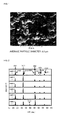
- Fig. 1 is an SEM image of the sintered article obtained as sample 1. As is demonstrated in Fig. 1 , the ceramic particles in the sintered article as sample 1 have a spherical shape.
- Sample 2 was prepared through the preparation method described below.
- Lithium carbonate, sodium carbonate, potassium carbonate, niobium oxide, lanthanum hydroxide, barium carbonate, zirconium oxide, and manganese oxide as elementary raw materials were formulated to make a composition represented by a compositional formula (Li 0.019 Na 0.437 K 0.514 La 0.05 Ba 0.05 ) (Nb 0.95 Zr 0.08 Mn 0.05 )O 3 .
- the formulated materials were mixed and stirred using a ball mill in ethanol as solvent, yielding elementary raw material-mixed slurry.
- a dried form of the obtained elementary raw material-mixed slurry was calcined at 1100°C. Dry-milling the obtained calcined article yielded a calcined powder.
- the obtained calcined powder was mixed with 26 wt% emulsified acrylic binder, 2.8 wt% dispersant, and 38 wt% purified water, all based on the weight of the calcined powder, for 24 hours using a ball mill.
- the obtained slurry was applied to a carrier film and dried, yielding a sheet-shaped article.
- the resulting sheet-shaped article was pressure-bonded after the formation of an inner electrode, yielding a pressure-bonded article. Degreasing this pressure-bonded article and firing the degreased article by maintaining it at 1100°C for 3 hours yielded a sintered article (sample 2).
- Sample 3 was prepared through the preparation method described below.
- Lithium carbonate, sodium carbonate, potassium carbonate, niobium oxide, lanthanum hydroxide, barium carbonate, zirconium oxide, and manganese oxide as elementary raw materials were formulated to make a composition represented by a compositional formula (Li 0.019 Na 0.437 K 0.514 La 0.05 Ba 0.05 ) (Nb 0.95 Zr 0.08 Mn 0.05 )O 3 .
- the formulated materials were mixed and stirred using a ball mill in ethanol as solvent, yielding elementary raw material-mixed slurry.
- a dried form of the obtained elementary raw material-mixed slurry was calcined at 1100°C. Dry-milling the obtained calcined article yielded a calcined powder.
- the obtained calcined powder was mixed with 26 wt% acrylic binder dissolved in water, 2.8 wt% dispersant, and 38 wt% purified water, all based on the weight of the calcined powder, for 24 hours using a ball mill.
- the obtained slurry was applied to a carrier film and dried under a magnetic field of 9.0 T, yielding a sheet-shaped article in which grains were oriented.
- the resulting sheet-shaped article was pressure-bonded after the formation of an inner electrode, yielding a pressure-bonded article. Degreasing this pressure-bonded article and firing the degreased article by maintaining it at 1100°C for 3 hours yielded a sintered article (sample 3).
- Sample 4 was prepared through the preparation method described below.
- Lithium carbonate, sodium carbonate, potassium carbonate, niobium oxide, lanthanum hydroxide, barium carbonate, zirconium oxide, and manganese oxide as elementary raw materials were formulated to make a composition represented by a compositional formula (Li 0.019 Na 0.437 K 0.514 La 0.05 Ba 0.05 ) (Nb 0.95 Zr 0.08 Mn 0.05 ) O 3 .
- the formulated materials were mixed and stirred using a ball mill in ethanol as solvent, yielding elementary raw material-mixed slurry.
- a dried form of the obtained elementary raw material-mixed slurry was calcined at 1100°C. Dry-milling the obtained calcined article yielded a calcined powder.
- the obtained calcined powder was mixed with 2.8 wt% dispersant and 38 wt% purified water for 24 hours using a ball mill.
- the obtained slurry was applied to a carrier film and dried under a magnetic field of 9.0 T. These conditions, under which the dried slurry was brittle and crumbled, did not yield a sheet-shaped article.
- Sample 5 was prepared through the preparation method described below.
- Sodium carbonate, potassium carbonate, and niobium oxide as elementary raw materials were formulated to a compositional formula (Na 0.5 K 0.5 )NbO 3 and mixed and stirred using a ball mill in ethanol as solvent.
- a dried form of the obtained slurry was calcined at 1100°C. Dry-milling the obtained calcined article yielded a calcined powder.
- the obtained calcined powder was mixed with 26 wt% emulsified acrylic binder, 2.8 wt% dispersant, and 38 wt% purified water, all based on the weight of the calcined powder, for 24 hours using a ball mill.
- the obtained slurry was applied to a carrier film and dried under a magnetic field of 9.0 T, yielding a sheet-shaped article.
- the resulting sheet-shaped article was pressure-bonded after the formation of an inner electrode, yielding a pressure-bonded article. Degreasing this pressure-bonded article and firing the degreased article by maintaining it at 1100°C for 3 hours yielded a sintered article (sample 5).
- Sample 6 was prepared through the preparation method described below.
- Lithium carbonate, sodium carbonate, potassium carbonate, calcium carbonate, niobium oxide, zirconium oxide, and manganese oxide as elementary raw materials were formulated to make a composition represented by a compositional formula (Li 0.01 Na 0.442 K 0.514 Ca 0.05 ) (Nb 0.95 Zr 0.03 Mn 0.05 )O 3 .
- the formulated materials were mixed and stirred using a ball mill in ethanol as solvent, yielding elementary raw material-mixed slurry.
- a dried form of the obtained elementary raw material-mixed slurry was calcined at 1100°C. Dry-milling the obtained calcined article yielded a calcined powder.
- the obtained calcined powder was mixed with 26 wt% emulsified acrylic binder, 2.8 wt% dispersant, and 38 wt% purified water, all based on the weight of the calcined powder, for 24 hours using a ball mill.
- the obtained slurry was applied to a carrier film and dried under a magnetic field of 9.0 T, yielding a sheet-shaped article in which grains were oriented.
- the resulting sheet-shaped article was pressure-bonded after the formation of an inner electrode, yielding a pressure-bonded article. Degreasing this pressure-bonded article and firing the degreased article by maintaining it at 1100°C for 3 hours yielded a sintered article (sample 6).
- Sample 7 was prepared through the preparation method described below.
- Lithium carbonate, sodium carbonate, potassium carbonate, bismuth oxide, niobium oxide, titanium oxide, and manganese oxide as elementary raw materials were formulated to make a composition represented by a compositional formula (Li 0.01 Na 0.40 K 0.50 Bi 0.09 ) (Nb 0.95 Ti 0.03 Mn 0.02 )O 3 .
- the formulated materials were mixed and stirred using a ball mill in ethanol as solvent, yielding elementary raw material-mixed slurry.
- a dried form of the obtained elementary raw material-mixed slurry was calcined at 1100°C. Dry-milling the obtained calcined article yielded a calcined powder.
- the obtained calcined powder was mixed with 26 wt% emulsified acrylic binder, 2.8 wt% dispersant, and 38 wt% purified water, all based on the weight of the calcined powder, for 24 hours using a ball mill.
- the obtained slurry was applied to a carrier film and dried under a magnetic field of 9.0 T, yielding a sheet-shaped article in which grains were oriented.
- the resulting sheet-shaped article was pressure-bonded after the formation of an inner electrode, yielding a pressure-bonded article. Degreasing this pressure-bonded article and firing the degreased article by maintaining it at 1100°C for 3 hours yielded a sintered article (sample 7).
- the ceramic particles in the sintered article as sample 7 have a rectangular cubic shape.
- the degree of orientation of the sintered articles obtained as samples through the above preparation method was calculated using mathematical formula (1) below in accordance with the Lotgering method.
- a sintered article having a compositional formula of (Li 0.019 Na 0.437 K 0.514 La 0.05 Ba 0.05 ) (Nb 0.95 Zr 0.08 Mn 0.05 ) O 3 obtained through the firing of an article shaped with no magnetic field applied, was used as a reference sample.
- ⁇ I(HKL) denotes the sum of the intensity of X-ray peaks in a particular grain face (HKL) of the sintered article of interest
- ⁇ I(hkl) denotes the sum of the intensity of X-ray peaks in all grain faces (hkl) of the sintered article of interest
- ⁇ I 0 (HKL) is the sum of the intensity of X-ray peaks in a particular grain face (HKL) of the reference sample
- ⁇ I 0 (hkl) is the sum of the intensity of X-ray peaks in all grain faces (hkl) of the reference sample.
- Fig. 2 presents XRD charts from a ⁇ 100 ⁇ cross-section of the sintered grain-oriented piezoelectric ceramic articles obtained as samples 1 to 3 and samples 5 to 7.
- Table 1 summarizes the results of evaluations of samples 1 to 3 and samples 5 to 7. The table does not include sample 4, which was unevaluable because the aforementioned failure to obtain a sheet-shaped article made it impossible to obtain a sintered grain-oriented piezoelectric ceramic article.
- the average particle diameter and aspect ratio of ceramic particles in each of the sintered articles obtained as samples 1 and 7 were measured.
- the average particle diameter was based on the ceramic particles seen in an SEM image of the sintered ceramic article and determined as the mean of particle diameters in an SEM field of view, with the particle diameter of a ceramic particle defined as the mean of its absolute maximum length and diagonal width.
- the aspect ratio was based on the absolute maximum length divided by the diagonal width of the ceramic particles seen in an SEM image and determined as the mean of this quotient of ceramic particles in an SEM field of view.
- Table 2 summarizes the average particle diameter and aspect ratio of ceramic particles in each of the sintered articles obtained as samples 1 and 7. [Table 2] Sintered article Average particle diameter ( ⁇ m) Aspect ratio Sample 1 0.3 1.3 Sample 7 2.2 1.8
- Samples 1, 6, and 7 in Table 1 indicate that the application of a magnetic field and the use of emulsified acrylic resin as a binder resulted in a degree of orientation of 0.30 or more, with regard to the degree of orientation as calculated using the Lotgering method on a ⁇ 100 ⁇ cross-section.
- Sample 5 made from a slurry that does not take a tetragonal phase at any temperature within the temperature range of 0°C to 100°C and therefore in which the magnetic anisotropy of ceramic particles cannot be increased, had a small degree of orientation as calculated using the Lotgering method on a ⁇ 100 ⁇ cross-section. Although the slurry takes a tetragonal phase at a temperature within the temperature range of 200°C to 400°C, it cannot exist as aqueous slurry at this temperature because of the evaporation of water.
- samples 1 and 7 have an aspect ratio of 5 or less and an average particle diameter of 0.3 ⁇ m to 2.2 ⁇ m. This allows a sintered multilayer ceramic article to be obtained with a reduced thickness per layer.
Landscapes
- Engineering & Computer Science (AREA)
- Chemical & Material Sciences (AREA)
- Ceramic Engineering (AREA)
- Manufacturing & Machinery (AREA)
- Materials Engineering (AREA)
- Structural Engineering (AREA)
- Organic Chemistry (AREA)
- Inorganic Chemistry (AREA)
- Compositions Of Oxide Ceramics (AREA)
Abstract
Description
- This invention relates to an (Li, Na, K)NbO3-based grain-oriented piezoelectric ceramic and a method for producing it.
- Perovskite-structured grain-oriented piezoelectric ceramics have been used as dielectric materials and piezoelectric materials. It is known that making the grains in these perovskite-structured grain-oriented piezoelectric further oriented improves their electrical characteristics.
- An example of a proposed method for producing a perovskite-structured grain-oriented piezoelectric ceramic based on an alkaline niobate compound ((K, Na)NbO3) is a technology described in
Patent Document 1. The technology described inPatent Document 1 is a method for producing a grain-oriented piezoelectric ceramic, the method including a mixing step that involves mixing a first anisotropically shaped powder in lattice matching with a particular grain face of a first perovskite alkaline pentavalent metal acid compound and a first reactant that reacts with the first anisotropically shaped powder to form the first perovskite alkaline pentavalent metal acid compound, a shaping step that involves shaping the mixture obtained in the mixing step to make the first anisotropically shaped powder oriented, and a heat treatment step that involves heating the shaped article obtained in the shaping step to bring the first anisotropically shaped powder and the first reactant into reaction. - In other words, the method described in
Patent Document 1 for producing a grain-oriented piezoelectric ceramic is a production method that yields a (K, Na)NbO3-based grain-oriented piezoelectric ceramic oriented through a RTGG (Reactive Templated Grain Growth) method using NaNbO3, a platelike powder, as template particles and a non-platelike NN (NaNbO3) powder as raw materials and a non-platelike KN (KNbO3) powder as raw materials for calcination. - Patent Document 1: Japanese Unexamined Patent Application Publication No.
2003-012373 - The method described in
Patent Document 1 for producing a grain-oriented piezoelectric ceramic is, however, a technology that requires anisotropically shaped particles as template particles. Preparing these template particles requires a heat treatment in flux, which poses problems such as flux component residue in the anisotropically shaped particles, flux-induced damage to the heat treatment furnace, and the need for processing of removed flux. The preparation of the platelike powder as template particles, furthermore, involves the use of a strong acid after elemental substitution of the platelike powder to remove the Bi compound resulting from the substitution, which poses the problem of many production difficulties and great burdens on operators and the environment. A disadvantage of the method described inPatent Document 1 for producing a grain-oriented piezoelectric ceramic is therefore high cost due to a complicated production process. This method, in which orientation is through arrangement of anisotropically shaped particles during a sheet-shaping-based shaping step, is also disadvantageous in that the direction of orientation is limited. Furthermore, the resulting ceramics, composed of block-shaped particles laid up like bricks, are likely to have cracks. - The primary object of this invention is therefore to provide a grain-oriented piezoelectric ceramic that has a perovskite structure based on a potassium niobate compound containing at least Li and Na and can be produced using a known process for producing piezoelectric ceramics and can be oriented with a high degree of orientation in any intended direction, as well as a method for producing this grain-oriented piezoelectric ceramic.
- A grain-oriented piezoelectric ceramic according to this invention has a perovskite structure based on a potassium niobate compound containing at least Li and Na. The aspect ratio of the ceramic particles constituting the grain-oriented piezoelectric ceramic is 5 or less. The grain-oriented piezoelectric ceramic has an axis oriented in the {100} direction of the perovskite structure. The degree of orientation as determined using the Lotgering method on the basis of an X-ray diffraction pattern of a cross-section taken in this direction is 0.30 or more.
- It is preferred that the grain-oriented piezoelectric ceramic according to this invention having a perovskite structure take a tetragonal phase as its most stable or metastable grain structure at a temperature in a temperature range of 0°C to 100°C.
- Furthermore, it is preferred that the average particle diameter of the ceramic particles in the grain-oriented piezoelectric ceramic according to this invention be in a range of 0.3 µm to 2.2 µm.
- A method according to this invention for producing a grain-oriented piezoelectric ceramic is for producing a perovskite-structured grain-oriented piezoelectric ceramic whose degree of orientation as determined using the Lotgering method on the basis of an X-ray diffraction pattern of its predetermined cross-section is 0.30 or more. The method includes a step of preparing elementary raw material-mixed slurry containing an elementary raw material that is a perovskite compound based on a potassium niobate compound that contains at least Li and Na, a step of calcining a dried form of the elementary raw material-mixed slurry to prepare a calcined powder that takes a tetragonal phase as its most stable or metastable grain structure at a temperature in a temperature range of 0°C to 100°C, a step of preparing calcined powder slurry that contains the calcined powder, a step of shaping the calcined powder slurry into a sheet, and a step of applying a magnetic field to the sheet shaped from the calcined powder slurry.
- In the method according to this invention for producing a grain-oriented piezoelectric ceramic, it is preferred that the step of preparing calcined powder slurry includes adding emulsified acrylic resin as a binder.
- A grain-oriented piezoelectric ceramic according to this invention, having a perovskite structure based on a potassium niobate compound containing at least Li and Na, is highly oriented as demonstrated by a degree of orientation of 0.30 or more determined using the Lotgering method. The aspect ratio of the ceramic particles constituting this grain-oriented piezoelectric ceramic is 5 or less, making the anisotropy of the grain-oriented piezoelectric ceramic in deflective strength small.
- Ensuring a grain-oriented piezoelectric ceramic according to this invention having a perovskite structure takes a tetragonal phase as its most stable or metastable grain structure at a temperature in a temperature range of 0°C to 100°C allows the user to enhance the anisotropy of the grains by adjusting the temperature of the ceramic slurry to this temperature and to make the ceramic particles oriented by applying a magnetic field even when the slurry contains a binder.
- Furthermore, ensuring the average particle diameter of the ceramic particles in the grain-oriented piezoelectric ceramic according to this invention is in a range of 0.3 µm to 2.2 µm provides a sintered multilayer ceramic article that may have a reduced thickness per layer.
- A method according to this invention for producing a grain-oriented piezoelectric ceramic makes the grain-oriented piezoelectric ceramic highly oriented, as demonstrated by a degree of orientation of 0.30 or more determined using the Lotgering method, despite the perovskite structure based on a potassium niobate compound containing at least Li and Na.
- In a method according to this invention for producing a grain-oriented piezoelectric ceramic, furthermore, adding emulsified acrylic resin as a binder in the step of preparing calcined powder slurry prevents the ceramic particles and the binder from binding together in the calcined powder slurry and therefore prevents the ceramic particles from aggregating, ensuring an oriented sheet-shaped article is obtained even when the magnetic anisotropy of the ceramic particles is small.
- This invention provides a grain-oriented piezoelectric ceramic that is based on a potassium niobate compound containing at least Li and Na and can be produced using a known process for producing piezoelectric ceramics and can be oriented with a high degree of orientation in any intended direction, as well as a method for producing this grain-oriented piezoelectric ceramic.
- The foregoing object, other objects, features, and advantages of this invention will become more apparent from the following description of embodiments made with reference to drawings.
-
- [
Fig. 1] Fig. 1 is a SEM image of a sintered article obtained assample 1. - [
Fig. 2] Fig. 2 presents XRD charts from a predetermined cross-section of sintered grain-oriented piezoelectric ceramic articles obtained assamples 1 to 3 andsamples 5 to 7. - The following describes an embodiment of a grain-oriented piezoelectric ceramic according to this invention and a method according to this invention for producing it.
- A grain-oriented piezoelectric ceramic according to the present invention has a perovskite structure based on a potassium niobate compound that contains at least Li and Na (hereinafter referred to as (Li, Na, K)NbO3). The ceramic particles constituting this grain-oriented piezoelectric ceramic have a spherical or rectangular cubic shape, and their aspect ratio is 5 or less. It is preferred that the average particle diameter of these ceramic particles be in the range of 0.3 µm to 2.2 µm. Making the average particle diameter of the ceramic particles fall within this range ensures a sintered multilayer ceramic article with a reduced thickness per layer is obtained. In an SEM image taken under conditions where the magnification has been adjusted to make the number of ceramic particles of the sintered ceramic article per field of
view 30 or more, the particle diameter is based on the ceramic particles seen in the SEM image and determined as the mean of particle diameters in an SEM field of view, with the average particle diameter of a ceramic particle defined as the mean of the length of the particle in the direction where it is the largest in the SEM image (hereinafter absolute maximum length) and the maximum width of the particle in the direction perpendicular to the absolute maximum length (hereinafter diagonal width). The aspect ratio is based on the absolute maximum length divided by the diagonal width of the ceramic particles seen in an SEM image and determined as the mean of this quotient of ceramic particles in an SEM field of view. - A grain-oriented piezoelectric ceramic according to the present invention having a perovskite structure takes a tetragonal phase as its most stable or metastable grain structure at a temperature in a temperature range of 0°C to 100°C.
- A grain-oriented piezoelectric ceramic according to the present invention has an axis oriented in the {100} direction. The degree of orientation as determined on a cross-section taken in the {100} direction using the Lotgering method on the basis of an X-ray diffraction (XRD) pattern of a predetermined cross-section of the grain-oriented piezoelectric ceramic is 0.30 or more. The Lotgering method is described in detail hereinafter.
- Ensuring the grain structure of the grain-oriented piezoelectric ceramic having a (Li, Na, K)NbO3-based perovskite structure is a tetragonal phase in the present invention offers the following advantages.
- In general, a grain-oriented piezoelectric ceramic having a (Li, Na, K)NbO3-based perovskite structure is difficult to make further oriented through the application of a magnetic field because of its small grain-orientational anisotropy in magnetic susceptibility (magnetic anisotropy). It is particularly difficult to make this ceramic further oriented in the presence of a binder because in such a case the binder hinders the rotation of particles the magnetic field drives. Making its grain structure a tetragonal phase enhances the magnetic anisotropy of the grains, allowing the ceramic particles to be oriented upon the application of a magnetic field even when the slurry contains a binder.
- A grain-oriented piezoelectric ceramic according to the present invention is therefore a grain-oriented piezoelectric ceramic that has a (Li, Na, K)NbO3-based perovskite structure and whose degree of orientation as determined using the Lotgering method on the basis of an X-ray diffraction (XRD) pattern of its predetermined cross-section is 0.30 or more.
- The following describes an embodiment of a method according to the present invention for producing a grain-oriented piezoelectric ceramic.
- For the production of a grain-oriented piezoelectric ceramic according to the present invention, a ceramic having a perovskite structure based on a potassium niobate compound that contains at least Li and Na (hereinafter referred to as (Li, Na, K)NbO3) is prepared. Elementary raw materials for (Li, Na, K)NbO3, e.g., lithium carbonate, sodium carbonate, potassium carbonate, niobium oxide, lanthanum hydroxide, barium carbonate, zirconium oxide, and manganese oxide, are formulated to a compositional formula (Li0.019Na0.437K0.514La0.05Ba0.05) (Nb0.95Zr0.08Mn0.05) O3. Mixing and stirring the formulated materials using a ball mill in ethanol as solvent yields elementary raw material-mixed slurry. It is possible to use lithium carbonate, sodium carbonate, potassium carbonate, calcium carbonate, niobium oxide, zirconium oxide, and manganese oxide as elementary raw materials for (Li, Na, K)NbO3 and formulate them to make a composition represented by a compositional formula (Li0.01Na0.442K0.514Ca0.05) (Nb0.95Zr0.03Mn0.05)O3. It is also possible to use lithium carbonate, sodium carbonate, potassium carbonate, bismuth oxide, niobium oxide, titanium oxide, and manganese oxide and formulate them to make a composition represented by a compositional formula (Li0.01Na0.40K0.50Bi0.09) (Nb0.95Ti0.03Mn0.02)O3.
- The obtained elementary raw material-mixed slurry is dried. Calcining the dried slurry at, for example, 1100°C, yields a calcined article. Dry-milling this calcined article yields a calcined powder. Then mixing this calcined powder with a binder for 24 hours yields calcined powder slurry. The binder is emulsified acrylic resin or acrylic resin dissolved in water, and it is preferred to use emulsified acrylic resin.
- The produced calcined powder slurry is applied to a carrier film and dried under a magnetic field. This shapes a green sheet. Applying a magnetic field to the produced calcined powder slurry in this way makes the grain axis of the grains in the green sheet oriented in a predetermined direction (e.g., the {100} direction) in response to the applied magnetic field.
- Then pieces of a predetermined size are punched out of the shaped green sheet after an inner electrode has been formed on either primary surface of the green sheet through, for example, the application of Ag paste. Stacking and pressure-bonding these pieces yield a pressure-bonded article. Degreasing the obtained pressure-bonded article and then, for example, firing the degreased article at 1100°C for 3 hours produces the desired grain-oriented piezoelectric ceramic.
- The use of emulsified acrylic resin as a binder in a method according to the present invention for producing a grain-oriented piezoelectric ceramic offers the following advantages.
- Polyvinyl alcohol, polyvinyl acetate, polyvinyl butyral resin, cellulose resin, and water-soluble acrylic resin, which are binders used in ordinary sheet shaping, adhere in the form of binder molecules to the surface of the ceramic particles constituting the calcined powder in the calcined powder slurry and, furthermore, make multiple ceramic particles bind and aggregate together. When ceramic particles aggregate together, orientational misalignment between the ceramic particles cancels the overall anisotropy of the aggregate and reduces the apparent overall magnetic anisotropy of the aggregate. In the production of a grain-oriented piezoelectric ceramic that has a perovskite structure based on a (Li, Na, K)NbO3 compound, which is of small anisotropy, this prevents the ceramic having a degree of magnetic anisotropy needed for orientation and makes it difficult to obtain a grain-oriented piezoelectric ceramic through the application of a magnetic field. As a solution to this problem, the use of emulsified acrylic resin as a binder prevents the ceramic particles constituting the calcined powder and the binder from binding together in the calcined powder slurry and prevents the ceramic particles from aggregating together, ensuring an oriented sheet-shaped article is obtained even when the magnetic anisotropy of the ceramic particles is small. When a sheet shaped from the ceramic is dried, furthermore, the binder binds the ceramic particles together, yielding a sheet-shaped article with a level of strength that makes the article workable.
- Applying a method according to the present invention for producing a grain-oriented piezoelectric ceramic to methods for preparing a grain-oriented ceramic that yield an oriented sheet-shaped article through the shaping of a slurry of a ceramic powder having a (Li, Na, K)NbO3-based perovskite structure into a sheet ensures a highly grain-oriented piezoelectric ceramic is obtained despite through sheet shaping because the grain structure of the ceramic powder is a tetragonal phase. This means that a method according to the present invention for producing a grain-oriented piezoelectric ceramic can be applied to known production methods simply with the addition of a step of applying a magnetic field during sheet shaping, without any change to any other step.
- In a method according to the present invention for producing a grain-oriented piezoelectric ceramic, furthermore, the use of emulsified acrylic resin as the binder in the calcined powder slurry would ensure an oriented sheet-shaped article is obtained even when the magnetic anisotropy of the ceramic particles is small, thereby guaranteeing that a workable and oriented shaped article is obtained despite the use of a (Li, Na, K)NbO3 compound, which is of small grain anisotropy and difficult to make oriented using a magnetic field. Moreover, the user can obtain a sheet-shaped article oriented in any desired direction with respect to the sheet face by changing the direction in which the magnetic field is applied. In the production of a multilayer ceramic having an inner electrode, in particular, this allows the user to make the grains oriented in any direction advantageous for the improvement of the electrical characteristics of the device whatever the structure of the inner electrode of the ceramic is.
- The following describes illustrative experiments conducted to verify the advantages of grain-oriented piezoelectric ceramics produced using a method according to the present invention for producing a grain-oriented piezoelectric ceramic.
-
Sample 1 was prepared through the preparation method described below. - Lithium carbonate, sodium carbonate, potassium carbonate, niobium oxide, lanthanum hydroxide, barium carbonate, zirconium oxide, and manganese oxide as elementary raw materials were formulated to make a composition represented by a compositional formula (Li0.019Na0.437K0.514La0.05Ba0.05) (Nb0.95Zr0.08Mn0.05) O3. The formulated materials were mixed and stirred using a ball mill in ethanol as solvent, yielding elementary raw material-mixed slurry. A dried form of the obtained elementary raw material-mixed slurry was calcined at 1100°C. Dry-milling the obtained calcined article yielded a calcined powder.
- The obtained calcined powder was mixed with 26 wt% emulsified acrylic binder, 2.8 wt% dispersant, and 38 wt% purified water, all based on the weight of the calcined powder, for 24 hours using a ball mill. The obtained slurry was applied to a carrier film and dried under a magnetic field of 9.0 T, yielding a sheet-shaped article in which grains were oriented. The resulting sheet-shaped article was pressure-bonded after the formation of an inner electrode, yielding a pressure-bonded article. Degreasing this pressure-bonded article and firing the degreased article by maintaining it at 1100°C for 3 hours yielded a sintered article (sample 1).
Fig. 1 is an SEM image of the sintered article obtained assample 1. As is demonstrated inFig. 1 , the ceramic particles in the sintered article assample 1 have a spherical shape. -
Sample 2 was prepared through the preparation method described below. - Lithium carbonate, sodium carbonate, potassium carbonate, niobium oxide, lanthanum hydroxide, barium carbonate, zirconium oxide, and manganese oxide as elementary raw materials were formulated to make a composition represented by a compositional formula (Li0.019Na0.437K0.514La0.05Ba0.05) (Nb0.95Zr0.08Mn0.05)O3. The formulated materials were mixed and stirred using a ball mill in ethanol as solvent, yielding elementary raw material-mixed slurry. A dried form of the obtained elementary raw material-mixed slurry was calcined at 1100°C. Dry-milling the obtained calcined article yielded a calcined powder.
- The obtained calcined powder was mixed with 26 wt% emulsified acrylic binder, 2.8 wt% dispersant, and 38 wt% purified water, all based on the weight of the calcined powder, for 24 hours using a ball mill. The obtained slurry was applied to a carrier film and dried, yielding a sheet-shaped article. The resulting sheet-shaped article was pressure-bonded after the formation of an inner electrode, yielding a pressure-bonded article. Degreasing this pressure-bonded article and firing the degreased article by maintaining it at 1100°C for 3 hours yielded a sintered article (sample 2).
-
Sample 3 was prepared through the preparation method described below. - Lithium carbonate, sodium carbonate, potassium carbonate, niobium oxide, lanthanum hydroxide, barium carbonate, zirconium oxide, and manganese oxide as elementary raw materials were formulated to make a composition represented by a compositional formula (Li0.019Na0.437K0.514La0.05Ba0.05) (Nb0.95Zr0.08Mn0.05)O3. The formulated materials were mixed and stirred using a ball mill in ethanol as solvent, yielding elementary raw material-mixed slurry. A dried form of the obtained elementary raw material-mixed slurry was calcined at 1100°C. Dry-milling the obtained calcined article yielded a calcined powder.
- The obtained calcined powder was mixed with 26 wt% acrylic binder dissolved in water, 2.8 wt% dispersant, and 38 wt% purified water, all based on the weight of the calcined powder, for 24 hours using a ball mill. The obtained slurry was applied to a carrier film and dried under a magnetic field of 9.0 T, yielding a sheet-shaped article in which grains were oriented. The resulting sheet-shaped article was pressure-bonded after the formation of an inner electrode, yielding a pressure-bonded article. Degreasing this pressure-bonded article and firing the degreased article by maintaining it at 1100°C for 3 hours yielded a sintered article (sample 3).
- Sample 4 was prepared through the preparation method described below.
- Lithium carbonate, sodium carbonate, potassium carbonate, niobium oxide, lanthanum hydroxide, barium carbonate, zirconium oxide, and manganese oxide as elementary raw materials were formulated to make a composition represented by a compositional formula (Li0.019Na0.437K0.514La0.05Ba0.05) (Nb0.95Zr0.08Mn0.05) O3. The formulated materials were mixed and stirred using a ball mill in ethanol as solvent, yielding elementary raw material-mixed slurry. A dried form of the obtained elementary raw material-mixed slurry was calcined at 1100°C. Dry-milling the obtained calcined article yielded a calcined powder.
- The obtained calcined powder was mixed with 2.8 wt% dispersant and 38 wt% purified water for 24 hours using a ball mill. The obtained slurry was applied to a carrier film and dried under a magnetic field of 9.0 T. These conditions, under which the dried slurry was brittle and crumbled, did not yield a sheet-shaped article.
-
Sample 5 was prepared through the preparation method described below. - Sodium carbonate, potassium carbonate, and niobium oxide as elementary raw materials were formulated to a compositional formula (Na0.5K0.5)NbO3 and mixed and stirred using a ball mill in ethanol as solvent. A dried form of the obtained slurry was calcined at 1100°C. Dry-milling the obtained calcined article yielded a calcined powder.
- The obtained calcined powder was mixed with 26 wt% emulsified acrylic binder, 2.8 wt% dispersant, and 38 wt% purified water, all based on the weight of the calcined powder, for 24 hours using a ball mill. The obtained slurry was applied to a carrier film and dried under a magnetic field of 9.0 T, yielding a sheet-shaped article. The resulting sheet-shaped article was pressure-bonded after the formation of an inner electrode, yielding a pressure-bonded article. Degreasing this pressure-bonded article and firing the degreased article by maintaining it at 1100°C for 3 hours yielded a sintered article (sample 5).
-
Sample 6 was prepared through the preparation method described below. - Lithium carbonate, sodium carbonate, potassium carbonate, calcium carbonate, niobium oxide, zirconium oxide, and manganese oxide as elementary raw materials were formulated to make a composition represented by a compositional formula (Li0.01Na0.442K0.514Ca0.05) (Nb0.95Zr0.03Mn0.05)O3. The formulated materials were mixed and stirred using a ball mill in ethanol as solvent, yielding elementary raw material-mixed slurry. A dried form of the obtained elementary raw material-mixed slurry was calcined at 1100°C. Dry-milling the obtained calcined article yielded a calcined powder.
- The obtained calcined powder was mixed with 26 wt% emulsified acrylic binder, 2.8 wt% dispersant, and 38 wt% purified water, all based on the weight of the calcined powder, for 24 hours using a ball mill. The obtained slurry was applied to a carrier film and dried under a magnetic field of 9.0 T, yielding a sheet-shaped article in which grains were oriented. The resulting sheet-shaped article was pressure-bonded after the formation of an inner electrode, yielding a pressure-bonded article. Degreasing this pressure-bonded article and firing the degreased article by maintaining it at 1100°C for 3 hours yielded a sintered article (sample 6).
-
Sample 7 was prepared through the preparation method described below. - Lithium carbonate, sodium carbonate, potassium carbonate, bismuth oxide, niobium oxide, titanium oxide, and manganese oxide as elementary raw materials were formulated to make a composition represented by a compositional formula (Li0.01Na0.40K0.50Bi0.09) (Nb0.95Ti0.03Mn0.02)O3. The formulated materials were mixed and stirred using a ball mill in ethanol as solvent, yielding elementary raw material-mixed slurry. A dried form of the obtained elementary raw material-mixed slurry was calcined at 1100°C. Dry-milling the obtained calcined article yielded a calcined powder.
- The obtained calcined powder was mixed with 26 wt% emulsified acrylic binder, 2.8 wt% dispersant, and 38 wt% purified water, all based on the weight of the calcined powder, for 24 hours using a ball mill. The obtained slurry was applied to a carrier film and dried under a magnetic field of 9.0 T, yielding a sheet-shaped article in which grains were oriented. The resulting sheet-shaped article was pressure-bonded after the formation of an inner electrode, yielding a pressure-bonded article. Degreasing this pressure-bonded article and firing the degreased article by maintaining it at 1100°C for 3 hours yielded a sintered article (sample 7). The ceramic particles in the sintered article as
sample 7 have a rectangular cubic shape. - The degree of orientation of the sintered articles obtained as samples through the above preparation method was calculated using mathematical formula (1) below in accordance with the Lotgering method. In the calculations of the degree of orientation, a sintered article having a compositional formula of (Li0.019Na0.437K0.514La0.05Ba0.05) (Nb0.95Zr0.08Mn0.05) O3, obtained through the firing of an article shaped with no magnetic field applied, was used as a reference sample.
- [Math. 1]

- ΣI(HKL) denotes the sum of the intensity of X-ray peaks in a particular grain face (HKL) of the sintered article of interest, and ΣI(hkl) denotes the sum of the intensity of X-ray peaks in all grain faces (hkl) of the sintered article of interest. ΣI0(HKL) is the sum of the intensity of X-ray peaks in a particular grain face (HKL) of the reference sample, and ΣI0(hkl) is the sum of the intensity of X-ray peaks in all grain faces (hkl) of the reference sample.
- The degree of orientation was based on indexable peaks observed within the range where 2θ = 15° to 65° in the XRD chart.
Fig. 2 presents XRD charts from a {100} cross-section of the sintered grain-oriented piezoelectric ceramic articles obtained assamples 1 to 3 andsamples 5 to 7. Table 1 summarizes the results of evaluations ofsamples 1 to 3 andsamples 5 to 7. The table does not include sample 4, which was unevaluable because the aforementioned failure to obtain a sheet-shaped article made it impossible to obtain a sintered grain-oriented piezoelectric ceramic article.[Table 1] Sintered article Composition Binder Magnetic field applied while shaping Degree of orientation according to the Lotgering method Sample 1 (Li0.019Na0.437K0.514La0.05Ba0.05) Emulsified acrylic resin Yes 0.30 (Nb0.95Zr0.08Mn0.05)O3 Sample 2* (Li0.019Na0.437K0.514La0.05Ba0.05) Emulsified acrylic resin No 0.00 (Nb0.95Zr0.08Mn0.05)O3 Sample 3* (Li0.019Na0.437K0.514La0.05Ba0.05) Acrylic resin dissolved in water Yes 0.03 (Nb0.95Zr0.08Mn0.05)O3 Sample 5* (Na0.5K0.5)NbO3 Emulsified acrylic resin Yes 0.07 Sample 6 (Li0.01Na0.442K0.514Ca0.05) Emulsified acrylic resin Yes 0.49 (Nb0.95Zr0.03Mn0.05)O3 Sample 7 (Li0.01 Na0.40K0.50Bi0.09) Emulsified acrylic resin Yes 0.46 (Nb0.95Ti0.03Mn0.02)O3 - The symbol * in the table means that the sample is out of the scope of the present invention.
- Furthermore, the average particle diameter and aspect ratio of ceramic particles in each of the sintered articles obtained as
samples samples [Table 2] Sintered article Average particle diameter (µm) Aspect ratio Sample 1 0.3 1.3 Sample 72.2 1.8 -
Samples -
Sample 5, made from a slurry that does not take a tetragonal phase at any temperature within the temperature range of 0°C to 100°C and therefore in which the magnetic anisotropy of ceramic particles cannot be increased, had a small degree of orientation as calculated using the Lotgering method on a {100} cross-section. Although the slurry takes a tetragonal phase at a temperature within the temperature range of 200°C to 400°C, it cannot exist as aqueous slurry at this temperature because of the evaporation of water. - According to Table 2, furthermore,
samples
Claims (5)
- A grain-oriented piezoelectric ceramic comprising a perovskite structure based on a potassium niobate compound containing at least Li and Na, wherein
an aspect ratio of ceramic particles constituting the grain-oriented piezoelectric ceramic is 5 or less, the grain-oriented piezoelectric ceramic has an axis oriented in a {100} direction of the perovskite structure, and a degree of orientation as determined using the Lotgering method on the basis of an X-ray diffraction pattern of a cross-section taken in the direction is 0.30 or more. - The grain-oriented piezoelectric ceramic according to Claim 1, wherein the grain-oriented piezoelectric ceramic having a perovskite structure takes a tetragonal phase as a most stable or metastable grain structure thereof at a temperature in a temperature range of 0°C to 100°C.
- The grain-oriented piezoelectric ceramic according to Claim 1 or 2, wherein an average particle diameter of the ceramic particles is in a range of 0.3 µm to 2.2 µm.
- A method for producing a grain-oriented piezoelectric ceramic, the grain-oriented piezoelectric ceramic being a perovskite-structured grain-oriented piezoelectric ceramic whose degree of orientation as determined using the Lotgering method on the basis of an X-ray diffraction pattern of a predetermined cross-section thereof is 0.30 or more, the method comprising:a step of preparing elementary raw material-mixed slurry containing an elementary raw material that is a perovskite compound based on a potassium niobate compound that contains at least Li and Na;a step of calcining a dried form of the elementary raw material-mixed slurry to prepare a calcined powder that takes a tetragonal phase as a most stable or metastable grain structure thereof at a temperature in a temperature range of 0°C to 100°C;a step of preparing calcined powder slurry containing the calcined powder;a step of shaping the calcined powder slurry into a sheet; anda step of applying a magnetic field to the sheet shaped from the calcined powder slurry.
- The grain-oriented piezoelectric ceramic according to Claim 4, wherein the step of preparing calcined powder slurry includes
adding emulsified acrylic resin as a binder.
Applications Claiming Priority (2)
| Application Number | Priority Date | Filing Date | Title |
|---|---|---|---|
| JP2013021100 | 2013-02-06 | ||
| PCT/JP2014/052623 WO2014123134A1 (en) | 2013-02-06 | 2014-02-05 | Piezoelectric oriented ceramic and method for manufacturing same |
Publications (2)
| Publication Number | Publication Date |
|---|---|
| EP2955166A1 true EP2955166A1 (en) | 2015-12-16 |
| EP2955166A4 EP2955166A4 (en) | 2016-10-05 |
Family
ID=51299726
Family Applications (1)
| Application Number | Title | Priority Date | Filing Date |
|---|---|---|---|
| EP14749006.4A Withdrawn EP2955166A4 (en) | 2013-02-06 | 2014-02-05 | Piezoelectric oriented ceramic and method for manufacturing same |
Country Status (3)
| Country | Link |
|---|---|
| EP (1) | EP2955166A4 (en) |
| JP (1) | JP5967228B2 (en) |
| WO (1) | WO2014123134A1 (en) |
Cited By (1)
| Publication number | Priority date | Publication date | Assignee | Title |
|---|---|---|---|---|
| CN114342099A (en) * | 2020-06-09 | 2022-04-12 | Tdk电子股份有限公司 | Piezoelectric assembly and method of forming a piezoelectric assembly |
Families Citing this family (2)
| Publication number | Priority date | Publication date | Assignee | Title |
|---|---|---|---|---|
| JP7194547B2 (en) * | 2018-10-01 | 2022-12-22 | Dowaエレクトロニクス株式会社 | composite oxide powder |
| JP7656911B2 (en) * | 2021-06-23 | 2025-04-04 | 国立研究開発法人物質・材料研究機構 | Thermoelectric material, its manufacturing method and thermoelectric generation element |
Family Cites Families (15)
| Publication number | Priority date | Publication date | Assignee | Title |
|---|---|---|---|---|
| JP4135389B2 (en) | 2001-04-23 | 2008-08-20 | 株式会社豊田中央研究所 | Method for producing crystal-oriented ceramics, anisotropic shaped powder and method for producing the same |
| JP4450636B2 (en) * | 2004-02-12 | 2010-04-14 | 株式会社豊田中央研究所 | Method for manufacturing piezoelectric ceramics |
| JP5219388B2 (en) * | 2006-03-17 | 2013-06-26 | 日本碍子株式会社 | Piezoelectric ceramics and manufacturing method thereof |
| US7845768B2 (en) * | 2006-09-08 | 2010-12-07 | Konica Minolta Holdings, Inc. | Liquid droplet ejection head |
| JP2008109072A (en) * | 2006-09-26 | 2008-05-08 | Ngk Insulators Ltd | Monomorph type piezoelectric / electrostrictive element and manufacturing method thereof |
| JP5281269B2 (en) * | 2007-02-26 | 2013-09-04 | 日本碍子株式会社 | Ceramic sheet and method for producing crystallographically oriented ceramics |
| JP4726082B2 (en) * | 2007-02-27 | 2011-07-20 | 国立大学法人長岡技術科学大学 | Method for producing crystal-oriented ceramics |
| JP5319208B2 (en) * | 2008-08-28 | 2013-10-16 | 京セラ株式会社 | Piezoelectric ceramic and piezoelectric element using the same |
| JP2010225705A (en) * | 2009-03-20 | 2010-10-07 | Nippon Soken Inc | Multilayer piezoelectric element and method for manufacturing the same |
| JP5572998B2 (en) * | 2009-05-22 | 2014-08-20 | Tdk株式会社 | Piezoelectric ceramic composition and piezoelectric element |
| CN102101772B (en) * | 2009-12-16 | 2013-08-21 | 佛山市华南精细陶瓷技术研究开发中心 | Water-based casting dielectric ceramic raw belt |
| JP2011179056A (en) * | 2010-02-26 | 2011-09-15 | Taiheiyo Cement Corp | Sputtering target |
| JP2011251866A (en) * | 2010-06-01 | 2011-12-15 | Ngk Insulators Ltd | Piezoelectricity/electrostriction ceramic sintered compact, and piezoelectricity/electrostrictive element |
| JP5832244B2 (en) * | 2011-10-31 | 2015-12-16 | 太陽誘電株式会社 | Manufacturing method of ceramic particle aggregate for piezoelectric ceramic device and manufacturing method of piezoelectric ceramic device |
| JP2014012620A (en) * | 2012-07-05 | 2014-01-23 | Murata Mfg Co Ltd | Production method of orientation ceramic, orientation ceramic, and ceramic electronic component |
-
2014
- 2014-02-05 JP JP2014560776A patent/JP5967228B2/en active Active
- 2014-02-05 WO PCT/JP2014/052623 patent/WO2014123134A1/en not_active Ceased
- 2014-02-05 EP EP14749006.4A patent/EP2955166A4/en not_active Withdrawn
Cited By (1)
| Publication number | Priority date | Publication date | Assignee | Title |
|---|---|---|---|---|
| CN114342099A (en) * | 2020-06-09 | 2022-04-12 | Tdk电子股份有限公司 | Piezoelectric assembly and method of forming a piezoelectric assembly |
Also Published As
| Publication number | Publication date |
|---|---|
| JPWO2014123134A1 (en) | 2017-02-02 |
| WO2014123134A1 (en) | 2014-08-14 |
| JP5967228B2 (en) | 2016-08-10 |
| EP2955166A4 (en) | 2016-10-05 |
Similar Documents
| Publication | Publication Date | Title |
|---|---|---|
| JP5557572B2 (en) | Ceramics, piezoelectric element, and method for manufacturing piezoelectric element | |
| Selvamani et al. | Dielectric, structural and Raman studies on (Na0. 5Bi0. 5TiO3)(1− x)(BiCrO3) x ceramic | |
| US7618551B2 (en) | Piezoelectric ceramic and method of manufacturing the same | |
| CN101130462B (en) | Anisotropically shaped powder, related manufacturing method, and method of manufacturing crystal oriented ceramics | |
| Luo et al. | Two novel low-firing germanates Li2MGe3O8 (M= Ni, Co) microwave dielectric ceramics with spinel structure | |
| EP2505557A1 (en) | Anisotropically shaped powder and method for producing the same | |
| US20090121374A1 (en) | Method of manufacturing crystal oriented ceramics | |
| JP2009114037A (en) | Method for producing crystal-oriented ceramics | |
| EP2184792A2 (en) | Ceramic sheet and method for producing the same | |
| JP3666182B2 (en) | Method for producing crystal-oriented ceramics | |
| EP2955166A1 (en) | Piezoelectric oriented ceramic and method for manufacturing same | |
| JP6579318B2 (en) | Ion conductive ceramics and method for producing the same | |
| JP2010163313A (en) | Method of manufacturing crystal-orientated ceramic | |
| EP2128111B1 (en) | Crystal aligned ceramic | |
| JP5873641B2 (en) | Method for producing BaTi2O5 composite oxide | |
| JP2015222780A (en) | Piezoelectric ceramics, method for producing the same, and piezoelectric element | |
| JP4853477B2 (en) | Anisotropic shaped ceramic particles and method for producing the same | |
| JP2000034194A (en) | Crystal oriented bismuth layered perovskite compound and method for producing the same | |
| Nogas-Ćwikiel et al. | Fabrication of 0.95 BaTiO 3-0.05 Pb (Mg 1/3 Nb 2/3) O 3 ceramics by conventional solid state reaction method | |
| JP5233778B2 (en) | Method for producing anisotropically shaped powder and crystallographically oriented ceramics | |
| JP2013001591A (en) | Piezoelectric ceramic composition | |
| WO2025004631A1 (en) | Method for producing fluoride | |
| Tani et al. | Relationship between Pre-sintering Conditions and Sintering behavior of Bi0. 5 (Na, K) 0.5 TiO3Ceramics Textured by Reactive Templated Grain Growth Method | |
| JPS6227328A (en) | Method for producing easily sinterable perovskite and its solid solution raw material powder | |
| JP2009256147A (en) | Anisotropically formed powder and method for manufacturing crystal oriented ceramic |
Legal Events
| Date | Code | Title | Description |
|---|---|---|---|
| PUAI | Public reference made under article 153(3) epc to a published international application that has entered the european phase |
Free format text: ORIGINAL CODE: 0009012 |
|
| 17P | Request for examination filed |
Effective date: 20150805 |
|
| AK | Designated contracting states |
Kind code of ref document: A1 Designated state(s): AL AT BE BG CH CY CZ DE DK EE ES FI FR GB GR HR HU IE IS IT LI LT LU LV MC MK MT NL NO PL PT RO RS SE SI SK SM TR |
|
| AX | Request for extension of the european patent |
Extension state: BA ME |
|
| DAX | Request for extension of the european patent (deleted) | ||
| A4 | Supplementary search report drawn up and despatched |
Effective date: 20160901 |
|
| RIC1 | Information provided on ipc code assigned before grant |
Ipc: H01L 41/187 20060101ALI20160826BHEP Ipc: C04B 35/622 20060101ALI20160826BHEP Ipc: H01L 41/22 20060101ALI20160826BHEP Ipc: C04B 35/00 20060101AFI20160826BHEP |
|
| STAA | Information on the status of an ep patent application or granted ep patent |
Free format text: STATUS: THE APPLICATION HAS BEEN WITHDRAWN |
|
| 18W | Application withdrawn |
Effective date: 20170329 |