EP2955078A1 - Tire classfication - Google Patents
Tire classfication Download PDFInfo
- Publication number
- EP2955078A1 EP2955078A1 EP15001708.5A EP15001708A EP2955078A1 EP 2955078 A1 EP2955078 A1 EP 2955078A1 EP 15001708 A EP15001708 A EP 15001708A EP 2955078 A1 EP2955078 A1 EP 2955078A1
- Authority
- EP
- European Patent Office
- Prior art keywords
- data indicative
- sensor data
- tire
- vehicle
- wheel
- Prior art date
- Legal status (The legal status is an assumption and is not a legal conclusion. Google has not performed a legal analysis and makes no representation as to the accuracy of the status listed.)
- Granted
Links
Images




Classifications
-
- B—PERFORMING OPERATIONS; TRANSPORTING
- B60—VEHICLES IN GENERAL
- B60W—CONJOINT CONTROL OF VEHICLE SUB-UNITS OF DIFFERENT TYPE OR DIFFERENT FUNCTION; CONTROL SYSTEMS SPECIALLY ADAPTED FOR HYBRID VEHICLES; ROAD VEHICLE DRIVE CONTROL SYSTEMS FOR PURPOSES NOT RELATED TO THE CONTROL OF A PARTICULAR SUB-UNIT
- B60W40/00—Estimation or calculation of non-directly measurable driving parameters for road vehicle drive control systems not related to the control of a particular sub unit, e.g. by using mathematical models
- B60W40/12—Estimation or calculation of non-directly measurable driving parameters for road vehicle drive control systems not related to the control of a particular sub unit, e.g. by using mathematical models related to parameters of the vehicle itself, e.g. tyre models
-
- B—PERFORMING OPERATIONS; TRANSPORTING
- B60—VEHICLES IN GENERAL
- B60C—VEHICLE TYRES; TYRE INFLATION; TYRE CHANGING; CONNECTING VALVES TO INFLATABLE ELASTIC BODIES IN GENERAL; DEVICES OR ARRANGEMENTS RELATED TO TYRES
- B60C19/00—Tyre parts or constructions not otherwise provided for
-
- B—PERFORMING OPERATIONS; TRANSPORTING
- B60—VEHICLES IN GENERAL
- B60C—VEHICLE TYRES; TYRE INFLATION; TYRE CHANGING; CONNECTING VALVES TO INFLATABLE ELASTIC BODIES IN GENERAL; DEVICES OR ARRANGEMENTS RELATED TO TYRES
- B60C23/00—Devices for measuring, signalling, controlling, or distributing tyre pressure or temperature, specially adapted for mounting on vehicles; Arrangement of tyre inflating devices on vehicles, e.g. of pumps or of tanks; Tyre cooling arrangements
- B60C23/20—Devices for measuring or signalling tyre temperature only
-
- G—PHYSICS
- G01—MEASURING; TESTING
- G01M—TESTING STATIC OR DYNAMIC BALANCE OF MACHINES OR STRUCTURES; TESTING OF STRUCTURES OR APPARATUS, NOT OTHERWISE PROVIDED FOR
- G01M17/00—Testing of vehicles
- G01M17/007—Wheeled or endless-tracked vehicles
- G01M17/02—Tyres
-
- B—PERFORMING OPERATIONS; TRANSPORTING
- B60—VEHICLES IN GENERAL
- B60C—VEHICLE TYRES; TYRE INFLATION; TYRE CHANGING; CONNECTING VALVES TO INFLATABLE ELASTIC BODIES IN GENERAL; DEVICES OR ARRANGEMENTS RELATED TO TYRES
- B60C19/00—Tyre parts or constructions not otherwise provided for
- B60C2019/004—Tyre sensors other than for detecting tyre pressure
-
- B—PERFORMING OPERATIONS; TRANSPORTING
- B60—VEHICLES IN GENERAL
- B60W—CONJOINT CONTROL OF VEHICLE SUB-UNITS OF DIFFERENT TYPE OR DIFFERENT FUNCTION; CONTROL SYSTEMS SPECIALLY ADAPTED FOR HYBRID VEHICLES; ROAD VEHICLE DRIVE CONTROL SYSTEMS FOR PURPOSES NOT RELATED TO THE CONTROL OF A PARTICULAR SUB-UNIT
- B60W40/00—Estimation or calculation of non-directly measurable driving parameters for road vehicle drive control systems not related to the control of a particular sub unit, e.g. by using mathematical models
- B60W40/12—Estimation or calculation of non-directly measurable driving parameters for road vehicle drive control systems not related to the control of a particular sub unit, e.g. by using mathematical models related to parameters of the vehicle itself, e.g. tyre models
- B60W40/13—Load or weight
- B60W2040/1353—Moment of inertia of a sub-unit
- B60W2040/1384—Moment of inertia of a sub-unit the component being the wheel
Definitions
- the present disclosure relates generally to the determination of tire class of a tire mounted on a wheel of a vehicle and, for example to systems methods and computer program products for determination of tire type mounted on a vehicle.
- Modern cars comprise electronic control systems or vehicle handling systems like traction control system (TCS), Electronic Stability Program (ESP), active suspension system or Anti-lock braking system (ABS).
- TCS traction control system
- ESP Electronic Stability Program
- ABS Anti-lock braking system
- vehicle driver safety information systems such as road friction indicators and sensor-free tire pressure monitoring system, e.g. indirect tire pressure monitoring system (iTPMS ), which present information about the driving condition to the driver.
- iTPMS indirect tire pressure monitoring system
- All the above-mentioned systems benefit from the knowledge about a large set of estimated or measured vehicle properties parameters such as tire air pressure, tire longitudinal stiffness, ambient temperature, tire temperature, wheel resonance frequency, carried vehicle load, tire radius change while cornering and wheel vibration dependent on speed.
- vehicle properties parameters such as tire air pressure, tire longitudinal stiffness, ambient temperature, tire temperature, wheel resonance frequency, carried vehicle load, tire radius change while cornering and wheel vibration dependent on speed.
- TPI tire pressure indicator
- TCS traction control system
- ESP Electronic Stability Program
- ABS Anti-lock braking system
- the present invention provides methods, systems and computer program products for determining a tire class of a tire mounted on a wheel of a driving vehicle as defined in the independent claims. Preferred embodiments thereof are defined in the dependent claims as well as the description and drawings.
- the present invention relates to techniques for estimating the tire class, which make use of signals obtained from sensors, e.g. wheel speed sensors or wheel acceleration sensors.
- sensors e.g. wheel speed sensors or wheel acceleration sensors.
- using the signals from wheel speed sensors of ABS systems and/or from the vehicle's internal data bus, such as a FlexRay/CAN-bus provides an economical way to perform tire classification determination since these ABS systems belong to the standard equipment of the majority of the cars and trucks sold today.
- the present invention for determining the tire class or tire properties of a tire mounted on a wheel of a driving vehicle is based on a set of estimated vehicle properties parameters derived from sensor signals, such as wheel speed sensor signals and/or wheel acceleration sensor signals, from sensors mounted on or comprised in the vehicle.
- the estimated vehicle properties parameters is derived by control electronics or a processor or evaluator 102 comprised in the vehicle.
- the derived estimated vehicle properties parameter values can be obtained by the processor or evaluator 102, e.g. by retrieving them from a memory communicatively coupled to the processor or evaluator 102 or obtained from a driving vehicle's internal data bus communicatively coupled to the processor or evaluator 102 and said sensors.
- Driving sensor data bus may support a selection of automotive network communications protocols such as FlexRay, controller area network CAN and Time-Triggered Protocol TIP, as would be understood by a person skilled in the art.
- Sensors for generating sensor signals is a selection of at least one of, for example, a wheel speed sensor, a wheel acceleration sensor, a 3D driving vehicle position sensor, a driving vehicle velocity sensor, a wheel acceleration sensor, a wheel/tire pressure sensor, a driving vehicle yaw rate sensor, an engine torque sensor, a wheel axis torque sensor, a suspension (related) sensor, a wheel temperature sensor and an ambient temperature sensor.
- Suitable sensor types include, e.g., ultrasound sensors, microphones, laser sensors, axel height sensors, any other analog distance sensors, geophones which convert displacements into voltage, or e.g. in-tire pressure/accelerometer sensors.
- Sensor data that can be used with the present invention is a selection of at least one of, for example, sensor data indicative of individual tire longitudinal stiffness for at least one wheel, sensor data indicative of inverse individual tire longitudinal stiffness for at least one wheel, sensor data indicative of ambient temperature, sensor data indicative of individual tire temperature for at least one wheel, sensor data indicative of individual wheel/tire pressure for at least one wheel, sensor data indicative of suspension pressure and/or force acting on at least one of the at least one tire e.g. due to load of the vehicle, sensor data indicative of individual wheel radius change for at least one wheel e.g. during cornering, sensor data indicative of individual wheel vibration for at least one wheel e.g.
- sensor data indicative of individual wheel speeds for at least one wheel sensor data indicative of individual wheel acceleration for at least one wheel
- sensor data indicative of suspension height information related to at least one tire sensor data indicative of suspension stiffness acting on at least one tire
- sensor data indicative of at least one of current and future control measures of extension and/or height of suspension means acting on at least one tire sensor data indicative of operation of a semi-active or active suspension control system of the driving vehicle
- sensor data indicative of at least one of a lateral acceleration and a longitudinal acceleration of the vehicle e.g. including at least one x, y, z position; roll and/or pitch information on the vehicle; e.g.
- sensor data indicative of a yaw rate of the vehicle sensor data indicative of a speed of the vehicle
- sensor data indicative of a steering wheel angle of a steering wheel of the vehicle sensor data indicative of at least one of positioning, orientation and emission direction of at least one head light of the vehicle
- sensor data indicative of a driving condition of the vehicle particularly a braking condition, sensor data indicative that a braking system of the vehicle is operating (e.g.
- a brake active flag a brake active flag
- sensor data indicative of brake pressure sensor data indicative that at least one active control device of the vehicle is active, sensor data indicative of an engine torque of an engine of the vehicle, sensor data indicative of a torque acting on the at least one tire, sensor data indicative of wheel slip related to the at least one tire, sensor data indicative of a tractive force of at least one wheel, sensor data indicative of an engine speed of an engine of the vehicle, and sensor data indicative that a gear shift of the vehicle is in progress.
- FIG 1 schematically shows a driving vehicle 101 in the form of a car with four wheels 103 with mounted tires.
- the vehicle comprises sensors 100 and 140 that are configured to measure and send measurement data or sensor data as sensor signals to a processor or evaluator 102.
- the processor or evaluator 102 is further configured to estimate or obtain a set of vehicle properties parameters based on at least one of said sensor signals and to determine a tire class based on said estimated vehicle properties parameters and at least one predetermined relation.
- the vehicle further comprises an internal data bus communicatively coupled to at least the sensors 100 and 140 and the processor or evaluator 102 and configured to transfer data to and from units communicatively coupled to the internal data bus.
- the driving sensor data bus may support at least one of a selection of automotive network communications protocols, including FlexRay, controller area network CAN and Time-Triggered Protocol TTP.
- the vehicle may be any wheeled vehicle, like cars, lorry, trucks, motorcycles, etc. which have at least one wheel in contact with the ground.
- the sensors used to obtain the sensor signals may be of any sensor type which is responsive to movement of a wheel/tire indicating a tire class.
- the sensors may be any common wheel speed sensors and/or wheel acceleration sensors.
- the wheel speed sensors of an antilock braking system (ABS) are used in one embodiments since such ABS-sensors are already mounted in all vehicles today. Wheel speed sensors are well known to the person skilled in the art.
- Figure 2 shows a schematic diagram of an exemplary wheel speed sensor 100 comprising a toothed wheel 210 with, for example, in this case seven identical teeth.
- a sensor component 220 is located and arranged, respectively, such to generate a sensor signal whenever a tooth (cog) of the toothed wheel passes the sensor.
- the sensor 100 may be an optical sensor, a magnetic sensor (e.g. a HALL sensor) or any other conceivable type of sensor.
- the sensor produces electrical signals which are transported by wires or radio transmission to the processor or evaluator unit 102 for further processing.
- any sensor(s) capable to determine the acceleration of a wheel can be used.
- the above-mentioned predetermined relation may comprise one or more decision boundaries, such as thresholds.
- Figure 3 illustrates such a predetermined relation used by the processor or evaluator 102 to determine a tire class of a tire mounted on a wheel of a driving vehicle.
- the processor or evaluator 102 may determine a tire class by evaluating a predetermined relation that compares vehicle property parameter values 311, 312, 313 to predetermined vehicle property parameter value thresholds 320, 330.
- the vehicle property parameter values 311, 312, 313 may, for example, indicate the tire longitudinal stiffness (or an estimation thereof) of the wheel and/or the ambient temperature. In the case of a vehicle property parameter value concerning tire longitudinal stiffness, it is preferred to use a vehicle property parameter value indicating the inverse tire longitudinal stiffness or an estimation thereof.
- the inverse longitudinal stiffness can be, for example, estimated, through a linear regression model and averaging (e.g. to determine a mean value) over a longer period of driving.
- the result may be further by weighting with various factors, for example, temperature.
- a tire class "winter tires” is determined, for vehicle property parameter values equal to or above a first threshold 330 and below a second threshold 320 a tire class "all season” is determined and for vehicle property parameter values equal to or above a second threshold 320 a tire class "summer" is determined.
- vehicle property parameter values may be estimated using a predetermined vehicle property parameter values estimation relation.
- a vehicle property parameter values estimation relation may be obtained by supervised learning based on a training data set, wherein the training data set comprises predetermined sensor data and predetermined vehicle property parameter values, as would be understood by a person skilled in the art.
- Figure 4 shows a predetermined relation 400 comprising an inferred function or a vehicle property parameter values estimation relation and one or more decision boundaries, wherein the vehicle property parameter values estimation relation and the decision boundaries are determined based on training data sets 410 and 420.
- the sensor data the estimated vehicle property parameter values and the tire class is known and a process known as supervised learning can be applied based on the training data set, wherein the training data set comprises predetermined sensor signal data and predetermined vehicle property parameter values.
- a driving vehicle When a driving vehicle is operated by a user, then information or data related to the tire class of a tire mounted on a wheel of a driving vehicle is received as sensor signals from sensors located in the vehicle, e.g. at the wheel, by processor or evaluator 102. Based on the received sensor signals the processor or evaluator 102 estimates a set of vehicle property parameter values that can be kept in memory or stored to non-volatile memory. The processor or evaluator 102 can then determine a tire class of a tire mounted on a wheel of said vehicle based on the estimated set of vehicle property parameter values and a predetermined relation.
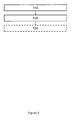
- Figure 5 shows a flowchart of one or more embodiments of a method of determining a tire class of a tire mounted on a wheel of a driving vehicle, the method comprising:
- a set of vehicle properties parameter values comprising estimated inverse tire longitudinal stiffness and temperature is obtained.
- the ambient temperature the tire temperature or a combination of the ambient temperature and the tire temperature can be used.
- a respective temperature sensor already installed in vehicles can be used.
- the ambient temperature as such can be used, or the ambient temperature can be used to estimate the temperature of the tire, wherein the tire temperature is then used for the vehicle properties parameter values.
- the actual tire temperature can differ from the ambient temperature, for example, at high vehicle speeds (e.g. race-track, German Autobahn) and/or on a rather warm or cold surface the vehicle is moving. Therefore, it is preferred to use the tire temperature.
- a temperature value resulting from a combination/fusing of the tire and ambient temperatures e.g. by weighing.
- the term temperature indicates the ambient temperature, the tire temperature or a combination/fusing of the tire and ambient temperatures.
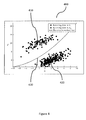
- a tire class is determined by comparing the set of estimated vehicle properties parameters to a predetermined relation comprising predetermined decision boundaries such as thresholds. For example, an inverse tire longitudinal stiffness value above a first threshold and a temperature value above a second threshold is determined as a winter tire. An inverse tire longitudinal stiffness value below a first threshold and a temperature value below a second threshold is determined as a winter tire. This is illustrated in Figure 6 showing exemplary vehicle properties parameter values for estimated inverse tire longitudinal stiffness and ambient temperature.
- the oblique dashed line indicates boundary, wherein vehicle properties parameter values having an estimated inverse tire longitudinal stiffness and a temperature on the left of the boundary indicates summer tires and vehicle properties parameter values having an estimated inverse tire longitudinal stiffness and a temperature on the right of the boundary indicates winter tires.
- the method further comprises the optional step of:
- a set of vehicle properties parameters may comprise a selection at least one of, for example, tire air pressure, (inverse and/or estimated) tire longitudinal stiffness, ambient temperature, tire temperature, wheel resonance frequency, carried vehicle load, tire radius change while cornering and wheel vibration dependent on speed.
- a tire class may comprise data indicative of or representing a tire type, such as summer tire, all season tire, winter tire or cup-tire.
- a tire class representing a tire type (e.g. a cup-tire) may be determined.
- a tire class may comprise data indicative of or representing wheel rim size, such as 12 to 26 inch rims.
- a rim size in Inch (e.g., 21 inches) may be determined.
- a tire class may comprise data indicative of tire pressure vibration sensitivity.
- an estimated tire pressure value may be compensated based on the tire pressure vibration sensitivity value to achieve an improved estimation of tire pressure.
- the sensor signals may be wheel speed signals from rotary speed sensors, located at the wheels, indicative of the time dependent behavior of the wheel speeds of the vehicle.
- the sensor signals may be obtained from accelerometer sensors, located at the wheels of the vehicle, indicative of the time dependent behavior of the wheel accelerations of the vehicle.
- a set of vehicle properties parameters may be obtained from a driving sensor data bus, wherein the driving sensor data bus supports a selection of automotive network communications protocols such as FlexRay, controller area network (CAN) and Time-Triggered Protocol (TTP).
- automotive network communications protocols such as FlexRay, controller area network (CAN) and Time-Triggered Protocol (TTP).
- the tire class comprises data representing tire type.
- a tire type can be a summer tire, a winter tire, a cup-tire or an all-season tire. These different types of tires differ from one another in handling, comfort and noise. In order to efficiently differentiate these types of tires, a classification approach was done.
- the tractive force is related to the longitudinal slip.
- the tractive force increases linearly with respect to slip, then approaches a peak and decreases to a static value when slip is large.
- a linear approximation about o is appropriate.
- the slip seldom increases to a larger value, and when it does, the estimation algorithm can simply be turned off.
- ⁇ F trac N tire is the ratio of the tractive force generated by the driveline on the wheel, and the normal force exerted on the wheel.
- 1/k s is used for summer or winter tire classification or determining a tire class.
- a mean of the inverse longitudinal stiffness is computed over a longer period of time.
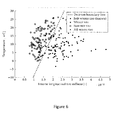
- Figure 7 exemplary results are shown.
- a tire class may comprise data representative of tire wear.
- Vehicle tires wear out after a certain amount of driving. This is normal behavior. However, in certain conditions tires may wear more quickly than usual, for example, in the case a winter tire is driven at a warm ambient temperature, e.g., above 15°C.
- the tire class as determined on the basis of vehicle properties parameters can be used to detect wear of tires, and when the ambient temperature is high, the tire wear can be considered in vehicle control and information systems such as iTPMS systems.
- a tire class may comprise data representative of rim size.
- the rim size can be determined (or at least estimated) through, e.g., regression, for example, with the support vector regressor.
- vehicle properties parameters indicating signal spectrum energy around 15 Hz (e.g. 10-15Hz) and about 45 Hz (e.g. 30-60 Hz) as well as the estimated vibration frequency for a wheel the rim size of which is desired.
- the following table shows exemplary spectral modes in a wheel speed signal, wherein the 10-15 Hz (so-called 15 Hz) and 30-60 Hz (so-called 45 Hz) spectral powers are used.
- the 10-15 Hz sino-called 15 Hz
- 30-60 Hz sino-called 45 Hz
- the so-called 45 Hz vibration mode energy is sensitive to the rim size.
- Both the so-called 15 Hz and so-called 45 Hz vibration mode powers are sensitive to the road roughness and rim size, but the so-called 15 Hz vibration mode power is insensitive to rim size.
- combining the information from the signal spectrum energy of the so-called 15 and 45 Hz modes removes the impact of road roughness level and improves the rim size determination.
- the absolute wheel vibration frequency around the so-called 45 Hz mode was found to be influenced by the rim size as well.
- the slip slope possibly normalized by temperature, can be taken into account as well.
- AIC Akaike Information Criterion
- Figures 8A and 8B show exemplary results of rim size estimations using a Support Vector Machine (SVM) for classification and regression.
- SVM regression was used to determine or, at least, estimate rim sizes.
- Features used are (logarithms of) 15 and 45 Hz powers as well as 45 Hz vibration frequency and slip-slope normalized with respect to temperature.
- the x-axis indicates regressed rim values in Inch and the y-axis indicates the actual rim sizes in Inch.
- a tire class may data representative of tire pressure vibration sensitivity.
- a tire characteristic that also impacts the functionality of iTPMS is how sensitive the tire vibration frequency is to pressure changes. It can be useful to be able to compute this sensitivity and improve the functionality of iTPMS:es. Some tires respond more strongly to variations in tire pressure than others. It may be useful to know how much a tire reacts to a pressure change in certain aspects in order to know how to weigh together different signals when making the decision whether or not the tire has an incorrect inflation pressure.
- a tire class may be determined based on the 15 and 45 Hz signal energies and the vibration frequency and vibration frequency spread. For example, a cross-validation was applied the used data followed by application of the Akaike Information Criterion (AIC). In order to compensate non-linearities of the data, it is possible to select data set with singly quadratic additions.
- AIC Akaike Information Criterion
- Figure 9 shows exemplary results of tire pressure vibration sensitivity determinations/estimations using an iTPMS and regression.
- the x-axis indicates regressed pressure vibration sensitivity values in Hertz and the y-axis indicates the actual pressure vibration sensitivity in Hertz.
Landscapes
- Engineering & Computer Science (AREA)
- Mechanical Engineering (AREA)
- Physics & Mathematics (AREA)
- Automation & Control Theory (AREA)
- Mathematical Physics (AREA)
- Transportation (AREA)
- General Physics & Mathematics (AREA)
- Control Of Driving Devices And Active Controlling Of Vehicle (AREA)
- Regulating Braking Force (AREA)
- Tires In General (AREA)
- Arrangements For Transmission Of Measured Signals (AREA)
- Vehicle Body Suspensions (AREA)
Abstract
Description
- The present disclosure relates generally to the determination of tire class of a tire mounted on a wheel of a vehicle and, for example to systems methods and computer program products for determination of tire type mounted on a vehicle.
- Modern cars comprise electronic control systems or vehicle handling systems like traction control system (TCS), Electronic Stability Program (ESP), active suspension system or Anti-lock braking system (ABS). Besides these active control systems there also exist vehicle driver safety information systems such as road friction indicators and sensor-free tire pressure monitoring system, e.g. indirect tire pressure monitoring system (iTPMS), which present information about the driving condition to the driver.
- All the above-mentioned systems benefit from the knowledge about a large set of estimated or measured vehicle properties parameters such as tire air pressure, tire longitudinal stiffness, ambient temperature, tire temperature, wheel resonance frequency, carried vehicle load, tire radius change while cornering and wheel vibration dependent on speed.
- It is the object of the present invention to improve the data basis on which vehicles' control systems, handling systems and driver information systems operate and, thus, the performance of such systems, particularly performance of vehicle handling control systems, such as tire pressure indicator (TPI), traction control system (TCS), Electronic Stability Program (ESP), active suspension system or Anti-lock braking system (ABS).
- To solve this object, the present invention provides methods, systems and computer program products for determining a tire class of a tire mounted on a wheel of a driving vehicle as defined in the independent claims. Preferred embodiments thereof are defined in the dependent claims as well as the description and drawings.
- The present invention relates to techniques for estimating the tire class, which make use of signals obtained from sensors, e.g. wheel speed sensors or wheel acceleration sensors. For example, using the signals from wheel speed sensors of ABS systems and/or from the vehicle's internal data bus, such as a FlexRay/CAN-bus provides an economical way to perform tire classification determination since these ABS systems belong to the standard equipment of the majority of the cars and trucks sold today.
- Embodiments of the invention will now be described in more detail with reference to the appended drawings, wherein:
-
Figure 1 schematically shows a driving vehicle comprising sensors and a processor or evaluator102. -
Figure 2 schematically shows a schematic diagram of a wheel speed sensor. -
Figure 3 schematically shows exemplary results based on a predetermined relation used by the processor or evaluator to determine a tire class of a tire mounted on a wheel of a driving vehicle. -
Figure 4 schematically shows exemplary results based on a predetermined relation comprising an inferred function or a vehicle property parameter values estimation relation and one or more decision boundaries. -
Figure 5 schematically shows an embodiment of method of determining a tire class of a tire mounted on a wheel of a driving vehicle. -
Figure 6 shows exemplary vehicle properties parameter values for estimated inverse tire longitudinal stiffness and ambient temperature. -
Figure 7 shows an exemplary embodiment of a predetermined relation applied to estimated vehicle properties parameters from a medium-size vehicle. -
Figures 8A and8B show exemplary results of rim size determinations/estimations. -
Figure 9 shows exemplary results of tire pressure vibration sensitivity determinations/estimations. - In general the present invention for determining the tire class or tire properties of a tire mounted on a wheel of a driving vehicle is based on a set of estimated vehicle properties parameters derived from sensor signals, such as wheel speed sensor signals and/or wheel acceleration sensor signals, from sensors mounted on or comprised in the vehicle. The estimated vehicle properties parameters is derived by control electronics or a processor or
evaluator 102 comprised in the vehicle. - The derived estimated vehicle properties parameter values can be obtained by the processor or
evaluator 102, e.g. by retrieving them from a memory communicatively coupled to the processor orevaluator 102 or obtained from a driving vehicle's internal data bus communicatively coupled to the processor orevaluator 102 and said sensors. Driving sensor data bus may support a selection of automotive network communications protocols such as FlexRay, controller area network CAN and Time-Triggered Protocol TIP, as would be understood by a person skilled in the art. - Sensors for generating sensor signals that can be used with the present invention is a selection of at least one of, for example, a wheel speed sensor, a wheel acceleration sensor, a 3D driving vehicle position sensor, a driving vehicle velocity sensor, a wheel acceleration sensor, a wheel/tire pressure sensor, a driving vehicle yaw rate sensor, an engine torque sensor, a wheel axis torque sensor, a suspension (related) sensor, a wheel temperature sensor and an ambient temperature sensor. Suitable sensor types include, e.g., ultrasound sensors, microphones, laser sensors, axel height sensors, any other analog distance sensors, geophones which convert displacements into voltage, or e.g. in-tire pressure/accelerometer sensors.
- Sensor data that can be used with the present invention is a selection of at least one of, for example, sensor data indicative of individual tire longitudinal stiffness for at least one wheel, sensor data indicative of inverse individual tire longitudinal stiffness for at least one wheel, sensor data indicative of ambient temperature, sensor data indicative of individual tire temperature for at least one wheel, sensor data indicative of individual wheel/tire pressure for at least one wheel, sensor data indicative of suspension pressure and/or force acting on at least one of the at least one tire e.g. due to load of the vehicle, sensor data indicative of individual wheel radius change for at least one wheel e.g. during cornering, sensor data indicative of individual wheel vibration for at least one wheel e.g. at various driven vehicle speeds, sensor data indicative of individual wheel speeds for at least one wheel, sensor data indicative of individual wheel acceleration for at least one wheel, sensor data indicative of suspension height information related to at least one tire, sensor data indicative of suspension stiffness acting on at least one tire, sensor data indicative of at least one of current and future control measures of extension and/or height of suspension means acting on at least one tire, sensor data indicative of operation of a semi-active or active suspension control system of the driving vehicle, sensor data indicative of at least one of a lateral acceleration and a longitudinal acceleration of the vehicle (e.g. including at least one x, y, z position; roll and/or pitch information on the vehicle; e.g. obtained from a so-called three-dimensional inertial measurement unit 3DIMU); sensor data indicative of a yaw rate of the vehicle, sensor data indicative of a speed of the vehicle; sensor data indicative of a steering wheel angle of a steering wheel of the vehicle, sensor data indicative of at least one of positioning, orientation and emission direction of at least one head light of the vehicle, sensor data indicative of a driving condition of the vehicle, particularly a braking condition, sensor data indicative that a braking system of the vehicle is operating (e.g. a brake active flag), sensor data indicative of brake pressure, sensor data indicative that at least one active control device of the vehicle is active, sensor data indicative of an engine torque of an engine of the vehicle, sensor data indicative of a torque acting on the at least one tire, sensor data indicative of wheel slip related to the at least one tire, sensor data indicative of a tractive force of at least one wheel, sensor data indicative of an engine speed of an engine of the vehicle, and sensor data indicative that a gear shift of the vehicle is in progress.
-
Figure 1 schematically shows adriving vehicle 101 in the form of a car with fourwheels 103 with mounted tires. The vehicle comprisessensors evaluator 102. - The processor or
evaluator 102 is further configured to estimate or obtain a set of vehicle properties parameters based on at least one of said sensor signals and to determine a tire class based on said estimated vehicle properties parameters and at least one predetermined relation. - The vehicle further comprises an internal data bus communicatively coupled to at least the
sensors evaluator 102 and configured to transfer data to and from units communicatively coupled to the internal data bus. The driving sensor data bus may support at least one of a selection of automotive network communications protocols, including FlexRay, controller area network CAN and Time-Triggered Protocol TTP. - The vehicle may be any wheeled vehicle, like cars, lorry, trucks, motorcycles, etc. which have at least one wheel in contact with the ground. The sensors used to obtain the sensor signals may be of any sensor type which is responsive to movement of a wheel/tire indicating a tire class. As noted above, the sensors may be any common wheel speed sensors and/or wheel acceleration sensors. Preferably, the wheel speed sensors of an antilock braking system (ABS) are used in one embodiments since such ABS-sensors are already mounted in all vehicles today. Wheel speed sensors are well known to the person skilled in the art.
-
Figure 2 shows a schematic diagram of an exemplarywheel speed sensor 100 comprising atoothed wheel 210 with, for example, in this case seven identical teeth. Asensor component 220 is located and arranged, respectively, such to generate a sensor signal whenever a tooth (cog) of the toothed wheel passes the sensor. Thesensor 100 may be an optical sensor, a magnetic sensor (e.g. a HALL sensor) or any other conceivable type of sensor. The sensor produces electrical signals which are transported by wires or radio transmission to the processor orevaluator unit 102 for further processing. In the example ofFigure 2 , there are in total seven sensor signals generated during one complete revolution of the toothed wheel. - With respect to wheel acceleration, any sensor(s) capable to determine the acceleration of a wheel can be used.
- The above-mentioned predetermined relation may comprise one or more decision boundaries, such as thresholds.
-
Figure 3 illustrates such a predetermined relation used by the processor orevaluator 102 to determine a tire class of a tire mounted on a wheel of a driving vehicle. According to embodiments of the present invention, the processor orevaluator 102 may determine a tire class by evaluating a predetermined relation that compares vehicleproperty parameter values parameter value thresholds property parameter values - For example, only using vehicle property parameter values indicating the estimated inverse tire longitudinal stiffness and the temperature, it is possible to determine whether a tire is a summer or winter tire. The inverse longitudinal stiffness can be, for example, estimated, through a linear regression model and averaging (e.g. to determine a mean value) over a longer period of driving. The result may be further by weighting with various factors, for example, temperature.
- As illustrated in
Figure 3 , for vehicle property parameter values below a first threshold 330 a tire class "winter tires" is determined, for vehicle property parameter values equal to or above afirst threshold 330 and below a second threshold 320 a tire class "all season" is determined and for vehicle property parameter values equal to or above a second threshold 320 a tire class "summer" is determined. - In addition or as alternative, vehicle property parameter values may be estimated using a predetermined vehicle property parameter values estimation relation. A vehicle property parameter values estimation relation may be obtained by supervised learning based on a training data set, wherein the training data set comprises predetermined sensor data and predetermined vehicle property parameter values, as would be understood by a person skilled in the art.
- This is illustrated by
Figure 4 showing apredetermined relation 400 comprising an inferred function or a vehicle property parameter values estimation relation and one or more decision boundaries, wherein the vehicle property parameter values estimation relation and the decision boundaries are determined based ontraining data sets - When a driving vehicle is operated by a user, then information or data related to the tire class of a tire mounted on a wheel of a driving vehicle is received as sensor signals from sensors located in the vehicle, e.g. at the wheel, by processor or
evaluator 102. Based on the received sensor signals the processor orevaluator 102 estimates a set of vehicle property parameter values that can be kept in memory or stored to non-volatile memory. The processor orevaluator 102 can then determine a tire class of a tire mounted on a wheel of said vehicle based on the estimated set of vehicle property parameter values and a predetermined relation. -
Figure 5 shows a flowchart of one or more embodiments of a method of determining a tire class of a tire mounted on a wheel of a driving vehicle, the method comprising: - Step 510: Obtaining a set of estimated vehicle properties parameters, wherein said vehicle properties parameters are estimated based at least on sensor signals received from sensors comprised in said vehicle.
- Step 520: Determining a tire class based on said set of estimated vehicle properties parameters and a predetermined relation.
- In a non-limiting example a set of vehicle properties parameter values comprising estimated inverse tire longitudinal stiffness and temperature is obtained. As temperature, the ambient temperature, the tire temperature or a combination of the ambient temperature and the tire temperature can be used. To obtain the ambient temperature, a respective temperature sensor already installed in vehicles can be used. The ambient temperature as such can be used, or the ambient temperature can be used to estimate the temperature of the tire, wherein the tire temperature is then used for the vehicle properties parameter values. The actual tire temperature can differ from the ambient temperature, for example, at high vehicle speeds (e.g. race-track, German Autobahn) and/or on a rather warm or cold surface the vehicle is moving. Therefore, it is preferred to use the tire temperature. Further it is contemplated to use a temperature value resulting from a combination/fusing of the tire and ambient temperatures (e.g. by weighing). In the following, the term temperature indicates the ambient temperature, the tire temperature or a combination/fusing of the tire and ambient temperatures.
- A tire class is determined by comparing the set of estimated vehicle properties parameters to a predetermined relation comprising predetermined decision boundaries such as thresholds. For example, an inverse tire longitudinal stiffness value above a first threshold and a temperature value above a second threshold is determined as a winter tire. An inverse tire longitudinal stiffness value below a first threshold and a temperature value below a second threshold is determined as a winter tire. This is illustrated in
Figure 6 showing exemplary vehicle properties parameter values for estimated inverse tire longitudinal stiffness and ambient temperature. InFigure 6 , the oblique dashed line indicates boundary, wherein vehicle properties parameter values having an estimated inverse tire longitudinal stiffness and a temperature on the left of the boundary indicates summer tires and vehicle properties parameter values having an estimated inverse tire longitudinal stiffness and a temperature on the right of the boundary indicates winter tires. - As tires are important components of road-going vehicles that limits handling, acceleration and de-acceleration/breaking, it is also an important input to active vehicle handling systems to improve performance. For example, the behavior of a vehicle may vary when operated on summer tires, winter tires, cup tires, small rims, large rims, fresh tires or worn tires. Even a vehicle driving around a track with the same tires will start to behave differently as the tires wear and the active vehicle handling systems needs ideally to adapt to and compensate for this changed behavior. To this end, the method further comprises the optional step of:
- Step 530: Controlling a selection at least one of, for example, a traction control system, an electronic stability program system, an active suspension system, an anti-lock braking system or a tire pressure monitoring system comprised in said vehicle based on a determined tire class.
- A set of vehicle properties parameters may comprise a selection at least one of, for example, tire air pressure, (inverse and/or estimated) tire longitudinal stiffness, ambient temperature, tire temperature, wheel resonance frequency, carried vehicle load, tire radius change while cornering and wheel vibration dependent on speed.
- In a non-limiting example, a tire class may comprise data indicative of or representing a tire type, such as summer tire, all season tire, winter tire or cup-tire.
- In a non-limiting example, in the case of an estimated tire longitudinal stiffness value above a predefined threshold, a tire class representing a tire type (e.g. a cup-tire) may be determined.
- In one or more embodiments, a tire class may comprise data indicative of or representing wheel rim size, such as 12 to 26 inch rims.
- In a non-limiting example, in the case of an estimated tire longitudinal stiffness value above a predefined first threshold and below a second predefined threshold, a rim size in Inch (e.g., 21 inches) may be determined.
- In one or more embodiments, a tire class may comprise data indicative of tire pressure vibration sensitivity.
- In a non-limiting example, an estimated tire pressure value may be compensated based on the tire pressure vibration sensitivity value to achieve an improved estimation of tire pressure.
- In a non-limiting example, the sensor signals may be wheel speed signals from rotary speed sensors, located at the wheels, indicative of the time dependent behavior of the wheel speeds of the vehicle.
- In a non-limiting example, the sensor signals may be obtained from accelerometer sensors, located at the wheels of the vehicle, indicative of the time dependent behavior of the wheel accelerations of the vehicle.
- In a non-limiting example, a set of vehicle properties parameters may be obtained from a driving sensor data bus, wherein the driving sensor data bus supports a selection of automotive network communications protocols such as FlexRay, controller area network (CAN) and Time-Triggered Protocol (TTP).
- In exemplary embodiments, the tire class comprises data representing tire type. A tire type can be a summer tire, a winter tire, a cup-tire or an all-season tire. These different types of tires differ from one another in handling, comfort and noise. In order to efficiently differentiate these types of tires, a classification approach was done.
- To this end several different vehicle properties parameters were investigated, for example, (inverse) tire longitudinal stiffness, temperature, wheel resonance frequency, estimated load, wheel radius change while cornering, wheel vibration behavior during various speeds and directly measured tire pressure.
- The tractive force is related to the longitudinal slip. In an idealized relation the tractive force increases linearly with respect to slip, then approaches a peak and decreases to a static value when slip is large. In regular driving, a linear approximation about o is appropriate. The slip seldom increases to a larger value, and when it does, the estimation algorithm can simply be turned off.
- The linearized model can be written as follows:

where µ is the normalized tractive force, s is the slip, and ks the slip-slope or longitudinal tire stiffness. - More explicitly,
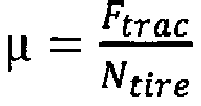
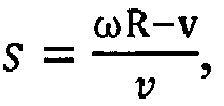
- With, for example, a Front-Wheel Drive (FWD) vehicle, the velocity v can be estimated by looking at the rear wheel rotational speed. Then the tractive force µ for the rear wheel is o. However, there may be a discrepancy between the front and rear wheel rolling radius, which creates an offset δ. It becomes

and now both ks and δ need to be estimated. This can be reformulated into:
- Starting therefrom estimation with simple methods, such as least squares linear regression, is possible. In the following, 1/ks is used for summer or winter tire classification or determining a tire class.
- As already noted, two influential variables were the estimated inverse tire longitudinal stiffness and the temperature. With only these two variables, it is possible to rather accurately determine whether a tire is a summer or winter tire.
- A mean of the inverse longitudinal stiffness is computed over a longer period of time. In
Figure 7 , exemplary results are shown. - In exemplary embodiments, a tire class may comprise data representative of tire wear. Vehicle tires wear out after a certain amount of driving. This is normal behavior. However, in certain conditions tires may wear more quickly than usual, for example, in the case a winter tire is driven at a warm ambient temperature, e.g., above 15°C. The tire class as determined on the basis of vehicle properties parameters can be used to detect wear of tires, and when the ambient temperature is high, the tire wear can be considered in vehicle control and information systems such as iTPMS systems.
- In exemplary embodiments, a tire class may comprise data representative of rim size. The rim size can be determined (or at least estimated) through, e.g., regression, for example, with the support vector regressor. For rim size determination, it is contemplated to use one or more vehicle properties parameters indicating signal spectrum energy around 15 Hz (e.g. 10-15Hz) and about 45 Hz (e.g. 30-60 Hz) as well as the estimated vibration frequency for a wheel the rim size of which is desired. The following table shows exemplary spectral modes in a wheel speed signal, wherein the 10-15 Hz (so-called 15 Hz) and 30-60 Hz (so-called 45 Hz) spectral powers are used.

- The so-called 45 Hz vibration mode energy is sensitive to the rim size. Both the so-called 15 Hz and so-called 45 Hz vibration mode powers are sensitive to the road roughness and rim size, but the so-called 15 Hz vibration mode power is insensitive to rim size. Thus, combining the information from the signal spectrum energy of the so-called 15 and 45 Hz modes removes the impact of road roughness level and improves the rim size determination. In addition, the absolute wheel vibration frequency around the so-called 45 Hz mode was found to be influenced by the rim size as well. The slip slope, possibly normalized by temperature, can be taken into account as well.
- For example, a cross-validation was applied the used data followed by application of the Akaike Information Criterion (AIC). Also, non-linearities in the form of, e.g., quadratic functions can be used. In order to take into account noise, which may be significant, higher non-linearities can be ruled out.
-
Figures 8A and8B show exemplary results of rim size estimations using a Support Vector Machine (SVM) for classification and regression. In both cases, SVM regression was used to determine or, at least, estimate rim sizes. Features used are (logarithms of) 15 and 45 Hz powers as well as 45 Hz vibration frequency and slip-slope normalized with respect to temperature. Also, in both cases, the x-axis indicates regressed rim values in Inch and the y-axis indicates the actual rim sizes in Inch. - In further exemplary additional or alternative embodiments, a tire class may data representative of tire pressure vibration sensitivity. A tire characteristic that also impacts the functionality of iTPMS is how sensitive the tire vibration frequency is to pressure changes. It can be useful to be able to compute this sensitivity and improve the functionality of iTPMS:es. Some tires respond more strongly to variations in tire pressure than others. It may be useful to know how much a tire reacts to a pressure change in certain aspects in order to know how to weigh together different signals when making the decision whether or not the tire has an incorrect inflation pressure. For example, a tire class may be determined based on the 15 and 45 Hz signal energies and the vibration frequency and vibration frequency spread. For example, a cross-validation was applied the used data followed by application of the Akaike Information Criterion (AIC). In order to compensate non-linearities of the data, it is possible to select data set with singly quadratic additions.
-
Figure 9 shows exemplary results of tire pressure vibration sensitivity determinations/estimations using an iTPMS and regression. In both cases, the x-axis indicates regressed pressure vibration sensitivity values in Hertz and the y-axis indicates the actual pressure vibration sensitivity in Hertz.
Claims (12)
- A method of determining a tire class of a tire mounted on a wheel of a driving vehicle, the method comprising:obtaining a set of vehicle properties parameters, wherein said vehicle properties parameters are determined based at least one sensor signal received from sensors comprised in said vehicle;determining a tire class based on said set of vehicle properties parameters.
- The method of claim 1, wherein the tire class is determined based on said set of vehicle properties parameters and a predetermined relation.
- The method of claim 2, wherein the predetermined relation is at least one of a vehicle property parameter values estimation relation and one or more decision boundaries.
- The method of one of the preceding claims, wherein said set of estimated vehicle properties parameters are determined on the basis of at least one sensor signal providing at least one of sensor data indicative of individual tire longitudinal stiffness for at least one wheel, sensor data indicative of inverse individual tire longitudinal stiffness for at least one wheel, sensor data indicative of ambient temperature, sensor data indicative of individual tire temperature for at least one wheel, sensor data indicative of individual wheel/tire pressure for at least one wheel, sensor data indicative of suspension pressure and/or force acting on at least one of the at least one tire , sensor data indicative of individual wheel radius change for at least one wheel, sensor data indicative of individual wheel vibration for at least one wheel, sensor data indicative of individual wheel speeds for at least one wheel, sensor data indicative of individual wheel acceleration for at least one wheel, sensor data indicative of suspension height information related to at least one tire, sensor data indicative of suspension stiffness acting on at least one tire, sensor data indicative of at least one of current and future control measures of extension and/or height of suspension means acting on at least one tire, sensor data indicative of operation of a semi-active or active suspension control system of the driving vehicle, sensor data indicative of at least one of a lateral acceleration and a longitudinal acceleration of the vehicle; sensor data indicative of a yaw rate of the vehicle, sensor data indicative of a speed of the vehicle; sensor data indicative of a steering wheel angle of a steering wheel of the vehicle, sensor data indicative of at least one of positioning, orientation and emission direction of at least one head light of the vehicle, sensor data indicative of a driving condition of the vehicle, particularly a braking condition, sensor data indicative that a braking system of the vehicle is operating , sensor data indicative of brake pressure, sensor data indicative that at least one active control device of the vehicle is active, sensor data indicative of an engine torque of an engine of the vehicle, sensor data indicative of a torque acting on the at least one tire, sensor data indicative of wheel slip related to the at least one tire, sensor data indicative of a tractive force of at least one wheel, sensor data indicative of an engine speed of an engine of the vehicle, and sensor data indicative that a gear shift of the vehicle is in progress.
- The method of one of the preceding claims, wherein a tire class comprises data indicative of- tire type selected from a group of tire types including a summer tire, an all season tire, a winter tire and a cup-tire, and/or- wheel rim size, and/or- pressure vibration sensitivity.
- The method of one of the preceding claims, further comprising the step of controlling at least one of a traction control system, an electronic stability program system, an active suspension system, an anti-lock braking system and a tire pressure monitoring system comprised in said vehicle based on the determined tire class.
- System of estimating the tire class of a tire mounted on a wheel of a driving vehicle, the system comprising:at least none sensor (100, 40) configured to communicate sensor data as sensor signals;an evaluator (102) configured to:receive sensor signals from the at least one sensor,determining a set of estimated vehicle properties parameters based at least one of the received sensor signal;determining a tire class based on said set of estimated vehicle properties parameters.
- The system of claim 7, wherein the evaluator (102) configured to determine the tire class on said set of vehicle properties parameters and a predetermined relation.
- The system of claim 8, wherein the predetermined relation is at least one of a vehicle property parameter values estimation relation and one or more decision boundaries.
- The system of one of the claims 7 to 9, wherein the at least one sensor is at least one of a sensor providing at least one of sensor data indicative of individual tire longitudinal stiffness for at least one wheel, sensor data indicative of inverse individual tire longitudinal stiffness for at least one wheel, sensor data indicative of ambient temperature, sensor data indicative of individual tire temperature for at least one wheel, sensor data indicative of individual wheel/tire pressure for at least one wheel, sensor data indicative of suspension pressure and/or force acting on at least one of the at least one tire, sensor data indicative of individual wheel radius change for at least one wheel, sensor data indicative of individual wheel vibration for at least one wheel, sensor data indicative of individual wheel speeds for at least one wheel, sensor data indicative of individual wheel acceleration for at least one wheel, sensor data indicative of suspension height information related to at least one tire, sensor data indicative of suspension stiffness acting on at least one tire, sensor data indicative of at least one of current and future control measures of extension and/or height of suspension means acting on at least one tire, sensor data indicative of operation of a semi-active or active suspension control system of the driving vehicle, sensor data indicative of at least one of a lateral acceleration and a longitudinal acceleration of the vehicle; sensor data indicative of a yaw rate of the vehicle, sensor data indicative of a speed of the vehicle; sensor data indicative of a steering wheel angle of a steering wheel of the vehicle, sensor data indicative of at least one of positioning, orientation and emission direction of at least one head light of the vehicle, sensor data indicative of a driving condition of the vehicle, particularly a braking condition, sensor data indicative that a braking system of the vehicle is operating , sensor data indicative of brake pressure, sensor data indicative that at least one active control device of the vehicle is active, sensor data indicative of an engine torque of an engine of the vehicle, sensor data indicative of a torque acting on the at least one tire, sensor data indicative of wheel slip related to the at least one tire, sensor data indicative of a tractive force of at least one wheel, sensor data indicative of an engine speed of an engine of the vehicle, and sensor data indicative that a gear shift of the vehicle is in progress.
- The system of one of the claims 7 to 10, wherein the at least one sensors includes at least one of a rotary speed sensor located at a wheel, a common wheel speed sensor, a wheel acceleration sensor.
- Computer program product adapted for estimating the tire class of a tire mounted on a wheel of a driving vehicle, the computer program being arranged to perform the method steps of one of the claims 1 to 7.
Applications Claiming Priority (1)
| Application Number | Priority Date | Filing Date | Title |
|---|---|---|---|
| DE102014008500.7A DE102014008500A1 (en) | 2014-06-09 | 2014-06-09 | tire classification |
Publications (2)
| Publication Number | Publication Date |
|---|---|
| EP2955078A1 true EP2955078A1 (en) | 2015-12-16 |
| EP2955078B1 EP2955078B1 (en) | 2020-10-28 |
Family
ID=53385574
Family Applications (1)
| Application Number | Title | Priority Date | Filing Date |
|---|---|---|---|
| EP15001708.5A Active EP2955078B1 (en) | 2014-06-09 | 2015-06-09 | Tire classfication |
Country Status (9)
| Country | Link |
|---|---|
| US (1) | US20160202147A1 (en) |
| EP (1) | EP2955078B1 (en) |
| JP (1) | JP6244027B2 (en) |
| KR (1) | KR101797939B1 (en) |
| CN (1) | CN105473409B (en) |
| BR (1) | BR112016003452B1 (en) |
| DE (1) | DE102014008500A1 (en) |
| ES (1) | ES2838123T3 (en) |
| WO (1) | WO2015188929A1 (en) |
Cited By (4)
| Publication number | Priority date | Publication date | Assignee | Title |
|---|---|---|---|---|
| WO2017211583A1 (en) * | 2016-06-06 | 2017-12-14 | Volkswagen Aktiengesellschaft | Method and control device for controlling at least one vibration damper of a motor vehicle |
| CN110232324A (en) * | 2019-05-16 | 2019-09-13 | 苏州思卡信息系统有限公司 | A kind of automatic recognition system and method for expressway tol lcollection vehicle |
| WO2022042960A1 (en) * | 2020-08-28 | 2022-03-03 | Robert Bosch Gmbh | Computer-implemented method for training an artificial intelligence module to determine a tyre type of a motor vehicle |
| US11866053B2 (en) | 2019-06-18 | 2024-01-09 | Continental Automotive Gmbh | Method and device for predicting a customized coefficient of friction for a vehicle on a section of road |
Families Citing this family (40)
| Publication number | Priority date | Publication date | Assignee | Title |
|---|---|---|---|---|
| TWI579536B (en) * | 2015-12-28 | 2017-04-21 | Fang-Jun Chai | Method and device for controlling vehicle load by vehicle tire pressure detection |
| US10518593B2 (en) * | 2017-02-08 | 2019-12-31 | Caterpillar Inc. | Tire management system and method |
| US10525945B2 (en) * | 2017-04-18 | 2020-01-07 | Goodrich Corporation | Antiskid brake control system with axle-mounted inertial sensor |
| ES2957265T3 (en) | 2017-06-19 | 2024-01-16 | Nira Dynamics Ab | Vehicle wheel monitoring |
| WO2019072822A1 (en) | 2017-10-09 | 2019-04-18 | Nira Dynamics Ab | Determining a tire change status in a vehicle |
| FR3072165B1 (en) | 2017-10-10 | 2019-10-04 | Continental Automotive France | METHOD FOR DETERMINING THE THICKNESS OF A TIRE OF A MOTOR VEHICLE |
| US11505015B2 (en) | 2017-12-20 | 2022-11-22 | Nira Dynamics Ab | Determining a tire pressure status in a vehicle |
| DE102018202514A1 (en) * | 2018-02-20 | 2019-08-22 | Bayerische Motoren Werke Aktiengesellschaft | System and method for automatically creating a video of a trip |
| JP7070155B2 (en) * | 2018-06-27 | 2022-05-18 | 株式会社デンソー | Road surface condition determination device and tire system equipped with it |
| US10960712B2 (en) * | 2018-06-28 | 2021-03-30 | Nissan North America, Inc. | Tire wear estimation using a hybrid machine learning system and method |
| JP7112909B2 (en) * | 2018-08-09 | 2022-08-04 | 株式会社ブリヂストン | Tire type discrimination method and tire type discrimination device |
| DE102019206595A1 (en) * | 2019-05-08 | 2020-11-12 | Zf Friedrichshafen Ag | Procedure and test bench for determining tire properties |
| US11586194B2 (en) | 2019-08-12 | 2023-02-21 | Micron Technology, Inc. | Storage and access of neural network models of automotive predictive maintenance |
| US12249189B2 (en) | 2019-08-12 | 2025-03-11 | Micron Technology, Inc. | Predictive maintenance of automotive lighting |
| US11586943B2 (en) | 2019-08-12 | 2023-02-21 | Micron Technology, Inc. | Storage and access of neural network inputs in automotive predictive maintenance |
| US11635893B2 (en) | 2019-08-12 | 2023-04-25 | Micron Technology, Inc. | Communications between processors and storage devices in automotive predictive maintenance implemented via artificial neural networks |
| US11775816B2 (en) | 2019-08-12 | 2023-10-03 | Micron Technology, Inc. | Storage and access of neural network outputs in automotive predictive maintenance |
| US11853863B2 (en) * | 2019-08-12 | 2023-12-26 | Micron Technology, Inc. | Predictive maintenance of automotive tires |
| US12061971B2 (en) | 2019-08-12 | 2024-08-13 | Micron Technology, Inc. | Predictive maintenance of automotive engines |
| US11748626B2 (en) | 2019-08-12 | 2023-09-05 | Micron Technology, Inc. | Storage devices with neural network accelerators for automotive predictive maintenance |
| US12497055B2 (en) | 2019-08-21 | 2025-12-16 | Micron Technology, Inc. | Monitoring controller area network bus for vehicle control |
| US11702086B2 (en) | 2019-08-21 | 2023-07-18 | Micron Technology, Inc. | Intelligent recording of errant vehicle behaviors |
| US11498388B2 (en) | 2019-08-21 | 2022-11-15 | Micron Technology, Inc. | Intelligent climate control in vehicles |
| US11361552B2 (en) | 2019-08-21 | 2022-06-14 | Micron Technology, Inc. | Security operations of parked vehicles |
| US11042350B2 (en) | 2019-08-21 | 2021-06-22 | Micron Technology, Inc. | Intelligent audio control in vehicles |
| US11435946B2 (en) | 2019-09-05 | 2022-09-06 | Micron Technology, Inc. | Intelligent wear leveling with reduced write-amplification for data storage devices configured on autonomous vehicles |
| US11693562B2 (en) | 2019-09-05 | 2023-07-04 | Micron Technology, Inc. | Bandwidth optimization for different types of operations scheduled in a data storage device |
| US11436076B2 (en) | 2019-09-05 | 2022-09-06 | Micron Technology, Inc. | Predictive management of failing portions in a data storage device |
| US11650746B2 (en) | 2019-09-05 | 2023-05-16 | Micron Technology, Inc. | Intelligent write-amplification reduction for data storage devices configured on autonomous vehicles |
| US11409654B2 (en) | 2019-09-05 | 2022-08-09 | Micron Technology, Inc. | Intelligent optimization of caching operations in a data storage device |
| US12210401B2 (en) | 2019-09-05 | 2025-01-28 | Micron Technology, Inc. | Temperature based optimization of data storage operations |
| KR102149459B1 (en) * | 2019-09-23 | 2020-08-31 | 넥센타이어 주식회사 | Jig assembly for sensing a temperature of a surface of a pneumatic tire |
| US11250648B2 (en) | 2019-12-18 | 2022-02-15 | Micron Technology, Inc. | Predictive maintenance of automotive transmission |
| US11531339B2 (en) | 2020-02-14 | 2022-12-20 | Micron Technology, Inc. | Monitoring of drive by wire sensors in vehicles |
| US11709625B2 (en) | 2020-02-14 | 2023-07-25 | Micron Technology, Inc. | Optimization of power usage of data storage devices |
| DE102020008066B4 (en) | 2020-09-07 | 2024-03-07 | Dr. Ing. H.C. F. Porsche Aktiengesellschaft | Method for detecting a change in the state of a motor vehicle and motor vehicle |
| DE102020123278B4 (en) | 2020-09-07 | 2024-03-07 | Dr. Ing. H.C. F. Porsche Aktiengesellschaft | Method for detecting a change in the state of a motor vehicle and motor vehicle |
| US12134391B2 (en) | 2021-12-15 | 2024-11-05 | The Goodyear Tire & Rubber Company | Tire stiffness estimation system |
| US20250113768A1 (en) * | 2023-10-05 | 2025-04-10 | Textron Inc. | Automatic calibration of individual wheel hub motor speed in traction systems |
| KR102739087B1 (en) * | 2024-03-11 | 2024-12-04 | 삼성화재해상보험 주식회사 | Method and system for calculating car insurance fee using tire image |
Citations (5)
| Publication number | Priority date | Publication date | Assignee | Title |
|---|---|---|---|---|
| EP0970823A2 (en) * | 1998-07-09 | 2000-01-12 | Sumitomo Rubber Industries, Ltd. | Apparatus for identifying tyres and method thereof |
| US20040225423A1 (en) * | 2003-05-07 | 2004-11-11 | Carlson Christopher R. | Determination of operational parameters of tires in vehicles from longitudinal stiffness and effective tire radius |
| WO2005005175A1 (en) * | 2003-07-08 | 2005-01-20 | Continental Teves Ag & Co. Ohg | Method for identifying a tyre type mounted on a vehicle |
| EP1510427A2 (en) * | 2003-08-26 | 2005-03-02 | Fuji Jukogyo Kabushiki Kaisha | Apparatus and method of judging road surface conditions for vehicle |
| DE102009029272A1 (en) * | 2009-09-08 | 2011-03-10 | Robert Bosch Gmbh | Device for use in parking assistance system for determining types of tire of vehicle, has temperature sensor, which provides temperature signal and represents momentary ambient temperature of vehicle |
Family Cites Families (11)
| Publication number | Priority date | Publication date | Assignee | Title |
|---|---|---|---|---|
| JP3289375B2 (en) * | 1993-03-24 | 2002-06-04 | 株式会社デンソー | VEHICLE VEHICLE VEHICLE ESTIMATION DEVICE AND TIRE CONDITION DETECTOR USING ESTIMATED VEHICLE VEHICLE VEHICLE |
| JP3150893B2 (en) * | 1996-01-12 | 2001-03-26 | 住友ゴム工業株式会社 | Tire identification method and device |
| JP3544149B2 (en) * | 1998-07-09 | 2004-07-21 | 住友ゴム工業株式会社 | Tire identification device and method |
| JP2000318416A (en) * | 1999-03-05 | 2000-11-21 | Toyota Motor Corp | VEHICLE CHARACTERISTIC DETECTION DEVICE AND VEHICLE CONTROL DEVICE EQUIPPED WITH THE DEVICE |
| JP3899987B2 (en) * | 2002-04-11 | 2007-03-28 | 株式会社豊田中央研究所 | Physical quantity estimation apparatus and tire condition determination apparatus |
| DE10320828A1 (en) * | 2003-05-08 | 2004-12-09 | Robert Bosch Gmbh | Optimization of vehicle dynamics control using tire information |
| JP4261309B2 (en) * | 2003-10-20 | 2009-04-30 | 富士重工業株式会社 | Vehicle tire type determination method |
| JP4216150B2 (en) * | 2003-08-26 | 2009-01-28 | 富士重工業株式会社 | Vehicle tire type determination device |
| JP4247534B2 (en) * | 2003-10-21 | 2009-04-02 | 富士重工業株式会社 | Road surface determination device and road surface determination method |
| JP4672333B2 (en) * | 2004-11-02 | 2011-04-20 | 住友ゴム工業株式会社 | Tire identification apparatus and method |
| DE102006014701A1 (en) * | 2005-04-25 | 2007-01-18 | Continental Teves Ag & Co. Ohg | Method and system for detecting the type of tire |
-
2014
- 2014-06-09 DE DE102014008500.7A patent/DE102014008500A1/en not_active Ceased
-
2015
- 2015-06-09 US US14/913,682 patent/US20160202147A1/en not_active Abandoned
- 2015-06-09 CN CN201580001638.XA patent/CN105473409B/en active Active
- 2015-06-09 KR KR1020167004574A patent/KR101797939B1/en active Active
- 2015-06-09 WO PCT/EP2015/001157 patent/WO2015188929A1/en not_active Ceased
- 2015-06-09 ES ES15001708T patent/ES2838123T3/en active Active
- 2015-06-09 JP JP2016535507A patent/JP6244027B2/en active Active
- 2015-06-09 BR BR112016003452-0A patent/BR112016003452B1/en active IP Right Grant
- 2015-06-09 EP EP15001708.5A patent/EP2955078B1/en active Active
Patent Citations (5)
| Publication number | Priority date | Publication date | Assignee | Title |
|---|---|---|---|---|
| EP0970823A2 (en) * | 1998-07-09 | 2000-01-12 | Sumitomo Rubber Industries, Ltd. | Apparatus for identifying tyres and method thereof |
| US20040225423A1 (en) * | 2003-05-07 | 2004-11-11 | Carlson Christopher R. | Determination of operational parameters of tires in vehicles from longitudinal stiffness and effective tire radius |
| WO2005005175A1 (en) * | 2003-07-08 | 2005-01-20 | Continental Teves Ag & Co. Ohg | Method for identifying a tyre type mounted on a vehicle |
| EP1510427A2 (en) * | 2003-08-26 | 2005-03-02 | Fuji Jukogyo Kabushiki Kaisha | Apparatus and method of judging road surface conditions for vehicle |
| DE102009029272A1 (en) * | 2009-09-08 | 2011-03-10 | Robert Bosch Gmbh | Device for use in parking assistance system for determining types of tire of vehicle, has temperature sensor, which provides temperature signal and represents momentary ambient temperature of vehicle |
Cited By (4)
| Publication number | Priority date | Publication date | Assignee | Title |
|---|---|---|---|---|
| WO2017211583A1 (en) * | 2016-06-06 | 2017-12-14 | Volkswagen Aktiengesellschaft | Method and control device for controlling at least one vibration damper of a motor vehicle |
| CN110232324A (en) * | 2019-05-16 | 2019-09-13 | 苏州思卡信息系统有限公司 | A kind of automatic recognition system and method for expressway tol lcollection vehicle |
| US11866053B2 (en) | 2019-06-18 | 2024-01-09 | Continental Automotive Gmbh | Method and device for predicting a customized coefficient of friction for a vehicle on a section of road |
| WO2022042960A1 (en) * | 2020-08-28 | 2022-03-03 | Robert Bosch Gmbh | Computer-implemented method for training an artificial intelligence module to determine a tyre type of a motor vehicle |
Also Published As
| Publication number | Publication date |
|---|---|
| JP6244027B2 (en) | 2017-12-06 |
| CN105473409A (en) | 2016-04-06 |
| KR101797939B1 (en) | 2017-11-15 |
| KR20160039636A (en) | 2016-04-11 |
| JP2016537259A (en) | 2016-12-01 |
| US20160202147A1 (en) | 2016-07-14 |
| DE102014008500A1 (en) | 2015-12-17 |
| WO2015188929A1 (en) | 2015-12-17 |
| EP2955078B1 (en) | 2020-10-28 |
| ES2838123T3 (en) | 2021-07-01 |
| BR112016003452B1 (en) | 2022-05-24 |
| CN105473409B (en) | 2019-07-12 |
| BR112016003452A2 (en) | 2017-08-01 |
Similar Documents
| Publication | Publication Date | Title |
|---|---|---|
| EP2955078B1 (en) | Tire classfication | |
| JP3150893B2 (en) | Tire identification method and device | |
| CN105313606B (en) | System and method for determining tire wear | |
| US9921134B2 (en) | System and method for determining tire wear | |
| CN104781092B (en) | For obtaining method, controller and the system of the tread depth of tire tread | |
| JP5993804B2 (en) | Tire contact state estimation method | |
| WO2013011992A1 (en) | Road surface condition estimation method, and road surface condition estimation device | |
| US7751961B2 (en) | Acceleration/deceleration induced real-time identification of maximum tire-road friction coefficient | |
| JP2017505429A (en) | Estimating the potential adhesion by evaluating the radius of rotation | |
| CN111511588A (en) | Determining the tire pressure status in the vehicle | |
| KR20160040667A (en) | Control of regenerative braking in an electric or hybrid vehicle | |
| JP2014532170A (en) | Method for estimating rolling resistance of vehicle wheel | |
| JP2006525175A (en) | Tire pressure monitoring device and method for monitoring tire pressure | |
| JP2006088908A (en) | Tire pressure drop detection device and method | |
| GB2548597A (en) | A system for use in a vehicle | |
| CN104507766B (en) | System and method for monitoring vehicle trajectory | |
| JP5749106B2 (en) | Road surface state estimation method and road surface state estimation device | |
| JP5126048B2 (en) | Tire pressure monitoring device | |
| JP2005520726A (en) | Monitoring device for tire condition in driving wheel of automobile |
Legal Events
| Date | Code | Title | Description |
|---|---|---|---|
| PUAI | Public reference made under article 153(3) epc to a published international application that has entered the european phase |
Free format text: ORIGINAL CODE: 0009012 |
|
| AK | Designated contracting states |
Kind code of ref document: A1 Designated state(s): AL AT BE BG CH CY CZ DE DK EE ES FI FR GB GR HR HU IE IS IT LI LT LU LV MC MK MT NL NO PL PT RO RS SE SI SK SM TR |
|
| AX | Request for extension of the european patent |
Extension state: BA ME |
|
| 17P | Request for examination filed |
Effective date: 20160225 |
|
| RBV | Designated contracting states (corrected) |
Designated state(s): AL AT BE BG CH CY CZ DE DK EE ES FI FR GB GR HR HU IE IS IT LI LT LU LV MC MK MT NL NO PL PT RO RS SE SI SK SM TR |
|
| GRAP | Despatch of communication of intention to grant a patent |
Free format text: ORIGINAL CODE: EPIDOSNIGR1 |
|
| STAA | Information on the status of an ep patent application or granted ep patent |
Free format text: STATUS: GRANT OF PATENT IS INTENDED |
|
| INTG | Intention to grant announced |
Effective date: 20200710 |
|
| GRAS | Grant fee paid |
Free format text: ORIGINAL CODE: EPIDOSNIGR3 |
|
| GRAA | (expected) grant |
Free format text: ORIGINAL CODE: 0009210 |
|
| STAA | Information on the status of an ep patent application or granted ep patent |
Free format text: STATUS: THE PATENT HAS BEEN GRANTED |
|
| AK | Designated contracting states |
Kind code of ref document: B1 Designated state(s): AL AT BE BG CH CY CZ DE DK EE ES FI FR GB GR HR HU IE IS IT LI LT LU LV MC MK MT NL NO PL PT RO RS SE SI SK SM TR |
|
| REG | Reference to a national code |
Ref country code: GB Ref legal event code: FG4D |
|
| REG | Reference to a national code |
Ref country code: CH Ref legal event code: EP |
|
| REG | Reference to a national code |
Ref country code: DE Ref legal event code: R096 Ref document number: 602015061014 Country of ref document: DE |
|
| REG | Reference to a national code |
Ref country code: AT Ref legal event code: REF Ref document number: 1327925 Country of ref document: AT Kind code of ref document: T Effective date: 20201115 |
|
| REG | Reference to a national code |
Ref country code: IE Ref legal event code: FG4D |
|
| REG | Reference to a national code |
Ref country code: AT Ref legal event code: MK05 Ref document number: 1327925 Country of ref document: AT Kind code of ref document: T Effective date: 20201028 |
|
| REG | Reference to a national code |
Ref country code: NL Ref legal event code: MP Effective date: 20201028 |
|
| PG25 | Lapsed in a contracting state [announced via postgrant information from national office to epo] |
Ref country code: NL Free format text: LAPSE BECAUSE OF FAILURE TO SUBMIT A TRANSLATION OF THE DESCRIPTION OR TO PAY THE FEE WITHIN THE PRESCRIBED TIME-LIMIT Effective date: 20201028 Ref country code: PT Free format text: LAPSE BECAUSE OF FAILURE TO SUBMIT A TRANSLATION OF THE DESCRIPTION OR TO PAY THE FEE WITHIN THE PRESCRIBED TIME-LIMIT Effective date: 20210301 Ref country code: NO Free format text: LAPSE BECAUSE OF FAILURE TO SUBMIT A TRANSLATION OF THE DESCRIPTION OR TO PAY THE FEE WITHIN THE PRESCRIBED TIME-LIMIT Effective date: 20210128 Ref country code: RS Free format text: LAPSE BECAUSE OF FAILURE TO SUBMIT A TRANSLATION OF THE DESCRIPTION OR TO PAY THE FEE WITHIN THE PRESCRIBED TIME-LIMIT Effective date: 20201028 Ref country code: FI Free format text: LAPSE BECAUSE OF FAILURE TO SUBMIT A TRANSLATION OF THE DESCRIPTION OR TO PAY THE FEE WITHIN THE PRESCRIBED TIME-LIMIT Effective date: 20201028 Ref country code: GR Free format text: LAPSE BECAUSE OF FAILURE TO SUBMIT A TRANSLATION OF THE DESCRIPTION OR TO PAY THE FEE WITHIN THE PRESCRIBED TIME-LIMIT Effective date: 20210129 |
|
| REG | Reference to a national code |
Ref country code: LT Ref legal event code: MG4D |
|
| PG25 | Lapsed in a contracting state [announced via postgrant information from national office to epo] |
Ref country code: IS Free format text: LAPSE BECAUSE OF FAILURE TO SUBMIT A TRANSLATION OF THE DESCRIPTION OR TO PAY THE FEE WITHIN THE PRESCRIBED TIME-LIMIT Effective date: 20210228 Ref country code: SE Free format text: LAPSE BECAUSE OF FAILURE TO SUBMIT A TRANSLATION OF THE DESCRIPTION OR TO PAY THE FEE WITHIN THE PRESCRIBED TIME-LIMIT Effective date: 20201028 Ref country code: PL Free format text: LAPSE BECAUSE OF FAILURE TO SUBMIT A TRANSLATION OF THE DESCRIPTION OR TO PAY THE FEE WITHIN THE PRESCRIBED TIME-LIMIT Effective date: 20201028 Ref country code: LV Free format text: LAPSE BECAUSE OF FAILURE TO SUBMIT A TRANSLATION OF THE DESCRIPTION OR TO PAY THE FEE WITHIN THE PRESCRIBED TIME-LIMIT Effective date: 20201028 Ref country code: BG Free format text: LAPSE BECAUSE OF FAILURE TO SUBMIT A TRANSLATION OF THE DESCRIPTION OR TO PAY THE FEE WITHIN THE PRESCRIBED TIME-LIMIT Effective date: 20210128 Ref country code: AT Free format text: LAPSE BECAUSE OF FAILURE TO SUBMIT A TRANSLATION OF THE DESCRIPTION OR TO PAY THE FEE WITHIN THE PRESCRIBED TIME-LIMIT Effective date: 20201028 |
|
| PG25 | Lapsed in a contracting state [announced via postgrant information from national office to epo] |
Ref country code: HR Free format text: LAPSE BECAUSE OF FAILURE TO SUBMIT A TRANSLATION OF THE DESCRIPTION OR TO PAY THE FEE WITHIN THE PRESCRIBED TIME-LIMIT Effective date: 20201028 |
|
| REG | Reference to a national code |
Ref country code: DE Ref legal event code: R097 Ref document number: 602015061014 Country of ref document: DE |
|
| PG25 | Lapsed in a contracting state [announced via postgrant information from national office to epo] |
Ref country code: SK Free format text: LAPSE BECAUSE OF FAILURE TO SUBMIT A TRANSLATION OF THE DESCRIPTION OR TO PAY THE FEE WITHIN THE PRESCRIBED TIME-LIMIT Effective date: 20201028 Ref country code: RO Free format text: LAPSE BECAUSE OF FAILURE TO SUBMIT A TRANSLATION OF THE DESCRIPTION OR TO PAY THE FEE WITHIN THE PRESCRIBED TIME-LIMIT Effective date: 20201028 Ref country code: LT Free format text: LAPSE BECAUSE OF FAILURE TO SUBMIT A TRANSLATION OF THE DESCRIPTION OR TO PAY THE FEE WITHIN THE PRESCRIBED TIME-LIMIT Effective date: 20201028 Ref country code: CZ Free format text: LAPSE BECAUSE OF FAILURE TO SUBMIT A TRANSLATION OF THE DESCRIPTION OR TO PAY THE FEE WITHIN THE PRESCRIBED TIME-LIMIT Effective date: 20201028 Ref country code: EE Free format text: LAPSE BECAUSE OF FAILURE TO SUBMIT A TRANSLATION OF THE DESCRIPTION OR TO PAY THE FEE WITHIN THE PRESCRIBED TIME-LIMIT Effective date: 20201028 Ref country code: SM Free format text: LAPSE BECAUSE OF FAILURE TO SUBMIT A TRANSLATION OF THE DESCRIPTION OR TO PAY THE FEE WITHIN THE PRESCRIBED TIME-LIMIT Effective date: 20201028 |
|
| PG25 | Lapsed in a contracting state [announced via postgrant information from national office to epo] |
Ref country code: DK Free format text: LAPSE BECAUSE OF FAILURE TO SUBMIT A TRANSLATION OF THE DESCRIPTION OR TO PAY THE FEE WITHIN THE PRESCRIBED TIME-LIMIT Effective date: 20201028 |
|
| PLBE | No opposition filed within time limit |
Free format text: ORIGINAL CODE: 0009261 |
|
| STAA | Information on the status of an ep patent application or granted ep patent |
Free format text: STATUS: NO OPPOSITION FILED WITHIN TIME LIMIT |
|
| 26N | No opposition filed |
Effective date: 20210729 |
|
| PG25 | Lapsed in a contracting state [announced via postgrant information from national office to epo] |
Ref country code: IT Free format text: LAPSE BECAUSE OF FAILURE TO SUBMIT A TRANSLATION OF THE DESCRIPTION OR TO PAY THE FEE WITHIN THE PRESCRIBED TIME-LIMIT Effective date: 20201028 Ref country code: AL Free format text: LAPSE BECAUSE OF FAILURE TO SUBMIT A TRANSLATION OF THE DESCRIPTION OR TO PAY THE FEE WITHIN THE PRESCRIBED TIME-LIMIT Effective date: 20201028 |
|
| PG25 | Lapsed in a contracting state [announced via postgrant information from national office to epo] |
Ref country code: SI Free format text: LAPSE BECAUSE OF FAILURE TO SUBMIT A TRANSLATION OF THE DESCRIPTION OR TO PAY THE FEE WITHIN THE PRESCRIBED TIME-LIMIT Effective date: 20201028 |
|
| PG25 | Lapsed in a contracting state [announced via postgrant information from national office to epo] |
Ref country code: MC Free format text: LAPSE BECAUSE OF FAILURE TO SUBMIT A TRANSLATION OF THE DESCRIPTION OR TO PAY THE FEE WITHIN THE PRESCRIBED TIME-LIMIT Effective date: 20201028 |
|
| REG | Reference to a national code |
Ref country code: CH Ref legal event code: PL |
|
| REG | Reference to a national code |
Ref country code: BE Ref legal event code: MM Effective date: 20210630 |
|
| PG25 | Lapsed in a contracting state [announced via postgrant information from national office to epo] |
Ref country code: LU Free format text: LAPSE BECAUSE OF NON-PAYMENT OF DUE FEES Effective date: 20210609 |
|
| PG25 | Lapsed in a contracting state [announced via postgrant information from national office to epo] |
Ref country code: LI Free format text: LAPSE BECAUSE OF NON-PAYMENT OF DUE FEES Effective date: 20210630 Ref country code: IE Free format text: LAPSE BECAUSE OF NON-PAYMENT OF DUE FEES Effective date: 20210609 Ref country code: CH Free format text: LAPSE BECAUSE OF NON-PAYMENT OF DUE FEES Effective date: 20210630 |
|
| PG25 | Lapsed in a contracting state [announced via postgrant information from national office to epo] |
Ref country code: IS Free format text: LAPSE BECAUSE OF FAILURE TO SUBMIT A TRANSLATION OF THE DESCRIPTION OR TO PAY THE FEE WITHIN THE PRESCRIBED TIME-LIMIT Effective date: 20210228 |
|
| PG25 | Lapsed in a contracting state [announced via postgrant information from national office to epo] |
Ref country code: BE Free format text: LAPSE BECAUSE OF NON-PAYMENT OF DUE FEES Effective date: 20210630 |
|
| PG25 | Lapsed in a contracting state [announced via postgrant information from national office to epo] |
Ref country code: HU Free format text: LAPSE BECAUSE OF FAILURE TO SUBMIT A TRANSLATION OF THE DESCRIPTION OR TO PAY THE FEE WITHIN THE PRESCRIBED TIME-LIMIT; INVALID AB INITIO Effective date: 20150609 |
|
| PG25 | Lapsed in a contracting state [announced via postgrant information from national office to epo] |
Ref country code: CY Free format text: LAPSE BECAUSE OF FAILURE TO SUBMIT A TRANSLATION OF THE DESCRIPTION OR TO PAY THE FEE WITHIN THE PRESCRIBED TIME-LIMIT Effective date: 20201028 |
|
| PG25 | Lapsed in a contracting state [announced via postgrant information from national office to epo] |
Ref country code: MK Free format text: LAPSE BECAUSE OF FAILURE TO SUBMIT A TRANSLATION OF THE DESCRIPTION OR TO PAY THE FEE WITHIN THE PRESCRIBED TIME-LIMIT Effective date: 20201028 |
|
| PG25 | Lapsed in a contracting state [announced via postgrant information from national office to epo] |
Ref country code: MT Free format text: LAPSE BECAUSE OF FAILURE TO SUBMIT A TRANSLATION OF THE DESCRIPTION OR TO PAY THE FEE WITHIN THE PRESCRIBED TIME-LIMIT Effective date: 20201028 |
|
| PGFP | Annual fee paid to national office [announced via postgrant information from national office to epo] |
Ref country code: DE Payment date: 20250618 Year of fee payment: 11 |
|
| PGFP | Annual fee paid to national office [announced via postgrant information from national office to epo] |
Ref country code: GB Payment date: 20250620 Year of fee payment: 11 |
|
| PGFP | Annual fee paid to national office [announced via postgrant information from national office to epo] |
Ref country code: FR Payment date: 20250626 Year of fee payment: 11 |
|
| PGFP | Annual fee paid to national office [announced via postgrant information from national office to epo] |
Ref country code: ES Payment date: 20250718 Year of fee payment: 11 |
|
| PG25 | Lapsed in a contracting state [announced via postgrant information from national office to epo] |
Ref country code: TR Free format text: LAPSE BECAUSE OF FAILURE TO SUBMIT A TRANSLATION OF THE DESCRIPTION OR TO PAY THE FEE WITHIN THE PRESCRIBED TIME-LIMIT Effective date: 20201028 |