EP2954465B1 - Topologische qubit-fusion - Google Patents
Topologische qubit-fusion Download PDFInfo
- Publication number
- EP2954465B1 EP2954465B1 EP14708151.7A EP14708151A EP2954465B1 EP 2954465 B1 EP2954465 B1 EP 2954465B1 EP 14708151 A EP14708151 A EP 14708151A EP 2954465 B1 EP2954465 B1 EP 2954465B1
- Authority
- EP
- European Patent Office
- Prior art keywords
- quasiparticle
- topological
- segment
- fusion
- quasiparticles
- Prior art date
- Legal status (The legal status is an assumption and is not a legal conclusion. Google has not performed a legal analysis and makes no representation as to the accuracy of the status listed.)
- Active
Links
Images



Classifications
-
- B—PERFORMING OPERATIONS; TRANSPORTING
- B82—NANOTECHNOLOGY
- B82Y—SPECIFIC USES OR APPLICATIONS OF NANOSTRUCTURES; MEASUREMENT OR ANALYSIS OF NANOSTRUCTURES; MANUFACTURE OR TREATMENT OF NANOSTRUCTURES
- B82Y10/00—Nanotechnology for information processing, storage or transmission, e.g. quantum computing or single electron logic
-
- G—PHYSICS
- G06—COMPUTING OR CALCULATING; COUNTING
- G06N—COMPUTING ARRANGEMENTS BASED ON SPECIFIC COMPUTATIONAL MODELS
- G06N10/00—Quantum computing, i.e. information processing based on quantum-mechanical phenomena
- G06N10/20—Models of quantum computing, e.g. quantum circuits or universal quantum computers
-
- G—PHYSICS
- G06—COMPUTING OR CALCULATING; COUNTING
- G06N—COMPUTING ARRANGEMENTS BASED ON SPECIFIC COMPUTATIONAL MODELS
- G06N10/00—Quantum computing, i.e. information processing based on quantum-mechanical phenomena
- G06N10/40—Physical realisations or architectures of quantum processors or components for manipulating qubits, e.g. qubit coupling or qubit control
-
- H—ELECTRICITY
- H04—ELECTRIC COMMUNICATION TECHNIQUE
- H04W—WIRELESS COMMUNICATION NETWORKS
- H04W99/00—Subject matter not provided for in other groups of this subclass
-
- H—ELECTRICITY
- H10—SEMICONDUCTOR DEVICES; ELECTRIC SOLID-STATE DEVICES NOT OTHERWISE PROVIDED FOR
- H10N—ELECTRIC SOLID-STATE DEVICES NOT OTHERWISE PROVIDED FOR
- H10N60/00—Superconducting devices
- H10N60/10—Junction-based devices
- H10N60/128—Junction-based devices having three or more electrodes, e.g. transistor-like structures
Definitions
- MZMs Majorana fermion zero modes
- Non-Abelian anyonic quasiparticles may be used to provide topologically protected qubits and quantum information processing. Schemes for implementing fusion, (braiding) exchange operations, and topological charge measurements of non-Abelian quasiparticles have previously been disclosed.
- T R( ⁇ /4), which can be generated if one has a supply of prepared or "magic states,” such as
- B ⁇ 4 ⁇ cos ⁇ 8
- This is an advantageous choice because it is known how to "distill" magic states, i.e. produce a higher fidelity state from several noisy copies of the state, using only Clifford operations, for a remarkably high error threshold of approximately 0.14 for the noisy states.
- J Alicea et al. “Non-abelian statistics and topological quantum information processing in 1D wire networks" Nature Physics vol 7, no5, May 2011 pages 412 to 417 describes implementing braiding of non-Abelian anyons using one-dimensional semiconducting wires.
- J Alicea et al describes that the synthesis of a quantum computer remains an ongoing challenge in modern physics. Whereas decoherence stymies most approaches, topological quantum computation schemes evade decoherence at the hardware level by storing quantum information non-locally.
- the authors establish that a key operation-braiding of non-Abelian anyons-can be implemented using one-dimensional semiconducting wires.
- Such wires can be driven into a topological phase supporting long-sought particles known as Majorana fermions that can encode topological qubits.
- Majorana fermions can be meaningfully braided by simply adjusting gate voltages, and that they exhibit non-Abelian statistics like vortices in a p+i p superconductor.
- the authors propose experimental set-ups that enable probing of the Majorana fusion rules and the efficient exchange of arbitrary numbers of Majorana fermions.
- Topological qubit fusion is an operation acting on two (or more) topological qubits that results in one fewer topological qubit and a new state for the remaining qubit(s). This operation is performed by fusing a number of the anyonic quasiparticles which comprise these qubits, measuring the resulting fusion outcomes, and fusing these resulting fusion outcomes with other quasiparticles that comprised the qubits. (This will be explained in more detail.) Quasiparticle fusion operations and measurement operations have not been previously utilized to produce the topological qubit fusion operation discussed herein. It is important to be able to measure the anyonic fusion outcomes in order to avoid producing mixed states, i.e. introducing decoherence in the resulting states, when performing this operation.
- topological qubit fusion for implementing a ⁇ / 2 -phase gate, R( ⁇ ), on a topological qubit comprised of MZMs/Ising ⁇ quasiparticles, given an ancillary topological qubit in the state
- B ⁇ ⁇ cos( ⁇ /2)
- B ⁇ ⁇ states into ⁇ /2 -phase gates using topological qubit fusion has the advantage that it is natural in the anyonic context and does not require performing any entangling gate operations nor non-demolitional entangling two-qubit measurements, which require more difficult interferometric measurements of the collective topological charge of four (or more) quasiparticles, which may be difficult operations to produce (with error protection).
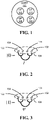
- a topological qubit 100 in the "standard encoding" is comprised of four MZMs/Ising ⁇ quasiparticles 102-108, whose collective topological charge is trivial (i.e., even fermion parity/vacuum topological charge I ), as shown in FIG. 1 .
- FIGS. 2 and 3 A fusion tree for the
- 0 ⁇ basis state is given by the state in which quasiparticles 102 and 104 are in the I fusion channel and quasiparticles 106 and 108 are also in the I fusion channel.
- 1 ⁇ basis state of the qubit 100 is given by the state in which quasiparticles 102 and 104 are in the ⁇ fusion channel and quasiparticles 106 and 108 are also in the ⁇ fusion channel.
- a superconductor 112 such as an s-wave superconductor, has a plurality of nanowires 114 disposed thereon.
- the heterostructure system i.e., the combined nanowires 114 and the superconductor 112, are tuned (using for example, electrostatic gates or local magnetic fields) so that the nanowires 114 (or segments thereof) are driven into the topological (p-wave superconducting) phase.
- a segment of nanowire in the topological phase is referred to as a "Majorana wire".
- ⁇ quasiparticles represent the MZMs localized at the endpoints of topological regions of wire and a topological qubit (in the standard encoding) is comprised of two segments of Majorana wire, as indicated schematically in FIG. 4 .
- 1 ⁇ of the qubit are given by the states in which each of the wire segments has even and odd fermion parity, respectively.
- the topological system 110 also includes an array of gates 116.
- the array of gates 116 may provide, among other things, electrical potential or a magnetic field. In this manner, the array of gates 116 induce the nanowires 114 to change between topological phase and nontopological, normal or "trivial" phase, and vice-versa.
- the topological system 110 also includes a measuring device 118 such as an interferometer that measures quasiparticles.
- the measuring device 118 measure fusion outcomes to determine whether the fusion outcomes are I or ⁇ fusion outcomes.
- Topological Qubit Fusion may be generally described to be an operation acting on two (or more) topological qubits that results in one fewer topological qubit and a new state for the remaining qubit(s). This operation is performed by fusing a number of the anyonic quasiparticles which comprise these qubits, measuring the resulting fusion outcomes, and fusing these resulting fusion outcomes with other quasiparticles that comprised the qubits.
- the resulting operation i.e., the map from the initial state to the final state, will generally depend on the type of anyonic quasiparticles being used and the choice of which quasiparticles are fused.
- Ising-type anyons or MZMs.
- qubit A is comprised of quasiparticles A1, A2, A3, and A4
- qubit B is comprised of quasiparticles B1, B2, B3, and B4.
- quasiparticles A1 and B1 are fused, resulting in the quasiparticle x (which can be either I or ⁇ ), and quasiparticles A2 and B4 are fused, resulting in quasiparticle y (which can be either I or ⁇ ).
- the topological charge values I or ⁇ of quasiparticles x and y are measured.
- quasiparticle x is fused with quasiparticle B2, which results in a ⁇ quasiparticle and is the new quasiparticle 1 of the final topological qubit
- quasiparticle y is fused with quasiparticle B3, which results in a ⁇ quasiparticle and is the new quasiparticle 2 of the final topological qubit.
- ⁇ ⁇ ⁇ 0 ⁇ 0 + ⁇ 1 N xy ⁇ 1
- ⁇ ′ ⁇ ⁇ 0 ⁇ 0 + ⁇ 1 N xy ⁇ 1 ⁇ 1
- Majorana wires are regions within semiconductor wires with strong spin-orbit coupling in which proximity to an s-wave superconductor has induced an effective p-wave pairing of electrons with gap ⁇ 0 .
- two segments of a wire in the topological regime may be extended until they join into a single segment.
- ⁇ I ⁇ ⁇
- I the trivial/vacuum quasiparticle
- ⁇ a fermion.
- a ⁇ outcome will be trapped by a potential well, which is created, for example, by a kink in the chemical potential ⁇ .
- ⁇ is an excitation above the ground state and, for typical system parameters, will have an additional energy of order of 10 meV.
- control gate potentials required to fuse two topological segments of a given wire will be bimodal and can be used to read out the fusion outcome: I (lower energy) or ⁇ (higher energy).
- the topological segments are fused as a result of changing parameters V x , ⁇ , and/or ⁇ 0 . It is possible to control these parameters in such a way that a spatially localized potential well is formed at and shortly after the moment of fusion. This well will trap the fusion outcome (which is only relevant if the outcome happens to be ⁇ ). This is particularly obvious if fusion occurs via gating which increases ⁇ while leaving the other parameters substantially constant; ⁇ will be lower, initially in the region where fusion is incipient.
- Item (1) of the Overview section amounts to controlling gating to maintain this well and hence the localization of any fusion outcome ⁇ .
- the well may be migrated adiabatically to either the left or the right end of the newly formed, unified topological segment of wire.
- the gates along the wire may be adjusted to adiabatically translate one of the endpoints of the wire to the well.
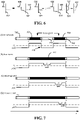
- FIG. 7 illustrates a topological fusion process.
- a nanowire 700 has topological regions 702 and 704 and non-topological region 706 interposing regions 702 and 704.
- ⁇ quasiparticles 708 are located at the ends of the topological regions 702 and 704.
- a potential well 710 is formed from the non-topological region 706.
- the nanowire 700 is tuned such that proximal ends of the topological regions 702 and 704 extend towards each other to form a single topological region 712.
- the potential well 710 traps the fusion outcome ⁇ (or I ).
- the nanowire 700 is further tuned such that the potential well 710 is adiabatically moved toward an end of the topological region 712, where a ⁇ particle is localized. As the potential well 710 is brought into proximity of the end of the topological region 712, the fusion outcome ⁇ tunnels through the potential barrier and the fusion outcome ⁇ fuses with the ⁇ quasiparticle.
- topological segments may be effectively described in terms of the Majorana operators located near the ends of each topological segment. (See, FIG. 8 .)
- the fermion ⁇ (x) ⁇ 3 (x) + i ⁇ 4 (x) is not spatially localized and has an interaction with ⁇ 1 and ⁇ 2 of the form ⁇ ⁇ 1 + i ⁇ ⁇ 2 .
- topological qubit fusion protocol shown in FIG. 5 , which may be used to convert states
- FIG. 9A shows a computational qubit comprised of quasiparticles 102, 104, 106 and 108 in state
- the quasiparticles 102, 104 and 902-908 are localized at ends of Majorana wires (or topological regions) of a nanowire 910. Portions of the nanowire 910 shown in a thick line (between 102 and 104, between 902 and 904, and between 906 and 908) are in topological phase, and portions of the nanowire 910 shown in a narrow line (between 102 and 902 and between 104 and 908) are in normal, nontopological or "trivial" phase.
- FIG. 9B shows potential wells 912 and 914 are formed in the nanowire 910 between quasiparticles 102 and 902 and quasiparticles 104 and 908, respectively.
- the potential wells 912 and 914 are formed from the nontopological or normal phase of the nanowire 910.
- the nanowire 910 is tuned such that segments of the nanowire 910 between the quasiparticles 102 and 902 and the quasiparticles 104 and 908 enter topological phase, thereby moving quasiparticles 102 and 902 towards each other and quasiparticles 104 and 908 towards each other, and forming the respective potential wells 912 and 914.
- FIG. 9C shows the nanowire 910 being in topological phase and having the potential wells 912 and 914 formed therein.
- the potential wells 912 and 914 have trapped fusion outcomes 916 and 918, respectively.
- the fusion outcomes ( I or ⁇ ) trapped in the resulting potential wells 916 and 918 are detected using local energy measurements. The fusion outcomes are recorded.
- FIG. 9D shows the potential wells 912 and 914 with trapped fusion outcomes 916 and 918, respectively, which are adiabatically slid (this may done by "playing the scale” on the control gates) towards specified wire endpoints where the quasiparticles 904, 906 are localized.
- quantum tunneling occurs if one or both of the trapped fusion outcomes 916 and 918 are ⁇ quasiparticles.
- the quasiparticles 904 and 906 are ⁇ quasiparticles (MZMs).
- FIG. 9E shows the nanowire 910 in topological phase after the trapped fusion outcomes 916 and 918 have fused with quasiparticles 904 and 906, respectively, to yield quasiparticles 920 and 922, respectively.
- the quasiparticles 106, 108, 920 and 922 comprise a new topological qubit.
Landscapes
- Engineering & Computer Science (AREA)
- Theoretical Computer Science (AREA)
- Physics & Mathematics (AREA)
- General Physics & Mathematics (AREA)
- Mathematical Physics (AREA)
- Nanotechnology (AREA)
- Chemical & Material Sciences (AREA)
- Evolutionary Computation (AREA)
- Computational Mathematics (AREA)
- Mathematical Optimization (AREA)
- Pure & Applied Mathematics (AREA)
- Computing Systems (AREA)
- General Engineering & Computer Science (AREA)
- Data Mining & Analysis (AREA)
- Software Systems (AREA)
- Condensed Matter Physics & Semiconductors (AREA)
- Mathematical Analysis (AREA)
- Artificial Intelligence (AREA)
- Crystallography & Structural Chemistry (AREA)
- Computer Networks & Wireless Communication (AREA)
- Signal Processing (AREA)
- Superconductor Devices And Manufacturing Methods Thereof (AREA)
- Mram Or Spin Memory Techniques (AREA)
- Management, Administration, Business Operations System, And Electronic Commerce (AREA)
Claims (9)
- Verfahren zum Bereitstellen einer topologischen Quantenrechenoperation, umfassend:Bereitstellen eines ersten Quasiteilchens (904) und eines zweiten Quasiteilchens (902), die sich an einem zweiten bzw. einem ersten Ende eines ersten topologischen Drahtsegments (114) eines Nanodrahts (114) befinden, wobei das erste topologische Drahtsegment (114) durch ein erstes chemisches Potential definiert ist;Bereitstellen eines dritten Quasiteilchens (102) und eines vierten Quasiteilchens (104), die sich an einem ersten bzw. einem zweiten Ende eines zweiten topologischen Drahtsegments (114) des Nanodrahts (114) befinden, wobei das zweite topologische Drahtsegment (114) durch ein zweites chemisches Potential definiert ist;Bilden eines Potentialtopfs in einer nichttopologischen Phasenregion des Nanodrahts (114), die sich zwischen dem ersten topologischen Drahtsegment (114) und dem zweiten topologischen Drahtsegment (114) erstreckt;Verwandeln der nichttopologischen Phasenregion, die sich zwischen dem zweiten (902) und dem dritten Quasiteilchen (102) erstreckt, unter Aufrechterhaltung des Potentialtopfs in eine topologische Phasenregion, die sich zwischen dem zweiten (902) und dem dritten Quasiteilchen (102) erstreckt, wobei das Bilden des Potentialtopfs in der nichttopologischen Phasenregion, die sich zwischen dem zweiten und dem dritten Quasiteilchen erstreckt, und das Verwandeln der nichttopologischen Phasenregion, die sich zwischen dem zweiten und dem dritten Quasiteilchen erstreckt, in die topologische Phasenregion, die sich zwischen dem zweiten und dem dritten Quasiteilchen erstreckt, das Anpassen einer Gatteranordnung (116) umfasst, um Phasenwechsel in dem Nanodraht, der die nichttopologischen Phasenregionen und das erste und das zweite topologische Drahtsegment umfasst, anzutreiben;Verschmelzen des zweiten (902) und des dritten Quasiteilchens (102) im Potentialtopf so miteinander, dass ein Verschmelzungsergebnis-Quasiteilchen (916), das aus der Verschmelzung des zweiten (902) und des dritten Quasiteilchens (102) resultiert, im Potentialtopf gefangen wird, wobei es sich bei dem Verschmelzungsergebnis-Quasiteilchen um ein erstes Verschmelzungsergebnis-Quasiteilchen (916) handelt;Messen des ersten Verschmelzungsergebnis-Quasiteilchens (916) unter Verwendung einer Messvorrichtung (118); undunter Verwendung der Gatteranordnung (116):Aneinanderbringen des Potentialtopfs, in dem das erste Verschmelzungsergebnis-Quasiteilchen gefangen ist, und des zweiten Endes des ersten topologischen Drahtsegments; undVerschmelzen des ersten Quasiteilchens (904) und des ersten Verschmelzungsergebnis-Quasiteilchens (916) miteinander, um ein zweites Verschmelzungsergebnis-Quasiteilchen (920) zu erlangen.
- Verfahren nach Anspruch 1, weiter umfassend:Bereitstellen eines ersten Qubits, welches umfasst:das erste Quasiteilchen, wobei das erste Quasiteilchen Quasiteilchen B2 (904) umfasst,das zweite Quasiteilchen, wobei das zweite Quasiteilchen Quasiteilchen B1 (902) umfasst,ein Quasiteilchen B3 (906) und ein Quasiteilchen B4 (908), wobei sich das Quasiteilchen B4 (908) und das Quasiteilchen B3 (906) an einem ersten bzw. einem zweiten Ende eines dritten topologischen Drahtsegments (114) befinden, das durch ein drittes chemisches Potential definiert ist;Bereitstellen eines zweiten Qubits, welches umfasst:das dritte Quasiteilchen, wobei das dritte Quasiteilchen Quasiteilchen A1 (102) umfasst,das vierte Quasiteilchen, wobei das vierte Quasiteilchen Quasiteilchen A2 (104) umfasst,ein Quasiteilchen A3 (106) und ein Quasiteilchen A4 (108);Bilden eines zweiten Potentialtopfs in einer nichttopologischen Phasenregion, die sich zwischen dem dritten topologischen Drahtsegment (114) und dem zweiten topologischen Drahtsegment (114) erstreckt;Verwandeln der nichttopologischen Phasenregion, die sich zwischen dem Quasiteilchen B4 (908) und dem Quasiteilchen A2 (104) erstreckt, unter Aufrechterhaltung des zweiten Potentialtopfs in eine topologische Phasenregion, die sich zwischen dem Quasiteilchen B4 (908) und dem Quasiteilchen A2 (104) erstreckt;Verschmelzen des Quasiteilchens B4 (908) und des Quasiteilchens A2 (104) im zweiten Potentialtopf so miteinander, dass ein Verschmelzungsergebnis-Quasiteilchen (918), das aus der Verschmelzung des Quasiteilchens B4 (908) und des Quasiteilchens A2 (104) resultiert, im zweiten Potentialtopf gefangen wird, wobei es sich bei dem Verschmelzungsergebnis-Quasiteilchen um ein drittes Verschmelzungsergebnis-Quasiteilchen (918) handelt;Messen des dritten Verschmelzungsergebnis-Quasiteilchens (918); undVerschmelzen des Quasiteilchens B3 (906) und des dritten Verschmelzungsergebnis-Quasiteilchens (918) miteinander, um ein viertes Verschmelzungsergebnis-Quasiteilchen (922) zu erlangen.
- Verfahren nach Anspruch 2, wobei:die topologische Quantenrechenoperation ein θ/2-Phasengatter im zweiten Qubit umfasst;das Bereitstellen des ersten Qubits das Bereitstellen des ersten Qubits im Zustand umfasst

- Verfahren nach Anspruch 3, weiter umfassend:Berechnen der Fermionenparität des ersten Verschmelzungsergebnis-Quasiteilchens (916) und des dritten Verschmelzungsergebnis-Quasiteilchens (918); undwenn die Fermionenparität gleich 0 ist, dann Erhalten des θ/2-Phasengatters; undwenn die Fermionenparität gleich 1 ist, dann Erhalten eines konjugierten -θ/2-Phasengatters und Korrigieren um die Differenz, um ein θ/2-Phasengatter zu erhalten.
- Verfahren nach Anspruch 3 oder Anspruch 4, wobei:
es sich bei dem θ/2-Phasengatter um ein π/8-Phasengatter handelt. - Verfahren nach Anspruch 1, wobei es sich bei dem ersten topologischen Drahtsegment um einen Majorana-Draht handelt.
- Quantenrechenvorrichtung, umfassend:einen Nanodraht (114), der so konfiguriert werden kann, dass er ein erstes topologisches Segment und ein zweites topologisches Segment und ein nichttopologisches Segment aufweist, wobei jedes topologische Segment ein erstes und ein zweites Ende aufweist und ein jeweiliges dort befindliches Quasiteilchen aufweist, wobei sich das nichttopologische Segment zwischen den ersten Enden des ersten und des zweiten topologischen Segments erstreckt;eine Gatteranordnung (116), die so konfiguriert ist, dass sie selektiv Phasenwechsel im Nanodraht von topologisch zu nichttopologisch und umgekehrt induziert, und so konfiguriert ist, dass sie das nichttopologische Segment derart in ein topologisches Phasendrahtsegment verwandelt, dass sich mindestens eines der Quasiteilchen, die sich an den ersten Enden des ersten und des zweiten topologischen Segments befinden, zu dem anderen bewegt und im nichttopologischen Segment einen Potentialtopf im Nanodraht (114) induziert, der ein Verschmelzungsergebnis-Quasiteilchen in sich fängt, wobei es sich bei dem Verschmelzungsergebnis-Quasiteilchen um das Produkt der Verschmelzung von Quasiteilchen, die sich an den ersten Enden des ersten und des zweiten topologischen Segments befinden, handelt, und wobei die Gatteranordnung weiter so konfiguriert ist, dass sie relative Bewegung des Potentialtopfs derart bewirkt, dass der Potentialtopf und das zweite Ende des ersten topologischen Segments aneinandergebracht werden, um das Verschmelzungsergebnis-Quasiteilchen mit dem Quasiteilchen, das sich am zweiten Ende des ersten topologischen Segments befindet, zu verschmelzen; undeine Messvorrichtung (118), die so konfiguriert ist, dass sie das Verschmelzungsergebnis-Quasiteilchen misst.
- Quantenrechenvorrichtung nach Anspruch 7, wobei:der Nanodraht (114) weiter so konfiguriert werden kann, dass er ein drittes topologisches Segment mit einem ersten und einem zweiten Ende und mit einem jeweiligen dort befindlichen Quasiteilchen, und ein zweites nichttopologisches Segment aufweist, das sich zwischen dem zweiten Ende des zweiten topologischen Segments und dem ersten Ende des dritten topologischen Segments erstreckt;die Gatteranordnung weiter so konfiguriert ist, dass sie das zweite nichttopologische Segment derart in ein topologisches Phasendrahtsegment verwandelt, dass sich mindestens eines der Quasiteilchen, die sich am zweiten Ende des zweiten topologischen Segments oder dem ersten Ende des dritten topologischen Segments befinden, zu dem anderen bewegt und im zweiten nichttopologischen Segment einen zweiten Potentialtopf im Nanodraht (114) induziert, der ein zweites Verschmelzungsergebnis-Quasiteilchen in sich fängt, wobei es sich bei dem zweiten Verschmelzungsergebnis-Quasiteilchen um das Produkt der Verschmelzung von Quasiteilchen, die sich am zweiten Ende des zweiten topologischen Segments und dem ersten Ende des dritten topologischen Segments befinden, handelt, und wobei die Gatteranordnung weiter so konfiguriert ist, dass sie Bewegung des zweiten Potentialtopfs derart bewirkt, dass der zweite Potentialtopf und das zweite Ende des dritten topologischen Segments aneinandergebracht werden, um das zweite Verschmelzungsergebnis-Quasiteilchen mit dem Quasiteilchen, das sich am zweiten Ende des dritten topologischen Segments befindet, zu verschmelzen; unddie Messvorrichtung weiter so konfiguriert ist, dass sie das zweite Verschmelzungsergebnis-Quasiteilchen misst.
- Quantenrechenvorrichtung nach Anspruch 7 oder Anspruch 8, wobei der Nanodraht einen Majorana-Draht umfasst.
Applications Claiming Priority (3)
| Application Number | Priority Date | Filing Date | Title |
|---|---|---|---|
| US201361761125P | 2013-02-05 | 2013-02-05 | |
| US13/957,268 US9713199B2 (en) | 2013-02-05 | 2013-08-01 | Topological qubit fusion |
| PCT/US2014/014748 WO2014123932A1 (en) | 2013-02-05 | 2014-02-05 | Topological qubit fusion |
Publications (2)
| Publication Number | Publication Date |
|---|---|
| EP2954465A1 EP2954465A1 (de) | 2015-12-16 |
| EP2954465B1 true EP2954465B1 (de) | 2023-01-11 |
Family
ID=51259653
Family Applications (1)
| Application Number | Title | Priority Date | Filing Date |
|---|---|---|---|
| EP14708151.7A Active EP2954465B1 (de) | 2013-02-05 | 2014-02-05 | Topologische qubit-fusion |
Country Status (4)
| Country | Link |
|---|---|
| US (2) | US9713199B2 (de) |
| EP (1) | EP2954465B1 (de) |
| CN (1) | CN105164704B (de) |
| WO (1) | WO2014123932A1 (de) |
Families Citing this family (35)
| Publication number | Priority date | Publication date | Assignee | Title |
|---|---|---|---|---|
| US9721209B2 (en) * | 2013-10-14 | 2017-08-01 | Microsoft Technology Licensing, Llc | Method and system for efficient decomposition of single-qubit quantum gates into Fibonacci anyon braid circuits |
| JP2015154416A (ja) * | 2014-02-18 | 2015-08-24 | 株式会社東芝 | マジック状態生成装置、マジック状態生成方法、および、量子ゲート操作方法 |
| WO2016161220A1 (en) | 2015-04-01 | 2016-10-06 | Microsoft Technology Licensing, Llc | Efficient topological compilation for metaplectic anyon model |
| US10333048B2 (en) * | 2015-09-20 | 2019-06-25 | Microsoft Technology Licensing, Llc | Universal topological quantum computers based on majorana nanowire networks |
| US10133984B2 (en) * | 2015-09-30 | 2018-11-20 | Microsoft Technology Licensing, Llc | Adiabatic phase gates in parity-based quantum computers |
| US10635988B2 (en) * | 2016-08-17 | 2020-04-28 | Microsoft Technology Licensing, Llc | Measuring and manipulating states of non-abelian quasiparticles via quantum dot hybridization energy shifts |
| EP3500984B1 (de) * | 2016-08-17 | 2026-04-08 | Microsoft Technology Licensing, LLC | Verfahren und geräte der elektronischen datenverarbeitung mit einem quantencomputer für majoranaqubits |
| US10490600B2 (en) * | 2016-08-17 | 2019-11-26 | Microsoft Technology Licensing, Llc | Quantum computing devices with majorana hexon qubits |
| US10346348B2 (en) * | 2016-08-17 | 2019-07-09 | Microsoft Technology Licensing, Llc | Quantum computing methods and devices for Majorana Tetron qubits |
| US10574268B2 (en) * | 2017-02-28 | 2020-02-25 | Microsoft Technology Licensing, Llc | Small Majorana fermion codes |
| DE102017002616A1 (de) * | 2017-03-20 | 2018-09-20 | Forschungszentrum Jülich GmbH | Verfahren zur in-situ Herstellung von "Majorana-Materialien - Supraleiter" Hybridnetzwerken, sowie eine durch das Verfahren hergestellte Hybridstruktur |
| EP3695351B1 (de) | 2017-11-19 | 2024-07-24 | Microsoft Technology Licensing, LLC | Quanten-spin-hallbasierte ladungsenergiegeschützte quantenberechnung |
| US11121302B2 (en) | 2018-10-11 | 2021-09-14 | SeeQC, Inc. | System and method for superconducting multi-chip module |
| US11144334B2 (en) | 2018-12-20 | 2021-10-12 | Red Hat, Inc. | Quantum computer task manager |
| CN110174193A (zh) * | 2019-05-23 | 2019-08-27 | 南京邮电大学 | 一种场效应管应变传感器 |
| FI3751472T3 (fi) * | 2019-06-13 | 2023-11-23 | Univ Mainz Johannes Gutenberg | Menetelmä ja laite anyonien hankkimiseksi, laitteen käyttö |
| KR20220044944A (ko) | 2019-06-21 | 2022-04-12 | 사이퀀텀, 코퍼레이션 | 광자 양자 컴퓨터 아키텍처 |
| US11474867B2 (en) * | 2019-07-11 | 2022-10-18 | Microsoft Technology Licensing, Llc | Measurement sequence determination for quantum computing device |
| US20210126181A1 (en) * | 2019-10-24 | 2021-04-29 | Microsoft Technology Licensing, Llc | Semiconductor-superconductor hybrid device, its manufacture and uses |
| US12082512B2 (en) * | 2019-10-24 | 2024-09-03 | Microsoft Technology Licensing, Llc | Semiconductor-superconductor hybrid device |
| CN110880039B (zh) * | 2019-11-19 | 2020-09-01 | 上海交通大学 | 用电场控制马约拉纳零能模移动的方法 |
| US11515461B2 (en) | 2019-12-27 | 2022-11-29 | International Business Machines Corporation | Superconductor devices having buried quasiparticle traps |
| KR20220143858A (ko) * | 2020-01-29 | 2022-10-25 | 사이퀀텀, 코퍼레이션 | 융합 기반 양자 컴퓨팅 |
| WO2021202409A1 (en) | 2020-03-30 | 2021-10-07 | Psiquantum, Corp. | Encoded fusion measurements with local adaptivity |
| US11886380B2 (en) | 2020-04-27 | 2024-01-30 | Red Hat, Inc. | Quantum file management system |
| US11416221B2 (en) | 2020-05-12 | 2022-08-16 | Red Hat, Inc. | Quantum entanglement protection |
| US12293259B2 (en) | 2020-05-27 | 2025-05-06 | Red Hat, Inc. | Qubit allocation service |
| US11676059B2 (en) | 2020-06-23 | 2023-06-13 | Red Hat, Inc. | Performing quantum file pattern searching |
| US11556833B2 (en) | 2020-06-25 | 2023-01-17 | Red Hat, Inc. | Performing quantum file concatenation |
| US11580247B2 (en) | 2020-06-25 | 2023-02-14 | Red Hat, Inc. | Systems and methods for quantum file permissions |
| US11562283B2 (en) | 2020-06-25 | 2023-01-24 | Red Hat, Inc. | Performing quantum file copying |
| US12317759B2 (en) * | 2021-02-16 | 2025-05-27 | The Hong Kong University Of Science And Technology | Creating majorana zero modes in quantum anomalous hall insulator/superconductor heterostructures |
| US12333384B1 (en) | 2021-04-16 | 2025-06-17 | Ut-Battelle, Llc | Electro-optical circuit for performing topological quantum computation |
| US12488268B1 (en) | 2021-10-26 | 2025-12-02 | Psiquantum, Corp. | Resource efficient logical quantum gates |
| JP7774738B2 (ja) * | 2022-02-10 | 2025-11-21 | プサイクォンタム,コーポレーション | アイドルボリュームが低減されたフォールトトレラント量子計算のためのシステムおよび方法 |
Family Cites Families (4)
| Publication number | Priority date | Publication date | Assignee | Title |
|---|---|---|---|---|
| US7250624B1 (en) | 2005-09-23 | 2007-07-31 | Microsoft Corporation | Quasi-particle interferometry for logical gates |
| US8209279B2 (en) | 2007-09-07 | 2012-06-26 | Microsoft Corporation | Measurement-only topological quantum computation |
| US8275428B2 (en) | 2010-05-21 | 2012-09-25 | Microsoft Corporation | Method for planar implementation of π/8 gate in chiral topological superconductors |
| US8648331B2 (en) | 2010-11-10 | 2014-02-11 | Microsoft Corporation | Coherent quantum information transfer between topological and conventional qubits |
-
2013
- 2013-08-01 US US13/957,268 patent/US9713199B2/en active Active
-
2014
- 2014-02-05 CN CN201480007403.7A patent/CN105164704B/zh active Active
- 2014-02-05 WO PCT/US2014/014748 patent/WO2014123932A1/en not_active Ceased
- 2014-02-05 EP EP14708151.7A patent/EP2954465B1/de active Active
-
2017
- 2017-06-23 US US15/632,109 patent/US10679138B2/en active Active
Also Published As
| Publication number | Publication date |
|---|---|
| US9713199B2 (en) | 2017-07-18 |
| WO2014123932A1 (en) | 2014-08-14 |
| US20170293854A1 (en) | 2017-10-12 |
| CN105164704B (zh) | 2018-07-03 |
| US20140221059A1 (en) | 2014-08-07 |
| CN105164704A (zh) | 2015-12-16 |
| EP2954465A1 (de) | 2015-12-16 |
| US10679138B2 (en) | 2020-06-09 |
Similar Documents
| Publication | Publication Date | Title |
|---|---|---|
| US10679138B2 (en) | Topological qubit fusion | |
| US9489634B2 (en) | Topological quantum computation via tunable interactions | |
| EP3500982B1 (de) | Messung und manipulation von zuständen nicht-abelscher quasiteilchen durch hybridisationsenergieverschiebungen von quantenpunkten | |
| US20140354326A1 (en) | Quantum Computers Having Partial Interferometric Quantum Gates | |
| Higginbotham et al. | Parity lifetime of bound states in a proximitized semiconductor nanowire | |
| EP3500983B1 (de) | Geräte der elektronischen datenverarbeitung mit einem quantencomputer mit majoranaqubits | |
| Bonderson et al. | Topological Quantum Buses: Coherent Quantum Information Transfer between<? format?> Topological and Conventional Qubits | |
| US9152924B2 (en) | Coherent quantum information transfer between conventional qubits | |
| US7364923B2 (en) | Dressed qubits | |
| Zhang et al. | Qubits based on semiconductor quantum dots | |
| US7781754B2 (en) | Fermionic bell-state analyzer and quantum computer using same | |
| EP3500984B1 (de) | Verfahren und geräte der elektronischen datenverarbeitung mit einem quantencomputer für majoranaqubits | |
| Hussein et al. | Double quantum dot Cooper-pair splitter at finite couplings | |
| Kotetes et al. | Engineering and manipulating topological qubits in 1D quantum wires | |
| Zhang et al. | Cluster-state preparation and multipartite entanglement analyzer with fermions | |
| Otten et al. | Dynamical structure factor in the non-Abelian phase of the Kitaev honeycomb model in the presence of quenched disorder | |
| Ozfidan et al. | Geometry, chirality, topology and electron–electron interactions in the quadruple quantum dot molecule | |
| Del Pozo et al. | A Model for Topological p-wave Superconducting Wires with Disorder and Interactions | |
| Hiltscher et al. | Adiabatic pumping in a double-dot Cooper-pair beam splitter | |
| US20230376816A1 (en) | Method and device for quantum computing with majorana modes | |
| Volmer et al. | Mapping g-factors and complex intervalley coupling in Si/SiGe by conveyor-mode shuttling | |
| Tang et al. | Majorana zero modes in a double-stranded DNA with s-wave superconductor | |
| Tsintzis | Electronic structure and transport in exotic nanostructures | |
| Wong et al. | Properties of topological insulators and superconductors under relativistic gravity | |
| Lv et al. | Detection of topological quantum phases using dynamical methods |
Legal Events
| Date | Code | Title | Description |
|---|---|---|---|
| PUAI | Public reference made under article 153(3) epc to a published international application that has entered the european phase |
Free format text: ORIGINAL CODE: 0009012 |
|
| 17P | Request for examination filed |
Effective date: 20150713 |
|
| AK | Designated contracting states |
Kind code of ref document: A1 Designated state(s): AL AT BE BG CH CY CZ DE DK EE ES FI FR GB GR HR HU IE IS IT LI LT LU LV MC MK MT NL NO PL PT RO RS SE SI SK SM TR |
|
| AX | Request for extension of the european patent |
Extension state: BA ME |
|
| DAX | Request for extension of the european patent (deleted) | ||
| STAA | Information on the status of an ep patent application or granted ep patent |
Free format text: STATUS: EXAMINATION IS IN PROGRESS |
|
| 17Q | First examination report despatched |
Effective date: 20180705 |
|
| RAP3 | Party data changed (applicant data changed or rights of an application transferred) |
Owner name: MICROSOFT TECHNOLOGY LICENSING, LLC |
|
| REG | Reference to a national code |
Ref country code: DE Ref legal event code: R079 Ref document number: 602014086061 Country of ref document: DE Free format text: PREVIOUS MAIN CLASS: G06N0099000000 Ipc: G06N0010400000 |
|
| GRAP | Despatch of communication of intention to grant a patent |
Free format text: ORIGINAL CODE: EPIDOSNIGR1 |
|
| STAA | Information on the status of an ep patent application or granted ep patent |
Free format text: STATUS: GRANT OF PATENT IS INTENDED |
|
| GRAJ | Information related to disapproval of communication of intention to grant by the applicant or resumption of examination proceedings by the epo deleted |
Free format text: ORIGINAL CODE: EPIDOSDIGR1 |
|
| STAA | Information on the status of an ep patent application or granted ep patent |
Free format text: STATUS: EXAMINATION IS IN PROGRESS |
|
| RIC1 | Information provided on ipc code assigned before grant |
Ipc: G06N 10/00 20220101ALI20220830BHEP Ipc: B82Y 10/00 20110101AFI20220830BHEP |
|
| GRAP | Despatch of communication of intention to grant a patent |
Free format text: ORIGINAL CODE: EPIDOSNIGR1 |
|
| STAA | Information on the status of an ep patent application or granted ep patent |
Free format text: STATUS: GRANT OF PATENT IS INTENDED |
|
| RIC1 | Information provided on ipc code assigned before grant |
Ipc: B82Y 10/00 20110101ALI20220907BHEP Ipc: G06N 10/40 20220101AFI20220907BHEP |
|
| INTG | Intention to grant announced |
Effective date: 20220920 |
|
| INTC | Intention to grant announced (deleted) | ||
| INTG | Intention to grant announced |
Effective date: 20221012 |
|
| GRAS | Grant fee paid |
Free format text: ORIGINAL CODE: EPIDOSNIGR3 |
|
| GRAA | (expected) grant |
Free format text: ORIGINAL CODE: 0009210 |
|
| STAA | Information on the status of an ep patent application or granted ep patent |
Free format text: STATUS: THE PATENT HAS BEEN GRANTED |
|
| AK | Designated contracting states |
Kind code of ref document: B1 Designated state(s): AL AT BE BG CH CY CZ DE DK EE ES FI FR GB GR HR HU IE IS IT LI LT LU LV MC MK MT NL NO PL PT RO RS SE SI SK SM TR |
|
| REG | Reference to a national code |
Ref country code: GB Ref legal event code: FG4D |
|
| REG | Reference to a national code |
Ref country code: CH Ref legal event code: EP |
|
| REG | Reference to a national code |
Ref country code: DE Ref legal event code: R096 Ref document number: 602014086061 Country of ref document: DE |
|
| REG | Reference to a national code |
Ref country code: IE Ref legal event code: FG4D |
|
| REG | Reference to a national code |
Ref country code: NL Ref legal event code: FP Ref country code: AT Ref legal event code: REF Ref document number: 1543865 Country of ref document: AT Kind code of ref document: T Effective date: 20230215 |
|
| REG | Reference to a national code |
Ref country code: LT Ref legal event code: MG9D |
|
| P01 | Opt-out of the competence of the unified patent court (upc) registered |
Effective date: 20230501 |
|
| REG | Reference to a national code |
Ref country code: AT Ref legal event code: MK05 Ref document number: 1543865 Country of ref document: AT Kind code of ref document: T Effective date: 20230111 |
|
| PG25 | Lapsed in a contracting state [announced via postgrant information from national office to epo] |
Ref country code: RS Free format text: LAPSE BECAUSE OF FAILURE TO SUBMIT A TRANSLATION OF THE DESCRIPTION OR TO PAY THE FEE WITHIN THE PRESCRIBED TIME-LIMIT Effective date: 20230111 Ref country code: PT Free format text: LAPSE BECAUSE OF FAILURE TO SUBMIT A TRANSLATION OF THE DESCRIPTION OR TO PAY THE FEE WITHIN THE PRESCRIBED TIME-LIMIT Effective date: 20230511 Ref country code: NO Free format text: LAPSE BECAUSE OF FAILURE TO SUBMIT A TRANSLATION OF THE DESCRIPTION OR TO PAY THE FEE WITHIN THE PRESCRIBED TIME-LIMIT Effective date: 20230411 Ref country code: LV Free format text: LAPSE BECAUSE OF FAILURE TO SUBMIT A TRANSLATION OF THE DESCRIPTION OR TO PAY THE FEE WITHIN THE PRESCRIBED TIME-LIMIT Effective date: 20230111 Ref country code: LT Free format text: LAPSE BECAUSE OF FAILURE TO SUBMIT A TRANSLATION OF THE DESCRIPTION OR TO PAY THE FEE WITHIN THE PRESCRIBED TIME-LIMIT Effective date: 20230111 Ref country code: HR Free format text: LAPSE BECAUSE OF FAILURE TO SUBMIT A TRANSLATION OF THE DESCRIPTION OR TO PAY THE FEE WITHIN THE PRESCRIBED TIME-LIMIT Effective date: 20230111 Ref country code: ES Free format text: LAPSE BECAUSE OF FAILURE TO SUBMIT A TRANSLATION OF THE DESCRIPTION OR TO PAY THE FEE WITHIN THE PRESCRIBED TIME-LIMIT Effective date: 20230111 Ref country code: AT Free format text: LAPSE BECAUSE OF FAILURE TO SUBMIT A TRANSLATION OF THE DESCRIPTION OR TO PAY THE FEE WITHIN THE PRESCRIBED TIME-LIMIT Effective date: 20230111 |
|
| PG25 | Lapsed in a contracting state [announced via postgrant information from national office to epo] |
Ref country code: SE Free format text: LAPSE BECAUSE OF FAILURE TO SUBMIT A TRANSLATION OF THE DESCRIPTION OR TO PAY THE FEE WITHIN THE PRESCRIBED TIME-LIMIT Effective date: 20230111 Ref country code: PL Free format text: LAPSE BECAUSE OF FAILURE TO SUBMIT A TRANSLATION OF THE DESCRIPTION OR TO PAY THE FEE WITHIN THE PRESCRIBED TIME-LIMIT Effective date: 20230111 Ref country code: IS Free format text: LAPSE BECAUSE OF FAILURE TO SUBMIT A TRANSLATION OF THE DESCRIPTION OR TO PAY THE FEE WITHIN THE PRESCRIBED TIME-LIMIT Effective date: 20230511 Ref country code: GR Free format text: LAPSE BECAUSE OF FAILURE TO SUBMIT A TRANSLATION OF THE DESCRIPTION OR TO PAY THE FEE WITHIN THE PRESCRIBED TIME-LIMIT Effective date: 20230412 Ref country code: FI Free format text: LAPSE BECAUSE OF FAILURE TO SUBMIT A TRANSLATION OF THE DESCRIPTION OR TO PAY THE FEE WITHIN THE PRESCRIBED TIME-LIMIT Effective date: 20230111 |
|
| REG | Reference to a national code |
Ref country code: CH Ref legal event code: PL |
|
| REG | Reference to a national code |
Ref country code: DE Ref legal event code: R097 Ref document number: 602014086061 Country of ref document: DE |
|
| REG | Reference to a national code |
Ref country code: BE Ref legal event code: MM Effective date: 20230228 |
|
| PG25 | Lapsed in a contracting state [announced via postgrant information from national office to epo] |
Ref country code: SM Free format text: LAPSE BECAUSE OF FAILURE TO SUBMIT A TRANSLATION OF THE DESCRIPTION OR TO PAY THE FEE WITHIN THE PRESCRIBED TIME-LIMIT Effective date: 20230111 Ref country code: RO Free format text: LAPSE BECAUSE OF FAILURE TO SUBMIT A TRANSLATION OF THE DESCRIPTION OR TO PAY THE FEE WITHIN THE PRESCRIBED TIME-LIMIT Effective date: 20230111 Ref country code: MC Free format text: LAPSE BECAUSE OF FAILURE TO SUBMIT A TRANSLATION OF THE DESCRIPTION OR TO PAY THE FEE WITHIN THE PRESCRIBED TIME-LIMIT Effective date: 20230111 Ref country code: LU Free format text: LAPSE BECAUSE OF NON-PAYMENT OF DUE FEES Effective date: 20230205 Ref country code: LI Free format text: LAPSE BECAUSE OF NON-PAYMENT OF DUE FEES Effective date: 20230228 Ref country code: EE Free format text: LAPSE BECAUSE OF FAILURE TO SUBMIT A TRANSLATION OF THE DESCRIPTION OR TO PAY THE FEE WITHIN THE PRESCRIBED TIME-LIMIT Effective date: 20230111 Ref country code: DK Free format text: LAPSE BECAUSE OF FAILURE TO SUBMIT A TRANSLATION OF THE DESCRIPTION OR TO PAY THE FEE WITHIN THE PRESCRIBED TIME-LIMIT Effective date: 20230111 Ref country code: CZ Free format text: LAPSE BECAUSE OF FAILURE TO SUBMIT A TRANSLATION OF THE DESCRIPTION OR TO PAY THE FEE WITHIN THE PRESCRIBED TIME-LIMIT Effective date: 20230111 Ref country code: CH Free format text: LAPSE BECAUSE OF NON-PAYMENT OF DUE FEES Effective date: 20230228 |
|
| PLBE | No opposition filed within time limit |
Free format text: ORIGINAL CODE: 0009261 |
|
| STAA | Information on the status of an ep patent application or granted ep patent |
Free format text: STATUS: NO OPPOSITION FILED WITHIN TIME LIMIT |
|
| PG25 | Lapsed in a contracting state [announced via postgrant information from national office to epo] |
Ref country code: SK Free format text: LAPSE BECAUSE OF FAILURE TO SUBMIT A TRANSLATION OF THE DESCRIPTION OR TO PAY THE FEE WITHIN THE PRESCRIBED TIME-LIMIT Effective date: 20230111 |
|
| 26N | No opposition filed |
Effective date: 20231012 |
|
| REG | Reference to a national code |
Ref country code: IE Ref legal event code: MM4A |
|
| PG25 | Lapsed in a contracting state [announced via postgrant information from national office to epo] |
Ref country code: SI Free format text: LAPSE BECAUSE OF FAILURE TO SUBMIT A TRANSLATION OF THE DESCRIPTION OR TO PAY THE FEE WITHIN THE PRESCRIBED TIME-LIMIT Effective date: 20230111 Ref country code: IE Free format text: LAPSE BECAUSE OF NON-PAYMENT OF DUE FEES Effective date: 20230205 |
|
| PG25 | Lapsed in a contracting state [announced via postgrant information from national office to epo] |
Ref country code: BE Free format text: LAPSE BECAUSE OF NON-PAYMENT OF DUE FEES Effective date: 20230228 |
|
| PG25 | Lapsed in a contracting state [announced via postgrant information from national office to epo] |
Ref country code: IT Free format text: LAPSE BECAUSE OF FAILURE TO SUBMIT A TRANSLATION OF THE DESCRIPTION OR TO PAY THE FEE WITHIN THE PRESCRIBED TIME-LIMIT Effective date: 20230111 |
|
| PG25 | Lapsed in a contracting state [announced via postgrant information from national office to epo] |
Ref country code: BG Free format text: LAPSE BECAUSE OF FAILURE TO SUBMIT A TRANSLATION OF THE DESCRIPTION OR TO PAY THE FEE WITHIN THE PRESCRIBED TIME-LIMIT Effective date: 20230111 |
|
| PG25 | Lapsed in a contracting state [announced via postgrant information from national office to epo] |
Ref country code: BG Free format text: LAPSE BECAUSE OF FAILURE TO SUBMIT A TRANSLATION OF THE DESCRIPTION OR TO PAY THE FEE WITHIN THE PRESCRIBED TIME-LIMIT Effective date: 20230111 |
|
| PG25 | Lapsed in a contracting state [announced via postgrant information from national office to epo] |
Ref country code: CY Free format text: LAPSE BECAUSE OF FAILURE TO SUBMIT A TRANSLATION OF THE DESCRIPTION OR TO PAY THE FEE WITHIN THE PRESCRIBED TIME-LIMIT; INVALID AB INITIO Effective date: 20140205 |
|
| PG25 | Lapsed in a contracting state [announced via postgrant information from national office to epo] |
Ref country code: HU Free format text: LAPSE BECAUSE OF FAILURE TO SUBMIT A TRANSLATION OF THE DESCRIPTION OR TO PAY THE FEE WITHIN THE PRESCRIBED TIME-LIMIT; INVALID AB INITIO Effective date: 20140205 |
|
| PG25 | Lapsed in a contracting state [announced via postgrant information from national office to epo] |
Ref country code: TR Free format text: LAPSE BECAUSE OF FAILURE TO SUBMIT A TRANSLATION OF THE DESCRIPTION OR TO PAY THE FEE WITHIN THE PRESCRIBED TIME-LIMIT Effective date: 20230111 |
|
| PGFP | Annual fee paid to national office [announced via postgrant information from national office to epo] |
Ref country code: NL Payment date: 20260121 Year of fee payment: 13 |
|
| PGFP | Annual fee paid to national office [announced via postgrant information from national office to epo] |
Ref country code: GB Payment date: 20260122 Year of fee payment: 13 |
|
| PGFP | Annual fee paid to national office [announced via postgrant information from national office to epo] |
Ref country code: DE Payment date: 20260121 Year of fee payment: 13 |
|
| PGFP | Annual fee paid to national office [announced via postgrant information from national office to epo] |
Ref country code: FR Payment date: 20260121 Year of fee payment: 13 |