EP2945424B1 - Verfahren und E-Node-B zum Weiterleiten von Uplink-Paketen basierend auf S1-Weiterreichung - Google Patents
Verfahren und E-Node-B zum Weiterleiten von Uplink-Paketen basierend auf S1-Weiterreichung Download PDFInfo
- Publication number
- EP2945424B1 EP2945424B1 EP15159484.3A EP15159484A EP2945424B1 EP 2945424 B1 EP2945424 B1 EP 2945424B1 EP 15159484 A EP15159484 A EP 15159484A EP 2945424 B1 EP2945424 B1 EP 2945424B1
- Authority
- EP
- European Patent Office
- Prior art keywords
- pdcp
- enodeb
- packet
- source
- packets
- Prior art date
- Legal status (The legal status is an assumption and is not a legal conclusion. Google has not performed a legal analysis and makes no representation as to the accuracy of the status listed.)
- Active
Links
Images



Classifications
-
- H—ELECTRICITY
- H04—ELECTRIC COMMUNICATION TECHNIQUE
- H04W—WIRELESS COMMUNICATION NETWORKS
- H04W36/00—Hand-off or reselection arrangements
- H04W36/02—Buffering or recovering information during reselection ; Modification of the traffic flow during hand-off
-
- H—ELECTRICITY
- H04—ELECTRIC COMMUNICATION TECHNIQUE
- H04W—WIRELESS COMMUNICATION NETWORKS
- H04W36/00—Hand-off or reselection arrangements
- H04W36/0005—Control or signalling for completing the hand-off
- H04W36/0011—Control or signalling for completing the hand-off for data sessions of end-to-end connection
-
- H—ELECTRICITY
- H04—ELECTRIC COMMUNICATION TECHNIQUE
- H04W—WIRELESS COMMUNICATION NETWORKS
- H04W72/00—Local resource management
- H04W72/12—Wireless traffic scheduling
-
- H—ELECTRICITY
- H04—ELECTRIC COMMUNICATION TECHNIQUE
- H04W—WIRELESS COMMUNICATION NETWORKS
- H04W80/00—Wireless network protocols or protocol adaptations to wireless operation
- H04W80/02—Data link layer protocols
-
- H—ELECTRICITY
- H04—ELECTRIC COMMUNICATION TECHNIQUE
- H04W—WIRELESS COMMUNICATION NETWORKS
- H04W88/00—Devices specially adapted for wireless communication networks, e.g. terminals, base stations or access point devices
- H04W88/02—Terminal devices
- H04W88/04—Terminal devices adapted for relaying to or from another terminal or user
Definitions
- the present invention relates to the radio communications field, and in particular, to a method for forwarding downlink and uplink packets based on S1 handover, and to an evolved NodeB (eNodeB).
- eNodeB evolved NodeB
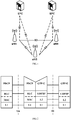
- FIG. 1 shows a structure of an LTE system.
- the LTE RAN includes an eNodeB and an Evolved Packet Core (EPC).
- EPC Evolved Packet Core
- the eNodeB evolves from the NodeB and the RNC in the R6 stage, and different eNodeB's are interconnected through an X2 interface in the mesh mode.
- the interface between the eNodeB and the EPC is called an S1 interface.
- An EPC includes a Mobility Management Entity (MME) and a System Architecture Evolution (SAE) GateWay (SGW).
- MME Mobility Management Entity
- SAE System Architecture Evolution
- the MME is responsible for the control plane mobility management, including user context and mobility state management, and allocation of a Temporary Mobile Subscriber Identifier (TMSI).
- TMSI Temporary Mobile Subscriber Identifier
- the SGW is responsible for initiating paging for the downlink data in the idle state, and managing and storing the Internet Protocol (IP) bearer parameters and intra-network routing information, and so on.
- IP Internet Protocol
- the MME is connected with the SGW in a mesh mode. That is, one MME controls multiple SGWs.
- the S1 interface supports many-to-many connection relationships between the EPC and the eNodeB.
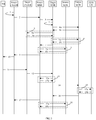
- FIG. 2 shows a user-plane protocol stack of an LTE system specific to the LTE structure shown in FIG. 1 .
- the user-plane protocol stack of the evolved architecture of the layer-2 node includes a User Equipment (UE) user-plane protocol stack, an eNodeB user-plane stack protocol, and an SGW user-plane protocol stack.
- UE User Equipment
- the UE communicates with the eNodeB through a Uu interface
- the eNodeB communicates with the SGW through an S1 interface.
- UE User Equipment
- the SGW user-plane protocol stack includes: a GPRS Tunneling Protocol-User plane (GTP-U) layer, a User Datagram Protocol/Internet Protocol (UDP/IP) layer, an L2 layer, and an L1 layer.
- GTP-U GPRS Tunneling Protocol-User plane
- UDP/IP User Datagram Protocol/Internet Protocol
- the eNodeB user protocol stack includes a radio interface protocol stack and an S1 interface protocol stack.
- the radio interface protocol stack includes: a Packet Data Convergence Protocol (PDCP) layer, a Radio Link Control (RLC) layer, a Media Access Control (MAC) layer, and an L1 layer.
- the S1 interface protocol stack includes: a GTP-U layer, a UDP/IP layer, an L2 layer, and an L1 layer.
- the UE user-plane protocol stack includes: a PDCP layer, an RLC layer, a MAC layer, and an L1 layer.
- the L2 layer refers to layer 2 in the layered protocol, namely, the data link layer, which includes frame relay, Asynchronous Transfer Mode (ATM), or a radio data link layer.
- the L1 mentioned above refers to layer 1 in the layered protocol, namely, the physical layer, which includes E1, fiber, and microwave transport.
- D2 discloses a new message on X2, which may be used to convey the uplink receiver status information from the source to the target eNodeB.
- 3GPP proposal R1-071573 discloses data forwarding mechanism over X2 and S1 interface.
- the packet forwarding method based on S1 handover is generally applied.
- the target eNodeB is unable to ensure the data forwarding of the target eNodeB to be orderly, and is hence unable to ensure lossless migration of packets.
- An aspect of the present application is to provide a method for forwarding uplink packets based on S1 handover, to prevent or reduce loss of uplink packets in the S1 handover, and thus to accomplish forwarding of uplink packets without loss.
- the method comprises receiving, by a target evolved NodeB, eNodeB, a control message from a source eNodeB through a source mobility management entity, MME and a target MME, wherein the control message comprises a packet data convergence protocol serial number, PDCP SN, of a uplink packet failed to be received by the source eNodeB and an initial PDCP SN of a packet required to be sent sequentially; sending , by the target eNodeB, packet state report information to the UE, wherein the packet state report information comprises the PDCP SN of the uplink packet failed to be received by the source eNodeB and the initial PDCP SN of the packet required to be sent sequentially; and receiving, by the target eNodeB, the uplink packets that are sent by the UE according to the PDCP SN of the uplink packet failed to be received by the source eNodeB and the initial PDCP SN of the packet required to be sent sequentially.
- PDCP SN packet data
- a target evolved NodeB, eNodeB, applied for forwarding uplink packets based on S1 handover comprises a means for receiving a control message from a source eNodeB through a source mobility management entity, MME and a target MME, wherein the control message comprises a packet data convergence protocol serial number, PDCP SN, of a uplink packet failed to be received by the source eNodeB and an initial PDCP SN of a packet required to be sent sequentially; a means for sending packet state report information to the UE, wherein the packet state report information comprises the PDCP SN of the uplink packet failed to be received by the source eNodeB and the initial PDCP SN of the packet required to be sent sequentially; and a means for receiving the uplink packets that are sent by the UE according to the PDCP SN of the uplink packet failed to be received by the source eNodeB and the initial PDCP SN
- a communication system is provided as defined in independent claim 5.
- the target eNodeB sends the packet state report information to the UE, thus ensuring that the UE sends the packet according to the packet state report information in the case of S1 handover, and accomplishing forwarding of the uplink packets without loss.
- the packets received by the target eNodeB may be forwarded from the source eNodeB, or delivered from the target SGW.
- the UE receives packets sequentially according to PDCP SNs. Therefore, the target eNodeB needs to assign a PDCP SN to each received packet. In this way, packet loss is avoided or reduced, and lossless migration of the downlink packets is ensured.
- the target eNodeB knows which packets from the source eNodeB fail to be received, and instructs the UE to retransmit such packets, thus ensuring lossless transfer of the uplink packets.
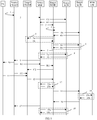
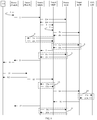
- FIG. 3 is a flowchart based on S1 handover. The flow includes the following steps:
- step 8 occurs after step 7.
- Step 8 The source MME updates the tunnel information of the source SGW. Specifically, step 8 includes:
- step 15 occurs between step 14 and step 16:
- step 18 If the source SGW of the core network is relocated, the following step 18 occurs:
- the downlink packets received by the target eNodeB include the packets forwarded by the source eNodeB and the packets delivered by the target SGW.
- the packets forwarded by the source eNodeB include the packets processed through the PDCP and the packets not processed through the PDCP.
- each packet processed through the PDCP carries a PDCP SN.
- the packets not processed through the PDCP carry no PDCP SN; and the packets delivered by the target SGW carry no PDCP SN.
- the packets processed through the PDCP in the source eNodeB are category-1 packets; the packets not processed through the PDCP in the source eNodeB are category-2 packets; and the packets delivered by the target SGW are category-3 packets.
- the source eNodeB receives responses to only some category-1 packets from the UE.
- the responses indicate that the UE has received such category-1 packets. Therefore, in order to save forwarding resources, such category-1 packets are not forwarded, and only the category-1 packets to which the UE makes no response are forwarded.
- the target eNodeB After the target eNodeB receives category-1 packets, because category-1 packets carry PDCP SNs, they carry the old PDCP SNs and are sent to the UE; if the received packets are category-2 packets and/or category-3 packets, because such packets carry no PDCP SN, the target eNodeB needs to assign a PDCP SN to each packet before sending such packets to the UE. In this way, it is ensured that the UE receives the packets sequentially according to the PDCP SN.
- the following examples 1-6 of the method for forwarding downlink packets based on S1 handover describe how the target eNodeB performs PDCP SN numbering for category-2 packets and category-3 packets so that the UE can receive downlink packets sequentially according to PDCP SN and accomplish lossless migration of downlink packets.
- the target eNodeB performs PDCP SN numbering for category-2 packets and category-3 packets in the following modes:
- the message that carries the PDCP SN information of a packet is a Relocation Request message
- the PDCP SN information of a packet is information about the relationship between the PDCP SN and the GTP-U SN.
- the Relocation Request message carries information about the relationship between the PDCP SN and the GTP-U SN, for example, a specific value of the PDCP SN and a specific value of the GTP-U SN of the packet, or the corresponding relationship between the PDCP SN and the GTP-U SN. If the target SGW adds a GTP-U SN into a category-3 packet when delivering the packet, a PDCP SN can be assigned to each category-3 packet according to the relationship between the PDCP SN and the GTP-U SN.
- the category-2 packet forwarded by the source eNodeB may also carry the old S1 interface GTP-U SN. In this way, it is ensured that the target eNodeB sequentially receives the packets forwarded by the source eNodeB.
- the category-2 packet forwarded by the source eNodeB may carry no old S1 interface GTP-U SN, and, by default, the target eNodeB believes that the category-2 packets forwarded by the source eNodeB arrive sequentially.
- the target eNodeB may assign a PDCP SN to each packet according to the order of receiving the packets. If the category-2 packets forwarded by the source eNodeB carry old S1 interface GTP-U SNs, the target eNodeB may assign a PDCP SN to each category-2 packet according to the relationship between the PDCP SN and the GTP-U SN.
- An exemplary solution to implementing this example is as follows: It is possible that all the category-1 packets whose PDCP SNs are 1, 2, 3, and 4 in the source eNodeB are sent by the source eNodeB to the UE, but only the category-1 packets whose PDCP SNs are 1 and 4 are responded to. Therefore, the source eNodeB forwards only the category-1 packets whose PDCP SNs are 2 and 3" to the target eNodeB. Every packet processed through the PDCP carries a PDCP SN, for example, carries category-1 packets whose PDCP SNs are 2 and 3; and the packets not processed through the PDCP carry no PDCP SN.
- the source eNodeB carries not only the category-1 packets processed through the PDCP, but also the category-2 packets not processed through the PDCP.
- the source eNodeB needs to forward such two types of packets to the target eNodeB.
- the Relocation Request message carries information about the relationship between the PDCP SN and the GTP-U SN.
- the information about the relationship between the PDCP SN and the GTP-U SN is the corresponding relationship between the PDCP SN and the GTP-U SN. This corresponding relationship may be calculated out according to the specific values of the PDCP SNs and the GTP-U SNs in the category-1 packets.
- PDCP SN GTP-U SN - 8
- the target eNodeB may assign a PDCP SN to each packet according to the order of receiving the packets.
- a PDCP SN may also be assigned to each category-2 packet according to the relationship between the PDCP SN and the GTP-U SN.
- the Relocation Request message carries the information about the relationship between the PDCP SN and the GTP-U SN.
- the category-3 packets from the target SGW can be numbered with the PDCP SNs.
- the merits of this solution are:
- the target eNodeB can assign a PDCP SN to each category-3 packet from the target SGW according to the relationship between the PDCP SN and the GTP-U SN, without waiting for completion of forwarding all data from the source eNodeB. Therefore, the efficiency of PDCP SN numbering is improved, and the delay of forwarding the packets is reduced.
- the message that carries the PDCP SN information of a packet is a Handover Confirm message
- the PDCP SN information of a packet is the maximum PDCP SN of the packet received by the UE.
- the UE After the UE is synchronized to the target cell successfully, the UE gets in touch with the target eNodeB, as shown in step 11 in FIG. 3 . In this case, the target eNodeB starts a timer. The UE uses the Handover Confirm message in step 11 to notify the state of the received packet to the target eNodeB, including the maximum PDCP SN of the packet received by the UE.
- the Handover Confirm message sent by the UE to the target eNodeB includes the maximum PDCP SN of the packet received by the UE. Specifically, the target eNodeB assigns a PDCP SN to each category-2 packet and each category-3 packet in this way: If a category-2 or category-3 packet carries a GTP-U SN, the target eNodeB assigns a PDCP SN to the packet according to the GTP-U SN of the category-2 or category-3 packet. If the category-2 or category-3 packet carries no GTP-U SN, the target eNodeB assigns a PDCP SN to the packet according to the order of receiving the category-2 or category-3 packet.
- the target eNodeB assigns a PDCP SN to each category-2 packet on the basis of maximum PDCP SN of the packet received by the UE, and assigns a PDCP SN to each category-3 packet on the basis of the maximum PDCP SN of the category-2 packets.
- the Handover Confirm message sent by the UE to the target eNodeB carries the state information of the packet.
- the state information may include the PDCP SN of a non-received category-1 packet.
- the target eNodeB sends the category-1 packet to the UE in this way: The target eNodeB forwards the category-1 packets which correspond to the PDCP SNs and are not received by the UE, to the UE, and discards all other category-1 packets.
- An exemplary solution to implementing this example is: It is possible that all the category-1 packets whose PDCP SNs are 1, 2, 3 and 4 in the source eNodeB are sent by the source eNodeB to the UE, but only the category-1 packets whose PDCP SNs are 1 and 4 are responded to. Therefore, the source eNodeB forwards only the category-1 packets whose PDCP SNs are 2 and 3 to the target eNodeB. Every packet processed through the PDCP carries a PDCP SN, for example, carries category-1 packets whose PDCP SNs are 2 and 3; and the packets not processed through the PDCP carry no PDCP SN.
- the source eNodeB carries not only the category-1 packet processed through the PDCP, but also the category-2 packet not processed through the PDCP.
- the source eNodeB needs to forward such two types of packets to the target eNodeB.
- the UE When sending a Handover Confirm message to the target eNodeB, the UE notifies the received packet state information to the target eNodeB.
- the state information may include the maximum PDCP SN of the received packets and the non-received PDCP SNs.
- the category-3 packets delivered by the SGW whose PDCP SNs are 8, 9, 10,.... If the packet state information sent by the UE further covers the category-1 packets that receive no PDCP SN 2, the target eNodeB needs to resend the category-1 packets whose PDCP SNs is 2 to the UE, and discard the category-1 packets whose PDCP SNs is 3.
- the message that carries the packet PDCP SN information is: a newly constructed control message sent by the source eNodeB through the source MME and the target MME to the target eNodeB; or a newly constructed control message sent by the source eNodeB through an X2 interface to the target eNodeB directly.
- FIG. 4 shows a method for forwarding downlink packets based on S1 handover in the third example. As shown in FIG. 3 , after the source eNodeB sends a Handover Command to the UE after step 10, the source eNodeB knows that the connection with the UE is interrupted and the data needs to be forwarded.
- FIG. 4 shows a method for forwarding downlink packets based on S1 handover in the third example. As shown in FIG.
- the method further includes: a newly constructed control message is sent by the source eNodeB through the source MME and the target MME to the target eNodeB; or a newly constructed control message is sent by the source eNodeB through an X2 interface to the target eNodeB directly.
- the newly constructed control message carries the initial PDCP SN assigned by the target eNodeB, and the GTP-U SN corresponding to the PDCP SN.
- the target eNodeB may assign a PDCP SN to each category-3 packet according to the relationship between the PDCP SN and the GTP-U SN.
- the source eNodeB sends an initial PDCP SN and the GTP-U SN corresponding to the PDCP SN to the target eNodeB through the source MME and the target MME, where the initial PDCP SN is the first PDCP SN assigned by the target eNodeB.
- the detailed steps are as follows:
- the source eNodeB sends an initial PDCP SN and the GTP-U SN corresponding to the PDCP SN to the target eNodeB through an X2 interface directly, where the initial PDCP SN is the first PDCP SN assigned by the target eNodeB.
- the detailed steps are as follows:
- the target eNodeB can assign a PDCP SN to each category-3 packet according to the relationship between the PDCP SN and the GTP-U SN.
- the category-2 packet forwarded by the source eNodeB may also carry the old S1 interface GTP-U SN. In this way, it is ensured that the target eNodeB sequentially receives the packets forwarded by the source eNodeB.
- the category-2 packet forwarded by the source eNodeB may carry no old S1 interface GTP-U SN, and, by default, the target eNodeB believes that the category-2 packets forwarded by the source eNodeB arrive sequentially.
- the target eNodeB may assign a PDCP SN to each packet according to the order of receiving the packets, and the category-2 packets are numbered directly through the initial PDCP SN which is the first PDCP SN assigned by the target eNodeB. If the category-2 packets forwarded by the source eNodeB carry an old S1 interface GTP-U SN, the target eNodeB may assign a PDCP SN to each category-2 packet according to the relationship between the PDCP SN and the GTP-U SN.
- An exemplary solution to implementing this example is: It is possible that all the category-1 packets whose PDCP SNs are 1, 2, 3 and 4 in the source eNodeB are sent by the source eNodeB to the UE, but only the category-1 packets whose PDCP SNs are 1 and 4 are responded to. Therefore, the source eNodeB forwards only the category-1 packets whose PDCP SNs are 2 and 3 to the target eNodeB.
- Every packet processed through the PDCP carries a PDCP SN, for example, carries category-1 packets whose PDCP SNs are 2 and 3 or category-1 packets forwarded to the target eNodeB and whose PDCP SNs are 2 and 3; and the packets not processed through the PDCP carry no PDCP SN.
- the source eNodeB carries not only the category-1 packet processed through the PDCP, but also the category-2 packet not processed through the PDCP.
- the source eNodeB needs to forward such two types of packets to the target eNodeB.
- the target eNodeB may assign a PDCP SN to each packet according to the order of receiving the packets, and the PDCP SN value carried in the [A1, B1, C1]/F1 control plane is applied directly. If the category-2 packets forwarded by the source eNodeB carry the old S1 interface GTP-U SN, the target eNodeB may assign a PDCP SN to each category-2 packet according to the relationship between the PDCP SN and the GTP-U SN.
- the target eNodeB can number the packets delivered from the SGW directly, without waiting for completion of forwarding the data from the source eNodeB.
- FIG. 5 shows a method for forwarding downlink packets based on S1 handover in the fourth example. As shown in FIG. 3 , after the source eNodeB sends a Handover Command to the UE after step 10, the source eNodeB knows that the connection with the UE is interrupted and the data needs to be forwarded.
- FIG. 5 shows a method for forwarding downlink packets based on S1 handover in the fourth example. As shown in FIG.
- the method further includes: a newly constructed control message is sent by the source eNodeB through the source MME and the target MME to the target eNodeB; or a newly constructed control message is sent by the source eNodeB through an X2 interface to the target eNodeB directly.
- the newly constructed control message carries the initial PDCP SN assigned by the target eNodeB.
- the source eNodeB sends the initial PDCP SN through the source MME and the target MME to the target eNodeB.
- the detailed steps are as follows:
- the source eNodeB sends an initial PDCP SN through an X2 interface to the target eNodeB directly.
- the detailed steps are as follows:
- the target eNodeB assigns PDCP SNs to the category-2 packets in the following way: The target eNodeB assigns PDCP SNs to the category-2 packets according to the initial PDCP SN according to the order of receiving the category-2 packets.
- the source SGW stops sending packets, and the source SGW sends a special packet to the source eNodeB.
- the source eNodeB may forward the special packet, or construct a new special packet and sends it to the target eNodeB.
- one or more special packets may be sent. For example, for the GTPU V1 protocol, the information carried in the special packet is set through the extended field of the GTP-U packet header.
- field 12 or field 11 in Table 1 may be marked as a special packet, and the special packet is set according to Table 3.
- the field in Table 4 includes a PDCP SN.
- Table 2 shows the extension of field 12 in Table 1. As shown in FIG. 5 , the following steps may occur between step 2 and step 3:
- Table 1 shows a GTP-U packet header structure.
- Table 1 Bits Octets 8 7 6 5 4 3 2 1 1 Version PT (*) E S PN 2 Message Type 3 Length (1st Octet) 4 Length (2nd Octet) 5 Tunnel Endpoint Identifier (1st Octet) 6 Tunnel Endpoint Identifier (2nd Octet) 7 Tunnel Endpoint Identifier (3rd Octet) 8 Tunnel Endpoint Identifier (4th Octet) 9 Sequence Number (1st Octet)1)4) 10 Sequence Number (2nd Octet)1) 4) 11 N-PDU Number2) 4) 12 Next Extension Header Type3) 4) 1: “version” refers to the version; "PT” refers to the protocol type; "E”: if the value is 1, it indicates that the extended field is valid, and, if the value is 0, it indicates that no extended field exists; S: if the value is 1, the serial number in field 9 and field 10 is valid, and, if the value is 0, the serial number in field
- PN if the value is 1, field 11 is valid, and, if the value is 0, field 11 is invalid; 2: Message type; 3,4: Message length; 5, 6, 7, 8: Tunnel identifier; 9, 10: GTP-U serial number; 11: Serial number; and 12: Extended header type.
- Table 2 shows extension of field 12 in Table 1.
- Table 2 Octets 1 Extension Header Length Octets 2-m Extension Header Content Octets m+1 Next Extension Header Type (note)
- Table 3 Next Extension Header Field Value Type of Extension Header 0000 0000 No more extension headers 0000 0001 MBMS support indication 0000 0010 MS Info Change Reporting support indication 1100 0000 PDCP PDU number 1100 0001 Suspend Request 1100 0010 Suspend Response Table 4 Bits Octets 8 7 6 5 4 3 2 1 1 1 2 PDCP PDU number 3 PDCP PDU number 4 Next Extension Header Type (note)
- the target eNodeB When the target eNodeB receives a special packet forwarded by the source eNodeB, the target eNodeB knows that the source eNodeB finishes forwarding data, and begins to number the category-3 packets.
- the target eNodeB assigns PDCP SNs to the category-3 packets in the following way: The target eNodeB assigns PDCP SNs to the category-3 packets according to the order of receiving the category-3 packets on the basis of the maximum PDCP SN of the category-2 packets.
- the target eNodeB may start a timer, the timer expiry the numbering of the category-3 packets begins.
- An exemplary solution to implementing this example is: It is possible that all the category-1 packets whose PDCP SNs are 1, 2, 3 and 4 in the source eNodeB are sent by the source eNodeB to the UE, but only the category-1 packets whose PDCP SNs are 1 and 4 are responded to. Therefore, the source eNodeB forwards only the category-1 packets whose PDCP SNs are 2 and 3 to the target eNodeB. Every packet processed through the PDCP carries a PDCP SN, for example, carries category-1 packets whose PDCP SNs are 2 and 3; and the packets not processed through the PDCP carry no PDCP SN.
- the source eNodeB carries not only the category-1 packet processed through the PDCP, but also the category-2 packet not processed through the PDCP.
- the source eNodeB needs to forward such two types of packets to the target eNodeB.
- the target eNodeB receives a special packet, or when the timer expires, it indicates that the source eNodeB finishes forwarding the category-2 packets.
- FIG. 6 is a flowchart of a method for forwarding downlink packets based on S 1 handover in the fifth example. The following steps may occur between step 2 and step 3:
- the source eNodeB knows that the connection with the UE is interrupted and the data needs to be forwarded.
- the method further includes:
- the source eNodeB sends the initial PDCP SN through the source MME and the target MME to the target eNodeB, where the initial PDCP SN is the first PDCP SN assigned by the target eNodeB.
- the detailed steps are as follows:
- the source eNodeB sends an initial PDCP SN through an X2 interface to the target eNodeB directly.
- the detailed steps are as follows:
- the target eNodeB assigns PDCP SNs to the category-2 packets in the following way: The target eNodeB assigns PDCP SNs that begin from the initial PDCP SN to the category-2 packets according to the order of GTP-U SNs of the category-2 packets until the GTP-U SN of the category-2 packet is equal to the GTP-U SN-1 received by the target eNodeB in step 5a'. According to the order of the GTP-U SN of the category-3 packets, the PDCP SNs are assigned to the category-3 packets on the basis of the maximum PDCP SN of the category-2 packets.
- the target eNodeB assigns PDCP SNs to the category-3 packets according to the PDCP SN in C3.
- An exemplary solution to implementing this example is: It is possible that all the category-1 packets whose PDCP SNs are 1, 2, 3 and 4 in the source eNodeB are sent by the source eNodeB to the UE, but only the category-1 packets whose PDCP SNs are 1 and 4 are responded to. Therefore, the source eNodeB forwards only the category-1 packets whose PDCP SNs are 2 and 3 to the target eNodeB. Every packet processed through the PDCP carries a PDCP SN, for example, carries category-1 packets whose PDCP SNs are 2 and 3; and the packets not processed through the PDCP carry no PDCP SN.
- the source eNodeB carries not only the category-1 packet processed through the PDCP, but also the category-2 packet not processed through the PDCP.
- the category-2 packets need to carry the GTP-U SN.
- the source eNodeB needs to forward such two types of packets to the target eNodeB.
- the source eNodeB assigns PDCP SNs to all forwarded packets, and makes a mark or a special packet for the packet finally sent to the source eNodeB to indicate the final packet.
- a special packet is used to indicate the final packet.
- the packet in the source eNodeB may include the category-2 packets not processed through the PDCP.
- the source eNodeB uses the PDCP to convert them into the category-1 packets numbered with a PDCP SN, and then forwards the packets. That is, all the packets forwarded by the source eNodeB to the target eNodeB are category-1 packets.
- the packets received by the target eNodeB include the category-1 packets forwarded by the source eNodeB and the category-3 packets delivered by the target SGW.
- the source SGW stops sending packets, and affixes a label to the final packet, or makes a special packet for the final packet and sends it to the source eNodeB.
- the source eNodeB may forward the special packet, or construct a new special packet and sends it to the target eNodeB. In order to avoid loss of user plane data, the special packet may be sent repeatedly in series.
- field 12 or field 11 in Table 1 may be marked as a special packet, and the special packet is set according to Table 3.
- the field in Table 4 includes a PDCP SN.
- FIG. 7 is a flowchart of a method for forwarding downlink packets based on S1 handover in the sixth example. The following steps may occur between step 2 and step 3:
- the source eNodeB numbers the received packet with a PDCP SN, and then numbers the special packet with a PDCP SN.
- the target eNodeB After receiving the special packet from the source eNodeB, the target eNodeB knows that the source eNodeB finishes forwarding the packets. The target eNodeB numbers the delivered packets by using PDCP SN of the special packet as an initial PDCP SN.
- the source SGW sends three packets and a special packet to the source eNodeB.
- the target eNodeB knows that it is a special packet, and does not send the packet to the UE.
- the target eNodeB In the process of forwarding the downlink packets, the target eNodeB needs to notify the UE of the packet state report information. The UE sends the packet according to the packet state report information.
- the following examples 7-9 describe a method for forwarding uplink packets based on S1 handover.
- the target eNodeB numbers the packets that are received by the target eNodeB and carry no PDCP SN according to the received message that carries PDCP SN information of the packet, or the newly constructed control message sent by the control plane, or the special packet. Therefore, the UE can receive all packets sequentially in the case of S1 handover, and the downlink packets can be forwarded without loss.
- FIG. 8 is a flowchart of a method for forwarding uplink packets based on S1 handover in the seventh example.
- the packet state report information includes the PDCP SN of the packet finally sent by the source eNodeB.
- the PDCP SN of the packet finally and successfully sent by the source eNodeB to the SGW may be conveyed by a newly constructed control message, the newly constructed control message sent by the source eNodeB through the source MME and the target MME to the target eNodeB; or a newly constructed control message sent by the source eNodeB through an X2 interface to the target eNodeB directly.
- the source eNodeB knows that the connection with the UE is interrupted and the data needs to be forwarded.
- the method further includes: a newly constructed control message is sent by the source eNodeB through the source MME and the target MME to the target eNodeB; or a newly constructed control message is sent by the source eNodeB through an X2 interface to the target eNodeB directly.
- the newly constructed control message carries the PDCP SN of the packet finally sent by the source eNodeB. Meanwhile, the source eNodeB discards the packets which do not arrive sequentially.
- the source eNodeB sends the target eNodeB the PDCP SN of the packet that is finally and successfully sent by the source eNodeB to the SGW through the source MME and the target MME in the following way:
- the source eNodeB directly sends the target eNodeB the PDCP SN that is finally and successfully sent by the source eNodeB through an X2 interface to the SGW.
- the detailed steps are as follows:
- the source eNodeB receives the packets whose PDCP SNs are 1, 3 and 4, and receives no packet whose PDCP SNs is 2. Therefore, the source eNodeB sends the packet whose PDCP SNs is 1 to the source SGW.
- the UE sends the packets whose PDCP SNs are 2, 3, 4, ... to the target eNodeB.
- the PDCP SN sent by the source eNodeB to the target eNodeB may be the PDCP SN successfully sent to the source SGW plus 1.
- the PDCP SN may be 2.
- FIG. 9 is a flowchart of a method for forwarding uplink packets based on S1 handover in the eighth example.
- the packet state report information includes: the PDCP SN of the special packet sent by the source eNodeB to the target eNodeB.
- the source eNodeB After the source eNodeB sends a Handover Command to the UE after step 10, the source eNodeB knows that the connection with the UE is interrupted and the data needs to be forwarded.
- the source SGW stops sending packets, and starts to send a special packet to the source eNodeB.
- the PDCP SN of the special packet is equal to the PDCP SN of the packet finally sent by the source eNodeB. Meanwhile, the source eNodeB discards the packets that do not arrive sequentially.
- the source SGW constructs a special packet and sends it to the source eNodeB.
- the source eNodeB may forward the special packet, or construct a new special packet and sends it to the target eNodeB.
- the special packet may be sent repeatedly in series.
- field 12 or field 11 in Table 1 may be marked as a special packet, and the special packet is set according to Table 3.
- the field in Table 4 includes a PDCP SN. It is worthy of attention that the foregoing description is specific to the GTPU V1 protocol. It is understandable to those skilled in the art that for the GTPU V2 protocol, a similar field may be applied.
- step 2 may occur between step 2 and step 3:
- the source eNodeB receives the packets whose PDCP SNs are 1, 3 and 4, and receives no packet whose PDCP SNs is 2. Therefore, the source eNodeB sends the packet whose PDCP SNs is 1 to the source SGW.
- the source SGW constructs a special packet and sends it to the source eNodeB.
- the source eNodeB sends the special packet to the target eNodeB.
- the PDCP SN of the special packet is set to be the PDCP SN finally sent to the source SGW plus 1.
- the target eNodeB receives the special packet.
- the target eNodeB tells the UE to send the packets whose PDCP SNs are 2, 3, 4, ....
- the UE sends the packets whose PDCP SNs are 2, 3, 4, ... to the target eNodeB.
- the PDCP SN of the special packet may also be the PDCP SN successfully sent to the source SGW.
- the PDCP SN of the special packet may be 1.
- the target eNodeB and the source eNodeB reach a consensus, and know that the UE needs to start resending data from the PDCP SN+1.
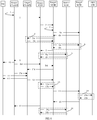
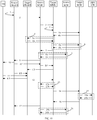
- FIG. 10 is a flowchart of a method for forwarding uplink packets based on S1 handover in the ninth embodiment of the present invention.
- the packet state report information includes: the PDCP SNs of the packets not received by the source eNodeB, and the PDCP SN of the packets required to be sent sequentially.
- the source eNodeB knows that the connection with the UE is interrupted and the data needs to be forwarded.
- the method further includes:
- the newly constructed control message carries the PDCP SNs of the packets not received by the source eNodeB and the initial PDCP SN of the packets required to be sent sequentially.
- the source eNodeB sends the PDCP SN through the source MME and the target MME to the target eNodeB.
- the detailed steps are as follows:
- the source eNodeB sends the target eNodeB the PDCP SNs of the packets not received by the source eNodeB and the initial PDCP SN of the packets required to be sent sequentially.
- the detailed steps are as follows:
- the source eNodeB receives the uplink packets whose PDCP SNs are 1, 3 and 4, and receives no packet whose PDCP SN is 2. Therefore, the source eNodeB sends the packet whose PDCP SN is 1 to the source SGW, and forwards the packets whose PDCP SNs are 3 and 4 to the target eNodeB.
- the target eNodeB After receiving the packet whose PDCP SN is 2, the target eNodeB sequentially sends the packets whose PDCP SNs are 2, 3 and 4 to the SGW, and sequentially sends the packets whose PDCP SNs are equal to or greater than 5.
- the target eNodeB sends the packet state report information to the UE. Therefore, the UE knows the packets not received by the source eNodeB or the PDCP SNs of such packets accurately in the case of S 1 handover and sends the packets according to the packet state report information, and the uplink packets are forwarded without loss.
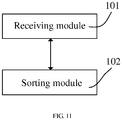
- FIG. 11 shows a structure of an eNodeB in an example.
- the eNodeB when the eNodeB serves as a target eNodeB, the eNodeB includes:
- the message that carries the PDCP SN information of a packet is a newly constructed control message sent by the source eNodeB through the source MME and the target MME.
- the newly constructed control message may include: the initial PDCP SN assigned by the target eNodeB, and the GTP-U SN corresponding to the initial PDCP SN.
- the newly constructed control message may include only the initial PDCP SN assigned by the target eNodeB to the packet.
- the message that carries the PDCP SN information of a packet is a Relocation Request message sent by the source eNodeB through the source MME and the target MME.
- the Relocation Request message carries the information about the relationship between the PDCP SN and the GTP-U SN.
- the message that carries the PDCP SN information of a packet is a Handover Confirm message sent by the UE.
- This message carries the maximum PDCP SN of the packet received by the UE.
- the program may be stored in a computer-readable storage medium. When being executed, the program performs these steps: numbering a packet not processed by using PDCP according to a message that carries PDCP SN information if downlink packets to be forwarded include the packet not processed by using PDCP; and sending the downlink packets to the UE according to the PDCP SN corresponding to the packet included in the downlink packets.
- the program performs these steps when being executed: numbering a packet not processed by using PDCP according to a message that carries PDCP Serial Number (SN) information if downlink packets to be forwarded include the packet not processed by using PDCP; and sending the downlink packets to the UE according to the PDCP SN corresponding to the packet included in the downlink packets.
- the program performs these steps when being executed: receiving state report information of the packet sent by the target eNodeB; and sending the packet according to the state report information of the packet.
- a method for forwarding downlink packets based on S1 handover comprises: numbering a packet not processed by using Packet Data Convergence Protocol (PDCP) according to a message that carries PDCP Serial Number (SN) information, if downlink packets to be forwarded include the packet not processed by using PDCP; and sending the downlink packets to a User Equipment (UE) according to the PDCNs of packages included in the downlink packets.
- PDCP Packet Data Convergence Protocol
- SN PDCP Serial Number
- UE User Equipment
- the downlink packets further include a packet that is processed by using PDCP and carries a PDCP SN.
- the packet not processed by using PDCP is sent by a source evolved NodeB (eNodeB) or a target System Architecture Evolution (SAE) GateWay (SGW); the packet processed by using PDCP is sent by the source eNodeB; the packet processed by using PDCP is a category-1 packet, the packet not processed by using PDCP and sent by the source eNodeB is a category-2 packet, the packet not processed by using PDCP and sent by the target SGW is a category-3 packet.
- SAE System Architecture Evolution
- the message that carries PDCP SN information is a relocation request sent by the source eNodeB in a handover process;
- the PDCP SN information is information about the relationship between the PDCP SN and a GPRS Tunneling Protocol-User Serial Number (GTP-U SN).
- the information about the relationship between the PDCP SN and the GTP-U SN is a specific value of the PDCP SN and a specific value of the GTP-U SN, or a corresponding relationship between the PDCP SN and the GTP-U SN.
- the message that carries PDCP SN information is a handover confirm message sent by the UE in a handover process
- the PDCP SN information is a maximum PDCP SN of the packet received by the UE.
- the numbering a packet not processed by using PDCP comprises:if the packet not processed by using PDCP carries no GTP-U SN, assigning a PDCP SN to the packet not processed by using PDCP according to an order of receiving the packet not processed by using PDCP and the maximum PDCP SN;if the packet not processed by using PDCP carries GTP-U SN, assigning a PDCP SN to the packet not processed by using PDCP according to a size order of the GTP-U SN and the maximum PDCP SN.
- the handover confirm message further comprises: a PDCP SN of a non-received category-1 packet; when the target eNodeB forwards the category-1 packets, forwarding the category-1 packet which corresponds to the PDCP SN and is not received by the UE to the UE.
- the message that carries PDCP SN information is: a newly constructed control message sent by the source eNodeB through a source Mobility Management Entity (MME) and a target MME to the target eNodeB; or a newly constructed control message sent by the source eNodeB through an X2 interface to the target eNodeB directly.
- MME Mobility Management Entity
- the newly constructed control message comprises: an initial PDCP SN assigned by the target eNodeB.
- the newly constructed control message further comprises: a relationship between the PDCP SN and the GTP-U SN.
- the numbering a packet not processed by using PDCP comprises:
- the method further comprises:
- the special packet is constructed by the source SGW and sent to the source eNodeB, or the special packet is constructed by the source eNodeB.
- the method further comprises:
- a method for forwarding downlink packets based on S1 handover comprises:
- a method for forwarding uplink packets based on S1 handover comprises:
- the state report information of the packet comprises:
- the state report information of the packet comprises:
- an evolved NodeB (eNodeB), wherein the eNodeB serves as a target eNodeB, comprises:
- the message that includes PDCP SN information is a newly constructed control message which is sent by the source eNodeB through the source Mobility Management Entity (MME) and the target MME to the target eNodeB.
- MME Mobility Management Entity
- the newly constructed control message comprises: an initial PDCP SN assigned by the target eNodeB, and a GPRS Tunneling Protocol-User Serial Number (GTP-U SN) corresponding to the initial PDCP SN.
- GTP-U SN GPRS Tunneling Protocol-User Serial Number
- the newly constructed control message comprises: an initial PDCP SN assigned by the target eNodeB to the packet.
- the message that carries the PDCP SN information of a packet is a Relocation Request message sent by the source eNodeB through the source MME and the target MME.
- the relocation request message carries the information about the relationship between the PDCP SN and a GTP-U SN.
- the message that carries PDCP SN information is a handover confirm message sent by a User Equipment (UE) that carries the maximum PDCP SN of the packet received by the UE.
- UE User Equipment
- the storage medium may be a magnetic disk, compact disk, Read-Only Memory (ROM), Random Access Memory (RAM), and so on.
Landscapes
- Engineering & Computer Science (AREA)
- Computer Networks & Wireless Communication (AREA)
- Signal Processing (AREA)
- Mobile Radio Communication Systems (AREA)
Claims (5)
- Verfahren zum Weiterleiten von Aufwärtsstreckenpaketen während eines S1-"Handovers" in einem "Long-Term-Evolution"- bzw. LTE-System, dadurch gekennzeichnet, dass es Folgendes umfasst:Empfangen (C5) durch einen Ziel-"evolved-NodeB" bzw. Ziel-eNodeB einer Steuernachricht von einem Quellen-eNodeB durch eine Quellenmobilitätsverwaltungsentität bzw. Quellen-MME (Mobility Management Entity) und eine Ziel-MME, wobei die Steuernachricht eine Paketdatenkonvergenzprotokollseriennummer, PDCP-SN (Packet Data Convergence Protocol Serial Number), eines Aufwärtsstreckenpakets, dessen Empfang durch den Quellen-eNodeB scheiterte, und eine anfängliche PDCP-SN eines Pakets, das sequentiell gesendet werden muss, umfasst;Senden (E3) von Paketstatusberichtinformationen durch den Ziel-eNodeB an die UE, wobei die Paketstatusberichtinformationen die PDCP-SN des Aufwärtsstreckenpakets, dessen Empfang durch den Quellen-eNodeB scheiterte, und die anfängliche PDCP-SN des Pakets, das sequentiell gesendet werden muss, umfassen; undEmpfangen (E3) der Aufwärtsstreckenpakete, die durch die UE gesendet werden, durch den Ziel-eNodeB gemäß der PDCP-SN des Aufwärtsstreckenpakets, dessen Empfang durch den Quellen-eNodeB scheiterte, und der anfänglichen PDCP-SN des Pakets, das sequentiell gesendet werden muss.
- Verfahren nach Anspruch 1, wobei die empfangenen Aufwärtsstreckenpakete das Aufwärtsstreckenpaket, dessen Empfang durch den Quellen-eNodeB scheiterte, und die Aufwärtsstreckenpakete, deren PDCP-SN gleich der oder größer als die anfängliche PDCP-SN ist, beinhalten.
- Ziel-"evolved-NodeB" bzw. Ziel-eNodeB, der zum Weiterleiten von Aufwärtsstreckenpaketen während eines S1-"Handovers" in einem "Long-Term-Evolution"- bzw. LTE-System angewandt wird, dadurch gekennzeichnet, dass er Folgendes umfasst:ein Mittel zum Empfangen einer Steuernachricht von einem Quellen-eNodeB durch eine Quellenmobilitätsverwaltungsentität bzw. Quellen-MME (Mobility Management Entity) und eine Ziel-MME, wobei die Steuernachricht eine Paketdatenkonvergenzprotokollseriennummer, PDCP-SN (Packet Data Convergence Protocol Serial Number), eines Aufwärtsstreckenpakets, dessen Empfang durch den Quellen-eNodeB scheiterte, und eine anfängliche PDCP-SN eines Pakets, das sequentiell gesendet werden muss, umfasst;ein Mittel zum Senden von Paketstatusberichtinformationen an die UE, wobei die Paketstatusberichtinformationen die PDCP-SN des Aufwärtsstreckenpakets, dessen Empfang durch den Quellen-eNodeB scheiterte, und die anfängliche PDCP-SN des Pakets, das sequentiell gesendet werden muss, umfassen; undein Mittel zum Empfangen der Aufwärtsstreckenpakete, die durch die UE gesendet werden, gemäß der PDCP-SN des Aufwärtsstreckenpakets, dessen Empfang durch den Quellen-eNodeB scheiterte, und der anfänglichen PDCP-SN des Pakets, das sequentiell gesendet werden muss.
- Ziel-eNodeB nach Anspruch 3, wobei der Ziel-eNodeB Folgendes umfasst:die empfangenen Aufwärtsstreckenpakete beinhalten das Aufwärtsstreckenpaket, dessen Empfang durch den Quellen-eNodeB scheiterte, und die Aufwärtsstreckenpakete, deren PDCP-SN gleich der oder größer als die anfängliche PDCP-SN ist.
- Kommunikationssystem, das einen Ziel-"evolved-NodeB" nach Anspruch 3 oder Anspruch 4 umfasst.
Priority Applications (2)
| Application Number | Priority Date | Filing Date | Title |
|---|---|---|---|
| EP18162632.6A EP3355617B1 (de) | 2007-09-29 | 2008-09-27 | Verfahren und e-node-b zum weiterleiten von downlink-paketen basierend auf s1-weiterreichung |
| EP19185301.9A EP3573368B1 (de) | 2007-09-29 | 2008-09-27 | Verfahren und e-node-b zum weiterleiten von downlink- und uplink-paketen basierend auf s1-weiterreichung |
Applications Claiming Priority (2)
| Application Number | Priority Date | Filing Date | Title |
|---|---|---|---|
| CN2007101754129A CN101400156B (zh) | 2007-09-29 | 2007-09-29 | 基于s1切换的下行及上行数据包转发方法 |
| EP08801016.0A EP2197162B1 (de) | 2007-09-29 | 2008-09-27 | Weiterleitungsverfahren für abwärtsstreckendatenpakete während einer s1-übergabe und entwickelter knoten b dafür |
Related Parent Applications (2)
| Application Number | Title | Priority Date | Filing Date |
|---|---|---|---|
| EP08801016.0A Division-Into EP2197162B1 (de) | 2007-09-29 | 2008-09-27 | Weiterleitungsverfahren für abwärtsstreckendatenpakete während einer s1-übergabe und entwickelter knoten b dafür |
| EP08801016.0A Division EP2197162B1 (de) | 2007-09-29 | 2008-09-27 | Weiterleitungsverfahren für abwärtsstreckendatenpakete während einer s1-übergabe und entwickelter knoten b dafür |
Related Child Applications (2)
| Application Number | Title | Priority Date | Filing Date |
|---|---|---|---|
| EP19185301.9A Division EP3573368B1 (de) | 2007-09-29 | 2008-09-27 | Verfahren und e-node-b zum weiterleiten von downlink- und uplink-paketen basierend auf s1-weiterreichung |
| EP18162632.6A Division EP3355617B1 (de) | 2007-09-29 | 2008-09-27 | Verfahren und e-node-b zum weiterleiten von downlink-paketen basierend auf s1-weiterreichung |
Publications (2)
| Publication Number | Publication Date |
|---|---|
| EP2945424A1 EP2945424A1 (de) | 2015-11-18 |
| EP2945424B1 true EP2945424B1 (de) | 2018-03-21 |
Family
ID=40518344
Family Applications (4)
| Application Number | Title | Priority Date | Filing Date |
|---|---|---|---|
| EP15159484.3A Active EP2945424B1 (de) | 2007-09-29 | 2008-09-27 | Verfahren und E-Node-B zum Weiterleiten von Uplink-Paketen basierend auf S1-Weiterreichung |
| EP18162632.6A Active EP3355617B1 (de) | 2007-09-29 | 2008-09-27 | Verfahren und e-node-b zum weiterleiten von downlink-paketen basierend auf s1-weiterreichung |
| EP19185301.9A Active EP3573368B1 (de) | 2007-09-29 | 2008-09-27 | Verfahren und e-node-b zum weiterleiten von downlink- und uplink-paketen basierend auf s1-weiterreichung |
| EP08801016.0A Active EP2197162B1 (de) | 2007-09-29 | 2008-09-27 | Weiterleitungsverfahren für abwärtsstreckendatenpakete während einer s1-übergabe und entwickelter knoten b dafür |
Family Applications After (3)
| Application Number | Title | Priority Date | Filing Date |
|---|---|---|---|
| EP18162632.6A Active EP3355617B1 (de) | 2007-09-29 | 2008-09-27 | Verfahren und e-node-b zum weiterleiten von downlink-paketen basierend auf s1-weiterreichung |
| EP19185301.9A Active EP3573368B1 (de) | 2007-09-29 | 2008-09-27 | Verfahren und e-node-b zum weiterleiten von downlink- und uplink-paketen basierend auf s1-weiterreichung |
| EP08801016.0A Active EP2197162B1 (de) | 2007-09-29 | 2008-09-27 | Weiterleitungsverfahren für abwärtsstreckendatenpakete während einer s1-übergabe und entwickelter knoten b dafür |
Country Status (5)
| Country | Link |
|---|---|
| US (5) | US20100177739A1 (de) |
| EP (4) | EP2945424B1 (de) |
| CN (5) | CN102651892B (de) |
| ES (1) | ES2542969T3 (de) |
| WO (1) | WO2009043308A1 (de) |
Families Citing this family (55)
| Publication number | Priority date | Publication date | Assignee | Title |
|---|---|---|---|---|
| US8594069B2 (en) * | 2007-08-06 | 2013-11-26 | Qualcomm Incorporated | In-order data delivery during handover in a wireless communication system |
| CN102651892B (zh) | 2007-09-29 | 2016-03-30 | 华为技术有限公司 | 基于s1切换的下行及上行数据包转发方法 |
| US8477719B2 (en) * | 2007-10-01 | 2013-07-02 | Qualcomm Incorporated | Systems and methods for in-order delivery in downlink during handover |
| KR101521886B1 (ko) * | 2009-01-23 | 2015-05-28 | 삼성전자주식회사 | 이동통신 시스템에서 지티피 처리를 위한 장치 및 방법 |
| WO2010142082A1 (zh) * | 2009-06-12 | 2010-12-16 | 华为技术有限公司 | 切换处理方法、中继节点及目标节点 |
| WO2010148356A1 (en) * | 2009-06-19 | 2010-12-23 | Research In Motion Limited | Mechanisms for data handling during a relay handover with s1 termination at evolved universal terrestrial radio access network access node |
| US8817745B2 (en) * | 2009-06-19 | 2014-08-26 | Blackberry Limited | Mechanisms for data handling during a relay handover with S1 termination at relay |
| EP2273819B1 (de) * | 2009-06-30 | 2018-08-08 | Alcatel Lucent | Verfahren zur Kommunikation zwischen Basisstationen, Basisstation und Telekommunikationsnetzwerk |
| CN101998552B (zh) * | 2009-08-13 | 2014-04-02 | 电信科学技术研究院 | 一种发起切换的方法和中继节点 |
| CN102239728B (zh) * | 2009-08-14 | 2013-09-25 | 华为技术有限公司 | 数据处理方法和装置 |
| CN102036328B (zh) * | 2009-09-30 | 2014-01-01 | 中兴通讯股份有限公司 | 一种s1切换中业务准备失败的处理方法及系统 |
| CN102202395B (zh) | 2009-09-30 | 2012-09-12 | 华为技术有限公司 | 消息处理方法、装置 |
| US8804596B2 (en) * | 2009-10-02 | 2014-08-12 | Blackberry Limited | Architecture for termination at access device |
| US8687590B2 (en) * | 2009-10-02 | 2014-04-01 | Blackberry Limited | System and method for handover between relays |
| CN102076033B (zh) * | 2009-11-23 | 2015-01-28 | 中兴通讯股份有限公司 | 一种结合使用内环和外环切换基站的方法及系统 |
| CN101765236B (zh) * | 2009-12-23 | 2014-04-02 | 宇龙计算机通信科技(深圳)有限公司 | 一种移动终端的界面切换方法及移动终端 |
| CN102158899B (zh) * | 2010-02-12 | 2015-01-07 | 华为技术有限公司 | 中继网络中的数据转发方法、装置及系统 |
| CN102300272B (zh) * | 2010-06-22 | 2015-09-16 | 中兴通讯股份有限公司 | S1切换的数据转发方法及移动通信系统 |
| WO2012159399A1 (zh) * | 2011-05-25 | 2012-11-29 | 中兴通讯股份有限公司 | 跨基站的切换方法及演进型基站 |
| CN102905308A (zh) * | 2011-07-25 | 2013-01-30 | 中兴通讯股份有限公司 | 一种数据传输的方法、装置及eNB |
| CN102264157A (zh) * | 2011-08-24 | 2011-11-30 | 大唐移动通信设备有限公司 | 一种切换过程中的资源释放方法及装置 |
| CN106604336B (zh) * | 2011-09-29 | 2020-03-20 | 华为技术有限公司 | 通信模式切换的方法和装置 |
| EP2575393A2 (de) * | 2011-10-01 | 2013-04-03 | Institute for Imformation Industry | Basisstation und Übertragungspfad-Erzeugungsverfahren davon |
| US9351221B2 (en) * | 2012-03-19 | 2016-05-24 | Broadcom Corporation | Method and apparatus for facilitating a S1 handover of a mobile terminal that has experienced in-device coexistence interference at one or more frequencies |
| CN103533586B (zh) * | 2012-07-03 | 2016-07-20 | 电信科学技术研究院 | 切换过程中的信令交互及层重建的方法和设备 |
| CN102833802B (zh) * | 2012-08-15 | 2015-09-23 | 电信科学技术研究院 | 一种数据转发方法及设备 |
| CN102869056B (zh) * | 2012-09-14 | 2016-05-18 | 中国联合网络通信集团有限公司 | 基站直通架构下的传输切换方法及系统 |
| KR101667507B1 (ko) | 2012-11-29 | 2016-10-18 | 후아웨이 테크놀러지 컴퍼니 리미티드 | 데이터 전송 제어 방법, 장치 및 시스템 |
| CN103888215B (zh) * | 2012-12-21 | 2017-11-28 | 华为技术有限公司 | 数据传输方法、装置及通信系统 |
| KR102000589B1 (ko) * | 2013-01-02 | 2019-07-16 | 삼성전자주식회사 | 무선 통신 시스템에서 이동국의 이동성을 지원하는 방법 |
| CN104144505B (zh) * | 2013-05-10 | 2018-08-17 | 华为技术有限公司 | 上行数据包发送方法、下行数据发送方法及设备 |
| CN104244349B (zh) * | 2013-06-18 | 2021-06-15 | 索尼公司 | 通信装置和通信方法 |
| US9301295B1 (en) * | 2013-08-15 | 2016-03-29 | Sprint Communications Company L.P. | Redirection of wireless communication devices to target base stations that support requested media sessions |
| EP3085150B1 (de) * | 2013-12-17 | 2020-01-22 | Nokia Solutions and Networks GmbH & Co. KG | Übergabe in softwaredefinierter vernetzung |
| CN104219719B (zh) * | 2014-09-19 | 2018-01-09 | 京信通信系统(中国)有限公司 | 基站切换方法和系统 |
| US9648529B1 (en) * | 2014-12-19 | 2017-05-09 | Sprint Spectrum L.P. | Systems and methods for avoiding packet loss during a handover |
| EP3337237B1 (de) * | 2015-12-31 | 2021-06-16 | Huawei Technologies Co., Ltd. | Schaltverfahren und vorrichtung in einem ultradichten netzwerk |
| EP4167643A1 (de) * | 2016-08-12 | 2023-04-19 | Huawei Technologies Co., Ltd. | Datenverarbeitungsverfahren und zugehörige vorrichtung |
| CN108632878B (zh) * | 2017-03-24 | 2021-07-23 | 北京紫光展锐通信技术有限公司 | 一种用于终端的基站切换方法 |
| CN107135515B (zh) * | 2017-06-20 | 2020-05-05 | 京信通信系统(中国)有限公司 | 基站网络侧传输路径的通信性能测试方法及装置 |
| WO2019027742A1 (en) * | 2017-08-04 | 2019-02-07 | Intel IP Corporation | ESTABLISHING DATA TRANSFER TUNNEL BETWEEN TWO USER PLAN FUNCTIONS IN A FIFTH GENERATION |
| US11102686B2 (en) | 2017-08-11 | 2021-08-24 | Htc Corporation | Device and method of handling a handover |
| CN109565724B (zh) * | 2017-11-14 | 2020-07-28 | Oppo广东移动通信有限公司 | 一种切换处理方法、网络设备及计算机存储介质 |
| KR102625128B1 (ko) | 2018-03-07 | 2024-01-16 | 삼성전자 주식회사 | 무선통신 시스템에서 pdcp 버전 변경 시 데이터 전송 방법 및 장치 |
| WO2019237364A1 (zh) * | 2018-06-15 | 2019-12-19 | Oppo广东移动通信有限公司 | 数据按序递交的方法、网络设备及终端设备 |
| CN114885385B (zh) * | 2018-11-19 | 2025-03-14 | 华为技术有限公司 | 一种通信方法及装置 |
| CN111586769B (zh) * | 2019-02-15 | 2021-10-15 | 华为技术有限公司 | 无线通信系统中的切换方法、装置及系统 |
| WO2020258018A1 (zh) * | 2019-06-25 | 2020-12-30 | Oppo广东移动通信有限公司 | 一种数据包处理方法、设备及存储介质 |
| CN110856211B (zh) * | 2019-11-14 | 2022-10-11 | 成都天奥集团有限公司 | 一种非地面移动通信网络下基于l2内部数据迁移的低时延切换方法 |
| CN113596737B (zh) * | 2020-04-30 | 2023-03-31 | 维沃移动通信有限公司 | 数据重传方法、装置、目标节点、源节点及终端 |
| CN113596736B (zh) * | 2020-04-30 | 2022-09-02 | 维沃移动通信有限公司 | 数据重传方法、装置、目标节点、源节点及终端 |
| CN113765726B (zh) * | 2020-06-02 | 2023-08-04 | 中国移动通信集团安徽有限公司 | S1-u口数据包丢包数的统计方法、装置及计算设备 |
| US20230292200A1 (en) * | 2020-08-07 | 2023-09-14 | Lenovo (Beijing) Limited | Method and apparatus for multicast and broadcast services |
| WO2022077341A1 (en) * | 2020-10-15 | 2022-04-21 | JRD Communication (Shenzhen) Ltd. | User equipment, source base station, target base station, and handover method for multicast/broadcast service |
| WO2023065361A1 (en) * | 2021-10-22 | 2023-04-27 | Huizhou Tcl Cloud Internet Corporation Technology Co. Ltd | User equipment, base station, and method for lossless mbs transmission based on pdcp synchronization during handover |
Family Cites Families (22)
| Publication number | Priority date | Publication date | Assignee | Title |
|---|---|---|---|---|
| FI101763B1 (fi) * | 1995-12-01 | 1998-08-14 | Nokia Mobile Phones Ltd | Siirrettävän tiedon koostumuksen säilyttäminen tukiaseman vaihdon yhteydessä |
| KR20030046006A (ko) * | 2001-12-03 | 2003-06-12 | 엘지전자 주식회사 | Pdcp 메시지 전송방법 |
| EP1326460A1 (de) * | 2001-12-21 | 2003-07-09 | Siemens Aktiengesellschaft | Verfahren und System zum Funkzellenwechsel in einem zellularen Paketnetzwerk |
| CN1933664A (zh) * | 2005-09-14 | 2007-03-21 | 北京三星通信技术研究有限公司 | Lte系统中支持用户设备移动性的方法 |
| EP3726886A1 (de) * | 2005-10-31 | 2020-10-21 | Evolved Wireless LLC | Verfahren zum senden und empfangen von funkzugangsinformationen in einem drahtlosmobilkommunikationssystem |
| CN100456886C (zh) * | 2006-01-04 | 2009-01-28 | 华为技术有限公司 | 用户设备硬切换中的双播方法 |
| KR20080094713A (ko) | 2006-01-31 | 2008-10-23 | 인터디지탈 테크날러지 코포레이션 | 무선 송수신 유닛이 유휴 상태인 동안에 셀 갱신 절차 및 라우팅 영역 갱신 절차를 수행하는 방법 및 시스템 |
| WO2007103369A2 (en) * | 2006-03-07 | 2007-09-13 | Interdigital Technology Corporation | Method and apparatus for supporting handoff in an lte gtp based wireless communication system |
| CN100499909C (zh) * | 2006-03-22 | 2009-06-10 | 华为技术有限公司 | 长期演进网络中用户设备切换方法及其系统 |
| CN101047975A (zh) | 2006-03-29 | 2007-10-03 | 华为技术有限公司 | 一种实现切换的方法 |
| CN101047953B (zh) | 2006-03-30 | 2012-06-27 | 华为技术有限公司 | 一种对自动重传请求数据进行处理的方法 |
| CN101047967B (zh) | 2006-03-30 | 2010-12-01 | 华为技术有限公司 | 在切换过程中处理数据的方法及装置 |
| WO2008001187A2 (en) * | 2006-06-26 | 2008-01-03 | Nokia Corporation | Method for providing improved sequence number handling in networks |
| CN101047998B (zh) | 2006-06-27 | 2010-05-12 | 华为技术有限公司 | 一种基站间切换过程中的数据传输方法 |
| WO2008010063A2 (en) * | 2006-07-18 | 2008-01-24 | Nokia Corporation | Method, device, computer program, and apparatus providing embedded status information in handover control signaling |
| GB0616682D0 (en) * | 2006-08-22 | 2006-10-04 | Nec Corp | Mobile telecommunications |
| CN101132609B (zh) | 2006-08-22 | 2010-04-21 | 华为技术有限公司 | 一种切换过程中转发数据的方法及系统 |
| US20080188223A1 (en) * | 2007-02-07 | 2008-08-07 | Nokia Corporation | Method, a system and a network element for performing a handover of a mobile equipment |
| FI20075297A0 (fi) * | 2007-04-27 | 2007-04-27 | Nokia Siemens Networks Oy | Menetelmä, radiojärjestelmä ja tukiasema |
| CN101365168A (zh) * | 2007-08-10 | 2009-02-11 | 北京三星通信技术研究有限公司 | 数据转发的方法 |
| CN102651892B (zh) * | 2007-09-29 | 2016-03-30 | 华为技术有限公司 | 基于s1切换的下行及上行数据包转发方法 |
| US9432867B2 (en) * | 2013-09-17 | 2016-08-30 | Cellos Software Ltd. | Method and network monitoring probe for tracking identifiers corresponding to a user device in wireless communication network |
-
2007
- 2007-09-29 CN CN201210146336.XA patent/CN102651892B/zh active Active
- 2007-09-29 CN CN2007101754129A patent/CN101400156B/zh active Active
-
2008
- 2008-09-27 EP EP15159484.3A patent/EP2945424B1/de active Active
- 2008-09-27 EP EP18162632.6A patent/EP3355617B1/de active Active
- 2008-09-27 CN CN200880108355.5A patent/CN101919213B/zh active Active
- 2008-09-27 CN CN201610144089.8A patent/CN105578548B/zh active Active
- 2008-09-27 EP EP19185301.9A patent/EP3573368B1/de active Active
- 2008-09-27 WO PCT/CN2008/072570 patent/WO2009043308A1/zh not_active Ceased
- 2008-09-27 EP EP08801016.0A patent/EP2197162B1/de active Active
- 2008-09-27 CN CN201610144320.3A patent/CN105578549B/zh active Active
- 2008-09-27 ES ES08801016.0T patent/ES2542969T3/es active Active
-
2010
- 2010-03-26 US US12/732,807 patent/US20100177739A1/en not_active Abandoned
-
2011
- 2011-10-19 US US13/276,782 patent/US9014139B2/en active Active
-
2015
- 2015-03-18 US US14/661,905 patent/US9338698B2/en active Active
-
2016
- 2016-04-07 US US15/093,520 patent/US10368278B2/en active Active
-
2019
- 2019-07-15 US US16/512,121 patent/US11528646B2/en active Active
Non-Patent Citations (1)
| Title |
|---|
| None * |
Also Published As
| Publication number | Publication date |
|---|---|
| US20100177739A1 (en) | 2010-07-15 |
| US9338698B2 (en) | 2016-05-10 |
| EP2197162B1 (de) | 2015-04-22 |
| ES2542969T3 (es) | 2015-08-13 |
| CN105578548A (zh) | 2016-05-11 |
| EP2197162A1 (de) | 2010-06-16 |
| EP2197162A4 (de) | 2011-03-23 |
| US11528646B2 (en) | 2022-12-13 |
| US20150195749A1 (en) | 2015-07-09 |
| CN101919213A (zh) | 2010-12-15 |
| EP3573368B1 (de) | 2021-06-02 |
| WO2009043308A1 (fr) | 2009-04-09 |
| CN105578548B (zh) | 2020-06-16 |
| EP3355617B1 (de) | 2019-11-06 |
| EP2945424A1 (de) | 2015-11-18 |
| CN105578549B (zh) | 2020-07-24 |
| CN102651892B (zh) | 2016-03-30 |
| CN105578549A (zh) | 2016-05-11 |
| US20190342808A1 (en) | 2019-11-07 |
| US9014139B2 (en) | 2015-04-21 |
| CN101919213B (zh) | 2016-03-30 |
| EP3573368A2 (de) | 2019-11-27 |
| US10368278B2 (en) | 2019-07-30 |
| CN101400156A (zh) | 2009-04-01 |
| EP3573368A3 (de) | 2020-03-11 |
| CN102651892A (zh) | 2012-08-29 |
| CN101400156B (zh) | 2012-06-06 |
| EP3355617A1 (de) | 2018-08-01 |
| US20160227453A1 (en) | 2016-08-04 |
| US20120033641A1 (en) | 2012-02-09 |
Similar Documents
| Publication | Publication Date | Title |
|---|---|---|
| EP2945424B1 (de) | Verfahren und E-Node-B zum Weiterleiten von Uplink-Paketen basierend auf S1-Weiterreichung | |
| JP7303833B2 (ja) | 情報伝送方法及び装置 | |
| EP3706328B1 (de) | Kommunikationsverfahren, kommunikationsknoten und system | |
| EP3522601B1 (de) | Übergabeverarbeitungsverfahren und basisstation | |
| EP2086149B1 (de) | Drahtloses Kommunikationsverfahren zur Übertragung einer Folge von Dateneinheiten zwischen einer drahtlosen Vorrichtung und einem Netzwerk | |
| US9949194B2 (en) | Data transmission control method, apparatus and system | |
| US8179851B2 (en) | Mobile communication system, mobile communication method, and communication apparatus | |
| EP1686729A1 (de) | Datenverkehrssteuerung in einem drahtlosen Kommunikationssystem | |
| WO2021179649A1 (zh) | 数据包传输方法、装置、通信节点及存储介质 | |
| CN112839359A (zh) | 适配处理方法和用户设备 | |
| JP2013513988A (ja) | 中継ハンドオーバ制御 | |
| TW202002701A (zh) | 數據按序遞交的方法、網路設備及終端設備 | |
| JP7677445B2 (ja) | 情報送受信方法、データ送信方法及び装置 | |
| CN101500289A (zh) | 下行数据包转发方法、系统及演进基站 | |
| KR101233171B1 (ko) | 무선 네트워크에서의 제어 정보 송수신 방법 | |
| US8711756B2 (en) | Efficient relay automatic repeat request procedure in broadband wireless access system | |
| KR20130124185A (ko) | 데이터의 순차적 송신 방법 |
Legal Events
| Date | Code | Title | Description |
|---|---|---|---|
| PUAI | Public reference made under article 153(3) epc to a published international application that has entered the european phase |
Free format text: ORIGINAL CODE: 0009012 |
|
| 17P | Request for examination filed |
Effective date: 20150317 |
|
| AC | Divisional application: reference to earlier application |
Ref document number: 2197162 Country of ref document: EP Kind code of ref document: P |
|
| AK | Designated contracting states |
Kind code of ref document: A1 Designated state(s): AT BE BG CH CY CZ DE DK EE ES FI FR GB GR HR HU IE IS IT LI LT LU LV MC MT NL NO PL PT RO SE SI SK TR |
|
| STAA | Information on the status of an ep patent application or granted ep patent |
Free format text: STATUS: EXAMINATION IS IN PROGRESS |
|
| 17Q | First examination report despatched |
Effective date: 20170206 |
|
| GRAP | Despatch of communication of intention to grant a patent |
Free format text: ORIGINAL CODE: EPIDOSNIGR1 |
|
| STAA | Information on the status of an ep patent application or granted ep patent |
Free format text: STATUS: GRANT OF PATENT IS INTENDED |
|
| RIN1 | Information on inventor provided before grant (corrected) |
Inventor name: HUANG, YING |
|
| INTG | Intention to grant announced |
Effective date: 20171011 |
|
| GRAS | Grant fee paid |
Free format text: ORIGINAL CODE: EPIDOSNIGR3 |
|
| GRAA | (expected) grant |
Free format text: ORIGINAL CODE: 0009210 |
|
| STAA | Information on the status of an ep patent application or granted ep patent |
Free format text: STATUS: THE PATENT HAS BEEN GRANTED |
|
| AC | Divisional application: reference to earlier application |
Ref document number: 2197162 Country of ref document: EP Kind code of ref document: P |
|
| AK | Designated contracting states |
Kind code of ref document: B1 Designated state(s): AT BE BG CH CY CZ DE DK EE ES FI FR GB GR HR HU IE IS IT LI LT LU LV MC MT NL NO PL PT RO SE SI SK TR |
|
| REG | Reference to a national code |
Ref country code: GB Ref legal event code: FG4D |
|
| REG | Reference to a national code |
Ref country code: CH Ref legal event code: EP |
|
| REG | Reference to a national code |
Ref country code: AT Ref legal event code: REF Ref document number: 982421 Country of ref document: AT Kind code of ref document: T Effective date: 20180415 |
|
| REG | Reference to a national code |
Ref country code: IE Ref legal event code: FG4D |
|
| REG | Reference to a national code |
Ref country code: DE Ref legal event code: R096 Ref document number: 602008054560 Country of ref document: DE |
|
| REG | Reference to a national code |
Ref country code: SE Ref legal event code: TRGR |
|
| REG | Reference to a national code |
Ref country code: NL Ref legal event code: MP Effective date: 20180321 |
|
| PG25 | Lapsed in a contracting state [announced via postgrant information from national office to epo] |
Ref country code: HR Free format text: LAPSE BECAUSE OF FAILURE TO SUBMIT A TRANSLATION OF THE DESCRIPTION OR TO PAY THE FEE WITHIN THE PRESCRIBED TIME-LIMIT Effective date: 20180321 Ref country code: CY Free format text: LAPSE BECAUSE OF FAILURE TO SUBMIT A TRANSLATION OF THE DESCRIPTION OR TO PAY THE FEE WITHIN THE PRESCRIBED TIME-LIMIT Effective date: 20180321 Ref country code: LT Free format text: LAPSE BECAUSE OF FAILURE TO SUBMIT A TRANSLATION OF THE DESCRIPTION OR TO PAY THE FEE WITHIN THE PRESCRIBED TIME-LIMIT Effective date: 20180321 Ref country code: FI Free format text: LAPSE BECAUSE OF FAILURE TO SUBMIT A TRANSLATION OF THE DESCRIPTION OR TO PAY THE FEE WITHIN THE PRESCRIBED TIME-LIMIT Effective date: 20180321 Ref country code: NO Free format text: LAPSE BECAUSE OF FAILURE TO SUBMIT A TRANSLATION OF THE DESCRIPTION OR TO PAY THE FEE WITHIN THE PRESCRIBED TIME-LIMIT Effective date: 20180621 |
|
| REG | Reference to a national code |
Ref country code: LT Ref legal event code: MG4D |
|
| REG | Reference to a national code |
Ref country code: AT Ref legal event code: MK05 Ref document number: 982421 Country of ref document: AT Kind code of ref document: T Effective date: 20180321 |
|
| PG25 | Lapsed in a contracting state [announced via postgrant information from national office to epo] |
Ref country code: LV Free format text: LAPSE BECAUSE OF FAILURE TO SUBMIT A TRANSLATION OF THE DESCRIPTION OR TO PAY THE FEE WITHIN THE PRESCRIBED TIME-LIMIT Effective date: 20180321 Ref country code: GR Free format text: LAPSE BECAUSE OF FAILURE TO SUBMIT A TRANSLATION OF THE DESCRIPTION OR TO PAY THE FEE WITHIN THE PRESCRIBED TIME-LIMIT Effective date: 20180622 Ref country code: BG Free format text: LAPSE BECAUSE OF FAILURE TO SUBMIT A TRANSLATION OF THE DESCRIPTION OR TO PAY THE FEE WITHIN THE PRESCRIBED TIME-LIMIT Effective date: 20180621 |
|
| PG25 | Lapsed in a contracting state [announced via postgrant information from national office to epo] |
Ref country code: RO Free format text: LAPSE BECAUSE OF FAILURE TO SUBMIT A TRANSLATION OF THE DESCRIPTION OR TO PAY THE FEE WITHIN THE PRESCRIBED TIME-LIMIT Effective date: 20180321 Ref country code: PL Free format text: LAPSE BECAUSE OF FAILURE TO SUBMIT A TRANSLATION OF THE DESCRIPTION OR TO PAY THE FEE WITHIN THE PRESCRIBED TIME-LIMIT Effective date: 20180321 Ref country code: ES Free format text: LAPSE BECAUSE OF FAILURE TO SUBMIT A TRANSLATION OF THE DESCRIPTION OR TO PAY THE FEE WITHIN THE PRESCRIBED TIME-LIMIT Effective date: 20180321 Ref country code: NL Free format text: LAPSE BECAUSE OF FAILURE TO SUBMIT A TRANSLATION OF THE DESCRIPTION OR TO PAY THE FEE WITHIN THE PRESCRIBED TIME-LIMIT Effective date: 20180321 Ref country code: IT Free format text: LAPSE BECAUSE OF FAILURE TO SUBMIT A TRANSLATION OF THE DESCRIPTION OR TO PAY THE FEE WITHIN THE PRESCRIBED TIME-LIMIT Effective date: 20180321 Ref country code: EE Free format text: LAPSE BECAUSE OF FAILURE TO SUBMIT A TRANSLATION OF THE DESCRIPTION OR TO PAY THE FEE WITHIN THE PRESCRIBED TIME-LIMIT Effective date: 20180321 |
|
| PG25 | Lapsed in a contracting state [announced via postgrant information from national office to epo] |
Ref country code: AT Free format text: LAPSE BECAUSE OF FAILURE TO SUBMIT A TRANSLATION OF THE DESCRIPTION OR TO PAY THE FEE WITHIN THE PRESCRIBED TIME-LIMIT Effective date: 20180321 Ref country code: SK Free format text: LAPSE BECAUSE OF FAILURE TO SUBMIT A TRANSLATION OF THE DESCRIPTION OR TO PAY THE FEE WITHIN THE PRESCRIBED TIME-LIMIT Effective date: 20180321 Ref country code: CZ Free format text: LAPSE BECAUSE OF FAILURE TO SUBMIT A TRANSLATION OF THE DESCRIPTION OR TO PAY THE FEE WITHIN THE PRESCRIBED TIME-LIMIT Effective date: 20180321 |
|
| PG25 | Lapsed in a contracting state [announced via postgrant information from national office to epo] |
Ref country code: PT Free format text: LAPSE BECAUSE OF FAILURE TO SUBMIT A TRANSLATION OF THE DESCRIPTION OR TO PAY THE FEE WITHIN THE PRESCRIBED TIME-LIMIT Effective date: 20180723 |
|
| REG | Reference to a national code |
Ref country code: DE Ref legal event code: R097 Ref document number: 602008054560 Country of ref document: DE |
|
| PLBE | No opposition filed within time limit |
Free format text: ORIGINAL CODE: 0009261 |
|
| STAA | Information on the status of an ep patent application or granted ep patent |
Free format text: STATUS: NO OPPOSITION FILED WITHIN TIME LIMIT |
|
| PG25 | Lapsed in a contracting state [announced via postgrant information from national office to epo] |
Ref country code: DK Free format text: LAPSE BECAUSE OF FAILURE TO SUBMIT A TRANSLATION OF THE DESCRIPTION OR TO PAY THE FEE WITHIN THE PRESCRIBED TIME-LIMIT Effective date: 20180321 |
|
| 26N | No opposition filed |
Effective date: 20190102 |
|
| PG25 | Lapsed in a contracting state [announced via postgrant information from national office to epo] |
Ref country code: MC Free format text: LAPSE BECAUSE OF FAILURE TO SUBMIT A TRANSLATION OF THE DESCRIPTION OR TO PAY THE FEE WITHIN THE PRESCRIBED TIME-LIMIT Effective date: 20180321 |
|
| REG | Reference to a national code |
Ref country code: CH Ref legal event code: PL |
|
| GBPC | Gb: european patent ceased through non-payment of renewal fee |
Effective date: 20180927 |
|
| PG25 | Lapsed in a contracting state [announced via postgrant information from national office to epo] |
Ref country code: SI Free format text: LAPSE BECAUSE OF FAILURE TO SUBMIT A TRANSLATION OF THE DESCRIPTION OR TO PAY THE FEE WITHIN THE PRESCRIBED TIME-LIMIT Effective date: 20180321 |
|
| REG | Reference to a national code |
Ref country code: BE Ref legal event code: MM Effective date: 20180930 |
|
| REG | Reference to a national code |
Ref country code: IE Ref legal event code: MM4A |
|
| PG25 | Lapsed in a contracting state [announced via postgrant information from national office to epo] |
Ref country code: LU Free format text: LAPSE BECAUSE OF NON-PAYMENT OF DUE FEES Effective date: 20180927 |
|
| PG25 | Lapsed in a contracting state [announced via postgrant information from national office to epo] |
Ref country code: IE Free format text: LAPSE BECAUSE OF NON-PAYMENT OF DUE FEES Effective date: 20180927 |
|
| PG25 | Lapsed in a contracting state [announced via postgrant information from national office to epo] |
Ref country code: BE Free format text: LAPSE BECAUSE OF NON-PAYMENT OF DUE FEES Effective date: 20180930 Ref country code: CH Free format text: LAPSE BECAUSE OF NON-PAYMENT OF DUE FEES Effective date: 20180930 Ref country code: FR Free format text: LAPSE BECAUSE OF NON-PAYMENT OF DUE FEES Effective date: 20180930 Ref country code: LI Free format text: LAPSE BECAUSE OF NON-PAYMENT OF DUE FEES Effective date: 20180930 |
|
| PG25 | Lapsed in a contracting state [announced via postgrant information from national office to epo] |
Ref country code: GB Free format text: LAPSE BECAUSE OF NON-PAYMENT OF DUE FEES Effective date: 20180927 |
|
| PG25 | Lapsed in a contracting state [announced via postgrant information from national office to epo] |
Ref country code: MT Free format text: LAPSE BECAUSE OF NON-PAYMENT OF DUE FEES Effective date: 20180927 |
|
| PG25 | Lapsed in a contracting state [announced via postgrant information from national office to epo] |
Ref country code: TR Free format text: LAPSE BECAUSE OF FAILURE TO SUBMIT A TRANSLATION OF THE DESCRIPTION OR TO PAY THE FEE WITHIN THE PRESCRIBED TIME-LIMIT Effective date: 20180321 |
|
| PG25 | Lapsed in a contracting state [announced via postgrant information from national office to epo] |
Ref country code: HU Free format text: LAPSE BECAUSE OF FAILURE TO SUBMIT A TRANSLATION OF THE DESCRIPTION OR TO PAY THE FEE WITHIN THE PRESCRIBED TIME-LIMIT; INVALID AB INITIO Effective date: 20080927 |
|
| PG25 | Lapsed in a contracting state [announced via postgrant information from national office to epo] |
Ref country code: IS Free format text: LAPSE BECAUSE OF FAILURE TO SUBMIT A TRANSLATION OF THE DESCRIPTION OR TO PAY THE FEE WITHIN THE PRESCRIBED TIME-LIMIT Effective date: 20180721 |
|
| P01 | Opt-out of the competence of the unified patent court (upc) registered |
Effective date: 20230524 |
|
| PGFP | Annual fee paid to national office [announced via postgrant information from national office to epo] |
Ref country code: DE Payment date: 20250805 Year of fee payment: 18 |
|
| PGFP | Annual fee paid to national office [announced via postgrant information from national office to epo] |
Ref country code: SE Payment date: 20250812 Year of fee payment: 18 |