EP2945334B1 - Verfahren und vorrichtung zur verarbeitung von zellen - Google Patents
Verfahren und vorrichtung zur verarbeitung von zellen Download PDFInfo
- Publication number
- EP2945334B1 EP2945334B1 EP15167806.7A EP15167806A EP2945334B1 EP 2945334 B1 EP2945334 B1 EP 2945334B1 EP 15167806 A EP15167806 A EP 15167806A EP 2945334 B1 EP2945334 B1 EP 2945334B1
- Authority
- EP
- European Patent Office
- Prior art keywords
- cell
- sending
- timestamp
- sending end
- receiving end
- Prior art date
- Legal status (The legal status is an assumption and is not a legal conclusion. Google has not performed a legal analysis and makes no representation as to the accuracy of the status listed.)
- Active
Links
Images



Classifications
-
- H—ELECTRICITY
- H04—ELECTRIC COMMUNICATION TECHNIQUE
- H04L—TRANSMISSION OF DIGITAL INFORMATION, e.g. TELEGRAPHIC COMMUNICATION
- H04L49/00—Packet switching elements
- H04L49/30—Peripheral units, e.g. input or output ports
- H04L49/3027—Output queuing
-
- H—ELECTRICITY
- H04—ELECTRIC COMMUNICATION TECHNIQUE
- H04L—TRANSMISSION OF DIGITAL INFORMATION, e.g. TELEGRAPHIC COMMUNICATION
- H04L49/00—Packet switching elements
- H04L49/15—Interconnection of switching modules
-
- H—ELECTRICITY
- H04—ELECTRIC COMMUNICATION TECHNIQUE
- H04L—TRANSMISSION OF DIGITAL INFORMATION, e.g. TELEGRAPHIC COMMUNICATION
- H04L49/00—Packet switching elements
- H04L49/40—Constructional details, e.g. power supply, mechanical construction or backplane
-
- H—ELECTRICITY
- H04—ELECTRIC COMMUNICATION TECHNIQUE
- H04L—TRANSMISSION OF DIGITAL INFORMATION, e.g. TELEGRAPHIC COMMUNICATION
- H04L12/00—Data switching networks
- H04L12/54—Store-and-forward switching systems
- H04L12/56—Packet switching systems
- H04L12/5601—Transfer mode dependent, e.g. ATM
- H04L2012/5672—Multiplexing, e.g. coding, scrambling
- H04L2012/5674—Synchronisation, timing recovery or alignment
Definitions
- Embodiments of the present invention relate to communications technologies, and in particular, to a cell processing method and apparatus.
- an ingress port of a switching device receives a data packet and splits the data packet into multiple cells, and the cells pass, inside the switching device, through multiple switching units, and reach an egress port of the switching device along different paths.
- the egress port sequences the multiple cells, and then sends the multiple cells.
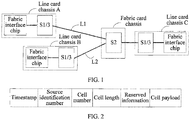
- FIG. 1 shows a switching structure inside one switching device, where a fabric interface chip (Fabric Interface Chip, FIC for short) and a sending port S1/3 are located in a same line card chassis (Line Card Chassis, LCC for short), and a sending port S2 is located in a fabric card chassis (Fabric Card Chassis, FCC for short).
- the sending port S1/3 includes a sending port S1 and a sending port S3, and S1/3 is connected to the FIC through S1, and S1/3 is connected to S2 through S3.
- the FIC receives a data packet sent by another switching device and splits the data packet into multiple cells, the cells are forwarded from the FIC to S2 through S1/3, and then forwarded to a destination S1/3 through S2, the destination S1/3 forwards the cells to a destination FIC, and finally the destination FIC sends the cells to another switching device.
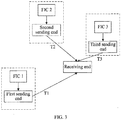
- FIG. 2 shows a format diagram of a cell frame, where the first field in the cell frame is a timestamp TS, which indicates a timestamp of a time when an FIC sends the cell.
- S1, S2, and S3 forward the cells according to TS values, where a cell whose TS value is smaller is forwarded first and a cell whose TS value is larger is forwarded later.
- an FIC in an LCC A and an FIC in an LCC B send cells C1 and C2 at a same time T1 respectively, where C1 and C2 carry a same timestamp T1.
- both L1 and L2 bear cells whose timestamps are less than T1.
- L1 is longer than L2, cells that are borne in L1 and whose timestamps are less than T1 are more than cells that are borne in L2 and whose timestamps are less than T1, and C2 reaches S2 earlier than C1 does. Because S2 forwards a cell whose TS value is smaller first, and forwards a cell a cell whose TS value is larger later, after C2 reaches S2, C2 can be forwarded only after S2 completes forwarding the cells that are borne in L1 and whose timestamps are less than T1, that is, C2 can be forwarded by S2 only after C1 has reached S2.
- L1 is much longer than L2
- C2 needs to wait a quite long time before being forwarded by S2, which causes low cell forwarding efficiency of S2; in addition, during the waiting time of the cell C2, the FIC in the LCC B keeps sending new cells, which causes cell accumulation in L2.
- EP 2 490 380 A2 discloses a cell processing method, a source line card, and a network card in a switching network.
- the source line card segments a data packet in a data stream into cells first, then insert time stamps and flow identifications into cell headers, and then the marked cell headers and cell payloads to the network card.
- EP 0 587 944 A1 discloses a cell resequencing system for a telecommunication network.
- the cell resequencing system for a resequencing section has two inputs coupled to inlets of a switching network via transmission links arranged in a link group.
- the cells transmitted from the inputs to outlets of the switching network are subjected to a first variable time delay and are then stored in latching means for a second variable time delay prior to being released to an output of the section.
- the present invention provides cell processing methods according to claims 1 and 3, a first sending end according to claim 7 and a receiving end according to claim 9.
- Embodiments of the present invention provide a cell processing method and apparatus, to improve cell forwarding efficiency of a switching device, and prevent internal cell accumulation.
- One aspect of the embodiments of the present invention provides a cell processing method, including:
- Another aspect of the embodiments of the present invention provides a cell processing method, including:
- Another aspect of the embodiments of the present invention provides a cell processing method, including:
- Another aspect of the embodiments of the present invention provides a cell processing method, including:
- Another aspect of the embodiments of the present invention provides a first sending end, including:
- a receiving end including:
- Another aspect of the embodiments of the present invention provides a first sending end, including:
- a receiving end including:
- Another aspect of the embodiments of the present invention provides a cell processing system, including at least two of the first sending ends and the receiving end.
- a first timestamp compensation time is added to a first timestamp carried in a first cell, so that a receiving end forwards the first cell according to the first timestamp that is added with the first timestamp compensation time, to prevent a second cell, which is sent by a second sending end, from waiting at the receiving end for a cell that is sent by a first sending end at a time the same as a sending time of the second cell, where the cell reaches the receiving end after a longer delay time than a delay time after which the second cell reaches the receiving end, which improves cell forwarding efficiency of the receiving end and prevents the occurrence of cell accumulation in a link connected to the receiving end.
- FIG. 4 is a flowchart of a cell processing method according to an embodiment of the present invention.
- the cell processing method provided by this embodiment of the present invention is applicable to a process in which a source FIC of a switching device splits a received data packet sent by another switching device into multiple cells, and the multiple cells are forwarded among sending ports S1, S2, and S3 inside the switching device.
- Specific steps of the cell processing method provided by this embodiment of the present invention are as follows:
- Step S401 A first sending end obtains a first timestamp compensation time, where the first timestamp compensation time is T1-Tmin, where T1 is a delay time, which is from the first sending end to a receiving end, of a first cell sent by the first sending end, Tmin is a minimum value of a delay time, which is from each sending end in multiple sending ends to the receiving end, of a cell sent by a respective sending end, and the multiple sending ends include the first sending end.
- T1 is a delay time, which is from the first sending end to a receiving end, of a first cell sent by the first sending end
- Tmin is a minimum value of a delay time, which is from each sending end in multiple sending ends to the receiving end, of a cell sent by a respective sending end
- the multiple sending ends include the first sending end.
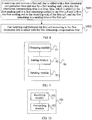
- FIG. 3 is a cell forwarding diagram corresponding to a cell processing method according to an embodiment of the present invention.
- a first sending end, a second sending end, and a third sending end are different sending ports S1 inside a switching device
- a receiving end is a sending port S2 inside the switching device
- the first sending end sends a first cell to the receiving end, and a delay time, which is from the first sending end to the receiving end, of the first cell is T1 (for example, 60 minutes)
- the second sending end sends a second cell to the receiving end, and a delay time, which is from the second sending end to the receiving end, of the second cell is T2 (for example, 30 minutes)
- the third sending end sends a third cell to the receiving end, and a delay time, which is from the third sending end to the receiving end, of the third cell is T3 (for example, 10 minutes), where T1>T2>T3; and T3 is a minimum value of a delay time, which is from each sending end in multiple
- Step S402 The first sending end adds the first timestamp compensation time to a first timestamp carried in the first cell, where the first timestamp is a sending time of the first cell.
- the first sending end adds the obtained first timestamp compensation time to the first timestamp in the first cell, where the first timestamp indicates a sending time when the first sending end sends the first cell.
- Step S403 The first sending end sends, to the receiving end, the first cell that is added with the first timestamp compensation time, so that the receiving end forwards the first cell according to the first timestamp that is added with the first timestamp compensation time.
- the first sending end sends, to the receiving end, the first cell that is added with the first timestamp compensation time, and the receiving end forwards the first cell according to the first timestamp that is added with the first timestamp compensation time. Specifically, as shown in FIG. 3 , the first sending end sends the first cell at a time t1, where the first cell carries a first timestamp t1 and an added first timestamp compensation time 50 minutes (60 minutes-10 minutes).
- FIG. 5 is a structure of a cell frame applicable to a cell processing method according to an embodiment of the present invention. As shown in FIG.
- the first field in the cell frame applicable to this embodiment of the present invention indicates timestamp information that is added with the first timestamp compensation time, and then timestamp information corresponding to the first cell is t1+50 minutes.
- the second sending end sends the second cell at a time t2, where the second cell carries a second timestamp t2 and an added second timestamp compensation time 20 minutes (30 minutes-10 minutes), that is, timestamp information corresponding to the second cell is t2+20 minutes.
- the third sending end sends the third cell at a time t3, where the third cell carries a third timestamp t3 and an added third timestamp compensation time 0 minutes (10 minutes-10 minutes), that is, timestamp information corresponding to the third cell is t3.
- the receiving end compares values of the timestamp information separately carried in the currently received first cell, second cell, and third cell, and forwards the cell whose timestamp information has a minimum value; specifically, the receiving end receives the cells sent by the first sending end, the second sending end, and the third sending end, sequences the cells according to an ascending order of the values of the timestamp information carried in the cells, and sends the sequenced cells successively.
- the receiving end may receive at the same time a third cell sent at 5:50 by the third sending end, a second cell that carries timestamp information being 5:50 and is sent at 5:30 by the second sending end, and a first cell that carries timestamp information being 5:50 and is sent at 5:00 by the first sending end, and the receiving end sends at the same time the cells that are received at the same time.
- each sending end does not add a timestamp compensation time to a cell, and each sending end keeps sending cells, because the cells sent at the same time of 5:50 by the first sending end, the second sending end, and the third sending end need to respectively take 60 minutes, 30 minutes, and 10 minutes to reach the receiving end
- the cell sent at 5:50 by the third sending end reaches the receiving end first
- the cells sent at 5:50 by the first sending end and the second sending end reach the receiving end later
- the cell sent at 5:50 by the third sending end reaches the receiving end
- the cells that are sent by the first sending end and the second sending end and received by the receiving end must be cells sent at times earlier than 5:50, that is, the receiving end first forwards cells that are sent before 5:50 by the first sending end and the second sending end; and similarly, the cell sent at 5:50 by the second sending end reaches the receiving end first, the cell sent at 5:50 by the first sending end reaches the receiving end later, when the cell sent at 5:50 by the second sending end reaches
- each sending end adds a timestamp compensation time to a cell, so that the third cell sent at 5:50 by the third sending end, the second cell that carries timestamp information being 5:50 and is sent at 5:30 by the second sending end, and the first cell that carries timestamp information being 5:50 and is sent at 5:00 by the first sending end are forwarded at the same time by the receiving end at the same time.
- a timestamp compensation time may also be added by an FIC connected to the sending end or an input port of a receiving end.
- a first timestamp compensation time is added to a first timestamp carried in a first cell, so that a receiving end forwards the first cell according to the first timestamp that is added with the first timestamp compensation time, to prevent a second cell, which is sent by a second sending end, from waiting at the receiving end for a cell that is sent by a first sending end at a time the same as a sending time of the second cell, where the cell reaches the receiving end after a longer delay time than a delay time after which the second cell reaches the receiving end, which improves cell forwarding efficiency of the receiving end and prevents the occurrence of cell accumulation in a link connected to the receiving end.
- the first sending end obtains the first timestamp compensation time includes that: the first sending end obtains, according to a foreknown length of a link between each sending end in the multiple sending ends and the receiving end, the delay time, which is from each sending end in the multiple sending ends to the receiving end, of the cell sent by the respective sending end, and obtains the first timestamp compensation time.
- the length of a link between each sending end and the receiving end is prestored in the first sending end.
- the first sending end obtains, according to the length of a link and a transmission rate of a cell in the link, a delay time, which is from each sending end to the receiving end, of the cell sent by the respective sending end, including a delay time T1, which is from the first sending end to the receiving end, of the first cell sent by the first sending end, and the minimum value Tmin of a delay time, which is from each sending end to the receiving end, of the cell sent by a respective sending end, so as to obtain the first timestamp compensation time T1-Tmin.
- the delay time, which is from each sending end in the multiple sending ends to the receiving end, of the cell sent by the respective sending end includes a delay of transmitting the cell on the link between the respective sending end and the receiving end, and a delay of processing the cell by the respective sending end.
- a manner of calculating a first timestamp compensation time and a delay time, which is from a sending end to a receiving end, of a cell are specifically limited, which improves calculation accuracy.
- FIG. 6 is a flowchart of a cell processing method according to another embodiment of the present invention. As shown in FIG. 6 , specific steps of the cell processing method provided by this embodiment of the present invention are as follows: Step S601: A receiving end receives a first cell that is added with a first timestamp compensation time and sent by a first sending end, where the first timestamp compensation time is T1-Tmin added by the first sending end to a first timestamp carried in the first cell, where the first timestamp is a sending time of the first cell, T1 is a delay time, which is from the first sending end to the receiving end, of the first cell sent by the first sending end, Tmin is a minimum value of a delay time, which is from each sending end in multiple sending ends to the receiving end, of a cell sent by a respective sending end, and the multiple sending ends include the first sending end.
- T1 is a delay time, which is from the first sending end to the receiving end, of the first cell sent by the first sending end
- Tmin is
- FIG. 3 is a cell forwarding diagram corresponding to a cell processing method according to an embodiment of the present invention.
- a first sending end, a second sending end, and a third sending end are different sending ports S1 inside a switching device
- a receiving end is a sending port S2 inside the switching device
- the first sending end sends a first cell to the receiving end, and a delay time, which is from the first sending end to the receiving end, of the first cell is T1 (for example, 60 minutes)
- the second sending end sends a second cell to the receiving end, and a delay time, which is from the second sending end to the receiving end, of the second cell is T2 (for example, 30 minutes)
- the third sending end sends a third cell to the receiving end, and a delay time, which is from the third sending end to the receiving end, of the third cell is T3 (for example, 10 minutes), where T1>T2>T3; T3 is a minimum value of a delay time, which is from each sending end in multiple sending
- Step S602 The receiving end forwards the first cell according to the first timestamp that is added with the first timestamp compensation time.
- the cell processing method further includes: receiving, by the receiving end, a second cell that carries a second timestamp and is sent by a second sending end, where the second timestamp includes a second timestamp compensation time and a sending time of the second cell, the second timestamp compensation time is T2-Tmin, and T2 is a delay time, which is from the second sending end to the receiving end, of the second cell.
- That the receiving end forwards the first cell according to the first timestamp that is added with the first timestamp compensation time includes that: the receiving end forwards the first cell according to the first timestamp that is added with the first timestamp compensation time and carried in the first cell and the second timestamp carried in the second cell.
- the receiving end forwards the first cell according to the first timestamp that is added with the first timestamp compensation time. Specifically, as shown in FIG. 3 , the first sending end sends the first cell at a time t1, where the first cell carries a first timestamp t1 and an added first timestamp compensation time 50 minutes (60 minutes-10 minutes).
- FIG. 5 is a structure of a cell frame applicable to a cell processing method according to an embodiment of the present invention. As shown in FIG. 5 , the first field in the cell frame applicable to this embodiment of the present invention indicates timestamp information that is added with the first timestamp compensation time, and then timestamp information corresponding to the first cell is tl+50 minutes.
- the second sending end sends the second cell at a time t2, where the second cell carries a second timestamp t2 and an added second timestamp compensation time 20 minutes (30 minutes-10 minutes), that is, timestamp information corresponding to the second cell is t2+20 minutes.
- the third sending end sends the third cell at a time t3, where the third cell carries a third timestamp t3 and an added third timestamp compensation time 0 minutes (10 minutes-10 minutes), that is, timestamp information corresponding to the third cell is t3.
- the receiving end compares values of the timestamp information separately carried in the currently received first cell, second cell, and third cell, and forwards the cell whose timestamp information has a minimum value; specifically, the receiving end receives the cells sent by the first sending end, the second sending end, and the third sending end, sequences the cells according to an ascending order of the values of the timestamp information carried in the cells, and sends the sequenced cells successively.
- the receiving end may receive at the same time a third cell sent at 5:50 by the third sending end, a second cell that carries timestamp information being 5:50 and is sent at 5:30 by the second sending end, and a first cell that carries timestamp information being 5:50 and is sent at 5:00 by the first sending end, and the receiving end sends at the same time the cells that are received at the same time.
- each sending end does not add a timestamp compensation time to a cell, and each sending end keeps sending cells, because the cells sent at the same time of 5:50 by the first sending end, the second sending end, and the third sending end need to respectively take 60 minutes, 30 minutes, and 10 minutes to reach the receiving end
- the cell sent at 5:50 by the third sending end reaches the receiving end first
- the cells sent at 5:50 by the first sending end and the second sending end reach the receiving end later
- the cell sent at 5:50 by the third sending end reaches the receiving end
- the cells that are sent by the first sending end and the second sending end and received by the receiving end must be cells sent at times earlier than 5:50, that is, the receiving end first forwards cells that are sent before 5:50 by the first sending end and the second sending end; and similarly, the cell sent at 5:50 by the second sending end reaches the receiving end first, the cell sent at 5:50 by the first sending end reaches the receiving end later, when the cell sent at 5:50 by the second sending end reaches
- each sending end adds a timestamp compensation time to a cell, so that the third cell sent at 5:50 by the third sending end, the second cell that carries timestamp information being 5:50 and is sent at 5:30 by the second sending end, and the first cell that carries timestamp information being 5:50 and is sent at 5:00 by the first sending end are forwarded by the receiving end at the same time.
- a timestamp compensation time may also be added by an FIC connected to the sending end or an input port of a receiving end.
- a first timestamp compensation time is added to a first timestamp carried in a first cell, so that a receiving end forwards the first cell according to the first timestamp that is added with the first timestamp compensation time, to prevent a second cell, which is sent by a second sending end, from waiting at the receiving end for a cell that is sent by a first sending end at a time the same as a sending time of the second cell, where the cell reaches the receiving end after a longer delay time than a delay time after which the second cell reaches the receiving end, which improves cell forwarding efficiency of the receiving end and prevents the occurrence of cell accumulation in a link connected to the receiving end.
- the delay time, which is from each sending end in the multiple sending ends to the receiving end, of the cell sent by the respective sending end includes a delay of transmitting the cell on a link between the respective sending end and the receiving end, and a delay of processing the cell by the respective sending end.
- a delay time, which is from a sending end to a receiving end, of a cell is specifically limited, which improves calculation accuracy.
- FIG. 7 is a flowchart of a cell processing method according to another embodiment of the present invention. As shown in FIG. 7 , specific steps of the cell processing method provided by this embodiment of the present invention are as follows: Step S701: A first sending end obtains a first timestamp compensation time, where the first timestamp compensation time is a delay time, which is from the first sending end to a receiving end, of a first cell sent by the first sending end.
- FIG. 3 is a cell forwarding diagram corresponding to a cell processing method according to an embodiment of the present invention.
- a first sending end, a second sending end, and a third sending end are different sending ports S1 inside a switching device
- the receiving end is a sending port S2 inside the switching device
- the first sending end sends a first cell to the receiving end, and a delay time, which is from the first sending end to the receiving end, of the first cell is T1 (for example, 60 minutes)
- the second sending end sends a second cell to the receiving end, and a delay time, which is from the second sending end to the receiving end, of the second cell is T2 (for example, 30 minutes)
- the third sending end sends a third cell to the receiving end, a delay time, which is from the third sending end to the receiving end, of the third cell is T3 (for example, 10 minutes), and the first timestamp compensation time obtained by the first sending end is T1.
- Step S702 The first sending end adds the first timestamp compensation time to a first timestamp carried in the first cell, where the first timestamp is a sending time of the first cell.
- the first sending end adds the obtained first timestamp compensation time to the first timestamp in the first cell, where the first timestamp indicates a sending time when the first sending end sends the first cell.
- Step S703 The first sending end sends, to the receiving end, the first cell that is added with the first timestamp compensation time, so that the receiving end forwards the first cell according to the first timestamp that is added with the first timestamp compensation time.
- the first sending end sends, to the receiving end, the first cell that is added with the first timestamp compensation time, and the receiving end forwards the first cell according to the first timestamp that is added with the first timestamp compensation time. Specifically, as shown in FIG. 3 , the first sending end sends the first cell at a time t1, where the first cell carries a first timestamp t1 and an added first timestamp compensation time 60 minutes.
- FIG. 5 is a structure of a cell frame applicable to a cell processing method according to an embodiment of the present invention. As shown in FIG.
- the first field in the cell frame applicable to this embodiment of the present invention indicates timestamp information that is added with the first timestamp compensation time, and then timestamp information corresponding to the first cell is tl+60 minutes.
- the second sending end sends the second cell at a time t2, where the second cell carries a second timestamp t2 and an added second timestamp compensation time 30 minutes, that is, timestamp information corresponding to the second cell is t2+30 minutes.
- the third sending end sends the third cell at a time t3, where the third cell carries a third timestamp t3 and an added third timestamp compensation time 10 minutes, that is, timestamp information corresponding to the third cell is t3+10 minutes.
- the receiving end compares values of the timestamp information separately carried in the currently received first cell, second cell, and third cell, and forwards the cell whose timestamp information has a minimum value; specifically, the receiving end receives the cells sent by the first sending end, the second sending end, and the third sending end, sequences the cells according to an ascending order of the values of the timestamp information carried in the cells, and sends the sequenced cells successively.
- the receiving end may receive at the same time a third cell that carries timestamp information being 6:00 and is sent at 5:50 by the third sending end, a second cell that carries timestamp information being 6:00 and is sent at 5:30 by the second sending end, and a first cell that carries timestamp information being 6:00 and is sent at 5:00 by the first sending end, and the receiving end sends at the same time the cells that are received at the same time.
- each sending end does not add a timestamp compensation time to a cell, and each sending end keeps sending cells, because the cells sent at the same time of 5:50 by the first sending end, the second sending end, and the third sending end need to respectively take 60 minutes, 30 minutes, and 10 minutes to reach the receiving end
- the cell sent at 5:50 by the third sending end reaches the receiving end first
- the cells sent at 5:50 by the first sending end and the second sending end reach the receiving end later
- the cell sent at 5:50 by the third sending end reaches the receiving end
- the cells that are sent by the first sending end and the second sending end and received by the receiving end must be cells sent at times earlier than 5:50, that is, the receiving end first forwards cells that are sent before 5:50 by the first sending end and the second sending end; and similarly, the cell sent at 5:50 by the second sending end reaches the receiving end first, the cell sent at 5:50 by the first sending end reaches the receiving end later, when the cell sent at 5:50 by the second sending end reaches
- each sending end adds a timestamp compensation time to a cell, so that the third cell that carries timestamp information being 6:00 and is sent at 5:50 by the third sending end, the second cell that carries timestamp information being 6:00 and is sent at 5:30 by the second sending end, and the first cell that carries timestamp information being 6:00 and is sent at 5:00 by the first sending end are forwarded by the receiving end at the same time.
- a timestamp compensation time may also be added by an FIC connected to the sending end or an input port of a receiving end.
- a first timestamp compensation time is added to a first timestamp carried in a first cell, so that a receiving end forwards the first cell according to the first timestamp that is added with the first timestamp compensation time, to prevent a second cell, which is sent by a second sending end, from waiting at the receiving end for a cell that is sent by a first sending end at a time the same as a sending time of the second cell, where the cell reaches the receiving end after a longer delay time than a delay time after which the second cell reaches the receiving end, which improves cell forwarding efficiency of the receiving end and prevents the occurrence of cell accumulation in a link connected to the receiving end.
- the first sending end obtains the first timestamp compensation time includes that: the first sending end obtains the first timestamp compensation time according to a foreknown length of a link between the first sending end and the receiving end.
- a length of a link between each sending end and the receiving end is prestored at the first sending end.
- the first sending end obtains, according to a length of a link and a transmission rate of a cell in the link, a delay time, which is from each sending end to the receiving end, of the cell sent by a respective sending end, including a delay time T1, which is from the first sending end to the receiving end, of the first cell sent by the first sending end, so as to obtain the first timestamp compensation time T1.
- the delay time, which is from the first sending end to the receiving end, of the first cell sent by the first sending end includes a delay of transmitting the first cell on the link between the first sending end and the receiving end, and a delay of processing the first cell by the first sending end.
- a manner of calculating a first timestamp compensation time and a delay time, which is from a sending end to a receiving end, of a cell are specifically limited, which improves calculation accuracy.
- FIG. 8 is a flowchart of a cell processing method according to another embodiment of the present invention. As shown in FIG. 8 , specific steps of the cell processing method provided by this embodiment of the present invention are as follows: Step S801: A receiving end receives a first cell that is added with a first timestamp compensation time and sent by a first sending end, where the first timestamp compensation time is a delay time, which is added by the first sending end to a first timestamp carried in the first cell and is from the first sending end to the receiving end, of the first cell, and the first timestamp is a sending time of the first cell.
- the first timestamp compensation time is a delay time, which is added by the first sending end to a first timestamp carried in the first cell and is from the first sending end to the receiving end, of the first cell
- the first timestamp is a sending time of the first cell.
- FIG. 3 is a cell forwarding diagram corresponding to a cell processing method according to an embodiment of the present invention.
- a first sending end, a second sending end, and a third sending end are different sending ports S1 inside a switching device
- a receiving end is a sending port S2 inside the switching device
- the first sending end sends a first cell to the receiving end, and a delay time, which is from the first sending end to the receiving end, of the first cell is T1 (for example, 60 minutes)
- the second sending end sends a second cell to the receiving end, and a delay time, which is from the second sending end to the receiving end, of the second cell is T2 (for example, 30 minutes)
- the third sending end sends a third cell to the receiving end, a delay time, which is from the third sending end to the receiving end, of the third cell is T3 (for example, 10 minutes), and the first timestamp compensation time obtained by the first sending end is T1; and the first sending end adds the obtained first timestamp compensation time
- Step S802 The receiving end forwards the first cell according to the first timestamp that is added with the first timestamp compensation time.
- the cell processing method further includes: receiving, by the receiving end, a second cell that carries a second timestamp and is sent by a second sending end, where the second timestamp includes a second timestamp compensation time and a sending time of the second cell, and the second timestamp compensation time is a delay time, which is from the second sending end to the receiving end, of the second cell.
- That the receiving end forwards the first cell according to the first timestamp that is added with the first timestamp compensation time includes that: the receiving end forwards the first cell according to the first timestamp that is added with the first timestamp compensation time and carried in the first cell and the second timestamp carried in the second cell.
- the receiving end forwards the first cell according to the first timestamp that is added with the first timestamp compensation time. Specifically, as shown in FIG. 3 , the first sending end sends the first cell at a time t1, where the first cell carries a first timestamp t1 and an added first timestamp compensation time 60 minutes.
- FIG. 5 is a structure of a cell frame applicable to a cell processing method according to an embodiment of the present invention. As shown in FIG. 5 , the first field in the cell frame applicable to this embodiment of the present invention indicates timestamp information that is added with the first timestamp compensation time, and then timestamp information corresponding to the first cell is t1+60 minutes.
- the second sending end sends the second cell at a time t2, where the second cell carries a second timestamp t2 and an added second timestamp compensation time 30 minutes, that is, timestamp information corresponding to the second cell is t2+30 minutes.
- the third sending end sends the third cell at a time t3, where the third cell carries a third timestamp t3 and an added third timestamp compensation time 10 minutes, that is, timestamp information corresponding to the third cell is t3+10 minutes.
- the receiving end compares values of the timestamp information separately carried in the currently received first cell, second cell, and third cell, and forwards the cell whose timestamp information has the minimum value; specifically, the receiving end receives the cells sent by the first sending end, the second sending end, and the third sending end, sequences the cells according to an ascending order of the values of the timestamp information carried in the cells, and sends the sequenced cells successively.
- the receiving end may receive at the same time a third cell that carries timestamp information being 6:00 and is sent at 5:50 by the third sending end, a second cell that carries timestamp information being 6:00 and is sent at 5:30 by the second sending end, and a first cell that carries timestamp information being 6:00 and is sent at 5:00 by the first sending end, and the receiving end sends at the same time the cells that are received at the same time.
- each sending end does not add a timestamp compensation time to a cell, and each sending end keeps sending cells, because the cells sent at the same time of 5:50 by the first sending end, the second sending end, and the third sending end need to respectively take 60 minutes, 30 minutes, and 10 minutes to reach the receiving end
- the cell sent at 5:50 by the third sending end reaches the receiving end first
- the cells sent at 5:50 by the first sending end and the second sending end reach the receiving end later
- the cell sent at 5:50 by the third sending end reaches the receiving end
- the cells that are sent by the first sending end and the second sending end and received by the receiving end must be cells sent at times earlier than 5:50, that is, the receiving end first forwards cells that are sent before 5:50 by the first sending end and the second sending end; and similarly, the cell sent at 5:50 by the second sending end reaches the receiving end first, the cell sent at 5:50 by the first sending end reaches the receiving end later, when the cell sent at 5:50 by the second sending end reaches
- each sending end adds a timestamp compensation time to a cell, so that the third cell that carries timestamp information being 6:00 and is sent at 5:50 by the third sending end, the second cell that carries timestamp information being 6:00 and is sent at 5:30 by the second sending end, and the first cell that carries timestamp information being 6:00 and is sent at 5:00 by the first sending end are forwarded by the receiving end at the same time.
- a timestamp compensation time may also be added by an FIC connected to the sending end or an input port of a receiving end.
- a first timestamp compensation time is added to a first timestamp carried in a first cell, so that a receiving end forwards the first cell according to the first timestamp that is added with the first timestamp compensation time, to prevent a second cell, which is sent by a second sending end, from waiting at the receiving end for a cell that is sent by a first sending end at a time the same as a sending time of the second cell, where the cell reaches the receiving end after a longer delay time than a delay time after which the second cell reaches the receiving end, which improves cell forwarding efficiency of the receiving end and prevents the occurrence of cell accumulation in a link connected to the receiving end.
- the delay time, which is from the first sending end to the receiving end, of the first cell sent by the first sending end includes a delay of transmitting the first cell on a link between the first sending end and the receiving end, and a delay of processing the first cell by the first sending end.
- a delay time, which is from a sending end to a receiving end, of a cell is specifically limited, which improves calculation accuracy.
- the first sending end and the second sending end may also be different sending ports S2 inside the switching device, and correspondingly, the receiving end is a sending port S3 inside the switching device;
- the first timestamp information carried in the first cell includes the first timestamp that identifies a first sending time; and first timestamp compensation information added by the first sending end or an input port of the receiving end to first timestamp information is the delay time, which is from the first sending end to the receiving end, of the first cell, where the first timestamp information carried in the first cell may further include the delay time, which is from S1 to S2, of the first cell; alternatively, the first sending end and the second sending end are different sending ports S2 inside the switching device; correspondingly, the receiving end is a sending port S3 inside the switching device; the first timestamp information carried in the first cell includes the first timestamp that identifies a first sending time; and first timestamp compensation information added by the first sending end or an input port of the receiving end to first timestamp information is
- FIG. 9 is a structural diagram of a first sending end according to another embodiment of the present invention.
- the first sending end provided by this embodiment of the present invention may execute a processing procedure provided by a cell processing method.
- a first sending end 90 includes an obtaining module 91, an adding module 92, and a sending module 93, where the obtaining module 91 is configured to obtain a first timestamp compensation time, where the first timestamp compensation time is T1-Tmin, where T1 is a delay time, which is from the first sending end to a receiving end, of a first cell sent by the first sending end, Tmin is a minimum value of a delay time, which is from each sending end in multiple sending ends to the receiving end, of a cell sent by a respective sending end, and the multiple sending ends include the first sending end; the adding module 92 is configured to add the first timestamp compensation time to a first timestamp carried in the first cell, and the first timestamp is a sending time of the first cell; and the sending module 92
- the first sending end provided by this embodiment of the present invention may be specifically configured to execute the foregoing method embodiment provided by FIG. 4 , and specific functions are not described again herein.
- a first timestamp compensation time is added to a first timestamp carried in a first cell, so that a receiving end forwards the first cell according to the first timestamp that is added with the first timestamp compensation time, to prevent a second cell, which is sent by a second sending end, from waiting at the receiving end for a cell that is sent by a first sending end at a time the same as a sending time of the second cell, where the cell reaches the receiving end after a longer delay time than a delay time after which the second cell reaches the receiving end, which improves cell forwarding efficiency of the receiving end and prevents the occurrence of cell accumulation in a link connected to the receiving end.
- the obtaining module 91 is specifically configured to obtain, according to a foreknown length of a link between each sending end in the multiple sending ends and the receiving end, the delay time, which is from each sending end in the multiple sending ends to the receiving end, of the cell sent by the respective sending end, and obtain the first timestamp compensation time.
- the delay time, which is from each sending end in the multiple sending ends to the receiving end, of the cell sent by the respective sending end includes a delay of transmitting the cell on the link between the respective sending end and the receiving end, and a delay of processing the cell by the respective sending end.
- a method of calculating a first timestamp compensation time and a delay time, which is from a sending end to a receiving end, of a cell are specifically limited, which improves calculation accuracy.
- FIG. 10 is a structural diagram of a receiving end according to another embodiment of the present invention.
- the receiving end provided by this embodiment of the present invention may execute a processing procedure provided by an embodiment of a cell processing method.
- a receiving end 100 includes a receiving module 101 and a forwarding module 102, where the receiving module 101 is configured to receive a first cell that is added with a first timestamp compensation time and sent by a first sending end, where the first timestamp compensation time is T1-Tmin added by the first sending end to a first timestamp carried in the first cell, where the first timestamp is a sending time of the first cell, T1 is a delay time, which is from the first sending end to the receiving end, of the first cell sent by the first sending end, Tmin is a minimum value of a delay time, which is from each sending end in multiple sending ends to the receiving end, of a cell sent by a respective sending end, and the multiple sending ends include the first sending end; and the forwarding module 102 is configured to forward the
- the receiving module 101 is further configured to receive a second cell that carries a second timestamp and is sent by a second sending end, where the second timestamp includes a second timestamp compensation time and a sending time of the second cell, the second timestamp compensation time is T2-Tmin, and T2 is a delay time, which is from the second sending end to the receiving end, of the second cell.
- the forwarding module 102 is specifically configured to forward the first cell according to the first timestamp that is added with the first timestamp compensation time and carried in the first cell and the second timestamp carried in the second cell.
- the delay time, which is from each sending end in the multiple sending ends to the receiving end, of the cell sent by the respective sending end includes a delay of transmitting the cell on a link between the respective sending end and the receiving end, and a delay of processing the cell by the respective sending end.
- the receiving end provided by this embodiment of the present invention may be specifically configured to execute the foregoing method embodiment provided by FIG. 6 , and specific functions are not described again herein.
- a first timestamp compensation time is added to a first timestamp carried in a first cell, so that a receiving end forwards the first cell according to the first timestamp that is added with the first timestamp compensation time, to prevent a second cell, which is sent by a second sending end, from waiting at the receiving end for a cell that is sent by a first sending end at a time the same as a sending time of the second cell, where the cell reaches the receiving end after a longer delay time than a delay time after which the second cell reaches the receiving end, which improves cell forwarding efficiency of the receiving end and prevents the occurrence of cell accumulation in a link connected to the receiving end; and a delay time, which is from a sending end to a receiving end, of a cell is specifically limited, which improves calculation accuracy.
- FIG. 11 is a structural diagram of a first sending end according to another embodiment of the present invention.
- the first sending end provided by this embodiment of the present invention may execute a processing procedure provided by an embodiment of a cell processing method.
- a first sending end 110 includes an obtaining module 111, an adding module 112, and a sending module 113, where the obtaining module 111 is configured to obtain a first timestamp compensation time, where the first timestamp compensation time is a delay time, which is from the first sending end to a receiving end, of a first cell sent by the first sending end; the adding module 112 is configured to add the first timestamp compensation time to a first timestamp carried in the first cell, and the first timestamp is a sending time of the first cell; and the sending module 113 is configured to send, to the receiving end, the first cell that is added with the first timestamp compensation time, so that the receiving end forwards the first cell according to the first timestamp that is added with the first timestamp compensation time.
- the obtaining module 111 is specifically configured to obtain the first timestamp compensation time according to a foreknown length of a link between the first sending end and the receiving end; and the delay time, which is from the first sending end to the receiving end, of the first cell sent by the first sending end includes a delay of transmitting the first cell on the link between the first sending end and the receiving end, and a delay of processing the first cell by the first sending end.
- the first sending end provided by this embodiment of the present invention may be specifically configured to execute the foregoing method embodiment provided by FIG. 7 , and specific functions are not described again herein.
- a first timestamp compensation time is added to a first timestamp carried in a first cell, so that a receiving end forwards the first cell according to the first timestamp that is added with the first timestamp compensation time, to prevent a second cell, which is sent by a second sending end, from waiting at the receiving end for a cell that is sent by a first sending end at a time the same as a sending time of the second cell, where the cell reaches the receiving end after a longer delay time than a delay time after which the second cell reaches the receiving end, which improves cell forwarding efficiency of the receiving end and prevents the occurrence of cell accumulation in a link connected to the receiving end; and a delay time, which is from a sending end to a receiving end, of a cell is specifically limited, which improves calculation accuracy.
- FIG. 12 is a structural diagram of a receiving end according to another embodiment of the present invention.
- the receiving end provided by this embodiment of the present invention may execute a processing procedure provided by an embodiment of a cell processing method.
- a receiving end 120 includes a receiving module 121 and a forwarding module 122, where the receiving module 121 is configured to receive a first cell that is added with a first timestamp compensation time and sent by a first sending end, where the first timestamp compensation time is a delay time, which is added by the first sending end to a first timestamp carried in the first cell and is from the first sending end to the receiving end, of the first cell, and the first timestamp is a sending time of the first cell; and the forwarding module 122 is configured to forward the first cell according to the first timestamp that is added with the first timestamp compensation time.
- the receiving module 121 is further configured to receive a second cell that carries a second timestamp and is sent by a second sending end, where the second timestamp includes a second timestamp compensation time and a sending time of the second cell, and the second timestamp compensation time is a delay time, which is from the second sending end to the receiving end, of the second cell.
- the forwarding module 122 is specifically configured to forward the first cell according to the first timestamp that is added with the first timestamp compensation time and carried in the first cell and the second timestamp carried in the second cell.
- the delay time, which is from the first sending end to the receiving end, of the first cell sent by the first sending end includes a delay of transmitting the first cell on a link between the first sending end and the receiving end, and a delay of processing the first cell by the first sending end.
- the receiving end provided by this embodiment of the present invention may be specifically configured to execute the foregoing method embodiment provided by FIG. 8 , and specific functions are not described again herein.
- a first timestamp compensation time is added to a first timestamp carried in a first cell, so that a receiving end forwards the first cell according to the first timestamp that is added with the first timestamp compensation time, to prevent a second cell, which is sent by a second sending end, from waiting at the receiving end for a cell that is sent by a first sending end at a time the same as a sending time of the second cell, where the cell reaches the receiving end after a longer delay time than a delay time after which the second cell reaches the receiving end, which improves cell forwarding efficiency of the receiving end and prevents the occurrence of cell accumulation in a link connected to the receiving end; and a delay time, which is from a sending end to the receiving end, of a cell is specifically limited, which improves calculation accuracy.
- FIG. 13 is a structural diagram of a cell processing system according to another embodiment of the present invention.
- the cell processing system provided by this embodiment of the present invention may execute a processing procedure provided by an embodiment of a cell processing method.
- a cell processing system 130 includes a first sending end 90, a receiving end 100, and a second sending end 131.
- the second sending end 131 and the first sending end 90 are sending ends that have a same function; for specific structures of the second sending end 131 and the first sending end 90, reference may be made to a structure of the first sending end 90 described in the embodiment corresponding to FIG. 9 ; for a specific structure of the receiving end 100, reference may be made to a structure of the receiving end 100 described in the embodiment corresponding to FIG. 10 ; and details are not provided again herein.
- the cell processing system 130 includes a first sending end 110, a receiving end 120, and the second sending end 131. Considering that, in this case, structures of the cell processing system 130 and the cell processing system described in FIG. 13 are similar, and therefore an accompanying drawing of a structure of the cell processing system 130 in this case is not provided.
- the second sending end 131 and the first sending end 110 are sending ends that have a same function; for specific structures of the second sending end 131 and the first sending end 110, reference may be made to a structure of the first sending end 110 described in the embodiment corresponding to FIG. 11 ; for a specific structure of the receiving end 120, reference may be made to a structure of the receiving end 120 described in the embodiment corresponding to FIG. 12 ; and details are not provided again herein.
- the cell processing system provided by this embodiment of the present invention may execute a processing procedure provided by an embodiment of a cell processing method.
- a first timestamp compensation time is added to a first timestamp carried in a first cell, so that a receiving end forwards the first cell according to the first timestamp that is added with the first timestamp compensation time, to prevent a second cell, which is sent by a second sending end, from waiting at the receiving end for a cell that is sent by a first sending end at a time the same as a sending time of the second cell, where the cell reaches the receiving end after a longer delay time than a delay time after which the second cell reaches the receiving end, which improves cell forwarding efficiency of the receiving end and prevents the occurrence of cell accumulation in a link connected to the receiving end; and a delay time, which is from a sending end to the receiving end, of a cell is specifically limited, which improves calculation accuracy.
- the disclosed apparatus and method may be implemented in other manners.
- the described apparatus embodiment is merely exemplary.
- the unit division is merely logical function division and may be other division in actual implementation.
- a plurality of units or components may be combined or integrated into another system, or some features may be ignored or not performed.
- the displayed or discussed mutual couplings or direct couplings or communication connections may be implemented through some interfaces.
- the indirect couplings or communication connections between the apparatuses or units may be implemented in electronic, mechanical, or other forms.
- the units described as separate parts may or may not be physically separate, and parts displayed as units may or may not be physical units, may be located in one position, or may be distributed on a plurality of network units. Some or all of the units may be selected according to actual needs to achieve the objectives of the solutions of the embodiments.
- functional units in the embodiments of the present invention may be integrated into one processing unit, or each of the units may exist alone physically, or two or more units are integrated into one unit.
- the integrated unit may be implemented in a form of hardware, or may be implemented in a form of hardware in addition to a software functional unit.
- the integrated unit may be stored in a computer-readable storage medium.
- the software functional unit is stored in a storage medium and includes several instructions for instructing a computer device (which may be a personal computer, a server, or a network device) or a processor (processor) to perform a part of the steps of the methods described in the embodiments of the present invention.
- the foregoing storage medium includes: any medium that can store program code, such as a USB flash drive, a removable hard disk, a read-only memory (Read-Only Memory, ROM), a random access memory (Random Access Memory, RAM), a magnetic disk, or an optical disc.
Landscapes
- Engineering & Computer Science (AREA)
- Computer Networks & Wireless Communication (AREA)
- Signal Processing (AREA)
- Data Exchanges In Wide-Area Networks (AREA)
- Mobile Radio Communication Systems (AREA)
Claims (12)
- Verfahren zur Verarbeitung von Zellen, umfassend:Abrufen durch ein erstes sendendes Ende gemäß einer vorab bekannten Länge einer Strecke zwischen jedem sendenden Ende unter mehreren sendenden Enden und einem empfangenden Ende einer Verzögerungszeit, die von jedem sendenden Ende unter den mehreren sendenden Enden zum empfangenden Ende ist, einer Zelle, die durch das jeweilige sendende Ende gesendet wird, wobei die Länge der Strecke zwischen jedem sendenden Ende und dem empfangenden Ende im ersten sendenden Ende im Voraus gespeichert wird;Abrufen (S401) durch das erste sendende Ende einer ersten Zeitstempelkompensationszeit, wobei die erste Zeitstempelkompensationszeit T1 - Tmin ist, wobei T1 die Verzögerungszeit, die vom ersten sendenden Ende zu einem empfangenden Ende ist, der ersten Zelle ist, die durch das erste sendende Ende gesendet wird, Tmin ein Mindestwert einer Verzögerungszeit, die von jedem sendenden Ende unter mehreren sendenden Enden zum empfangenden Ende ist, einer Zelle ist, die durch ein jeweiliges sendendes Ende gesendet wird, und die mehreren sendenden Enden das erste sendende Ende umfassen;Hinzufügen (S402; S702) durch das erste sendende Ende der ersten Zeitstempelkompensationszeit zum ersten Zeitstempel, der in der ersten Zelle mitgeführt wird, wobei der erste Zeitstempel eine Sendezeit der ersten Zelle ist; undSenden (S403; S703) durch das erste sendende Ende an das empfangende Ende der ersten Zelle, zu der die erste Zeitstempelkompensationszeit hinzugefügt ist, so dass das empfangende Ende die erste Zelle gemäß dem ersten Zeitstempel weiterleitet, zu dem die erste Zeitstempelkompensationszeit hinzugefügt ist.
- Verfahren nach Anspruch 1, wobei die Verzögerungszeit, die von jedem sendende Ende unter mehreren sendenden Enden zum empfangenden Ende ist, der durch das jeweilige sendende Ende gesendeten Zelle eine Verzögerung des Sendens der Zelle auf der Strecke zwischen dem jeweiligen sendenden Ende und dem empfangenden Ende und eine Verzögerung des Verarbeitens der Zelle durch das jeweilige sendende Ende umfasst.
- Verfahren zur Verarbeitung von Zellen, umfassend:Empfangen (S601; 801) durch ein empfangendes Ende einer ersten Zelle, zu der eine erste Zeitstempelkompensationszeit hinzugefügt ist und die durch ein erstes sendendes Ende gesendet wird, wobei die erste Zeitstempelkompensationszeit T1 - Tmin ist, die durch das erste sendende Ende zu einem ersten Zeitstempel hinzugefügt wird, der in der ersten Zelle mitgeführt wird, wobei der erste Zeitstempel eine Sendezeit der ersten Zelle ist, T1 eine Verzögerungszeit, die vom ersten sendenden Ende zum empfangenden Ende ist, der ersten Zelle ist, die durch das erste sendende Ende gesendet wird, Tmin ein Mindestwert einer Verzögerungszeit, die von jedem sendenden Ende unter mehreren sendenden Enden zum empfangenden Ende ist, einer Zelle ist, die durch ein jeweiliges sendendes Ende gesendet wird, und die mehreren sendenden Enden das erste sendende Ende umfassen; undWeiterleiten (S602; 802) durch das empfangende Ende der ersten Zelle gemäß dem ersten Zeitstempel, zu dem die erste Zeitstempelkompensationszeit hinzugefügt ist.
- Verfahren nach Anspruch 3, ferner umfassend:
Empfangen durch das empfangende Ende einer zweiten Zelle, die einen zweiten Zeitstempel mitführt und durch ein zweites sendendes Ende gesendet wird, wobei der zweite Zeitstempel eine zweite Zeitstempelkompensationszeit und eine Sendezeit der zweiten Zelle umfasst, die zweite Zeitstempelkompensationszeit T2 - Tmin ist, und T2 eine Verzögerungszeit, die vom zweiten sendenden Ende zum empfangenden Ende ist, der zweiten Zelle ist. - Verfahren nach Anspruch 4, wobei das Weiterleiten (S602; 802) durch das empfangende Ende der ersten Zelle gemäß dem ersten Zeitstempel, zu dem die erste Zeitstempelkompensationszeit hinzugefügt ist, umfasst:
Weiterleiten durch das empfangende Ende der ersten Zelle gemäß dem ersten Zeitstempel, zu dem die erste Zeitstempelkompensationszeit hinzugefügt ist und der in der ersten Zelle mitgeführt wird, und dem zweiten Zeitstempel, der in der zweiten Zelle mitgeführt wird. - Verfahren nach einem der Ansprüche 3 bis 5, wobei die Verzögerungszeit, die von jedem sendende Ende unter mehreren sendenden Enden zum empfangenden Ende ist, der durch das jeweilige sendende Ende gesendeten Zelle eine Verzögerung des Sendens der Zelle auf der Strecke zwischen dem jeweiligen sendenden Ende und dem empfangenden Ende und eine Verzögerung des Verarbeitens der Zelle durch das jeweilige sendende Ende umfasst.
- Erstes sendendes Ende (90; 220), umfassend:ein Abrufmodul (91; 111), das zum Abrufen gemäß einer vorab bekannten Länge einer Strecke zwischen jedem sendenden Ende unter mehreren sendenden Enden und einem empfangenden Ende einer Verzögerungszeit, die von jedem sendenden Ende unter den mehreren sendenden Enden zum empfangenden Ende ist, einer Zelle konfiguriert ist, die durch das jeweilige sendende Ende gesendet wird, wobei die Länge der Strecke zwischen jedem sendenden Ende und dem empfangenden Ende im ersten sendenden Ende im Voraus gespeichert wird, und zum Abrufen einer ersten Zeitstempelkompensationszeit konfiguriert ist, wobei die erste Zeitstempelkompensationszeit T1 - Tmin ist, wobei T1 die Verzögerungszeit, die vom ersten sendenden Ende zu einem empfangenden Ende ist, der ersten Zelle ist, die durch das erste sendende Ende gesendet wird, Tmin ein Mindestwert einer Verzögerungszeit, die von jedem sendenden Ende unter mehreren sendenden Enden zum empfangenden Ende ist, einer Zelle ist, die durch ein jeweiliges sendendes Ende gesendet wird, und die mehreren sendenden Enden das erste sendende Ende umfassen;ein Hinzufügungsmodul (92; 112), das so konfiguriert ist, dass es die erste Zeitstempelkompensationszeit zum ersten Zeitstempel hinzufügt, der in der ersten Zelle mitgeführt wird, wobei der erste Zeitstempel eine Sendezeit der ersten Zelle ist; undein Sendemodul (93; 113), das so konfiguriert ist, dass es die erste Zelle, zu der die erste Zeitstempelkompensationszeit hinzugefügt ist, an das empfangende Ende sendet, so dass das empfangende Ende die erste Zelle gemäß dem ersten Zeitstempel weiterleitet, zu dem die erste Zeitstempelkompensationszeit hinzugefügt ist.
- Erstes sendendes Ende (90; 100) nach Anspruch 7, wobei die Verzögerungszeit, die von jedem sendende Ende unter mehreren sendenden Enden zum empfangenden Ende ist, der durch das jeweilige sendende Ende gesendeten Zelle eine Verzögerung des Sendens der Zelle auf der Strecke zwischen dem jeweiligen sendenden Ende und dem empfangenden Ende und eine Verzögerung des Verarbeitens der Zelle durch das jeweilige sendende Ende umfasst.
- Empfangendes Ende (100; 120), umfassend:ein Empfangsmodul (101; 121), das so konfiguriert ist, dass es eine erste Zelle empfängt, zu der eine erste Zeitstempelkompensationszeit hinzugefügt ist und die durch ein erstes sendendes Ende gesendet wird, wobei die erste Zeitstempelkompensationszeit T1 - Tmin ist, die durch das erste sendende Ende zu einem ersten Zeitstempel hinzugefügt wird, der in der ersten Zelle mitgeführt wird,wobei der erste Zeitstempel eine Sendezeit der ersten Zelle ist, T1 eine Verzögerungszeit, die vom ersten sendenden Ende zum empfangenden Ende ist, der ersten Zelle ist, die durch das erste sendende Ende gesendet wird, Tmin ein Mindestwert einer Verzögerungszeit, die von jedem sendenden Ende unter mehreren sendenden Enden zum empfangenden Ende ist, einer Zelle ist, die durch ein jeweiliges sendendes Ende gesendet wird, und die mehreren sendenden Enden das erste sendende Ende umfassen; undein Weiterleitungsmodul (102; 122), das so konfiguriert ist, dass es die erste Zelle gemäß dem ersten Zeitstempel weiterleitet, zu dem die erste Zeitstempelkompensationszeit hinzugefügt ist.
- Empfangendes Ende (100; 120) nach Anspruch 9, wobei das Empfangsmodul (100; 120) ferner so konfiguriert ist, dass es eine zweite Zelle empfängt, die einen zweiten Zeitstempel mitführt und durch ein zweites sendendes Ende gesendet wird, wobei der zweite Zeitstempel eine zweite Zeitstempelkompensationszeit und eine Sendezeit der zweiten Zelle umfasst, die zweite Zeitstempelkompensationszeit T2 - Tmin ist, und T2 eine Verzögerungszeit, die vom zweiten sendenden Ende zum empfangenden Ende ist, der zweiten Zelle ist.
- Empfangendes Ende (100; 120) nach Anspruch 10, wobei das Weiterleitungsmodul (102; 122) so konfiguriert ist, dass es die erste Zelle gemäß dem ersten Zeitstempel, zu dem die erste Zeitstempelkompensationszeit hinzugefügt ist und der in der ersten Zelle mitgeführt wird, und dem zweiten Zeitstempel weiterleitet, der in der zweiten Zelle mitgeführt wird.
- Empfangendes Ende (100; 120) nach einem der Ansprüche 9 bis 11, wobei die Verzögerungszeit, die von jedem sendende Ende unter mehreren sendenden Enden zum empfangenden Ende ist, der durch das jeweilige sendende Ende gesendeten Zelle eine Verzögerung des Sendens der Zelle auf der Strecke zwischen dem jeweiligen sendenden Ende und dem empfangenden Ende und eine Verzögerung des Verarbeitens der Zelle durch das jeweilige sendende Ende umfasst.
Applications Claiming Priority (1)
| Application Number | Priority Date | Filing Date | Title |
|---|---|---|---|
| CN201410209901.1A CN103973592B (zh) | 2014-05-16 | 2014-05-16 | 信元处理方法及装置 |
Publications (2)
| Publication Number | Publication Date |
|---|---|
| EP2945334A1 EP2945334A1 (de) | 2015-11-18 |
| EP2945334B1 true EP2945334B1 (de) | 2018-08-15 |
Family
ID=51242651
Family Applications (1)
| Application Number | Title | Priority Date | Filing Date |
|---|---|---|---|
| EP15167806.7A Active EP2945334B1 (de) | 2014-05-16 | 2015-05-15 | Verfahren und vorrichtung zur verarbeitung von zellen |
Country Status (3)
| Country | Link |
|---|---|
| US (1) | US9742703B2 (de) |
| EP (1) | EP2945334B1 (de) |
| CN (1) | CN103973592B (de) |
Families Citing this family (3)
| Publication number | Priority date | Publication date | Assignee | Title |
|---|---|---|---|---|
| CN105245454B (zh) | 2014-07-10 | 2018-10-19 | 华为技术有限公司 | 交换系统的流量转发方法和装置 |
| CN110391990A (zh) * | 2018-04-18 | 2019-10-29 | 中兴通讯股份有限公司 | 数据传输方法及装置、系统、存储介质、电子装置 |
| CN114499727B (zh) | 2020-10-27 | 2025-07-29 | 南京中兴新软件有限责任公司 | 时间校准方法、通信设备和计算机可读介质 |
Family Cites Families (11)
| Publication number | Priority date | Publication date | Assignee | Title |
|---|---|---|---|---|
| DE69225592T2 (de) | 1992-09-18 | 1998-09-10 | Alsthom Cge Alcatel | System zur Wiederherstellung der Zellenreihenfolge für ein Telekommunikationsnetzwerk |
| US20020118421A1 (en) | 2000-12-22 | 2002-08-29 | Yijun Xiong | Channel scheduling in optical routers |
| WO2002060132A1 (en) * | 2001-01-25 | 2002-08-01 | Crescent Networks, Inc. | Operation of a multiplicity of time sorted queues with reduced memory |
| US6967951B2 (en) * | 2002-01-11 | 2005-11-22 | Internet Machines Corp. | System for reordering sequenced based packets in a switching network |
| EP1592176B1 (de) * | 2003-02-03 | 2017-04-12 | Sony Corporation | Kommunikationsverfahren, kommunikationseinrichtung und computerprogramm |
| EP3512119B1 (de) | 2010-02-05 | 2021-12-22 | Electronics And Telecommunications Research Institute | Kommunikationsverfahren zwischen einer quellvorrichtung, einer zielvorrichtung und einer relaisvorrichtung |
| CN102244603B (zh) * | 2010-05-11 | 2014-09-03 | 华为技术有限公司 | 传输承载时间的报文的方法、设备及系统 |
| CN102136968B (zh) * | 2011-01-07 | 2013-04-24 | 华为技术有限公司 | 测量报文在以太交换设备中的延时的方法及以太交换设备 |
| CN102111334A (zh) | 2011-02-21 | 2011-06-29 | 华为技术有限公司 | 一种交换网中信元的处理方法、源线卡和网卡 |
| CN102158402B (zh) | 2011-03-16 | 2013-10-02 | 华为技术有限公司 | 一种纵横式交换矩阵缓存信元的方法及装置 |
| CN103684647B (zh) * | 2012-09-21 | 2016-06-29 | 郑州威科姆科技股份有限公司 | Ptp数据包在以太网与e1协议间转换的时延消除方法及装置 |
-
2014
- 2014-05-16 CN CN201410209901.1A patent/CN103973592B/zh active Active
-
2015
- 2015-05-15 EP EP15167806.7A patent/EP2945334B1/de active Active
- 2015-05-15 US US14/713,497 patent/US9742703B2/en active Active
Non-Patent Citations (1)
| Title |
|---|
| None * |
Also Published As
| Publication number | Publication date |
|---|---|
| CN103973592A (zh) | 2014-08-06 |
| US9742703B2 (en) | 2017-08-22 |
| EP2945334A1 (de) | 2015-11-18 |
| US20150334056A1 (en) | 2015-11-19 |
| CN103973592B (zh) | 2017-12-05 |
Similar Documents
| Publication | Publication Date | Title |
|---|---|---|
| US10114786B2 (en) | Back channel support for systems with split lane swap | |
| US11082262B2 (en) | Flow entry generating method and apparatus | |
| EP3094056B1 (de) | Datenvermittlungssystem, verfahren zum senden von datenverkehr und vermittlungsvorrichtung | |
| EP2378721B1 (de) | Bandbreitenzuweisungsverfahren und routing-vorrichtung | |
| US8732375B1 (en) | Multi-protocol configurable transceiver with independent channel-based PCS in an integrated circuit | |
| EP3236624A1 (de) | Verfahren und vorrichtung zur plattenübergreifenden weiterleitung | |
| EP2945334B1 (de) | Verfahren und vorrichtung zur verarbeitung von zellen | |
| EP3648424A1 (de) | Datenzentrumnetzwerk (dcn), verfahren zur übertragung von verkehr in einem dcn und schalter | |
| CN110536187B (zh) | 转发数据的方法和接入层交换设备 | |
| EP3203693B1 (de) | Verfahren zur steuerung von benutzernachrichtenweiterleitung und verarbeitungsknoten | |
| US10250674B2 (en) | Radio access method, apparatus, and system for implementing mutual transmission and processing of collaborative data between sites | |
| KR101909547B1 (ko) | 광 전송 시스템 및 전송 방법, 광 스위칭 장치 그리고 제어 방법 | |
| EP4087194B1 (de) | Verfahren, vorrichtung, system, server zur weiterleitung von daten und speichermedium | |
| EP3059909B1 (de) | Verfahren, vorrichtung und system zur steuerung der weiterleitung von dienstdaten in einem virtuellen netzwerk | |
| EP2761812A1 (de) | Verwaltung eines koppelfelds | |
| CN107454023B (zh) | 用于基于机架的网络设备的补充连接构造 | |
| US10063420B2 (en) | Network control apparatus, network system, network control method, and program | |
| CN103229484B (zh) | 点到点业务处理的方法及设备 | |
| US20160142480A1 (en) | Digital Data Exchange Architecture Usable in Avionic Applications | |
| EP2928090A1 (de) | Optisches netzwerkelement, elektrisches netzwerkelement und signalisierungsherstellungsverfahren bei elektrischem relais im elektrischen netzwerkelement | |
| US20220278765A1 (en) | Downstream frame transfer device, transfer method and transfer program | |
| CN107251494B (zh) | 一种光突发数据包传输方法及装置 | |
| US20100002715A1 (en) | Thermally flexible and performance scalable packet processing circuit card | |
| CN106797268A (zh) | 无源光网络的节能方法、装置和系统 | |
| CN116599786B (zh) | 一种通信方法、装置及存储介质 |
Legal Events
| Date | Code | Title | Description |
|---|---|---|---|
| PUAI | Public reference made under article 153(3) epc to a published international application that has entered the european phase |
Free format text: ORIGINAL CODE: 0009012 |
|
| AK | Designated contracting states |
Kind code of ref document: A1 Designated state(s): AL AT BE BG CH CY CZ DE DK EE ES FI FR GB GR HR HU IE IS IT LI LT LU LV MC MK MT NL NO PL PT RO RS SE SI SK SM TR |
|
| AX | Request for extension of the european patent |
Extension state: BA ME |
|
| 17P | Request for examination filed |
Effective date: 20160512 |
|
| RBV | Designated contracting states (corrected) |
Designated state(s): AL AT BE BG CH CY CZ DE DK EE ES FI FR GB GR HR HU IE IS IT LI LT LU LV MC MK MT NL NO PL PT RO RS SE SI SK SM TR |
|
| STAA | Information on the status of an ep patent application or granted ep patent |
Free format text: STATUS: REQUEST FOR EXAMINATION WAS MADE |
|
| R17P | Request for examination filed (corrected) |
Effective date: 20160512 |
|
| RIC1 | Information provided on ipc code assigned before grant |
Ipc: H04L 12/70 20130101ALI20180117BHEP Ipc: H04L 12/931 20130101ALI20180117BHEP Ipc: H04L 12/933 20130101AFI20180117BHEP Ipc: H04L 12/935 20130101ALI20180117BHEP |
|
| GRAP | Despatch of communication of intention to grant a patent |
Free format text: ORIGINAL CODE: EPIDOSNIGR1 |
|
| STAA | Information on the status of an ep patent application or granted ep patent |
Free format text: STATUS: GRANT OF PATENT IS INTENDED |
|
| INTG | Intention to grant announced |
Effective date: 20180228 |
|
| GRAS | Grant fee paid |
Free format text: ORIGINAL CODE: EPIDOSNIGR3 |
|
| GRAA | (expected) grant |
Free format text: ORIGINAL CODE: 0009210 |
|
| STAA | Information on the status of an ep patent application or granted ep patent |
Free format text: STATUS: THE PATENT HAS BEEN GRANTED |
|
| AK | Designated contracting states |
Kind code of ref document: B1 Designated state(s): AL AT BE BG CH CY CZ DE DK EE ES FI FR GB GR HR HU IE IS IT LI LT LU LV MC MK MT NL NO PL PT RO RS SE SI SK SM TR |
|
| REG | Reference to a national code |
Ref country code: CH Ref legal event code: EP Ref country code: GB Ref legal event code: FG4D Ref country code: AT Ref legal event code: REF Ref document number: 1031065 Country of ref document: AT Kind code of ref document: T Effective date: 20180815 |
|
| REG | Reference to a national code |
Ref country code: IE Ref legal event code: FG4D |
|
| REG | Reference to a national code |
Ref country code: DE Ref legal event code: R096 Ref document number: 602015014670 Country of ref document: DE |
|
| REG | Reference to a national code |
Ref country code: NL Ref legal event code: MP Effective date: 20180815 |
|
| REG | Reference to a national code |
Ref country code: LT Ref legal event code: MG4D |
|
| REG | Reference to a national code |
Ref country code: AT Ref legal event code: MK05 Ref document number: 1031065 Country of ref document: AT Kind code of ref document: T Effective date: 20180815 |
|
| PG25 | Lapsed in a contracting state [announced via postgrant information from national office to epo] |
Ref country code: LT Free format text: LAPSE BECAUSE OF FAILURE TO SUBMIT A TRANSLATION OF THE DESCRIPTION OR TO PAY THE FEE WITHIN THE PRESCRIBED TIME-LIMIT Effective date: 20180815 Ref country code: NL Free format text: LAPSE BECAUSE OF FAILURE TO SUBMIT A TRANSLATION OF THE DESCRIPTION OR TO PAY THE FEE WITHIN THE PRESCRIBED TIME-LIMIT Effective date: 20180815 Ref country code: SE Free format text: LAPSE BECAUSE OF FAILURE TO SUBMIT A TRANSLATION OF THE DESCRIPTION OR TO PAY THE FEE WITHIN THE PRESCRIBED TIME-LIMIT Effective date: 20180815 Ref country code: BG Free format text: LAPSE BECAUSE OF FAILURE TO SUBMIT A TRANSLATION OF THE DESCRIPTION OR TO PAY THE FEE WITHIN THE PRESCRIBED TIME-LIMIT Effective date: 20181115 Ref country code: GR Free format text: LAPSE BECAUSE OF FAILURE TO SUBMIT A TRANSLATION OF THE DESCRIPTION OR TO PAY THE FEE WITHIN THE PRESCRIBED TIME-LIMIT Effective date: 20181116 Ref country code: NO Free format text: LAPSE BECAUSE OF FAILURE TO SUBMIT A TRANSLATION OF THE DESCRIPTION OR TO PAY THE FEE WITHIN THE PRESCRIBED TIME-LIMIT Effective date: 20181115 Ref country code: FI Free format text: LAPSE BECAUSE OF FAILURE TO SUBMIT A TRANSLATION OF THE DESCRIPTION OR TO PAY THE FEE WITHIN THE PRESCRIBED TIME-LIMIT Effective date: 20180815 Ref country code: AT Free format text: LAPSE BECAUSE OF FAILURE TO SUBMIT A TRANSLATION OF THE DESCRIPTION OR TO PAY THE FEE WITHIN THE PRESCRIBED TIME-LIMIT Effective date: 20180815 Ref country code: IS Free format text: LAPSE BECAUSE OF FAILURE TO SUBMIT A TRANSLATION OF THE DESCRIPTION OR TO PAY THE FEE WITHIN THE PRESCRIBED TIME-LIMIT Effective date: 20181215 Ref country code: RS Free format text: LAPSE BECAUSE OF FAILURE TO SUBMIT A TRANSLATION OF THE DESCRIPTION OR TO PAY THE FEE WITHIN THE PRESCRIBED TIME-LIMIT Effective date: 20180815 |
|
| PG25 | Lapsed in a contracting state [announced via postgrant information from national office to epo] |
Ref country code: HR Free format text: LAPSE BECAUSE OF FAILURE TO SUBMIT A TRANSLATION OF THE DESCRIPTION OR TO PAY THE FEE WITHIN THE PRESCRIBED TIME-LIMIT Effective date: 20180815 Ref country code: LV Free format text: LAPSE BECAUSE OF FAILURE TO SUBMIT A TRANSLATION OF THE DESCRIPTION OR TO PAY THE FEE WITHIN THE PRESCRIBED TIME-LIMIT Effective date: 20180815 Ref country code: AL Free format text: LAPSE BECAUSE OF FAILURE TO SUBMIT A TRANSLATION OF THE DESCRIPTION OR TO PAY THE FEE WITHIN THE PRESCRIBED TIME-LIMIT Effective date: 20180815 |
|
| PG25 | Lapsed in a contracting state [announced via postgrant information from national office to epo] |
Ref country code: CZ Free format text: LAPSE BECAUSE OF FAILURE TO SUBMIT A TRANSLATION OF THE DESCRIPTION OR TO PAY THE FEE WITHIN THE PRESCRIBED TIME-LIMIT Effective date: 20180815 Ref country code: RO Free format text: LAPSE BECAUSE OF FAILURE TO SUBMIT A TRANSLATION OF THE DESCRIPTION OR TO PAY THE FEE WITHIN THE PRESCRIBED TIME-LIMIT Effective date: 20180815 Ref country code: EE Free format text: LAPSE BECAUSE OF FAILURE TO SUBMIT A TRANSLATION OF THE DESCRIPTION OR TO PAY THE FEE WITHIN THE PRESCRIBED TIME-LIMIT Effective date: 20180815 Ref country code: IT Free format text: LAPSE BECAUSE OF FAILURE TO SUBMIT A TRANSLATION OF THE DESCRIPTION OR TO PAY THE FEE WITHIN THE PRESCRIBED TIME-LIMIT Effective date: 20180815 Ref country code: ES Free format text: LAPSE BECAUSE OF FAILURE TO SUBMIT A TRANSLATION OF THE DESCRIPTION OR TO PAY THE FEE WITHIN THE PRESCRIBED TIME-LIMIT Effective date: 20180815 Ref country code: PL Free format text: LAPSE BECAUSE OF FAILURE TO SUBMIT A TRANSLATION OF THE DESCRIPTION OR TO PAY THE FEE WITHIN THE PRESCRIBED TIME-LIMIT Effective date: 20180815 |
|
| REG | Reference to a national code |
Ref country code: DE Ref legal event code: R097 Ref document number: 602015014670 Country of ref document: DE |
|
| PG25 | Lapsed in a contracting state [announced via postgrant information from national office to epo] |
Ref country code: SK Free format text: LAPSE BECAUSE OF FAILURE TO SUBMIT A TRANSLATION OF THE DESCRIPTION OR TO PAY THE FEE WITHIN THE PRESCRIBED TIME-LIMIT Effective date: 20180815 Ref country code: DK Free format text: LAPSE BECAUSE OF FAILURE TO SUBMIT A TRANSLATION OF THE DESCRIPTION OR TO PAY THE FEE WITHIN THE PRESCRIBED TIME-LIMIT Effective date: 20180815 Ref country code: SM Free format text: LAPSE BECAUSE OF FAILURE TO SUBMIT A TRANSLATION OF THE DESCRIPTION OR TO PAY THE FEE WITHIN THE PRESCRIBED TIME-LIMIT Effective date: 20180815 |
|
| PLBE | No opposition filed within time limit |
Free format text: ORIGINAL CODE: 0009261 |
|
| STAA | Information on the status of an ep patent application or granted ep patent |
Free format text: STATUS: NO OPPOSITION FILED WITHIN TIME LIMIT |
|
| 26N | No opposition filed |
Effective date: 20190516 |
|
| PG25 | Lapsed in a contracting state [announced via postgrant information from national office to epo] |
Ref country code: SI Free format text: LAPSE BECAUSE OF FAILURE TO SUBMIT A TRANSLATION OF THE DESCRIPTION OR TO PAY THE FEE WITHIN THE PRESCRIBED TIME-LIMIT Effective date: 20180815 |
|
| REG | Reference to a national code |
Ref country code: CH Ref legal event code: PL |
|
| PG25 | Lapsed in a contracting state [announced via postgrant information from national office to epo] |
Ref country code: LI Free format text: LAPSE BECAUSE OF NON-PAYMENT OF DUE FEES Effective date: 20190531 Ref country code: MC Free format text: LAPSE BECAUSE OF FAILURE TO SUBMIT A TRANSLATION OF THE DESCRIPTION OR TO PAY THE FEE WITHIN THE PRESCRIBED TIME-LIMIT Effective date: 20180815 Ref country code: CH Free format text: LAPSE BECAUSE OF NON-PAYMENT OF DUE FEES Effective date: 20190531 |
|
| REG | Reference to a national code |
Ref country code: BE Ref legal event code: MM Effective date: 20190531 |
|
| PG25 | Lapsed in a contracting state [announced via postgrant information from national office to epo] |
Ref country code: LU Free format text: LAPSE BECAUSE OF NON-PAYMENT OF DUE FEES Effective date: 20190515 |
|
| PG25 | Lapsed in a contracting state [announced via postgrant information from national office to epo] |
Ref country code: TR Free format text: LAPSE BECAUSE OF FAILURE TO SUBMIT A TRANSLATION OF THE DESCRIPTION OR TO PAY THE FEE WITHIN THE PRESCRIBED TIME-LIMIT Effective date: 20180815 |
|
| PG25 | Lapsed in a contracting state [announced via postgrant information from national office to epo] |
Ref country code: IE Free format text: LAPSE BECAUSE OF NON-PAYMENT OF DUE FEES Effective date: 20190515 |
|
| PG25 | Lapsed in a contracting state [announced via postgrant information from national office to epo] |
Ref country code: BE Free format text: LAPSE BECAUSE OF NON-PAYMENT OF DUE FEES Effective date: 20190531 |
|
| PG25 | Lapsed in a contracting state [announced via postgrant information from national office to epo] |
Ref country code: PT Free format text: LAPSE BECAUSE OF FAILURE TO SUBMIT A TRANSLATION OF THE DESCRIPTION OR TO PAY THE FEE WITHIN THE PRESCRIBED TIME-LIMIT Effective date: 20181215 |
|
| PG25 | Lapsed in a contracting state [announced via postgrant information from national office to epo] |
Ref country code: CY Free format text: LAPSE BECAUSE OF FAILURE TO SUBMIT A TRANSLATION OF THE DESCRIPTION OR TO PAY THE FEE WITHIN THE PRESCRIBED TIME-LIMIT Effective date: 20180815 |
|
| PG25 | Lapsed in a contracting state [announced via postgrant information from national office to epo] |
Ref country code: HU Free format text: LAPSE BECAUSE OF FAILURE TO SUBMIT A TRANSLATION OF THE DESCRIPTION OR TO PAY THE FEE WITHIN THE PRESCRIBED TIME-LIMIT; INVALID AB INITIO Effective date: 20150515 Ref country code: MT Free format text: LAPSE BECAUSE OF FAILURE TO SUBMIT A TRANSLATION OF THE DESCRIPTION OR TO PAY THE FEE WITHIN THE PRESCRIBED TIME-LIMIT Effective date: 20180815 |
|
| REG | Reference to a national code |
Ref country code: DE Ref legal event code: R079 Ref document number: 602015014670 Country of ref document: DE Free format text: PREVIOUS MAIN CLASS: H04L0012933000 Ipc: H04L0049100000 |
|
| PG25 | Lapsed in a contracting state [announced via postgrant information from national office to epo] |
Ref country code: MK Free format text: LAPSE BECAUSE OF FAILURE TO SUBMIT A TRANSLATION OF THE DESCRIPTION OR TO PAY THE FEE WITHIN THE PRESCRIBED TIME-LIMIT Effective date: 20180815 |
|
| REG | Reference to a national code |
Ref country code: FR Ref legal event code: PLFP Year of fee payment: 9 |
|
| P01 | Opt-out of the competence of the unified patent court (upc) registered |
Free format text: CASE NUMBER: UPC_APP_427041/2023 Effective date: 20230524 |
|
| PGFP | Annual fee paid to national office [announced via postgrant information from national office to epo] |
Ref country code: DE Payment date: 20250402 Year of fee payment: 11 |
|
| PGFP | Annual fee paid to national office [announced via postgrant information from national office to epo] |
Ref country code: GB Payment date: 20250401 Year of fee payment: 11 |
|
| PGFP | Annual fee paid to national office [announced via postgrant information from national office to epo] |
Ref country code: FR Payment date: 20250401 Year of fee payment: 11 |