EP2943854B1 - Leveraging physical handshaking in head mounted displays - Google Patents
Leveraging physical handshaking in head mounted displays Download PDFInfo
- Publication number
- EP2943854B1 EP2943854B1 EP14703467.2A EP14703467A EP2943854B1 EP 2943854 B1 EP2943854 B1 EP 2943854B1 EP 14703467 A EP14703467 A EP 14703467A EP 2943854 B1 EP2943854 B1 EP 2943854B1
- Authority
- EP
- European Patent Office
- Prior art keywords
- person
- encounter
- user
- determining
- image
- Prior art date
- Legal status (The legal status is an assumption and is not a legal conclusion. Google has not performed a legal analysis and makes no representation as to the accuracy of the status listed.)
- Active
Links
Images



Classifications
-
- G—PHYSICS
- G06—COMPUTING OR CALCULATING; COUNTING
- G06F—ELECTRIC DIGITAL DATA PROCESSING
- G06F3/00—Input arrangements for transferring data to be processed into a form capable of being handled by the computer; Output arrangements for transferring data from processing unit to output unit, e.g. interface arrangements
- G06F3/01—Input arrangements or combined input and output arrangements for interaction between user and computer
- G06F3/011—Arrangements for interaction with the human body, e.g. for user immersion in virtual reality
-
- G—PHYSICS
- G06—COMPUTING OR CALCULATING; COUNTING
- G06F—ELECTRIC DIGITAL DATA PROCESSING
- G06F3/00—Input arrangements for transferring data to be processed into a form capable of being handled by the computer; Output arrangements for transferring data from processing unit to output unit, e.g. interface arrangements
- G06F3/01—Input arrangements or combined input and output arrangements for interaction between user and computer
- G06F3/011—Arrangements for interaction with the human body, e.g. for user immersion in virtual reality
- G06F3/012—Head tracking input arrangements
-
- G—PHYSICS
- G06—COMPUTING OR CALCULATING; COUNTING
- G06F—ELECTRIC DIGITAL DATA PROCESSING
- G06F3/00—Input arrangements for transferring data to be processed into a form capable of being handled by the computer; Output arrangements for transferring data from processing unit to output unit, e.g. interface arrangements
- G06F3/01—Input arrangements or combined input and output arrangements for interaction between user and computer
- G06F3/011—Arrangements for interaction with the human body, e.g. for user immersion in virtual reality
- G06F3/015—Input arrangements based on nervous system activity detection, e.g. brain waves [EEG] detection, electromyograms [EMG] detection, electrodermal response detection
-
- G—PHYSICS
- G06—COMPUTING OR CALCULATING; COUNTING
- G06F—ELECTRIC DIGITAL DATA PROCESSING
- G06F3/00—Input arrangements for transferring data to be processed into a form capable of being handled by the computer; Output arrangements for transferring data from processing unit to output unit, e.g. interface arrangements
- G06F3/01—Input arrangements or combined input and output arrangements for interaction between user and computer
- G06F3/017—Gesture based interaction, e.g. based on a set of recognized hand gestures
-
- G—PHYSICS
- G06—COMPUTING OR CALCULATING; COUNTING
- G06V—IMAGE OR VIDEO RECOGNITION OR UNDERSTANDING
- G06V40/00—Recognition of biometric, human-related or animal-related patterns in image or video data
- G06V40/10—Human or animal bodies, e.g. vehicle occupants or pedestrians; Body parts, e.g. hands
- G06V40/16—Human faces, e.g. facial parts, sketches or expressions
-
- G—PHYSICS
- G06—COMPUTING OR CALCULATING; COUNTING
- G06V—IMAGE OR VIDEO RECOGNITION OR UNDERSTANDING
- G06V40/00—Recognition of biometric, human-related or animal-related patterns in image or video data
- G06V40/10—Human or animal bodies, e.g. vehicle occupants or pedestrians; Body parts, e.g. hands
- G06V40/16—Human faces, e.g. facial parts, sketches or expressions
- G06V40/172—Classification, e.g. identification
- G06V40/173—Classification, e.g. identification face re-identification, e.g. recognising unknown faces across different face tracks
-
- G—PHYSICS
- G06—COMPUTING OR CALCULATING; COUNTING
- G06V—IMAGE OR VIDEO RECOGNITION OR UNDERSTANDING
- G06V40/00—Recognition of biometric, human-related or animal-related patterns in image or video data
- G06V40/20—Movements or behaviour, e.g. gesture recognition
- G06V40/28—Recognition of hand or arm movements, e.g. recognition of deaf sign language
Definitions
- the present disclosure relates generally to use interface devices having head mounted displays (HMD), such as augmented reality (AR) glasses, and more particularly to the management of information presented through such devices.
- HMD head mounted displays
- AR augmented reality
- AR systems typically include a head mounted display that allows a user to simultaneously see and interact with his surroundings while interacting with applications, such as e-mail and media players.
- applications such as e-mail and media players.
- AR applications may be run on smartphones and tablets, the most natural form factor for implementing AR systems are optical devices, such as head mounted displays in the form of AR glasses.
- AR system feature that users may desire is the ability to remember and recall faces of people the user has previously met or encountered.
- a front facing camera also referred to as a scene camera.
- the system use facial recognition software to identify familiar faces and to label each recognized face on a display of the AR system.
- the downside of this is that the AR system can potentially label each face in the field of view thereby displaying a large amount of irrelevant information that clutters the display. Information may be irrelevant because the user may already know a particular person and thus has no need for the AR system to identify that person.
- the document EP 1 394 665 A1 discloses a user input apparatus that is configured like a wrist watch and a system can recognize the gesture such as "grip” and “release” or the like and can input the gesture as a command merely by attaching the user input apparatus to user's wrist. Further, by adding an acceleration sensor or the like for measuring the movement of an arm itself to a bracelet the user input apparatus can be configured so as to input more complicated instruction and command.
- the user input apparatus can be used as an input apparatus for a wearable computer (or wearable computer), or a controller to input a command for a game machine or the like.
- the document EP 2 410 490 A2 discloses a device provided augmented reality: information is presented regarding objects and users that are being viewed by the user by means of the device.
- a system, a method, and a computer program product for managing information for an interface device are provided.
- the system detects for one of a present physical encounter between a user of the interface device and a person, and a non-physical encounter between the user and a person.
- the system determines if a detected present physical encounter is an initial encounter or a subsequent encounter, and adds content associated with the person to a database of previously encountered persons when the present physical encounter is an initial encounter.
- the present physical encounter is a subsequent encounter or when a present non-physical encounter is detected, the system determines if the person is known by the user. If the person is not known by the user, the system presents information to the interface device corresponding to the person.
- processors include microprocessors, microcontrollers, digital signal processors (DSPs), field programmable gate arrays (FPGAs), programmable logic devices (PLDs), state machines, gated logic, discrete hardware circuits, and other suitable hardware configured to perform the various functionality described throughout this disclosure.
- DSPs digital signal processors
- FPGAs field programmable gate arrays
- PLDs programmable logic devices
- state machines gated logic, discrete hardware circuits, and other suitable hardware configured to perform the various functionality described throughout this disclosure.
- One or more processors in the processing system may execute software.
- Software shall be construed broadly to mean instructions, instruction sets, code, code segments, program code, programs, subprograms, software modules, applications, software applications, software packages, routines, subroutines, objects, executables, threads of execution, procedures, functions, etc., whether referred to as software, firmware, middleware, microcode, hardware description language, or otherwise.
- the functions described may be implemented in hardware, software, firmware, or any combination thereof. If implemented in software, the functions may be stored on or encoded as one or more instructions or code on a computer-readable medium.
- Computer-readable media includes computer storage media. Storage media may be any available media that can be accessed by a computer.
- such computer-readable media can comprise RAM, ROM, EEPROM, CD-ROM or other optical disk storage, magnetic disk storage or other magnetic storage devices, or any other medium that can be used to carry or store desired program code in the form of instructions or data structures and that can be accessed by a computer.
- Disk and disc includes compact disc (CD), laser disc, optical disc, digital versatile disc (DVD), floppy disk and Blu-ray disc where disks usually reproduce data magnetically, while discs reproduce data optically with lasers. Combinations of the above should also be included within the scope of computer-readable media.
- FIG. 1 is a diagram illustrating an AR system 100 that includes a user interface device 102 and a physical encounter detection device 104.
- the user interface device 102 illustrated is a pair of AR glasses configured to project content through its lenses using methods known in the art.
- the AR glasses 102 may be configured to project application content through its lenses, such as e-mails, documents, web pages, or media content such as video games, movies or electronic books.
- Other types of user interface devices 102 may include Smartphones, tablets, laptops, etc.
- the AR glasses 102 include a communications device 106 for communicating with the physical encounter detection device 104.
- the communications device 106 may be, for example, a Bluetooth device.
- the AR glasses 102 further include a processor 108 for processing and managing information for display in response to communications/signals received from the physical encounter detection device 104.
- the encounter detection device 104 is configured to be associated with a body part and may be any form conducive to provide such association.
- the physical encounter detection device may be configured as a wristband 104, as illustrated in FIG. 1 .
- the physical encounter detection device 104 includes a pair of electrodes 110, 112 that provide EMG sensing capability, a motion sensor 114 and a communication device 116 for communicating with the user interface device 102.
- the encounter detection device 104 also includes a processor 118 for processing signals provided by the various sensors.
- the sensors 110, 112, 114 in combination with the processor 118 provide physical encounter detection capabilities as explained further below.
- the electrodes 110, 112 are preferably positioned on the wristband such that when the user is wearing the wristband 104 the electrodes are located so as to sense electrical activity resulting from muscular movement of the wrist, indicating, for example, an action closely associated with a handshake, such as gripping.
- the electrodes 110, 112 in combination with an EMG sensing element of the processor 118, function as an EMG sensor that provides signals indicative of a particular action.
- the EMG sensing capability is based on well known technology.
- the motion sensor 114 may be positioned anywhere on the wristband and provides signals indicative of an additional action closely associated with a handshake, such as up and down arm movement.
- the motion sensor 114 may be an accelerometer, gyroscope, magnetometer, or other such devices.
- the AR system 100 manages information relative to a user's interactions with other people.
- the system catalogs attributes, e.g., faces, and information, e.g., names, of people whom the user has just met, for later retrieval when the user encounters a person whom he has previously met but does not remember.
- the cataloging aspect of the system is an ongoing process and in summary involves detecting an encounter indicative of an encounter with a person the user has just met. Such detection may occur when the system detects a handshake by the user premised on the assumption that a user shakes hands with a person he is meeting for the first time.
- the physical encounter detection device 104 of the AR system 100 may monitor for an elevated EMG signal matching the characteristics of EMG signal corresponding to a handshake. When this detection occurs, the physical encounter detection device 104 may check accelerometer data to see if that data also shows the user is not just moving his hands in the air, but doing a repeated action corresponding to a handshake, e.g., squeezing and moving an object up and down, with the hand oriented similar to a holding a gun.
- a handshake e.g., squeezing and moving an object up and down
- the physical encounter detection device 104 communicates to the user interface device 102 that a physical encounter between the user and a person has occurred.
- the user interface device 102 then takes a picture using its scene camera to capture an image of the person the user is encountering.
- the user interface device 104 checks a face database that includes images of people that the user has previously encountered. If the face is not found in the face database, it is added to the database. Adding the face may include storing the image of the person along with an audio and/or video recording of the initial encounter with the person, and storing the image along with an audio recording of the person's name.
- the retrieving aspect of the system involves tracking faces in the field of view of the AR glasses throughout the day. If the image of a face in the field of view is greater than x percent of the field of view, where a larger percentage corresponds to a larger image, which in turn corresponds to the face being closer to the user, the user interface device 102 takes a picture (captures an image) of the face using the scene camera, and determines if the face is already in the face database, for example, through image comparison. If the face is already in the database, then the user interface device 102 performs a look-up, i.e., determines if the user has marked this face as a known face. If the face is not a known face, then the user interface device 102 retrieves and displays content stored with this face, e.g., name, when user met the person, a thumbnail of that encounter, a video of the encounter.
- content stored with this face e.g., name, when user met the person, a thumbnail of that encounter, a video of the encounter
- FIG. 2 is a flow chart detailing the above method of managing information for a user interface device.
- the process is directed toward detecting encounters between a user and a person and making intelligent choices with respect to the presentation of information, if any, about that person.
- the process may be performed by the AR system of FIG. 1 .
- a physical encounter detection device 104 detects for a present physical encounter between a user of the user interface device 102 and a person, while components of the user interface device 102 detect for a non-physical encounter between the user and a person.
- the physical encounter detection device 104 detects for such an encounter based one or more of sensed electrical activity of the user's body and motion of the user's body.
- the physical encounter detection device 104 initially checks for muscular electrical activity indicative of a first action generally corresponding to physical contact between the user and a person. Once this first action is detected, the physical encounter detection device 104 checks for motion activity indicative of a second action generally corresponding to a physical interaction between the user and the person.
- the first action may be, for example, a gripping of an object by the user, while the second action may be a shaking of the object.
- first action and the second action may be considered to correspond to a handshake interaction between the user and a person, where the first action is the user gripping the hand of the person and the second action is the user shaking the person's hand.
- first action is the user gripping the hand of the person
- second action is the user shaking the person's hand. This is merely one example of first and second actions and a corresponding interaction.
- FIG. 3 is a graph 300 illustrating EMG signal amplitude as a function of time as the user grips the hand of another person.
- the waveform shows the user's hand muscles doing more work than in a relaxed state.
- the highly fluctuating waveform 302 is representative of a particular action of a user. In this case, the action corresponds to the user holding slightly and squeezing an object. This action may be interpreted as a potential handshake between the user and a person.
- the relatively flat waveform 304 represents a noise floor. Based on experimental EMG signal data, criterions indicative of a particular first action may be established.
- the peak-to-peak voltage, the dynamic range or frequency of EMG signals measured during the action may serve as a criterion against which measurements of later obtained EMG signals may be compared.
- the physical encounter detection device 104 may be trained for individual users by recording several EMG signals while the user is holding slightly and squeezing another person's hand and creating a template from those samples.
- the processor 118 of the physical encounter detection device 104 compares measurements of the obtained signal to a threshold defined by the experimental data. If or when the threshold is satisfied, the processor 118 concludes the first action occurred. If or when the threshold is not satisfied, the processor 118 concludes that the first action did not occur.
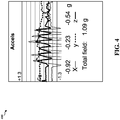
- FIG. 4 is a graph 400 illustrating motion sensor, e.g., accelerometer, signals as a function of time, wherein the signals correspond to a particular action by a user, in this case the user moving his hand up and down in a motion corresponding to a handshake.
- motion sensor e.g., accelerometer
- the processor 118 includes a library of these action templates and compares obtained motion sensor signals against the library of action templates. If the form of the obtained motion signal closely matches one of the action templates, the processor 118 concludes that the action occurred.
- the level of closeness between the obtained motion signals and the action template defines the criterion described above. For example, point-by-point voltage comparisons, or waveform area comparison of an obtained motion signal and an action template may yield a percentage match between the waveform. In this case, the criterion may be percentage, e.g., 90%, and a yielded percentage at or above the criterion may be considered to result in action detection.
- components of the user interface device 102 detects for a close proximity between a user of the user interface device and a person, based on an attribute of the person.
- the user interface device 102 e.g. AR glasses, determines if an image of a person in the field of view of the glasses satisfies a criterion corresponding to a close spatial relationship between the user and the person.
- a scene camera component of user interface device 102 may capture an image of a person in the field of view.
- the processor 108 of the AR glasses may identify the facial portion of the image; determine the size of the facial portion relative to the size of a lens of the AR glasses; and conclude there is a close spatial relationship between the user and the person if the size satisfies a threshold criterion.
- the threshold may be set at 30%, in which case the threshold is satisfied if the facial portion of the image takes up at least 30% of the display.
- a microphone component of the user interface device 102 may capture a sound of the person, for example the person's voice; determine the level of the sound in decibels and conclude there is a close spatial relationship between the user and the person if or when the sound level satisfies a threshold criterion.
- the threshold may be set at 50dB, in which case the threshold is satisfied if or when the sound level of the person is at least 50dB.
- the user interface device 102 detects for a close proximity between a user of the interface device and a person, based on both image and sound.
- the image capturing component e.g., camera
- the lower power consuming sound capturing component e.g., microphone
- the camera Upon capture of a sound at a level that exceeds a threshold, such as the level of the user's normal voice, the camera turns on and captures a picture.
- the processor 108 of the user interface device 102 proceeds with analyzing the image size as described above.
- step 204 if or when a present physical encounter is not detected, i.e., a non-physical encounter is detected, the process proceeds to step 212, where the processor 108 of the user interface device 102 determines if the person is known by the user. Details of this step are described further below. If, however, at step 204 a present physical encounter is detected, the physical encounter detection device 104 sends a signal to the user interface device 102 indicating such detection and the process proceeds to step 206 where the user interface device 102 determines if the present physical encounter is an initial encounter or a subsequent encounter. For example, the user interface device 102 may capture an image of the person in its field of view.
- the processor 108 compares the captured image to images in a database of images of people previously encountered by the user. If or when the image of the person in the field of view does not match an image in the database, the processor 108 concludes the present physical encounter is an initial encounter. On the other hand, if or when the image of the person does match an image in the database the processor 108 concludes the present physical encounter is a subsequent encounter.
- step 208 if or when the present physical encounter is an initial encounter, the process proceeds to step 210 where content associated with the person is added to a database of previously encountered persons.
- content may be an image of the person captured during the initial encounter, a sound recording of a conversation between the user and the person during the initial encounter, or a video of the initial encounter.
- Content is collected using well known techniques and is stored in a database as a catalog of prior contacts. The user may subsequently add information to entries in the catalog further identifying the person or the nature and circumstances of the encounter. This information may be in the form of text or an audio recording. The user may also tag certain persons as being known by the user.
- Steps 206, 208 and 210 of the process collectively provide for cataloging and creation of a library of persons encountered by the user and, as a subset, persons known by the user.
- step 208 if or when the present physical encounter is not an initial encounter, in other words the present physical encounter is a subsequent encounter, the process proceeds to step 212 where the system determines if the person is known by the user. As mentioned above, step 212 is also performed when a non-physical encounter is detected at step 204. If not already captured, the user interface device 102 captures an image of the person. The processor 108 than scans the database for a matching image. Once located, the processor 108 determines if the person is tagged as being known by the user.
- step 216 the processor 108 presents information to the interface device corresponding to the person.
- Presenting information through the user interface device 102 involves scanning the database for information associated with an image in the database that matches the image of the person. This information may include at least one of an identification of the person (e.g., person's name, occupation, employer, residence, etc.), and a summary of a previous encounter between the user and the person (e.g., date and location of pervious encounter).
- This information may be presented through a display, e.g., lens, or speaker of the user interface device 102 in the form of text, pictures, video or sound.
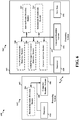
- FIG. 5 is a conceptual flow diagram illustrating the operation of different modules/means/components in an exemplary system 500 and the modules/means/components in each apparatus of the system.
- the system 500 includes a physical encounter detection module 502 and a user interface device 504.
- the encounter detection module 502 and the user interface 504 may communicate by a wired connection or by wireless communication using a common communication protocol, such as Bluetooth.
- the user interface device 504 includes an initial/subsequent encounter detection module 506, a non-physical encounter detection module 508, a content addition module 510, a known-person detection module 512, an information presentation module 514 and a database 516.
- the physical encounter detection module 502 detects for a present physical encounter between a user of the interface device and a person.
- this module 502 includes one or more of the components, e.g., motion sensor, EMG sensor, processor, described above with respect to the physical encounter detection device 104 of FIG. 1 .
- the non-physical encounter detection module 508 detects for a non-physical encounter between the user and a person.
- this module 508 includes one or more of the components, camera, microphone, processor, database, described above with respect to the user interface device 102 of FIG. 1 .
- the initial/subsequent encounter detection module 506 determines if a detected present physical encounter is an initial encounter or a subsequent encounter.
- the content addition module 510 adds content associated with the person to a database of previously encountered persons when the present physical encounter is an initial encounter.
- the known-person detection module 512 determines if the person is known by the user when the present physical encounter is a subsequent encounter or a present non-physical encounter is detected.
- the information presentation module 514 presents information to the interface device corresponding to the person when the person is not known by the user.
- the database 516 stores information corresponding to people whom the user has encountered. Information stored may include information of all people the user has encountered, whether known or not, or only storage of people encountered but not known by the user.
- the system 500 and its apparatuses 502, 504 may include additional modules that perform each of the steps of the algorithm in the aforementioned flow chart of FIG. 2 .
- each step in the aforementioned flow chart of FIG. 2 may be performed by a module and an apparatus 502, 504 may include one or more of those modules.
- the modules may be one or more hardware components specifically configured to carry out the stated processes/algorithm, implemented by a processor configured to perform the stated processes/algorithm, stored within a computer-readable medium for implementation by a processor, or some combination thereof.
- FIG. 6 is a diagram illustrating an example of a hardware implementation for a system 600 having a first apparatus 502' employing a first processing system 602, and a second apparatus 504' employing a second processing system 610.
- the first processing system 602 may be implemented with a bus architecture, represented generally by the bus 608.
- the bus 608 may include any number of interconnecting buses and bridges depending on the specific application of the first processing system 602 and the overall design constraints.
- the bus 608 links together various circuits including one or more processors and/or hardware modules, represented by the processor 604, the module 504, and the computer-readable medium 606.
- the bus 608 may also link various other circuits such as timing sources, peripherals, voltage regulators, and power management circuits, which are well known in the art, and therefore, will not be described any further.
- the first processing system 602 includes a processor 604 coupled to a computer-readable medium 606.
- the processor 604 is responsible for general processing, including the execution of software stored on the computer-readable medium 606.
- the software when executed by the first processor 604, causes the first processing system 602 to perform the various functions described supra for the physical encounter detection apparatus.
- the computer-readable medium 606 may also be used for storing data that is manipulated by the processor 604 when executing software.
- the first processing system 602 further includes module 504.
- the module may be a software module running in the processor 604, resident/stored in the computer readable medium 606, one or more hardware modules coupled to the processor 604, or some combination thereof.
- the apparatus 502/502' includes means for detecting for a non-physical encounter between the user and a person.
- Such means may include one or more components, e.g. camera, microphone, and processor, of the user interface device 102, that are collectively configured to determine if an attribute of a person satisfies a criterion corresponding to a close spatial relationship between the user and the person.
- the aforementioned means may be one or more of the aforementioned modules of the apparatus 502 and/or the processing system 602 of the apparatus 502' configured to perform the functions recited by the aforementioned means.
- the processing system 610 may be implemented with a bus architecture, represented generally by the bus 612.
- the bus 612 may include any number of interconnecting buses and bridges depending on the specific application of the processing system 610 and the overall design constraints.
- the bus 612 links together various circuits including one or more processors and/or hardware modules, represented by the processor 614, the modules 504, 506, 508, 510, 512, the computer-readable medium 616, and the database 618.
- the bus 612 may also link various other circuits such as timing sources, peripherals, voltage regulators, and power management circuits, which are well known in the art, and therefore, will not be described any further.
- the processing system 610 includes a processor 614 coupled to a computer-readable medium 616.
- the processor 614 is responsible for general processing, including the execution of software stored on the computer-readable medium 616.
- the software when executed by the processor 614, causes the processing system 610 to perform the various functions described supra for the user interface device apparatus.
- the computer-readable medium 616 may also be used for storing data that is manipulated by the processor 614 when executing software.
- the processing system further includes at least one of the modules 506, 508, 510, 512, 514.
- the modules may be software modules running in the processor 614, resident/stored in the computer readable medium 616, one or more hardware modules coupled to the processor 614, or some combination thereof.
- the second apparatus 504/504' includes means for detecting for one of a present physical encounter between a user of the interface device and a person.
- the apparatus 504/504' also includes means for determining if a detected present physical encounter is an initial encounter or a subsequent encounter, means for adding content associated with the person to a database of previously encountered persons when the present physical encounter is an initial encounter, and means for determining if the person is known by the user when the present physical encounter is a subsequent encounter or a present non-physical encounter is detected.
- the apparatus 504/504' further includes means for presenting information to the interface device corresponding to the person when the person is not known by the user.
- the second apparatus 504/504' may also include means for receiving a signal from the first apparatus 502/502' indicating that a physical encounter has been detected.
- the means for receiving may be a communications device configured to communicate with a communications device of the first apparatus 502/502'.
- the receiving means may be a Bluetooth device paired with a Bluetooth device of the first apparatus 502/502'.
- the aforementioned means may be one or more of the aforementioned modules of the apparatus 504 and/or the processing system 610 of the apparatus 504' configured to perform the functions recited by the aforementioned means.
- Additional methods, apparatuses and computer program products based on elements and feature of the foregoing FIGS. 2 , 5 and 6 may include an apparatus, e.g., a user interface device, for managing information.
- An exemplary apparatus includes modules/means/components that receive an indication of a detection of a present physical encounter between a user of the interface device and a person, determine if the present physical encounter is an initial encounter or a subsequent encounter, and add content associated with the person to a database of previously encountered persons when the present physical encounter is an initial encounter.
- Additional methods, apparatuses and computer program products based on elements and features of the foregoing FIGS. 2 , 5 and 6 may include an apparatus, e.g., a wristband, for detecting a physical interaction between a user of a detection device and another person.
- An exemplary apparatus includes modules/ means/components that determine if electrical activity sensed from a body part of the user is indicative of a first action by the user associated with the physical interaction, and determine if motion activity sensed from a body part of the user is indicative of a second action by the user associated with the physical interaction
Landscapes
- Engineering & Computer Science (AREA)
- Theoretical Computer Science (AREA)
- General Engineering & Computer Science (AREA)
- Human Computer Interaction (AREA)
- Physics & Mathematics (AREA)
- General Physics & Mathematics (AREA)
- Health & Medical Sciences (AREA)
- General Health & Medical Sciences (AREA)
- Multimedia (AREA)
- Oral & Maxillofacial Surgery (AREA)
- Dermatology (AREA)
- Neurosurgery (AREA)
- Neurology (AREA)
- Biomedical Technology (AREA)
- Computer Vision & Pattern Recognition (AREA)
- Psychiatry (AREA)
- Social Psychology (AREA)
- User Interface Of Digital Computer (AREA)
Applications Claiming Priority (2)
| Application Number | Priority Date | Filing Date | Title |
|---|---|---|---|
| US13/740,432 US9134792B2 (en) | 2013-01-14 | 2013-01-14 | Leveraging physical handshaking in head mounted displays |
| PCT/US2014/011280 WO2014110500A1 (en) | 2013-01-14 | 2014-01-13 | Leveraging physical handshaking in head mounted displays |
Publications (2)
| Publication Number | Publication Date |
|---|---|
| EP2943854A1 EP2943854A1 (en) | 2015-11-18 |
| EP2943854B1 true EP2943854B1 (en) | 2020-06-24 |
Family
ID=50070677
Family Applications (1)
| Application Number | Title | Priority Date | Filing Date |
|---|---|---|---|
| EP14703467.2A Active EP2943854B1 (en) | 2013-01-14 | 2014-01-13 | Leveraging physical handshaking in head mounted displays |
Country Status (7)
| Country | Link |
|---|---|
| US (1) | US9134792B2 (https=) |
| EP (1) | EP2943854B1 (https=) |
| JP (1) | JP6407889B2 (https=) |
| KR (1) | KR102243977B1 (https=) |
| CN (1) | CN104919396B (https=) |
| ES (1) | ES2813611T3 (https=) |
| WO (1) | WO2014110500A1 (https=) |
Families Citing this family (13)
| Publication number | Priority date | Publication date | Assignee | Title |
|---|---|---|---|---|
| KR102158209B1 (ko) * | 2013-07-26 | 2020-09-22 | 엘지전자 주식회사 | 전자기기 |
| US9646084B2 (en) * | 2014-01-31 | 2017-05-09 | Here Global B.V. | Causation of storage of handshake greeting audio information |
| US9456070B2 (en) | 2014-09-11 | 2016-09-27 | Ebay Inc. | Methods and systems for recalling second party interactions with mobile devices |
| EP3210096B1 (en) * | 2014-10-21 | 2019-05-15 | Robert Bosch GmbH | Method and system for automation of response selection and composition in dialog systems |
| US9635167B2 (en) * | 2015-09-29 | 2017-04-25 | Paypal, Inc. | Conversation assistance system |
| US10152545B2 (en) * | 2015-10-20 | 2018-12-11 | Adobe Systems Incorporated | Personalized recommendations using localized regularization |
| JPWO2017154136A1 (ja) * | 2016-03-09 | 2018-08-30 | マクセル株式会社 | 携帯情報端末及びそれに用いる情報処理方法 |
| CN106094989A (zh) * | 2016-06-10 | 2016-11-09 | 北京行云时空科技有限公司 | 一种增强现实图像定位显示方法、装置和系统 |
| US20180150204A1 (en) * | 2016-11-30 | 2018-05-31 | Google Inc. | Switching of active objects in an augmented and/or virtual reality environment |
| EP3528091A1 (en) * | 2018-02-14 | 2019-08-21 | Koninklijke Philips N.V. | Personal care device localization |
| JP6669342B2 (ja) * | 2018-03-31 | 2020-03-18 | Nl技研株式会社 | 認知支援システム、認知支援装置、および認知支援サーバ |
| US12060002B2 (en) | 2019-04-24 | 2024-08-13 | The Research Foundation For The State University Of New York | System and method for tracking human behavior real-time with single magnetometer sensor and magnets |
| US20230122450A1 (en) * | 2021-10-20 | 2023-04-20 | Google Llc | Anchored messages for augmented reality |
Family Cites Families (15)
| Publication number | Priority date | Publication date | Assignee | Title |
|---|---|---|---|---|
| US6038333A (en) * | 1998-03-16 | 2000-03-14 | Hewlett-Packard Company | Person identifier and management system |
| JP2002358149A (ja) | 2001-06-01 | 2002-12-13 | Sony Corp | ユーザ入力装置 |
| US20070140532A1 (en) * | 2005-12-20 | 2007-06-21 | Goffin Glen P | Method and apparatus for providing user profiling based on facial recognition |
| JP5023663B2 (ja) * | 2006-11-07 | 2012-09-12 | ソニー株式会社 | 撮像装置、撮像方法 |
| US7751597B2 (en) | 2006-11-14 | 2010-07-06 | Lctank Llc | Apparatus and method for identifying a name corresponding to a face or voice using a database |
| JP2010061265A (ja) * | 2008-09-02 | 2010-03-18 | Fujifilm Corp | 人物検索登録システム |
| JP4988016B2 (ja) | 2009-08-27 | 2012-08-01 | 韓國電子通信研究院 | 指の動き検出装置およびその方法 |
| WO2011106797A1 (en) | 2010-02-28 | 2011-09-01 | Osterhout Group, Inc. | Projection triggering through an external marker in an augmented reality eyepiece |
| US20120249797A1 (en) | 2010-02-28 | 2012-10-04 | Osterhout Group, Inc. | Head-worn adaptive display |
| KR101672215B1 (ko) * | 2010-04-26 | 2016-11-04 | 엘지전자 주식회사 | 휴대 단말기 및 그 동작 방법 |
| WO2012003844A1 (en) | 2010-07-05 | 2012-01-12 | Sony Ericsson Mobile Communications Ab | Method for displaying augmentation information in an augmented reality system |
| US20120019557A1 (en) | 2010-07-22 | 2012-01-26 | Sony Ericsson Mobile Communications Ab | Displaying augmented reality information |
| US8818025B2 (en) * | 2010-08-23 | 2014-08-26 | Nokia Corporation | Method and apparatus for recognizing objects in media content |
| KR101761314B1 (ko) | 2010-12-03 | 2017-07-26 | 삼성전자주식회사 | 생체 신호 측정 로봇 및 그 제어방법 |
| KR20120064900A (ko) | 2010-12-10 | 2012-06-20 | 곽진호 | 사생활보호 기능이 구현되는 통신단말기 및 통신방법, 사생활보호 기능 프로그램을 기록한 컴퓨터로 읽을 수 있는 매체 |
-
2013
- 2013-01-14 US US13/740,432 patent/US9134792B2/en active Active
-
2014
- 2014-01-13 ES ES14703467T patent/ES2813611T3/es active Active
- 2014-01-13 WO PCT/US2014/011280 patent/WO2014110500A1/en not_active Ceased
- 2014-01-13 CN CN201480004378.7A patent/CN104919396B/zh active Active
- 2014-01-13 EP EP14703467.2A patent/EP2943854B1/en active Active
- 2014-01-13 KR KR1020157021365A patent/KR102243977B1/ko active Active
- 2014-01-13 JP JP2015552856A patent/JP6407889B2/ja not_active Expired - Fee Related
Non-Patent Citations (1)
| Title |
|---|
| None * |
Also Published As
| Publication number | Publication date |
|---|---|
| JP2016507099A (ja) | 2016-03-07 |
| ES2813611T3 (es) | 2021-03-24 |
| US9134792B2 (en) | 2015-09-15 |
| JP6407889B2 (ja) | 2018-10-17 |
| EP2943854A1 (en) | 2015-11-18 |
| CN104919396A (zh) | 2015-09-16 |
| WO2014110500A1 (en) | 2014-07-17 |
| US20140198956A1 (en) | 2014-07-17 |
| CN104919396B (zh) | 2017-09-15 |
| KR102243977B1 (ko) | 2021-04-22 |
| KR20150106425A (ko) | 2015-09-21 |
Similar Documents
| Publication | Publication Date | Title |
|---|---|---|
| EP2943854B1 (en) | Leveraging physical handshaking in head mounted displays | |
| EP2943855B1 (en) | Use of emg for gesture recognition on surfaces | |
| CN110785735B (zh) | 用于语音命令情景的装置和方法 | |
| CN106055088B (zh) | 交互式穿戴式设备的空气书写和手势系统 | |
| US10048761B2 (en) | Classification of gesture detection systems through use of known and yet to be worn sensors | |
| US9600715B2 (en) | Emotion detection system | |
| KR20210110068A (ko) | 제스처 인식 기반의 영상 편집 방법 및 이를 지원하는 전자 장치 | |
| CN113557490B (zh) | 面部表情检测 | |
| JP6402718B2 (ja) | 情報処理装置、制御方法およびプログラム | |
| CN113764099A (zh) | 基于人工智能的心理状态分析方法、装置、设备及介质 | |
| CN114930272B (zh) | 基于头部和眼部的姿势识别 | |
| CN102467668A (zh) | 情绪侦测及舒缓系统及方法 | |
| US11493959B2 (en) | Wearable apparatus and methods for providing transcription and/or summary | |
| US10401968B2 (en) | Determining digit movement from frequency data | |
| CN110531859A (zh) | 基于vr头显识别用户操作动作的人机交互方法和装置 | |
| CN108304076B (zh) | 电子装置、视频播放应用的管理方法及相关产品 | |
| CN111797873A (zh) | 场景识别方法、装置、存储介质及电子设备 | |
| CN111796663A (zh) | 场景识别模型更新方法、装置、存储介质及电子设备 | |
| US20250306630A1 (en) | Detecting object grasps with low-power cameras and sensor fusion on the wrist, and systems and methods of use thereof | |
| JP2026018048A (ja) | システム | |
| CN108399085A (zh) | 电子装置、应用管理方法及相关产品 | |
| WO2025212546A1 (en) | Detecting object grasps with low-power cameras and sensor fusion on the wrist, and systems and methods of use thereof |
Legal Events
| Date | Code | Title | Description |
|---|---|---|---|
| PUAI | Public reference made under article 153(3) epc to a published international application that has entered the european phase |
Free format text: ORIGINAL CODE: 0009012 |
|
| 17P | Request for examination filed |
Effective date: 20150804 |
|
| AK | Designated contracting states |
Kind code of ref document: A1 Designated state(s): AL AT BE BG CH CY CZ DE DK EE ES FI FR GB GR HR HU IE IS IT LI LT LU LV MC MK MT NL NO PL PT RO RS SE SI SK SM TR |
|
| AX | Request for extension of the european patent |
Extension state: BA ME |
|
| DAX | Request for extension of the european patent (deleted) | ||
| STAA | Information on the status of an ep patent application or granted ep patent |
Free format text: STATUS: EXAMINATION IS IN PROGRESS |
|
| 17Q | First examination report despatched |
Effective date: 20180725 |
|
| GRAP | Despatch of communication of intention to grant a patent |
Free format text: ORIGINAL CODE: EPIDOSNIGR1 |
|
| STAA | Information on the status of an ep patent application or granted ep patent |
Free format text: STATUS: GRANT OF PATENT IS INTENDED |
|
| INTG | Intention to grant announced |
Effective date: 20200117 |
|
| GRAS | Grant fee paid |
Free format text: ORIGINAL CODE: EPIDOSNIGR3 |
|
| GRAA | (expected) grant |
Free format text: ORIGINAL CODE: 0009210 |
|
| STAA | Information on the status of an ep patent application or granted ep patent |
Free format text: STATUS: THE PATENT HAS BEEN GRANTED |
|
| AK | Designated contracting states |
Kind code of ref document: B1 Designated state(s): AL AT BE BG CH CY CZ DE DK EE ES FI FR GB GR HR HU IE IS IT LI LT LU LV MC MK MT NL NO PL PT RO RS SE SI SK SM TR |
|
| REG | Reference to a national code |
Ref country code: GB Ref legal event code: FG4D |
|
| REG | Reference to a national code |
Ref country code: CH Ref legal event code: EP |
|
| REG | Reference to a national code |
Ref country code: DE Ref legal event code: R096 Ref document number: 602014066948 Country of ref document: DE |
|
| REG | Reference to a national code |
Ref country code: AT Ref legal event code: REF Ref document number: 1284545 Country of ref document: AT Kind code of ref document: T Effective date: 20200715 Ref country code: CH Ref legal event code: NV Representative=s name: MAUCHER JENKINS PATENTANWAELTE AND RECHTSANWAE, DE |
|
| REG | Reference to a national code |
Ref country code: IE Ref legal event code: FG4D |
|
| REG | Reference to a national code |
Ref country code: SE Ref legal event code: TRGR |
|
| REG | Reference to a national code |
Ref country code: NL Ref legal event code: FP |
|
| PG25 | Lapsed in a contracting state [announced via postgrant information from national office to epo] |
Ref country code: NO Free format text: LAPSE BECAUSE OF FAILURE TO SUBMIT A TRANSLATION OF THE DESCRIPTION OR TO PAY THE FEE WITHIN THE PRESCRIBED TIME-LIMIT Effective date: 20200924 Ref country code: GR Free format text: LAPSE BECAUSE OF FAILURE TO SUBMIT A TRANSLATION OF THE DESCRIPTION OR TO PAY THE FEE WITHIN THE PRESCRIBED TIME-LIMIT Effective date: 20200925 Ref country code: LT Free format text: LAPSE BECAUSE OF FAILURE TO SUBMIT A TRANSLATION OF THE DESCRIPTION OR TO PAY THE FEE WITHIN THE PRESCRIBED TIME-LIMIT Effective date: 20200624 Ref country code: FI Free format text: LAPSE BECAUSE OF FAILURE TO SUBMIT A TRANSLATION OF THE DESCRIPTION OR TO PAY THE FEE WITHIN THE PRESCRIBED TIME-LIMIT Effective date: 20200624 |
|
| REG | Reference to a national code |
Ref country code: LT Ref legal event code: MG4D |
|
| PG25 | Lapsed in a contracting state [announced via postgrant information from national office to epo] |
Ref country code: HR Free format text: LAPSE BECAUSE OF FAILURE TO SUBMIT A TRANSLATION OF THE DESCRIPTION OR TO PAY THE FEE WITHIN THE PRESCRIBED TIME-LIMIT Effective date: 20200624 Ref country code: LV Free format text: LAPSE BECAUSE OF FAILURE TO SUBMIT A TRANSLATION OF THE DESCRIPTION OR TO PAY THE FEE WITHIN THE PRESCRIBED TIME-LIMIT Effective date: 20200624 Ref country code: BG Free format text: LAPSE BECAUSE OF FAILURE TO SUBMIT A TRANSLATION OF THE DESCRIPTION OR TO PAY THE FEE WITHIN THE PRESCRIBED TIME-LIMIT Effective date: 20200924 Ref country code: RS Free format text: LAPSE BECAUSE OF FAILURE TO SUBMIT A TRANSLATION OF THE DESCRIPTION OR TO PAY THE FEE WITHIN THE PRESCRIBED TIME-LIMIT Effective date: 20200624 |
|
| REG | Reference to a national code |
Ref country code: AT Ref legal event code: MK05 Ref document number: 1284545 Country of ref document: AT Kind code of ref document: T Effective date: 20200624 |
|
| PG25 | Lapsed in a contracting state [announced via postgrant information from national office to epo] |
Ref country code: AL Free format text: LAPSE BECAUSE OF FAILURE TO SUBMIT A TRANSLATION OF THE DESCRIPTION OR TO PAY THE FEE WITHIN THE PRESCRIBED TIME-LIMIT Effective date: 20200624 |
|
| PG25 | Lapsed in a contracting state [announced via postgrant information from national office to epo] |
Ref country code: PT Free format text: LAPSE BECAUSE OF FAILURE TO SUBMIT A TRANSLATION OF THE DESCRIPTION OR TO PAY THE FEE WITHIN THE PRESCRIBED TIME-LIMIT Effective date: 20201026 Ref country code: AT Free format text: LAPSE BECAUSE OF FAILURE TO SUBMIT A TRANSLATION OF THE DESCRIPTION OR TO PAY THE FEE WITHIN THE PRESCRIBED TIME-LIMIT Effective date: 20200624 Ref country code: SM Free format text: LAPSE BECAUSE OF FAILURE TO SUBMIT A TRANSLATION OF THE DESCRIPTION OR TO PAY THE FEE WITHIN THE PRESCRIBED TIME-LIMIT Effective date: 20200624 Ref country code: EE Free format text: LAPSE BECAUSE OF FAILURE TO SUBMIT A TRANSLATION OF THE DESCRIPTION OR TO PAY THE FEE WITHIN THE PRESCRIBED TIME-LIMIT Effective date: 20200624 Ref country code: CZ Free format text: LAPSE BECAUSE OF FAILURE TO SUBMIT A TRANSLATION OF THE DESCRIPTION OR TO PAY THE FEE WITHIN THE PRESCRIBED TIME-LIMIT Effective date: 20200624 Ref country code: RO Free format text: LAPSE BECAUSE OF FAILURE TO SUBMIT A TRANSLATION OF THE DESCRIPTION OR TO PAY THE FEE WITHIN THE PRESCRIBED TIME-LIMIT Effective date: 20200624 |
|
| PG25 | Lapsed in a contracting state [announced via postgrant information from national office to epo] |
Ref country code: IS Free format text: LAPSE BECAUSE OF FAILURE TO SUBMIT A TRANSLATION OF THE DESCRIPTION OR TO PAY THE FEE WITHIN THE PRESCRIBED TIME-LIMIT Effective date: 20201024 Ref country code: SK Free format text: LAPSE BECAUSE OF FAILURE TO SUBMIT A TRANSLATION OF THE DESCRIPTION OR TO PAY THE FEE WITHIN THE PRESCRIBED TIME-LIMIT Effective date: 20200624 Ref country code: PL Free format text: LAPSE BECAUSE OF FAILURE TO SUBMIT A TRANSLATION OF THE DESCRIPTION OR TO PAY THE FEE WITHIN THE PRESCRIBED TIME-LIMIT Effective date: 20200624 |
|
| REG | Reference to a national code |
Ref country code: ES Ref legal event code: FG2A Ref document number: 2813611 Country of ref document: ES Kind code of ref document: T3 Effective date: 20210324 |
|
| REG | Reference to a national code |
Ref country code: DE Ref legal event code: R097 Ref document number: 602014066948 Country of ref document: DE |
|
| PG25 | Lapsed in a contracting state [announced via postgrant information from national office to epo] |
Ref country code: DK Free format text: LAPSE BECAUSE OF FAILURE TO SUBMIT A TRANSLATION OF THE DESCRIPTION OR TO PAY THE FEE WITHIN THE PRESCRIBED TIME-LIMIT Effective date: 20200624 |
|
| PLBE | No opposition filed within time limit |
Free format text: ORIGINAL CODE: 0009261 |
|
| STAA | Information on the status of an ep patent application or granted ep patent |
Free format text: STATUS: NO OPPOSITION FILED WITHIN TIME LIMIT |
|
| 26N | No opposition filed |
Effective date: 20210325 |
|
| PG25 | Lapsed in a contracting state [announced via postgrant information from national office to epo] |
Ref country code: MC Free format text: LAPSE BECAUSE OF FAILURE TO SUBMIT A TRANSLATION OF THE DESCRIPTION OR TO PAY THE FEE WITHIN THE PRESCRIBED TIME-LIMIT Effective date: 20200624 Ref country code: SI Free format text: LAPSE BECAUSE OF FAILURE TO SUBMIT A TRANSLATION OF THE DESCRIPTION OR TO PAY THE FEE WITHIN THE PRESCRIBED TIME-LIMIT Effective date: 20200624 |
|
| PG25 | Lapsed in a contracting state [announced via postgrant information from national office to epo] |
Ref country code: LU Free format text: LAPSE BECAUSE OF NON-PAYMENT OF DUE FEES Effective date: 20210113 |
|
| REG | Reference to a national code |
Ref country code: BE Ref legal event code: MM Effective date: 20210131 |
|
| PG25 | Lapsed in a contracting state [announced via postgrant information from national office to epo] |
Ref country code: IE Free format text: LAPSE BECAUSE OF NON-PAYMENT OF DUE FEES Effective date: 20210113 |
|
| PG25 | Lapsed in a contracting state [announced via postgrant information from national office to epo] |
Ref country code: BE Free format text: LAPSE BECAUSE OF NON-PAYMENT OF DUE FEES Effective date: 20210131 |
|
| PG25 | Lapsed in a contracting state [announced via postgrant information from national office to epo] |
Ref country code: HU Free format text: LAPSE BECAUSE OF FAILURE TO SUBMIT A TRANSLATION OF THE DESCRIPTION OR TO PAY THE FEE WITHIN THE PRESCRIBED TIME-LIMIT; INVALID AB INITIO Effective date: 20140113 |
|
| PG25 | Lapsed in a contracting state [announced via postgrant information from national office to epo] |
Ref country code: CY Free format text: LAPSE BECAUSE OF FAILURE TO SUBMIT A TRANSLATION OF THE DESCRIPTION OR TO PAY THE FEE WITHIN THE PRESCRIBED TIME-LIMIT Effective date: 20200624 |
|
| PG25 | Lapsed in a contracting state [announced via postgrant information from national office to epo] |
Ref country code: MK Free format text: LAPSE BECAUSE OF FAILURE TO SUBMIT A TRANSLATION OF THE DESCRIPTION OR TO PAY THE FEE WITHIN THE PRESCRIBED TIME-LIMIT Effective date: 20200624 |
|
| PG25 | Lapsed in a contracting state [announced via postgrant information from national office to epo] |
Ref country code: TR Free format text: LAPSE BECAUSE OF FAILURE TO SUBMIT A TRANSLATION OF THE DESCRIPTION OR TO PAY THE FEE WITHIN THE PRESCRIBED TIME-LIMIT Effective date: 20200624 |
|
| PG25 | Lapsed in a contracting state [announced via postgrant information from national office to epo] |
Ref country code: MT Free format text: LAPSE BECAUSE OF FAILURE TO SUBMIT A TRANSLATION OF THE DESCRIPTION OR TO PAY THE FEE WITHIN THE PRESCRIBED TIME-LIMIT Effective date: 20200624 |
|
| PGFP | Annual fee paid to national office [announced via postgrant information from national office to epo] |
Ref country code: GB Payment date: 20251211 Year of fee payment: 13 |
|
| PGFP | Annual fee paid to national office [announced via postgrant information from national office to epo] |
Ref country code: NL Payment date: 20251219 Year of fee payment: 13 Ref country code: FR Payment date: 20251216 Year of fee payment: 13 |
|
| REG | Reference to a national code |
Ref country code: CH Ref legal event code: U11 Free format text: ST27 STATUS EVENT CODE: U-0-0-U10-U11 (AS PROVIDED BY THE NATIONAL OFFICE) Effective date: 20260201 |
|
| PGFP | Annual fee paid to national office [announced via postgrant information from national office to epo] |
Ref country code: SE Payment date: 20260109 Year of fee payment: 13 |
|
| PGFP | Annual fee paid to national office [announced via postgrant information from national office to epo] |
Ref country code: ES Payment date: 20260205 Year of fee payment: 13 |
|
| PGFP | Annual fee paid to national office [announced via postgrant information from national office to epo] |
Ref country code: DE Payment date: 20251222 Year of fee payment: 13 |
|
| PGFP | Annual fee paid to national office [announced via postgrant information from national office to epo] |
Ref country code: IT Payment date: 20260112 Year of fee payment: 13 |
|
| PGFP | Annual fee paid to national office [announced via postgrant information from national office to epo] |
Ref country code: CH Payment date: 20260201 Year of fee payment: 13 |