EP2941809B1 - System und verfahren zur energieverteilung - Google Patents
System und verfahren zur energieverteilung Download PDFInfo
- Publication number
- EP2941809B1 EP2941809B1 EP13821748.4A EP13821748A EP2941809B1 EP 2941809 B1 EP2941809 B1 EP 2941809B1 EP 13821748 A EP13821748 A EP 13821748A EP 2941809 B1 EP2941809 B1 EP 2941809B1
- Authority
- EP
- European Patent Office
- Prior art keywords
- energy
- resource
- load
- renewable
- power
- Prior art date
- Legal status (The legal status is an assumption and is not a legal conclusion. Google has not performed a legal analysis and makes no representation as to the accuracy of the status listed.)
- Active
Links
Images


Classifications
-
- H—ELECTRICITY
- H02—GENERATION; CONVERSION OR DISTRIBUTION OF ELECTRIC POWER
- H02J—ELECTRIC POWER NETWORKS; CIRCUIT ARRANGEMENTS OR SYSTEMS FOR SUPPLYING OR DISTRIBUTING ELECTRIC POWER; SYSTEMS FOR STORING ELECTRIC ENERGY
- H02J7/00—Circuit arrangements for charging or discharging batteries or for supplying loads from batteries
- H02J7/34—Parallel operation in networks using both storage and other DC sources, e.g. providing buffering
- H02J7/35—Parallel operation in networks using both storage and other DC sources, e.g. providing buffering with light sensitive cells
-
- H—ELECTRICITY
- H02—GENERATION; CONVERSION OR DISTRIBUTION OF ELECTRIC POWER
- H02J—ELECTRIC POWER NETWORKS; CIRCUIT ARRANGEMENTS OR SYSTEMS FOR SUPPLYING OR DISTRIBUTING ELECTRIC POWER; SYSTEMS FOR STORING ELECTRIC ENERGY
- H02J3/00—Circuit arrangements for AC mains or AC distribution networks
- H02J3/003—Load forecast, e.g. methods or systems for forecasting future load demand
-
- H—ELECTRICITY
- H02—GENERATION; CONVERSION OR DISTRIBUTION OF ELECTRIC POWER
- H02J—ELECTRIC POWER NETWORKS; CIRCUIT ARRANGEMENTS OR SYSTEMS FOR SUPPLYING OR DISTRIBUTING ELECTRIC POWER; SYSTEMS FOR STORING ELECTRIC ENERGY
- H02J3/00—Circuit arrangements for AC mains or AC distribution networks
- H02J3/28—Arrangements for balancing of the load in networks by storage of energy
- H02J3/32—Arrangements for balancing of the load in networks by storage of energy using batteries or super capacitors with converting means
-
- H—ELECTRICITY
- H02—GENERATION; CONVERSION OR DISTRIBUTION OF ELECTRIC POWER
- H02J—ELECTRIC POWER NETWORKS; CIRCUIT ARRANGEMENTS OR SYSTEMS FOR SUPPLYING OR DISTRIBUTING ELECTRIC POWER; SYSTEMS FOR STORING ELECTRIC ENERGY
- H02J3/00—Circuit arrangements for AC mains or AC distribution networks
- H02J3/38—Arrangements for feeding a single network from two or more generators or sources in parallel; Arrangements for feeding already energised networks from additional generators or sources in parallel
- H02J3/381—Dispersed generators
-
- H—ELECTRICITY
- H02—GENERATION; CONVERSION OR DISTRIBUTION OF ELECTRIC POWER
- H02J—ELECTRIC POWER NETWORKS; CIRCUIT ARRANGEMENTS OR SYSTEMS FOR SUPPLYING OR DISTRIBUTING ELECTRIC POWER; SYSTEMS FOR STORING ELECTRIC ENERGY
- H02J2101/00—Supply or distribution of decentralised, dispersed or local electric power generation
- H02J2101/20—Dispersed power generation using renewable energy sources
-
- H—ELECTRICITY
- H02—GENERATION; CONVERSION OR DISTRIBUTION OF ELECTRIC POWER
- H02J—ELECTRIC POWER NETWORKS; CIRCUIT ARRANGEMENTS OR SYSTEMS FOR SUPPLYING OR DISTRIBUTING ELECTRIC POWER; SYSTEMS FOR STORING ELECTRIC ENERGY
- H02J2101/00—Supply or distribution of decentralised, dispersed or local electric power generation
- H02J2101/20—Dispersed power generation using renewable energy sources
- H02J2101/22—Solar energy
- H02J2101/24—Photovoltaics
-
- H—ELECTRICITY
- H02—GENERATION; CONVERSION OR DISTRIBUTION OF ELECTRIC POWER
- H02J—ELECTRIC POWER NETWORKS; CIRCUIT ARRANGEMENTS OR SYSTEMS FOR SUPPLYING OR DISTRIBUTING ELECTRIC POWER; SYSTEMS FOR STORING ELECTRIC ENERGY
- H02J2101/00—Supply or distribution of decentralised, dispersed or local electric power generation
- H02J2101/20—Dispersed power generation using renewable energy sources
- H02J2101/28—Wind energy
-
- Y—GENERAL TAGGING OF NEW TECHNOLOGICAL DEVELOPMENTS; GENERAL TAGGING OF CROSS-SECTIONAL TECHNOLOGIES SPANNING OVER SEVERAL SECTIONS OF THE IPC; TECHNICAL SUBJECTS COVERED BY FORMER USPC CROSS-REFERENCE ART COLLECTIONS [XRACs] AND DIGESTS
- Y02—TECHNOLOGIES OR APPLICATIONS FOR MITIGATION OR ADAPTATION AGAINST CLIMATE CHANGE
- Y02B—CLIMATE CHANGE MITIGATION TECHNOLOGIES RELATED TO BUILDINGS, e.g. HOUSING, HOUSE APPLIANCES OR RELATED END-USER APPLICATIONS
- Y02B70/00—Technologies for an efficient end-user side electric power management and consumption
- Y02B70/30—Systems integrating technologies related to power network operation and communication or information technologies for improving the carbon footprint of the management of residential or tertiary loads, i.e. smart grids as climate change mitigation technology in the buildings sector, including also the last stages of power distribution and the control, monitoring or operating management systems at local level
- Y02B70/3225—Demand response systems, e.g. load shedding, peak shaving
-
- Y—GENERAL TAGGING OF NEW TECHNOLOGICAL DEVELOPMENTS; GENERAL TAGGING OF CROSS-SECTIONAL TECHNOLOGIES SPANNING OVER SEVERAL SECTIONS OF THE IPC; TECHNICAL SUBJECTS COVERED BY FORMER USPC CROSS-REFERENCE ART COLLECTIONS [XRACs] AND DIGESTS
- Y02—TECHNOLOGIES OR APPLICATIONS FOR MITIGATION OR ADAPTATION AGAINST CLIMATE CHANGE
- Y02E—REDUCTION OF GREENHOUSE GAS [GHG] EMISSIONS, RELATED TO ENERGY GENERATION, TRANSMISSION OR DISTRIBUTION
- Y02E10/00—Energy generation through renewable energy sources
- Y02E10/50—Photovoltaic [PV] energy
-
- Y—GENERAL TAGGING OF NEW TECHNOLOGICAL DEVELOPMENTS; GENERAL TAGGING OF CROSS-SECTIONAL TECHNOLOGIES SPANNING OVER SEVERAL SECTIONS OF THE IPC; TECHNICAL SUBJECTS COVERED BY FORMER USPC CROSS-REFERENCE ART COLLECTIONS [XRACs] AND DIGESTS
- Y02—TECHNOLOGIES OR APPLICATIONS FOR MITIGATION OR ADAPTATION AGAINST CLIMATE CHANGE
- Y02E—REDUCTION OF GREENHOUSE GAS [GHG] EMISSIONS, RELATED TO ENERGY GENERATION, TRANSMISSION OR DISTRIBUTION
- Y02E10/00—Energy generation through renewable energy sources
- Y02E10/50—Photovoltaic [PV] energy
- Y02E10/56—Power conversion systems, e.g. maximum power point trackers
-
- Y—GENERAL TAGGING OF NEW TECHNOLOGICAL DEVELOPMENTS; GENERAL TAGGING OF CROSS-SECTIONAL TECHNOLOGIES SPANNING OVER SEVERAL SECTIONS OF THE IPC; TECHNICAL SUBJECTS COVERED BY FORMER USPC CROSS-REFERENCE ART COLLECTIONS [XRACs] AND DIGESTS
- Y02—TECHNOLOGIES OR APPLICATIONS FOR MITIGATION OR ADAPTATION AGAINST CLIMATE CHANGE
- Y02E—REDUCTION OF GREENHOUSE GAS [GHG] EMISSIONS, RELATED TO ENERGY GENERATION, TRANSMISSION OR DISTRIBUTION
- Y02E10/00—Energy generation through renewable energy sources
- Y02E10/70—Wind energy
- Y02E10/76—Power conversion electric or electronic aspects
-
- Y—GENERAL TAGGING OF NEW TECHNOLOGICAL DEVELOPMENTS; GENERAL TAGGING OF CROSS-SECTIONAL TECHNOLOGIES SPANNING OVER SEVERAL SECTIONS OF THE IPC; TECHNICAL SUBJECTS COVERED BY FORMER USPC CROSS-REFERENCE ART COLLECTIONS [XRACs] AND DIGESTS
- Y02—TECHNOLOGIES OR APPLICATIONS FOR MITIGATION OR ADAPTATION AGAINST CLIMATE CHANGE
- Y02E—REDUCTION OF GREENHOUSE GAS [GHG] EMISSIONS, RELATED TO ENERGY GENERATION, TRANSMISSION OR DISTRIBUTION
- Y02E70/00—Other energy conversion or management systems reducing GHG emissions
- Y02E70/30—Systems combining energy storage with energy generation of non-fossil origin
-
- Y—GENERAL TAGGING OF NEW TECHNOLOGICAL DEVELOPMENTS; GENERAL TAGGING OF CROSS-SECTIONAL TECHNOLOGIES SPANNING OVER SEVERAL SECTIONS OF THE IPC; TECHNICAL SUBJECTS COVERED BY FORMER USPC CROSS-REFERENCE ART COLLECTIONS [XRACs] AND DIGESTS
- Y04—INFORMATION OR COMMUNICATION TECHNOLOGIES HAVING AN IMPACT ON OTHER TECHNOLOGY AREAS
- Y04S—SYSTEMS INTEGRATING TECHNOLOGIES RELATED TO POWER NETWORK OPERATION, COMMUNICATION OR INFORMATION TECHNOLOGIES FOR IMPROVING THE ELECTRICAL POWER GENERATION, TRANSMISSION, DISTRIBUTION, MANAGEMENT OR USAGE, i.e. SMART GRIDS
- Y04S10/00—Systems supporting electrical power generation, transmission or distribution
- Y04S10/50—Systems or methods supporting the power network operation or management, involving a certain degree of interaction with the load-side end user applications
-
- Y—GENERAL TAGGING OF NEW TECHNOLOGICAL DEVELOPMENTS; GENERAL TAGGING OF CROSS-SECTIONAL TECHNOLOGIES SPANNING OVER SEVERAL SECTIONS OF THE IPC; TECHNICAL SUBJECTS COVERED BY FORMER USPC CROSS-REFERENCE ART COLLECTIONS [XRACs] AND DIGESTS
- Y04—INFORMATION OR COMMUNICATION TECHNOLOGIES HAVING AN IMPACT ON OTHER TECHNOLOGY AREAS
- Y04S—SYSTEMS INTEGRATING TECHNOLOGIES RELATED TO POWER NETWORK OPERATION, COMMUNICATION OR INFORMATION TECHNOLOGIES FOR IMPROVING THE ELECTRICAL POWER GENERATION, TRANSMISSION, DISTRIBUTION, MANAGEMENT OR USAGE, i.e. SMART GRIDS
- Y04S20/00—Management or operation of end-user stationary applications or the last stages of power distribution; Controlling, monitoring or operating thereof
- Y04S20/20—End-user application control systems
- Y04S20/222—Demand response systems, e.g. load shedding, peak shaving
Definitions
- the present invention relates to an energy distribution system, and more particularly to an energy distribution system architecture to control the distribution of energy to a system load.
- Existing energy system architectures can include a logic-based controller implementing simple control logic to dispatch energy from an energy storage device, such as electrochemical batteries, to a load.
- the logic-based controller includes a predetermined set of thresholds and time stamps that define when a given energy storage device stores energy or is charged from available resources and when the storage device releases energy to a load. Examples of such logic-based controllers include load following controllers and cycle-charging controllers. With a load-following controller, the storage device is charged with energy provided by renewable resources when the energy is available and is discharged during a specified time of the day or when the load exceeds a specified threshold.
- the storage device With a cycle-charging controller, the storage device is charged when a dispatchable resource, such as a diesel generator, is running while also providing power to the load, and is discharged similarly to the load-following strategy.
- a dispatchable resource such as a diesel generator
- DE 10 2012 202465 A1 discloses an energy control system configured to control the transmission of energy to an electrical load, comprising:
- logic-based control systems provide for the integration of energy storage devices into energy systems and can provide a certain amount of functionality
- the logic-based control system can be deficient when attempting to recover the energy that has been stored and the economic benefits that can be provided by the energy storage system.
- an energy control system configured to control the transmission of energy to an electrical load.
- the energy control system includes a renewable energy resource, a stored energy resource, a memory configured to store program instructions, and an energy system controller operably coupled to the renewable energy resource, to the stored energy resource, and to the memory.
- the energy system controller is configured to execute the stored program instructions to predict an energy requirement of the load over a long time horizon, predict energy to be generated by the renewable energy resource over the long time horizon, predict energy capacity stored in the stored energy resource over the long time horizon, and generate optimally planned power profiles for the renewable energy resource and the stored energy resource.
- the controller also executes the stored program instructions to compare the predicted energy requirement, the predicted energy generation, and the predicted energy capacity to an actual energy requirement of the load, an actual energy generation by the renewable energy resource, and an actual energy capacity in the stored energy resource over a short time horizon, and controls the supply of energy to the electrical load based upon the comparison.
- a method for controlling the transmission of energy between an electrical load, a renewable energy resource, and a stored energy resource includes the steps of predicting an energy requirement of the load over a long time horizon, predicting energy to be generated by the renewable energy resource over the long time horizon, predicting energy capacity stored in the stored energy resource over the long time horizon, generating optimally planned power profiles for each of the resources in the energy system on the long time horizon, comparing the predicted energy requirement, the predicted energy generation, and the predicted energy capacity to an actual energy requirement of the load, an actual energy generation by the renewable energy resource, and an actual energy capacity in the stored energy resource over a short time horizon, and controlling the supply of energy to the electrical load based upon the comparison.
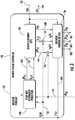
- FIG. 1 illustrates an energy system 100 that maximizes benefits of an energy system having one or more integrated energy resources.
- the energy system 100 includes an energy system controller 102 operatively coupled to an electrical load 104, through a communications line 103, which in one embodiment includes one or more electrical loads.
- the energy system controller 102 is also operatively coupled to one or more energy resources, including renewable energy resources 106 through a communications line 113, dispatchable energy resources 108 through a communications line 115, and stored energy resources 110 through a communications line 117.
- the electrical load 104, the renewable energy resources 106, the dispatchable energy resources 108, and the stored energy resources 110 are each operatively coupled to a power line 112 which provides for the transmission of energy from one or more of the energy resources to another energy resource and to the electrical load 104.
- a user interface, or human machine interface (HMI), and a data storage device 114 are also operatively coupled to the energy system controller 102 through a communications line 119.
- the communications lines 103, 113, 115, 117, and 119 are either hardwired or wireless or a combination thereof.
- the energy system controller 102 integrates a plurality of components, devices or subsystems that provide for the prediction of energy generation, the planning of energy delivery and storage, and the selective transmission or delivery of power from an energy generation device or an energy storage device to a load or an energy generation device.
- the components, devices or subsystems are integrated into a single control system, the flow of energy is seamlessly delivered between the load, energy storage devices, dispatchable energy resources, and renewable resources to the benefit of the user.
- the controller 102 is operatively coupled to a controller 105 of the electrical load 104, a controller 107 of the renewable energy resources 106, a controller 109 of the dispatchable energy resources 108, and a controller 111 of the stored energy resources 110.
- Each of the controllers, 105, 107, 109, and 111 in different embodiments, include processors and memories and receive and provide information in the form of signals to and from the controller 102.
- the controllers 105, 107, 109, and 111 in different embodiments include control hardware, including switching devices to provide for the generation and transmission of energy or the storage of energy within the energy system 100.
- the energy system 102 obtains status information from each of the resources 106, 108, and 110 as described later and also provides control signals to the controllers 105, 107, 109, and 111 for the generation and transmission or storage of energy in the system 100.
- the controller 102 is also operatively coupled to the controller 105 to receive status information of the load 104 indicative of the energy required by the load.
- the controller 102 in different embodiments includes a computer, computer system, or programmable device, e.g., multi-user or single-user computers, desktop computers, portable computers and other computing devices.
- the controller 102 includes one or more individual controllers as described below and includes in different embodiments at least one processor coupled to a memory.
- the controller 102 includes in different embodiments one or more processors (e.g. microprocessors), and the memory in different embodiments includes random access memory (RAM) devices comprising the main memory storage of the controller 102, as well as any supplemental levels of memory, e.g., cache memories, non-volatile or backup memories (e.g. programmable or flash memories), read-only memories, etc.
- RAM random access memory
- the memory in one embodiment includes a memory storage physically located elsewhere from the processing devices and includes any cache memory in a processing device, as well as any storage capacity used as a virtual memory, e.g., as stored on a mass storage device or another computer coupled to controller 102 via a network.
- the mass storage device in one embodiment includes a cache or other dataspace including databases.
- the stored energy resources 110 includes energy storage devices, such as electrochemical batteries such as those found in energy systems that supply electrical energy to residential loads, commercial loads or other types of loads and pumped hydro reserves. Utilization of the energy storage devices provides benefits in energy-savings by reducing the requirements for a distribution infrastructure and for integrating renewable energy resources into the electrical grid. Unlike conventional dispatchable resources which require a balance between the amount of energy generated and consumed by a grid at any instant of time, one or more storage devices enable the shifting of electrical energy consumption and energy generation from one period of time to another period of time. As a consequence, the energy generated by one or more renewable resources 106 which exceeds the amount of energy required by a given load at a certain time to satisfy energy demand, in one embodiment, is stored in the energy storage resources 110.
- energy storage devices such as electrochemical batteries such as those found in energy systems that supply electrical energy to residential loads, commercial loads or other types of loads and pumped hydro reserves. Utilization of the energy storage devices provides benefits in energy-savings by reducing the requirements for a distribution infrastructure and for integrating renewable energy
- Renewable energy resources include wind turbines, solar panels, biomass plants, hydroelectric power plants, geothermal power installations, tidal power installations, and wave power installations.
- low cost energy which is provided by the electrical grid at a low price during periods of low demand by the load 104 is also being stored. The stored energy is then being provided on demand when energy is required or when other forms of energy are more expensive.
- Dispatchable energy resources also include hydro-power, coal power, diesel generators, electrical grid connection, and gas power.
- energy storage resources 110 also provides a reliable supply of electrical power to maximize the benefits provided to owners, managers, or users of the energy system 100. Consequently, the described system and method for energy distribution including the energy system controller 102 realize the benefits of an energy storage system represented, for example, by a battery installation, while providing a reliable source of energy that satisfies load demand at substantially any and at all times.
- the energy system controller 102 is configured to plan for the optimal operation of many different types and configurations of energy systems.
- the control system architecture 100 maximizes the benefits of an energy system with integrated stored energy resources 110, here labeled as energy storage devices 110.
- energy storage modules 120 are operatively connected to the power line 112 which couples the electrical load 104 to an energy grid 124.
- the module 120 represents different or similar types of energy storage devices.
- the renewable energy resources 106 and the dispatchable energy resources 108 are also coupled to the power line 112.
- energy system controller 102 includes three components or devices that individually and/or collectively solve the tasks of power prediction, power dispatch planning, and execution of power dispatch.
- a load and renewable predictors module 130 provides for a prediction of the power which is generated by the renewable resources 106 which in different embodiments is dependent upon a weather forecast received at an input 132 to the module 130.
- a dispatch planner module 134 provides for the planning of the generation and the release or discharge of energy to the load 104.
- a dispatch controller 136 dispatches or directs the flow of energy provided by the renewable resources 106, the dispatchable resources 108, and the energy stored in the storage devices 110 to the power line 112.
- Each of the load and renewable predictors module 130 and dispatch planner module 134 are embodied in one embodiment as modules including software resident in the controller 102 or which is one embodiment configured as individual device controllers.
- the dispatch controller 136 in one embodiment is embodied as a module including software or as a device controller. While the modules 130, 134 and controller 136 in one embodiment are located at a single predetermined location, each of the modules 130. 134 and controller 136 in other embodiments are remotely located apart from each other if desired.
- the modules 130, 134, and controller 136 in one embodiment direct the flow of energy and the amount of power available for the load 104 for/from the energy storage devices 110and from the dispatchable resources 108, and the renewable resources 106 to maximize benefit of the user, which includes a cost benefit and an energy delivery benefit including the amount of electrical power and a time of its delivery.
- FIG. 2 illustrates the power line 112 which provides the electrical power connections to the renewable resources 106, the dispatchable resources 108, the energy storage devices 110, and to the electrical grid 124.
- the energy system controller 102 receives power measurements from the load, a status of renewable and dispatchable resources and storage devices, and receives historized operation and performance data from a data storage unit 140 coupled to the controller 102. In addition, the energy system controller 102 generates power control commands for the renewable resources 106, the dispatchable resources 108, and the storage devices 110.
- the controller 102 includes a plurality of inputs to receive measurement and/or status signals.
- the input 132 provides weather information to the predictor module 130.
- the weather information is obtained from any number of providers including commercial weather prediction vendors and the NOAA National Weather Service.
- An input 150 to the module 130 provides a signal indicative of the present or current power requirement or status of the load 104, which is also provided to a comparator 152 to be described later.
- An input 154 to the predictor module 130 is received from the renewable resources 106 and provides status information of the amount of power currently being produced by the renewable resources 106. The status information provided by the input 154 is also provided to a comparator 156 to be described later.
- Control commands are generated internally by the controller 102.
- the predictor module 130 for instance, generates signals over first and second predictor module outputs 160 and 162 which are received as inputs by the planner module 134.
- the planner module 134 in response to the signals received over the first and second predictor module 130 outputs 160, 162, the planner module 134 generates signals through planner module 134 outputs 164, 166, and 168.
- the signal at the output 164 is applied to the comparator 156 and combined with the signal at the output 154 generated by the renewable resource 106.
- the signal at the output 166 is applied to the comparator 152 and combined with the signal generated by the load 104 over the input 150.
- An output 170 of the comparator 156 is applied as an input to the dispatch controller 136.
- An output 172 of the comparator 152 is applied as an input to the dispatch controller 136.
- the dispatch controller 136 includes an output 180 coupled to the load 104, an output 182 coupled to the renewable resources 106, an output 184 coupled to the dispatchable resources 108, and an output 186 coupled to the storage devices 110.
- additional control information is transmitted over a data bus 190 coupled to the load 104, the renewable resources 106, the dispatchable resources 108, the storage devices 110, the data storage unit 140, the HMI 196, and the grid 124.
- the data bus 190 which includes other types of communication channels, transmits data that is used to communicate command signals and variables required for operation of the system 100.
- the data storage unit 140 stores data and transmits data upon demand from the controller 102.
- An output 192 from unit 196 is coupled to the controller 102 and an input 194 to the unit 196 is coupled to the controller 102 to receive command signals.
- a system operator or user accesses and/or manipulates data stored in the data storage unit 140 or data received from the controller 102 over the output 194.
- a user interface 196 (HMI) enables a user to access information about the state of the system 100, which in one embodiment is stored in the data storage 140 or received over the output 194.
- FIG. 3 illustrates a detailed view of the energy system controller 102 and the configuration and types of signals being transmitted internally between the modules 130, 134, and controller 136 and externally to and from the load 104, the resources 106, 108, and 110, and to and from the HMI 196 and data storage unit 140.
- the load and renewables predictors module 130 generates a prediction of the requirements of the load, P ⁇ L ( i ) over the output 162 on a predetermined time horizon, T H , and a prediction of the power to be generated or provided by the renewable resources P ⁇ R ( i ) which is transmitted over the output 160 using the same time horizon as used for the load signal at 162. These predictions are transmitted to the dispatch planner module 134 which processes the information and responsively generates a plurality of signals to control the operation of the energy system 100 on the time horizon T H .
- the dispatch planner 134 generates baseline power control commands (a vector of reference signals) P ⁇ ( i ) for the dispatchable resources 108 on the output 168 for transmission to the dispatch controller 136.
- the dispatch planner module 134 also generates baseline power control commands (a vector of reference signals) for the renewable resources P ⁇ R ( i ) over the output 164 which along with the load prediction P ⁇ L ( i ), transmitted on the output 166, are compared respectively with the corresponding measurements of the power provided by the renewable resources, P R ( k ) at comparator 156, and the load P L ( k ) at comparator 152, to generate error signals e R ( k ) and e L ( k ) respectively.
- the error signals and the reference signal for the dispatchable resources are then provided to the dispatch controller 136 that computes control commands for transmission to the renewable resources 106 ( c R ( k )), dispatchable resources 108, ( c D ( k )), storage devices 110, ( c S ( k )), and the load 104, ( c L ( k )).
- These control commands are provided to individual devices and implemented by the local controllers or a controller in communication with the device.
- the associated controller controls at least one switch at each of the resources 106, 108, and storage devices 110 to control the release of energy to the power line 112.
- the error signals indicate a difference between a predicted or planned power values and actual values of the load or power generation of the renewable resources, for instance.
- time horizon includes one or more hours, one or more days, or one or more weeks or other long time horizons.
- the stored energy is then provided on demand to the load 104 when the energy is most needed or when a predetermined level of savings is achieved if the load is being controlled to reduce load requirements.
- the dispatch planner module 134 in one embodiment performs an optimized planning of power profiles for the energy storage devices and other energy resources in the system by solving a numerical optimization problem using an optimization program or algorithm resident in firmware or software of the module 130 including memory associated with the module 130.
- Software resident at the user interface 114 in one embodiment is also used.
- the long time horizon extends for one or more weeks, and the time periods used during the longer time horizon vary. For instance, during a first week, determinations of future power used and further power generation are made every hour. During a second week, determinations are made every six hours, and during a third week determinations are made very twelve hours.
- the determination of time periods in one embodiment is determined based on the accuracy of the weather predictions. When weather predictions are more accurate, for instance during a first week in the future, the determinations are made more often than during a second week in the future when weather predictions become less accurate.
- the optimization problem is formulated with a cost function and takes into account the cost of energy, demand charges, battery efficiencies and life to depletion, maintenance and replacement costs for each component of the energy system, and other parameters that influence operating costs of the energy system 100 for a specified time horizon T H .
- the optimization program takes into account all the constraints imposed on different components of the system such as power limits for various resources, available amounts of energy stored in different energy storage devices, and safety constraints.
- the dispatch planner module 134 receives a forecasted load profile over the specified time horizon T H , profiles of power that are forecasted to be generated by the renewable resources over the same time horizon, and present states of energy system components such as the amount of fuel available for dispatchable resources and the amount of energy available from various storage devices.
- Information about the states of components of the energy system is provided to the dispatch planner module 134 by signal S(k) over the output 192 from data storage unit 140 of Figure 2 .
- Information indicative of the future load profile and power profiles from renewable resources 106 is provided to the dispatch planner module 134 by the load 104 and renewables predictors module 130.
- the load and renewables predictors module 130 includes a number of predictor algorithms that generate forecasts of the future load requirements of load 104 and the power anticipated to be available from renewable resources 106 on the prediction time horizon T H .
- the load and renewables predictors module 130 includes a number of predictor algorithms that generate forecasts of the future load requirements of load 104 and the power anticipated to be available from renewable resources 106 on the prediction time horizon T H .
- PV photovoltaic
- wind turbine three predictors are provided for each one of these components.
- Each of these predictors is represented by a mathematical model of the considered component (e.g. load, PV installation, wind turbine) and models of physical processes that influence power consumption or generation of a given component.
- the predictor module 130 receives measurements of the power available from or provided to the component as well as other inputs that influence the power profile and generates a prediction of the power profile. These predictions are provided to the dispatch planner module 134 in the form of signals P ⁇ L ( i ) for the load 104 and P ⁇ R ( i ) for the renewable resources 106.
- the load predictor module 130 in one embodiment is implemented with a neural network model of the load 104 that is populated or trained with historical load profiles of the energy system 100 and is capable of generating a forecast of the load 104 which occurs in the future on a timeline horizon of several hours or one or more days.
- power requirements of a load are predicted based on power usage during a workweek as opposed to power usage during a weekend.
- Neural networks are known and are used in one embodiment.
- the load predictor module 130 in one embodiment utilizes past measurements of the load power requirements as well as other variables such as current and future time variables, day of the week, time of the year, weather forecast on the specified time future horizon and other variables to generate the prediction P ⁇ L ( i ).
- a predictor algorithm for the PV installation in one embodiment is embodied by in program code providing a deterministic model that computes solar irradiance at a given geographical location for any time of the day and year which is adjusted by a weather forecast predicting cloud cover, humidity and other atmospheric parameters for time T H in the future.
- the solar irradiance is considered in one embodiment as a part of the weather forecast.
- the power provided by the PV installation is determined than from the solar irradiance utilizing the mathematical model mapping irradiance into the power output.
- the wind power predictor in one embodiment utilizes a mathematical model of the installed wind turbine along with the weather forecasts about temperature, humidity, wind speed and direction for the next time horizon T H .
- Signal P R ( k ) provides information about the power generation by renewable resources at time instant k that is used by the predictors of the renewable power.
- a dispatch strategy computed by the dispatch planner module 134 relies on the prediction of load 104 and power available from the renewable resources 106. Due to prediction uncertainties and errors, modeling inaccuracies, and temporal variations in load profiles, and renewable profiles, a mismatch in one embodiment occurs between the predicted load and power profiles and the true load and power profiles. In addition to that mismatch, since both the predictors module 130 and dispatch planner module 134 need time to compute the predictions and the optimal dispatch strategy for the next time horizon, the predictors module 130 and dispatch planner module 134 of the energy system controller 102 in one embodiment operate at a sampling rate less than the speed required to compensate for an instantaneous variation of load demand and power supply.
- the control system incorporates the dispatch controller 136.
- the dispatch controller 136 uses optimally planned profiles generated by the dispatch planner module 134 as reference inputs, and computes the errors, e R ( k ) and e L ( k ), between the predicted profiles and the measurements collected at a high sampling rate, and generates final command inputs to the energy system resources.
- the predictors module 130 and the dispatch planner module 134 operate at a sampling rate of approximately between 15 minutes and 1 hour. This sampling rate is limited by the update rate of forecasts for the load 104 and renewable resources 106 and by the amount of time required to perform the optimization.
- the dispatch controller 136 compares reference inputs from the dispatch planner with the measurements received from the load P L ( k ) and renewable resources P R ( k ), computes the corresponding errors e L ( k ), e R ( k ) and augments reference commands from the dispatch planner module 134 with correction signals to generate power commands c D ( k ) to dispatchable resources 108, power commands c S (k) storage devices 110, throttling commands c R (k) to renewable resources 106 and, if load devices allow demand management, load regulation commands c L ( k ) to the load 104.
- the throttling commands are generated in situations when the renewable resources 106 provide or are providing more power at a given sample time k than the amount of power than is capable of being absorbed by the load 104, storage devices 110 or the dispatchable resources 108.
- the throttling commands are transmitted to the renewable resources 106 to reduce the amount of energy being generated by the renewable resources.
- the alignment of the arrays with respect to the sun are adjusted to misalign the arrays with respect to the path of sunlight, or in another embodiment the connection to the power line 112 is disconnected.
- the blade angle is adjusted to limit the amount of rotation or the blades are disconnected from the gearbox or generator.
- the sampling time for the dispatch controller 136 is denoted by k, while the sampling time for the predictors module 130 and the dispatch planner module 134 are denoted by i.
- the sampling rate of the dispatch controller 136 is on the order of fractions of a minute to several seconds, milliseconds or other short time intervals. This sampling rate is limited by the sampling rates of the measurement devices acquiring instantaneous power of the load and the Renewable resources and the amount of time required to generate the control commands c R ( k ), c D ( k ), c S ( k ), c L ( k ).
- the dispatchable energy resources 108 provide energy at times when the renewable energy resources 106, stored energy resources 110 are insufficient to meet the energy requirements of the load 104.
- the dispatchable energy resource 108 provides a load matching function to provide an output to match the shape of the load demand.
- peak matching is also provided to match the highest energy demand occurring during a certain time of day. Such time is predicted based on time of day, pattern of energy use, weather, and geographic location.
- the dispatchable energy resource 108 in other embodiments also cover lead-in times where some resources, such as coal powered plants, take a certain amount of time to ramp up to the desired output. Frequency regulation is also provided in some embodiments.
- the control system architecture 100 facilitates robust operation in the presence of potential problems or failures in individual system components.
- each one of the three modules 130, 134, and the controller 136 are implemented on an individual processor, server, programmable logic controller (PLC) or another computing device such that when one of these modules or controllers fail, one or more of the other modules or controller continue operation.
- PLC programmable logic controller
- each of the three components 130, 134, and 136 of the control system are implemented on the same device, as hardware, firmware or software, each is implemented as individual devices or programs, or program code, running independently and exchanging information between each other according to the described invention in order to provide the robust operation, such that power continues to be supplied if one of the components fails.
- each of the components 130, 134, and 136 are independent of the other to provide for the failure of one or more of the other components.
- the dispatch planner module 134 uses the predictions stored in an associated memory, or stored in the data storage 140, from the previous forecast, extrapolate it one step further according to a chosen rule, and generate a set of new reference signals for the dispatch controller 136. Such operation continues until the predictors module 130 restores its functionality and starts providing the forecast again. In this situation, the operation of the energy system 100 deviates from an optimal operation, but the controller 102 continues to reliably coordinate the transfer of power between the load 104 and the resources 106, 108, and 110.
- the dispatch controller 136 uses the planned profiles received from the dispatch planner module 134 during the previous time step and continue control of the system power until the planner module 134 operation is restored. In another embodiment, if the predictors module 130 or the dispatch planner module 134 fails for a sufficiently long period of time, longer than the prediction horizon of several hours or days, the dispatch controller 136 resorts to a logic-based control of the power transmission until full functionality of the controller 102 is restored.
- the dispatch controller 136 In terms of reliable operation of the energy system 100, a significant component of the control architecture is the dispatch controller 136. In general and in one embodiment, the control system controls power flow between the energy system resources as long as the dispatch controller 136 continues to be operational.
Landscapes
- Engineering & Computer Science (AREA)
- Power Engineering (AREA)
- Supply And Distribution Of Alternating Current (AREA)
- Health & Medical Sciences (AREA)
- Artificial Intelligence (AREA)
- Computer Vision & Pattern Recognition (AREA)
- Evolutionary Computation (AREA)
- Medical Informatics (AREA)
- Software Systems (AREA)
- Physics & Mathematics (AREA)
- General Physics & Mathematics (AREA)
- Automation & Control Theory (AREA)
Claims (4)
- Energiesteuerungssystem (100), das konfiguriert ist, die Energieübertragung zu einer elektrischen Last (104) zu steuern, wobei es Folgendes umfasst:a) eine Quelle (106) für erneuerbare Energie und eine Quelle (108) für abrufbare Energie;b) eine Quelle (110) für gespeicherte Energie;c) einen Datenspeicher, der konfiguriert ist, Programmanweisungen zu speichern; undd) eine Energiesystemsteuereinheit (102), die mit der Quelle (106) für erneuerbare Energie, der Quelle (108) für abrufbare Energie, der Quelle (110) für gespeicherte Energie und dem Datenspeicher betriebstechnisch gekoppelt ist,
wobei die Energiesystemsteuereinheit (102) ein Vorhersagemodul (130), ein Abrufplanungsmodul (134) und ein Abrufmodul (136) umfasst;
wobei das Vorhersagemodul (130) konfiguriert ist zumEmpfangen einer Wettervorhersage, die das zukünftige Auftreten eines Wettermusters über einen langen Zeithorizont angibt, und zumAusführen der gespeicherten Programmanweisungen, um den vorhergesagten Energiebedarf, die vorhergesagte Energieerzeugung und die Wettervorhersage zu vergleichen und um eine erste Vorhersagefunktion, die einen zukünftige Energiebedarf der Last (104) angibt, und eine zweite Vorhersagefunktion, die eine zukünftige Energieerzeugungskapazität der Quelle (106) für erneuerbare Energie angibt, bereitzustellen;wobei das Abrufplanungsmodul (134) mit dem Vorhersagemodul (130) betriebstechnisch gekoppelt ist und konfiguriert ist zumEmpfangen der ersten Vorhersagefunktion und der zweiten Vorhersagefunktion, und zumAusführen der gespeicherten Programmanweisungen, um Grundleistungssteuerbefehle für die abrufbare Quelle und für die erneuerbare Quelle und einen Lastvorhersagebefehl bereitzustellen,wobei die Grundleistungssteuerbefehle und der Lastvorhersagebefehl als ein Ergebnis des Lösens eines numerischen Optimierungsproblems bereitgestellt werden; undwobei das Abrufmodul (136) mit dem Abrufplanungsmodul (134) betriebstechnisch gekoppelt ist und konfiguriert ist zumAusführen der gespeicherten Programmanweisungen, um der Quelle (106) für erneuerbare Energie eine Steuerung der erneuerbaren Quelle und der Speichervorrichtungsquelle eine Steuerung für die Speichervorrichtung bereitzustellen, die beide zumindest teilweise aus den Grundleistungssteuerbefehlen und dem Lastvorhersagebefehl erzeugt werden,wobei das Abrufmodul (136) die Energieübertragung von der Quelle (106) für erneuerbare Energie an die Last (104) und an die Speichervorrichtung steuert und die Energieübertragung von der Quelle (110) für gespeicherte Energie an die Last (104) steuert;wobei die Energiesystemsteuereinheit (102) konfiguriert ist, die gespeicherten Programmanweisungen auszuführen zume) Vorhersagene-i) eines Energiebedarfs der Last (104) über den langen Zeithorizont, unde-ii) Vorhersagen der Energie, die durch die Quelle (106) für erneuerbare Energie über den langen Zeithorizont erzeugt werden muss,e-iii) Vorhersagen eines Energiepotentials der Quelle (108) für abrufbare Energie über den langen Zeithorizont,h) Erzeugen
h-i) eines geplanten Leistungsprofils für die Quelle (106) für erneuerbare Energie über den langen Zeithorizont auf der Grundlage des vorhergesagten Energiebedarfs e-1) und der vorhergesagten Energieerzeugung e-ii) und h-ii) eines geplanten Leistungsprofils für die Quelle (110) für gespeicherte Energie im Energiesystem (100) über den langen Zeithorizont auf der Grundlage des vorhergesagten Energiebedarfs e-i) und der vorhergesagten Energieerzeugung e-ii),i) Vergleichen des vorhergesagten Energiebedarfs e-i), der vorhergesagten Energieerzeugung e-ii) und der vorhergesagten Energiekapazität g-i) mit einem tatsächlichen Energiebedarf der Last (104), einer tatsächlichen Energieerzeugung durch die Quelle (106) für erneuerbare Energie und einer tatsächlichen Energiekapazität in der Quelle (110) für gespeicherte Energie über einen kurzen Zeithorizont,j) Steuern der Energiezufuhr an die elektrische Last (104) auf der Grundlage der geplanten Leistungsprofile und des Vergleichs;
wobei die Energiesystemsteuereinheit (102) ferner konfiguriert ist, dann, wenn die gespeicherten Programmanweisungen im Vergleichsmerkmal i) und im Steuermerkmal j) ausgeführt werden, gespeicherte Programmanweisungen auszuführen zum:k) Bestimmenk-i) eines Energiebedarfsfehlerwertes durch Bestimmen einer Differenz zwischen dem vorhergesagten Energiebedarf e-i) und einem tatsächlichen Energiebedarf der elektrischen Last (104) über den kurzen Zeithorizont, undk-ii) eines Energieerzeugungsfehlerwertes durch Bestimmen einer Differenz zwischen der vorhergesagten Energieerzeugung e-ii) und einer tatsächlichen Energieerzeugung der Quelle (106) für erneuerbare Energie über den kurzen Zeithorizont; undl) Steuernl-i) einer Drosselung der Quelle (106) für erneuerbare Energie auf der Grundlage des geplanten Leistungsprofils h-i) für die Quelle (106) für erneuerbare Energie, des Energiebedarfsfehlerwertes k-i) und des Energieerzeugungsfehlerwertes k-ii), undl-ii) eines Aufladens und Entladens der Quelle (110) für gespeicherte Energie auf der Grundlage des geplanten Leistungsprofils h-ii) für die Quelle (110) für gespeicherte Energie, des Energiebedarfsfehlerwertes k-i) und des Energieerzeugungsfehlerwertes k-ii),wobei der lange Zeithorizont in der Größenordnung eines Tages und/oder einer Woche liegt, und
wobei der kurze Zeithorizont in der Größenordnung einer Sekunde und/oder einer Minute und/oder einer Stunde liegt. - Energiesteuerungssystem (100) nach Anspruch 1, wobei die Quelle (106) für erneuerbare Energie eine Photovoltaikanlage und/oder ein Windkraftwerk und/oder ein Biomassekraftwerk und/oder ein Wasserkraftwerk und/oder ein Erdwärmekraftwerk und/oder ein Gezeitenkraftwerk und/oder ein Wellenkraftwerk umfasst.
- Energiesteuerungssystem (100) nach Anspruch 2, wobei die Wettervorhersage, die das zukünftige Auftreten eines Wettermusters angibt, Sonneneinstrahlung und/oder Wolkendecke und/oder Feuchtigkeit und/oder Windgeschwindigkeit und -richtung enthält.
- Energiesteuerungssystem (100) nach Anspruch 1, wobei die Quelle (106) für erneuerbare Energie eine Photovoltaikanlage umfasst.
Applications Claiming Priority (2)
| Application Number | Priority Date | Filing Date | Title |
|---|---|---|---|
| US13/719,548 US9312698B2 (en) | 2012-12-19 | 2012-12-19 | System and method for energy distribution |
| PCT/US2013/076567 WO2014100415A2 (en) | 2012-12-19 | 2013-12-19 | System and method for energy distribution |
Publications (2)
| Publication Number | Publication Date |
|---|---|
| EP2941809A2 EP2941809A2 (de) | 2015-11-11 |
| EP2941809B1 true EP2941809B1 (de) | 2020-09-30 |
Family
ID=49989894
Family Applications (1)
| Application Number | Title | Priority Date | Filing Date |
|---|---|---|---|
| EP13821748.4A Active EP2941809B1 (de) | 2012-12-19 | 2013-12-19 | System und verfahren zur energieverteilung |
Country Status (4)
| Country | Link |
|---|---|
| US (1) | US9312698B2 (de) |
| EP (1) | EP2941809B1 (de) |
| CN (1) | CN104969437B (de) |
| WO (1) | WO2014100415A2 (de) |
Cited By (2)
| Publication number | Priority date | Publication date | Assignee | Title |
|---|---|---|---|---|
| WO2022117887A1 (en) | 2020-12-04 | 2022-06-09 | Fronius International Gmbh | Energy management system |
| EP4270709A1 (de) | 2022-04-29 | 2023-11-01 | FRONIUS INTERNATIONAL GmbH | Energieverwaltungssystem |
Families Citing this family (62)
| Publication number | Priority date | Publication date | Assignee | Title |
|---|---|---|---|---|
| CN102959339A (zh) * | 2011-06-06 | 2013-03-06 | 松下电器产业株式会社 | 热泵的运转方法及热泵系统 |
| DE102012107788B4 (de) * | 2012-08-23 | 2015-05-07 | Deutsches Zentrum für Luft- und Raumfahrt e.V. | Energiemanagement eines Systems nach einem ökonomischen Markt-Modell-Ansatz |
| US9639904B2 (en) * | 2012-12-11 | 2017-05-02 | Opterra Energy Services, Inc. | Systems and methods for minimizing energy costs for a power consumption system that has access to off-grid resources |
| JP2014147223A (ja) * | 2013-01-29 | 2014-08-14 | Kyocera Corp | 機器管理システム、機器管理装置及び機器管理方法 |
| WO2014143908A1 (en) * | 2013-03-15 | 2014-09-18 | Robert Bosch Gmbh | System and method for energy distribution |
| FR3008207B1 (fr) * | 2013-07-04 | 2016-12-02 | M Et R Energies | Unite et procede de regulation energetique d'un systeme de production et de consommation electrique |
| US9177663B2 (en) | 2013-07-18 | 2015-11-03 | Sandisk Technologies Inc. | Dynamic regulation of memory array source line |
| WO2015031331A1 (en) * | 2013-08-26 | 2015-03-05 | Robert Bosch Gmbh | Dispatch controller for an energy system |
| KR101459968B1 (ko) * | 2013-11-19 | 2014-11-10 | 현대자동차주식회사 | 전기자동차 충전 요구량 검증 방법 및 이에 사용되는 시스템 |
| US9389630B2 (en) * | 2014-02-21 | 2016-07-12 | International Business Machines Corporation | Predictive smart grid re-structuring based on expected load and power generation |
| JP6004451B2 (ja) | 2014-03-26 | 2016-10-05 | インターナショナル・ビジネス・マシーンズ・コーポレーションInternational Business Machines Corporation | データセンター、データセンター間での負荷分散方法 |
| WO2015196482A1 (en) * | 2014-06-27 | 2015-12-30 | Abb Technology Ltd | Method and device of determining reference output power for energy storage system in wind power generation system |
| US9948101B2 (en) * | 2014-07-03 | 2018-04-17 | Green Charge Networks Llc | Passive peak reduction systems and methods |
| WO2016040991A1 (en) * | 2014-09-17 | 2016-03-24 | Reposit Power Pty Ltd | Systems, methods, and devices for managing/controlling energy production and/or energy storage systems |
| WO2016088761A1 (ja) * | 2014-12-02 | 2016-06-09 | 積水化学工業株式会社 | 電力制御システム、電力制御方法及びプログラム |
| US10172786B2 (en) | 2014-12-16 | 2019-01-08 | Axim Biotechnologies, Inc. | Oral care composition comprising cannabinoids |
| JP6847343B2 (ja) * | 2015-02-23 | 2021-03-24 | 学校法人沖縄科学技術大学院大学学園 | 再生可能エネルギーの変動に対する予測誤差を決定するシステムおよび方法 |
| CN104836259B (zh) * | 2015-05-20 | 2017-04-12 | 集美大学 | 一种多能源船舶微网实时能量优化调度方法 |
| KR102189479B1 (ko) * | 2015-06-02 | 2020-12-11 | 엘에스일렉트릭(주) | 전원 공급 장치 |
| NL2015490B1 (en) * | 2015-09-22 | 2017-04-20 | Peeeks B V | System for balancing an electricity network with a grid. |
| US10509374B2 (en) | 2015-10-07 | 2019-12-17 | University Of Utah Research Foundation | Systems and methods for managing power generation and storage resources |
| US10282687B2 (en) | 2015-10-07 | 2019-05-07 | University Of Utah Research Foundation | Systems and methods for managing power generation resources |
| US10296030B2 (en) | 2015-10-07 | 2019-05-21 | University Of Utah Research Foundation | Systems and methods for power system management |
| CN105225016B (zh) * | 2015-10-29 | 2019-03-01 | 华东师范大学 | 可再生供能的云计算系统中基于合作博弈的能量分配方法 |
| ES2773478T3 (es) * | 2016-03-01 | 2020-07-13 | Siemens Ag | Procedimiento y sistema para operar una red de suministro de energía autónoma |
| US10178131B2 (en) | 2017-01-23 | 2019-01-08 | Cisco Technology, Inc. | Entity identification for enclave segmentation in a network |
| DE102017202136A1 (de) * | 2017-02-10 | 2018-08-16 | Siemens Aktiengesellschaft | Energiespeichervorrichtung und deren Verwendung |
| US10999652B2 (en) | 2017-05-24 | 2021-05-04 | Engie Storage Services Na Llc | Energy-based curtailment systems and methods |
| US10777376B2 (en) | 2017-05-25 | 2020-09-15 | Abb Schweiz Ag | Method and system for hardware tamper detection and mitigation for solid state circuit breaker and its controller |
| US10389134B2 (en) | 2017-06-21 | 2019-08-20 | Katerra, Inc. | Electrical power distribution system and method |
| US10658841B2 (en) | 2017-07-14 | 2020-05-19 | Engie Storage Services Na Llc | Clustered power generator architecture |
| US12155205B2 (en) | 2017-08-31 | 2024-11-26 | Energy Internet Corporation | Energy transfer using high-pressure vessel |
| US11392100B2 (en) | 2017-08-31 | 2022-07-19 | Energy Internet Corporation | Modularized energy management using pooling |
| US11906224B2 (en) | 2017-08-31 | 2024-02-20 | Energy Internet Corporation | Controlled refrigeration and liquefaction using compatible materials for energy management |
| US11261107B2 (en) | 2017-08-31 | 2022-03-01 | Energy Internet Corporation | Desalination using pressure vessels |
| US11566839B2 (en) | 2017-08-31 | 2023-01-31 | Energy Internet Corporation | Controlled liquefaction and energy management |
| US12157685B2 (en) | 2017-08-31 | 2024-12-03 | Energy Internet Corporation | Liquid purification with pressure vessels |
| EP3721301A1 (de) * | 2017-12-06 | 2020-10-14 | Vestas Wind Systems A/S | Modellvorhersagesteuerung in lokalen systemen |
| CN108110805B (zh) * | 2018-01-26 | 2022-08-09 | 国网辽宁省电力有限公司 | 一种控制新能源电力系统在异常调控域运行的系统及方法 |
| WO2019158575A1 (en) * | 2018-02-14 | 2019-08-22 | Ecole Polytechnique Federale De Lausanne (Epfl) | System and method for operating a combination of heterogeneous energy resources for fast grid services |
| CN108280554A (zh) * | 2018-02-26 | 2018-07-13 | 合肥学院 | 一种可再生能源并网消纳系统及方法 |
| US10790662B2 (en) | 2018-04-03 | 2020-09-29 | Katerra, Inc. | DC bus-based electrical power router utilizing multiple configurable bidirectional AC/DC converters |
| WO2019199638A1 (en) * | 2018-04-09 | 2019-10-17 | Energy Harbors Corporation, Inc. | Modularized energy management using pooling |
| US10897138B2 (en) | 2018-04-12 | 2021-01-19 | Katerra, Inc. | Method and apparatus for dynamic electrical load sensing and line to load switching |
| CA3144627A1 (en) | 2019-06-27 | 2020-12-27 | Eavor Technologies Inc. | Operational protocol for harvesting a thermally productive formation |
| US11735919B2 (en) | 2019-11-27 | 2023-08-22 | Robert F. Cruickshank, III | Optimized load shaping system, method and apparatus for optimizing production and consumption of energy |
| CN111049192B (zh) * | 2019-12-11 | 2023-04-11 | 云南电网有限责任公司 | 一种考虑可再生能源同台竞价的发电控制方法 |
| CA3138740C (en) | 2020-01-25 | 2023-01-03 | Eavor Technologies Inc | Method for on demand power production utilizing geologic thermal recovery |
| US20210376612A1 (en) * | 2020-05-26 | 2021-12-02 | University Of Florida Research Foundation, Incorporated | Smart energy management systems and methods for power system resiliency |
| CN113872180A (zh) * | 2020-06-30 | 2021-12-31 | 华为技术有限公司 | 设备供电的方法、系统及相关设备 |
| CN112332450A (zh) * | 2020-10-16 | 2021-02-05 | 湖北华夏明源能源管理有限公司 | 一种基于光伏储能和路灯照明的微电网控制装置 |
| IT202000024400A1 (it) * | 2020-10-22 | 2021-01-22 | Smart Pv Wind S R L S | Sistema di produzione di energia eolica abbinata a cogenerazione a biomassa con sistema di gestione dell'energia 24 ore al giorno |
| CN112560898B (zh) * | 2020-11-25 | 2023-04-28 | 国网浙江省电力有限公司台州供电公司 | 一种基于深度学习的负荷时空预测方法 |
| EP4092859A1 (de) | 2021-05-18 | 2022-11-23 | Honda Motor Co., Ltd. | Einrichtung ohne hardware zur pv-eigenverbrauchsoptimierung |
| CN113297737B (zh) * | 2021-05-25 | 2022-07-26 | 华南理工大学 | 一种基于网络简化的分布式鲁棒电热调度非迭代解耦方法 |
| US12184066B2 (en) | 2021-06-09 | 2024-12-31 | General Electric Renovables Espana, S.L. | Systems and methods for operating a power generating asset |
| CN114498654B (zh) * | 2022-04-18 | 2022-08-16 | 国网江西省电力有限公司电力科学研究院 | 基于变尺度混沌算法的含小水电接入配电网电压优化方法 |
| CN114665511B (zh) * | 2022-05-27 | 2022-08-23 | 西安海联石化科技有限公司 | 抽油机井群光电综合能源直流供电系统电量节能控制方法 |
| CN115411751B (zh) * | 2022-09-20 | 2025-10-17 | 国网甘肃省电力公司电力科学研究院 | 考虑电网实际调控需求的混合储能系统调度方法 |
| CN116365596B (zh) * | 2023-03-14 | 2023-11-28 | 宁夏众合智源电力工程咨询有限公司 | 一种基于分布式电网的功率调度的方法和系统 |
| US12463421B2 (en) | 2024-04-03 | 2025-11-04 | Nanyang Technological University | Pulsed energy storage and distribution system |
| CN118412938B (zh) * | 2024-07-03 | 2024-10-01 | 国网安徽省电力有限公司经济技术研究院 | 一种储能协调发展的有源配电网规划方法 |
Family Cites Families (43)
| Publication number | Priority date | Publication date | Assignee | Title |
|---|---|---|---|---|
| US5083039B1 (en) | 1991-02-01 | 1999-11-16 | Zond Energy Systems Inc | Variable speed wind turbine |
| US6055163A (en) | 1998-08-26 | 2000-04-25 | Northrop Grumman Corporation | Communications processor remote host and multiple unit control devices and methods for micropower generation systems |
| US6785592B1 (en) | 1999-07-16 | 2004-08-31 | Perot Systems Corporation | System and method for energy management |
| US20020029097A1 (en) | 2000-04-07 | 2002-03-07 | Pionzio Dino J. | Wind farm control system |
| US6577962B1 (en) * | 2000-09-28 | 2003-06-10 | Silicon Energy, Inc. | System and method for forecasting energy usage load |
| US20020084655A1 (en) | 2000-12-29 | 2002-07-04 | Abb Research Ltd. | System, method and computer program product for enhancing commercial value of electrical power produced from a renewable energy power production facility |
| GB0218452D0 (en) * | 2002-08-08 | 2002-09-18 | Lal Depak | Energy consumption monitoring |
| US7469541B1 (en) * | 2002-12-02 | 2008-12-30 | Melton David S | Portable power system |
| EP1660917B1 (de) | 2003-08-20 | 2007-11-21 | New Energy Options, Inc. | Verfahren und system zur vorhersage der solarenergieproduktion |
| US20050234600A1 (en) | 2004-04-16 | 2005-10-20 | Energyconnect, Inc. | Enterprise energy automation |
| US20090043519A1 (en) | 2006-08-10 | 2009-02-12 | V2Green, Inc. | Electric Resource Power Meter in a Power Aggregation System for Distributed Electric Resources |
| US7844370B2 (en) | 2006-08-10 | 2010-11-30 | Gridpoint, Inc. | Scheduling and control in a power aggregation system for distributed electric resources |
| US20080039979A1 (en) | 2006-08-10 | 2008-02-14 | V2 Green Inc. | Smart Islanding and Power Backup in a Power Aggregation System for Distributed Electric Resources |
| JP5231745B2 (ja) * | 2007-02-19 | 2013-07-10 | 本田技研工業株式会社 | コージェネレーション装置 |
| US8731732B2 (en) * | 2008-02-25 | 2014-05-20 | Stanley Klein | Methods and system to manage variability in production of renewable energy |
| WO2010083334A1 (en) | 2009-01-14 | 2010-07-22 | Integral Analytics, Inc. | Optimization of microgrid energy use and distribution |
| US8706650B2 (en) * | 2009-01-14 | 2014-04-22 | Integral Analytics, Inc. | Optimization of microgrid energy use and distribution |
| WO2010088545A2 (en) | 2009-01-30 | 2010-08-05 | Board Of Regents, The University Of Texas System | Methods and apparatus for design and control of multi-port power electronic interface for renewable energy sources |
| WO2010096783A1 (en) * | 2009-02-20 | 2010-08-26 | The Trustees Of Columbia University In The City Of New York | Dynamic contingency avoidance and mitigation system |
| US20100217550A1 (en) | 2009-02-26 | 2010-08-26 | Jason Crabtree | System and method for electric grid utilization and optimization |
| US20110016063A1 (en) | 2009-07-17 | 2011-01-20 | Gridpoint, Inc. | System and methods for smart charging techniques |
| US8620634B2 (en) | 2009-07-24 | 2013-12-31 | Honeywell International Inc. | Energy resource allocation including renewable energy sources |
| US8095245B1 (en) | 2009-07-29 | 2012-01-10 | Lockheed Martin Corporation | Thermal energy dispatch system |
| JP5526637B2 (ja) | 2009-07-29 | 2014-06-18 | パナソニック株式会社 | コージェネレーションシステム用運転計画装置及びコージェネレーションシステム |
| JP5465949B2 (ja) * | 2009-08-07 | 2014-04-09 | 本田技研工業株式会社 | 電力供給システム |
| JP5510019B2 (ja) * | 2010-04-16 | 2014-06-04 | 富士通株式会社 | 電力制御方法、プログラム及び装置 |
| CA2798825A1 (en) * | 2010-05-07 | 2011-11-10 | Advanced Energy Industries, Inc. | Systems and methods for forecasting solar power |
| US9063715B2 (en) | 2010-06-10 | 2015-06-23 | Hewlett-Packard Development Company, L. P. | Management of a virtual power infrastructure |
| WO2011156776A2 (en) * | 2010-06-10 | 2011-12-15 | The Regents Of The University Of California | Smart electric vehicle (ev) charging and grid integration apparatus and methods |
| US8972070B2 (en) * | 2010-07-02 | 2015-03-03 | Alstom Grid Inc. | Multi-interval dispatch system tools for enabling dispatchers in power grid control centers to manage changes |
| US20120053739A1 (en) * | 2010-09-28 | 2012-03-01 | General Electric Company | Home energy manager system |
| US8370283B2 (en) * | 2010-12-15 | 2013-02-05 | Scienergy, Inc. | Predicting energy consumption |
| JP2012175791A (ja) * | 2011-02-21 | 2012-09-10 | Denso Corp | 電力供給システム |
| WO2012145563A1 (en) | 2011-04-19 | 2012-10-26 | Viridity Energy, Inc. | Methods, apparatus and systems for managing energy assets |
| US8965590B2 (en) * | 2011-06-08 | 2015-02-24 | Alstom Grid Inc. | Intelligent electrical distribution grid control system data |
| JP2013027285A (ja) | 2011-07-26 | 2013-02-04 | Hitachi Ltd | 発電機の負荷分担方式 |
| US8862279B2 (en) * | 2011-09-28 | 2014-10-14 | Causam Energy, Inc. | Systems and methods for optimizing microgrid power generation and management with predictive modeling |
| US20130144451A1 (en) * | 2011-10-25 | 2013-06-06 | San Diego State University Research Foundation | Residential and commercial energy management system |
| CN102510123B (zh) * | 2011-11-10 | 2014-06-18 | 山东大学 | 应对风电大范围切机的自动储能控制方法 |
| US9261863B2 (en) * | 2012-01-23 | 2016-02-16 | Earth Networks, Inc. | Optimizing and controlling the energy consumption of a building |
| US8886362B2 (en) * | 2012-03-30 | 2014-11-11 | General Electric Company | Integrated distribution system optimization |
| US8774976B2 (en) * | 2012-05-31 | 2014-07-08 | Sharp Laboratories Of America, Inc. | Method and system for reducing peak load charge on utility bill using target peak load and countermeasures |
| CA2809011C (en) * | 2012-11-06 | 2018-07-17 | Mcmaster University | Adaptive energy management system |
-
2012
- 2012-12-19 US US13/719,548 patent/US9312698B2/en active Active
-
2013
- 2013-12-19 CN CN201380070736.XA patent/CN104969437B/zh active Active
- 2013-12-19 EP EP13821748.4A patent/EP2941809B1/de active Active
- 2013-12-19 WO PCT/US2013/076567 patent/WO2014100415A2/en not_active Ceased
Non-Patent Citations (1)
| Title |
|---|
| None * |
Cited By (3)
| Publication number | Priority date | Publication date | Assignee | Title |
|---|---|---|---|---|
| WO2022117887A1 (en) | 2020-12-04 | 2022-06-09 | Fronius International Gmbh | Energy management system |
| EP4270709A1 (de) | 2022-04-29 | 2023-11-01 | FRONIUS INTERNATIONAL GmbH | Energieverwaltungssystem |
| WO2023208947A1 (en) | 2022-04-29 | 2023-11-02 | Fronius International Gmbh | Energy management system |
Also Published As
| Publication number | Publication date |
|---|---|
| WO2014100415A2 (en) | 2014-06-26 |
| CN104969437B (zh) | 2018-08-07 |
| CN104969437A (zh) | 2015-10-07 |
| EP2941809A2 (de) | 2015-11-11 |
| US20140172182A1 (en) | 2014-06-19 |
| WO2014100415A3 (en) | 2015-03-12 |
| US9312698B2 (en) | 2016-04-12 |
Similar Documents
| Publication | Publication Date | Title |
|---|---|---|
| EP2941809B1 (de) | System und verfahren zur energieverteilung | |
| US9438041B2 (en) | System and method for energy distribution | |
| US20160211664A1 (en) | Dispatch Controller for an Energy System | |
| WO2014143908A1 (en) | System and method for energy distribution | |
| US20230281732A1 (en) | Computing component arrangement based on ramping capabilities | |
| US11201491B2 (en) | Method for balancing frequency instability on an electric grid using networked distributed energy storage systems | |
| US10756543B2 (en) | Method and apparatus for stabalizing power on an electrical grid using networked distributed energy storage systems | |
| US10261536B2 (en) | Systems and methods for optimizing microgrid power generation and management with predictive modeling | |
| US10389126B2 (en) | Method and apparatus for damping power oscillations on an electrical grid using networked distributed energy storage systems | |
| US12374891B2 (en) | System, controller, and method for predictive control of energy management for a segmented load centre | |
| US20220407310A1 (en) | Intelligent energy management system for distributed energy resources and energy storage systems using machine learning | |
| JP2017108560A (ja) | 電力融通システムの制御装置および制御プログラム | |
| Chen et al. | Robust unit commitment for large-scale wind generation and run-off-river hydropower | |
| AU2023203015B2 (en) | Hybrid electrical power generation system and method of simulating the same | |
| US20190288516A1 (en) | System and method for operating a mains power grid | |
| US20240088655A1 (en) | Methods and systems for controlling a chp device in a microgrid | |
| Shetty et al. | AI-powered production forecasting and optimization of energy generation in smart grid technologies | |
| Zhao et al. | Research on Two-Stage Day-Ahead Scheduling Optimization of Pumped Storage Based on Adaboost. R2-LSTM-GA-PSO | |
| WO2025183108A1 (ja) | 電力供給システム及びその運転方法 | |
| CN121909580A (zh) | 控制方法、控制装置以及电力系统 | |
| CA3095832A1 (en) | Intelligent energy management system for distributed energy resources and energy storage systems using machine learning |
Legal Events
| Date | Code | Title | Description |
|---|---|---|---|
| PUAI | Public reference made under article 153(3) epc to a published international application that has entered the european phase |
Free format text: ORIGINAL CODE: 0009012 |
|
| 17P | Request for examination filed |
Effective date: 20150914 |
|
| AK | Designated contracting states |
Kind code of ref document: A2 Designated state(s): AL AT BE BG CH CY CZ DE DK EE ES FI FR GB GR HR HU IE IS IT LI LT LU LV MC MK MT NL NO PL PT RO RS SE SI SK SM TR |
|
| AX | Request for extension of the european patent |
Extension state: BA ME |
|
| DAX | Request for extension of the european patent (deleted) | ||
| STAA | Information on the status of an ep patent application or granted ep patent |
Free format text: STATUS: EXAMINATION IS IN PROGRESS |
|
| 17Q | First examination report despatched |
Effective date: 20180807 |
|
| RAP1 | Party data changed (applicant data changed or rights of an application transferred) |
Owner name: SUBBOTIN, MAKSIM, V. Owner name: ROBERT BOSCH GMBH Owner name: ROY, BINAYAK Owner name: KRUPADANAM, ASHISH, SAMUEL Owner name: AHMED, JASIM |
|
| GRAJ | Information related to disapproval of communication of intention to grant by the applicant or resumption of examination proceedings by the epo deleted |
Free format text: ORIGINAL CODE: EPIDOSDIGR1 |
|
| STAA | Information on the status of an ep patent application or granted ep patent |
Free format text: STATUS: GRANT OF PATENT IS INTENDED |
|
| GRAP | Despatch of communication of intention to grant a patent |
Free format text: ORIGINAL CODE: EPIDOSNIGR1 |
|
| RIC1 | Information provided on ipc code assigned before grant |
Ipc: H02J 3/38 20060101AFI20200423BHEP Ipc: H02J 7/35 20060101ALI20200423BHEP Ipc: H02J 3/32 20060101ALI20200423BHEP Ipc: H02J 3/00 20060101ALN20200423BHEP |
|
| INTG | Intention to grant announced |
Effective date: 20200512 |
|
| GRAS | Grant fee paid |
Free format text: ORIGINAL CODE: EPIDOSNIGR3 |
|
| GRAA | (expected) grant |
Free format text: ORIGINAL CODE: 0009210 |
|
| STAA | Information on the status of an ep patent application or granted ep patent |
Free format text: STATUS: THE PATENT HAS BEEN GRANTED |
|
| AK | Designated contracting states |
Kind code of ref document: B1 Designated state(s): AL AT BE BG CH CY CZ DE DK EE ES FI FR GB GR HR HU IE IS IT LI LT LU LV MC MK MT NL NO PL PT RO RS SE SI SK SM TR |
|
| REG | Reference to a national code |
Ref country code: GB Ref legal event code: FG4D Ref country code: CH Ref legal event code: EP |
|
| REG | Reference to a national code |
Ref country code: AT Ref legal event code: REF Ref document number: 1319781 Country of ref document: AT Kind code of ref document: T Effective date: 20201015 |
|
| REG | Reference to a national code |
Ref country code: NL Ref legal event code: FP |
|
| REG | Reference to a national code |
Ref country code: DE Ref legal event code: R096 Ref document number: 602013072977 Country of ref document: DE |
|
| REG | Reference to a national code |
Ref country code: IE Ref legal event code: FG4D |
|
| PG25 | Lapsed in a contracting state [announced via postgrant information from national office to epo] |
Ref country code: BG Free format text: LAPSE BECAUSE OF FAILURE TO SUBMIT A TRANSLATION OF THE DESCRIPTION OR TO PAY THE FEE WITHIN THE PRESCRIBED TIME-LIMIT Effective date: 20201230 Ref country code: SE Free format text: LAPSE BECAUSE OF FAILURE TO SUBMIT A TRANSLATION OF THE DESCRIPTION OR TO PAY THE FEE WITHIN THE PRESCRIBED TIME-LIMIT Effective date: 20200930 Ref country code: HR Free format text: LAPSE BECAUSE OF FAILURE TO SUBMIT A TRANSLATION OF THE DESCRIPTION OR TO PAY THE FEE WITHIN THE PRESCRIBED TIME-LIMIT Effective date: 20200930 Ref country code: GR Free format text: LAPSE BECAUSE OF FAILURE TO SUBMIT A TRANSLATION OF THE DESCRIPTION OR TO PAY THE FEE WITHIN THE PRESCRIBED TIME-LIMIT Effective date: 20201231 Ref country code: NO Free format text: LAPSE BECAUSE OF FAILURE TO SUBMIT A TRANSLATION OF THE DESCRIPTION OR TO PAY THE FEE WITHIN THE PRESCRIBED TIME-LIMIT Effective date: 20201230 Ref country code: FI Free format text: LAPSE BECAUSE OF FAILURE TO SUBMIT A TRANSLATION OF THE DESCRIPTION OR TO PAY THE FEE WITHIN THE PRESCRIBED TIME-LIMIT Effective date: 20200930 |
|
| REG | Reference to a national code |
Ref country code: AT Ref legal event code: MK05 Ref document number: 1319781 Country of ref document: AT Kind code of ref document: T Effective date: 20200930 |
|
| PG25 | Lapsed in a contracting state [announced via postgrant information from national office to epo] |
Ref country code: RS Free format text: LAPSE BECAUSE OF FAILURE TO SUBMIT A TRANSLATION OF THE DESCRIPTION OR TO PAY THE FEE WITHIN THE PRESCRIBED TIME-LIMIT Effective date: 20200930 Ref country code: LV Free format text: LAPSE BECAUSE OF FAILURE TO SUBMIT A TRANSLATION OF THE DESCRIPTION OR TO PAY THE FEE WITHIN THE PRESCRIBED TIME-LIMIT Effective date: 20200930 |
|
| REG | Reference to a national code |
Ref country code: LT Ref legal event code: MG4D |
|
| PG25 | Lapsed in a contracting state [announced via postgrant information from national office to epo] |
Ref country code: LT Free format text: LAPSE BECAUSE OF FAILURE TO SUBMIT A TRANSLATION OF THE DESCRIPTION OR TO PAY THE FEE WITHIN THE PRESCRIBED TIME-LIMIT Effective date: 20200930 Ref country code: PT Free format text: LAPSE BECAUSE OF FAILURE TO SUBMIT A TRANSLATION OF THE DESCRIPTION OR TO PAY THE FEE WITHIN THE PRESCRIBED TIME-LIMIT Effective date: 20210201 Ref country code: SM Free format text: LAPSE BECAUSE OF FAILURE TO SUBMIT A TRANSLATION OF THE DESCRIPTION OR TO PAY THE FEE WITHIN THE PRESCRIBED TIME-LIMIT Effective date: 20200930 Ref country code: RO Free format text: LAPSE BECAUSE OF FAILURE TO SUBMIT A TRANSLATION OF THE DESCRIPTION OR TO PAY THE FEE WITHIN THE PRESCRIBED TIME-LIMIT Effective date: 20200930 Ref country code: CZ Free format text: LAPSE BECAUSE OF FAILURE TO SUBMIT A TRANSLATION OF THE DESCRIPTION OR TO PAY THE FEE WITHIN THE PRESCRIBED TIME-LIMIT Effective date: 20200930 Ref country code: EE Free format text: LAPSE BECAUSE OF FAILURE TO SUBMIT A TRANSLATION OF THE DESCRIPTION OR TO PAY THE FEE WITHIN THE PRESCRIBED TIME-LIMIT Effective date: 20200930 |
|
| PG25 | Lapsed in a contracting state [announced via postgrant information from national office to epo] |
Ref country code: IS Free format text: LAPSE BECAUSE OF FAILURE TO SUBMIT A TRANSLATION OF THE DESCRIPTION OR TO PAY THE FEE WITHIN THE PRESCRIBED TIME-LIMIT Effective date: 20210130 Ref country code: PL Free format text: LAPSE BECAUSE OF FAILURE TO SUBMIT A TRANSLATION OF THE DESCRIPTION OR TO PAY THE FEE WITHIN THE PRESCRIBED TIME-LIMIT Effective date: 20200930 Ref country code: ES Free format text: LAPSE BECAUSE OF FAILURE TO SUBMIT A TRANSLATION OF THE DESCRIPTION OR TO PAY THE FEE WITHIN THE PRESCRIBED TIME-LIMIT Effective date: 20200930 Ref country code: AT Free format text: LAPSE BECAUSE OF FAILURE TO SUBMIT A TRANSLATION OF THE DESCRIPTION OR TO PAY THE FEE WITHIN THE PRESCRIBED TIME-LIMIT Effective date: 20200930 Ref country code: AL Free format text: LAPSE BECAUSE OF FAILURE TO SUBMIT A TRANSLATION OF THE DESCRIPTION OR TO PAY THE FEE WITHIN THE PRESCRIBED TIME-LIMIT Effective date: 20200930 |
|
| PG25 | Lapsed in a contracting state [announced via postgrant information from national office to epo] |
Ref country code: SK Free format text: LAPSE BECAUSE OF FAILURE TO SUBMIT A TRANSLATION OF THE DESCRIPTION OR TO PAY THE FEE WITHIN THE PRESCRIBED TIME-LIMIT Effective date: 20200930 |
|
| REG | Reference to a national code |
Ref country code: DE Ref legal event code: R097 Ref document number: 602013072977 Country of ref document: DE |
|
| REG | Reference to a national code |
Ref country code: CH Ref legal event code: PL |
|
| PLBE | No opposition filed within time limit |
Free format text: ORIGINAL CODE: 0009261 |
|
| STAA | Information on the status of an ep patent application or granted ep patent |
Free format text: STATUS: NO OPPOSITION FILED WITHIN TIME LIMIT |
|
| PG25 | Lapsed in a contracting state [announced via postgrant information from national office to epo] |
Ref country code: DK Free format text: LAPSE BECAUSE OF FAILURE TO SUBMIT A TRANSLATION OF THE DESCRIPTION OR TO PAY THE FEE WITHIN THE PRESCRIBED TIME-LIMIT Effective date: 20200930 Ref country code: MC Free format text: LAPSE BECAUSE OF FAILURE TO SUBMIT A TRANSLATION OF THE DESCRIPTION OR TO PAY THE FEE WITHIN THE PRESCRIBED TIME-LIMIT Effective date: 20200930 |
|
| REG | Reference to a national code |
Ref country code: BE Ref legal event code: MM Effective date: 20201231 |
|
| 26N | No opposition filed |
Effective date: 20210701 |
|
| PG25 | Lapsed in a contracting state [announced via postgrant information from national office to epo] |
Ref country code: IT Free format text: LAPSE BECAUSE OF FAILURE TO SUBMIT A TRANSLATION OF THE DESCRIPTION OR TO PAY THE FEE WITHIN THE PRESCRIBED TIME-LIMIT Effective date: 20200930 Ref country code: IE Free format text: LAPSE BECAUSE OF NON-PAYMENT OF DUE FEES Effective date: 20201219 Ref country code: LU Free format text: LAPSE BECAUSE OF NON-PAYMENT OF DUE FEES Effective date: 20201219 Ref country code: FR Free format text: LAPSE BECAUSE OF NON-PAYMENT OF DUE FEES Effective date: 20201231 |
|
| PG25 | Lapsed in a contracting state [announced via postgrant information from national office to epo] |
Ref country code: LI Free format text: LAPSE BECAUSE OF NON-PAYMENT OF DUE FEES Effective date: 20201231 Ref country code: SI Free format text: LAPSE BECAUSE OF FAILURE TO SUBMIT A TRANSLATION OF THE DESCRIPTION OR TO PAY THE FEE WITHIN THE PRESCRIBED TIME-LIMIT Effective date: 20200930 Ref country code: CH Free format text: LAPSE BECAUSE OF NON-PAYMENT OF DUE FEES Effective date: 20201231 |
|
| PG25 | Lapsed in a contracting state [announced via postgrant information from national office to epo] |
Ref country code: IS Free format text: LAPSE BECAUSE OF FAILURE TO SUBMIT A TRANSLATION OF THE DESCRIPTION OR TO PAY THE FEE WITHIN THE PRESCRIBED TIME-LIMIT Effective date: 20210130 Ref country code: TR Free format text: LAPSE BECAUSE OF FAILURE TO SUBMIT A TRANSLATION OF THE DESCRIPTION OR TO PAY THE FEE WITHIN THE PRESCRIBED TIME-LIMIT Effective date: 20200930 Ref country code: MT Free format text: LAPSE BECAUSE OF FAILURE TO SUBMIT A TRANSLATION OF THE DESCRIPTION OR TO PAY THE FEE WITHIN THE PRESCRIBED TIME-LIMIT Effective date: 20200930 Ref country code: CY Free format text: LAPSE BECAUSE OF FAILURE TO SUBMIT A TRANSLATION OF THE DESCRIPTION OR TO PAY THE FEE WITHIN THE PRESCRIBED TIME-LIMIT Effective date: 20200930 |
|
| PG25 | Lapsed in a contracting state [announced via postgrant information from national office to epo] |
Ref country code: MK Free format text: LAPSE BECAUSE OF FAILURE TO SUBMIT A TRANSLATION OF THE DESCRIPTION OR TO PAY THE FEE WITHIN THE PRESCRIBED TIME-LIMIT Effective date: 20200930 |
|
| PG25 | Lapsed in a contracting state [announced via postgrant information from national office to epo] |
Ref country code: BE Free format text: LAPSE BECAUSE OF NON-PAYMENT OF DUE FEES Effective date: 20201231 |
|
| PGFP | Annual fee paid to national office [announced via postgrant information from national office to epo] |
Ref country code: GB Payment date: 20251218 Year of fee payment: 13 |
|
| PGFP | Annual fee paid to national office [announced via postgrant information from national office to epo] |
Ref country code: NL Payment date: 20251217 Year of fee payment: 13 |
|
| PGFP | Annual fee paid to national office [announced via postgrant information from national office to epo] |
Ref country code: DE Payment date: 20260223 Year of fee payment: 13 |