EP2940173A1 - High strength austenitic-based steel with remarkable toughness of welding heat-affected zone and preparation method therefor - Google Patents
High strength austenitic-based steel with remarkable toughness of welding heat-affected zone and preparation method therefor Download PDFInfo
- Publication number
- EP2940173A1 EP2940173A1 EP13867247.2A EP13867247A EP2940173A1 EP 2940173 A1 EP2940173 A1 EP 2940173A1 EP 13867247 A EP13867247 A EP 13867247A EP 2940173 A1 EP2940173 A1 EP 2940173A1
- Authority
- EP
- European Patent Office
- Prior art keywords
- steel
- affected zone
- welding heat
- high strength
- less
- Prior art date
- Legal status (The legal status is an assumption and is not a legal conclusion. Google has not performed a legal analysis and makes no representation as to the accuracy of the status listed.)
- Granted
Links
Images

Classifications
-
- C—CHEMISTRY; METALLURGY
- C22—METALLURGY; FERROUS OR NON-FERROUS ALLOYS; TREATMENT OF ALLOYS OR NON-FERROUS METALS
- C22C—ALLOYS
- C22C38/00—Ferrous alloys, e.g. steel alloys
- C22C38/001—Ferrous alloys, e.g. steel alloys containing N
-
- C—CHEMISTRY; METALLURGY
- C21—METALLURGY OF IRON
- C21D—MODIFYING THE PHYSICAL STRUCTURE OF FERROUS METALS; GENERAL DEVICES FOR HEAT TREATMENT OF FERROUS OR NON-FERROUS METALS OR ALLOYS; MAKING METAL MALLEABLE, e.g. BY DECARBURISATION OR TEMPERING
- C21D6/00—Heat treatment of ferrous alloys
- C21D6/002—Heat treatment of ferrous alloys containing Cr
-
- C—CHEMISTRY; METALLURGY
- C21—METALLURGY OF IRON
- C21D—MODIFYING THE PHYSICAL STRUCTURE OF FERROUS METALS; GENERAL DEVICES FOR HEAT TREATMENT OF FERROUS OR NON-FERROUS METALS OR ALLOYS; MAKING METAL MALLEABLE, e.g. BY DECARBURISATION OR TEMPERING
- C21D6/00—Heat treatment of ferrous alloys
- C21D6/005—Heat treatment of ferrous alloys containing Mn
-
- C—CHEMISTRY; METALLURGY
- C21—METALLURGY OF IRON
- C21D—MODIFYING THE PHYSICAL STRUCTURE OF FERROUS METALS; GENERAL DEVICES FOR HEAT TREATMENT OF FERROUS OR NON-FERROUS METALS OR ALLOYS; MAKING METAL MALLEABLE, e.g. BY DECARBURISATION OR TEMPERING
- C21D8/00—Modifying the physical properties of ferrous metals or ferrous alloys by deformation combined with, or followed by, heat treatment
-
- C—CHEMISTRY; METALLURGY
- C21—METALLURGY OF IRON
- C21D—MODIFYING THE PHYSICAL STRUCTURE OF FERROUS METALS; GENERAL DEVICES FOR HEAT TREATMENT OF FERROUS OR NON-FERROUS METALS OR ALLOYS; MAKING METAL MALLEABLE, e.g. BY DECARBURISATION OR TEMPERING
- C21D8/00—Modifying the physical properties of ferrous metals or ferrous alloys by deformation combined with, or followed by, heat treatment
- C21D8/02—Modifying the physical properties of ferrous metals or ferrous alloys by deformation combined with, or followed by, heat treatment during manufacturing of plates or strips
- C21D8/0221—Modifying the physical properties of ferrous metals or ferrous alloys by deformation combined with, or followed by, heat treatment during manufacturing of plates or strips characterised by the working steps
- C21D8/0226—Hot rolling
-
- C—CHEMISTRY; METALLURGY
- C21—METALLURGY OF IRON
- C21D—MODIFYING THE PHYSICAL STRUCTURE OF FERROUS METALS; GENERAL DEVICES FOR HEAT TREATMENT OF FERROUS OR NON-FERROUS METALS OR ALLOYS; MAKING METAL MALLEABLE, e.g. BY DECARBURISATION OR TEMPERING
- C21D8/00—Modifying the physical properties of ferrous metals or ferrous alloys by deformation combined with, or followed by, heat treatment
- C21D8/02—Modifying the physical properties of ferrous metals or ferrous alloys by deformation combined with, or followed by, heat treatment during manufacturing of plates or strips
- C21D8/04—Modifying the physical properties of ferrous metals or ferrous alloys by deformation combined with, or followed by, heat treatment during manufacturing of plates or strips to produce plates or strips for drawing, e.g. for deep-drawing
- C21D8/0421—Modifying the physical properties of ferrous metals or ferrous alloys by deformation combined with, or followed by, heat treatment during manufacturing of plates or strips to produce plates or strips for drawing, e.g. for deep-drawing characterised by the working steps
- C21D8/0426—Hot rolling
-
- C—CHEMISTRY; METALLURGY
- C22—METALLURGY; FERROUS OR NON-FERROUS ALLOYS; TREATMENT OF ALLOYS OR NON-FERROUS METALS
- C22C—ALLOYS
- C22C38/00—Ferrous alloys, e.g. steel alloys
-
- C—CHEMISTRY; METALLURGY
- C22—METALLURGY; FERROUS OR NON-FERROUS ALLOYS; TREATMENT OF ALLOYS OR NON-FERROUS METALS
- C22C—ALLOYS
- C22C38/00—Ferrous alloys, e.g. steel alloys
- C22C38/04—Ferrous alloys, e.g. steel alloys containing manganese
-
- C—CHEMISTRY; METALLURGY
- C22—METALLURGY; FERROUS OR NON-FERROUS ALLOYS; TREATMENT OF ALLOYS OR NON-FERROUS METALS
- C22C—ALLOYS
- C22C38/00—Ferrous alloys, e.g. steel alloys
- C22C38/18—Ferrous alloys, e.g. steel alloys containing chromium
- C22C38/20—Ferrous alloys, e.g. steel alloys containing chromium with copper
-
- C—CHEMISTRY; METALLURGY
- C22—METALLURGY; FERROUS OR NON-FERROUS ALLOYS; TREATMENT OF ALLOYS OR NON-FERROUS METALS
- C22C—ALLOYS
- C22C38/00—Ferrous alloys, e.g. steel alloys
- C22C38/18—Ferrous alloys, e.g. steel alloys containing chromium
- C22C38/22—Ferrous alloys, e.g. steel alloys containing chromium with molybdenum or tungsten
-
- C—CHEMISTRY; METALLURGY
- C22—METALLURGY; FERROUS OR NON-FERROUS ALLOYS; TREATMENT OF ALLOYS OR NON-FERROUS METALS
- C22C—ALLOYS
- C22C38/00—Ferrous alloys, e.g. steel alloys
- C22C38/18—Ferrous alloys, e.g. steel alloys containing chromium
- C22C38/28—Ferrous alloys, e.g. steel alloys containing chromium with titanium or zirconium
-
- C—CHEMISTRY; METALLURGY
- C22—METALLURGY; FERROUS OR NON-FERROUS ALLOYS; TREATMENT OF ALLOYS OR NON-FERROUS METALS
- C22C—ALLOYS
- C22C38/00—Ferrous alloys, e.g. steel alloys
- C22C38/18—Ferrous alloys, e.g. steel alloys containing chromium
- C22C38/32—Ferrous alloys, e.g. steel alloys containing chromium with boron
-
- C—CHEMISTRY; METALLURGY
- C22—METALLURGY; FERROUS OR NON-FERROUS ALLOYS; TREATMENT OF ALLOYS OR NON-FERROUS METALS
- C22C—ALLOYS
- C22C38/00—Ferrous alloys, e.g. steel alloys
- C22C38/18—Ferrous alloys, e.g. steel alloys containing chromium
- C22C38/38—Ferrous alloys, e.g. steel alloys containing chromium with more than 1.5% by weight of manganese
-
- Y—GENERAL TAGGING OF NEW TECHNOLOGICAL DEVELOPMENTS; GENERAL TAGGING OF CROSS-SECTIONAL TECHNOLOGIES SPANNING OVER SEVERAL SECTIONS OF THE IPC; TECHNICAL SUBJECTS COVERED BY FORMER USPC CROSS-REFERENCE ART COLLECTIONS [XRACs] AND DIGESTS
- Y02—TECHNOLOGIES OR APPLICATIONS FOR MITIGATION OR ADAPTATION AGAINST CLIMATE CHANGE
- Y02E—REDUCTION OF GREENHOUSE GAS [GHG] EMISSIONS, RELATED TO ENERGY GENERATION, TRANSMISSION OR DISTRIBUTION
- Y02E30/00—Energy generation of nuclear origin
- Y02E30/10—Nuclear fusion reactors
Definitions
- AISI304 (18Cr-8Ni) is a typical conventional austenitic stainless steel.
- this steel has low yield strength, and thus, is difficult to use as a structural material.
- this steel since this steel includes Cr and Ni, relatively expensive alloying elements, in large quantities, it is economically unfeasible to use in large amounts, and thus, there are limits to the applications thereof.
- An embodiment of the present disclosure is directed to high strength austenitic steel having improved corrosion resistance and to prevent decreasing in toughness in a welding heat-affected zone, and a method of preparing the same.
- Another aspect of the present disclosure is to provide a method of preparing high strength austenitic steel having remarkable toughness in a welding heat-affected zone, in which the method includes re-heating a steel slab, including 0.8-1.5 wt% of C, 15-22 wt% of Mn, 5 wt% or less of Cr (except 0), and the balance of Fe and other inevitable impurities, and further including at least one of (a) and (b), at 1050°C to 1120°C; subjecting the re-heated steel slab to a hot finish rolling at 950°C or higher to obtain a hot rolling steel; and cooling the hot rolling steel at the rate of 10°C/s or more to be 500°C or less:
- the present invention it is possible to provide high strength austenitic steel having remarkable toughness in a welding heat-affected zone, in which the formation of carbides having a network form is suppressed, by controlling the alloying elements and composition range so as to control the grain size of austenite in a welding zone and improve the grain stability of the austenite, thereby controlling the precipitation of the carbides.
- the inventors of the present invention confirmed that the components of steel should be properly controlled so as not to cause a problem, the decrease in the toughness of a welding zone by carbides having a network form, even though manganese, carbon, and chromium are included in large quantities to control the structure of steel to be austenite. As a result, the present inventors completed the present invention.
- manganese, carbon, and chromium are added in order to secure austenite structures.
- the toughness of a welding zone including a welding heat-affected zone may be sufficiently secured by controlling the content of carbon according to the content of manganese.
- the formation of the carbides may be actively suppressed by controlling the grain size of austenite of the welding zone or improving the grain stability of austenite by further adding an element, and thus, the toughness of the base metal and welding zone may be sufficiently secured. Based on this knowledge, the present invention was completed.
- Chromium is an element that effectively improves corrosion resistance and strength.
- the manganese in the above-described range is included to stabilize austenite, and generally, the manganese is allowed to decrease the corrosion resistance of steel, and in particular, in the content of manganese in the above-described range, the corrosion resistance is low, compared to general carbon steel.
- both the corrosion resistance and strength are improved by adding 5% or less chromium.
- Titanium and nitrogen are elements that form TiN at a high temperature and prevent the movement of grain when growing an austenite crystal structure.
- the ratio of Ti : N is less than 3 : 1
- TiN is crystallized in large crystals, thereby having a negative influence on crystal grain refinement. Therefore, it is preferable that the ratio of Ti : N is more than 3 : 1 by increasing the amount of N.
- the amount of Ti is less than 0.01%, the amount of TiN is decreased, and thus, the grain growth is not greatly inhibited. Therefore, it is preferable to add Ti in the amount of 0.01% or more.
- Ti exceeds 0.3%, oxide is formed at the time of manufacturing steel, and thus, the productivity is decreased.
- the content thereof is preferably controlled to be 0.3% or less.
- N is added in an amount of less than 0.003%, the amount of TiN is decreased, and thus, the grain growth is not largely inhibited. Therefore, it is preferable to add Ti in the amount of 0.003% or more.
- Ti is added in an amount higher than 0.1%, strength is increased, while the ductility of the base metal is decreased. Therefore, it is preferable to add Ti in the amount of 0.1% or less.
- Copper has very low solid solubility in carbide and is slowly diffused in austenite, and thus, has an effect on suppressing carbide. However, when it exceeds 2%, manufacturing costs may be increased, and furthermore, Cu may cause hot shortness that generates cracks in a steel plate at the time of preparation. Therefore, it is preferable that the amount thereof is controlled to be 2% or less.
- the carbide formed at the welding heat-affected zone it is preferable to control the carbide formed at the welding heat-affected zone to be 10 vol% or less.
- the fraction of the carbide exceeds 10 vol%, there may be a problem in that the toughness of the welding heat-affected zone may be reduced due to the carbide.
- the steel slab that is re-heated as described above is subjected to a hot finish rolling at 950°C or higher to obtain a hot rolling steel.
- a hot finish rolling at 950°C or higher to obtain a hot rolling steel.
- the temperature of the hot finished rolling is less than 950°C, recrystallization may be partially generated, and thus, a non-uniform crystal grain may be formed.
- the steel of the present invention is subjected to the hot finished rolling in the range of the re-heating temperature as an austenitic steel, the structure and the physical properties to be desired may be secured without any problems. Therefore, the maximum of the hot finished rolling temperature is not particularly limited, and eventually, hot finish rolling may be performed in the range of 950 to 1120°C.
Landscapes
- Chemical & Material Sciences (AREA)
- Engineering & Computer Science (AREA)
- Mechanical Engineering (AREA)
- Materials Engineering (AREA)
- Metallurgy (AREA)
- Organic Chemistry (AREA)
- Physics & Mathematics (AREA)
- Thermal Sciences (AREA)
- Crystallography & Structural Chemistry (AREA)
- Heat Treatment Of Steel (AREA)
Abstract
Description
- The present disclosure relates to high strength austenitic steel having remarkable toughness in a welding heat-affected zone and a preparation method therefor.
- In general, austenitic steel has a variety of applications, due to the properties thereof, such as work hardenability and non-magnetism. Conventionally used carbon steel, having ferrite or martensite as a major structure thereof, has limitations in terms of the properties thereof, and thus, due to being a material able to overcome the disadvantages of carbon steel, the applications of austenitic steel are increasing.
- Fields of application of austenitic steel, include nonmagnetic structural materials for a general electrical devices and superconductive devices, such as linear induction motor rails and nuclear fusion reactors, and equipment for mining, transportation, and storage in the oil and gas exploration industries that require steel having ductility, wear resistance, and hydrogen embrittlement resistance of expandable pipe steel, slurry pipe steel, and sour gas resistant steel. In these fields, the demand for austenitic steel is continually increasing.
- AISI304 (18Cr-8Ni) is a typical conventional austenitic stainless steel. However, this steel has low yield strength, and thus, is difficult to use as a structural material. In addition, since this steel includes Cr and Ni, relatively expensive alloying elements, in large quantities, it is economically unfeasible to use in large amounts, and thus, there are limits to the applications thereof.
- The content of manganese and the content of carbon may be increased to form austenite microstructures in austenitic steel, and in particular, in addition to carbon, an amount of Cr may be significantly increased to maintain a high degree of strength in the austenitic steel. In this case, carbides having a network form may be formed along austenite grain boundaries of the austenitic steel at high temperature, and thus, the physical properties of steel, particularly ductility, may be significantly reduced. In addition, carbides may be heavily formed in a weld heat-affected zone, heated to a high temperature during welding and rapidly cooled thereafter, as in the case of a base metal, thereby significantly decreasing toughness in such a weld heat-affected zone.
- In order to suppress the precipitation of carbides having a network form, a method for preparing high manganese steel featuring a solid solution treatment at a high temperature or performing hot working and quenching to room temperature has been suggested. However, in the case in which steel is relatively thick, there are disadvantages in that the effect on suppressing the generation of carbides by quenching may be insufficient, and also, it may be difficult to prevent the precipitation of carbides in a welding heat-affected zone affected by a new heat history.
- An embodiment of the present disclosure is directed to high strength austenitic steel having improved corrosion resistance and to prevent decreasing in toughness in a welding heat-affected zone, and a method of preparing the same.
- An aspect of the present disclosure is to provide high strength austenitic steel having remarkable toughness in a welding heat-affected zone, including 0.8-1.5 wt% of C, 15-22 wt% of Mn, 5 wt% or less of Cr (except 0), and the balance of Fe and other inevitable impurities, and further including at least one of (a) and (b), in which the microstructure of a welding heat-affected zone comprises 90% or more of austenite by volume fraction:
- (a) Mo: 0.1-1 wt% and B: 0.001-0.02 wt%
- (b) Ti: 0.01-0.3 wt% and N: 0.003-0.1 wt%.
- Another aspect of the present disclosure is to provide a method of preparing high strength austenitic steel having remarkable toughness in a welding heat-affected zone, in which the method includes re-heating a steel slab, including 0.8-1.5 wt% of C, 15-22 wt% of Mn, 5 wt% or less of Cr (except 0), and the balance of Fe and other inevitable impurities, and further including at least one of (a) and (b), at 1050°C to 1120°C; subjecting the re-heated steel slab to a hot finish rolling at 950°C or higher to obtain a hot rolling steel; and cooling the hot rolling steel at the rate of 10°C/s or more to be 500°C or less:
- (a) Mo: 0.1-1 wt% and B: 0.001-0.02 wt%
- (b) Ti: 0.01-0.3 wt% and N: 0.003-0.1 wt%.
- According to the present invention, it is possible to provide high strength austenitic steel having remarkable toughness in a welding heat-affected zone, in which the formation of carbides having a network form is suppressed, by controlling the alloying elements and composition range so as to control the grain size of austenite in a welding zone and improve the grain stability of the austenite, thereby controlling the precipitation of the carbides.
- In addition, it is possible to use austenitic steel even in a corrosive environment for a long period of time by improving corrosion resistance through adding Cr.
-
-
FIG. 1 illustrates a thermal cycle of HAZ in the case of welding steel using a flux-cored arc welding (FCAW). -
FIG. 2 is a photograph illustrating the welding heat-affected zone of Experimental Example 2 according to an embodiment of the present invention, which is observed using an optical microscope. -
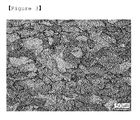
FIG. 3 is a photograph illustrating the welding heat-affected zone of Experimental Example 6 according to an embodiment of the present invention, which is observed using an optical microscope. - The inventors of the present invention confirmed that the components of steel should be properly controlled so as not to cause a problem, the decrease in the toughness of a welding zone by carbides having a network form, even though manganese, carbon, and chromium are included in large quantities to control the structure of steel to be austenite. As a result, the present inventors completed the present invention.
- In other words, according to the present invention, manganese, carbon, and chromium are added in order to secure austenite structures. At this time, in order to minimize the formation of carbides due to carbon in the case where a thermal cycle, such as a welding, is affected, it is confirmed that the toughness of a welding zone including a welding heat-affected zone may be sufficiently secured by controlling the content of carbon according to the content of manganese. In addition, the formation of the carbides may be actively suppressed by controlling the grain size of austenite of the welding zone or improving the grain stability of austenite by further adding an element, and thus, the toughness of the base metal and welding zone may be sufficiently secured. Based on this knowledge, the present invention was completed.
- Hereinafter, the present invention will be described. Firstly, the alloy composition of the steel according to the present invention will be described. Unless otherwise specifically noted, percentages used herein refer to weight percent (wt%).
- Carbon is an element that stabilizes austenite, and thus, is allowed to obtain austenite structures at room temperature. Carbon is an important element that is allowed to increase the yield strength of steel, and in particular, is soluble inside the austenite to increase work hardening, thereby securing high tensile strength or to secure the nonmagnetic properties generated by the austenite. It is preferable that the content of carbon is 0.8% or more to secure these effects. When the content of carbon is less than 0.8%, the stability of austenite is decreased, and it is difficult to obtain high strength due to the lack of solute carbon. On the contrary, when the content of carbon is too high, there are disadvantages in that it is especially difficult to suppress the formation of carbides at a welding heat-affected zone, and the productivity is decreased due to a low melting point. Therefore, it is preferable to control the content of carbon to be 1.5% or less. As such, in the present invention, it is preferable that the content of carbon is within a range of 0.8 to 1.5%, and it is preferable that the content of carbon is within the range of 1.0 to 1.5% to obtain high strength.
- Manganese is the most important element for an austenite stabilizer element, and is used for high manganese steel as the present invention. One object of the present invention is to obtain austenite as a major structure, and thus, it is preferable that the content of manganese is 15% or more. When the content of manganese is less than 15%, the stability of austenite is decreased, and thus, it is difficult to secure sufficient low temperature toughness. Meanwhile, when the content of manganese exceeds 22%, there are disadvantages in that corrosion resistance is decreased, a preparation process is difficult, and manufacturing costs is increased due to the addition of manganese, and also, the work hardening is decreased to decrease the tensile strength.
- Chromium is an element that effectively improves corrosion resistance and strength. In the present invention, the manganese in the above-described range is included to stabilize austenite, and generally, the manganese is allowed to decrease the corrosion resistance of steel, and in particular, in the content of manganese in the above-described range, the corrosion resistance is low, compared to general carbon steel. In order to solve these problems, in the present invention, both the corrosion resistance and strength are improved by adding 5% or less chromium. However, when the content of chromium exceeds 5 wt%, manufacturing costs is increased; carbides are also formed in accordance with the grain boundary along with the solute carbon in the material, thereby decreasing ductility, in particular, emulsion strain induced crack resistance; and ferrite is formed, and thus, it is difficult to secure austenite as a major structure. Therefore, it is preferable to control the content of chromium at5 wt% or less. Specifically, it is more preferable to add 2 wt% or more of the chromium in order to maximize the effect on improving corrosion resistance. As described above, it may be widely applied in fields requiring corrosion resistance by improving corrosion resistance through adding chromium.
- Molybdenum and boron are elements that are segregated into austenite grains, and increase stability of the grain. Generally, they control the phenomenon of precipitating the carbides in large quantities in the austenite grains due to low grain stability. When the content of molybdenum is less than 0.1%, the grain stability is not sufficiently increased, and thereby, the precipitation of carbide is not largely controlled. When the content of molybdenum exceeds 1%, manufacturing costs may be increased and the toughness may be decreased by giving the steel high strength. Therefore, the content of molybdenum is preferably in the range of 0.1 to 1%. In addition, when the content of boron is less than 0.001%, the grain stability is not sufficiently increased, and thus, the precipitation of carbides is not largely controlled. When the content of boron exceeds 0.02%, the toughness may be decreased by giving the steel high strength, and brittleness may be generated by BN precipitation. Therefore, the content of boron is preferably in the range of 0.01 to 0.02%.
- Titanium and nitrogen are elements that form TiN at a high temperature and prevent the movement of grain when growing an austenite crystal structure. In general, when the ratio of Ti : N is less than 3 : 1, TiN is crystallized in large crystals, thereby having a negative influence on crystal grain refinement. Therefore, it is preferable that the ratio of Ti : N is more than 3 : 1 by increasing the amount of N. When the amount of Ti is less than 0.01%, the amount of TiN is decreased, and thus, the grain growth is not greatly inhibited. Therefore, it is preferable to add Ti in the amount of 0.01% or more. When Ti exceeds 0.3%, oxide is formed at the time of manufacturing steel, and thus, the productivity is decreased. Therefore, the content thereof is preferably controlled to be 0.3% or less. In addition, when N is added in an amount of less than 0.003%, the amount of TiN is decreased, and thus, the grain growth is not largely inhibited. Therefore, it is preferable to add Ti in the amount of 0.003% or more. When it is added in an amount higher than 0.1%, strength is increased, while the ductility of the base metal is decreased. Therefore, it is preferable to add Ti in the amount of 0.1% or less.
- The balance component in the steel of the present invention is Fe, and the steel of the present invention may include impurities that are inevitably included at the time of preparation. Meanwhile, the steel of the present invention has the alloy composition as described above, and thus, may have excellent strength and low temperature toughness. However, in order to further improve the above-described effect by further suppressing the formation of carbide, Fe in the amount of 2% or more may be further included.
- Copper has very low solid solubility in carbide and is slowly diffused in austenite, and thus, has an effect on suppressing carbide. However, when it exceeds 2%, manufacturing costs may be increased, and furthermore, Cu may cause hot shortness that generates cracks in a steel plate at the time of preparation. Therefore, it is preferable that the amount thereof is controlled to be 2% or less.
- The steel of the present invention has an austenite microstructure, and furthermore, the welding heat-affected zone has 90% or more austenite by volume fraction. When the welding heat-affected zone has less than 90 vol% of the austenite fraction, wear resistance and impact toughness may be reduced. Meanwhile, the austenite fraction means that the carbide is included as one type of microstructure. In other words, when the carbide is not included in the content range of the microstructure, the steel of the present invention has an austenite single-phase structure. Meanwhile, the steel of the present invention does not mean only the material itself, and includes even the steel in a welded state that is applied in the final product.
- In addition, the steel of the present invention has preferably 100 µm or less of the grain size of the austenite (except 0). Sites in which the carbide may be precipitated are provided in large quantities by decreasing the grain size of the austenite, and thereby, the carbide may not be formed to be arborescent but formed as a diffused sphere. As a result, the toughness may be improved. As the austenite crystal grain is microscopic in size, it is favorable to secure the effect of the present invention, and thus, the lower limit thereof is not particularly limited.
- In addition, for the steel provided by the present invention, it is preferable to control the carbide formed at the welding heat-affected zone to be 10 vol% or less. When the fraction of the carbide exceeds 10 vol%, there may be a problem in that the toughness of the welding heat-affected zone may be reduced due to the carbide.
- The steel of the present invention that is provided as described above has 50 J or more of a Charpy impact value of a welding heat-affected zone at -40°C, and 450 MPa of a yield strength, which means excellent toughness of a welding heat-affected zone and high strength.
- Hereinafter, an embodiment of the method of preparing the austenite steel of the present invention will be described.
- Firstly, the steel slab having the alloy composition as described above is re-heated at 1050 to 1120°C. When the re-heating temperature exceeds 1120°C, the steel may be partially melted, and when the re-heating temperature is less than 1050°C, the carbide may not be melted, and thus, impact toughness may be decreased.
- The steel slab that is re-heated as described above is subjected to a hot finish rolling at 950°C or higher to obtain a hot rolling steel. When the temperature of the hot finished rolling is less than 950°C, recrystallization may be partially generated, and thus, a non-uniform crystal grain may be formed. Meanwhile, even though the steel of the present invention is subjected to the hot finished rolling in the range of the re-heating temperature as an austenitic steel, the structure and the physical properties to be desired may be secured without any problems. Therefore, the maximum of the hot finished rolling temperature is not particularly limited, and eventually, hot finish rolling may be performed in the range of 950 to 1120°C.
- Subsequently, the hot rolling steel is cooled to 500°C or less at the rate of 10 °C/s. When the rate of cooling is less than 10 °C/s or exceeds 500°C, the impact toughness may be decreased due to the precipitation of carbide. As long as the rate of cooling is 10 °C/s, the structure and physical properties to be described for the present invention may be secured without any problems. Therefore, the maximum thereof is not particularly limited, but due to facilities' limitations, it is difficult to exceed 100 °C/s. When the stopping of cooling is performed at 500°C or less, the structure and physical properties to be described for the present invention may be easily secured, and thus, the minimum thereof is not particularly limited. For example, the cooling may be performed to room temperature.
- Hereinafter, the present invention will be described with reference to Examples. However, the following Examples are not only for illustrating the present invention, and are not limited to the correct range of the present invention.
- The steel slab having the chemical compositions listed in the following Table 1 was re-heated at 1120°C, and then was subjected to a rough rolling at 1100°C. Afterwards, the steel slab thus obtained was subjected to a finish rolling at 950°C, and then was cooled to room temperature at the rate of 20 °C/s to manufacture hot rolling steel. The welding of the hot rolling steel thus manufactured was performed under the conditions illustrated in
FIG. 1. FIG. 1 illustrates a thermal cycle of HAZ in the case of welding steel having a thickness of 40 mm with heat input capacity of 20 KJ/cm using flux-cored arc welding (FCAW). For the welding heat-affected zone (HAZ) that was obtained as described above, the microstructure and mechanical physical properties were measured, and the results thereof are listed in Table 2.[Table 1] Items Chemical Composition (wt%) C Mn Cr Mo B Cu Experimental Example 1 1.21 19.1 3.2 0.3 0.005 - Experimental Example 2 1.41 21.4 4.2 0.8 0.012 1.0 Experimental Example 3 1. 07 16.9 2.1 0.5 0.008 - Experimental Example 4 1.18 17.2 1.7 0.9 0.016 - Experimental Example 5 1.34 20.6 3.8 0.7 0.007 - Comparative Example 1 1.28 19.2 2.4 0.02 0.008 - Comparative Example 2 1.12 17.8 3.1 0.4 0.0002 - [Table 2] Items Base Metal Yield Strength (MPa) Base Metal Tensile Strength (MPa) HAZ Austenite Fraction (vol%) HAZ Carbide Fraction (vol%) HAZ Impact Toughness (J, @-40°C) Experimental Example 1 531 1084 94.2 5.8 143 Experimental Example 2 580 1101 92.1 7.9 115 Experimental Example 3 485 997 98 2 168 Experimental Example 4 512 1035 97.3 2.7 171 Experimental Example 5 568 1094 93.5 6.5 104 Comparative Example 1 521 1021 82.7 17.3 12 Comparative Example 2 503 1002 85.2 14.8 25 - As listed in the above Tables 1 and 2, it could be confirmed that in the cases of Experimental Examples 1 to 5 that satisfied the alloy composition suggested by the present invention, excellent impact toughness, 100 J or more at -40°C, was secured by securing 90% or more of the austenite fraction of the welding heat-affected zone.
-
FIG. 2 is a photograph illustrating the welding heat-affected zone of Experimental Example 2 according to an embodiment of the present invention, which is observed using an optical microscope. As illustrated inFIG. 2 , it could be confirmed that the welding heat-affected zone of Experimental Example 2 included 90% or more of austenite. - However, it could be confirmed that in the cases of Comparative Examples 1 and 2 that did not satisfy the alloy composition suggested by the present invention, 10% or more of the carbide in the crystal grain system was precipitated, and thus, the proper amount of austenite fraction was not secured, thereby reducing the impact toughness to less than 50 J.
- The steel slab having the chemical compositions listed in Table 3 was re-heated at 1120°C, and then was subjected to a rough rolling at 1100°C. Afterwards, the steel slab thus obtained was subjected to finishing rolling at 950°C, and then was cooled to room temperature at a rate of 20 °C/s to manufacture a hot rolling steel. The welding of the hot rolling steel thus manufactured was performed under the conditions illustrated in
FIG. 1 . For the welding heat-affected zone (HAZ) that was obtained as described above, the microstructure, the size of crystal grain, and mechanical physical properties were measured, and the results thereof are listed in Table 4.[Table 3] Items Chemical Composition (wt%) C Mn Cr Ti N Cu Experimental Example 6 0.87 19.3 2.3 0.05 0.009 - Experimental Example 7 1.23 20.5 3.5 0.12 0.03 - Experimental Example 8 1.35 18.7 1.6 0.21 0.06 0.5 Experimental Example 9 0.99 17.6 4.2 0.18 0.04 - Experimental Example 10 1.12 21.1 3.1 0.09 0.02 - Comparative Example 3 1.33 20.3 1.8 0.002 0.06 - Comparative Example 4 1.02 18.2 3.6 0.23 0.001 - [Table 4] Items Base Metal Yield Strength (MPa) Base Metal Tensile Strength (MPa) HAZ Austenite Fraction (vol%) Size of Austenite Crystal Grain (µm) HAZ Carbide Fraction (vol%) HAZ Impact Toughness (J, @-40°C) Experimental Example 6 458 923 97.1 82 2.9 133 Experimental Example 7 533 1067 93.5 71 6.5 147 Experimental Example 8 562 1103 95.5 62 4.5 165 Experimental Example 9 488 1055 93.7 68 6.3 174 Experimental Example 10 502 1044 96.7 82 3.3 121 Comparative Example 3 544 1070 85.4 207 14.6 33 Comparative Example 4 496 1008 83.1 175 16.9 42 - As listed in the above Tables 3 and 4, it could be confirmed that in the cases of Experimental Examples 6 to 10 that satisfied the alloy composition suggested by the present invention, micro crystal grains of 100 µm or less were included by securing 90% or more of the austenite fraction of the welding heat-affected zone, thereby securing excellent impact toughness, 100 J or more at -40°C.
-
FIG. 3 is a photograph illustrating the welding heat-affected zone of Experimental Example 6 according to an embodiment of the present invention, which is observed using an optical microscope. As illustrated inFIG. 3 , it could be confirmed that the welding heat-affected zone of Experimental Example 1 included 90% or more austenite. - However, it could be confirmed that in the cases of Comparative Examples 3 and 4 that did not satisfy the alloy composition suggested by the present invention, the austenite fraction suggested by the present invention was not secured, and the austenite crystal grains were grown in an amount higher than 100 µm so as to precipitate 10% or more of the carbide in the crystal grain system, thereby reducing the impact toughness to be less than 50 J.
Claims (7)
- High strength austenitic steel having remarkable toughness in a welding heat-affected zone, comprising 0.8-1.5 wt% of C, 15-22 wt% of Mn, 5 wt% or less of Cr (except 0), and the balance of Fe and other inevitable impurities, and further comprising at least one of (a) and (b),
wherein the microstructure of a welding heat-affected zone comprises 90% or more of austenite by volume fraction:(a) Mo: 0.1-1 wt% and B: 0.001-0.02 wt%(b) Ti: 0.01-0.3 wt% and N: 0.003-0.1 wt%. - The high strength austenitic steel of claim 1, wherein the steel further includes 2 wt% or less of Cu.
- The high strength austenitic steel of claim 1, wherein the size of the austenite crystal grain is 100 µm or less.
- The high strength austenitic steel of claim 1, wherein, in the welding heat-affected zone, a carbide is formed in the amount of 10% or less by volume fraction.
- The high strength austenitic steel of claim 1, wherein the welding heat-affected zone has 50 J or more of a Charpy impact value at -40°C.
- The high strength austenitic steel of claim 1, wherein the steel has 450 MPa or more of yield strength.
- A method of preparing high strength austenitic steel having remarkable toughness in a welding heat-affected zone, the method comprising:re-heating a steel slab, including 0.8-1.5 wt% of C, 15-22 wt% of Mn, 5 wt% or less of Cr (except 0), and the balance of Fe and other inevitable impurities, and further including at least one of (a) and (b), at 1050 to 1120°C;subjecting the re-heated steel slab to a hot finished rolling at 950°C or higher to obtain a hot rolling steel; andcooling the hot rolling steel at the rate of 10°C/s or more to be 500°C or less:(a) Mo: 0.1-1 wt% and B: 0.001-0.02 wt%(b) Ti: 0.01-0.3 wt% and N: 0.003-0.1 wt%.
Applications Claiming Priority (3)
| Application Number | Priority Date | Filing Date | Title |
|---|---|---|---|
| KR20120153919A KR101482343B1 (en) | 2012-12-26 | 2012-12-26 | High strength austenitic steel having excellent toughness of heat affected zone and method for manufacturing the same |
| KR20120153920A KR101482344B1 (en) | 2012-12-26 | 2012-12-26 | High strength austenitic steel having excellent toughness of heat affected zone and method for manufacturing the same |
| PCT/KR2013/012083 WO2014104706A1 (en) | 2012-12-26 | 2013-12-24 | High strength austenitic-based steel with remarkable toughness of welding heat-affected zone and preparation method therefor |
Publications (3)
| Publication Number | Publication Date |
|---|---|
| EP2940173A1 true EP2940173A1 (en) | 2015-11-04 |
| EP2940173A4 EP2940173A4 (en) | 2016-08-10 |
| EP2940173B1 EP2940173B1 (en) | 2019-11-06 |
Family
ID=51021676
Family Applications (1)
| Application Number | Title | Priority Date | Filing Date |
|---|---|---|---|
| EP13867247.2A Active EP2940173B1 (en) | 2012-12-26 | 2013-12-24 | High strength austenitic-based steel with remarkable toughness of welding heat-affected zone and preparation method therefor |
Country Status (6)
| Country | Link |
|---|---|
| US (1) | US10041156B2 (en) |
| EP (1) | EP2940173B1 (en) |
| JP (1) | JP6140836B2 (en) |
| CN (1) | CN104884661B (en) |
| CA (1) | CA2896534C (en) |
| WO (1) | WO2014104706A1 (en) |
Cited By (1)
| Publication number | Priority date | Publication date | Assignee | Title |
|---|---|---|---|---|
| EP3239328A4 (en) * | 2014-12-24 | 2017-12-13 | Posco | Steel sheet for low-temperature service having excellent surface processing quality and method for manufacturing same |
Families Citing this family (17)
| Publication number | Priority date | Publication date | Assignee | Title |
|---|---|---|---|---|
| US20140261918A1 (en) * | 2013-03-15 | 2014-09-18 | Exxonmobil Research And Engineering Company | Enhanced wear resistant steel and methods of making the same |
| KR101726081B1 (en) | 2015-12-04 | 2017-04-12 | 주식회사 포스코 | Steel wire rod having excellent low temperature inpact toughness and method for manufacturing the same |
| KR101889187B1 (en) * | 2015-12-23 | 2018-08-16 | 주식회사 포스코 | Nonmagnetic steel having superior hot workability and method for manufacturing the same |
| KR101940874B1 (en) | 2016-12-22 | 2019-01-21 | 주식회사 포스코 | High manganese steel with superior low temperature toughness and yield strength and method for manufacturing the same |
| KR102453321B1 (en) * | 2018-03-29 | 2022-10-11 | 닛폰세이테츠 가부시키가이샤 | Austenitic wear-resistant steel sheet |
| US11326237B2 (en) | 2018-03-29 | 2022-05-10 | Nippon Steel Corporation | Austenitic wear-resistant steel plate |
| AU2019340624B2 (en) * | 2018-09-12 | 2021-11-11 | Jfe Steel Corporation | Steel material and method of producing same |
| WO2020085851A1 (en) * | 2018-10-25 | 2020-04-30 | 주식회사 포스코 | Cryogenic austenitic high manganese steel having excellent surface quality and manufacturing method therefor |
| CN109338233A (en) * | 2018-12-12 | 2019-02-15 | 国家电投集团黄河上游水电开发有限责任公司 | Alloy material for carbon kneader static reamer for aluminum |
| CN114787407B (en) * | 2019-11-07 | 2023-10-17 | 伟尔矿物澳大利亚私人有限公司 | Alloy for high stress gouging abrasion |
| KR102488498B1 (en) * | 2019-12-19 | 2023-01-19 | 주식회사 포스코 | Austenite based steel for disc brake having execellent wear resistance at high temperature and method for manufacturing the same |
| JP7385831B2 (en) * | 2020-09-25 | 2023-11-24 | Jfeスチール株式会社 | Welded joint and its manufacturing method |
| EP4265773A4 (en) * | 2020-12-21 | 2024-05-29 | POSCO Co., Ltd | HIGH MANGANESE AUSTENITIC STEEL FOR DISC BRAKES |
| CN116745454A (en) * | 2020-12-21 | 2023-09-12 | 浦项股份有限公司 | Austenitic high manganese steel for disc brakes |
| KR20230094814A (en) * | 2021-12-21 | 2023-06-28 | 주식회사 포스코 | Welded steel pipe for slurry transporting and manufacturing method for the same |
| CN116079278B (en) * | 2023-04-06 | 2023-12-08 | 中国科学院合肥物质科学研究院 | High-energy-absorption high-manganese steel solid welding wire and welding process thereof |
| CN116804254B (en) * | 2023-06-16 | 2025-11-07 | 中国科学院金属研究所 | Austenitic steel, preparation method thereof and superconducting coil armor |
Family Cites Families (29)
| Publication number | Priority date | Publication date | Assignee | Title |
|---|---|---|---|---|
| MX144416A (en) | 1975-09-12 | 1981-10-13 | Abex Corp | IMPROVED METHOD FOR WELDING STEEL SECTIONS |
| US4130418A (en) | 1977-10-03 | 1978-12-19 | Raufoss Ammunisjonsfabrikker A/S | Austenitic wear-resistant steel |
| NO146959C (en) | 1980-07-07 | 1984-05-08 | Raufoss Ammunisjonsfabrikker | AUSTENITIC Wear-resistant STEEL |
| JPS62202023A (en) * | 1986-02-28 | 1987-09-05 | Nippon Kokan Kk <Nkk> | Manufacture of high manganese nonmagnetic steel having high strength and high yield ratio |
| JPS62238353A (en) | 1986-04-09 | 1987-10-19 | Nippon Kokan Kk <Nkk> | High-manganese austenitic steel excellent in strength at high temperature |
| JPH0519696Y2 (en) * | 1987-09-14 | 1993-05-24 | ||
| JPH01142058A (en) * | 1987-11-30 | 1989-06-02 | Furukawa Co Ltd | Austenitic impact-resistant and wear-resistant cast steel |
| FI904500A7 (en) | 1990-09-12 | 1992-03-13 | Lokomo Oy | SLITSTARKET STAOL OCH FOERFARANDE FOER FRAMSTAELLNING AV DETTA. |
| WO1993013233A1 (en) * | 1991-12-30 | 1993-07-08 | Pohang Iron & Steel Co., Ltd. | Austenitic high manganese steel having superior formability, strength and weldability, and manufacturing process therefor |
| WO1995020686A1 (en) | 1992-06-26 | 1995-08-03 | Shinhokoku Steel Corporation | Wear-resisting high-manganese cast steel |
| CZ283449B6 (en) | 1993-06-10 | 1998-04-15 | Přerovské Strojírny, A.S. | High-alloy abrasion-resistant manganese steel |
| JP3245039B2 (en) | 1996-01-23 | 2002-01-07 | 株式会社神戸製鋼所 | High wear resistant high Mn cast steel and method for producing the same |
| JP3589797B2 (en) | 1996-06-21 | 2004-11-17 | 株式会社神戸製鋼所 | Wear resistant high Mn cast steel |
| FR2829775B1 (en) | 2001-09-20 | 2003-12-26 | Usinor | PROCESS FOR THE MANUFACTURE OF ROLLED AND WELDED TUBES COMPRISING A FINAL STRETCHING OR HYDROFORMING STAGE AND WELDED TUBE THUS OBTAINED |
| FR2857980B1 (en) | 2003-07-22 | 2006-01-13 | Usinor | PROCESS FOR MANUFACTURING HIGH-STRENGTH FERRO-CARBON-MANGANESE AUSTENITIC STEEL SHEET, EXCELLENT TENACITY AND COLD SHAPINGABILITY, AND SHEETS THUS PRODUCED |
| FR2876708B1 (en) * | 2004-10-20 | 2006-12-08 | Usinor Sa | PROCESS FOR MANUFACTURING COLD-ROLLED CARBON-MANGANESE AUSTENITIC STEEL TILES WITH HIGH CORROSION RESISTANT MECHANICAL CHARACTERISTICS AND SHEETS THUS PRODUCED |
| FR2878257B1 (en) * | 2004-11-24 | 2007-01-12 | Usinor Sa | PROCESS FOR MANUFACTURING AUSTENITIC STEEL SHEET, FER-CARBON-MANGANIZED WITH VERY HIGH RESISTANCE AND ELONGATION CHARACTERISTICS, AND EXCELLENT HOMOGENEITY |
| JP4464811B2 (en) | 2004-12-22 | 2010-05-19 | 新日本製鐵株式会社 | Manufacturing method of high strength and low specific gravity steel sheet with excellent ductility |
| FR2881144B1 (en) | 2005-01-21 | 2007-04-06 | Usinor Sa | PROCESS FOR MANUFACTURING FERRO-CARBON-MANGANIZED AUSTENITIC STEEL TILES HAVING HIGH RESISTANCE TO DELAYED CRACKING, AND SHEETS THUS PRODUCED |
| JP4529872B2 (en) * | 2005-11-04 | 2010-08-25 | 住友金属工業株式会社 | High Mn steel material and manufacturing method thereof |
| KR100742833B1 (en) * | 2005-12-24 | 2007-07-25 | 주식회사 포스코 | High manganese hot-dip galvanized steel sheet with excellent corrosion resistance and manufacturing method |
| KR100742823B1 (en) * | 2005-12-26 | 2007-07-25 | 주식회사 포스코 | High manganese steel plate with excellent surface quality and plating property, plated steel sheet using the same and manufacturing method thereof |
| KR100851158B1 (en) | 2006-12-27 | 2008-08-08 | 주식회사 포스코 | High manganese high strength steel plate with excellent impact characteristics and its manufacturing method |
| DE102008056844A1 (en) * | 2008-11-12 | 2010-06-02 | Voestalpine Stahl Gmbh | Manganese steel strip and method of making the same |
| KR20110009792A (en) | 2009-07-23 | 2011-01-31 | 주식회사 포스코 | Austenitic steel sheet excellent in high temperature ductility and delayed fracture resistance and its manufacturing method |
| EP2520684B9 (en) | 2009-12-28 | 2017-01-04 | Posco | Austenite steel material having superior ductility |
| EP2402472B2 (en) * | 2010-07-02 | 2017-11-15 | ThyssenKrupp Steel Europe AG | High-tensile, cold formable steel and flat steel product composed of such steel |
| KR20120065464A (en) | 2010-12-13 | 2012-06-21 | 주식회사 포스코 | Austenitic lightweight high strength hot rolled steel sheet having excellent yield-ratio and ductility and method for manufacturing the same |
| DE102011000089A1 (en) * | 2011-01-11 | 2012-07-12 | Thyssenkrupp Steel Europe Ag | Method for producing a hot rolled flat steel product |
-
2013
- 2013-12-24 US US14/758,203 patent/US10041156B2/en active Active
- 2013-12-24 WO PCT/KR2013/012083 patent/WO2014104706A1/en not_active Ceased
- 2013-12-24 EP EP13867247.2A patent/EP2940173B1/en active Active
- 2013-12-24 JP JP2015550309A patent/JP6140836B2/en active Active
- 2013-12-24 CN CN201380068614.7A patent/CN104884661B/en active Active
- 2013-12-24 CA CA2896534A patent/CA2896534C/en active Active
Cited By (1)
| Publication number | Priority date | Publication date | Assignee | Title |
|---|---|---|---|---|
| EP3239328A4 (en) * | 2014-12-24 | 2017-12-13 | Posco | Steel sheet for low-temperature service having excellent surface processing quality and method for manufacturing same |
Also Published As
| Publication number | Publication date |
|---|---|
| CN104884661A (en) | 2015-09-02 |
| CA2896534A1 (en) | 2014-07-03 |
| WO2014104706A1 (en) | 2014-07-03 |
| EP2940173B1 (en) | 2019-11-06 |
| JP2016507648A (en) | 2016-03-10 |
| EP2940173A4 (en) | 2016-08-10 |
| US10041156B2 (en) | 2018-08-07 |
| JP6140836B2 (en) | 2017-05-31 |
| CN104884661B (en) | 2017-05-31 |
| CA2896534C (en) | 2021-11-09 |
| US20150354037A1 (en) | 2015-12-10 |
Similar Documents
| Publication | Publication Date | Title |
|---|---|---|
| EP2940173B1 (en) | High strength austenitic-based steel with remarkable toughness of welding heat-affected zone and preparation method therefor | |
| EP2520684B9 (en) | Austenite steel material having superior ductility | |
| EP2799581B1 (en) | Wear resistant austenitic steel having superior machinability and toughness in weld heat affected zones thereof and method for producing same | |
| EP3561107A1 (en) | Low-yield ratio steel sheet having excellent low-temperature toughness and method for manufacturing same | |
| EP3730655B1 (en) | High strength steel plate and manufacturing method therefor | |
| JP2021509144A (en) | Structural high-strength steel with excellent fatigue crack propagation suppression characteristics and its manufacturing method | |
| KR101482343B1 (en) | High strength austenitic steel having excellent toughness of heat affected zone and method for manufacturing the same | |
| KR101271968B1 (en) | Steel sheet for high temperature applications having excellent property after post weld heat treatment and method for manufacturing the same | |
| EP3395997A1 (en) | Low-yield-ratio type high-strength steel, and manufacturing method therefor | |
| KR101546154B1 (en) | Oil tubular country goods and method of manufacturing the same | |
| KR20150075293A (en) | Austenitic steel having excellent strain hardening rate as well as abrasion resistance properties and method for manufacturing the same | |
| KR101482344B1 (en) | High strength austenitic steel having excellent toughness of heat affected zone and method for manufacturing the same | |
| KR101639845B1 (en) | High strength thick sheet with cutting crack resistance and method for manufacturing the same | |
| CN117821843A (en) | A composite precipitation strengthened ultra-high strength stainless steel bar and preparation method thereof | |
| KR101382950B1 (en) | Austenitic wear resistant steel with excellent toughness of heat affected zone | |
| KR101568526B1 (en) | Austenitic steel having excellent toughness in heat affected zone | |
| KR101482338B1 (en) | Austenitic wear resistant steel having superior toughness in weld heat-affected zone and machinability | |
| KR101715485B1 (en) | Steel plate with high strength and method of manufacturing the same | |
| KR20160071529A (en) | High strength and high toughness austenite stainless steel with reduced nickel content | |
| KR20150075333A (en) | Low temperature steel plates with good machineability and method for production thereof | |
| JPH07102318A (en) | Production of high strength non-magnetic steel parts excellent in corrosion resistance | |
| EP3088554A1 (en) | Steel having excellent weldability and impact toughness of welding zone | |
| KR20150075317A (en) | Low temperature steels with excellent strength in heat affected zone | |
| KR20130127190A (en) | Ultra-high strength steel sheet of 1000mpa grade having excellent welded zone toughness and method for manufacturing the same | |
| KR20140010729A (en) | High tensile steel and preparing method thereof |
Legal Events
| Date | Code | Title | Description |
|---|---|---|---|
| PUAI | Public reference made under article 153(3) epc to a published international application that has entered the european phase |
Free format text: ORIGINAL CODE: 0009012 |
|
| 17P | Request for examination filed |
Effective date: 20150625 |
|
| AK | Designated contracting states |
Kind code of ref document: A1 Designated state(s): AL AT BE BG CH CY CZ DE DK EE ES FI FR GB GR HR HU IE IS IT LI LT LU LV MC MK MT NL NO PL PT RO RS SE SI SK SM TR |
|
| AX | Request for extension of the european patent |
Extension state: BA ME |
|
| RIC1 | Information provided on ipc code assigned before grant |
Ipc: C22C 38/22 20060101ALI20160224BHEP Ipc: C22C 38/32 20060101ALI20160224BHEP Ipc: C22C 38/28 20060101ALI20160224BHEP Ipc: C22C 38/00 20060101ALI20160224BHEP Ipc: C22C 38/20 20060101ALI20160224BHEP Ipc: C22C 38/38 20060101AFI20160224BHEP Ipc: C21D 6/00 20060101ALI20160224BHEP Ipc: C21D 8/00 20060101ALI20160224BHEP |
|
| DAX | Request for extension of the european patent (deleted) | ||
| A4 | Supplementary search report drawn up and despatched |
Effective date: 20160707 |
|
| RIC1 | Information provided on ipc code assigned before grant |
Ipc: C22C 38/00 20060101ALI20160701BHEP Ipc: C22C 38/38 20060101AFI20160701BHEP Ipc: C21D 6/00 20060101ALI20160701BHEP Ipc: C22C 38/32 20060101ALI20160701BHEP Ipc: C22C 38/28 20060101ALI20160701BHEP Ipc: C22C 38/22 20060101ALI20160701BHEP Ipc: C22C 38/20 20060101ALI20160701BHEP Ipc: C21D 8/00 20060101ALI20160701BHEP |
|
| REG | Reference to a national code |
Ref country code: DE Ref legal event code: R079 Ref document number: 602013062718 Country of ref document: DE Free format text: PREVIOUS MAIN CLASS: C22C0038000000 Ipc: C22C0038380000 |
|
| GRAP | Despatch of communication of intention to grant a patent |
Free format text: ORIGINAL CODE: EPIDOSNIGR1 |
|
| STAA | Information on the status of an ep patent application or granted ep patent |
Free format text: STATUS: GRANT OF PATENT IS INTENDED |
|
| RIC1 | Information provided on ipc code assigned before grant |
Ipc: C21D 6/00 20060101ALI20190502BHEP Ipc: C21D 8/02 20060101ALI20190502BHEP Ipc: C22C 38/22 20060101ALI20190502BHEP Ipc: C21D 8/04 20060101ALI20190502BHEP Ipc: C22C 38/38 20060101AFI20190502BHEP Ipc: C22C 38/00 20060101ALI20190502BHEP Ipc: C22C 38/32 20060101ALI20190502BHEP Ipc: C22C 38/20 20060101ALI20190502BHEP Ipc: C21D 8/00 20060101ALI20190502BHEP Ipc: C22C 38/28 20060101ALI20190502BHEP |
|
| INTG | Intention to grant announced |
Effective date: 20190521 |
|
| RIN1 | Information on inventor provided before grant (corrected) |
Inventor name: LEE, HONG-JU Inventor name: KIM, YONG-JIN Inventor name: PARK, IN-GYU Inventor name: LEE, HAK-CHEOL Inventor name: SUH, IN-SHIK Inventor name: LEE, SOON-GI |
|
| GRAS | Grant fee paid |
Free format text: ORIGINAL CODE: EPIDOSNIGR3 |
|
| GRAA | (expected) grant |
Free format text: ORIGINAL CODE: 0009210 |
|
| STAA | Information on the status of an ep patent application or granted ep patent |
Free format text: STATUS: THE PATENT HAS BEEN GRANTED |
|
| AK | Designated contracting states |
Kind code of ref document: B1 Designated state(s): AL AT BE BG CH CY CZ DE DK EE ES FI FR GB GR HR HU IE IS IT LI LT LU LV MC MK MT NL NO PL PT RO RS SE SI SK SM TR |
|
| REG | Reference to a national code |
Ref country code: GB Ref legal event code: FG4D |
|
| REG | Reference to a national code |
Ref country code: CH Ref legal event code: EP Ref country code: AT Ref legal event code: REF Ref document number: 1198809 Country of ref document: AT Kind code of ref document: T Effective date: 20191115 |
|
| REG | Reference to a national code |
Ref country code: DE Ref legal event code: R096 Ref document number: 602013062718 Country of ref document: DE |
|
| REG | Reference to a national code |
Ref country code: IE Ref legal event code: FG4D |
|
| REG | Reference to a national code |
Ref country code: NL Ref legal event code: FP |
|
| REG | Reference to a national code |
Ref country code: LT Ref legal event code: MG4D |
|
| PG25 | Lapsed in a contracting state [announced via postgrant information from national office to epo] |
Ref country code: PT Free format text: LAPSE BECAUSE OF FAILURE TO SUBMIT A TRANSLATION OF THE DESCRIPTION OR TO PAY THE FEE WITHIN THE PRESCRIBED TIME-LIMIT Effective date: 20200306 Ref country code: FI Free format text: LAPSE BECAUSE OF FAILURE TO SUBMIT A TRANSLATION OF THE DESCRIPTION OR TO PAY THE FEE WITHIN THE PRESCRIBED TIME-LIMIT Effective date: 20191106 Ref country code: SE Free format text: LAPSE BECAUSE OF FAILURE TO SUBMIT A TRANSLATION OF THE DESCRIPTION OR TO PAY THE FEE WITHIN THE PRESCRIBED TIME-LIMIT Effective date: 20191106 Ref country code: LV Free format text: LAPSE BECAUSE OF FAILURE TO SUBMIT A TRANSLATION OF THE DESCRIPTION OR TO PAY THE FEE WITHIN THE PRESCRIBED TIME-LIMIT Effective date: 20191106 Ref country code: LT Free format text: LAPSE BECAUSE OF FAILURE TO SUBMIT A TRANSLATION OF THE DESCRIPTION OR TO PAY THE FEE WITHIN THE PRESCRIBED TIME-LIMIT Effective date: 20191106 Ref country code: PL Free format text: LAPSE BECAUSE OF FAILURE TO SUBMIT A TRANSLATION OF THE DESCRIPTION OR TO PAY THE FEE WITHIN THE PRESCRIBED TIME-LIMIT Effective date: 20191106 Ref country code: GR Free format text: LAPSE BECAUSE OF FAILURE TO SUBMIT A TRANSLATION OF THE DESCRIPTION OR TO PAY THE FEE WITHIN THE PRESCRIBED TIME-LIMIT Effective date: 20200207 Ref country code: NO Free format text: LAPSE BECAUSE OF FAILURE TO SUBMIT A TRANSLATION OF THE DESCRIPTION OR TO PAY THE FEE WITHIN THE PRESCRIBED TIME-LIMIT Effective date: 20200206 Ref country code: BG Free format text: LAPSE BECAUSE OF FAILURE TO SUBMIT A TRANSLATION OF THE DESCRIPTION OR TO PAY THE FEE WITHIN THE PRESCRIBED TIME-LIMIT Effective date: 20200206 |
|
| PG25 | Lapsed in a contracting state [announced via postgrant information from national office to epo] |
Ref country code: IS Free format text: LAPSE BECAUSE OF FAILURE TO SUBMIT A TRANSLATION OF THE DESCRIPTION OR TO PAY THE FEE WITHIN THE PRESCRIBED TIME-LIMIT Effective date: 20200306 Ref country code: HR Free format text: LAPSE BECAUSE OF FAILURE TO SUBMIT A TRANSLATION OF THE DESCRIPTION OR TO PAY THE FEE WITHIN THE PRESCRIBED TIME-LIMIT Effective date: 20191106 Ref country code: RS Free format text: LAPSE BECAUSE OF FAILURE TO SUBMIT A TRANSLATION OF THE DESCRIPTION OR TO PAY THE FEE WITHIN THE PRESCRIBED TIME-LIMIT Effective date: 20191106 |
|
| PG25 | Lapsed in a contracting state [announced via postgrant information from national office to epo] |
Ref country code: AL Free format text: LAPSE BECAUSE OF FAILURE TO SUBMIT A TRANSLATION OF THE DESCRIPTION OR TO PAY THE FEE WITHIN THE PRESCRIBED TIME-LIMIT Effective date: 20191106 |
|
| PG25 | Lapsed in a contracting state [announced via postgrant information from national office to epo] |
Ref country code: RO Free format text: LAPSE BECAUSE OF FAILURE TO SUBMIT A TRANSLATION OF THE DESCRIPTION OR TO PAY THE FEE WITHIN THE PRESCRIBED TIME-LIMIT Effective date: 20191106 Ref country code: DK Free format text: LAPSE BECAUSE OF FAILURE TO SUBMIT A TRANSLATION OF THE DESCRIPTION OR TO PAY THE FEE WITHIN THE PRESCRIBED TIME-LIMIT Effective date: 20191106 Ref country code: EE Free format text: LAPSE BECAUSE OF FAILURE TO SUBMIT A TRANSLATION OF THE DESCRIPTION OR TO PAY THE FEE WITHIN THE PRESCRIBED TIME-LIMIT Effective date: 20191106 Ref country code: ES Free format text: LAPSE BECAUSE OF FAILURE TO SUBMIT A TRANSLATION OF THE DESCRIPTION OR TO PAY THE FEE WITHIN THE PRESCRIBED TIME-LIMIT Effective date: 20191106 Ref country code: CZ Free format text: LAPSE BECAUSE OF FAILURE TO SUBMIT A TRANSLATION OF THE DESCRIPTION OR TO PAY THE FEE WITHIN THE PRESCRIBED TIME-LIMIT Effective date: 20191106 |
|
| REG | Reference to a national code |
Ref country code: CH Ref legal event code: PL |
|
| REG | Reference to a national code |
Ref country code: DE Ref legal event code: R097 Ref document number: 602013062718 Country of ref document: DE |
|
| REG | Reference to a national code |
Ref country code: AT Ref legal event code: MK05 Ref document number: 1198809 Country of ref document: AT Kind code of ref document: T Effective date: 20191106 |
|
| REG | Reference to a national code |
Ref country code: BE Ref legal event code: MM Effective date: 20191231 |
|
| PG25 | Lapsed in a contracting state [announced via postgrant information from national office to epo] |
Ref country code: SM Free format text: LAPSE BECAUSE OF FAILURE TO SUBMIT A TRANSLATION OF THE DESCRIPTION OR TO PAY THE FEE WITHIN THE PRESCRIBED TIME-LIMIT Effective date: 20191106 Ref country code: SK Free format text: LAPSE BECAUSE OF FAILURE TO SUBMIT A TRANSLATION OF THE DESCRIPTION OR TO PAY THE FEE WITHIN THE PRESCRIBED TIME-LIMIT Effective date: 20191106 Ref country code: MC Free format text: LAPSE BECAUSE OF FAILURE TO SUBMIT A TRANSLATION OF THE DESCRIPTION OR TO PAY THE FEE WITHIN THE PRESCRIBED TIME-LIMIT Effective date: 20191106 |
|
| PLBE | No opposition filed within time limit |
Free format text: ORIGINAL CODE: 0009261 |
|
| STAA | Information on the status of an ep patent application or granted ep patent |
Free format text: STATUS: NO OPPOSITION FILED WITHIN TIME LIMIT |
|
| 26N | No opposition filed |
Effective date: 20200807 |
|
| PG25 | Lapsed in a contracting state [announced via postgrant information from national office to epo] |
Ref country code: LU Free format text: LAPSE BECAUSE OF NON-PAYMENT OF DUE FEES Effective date: 20191224 Ref country code: IE Free format text: LAPSE BECAUSE OF NON-PAYMENT OF DUE FEES Effective date: 20191224 |
|
| PG25 | Lapsed in a contracting state [announced via postgrant information from national office to epo] |
Ref country code: BE Free format text: LAPSE BECAUSE OF NON-PAYMENT OF DUE FEES Effective date: 20191231 Ref country code: CH Free format text: LAPSE BECAUSE OF NON-PAYMENT OF DUE FEES Effective date: 20191231 Ref country code: AT Free format text: LAPSE BECAUSE OF FAILURE TO SUBMIT A TRANSLATION OF THE DESCRIPTION OR TO PAY THE FEE WITHIN THE PRESCRIBED TIME-LIMIT Effective date: 20191106 Ref country code: LI Free format text: LAPSE BECAUSE OF NON-PAYMENT OF DUE FEES Effective date: 20191231 Ref country code: SI Free format text: LAPSE BECAUSE OF FAILURE TO SUBMIT A TRANSLATION OF THE DESCRIPTION OR TO PAY THE FEE WITHIN THE PRESCRIBED TIME-LIMIT Effective date: 20191106 |
|
| PG25 | Lapsed in a contracting state [announced via postgrant information from national office to epo] |
Ref country code: IT Free format text: LAPSE BECAUSE OF FAILURE TO SUBMIT A TRANSLATION OF THE DESCRIPTION OR TO PAY THE FEE WITHIN THE PRESCRIBED TIME-LIMIT Effective date: 20191106 |
|
| PG25 | Lapsed in a contracting state [announced via postgrant information from national office to epo] |
Ref country code: CY Free format text: LAPSE BECAUSE OF FAILURE TO SUBMIT A TRANSLATION OF THE DESCRIPTION OR TO PAY THE FEE WITHIN THE PRESCRIBED TIME-LIMIT Effective date: 20191106 |
|
| PG25 | Lapsed in a contracting state [announced via postgrant information from national office to epo] |
Ref country code: MT Free format text: LAPSE BECAUSE OF FAILURE TO SUBMIT A TRANSLATION OF THE DESCRIPTION OR TO PAY THE FEE WITHIN THE PRESCRIBED TIME-LIMIT Effective date: 20191106 Ref country code: HU Free format text: LAPSE BECAUSE OF FAILURE TO SUBMIT A TRANSLATION OF THE DESCRIPTION OR TO PAY THE FEE WITHIN THE PRESCRIBED TIME-LIMIT; INVALID AB INITIO Effective date: 20131224 |
|
| PG25 | Lapsed in a contracting state [announced via postgrant information from national office to epo] |
Ref country code: TR Free format text: LAPSE BECAUSE OF FAILURE TO SUBMIT A TRANSLATION OF THE DESCRIPTION OR TO PAY THE FEE WITHIN THE PRESCRIBED TIME-LIMIT Effective date: 20191106 |
|
| PG25 | Lapsed in a contracting state [announced via postgrant information from national office to epo] |
Ref country code: MK Free format text: LAPSE BECAUSE OF FAILURE TO SUBMIT A TRANSLATION OF THE DESCRIPTION OR TO PAY THE FEE WITHIN THE PRESCRIBED TIME-LIMIT Effective date: 20191106 |
|
| REG | Reference to a national code |
Ref country code: DE Ref legal event code: R081 Ref document number: 602013062718 Country of ref document: DE Owner name: POSCO CO., LTD, POHANG-SI, KR Free format text: FORMER OWNER: POSCO, POHANG-SI, GYEONGSANGBUK-DO, KR Ref country code: DE Ref legal event code: R081 Ref document number: 602013062718 Country of ref document: DE Owner name: POSCO CO., LTD, POHANG- SI, KR Free format text: FORMER OWNER: POSCO, POHANG-SI, GYEONGSANGBUK-DO, KR Ref country code: DE Ref legal event code: R081 Ref document number: 602013062718 Country of ref document: DE Owner name: POSCO HOLDINGS INC., KR Free format text: FORMER OWNER: POSCO, POHANG-SI, GYEONGSANGBUK-DO, KR |
|
| REG | Reference to a national code |
Ref country code: NL Ref legal event code: PD Owner name: POSCO HOLDINGS INC.; KR Free format text: DETAILS ASSIGNMENT: CHANGE OF OWNER(S), CHANGE OF LEGAL ENTITY; FORMER OWNER NAME: POSCO Effective date: 20221026 |
|
| REG | Reference to a national code |
Ref country code: GB Ref legal event code: 732E Free format text: REGISTERED BETWEEN 20221027 AND 20221102 |
|
| REG | Reference to a national code |
Ref country code: NL Ref legal event code: PD Owner name: POSCO CO., LTD; KO Free format text: DETAILS ASSIGNMENT: CHANGE OF OWNER(S), ASSIGNMENT; FORMER OWNER NAME: POSCO Effective date: 20221109 |
|
| REG | Reference to a national code |
Ref country code: DE Ref legal event code: R081 Ref document number: 602013062718 Country of ref document: DE Owner name: POSCO CO., LTD, POHANG-SI, KR Free format text: FORMER OWNER: POSCO HOLDINGS INC., SEOUL, KR Ref country code: DE Ref legal event code: R081 Ref document number: 602013062718 Country of ref document: DE Owner name: POSCO CO., LTD, POHANG- SI, KR Free format text: FORMER OWNER: POSCO HOLDINGS INC., SEOUL, KR |
|
| PGFP | Annual fee paid to national office [announced via postgrant information from national office to epo] |
Ref country code: NL Payment date: 20251105 Year of fee payment: 13 |
|
| PGFP | Annual fee paid to national office [announced via postgrant information from national office to epo] |
Ref country code: DE Payment date: 20251105 Year of fee payment: 13 |
|
| PGFP | Annual fee paid to national office [announced via postgrant information from national office to epo] |
Ref country code: GB Payment date: 20251105 Year of fee payment: 13 |
|
| PGFP | Annual fee paid to national office [announced via postgrant information from national office to epo] |
Ref country code: FR Payment date: 20251111 Year of fee payment: 13 |