EP2938607B1 - Salts and crystal forms of a cox-2 inhibitor - Google Patents
Salts and crystal forms of a cox-2 inhibitor Download PDFInfo
- Publication number
- EP2938607B1 EP2938607B1 EP14733062.5A EP14733062A EP2938607B1 EP 2938607 B1 EP2938607 B1 EP 2938607B1 EP 14733062 A EP14733062 A EP 14733062A EP 2938607 B1 EP2938607 B1 EP 2938607B1
- Authority
- EP
- European Patent Office
- Prior art keywords
- salt
- pharmaceutical composition
- compound
- potassium salt
- crystal form
- Prior art date
- Legal status (The legal status is an assumption and is not a legal conclusion. Google has not performed a legal analysis and makes no representation as to the accuracy of the status listed.)
- Active
Links
Images


Classifications
-
- C—CHEMISTRY; METALLURGY
- C07—ORGANIC CHEMISTRY
- C07D—HETEROCYCLIC COMPOUNDS
- C07D311/00—Heterocyclic compounds containing six-membered rings having one oxygen atom as the only hetero atom, condensed with other rings
- C07D311/02—Heterocyclic compounds containing six-membered rings having one oxygen atom as the only hetero atom, condensed with other rings ortho- or peri-condensed with carbocyclic rings or ring systems
- C07D311/04—Benzo[b]pyrans, not hydrogenated in the carbocyclic ring
-
- C—CHEMISTRY; METALLURGY
- C07—ORGANIC CHEMISTRY
- C07D—HETEROCYCLIC COMPOUNDS
- C07D311/00—Heterocyclic compounds containing six-membered rings having one oxygen atom as the only hetero atom, condensed with other rings
- C07D311/02—Heterocyclic compounds containing six-membered rings having one oxygen atom as the only hetero atom, condensed with other rings ortho- or peri-condensed with carbocyclic rings or ring systems
- C07D311/04—Benzo[b]pyrans, not hydrogenated in the carbocyclic ring
- C07D311/58—Benzo[b]pyrans, not hydrogenated in the carbocyclic ring other than with oxygen or sulphur atoms in position 2 or 4
- C07D311/66—Benzo[b]pyrans, not hydrogenated in the carbocyclic ring other than with oxygen or sulphur atoms in position 2 or 4 with carbon atoms having three bonds to hetero atoms with at the most one bond to halogen, e.g. ester or nitrile radicals, directly attached in position 2
-
- C—CHEMISTRY; METALLURGY
- C07—ORGANIC CHEMISTRY
- C07D—HETEROCYCLIC COMPOUNDS
- C07D311/00—Heterocyclic compounds containing six-membered rings having one oxygen atom as the only hetero atom, condensed with other rings
- C07D311/02—Heterocyclic compounds containing six-membered rings having one oxygen atom as the only hetero atom, condensed with other rings ortho- or peri-condensed with carbocyclic rings or ring systems
- C07D311/04—Benzo[b]pyrans, not hydrogenated in the carbocyclic ring
- C07D311/58—Benzo[b]pyrans, not hydrogenated in the carbocyclic ring other than with oxygen or sulphur atoms in position 2 or 4
-
- A—HUMAN NECESSITIES
- A61—MEDICAL OR VETERINARY SCIENCE; HYGIENE
- A61K—PREPARATIONS FOR MEDICAL, DENTAL OR TOILETRY PURPOSES
- A61K31/00—Medicinal preparations containing organic active ingredients
- A61K31/33—Heterocyclic compounds
- A61K31/335—Heterocyclic compounds having oxygen as the only ring hetero atom, e.g. fungichromin
- A61K31/35—Heterocyclic compounds having oxygen as the only ring hetero atom, e.g. fungichromin having six-membered rings with one oxygen as the only ring hetero atom
- A61K31/352—Heterocyclic compounds having oxygen as the only ring hetero atom, e.g. fungichromin having six-membered rings with one oxygen as the only ring hetero atom condensed with carbocyclic rings, e.g. methantheline
-
- A—HUMAN NECESSITIES
- A61—MEDICAL OR VETERINARY SCIENCE; HYGIENE
- A61K—PREPARATIONS FOR MEDICAL, DENTAL OR TOILETRY PURPOSES
- A61K9/00—Medicinal preparations characterised by special physical form
- A61K9/48—Preparations in capsules, e.g. of gelatin, of chocolate
- A61K9/4816—Wall or shell material
- A61K9/4825—Proteins, e.g. gelatin
-
- A—HUMAN NECESSITIES
- A61—MEDICAL OR VETERINARY SCIENCE; HYGIENE
- A61P—SPECIFIC THERAPEUTIC ACTIVITY OF CHEMICAL COMPOUNDS OR MEDICINAL PREPARATIONS
- A61P11/00—Drugs for disorders of the respiratory system
- A61P11/06—Antiasthmatics
-
- A—HUMAN NECESSITIES
- A61—MEDICAL OR VETERINARY SCIENCE; HYGIENE
- A61P—SPECIFIC THERAPEUTIC ACTIVITY OF CHEMICAL COMPOUNDS OR MEDICINAL PREPARATIONS
- A61P15/00—Drugs for genital or sexual disorders; Contraceptives
-
- A—HUMAN NECESSITIES
- A61—MEDICAL OR VETERINARY SCIENCE; HYGIENE
- A61P—SPECIFIC THERAPEUTIC ACTIVITY OF CHEMICAL COMPOUNDS OR MEDICINAL PREPARATIONS
- A61P15/00—Drugs for genital or sexual disorders; Contraceptives
- A61P15/06—Antiabortive agents; Labour repressants
-
- A—HUMAN NECESSITIES
- A61—MEDICAL OR VETERINARY SCIENCE; HYGIENE
- A61P—SPECIFIC THERAPEUTIC ACTIVITY OF CHEMICAL COMPOUNDS OR MEDICINAL PREPARATIONS
- A61P15/00—Drugs for genital or sexual disorders; Contraceptives
- A61P15/08—Drugs for genital or sexual disorders; Contraceptives for gonadal disorders or for enhancing fertility, e.g. inducers of ovulation or of spermatogenesis
-
- A—HUMAN NECESSITIES
- A61—MEDICAL OR VETERINARY SCIENCE; HYGIENE
- A61P—SPECIFIC THERAPEUTIC ACTIVITY OF CHEMICAL COMPOUNDS OR MEDICINAL PREPARATIONS
- A61P17/00—Drugs for dermatological disorders
- A61P17/02—Drugs for dermatological disorders for treating wounds, ulcers, burns, scars, keloids, or the like
-
- A—HUMAN NECESSITIES
- A61—MEDICAL OR VETERINARY SCIENCE; HYGIENE
- A61P—SPECIFIC THERAPEUTIC ACTIVITY OF CHEMICAL COMPOUNDS OR MEDICINAL PREPARATIONS
- A61P17/00—Drugs for dermatological disorders
- A61P17/06—Antipsoriatics
-
- A—HUMAN NECESSITIES
- A61—MEDICAL OR VETERINARY SCIENCE; HYGIENE
- A61P—SPECIFIC THERAPEUTIC ACTIVITY OF CHEMICAL COMPOUNDS OR MEDICINAL PREPARATIONS
- A61P19/00—Drugs for skeletal disorders
-
- A—HUMAN NECESSITIES
- A61—MEDICAL OR VETERINARY SCIENCE; HYGIENE
- A61P—SPECIFIC THERAPEUTIC ACTIVITY OF CHEMICAL COMPOUNDS OR MEDICINAL PREPARATIONS
- A61P19/00—Drugs for skeletal disorders
- A61P19/02—Drugs for skeletal disorders for joint disorders, e.g. arthritis, arthrosis
-
- A—HUMAN NECESSITIES
- A61—MEDICAL OR VETERINARY SCIENCE; HYGIENE
- A61P—SPECIFIC THERAPEUTIC ACTIVITY OF CHEMICAL COMPOUNDS OR MEDICINAL PREPARATIONS
- A61P19/00—Drugs for skeletal disorders
- A61P19/06—Antigout agents, e.g. antihyperuricemic or uricosuric agents
-
- A—HUMAN NECESSITIES
- A61—MEDICAL OR VETERINARY SCIENCE; HYGIENE
- A61P—SPECIFIC THERAPEUTIC ACTIVITY OF CHEMICAL COMPOUNDS OR MEDICINAL PREPARATIONS
- A61P19/00—Drugs for skeletal disorders
- A61P19/08—Drugs for skeletal disorders for bone diseases, e.g. rachitism, Paget's disease
- A61P19/10—Drugs for skeletal disorders for bone diseases, e.g. rachitism, Paget's disease for osteoporosis
-
- A—HUMAN NECESSITIES
- A61—MEDICAL OR VETERINARY SCIENCE; HYGIENE
- A61P—SPECIFIC THERAPEUTIC ACTIVITY OF CHEMICAL COMPOUNDS OR MEDICINAL PREPARATIONS
- A61P25/00—Drugs for disorders of the nervous system
-
- A—HUMAN NECESSITIES
- A61—MEDICAL OR VETERINARY SCIENCE; HYGIENE
- A61P—SPECIFIC THERAPEUTIC ACTIVITY OF CHEMICAL COMPOUNDS OR MEDICINAL PREPARATIONS
- A61P25/00—Drugs for disorders of the nervous system
- A61P25/04—Centrally acting analgesics, e.g. opioids
-
- A—HUMAN NECESSITIES
- A61—MEDICAL OR VETERINARY SCIENCE; HYGIENE
- A61P—SPECIFIC THERAPEUTIC ACTIVITY OF CHEMICAL COMPOUNDS OR MEDICINAL PREPARATIONS
- A61P25/00—Drugs for disorders of the nervous system
- A61P25/06—Antimigraine agents
-
- A—HUMAN NECESSITIES
- A61—MEDICAL OR VETERINARY SCIENCE; HYGIENE
- A61P—SPECIFIC THERAPEUTIC ACTIVITY OF CHEMICAL COMPOUNDS OR MEDICINAL PREPARATIONS
- A61P25/00—Drugs for disorders of the nervous system
- A61P25/28—Drugs for disorders of the nervous system for treating neurodegenerative disorders of the central nervous system, e.g. nootropic agents, cognition enhancers, drugs for treating Alzheimer's disease or other forms of dementia
-
- A—HUMAN NECESSITIES
- A61—MEDICAL OR VETERINARY SCIENCE; HYGIENE
- A61P—SPECIFIC THERAPEUTIC ACTIVITY OF CHEMICAL COMPOUNDS OR MEDICINAL PREPARATIONS
- A61P27/00—Drugs for disorders of the senses
- A61P27/02—Ophthalmic agents
- A61P27/06—Antiglaucoma agents or miotics
-
- A—HUMAN NECESSITIES
- A61—MEDICAL OR VETERINARY SCIENCE; HYGIENE
- A61P—SPECIFIC THERAPEUTIC ACTIVITY OF CHEMICAL COMPOUNDS OR MEDICINAL PREPARATIONS
- A61P29/00—Non-central analgesic, antipyretic or antiinflammatory agents, e.g. antirheumatic agents; Non-steroidal antiinflammatory drugs [NSAID]
-
- A—HUMAN NECESSITIES
- A61—MEDICAL OR VETERINARY SCIENCE; HYGIENE
- A61P—SPECIFIC THERAPEUTIC ACTIVITY OF CHEMICAL COMPOUNDS OR MEDICINAL PREPARATIONS
- A61P29/00—Non-central analgesic, antipyretic or antiinflammatory agents, e.g. antirheumatic agents; Non-steroidal antiinflammatory drugs [NSAID]
- A61P29/02—Non-central analgesic, antipyretic or antiinflammatory agents, e.g. antirheumatic agents; Non-steroidal antiinflammatory drugs [NSAID] without antiinflammatory effect
-
- A—HUMAN NECESSITIES
- A61—MEDICAL OR VETERINARY SCIENCE; HYGIENE
- A61P—SPECIFIC THERAPEUTIC ACTIVITY OF CHEMICAL COMPOUNDS OR MEDICINAL PREPARATIONS
- A61P35/00—Antineoplastic agents
-
- A—HUMAN NECESSITIES
- A61—MEDICAL OR VETERINARY SCIENCE; HYGIENE
- A61P—SPECIFIC THERAPEUTIC ACTIVITY OF CHEMICAL COMPOUNDS OR MEDICINAL PREPARATIONS
- A61P43/00—Drugs for specific purposes, not provided for in groups A61P1/00-A61P41/00
-
- A—HUMAN NECESSITIES
- A61—MEDICAL OR VETERINARY SCIENCE; HYGIENE
- A61P—SPECIFIC THERAPEUTIC ACTIVITY OF CHEMICAL COMPOUNDS OR MEDICINAL PREPARATIONS
- A61P9/00—Drugs for disorders of the cardiovascular system
-
- C—CHEMISTRY; METALLURGY
- C07—ORGANIC CHEMISTRY
- C07C—ACYCLIC OR CARBOCYCLIC COMPOUNDS
- C07C215/00—Compounds containing amino and hydroxy groups bound to the same carbon skeleton
- C07C215/02—Compounds containing amino and hydroxy groups bound to the same carbon skeleton having hydroxy groups and amino groups bound to acyclic carbon atoms of the same carbon skeleton
- C07C215/04—Compounds containing amino and hydroxy groups bound to the same carbon skeleton having hydroxy groups and amino groups bound to acyclic carbon atoms of the same carbon skeleton the carbon skeleton being saturated
- C07C215/06—Compounds containing amino and hydroxy groups bound to the same carbon skeleton having hydroxy groups and amino groups bound to acyclic carbon atoms of the same carbon skeleton the carbon skeleton being saturated and acyclic
- C07C215/10—Compounds containing amino and hydroxy groups bound to the same carbon skeleton having hydroxy groups and amino groups bound to acyclic carbon atoms of the same carbon skeleton the carbon skeleton being saturated and acyclic with one amino group and at least two hydroxy groups bound to the carbon skeleton
-
- C—CHEMISTRY; METALLURGY
- C07—ORGANIC CHEMISTRY
- C07B—GENERAL METHODS OF ORGANIC CHEMISTRY; APPARATUS THEREFOR
- C07B2200/00—Indexing scheme relating to specific properties of organic compounds
- C07B2200/13—Crystalline forms, e.g. polymorphs
Definitions
- This invention relates to a potassium salt and crystal form of (S)-6-chloro-7-(1,1-dimethylethyl)-2-trifluoromethyl-2H-1-benzopyran-3-carboxylic acid, which is cyclooxygenase-2 inhibiter, wherein the compound may be called Compound A through the present specification.
- NSAIDs common non-steroidal antiinflammatory drugs
- An alternative to NSAIDs is the use of corticosteroids, which have even more drastic side effects, especially when long term therapy is involved.
- NSAIDs prevent the production of prostaglandins by inhibiting enzymes in the human arachidonic acid/prostaglandin pathway, including the enzyme cyclooxygenase (COX).
- COX cyclooxygenase
- the expression of cyclooxygenase-2 (COX-2) is specifically induced in the pathological conditions such as inflammation, pain, and cancer, and is involved in the generation and maintenance of these conditions.
- coxibs such as celecoxib, rofecoxib, valdecoxib, parecoxib, and etoricoxib have been developed.
- Compound A is disclosed in the patent literature 1, and selectively inhibits cyclooxygenase-2 over cyclooxygenase-1. Compound A affords more potent analgesia, than ibuprofen which is the first choice among the conventional drugs. Furthermore it has been confirmed in the preclinical studies that Compound A has lower renal problem which are a matter of concern in conventional COX-2 inhibitors and NSAIDs.
- Coxib-drugs are useful for the treatment of diseases mediated by cyclooxygenase-2, such as inflammation, pain, cancer, fever, osteoarthritis, rheumatoid arthritis, migraine, neurodegenerative diseases, cardiovascular disease, osteoporosis, asthma, lupus and psoriasis, dysmenorrhea, premature labor, glaucoma, gout, ankylosing spondylitis, bursitis, heat burn, sprain, and contusion.
- diseases mediated by cyclooxygenase-2 such as inflammation, pain, cancer, fever, osteoarthritis, rheumatoid arthritis, migraine, neurodegenerative diseases, cardiovascular disease, osteoporosis, asthma, lupus and psoriasis, dysmenorrhea, premature labor, glaucoma, gout, ankylosing spondylitis, bursitis, heat burn, sprain, and contusion.
- active ingredients involved in coxib-drugs have a sulfonamide group
- Compound A is a unique chemical structure, which has neither sulfonamide group nor alkylsulfonyl group but has a carboxylic acid group.
- such coxib-drugs or coxib-compounds, which have neither a sulfonamide group nor an alkylsulfonyl group but have a carboxylic acid group are called third generation coxib-drugs or third generation coxib-compounds.
- Compound A has a carboxylic acid group in its chemical structure, the solubility in the low pH field is inferior to that in the neutral or basic condition.
- the patent literature 2 discloses "a novel injectable pharmaceutical composition comprising at least one COX-2 inhibitor or NSAID or COX/LOX inhibitor or its tautomeric forms, or its analogues, isomers, polymorphs, solvates, prodrugs, or salts or thereof as active ingredient from 0.1% to 80% w/v and a solvent system comprising a mixture of glycols from 1% to 80% v/v; optionally with other pharmaceutically acceptable excipients" and also discloses "a composition according to claim 1, wherein the said composition additionally comprises at least one alkalizing agent from 0.2% to 60% v/v".
- this is a pharmaceutical formulation as an injectable drug, and therefore an effectual means as an oral formulation which solves these issues has been desired.
- other technologies for solving such issues have also been desired.
- WO 2008/065502 discloses a sodium (Na) salt of (S)-6-chloro-7-(1,1-dimethylethyl)-2-trifluoromethyl-2H-1-benzopyran-3-carboxylic acid (Compound A) as a COX-2 inhibitor. However, it does not disclose a potassium (K) salt of Compound A of this invention. Furthermore, although a potassium (K) salt of Compound A was identified as potential drugs having the appropriate physical and chemical properties (including aqueous solubility, crystallinity, thermal stability and hygroscopicity), a sodium (Na) salt of Compound A did not possess the appropriate physical and chemical properties for use as a drug.
- the present invention also provides a crystal form thereof, process for preparing the said salt and a pharmaceutical composition thereof and its use as further defined in the claims.
- counter bases against Compound A as an excipient were tried, no preferable results were obtained.
- Examples of counter bases include sodium hydroxide, calcium carbonate, calcium hydroxide, magnesium carbonate, magnesium silicate, magnesium aluminate as mentioned in the background art.
- ammonia, L-arginine, benzathine, betaine, calcium hydroxide,choline hydroxide, diethyl amine, nicotinamide, L-tartaric acid, and the like were neither suitable for the salt formation nor suitable for formulation.
- a Compound A salt, the potassium salt have much more suitable for formulation than any other salt in terms of crystallization of the selected salts, manufacturability related studies (stability under variable temperature and humidity, slurry experiments) or bioavailability related studies (solubility and dissolution rate).
- the meglumine salt was readily obtained from the crystallization experiments in ethanol and isopropanol. The solids precipitated right after addition of the solvents. All performed stability tests, under variable temperature and humidity XRPD experiments as well as the slurry experiments, showed that the meglumine salt is stable, both physically and chemically while its chiral purity remained practically unchanged. Therefore, from the manufacturing point of view, the meglumine salt is a very suitable candidate salt and performed the best amongst the tested salts.
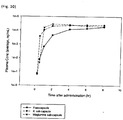
- the meglumine salt of Compound A has higher solubility and faster dissolution rates compared to the free acid of Compound A. Therefore, from the aspect of the solubility/dissolution rate, the meglumine salt is suitable for an active pharmaceutical ingredient of a pharmaceutical composition of Compound A. By using the meglumine salt, bioavailability of Compound A is improved. In addition, compared to the case where free carboxylic acid of Compound A was administered, in the case where meglumine salt was administered, more rapid onset of effect and long duration of action are observed in the dog-Pharmacokinetic studies as shown in Figure 10 .
- the potassium salt of Compound A was obtained from aqueous solvent mixtures. Although it is not difficult to obtain a potassium salt of Compound A, it is difficult to obtain a stable and single crystal form of the potassium salt because, in crystallization process, the water content in solvent mixtures sensitively influences to the formation of the crystal. Therefore, the control of water content is essential for obtaining the stable and single crystal form, and excess water must be removed under azeotropic condition with suitable solvent, such as toluene, ethyl acetate, and ethanol.
- suitable solvent such as toluene, ethyl acetate, and ethanol.
- the water content is 1 to 1.5 molar equivalent against the free acid, preferably, the water content is 1 to 1.2 molar equivalent, more preferably the water content is 1 to 1.1 molar equivalent, the most preferably the water content is 1 to 1.05 molar equivalent. If the water content is more than 1.5 molar equivalent against the free acid, target single crystal form is never obtained.
- the potassium salt showed good stability both chemically and enantiomerically after the solid-state stability experiments.
- the solubility of the potassium salt is more than 120 mg/mL in a neutral to basic environment.
- the potassium salt was completely dissolved in the neutral media within 15 min, especially dissolved in water within 5 min, while Compound A free acid showed very limited dissolution.
- the present invention is based on the above unexpected and surprising findings.
- meglumine salt with free carboxylic acid more rapid onset of effect, long duration of action and improved bioavailability have been observed in the dog-Pharmacokinetic studies as shown in Figure 10 .
- this invention discloses:
- the present invention provides a crystal form of a potassium salt of compound A, a polymorph form thereof, a process for preparing the said salt and a pharmaceutical composition thereof and its use.
- the salts and/or co-crystals of Compound A of the present invention show good formulation properties such as high aqueous solubility, good crystallinity, good thermal stability or low hygroscopicity.
- Compound A can be prepared by a method known per se.
- the amount of the salt of the present invention contained in a pharmaceutical composition for treating circulatory system diseases according to the present invention is not specifically restricted, however, the dose preferably should be sufficient to treat, ameliorate, or reduce the symptoms associated with the circulatory system disease.
- the dosage of a pharmaceutical composition for treating circulatory system diseases according to the present invention will depend on the method of use, the age, sex, and condition of the patient. For example, about 1 mg to 1000 mg of the salt of the present invention may be contained in a dosage form. Preferably, about 5 mg to 500 mg of the salt of the present invention may be contained there.
- the pharmaceutical composition of the present invention may be prepared by any conventional means such as, but not limited to, wet or dry granulation and direct compression.
- the process for preparing the pharmaceutical composition of the present invention is characterized by containing a process for combining the potassium hydroxide with an active pharmaceutical ingredient, Compound A.
- the process for preparing a pharmaceutical composition comprises combining a salt of the present invention and at least one carrier , wherein the carrier is intimately admixed with a salt of the present invention.
- the carrier is intimately admixed with a salt of the present invention.
- one or more other excipients are added to the pharmaceutical composition and the resulting combination is compressed into a solid pharmaceutical composition such as tablets, pills, granules, etc.
- the solid pharmaceutical composition is compressed into a tablet.
- a wet granulation process comprises adding and kneading an appropriate amount of water to the pharmaceutical composition to be formulated and through a further suitable process.
- the granulated pharmaceutical composition is dried under a suitable condition, and is subject to compression molding to tablet etc after particle size regulation.
- a dry granulation process comprises compression molding which comprises compressing a pharmaceutical composition to be formulated to the form of plates with a suitable compressor, crushing the resulting plate with a grinder mill, successively regulating a particle size, and then compression molding to tablet etc.
- agents such as sodium hydroxide, potassium hydroxide, calcium carbonate, calcium hydroxide, magnesium carbonate, magnesium silicate, magnesium aluminate, ammonia, L-arginine, benzathine, betaine, calcium hydroxide, choline hydroxide, diethyl amine, potassium hydroxide, meglumine, nicotinamide, and L-tartaric acid, which are used in the present specification are commercially available.
- the salt of this invention may be used alone or in a combination of one or two or more kinds of salts of Compound A thereof.
- the agent of potassium hydroxide is added in the form of liquid, solid, or suspensions.
- the salt of this invention is generally ranged from about 1 to 60 % (w/w) in the said composition.
- the pharmaceutical composition of the invention may take any form but it is preferably a solid composition. More preferably, the pharmaceutical composition of the invention is compressed to solid composition by molding (e.g. granulation and pressurization). Suitable solid dosage forms include, but are not limited to, tablets, pill, granules, capsules, powders, and sachets, and the like. Particularly tablets are preferable.
- the dosage form can be produced by incorporating the salt of the present invention, followed by subjecting the mixture to molding.
- the incorporation is conducted by a method conventionally employed in the field of pharmaceutical preparations, such as mixing, kneading, massing, sieving, stirring and the like.
- a pharmaceutically acceptable carrier may be directly mixed with the salt of the present invention (addition in a powder state), or a solvent may be added to the mixture, followed by conventional kneading, granulating and drying.
- a carrier is dissolved in a suitable solvent, then the solution is uniformly mixed with the active ingredient, followed by conventional kneading, granulating and drying (addition in a liquid state).
- any solvent which does not exert undesirable influence on the active ingredient for example, water, dimethylformamide, acetone, ethanol, propyl alcohol, isopropyl alcohol, butyl alcohol, methylene chloride, trichloroethane etc.
- the material is subjected to a conventional molding process under pressurization to prepare tablets containing the active ingredient.
- the molding under pressurization means that a material is compressed under pressurization into a desired form, which most generally refers to tableting.
- solid pharmaceutical composition e.g. solid preparations
- carriers include, but not limited to, fillers, diluents, disintegrants, glidants, excipients, binders, lubricants, colorant, flavoring agents, odor-improving agents, wetting agents, and the like.
- Suitable fillers and diluents include, but are not limited to, cellulose-derived materials like powdered cellulose, microcrystalline cellulose (e.g. Avicel (registered trademark)), microfine cellulose, methyl cellulose, ethyl cellulose, hydroxyethyl cellulose, hydroxypropylcellulose, hydroxypropylmethylcellulose, carboxymethylcellulose salts and other substituted and unsubstituted celluloses; starch; pregelatinized starch; lactose; talc; waxes; sugars; sugar alcohols like mannitol and sorbitol; acrylate polymers and copolymers; dextrates; dextrin; dextrose; maltodextrin; pectin; gelatin; inorganic diluents like calcium carbonate, dibasic calcium phosphate dihydrate, tribasic calcium phosphate, magnesium carbonate, magnesium oxide, sodium chloride and other diluents known to the pharmaceutical industry.
- Suitable disintegrants include, but are not limited to, croscarmellose sodium (e.g. Ac Di Sol (registered trademark), Primellose (registered trademark)), crospovidone (e.g. Kollidon (registered trademark), Polyplasdone (registered trademark)), microcrystalline cellulose, polacrilin potassium, powdered cellulose, pregelatinized starch, sodium starch glycolate (e.g. Explotab (registered trademark), Primoljel (registered trademark)) and starch, and the like.
- croscarmellose sodium e.g. Ac Di Sol (registered trademark), Primellose (registered trademark)
- crospovidone e.g. Kollidon (registered trademark), Polyplasdone (registered trademark)
- microcrystalline cellulose e.g. Explotab (registered trademark), Primoljel (registered trademark)
- starch glycolate e.g. Explotab (registered trademark), Primo
- Glidants can be added to improve the flowability of a solid composition before compaction and to improve the accuracy of dosing especially during compaction and capsule filling.
- Excipients that may function as glidants include, but are not limited to, colloidal silicon dioxide, magnesium trisilicate, powdered cellulose, talc, and the like.
- Suitable excipients that may be incorporated into the formulation include, but are not limited to, microcrystalline cellulose (for example, Avicel PH101, PH101 (manufactured by Asahi Kasei Corporation)), carboxymethylcellulose calcium, corn starch, wheat starch, lactose, sucrose, glucose, calcium sulfate, calcium phosphate, sodium chloride, and so on.
- excipients include preservatives, surfactants, antioxidants, or any other excipient commonly used in the pharmaceutical industry.
- Suitable binders that may be incorporated into the formulation include, but are not limited to, water, ethanol, propanol, simple syrup, glucose solutions, starch solutions, gelatin solutions, gum arabic, gelatin, sodium alginate, methyl cellulose, carboxymethylcellulose, shellac, polyvinylpyrrolidone, crospovidone, hydroxypropylcellulose (which may be hereinafter referred to as HPC), hydroxypropylmethylcellulose, and the like.
- such binders include other binders used in wet or dry granulation and in direct compression tableting processes.
- Suitable lubricants that may be incorporated into the formulation include, but are not limited to, magnesium stearate, talc, synthetic aluminum silicate, sodium lauryl sulfate, boric acid, magnesium oxide, paraffin, and the like.
- colorant, flavoring agents, odor-improving agents, wetting agents, and the like may be added.
- the solid pharmaceutical composition of the present invention can be prepared into coated tablets as well.
- the coating may be conducted by a method known per se.
- conventional coating agents e.g. hydroxypropylmethylcellulose, hydroxypropylcellulose, methylcellulose, polyvinylpyrrolidone etc.
- auxiliary agents for coating use is made of, for example, polyethylene glycol 6000, polysorbate (e.g. Tween 80 etc.), titanium oxide, and pigments such as red iron oxide or the like.
- the pharmaceutical composition of this invention for the treatment of diseases mediated by cyclooxygenase-2 in animals (e.g. man, dog, rabbit or rat), it can be administered orally as tablets, etc.
- the dosage ranges from 0.0075 to 15 mgA/kg per day, preferably from 0.07 to 7.2 mgA/kg per day in terms of the active pharmaceutical ingredient (wherein mgA means mg weight of the active pharmaceutical ingredient based on the free acid).
- mgA means mg weight of the active pharmaceutical ingredient based on the free acid.
- the dosage can be increased or decreased depending on the disease or condition.
- Compounds of the present invention may be used in combination with one or more other drugs in the treatment, prevention, control, amelioration, or reduction of risk of diseases or conditions for which compounds of the present invention or the other drugs may have utility, where the combination of the drugs together are safer or more effective than either drug alone.
- Such other drug(s) may be administered, by a route and in an amount commonly used therefore, contemporaneously or sequentially with a compound of the present invention.
- a pharmaceutical composition in unit dosage form containing such other drugs and the compound of the present invention is envisioned.
- the combination therapy may also include therapies in which the compound of the present invention and one or more other drugs are administered on different overlapping schedules. It is also contemplated that when used in combination with one or more other active ingredients, the compounds of the present invention and the other active ingredients may be used in lower doses than when each is used singly.
- compositions of the present invention include those that contain one or more other active ingredients, in addition to a compound of the present invention.
- the above combinations include combinations of a compound of the present invention not only with one other active compound, but also with two or more other active compounds.
- compounds of the present invention may be used in combination with other drugs that are used in the prevention, treatment, control, amelioration, or reduction of risk of the diseases or conditions for which compounds of the present invention are useful.
- Such other drugs may be administered, by a route and in an amount commonly used therefore, contemporaneously or sequentially with a compound of the present invention.
- a pharmaceutical composition containing such other drugs in addition to the compound of the present invention is envisioned.
- the pharmaceutical compositions of the present invention include those that also contain one or more other active ingredients, in addition to a compound of the present invention.
- the weight ratio of the compound of the present invention to the second active ingredient may be varied and will depend upon the effective dose of each ingredient. Generally, an effective dose of each will be used. Thus, for example, when a compound of the present invention is combined with another agent, the weight ratio of the compound of the present invention to the other agent will generally range from about 1000:1 to about 1:1000, including about 200: 1 to about 1:200. Combinations of a compound of the present invention and other active ingredients will generally also be within the aforementioned range, but in each case, an effective dose of each active ingredient should be used. In such combinations the compound of the present invention and other active agents may be administered separately or in conjunction. In addition, the administration of one element may be prior to, concurrent to, or subsequent to the administration of other agent(s).
- salt or crystal forms thereof may be administered simultaneously, sequentially or separately in combination with one or more agents selected from
- a pharmaceutical composition of the invention which may be prepared by admixture, suitably at ambient temperature and atmospheric pressure, is usually adapted for oral, parenteral or rectal administration and, as such, may be in the form of tablets, capsules, oral liquid preparations, powders, granules, lozenges, reconstitutable powders, injectable or infusible solutions or suspensions or suppositories. Orally administrable compositions are generally preferred. Tablets and capsules for oral administration may be in unit dose form, and may contain conventional excipients, such as binding agents (e.g. pregelatinised maize starch, polyvinylpyrrolidone or hydroxypropyl methylcellulose); fillers (e.g.
- binding agents e.g. pregelatinised maize starch, polyvinylpyrrolidone or hydroxypropyl methylcellulose
- fillers e.g.
- lactose microcrystalline cellulose or calcium hydrogen phosphate
- tabletting lubricants e.g. magnesium stearate, talc or silica
- disintegrants e.g. potato starch or sodium starch glycolate
- acceptable wetting agents e.g. sodium lauryl sulphate.
- the tablets may be coated according to methods well known in normal pharmaceutical practice.
- Oral liquid preparations may be in the form of, for example, aqueous or oily suspension, solutions, emulsions, syrups or elixirs, or may be in the form of a dry product for reconstitution with water or other suitable vehicle before use.
- Such liquid preparations may contain conventional additives such as suspending agents (e.g. sorbitol syrup, cellulose derivatives or hydrogenated edible fats), emulsifying agents (e.g. lecithin or acacia), non-aqueous vehicles (which may include edible oils e.g. almond oil, oily esters, ethyl alcohol or fractionated vegetable oils), preservatives (e.g.
- Preparations for oral administration may be suitably formulated to give controlled release of the active compound or pharmaceutically acceptable salt thereof.
- fluid unit dosage forms are prepared utilising a salt of Compound A of the present invention or a crystal form thereof and a sterile vehicle.
- Formulations for injection may be presented in unit dosage form e.g. in ampoules or in multi-dose, utilising a salt of Compound A of the present invention or a crystal form thereof and a sterile vehicle, optionally with an added preservative.
- the compositions may take such forms as suspensions, solutions or emulsions in oily or aqueous vehicles, and may contain formulatory agents such as suspending, stabilising and/or dispersing agents.
- the active ingredient may be in powder form for constitution with a suitable vehicle, e.g. sterile pyrogen-free water, before use.
- the compound depending on the vehicle and concentration used, can be either suspended or dissolved in the vehicle.
- the compound can be dissolved for injection and filter sterilised before filling into a suitable vial or ampoule and sealing.
- adjuvants such as a local anaesthetic, preservatives and buffering agents are dissolved in the vehicle.
- the composition can be frozen after filling into the vial and the water removed under vacuum.
- Parenteral suspensions are prepared in substantially the same manner, except that the compound is suspended in the vehicle instead of being dissolved, and sterilisation cannot be accomplished by filtration.
- the compound can be sterilised by exposure to ethylene oxide before suspension in a sterile vehicle.
- a surfactant or wetting agent is included in the composition to facilitate uniform distribution of the compound.
- Lotions may be formulated with an aqueous or oily base and will in general also contain one or more emulsifying agents, stabilising agents, dispersing agents, suspending agents, thickening agents, or colouring agents. Drops may be formulated with an aqueous or non-aqueous base also comprising one or more dispersing agents, stabilising agents, solubilising agents or suspending agents. They may also contain a preservative.
- a salt of Compound A of the present invention or a crystal form thereof may also be formulated in rectal compositions such as suppositories or retention enemas, e.g. containing conventional suppository bases such as cocoa butter or other glycerides.
- a salt of Compound A of the present invention or a crystal form thereof may also be formulated as depot preparations. Such long acting formulations may be administered by implantation (for example subcutaneously or intramuscularly) or by intramuscular injection.
- a salt of Compound A of the present invention or a crystal form thereof may be formulated with suitable polymeric or hydrophobic materials (for example as an emulsion in an acceptable oil) or ion exchange resins, or as sparingly soluble derivatives, for example, as a sparingly soluble salt.
- a salt of Compound A of the present invention or a crystal form thereof may be formulated as solutions for administration via a suitable metered or unitary dose device or alternatively as a powder mix with a suitable carrier for administration using a suitable delivery device.
- a salt of Compound A of the present invention or a crystal form thereof may be formulated for oral, buccal, parenteral, topical (including ophthalmic and nasal), depot or rectal administration or in a form suitable for administration by inhalation or insufflation (either through the mouth or nose).
- a salt of Compound A of the present invention or a crystal form thereof may be formulated for topical administration in the form of ointments, creams, gels, lotions, pessaries, aerosols or drops (e.g. eye, ear or nose drops).
- Ointments and creams may, for example, be formulated with an aqueous or oily base with the addition of suitable thickening and/or gelling agents.
- Ointments for.administration to the eye may be manufactured in a sterile manner using sterilized components.
- the capsule may contain the pharmaceutical composition of the invention in a form of uncompressed or compressed granulates or powder mixes, etc.
- the capsules may be covered with either a hard shell or a soft shell.
- the shells may be made from, but not limited to gelatin and optionally contain a plasticizer such as glycerin and sorbitol, and an opacifying agent or colorant.
- Methods of administration of a pharmaceutical composition for treating diseases mediated by cyclooxygenase-2 in the present invention are not specifically restricted, and can be administered in various preparations depending on the age, sex, and symptoms of the patient.
- Suitable routes for administrating a pharmaceutical composition may include, but not limited to, oral, buccal, and rectal administration. Although the most suitable administration in any given case will depend on the nature and severity of the condition being treated, the most preferred route of administration of the present invention is oral.
- the dosages may be conveniently presented in unit dosage form and prepared by any of the methods commonly known in the pharmaceutical art.
- Compound A can be prepared using any method known in the art (for example, patent literature 1, JP Patent No. 4577534 ).
- XRPD patterns were obtained using the Crystallics T2 high-throughput XRPD set-up.
- the plates were mounted on a Bruker GADDS diffractometer equipped with a Hi-Star area detector.
- the XRPD platform was calibrated using Silver Behenate for the long d-spacings and Corundum for the short d-spacings.
- Data collection was carried out at room temperature using monochromatic Cu-Ka (alpha) radiation in the 2 ⁇ region between 1.5° and 41.5°, which is the most distinctive part of the XRPD pattern.
- the diffraction pattern of each well was collected in two 2 ⁇ ranges (1.5° ⁇ 2 ⁇ 21.5° for the first frame, and 19.5° ⁇ 2 ⁇ ⁇ 41.5° for the second) with an exposure time of 90 s for each frame. No background subtraction or curve smoothing was applied to the XRPD patterns.
- the carrier material used during XRPD analysis was transparent to X-rays and contributed only slightly to the background.
- the High-Resolution X-ray powder diffraction patterns were collected on the D8 Advance system in the Bragg-Brentano geometry equipped with LynxEye solid state detector.
- the patterns were collected in the range of 4 to 41.5°2 ⁇ , with a step in the range of 0.016 °2 ⁇ without further processing. All patterns were taken at Room Temperature, approximately 295K.
- the material was placed in a boron glass capillary of 0.3 mm diameter.
- the ANSYCO HT chamber was used. The material was placed on a fixed sample holder that was mounted inside the chamber. The humidity was applied locally and varied from 10 to 80% (dew point). The temperature variation rate was 10°C/min.
- Moisture sorption isotherms of small samples were obtained using a DVS-1 system from Surface Measurement Systems (London, UK) with an accuracy of 0.1 ⁇ g.
- the sample was measured by XRPD.
- the FTIR spectra were recorded on a ThermoFischer Scientific FT-IR : Nicolet 6700. Reported values are rounded and should therefore be considered approximate.
- the API (253 mg) and meglumine (166 mg) were weighed into 8 ml vial. Then isopropanol (5 ml) was added. The mixture was hazy, and precipitation occurred within a few minutes. The slurry was left under stirring for 17 hours. Subsequently, the solids were separated from the liquids by centrifugation. The liquid was removed with a pipette and the solids were dried under vacuum for 24 hours. 500 ⁇ l of water were added to the solids. The mixture was shaken for 5 minutes. The solids were separated from the solvent after centrifugation and removal of water with a pipette, and they were dried under vacuum for 24 hours to provide the meglumine salt (404 mg, 96% yield).
- FTIR ( Figure 3 ): 534, 549, 638, 647, 678, 765, 782, 852, 881, 929, 1033, 1053, 1089, 1115, 1139, 1174, 1338, 1356, 1377, 1477, 1560, 1649, and 2362 cm -1 .
- Each peak has a margin of error of +/-2 cm -1 .
- m.p. (DSC Peak): 186°C
- the meglumine salt was also obtained using ethanol instead of isopropanol.
- VT-XRPD Variable temperature XRPD
- VH-XRPD Variable humidity XRPD
- the slurry experiments of the meglumine salt were performed; the materials (15-30 mg) were weighed into 1.8 ml vials, charged with a stirring bar and the solvent (ethanol, ethyl acetate and n-heptane) and the slurries were placed at 25°C under stirring. After two weeks, the slurries were subject to centrifugation and the liquid was removed with a pipette. The solids were sampled "wet" for XRPD. Subsequently the remaining solids dried under 200 mbar at room temperature for 5 days and all solids were analyzed as "dry" by XRPD.
- the API (753 mg) and potassium hydroxide (161 mg) were weighed into 40 ml vial.
- the material was dissolved after addition of water/isopropanol 50/50 (V/V) mixture (5 ml).
- the solution was left stirring at ambient temperature for 1 hour before placing under vacuum.
- the solvents were slowly evaporated.
- the solids were analyzed by XRPD. Subsequently, the obtained solids were made wet with 200 ⁇ l of water, stirred for 15 minutes and placed under full vacuum at ambient conditions to provide the potassium salt (822 mg, 92% yield).
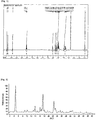
- FTIR ( Figure 6 ): 480, 548, 581, 648, 669, 679, 708, 772, 848, 861, 882, 960, 1095, 1116, 1130, 1164, 1225, 1275, 1373, 1483, 1559, 1647, 2342, and 2361 cm -1 .
- Each peak has a margin of error of +/- 2 cm -1 .
- DSC Peak 117 °C HPLC analysis showed that both chemical and chiral purities were very high ( ⁇ 99.9%).
- the obtained salt was confirmed monohydrate according to Karl-Fischer method.
- HPLC vials containing approximately 5 mg of material, were placed in the climate chamber at 40°C and 75% relative humidity. The samples were analyzed by XRPD and HPLC (both purity and chiral) at time points of 1, 2, 3 and 4 weeks. For each week a separate vial was prepared.
- the meglumine salt remained physically and chemically stable within this period. Its enantiomeric purity remained ⁇ 99.9%.
- Quantitative Solubility Assessment were performed on the free acid, the meglumine salt, and the potassium salt. The measurements were carried out in pH 6.8 phosphate buffer (0.05M) and water.
- a standard 1.8 ml screw cap vial was charged with the material, each solvent (medium) and a magnetic stirring bar. The vials were subsequently closed and equilibrated at the ambient temperature for 24 h while stirring.
- the liquid part was retrieved with a syringe and filtrated (0.5 micron filter); the isolated mother liquors were diluted to two dilutions selected according to the calibration curve. Quantities of the API in the diluted solutions were determined via HPLC analysis (DAD). The calibration curve was obtained from two independently prepared stock solutions of the API in 50% water / 50% acetonitrile.
- the press used for tablet preparation for intrinsic dissolution rate measurements was a mini-IDR compression system (plON/Heath Scientific). Approximately 11 mg of material was pressed in the cylindrical hole of a passivated stainless steel die, to a uniform, flat surface, with an exposed area of 0.072 cm 2 . The pressure applied was approximately 50 bar for 3-5 min.
- the sample die was inserted in a cylindrical Teflon rotating disk carrier containing an embedded magnetic stirring bar at its base.
- the die/stirrer assembly was placed in a flat bottomed glass vial, ready for dissolution analysis.
- the dissolution rate was measured in 20 ml of solvent (medium) and the path length of the UV meter was 2 mm. Applied stirring speed during measurement was 100 rpm. Measurements were performed at 20°C.
- the concentration of the free acid after one hour reached 27 ⁇ g/ml.
- the concentration increased linearly, within the time interval of the measurement.
- the concentration of the meglumine salt increased linearly in the first 45 min and it reached a plateau at about 250 ⁇ g/ml.
- the plateau is attributed to the dissolution of the complete tablet whereby concentration remains unchanged.
- the concentration of the potassium salt reached a value of 370 ⁇ g/ml, within 15 min (dissolution of complete tablet).
- the dissolution of the free acid is very poor with concentration of about 1 ⁇ g/ml after one hour.
- the concentration of the meglumine salt increased fast in the first 9 min reaching a value of about 210 ⁇ g/ml, and thereafter the dissolution rate decreased. The concentration reached finally a value of 250 ⁇ g/ml, within about 1 h 25 min. Thereafter no changes in concentration were observed. The plateau is attributed to the dissolution of the complete tablet whereby concentration remains unchanged.
- the concentration of the potassium salt reached 400 ⁇ g/ml, within 5 min (complete tablet dissolved).
- the meglumine salt and the potassium salt are much better than the free acid in the intrinsic dissolution rate. Especially, the potassium salt dissolved the fastest in all cases.
- API 2.0 g
- meglumine 1.17 g, 1.0 equiv.
- MeOH 30 ml
- MTBE 30 ml
- the slurry was cooled to room temperature (approximately 20 °C) and allowed to stir overnight at room temperature.
- the slurry was filtered and the 1st filtered solid was dried under vacuum at room temperature to provide the meglumine salt (2.443 g, 77% yield).
- API (2.0 g) was charged to a round-bottom flask equipped with a stir bar. 2-MeTHF (20.0 ml) was added so that the solid was dissolved. A solution of 2.0 M potassium hydroxide in MeOH (3.0 ml) was added to the 2-MeTHF solution and the resulting mixture was stirred for approximately 5 minutes. The solution was evaporated to dryness on a rotavap. Then, MTBE (40 ml) was added so that the dry matter was dissolved, and the solution was evaporated to dryness. Addition of MTBE and evaporating to dryness was repeated three times to ensure complete removal of MeOH.
- API 2.0 g was charged to a round-bottom flask equipped with a stir bar. 2-MeTHF (20.0 ml) was added to dissolve the solid. A solution of 2.0 M potassium hydroxide in MeOH (3.0 ml) was added and the resulting mixture was stirred for approximately 5 minutes. Solvent was evaporated to dryness on a rotovap. MTBE (40 ml) was added and rotovaped to dryness. Addition of MTBE and rotovaping to dryness was repeated three times to ensure complete removal of MeOH.
- Test articles Male Beagle dogs were given single oral dose of the test articles by gelatin capsule formulation at a dose of 5 mg/kg. The actual weight of the test articles in the gelatin capsule to be administered to each animal was calculated based on the body weight measured just before the administration.
- blood was collected from the external jugular vein of animals at 0, 0.25, 0.5, 1, 2, 4, 6, 8, 12, 24, 48, 72, 96, 120, 144, 168, 216, 216, 288, and 360 hour after administration. Approximately 1 mL of blood will be collected into tubes containing heparin-Na.
- the drug concentrations in dog plasma were determined with the validated bioanalytical assay procedures.
- PK parameters were determined with non-compartmental analysis.
- Figure 10 shows the time-course of mean plasma concentrations after oral administration of capsule formulations of API (free acid), Potassium-salt and Meglumine-salt to male Beagle dogs. Plasma concentration rapidly increased after oral dose of Potassium-salt and Meglumine-salt in comparison with API.
Landscapes
- Health & Medical Sciences (AREA)
- Chemical & Material Sciences (AREA)
- Organic Chemistry (AREA)
- Life Sciences & Earth Sciences (AREA)
- General Health & Medical Sciences (AREA)
- Veterinary Medicine (AREA)
- Public Health (AREA)
- Pharmacology & Pharmacy (AREA)
- Medicinal Chemistry (AREA)
- Animal Behavior & Ethology (AREA)
- Chemical Kinetics & Catalysis (AREA)
- General Chemical & Material Sciences (AREA)
- Nuclear Medicine, Radiotherapy & Molecular Imaging (AREA)
- Engineering & Computer Science (AREA)
- Bioinformatics & Cheminformatics (AREA)
- Physical Education & Sports Medicine (AREA)
- Rheumatology (AREA)
- Epidemiology (AREA)
- Pain & Pain Management (AREA)
- Biomedical Technology (AREA)
- Neurology (AREA)
- Neurosurgery (AREA)
- Reproductive Health (AREA)
- Orthopedic Medicine & Surgery (AREA)
- Endocrinology (AREA)
- Dermatology (AREA)
- Pregnancy & Childbirth (AREA)
- Pulmonology (AREA)
- Gynecology & Obstetrics (AREA)
- Ophthalmology & Optometry (AREA)
- Cardiology (AREA)
- Heart & Thoracic Surgery (AREA)
- Immunology (AREA)
- Psychiatry (AREA)
- Hospice & Palliative Care (AREA)
- Pharmaceuticals Containing Other Organic And Inorganic Compounds (AREA)
- Pyrane Compounds (AREA)
- Medicinal Preparation (AREA)
- Organic Low-Molecular-Weight Compounds And Preparation Thereof (AREA)
Applications Claiming Priority (2)
| Application Number | Priority Date | Filing Date | Title |
|---|---|---|---|
| US201261746945P | 2012-12-28 | 2012-12-28 | |
| PCT/JP2014/000010 WO2014104414A1 (en) | 2012-12-28 | 2014-01-06 | Salts and crystal forms |
Publications (3)
| Publication Number | Publication Date |
|---|---|
| EP2938607A1 EP2938607A1 (en) | 2015-11-04 |
| EP2938607A4 EP2938607A4 (en) | 2016-07-27 |
| EP2938607B1 true EP2938607B1 (en) | 2018-09-12 |
Family
ID=51021464
Family Applications (1)
| Application Number | Title | Priority Date | Filing Date |
|---|---|---|---|
| EP14733062.5A Active EP2938607B1 (en) | 2012-12-28 | 2014-01-06 | Salts and crystal forms of a cox-2 inhibitor |
Country Status (9)
| Country | Link |
|---|---|
| US (1) | US9447066B2 (https=) |
| EP (1) | EP2938607B1 (https=) |
| JP (2) | JP6210604B2 (https=) |
| KR (1) | KR102220999B1 (https=) |
| CN (1) | CN104870431B (https=) |
| ES (1) | ES2694422T3 (https=) |
| RU (1) | RU2654855C2 (https=) |
| TW (1) | TWI646091B (https=) |
| WO (1) | WO2014104414A1 (https=) |
Families Citing this family (9)
| Publication number | Priority date | Publication date | Assignee | Title |
|---|---|---|---|---|
| TWI335218B (en) * | 2003-02-19 | 2011-01-01 | Panion & Bf Biotech Inc | Ferric organic compounds, uses thereof and methods of making same |
| EP2979695B1 (en) * | 2013-03-29 | 2018-08-01 | AskAt Inc. | Therapeutic agent for ocular disease |
| CN115813888A (zh) | 2016-12-20 | 2023-03-21 | 罗曼治疗系统股份公司 | 包含阿塞那平的透皮治疗系统 |
| EP3558276B1 (en) | 2016-12-20 | 2024-11-06 | LTS Lohmann Therapie-Systeme AG | Transdermal therapeutic system containing asenapine and polysiloxane or polyisobutylene |
| CN108926528A (zh) * | 2017-05-25 | 2018-12-04 | 北京万全德众医药生物技术有限公司 | 含有氨磺必利树脂酸盐的口服液体组合物 |
| WO2019002204A1 (en) | 2017-06-26 | 2019-01-03 | Lts Lohmann Therapie-Systeme Ag | TRANSDERMAL THERAPEUTIC SYSTEM CONTAINING ASENAPINE AND SILICONE-TYPE ACRYLIC HYBRID POLYMER |
| US12329862B2 (en) | 2018-06-20 | 2025-06-17 | Lts Lohmann Therapie-Systeme Ag | Transdermal therapeutic system containing asenapine |
| AU2019291060B2 (en) | 2018-06-20 | 2024-09-05 | Lts Lohmann Therapie-Systeme Ag | Transdermal therapeutic system containing asenapine |
| DE102022134398B3 (de) | 2022-12-21 | 2024-05-23 | FAE Elektrotechnik GmbH & Co. KG | Portables Speichersystem für Kraftstoffe sowie Ringdruckspeicher und Gehäuse für das Speichersystem |
Family Cites Families (27)
| Publication number | Priority date | Publication date | Assignee | Title |
|---|---|---|---|---|
| US4394382A (en) * | 1980-06-17 | 1983-07-19 | Kowa Company, Ltd. | Dihydrobenzopyran compounds and pharmaceutical composition comprising said compounds |
| US4577534A (en) | 1985-04-01 | 1986-03-25 | Chrysler Corporation | Front suspension alignment tool |
| JPH10293205A (ja) | 1997-04-18 | 1998-11-04 | Minolta Co Ltd | 回折光学素子及び金型の製造方法 |
| US6034256A (en) * | 1997-04-21 | 2000-03-07 | G.D. Searle & Co. | Substituted benzopyran derivatives for the treatment of inflammation |
| US6077850A (en) | 1997-04-21 | 2000-06-20 | G.D. Searle & Co. | Substituted benzopyran analogs for the treatment of inflammation |
| US20040072889A1 (en) | 1997-04-21 | 2004-04-15 | Pharmacia Corporation | Method of using a COX-2 inhibitor and an alkylating-type antineoplastic agent as a combination therapy in the treatment of neoplasia |
| US20030225150A1 (en) | 1997-04-21 | 2003-12-04 | Pharmacia Corporation | Method of using a COX-2 inhibitor and a topoisomerase II inhibitor as a combination therapy in the treatment of neoplasia |
| US20030013739A1 (en) | 1998-12-23 | 2003-01-16 | Pharmacia Corporation | Methods of using a combination of cyclooxygenase-2 selective inhibitors and thalidomide for the treatment of neoplasia |
| AU2592600A (en) | 1998-12-23 | 2000-07-31 | G.D. Searle & Co. | Method of using an integrin antagonist and one or more antineoplastic agents as a combination therapy in the treatment of neoplasia |
| US20030119895A1 (en) | 1998-12-23 | 2003-06-26 | Pharmacia Corporation | Methods using a combination of a 3-heteroaryl-2-indolinone and a cyclooxygenase-2 inhibitor for the treatment of neoplasia |
| US6858598B1 (en) | 1998-12-23 | 2005-02-22 | G. D. Searle & Co. | Method of using a matrix metalloproteinase inhibitor and one or more antineoplastic agents as a combination therapy in the treatment of neoplasia |
| US20040122011A1 (en) | 1998-12-23 | 2004-06-24 | Pharmacia Corporation | Method of using a COX-2 inhibitor and a TACE inhibitors as a combination therapy |
| US20050037090A1 (en) | 1998-12-23 | 2005-02-17 | Mckearn John P. | Combination therapy including a cyclooxygenase-2 inhibitor and an antineoplastic agent |
| US20030203956A1 (en) | 1998-12-23 | 2003-10-30 | Masterrer Jaime L. | Method of using a cyclooxygenase-2 inhibitor and one or more ornithine decarboxylase inhibitors as a combination therapy in the treatment of neoplasia |
| US20040127470A1 (en) | 1998-12-23 | 2004-07-01 | Pharmacia Corporation | Methods and compositions for the prevention or treatment of neoplasia comprising a Cox-2 inhibitor in combination with an epidermal growth factor receptor antagonist |
| US20020103141A1 (en) | 1998-12-23 | 2002-08-01 | Mckearn John P. | Antiangiogenic combination therapy for the treatment of cancer |
| US20040053900A1 (en) | 1998-12-23 | 2004-03-18 | Pharmacia Corporation | Method of using a COX-2 inhibitor and an aromatase inhibitor as a combination therapy |
| US6649645B1 (en) | 1998-12-23 | 2003-11-18 | Pharmacia Corporation | Combination therapy of radiation and a COX-2 inhibitor for treatment of neoplasia |
| US6833373B1 (en) | 1998-12-23 | 2004-12-21 | G.D. Searle & Co. | Method of using an integrin antagonist and one or more antineoplastic agents as a combination therapy in the treatment of neoplasia |
| US20030153801A1 (en) | 2001-05-29 | 2003-08-14 | Pharmacia Corporation | Compositions of cyclooxygenase-2 selective inhibitors and radiation for inhibition or prevention of cardiovascular disease |
| AR038957A1 (es) * | 2001-08-15 | 2005-02-02 | Pharmacia Corp | Terapia de combinacion para el tratamiento del cancer |
| MXPA04006572A (es) * | 2002-01-10 | 2005-11-04 | Upjohn Co | Terapia de combinacion antivirica. |
| MX2007000880A (es) * | 2004-07-23 | 2007-03-12 | Upjohn Co | Metodo enantioselectivo para separar derivados de acido 3-trifluorometil-2h-cromeno-3-carboxilico sustituido. |
| EP1844040A1 (en) * | 2005-01-21 | 2007-10-17 | Pfizer Limited | Crystalline forms of cis-5-fluoro-n-[4-(2-hydroxy-4-methylbenzamido)cyclohexyl]-2-(tetrahydrothiopyran-4-yloxy)nicotinamide |
| AR053046A1 (es) | 2005-04-07 | 2007-04-18 | Teijin Pharma Ltd | Cristal de derivado de aminonopirrolidina y metodo de produccion del mismo |
| BRPI0611170A2 (pt) | 2005-05-27 | 2010-08-17 | Panacea Biotec Ltd | composições injetáveis e processo para o preparo de tais composições |
| WO2008065502A1 (en) * | 2006-11-29 | 2008-06-05 | Pfizer Products Inc. | Pharmaceutical compositions based on a) nanoparticles comprising enteric polymers and b) casein |
-
2013
- 2013-12-30 TW TW102149127A patent/TWI646091B/zh active
-
2014
- 2014-01-06 WO PCT/JP2014/000010 patent/WO2014104414A1/en not_active Ceased
- 2014-01-06 US US14/655,175 patent/US9447066B2/en active Active
- 2014-01-06 CN CN201480003563.4A patent/CN104870431B/zh active Active
- 2014-01-06 RU RU2015130602A patent/RU2654855C2/ru active
- 2014-01-06 ES ES14733062.5T patent/ES2694422T3/es active Active
- 2014-01-06 KR KR1020157019802A patent/KR102220999B1/ko active Active
- 2014-01-06 EP EP14733062.5A patent/EP2938607B1/en active Active
- 2014-01-06 JP JP2015527377A patent/JP6210604B2/ja active Active
-
2016
- 2016-07-25 JP JP2016145847A patent/JP2016188243A/ja active Pending
Non-Patent Citations (1)
| Title |
|---|
| None * |
Also Published As
| Publication number | Publication date |
|---|---|
| WO2014104414A1 (en) | 2014-07-03 |
| EP2938607A4 (en) | 2016-07-27 |
| JP2016188243A (ja) | 2016-11-04 |
| JP2016503752A (ja) | 2016-02-08 |
| RU2015130602A (ru) | 2017-02-03 |
| EP2938607A1 (en) | 2015-11-04 |
| US9447066B2 (en) | 2016-09-20 |
| RU2654855C2 (ru) | 2018-05-23 |
| KR20160046757A (ko) | 2016-04-29 |
| CN104870431B (zh) | 2017-07-18 |
| US20150353520A1 (en) | 2015-12-10 |
| ES2694422T3 (es) | 2018-12-20 |
| TW201431847A (zh) | 2014-08-16 |
| KR102220999B1 (ko) | 2021-02-26 |
| JP6210604B2 (ja) | 2017-10-11 |
| TWI646091B (zh) | 2019-01-01 |
| CN104870431A (zh) | 2015-08-26 |
Similar Documents
| Publication | Publication Date | Title |
|---|---|---|
| EP2938607B1 (en) | Salts and crystal forms of a cox-2 inhibitor | |
| EP1861400B1 (en) | Crystal forms of an imidazole derivative | |
| EP2710002B1 (en) | Polymorph form of 4-{[4-({[4-(2,2,2-trifluoroethoxy)-1,2-benzisoxazol-3-yl]oxy}methyl)piperidin-1-yl]methyl}-tetrahydro-2h-pyran-4-carboxylic acid | |
| EP2922849B1 (en) | Polymorphs of 4-{[4-({[4-(2,2,2-trifluoroethoxy)-1,2-benzisoxazol-3-yl]oxy}methyl)piperidin-1-yl]methyl}-tetrahydro-2h-pyran-4-carboxylic acid as 5-hydroxytryptamine-4 (5-ht4) receptor agonists for the treatment of gastrointestinal diseases | |
| EP3145926B1 (en) | Benzisoxazole derivative salt | |
| US12552776B2 (en) | Crystalline forms | |
| EP3004100B1 (en) | Polymorph forms | |
| WO2006056874A1 (en) | Salt form | |
| HK1209122B (en) | Polymorphs of 4-{[4-({[4-(2,2,2-trifluoroethoxy)-1,2-benzisoxazol-3-yl]oxy}methyl)piperidin-1-yl]methyl}-tetrahydro-2h-pyran-4-carboxylic acid as 5-hydroxytryptamine-4 (5-ht4) receptor agonists for the treatment of gastrointestinal diseases | |
| HK1231483B (en) | Benzisoxazole derivative salt | |
| HK1195559B (en) | Polymorph form of 4-{[4-({[4-(2,2,2-trifluoroethoxy)-1,2-benzisoxazol-3-yl]oxy}methyl)piperidin-1-yl]methyl}-tetrahydro-2h-pyran-4-carboxylic acid |
Legal Events
| Date | Code | Title | Description |
|---|---|---|---|
| PUAI | Public reference made under article 153(3) epc to a published international application that has entered the european phase |
Free format text: ORIGINAL CODE: 0009012 |
|
| 17P | Request for examination filed |
Effective date: 20150609 |
|
| AK | Designated contracting states |
Kind code of ref document: A1 Designated state(s): AL AT BE BG CH CY CZ DE DK EE ES FI FR GB GR HR HU IE IS IT LI LT LU LV MC MK MT NL NO PL PT RO RS SE SI SK SM TR |
|
| AX | Request for extension of the european patent |
Extension state: BA ME |
|
| RIN1 | Information on inventor provided before grant (corrected) |
Inventor name: OKUMURA, YOSHIYUKI Inventor name: IWATA, YASUHIRO Inventor name: NUMATA, TOYOHARU Inventor name: OKUMURA, TAKAKO Inventor name: SUDO, MASAKI |
|
| DAX | Request for extension of the european patent (deleted) | ||
| RIC1 | Information provided on ipc code assigned before grant |
Ipc: C07D 311/66 20060101AFI20160422BHEP Ipc: A61K 31/352 20060101ALI20160422BHEP Ipc: A61P 19/02 20060101ALI20160422BHEP Ipc: A61P 11/06 20060101ALI20160422BHEP Ipc: A61P 19/06 20060101ALI20160422BHEP Ipc: A61P 35/00 20060101ALI20160422BHEP Ipc: A61P 17/06 20060101ALI20160422BHEP Ipc: A61P 19/00 20060101ALI20160422BHEP Ipc: A61P 43/00 20060101ALI20160422BHEP Ipc: A61P 25/00 20060101ALI20160422BHEP Ipc: A61P 29/00 20060101ALI20160422BHEP Ipc: A61P 9/00 20060101ALI20160422BHEP |
|
| A4 | Supplementary search report drawn up and despatched |
Effective date: 20160628 |
|
| RIC1 | Information provided on ipc code assigned before grant |
Ipc: A61P 35/00 20060101ALI20160622BHEP Ipc: A61P 19/06 20060101ALI20160622BHEP Ipc: A61P 25/00 20060101ALI20160622BHEP Ipc: A61P 17/06 20060101ALI20160622BHEP Ipc: A61P 19/00 20060101ALI20160622BHEP Ipc: A61K 31/352 20060101ALI20160622BHEP Ipc: A61P 43/00 20060101ALI20160622BHEP Ipc: A61P 19/02 20060101ALI20160622BHEP Ipc: C07D 311/66 20060101AFI20160622BHEP Ipc: A61P 11/06 20060101ALI20160622BHEP Ipc: A61P 9/00 20060101ALI20160622BHEP Ipc: A61P 29/00 20060101ALI20160622BHEP |
|
| STAA | Information on the status of an ep patent application or granted ep patent |
Free format text: STATUS: EXAMINATION IS IN PROGRESS |
|
| 17Q | First examination report despatched |
Effective date: 20170413 |
|
| GRAP | Despatch of communication of intention to grant a patent |
Free format text: ORIGINAL CODE: EPIDOSNIGR1 |
|
| STAA | Information on the status of an ep patent application or granted ep patent |
Free format text: STATUS: GRANT OF PATENT IS INTENDED |
|
| INTG | Intention to grant announced |
Effective date: 20180625 |
|
| GRAS | Grant fee paid |
Free format text: ORIGINAL CODE: EPIDOSNIGR3 |
|
| GRAA | (expected) grant |
Free format text: ORIGINAL CODE: 0009210 |
|
| STAA | Information on the status of an ep patent application or granted ep patent |
Free format text: STATUS: THE PATENT HAS BEEN GRANTED |
|
| AK | Designated contracting states |
Kind code of ref document: B1 Designated state(s): AL AT BE BG CH CY CZ DE DK EE ES FI FR GB GR HR HU IE IS IT LI LT LU LV MC MK MT NL NO PL PT RO RS SE SI SK SM TR |
|
| REG | Reference to a national code |
Ref country code: GB Ref legal event code: FG4D |
|
| REG | Reference to a national code |
Ref country code: CH Ref legal event code: EP |
|
| REG | Reference to a national code |
Ref country code: IE Ref legal event code: FG4D |
|
| REG | Reference to a national code |
Ref country code: DE Ref legal event code: R096 Ref document number: 602014032247 Country of ref document: DE |
|
| REG | Reference to a national code |
Ref country code: AT Ref legal event code: REF Ref document number: 1040430 Country of ref document: AT Kind code of ref document: T Effective date: 20181015 |
|
| REG | Reference to a national code |
Ref country code: ES Ref legal event code: FG2A Ref document number: 2694422 Country of ref document: ES Kind code of ref document: T3 Effective date: 20181220 |
|
| REG | Reference to a national code |
Ref country code: NL Ref legal event code: MP Effective date: 20180912 |
|
| REG | Reference to a national code |
Ref country code: LT Ref legal event code: MG4D |
|
| PG25 | Lapsed in a contracting state [announced via postgrant information from national office to epo] |
Ref country code: NO Free format text: LAPSE BECAUSE OF FAILURE TO SUBMIT A TRANSLATION OF THE DESCRIPTION OR TO PAY THE FEE WITHIN THE PRESCRIBED TIME-LIMIT Effective date: 20181212 Ref country code: GR Free format text: LAPSE BECAUSE OF FAILURE TO SUBMIT A TRANSLATION OF THE DESCRIPTION OR TO PAY THE FEE WITHIN THE PRESCRIBED TIME-LIMIT Effective date: 20181213 Ref country code: BG Free format text: LAPSE BECAUSE OF FAILURE TO SUBMIT A TRANSLATION OF THE DESCRIPTION OR TO PAY THE FEE WITHIN THE PRESCRIBED TIME-LIMIT Effective date: 20181212 Ref country code: SE Free format text: LAPSE BECAUSE OF FAILURE TO SUBMIT A TRANSLATION OF THE DESCRIPTION OR TO PAY THE FEE WITHIN THE PRESCRIBED TIME-LIMIT Effective date: 20180912 Ref country code: LT Free format text: LAPSE BECAUSE OF FAILURE TO SUBMIT A TRANSLATION OF THE DESCRIPTION OR TO PAY THE FEE WITHIN THE PRESCRIBED TIME-LIMIT Effective date: 20180912 Ref country code: RS Free format text: LAPSE BECAUSE OF FAILURE TO SUBMIT A TRANSLATION OF THE DESCRIPTION OR TO PAY THE FEE WITHIN THE PRESCRIBED TIME-LIMIT Effective date: 20180912 Ref country code: FI Free format text: LAPSE BECAUSE OF FAILURE TO SUBMIT A TRANSLATION OF THE DESCRIPTION OR TO PAY THE FEE WITHIN THE PRESCRIBED TIME-LIMIT Effective date: 20180912 |
|
| PG25 | Lapsed in a contracting state [announced via postgrant information from national office to epo] |
Ref country code: AL Free format text: LAPSE BECAUSE OF FAILURE TO SUBMIT A TRANSLATION OF THE DESCRIPTION OR TO PAY THE FEE WITHIN THE PRESCRIBED TIME-LIMIT Effective date: 20180912 Ref country code: HR Free format text: LAPSE BECAUSE OF FAILURE TO SUBMIT A TRANSLATION OF THE DESCRIPTION OR TO PAY THE FEE WITHIN THE PRESCRIBED TIME-LIMIT Effective date: 20180912 Ref country code: LV Free format text: LAPSE BECAUSE OF FAILURE TO SUBMIT A TRANSLATION OF THE DESCRIPTION OR TO PAY THE FEE WITHIN THE PRESCRIBED TIME-LIMIT Effective date: 20180912 |
|
| REG | Reference to a national code |
Ref country code: AT Ref legal event code: MK05 Ref document number: 1040430 Country of ref document: AT Kind code of ref document: T Effective date: 20180912 |
|
| PG25 | Lapsed in a contracting state [announced via postgrant information from national office to epo] |
Ref country code: EE Free format text: LAPSE BECAUSE OF FAILURE TO SUBMIT A TRANSLATION OF THE DESCRIPTION OR TO PAY THE FEE WITHIN THE PRESCRIBED TIME-LIMIT Effective date: 20180912 Ref country code: AT Free format text: LAPSE BECAUSE OF FAILURE TO SUBMIT A TRANSLATION OF THE DESCRIPTION OR TO PAY THE FEE WITHIN THE PRESCRIBED TIME-LIMIT Effective date: 20180912 Ref country code: IS Free format text: LAPSE BECAUSE OF FAILURE TO SUBMIT A TRANSLATION OF THE DESCRIPTION OR TO PAY THE FEE WITHIN THE PRESCRIBED TIME-LIMIT Effective date: 20190112 Ref country code: NL Free format text: LAPSE BECAUSE OF FAILURE TO SUBMIT A TRANSLATION OF THE DESCRIPTION OR TO PAY THE FEE WITHIN THE PRESCRIBED TIME-LIMIT Effective date: 20180912 Ref country code: CZ Free format text: LAPSE BECAUSE OF FAILURE TO SUBMIT A TRANSLATION OF THE DESCRIPTION OR TO PAY THE FEE WITHIN THE PRESCRIBED TIME-LIMIT Effective date: 20180912 Ref country code: RO Free format text: LAPSE BECAUSE OF FAILURE TO SUBMIT A TRANSLATION OF THE DESCRIPTION OR TO PAY THE FEE WITHIN THE PRESCRIBED TIME-LIMIT Effective date: 20180912 Ref country code: PL Free format text: LAPSE BECAUSE OF FAILURE TO SUBMIT A TRANSLATION OF THE DESCRIPTION OR TO PAY THE FEE WITHIN THE PRESCRIBED TIME-LIMIT Effective date: 20180912 |
|
| PG25 | Lapsed in a contracting state [announced via postgrant information from national office to epo] |
Ref country code: SK Free format text: LAPSE BECAUSE OF FAILURE TO SUBMIT A TRANSLATION OF THE DESCRIPTION OR TO PAY THE FEE WITHIN THE PRESCRIBED TIME-LIMIT Effective date: 20180912 Ref country code: PT Free format text: LAPSE BECAUSE OF FAILURE TO SUBMIT A TRANSLATION OF THE DESCRIPTION OR TO PAY THE FEE WITHIN THE PRESCRIBED TIME-LIMIT Effective date: 20190112 Ref country code: SM Free format text: LAPSE BECAUSE OF FAILURE TO SUBMIT A TRANSLATION OF THE DESCRIPTION OR TO PAY THE FEE WITHIN THE PRESCRIBED TIME-LIMIT Effective date: 20180912 |
|
| REG | Reference to a national code |
Ref country code: DE Ref legal event code: R097 Ref document number: 602014032247 Country of ref document: DE |
|
| PLBE | No opposition filed within time limit |
Free format text: ORIGINAL CODE: 0009261 |
|
| STAA | Information on the status of an ep patent application or granted ep patent |
Free format text: STATUS: NO OPPOSITION FILED WITHIN TIME LIMIT |
|
| PG25 | Lapsed in a contracting state [announced via postgrant information from national office to epo] |
Ref country code: DK Free format text: LAPSE BECAUSE OF FAILURE TO SUBMIT A TRANSLATION OF THE DESCRIPTION OR TO PAY THE FEE WITHIN THE PRESCRIBED TIME-LIMIT Effective date: 20180912 |
|
| 26N | No opposition filed |
Effective date: 20190613 |
|
| PG25 | Lapsed in a contracting state [announced via postgrant information from national office to epo] |
Ref country code: MC Free format text: LAPSE BECAUSE OF FAILURE TO SUBMIT A TRANSLATION OF THE DESCRIPTION OR TO PAY THE FEE WITHIN THE PRESCRIBED TIME-LIMIT Effective date: 20180912 Ref country code: SI Free format text: LAPSE BECAUSE OF FAILURE TO SUBMIT A TRANSLATION OF THE DESCRIPTION OR TO PAY THE FEE WITHIN THE PRESCRIBED TIME-LIMIT Effective date: 20180912 |
|
| PG25 | Lapsed in a contracting state [announced via postgrant information from national office to epo] |
Ref country code: LU Free format text: LAPSE BECAUSE OF NON-PAYMENT OF DUE FEES Effective date: 20190106 |
|
| REG | Reference to a national code |
Ref country code: BE Ref legal event code: MM Effective date: 20190131 |
|
| PG25 | Lapsed in a contracting state [announced via postgrant information from national office to epo] |
Ref country code: BE Free format text: LAPSE BECAUSE OF NON-PAYMENT OF DUE FEES Effective date: 20190131 |
|
| PG25 | Lapsed in a contracting state [announced via postgrant information from national office to epo] |
Ref country code: TR Free format text: LAPSE BECAUSE OF FAILURE TO SUBMIT A TRANSLATION OF THE DESCRIPTION OR TO PAY THE FEE WITHIN THE PRESCRIBED TIME-LIMIT Effective date: 20180912 |
|
| PG25 | Lapsed in a contracting state [announced via postgrant information from national office to epo] |
Ref country code: MT Free format text: LAPSE BECAUSE OF NON-PAYMENT OF DUE FEES Effective date: 20190106 |
|
| PG25 | Lapsed in a contracting state [announced via postgrant information from national office to epo] |
Ref country code: CY Free format text: LAPSE BECAUSE OF FAILURE TO SUBMIT A TRANSLATION OF THE DESCRIPTION OR TO PAY THE FEE WITHIN THE PRESCRIBED TIME-LIMIT Effective date: 20180912 |
|
| PG25 | Lapsed in a contracting state [announced via postgrant information from national office to epo] |
Ref country code: HU Free format text: LAPSE BECAUSE OF FAILURE TO SUBMIT A TRANSLATION OF THE DESCRIPTION OR TO PAY THE FEE WITHIN THE PRESCRIBED TIME-LIMIT; INVALID AB INITIO Effective date: 20140106 |
|
| PG25 | Lapsed in a contracting state [announced via postgrant information from national office to epo] |
Ref country code: MK Free format text: LAPSE BECAUSE OF FAILURE TO SUBMIT A TRANSLATION OF THE DESCRIPTION OR TO PAY THE FEE WITHIN THE PRESCRIBED TIME-LIMIT Effective date: 20180912 |
|
| REG | Reference to a national code |
Ref country code: DE Ref legal event code: R082 Ref document number: 602014032247 Country of ref document: DE Representative=s name: KRAUS & LEDERER PARTGMBB, DE |
|
| REG | Reference to a national code |
Ref country code: CH Ref legal event code: U11 Free format text: ST27 STATUS EVENT CODE: U-0-0-U10-U11 (AS PROVIDED BY THE NATIONAL OFFICE) Effective date: 20260201 |
|
| PGFP | Annual fee paid to national office [announced via postgrant information from national office to epo] |
Ref country code: GB Payment date: 20260122 Year of fee payment: 13 |
|
| PGFP | Annual fee paid to national office [announced via postgrant information from national office to epo] |
Ref country code: ES Payment date: 20260217 Year of fee payment: 13 |
|
| PGFP | Annual fee paid to national office [announced via postgrant information from national office to epo] |
Ref country code: DE Payment date: 20260126 Year of fee payment: 13 Ref country code: IE Payment date: 20260121 Year of fee payment: 13 |
|
| PGFP | Annual fee paid to national office [announced via postgrant information from national office to epo] |
Ref country code: IT Payment date: 20260130 Year of fee payment: 13 |
|
| PGFP | Annual fee paid to national office [announced via postgrant information from national office to epo] |
Ref country code: FR Payment date: 20260128 Year of fee payment: 13 |
|
| PGFP | Annual fee paid to national office [announced via postgrant information from national office to epo] |
Ref country code: CH Payment date: 20260201 Year of fee payment: 13 |