EP2934978B1 - Verfahren zum bereitstellen einer betriebsstrategie für ein kraftfahrzeug - Google Patents
Verfahren zum bereitstellen einer betriebsstrategie für ein kraftfahrzeug Download PDFInfo
- Publication number
- EP2934978B1 EP2934978B1 EP13730108.1A EP13730108A EP2934978B1 EP 2934978 B1 EP2934978 B1 EP 2934978B1 EP 13730108 A EP13730108 A EP 13730108A EP 2934978 B1 EP2934978 B1 EP 2934978B1
- Authority
- EP
- European Patent Office
- Prior art keywords
- vehicle
- processing equipment
- process according
- target vehicle
- section
- Prior art date
- Legal status (The legal status is an assumption and is not a legal conclusion. Google has not performed a legal analysis and makes no representation as to the accuracy of the status listed.)
- Not-in-force
Links
Images
Classifications
-
- G—PHYSICS
- G01—MEASURING; TESTING
- G01C—MEASURING DISTANCES, LEVELS OR BEARINGS; SURVEYING; NAVIGATION; GYROSCOPIC INSTRUMENTS; PHOTOGRAMMETRY OR VIDEOGRAMMETRY
- G01C21/00—Navigation; Navigational instruments not provided for in groups G01C1/00 - G01C19/00
- G01C21/26—Navigation; Navigational instruments not provided for in groups G01C1/00 - G01C19/00 specially adapted for navigation in a road network
- G01C21/34—Route searching; Route guidance
- G01C21/3407—Route searching; Route guidance specially adapted for specific applications
- G01C21/343—Calculating itineraries
-
- B—PERFORMING OPERATIONS; TRANSPORTING
- B60—VEHICLES IN GENERAL
- B60W—CONJOINT CONTROL OF VEHICLE SUB-UNITS OF DIFFERENT TYPE OR DIFFERENT FUNCTION; CONTROL SYSTEMS SPECIALLY ADAPTED FOR HYBRID VEHICLES; ROAD VEHICLE DRIVE CONTROL SYSTEMS FOR PURPOSES NOT RELATED TO THE CONTROL OF A PARTICULAR SUB-UNIT
- B60W50/00—Details of control systems for road vehicle drive control not related to the control of a particular sub-unit, e.g. process diagnostic or vehicle driver interfaces
- B60W50/0097—Predicting future conditions
-
- B—PERFORMING OPERATIONS; TRANSPORTING
- B60—VEHICLES IN GENERAL
- B60W—CONJOINT CONTROL OF VEHICLE SUB-UNITS OF DIFFERENT TYPE OR DIFFERENT FUNCTION; CONTROL SYSTEMS SPECIALLY ADAPTED FOR HYBRID VEHICLES; ROAD VEHICLE DRIVE CONTROL SYSTEMS FOR PURPOSES NOT RELATED TO THE CONTROL OF A PARTICULAR SUB-UNIT
- B60W50/00—Details of control systems for road vehicle drive control not related to the control of a particular sub-unit, e.g. process diagnostic or vehicle driver interfaces
- B60W50/0098—Details of control systems ensuring comfort, safety or stability not otherwise provided for
-
- G—PHYSICS
- G08—SIGNALLING
- G08G—TRAFFIC CONTROL SYSTEMS
- G08G1/00—Traffic control systems for road vehicles
- G08G1/16—Anti-collision systems
- G08G1/161—Decentralised systems, e.g. inter-vehicle communication
- G08G1/163—Decentralised systems, e.g. inter-vehicle communication involving continuous checking
-
- B—PERFORMING OPERATIONS; TRANSPORTING
- B60—VEHICLES IN GENERAL
- B60W—CONJOINT CONTROL OF VEHICLE SUB-UNITS OF DIFFERENT TYPE OR DIFFERENT FUNCTION; CONTROL SYSTEMS SPECIALLY ADAPTED FOR HYBRID VEHICLES; ROAD VEHICLE DRIVE CONTROL SYSTEMS FOR PURPOSES NOT RELATED TO THE CONTROL OF A PARTICULAR SUB-UNIT
- B60W50/00—Details of control systems for road vehicle drive control not related to the control of a particular sub-unit, e.g. process diagnostic or vehicle driver interfaces
- B60W2050/0001—Details of the control system
- B60W2050/0019—Control system elements or transfer functions
- B60W2050/0028—Mathematical models, e.g. for simulation
-
- B—PERFORMING OPERATIONS; TRANSPORTING
- B60—VEHICLES IN GENERAL
- B60W—CONJOINT CONTROL OF VEHICLE SUB-UNITS OF DIFFERENT TYPE OR DIFFERENT FUNCTION; CONTROL SYSTEMS SPECIALLY ADAPTED FOR HYBRID VEHICLES; ROAD VEHICLE DRIVE CONTROL SYSTEMS FOR PURPOSES NOT RELATED TO THE CONTROL OF A PARTICULAR SUB-UNIT
- B60W2556/00—Input parameters relating to data
- B60W2556/45—External transmission of data to or from the vehicle
-
- B—PERFORMING OPERATIONS; TRANSPORTING
- B60—VEHICLES IN GENERAL
- B60W—CONJOINT CONTROL OF VEHICLE SUB-UNITS OF DIFFERENT TYPE OR DIFFERENT FUNCTION; CONTROL SYSTEMS SPECIALLY ADAPTED FOR HYBRID VEHICLES; ROAD VEHICLE DRIVE CONTROL SYSTEMS FOR PURPOSES NOT RELATED TO THE CONTROL OF A PARTICULAR SUB-UNIT
- B60W2556/00—Input parameters relating to data
- B60W2556/45—External transmission of data to or from the vehicle
- B60W2556/50—External transmission of data to or from the vehicle of positioning data, e.g. GPS [Global Positioning System] data
-
- B—PERFORMING OPERATIONS; TRANSPORTING
- B60—VEHICLES IN GENERAL
- B60W—CONJOINT CONTROL OF VEHICLE SUB-UNITS OF DIFFERENT TYPE OR DIFFERENT FUNCTION; CONTROL SYSTEMS SPECIALLY ADAPTED FOR HYBRID VEHICLES; ROAD VEHICLE DRIVE CONTROL SYSTEMS FOR PURPOSES NOT RELATED TO THE CONTROL OF A PARTICULAR SUB-UNIT
- B60W2556/00—Input parameters relating to data
- B60W2556/45—External transmission of data to or from the vehicle
- B60W2556/55—External transmission of data to or from the vehicle using telemetry
-
- B—PERFORMING OPERATIONS; TRANSPORTING
- B60—VEHICLES IN GENERAL
- B60W—CONJOINT CONTROL OF VEHICLE SUB-UNITS OF DIFFERENT TYPE OR DIFFERENT FUNCTION; CONTROL SYSTEMS SPECIALLY ADAPTED FOR HYBRID VEHICLES; ROAD VEHICLE DRIVE CONTROL SYSTEMS FOR PURPOSES NOT RELATED TO THE CONTROL OF A PARTICULAR SUB-UNIT
- B60W2556/00—Input parameters relating to data
- B60W2556/45—External transmission of data to or from the vehicle
- B60W2556/65—Data transmitted between vehicles
-
- G—PHYSICS
- G08—SIGNALLING
- G08G—TRAFFIC CONTROL SYSTEMS
- G08G1/00—Traffic control systems for road vehicles
- G08G1/09—Arrangements for giving variable traffic instructions
- G08G1/0962—Arrangements for giving variable traffic instructions having an indicator mounted inside the vehicle, e.g. giving voice messages
- G08G1/0967—Systems involving transmission of highway information, e.g. weather, speed limits
- G08G1/096766—Systems involving transmission of highway information, e.g. weather, speed limits where the system is characterised by the origin of the information transmission
- G08G1/096791—Systems involving transmission of highway information, e.g. weather, speed limits where the system is characterised by the origin of the information transmission where the origin of the information is another vehicle
-
- Y—GENERAL TAGGING OF NEW TECHNOLOGICAL DEVELOPMENTS; GENERAL TAGGING OF CROSS-SECTIONAL TECHNOLOGIES SPANNING OVER SEVERAL SECTIONS OF THE IPC; TECHNICAL SUBJECTS COVERED BY FORMER USPC CROSS-REFERENCE ART COLLECTIONS [XRACs] AND DIGESTS
- Y02—TECHNOLOGIES OR APPLICATIONS FOR MITIGATION OR ADAPTATION AGAINST CLIMATE CHANGE
- Y02T—CLIMATE CHANGE MITIGATION TECHNOLOGIES RELATED TO TRANSPORTATION
- Y02T10/00—Road transport of goods or passengers
- Y02T10/80—Technologies aiming to reduce greenhouse gasses emissions common to all road transportation technologies
- Y02T10/84—Data processing systems or methods, management, administration
Definitions
- the invention relates to a method for providing an operating strategy for at least one motor vehicle on a route section using information about vehicles present in the environment, the information being collected via a vehicle ad hoc network.
- Vehicle ad hoc networks are used for the communication of motor vehicles, among which u.a. also information about an operating parameter, such as the speed of a motor vehicle, to another motor vehicle or a stationary infrastructure component (English: Road side unit, RSU) can be transmitted. This information can then be used to adapt the respective operating parameters in the received motor vehicle.
- An operating parameter such as the speed of a motor vehicle
- a stationary infrastructure component English: Road side unit, RSU
- RSU Road side unit
- This information can then be used to adapt the respective operating parameters in the received motor vehicle.
- One known technology for forming a vehicle ad hoc network is car-to-car communication, or more generally, though infrastructure components are involved, car-to-X communication. These standards are available, for example, from the Car-to-Car Communication Consortium.
- the US 2011/0208399 describes a method for determining a congestion risk and a driving strategy, in particular an optimal speed, taking into account operating data (eg the speed) of other vehicles via car-2-car communication and traffic jams.
- operating data eg the speed
- the motorist driver can get the result determined as a driving recommendation.
- the DE 10 2010 054 077 A1 describes a method for providing a driving recommendation, wherein a probable speed profile is determined for a road section ahead of the vehicle. For this purpose, velocity profiles recorded from the past are examined for patterns.
- a driving recommendation based on a probability calculation does not reflect the current situation.
- the disadvantage of the prior art is also that the receiving motor vehicle can only react to an existing situation, without enabling a predictive driving style, e.g. avoids congestion.
- a typical example is the driving at a jam end. If vehicles reach the end of a traffic jam and therefore increase their driving speed, in many cases a new, wave-like congestion occurs behind the actual end of the jam if there are too many vehicles at the same time.
- the WO 2012/009620 A1 describes a method for providing a dynamic traffic control planner, wherein in a potential conflict zone, operation-specific information of the existing driving zone is collected and evaluated via vehicle-to-vehicle communication.
- the dynamic traffic control plan includes instructions for the vehicles involved, so that, for example, an accident can be prevented. Such a plan could also be seen as an operational strategy.
- the collected information includes, for example, a speed, a distance or a direction of travel of a vehicle or indications of a traffic jam.
- the object of the present invention is the provision of an operating strategy that anticipates a development of a traffic situation.
- the invention comprises a method for providing an operating strategy for at least one motor vehicle, which is referred to here as a target vehicle and which is located together with other motor vehicles, here called foreign vehicles, on a route section of a route.
- a foreign vehicle can also be a target vehicle at the same time if it transfers both the information necessary for determining the model to the communication device and receives an operating strategy.
- the invention is based on the idea of generating on the basis of signals generated by the foreign vehicles, a digital model of a traffic situation of the said route section.
- the target vehicle is then that motor vehicle to which an operating strategy is provided by the method according to the invention with which a forward-looking driving style is made possible on the route section.
- a motor vehicle is preferably a motor vehicle, in particular a passenger car.
- a communication device of a target vehicle or of a vehicle-external data server receives via a data connection with a respective communication device of at least one other vehicle each at least one position signal of the other vehicle, through which the position of the other vehicle is specified.
- the communication device of the target vehicle or of the data server is designed to establish a data connection with the corresponding devices of the foreign vehicles on the route section.
- the communication device is implemented in a device that can establish and communicate via an ad hoc network, in particular via a car-to-X communication.
- the route section comprises an area in which an ad hoc network can be set up via eg WLAN (Wireless Local Area Network), ie in particular a range of preferably up to 100m, 300m, 500m in at least one direction from the target vehicle.
- WLAN Wireless Local Area Network
- the range from the target vehicle is preferably also at these values or it is from 100m to 300m, 300m to 500m or 100m to 1000m.
- the communication device is part of a processing device, which eg a specialist known data processing device, such as a micro-controller or a computer may include.
- the advantage of a vehicle-integrated processing device is the constant feasibility of the method according to the invention on a drive for a user.
- the processing device determines the positions of the other vehicles based on all received position signals. On the basis of the positions of the foreign vehicles, the processing device determines a digital model for an actual traffic situation in the route section.
- a digital model for an actual traffic situation in the route section In particular, an algorithm for simulating transport systems in large networks, e.g. to determine a Nagel-Schreckenberg model, used.
- the digital model for the current traffic situation in the section describes at least the section and the foreign vehicles thereon. Also, the at least one target vehicle can be included. In one embodiment of the invention, the model may also contain traffic information, e.g. Information about a speed or an average speed e.g. in different subsections of the route section.
- the digital model can be used as a pure computational model, but especially in the form of a digital representation of the environment, e.g. a card, be realized.
- the digital model can also act as a "micro-map" (English: "MicroTrafficMap"), so a map of the immediate environment. Such a card then shows e.g. an image of the route section on which e.g. individual motor vehicles and / or sections of the track section corresponding to e.g. the vehicle density are marked.
- the digital model makes it possible to describe different dynamics of a totality of motor vehicles in a situation in which several vehicles are relatively close to a section of road, that is, for example, in a traffic jam on the section. Furthermore, the model enables a vehicle-specific resolution of the traffic situation. In contrast to sections for which the map material of conventional navigation devices has a very low resolution (eg straight sections), the model allows a high and true to scale resolution of the section and / or the generation of a corresponding map.
- the processing device determines an operating strategy for operating the at least one target vehicle on the route section.
- a user of a target vehicle benefits by using a meaningful operational strategy, e.g. is fuel efficient. If the user is e.g. with its motor vehicle in a traffic jam, such an operating strategy avoids the formation or wave-like spreading of the jam, which can also prevent the formation of congestion at an early stage. Furthermore, such an operating strategy promotes e.g. the dissolution of a jam by rapid acceleration at the end of the jam.
- the communication device of the target vehicle or of the data server receives at least one information relating to the at least one other vehicle to an operating parameter of the respective foreign vehicle.
- Information about an operating parameter may e.g. an information to e.g. speed, average speed or braking of the vehicle. This information can also be advantageously processed by the processing device.
- the processing device can determine the digital model for the current traffic situation on the basis of the at least one received information about the operating parameter of the at least one other vehicle.
- the model is complemented and gaining in accuracy.
- the determination of an improved operating strategy is made possible by e.g. a certain average speed of a target vehicle can be recommended or implemented.
- the communication device also receives at least one position signal, by which the position of a respective target vehicle is indicated.
- the communication device may also receive at least one piece of information about an operating parameter of the target vehicle.
- the communication device Based on the at least one position signal, the communication device, the position of the respective Determine target vehicle.
- the processing device can determine the digital model for the current traffic situation in the route section. This results in the immediate advantage of a user of the target vehicle that he receives a tailor-made for his target vehicle operating strategy, for example in the form of a driving recommendation.
- the processing device can subdivide the route section into different subsections as a function of a traffic situation in various of its areas, in particular as a function of the traffic volume, the average speed or a recommended speed for a destination vehicle. This allows a higher resolution of the model and thus an improved operating strategy.
- the processing device may additionally receive at least one piece of information of an infrastructure element, in particular a beacon, regarding the current traffic situation of the route section or a subsection of the route section.
- the at least one additional piece of information can then be used to calculate the model for the current traffic situation of the track section or the subsection.
- An infrastructure element also has the advantage of having e.g. With the aid of a sensor, it is also possible to detect such motor vehicles on the route section that do not have a communication device and / or a processing device. In both cases, the model is improved.
- the communication device and / or the processing device may comprise an infrastructure element on the route section or an off-board data server.
- an infrastructure element on the route section or an off-board data server e.g. For a section on which congestion frequently occurs, a situation-adapted operating strategy is permanently determined.
- the processing device a driving recommendation for the execution of the operating strategy or a map to the traffic situation of the route section and / or the at least one subsection generated.
- an operating strategy can be implemented in a target vehicle.
- the operating strategy is transmitted by the processing device to a driver assistance system, in particular to a longitudinal and / or lateral control, of at least one target vehicle.
- a driver assistance system in particular to a longitudinal and / or lateral control, of at least one target vehicle.
- a user of a target vehicle does not have to act on his own.
- the processing device may supply the driving recommendation and / or the map to a display device for displaying it, e.g. on a head-up display or screen of an infotainment system.
- a display device for displaying it, e.g. on a head-up display or screen of an infotainment system.
- the user of a target vehicle may either decide for himself how to operate his motor vehicle and / or be informed of the operational strategy, and he understands, for example, why a vehicle assistance system e.g. accelerated or not accelerated. It consists here e.g. also the possibility of displaying different driving recommendations to the driver under an operating strategy, e.g. can be transmitted to the driver assistance system, selects.
- At least one subsection of the route section can be marked on the map as a function of a specific variable relevant to the model of the traffic situation, in particular the traffic volume, the average speed or the recommended speed. This allows a higher resolution of the route section and a clear, quickly detectable representation of a displayed map.
- a motor vehicle in particular a passenger car, which comprises a processing device according to the invention and / or is designed to carry out an embodiment of a method according to the invention.
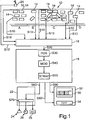
- Fig. 1 illustrates the principle underlying the method according to the invention.
- the track section 12 may be divided, for example, into sections, e.g. two sections A and C e.g. a high motor vehicle density or a low average speed, a section B e.g. a low vehicle density or increased average speed and a portion D have a very low vehicle density or high average speed.
- sections A and C e.g. a high motor vehicle density or a low average speed
- a section B e.g. a low vehicle density or increased average speed
- a portion D have a very low vehicle density or high average speed.
- One of the motor vehicles in the present example is a target vehicle 10, to which an operating strategy is provided by the method according to the invention.
- Some of the motor vehicles 14 are connected via a data link, e.g. via WLAN of a motor vehicle ad hoc network, interconnected.
- the data connection is established via a communication device 16 of the respective foreign vehicle.
- Status messages for example position signals or information on, for example, the speed of a motor vehicle, can be transmitted cyclically by the foreign vehicles 14, for example (method step S10).
- the target vehicle 10 also transmits the said information and a position signal to the communication device 16, ie at the same time is a foreign vehicle 14.
- the position signal may include, for example, a signal of a global navigation satellite system such as GPS, Galileo, Compass or Glonass.
- the foreign vehicles may provide information about an operating parameter, eg, a speed or an average speed to the communication device 16 (S10).
- an infrastructure element 20, in particular a radio beacon at least one information on the current traffic situation of the route section 12 or one of its subsections A, B, C, D transmitted to the communication device 16 (S10 ').
- Both the communication device 16 and the processing device 18 may comprise a device or be implemented in a computer program or a computer program product which is designed to execute a corresponding program code.
- the communication device 16 and / or the processing device 18 may alternatively or additionally be integrated into a target vehicle 14 or comprise a vehicle-external data server.
- the processing device 18 may include the communication device 16.
- the communication device 16 is independent of the processing device 18 and transmits the received signals and information of the foreign vehicles 14 to the processing device 18 (S20).
- the processing device 18, here e.g. a device of a navigation, driver assistance or infotainment system of the motor vehicle 10 determines, based on all the position signals, the positions of the foreign vehicles 14 (S30, "POS").
- the processing device 18 determines a digital model for an actual traffic situation in the route section (S40, "MOD").
- a model includes e.g. a microcard, which in the present example comprises the link 12 and the associated traffic information.
- the model can take into account sections A, B, C and D and their different traffic information.
- the processing device 18 determines an operating strategy for operating the at least one target vehicle 10 on the route section 12 (S50, "STRAT"). For example, there is the possibility that different operating strategies are determined for the different subsections. If the target vehicle 10 is located, for example, in the subsection D, it makes sense, for example, for the target vehicle 10 to accelerate and to resume a normal vehicle speed, since the subsection D eg the jam end covers and there are only a few vehicles there. In the Fig. 1 is the target vehicle 10 just before the section B. A strong acceleration would contribute here, for example, to a wave-like spreading of the congestion, because the target vehicle 10, for example, is located in a jam shaft and so in the section C, for example, would come abruptly again to a standstill. A meaningful operating strategy here would therefore be a low average speed of, for example, 5 km / h adapted to the damming wave, in order to avoid or reduce, for example, a "stop-and-go" of the target vehicle 10.
- the operating strategy can be generated and output by the processing device 18 as a driving recommendation for executing the operating strategy or as a map 30 (S60, S80, S90).
- the driving recommendation can be transmitted to a driver assistance system 22, in particular to a longitudinal and / or lateral control of the target vehicle 10 (S60).
- the longitudinal and / or lateral control may e.g. based on the driving recommendation, an automatic vehicle control e.g. a brake 24, a cruise control system 26 or an Adaptive Cruise Control ("ACC") 28 (S70).
- the driving recommendation may also be used as an indication 34 in the form of e.g. a text message to a display device 32, e.g. an infotainment system to be displayed (S80).
- the operating strategy and / or model may also be included in a pictorial representation 30 of the model, e.g. a card 30 are realized and transmitted to the display device 32 (S90).
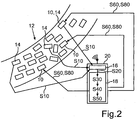
- the card 30 may e.g. a top view of the track section 12 include.
- the map 30 becomes clearer, and a driver of a target vehicle 10 marked in the map 30 can see, e.g. how long the traffic jam is still and / or if he has already reached the end of the jam.
- a radio beacon 20 at the roadside of the route section 12 may include, for example, an external data server, eg a backend server, which in turn comprises the communication device 16 and / or the processing device 18.
- the examples illustrate the idea of the invention, by means of signals generated by the motor vehicles, to determine a digital model and a digital map of a traffic situation of the route section with the aid of environmental knowledge and, based thereon, to generate an operating strategy for a target vehicle.
- vehicles send by means of e.g. Ad hoc communication (WLAN) cyclically status messages off.
- WLAN Ad hoc communication
- cyclically status messages include e.g. Information of the vehicle about its position and speed. If a vehicle is e.g. in a traffic jam, this receives the cyclic status messages of the surrounding vehicles by means of communication. From the sum of the received messages, the vehicle builds up a micro-map with traffic information. This includes e.g. Information about the average speed of road segments that have a low resolution. This allows the vehicle to derive propulsion strategies to avoid the wave-like propagation of the traffic jam and to contribute to the resolution of the congestion by rapid acceleration at the end (congestion dissolves).
- the receiving vehicle may e.g. to adapt its drive strategy in traffic jam through the environmental information. This is e.g. the fuel consumption is minimized. The e.g. Wave-like spreading of the congestion is counteracted.
- the driver receives e.g. Detailed information about the traffic jam, which increases its comfort.
- Vehicles are equipped with a communication unit (eg WLAN), which in particular transmits cyclic status messages.
- the receiving vehicle is also equipped with a corresponding communication unit, in particular to receive these messages.
- the Reception vehicle also requires a processing unit, which combines the information of the received messages to a micro-card with traffic information and then automatically adapts the drive strategy and / or the driver a recommendation for the drive strategy by means of eg HMI (Human-Machine-Interface, man-machine interface ) gives.
- HMI Human-Machine-Interface, man-machine interface
Landscapes
- Engineering & Computer Science (AREA)
- Automation & Control Theory (AREA)
- Human Computer Interaction (AREA)
- Transportation (AREA)
- Mechanical Engineering (AREA)
- Physics & Mathematics (AREA)
- General Physics & Mathematics (AREA)
- Radar, Positioning & Navigation (AREA)
- Remote Sensing (AREA)
- Traffic Control Systems (AREA)
Description
- Die Erfindung betrifft ein Verfahren zum Bereitstellen einer Betriebsstrategie für zumindest ein Kraftfahrzeug auf einem Streckenabschnitt mithilfe von Informationen über in der Umgebung anwesende Kraftfahrzeuge, wobei die Informationen über ein Fahrzeug-Ad-hoc-Netzwerk gesammelt werden.
- Fahrzeug-Ad-hoc-Netzwerke dienen der Kommunikation von Kraftfahrzeugen, bei denen u.a. auch eine Information zu einem Betriebsparameter, wie z.B. die Geschwindigkeit eines Kraftfahrzeugs, an ein weiteres Kraftfahrzeug oder eine ortsfeste Infrastrukturkomponente (Englisch: Road side unit, RSU) übertragen werden kann. Diese Information kann dann genutzt werden, um den jeweiligen Betriebsparameter in dem empfangenen Kraftfahrzeug anzupassen. Eine bekannte Technologie zum Bilden eines Fahrzeug-Ad-hoc-Netzwerks ist die Car-to-Car-Kommunikation oder allgemeiner, wenn auch Infrastrukturkomponenten beteiligt sind, die Car-to-X-Kommunikation. Diese Standards sind beispielsweise von dem Car-to-Car-Communication-Consortium erhältlich.
- Die
US 2011/0208399 beschreibt ein Verfahren zur Ermittlung eines Staurisikos und einer Fahrstrategie, insbesondere einer optimalen Geschwindigkeit, unter Berücksichtigung von Betriebsdaten (z.B. der Geschwindigkeit) anderer Fahrzeuge über Car-2-Car-Kommunikation und Staumeldungen. Der Kraftfahrzeugfahrer kann das ermittelte Ergebnis als Fahrempfehlung angezeigt bekommen. - Die
DE 10 2010 054 077 A1 beschreibt ein Verfahren zum Bereitstellen einer Fahrempfehlung, wobei ein wahrscheinliches Geschwindigkeitsprofil für einen dem Fahrzeug vorausliegenden Streckenabschnitt ermittelt wird. Dazu werden aus der Vergangenheit aufgezeichnete Geschwindigkeitsprofile auf Muster untersucht. - Eine Fahrempfehlung, die auf einer Wahrscheinlichkeitsberechnung basiert, spiegelt jedoch nicht die aktuelle Situation wider. Der Nachteil des Stands der Technik ist auch, dass das empfangende Kraftfahrzeug nur auf eine bestehende Situation reagieren kann, ohne dass eine vorausschauende Fahrweise ermöglichst ist, die z.B. eine Staubildung vermeidet. Ein typisches Beispiel ist die Fahrweise an einem Stauende. Erreichen Fahrzeuge ein Stauende und erhöhen deshalb ihre Fahrgeschwindigkeit, so kommt es in vielen Fällen zu einer erneuten, wellenartigen Staubildung hinter dem eigentlichen Stauende, wenn sich zu viele Fahrzeuge gleichzeitig dort befinden.
- Die
WO 2012/009620 A1 beschreibt ein Verfahren zum Bereitstellen eines dynamischen Verkehrskontrollplaners, wobei in einer potentiellen Konfliktzone betriebsspezifische Informationen der vorhandenen Fahrzone über Fahrzeug-zu-Fahrzeug-Kommunikation gesammelt und ausgewertet werden. Der dynamische Verkehrskontrollplan umfasst Instruktionen für die beteiligten Fahrzeuge, sodass zum Beispiel ein Unfall verhindert werden kann. Ein solcher Plan könnte auch als Betriebsstrategie angesehen werden. Die gesammelten Informationen umfassen beispielsweise eine Geschwindigkeit, einen Abstand oder eine Fahrtrichtung eines Fahrzeugs oder Hinweise auf einen Verkehrsstau. - Aus der
DE 10 2008 015 046 A1 ist ein Verfahren zur prädiktiven Steuerung und Regelung eines Hybridantriebs in einem Kraftfahrzeug bekannt. Bei der Auswahl einer Betriebsstrategie wird mindestens eine kommunikationsbasierte Information berücksichtigt, die mittels einer Kommunikation des Kraftfahrzeugs mit zum Beispiel einem anderen Kraftfahrzeug erzeugt wird. - Die Aufgabe der vorliegenden Erfindung ist die Bereitstellung einer Betriebsstrategie, die vorausschauend eine Entwicklung einer Verkehrssituation berücksichtigt.
- Diese Aufgabe wird von einem erfindungsgemäßen Verfahren gemäß dem Patentanspruch 1 gelöst. Weiterhin wird die Aufgabe von einer erfindungsgemäßen Verarbeitungseinrichtung gemäß dem Patentanspruch 12 und einem erfindungsgemäßen Kraftfahrzeug gemäß dem Patentanspruch 13 gelöst. Vorteilhafte Weiterbildungen der Erfindung sind durch die Unteransprüche gegeben.
- Die Erfindung umfasst ein Verfahren zum Bereitstellen einer Betriebsstrategie für zumindest ein Kraftfahrzeug, das hier als Zielfahrzeug bezeichnet wird und das sich zusammen mit anderen Kraftfahrzeugen, hier Fremdfahrzeuge genannt, auf einem Streckenabschnitt einer Fahrstrecke befindet. Dabei kann ein Fremdfahrzeug auch gleichzeitig ein Zielfahrzeug sein, wenn es sowohl die zur Ermittlung des Modells notwendigen Informationen an die Kommunikationseinrichtung überträgt und eine Betriebsstrategie empfängt.
- Die Erfindung basiert auf der Idee, auf der Grundlage von Signalen, die von den Fremdfahrzeugen erzeugt werden, ein digitales Modell einer Verkehrslage des genannten Streckenabschnitts zu erzeugen. Das Zielfahrzeug ist dann dasjenige Kraftfahrzeug, dem durch das erfindungsgemäße Verfahren eine Betriebsstrategie bereitgestellt wird, mit der auf dem Streckenabschnitt eine vorausschauende Fahrweise ermöglicht ist.
- Ein Kraftfahrzeug ist bevorzugt ein Kraftwagen, insbesondere ein Personenkraftwagen.
- Eine Kommunikationseinrichtung eines Zielfahrzeugs oder auch eines fahrzeugexternen Datenservers empfängt über eine Datenverbindung mit einer jeweiligen Kommunikationseinrichtung mindestens eines Fremdfahrzeugs jeweils mindestens ein Positionssignal des Fremdfahrzeugs, durch welches die Position des Fremdfahrzeugs angegeben ist.
- Die Kommunikationseinrichtung des Zielfahrzeugs bzw. des Datenservers ist dazu ausgelegt, mit den entsprechenden Einrichtungen der Fremdfahrzeuge auf dem Streckenabschnitt eine Datenverbindung aufzubauen. Die Kommunikationseinrichtung ist in einem Gerät verwirklicht, das eine Verbindung über ein Ad-hoc-Netzwerk, insbesondere über eine Car-to-X-Kommunikation, aufbauen und darüber kommunizieren kann.
- Der Streckenabschnitt umfasst insbesondere einen Bereich, in welchem ein Ad-hoc-Netzwerk über z.B. WLAN (Wireless Local Area Network) aufgebaut werden kann, also insbesondere einen Bereich von vorzugsweise bis zu 100m, 300m, 500m, in mindestens eine Richtung vom Zielfahrzeug aus. Bei einem fahrzeugexternen Datenserver liegt die Reichweite vom Zielfahrzeug aus bevorzugt ebenfalls bei diesen Werten oder sie beträgt von 100m bis 300m, 300m bis 500m oder 100m bis 1000m. Die Kommunikationseinrichtung ist Teil einer Verarbeitungseinrichtung, welche z.B. eine dem Fachmann bekannte Datenverarbeitungseinrichtung, z.B. einen Mikro-Controller oder einen Computer, umfassen kann. Der Vorteil einer fahrzeugintegrierten Verarbeitungseinrichtung ist hierbei für einen Benutzer die ständige Durchführbarkeit des erfindungsgemäßen Verfahrens auf einer Fahrt.
- Die Verarbeitungseinrichtung ermittelt anhand aller empfangenen Positionssignale die Positionen der Fremdfahrzeuge. Anhand der Positionen der Fremdfahrzeuge ermittelt die Verarbeitungseinrichtung ein digitales Modell für eine aktuelle Verkehrslage in dem Streckenabschnitt. Zur Ermittlung des Modells wird insbesondere ein Algorithmus zur Simulation von Transportsystemen in großen Netzwerken, z.B. zur Ermittlung eines Nagel-Schreckenberg-Modells, herangezogen.
- Das digitale Modell für die aktuelle Verkehrslage in dem Streckenabschnitt beschreibt zumindest den Streckenabschnitt und die darauf befindlichen Fremdfahrzeuge. Auch das zumindest eine Zielfahrzeug kann mit umfasst sein. Das Modell kann in einer Weiterbildung der Erfindung auch Verkehrsinformationen, z.B. Informationen zu einer Geschwindigkeit oder einer Durchschnittsgeschwindigkeit z.B. in verschiedenen Teilabschnitten des Streckenabschnitts umfassen. Das digitale Modell kann als reines Rechenmodell, insbesondere jedoch auch in Gestalt einer digitalen Repräsentation der Umgebung, z.B. einer Karte, realisiert sein. Das digitale Modell kann auch als eine "Mikro-Karte" (Englisch: "MikroTrafficMap") fungieren, also eine Karte der unmittelbaren Umgebung. Eine solche Karte zeigt dann z.B. ein Bild des Streckenabschnitts, auf dem z.B. einzelne Kraftfahrzeuge dargestellt und/oder Teilabschnitte des Streckenabschnitts entsprechend z.B. der Fahrzeugdichte markiert sind.
- Das digitale Modell ermöglicht das Beschreiben unterschiedlicher Dynamiken einer Gesamtheit an Kraftfahrzeugen in einer Situation, in der sich mehrere Fahrzeuge verhältnismäßig dicht auf einem Streckenabschnitt befinden, die also z.B. auf dem Streckenabschnitt im Stau stehen. Weiterhin ermöglicht das Modell eine fahrzeuggenaue Auflösung der Verkehrssituation. Im Gegensatz zu Streckenabschnitten, für die das Kartenmaterial von herkömmlichen Navigationsgeräten eine sehr geringe Auflösung hat (z.B. geraden Streckenabschnitten), ermöglicht das Modell auch hier eine hohe und maßstabsgetreue Auflösung des Streckenabschnitts und/oder die Erzeugung einer entsprechenden Karte.
- Anhand des digitalen Modells für die aktuelle Verkehrslage ermittelt die Verarbeitungseinrichtung eine Betriebsstrategie zum Betreiben des zumindest einen Zielfahrzeugs auf dem Streckenabschnitt. Dadurch profitiert ein Benutzer eines Zielfahrzeugs, indem eine sinnvolle Betriebsstrategie z.B. kraftstoffsparend ist. Steht der Benutzer z.B. mit seinem Kraftfahrzeug in einem Stau, so vermeidet eine derartige Betriebsstrategie das Ausbilden oder wellenartige Ausbreiten des Staus, was in einem frühen Stadium auch die Bildung eines Staus verhindern kann. Weiterhin fördert eine derartige Betriebsstrategie z.B. das Auflösen eines Staus durch zügiges Beschleunigen am Stauende.
- Dies ermöglicht auch eine Steuerung der Gesamtheit der Kraftfahrzeuge, bei der die Kraftfahrzeuge eine Betriebsstrategie bereitgestellt bekommen, die logistisch wichtige Positionen einnehmen.
- In einer Weiterbildung des Verfahrens empfängt die Kommunikationseinrichtung des Zielfahrzeugs bzw. des Datenservers mindestens eine zu dem mindestens einen Fremdfahrzeug gehörige Information zu einem Betriebsparameter des jeweiligen Fremdfahrzeugs. Eine Information zu einem Betriebsparameter kann z.B. eine Information zu z.B. einer Geschwindigkeit, einer Durchschnittsgeschwindigkeit oder eines Bremsvorgangs des Fahrzeugs umfassen. Diese Information kann durch die Verarbeitungseinrichtung ebenfalls vorteilsbringend verarbeitet werden.
- Die Verarbeitungseinrichtung kann dabei das digitale Modell für die aktuelle Verkehrslage anhand der mindestens einen empfangenen Information zu dem Betriebsparameter des mindestens einen Fremdfahrzeugs ermitteln. Durch das Einbeziehen der Betriebsparameter in das Modell wird das Modell ergänzt und gewinnt an Genauigkeit. Ebenso wird die Ermittlung einer verbesserten Betriebsstrategie ermöglicht, durch die z.B. eine bestimmte Durchschnittsgeschwindigkeit eines Zielfahrzeugs empfohlen oder umgesetzt werden kann.
- In einer weiteren Ausführungsform des Verfahrens empfängt die Kommunikationseinrichtung auch mindestens ein Positionssignal, durch welches die Position eines jeweiligen Zielfahrzeugs angegeben ist. Die Kommunikationseinrichtung kann ebenfalls mindestens eine Information zu einem Betriebsparameter des Zielfahrzeugs empfangen. Anhand des mindestens einen Positionssignals kann die Kommunikationseinrichtung die Position des jeweiligen Zielfahrzeugs ermitteln. Anhand der mindestens einen Position und/oder der Information zu dem Betriebsparameter des Zielfahrzeugs kann die Verarbeitungseinrichtung das digitales Modell für die aktuelle Verkehrslage in dem Streckenabschnitt ermitteln. Hierbei ergibt sich der unmittelbare Vorteil eines Benutzers des Zielfahrzeugs, dass er eine für sein Zielfahrzeug zugeschnittene Betriebsstrategie z.B. in Form einer Fahrempfehlung erhält.
- In einer bevorzugten Ausführungsform des erfindungsgemäßen Verfahrens kann die Verarbeitungseinrichtung den Streckenabschnitt in Abhängigkeit einer Verkehrslage in verschiedenen seiner Bereiche, insbesondere in Abhängigkeit des Verkehrsaufkommens, der Durchschnittsgeschwindigkeit oder einer empfohlenen Geschwindigkeit für ein Zielfahrzeug, in unterschiedliche Teilabschnitte unterteilen. Dies ermöglicht einer höhere Auflösung des Modells und somit eine verbesserte Betriebsstrategie.
- Die Verarbeitungseinrichtung kann in einer weiteren Ausführungsform des Verfahrens zusätzlich mindestens eine Information eines Infrastrukturelements, insbesondere einer Funkbake, zur aktuellen Verkehrssituation des Streckenabschnitts oder eines Teilabschnitts des Streckenabschnitts empfangen. Die mindestens eine zusätzliche Information kann dann zur Berechnung des Modells für die aktuelle Verkehrslage des Streckenabschnitts oder des Teilabschnitts verwendet werden. Vorteilhaft ist dabei, dass ein solches Infrastrukturelement Staumeldungen ausgeben und/oder eine Verkehrssituation vor Ort erfassen kann. Ein Infrastrukturelement hat ebenfalls den Vorteil, dass es z.B. mithilfe eines Sensors auch solche Kraftfahrzeuge auf dem Streckenabschnitt erfassen kann, die nicht über eine Kommunikationseinrichtung und/oder eine Verarbeitungseinrichtung verfügen. In beiden Fällen wird das Modell verbessert.
- In einer Ausführungsform des Verfahrens kann die Kommunikationseinrichtung und/oder die Verarbeitungseinrichtung ein Infrastrukturelement auf dem Streckenabschnitt oder einen fahrzeugexternen Datenserver umfassen. Damit kann z.B. für einen Streckenabschnitt, auf dem häufig Staus auftreten, permanent eine situationsangepasste Betriebsstrategie ermittelt werden.
- Es hat sich bei dem erfindungsgemäßen Verfahren als vorteilhaft erwiesen, wenn die Verarbeitungseinrichtung eine Fahrempfehlung zur Ausführung der Betriebsstrategie oder eine Karte zu der Verkehrslage des Streckenabschnitts und/oder des mindestens einen Teilabschnitts erzeugt. Damit kann eine Betriebsstrategie in einem Zielfahrzeug umgesetzt werden.
- Die Betriebsstrategie wird gemäß einer anderen Weiterbildung des Verfahrens durch die Verarbeitungseinrichtung auf ein Fahrerassistenzsystem, insbesondere auf eine Längs- und/oder Quersteuerung, mindestens eines Zielfahrzeugs übertragen. Ein Benutzer eines Zielfahrzeuges muss somit nicht selbst handeln.
- Alternativ oder zusätzlich kann die Verarbeitungseinrichtung die Fahrempfehlung und/oder die Karte an eine Anzeigeeinrichtung zu deren Anzeige, z.B. auf einem Head-Up-Display oder einem Bildschirm eines Infotainmentsystems, übertragen. Hierbei kann der Benutzer eines Zielfahrzeugs entweder selbst entscheiden, wie er sein Kraftfahrzeug betreibt, und/oder er wird über die Betriebsstrategie informiert, und er versteht z.B., aus welchem Grund ein Fahrzeugassistenzsystem z.B. beschleunigt oder nicht beschleunigt. Es besteht hier z.B. auch die Möglichkeit, dass dem Fahrer verschiedene Fahrempfehlungen angezeigt werden, under eine Betriebsstrategie, die z.B. an das Fahrerassistenzsystem übertragen werden kann, auswählt.
- In der Karte kann in einer Ausführungsform des Verfahrens mindestens ein Teilabschnitt des Streckenabschnitts in Abhängigkeit einer bestimmten für das Modell der Verkehrslage relevanten Größe, insbesondere des Verkehrsaufkommens, der Durchschnittsgeschwindigkeit oder der empfohlenen Geschwindigkeit, markiert sein. Dies ermöglicht eine höhere Auflösung des Streckenabschnitts und eine übersichtliche, schnell erfassbare Darstellung einer angezeigten Karte.
- Die oben gestellte Aufgabe wird ebenfalls von einer Verarbeitungseinrichtung gelöst, die dazu ausgelegt ist, die eine Verarbeitungseinrichtung betreffenden Verfahrensschritte einer der oben beschriebenen Ausführungsformen eines erfindungsgemäßen Verfahrens durchzuführen.
- Die oben gestellte Aufgabe wird ebenfalls von einem Kraftwagen, insbesondere einem Personenkraftwagen, gelöst, der eine erfindungsgemäße Verarbeitungseinrichtung umfasst und/oder dazu ausgelegt ist, eine Ausführungsform eines erfindungsgemäßen Verfahrens durchzuführen.
- Die Erfindung wird anhand der beigefügten Zeichnungen noch einmal durch konkrete Ausführungsbeispiele näher erläutert. Funktionsgleiche Elemente weisen in den Figuren dieselben Bezugszeichen auf. Dazu zeigt:
-
Fig. 1 eine Skizze zu einer Ausführungsform des erfindungsgemäßen Verfahrens, -
Fig. 2 eine Skizze zu einer weiteren Ausführungsform des erfindungsgemäßen Verfahrens. - In einem Ausführungsbeispiel ist anhand der
Fig. 1 das dem erfindungsgemäßen Verfahren zugrunde liegende Prinzip veranschaulicht. - Auf einem Streckenabschnitt 12 einer Fahrstrecke, z.B. auf einem Abschnitt einer Autobahn, befinden sich mehrere Kraftfahrzeuge, zu denen insbesondere Personenkraftwagen gehören können. Der Streckenabschnitt 12 lässt sich beispielsweise in Teilabschnitte unterteilen, wobei z.B. zwei Teilabschnitte A und C z.B. eine hohe Kraftfahrzeugdichte oder eine niedrige Durchschnittsgeschwindigkeit, ein Teilabschnitt B z.B. eine geringe Kraftfahrzeugdichte oder erhöhte Durchschnittsgeschwindigkeit und ein Teilabschnitt D eine sehr geringe Kraftfahrzeugdichte oder hohe Durchschnittsgeschwindigkeit aufweisen.
- Eines der Kraftfahrzeuge ist im vorliegenden Beispiel ein Zielfahrzeug 10, welchem durch das erfindungsgemäße Verfahren eine Betriebsstrategie bereitgestellt wird. Einige der Kraftfahrzeuge 14 sind über eine Datenverbindung, z.B. über WLAN eines Kraftfahrzeug-Ad-hoc-Netzwerks, miteinander verbunden. Die Datenverbindung kommt über eine Kommunikationseinrichtung 16 des jeweiligen Fremdfahrzeugs zustande.
- Statusnachrichten, also z.B. Positionssignale oder Informationen zu z.B. der Geschwindigkeit eines Kraftfahrzeugs, können von den Fremdfahrzeugen 14 z.B. zyklisch übertragen werden (Verfahrensschritt S10). Im vorliegenden Beispiel überträgt das Zielfahrzeug 10 ebenfalls die genannten Informationen und ein Positionssignal an die Kommunikationseinrichtung 16, ist also gleichzeitig ein Fremdfahrzeug 14. Das Positionssignal kann z.B. ein Signal eines globalen Navigationssatellitensystems wie z.B. GPS, Galileo, Compass oder Glonass umfassen. Zusätzlich oder alternativ können die Fremdfahrzeuge Informationen zu einem Betriebsparameter, z.B. einer Geschwindigkeit oder einer Durchschnittsgeschwindigkeit an die Kommunikationseinrichtung 16 übertragen (S10). Zusätzlich oder alternativ kann ein Infrastrukturelement 20, insbesondere eine Funkbake, mindestens eine Information zur aktuellen Verkehrssituation des Streckenabschnitts 12 oder eines seiner Teilabschnitte A, B, C, D an die Kommunikationseinrichtung 16 übertragen (S10').
- Sowohl die Kommunikationseinrichtung 16 als auch die Verarbeitungseinrichtung 18 können ein Gerät umfassen oder in einem Computerprogramm oder einem Computerprogrammprodukt, das dazu ausgelegt ist, einen entsprechenden Programmcode auszuführen, realisiert sein. Die Kommunikationseinrichtung 16 und/oder die Verarbeitungseinrichtung 18 können alternativ oder zusätzlich in ein Zielfahrzeug 14 integriert sein oder einen fahrzeugexternen Datenserver umfassen.
- Bevorzugt kann die Verarbeitungseinrichtung 18 die Kommunikationseinrichtung 16 umfassen. Alternativ, wie hier im Beispiel, ist die Kommunikationseinrichtung 16 von der Verarbeitungseinrichtung 18 unabhängig und überträgt die empfangenen Signale und Informationen der Fremdfahrzeuge 14 an die Verarbeitungseinrichtung 18 (S20). Die Verarbeitungseinrichtung 18, hier z.B. eine Einrichtung eines Navigations-, Fahrerassistenz- oder Infotainmentsystems des Kraftfahrzeugs 10, ermittelt anhand aller Positionssignale die Positionen der Fremdfahrzeuge 14 (S30, "POS").
- Anhand der Positionen der Fremdfahrzeuge 14 ermittelt die Verarbeitungseinrichtung 18 ein digitales Modell für eine aktuelle Verkehrslage in dem Streckenabschnitt (S40, "MOD"). Ein solches Modell umfasst z.B. eine MikroKarte, die im vorliegenden Beispiel den Streckenabschnitt 12 und die dazugehörige Verkehrsinformationen umfasst. Das Modell kann dabei die Teilabschnitte A, B, C und D und deren unterschiedliche Verkehrsinformationen berücksichtigen.
- Anhand des digitalen Modells ermittelt die Verarbeitungseinrichtung 18 eine Betriebsstrategie zum Betreiben des zumindest einen Zielfahrzeugs 10 auf dem Streckenabschnitt 12 (S50, "STRAT"). Es besteht z.B. die Möglichkeit, dass für die unterschiedlichen Teilabschnitte unterschiedliche Betriebsstrategien ermittelt werden. Befindet sich das Zielfahrzeug 10 z.B. im Teilabschnitt D, so ist es z.B. sinnvoll, dass das Zielfahrzeug 10 beschleunigt und eine normale Fahrgeschwindigkeit wieder aufnimmt, da der Teilabschnitt D z.B. das Stauende umfasst und sich nur wenige Fahrzeuge dort befinden. In der
Fig. 1 befindet sich das Zielfahrzeug 10 kurz vor dem Teilabschnitt B. Ein starkes Beschleunigen würde hier z.B. zu einem wellenartigen Ausbreiten des Staus beitragen, weil sich das Zielfahrzeug 10 z.B. in einer Stauwelle befindet und so im Teilabschnitt C z.B. wieder abrupt zum Stillstand kommen würde. Eine sinnvolle Betriebsstrategie wäre hier also eine an die Stauwelle angepasste geringe Durchschnittsgeschwindigkeit von z.B. 5 km/h, um z.B. ein "Stop-and-go" des Zielfahrzeugs 10 zu vermeiden oder zu vermindern. - Die Betriebsstrategie kann von der Verarbeitungseinrichtung 18 als Fahrempfehlung zur Ausführung der Betriebsstrategie oder als Karte 30 erzeugt und ausgegeben werden (S60, S80, S90). Die Fahrempfehlung kann auf ein Fahrerassistenzsystem 22, insbesondere auf eine Längs- und/oder Quersteuerung, des Zielfahrzeugs 10, übertragen werden (S60). Die Längs- und/oder Quersteuerung kann z.B. aufgrund der Fahrempfehlung eine automatische Kraftfahrzeugsteuerung z.B. einer Bremse 24, einer Geschwindigkeitsregelanlage 26 oder einer adaptiven Geschwindigkeitsregelanlage ("ACC", "Adaptive Cruise Control") 28 auslösen (S70).
- Die Fahrempfehlung kann jedoch auch als Hinweis 34 in Form z.B. einer Textnachricht an eine Anzeigeeinrichtung 32, z.B. ein Infotainmentsystem, zu dessen Anzeige übertragen werden (S80). Die Betriebsstrategie und/oder das Modell können ebenfalls in einer bildlichen Repräsentation 30 des Modells, z.B. einer Karte 30 realisiert werden und an die Anzeigeeinrichtung 32 übertragen werden (S90). Die Karte 30 kann z.B. eine Aufsicht des Streckenabschnitts 12 umfassen. Auf der Karte 30 kann z.B. mindestens ein Teilabschnitt A, B, C, D des Streckenabschnitts 12 in Abhängigkeit einer bestimmten für das Modell der Verkehrslage relevanten Größe, insbesondere des Verkehrsaufkommens, der Durchschnittsgeschwindigkeit oder der empfohlenen Geschwindigkeit, z.B. farblich markiert sein. Dadurch wird die Karte 30 übersichtlicher, und ein Fahrer eines in der Karte 30 markierten Zielfahrzeugs 10 kann sehen, z.B. wie lange der Stau noch ist und/oder ob er das Stauende schon erreicht hat.
- In der
Fig. 2 ist ein weiteres Ausführungsbeispiel des erfindungsgemäßen Verfahrens gezeigt. - Das erfindungsgemäße Verfahren verläuft dabei so wie bereits oben zu der
Fig. 1 beschrieben. In diesem Beispiel werden jedoch Betriebsstrategien für z.B. drei Zielfahrzeuge 10 ermittelt und als Fahrempfehlung übertragen (S60, S80). Davon ist z.B. nur eines der Kraftfahrzeuge auch ein Fremdkraftfahrzeug 14, das Statusnachrichten an eine Kommunikationseinrichtung 18 überträgt. Eine Funkbake 20 am Straßenrand des Streckenabschnitts 12 kann dabei z.B. einen externen Datenserver, z.B. einen Backend-Server, der wiederum die Kommunikationseinrichtung 16 und/oder die Verarbeitungseinrichtung 18 umfasst, umfassen. - Die Beispiele veranschaulichen die Idee der Erfindung, mittels von den Kraftfahrzeugen erzeugten Signalen ein digitales Modell und eine digitale Karte einer Verkehrslage Streckenabschnitts mithilfe von Umfeldwissen zu ermitteln, und darauf basierend eine Betriebsstrategie für ein Zielfahrzeug zu erzeugen.
- Dabei senden Fahrzeuge mittels z.B. Ad-hoc-Kommunikation (WLAN) zyklisch Statusnachrichten aus. Diese beinhalten z.B. Informationen des Fahrzeugs zu dessen Position und Geschwindigkeit. Befindet sich ein Fahrzeug z.B. in einem Stau, empfängt dieses die zyklischen Statusnachrichten der umgebenden Fahrzeuge mittels Kommunikation. Aus der Summe der empfangenen Nachrichten baut sich das Fahrzeug eine Mikro-Karte mit Verkehrsinformationen auf. Diese beinhaltet z.B. Informationen zur durchschnittlichen Geschwindigkeit an Straßensegmenten, die eine geringe Auflösung haben. Dadurch kann das Fahrzeug Antriebsstrategien ableiten, um zum einen das wellenartige Ausbreiten des Staus zu vermeiden und um der Auflösung des Staus durch zügiges Beschleunigen am Ende (Stau löst sich auf) beizutragen.
- Das empfangende Fahrzeug kann z.B. durch die Umgebungsinformationen seine Antriebsstrategie im Stau anpassen. Damit wird z.B. der Kraftstoffverbrauch minimiert. Dem z.B. wellenartigen Ausbreiten des Staus wird entgegengewirkt. Der Fahrer erhält z.B. detaillierte Informationen zum Stau, womit dessen Komfort erhöht wird. Dadurch, dass z.B. das Fahrzeug selbst Nachrichten von anderen Fahrzeugen empfängt und auswertet, kann ein exaktes Umfeldbild relativ zum Fahrzeug aufgebaut werden.
- Fahrzeuge sind mit einer Kommunikationseinheit (z.B. WLAN) ausgestattet, welche insbesondere zyklische Status-Nachrichten aussendet. Das Empfangsfahrzeug ist ebenfalls mit einer entsprechenden Kommunikationseinheit ausgestattet, insbesondere um diese Nachrichten zu empfangen. Das Empfangsfahrzeug benötigt zusätzlich eine Verarbeitungseinheit, welche die Information der empfangenen Nachrichten zu einer Mikro-Karte mit Verkehrsinformationen verknüpft und daraufhin die Antriebsstrategie automatisch anpasst und/oder dem Fahrer eine Empfehlung zur Antriebsstrategie mittels z.B. HMI (Human-Machine-Interface, Mensch-Maschine-Schnittstelle) gibt.
Claims (13)
- Verfahren zum Bereitstellen einer Betriebsstrategie für zumindest ein Zielfahrzeug (10), das sich zusammen mit anderen Fremdfahrzeugen (14) auf einem Streckenabschnitt (12) einer Fahrstrecke befindet, wobei eine Kommunikationseinrichtung (16) einer Verarbeitungseinrichtung (18) mit einer jeweiligen Kommunikationseinrichtung (16) der Fremdfahrzeuge (14) über ein Ad-hoc-Netzwerk, insbesondere über eine Car-to-X-Kommunikation, verbunden ist, und über die jeweilige Verbindung jeweils ein Positionssignal des Fremdfahrzeugs (14), durch welches die Position des Fremdfahrzeugs (14) angegeben ist, empfängt (S10),
dadurch gekennzeichnet, dass
die Verarbeitungseinrichtung (18)- den Streckenabschnitt (12), in Abhängigkeit einer Verkehrslage in verschiedenen seiner Bereiche, in unterschiedliche Teilabschnitte (A, B, C, D) unterteilt, wobei die Unterteilung in Abhängigkeit des Verkehrsaufkommens, der Durchschnittsgeschwindigkeit oder einer empfohlenen Geschwindigkeit für das Zielfahrzeug (10) erfolgt,- anhand aller Positionssignale die Positionen der Fremdfahrzeuge (14) ermittelt (S30),- anhand der Positionen der Fremdfahrzeuge (14) ein digitales Modell für eine aktuelle Verkehrslage in dem Streckenabschnitt ermittelt (S40) und dazu die Teilabschnitte (A, B, C, D) und deren Verkehrsinformation berücksichtigt, durch welches der Streckenabschnitt und die darauf befindlichen Fremdfahrzeuge (14) beschrieben sind, und- anhand des digitalen Modells für die aktuelle Verkehrslage eine Betriebsstrategie zum Betreiben des zumindest einen Zielfahrzeugs (10) auf dem Streckenabschnitt (12) ermittelt (S50). - Verfahren nach Anspruch 1, wobei die Kommunikationseinrichtung (16) mindestens eine zu dem mindestens einen Fremdfahrzeug (14) gehörige Information zu einem Betriebsparameter des jeweiligen Fremdfahrzeugs (14) empfängt (S10) und an die Verarbeitungseinrichtung (18) überträgt (S20), und die Verarbeitungseinrichtung (18) das digitale Modell für die aktuelle Verkehrslage in dem Streckenabschnitt anhand der mindestens einen empfangenen Information zu dem Betriebsparameter des mindestens einen Fremdfahrzeugs (14) ermittelt.
- Verfahren gemäß Anspruch 1 oder 2, wobei die Kommunikationseinrichtung (16) mindestens ein Positionssignal, durch welches die Position eines jeweiligen Zielfahrzeugs (10) angegeben ist, empfängt (S10), anhand des mindestens einen Positionssignals die Position des jeweiligen Zielfahrzeugs (10) ermittelt (S30) und anhand der mindestens einen Position des Zielfahrzeugs (10) das digitale Modell für die aktuelle Verkehrslage in dem Streckenabschnitt ermittelt (S40).
- Verfahren gemäß einem der vorhergehenden Ansprüche, wobei die Kommunikationseinrichtung (16) zusätzlich mindestens eine Information eines Infrastrukturelements (20), insbesondere einer Funkbake zur aktuellen Verkehrssituation des Streckenabschnitts (12) oder eines Teilabschnitts (A, B, C, D) empfängt (S10'), und die Verarbeitungseinrichtung (18) die mindestens eine zusätzliche Information zur Berechnung des Modells für die aktuelle Verkehrslage des Streckenabschnitts (12) oder des Teilabschnitts (A, B, C, D) verwendet (S40).
- Verfahren gemäß einem der vorhergehenden Ansprüche, wobei die Kommunikationseinrichtung (16) und/oder die Verarbeitungseinrichtung (18) ein Infrastrukturelement (20) auf dem Streckenabschnitt (12) oder einen fahrzeugexternen Datenserver umfasst.
- Verfahren gemäß einem der vorhergehenden Ansprüche, wobei die Verarbeitungseinrichtung (18) in ein Zielfahrzeug integriert ist.
- Verfahren gemäß einem der vorhergehenden Ansprüche, wobei die Verarbeitungseinrichtung (18) eine Fahrempfehlung zur Ausführung der Betriebsstrategie oder eine Karte (30) zu der Verkehrslage des Streckenabschnitts (12) und/oder des mindestens einen Teilabschnitts (A, B, C, D) erzeugt.
- Verfahren gemäß Anspruch 7, wobei die Verarbeitungseinrichtung (18) die Fahrempfehlung auf ein Fahrerassistenzsystem (22), insbesondere auf eine Längs- und/oder Quersteuerung mindestens eines Zielfahrzeugs (10) überträgt (S60).
- Verfahren gemäß Anspruch 7 oder 8, wobei die Verarbeitungseinrichtung (18) die Fahrempfehlung (34) und/oder die Karte (30) an eine Anzeigeeinrichtung (32) zu deren Anzeige überträgt (S80, S90).
- Verfahren gemäß einem der Ansprüche 7 bis 9, wobei in der Karte (30) mindestens ein Teilabschnitt (A, B, C, D) des Streckenabschnitts (12) in Abhängigkeit einer bestimmten für das Modell der Verkehrslage relevanten Größe des Verkehrsaufkommens, der Durchschnittsgeschwindigkeit oder der empfohlenen Geschwindigkeit markiert ist.
- Verfahren gemäß einem der vorhergehenden Ansprüche, wobei zumindest ein Fremdfahrzeug (14) auch ein Zielfahrzeug (10) ist.
- Verarbeitungseinrichtung (18), die dazu ausgelegt ist, die eine Verarbeitungseinrichtung (18) betreffenden Verfahrensschritte eines Verfahrens gemäß einem der Ansprüche 1 bis 11 auszuführen.
- Kraftwagen, insbesondere Personenkraftwagen, umfassend eine Verarbeitungseinrichtung (18) gemäß Anspruch 12.
Applications Claiming Priority (2)
| Application Number | Priority Date | Filing Date | Title |
|---|---|---|---|
| DE102012024859.8A DE102012024859B3 (de) | 2012-12-19 | 2012-12-19 | Verfahren zum Bereitstellen einer Betriebsstrategie für ein Kraftfahrzeug |
| PCT/EP2013/001727 WO2014094922A1 (de) | 2012-12-19 | 2013-06-12 | Verfahren zum bereitstellen einer betriebsstrategie für ein kraftfahrzeug |
Publications (2)
| Publication Number | Publication Date |
|---|---|
| EP2934978A1 EP2934978A1 (de) | 2015-10-28 |
| EP2934978B1 true EP2934978B1 (de) | 2016-08-24 |
Family
ID=48669844
Family Applications (1)
| Application Number | Title | Priority Date | Filing Date |
|---|---|---|---|
| EP13730108.1A Not-in-force EP2934978B1 (de) | 2012-12-19 | 2013-06-12 | Verfahren zum bereitstellen einer betriebsstrategie für ein kraftfahrzeug |
Country Status (5)
| Country | Link |
|---|---|
| US (1) | US9395200B2 (de) |
| EP (1) | EP2934978B1 (de) |
| CN (1) | CN104870289B (de) |
| DE (1) | DE102012024859B3 (de) |
| WO (1) | WO2014094922A1 (de) |
Families Citing this family (13)
| Publication number | Priority date | Publication date | Assignee | Title |
|---|---|---|---|---|
| DE102012024859B3 (de) | 2012-12-19 | 2014-01-09 | Audi Ag | Verfahren zum Bereitstellen einer Betriebsstrategie für ein Kraftfahrzeug |
| DE102015203192A1 (de) * | 2015-02-23 | 2016-08-25 | Robert Bosch Gmbh | Verkehrssteuerung |
| DE102015009567B4 (de) | 2015-07-23 | 2020-02-20 | Audi Ag | Prädiktion der benötigten Antriebsleistung im Kraftfahrzeug |
| DE102016205543A1 (de) * | 2015-11-05 | 2017-05-11 | Continental Teves Ag & Co. Ohg | Verfahren und System zum Austauschen von Kartendaten in Abhängigkeit eines Gütemaßes |
| US10699566B2 (en) * | 2016-03-11 | 2020-06-30 | Ford Global Technologies, Llc | Method and apparatus for congestion reduction through cooperative adaptive cruise control |
| DE102016221680B4 (de) * | 2016-11-04 | 2022-06-15 | Audi Ag | Verfahren zum Betreiben eines teilautonomen oder autonomen Kraftfahrzeugs und Kraftfahrzeug |
| DE102016225855A1 (de) * | 2016-12-21 | 2018-06-21 | Robert Bosch Gmbh | Verfahren zum Betreiben zumindest eines Kraftfahrzeugs, Stauassistenzsystem |
| DE102017000608A1 (de) * | 2017-01-24 | 2018-07-26 | Man Truck & Bus Ag | Verfahren zum Betreiben eines Fahrzeugs, insbesondere eines Nutzfahrzeugs |
| DE102017212227A1 (de) * | 2017-07-18 | 2019-01-24 | Ford Global Technologies, Llc | Verfahren und System zur Fahrzeugdatensammlung und Fahrzeugsteuerung im Straßenverkehr |
| DE102017216603A1 (de) * | 2017-09-19 | 2019-03-21 | Robert Bosch Gmbh | Verfahren und Vorrichtung zum Betreiben von wenigstens zwei automatisierten Fahrzeugen |
| DE102017217175B4 (de) * | 2017-09-27 | 2025-03-13 | Vitesco Technologies GmbH | Verfahren zum Erzeugen eines aktuellen Betriebsstrategievorschlags für ein Kraftfahrzeug |
| DE102018214553A1 (de) | 2018-08-28 | 2020-03-05 | Bayerische Motoren Werke Aktiengesellschaft | Fahrerassistenz für Stau in unstrukturierten Verkehrsverhältnissen |
| CN111222494B (zh) * | 2020-01-21 | 2025-04-18 | 腾讯科技(深圳)有限公司 | 目标车辆追踪方法、装置 |
Family Cites Families (32)
| Publication number | Priority date | Publication date | Assignee | Title |
|---|---|---|---|---|
| US6825778B2 (en) * | 2002-10-21 | 2004-11-30 | International Road Dynamics Inc. | Variable speed limit system |
| US7421334B2 (en) * | 2003-04-07 | 2008-09-02 | Zoom Information Systems | Centralized facility and intelligent on-board vehicle platform for collecting, analyzing and distributing information relating to transportation infrastructure and conditions |
| DE102005037553A1 (de) | 2005-08-09 | 2007-02-15 | Robert Bosch Gmbh | Verfahren zur Ansteuerung eines Hybridfahrzeugs und Hybridfahrzeug |
| DE102005043471A1 (de) * | 2005-09-13 | 2007-03-15 | Daimlerchrysler Ag | Verfahren zur Ansteuerung eines verkehrsadaptiven Assistenzsystems, Abstandsregeltempomat und Tempomat |
| US9076332B2 (en) * | 2006-10-19 | 2015-07-07 | Makor Issues And Rights Ltd. | Multi-objective optimization for real time traffic light control and navigation systems for urban saturated networks |
| EP2139739B1 (de) | 2007-03-20 | 2012-02-01 | Continental Teves AG & Co. oHG | Verfahren und vorrichtung zur prädiktiven steuerung und/oder regelung eines hybridantriebs in einem kraftfahrzeug sowie hybridfahrzeug |
| DE102007027297B4 (de) * | 2007-06-11 | 2022-10-20 | Volkswagen Ag | Anzeige von Verkehrs- und Infrastrukturinformationen im Fahrzeug |
| EP2229668B1 (de) * | 2007-12-11 | 2015-09-23 | Continental Teves AG & Co. oHG | Übertragung von fahrzeug-relevanten daten eines fahrzeugs über mobile kommunikation |
| EP2578996B1 (de) * | 2008-02-15 | 2018-10-17 | Continental Teves AG & Co. OHG | Fahrzeugsystem zur Navigation und/oder Fahrerassistenz |
| US20090228172A1 (en) * | 2008-03-05 | 2009-09-10 | Gm Global Technology Operations, Inc. | Vehicle-to-vehicle position awareness system and related operating method |
| DE102008019174A1 (de) | 2008-04-17 | 2009-10-22 | Daimler Ag | Verfahren und Vorrichtung zum Betreiben eines Fahrzeuges |
| DE102008047143B4 (de) * | 2008-09-12 | 2010-09-09 | Technische Universität Carolo-Wilhelmina Zu Braunschweig | Verfahren und Vorrichtung zur Ermittlung einer Fahrstrategie |
| US8229663B2 (en) | 2009-02-03 | 2012-07-24 | GM Global Technology Operations LLC | Combined vehicle-to-vehicle communication and object detection sensing |
| WO2010128537A1 (ja) * | 2009-05-07 | 2010-11-11 | トヨタ自動車株式会社 | 距離検出装置、及び、衝突判定装置 |
| US8688376B2 (en) * | 2009-05-11 | 2014-04-01 | Continental Automotive Gmbh | Vehicle-to-X communication by means of radio key |
| WO2012009620A1 (en) * | 2010-07-16 | 2012-01-19 | Carnegie Mellon University | Methods and systems for coordinating vehicular traffic using in-vehicle virtual traffic control signals enabled by vehicle-to-vehicle communications |
| JP5573461B2 (ja) * | 2010-07-27 | 2014-08-20 | トヨタ自動車株式会社 | 車両制御システム |
| JP5625603B2 (ja) * | 2010-08-09 | 2014-11-19 | トヨタ自動車株式会社 | 車両制御装置、車両制御システムおよび管制装置 |
| DE102010049721A1 (de) * | 2010-10-26 | 2012-04-26 | Volkswagen Ag | Verfahren und Vorrichtung zur Anzeige einer Kritikalität |
| US8458315B2 (en) * | 2010-12-06 | 2013-06-04 | Sap Ag | In-vehicle application platform for vehicle-to-business communication |
| DE102010054077B4 (de) * | 2010-12-10 | 2022-08-25 | Volkswagen Ag | Verfahren und Vorrichtung zum Bereitstellen einer Fahrempfehlung für einen Streckenabschnitt |
| DE102011010846B4 (de) * | 2011-02-10 | 2014-02-06 | Audi Ag | Verfahren und System zur sichtverbindungsunabhängigen Datenübertragung |
| WO2012117057A1 (de) * | 2011-03-01 | 2012-09-07 | Continental Teves Ag & Co. Ohg | Sicherheitsvorrichtung für ein kraftfahrzeug und verfahren zum betrieb eines kraftfahrzeugs |
| WO2012117044A2 (de) * | 2011-03-01 | 2012-09-07 | Continental Teves Ag & Co. Ohg | Verfahren und vorrichtung zur prädiktion und adaption von bewegungstrajektorien von kraftfahrzeugen |
| JP5417386B2 (ja) * | 2011-07-01 | 2014-02-12 | 日立オートモティブシステムズ株式会社 | 車両運動制御装置 |
| US8554456B2 (en) * | 2011-07-05 | 2013-10-08 | International Business Machines Corporation | Intelligent traffic control mesh |
| EP2562060B1 (de) * | 2011-08-22 | 2014-10-01 | Honda Research Institute Europe GmbH | Verfahren und System zur Vorhersage des Bewegungsverhaltens eines Zielverkehrsobjekts |
| US9146898B2 (en) * | 2011-10-27 | 2015-09-29 | Magna Electronics Inc. | Driver assist system with algorithm switching |
| DE102011121442A1 (de) * | 2011-12-16 | 2013-06-20 | Gm Global Technology Operations, Llc | Autonomes Anfahren |
| DE102012009238A1 (de) * | 2012-05-09 | 2012-11-29 | Daimler Ag | Verfahren zur Längsführung von Fahrzeugen unter Berücksichtigung von Kommunikation |
| DE102012024859B3 (de) | 2012-12-19 | 2014-01-09 | Audi Ag | Verfahren zum Bereitstellen einer Betriebsstrategie für ein Kraftfahrzeug |
| GB201312306D0 (en) * | 2013-07-09 | 2013-08-21 | Tomtom Software Ltd | Traffic light phase predictions and improved navigation methods using the traffic light phase predictions |
-
2012
- 2012-12-19 DE DE102012024859.8A patent/DE102012024859B3/de not_active Expired - Fee Related
-
2013
- 2013-06-12 CN CN201380066391.0A patent/CN104870289B/zh active Active
- 2013-06-12 WO PCT/EP2013/001727 patent/WO2014094922A1/de not_active Ceased
- 2013-06-12 EP EP13730108.1A patent/EP2934978B1/de not_active Not-in-force
- 2013-06-12 US US14/654,041 patent/US9395200B2/en active Active
Also Published As
| Publication number | Publication date |
|---|---|
| CN104870289A (zh) | 2015-08-26 |
| WO2014094922A1 (de) | 2014-06-26 |
| US9395200B2 (en) | 2016-07-19 |
| US20150345963A1 (en) | 2015-12-03 |
| CN104870289B (zh) | 2017-03-08 |
| DE102012024859B3 (de) | 2014-01-09 |
| EP2934978A1 (de) | 2015-10-28 |
Similar Documents
| Publication | Publication Date | Title |
|---|---|---|
| DE102012024859B3 (de) | Verfahren zum Bereitstellen einer Betriebsstrategie für ein Kraftfahrzeug | |
| EP3830523B1 (de) | Verfahren zur aktualisierung einer umgebungskarte, vorrichtung für die fahrzeugseitige durchführung von verfahrensschritten des verfahrens, fahrzeug, vorrichtung für die zentralrechnerseitige durchführung von verfahrensschritten des verfahrens sowie computerlesbares speichermedium | |
| EP3830522B1 (de) | Verfahren zur schätzung der lokalisierungsgüte bei der eigenlokalisierung eines fahrzeuges, vorrichtung für die durchführung des verfahrens, fahrzeug sowie computerprogramm | |
| DE102016218070B4 (de) | Bestimmung des optimalen Beginns der Verzögerungsphase im Backend | |
| EP3338252B1 (de) | Vorrichtungen, verfahren und computerprogramm zum bereitstellen von information über eine voraussichtliche fahrintention | |
| EP3437343B1 (de) | Verfahren, vorrichtungen und computerprogramm zum initiieren oder durchführen eines kooperativen fahrmanövers | |
| DE112014005021B4 (de) | Fahrtsteuervorrichtung, Server und In-Vehicle-Vorrichtung | |
| DE102019217429B4 (de) | Verfahren zur Unterstützung der Längsregelung eines Fahrzeugs mittels Metadaten und Verfahren zur Zurverfügungstellung solcher Metadaten | |
| DE102017107216B4 (de) | Geschwindigkeitsbegrenzungsanzeigevorrichtung für ein fahrzeug | |
| DE102016217645B4 (de) | Verfahren zum Bereitstellen von Information über eine voraussichtliche Fahrintention eines Fahrzeugs | |
| EP3569465B1 (de) | Verfahren und system zur bereitstellung einer automatisierungsfunktion für ein fahrzeug | |
| DE102019115783A1 (de) | Kollisionsverhinderung für ein verbundenes fahrzeug auf der grundlage eines digitalen verhaltenszwillings | |
| DE102010050805A1 (de) | Fahrspurberatungseinrichtung | |
| DE102014204694A1 (de) | Verfahren, systeme und eine vorrichtung zur gemeinsamen nutzung von information innerhalb einer gruppe von fahrzeugen | |
| DE102016112859A1 (de) | Navigationsvorrichtung für ein autonom fahrendes Fahrzeug | |
| DE102017221643A1 (de) | System und Verfahren zur Fahrzeugsteuerung unter Verwendung von Fahrzeugkommunikation | |
| DE102017223360A1 (de) | System und verfahren zur fahrzeugsteuerung in drängelsituationen | |
| WO2018145839A1 (de) | Verfahren zum informieren zumindest eines empfängerfahrzeugs über ein falschfahrerfahrzeug sowie servervorrichtung und kraftfahrzeuge | |
| DE102009007348A1 (de) | Fahrzeug-Fahrzeug-Kommunikationsvorrichtung | |
| DE102017221616A1 (de) | System und Verfahren für einen Einfädelassistenten unter Anwendung von Fahrzeugkommunikation | |
| DE102015223656A1 (de) | Fahrerassistenzsystem und -Verfahren zur Fahrspurempfehlung | |
| DE102018131643A1 (de) | Fahrzeugspurwechsel | |
| DE102022125732A1 (de) | Frühreaktionssystem für angehaltenen verkehr | |
| WO2025190562A1 (de) | VERFAHREN ZUR BEREITSTELLUNG EINER ANPASSUNGSBENACHRICHTIGUNG AN EINEN ZU BENACHRICHTIGEN EGO-VERKEHRSTEILNEHMER, VERFAHREN ZUR ERMITTLUNG EINER SCHWARM-PRÄDIKTIONSGRÖßE EINES BEWEGUNGSPFADS UND VERFAHREN ZUR ERMITTLUNG VON GLOBALEN SCHWARM-BEWEGUNGSDATEN | |
| DE102024122761A1 (de) | Verfahren und System zur Koordination eines ersten Verkehrsteilnehmers mit einem zweiten Verkehrsteilnehmer sowie entsprechende Prozessorschaltungen für das System |
Legal Events
| Date | Code | Title | Description |
|---|---|---|---|
| PUAI | Public reference made under article 153(3) epc to a published international application that has entered the european phase |
Free format text: ORIGINAL CODE: 0009012 |
|
| 17P | Request for examination filed |
Effective date: 20150720 |
|
| AK | Designated contracting states |
Kind code of ref document: A1 Designated state(s): AL AT BE BG CH CY CZ DE DK EE ES FI FR GB GR HR HU IE IS IT LI LT LU LV MC MK MT NL NO PL PT RO RS SE SI SK SM TR |
|
| AX | Request for extension of the european patent |
Extension state: BA ME |
|
| DAX | Request for extension of the european patent (deleted) | ||
| GRAP | Despatch of communication of intention to grant a patent |
Free format text: ORIGINAL CODE: EPIDOSNIGR1 |
|
| INTG | Intention to grant announced |
Effective date: 20160504 |
|
| GRAS | Grant fee paid |
Free format text: ORIGINAL CODE: EPIDOSNIGR3 |
|
| GRAA | (expected) grant |
Free format text: ORIGINAL CODE: 0009210 |
|
| AK | Designated contracting states |
Kind code of ref document: B1 Designated state(s): AL AT BE BG CH CY CZ DE DK EE ES FI FR GB GR HR HU IE IS IT LI LT LU LV MC MK MT NL NO PL PT RO RS SE SI SK SM TR |
|
| REG | Reference to a national code |
Ref country code: GB Ref legal event code: FG4D Free format text: NOT ENGLISH |
|
| REG | Reference to a national code |
Ref country code: CH Ref legal event code: EP |
|
| REG | Reference to a national code |
Ref country code: AT Ref legal event code: REF Ref document number: 822750 Country of ref document: AT Kind code of ref document: T Effective date: 20160915 |
|
| REG | Reference to a national code |
Ref country code: IE Ref legal event code: FG4D Free format text: LANGUAGE OF EP DOCUMENT: GERMAN |
|
| REG | Reference to a national code |
Ref country code: DE Ref legal event code: R096 Ref document number: 502013004188 Country of ref document: DE |
|
| REG | Reference to a national code |
Ref country code: LT Ref legal event code: MG4D |
|
| REG | Reference to a national code |
Ref country code: NL Ref legal event code: MP Effective date: 20160824 |
|
| PG25 | Lapsed in a contracting state [announced via postgrant information from national office to epo] |
Ref country code: NL Free format text: LAPSE BECAUSE OF FAILURE TO SUBMIT A TRANSLATION OF THE DESCRIPTION OR TO PAY THE FEE WITHIN THE PRESCRIBED TIME-LIMIT Effective date: 20160824 Ref country code: FI Free format text: LAPSE BECAUSE OF FAILURE TO SUBMIT A TRANSLATION OF THE DESCRIPTION OR TO PAY THE FEE WITHIN THE PRESCRIBED TIME-LIMIT Effective date: 20160824 Ref country code: HR Free format text: LAPSE BECAUSE OF FAILURE TO SUBMIT A TRANSLATION OF THE DESCRIPTION OR TO PAY THE FEE WITHIN THE PRESCRIBED TIME-LIMIT Effective date: 20160824 Ref country code: LT Free format text: LAPSE BECAUSE OF FAILURE TO SUBMIT A TRANSLATION OF THE DESCRIPTION OR TO PAY THE FEE WITHIN THE PRESCRIBED TIME-LIMIT Effective date: 20160824 Ref country code: IT Free format text: LAPSE BECAUSE OF FAILURE TO SUBMIT A TRANSLATION OF THE DESCRIPTION OR TO PAY THE FEE WITHIN THE PRESCRIBED TIME-LIMIT Effective date: 20160824 Ref country code: NO Free format text: LAPSE BECAUSE OF FAILURE TO SUBMIT A TRANSLATION OF THE DESCRIPTION OR TO PAY THE FEE WITHIN THE PRESCRIBED TIME-LIMIT Effective date: 20161124 Ref country code: RS Free format text: LAPSE BECAUSE OF FAILURE TO SUBMIT A TRANSLATION OF THE DESCRIPTION OR TO PAY THE FEE WITHIN THE PRESCRIBED TIME-LIMIT Effective date: 20160824 |
|
| PG25 | Lapsed in a contracting state [announced via postgrant information from national office to epo] |
Ref country code: ES Free format text: LAPSE BECAUSE OF FAILURE TO SUBMIT A TRANSLATION OF THE DESCRIPTION OR TO PAY THE FEE WITHIN THE PRESCRIBED TIME-LIMIT Effective date: 20160824 Ref country code: GR Free format text: LAPSE BECAUSE OF FAILURE TO SUBMIT A TRANSLATION OF THE DESCRIPTION OR TO PAY THE FEE WITHIN THE PRESCRIBED TIME-LIMIT Effective date: 20161125 Ref country code: SE Free format text: LAPSE BECAUSE OF FAILURE TO SUBMIT A TRANSLATION OF THE DESCRIPTION OR TO PAY THE FEE WITHIN THE PRESCRIBED TIME-LIMIT Effective date: 20160824 Ref country code: PT Free format text: LAPSE BECAUSE OF FAILURE TO SUBMIT A TRANSLATION OF THE DESCRIPTION OR TO PAY THE FEE WITHIN THE PRESCRIBED TIME-LIMIT Effective date: 20161226 Ref country code: LV Free format text: LAPSE BECAUSE OF FAILURE TO SUBMIT A TRANSLATION OF THE DESCRIPTION OR TO PAY THE FEE WITHIN THE PRESCRIBED TIME-LIMIT Effective date: 20160824 |
|
| PG25 | Lapsed in a contracting state [announced via postgrant information from national office to epo] |
Ref country code: EE Free format text: LAPSE BECAUSE OF FAILURE TO SUBMIT A TRANSLATION OF THE DESCRIPTION OR TO PAY THE FEE WITHIN THE PRESCRIBED TIME-LIMIT Effective date: 20160824 Ref country code: RO Free format text: LAPSE BECAUSE OF FAILURE TO SUBMIT A TRANSLATION OF THE DESCRIPTION OR TO PAY THE FEE WITHIN THE PRESCRIBED TIME-LIMIT Effective date: 20160824 |
|
| REG | Reference to a national code |
Ref country code: DE Ref legal event code: R097 Ref document number: 502013004188 Country of ref document: DE |
|
| PG25 | Lapsed in a contracting state [announced via postgrant information from national office to epo] |
Ref country code: BG Free format text: LAPSE BECAUSE OF FAILURE TO SUBMIT A TRANSLATION OF THE DESCRIPTION OR TO PAY THE FEE WITHIN THE PRESCRIBED TIME-LIMIT Effective date: 20161124 Ref country code: DK Free format text: LAPSE BECAUSE OF FAILURE TO SUBMIT A TRANSLATION OF THE DESCRIPTION OR TO PAY THE FEE WITHIN THE PRESCRIBED TIME-LIMIT Effective date: 20160824 Ref country code: PL Free format text: LAPSE BECAUSE OF FAILURE TO SUBMIT A TRANSLATION OF THE DESCRIPTION OR TO PAY THE FEE WITHIN THE PRESCRIBED TIME-LIMIT Effective date: 20160824 Ref country code: CZ Free format text: LAPSE BECAUSE OF FAILURE TO SUBMIT A TRANSLATION OF THE DESCRIPTION OR TO PAY THE FEE WITHIN THE PRESCRIBED TIME-LIMIT Effective date: 20160824 Ref country code: SM Free format text: LAPSE BECAUSE OF FAILURE TO SUBMIT A TRANSLATION OF THE DESCRIPTION OR TO PAY THE FEE WITHIN THE PRESCRIBED TIME-LIMIT Effective date: 20160824 Ref country code: SK Free format text: LAPSE BECAUSE OF FAILURE TO SUBMIT A TRANSLATION OF THE DESCRIPTION OR TO PAY THE FEE WITHIN THE PRESCRIBED TIME-LIMIT Effective date: 20160824 |
|
| REG | Reference to a national code |
Ref country code: FR Ref legal event code: PLFP Year of fee payment: 5 |
|
| PLBE | No opposition filed within time limit |
Free format text: ORIGINAL CODE: 0009261 |
|
| STAA | Information on the status of an ep patent application or granted ep patent |
Free format text: STATUS: NO OPPOSITION FILED WITHIN TIME LIMIT |
|
| 26N | No opposition filed |
Effective date: 20170526 |
|
| PG25 | Lapsed in a contracting state [announced via postgrant information from national office to epo] |
Ref country code: SI Free format text: LAPSE BECAUSE OF FAILURE TO SUBMIT A TRANSLATION OF THE DESCRIPTION OR TO PAY THE FEE WITHIN THE PRESCRIBED TIME-LIMIT Effective date: 20160824 |
|
| PG25 | Lapsed in a contracting state [announced via postgrant information from national office to epo] |
Ref country code: MC Free format text: LAPSE BECAUSE OF FAILURE TO SUBMIT A TRANSLATION OF THE DESCRIPTION OR TO PAY THE FEE WITHIN THE PRESCRIBED TIME-LIMIT Effective date: 20160824 |
|
| REG | Reference to a national code |
Ref country code: CH Ref legal event code: PL |
|
| REG | Reference to a national code |
Ref country code: IE Ref legal event code: MM4A |
|
| PG25 | Lapsed in a contracting state [announced via postgrant information from national office to epo] |
Ref country code: LU Free format text: LAPSE BECAUSE OF NON-PAYMENT OF DUE FEES Effective date: 20170612 Ref country code: CH Free format text: LAPSE BECAUSE OF NON-PAYMENT OF DUE FEES Effective date: 20170630 Ref country code: IE Free format text: LAPSE BECAUSE OF NON-PAYMENT OF DUE FEES Effective date: 20170612 Ref country code: LI Free format text: LAPSE BECAUSE OF NON-PAYMENT OF DUE FEES Effective date: 20170630 |
|
| REG | Reference to a national code |
Ref country code: BE Ref legal event code: MM Effective date: 20170630 |
|
| REG | Reference to a national code |
Ref country code: FR Ref legal event code: PLFP Year of fee payment: 6 |
|
| PG25 | Lapsed in a contracting state [announced via postgrant information from national office to epo] |
Ref country code: BE Free format text: LAPSE BECAUSE OF NON-PAYMENT OF DUE FEES Effective date: 20170630 |
|
| PG25 | Lapsed in a contracting state [announced via postgrant information from national office to epo] |
Ref country code: MT Free format text: LAPSE BECAUSE OF FAILURE TO SUBMIT A TRANSLATION OF THE DESCRIPTION OR TO PAY THE FEE WITHIN THE PRESCRIBED TIME-LIMIT Effective date: 20160824 |
|
| PG25 | Lapsed in a contracting state [announced via postgrant information from national office to epo] |
Ref country code: AL Free format text: LAPSE BECAUSE OF FAILURE TO SUBMIT A TRANSLATION OF THE DESCRIPTION OR TO PAY THE FEE WITHIN THE PRESCRIBED TIME-LIMIT Effective date: 20160824 |
|
| PG25 | Lapsed in a contracting state [announced via postgrant information from national office to epo] |
Ref country code: HU Free format text: LAPSE BECAUSE OF FAILURE TO SUBMIT A TRANSLATION OF THE DESCRIPTION OR TO PAY THE FEE WITHIN THE PRESCRIBED TIME-LIMIT; INVALID AB INITIO Effective date: 20130612 |
|
| REG | Reference to a national code |
Ref country code: AT Ref legal event code: MM01 Ref document number: 822750 Country of ref document: AT Kind code of ref document: T Effective date: 20180612 |
|
| PG25 | Lapsed in a contracting state [announced via postgrant information from national office to epo] |
Ref country code: CY Free format text: LAPSE BECAUSE OF FAILURE TO SUBMIT A TRANSLATION OF THE DESCRIPTION OR TO PAY THE FEE WITHIN THE PRESCRIBED TIME-LIMIT Effective date: 20160824 |
|
| PG25 | Lapsed in a contracting state [announced via postgrant information from national office to epo] |
Ref country code: MK Free format text: LAPSE BECAUSE OF FAILURE TO SUBMIT A TRANSLATION OF THE DESCRIPTION OR TO PAY THE FEE WITHIN THE PRESCRIBED TIME-LIMIT Effective date: 20160824 |
|
| PG25 | Lapsed in a contracting state [announced via postgrant information from national office to epo] |
Ref country code: AT Free format text: LAPSE BECAUSE OF NON-PAYMENT OF DUE FEES Effective date: 20180612 |
|
| PG25 | Lapsed in a contracting state [announced via postgrant information from national office to epo] |
Ref country code: TR Free format text: LAPSE BECAUSE OF FAILURE TO SUBMIT A TRANSLATION OF THE DESCRIPTION OR TO PAY THE FEE WITHIN THE PRESCRIBED TIME-LIMIT Effective date: 20160824 |
|
| PG25 | Lapsed in a contracting state [announced via postgrant information from national office to epo] |
Ref country code: IS Free format text: LAPSE BECAUSE OF FAILURE TO SUBMIT A TRANSLATION OF THE DESCRIPTION OR TO PAY THE FEE WITHIN THE PRESCRIBED TIME-LIMIT Effective date: 20161224 |
|
| P01 | Opt-out of the competence of the unified patent court (upc) registered |
Effective date: 20230530 |
|
| PGFP | Annual fee paid to national office [announced via postgrant information from national office to epo] |
Ref country code: GB Payment date: 20240625 Year of fee payment: 12 |
|
| PGFP | Annual fee paid to national office [announced via postgrant information from national office to epo] |
Ref country code: DE Payment date: 20240630 Year of fee payment: 12 |
|
| PGFP | Annual fee paid to national office [announced via postgrant information from national office to epo] |
Ref country code: FR Payment date: 20240626 Year of fee payment: 12 |
|
| REG | Reference to a national code |
Ref country code: DE Ref legal event code: R119 Ref document number: 502013004188 Country of ref document: DE |
|
| GBPC | Gb: european patent ceased through non-payment of renewal fee |
Effective date: 20250612 |
|
| PG25 | Lapsed in a contracting state [announced via postgrant information from national office to epo] |
Ref country code: GB Free format text: LAPSE BECAUSE OF NON-PAYMENT OF DUE FEES Effective date: 20250612 |
|
| PG25 | Lapsed in a contracting state [announced via postgrant information from national office to epo] |
Ref country code: DE Free format text: LAPSE BECAUSE OF NON-PAYMENT OF DUE FEES Effective date: 20260101 |
|
| PG25 | Lapsed in a contracting state [announced via postgrant information from national office to epo] |
Ref country code: FR Free format text: LAPSE BECAUSE OF NON-PAYMENT OF DUE FEES Effective date: 20250630 |